Ithaca Marriott Construction Update, 4/2015

16 04 2015

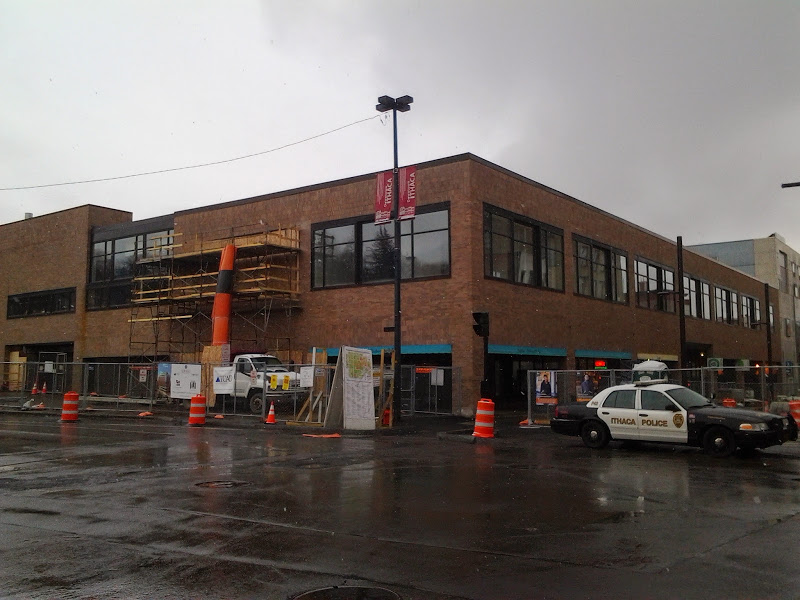
It may not look like a whole lot has happened at the Marriott site downtown, but it is a very complex undertaking. One anonymous reader close to the project wrote in to describe the work being done on site in the past couple months:

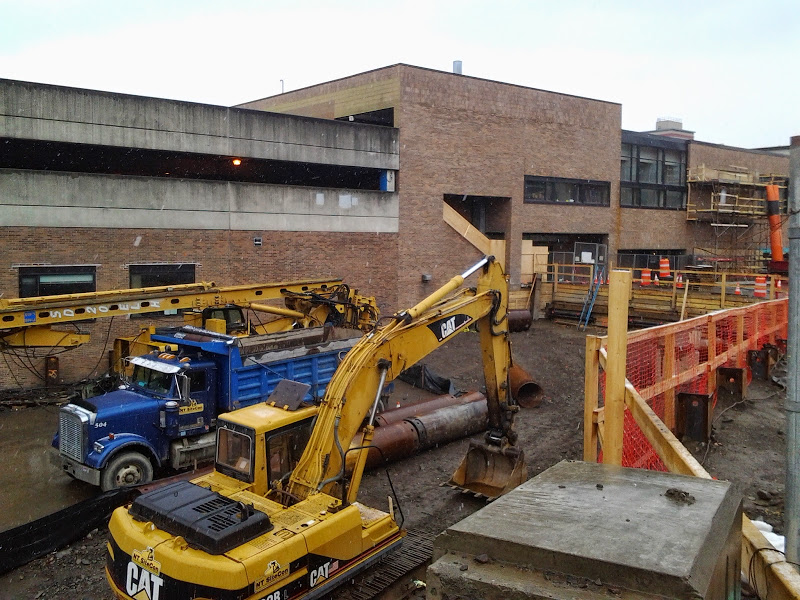
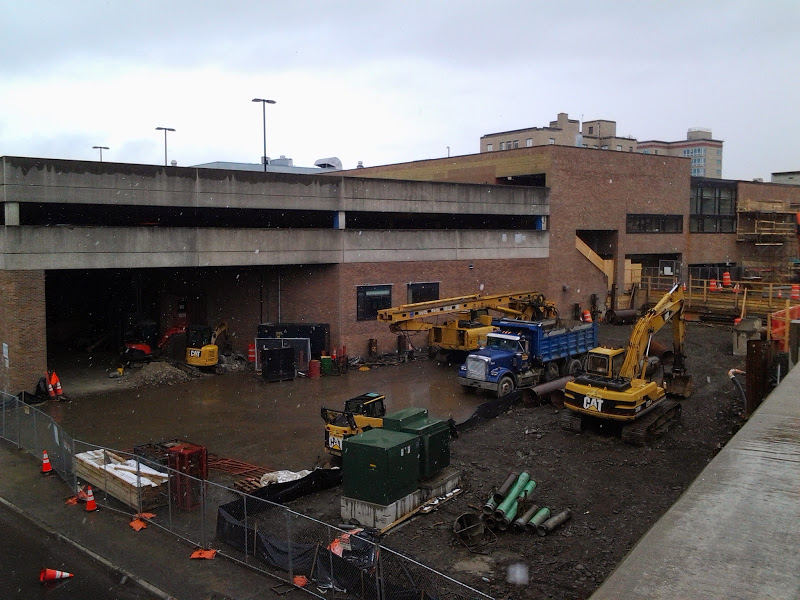
“Foundation work is progressing nicely despite the weather. Contractors have installed steel H piles to [the] bedrock along the perimeter. Wood cribbing has been installed within the piles. The wood panels slide into the web of the H. The cribbing is backfilled and remains forever, securing the bridge area once complete. Another contractor is drilling tie backs to hold the cribbing in place. The rods are grouted in place to a depth of 20 feet or more. The rods anchor the wall in place so the structure can be built within the opened area. Caissons will be drilled in a few days. The caissons are massive open pipes that are socketed into bedrock, 25 to 30 feet below grade. The hollow caissons are filled with concrete and rebar. Concrete beams will be formed from the top of each caisson similar to floor joists. Then a few million tons of hotel will be constructed on top. The cantilevered design is impressive and makes for some very difficult design constraints. This building is a big sail that is side heavy.”

To paraphrase, and hopefully I have this right, the bridge is being secured by H-shaped steel bars, wood cribbing and filling material, and steel tiebacks are being used to stabilize the retaining wall. Per wikipedia, grouted tiebacks can be constructed as steel rods drilled through the cribbing out into the soil or bedrock on the other side. Grout is then pumped under pressure into the tieback anchor holes so that the rods can utilize soil resistance to prevent tieback pullout and wall destabilization. With the bridge and retaining wall established, caissons can now be drilled. Caissons are piles drilled to a sufficient depth to allow the weight of the hotel to be transferred from the weak soil above, to the stronger bedrock 25-30 feet below. The weight will be spread out over the piles with concrete beams on top of the caissons, allowing for the hotel above to be stable and secure.

The photos don’t show the level of work involved with building the retaining wall, and as of April 5th it doesn’t look like the caissons were being drilled just yet. But those look like caisson liners next to the excavator, so pile drilling will be underway soon.

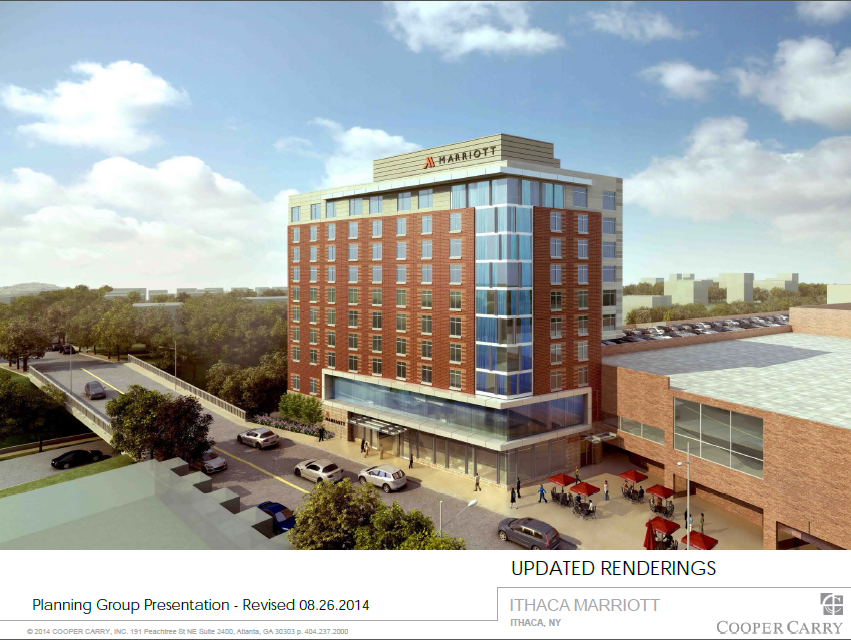
The $32 million, 10-story, 159-room hotel is slated for an opening in Q3 of 2016 (July-September). The hotel will include a fitness center, a restaurant with indoor and outdoor seating, and 3,000 sq ft of meeting space.

The hotel has been designed by Atlanta-based Cooper Carry Architecture and development is a joint venture of Urgo Hotels of Bethesda and Ensemble Hotel Partners, a division of Ensemble Investments. Urgo’s portfolio includes at least 32 other hotels totaling 4,500 hotel rooms. Interior design will be handled by Design Continuum, W.H. Lane of Binghamton is the general contractor, and Rimland Development contributed the land to the joint venture and is a partner. Long Island-based Rimland was the original firm that pitched the project in 2008 as the “Hotel Ithaca”, before the old Holiday Inn downtown went independent.

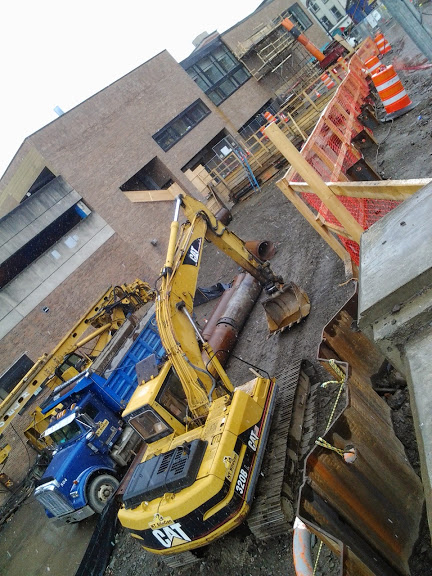
20150405_133412 20150405_133416 20150405_133422 20150405_133513

20150405_133115

marriott_rev1_1


Belle Sherman Cottages Construction Update, 4/2015

12 04 2015

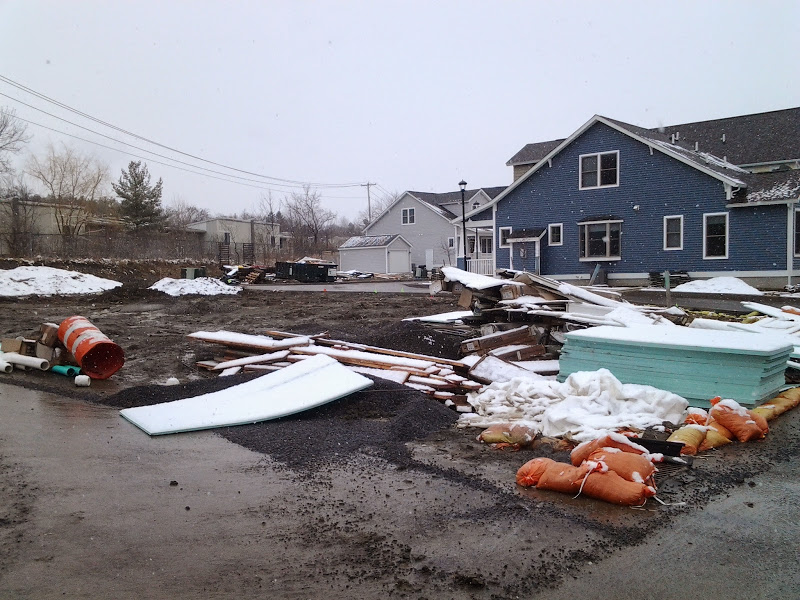
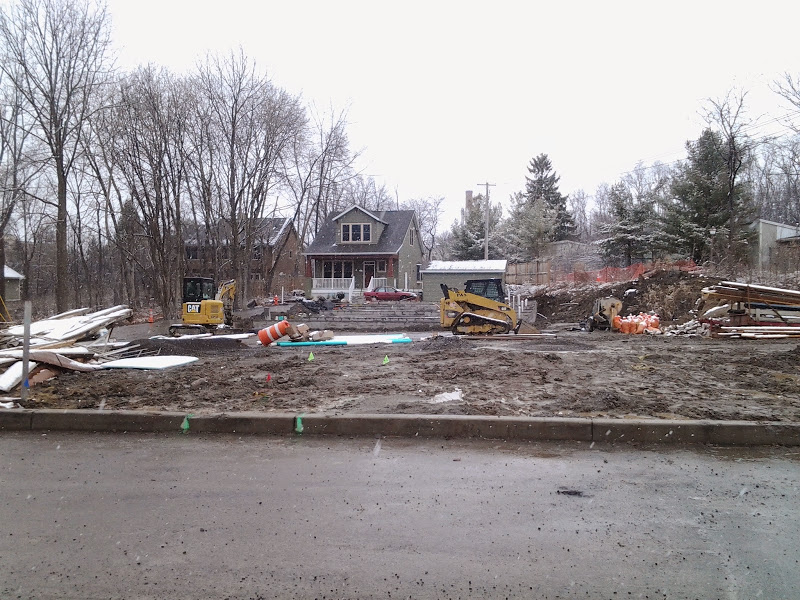
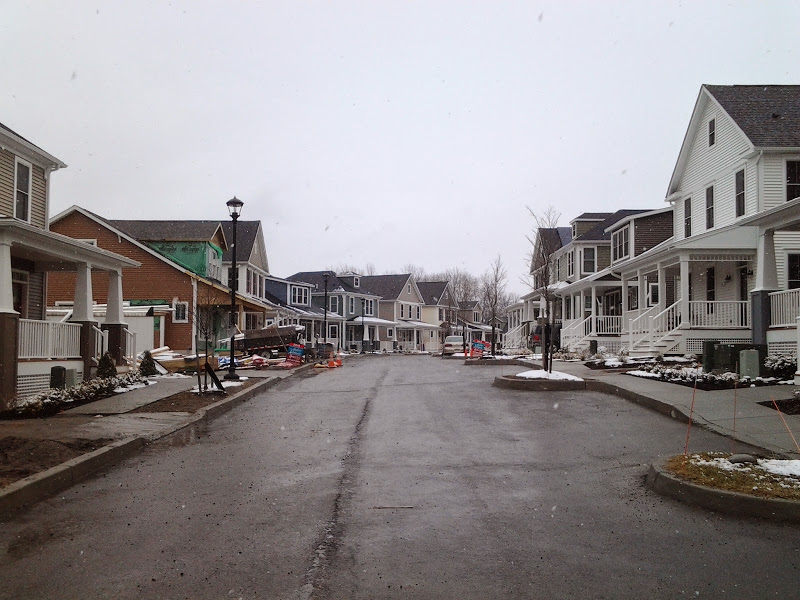
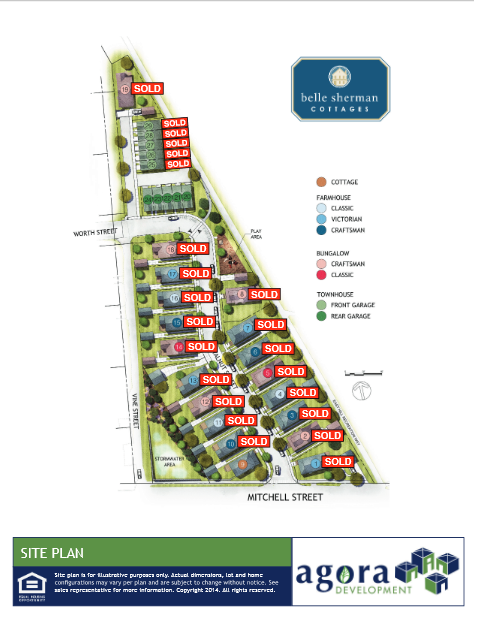
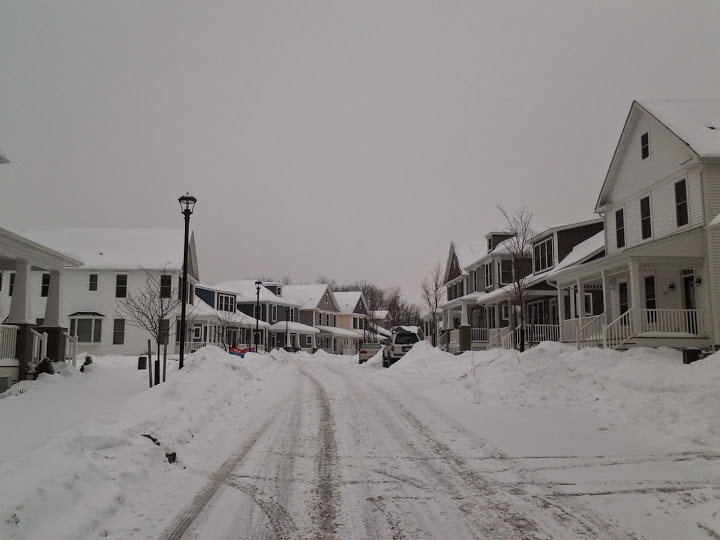
Over at the Belle Sherman Cottages off of Mitchell Street, work is underway on the first set of five townhomes, lots 25-29. The CMU block wall foundations have been assembled and look ready for the Simplex modular pieces to be brought onto the site and fitted. The houses are built using four modules, but the size of the townhouse lots suggests these might have only two modules per unit. The townhouse units sold out fairly quickly, just a few weeks. Sales are underway for the second set of townhomes (lots 20-24), which are expected to be built this year as well.

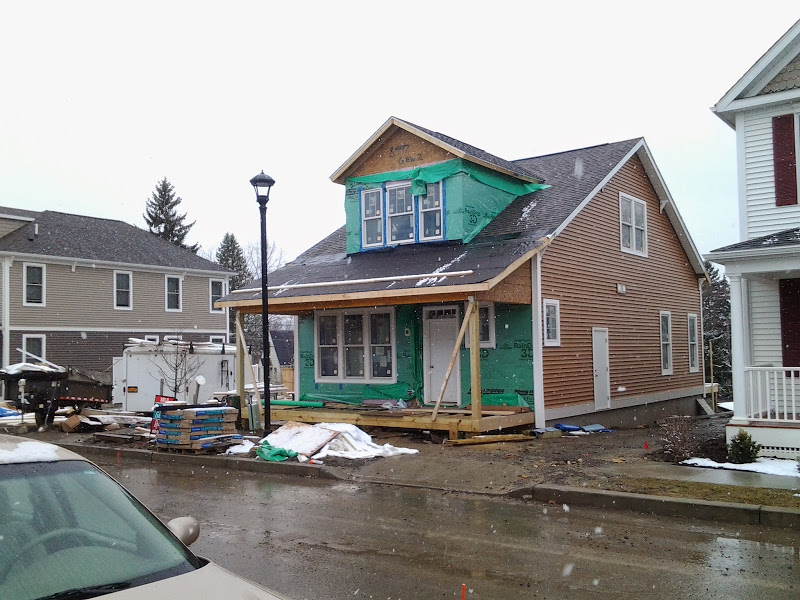
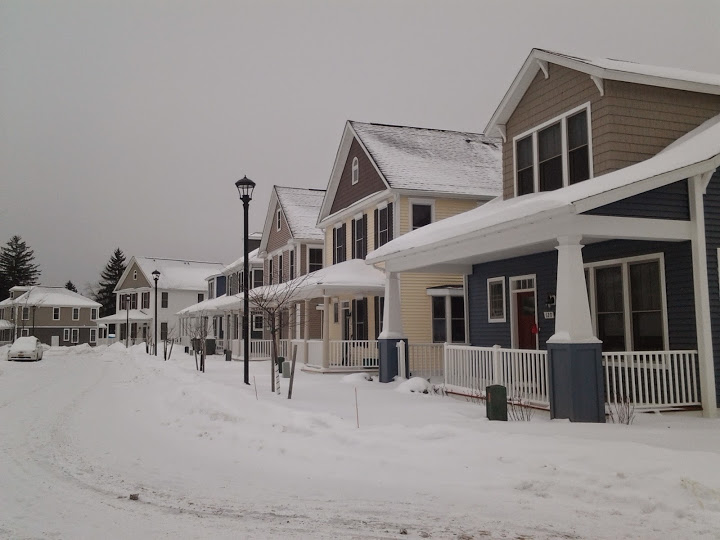
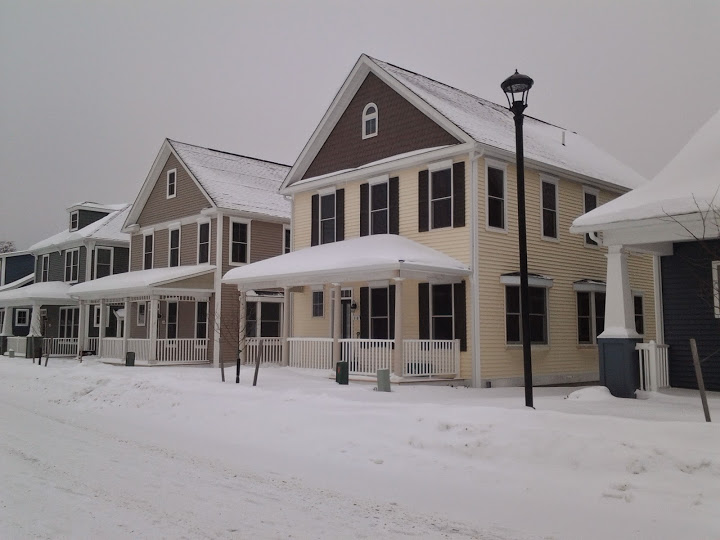
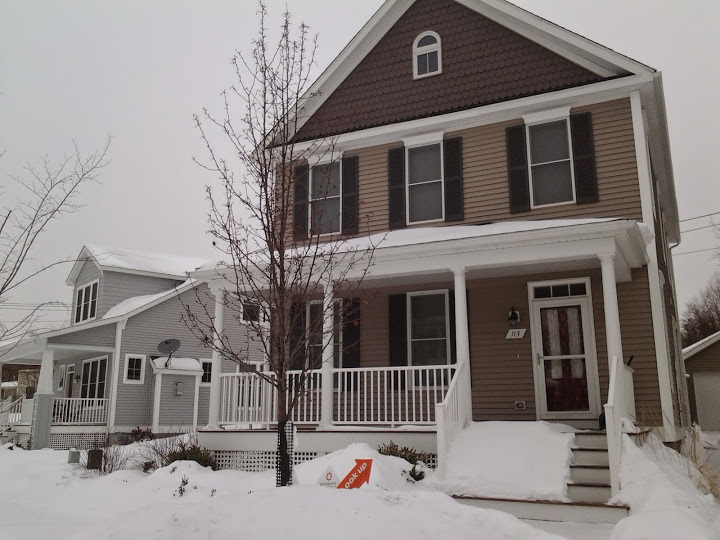
Elsewhere on the site, the “Classic Bungalow” on lot 12 has been assembled and is undergoing lap siding installation (“Mountain Cedar” color, with a lighter “Savannah Wicker” tan color planned for the dormer). The porch is being assembled and exterior trim is being installed. If you’re interested in learning more about the construction process, there’s a little more info in my previous post here, and on Ithaca Builds here and here. Once completed, there will only be two unbuilt home lots, the already-sold “Autumn Yellowfarmhouse planned for lot 11, and the unsold and un-marketed lot 9.

20150405_123303

20150405_123319 20150405_123326 20150405_123401 20150405_123430 20150405_123512 20150405_123540 20150405_123610 20150405_123621

belle_sherman_townhouses_2

belle_sherman_cottages_102714


Tompkins Financial Corporation Plans New Headquarters Downtown

25 03 2015

tfc_1

Downtown Ithaca will be getting another large addition in the next couple of years, if Tompkins Financial Corporation has their way.

The local financial services company has announced plans for a new headquarters in downtown Ithaca. The location of the proposal, 118 East Seneca Street, is between the DeWitt Mall and Seneca Place on the Commons. The site is currently home to a small drive-thru branch of Tompkins Trust Bank.

tfc_2

The sketch plan can be found here. Currently, there is no specific design, only a massing diagram (local firms Trowbridge Wolf Lansdcape Architects and HOLT Architects will be designing the new building). Potentially, the project could be seven floors, 100 feet tall, and about 110,000 GSF. Plans call for a small amount of enclosed parking on the first floor behind the building footprint, with floors 2-7 being built out and over the parking.

tfc_3

The bank branch would be moved across the street to 113-119 East Seneca, and though it’s a little hard to tell from the images provided, it looks like the buildings on site will remain in place, while major renovations are applied to the ground level. 113-119 East Seneca currently has a surface lot topped by three floors of offices.

The project has a fairly quick schedule, with formal plans expected at next month’s Planning Board meeting, and final approvals for the headquarters expected by June. According to the blurb on the Ithaca Times, completion is anticipated by January 2017.

Tracing its history back to 1836 and the establishment of Tompkins County Bank, the Ithaca-based company offers retail and corporate banking, insurance, and asset management services. Along with Tompkins Trust Bank, TFC operates several other subsidiary banks, including Tompkins Bank of Castile on Western New York, and Tompkins VIST Bank in Southeastern Pennsylvania. Collectively, the company holds about $5 billion in assets and employs 1,000, including 400 in its headquarters.

On a final note, it’s worth noting that TFC turned down participation in the U.S. Treasury’s TARP program, otherwise known as the “bank bailout”, and was did not offer subprime loans during the 2000s housing bubble.


Design Competition Announced for Collegetown Apartment Building

19 02 2015

12-29-2011 079

Back in August, I wrote a story about how a student competition was held in the early 1980s to design the mixed-use building currently standing at 409 College Avenue. It appears that someone liked the idea and decided to launch a competition of their own.

According to the Cornell Daily Sun, the competition is to design a replacement for 313-317 College Avenue, a property owned by local developer/landlord Lambrou Real Estate since the late 1970s. Cornellians of my late 2000s vintage will remember this building for housing Dino’s Bar and Grill. In previous years, it’s also held a grocer (1920s), a furniture store (1950s), a record store (1970s), and the Cosmopolitan Restaurant (1990s). Finding the original construction date of the building has been difficult (I’d guess ca. 1910, since it’s missing from this 1906 photo but it’s definitely an older style), and it appears substantial renovations occurred in the mid 1970s, likely the porthole windows on the fourth floor. Because of the heavy alterations borne by the storefronts and top floor over the years, the building has lost much of its historic value.

From a zoning standpoint, the building is in the densest Collegetown zone, MU-2. That entails a mandatory mixed-use component (usually interpreted as commercial space on the first floor), the building can occupy almost all the lot except for a rear setback of 10 feet, and no required parking. The building must be between 4 and 6 floors, and 45′-80′ tall, with a flat roof. 313-317 College already occupies most of its lot footprint, so the area of the new building wouldn’t be a big change, but the addition of a few more floors would make for a greater visual impact. More likely than not, there will be student apartments from floors 2-(4 or 5 or 6).

Speaking specifically about the competition, it’s open to any member of the Cornell community, student, faculty or staff, and has been underway for a couple weeks. Sketch plans were due Wednesday the 18th, final plans/schematics April 7th, and the winner will be announced May 17th. The call for proposals asks for sustainability as a design theme, so an emphasis on “green” features is expected in the submissions. The judges panel will consist of Lambrou Real Estate, AAP professors yet to be chosen, and Ithaca Student Housing, which is also staffed by the Lambrou Family (different branch maybe?). No word yet if there’s a cash prize for the winner.

Just like 409 College over 30 years ago, this is a win-win for everyone involved. The winner gets exposure and a pretty big project to claim on their resume. The Lambrous get a project at a fraction of the design cost of an architectural firm. I hope to see and share some of the proposals as they become available.


Belle Sherman Cottages Construction Update, 2/2015

16 02 2015

It feels a little surreal to be walking down Walnut Street (fun fact, there was originally a Walnut Street plated for Ithaca’s West Hill in the mid-1800s) and have it fulled out with homes on either side. Yet that is indeed the case. It’ll be easier at this point to count what’s not yet built in the Belle Sherman Cottages development – the townhouses (10 total, 5 due to start this Spring and 5 yet to be marketed), the new cottage design for the not-yet-marketed lot 9, and lots 11 and 12), which are sold and probably awaiting the arrival of warming weather before the foundations are excavated, poured and CMU block is laid. Heck, they might already be poured, but hidden under several inches of snow. So 16 of the 19 houses are built, with a couple of those, like lot 17, undergoing interior finishing and still in need of a little porch/column paint work before being turned over to their new owners. If you’re interested in learning more about the construction process, there’s a little more info in my previous post here, and on Ithaca Builds here.

Every couple of weeks, another sale shows up in the county property records, typically in the range of the low 300s to low 400s. Formal sale isn’t happening until a house is move-in ready (I suspect that while underway, a “sold” lot is actually reserved with a down payment), so following the county’s record of transactions is a useful indicator of progress. According to the Belle Sherman Cottages facebook page, Skaneateles-based Agora Homes and Development intends on completing the 29-unit development in 2015.

Veering into editorial territory here, I’ll admit that I was pessimistic about the project early on, thinking it was too much money for what was provided. But in retrospect, I think this is the right type of single-family housing for more suburban parcels, such as other sites in Ithaca town near the city line. Much of the zoning locally is designed to favor of large lots and large price tags. I wouldn’t call these affordable by any stretch, but they’re somewhat closer to the median value than most other single-family homes going up. Being this close to Cornell also adds a premium on their price tags; perhaps on a site in South Lansing or South Hill, they’d be somewhat less expensive. They’re a good (better?) alternative to the sprawling cul-de-sacs that seem to be the norm for housing developments in suburban Tompkins County. I think that, in the same vein of this project, though with more of a “green” sheen, the Amabel site in southwest Ithaca will be the next single-family development worth watching.

20150207_145459 20150207_145519 20150207_145651 20150207_145707 20150207_145742 20150207_145810 20150207_145843 20150207_145910 20150207_145926

belle_sherman_cottages_102714 belle_sherman_cottages_071814_2


Village Solars Apartments Construction Update, 2/2015

11 02 2015

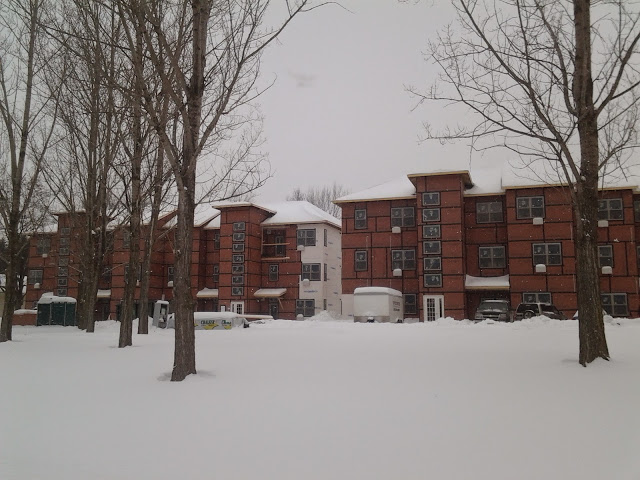
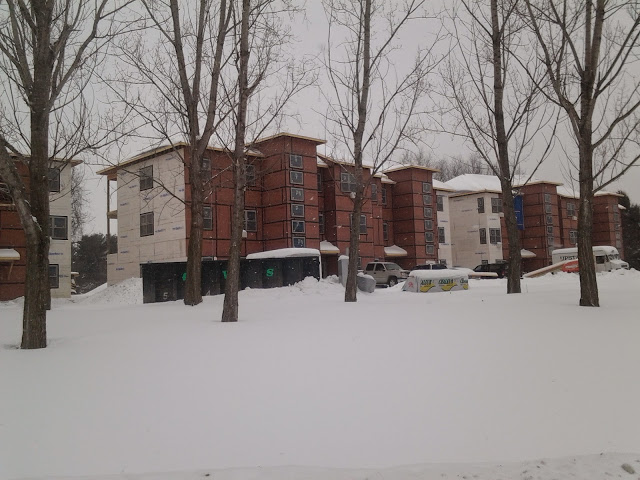
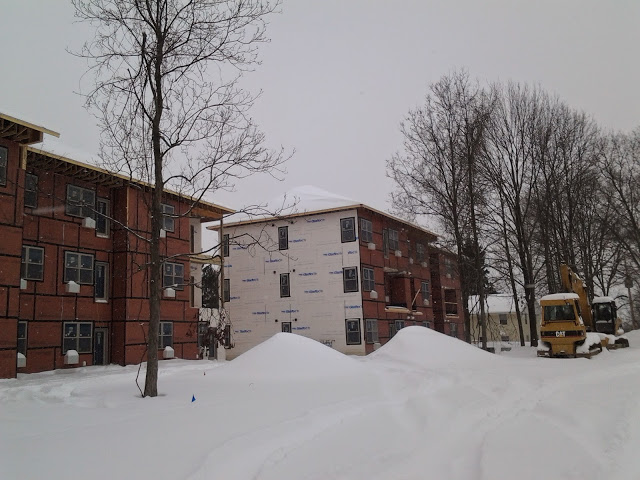
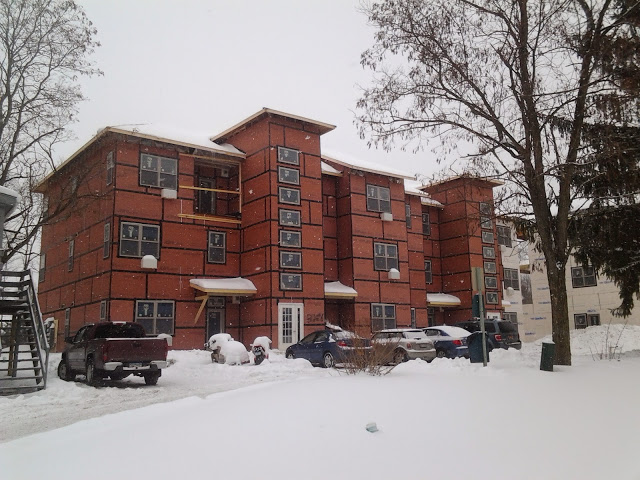
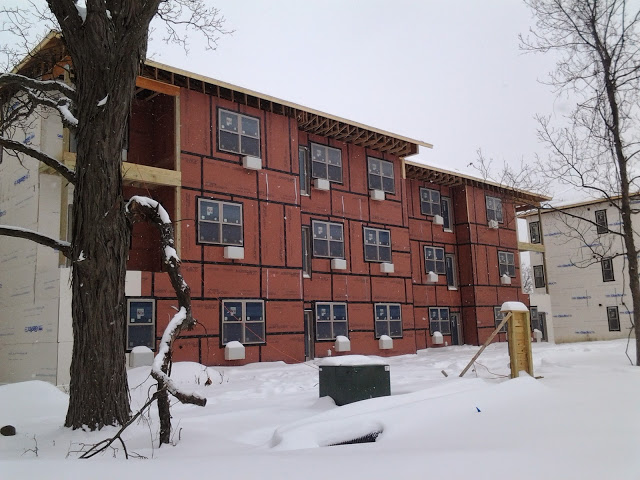
The first three apartment buildings of the Village Solars apartment project in Lansing are fully framed, sheathed (I’m assuming the red panels are sheathing material), roofed, and windows and doors have been installed in most locations. The light-colored material might be a breathable wrap for weather/moisture resistance. It will be a little while before exterior finishes are applied and balconies are installed. When I visited last Saturday, the site was buzzing with the sounds of construction workers busy with tasks inside (probably rough-ins for things like plumbing and electrical), and ’80s hair metal streaming from a radio somewhere from within. Nothing like installing pipes while rocking out to Twisted Sister.

The Village Solars get their name from what the craigslist sales pitch calls “their passive solar design and energy saving features”. As far as I’m aware, they won’t have solar panels. According to Thomas Bobnick, the rental agent for the apartments, the first phase shown here will consist of 36 units (the final buildout will be close to 300 units). The design of the complex calls for at least eight, maybe ten buildings to surround a new pond that will be dug out of the undeveloped middle of the property – the advertisements call it “waterfront”, which it is, technically.

From the craigslist advertisements, one-bedroom units will rent for $1050-$1145 and be ready for occupancy by June 1st, two-bedroom units will rent for $1235-$1369 and be ready for tenants on May 1st, and three-bedroom units will rent for $1565-$1600 and be available on June 1st. These dates are pushed back a little from initial plans, which called for March and April occupancy; no doubt the severe winter has complicated the schedule. Looking at the photos, the two buildings under construction on the west and east ends look to be one style (balconies in the middle), while the center building is a different layout and design (end balconies). The price range for the two bedrooms is a little above the average two-bedroom unit in Ithaca ($1,165), but after accounting for the premium on new construction, the developer seems to be pricing for the middle tier of the market.

The Village Solars are being developed by local company Lifestyle Properties. Lifestyle is run by Steve Lucente of the Lucente family, who have been major builder/developers in Ithaca since the 1950s. No one word on the architect. Upstate Contractors of Syracuse appears to be handling the construction work.

20150207_131607 20150207_131610 20150207_131613 20150207_131646 20150207_131715 20150207_132225 20150207_132231 20150207_132320 20150207_132335 20150207_132338

village_solars


Carey Building Construction Update, 2/2015

9 02 2015

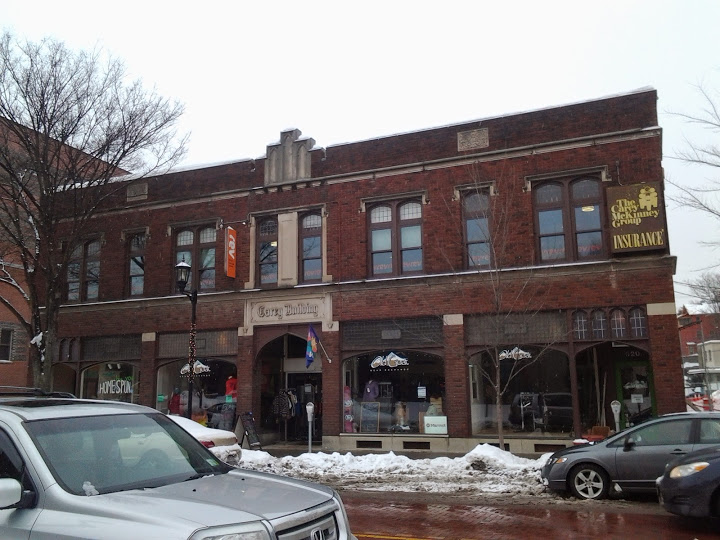
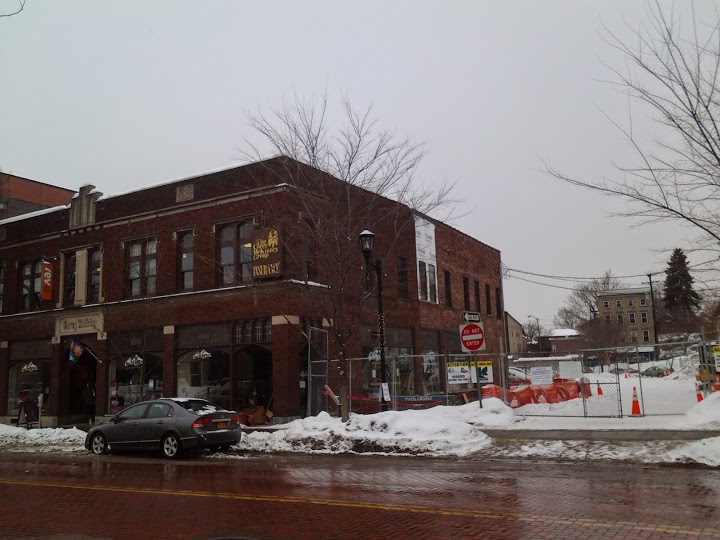
I was originally going to schedule this for later in the week, but I figure I’ll run it now, since the recent twitter chatter is observant but mistaken. The Canopy Hotel is not under construction. At least, not yet. The hotel is expected to start in early Spring. But the work on the Carey Building addition is just beginning.

According to Jason Henderson at Ithaca Builds, building contractor LeChase Construction is currently conducting underpinning work on the Carey Building. Underpinning is the name of the process by which a foundation is strengthened – certainly necessary when one is about to add five floors onto a 2-story building. The second to last photo here shows some of the underpinning work on the eastern foundation wall, and the tarp is on the roof indicates prep-work for the upcoming expansion. LeChase will also be handling the construction of the Canopy Hotel next door.

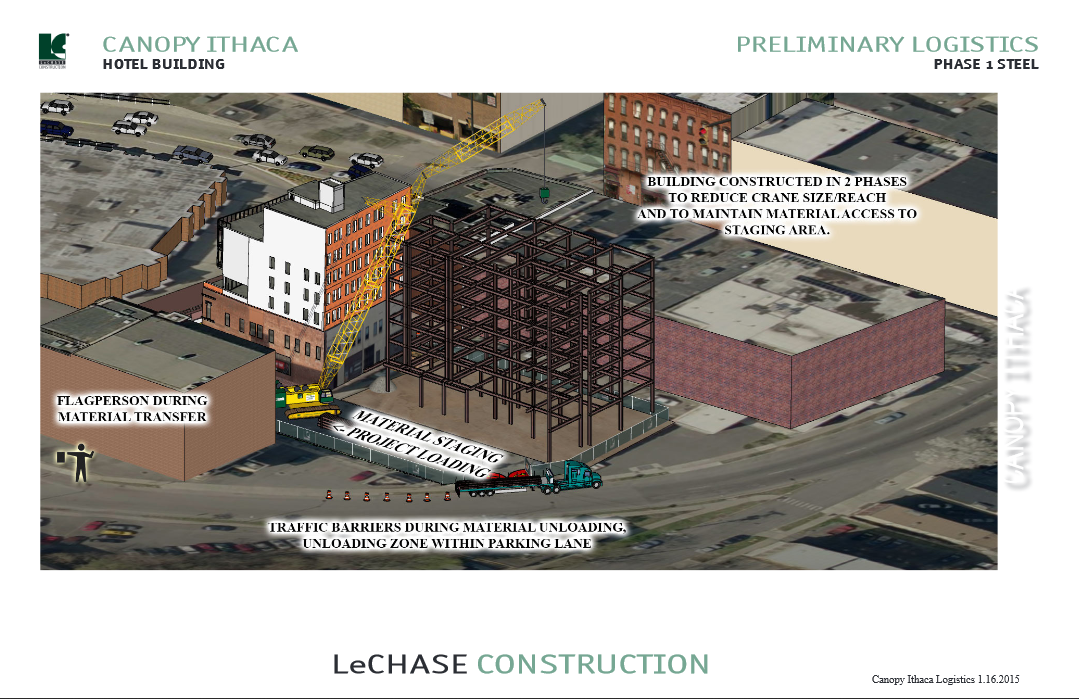
It’s quite unusual in a place like Ithaca to have two separate large projects right next to each other under construction at the same time. This will be logistically complicated. In a letter to the Canopy developers, LeChase’s large trucks will have their brakes inspected before entering State Street, and will be escorted down the hill to a designated area on Seneca Street, and will leave the city via Seneca Street. According to construction phase diagrams, The steel for the Carey Building will be erected first; then, using the same crane, LeChase will begin installing steel for the new hotel. Sharing the crane will result in a cost savings to both owners.

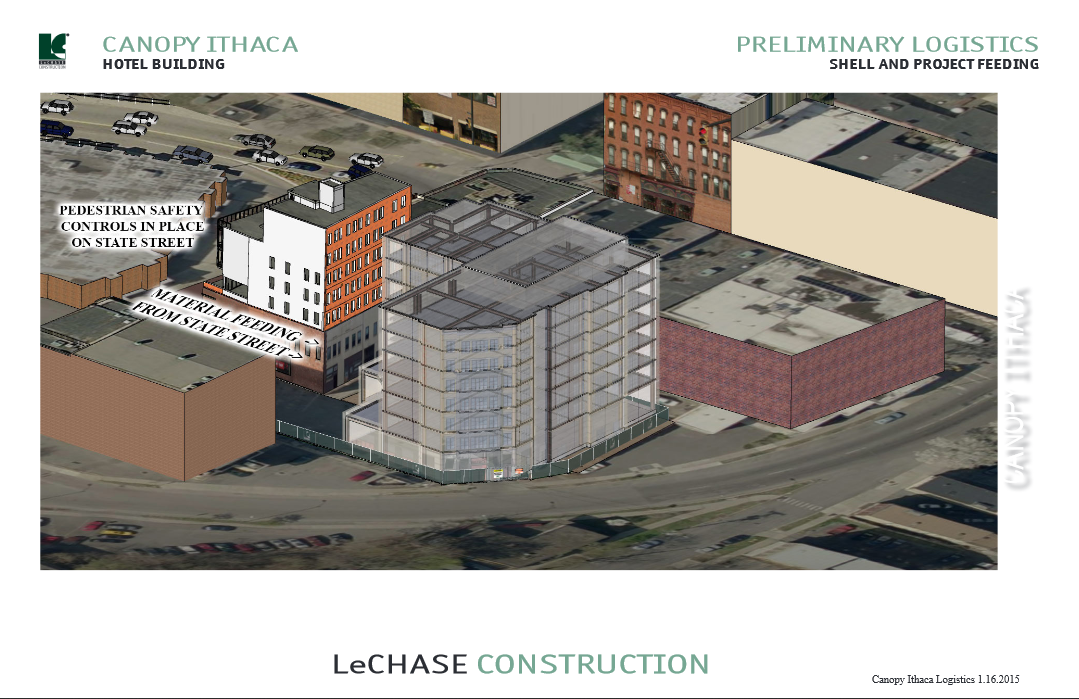
When most of the western side of the hotel has had its steel structure craned into place, LeChase will transition to a smaller crane and switch the material unloading and staging area to East State Street. This is because the hotel occupies most of the site, so the crane is reduced and East State street will be closer to the location of the new crane. Cladding and interior materials will continue to be fed in via E. State Street through the project’s completion in Spring 2016. The Carey Building will have been completed by then, finishing by the end of summer 2015.

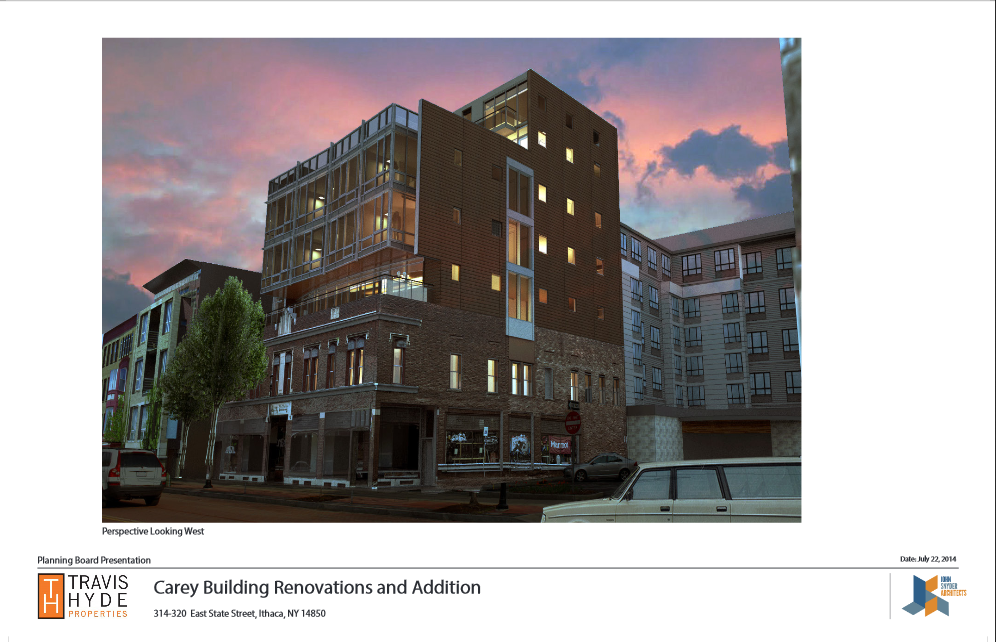
The Carey Building addition will add a third floor and 4,200 sq ft to the Rev business incubator (nearly doubling it to 8,700 sq ft), and on floors 4-7, there will be 20 apartments. Floors 4 and 5 will have 16 studio apartment units that average only 400-500 sq ft, their small size enabling them to be rented at a lower price. The 4 units on floors 6 and 7 will be larger 2-bedroom units. The $4.1 million project is being developed by local firm Travis Hyde Companies.

20150207_153142 20150207_153223 20150207_153246 20150207_153412 20150207_153422

carey_rev4_2

canopy_carey_logistics_1 canopy_carey_logistics_2 canopy_carey_logistics_3 canopy_carey_logistics_4


Boiceville Cottages Update, 2/2015

8 02 2015

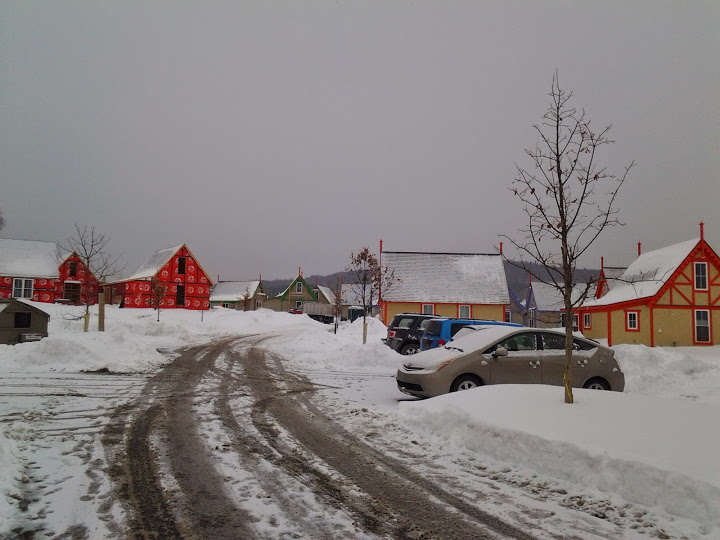
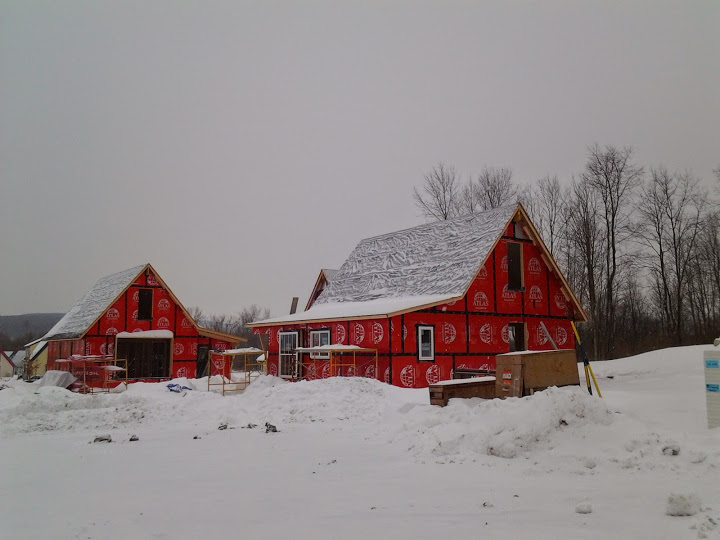
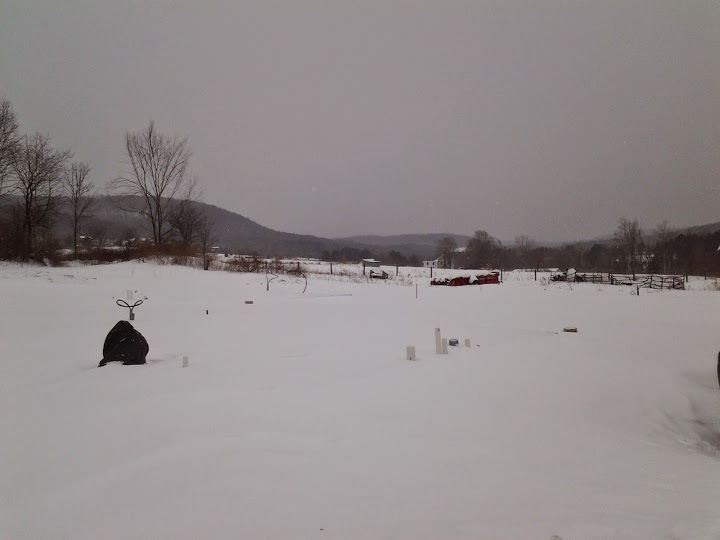
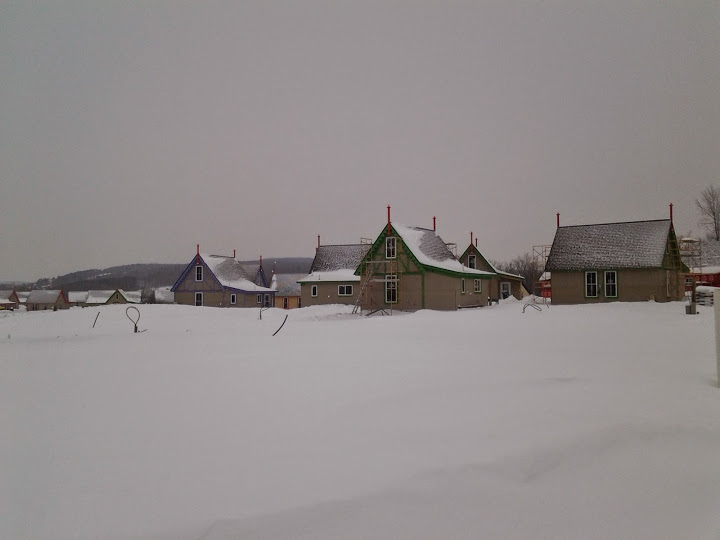
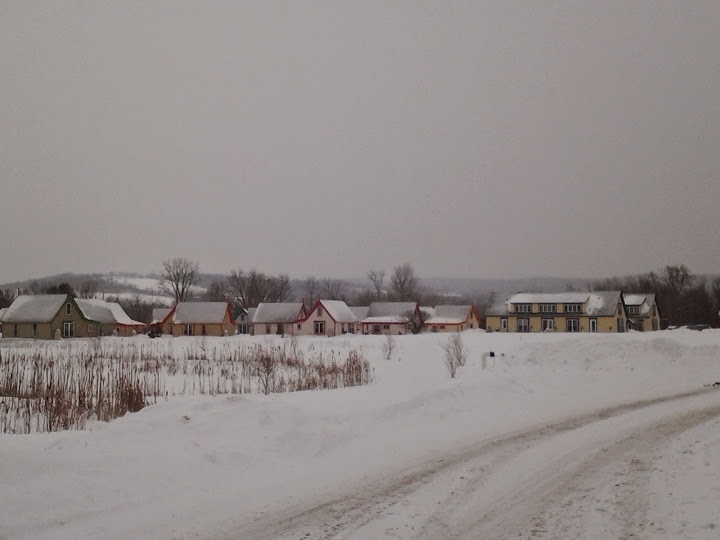
It’s been about 2.5 months since my last trip through the Boiceville Cottages, but given that it’s winter (and a particularly cold and severe winter since the jet stream reconfigured in January), there has only been slow if steady progress with its 75-unit expansion. Since December, the timber homes with purple trim have been completed, four houses that were undergoing exterior build-out have now progressed to exterior detailing and interior finishing (the ones with green timber trim), and windows are being fitted into three homes that have sprouted from their slab foundations since the previous visit.

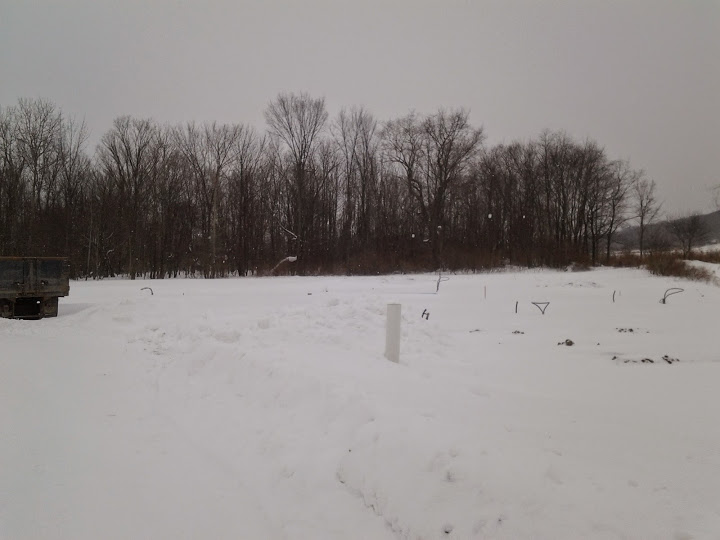
One of the things that stood out on this visit was that it’s now possible to walk all the way through the new phase thanks to the construction. Looking around at the snow on the ground, edges of the blue waterproof covering (which might be the covering of cement board being used to protect the slab insulation) could be seen poking out among the drifts. Using the (gas utility?) loops coming out from the foundations as a guide, there are perhaps a dozen poured concrete foundations, ready for construction as time and weather provide. There were approximately 25 units that were built in 2014, and with probably 10 complete by the end of March, 2015 looks to be on the same construction pace, maybe even greater. It might even be possible that the expansion will be completed this year. Inquiring minds would like to know if Bruno Schickel has any other expansions or colorful villages planned.

The Boiceville Cottages, built and managed by the Schickel family, are rather unusual as apartment complexes go. For one thing, there are the bright paint jobs, a sort of hallmark of the cottage units since the first set of 24 houses was built in 1996/97. The bright paint and the ornate woodwork have led to a nickname, “The Storybook Cottages“, which holds some weight, according to an article in Life in the Finger Lakes:

“Schickel said he was inspired to build his colorful cottages by a children’s book he read to his daughters almost 20 years ago. The book, Miss Rumphius, by Barbara Cooney, tells of a girl who, at her grandfather’s urging, travels to faraway lands seeking adventure. Later she moves to a cottage by the sea and works to make the world more beautiful by spreading seeds of blue and purple lupine. An illustration by the author shows the Lupine Lady’s house on a hill overlooking the sea. The small cottage is replete with finial and gingerbread. Seeing that illustration was the eureka! moment, Schickel recalled. “I said, ‘I’ve got to design something like this!’”

Since the initial 24 units were built, a further phase of 36 units was undertaken pre-recession, and in the past couple of years the town of Caroline signed off on the next phase, a group of 75 that would more than double the size of the complex. The cottages have been built out at a steady pace, and at completion of this current phase, 135 units will be present on the Boiceville property. Most of the units are 1 and 2-bedroom cottages, built in clusters of three, although a few “gatehouse” rowhouses offer studios and 3-bedroom units. The Boiceville complex may be the largest population center in the 3,300 person town.

20150207_124102 20150207_124139 20150207_124147 20150207_124213 20150207_124234 20150207_124303 20150207_124308 20150207_124336 20150207_124344 20150207_124416 20150207_124421 20150207_124434  20150207_124553 20150207_124836 20150207_124847 20150207_125032


News Tidbits 1/31/15: History Comes Alive

31 01 2015

With no new projects before the city planning board, and the town cof Ithaca ancelling its planning meetings twice in a row (something that happens only once every couple years), the end of January is shaping up to be a slow period. But that’s not to say there’s no news at all.

1. From the twitter account of local firm Jason K. Demarest Architecture:

simeons_1

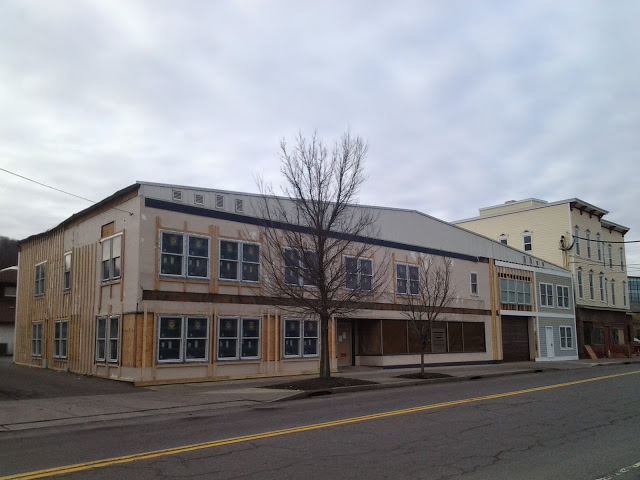
No details in the tweet, but I’m getting the impression that the Shen family, who own the Simeon’s building, hired Demarest as the architect for the reconstruction. If that’s the case ( it seems likely, given that the firm handled the expansion of Simeon’s resutaruant in 2009), and this is a preliminary design, then I can only express the greatest of joys that the south facade will be sympathetically rebuilt to its former charm and glory. Fingers crossed.

titus_wood_1

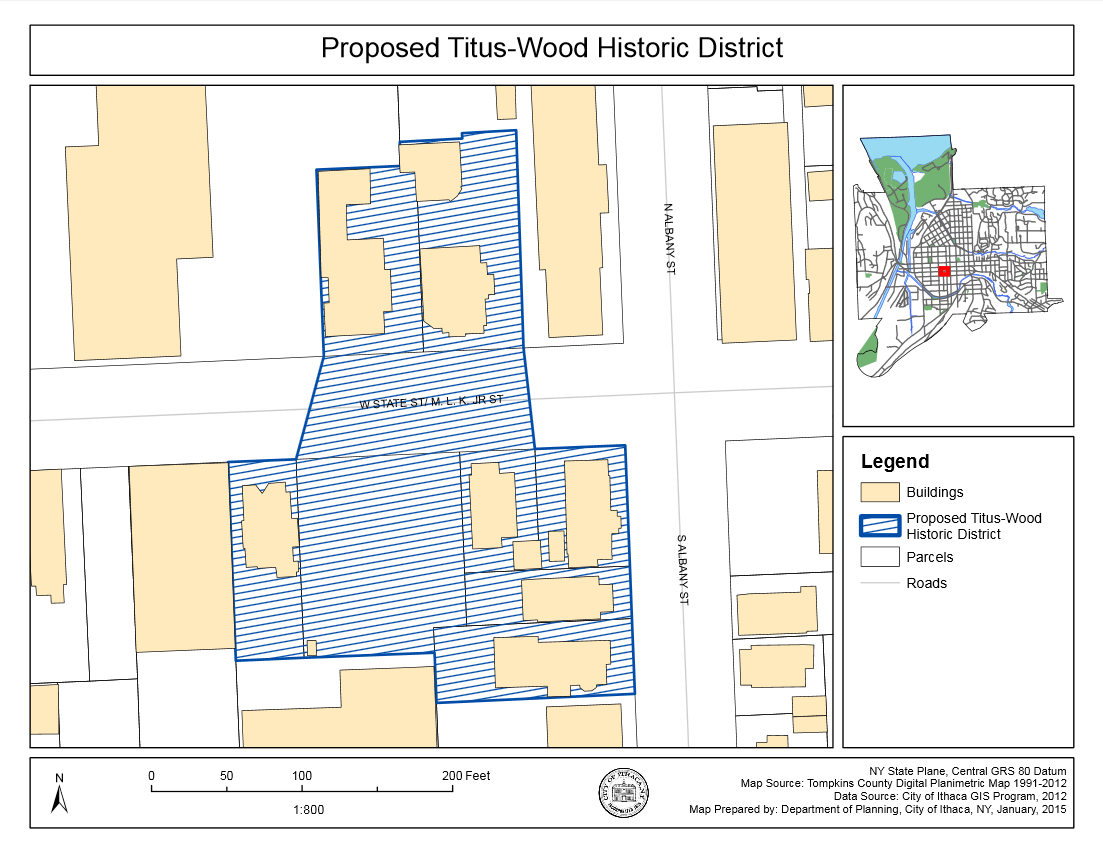
2. Sticking with the history theme, the city ILPC (Ithaca Landmarks Preservation Council) is considering another historic district, a seven-building district in central Ithaca being called the “Titus-Wood Historic District“. I can think of two reasons for this plan:

I. A historically notable carriage house at the back of 310 W. State Street has been threatened with demolition, much to the dismay of local preservationists. If designated, demolition becomes much more difficult (an “economic hardship” clause has to be invoked and approved by the council).

II. The West State corridor is a target for development under the new Ithaca Comprehensive Plan, which could potentially put the other buildings at risk in the long term.

There’s been no major opposition to the proposal so far, so this is probably good for approval at their next meeting.

aphia_411_e_state

3. Also in the same ILPC meeting, a single-family home at 421 N. Albany Street is being considered for historic designation. The house was home to a precursor of the Alpha Phi Alpha fraternity who have sought to purchase the property and restore it as a historic fraternal landmark. The African-American fraternity (the first fraternity of its kind) is also raising money to build a monument at 411 East State Street (shown above, zoning appeal application from last summer here). The 411 East State site is owned by Travis Hyde Properties, and the national fraternity appears to have negotiated use of that part of the property for its monument.
20141227_144707

4. Courtesy of the Ithaca Times, we now know the renovation of the furniture store at 206 Taughannock will yield seven apartments and commercial space. The Lehigh Valley House building being renovated next door (covered by Ithaca Builds previously) will host a satellite office of the IPD on its ground floor, with six condos on the upper two floors. 206 Taughannock is being developed by Mark Zaharis, and Lehigh Valley House by Tim Ciaschi.
If Ithaca has any sort of “warehouse district” like the larger cities, Inlet Island is probably the closest comparison. Traditionally, it’s been a blend of commercial and industrial uses, and low-income families whose homes were lost to the construction of the flood control channel in the mid-to-late 1960s. In recent years, with the passage of more amenable zoning and increasing interest/rising land values in Ithaca city, the island and West End have started to receive attention from developers. In the past year, the aforementioned two projects and the 21-unit 323 Taughannock have been proposed and/or started construction, and interested parties are rumored to be waiting on the sidelines, ready to propose their own projects based on the success of these pioneers. Among those interested parties are Tom[kins County and the city of Ithaca, who are busy persuading the state to sell or move out of underused properties so that they can be made available for development.The city has had a strong interest in redeveloping the island for decades.

I think the potential is here for substantial development, and so far, the projects underway are doing well; it’s not remiss to suggest there will be more in the next couple years. But the idea of development is still controversial, with concerns of traffic and loss of local character. I have no doubt it will be a spirited debate.

mosque_rendering400

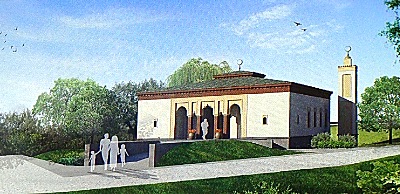
5. The charitable trust of the Al-Huda Islamic Center has officially purchased the land that will hold the Ithaca area’s first stand-along mosque. The vacant parcel at 112 Graham Road in Lansing was purchased for $64,900 on January 29th. The special permit for a religious building was approved by the village back in August of last year. The cost of construction is expected to be in the range of $600,000, which is to be raised through donations. I have no idea how close they are to their goal, but the land purchase is auspicious.


A New Home For Cornell’s Fine Arts Library

27 01 2015

100_1870

News of this project comes from the city Planning Department’s annual report, rather than Cornell. There was a time when Cornell used to do a reasonably good job sharing brief summary PDFs of its capital projects, but that ended a couple of years ago.

The project is just a single line, line item B. 17 on the 2015 Work Plan: “Rand Hall Reconstruction”. Those words themselves didn’t pull up anything in google, but a couple related searches pulled up this archived July 2014 email from a Cornell employee announcing the announcement article the chosen architect for Cornell’s new Fine Arts library.

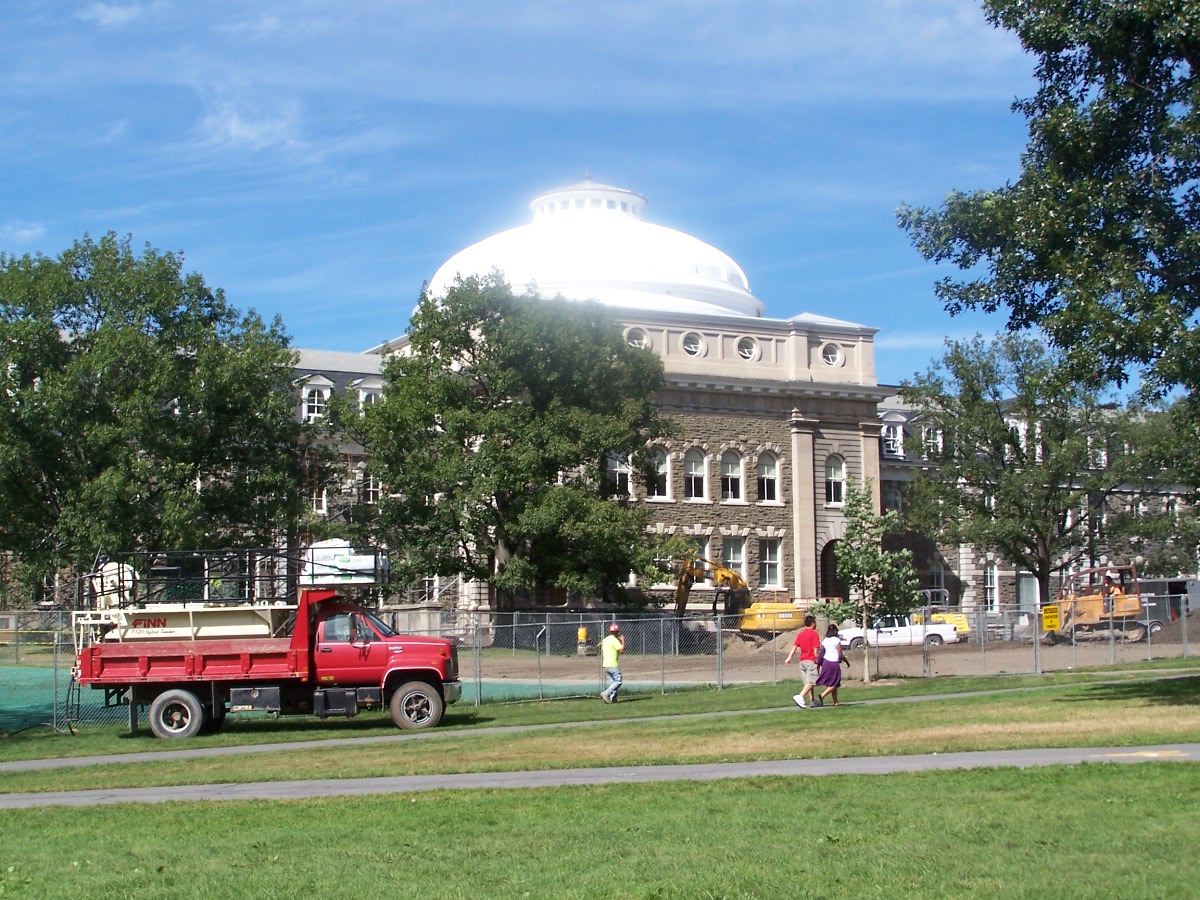
From the AAP website, the Fine Arts Library seems to be more of a renovation than a new construction, moving the FAL from neighboring Sibley Hall and into the top two floors of Rand Hall. The new library is planned for a Fall 2016 opening. The architect is a Cornell alum, Vienna-based Wolfgang Tschapeller M.A. ’87, and the press release credits a $6 million dollar gift from architect and UC-Berkeley professor Mui Ho ’62 B. Arch ’66. From the July 2013 gift annoucement, it sounds like the exterior of Rand will be preserved while the interior is substantially revamped for the new library. There was a great pushback from alumni the first time Cornell tried to demolish Rand Hall, when early versions of Milstein called for the ca. 1911 building’s demolition. Rand Hall sits just outside the Arts Quad Historic District, so any exterior changes would not be subject to review by the very stringent Ithaca Landmarks Preservation Council (ILPC).

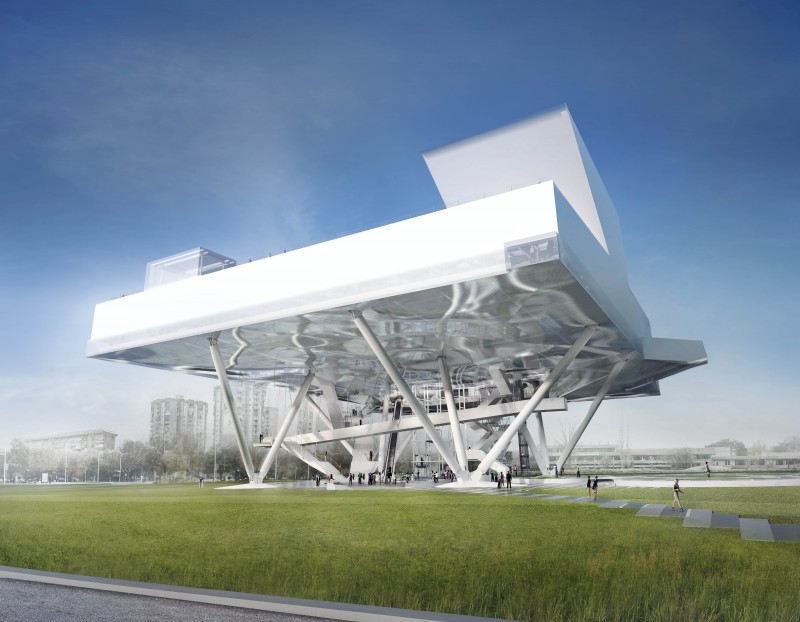
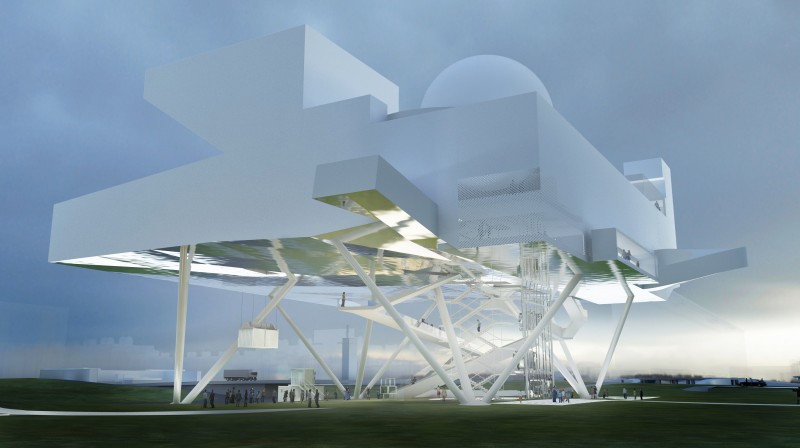
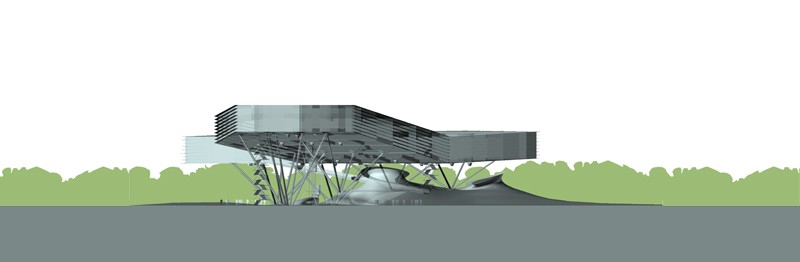
If I’m to end this the news article-friendly way, I’d just say “we’ll see what happens with this project moving forward”. But I’m going to do this the blog way, so strictly subjective editorial here on – I can only hope the exterior is preserved. I’m too much of a philistine to appreciate architecture like this:

tschapeler_1tschapeler_2

tschapeler_3

Apart from some close calls with lighthouses and fire towers I’ve visited, I’ve never experienced nausea-inducing staircases before, but there’s a first time for everything.

There’s plenty more on the architect’s website for those who are interested. But they all follow the same, very abstract architectural theme. A fine Arts Library tends to be more avant-garde than most buildings, but this is really pushing the envelope. Cornell, I don’t care if the inside looks like a goddamned funhouse, do the rest of campus a huge favor and leave the exterior alone. Students already deal with Bradfield and Uris Halls, please do not make things worse.

100_1872