Cornell Veterinary School Expansion Construction Update, 3/2016

30 03 2016

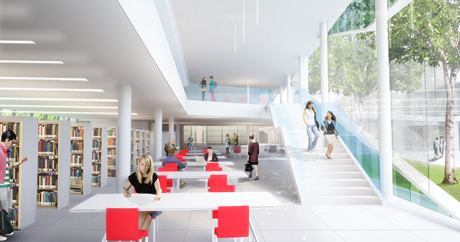
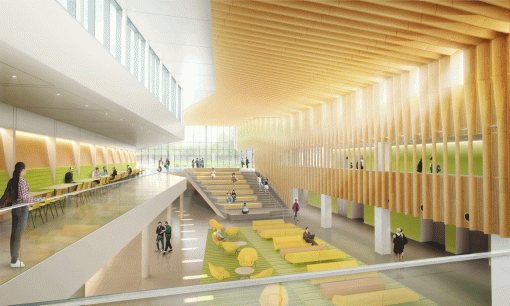
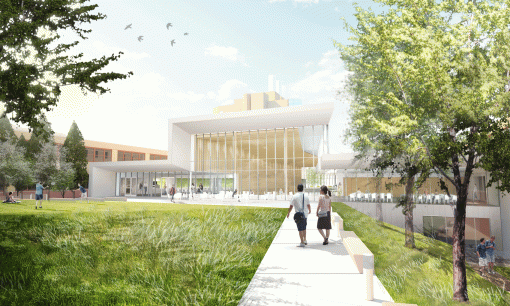
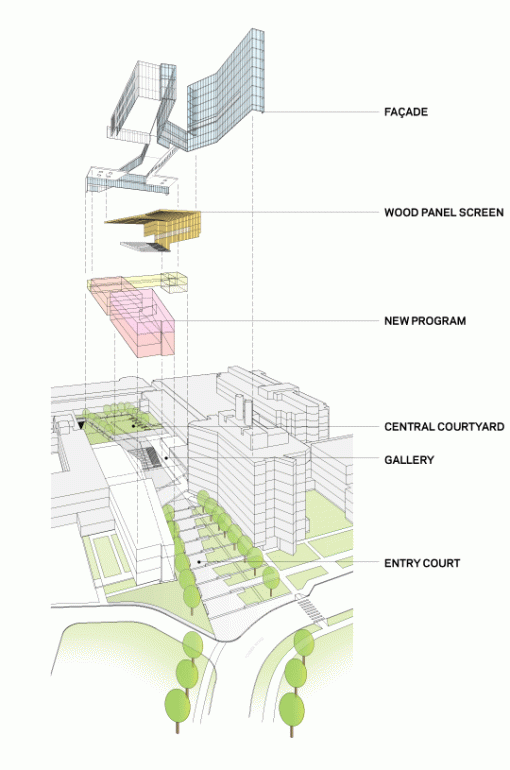
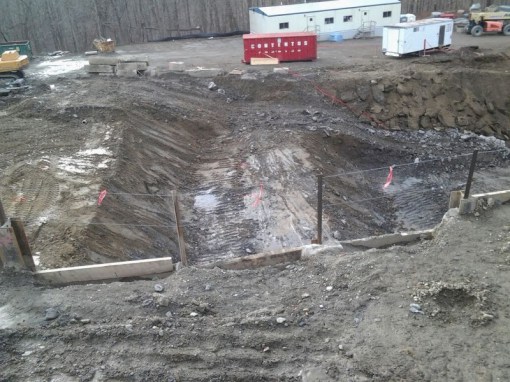
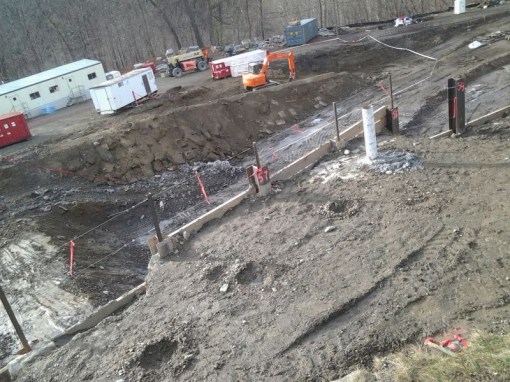
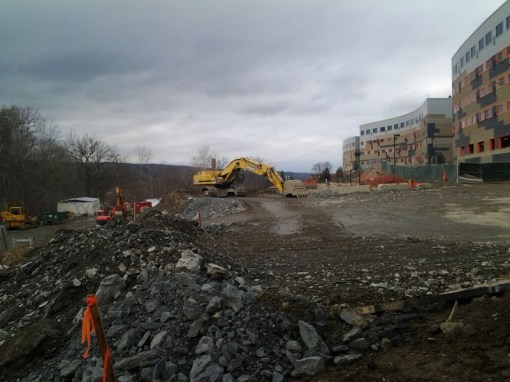
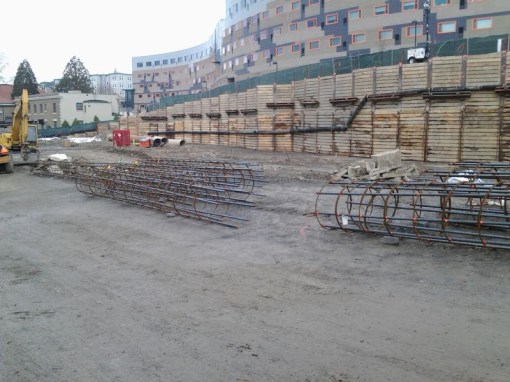
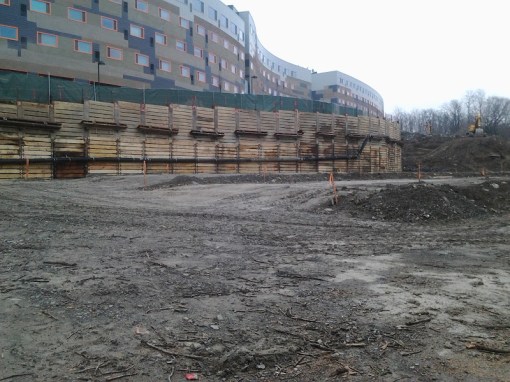
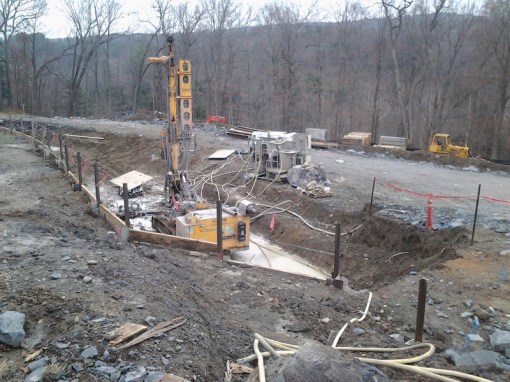
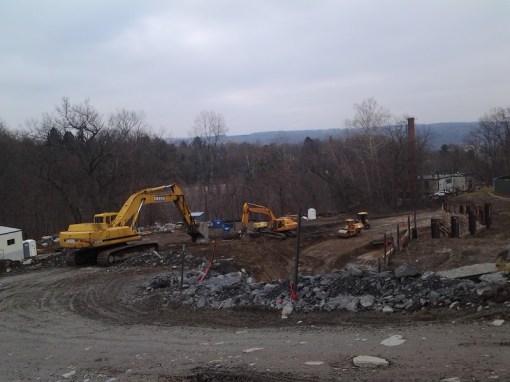
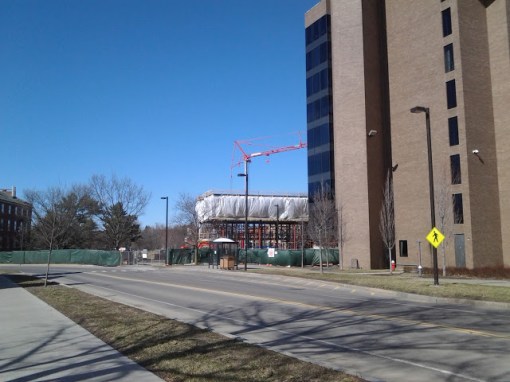
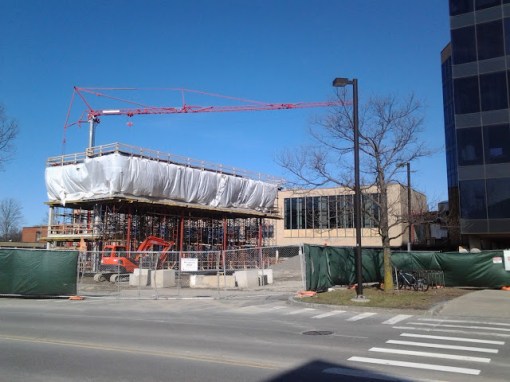
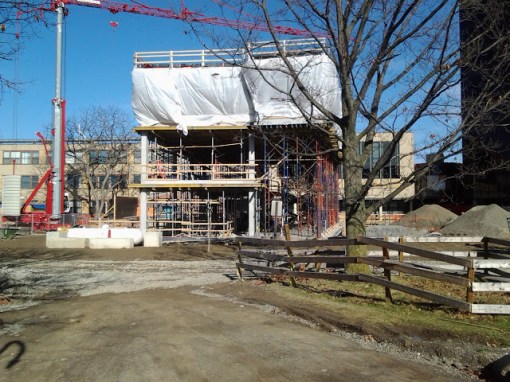
A generalized summary can be found on the Voice here. The concrete frame for the Veterinary School expansion is up to the third and final floor of what will be the new Flower-Sprecher library. As build-out continues, the existing building behind (east) of the new construction will come down and be replaced with new program space; the second floor will sit above an entry court and pedestrian walkway that leads to an indoor gallery space and central courtyard. The open space on the right (south) side of the structure will be a two-story atrium space. The addition will have a glass curtain wall, and the academic spaces that face the gallery will be faced with wood panels.

Cornell and general contractor Welliver will be looking to bring the project to completion by June 2017. Weiss/Manfredi is the project architect.

20160319_155209 20160319_155242 20160319_155305 20160319_155319 20160319_155335 20160319_155345

EntryPlaza10-2 LibraryReadingRoom10-2

3f5656954f5a3ef1021519c03b4abe9f 8f098b7e26544f579eb7411b9a1716aa

eea787361994de9625f74b19aa50d91e


Boiceville Cottages Construction Update, 3/2016

21 03 2016

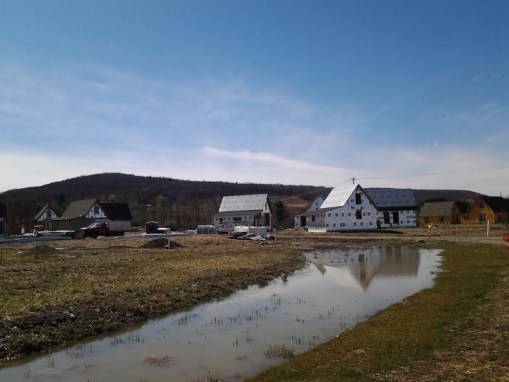
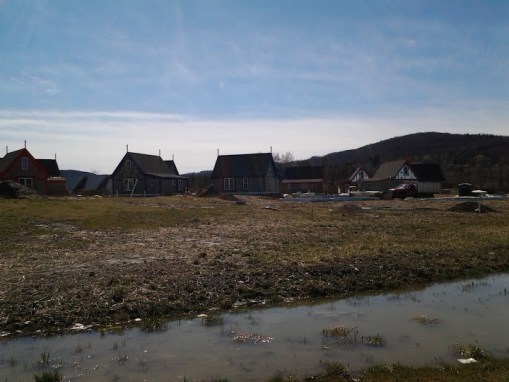
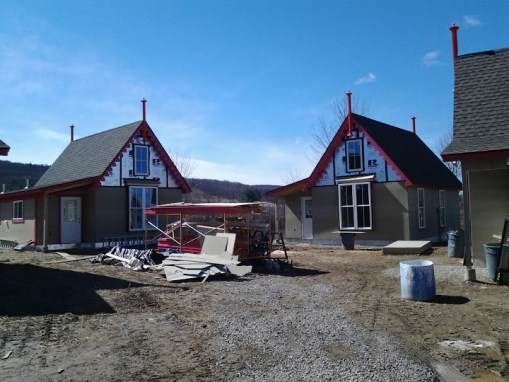
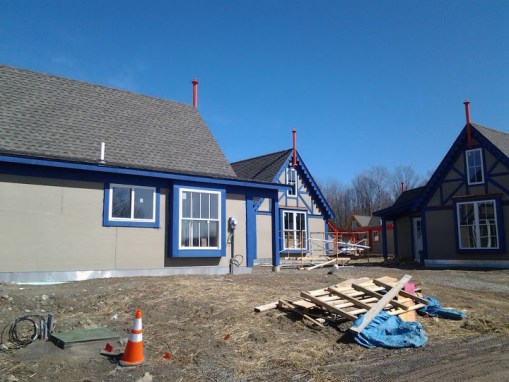
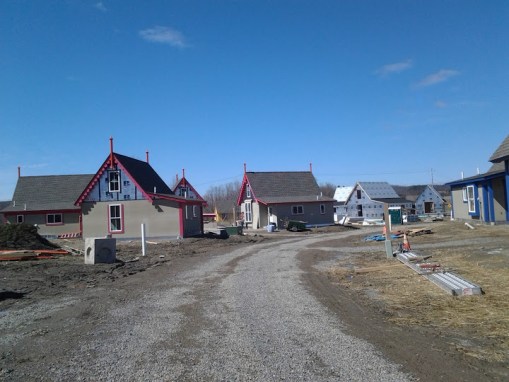
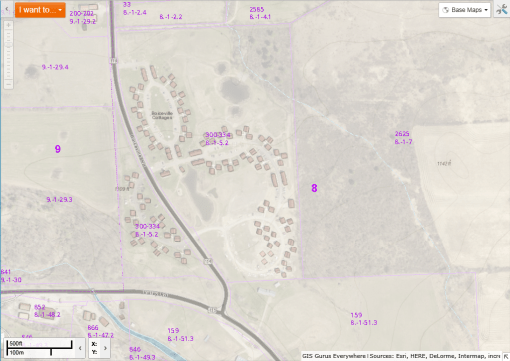
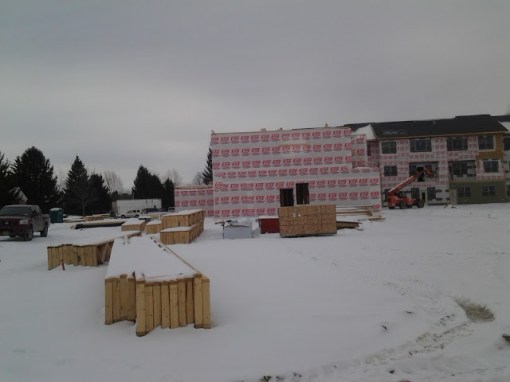
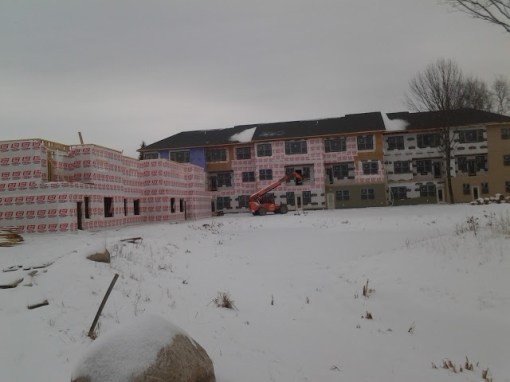
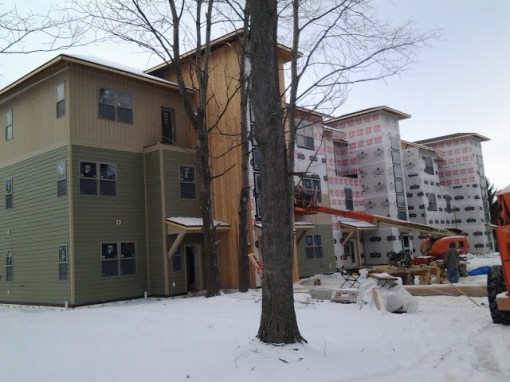
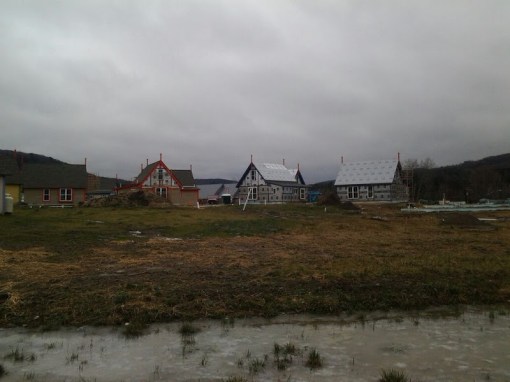
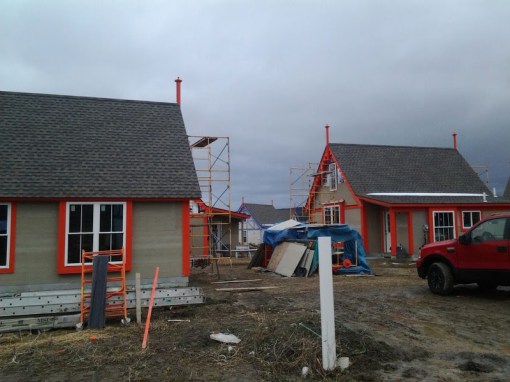
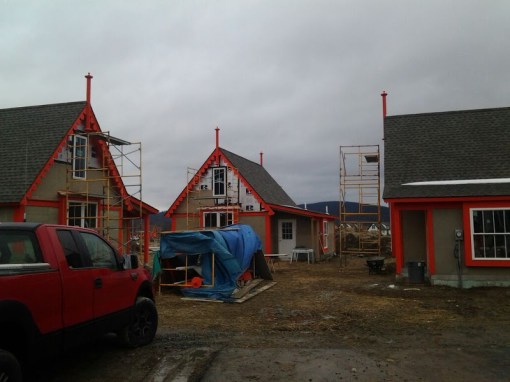
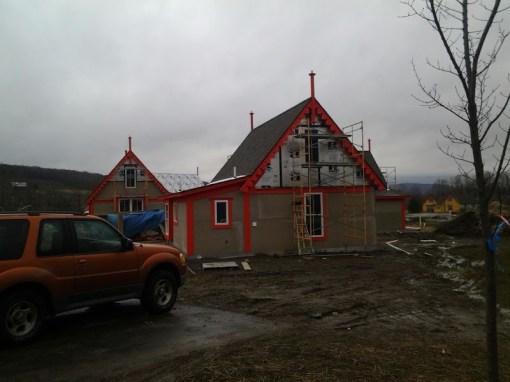
Some good progress has been made with the new cottages over at the Boiceville Cottages site. the cottages with the red-orange trim appear to be fully finished and occupied, while those with the blue trim have some interior finish work left before they can be rented out to tenants.

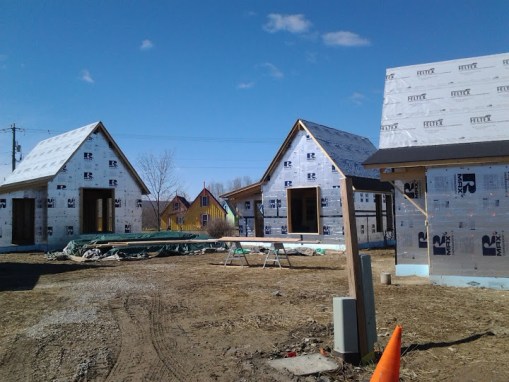
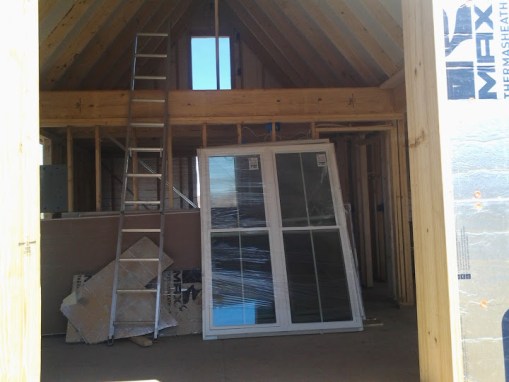
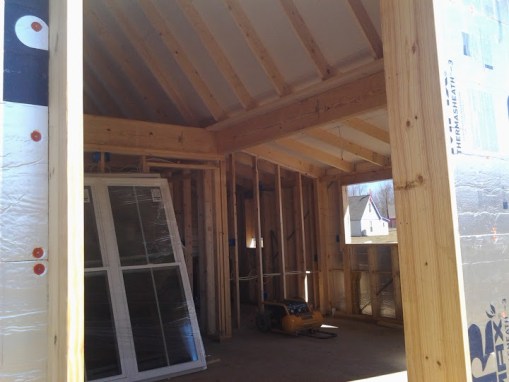
Newly risen since the last visit in January are a set of fuchsia-trimmed cottages that have been framed, sheathed, and partially stucco’d, and a fourth set of cottages that are still at the sheathing stage. Peering inside, you can see the interior stud walls and windows yet to be fitted into their openings.

That leaves a fifth and final batch of cottages that remain foundation slabs for the time being, but will likely start construction as we head through spring. Rents for the houses range from $1,095-$1,725/month, depending on the unit.

Bruno Schickel hosted congressman Tom Reed on a visit to the construction site a couple of weeks ago (more about that here and here). The $2.2 million last phase, which consists of 17 cottages, is expected to be completed this summer, bringing the total number of units on the site to 140. The cottages have been built in phases – 36 in 1996/97, 24 in 2006/07, and about 80 in multiple sub-phases since 2012.

Once the project wraps up, Schickel Construction plans to turn their attention to finishing their newly-acquired Farm Pond Circle project in Lansing.

20160319_123813 20160319_123819 20160319_123922 20160319_123930 20160319_123949 20160319_124119 20160319_124140 20160319_124150 20160319_124200 20160319_124228 20160319_124237 20160319_124241 20160319_124319 20160319_124455 20160319_124500

boiceville_1


Affordable Housing Week 2016

8 03 2016

Expanding on last year’s theme, it’s affordable housing week. The Ithaca Urban Renewal Agency will be holding public hearings on March 24th and 28th as part of the process to determine who will receive money from the Housing and Urban Development (HUD) grants awarded to the city. The 25 applicants (up from 21 last year) range from jobs training to community services to the development of affordable housing. All summed up, there’s $1.85 million requested, and $1.56 million available, so that means an 84% chance of funding, all parameters being equal. For comparison, in 2015, $1.78 million was requested out of $1.215 million available, just a little over two-thirds of the total. The chances for funding have gone up this year.

Part of the reason for the better chances this year is unfortunate – the return of $273,869 in 2014 HOME funding meant for INHS’s 402 South Cayuga project that has not come to fruition. Although HOME funds can be awarded for rental projects, the funding was awarded by the city specifically for owner-occupied housing, so the money comes back into play. There’s also about $26,300 left over from last year that went unallocated.

Without discounting the value of the other applications, the focus here will be on the real estate development projects. For the record, writing about a project is neither an endorsement or opposition from this blog.

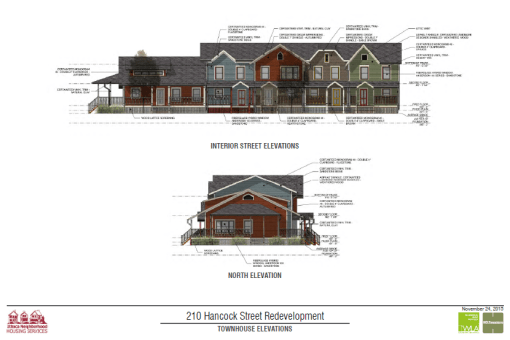
202_hancock_1

202_hancock_2

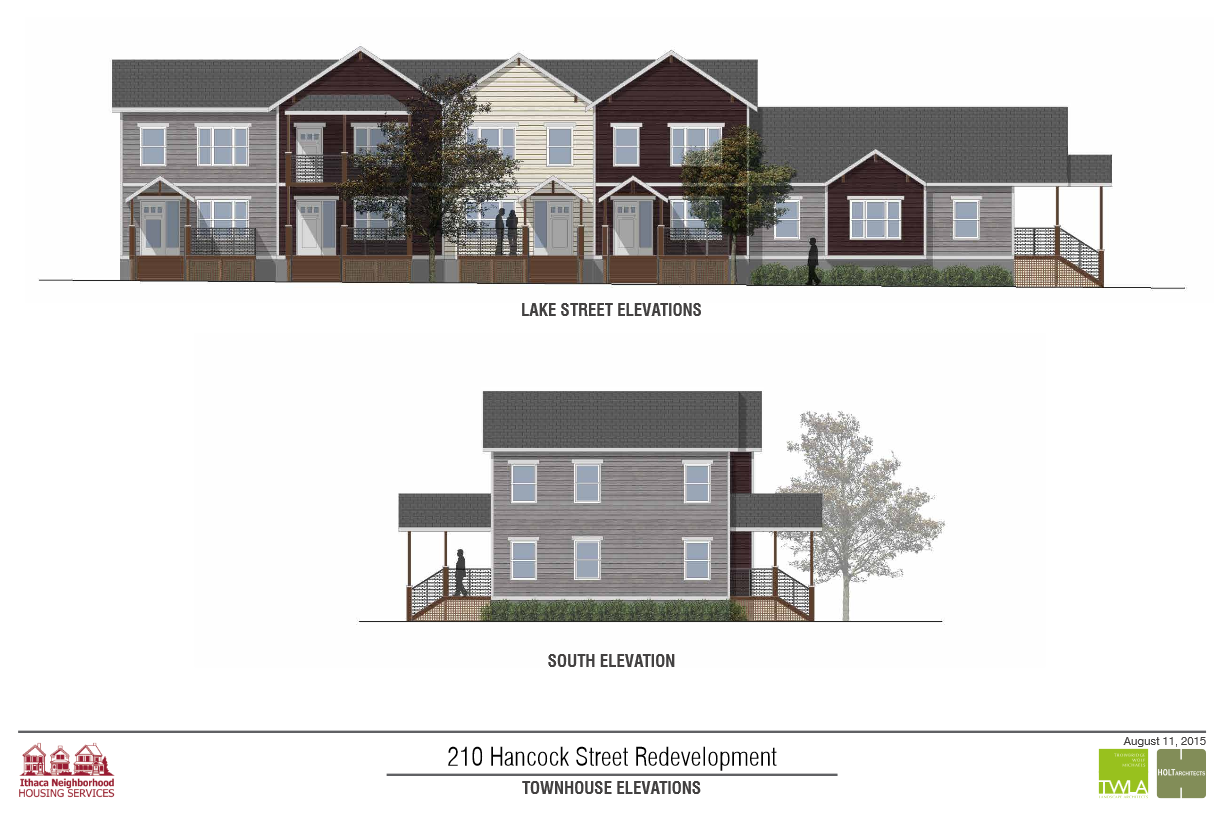
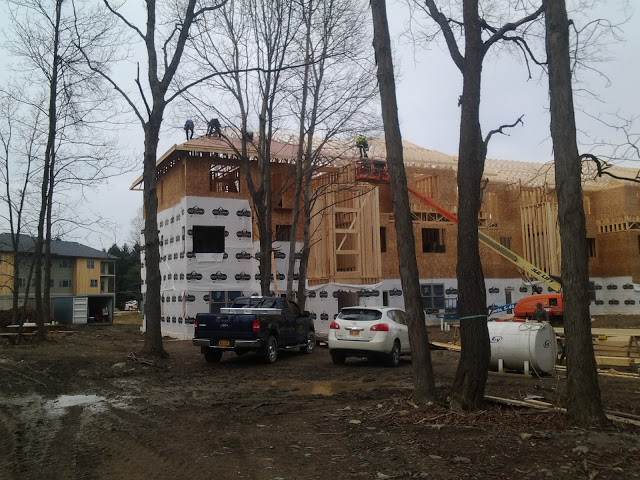
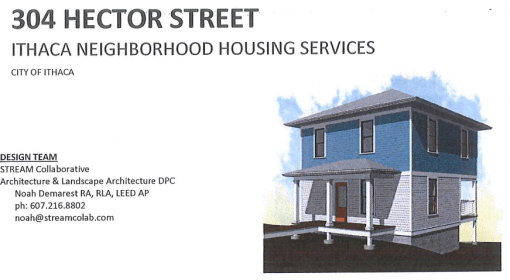
1. Last year, INHS applied for and received almost $458k for 210 Hancock, for which site prep is currently underway. This year, they’re applying for funding for two projects – seven owner-occupied units at 202 Hancock (new tax parcel), and the single-family home planned for 304 Hector Street.

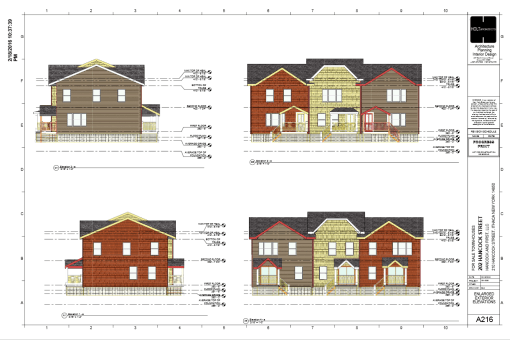
The 202 Hancock townhouses are requesting $567,000 towards a total project cost of $2,359,013. This is a high figure, but it also seems like it would address the recent, very major issue of rapidly rising construction costs derailing multiple affordable housing projects. INHS will be putting up $550,000 of its own money, and already has received a $280,000 city/county/Cornell grant (Community Housing Development Fund) towards the project. The rest comes from bonds, the state, land equity and the buyers themselves.

202_hancock_3

Doing the math ($1,438,640 construction cost, 8,463 SF total), the construction cost budgeted is $170/SF, a little less than the $190/SF they paid for 203 Third Street, but not impossible. Perhaps a larger project of townhouses can utilize cost efficiencies to keep the price down a bit.

The two-story wood frame townhouses would be LEED Certified. Five two bedroom units (1,147 SF) would be sold for about $114,000, and the two three-bedroom units (1,364 SF) for $136,000, available to those making 60-80% of local AMI, or $37,000-$49,000/year. The townhouses would be a part of the Community Housing Trust (CHT), keeping them affordable even as they are sold to others in later years. the anticipated construction period is November 2016 – June 2017. HOLT Architects of Ithaca is designing the townhomes.

Design wise, they look halfway between the first iteration of the rental townhouses, and the approved version.
304_hector_inhs

2. Also from INHS, the 304 Hector application. The amount requested is $100,000 towards a $369,294 project. This seems remarkably high. In the application, INHS notes the construction costs of $262,000 are from actual bids received from Rick May Construction (who is also doing 203 Third Street) and subcontractors. The math comes out to about $191.50/SF. One of the reasons for the very high cost is that INHS is required to hire contractors with enough liability insurance to cover any major accidents, and a lot of smaller builders don’t have enough insurance. $40,000 has already been granted towards the project from the CHDF.

The house would sell for $142,000 to a family making $37,000-$49,000/year (60-80% AMI), the same parameters as the 202 Hancock townhouses. The house would also be a part of the CHT. An April 2017 – January 2018 construction is planned. Local company STREAM Collaborative is the house’s architect.

402_s_cayuga_st_boggsfernandez

3. Meanwhile, at the 402 South Cayuga Street site, developer/architect Zac Boggs and Isabel Fernandez are requesting $105,000 towards their 4-unit townhouse project, priced out at $1,020,000, of which $820,000 is for construction. Of the 4 units, one two-bedroom unit will be available to a family making 80% AMI or less (i.e. $49,000/year or less), selling at $150,000. The other three units, 2 2-bedroom and 1 3-bedroom, would be rented out for 2-5 years, and then sold on the “lower-end of market-rate”, which is estimated in the mid to upper $200s. The units would follow LEED standards, and the affordable unit would be put into the CHT.

Precision Builders of Ithaca would construct the project. A May 2016 – June 2017 build-out is planned, though it doesn’t appear to factor in the planning board approval process.

Aside from the grant, most of the funds for the project will come from a bank loan, with $120,000 of their own money and $40,000 in county bond funds. Assuming these are the same size as the 2 and 3-bedroom INHS townhouses, the construction cost comes out to about $170/SF.

One thing that comes to mind in the context of the inclusionary zoning debate is that this might be the only way to really go in the long-term. If INHS gets priced out of feasibility in the city, trying to cover the cost of affordable units with substantially more expensive market units might be the only option, which is a rather uncomfortable thought. One of the issues with inclusionary zoning is that it prices out the middle; developers have to make up the cost somewhere, and the market-rate units are the scapegoats. Communities end up with a small portion of affordable housing, but mostly expensive housing. With this project, part of the money is being recuperated by renting the other units for at least a few years, which some may scoff at, but costs are, what they are.

habitat_2

4. Habitat for Humanity is requesting $75,000 towards their $305,500 duplex project at 101-107 Morris Street (to be redesignated 202-204 Third Street) on the Northside. Each unit will sell to a familiar making less than 60% AMI ($36,750/year), and the families will have to put in “sweat equity”, helping to build the houses (350 hours of labor). To keep costs down, labor is volunteer-based and materials are donated – as a result, the project only has a $180,000 construction cost, a little over $60/SF.

The units will be two-story, have porches and designed to fit into the neighborhood. The state has given the project a $70,000 grant already, and the city/county/Cornell CHDF has given $80,000. the rest is covered by corporate grants (Cargill, Lowe’s, M&T Bank) and individual donations. A timeline of April 2017 – April 2018 is anticipated.

No renders, but the above site plan was included in the application.
622_w_clinton

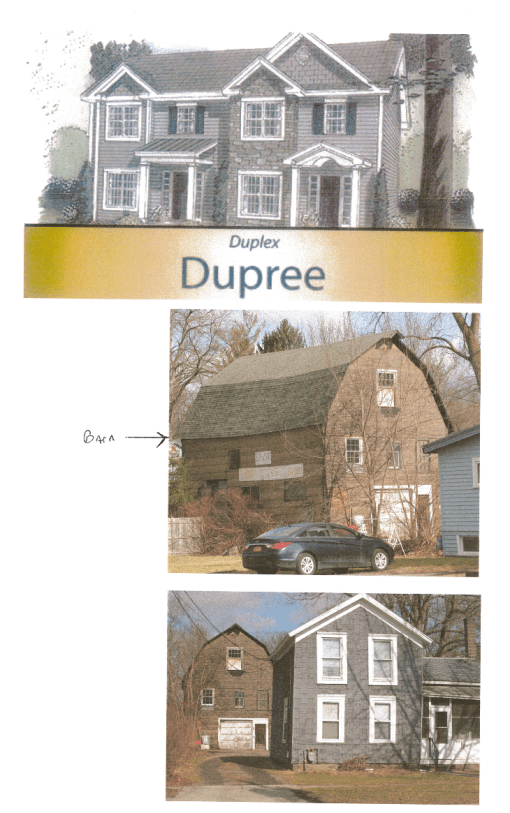
5. Last, the only truly new project for this post. 622 West Clinton Street in the South Side neighborhood. The applicant, Jerame Hawkins, proposes deconstructing a decaying barn at the rear of the property and replacing it with an affordable owner-occupied duplex. Hawkins, who runs the county’s Youth Advocate Program, would make each unit available to a family making 60% AMI or less ($36,750/year or less), in particular Section 8. The duplex would be modular, 3-beds and 1,561 SF each, with Carina Construction and Finger Lakes ReUse working with Hawkins on the project. The construction cost of $292k works out to about $93/SF.

The house at the front of the property, which dates from the late 1800s, would be renovated and retained as affordable housing. Hawkins is requesting a grant of $135,000 towards the $364,634 project. A project timeline of October 2016 – January 2017 is given in the application.

The one potential red flag I’m seeing is a line in the app that says “retaining for a minimal [sic] of 1 year”. Either that gets clarified and extended, or the IURA won’t be interested this proposal on account of it not being affordable for long enough a period of time.


209-215 Dryden Road Construction Update, 02/2016

3 03 2016

First progress report of many. As Collegetown projects go, Novarr-Mackesey’s plan for 209-215 Dryden stands out for a number of reasons.

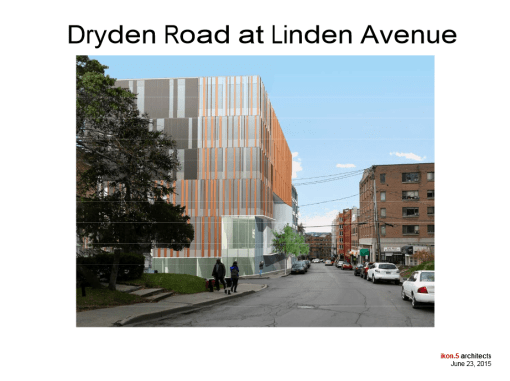
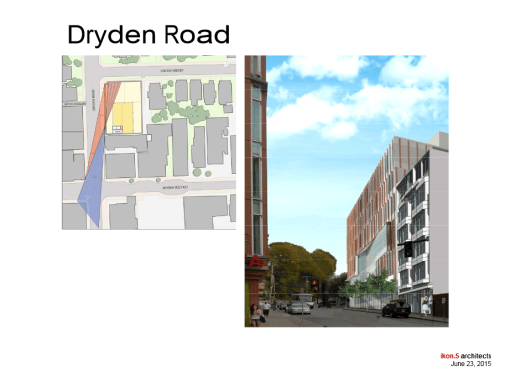
For one, it calls for a six-story plus basement, 76,200 SF academic/research building to be 100% occupied by Cornell University’s Executive MBA program. No residential or mixed-use to be found here, and given its primary occupancy of office workers and Executive MBA students (who tend to be older, deep-pocketed and will only be coming up from New York a few weeks of the year), not the typical Collegetown crowd either.

For two, this is one of those rare occasions where a Collegetown building under construction is not designed by local firm Jagat Sharma. ikon.5 Architects of Princeton, a John Novarr favorite, penned the steel-and-glass box with its multicolored steel mullions.

By the city’s estimate (from the Site Plan Review form), the construction itself will cost $12 million. From construction loan paperwork filed with the county in December, the total cost, including hard and soft construction costs, will be $15,912,823.33. Wells Fargo Northwest is the lender.

In September, the county approved a payment-in-lieu-of taxes (PILOT)-like tax abatement, taxing the finished building at $5.2 million plus 2% per year. The amount is still more than the ~$1 million value of the original, unimproved properties on the site, and it comes with a 50-year guarantee that Cornell won’t be able to but the property and make it tax-exempt, something that was hinted at a few times in the TCIDA application.

209-215 Dryden will host about 420 Cornell MBA students and staff when it opens in late Spring 2017, later increasing to 600 as Cornell fills out the rest of the square footage. The basement and first three floors will be dedicated classroom/academic space (including 90-person LGI classrooms), and the upper three floors will be office space. A large three-story atrium will mark the building’s primary entrance. At opening, it will be fully leased by Cornell, but only 70% occupied. Sounds like plenty of short-term flex space.
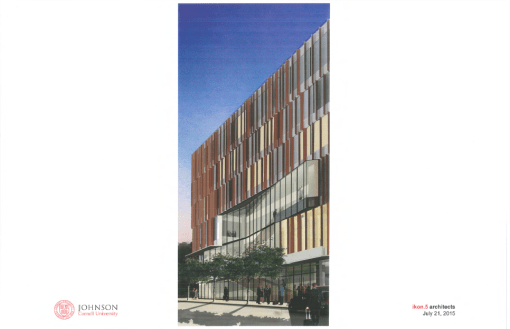
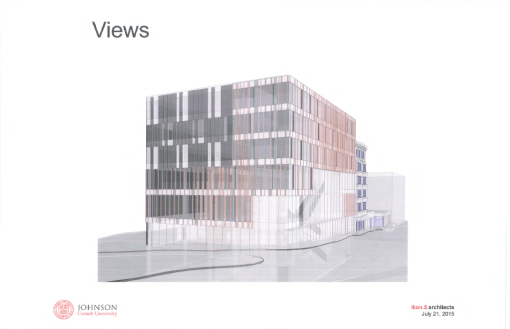
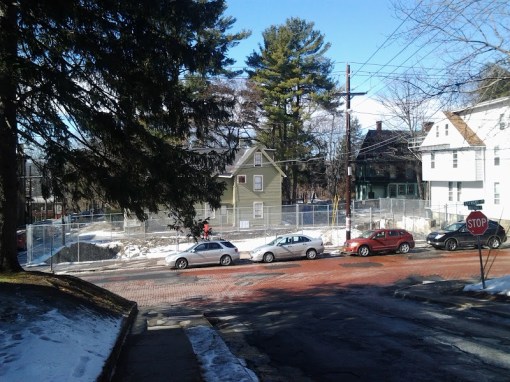
Since December, the site has been cleared of weeds and any remaining debris, and it looks like foundation prep work (excavation) might be starting on the far side of the property away from the streets. Some steel H-beams have been brought to the site, possibly for use in shoring up the site along the excavation perimeter. The H-beams are drilled or driven in at regular intervals, and hold the soil back while the foundation is excavated. A pile driver, tubular piles, an excavator, and a Dynapac compaction roller are on-site. So, the primary duties at hand appear to be excavation of the new building’s foundation, and shoring up the soil surrounding it so that the site remains stable while that work is going on.

As the signage on Novarr’s corner building suggests, Hayner Hoyt Corporation of Syracuse will be the general contractor.

20160220_111747 20160220_111809 20160220_111822 20160220_111902 20160220_111945 20160220_111948 20160220_111956 20160220_112419

cornell_novarr_1 cornell_novarr_3 cornell_novarr_5 cornell_novarr_6 cornell_novarr_2


Chapter House / 406 Stewart Avenue Construction Update, 2/2016

24 02 2016

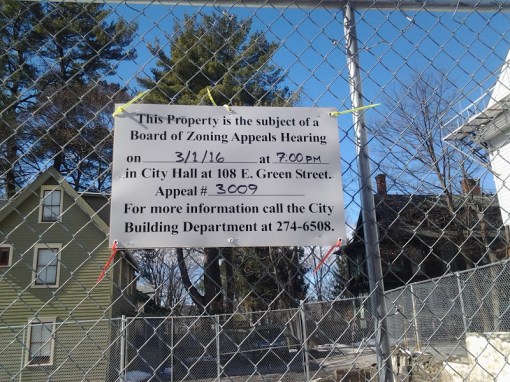
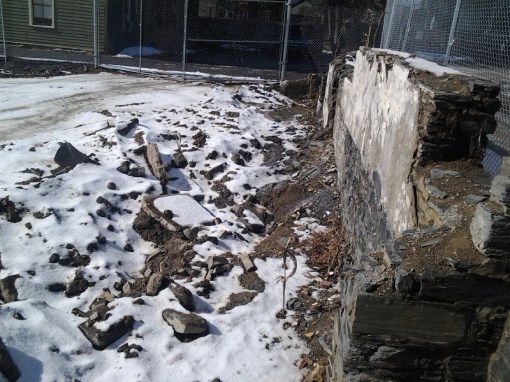
Not so much construction as a look at what the site as it currently stands. The Chapter House has been approved, and the apartments house planned for 406 Stewart Avenue, being a smaller project, just needs the Board of Zoning Appeals (BZA) to sign off at this point, as the Ithaca Landmarks Preservation Commission (ILPC) has given their tentative blessing. No specific numbers on number of occupants/bedrooms in the new Chapter House, but expect it to be fairly close to the total lost in last Spring’s tragic fire. 406 will be slightly larger thanks to improved interior circulation and the addition of a floor – 4 apartments and 7 occupants vs. the previous building’s 5 apartments and 6 occupants. Because of that one-floor increase, a reconstruction cannot be done as-of-right, so the project will need to be granted several area variances from the BZA.

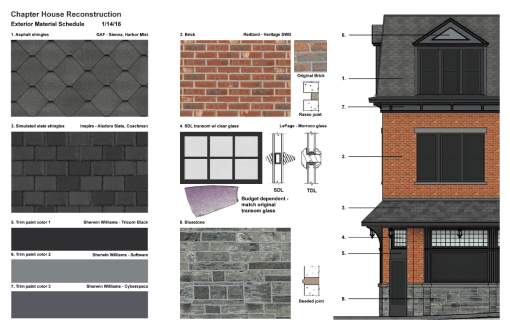
In keeping with the ILPC’s fairly stringent approach, the buildings are designed to be sympathetic to the originals without being replicas (which is generally advised against by historic preservationists because it cheapens the value of buildings that have managed to survive the past century). The Chapter House will have GAF Sienna asphalt shingles on the roof and Inspire Aledora simulated slate shingles on the first-floor overhang, Redland Heritage SWB brick and bluestone.

The Chapter House project is paid for by Sebastian Mascaro of Florida, and 406 Stewart is funded by Jim Goldman of suburban Philadelphia. Jerry Dietz of local company CSP Management is representation both owners for their respective projects. Local architect Jason K. Demarest (brother of STREAM Collaborative’s Noah Demarest) is the designer-in-charge.

Work on the new Chapter House is expected to begin shortly, with a late summer or early fall opening. 406 Stewart expects a May construction start with completion in January 2017.

20160220_114105 20160220_114135 20160220_114147 20160220_114216 20160220_114227 20160220_114244

chapteR_house_reconst_v4_2 chapteR_house_reconst_v4_1


Village Solars Construction Update, 2/2016

23 02 2016

At the Village Solars construction site, 12-unit Building “D” is nearly complete from the outside, with just a couple of small sections of exterior trim yet to be installed.

18-unit Building “G/H”, a new design, is a hodge-podge of materials at the moment. A few exterior wall sections are bare plywood, some have been covered in housewrap (looks like there are two different companies, the Croft Lumber black label and a red label that I did not take close enough photos of to identify), some have had exterior wood and cement board trim attached and for some unknown reason, the northwest corner has gypsum board from National Gypsum. Both are waterproof barriers, although they can vary on details like fireproofing. Windows and doors have been fitted and the plywood roof panels (Huber ZIP system) are now shingled.

11-unit Building “E” is up to the second floor, wrapped but without openings cut for the windows on the second floor (they’re there, just wrapped over) – perhaps the contractor’s using the wrap as something of a wind barrier while the crew puts up the interior stud walls.

Late spring and summer occupancies seem likely. The 41 new units are the $6 million second phase of a 174-unit, multi-phase project (an as-yet unapproved set of phases would bring the total to over 300 units). Phase one, with three buildings and 36 units, opened last year.

20160219_144704 20160219_144707 20160219_144923 20160219_144943 20160219_145014 20160219_145022 20160219_145118 20160219_145138 20160219_145226 20160219_145305 20160219_145347 20160219_145406 20160219_145609

village_solars_2village_solars


Cornell Finally Moving Forward on Maplewood Plan

3 02 2016

maplewood
Finally, finally, some real news. Cornell, through its Chronicle news outlet, has issued a statement regarding plans for the Maplewood Park Apartments replacement. Let’s look at the most important details.

– Cornell will be partnering with collegiate housing developer EdR. Cornell will own the land, but EdR will finance, construct and manage the development.

– Groundbreaking is expected this fall, with a summer (August) 2018 opening.

– Approximately 850 bedrooms are anticipated in the first phase, which is only for graduate and professional students. No undergrads here.

– Designs and unit mix are not yet finalized

– To quote Jeremy Thomas, Cornell’s senior director of real estate: ““Our goals for this site are to foster a close-knit neighborhood feel, while connecting this community through walkways and outdoor spaces to the university and surrounding neighborhoods, including the East Hill Plaza area where we are planning future mixed-use development.”

– EdR and Cornell will be meeting with neighborhood groups, the local landlords’ association, and since the project will contain a sizable portion of family housing, the ICSD.

Now, with all that acknowledged, let’s do a little more research. First, the developer. EdR (formerly Education Realty Trust) is a Memphis-based student housing developer following in the steps of Campus Advantage, CA-Ventures, and others who have tried and failed to make their way into the Ithaca market. The difference is, apart from EdR also being a Real Estate Investment Trust that finances its own projects (REITCampus Advantage was not, nor was Campus Acquisitions before it was bought), the company has Cornell’s blessing and the proposal is on Cornell land, which are very, very important cards in their hand. It would take a huge flaw to make local officials come out against this project, which will address a critical student housing shortage at the university.

EdR has been through upstate a few times before, though not in Ithaca. They developed and manage student housing for SUNY ESF in Syracuse (454-bed Centennial Hall), and developed two private apartment complexes adjacent to Syracuse University, the mixed-use 312-bed Campus West project, and the 423-bed University Village Apartments. They have a mix of arrangements with different schools – the SU projects are totally private, but Centennial Hall is owned by ESF and managed by EdR, an arrangement that sounds pretty similar to what Cornell will be doing.

Looking at the profile, I can’t find too much of a pattern in the choice of architects. In many cases, they’re local (the Univ. of Kentucky projects used Sherman Carter Barnhart, a Lexington firm, while University Village and Campus West used Holmes King Kallquist, a Syracuse firm), but there’s a few wild cards from outside a region – Centennial Hall used WTW Architects of Pittsburgh. In sum, it looks there might be a slight preference towards firms local to a project site, but apart from that, the chosen designers are literally and figuratively all over the map. EdR looks to have focused on mixed-use, compact and urban-friendly projects with their more recent partnerships.

As for price range, we’re talking some serious coin being tossed around. The Syracuse projects, which are half the size of Cornell’s project, cost $28-$30 million. EDR, in its own press release yesterday, estimates the project will cost about $80 million. Or course, it will be tax-exempt, but that much money translates to a lot of construction jobs, and Cornell is a strong supporter of trade unions. Local companies might get in as subcontractors, but with a project this large, one of Cornell’s preferred circle of general contractors (Welliver, Pike, LeChase) will most likely tackle the overall buildout.

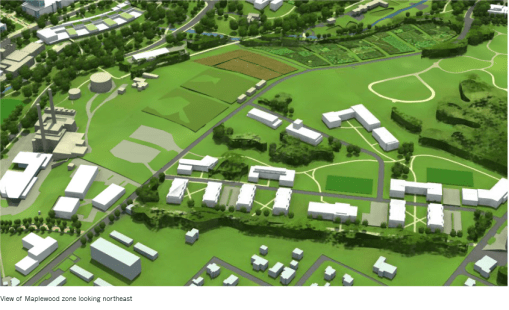
Now, thinking about the project itself, if it’s 850 beds (rough assumption of one bedroom per person), that’s almost twice the capacity of Maplewood and its 394 units/480 beds. Maplewood is 109,000 SF of usable space (122,000 SF gross) and sits on 16.02 acres. So the current density is about 24.6 units/acre, or 30 beds/acre, in one-story buildings that cover the vast majority of the site.

maplewood_3

The 2008 Master plan, if it’s any indication, calls for 15-30 units per acre (the number of beds is left up to interpretation) and up to 400,000 SF of space in 2-4 story buildings, creating a more campus-like appearance by going vertical instead of spreading out as the current Maplewood does. While the layout in the plan was totally conjecture, the specs are not. The town of Ithaca zoning (High Density Residential) caps it at 36 feet, but Cornell could probably get a floor or two of variance without much difficulty – the town’s 2014 Comprehensive Plan recognizes Maplewood as one of the appropriate sites for “Traditional Neighborhood Development High Density“, dense mixed-use thoroughly integrated into the surrounding street fabric, 6-30 units/acre but averaging 8-16 units/acre with 10-20% open space.

There’s one last detail to mull over in all of this. According to the city, Cornell will be exercising its right to take back the Ithaca East apartments to the east and northeast of Maplewood (I spoke/emailed with Abbott about this a few days ago when the city docs were released, so…convenient timing). According to property manager Bruce Abbott, Cornell renews every June and he has two years to finish out his management of the property, so Cornell won’t take over Ithaca East until June 2018 at the earliest – which would be just in time for a second phase if Cornell desires, right as phase one is finishing up. Cornell also purchased the homes between Maplewood and Ithaca East, in 1998 and 2013. So looking further ahead, here’s an adjacent 8.2 acres that seems likely to fall under the Big Red development radar in the next couple years, not to mention future plans for East Hill Plaza. EdR is going to be very busy over these next few years.


Holiday Inn Express Construction Update, 1/2016

19 01 2016

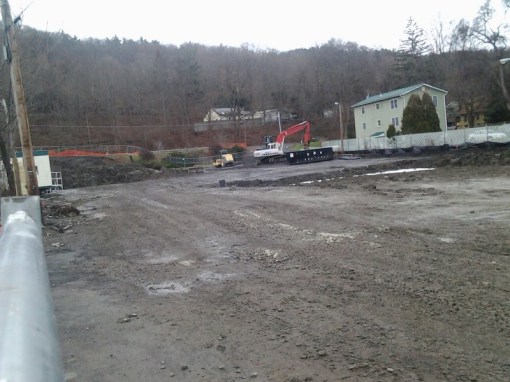
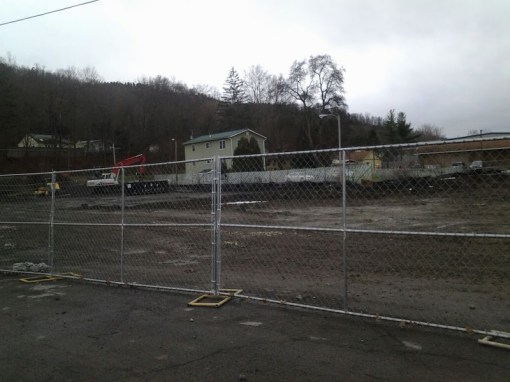
Nothing too exciting underway yet at the Holiday Inn Express at 371 Elmira Road, but the site is being cleared and prepped for construction. The site combined two tax parcels, one of which held a 7,556 SF 1970s office building, and the other a 960 SF engine repair shop. Both have which have been demolished to make way for the new 11,769 SF, 79-room hotel. Eventually, a retaining wall will be built on the back end (east side) of the parcel, to hold back the slope soil from what will be the hotel’s parking lot. A staircase and sidewalk will connect Spencer Road to the parking lot and Elmira Road.

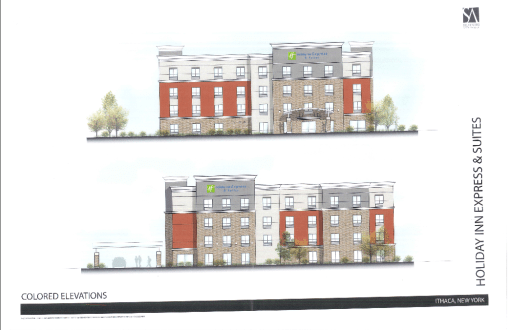
For those who aren’t especially big fans of chain hotels and corporate architecture, this one appears to have a relatively unique design, while following the standard materials and color scheme (called “Formula Blue“) for new Holiday Inn Expresses. Standard for the HI Express line, the hotel’s lobby will serve as a “great room”, there will be free high-speed internet, and while there will not be any full-service dining, a breakfast bar will be included.

Rudra Management and Rosewood Hotels (Jayesh Patel) of suburban Buffalo is the developer, while Silvestri Architects and Optima Design & Engineering, also of Buffalo, are in charge of design. The project is being financed with a $5.98 million loan from S&T Bank, a regional bank in Western Pennsylvania. The project required a little bit of time to obtain financing, having received approval in March 2014, but now receiving the construction loan until this past October. Another Rudra/Rosewood project just up the road at 339 Elmira Road was not so lucky. A Summer 2016 opening is planned.

20160109_141040 20160109_141046 20160109_141057

holiday_inn_express_v2

holiday-inn-express-original-1


Collegetown Terrace Construction Update, 1/2016

17 01 2016

Being a 247-unit, 344-bed project means a lot of earth has to be moved before anything starts to rise from the ground. As a result, the project is undergoing the necessary if not exactly glamorous step of excavation for Building 7. All three phases combines have an estimated construction cost in the range of $70 million. The impression I’m getting from here is that when the time comes, foundation forming and pouring will begin from the west side and slowly make its way east, and so the west side of the curvaceous apartment building will be further along the east side at a given time during construction (similar to how it played out with Buildings 5 and 6 during the previous phase). Local development company Novarr-Mackesey plans to have the apartment building ready for tenants by August 2017.

20160109_132637 20160109_132711 20160109_132725 20160109_132743 20160109_133206 20160109_133401 20160109_133413 20160109_133535 20160109_133627

From December 2015:

20151205_091839 20151205_091917 20151205_092046 20151205_094226 20151205_094229 20151205_094237


Boiceville Cottages Construction Update, 1/2016

15 01 2016

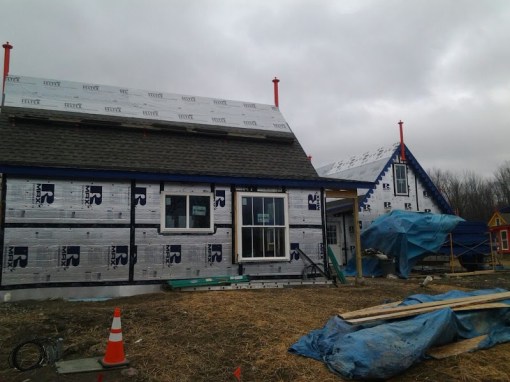
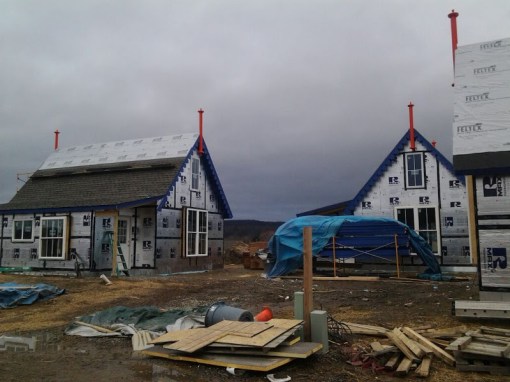
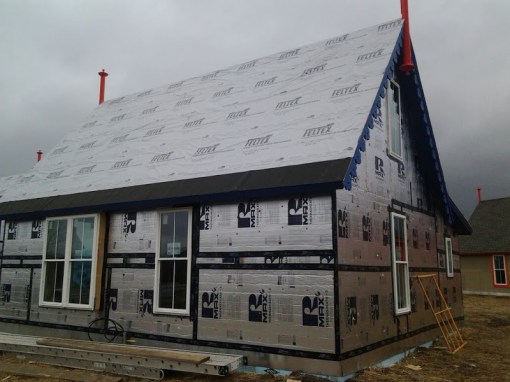
Just a pass through Caroline to check on the latest progress at the Boiceville Cottages. At present, it looks like about six new houses have been framed out – the three furthest along (red-orange trim) are receiving their exterior stucco coats, while the three less further along (cobalt blue trim) look rather like shiny ornaments thanks to the aluminum facer on the Rmax Thermasheath polyiso insulation (previously some red-faced Atlas polyiso was used). Rigid thermal foam plastic insulation board is lightweight, easy to cut, provides decent fire and moisture protection and provides a very high degree of insulation from the elements, greatly limiting the transfer of heat outward. As compared to traditional plywood sheathing however, it’s not as strong, and because the water control is on the outside with the foam sheathing, there are limitations or extra steps that need to be taken before applying many exterior facade materials like wood or fiber cement.

The roof foam boards are covered in Feltex synthetic roof underlayment before the shingles are attached. Compared to traditional asphalt-saturated felt, the synthetic material offers greater moisture resistance, and they’re light-weight and high-strength. However, wicking, where water can be drawn up the roof and promote leaks, can be a big issue with synthetic roof underlayment, so it has to be installed correctly and carefully.

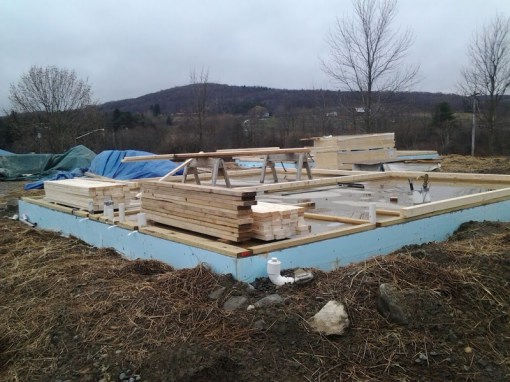
Another set of homes is still at the concrete slab and sill plate stage, but it looks like some wood stud walls will be going up shortly. Schickel Construction is aiming to have all 17 of the new units complete by the end of the summer.
20160109_115011 20160109_115045 20160109_115125 20160109_115158 20160109_115217 20160109_115233 20160109_115309 20160109_115328 20160109_115354 20160109_115414 20160109_115432 20160109_115457 20160109_115503 20160109_115536

boiceville_1