327 Eddy Street (Dryden Eddy Apts) Construction Update, 2/2016

29 02 2016

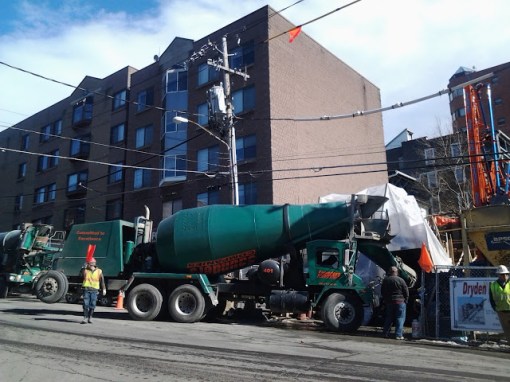
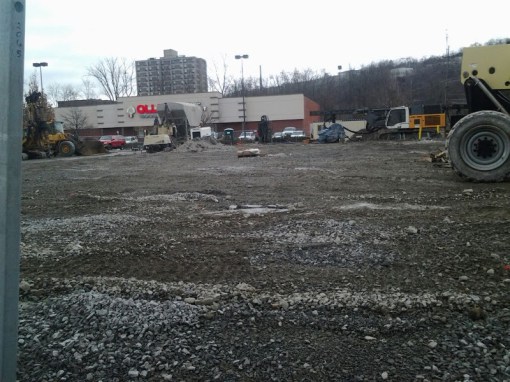
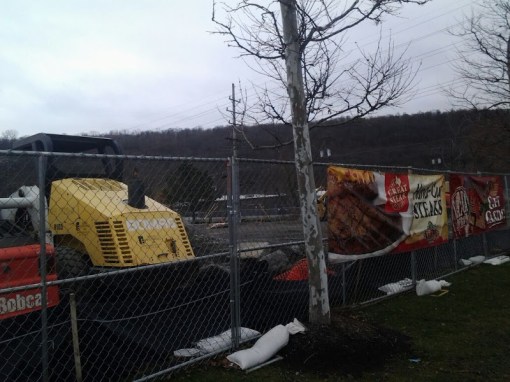
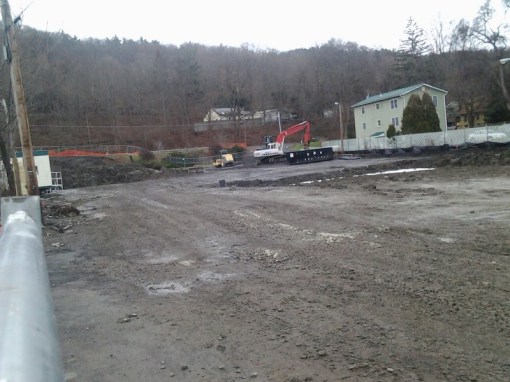
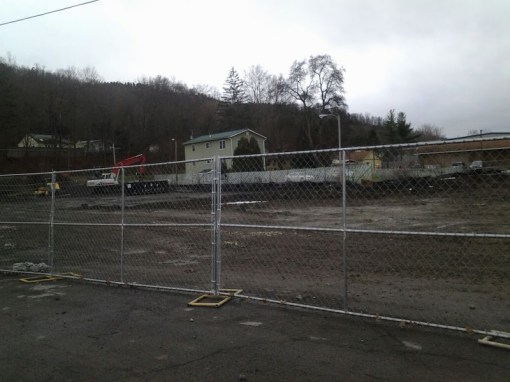
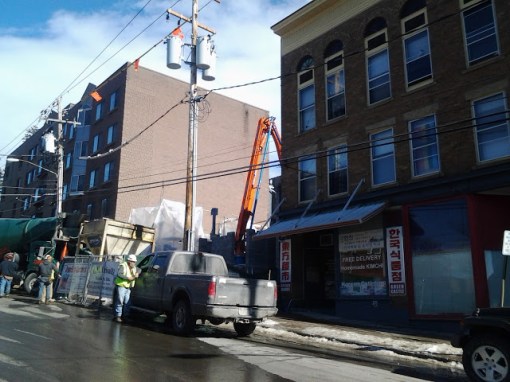
It was a little difficult to get good vantage points at the 327 Eddy Street construction site. Several cement trucks were coming and going during the photo op, and the crew from G. M. Crisalli and Associates were less than inclined to let anyone get close to do some photo taking.

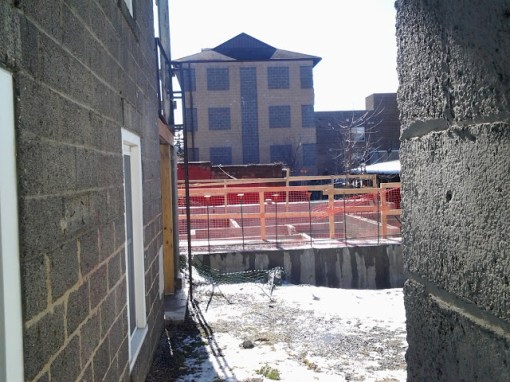
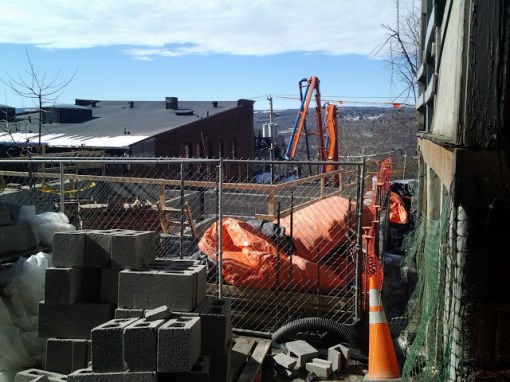
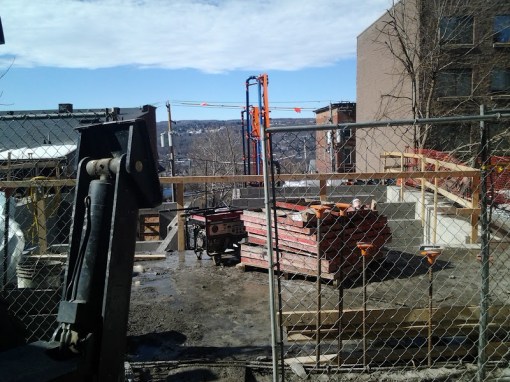
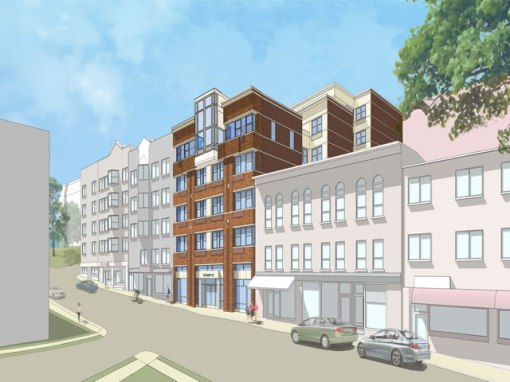
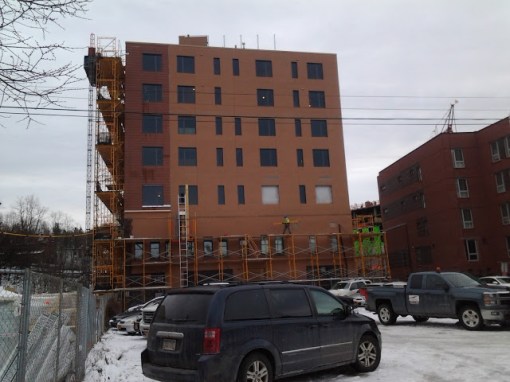
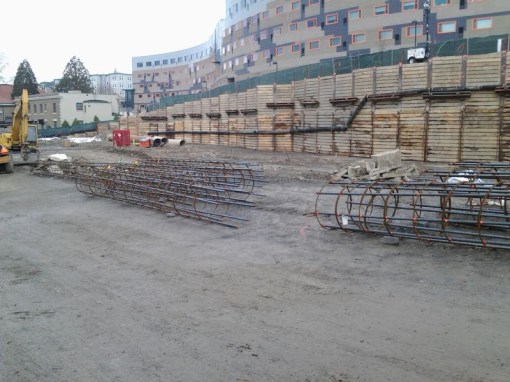
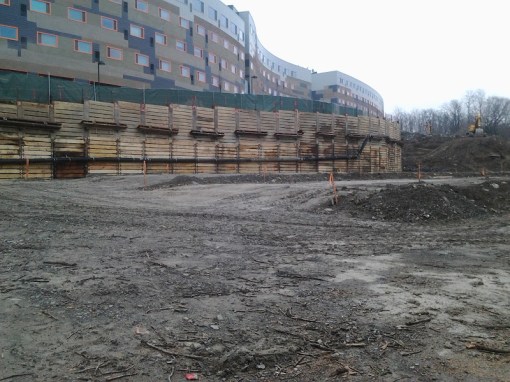
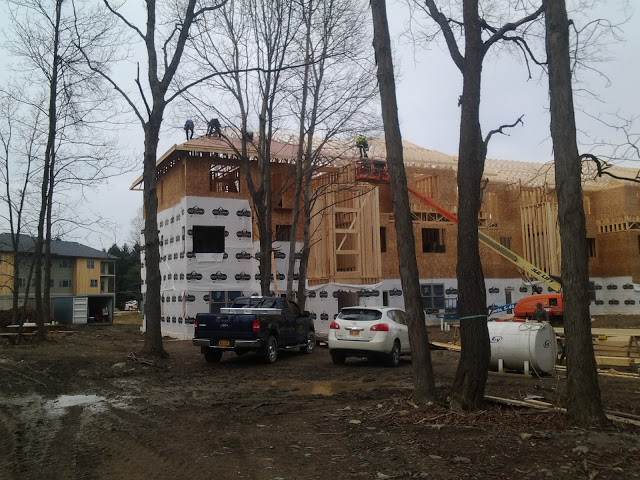
Of the trio of Collegetown midrises currently underway, it would appear from what is visible that 327 Eddy is the one that is least furthest along. This might be because of the complicated topography of the site, since the building steps back into the hill. On the upper section, cinder block walls have been assembled; on the lower section, there are additional cinder block walls with vertical rebar poking out. I’m not 100% sure what’s being poured, as I thought the lower-level foundation was complete. According to someone familiar with the project, the flowable fill used in the foundation for this project was poured three feet deep. Flowable fill can’t handle as much weight as concrete, so I wonder if that factored into the decision to lop the sixth floor off the apartment building.

Plans still call for the 22-unit, 53-bedroom apartment building to open by August 2016. 1,800 SF of retail space will be located on the first floor of the lower level. Steve Fontana is the developer and Jagat Sharma (who actually updated his website for the first time in four years) is the project architect. According to the Fontana’s website (conveniently linked with the shoe store), unit prices range from $930 to $1250 per bedroom.
20160220_113640 20160220_113711 20160220_113725 20160220_113747 20160220_113806 20160220_114557 20160220_114658 20160220_114734

20160220_114745

327_eddy_rev4_1 327_eddy_rev2_3


Carey Building Construction Update, 2/2016

28 02 2016

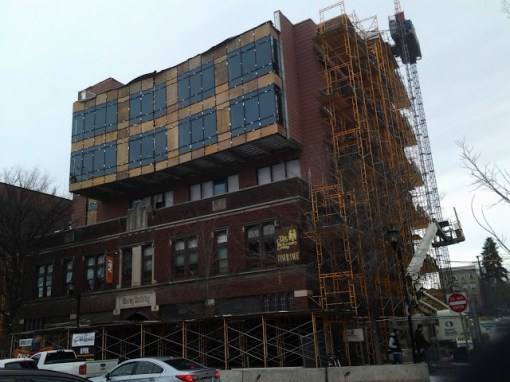
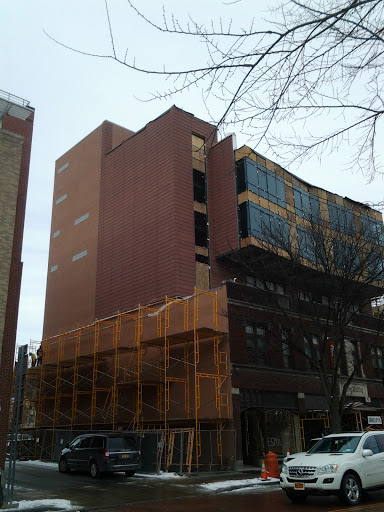
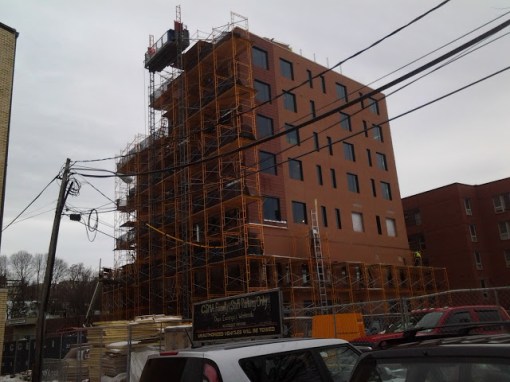
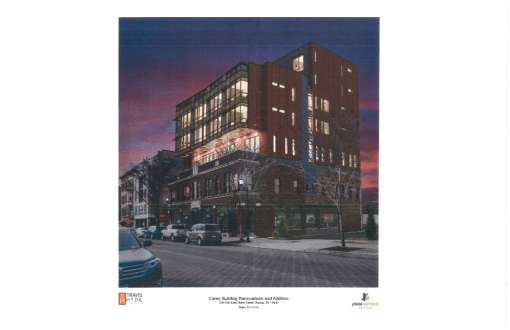
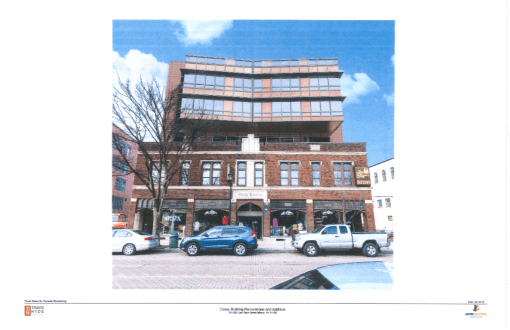
To be 100% honest, I was a little worried about how the building would look before the exterior materials started to go on. But thankfully, those worries seem to have been overblown. The terra cotta that graces the front and side looks good, and being a similar color to the original mid 1920s building allows the new five-story overbuild to pay its respects without mimicking the original brick.  The peach-colored material is NuTech Direct Applied Finishing System (DAFS) stucco. While not as visually interesting perhaps, the rear of the building will be mostly hidden by the new Hilton Canopy hotel when that begins construction later this spring. There have been plans for a mural on the Carey’s western wall as well.

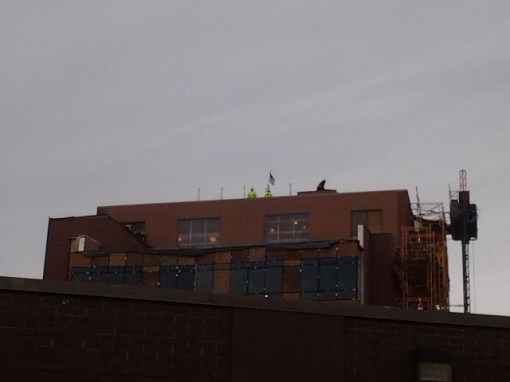
Many of the new windows have been fitted, although in some areas like the third floor, the window openings were more likely to be covered in plastic sheets rather than panes of glass. Someone familiar can correct me if I’m wrong, but the boards on front of the curtain wall are placeholders a brown or dark brown-tinted glass. The small openings on the west face will have a clear, marble-block glass. Roofing still needs to be taken care of, and taking a guess, drywall and interior finishing is underway in the more complete areas (I want to write lower floors, but I wonder if the lower residential floors are actually further along than Rev’s third-floor space), and utilities rough-ins on the floors/spaces that aren’t as far along.

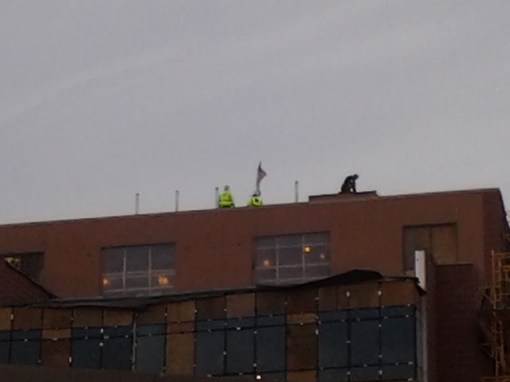
Although it’s a fairly modern shape in a city that loves its historic designs, it looks like it will be a nice addition to the downtown skyline.  Local firm John Snyder Architects penned up the design, Travis Hyde Properties is the developer, and those guys hoisting the Old Glory are either direct or indirect employees of general contractor LeChase Construction.

20160219_135310 20160219_135334 20160219_135410 20160219_135538 20160219_140004 20160219_140039

20160219_135224 20160219_135216

carey_rev5_1 carey_rev5_2 carey_rev5_3


Ithaca Beer Construction Update, 2/2016

25 02 2016

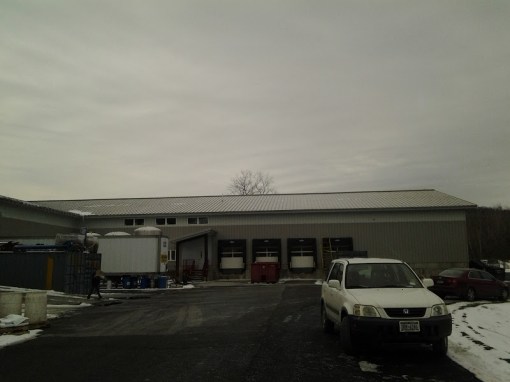
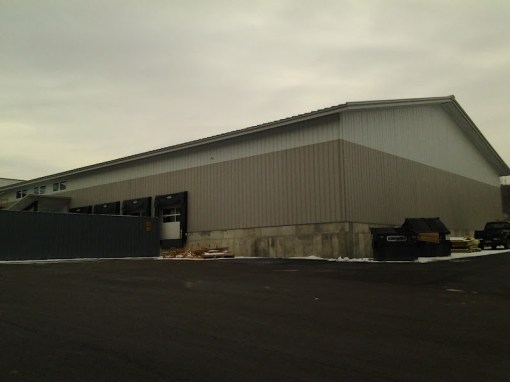
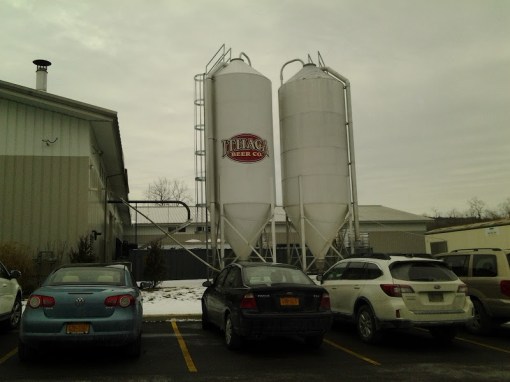
From the outside, work to Ithaca Beer’s $7.2 million, 23,800 SF addition is complete. The new wing will hold a new bottling production line, an expanded packaging area, and more barrels for aging the yeasty brew. According to the Voice interview I did with Ithaca Beer marketing director Gregg Stacy back in November, the new equipment should be on-site by March. The new wing should be fully up and running sometime this spring.

The new addition and expanded capacity are expected to create 22 jobs, according to the project’s tax abatement application. As an economic development project, Ithaca Beer applied for and received standard 7-year tax abatements from the Tompkins County Industrial Development Authority (TCIDA). Local firm HOLT Architects is listed as the designer(s)-in-charge.

In addition to HOLT, Rowlee Construction Inc. of Fulton is the Design-Build Contractor, and Syracuse-based Fortune Engineering Group was involved with the structural design (a big thanks to HOLT’s Maria Livingston for the additional info).

20160219_171301

20160219_171355 20160219_171420 20160219_172058

ithaca_beer_2


Village Solars Construction Update, 2/2016

23 02 2016

At the Village Solars construction site, 12-unit Building “D” is nearly complete from the outside, with just a couple of small sections of exterior trim yet to be installed.

18-unit Building “G/H”, a new design, is a hodge-podge of materials at the moment. A few exterior wall sections are bare plywood, some have been covered in housewrap (looks like there are two different companies, the Croft Lumber black label and a red label that I did not take close enough photos of to identify), some have had exterior wood and cement board trim attached and for some unknown reason, the northwest corner has gypsum board from National Gypsum. Both are waterproof barriers, although they can vary on details like fireproofing. Windows and doors have been fitted and the plywood roof panels (Huber ZIP system) are now shingled.
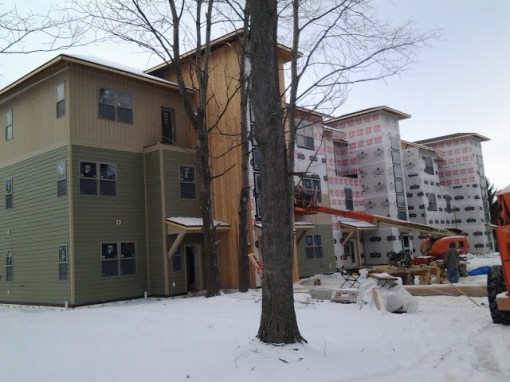
11-unit Building “E” is up to the second floor, wrapped but without openings cut for the windows on the second floor (they’re there, just wrapped over) – perhaps the contractor’s using the wrap as something of a wind barrier while the crew puts up the interior stud walls.

Late spring and summer occupancies seem likely. The 41 new units are the $6 million second phase of a 174-unit, multi-phase project (an as-yet unapproved set of phases would bring the total to over 300 units). Phase one, with three buildings and 36 units, opened last year.

20160219_144704 20160219_144707 20160219_144923 20160219_144943 20160219_145014 20160219_145022 20160219_145118 20160219_145138 20160219_145226 20160219_145305 20160219_145347 20160219_145406 20160219_145609

village_solars_2village_solars


Texas Roadhouse Construction Update, 2/2016

22 02 2016

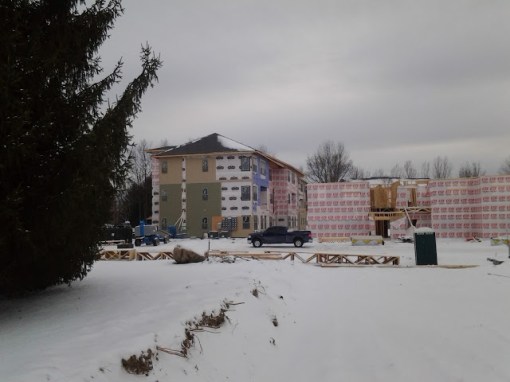
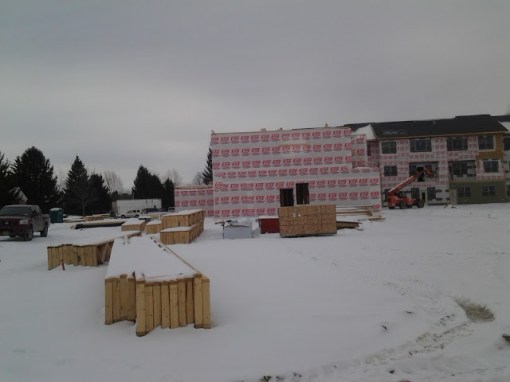
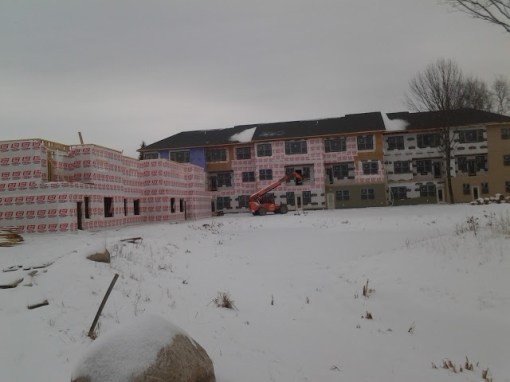
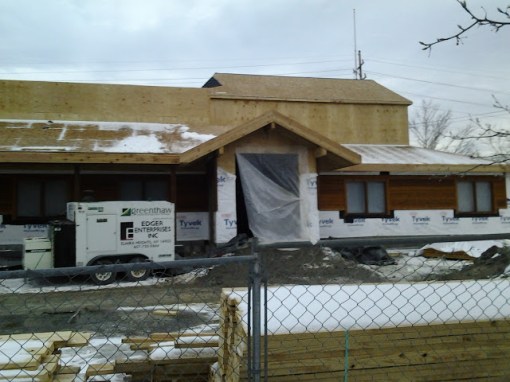
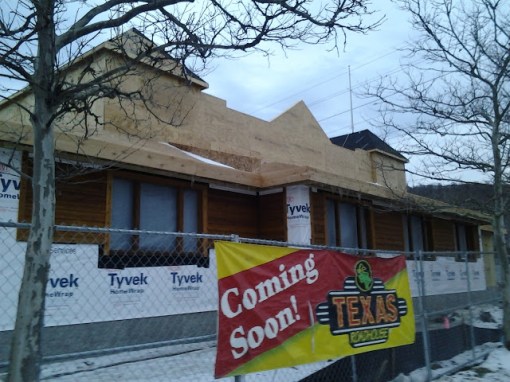
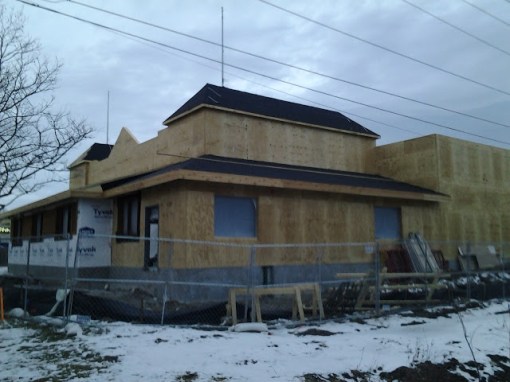
Color me impressed on how quickly Texas Roadhouse has gone up. Just a month ago, this was just a filled lot. Contractors on-site (the general contractor appears to be Edger Enterprises of Elmira, given the branding on the equipment) have sided the wood-frame skeleton with plywood and exterior wood trim has been attached on the lower half of he building, and most of the rear (east) wall. Brick veneer will be plastered to the exposed concrete at the base of the building.

Where the wood trim has yet to be applied, DuPont Tyvek housewrap is visible; Tyvek is a common brand of sheathing used to keep moisture away from the plywood, but lets the boards breathe out, keeping them dry and making it less likely to mold over or rot in Ithaca’s relatively wet climate. On pitched portions of the roof, it appears that felt paper is in the process of being applied, which also helps in waterproofing.

No doors and windows just yet, although some plastic sheeting has been hung to keep the winter winds at bay. Peering inside through one doorway showed some exposed wood studs and an interior undergoing rough-ins.

The architecture is the standard corporate theme, which might have helped the process along since there wasn’t a great need for unique architectural elements.

The $1.35 million project at 719 South Meadow Street was formerly home to Cellular One, a 1990s one-story masonry building that was demolished in 2013, leaving a vacant lot until now. The 7,163 sq ft store looks to be the standard corporate design theme for the 430-restuarant chain. Expect a late spring or early summer 2016 opening.

Texas Roadhouse corporate is developing the site, leasing the land from plaza owner DDR Corp. of Ohio. GreenbergFarrow of suburban Chicago is serving as an architectural consultant for the project.

20160219_173006 20160219_173030 20160219_173109 20160219_173128 20160219_173145 20160219_173211 20160219_173233 20160219_173248 20160219_173438

texas_roadhouse_v3_1


619 West State Street Construction Update, 1/2016

21 01 2016

Now for something that is out of the ground, though it’s a renovation rather than a new build. McPherson Builders is continuing their work on HOLT Architects‘ new headquarters at 619 West State Street. HOLT, which has been at its North Aurora Street location for 30 years, is looking to move into the renovated, net-zero energy structure this spring.

In a change-up from the norm, this post also comes with quotes. I had to chance to speak with HOLT Principal Quay Thompson and HOLT President Graham Gillespie with regards to the renovation project and the firm’s interest in the West End neighborhood. The interview was mostly for another piece about businesses growing in West End; that and the TM-PUD writeup from the last news tidbits were supposed to appear in the Voice this week, but then the Times’ Josh Brokaw ran a very similar writeup about Inlet Island as part of their feature series this week. Cue the grumpy face. Rather than look like a “me too” article, the pieces, which are finished and submitted, will now be published early next week.

One of the quotes I really liked but found hard to fit in the West End piece was Quay Thompson’s description of the work underway on 619 West State. I think it’s fair to include the full breadth of that quote here.

Q: “This new building is supposed to be a net-zero space, correct? And there’s space for other tenants?”

Quay Thompson: “We’re renovating it to be a net-zero structure, and there’s space for two additional tenants. Sustainability is a key feature, the energy we put in, we want to keep in the building.

The building envelope is critical. We’re increasing the thermal performance in the walls by adding interior insulation, we’re also redoing the roof to increase its thermal performance. These older buildings have a lot of thermal issues, even the foundation slab, it just draws heat right out, so we had to renovate the slab.

Mechanically, we’re adding photovoltaics and working with Taitem [Engineering] to maximize efficiency. We did a lot of energy modeling and performance modeling to determine out energy needs. We’re looking to be truly carbon-neutral. Mostly LED lights inside, daylighting controls, even the studio frontloads are scheduled. There is some behavioral change and a learning curve involved with things like lighting timers. We’re excited about the opportunity, put our money where our mouth is.”

HOLT, through an LLC, is paying for the renovation with an $897,500 loan from Tompkins Trust Company.

From this month:

20160109_141950 20160109_142012 20160109_142046 20160109_142106

From November 2015:

20151108_140921 20151108_141001 20151108_141043 20151108_141118

619_w_state_st_1


Texas Roadhouse Construction Update, 1/2016

20 01 2016

Another project just getting off the ground in big box land is the Texas Roadhouse restaurant. This is one of those projects where people either love it, or they hate it, reinforcing my belief that at the typical Ithaca family’s Thanksgiving table, the topics to avoid discussing are religion, politics and restaurant preferences.

At the moment, the site is being prepped and graded, with a telehandler, skid steer, drill machine, excavators, and other equipment taking care of the pre-foundation work. About 575 cubic yards of fill is being added to the site (not 100% sure if feet or yards, the FEAF reads “575′ CY fill”), since the existing soil at the site is prone to excessive settling and compacting – in the county’s NYSDOT study, it was noted that the slab foundation of the previous building on-site was subject to chronic foundation problems. The added fill will help compact the soil and limit further problems.

The $1.35 million project at 719 South Meadow Street was formerly home to Cellular One, a 1990s one-story masonry building that was demolished in 2013, leaving a vacant lot until now. The 7,163 sq ft store looks to be the standard corporate design theme for the 430-restuarant chain. Expect a Summer 2016 opening.

Texas Roadhouse corporate is developing the site, leasing the land from plaza owner DDR Corp. of Ohio. GreenbergFarrow of suburban Chicago is serving as an architectural consultant for the project.

20160109_140227 20160109_140244 20160109_140313

texas_roadhouse_v3_1


Holiday Inn Express Construction Update, 1/2016

19 01 2016

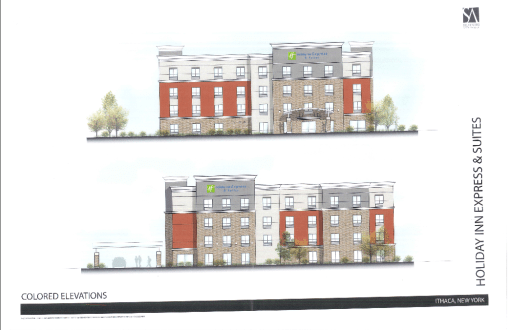
Nothing too exciting underway yet at the Holiday Inn Express at 371 Elmira Road, but the site is being cleared and prepped for construction. The site combined two tax parcels, one of which held a 7,556 SF 1970s office building, and the other a 960 SF engine repair shop. Both have which have been demolished to make way for the new 11,769 SF, 79-room hotel. Eventually, a retaining wall will be built on the back end (east side) of the parcel, to hold back the slope soil from what will be the hotel’s parking lot. A staircase and sidewalk will connect Spencer Road to the parking lot and Elmira Road.

For those who aren’t especially big fans of chain hotels and corporate architecture, this one appears to have a relatively unique design, while following the standard materials and color scheme (called “Formula Blue“) for new Holiday Inn Expresses. Standard for the HI Express line, the hotel’s lobby will serve as a “great room”, there will be free high-speed internet, and while there will not be any full-service dining, a breakfast bar will be included.

Rudra Management and Rosewood Hotels (Jayesh Patel) of suburban Buffalo is the developer, while Silvestri Architects and Optima Design & Engineering, also of Buffalo, are in charge of design. The project is being financed with a $5.98 million loan from S&T Bank, a regional bank in Western Pennsylvania. The project required a little bit of time to obtain financing, having received approval in March 2014, but now receiving the construction loan until this past October. Another Rudra/Rosewood project just up the road at 339 Elmira Road was not so lucky. A Summer 2016 opening is planned.

20160109_141040 20160109_141046 20160109_141057

holiday_inn_express_v2

holiday-inn-express-original-1


Collegetown Terrace Construction Update, 1/2016

17 01 2016

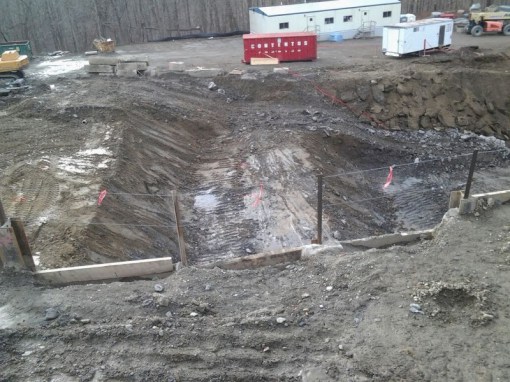
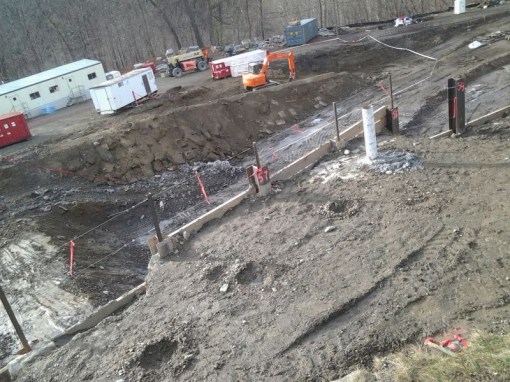
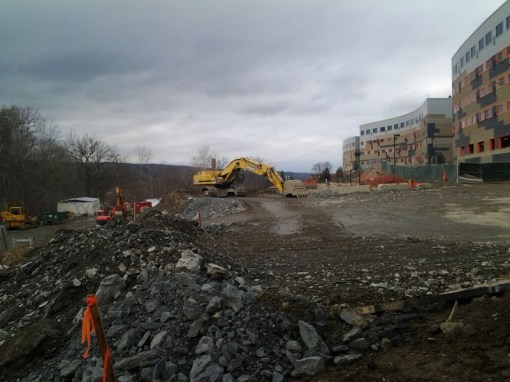
Being a 247-unit, 344-bed project means a lot of earth has to be moved before anything starts to rise from the ground. As a result, the project is undergoing the necessary if not exactly glamorous step of excavation for Building 7. All three phases combines have an estimated construction cost in the range of $70 million. The impression I’m getting from here is that when the time comes, foundation forming and pouring will begin from the west side and slowly make its way east, and so the west side of the curvaceous apartment building will be further along the east side at a given time during construction (similar to how it played out with Buildings 5 and 6 during the previous phase). Local development company Novarr-Mackesey plans to have the apartment building ready for tenants by August 2017.

20160109_132637 20160109_132711 20160109_132725 20160109_132743 20160109_133206 20160109_133401 20160109_133413 20160109_133535 20160109_133627

From December 2015:

20151205_091839 20151205_091917 20151205_092046 20151205_094226 20151205_094229 20151205_094237


Boiceville Cottages Construction Update, 1/2016

15 01 2016

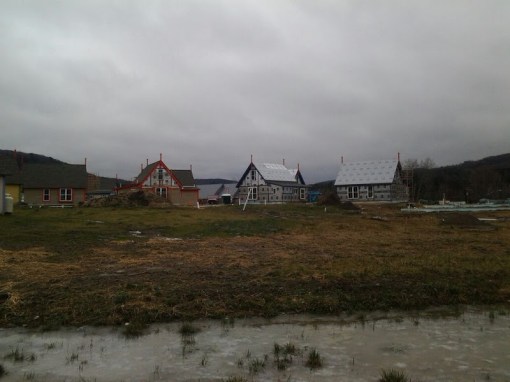
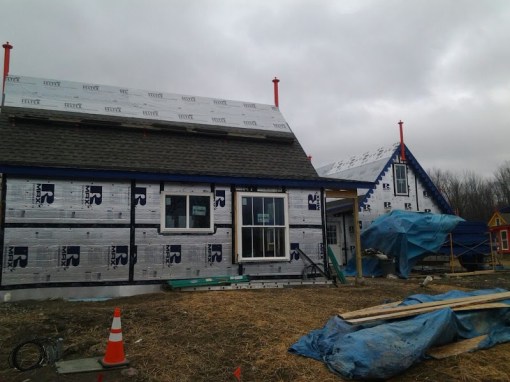
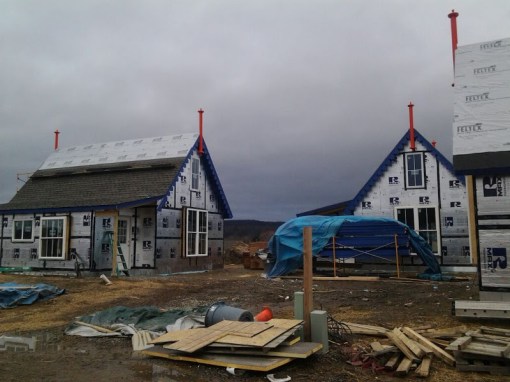
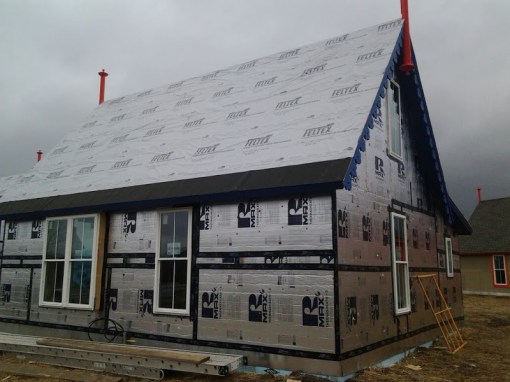
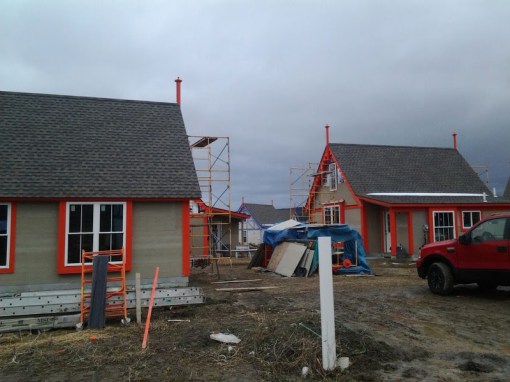
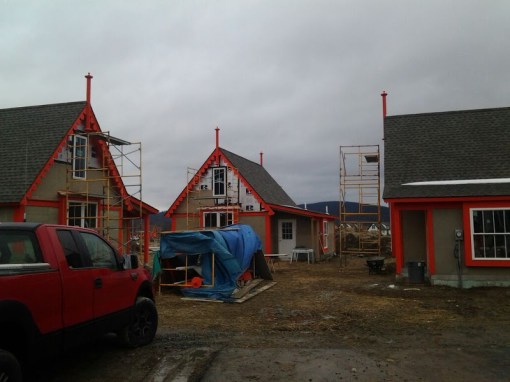
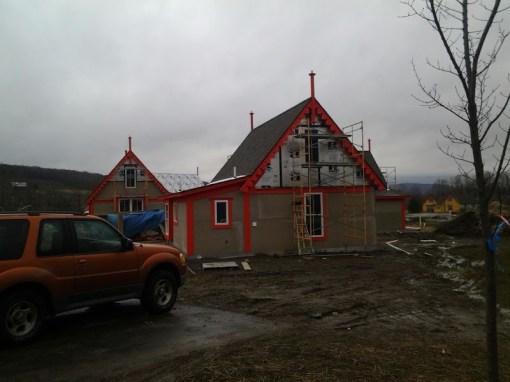
Just a pass through Caroline to check on the latest progress at the Boiceville Cottages. At present, it looks like about six new houses have been framed out – the three furthest along (red-orange trim) are receiving their exterior stucco coats, while the three less further along (cobalt blue trim) look rather like shiny ornaments thanks to the aluminum facer on the Rmax Thermasheath polyiso insulation (previously some red-faced Atlas polyiso was used). Rigid thermal foam plastic insulation board is lightweight, easy to cut, provides decent fire and moisture protection and provides a very high degree of insulation from the elements, greatly limiting the transfer of heat outward. As compared to traditional plywood sheathing however, it’s not as strong, and because the water control is on the outside with the foam sheathing, there are limitations or extra steps that need to be taken before applying many exterior facade materials like wood or fiber cement.

The roof foam boards are covered in Feltex synthetic roof underlayment before the shingles are attached. Compared to traditional asphalt-saturated felt, the synthetic material offers greater moisture resistance, and they’re light-weight and high-strength. However, wicking, where water can be drawn up the roof and promote leaks, can be a big issue with synthetic roof underlayment, so it has to be installed correctly and carefully.

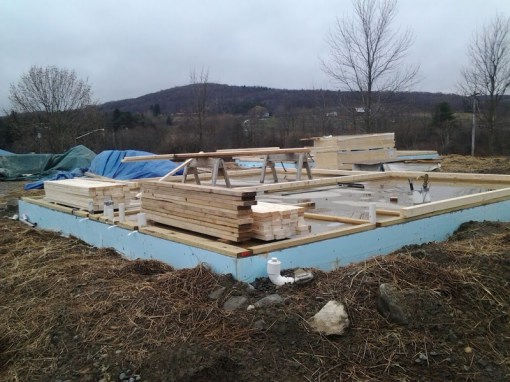
Another set of homes is still at the concrete slab and sill plate stage, but it looks like some wood stud walls will be going up shortly. Schickel Construction is aiming to have all 17 of the new units complete by the end of the summer.
20160109_115011 20160109_115045 20160109_115125 20160109_115158 20160109_115217 20160109_115233 20160109_115309 20160109_115328 20160109_115354 20160109_115414 20160109_115432 20160109_115457 20160109_115503 20160109_115536

boiceville_1