News Tidbits 7/25/15: To Reuse and Rejuvenate

25 07 2015

travis_hude_libe_libe_v3 oldlibe_franklin_proposal

1. Let’s just outright say it – the Tompkins County Legisltaure’s Old Library decision is a complete mess at this point. As covered last week, there were three separate individual resolutions – one from legislator Mike Lane for the Travis Hyde proposal (first image), and one each from legislators Dooley Kiefer and Leslyn McBean-Clairborne for the Franklin proposal (second image).

They all failed. 8 yes’s are required. The Travis Hyde proposal failed with 5 yes and 7 no’s. The Franklin proposal failed with 5 yes and 7 no’s on Kiefer’s resolution, and 4 yes and 8 no’s on McBean-Clairborne’s resolution. Martha Robertson, a supporter of the Travis Hyde proposal, recused herself because she had received donations from Frost Travis during her failed congressional campaign in 2014. Legislator Glenn Morey, also a supporter of the Travis Hyde proposal, was absent from the meeting.

I don’t see any way this will ever get the eight votes required. Kathy Luz Herrera voted against the proposals because the resolution has a ground lease (meaning the county still owns the land but leases the property), and Dooley Kiefer has stated she refuses to support any of the projects unless they have a ground lease – in other words, these two have mutually exclusive votes. By voting against McBean-Clairborne, Kiefer’s made it clear she will vote against the Franklin project unless it meets her exact specifications. Shinagawa voted against Travis Hyde for not being what the community wanted, but won’t vote for the Franklin proposal unless they guarantee Lifelong’s involved. And Stein has come out in favor of the Travis Hyde proposal. There’s no solution on the horizon.

So now it heads back to the Old Library Committee. Sale to the highest bidder and demolition of the library are real options on the table.

cayugafarms_2

cayuga_farms_1
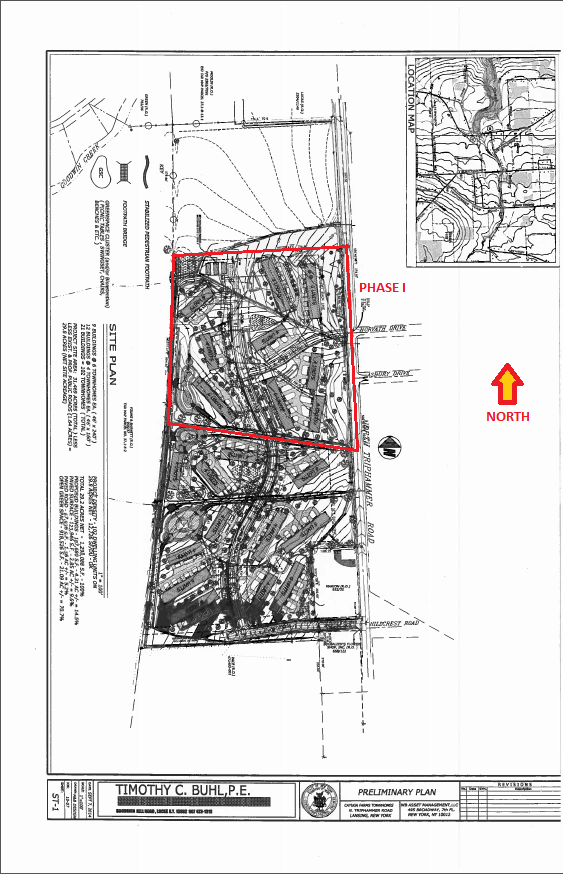
2. Turning to Lansing town, the planning board there has approved plans for the 102-unit Cayuga Farms townhouse project for a 31.4 acre parcel off of North Triphammer Road near Horvath Drive. First reported last Friday by the Lansing Star, the project received negative SEQR determination (meaning that, following the state’s environmental review guidelines, that the planning board decided the project will have no serious detrimental impact on the community) and issued preliminary site plan approval.

However, one issue still remains to be resolved before any shovels hit the dirt – sewer. The project currently has a modular package sewer treatment proposal that would work in place of the voter-defeated municipal sewer, and allow for denser development than the town’s rule on septic tanks. But the DEC’s interest in that type of treatment has been mixed. It could be a while before the situation gets sorted out.

Readers might remember this project because it’s one of the few I’ve openly derided. The 102 units are townhouse-style apartments marketed towards the upper end of the market. They would be built in phases over a period of several years.
cornell_novarr_5 cornell_novarr_6

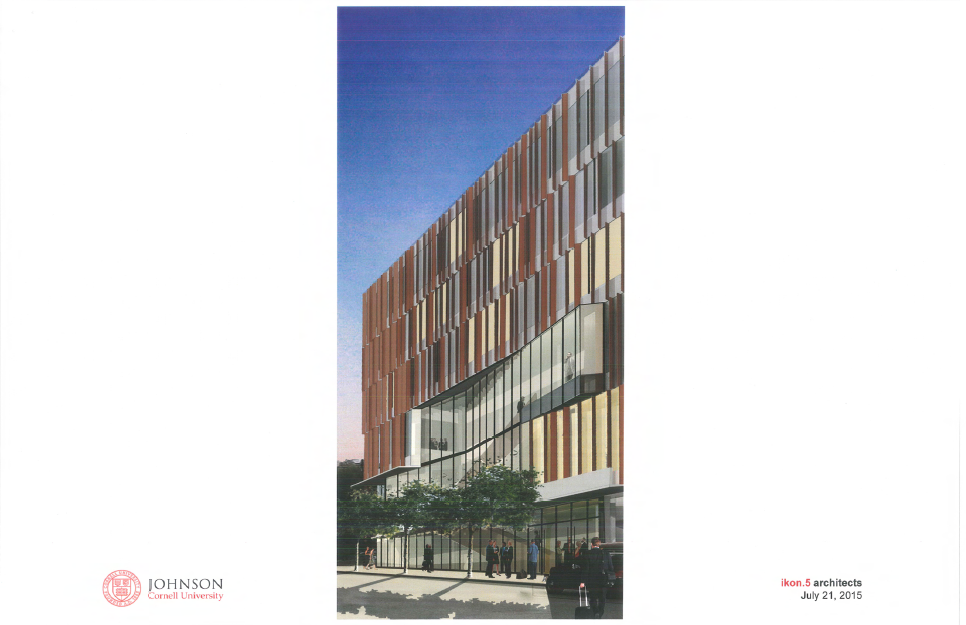
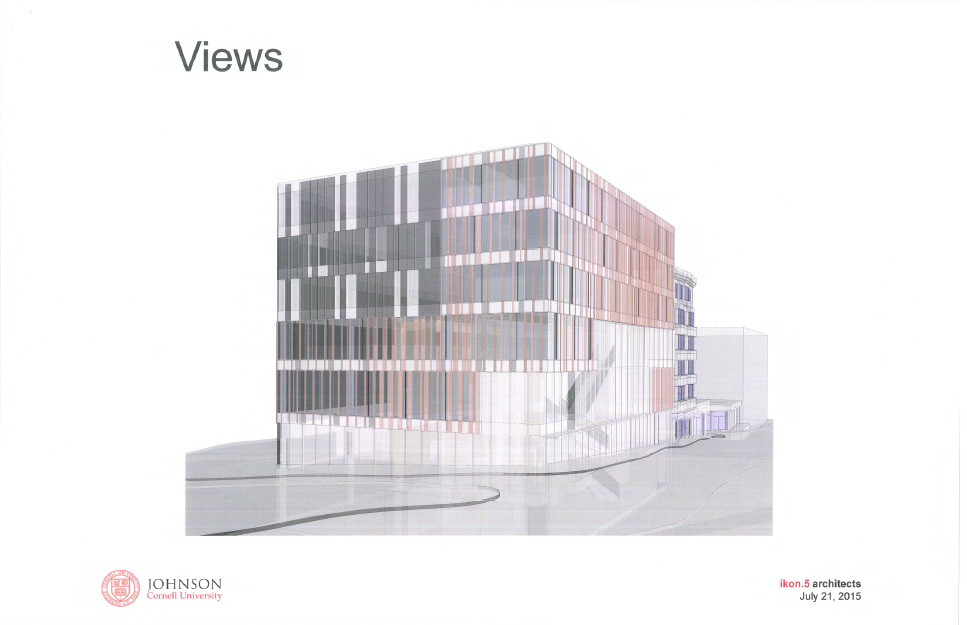
3. Now for some eye candy. Included with this week’s planning board project review committee agenda are additional renderings for John Novarr’s project at 209-215 Dryden Road. Doing a quick visual cross-check with the initial renderings, there don’t appear to be any substantial design changes, and the colorful metal cladding appears to retain the same pattern as before. Getting a little poetic here, the cascading metal bars are reminiscent of water running down a wall.

The city’s Full Environmental Assessment Form doesn’t express many worries about the project; some concerns have been raised about too many pedestrians on the street (the building would add 420 people to Collegetown’s sidewalks at the outset, 600 when fully occupied), but that seems to be about it for now.

The $12 million project is moving right along in an effort to start construction this fall. Declaration of Lead Agency and some CEQR discussion (the city’s more stringent version of SEQR, State Environmental Quality Review) are expected at the July planning board meeting. Plans call for 76,200 SF building with three floors of classrooms and three floors of offices for Cornell’s Johnson School Executive MBA program. The building would be ready for the Big Red’s B-students in April 2017. The property would remain on the tax rolls.
20150605_114431

4. A couple of interesting news notes courtesy of the Ithaca Urban Renewal Agency (IURA) Agenda:

First, popular downtown restaurant Madeline’s is looking to obtain an agency loan as part of a renovation project. The $470,000 project would add three jobs, only one of which pays living wage. The restaurant on the first floor of the Rothschild Building (the two-story building in the above photo) hopes to take advantage of the new hotels going up, and law firm Miller Mayer moving its 60 employees into the Rothschild Building. Previously the firm was in the Chemung Canal Trust Company building further up the Commons.

Second, the Finger Lakes School of Massage has applied for an agency loan to facilitate a move from West Hill to downtown. The school would move its ~34 staff and 75-95 students into 10,804 SF of leased space on the Rothschild Building’s second floor, with a further 1,700 SF on the ground level for a retail store and alumni massage clinic. The space would be renovated at a cost of about $194,300.

Although both projects come with risks (Madeline’s being a restaurant, FLSM having some worrying financial statements), both projects have been recommended for loan approval. The FLSM and Miller Mayer news suggest that most of the office space in the old Rothschild Building, left vacant when Tetra Tech moved to Cornell’s office park in 2010, has now been refilled.

The new window cut out built recently into the Rothschild Building’s east facade is part of the space where FLSM is moving into.
416_e_state_1

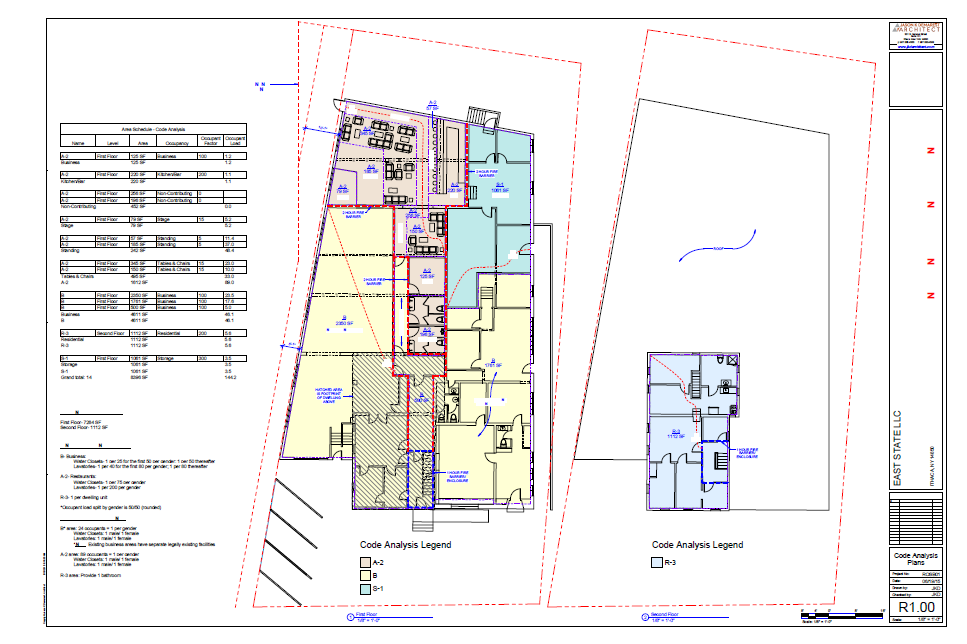
5. And now another reuse project – at 416-418 East State Street, currently home to an underused 7,600 SF office and a connected manufacturing/storage building. The house dates from the 19th century, with various additions as recent as the 1970s. According to plans filed with the city, an LLC linked to Argos Inn architect Ben Rosenblum has plans to convert the old manufacturing space into a bar and storage space, with renovated offices and a 2 bedroom apartment in the original house. The project will include an accessory parking lot, revised landscaping and handicap access. Area and setback deficiencies have resulted in the need for a zoning variance, but a parking variances won’t be required because the bar will have after hours parking across the street at Gateway Plaza. The building itself won’t change dimensions, but the change in use triggers the city zoning laws.

There have been some concerns expressed about this project – at least one neighbor is vociferously opposed to a bar, citing noise problems and concerns about smokers, and the county planning department is not a fan of the traffic and parking arrangement. Offhand, I think a bar is legal in B-4 zoning, but the noise impacts will merit further scrutiny.

The project is definitely something of interest to the Voice’s audience, but in an email, Rosenblum said that details are still being worked out and that he’d prefer to discuss the plan at a later date.

Scott Whitham is serving as a consultant, and local architect Jason Demarest is designing the renovation.

state_st_triangle_v3_1 state_st_triangle_v3_2 state_st_triangle_v3_3

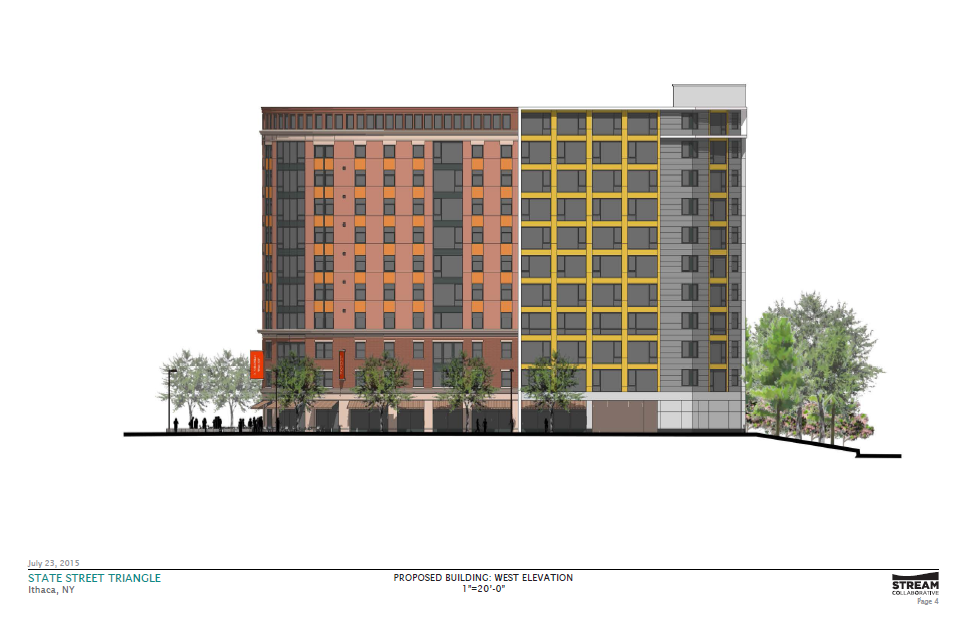
6. Some very substantial changes are in store for Campus Advantage’s $40 million, 240-unit State Street Triangle project at 301 East State Street in downtown Ithaca.

The Texas-based developer has recruited the assistance of Ithaca architecture firm STREAM Collaborative to help redesign the 240-unit project. And there’s clearly been a lot of work since the previous planning board rendition.

In this revision, a much greater emphasis has been placed on the street interaction and active street uses. Gone is the soaring corner, and in its place is a design with a greater use of horizontal elements (like the decorative belt above the third floor) in order to give the building a more human scale – crucial when you’re planning one of the largest buildings in Ithaca.

The developer is also seeking to remove the northbound turning lane from Aurora onto State Street, and replacing it with a pedestrian area with widened sidewalks, outdoor seating and dining spaces. The land would have to be procured from the city, or some other type of collaboration would have to take place with city officials and engineers.

In documents provided in the city’s planning board agenda for next Tuesday, the developer notes that the project remains student-oriented, but in order to play down comments of it being a massive dorm, 10 4-bedroom units were reconfigured into 40 studio apartments that the developer hopes will be appealing to non-student tenants looking for a less expensive, modestly-sized space.

The State Street Triangle project is also exploring LEED certification.

The project still has a lot of details to be addressed – city transportation engineer Tim Logue has expressed concerns that the traffic study underestimates the number of car trips, and has asked for a revised study. The project is also under closer analysis because the potential addition of 600 residents into downtown Ithaca would put a greater stress on utilities and infrastructure.

These and other questions are likely to be topics of discussion at next Tuesday’s meeting.

The State Street Triangle may be pursuing a CIITAP tax abatement (so much for my theory a couple weeks ago), but the city has not uploaded the application at the time of this writing.
7. Looks like a busy meeting next week for the Ithaca city planning board. In order:

1. A subdivision at 106-108 Madison Street on the Northside. The applicant wishes to create a new lot on the east side of the existing lot, for the purpose of building a new-single-family home.

2. A. Declaration of Environmental Significance and BZA recommendation for the Dibella’s sub shop proposed at 222 Elmira Road

B. Declaration of Environmental Significance, BZA recommendation and potential approval for the 1,100 SF addition to the Maguire Chrsyler/Fiat dealership in Southwest Ithaca

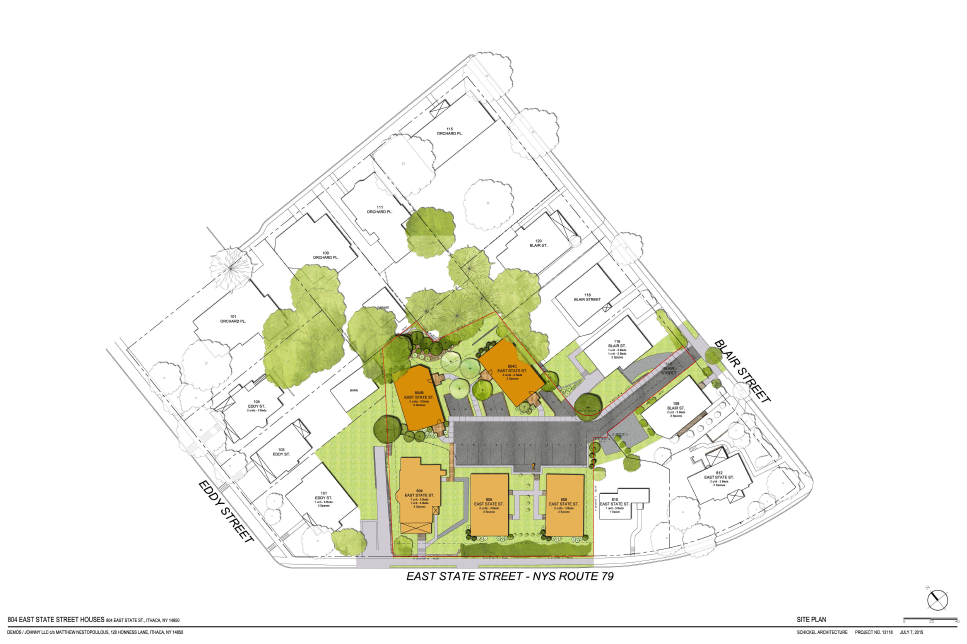
C. Declaration of Environmental Significance, and potential approval for the two duplexes proposed at 112 Blair/804 East State Street

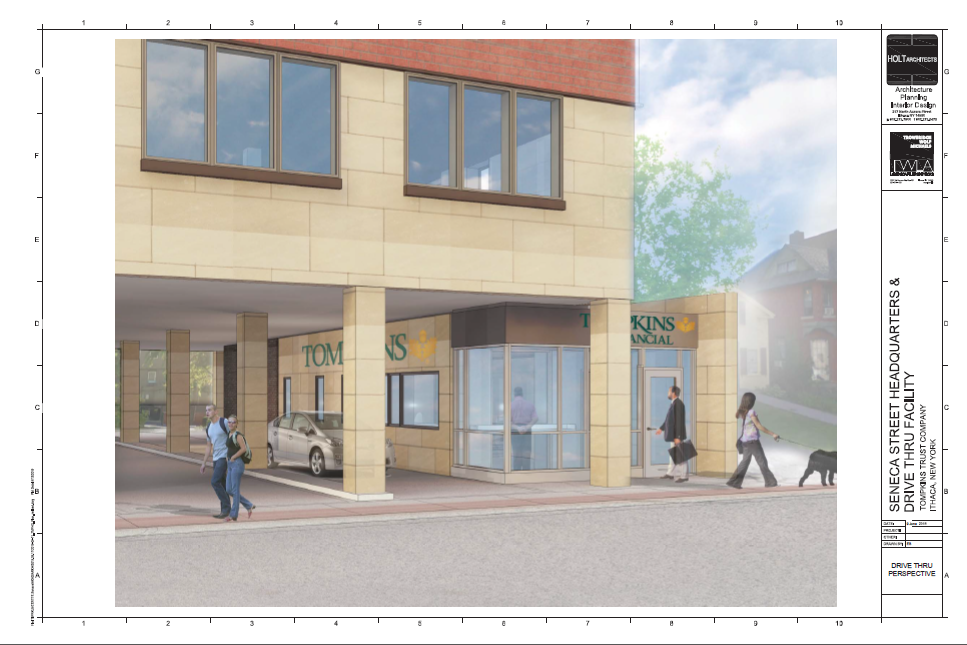
D. Site-plan approval for the first phase of the Tompkins Financial HQ (the new drive-through in the current HQ’s parking lot)

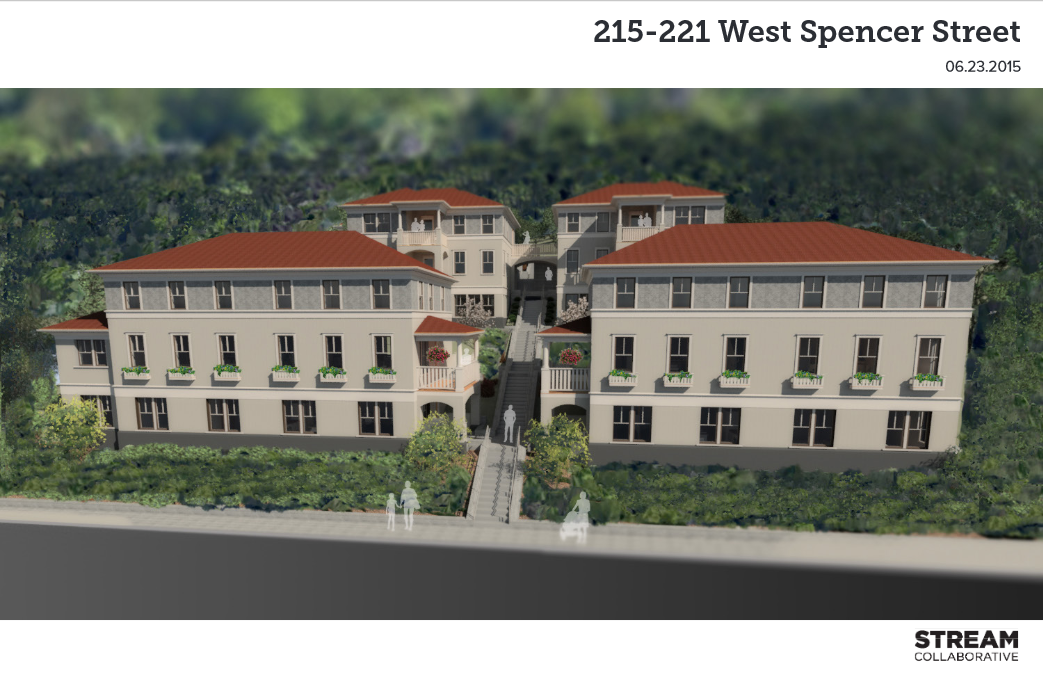
E. CEQR (the city’s version of SEQR) discussion for 215-221 W. Spencer Street

F. Declaration of Lead Agency and CEQR discussion on 209-215 Dryden (the Novarr project noted above)

G. Declaration of Lead Agency and CEQR discussion on State Street Triangle (

noted above)
holiday_inn_expansion_1

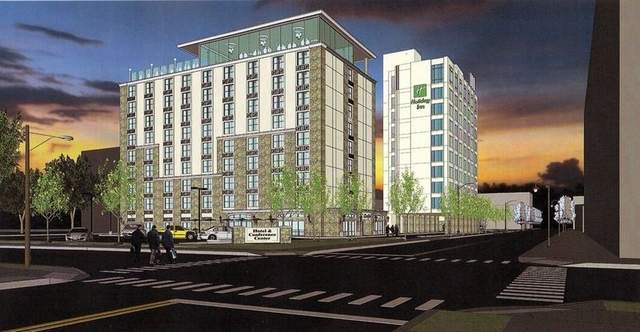
H. Sketch Plan – Hotel Ithaca Expansion. Readers might remember a 9-story addition and convention center were approved for the Hotel Ithaca almost two years ago (shown above). Nothing has happened with the expansion plans, for reasons which had been attributed to financing. Dunno what we can expect this time around, but we’ll find out next week.


Ithaca Marriott Construction Update, 6/2015

14 06 2015

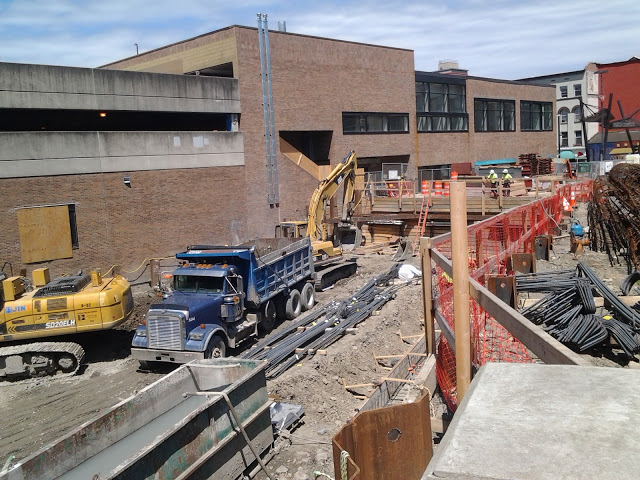
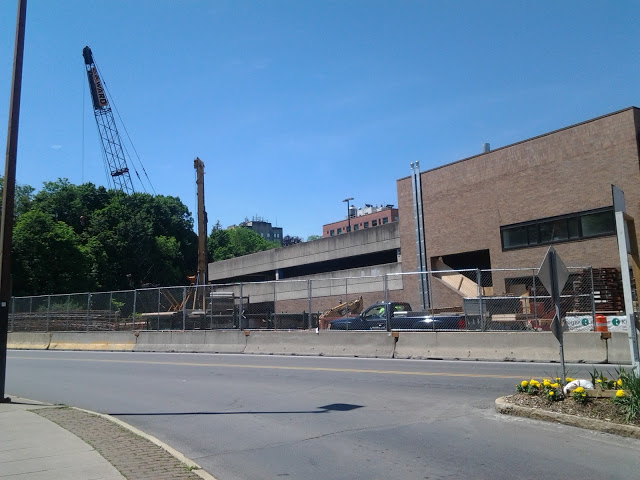
The pile driving work continues at the Marriott project site downtown. Quoting an anonymous source familiar with the project, about 10 more caissons are left to be piled, and grade beams are being built.  Per wikipedia, a grade beam is a reinforced concrete beam that transmits the load from a bearing wall into spaced foundations such as pile caps or caissons; a grade beam spans the the space between the caissons, distributing the weight among the caissons and ensuring the hotel’s structural stability. In image three, you can see the pile driver at work drilling a caisson, using a rotary bore so that it can more easily penetrate deep into the soil. The expectation is that the project will begin to rise starting in just a couple weeks, and builds its way skyward over the course of the summer and fall.

On a side note, check out that new window inserted into the Rothschild Building. Much better than the blank brick wall that was previously there.

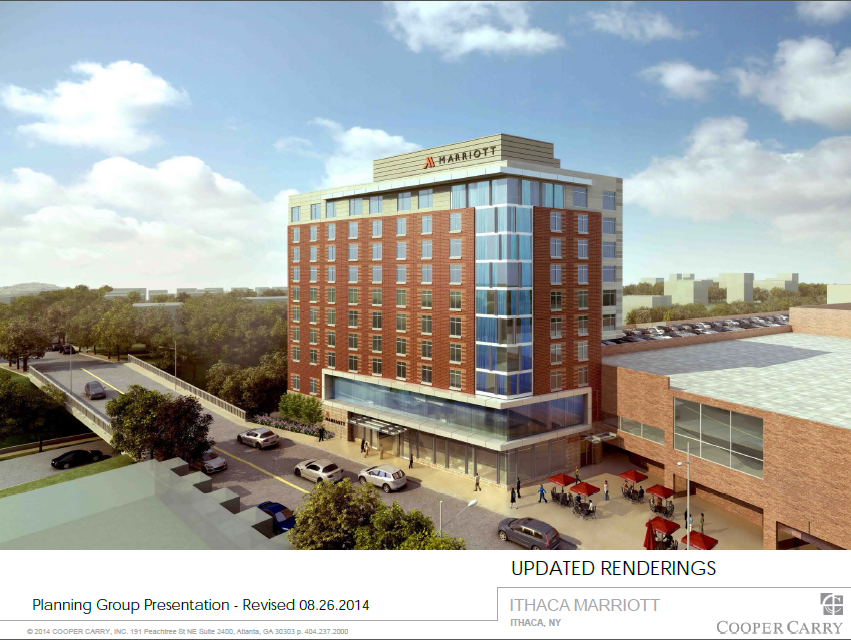
The $32 million, 10-story, 159-room hotel is slated for an opening in Q3 of 2016 (July-September). The hotel will include a fitness center, a restaurant with indoor and outdoor seating, and 3,000 sq ft of meeting space.

The hotel has been designed by Atlanta-based Cooper Carry Architecture and development is a joint venture of Urgo Hotels of Bethesda and Ensemble Hotel Partners, a division of Ensemble Investments. Urgo’s portfolio includes at least 32 other hotels totaling 4,500 hotel rooms. Interior design will be handled by Design Continuum, W.H. Lane of Binghamton is the general contractor, and Rimland Development contributed the land to the joint venture and is a partner. Long Island-based Rimland was the original firm that pitched the project in 2008 as the “Hotel Ithaca”, before the old Holiday Inn downtown went independent.

20150605_114642 20150605_114629 20150605_114501 20150605_114439 20150605_114431 20150605_114345

marriott_rev1_1


The Ithaca Economy, Part II: A Jack of All Trades

26 05 2015

Part I provided a brief examination of how the 1990s recession had a deep and lasting impact on the Ithaca economy, while the late 2000s recession was a minor hiccup in comparison. Here in Part II, those recessions will be looked at in greater detail by examining the different occupational groups that make up the Ithaca economy.

ithaca_bls_1990_2015

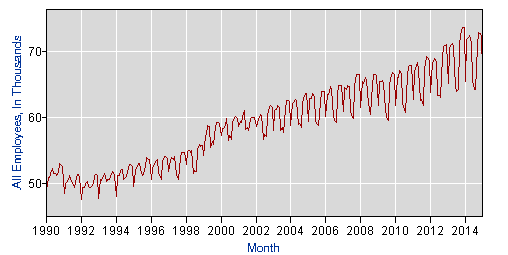
To see how the overall market changed, here is the plot of all the non-farm job sectors calculated, combined and tracked by the Federal Bureau of Labor Statistics (BLS) from 1990 to 2015. 1990 gives a nice 25-year figure, and it’s also as far as the online data goes back.

There are ten economic sectors defined by the BLS, and all counts are rounded to the nearest 100. Not all of them follow the same pattern as the overall numbers, as seen in the four sectors below.

ith_jobs_tseries_1

Even with the substantial growth in the Ithaca economy, not all parts of the local economy reflect that. At top left is “Mining, Logging and Construction,” which in Ithaca is mostly construction and the Cargill salt mines in Lansing. Employment peaked at 1,700 in August 1990, fell during the economic doldrums of the 1990s, and has made a very gentle climb since the late 1990s, most likely due to population growth and the slow if steady rise in construction demand. Cornell’s recent budget problems could derail that rise.

At top right, “Manufacturing”, industrial makers and producers. Manufacturing peaked at 4,600 in October and November 2000. The woes in this sector match much of upstate – manufacturers closed or left the area for cheaper sites down south or overseas, like Ithaca Gun in 1986/87, NCR/Axiohm in the 1990s and Morse Chain in the late 2000s (Morse Chain shed 500 jobs in the late 2000s, which explains some of the plunge). Fortunately, companies like Borg Warner still maintain a strong presence, and there has been some growth lately thanks to firms such as Groton’s Plastisol and Ithaca’s Incodema.

Lower left is “Trade, Transportation and Utilities”. In this category is where truckers, warehouse workers, retailers, wholesalers and utility crews fall. This category peaked at 7,000 jobs twice, in January 2006 and January 2008, but has fallen closer to 6,000 jobs in the past year or so. The early 1990s dip is there, as is a dip during the late 2000s recession. Overall, the sector’s employment hasn’t changed a whole lot in the past 25 years.

Last image in the figure, at the lower right, is “Information“. Publishers, broadcasters, news agencies like the Ithaca Voice, telecommunications, movie makers, and so on. The category has never employed more than 800 people locally, and is at an all time low as of late (on a national level, the industry has shrunk by a third since the early 2000s). It doesn’t follow the recessions, but it’s a tiny portion of the Ithaca market anyway.

Okay, so these four either held steady or fell during both recessions, and are decreasing or holding steady while the overall local economy has grown. Let’s look at the next four:

ith_jobs_tseries_2

The big difference between the first four and these four is that we can clearly see that these industries have grown in the past quarter century, some more than others.

“Financial Activities” at top left includes groups like bankers, insurance agents, and real estate agents. While currently at its highest ever, it’s hit that watermark many times in the past decade. The industries fell by similar amounts during both recessions, but the late 2000s down-period was much shorter.

The “Professional and Business Services” sector shown at top right includes engineers, architects, veterinarians, scientists and other technical professionals not associated with academia or government. They definitely saw a substantial drop during the ’90s recession, and it mimics that decade’s lengthy downturn. The late 2000s recession is barely noticeable, just like the overall jobs picture.

Leisure and Hospitality” at lower left is easy enough to define – hoteliers, restaurants, and professional entertainers like musicians and artists. There’s been a big push in the hospitality subsector with new hotels in Ithaca opening recently and in the near future, but the job growth isn’t all too impressive, only a few hundred jobs during peak periods. Once again, this sector was deeply impacted by ’90s recession, and jostled though not seriously damaged by the 2000s recession.

The last category, “Other Services” on the lower right, is a catch-all. In this category the BLS includes mechanics, dry cleaners, nannies, social and environmental non-profits, clergy and lobbyists. Given this area’s strong social activism, there’s little reason to wonder why the jobs totals have steadily risen, even during the recessions.

These four probably played a role in Ithaca’s growth in the past 25 years – the city and county have transitioned from factory workers and tradesmen to engineers and non-profits. But I still have yet to touch on the two biggest categories, “Government” and “Education and Healthcare.” Those two, plus some ideas on why the 1990s downturn was worse than the late 2000s recession, will be presented in Part III.


News Tidbits 4/11/15: Not Feasible As Presented

11 04 2015

dpi_libe_0414_end

1. If my inbox has been any clue over this past week, there are some folks who are pretty unhappy with the results of the county’s Request for Proposals (RFP) for the Old Library site. One more applicant has dropped out of the process – DPI chose not to respond to the RFP. DPI had proposed 76 condos and 8 apartments for the site, a move that was cheered by some residents who spoke passionately about the new for purchasable housing in the city. That leaves three contenders of the original six:

-The Syracuse-based Franklin Properties project, now called the West Court Lofts and Wellness Collective, would renovate the existing building and include 22 residential condominium units (down from 32 units in the RFEI), medical offices, a café, and community room.

-The Rochester-based Cornerstone Group project, known as the Dewitt Senior Apartments, would build 63 residential units of senior housing (down from 70-80 units in the RFEI), and include community space for nutrition education by Cooperative Extension.

-The Ithaca-based Travis-Hyde Properties project would build 60 residential senior-focused units (up from 48 units in the RFEI), and would include space for Lifelong, professional office, and a community room.

There have been no renderings published as of yet, but there will be a stand-alone post when they show up on the county’s website. The three proposals will be judged against each other over the course of the next couple months. A quick glance at the judgement criteria can be found in the Old Library meeting notes here.

The next meeting of the Old Library committee is scheduled for Thursday, April 30th at 9 AM. 5 PM Meetings will be set up during May for developer presentations to the public. Comments on the proposal can be emailed to Ed Marx, the County Planning Commissioner, at emarx@tompkins-co.org with the subject title “Old Library Property”.

2. Local credit union CFCU (Cornell-Fingerlakes Credit Union) is making some moves by buying a retail commercial strip with an eye towards redevelopment. The property, 501-507 S. Meadow Street, sold for $1,555,550 on March 30th, well above its assessed value of $950,000. According to a statement taken by the Ithaca Journal, “the current intention is to ultimately use the site for credit union-related purposes”.

The one-story, 9,203 sq ft strip buildings date from 1980 and 1990 and previously housed a Thai restaurant and offices for Lama Real Estate, the business of previous owner Robert Lama. The site is currently zoned the suburb-friendly SW-2, but like much of big box land, it has been targeted for urban mixed-use in the city’s Comprehensive Plan. CFCU is currently headquartered in about 30,000 sq ft of office space in two 1990s office buildings at 1030 and 1050 Craft Road in Lansing.

In short, nothing immediate going on here, but definitely a property worth keeping an eye on.

texas_roadhouse__v2_1

3. The proposal for a Texas Roadhouse on in Southwest Ithaca is getting a couple minor revisions. According to a cover letter from the restaurant chain, plantings have been revised to break up the expanse of blank walls, handicap ramps are now present in the new elevations, and signage has been tweaked. All in all, not a big change from the previously-shown drawings. It doesn’t look like this one will have too many issues moving forward.

canopy_hampton_rev4_1

4. At the city’s Planning and Economic Development Committee (PEDC) meeting on the 8th, the city voted to approve the sale of land at 320-324 E. State Street to Lighthouse Hotels LLC for construction of the new Hilton Canopy Hotel. Also up for discussion was the removal of 30′ setbacks on all sides of the special MH-1 zoning at the Nate’s Floral Estates mobile home park on the west side of the city. With the 30′ rear yard setbacks already in place and vegetative buffers installed by the big boxes to the south, it was felt by the city economic developer planner that the additional setback was redundant. The removal would facilitate setbacks reduced to 10′ on one side and 5′ on the other side, if I’m reading this right. According to the notes, the mobile home park has a waiting list of tenants. The proposal looks like it will allow a few more units in the park, though it looks pretty tightly packed as-is.

flatiron_1

5. According to the Ithaca Urban Renewal Agency (IURA) notes from the April 2nd meeting agenda, the board was not impressed with the Flatiron proposal. On page 6, it gives the project low pritority, with the description “not feasible as presented“. On the other hand, the INHS Hancock Street project was well received and given high priority.

402_s_cayuga_st_rev2_1

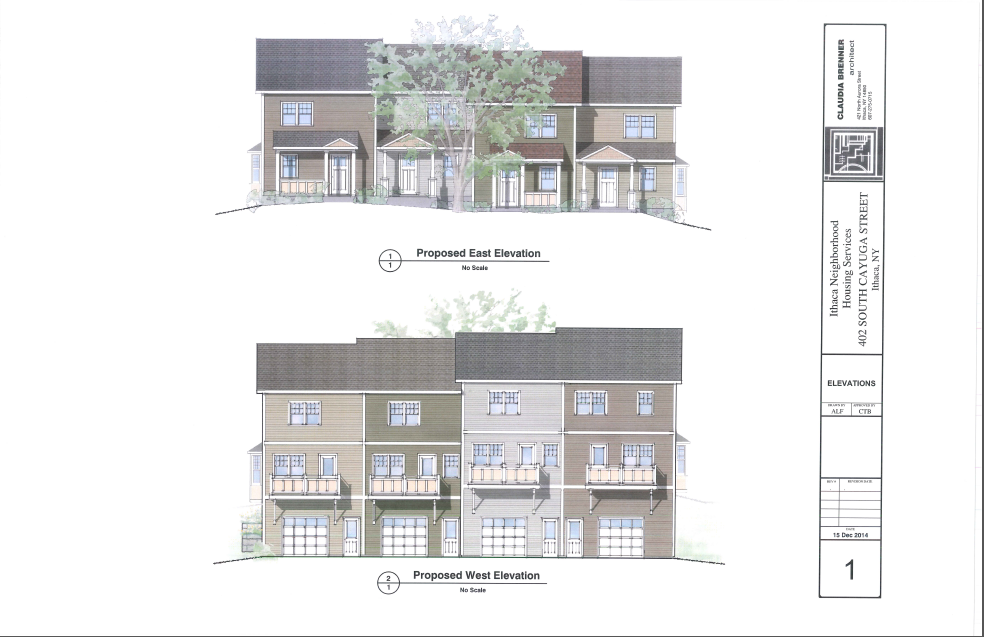
6. Looking at the March Planning and Development Board meeting minutes, 402 S. Cayuga Street has been approved, pending BZA approval of the variance (which was granted this week, if I have my notes right). The 4-unit, 9-bedroom project may be small, but it’s thoughtful infill and will help bring some affordable owner-occupied housing back into the city.

Approvals were also granted for the city project to replace the Lake Street this summer and fall, and refurbish the pocket park to its southeast. 210 Hancock was discussed without any voting, and sketch plans were presented for the TFC HQ downtown, and the 215 West Spencer Street apartment project, which have been written about previously. The board also discussed added additional questions to the CEQR (the city’s version of the SEQR used in project impact analysis), and the revised paperwork will be reviewed at a later meeting.

Oh, and on a more personal note, this totally made my day:

D. 2014 Planning Board Annual Report

[Senior city planner Lisa] Nicholas briefly walked through the annual report, observing it was a very busy year with a considerable number of additional housing units built. [Board member Garrick] Blalock asked if the annual report is publicized. Nicholas replied, no. Blalock replied it should at least be sent to the “Ithacating in Cornell Heights” and “IthacaBuilds” web sites. Nicholas agreed to do so.
I’ll be excited to have a copy. This would make scouting locations where construction photo updates are required a lot easier.

7. Wrapping this up with one final news piece, it looks like Dunkin’ Donuts is moving into the old Johnny O’s space at 406 College Avenue in Collegetown. So there will be one corporate coffee shop next to another corporate coffee shop and sharing a wall with a trendy fro-yo place. There’s probably a sociology thesis to be had in studying the changing retail scene of Collegetown.


News Tidbits 3/14/15: A Spring Thaw and A Warming Housing Market

14 03 2015

215_221_wspencer

1. This past Friday the 6th, the city IURA (Ithaca Urban Renewal Agency) sold off a vacant city-owned property at 215-221 West Spencer Street to Edward Cope for $110,000. The name might not sound familiar, but a quick address check of the sales documents reveals an association with PPM Homes, a local rental company with a few hundred bedrooms in dozens of properties scattered around the city, most of them subdivided homes. Edward Cope also bought a vacant privately-owned lot at nearby 228 West Spencer Street for $15,000 on February 19th. 228 West Spencer, a small, steep site with tight zoning restrictions, was approved last year for one custom house design with 1536 sq ft. of space (the design plans came with the sale). As for 215-221 West Spencer, it was noted in July of last year that the city was selling the parcel (though I was under the impression it had already sold) and the buyer was intending multi-family housing. The 0.47 acre site has the potential for a medium-sized apartment building (20 units), but that’s a simple calculation using the zoning. With topography and neighbor considerations, the reality will be smaller.

In short, keep an eye on these properties, because PPM has the money to make the house and the apartment building happen.

holiday_inn_expansion_1

2. From the March IURA Agenda, a few good notes from the attached February minutes:

A. The Hotel Ithaca conference center is still actively trying to move forward.

B. The IURA received an inquiry about vacant land in the Cherry Street industrial park, from a business seeking to relocate into the city.

C. The city is making progress on taking over the state-owned parcel at 508 Taughannock Boulevard, previously used by the U.S. Coast Guard.

D. The former Ithaca Gun site is virtually entirely cleaned up, which will allow the apartment project proposed for the site to move forward with the planning and approvals process.

All things to keep an eye on in the upcoming months.

titus_wood_1

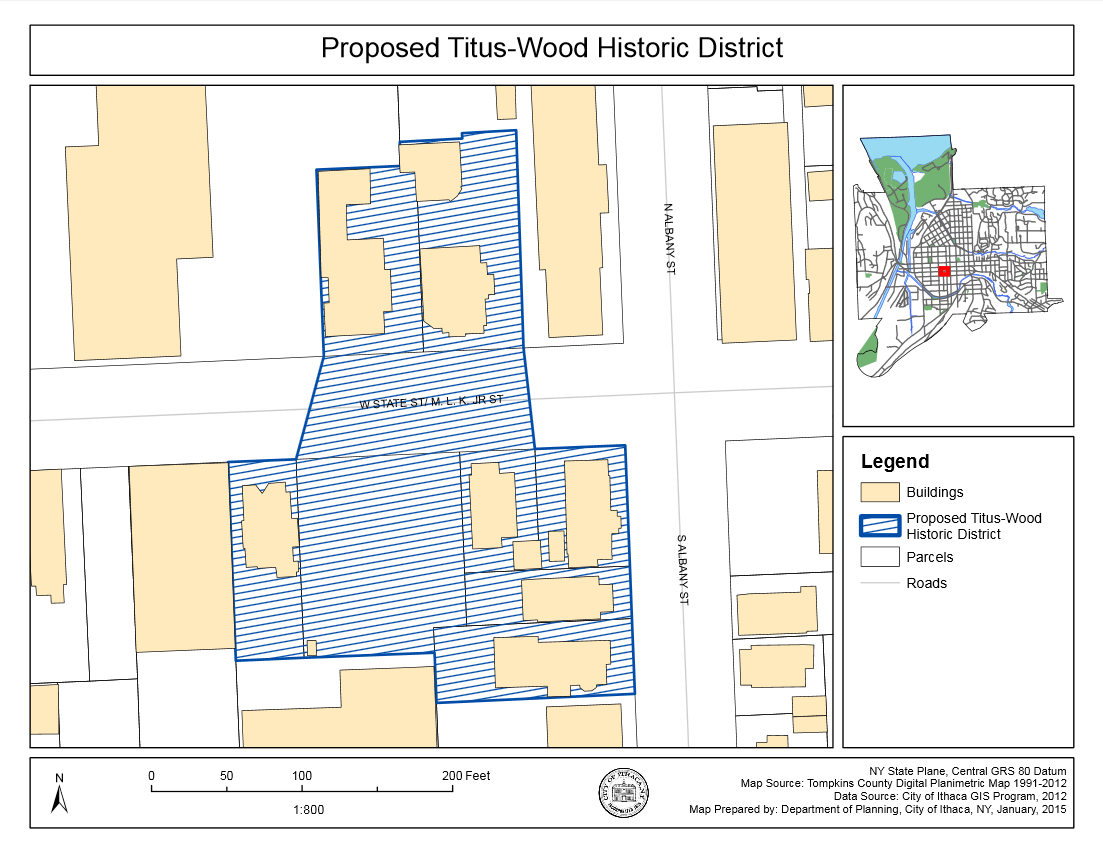
3. Looking at the city’s Planning and Economic Development Committee Agenda, there was quite a pushback from locals and the county for the proposed Titus-Wood historic district. The city fire department objected to landmarking their parking lot, the county wrote a letter opposing landmarking 317 W. State (and 315 W. State, which is not a registered address but could be the parking lot) because it was felt neither was historic enough and that it impeded urban infill, and the owner of 110 S. Albany, Ian Shapiro of Taitem Engineering, protested because his previous experience with the ILPC has been very frustrating, and that the ILPC gives applicants a really hard time over energy conservation efforts such as solar panels.

For the record, he’s not wrong about that. Some ILPC members have not been a fan of solar panels (examples here, here, here and here), and it has been at times a months-long process to get installation approval. It boils down to a dispute of alternative energy use vs. historic preservation, both things that Ithacans love, but can conflict with each other in cases like these.

Regardless of the opposition, the PEDC passed the historic district resolution with a unanimous vote, and the resolution now goes on to the Common Council, who will likely approve the new historic district.

4. Over in Lansing, concerned citizens looks like they can put their fears to rest regarding development of the Kingdom Farm property. The 528.1-acre property sold to a Cayuga County dairy farmer on March 10th for the hefty price of $2.8 million (in other words, $5,302/acre). The farm has been in the possession of the Watchtower Bible and Tract Society (the business branch of Jehovah’s Witnesses) for several decades, and the owners even pitched a 500-unit development for the site in the late 2000s. Back in October when the tax-exempt land went up for sale for $3 million, the Lansing Star reported that some more activist local residents wanted the town to step in and help a farmer buy the land so they could keep the property agricultural. There hasn’t been any news of the town taking that step, and it appears the problem resolved itself without the need of taxpayer dollars. Also, it means the property, assessed at $2.2 million, goes back onto the tax rolls. This might be one of the few cases where everything appears to have been worked out and all can go home happy.

5. 514 Linn Street has come down for a new duplex now under construction. Each apartment unit will have 3 bedrooms and be completed this summer. Although the predecessor building dated from the late 1800s, it was also an early “cookie-cutter” home; 512 Linn was the same design. Fall Creek is mostly developed, but Linn Street is no stranger to new builds – 514 follows a few years after 516 Linn, which was a new home built on a vacant lot.

amabel_v2_1 amabel_v2_2

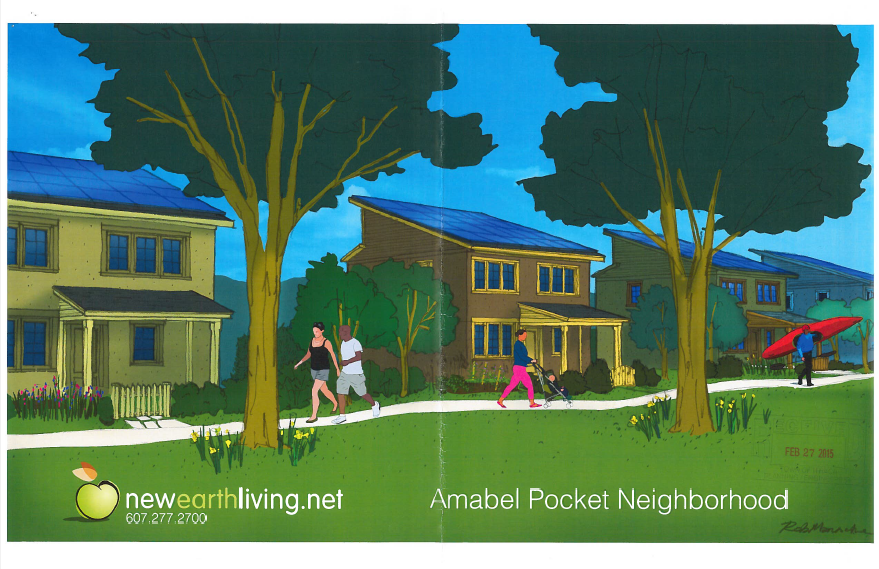
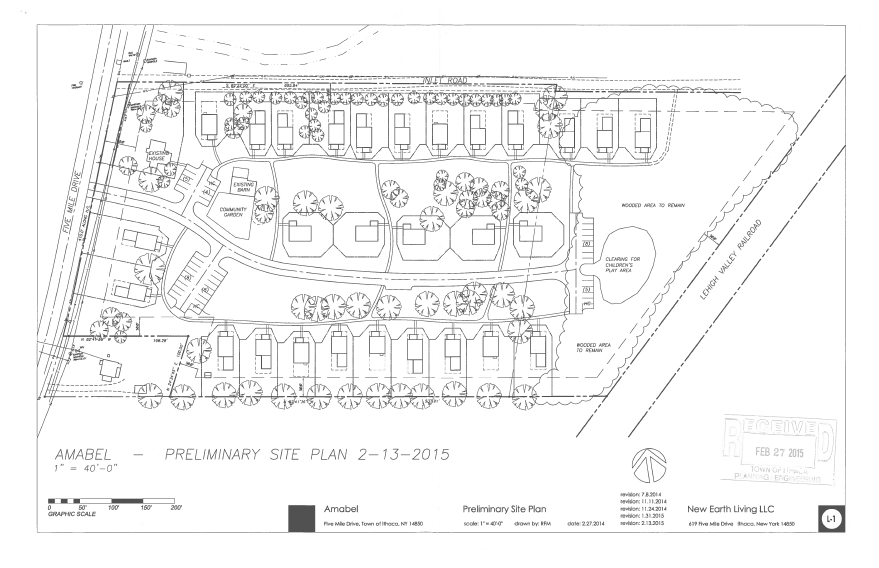
6. Lastly, it looks like the town of Ithaca’s planning board finally has a few things to work on, after having no meeting since early January. For their Tuesday meeting, the town will review plans for more luxury tents at La Tourelle, a new municipal water tank near Sapsucker Woods, and revised plans for the Amabel project off of Five Mile Drive. The number of units has been reduced to 28, and since November, two units were added to the far west portion of the parcel bordering Five Mile Drive (and as it turns out, those center units aren’t duplexes). Contrary to the example render, six different home designs will be available. Developer Sue Cosentini of New Earth Living LLC hopes to begin sales this summer.

Get connected:

Have comments or questions about these projects for your local government? Contact info below:

Town of Ithaca Planning Board: Use the form here – http://www.town.ithaca.ny.us/contact-us

Ithaca Common Council: http://www.cityofithaca.org/341/Common-Council – click on your councilperson’s name, their email is on the subsequent page.


Ithaca Marriott Construction Update, 2/2015

10 02 2015

The land for the new Ithaca Marriott exchanged hands on January 13th, the groundbreaking ceremony was January 22nd. With those events filed away, there appears to be some real site prep going on at the site, located at the intersection of E. State and S. Aurora Streets. The site has very clearly been disturbed, although last Saturday appeared to be a day off for the construction workers. The sidewalk on S. Aurora Street is closed, and excavators and dump trucks are ready and waiting. The first major step in this project will be to clear the asphalt and soil on site and dig deep enough to enable foundation work to take place. Expect that work to take place for the rest of the winter and into the spring.

The $32 million, 10-story, 159-room hotel is slated for an opening in Q3 of 2016 (July-September). This is pushed back from the previously given date of Spring 2016. While this new date misses the lucrative graduation season, it will still be able to take advantage of the summer crowds and back-to-school visitors, if all goes to plan (and we’ll see if it does). The new date also places the opening of the Marriott a couple of months behind the opening of the new 123-room Canopy Hilton a couple blocks away. With 282 more hotel rooms downtown, businesses that cater to tourists and other travelers will welcome the boost in business. Who knows, perhaps the Commons will finally be done with reconstruction by then.

According to a press release from developer Urgo Hotels (or the Ithaca Journal paraphrase), the hotel will include a fitness center, a restaurant with indoor and outdoor seating, and 3,000 sq ft of meeting space. While the hotel is underway, some details are still being ironed out – the hotel signage (which requires a zoning variance) was derided as too generic and bright, and Urgo Hotels withdrew the proposed design. Urgo has a year or so to figure out what kind of signage they and Marriott would like to install, and don’t expect any delays just because of signage.

The hotel has been designed by Atlanta-based Cooper Carry Architecture and development is a joint venture of Urgo Hotels of Bethesda and Ensemble Hotel Partners, a division of Ensemble Investments. Urgo’s portfolio includes at least 32 other hotels totaling 4,500 hotel rooms. Interior design will be handled by Design Continuum, W.H. Lane of Binghamton is the general contractor, and Rimland Development contributed the land to the joint venture and is a partner. Long Island-based Rimland was the original firm that pitched the project in 2008 as the “Hotel Ithaca”, before the old Holiday Inn downtown went independent.

Off the record, have we settled that it’s 159 rooms and not 160? Because this is confusing me to no end.

20150207_152836 20150207_153021 20150207_153027 20150207_153100 20150207_153118

marriott_rev1_1


Carey Building Construction Update, 2/2015

9 02 2015

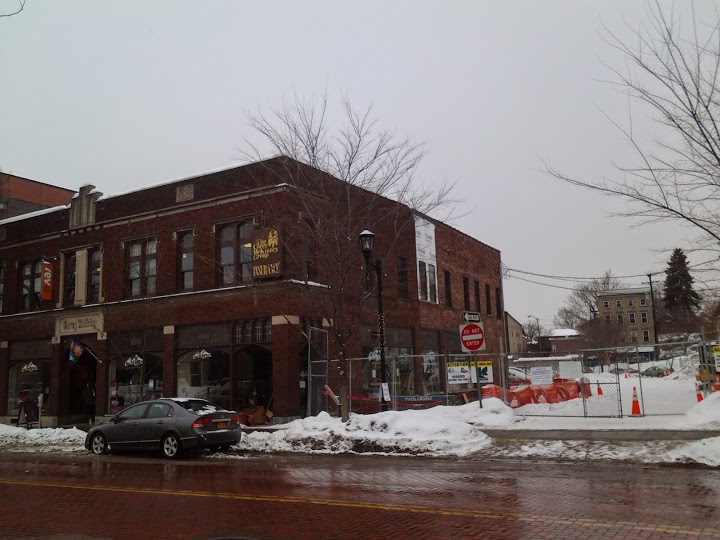
I was originally going to schedule this for later in the week, but I figure I’ll run it now, since the recent twitter chatter is observant but mistaken. The Canopy Hotel is not under construction. At least, not yet. The hotel is expected to start in early Spring. But the work on the Carey Building addition is just beginning.

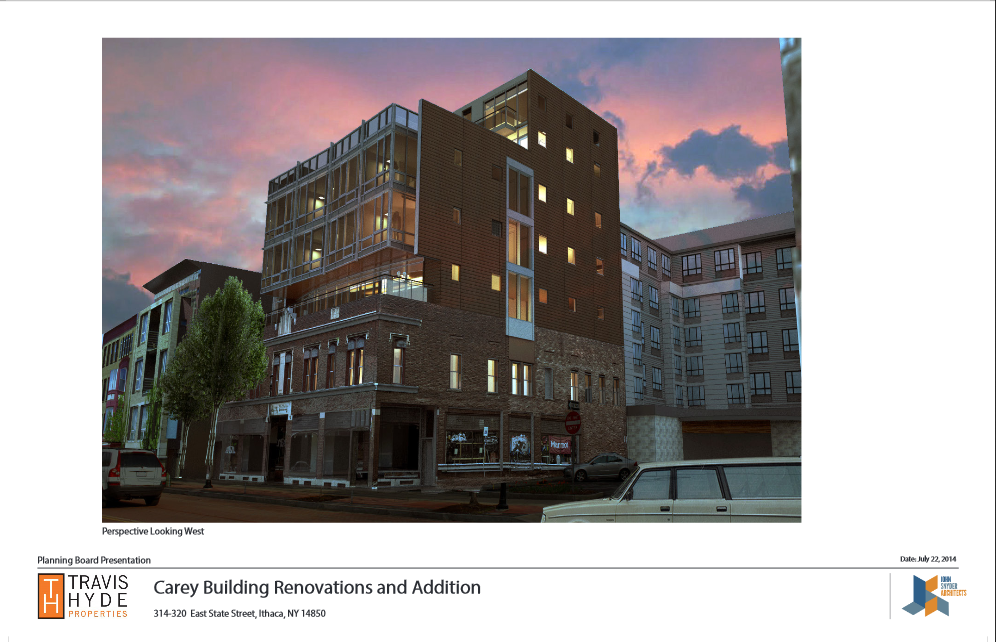
According to Jason Henderson at Ithaca Builds, building contractor LeChase Construction is currently conducting underpinning work on the Carey Building. Underpinning is the name of the process by which a foundation is strengthened – certainly necessary when one is about to add five floors onto a 2-story building. The second to last photo here shows some of the underpinning work on the eastern foundation wall, and the tarp is on the roof indicates prep-work for the upcoming expansion. LeChase will also be handling the construction of the Canopy Hotel next door.

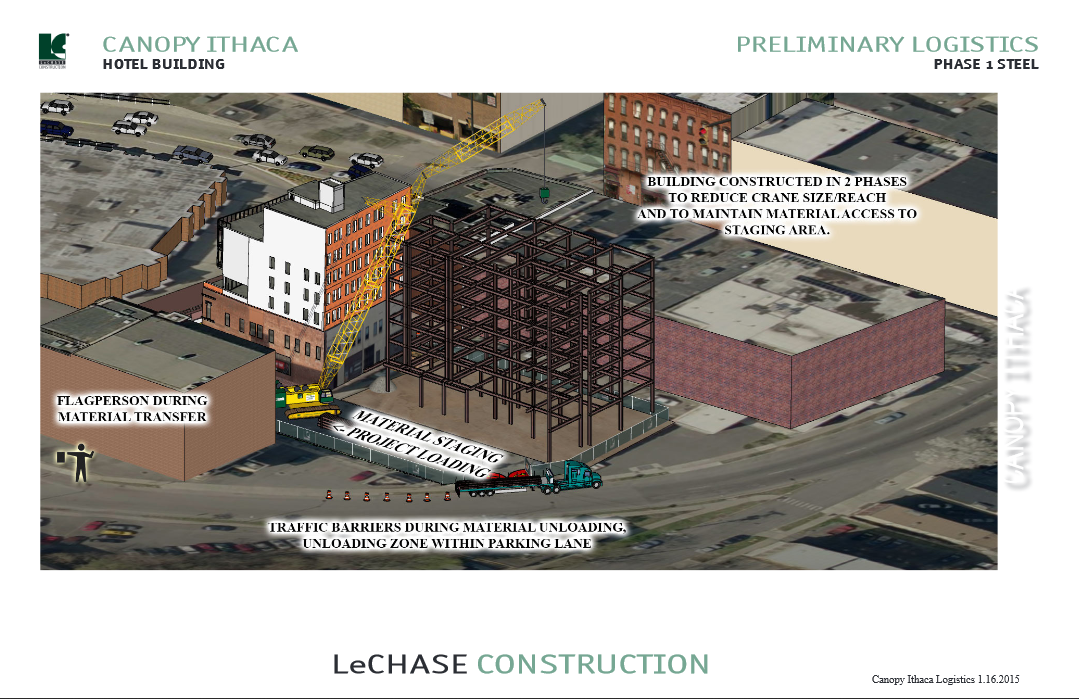
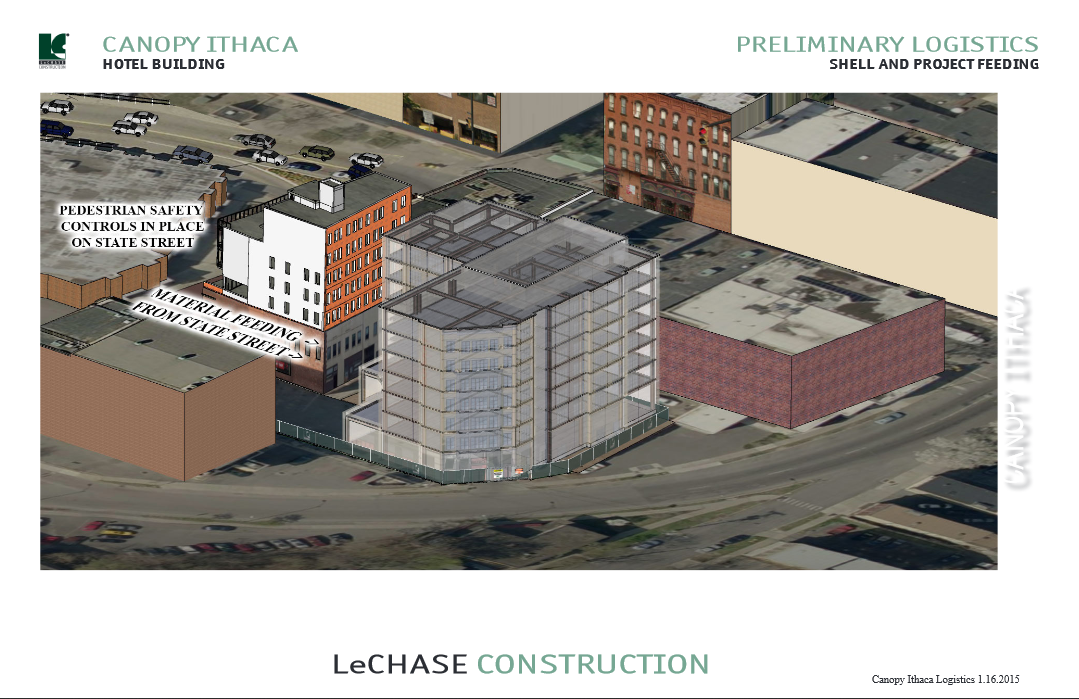
It’s quite unusual in a place like Ithaca to have two separate large projects right next to each other under construction at the same time. This will be logistically complicated. In a letter to the Canopy developers, LeChase’s large trucks will have their brakes inspected before entering State Street, and will be escorted down the hill to a designated area on Seneca Street, and will leave the city via Seneca Street. According to construction phase diagrams, The steel for the Carey Building will be erected first; then, using the same crane, LeChase will begin installing steel for the new hotel. Sharing the crane will result in a cost savings to both owners.

When most of the western side of the hotel has had its steel structure craned into place, LeChase will transition to a smaller crane and switch the material unloading and staging area to East State Street. This is because the hotel occupies most of the site, so the crane is reduced and East State street will be closer to the location of the new crane. Cladding and interior materials will continue to be fed in via E. State Street through the project’s completion in Spring 2016. The Carey Building will have been completed by then, finishing by the end of summer 2015.

The Carey Building addition will add a third floor and 4,200 sq ft to the Rev business incubator (nearly doubling it to 8,700 sq ft), and on floors 4-7, there will be 20 apartments. Floors 4 and 5 will have 16 studio apartment units that average only 400-500 sq ft, their small size enabling them to be rented at a lower price. The 4 units on floors 6 and 7 will be larger 2-bedroom units. The $4.1 million project is being developed by local firm Travis Hyde Companies.

20150207_153142 20150207_153223 20150207_153246 20150207_153412 20150207_153422

carey_rev4_2

canopy_carey_logistics_1 canopy_carey_logistics_2 canopy_carey_logistics_3 canopy_carey_logistics_4


News Tidbits 2/7/15: It Snows In Ithaca, But Verizon Makes It Rain In NYC

7 02 2015

1. As relayed by several outlets, Cornell just received a very generous $50 million donation from telecommuncations giant Verizon. I might make more news about this, but this donation is strictly for the shiny new tech campus down in New York City. The “Verizon Executive Education Center”, in the left of the above render, will be part of the first phase of the campus, set to open in 2017. This goes along with a 6-story, 236,000 sq ft building design by Weiss/Manfredi, and a 4-story, 188,600 sq ft building by Morphosis Architects, both of which are already underway. The skyscraper on the right of the render is a 26-story, 500-room dormitory for students and staff designed by Handel Architects; while not yet underway, it is also slated for a 2017 opening. A design for the tall building on the far left has not been released.

I’d like to see a breakdown of what proportion each campus received from Cornell’s $546.1 million in donations.

2. Looks like some Sun writers decided to do some digging regarding the potential Fine Arts library relocation and expansion. There’s not a whole lot more to add since the Ithaca Voice article; just that the timeline and final design haven’t been set, although the renovation is a “key academic priority”. Students of the AAP school also have mixed opinions about the growth of the library and the possible loss of studio space. But don’t fret dear readers, if a render comes out, it and any pertinent info will be shared here.

424_dryden_rd_1

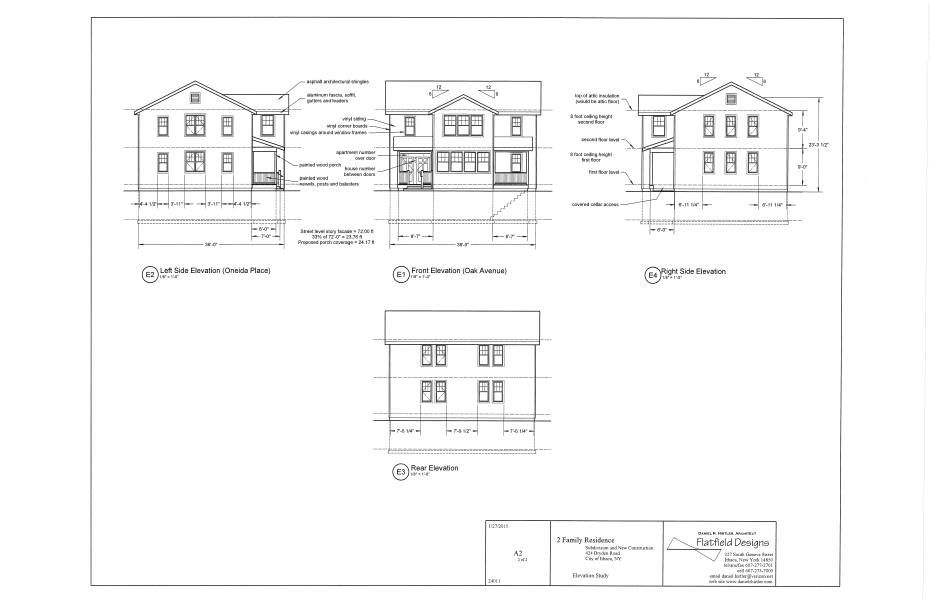
3. A subdivision filed with the city of Ithaca indicates plans for a new two-family, 6-bedroom home at the intersection of Oak Avenue and Oneida Place. The house would be built on land that currently serves as a rear parking lot for 424 Dryden Road. Application here, drawings here. The site falls into the CR-2 Zone of the Collegetown Form District, meaning 2-3 floors, and pitched roofs and porches are required. The architect is Daniel Hirtler of Ithaca, and the developers are William and Angie Chen, also of Ithaca. While not particularly notable, it’s an example of how the form-based zoning applied to Collegetown helps maintain the character of the less-dense outer neighborhood, while still allowing for new construction.

canopy_hampton_rev4_1

4. As with virtually every other sizable project in downtown Ithaca, the canopy Hotel by Hilton is filing an application requesting a tax abatement through the CIITAP program, making it the sixth applicant since the revised program was put into affect in 2013. Application here, and the notice of  public meeting, set for 5 PM February 9th at City Hall, is here. A refresher/review of CIITAP can be found here.

The applicant, “Ithaca Downtown Associates LLC”, a.k.a. the Patel Family of the Baywood Hotels Inc., notes that the 7-story, 123-room hotel project has an estimate cost of $20.15 million. Although the value of the tax abatement is not recorded in the city’s application (it will be written out, when reviewed by the county IDA), it looks like they’re seeking the standard 7-year abatement, which will save them something in the ballpark of a couple million dollars over those 7 years.

As with the previous Marriott and Hotel Ithaca applications, the applicant will only pay one-third to one-half of its projected employees a living wage, which is probably going to earn them the scorn and opposition of the Tompkins County Worker’s Center. But the city and Downtown Ithaca Alliance have been supporters of the project. Neighboring businesses seem to be have mixed opinions about the project, with some seeing a potential business source, and others mourning the loss of a convenient parking lot.

The 74,475 sq ft project is expecting to start construction during the spring, with completion in Spring 2016. Local firm Whitham Planning and Design is the architect.

For those already planning a stay, expect room rates of $160+/night, according to the Journal.

inhs_pride_alleydesign_v2

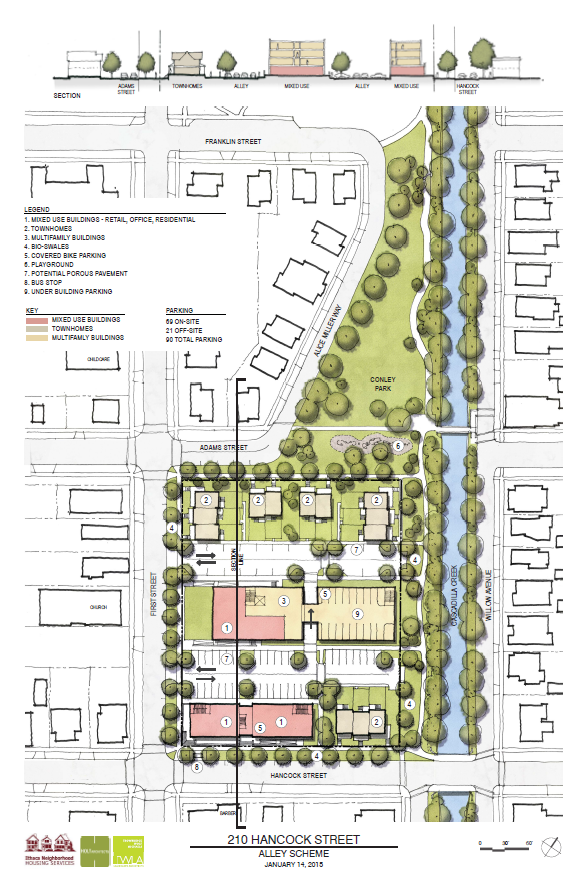
5. It’s PSA time again – INHS is planning meeting #4 for its proposed Neighborhood Pride redevelopment at 4:30 PM Wednesday the 11th, inside the vacant Neighborhood Pride grocery store. The one and only final design concept, shaped by community feedback, will be presented at this meeting. Keep an eye on the Voice for an article (and maybe a rerun here) next Thursday or Friday.

lake_st_bridge

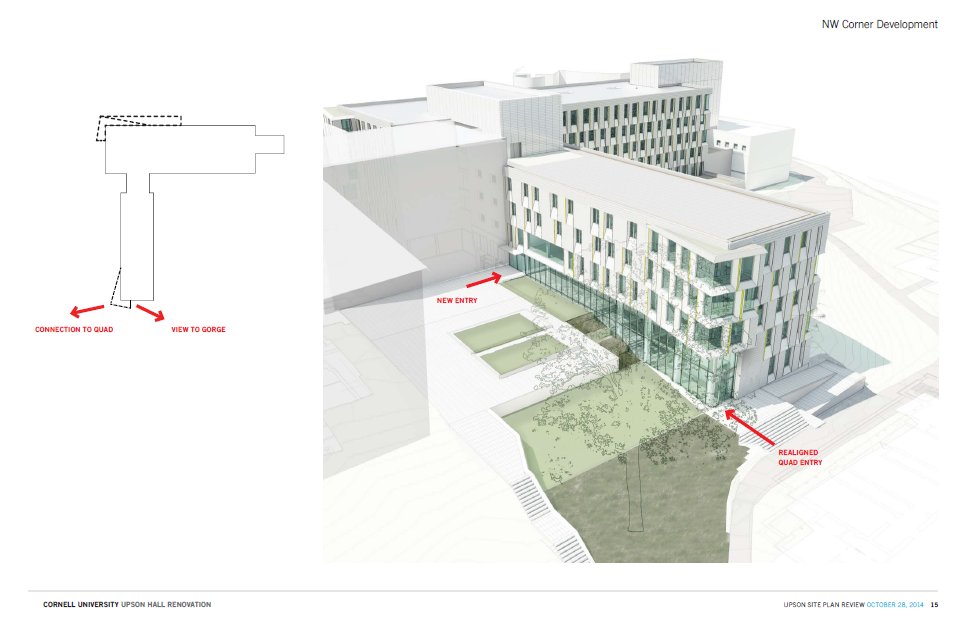
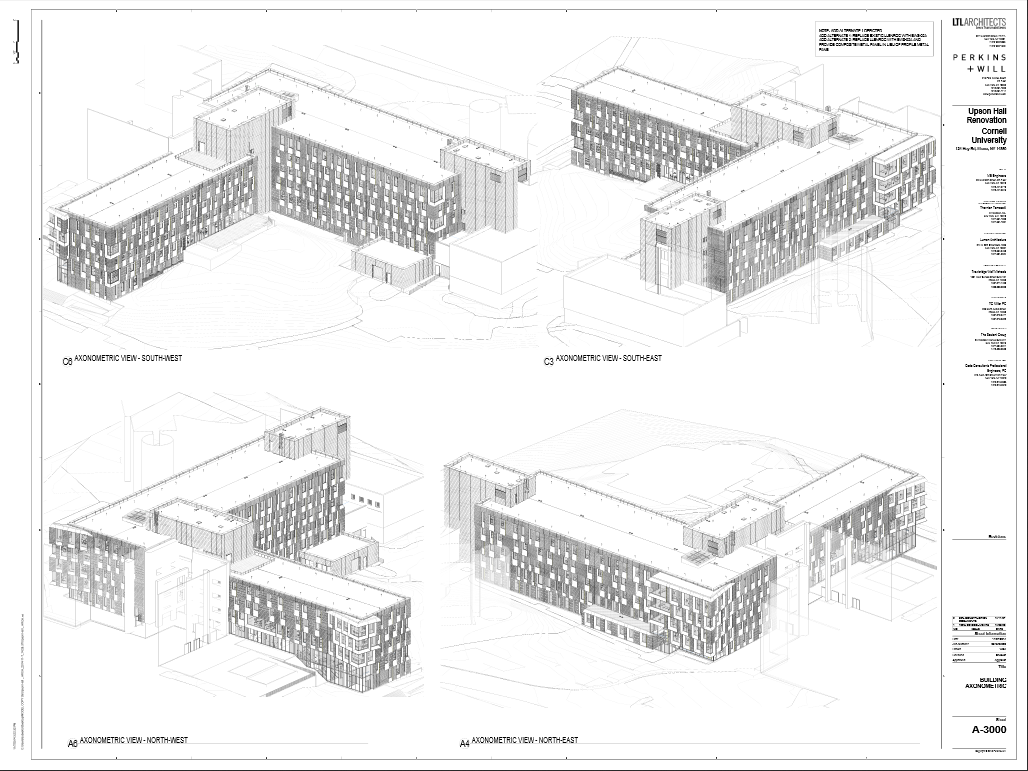
6. Looking at the city’s project memo going out to its departments, it doesn’t look like a whole lot needs to be reviewed this month. Cornell’s Upson hall renovation, the 6-unit building at 707 E. Seneca, and the 4 for-sale townhomes INHS wants to build at 402 S. Cayuga Street are ready for final approval this month. The 3-building, 6-unit project for 804 E. State (112 Blair) still needs to be reviewed by the zoning board, and will be completing environmental review (SEQR determination of significance).

The only new projects of note are the new house at 424 Dryden, and renovations to the Lake Street Bridge. The bridge project consists of rebuilding the current deteriorated bridge with a new deck and refurbished abutments (base supports), as well as scour reinforcements (to protect from creek erosion), a bumpout for viewing Ithaca Falls, some cute light-posts, and a bridge span that isn’t so degraded that it’s liable to collapse into the creek. That project has a $1,000,000 price tag, and is expected to run from June to November of this year.
For those that use this bridge, start prepping for a detour route – the bridge will be closed during construction, to both vehicles and pedestrians. The city estimates the detour will be an extra 1.7 miles for cars, and 0.7 miles for bikes and walkers.


News Tidbits 1/17/15: Capturing “The Essence of Local Surroundings”

17 01 2015

inhs_pride_conceptsketch

1. Token PSA: The third meeting for INHS’s Hancock Street/Neighborhood Pride redevelopment is next Wednesday, the 21st, 4:40-7:30. Attendees are not required to be there for the entire time. The goal of meeting three is to discuss design concepts for the proposed buildings that comprise the two remaining/competing site plans. I look forward to writing a follow-up after the meeting.

cayugafarms_2

cayuga_farms_1


2. Finally, some drawings for the 102-unit Cayuga Farms townhouse project in Lansing, courtesy of the Lansing Star. They look like stereotypical “McMansions” that happen to have shared walls, and the rental price for the 2 and 3-bedroom units has the mansion part covered – $1800-$2200/month. If you use the 30% rule of affordable housing, that means the a household in the cheapest unit is expected to pull in $72,000/year. To quote the project engineer, Timothy Buhl:

“The idea is to capture the transient market of people coming from urban areas to work at the colleges,” Buhl said.  “They would ultimately buy a house, but don’t know where to locate.  We’re looking for young, two-worker families.  It’s an in-between type of rental of higher-end people that we’re looking for.”

In other words, “affordability” is not a word you’ll see in this conversation. The Cayuga Farms project was initially proposed several years ago as 144 townhouse condos (I miscounted and said 138 at the time), but the market for suburban high-end townhouse condos is pretty limited – there is Ivar Jonson’s Heights of Lansing which since 2006 has sold ~17 of the 70+ proposed townhouse units, and Woodland Park, which in three years has built ~6 of 48 planned. The market is virtually non-existent, hence rentals.

On the town’s website, there’s all sorts of other data uploaded: trail recommendations, on-site sewage system details, traffic generation estimates, erosion and sediment control plans, environmental review forms and so forth. Cayuga Farms is multi-phased, with 3-4 phases from 2015-2021; phase 1 will have 44 units. Since Lansing is at capacity on its natural gas pipeline, residents will be using propane appliances until the new natural gas pipeline from NYSEG is routed in. This project already gets dinged in my book for having 354 parking spaces when zoning requires only 153 (1.5 spaces per unit). Every unit gets 3.5 parking spaces. That seems like overkill. Anyway, the planning board reviewed the SEQR on the 12th, which is a big step towards approval of the townhouse development. My gut feeling is, while there’s no doubt Ithaca needs housing in most market segments, a high-end rental unit where you have to drive to everywhere bundles just about every criticism about local development into one convenient package.

Let’s be honest, I’m generally pro-development. But I do have a short list of projects I don’t support. This is one of them. With the sprawl, gobs of parking, and mediocre design, I question its value to the Lansing community.


10378252_313975992125799_95913780193412415_n 10917333_314783998711665_7443965770647794346_n

20141129_135859

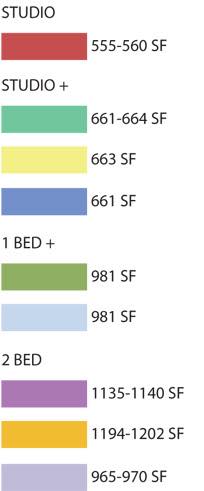
3. The Lofts @ Six Mile Creek project has posted preliminary unit sizes and floor plans on their facebook page. The “Studio +” and “1 Bed +” indicate bonus rooms inside the unit (suitable for another bedroom, home office, etc.). No word on rents just yet, but being new and downtown, expect an upmarket price for the 45 apartments due to enter the market late this spring. Their webpage notes they’ll be accepting reservations sometime prior to that.

canopy_v7_1

4. I think we’re up to version 7 now, but the differences in the proposed “canopy Hotel” are now so subtle that you’d have to be looking hard to spot the changes. The entrance facade is virtually the same, but the mechanical penthouse has been updated to better blend in the rest of the structure, and a couple of stylized wall inserts have been planted into the northwest wall to give the 7-story, 123-room hotel a little visual interest. More renders here, a geotechnical report here, a new cover letter here, and traffic study materials here and here. Thank goodness a lot of this work has gone paperless.

According to the documents, the new “canopy Hotel” brand by Hilton

“…is marketed towards the millennial generation (those born between 1980 and the mid-2000s), however, is relevant for the older generation of hotel guests. Each canopy Hotel is designed to incorporate the essence of its local surroundings and neighborhood feel; such as offering a local welcome gift and evening tastings of local food, beers, wines, and spirits to providing local fitness and recreation options in terms of jogging and bicycle routes (bicycles will be available for rent).”
Yes, ‘canopy’ is meant to be lower-case and ‘Hotel’ is capitalized. I’m sure the brand creators thought that was hip and edgy. Yet another reason why I would never be a good marketer. The 74,500 sq ft hotel includes a small restaurant space of 2,000 sq ft on the first floor, as well as standard hotel amenities like a small meeting room and a gym. The $19 million project hopes to start construction this spring.
upson_4
5. Looking ahead, here’s what the city Planning and Development Board seeks to do at its meeting later this month. For the canopy Hotel mentioned above, declaration of environmental significance and possible preliminary approval. INHS’s 402 S. Cayuga Street townhomes and the 6-unit 707 E. Seneca apartment project will be up for environmental review and recommendation to the zoning board for variances. The Planning Board will also declare itself lead agency for reviewing Cornell’s Upson Hall renovations, the 3 duplexes at 804 E. State Street (112 Blair). Board members will also consider approving a telecommuncations (cellphone) tower on top of a gas station at 214 N. Meadow Street, and weigh in on parking-related variances for 128 West Falls Street and 108-110 Eddy Street. It’s an interesting mix this month.