News Tidbits 10/31/15: The word of the week is “No”

31 10 2015

hotel_ithaca_final_1

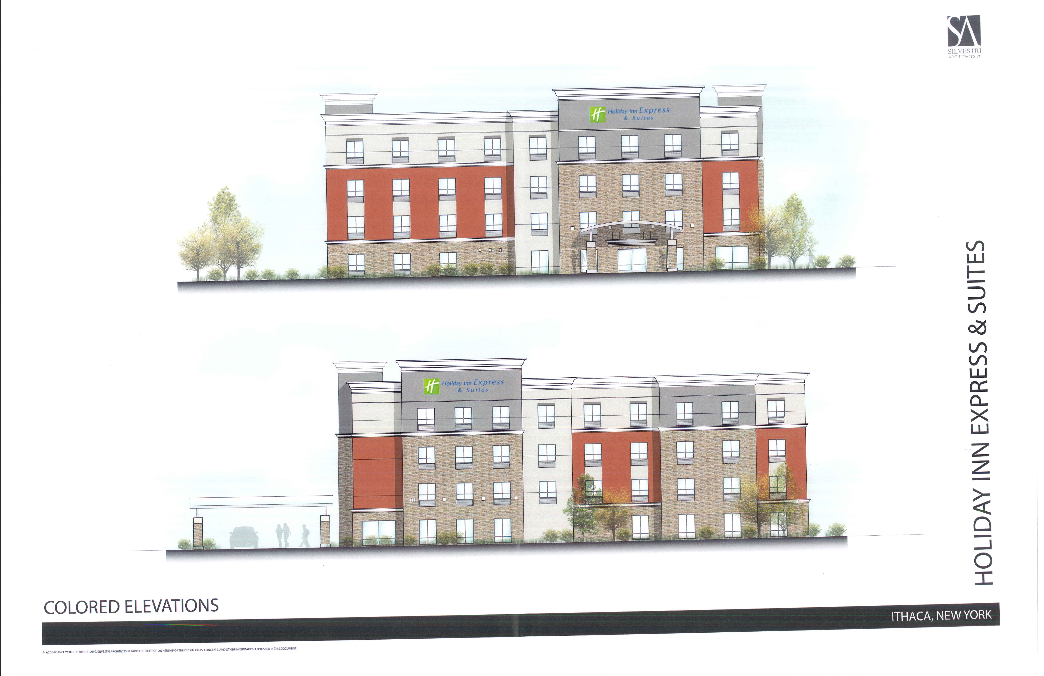
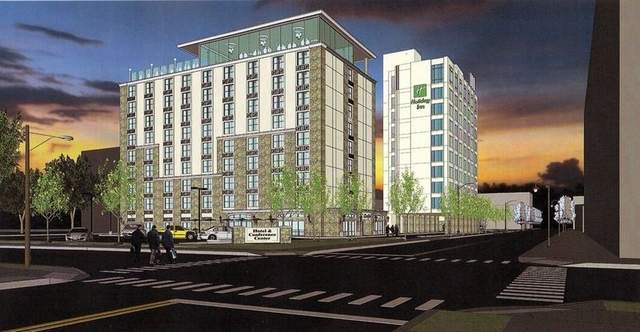
1.  We’ll start off with about the only affirmative news this week, that of the city of Ithaca Planning and Development Board Meeting last Tuesday. The tweaks to the now 79-room Holiday Inn proposal at 371 Elmira Road were approved, and the project expects to have building permits in hand next week, according to the Times‘ Josh Brokaw. When I spoke to the development company’s president, he said “the project is already underway”, but it seems he meant demolition permits for the existing buildings, rather than construction permits. Expect a construction update sometime next month.

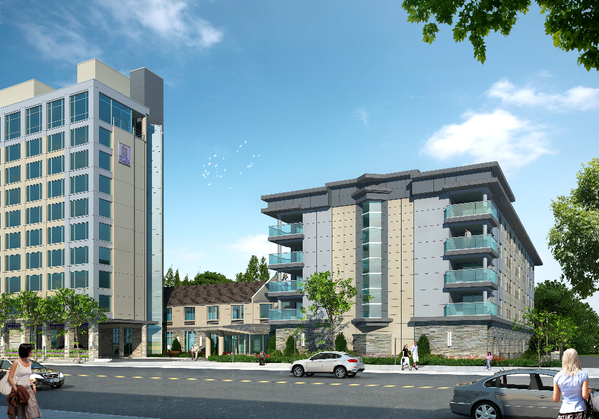
Also approved was the new north wing for the Hotel Ithaca at 222 South Cayuga Street in downtown. A tweak of the facade, glazing and balconies was enough to placate the board into approving the revisions for the $9.5 million, 90-room project, which replaces a two-story wing dating from 1972. The north wing will have the potential for another three floors, and on the other two-story wing, the long-awaited Conference Center may come to be if financing plays in developer Hart Hotels’ favor. The Buffalo-based company hopes to start construction early next year and have the new wing ready for its first guests in Fall 2016.

416_e_state_v2_1

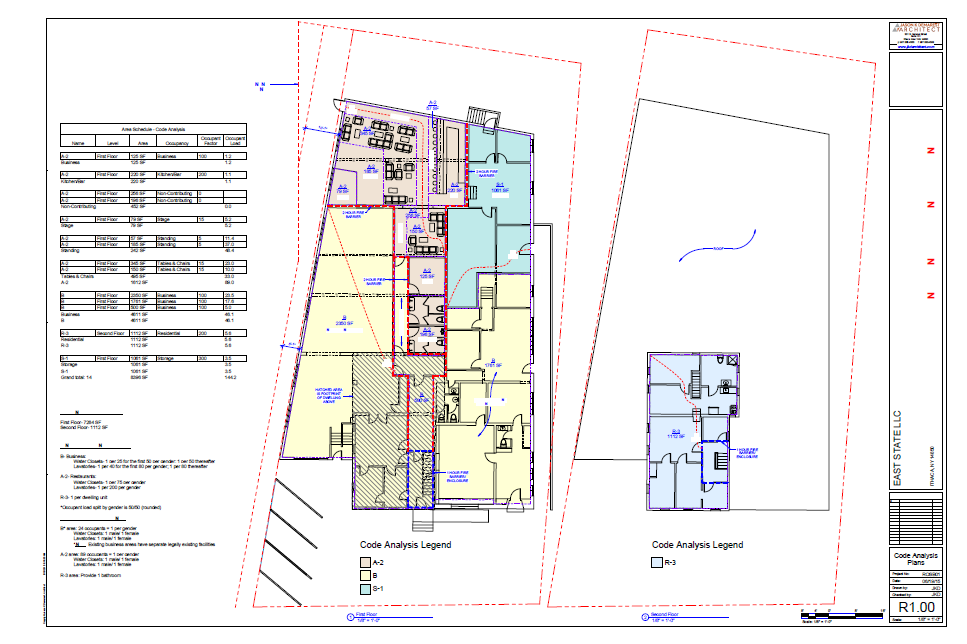
Meanwhile, in the strike column is the proposed jazz bar at 416 East State Street just east of downtown. According to the Cornell Daily Sun, a decision is being deferred until updated, more thorough information is provided regarding sound attenuation of bar patrons gathering outside the building while getting their fresh air or nicotine fix. Neighbors have mounted substantial opposition to the project for being out of character and for parking concerns, but the planning board has played neutral, receptive but cautious. The project is a legal use and will not change the square footage of the one-story warehouse/office building, but will need zoning variances.

2. The county had discussion, but made no judgements on the Biggs Parcel next to Cayuga Medical Center. The county is mulling plans to sell the parcel on the open market after years-long and heavily-fought plans to sell it to affordable housing developers NRP and BHTC fell through on the discovery of extensive wetlands on-site in 2014. As written about in the Voice this week, the county wants the 25.52 acres of land (previously valued at $340k) back on the tax rolls, while the neighbors and some other West Hill residents, under the umbrella of the Indian Creek Neighborhood Association, want the county to hold it as “public woodland”. The county has countered (time and again) the land has no use for the public.

Depending on which account one chooses to follow (ICNA’s or the county’s, the two vary on the details), the county’s Government Operations Committee is giving the neighbors one month to come up with a viable alternative for the land. The ICNA wanted an RFP for land preservation, but the county’s planning commissioner, Ed Marx, says the county doesn’t have time to write-up another RFP. They also pushed for subdivision of the land, which the planning department is also discouraging. The county has wanted the ICNA, Cayuga Medical or BHTC to buy the land, but no one’s made offers.

To this semi-trained eye, the only “happy” solution would be for the ICNA or someone sharing its interests to buy the property for the re-assessed value and arrange to donate it to an organization like the Finger Lakes Land Trust. The county gets their tax money, and the neighbors get to keep the land undeveloped. Outside of that option though, either the neighbors are going to feel shorted, or the county’s tax watchdogs will be up in arms.

EDIT: And now I’ve been informed that the land would be tax-exempt if given to the land trust. So there’s no happy solution unless a private landowner buys it agrees to not develop it. Which, given the property tax, is not very likely.

Farm Pond Site RES'D & LOT s 010414

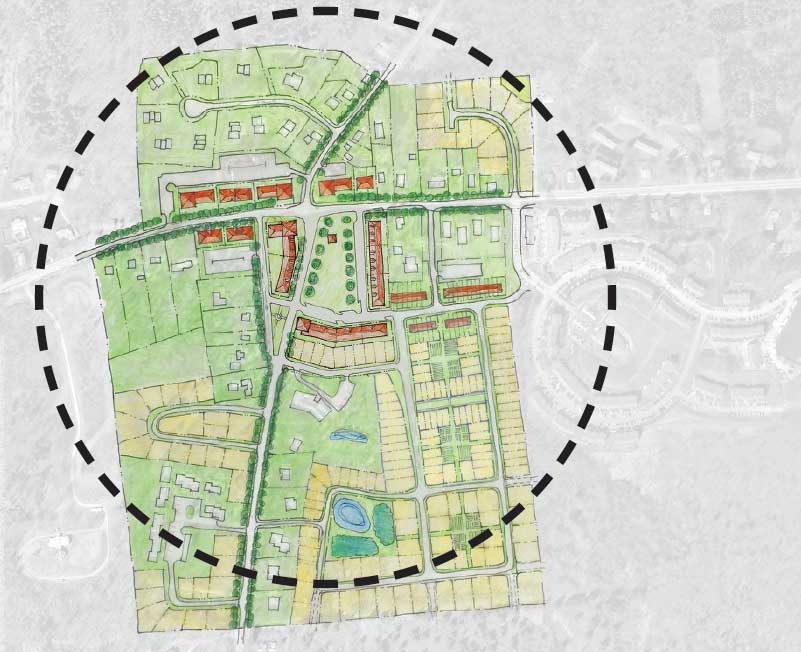
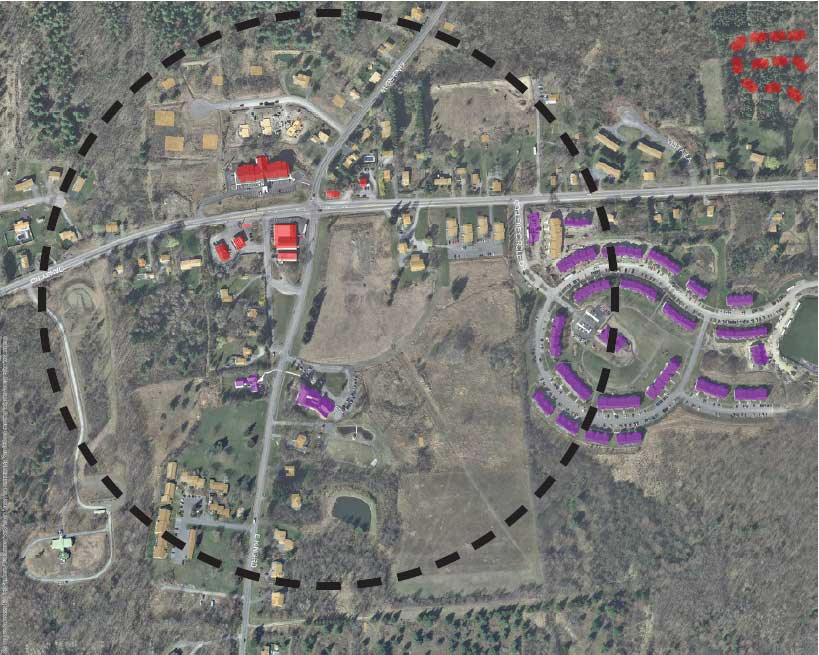
3. Farm Pond Circle is still for sale. Only now, it’s on the market for $125,000, $30,000 less than the original listing. As previously written here back in March:

“The second phase of Lansing’s 21-lot Farm Pond Circle development is up for sale. Jack Jensen, the original developer, passed away last fall. Of the ten lots in phase two, four have already been reserved; there are also two lots left in phase one. The second phase is being offered for $155,000.

The Farm Pond Circle development is fairly stringent. Current deed restrictions limit the size of each housing unit to 2600 sq ft, vinyl or aluminum siding isn’t allowed, and only very specific subsections of the lots can be developed. Buyers aren’t limited to green energy, but there is a strong push in that direction. Also, at least four of the lots are earmarked for affordable housing (single-family or duplexes, buyers muse make less than 80% of median county income of $53k)). The affordable units, at least two of which have already been built, are being developed in partnership with Jack Jensen’s non-profit, Community Building Works!.”
state_st_triangle_v5_1

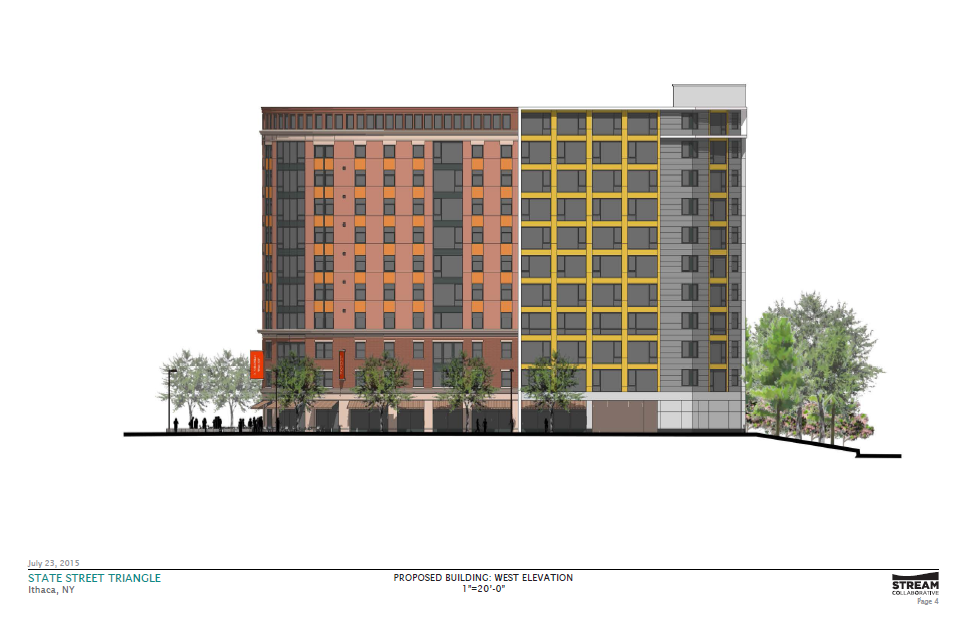
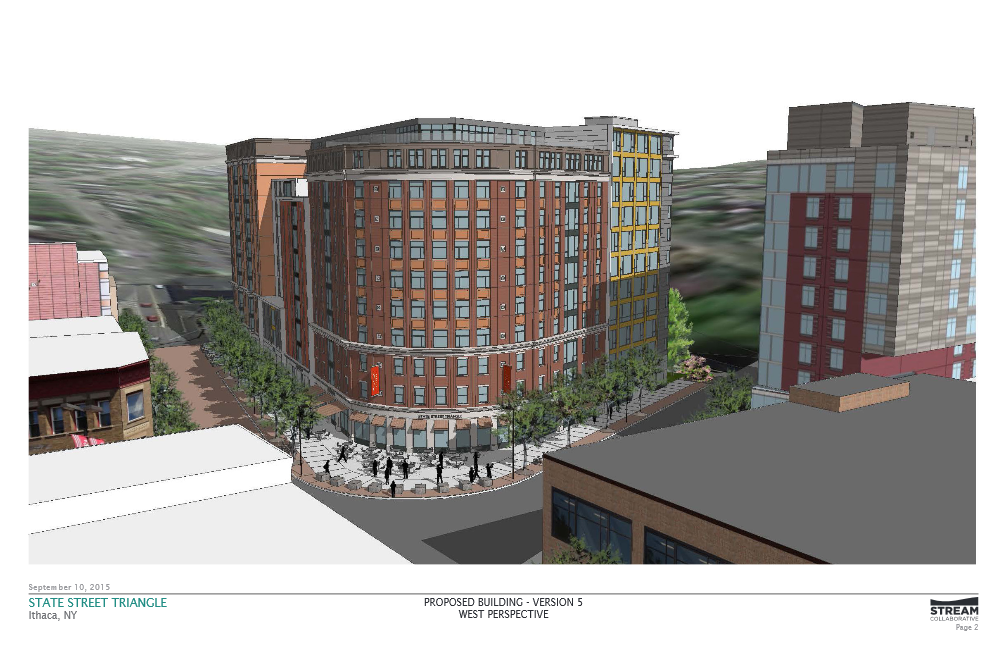
4. Mayor Myrick made some thought-provoking comments (or provocative, depending on your view) in a phone interview with the Times’ Josh Brokaw about State Street Triangle. For one, the inclusionary zoning topic has come up again, something likely to make an appearance in his second term. And for two, calling for a distinctive “pillar” with fewer units, and smaller units sizes to appeal to a wider, non-student part of the market. As previously stated, the 11-story height isn’t the issue.

I wrote about inclusionary zoning as part of an interview with Community Planner Lynn Truame in the Voice – it can be done one of two ways, either saying a builder/developer can’t build anything without having units or paying into a fund, or by giving them an extra incentive, like reduced permit fees, being able to build one floor higher or a reduction in parking requirements if they include affordable housing. Most opt for the latter approach.

The pros are an integration of affordable units into market-rate developments and a supply of affordable housing. The cons are that, if handled the wrong way, it can stop all development, affordable and market-rate, and on the other end of the spectrum, if the benefits are too generous than it can reduce the supply the affordable housing by tearing down older, lower-cost buildings in favor of new higher-cost ones with a small number of affordable units. In sum, nothing in an inclusive zoning ordinance can be taken lightly.

An inclusionary zoning program requires the support of neighboring communities so that developers don’t just skip to the next town over to escape the burden, and the program must be designed to encourage developers to build while ensuring there’s plenty of affordable units on the market. For example, here’s Burlington, Vermont’s ordinance:

“The program applies to all new market-rate developments of 5 or more homes and to any converted non-residential structures that result in at least 10 homes.  The affordable housing set aside is 15 to 25% of the units, depending on the average price of the market-rate homes – with the higher percentage placed on the most expensive developments.  The ordinance does not allow fee in-lieu payments or land donations, but will allow developers to provide the affordable housing off-site at 125% of the on-site obligation.  The ordinance provides a range of incentives including fee waivers and a 15-25% density and lot coverage bonus. Affordable homes are targeted to households earning 75% or less area median income (AMI) and rented at 65% or less AMI.  Developers can sale or rent the homes for more as long as the average of affordable homes sold or rented are at or below the target household income.  Affordable homes are price controlled for 99 years.

Burlington partners with a nonprofit – the Champlain Housing Trust – in the administration of its program and is able to minimize in-house administrative staff time for the program (committing only 10% of one full time employee). However, more funds are needed to support the monitoring and enforcement of affordable homes.”

So if this were Ithaca for the sake of equivalent example, let’s say a developer downtown is thinking of a 40-unit market-rate non-luxury apartment building, that maxes out the lot area and height of a currently-existing (hypothetical) zone. They would be able to build 46 units/15% larger as a bonus, but 6 units would have to be affordable housing. They could also build 46 market-rate units on-site, and build 8 affordable units off-site at a location okayed by the city.

The affordable units would be targeted at individuals making 65% or less of AMI, which in Tompkins is 65% of about $53k, or $34,500/year. Some units could be more or less affordable, as long as they average to 65% AMI. It stays that way for 99 years. The units would be managed by an organization like INHS.

Or, the developer could build a hotel, office, or non-residential building without giving up money or space for affordable housing, but they also get no zoning bonus. Burlington’s law isn’t designed to be a barrier for development, it’s designed to be an incentive to include affordable housing in new projects. However, there are definitely opponents to inclusionary zoning even among affordable housing advocates, who say that a revised and expanded Section 8 program would be more effective.

Note that Burlington’s law is just one example. No one ordinance fits all municipalities, and each community has its own aspects to address  – in Ithaca’s case, that means tailoring the inclusionary zoning for each neighborhood, determining what size and types of projects have to pay into the fund (because Cornell will probably file a lawsuit if it affects their projects), establishing affordability guidelines that encompass both poor and middle-income families, and whether fees can be paid into a housing fund in lieu of housing. What works in Downtown probably won’t work in Belle Sherman, and what works in Fall Creek wouldn’t be effective in Collegetown. It’s going to be an intensive design process.

So, back to the original question – is Campus Advantage willing to play? It’s not one that anyone can answer just yet. The Austin-based company is still determining their next move. The Times, as well as commenters on this blog, have raised the possibility that this might be the mayor playing politics to stave off his write-in opponent and the anti-development crowd that supports many of the independent candidacies. But, barring some left-field shocker on Tuesday, expect Myrick to be sharing more of his and his staff’s zoning ideas in the next couple years.
20151011_145007

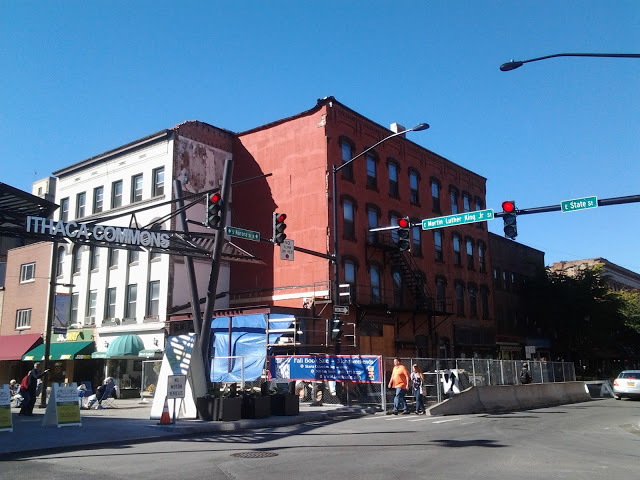
5. Speaking of zoning, the city is mulling over a zoning tweak to make buildings on the Commons have mandatory active street-level uses. A copy of the memo is here, Full Environmental Assessment Form (FEAF) here, county memo here,  copy of code revision here. It seems like an easy sell from both the angle of developers and the city, but the steps to codify it are only now underway.

It will be similar to inner Collegetown’s MU-2 zoning. Permitted are stores, restaurants, banks, entertainment venues, public assembly areas, libraries, fire stations, and anything approved by the Planning Board on a case-by-case basis. The last part comes into play because the Finger Lakes School of Massage proposes a student-staffed massage parlor on the first floor of the Rothschild’s Building. Not included – schools, certain office lobbies and apartment/condo lobbies. But most building owners moved to active-use on the Commons a long time ago. The public hearing will be November 19th.
902_dryden_1

902_dryden_3

6. Looks like there are still some hang ups with the Storage Squad and 902 Dryden projects out in Dryden, according to the town’s latest meeting. For the Storage Squad project, it has to do with their concerns with a stream that showed up on a DEC map in 1940 but hasn’t appeared since (they have to prove doesn’t exist, and proving it requires DEC acknowledgement). The business owners were also concerned about spending $30k on a Stormwater Pollution Protection Plan, with the possibility that the town may have them redo it at no small price.

Now, the Dryden town board is feeling a little heat right now because there have been accusations the town isn’t doing enough to help small businesses, allegations the “rainy day” fund’s depleted, and there’s a 13% tax levy increase planned, none of which sit well with voters. Plus. lest anyone forget, elections are coming up. So it’s perhaps with those things in mind that the town board is making an effort to try and help the owners of the Storage Squad before they throw in the towel. They invited them to the town’s meeting on the 29th to discuss the SWPPP further, and we’ll find out if it was fruitful.

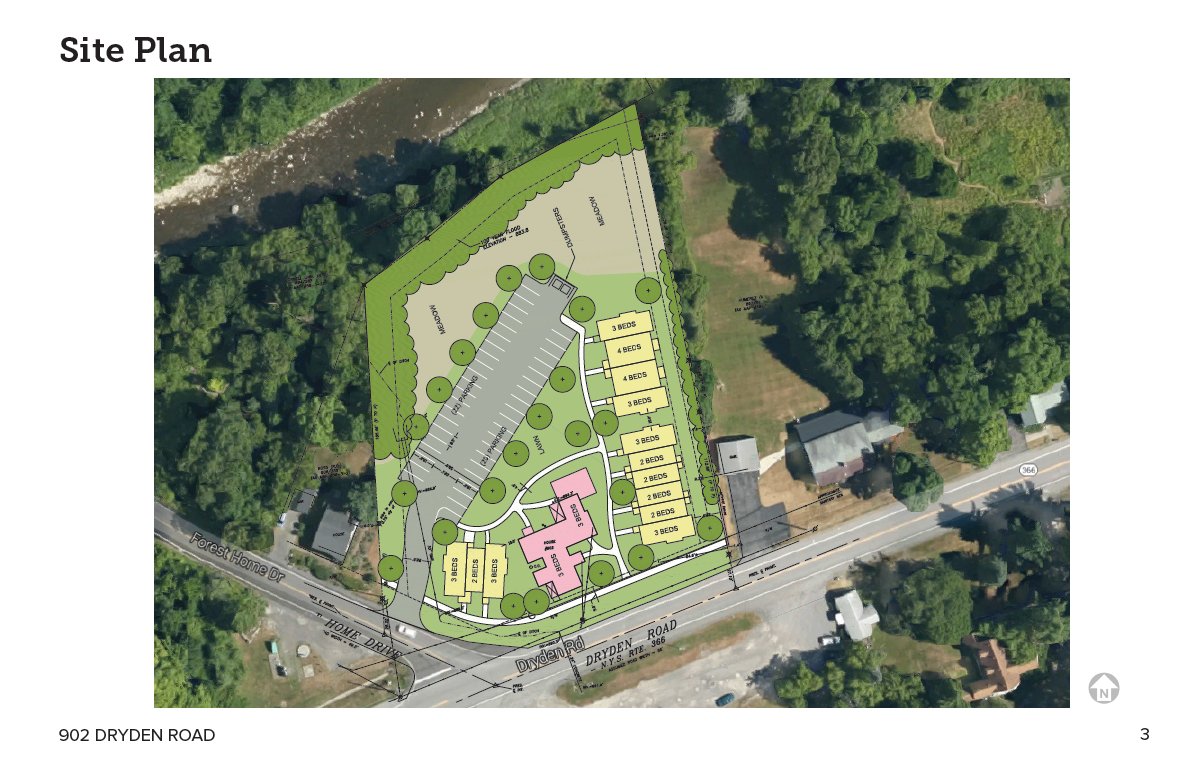
Also, the 13-unit, 36-bedroom (15 units/42 bedrooms if you count the existing duplex) 902 Dryden project was berated by its potential neighbors once again. There are a couple comments attacking the potential students that would live there, but most seem to be against the location and concerns about flooding. Then you have the guy who called it a cancer.

One speaker says that residential development is a tax burden on the town, but really that depends on the type of housing – infill lots and denser acreage can be cost-efficient. New, low-density “greenfield” housing requires more pipes, power lines, new roads…infill has much of that already in place, and less acreage per unit can yield greater cost efficiencies. Plus, the commercial development the speaker touts also requires police and fire, and indirectly schools for its employees’ families. Yet, he didn’t offer a single word of support for the Storage Squad proposal.

Then the talk turns to taxes, and a guy references how we took land from Native Americans, Socialism will cause our nation’s collapse, and how Muslims are trying to institute Sharia Law. Now, how does one type those town board minutes and keep a straight face?

7. One last no for the week, this one for the Phi Mu sorority from Cornell. I still have a soft spot for the histories and houses of Greek Letter Organizations (GLOs), although I’ve happily aged out of college life.

The sorority (technically a fraternity), which arrived to Cornell’s campus last year, had intended to buy the $725,000 house at 520 Wyckoff Road, but the village board shot down the change of use required. Noise, traffic and “detriment of character” were cited as reasons not to let the ca. 1924, 3,473 SF home be used for group housing.

The Ithaca Journals’ Nick Reynolds offers this passage in his write-up:

Following the decision, the board broke protocol and began a philosophical dialogue between its members and the public.

Board member Sean Cunningham suggested the village has become anti-change and anti-sorority, and was at risk of “burying their heads their heads in the sand” to the point where the village wouldn’t be able to maintain its quality of life from an unwillingness to change.

Jeff Sauer, of 107 Overlook Road, offered the residents’ stance:

“The issues brought up tonight were the right issues,” Sauer said. “It’s not that we’re opposed to change; we’re for managing change.”

Historically, the neighborhood of Cornell Heights, split between the city and the village, has been fiercely opposed to any change of uses, let alone new buildings. Cornell sued residents in the 1980s, and won, over a similar issue. The university had planned to move its 15-member “Modern Indonesia” research program and literature collection from 102 West Avenue to a house on Fall Creek Drive, but neighbors convinced the city of Ithaca that it would greatly damage the neighborhood’s character. The state supreme court disagreed.

Cornell Heights and Cayuga Heights have been used as a textbook study in Blake Gumprecht – The former, for which this blog is named after, was founded as an elite faculty and businessmans’ enclave. But after the Alpha Zeta fraternity was donated a house in 1906 (for which the developer threatened legal action to no avail), and Cornell built the all-ladies Risley Hall in 1912, the local elite turned their noses and mostly turned tail for Cayuga Heights, selling out to Greek organizations but making deed restrictions in their new community to keep them from moving in. Cayuga Heights refused annexation in Ithaca by 1954 in part because they didn’t wish to attract students, and even prohibited a restaurant from opening for fear it would attract students as well. While the village isn’t as virulent as it once was, the sorority never really stood much of a chance. One long-term problem may be that if the existing GLOs do ever sell their properties, it’ll be to Cornell and Cornell only, where the use will be maintained, but the taxes won’t.

Well ladies, better luck next time around. You could always ask Cornell about those houses on University Avenue.

9. PSA? Sure.

Vote. Local elections matter. Your vote on Tuesday could make the difference for a lot of things –  for another 210 Hancock, waterfront development plans, zoning changes, or if a future downtown project gets an abatement. It will play a role in whether Ithaca, the county and other govs make an effort on affordable housing. Tuesday’s decisions will affect the city and county’s decisions.
Polling sites here, sample ballots here.


A Long Voyage Ahead for The Waterfront

27 10 2015

The NYS DOT property is probably the next big, Old Library-type project facing the county in the upcoming couple of years. There’s a lot to consider in a possible move of the DOT to Dryden, and subsequent sale of the site to a chosen developer. For that, the county paid $78,000 to Fisher Associates to conduct a feasibility study, the results of which are shared below.

The feasibility study examined multiple angles – environmental, physical, market and financial factors. It has to, because without a through examination of the site, the county could under-price themselves, or vice-versa, there may be fewer or no offers, should buyers think the site’s a poisoned chalice.

But let’s start with the initial disclaimer – things are years out. The Old Library site issued an RFEI in November 2013, and a preferred developer was only named in August. Plus, everything is still dependent on a DOT move, which will have its own schedule if it happens. All things considered, although the county has generously offers 2017 as a construction start date, it’ll probably be the end of the decade if not the 2020s before any soil starts to turn, assuming there’s an interested developer.

So let’s start with a look at the site’s history and environmental concerns. According to Fisher Associates’ Environmental Site Assessment (ESA, link here), the property was virtually unused until the NYS DOT bought the land and starting building their facilities on it in 1958. There were petroleum tanks underground, but they were removed and the land re-mediated in 2004, and now the only tanks on-site are above ground, and in good condition. Some concerns still exist with salt brine tanks, debris in the inlet, and materials from when the DOT used a septic system, before it was hooked up to the city sewer. None of these appear to be potential deal breakers, just things worth noting.

waterfront_floodplain

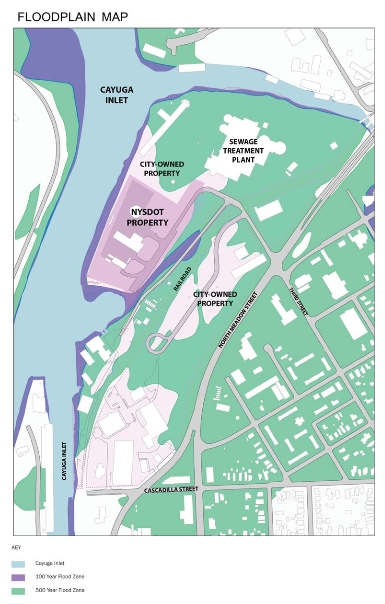
Perhaps surprisingly for a waterfront property, the vast majority of the site isn’t in the 100 or 500-year flood zone. Most of the site is elevated just enough to avoid flood risk.

Empire GeoServices of Cortland conducted the geotechnical report and site soil analysis. Looking at the soil conditions, being next to the water poses some limitations. Most of the lower elevations of the city suffer from poor, water-logged soils, which are soft and compressible near the top – in a few cases, shallow spread foundations, typically the cheapest option, have been damaged by excessive soil settling, so those are not recommended. Deep, pile foundations, like the ones used at the Lofts @ Six Mile Creek (micro-piles), Marriott (caissons) or some of the big box stores, are a safe option because they go down to more solid soil layers, but they’re more expensive. Shallow mat foundations can also be used in place of shallow spread foundations, but they’re also more complex and expensive, and are really only suitable for “light buildings” with less pounds for square inch. A mat foundation was used for Cornell’s new rowing center.

Long story short on the soils, it means that whatever is built will need a complex foundation, and its likely that whatever gets built will be priced at a premium. The study tacks on an extra 10% to the cost for townhouses and mixed-use buildings.

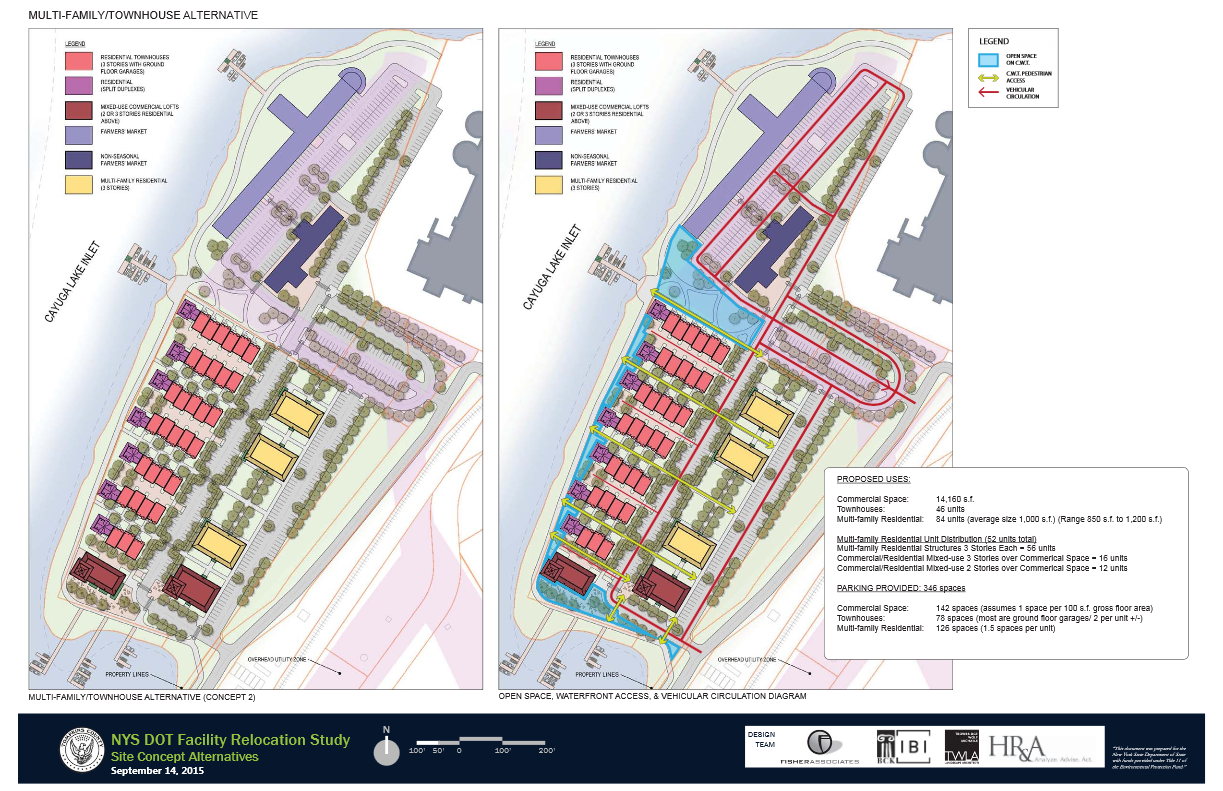
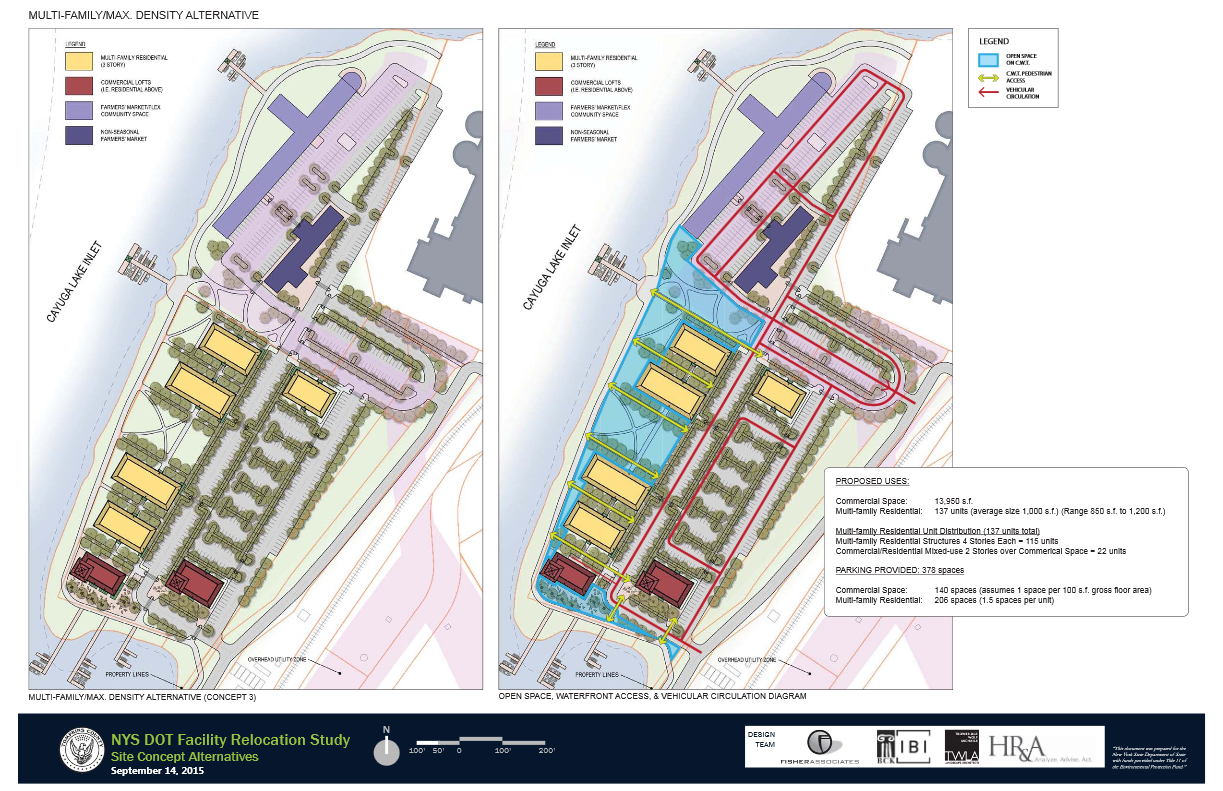
In the study, there are three plans considered – a hotel plan, a multifamily/townhouse “preferred” plan, and a maximum density plan. The site plan PDF is here, for you kids following along at home.

waterfront_concept_hotel_SP_1

The hotel plan imagines a 124-room hotel (midsize in the Ithaca market) with 6450 SF of commercial space. The plan includes 10 townhouses and 52 multi-family units in the 850-1200 SF range. There are 286 parking spaces, as required by zoning – 1 for each hotel room (124), 1 per 100 SF of commercial space (64), 2 for each townhouse (20) and 1.5 for each apartment-type unit (78). 1 Space for 100 SF commercial space is fairly generous to drivers – the ITE trip generation manual shows most commercial retail to be well below that threshold, with only service outlets like fast-food joints, coffee shops and bars exceeding the 1 space/100 SF value.

The market issues with this plan are focuses on the hotel. A hotel was envisioned for the waterfront for decades, but being off by itself with only few nearby attractions (the trail and farmer’s market, not much else), it’s not as desirable as downtown, nor is the land as cheap as the Southwest suburban corridor. The feasibility study notes the waterfront might be a draw in the summer, but the weather the rest of the year would limit its appeal. With increased interest in living in the city, the hotel idea has had less allure in recent years. Still, the option was included for the sake of comment and critique. The study says a hotel would need 120+ room to support fixed costs (taxes, maintenance), and recommends a brand not present in Ithaca, like Hyatt or Starwood (Westin/Sheraton).

waterfront_concept_mf_th_SP_1

The multi-family/townhouse plan does away with the hotel and instead focuses more on residential. The plan is composed of 14,160 SF of commercial space, 46 townhouses and 84 multi-family units (130 units total). 356 parking spaces are provided.

waterfront_concept_max_den_SP_1

The maximum density plan is as it sounds – the maximum legally allowed by zoning. The plan calls for 13,950 SF of commercial space, 137 multi-family units and 378 parking spaces.

Note that all three plans have a new indoor farmer’s market building, but that’s a separate development being spearheaded by the market.

waterfront_concept_aerial_1

Renderings make for great eye candy, but the emphasis is definitely not on the architecture here, because it’s a bit like predicting what new cars will look like in 2020. You know it will probably have four wheels, lights and doors, but everything else is just for show. Whoever buys it will come in with their own idea of how things should look (see Form Ithaca’s waterfront study for their take). For the sake of reference, a copy of the aerial renders of each layout is here.

Now for a financial summary (link), the feasibility in its essence. HR&A Advisors, who partnered with Fish Associates for the study, notes that development can work with a potential buyer’s bottom line, but it’s going to be expensive and the developer will seek to minimize risk as much as possible – there’s not much padding in the profit. There are few comparable products in the county to the site, which makes determining the market size, rents and level or risk somewhat more difficult than usual. The study assumes a 3-year, single-phase build-out.

waterfront_concept_financial_1

The study assumes about $2.15/SF for a residential unit – in other words, a 1,000 SF unit (like a larger 2 bedroom or smaller 3 bedroom unit) renting for $2,150/month, similar to the Lofts @ Six Mile Creek or Gateway Commons downtown, which were used as comparables. Luxury housing, without a doubt. The waterfront commands a price premium, but the disconnection to the rest of the city could hinder rentals. Some condos/owner-occupied units are possible, but rentals would be the majority. Development costs range from $165/SF for a townhouse, to $215/SF for a multi-family unit, to $287/SF for the hotel. The value of a project ranges from $39-$45 million depending on plan, and with development costs taken into count, the land could sell for something less than $1,000,000 to $2.5 million. Over time, the project may generate $13-$22 million in tax revenue over 20 years, depending on approach.

waterfront_concept_financial_2

The land itself will not sell for the price required to cover the DOT’s cost of moving, which will have to be underway before any sale takes place. The move is estimated at $14 million. This means that the city and county may have to chip in on upfront costs in order to get a good project in that will pay itself off via tax revenue. HR&A notes that an RFP should be flexible in its options, and be open to zoning variances that might improve a project’s chance of success.


dot_concept_1

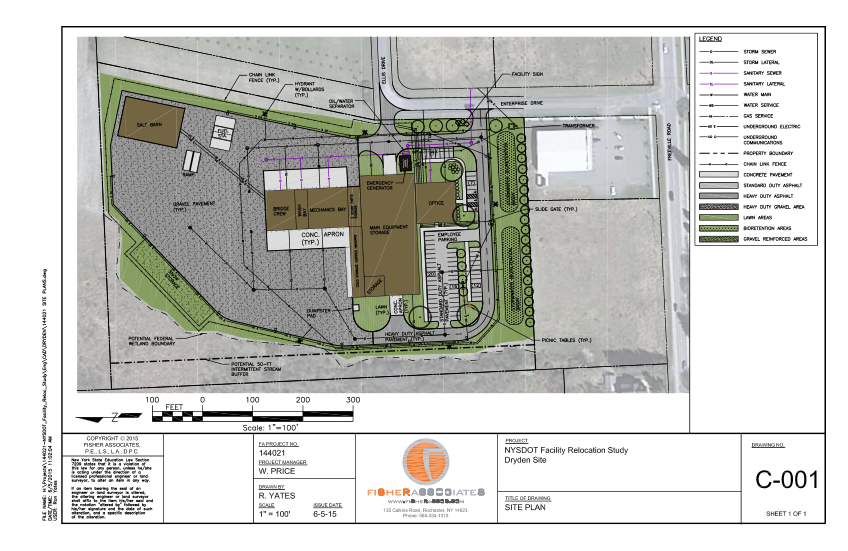
For what it’s worth, Fisher associates also did a conceptual layout for a new DOT facility here.

According to the county, here are the next steps in the process:

  • A financial plan for the redevelopment of the Cayuga Inlet site that reduces the risk for private developers and generates revenue to support the move of the existing NYS DOT facility.
  • An analysis of the project’s impacts on infrastructure and utilities, the natural environment, neighborhood and adjacent properties, and the surrounding road network.
  • An estimate of the land value of as well as the individual components of the plan. The result will be an order of magnitude valuation of the site to better understand the project’s ability to attract private investment, support debt, and support a purchase price and tax revenue stream that could be used to advance the NYS DOT facility’s relocation.
  • A draft Request for Proposals (RFP) to solicit developers to redevelop the site.
  • An estimate of the ongoing direct fiscal benefits to accrue to the City of Ithaca and to Tompkins County, including real property taxes, personal property taxes, school taxes, sales tax, and other applicable taxes and fees.
  • A financial strategy for moving the DOT site with some combination of revenue from sale of the site, direct funding from NY State, and, possibly, a local contribution from anticipated tax revenues.

Expect that last one to be potentially controversial. The state might move slow but could be supportive, but the city will have to explain and hope that a possible initial investment in the DOT’s move to Dryden could pay off over subsequent years. Voters don’t always like long-term plans.


News Tidbits 10/24/15: Breckneck Builds and Market Slowdowns

24 10 2015

college_crossings_v3_end

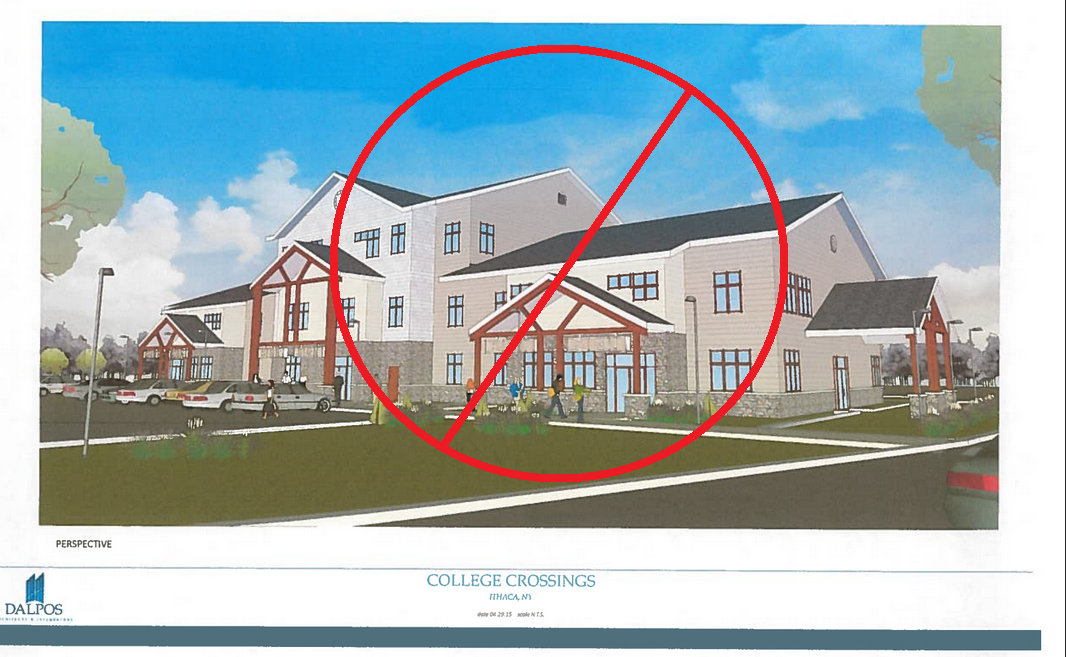
1. College Crossings is dead. But its passing opens up an interesting conversation.

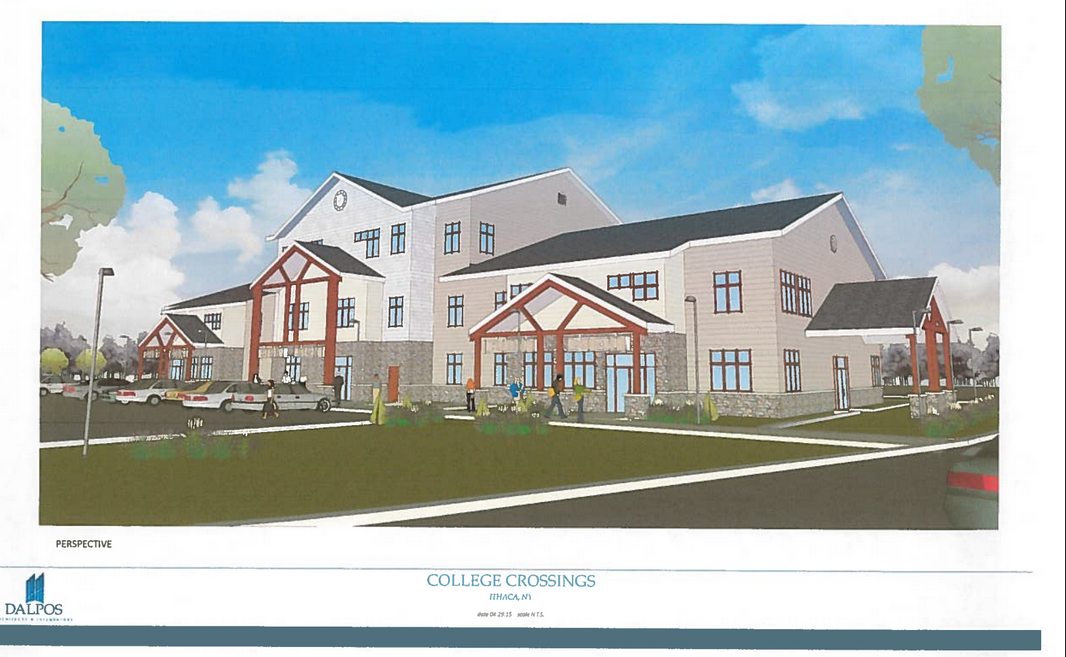
According to Ithaca town planning board minutes uploaded earlier this week, developer Evan Monkemeyer withdrew his proposal after planning board members weren’t comfortable with approving the environmental assessment and mitigation plan for the proposal (technically called a “negative declaration” by the lead agency on the SEQR). While at least one was bothered by the 3-story, 54′ height, many board members had visions of the Form Ithaca charrette for the property, and this didn’t quite jibe with Monkemeyer’s plans for South Hill’s King Road and Route 96B/Danby Road intersection. Minutes for the July and August meetings can be found here.

college_crossing_2

plan-2 plan-1

Now, I will gladly admit that I was not a fan of this project, and I too wanted something more along the lines of Form Ithaca. I’m surprised, though, that it was enough to derail approvals of the project.

Now, the problem is, the town’s new comprehensive plan embraces form-based codes and “Smart Growth”, but the zoning is auto-centric, outdated, and doesn’t mesh with the plan. If you’re a developer or builder, big or small, and what’s legal and what the town wants are two very separate things…Houston, we have a problem.

At this point, there’s two questions that come to mind – one, given that the town planning board has cancelled most of its meetings lately due to a lack of proposals, is the disconnect between plan and zoning halting projects, and two, when will revised zoning be ready. For guidance and knowledge, I reached out to town of Ithaca assistant planning director Dan Tasman, because he’s pleasant, responsive and a pretty great guy.

As for question one, here’s his quote: “Seriously, I think it’s … complicated.” His thoughts were that there’s no indication whether the recent slowdown were caused by the planning/zoning disconnect, or natural ebb and flow related to lending and planning on the ends of home-builders and developers.

As for question two, the response was summed up as, “a lot of communities face the same issue after they adopt new comp plans. On the positive side, Ithaca’s not growing that fast, and the pace of development is slow. Still, there’s a sense of urgency.”

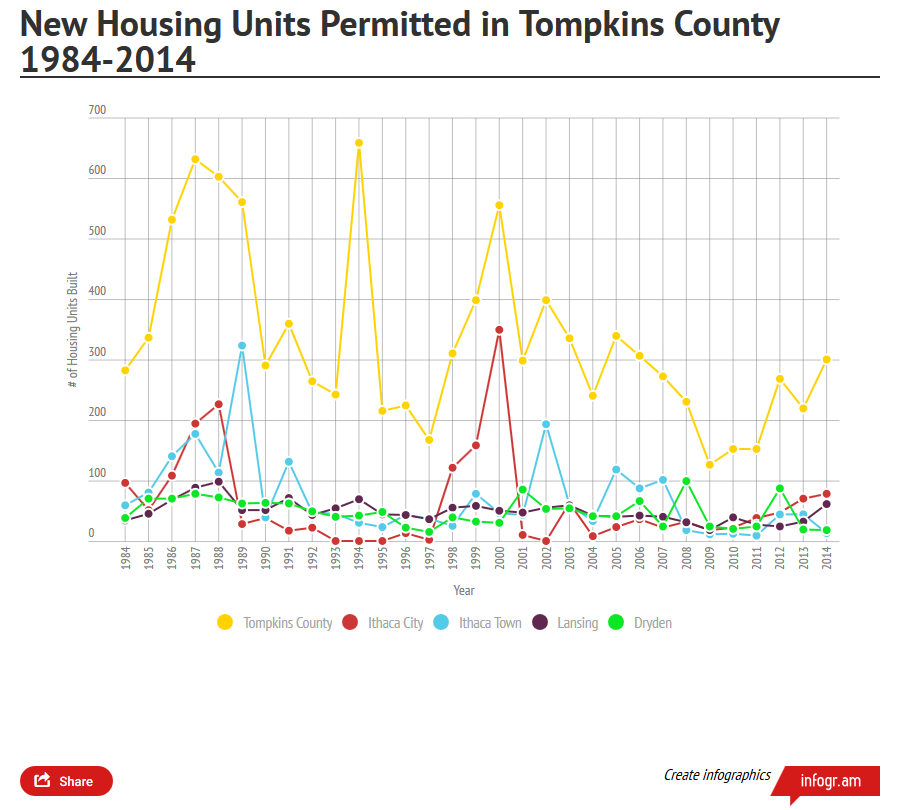
He’s right about the town not growing that fast. The permit records show that in September, the only new home-building permit was for a duplex at 214 Pennsylvania Avenue on South Hill (the Iacovellis building more student rentals for IC, probably). The previous month online, June, had four single-family homes, filling out lots in previous-approved subdivisions.

tc_housing_permits_1984_2014

Traditionally, the town of Ithaca has made up a pretty sizable chunk of the new home permits in the county. But if they only issue 30-40 this year (still better than last year’s 14), then it falls on the rest of the communities to try and make up the housing deficit, at least in the short term. Ithaca city’s total, anticipated to be 247 new units to be permitted in 2015, is only about 84 units right now, because John Novarr has yet to start Collegetown Terrace’s Phase III, and Steve Flash’s 323 Taughannock on Inlet Island has yet to start either. To bring down the deficit in a decade, as well as keep up with annual economic growth, the county would need over 600 units per year; it’s not certain if the total will reach even half that in 2015.

On the one hand, the town of Ithaca is trying to be proactive and adopt a new approach to development in quick and good order. On the other hand, it’s not a great situation for trying to make a dent in the housing deficit, with its attendant affordability issues, and there’s the possibility things are going to get worse before it gets better. I don’t know if there’s a right or a wrong way of going about it, but it’s a stressful setup.

2. On the county level, officials are seeking legislature approval for launching a study into the feasibility of an airport business/industrial park in Lansing. 52 acres of vacant land along Warren and Cherry Roads are being considered for the study, which would include a conceptual site plan of potential buildings and parcels, and an assessment of the needs and characteristics of companies most likely to open in the potential business park. Utilities and green infrastructure will also be looked at in the study. The projected cost is less than $50,000, and being paid for by the Tompkins County Industrial Development Agency (TCIDA). The feasibility study would be awarded next month, with authorization and approvals on the staff level.

arpt_pk_1

For what it’s worth, folks living up there are used to business traffic – Borg Warner’s 1,300 person plant is adjacent to the study site. The Warren Road Business Park lies a minute’s drive up the road, and the Cornell Business Park is about a minute’s drive south. The land also has municipal sewer, allowing for large-scale projects. A copy of the RFP states two that the two parcels shown above are the primary analysis area, with secondary areas closer to the airport runway and the resident land to the west separate from the park. They aren’t a part of the proposed business park, but the county asks that they be examined for development potential by the study.

holiday_inn_express_v2

3. Details, details – the Holiday Inn Express already under construction in big-box land at 371 Elmira Road will be going in front of the city planning board this month for some slight modifications. The developer, Rudra Management and Rosewood Hotels of Cheektowaga, wants to increase the number of rooms from 76 to 79, and add three parking spaces accordingly. Along with that comes the bevy of supporting docs – technical drawings here, landscape plan here, landscape schedule here, and elevation drawings here. Apart from a palette change on the exterior (the red-brown color is “Decorous Amber“, part of the new official Holiday Inn color scheme per the architects’ cover letter), there are no changes to the design, the 3 additional rooms are just an update to the interior configuration of the hotel, one more room on each of floors 2-4. Apart from tastes in color and making sure the three new parking spaces pose no issues, the board won’t have to debate much here, and the hotel is still very likely to open next summer.

1015_dryden_1

4. In small but notable builds, Modern Living Rentals (MLR) is at it again. The relatively new Ithaca-based rental and development company is planning a triplex (3 units) at 1015 Dryden Road, just east of the hamlet of Varna. According to an email from MLR co-owner Todd Fox, the units, all 2-bedrooms, will start construction in the spring, and it’s a safe wager they’re shooting for an August 2016 completion, just in time for Cornell student renters. Judging from the renders on MLR’s site, each unit will be around 930 SF, so about 2,790 SF total. MLR teamed up once again with local architecture firm STREAM Collaborative for the design.

1015 Dryden is also home to a single-family home built in 1938, and a 4-unit apartment building from about 1980. The apartment building was badly damaged in a fire in 2011, renovated, and the site was sold to MLR for $425,000 in March 2014.

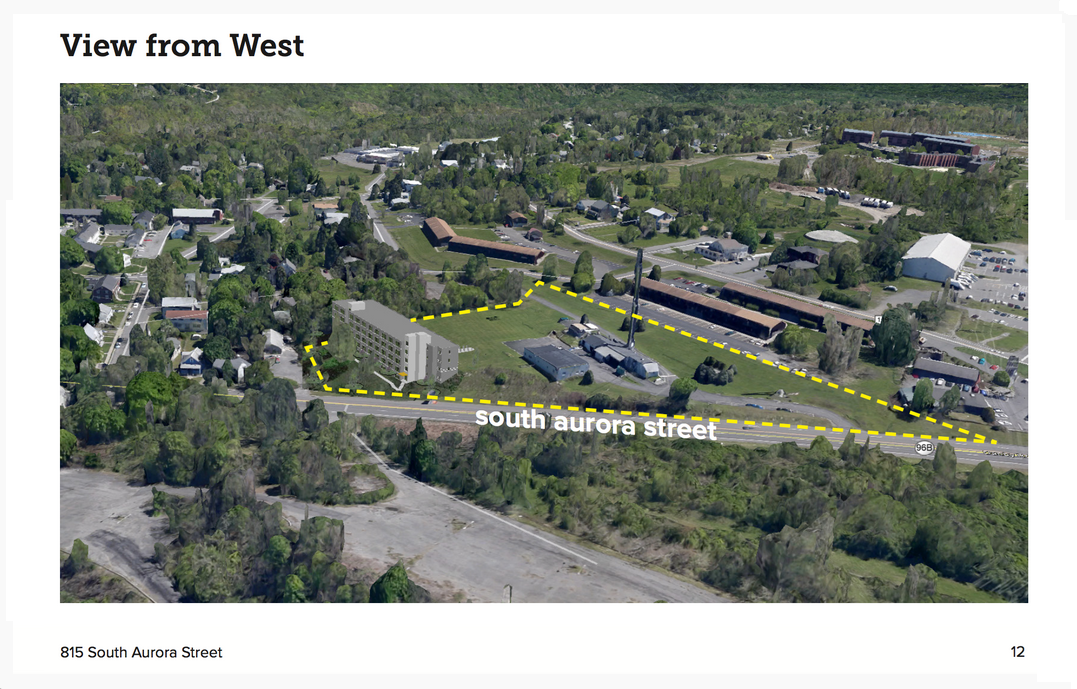
815_s_aurora_4 815_s_aurora_5 815_s_aurora_6

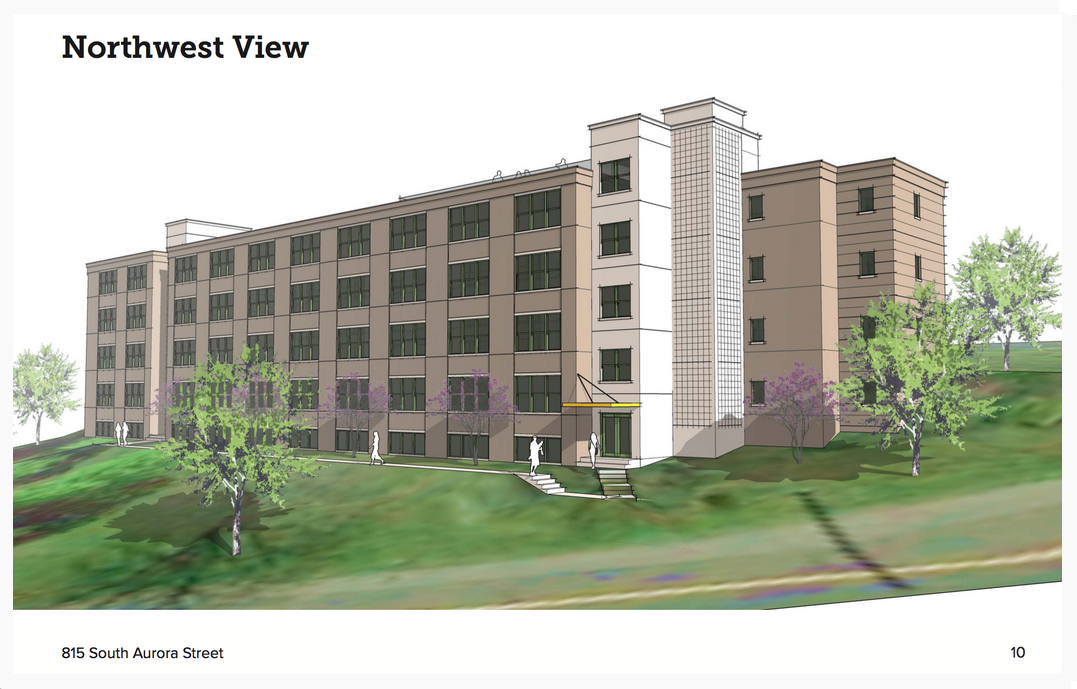
5. While on the topic of MLR, let’s throw in some eye candy. Along with the plans for 1015 Dryden, additional images for the proposed 87-unit project at 815 South Aurora Street on South Hill can be found on their website as well. I’ve included two perspective renderings and an aerial render, but more images can be found here. The 87 units will all be studio apartments. STREAM Collaborative is responsible for this design as well.

A detailed write-up of the project, including the related cell phone tower issue, can be found here.

6. Out in Lansing town, there are two attention-grabbing news pieces from Tuesday’s next planning board meeting. One is a plan for an LP gas / petroleum distribution facility on Town Barn Road (parcel address 3125 N. Triphammer Road). A 30,000 gallon storage tank and gravel drive are planned in the initial phase, with 5 15,000 gallon tanks, a garage/maintenance building, and an office planned in later phases. Now, normally a project like this is not a big deal, but there’s the outside possibility local contingents of the anti-Crestwood, anti-fossil fuel groups will go on the offensive to try and stop it. So the potential for political football is there.

The other detail isn’t up for discussion yet, but the town notes that 15 duplexes (30 units) are being planned by former Lansing town supervisor A. Scott Pinney for a site on Peruville Road (the county calls it 428 Scofield Road, but the land has frontage on both roads). The site already houses 4 duplexes built in 2011.

Breakneck_Builds_-_Master_Card

7. Instead of the the usual “House of the Week”, this week is more of a shout-out/advertisement. For those with cable, The DIY Network will be running a new episode of “Breckneck Builds” tonight at 11 PM (additional showings listed here), highlighting a just-finished home on Dryden’s Hollister Road. Quoting the promo write-up:

“Jordyn is ready to leave her rental behind and buy her first home, but what is most important to Jordyn is that her new home is eco friendly, so she is turning to the modular world to build a big house with a small carbon footprint.”

The modular home assembly was the work of local builder Carina Construction, who also tackled the modular units at the Belle Sherman Cottages site. Local builder, local resident, local project, so set your DVRs or TiVo.

8. Last but not least, here’s your Planning Board agenda for next Tuesday. Nothing new at this month’s meeting, but here’s the run-down:

A. Review of changes and revised approval for the Holiday Inn Express (see above)

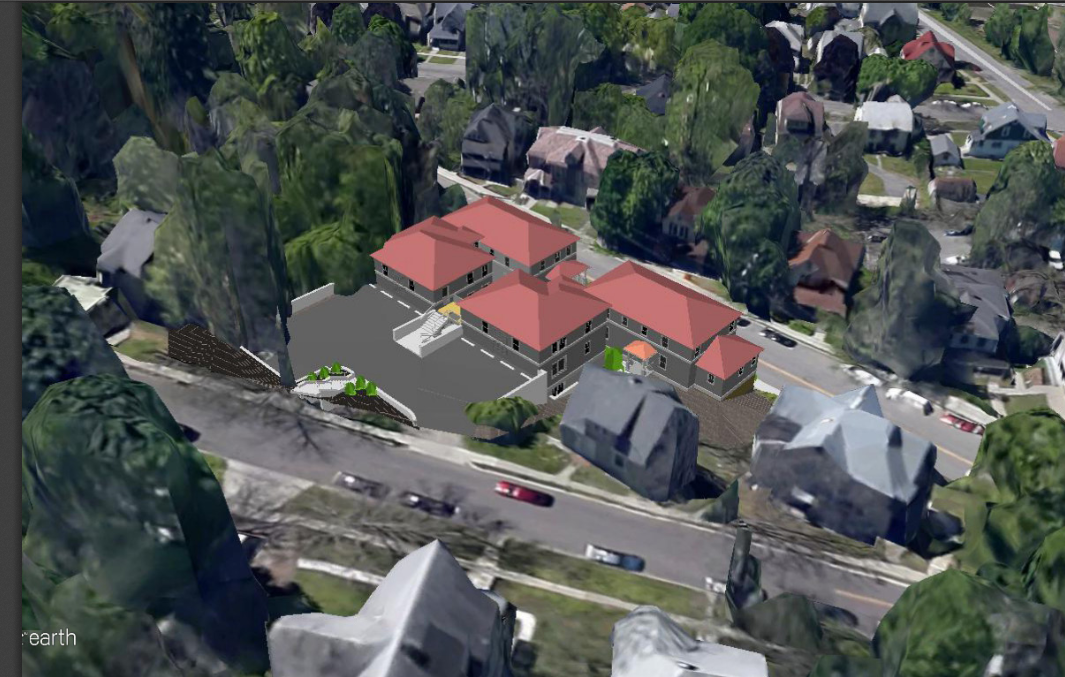
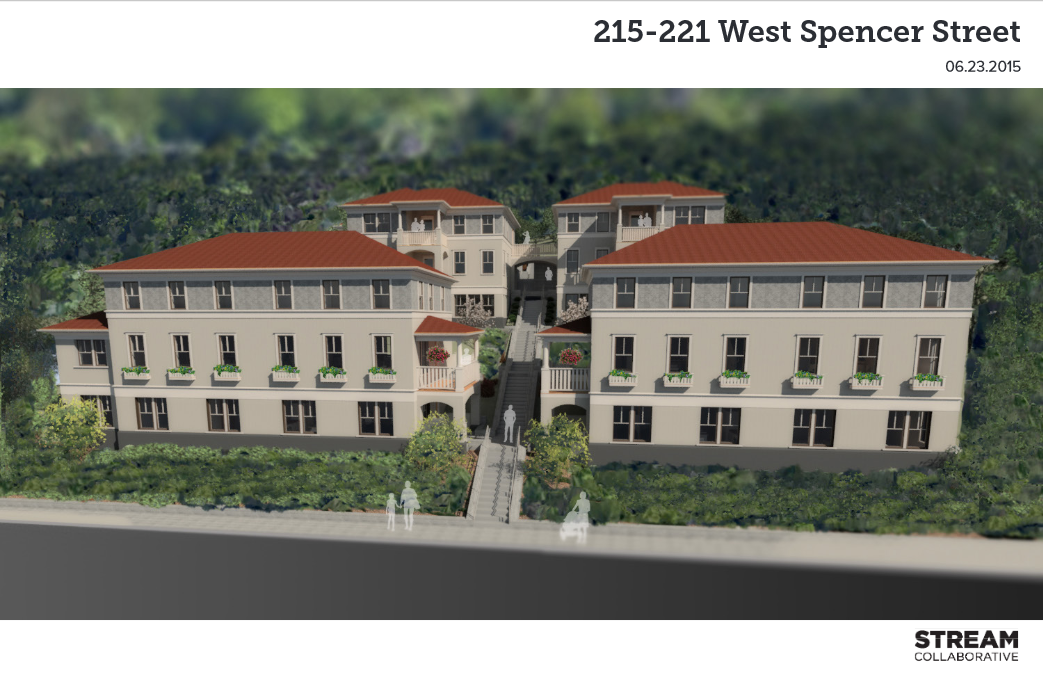
B. Declaration of environmental significance and BZA reccomendations for 215-221 West Spencer Street– Pocket Neighborhood, 12 units w/ 26 bedrooms, Ed Cope/PPM Homes is the developer, Noah Demarest of STREAM Collaborative is the architect.

C. Environmental Review Discussion for the bar/lounge proposed for the renovation of 416 E. State – cover letter here, description here, letters of opposition in the agenda.

D. Public hearing and re-approval, Hotel Ithaca renovations, 222 S. Cayuga – Site Plan Review drawings here, renders here and here. Not sure there’s enough of a difference from the first time around, but at least the cross-catching on the exterior is gone.

E. Herson/Wagner Funeral Home renovation, 327 Elmira – Declaration of Lead Agency and Public Hearing – I wrote about that in the Voice here. Fun fact, the original proposed title was “Funeral home hopes to being new life to Elmira Road property”. It was rejected.


Ithaca Marriott Construction Update, 10/2015

21 10 2015

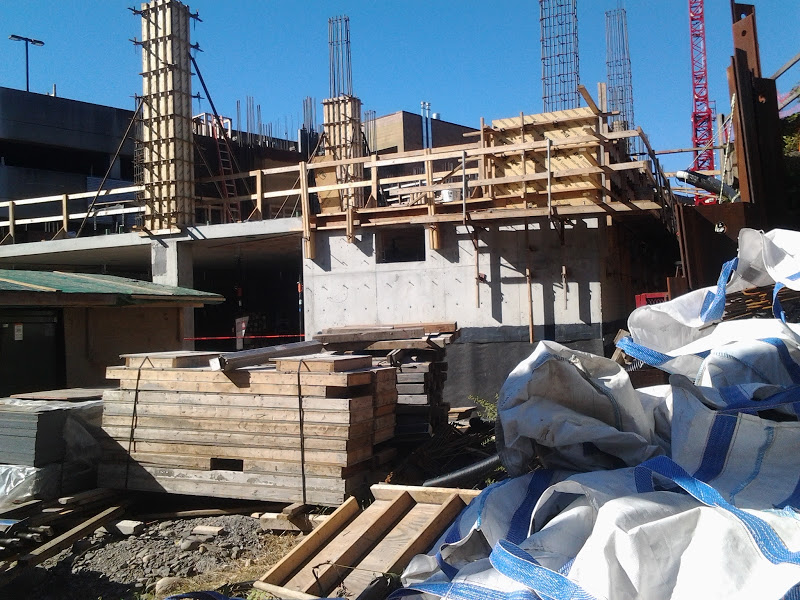
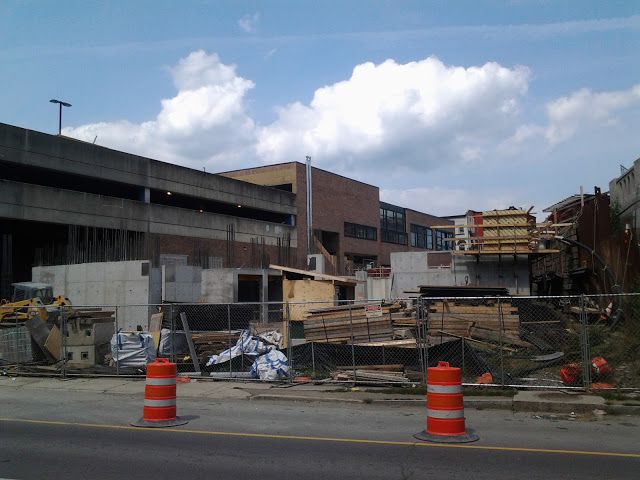
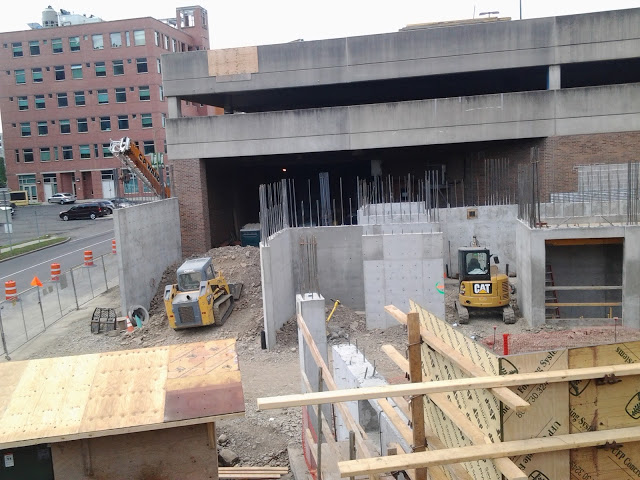
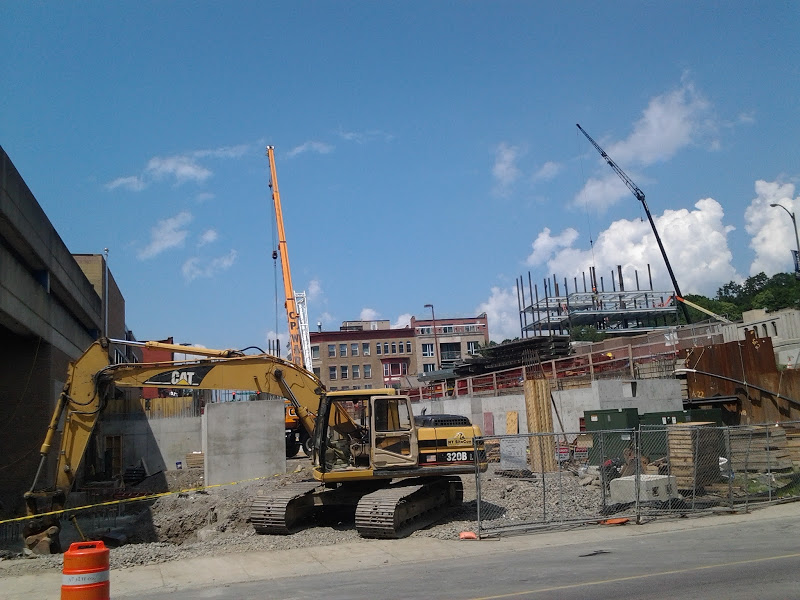
Over at the site of the new downtown Ithaca Marriott, the foundation has been dug and set, and the project is now about level with North Aurora Street. The rebar (reinforcing steel bars) that sticks out of the concrete footings will be used to tie-in the hotel’s walls as they’re constructed. Wooden forms are in place to provide rigidity and shape while newly-poured concrete hardens, and they give support to the rebar rods embedded in the concrete. The forms will move further upward as more concrete is poured and cured. On the side closer to the commons, caisson tubes, massive open pipes, encase the rebar up to 30 feet below ground level. These will transfer the heavy load of the upper floors down to the bedrock below, providing structural stability for the future 10-story hotel. Some of the materials have been supplied by UFP Concrete Forming Systems.

The foundation walls vary in thickness depending on the weight they’re designed to hold. The newly-poured section next to the Green Street garage will hold the elevator shaft, stairwell and space for utilities.

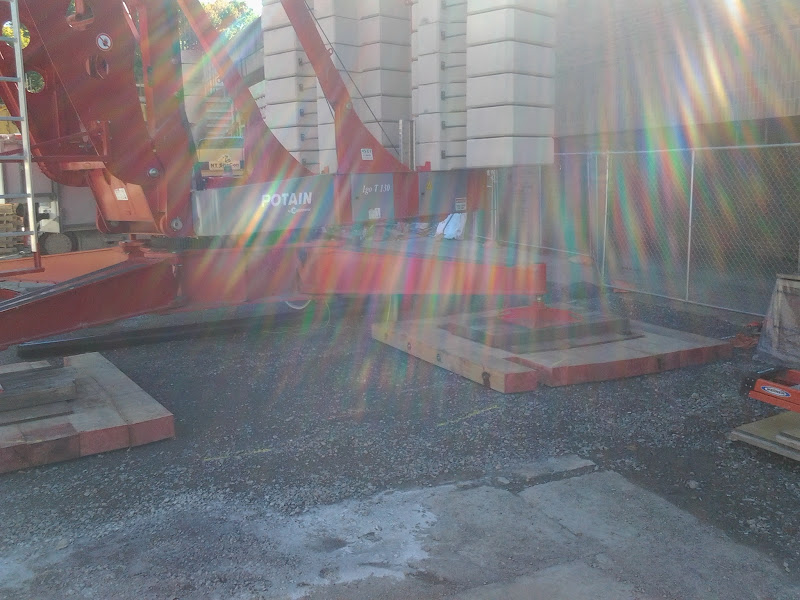
Contractor William H. Lane of Binghamton has a crane on site, and steel erection above the foundation walls will start fairly soon from the looks of it. The 159-room hotel should open next summer if all stays to schedule.

20151011_144642 20151011_144705 20151011_144743 20151011_144806

20151011_145109 20151011_145117 20151011_145131

From August 29th:

20150829_125449 20150829_125520 20150829_125630 20150829_125637

marriott_rev1_1


News Tidbits 10/10/15: Meeting With the Stakeholders

10 10 2015

1.There is nothing wrong with a little speculation. In a follow-up of sorts to the Voice piece about parking capacity in Downtown Ithaca, the Times’ Josh Brokaw did an interview of his own with city of Ithaca parking director Frank Nagy. Nagy believes that the 248-car estimate used by State Street Triangle is “way high”, but given that one of the refrains is that there’s not enough parking, they’d rather be safe than sorry.

More importantly, Nagy believes that the Seneca Garage only has about 10 years of life before a new garage will need to be built (the Seneca garage was built in 1972). The structural situation at Green Street is severe enough that the city may have to remove the end pieces and build up the middle section, which was renovated several years ago. The property is being reviewed, and with Tompkins Trust vacating office space on its ground floor as part of the move to its new HQ, the assessment is well-timed.

If the Green Street garage decides to go up rather than out, that leaves two very valuable properties that the city could sell to its benefit (financial, affordable housing, or otherwise). Both ends of the Green Street garage are zoned CBD-140, which offhand is the densest zoning in the entire city, 140 feet maximum height with no parking requirement. A zealous councilperson might try and change that post-SST, but as is, a rebuild of Green Street a few years from now could yield a lot of possibilities for downtown development. Put that in the notebooks for 2020 or so.

100_1281

2. Speaking of future plans, we have the bike debate currently raging in the streets. Now, this is only tangential to my usual work, and I am not versed in the topic, so it’s nice to go in without preconceptions.

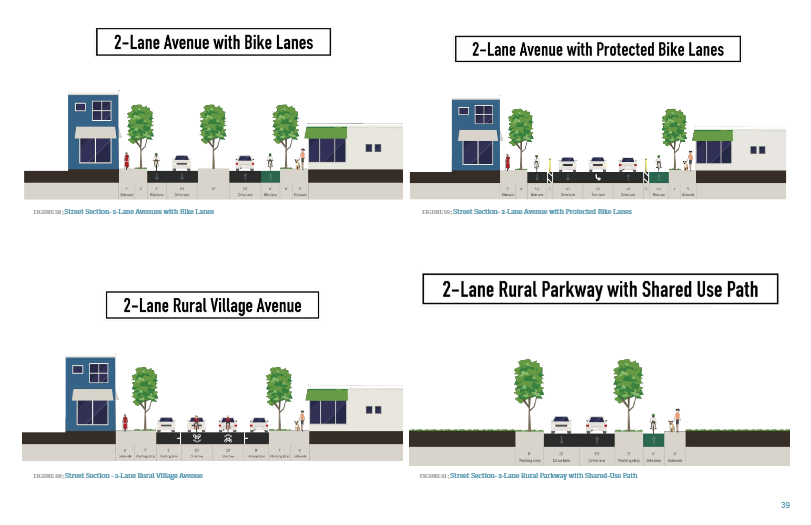
The city just finished work on Board of Public Works (BPW)-approved bike lanes on North Cayuga Street, specifically an unprotected bike lane on the east side (protected lanes were considered, but not approved). Although meetings gave due public notice, there were no letters sent to Cayuga Street residents informing them of the change, and a number of folks were caught off guard, including members of the city’s Common Council.

In the one corner, you have folks angry about the loss of parking, the inconvenience, and the danger it poses to the elderly. Unfortunately, you also have a council member describing biking-proponents in the same tone one would describe Albany lobbyists. The mayor has come out in favor of the N. Cayuga Street bike lane, although according to the Times, he’s not a fan of “resident-driven infrastructure”. It’s really a fascinating read from a planning perspective. – Times coverage here, Journal here.

bike_lanes_1

For what it’s worth, bike lanes are a major part of walkable communities and reduced ecological impacts (carbon footprints). I feel like I’ve seen this type of argument play out from the perspective of development quite a bit – every new Collegetown or downtown building gets the “Ithaca shouldn’t allow big buildings/they’re ruining Ithaca/where are they going to park” argument, and the “Ithaca is not a small town/it promotes walkable communities/suburban sprawl is destroying Tompkins green space” counter-argument. The key problem with the bike situation seems to be a lack of communication between the BPW and Common Council (and residents by extension). Luckily, the planning board doesn’t quite have this problem – everything they vote on gets publicized, on this blog if not elsewhere.

cornell_novarr_1

3. The last hurdle for John Novarr’s 215 Dryden Road project has been cleared. The Board of Zoning Appeals approved variances from the Collegetown Form Guidelines – the corner isn’t chamfered or set back enough and the building only has one main entrance (the form-based code mandates an entrance every 60 feet of non-residential space). The owner of the house across Linden from the corner was the lone opposition speaker, and the BZA vote was 4-1, with Marilyn Tebor Shaw opposed. No reason for Shaw’s decision was provided in the article.

With all the approvals tucked away, all that’s needed is for the city to sign off on the building permit. Expect this one to be underway within the next month.

image1 image2

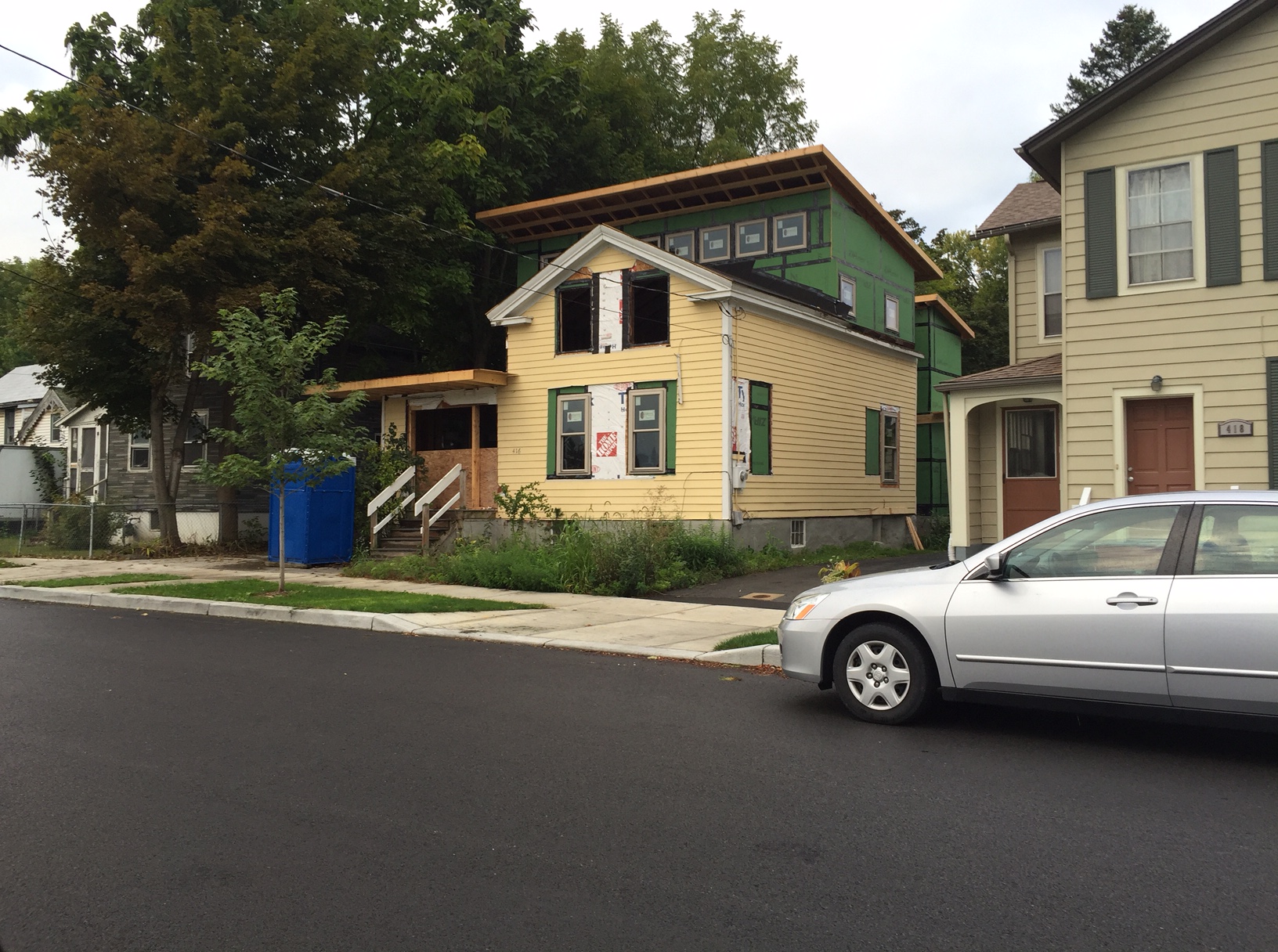
4. Reader submissions are always welcome. The photos for this week’s “House of the Week” featurette come courtesy of Frost Travis. The house receiving the addition is 416 North Plain Street in Ithaca’s Washington Park neighborhood. The current owners brought the property in October 2014. County records give it a 1900 construction date, which is often a default for old and unsure; it appears on an 1889 map of the area, but was not yet built in the 1866 map.

The rear addition looks like it’s been underway for a while – the exterior has been framed and sheathed with plywood Huber ZIP system roof and wall sheathing, which uses seams and tape to save time vs. traditional sheathing such as Tyvek housewrap. There are some windows fitted into the rough openings, but there’s still plenty of work to do with closing up the exterior and interior utilities rough-in. Looking at the original house, the owners appear to be fitting smaller windows in place of the originals – two window cutouts on the north wall have been filled in with sheathing, and a new window has been fitted in a new opening. The front door and adjacent window are gone, one large rough opening in their place. The front roof above the door and window was slanted, but has been dropped to a flat roof as part of the renovation and addition. Presumably, the butter yellow vinyl exterior will be re-finished as construction progresses. With any luck, this one will be finished before winter comes.

Pg-3-Rendering

5. What a quick turnaround. The Cornell Daily Sun first made mention of the Ag Quad renovation last week as part of its coverage of the Collegetown Neighborhood Council meeting. Now only a week after Cornell shared a glimpse at the cards in its hand, they’re playing them. The $9.6 million project will be broken down into two phases, one that focuses on infrastructure, and one phase on landscape improvements (and being that much of the infrastructure is underground utilities, phase one could be described as churning up the ground, and phase two is making the upturned dirt pretty again). The renovations, which are set to start next summer and run through 2017, will include additional emergency phones, a rain garden, and outdoor gathering spaces in front of Mann Library and Roberts Hall (upper right and lower left in the above render).

Too bad those temp buildings are still there between Kennedy Hall and Plant Science. If the Southern Tier wins that Upstate Redevelopment competition, I have an idea where the new Plant Science Commericialization Building should go.

6. Plans for 416 E. State have evolved since the bar was first proposed. Originally conceived as a general bar/drinking establishment, developer and Argos Inn architect Ben Rosenblum has faced substantial opposition to the project – neighbors are vociferously opposed to a bar, citing noise problems and concerns about smokers, and the county planning department was not a fan of the traffic and parking arrangement, which had after hours parking across the street at Gateway Plaza. Although the project doesn’t need planning board approval, it does need BZA approval – area and setback deficiencies have resulted in the need for a zoning variance. The building itself won’t change dimensions, but the change in use triggers the city zoning laws.

416_e_state_v2_1

Representatives for Rosenblum and neighbors have met, and the compromise Rosenblum and his associates have proposed involves a lounge-type of establishment they’re calling “The Printing Press”, after one of the previous uses for the late 1940s warehouse. They’ll be going for an industrial/”speakeasy” aesthetic, and targeting the same older, more affluent clientele that patronizes the Bar Argos next door. Signage would be minimal, and exterior work limited largely to an accessory parking lot/handicap access, landscaping and a new coat of paint. Looking at the original plan vs. the revised plan, the bar no longer is in the rear corner, but moved closer to the building center so as to buffer the noise of patrons from disturbing neighbors. Parking will be shared and organized with the Argos Inn’s lot. For more info, cover letter here, renders here, vision statement here.

The new parking arrangement may assuage the county, and the low-key bar located centrally in the interior may be enough to satisfy some of the neighbors. But we’ll have to see the BZA’s reaction and what remaining opposition there is before anything is set in stone.

hotel_ithaca_v3_1

hotel_ithaca_v3_2

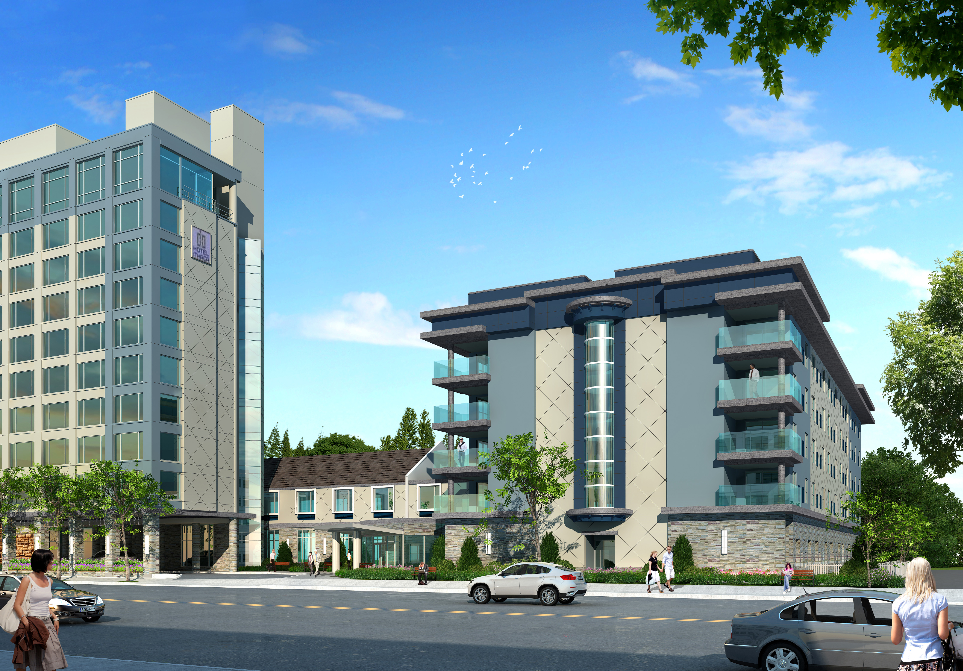
7. The Planning and Development Board has scheduled a Design Review Committee meeting to offer guidance and commentary on the styling of proposed buildings. While State Street Triangle isn’t on the agenda (yet), the Hotel Ithaca addition is. Renders here and here.

I’ve toned down my opinions over the years, but this…well, let’s just so those “sick burns” Nick Reynolds mentioned at the last planning board meeting were pretty well justified. I mean…yikes. The cross-hatched blank walls, the circular glazing, the “tourist trap” aesthetic. There’s an alternative being shown with small windows in place of the circular glazing, and rectangular facade hatching instead of the cross-hatching, but it’s not a great improvement. The board’s going to have a lot to say with this proposal.

215-221_spencer_v3_2

215-221_spencer_v3_1

8. I had hopes that for the first time in three years, a major project would go through the boards without complaint or opposition. Hopes dashed. The complainant against the 4-building, 12-unit 215-211 West Spencer Street project cites the loss of the city’s parking lot on the site, the narrow width of S. Cayuga Street (the “rear” road), traffic, and no neighborly interactions because it’s a rental that faces Spencer Street.

215-221_w_spencer_orig

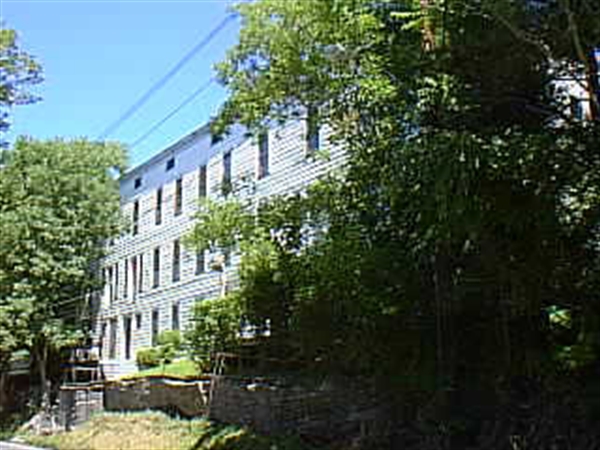
The kicker is, the letter-writer lives in an upscale Lansing subdivision. He rents out his 3-unit Cayuga Street property. The “house” that the letter claims used to be on the site is also misleading. It was a run-down multi-story apartment building (shown above in the photo from county records), demolished 12 years ago by the city, and turned into an informal parking lot that was never meant to be a long-term use. The land was sold by the city to Ed Cope for $110,000 last March.

I’m willing to entertain legitimate arguments and complaints to projects. But this isn’t one of them.


News Tidbits 9/26/15: Trying to Keep Tabs

26 09 2015

1. It’s rare for a substantial project to go completely under the radar from start to finish. Except that’s pretty much what happened with the following building.

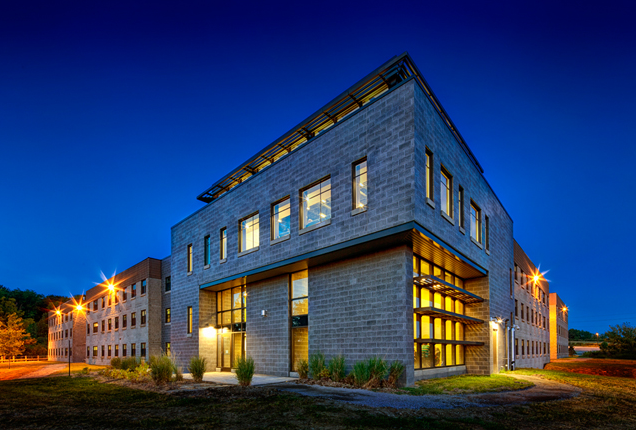
Tompkins Cortland Community College (TC3) recently finished renovations to two of their dorms on their Dryden campus. Along with the renovation of about 41,000 SF of existing space, the two dorms were connected by a new 3-story, 10,000 SF addition designed by Ithaca’s HOLT Architects. The existing dorms sat at a 90° angle to each other, so the addition by HOLT creates a single, L-shaped structure, with the expansion holding common space and amenities. Binghamton construction firm William H. Lane Inc. handled the build-out. The image above comes courtesy of HOLT’s website.

Technically, it did come up once on the blog, but it was misinterpreted. When William H. Lane announced it was opening an Ithaca office to handle the growth in their Ithaca/Tompkins work, one of the examples given in the Binghamton Press & Sun Bulletin was a dormitory expansion at TC3. At the time, I had done a search for the project and filed an inquiry with TC3, but there was no response, and my search only turned up renovations underway for the main classroom building. I assumed there was a miscommunication, so…oops.

2. In real estate sales, it looks like a couple of the smaller developers were in buying mode this week. Lansing’s SDM Rentals (Scott Morgan, owner of SDM Landscaping) bought a vacant 2.93 acre parcel at approximately 455 West Dryden Road in the town of Dryden for $21,000 on the 23rd. If past behavior is any indication, Morgan will probably be looking to do rentals, likely a few townhouses on the property. Currently, Morgan is planning 8 duplexes (16 units) at 543 Asbury Road in Dryden, which may or may not have a zoning issue. Morgan is also building out on Bone Plain Road in Dryden, and owns the recently-built Meadowbrook Apartments (14 units in the form of duplex townhouses) at 393 Peruville Road in Lansing.

Meanwhile over in Danby, Chris Petrillose of Petrillose Properties picked up a 2.11 acre parcel along the 400 block of Troy Road for $34,000. Given that that area has seen a lot of scattered small-scale development (1 & 2-family homes) in the past few years, and that Petrillose finished work on duplexes in Ithaca town, a couple rental units seems likely.

hotel_ithaca_2

3. How well was the Hotel Ithaca received? Let’s quote IJ Reporter Nick Reynolds’ Twitter:

Many sweet, way-over-my-head architecture burns thrown tonight. Let’s just say you guys aren’t getting a Hotel Ithaca update anytime soon.”

The primary complaint focus not on function but on form – according to the IJ follow-up article, materials and a dated design were dinged by board members (and comments about “LEED-certified stucco” and comparisons to the Bellagio didn’t help). NH Architecture’s portfolio tends to be the same general design, which means they’re going to have to go the extra mile on this one, or developer Hart Hotels might need to switch up their approach. Their Belhurst Castle Hotel design isn’t bad, so maybe they can channel some of that creativity into the downtown Ithaca site.

So rest assured, “Cornell PhD”, those cross-hatches aren’t making it off the drawing board anytime soon.

casca_landing_1

casca_landing_2

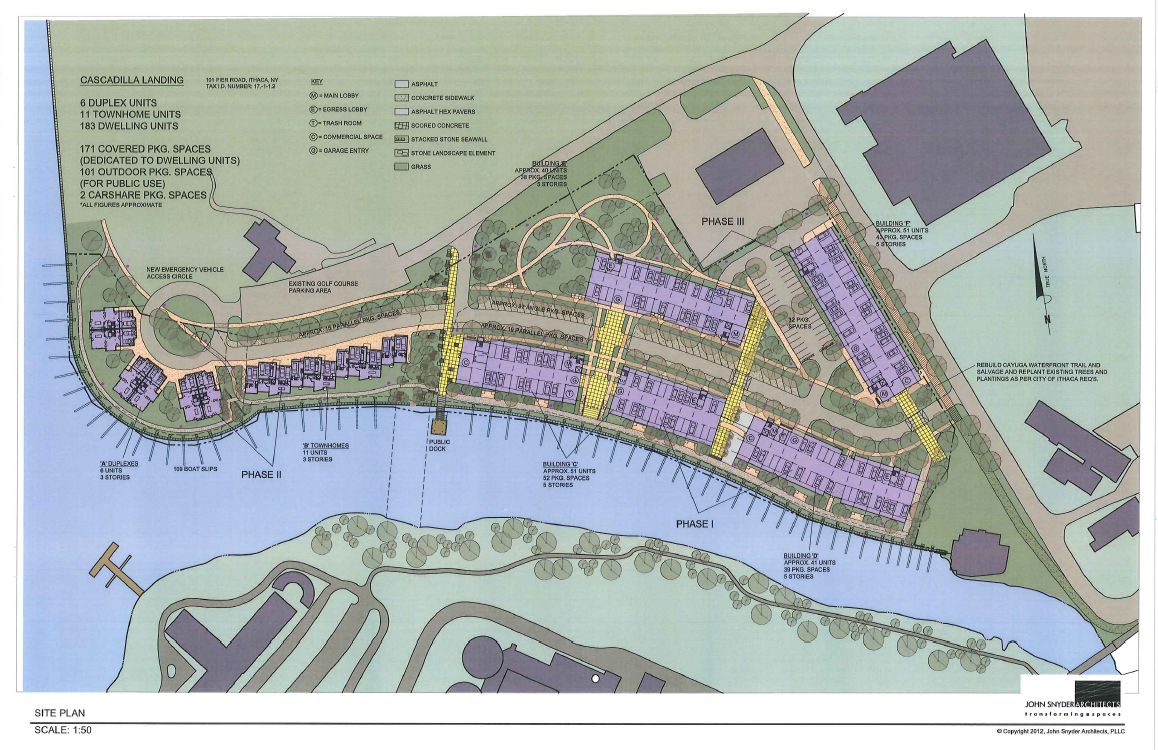
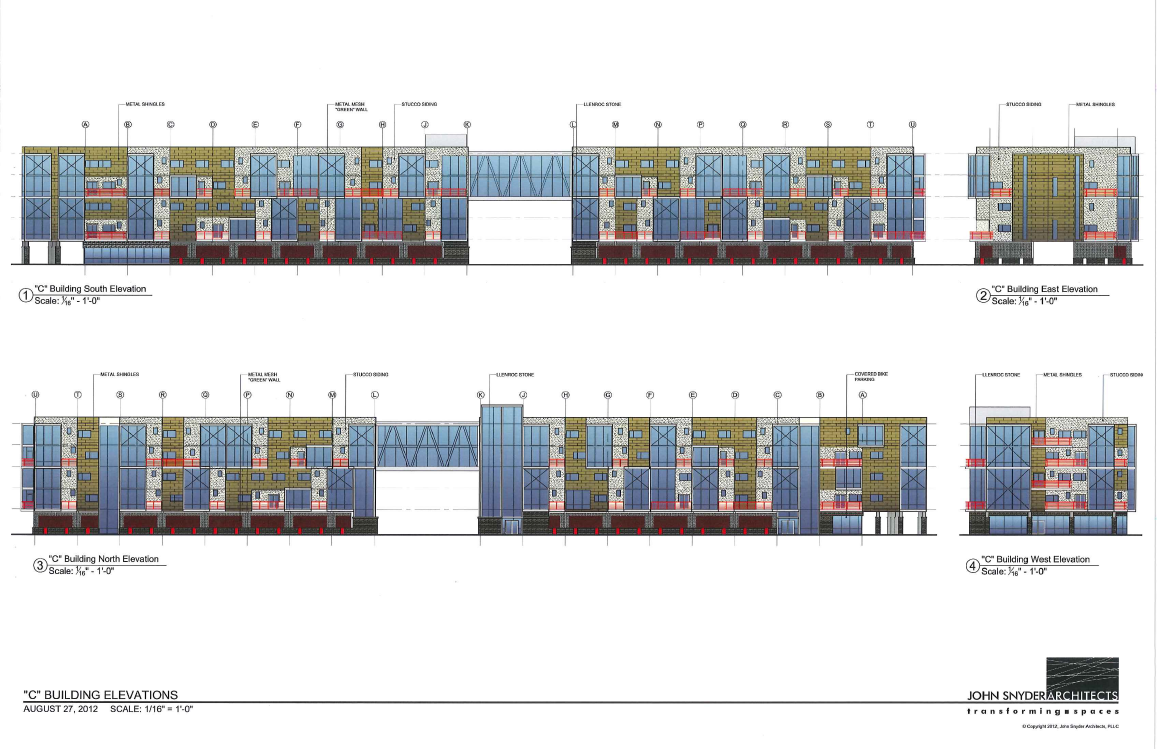
4. A few years ago (spring-summer 2012), the city planning board reviewed and approved a large project for the Ithaca waterfront called “Cascadilla Landing“. The three-phase, 183 unit project called for 6 units in duplexes, 11 townhouses, and the remainder to be built in 5-story apartment buildings designed by Ithaca architect John Snyder (the same gentleman behind the Carey Building addition). The first phase called for two buildings and 92 units, Buildings “C” and “D” (“C” shown above). So the project was approved and then…nothing. Never got off the ground.

However, the impending closure of Johnson’s Boatyard on Pier Road is piquing my curiosity. Now, initially it seemed highly unlikely because I thought Cascadilla Landing had never been fully approved (in fact, it received preliminary approval in September 2012 – thanks Noah). But since it was approved, all an ambitious individual would have to do is simply re-apply for approval if there are no changes to the plan (PB approval is only good for 2 years – part of the reason why Harold’s Square was back before the board last month). It’s still unlikely that the project is moving forward soon, but not impossible. A phone call to Snyder’s office and a call to Pier Road Properties (the developer as represented by accountant Andy LaVigne on the application materials) have so far not been returned.

chapter_house_reconst_3

5. Preliminary, but it’s nice to see work progressing on the Chapter house redevelopment. Voice article here. The key thing to stress here is that there are design studies, and they’ll be subject to the ILPC’s whims. It looks like making the fourth floor of the Chapter House habitable or not is something that’s still being debated, along with the plans for the still-standing 408 Stewart. It’s hard to believe that things will be ready in August 2016, given that there’s no formal application yet, and the languid pace projects like this go through the commission.

Also, it was extraordinarily difficult to get a hold of most of the relevant parties for the article. Neither architect responded, I couldn’t get a hold of city Historic Preservation Planner Bryan McCracken…thankfully, Jerry Dietz was happy to assist, and although I felt a little bad calling ILPC Chair Ed Finegan since he has no formal part in the project itself, he was a big help. Both were keen to stress the preliminary aspect of this project, which hopefully came through in the article.

But I’ve just about had it with responding back to commenters on the Facebook article.


Hotel Ithaca Plans New 5-Story Wing in First Phase

10 09 2015

hotel_ithaca_1

The Hotel Ithaca is once again seeking to expand its offerings.

In what’s being billed as a “modernization”, owner David Hart of Buffalo-based Hart Hotels is proposing a $9.5 million project that includes a new 5-story addition to the hotel, located at 222 S. Cayuga Street in downtown Ithaca. The 2-story north and west wings of the Hotel Ithaca would be demolished. Site Plan Review documents filed with the city (link here) call for a November 2015 construction start, with the new wing opening in April 2017. NH Architecture of Rochester will be designing the new hotel wing (additional drawings of the new wings can be found here).

The construction would be the first phase of a multi-year project. Once the new wing is opened, the south wing of the hotel would be decommissioned and eventually demolished. Sketch plans presented presented at a Planning Board meeting earlier this summer indicated a second, later phase that adds three more floors on the hotel wing (bringing the new wing to eight stories), with a two-story convention center sitting on the corner of South Cayuga and West Clinton Streets.

hotel_ithaca_phase_2

Because of the demolitions and decommission of the south wing in favor of later construction plans, the net increase of hotel rooms is actually a decrease – from 180 down to 170 rooms.

Like several other Hart Hotels properties throughout the Northeast, the hotel has no chain affiliation, although the property was a Holiday Inn until the end of 2013. The 180-room hotel initially opened as a Ramada Inn in 1972, and the 10-story “Executive Tower” was completed in 1984.

Zoning at the site is CBD-100 (Central Business District), meaning that a proposed structure can be up to 100 feet (two floors at the least) with minimal required setbacks and no required on-site parking.

hotel_ithaca_2

Under plans previously presented three years ago, the Hotel Ithaca sought to demolish the two-story wings of the hotel, and in their place the hotel would would build a new 9-story, 115-room tower, a kitchen addition, and a 15,000 SF conference center.

The then-$18 million project had significant local support from business owners, because Ithaca lacks the ability to host mid-size conferences and conventions (midsize meaning about 500 attendees), which sends conventioneers elsewhere. Currently, the lack of meeting space limits conferences to about 250 guests. The addition of a convention facility is seen as a major benefit to downtown retail, as well as other hotels that would handle overflow guest traffic. Convention traffic typically happens during weekdays, when regular tourist traffic is lowest.

However, the project, which was initially slated to start in November 2012, has failed to obtain financing for construction. The project applied for and received a property tax abatement for the new construction, and the Ithaca Urban Renewal Agency (IURA) even offered the possibility of a $250,000 loan if it would create a financial package that would allow the convention center to be built. But until this summer, there had been no indication of any plans moving forward.

Due to the modifications of the original plan, the county IDA will need to re-approve the tax abatement incentive package previously offered to the hotel.


Urban Renewal Part I: Ithaca’s “Project One”

18 08 2015

hotel_ith_1964

It was called “Project One”.

The year was 1964. The tax base of Ithaca, and especially downtown Ithaca, had been eroding for over a decade. Suburban big-box stores started to appear on the south side of the city in 1950, and up towards Lansing, plans were already underway for a new suburban supermarket and department store (the Shops at Ithaca Mall wouldn’t come along for another twelve years). New neighborhoods were sprouting in northeast Ithaca and Eastern Heights, and cul-de-sacs were paving their way onto West Hill and South Hill. Ithaca College was moving its staff and students to a sprawling campus just beyond the city line. From 1954 to 1960, 48 offices and retail stores closed or moved out of downtown Ithaca, a drop of 18%. The city councilmen were concerned.

So how were they to draw people and tax dollars back into the city? The city officials looked around. In the 1950s and 1960s, it was trendy to have that rambling ranch house set back far from the street, it was fashionable to attend indoor shopping centers away from the rain and the cold.

Image courtesy of Tom Morgan

Image courtesy of Tom Morgan

But most importantly, the trendsetters agreed, was that one could not live the high life, one couldn’t even dream of being a part of the jet set, without a big, luxurious car at their command. Two tons of chrome and steel, heralding you’ve made it in this world, and your car will take you anywhere and everywhere you want to be. And if a place wasn’t accommodating for your stylish set of wheels, then it wasn’t a place worth visiting.

The councilmen and the city officials were taking note of all those chrome-trimmed Bel Airs and Galaxies, with their bright colors and sculpted fenders. Following the results of a study conducted in 1959 and finalized in 1962, they came to the conclusion that in order to revive downtown, they had to catch up with the times, to bring downtown into the mid-20th century future with a swagger and a swing.

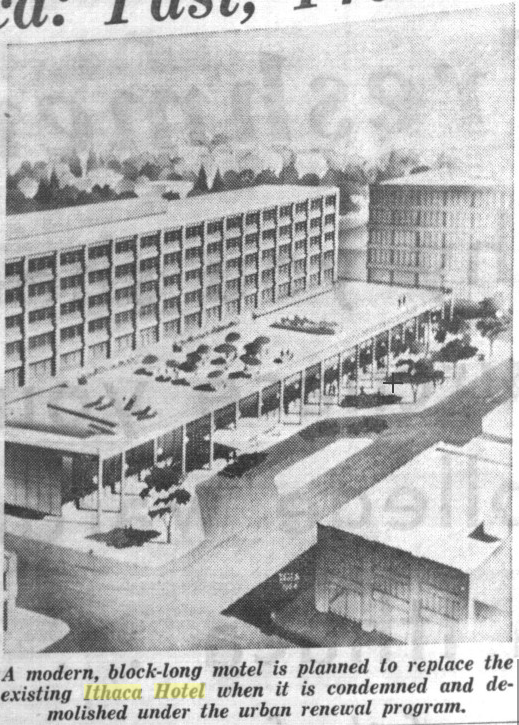
The plans were grand. In place of the nearly century-old Hotel Ithaca, a new hotel a block long, designed in the finest of modern taste. Out would go the decaying buildings of 60, 80, 100 years yore, in would come wider roads, ample parking, modern buildings and ideally, an influx of cash. Ithaca hoped it would bring new residents back into the city, while Cornell U., happy to give some money towards the effort, hoped it would bring in more industry and research organizations.
ith_urban_renewal_plan_1964_1

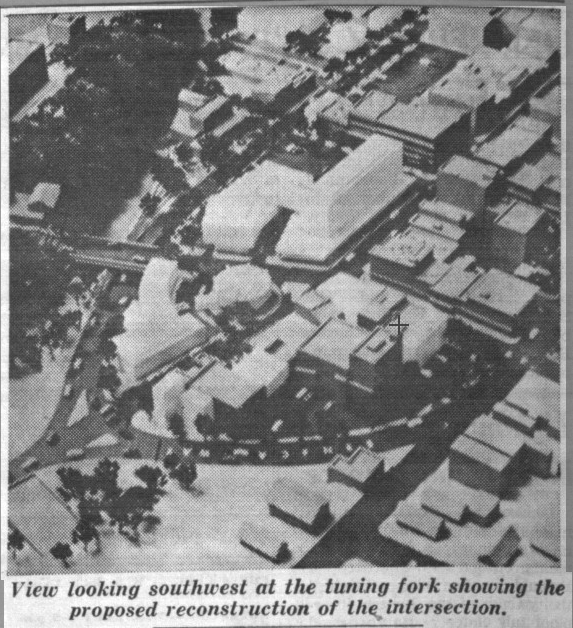
Project One was to be the first of three steps in Ithaca’s Urban Renewal plans. Plans in Project One called for the demolition of the Hotel Ithaca block and the buildings on the south side of the “tuning fork”, already built by that time (and taking out a number of buildings in the process). In their place, the new hotel would go, and a new bank office on the south side of the fork. In the model above, you can see what was once the Strand Theater (demo’d 1993), Restaurant Row and the old Rothschild’s Building (also gone now) still intact. There would be new auto dealerships, new department stores, traffic generators and tax generators.
Image from Cornell Daily Sun, 10/20/1966.

Image from Cornell Daily Sun, 10/20/1966.

The rest of Project One targeted about 26 acres of land bounded by State Street, Cayuga Street, and Six Mile Creek. Essentially, everything south of the Commons, and everything east of the present Hotel Ithaca/former Holiday Inn. Much of the area between Six Mile Creek and Cayuga Street was auto repair shops, dealerships and other car-oriented enterprises. Pritchard Automotive, a block further south, could be seen as the last vestige of when South Cayuga Street was “Automobile Row”.

The plans moved forward in fits and starts. Survey and planning work was brought to a stop in 1962 by Ithaca mayor John Ryan, who vetoed the plan. But following the election of Hunna Johns in 1964, the grand revitalization schemes moved forward again. The Common Council approved the federal application for Project One in June 1964.

ith_urban_renewal_plan_1964_2

After six months of delays, federal funding came through in December of that year. Cornell had already given funding to the tune of $500,000 (about $3.85 million today) to help pay for the projects, but the federal government would be the primary source of funds, which would pay 75% of the $6 million initial cost. Ithaca and the state of New York would each fund about $750,000. The city reasoned that it would bear the expense now for increased tax revenues in the future.

city_1

Of course, not everything worked out as planned. Nowhere close, really. That will be covered in Part II.


Ithaca Marriott Construction Update, 8/2015

4 08 2015

Over at the Marriott Construction site at downtown Ithaca’s 120 South Aurora Street, all of the caissons have been drilled and work is continuing on the foundation of the new 10-story hotel. Concrete foundation footers have been have been set on top of the caisson piles, with rebar sticking out to tie-in the walls as they’re built up. The foundation walls are being poured in a range of sizes, depending on how much weight they’re going to hold. A couple footings with much taller re-bar likely indicates the location of future stairwells, elevator shafts, and utility space.

Note the plywood on the Green Street parking garage in the first photo. As workers were drilling the last caisson, the rig broke, tipped over and smashed into the wall of the garage. Thankfully, that section had already been closed off due to the construction, and no one was hurt.

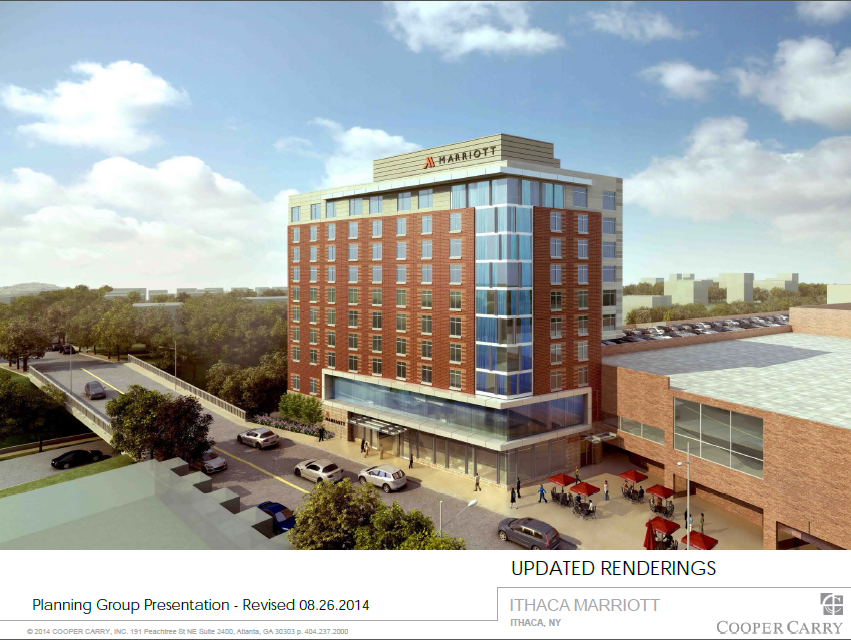
Maryland-based Urgo Hotels plans on opening the $32 million, 159-room hotel during the third quarter of 2016 (July-September time frame). The hotel will include a host of amenities, a fitness center, a restaurant with indoor and outdoor seating, and 3,000 sq ft of meeting space. Atlanta-based Cooper Carry Architecture did the design, and W.H. Lane of Binghamton is the general contractor.

The project, which replaces a small parking lot. could be considered the culmination of an effort to bring a hotel to this site since 2008, when Rimland Development proposed the “Hotel Ithaca”. The previous Hotel Ithaca once stood on part of this site and the Rothschild’s Building, before it (and every other building in its city block) was demolished during 1960s urban renewal.

20150727_142922 20150727_142940 20150727_143035 20150727_143050 20150727_143104

marriott_rev1_1

Ithaca-Hotel-1935


News Tidbits 8/1/15: Tempers As Hot as the Temperatures

1 08 2015

state_st_triangle_v3_3

1. I asked someone familiar with the State Street Triangle how the presentations went this week. “About as well as could be expected” was the diplomatic response received in turn.

The Times, Journal and Voice all devoted coverage to the controversial project this week since its CIITAP application was up for review, as well as revised plans being brought forth to the planning board. The project draws detractors from different angles – some because of size, some because it’s student housing, some because of the tax abatement.

The tax abatement is what confuses me somewhat, for reasons related to the theory I wrote up a few weeks ago, which no longer holds water. My own personal thought was that a sort of economy of scale would kick in with greater site efficiency, negating the need for a tax abatement. That isn’t to say that they still couldn’t try for one, because it meets all the CIITAP requirements, just that they didn’t need it (it would have been proverbial “icing on the cake” if granted). But now they’re saying it’s the only way to move forward. I don’t know the financials and what their necessary ROI is (and probably never will), but I’d happily listen to an explanation.

But the point I made in the piece still holds true – if Jason Fane’s project a couple blocks away was rejected for not having enough of a community benefit, market-rate student housing, even that which generates an extra $7.36 million in taxes over a decade, is going to be a big stretch, unless they plan on using the sheer size of it as a selling factor. The city planning board doesn’t have to worry about the controversy, because the project conforms wholly to a central business district zone. It’s going to be the tax abatement issue that makes or breaks this proposal.

2. As part of its 10th anniversary feature, the Lansing Star did a nice retrospective of what’s changed in the past ten years in Lansing. When it comes to development, it isn’t especially kind:

“Lansing hasn’t changed much in ten years.  While grand plans for the future of the Town have been explored, not many have been realized.”

The article then goes on to detail how after the sewer initiative was defeated by public vote, a few developers banded together to try and fulfill the town center that Lansing was pushing for. Quoting the article, “the town government couldn’t get its act together to make that happen, even though it wouldn’t be footing the bill for the infrastructure (including sewer)”. About the only development initiative that has taken off is the Warren Road corridor, which was spurred mostly by threats of a major employer (Transonic) leaving the town (and Transonic paid for the sewer study). Meanwhile, the Star characterizes the village government as simply existing for “maintenance” purposes.

The paper notes some successes with parks and wildlife initiatives, but the highlight of the piece seems to be that Lansing is routinely failing to achieve its municipal planning and development goals.

3. Back in Ithaca city, plans are underway for the major renovation of a shopping plaza into professional office space for a local architecture firm. According to documents filed with the county, an LLC associated with HOLT Architects is spending $897,500 on the renovation, and another $415,000 for acquisition costs. The renovations will start in late August should be completed by March 2016. Tompkins Trust Company is providing the financing, and local company McPherson Builders is in charge of general construction.

From the press release published late Friday, HOLT chose the West End location for its walk-ability and centralized location. The building will be renovated into a net-zero energy structure for the 30-person architecture firm. No renders yet, but they’ll be included in a future news roundup when they become available.

college_crossings_v3_1

4. As written in the Voice, College Crossings at the corner of East King Road and Rt. 96B in Ithaca town is back to the board for revision number three. This one increases the project by a floor, 13,000 square feet and six more apartments. It’s been no big secret that developer Evan Monkemeyer’s had difficulties getting the project off the ground (he resorted to Craigslist for marketing the retail spaces), and given a total of 18,000 SF spread among 8 apartments (doing the standard 15% deduction for circulation/utilities, one gets over 1,900 square feet per apartment) these units are almost certainly geared towards IC students. A solid market since they’re next door, though not likely to elicit warm fuzzies from the neighbors (although based off the response on the Voice’s facebook, most people just don’t care; if only 210 Hancock had it this easy). Previous plans can be found here.

south-hill-areaplan-1 plan-2

Personal opinion, I’m a little disappointed in the revision. The mixed-use aspect is fine, but I was hoping the developer would tap into some of the ideas presented for the land by Form Ithaca instead of plopping a building in the middle of a 120-space parking lot. Monkemeyer owns a lot of acreage in adjacent land parcels, so this doesn’t bode well for a “walkable center” in Ithaca town.

210_hancock_62015

5. Ithaca Neighborhood Housing Services (INHS) is armed with more 210 Hancock studies and analysis as it prepares to go in front of the city Board of Zoning Appeals next Tuesday. With the commercial loading space question settled, it leaves the height variance of 6.5 feet (40 feet zoned, 46.5 feet requested), and the parking variance of 20 spaces (84 required, 64 given). Original/full application here, new addendum analyses here.

The board requested additional information about pile driving and the parking situation. In response, INHS has conducted further analysis and shown that, 40′ or 46.5′, piles would be required either way. INHS has offered in its application to use a “vibratory oscillating” method of pile driving, where piles are vibrated into the ground rather than driven. This reduces noise (no hammer-like banging) and produces less overall vibration. Further parking studies found that 210 Hancock offers a greater percentage of parking than similar buildings like McGraw House, the Cayuga Apartments and Lakeview on Third Street, INHS’s parking study of its tenants was reiterated, and an analysis of its commercial tenants was given – the occupants will have 16 designated spaces from 7 AM to 5 PM, when the daycare and non-profit offices are in operation. After hours, they’ll serve as potential overflow parking.

It’s frustrating to think that a suburban market-rate project surrounded by a parking lot has no opposition, but a transparent project with affordable housing and a lot of community benefits gets so much grief.

6. For home-builders or those looking to build a palatial estate, here’s your latest opportunity – 5.45 acres at the end of Campbell Avenue in Ithaca city are up for sale. The area’s zoned for single-family homes, and the city is encouraging owner-occupied houses in that area. Previously, the property was seen as a potential 10-lot development in the late 1980s/early 1990s, but the plan was never carried out. The biggest barrier is probably that it’s West Hill, where neighbors have taken to going after their neighbors to keep them from subdividing and building homes.

7. Initially, this was going to be a Voice article, but when the revised plans were presented, no renders were included. The Voice’s more general audience wouldn’t be as interested in this piece. But if you’ve read this far, and you read this blog frequently enough, then you won’t mind clickable, expandable site plans (pdf here).

hotel_ithaca_phase_1 hotel_ithaca_phase_2

The Hotel Ithaca is once again seeking to expand its offerings.

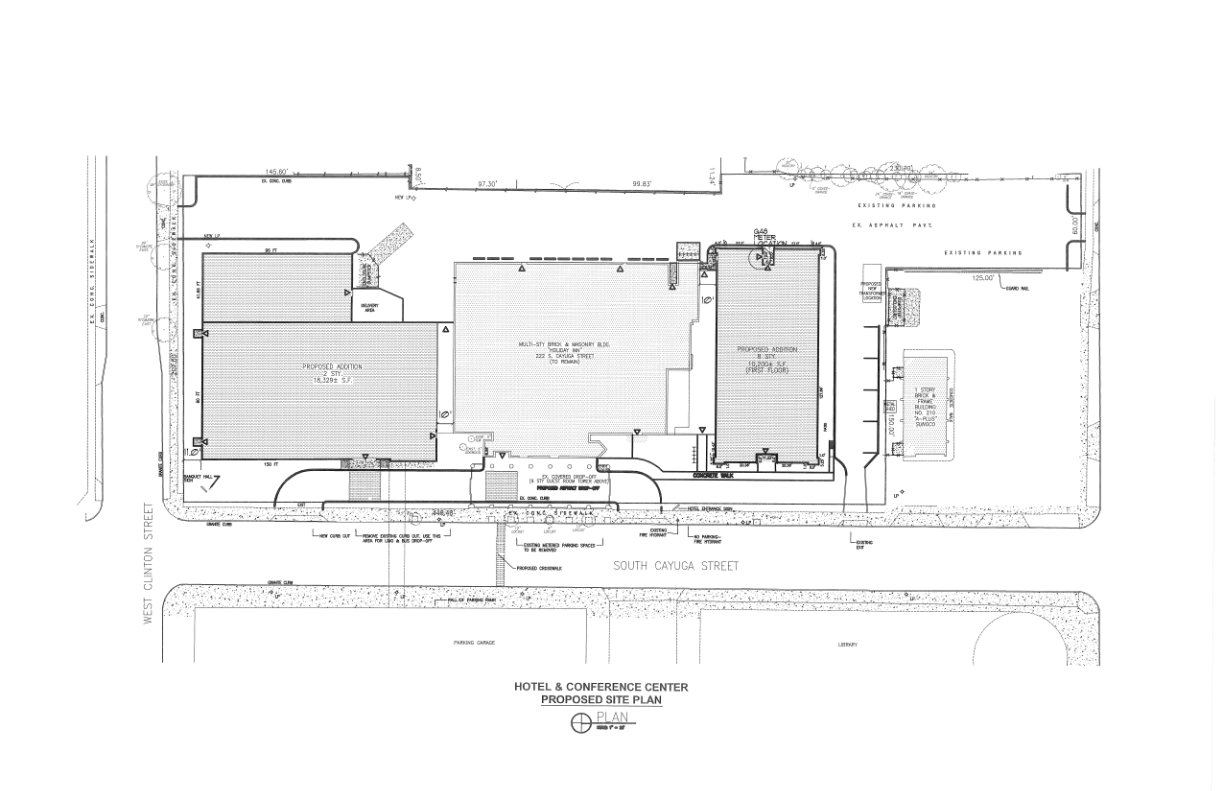
But this time around, it’s proposing to do in phases. Sketch plans presented at the Planning Board last Tuesday evening call for demolition of the two-story wings as before, but then the construction will be broken up into two phases.

The first consists of a five-story, 51,835 SF wing build on the northern side of the property, next to the gas station on the corner; the second phase, at a later, undetermined date, calls for three more floors on the hotel wing (bringing the new wing to eight stories and 81,600 SF), with a two-story, 18,300 SF conference center to be built on the corner of South Cayuga and West Clinton Streets.

The number of rooms in the addition has been unconfirmed, but given previous plans, it is likely to be little to no change from the current hotel, once the two-story wings are demolished. Until phase two is built, a parking lot would sit on the site of the future conference center.

The hotel is operated by Hart Hotels of Buffalo. Like several other Hart Hotels properties throughout the Northeast, the hotel has no chain affiliation, although the property was a Holiday Inn until the end of 2013. The 181-room hotel initially opened as a Ramada Inn in 1972, and the 10-story “Executive Tower” was completed in 1984.

Zoning at the site is CBD-100 (Central Business District), meaning that a proposed structure can be up to 100 feet (two floors at the least) with minimal required setbacks and no required on-site parking.

holiday_inn_expansion_1

Under plans previously presented three years ago, the Hotel Ithaca sought to demolish the two-story wings of the hotel, and in their place the hotel would would build a new 9-story, 115-room tower, a kitchen addition, and a 15,000 SF conference center. The demolition would have resulted in a loss of 100 rooms, so the net gain was a total of 15 hotel rooms.

The then-$18 million project had significant local support from business owners, because Ithaca lacks the ability to host mid-size conferences and conventions (midsize meaning about 500 attendees), which sends conventioneers elsewhere. Currently, the lack of meeting space limits conferences to about 250 guests. The addition of a convention facility is seen as a major benefit to downtown retail, as well as other hotels that would handle overflow guest traffic. Convention traffic typically happens during weekdays, when regular tourist traffic is lowest.

However, the project, which was initially slated to start in November 2012, has failed to obtain financing for construction. The project applied for and received a property tax abatement for the new construction, and the Ithaca Urban Renewal Agency (IURA) even offered the possibility of a $250,000 loan if it would create a financial package that would allow the convention center to be built. But until now, there had been no indication of any plans moving forward.