News Tidbits 6/27/15: A Bad week for YIMBYs

27 06 2015

cornell_novarr_1

cornell_novarr_2 cornell_novarr_3

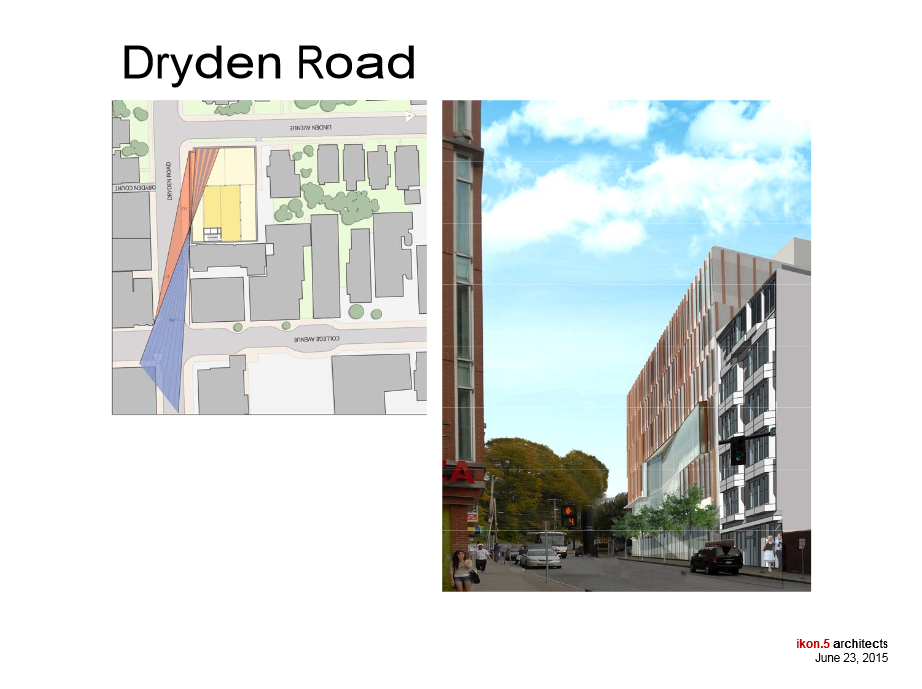
1. Starting this off with least controversial news-maker this week – John Novarr’s 209-215 Dryden Road project, which I wrote about for the Voice here and with site plan details and SPR/render links here. The first article’s a little helter-skelter as a write-up because there was a lot of frantic 11:30 PM fact-checking going on in an effort to get the news out.

The $12 million, 12,000 sq ft proposal is smaller than Collegetown Dryden, but more importantly, the project isn’t residential; it’s classroom and office space for Cornell’s MBA program, three floors for each of those uses. That definitely brings something different to Collegetown and its mostly residential focus. With assurances given that the property will be kept on the tax rolls, the initial opposition appears to mostly be related to the design, which to be honest, is rather avant-garde and an acquired taste (not one I’ve acquired, to be honest). However, bringing 200 staff and a few hundred professional students into Collegetown would be a real asset for businesses struggling to stay open amid the neighborhood’s 32/36-week profit window.

209-215 Dryden Road is within the MU-2 zoning from the looks of it, so a trip to the Board of Zoning Appeals (BZA) seems unlikely at the moment. We’ll see what happens moving forward, this one could be a fairly smooth approvals process.

2. For a smaller developer, Ithaca-based Modern Living Rentals has been pretty busy this year. Along with 707 East Seneca Street and 902 Dryden, they have a modular duplex (3 bedrooms each, 6 total) currently under construction at 605 South Aurora Street in Ithaca city. A construction permit was issued back in 2014, according to the city planning report. The orientation is a little odd in that the new duplex is being built in front of the old home on the property, since the house is longitudinally centered but set back on its lot. Taking a guess, the intended market is likely IC students. The new units look like they’ll be ready for occupancy in time for the fall semester.

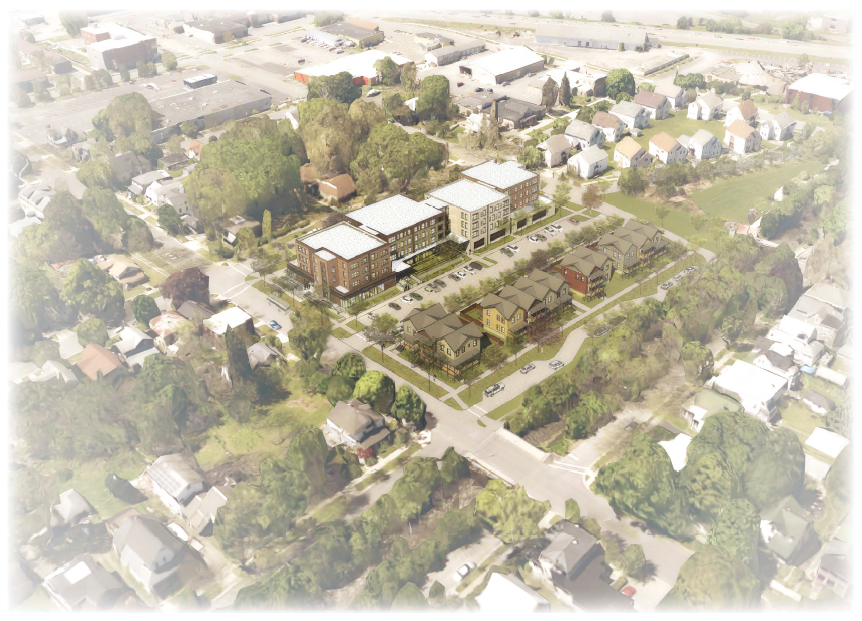
3. Here’s an interesting piece of news, courtesy of the Tompkins County Government Operations Committee – plans to sell a vacant lot to non-profit housing developer INHS. In its May minutes, the committee announced intent to sell a vacant, foreclosed parcel in Freeville for affordable housing. The property is described as a 1.72 acre parcel on Cook Street in the village, which through a little deductive searching, turns up the lot in the map above, just north of the Lehigh Crossing Senior Apartments. The minutes state that INHS is in the process of drafting up an acquisition offer for the county attorney.

Freeville is outside of INHS’s usual realm of Ithaca city and town, but INHS expanded its reach when it merged with its county equivalent, Better Housing for Tompkins County (BHTC) last December.  This might be the first new rural project post-merger. The Lehigh Crossing Apartments have 24 units on 2.3 acres, so if INHS were to build at the same density, this site would be looking at something around 18 units. Not big, but not inconsequential, especially for a 520-person village.
cinema_drive_1

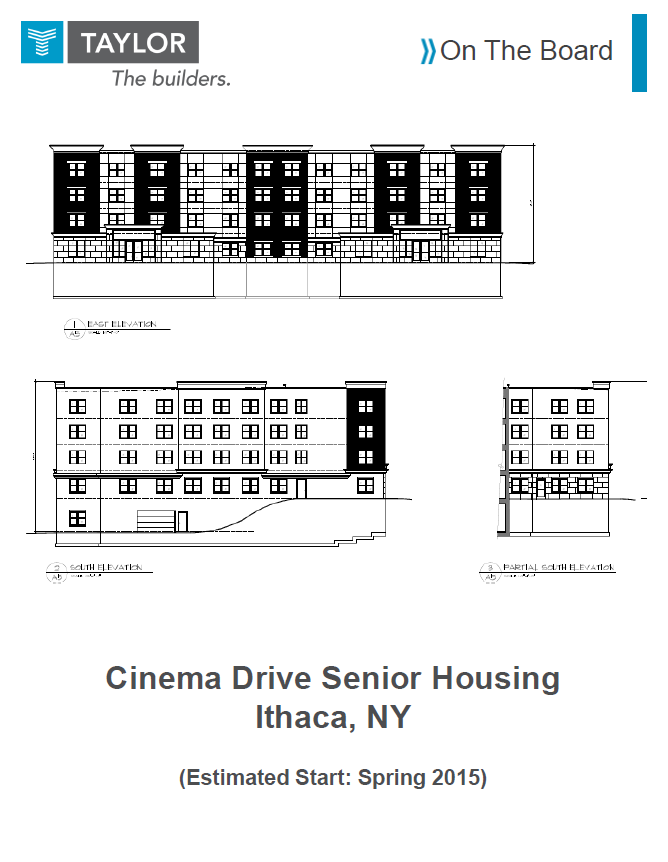
4. A decision to decrease sewer hookup costs in Lansing village also shares some details about a senior housing project in the works. The news comes from the Lansing Star, where the village voted to decrease its sewer hookup fee from $2,350 per unit to $1,000 for the first unit and $500 for each additional unit. Apparently the high fee was the result of the lack of a permitting process in the 1990s.

The article notes that the developer of a mixed-use request had requested a fee waiver because it would have cost $138,650 for their “59 units of senior housing”. Now it will be $30,000. Not as good as a waiver, but still pretty good. Lansing village only has one project that meets the description provided, the 87,500 sq ft Cinema Drive project covered here previously. The semi-educated guess back in May was 51 units, so the ballpark estimate wasn’t too shabby.

327_eddy_rev3_1

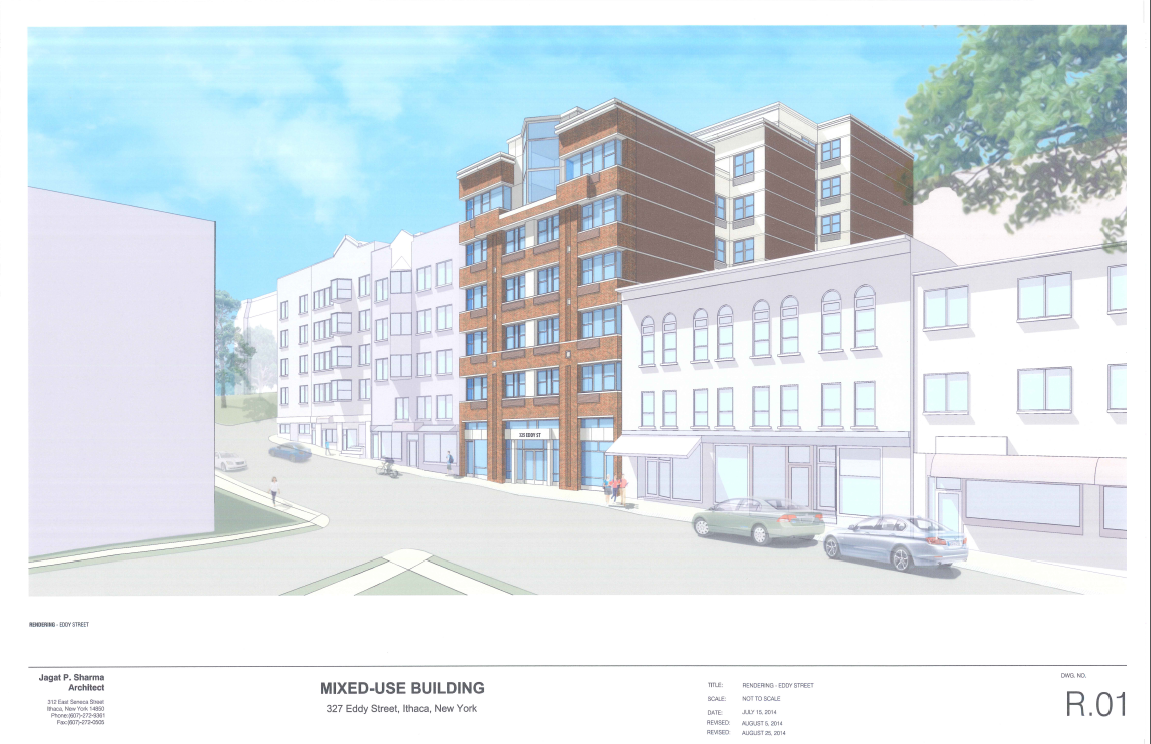
5. It’s official, 327 Eddy is under construction. Asbestos removal has been completed and the Club Sudz building is coming down. The Fontanas hope to have the building completed and ready for occupancy by next August. In replacement of Club Sudz’ and Pixel’s 7 units and 2,500 sq ft of commercial space, the new 5-story building will bring 1,800 of retail space and 22 new units with 53 bedrooms to the market.

Eagle-eyed readers might recall the building was originally going to be six floors, but a floor was lopped off since it was approved.
215-221_spencer_v3_1

215-221_spencer_v3_2

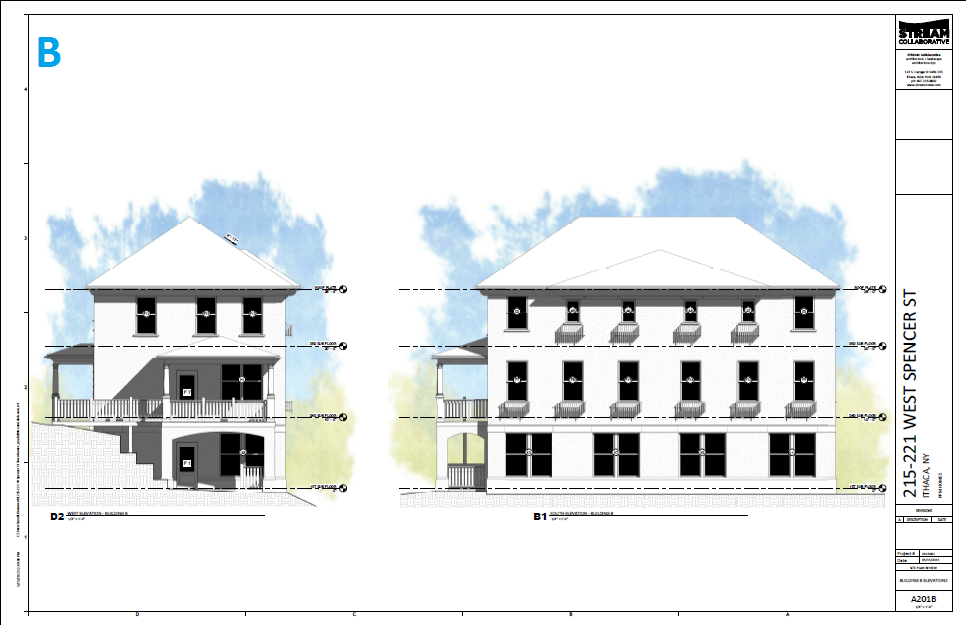
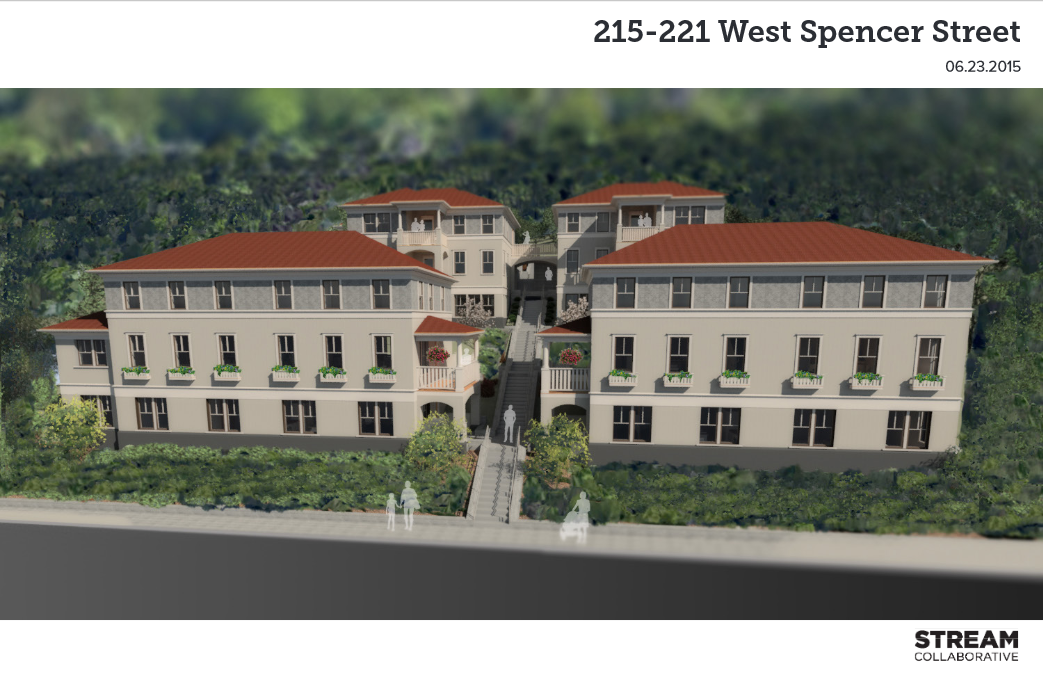
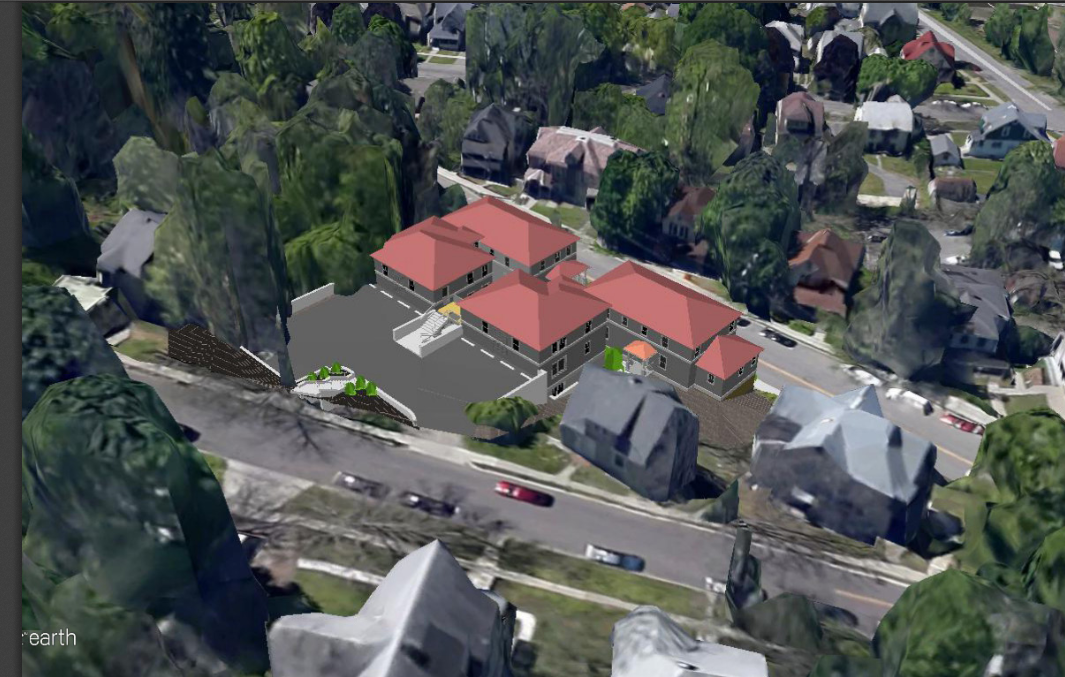
6. Updated renders for 215-221 West Spencer Street, coming right up. A little more detail on the facades, some window updates from the last version, and…well, honest personal opinion…it’s a very attractive design. Materials could underwhelm it, but as presented, it appears to be a lovely addition to South Hill. Good work STREAM Collaborative.

The 12-unit, 26-bed project plans to start construction next year. The project replaces an informal (dirt) parking lot.

oldlibe_franklin_proposal

travis_hude_libe_libe_v3

7. Touching on the Old Library decision briefly, a public meeting on the two proposals will be held Monday June 29th at 6:308:30pm at Greenstar’s “The Space” (700 West Buffalo Street). Douglas Sutherland will represent Franklin Properties (first image) and Frost Travis will be presenting for Travis Hyde. Should the County Legislature decide to take another vote to see if the stalemate will be broken, the next chance will be at their July 7th meeting.

EDIT: The public meeting scheduled for the 29th has been cancelled .

state_st_triangle_v2_1

8. Onto the thornier topics – Not sure what was worse this week, the reaction to the State Street Triangle project, or the INHS Hancock Street opposition. The objective, non-partisan write-up about the State Street project is on the Voice here. This and news piece #9 are opinion pieces, feel free to ignore them.

At least the State Street objections (latest renders here), I can understand the initial shock and recoil; there’s this perception that Ithaca is a small town, and this doesn’t jive with that. Regardless, by Ithaca standards it is massive, 11 stories with 289,000 sq ft of space and 620 bedrooms; if this was, say, a four-story building with an 11-story tower on the closest third to the Commons, the reaction would probably be less vitriolic (people would still hate it, but let’s entertain this thought exercise).

But that probably won’t happen. Not with this developer, or with any developer that purchases the Trebloc site. Here’s my theory why, and it goes a little more in-depth than “they want maximum profit”.

In December, Jason Fane’s 130 East Clinton project was rejected for tax abatements, and one of the reasons cited was that market-rate housing wasn’t enough of a community benefit. State Street Triangle is mostly apartments – it contains only a modest amount of retail space, with less than 13,000 sq ft it’s not even 5% of its usable space. If it were to apply for an abatement, it would likely be rejected for the same reason.

Arguably, they could try commercial office or even industrial “maker spaces”. But the market demand for office space doesn’t seem to be growing much, and industrial uses don’t tend to be a good fit in heavily populated areas. A developer could even try condos, but if developers knowledgeable with the area are hesitating, than a bank won’t hesitate to hold off on financing (aside on that – if the Old Library goes condo, other developers and financiers will view it as an experiment, or more positively, a pioneer; until it’s clear that the project is successful, don’t expect more condos in Ithaca).

However, nothing changes the fact that building downtown is quite expensive. So, being a for-profit company, if you want to build in an expensive area, you have two options to ensure return on your $40 million investment and get the construction loans you need – build as much as possible, and/or make your units as expensive as possible. If you’re a company that specializes in student housing, you’re not going to push the latter because there’s a lower ceiling on what students can afford. That would be my guess on how State Street Triangle came to be.

There are a few possibilities that might make the project more palatable to community members, such as free bus passes for tenants or a 10% affordable housing requirement within the tower (if the INHS project oppositions are any clue, this is going to be the only way to go from here on), but given the costs, those ideas just might kill the project completely. Which is exactly what some folks are looking for.

At the very least, let’s let the Planning Board do their work. If they can help change this:
hampton_new_1

to this:

canopy_hampton_rev4_1

Let’s see what they and the developer can negotiate here.

9. Now for 210 Hancock. Here is a project that’s been transparent, incredibly transparent, throughout their whole planning process. At first, there was little opposition. Now, it threatens the proposal, apartments, townhomes and all.

A wise man once told me in when I was preparing a piece, “There’s no point in talking about this with you, the public’s going to have issues with it either way”. At this point, I’m inclined to believe him.

I’ve read the petition, and I’ve read the facebook comments. It’s regrettable, to say the least.

A lot of the comments just seem to be misinformed. People saw the petition, thought that INHS was only building the apartments, and signed it. The petition was worded with charged and selective language. I’d like to take a few minutes out to refute and argue some of the commentary.

“there must be a safe place for children to play…”

“People need access to green space, yards and the ability to get outside directly from their living space.”

“I want my 3 year old to grow up in a neighborhood where he can safely ride a bike, play sports and walk his dog.”

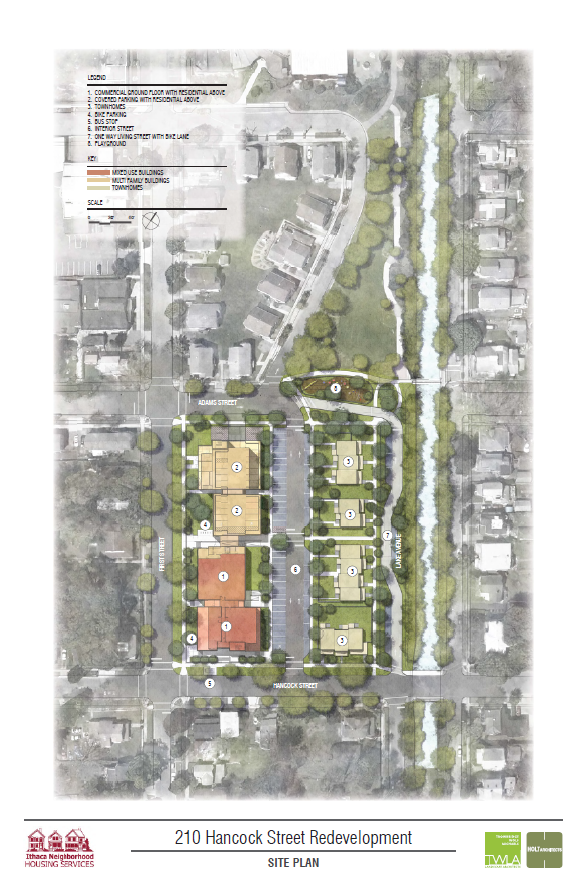
You’re right. That’s why the project, as proposed by INHS and tweaked by the city Planning Board, builds a playground that blends into Conley Park without the threat of vehicular traffic (shown in the plan below). Adams Street and Lake Avenue would be removed, allowing kids living in the apartments and townhomes to go the playground without crossing any street.
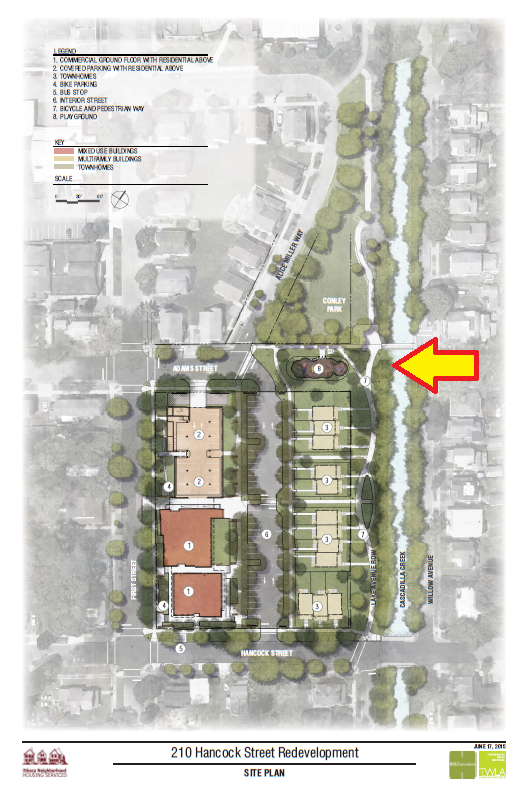
inhs_pride_playground

“I’m a lifelong resident, and I’m frankly getting tired of seeing all these areas getting bulldozed and developed…especially when we have dozens of empty/condemned houses and buildings just sitting around!”

The rental vacancy rate is 0.5%. A healthy market is 3-5%. Further to that, if there are dozens of homes, even if they were for sale, it’s still not enough to handle the demand, which is in the few thousands.

“inadequate parking planned.”

“The parking issue is already a problem. This will only make it worse.”

“I am a Fall Creek resident and do not want this area in our neighborhood to resemble Collegetown in density or difficulty in parking.”

84 parking spaces are required by zoning, 64 are proposed. However, only 22 spaces are expected to be used by the 53 apartments. In the parking study of INHS tenants, 41% of apartment tenants have 1 car, 12% of those have two. One of the reasons why INHS’s parking utilization is so low is that many of its apartments are rented by seniors – for example, Breckenridge Place is 60% seniors on fixed incomes. With limited mobility and/or income, many don’t maintain personal cars.

In a sense, although the Cornerstone project for affordable senior housing wasn’t selected by the Old Library site, the INHS project on Hancock Street may serve in some ways as a reasonable alternative.

“We don’t owe any developer a profit on their development.”

INHS is a non-profit community developer. The townhouses sold at Holly Creek over the past year were in the $105-$120k range. For comparison’s sake, the townhomes in the Belle Sherman Cottages sold for double that, and those aren’t even considered high-end (high-end would be the $410,000 townhomes in Lansing’s Woodland Park).

The reason why construction won’t start until Fall 2016/Fall 2017, with the apartments finishing up in Fall 2017/Fall 2018, is that they are completely reliant on government grants and donations from community supporters. The townhouses won’t start for a couple of years (their time frame is 2018-2020) because funding for purchasable units is more difficult to get. Just like with the condominium debate, the government is more likely to disburse a grant if it knows there are buyers waiting in the wings. And for low and moderate-income households, far more are capable of renting versus buying. As for the rent-to-own option suggested by the petition writer, it’s speculative, complicated, and NYS/federal HUD will not provide grants for that type of property acquisition. INHS couldn’t do it if they wanted to.

“[need]assurance mixed income will be there”

It will. As I wrote in March:

“210 Hancock will have 53 apartments – the 3 bedrooms have been eliminated and split into 1 and 2 bedroom units, so the number of units has gone up but the total number of bedrooms remains the same (64). The units are targeted towards renters making 48-80% of annual median income (AMI). The AMI given is $59,150 for a one-bedroom and $71,000 for a two-bedroom. The one-bedroom units will be rent for $700-1,000/month to those making $29,600-$41,600, and the two-bedroom units will rent for $835-$1300/month to individuals making $34,720-$53,720. Three of the units will be fully handicap adapted.”

“A 54 apartment high-rise is not the appropriate place for children to grow up, low income or not.”

“It is too dense and not suited to Fall Creek or Northside.”

“I moved to Ithaca and settled in Fall Creek to live in a small town.”

For starters, it’s harder to make housing affordable if there are fewer units on the a plot of land. Secondly, because the INHS project takes lead on the city’s right-of-way (ROW) on Lake Avenue and Adams Street, the calculated density per acre is 23.6 units per acre. Cascadilla Green, one block to the north, is 20 units per acre. Also note that units are 1 and 2 bedrooms per unit; most of the houses on blocks in Northside and Fall Creek are 3 bedrooms per unit.

What probably bothers me the most are some of the comments in the online petition for INHS.

“Shame on you “Ithaca Neighborhood Housing” for even thinking of creating something that will breed trouble…”

“This is an uncivilized proposal…”

“if all on welfare, this will invite crime…”

One of the reasons I harp on affordable housing is that I grew up in affordable housing. This 147-unit mixed-income complex in suburban Syracuse. Apartment 28E. I shared a bed with one of my brothers until I was 10, and even after my mother was finally able to buy a small ranch house, we shared a bedroom until he graduated and went to college two years before I did (by that point, we had moved on up to bunk beds). My mother did what she could. We were never more than working class, but she worked hard (still does) and made sure her kids worked hard.

At least some of the comments are kind enough to be “I want affordable housing but”. Others really make it sound like that those in need of affordable housing are a contamination of the community. Those statements aren’t worth debating. They’re just hurtful.

Anyway, this might be the longest news update I’ve done, so I’m going to wrap this up and detach from the computer for a while. There may or may not be a photo update Monday night, we’ll see.


News Tidbits 6/13/15: Things that make you go Hmm

13 06 2015

travis_hude_libe_libe_v3

1. We’ll start this week’s round-up with the 800-pound gorilla in the room – the Old Library decision. The general, non-partisan rundown can be found in the article I did for the Voice. Rather than rehash that, I’ll give my own thoughts and opinions here.
In what should be no surprise to anyone, there’s a lot of acrimony flying around. The unavoidable problem here is that everyone has a different expectation for the site. To be honest, I was a little surprised that the Travis Hyde proposal was the winner. The Cornerstone and Franklin proposals were running about even when it came to public sentiment – many of the Voice commenters were stressing the need for affordable senior housing, just like the county did in the RFEI. Others used online petitions to push for the condos and saving the old library, but I personally felt that that was always going to be a stretch simply because the condos are a double-edged sword; they’re a needed commodity, but that “air of elitism” associated with the sale of a public asset for high-end homes would hound the legislators all the way to the voting booth.

The truth is, the RFP was designed to be unattainable, and I called it out for that last fall. There was no way a project was going to incorporate all the things it requested. Franklin couldn’t renovate the building and make their units at the affordable level. Cornerstone was able to make their units affordable but wasn’t as environmentally friendly as the others (it also requested a large PILOT). And I guess Travis Hyde was in the middle. Which on that 0-5 scale they used to score the projects, gives a simplified sort of 5-0 (2.5), 0-5 (2.5), 3-3 (3). With unrealistic expectations, of course the legislators were going to be disappointed, and they set up everyone else to be disappointed too. But the thought of holding onto a vacant building with its mechanical systems at the end of their useful lives, ready to put the county on the hook for hundreds of thousands of dollars in replacement costs, is probably the worst option out there.

TL;DR: There was going to a large contingent angry with the legislature’s decision, whatever it was. It’s times like this I wonder if the county should’ve just sold the site to the highest bidder.

Just for the record, because the three proposals were so different, and I thought all of three of them were good community assets, I honestly didn’t have a favorite. I had a slight preference towards DPI early on, but when they dropped out I became neutral about the whole process. But it’s only the Franklin supporters that are accusing me of subversively undermining them in the Voice write-ups, and it’s making me really cold to their cause.

inhs_pride_v3_elevations_2

2. From the Common Council’s Planning and Economic Development Committee (PEDC) agenda, more talk this week about removing the setbacks from Nate’s Floral Estates (more on that in a moment), and a Memorandum of Understanding that both the city and Cornell will be chipping in $100k from their affordable housing funds to help finance INHS’s 210 Hancock affordable housing project (specifically, the 53 apartments – the 12 for-sale townhomes are being financed separately).

As covered by Jeff in the Voice, concerns have been raised that the site is unfit for new development due to the possibility of environmental contamination. Nate’s is partially on the site of the old city landfill, and has been for 40 years. But concerns raised by Ithaca city councilwoman Cynthia Brock, Ithaca town board member Rich DePaolo, and environmental activist Walter Hang have tabled the zoning change for now until the Department of Health can re-review their previous correspondence on the park’s expansion and determine if the extra 30 feet is safe to build on. The expansion may still happen, and we’ll just have to wait on the DOH’s decision before any zoning changes move forward.

On a separate note, there’s this line from the March minutes, which are rolled into the agenda for approval:

Alderperson Brock would like to see an increase in owner-occupied housing in the City. She does agree that affordable housing is needed, but the need is for “for sale” housing.

The last I checked, Ithaca is the 11th most expensive city in the country for rents as a proportion of income. The city needs affordable housing, for-sale housing, and affordable for-sale housing.

tfc_v3_1

tfc_v3_2

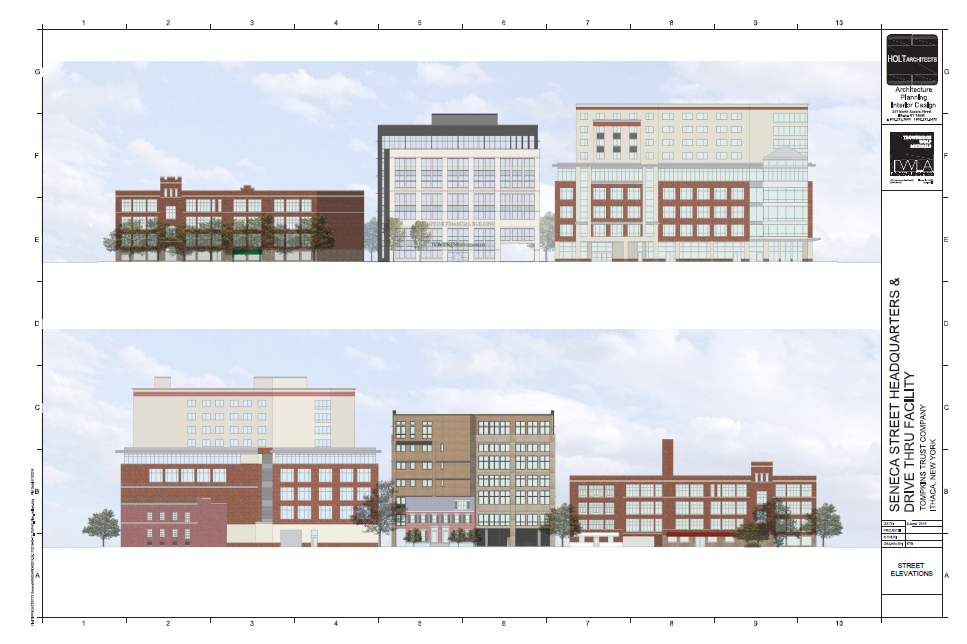
3. Fresh renders of the Tompkins Financial HQ. This one’s had some pretty substantial revisions from the initial bland brick box. A little more character and a more varied use of materials. More drawings here, cover letter here. This project’s just scooting right along, the applicants hope to have preliminary site approval granted at the June 23rd Planning and Development Board meeting. Construction is now expected to start in August and wrap up in February 2017.

A traffic study conducted by SRF Associates of Rochester determined that with only 20 employees moving from the suburbs into downtown, that the impact to the vehicular traffic on East Seneca (thousands of cars per day) will be negligible. A long-term increase in traffic is likely if other entities move into the rented space TFC vacates, but that’s well outside the scope of a traffic study.

The initial work calls for site clearing, demo of the existing drive-thru branch on site, then excavation down to the first sub-floor, thenceforth pile driving shall commence. It’s anticipated the sandy soils will make the pile-driving move along faster, but the other buildings nearby will necessitate temporary support installations during the excavation process.

On a related note, Tompkins Financial has filed an application with the IDA for a 10-year tax abatement. The application for the $35 million project (of which $28 million is for construction of the new building) states that the requested abatement would save the project $4.06 million in property taxes, and $2.112 million in sales taxes. New taxes generated and paid over the same time period would equal $3.782 million.

In the application, TFC states that it would be a few million dollars cheaper to build at “a generic rural site”, and in order to make downtown headquarters more financially acceptable, they decided to apply for tax breaks.

The application only suggests 6 new jobs over the next three years, paying $37k-$84k annually. Given previous estimates of 77 new jobs over 10 years, this lack of major job growth early on forces the later years to pick up the slack.

tfc_v3_3

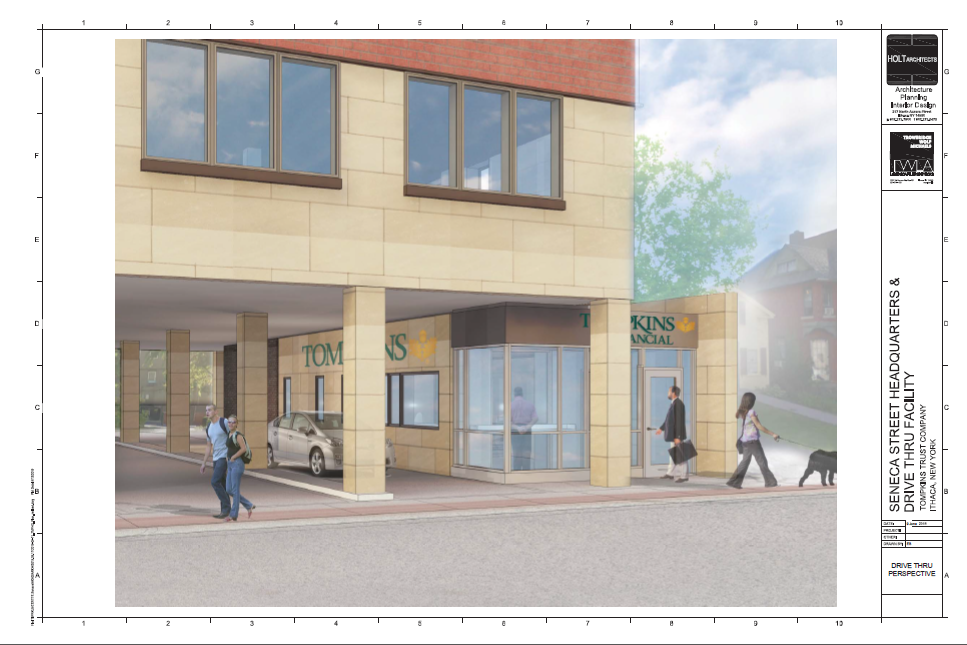
Of course, we also have a render of the new drive-thru across the street, which is nice but not nearly as exciting.

20150607_090520 20150607_090534

4. Sometimes I feel like I should do a random house of the week feature. Here we have a modular home being built on the 200 Block of Eastern Heights Drive in the town of Ithaca. It looks nearly finished at this point; permits for the home were filed back in March, so this one seems to have followed a normal building schedule with no major hangups.

Some modular homes are done on the cheap and look the part; others, like the Belle Sherman Cottages, do a great job with the finishes. This one may not look as great the Belle Sherman project, but it looks like a decent infill home for the Eastern Heights neighborhood. And it has great views to boot.

5. According to the town of Ithaca’s May 11th minutes, a developer has expressed interest in buying fire Station No. 9 at 309 College Avenue in Collegetown. An appraisal has been done and the City has hired a consultant to look into it. Fire Station No. 9 was built in 1968 to replace the original station, which is now The Nines. It sits in Collegetown’s densest zone, MU-2, so a potential replacement could be six floors with no parking requirement. There’s a lot to be looked at here, especially with the potential public safety impacts. But it’s something worth paying attention to over the next several months.

120_brindley_1

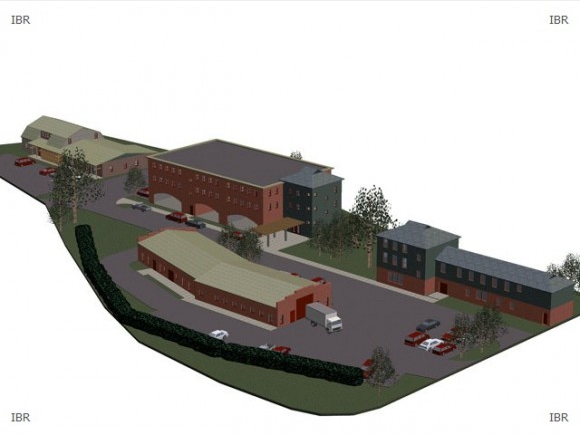
6. It’s unusual in Ithaca to see real estate advertisements posted with speculative commercial build-out plans. The above computer drawing is from the online posting for the sale of 120-140 Brindley Street in the West End. The three smaller buildings already exist – the “Aeroplane Factory” on the right and the other two properties comprise ~18,000 sq ft of flex office space. The drawing also shows an unbuilt 3-story office building; I don’t know how serious plans were for it, but it’s probably just conceptual. The real estate ad itself notes that a live/work building is possible, as well as a 6-story building of 25,000 sq ft.  The 2.38 acre site’s for sale for $2.79 million.


News Tidbits 5/9: Changing Elevations

9 05 2015

cinema_drive_1

1. Looks like the CU Suites project is in fact the render shared by Taylor Contractors. Readers might remember these elevations from last week for a proposed “Cinema Drive Senior Housing”, but that the image didn’t match up with the proposal, a 3-story, 43,000 sq ft structure. According to the village of Lansing’s Board of Zoning Appeals agenda, the project is now a multi-story mixed-use building with a size of 87,515 square feet, which looks about right for the building proposed above. The project is seeking rear yard setback and height variances for not enough of a rear yard parking setback from the lot line, and for exceeding the maximum height allowed by zoning (which is 35 feet).

Doing some back of the envelope calculations, if one calls only the top three floors senior housing ((3/4.5) * 87515 = 58343) and uses the rough guidelines of 15% for circulation/utilities and 980 sq ft per unit, then one gets about 51 units, which makes this a pretty sizable project by local standards.

inhs_pride_v3_elevations_1 inhs_pride_v3_elevations_2

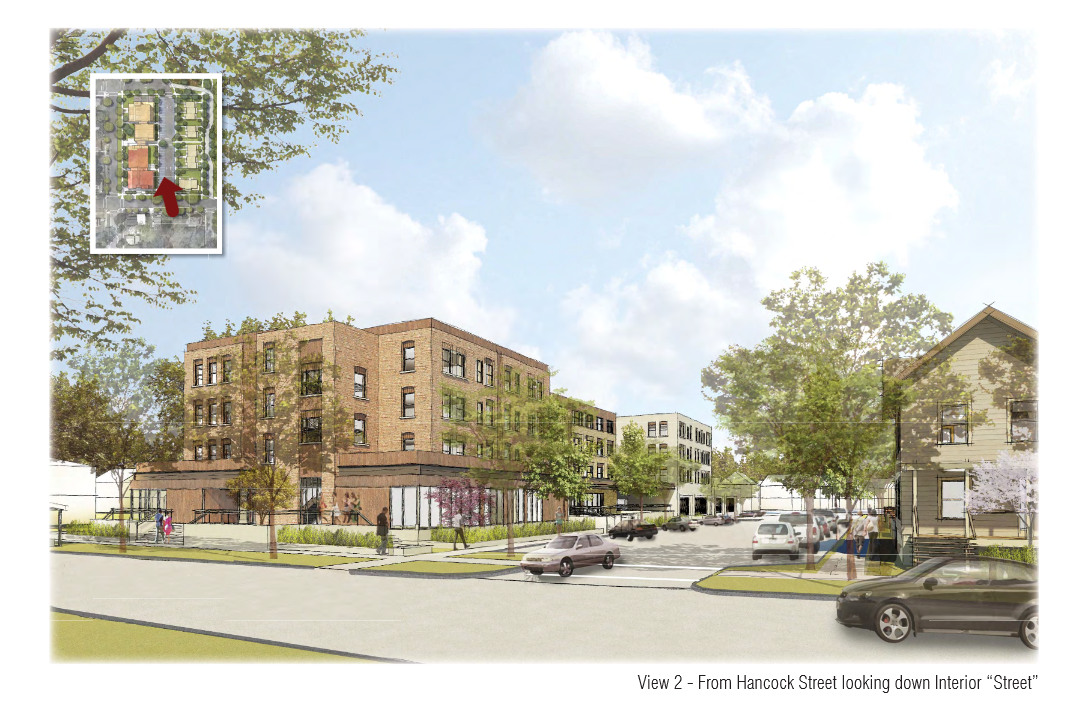
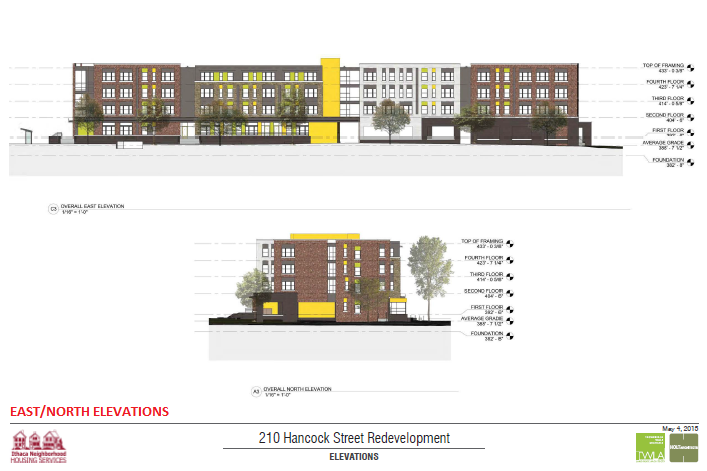
2. Now for a change or perspective – new perspectives of the 210 Hancock project, in the form of elevations found in higher resolution here. Now you can see what all of the buildings look like as a whole, rather than the simulated viewpoints previously shown. The elevations heights give the apartment building’s height at about 40 feet. Apart from some tweaks to the way the first-floor parking is screened, there haven’t been a whole lot of changes since the last planning board meeting. Note that the buildings are tucked in or pushed out and separated by “hyphen” connectors so they don’t present one continuous street wall. The design is by local firms TWLA and HOLT Architects.

Am I the only one who finds the lime green and goldenrod to be a bit..intense when compared to the other facade materials?

112_blair_v3_1 112_blair_v3_2

3. You want more new drawings? You get more new drawings! This batch represents the latest incarnation of the duplexes proposed for 112 Blair Street / 804 East State Street. Renders copied from here, project narrative here. Developer Demos / Johnny LLC (the Nestopoulos family) is still trying to have these ready in time for the Fall 2015 school year. Rather than continue seeking an area variance in zoning, the project is back down to two duplexes with three bedrooms and ~1,235 sq ft each (12 bedrooms total). After meeting with neighbors, it was decided to move back to surface building to reduce building height, and to add expansive front porches, which gives the otherwise bland duplexes a little character. Site Plan Review will take place this month.

clarebridgecrossings_1

4. Looks like there might be an expansion of senior care facilities in Ithaca town. The Ithaca Town Board is set to discuss changes next week to the Planned Development Zone (PDZ) for the Sterling Heights / Clare Bridge Cottage assisted living facilities, located on Bundy Road just north of the city-town line. Sterling House is a 48-unit assisted living facility, while Claire Bridge Cottage is a 32-unit facility specializing in memory care (Alzheimer’s and dementia). The new building, a 23,200 sq ft 32-unit facility to be called “Clare Bridge Crossings”, is designed to bridge the gap between the two – patients who might be in early stages of illness and experiencing mild symptoms, but otherwise still capable of some degree of personal independence.

The new building appears to be a one-story addition tucked between the other two structures, so it won’t be visible from the street. Along with the new building, there will be updates to parking, landscaping stormwater facilities, and the addition of a couple of courtyards between the buildings. The architect is PDC Midwest, a Wisconsin firm that specializes in memory care facilities.

Now, some readers might be saying, “who cares?”. There’s a couple of reasons to care. For one, this is important from a quality-of-life perspective. Picture a senior couple where one is reasonably healthy and the other has memory care needs. It means a lot to have a facility nearby that can care for their loved ones. Secondly, an expansion would bring with it a number of jobs to support the new residents – nurses, maintenance, kitchen staff and so forth. So there’s an economic benefit as well.

Full disclosure – my mother is a nurse who works for an assisted living program that includes clients with memory care concerns. So I’ve heard a thing or two about a thing or two.

east_hill_master_plan

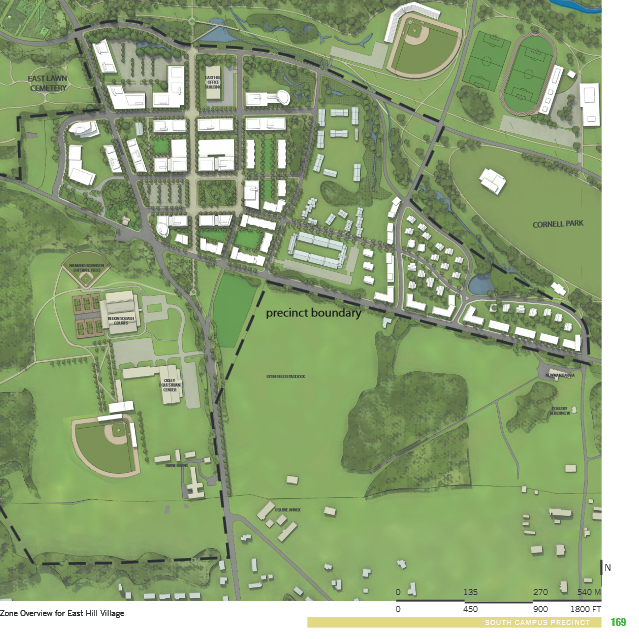
5. On a parting note for the week, here’s a little more information on Cornell’s redevelopment plans for East Hill Plaza. According to Planning Committee minutes from the town of Ithaca, Cornell will be taking part in a multi-day design charrette hosted by form-based zoning proponents FormIthaca in early June. Form-based zoning in a very small nutshell is zoning that focuses on design elements rather than use. Cornell is interested because the plan will hopefully lead to a regulating plan for the “compact mixed-use” development Cornell hopes to build to build in that area. The plan could provide language for a new Planned Development Zone that would potentially allow Cornell to move forward with a housing/retail mix at East Hill Plaza.

Cornell has sought to redevelop East Hill Plaza and surrounding parcels (most of which they already own) for several years. A vision for the plaza shows up in Cornell’s 2008 Master Plan (the so-called “East Hill Village” shown above), and given the need for housing in the area, East Hill Plaza would likely be one of the location where opposition would be less likely, given the the lack of homeowners nearby and the site’s proximity to Cornell.


News Tidbits 4/25/15: Long Week, Long Reads

25 04 2015

Grab the popcorn and sodas, folks, this will be a long one.

inhs_pride_design_comparo_v1_v3_1

1. Let’s start with some new and updated renders for the evolving 210 Hancock Street development that INHS has planned for the Northside neighborhood.

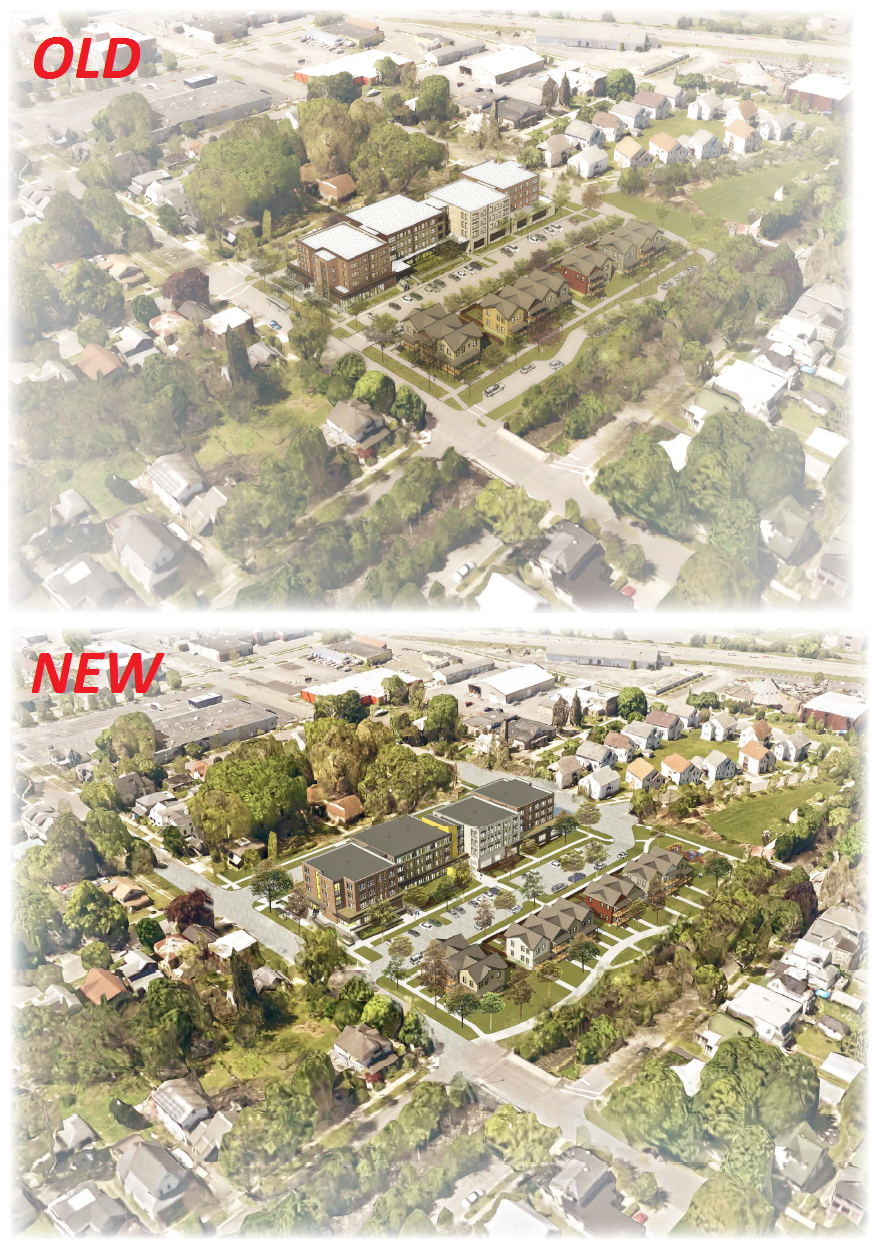
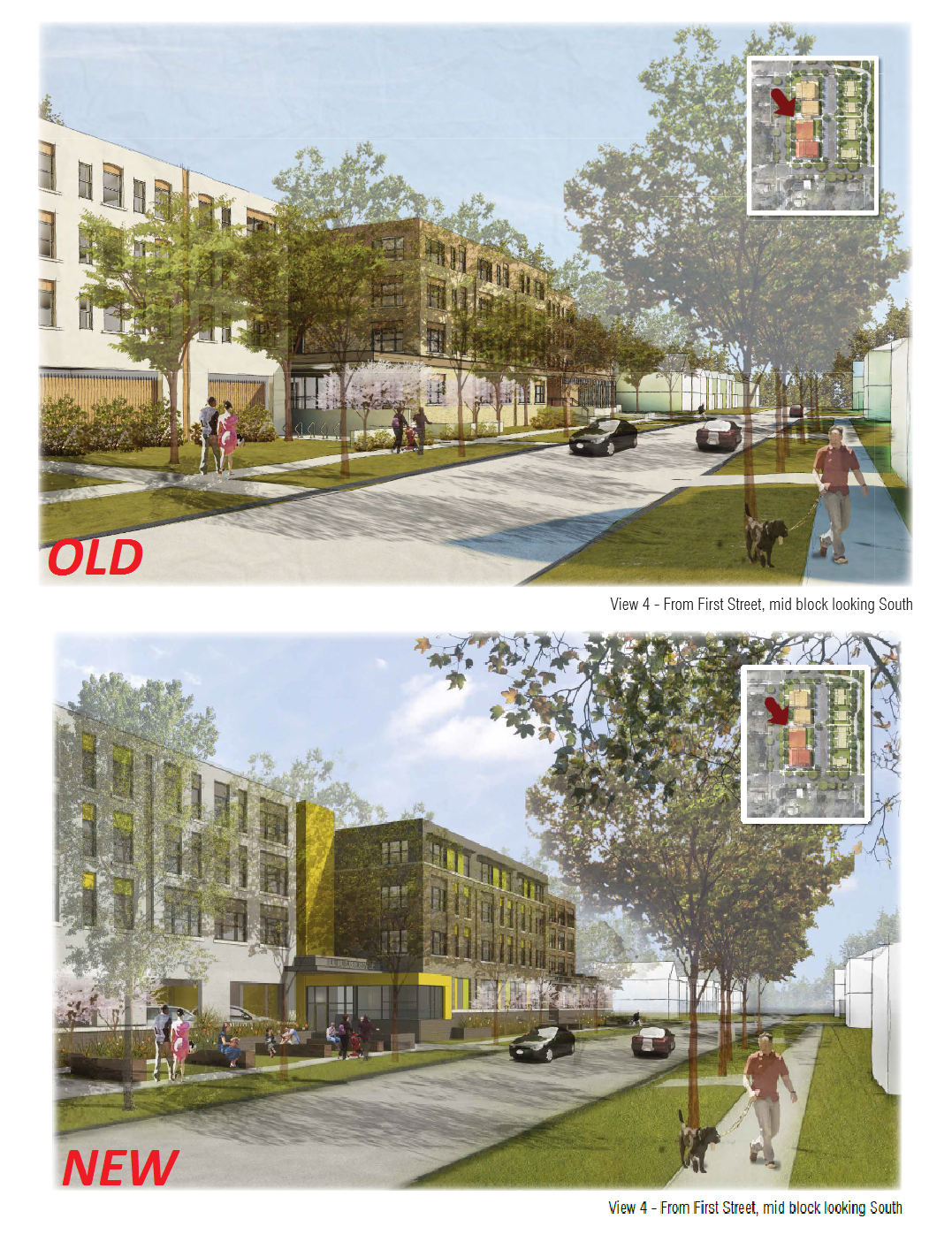
In each image, the top half is the old version, the bottom half the newest version. The lead image, an aerial rendering, shows that the houses haven’t changed much, though at the city and neighborhood’s insistence, Lake Street has now been closed off to all vehicular traffic in the refined proposal. The biggest structural changes have been in the apartment buildings – the color scheme of materials has been changed up quite a bit, and the partitions between the buildings have been re-worked to try and make the buildings appear less connected (one of the complaints raised was that they were too much like a wall; for this same reason, the buildings are slightly offset from each other, so no continuous face is presented towards the street).

inhs_pride_design_comparo_v1_v3_2

inhs_pride_design_comparo_v1_v3_5

Looking closer at the individual apartment buildings themselves, the designs have been pretty thoroughly reworked. Different window layouts, different window sizes, different colors – about the only thing that’s been kept the same is the overall massing of each building. The plan calls for 53 1 and 2-bedroom apartments and about 65,000 square feet of space, of which 7,500 square feet will be covered parking. The included commercial space has been expanded from 8,200 sq ft in the initial proposal, to about 10,000 sq ft now. More renders of the newest iteration can be found here.

inhs_pride_design_v3_7

No real changes yet in the for-sale houses that will be included in the project, apart from a palette change (previous render here – the new one is less bright, with darker earth tones). These are designed to blend in with the surrounding homes, and fall in INHS’s typical 2-3 bedroom, 1,100-1,400 sq ft range. The houses are townhomes in rows of 2-4 units, All sporting one or two-story porches. These will be built in a phase separate from the apartments. Certain affordable housing grants are geared towards owner-occupied units specifically, so the Neighborhood Pride lot will be split up into two parcels, one with the apartment rentals, one for the homeowners.

Questions and comments can be directed to the City Planning Office at dgrunder@cityofithaca.org.

2. Up in Lansing village, it looks like a proposed mixed-use project may finally be moving forward after years of incubation. “CU Suites”, a 3-story, 43,000 square foot project proposed by the Thaler family for a vacant lot on Cinema Drive, is asking the village to waive sewer connection fees. Presumably, this is about getting their finances in order before moving into the construction phase; there has been no news if funding has been secured yet. Something to keep an eye on this summer, certainly.

The Cinema Drive site was previously approved for a project of those parameters in fall 2012, consisting of two commercial spaces and a 39-unit apartment building, but that plan has not been carried out. The CU Suites proposal went before the village for “alterations and possible clarification” last December. No updated renders on the village website, but a site plan of the previously approved plan can be found here.

20150405_141933

3. Here’s some more details on the “not feasible as presented” Flatiron project. Readers might recall the 12-unit affordable housing proposal at 910 West State Street was given low priority for HUD Entitlement Grant funding.

From the presentation notes recently posted online:

“The project application is not fully developed, but probably represents more of an effort to start a conversation about the project. There is a great need for affordable housing in the community. The project was conceived to address the high cost associated with typical renovations to properties which make them unaffordable. The project would be located in an oddly-shaped trapezoidal building which [Ishka Alpern] would like to renovate to match its prior condition. It would be a very nice, unique addition to Inlet Island. Inlet Island has historically been a location for affordable housing and it is important to maintain that, before too many unaffordable projects are built there. Unfortunately, it is difficult to build affordable housing units without some form of funding assistance.”

In the Q&A the committee had with developer Ishka Alpern, no time table was given, and Alpern said he was open to waiting a year to refine it. It was also noted that once a commercial lease on the property expires in four years, an even larger project could be proposed, though it could be limited by the poor soils. While it appears renovating is the most feasible approach, the city was not impressed with the cost of investment per beneficiary – larger projects like 210 Hancock mentioned above have economies of scale going for them, costing less to build per unit. Smaller projects like the Flatiron need proportionately more assistance, making them less attractive for grant money. The city’s looking for the greatest good for the greatest number, in a sense.

In other news from the Ithaca Urban Renewal Agency (IURA), a private developer, Viridius Property LLC, is buying five duplexes with 10 units of affordable housing from non-profit Community Housing of Ithaca with the intent of keeping them low-to-moderate income, but retrofitting the buildings to run on renewable energy sources. Viridius, a company run by computer scientist and tech CEO Stuart Staniford and his wife, was established in early 2014, and has been on a buying spree as of late. They own $1.7 million in rental real estate assets now, these duplexes will raise it $2.7 million, and the goal expressed in a letter to the IURA is $5 million.

Quoting the letter sent to the IURA:

“Viridius is oriented to the “triple-bottom-line.” Although as a privately owned business
we will look to return on investment, we also seek to improve the environment and society. We
are particularly focused on contributing to the solution to climate change by converting the
existing building stock to be appropriate for continued use in the twenty-first century. At each of our properties, Viridius is removing the propane, natural gas, coal, or oil heating systems and replacing these with systems based on renewables. The specifics depends on the particular
building; to date, we have used pellet boilers and air source heat pumps. Viridius is also
developing our first solar panels at one of our buildings, and elsewhere acquires commercial
renewable power for electricity. Also, at our own residence we have deployed geothermal heat
pumps for heating and cooling and have all our electrical needs taken care of by solar panels on site. Viridius is certified as a living wage employer by the Tompkins County Worker’s Center
and has five full time staff at present in addition to the owners.

So it’s eco-friendly and/or affordable housing. Most residents will welcome the new fish into the local pond, even if all the property being acquired is a bit eye-raising.

Lastly from the IURA, the Carpenter Business Park on the north side is on the market for $2.85 million. Four vacant parcels on Third Street and Carpenter Park Road on the north side of the city recently sold for $2.216 million from “Templar LLC” based in Ithaca to “Ithaca Lender LLC” out of New Jersey, in what may have been a foreclosure sale. The address on file is associated with a company called “Kennedy Funding Financial LLC”, which is described as “one of the largest direct private lenders in the country, specializing in bridge loans for commercial property and land acquisition, development, workouts, bankruptcies, and foreclosures.” A google search turns up a legal notice between the two entities a few months ago.

gannett5

4. Construction is gearing up for the Gannett Health Center’s addition on Cornell’s Central Campus. Work on the project officially launched March 30th, according to the Cornell Daily Sun. Expect site clearing, excavation, and pile driving as we move through the spring and into the summer. The project will be broken into phases – Phase I focuses on new construction, Phase II on renovation of the current building, and Phase III concludes the project with reconstruction of the Ho Plaza entrance. About 75% of the material removed from the old building is expected to be recycled.

The architect of record is local architecture/Cornell alumni-filled firm Chiang O’Brien. There will be two additions, the four-story, 55,000 square-foot building featured above, and an additional 18,600 square foot addition that replaces the northeast side of the current building. The project also includes a new entrance and substantial renovations to the original 1950s structure (22,400 square feet of the existing 35,000), as well as landscaping, site amenities, and utilities improvements. The projected cost is $55 million, and the target completion date is October 2017.

The Gannett Health Center expansion has been a long time coming. Initial plans in the late 2000s called for a completely new building on site. HOLT Architects prepared a plan for a 119,000 square foot building, and an all-new building was also included in Cornell’s 2008 Master Plan. But once the Great Recession waged its battle on Cornell’s finances, the Gannett redevelopment was scaled back to its current form. According to a statement given by Gannett Director Dr. Janet Corson-Rikert to the Sun, the earlier plan had a budget of $133 million; the new addition and renovations are expected to cost $55 million.

The project is expected to create about 175 construction jobs and 40 permanent jobs (additional doctors, counselors and support personnel) when completed.

5.  According to next week’s Board of Public Works agenda, the approved 327 Eddy apartment project has been pretty heavily modified.

Here’s the old design:
327_eddy_rev2_1

Here’s what the developer is planning to build:

327_eddy_rev3_1

I must have missed something? All the sources I’ve seen have referred to this as a six-story building, not five. The side windows were added late in the approvals process, I think. Anyway, the project is going to the BPW because the developer wants to project the top centerpiece window as a bay window rather than having it set back from the front facade. This would push two feet (2′ x 12′ isoceles triangle) into the city’s right-of-way over Eddy Street,  and the board is recommending to the council that the mayor authorize (he says she should he should, sheesh) the intrusion for an appraised value of $3,073.84, based on an appraisal value from Pomeroy Appraisal Associates in Syracuse.

The decrease in size also comes with a decrease in units and rooms – from 28 units and 64 beds to 22 units and 53 beds. This is a double-edged sword – some might cheer the loss of size or like that the roofline is continuous with its northern neighbor, but it will be harder to stem the tide of single-family home conversion to student apartments if Collegetown’s core isn’t as capable of absorbing Cornell’s student population growth.

The included email in the agenda says the planning board recommended an overhang bay window. Personally, I feel it would make the building look clunky. But that’s just me.

maguire_fiat_1

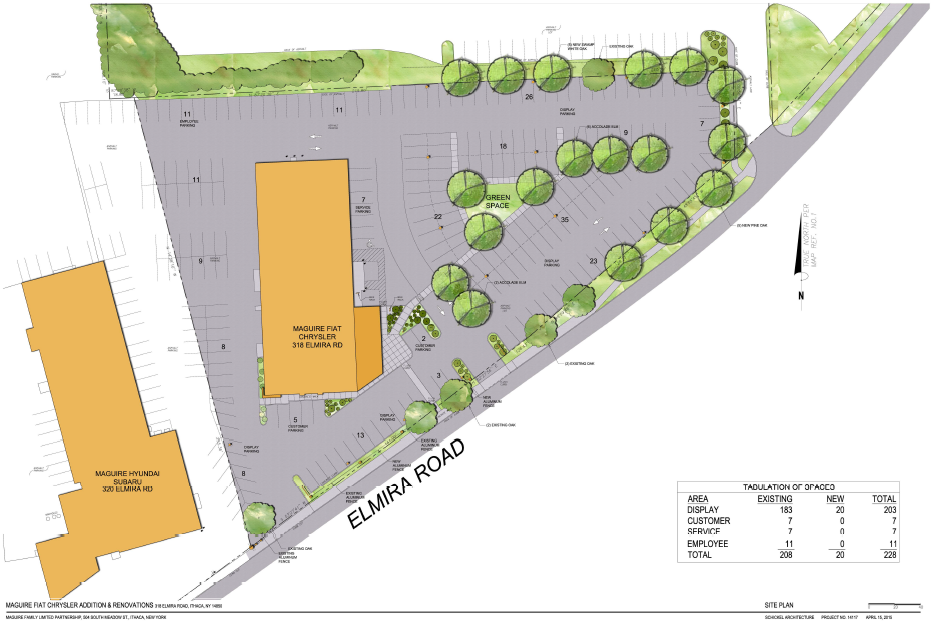
6. Here’s another project being served up to the Planning Board this Spring. Additions and renovations to a car dealership down in southwest Ithaca’s suburbia. Site Plan Review and drawings here. The dealership is Maguire Fiat Chrysler. Plans call for combining two show lots into continuous lot and adding 20 spaces, adding a 1,165 square foot showroom addition, and new landscaping and signage, including a second freestanding sign for Fiat that requires a sign variance (the max allowed by zoning is one freestanding sign). Documents indicate all the work will cost about $360k and run from September to December of 2015.

Observant readers might remember that Maguires proposed a delaership/headquarters compound in Ithaca town late last year; but due to irreconcilable differences regarding standard zoning vs. Planned Development zone, the plan was tabled.

100_1474

7. Woof. Almost to the end. The Ithaca Planning and Development Board is going to have their hands full at next Tuesday’s meeting. Agenda here. Here’s a rundown of what’s in store:

– A minor subdivision to create a new home lot at 201-203 Pearl Street.

A. Approving the adjustment to the Carey Building design discussed earlier this week

B. Enhancements to the pocket park next to the Lake Street bridge (landscaping, paving)

C. Declaration of Lead Agency and discussion on INHS’s 210 Hancock project

D. Declaration of Lead agency, Public Hearing and Determination of Environmental Significance for the proposed Texas Roadhouse on Meadow Street

E. Declaration of Lead agency for the Tompkins Financial HQ – hopefully, we’ll get some detailed renders at the meeting

F. “State Street Triangle Project (Trebloc Building site)” – This will be huge. I cannot stress by excitement enough at seeing the Trebloc Building demolished – I have not hidden my dislike of it, and in nearly seven years of writing this blog, it’s the only building I’ve ever called an “architectural turd“.  Located at 301 East State Street, the Trebloc Building was built in 1974 during the age of Urban Renewal, and was originally supposed to be two floors. The city has been quietly desiring redevelopment of the prominent corner for years, and the site was upzoned from 60 to 120 feet in late spring 2013.

According to some praise-worthy sleuthing by David Hill at the Ithaca Journal, the developer is Robert Colbert in cooperation with Austin Texas-based Campus Advantage, a large-scale developer of student apartments. plans call for a 120-foot building on site, with first floor retail and student-oriented apartments above.

This will be a tremendous project by Ithaca standards. The developer clearly states on its website that it’s only interested in working with sites that will provide at least 100 units of housing. Assuming the Trebloc Building’s footprint of 13,569 sq ft, one story retail followed by eleven floors of apartments yields almost 150,000 square feet of residential space. Figure a loss of 15% for utlities and circulation space, and an average size of about 980 square feet for an average residential apartment unit, and one gets 130 units and an unknown number of beds that could conceivably add a couple hundred students to downtown Ithaca’s population, not to mention millions of dollars of taxable real estate.

There’s a lot that will need to looked at – utility loads, parking, vehicle circulation, aesthetic impacts, and numerous other attributes. But the city’s holding the door open about as wide as it can for this site, and it’ll be an exciting process.

G. “Sketch Plan: Cornell Fine Arts Library – Rand Hall Addition”

Written about previously, it looks like the city will get its first chance to review the project. But someone with a insider’s look has some pretty harsh comments for the plan to renovate Rand hall.

Cornell Architecture professor Jonathan Ochshorn wrote in to tell readers here about the plans for the Fine Arts Library. I’m including a link to his blog post on the project here.

To try and sum up Prof. Ochshorn’s post would do him an injustice, but suffice it to say, the library plans will only keep the brick shell of Rand – the windows will be replaced, and a large “hat” will be placed on the roof. One that bears strong scrutiny from the Planning Board, since there could be significant visual aesthetic impacts on the Arts Quad Historic District.

I’m gonna tie up this post here and sit on the other items until next week. More weeks like this and I’ll need an intern.


News Tidbits 4/4/15: And They Called It “PlanIthaca”

4 04 2015

cayugaplace_v5

1. According to Ithaca Builds and those on a VIP list-serve, the Lofts @ Six Mile Creek have released tentative rental prices. $1,220/month for a studio to $2,655/month for a top-notch 2 bedroom. Using the affordability rule (30% of monthly income), one gets $48,800-$106,200 year – given the median income in Tompkins County of just over $53,000/yr, these prices could be described as upper-middle tier. I can already hear the grumbling from commenters on the Ithaca Voice if a construction update gets posted.

The 45 units are set to be completed this summer, but those looking to take a sneak peek can sign up for an April 18th tour of the building, courtesy of the Downtown Ithaca Alliance.

inhs_pride_design_v2_1

2. Here’s an updated aerial site rendering of INHS’s 210 Hancock redevelopment. The changes to the affordable housing proposal are largely in site landscaping and layout, the biggest changes being the closure Lake Avenue and moving the playground (which is not rendered in the aerial). Traffic studies, stormwater management plans, and parking studies can be found here (it turns out that compared to the old supermarket, there will be slightly more AM traffic, and a lot less PM traffic), revised site layout here, and about 18 other documents in the April site plan review planning board directory on the city’s website. 210 Hancock will be undergoing review by the city Planning and Development Board at their April meeting.

gways_rev_3

greenways3

greenways1_final

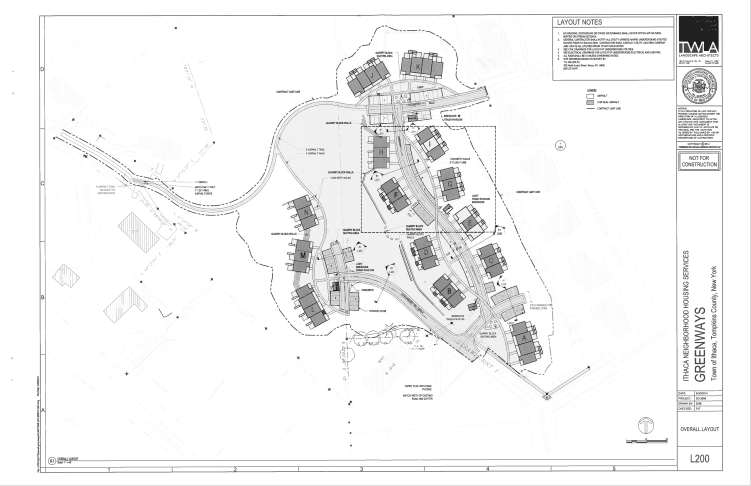
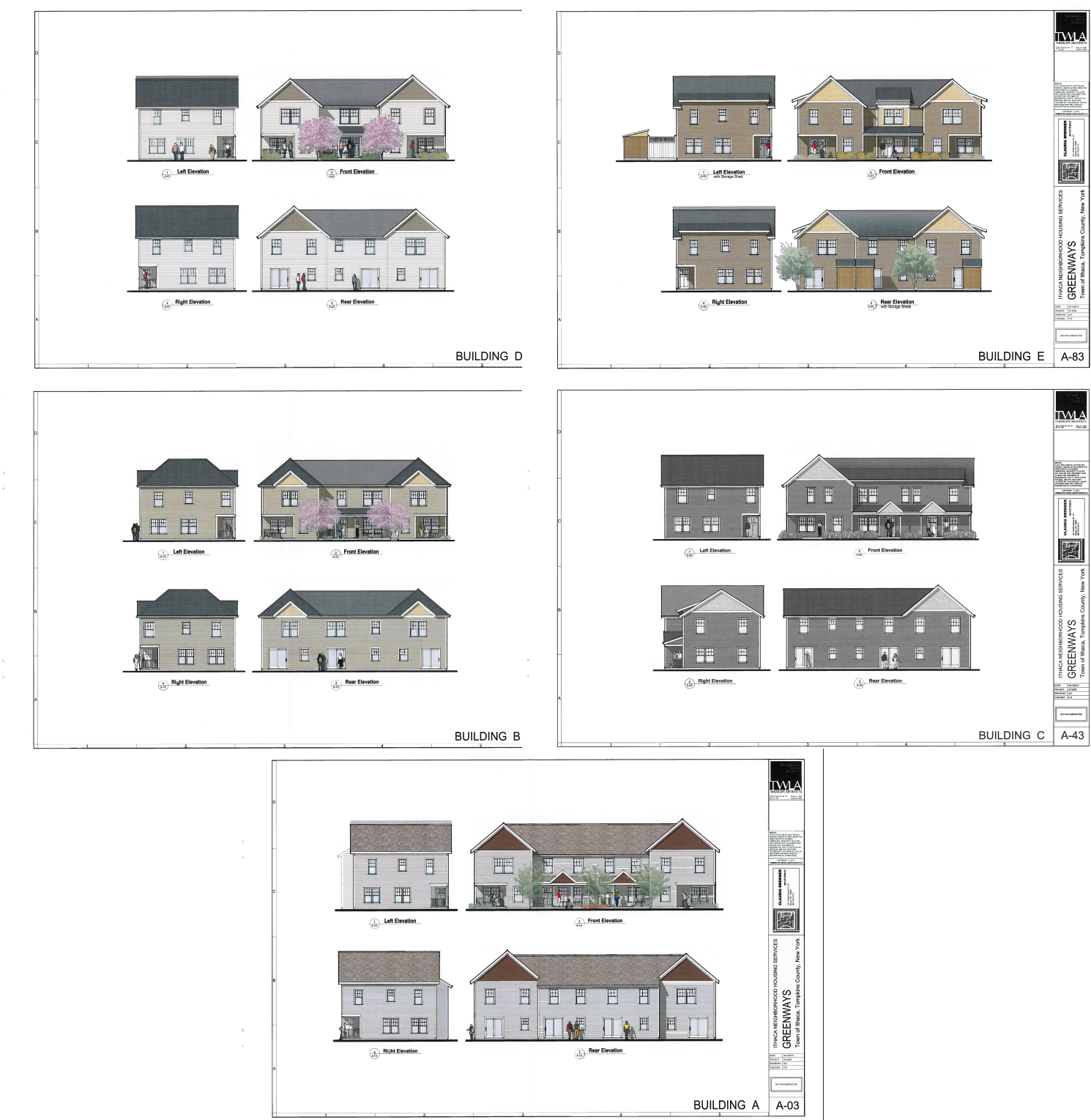
3. Turning to another INHS project, the Greenways development is going for final approval with the town of Ithaca’s Planning Board next Tuesday. The full suite of documents can be found here. The designs above, for buildings A, B, C, D, and E in Phase I, are very nearly final, though Building C looks like it was accidentally uploaded in grey-scale. B-E will have three units each, 2 2-bedroom (1,100 sq ft) and 1 3-bedroom (1,300 sq ft). Building A will have 2 2-bedroom and 2 3-bedroom units. In sum, Phase I has 16 units and 38 bedrooms. Assuming the other units are the same configuration, the final product will have 46 units and 110 bedrooms. Build-out could take 6-8 years according to the docs, and Building K in Phase II interferes with 0.09 acres of wetland, which the Army Corps of engineers requires to be filled in before development (wetlands under 0.1 acres and not contiguous with any other wetland can be filled in without need of replacement).

The designs are by local architect Claudia Brenner. The floorplans are designed with nearly identical layouts to save money, but the varied use of exterior architectural details and colors does a nice job of giving each building a unique appearance.

Readers might recall that these for-sale owner-occupied units are being developed for the affordable housing segment (individuals/families with incomes of $38k-$57k), and that Cornell is giving INHS the property for below market price on the condition that Cornell employees that fall into the income restraints have first dibs on the units as they hit the market. The property also makes use of “woonerfs“, so-called living streets that are shared by bikers, pedestrians and vehicles, and typically have a speed limit of no more than 10-12 MPH.

ith_big_plan_map_v2

4. The city of Ithaca’s draft Comprehensive Plan is now online. The 66-page draft, called “PlanIthaca”, can be looked at here, and the proposed land use map here. Over the past year, the Comprehensive Plan Committee has been busy fleshing out the original 16-page draft document to the full-fledged PlanIthaca document above. The city will be hosting a series of open houses throughout the city during April for interested parties to look through the plan and comment, with the first open house on Monday April 13th from 3:30-5 PM at St. Luke’s in Collegetown. Comments can also be submitted by email to city planner Megan Wilson at mwilson@cityofithaca.org.

I’ll probably expand on the plan in a future post, but readers of the blog won’t be surprised by anything it says. The map appears to be lacking the neighborhood mixed-use zoning, which from reading the plan appears to be an accident. Otherwise it’s the exact same map from last spring’s write-up.  There’s a couple of interesting concepts that will be explored as things move forward beyond the plan – ideas such as city-wide form-based zoning and a transfer of development rights between properties would make for a large departure from current policies.

tfc_1

5. If you’re looking for a little more light weekend reading, feel free to check out the double feature article on the Tompkins Financial HQ plans running the weekend on the Ithaca Voice. Summing up a few salient details here, the total project will cost $26.5 million, add 77 new jobs downtown over the next decade, and run from about June 2015 to January or February 2017. The new headquarters will be about 110,000 square feet in size, 7 stories and 100 feet tall, the maximum allowed by zoning. The first floor will have a 6,600 square foot (66 feet x 100 feet) bank branch, with parking for 20-25 cars behind the first floor and under the overhanging upper floors. A basement floor will also add 6,600 sq ft of space, and floors 2-7 will have 16,300 square feet each. Across the street at 119 East Seneca Street, a new drive-thru will be built underneath the existing building, consisting of revised drive-thru lanes, surface parking, an ATM and a 985 square foot teller building.


News Tidbits 3/28/15: It’s Affordable Housing Week

28 03 2015

The unplanned theme of the week: affordable housing projects.

1. This week and next, the Ithaca Urban Renewal Agency will be holding public hearings as part of the process to determine who will receive money from the Housing and Urban Development (HUD) grants awarded to the city. The 21 applicants ranges from jobs training to community services to the development of affordable housing. In total, $1.78 million has been requested, and there’s $1.215 million available, just a little over two-thirds of the total requested.

Without discounting the value of the other applications, the focus here will be on the real estate development projects. For the record, writing about a project is neither an endorsement or opposition from this blog.

inhs_pride_design_3

A. INHS is requesting $457,326 dollars for its 210 Hancock Street redevelopment project (also known as the Neighborhood Pride site). The total cost of the project as stated in the application is now up to $17.3 million. The application only applies to the apartment buildings, not the townhouses. The townhouses and apartments are going to be subdivided into separate parcels, because certain affordable housing funds are targeted towards renters and others towards homeowners. Subdividing the Neighborhood Pride parcel into the apartment and owner-occupied parcels will make for a smoother application process, and they’ll be separate projects within the larger framework of the 210 Hancock property.

210 Hancock will have 53 apartments – the 3 bedrooms have been eliminated and split into 1 and 2 bedroom units, so the number of units has gone up but the total number of bedrooms remains the same (64). The units are targeted towards renters making 48-80% of annual median income (AMI). The AMI given is $59,150 for a one-bedroom and $71,000 for a two-bedroom. The one-bedroom units will be rent for $700-1,000/month to those making $29,600-$41,600, and the two-bedroom units will rent for $835-$1300/month to individuals making $34,720-$53,720. Three of the units will be fully handicap adapted.

One of the commercial spaces will be occupied by local social welfare non-profit Tompkins Community Action for use in an early head-start program for approximately 30 children from lower-income households. The other two spaces have strong interest but do not have tenants lined up yet.

flatiron_1

B. This second project is something new. Alpern & Milton LLC (local buisnessman Ishka Alpern and his brother, Franklin Milton) are requesting $250,000 towards a $1,285,000, 12-unit project proposed for Inlet Island called “The Flatiron”. The project seeks a renovation of 4,900 sq ft at 910 W. State/MLK Street (shown above) and a 3,700 sq ft addition onto the neighboring parcel at 912 W. State/MLK. The finished project will resemble the triangular form of the famous Flatiron Building in NYC. the application says “the project will be of a historic nature, but the structure being proposed is not currently, nor will it be, deemed ‘historic’ in terms of housing or building code”. Ten of the units will be available to 30-50% AMI, and the other two will be available to those making 50-80% AMI.

The brothers do have some small projects to their credit, according to the filed paperwork. They handled the renovation of Brookton’s Market and 514-516 W. State/MLK Street. Judging from the google maps dating back to 2012, some renovations have already been done to 910 W. State.

2. In this week’s Journal, there was an article that gave a rundown of recipients of the Tompkins County Affordable Housing fund paid for by a combination of the city of Ithaca, Tompkins County and Cornell. Most of them I recognized – Holly Creek, the Habitat for Humanity duplexes in Groton and Trumansburg, Breckenridge Place and so on.

There was one I didn’t recognize. The Amici House proposal, which is being planned by Tompkins Community Action. I vaguely remember coming across this during the Stone Quarry debate last year, but at the time I couldn’t even verify if it was a real proposal. TCAction is proposing to build approximately 15 units affordable townhouses at 661-665 Spencer Road, just east of the Salvation Army store. There haven’t been any formal plans presented yet, but the project did receive $75,000 from the fund to pay for a pre-development feasibility study.

Farm Pond Site RES'D & LOT s 010414

3. Like single-family home development? Have lots of extra money lying around? The second phase of Lansing’s 21-lot Farm Pond Circle development is up for sale. Jack Jensen, the original developer, passed away last fall. Of the ten lots in phase two, four have already been reserved; there are also two lots left in phase one. The second phase is being offered for $155,000.

The Farm Pond Circle development is fairly stringent. Current deed restrictions limit the size of each housing unit to 2600 sq ft, vinyl or aluminum siding isn’t allowed, and only very specific subsections of the lots can be developed. Buyers aren’t limited to green energy, but there is a strong push in that direction. Also, at least four of the lots are earmarked for affordable housing (single-family or duplexes, buyers muse make  less than 80% of median county income of $53k)). The affordable units, at least two of which have already been built, are being developed in partnership with Jack Jensen’s non-profit, Community Building Works!.

4. It’s back again. The county’s Old Library committee will be meeting next Friday the 3rd at 9 AM in the legislature chambers. The goal of this meeting will be to review the formal proposals received for the Old Library site, which is likely the same four remaining from the RFEI, but in theory it could one or a hundred. Whereas the RFEI submissions were general, the proposals get into the nitty-gritty – site plan, architectural details, funding, time frame, proponents, all of it. Expect revisions to the previous four designs as a result of commentary from the public and legislators.

Since most folks can’t make Friday meetings, if anyone has general comments, conflicts or concerns about the proposals, I’ll just leave the committee’s contact info here: Legislature@tompkins-co.org. Use “Old Library” as the subject.


News Tidbits 3/21/15: Imagine If It Was Trader Joe’s…

21 03 2015

texas_roadhouse_1 texas_roadhouse_2

texas_roadhouse_3

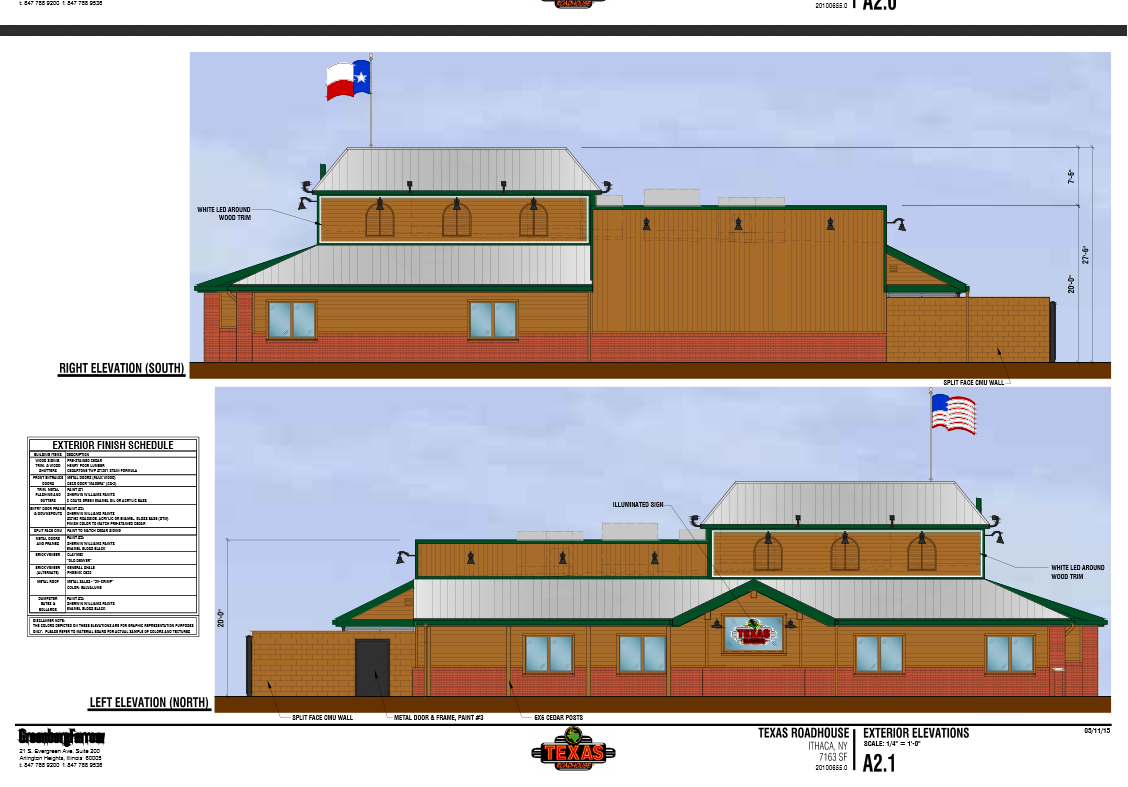
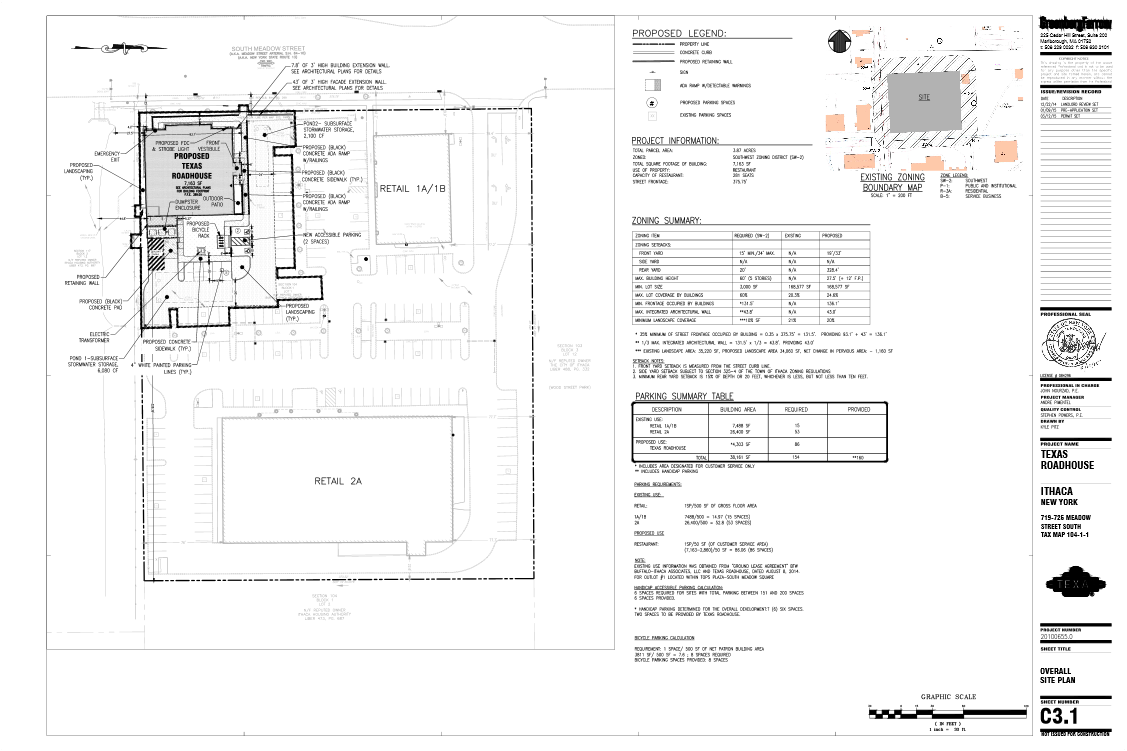
1. Yet another chain restaurant entering the Ithaca scene, this time Louisville, Kentucky-based Texas Roadhouse. There’s 24 separate documents on the city website, and I’ll link to the most useful ones here – the Building Application here, the elevation drawings here, the Full  Environmental Assessment Form (FEAF) here and overall site plan here. I wrote about this for the Voice, and I’ll recapitulate the salient details here-

-The site location is 719 South Meadow Street, the northern end of big-box land. The site was previously home to a Cellular One and a 1980s one-story masonry building that was demolished in 2013, leaving the current vacant lot.

-The construction time period is expected to be from September 2015 to Spring 2016. The project will begin the PDC review process in April. The construction cost is pegged at $1.35 million, including landscaping and parking improvements.

-About 30 construction jobs and 40 permanent (albeit food service) jobs will be created, according to the application. Jeff Stein at the Ithaca Voice says that an email from Texas Roadhouse corporate expects 170 permanent jobs, so I’m not sure which figure is correct.

-The 7,163 sq ft store looks to be the standard corporate design theme for the 430-restuarant chain.

One of the things that continues to amaze me is that, here on the blog, news like this is not a big attention-getter, it’s worth a blurb and not much more. On the Voice, where the audience is more general, people go nuts when they hear about new chain places moving into Ithaca. The lovers and the haters, and sometimes even attacking each other in the comments. In the first 24 hours after the Roadhouse article was published, it was shared 300 times on facebook, and had 2600 likes. Any other real estate or business article would be lucky to get 1/20th of those figures. I never cease to be surprised.

troy_rd_rev1_1

2. Looks like another town of Ithaca project is hitting the dustbin. The 68 acres involved in Rural Housing Preservation Associates Troy Road project have been put up for sale. Originally proposed in February 2014 as a 216-unit project, the original design met with stiff resistance from neighbors and town officials. In November, a smaller, 130-unit plan (shown above) that included on-sire orchards and clustered housing was much better received, and the town planning board declared itself Lead Agency for site plan review, but the project never progressed further. In consideration of other dead mutil-family projects (such as NRP’s Cayuga Trails and Holochuck Homes’ 106-unit townhome development), the town is having a difficult time providing new housing, partly due to developer problems and partly due to local opposition and red tape.

Kendal_1

3. The writers over at the Ithaca Times have an article up this week about the Kendal at Ithaca expansion currently underway. In order to stay on schedule, Kendal had to do their groundbreaking in January, with the intent of finishing in January 2016. Even with the appalling winter we’ve had this year, the director of Kendal claims the project is only three days behind schedule.

The Kendal expansion will add 24 senior apartments and 13 skilled patient care beds to the current 212 apartment and 35 beds on-site. The $29.3 million project is expected to add about 20 jobs when complete. Local architecture firm Chiang O’Brien is handling the design of the building additions.

4. More bad news from Cornell, at least for this blog’s sake. From a Cornell Daily Sun writeup about a town hall-style budget meeting conducted by outgoing President David Skorton:

“Cornell can also cut costs further by reducing campus construction, a step Skorton recommends the University take. 

‘Much of the construction you’ve seen on campus over the last 20 years has been supported by debt,” Skorton said. “We are at the point now, for at least a few years, where we need to very, very seriously reduce construction of new space.'”

I could imagine a couple impacts from this. First off, this probably won’t affect projects with permits in hand and funding in place, like the Gannett addition or Upson Hall’s renovation. But through the rest of the decade, there could be a serious curtailing of new construction. This would hurt the local construction industry, for whom Cornell is a good chunk of their work. Skorton’s explanation also works as a reason to not build any new dorms, and that’s worrisome. The rapidly increasing student population has not only been crunched by tight supply, it’s spreading into adjacent neighborhoods and raising rents for permanent residents, and contributing to strains in town-gown relations.

One thing is clear. The impacts of Cornell’s latest budget issue will be felt throughout the community.

215_221_wspencer

5. Looking ahead at the agenda for next week’s city Planning and Development Board meeting, here’s what to expect:

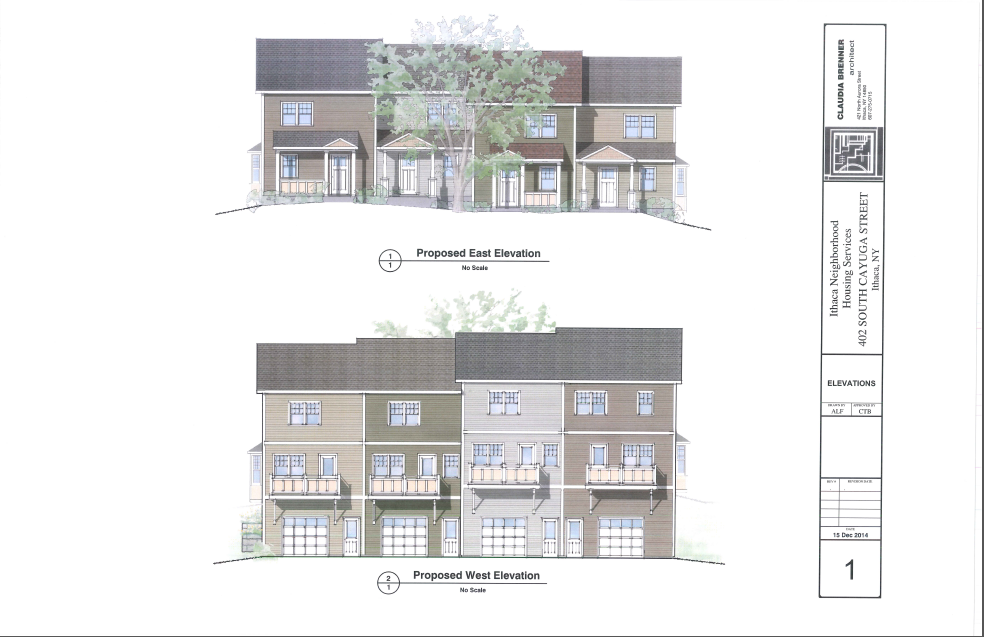
A. Final Site Plan Approval for the 4-unit, 9-bedroom INHS affordable housing project at 402 Sough Cayuga Street

B. Public Hearing and possible approval for the Lake Street Bridge Replacement

C. Discussion (no actions expected) on INHS’s 210 Hancock development – some minor tweaks have been worked into the plan, such as moving the new Lake Avenue north of the playground and adding a crosswalk.

D. Sketch Plan for 215 W. Spencer Street by Noah Demarest of STREAM Collaborative. This should be interesting. Readers of the blog will know I’ve mentioned this site a couple of times – it was a vacant lot that was sold by the IURA to local rental developer PPM Homes a couple weeks ago, and apparently they’re wasting no time with getting their plans in motion.

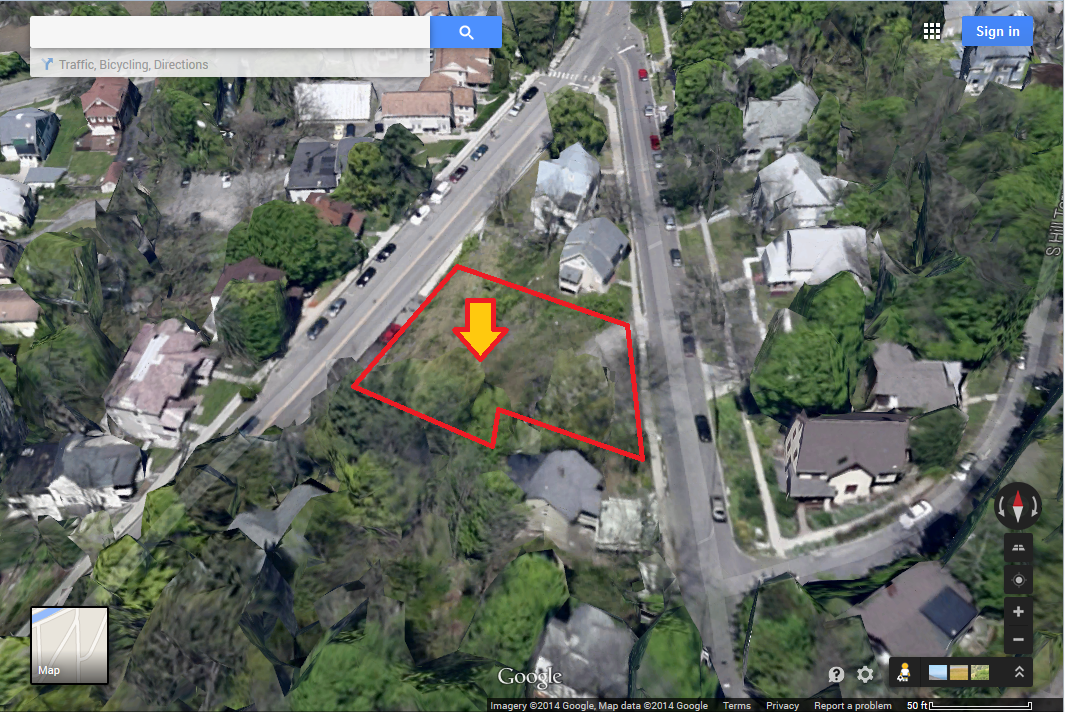
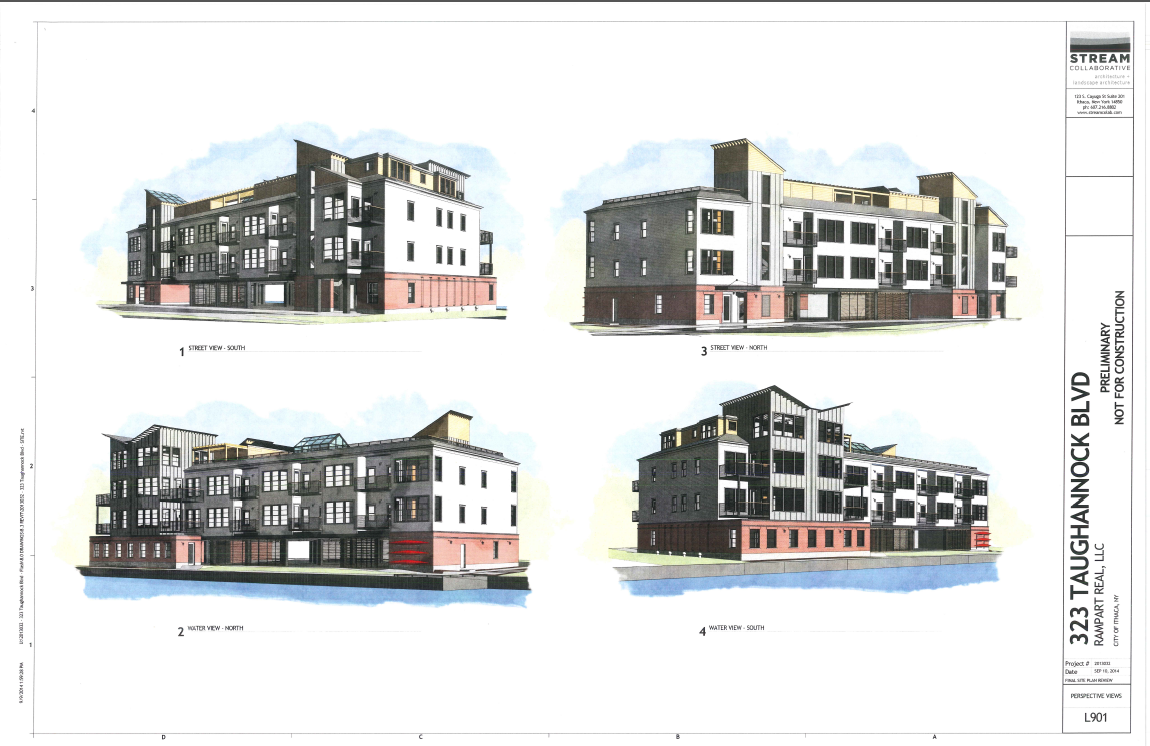
A 0.47 acre parcel (shown above), 215-221 West Spencer is in an R-3a zone that allows for a 40′ structure with 35% lot coverage. That’s a max theoretical buildout of 28,662 sq ft (which if you give 20,000 sq ft for the housing units, and 1,000 sq ft per unit, we get a hypothetical 20 units), but whatever does get proposed will likely be somewhat smaller. STREAM Collaborative is a local architecture firm with a few other projects under its belt, including the 21-unit 323 Taughannock project on Inlet Island, and the Franklin/O’Shae proposal for the Old Library site (the proposal that reuses the Old Library Building). STREAM Collaborative was also responsible for the design of the Troy Road project mentioned earlier, so at least they won’t be going without work anytime soon. Noah Demarest has done pretty good work previously, so I have high hopes for this project.

Along with these four discussion topics, the PDB will review a minor subdivision to create a new home lot at 104 Campbell Avenue on West Hill, a review of application materials to see if any revisions are desired, and discussion of the Planning Board Annual Report, 2014 Edition.

318_pleasant_1

6. It’s that time of the year for building new student rentals for 2015/16. Here we have a Craigslist posting for 318-320 Pleasant Street on South Hill. The rear portion (left) is an addition, a duplex with 3 bedrooms each. The owners of the 105-year old house are members of the Stavropoulos family, who run the Renting Ithaca rental company and the State Street Diner.


The Neighborhood Pride Site (210 Hancock Street)

15 02 2015

inhs_pride_design_1

Avid readers will note that I’ve been writing about the Neighborhood Pride site on the Voice, keeping only brief notes here on Ithacating until a final design was unveiled. Now with that taken care of, here’s a description of what we’re working with, based on documents filed with the city on February 13th. There’s a brief application summary and cover letter here, or the 764-page FEAF (Full Environmental Assessment Form) here. I swear, no one reads those giant PDFs in their entirety, users only look for specific sections based on their prerogative. The rest is just there for gluteus maximus coverage.inhs_pride_design_2

Perhaps a little bit to my dismay, the project is not going to be complete until September 2020, tentatively. This isn’t a huge surprise though, INHS is a non-profit and dependent on grant disbursements. The buildout will begin in September 2016 and consist of three phases – my guess of the breakdown is the townhouses are one phase, the 2 southern apartment buildings are a second phase, and the northern two apartment buildings are the third phase, though not necessarily in that order. At some point, INHS anticipated subdividing the parcel into apartment and for-sale portions, which might be useful when applying for affordable housing grants.

The apartments call for ~50 1 and 2-bedroom units, and 13 for-sale townhouses, although it still looks like 12 in the renders (who knows, maybe one is a small duplex). So about 63 units total, and about 8,200 sq feet or rentable commercial space in three spaces (proposed at 1,800, 2,500 and 3,900 sq ft, for a total of 8,200 sq ft). The apartment buildings will be 65,000 sq ft, 4 stories and 48′ tall (zoning max 4 stories/50′). The demolition of a one-story office building (built 1975) and a vacant grocery store (built 1957) will be required. Total construction cost is anticipated to be about $13.8 million.


inhs_pride_design_3

Interestingly, what looks like the community favorite (the street scheme) doesn’t read as the county’s favorite (which reads as the alley scheme). But the county only advises, the city decides. Lake Avenue will be what they call a one-way “living street” – a low-speed, low-capacity street shared by bikers and vehicles. With those features, it’s designed in a way that you’d only drive on the road if you live in one of the townhouses. Conley Park’s southern boundary will be opened up to flow freely into the property (it was blocked off with vegetation to begin with because of its proximity to the old P&C loading dock, which made for a loud, smelly experience).

As an honest personal opinion, the design – inspired by local 1900s industrial and manufacturing buildings, according to the application – is pretty nice. It’s contextual, it’s appropriate, it fits in without being a total historical throwback. The townhouses are well-designed as well. I think INHS’s willingness to have heavy community input, and the community’s willingness to help shape the project, really came together to create a nice product.inhs_pride_design_5

A parking variance will be required from the city – the site will have about 70 parking spaces, but zoning requires 86. Will a new TCAT bus shelter and on-street parking nearby, INHS anticipates that they will be able to obtain the parking variance without too much hassle. INHS also needs to be be mindful of the flood zone, which they seem to have accounted for in the site plan. The only portion of the site especially vulnerable to a 1-in 100 year flood event has covered parking on the first floor. The townhouses, which are in the 500-year zone, will be built two feet above the ground, and the commercial space, also in the 500-year zone, will be one foot above the ground.

In sum, we have a project that removes a vacant supermarket, fits well in the urban fabric and provides affordable housing. It might take forever and a day to build, but it’s a welcome resource in the city of Ithaca.

inhs_pride_design_4


News Tidbits 2/14/15: Zoning Out

14 02 2015

cpoz_1

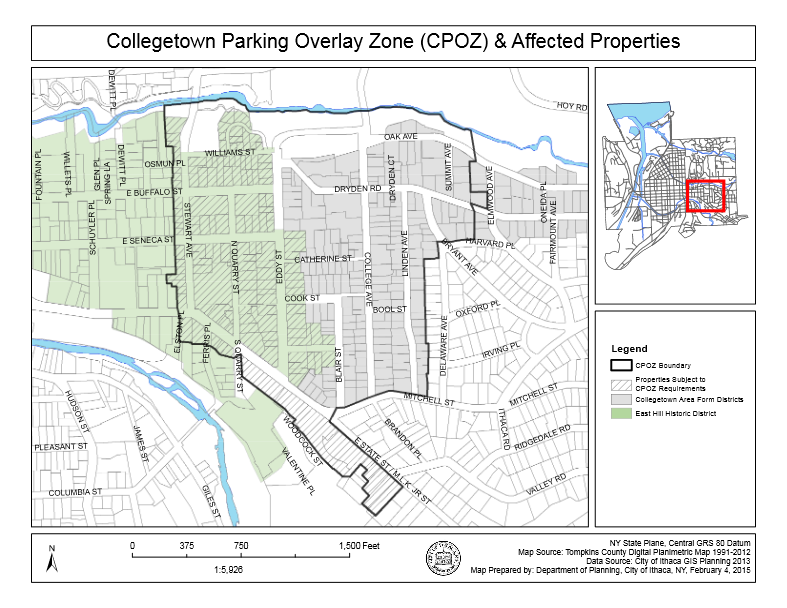
1. Leading off for the week, here’s an interesting piece of news: the city is set to repeal the Collegetown Parking Overlay Zone (CPOZ). The CPOZ was enacted in 2000 as a way to control the parking needs of Collegetown – essentially, it mandated more parking spaces per unit than was standard for a parcel’s zoning. For example, an apartment building of 6 occupants, zoned R-3a, would require 2 off-street parking spaces in Fall Creek, one for every three residents. But on East Hill, that same building would require 3 parking spaces, since the CPOZ mandates 1 off-street space for every 2 residents.

At the time, it made sense; East Hill tends to have more students, who bring their cars to school. But in the past 15 years, the proportion of students bringing cars has declined substantially – a study by Randall/West indicated that in 2000, 49% of Cornell students owned a car; by 2012, it was 27%, a change attributed to the rise of alternative transportation (car share, Cornell-subsidized bus passes), economic and cultural changes. At this point, there’s more parking than there is necessary.

It may seem at first glance that the CPOZ was eliminated with the Collegetown Form Zoning enacted last year, but the two maps don’t match up completely- there are 145 properties that weren’t affected by the new form zoning, but are still covered by the CPOZ parking requirement (see map above). Nearly all of these parcels are a part of the East Hill Historic District (the rest being Collegetown Terrace). A few recent cases, one with Collegetown Terrace and a couple of smaller projects, have highlighted the point that parking requirements have become excessive.

A change to the parking requirements could have a couple of desirable effects – one, less parking would be more historically accurate, and helps to preserve green space in the neighborhood. Two, it opens the idea of replacing a couple of the current parking lots with new housing, which would be designed to fit in closely with the current building stock since the properties are located in the East Hill Historic District (I know, landlords will never give up the money from renting spaces, but perhaps a new small apartment house might be more lucrative than a parking lot; looking at the tax maps, there are a few possible sites, including subdivisions). One mixed effect would be that it’s easier to convert a current single-family lot to student rentals, but the rental would now be less visually intrusive with fewer parking spaces. It’ll be interesting to see what comes forth as a result of this zoning repeal.

industrial_zones_1

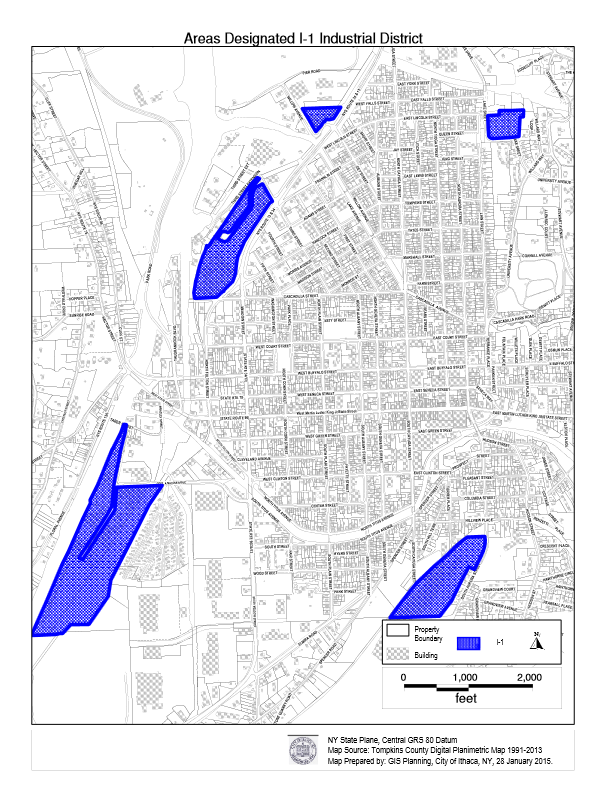
2. Among other zoning changes being considered is a change to industrial zones (the city has just a few). Commercial buildings can be built in industrial zones, but the city wants to raise the minimum number of floors for new commercial buildings in these zones to increase from 1 to 2 floors, a nod to the paucity of undeveloped land in the city (and perhaps the painful attraction of suburban big box stores). There are five sites on the map above, but it might as well be three – Emerson (lower right) is becoming a planned development zone, and the Ithaca Gun site (upper right) is expected to be rezoned from industrial to medium-density residential, in preparation for an apartment project still in the works.

canopy_hampton_rev4_1

3. What is up with the proposed hotels constantly delaying their schedules? First the Marriott pushed back its opening from Spring 2016 to Q3 (July-September) 2016. Now the Canopy Hilton is pushing their schedule back, from a construction start this Spring to an autumn start, which makes it difficult if not impossible to realize the cost savings from reusing the crane for the Carey Building. The tax abatements aren’t going to take that long to obtain, maybe another month or two before the county takes its vote.

Presumably, the project would open in autumn 2016 if the construction schedule is similar. But I feel like these delays send a message of incompetence, and that’s the last thing a project needs.

inhs_pride_design_6

4. Maybe the article I wrote about the new INHS project will have run in the Voice by the time this auto-publishes. But here’s a render that I decided to leave out of the final article to minimize space. The city uploaded the initial application Friday morning (sketch plan will be presented this month), and I’ll write a follow-up article, based on the application paperwork (so it will be different from the Voice article), and post it here on Ithacating in the next few days.

Cayuga-Meadows-Shot

5. Staying on the topic of affordable housing, these agenda notes from IURA Neighborhood Investment Committee reminded me of another affordable housing project that totally slipped off the radar- Cayuga Meadows, a 62-unit apartment building for seniors that was approved by the town of Ithaca for a site near Overlook at West Hill in late 2012. On page 52, it’s noted that the project is supposed to open in November 2015. That would imply that it should be starting construction soon if site prep hasn’t started already (I haven’t visited the site in over a year, so I have no clue). The pipeline document is dated from February 2014, so I have no idea if that’s still accurate. I emailed its developer, Conifer LLC, to see if the project was active, but received no response. Still, it’s something to keep an eye on.