Collegetown Terrace Construction Update, 7/2016

19 07 2016

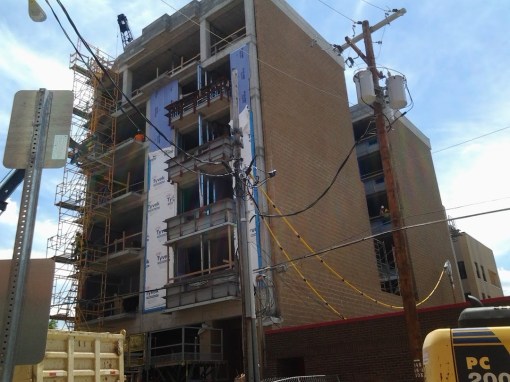
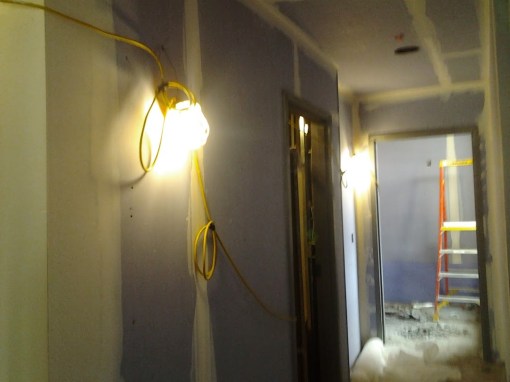
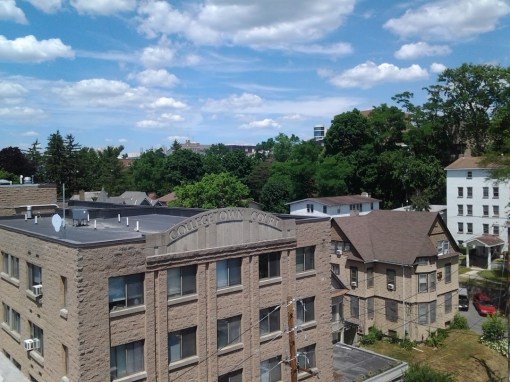
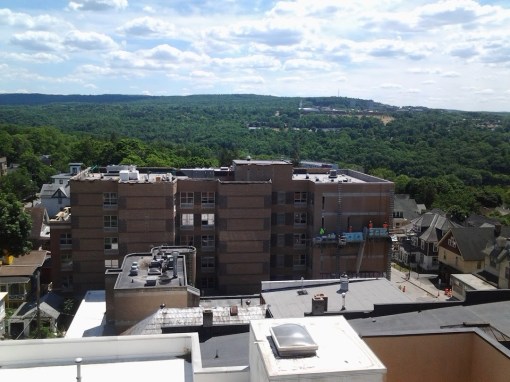
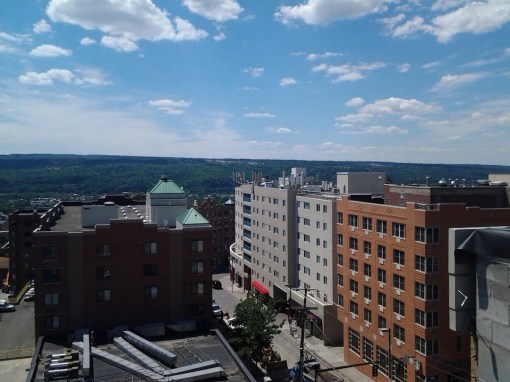
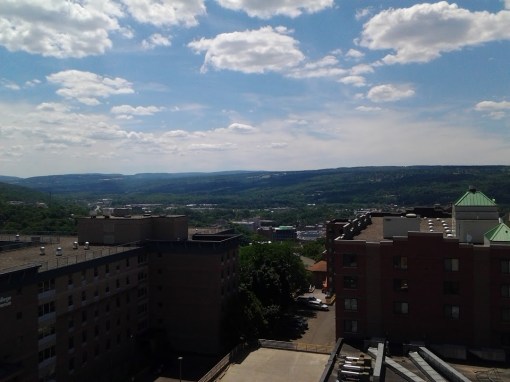
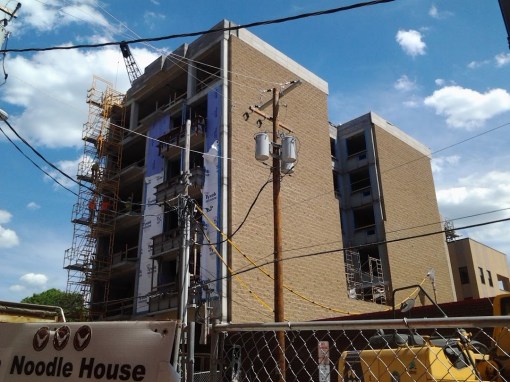
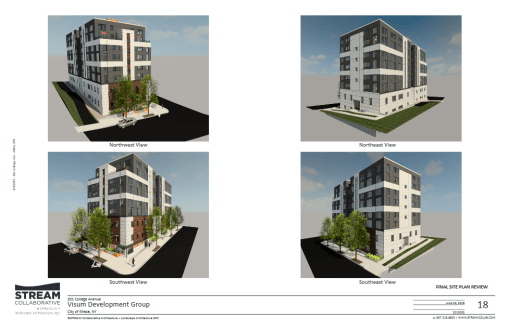
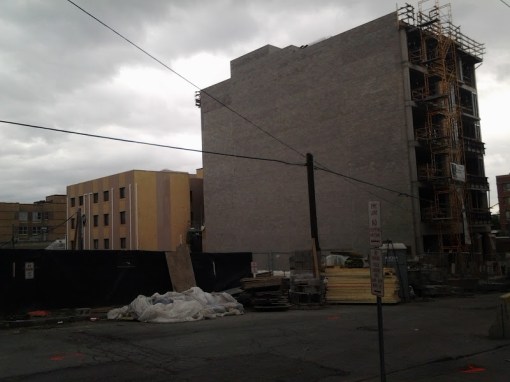
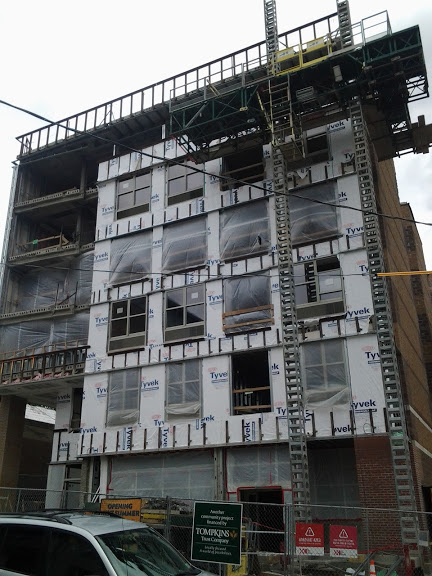
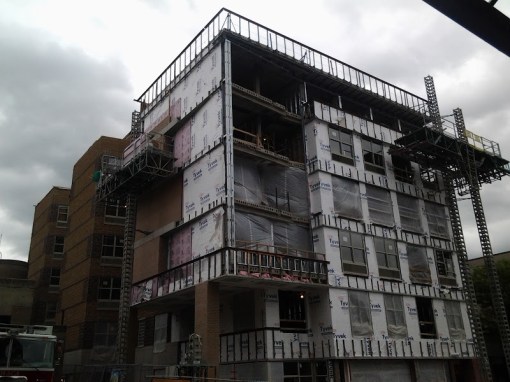
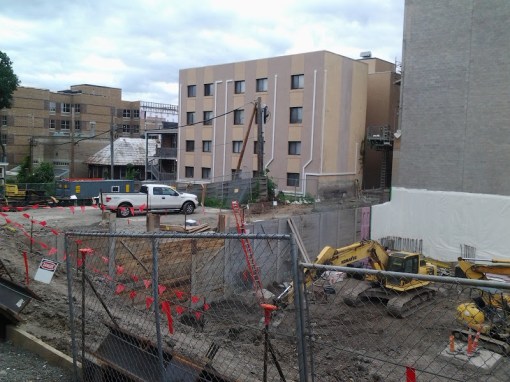
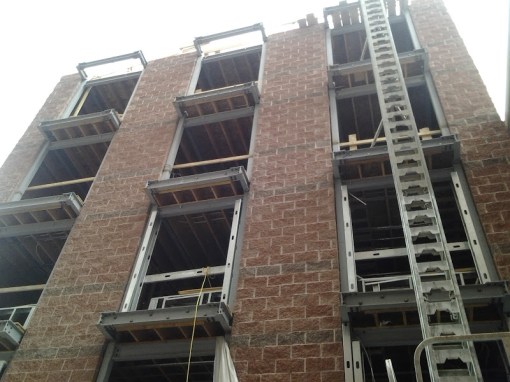
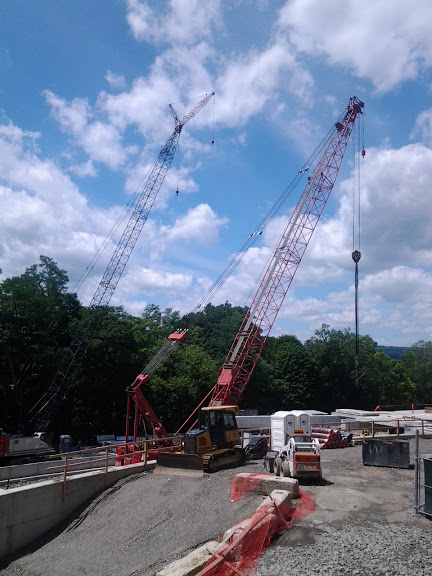
Things are moving along steadily at the Collegetown Terrace site off East State Street. Building 7  snakes it way through the site, with work progressing from west to east. Furthest east, the concrete for the parking area is still being poured and cured.

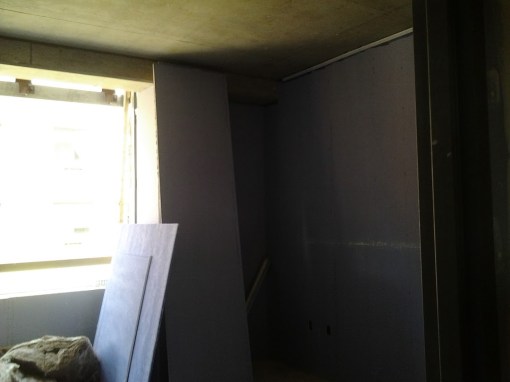
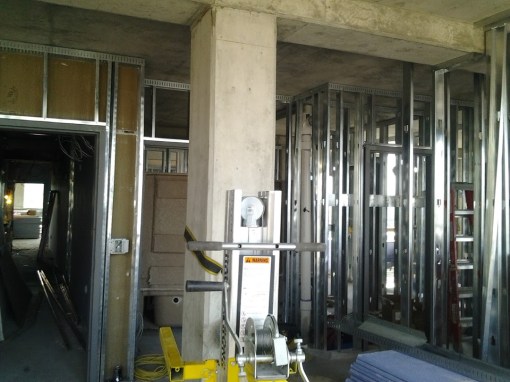
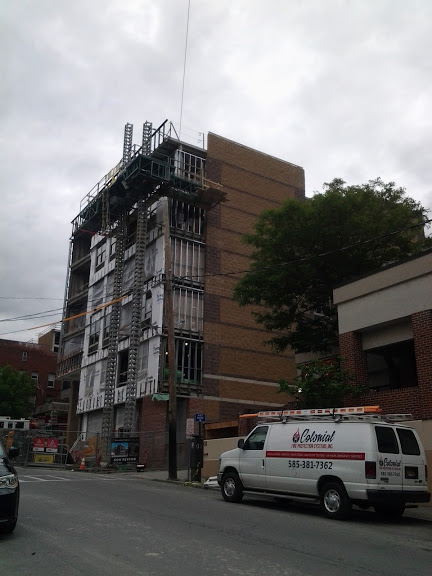
A little further west towards the middle, the enclosed and finished parking area gives way to steel interior stud walls and unsheathed plywood, with only the lower floors in the middle section, but the steel stud walls and plywood have been built to the full height of the building (fully framed up) in the westernmost part.

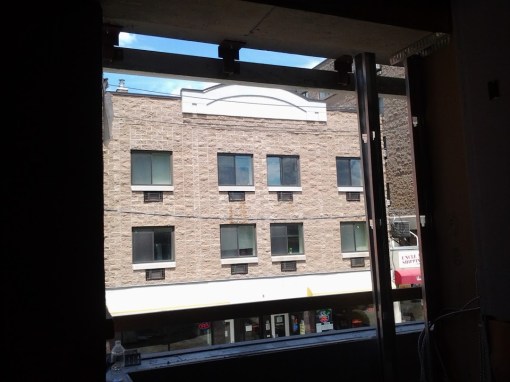
The frame of a new skybridge has been installed between buildings 5 and 7, connecting near the elevator shaft/stairwell. Some Paradigm windows have already been fitted into the exterior. Eventually, the exterior will be sheathed, and then the exterior facade materials can be applied. It would honestly not be a surprise if the whole building is fully framed before the first snow flies.

Welliver‘s the general contractor for Novarr-Mackesey’s 247-unit project.
20160717_125557 20160717_125607 20160717_125617 20160717_125747 20160717_125756 20160717_125833 20160717_125838 20160717_125915 20160717_125952


Cayuga Meadows Construction Update, 7/2016

18 07 2016

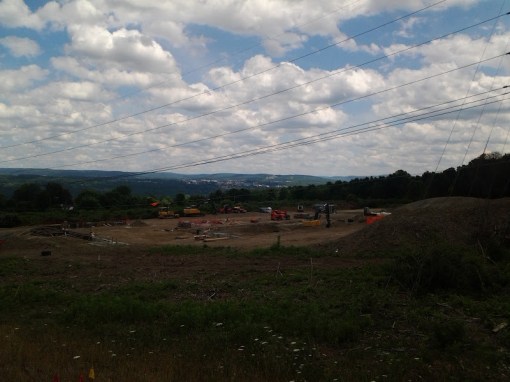
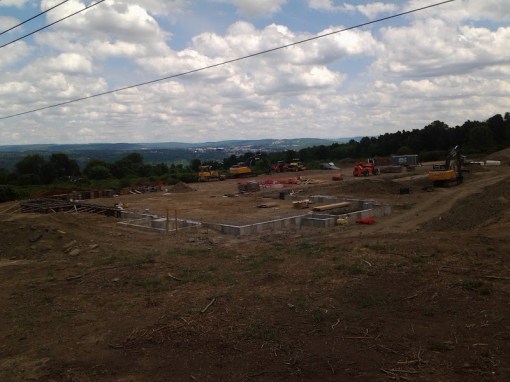
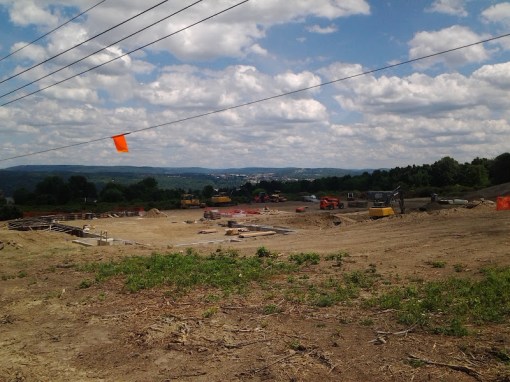
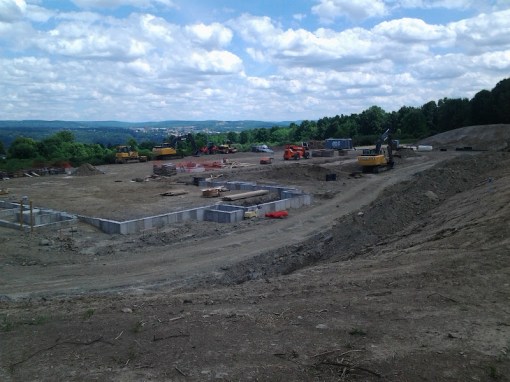
Safe to say this is under construction. Work has commenced on Conifer LLC’s Cayuga Meadows affordable senior housing project on West Hill.

Cayuga Meadows is a 3-story, 58,500 SF apartment building with 68 units, 59 1-bedroom and 9 2-bedroom. The units will be available to individuals aged 55 and older, with incomes 60% or less or the Area Median Income (AMI). AMI in Tompkins County is about $53,000 per household, so a qualifying senior household would have an annual income of $31,800 or less. 7 units will be accessible to mobility-impaired individuals, and 3 units will be designed to accommodate hearing or visually-impaired occupants. Included in the plans are two covered patios, a community garden, and stormwater, lighting and landscaping improvements. 67 parking spaces will be paved behind the building.

The history of Cayuga Meadows goes back a few years, and has its share of twists. Originally, the project had been conceived as “Conifer West Hill” in 2009 as a component to a Cornell-led mixed-use development on about 36 acres of land across from Cayuga Medical Center. Rochester-based Conifer’s part in the plan has always been the same – affordable housing for seniors. But Cornell had other plans for the rest of the acreage.

In Spring 2010, there were three different site plans being floated – the consistent components were Conifer’s project, a 68-bed assisted living facility called “Terrace at Ithaca”, medical office space, small-scale retail, 106 park-and-ride spaces, and 4,000 SF for a farmer’s market. Depending on the plan, there were townhomes, a hotel school conference center, or other institutional space for Cornell. Mixed-use, definitely, but the plans weren’t that walkable, traditional neighborhood feel that the town is looking for these days – in fact, they were fairly conventional suburban sprawl. Cornell’s approach to planning was different in the late 2000s. By good fortune, Ithaca Builds locally hosted a copy of those site plans here.

For a combination of reasons (financial feasibility, changing priorities), Cornell ended up shelving its plans. However, it would be incorrect to say the university isn’t still interested in the site – they recently bought the house at 1250 Trumansburg Road, whose property had been awkwardly carved out of the rest of the site in a subdivision long ago. In the 2010 plans, Cornell had to plan around the house, not to mention worry about the occupants complaining about Cornell’s plans. So when it came on the market and sat for a couple months, the Big Red decided to pick it up in June for $157,000, probably on the belief that it could pay off through easier site planning and development down the line.

While Cornell filed away their plans, Conifer continued with theirs since the university was still willing to give them land as long as they built affordable housing. Originally, it was conceived as 72 units when it first received preliminary approval in April 2012, but was trimmed to 68 when final approval was granted in November 2013, in order to make the project a little less expensive, and provide a little more space to the community garden. Between preliminary and final approval, Conifer also had to apply for rezoning (Medium-Density Residential to Multiple Residence in May 2012), zoning variances (June 2012, for height and building setbacks), and public works approval for utilities services to be installed.

Then came another few years’ wait while financing was being secured. As covered on the Voice, affordable housing grants are very competitive, so it often takes multiple rounds of applications before a project is finally given grant money. In Conifer’s case, the last piece of the puzzle, tax-exempt bonds, didn’t come through until late January 2016. Cayuga Meadows is a $14.9 million project – about $8.3 million comes from NYS Housing Finance Agency bonds, and another $6.3 million from Community Development Block Grant (CDBG) funds. First Niagara Bank provided the Letter of Credit for the bonds. The project will pay taxes.

With the funding in hand, Cornell and Conifer formally agreed to a subdivision of Cornell’s land – 4.9 acres for the senior housing, and another acre for the Right-Of-Way for the new road. Cornell and Conifer had to agree on a few choices for new road names, which they submitted to Ithaca’s Codes Enforcement Director (Bruce Bates), who checks with the county to make sure there are no issues with the choices, and then the three parties agree on a final selection. Cayuga Meadows’ address will be “108 Aster Lane”.

There’s yet to be a color render hosted online, but the exterior will use fiber cement siding – Certainteed “Savannah Wicker” Dutch Lap Siding and “Cypress Spruce” cedar-like shingle siding. For the sake of examples, the Belle Sherman Cottages and Stone Quarry Apartments have also used Savannah Wicker fiber cement. The roof will be Timberline “Weathered Wood” shingles.

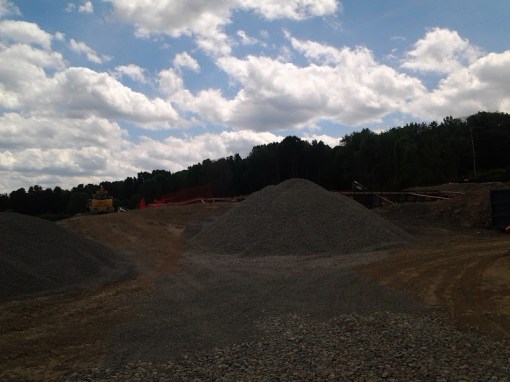
At the project site right now, work is underway on the foundation. The building’s footprint has been cleared, the foundation is excavated, and footers are poured for where the concrete will transfer the weight into the ground. Wooden forms are built along the perimeter for the stem walls, rebar is laid for reinforcement of the concrete, and the concrete is poured and left to harden (cured). Once the concrete has had a chance to harden, the forms are lifted off and work moves onto the next section. The building will be a slab-on-grade foundation, so no worries about excavating a basement here.

As a side note, it seems fitting that the residents with east-facing windows will have some pretty fantastic views of Cornell.

Through a joint venture with Conifer, LeChase Construction of Rochester will be serving as general contractor. The excavating has been subcontracted out to Neally-DeJong Excavating of Corning, and concrete work to Architectural Concrete Plus of Dundee (Yates County, northwest of Watkins Glen). Thanks to “Drill Deep” for the clarification.

20160717_140406 20160717_140444 20160717_140449 20160717_140528 20160717_140557 20160717_140612 20160717_140804 20160717_140815 20160717_140828

Cayuga-Meadows-Shot

Cayuga-Meadows-2


News Tidbits 7/16/16: Summer Storms of a Different Kind

16 07 2016

inhs_pride_design_v5_3
1. It looks like the first round of funding has been filed for INHS’s 210 Hancock project. The $7,790,511 construction loan was filed with the count on July 11th, with the lender of record listed as “CPC Funding SPE I LLC”. CPC is the Community Preservation Corporation, a non-profit lending institution funded by 69 different lenders in a revolving loan fund in New York, New Jersey, and Connecticut. This includes big banks like Citi and wells Fargo, and smaller regional banks like Chemung Canal Trust. Since affordable housing isn’t intended to be a moneymaker, it’s difficult to get lenders to cover the construction costs of a project. CPC serves as a middleman, allowing multiple private lenders to engage in modest amounts of financing for affordable, multi-family housing.

The 54 apartments and 5 townhouses partially funded by this loan are expected to be ready for occupancy next summer.

old_libe_thp_holt_v6

old_library_thp_v4

2. Things aren’t going well with the Old Library redevelopment. In Tuesday’s joint meeting between the ILPC and the Planning Board, some felt the current design of Travis Hyde’s DeWitt House proposal was too dull, some felt the previous design was best, and some fell in between. But, it seems like none of the three approaches has enough support to get a Certificate of Appropriateness, with a few of the members feeling that no design will work for the site because they feel they’re all too big. Frost Travis replied that the project can’t afford a major size reduction and still be feasible. Now the county’s getting involved since they selected the Travis Hyde proposal, and things are getting quite contentious.

Doing a quick check, for at least the previous iteration, the Travis Hyde proposal was about 85,600 SF, and the Franklin/STREAM condo proposal was 5 floors and 58,000 SF. Would residents have pushed Franklin/STREAM to reduce floors and potentially make the condo project infeasible? Who knows. If folks start clamoring for three floors or less, that will likely eliminate any proposals due to the cost of rehabilitation and reconstruction, and the county will have no viable options for a building in need of expensive repairs just to be usable. We’ll see what happens next month.

3. Namgyal Monastery has officially sold its city property. The house they owned at 412 North Aurora Street sold for $275,000 on the 13th, which is the same price it’s assessed at. Namgyal has purchased for the property for $150,000 in November 1992. A 2006 assets assessment placed the value of the Aurora Street house at $300,000, which might have been a bit generous.

On the one hand, the sale nets the monastery funds to continue construction of the new 13,000 SF facility on South Hill, which was recently selected to be a site of the Library of the Dalai Lamas. On the other hand, their webpage states they intended on keeping the Aurora Street house.

147962

4. The Ithaca Times’ Jaime Cone, new wind turbine laws in Newfield may effectively prohibit their construction. The town of Newfield decided to expand the radius of legally required unoccupied space from 1.5x the height of the turbine, to three times the radius of the propellers. In the case of the turbine that Black Oak Wind Farm (BOWF) was looking to put there, that raised the necessary easement support area from within 750 feet of the base, to 1,760 feet. Also, instead of 750 feet away from occupied structures, it’s 1,760 feet from any property line – in case anyone wanted to build on vacant land. Quoting Marguerite Wells, the beleaguered project manager of BOWF, “It makes it unbuildable…It’s a common way to outlaw wind farms in a town, to make the setback impossible.”

Apparently, things are so bad now, the town of Newfield voted to block a BOWF driveway that routed through Newfield to get to one of their Enfield sites. Given that a Tompkins County town is actively preventing and being malignant towards alternative clean energy sources and providers, it’s surprising there hasn’t been grater push-back from the sustainability proponents.

Overall, it’s been a rough month or so for green energy producers in Tompkins County – Ulysses is furious at Renovus and their solar panel installations, and Lansing’s planning board wants to vote in a moratorium on commercial solar panels.

amici house 1 county

5. The county’s PEDEEQ (Planning et al.) Committee is voting next week to take $2,500 from the county’s contingency fund to host a housing summit this fall. Another $2,500 will come from the Planning Department. The purpose of the $55,000 summit is to take all the updated plans and housing needs assessments (the county’s, which is the big one, is due out next week) and figure out way to incorporate them into an updated county housing strategy. $45k comes from a Park Foundation grant. From the tone of the summit description, it doesn’t sound like the county’s affordable housing issues have improved since 2006, but we’ll see just how severe the housing issue has become when the study comes out later this month.

On a separate note, the county is looking to award the 23-bed Amici House project $225,000 in affordable housing grants, plus a loan forgiveness of $75,000 in pre-development costs.

marriott_rev1_1

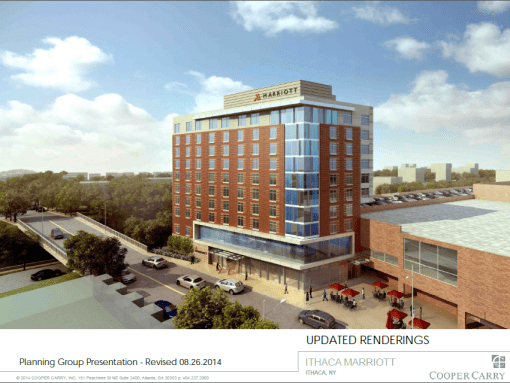
6. To round out this week of mostly unpleasant news, Mark Anbinder at 14850.com is reporting that the Marriott’s opening will be delayed from August 23rd to a likely opening in October, according to the director of sales. However, as extra padding in case of further delays, it appears won’t be taking further reservations for dates before mid-November. Unfortunately, this is well past Ithaca’s big tourist season, so it’s a safe bet to say neither Marriott nor the folks who had August and September reservations are pleased.


205 Dryden (Dryden South) Construction Update, 7/2016

11 07 2016

There were a lot more photos that did not make it into today’s Ithaca Voice piece. Developer and former Kraftee’s proprietor Patrick Kraft was kind enough to give a tour of the building as it goes through the furious final stretch of construction. On the outside, the decorative crown has been built out, and the housewrap and gypsum board will eventually be face with tan brick. On the inside, the lower the floor one is on, the further along the work is; a few brief descriptions are interspersed in the photos below.

Also, here’s some material from the interview with Kraft that didn’t make the final cut for the article. Definitely worth a read though.

Q: Are you concerned or excited about the Breazzano Center?

PK: Construction-wise, their impact is limited, they do their thing, we do ours. These [contractor] guys work together all the time. It hasn’t been much of a problem, our working relationship is pretty good. And Jagat [Sharma], he’s done a tremendous job, he’s a good guy. Jagat suggested doing a concrete building, and it turned out really well for us. These units are being furnished by Sam Peter, they met with Jagat, everything will match and be coordinated, even the lobby. Rich woods, the color scheme, stainless steel appliances, Most of the landlords around here are good guys, if I have a question they make time.

Q: During the 201 College debate, we saw a number of older residents express concerns about too much density in Collegetown, and too many students. Are the recent developments good or bad? What would you say to assuage the concerns of residents in Belle Sherman?

PK: I think there are a lot of positives to density, it centralizes the college students, and if you can do that, you get them out of the periphery, and higher density in the core could help get students out of Outer Collegetown and return homes to families and non-students. I have a friend who works at the Johnson, who lives just a block from Eddy Street. incoming faculty want walkability. People would have been incredulous ten years ago, but you know, people want to leave their car at home sometimes. I think that’s a good thing.
Q: With this new apartment building, have there been any issues or challenges? Or has everything been fairly smooth sailing?

PK: We’ve had our hiccups. The city does its inspections and has its variances, it’s not like we’re building a McDonald’s where every store looks alike. We haven’t had any major problems, just scheduling can be a major problem at times. I had to pay NYSEG to move the power lines, that was a 10-week delay.

20160630_125821 20160630_135113

According to Kraft, it was Jagat Sharma who insisted on reinforced concrete construction. This allowed the construction team to be flexible; handy for the structural tweaks (additional reinforcing) here in the light well, below the rough window openings. Kraft had nothing but praise for Sharma, even going as far as to say he gets an unfair rep because many of his buildings use CMU block in their exterior finish.

20160630_132859

Most of the sheetrock has been hung in the second floor units. Kraft also had a lot of compliments for LeChase, the general contractor. He noted occasional problems like a bad concrete pour (which LeChase redid at their own expense), but otherwise they’ve been doing good work and have adhered to the schedule quite well.

20160630_132824 20160630_132812 20160630_125850

Originally, there were small light shafts in the east face, but those were removed when the Breazzano Center was being finalized next door. The two buildings will stand just two inches apart.20160630_142231 20160630_142218

20160630_142206 20160630_142203 20160630_142145 20160630_143001 20160630_142619 20160630_142359 20160630_142304 20160630_142256 20160630_143423

Sixth floor, rear unit view – Kraft said it was favorite view.

20160630_143402

Doing work in the elevator shaft

20160630_143316

Steel interior stud walls on the sixth floor20160630_143310 20160630_143016

20160630_143946 20160630_143950

Framed closet spaces on the fourth floor20160630_144615

A tub fitting on the third floor

20160630_144929 20160630_145210

The brickwork on the backside is a little further along than the front, but the general appearances will be the same.

20160630_145213 20160630_145250 20160630_145359

Members of the construction crew in the first-floor commercial space.20160630_145512

The basement area, which will have a trash/recycling room, a tenant gym and storage.20160630_151521


News Tidbits 7/9/16: Land Ho

9 07 2016

waterfront_foreclosure_parcels_0516

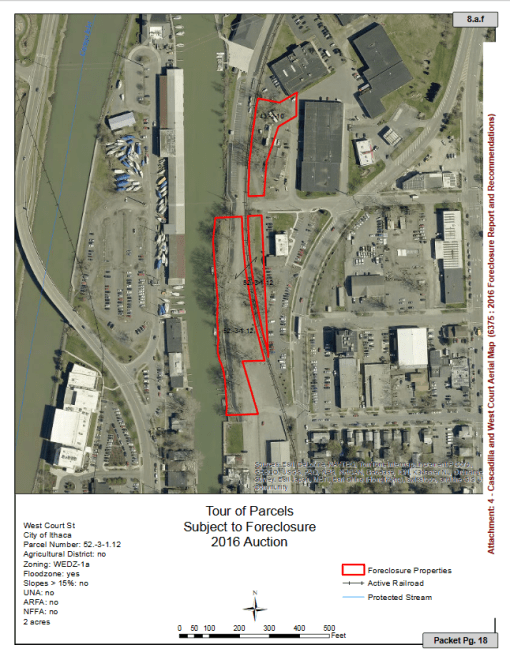
1. Starting off this week, a couple of new pieces regarding Ithaca’s waterfront. First, the city’s chances of picking up some prime waterfront real estate at a low, low price are gone, though not any fault of their own. Readers might recall that back in late May, the properties were about to be foreclosed on for unpaid taxes, and the county was discussing selling the parcels, worth over $630,000, to the city if the city paid off the $42,844 tax bill. Pretty sweet deal for the city, right?

But the owner, an LLC that has held the parcels since the late 1990s, managed to pay off the tax bill and an attached penalty fee, which means they get to keep the land. So, if the city had any plans for those parcels, they’ll be filing those away for a long while.

2. However, it looks like several properties are being put up for the sale in the city’s West End near the Waterfront. Local realtor Brent Katzmann has four properties listed – 321 N Fulton, a duplex on 0.11 acres for $144,800; 319 N Fulton, a single family on 0.04 acres for $109,875; 626 W Buffalo, a single family on a narrow and deep 0.15 acre lot, for $124,999; and 622 W Buffalo, a duplex on a narrow and deep 0.19 acre lot, for $134,800. The prices generally run at or up to 10% over the tax-assessed value ($130,000/$100,000/$125,000/$125,000). The currently owner is a Long Island-based LLC, led by a pair of New York City real estate lawyers, who acquired the properties from 2010-2012. Prior to them, many of the properties have been through a merry-go-round of owners over the past 10-15 years.

The properties are in fair to rough shape, and the marketing tactic being used isn’t renovation, but rather development potential. The four properties all fall within WEDZ-1a zoning, which is the city’s attempt at encouraging development on the West End. WEDZ-1a permits residential, commercial and mixed-use 2-5 story buildings, 90% lot coverage (100% if less than 50 feet on two sides – the Buffalo parcels and 319 N Fulton), and no parking requirement. The properties are not affected by the city’s TM-PUD.

The West Buffalo lots could be tough since the house in-between is owned by someone else, but deep lots and the corner of North Fulton and West Court offer some potential. Worth keeping an eye on, if only to see who they sell to.
20141227_140754

3. One less homebuilder around. Avalon Homes is closing up shop. The Ithaca-based company is selling off its lots and trying to wrap up the homes they have underway. Rumors abound as to why, but if firm, verifiable information can be obtained, there will be more to follow.

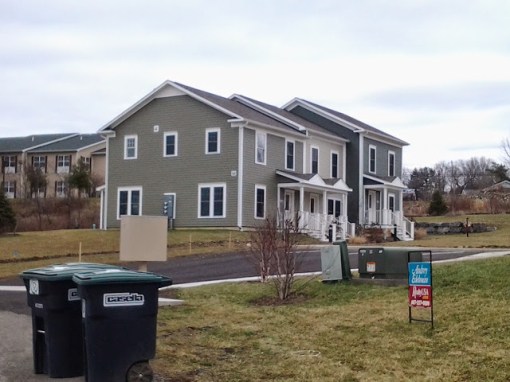
Avalon made its name doing stick-built built, with a focus on affordability and green construction. Avalon, a certified Living Wage employer, was the general contractor for INHS’s Holly Creek townhomes (shown above), and employed at least a dozen back in 2010.

old_library_thp_v4

old_libe_thp_holt_v6

4. The Planning Board and the Ithaca Landmarks Preservation Commission will be conducting another joint meeting on Tuesday the 12th at 5:30 regarding the Travis Hyde Properties’ proposal for the Old Library. HOLT Architects responded to comments from the ILPC at its last meeting that the design needed to be “quiet” by submitting the revised elevations seen below.

Mission accomplished? Armchair architect comment here, but the revised design is too far the other way. There’s a joke about the color beige, coincidentally similar to the new brick, being an adjective for “dull, boring, indistinctive“. I like the previous design with its wood-like fiber cement and characterful roofline, and I wonder if perhaps a revised color palette of that design, with maybe a few less full-sized balconies, would be a happy medium.

5. As announced on city of Ithaca Mayor Svante Myrick’s Facebook page, the Namgyal Monastery Institute of Buddhist Studies will be the site of a library and museum of the Dalai Lamas, the first of its kind outside of Tibet. The facility would be located on the 28 acres Namgyal owns on South Hill at its Du Khor Choe Ling monastery complex. Architectural plans and costs are still being determined, but a quote from Ngawang Dhondup, administrator for Namgyal’s facility, says that it will be larger than Namgyal, which has been underway since 2007 and will be about 14,500 SF when completed.

All in all it’s a great feather in Ithaca’s cap, but two things to be a bit wary of moving forward are the reactions and possible opposition from neighbors to what will be a very high profile religious facility, and given geopolitical issues, the reception to the Library of the Dalai Lamas may not be so warm from some denizens of cosmopolitan Ithaca.
12-29-2011 003

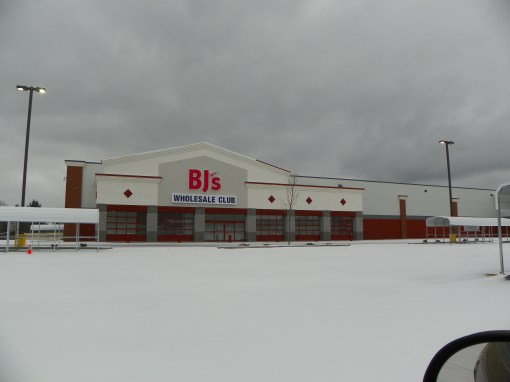
6. Way back in 2010 and early 2011, when the BJ’s Wholesale club was proposed in Lansing, one of the components of the proposal was to build 12 units of senior housing on land north of the then-proposed store. The project also called for wetlands, walking trails and a bird sanctuary on the undeveloped portion of the 11-acre property. Developer Eric Goetzmann (Arrowhead Ventures/Triax Group) faced considerable opposition to the plan since it involved big box retail and was housing outside of the density corridor, but after the IDA initially voted the project down in December 2010, a revised application calling for a smaller PILOT was passed by the IDA in April 2011 (some of the logic being that the county was in a financial bind during the recession, and some increase in taxable property was better than none).

Well, the BJ’s was built and opened the following year, but the wetlands and housing have had a much longer slog. The U.S. Army Corps of Engineers in in charge of new wetland permits, and the process is a complex, arduous one (man-made wetlands are difficult to build, and the Army Corps would rather they be done right than done fast). Goetzmann teamed up with The Upper Susquehanna Coalition and The Wetland Trust to design the “Inland Salt Marsh Bank”, which was just approved by the Army Corps, and the final permits expected shortly. With the wetlands taken care of, Arrowhead can begin to look towards the housing component, which they plan to put forward later this year for a 2017 construction date. As part of these plans, they want a one-year extension on the legal construction start for the housing from the IDA. Given that Arrowhead has met the other criteria and can demonstrate proof of progress on the wetlands, this probably won’t face much opposition. But eventually, it looks as if the village of Lansing will finally get those 12 units of senior housing.
biggs_1

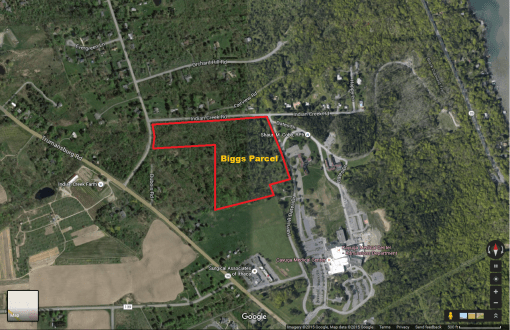
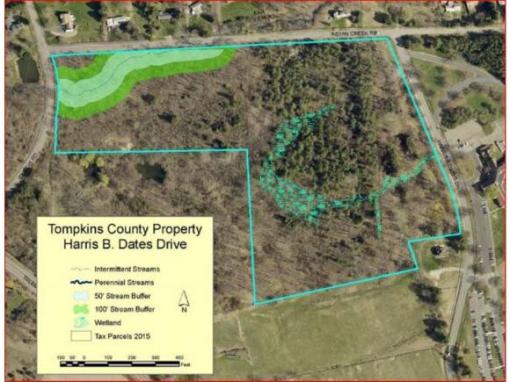
7 It looks like the Biggs Parcel is officially listed for sale. Local realtor CJ DelVecchio was selected by the county to manage the listing for the 25.52 acres near Cayuga Medical Center. The asking price is $275,000. The land comes with a conservation easement on the northwest side due to its proximity to a stream, and the wetlands near the center would be tricky to work with, because wetlands typically can’t be developed unless new wetlands are created, which is not cheap or easy to do.
c507

Readers might remember that this parcel has quite a history behind it. Declared surplus land by Tompkins County, the county had set up a tentative deal for a 58-unit affordable housing complex on the property, but the deal fell through after the wetlands were discovered to cover more area than previously thought.

Neighbors, via the Indian Creek Neighborhood Association (ICNA), have tried to force the county to hold onto the land to keep it from being developed. One of the big sticking points had been whether or not the 25.5 acres would be taxable – the county isn’t especially concerned at this point if the land gets developed or not, but they have made it clear that they want to sell it to a private owner that will pay taxes. The problem is, proposals to preserve the land often dovetailed with plans to donate it to an organization like Finger Lakes Land Trust, which would render the property tax-exempt. The ICNA did end up making a closed bid for the property, but the offer was rejected.

A neighbor to the south did propose reconfiguring the property to preserve the woods and build cottages on his back lot – by adding the Biggs land, he could have built more units under the regulations of the cluster zoning. But the plan fell through due to “size and complexity”, according to the ICNA’s Linda Grace-Kobas.

The land had been valued at $340,000 before the discovery of the additional wetlands, and the revised 2016 assessment brings that down to $240,000.




St. Catherine of Siena Parish Center Construction Update, 7/2016
6 07 2016

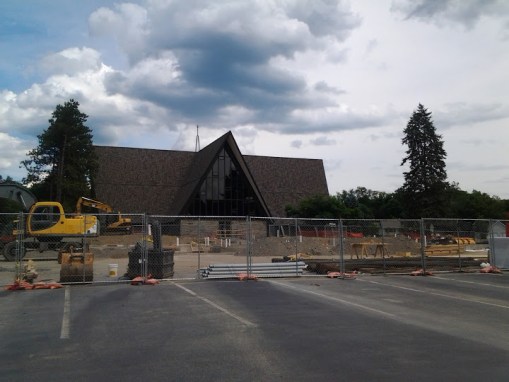
This one’s a little tough to swing since it’s a jaunt from most of the other construction projects underway, but the drive over was worth the effort. St. Catherine of Siena Church in Northeast Ithaca is progressing with work on its new Parish Center.

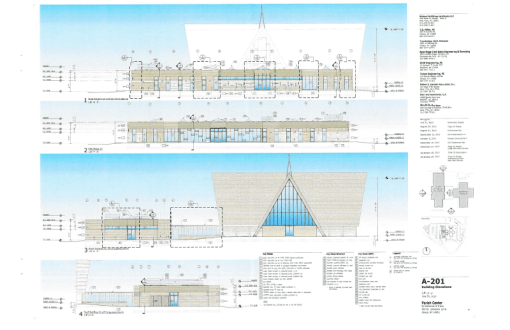
The 8,878 SF, one-story building, vaguely in the shape of a cross, is being built to replace the existing one-story, 10,273 SF parish center, which was built in 1963 and designed by local architect Victor Bagnardi. Bagnardi also did Trinity Lutheran on Honness Lane, and the old county library a couple of years later. At over fifty years of age, with alterations, outdated interior layouts and with many of its mechanical and utility systems worn out and in need of replacement, the church opted to build a new structure rather than renovate the existing building. The centerpiece of the site, the 1961 church, was renovated in the late 2000s.

Plans originally approved in summer 2015 called for a 10,811 SF building with roughly the same overall shape and appearance as the building underway. However, that plan was trimmed down as a result of rising construction costs. An earlier plan by Ithaca architect Pamela Kingsbury was also shelved for similar reasons.

The project is expected to cost in the range of $3-$3.5 million, all of which must come from church funds and philanthropy. The Diocese of Rochester does allow bridge loans, but it does not allow any parish in its jurisdiction to carry long-term debt. A similar debt-free approach is also in place for the Al-Huda mosque planned on Graham Road in Lansing. Along with donations, St. Catherine of Siena used funds from a late pastor’s bequest, sale of land near its entrance, and leftover funds from previous budgets and campaigns to bring the construction project to fruition.

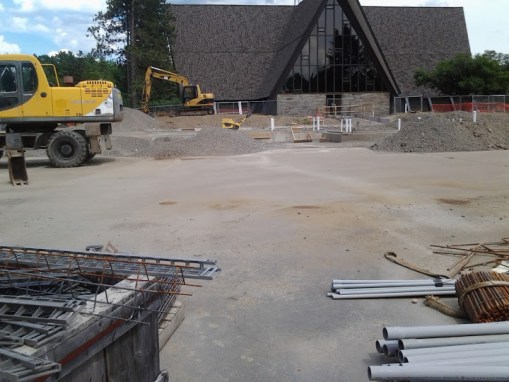
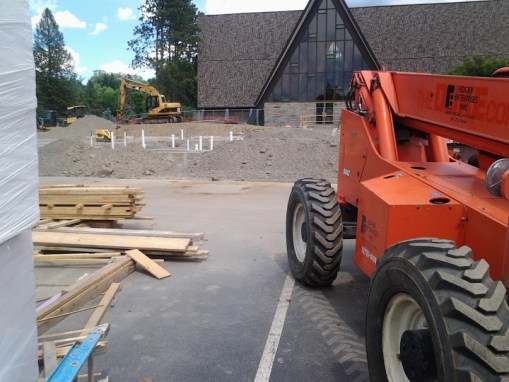
At this point, the foundation has been formed, poured and back-filled. Subsurface (under-slab) utilities, such as plumbing and electrical, have been laid for the new building. Framing should commence shortly.

Plans call for a late 2016 opening. Once the new parish center is occupied, the old parish center will be taken down and its footprint converted into new parking spaces to replace those lost to the construction of the new facility. The new center will be physically connected to the church, directly to the church’s west by about 40 feet.

Richard McElhiney Architects of New York City is the project architect. Local firms T.G. Miller PC (surveying/engineering work), Trowbridge Wolf Michaels Landscape Architects (landscaping), and TAITEM Engineering PC (rooftop solar panels) are also playing a role in the buildout.

20160703_150325 20160703_150510 20160703_150513 20160703_150530 20160703_150554 20160703_150558 20160703_150604 20160703_150640 20160703_150648

st_catherine_v2


News tidbits 6/26/16: The Odd Time Out

26 06 2016

trebloc-future2-1-620x420 trebloc-future

1. In what was ostensibly the biggest news of the week, Newman Development Group (NDG) of Vestal announced plans for the Trebloc site in downtown Ithaca. “City Centre” includes nine floors total, with roughly 250 apartments from studios to 2-bedrooms, about 10,000 SF (square feet) of retail space, 3,200 SF of amenities like a business center, and an underground garage of 70 spaces (the site is zoned CBD-120, which has no parking requirement). Readers might recall that Texas-based student housing developer Campus Advantage had proposed the State Street Triangle project, but their purchase option was not renewed by the owner of Trebloc.

Looking at their portfolio, Ithaca is NDG’s odd market out – most of their projects involve suburban retail centers and chain hotels, with shopping plazas from coast to coast. A smaller division, NDG Student Living, focuses on acquiring and building student housing, with their most recent projects in Binghamton and Oneonta. Ithaca seems to be the only metro where they’ve built general housing; earlier this decade, they worked with local businessman Bryan Warren on the Seneca Way mixed-use project on the east end of downtown.

The gut reaction to Newman as a developer is that, although they’re not very accustomed to urban mixed-use, there is one market where they do know what they’re doing, and that would be Ithaca’s.

Let’s just start right off the bat with one big difference between NDG and CA – the way the news was broken. CA was caught off-guard when the Journal’s David Hill broke the news of a 120-foot building a few days before the Planning Board meeting. NDG, working with local consultant Scott Whitham, emailed the same press release to each of the three major news organizations in Ithaca, which gave them the upper hand on the way information was delivered. The Times ran their copy first with almost no additional details, the Voice came a little later in the afternoon with more details such as unit total and retail space, and the Journal’s version came in the evening with even more details, such as the 70-space underground garage, and plans for the project to pursue CIITAP, the city’s property tax abatement program.

We’ll see what happens next week. The garage, not removing the turn lane, the general housing focus as opposed to students, and an initial design by Humphreys and Partners Architects that doesn’t repulse people are all cards that NDG holds that CA didn’t. But, there will still be sizable opposition. Playing your cards correctly is just as important to a winning hand as having them.

2. It looks like Gimme! Coffee is percolating something new out in Trumansburg. Through an LLC, the local coffee chain picked up 25-27 West Main Street for $350,000 on the 20th. The building is the former Independent Order of Odd Fellows Temple, a fraternal organization which established a chapter in Trumansburg in 1839, with ties to an older fraternal organization going further back to 1818. The 19th century temple is now about 1,700 SF of retail space, and 3 apartments totaling 3,300 SF on the upper floors; recent tenants have included Life’s So Sweet Chocolates and a barber shop.

Ithaca also had a location, first in downtown, and then on West Hill from the late 1920s. The older location was demolished to build the county library in the 1960s, while the West Hill location is a mix of uses today, one of which is the Museum of the Earth.

Gimme! has had a 1,200 SF shop at nearby 7 East Main Street since 2002, but they rent the space from Interlaken businessman Ben Guthrie. Logical guess here would be, they like Trumansburg, they wanted to buy a space and stay near where they are now, this opportunity came up down the street and they went for it. The sale price on 25-27 W Main is a substantial climb from the $288,000 it sold for in June 2010; I guess they call Trumansburg “little Ithaca” for a reason.

201_college_v5_1

3. So, documents filed with the 201 College project this week were quite intriguing. First off, no action was taken at the zoning board meeting, but the developer of 201 College modified the project so that it no longer needs the setback variance or the entryways design variance. The planters were shrunk down in order to keep the sidewalk 12′ wide as requested by the Planning Board. Some additional 3-D drawings were also sent along, and site elevations and utilities plan here.

201_college_future

One of the images sent along was a “future context” file of potential nearby projects in the next couple of years. This document likely stems from the Planning Board debate of just what is likely to get developed in the vicinity over the next 5 years or so. There are four massings, merely following what zoning allows.

302-306 College Avenue – “Avenue 302”, by the Avramis family. Two buildings, one of six floors, one four, possibly in the 2017-2019 timeframe. Nothing formal has been discussed since the 2014 sketch plan, but the houses currently there are leased through May 2017.

215 College Avenue – A Novarr project. All that is publicly known at this stage is that Novarr wants to start construction in Summer 2017. Zoning allows 5 floors.

202 College Avenue – 202, 204, 206 and 210 College Avenue are all Novarr properties (there is no 208), as is the adjacent 118 Cook Street, which is not included in the massing outline. The College Avenue parcels allow 5 floors, 118 Cook 4. There hasn’t been any news with these properties lately.

119-125 College Avenue – three houses (there is no 123) owned by an Endicott-based landlord. I had to put out some inquiries on these houses, and there may be a sale in the works, although nothing’s on file with the county yet. These are CR-4, allowing 4 floors, but they could be tough to redevelop because these houses are seen as potentially historic resources.

Anyway, a vote on the project’s approvals is set for Tuesday. Neil Golder has created a group called “Save the Soul of Collegetown” to stage a rally in front of city hall that evening and try and halt the plans, but the last I checked on Facebook, three of the five people going were reporters.


amici house 1 county
4. Going more into briefs now, the Amici House funding plan for building a housing facility for 23 at-risk youth, and a second structure for five head-start classrooms and 42 students, was approved by the county this week. Once the sale is finalized, expect the official plans to be presented to city officials not long thereafter. Once those are approved, additional grant applications can be filed and hopefully, construction will be completed no later than 2018. According to the county’s press release, the Amici plan will create about 25 living wage jobs.

gannett5

5. Starting on the 27th, Gannett Health Services will begin to transition over to the new addition, while work begins on renovating the older wings of Cornell’s healthcare facility. This marks the rough completion of phase one, and the halfway point for the $55 million project. The Gannett webpage says the whole facility will be known as “Cornell Health” upon completion.

6. Back in November, Ithaca’s second ward saw a competitive election between candidates Ducson Nguyen and Sean Gannon. One of the big differences between the two was on development – Nguyen advocated for urban development in downtown, and Gannon thought there was too much building going on and it needed to be slowed down. Nguyen won by a hefty margin on election night.

A building loan agreement was inked next week to build a new duplex (two-unit semi-detached house) behind an existing property at 512-514 West Green Street. $330,000, Ithaca’s Carina Construction will be the contractor (expect a Simplex modular duplex). The property is bisected by zoning, with the rear falling into the State Street development corridor, so no parking is required for the new rear duplex. At a glance, it looks like a winning plan – it will be modest-sized, it’s in a walkable area, and it supplies much-needed housing. The Ciaschi family is developing the units.

The property also happens to be next door to Mr. Gannon. I’m sure he will be all kinds of amused.


205 Dryden Road (Dryden South) Construction Update, 6/2016

21 06 2016

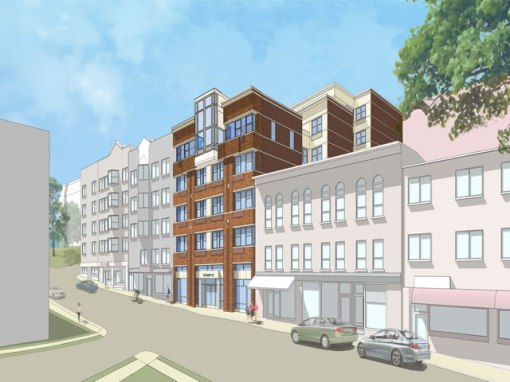
With occupancy expected by August, the trio of Collegetown midrises are moving at a pretty fast clip. 205 Dryden (Dryden South) has topped out, and construction crews are installing exterior steel stud walls and building out the structural frames for the projecting bay windows. Some light-colored brick can be seen on the pillars at the front entrance, and eventually it’ll expand to cover the front elevation, with limestone accents providing some visual interest. The interior light well seen from College and Dryden and the roof cap will be faced with colored metal panels in a shade similar to the limestone and brick. These photos are a week and a half old at this point, and since they were taken, the exterior stud walls have been sheathed with gypsum panels and Tyvek.

The building will have 10 4-bedroom suites, and according to the website, only one suite is left (5th floor, $1350/person), with rooms “for singles and small groups also available”.

A quick side note here – although the address when proposed was 205 Dryden, the address being used in the marketing materials is 207 Dryden. Either one is permitted, as the new Breazzano Center going up next door is 209-215 Dryden.

20160608_162342 20160608_162914 20160608_162951 20160608_164905 20160608_164919 20160608_164927 20160608_164946 20160608_165304

dryden_south_rev_1

205_dryden_-_rendering


307 College Avenue (Collegetown Crossing) Construction Update, 6/2016

20 06 2016

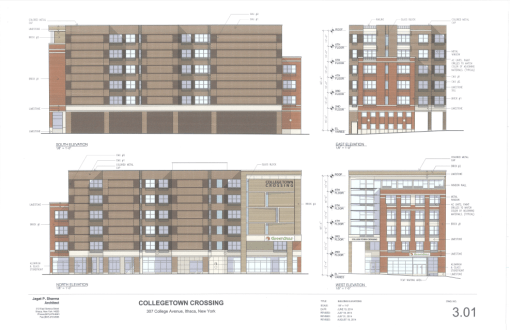
307 College isn’t too far from completion at this point. The angles where with CMU dominates the exterior look nearly finished from the outside. Some of the windows are in on the front side – the projecting section, currently covered in Tyvek housewrap, will be mostly faced with dark brick, similar to the brick used on the rear CR-4 portion. The bare expanses will be a glass curtain wall, and a lighter brick will be used on the sides and for the cornice. Traditional scaffolding needs a certain amount of space and time to be set up and taken down, so given the dense environment and summer deadline of the Collegetown Crossing project, mast climbing work platforms are used being for the bricklaying and other exterior facade work.

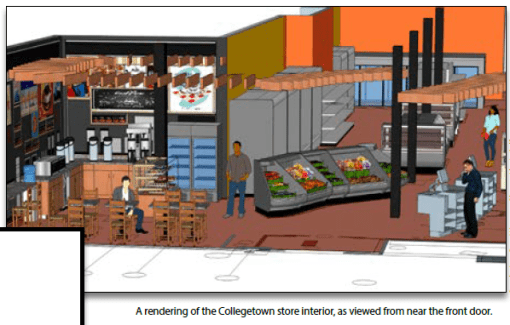
Greenstar’s new grocery location on the first floor should be opening August 17th, right around when the first tenants start moving into the apartments. It sounds like it will be a soft opening, with an actual Grand Opening celebration planned for some date in September. A render of the interior of the new Greenstar location, designed by architect Pam Wooster, is included below. Greenstar plans to employ 14 at the new location, and include a cafe/to-go space to complement its full-service grocery (some of the items, like those in the deli, won’t be prepared on site due to space constraints; they will be prepared at their central kitchen and brought in daily). There hasn’t been any news on tenants for the smaller two commercial spaces facing the pocket park.

20160608_162651 20160608_162721 20160608_162758 20160608_162805 20160608_162829 20160608_162923

20160608_161811 20160608_162435 20160608_162527

20160608_162035

307college_rev2_1

ctown_crossing_rev2_1

greenstar_ctown.png

greenstar_ctown_2.png


327 Eddy Street (Dryden Eddy Apts) Construction Update, 6/2016

19 06 2016

Steve Fontana’s mixed-use project at 327 Eddy Street has topped out since the April update. The exterior stud walls are up on the front facade, as is a little gypsum sheathing. The CMU Block rear portion is also topped out, although it appears that the design of the rear was also changed/value engineered such that it no longer have the larger band of windows on the top floor. The large window at top center is split between two units,  and using the wood stud walls as a guideline, one can kinda get the impression of soaring ceilings and a big, glassy open space. More interior wall faming can be seen from the rear of the building. Units range from studios to 5-bedroom apartments, with prices starting at $950/person and topping out at $1250/person for choice units.

While the apartments are able to command to premium price, Fontana has had issues finding a commercial tenant for the 1,800 SF first floor, and expressed his concerns at a city PEDC meeting where the active-use code for Collegetown was modified to match the slightly more flexible code used with the Commons.

Things should be moving right along for an August opening.

20160608_164146 20160608_164214 20160608_164236 20160608_164251 20160608_164449 20160608_164504 20160608_164509 20160608_164513

327_eddy_rev4_1

327_eddy_rev2_3