Cayuga Meadows Construction Update, 7/2016

18 07 2016

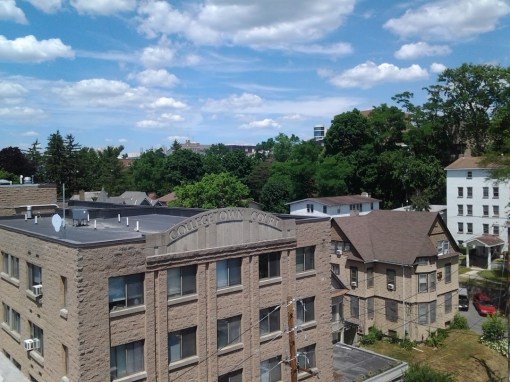
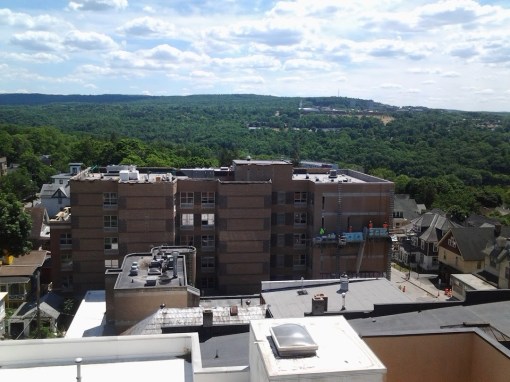
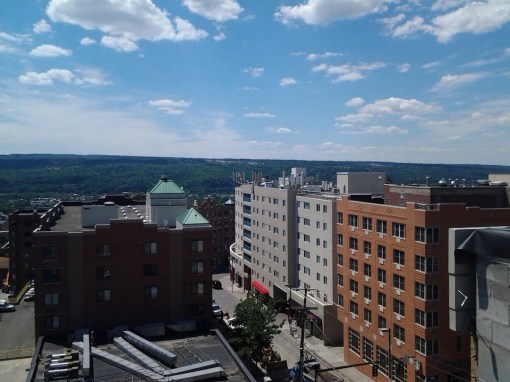
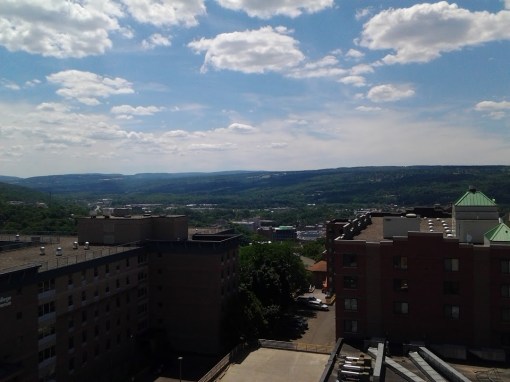
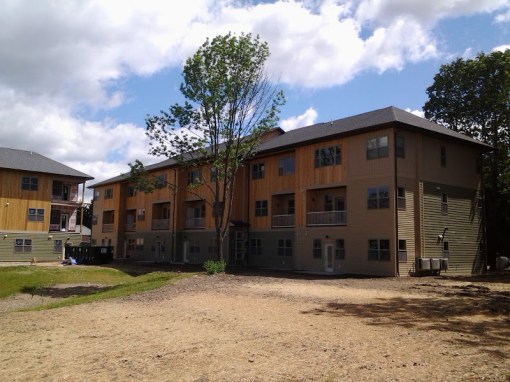
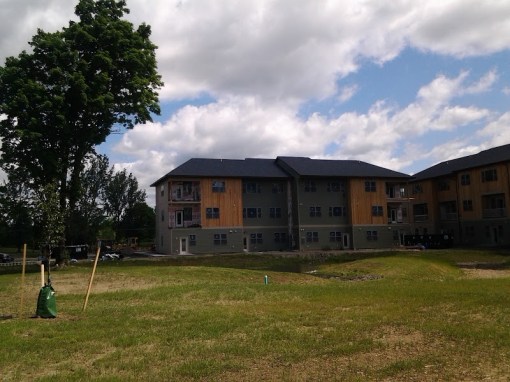
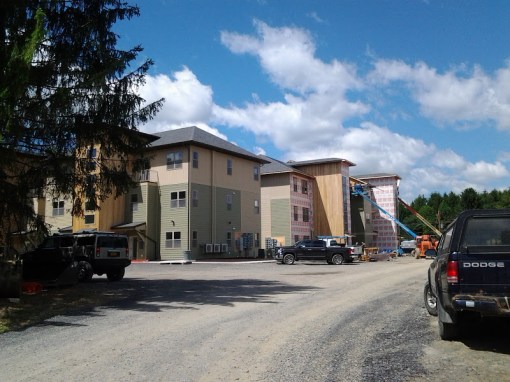
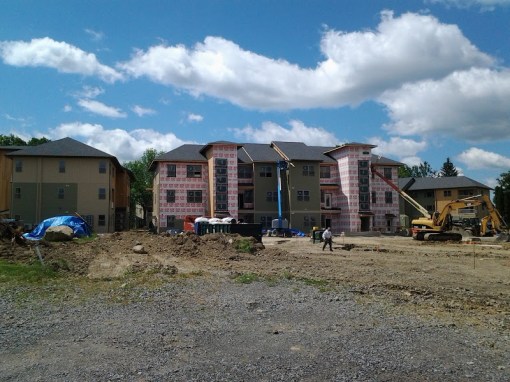
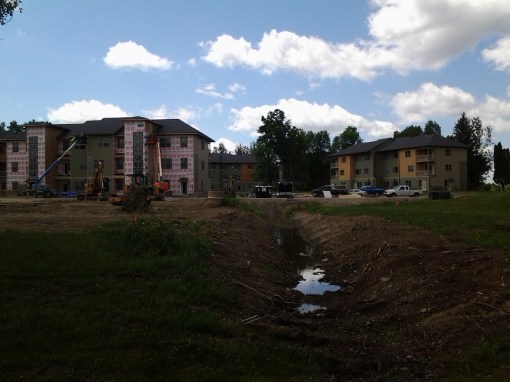
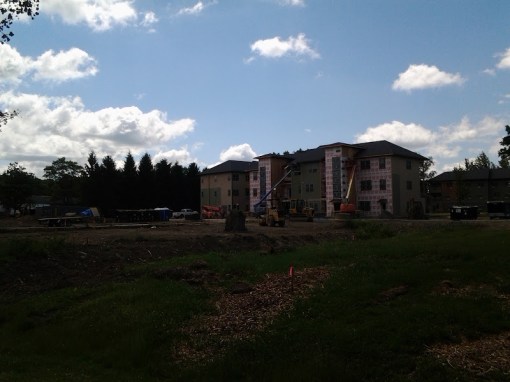
Safe to say this is under construction. Work has commenced on Conifer LLC’s Cayuga Meadows affordable senior housing project on West Hill.

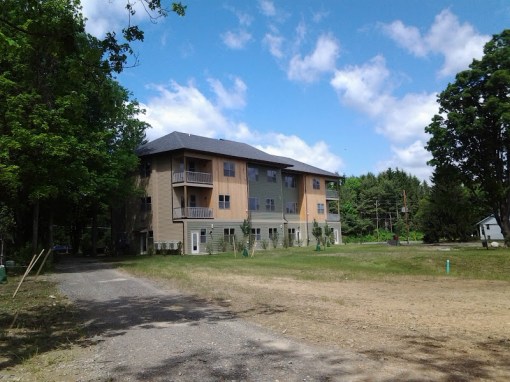
Cayuga Meadows is a 3-story, 58,500 SF apartment building with 68 units, 59 1-bedroom and 9 2-bedroom. The units will be available to individuals aged 55 and older, with incomes 60% or less or the Area Median Income (AMI). AMI in Tompkins County is about $53,000 per household, so a qualifying senior household would have an annual income of $31,800 or less. 7 units will be accessible to mobility-impaired individuals, and 3 units will be designed to accommodate hearing or visually-impaired occupants. Included in the plans are two covered patios, a community garden, and stormwater, lighting and landscaping improvements. 67 parking spaces will be paved behind the building.

The history of Cayuga Meadows goes back a few years, and has its share of twists. Originally, the project had been conceived as “Conifer West Hill” in 2009 as a component to a Cornell-led mixed-use development on about 36 acres of land across from Cayuga Medical Center. Rochester-based Conifer’s part in the plan has always been the same – affordable housing for seniors. But Cornell had other plans for the rest of the acreage.

In Spring 2010, there were three different site plans being floated – the consistent components were Conifer’s project, a 68-bed assisted living facility called “Terrace at Ithaca”, medical office space, small-scale retail, 106 park-and-ride spaces, and 4,000 SF for a farmer’s market. Depending on the plan, there were townhomes, a hotel school conference center, or other institutional space for Cornell. Mixed-use, definitely, but the plans weren’t that walkable, traditional neighborhood feel that the town is looking for these days – in fact, they were fairly conventional suburban sprawl. Cornell’s approach to planning was different in the late 2000s. By good fortune, Ithaca Builds locally hosted a copy of those site plans here.

For a combination of reasons (financial feasibility, changing priorities), Cornell ended up shelving its plans. However, it would be incorrect to say the university isn’t still interested in the site – they recently bought the house at 1250 Trumansburg Road, whose property had been awkwardly carved out of the rest of the site in a subdivision long ago. In the 2010 plans, Cornell had to plan around the house, not to mention worry about the occupants complaining about Cornell’s plans. So when it came on the market and sat for a couple months, the Big Red decided to pick it up in June for $157,000, probably on the belief that it could pay off through easier site planning and development down the line.

While Cornell filed away their plans, Conifer continued with theirs since the university was still willing to give them land as long as they built affordable housing. Originally, it was conceived as 72 units when it first received preliminary approval in April 2012, but was trimmed to 68 when final approval was granted in November 2013, in order to make the project a little less expensive, and provide a little more space to the community garden. Between preliminary and final approval, Conifer also had to apply for rezoning (Medium-Density Residential to Multiple Residence in May 2012), zoning variances (June 2012, for height and building setbacks), and public works approval for utilities services to be installed.

Then came another few years’ wait while financing was being secured. As covered on the Voice, affordable housing grants are very competitive, so it often takes multiple rounds of applications before a project is finally given grant money. In Conifer’s case, the last piece of the puzzle, tax-exempt bonds, didn’t come through until late January 2016. Cayuga Meadows is a $14.9 million project – about $8.3 million comes from NYS Housing Finance Agency bonds, and another $6.3 million from Community Development Block Grant (CDBG) funds. First Niagara Bank provided the Letter of Credit for the bonds. The project will pay taxes.

With the funding in hand, Cornell and Conifer formally agreed to a subdivision of Cornell’s land – 4.9 acres for the senior housing, and another acre for the Right-Of-Way for the new road. Cornell and Conifer had to agree on a few choices for new road names, which they submitted to Ithaca’s Codes Enforcement Director (Bruce Bates), who checks with the county to make sure there are no issues with the choices, and then the three parties agree on a final selection. Cayuga Meadows’ address will be “108 Aster Lane”.

There’s yet to be a color render hosted online, but the exterior will use fiber cement siding – Certainteed “Savannah Wicker” Dutch Lap Siding and “Cypress Spruce” cedar-like shingle siding. For the sake of examples, the Belle Sherman Cottages and Stone Quarry Apartments have also used Savannah Wicker fiber cement. The roof will be Timberline “Weathered Wood” shingles.

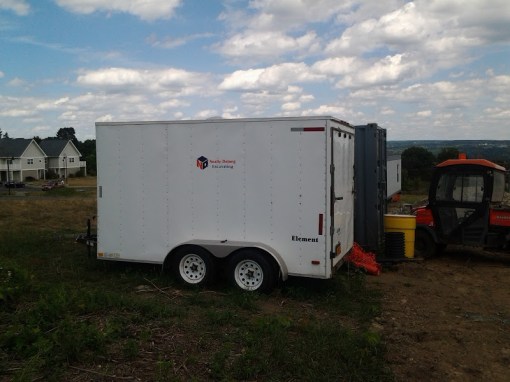
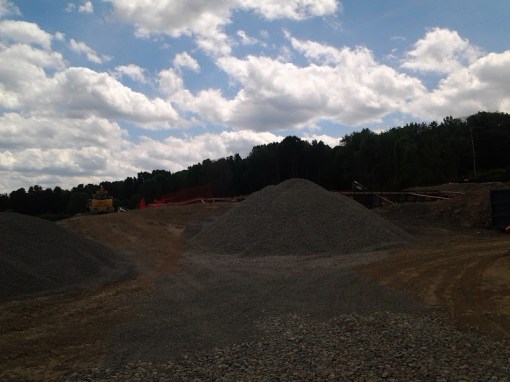
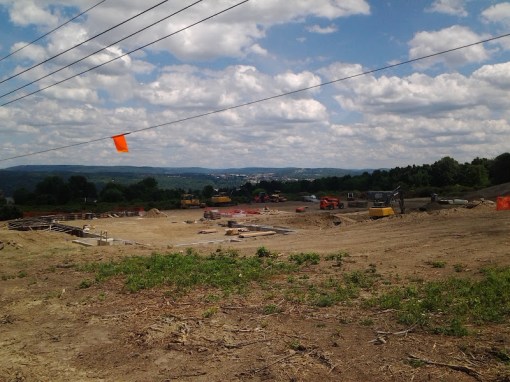
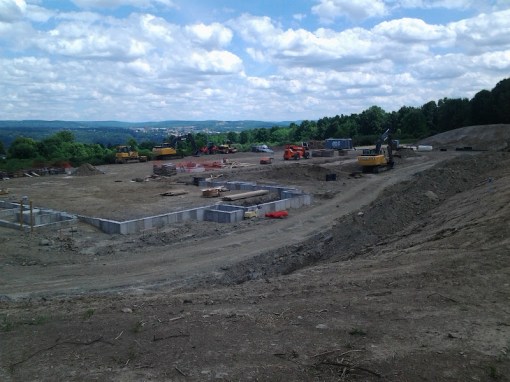
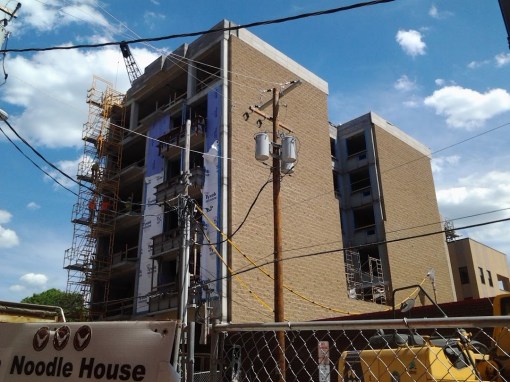
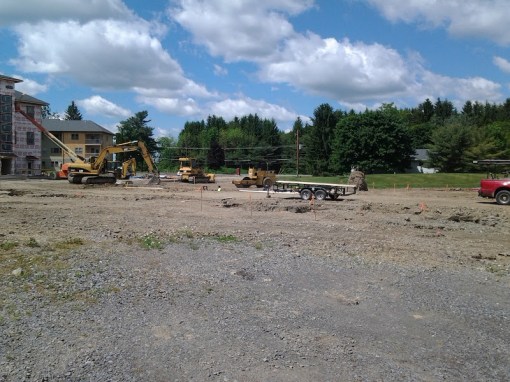
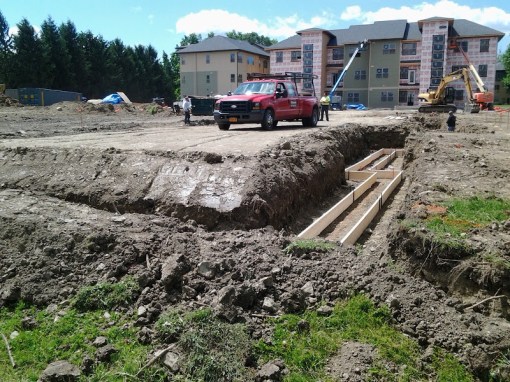
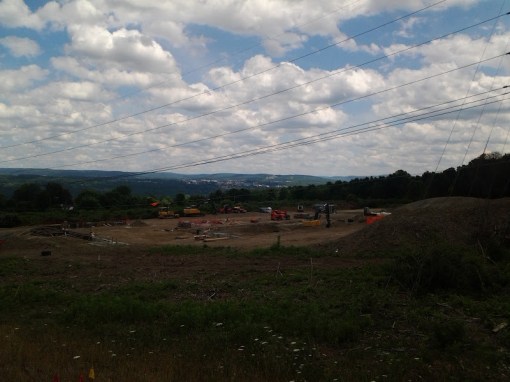
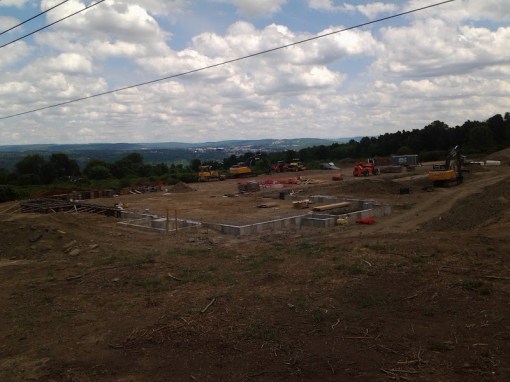
At the project site right now, work is underway on the foundation. The building’s footprint has been cleared, the foundation is excavated, and footers are poured for where the concrete will transfer the weight into the ground. Wooden forms are built along the perimeter for the stem walls, rebar is laid for reinforcement of the concrete, and the concrete is poured and left to harden (cured). Once the concrete has had a chance to harden, the forms are lifted off and work moves onto the next section. The building will be a slab-on-grade foundation, so no worries about excavating a basement here.

As a side note, it seems fitting that the residents with east-facing windows will have some pretty fantastic views of Cornell.

Through a joint venture with Conifer, LeChase Construction of Rochester will be serving as general contractor. The excavating has been subcontracted out to Neally-DeJong Excavating of Corning, and concrete work to Architectural Concrete Plus of Dundee (Yates County, northwest of Watkins Glen). Thanks to “Drill Deep” for the clarification.
20160717_140406 20160717_140444 20160717_140449 20160717_140528 20160717_140557 20160717_140612 20160717_140804 20160717_140815 20160717_140828

Cayuga-Meadows-Shot

Cayuga-Meadows-2


205 Dryden (Dryden South) Construction Update, 7/2016

11 07 2016

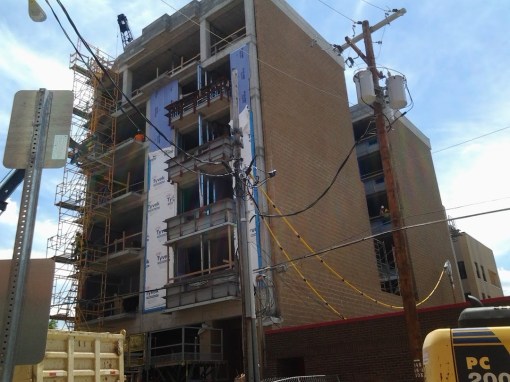
There were a lot more photos that did not make it into today’s Ithaca Voice piece. Developer and former Kraftee’s proprietor Patrick Kraft was kind enough to give a tour of the building as it goes through the furious final stretch of construction. On the outside, the decorative crown has been built out, and the housewrap and gypsum board will eventually be face with tan brick. On the inside, the lower the floor one is on, the further along the work is; a few brief descriptions are interspersed in the photos below.

Also, here’s some material from the interview with Kraft that didn’t make the final cut for the article. Definitely worth a read though.

Q: Are you concerned or excited about the Breazzano Center?

PK: Construction-wise, their impact is limited, they do their thing, we do ours. These [contractor] guys work together all the time. It hasn’t been much of a problem, our working relationship is pretty good. And Jagat [Sharma], he’s done a tremendous job, he’s a good guy. Jagat suggested doing a concrete building, and it turned out really well for us. These units are being furnished by Sam Peter, they met with Jagat, everything will match and be coordinated, even the lobby. Rich woods, the color scheme, stainless steel appliances, Most of the landlords around here are good guys, if I have a question they make time.

Q: During the 201 College debate, we saw a number of older residents express concerns about too much density in Collegetown, and too many students. Are the recent developments good or bad? What would you say to assuage the concerns of residents in Belle Sherman?

PK: I think there are a lot of positives to density, it centralizes the college students, and if you can do that, you get them out of the periphery, and higher density in the core could help get students out of Outer Collegetown and return homes to families and non-students. I have a friend who works at the Johnson, who lives just a block from Eddy Street. incoming faculty want walkability. People would have been incredulous ten years ago, but you know, people want to leave their car at home sometimes. I think that’s a good thing.
Q: With this new apartment building, have there been any issues or challenges? Or has everything been fairly smooth sailing?

PK: We’ve had our hiccups. The city does its inspections and has its variances, it’s not like we’re building a McDonald’s where every store looks alike. We haven’t had any major problems, just scheduling can be a major problem at times. I had to pay NYSEG to move the power lines, that was a 10-week delay.

20160630_125821 20160630_135113

According to Kraft, it was Jagat Sharma who insisted on reinforced concrete construction. This allowed the construction team to be flexible; handy for the structural tweaks (additional reinforcing) here in the light well, below the rough window openings. Kraft had nothing but praise for Sharma, even going as far as to say he gets an unfair rep because many of his buildings use CMU block in their exterior finish.

20160630_132859

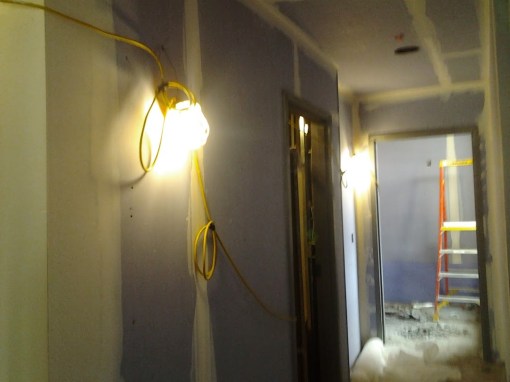
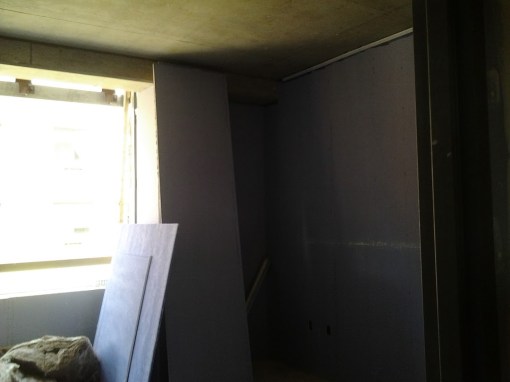
Most of the sheetrock has been hung in the second floor units. Kraft also had a lot of compliments for LeChase, the general contractor. He noted occasional problems like a bad concrete pour (which LeChase redid at their own expense), but otherwise they’ve been doing good work and have adhered to the schedule quite well.

20160630_132824 20160630_132812 20160630_125850

Originally, there were small light shafts in the east face, but those were removed when the Breazzano Center was being finalized next door. The two buildings will stand just two inches apart.20160630_142231 20160630_142218

20160630_142206 20160630_142203 20160630_142145 20160630_143001 20160630_142619 20160630_142359 20160630_142304 20160630_142256 20160630_143423

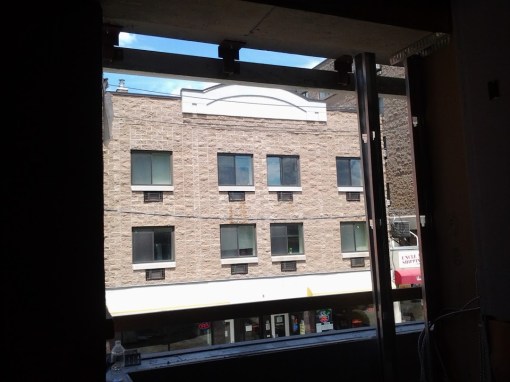
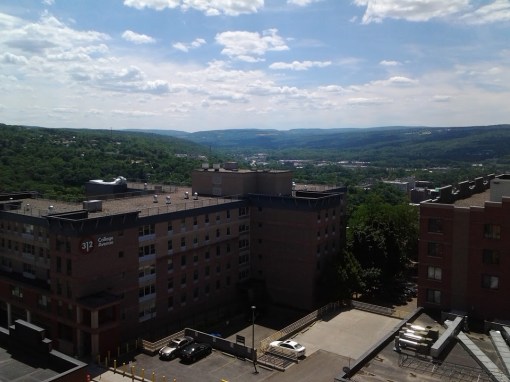
Sixth floor, rear unit view – Kraft said it was favorite view.

20160630_143402

Doing work in the elevator shaft

20160630_143316

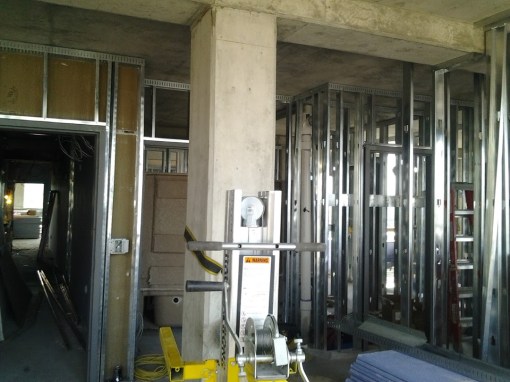
Steel interior stud walls on the sixth floor20160630_143310 20160630_143016

20160630_143946 20160630_143950

Framed closet spaces on the fourth floor20160630_144615

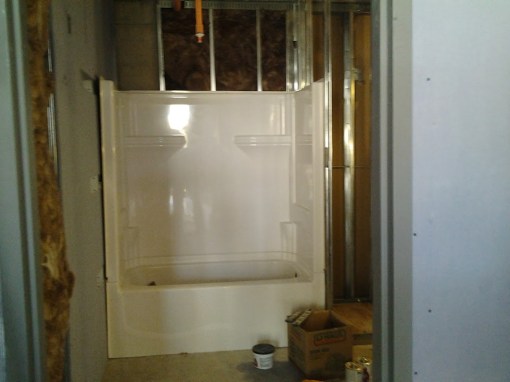
A tub fitting on the third floor

20160630_144929 20160630_145210

The brickwork on the backside is a little further along than the front, but the general appearances will be the same.

20160630_145213 20160630_145250 20160630_145359

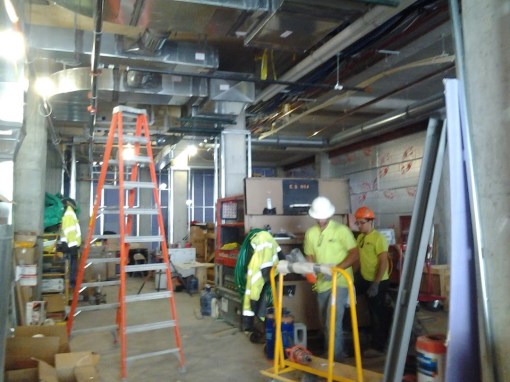
Members of the construction crew in the first-floor commercial space.20160630_145512

The basement area, which will have a trash/recycling room, a tenant gym and storage.20160630_151521


St. Catherine of Siena Parish Center Construction Update, 7/2016

6 07 2016

This one’s a little tough to swing since it’s a jaunt from most of the other construction projects underway, but the drive over was worth the effort. St. Catherine of Siena Church in Northeast Ithaca is progressing with work on its new Parish Center.

The 8,878 SF, one-story building, vaguely in the shape of a cross, is being built to replace the existing one-story, 10,273 SF parish center, which was built in 1963 and designed by local architect Victor Bagnardi. Bagnardi also did Trinity Lutheran on Honness Lane, and the old county library a couple of years later. At over fifty years of age, with alterations, outdated interior layouts and with many of its mechanical and utility systems worn out and in need of replacement, the church opted to build a new structure rather than renovate the existing building. The centerpiece of the site, the 1961 church, was renovated in the late 2000s.

Plans originally approved in summer 2015 called for a 10,811 SF building with roughly the same overall shape and appearance as the building underway. However, that plan was trimmed down as a result of rising construction costs. An earlier plan by Ithaca architect Pamela Kingsbury was also shelved for similar reasons.

The project is expected to cost in the range of $3-$3.5 million, all of which must come from church funds and philanthropy. The Diocese of Rochester does allow bridge loans, but it does not allow any parish in its jurisdiction to carry long-term debt. A similar debt-free approach is also in place for the Al-Huda mosque planned on Graham Road in Lansing. Along with donations, St. Catherine of Siena used funds from a late pastor’s bequest, sale of land near its entrance, and leftover funds from previous budgets and campaigns to bring the construction project to fruition.

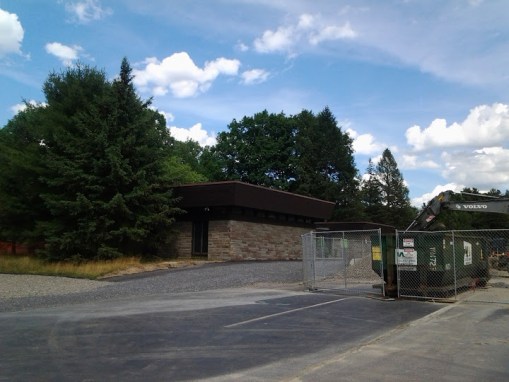
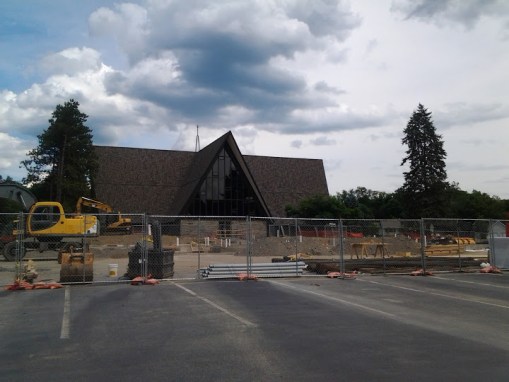
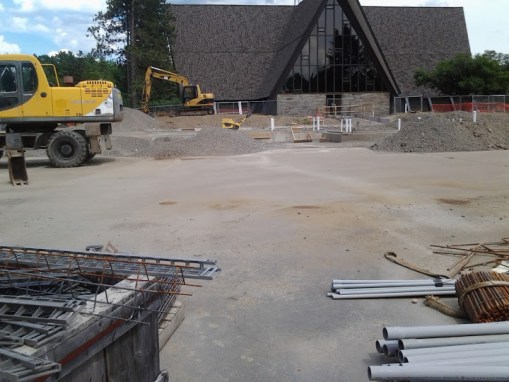
At this point, the foundation has been formed, poured and back-filled. Subsurface (under-slab) utilities, such as plumbing and electrical, have been laid for the new building. Framing should commence shortly.

Plans call for a late 2016 opening. Once the new parish center is occupied, the old parish center will be taken down and its footprint converted into new parking spaces to replace those lost to the construction of the new facility. The new center will be physically connected to the church, directly to the church’s west by about 40 feet.

Richard McElhiney Architects of New York City is the project architect. Local firms T.G. Miller PC (surveying/engineering work), Trowbridge Wolf Michaels Landscape Architects (landscaping), and TAITEM Engineering PC (rooftop solar panels) are also playing a role in the buildout.

20160703_150325 20160703_150510 20160703_150513 20160703_150530 20160703_150554 20160703_150558 20160703_150604 20160703_150640 20160703_150648

st_catherine_v2


Village Solars Construction Update, 6/2016

22 06 2016

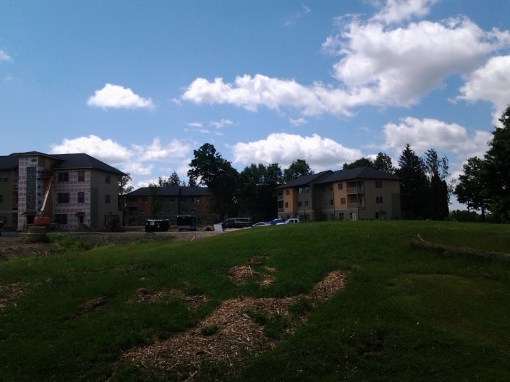
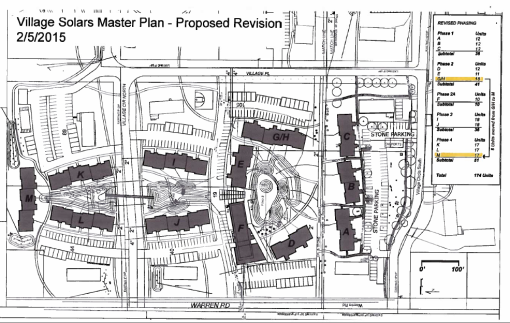
For being such a large project, the Village Solars apartments in the town of Lansing tend to slip by unnoticed. Work on Phase 2 is wrapping up, and work has already begun on Phase 3, with what looks like excavation work for the foundation of Building “I”. A rolling stone gathers no moss, I guess. “I” will be an 18-unit apartment building similar in design to Building “G/H”, the building in the fourth photo, and currently the largest individual apartment building in the complex.

Building “D” is essentially complete and has been available for occupancy since May. Building “G/H”, which is just finishing up any remaining interior finishes and exterior trim, will be ready for occupancy this month. Building “E”, which is still attaching exterior trim and finishes, as well as interior work, will be ready for its tenants by about July 15th. If past work is any indicator, “I” will be ready for occupancy sometime next spring. No word on Phase 2A and Building “F”, but it’s a good bet 18-unit Building “J”, the other half of Phase 3, will commence excavation once “G/H” and/or “E” are complete.

With the completion of Phase 2 this summer, The Village Solars additions will have resulted in 77 new housing units since they began construction in 2014. Rents on the units are ranging from $850+/month for a one-bedroom, $1235+/month for a 2-bedroom and $1600-$1650/month for a 3-bedroom unit.

20160609_110626 20160609_110629 20160609_110634 20160609_110653 20160609_110715 20160609_110834 20160609_110913 20160609_111059 20160609_111202 20160609_111227 20160609_111246 20160609_111259 20160609_111351 20160609_111423 20160609_111445 20160609_111451 20160609_111629

village_solars_2 village_solars


205 Dryden Road (Dryden South) Construction Update, 6/2016

21 06 2016

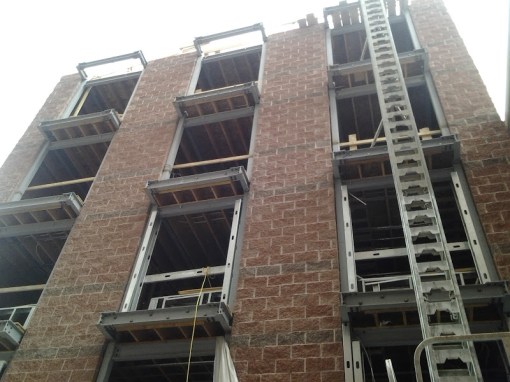
With occupancy expected by August, the trio of Collegetown midrises are moving at a pretty fast clip. 205 Dryden (Dryden South) has topped out, and construction crews are installing exterior steel stud walls and building out the structural frames for the projecting bay windows. Some light-colored brick can be seen on the pillars at the front entrance, and eventually it’ll expand to cover the front elevation, with limestone accents providing some visual interest. The interior light well seen from College and Dryden and the roof cap will be faced with colored metal panels in a shade similar to the limestone and brick. These photos are a week and a half old at this point, and since they were taken, the exterior stud walls have been sheathed with gypsum panels and Tyvek.

The building will have 10 4-bedroom suites, and according to the website, only one suite is left (5th floor, $1350/person), with rooms “for singles and small groups also available”.

A quick side note here – although the address when proposed was 205 Dryden, the address being used in the marketing materials is 207 Dryden. Either one is permitted, as the new Breazzano Center going up next door is 209-215 Dryden.

20160608_162342 20160608_162914 20160608_162951 20160608_164905 20160608_164919 20160608_164927 20160608_164946 20160608_165304

dryden_south_rev_1

205_dryden_-_rendering


327 Eddy Street (Dryden Eddy Apts) Construction Update, 6/2016

19 06 2016

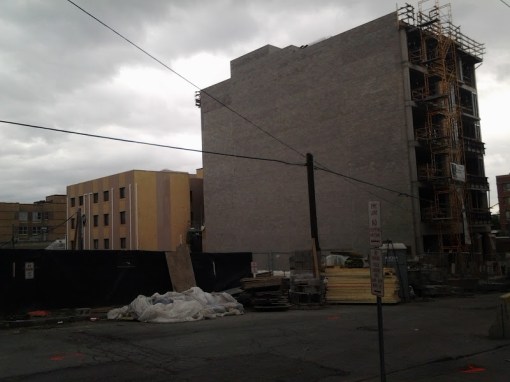
Steve Fontana’s mixed-use project at 327 Eddy Street has topped out since the April update. The exterior stud walls are up on the front facade, as is a little gypsum sheathing. The CMU Block rear portion is also topped out, although it appears that the design of the rear was also changed/value engineered such that it no longer have the larger band of windows on the top floor. The large window at top center is split between two units,  and using the wood stud walls as a guideline, one can kinda get the impression of soaring ceilings and a big, glassy open space. More interior wall faming can be seen from the rear of the building. Units range from studios to 5-bedroom apartments, with prices starting at $950/person and topping out at $1250/person for choice units.

While the apartments are able to command to premium price, Fontana has had issues finding a commercial tenant for the 1,800 SF first floor, and expressed his concerns at a city PEDC meeting where the active-use code for Collegetown was modified to match the slightly more flexible code used with the Commons.

Things should be moving right along for an August opening.

20160608_164146 20160608_164214 20160608_164236 20160608_164251 20160608_164449 20160608_164504 20160608_164509 20160608_164513

327_eddy_rev4_1

327_eddy_rev2_3


409 College Avenue (Student Agencies eHub) Construction Update, 6/2016

17 06 2016

The Student Agencies eHub renovation seems to be moving along, though perhaps a little slower than originally anticipated. Luckily, since Cornell’s in summer intersession, the offices aren’t be used as much as usual, which allows work to commence on the second phase of renovations. Under the scaffolding, it looks like the old facade is off and work on the new glass curtain wall is underway.

20160608_163016 20160608_163049 20160608_163117


Ithaca Marriott Construction Update, 6/2016

16 06 2016

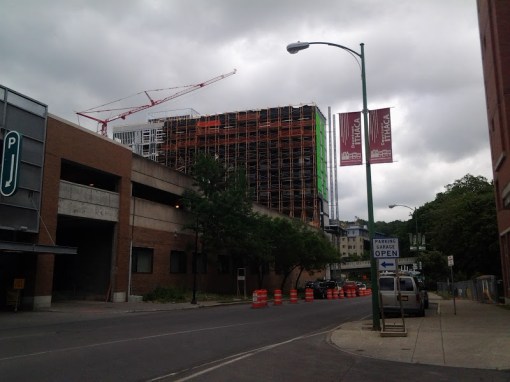
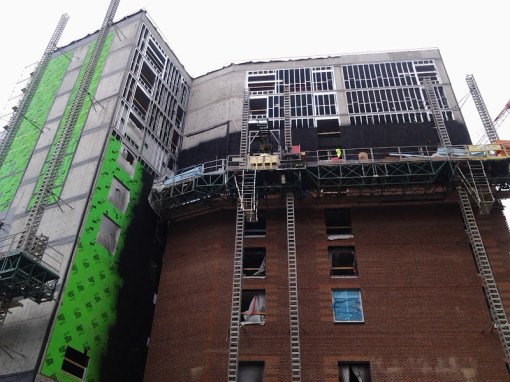
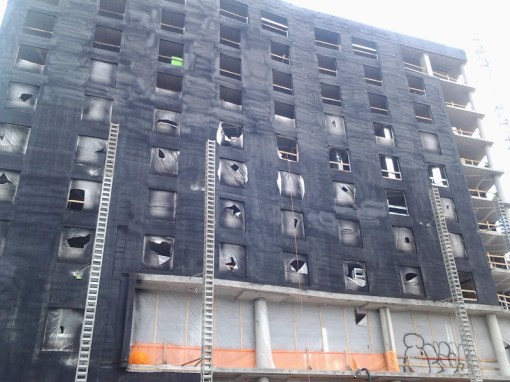
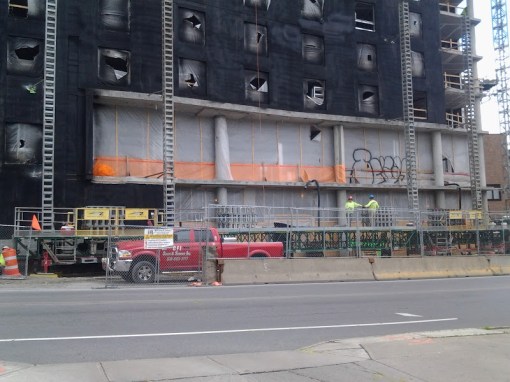
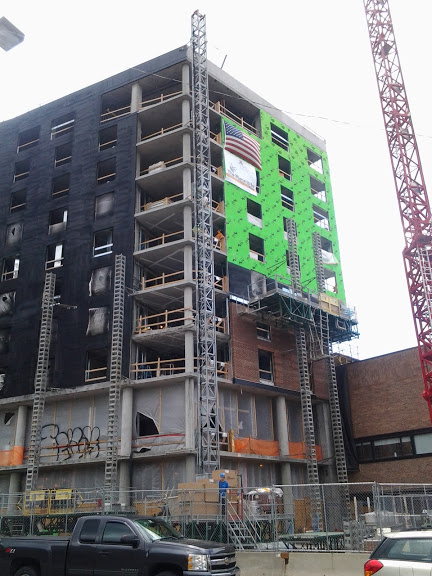
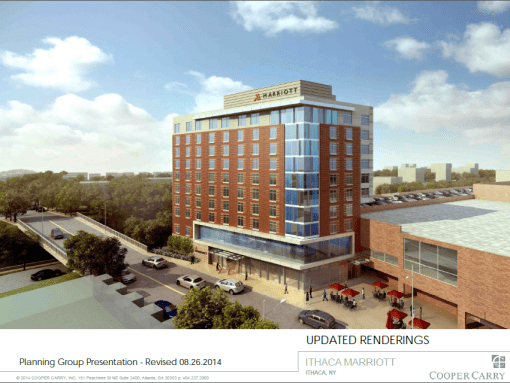
The Marriott is moving right along. Ten stories of reinforced concrete topped out at the beginning of May, with the mechanical penthouse being the last component. Exterior steel stud walls have been erected, fire-proof gypsum sheathing is being installed, and the black waterproofing material has been sprayed all along the front (east) face, and most of the back (west). Work on the brick veneer is steadily progressing up the north and south faces. The first floor facing South Aurora will have a stone veneer, while the top floor and the overhanging portion of the west face will use a few different shades of grey Nichiha fiber cement panels.

Work is also continuing inside as well – interior stud walls, electrical, plumbing, and HVAC. Specialty projects such as utilities are typically handled by various sub-contractors selected from bids.

In case you missed it, I did an interview with contractor W.H. Lane Inc. about the project for the Voice here. Plans still call for an August 23rd opening. During a debate on diversity at the latest city PEDC meeting, TCAD’s Heather McDaniel mentioned that Marriott has already hired four staff for the new hotel, of which three are women, including the general manager.

20160608_124634 20160608_124930 20160608_125143 20160608_131533 20160608_131621 20160608_131747 20160608_131812 20160608_131905 20160608_131932 20160608_132051 20160608_132111 20160608_132115 20160608_132201 20160608_132819 20160608_134654

marriott_rev1_1


209-215 Dryden Road Construction Update, 06/2016

15 06 2016

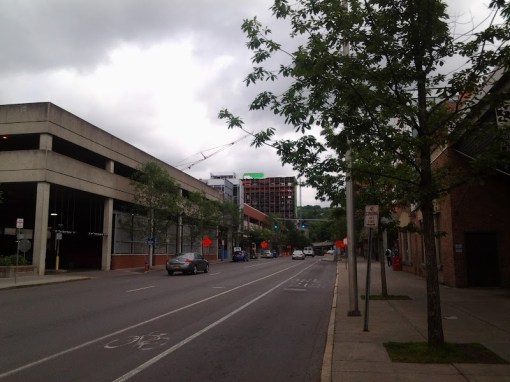
At the site of the new Breazzano Family Center for Business Education, work continues on the foundation. It looks like excavation is mostly complete at this point and they’re putting in concrete footings, with digging for a new footing taking place at left in the first photo. The rebar doweled into the concrete will be tied into the walls as they’re built up. The footings closest to 205 Dryden (westernmost section) will hold the elevator shaft, stairwell and restrooms for each floor.
For those wanting a glimpse of the future, Cornell has put up a video render on Youtube showing the new building (exterior and interior) and advertising some of its features. There is an embedded copy of the video clip below.

20160608_162032 20160608_162035 20160608_162040 20160608_162217 20160608_162257 20160608_162323

209-215_2 209-215_basement


Hotel Ithaca Construction Update, 6/2016

14 06 2016

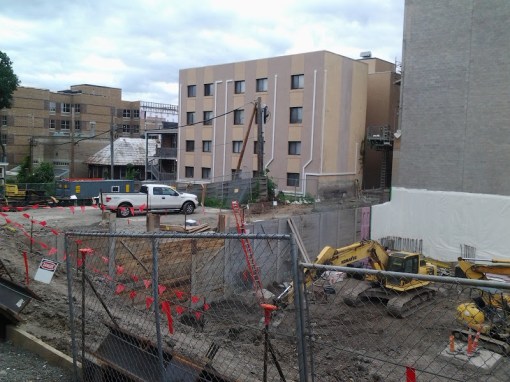
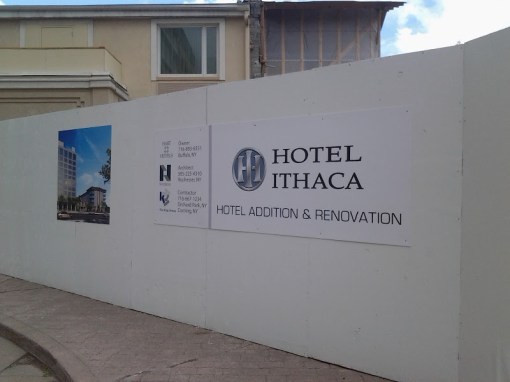
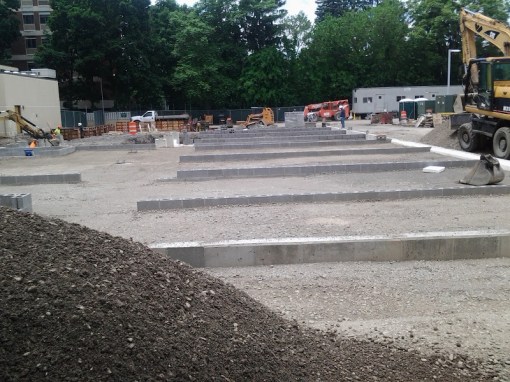
The Hotel Ithaca’s new wing seems to be moving right along. Most of the foundation has been completed. Some wooden forms used for foundation pours can be seen in the third photo, right next to the reinforced concrete footing. CMU walls create interior partitions within the building’s footprint – likely space for some of the 90 future hotel rooms, although none of the published materials online have shown an interior layout of the new wing. It’s suggested in the project site plan review documents that the new fitness center, breakout rooms and meeting rooms will be near where the new wing will connect to the existing hotel. Given the lack of windows or an entrance on the the first floor of the new wing facing South Cayuga, some of those function spaces are probably down at this east end of the wing, nearest to the street. Early plans did have an entrance on the South Cayuga side, but it was removed during project revisions.

The $9.5 million project is expected to open to guests in May 2017. More info about the project can be found here.

20160608_131325 20160608_131331 20160608_131351 20160608_131419 20160608_131442 20160608_131446