News Tidbits 2/7/15: It Snows In Ithaca, But Verizon Makes It Rain In NYC

7 02 2015

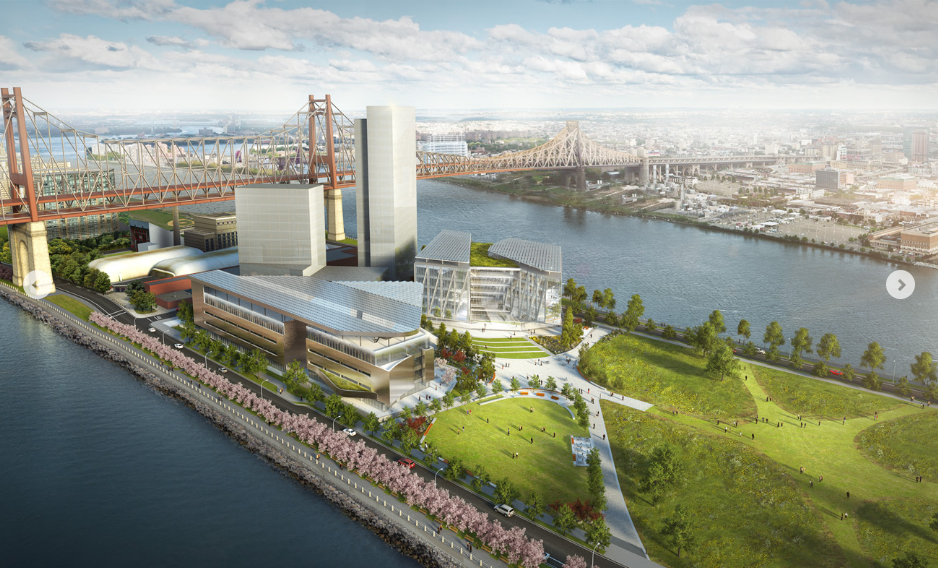
1. As relayed by several outlets, Cornell just received a very generous $50 million donation from telecommuncations giant Verizon. I might make more news about this, but this donation is strictly for the shiny new tech campus down in New York City. The “Verizon Executive Education Center”, in the left of the above render, will be part of the first phase of the campus, set to open in 2017. This goes along with a 6-story, 236,000 sq ft building design by Weiss/Manfredi, and a 4-story, 188,600 sq ft building by Morphosis Architects, both of which are already underway. The skyscraper on the right of the render is a 26-story, 500-room dormitory for students and staff designed by Handel Architects; while not yet underway, it is also slated for a 2017 opening. A design for the tall building on the far left has not been released.

I’d like to see a breakdown of what proportion each campus received from Cornell’s $546.1 million in donations.

2. Looks like some Sun writers decided to do some digging regarding the potential Fine Arts library relocation and expansion. There’s not a whole lot more to add since the Ithaca Voice article; just that the timeline and final design haven’t been set, although the renovation is a “key academic priority”. Students of the AAP school also have mixed opinions about the growth of the library and the possible loss of studio space. But don’t fret dear readers, if a render comes out, it and any pertinent info will be shared here.
424_dryden_rd_1

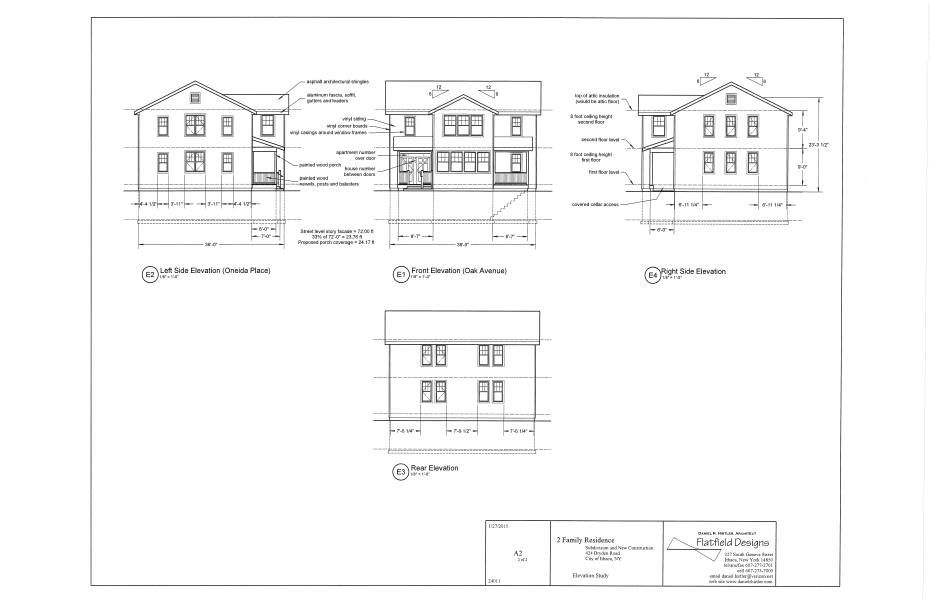
3. A subdivision filed with the city of Ithaca indicates plans for a new two-family, 6-bedroom home at the intersection of Oak Avenue and Oneida Place. The house would be built on land that currently serves as a rear parking lot for 424 Dryden Road. Application here, drawings here. The site falls into the CR-2 Zone of the Collegetown Form District, meaning 2-3 floors, and pitched roofs and porches are required. The architect is Daniel Hirtler of Ithaca, and the developers are William and Angie Chen, also of Ithaca. While not particularly notable, it’s an example of how the form-based zoning applied to Collegetown helps maintain the character of the less-dense outer neighborhood, while still allowing for new construction.

canopy_hampton_rev4_1

4. As with virtually every other sizable project in downtown Ithaca, the canopy Hotel by Hilton is filing an application requesting a tax abatement through the CIITAP program, making it the sixth applicant since the revised program was put into affect in 2013. Application here, and the notice of  public meeting, set for 5 PM February 9th at City Hall, is here. A refresher/review of CIITAP can be found here.

The applicant, “Ithaca Downtown Associates LLC”, a.k.a. the Patel Family of the Baywood Hotels Inc., notes that the 7-story, 123-room hotel project has an estimate cost of $20.15 million. Although the value of the tax abatement is not recorded in the city’s application (it will be written out, when reviewed by the county IDA), it looks like they’re seeking the standard 7-year abatement, which will save them something in the ballpark of a couple million dollars over those 7 years.

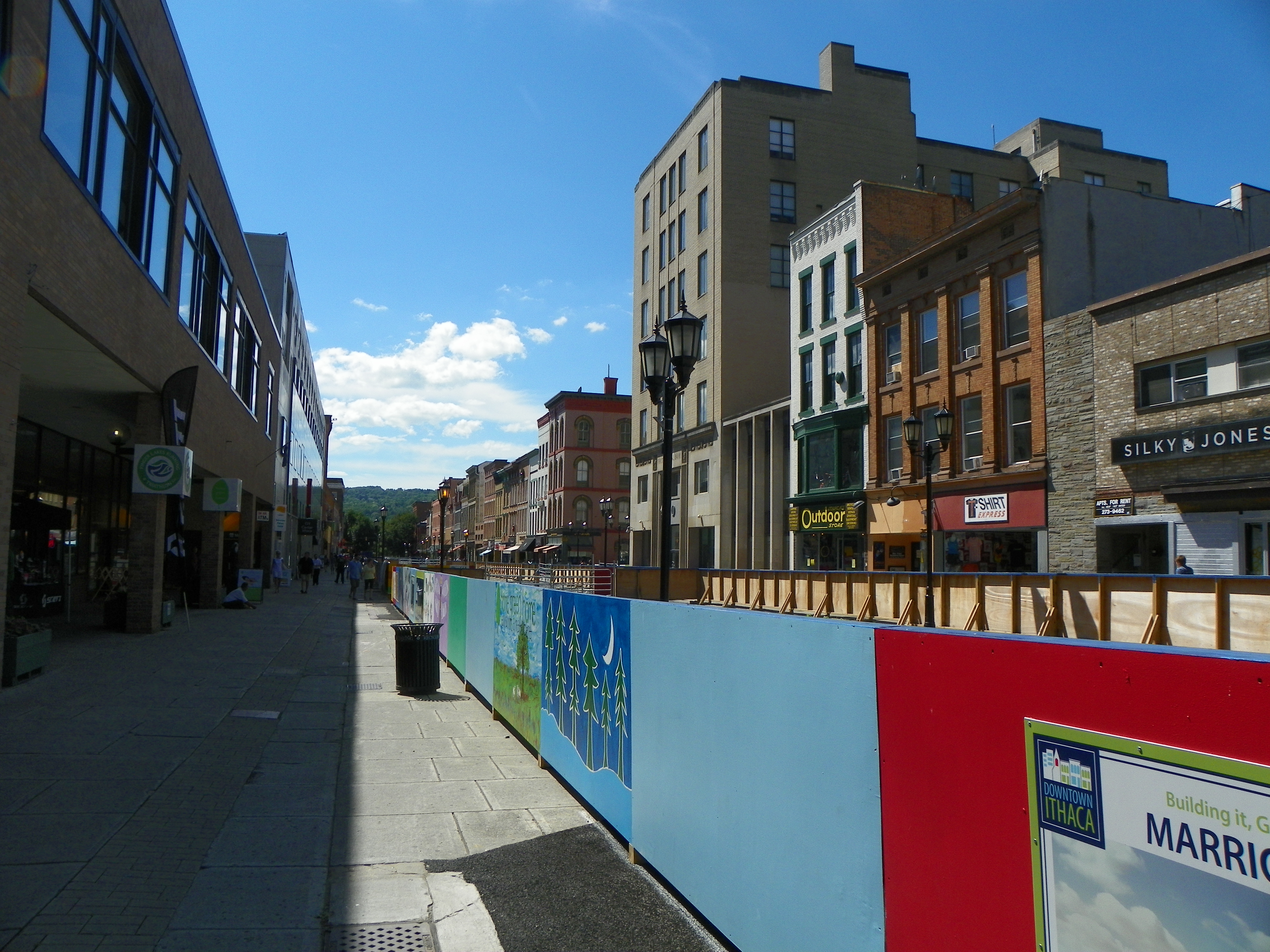
As with the previous Marriott and Hotel Ithaca applications, the applicant will only pay one-third to one-half of its projected employees a living wage, which is probably going to earn them the scorn and opposition of the Tompkins County Worker’s Center. But the city and Downtown Ithaca Alliance have been supporters of the project. Neighboring businesses seem to be have mixed opinions about the project, with some seeing a potential business source, and others mourning the loss of a convenient parking lot.

The 74,475 sq ft project is expecting to start construction during the spring, with completion in Spring 2016. Local firm Whitham Planning and Design is the architect.

For those already planning a stay, expect room rates of $160+/night, according to the Journal.
inhs_pride_alleydesign_v2

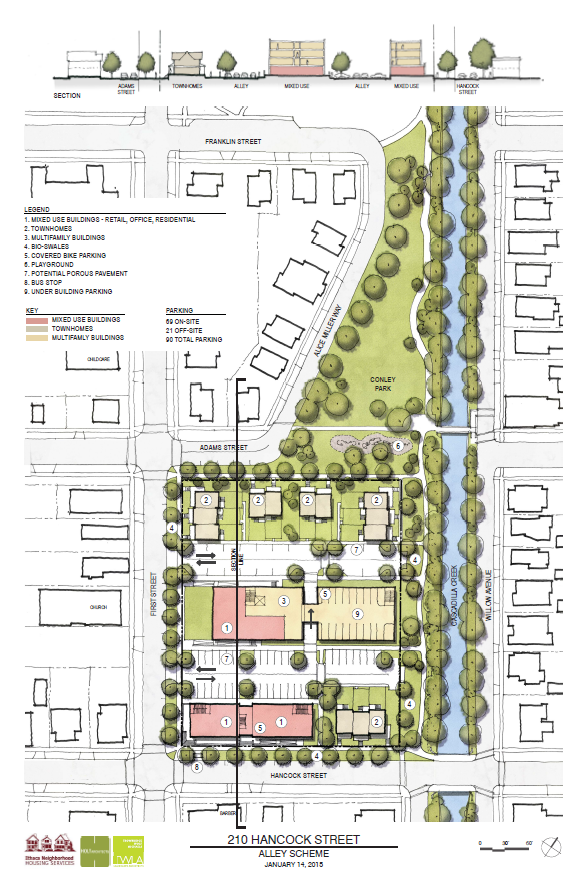
5. It’s PSA time again – INHS is planning meeting #4 for its proposed Neighborhood Pride redevelopment at 4:30 PM Wednesday the 11th, inside the vacant Neighborhood Pride grocery store. The one and only final design concept, shaped by community feedback, will be presented at this meeting. Keep an eye on the Voice for an article (and maybe a rerun here) next Thursday or Friday.

lake_st_bridge

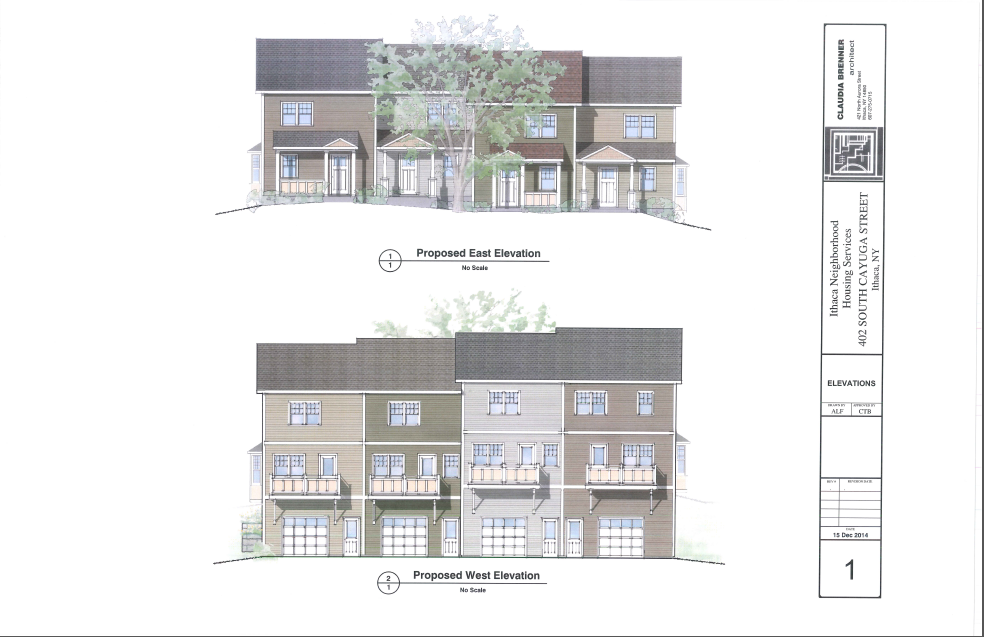
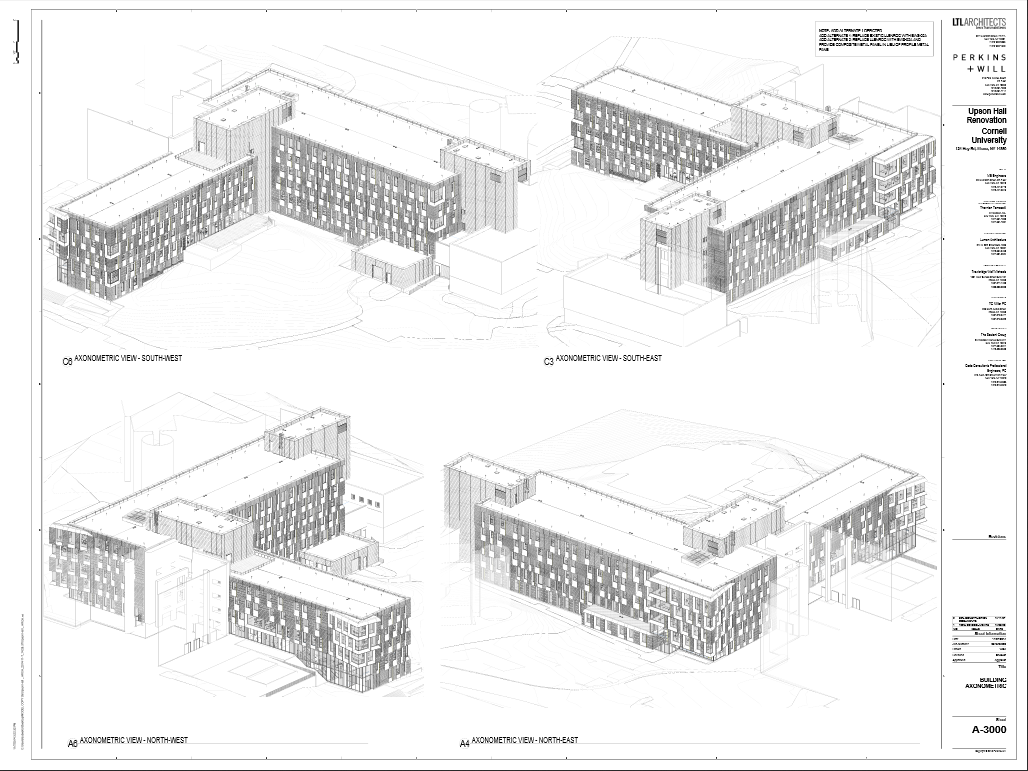
6. Looking at the city’s project memo going out to its departments, it doesn’t look like a whole lot needs to be reviewed this month. Cornell’s Upson hall renovation, the 6-unit building at 707 E. Seneca, and the 4 for-sale townhomes INHS wants to build at 402 S. Cayuga Street are ready for final approval this month. The 3-building, 6-unit project for 804 E. State (112 Blair) still needs to be reviewed by the zoning board, and will be completing environmental review (SEQR determination of significance).

The only new projects of note are the new house at 424 Dryden, and renovations to the Lake Street Bridge. The bridge project consists of rebuilding the current deteriorated bridge with a new deck and refurbished abutments (base supports), as well as scour reinforcements (to protect from creek erosion), a bumpout for viewing Ithaca Falls, some cute light-posts, and a bridge span that isn’t so degraded that it’s liable to collapse into the creek. That project has a $1,000,000 price tag, and is expected to run from June to November of this year.

For those that use this bridge, start prepping for a detour route – the bridge will be closed during construction, to both vehicles and pedestrians. The city estimates the detour will be an extra 1.7 miles for cars, and 0.7 miles for bikes and walkers.

Tompkins County’s Comprehensive Plan

3 02 2015

5-1-2012 120

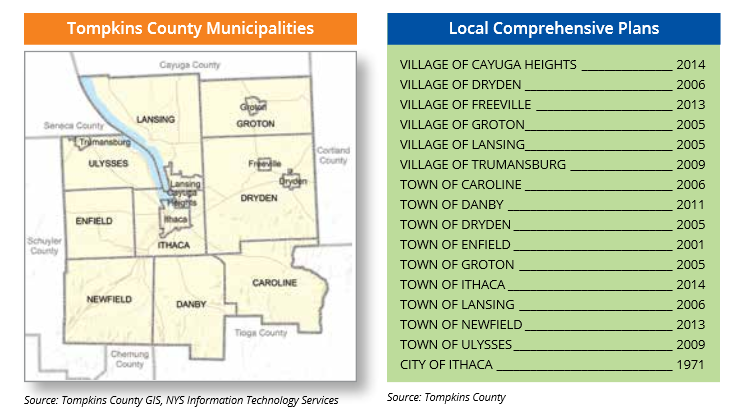
In keeping with the recent talk of Comprehensive Plans, Tompkins County has just released their new plan, their first since 2004. That might not seem like a big deal, but in that time period, the county has probably added 4,500 residents and a couple thousand housing units, so it’s more important than it might seem at first glance (for the sake of comparison, every county community except Ithaca city has made a plan since 2000; the city’s dates from 1971). Currently, the plan is in review and up for adoption by the County Legislature at their meeting on the 17th. The 109-page document has been in the works since the fall of 2013.

tc_compplan_1

Generally, the county doesn’t play a big role in what does and doesn’t get built in its constituent villages and towns. Building projects are required to get county input, but the county isn’t about to stop anything, nor does it have much authority to (unless you’re applying for tax breaks, like Jason Fane’s 130 E. Clinton project). Perhaps the largest point of contention at the moment is the intermunicipal NYSEG natural gas pipeline, which Lansing wants and needs to sustain its growth, but the county has issues with, saying it could upset their green energy goals. On the opposite end of the scale was the Cayuga Ridge project for the Biggs parcel, which the county planned to sell to an affordable housing developer, but received significant blowback from the West Hill community. Cayuga Ridge was later cancelled when a site check by the developer revealed more wetlands than previously thought.

Anyway, back to the plan. It’s available in small chunks on this page, or for those whose internet connection can handle all 109 pages at once, here it is.

The general theme here from a housing standpoint is to fill in the spaces within the city, villages and hamlets. There’s a strong push on the county level to keep farmland from being scooped up for new development – a major threat, considering some of the cheapest land to develop in the county happens to be far-flung agricultural properties, where a relative lack of neighbors and shoestring small town planning boards can make for a quick and easy process. The logic is, if development takes place in communities that are already settled and already have employers and amenities, it limits the need for getting into a car for every trip, and makes for a more “sustainable” environment and stronger communities. Urban/infill development also makes for a lower tax burden per new unit added – there’s no need to pave new roads or extend utility lines.

The county is also becoming a bigger proponent of mixed-use development – apartment buildings with retail on the first floor, projects that have space for both homes and offices, and so forth. The logic is the same as before – if it’s convenient, people are more likely to walk, and patronize their own community. Trends in smaller households leads to the county’s suggestion of smaller housing units, as well as more senior housing for the greying population that chooses to “age in place”.

This all sounds great on paper, but there are many issues in practice. Anti-development sentiment, the ideal candidates for development aren’t for sale, outdated municipal zoning and so forth.

Economically, the county plans on sustaining its biggest contributors, education and healthcare, while making an effort to diversify with incentives towards manufacturing, high-tech/tech startups, food processing, agriculture and tourism. Specifically, they’re hoping to leverage the Cornell tech scene into permanent jobs and new economic development, which has met with some success, though nothing on the scale of, say, Silicon Valley or the Research Triangle. The high taxes, isolated location and lack of access to capital are major hurdles in an area that has plenty of brain power to tap into. The county is hoping to alleviate some of the burden by utilizing the state’s STARTUP NY program, and supporting resources like the new Rev business incubator in downtown Ithaca.

tc_compplan_2

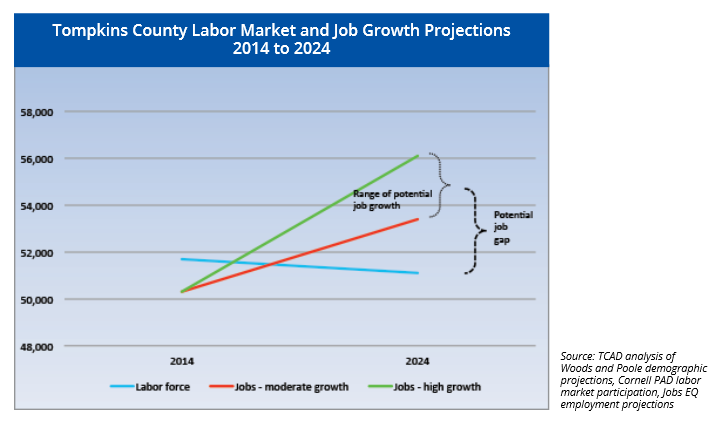
The county only seems to be expecting 3,000-6,000 new jobs in the next ten years – a number that seems a little conservative, if recent growth is any indicator. The county (aka the Ithaca metro, following the Federal BLS) has added 8,400 jobs since December 2004 (63,700 jobs in December 2004 to 72,100 in December 2014).

On an individual scale, the county is seeking to expand broadband internet infrastructure and maintain the airport, which has seen a sharp decrease in travelers over the past year, putting its long-term feasibility at risk. There will also be continued funding towards planning studies (a study examining the NYS DOT relocation from the waterfront is the latest example), tourism advertising and tax abatements when appropriate.

Finally, the county expounds the affordable housing issue, noting that 38% of renters and owners are above the “affordable” threshold, there are over 15,000 in-commuters, and very low vacancy rates creates a disincentive for slumlords to fix up their overpriced properties, which in turn makes communities less energy-efficient. Unfortunately, the county doesn’t offer many solutions. They note an affordable housing fund paid into by itself, the colleges and the city of Ithaca, put the partnership is set to expire this year, and the future is uncertain. The other is “increasing community support for the construction of more housing units”, which is much easier said than done.

There also sections on encouraging mass transit and alternative (non-car) commuting, natural resource preservation and wetland management, but those are too close to my day job for me to want to write about. But in sum, the theme is infill development in the hamlets and established areas, make the area more eco-friendly, preserving farms and green space, trying to expand affordable housing options and continue growing the economy. All of which are great goals, but given that these interests can conflict with each other, there will likely be many debates over the next several years.


News Tidbits 1/31/15: History Comes Alive

31 01 2015

With no new projects before the city planning board, and the town cof Ithaca ancelling its planning meetings twice in a row (something that happens only once every couple years), the end of January is shaping up to be a slow period. But that’s not to say there’s no news at all.

1. From the twitter account of local firm Jason K. Demarest Architecture:

simeons_1

No details in the tweet, but I’m getting the impression that the Shen family, who own the Simeon’s building, hired Demarest as the architect for the reconstruction. If that’s the case ( it seems likely, given that the firm handled the expansion of Simeon’s resutaruant in 2009), and this is a preliminary design, then I can only express the greatest of joys that the south facade will be sympathetically rebuilt to its former charm and glory. Fingers crossed.

titus_wood_1

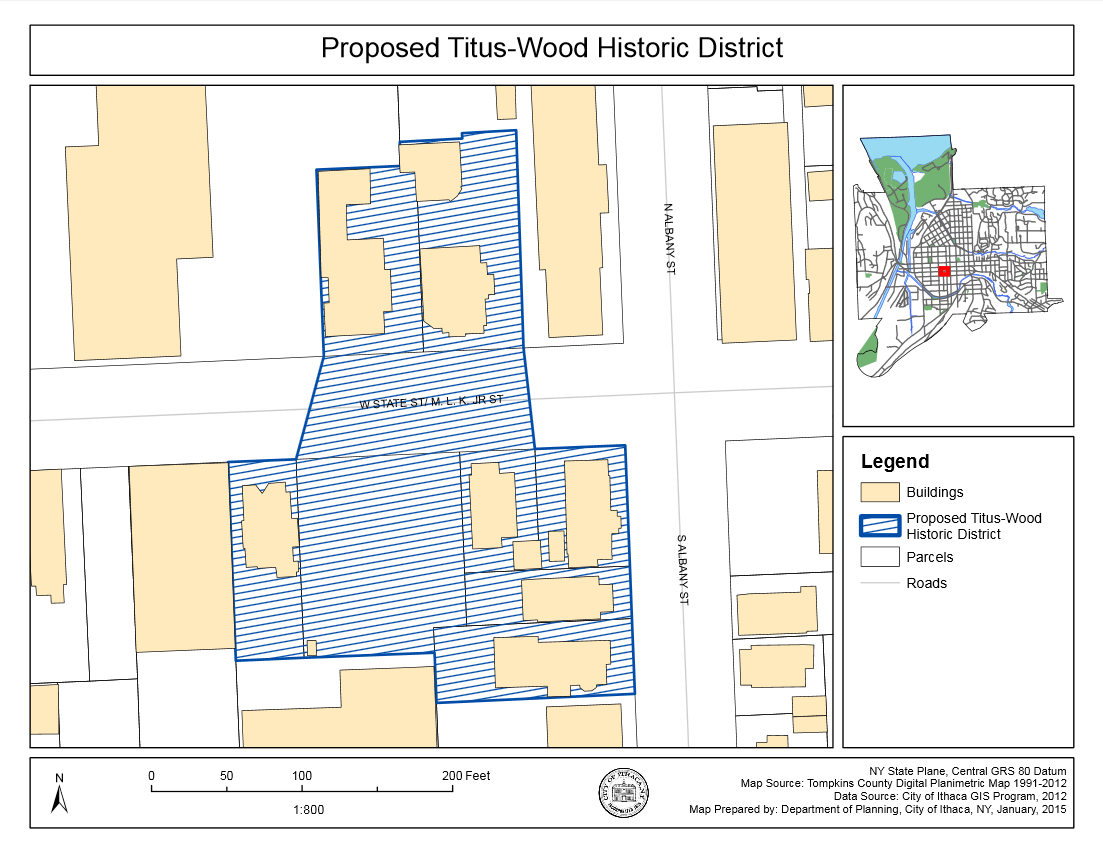
2. Sticking with the history theme, the city ILPC (Ithaca Landmarks Preservation Council) is considering another historic district, a seven-building district in central Ithaca being called the “Titus-Wood Historic District“. I can think of two reasons for this plan:

I. A historically notable carriage house at the back of 310 W. State Street has been threatened with demolition, much to the dismay of local preservationists. If designated, demolition becomes much more difficult (an “economic hardship” clause has to be invoked and approved by the council).

II. The West State corridor is a target for development under the new Ithaca Comprehensive Plan, which could potentially put the other buildings at risk in the long term.

There’s been no major opposition to the proposal so far, so this is probably good for approval at their next meeting.

aphia_411_e_state

3. Also in the same ILPC meeting, a single-family home at 421 N. Albany Street is being considered for historic designation. The house was home to a precursor of the Alpha Phi Alpha fraternity who have sought to purchase the property and restore it as a historic fraternal landmark. The African-American fraternity (the first fraternity of its kind) is also raising money to build a monument at 411 East State Street (shown above, zoning appeal application from last summer here). The 411 East State site is owned by Travis Hyde Properties, and the national fraternity appears to have negotiated use of that part of the property for its monument.

20141227_144707

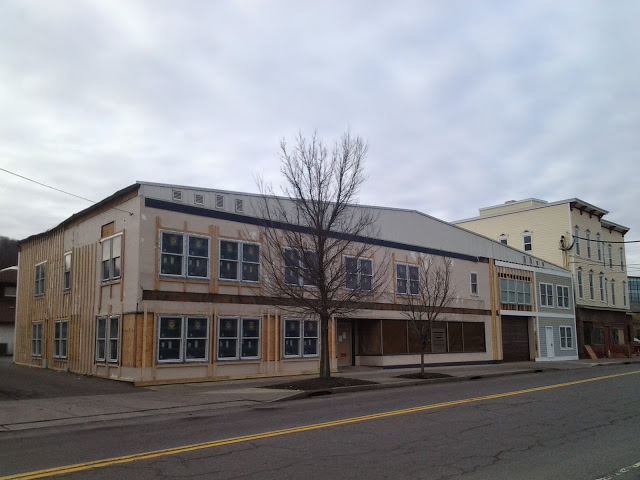
4. Courtesy of the Ithaca Times, we now know the renovation of the furniture store at 206 Taughannock will yield seven apartments and commercial space. The Lehigh Valley House building being renovated next door (covered by Ithaca Builds previously) will host a satellite office of the IPD on its ground floor, with six condos on the upper two floors. 206 Taughannock is being developed by Mark Zaharis, and Lehigh Valley House by Tim Ciaschi.

If Ithaca has any sort of “warehouse district” like the larger cities, Inlet Island is probably the closest comparison. Traditionally, it’s been a blend of commercial and industrial uses, and low-income families whose homes were lost to the construction of the flood control channel in the mid-to-late 1960s. In recent years, with the passage of more amenable zoning and increasing interest/rising land values in Ithaca city, the island and West End have started to receive attention from developers. In the past year, the aforementioned two projects and the 21-unit 323 Taughannock have been proposed and/or started construction, and interested parties are rumored to be waiting on the sidelines, ready to propose their own projects based on the success of these pioneers. Among those interested parties are Tom[kins County and the city of Ithaca, who are busy persuading the state to sell or move out of underused properties so that they can be made available for development.The city has had a strong interest in redeveloping the island for decades.
I think the potential is here for substantial development, and so far, the projects underway are doing well; it’s not remiss to suggest there will be more in the next couple years. But the idea of development is still controversial, with concerns of traffic and loss of local character. I have no doubt it will be a spirited debate.
mosque_rendering400

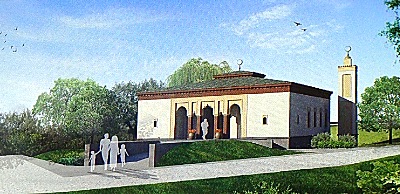
5. The charitable trust of the Al-Huda Islamic Center has officially purchased the land that will hold the Ithaca area’s first stand-along mosque. The vacant parcel at 112 Graham Road in Lansing was purchased for $64,900 on January 29th. The special permit for a religious building was approved by the village back in August of last year. The cost of construction is expected to be in the range of $600,000, which is to be raised through donations. I have no idea how close they are to their goal, but the land purchase is auspicious.


A New Home For Cornell’s Fine Arts Library

27 01 2015

100_1870

News of this project comes from the city Planning Department’s annual report, rather than Cornell. There was a time when Cornell used to do a reasonably good job sharing brief summary PDFs of its capital projects, but that ended a couple of years ago.

The project is just a single line, line item B. 17 on the 2015 Work Plan: “Rand Hall Reconstruction”. Those words themselves didn’t pull up anything in google, but a couple related searches pulled up this archived July 2014 email from a Cornell employee announcing the announcement article the chosen architect for Cornell’s new Fine Arts library.

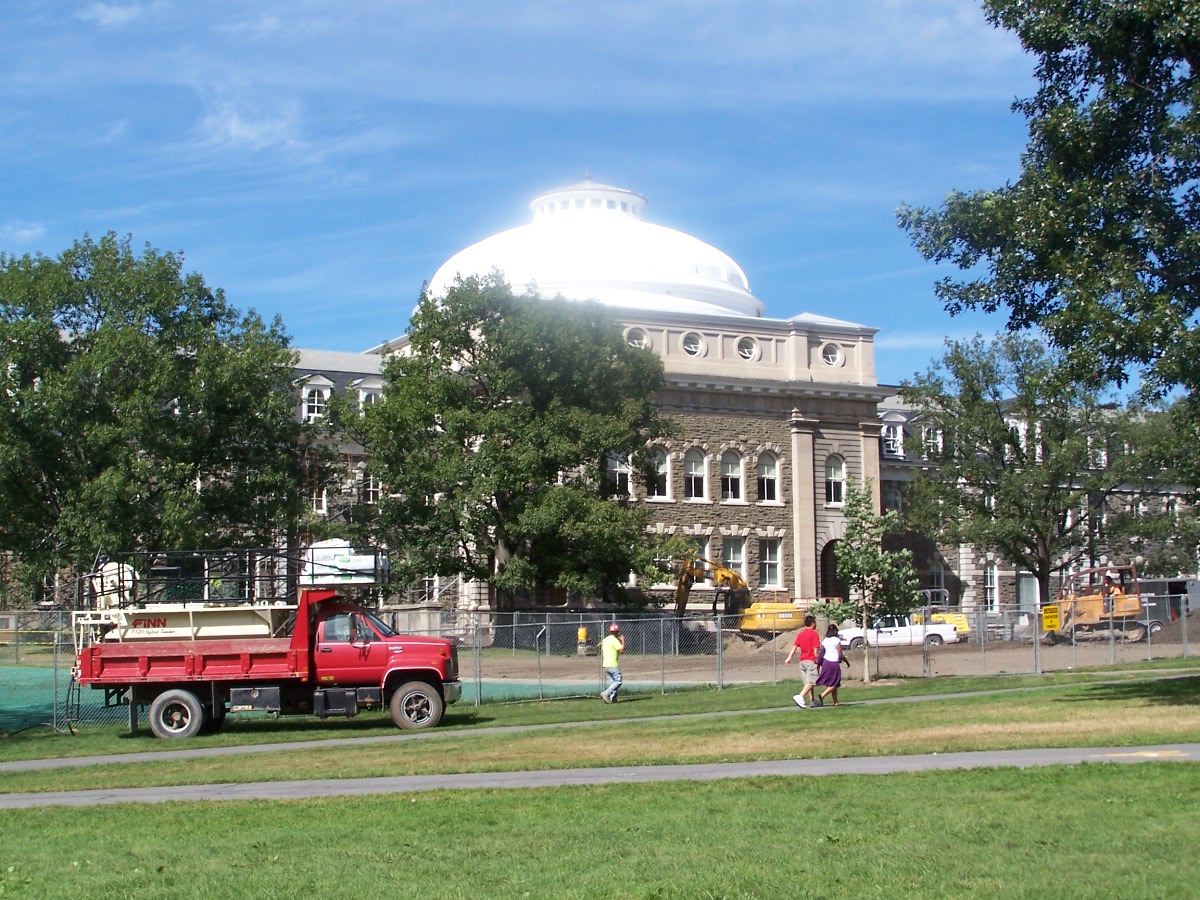
From the AAP website, the Fine Arts Library seems to be more of a renovation than a new construction, moving the FAL from neighboring Sibley Hall and into the top two floors of Rand Hall. The new library is planned for a Fall 2016 opening. The architect is a Cornell alum, Vienna-based Wolfgang Tschapeller M.A. ’87, and the press release credits a $6 million dollar gift from architect and UC-Berkeley professor Mui Ho ’62 B. Arch ’66. From the July 2013 gift annoucement, it sounds like the exterior of Rand will be preserved while the interior is substantially revamped for the new library. There was a great pushback from alumni the first time Cornell tried to demolish Rand Hall, when early versions of Milstein called for the ca. 1911 building’s demolition. Rand Hall sits just outside the Arts Quad Historic District, so any exterior changes would not be subject to review by the very stringent Ithaca Landmarks Preservation Council (ILPC).

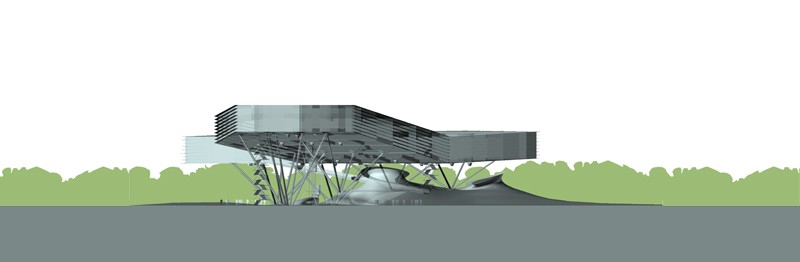
If I’m to end this the news article-friendly way, I’d just say “we’ll see what happens with this project moving forward”. But I’m going to do this the blog way, so strictly subjective editorial here on – I can only hope the exterior is preserved. I’m too much of a philistine to appreciate architecture like this:

tschapeler_1tschapeler_2

tschapeler_3

Apart from some close calls with lighthouses and fire towers I’ve visited, I’ve never experienced nausea-inducing staircases before, but there’s a first time for everything.

There’s plenty more on the architect’s website for those who are interested. But they all follow the same, very abstract architectural theme. A fine Arts Library tends to be more avant-garde than most buildings, but this is really pushing the envelope. Cornell, I don’t care if the inside looks like a goddamned funhouse, do the rest of campus a huge favor and leave the exterior alone. Students already deal with Bradfield and Uris Halls, please do not make things worse.

100_1872


News Tidbits 1/24/15: Down On the Waterfront

24 01 2015

waterfront_rfp

1. This week, the county decided to move forward with a feasibility study for moving the NYS DOT site from its current location along the inlet to a site in Dryden. The $78,000 award (of which $56,000 is covered by a state grant) was made to Rochester-based Fisher Associates, who are leading a group that includes NYC-based HR&A Advisors, local firm Trowbridge Wolf Michaels Landscape Architects, and Binghamton-based BCK/IBI Group Architects. Seven companies/consortiums vied for the study.

Readers might recall an RFP was issued back in July for the feasibility of moving the NYSDOT maintenance facility, which would make available a large and desirable property that the city would like to see redeveloped. The study is due to be completed in May, and if it looks like the move is doable (i.e. the county and city can cajole the perenially-reluctant DOT), the site could be sold to the highest bidder and begin redevelopment in early 2017.

410_426_508_taughannock_1

2. In keeping with the waterfront theme, here’s a couple interesting chunks of info from the IURA Governance Meeting agenda for the 21st. In a discussion of revenue-generating opportunities,  the IURA notes redevelopment opportunities on some of its parcels – one, 324 E. State Street, is already planned out, it’s the site of the 123-room “canopy Hotel” by Hilton.  Another is 410-426 Taughannock Boulevard (red outline in the above image), which could occur in conjunction with a state-owned neighboring parcel owned at 508 Taughannock Boulevard (orange outline), a property in the process of being purchased by the city. Though 410-426 has been noted to have environmental contamination, the interest in the waterfront and Inlet Island recently (323 Taughannock, Lehigh Valley House, 206 Taughannock) leaves the door open to a developer with the means and interest. This will be a site to keep an eye on in the long-term.

Also worth a brief mention is the planned purchase of a small vacant lot at 420 N. Plain Street. The house on that site was demolished after it was sold to NYSEG in 2011. What will most likely happen is a transfer of the property to INHS for redevelopment into a 1 or 2-family home.

ithaca_employment_1209_1214

3. The first run of the December job numbers are out, and Ithaca is sitting pretty. When compared to December 2013, the Ithaca metro added 1,200 jobs, an increase of 1.7%. For the month, Ithaca’s growth in New York State was surpassed only by New York City’s 2.3%. For the whole year of 2014, preliminary figures suggest that Ithaca’s 1.8% job growth was the fourth-greatest of the 14 state metros, following NYC’s 2.7%, Kingston’s 2.2% and Albany-Schenectady-Troy’s 2.1%. Kingston is an even smaller job market than Ithaca, Albany is nearly 6x larger (and is growing thanks in large part to its tech boom), and NYC is NYC, dominating the state with nearly 100,000 more jobs year-over-year, thus solidifying control over the state, northeast, USA and perhaps in their minds, world and universe.

The federal BLS website has yet to be updated as of today, so I can’t give the breakdowns on what market sectors gained jobs.

On the one hand, the numbers are auspicious, the region is growing economically. On the other hand, when the entire county adds a couple hundred housing units per year, this is exacerbating the housing problem. At a glance, I’d suggest there are more commuters from the surrounding counties than there were in December 2013.

troy_rd_rev1_2 troy_rd_rev1_3 troy_rd_rev1_4 troy_rd_rev1_5

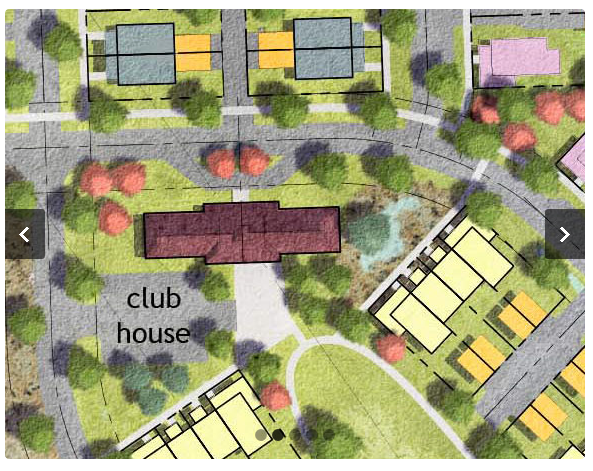
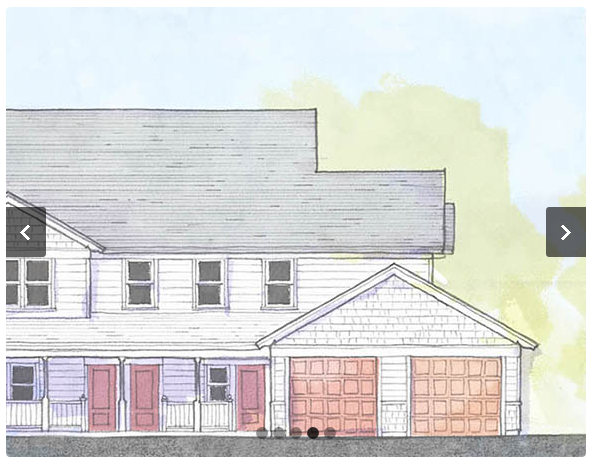
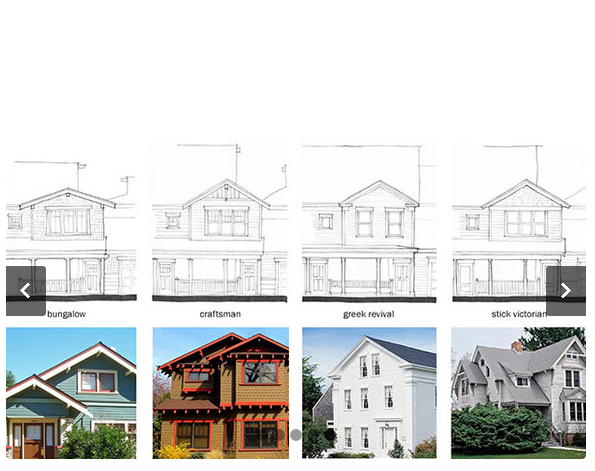
4. I stumbled upon these a couple of weeks ago, but they keep slipping off the radar. The above images are samples of the work being done by local architecural firm STREAM Collaborative for the proposed 130-unit development off of Troy Road in the town of Ithaca. The project consists of apartments, townhouses and single-family homes targeted towards the “middle-income demographic”, according to the architect’s website. I don’t know how relevant these drawing are the current design (the site plan looks current), but the images make for some nice eye candy.

I think it would be really cool if the apartment buildings rotated between the four styles in the last image – one craftsman apartment building, one stick victorian, and so on. Variety is the spice of life, the old saying goes. What say you, dear readers? Any one design more preferable than the others?

5. It is a sad day – not a single new sketch plan is schedule for next week’s Planning Board meeting. That’s the first time that’s happened in several months at least. This week’s town of Ithaca Planning Board meeting was cancelled, and the town of Lansing is only reviewing 7 lots of a new lakeside housing development (Novalane). It has all the makings of a dull week ahead. A shame too, given that a developer usually has to have several meetings with the Planning Board, it would make sense to propose something now if they wanted to get started during the warmer months of 2015.

But not all is doldrums and scanning news feeds. From an IURA meeting, the Dept. of Planning, Zoning, Building and Economic Development released its annual report. There were a couple projects I was not aware of, that have yet to go under review but are nevertheless out there for analysis, and one of those will be shared here on Tuesday.

A few brief notes:

*The city noted that TJ Maxx is moving into the city, so I’m making an educated guess that the Lansing location will be shutting down once the new space next to Hobby Lobby is ready.

* The Ithaca Gun apartment proposal, while not under any formal review at the moment, is described as having 50 units.

*The department still considered 130 E. Clinton an active project – although it is approved, don’t expect much.


Picturesque Ithaca

20 01 2015

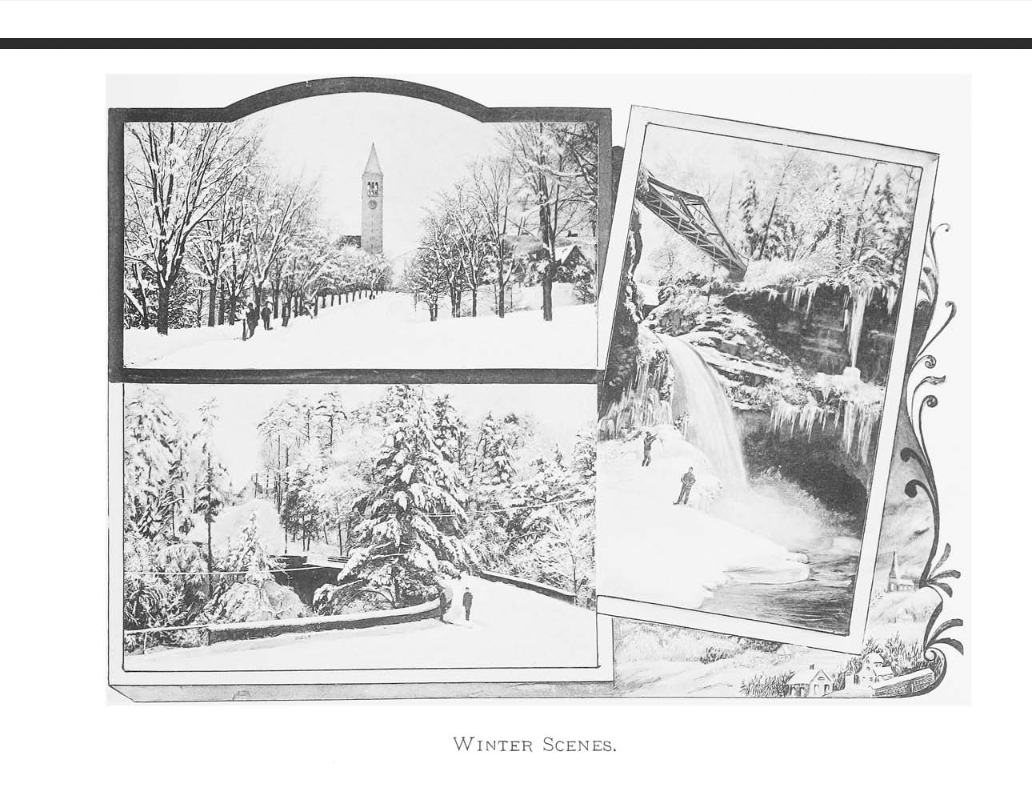
Images from “Picturesque Ithaca”, an 1896 photobook of the city of gorges. Photocopy courtesy of the Tompkins County Public Library.

ith_1896_6

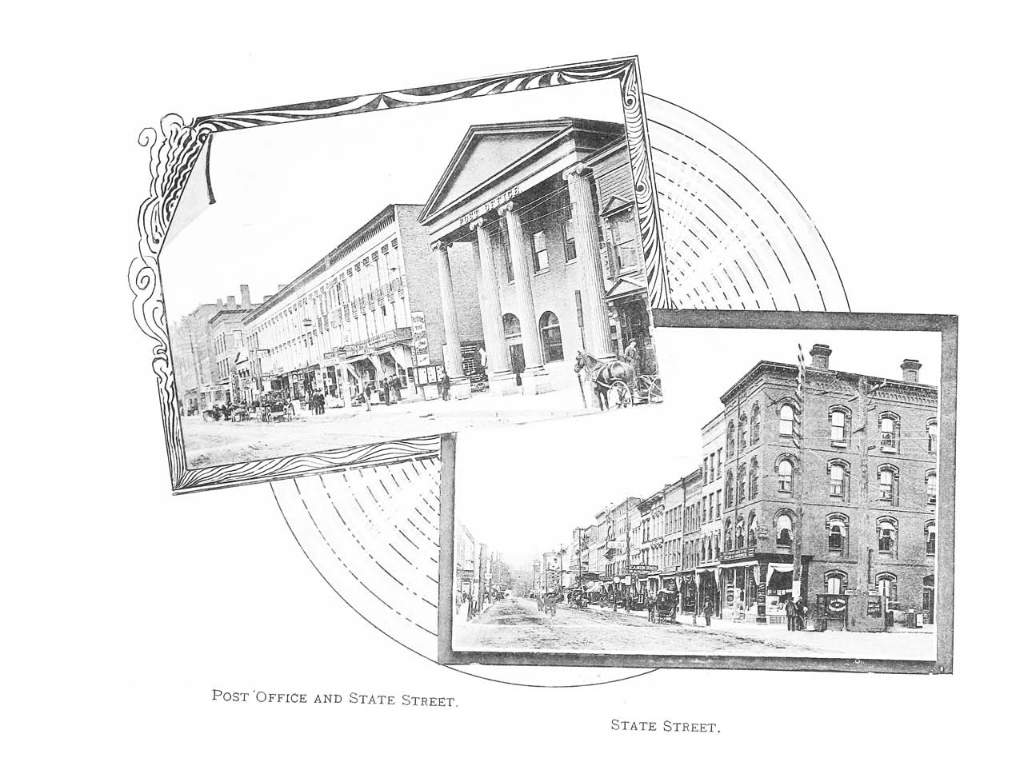
The recently-incorporated city of Ithaca, 1896. At this time, the city was home to about 12,000 people, and Tompkins County had only 33,000 people, less than a third of what it is today. Ithaca College was just starting as a small conservatory downtown, while Cornell had a little over 2,000 students.

ith_1896_1

4-13-2014 078

I never knew the Colonial Building used to be home to the city post office (but now that I check, it served that role from 1882-1910). That, the Sage Block (orange brick) and the Miller Building (red brick) seems to be the only ones standing and still recognizable 119 years later. The lower photo is easier to recognize – the “American Crafts by Robbie Dein” store now sits in the foreground building, and most of the other buildings are still present. One could call that block of the Commons one of the most historic in all of Ithaca.

ith_1896_2

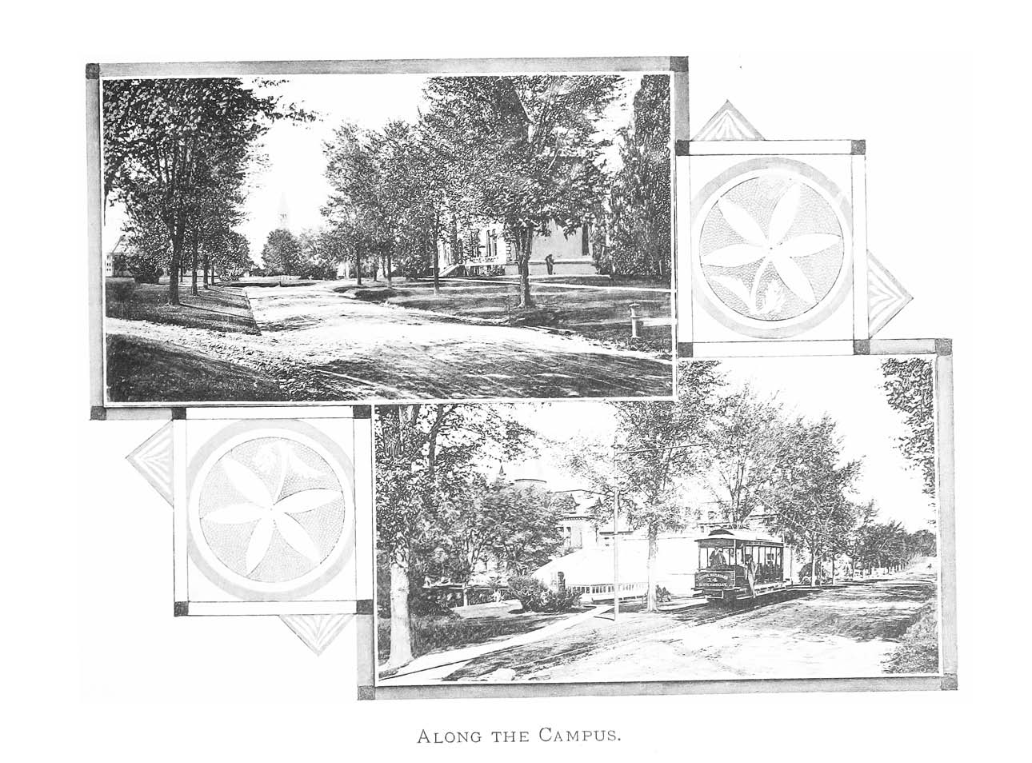
It wouldn’t be a good picture book if it didn’t have at least a couple Cornell photos, and its students and alumni were likely the target audience for this publication. In the top photo, once can make out McGraw Tower, The pyramidal steeple of McGraw Hall, and the windows of the now-demolished Boardman Hall in the distance. The lower photo shows the Ithaca trolley (defunct 1935) that once ran past the college library (renamed in 1962 to Uris Library, for donor/trustee Harold Uris ’25). Both photos also show a relatively lush quad and library entrance, likely lost to the Dutch Elm epidemic that ravaged the campus in the mid-20th century.

ith_1896_3

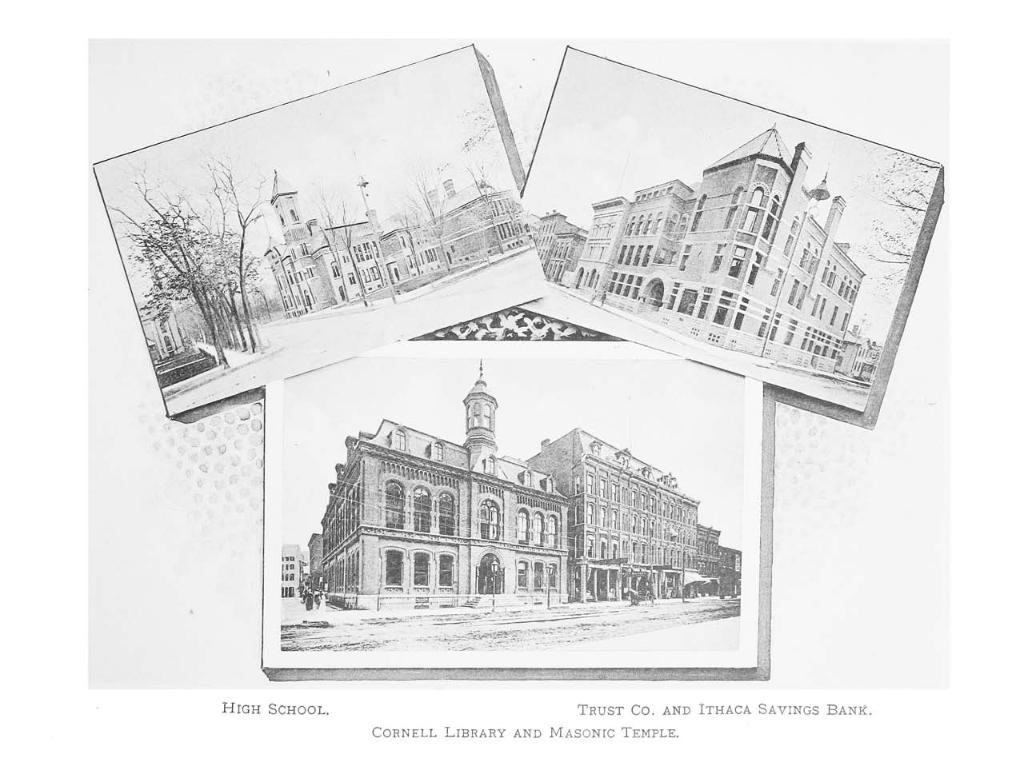
The old old Ithaca High School, the Ezra Cornell Library, the old Masonic Block, and the Trust Company and Ithaca savings Bank Building. All ornate, all lost to history. The old high school burned down in February 1912 and was replaced with the old high school (now DeWitt Mall). The Cornell Library fell victim to urban renewal; it was demolished in 1960 for a drive-thru bank extension and is now a parking lot. The Masonic Block (old old Masonic Temple) dated from the 1870s and seems to have been demolished along with the library (they both were still standing in 1959). The Ithaca Savings Bank building was designed by William Henry Miller and built in 1887, but the building was destroyed in a fire in the early 1920s, and replaced by Tioga Place (M&T Bank) in 1924.

ith_1896_4

Upper right, the old Triphammer foot bridge. Not heated, wooden, and probably as safe as standing under a flagpole during a thunderstorm. The bridge at lower left looks to be the College Avenue Stone Arch bridge looking northward to Cornell campus.

ith_1896_5

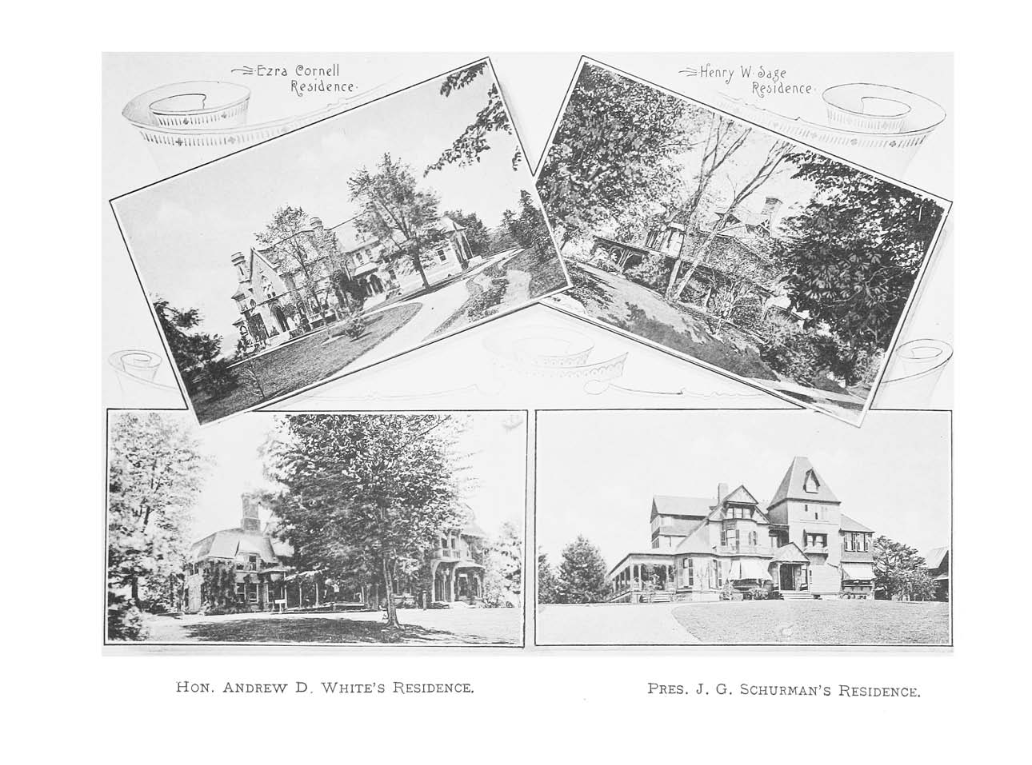
Of the four mansions above, three still stand. Ezra Cornell’s is now the Llenroc (Delta Phi) Fraternity House, A.D. White’s House still sits on Cornell’s campus, and the Henry Sage residence was donated to Cornell, used as an the school infirmary for several decades and is now Sage House, home of the Cornell University Press. Schurman’s residence at lower right was torn down in the early 1920s to make way for Baker Lab.


News Tidbits 1/17/15: Capturing “The Essence of Local Surroundings”

17 01 2015

inhs_pride_conceptsketch

1. Token PSA: The third meeting for INHS’s Hancock Street/Neighborhood Pride redevelopment is next Wednesday, the 21st, 4:40-7:30. Attendees are not required to be there for the entire time. The goal of meeting three is to discuss design concepts for the proposed buildings that comprise the two remaining/competing site plans. I look forward to writing a follow-up after the meeting.

cayugafarms_2

cayuga_farms_1


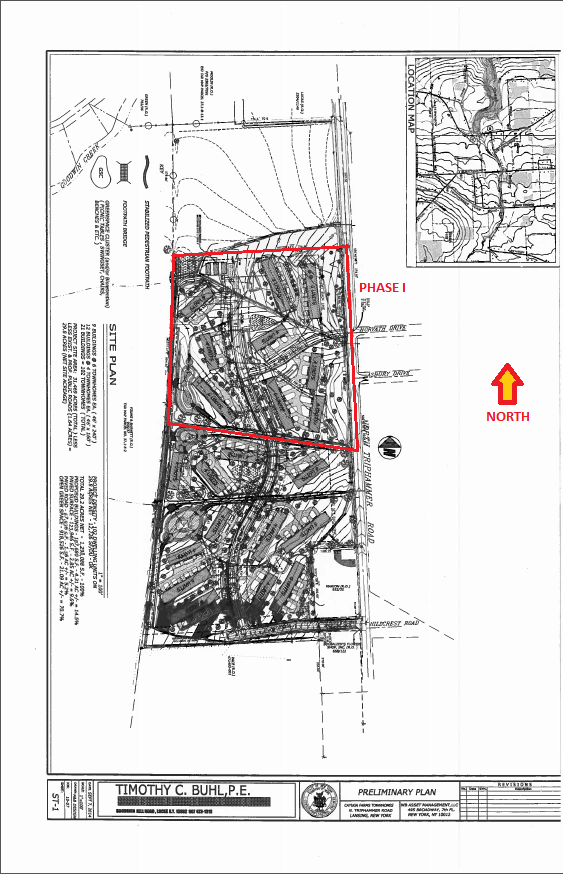
2. Finally, some drawings for the 102-unit Cayuga Farms townhouse project in Lansing, courtesy of the Lansing Star. They look like stereotypical “McMansions” that happen to have shared walls, and the rental price for the 2 and 3-bedroom units has the mansion part covered – $1800-$2200/month. If you use the 30% rule of affordable housing, that means the a household in the cheapest unit is expected to pull in $72,000/year. To quote the project engineer, Timothy Buhl:

“The idea is to capture the transient market of people coming from urban areas to work at the colleges,” Buhl said.  “They would ultimately buy a house, but don’t know where to locate.  We’re looking for young, two-worker families.  It’s an in-between type of rental of higher-end people that we’re looking for.”

In other words, “affordability” is not a word you’ll see in this conversation. The Cayuga Farms project was initially proposed several years ago as 144 townhouse condos (I miscounted and said 138 at the time), but the market for suburban high-end townhouse condos is pretty limited – there is Ivar Jonson’s Heights of Lansing which since 2006 has sold ~17 of the 70+ proposed townhouse units, and Woodland Park, which in three years has built ~6 of 48 planned. The market is virtually non-existent, hence rentals.

On the town’s website, there’s all sorts of other data uploaded: trail recommendations, on-site sewage system details, traffic generation estimates, erosion and sediment control plans, environmental review forms and so forth. Cayuga Farms is multi-phased, with 3-4 phases from 2015-2021; phase 1 will have 44 units. Since Lansing is at capacity on its natural gas pipeline, residents will be using propane appliances until the new natural gas pipeline from NYSEG is routed in. This project already gets dinged in my book for having 354 parking spaces when zoning requires only 153 (1.5 spaces per unit). Every unit gets 3.5 parking spaces. That seems like overkill. Anyway, the planning board reviewed the SEQR on the 12th, which is a big step towards approval of the townhouse development. My gut feeling is, while there’s no doubt Ithaca needs housing in most market segments, a high-end rental unit where you have to drive to everywhere bundles just about every criticism about local development into one convenient package.

Let’s be honest, I’m generally pro-development. But I do have a short list of projects I don’t support. This is one of them. With the sprawl, gobs of parking, and mediocre design, I question its value to the Lansing community.


10378252_313975992125799_95913780193412415_n 10917333_314783998711665_7443965770647794346_n

20141129_135859

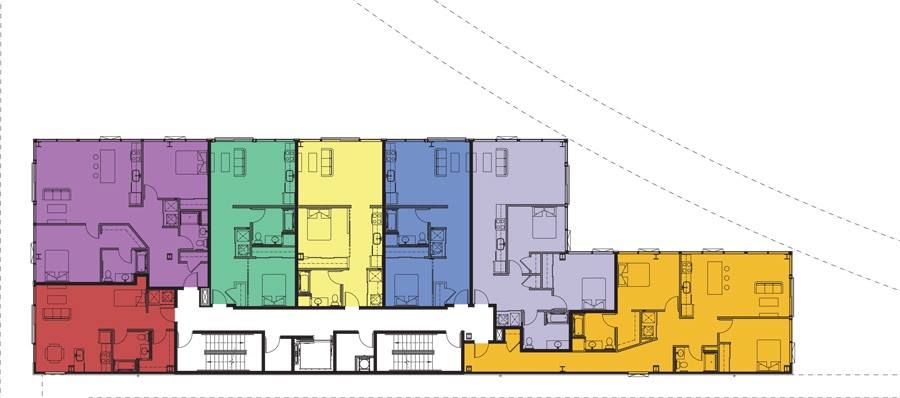
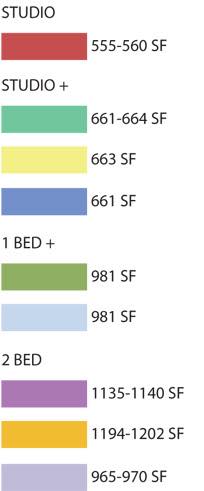
3. The Lofts @ Six Mile Creek project has posted preliminary unit sizes and floor plans on their facebook page. The “Studio +” and “1 Bed +” indicate bonus rooms inside the unit (suitable for another bedroom, home office, etc.). No word on rents just yet, but being new and downtown, expect an upmarket price for the 45 apartments due to enter the market late this spring. Their webpage notes they’ll be accepting reservations sometime prior to that.

canopy_v7_1

4. I think we’re up to version 7 now, but the differences in the proposed “canopy Hotel” are now so subtle that you’d have to be looking hard to spot the changes. The entrance facade is virtually the same, but the mechanical penthouse has been updated to better blend in the rest of the structure, and a couple of stylized wall inserts have been planted into the northwest wall to give the 7-story, 123-room hotel a little visual interest. More renders here, a geotechnical report here, a new cover letter here, and traffic study materials here and here. Thank goodness a lot of this work has gone paperless.

According to the documents, the new “canopy Hotel” brand by Hilton

“…is marketed towards the millennial generation (those born between 1980 and the mid-2000s), however, is relevant for the older generation of hotel guests. Each canopy Hotel is designed to incorporate the essence of its local surroundings and neighborhood feel; such as offering a local welcome gift and evening tastings of local food, beers, wines, and spirits to providing local fitness and recreation options in terms of jogging and bicycle routes (bicycles will be available for rent).”
Yes, ‘canopy’ is meant to be lower-case and ‘Hotel’ is capitalized. I’m sure the brand creators thought that was hip and edgy. Yet another reason why I would never be a good marketer. The 74,500 sq ft hotel includes a small restaurant space of 2,000 sq ft on the first floor, as well as standard hotel amenities like a small meeting room and a gym. The $19 million project hopes to start construction this spring.
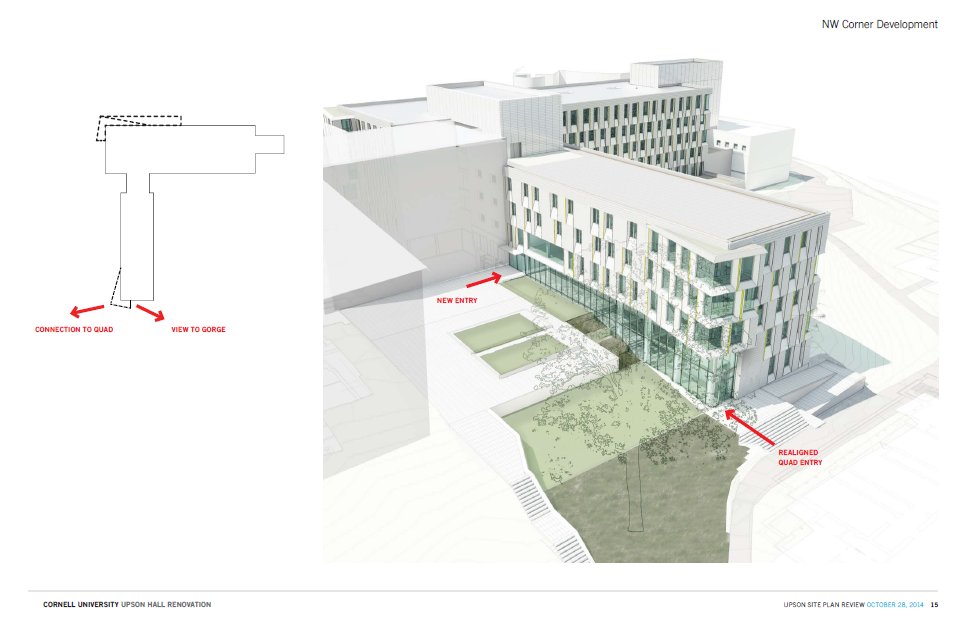
upson_4
5. Looking ahead, here’s what the city Planning and Development Board seeks to do at its meeting later this month. For the canopy Hotel mentioned above, declaration of environmental significance and possible preliminary approval. INHS’s 402 S. Cayuga Street townhomes and the 6-unit 707 E. Seneca apartment project will be up for environmental review and recommendation to the zoning board for variances. The Planning Board will also declare itself lead agency for reviewing Cornell’s Upson Hall renovations, the 3 duplexes at 804 E. State Street (112 Blair). Board members will also consider approving a telecommuncations (cellphone) tower on top of a gas station at 214 N. Meadow Street, and weigh in on parking-related variances for 128 West Falls Street and 108-110 Eddy Street. It’s an interesting mix this month.


The Cornell Logo That Failed

13 01 2015

Let me start with a rhetorical question: What makes a college? Academics? Athletics? The physical facilities themselves? The logo?

The last one doesn’t really seem like it should be a contributing factor. But there have been claims that it made all the difference for Cornell, causing it to lose prestige in the late 1990s and early 2000s.

It seems like the silliest thing in the world, but here’s the argument. In 1999, Cornell was 6th. By 2004, it had dropped to 14th. One of the reasons for this was brand image – a clunky website, bland brochures, and the logo.  Quote:  “Imagine a flag of the old Soviet Union: a field of red, and in the middle in plain white letters, Cornell.”

Most folks familiar with the 1999-2004 logo not-so-fondly describe it as the one that looks like a J.C. Penney knockoff (J. C. Penney had a similar logo from 2000-2006). Well, funny story about that. From the 2006 NPR interview:

Ms. HEATHER GRANTHAM (co-chair, Cornell image committee): The company that designed that logo originally was the same company that designed the almost identical big red box for J.C. Penney. It’s not Cornell. It’s not Ivy, it doesn’t have that history, and so we really wanted to make that push to revert back to some form of the original crest.

It must have been a busy week for the logo designer (who oddly enough, I can’t even find the name of online). Given the complaints above, and J.C. Penney’s market tumble, I’d be hesitant to hire this company.

The student-led Cornell Image committee made it a priority in the mid-2000s to bury that logo in favor of something more traditional and “Ivy” – the simplified emblem by Chermayeff and Geismar Inc. that Cornell still uses today. It was hoped that it would make Cornell look less like Michigan and more like Harvard. The committee also had goals of reducing class sizes, limiting enrollment and increasing financial aid to minorities, all ways to game the rankings.

Some of those things may have happened (Cornell improved its financial aid, but enrollment has climbed), but rankings haven’t really changed much, hovering between 12th and 16th since the logo was changed at the end of 2004 (for the record, Cornell is currently ranked 15th by U.S. News & World Report). The rankings the NPR interview used were cherry-picking anyway. Cornell spent most of the 1990s hovering between 10th-14th; 1999 was an anomalously good year. So the change isn’t very effective on paper, but I do prefer the current logo to the old one.


News Tidbits 1/10/15: Where Will All the Students Go?

10 01 2015

student_housing_table

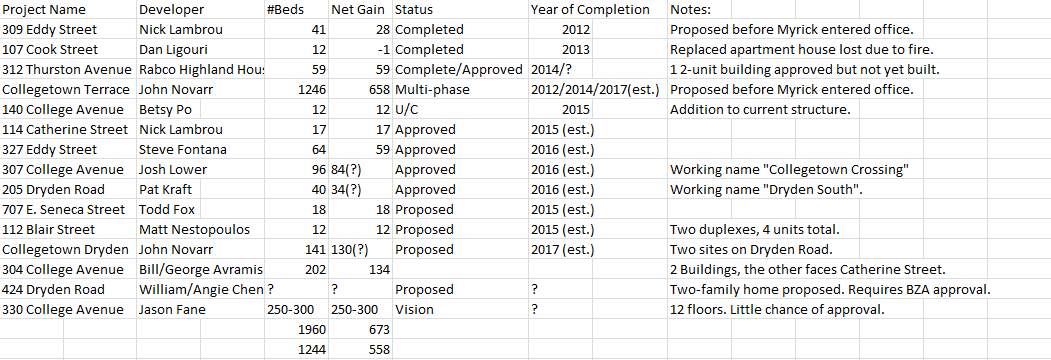
1. I’ll lead off with this supplement to the Voice opinion article I wrote. Here’s the work sheet I used for the bedroom tally for student-centric housing. I chose to leave it out of the submitted article because 95% of readers checking the Voice would find it obscure or just wouldn’t be interested. If you’re coming here, then you’re probably in the other 5%. Question marks are present because the county’s online records provide total number of units in mixed-use buildings, but not bedrooms (yet residential-only structures have bedroom numbers, go figure). Anyway, there is the off-chance that enough new projects will be proposed in the next 12-18 months that we could still meet the projected need by 2018, since it’s about 500 rooms short at the moment…but I’m not optimistic. There are few large sites left in Collegetown, and even fewer sites in other adjacent neighborhoods. If Fane comes back down to Earth with a project that fits zoning for 330 College Avenue, and Travis Hyde’s Ithaca Gun apartment project ends up being student-centric, then perhaps there will be another 200 or 250 bedrooms to the total. The rest of the balance will need to come from small or medium-sized projects. Anyway, that’s all speculation. We’ll just have to wait and see what happens.

I wasn’t being totally facetious with the suggestion of Cornell building more dorms though. A few hundred rooms could take some of the edge of the housing problem, and it’s less Cornell has to pay out in rent stipends to financial aid recipients. But even if Cornell was mulling it over, it would take years to go through planning and construction.

tech2

2. If this were in Ithaca, I’d have splurged pages of writing over it. But it’s not. Construction permits have been filed for Cornell’s second academic building at its new tech campus on Roosevelt Island in NYC – a 189,000 sq ft structure designed by some of Cornell’s favorite alumni architects, NYC firm Weiss/Manfredi. They’re the same ones who are handling the Vet School renovation, and who designed the Sesquicentennial Commemorative Grove that opened last fall. The building is the one on the right in the above image, the one that looks like an ice cube breaking apart. Building number one, the design in the left foreground, is already underway.

For the record, I’m still not a fan of the tech campus.

3. The Ithaca Times has done an interview with Bill Manos that’s worth a read. It has your standard anti-regulation rant (the same one you get from your retired Fox News-watching uncle), and he calls the sale an “opportunity from Heaven” that he didn’t see coming. He says the sudden closure was so the new lessees could renovate the diner and have their new restaurant (called “Old Mexico“) ready for the Spring. I don’t think that exonerates the “bad manners” of giving his employees only eight days’ notice, but hopefully they’ve all been able to move on like he claims in he interview.

707_E_Seneca_2

4. Looks like the 6-unit, 18-bedroom project for 707 E. Seneca has seen some slight revisions as it goes to the ILPC (Ithaca Landmarks Preservation Council) for further review (agenda here). About the only notable change I can find from the previous render is in the spacing of the dormer windows. Although the lot is undeveloped, it’s in a historic district, hence the extra step of ILPC approval. A lot of the major details have already been hashed out, so I imagine the council will only have minor suggestions, but we’ll see what happens. The ILPC is also set to review the Old Library proposals, and given their exacting approach, my inner cynic tells me it will be less about which project they like the most, but rather which one they dislike the least.

804Estate_112blair_rev1_1 804Estate_112blair_rev1_2

5. On another note, the two duplexes proposed for 804 E. State Street (formerly 112 Blair) has been upped to three. Details and drawings here. All are two units each with three bedrooms in each unit, so 18 total. They also look about as utilitarian as one can get away with; the easternmost house (building “D”) has a chamfered corner, and that’s about the only interesting architectural detail I see. Parking will now be shoehorned into the basement level  of all three buildings (12 spaces total; it’s a hilly site). The construction cost has been upped to about $600,000, but the construction timeframe of late Spring/summer 2015 is still the same. Although the lot is being cobbled together from slices of adjoining properties, it will still require an area variance from the zoning board because of how close the houses are to each other. Looking on the bright side, this development will replace a parking lot and works as appropriate infill for lower Collegetown.

20141227_144707

6. I finally received an email response from the Zaharises regarding what’s underway at their old furniture store at 206 Taughannock Boulevard. Unfortunately, it’s not very descriptive:

We’re renovating the building into apartments. It looks quite different doesn’t it?!

Yes. Yes it does.


Cornell Construction Updates, 12/2014

6 01 2015

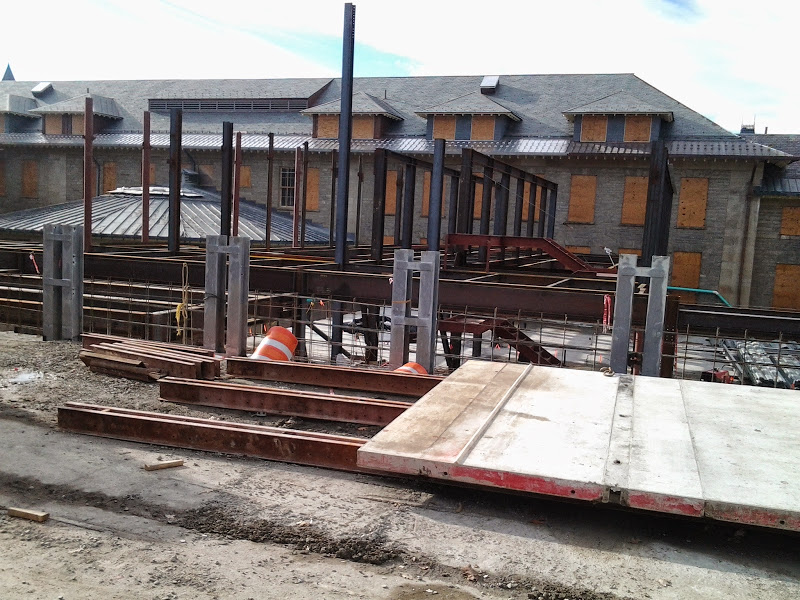
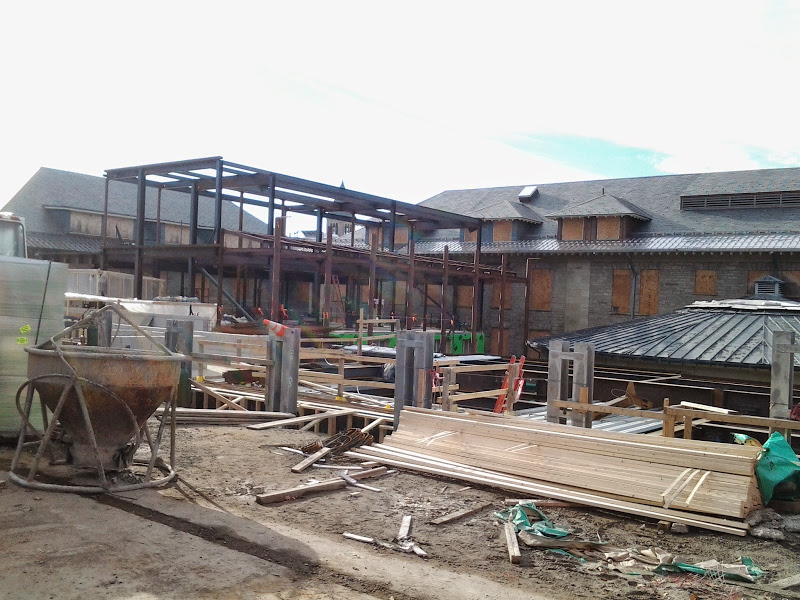
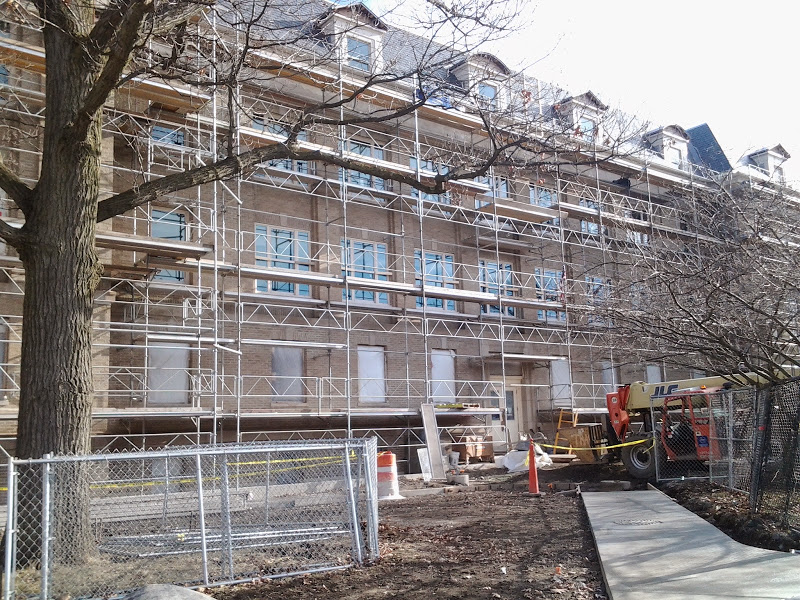
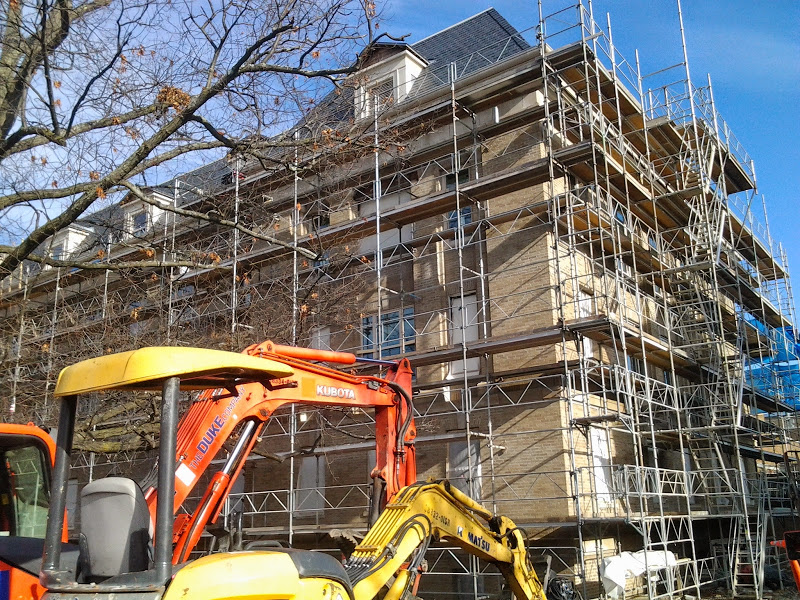
Funny How the November photos are snow-covered, and the December photos were taken when the temperature was in the low 50s F. Work continues on the future Klarman Hall, pushing onward to its intended opening in December 2015. Construction firm Welliver is plodding making slow if steady progress, with steel work and metal decking underway above ground, and utility installation and door framing in the basement. Some interior and exterior wall framing has begun on the basement, ground and first floors. The 33,250 sq ft building was designed by Koetter | Kim & Associates.

20141227_130627 20141227_130711 20141227_130745 20141227_130808 20141227_130913 20141227_130937 20141227_130955 20141227_131041

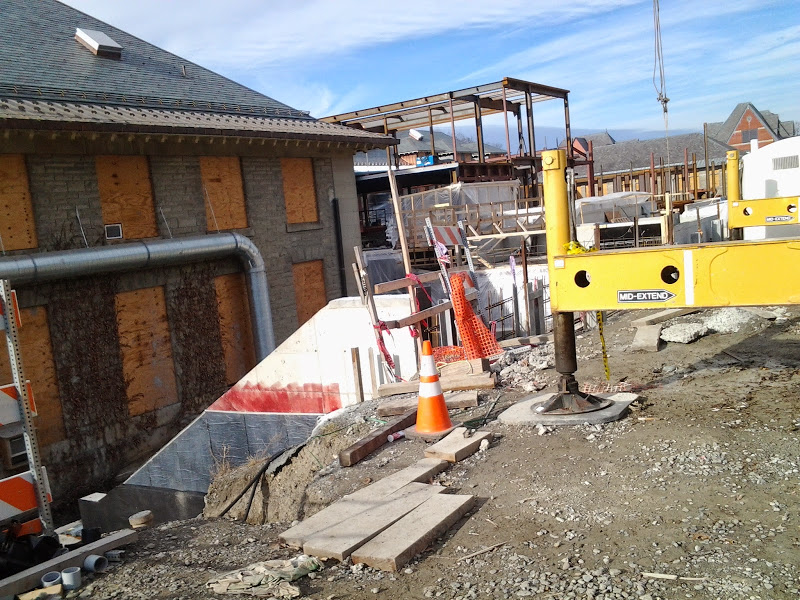
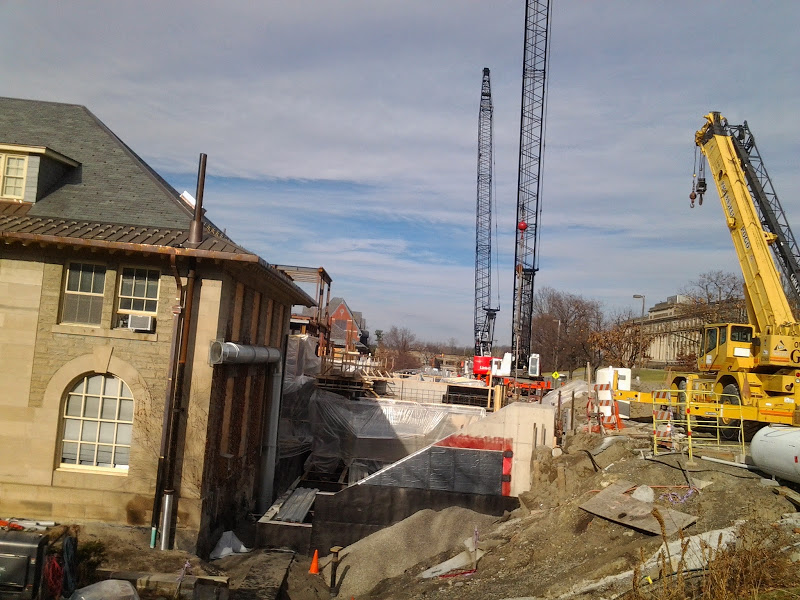
On the other side of campus, renovation work continues on Stocking Hall, the home of the food science department. The porous concrete in front of the new wing didn’t fare as well as hoped, and is being replaced. In the old building, installation of new, energy-efficient windows is underway, and should be completed in the near-term. Interior work continues as labs and academic spaces are fitted out, and the old building and new building connectors have been sealed from the element, making them water-tight. The work will wrap up this summer, weather and schedule permitting; the two-phase renovation was launched in September 2010, and the new wing (phase one) opened in July 2013. The 136,000 sq ft rebuild and renovation is nearly a year behind schedule. Contracting is being taken care of by the Syracuse office of The Pike Company, and the design of the new building is a product of a SUNY Construction Fund favorite, Mitchell Giurgola Architects of New York City.

20141227_124325 20141227_124331 20141227_124336 20141227_124419 20141227_124449 20141227_124510 20141227_124610