News Tidbits 2/7/15: It Snows In Ithaca, But Verizon Makes It Rain In NYC

7 02 2015

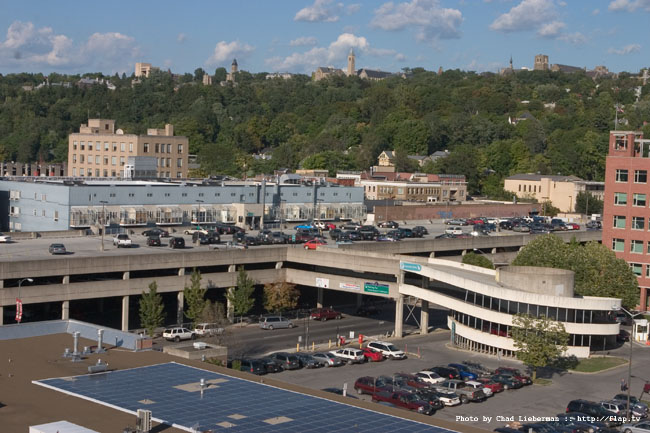
1. As relayed by several outlets, Cornell just received a very generous $50 million donation from telecommuncations giant Verizon. I might make more news about this, but this donation is strictly for the shiny new tech campus down in New York City. The “Verizon Executive Education Center”, in the left of the above render, will be part of the first phase of the campus, set to open in 2017. This goes along with a 6-story, 236,000 sq ft building design by Weiss/Manfredi, and a 4-story, 188,600 sq ft building by Morphosis Architects, both of which are already underway. The skyscraper on the right of the render is a 26-story, 500-room dormitory for students and staff designed by Handel Architects; while not yet underway, it is also slated for a 2017 opening. A design for the tall building on the far left has not been released.

I’d like to see a breakdown of what proportion each campus received from Cornell’s $546.1 million in donations.

2. Looks like some Sun writers decided to do some digging regarding the potential Fine Arts library relocation and expansion. There’s not a whole lot more to add since the Ithaca Voice article; just that the timeline and final design haven’t been set, although the renovation is a “key academic priority”. Students of the AAP school also have mixed opinions about the growth of the library and the possible loss of studio space. But don’t fret dear readers, if a render comes out, it and any pertinent info will be shared here.
424_dryden_rd_1

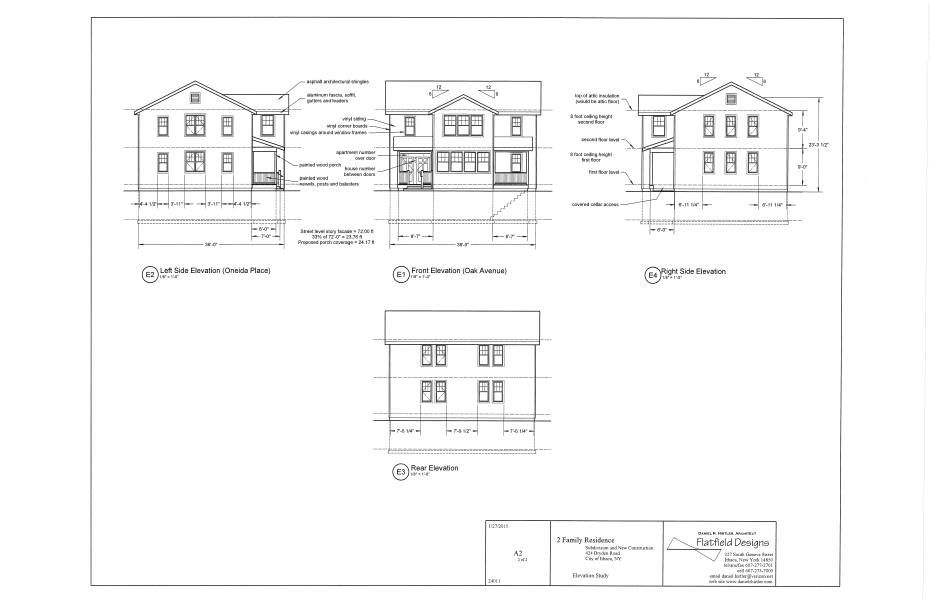
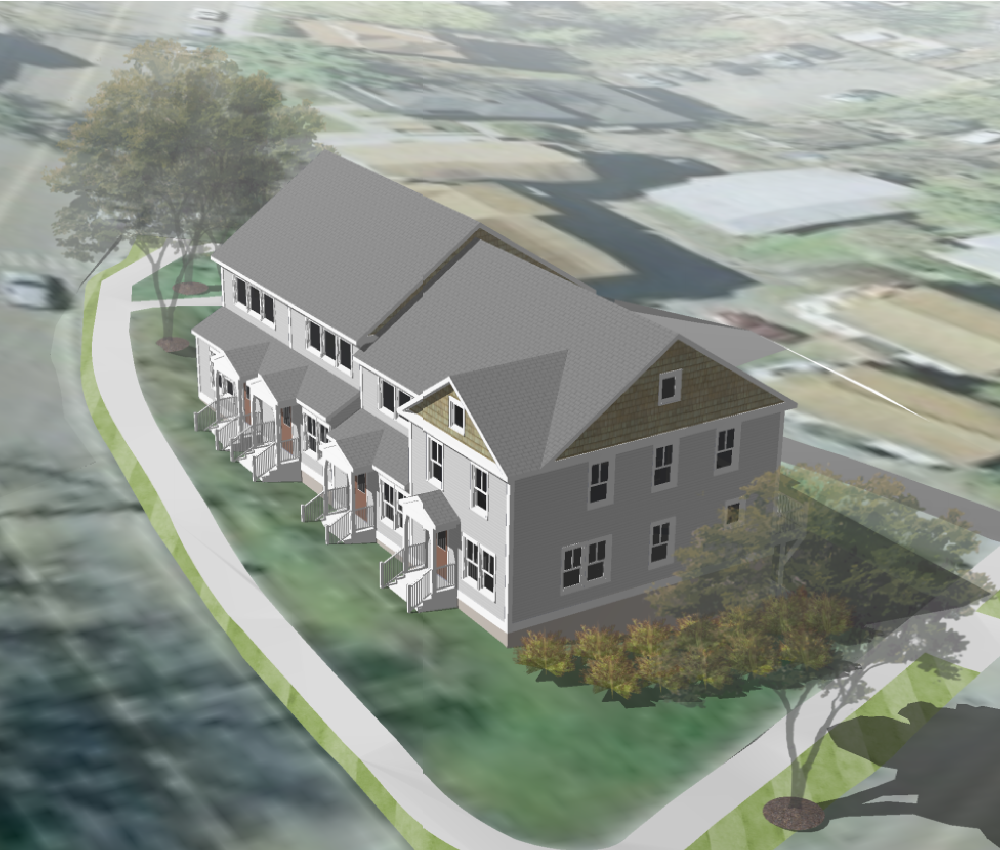
3. A subdivision filed with the city of Ithaca indicates plans for a new two-family, 6-bedroom home at the intersection of Oak Avenue and Oneida Place. The house would be built on land that currently serves as a rear parking lot for 424 Dryden Road. Application here, drawings here. The site falls into the CR-2 Zone of the Collegetown Form District, meaning 2-3 floors, and pitched roofs and porches are required. The architect is Daniel Hirtler of Ithaca, and the developers are William and Angie Chen, also of Ithaca. While not particularly notable, it’s an example of how the form-based zoning applied to Collegetown helps maintain the character of the less-dense outer neighborhood, while still allowing for new construction.

canopy_hampton_rev4_1

4. As with virtually every other sizable project in downtown Ithaca, the canopy Hotel by Hilton is filing an application requesting a tax abatement through the CIITAP program, making it the sixth applicant since the revised program was put into affect in 2013. Application here, and the notice of  public meeting, set for 5 PM February 9th at City Hall, is here. A refresher/review of CIITAP can be found here.

The applicant, “Ithaca Downtown Associates LLC”, a.k.a. the Patel Family of the Baywood Hotels Inc., notes that the 7-story, 123-room hotel project has an estimate cost of $20.15 million. Although the value of the tax abatement is not recorded in the city’s application (it will be written out, when reviewed by the county IDA), it looks like they’re seeking the standard 7-year abatement, which will save them something in the ballpark of a couple million dollars over those 7 years.

As with the previous Marriott and Hotel Ithaca applications, the applicant will only pay one-third to one-half of its projected employees a living wage, which is probably going to earn them the scorn and opposition of the Tompkins County Worker’s Center. But the city and Downtown Ithaca Alliance have been supporters of the project. Neighboring businesses seem to be have mixed opinions about the project, with some seeing a potential business source, and others mourning the loss of a convenient parking lot.

The 74,475 sq ft project is expecting to start construction during the spring, with completion in Spring 2016. Local firm Whitham Planning and Design is the architect.

For those already planning a stay, expect room rates of $160+/night, according to the Journal.
inhs_pride_alleydesign_v2

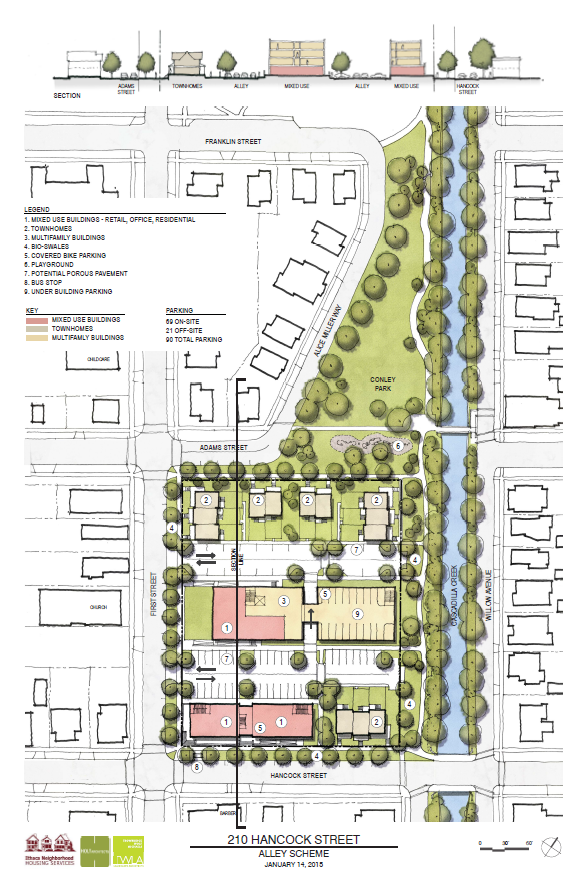
5. It’s PSA time again – INHS is planning meeting #4 for its proposed Neighborhood Pride redevelopment at 4:30 PM Wednesday the 11th, inside the vacant Neighborhood Pride grocery store. The one and only final design concept, shaped by community feedback, will be presented at this meeting. Keep an eye on the Voice for an article (and maybe a rerun here) next Thursday or Friday.

lake_st_bridge

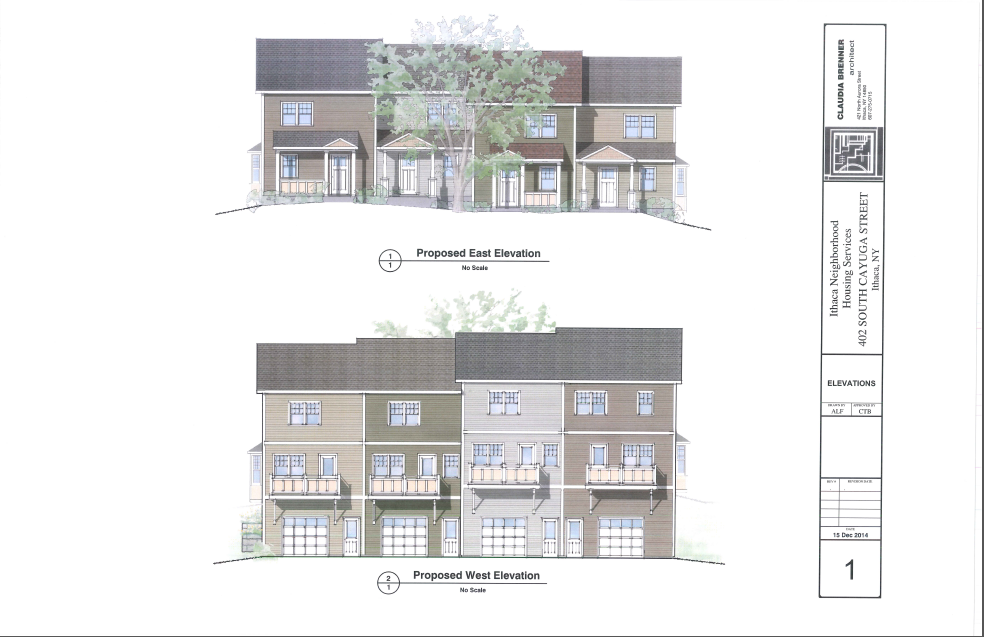
6. Looking at the city’s project memo going out to its departments, it doesn’t look like a whole lot needs to be reviewed this month. Cornell’s Upson hall renovation, the 6-unit building at 707 E. Seneca, and the 4 for-sale townhomes INHS wants to build at 402 S. Cayuga Street are ready for final approval this month. The 3-building, 6-unit project for 804 E. State (112 Blair) still needs to be reviewed by the zoning board, and will be completing environmental review (SEQR determination of significance).

The only new projects of note are the new house at 424 Dryden, and renovations to the Lake Street Bridge. The bridge project consists of rebuilding the current deteriorated bridge with a new deck and refurbished abutments (base supports), as well as scour reinforcements (to protect from creek erosion), a bumpout for viewing Ithaca Falls, some cute light-posts, and a bridge span that isn’t so degraded that it’s liable to collapse into the creek. That project has a $1,000,000 price tag, and is expected to run from June to November of this year.

For those that use this bridge, start prepping for a detour route – the bridge will be closed during construction, to both vehicles and pedestrians. The city estimates the detour will be an extra 1.7 miles for cars, and 0.7 miles for bikes and walkers.


Tompkins County’s Comprehensive Plan

3 02 2015

5-1-2012 120

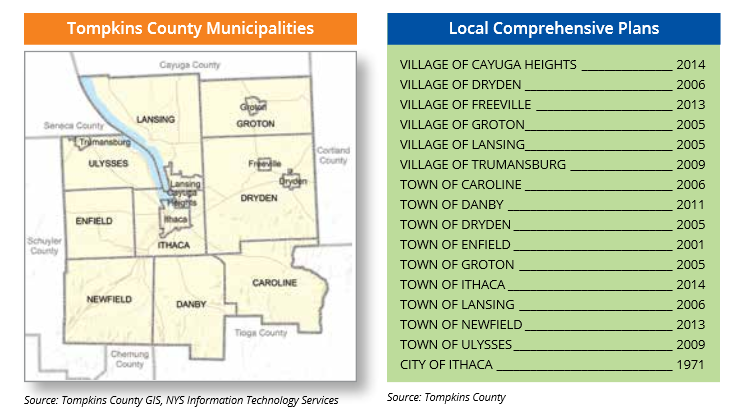
In keeping with the recent talk of Comprehensive Plans, Tompkins County has just released their new plan, their first since 2004. That might not seem like a big deal, but in that time period, the county has probably added 4,500 residents and a couple thousand housing units, so it’s more important than it might seem at first glance (for the sake of comparison, every county community except Ithaca city has made a plan since 2000; the city’s dates from 1971). Currently, the plan is in review and up for adoption by the County Legislature at their meeting on the 17th. The 109-page document has been in the works since the fall of 2013.

tc_compplan_1

Generally, the county doesn’t play a big role in what does and doesn’t get built in its constituent villages and towns. Building projects are required to get county input, but the county isn’t about to stop anything, nor does it have much authority to (unless you’re applying for tax breaks, like Jason Fane’s 130 E. Clinton project). Perhaps the largest point of contention at the moment is the intermunicipal NYSEG natural gas pipeline, which Lansing wants and needs to sustain its growth, but the county has issues with, saying it could upset their green energy goals. On the opposite end of the scale was the Cayuga Ridge project for the Biggs parcel, which the county planned to sell to an affordable housing developer, but received significant blowback from the West Hill community. Cayuga Ridge was later cancelled when a site check by the developer revealed more wetlands than previously thought.

Anyway, back to the plan. It’s available in small chunks on this page, or for those whose internet connection can handle all 109 pages at once, here it is.

The general theme here from a housing standpoint is to fill in the spaces within the city, villages and hamlets. There’s a strong push on the county level to keep farmland from being scooped up for new development – a major threat, considering some of the cheapest land to develop in the county happens to be far-flung agricultural properties, where a relative lack of neighbors and shoestring small town planning boards can make for a quick and easy process. The logic is, if development takes place in communities that are already settled and already have employers and amenities, it limits the need for getting into a car for every trip, and makes for a more “sustainable” environment and stronger communities. Urban/infill development also makes for a lower tax burden per new unit added – there’s no need to pave new roads or extend utility lines.

The county is also becoming a bigger proponent of mixed-use development – apartment buildings with retail on the first floor, projects that have space for both homes and offices, and so forth. The logic is the same as before – if it’s convenient, people are more likely to walk, and patronize their own community. Trends in smaller households leads to the county’s suggestion of smaller housing units, as well as more senior housing for the greying population that chooses to “age in place”.

This all sounds great on paper, but there are many issues in practice. Anti-development sentiment, the ideal candidates for development aren’t for sale, outdated municipal zoning and so forth.

Economically, the county plans on sustaining its biggest contributors, education and healthcare, while making an effort to diversify with incentives towards manufacturing, high-tech/tech startups, food processing, agriculture and tourism. Specifically, they’re hoping to leverage the Cornell tech scene into permanent jobs and new economic development, which has met with some success, though nothing on the scale of, say, Silicon Valley or the Research Triangle. The high taxes, isolated location and lack of access to capital are major hurdles in an area that has plenty of brain power to tap into. The county is hoping to alleviate some of the burden by utilizing the state’s STARTUP NY program, and supporting resources like the new Rev business incubator in downtown Ithaca.

tc_compplan_2

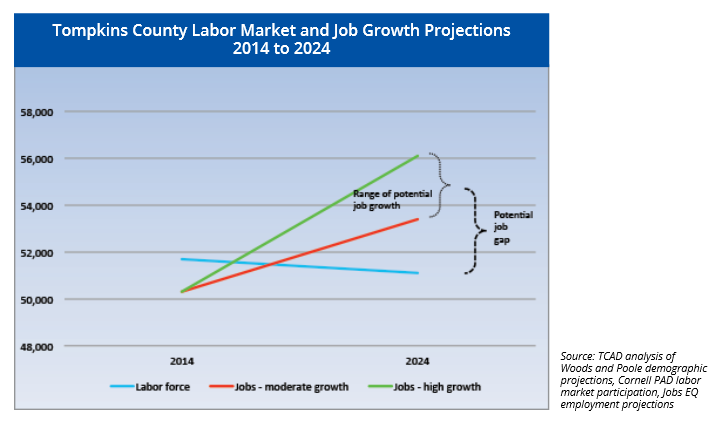
The county only seems to be expecting 3,000-6,000 new jobs in the next ten years – a number that seems a little conservative, if recent growth is any indicator. The county (aka the Ithaca metro, following the Federal BLS) has added 8,400 jobs since December 2004 (63,700 jobs in December 2004 to 72,100 in December 2014).

On an individual scale, the county is seeking to expand broadband internet infrastructure and maintain the airport, which has seen a sharp decrease in travelers over the past year, putting its long-term feasibility at risk. There will also be continued funding towards planning studies (a study examining the NYS DOT relocation from the waterfront is the latest example), tourism advertising and tax abatements when appropriate.

Finally, the county expounds the affordable housing issue, noting that 38% of renters and owners are above the “affordable” threshold, there are over 15,000 in-commuters, and very low vacancy rates creates a disincentive for slumlords to fix up their overpriced properties, which in turn makes communities less energy-efficient. Unfortunately, the county doesn’t offer many solutions. They note an affordable housing fund paid into by itself, the colleges and the city of Ithaca, put the partnership is set to expire this year, and the future is uncertain. The other is “increasing community support for the construction of more housing units”, which is much easier said than done.

There also sections on encouraging mass transit and alternative (non-car) commuting, natural resource preservation and wetland management, but those are too close to my day job for me to want to write about. But in sum, the theme is infill development in the hamlets and established areas, make the area more eco-friendly, preserving farms and green space, trying to expand affordable housing options and continue growing the economy. All of which are great goals, but given that these interests can conflict with each other, there will likely be many debates over the next several years.


News Tidbits 12/10/14: Content Being Contentious

10 12 2014

This one is coming out early this week for the sake of timeliness.

carey_rev4_1130eclinton_rev2

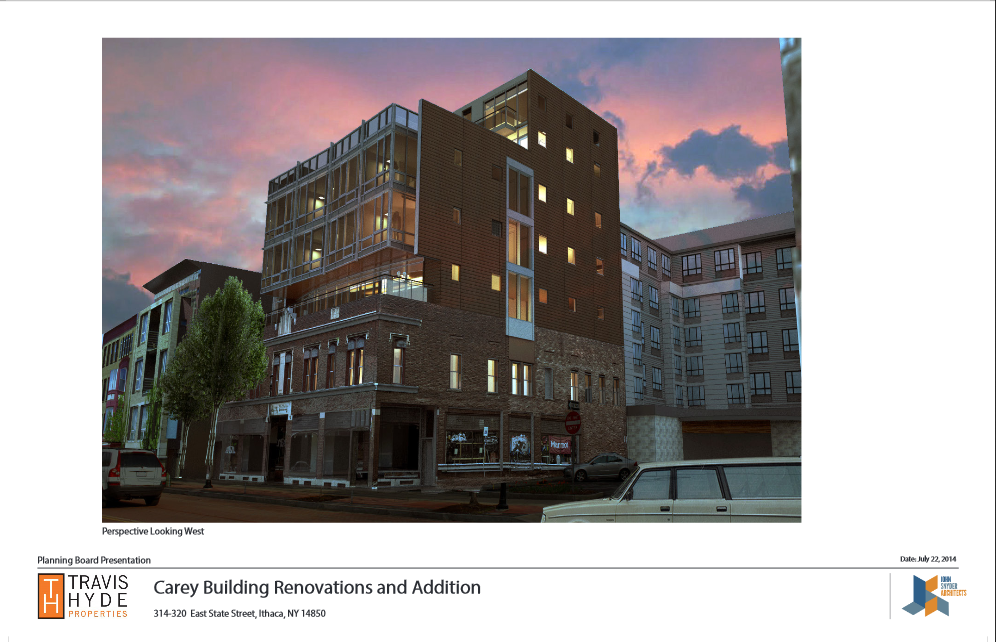
1. Thursday the 11th, the county IDA votes on whether to approve tax abatements for two downtown projects, Travis Hyde’s Carey Building addition and Ithaca Renting/Fane Org’s 130 East Clinton. The $4.1 million Carey Building addition adds 9,000 sq ft of incubator office space and 20 units, 16 of which are 300-450 sq ft studios. 130 East Clinton would add 36 units in three interconnected buildings on a steeply sloped parcel adjacent to the city police HQ, at a cost of $4.4 million. The multi-year tax abatements are in the range of $850k each.

At the public hearing for the two projects, the Carey Building attracted little attention and dissent (which isn’t to say that there hasn’t been any), but Fane’s project attracted much ire. I’m not going to defend Fane’s character. Heck, the man’s been combative through this whole process. But I will side with the trustworthy opinions of Cornish, DeSarno and others that it contributes something to the very tight housing supply and it is a welcome resource. Denying the project by virtue of it being Fane is legally perilous and sets a bad precedent, and saying it’s a bad spot…well, it’s downtown Ithaca, where high-density lot use is expected. If Fane didn’t think he could get the environmental assessment approved he wouldn’t have proposed it. We’ll see what the board decides.

5-8-2012 347

2. Up on South Hill, Ithaca College is holding meetings to flesh out its new master plan. Similar to the plan Cornell published in 2008, the purpose of the master plan (website here) is to determine what the space needs are for different assets and programs of the college, and figuring out where to put them. The master plan is being spearheaded by Perkins Eastman out of NYC. The previous plan by Sasaki Associates was published in 2002 with a refresher in 2010, so to get something out in 2015 would be appropriate. I did a writeup on the old IC plan way back in August 2008. Don’t expect any new plan to be followed to a tee- the athletic center ended up on the complete opposite of IC’s campus than originally planned. But it will provide insight as to what IC wants to build through the rest of the decade and beyond. Key things to looks for – dorm sites in case the college decides to expand its student population, and new program space, which tends to get built sooner or later (for instance, the Business School addition, Athletic Center, and Peggy Williams Center from the 2002 plan).

wegmans_rev1_1 wegmans_rev1_2

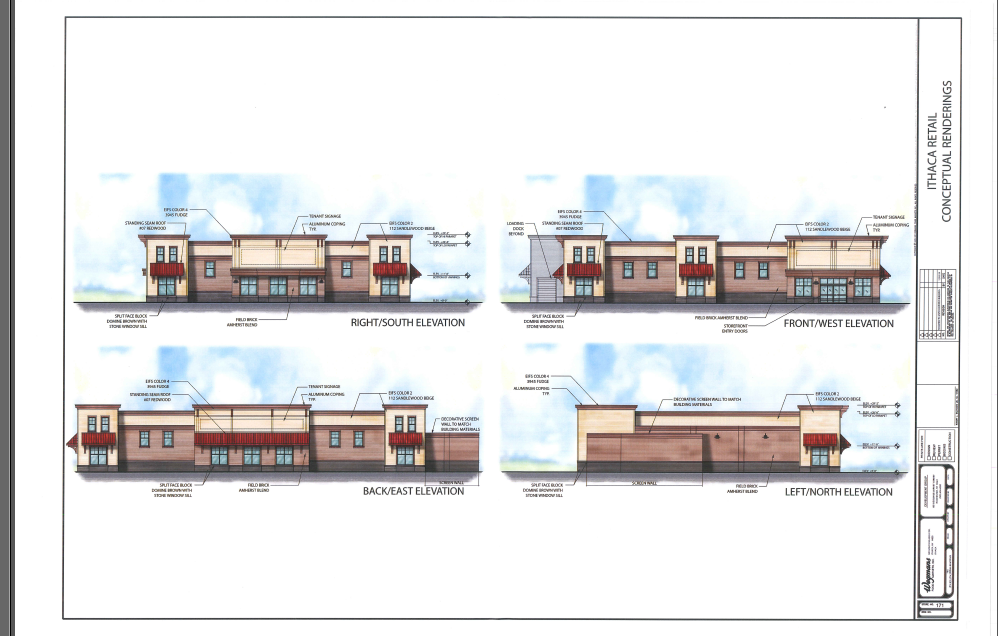
3. The 15,700 sq ft retail pad proposed by Wegmans is up for final review at the December planning board meeting, accordingly to the city projects memo. Compared to the initial design, the building has been rotated on site so that its long axis is now north-south, and the design itself received a number of tweaks, though the overall design theme is still the same as before. There have been some concerns raised by local wine and liquor store owners that it could be home to liquor/wine store, similar to what Wegmans has done at other sites in Johnson City and Buffalo. However, that is one of only a few ideas being floated, and the planning board doesn’t vote on what type of store can be allowed to open in a building, that’s a debate for the Common Council.

maguire_v2_1

4. Looks like the Maguire plan has hit a dead end. According to the Times, the Maguires want the site rezoned rather than a specialized PDZ for the property. Looking at the PDZ regulations, the town’s idea would give more freedom in regards to property use, but it also gives the town the right to regulate the form and layout of the structures on site. I guess the Maguires aren’t fond of that. The town just completed its comprehensive plan and is trying to get its new form-based zoning together, so the Maguires are essentially usurping something the town spent years working on. In conclusion: no dice. The Maguires are still interested in doing something, but it may not be in Ithaca town. Though with as packed as the city is and as questionable as Lansing can be, I’m not sure they have many options.

5. Over in Lansing Village, a mothballed project is getting a revival. “CU Suites” (aka Manley and Richard Thaler, who own the Triphammer Marketplace) proposes a 3-story, 43,000 sq ft building on the west side of Cinema Drive, on a site that is currently a vacant lot. Interestingly, this site was previously approved for a mixed-use structure with those parameters in fall 2012, consisting of two commercial spaces and a 39-unit apartment building, but that plan was never carried out. The proposal before the board seeks “alterations and possible clarification” to the project. No updated renders on the village website, but a site plan of the previously approved plan can be found here. Before the previous plan was approved, the site has been marketed for an office building for two years, to no avail (the market for office space in Ithaca is pretty weak). We’ll see what happens, maybe this one will finally get underway.

707_East_seneca

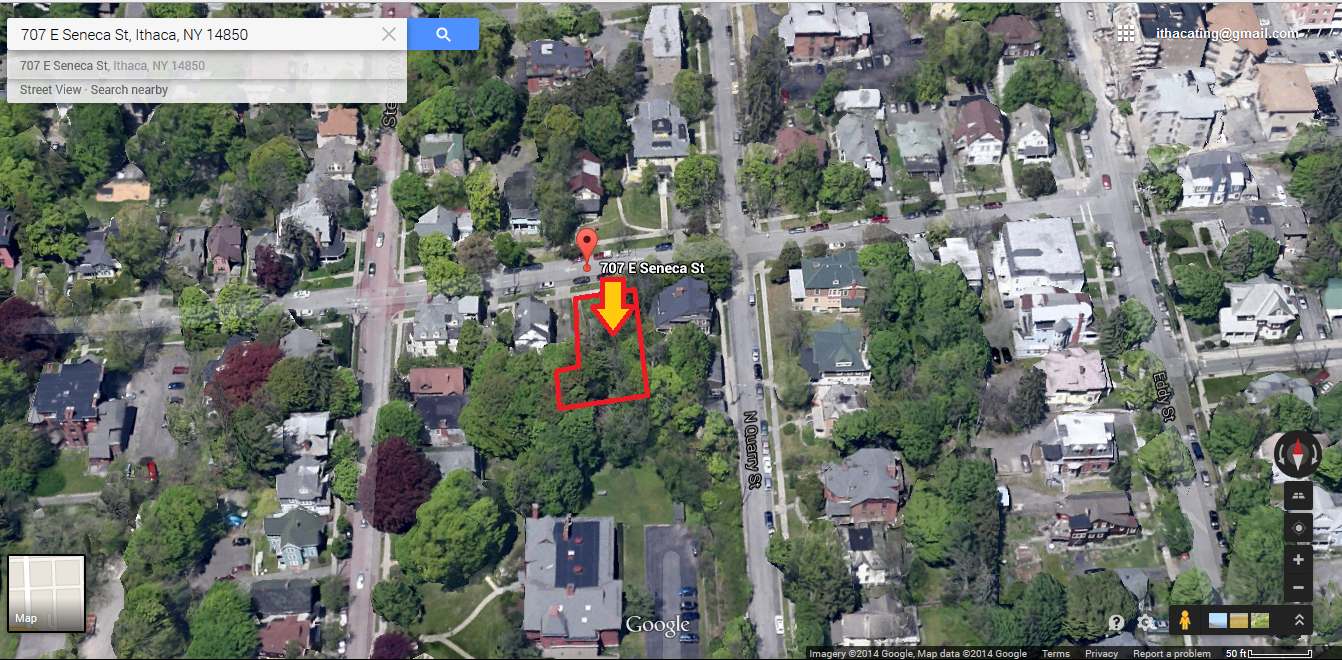
6. For what it’s worth, the proposal at 707 East Seneca appears to be student housing. Applicant Todd Fox (a local developer who’s done a few other small projects in Ithaca and Dryden) wants to build six units with sixteen bedrooms, five 3-bedrooms and a basement 1-bedroom, situated next to four parking spaces tucked into the hillside (four more spaces would be out in the open). I’m not sure how so many units are possible, since I thought the maximum allowed on site was four units. I’d love to see how it looks, but there’s nothing on the city website (which, sidenote, has been “updated” and now has information of three separate websites, the new one, E-govlink and “TSSERR”; the notification emails don’t work and it’s driving me nuts). If something comes up, you’ll find it here sooner or later.


Lofts @ Six Mile Creek (Cayuga Place) Update, 11/2014

5 12 2014

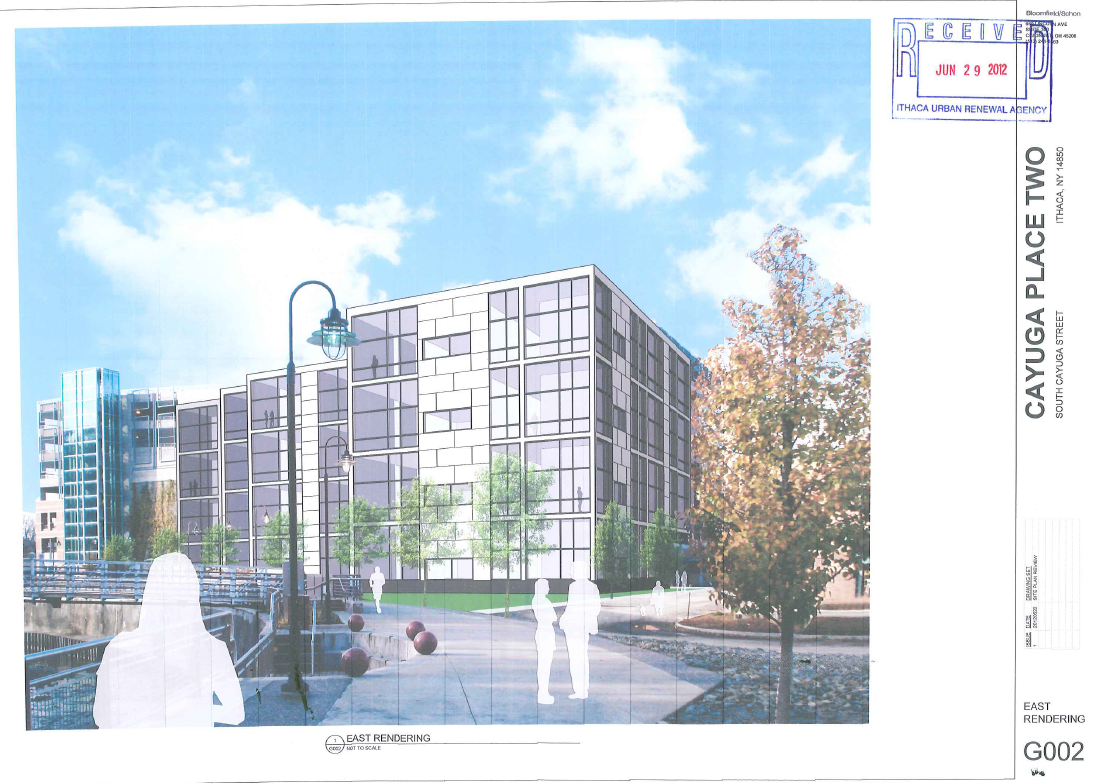
As much as I hate to entertain the currently-fashionable use of prepositions in project names, and the “@” symbol to make it modern and hip, that is the official name for what was the condo portion of Cayuga Green. More notably, the project website describes these as apartments rather than condos as initially planned. Apartment projects are easier to get financing for since it’s generally easier to find renters vs. buyers, but given some of the discussion about the need for owner-occupied units that has come up lately (the Old Library redevelopment comes to mind), this is a mild disappointment.

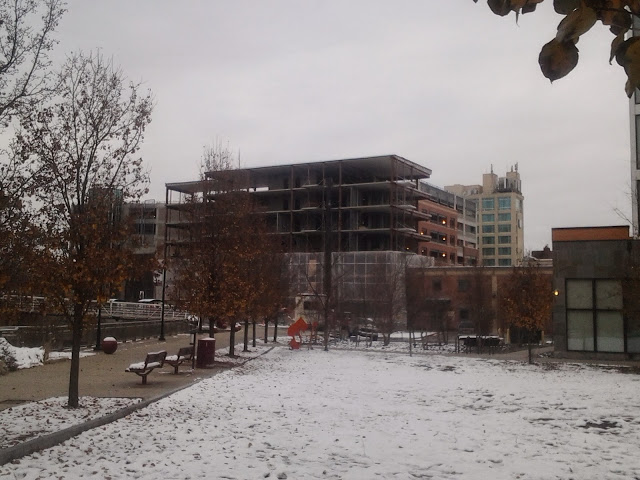
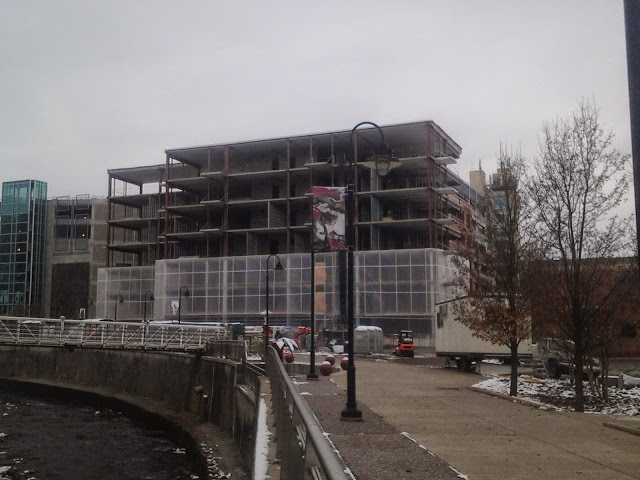
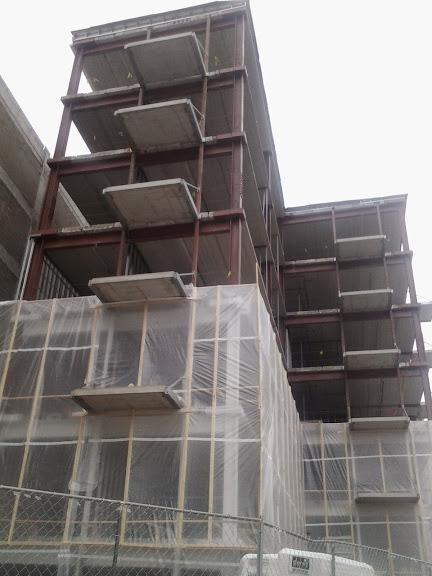
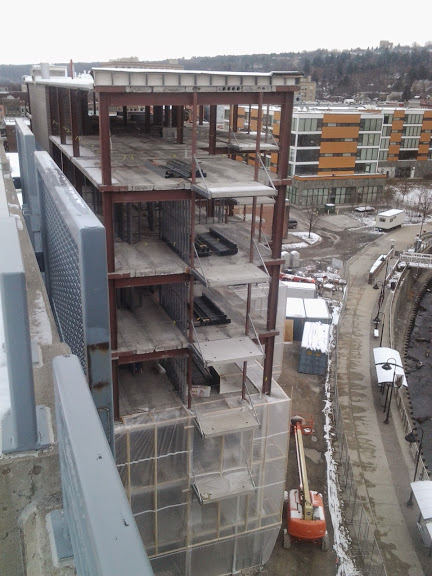
The 7-story, 45-unit, 49,244 GSF apartment building topped out on October 2nd. The concrete floors were poured and the balcony pads were craned into place and secured throughout the fall. Peering into the building from the parking garage, some steel wall frames have been erected on the upper floors, while rough interior work seems to be underway on the lower floors. The plastic sheathing is to break the winter winds and keep the space above freezing.

Developer Bloomfield/Schon + Partners planned to release leasing/pricing details last month, but I haven’t heard anything yet. Completion for the project is set for late Spring 2015, which according to their facebook, is a little later than intended due to material supply delays created by the rough November weather (curse you, polar jet stream). If the last photo is any indicator, the upper-floor units are going to have some fantastic northeast views.

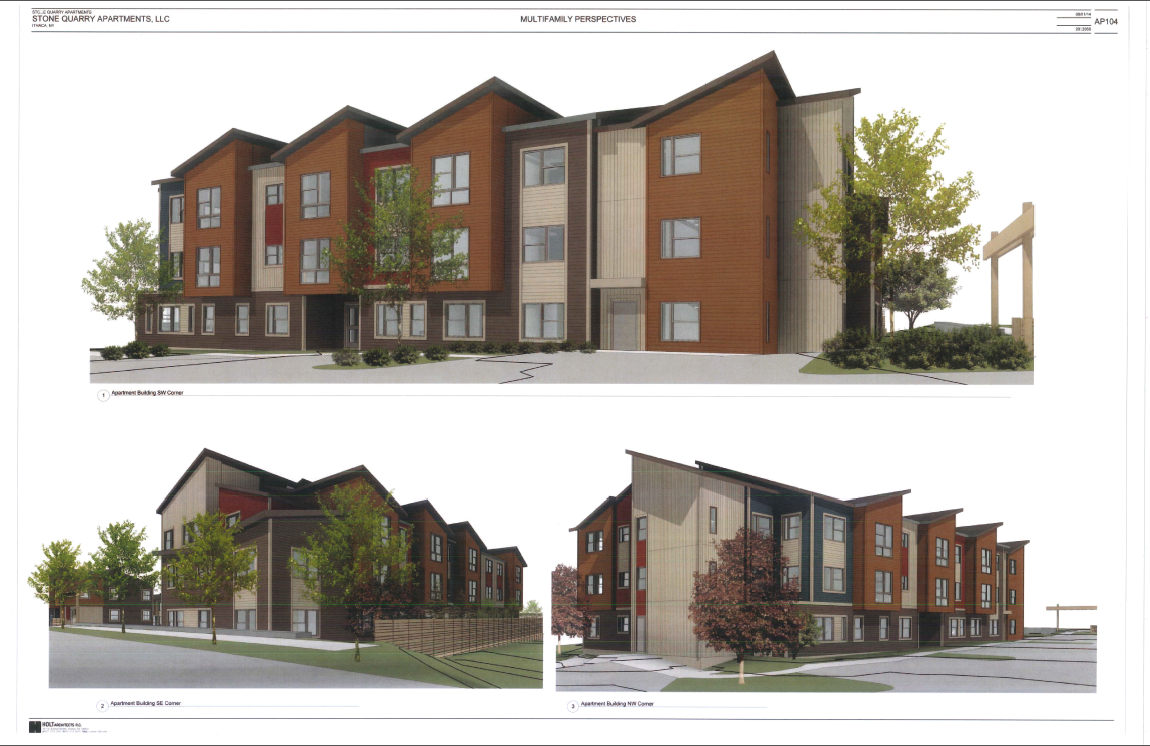
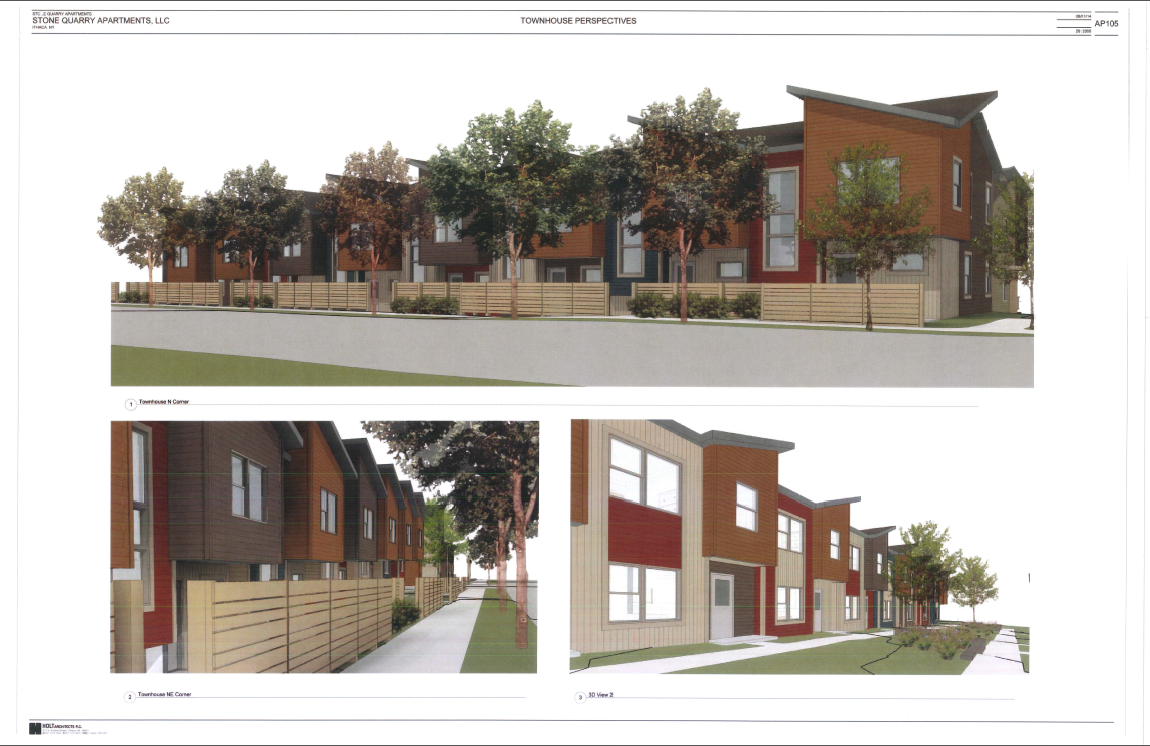
As noted before, this project makes the completion of 15 years of planning and construction. At 45 apartment units, It’s also one of the largest non-student-related projects slated for a 2015 completion – the 35-unit Stone Quarry Apartments and the 21-unit 323 Taughannock are also pegged for 2015 completions.

20141129_135747 20141129_135859 20141129_135828 20141129_135807 20141129_140005 20141129_140241 20141129_140308


News Tidbits 10/18/2014: Disturbia in Suburbia

18 10 2014

1. The town of Lansing finds itself in a conundrum. The dilemma deals with a property known as Kingdom Farm, a 500-acre property owned by the Watchtower Bible and Tract Society, the business branch of Jehovah’s Witnesses. According to the Lansing Star, The land is being put up for sale with an asking price of $3 million, or $6,000/acre . That’s a little too rich for most of the farmers in the region (the average sale price in recent year is about $2,850/acre), especially since the property’s soils are marginal. There have been rumors or developers looking at the land, and some of the more activist locals are calling for the town to step in to help local farmers buy the land to keep it as an agricultural use. There’s no rush, the church group pays no taxes on the land, and their plan to build a massive development on the site faded away when the town sewer plan was cancelled. As one town official noted, Lansing only has a few dozen homes built per year, so the property would likely see some residential build-out near the road, but otherwise be unused if turned over to development. The debate is whether or not the town should step in, which has local politicians taking sides for and against, and I imagine that telling townspeople that their tax dollars are going to preserve farm land will be rather contentious.

2. Another news piece from Lansing/suburbia, this time dealing with the parcel of land next to the BJ’s Wholesale Club off of Triphammer.  Some readers might recall that senior housing was to be included with the project; in fact, it was a stipulation for approval of the BJ’s back when it was approved in 2011.

According to the Ithaca Times, that is still underway, but the developer (Arrowhead Ventures) wants to make the parcel denser. The current plan is for four buildings facing Oakcrest Road with three units each, so 12 total. I’m not sure if it’s just a repositioning of structures (the parcel has wetlands in the vicinity and is waiting on the approval of the Army Corps of Engineers for permission to build) or more units. The site is part of a PDA (Planned Developed Area, just like PDZ and PUD…heaven forbid we stick with one county-wide acronym), so it’s pretty flexible.

12-29-2011 004

3. Apparently, this is Lansing’s week of news in the Times. Bill Chaisson did some excellent research for his article analyzing development in the town of Lansing. Not only does it reveal the scope of development in the area, it also reveals the dysfunction of Lansing’s town government when it comes to discussing growth and development.

I do have one qualm with the piece – the city-data building permits say they are for the village of Lansing, not the town. According to the HUD’s SOCDS building permit database, In 2013, the town issued permits for 19 single-family homes and 10 multi-family units, and the village issued 4 single-family home building permits. The number was 25 in 2012, all in the town. There were 25 units built in the town (21 homes/4 multi-unit) in 2012, and 22 in 2011, with six more in the village. City-data.com’s data is from the town for 2012, and from the village for 2010 and 2011. Although SOCDS is more reliable, their numbers are often low biased because some numbers are “imputed”, which means they were assigned by inference. The town itself estimates 30-35 units per year, which given the population growth of about 500 from 2000-2010, is probably more accurate. Truly reliable building permit data for the Ithaca area is still rather hard to find.

Aside: Ithaca city had two single-family home permits issued in 2013, and 69 multi-family units (for 71 total); Ithaca town 2013 had 45 units issued permits in 2013 and 45 more in 2012, with 21 single-family homes in 2012 as reported by Bill’s piece.

Anyway, the piece notes hundreds of units in various stages; some are still proposed, some are approved, and a few of which are underway. The Woodland Park townhomes now number 16 (it was 6 a year ago), and the Lucentes have 12 units underway as part of their Village Solars expansion. On a matter of personal opinion, I despise the gated entry to Woodland Park, which to me is antithetical to the inclusive nature of the Ithaca area, and outright silly in an affluent town like Lansing.

More interesting is the sniping between town officials apparent in the article. Lansing was looking for a full-time town planner before the town board turned a little more to the political right. Now it’s part-time, and one of the councilmen “knew of interested parties” who will do the job. Looking at the Kingdom Farm issue, and the planner issue, and the recent stormwater problems reported in the town…Lansing has all the attributes of terrible planning at work.

4-8-2013 252

4. Now turning our attention to the city again: the city’s project review meeting, one of the necessary steps for projects going through the approvals process.  The Wegman’s retail building will begin the formal review process and get environmental review as well, 114 Catherine and the Patel Hotel (Hampton Inn Boutique Hotel thing) take the plunge with the board’s “Declaration of Lead Agency” to formally review those projects, Chain Works’s first phase gets lead agency and environmental review (which also needs to be orchestrated with the town planning board as well), and 128 W. Falls Street’s 5-unit infill project seeks final approval.

purity__v3_1

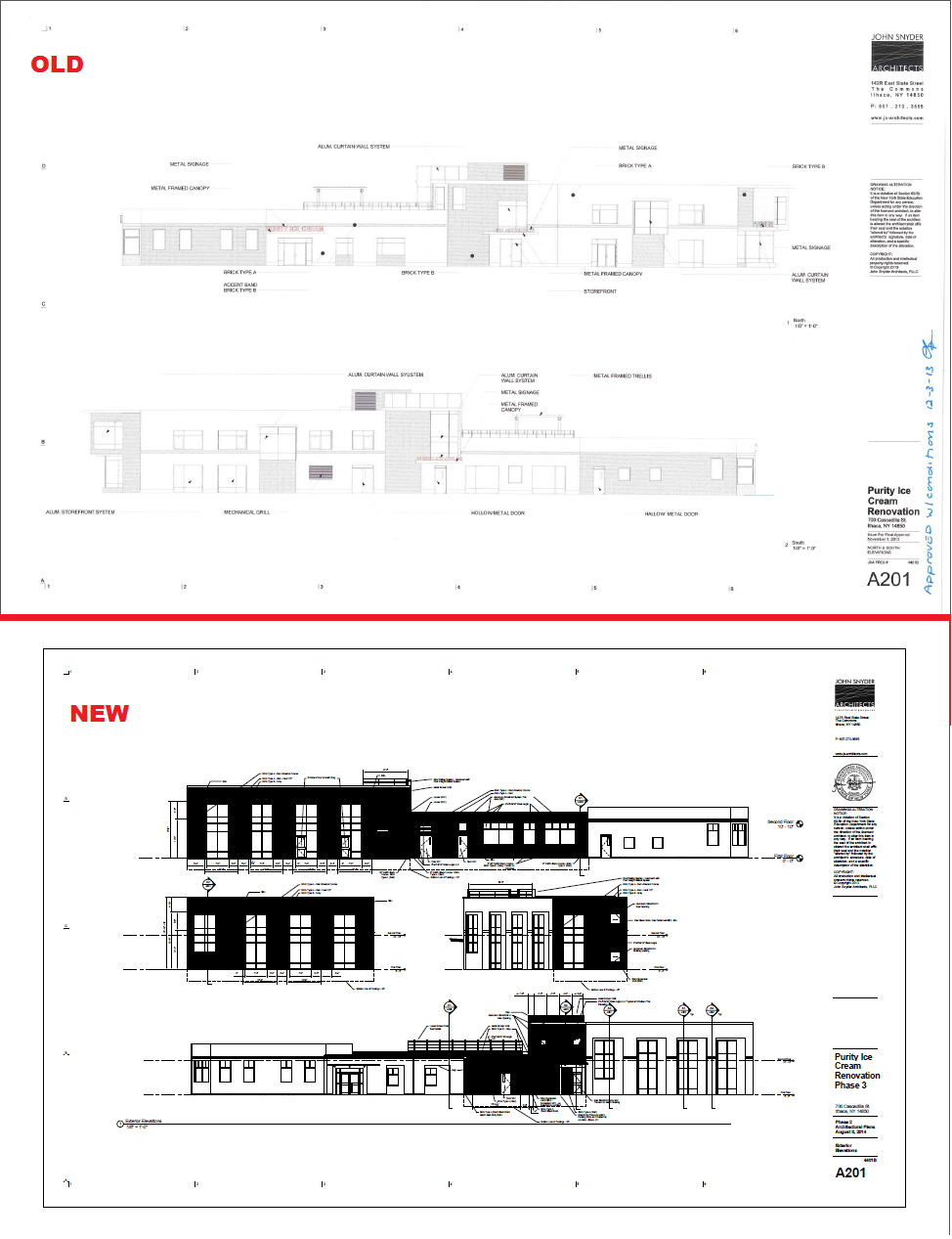
Then we have the Purity project, which has drawn the city’s ire. The agenda succinctly says they are seeking to modify the site plan. From the looks of the version of the agenda with attachments, there’s a pretty substantial change to the exterior facade (note the dark shading in the new version is brick texture, which doesn’t show up well at low resolution), though the massing is roughly the same. The other part of it might have something to do with a parking issue that arose that may have violated the approval terms of the Purity project…the planning board has been none too enthused since the midrise apartment tower was cancelled, but additional parking was still in the proposal. In order words, the Purity owners may have broken the rules of a city board that is already angry with them. No one’s going to enjoy this meeting.


The Past and Future of Mixed-Use

13 09 2014


I figured I’d change this up from the standard construction update format. There hasn’t been enough development news tidbits this week to merit putting up a new entry; better luck next week, ladies and gents.

I was impressed by the Ithaca Times recent editorial, “The Mixed-Use Future“. It’s a piece that upholds the value of mixed-use projects and that single-use neighborhoods shouldn’t be maintained strictly because that’s the status quo.

Mixed-use projects are something that have only recently picked up steam, as urban areas embrace new urbanist concepts in an effort to add vibrancy to decaying downtowns. Ithaca has arguably been one of the most successful examples in upstate. But it had to work to get there, and the process hasn’t been without acrimony.

100_7263

I’ll rewind the clock back about 15 years to the start of the new millennium. Ithaca’s downtown was quite a bit different from today. There was no Gateway Commons, Breckenridge, Seneca Place or Cayuga Green. The Commons was plagued with high vacancies, severe enough that then-mayor Alan Cohen was mulling over reopening it to vehicular traffic. The big news at that time was the county library’s plan to move into the old Woolworth’s on Green Street (which they purchased at low cost, the owner had struggled to fill the building after Woolworth’s closed in 1998).

The last two newer developments I mentioned, Seneca Place and Cayuga Green, are closely tied together. They and the Cayuga Street garage all depended on each other as the sort of “pie-in-the-sky” redevelopment plan that Ithaca desperately wanted.

100_1883

In the early 2000s, their working titles were the “Cayuga Green at Six Mile Creek” and “Ciminelli/Cornell Office/Hotel” projects, and collectively they were called the “Downtown Development Project“. Cayuga Green has heavy city involvement. At the time, the swath of land surrounding the library on its block was all city-owned surface parking, with the helix for the Green Street parking garage to its east (it was actually kinda neat looking for a parking garage ramp; a photo can be found here).  The first phase of Cayuga Green would also be the lynch pin for the Ciminelli project; the city would convey the parking lots to the IURA, who could sell them off and partner with a developer to build a parking garage to serve the Ciminelli building and some of Cayuga Green. This phase would become the current Cayuga Street garage, which opened in June 2005 with 700 spaces, 34,000 sq ft of first floor retail, and a nearly $20 million price tag. The 185,000 sq ft Ciminelli project was constructed concurrently and also opened in 2005 as Seneca Place on the Commons, with the Hilton Garden Inn for its hotel occupant, Cornell as the primary office tenant, and retail space that would fill up over the next couple years.

100_7262

Phase II focused on a couple things (IIA and IIB, technically). The Green Street Garage would be redeveloped, the helix torn down, and a movie theater would go in the renovated space under the garage. The city owned the top two floors of the 3-story garage, and used eminent domain on the owner of the first floor. Originally, there was to be either 36,000 sq ft of retail on the first floor, or an intermodal transit center (a hub for TCAT and Greyhound/Trailways, essentially). The garage would add two more floors and have space for 1,082 cars.

Perhaps thankfully, this was never done (though the zoning was raised from 60′ to 85′ for the land that the Green Street garage sits on). The Cayuga garage picked up more retail space as the plans were rewritten. A 12 screen national theater chain was proposed for the retail space of the Green Street garage, but given the plans for an expanded theater at the mall in Lansing, it became clear that such a project wasn’t feasible. By good fortune and negotiation, Cinemapolis agreed to take the space, and the theater shrank from 12 to 5 screens and went into the Green Street garage.

101_4904

IIB and Phase III are the residential portions, Cayuga Place Apartments and Cayuga Place Residences (Cayuga Green condos). As originally proposed, there was going to be 70 to 80 apartments with ground-floor retail, and anywhere from 40 to 122 condos. The city IURA had entered a contract in 2002 with Cincinnati-based Bloomfield/Schon to develop the units. The apartments were first proposed in 2005, and with abatements approved, the 68 units and 15,000 sq ft of retail space opened in 2008. The condos are a lot more complicated, bouncing between several iterations and layouts (here’s a few versions 1, 2, and 3, here’s 4 and here’s 5) before settling on the 45-unit design currently under construction. Part of the problem was financing, especially during the recession; a later problem was that the land along Six Mile Creek is not that great for construction. It will have taken 15 years, but the downtown redevelopment project will be complete next year.

cayugaplace_v5

101_4905

There’s been an enormous amount of controversy. A 20-year abatement was used for Seneca Place, the labor used in some of the construction was from North Carolina, and the fight with one of the property owners (Thomas Pine, who ran Race Office Supply on the corner of Seneca and Tioga) was pretty ugly. The fight over the apartments and condos was even uglier in some ways, because the developer requested and received a 10-year tax abatement (and the ICSD was not game). Instead of bringing new, permanent jobs like an employer’s new office or factory, this was housing, and it was market-rate and premium housing at that. The retail portion offered jobs, if they could lure shops, and retail doesn’t exactly pay well either. Some, such as local megalord Jason Fane, said the project would fail. There have been problems, certainly. The Cayuga garage has struggled to fill its retail space. Only now with the impending addition of TC3’s Coltivare restaurant and learning center has it filled most of the space (Merrill Lynch took the leap a few years ago and rents some of the space; then there was that failed wine tourism center). It has taken years for the condos to begin construction. But, slowly and haphazardly, the project is building up and out.

Ithacans did a lot of soul-searching. Were the costs outweighing the benefits? Was growth downtown, or even in the county, a good thing?

101_4907

Ask a dozen people and you’ll get a dozen opinions. I think that for all the problems and strife, that the city has benefited from the downtown projects. Through local character and some luck, the downtown residential units are full and most of the retail space is occupied. Seneca Place and Cayuga Green demonstrate that mixed-use can add life to underutilized parcels and spark interest in neighboring properties. Each project should be weighed carefully, of course. But thanks in part to active urban reinvestment, Ithaca is in a position many upstate cities envy.

6-29-2014 320


News Tidbits 9/6/14: What Makes A Neighborhood?

6 09 2014

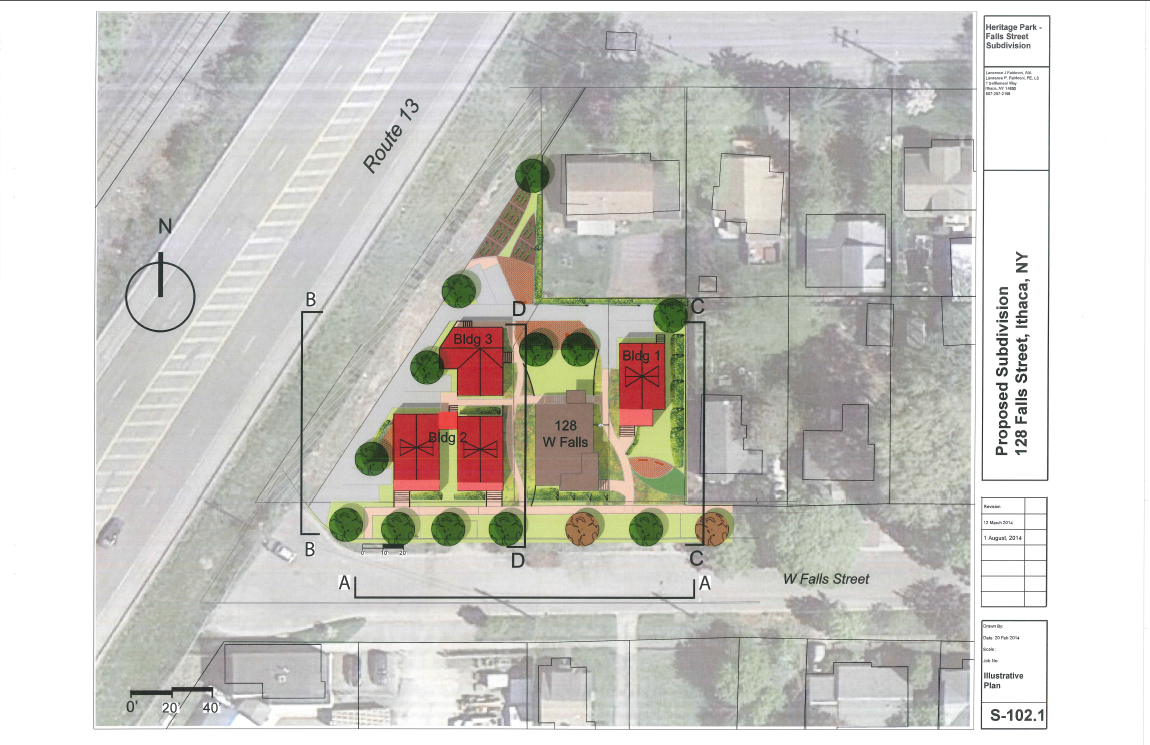
1. A trio of notable articles from the IJ. The first one is about the 128 West Falls Street development (previously discussed here), and the negotiations done with neighbors in order to make the project acceptable to the neighborhood. The developer (Heritage Builders) and the neighbors worked together for a compromise. Some of the neighbors are still upset about their being any development at all (in which case, I must ask why does one live in an inner city neighborhood with vacant land), but if most of them are on board, I’m glad they and the developer were able to address each other’s needs and concerns and come to a reasonable solution. There are still people willing to make compromises, thankfully.

128_wfalls_rev1_1

2. Article number two has already been foreshadowed by Ithaca Builds, namely that old Elmira Road is getting a more pedestrian-friendly makeover. Bike lanes, sidewalks (only on the north side due to budget cuts), curbing, all in an effort to make it more friendly to all street users, from walkers to bikers to drivers. And it’s only going to take three days? Color me surprised.
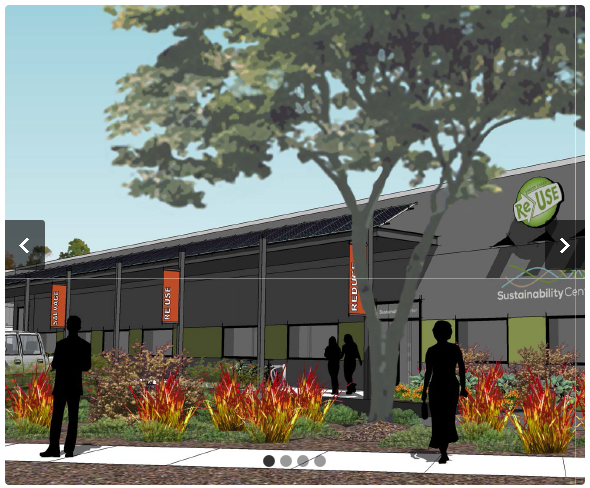
At least one building on Elmira Road will be getting a makeover soon – a renovation prepared by local firm STREAM Collaborative will turn the old BOCES Building at 214 Elmira Road into the the Finger Lakes ReUse Center’s new headquarters.

finger_lakes_reuse_ith_1

Image Property of STREAM Collaborative

3. Piece number three is that, surprise surprise, Ithaca has a higher cost of living then most other upstate cities. Most upstate cities are a little below the national average (4-12% less). Ithaca is nearly 6% above. Ithaca has the highest cost of living outside of the the New York City and downstate metros. If anyone feels uncomfortable using numbers from a conservative think tank, here’s their government source. Personally, I always just go with Sperling’s. Taking a closer look at those numbers gives a big clue why Ithaca is more expensive – the housing cost is over 31% above the national average. Every other parameter is virtually average. except that one.
I’ll give an example: Syracuse and Ithaca are only about 50 miles apart. On a scale with 100 equaling the national average, Syracuse has a score of 88.9, Ithaca 113.4. Quite a difference. Food, utilities and transportation are cheaper in Ithaca. But housing is astoundingly different – Ithaca’s 131.2 to Syracuse’s 45.4, which is what causes the disparity. Granted, I know that for many, living in the Syracuse area is undesirable (and I say this as someone originally from the Syracuse metro). Ithaca is in demand, ergo, prices for homes and apartments go up. But as middle-income families feel the pinch, spiraling housing costs pose a serious concern to the region’s economic well-being.

4. Now for a piece from the Cornell Daily Sun, an informative piece they did about the recently-approved 205 Dryden (Dryden South) project by Pat Kraft. No shocking revelations, but the interview with Kraft is a nice asset. I do take some umbrage with his complaint that the Collegetown form zoning makes it feels like he’s not developing anything, and he’s being told what he can build. There are reasons for that. Certain landowners have a blemished track record, and this is better than years of bickering with city agencies because of someone’s artistic license, or more likely, profit maximizing through value engineering.

dryden_south_rev_2

5. Stone Quarry is getting really nasty, really fast. INHS has retained the services of Philips Lytle out of Buffalo (the same law firm that handled the indefinitely-postponed 7 Ridgewood project). Meanwhile, neighbors are demanding that the HUD funds for the subsidized project are withheld, on the grounds of environmental issues, not having enough time for community notice and comment, and that the project is “incompatible” with the neighborhood. They’re considering a legal challenge to stop the project, which was approved during August’s PDC meeting. There’s a ton of documentation that’s been uploaded in recent days – a 1,189 page environmental assessment report for the site, public notices, and so on, and so on. The city has also released point-by-point rebuttals to the filed complaints, and formally requested that HUD release the approved funds. If I had a workday where I just had to write rebuttals all day long, I might be hitting the bottle when I go home. IJ news summary of it all here, Voice summary of the events of the PDC meeting, including angry neighbors and the mayor’s outspoken support for the project here.

I’m going to call out one statement, this being from a group called the SRNA (Spencer Road Neighborhood Association) – they describe the neighborhood as being full of affordable housing, and run off some examples. The first is an 18-unit townhome project at 324 Spencer Road, called the Belmont Apartments. I’m familiar with this development because they advertise their townhomes as “NEW” on Craigslist, even though they were built in 1995. Rents there run from $1100$1250, which is about equal to, or a little above the area mean. It’s middle-income, market-rate housing. Affordable in context is the cute word agencies substitute in for low-income housing, so using it to describe a market-rate, middle-income project seems misleading.

The second is the primary reason why I’m writing this whole thing – discussions of a 14-15 townhome development at 661-665 Spencer Road by local low-income services group TCAction (that address also happens to be their headquarters). I checked the minutes they cited and I can’t find any record of that. It could have been said and just not recorded in the minutes, but that seems like an odd thing to leave out. The three duplexes at 634, 636 and 638 Spencer check out, and they were built in 2008/2009.

Like many projects lately, tempers will be flaring, so for those of us without a dog in this fight, we might as well break out the popcorn and watch this boxing match play out from our ringside seats.

inhs_stone_quarry_rev_3

inhs_stone_quarry_rev_4

6. Here we have the projects memo for proposals to be discussed at September’s Planning and Development Board meeting on the 23rd. No curveballs here; the project memo only reviews projects that have already been seen and have had initial comments (sketch plan), so everything here has come up at least once before. 128 West Falls Street will be looking for PDB declaration of lead agency (the board’s agreement to conduct formal design and environmental review) and recommendation to go to the BZA for zoning variance. The Hampton Inn downtown is looking to obtain PDB declaration of lead agency, as is the Chain Works District on South Hill. The Chain Works is probably the vaguest proposal they’ve had to review, because it’s over 15 years and the developers have only a couple ideas fleshed out on the Emerson site’s redevelopment. It also makes a few voters wary because once the environmental review is complete and the developer’s T1, T4 and T5 zones are approved, the developers have an enormous degree of freedom to develop the site as they see fit because it’s a PUD, a Planned Unit Development. They’re also using the town’s equivalent, called PDZ, for the portion of the 95-acre site in Ithaca town. For more about these details, Jason at Ithaca Builds offers a great summary here.

307 College and 323 Taughannock are up for final approval, and 327 Eddy for preliminary approval. There’s also a couple of minor zoning changes up for review.

chain_works_2

7. Here’s your morbid amusement for the week – the Lansing school district might have difficulty installing its new septic system because it could be disturbing a previously-unknown Native American burial ground. I think we have a plot point for the next Stephen King novel.


Redefining Collegetown

2 09 2014

Article number four in the Collegetown history series.

I think one of the more enduring themes of Collegetown has been the desire to redevelop it. It’s a theme that comes up pretty consistently, starting in the post-war period, when urban renewal had become the planning concept du jour. Thankfully, we can find some of these plans in online archives.

And they are terrifying.

Here we have one from the Cornell Daily Sun archives, published April 22, 1959.

ctown_plan_1959

Someone’s channeling a little Le Corbusier here. This was one of seven designs conjured by about 40 junior architecture students in spring 1959, under the direction of Professor Thomas Canfield. The project called for the capacity of 4,000 residents in a 0.25 sq mi area (the population in the area in 1959 was about 1,100). They were told to plan for 4,000 residents because “there is a tremendous market for housing that is now unavailable. The site would attract many non-suitable if it offered suitable amenities.” All models were supposed to have a hotel, bank, theater, and parking for 2,700 cars (the capacity at the time was 500).

6 of the 7 proposals called for high-rise buildings, and virtually all of Collegetown from Eddy to Summit Ave, and Seneca to the gorge would have been demolished. A few proposals saved the Luthern Church on Oak Avenue, and one saved Sheldon Court. A bunch of isolated towers seems awful from the new urban standpoint that’s increasingly popular today, but in the late 1950s, this is what was in vogue. Demolish all the old, towers in the park, superblocks. massive freeways, seas of parking, it was the wave of the future. Ask Boston, Syracuse, Chicago, or any number of cities how that future turned out.

If you’re feeling really bored today, here’s a letter of protest against the design of Olin Library, also from the same issue. Olin was under construction at the time. I’m inclined to agree with the writer’s sentiments.

By November 1965, real plans were set into motion – under Ithaca’s Urban Renewal program, 62 acres of Collegetown was set for “selective demolition”, because the fire department determined that a high density of wood buildings was a fire hazard. Multi-story parking garages were also proposed, and a new bridge over Cascadilla Gorge. The work was supposed to begin in 1969, after a long process of Planning Board approval, Common Council approval, and state and federal government approval. Ithaca would only foot 12.5% of the nearly $5 million bill.

The urban renewal plan continued to evolve over the years. A lot of downtown businessmen, and later the operators of Pyramid Mall (now the Shops at Ithaca Mall), were not pleased with the idea of a business district in Collegetown that would isolate students from their properties. In 1969, 80,000 sq ft of office space and 200,000 sq ft of retail space was proposed in Collegetown – to put that in perspective, the mall in Lansing is 600,000 sq ft, and the token office building Cornell has at East Hill Plaza is 60,000 sq ft of office space. The plan also called for non-student low-income housing and industrial space at various times. By 1971, the plan was becoming more modest, focusing on an area bounded by Dryden Road, College Avenue, Eddy Street and Cascadilla Gorge. The Sheldon/Cascadilla block had received a large urban renewal grant in the spring of 1969, but issues arose with how to use it. Plans to tear down Cascadilla were met with protests, and with all the financial issues the city and university had in the 1970s, redevelopment gained little traction.

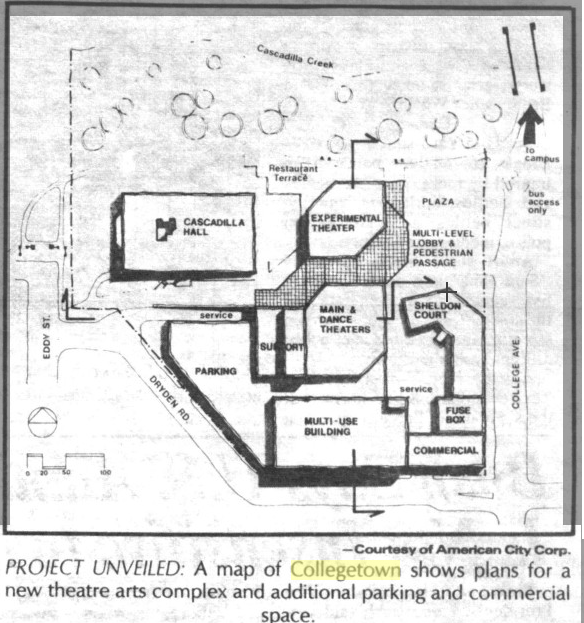
By the early 1980s, the plans were finally being fleshed out – with Cornell preparing to fundraise and build a new performing arts center, the university and the city partnered with an urban planning firm to build and renovate the parcels north of the 100 Block of Dryden Road and west of College Avenue, at a cost of $40 million ($115.6 million today). The plan called for 700 new units, 20 businesses, office space, and a 350-space garage (a mock-up from the 4/13/1981 issue of the Sun is included below). Funding for the project from state and federal sources was scarce, however. The city eventually sold their land to local developer Travis Hyde, who built Eddygate in 1985-86, and the proceeds helped cover the cost of the Dryden Road parking garage. Other lands in the initial plan were never purchased (the Avramis and Papp properties on the 400 Block of College Avenue, discussed previously here). Cornell fulfilled its commitments after years of fundraising and some tweaking of designs, with the renovation of Sheldon Court in 1981 (adding the top floor), Cascadilla Hall’s renovation in 1983-84 (adding the top two floors and 276 residents) and the Schwartz Performing Arts Center opening in 1989.

college_dryden_plan_1981

After that, the next substantial Collegetown redevelopment plans were the Form District debates of the past several years, click the links if you’re interested, but I’m going to avoid rehashing old entries this time around. As more structures go up and technology and social concerns evolve, I’m sure there will one day be more redevelopment plans for Collegetown.


News Tidbits 8/16/14: Weighing the Arguments

16 08 2014

1. Although there might be five proposals still in the running for the old library space, if one goes off of public sentiment, there are two leading candidates – the DPI proposal for its 84-unit project (76 condos, 8 apartments), and Franklin/O’Shae’s 32-unit mixed use proposal, the one that re-purposes the original 1967 structure. I spent an evening in the office doing work while listening to the entire audio file for the August 12th meeting and its 28 speakers (not something I intend to talk about with my colleagues). The DPI proposal has some heavy hitters speaking on its behalf – former city councilpersons, the former head of Ithaca’s city planning office, Cornell and IC faculty, and so forth, talking about the need for market-rate condos in the city. The Franklin/O’Shae proposal, which has an online petition, went for an ecological tactic, saying that the project would result in less waste (the building wouldn’t be demolished), and it would minimize neighborhood disruptions. Some of the Franklin/O’Shae project supporters said that there were too many units in the other proposals and that they weren’t sustainable; condo proponents countered with the Danter study, which showed very high demand for condos in downtown, and that the DPI proposal recycles materials from the old structure, rather than the structure itself (which has had asbestos issues). Both sides’ arguments have valid points and flaws. We shall see what happens moving forward.

dpi_libe_0414

franklin_libe_0414


2. INHS is going up to the BZA for variances for two projects – a single-family home to be built on a slightly too-small lot at “203” Third Street (near Madison Street), and a four-unit set of townhouses at a vacant parcel at 402 S. Cayuga, a piece of vacant land abutting the Y-shaped intersection of South Titus Avenue and South Cayuga Street. As usual for INHS, the five housing units would be marketed as affordable owner-occupied housing to moderate-income households. The townhomes are intended for completion by June 30, 2015, and the single-family home by December 2015.

402_s_cayuga_st_1

3. Over at Collegetown Terrace, a BZA-approved lot tweak is being requested to modify the lots, a split that would separate Buildings 5 and 6 from the lot where 7 would be built. 7 would have lot frontage on a private street rather than public street, which is why the BZA is needed. The whole reason for this split is financing for the massive project. The project is much easier to finance in smaller chunks, especially since it’s being built in phases. The key takeaway from this otherwise minor note is that Building 7 (120 Valentine Place) does not have financing for construction, so who knows when it will start. If the lot tweak is passed (and there’s no compelling reason for it not to be, since no changes to the design will occur), maybe end of summer/early fall; otherwise, it’s anyone guess.

ctown terrace1

4. Meanwhile, another student-oriented project is on hold, perhaps indefinitely. The 45-unit project at 7 Ridgewood is being put on hold, as the person directing the proposal for developer CA Living, Cornell alum Stephen Bus, has left the company. Whether this project eventually continues, gets revised, or is cancelled completely has yet to be determined. But this is the second failure for the site, which had a proposal for an attractive 30-unit apartment building in the mid-1990s that also ended up being shelved.

ridgewoodapts_v2_2

5. Seems legit this time – the Ithaca metro posted a 400 job increase as compared to June 2013, to 65,600 (0.6%). This is a positive sign and it’s important, because whether pro-development or anti-development, if the local job market tanks, everyone’s in trouble. Manufacturing and Other Services saw slight gains (100 each), while Hospitality/Leisure and Professional/Business Services saw slight losses (100 each). The big factor is that education and healthcare is up 1.2% year-to-year, about 400 jobs. As covered on the Voice, the statistics have had issues before; I wouldn’t be surprised if the same problem is occurring with Syracuse’s massive 3,300 job loss over the same time period.


News Tidbits 8/2/14: It’s Gotta Go Somewhere

2 08 2014

Here’s the semi weekly digest for your mid-summer doldrums…

1. Yet another round of Carey Building design tweaks. Updated renders and more here. At least now the renders include the proposed Hampton Inn to its north, which shows just how dense this corner will be (not unlike its historical precedent, when the massive Strand Theatre occupied much of the block). Better yet, that blank wall on the west face has windows and will be home to a “art wall” for a mural. The roof and facade have been tweaked since the last update, and I think it’s fair to say that this is a substantial improvement over the initial proposal.

carey_rev4_1 carey_rev4_2 carey_rev4_3

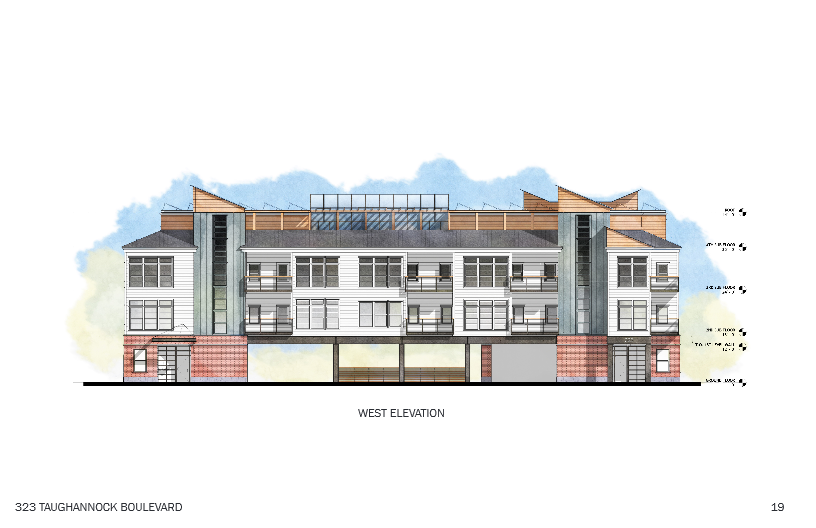
2. I had the updated PDF of the 323 Taughannock Boulevard proposal stored away for the next news update, but Jason at IB wrote an in-depth article about the development in the meanwhile, which is much better than a blurb on this blog. Most notably this time around is the inclusion of color renders, which is just as much a hodgepodge of influences as the design itself. The 20-unit, 23,000 sq ft, $3.5 million waterfront development would be under construction in the first half of 2015, if approved. Replacing a run-down waterfront bar, it has the potential to pioneer development of Ithaca’s waterfront, where controversial zoning was passed in 2011 to allow for larger projects such as this.

313_rev1_1
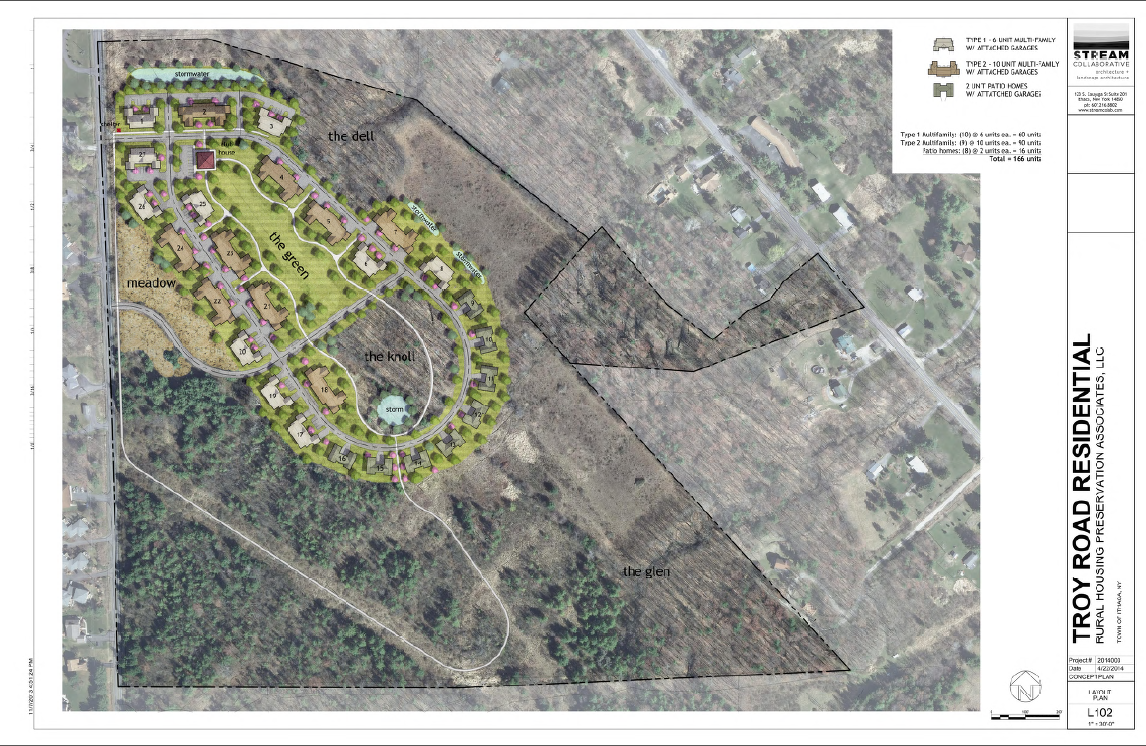
3. Now for something different. The project on Troy Road in the town of Ithaca is trapped in the red tape. At last check, the developers, the perhaps disingenuously-named Rural Preservation Housing Associates, were trying to figure out where to go, as they’re having difficulties gathering enough support from the town board for a Planned Development Zone. This PDZ is required because the project proposes 166 units; the max under cluster zoning, which doesn’t require a Town Board-approved PDZ, is either 153 or 154. According to a recent town Planning Committee meeting, the alternative to the 154 or so clustered units is up to 104 units of even more sprawling single-family housing (52 lots with two units each), which is within zoning and could be rented out if they have trouble selling. The developers have been considering community meetings to quell public dissent and to learn what would get the PDZ apartment development passed. For the record, they’ve said they are open to prohibiting undergrads from renting and occupying units, which is possible since students are not a protected class under the law.

TL;DR – it’s a mess. I’ll add that in with the Biggs parcel issue, and the (weakening) opposition to INHS’s Greenways in East Ithaca, that the town has achieved the trifecta of development battles on all of its hills.

There was an interesting housing study that I came across for the Troy Road parcel, created by some Cornell City and Regional Planning (CRP) students for a course. The first phase as designed by the students would have 14 affordable (owners making 80% of county median income) housing units with 11 1180 sq ft. 2-bedroom and 3, 1355 sq ft. 3-bedroom homes, utilizing state tax credits to keep sale costs between $140k and 155k. Their proposal would have require changing the current zone from low density to medium density, which would have made such a project a non-starter.

troy_rd_2

4. Meanwhile in Lansing, they’re weighing in on 102 townhomes. If Ithaca were an island, anti-development could be great. But since other towns are building housing and adding residents that will travel through the town to get to the employment centers in the city, then the residents of the town of Ithaca had better figure out a more effective strategy to managing growth other than knee-jerk no’s.

5. Some members of Ithaca’s West Hill community listserve is engaged in a thought exercise – seceding from the town and making their own village to specifically oppose any development proposed in their community. This isn’t without precedent; the village of Lansing was founded in 1974 due to fears stirred up by the construction of Pyramid Mall. West Hill, in turn, fears housing, especially low-income housing, due to the negative influence from low-income, high crime apartment complexes such as West Village. The “Minority Report” that they gave to the town planners was described as “a polemic of the proposed [Comprehensive] Plan as a whole, and offers few comments on any specific goals and recommendations“, and the town spent six pages excoriating the bombastic report. It’s another TL;DR for most, but the gist of the West Hill Minority Report is that the town encourages sprawl and ghettos and should only allow very small areas for development, even deconstructing some currently-built areas due to an increasingly unsustainable environment. I understand their angry reaction due to the high crime in southwest Ithaca, but all this is the administrative equivalent of over-correcting a car in a skid.

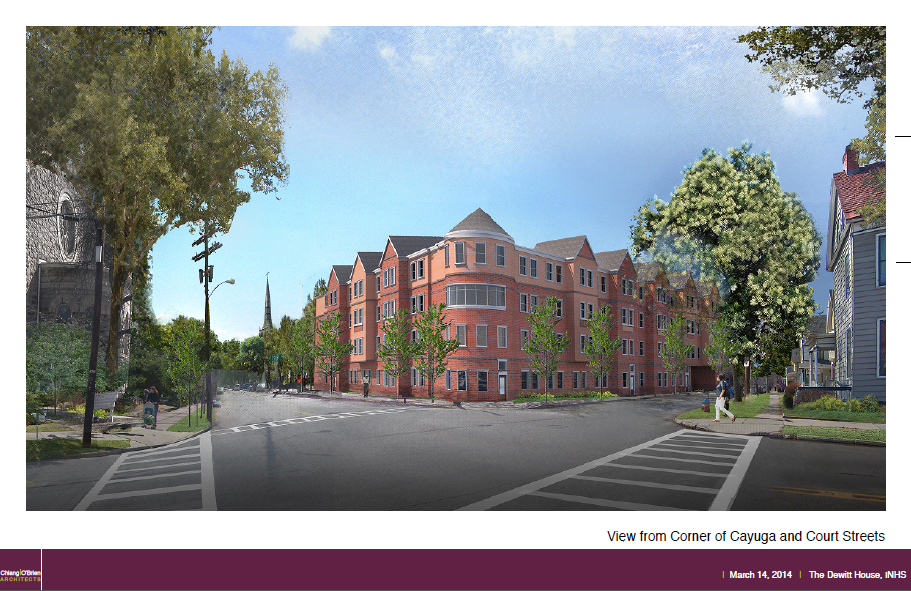
6. And then there were 5 – Since INHS is focusing on the Neighborhood Pride site, the non-profit is withdrawing from old library competition. Looks like John Schroeder can add DeWitt House to his entries in his “Unbuilt Ithaca” book draft. But don’t worry, they’ve already starting working towards redevelopment of the old grocery store, by issuing a request for qualifications (RFQ) for those interested and capable of designing their new infill project.

inhs_libe_0414

7. At a glance, this call for bids on this parcel of city land at Five Mile Drive would seem to be wide open…except a local green housing developer has been targeting this plot for quite a while. It’s a bit like advertising a job when you already have someone lined up for the position. Oddly enough, I have yet to hear opposition this one; maybe it’s too far south for West Hill to care.

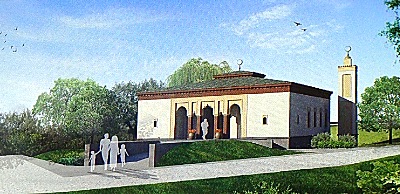
8. Lansing village is getting a mosque, according to the Star. The project, to be built at 112 Graham Road by the Al-Huda Islamic Center of the Finger Lakes, will result in a 4,828 sq ft mosque, with a small minaret if money provides.

Rendering courtesy of Lansing Star

Rendering courtesy of Lansing Star