News Tidbits 7/30/16: The Unfortunate Surprise

30 07 2016

201_college_v5_1

201_college_site
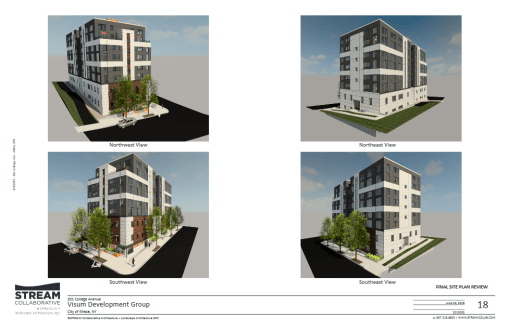
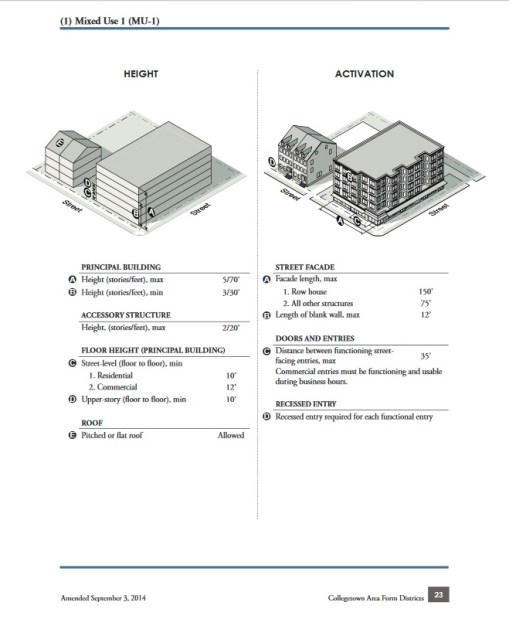
1. Pretty much everyone was caught off guard by the planning board’s decision to send 201 College Avenue to the Board of Zoning Appeals on a previously-undiscussed zoning technicality. The issue has to deal with facade height in connection to the length of a continuous wall – the argument being pushed by board member John Schroeder is that, since there are primary walls on College Avenue and Bool Street, the H-shaped proposal isn’t technically valid and the deep indentation actually has to be two separate buildings, one slightly shorter than the other since the site is on a slope. This was the subject of a prolonged and heated debate, since the code’s pretty ambiguous in that regard, and (as shown below) the design elements shown in the form district booklet demonstrate buildings with architectural indents/setbacks.

327_eddy_rev2_2

327_eddy_rev2_3

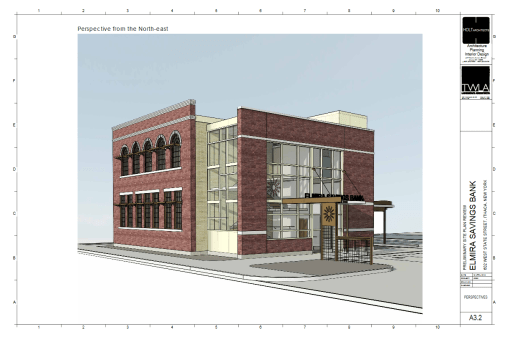
If recollection serves correctly, something similar came up in a previous discussion two years ago with 327 Eddy Street. The project fills the entirety of a sloped lot, but there was a hazy interpretation regarding one’s definition of floors and height where one could have called it 8 floors, so it had to be clarified and it became the average proposed height for cases with a sloped parcel. In this instance, there was one primary wall, on Eddy Street, which is why there’s just enough wiggle room left that a clarification request, however targeted it may be, is legally valid. The board agreed 4-3 to let the BZA issue a determination on 201 College, which could come anywhere from August 23rd to September 6th. That means a late September approval is maybe the best bet. That’s probably too late for an August 2017 opening, so whether or not the project would move forward (which could be immediately or in summer 2017 for a 2018 opening) if given approval is another question.
cafd_mu1

There is one other thing that is worrying from an impartiality standpoint. John Schroeder and Neil Golder served together as Collegetown’s Common Council reps in the 1990s. Although Schroeder’s not the biggest fan of Collegetown development, he hasn’t raised this much of a concern over other projects, and Neil has been very, very active in his outreach. There could be an argument that he should have recused himself from the decision-making process, or at least have formally acknowledged his longstanding professional relationship with the project’s primary opponent.

trebloc-future2-1-620x420

city_centre_site_options

2. Also from the Planning Board meeting, further discussion of the Trebloc project. Those following the IJ’s Nick Reynolds’ Twitter know that there was some talk about big changes with a lot of wonk talk, and this is what it has to do with. My thanks to my colleague Mike Smith for his notes.

Basically, Newman Development is floating a few different approaches to the site layout. One calls for a plaza area on State Street (the “accordion” approach”), one calls for green space (the “courtyard” approach), and the third actually breaks it up into two separate buildings. In these theoretical layouts, the square footage and number of units is kept roughly equal. All three also keep at least some emphasis on the corner facing the Commons, because that’s where the concentration of activity is, and that’s what’s going to appeal the most to first-floor retail/commercial tenants.

Each approach comes with pros and cons. The “accordion” approach opens up the sidewalk, but it opens away from the Commons (i.e. not appealing to pedestrians or retailers) and makes unit design tricky. The “courtyard” approach has public-ish green space, but it would be in unappealing, constant shadow – even if the building were just a few floors, the low angle of the sun in the cooler part of the year would keep light from reaching the courtyard. The two building approach offers an alley that could be interesting, but would likely not see much use since there’s very little activity towards that block of Green Street. Given the flaws in each, the inclination is to stay with the current “fish hook” shape, but the developers wanted to hear the planning board’s thought before committing to a layout.

Planning Board responses ran the gamut. A few members supported the State courtyard option, or stepping back the portion on State Street but building taller portions on Green if there’s a need to compensate (zoning’s 120 feet, so there’s perhaps two floors they could feasibly do that with, like an 11-story/9-story/7-story step down, without having to make a trip to the BZA and throwing additional, funding-jeopardizing uncertainty in there). One board member asked about a courtyard on the roof. The project will be pursuing tax abatements, with the hope that with those, density and smaller units, they can appeal to the middle of the rental market.
lansingapts600 lansingaptsmap600

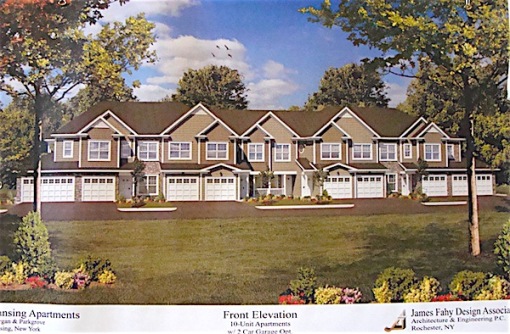
3. Thanks to Dan Veaner over at the Lansing Star, here’s a render and a site plan for the proposed Lansing Apartments / Parkgrove Apartments project for Bomax Drive in the village. The 19.46-acre property is currently owned by Cornell and is zoned to be part of its office/tech park. James Fahy Design Associates of Rochester is doing the design for the proposed 14-building, 140 unit project, and Park Grove LLC of Rochester is the developer, in tandem with retired Cornell Real Estate director and Lansing resident Tom Livigne.

According to the Star, “1,000 square foot one-bedroom apartments are anticipated to rent in the $1,300 to $1,400 range,  1,350 to 1,400 square foot two-bedroom apartments at around $1,600 to $1,700, and three-bedroom apartments up to 1,400 square feet would rent between $1,800 and $1,900.” The village of Lansing has to approve a zoning change from business to high-density residential in order for the project to move forward.

It’s a very auto-centric, premium-middle market project. For an area concerned about affordability and trying to move towards walkability and traditional neighborhoods, this really doesn’t seem like the most appropriate plan. It’s nothing against Livigne and Park Grove LLC, but I’m very critical of these kind of projects for just those reasons.
amabel_v4_1

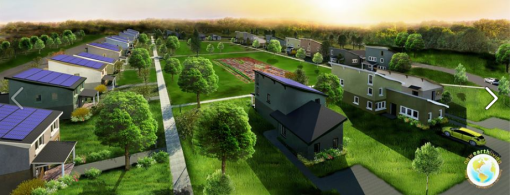
4. It’s been a while since it’s last been discussed, but the 31-unit Amabel Project by New Earth Living’s Sue Cosentini has been approved by the state attorney general to start marketing units. According to a December presentation, the net-zero homes will range from 1600-2100 SF and market in the $385,000-$425,000 range. While that is a rather high price range, some of that cost would be paid off via energy savings, which could be up to a few thousand dollars per year compared to comparably-sized and priced older homes on the market, and other possible savings exist with water recycling and low-maintenance exterior materials. So the sales pitch becomes something of acknowledging the high up-front costs, but explaining the long-term savings.


5. The first of two state funding grants to not this week. Cayuga Addiction Recovery Services (CARS) has received a $1 million grant for a new 25-bed adult residential facility. The new facility will be built on the Trumansburg campus, which if these notes are correct, is actually two facilities, and this new one will be built adjacent to a 60-bed facility on Mecklenburg Road, near the county line a couple miles to the southwest of Trumansburg. An undisclosed number of jobs are expected to be created.

Founded in a Cornell U. fraternity house in 1972, CARS provides treatment, counseling, skills training and support services to help clients overcome addictions and rebuild lives. The current facility was opened in 2004.

Image Courtesy of Lansing Star

Image Courtesy of Lansing Star

6. Also in state grants, Ithaca-Tompkins Regional Airport received $619,935 to build a flight academy building for the East Hill Flying Club. The new facility is expected to be built in the next 2 to 3 years. When the EHFC has moved in to their new digs, the existing hangar will be offered up to rent to other tenants. The new building will offer more instructional space, the ability to engage in training for twin-engine aircraft, and what the flying academy née club hopes will include state-of-the-art flying simulators.


News Tidbits 7/23/16: Movers, Makers, Shakers, and Breakers

23 07 2016

1. Hitting the market late last week – a small office building with potential. 416 Elmira Road is located on the southern edge of the big box district, right next to the “bridge to nowhere” and a little before Buttermilk Falls. Built in 1988, it’s a one-story 4,000 SF building on 0.32 acres, inoffensive to the eye but fairly humdrum with a CMU exterior. The current owner is a spinal surgeon in Delaware who picked it up in 2009 for $500k. Previously, the building served as the local office for a state agency.

One could pick the building up if they wanted offices in a high-traffic area, although a few options present themselves. The zoning is SW-3 = SW (SouthWest Area) is a sort of catch-all for business types allowed under Ithaca zoning, with SW-3 geared towards smaller suburban box retail. That is a possibility here, although there wouldn’t be much parking on-site. Housing is an option here as well, although perhaps not appealing since the zoning is capped at two floors with 60% lot coverage. The list price is $585k, we’ll see what happens.

750_casca_1

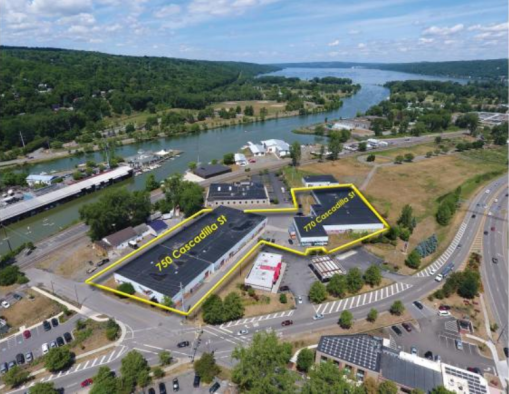
2. …and item number two, hitting the market this past Wednesday, and probably the far more interesting of the two listings in this week’s update. Cornell has put their West End printing facility and warehouse up for sale. The Big Red seems to be trying to rid itself of excess properties in the past few weeks, having recently listed partially-developed land it has off Triphammer as well. The 37,422 SF Cornell U. Press facility at 750 Cascadilla Street was acquired by the university in 1993, and is valued at $1.6 million by the county. The other warehouse, 30,000 SF 770 Cascadilla Street, is leased by a storage company from Cornell, who purchased the building in 2000, and is valued at $1.2 million. The listing is $2.7 million, so these two properties and the 3.12 acres they sit on are being marketed below assessment.

This part of the city has attracted quite a bit of attention as of late. The Maguires are quietly working on their plans for a new set of dealerships to the north and east. Form Ithaca has envisioned keeping the warehouse properties intact, but reusing and renovating them into “maker spaces” as part of an “Innovation District” for food processors, technology firms and light manufacturing. The land itself is zoned industrial, but the city’s comprehensive plan calls for waterfront-focused mixed-use, so in practice the zoning is obsolete, due to be updated as the city continues with neighborhood-specific comprehensive plans over the next 12 months. That sort of creates a grey area where, if a potential buyer has a plan in mind, they’d probably be better off pitching it to City Hall and JoAnn Cornish first, and gauging reactions.

312_spencer_2 312_spencer_3

3. Well, this was pretty quick. Local developer Charlie O’Connor of Modern Living Rentals has secured funding for his 2-building, 4-unit project at 312-314 West Spencer Road, on vacant land subdivided from two existing houses. The two two-story duplexes received a $250,000 construction loan from Bryan Warren of Warren Real Estate on Friday the 15th. Noah Demarest designed the two stacked flat-type apartments, three bedrooms per units. SPR documents stated an August 2017 opening, but with this funding in hand, it might be sooner.

4. Also receiving a construction loan – $450,000 at 322-24 Smith Road in Groton town, the site of a “canine events center“. The Bank of Groton is the lender. The 17,320 SF facility was built last year, so either this is some other site improvement, or the filing is really late. Also, canine event centers are a thing. The more you know.

201_college_v5_1
5. This could be called a “scorched earth” approach. Neil Golder has a lawsuit against Todd Fox and the city of Ithaca Planning Board over the 44-unit, 74-bed 201 College project, saying the decision was capricious and that the project should require an Environmental Impact Statement (EIS). The court’s ruling will be released August 8th.

I’ll be frank – while this project matters a lot to Neil, as proposals go it’s a fairly routine midsize ($5 million -$15 million) project, like any of the other Collegetown buildings underway, like Hancock and Stone Quarry, like the Old Library site, the Carey addition or the Hotel Ithaca addition. The board declares lead agency for SEQR/CEQR review, they identify issues, and it’s the applicants responsibility to resolve them to the board’s satisfaction. If that has been done, a negative declaration is issued, and approval can be considered, as is the case here. An EIS only comes into play for projects that pose truly significant detrimental impacts to a large population if the issues aren’t effectively mitigated – hence why Maplewood Park, Cornell’s 880-bed housing development, and the multi-million square-foot Chain Works District are the only two active projects required to complete an EIS. Past precedent suggests Neil doesn’t have much of a case.

We’ll file this with the Times’ write-up about the fight over the Old Library, and the fight over Maplewood. Short summary, everyone’s on the warpath this week.

20150613_175047

6. This week was focused on doing write-ups about the county housing study for the Voice, but that was before the county pulled nearly all the materials offline. Boo, Tompkins. Anyway – here’s a few details from the special needs interviews that I had planned sharing in this update – Catholic Charities has procured a 4-bedroom house, INHS’s Paul Mazzarella says his organization is looking at introducing a new project in 2017, and TCAction has early plans for a second, 15-bed facility, separate from their Amici House project.

7. The town of Ithaca is planning to put out a “request for qualifications for professional services” to conduct an economic feasibility study of the Elmira Road / Inlet Valley corridor southwest of the city.  The official vote to move forward will be at the Tuesday meeting, with bids due by some point in September. The $60,000 study (half town, half NYS ESD) will be an economic feasibility study and development plan designed “to enhance its distinct characteristics by fostering and building on the assets that currently exist, rather than enabling expansion of the city’s urban and regional development”. In other words, the town would like to expand on its idea from the Comprehensive Plan – artisanal and cottage industries, “maker spaces”, some lodging and light industrial. We’ll see what they come up with, which will have to relate to the new form-based code the town is planning to implement.

trebloc-future
8. Fairly light agenda for the city planning board next week – not a whole lot of decision making expected.

1.        Agenda Review     6:00
2.        Privilege of the Floor    6:01
3.        Site Plan Review

A. Rooftop telecommuncation facility on top of Island Fitness – Declaration of Lead Agency, public hearing, Determination of Environmental Significance, Consideration of Preliminary & Final Site Plan Approval
B. 201 College – “No Action — Applicant’s Response to Site Plan Review Issues”. Originally this was supposed to be final site plan approval, which may or may not be impacted by the whole lawsuit spiel.
C. City Centre (shown above) – “No Action — Applicant Response to Planning Board Comments”
D. SKETCH PLAN: Amici House — Tompkins Community Action Expansion at 661-711 Spencer Rd – I had heard this one might be four floors, and INHS has a hand in it. We’ve seen the site plan for a while now, so this isn’t going to make a big splash.


Holiday Inn Express Construction Update, 7/2016

21 07 2016

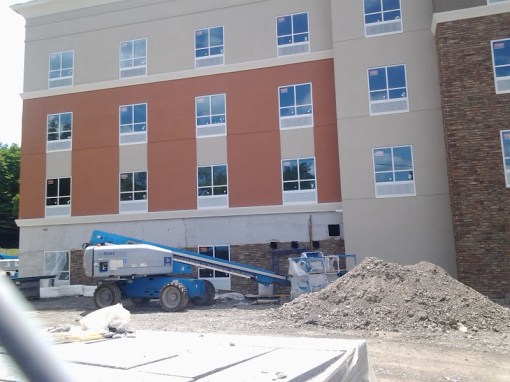
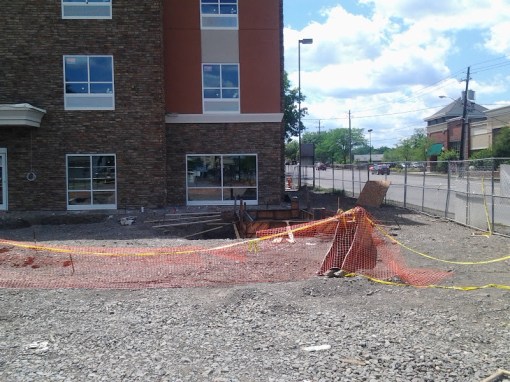
The Holiday Inn Express at 371 Elmira Road is looking more like the final product. From the back, you can see what the Exterior Insulation and Finish System (EIFS) installation process looks like – after the first moisture barrier comes insulation foam board, then comes the adhesive, fiberglass mesh, a base coat and the finish coat. On the north face, stone veneer is being installed on the first floor, and it looks like they’re doing the concrete and foundation work for the canopy and planters. The roof is still covered with temporary plastic sheeting, but will be finished with Isogard cover board, and a single-ply EPDM (synthetic rubber coating) finish. The 79-room hotel’s supposed to be open by late August, if the initial construction schedule is still correct.

20160717_132001 20160717_132050

eifs_plywood 20160717_133208 20160717_133231 20160717_133305 20160717_133337 20160717_133355

holiday-inn-express-original-1

20160717_133237


DiBella’s Construction Update, 7/2016

20 07 2016

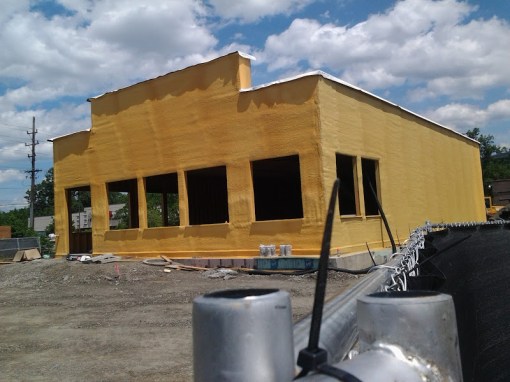
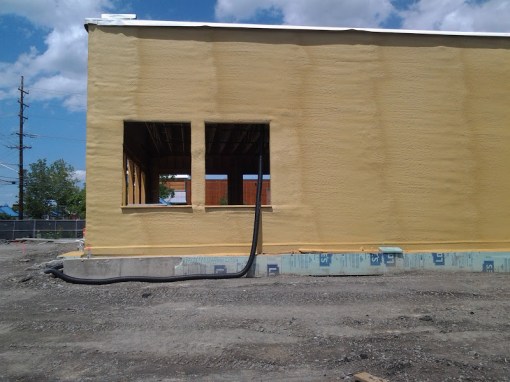
I get a lot of questions about this one, probably because it’s in such a highly visible location. DiBella’s has made pretty good progress on their new 3,400 SF shop just north of the Ithaca Shopping Plaza on Route 13. The new building has been framed out and sheathed; the dark yellow coating is a spray foam used under brick to provide insulation, and create a protective barrier between the water-absorbing brick, and the layers underneath. The spray foam was also used for the Griffin Building (Simeon’s) reconstruction. Door and window fittings, brick-laying and exterior details will follow.

The inside still needs to be roughed out, it’s just the exposed frame at this point. But A&E Construction has made pretty quick work of it so far, and the dry spring and early summer have been useful from a construction standpoint. Things look to be on schedule for a late fall opening.
20160717_134332 20160717_134350 20160717_134407 20160717_134436 20160717_134508 20160717_134554

DiBellas-Ithaca-NY-rendering-large


News Tidbits 7/2/16: Not the (City Centre) of Attention

2 07 2016

201_college_v5_1
1. Let’s start this off with the big news of the week – the proposal for 201 College Avenue was approved by the Planning Board. The debate was spirited, to put it most politely; catty, to use the official write-up in the Voice; and in the follow-up phone call I had with my editor, who attended the meeting with a Voice summer intern, she described it by saying “both sides were pretty awful”. I am sympathetic to Neil’s predicament, although I think it’s also a fairly unique case; I hope some sort of arrangement with the solar panels is worked out.

The observations regarding age and view of the project is actually pretty similar to a conversation the Journal’s Nick Reynolds and I had on Twitter about the City Centre project – older Ithacans often have starkly different views on density and urban development than younger residents, who tend to be more pro-density and pro-urban infill/growth. The young aren’t naive and more so than the old are obsolete; but they are products of different times. Today’s older Ithacans are the same ones who were frowned upon by the old Ithacans of their youth (the Silent Generation and the Greatest Generation), who were much more politically conservative and made up the large majority of the city’s Republicans from when Ithaca was once a contested city, and the Boomers were moving in and tilting it leftward. A sociologist could probably make a good research paper studying Ithaca’s generational views of urban environments.

Anyway, construction on this project is supposed to start in short order; funding has already been secured, and Binghamton-based W. H. Lane Inc. will be the general contractor for the $6 million project.

trebloc-future
2. Meanwhile, City Centre’s sketch plan was also reviewed at the Planning Board meeting. The initial reaction seems muted, gauging from Nick Reynolds’ Twitter and the lack of comment from my Voice colleagues.

city_centre_1

city_centre_2


According to the sketch plan submission, the vast majority of units (240 of the 255) will be studios (120) ranging from 457-563 SF, and one-bedrooms (120) ranging from 580-754 SF. The other 15 will be two-bedroom units, eight 914 SF units and seven 1,370 SF units. All units are market-rate, with target demographics including young professionals and downsizing empty nesters. Students are allowed, though the units won’t be marketed to them. Ground floor retail will be 10,700 SF at the corner of State and Aurora. 7,220 SF fronting State Street will be “Leasing/Club Space” for building and tenant functions. The 71-space parking garage will be accessed via East Green Street, car share membership will be included in the rent, and there will be indoor bike racks.

With the mild initial reaction noted, we’ll see how the project details shape up as the summer progresses, and the board potentially launches formal project review (Declaration of Lead Agency) as soon as late July.


3. Hitting the market this week is a potential opportunity for the deep-pocketed investor/developer. The property is 2248 North Triphammer Road in the village of Lansing. The sale consists of two parcels totaling 3.42 acres – a 1.53 acre parcel with a 2,728 SF M&T Bank branch built in 1992 and holding a long-term triple-net (NNN) lease; the other, an undeveloped 1.89 acre parcel to the rear that the listing notes could be developed out into 13 housing units. The price for the pair is $2,125,000.

A triple-net lease means the tenant pays everything – insurance, maintenance and real estate taxes (formally, net insurance, net maitenance and net real estate taxes on the leased asset – the three nets).  Because of this, the rent is substantially lower than it otherwise might be. There are certain cases where a landowner might want to do triple-net – like when they’re a tax-exempt entity leasing out to a for-profit company. A quick check of the records shows the properties are owned by Cornell, and were acquired in 1953 and 1960. What the property has been to Cornell is a fairly safe investment (though with a lot of fine print to determine who pays for things like if a tornado hits or the foundation cracks), generating a modest amount of rent and functioning like an inflation-protected bond, but guaranteed by the lessee rather than the government. All the better when the tenant is stable and signed on for the long-term, as is the case here.

The county has the bank parcel assessed at $635,000, the undeveloped parcel at $140,000.  Lansing village zoning has Commercial High Traffic for the bank property, and High Density Residential for the vacant parcel. HDR zoning requires 6,000 SF of land per dwelling unit in a 35′ tall multi-unit building, and 1.89 acres = 82,215 SF, so that’s where the 13 units comes from. For comparison’s sake, single family is 12,000 SF, and duplexes 15,000 SF (or, doing the math, one could in theory carve out six home lots, or 5 duplex lots for 10 units, though with lot setbacks, the property’s triangular shape probably lowers those figures).

4. On the other end of the sales process, the former Maine’s supermarket has been sold. The six year-old, 26,146 SF building at 100 Commercial Avenue in the city of Ithaca was purchased for $4,150,000 on Thursday the 30th, by Illinois-based Agracel Inc., well above its $3.1 million assessment. Agracel is an industrial space and warehouse developer, fitting for a property once described as a “food and party warehouse”. The former Maine’s appears to be a little on the small side compared to the rest of their portfolio, but there is the possibility of expansion, or even a teardown and rebuild if they really felt the need.

Readers may recall that Maine’s closed its Ithaca store in February, which along with a closing in suburban Rochester reduced its stores from six to four.

20160701_095549

20160701_095552
5. Work on the new Storage Squad facility has begun on the 1400 Block of Dryden Road east of Varna. Right now, the focus is on site clearing; the house was used by local fire departments for training exercises, and will come down in a controlled burn later this summer. The 79,000 SF storage facility should be ready for use by February 2017. One full time and a few part-time jobs will be created.

And for the record, I think that’s my middle finger.

6. So this is curious. The city recently uploaded a couple of older documents detailing development plans off of Floral Avenue on the southern tip of Ithaca’s West Hill neighborhood.

The first dates from Febraury 1992, and is a filing to create a 27-lot cluster subdivision on 4.15 acres at 452 Floral Avenue. The paperwork indicates that the intent was affordable housing, by a company named House Craft Builders. The city’s then-Planning Director, H. Matthys Van Cort, wrote a recommendation for negative declaration of environmental significance, and the project was approved in June 1992, but it never moved forward, and 452 remains vacant land today. It appears House Craft was dissolved in 2012; the officer was an architect for Ecovillage who has since retired and moved out of state.

The second is a subdivision requested by INHS in 1987. The filing requested 236 Floral Road be split into two parcels, with the intent of renovating a decrepit 236 into a for-sale affordable single-family home, and build a new house on 224. This was approved, and eventually, 236 was renovated and transferred to its owner in 1996, and 224 was built in 1994.

Now, as interesting as this all is, the city doesn’t upload decades-old subdivision files just to amuse nerds. The $64,000 question is, why were they uploaded now?


News Tidbits 6/11/16: Summer’s Heated Discussion

11 06 2016

Image Property of HOLT Architects

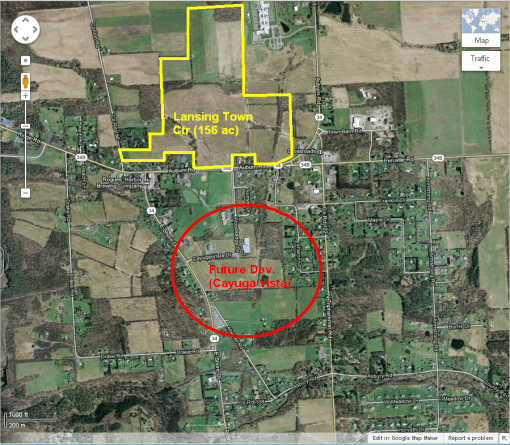
1. We’ll start this off out in Lansing. The 153 acres of land for the Lansing town center is once again in the news. The Lansing Star is reporting that the town is once again serious about selling the land.

So begins yet another chapter in the 20-year saga of the town center land. The town bought the land from the state in 1993 for $100,000, and at the time the land was deed-restricted to recreational use. In 2012, the town paid an additional $294,800 to remove the recreational deed restriction. An article about it was published here in August 2012 (original map below; dunno where why offhand it says 156 acres vs. the 153 reported now). HOLT Architects and TWMLA were hired to draw up some overarching design themes, a Request for Proposals was issued, and three developers responded.

lyc2

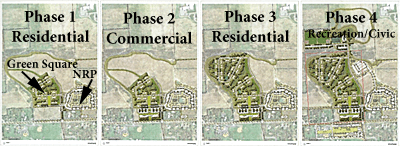
Calamar Enterprises’ Buffalo office submitted a proposal for a $17.4 million, 110-unit market-rate senior apartment building on 13.5 acres, and Cleveland-based NRP Group submitted plans for 80 one-story patio homes on about 15.5 acres. Calamar later re-sited their project at the town’s wish to the northern part of the land, and increased the number of units to 124. Green Square, led by David Taub and HOLT Principal Graham Gillespie, proposed 60 units of housing and 23,000 square feet of retail in 2-3 story arrangements, and civic and recreational space. Altogether, the value of the three would have approached $50 million.

gs_phases

However, all of this was contingent on a sewer being built, which did not happen. The developers agreed to do a package plant that would service just the town center, there was discussion of an IDA-backed tax incentive zone, and the town stood to make a hefty return on investment, but…to quote the Star, “However, the deals fell through.  Actually it seemed more like they just faded away. At least one of the developers had signed paperwork saying they intended to purchase acreage from the Town.  The Town didn’t seem in any hurry to sell the land, even with clearly interested developers.  When the developers disappeared there was no reported effort by the town to pursue the deals.”

Since then, the town continues to get a steady stream of interest, but no real idea on how they want to move forward. Like Ithaca city and town, they’re looking at the possibility of Form-Based zoning for the site, and the town hopes to issue a more specific RFP than before, incorporating revised assessment values. The most intensive approach involved the Form-Based Code and a specific RFP, the least specific is just putting up a for-sale sign ans seeing what happens. Whatever the case, the lax approach the town has taken the past few years may no longer be feasible, with the ticking tax time time bomb of the possible power plant closure looming over the town and schools’ budgets.

old_library_thp_v4

2. Speaking of long processes, the Old Library project has formally filed paperwork here to begin the application process for the Certificate of Appropriateness from the Ithaca Landmarks Preservation Commission. The meeting is scheduled for city hall at 5:30 Tuesday the 14th. Although it says early design review, a lot of the legwork has already been done at this point, since the Planning Board and ILPC have been conducting joint meetings with the project team over the past several months to create a design that they’re all comfortable with. However, the ILPC is likely to refine some details moving forward.

old_library_thp_v4_2
At this point, the unit mix consists of 22 1-bedroom units with about 700 SF each, 25 2-bedrooms with about 900 SF each, and 10 2-bedrooms with 1200 SF each, the extra space intended as a den or home office. The building also includes a 1,800 SF community room to be administered by Lifelong, and 3,750 SF of first floor commercial space. The total facility size comes out to about 85,600 SF, and parking for 25 cars and at least 12 bikes, and another 34 bike spaces for the community room. Exterior materials include brick, limestone, and a couple forms of fiber cement, including wood-textured fiber cement.

Southeast+Rendering

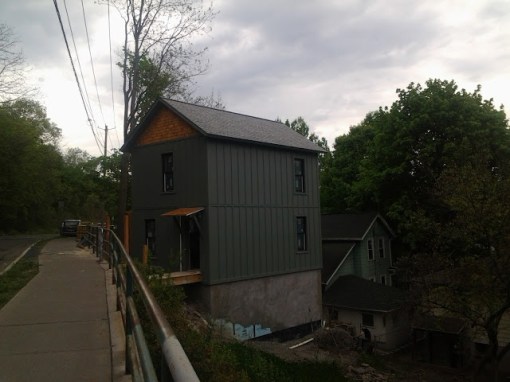
3. The STREAM Collaborative House at 228 West Spencer is up for sale. The house has its own website here. The 1,152 SF, 2-bedroom net-zero energy house is listed at a price of $305,000. For more info on the house, Noah Demarest was kind enough to give a construction tour of the house while it was underway, and the blog post I wrote up afterwards can be found here.

evergreen_dryden_1
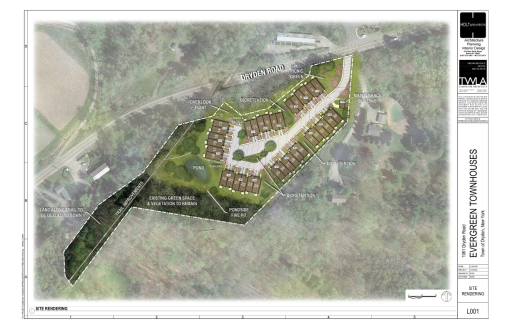
4. It’s pretty clear at this point that the Evergreen Townhouses project at 1061 Dryden is evolving into the next hot-button development issue out in Varna. The Times has their interview with the angry neighbor here, and more info can be found in the town of Dryden’s April planning board meeting minutes here. So far, the only image of the townhouses themselves has been a perspective that only shows massing – 2 stories, gabled roofs.

Also of note is the town of Dryden Planning Department’s recommendation to the town board (and the planning board’s approval) for an increase in density in certain areas. The change in code affects parcels zoned rural residential, with municipal water and sewer access. The density would be increased from 2 units per acre to 6 per acre. Looking at the zoning map and the sewer map, that would primarily affect the corridor from Varna to the 13/366 intersection, and a rural swath just north of Dryden village near TC3. What this would do is allow 1061 Dryden Rd to withdraw PUD application, and apply for a special use permit (SUP), which are generally easier to obtain.

On a side note, googling Tiny Timbers brings up a Times editorial, written by the Times, that argues against Tiny Timbers for not fitting in with the appearance of Varna. Actually, it kinda takes everyone to task, from developers to town government to residents. But, to make one counter-point regarding mixed-use, commercial services need a certain amount of traffic (not necessarily vehicular) to thrive. If the population base within a certain radius isn’t there, the risk is too great for someone to put their money on the line and hope that they can somehow draw in customers. If Varna wants a mixed-use center with shops and cafes, they’re going to need the population to support it. Some think that will include 1061, some (probably more) think Tiny Timbers, but if there’s no “push”, the ball won’t be rolling.

201_college_v3_1

5. A couple of minor things to note in sales. The 4,200 SF former “Imperial Buffet” property next to the Shoppes at Ithaca Mall has sold to a Syracuse-bsed LLC (Watersprite LLC, established 2004) for $590,000 on Friday the 10th. I personally will always remember this place as being the only place my mother was comfortable with eating in Ithaca because she hates eating out, and felt everything else was “snobby and expensive”.

Meanwhile, the 12-bedroom, 2,837 SF house at 201 College Avenue, the property subject to a heated debate between Neil Golder and Todd Fox, sold for $2.65 million on Friday the 10th, which seems outrageous except that it’s becoming the norm for inner Collegetown transactions – Novarr picked up 5,500 SF 215 College for $5.3 million last year. There will be no delving into that debate again this week, but the city uploaded 580 pages of documentation here, and my colleague Mike Smith is preparing a story for the Voice.

20160522_143925 20160522_143949

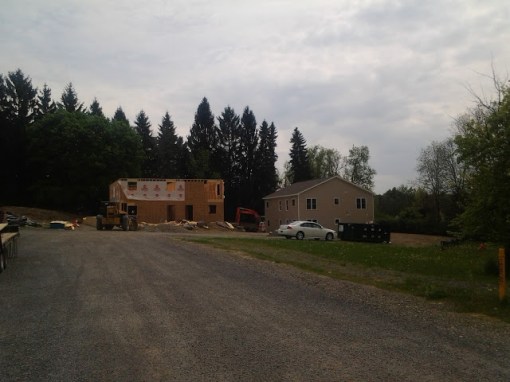
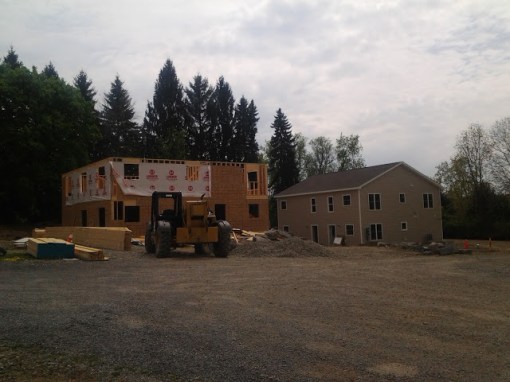
6. Houses of the week. This pair of duplexes are being built on Birdseye View Drive near Ithaca College. Each house has a 4-bedroom unit and a 2-bedroom unit; recent advertisements on Craigslist (since expired, so no link, sorry!) have them $750/bedroom. The developer is the owner of Mahogany Grill downtown, who also happens to be a part of the business team renovating the former Lucatelli’s into a new restaurant, a Tapas and pasta restaurant called Mix Social Dining after the chef’s wife.

These photos are a couple weeks old now, but the one on the right looks nearly complete, while the one on the left was still in the (wood) framing and sheathing stage. Based off the rough window and door openings, they are not exactly the same, but expect them to look similar.


News Tidbits 6/4/16: A Stormy Summer Start

4 06 2016

201_college_v3_1
1. We’ll start this week off with a follow-up on the 201 College Avenue debate. All discussions of planning philosophy noted, one solid request, as reported by Josh Brokaw at the Ithaca Times, was to try and reduce the bulk from the College Avenue side, if not necessarily the building footprint. The above drawing was submitted by STREAM Collaborative’s Rob Morache earlier this week, with a cover letter describing the changes here. The modification reduces the building by 2 bedrooms, to 74, which to go by Todd Fox’s comment in the Times article, puts the project at the borderline of financial feasibility. The middle still pops out a little because that’s where the fire stairs are located. Some minor details were changed with the accent panels, and recessing the windows slightly on the south and west facades. For the record, the panels are Nichiha and Allura fiber cement, with painted metalwork and fiberglass window sashes.

Although now outdated, a shadow study for the previous design has since been uploaded by the city. There are two versions, with and without neighboring building shadows, here and here respectively.

Expect further detail refinements; the building is set to go in front of the Design Review Committee Tuesday morning.

20160414_120418

2. WSKG did a segment earlier this week on micro-apartments, with an interview with Frost Travis and the Carey Building project wrapping up on East State Street. A few details worth noting from the segment – 5 of the 20 rental units (which range from $1,225/month for the microunits to $2,699/month for a high-end penthouse 2-bedroom) are already spoken for and the building’s not even finished yet. For some reason, Monica Sandreczki says there will be about 35 residents at full occupancy, which is a big stretch since there are 16 micro-units and 4 two-bedroom units – going one person per micro-unit and bedroom, a better estimate would be 24.

The news piece also notes that the 201 College project contains micro-apartments – which is true, given that the building is 44 units and 74 bedrooms, and at least the early plans had a number of split-level 410-670 SF studio units.

401_lake

3. And 401 Lake Street will bite the dust. The Common Council voted 8-1 last Wednesday night to have structure demolished and the tax-foreclosed properties be designated as parkland. Cynthia Brock (D-1st) voted against the measure and preferred a sale for tax reasons, and her ward counterpart George McGonigal (D-1st) argued that the city was destroying historic working-class housing, though he ultimately supported the measure. Brock did take a whack at new affordable housing in the city, commenting that INHS is getting $75,000 for each townhouse, and Habitat for Humanity getting $75,000 for a duplex even with its volunteer labor, when there was a potential, cost-efficient opportunity for affordable housing designation with this unit. Josephine Martell (D-5th) seemed to be the strongest proponent for demo, stating that the unique potential to enhance the Ithaca Falls Natural Area should be taken every opportunity of. The city bought the tax-foreclosed property from the county; the background on that is on the Voice here.

The funds for the demolition, estimated at $25,000, will come from the sale of IURA land to the Hilton Canopy project. That measure was approved 6-3, with Brock, McGonigal and Graham Kerslick (D-4th) opposed. With work on the Lake Street Bridge currently underway, demolition is not expected for at least a few months.

There was a thought exercise regarding the selling the falls’ parking lot to INHS for development of 3-9 units of affordable housing; it’s an interesting idea, since 401 and the adjacent are right next to the Falls, but the 0.55 acres of city property adjacent to the Lake and Lincoln Streets intersection is still over 200 feet away at its closest point.

4. The rare bit of news out of Enfield. A $612,000 building loan was issued by the Bank of Greene County to provide funds for renovating and expanding the volunteer fire station at 172 Enfield Main Road.

Give that Enfield issues no more than a handful of new construction permits each year, it’s about the only other thing going on apart from the Black Oak Wind Farm debate. One would think that arguments like “the wind does not blow as much as it used to” would be easily shot down and things would move forward, but instead it’s Marguerite Wells, the project manager for BOWF, getting raked over the coals. I don’t have a dog in this fight, but I do feel bad for her.

5. In case anyone was wondering – county planner Megan McDonald says the Denter housing study will be publicly available by late July.

arpt_pk_1

6. Here’s something intriguing from the county’s Facilities and Infrastructure Committee agenda – a proposal to “Prepare airport land for future development“, seeking $500,000. None of the money comes from the county; it appears to be dependent on grants, or an interested developer. Which, given the fact that this shows up in budget docs going back to 2014, doesn’t exactly seem to be generating many queries.

The parcels are described as the “Cherry Road and Agway parcels”, which must be owned by the county since they want to lease out the land – but checking the deed records of parcels adjacent to the airport, there’s no record of an Agway in any of the deed histories. The parcels may be related to the properties in the airport business park feasibility study, shown above and awarded to the team of Clark Patterson Lee and Camoin Associates this past winter.

7. It’s unusual to see Cornell buying property these days, but this Friday, the university purchased the house at 1250 Trumansburg Road on Ithaca’s West Hill for $157,000. The house is a 19th century fixer-upper on 1.21 acres – Cornell owns the land surrounding it, some of which is being subdivided off to build the Cayuga Meadows affordable senior housing project. The house is assessed at $215,000, but the real estate listing notes it needs some work, and it’s been off and on the market for five years.

Several years ago, Cornell expressed intent to develop the 35 acres it owns into a mixed-use complex with a hotel institute, housing, offices and medical services, but the only part of the plan that ever really moved forward was Conifer’s project. I haven’t seen the plans in years, but I remember the early plans (there were a couple versions) were very sprawly; six, eight years ago, walkability was not as valued as it is now.

By buying the house, Cornell reduces its need to work around a neighbor and can incorporate the property into potential plans. This purchase would seem to suggest that Cornell still has strong interest in developing the rest of the West Hill property at some point. In the meanwhile, Cornell might rent it out while the school figures out what it wants to do with the acreage.

20160522_151346 20160522_151417

8. House of the week. From the outside, 228 West Spencer Street is almost done, and the interior is fairly far along as well, with finishing work underway. Architect Noah Demarest says the house will be put up for sale in a few weeks, if everything goes as planned.


DiBella’s Construction Update, 5/2016

24 05 2016

One restaurant opens, another is just getting underway. NYC-based Marx Realty, operating as Ithaca Joint Ventures LLC, is finally starting work on the DiBella’s pad building long-planned for the Ithaca Shopping Plaza off Old Elmira Road.

DiBella’s first started planning for an Ithaca location back in November 2014. After a few design iterations, the project was approved by the Planning Board and BZA late last summer. The restaurant replaces what was previously part of the shopping center’s parking lot.

The exterior will be similar to DiBella’s other recent stand-alone restaurant locations – CMU faced with brick and stone veneer, decorative sconces (light fixtures), and a “patina green” patio roof. The size of the building will be about 3,400 square feet, which is typical for the Rochester-based sandwich chain. The interior will be designed with a 1930s/1940s era theme, also standard for the DiBella’s chain. Along with the building comes a revised parking arrangement for 35 cars, bike racks, signage, landscaping and a modest patio area. Early Site Plan Review documents estimate the project cost at $600,000.

As for the construction images, it looks like the foundation’s sub-base is being prepared for the foundation slab. This is going to be concrete slab-on-grade, no basement. The sub-base will give a uniform base from which to build upon, and helps to compact the soil, making it less likely to undergo excessive settling. The soils down in the flats are notoriously difficult to build on, because they are very soft and compressible – the shopping plaza, which was originally built in the 1950s, has had some mild settling issues. I don’t see anything to confirm it, and someone knowledgeable feel free to chime in, but it would seem removal and replacement of existing fill is likely to approach used here, similar to the Texas Roadhouse project. The drum roller in the last photo supports that idea. The turquoise pipes are water-sewer pipes.

The FEAF estimates a seven month construction period, so a late fall opening isn’t out of the question. DiBella’s expect to employ about 25.

A&E Construction of suburban Philadelphia is the project contractor, and the building was designed by Ithaca architect Jason K. Demarest.

20160522_150132 20160522_150306 20160522_150330

DiBellas-Ithaca-NY-rendering-large


Texas Roadhouse Construction Update, 5/2016

23 05 2016

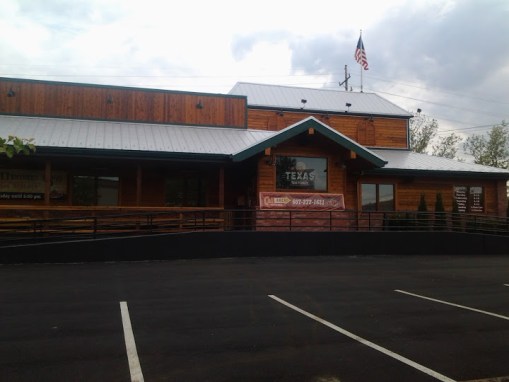
Just a few other photos from this past Sunday. As of 4 PM today, Texas Roadhouse is open. The landscaping is complete, the parking lot is paved and striped. If you love the food, fantastic. If you don’t, well, at least it’s bringing tax money into municipal coffers.

For me personally, it’s been kinda cool to watch this from start to finish – I broke the story on the Voice in March of 2015, and have been keeping tabs on it since. I didn’t realize it was due to open today until taking photos this past weekend, so once again, it became a popular article for the Voice’s website.

The $1.35 million project at 719 South Meadow Street was formerly home to Cellular One, a 1990s one-story masonry building that was demolished in 2013. The restaurant was originally slated to open in Q1 2016, but construction started a little later than anticipated last fall.

Texas Roadhouse corporate developed the site, leasing the land from plaza owner DDR Corp. of Ohio. GreenbergFarrow of suburban Chicago is serving as an architectural consultant for the project. Edger Enterprises of Elmira served as general contractor.

20160522_150027 20160522_150048  20160522_150233 20160522_150237 20160522_150539


New Tidbits 5/14/16: A Land Subdivided

14 05 2016

6-29-2014 162

1. This week, the city rolled out a strategy memo for “Design Guidelines” for Collegetown and Downtown. The city held focus meetings back in March with Winter & Company, a Boulder-based urban design and planning firm with experience in cities and college towns from coast to coast. No specific individuals are mentioned as being part of the focus groups, but the focus group meetings consisted of “residents, property owners, developers, architects, design professionals, Planning and Development Board members, Common Council members, and City staff.” The memo is meant to help guide continued discussion of design standards, and to identify key issues in each area that could arise with planning and implementation.

The feedback from the focus groups shouldn’t come as a surprise – use high quality materials, respect historic character but don’t emulate it, recognize that development costs in Ithaca are very high, promote walkability and active street use, encourage parking lot infill, define transition areas between smaller-scale neighborhoods and denser cores, and so forth.

One of the major components being reviewed is whether design guidelines should be mandatory or just a set of recommendations. The city has a design review process that comes into play for certain projects like those on the Commons, but otherwise it’s non-binding unless the BZA or planning board mandates it as part of approval. Regardless, more meetings are expected as the guidelines are fleshed out.

al-huda_1

2. The Ithaca Times is checking in with the Al-Huda Islamic Center plan for Graham Road in Lansing. Fundraising is still underway for the 4,828 SF mosque, which according to a member of the Al-Huda board of Trustees, is expected to cost between $650,000 and $1 million, per contractor estimates.

Fun fact of the day, Islamic law prohibits mosques being paid for with funds that collect interest (tainted by usury). Everything must be paid for up-front and in full.

The village of Lansing has already signed off on the mosque plans, and the vacant land at 112 Graham Road is bought and paid for. Pretty sure the above drawing is outdated, but I haven’t seen an image of the latest plan available online. The Times has an interior shot of the current plan to accompany their story.

20141227_134549

3. The town of Ithaca passed the nine-month moratorium on two-family dwellings by unanimous vote at its meeting this week. Anyone seeking to build a duplex in the town of Ithaca will now have to wait until February 2017 for a building permit, unless “unnecessary hardship” is demonstrated by the law’s imposition. The law was driven by the construction of multiple 2-6 unit student-oriented structures east of Ithaca College in the Kendall/Pennsylvania avenue area, which they felt was undermining the neighborhood’s character. Earlier versions of the law called for a year’s length, but the town received numerous complaints that a year would actually hit two construction seasons, 2016’s and 2017’s.

100_1281

4. Also in lawmaking, the bike lanes proposed for the 300 and 400 blocks of Tioga Street in downtown have been shot down in favor of sharrows, 3-2. This comes after strong advocacy by city bicyclists and some planning and sustainability groups, and strong opposition from some elderly and disabled advocacy groups, suburban neighborhood residents and the town of Ithaca’s town board.

benderson_1

5. One of the many issues that faces large-scale planning and development in Tompkins County is that, over the many decades, land has been heavily subdivided and sold off between many different owners, with the properties often passed down or even traded, leaving records piecemeal. With so many owners, some untraceable, it can become logistically difficult, especially if not everyone is on board with a plan.

In front of Moe’s down in big box land, the county owns a 0.3 acre parcel of land previously a part of the flood relief channel. Since 2005, Benderson Development has rented the land as part of its shopping complex – now they just want to simplify things and buy the land from the county. With an offer of $112,500, which is $17,500 over the county’s assessment, and with the county’s 2005 confirmation and 2016 re-affirmation that they have no public use for that slice of land anymore (much of the channel’s land has already been incorporated into other parcels), they’re planning to finalize the sale at the Legislature’s meeting next week.

6. If you glanced at the Voice, you know there’s a plan cooking for 36 townhouse units east of Varna. But according to Dryden’s town planner, that’s not the only project that’s been brought forth to the town. A different applicant brought forth a plan for 20 single-family homes on 9 acres near the intersection of Route 13 and Mineah Road, a rural stretch between Varna and the village of Dryden. The units, expected to be rentals, are allowed as of right in Dryden’s mixed-use zoning – if it’s under 4 units/acre, it doesn’t need a special use permit, or even site plan review. A check of property records reveals several parcels owned by Ryszard Wawak, a Lansing businessman who picked up the land a number of years ago and has already built a duplex (2-bedrooms each) and a 5-bedroom house on subdivided parcels.

If you happen to start seeing houses popping up between Dryden and Varna, it’s probably this project slipping under the radar.

elmira_savings_v2

7. Taking a glance at the Ithaca Projects Review committee meeting agenda, the Elmira Savings Bank and 201 College Avenue projects will be undergoing review before heading to the planning board meeting later this month, and the subdivision/reconfiguration to build two two-family houses at 312-314 Old Elmira Road will also be reviewed. There are also a boatload of zoning variances being sought for various projects – Marriott signage, an apartment reconfiguration on Farm Street, a basement home salon on Center Street, a home addition on Cobb Street, parking variances for 121 West Court and a area variance for an existing carport on Grandview Avenue that was apparently never approved by the city when built in 1973. In total, there are nine. It’s times like this that the city would benefit from a simplified zoning code.