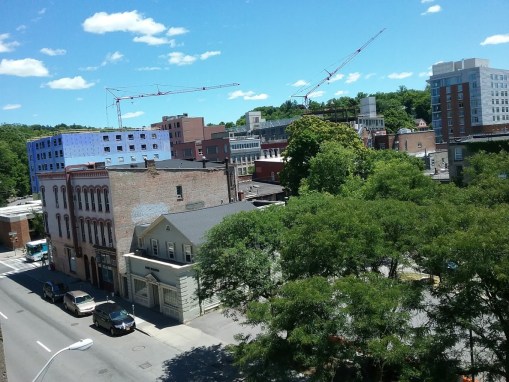
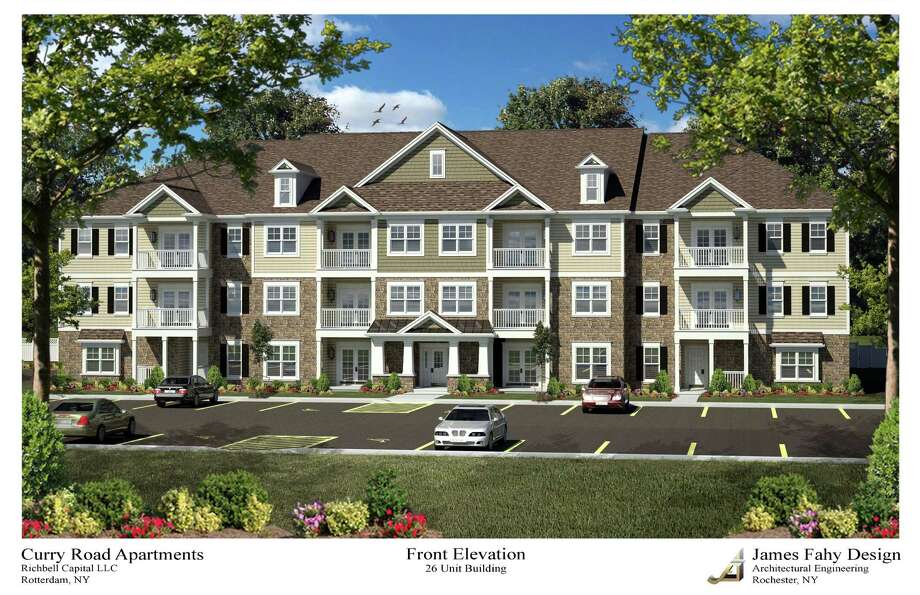
Harold’s Square Construction Update, 7/2018

17 07 2018

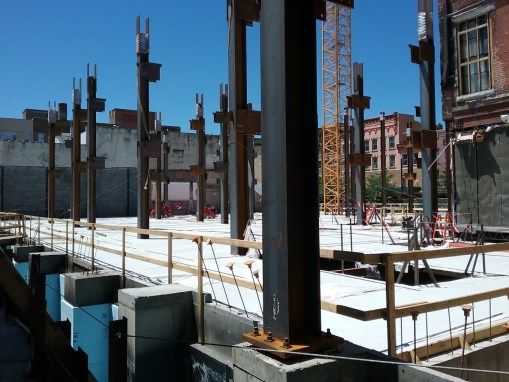
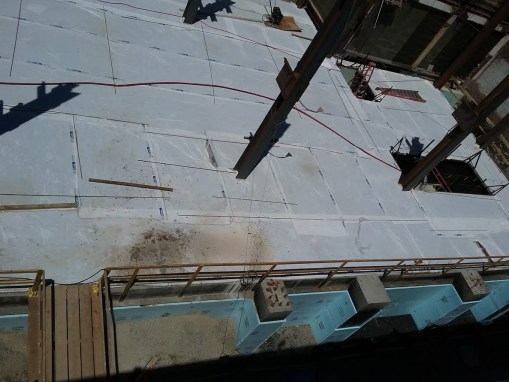
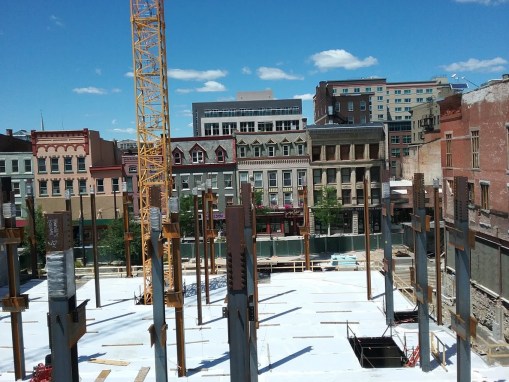
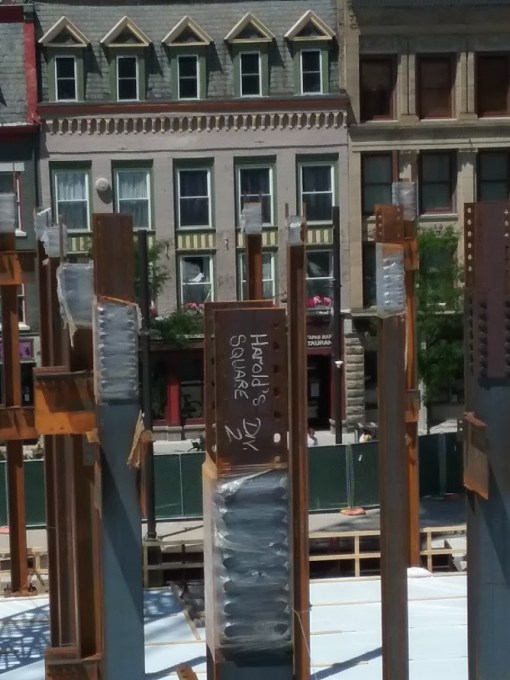
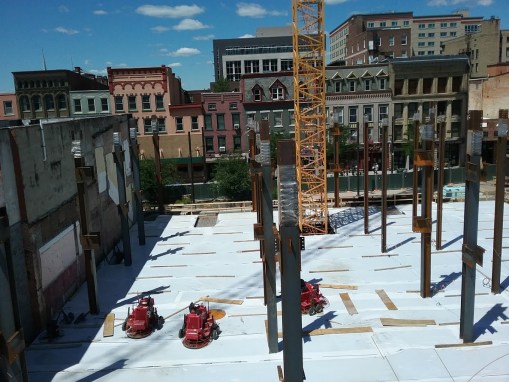
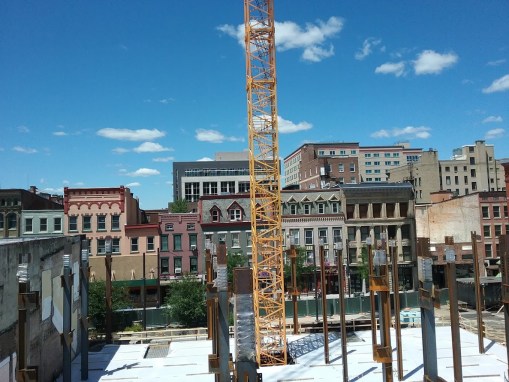
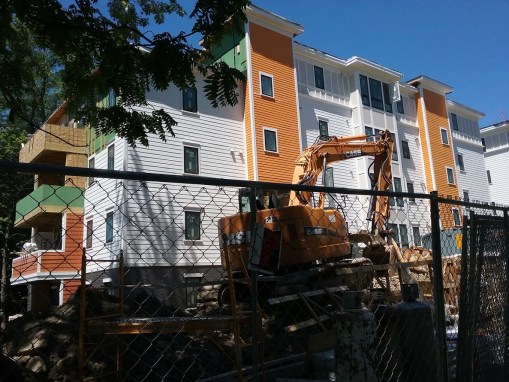
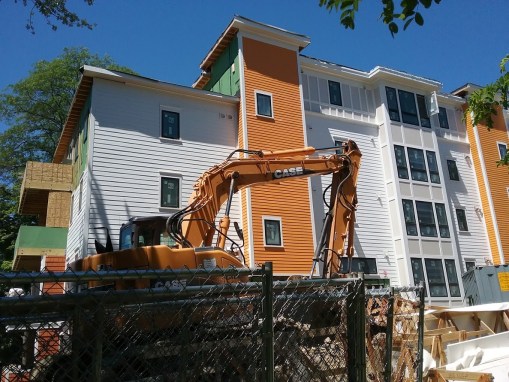
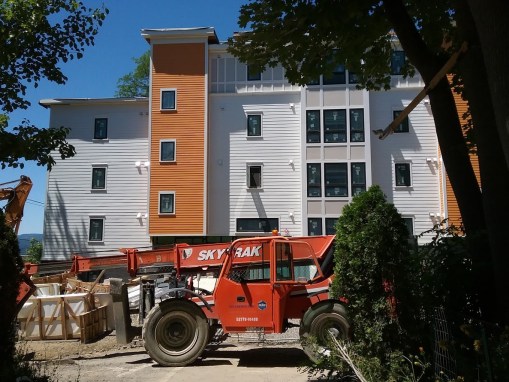
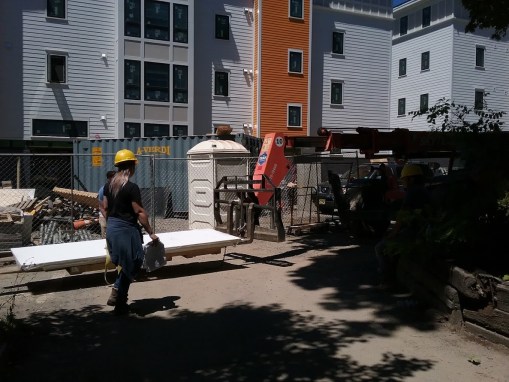
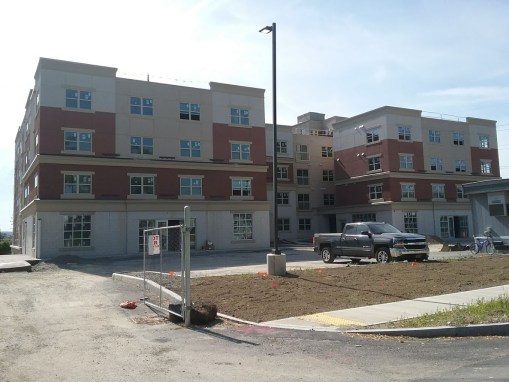
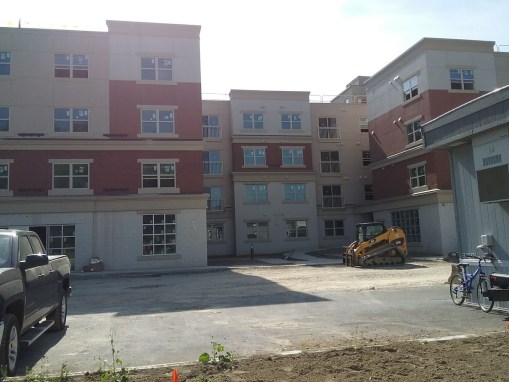
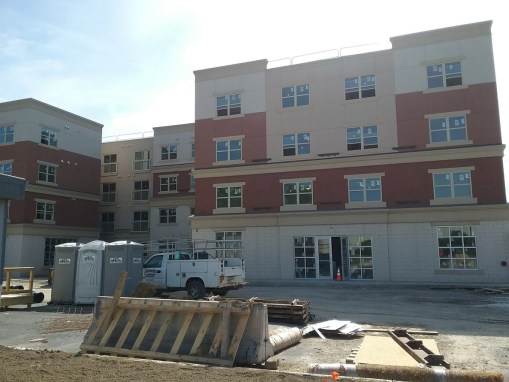
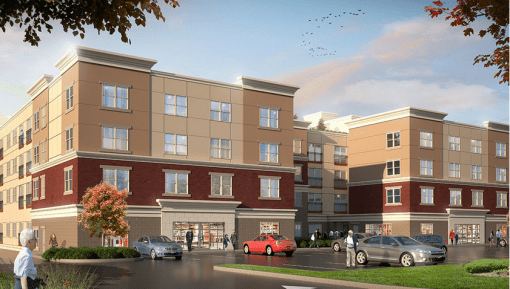
Harold’s Square is starting to take shape. The white sheets on top of the basement level are Sika Corporation UltraCure NCF curing blankets. When the steel was laid, corrugated decking was laid on top to create the base of the floor. A rebar wire mesh was then laid and tied into place, and the concrete was poured into the floor cavity, with wood forms to keep the pour in place. The rebar strengthens the concrete and ensures structural integrity. In this mid-June Facebook photo from the Harold’s Square page, you can see the decking going over the structural steel. A week and a half later, you can see the rebar grid over the completed decking. The concrete was poured in early July, the slab was covered in the cellulose fiber blankets to promote an even and structurally sound cure, and after seven days they tested the concrete and the results came back all-clear, meaning they can start to put weight on the concrete and work their way up.

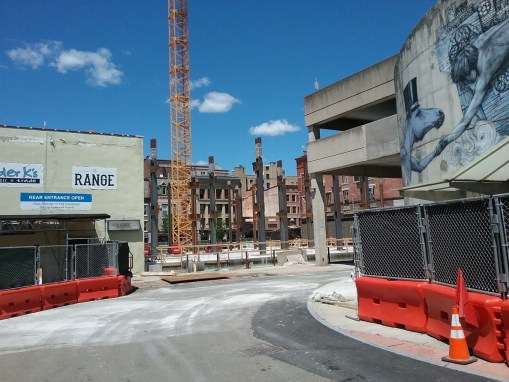
Meanwhile, structural steel erection will be taking a short break as masonry work begins on the Commons-facing side of the project, followed by masonry work on the Sage Building. The steelwork will resume in late July. Subcontractor Paolangeli will be doing backfilling (earthwork to cover up the foundation) on the Green Street (south) side of the project now that the shell of the basement has been built.

The WordPress for the project can be found here, and the Ithacating project description here.


118 College Avenue Construction Update, 7/2018

16 07 2018

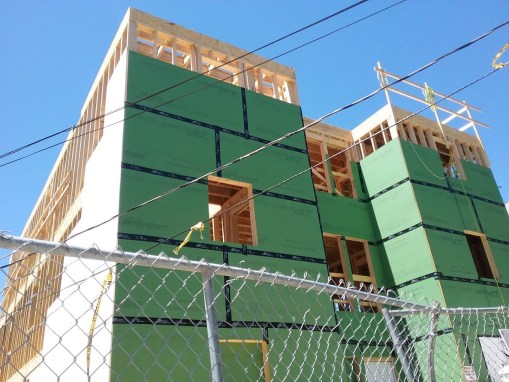
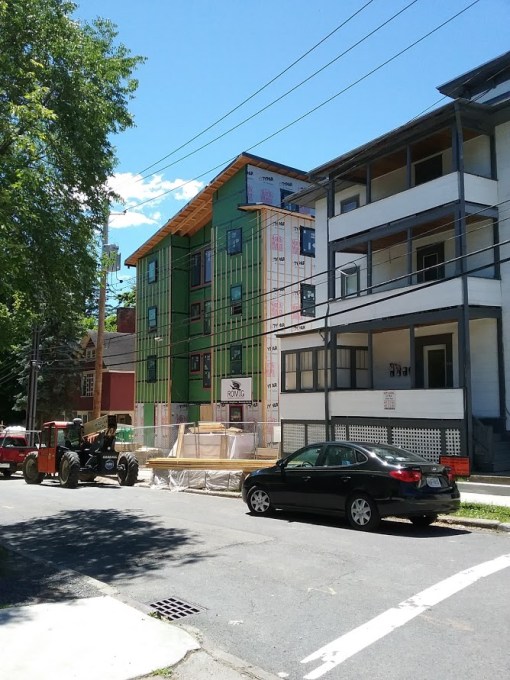
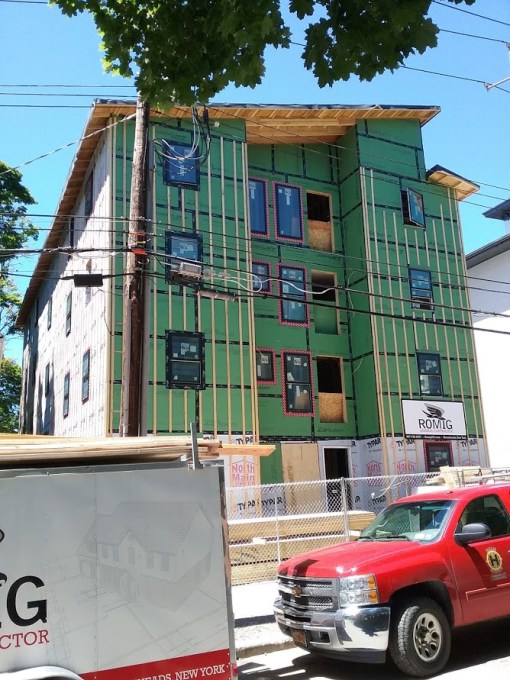
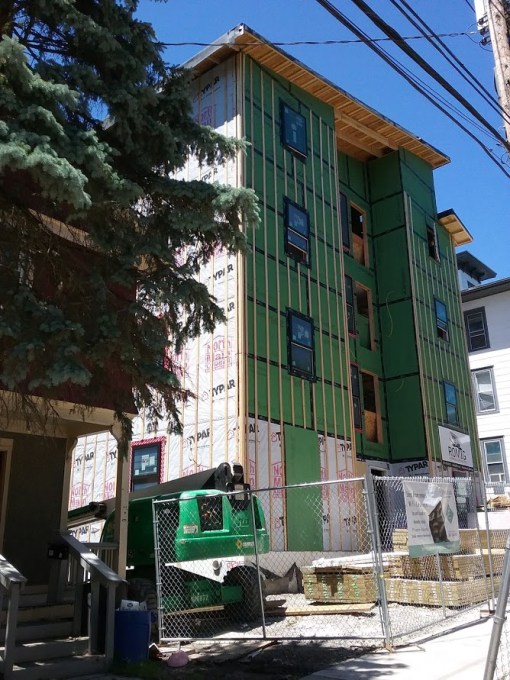
The last of Visum’s trio of Collegetown projects underway is the 5-unit, 28-bedroom building at 118 College Avenue. Officially, one other Visum project has city approvals and is permitted to start construction, a close fraternal twin to 118 College just a few houses up at 126 College Avenue. However, the existing house is rented out for the academic year, so any build-out there (and Visum seems to have deep enough pockets to eventually do it, all things considered) will not begin until June 2019 at the earliest.

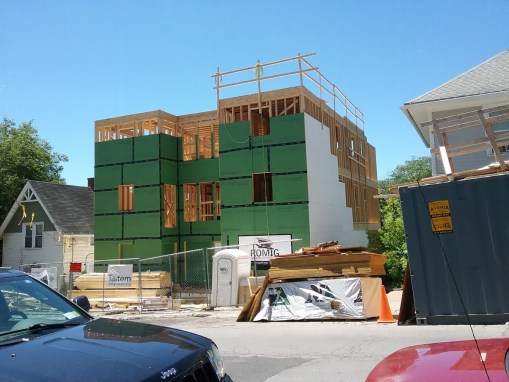
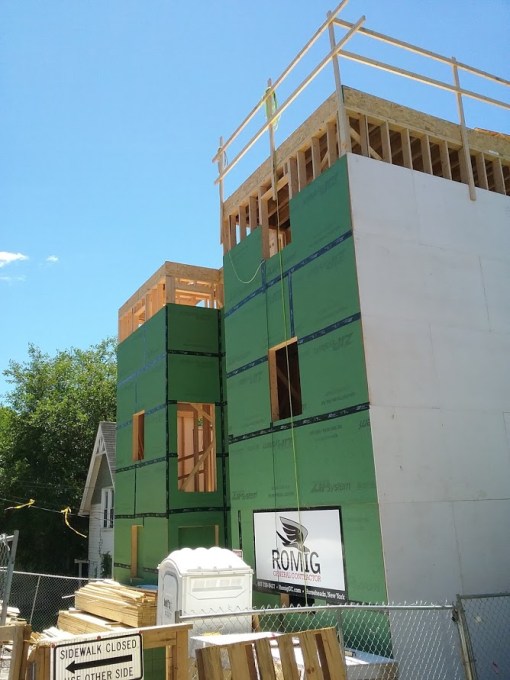
As with 210 Linden, Romig General Contractors is in charge of the buildout, and Taitem Engineering is doing the structural engineering – as with Visum’s other projects designed by STREAM Collaborative, the building is built to be net-zero energy capable. Using electric heating and appliances, energy efficient fixtures, low-E windows, double-stud exterior walls and high grade insulation creates a very high degree of energy efficiency that they hope to tie into an off-site solar array, offsetting the carbon footprint of the building and its use.

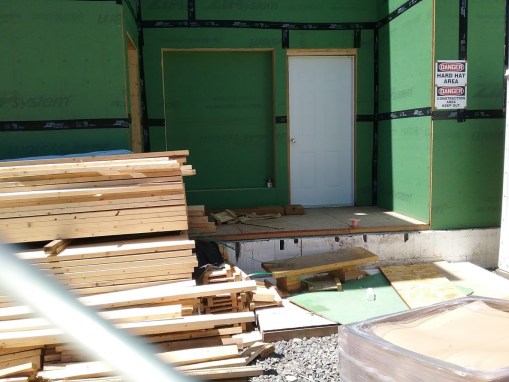
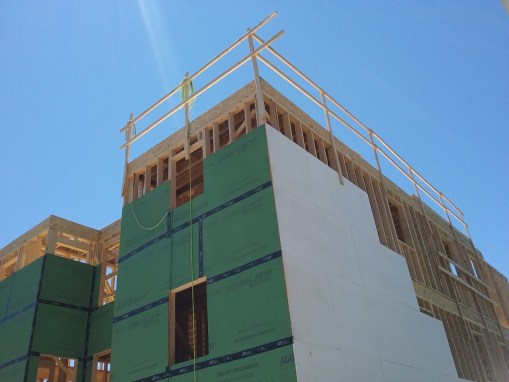
118 College still has another floor to go before it’s topped out, and the mechanicals will be hidden inside the historically-inspired “Italianate cupola” penthouse. Water and sewer service was installed this past week. I’m uncertain this one will be ready in time for returning Cornell students late next month, though it’s not impossible given that it’s a relatively small wood-frame structure. So far, with the rough window openings I’m seeing one substantial difference from the renders – the windows on the wings of the front facade are smaller than originally planned.


City Centre Construction Update, 7/2018

16 07 2018

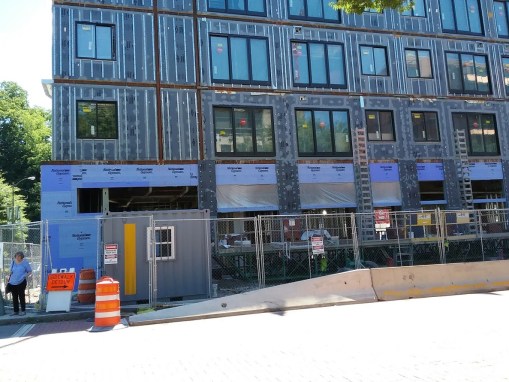
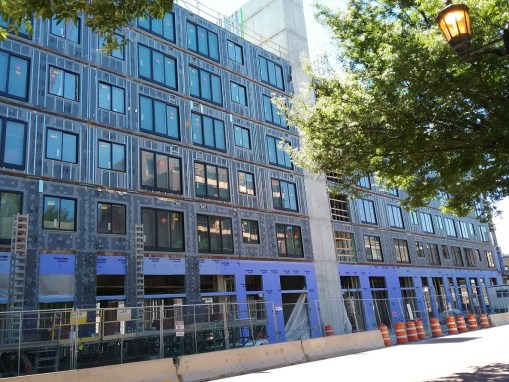
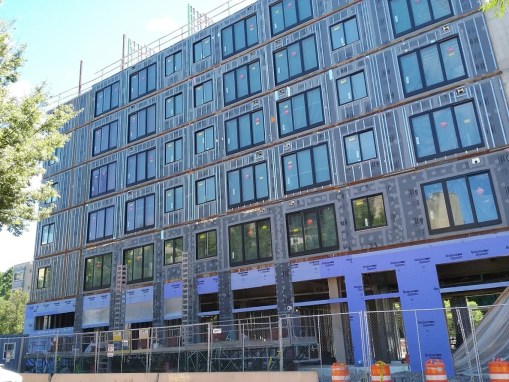
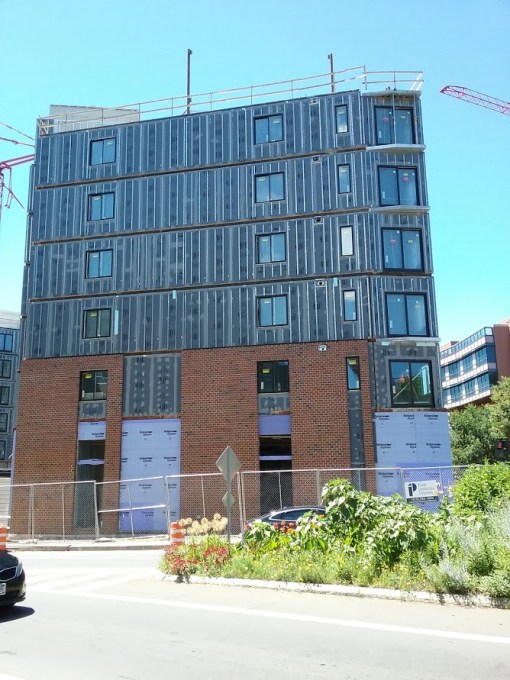
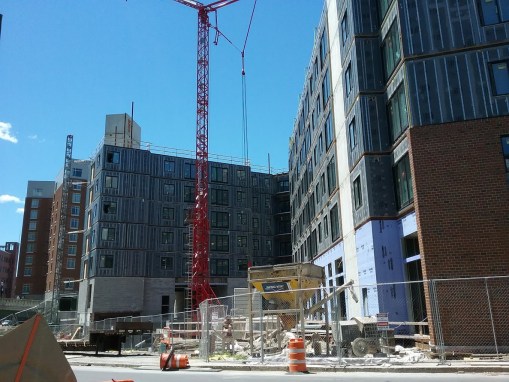
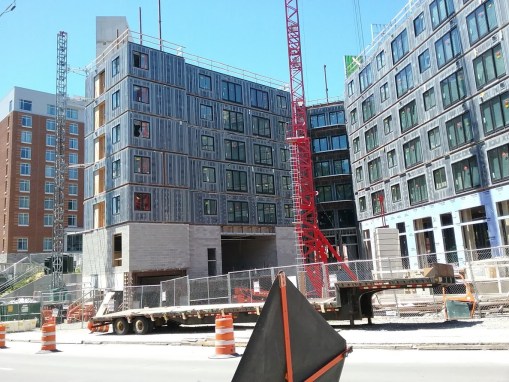
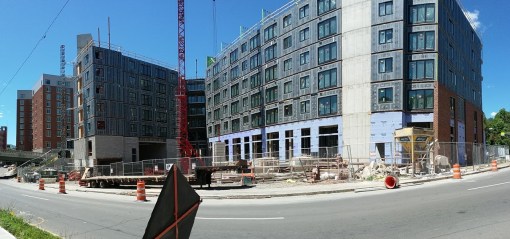
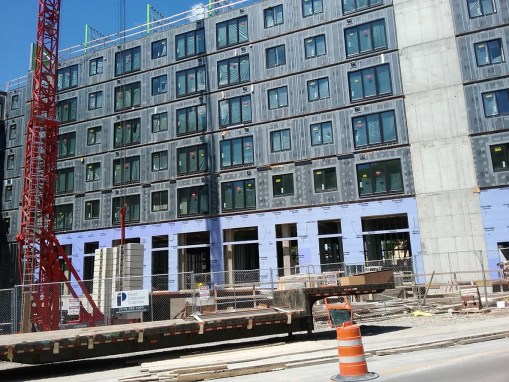
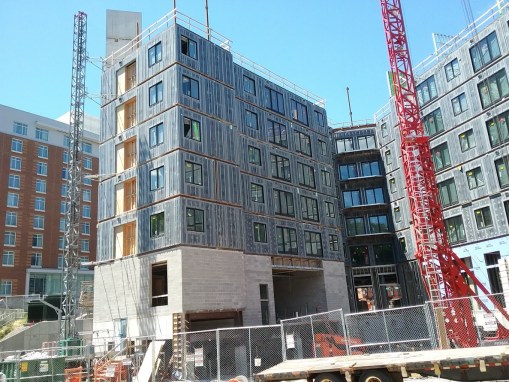
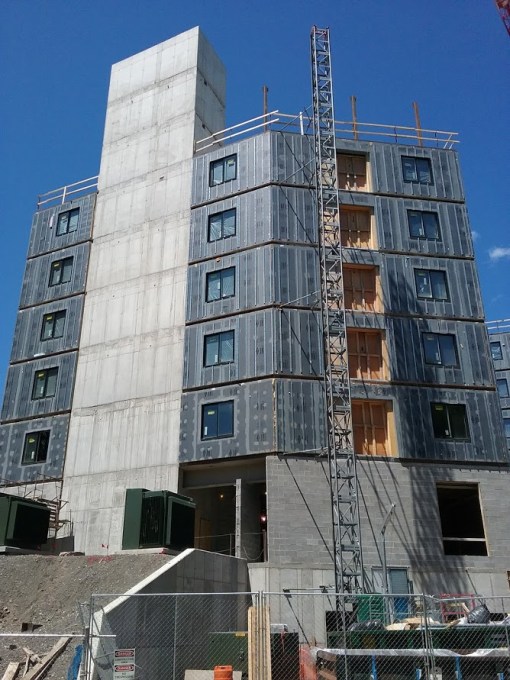
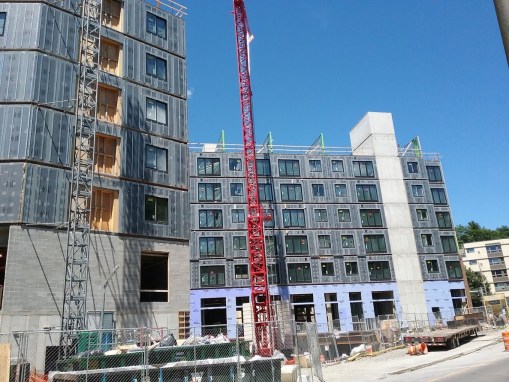
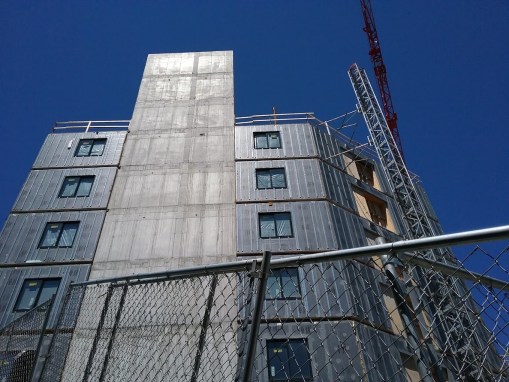
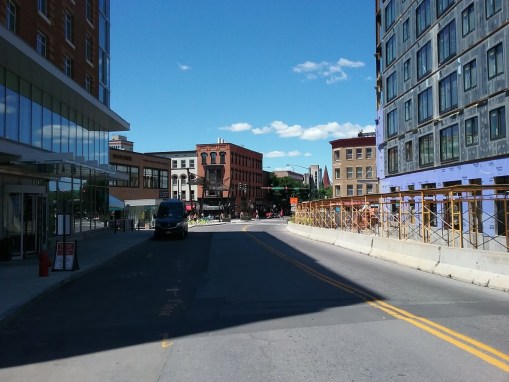
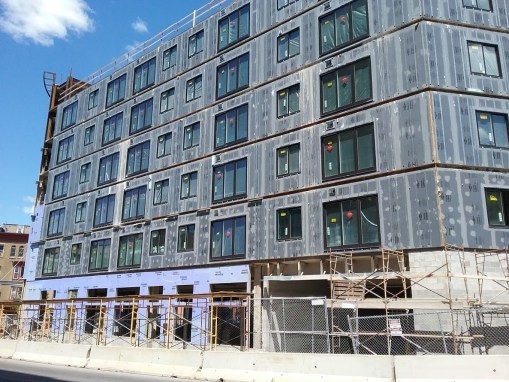
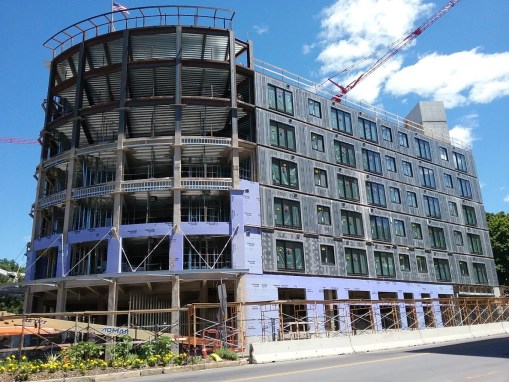
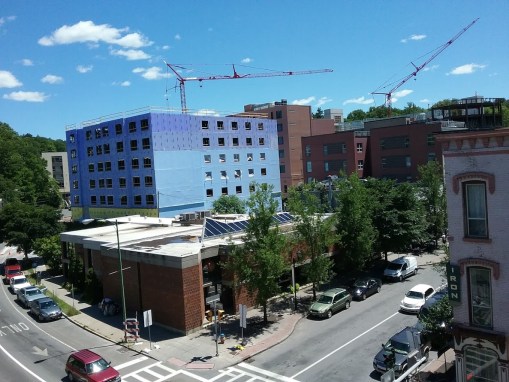
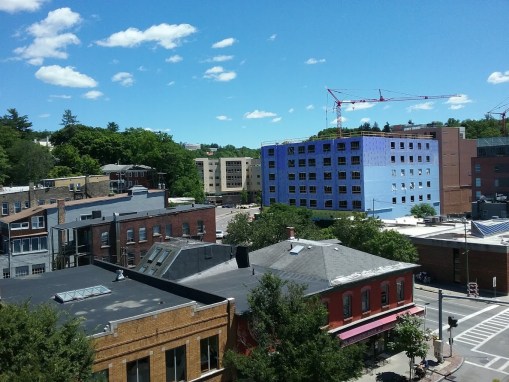
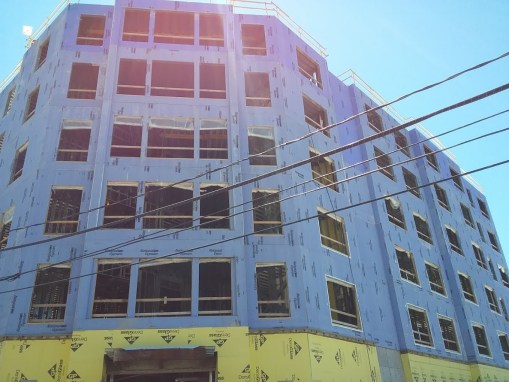
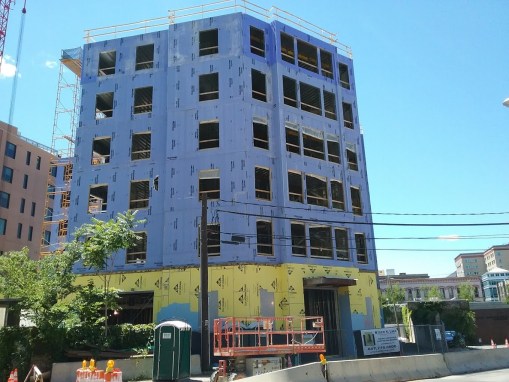
Not too much to add here regarding City Centre. The modular exterior panel system continues to rise. These photos were taken last weekend when the building was up to its sixth floor, and it’s not up to the seventh of its eight floors. For those needing a more regular fix, the webcam on the top of Seneca Way updates every fifteen minutes or so, and can be seen here. Looks like it missed me by three minutes.

Here’s an interesting little aside. A few folks have complained, in the way that many of us like to do, that the name “City Centre” is rather pretentious, particularly the faux-British English ‘Centre’. Newman Development Group has actually reused the name on another project they’re doing, in Lincoln Nebraska. That project is significantly larger than Ithaca’s, an $85 million downtown redevelopment of the former Lincoln Journal-Star newspaper office and printing press into a ten-story mixed-use with first-floor retail, two floors of offices, and 239 apartments on the upper floors. Like Ithaca’s project, it’s one of the largest urban projects in the city (rather impressive given Lincoln is ten times Ithaca’s size), and received a local tax abatement on the order of $15 million. Lincoln was selected by Newman specifically because its downtown area is close to a major university, in this case the University of Nebraska. Perhaps their Ithaca project is a new market pioneer for them – they see potential success in a mix of urban professionals and college students, and are looking for other opportunities in similar communities.

Looking at the apartment rental prices is enough to give most folks pause. Studios, which make up 33 of the 193 units, range from $1,795-$1,875/month. the 120 1-bedroom units go from $1,995-$3,015/month, and the 39 two-bedrooms range from $2,560-$3,415/month. With those prices, a prospective tenant could rent an entire house for themselves in Fall Creek or Northside; maybe it’s for the best that their attentions are drawn here instead. For the sake of comparison, City Centre Lincoln is $900-$1,200/month.

More information about Ithaca’s City Centre can be found here.


Hilton Canopy Hotel Construction Update, 7/2018

15 07 2018

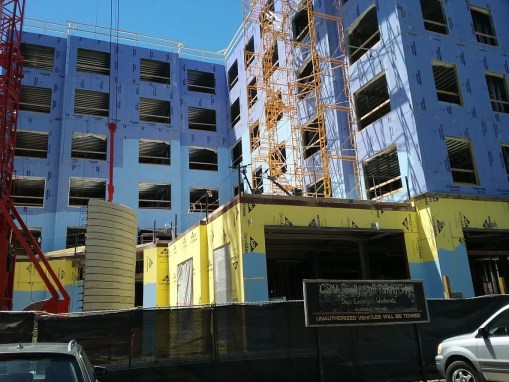
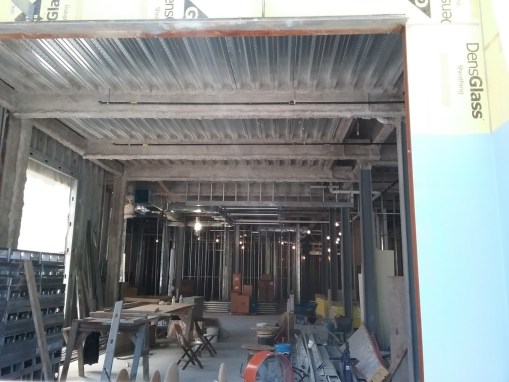
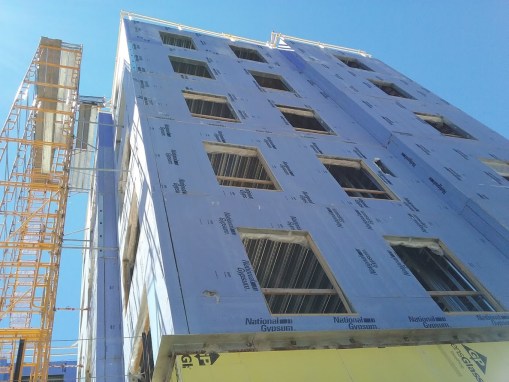
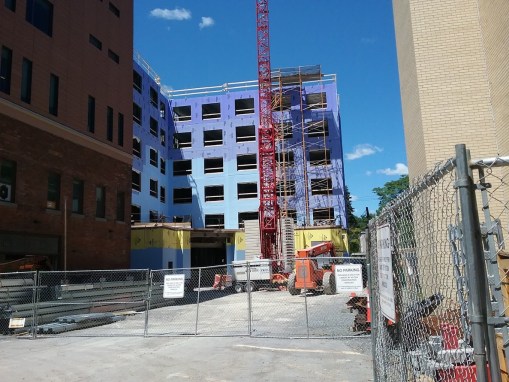
As previously mentioned on the Voice, the new 131-room Canopy by Hilton is one floor short of topping out. Interestingly, the ground level/lobby uses Georgia-Pacific DensGlass fiberglass mat sheathing, while the upper level use National Gypsum eXP boards. I’m not sure why the change – both are fire-rated, mold and water resistant. It probably doesn’t have to do with the exterior finishes (brick veneer is used at both ground level and on some of the wall projections above), but it’s possible it has to do with the construction material. The ground level is composed of poured concrete, while the upper floors are structural steel and accompanying steel stud walls. Regardless of the reason, both are being covered with the same water-resistive barrier. You can see the interior stud walls through the rough window openings, but interior work hasn’t progressed much farther than that on the more recently erected upper floors. The lower floors appear to be undergoing utility rough-ins.

It still isn’t clear what the replacement panel color will be for the yellowish “Applesauce Cake” – not sure if Whitham Planning and the rest of the project team persuaded the city “Dark Ash” grey was okay, or if another color was chosen. If someone knows, feel free to chime in the comments.

Further information on the Canopy hotel can be found here.


Chapter House / 406 Stewart Avenue Construction Update, 7/2018

15 07 2018

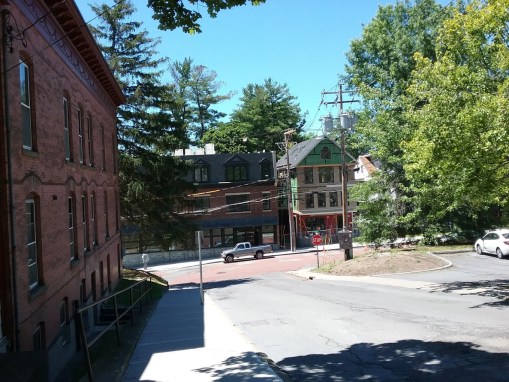
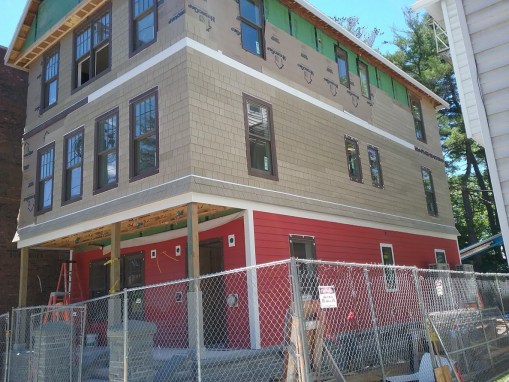
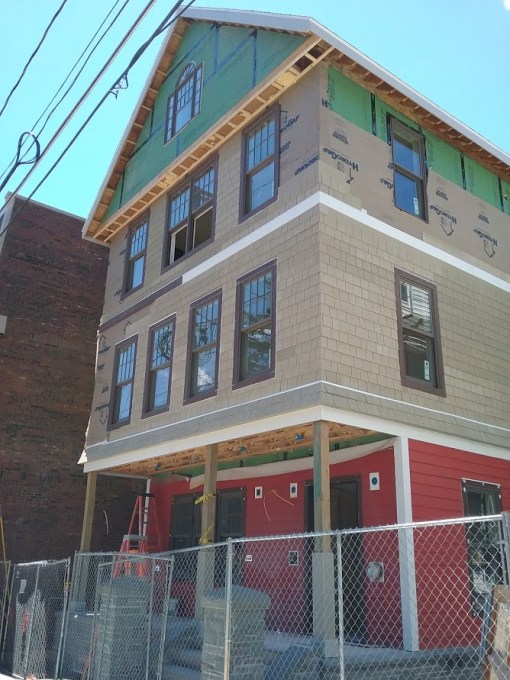
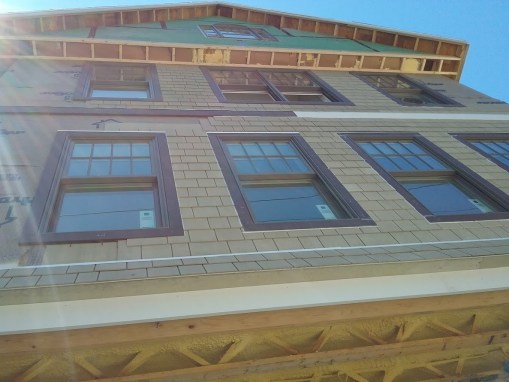
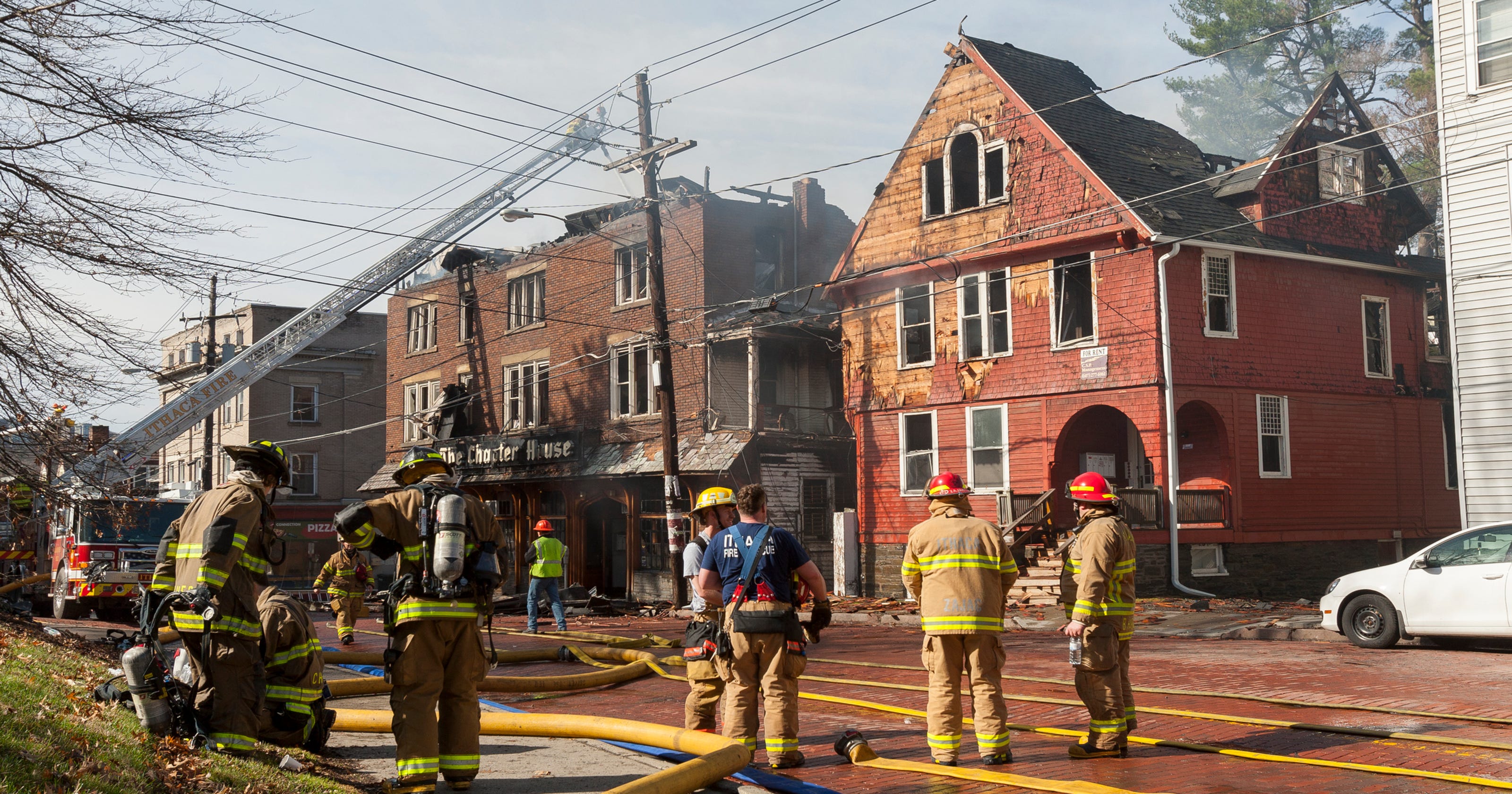
With 400-404 Stewart Avenue complete, developer Jim Goldman is focusing on the completion of the other half of his reconstruction, 406 Stewart Avenue. This is the property that Goldman originally owned and was destroyed in the spread of the fire that erupted at the Chapter House building. Architect Jason K. Demarest’s 3.5 story design is completely framed and sheathed in ZIP Panels; the panels are then covered in HydroGap, a premium grade housewrap to remove excess moisture while keeping new moisture from penetrating into the plywood sheathing. This is then layered over with (what I suspect are fiber cement) shakes, in contrast to the first floor’s lap siding.

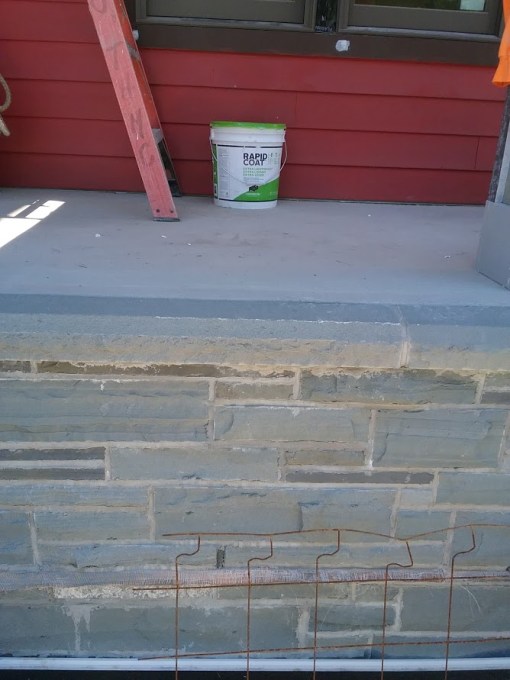
My first inclination was that they needed to be painted, but looking at the design render, it appears as if the project team decided to reverse the brown and red siding bands, so now the first floor is red like the original building, but the upper floors are brown. This is not the first major change to the design, which was approved by the ILPC, but any revisions may have been done out of committee view at the staff level. The fenestration on the third floor is different, and the dormer on the gable roof was deleted. Note the partially glazed-in access stair for the third floor apartments, and the quarried bluestone stair columns and base.

There’s still a fair amount of work to do on the exterior with facade installation, trim and finish pieces and the installation of a steel grate to access the enclosed stair column. The one inside shot shows drywall hung with doors and some trim in place, but some pieces are still missing, the wall needs to be painted and the floors have to be finished. However, it’s not an especially large building (four units and eleven bedrooms as-approved), so chances are pretty good this will be ready to go by mid-August.

As for the Chapter House, a few shots through the window glass show the carpeted staircase leading up to the eight apartment units, and an unfinished 3,000 SF commercial space still looking for a tenant.


210 Linden Avenue Construction Update 7/2018

13 07 2018

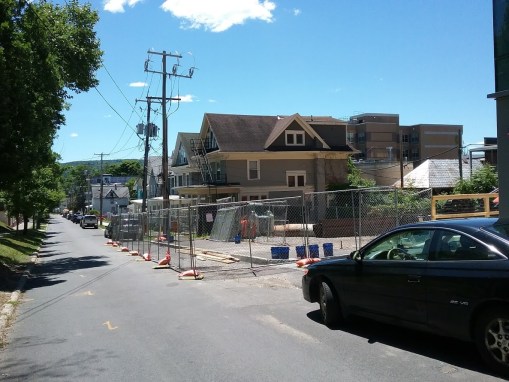
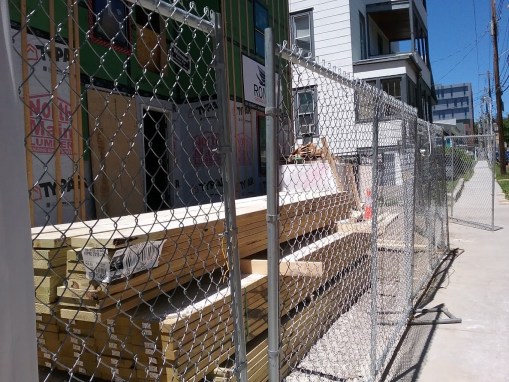
Time to take a look at Visum’s smaller Collegetown projects. 210 Linden is the largest and furthest along; the city allowed them to hook up to water and sewer service this week.

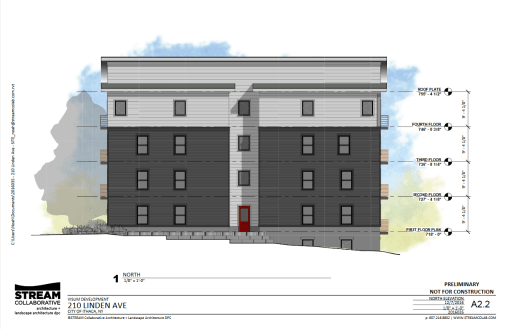
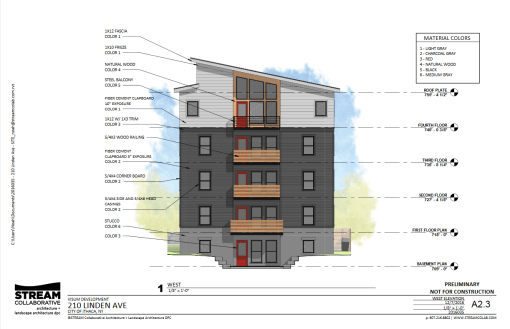
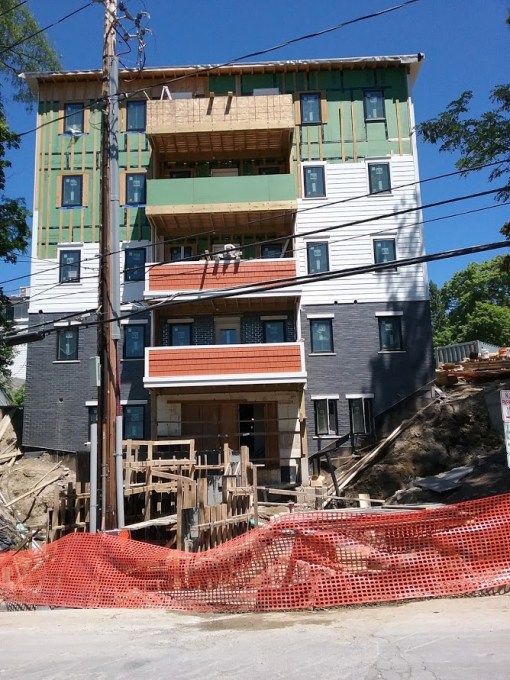
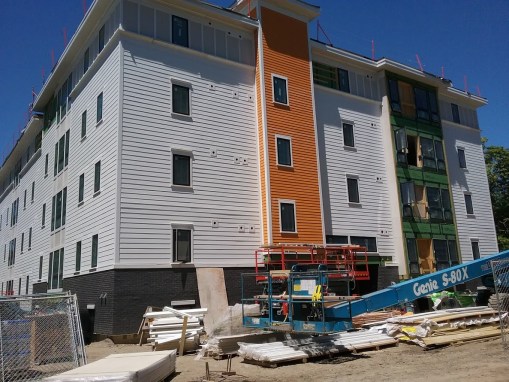
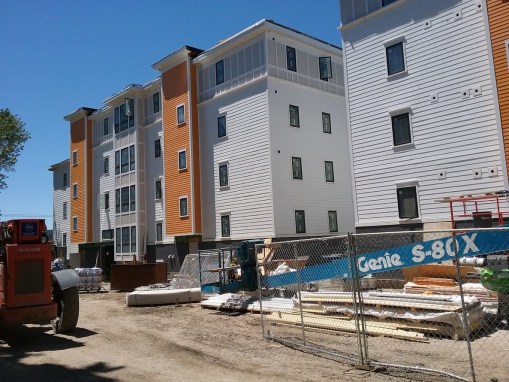
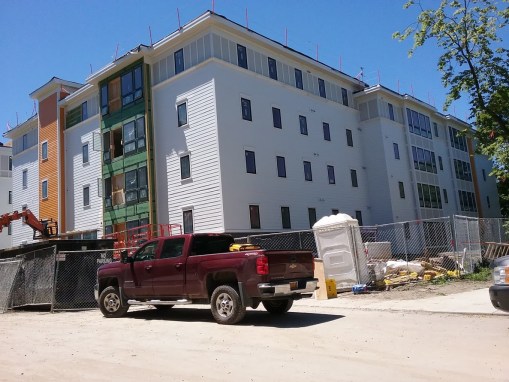
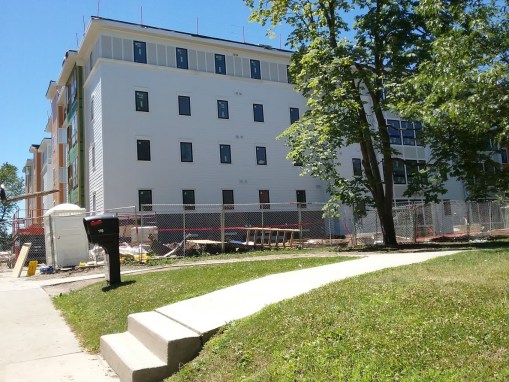
Note there are some clear differences between what was originally approved, and what’s being built. The fenestration is a different layout – the top floor windows originally did not line up with the window arrangement of the other floors. Secondly, the floor-to-ceiling multi-pane treatment on the top floor’s front (east) facade has been eliminated, given a similar if slightly glassier treatment as the other three floors, which had a balcony window reduced in size. The most likely guess is value engineering – save cost, save time, especially the latter since the building needs to be open by mid-August.

The overall shape remains the same, but with these changes it’s a bit of a question mark as to the appearance of the final materials – it’s probably the same as approved, since the vertical wood rails over the sheathing indicate the LP SmartSide fiber cement lap siding is coming at some point. The sheathing is a mix of Huber plywood zip panels with its specialized tape system, and TYPAR housewrap over plywood panels courtesy of North Main Lumber, a regional lumber sales chain. Romig General Contractor is doing the build-out, and their work with Visum is arguably the first multi-family project they’ve tackled in the Ithaca area.

Although 210 Linden is too small to host much in the way of amenities (it has a garbage collection room and bike room in the basement), its 37 residents will have full access to the amenities offered in The Lux just up the street. Connecting the dots, those were probably quartz countertops in the Lux update; seems plausible the same high-end fixtures, cabinetry and appliances would be used in both.

The background info/intro to 210 Linden can be found here.


The Lux (232-236 Dryden Road) Construction Update, 7/2018

12 07 2018

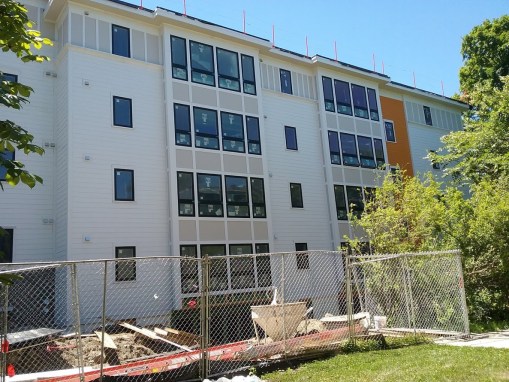
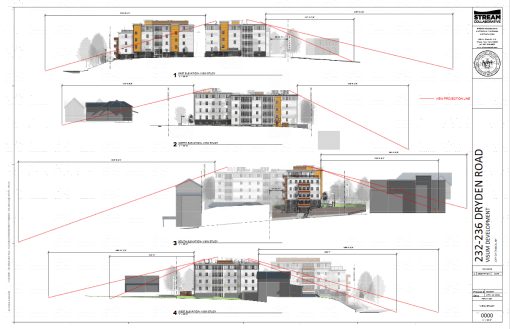
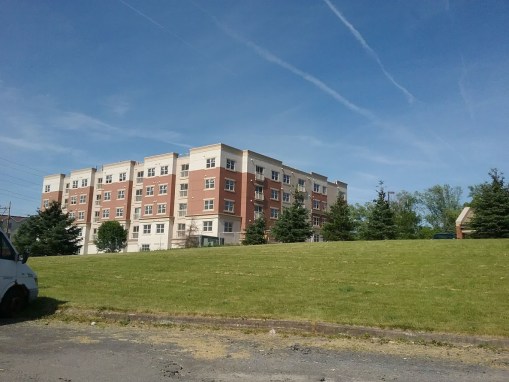
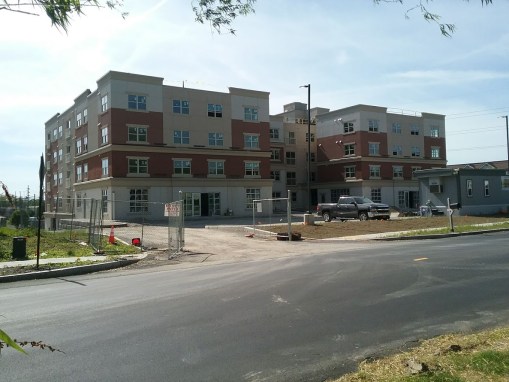
This one is in its home stretch. It’s rather striking how much the front balconies stand out, probably the result of the contrast in materials. The upper levels will use LP SmartSide white and marigold yellow fiber cement lap siding, and the lower levels are a black brick veneer (Endicott Thin Brick colored “Maganese Ironspot” with charcoal-colored mortar). The balconies use white Smart Trim and “Redwood” Allura fiber cement straight edge shingles. The architect, STREAM Collaborative’s Noah Demarest, designed the balconies to be a nod to the original appearance of the previous building on the site, the private Cascadilla School dormitory.

The second and third photos are practically a progression pic, showing that the balconies are framed in wood, walled with sheets of ZIP plywood sheathing, and then faced with the exterior materials. Some exterior finished still need to be attached, the concrete pours are ongoing for the Dryden Road entrance, and it appears the roof membrane has yet to be laid.

As far as the interior goes, the construction crews were using a front loader to lift countertops to units, so it seems likely drywall hanging and painting have been finished, and the floors may be installed but not yet finished out. Fixtures, appliances, doors and trim pieces probably have not been installed yet, though perhaps the lower-level units are further along. It’s a pretty tight deadline to get the buildings complete, with move-in day expected to be August 17th.

Outside of Maplewood, at 207 beds (I’ve presumed net gain at 140-150) this will be the largest non-Cornell project coming onto the Collegetown market this year. Given market concerns about the absorption of Maplewood units as well as the size and the timeline of Cornell’s future North Campus dorms (2000 beds, with two phases opening in 2020 and 2021) it might be the last large Collegetown project for a while. A few midsize 50-100 bed projects will likely come along in the interim, perhaps the Nines replacement, and the rumored replacement for the Chacona Block (411 College Avenue, home of Student Agencies), which is expected to head before the planning some time within the next twelve months. Novarr’s faculty/staff focused apartment buildings at 119-125 College Avenue have yet to begin construction and seem to be a big question mark. It’d be a shame if it still failed to move forward even after the resdesign to accommodate fire code changes.

According to the FAQ on The Lux’s website, units will be furnished and pets are allowed for a $150 fee. The eight parking spaces are available for rent to tenants on a first-come, first-serve basis at $200/month.  Units are $1,200-$1,300/month per bedroom, and includes access to an on-site fitness facility, rooftop terrace and hot tub, security system, sauna, game room and study room (most of those in 232 Dryden, “Lux South”). There’s no beating around the bush, this is high-end student housing, “creme of the creme” as one of my grad school professors would say.

On a final note, quick shoutout and well wishes to Visum Development VP Patrick Braga, who will be leaving his position to do a Master’s in Urban Planning at Harvard. In a world where developers and city planners often run in their own circles, it’ll be good to have someone with strong experience in both.


East Pointe Apartments Construction Update, 6/2018

24 06 2018

If the name doesn’t sound familiar, that’s okay. For the past two years, the common reference to these was either “The Bomax Drive Apartments” or the “Park Grove Realty Apartments”, either of which was used interchangeably. The official name according to Park Grove Realty’s webpage is “East Pointe Apartments”. East of what, I dunno.

Park Grove Realty is a new company headed by a group of long-time developers and real estate professionals. Andrew Crossed and Andrew Bodewes cut their teeth at Conifer Realty, a regional affordable housing developer based out of Rochester (readers might be familiar with some of their local projects, including Linderman Creek, Cayuga Meadows, and Poet’s Landing). They knew their way around development and had familiarity with the area. Not only that, they were working with Tom LiVigne, who has been on the board of many local projects and recently retired as the president of real estate operations at Cornell.

While LiVigne was at Cornell in 2008, the university purchased a 19.46 acre parcel on Bomax Drive. The property was zoned for business and technology, which is intended for commercial office, warehousing or tech-focused industrial space, which is what Cornell originally had in mind. But, with the onset of the Great Recession, and a re-assessment of Cornell’s needs, nothing ever came forth for the property.

A little bit of speculating here, but because Conifer’s Cayuga Meadows had been floating around since the late 2000s, LiVigne would have been professionally familiar with Crossed and Bodewes. It seems likely that as LiVigne retired in early 2015, and Crossed and Bodewes launched their company a few months later, they might have approached him with the idea of an Ithaca project, knowing the market’s strong economics and housing deficit. LiVigne was familiar with Cornell’s excess holdings, and whatever discussions he had with Park Grove post-retirement led to the idea of a project on this property.

The project was first conceived and brought before the village of Lansing in July 2016. East Pointe is a 140-unit townhouse complex, fourteen strings of ten units, plus a community building, situated on a wooded vacant parcel on Bomax Drive. The intent was to explicitly avoid Collegetown and Downtown, and do a project geared towards the upper-middle class market segment, more specifically empty nesters and young professionals who may be moving in for work, but have yet to buy a house (this is exactly the same sub-market and words used by the developers of the 102-unit Cayuga Orchard project over in the town of Lansing, and even bears a passing resemblance). Arguably, a modest slice of graduate/professional students is possible as well.

To make the project possible, the zoning would have to be changed to high-density residential – the village planning board wanted a traffic study and wasn’t excited that there was no affordable housing here (the project team argued the asking price Cornell wanted made affordable housing infeasible), but was otherwise open to the idea of the zoning change; no one had developed a business and technology space since 2005, and residential was seen as a downzoning from what could have been done there, should Cornell have really pushed for a large office of research building. The neighboring developer, however, was not okay with the rezoning.

I don’t intend to rehash Forest City Realty and the Jonson family’s attempt to stop the project, but the argument was that it was a “spot rezoning” and that it was illegal. The Jonsons felt the units would decrease the desirability of their own project, the luxury for-sale townhomes in the Heights of Lansing. It became so impassioned that Lisa Bonniwell (Ivar and Janet Jonson’s daughter) ran herself and allies to try and take over the village Board of Trustees and mayorship last year in an effort to stop the proposal – they lost by a large margin. They also took the village to state court, lost, appealed, and lost again. The village estimates, with considerable distaste, that although they won, the court cases cost them close to $50,000.

It’s because of the lawsuit that the timeline gets a little muddled. The rezoning request was filed in September 2016, the public hearing in October, and the zoning change was made in November 2016 – to make it clear, that was the rezoning, not the project. The project wasn’t approved until November 2017, after the lawsuit was rejected and had gone to an appeals court. For a little while, Park Grove had a “continue at your own risk” for preparing final drawings and legal paperwork, given that the appeal was not declined by the state court until February 2nd 2018. The first real sign the project was moving forward came on March 16th of this year, when Cornell sold the land to Park Grove for $1.5 million, $300,000 more than what the university paid in August 2008.
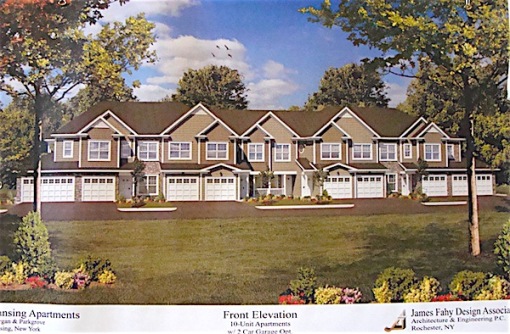
Each string will have four units on the first floor, and six units on the second floor. Each unit has their own entrance, and the project is being described by the developer as “walk-up garden style“. The mix of units is 36 one-bedroom units, 90 two-bedroom units, and 14 three-bedroom units – since 36 and 90 don’t break down evenly by 14, I’d expect slightly difference unit mixes per building, and perhaps that will result in some slight design differences for things like window and door placement. However, they’ve only ever shown one apartment string in their official renders. The renders above are from early in the process (top), and the one they uploaded to the company website last week (bottom) – note the differences in the end garages and in the second floor/roof on the right side of the image. it may be a change in design, or it may be two different building designs they plan to utilize depending on unit layout. Have to wait and see on that one.

The one-bedrooms will be about 900 square feet and go for $1,400/month, according to an early interview with the Ithaca Times. The 1,300 SF two-bedroom units will go for $1,700/month, and the three-bedrooms, which will be about 1,400 SF, will for $1,900/month. The Lansing Star gives similar stats. Renters will get “high end finishes and amenities”, with possible amenities including  the community building with swimming pool, bocce ball court, walking trails, a community garden and a dog park.

I have not seen any building costs or local lending activity associated with the project, but if it’s in the ballpark of the nearby Village Solars (which is $2-$3 million per building), then it would not be unreasonable to expect something in the range of $30 million (of course, I am not the county tax assessor, so don’t take my word as gospel).

The architect, James Fahy Design Associates of Rochester, has a lot of experience with newer suburban developments, both single-family and multi-family. A google search (their website hasn’t been updated) shows similar gable-loving, shake siding and stone veneer embracing projects in the Buffalo, Rochester, Syracuse and Albany areas. Jess Sudol of Passero Associates is the engineering consultant.

Right now, the site is being cleared and graded, with subterranean utilities installs (water/sewer) and early foundation excavation work is underway. The first two apartment strings are expected to be ready by Spring 2019. DGA Builders of Pittsford (suburban Rochester), a division of Pennsylvania-based DGA Construction Group, appears to be the general contractor, and A.E.Y. Enterprises of Macedon (Wayne County) is the site work subcontractor.


Cayuga View Senior Living Construction Update, 6/2018

21 06 2018

We can practically call this project complete – the first tenants move in on July 1st. Somewhere along the way, the number of units was reduced from 60 to 58, and it’s not clear whether those were one-bedroom or two-bedroom units (the initial breakdown was 48 two-bedroom and 12 one-bedroom units). No tenants have been named for the twin 1,340 SF retail spaces either.

Given that this was the last vacant high-density mixed-use parcel in the village of Lansing, it seems like they got a good project out of it. 58 market-rate units to seniors aged 55+ is a welcome addition the the Tompkins County market, especially as the retirement of Boomers only continues to grow (the market will create demand for another 70 senior-focused units per year over the next several years, as well as market-rate and affordable housing for those without specialized care needs). While not exactly an urban location, it is walkable to nearby shops and restaurants at Triphammer Mall and the Bishop’s Mall across the street, and it will have a bit of an active ground-floor presence through its small commercial spaces. 5% of the units will be built handicap-accessbile, but all will be handicap-adaptable, and the rooftop solar panels are a plus.
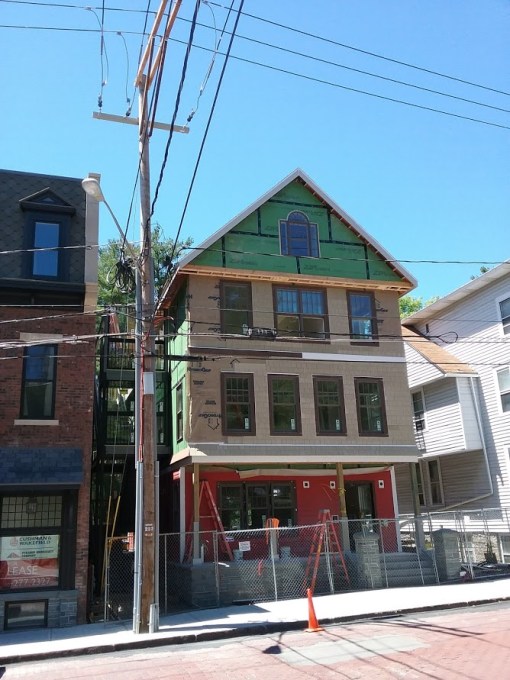
The project was built and developed by Taylor The Builders in conjunction with the Thaler Family. NH Architecture did the design work, and Cornerstone Group will manage the property.

Some cool aerial shots of the site can be seen here courtesy of Taylor and photographer Mick McKee. Interior photos of the nearly finished units and rental information can be found on Craigslist here.


Cayuga Medical Associates Construction Update, 6/2018

21 06 2018

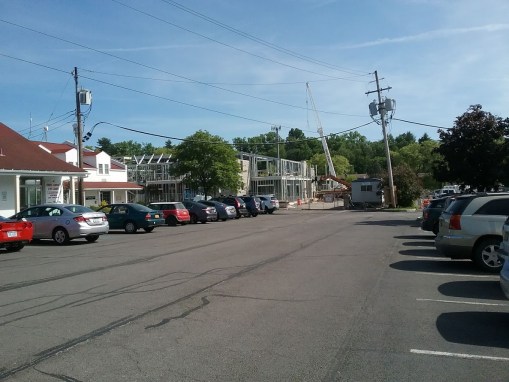
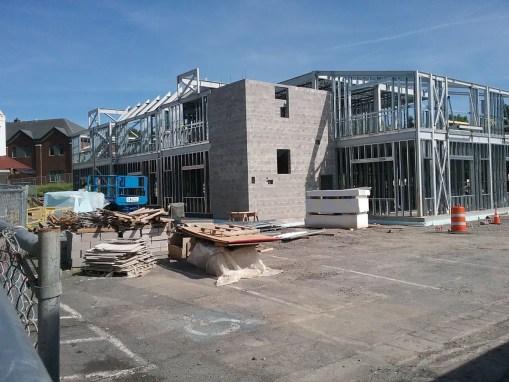
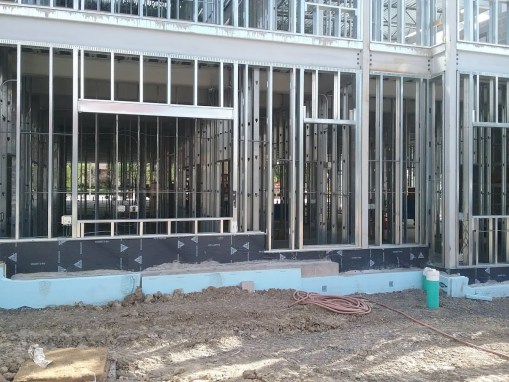
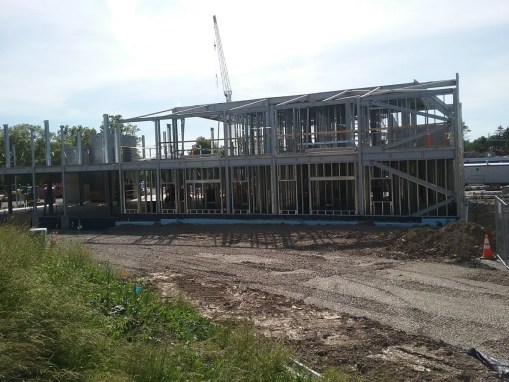
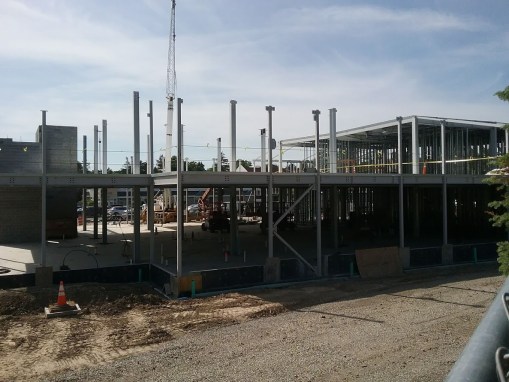
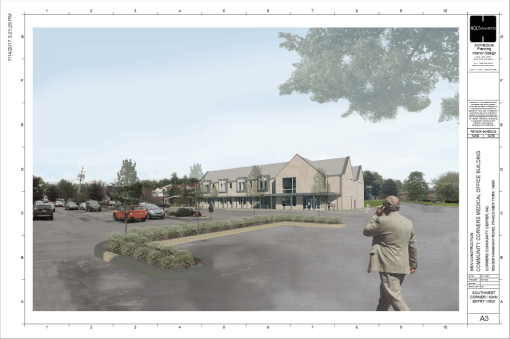
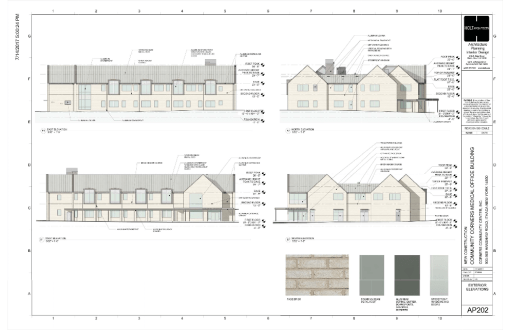
McPherson Builders is continuing work on the $7.8 million Cayuga Medical Associates Building at 903-09 Hanshaw Road in Community Corners. The concrete masonry block stairwells have been assembled, steel framing is complete on the first floor (with interior framing and some early utilities rough-ins underway), and exterior wall assembly is ongoing for the second floor and the roof – structural steel beams will be bolted together, and the stud walls will follow. Interestingly, it looks like HOLT Architects incorporated large diagonal structural beams into the building frame, perhaps for extra stability.

Most of the steel gable trusses are stacked neatly off to the side, and they’ll be craned into place as the second floor is built out. Note that most of the roof is flat, but the gables are to go up along the exterior edge. This adds a traditional design to an otherwise modern building, and better complements the existing structures at Community Corners. Early in the permit process, the target was a late summer (August/September) delivery, but it seems more likely to be early fall (October?) at this point.

Background info and specs for the project can be found here.