The DeWitt House Senior Apartments

25 08 2015

travis_hude_libe_libe_v3

Most of the time, writing up initial project pages is mostly background details, along with whatever scant details were included in the sketch plan. It usually makes for an exciting post, though occasionally lacking in details.

Now here we have the total opposite – a project where many of the details have already been gone over with a fine-toothed comb. Here we have the county legislature’s preferred development for the Old Library site at 310 North Cayuga Street, the DeWitt House Senior Apartments. It has a website, a completed Site Plan Review (SPR) application (here), and the county is heavily involved with the approvals process.

I’m not going into the debate between this and the Franklin proposal with this piece. It’s intended more as a project summary.

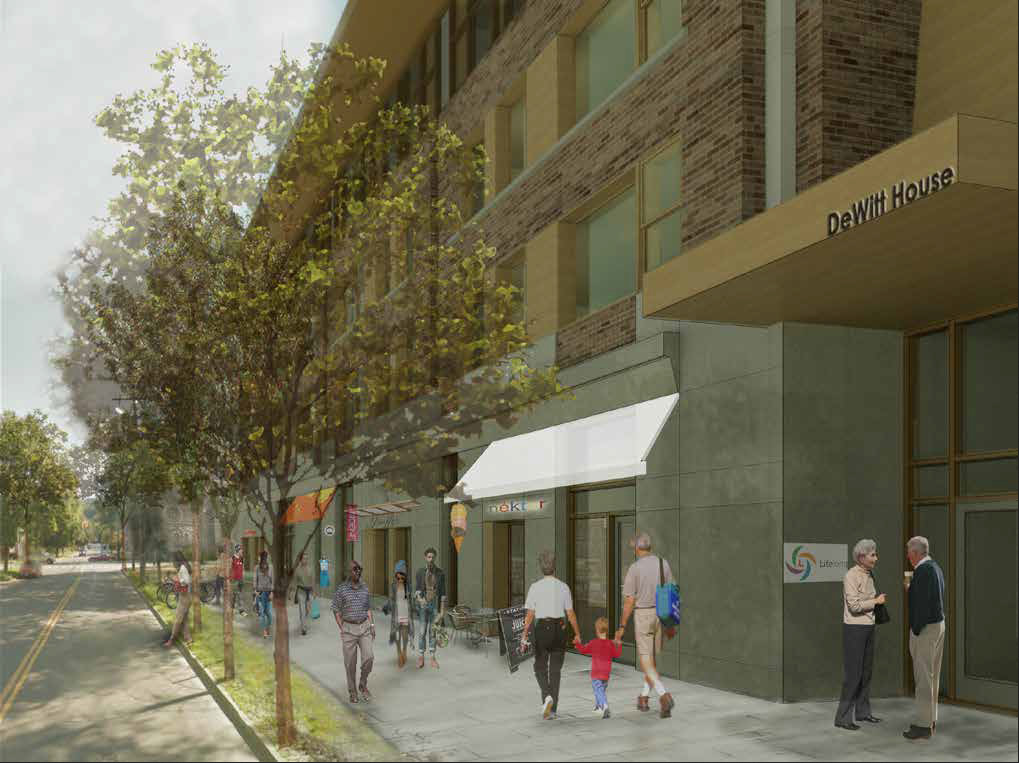
Plans call for a mixed-use, 4-story, 72,500 SF building. On the upper three floors are 39 1-bedroom and 21 2 -bedroom apartments aiming for the middle of the rental market, and serving renters aged 50 and older. Approximately 40 parking spaces will be provided, as well as CarShare and a shuttle. Along with the apartments, there will be community space on the southeast corner of the first floor (2,000 SF), new digs for senior services non-profit Lifelong on the west side (6,500 SF), and office/retail space facing Court Street (4,000 SF).

dewitt_house_5

The building will deconstruct the old library, and there are plans to reuse much of the foundation, steel, and possibly the brick from the 1967 structure. The one-story Lifelong building at 119 West Court Street, which dates from the 1950s, would also be taken down. The Lifelong annex building at 121 West Court Street, which dates from the late 1800s, would be renovated into a guest house for those visiting friends and family living in the apartments.

dewitt_house_2

HOLT Architects, which is among a few local firms to have accepted the Architecture 2030 Challenge, has designed the building to be carbon-neutral. Solar panels, rainwater collection from the roof, and a Combined Heat and Power system (CHP) are some of the green features.

dewitt_house_3

The project is being developer by local developer Travis Hyde Properties, and the design is the work of local design firm HOLT Architects. Contact info for both is provided here. TWMLA Landscape Architects, Esther Greenhouse, T.G. Miller Surveyors & Civil Engineers, Elwyn & Palmer Structural Engineers, and Delta Engineering are also providing services.

The SPR application indicates that the $14,000,000 building is aiming to launch construction in June 2016, and finishing up 12 months later. However, the timeline in the SPR says construction wouldn’t start until February or March of 2017, with completion in summer 2018. The renovation of the Lifelong Annex would be completed by the end of 2018.

The DeWitt House project will need not only approvals from the city Planning and Development Board, but also the Ithaca Landmarks Preservation Council (ILPC), since the land is a part of the DeWitt Park Historic District.

dewitt_house_4


News Tidbits 8/22/15: Throwing Fuel on the Fire

22 08 2015

state_st_triangle_v3_1

1. Campus Advantage has released revised parking numbers for its 11-story State Street Triangle project. According to newly-released documents here, parking will be handled with a “four-point program”:

I. The primary component is that CA is negotiating a deal for 250 parking spaces in the upper levels of the Cayuga Street garage. The document notes an average surplus of 300 parking spaces per day.

II. The city is willing to let CA reserve up to 100 parking spaces in the Seneca Street garage.

III. CA has identified 75 underused spaces in the Green Street garage, but no formal deal is planned yet.

IV. Surface parking lots near Cornell and in other parts of the city that could handle parking for those who only need vehicles on weekends or for holiday trips.

Given typical student vehicle ownership rates of about 27% (27% of 620 = 167 spaces), point I will probably be enough to handle resident traffic. Commercial traffic, estimated to be about 64 spaces in the SRF Associates traffic study, would more likely be taken care of by point II or III. So the parking situation appears to be better thought out at this point. CA is also planning a bike share and an Ithaca carshare location. Whether it’s enough to please city staff, we’ll see.

The revised document notes construction traffic would enter the site from E. Green Street, and exit via Seneca Way and East Seneca Street.

Regardless, some of the reactions from city officials have been quite strong – the following quote comes from a report from 3rd Ward councilwoman Ellen McCollister from last month’s IURA meeting:

“Common Council may end up concluding it made a mistake when it re-zoned that part of the city without examining the issue more contextually and architecturally.”
State Street Triangle will be undergoing a public hearing at Tuesday’s city Planning Board meeting, and the committee will be going over the project’s City Environmental Quality Review forms. CEQR is the city’s more stringent version of SEQR, and is used to assess project impacts – basically, mitigating the issues created by the project, and making sure it’s a net positive for the community. No voting is expected.
State Street Triangle has also applied for CIITAP tax abatements, but the IDA meeting has yet to be scheduled.
100_1466

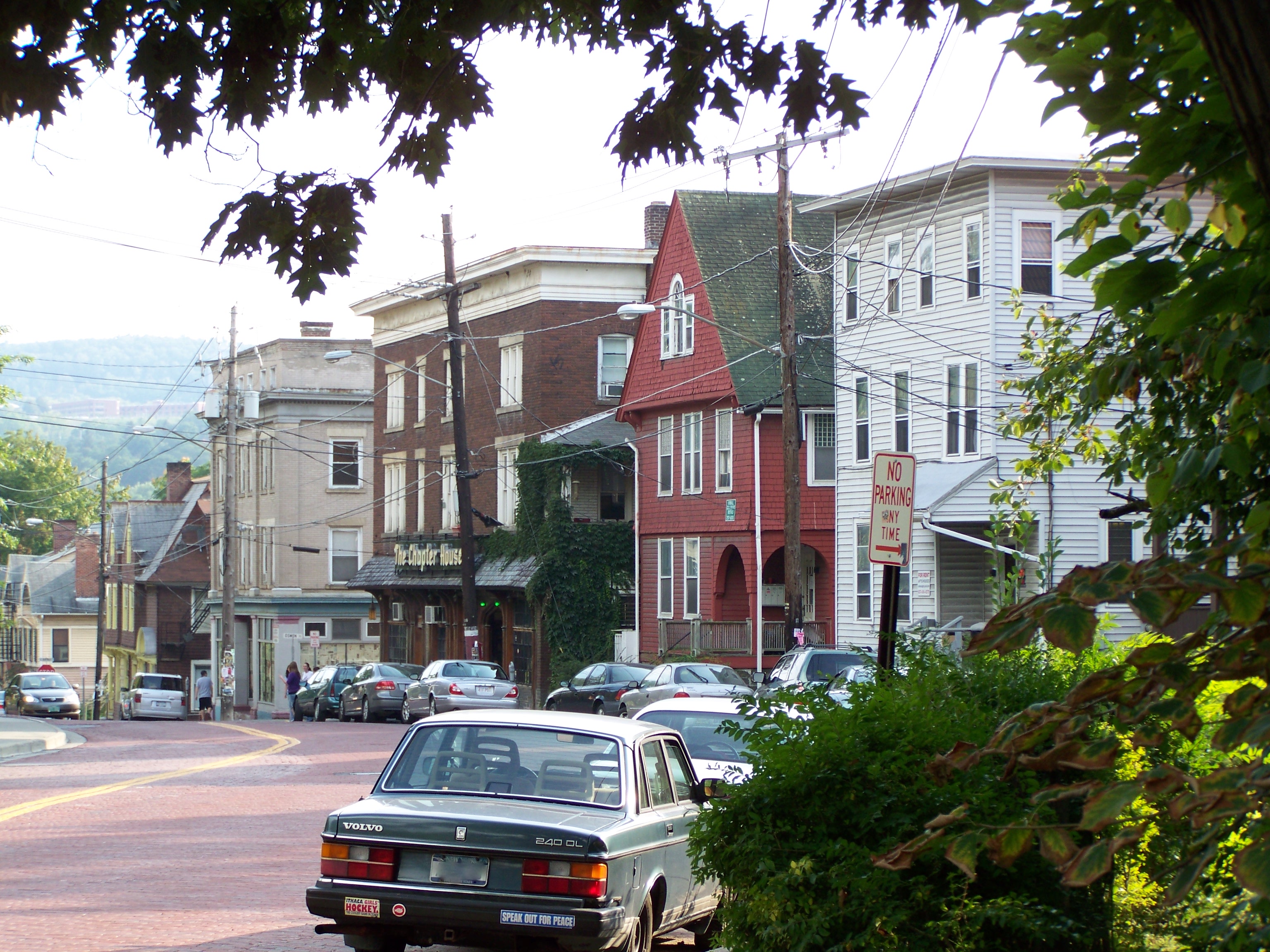
2. Quick update on 406/408 Stewart – a copy of the Ithaca Landmarks Preservation Council (ILPC) from last month indicates that council members are across the spectrum when it comes to 408 Stewart (bluish-white building above) still being historic, and if a new apartment building will be built on just the site of 406 Stewart (red building, destroyed by the Chapter House fire), or on the site of both 406 and 408. Members had to stress to themselves to look at historic value and reconstruction separately, and the purpose of the site visit was to help figure out a decision. There’s been no news yet, but we’ll see what happens.

3. Over in the village of Groton, a small development project is stirring debate of its own.

The project, proposed by Rick Uhl of Genoa, calls for four duplexes and four single-family homes, for twelve units total. The temptation is there to approach this with urban condescension, but for Groton, population 2,400, it’s a big deal.

The homes would be built on several already-subdivided lots on a new road coming off of Elm Street on the eastern boundary of the village. The original plan called for duplexes on the west side of the street and closer to the village center, while single-family homes would be built on the lots on the east side of the street.

The debate lies with proposed zoning changes in Groton – a zoning change currently being considered by the village would downzone parts of the town to single-family homes only. That includes the lots the duplexes are slated for.

The zoning has been a source of debate among homeowners in Groton, because a number of them own larger homes that they’ve turned into duplexes, living in one unit and renting out the other. Although the law grandfathers in current buildings, they worry it could be a hassle in the future. The county’s planning department has also expressed issues with the plan, saying that it creates numerous non-conforming lots and that it goes against the county’s comprehensive plan.

A compromise had been reached between the developer and planning board last spring, where duplexes would be built on the new street’s east side and single-family homes on the west side (so as to keep apartment dwellers from mixing with family homes), but more recently the village has made moves toward an all single-family plan anyway, which is creating some consternation since it tosses the compromise out the figurative window.

The Times notes that a decision on the zoning, and the compromise by extension, is expected at the September meeting of Groton village’s Board of Trustees.

4. Looks like there’s going to be a lull in activity in the town of Ithaca for the next few weeks. The Planning Board meeting for the start of September has been cancelled. The Planning Committee, which is comprised of the town board members and planning department staff, will be discussing a “family entertainment facility concept” for the intersection of Elmira Road and Seven Mile Drive, and modifications to the Planned Development Zone for the South Hill Business Campus (SHBC), an industrial and office park that reuses the old NCR headquarters.

A quick email with SHBC manager Linda Luciano says that the meeting will be to expand the business types allowed under the PDZ, because they were uncertain who would be interested when they first renovated the facility, and they wish “to support a more wide array of possibilities”. No expansion plans are on the table, although rough plans have been around for a while.

Readers might recall that Maguire dealership chain proposed a HQ and expanded facilities along Elmira Road and Seven Mile Drive, but the plan was dropped last December due to differences in opinion on appropriate zoning for the site. A mini-golf plan was also floated a few months ago, but later dropped from consideration.

5. Here’s something worth a short note – a vacant 2.01 acre commercial property in Dryden Village sold for $31,500 on Wednesday the 19th, well below its $150,000 assessment. The buyer is an LLC called “NBN Properties”, registered in July 2014. A separate document identifies the members of the LLC, one of whom is the president of John C. Lowery Inc., an Ithaca construction company.

At a glance, this story had appeared much more interesting – the P.O. Box NBN Properties is using once belonged to Ed LaVigne, who’s running for Lansing town supervisor. But LaVigne stopped using the P.O. Box in 2014, which allowed NBN to reserve it.

Regardless of who runs “NBN Properties”, the site is a potentially good location – Poet’s Landing was built just a few minutes’ walk away to the west, and the DOT has been aiming for a move next door on an adjacent 10.8 acre parcel to the north.  The county has paid for a feasibility study, now underway, for moving the DOT from the city waterfront to the location off Enterprise Drive in Dryden village (costs have delayed the move for years). This part of Dryden village has seen some other new businesses in the past few years, including a microbrewery and a Dollar General. If anything interesting comes along, expect a follow-up.

harolds_square_taylor

6. Nothing “new new” coming up at Tuesday city Planning and Development Board meeting, but plenty to talk about. Here’s the agenda, a rundown of what to expect.

A. Subdivision – continued from last month, a subdivision at 106-108 Madison Street on the northside. The applicant seeks to create a lot for a new single-family home

B. 1. Harold’s Square, 123-129 East State Street

The project was approved two years ago this month, but no building permits have been filed. Under that circumstance, an approval is only good for two years. The applicant is looking for a re-approval with no changes. A contractor associated with the Cornerstone Old Library proposal estimated construction on the 11-story, mixed-use project would begin this fall. Harold’s Square developer David Lubin is seeking to bring retail, office space, and 46 apartments to the market.

2. INHS’s 210 Hancock Street affordable housing proposal is up for preliminary and final approval

3. Final approval for the Dibella’s proposed in Southwest Ithaca

4. Discussion on State Street Triangle, see above

5. Public hearing and possible prelim and final approval for John Novarr and Cornell’s 209-215 Dryden Road academic/office building

6. Sketch Plan – Old Library proposal, Travis Hyde. Not exactly new, but I’ll give it the standard project summary next week.


Urban Renewal Part II: When Things Don’t Go To Plan

21 08 2015
Photo from C. Hadley Smith Collection

Photo from C. Hadley Smith Collection

For Part I, click *here*.

Once the federal funding for Project One came through in December 1964, the gears had started to turn. In Spring 1965, the president of the Hotel Ithaca bought the Clinton House for use as a temporary facility while the new hotel was built. Funds and plan details were formally accepted and approved by the Feds and Common Council in May 1965, and the Ithaca Urban Renewal Agency (IURA, which still exists today) was incorporated.

The IURA was long a sore spot among city councilmen because Democrats were opposed to it and Republicans were in favor of it. The city was a little less one-sided with its politics back then.

In 1966, two developers were designated for two properties in the Project One area. One would build a set of retail spaces, the other would be responsible for what would be the nation’s largest Woolworth’s department store.

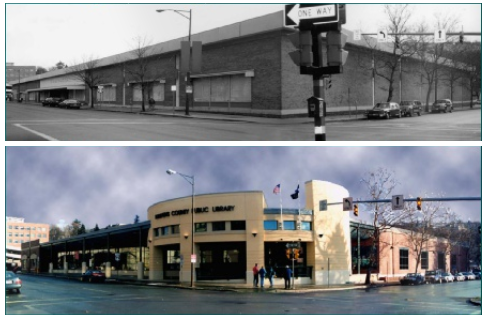
For those too young to know, Woolworth’s was a major discount and department store chain – a sort of Walmart or Target of its day (and more like a Kmart towards the end), which was from the 1880s to 1990s. The Woolworth’s was supposed to draw people into downtown, and would be on the corner of S. Cayuga and W. Green Streets.

Problems arose when Woolworth’s said it would need even more parking space than planned. The city, fearing the department store would end up in the suburbs, rushed to condemn three properties on the edge of the project area, two car dealerships and a repair shop. The buildings were demolished, acres of parking laid, and the store opened in the winter of 1968/1969.

library_2000

Image property of QPK Architecture

It was not an attractive building by a long-shot, but the store did draw people downtown, and it remained open until about 1998, when the entire chain went under. Today it’s the county library, and the entire block has once again been redeveloped, which was previously written about here.

The closest Ithaca got to that chic modern hotel was the Ramada that opened in 1972 (later Holiday Inn, and now the Hotel Ithaca). That fell just outside the Project One boundary line. The original 1970s hotel, without the “Executive Tower” built in 1985, can be seen in the lead image.

The Hotel Ithaca fell to the wrecking ball in 1967, around the same time that the 2, 4 and 5-story buildings across the street from the Carey and CSMA also came tumbling down. Until the Marriott currently under construction, the city struggled to find a developer interested in the site; the site was developed in 1975 into the new Rothschild’s Building, but the older 1870s structure further up the Commons was demolished, the last of the federally-funded urban renewal demolitions.

After several years of attempting to find developers for the old Rothschild’s site, two local developers finally managed to cobble together enough funding to build Center Ithaca in 1981. Center Ithaca went bankrupt not long after opening, and Rothschild’s closed up in 1982, so the whole block over there has been pretty underwhelming ever since urban renewal touched it.

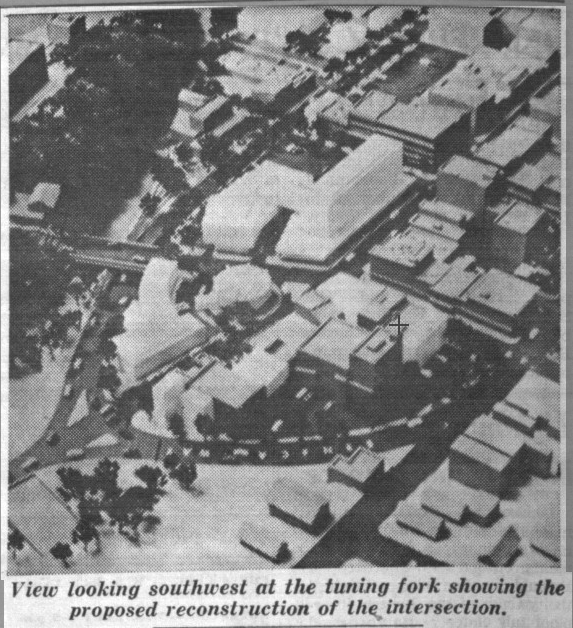
If anything, the south side of the tuning fork did worse; the potential bank tenant never followed through on its original intent, the city tried for years to sell the property. After several years they finally managed to get rid of the vacant lot. The Trebloc Building was originally planned to have two floors, but financial troubles reduced it to one. The abomination opened in 1974.

The Ithaca Commons, which also  opened in fall 1974 and was completed the following spring, falls outside of the realm of Urban Renewal as discussed here because it was funded with local bonds, rather than federal monies. The idea of a Commons didn’t start to gain traction until about 1971, after most of the urban renewal projects had left their mark on downtown Ithaca.

Like much of downtown, the Commons struggled with high vacancy rates for years, and the mix of stores never quite met the city’s expectations – where the city leaders envisioned department stores and “everyday retail” such as drugstores, neither of those have been historically successful on the Commons, and the use of the Commons as an open-air drug market was an unexpected, unpleasant surprise. It’s really only been in the past 15 years that the Commons has enjoyed low vacancy and strong tenant interest.

See, Ithaca’s urban renewal never quite stopped the overall trend of movement to the suburbs. With each decade, development sprawled further and further out, and it still is in parts of Ithaca town and Lansing. For the Jon and Jane Q’s just looking to buy groceries or hit up a fast food place, downtown Ithaca wasn’t on the radar.

But there were folks who were still drawn to the charm of a built-up downtown, where emphasis was on two feet rather than four wheels. It was an eclectic bunch – older residents still heavily invested in downtown, and younger, poorer, counter-culture types settling in the area during 1960s and 1970s. Ithaca’s dilapidated downtown, where many retail chains feared to tread, is where a lot of the region’s unique “vibe” sprouted, albeit unintentionally.

And, as things go, what’s old is new. There’s a renewed interest in denser, walkable communities, whether for sustainability, cultural amenities, or simply to experience something different from the cul-de-sacs and strip malls that many Gen X’ers and Millenials grew up with. Ithaca, with a stable, growing economy and plenty of fresh blood flowing in and out of the community, was poised to capitalize on this, and his done so with a fair amount of success in recent years, attracting both national retailers and keeping most of its character intact. Had it not for the renewed interest in walkable downtowns, newer urban renewal projects such as Cayuga Green would likely have been as unsuccessful as Center Ithaca.

The car, once a defining aspect of America’s cultural scene, is now more likely to be treated as an appliance, like a washing machine or microwave. It does what one needs it to do, but the allure isn’t what it used to be. Parking lots used to be eye-catching splashes of color, coral and peach, turquoise and sea green; and now, beige, grey, and subdued reds and blues. The symbolism is there.

ith_urban_renewal_plan_1964_2

Urban renewal in the tear-down and pave everything sense was stopped for two reasons – money and opposition. But money was the much more important one.

In the later 1960s, funds for urban renewal started to dry up. The city dropped projects two and three and combined elements of the two for a second phase of downtown, and a proposal for Collegetown. The Collegetown proposal was submitted (much to the chagrin of Collegetown landlords), but much of it got lost due to competing interests in the bureaucratic quagmire, and never moved forward under its original intent. The end result was the parking garage, Schwartz Center for the Performing Arts, and the Eddygate mixed-use complex, all of which came to fruition much later in the mid and late 1980s.

Meanwhile, residents began to rise up in protest after seeing so many historic buildings demolished in favor of projects that were never built, or were downright ugly. Although too late to save buildings like the Hotel Ithaca and the old City Hall, groups like Historic Ithaca were important in keeping buildings such as the Clinton House and DeWitt Mall from meeting the same fate.

20150727_145000

It would be unfair to cast those who supported urban renewal as malignant or devious. No city official, no mayor, no one with a vested interest in downtown Ithaca set out to wreck it. They were trying to revitalize it, and they were listening and applying the auto-centric, “old equals bad” thinking that had been popular in the years leading up to renewal. The results left a lot of hard feelings, and a lot of unmet hopes.

Yet, the issues that faced downtown Ithaca fifty years ago, the problems that the city’s political and business leaders were never quite able to solve, eventually became assets. Old buildings, now loved for character. Walkable streets, now appreciated. Mixed retail, offices and housing, contrary to single-use zoning, now embraced. Ithaca’s old bones, once a persistent ache, have assisted Ithaca in becoming the vibrant city that it is.

Buildings and streets can be planned. But the people occupying them? Maybe not so much.

Not everything can be planned. And that’s a good thing.


Urban Renewal Part I: Ithaca’s “Project One”

18 08 2015

hotel_ith_1964

It was called “Project One”.

The year was 1964. The tax base of Ithaca, and especially downtown Ithaca, had been eroding for over a decade. Suburban big-box stores started to appear on the south side of the city in 1950, and up towards Lansing, plans were already underway for a new suburban supermarket and department store (the Shops at Ithaca Mall wouldn’t come along for another twelve years). New neighborhoods were sprouting in northeast Ithaca and Eastern Heights, and cul-de-sacs were paving their way onto West Hill and South Hill. Ithaca College was moving its staff and students to a sprawling campus just beyond the city line. From 1954 to 1960, 48 offices and retail stores closed or moved out of downtown Ithaca, a drop of 18%. The city councilmen were concerned.

So how were they to draw people and tax dollars back into the city? The city officials looked around. In the 1950s and 1960s, it was trendy to have that rambling ranch house set back far from the street, it was fashionable to attend indoor shopping centers away from the rain and the cold.

Image courtesy of Tom Morgan

Image courtesy of Tom Morgan

But most importantly, the trendsetters agreed, was that one could not live the high life, one couldn’t even dream of being a part of the jet set, without a big, luxurious car at their command. Two tons of chrome and steel, heralding you’ve made it in this world, and your car will take you anywhere and everywhere you want to be. And if a place wasn’t accommodating for your stylish set of wheels, then it wasn’t a place worth visiting.

The councilmen and the city officials were taking note of all those chrome-trimmed Bel Airs and Galaxies, with their bright colors and sculpted fenders. Following the results of a study conducted in 1959 and finalized in 1962, they came to the conclusion that in order to revive downtown, they had to catch up with the times, to bring downtown into the mid-20th century future with a swagger and a swing.

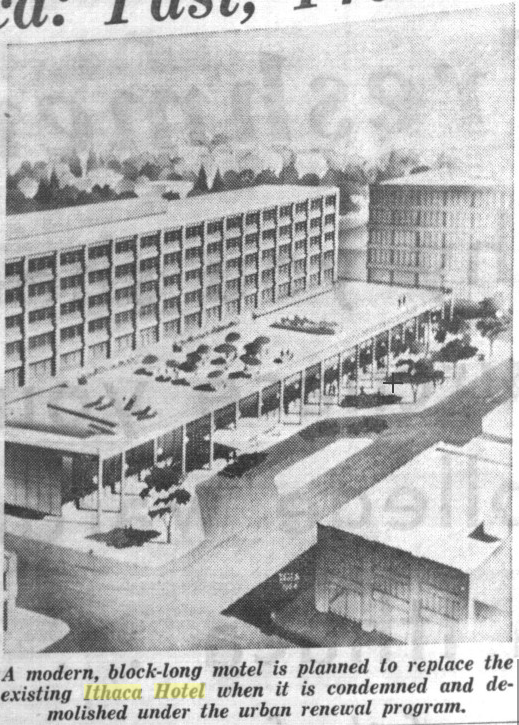
The plans were grand. In place of the nearly century-old Hotel Ithaca, a new hotel a block long, designed in the finest of modern taste. Out would go the decaying buildings of 60, 80, 100 years yore, in would come wider roads, ample parking, modern buildings and ideally, an influx of cash. Ithaca hoped it would bring new residents back into the city, while Cornell U., happy to give some money towards the effort, hoped it would bring in more industry and research organizations.

ith_urban_renewal_plan_1964_1

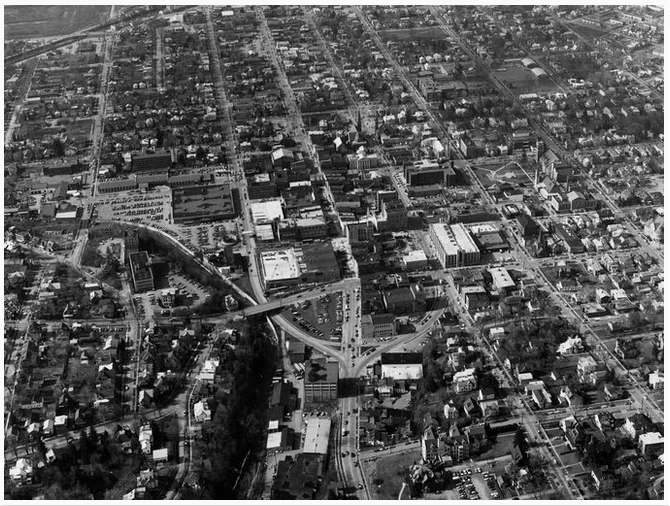
Project One was to be the first of three steps in Ithaca’s Urban Renewal plans. Plans in Project One called for the demolition of the Hotel Ithaca block and the buildings on the south side of the “tuning fork”, already built by that time (and taking out a number of buildings in the process). In their place, the new hotel would go, and a new bank office on the south side of the fork. In the model above, you can see what was once the Strand Theater (demo’d 1993), Restaurant Row and the old Rothschild’s Building (also gone now) still intact. There would be new auto dealerships, new department stores, traffic generators and tax generators.

Image from Cornell Daily Sun, 10/20/1966.

Image from Cornell Daily Sun, 10/20/1966.

The rest of Project One targeted about 26 acres of land bounded by State Street, Cayuga Street, and Six Mile Creek. Essentially, everything south of the Commons, and everything east of the present Hotel Ithaca/former Holiday Inn. Much of the area between Six Mile Creek and Cayuga Street was auto repair shops, dealerships and other car-oriented enterprises. Pritchard Automotive, a block further south, could be seen as the last vestige of when South Cayuga Street was “Automobile Row”.

The plans moved forward in fits and starts. Survey and planning work was brought to a stop in 1962 by Ithaca mayor John Ryan, who vetoed the plan. But following the election of Hunna Johns in 1964, the grand revitalization schemes moved forward again. The Common Council approved the federal application for Project One in June 1964.

ith_urban_renewal_plan_1964_2

After six months of delays, federal funding came through in December of that year. Cornell had already given funding to the tune of $500,000 (about $3.85 million today) to help pay for the projects, but the federal government would be the primary source of funds, which would pay 75% of the $6 million initial cost. Ithaca and the state of New York would each fund about $750,000. The city reasoned that it would bear the expense now for increased tax revenues in the future.

city_1

Of course, not everything worked out as planned. Nowhere close, really. That will be covered in Part II.


Ithaca Marriott Construction Update, 8/2015

4 08 2015

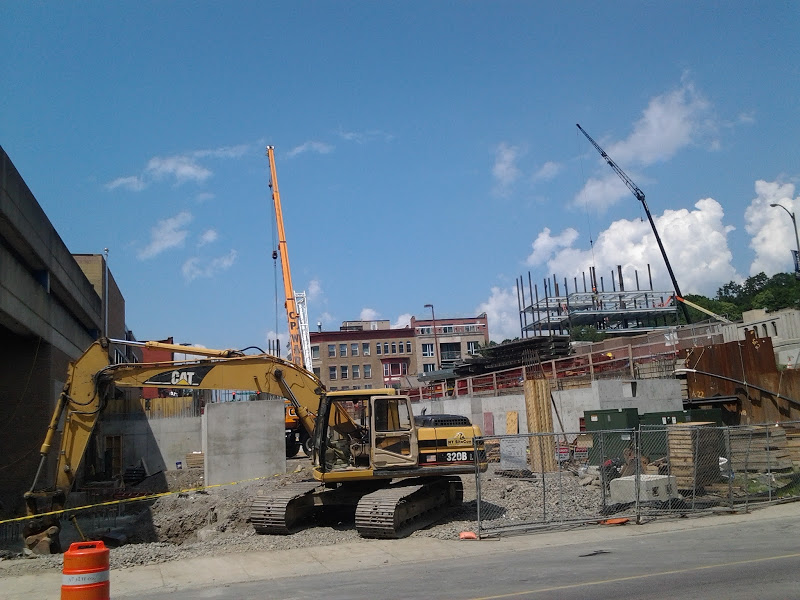
Over at the Marriott Construction site at downtown Ithaca’s 120 South Aurora Street, all of the caissons have been drilled and work is continuing on the foundation of the new 10-story hotel. Concrete foundation footers have been have been set on top of the caisson piles, with rebar sticking out to tie-in the walls as they’re built up. The foundation walls are being poured in a range of sizes, depending on how much weight they’re going to hold. A couple footings with much taller re-bar likely indicates the location of future stairwells, elevator shafts, and utility space.

Note the plywood on the Green Street parking garage in the first photo. As workers were drilling the last caisson, the rig broke, tipped over and smashed into the wall of the garage. Thankfully, that section had already been closed off due to the construction, and no one was hurt.

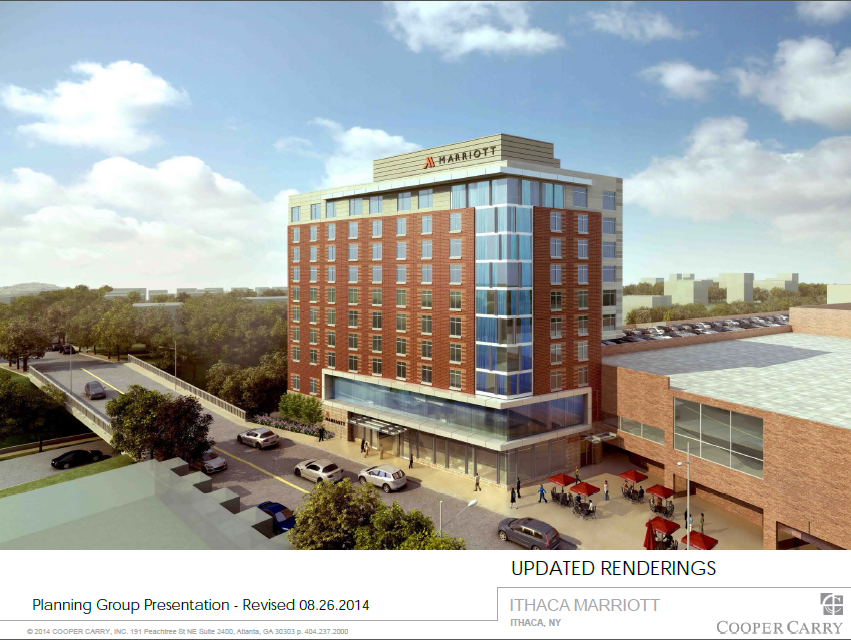
Maryland-based Urgo Hotels plans on opening the $32 million, 159-room hotel during the third quarter of 2016 (July-September time frame). The hotel will include a host of amenities, a fitness center, a restaurant with indoor and outdoor seating, and 3,000 sq ft of meeting space. Atlanta-based Cooper Carry Architecture did the design, and W.H. Lane of Binghamton is the general contractor.

The project, which replaces a small parking lot. could be considered the culmination of an effort to bring a hotel to this site since 2008, when Rimland Development proposed the “Hotel Ithaca”. The previous Hotel Ithaca once stood on part of this site and the Rothschild’s Building, before it (and every other building in its city block) was demolished during 1960s urban renewal.

20150727_142922 20150727_142940 20150727_143035 20150727_143050 20150727_143104

marriott_rev1_1

Ithaca-Hotel-1935


News Tidbits 8/1/15: Tempers As Hot as the Temperatures

1 08 2015

state_st_triangle_v3_3

1. I asked someone familiar with the State Street Triangle how the presentations went this week. “About as well as could be expected” was the diplomatic response received in turn.

The Times, Journal and Voice all devoted coverage to the controversial project this week since its CIITAP application was up for review, as well as revised plans being brought forth to the planning board. The project draws detractors from different angles – some because of size, some because it’s student housing, some because of the tax abatement.

The tax abatement is what confuses me somewhat, for reasons related to the theory I wrote up a few weeks ago, which no longer holds water. My own personal thought was that a sort of economy of scale would kick in with greater site efficiency, negating the need for a tax abatement. That isn’t to say that they still couldn’t try for one, because it meets all the CIITAP requirements, just that they didn’t need it (it would have been proverbial “icing on the cake” if granted). But now they’re saying it’s the only way to move forward. I don’t know the financials and what their necessary ROI is (and probably never will), but I’d happily listen to an explanation.

But the point I made in the piece still holds true – if Jason Fane’s project a couple blocks away was rejected for not having enough of a community benefit, market-rate student housing, even that which generates an extra $7.36 million in taxes over a decade, is going to be a big stretch, unless they plan on using the sheer size of it as a selling factor. The city planning board doesn’t have to worry about the controversy, because the project conforms wholly to a central business district zone. It’s going to be the tax abatement issue that makes or breaks this proposal.

2. As part of its 10th anniversary feature, the Lansing Star did a nice retrospective of what’s changed in the past ten years in Lansing. When it comes to development, it isn’t especially kind:

“Lansing hasn’t changed much in ten years.  While grand plans for the future of the Town have been explored, not many have been realized.”

The article then goes on to detail how after the sewer initiative was defeated by public vote, a few developers banded together to try and fulfill the town center that Lansing was pushing for. Quoting the article, “the town government couldn’t get its act together to make that happen, even though it wouldn’t be footing the bill for the infrastructure (including sewer)”. About the only development initiative that has taken off is the Warren Road corridor, which was spurred mostly by threats of a major employer (Transonic) leaving the town (and Transonic paid for the sewer study). Meanwhile, the Star characterizes the village government as simply existing for “maintenance” purposes.

The paper notes some successes with parks and wildlife initiatives, but the highlight of the piece seems to be that Lansing is routinely failing to achieve its municipal planning and development goals.

3. Back in Ithaca city, plans are underway for the major renovation of a shopping plaza into professional office space for a local architecture firm. According to documents filed with the county, an LLC associated with HOLT Architects is spending $897,500 on the renovation, and another $415,000 for acquisition costs. The renovations will start in late August should be completed by March 2016. Tompkins Trust Company is providing the financing, and local company McPherson Builders is in charge of general construction.

From the press release published late Friday, HOLT chose the West End location for its walk-ability and centralized location. The building will be renovated into a net-zero energy structure for the 30-person architecture firm. No renders yet, but they’ll be included in a future news roundup when they become available.

college_crossings_v3_1

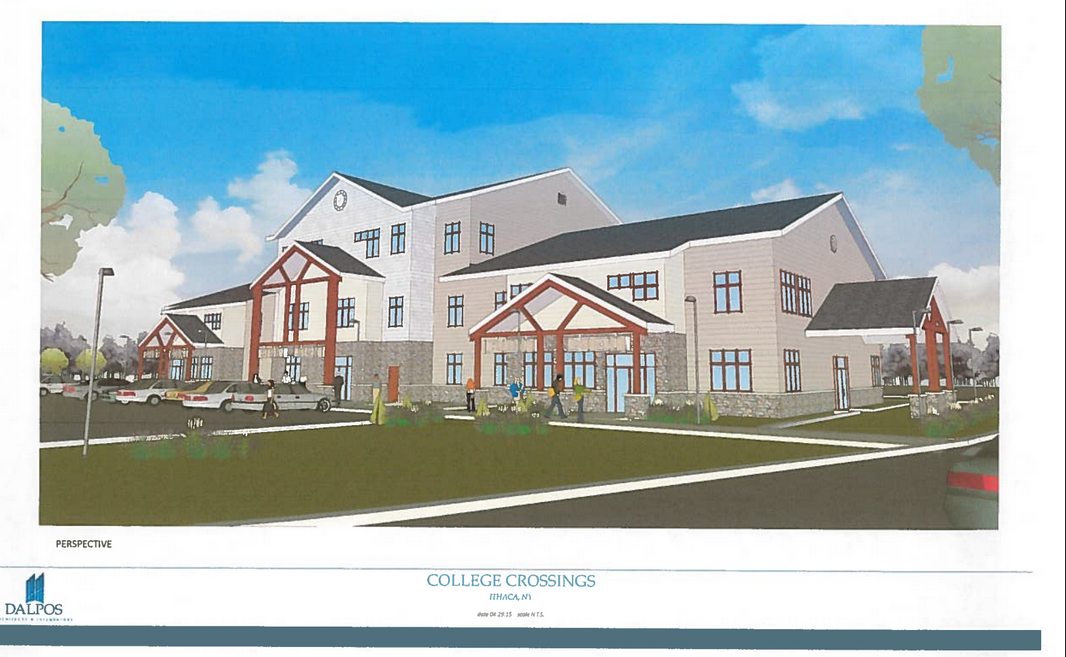
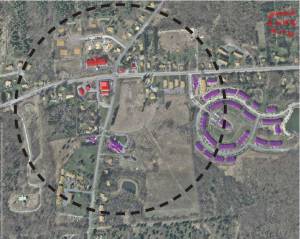
4. As written in the Voice, College Crossings at the corner of East King Road and Rt. 96B in Ithaca town is back to the board for revision number three. This one increases the project by a floor, 13,000 square feet and six more apartments. It’s been no big secret that developer Evan Monkemeyer’s had difficulties getting the project off the ground (he resorted to Craigslist for marketing the retail spaces), and given a total of 18,000 SF spread among 8 apartments (doing the standard 15% deduction for circulation/utilities, one gets over 1,900 square feet per apartment) these units are almost certainly geared towards IC students. A solid market since they’re next door, though not likely to elicit warm fuzzies from the neighbors (although based off the response on the Voice’s facebook, most people just don’t care; if only 210 Hancock had it this easy). Previous plans can be found here.
south-hill-areaplan-1 plan-2

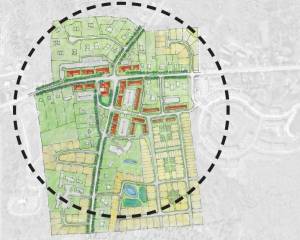
Personal opinion, I’m a little disappointed in the revision. The mixed-use aspect is fine, but I was hoping the developer would tap into some of the ideas presented for the land by Form Ithaca instead of plopping a building in the middle of a 120-space parking lot. Monkemeyer owns a lot of acreage in adjacent land parcels, so this doesn’t bode well for a “walkable center” in Ithaca town.

210_hancock_62015

5. Ithaca Neighborhood Housing Services (INHS) is armed with more 210 Hancock studies and analysis as it prepares to go in front of the city Board of Zoning Appeals next Tuesday. With the commercial loading space question settled, it leaves the height variance of 6.5 feet (40 feet zoned, 46.5 feet requested), and the parking variance of 20 spaces (84 required, 64 given). Original/full application here, new addendum analyses here.

The board requested additional information about pile driving and the parking situation. In response, INHS has conducted further analysis and shown that, 40′ or 46.5′, piles would be required either way. INHS has offered in its application to use a “vibratory oscillating” method of pile driving, where piles are vibrated into the ground rather than driven. This reduces noise (no hammer-like banging) and produces less overall vibration. Further parking studies found that 210 Hancock offers a greater percentage of parking than similar buildings like McGraw House, the Cayuga Apartments and Lakeview on Third Street, INHS’s parking study of its tenants was reiterated, and an analysis of its commercial tenants was given – the occupants will have 16 designated spaces from 7 AM to 5 PM, when the daycare and non-profit offices are in operation. After hours, they’ll serve as potential overflow parking.

It’s frustrating to think that a suburban market-rate project surrounded by a parking lot has no opposition, but a transparent project with affordable housing and a lot of community benefits gets so much grief.

6. For home-builders or those looking to build a palatial estate, here’s your latest opportunity – 5.45 acres at the end of Campbell Avenue in Ithaca city are up for sale. The area’s zoned for single-family homes, and the city is encouraging owner-occupied houses in that area. Previously, the property was seen as a potential 10-lot development in the late 1980s/early 1990s, but the plan was never carried out. The biggest barrier is probably that it’s West Hill, where neighbors have taken to going after their neighbors to keep them from subdividing and building homes.

7. Initially, this was going to be a Voice article, but when the revised plans were presented, no renders were included. The Voice’s more general audience wouldn’t be as interested in this piece. But if you’ve read this far, and you read this blog frequently enough, then you won’t mind clickable, expandable site plans (pdf here).
hotel_ithaca_phase_1 hotel_ithaca_phase_2

The Hotel Ithaca is once again seeking to expand its offerings.

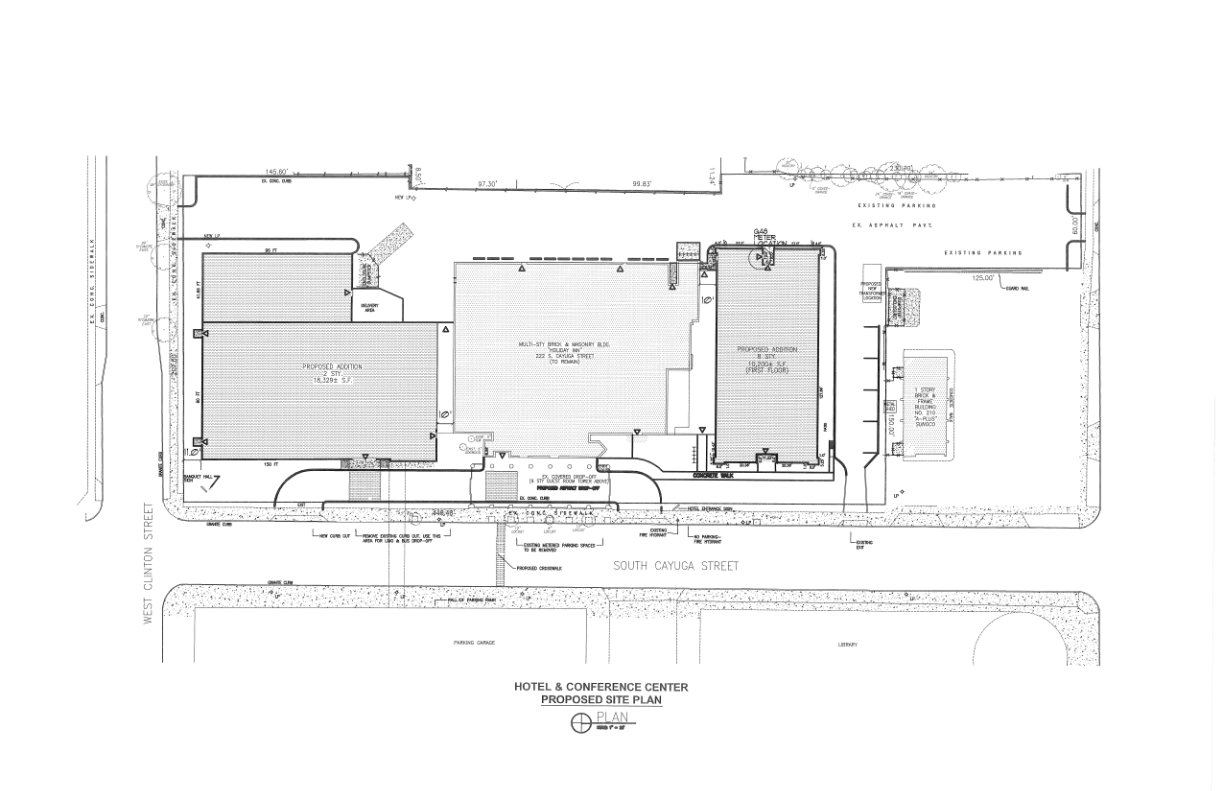
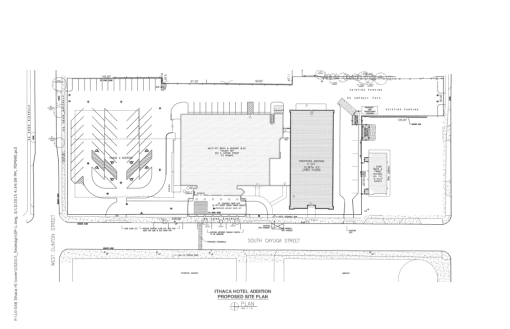
But this time around, it’s proposing to do in phases. Sketch plans presented at the Planning Board last Tuesday evening call for demolition of the two-story wings as before, but then the construction will be broken up into two phases.

The first consists of a five-story, 51,835 SF wing build on the northern side of the property, next to the gas station on the corner; the second phase, at a later, undetermined date, calls for three more floors on the hotel wing (bringing the new wing to eight stories and 81,600 SF), with a two-story, 18,300 SF conference center to be built on the corner of South Cayuga and West Clinton Streets.

The number of rooms in the addition has been unconfirmed, but given previous plans, it is likely to be little to no change from the current hotel, once the two-story wings are demolished. Until phase two is built, a parking lot would sit on the site of the future conference center.

The hotel is operated by Hart Hotels of Buffalo. Like several other Hart Hotels properties throughout the Northeast, the hotel has no chain affiliation, although the property was a Holiday Inn until the end of 2013. The 181-room hotel initially opened as a Ramada Inn in 1972, and the 10-story “Executive Tower” was completed in 1984.

Zoning at the site is CBD-100 (Central Business District), meaning that a proposed structure can be up to 100 feet (two floors at the least) with minimal required setbacks and no required on-site parking.

holiday_inn_expansion_1

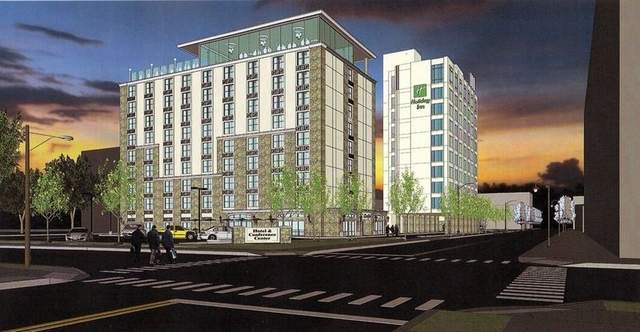
Under plans previously presented three years ago, the Hotel Ithaca sought to demolish the two-story wings of the hotel, and in their place the hotel would would build a new 9-story, 115-room tower, a kitchen addition, and a 15,000 SF conference center. The demolition would have resulted in a loss of 100 rooms, so the net gain was a total of 15 hotel rooms.

The then-$18 million project had significant local support from business owners, because Ithaca lacks the ability to host mid-size conferences and conventions (midsize meaning about 500 attendees), which sends conventioneers elsewhere. Currently, the lack of meeting space limits conferences to about 250 guests. The addition of a convention facility is seen as a major benefit to downtown retail, as well as other hotels that would handle overflow guest traffic. Convention traffic typically happens during weekdays, when regular tourist traffic is lowest.

However, the project, which was initially slated to start in November 2012, has failed to obtain financing for construction. The project applied for and received a property tax abatement for the new construction, and the Ithaca Urban Renewal Agency (IURA) even offered the possibility of a $250,000 loan if it would create a financial package that would allow the convention center to be built. But until now, there had been no indication of any plans moving forward.


Lofts @ Six Mile Creek Construction Update, 7/2015

30 07 2015

This will probably be the last update written for the Lofts @ Six Mile Creek apartment project; it’s very nearly complete. The lower floors already have their first occupants, while on the upper levels, the Pella windows still have labels on them, indicating that interior finishing is still taking place on the most lofty of the loft units. Outside, workers were busy cleaning off newly-laid sidewalk; exterior landscaping is up next, which will consist of weed-whacking, laying down soil, grass seed and new plantings that will hopefully enhance the Creekwalk.

It’s been nice watching this building go up, through here and on Ithaca Builds. It’s been a long, long time coming, and well-designed additions to the increasingly under-served housing market are welcome.

The Lofts at Six Mile Creek project consists of a a 7-story, 49,244 square foot structure that will contain 45 rental apartment units: 3 studios, 21 1-bedroom and 21 2-bedroom units. The building is being developed by Bloomfield/Schon + Partners out of Cincinnati, and construction is being handled by Turnbull-Wahlert Construction, also based in Cincinnati.

Leasing is being handled by CSP Management, and interested readers can apply for an apartment here or call 607-277-6961 if they feel so inclined. Prices range from $1,220 to $2,655 per month, depending on size and location of the unit.

20150727_113548 20150727_143308 20150727_143405 20150727_143453 20150727_143516

20150727_113404

20150727_145241

cayugaplace_v5


Carey Building Construction Update, 7/2015

28 07 2015

20150727_110454 20150727_110546 20150727_142436 20150727_142541 20150727_142626 20150727_142812 20150727_142830
carey_rev5_3 carey_rev5_1

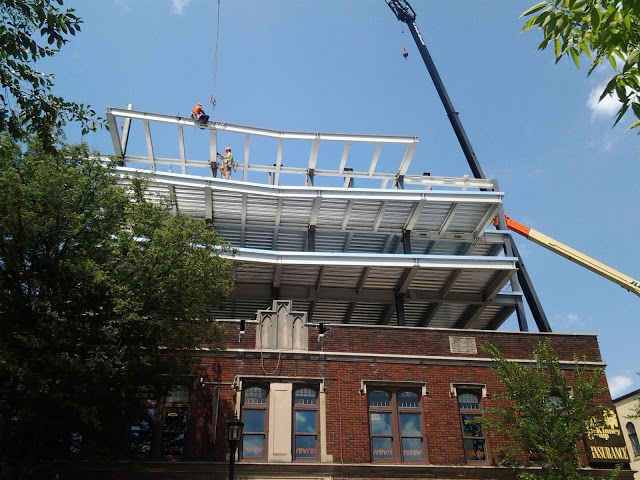
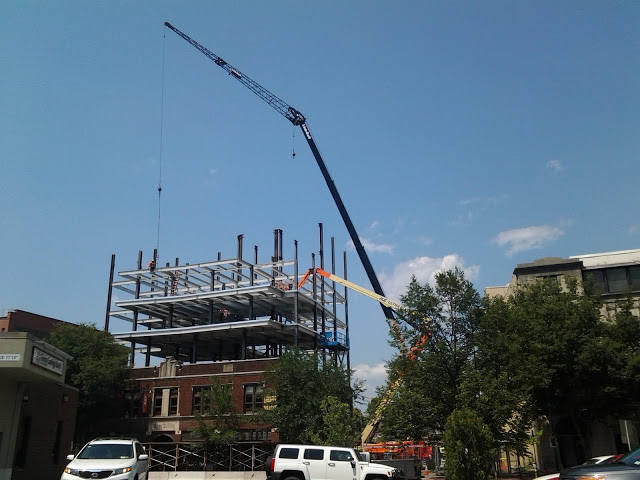
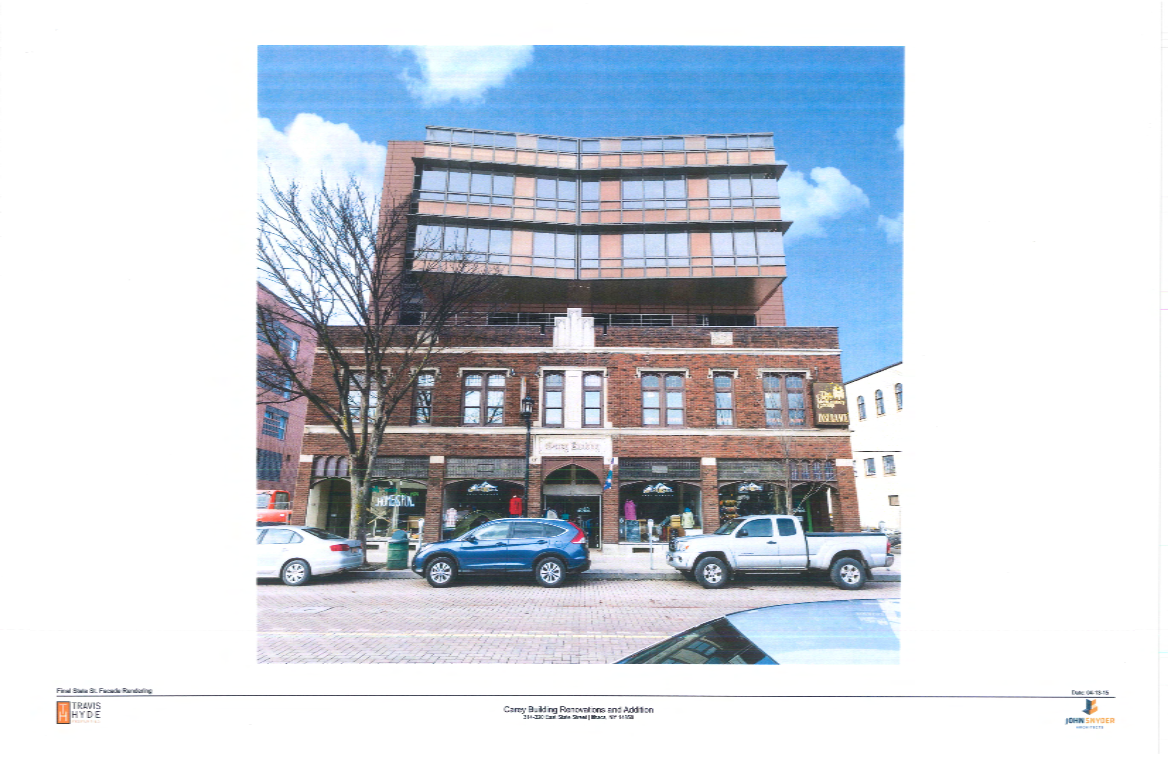
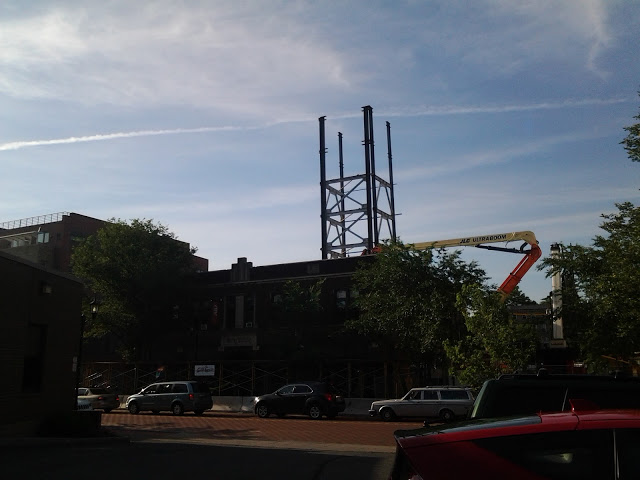
At the Carey Building in downtown Ithaca, work continues on the structural steel beam assembly of the new 5-story vertical addition. It looks like the lowest two floors of the addition have steel decking, and cross beams are being installed on the third floor. The top two floors, which are smaller, have yet to be built, but one can get an impression of their height by looking at the joining plates attached to the vertical steel columns. Note the “kink” in the structural steel above the front entrance, and how it relates to the design of the apartment floors.

The previous estimates of a late summer/early fall completion have been too aggressive, especially since the addition had to sort out fire code issues, as well as anything else that comes up when working on a 90 year-old building. It would seem that late winter or early spring is more likely, but the steel work should be completed by the end of this summer. No word on if the Canopy Hotel developers still plan on sharing the telescoping boom construction crane.

The Carey Building addition will add a third floor and 4,200 SF to the Rev business incubator (nearly doubling it to 8,700 SF), and on floors 4-7, there will be 20 apartments. Floors 4 and 5 will have 16 studio apartment units that average only 400-500 sq ft, their small size enabling them to be rented at a lower price. The 4 units on floors 6 and 7 will be larger 2-bedroom units. The $4.1 million project is being developed by local firm Travis Hyde Companies. LeChase Construction is handling the build-out process.


News Tidbits 7/25/15: To Reuse and Rejuvenate

25 07 2015

travis_hude_libe_libe_v3 oldlibe_franklin_proposal

1. Let’s just outright say it – the Tompkins County Legisltaure’s Old Library decision is a complete mess at this point. As covered last week, there were three separate individual resolutions – one from legislator Mike Lane for the Travis Hyde proposal (first image), and one each from legislators Dooley Kiefer and Leslyn McBean-Clairborne for the Franklin proposal (second image).

They all failed. 8 yes’s are required. The Travis Hyde proposal failed with 5 yes and 7 no’s. The Franklin proposal failed with 5 yes and 7 no’s on Kiefer’s resolution, and 4 yes and 8 no’s on McBean-Clairborne’s resolution. Martha Robertson, a supporter of the Travis Hyde proposal, recused herself because she had received donations from Frost Travis during her failed congressional campaign in 2014. Legislator Glenn Morey, also a supporter of the Travis Hyde proposal, was absent from the meeting.

I don’t see any way this will ever get the eight votes required. Kathy Luz Herrera voted against the proposals because the resolution has a ground lease (meaning the county still owns the land but leases the property), and Dooley Kiefer has stated she refuses to support any of the projects unless they have a ground lease – in other words, these two have mutually exclusive votes. By voting against McBean-Clairborne, Kiefer’s made it clear she will vote against the Franklin project unless it meets her exact specifications. Shinagawa voted against Travis Hyde for not being what the community wanted, but won’t vote for the Franklin proposal unless they guarantee Lifelong’s involved. And Stein has come out in favor of the Travis Hyde proposal. There’s no solution on the horizon.

So now it heads back to the Old Library Committee. Sale to the highest bidder and demolition of the library are real options on the table.

cayugafarms_2

cayuga_farms_1
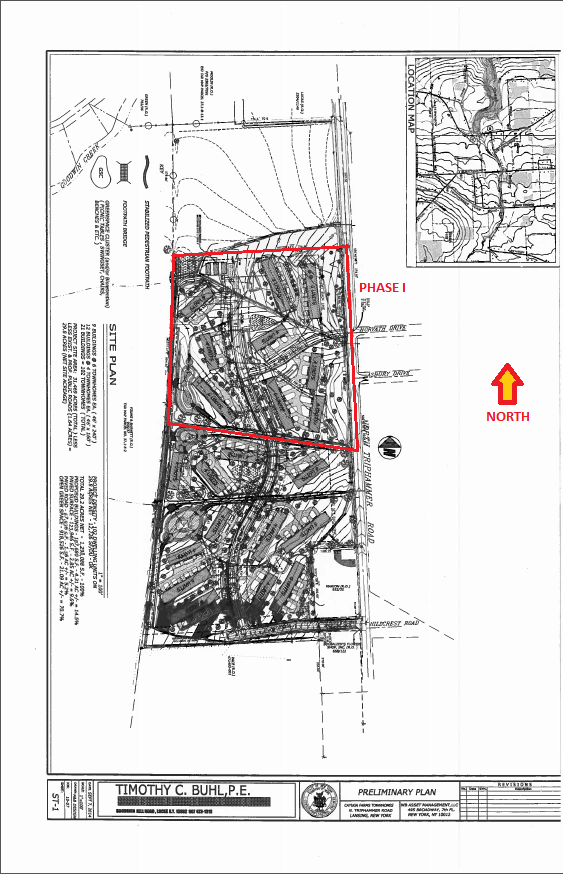
2. Turning to Lansing town, the planning board there has approved plans for the 102-unit Cayuga Farms townhouse project for a 31.4 acre parcel off of North Triphammer Road near Horvath Drive. First reported last Friday by the Lansing Star, the project received negative SEQR determination (meaning that, following the state’s environmental review guidelines, that the planning board decided the project will have no serious detrimental impact on the community) and issued preliminary site plan approval.

However, one issue still remains to be resolved before any shovels hit the dirt – sewer. The project currently has a modular package sewer treatment proposal that would work in place of the voter-defeated municipal sewer, and allow for denser development than the town’s rule on septic tanks. But the DEC’s interest in that type of treatment has been mixed. It could be a while before the situation gets sorted out.

Readers might remember this project because it’s one of the few I’ve openly derided. The 102 units are townhouse-style apartments marketed towards the upper end of the market. They would be built in phases over a period of several years.

cornell_novarr_5 cornell_novarr_6

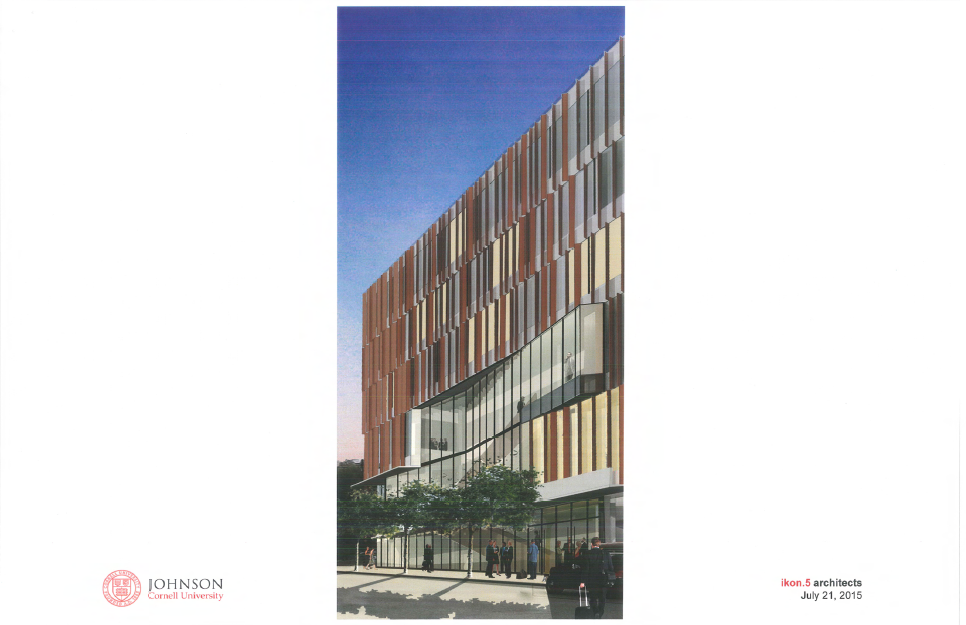
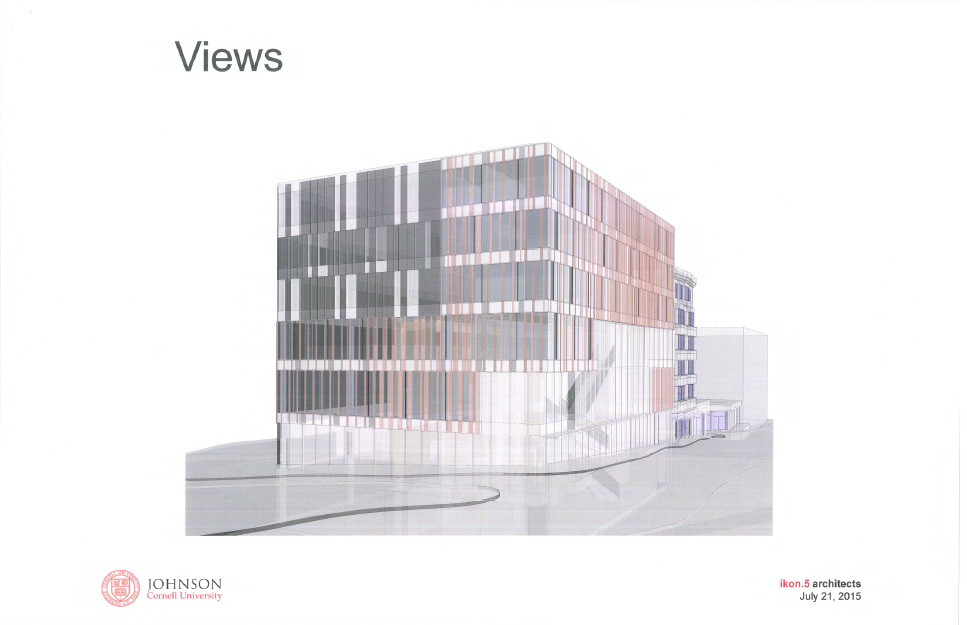
3. Now for some eye candy. Included with this week’s planning board project review committee agenda are additional renderings for John Novarr’s project at 209-215 Dryden Road. Doing a quick visual cross-check with the initial renderings, there don’t appear to be any substantial design changes, and the colorful metal cladding appears to retain the same pattern as before. Getting a little poetic here, the cascading metal bars are reminiscent of water running down a wall.

The city’s Full Environmental Assessment Form doesn’t express many worries about the project; some concerns have been raised about too many pedestrians on the street (the building would add 420 people to Collegetown’s sidewalks at the outset, 600 when fully occupied), but that seems to be about it for now.

The $12 million project is moving right along in an effort to start construction this fall. Declaration of Lead Agency and some CEQR discussion (the city’s more stringent version of SEQR, State Environmental Quality Review) are expected at the July planning board meeting. Plans call for 76,200 SF building with three floors of classrooms and three floors of offices for Cornell’s Johnson School Executive MBA program. The building would be ready for the Big Red’s B-students in April 2017. The property would remain on the tax rolls.

20150605_114431

4. A couple of interesting news notes courtesy of the Ithaca Urban Renewal Agency (IURA) Agenda:

First, popular downtown restaurant Madeline’s is looking to obtain an agency loan as part of a renovation project. The $470,000 project would add three jobs, only one of which pays living wage. The restaurant on the first floor of the Rothschild Building (the two-story building in the above photo) hopes to take advantage of the new hotels going up, and law firm Miller Mayer moving its 60 employees into the Rothschild Building. Previously the firm was in the Chemung Canal Trust Company building further up the Commons.

Second, the Finger Lakes School of Massage has applied for an agency loan to facilitate a move from West Hill to downtown. The school would move its ~34 staff and 75-95 students into 10,804 SF of leased space on the Rothschild Building’s second floor, with a further 1,700 SF on the ground level for a retail store and alumni massage clinic. The space would be renovated at a cost of about $194,300.

Although both projects come with risks (Madeline’s being a restaurant, FLSM having some worrying financial statements), both projects have been recommended for loan approval. The FLSM and Miller Mayer news suggest that most of the office space in the old Rothschild Building, left vacant when Tetra Tech moved to Cornell’s office park in 2010, has now been refilled.

The new window cut out built recently into the Rothschild Building’s east facade is part of the space where FLSM is moving into.

416_e_state_1

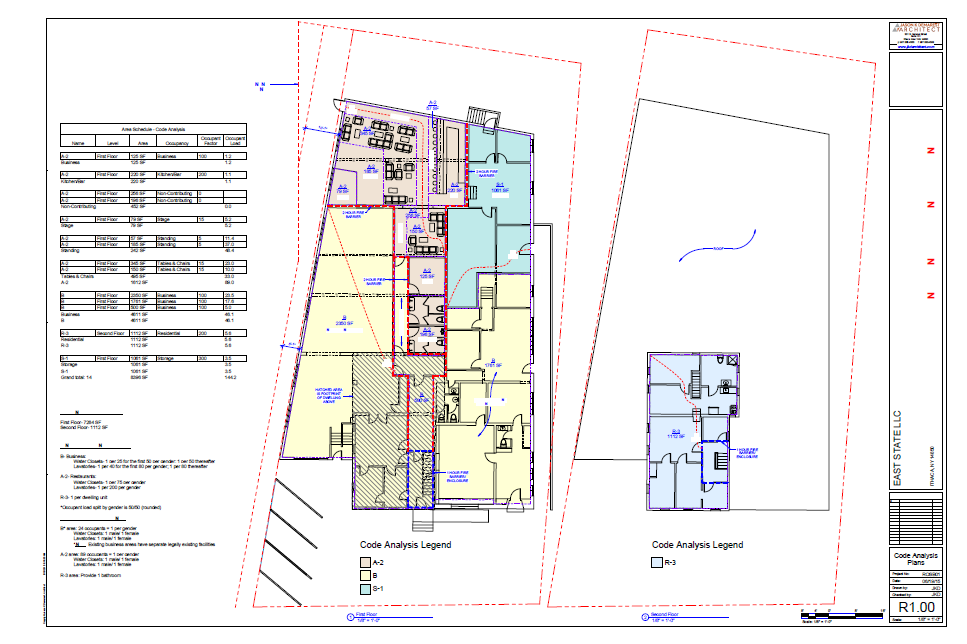
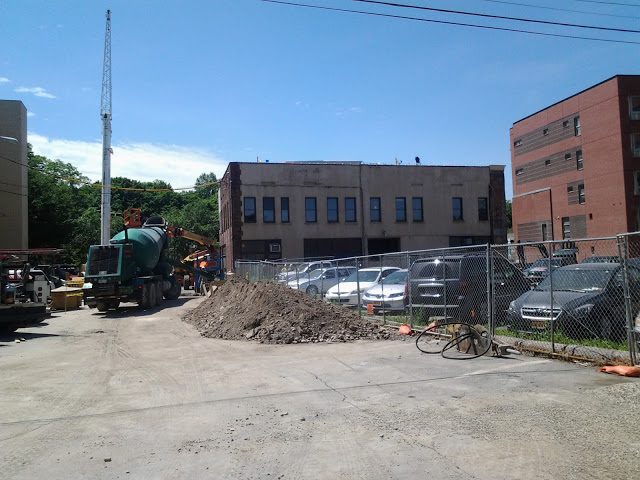
5. And now another reuse project – at 416-418 East State Street, currently home to an underused 7,600 SF office and a connected manufacturing/storage building. The house dates from the 19th century, with various additions as recent as the 1970s. According to plans filed with the city, an LLC linked to Argos Inn architect Ben Rosenblum has plans to convert the old manufacturing space into a bar and storage space, with renovated offices and a 2 bedroom apartment in the original house. The project will include an accessory parking lot, revised landscaping and handicap access. Area and setback deficiencies have resulted in the need for a zoning variance, but a parking variances won’t be required because the bar will have after hours parking across the street at Gateway Plaza. The building itself won’t change dimensions, but the change in use triggers the city zoning laws.

There have been some concerns expressed about this project – at least one neighbor is vociferously opposed to a bar, citing noise problems and concerns about smokers, and the county planning department is not a fan of the traffic and parking arrangement. Offhand, I think a bar is legal in B-4 zoning, but the noise impacts will merit further scrutiny.

The project is definitely something of interest to the Voice’s audience, but in an email, Rosenblum said that details are still being worked out and that he’d prefer to discuss the plan at a later date.

Scott Whitham is serving as a consultant, and local architect Jason Demarest is designing the renovation.

state_st_triangle_v3_1 state_st_triangle_v3_2 state_st_triangle_v3_3

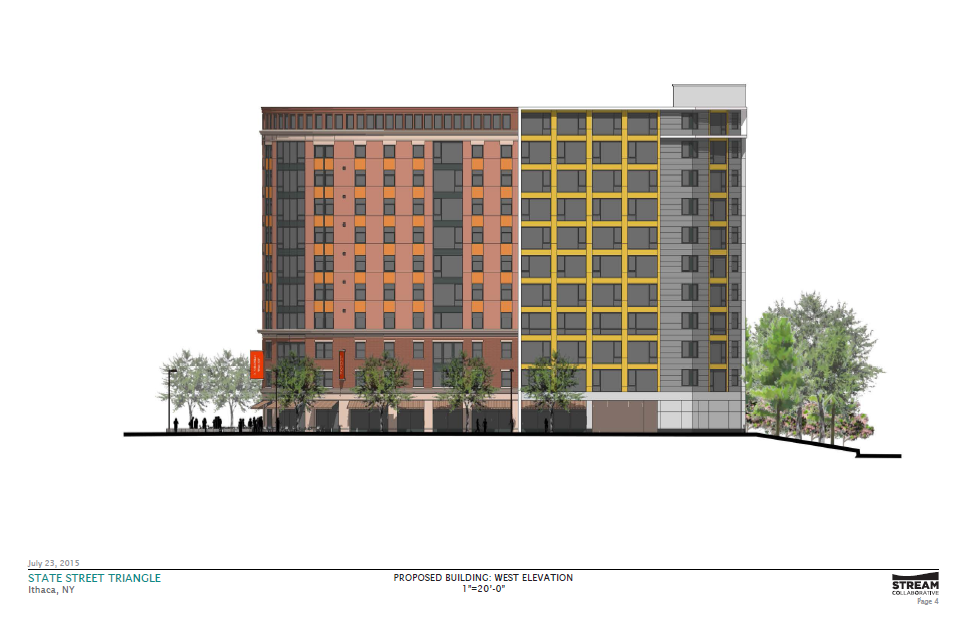
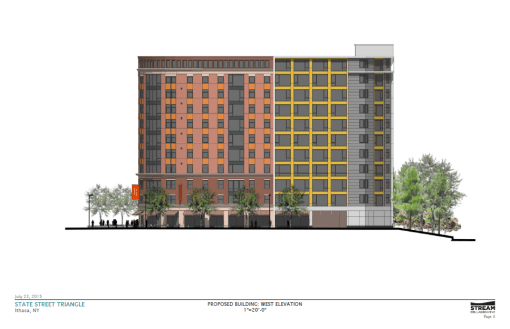
6. Some very substantial changes are in store for Campus Advantage’s $40 million, 240-unit State Street Triangle project at 301 East State Street in downtown Ithaca.

The Texas-based developer has recruited the assistance of Ithaca architecture firm STREAM Collaborative to help redesign the 240-unit project. And there’s clearly been a lot of work since the previous planning board rendition.

In this revision, a much greater emphasis has been placed on the street interaction and active street uses. Gone is the soaring corner, and in its place is a design with a greater use of horizontal elements (like the decorative belt above the third floor) in order to give the building a more human scale – crucial when you’re planning one of the largest buildings in Ithaca.

The developer is also seeking to remove the northbound turning lane from Aurora onto State Street, and replacing it with a pedestrian area with widened sidewalks, outdoor seating and dining spaces. The land would have to be procured from the city, or some other type of collaboration would have to take place with city officials and engineers.

In documents provided in the city’s planning board agenda for next Tuesday, the developer notes that the project remains student-oriented, but in order to play down comments of it being a massive dorm, 10 4-bedroom units were reconfigured into 40 studio apartments that the developer hopes will be appealing to non-student tenants looking for a less expensive, modestly-sized space.

The State Street Triangle project is also exploring LEED certification.

The project still has a lot of details to be addressed – city transportation engineer Tim Logue has expressed concerns that the traffic study underestimates the number of car trips, and has asked for a revised study. The project is also under closer analysis because the potential addition of 600 residents into downtown Ithaca would put a greater stress on utilities and infrastructure.

These and other questions are likely to be topics of discussion at next Tuesday’s meeting.

The State Street Triangle may be pursuing a CIITAP tax abatement (so much for my theory a couple weeks ago), but the city has not uploaded the application at the time of this writing.
7. Looks like a busy meeting next week for the Ithaca city planning board. In order:

1. A subdivision at 106-108 Madison Street on the Northside. The applicant wishes to create a new lot on the east side of the existing lot, for the purpose of building a new-single-family home.

2. A. Declaration of Environmental Significance and BZA recommendation for the Dibella’s sub shop proposed at 222 Elmira Road

B. Declaration of Environmental Significance, BZA recommendation and potential approval for the 1,100 SF addition to the Maguire Chrsyler/Fiat dealership in Southwest Ithaca

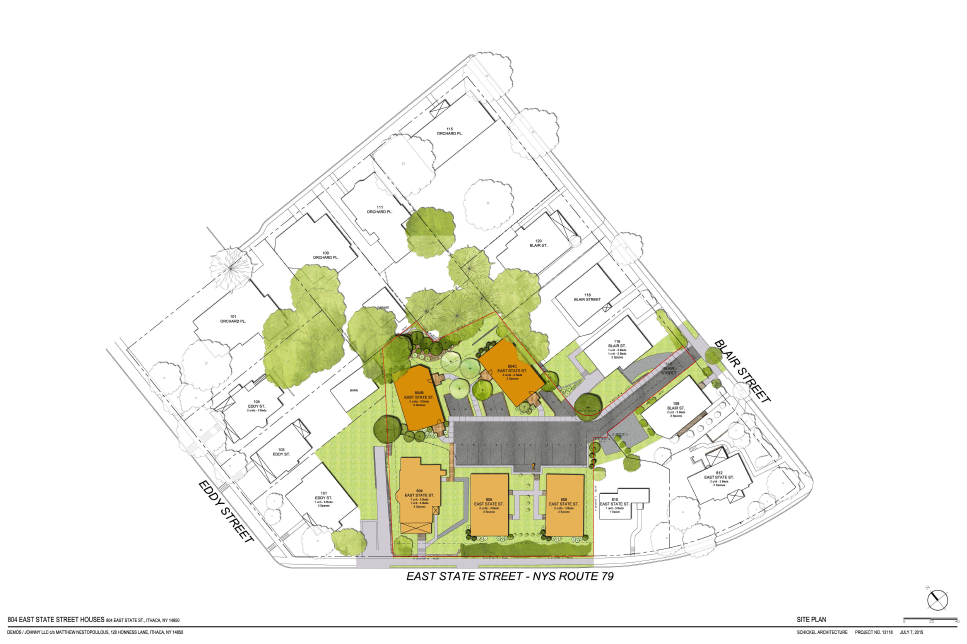
C. Declaration of Environmental Significance, and potential approval for the two duplexes proposed at 112 Blair/804 East State Street

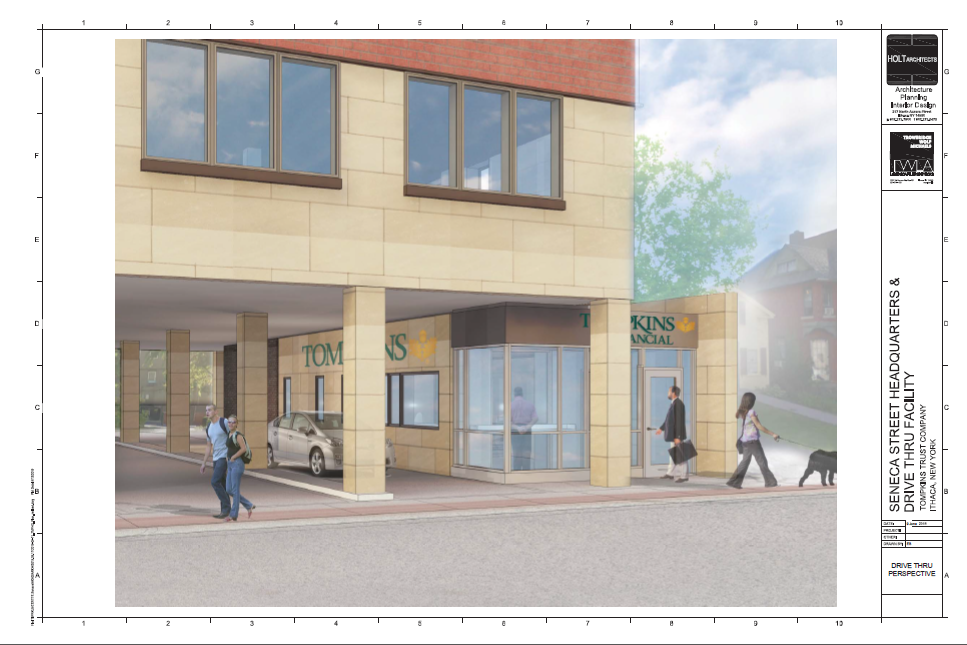
D. Site-plan approval for the first phase of the Tompkins Financial HQ (the new drive-through in the current HQ’s parking lot)

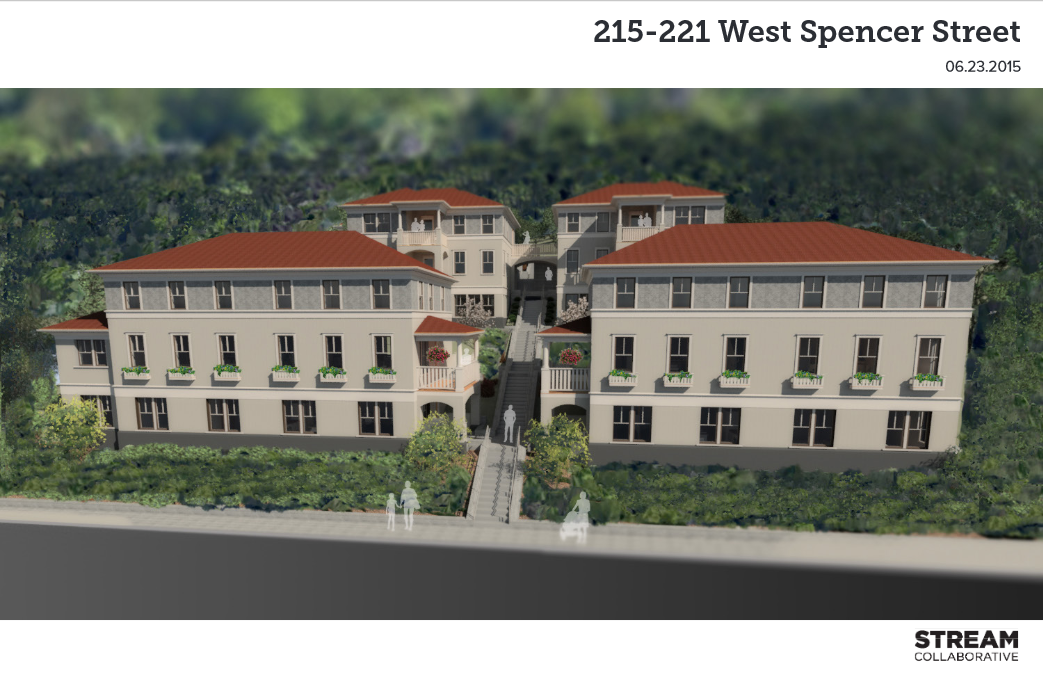
E. CEQR (the city’s version of SEQR) discussion for 215-221 W. Spencer Street

F. Declaration of Lead Agency and CEQR discussion on 209-215 Dryden (the Novarr project noted above)

G. Declaration of Lead Agency and CEQR discussion on State Street Triangle (

noted above)

holiday_inn_expansion_1

H. Sketch Plan – Hotel Ithaca Expansion. Readers might remember a 9-story addition and convention center were approved for the Hotel Ithaca almost two years ago (shown above). Nothing has happened with the expansion plans, for reasons which had been attributed to financing. Dunno what we can expect this time around, but we’ll find out next week.


Carey Building Construction Update, 6/2015

15 06 2015

At a quick stop at the Carey Building Friday before last, workers at the Carey Building site were busy preparing a utility duct line for the new Hilton Canopy Hotel next door, according to one gentleman I spoke with at the site. Building contractor LeChase Construction has completed the underpinning work on the Carey Building, strengthening the foundation to support the five-floor vertical addition. LeChase will also be handling the construction of the Canopy Hotel next door.

The Carey Building itself has sidewalk scaffolding up, and a section of the rear facade has been removed. I think that would be for the construction hoist, and the swing cab telescoping boom construction crane in the second photo is the one that’s being used for assembly of the structural steel. Quick disclaimer, if I’m wrong, please call me out. My day job of studying pollutants and puffy clouds isn’t helpful here.
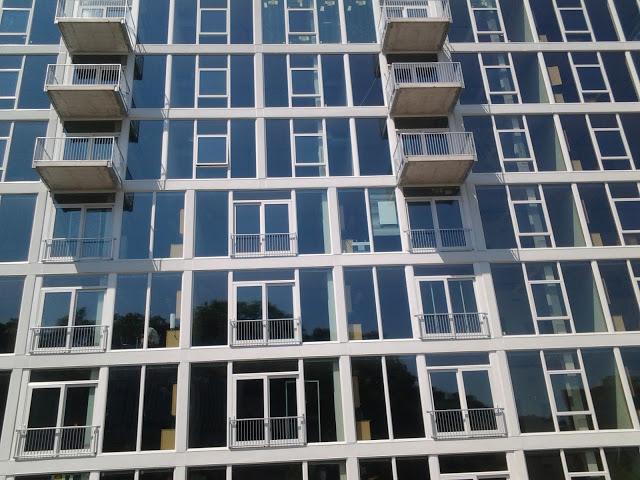
I also had the good fortune to run into developer Frost Travis while having lunch, and he happily stated that steelwork would begin the week of June 8th (which is about two weeks behind schedule, but let’s not begrudge him given that whole issue with the building design that arose a couple months back).

So of course, swinging by to take updated photos was a must. One week later, there’s steel columns five stories high (the height of the addition), with steel crossbars for stability, and joining plates to secure the steel framing for the floors. My marginally-educated guess is that this is the frame for the elevator shaft, based off the floor plans.

The Carey Building addition will add a third floor and 4,200 sq ft to the Rev business incubator (nearly doubling it to 8,700 sq ft), and on floors 4-7, there will be 20 apartments. Floors 4 and 5 will have 16 studio apartment units that average only 400-500 sq ft, their small size enabling them to be rented at a lower price. The 4 units on floors 6 and 7 will be larger 2-bedroom units. The $4.1 million project is being developed by local firm Travis Hyde Companies.

Expect this project to finish sometime in the very late summer-early fall timeframe.

20150605_114119 20150605_114225 20150605_114248 20150605_114328

20150613_181342

20150613_181351