Hotel Ithaca Construction Update, 4/2016

27 04 2016

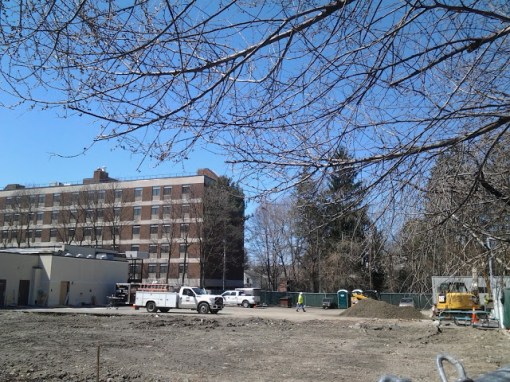
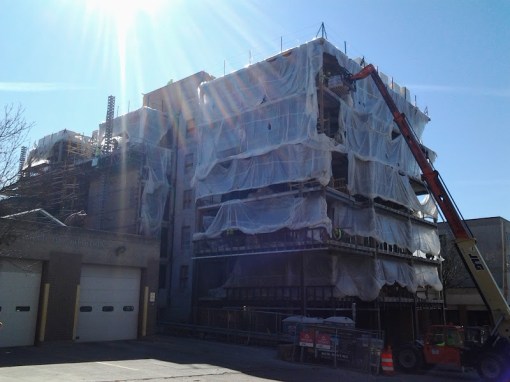
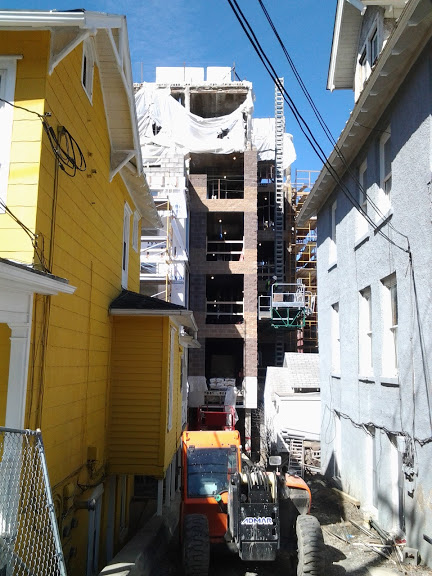
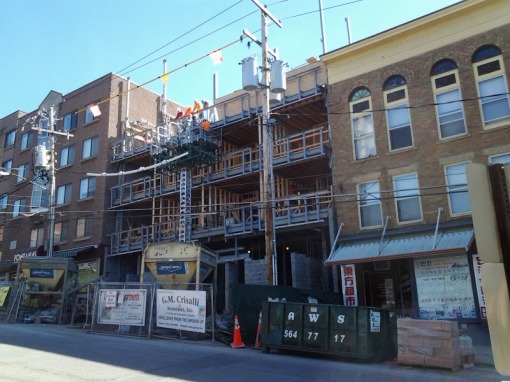
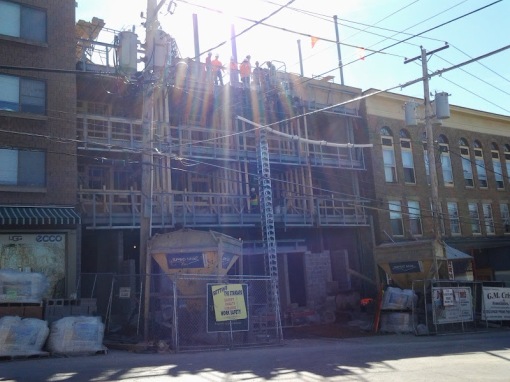
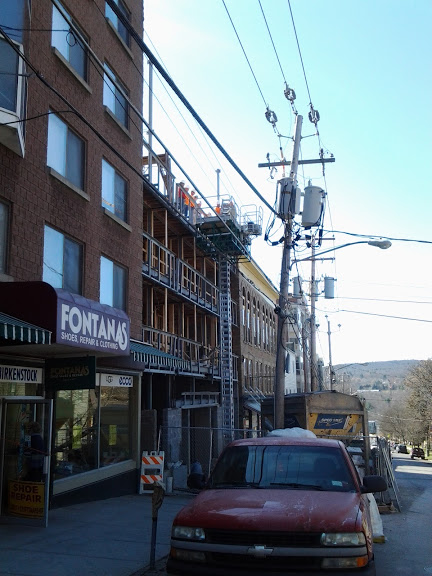
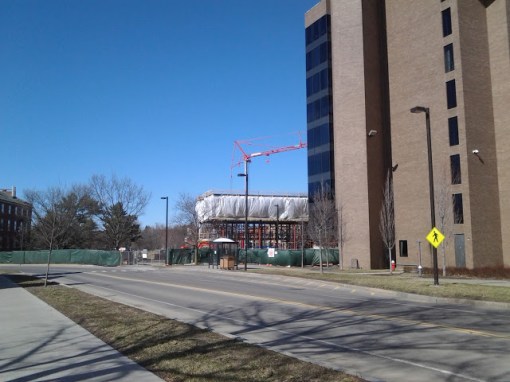
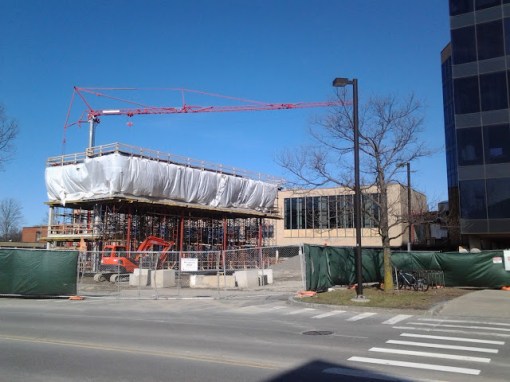
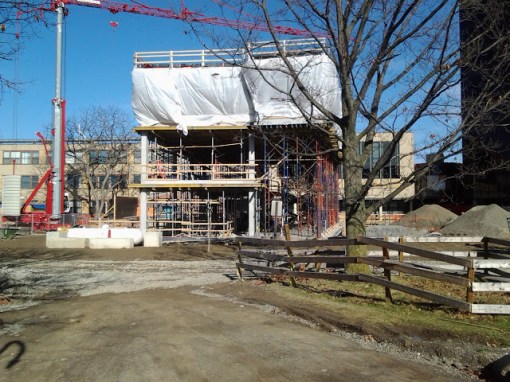
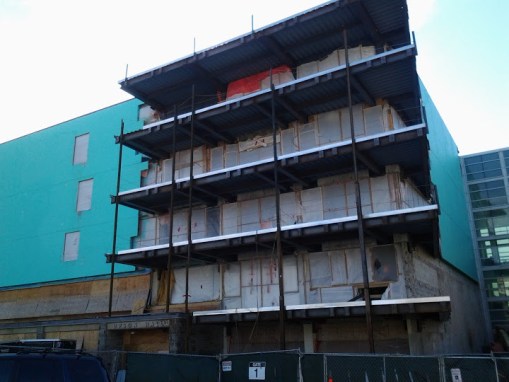
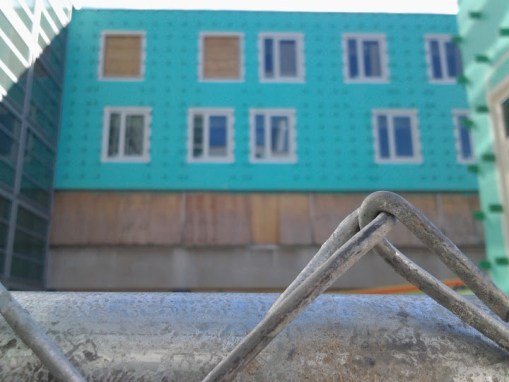
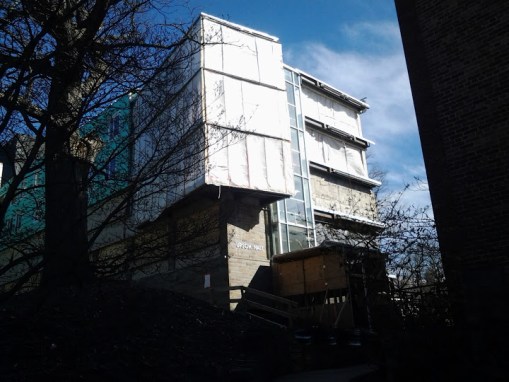
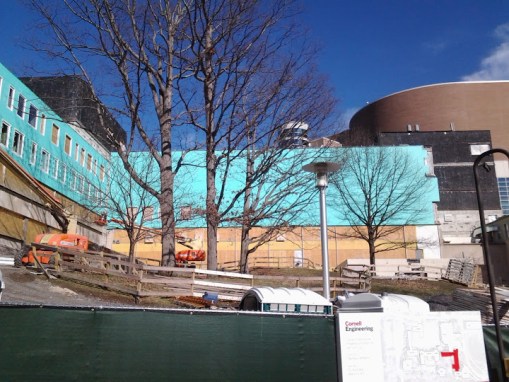
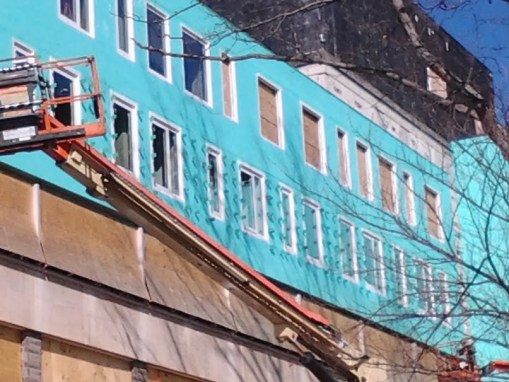
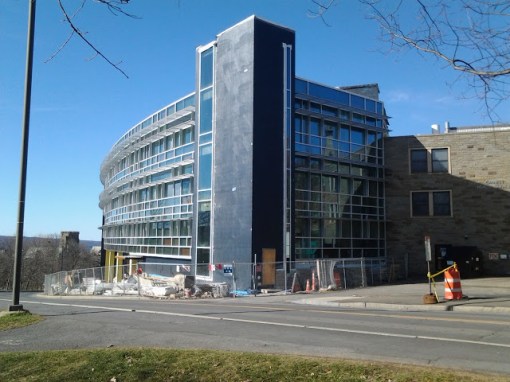
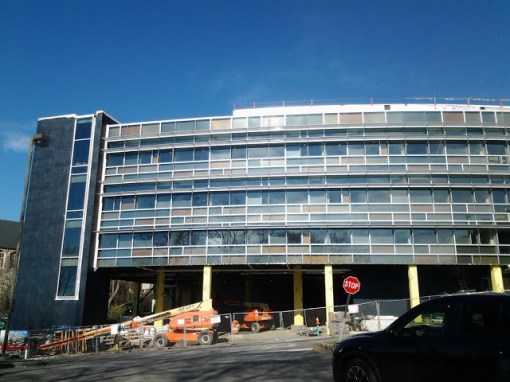
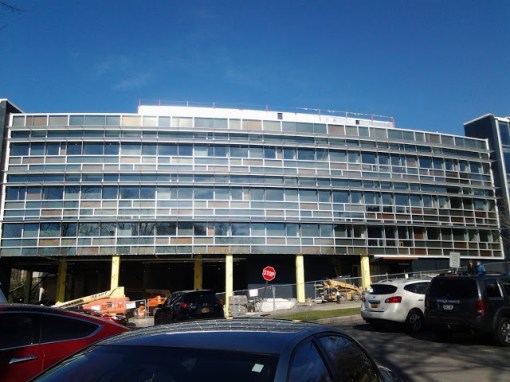
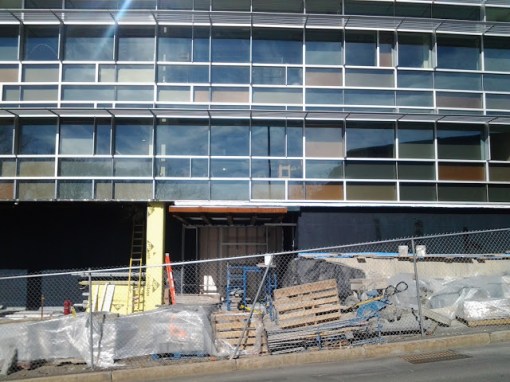
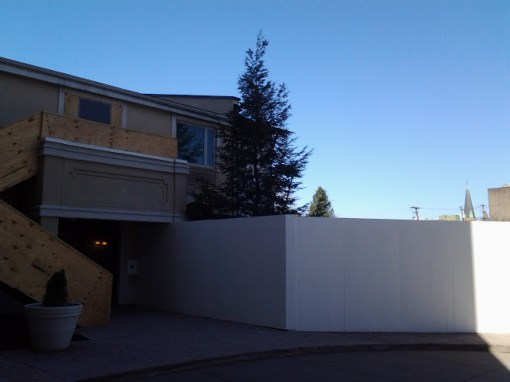
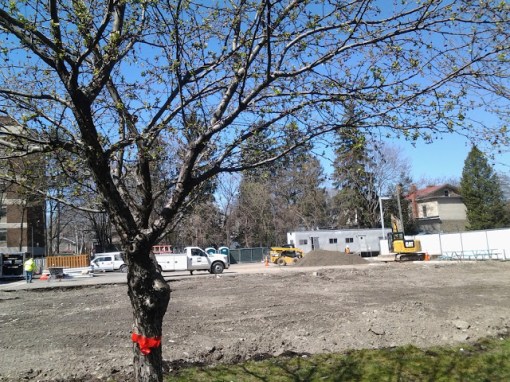
Demolition and site preparation are the task du jour at the Hotel Ithaca at 222 South Cayuga Street. The north wing of hotel rooms is being demolished now, and the west wing of hotel rooms will be demolished once the new building is complete.

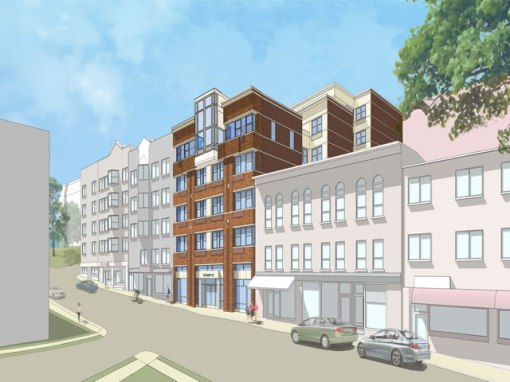
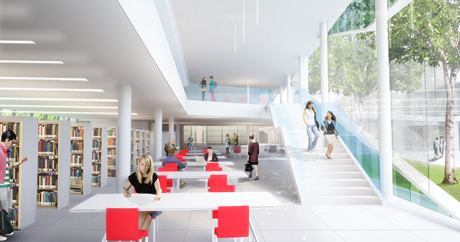
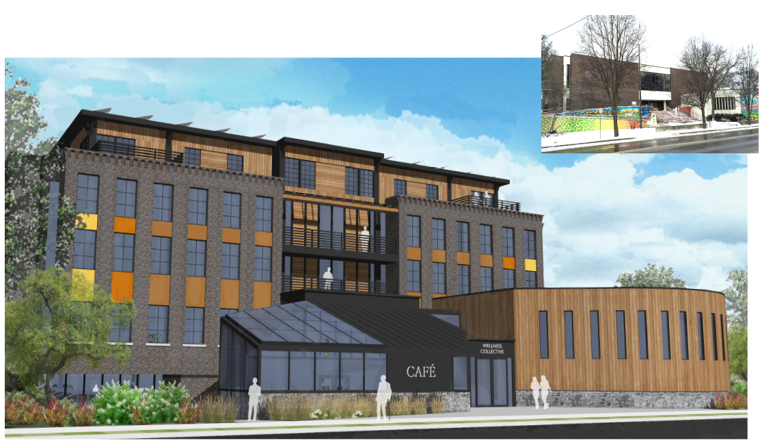
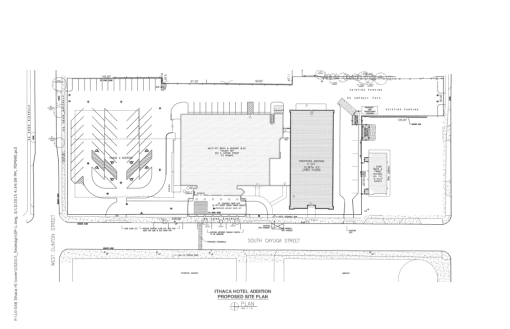
The new 30,000 SF, 5-story wing will contain 90 rooms, 2,900 SF of additional meeting space, breakout rooms, and a new fitness center. 100 hotel rooms are being taken offline and demolished, reducing the number available at the hotel from 180 to 170. But, the primary goal of the project is to modernize the Hotel’s offerings, and stay competitive with newer hotels downtown, including the Marriott currently underway, and the Canopy Hilton due to start later this year.  The project applied for, an received a 7-year tax abatement under the CIITAP program, making it the only project that has pursued the 7-year option over the more common 10-year enhanced option. CIITAP may not be popular from a P.R. standpoint, but as shown on Ithaca Builds, the high property tax rate downtown plays a large role in the program’s necessity.


Photo from C. Hadley Smith Collection

Photo from C. Hadley Smith Collection

The Hotel Ithaca originally opened in 1972 as part of the city’s urban renewal plans, initially operating as a Ramada. At the time, it only consisted of the two-story wings, as seen in the 1973 photo above; the 10-story “Executive Tower” was added in 1984/85. The hotel was rebranded as a Holiday Inn until the start of 2014, when it switched to an independent operation as the “Hotel Ithaca”. The Hotel Ithaca was also the working name of the Marriott project early on, so the two projects are easy to mix up. As part of the change, the hotel carried out $2.4 million in renovations (phase one) to the tower rooms and utlities.

holiday_inn_expansion_1

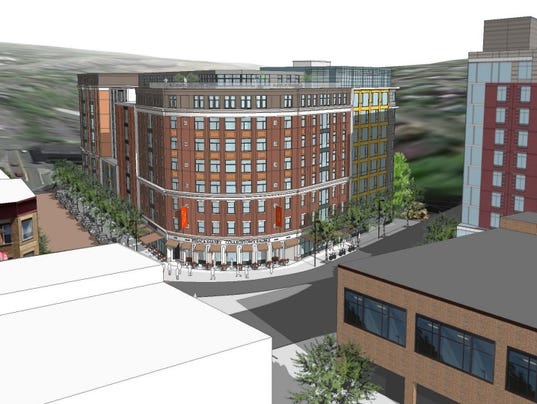
Early plans called for a $17.8 million, 140,000 SF addition with a 9-story, 115-room hotel, restaurant and conference center designed by Buffalo-based Roberts, Shackleton and Boy Architects. The conference center was very well received by local officials and business leaders, and is seen as really crucial to Ithaca’s business interests – the city lacks the ability to host mid-size conferences and conventions (midsize meaning about 500 attendees), which sends conventioneers elsewhere. Currently, the lack of meeting space limits conferences to about 250 guests. The addition of a convention facility is seen as a major benefit to downtown retail, as well as other hotels that would handle overflow guest traffic. Convention traffic typically happens during weekdays, when regular tourist traffic is lowest. The plan was later revised to 8 stories and 97 hotel rooms, and then that didn’t move forward due to financial difficulties.
hotel_ithaca_phase_1 hotel_ithaca_phase_2
The current project was proposed last September, and as the project had evolved, the tax abatement had to be re-voted (and passed 6-1). A potential third phase calls for a 3-story addition to the 5-story wing, and the coveted conference center, on the corner of W. Clinton and S. Cayuga Streets.

The $15 million second phase is aiming for a completion in May 2017. About 21 new jobs are expected to be created, most of those service positions near or a little above minimum wage.

Hart Hotels of Buffalo, founded by David Hart in 1985 and operating locally under the name Lenroc L.P., is the project developer. Krog Corporation, also of Buffalo and a favorite of Hart Hotels, is the general contractor. NH Architecture of Rochester, another frequent partner of Hart Hotels, is the project architect.
 

20160414_115147 20160414_115217 20160414_115246 20160414_115357

hotel_ithaca_final_1


409 College Avenue (Student Agencies eHub) Construction Update, 4/2016

26 04 2016

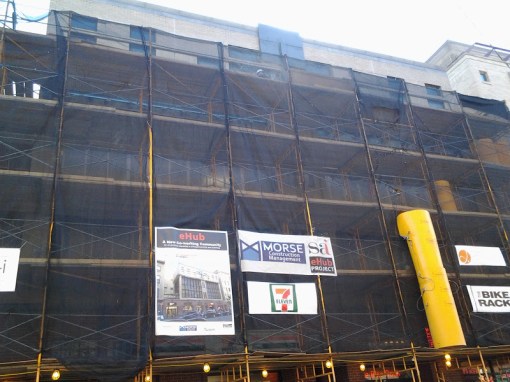
Not a new construction, but a major renovation. scaffolding is up as the Student Agencies Building at 409 College Avenue undergoes major interior and exterior renovations to its second and third floors. As previously reported on the Voice, 9.660 SF is being renovated to make way for eHub, a co-working and business incubator space for startups founded by Cornell affiliates – students, faculty and staff. The project is part of a collaboration with the Entrepreneurship at Cornell program (eShip), and for its part, Cornell renovated about 5,000 SF of space in the Ag Quad’s Kennedy Hall to complement Student Agencies’ plans.

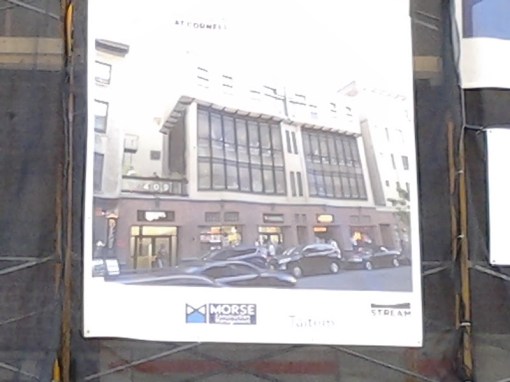
As part of the renovations, 409, which was built in 1985, gets a major facadectomy – out with the brick and its punch-out windows, in with the glass curtain walls of fixed-frame window units with metal and granite detailing. The renovations will also add a rooftop patio space to the second floor. The project had to go through Design Review since it’s a major exterior change to an MU-2 building in Collegetown, and it ended up being one of the rare cases where the planning board encouraged a bolder design. The original design can be found here. The posters on the netting are the only copies of seen of the approved final design.

The Bike Rack, 7-Eleven, and Student Agencies will remain option while the renovations are underway.

STREAM Collaborative and Taitem Engineering designed the renovations (project design and energy efficiency improvements), and Morse Construction Management is the general contractor. All three firms are based out of Ithaca. The total cost for 409’s renovation is about $2.8 million.

Plans call for a May opening.

20160415_101744 20160415_101813 20160415_101819 20160415_101834

409_college_avenue


307 College Avenue (Collegetown Crossing) Construction Update, 4/2016

25 04 2016

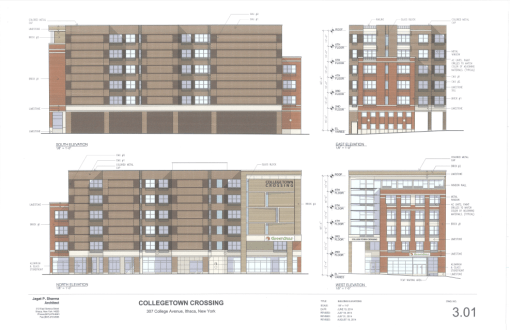
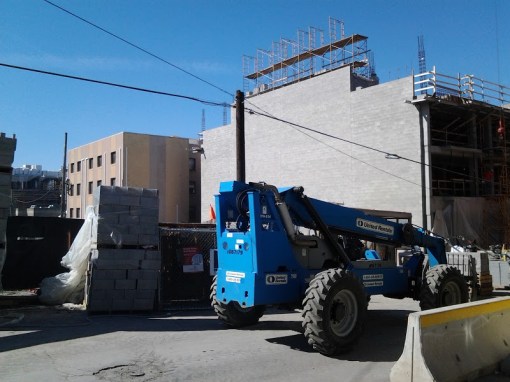
Collegetown Crossing is starting to show its face. Windows are being installed, and the CMU walls are on display. The mostly glass front facade has yet to go on, and brickwork will eventually go over the Tyvek housewrap on the 4-story, CR-4 portion of the portion. As mentioned in the Voice piece, a construction worker on-site said that interior work is focused on interior wall framing, sheet-rock hanging, and electric rough-ins at the moment.

According to building developer Josh Lower of Urban Ithaca, the project is being included as a part of a city grant application related to public transit, though it’s not something I’ve heard much about. It definitely fits the bill – designated internal bus shelter and pull-off space for up to two buses, a pedestrian through-fare and pocket park that connects College Avenue and Linden Avenue, ample bike racks (12 spaces required, 24 being provided), 3,200 SF grocery store on the first floor and Ithaca Carshare is but a couple hundred feet away.

There are a couple smaller retail spaces included as part of the project, but there hasn’t been any indication as to whether they have tenants lines up.

Like Dryden South and the Dryden Eddy Apartments, Collegetown Crossing plans to open in time for the fall semester. Ithaca’s Jagat Sharma is the architect, and Hayner Hoyt Corporation out of Syracuse is in charge of the build-out.

20160415_102004 20160415_102109 20160415_102141 20160415_102216 20160415_102337 20160415_102359 20160415_102450 20160415_102754 20160415_104451

307_college_site_plan_final 307college_rev2_1

ctown_crossing_rev2_1


205 Dryden Road (Dryden South) Construction Update, 4/2016

25 04 2016

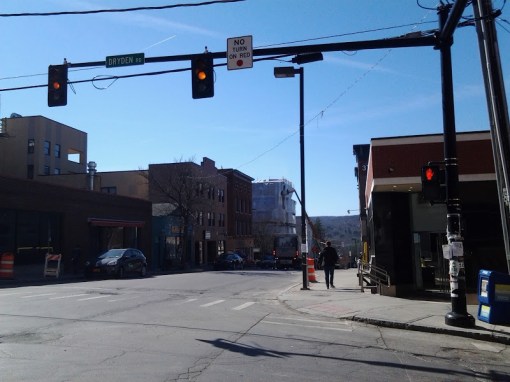
Another project in the mad dash for a summer completion (7/7/2016) is Pat Kraft’s mixed-use building at 205 Dryden Road, the “Dryden South” apartments. Workers under the direction of Rochester’s LeChase Construction are building up the reinforced concrete frame, and you can see steel rebar poking out of the fourth floor, which will be wrapped in wood forms and encased in concrete, with enough rebar poking out at the top to tie-in to future sections. The construction crane comes from C.P. Ward, a construction contractor in suburban Rochester. On the outside, the CMU walls are being assembled; not a whole lot of aesthetic effort is being put into the appearance of the east wall because it will be hidden by the 209-215 Dryden project within months of completion, although the renders show slit-windows on the building’s east face.

Kraftee’s was slated to occupy the first floor retail space, but the space is now being retooled. The project is in MU-2 zoning, and is legally obligated to have “active use” commercial on the 2,400 SF first floor: hotel, bank, theater, retail, and/or food service.

It looks Dryden South’s website has been overhauled. Apparently, if the building isn’t ready by August 1st, Kraft will refund renters twice the daily rent until the building is issued a certificate of occupancy. Rents range from $1190-$1350 per month, per bedroom, which is quite expensive, but this is also Inner Collegetown, which has the highest real estate values in the city.

20160415_101517 20160415_101531 20160415_101610 20160415_101703 20160415_101958

dryden_south_rev_2


327 Eddy Street (Dryden Eddy Apts) Construction Update, 4/2016

25 04 2016

Here are the latest photos for Steve Fontana’s mixed-use project at 327 Eddy Street. Work is up to the fourth floor in the front, and it looks like interior wall framing is underway on the lower floors, along with utilities rough-ins on the lowest levels. The rear section is further behind, steel is rising but workers have yet to move beyond the first floor. Progress should be happening fairly quickly from here on out, as the building needs to be ready for occupancy by the start of the fall semester. According to Fontana’s website (conveniently linked with the shoe store), unit prices range from $930 to $1250 per bedroom. The website doesn’t give any indication on how many units have been reserved.

There seems to be a slight discrepancy as to whether the project has 53 or 56 bedrooms in its 22 units. Counting on the webpage didn’t help, and the floor plans on the city’s website date from the 6-story, 64-bedroom version. A quick check shows my source was a Cornell Sun article from February 2015, no longer online. If anyone knows which number is accurate, please chime in.

A little more info can be found in last week’s Voice round-up here.

20160415_103153 20160415_103222 20160415_103243 20160415_104011
327_eddy_rev4_1


Village Solars Construction Update, 4/2016

19 04 2016

Heading into the spring, it looks like the Village Solars project off of Warren Road in Lansing has made some pretty substantial progress with its second phase.

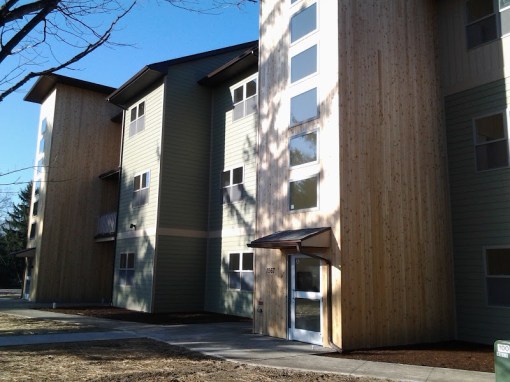
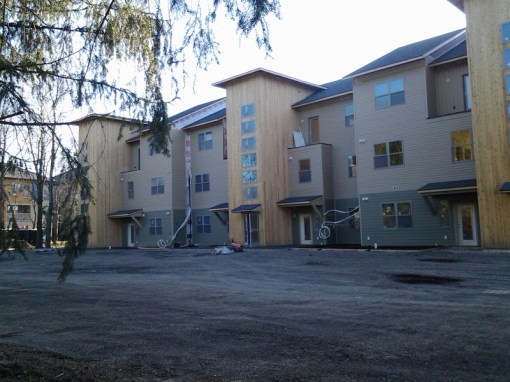
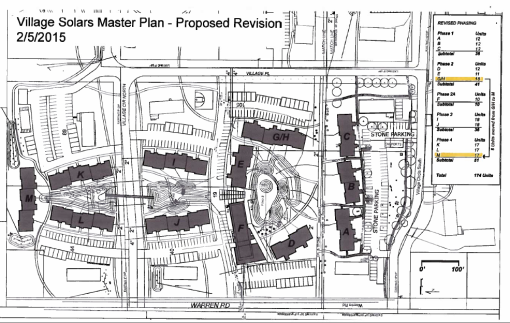
Building “D”, which contains 12 apartments, is essentially complete inside and out, though not yet occupied.

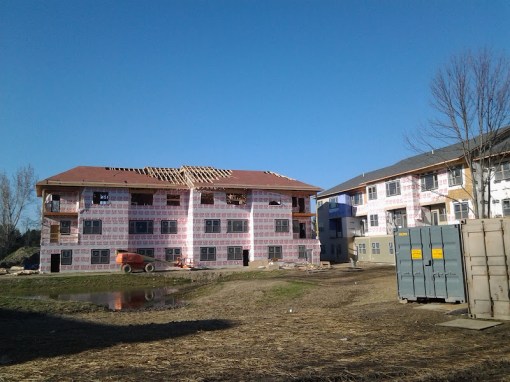
Building “G/H”, which holds 18 units, is fairly far along from the outside – cement boards have been attached to most of the east face, and some more wood siding has been applied to the west face. Exterior details like balcony railings and trim boards have yet to be installed.

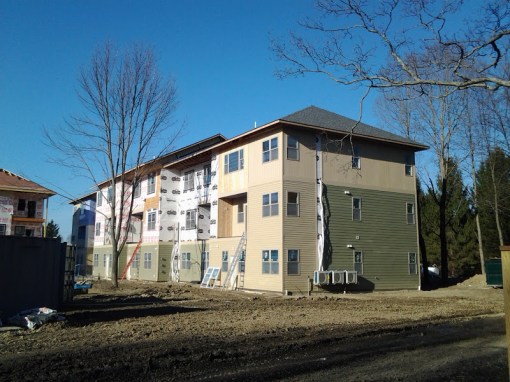
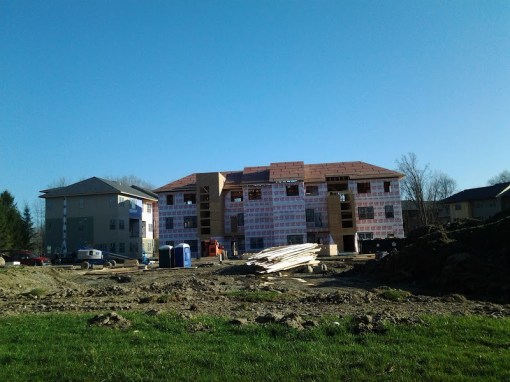
Building “E” is topped out, and the roof rafters are being sheathed with Huber ZIP panels. The stairwells are still being framed out. Windows have been fitted in most of the rough openings on the first and second floors, but have yet to reach the third floor. Housewrap covers most of the plywood walls, with the exception of the stairwells. “E” will have 11 apartments.

From observation, it looks like Lifestyle Properties (the Lucente family) could start renting out Building “D” tomorrow if they wanted, Building “G/H” towards the end of the Spring (possibly Mid-July from the Craigslist posting), and have Building “E” ready for occupancy before the semester starts. Phase two of the 174-unit apartment project is being built with a $6 million loan from Tompkins Trust. Phase one’s 36 units opened last year.

EDIT: From Rocco Lucente the younger – “We will have our first move ins for 1067 Warren Road (Building D) on May 1st. The other two buildings are currently scheduled for June 15th and July 15th completion. We did get our Certificate of Occupancy for Building D around two weeks ago, but with the various cleaning and landscaping work we set our target for May 1st.”

No loans have been secured yet for the three later phases, and plans are still in the works for an addition across Village Place that would bring the total number of new apartments to over 300.

20160414_174742 20160414_174754 20160414_174809 20160414_174852 20160414_174921 20160414_175002 20160414_175115 20160414_175233 20160414_175611 20160414_175618 20160414_175729

village_solars_2 village_solars


A Construction Tour of a Net-Zero Energy House

6 04 2016

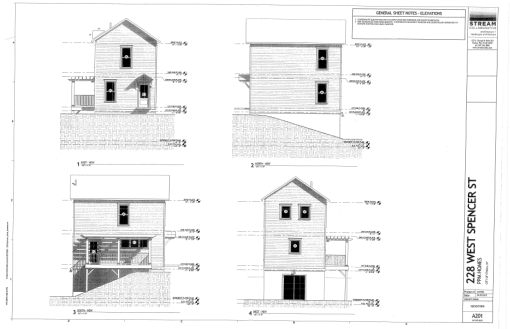
A couple of weeks ago, Noah Demarest was kind enough to give a tour of the new net-zero energy single-family house underway at 228 West Spencer Street in the South Hill neighborhood.

Most readers of the blog will be familiar with Noah Demarest’s name – he’s the head architect of STREAM Collaborative, which has been involved in projects like 902 Dryden Road, 201 College Avenue, State Street Triangle and the Franklin proposal for condos at the Old Library site.

228_w_spencer_1

Noah’s a little more involved in this project than most – he’s in charge of the build-out, and the cost of construction is coming out of his own pocket. Local landlord Ed Cope is a silent partner in the project, having purchased the land from the previous owner for $15,000 last February. The sale came with a different set of house plans, and the unique topography and constraints of the site made it such that the BZA had to approve virtually any new construction proposed on the parcel – Noah drew up plans for a different design, and those were later accepted by the board.

20160319_130922

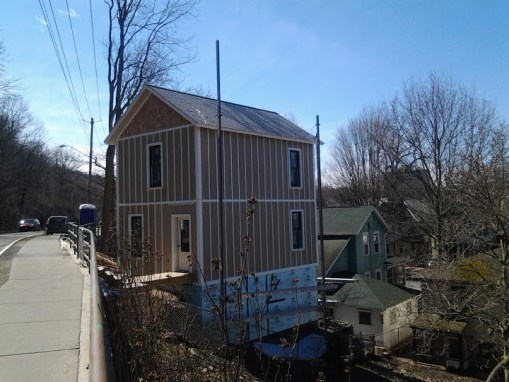
You can see how that unique site topography plays in here. The framing, sheathing (ZIP system), roofing and panelling of the house was done by local company Ironwood Builders. With much of the exterior work completed, activity has shifted largely to the interior spaces, which Noah is doing with his own construction team.

20160319_130936

My initial impression was that they were going for an exposed wood trim look similar to the framework of Tudor-style houses, but Noah says the trim will be painted the same color as the fiber cement siding. The shingles are a nice, Craftsman-style touch.

20160319_131043 20160319_131055

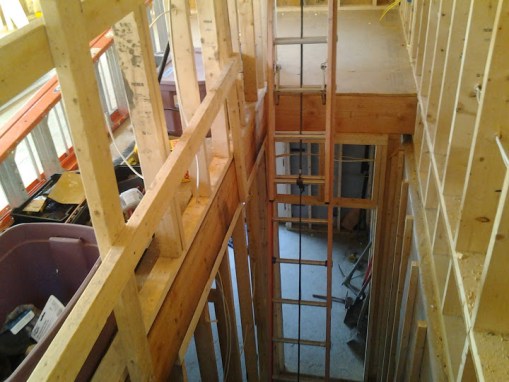
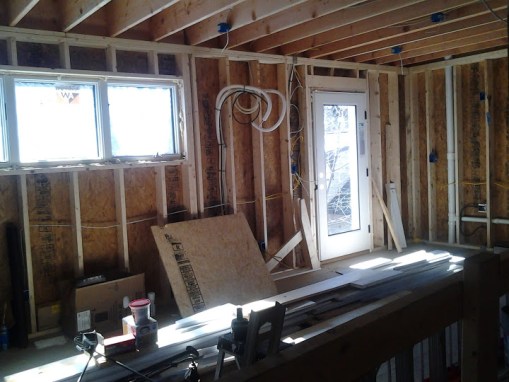
First photo is looking down, second is looking up. The house, just under 1,000 SF, has living space on three levels – the kitchen and living room will be on the second floor, and a bedroom and bathroom are on the first and third floors. This will be put up on the market for sale once it is ready – not a rental. Noah envisions this being the type of house that would be great for a young couple or even a deep-pocketed grad student.

By the way, just mentioning for the sake of acknowledgement – I’m not a fan of ladders.

20160319_131113 20160319_133609

As work moves closer to completion, a porch pergola will be built here.

20160319_133613 20160319_133748

This will be a net-zero energy house, meaning zero net energy consumption – what gets taken from the grid also gets returned to the grid. In the case of this home, an off-site set of solar panels will offset the energy that is taken from the grid. The house will also achieve a very high degree of energy efficiency. One of the ways that’s being accomplished here is the use of an air source heat pump, which transfers heat from outside to inside a building (and vice versa) via a refrigeration compressor and condenser. The system can absorb heat from the outside air and transport it into the home, and can work in reverse during the summer, absorbing heat from inside the home and transporting it outside.

According to Noah, the system tends to be somewhat less efficient in extremely cold weather (-10 F or so; at that point it becomes difficult to extract usable heat energy), but is otherwise very capable for providing heating and cooling needs. Appliances will be all-electric, no gas.

20160319_133939

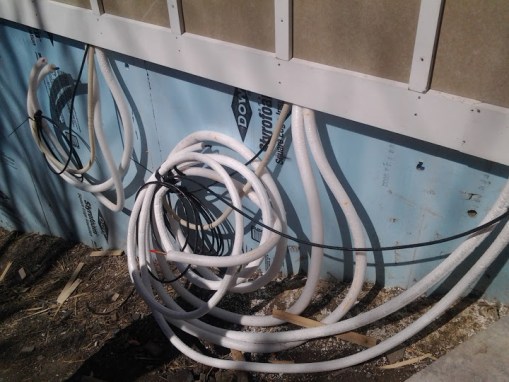
The house is also very heavily insulated – 2.5 inches of foam, with the fiber cement siding on top of that.

20160319_134029 20160319_134056
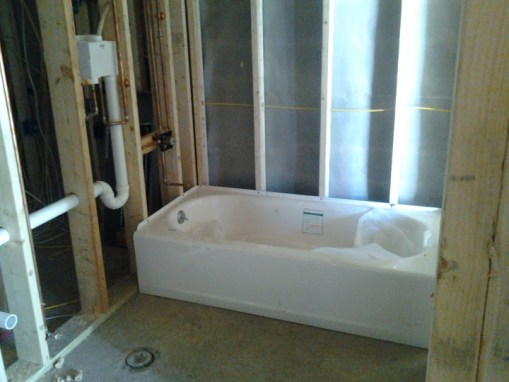
These last couple shots are from the bottom level – bathroom plumbing is in the process of being installed in the basement bathroom unit. The plan is to have the house ready for sale later this year.

One of the things that I personally am looking forward to is that Noah plans on making the costs of construction available to the city, as an example of what construction costs tend to look like for infill on an inner-city parcel. Having more examples to rely on, and a clear description of cost per square foot, gives the city more information to help guide its approach to planning and development. Noah noted during the tour was that the zero net-energy aspect is a relatively minor component in the expenses of the project.


Cornell Veterinary School Expansion Construction Update, 3/2016

30 03 2016

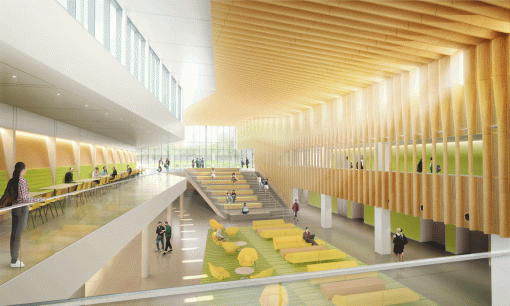
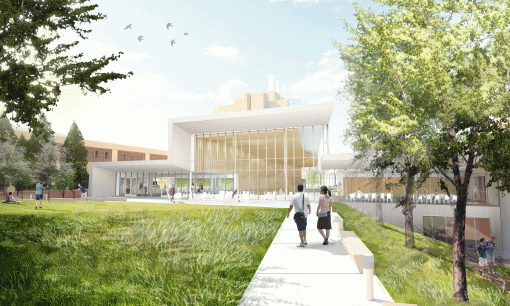
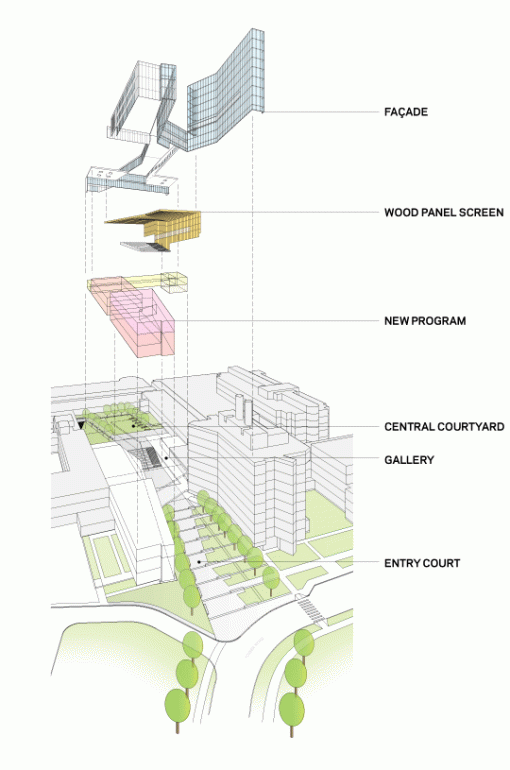
A generalized summary can be found on the Voice here. The concrete frame for the Veterinary School expansion is up to the third and final floor of what will be the new Flower-Sprecher library. As build-out continues, the existing building behind (east) of the new construction will come down and be replaced with new program space; the second floor will sit above an entry court and pedestrian walkway that leads to an indoor gallery space and central courtyard. The open space on the right (south) side of the structure will be a two-story atrium space. The addition will have a glass curtain wall, and the academic spaces that face the gallery will be faced with wood panels.

Cornell and general contractor Welliver will be looking to bring the project to completion by June 2017. Weiss/Manfredi is the project architect.

20160319_155209 20160319_155242 20160319_155305 20160319_155319 20160319_155335 20160319_155345

EntryPlaza10-2 LibraryReadingRoom10-2

3f5656954f5a3ef1021519c03b4abe9f 8f098b7e26544f579eb7411b9a1716aa

eea787361994de9625f74b19aa50d91e


Upson Hall Construction Update, 3/2016

28 03 2016

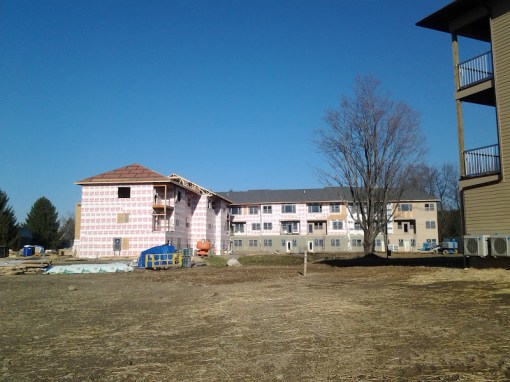
This one’s short and sweet for the moment due to time constraints. A generalized description of the latest progress can be found on the Voice here, and Cornell’s bi-weekly progress report is here. A more thorough rundown was given in January’s update here.
20160319_160249 20160319_160337 20160319_160400 20160319_160504 20160319_160527 20160319_160559 20160319_160644 20160319_160647 20160319_160654 20160319_160713 20160319_161727


Gannett Health Center Construction Update, 3/2016

27 03 2016

Most of the curtain walls are complete, only the stud walls on the northwest face are still exposed. Sunshades have been installed on the outside of each floor. The bluestone and limestone veneers will be apply to the base columns and walls at some point later this year. From the outside looking in, it looks like good progress is being made on finishing-out the interior of the new wing. A write-up can be found as a part of last week’s Voice article here.

Chiang O’Brien of Ithaca is the architect for the two-phase, $55 million project, and the general contractor is The Pike Company of Syracuse. The new wing will open late this summer, and the second phase, which is primarily renovations of the existing wings, will run from this summer to late summer 2017.
20160319_160951 20160319_161136 20160319_161158 20160319_161227 20160319_161247 20160319_161304 20160319_161310 20160319_161400 20160319_161508