Upson Hall Construction Update, 1/2016

13 01 2016

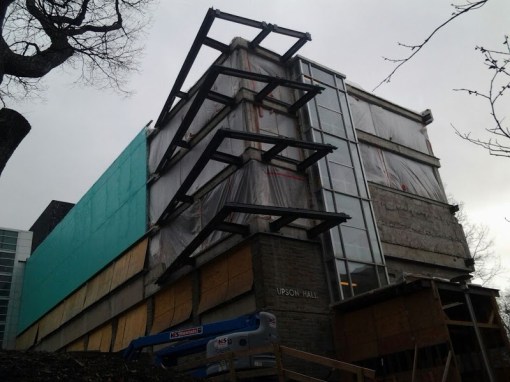
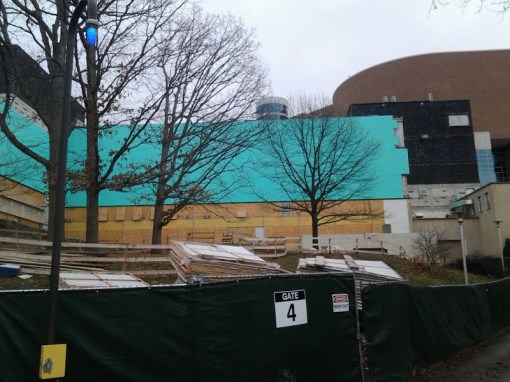
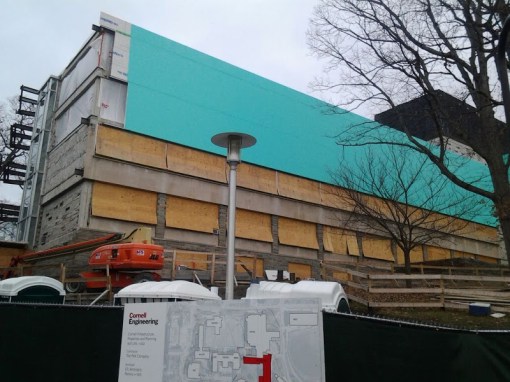
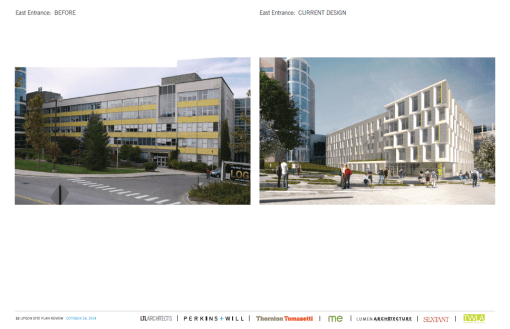
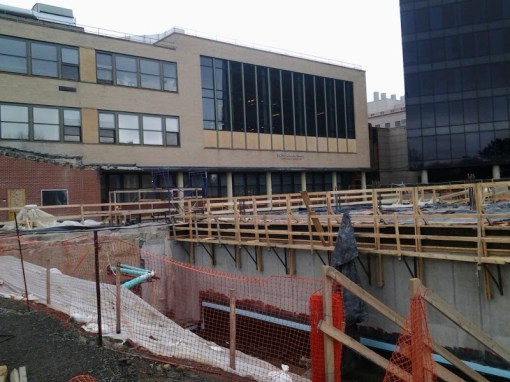
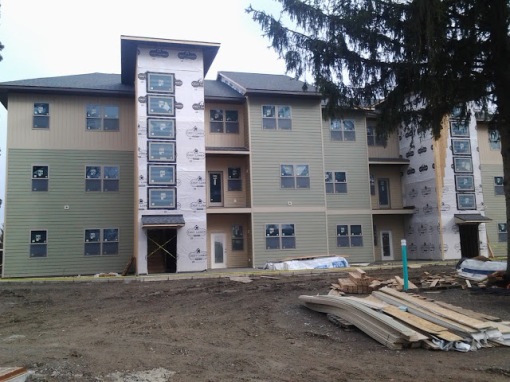
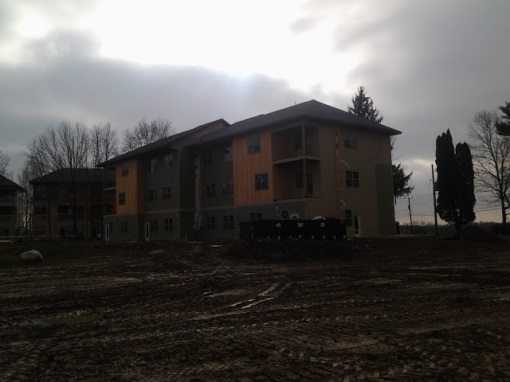
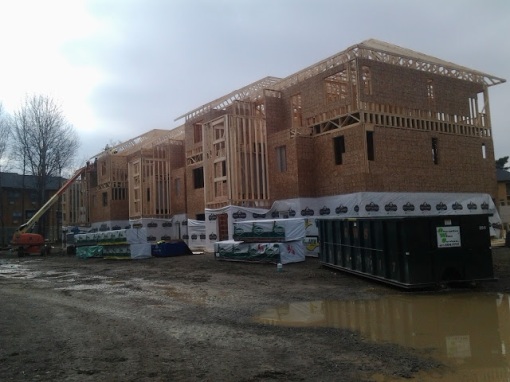
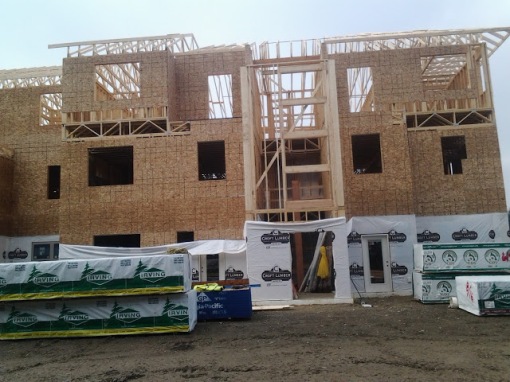
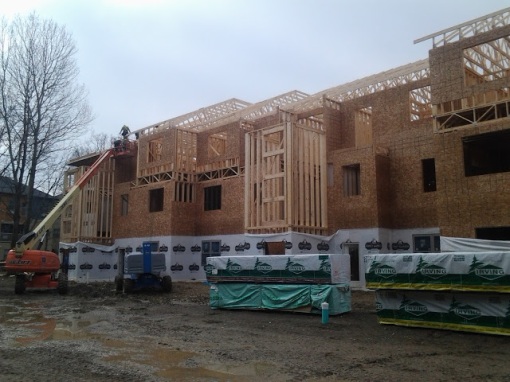
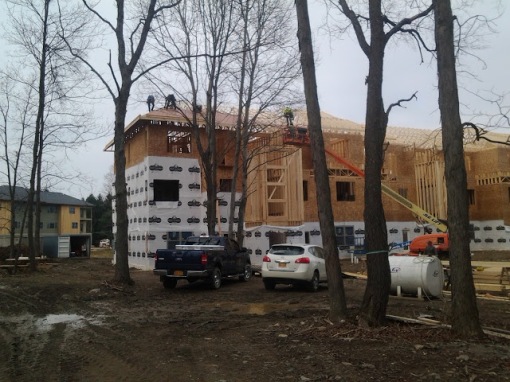
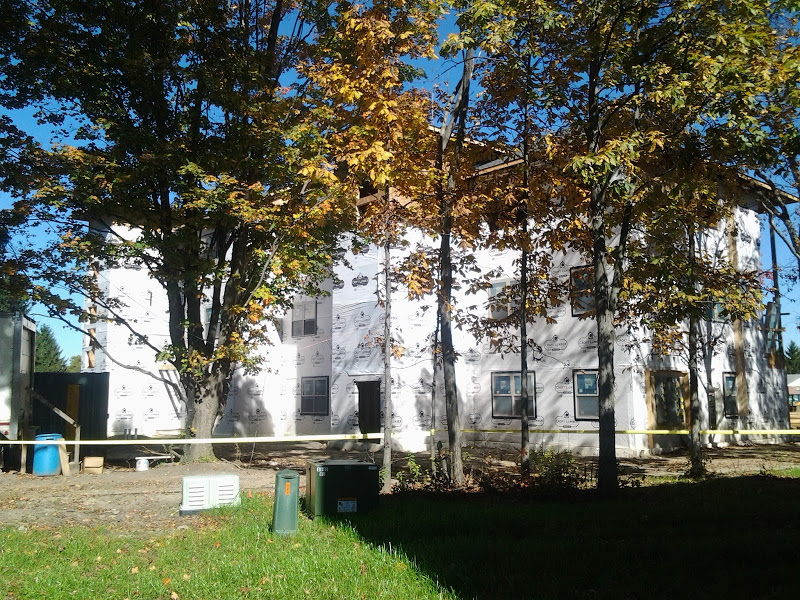
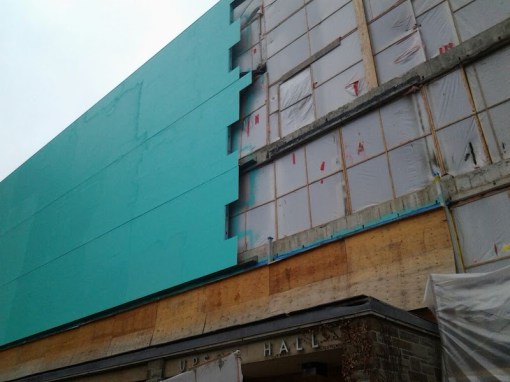
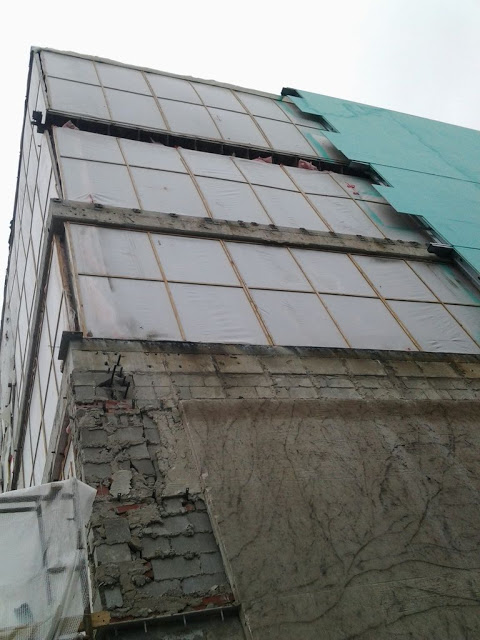
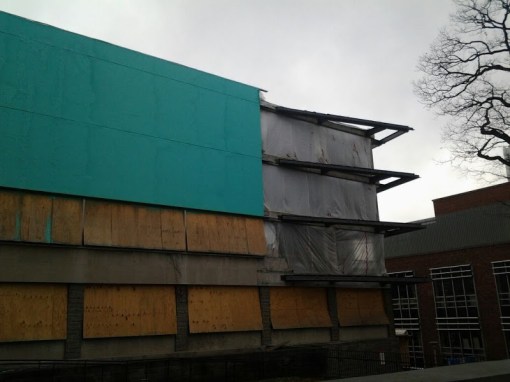
Upson Hall’s bright turquoise walls stand out among the winter greys. Students and staff can thank (or curse) the spray-on moisture barrier for the splash of color. To see what the sheathing looks like without the barrier, photo #9 below shows a little bit of the white gypsum board in the upper left, near the southwest corner of Upson.

The unsheathed, unsprayed section on the northeast corner remains uncovered so that the new structural steel for the bump-out can be erected, while the steel for the northwest bump-out has already been assembled and installed. The plastic is still up over the exterior walls, keeping the winter winds at bay.

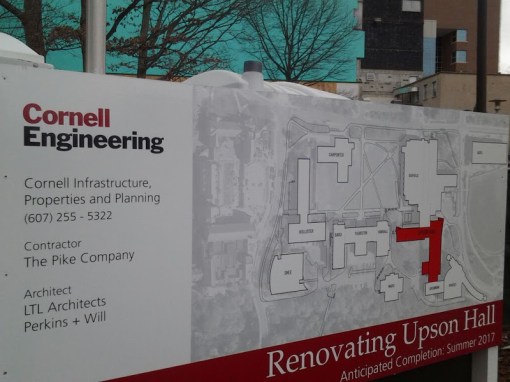
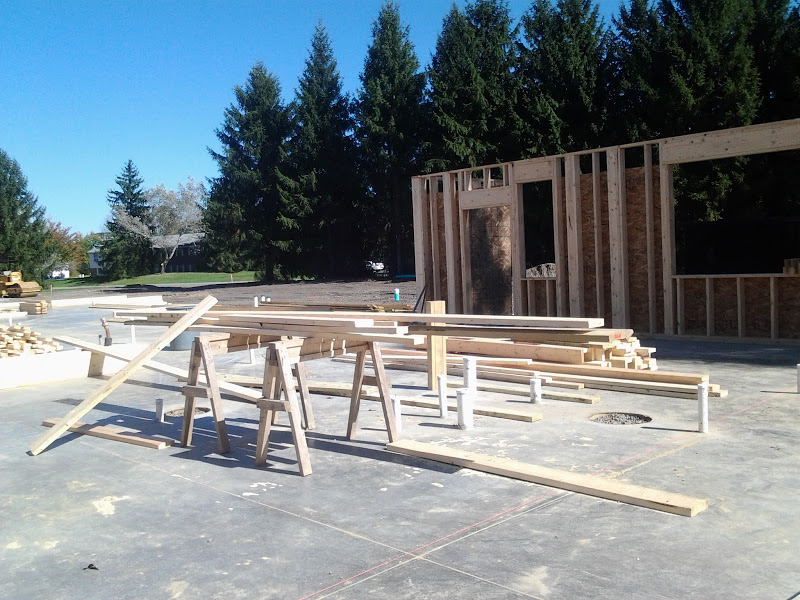
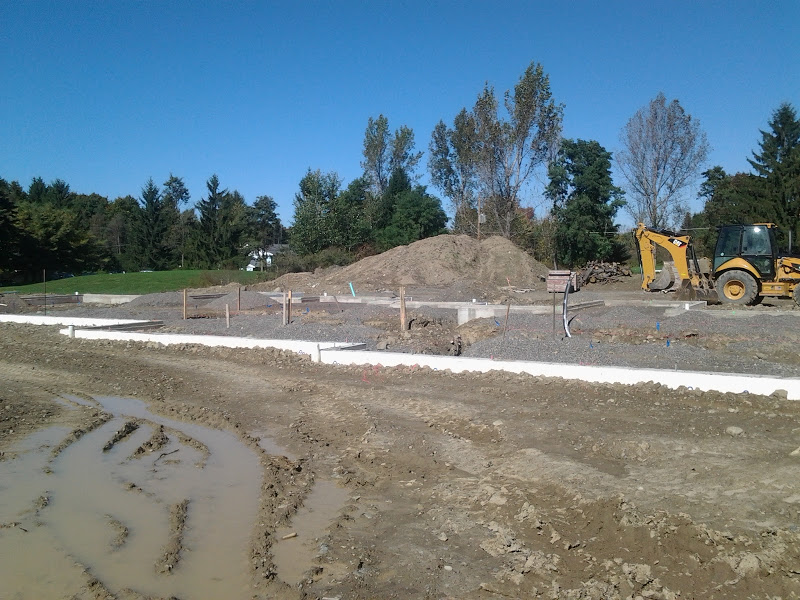
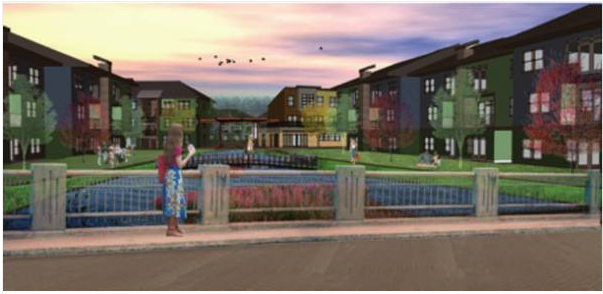
According to the project website, general contractor The Pike Company (Rochester office) is cutting/coring shafts through the first floor to the fifth floor, and demolition activities are underway in the basement. The shafts not only serve as ingress/egress, they’re designed to serve as social spaces and integrate the floors of the building. Utilities rough-ins, framing and drywall installation are underway on the upper three floors where interior work is further along, while work on the first and second floors won’t begin major work until August 2016. Part of the basement will be finished in the first year of construction, and the rest of the basement in the second year. Basically, half the building is still occupied at any given time during construction.

The $74.5 million dollar project is part of a larger series of renovations to the Engineering Quad that will result in $300 million in improvements over a decade. While the project will only add about 4,000 SF to the 156,000 SF building, the renovation are expected to help the engineering school adapt to changing academic space needs and technology, and make the building much more energy efficient. The college is paying for the project with a mix of philanthropy and operating funds. A full FAQ is available on Cornell Engineering’s website here.

Along with Cornell’s internal project management team, the project is designed by New York City firms LTL Architects, Perkins+Will, and Thornton Tomasetti.

20160109_123031 20160109_123105 20160109_123129 20160109_123259 20160109_123309 20160109_123338 20160109_123417 20160109_123504 20160109_123509 20160109_123516 20160109_123528

upson_3 upson_2


Cornell Veterinary School Expansion Construction Update, 1/2016

12 01 2016

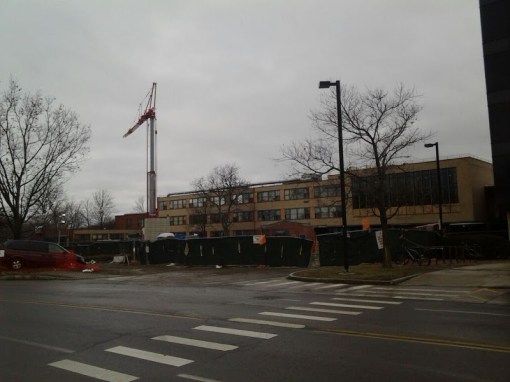
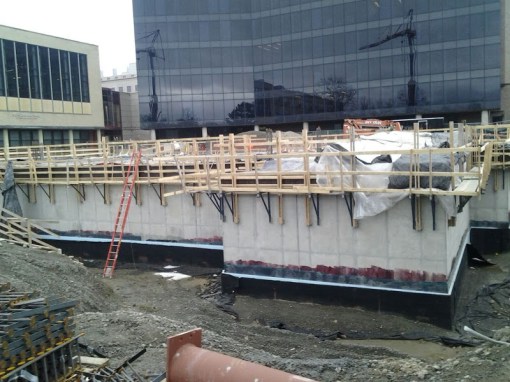
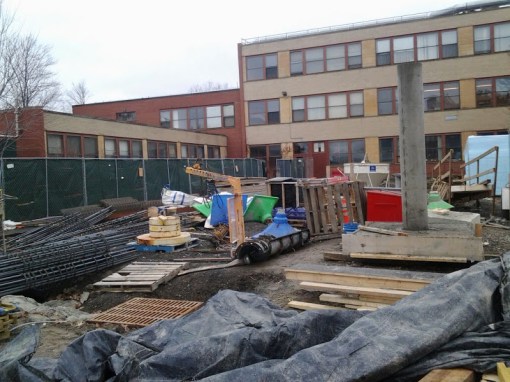
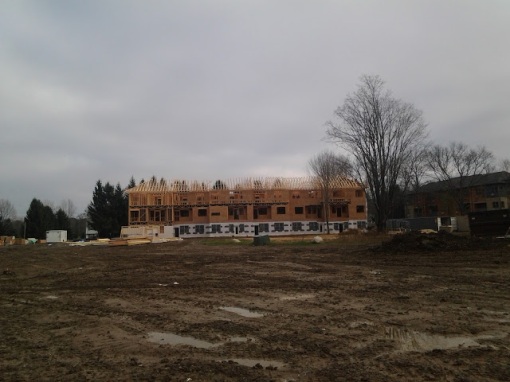
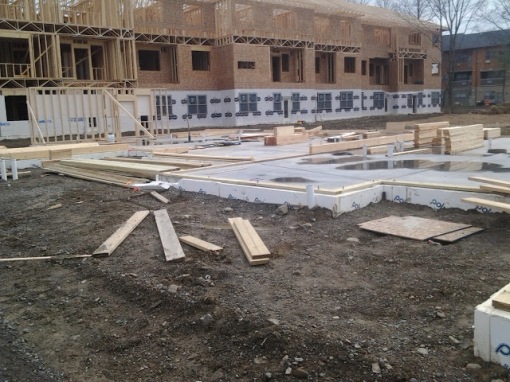
Over at the Vet School, it looks like the expansion project is now at surface level. With the foundation completed, the only direction for the project to go is up, which the Manitowoc Potain self-erecting crane should help with. Phase I interior renovations should be completed by this time, and the Phase II new construction will be moving ahead to a June 2017 completion. Like Klarman Hall, Welliver is the general contractor of this $74.1 million construction project.

20160109_121541 20160109_121607 20160109_121617 20160109_121646 20160109_121718 20160109_121739 20160109_121743 20160109_121756 20160109_121825


News Tidbits 12/26/15: Do You Hear What I Hear

26 12 2015

1. Not as visible, but still important – Student Agencies Inc. has secured a $3 million construction loan from Tompkins Trust Company for a major renovation of its building at 409 College Avenue. Although details about the project itself are a bit scarce in the paperwork filed on the 18th, it is likely the eHub entrepreneurial space being built for Cornell students, faculty and staff. The eHub space will include space for PopShop (a space for student business planning and development), the eLab business incubator, conference space, mentors-in-residence, and basically all the physical space and things a budding businessperson would like to help them succeed.

According to a previous write-up by the Cornell Chronicle, the lab should be open later this Spring, with 10,000 SF on the second and third floors of 409 College Avenue, and 4,000 SF of space in Kennedy Hall on the Ag Quad. STREAM Collaborative of Ithaca will be the interior architect for 409 College, and Ithaca-based Morse Project Management LLC is the general contractor.

Now, this could be a great thing for Ithaca, because it leverages Cornell’s presence to foster business development. Sort of like a Cornell-centric Rev. And Rev, for what it’s worth, has had several successful associated firms in the past couple of years – Ursa Space Systems was named a STARTUP-NY partner and will be hiring 22 people, and Ithaca Hummus is looking at hiring 50 over the next five years. Even the Ithaca Voice grew from what was basically a one-person operation when it launched in June 2014 (hat-tip to Jeff Stein), to having several full-time staff as well as giving Ithaca a higher profile through viral hits like the Key West promotion and the Harry Potter Wizarding Weekend.

Anything that allows Ithaca to grow and diversify its economy is a great thing, and if it can utilize Cornell’s presence to help that cause, all the better.
20151205_124218

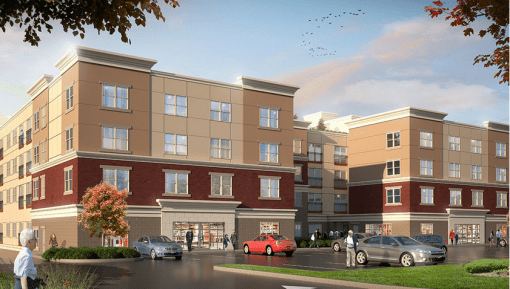
2. The Lansing Star is reporting that 2015 was a banner year in Lansing, with 200 single-family homes, apartments and townhouse in the works. Along with the 20 or so plans reviewed, the town is also looking at revising its Comprehensive Plan, and the town may even consider the adoption of form-based codes in certain locations such as the proposed and stalled Lansing Town Center.

One caveat I’d add is that the key word is reviewed, meaning approved. Not underway. The 102-townhome Cayuga Farms project still had major issues to work out with its proposed package sewer system. If one were to look at permits, it’d probably be 36 or so units with the Village Solars, and probably as many with scattered single-family homes and duplexes, which would make for an average-to-above average year – final 2015 values will be available from the HUD in March. The village could see a big boost from its usual single-digit permit total, if the Cayuga View project gets its construction permit this year.
cayuga_view_1

3. Speaking of Cayuga View, the price point came up at a Lansing village meetings, the minutes of which came online this week. Drumroll please—

The targeted price point is $1600/month for a one-bedroom, one-bath unit (of which there will be 12), and $2700/month for a 2-bedroom, 2-bath unit (of which there will be 48).

That’s quite a high figure. Applying the standard 30% affordability threshold, the targeted income bracket for seniors is $64,000-$108,000/year. That’s comparable, or a little more than, the Lofts @ Six Mile Creek. It also draws parallels to inner Collegetown projects like Dryden South, where rents will be $1350/bedroom. But those projects fall in traditionally high land-value areas.

If it’s financed, then a lender must believe there’s a market for it, and given the general difficulty in financing projects in this region, that really is saying something. Increased affluence and number of retirees moving in? Hoping to capture the older, richer Cornell faculty/staff crowd? Bad judgement? Who knows.
tfc_v2_1

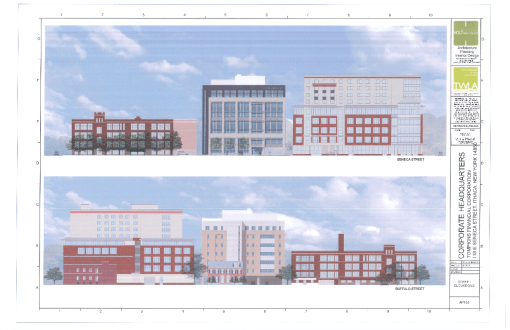
4. In the briefest of blurbs, the Times’ Josh Brokaw, who I applaud for attending even the less interesting city Planning Board meetings, reports that the Tompkins Trust HQ has been approved, with a permit likely once they get a minor curb-cut issue worked out. The contentious Printing Press Lounge debate also received the Planning Board’s go-ahead, if not necessarily its blessing. Expect a late winter or early spring construction start with the Tompkins Trust HQ, with completion the following year.
biggs_1

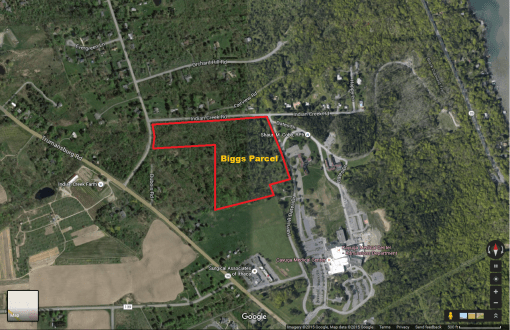
5. A couple of interesting developments for the Biggs Parcel in Ithaca town. According to the Times’ Jaime Cone (new writer, guys?), a member of the ICNA, Roy Luft, is prepared to make an offer for the Biggs Parcel that would preserve the vast majority of the land. Luft owns a 10-acre parcel to the south (street address 1317 Trumansburg Road). He proposes to take a non-wetland portion on the southern end of the Biggs Parcel, combine it with the open field behind his house, and pursue a cluster subdivision of homes intended as owner-occupied senior housing, which on the surface seems like a decent plan and location, given that owner-occupied senior housing is in demand and the land is adjacent to Cayuga Medical.

With this offer aired, the county, in a 4-1 vote, is giving the ICNA until January 15th to make an offer, otherwise they’ll put the land for sale on the general market. There is no assessment figure publicly available (though a new value has been determined); the ICNA says that’s unfair, while the county legislators have countered by saying not having the assessment value doesn’t stop the ICNA from making an offer, and that the neighbor group has already had a year and a half to make an offer.

20151205_134719

6. Once again, a double-feature house of the week. The theme of this week – high-end homes. Here we have home #1, 8 Pleasant Grove Lane in Cayuga Heights. The house has been mostly framed and the sides have been sheathed, but from the looks of the exposed roof trusses, if would seem that when this photo was taken a couple of weeks ago, the dormers still needed to be decked and the interior was still just stud walls and rough openings.

Design-wise, the home seems to fit in pretty well with its neighbors, which were mostly built in the late 1970s and early 1980s. The property was purchased in 2012 for $132,500 by an LLC traceable to a coach for a Cornell athletics team. Previously, the lot had been owned by its Pleasant Grove Road neighbors, and was sold in an estate sale.

20151205_131313 20151205_131331

7. House of the week #2. I couldn’t pass up the chance to see the one house under construction that seems to have the entire lakefront mansion community so utterly pissed off. For the record, this house on the Captains Walk cul-de-sac has been under construction for years – you can see it in the satellite imagery for Google maps, which dates from 2013. It also appears to be even larger than many of its million-dollar neighbors. Three-car garage? Check. Courtyard-type entry? Check. Windows have been fitted, the roof has been shingled and the exterior has been sheathed with Huber ZIP System panels. A spring finish would be a good guess. Records indicate a couple from Pennsylvania, the founders of a chain of assisted care facilities, bought the undeveloped parcel for $213,800 in 2013.


Village Solars Apartments Construction Update, 12/2015

13 12 2015

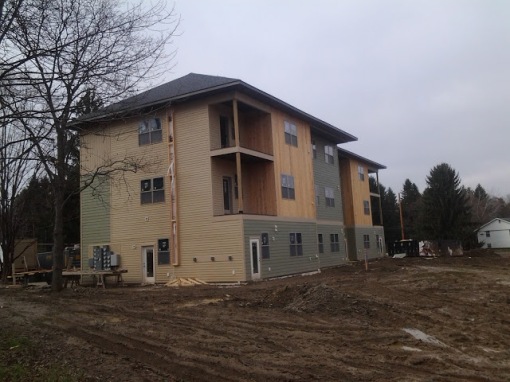
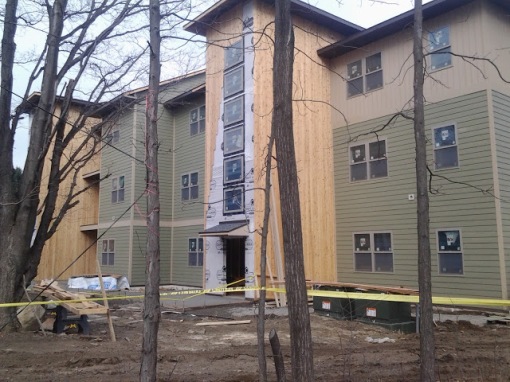
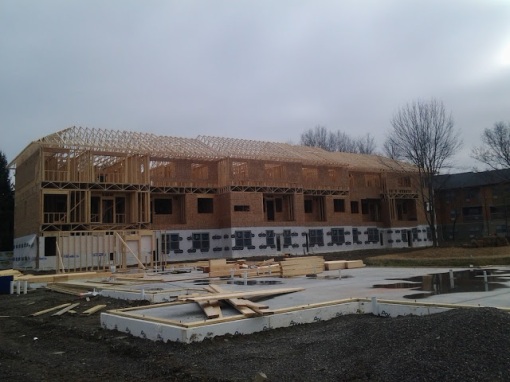
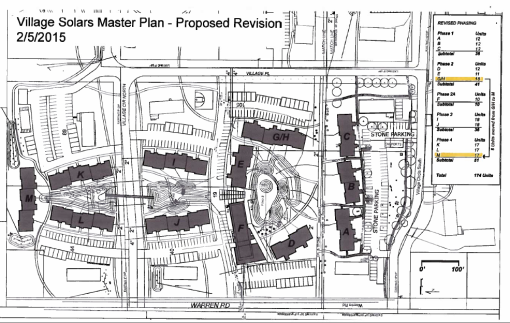
There’s been a fair amount of progress during the late fall at the Village Solars apartment complex site off of the 1000 Block of Warren Road in the town of Lansing. 12-unit Building “D” is finish up attachment of its exterior facade, which like buildings A-C, looks to be a combination of a wood grain board and earth-toned fiber cement board. Balcony railings and trim still have yet to be attached. I didn’t look inside, but based on the photos, it looks like the wood stud walls are still exposed near the entry doors on the first floor.

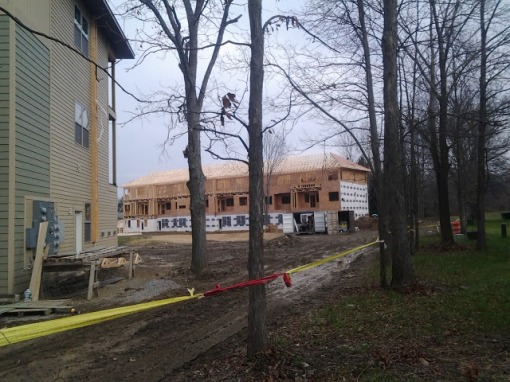
Across the future pond, 18-unit Building “G/H” (backstory here) has been framed out and some Tyvek-type sheathing has been attached (the material is labelled “Croft Lumber“, which is a building supply store down in Sayre, PA). Some first floor windows and doors have been fitted, but most of the future windows and doors are still rough openings. The roof trusses are all in place, and workers were installing ZIP system plywood sheathing while these photos were being taken.

11-unit Building “E” has had its foundation poured and is only just beginning framing, with just one standing exterior stud wall.

20151205_123855 20151205_123932 20151205_123941 20151205_124021 20151205_124106 20151205_124143 20151205_124218 20151205_124235 20151205_124335 20151205_124403 20151205_124407 20151205_124839

village_solars_2 village_solars


Cornell Plans Renovation for Hughes Hall

27 11 2015

There is almost never a period without construction at Cornell. Don’t expect that to end anytime soon.

Cornell’s latest construction plans were presented as a sketch proposal at last Tuesday’s Planning and Development Board meeting. The sketch plan is the first step in the process, where an applicant solicits input and first reactions from the board. A copy of the powerpoint presentation can be found on the city’s website here.

hughes_cornell_1

The renovation of Hughes Hall is the second phase of a three-phase expansion and renovation of the Cornell Law School. The first phase, which consisted of 40,000 SF of new, partially-subterranean classrooms and a 170-space auditorium, began in Summer 2012 and was completed in Fall 2014 at a cost of $23.8 million. Ann Beha Architects of Boston, and Welliver Construction of Elmira worked on the first phase of the renovation and expansion program. Ithaca Builds offers plenty of interior and exterior images of the first phase here, and a copy of the original Ste Plan Review from 2012 is on the city’s website here.

The first phase was Certified LEED Platinum (the highest LEED designation), which was possible in part because as an underground structure, it was easier to design and pay for maximum energy efficiency. The Hughes Hall renovation will pursue LEED Silver at a minimum.

hughes_cornell_2

Initially, Hughes Hall was to be the third phase, with a renovation of Myron Taylor Hall planned as Phase II. However, since the plan was initially conceived several years ago, the second and third phases were switched around.  The total cost of all three phases is pegged at $60 million (2012 estimate).

hughes_cornell_3

Externally, the changes to Hughes Hall will be subtle – the current open-air loggia will be enclosed and a new entryway will be built on the east side of Hughes. A glass-enclosed staircase will be built onto into the West facade, and the dining room terrace will be repaired. Although some parts of the Law School are historic (Myron Taylor Hall, which dates from 1932), 62,000 SF Hughes Hall is a later addition, built in 1963/64, that lacks the historical detailing of the older structures.

hughes_cornell_4

Internally, administrative and other non-faculty offices will be located on the ground floor, with a dining room, event room and other office/flex space on the floor below (note that the building is built into a hillside, so the Fork & Gavel Cafe, although one level below the ground floor, exits near surface level on the southern side of the building). Although the upper floors aren’t discussed in the sketch plan, the general upper-level plan is for new offices for law school functions and faculty that replace dorm rooms for first-year J.D. students.

With this mostly-interior renovation, the focus of review will probably be on staging and general harmony with surrounding physical environment (buildings and landscape). At first glance, this project doesn’t appear to be stirring any major issues (overlooking the loss of student housing, which is worth criticism but nowhere close to illegal), but will probably create the standard blitz of documents and PDFs that Cornell sends to the city to preemptively answer any questions committee members may have.

Given the timing, Cornell is likely shooting for a Spring construction start, with completion in 2017.


Village Solars Construction Update, 10/2015

14 10 2015

With phase one of the Village Solars apartment complex completed and housing its first tenants, work is well underway on phase two. 12-unit Building “D”, which shares the same general design as phase one’s Building “B”, has already been framed, sheathed with a Tyvek-type of housewrap, mostly fitted-out (a couple windows and the balcony doors have not been installed), and even some siding has been installed on the ground level. This seems to be a change-up from the previous phase, which used ZIP System plywood for sheathing. Also, in a departure from Building “B”, Building “D” opts for larger windows in place of the very small juliet balconies on the upper floors.

Across the property to the east (and on the other side of the future pond) is the 18-unit Building “G/H”, a new design. Framing and wood studs are only beginning to arise on the ground floor. Plywood that will be used in future sheathing has been propeed up against the newly-erected wall studs. The concrete slab foundation has been poured and cured, and underground utilities have been installed.

Building “G/H” was created when developer Lifestyle Properties (the Lucente family) was working with NYSEG to lay out the utilities after approvals were granted and the first phase was underway. It was decided to make phase 2 all electric services, due to concerns that Lansing may not be able to provide gas service if the situation with the gas pipeline proposal on West Dryden Road doesn’t go in the town’s favor. One of the results of the utility infrastructure change was a difference in utilities layout, which impacted the site design for walkways, and the Lucentes are sought and received approvals last Spring to revise the PDA (planned development area, similar to the city’s PUD and the town’s PDZ) to change G and H from two separate buildings, to one large building that occupied a smaller footprint.

Lastly is Building “E”. “E” will be an 11-unit apartment building, though it’s not clear if it will be a new design, or simply an interior rearrangement of units. Right now, only the concrete forms for the foundation have been constructed, with what appears to be trenches for utility lines criss-crossing the site. Taking a rough guess, “D” will be completed and for rent before the end of this year, “G/H” by the end of Spring, and “E” will be finished in time for next year’s students, mid-to-late summer 2016.

Building “F” is part of a separate phase, “2A”. It will contain 10 units and a community center. According to Rocco Lucente in an interview last month, work on Building “F” will begin after the other phase two buildings are completed.

The first three buildings in the Village Solars complex, buildings “A”, “B” and “C” with 36 units in total, were completed this summer at a cost of $4.7 million, according to loan documents on file. Rents posted on Craigslist have one-bedroom units listed for $1050-$1145, two-bedroom units for $1235-$1369, and three-bedroom apartments rent for $1565-$1650. Prices vary a little depending on what floor the unit is on – the higher up a unit is, the more it costs.

Phase two will cost about $6 million, according to the construction loan filed with the county. Tompkins Trust Bank is providing financing. Future phases call for upwards of 300 units on site.

20151011_123635 20151011_123653 20151011_123739 20151011_123809 20151011_123838 20151011_123858 20151011_123922 20151011_123936 20151011_123954 20151011_124021 20151011_124113 20151011_124215 20151011_124255 20151011_124459

village_solars_2 village_solars


Hotel Ithaca Plans New 5-Story Wing in First Phase

10 09 2015

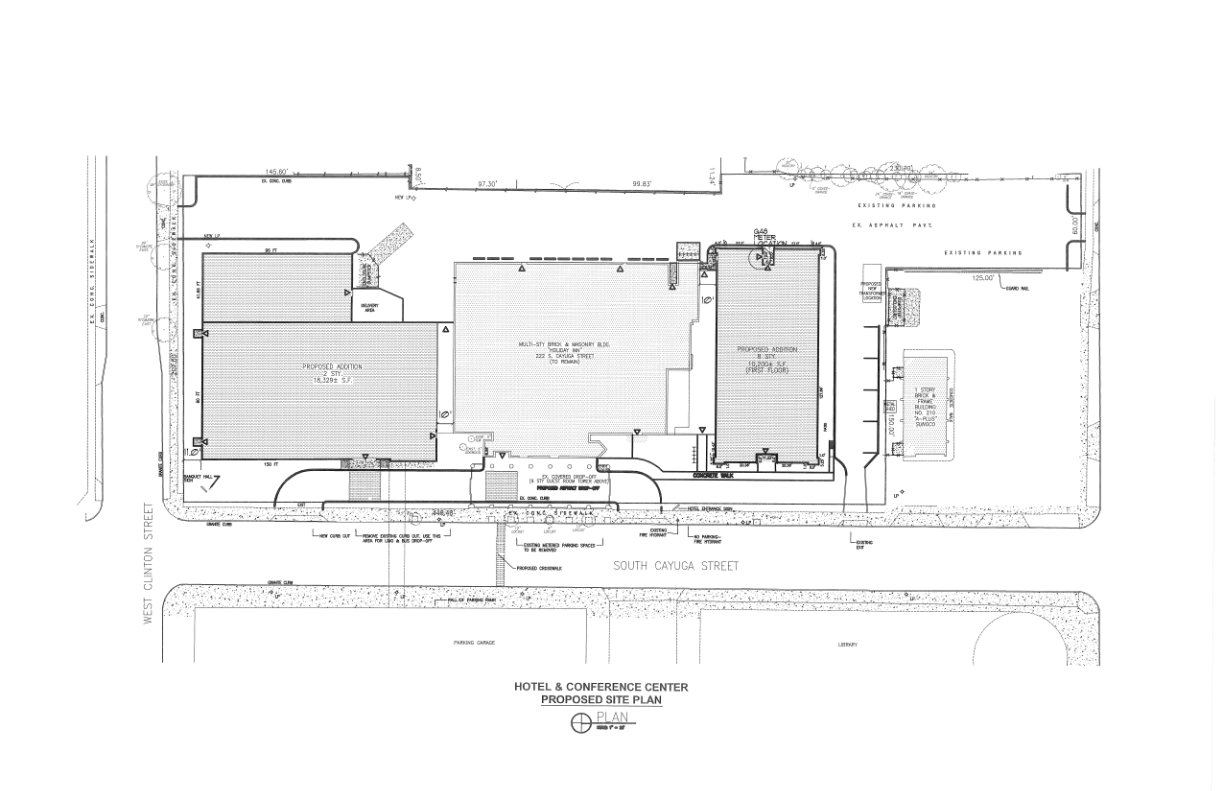
hotel_ithaca_1

The Hotel Ithaca is once again seeking to expand its offerings.

In what’s being billed as a “modernization”, owner David Hart of Buffalo-based Hart Hotels is proposing a $9.5 million project that includes a new 5-story addition to the hotel, located at 222 S. Cayuga Street in downtown Ithaca. The 2-story north and west wings of the Hotel Ithaca would be demolished. Site Plan Review documents filed with the city (link here) call for a November 2015 construction start, with the new wing opening in April 2017. NH Architecture of Rochester will be designing the new hotel wing (additional drawings of the new wings can be found here).

The construction would be the first phase of a multi-year project. Once the new wing is opened, the south wing of the hotel would be decommissioned and eventually demolished. Sketch plans presented presented at a Planning Board meeting earlier this summer indicated a second, later phase that adds three more floors on the hotel wing (bringing the new wing to eight stories), with a two-story convention center sitting on the corner of South Cayuga and West Clinton Streets.

hotel_ithaca_phase_2

Because of the demolitions and decommission of the south wing in favor of later construction plans, the net increase of hotel rooms is actually a decrease – from 180 down to 170 rooms.

Like several other Hart Hotels properties throughout the Northeast, the hotel has no chain affiliation, although the property was a Holiday Inn until the end of 2013. The 180-room hotel initially opened as a Ramada Inn in 1972, and the 10-story “Executive Tower” was completed in 1984.
Zoning at the site is CBD-100 (Central Business District), meaning that a proposed structure can be up to 100 feet (two floors at the least) with minimal required setbacks and no required on-site parking.

hotel_ithaca_2

Under plans previously presented three years ago, the Hotel Ithaca sought to demolish the two-story wings of the hotel, and in their place the hotel would would build a new 9-story, 115-room tower, a kitchen addition, and a 15,000 SF conference center.

The then-$18 million project had significant local support from business owners, because Ithaca lacks the ability to host mid-size conferences and conventions (midsize meaning about 500 attendees), which sends conventioneers elsewhere. Currently, the lack of meeting space limits conferences to about 250 guests. The addition of a convention facility is seen as a major benefit to downtown retail, as well as other hotels that would handle overflow guest traffic. Convention traffic typically happens during weekdays, when regular tourist traffic is lowest.

However, the project, which was initially slated to start in November 2012, has failed to obtain financing for construction. The project applied for and received a property tax abatement for the new construction, and the Ithaca Urban Renewal Agency (IURA) even offered the possibility of a $250,000 loan if it would create a financial package that would allow the convention center to be built. But until this summer, there had been no indication of any plans moving forward.

Due to the modifications of the original plan, the county IDA will need to re-approve the tax abatement incentive package previously offered to the hotel.


Boiceville Cottages Construction Update, 9/2015

8 09 2015

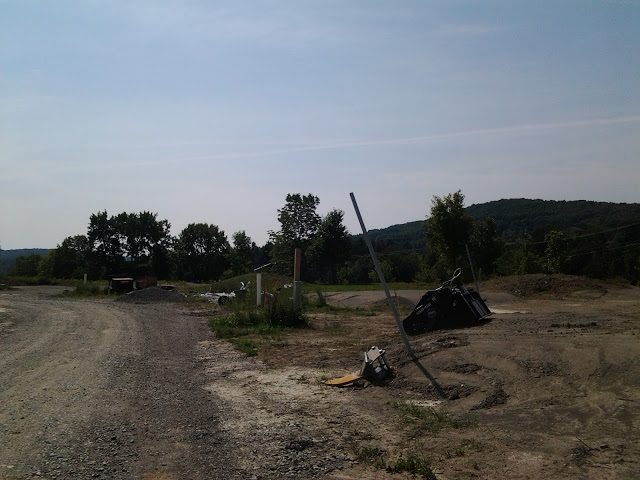
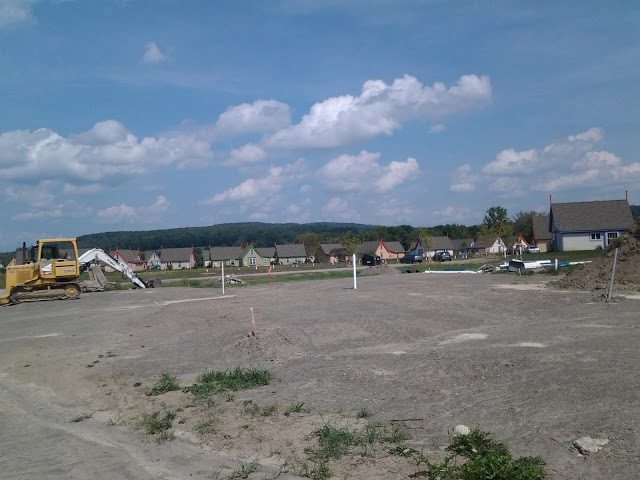
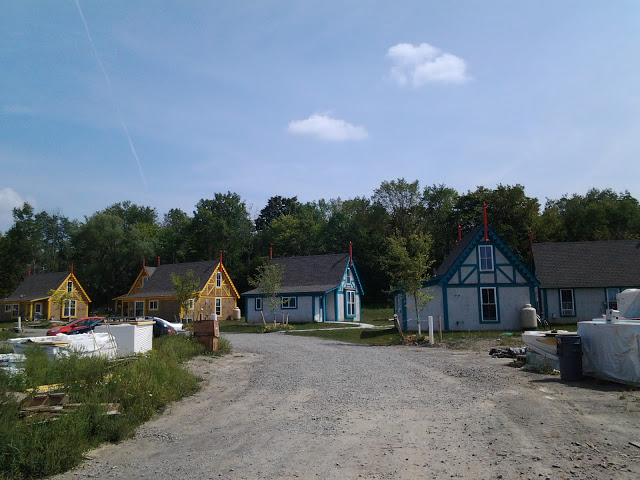
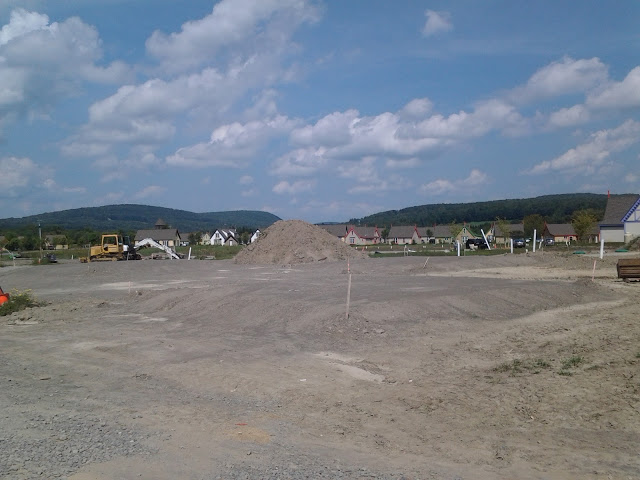
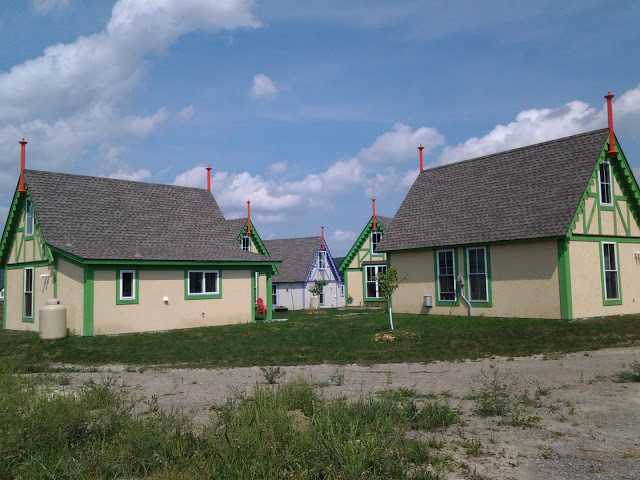
Out in Caroline, work at the Boiceville Cottages siteseems to have switched gears. Since the last update in May, the blue stucco houses with teal trim have been faced with stucco and had interior and exterior finishing completed (and occupied, judging from the 20-something I saw carrying boxes into one of the houses). Work at the site is less concentrated on cottage construction at the moment, and more focused on laying out where the rest of the homes will go as the loop road circles back around to Boiceville Road/ County Rte. 114.

Three concrete slabs indicate where new cottages are likely to be built in the next few months (I feel like the blog or the Voice should do a reader poll on what colors to use next). Scattered along the rest of the undeveloped area are cleared sites with layers of dirt and gravel. These are the sub-slab bases on which future concrete slabs will be poured. Survey work was enlisted to stake out the corners of the future cottages, with poles inserted into the  to indicate the corners of the planned units. In total, there were at least a dozen bases, and over the following months they will become the next dozen or so cottages.

Schickel Construction / Schickel Rentals of Dryden is developing and building out the project. Developer Bruno Schickel’s unusual design was inspired by cottages in a storybook he read to his daughter. The construction cost of the 75-unit addition (total 135 units) is at least $7.654 million – a loan for $5.454 million was given by Tompkins Trust in April 2013, and an additional loan for $2.2 million ($2,098,479 of which goes towards hard construction costs) was granted by Tompkins Trust in April of this year. The loan granted in April funds up to 15 2-bedroom and 16 1-bedroom units, and the legal date on file for completion is May 1, 2017.

20150829_120441 20150829_120350 20150829_120251 20150829_120208 20150829_120201 20150829_120138 20150829_120104 20150829_120059

How House Construction Works


Carey Building Construction Update, 9/2015

7 09 2015

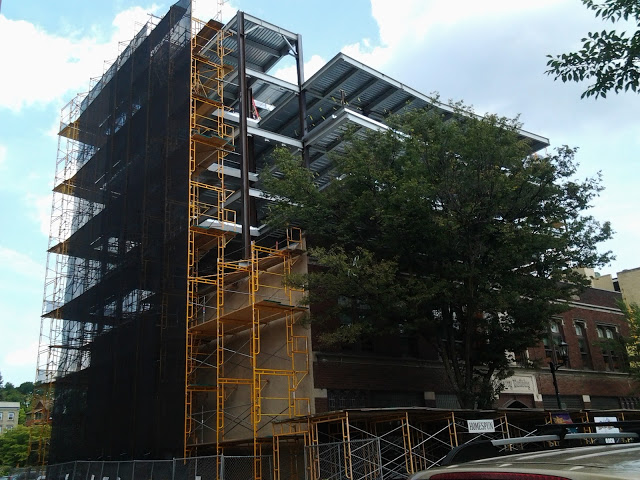
Just a quick update on the Carey Building addition at 314-320 East State Street in downtown Ithaca. As of the end of the month, structural steel has reached the top floor of the five-story addition, though it has yet to fully build out. The lower floors have been decked with corrugated sheet metal, and concrete floor pours might already be underway on the lower levels.

Paperwork filed with the county last Friday indicates that Tompkins Trust is providing the construction loan, with a value of $4,736,000, of which the very precise figure of $4,642,554.46 is going towards “hard” construction costs. Hard construction costs leave out legal fees, permit fees, and other costs not directly related to construction. The paperwork indicates a February 2017 completion date, but that’s more of a legal date than an actual date. The addition is likely to completed early next year.

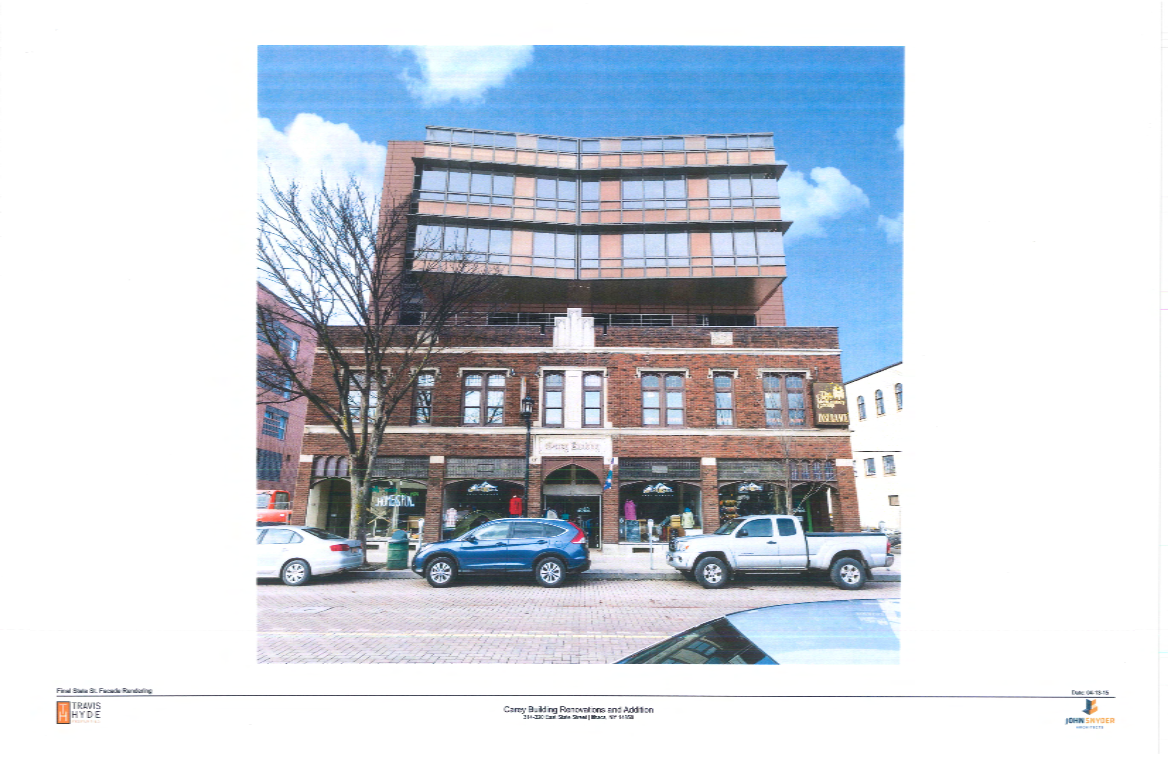
The Carey Building addition will add a third floor and 4,200 SF to the Rev business incubator (nearly doubling it from 4,500 SF to 8,700 SF), and on floors 4-7, there will be 20 apartments, most of which are studios. Local firm Travis Hyde Companies is developing, John Snyder Architects penned the design, and LeChase Construction is the general contractor.

20150829_125735 20150829_125801 20150829_125827

carey_rev5_1 carey_rev5_2 carey_rev5_3


Belle Sherman Cottages Construction Update, 8/2015

12 08 2015

Normally, construction workers pay me no notice. This trip was a little unusual.

“Oh my God, is he taking photos of us!?”

“This is not my good side!”

“Worst glamor shots ever!”

Well noted gentlemen.

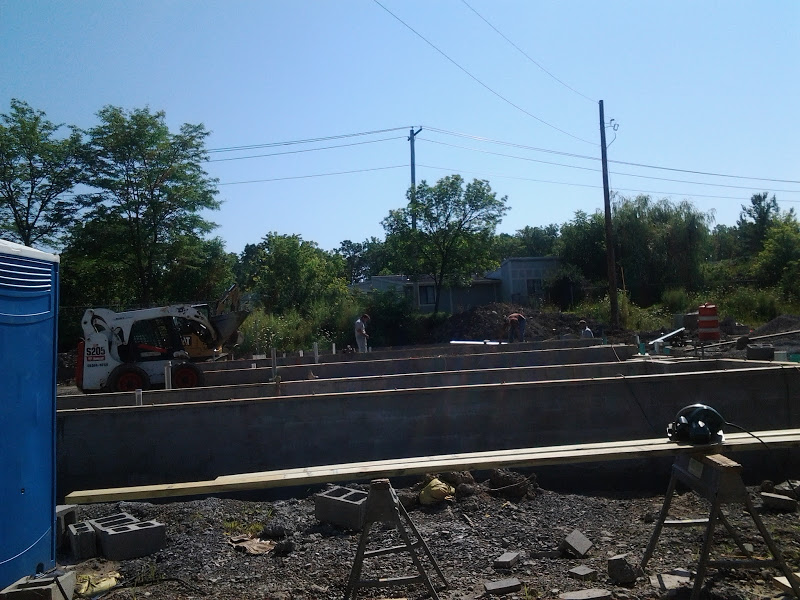
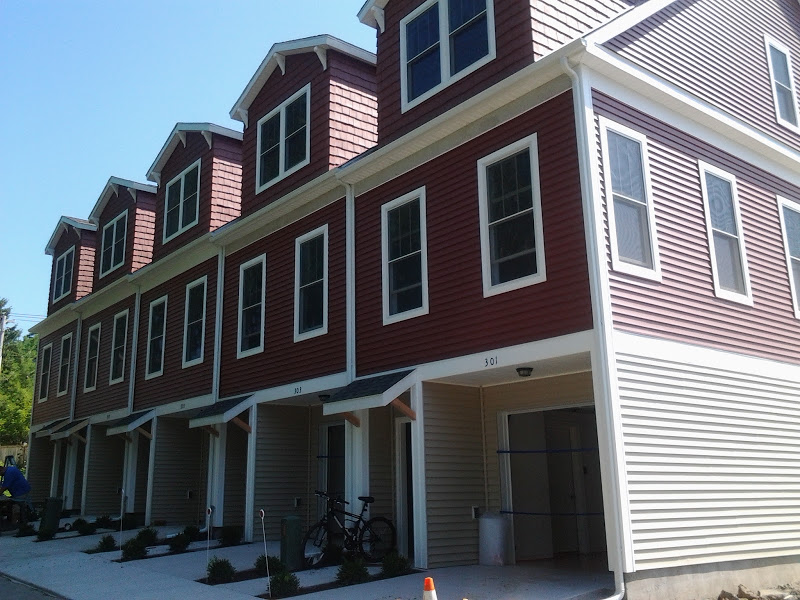
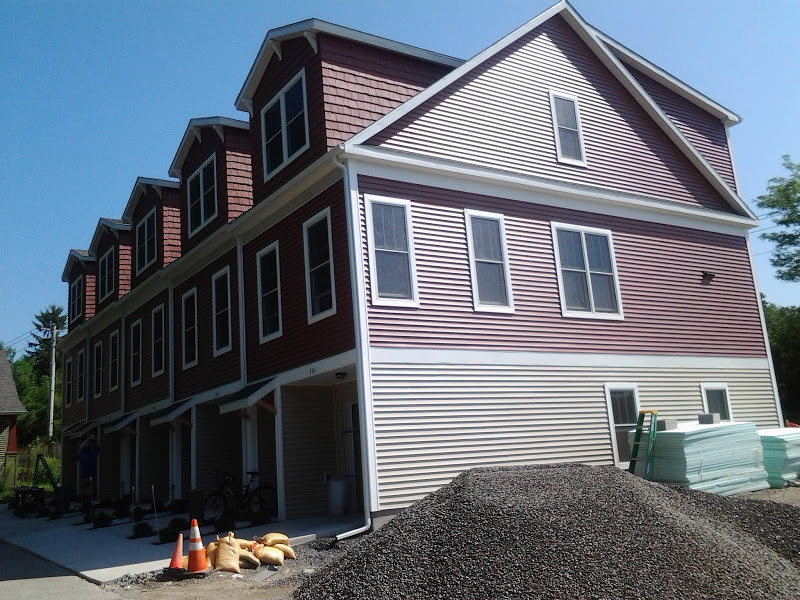
Workers from Ithaca firm Carina Construction continue on the last stage of the 29-unit Belle Sherman Cottages project just over the city’s eastern boundary line, in the town of Ithaca off the 800 block of Mitchell Street. On the first set of townhouses (lots 25-29), one gentlemen was busy cutting trim boards as exterior finish work was being wrapped up in time for the fall semester. Asked if he knew when the next modular units would arrive, he said “oh, just a couple weeks from now”. Since these photos are almost a couple weeks old now, one could say any day now, if they haven’t arrived already.

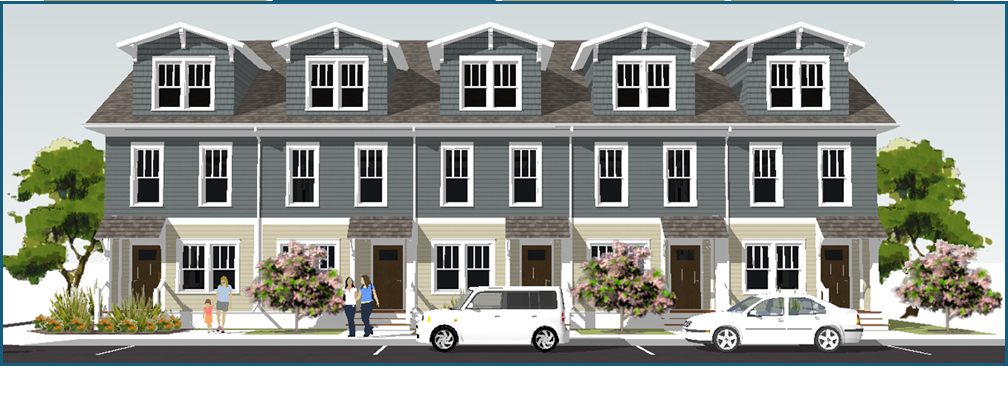
Unlike the five units already built, these will have Pacific Blue Certainteed clapboard siding instead of Autumn Red, and the garages will be in the back instead of the front. The Concrete Masonry Unit (CMU) block foundation walls are being assembled in preparation for the arrival of the Simplex modular units (covered in great detail by Ithaca Builds), which will be brought in and fitted before the leaves turn. Interior finishing and exterior work such roofing, siding. and porches will be completed over the next couple months and into the fall. The stand-alone homes, apart from whatever’s going on with lot 9, have been sold and assembled.

A quick glance at the sales records filed with the county shows a nice mix of buyers; retirees moving in from around town and from outside the Ithaca area, and a number of professionals who are making the jump from renters to owners. Prices for the homes started at around $330k, and in the mid $200s for the townhouses.

For those looking to buy in, you might have missed your chance; all the units are sold or reserved, and developer Toby Millman of Agora Homes and Development LLC says there are no current plans at the moment for another BSC-style development in Ithaca.

20150727_102705 20150727_102720 20150727_102735 20150727_102743 20150727_102801

20150727_102942

belle_sherman_townhouses_1