News Tidbits 4/11/15: Not Feasible As Presented

11 04 2015

dpi_libe_0414_end

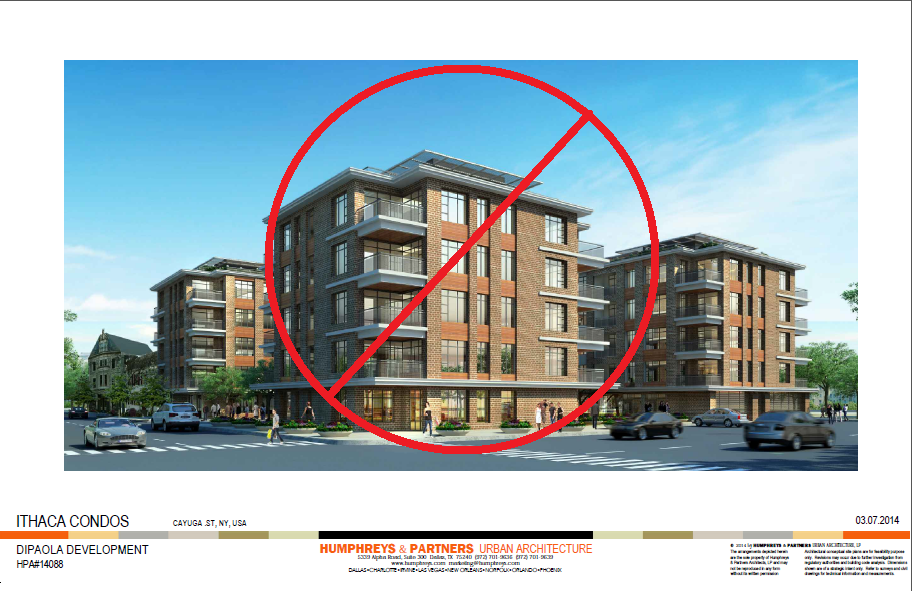
1. If my inbox has been any clue over this past week, there are some folks who are pretty unhappy with the results of the county’s Request for Proposals (RFP) for the Old Library site. One more applicant has dropped out of the process – DPI chose not to respond to the RFP. DPI had proposed 76 condos and 8 apartments for the site, a move that was cheered by some residents who spoke passionately about the new for purchasable housing in the city. That leaves three contenders of the original six:

-The Syracuse-based Franklin Properties project, now called the West Court Lofts and Wellness Collective, would renovate the existing building and include 22 residential condominium units (down from 32 units in the RFEI), medical offices, a café, and community room.

-The Rochester-based Cornerstone Group project, known as the Dewitt Senior Apartments, would build 63 residential units of senior housing (down from 70-80 units in the RFEI), and include community space for nutrition education by Cooperative Extension.

-The Ithaca-based Travis-Hyde Properties project would build 60 residential senior-focused units (up from 48 units in the RFEI), and would include space for Lifelong, professional office, and a community room.

There have been no renderings published as of yet, but there will be a stand-alone post when they show up on the county’s website. The three proposals will be judged against each other over the course of the next couple months. A quick glance at the judgement criteria can be found in the Old Library meeting notes here.

The next meeting of the Old Library committee is scheduled for Thursday, April 30th at 9 AM. 5 PM Meetings will be set up during May for developer presentations to the public. Comments on the proposal can be emailed to Ed Marx, the County Planning Commissioner, at emarx@tompkins-co.org with the subject title “Old Library Property”.

2. Local credit union CFCU (Cornell-Fingerlakes Credit Union) is making some moves by buying a retail commercial strip with an eye towards redevelopment. The property, 501-507 S. Meadow Street, sold for $1,555,550 on March 30th, well above its assessed value of $950,000. According to a statement taken by the Ithaca Journal, “the current intention is to ultimately use the site for credit union-related purposes”.

The one-story, 9,203 sq ft strip buildings date from 1980 and 1990 and previously housed a Thai restaurant and offices for Lama Real Estate, the business of previous owner Robert Lama. The site is currently zoned the suburb-friendly SW-2, but like much of big box land, it has been targeted for urban mixed-use in the city’s Comprehensive Plan. CFCU is currently headquartered in about 30,000 sq ft of office space in two 1990s office buildings at 1030 and 1050 Craft Road in Lansing.

In short, nothing immediate going on here, but definitely a property worth keeping an eye on.

texas_roadhouse__v2_1

3. The proposal for a Texas Roadhouse on in Southwest Ithaca is getting a couple minor revisions. According to a cover letter from the restaurant chain, plantings have been revised to break up the expanse of blank walls, handicap ramps are now present in the new elevations, and signage has been tweaked. All in all, not a big change from the previously-shown drawings. It doesn’t look like this one will have too many issues moving forward.

canopy_hampton_rev4_1

4. At the city’s Planning and Economic Development Committee (PEDC) meeting on the 8th, the city voted to approve the sale of land at 320-324 E. State Street to Lighthouse Hotels LLC for construction of the new Hilton Canopy Hotel. Also up for discussion was the removal of 30′ setbacks on all sides of the special MH-1 zoning at the Nate’s Floral Estates mobile home park on the west side of the city. With the 30′ rear yard setbacks already in place and vegetative buffers installed by the big boxes to the south, it was felt by the city economic developer planner that the additional setback was redundant. The removal would facilitate setbacks reduced to 10′ on one side and 5′ on the other side, if I’m reading this right. According to the notes, the mobile home park has a waiting list of tenants. The proposal looks like it will allow a few more units in the park, though it looks pretty tightly packed as-is.

flatiron_1

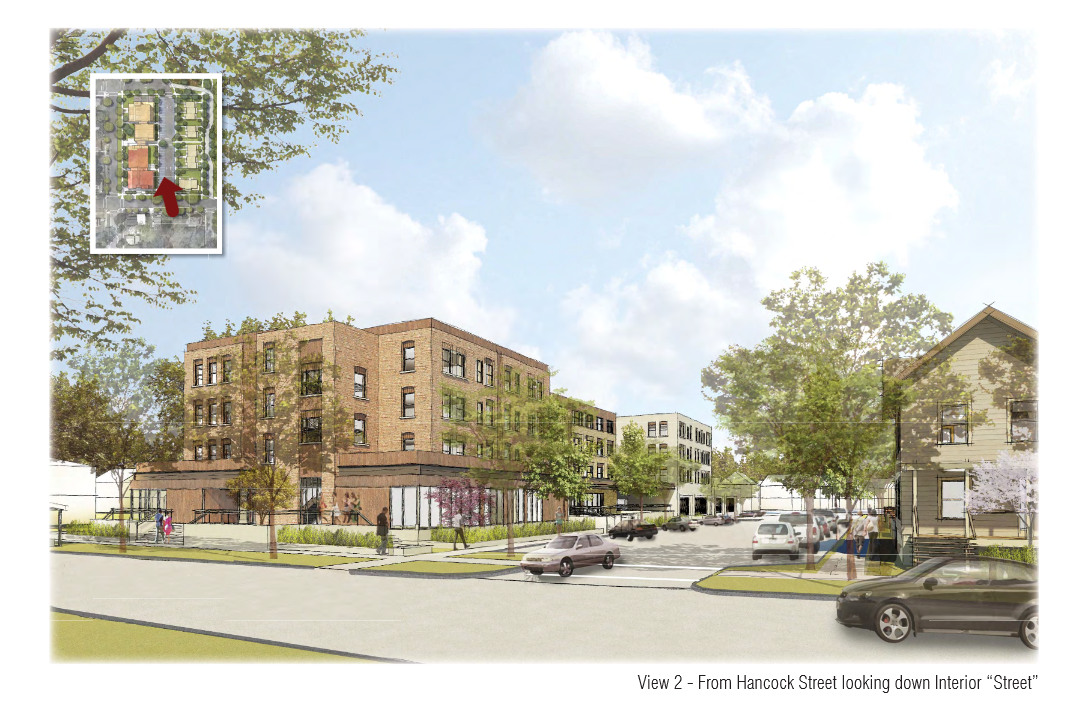
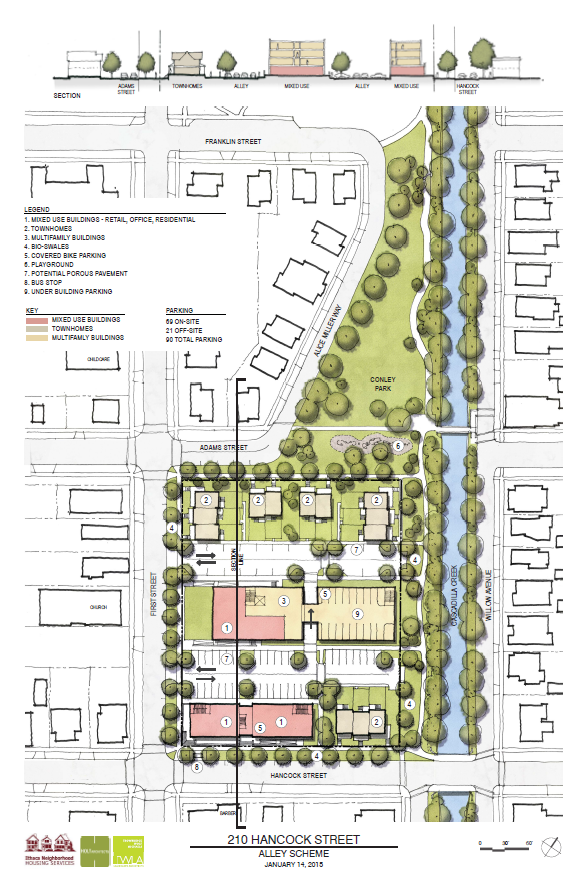
5. According to the Ithaca Urban Renewal Agency (IURA) notes from the April 2nd meeting agenda, the board was not impressed with the Flatiron proposal. On page 6, it gives the project low pritority, with the description “not feasible as presented“. On the other hand, the INHS Hancock Street project was well received and given high priority.
402_s_cayuga_st_rev2_1

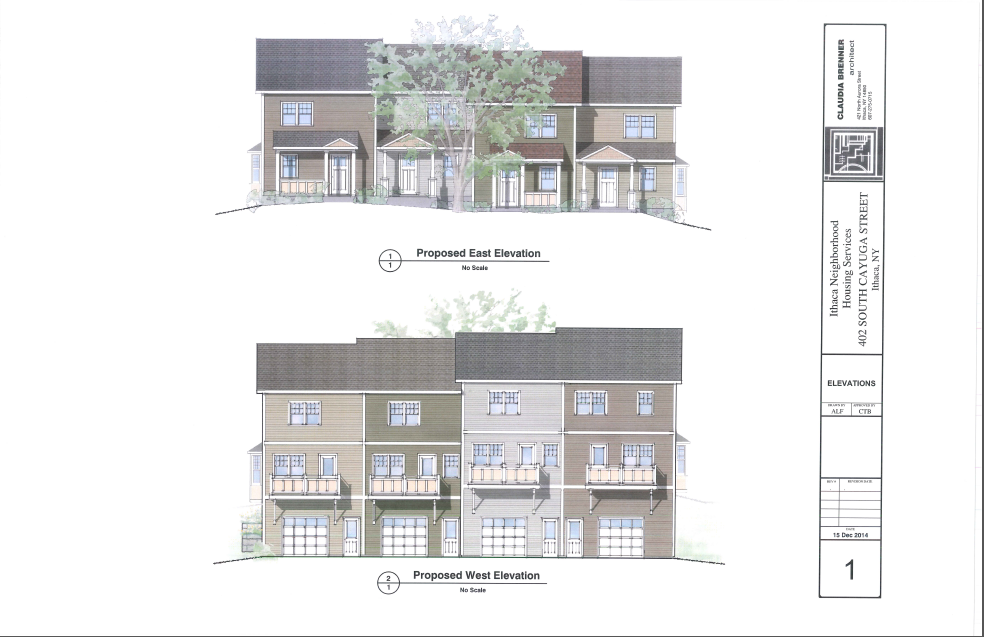
6. Looking at the March Planning and Development Board meeting minutes, 402 S. Cayuga Street has been approved, pending BZA approval of the variance (which was granted this week, if I have my notes right). The 4-unit, 9-bedroom project may be small, but it’s thoughtful infill and will help bring some affordable owner-occupied housing back into the city.

Approvals were also granted for the city project to replace the Lake Street this summer and fall, and refurbish the pocket park to its southeast. 210 Hancock was discussed without any voting, and sketch plans were presented for the TFC HQ downtown, and the 215 West Spencer Street apartment project, which have been written about previously. The board also discussed added additional questions to the CEQR (the city’s version of the SEQR used in project impact analysis), and the revised paperwork will be reviewed at a later meeting.

Oh, and on a more personal note, this totally made my day:

D. 2014 Planning Board Annual Report

[Senior city planner Lisa] Nicholas briefly walked through the annual report, observing it was a very busy year with a considerable number of additional housing units built. [Board member Garrick] Blalock asked if the annual report is publicized. Nicholas replied, no. Blalock replied it should at least be sent to the “Ithacating in Cornell Heights” and “IthacaBuilds” web sites. Nicholas agreed to do so.
I’ll be excited to have a copy. This would make scouting locations where construction photo updates are required a lot easier.

7. Wrapping this up with one final news piece, it looks like Dunkin’ Donuts is moving into the old Johnny O’s space at 406 College Avenue in Collegetown. So there will be one corporate coffee shop next to another corporate coffee shop and sharing a wall with a trendy fro-yo place. There’s probably a sociology thesis to be had in studying the changing retail scene of Collegetown.


News Tidbits 3/7/15: All is Not Well on East Hill

7 03 2015

hsrqev1

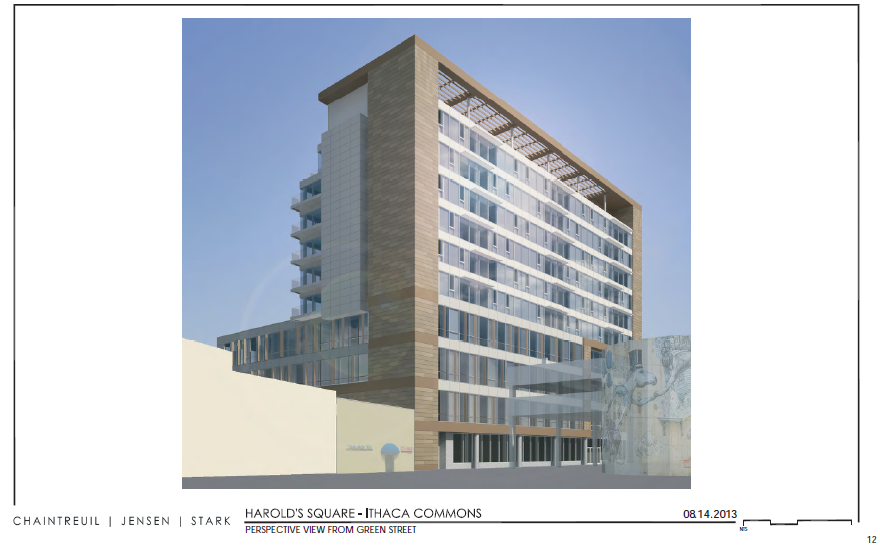
1. Leading off this week with a note of optimism – David Lubin, the developer of the proposed Harold’s Square mixed-used building in downtown Ithaca, says that plans for the 11-story building are still underway, according to a comment he made to the Ithaca Journal. Lubin says he’s currently in the process of lining up investors to finance the construction of the project, a challenging process once one tells investors that the project is in upstate New York. It’s not impossible to have a private project financed in Ithaca (if the Marriott underway down the street is any indication), but for a project costing $38 million, it’s no surprise that it’s taking a while. It’s easy to think that this one has slipped into the dustbin, but fortunately it has not.

Meanwhile, Ithaca Builds woke from its winter slumber to give an update regarding Lubin’s other big project, the Chain Works District for the old Emerson site on South Hill. Currently, the Chain Works District is in the process of writing up its Draft Generic Environmental Impact Statement (DGEIS). A DGEIS is part of the State Envrionmental Quality Review (SEQR), where the leading agency looks at a project, determines if any adverse project impacts are properly mitigated, and if so, issues a statement giving a negative declaration (approval). In this case, the NYS DEC also needs to be on board, approving the contaminated site for residential use. This is a pretty complicated project. There’s 800,000 sq ft of space to be removed or re-purposed, in an environmentally compromised site split between two political entities who are conducting joint meetings with their planning boards in an effort to try and move this project forward (the town of Ithaca board deferred to the city of Ithaca for lead agency; and both have rezoned the site to their respective specialized mixed-use zones). According to IB, the Phase I and Phase II Environmental Site Assessments (ESAs) contain about 60,000 pages of paperwork. The official timeline (already behind schedule, according to city docs) hopes to have the DGEIS submitted shortly, with a declaration of significance sometime in the Spring. In theory, Phase I site prep could start this year, but who knows if that will happen in practice.

franklin_libe_0414 travhyde_libe_0414 roccorner_libe_0414 dpi_libe_0414

2. The ILPC (Ithaca Landmarks Preservation Council) had a chance to review the four proposals for the Old Library site. Perhaps no surprise, the favored proposal was the Franklin/O’Shae proposal at top, which keeps the 1960s library and its “intrinsic historic value”. Members did, however, express some concern with the current building’s environmental contamination (asbestos). As for the other proposals, council members generally liked the Travis Hyde plan, and felt the Cornerstone and DPI projects were insensitive to the site (although one member expressed appreciation that at least the Cornerstone plan had affordable housing). It sounds like there will be some major tweaks to the building renders in the full proposals due later this month, so it’ll be best to hold off on judgment until those revised plans are published.

100_3080

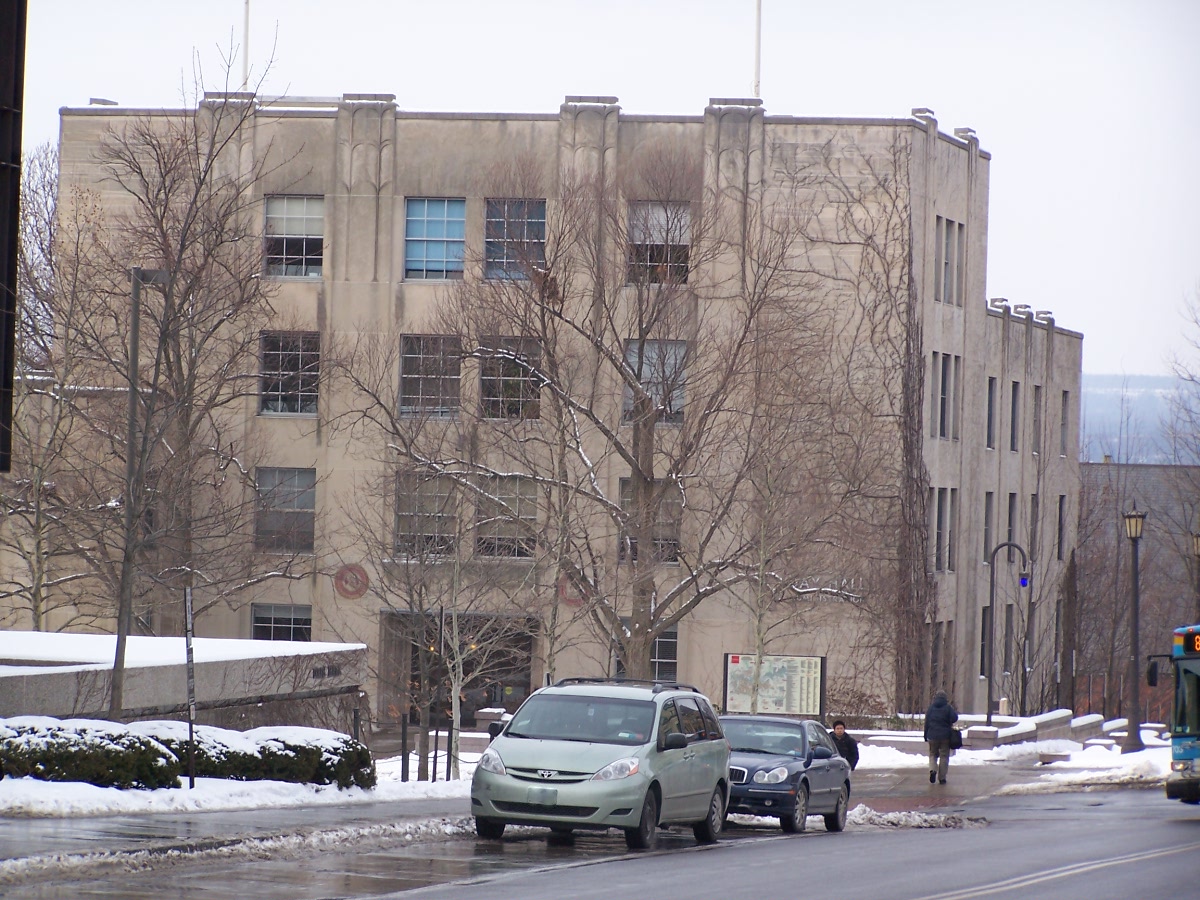
3. Now for some bad news- Cornell is running into major financial problems, to the tune of a $55 million deficit. About half of that, $27.5 million, is expected to be reconciled with budget cuts (the other half will be covered by tuition increases). Considering the very large role Cornell plays in the local economy, this could have a chilling effect on local businesses that depend on Cornell or its employees. There are shades of 2009 here, when a projected $150 million deficit over 5 years resulted in 432 voluntary retirements, and hundreds of jobs lost.  The cut from 2008 to 2009 was a 5% reduction for the 2009-10 fiscal year, while the cut to go into effect for 2015-16 is estimated at 2-2.3%. Quoting an interview the Sun did with Skorton:

“[In the 2008 financial crisis,] We froze everybody’s salary for a year, paused construction, slowed down on hiring, developed a voluntary staff retirement incentive and 8 percent of the staff force was reduced … and [we had] a couple hundred layoffs, which is very, very hard to do,” Skorton said. “So that’s how the University acted in the worst crisis that ever happened. And so that’s a predictor of how it’s going to happen in this case.”

An article in the Sun a couple of days later notes that faculty employment is at an all time high. With 1,652 faculty in Fall 2014, Cornell has now passed 2007’s 1,647. – but one observant commenter, who I will happily buy a drink if I ever meet in person, notes that Cornell’s total enrollment is up 2,050 students since 2007. Devil’s in the details, folks – Cornell could use this “all-time high” as an excuse to not hire more faculty during its latest financial crisis, even though the student-faculty ratio have been increasing for years. Let’s not forget that faculty-student ratios are a crucial part of college rankings.

All of this is rather disconcerting news, especially in a time where the national economy has been picking up. Cornell has real potential to not only cause a localized recession, but also fall behind its peer institutions.

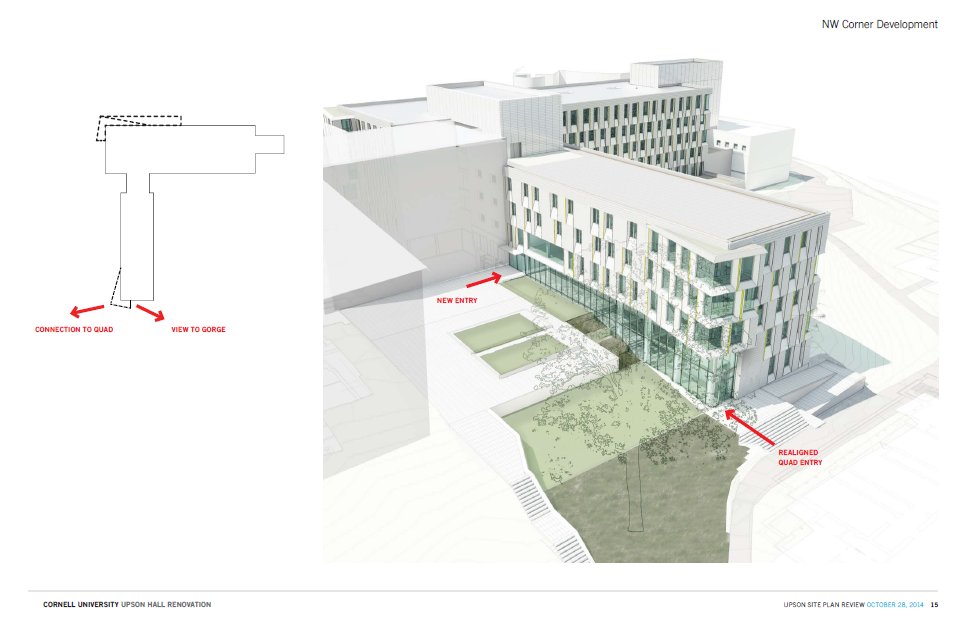
4. On a somewhat brighter note, even with this appalling winter, the construction of Klarman Hall is only nine days behind schedule, according to the Sun. Atrium glass installation should begin in April, and East Avenue will be reopened to two-way traffic around that same time. Although this project is well underway towards a December 2015 completion, one has a right to wonder if it is wise for Cornell to pursue the Gannett expansion and Upson renovation (valued at over $100 million combined) during these perilous financial times.

village_solars_3

village_solars_2

5. The town of Lansing’s planning board is set to review some slight changes to the massive Village Solars apartment project at its Tuesday meeting.

First, a quick primer – while the whole plan is for about 300 units, the approved phases account for only 174 units, and are being built in phases. The photo updates I’ve previously featured here on the blog show the first phase underway, buildings “A”, “B” and “C” on the right (south), with 36 units total. There are four phases, with two sub-phases in phase 2. Phase 2 consists of D, E, G and H with their 41 approved apartment units, and phase 2A is building F, which has the community center as well as 10 more units.

The revised plan calls for moving 6 units from buildings G and H to building M, which is in phase 4. G and H are combined into one apartment building (G/H), leaving 35 units in Phase 2. There are a couple reasons cited for this change – when working with NYSEG to lay out the utilities, it was decided to make phase 2 all electric services, due to concerns that Lansing may not be able to provide gas service if the tense situation with the gas pipeline proposal on West Dryden Road doesn’t go in the town’s favor. One of the results of the utility infrastructure change was a difference in utilities layout, and it was deemed prudent to shirt the walkway northward. This impacted the site design, which is why the Lucentes are seeking to revise the PDA (planned development area, similar to the city’s PUD and the town’s PDZ).

The change isn’t huge, and isn’t likely cause too much consternation among board members. This is actually the first site plan I’ve seen for the project, since it was approved before the town uploaded supplemental docs to its webpage. More importantly, it’s much clearer how future phases could build out – if the ~300-unit project takes 8-10 years as projected, then estimating the construction of phase 2 and 2A from summer 2015-16 seems reasonable.

simeons_1

6. Planning board members had mixed reviews about the Simeon’s rebuild, according to the Ithaca Times. While some members were excited about the rebuild, others expressed concern with the proposed addition of a second-floor balcony, seen in the above render by architect Jason Demarest. The project is eligible for state tax credits designed to renovate historic buildings, but if the credits are granted, then the balcony would not be built. If the credits are not granted, the building owners are looking not only at a balcony, but the possibility of widening the bay windows a little (it turns out the bay windows were an early renovation to the original Griffin Building, and larger bay windows would benefit a planned expansion of Simeon’s to the second floor). Regardless, cast-iron ornamentation that was salvaged before demolition will be incorporated into the rebuild.

During the same meeting, the planning board accepted revised signage for the Marriott, and there was further discussion about the Canopy Hilton. Nearby residents expressed concerns that a downtown hotel will increase traffic, and complaints were made about the ingress/egress plan for both the hotel and the CSMA next door. No word on the land swap CSMA wants, but it doesn’t seem like they’re budging on their property’s all-important utility easement quite yet.


News Tidbits 2/21/15: Can’t We All Just Get Along?

21 02 2015

belle_sherman_townhouses_1

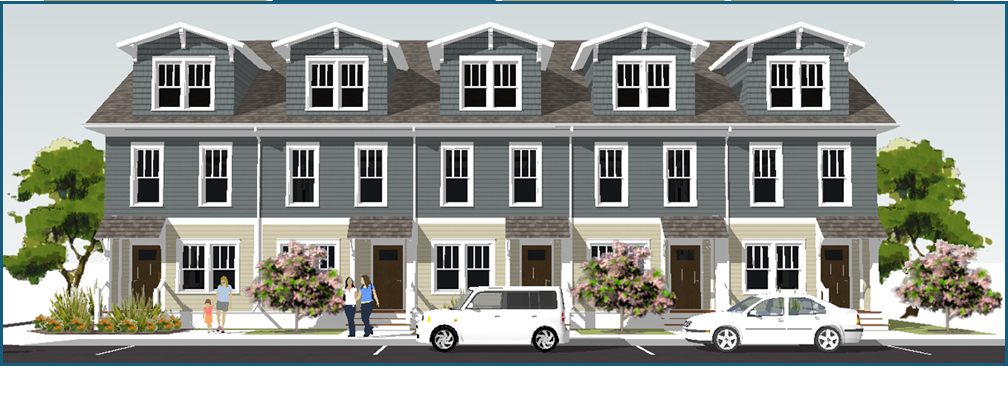
1. Looks like marketing has started for the second set of townhomes in the Belle Sherman Cottages project. Local real estate listings have two of the yet-to-be-built townhouses listed for $275k and $310k. The base-equipped units have 2 bedrooms, 2.5 bathrooms, and 1,325 sq ft of living space. Unlike the first set of townhouse units, these units have the garage in the back. The first five townhouses have sold out and are ready to begin construction when the weather permits. This second set of five, lots 20-24 (aka the 200 Block of Walnut Street), will likely see construction later in the year, depending on how well the sales go. They probably don’t need to worry, the first set sold out in a matter of weeks.

130eclinton_rev2

2. For those that haven’t seen it, the Ithaca Times did an excellent piece this week regarding the murky political issues with Jason Fane’s 130 East Clinton project. Readers may recall that the project applied for tax abatements, but was rejected by the county IDA. The argument is that there was political interference with the decision, and the interference has been masked by statements incongruous with the CIITAP application process (ex. saying that the project was rejected for not being mixed-use, which is not a stipulation in the CIITAP application). The Times builds a pretty significant case that politics are infiltrating the process, manifesting as last-minute demands, and threaten to cut off development in downtown Ithaca, where land values and more stringent community demands make projects more expensive. Nathan Lyman, Jason Fane’s lawyer in the Clinton matter, has sent a letter to the city with his criticisms of the way program and the way local officials dealt with the project; an online copy can be found here.

707_E_Seneca_2

707_E_Seneca_rev1_1

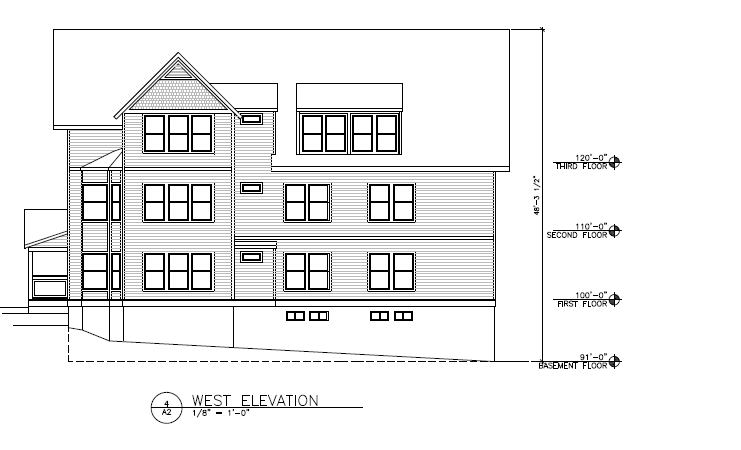
3. Some minor tweaks to the 6-unit, 18-bedroom 707 E. Seneca project: basement windows to try and break up the monotony of its concrete block base. Apart from that, the color descriptions, facade details and finishes look to be unchanged from the earlier plan (first image). The project, planned for a vacant parcel that was one an abandoned school playground, is due to receive final site approval at next week’s planning board meeting. Developer Todd Fox hopes to have the project complete in time for the 2015-2016 academic year.

simeons_1

4. Taking a gander at the upcoming planning board meeting, here’s what there is to look forward to:

– A. More talk about the Marriott signage – Marriott corporate wrote in to say that they’re not going to change their rooftop corporate signage just because Ithaca wants to be unique, but they are open to shrinking it so that it’s less prominent. The hotelier also said they would be open to some degree of “interpretation” with the street-level signage.

– B. Final Site Approval for the Canopy Hilton – This might be delayed again due to a potentially huge problem on the horizon. The CSMA (Eagles Building) next door sent a letter opposing the use of its rear parking lot for a utility easement by this and the Carey Building, because it could hamper their own theoretical expansion plans. In the letter, they have said they would allow the easement if they get to take the land between them and the Carey Building, which is what the Hilton intends to use as their driveway. It would be a major rearrangement of the Canopy site plan (and potentially prohibited by the city’s transportation engineer since E. Seneca is one way), and these moves by the CSMA could impact work on the Carey Building as well. The city already granted an easement late last month to the Carey Building for the municipal parking lot between CSMA and the Carey Building, and work’s already begun, so it’s unlikely that parking lot’s ever going to be reopened. Everyone loses.

I can’t tell who at the moment, but considering the Carey and Hilton projects have been under review for nearly a year, the timing of this is awful, someone really botched up here. This could be a very nasty fight. Let me grab the popcorn.

– C. Declaration of Lead Agency/Environmental Review of the Lake Street Bridge Replacement and neighboring pocket park

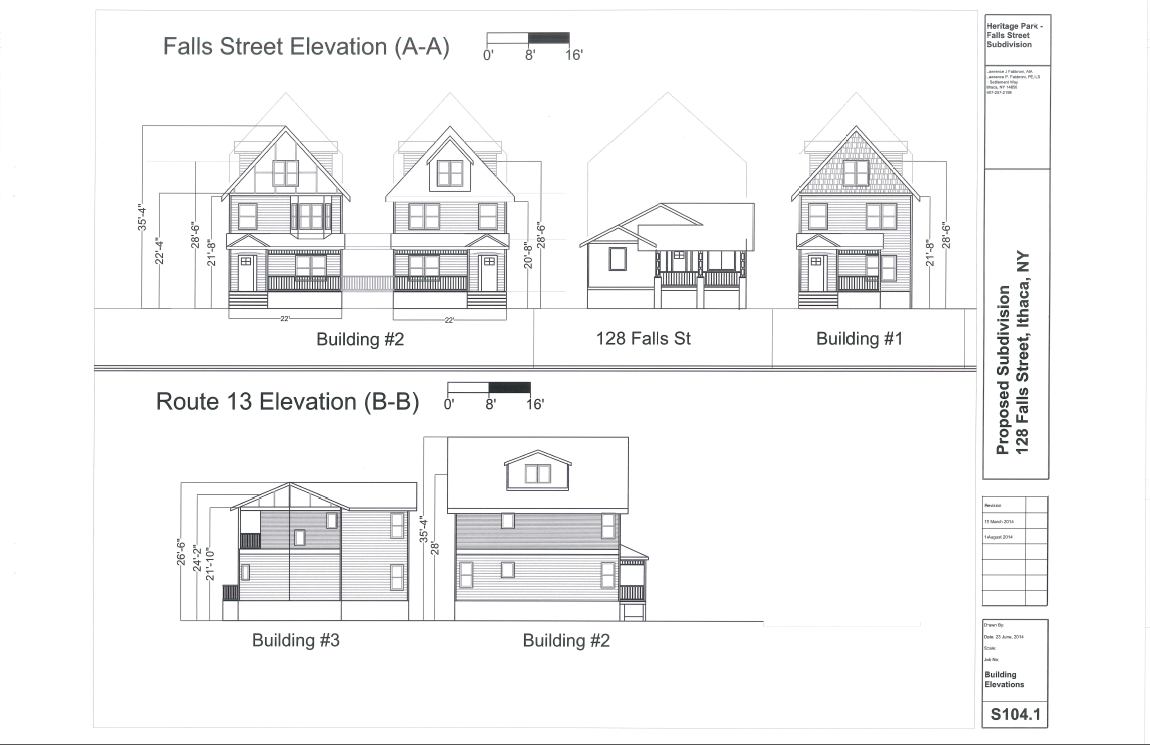
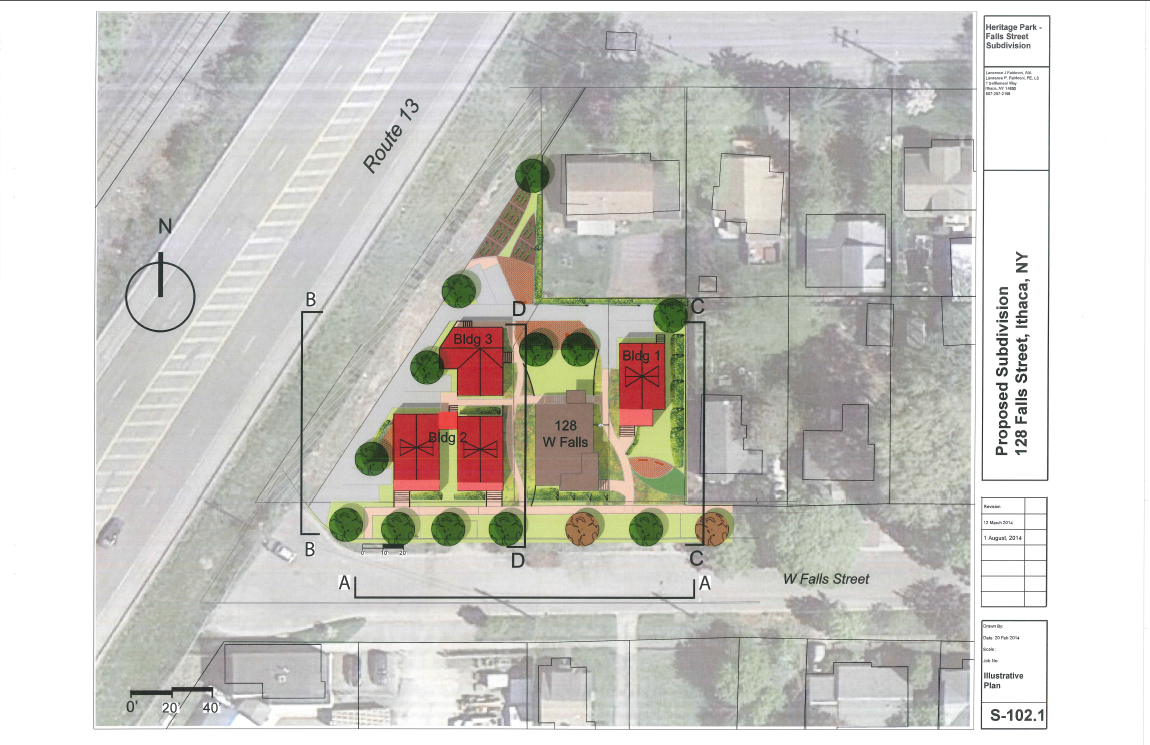
– D. Final Site Plan Approval for the 5-unit, 3 building project at 128 West Falls Street

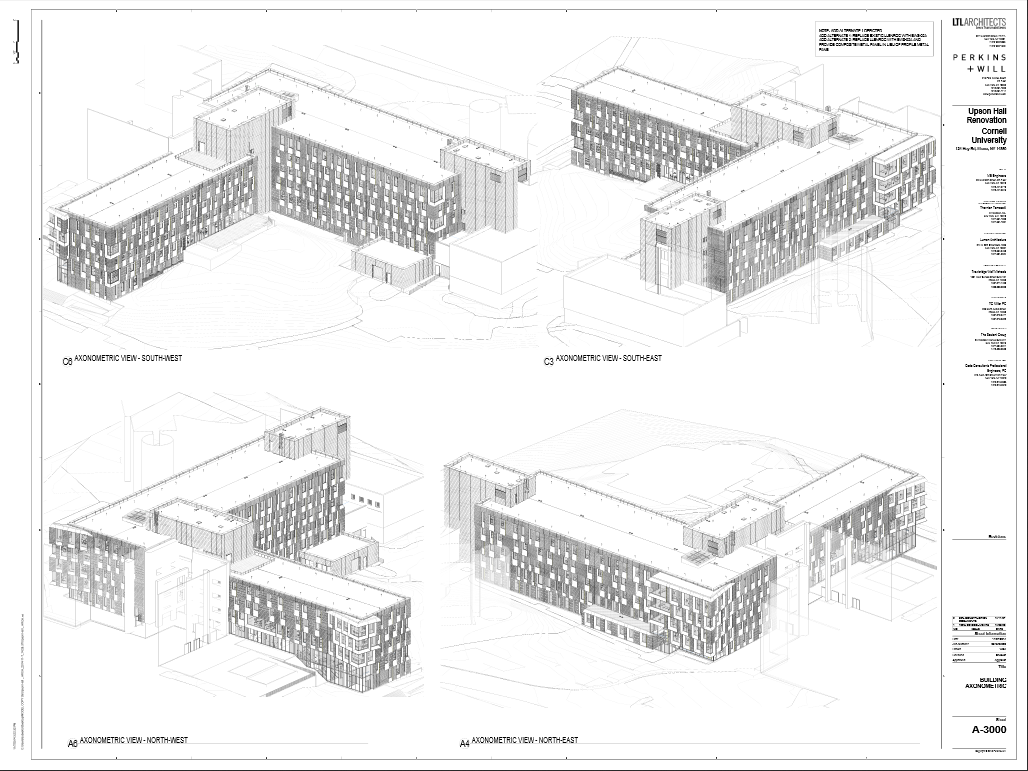
– E. Final Site Plan Approval of the Upson Hall Renovations on Cornell’s Campus

– F. Final Site Plan Approval for the 6-unit 707 E. Seneca project (item 3 up above)

– G. Sketch Plan presentation of INHS’s 210 Hancock/Neighborhood Pride Redevelopment

– H. Sketch Plan presentation for the Simeon’s/Griffin Building Reconstruction (seen above, courtesy of Jason K. Demarest Architect)

Subdivision review will also take place for the duplex proposed behind 424 Dryden Road, and paperwork has been filed for another subdivision to create a lot for a new single-family home (203 Pearl Street) by slicing off the north portion of 201 Pearl’s lot. The Pearl Street subdivision won’t be reviewed until the March meeting.

5. Another Ithaca Times piece, this one about strong opposition to a proposed expansion to a spiritual wellness/meditation center on Turkey Hill Road. the expansion calls for 10-12 beds for overnight visitors, but neighbors are fiercely against it for noise and traffic concerns.The architect for the expansion is Noah Demarest of local firm STREAM Collaborative, but there’s no renders of the proposed expansion on the website just yet (but their website is updated pretty regularly, so it’s only a matter of time).

Good heavens. This is one of those weeks where it seems everyone in Tompkins County hates everyone else that lives in Tompkins County.


News Tidbits 2/14/15: Zoning Out

14 02 2015

cpoz_1

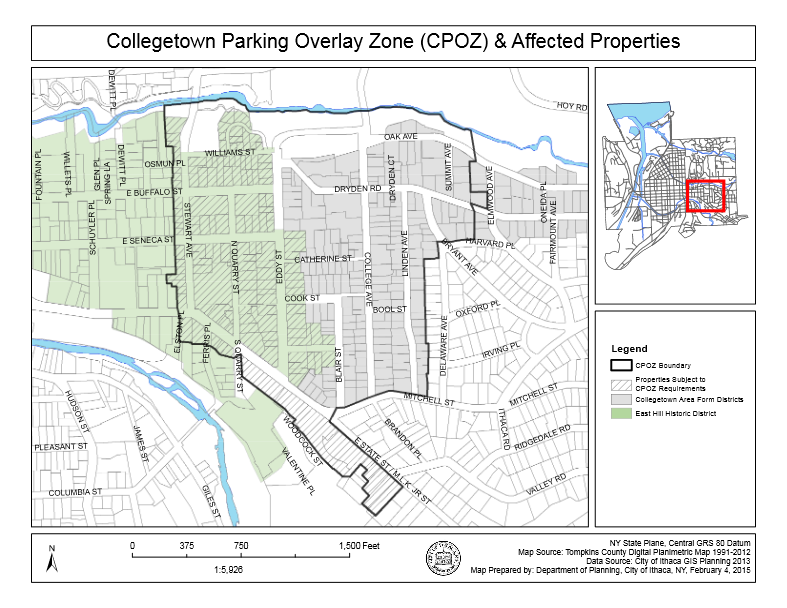
1. Leading off for the week, here’s an interesting piece of news: the city is set to repeal the Collegetown Parking Overlay Zone (CPOZ). The CPOZ was enacted in 2000 as a way to control the parking needs of Collegetown – essentially, it mandated more parking spaces per unit than was standard for a parcel’s zoning. For example, an apartment building of 6 occupants, zoned R-3a, would require 2 off-street parking spaces in Fall Creek, one for every three residents. But on East Hill, that same building would require 3 parking spaces, since the CPOZ mandates 1 off-street space for every 2 residents.

At the time, it made sense; East Hill tends to have more students, who bring their cars to school. But in the past 15 years, the proportion of students bringing cars has declined substantially – a study by Randall/West indicated that in 2000, 49% of Cornell students owned a car; by 2012, it was 27%, a change attributed to the rise of alternative transportation (car share, Cornell-subsidized bus passes), economic and cultural changes. At this point, there’s more parking than there is necessary.

It may seem at first glance that the CPOZ was eliminated with the Collegetown Form Zoning enacted last year, but the two maps don’t match up completely- there are 145 properties that weren’t affected by the new form zoning, but are still covered by the CPOZ parking requirement (see map above). Nearly all of these parcels are a part of the East Hill Historic District (the rest being Collegetown Terrace). A few recent cases, one with Collegetown Terrace and a couple of smaller projects, have highlighted the point that parking requirements have become excessive.

A change to the parking requirements could have a couple of desirable effects – one, less parking would be more historically accurate, and helps to preserve green space in the neighborhood. Two, it opens the idea of replacing a couple of the current parking lots with new housing, which would be designed to fit in closely with the current building stock since the properties are located in the East Hill Historic District (I know, landlords will never give up the money from renting spaces, but perhaps a new small apartment house might be more lucrative than a parking lot; looking at the tax maps, there are a few possible sites, including subdivisions). One mixed effect would be that it’s easier to convert a current single-family lot to student rentals, but the rental would now be less visually intrusive with fewer parking spaces. It’ll be interesting to see what comes forth as a result of this zoning repeal.

industrial_zones_1

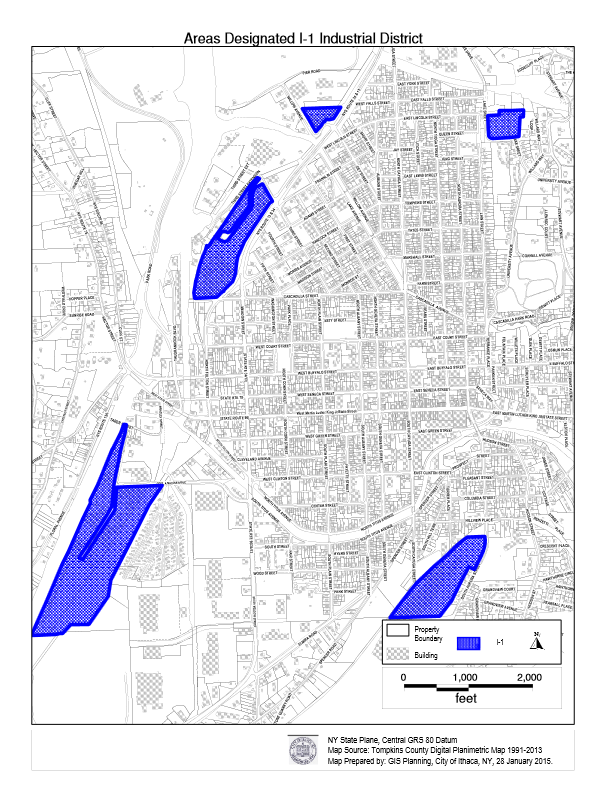
2. Among other zoning changes being considered is a change to industrial zones (the city has just a few). Commercial buildings can be built in industrial zones, but the city wants to raise the minimum number of floors for new commercial buildings in these zones to increase from 1 to 2 floors, a nod to the paucity of undeveloped land in the city (and perhaps the painful attraction of suburban big box stores). There are five sites on the map above, but it might as well be three – Emerson (lower right) is becoming a planned development zone, and the Ithaca Gun site (upper right) is expected to be rezoned from industrial to medium-density residential, in preparation for an apartment project still in the works.

canopy_hampton_rev4_1

3. What is up with the proposed hotels constantly delaying their schedules? First the Marriott pushed back its opening from Spring 2016 to Q3 (July-September) 2016. Now the Canopy Hilton is pushing their schedule back, from a construction start this Spring to an autumn start, which makes it difficult if not impossible to realize the cost savings from reusing the crane for the Carey Building. The tax abatements aren’t going to take that long to obtain, maybe another month or two before the county takes its vote.

Presumably, the project would open in autumn 2016 if the construction schedule is similar. But I feel like these delays send a message of incompetence, and that’s the last thing a project needs.

inhs_pride_design_6

4. Maybe the article I wrote about the new INHS project will have run in the Voice by the time this auto-publishes. But here’s a render that I decided to leave out of the final article to minimize space. The city uploaded the initial application Friday morning (sketch plan will be presented this month), and I’ll write a follow-up article, based on the application paperwork (so it will be different from the Voice article), and post it here on Ithacating in the next few days.

Cayuga-Meadows-Shot

5. Staying on the topic of affordable housing, these agenda notes from IURA Neighborhood Investment Committee reminded me of another affordable housing project that totally slipped off the radar- Cayuga Meadows, a 62-unit apartment building for seniors that was approved by the town of Ithaca for a site near Overlook at West Hill in late 2012. On page 52, it’s noted that the project is supposed to open in November 2015. That would imply that it should be starting construction soon if site prep hasn’t started already (I haven’t visited the site in over a year, so I have no clue). The pipeline document is dated from February 2014, so I have no idea if that’s still accurate. I emailed its developer, Conifer LLC, to see if the project was active, but received no response. Still, it’s something to keep an eye on.


Carey Building Construction Update, 2/2015

9 02 2015

I was originally going to schedule this for later in the week, but I figure I’ll run it now, since the recent twitter chatter is observant but mistaken. The Canopy Hotel is not under construction. At least, not yet. The hotel is expected to start in early Spring. But the work on the Carey Building addition is just beginning.

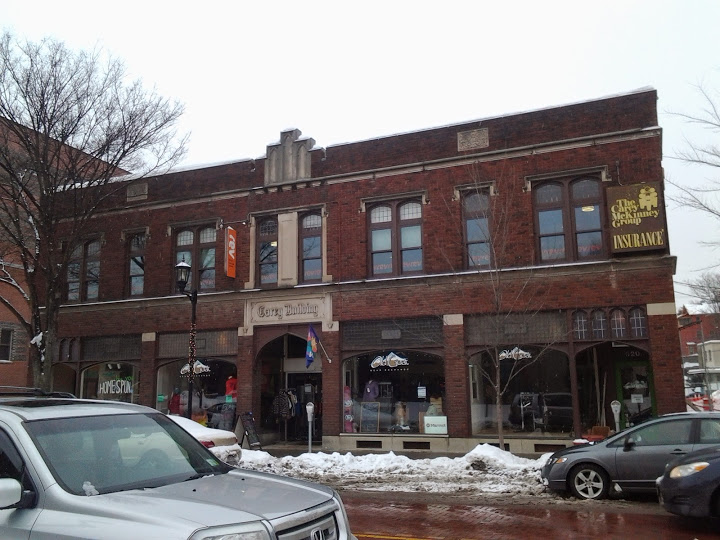
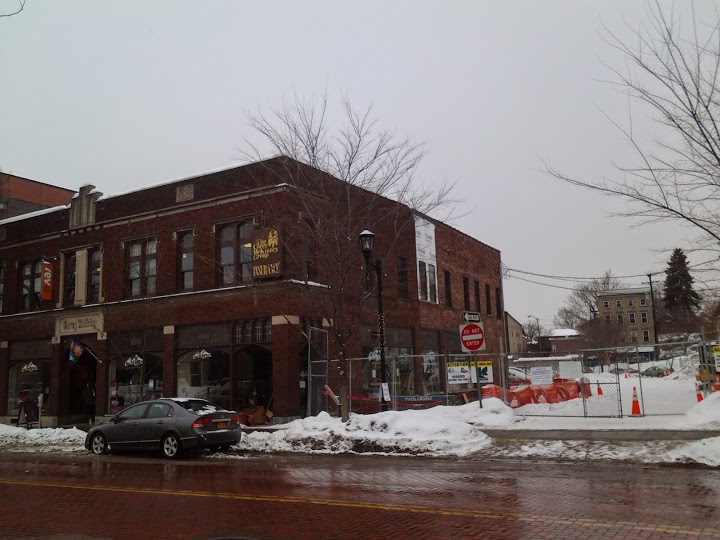
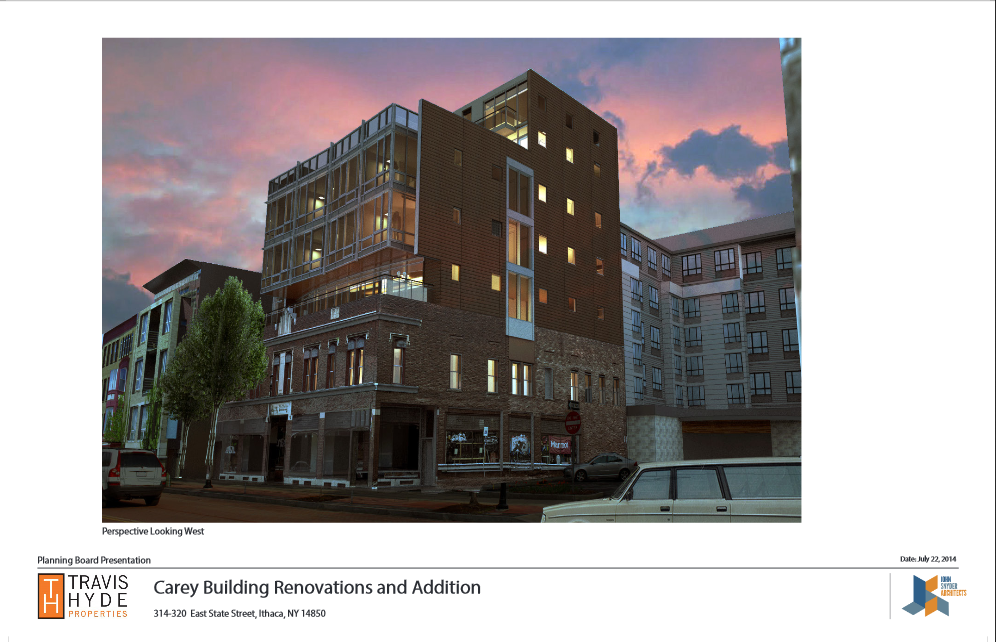
According to Jason Henderson at Ithaca Builds, building contractor LeChase Construction is currently conducting underpinning work on the Carey Building. Underpinning is the name of the process by which a foundation is strengthened – certainly necessary when one is about to add five floors onto a 2-story building. The second to last photo here shows some of the underpinning work on the eastern foundation wall, and the tarp is on the roof indicates prep-work for the upcoming expansion. LeChase will also be handling the construction of the Canopy Hotel next door.

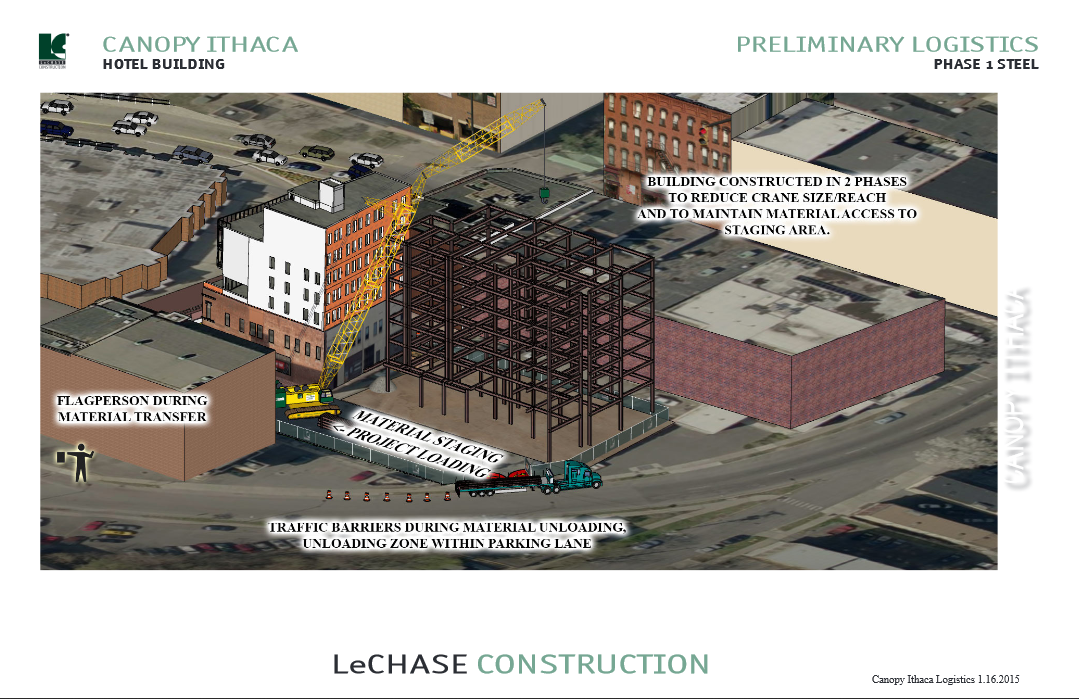
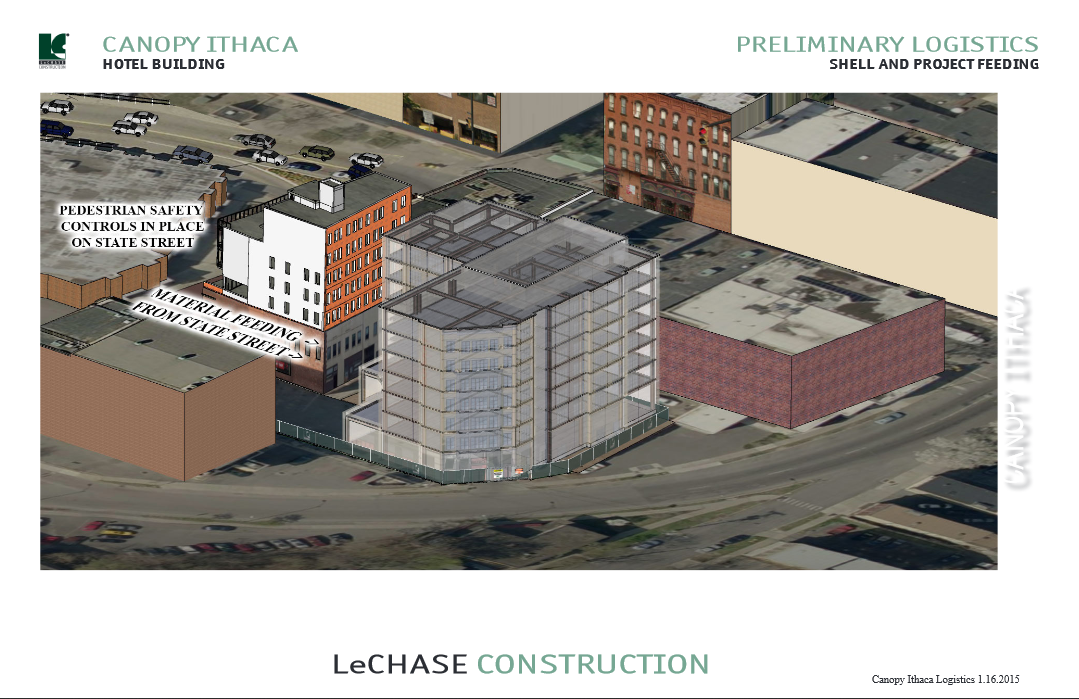
It’s quite unusual in a place like Ithaca to have two separate large projects right next to each other under construction at the same time. This will be logistically complicated. In a letter to the Canopy developers, LeChase’s large trucks will have their brakes inspected before entering State Street, and will be escorted down the hill to a designated area on Seneca Street, and will leave the city via Seneca Street. According to construction phase diagrams, The steel for the Carey Building will be erected first; then, using the same crane, LeChase will begin installing steel for the new hotel. Sharing the crane will result in a cost savings to both owners.

When most of the western side of the hotel has had its steel structure craned into place, LeChase will transition to a smaller crane and switch the material unloading and staging area to East State Street. This is because the hotel occupies most of the site, so the crane is reduced and East State street will be closer to the location of the new crane. Cladding and interior materials will continue to be fed in via E. State Street through the project’s completion in Spring 2016. The Carey Building will have been completed by then, finishing by the end of summer 2015.

The Carey Building addition will add a third floor and 4,200 sq ft to the Rev business incubator (nearly doubling it to 8,700 sq ft), and on floors 4-7, there will be 20 apartments. Floors 4 and 5 will have 16 studio apartment units that average only 400-500 sq ft, their small size enabling them to be rented at a lower price. The 4 units on floors 6 and 7 will be larger 2-bedroom units. The $4.1 million project is being developed by local firm Travis Hyde Companies.

20150207_153142 20150207_153223 20150207_153246 20150207_153412 20150207_153422

carey_rev4_2

canopy_carey_logistics_1 canopy_carey_logistics_2 canopy_carey_logistics_3 canopy_carey_logistics_4


News Tidbits 2/7/15: It Snows In Ithaca, But Verizon Makes It Rain In NYC

7 02 2015

1. As relayed by several outlets, Cornell just received a very generous $50 million donation from telecommuncations giant Verizon. I might make more news about this, but this donation is strictly for the shiny new tech campus down in New York City. The “Verizon Executive Education Center”, in the left of the above render, will be part of the first phase of the campus, set to open in 2017. This goes along with a 6-story, 236,000 sq ft building design by Weiss/Manfredi, and a 4-story, 188,600 sq ft building by Morphosis Architects, both of which are already underway. The skyscraper on the right of the render is a 26-story, 500-room dormitory for students and staff designed by Handel Architects; while not yet underway, it is also slated for a 2017 opening. A design for the tall building on the far left has not been released.

I’d like to see a breakdown of what proportion each campus received from Cornell’s $546.1 million in donations.

2. Looks like some Sun writers decided to do some digging regarding the potential Fine Arts library relocation and expansion. There’s not a whole lot more to add since the Ithaca Voice article; just that the timeline and final design haven’t been set, although the renovation is a “key academic priority”. Students of the AAP school also have mixed opinions about the growth of the library and the possible loss of studio space. But don’t fret dear readers, if a render comes out, it and any pertinent info will be shared here.

424_dryden_rd_1

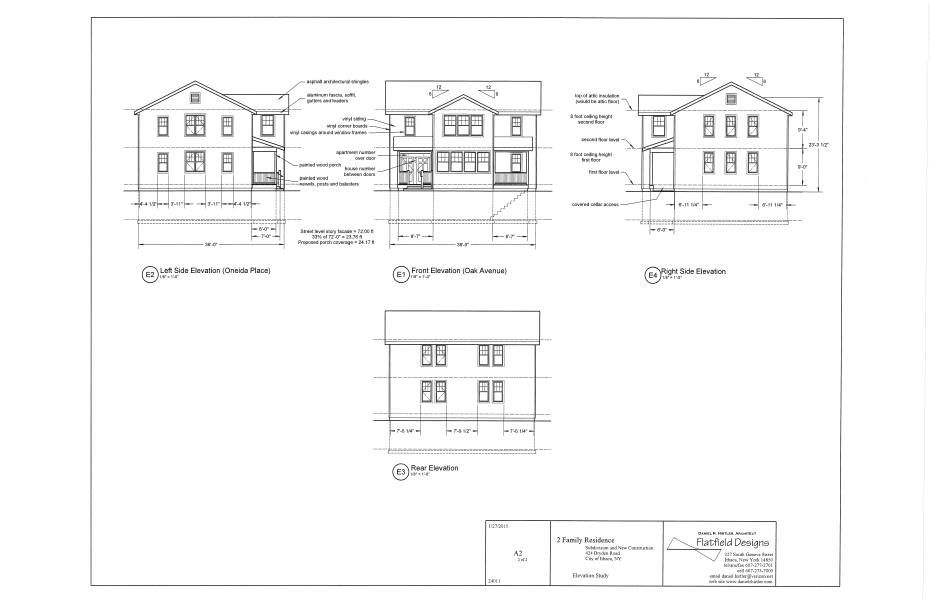
3. A subdivision filed with the city of Ithaca indicates plans for a new two-family, 6-bedroom home at the intersection of Oak Avenue and Oneida Place. The house would be built on land that currently serves as a rear parking lot for 424 Dryden Road. Application here, drawings here. The site falls into the CR-2 Zone of the Collegetown Form District, meaning 2-3 floors, and pitched roofs and porches are required. The architect is Daniel Hirtler of Ithaca, and the developers are William and Angie Chen, also of Ithaca. While not particularly notable, it’s an example of how the form-based zoning applied to Collegetown helps maintain the character of the less-dense outer neighborhood, while still allowing for new construction.

canopy_hampton_rev4_1

4. As with virtually every other sizable project in downtown Ithaca, the canopy Hotel by Hilton is filing an application requesting a tax abatement through the CIITAP program, making it the sixth applicant since the revised program was put into affect in 2013. Application here, and the notice of  public meeting, set for 5 PM February 9th at City Hall, is here. A refresher/review of CIITAP can be found here.

The applicant, “Ithaca Downtown Associates LLC”, a.k.a. the Patel Family of the Baywood Hotels Inc., notes that the 7-story, 123-room hotel project has an estimate cost of $20.15 million. Although the value of the tax abatement is not recorded in the city’s application (it will be written out, when reviewed by the county IDA), it looks like they’re seeking the standard 7-year abatement, which will save them something in the ballpark of a couple million dollars over those 7 years.

As with the previous Marriott and Hotel Ithaca applications, the applicant will only pay one-third to one-half of its projected employees a living wage, which is probably going to earn them the scorn and opposition of the Tompkins County Worker’s Center. But the city and Downtown Ithaca Alliance have been supporters of the project. Neighboring businesses seem to be have mixed opinions about the project, with some seeing a potential business source, and others mourning the loss of a convenient parking lot.

The 74,475 sq ft project is expecting to start construction during the spring, with completion in Spring 2016. Local firm Whitham Planning and Design is the architect.

For those already planning a stay, expect room rates of $160+/night, according to the Journal.

inhs_pride_alleydesign_v2

5. It’s PSA time again – INHS is planning meeting #4 for its proposed Neighborhood Pride redevelopment at 4:30 PM Wednesday the 11th, inside the vacant Neighborhood Pride grocery store. The one and only final design concept, shaped by community feedback, will be presented at this meeting. Keep an eye on the Voice for an article (and maybe a rerun here) next Thursday or Friday.

lake_st_bridge

6. Looking at the city’s project memo going out to its departments, it doesn’t look like a whole lot needs to be reviewed this month. Cornell’s Upson hall renovation, the 6-unit building at 707 E. Seneca, and the 4 for-sale townhomes INHS wants to build at 402 S. Cayuga Street are ready for final approval this month. The 3-building, 6-unit project for 804 E. State (112 Blair) still needs to be reviewed by the zoning board, and will be completing environmental review (SEQR determination of significance).

The only new projects of note are the new house at 424 Dryden, and renovations to the Lake Street Bridge. The bridge project consists of rebuilding the current deteriorated bridge with a new deck and refurbished abutments (base supports), as well as scour reinforcements (to protect from creek erosion), a bumpout for viewing Ithaca Falls, some cute light-posts, and a bridge span that isn’t so degraded that it’s liable to collapse into the creek. That project has a $1,000,000 price tag, and is expected to run from June to November of this year.

For those that use this bridge, start prepping for a detour route – the bridge will be closed during construction, to both vehicles and pedestrians. The city estimates the detour will be an extra 1.7 miles for cars, and 0.7 miles for bikes and walkers.


News Tidbits 1/17/15: Capturing “The Essence of Local Surroundings”

17 01 2015

inhs_pride_conceptsketch

1. Token PSA: The third meeting for INHS’s Hancock Street/Neighborhood Pride redevelopment is next Wednesday, the 21st, 4:40-7:30. Attendees are not required to be there for the entire time. The goal of meeting three is to discuss design concepts for the proposed buildings that comprise the two remaining/competing site plans. I look forward to writing a follow-up after the meeting.

cayugafarms_2

cayuga_farms_1


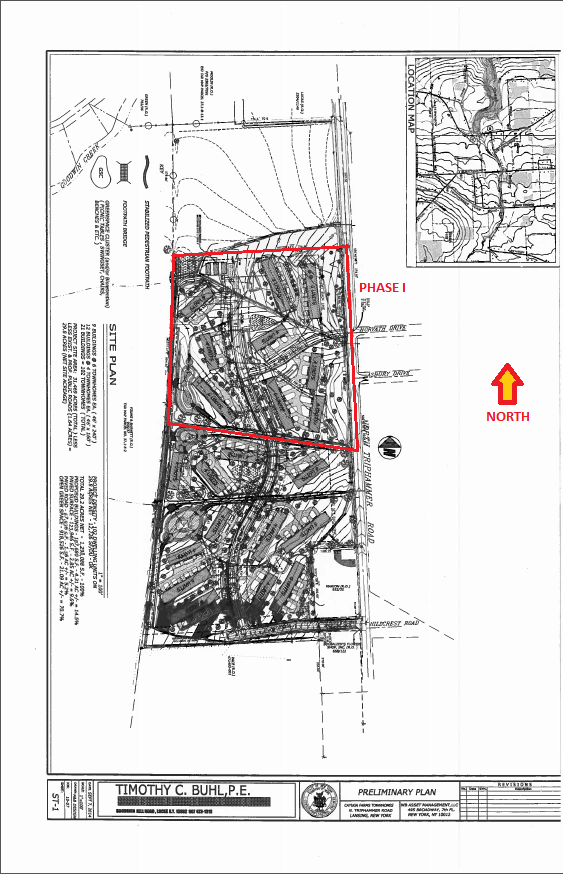
2. Finally, some drawings for the 102-unit Cayuga Farms townhouse project in Lansing, courtesy of the Lansing Star. They look like stereotypical “McMansions” that happen to have shared walls, and the rental price for the 2 and 3-bedroom units has the mansion part covered – $1800-$2200/month. If you use the 30% rule of affordable housing, that means the a household in the cheapest unit is expected to pull in $72,000/year. To quote the project engineer, Timothy Buhl:

“The idea is to capture the transient market of people coming from urban areas to work at the colleges,” Buhl said.  “They would ultimately buy a house, but don’t know where to locate.  We’re looking for young, two-worker families.  It’s an in-between type of rental of higher-end people that we’re looking for.”

In other words, “affordability” is not a word you’ll see in this conversation. The Cayuga Farms project was initially proposed several years ago as 144 townhouse condos (I miscounted and said 138 at the time), but the market for suburban high-end townhouse condos is pretty limited – there is Ivar Jonson’s Heights of Lansing which since 2006 has sold ~17 of the 70+ proposed townhouse units, and Woodland Park, which in three years has built ~6 of 48 planned. The market is virtually non-existent, hence rentals.

On the town’s website, there’s all sorts of other data uploaded: trail recommendations, on-site sewage system details, traffic generation estimates, erosion and sediment control plans, environmental review forms and so forth. Cayuga Farms is multi-phased, with 3-4 phases from 2015-2021; phase 1 will have 44 units. Since Lansing is at capacity on its natural gas pipeline, residents will be using propane appliances until the new natural gas pipeline from NYSEG is routed in. This project already gets dinged in my book for having 354 parking spaces when zoning requires only 153 (1.5 spaces per unit). Every unit gets 3.5 parking spaces. That seems like overkill. Anyway, the planning board reviewed the SEQR on the 12th, which is a big step towards approval of the townhouse development. My gut feeling is, while there’s no doubt Ithaca needs housing in most market segments, a high-end rental unit where you have to drive to everywhere bundles just about every criticism about local development into one convenient package.

Let’s be honest, I’m generally pro-development. But I do have a short list of projects I don’t support. This is one of them. With the sprawl, gobs of parking, and mediocre design, I question its value to the Lansing community.


10378252_313975992125799_95913780193412415_n 10917333_314783998711665_7443965770647794346_n

20141129_135859

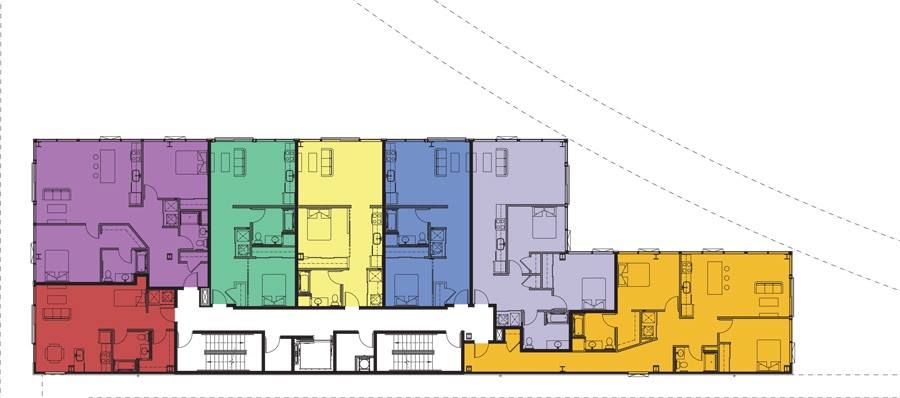
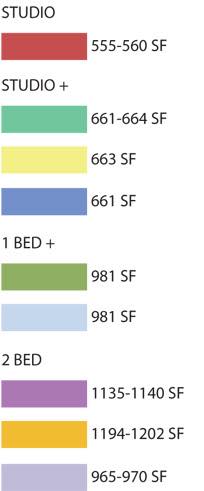
3. The Lofts @ Six Mile Creek project has posted preliminary unit sizes and floor plans on their facebook page. The “Studio +” and “1 Bed +” indicate bonus rooms inside the unit (suitable for another bedroom, home office, etc.). No word on rents just yet, but being new and downtown, expect an upmarket price for the 45 apartments due to enter the market late this spring. Their webpage notes they’ll be accepting reservations sometime prior to that.

canopy_v7_1

4. I think we’re up to version 7 now, but the differences in the proposed “canopy Hotel” are now so subtle that you’d have to be looking hard to spot the changes. The entrance facade is virtually the same, but the mechanical penthouse has been updated to better blend in the rest of the structure, and a couple of stylized wall inserts have been planted into the northwest wall to give the 7-story, 123-room hotel a little visual interest. More renders here, a geotechnical report here, a new cover letter here, and traffic study materials here and here. Thank goodness a lot of this work has gone paperless.

According to the documents, the new “canopy Hotel” brand by Hilton

“…is marketed towards the millennial generation (those born between 1980 and the mid-2000s), however, is relevant for the older generation of hotel guests. Each canopy Hotel is designed to incorporate the essence of its local surroundings and neighborhood feel; such as offering a local welcome gift and evening tastings of local food, beers, wines, and spirits to providing local fitness and recreation options in terms of jogging and bicycle routes (bicycles will be available for rent).”
Yes, ‘canopy’ is meant to be lower-case and ‘Hotel’ is capitalized. I’m sure the brand creators thought that was hip and edgy. Yet another reason why I would never be a good marketer. The 74,500 sq ft hotel includes a small restaurant space of 2,000 sq ft on the first floor, as well as standard hotel amenities like a small meeting room and a gym. The $19 million project hopes to start construction this spring.
upson_4
5. Looking ahead, here’s what the city Planning and Development Board seeks to do at its meeting later this month. For the canopy Hotel mentioned above, declaration of environmental significance and possible preliminary approval. INHS’s 402 S. Cayuga Street townhomes and the 6-unit 707 E. Seneca apartment project will be up for environmental review and recommendation to the zoning board for variances. The Planning Board will also declare itself lead agency for reviewing Cornell’s Upson Hall renovations, the 3 duplexes at 804 E. State Street (112 Blair). Board members will also consider approving a telecommuncations (cellphone) tower on top of a gas station at 214 N. Meadow Street, and weigh in on parking-related variances for 128 West Falls Street and 108-110 Eddy Street. It’s an interesting mix this month.