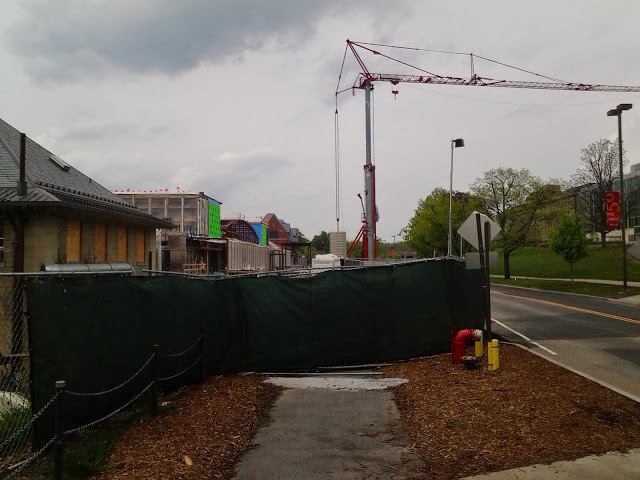
Boiceville Cottages Construction Update, 5/2015

20 05 2015

With three months filed away since my last trip out to the Boiceville Cottages, it seems like a good time for an update.

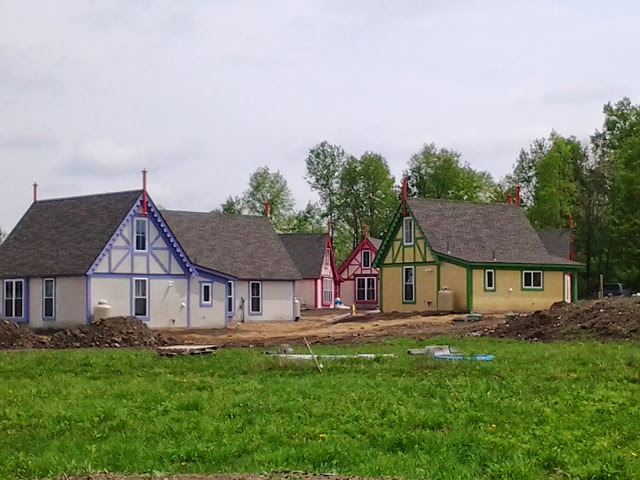
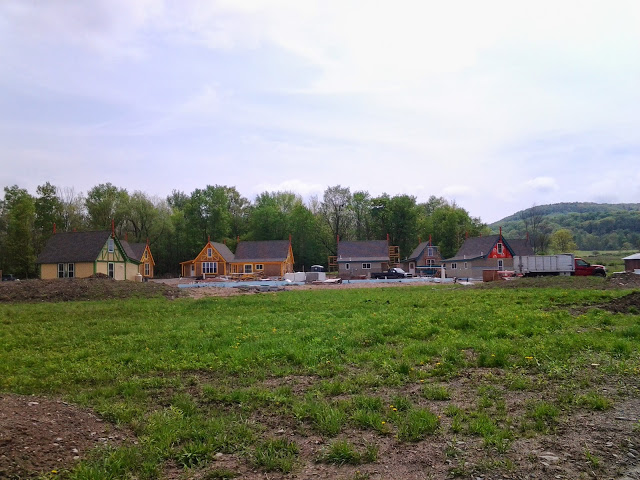
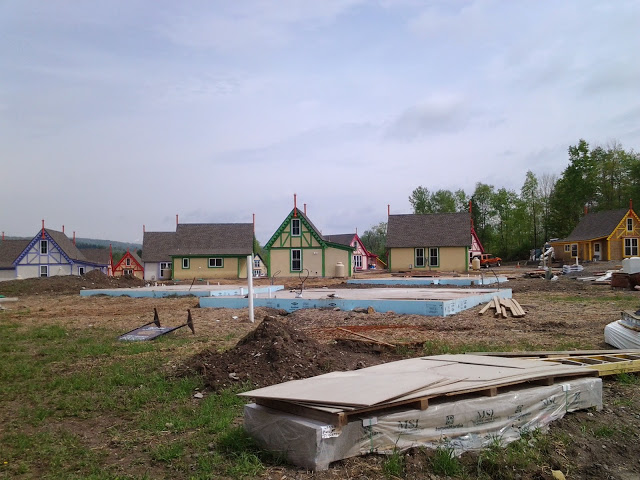
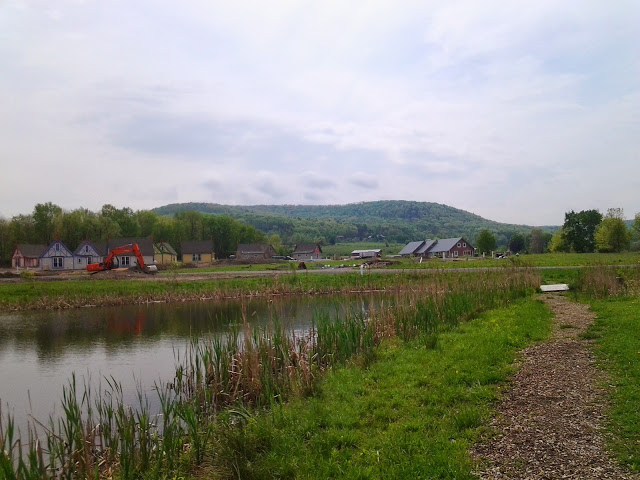
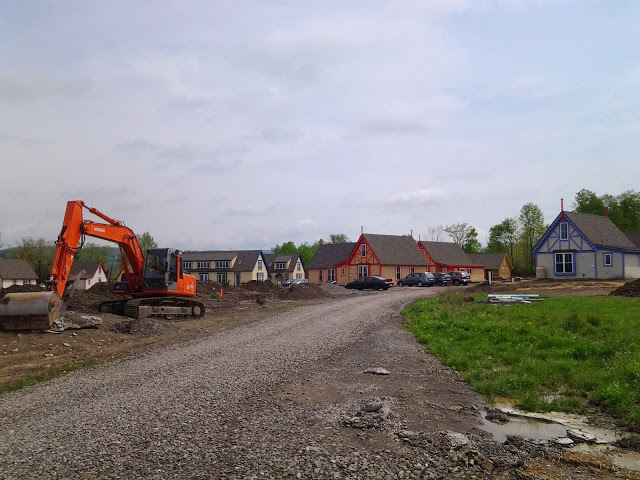
The pace of construction has picked up with the onset of the warm half of the year. The stucco homes with pea green timber trim have been completed. Three homes that were sheathed and had only a few windows fitted in February have progressed have now been fully fitted, stucco has been applied, and an attractive canary yellow timber trim is being attached to the new homes. Four more homes (stucco with teal timber trim) have started since last February, and these are not as far along – some of the red waterproof sheathing is still visible while the exterior finishes are being applied. Three concrete slab foundations, outlined with blue waterproofing (the covering might be for cement board being used to protect the slab insulation) are ready for new house construction in the near future. Suffice it to say, given the amount of disturbed land nearby, more slabs and more homes are a likely bet as we press on towards summer. So far, there looks to be at least 17 units completed during this calendar year.

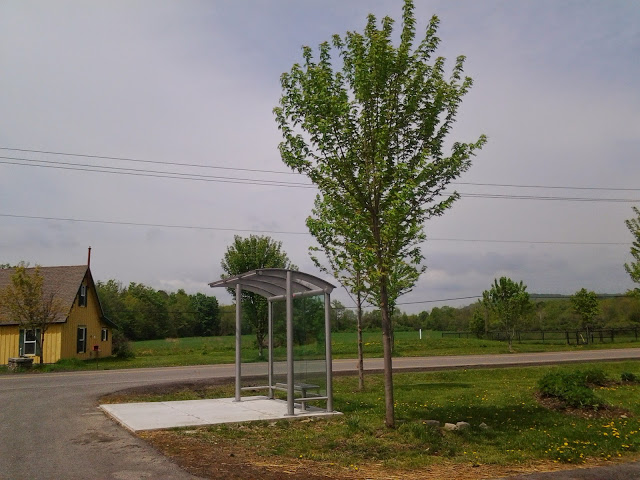
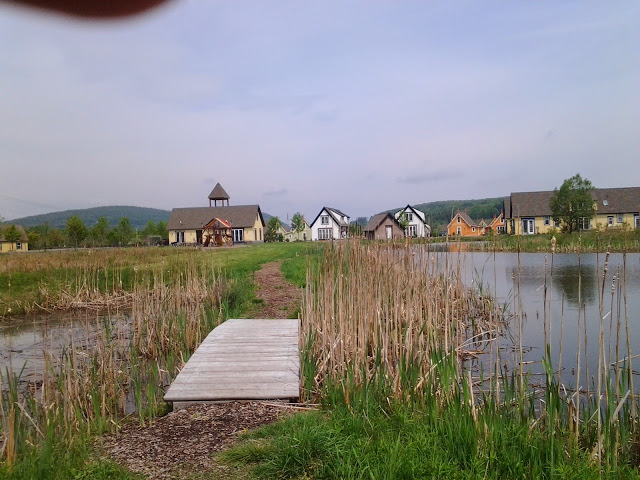
A couple more community features have also been added – a small wooden footbridge now crosses the neck of the pond, and a simple, modern looking bus stop shelter has been built near the meeting house.

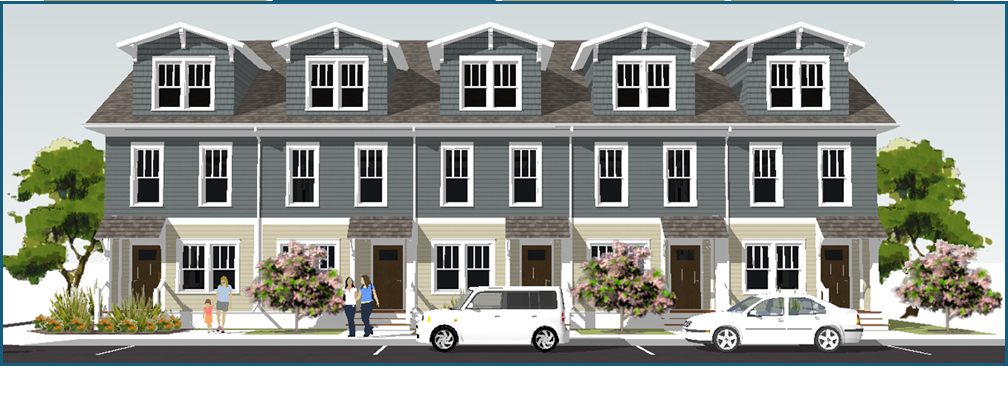
Boiceville is in the midst of a 75-unit expansion, which will bring the number of units on the property to 135. Most of the units are 1 and 2-bedroom cottages, built in clusters of three, although a few “gatehouse” rowhouses offer studios and 3-bedroom units. The initial 24 units were built from 1996-97, with another 36 units built in the late 2000s.

20150516_112107 20150516_112121 20150516_112214 20150516_112222 20150516_112226 20150516_112321 20150516_112326 20150516_112403 20150516_112416 20150516_112422 20150516_112526 20150516_113015

20150516_111920 20150516_111924 20150516_111928 20150516_112031 20150516_112107


Klarman Hall Construction Update, 5/2015

19 05 2015

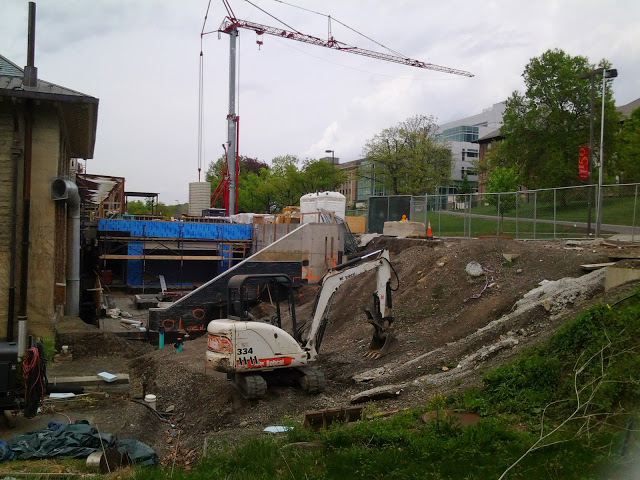
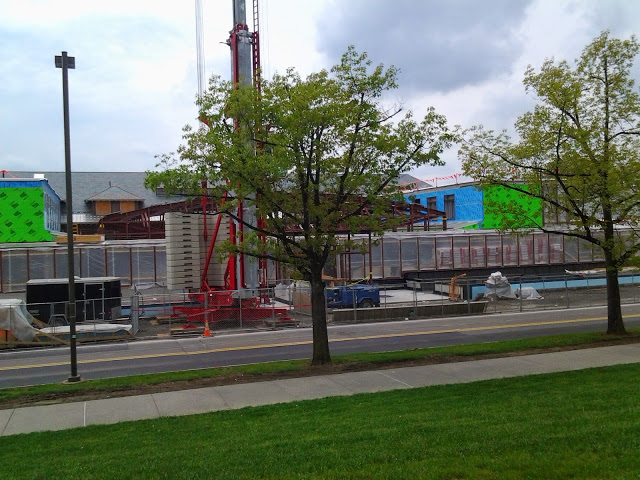
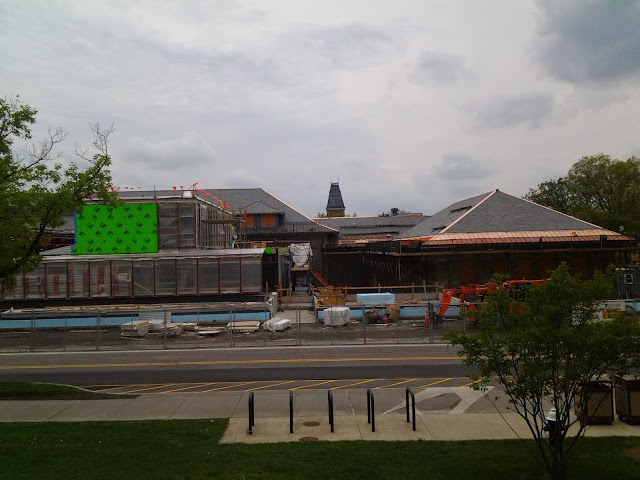
Since the last update on Klarman Hall in February, the snow has melted and East Avenue has been reopened to all vehicular traffic. Construction firm Welliver has been pouring concrete on the upper floors and the structural steel has been erected. Concrete pre-cast has been installed on the atrium-facing portions of the top floor, with bright green glass-mat sheathing visible on some of the panels. Within these panels, the window cutouts are visible, and as seen in the last photo, windows have already been installed on the south block facing into what will be the atrium. Windows will be installed in the north block shortly. To hoist these panels into place, a telescopic crane is used.

Less visible to the outside observer, interior wall framing is underway on the upper levels, with utilities rough-in continuing, and some drywall installation underway in the more complete areas. Openings have been created in Goldwin Smith’s rotunda (where people will flow in and out of Klarman’s atrium), and the sub-slab (the concrete below the new floor) is being poured.

The long-term construction schedule calls for window glazing (exterior glass wall installation) and drywall to be complete by the end of June. The atrium skylight glazing will take place during the summer, the elevator will be installed by August, and the green roof will be prepared just as the fall semester kicks in. Klarman Hall will open its doors to the public in December if all goes to schedule.

The 33,250 sq ft building was designed by Koetter | Kim & Associates, and is named for billionaire hedge fund manager Seth Klarman ’79. The cost of the new building, which began construction in May 2013, is estimated at $61 million.

20150516_143414 20150516_143445 20150516_143458 20150516_143530 20150516_143603 20150516_143644 20150516_143702 20150516_143751


Gannett Health Center Construction Update, 5/2015

18 05 2015

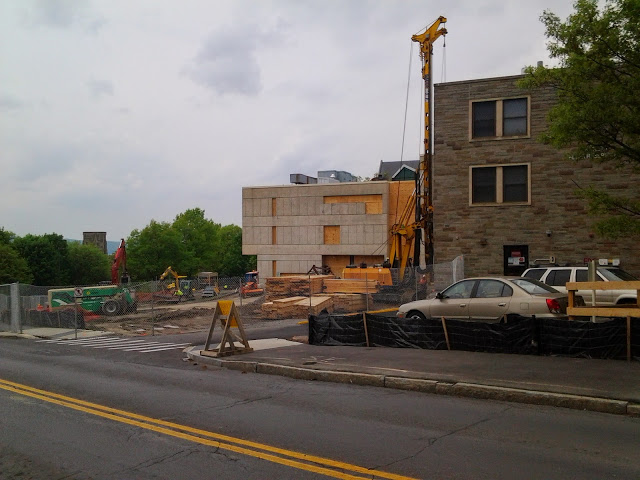
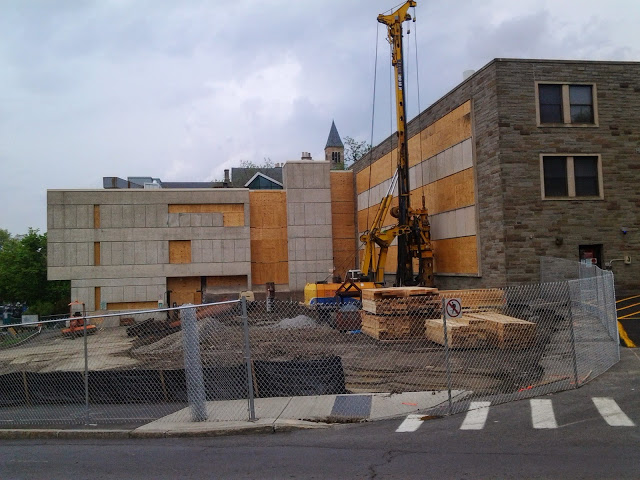
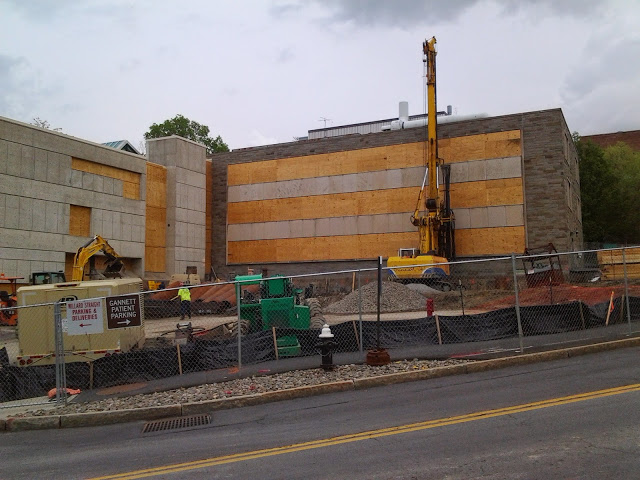
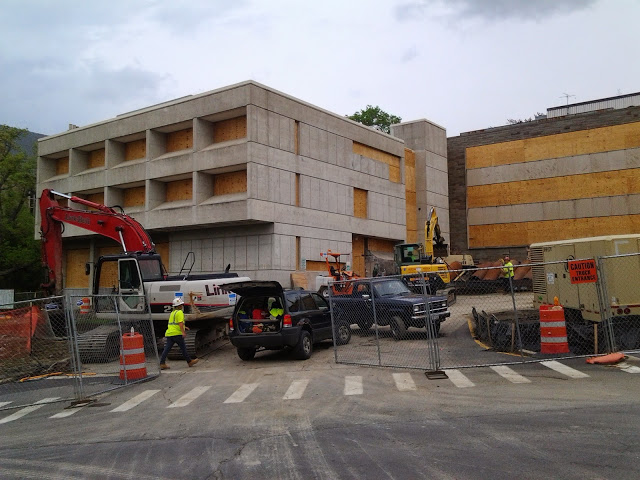
Construction on the Gannett Health Center addition officially launched March 30th, and now that a couple of months have passed, visitors can see some real progress has been made at the site. The photos below were taken last Saturday.

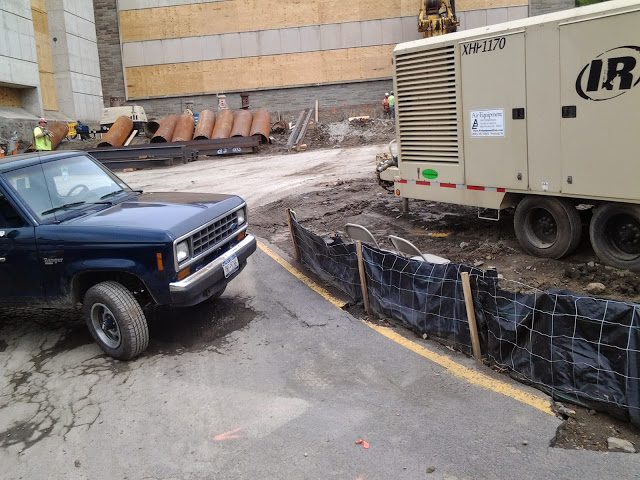
Perhaps the most obvious visual impact is the plywood in the old window spaces, presumably for protection of occupants while work goes on only a few feet away.  The large machine against the southwest wall of Gannett is a pile driver, inserting poles into the soil to provide foundation support for the new building. More specifically, the poles are H piles, also known as bearing piles, which you can in the last photo on the left. The large metal tubes in the last photo are caisson pipes that will be socketed to the bedrock and filled with concrete. These are numbered and are going to be inserted right next to the existing building, according to the construction workers I spoke with at the gate. Feel free to ask the workers questions if they don’t have their hands full, most are more than happy to talk about their work.

Although the photo of the hole itself seems to have been accidentally deleted, the excavator on the west side of the site is being used to dig out a rather large, deep hole where further foundation work/pile driving will take place.

Construction at Gannett will be broken into phases – Phase I focuses on new construction, Phase II on renovation of the current building, and Phase III concludes the project with reconstruction of the Ho Plaza entrance. Phase I is expected to be complete by July 2016, and Phase II by August 2017. The whole project is expected to be complete by October 2017.

The building design is by local architecture firm Chiang O’Brien, with landscaping by Trowbridge Wolf Michaels Landscape Architects. There will be two additions to Gannett, a four-story, 55,000 square-foot building (which will use the H-piles seen below), and an additional 18,600 square foot addition that replaces the northeast side of the current building. The project also includes a new entrance and substantial renovations to the original 1950s structure (22,400 square feet of the existing 35,000), as well as landscaping, site amenities, and utilities improvements. The projected cost is $55 million.

The Gannett Health Center expansion has been a long time coming. Initial plans in the late 2000s called for a completely new building on site. HOLT Architects prepared a plan for a 119,000 square foot building, and an all-new building was also included in Cornell’s 2008 Master Plan. But once the Great Recession waged its battle on Cornell’s finances, the Gannett redevelopment was scaled back to its current form. According to a statement given by Gannett Director Dr. Janet Corson-Rikert to the Sun, the earlier plan had a budget of $133 million; the new addition and renovations are expected to cost $55 million.

The project is expected to create about 175 construction jobs and 40 permanent jobs (additional doctors, counselors and support personnel) when completed. Gannett currently employs 227, up from just 104 in 1996.

20150516_142534 20150516_142551 20150516_142606 20150516_142632 20150516_142643 20150516_142907

gannett5 gannett2


News Tidbits 5/16: Smart Developments, or Sprawl?

16 05 2015

Looks like this is going to be one of those longer roundups. I’m excited and intimidated at the same time.
tfc_v2_1 tfc_v2_2 tfc_v2_3

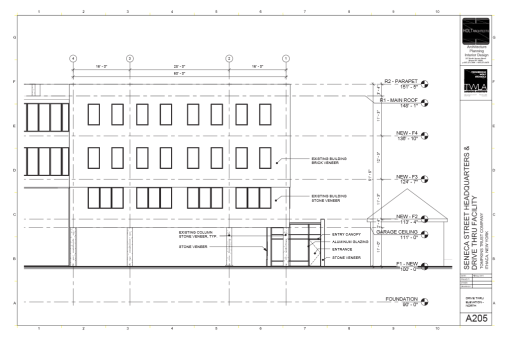
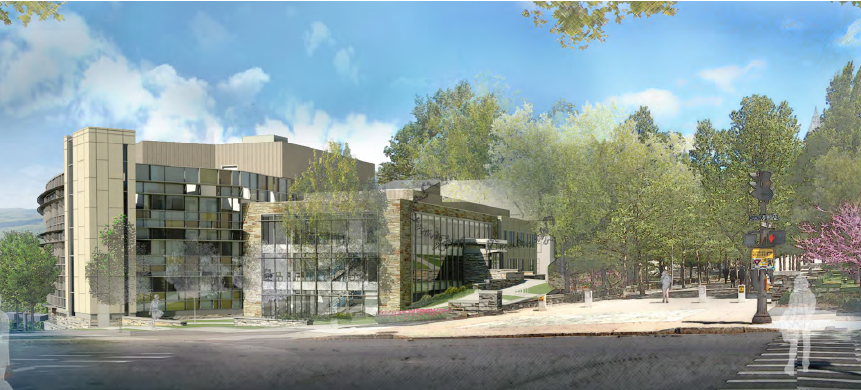
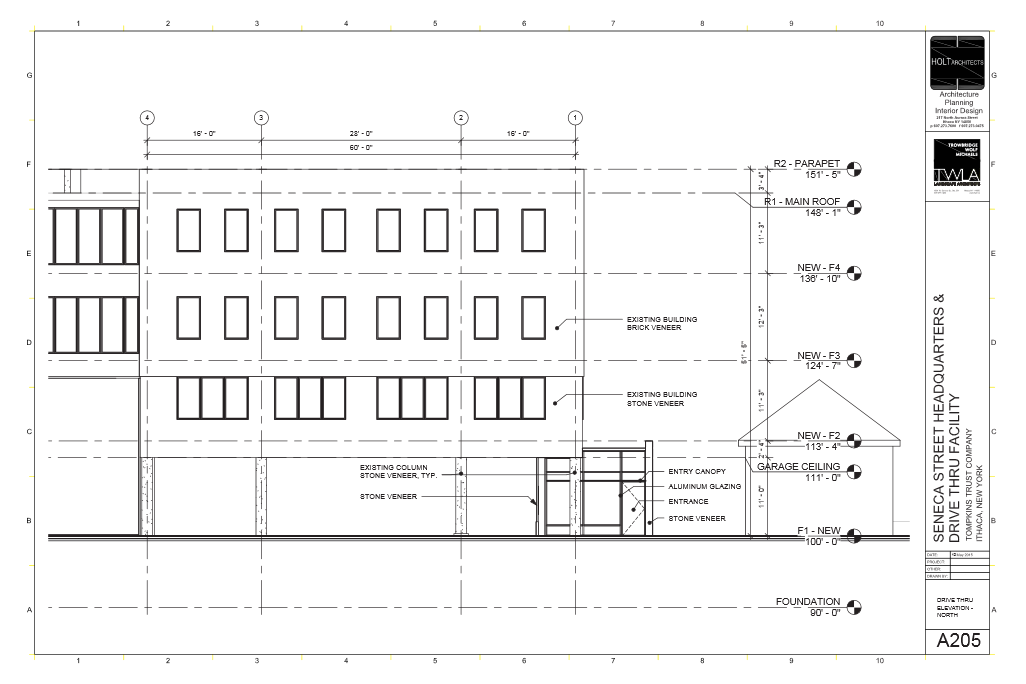
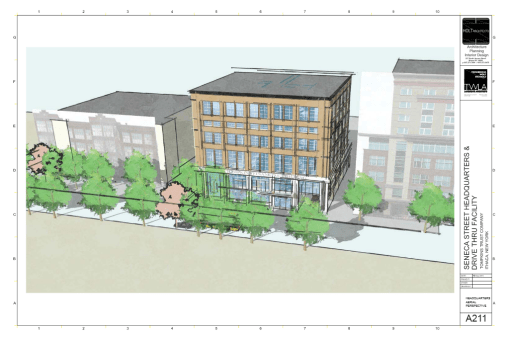
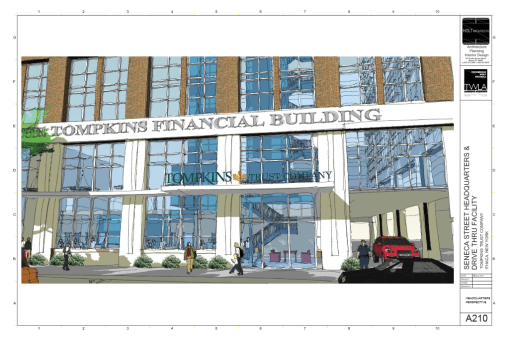
1. First off, I’m going to lead off with renders of the new Tompkins Financial Corporation. Write-up on the Voice here, more drawings here, traffic study here, cover letter here, Full Environmental Assessment Form (FEAF) here.

Rather than describe it in neutral generalities as I did with the Voice article, I’m going to afford the right to be a little subjective. The design is respectful of its neighbors through the use of brick and stone veneer. There’s no real surprises in the design, and corporate buildings tend to be pretty conservative anyway. At 104 feet (100 to the rooftop, and then 4 feet for the roof parapet), this will make a dent in the Ithaca skyline, but once again, it respects and balances out it neighbors by being a little taller than the DeWitt Mall, and a little shorter than 121′ Seneca Place. On a spectrum, the street front is on the nice side though not fantastic; a bank branch and some offices will engage with the street only modestly, but it’s much, much better than the drive-thru there now. The new building is built to the sidewalk, has an urban form, it’s a multi-million dollar private investment and a lot of other things that most upstate mayors would sell their mothers to get. The project is still shooting for a summer approval and construction starting not long thereafter.

One concern I have is that this will offload tens of thousands of square feet of office space onto the Ithaca market. Office space is one of the weaker sectors of the local market, and this may exacerbate the situation. It could cause some problems come 2017, and maybe with projects still in the pipeline such as Harold’s Square, which is shooting for a fall start after two years of trying to secure financing. I think that in the longer term, a few of the spaces such as the Seneca Building (121 East Seneca) might be ripe for a residential conversion.

With that concern noted, I think the parking situation will be okay. Since most of the jobs are shuffling around downtown, there’s not going to be a huge influx of workers. Offhand, I think the numbers are low double-digits (20 or 30) for transfers from Lansing into the city, and then the 77 brand new jobs created over the next several years.
belle_sherman_townhouses_1

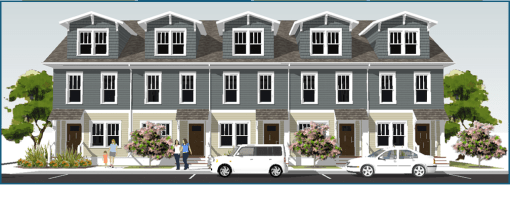
2. And then there were none. With the sale of the last of their townhomes (lots 20-24), the Belle Sherman Cottages have technically sold out. I say technically because Lot 9, the new cottage design on the southwest corner of the parcel, has yet to be marketed let alone sold. I followed up with an email to developer Toby Millman of Agora Home LLC, and he replied that “[w]e are still working on the plans for that home and expect to release if for sale in the next month or so.” So keep an eye out for that.

3. Here’s an interesting piece of news from the Ithaca Urban Renewal Agency – the city recently showed off the 6-acre parcel it owns on Cherry Street to an employer looking to relocate 250 employees to the property, buying the lot and building a one-story “campus setting” over the whole six acres. This may or may not be the same one previous mentioned in the March minutes, regarding an inquiry from a business located outside the city. Since the parcel may have been shown in January or February, it seems that the two are likely the same entity.

This isn’t the first piece of news regarding some potentially major work in this isolated section of Ithaca’s West End – scrap steel mogul Ben Weitsman has also been rumored to have plans, and improved access from the Brindley Street Bridge would aid in redevelopment of this part of the city.

state_st_triangle_3

4. The planning board is cautiously enthusiastic about the State Street Triangle development. Per the minutes from the April meeting, they want the building to be as iconic as possible; board member John Schroeder went as fall as to suggest inspiration from the Carson Pirie Scott Building in Chicago:

Another member suggested a decorative crown. If my notes are right, a crown could exceed zoning as long as it’s not habitable space. Some other suggestions include a setback on the upper floors, and looking into incorporating other forms of housing.

5. A quick follow-up on the proposed removal of some lot setbacks at the Nate’s Floral Estates trailer park – according to a tweet from Ithaca Times writer Josh Brokaw, the removal would allow an extra 18 lots for manufactured housing. The trailer park currently has 112 lots, and it’s been noted to have a substantial waiting list. Nate’s Floral Estates serves as senior housing, so this is one way to make a dent in the affordable housing problem.

815_s_aurora_1

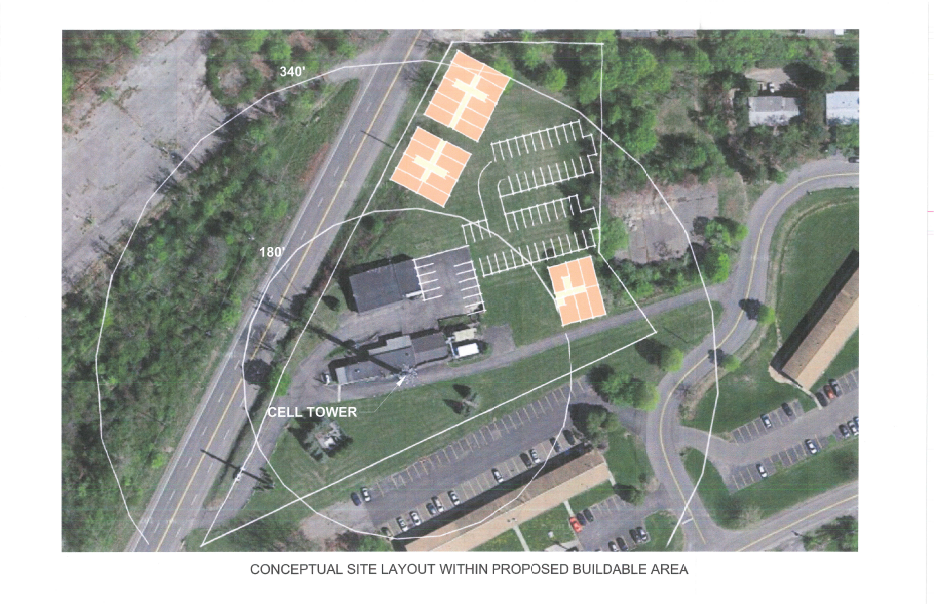
6. It’s not too often you see someone request a zoning interpretation. At 815 South Aurora Street on South Hill, that’s exactly what local architect Noah Demarest of STREAM Collaborative is doing on behalf of developer Todd Fox. Fox would like to develop the land with apartments (and he’s no stranger to South Hill, having built a couple duplexes on Hudson Street a couple years ago), but can’t. The city won’t allow construction in the “fall zone” of cell towers, which they define as twice the height of the tower. At 815 South Aurora, a 170′ tower creates a 340′ radius of no-man’s land (outer circle above), making the parcel undevelopable. The developer got a hold of two private engineering companies (TAITEM Engineering and Spec Consulting), both of whom determined that an appropriate fall zone is the height of the tower plus 10 feet for a little wind/bounce – so 180′ total. With this info in hand, Fox is trying to get the city to refine the zoning to allow the decrease in fall zone and therefore permit the land to be open for development. It’s an interesting case, and the result could be a sizable apartment complex down the pipeline. Stay tuned for the BZA review in June.
228_w_spencer_1

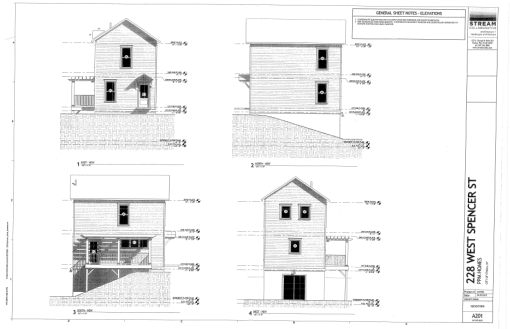
A couple other minor projects are up for zoning variances on parking – a small 2-bedroom house planned for 228 West Spencer is seeking a variance because the builder (Ed Cope of PPM Homes) says there’s no room on the hilly lot, and Todd Fox is requesting a parking variance for a 2-bedroom basement apartment to be built at 108 Ferris Place, saying that its central location and easy bus access should make having a car unnecessary. Coincidentally, architect Noah Demarest is handling both appeal applications.
troy_rd_rev1_1

7. To wrap things up, here’s the latest agenda from Ithaca town. There doesn’t appear to be anything too exciting going on next Tuesday. Cornell is renovating its softball field on East Hill with improved site access, a new restroom and ticket office, and replacing the existing bleaches, dugouts and press box. The 32-unit Clare Bridge assisted senior living project that was discussed last week will be reviewed. There are also sketch plans to be presented for a propane refueling station and sales office to be built on a vacant lot on Elmira Road/Rte. 13.

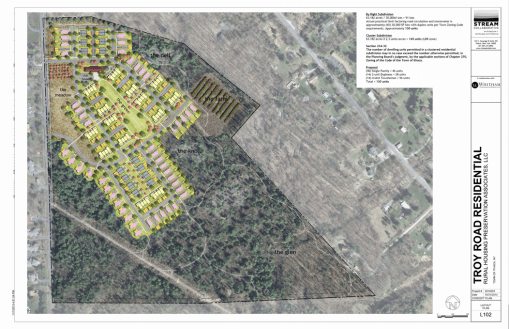
The planning board will also be reviewing plans to subdivide the Troy Road parcel that was once slated for a major residential project. The seller (Paul Rubin of Florida) apparently has a buyer for the triangular chunk of land south of the power lines (which can be seen in the old render above). With no explicit plans for either plot of land, there’s little reason to deny the subdivision at this time.

Personal opinion, I don’t like the direction this is going. It’s a real shame that the revised 130-road Troy Road project didn’t continue pursuit of approvals, it had really started to coalesce into a decent proposal. But now there’s a possibility where the land gets divvied into multiple chunks with homes scattered on it like bird crumbs. Single-family and duplex homes don’t have to go through board review, so there’s a lot less oversight when the land gets divided among multiple owners and built out in a piecemeal fashion. The last thing the town needs is expensive, sprawling, ecologically insensitive development.


Fast Facts: Ithaca College Employee Headcounts

12 05 2015

All facts come from Ithaca College’s Office of Institutional Research. All enrollment values are for the fall semester of a given year, i.e. 2001 means fall 2001.

Since the blog has previously taken a look at Cornell’s faculty and staff headcounts, it seems only fair to take a look at Ithaca College’s as well.

ic_headcount_1

Over the past decade or so, Ithaca College’s employment has grown. Since 2002, headcount has increased by 302 people/20.1%, about 1.68% per year on average. During the recession, employment at the school actually increased at a faster pace than the average, a stark contrast to the hundreds of jobs that were cut at Cornell.

ic_headcount_2

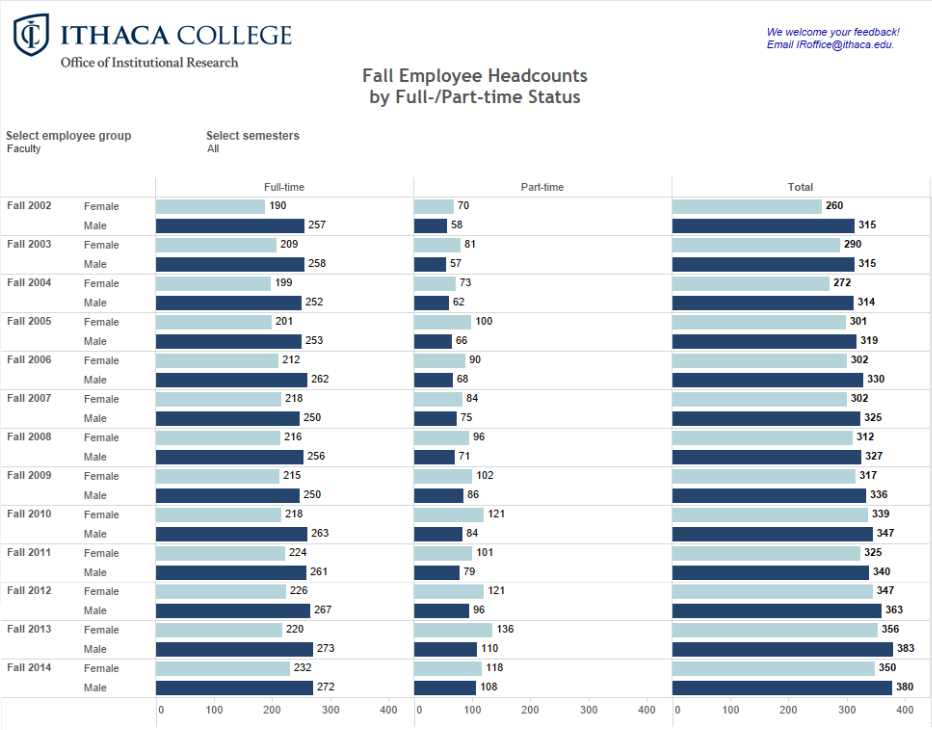
Breaking the numbers down into faculty and admin/staff components, faculty employment has grown by 155/26.96% since 2002, somewhat faster than the 147 person/15.86% growth in staff employment.

For the sake of comparison, Cornell employed 7,075 non-academic staff in 2002 and 7,018 in 2014, a 57 person/0.8% decrease. The Big Red also employed 2,756 faculty/academic staff in 2002, and 2,763 profs and lecturers in 2014, a 7 person/0.3% increase. (note, Cornell numbers are for the Ithaca campus only).

In other words, we have over the past decade or so, one school that has seen only small enrollment growth but large employment growth, while the other has seen large enrollment growth and no employment growth. I can’t vouch for whether one school’s grasp of their situation is better than the other, but the differences between the two make for an engaging conversation piece.

ic_headcount_3

Here’s something more apropos to current events – the split between full-time and part-time faculty at IC. In 2002, 18.41% of male faculty and 26.92% of female faculty were part-time. In 2014, 28.42% of male faculty and 33.71% of female faculty were part-time. Although Ithaca College has added 155 faculty over 12 years, only 57 of those positions are full-time. Part of the the growth in part-time faculty can be attributed to the growth in graduate students, who are considered part-time faculty at IC if they are teaching. But regardless, it’s clear that Ithaca has become more reliant on part-time staff to meet its teaching needs.

Not to take an official stance on any union-organizing, but double-checking with some previous Voice write-ups, the graph above means that there were 226 Ithaca College faculty that were earning no more than about $16,000/year.

Cornell doesn’t have part-time faculty listed in their data, but I assume grad students with TA assignments fill that role. As of 2014, 6.6% of non-academic staff at Cornell (468 of 7047) are considered part time, while 25% of non-academic IC staff (268 of 1074) are part time. So maybe that’s another piece in the conversation comparing schools.


News Tidbits 5/9: Changing Elevations

9 05 2015

cinema_drive_1

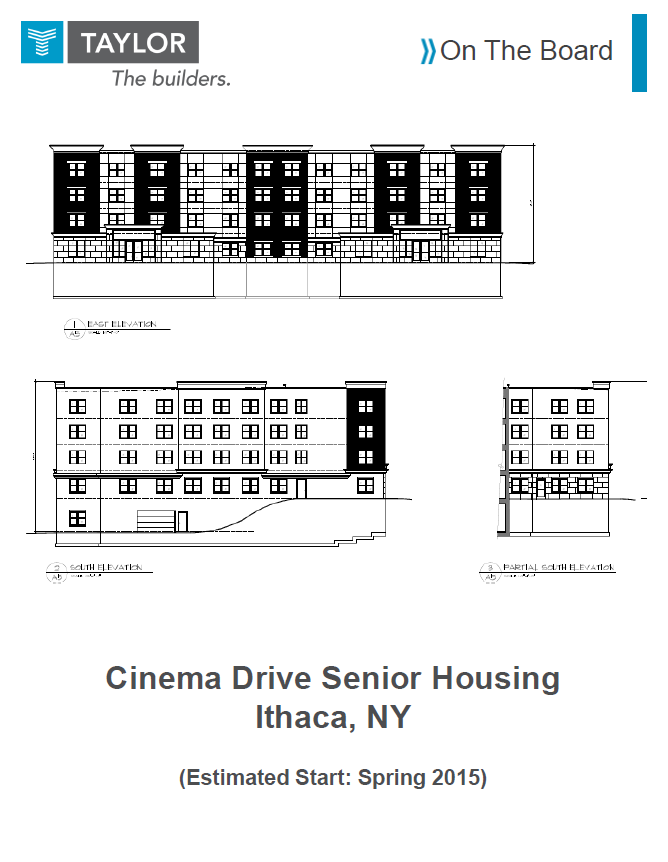
1. Looks like the CU Suites project is in fact the render shared by Taylor Contractors. Readers might remember these elevations from last week for a proposed “Cinema Drive Senior Housing”, but that the image didn’t match up with the proposal, a 3-story, 43,000 sq ft structure. According to the village of Lansing’s Board of Zoning Appeals agenda, the project is now a multi-story mixed-use building with a size of 87,515 square feet, which looks about right for the building proposed above. The project is seeking rear yard setback and height variances for not enough of a rear yard parking setback from the lot line, and for exceeding the maximum height allowed by zoning (which is 35 feet).

Doing some back of the envelope calculations, if one calls only the top three floors senior housing ((3/4.5) * 87515 = 58343) and uses the rough guidelines of 15% for circulation/utilities and 980 sq ft per unit, then one gets about 51 units, which makes this a pretty sizable project by local standards.

inhs_pride_v3_elevations_1 inhs_pride_v3_elevations_2

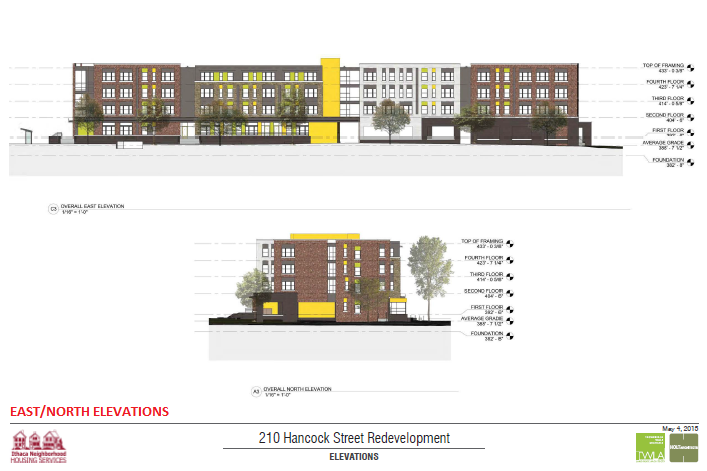
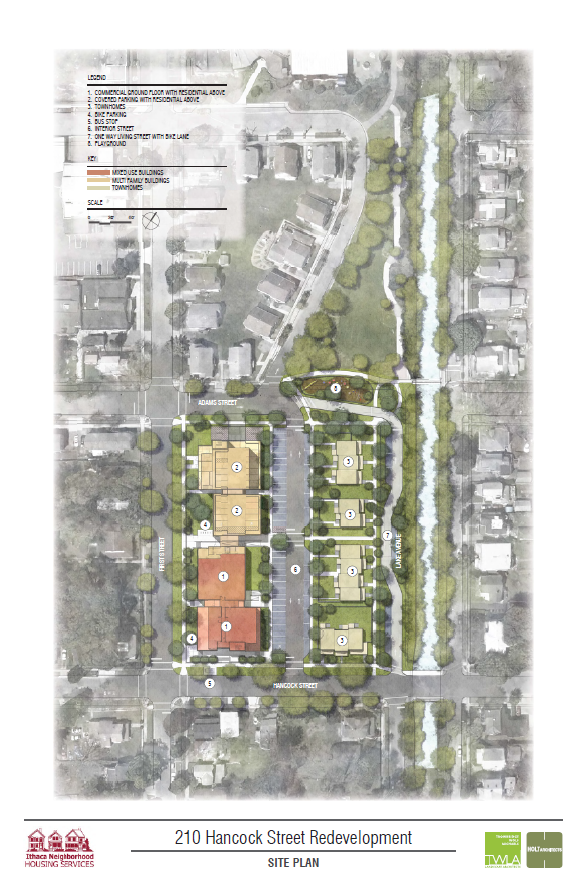
2. Now for a change or perspective – new perspectives of the 210 Hancock project, in the form of elevations found in higher resolution here. Now you can see what all of the buildings look like as a whole, rather than the simulated viewpoints previously shown. The elevations heights give the apartment building’s height at about 40 feet. Apart from some tweaks to the way the first-floor parking is screened, there haven’t been a whole lot of changes since the last planning board meeting. Note that the buildings are tucked in or pushed out and separated by “hyphen” connectors so they don’t present one continuous street wall. The design is by local firms TWLA and HOLT Architects.

Am I the only one who finds the lime green and goldenrod to be a bit..intense when compared to the other facade materials?

112_blair_v3_1 112_blair_v3_2

3. You want more new drawings? You get more new drawings! This batch represents the latest incarnation of the duplexes proposed for 112 Blair Street / 804 East State Street. Renders copied from here, project narrative here. Developer Demos / Johnny LLC (the Nestopoulos family) is still trying to have these ready in time for the Fall 2015 school year. Rather than continue seeking an area variance in zoning, the project is back down to two duplexes with three bedrooms and ~1,235 sq ft each (12 bedrooms total). After meeting with neighbors, it was decided to move back to surface building to reduce building height, and to add expansive front porches, which gives the otherwise bland duplexes a little character. Site Plan Review will take place this month.

clarebridgecrossings_1

4. Looks like there might be an expansion of senior care facilities in Ithaca town. The Ithaca Town Board is set to discuss changes next week to the Planned Development Zone (PDZ) for the Sterling Heights / Clare Bridge Cottage assisted living facilities, located on Bundy Road just north of the city-town line. Sterling House is a 48-unit assisted living facility, while Claire Bridge Cottage is a 32-unit facility specializing in memory care (Alzheimer’s and dementia). The new building, a 23,200 sq ft 32-unit facility to be called “Clare Bridge Crossings”, is designed to bridge the gap between the two – patients who might be in early stages of illness and experiencing mild symptoms, but otherwise still capable of some degree of personal independence.

The new building appears to be a one-story addition tucked between the other two structures, so it won’t be visible from the street. Along with the new building, there will be updates to parking, landscaping stormwater facilities, and the addition of a couple of courtyards between the buildings. The architect is PDC Midwest, a Wisconsin firm that specializes in memory care facilities.

Now, some readers might be saying, “who cares?”. There’s a couple of reasons to care. For one, this is important from a quality-of-life perspective. Picture a senior couple where one is reasonably healthy and the other has memory care needs. It means a lot to have a facility nearby that can care for their loved ones. Secondly, an expansion would bring with it a number of jobs to support the new residents – nurses, maintenance, kitchen staff and so forth. So there’s an economic benefit as well.

Full disclosure – my mother is a nurse who works for an assisted living program that includes clients with memory care concerns. So I’ve heard a thing or two about a thing or two.

east_hill_master_plan

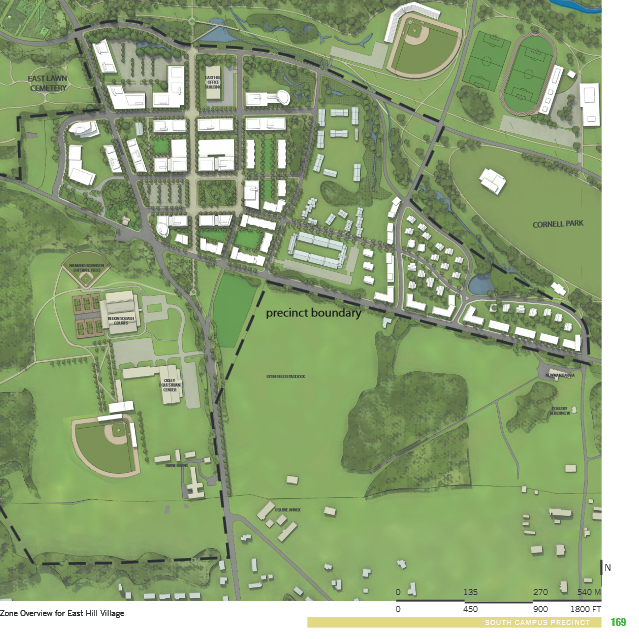
5. On a parting note for the week, here’s a little more information on Cornell’s redevelopment plans for East Hill Plaza. According to Planning Committee minutes from the town of Ithaca, Cornell will be taking part in a multi-day design charrette hosted by form-based zoning proponents FormIthaca in early June. Form-based zoning in a very small nutshell is zoning that focuses on design elements rather than use. Cornell is interested because the plan will hopefully lead to a regulating plan for the “compact mixed-use” development Cornell hopes to build to build in that area. The plan could provide language for a new Planned Development Zone that would potentially allow Cornell to move forward with a housing/retail mix at East Hill Plaza.

Cornell has sought to redevelop East Hill Plaza and surrounding parcels (most of which they already own) for several years. A vision for the plaza shows up in Cornell’s 2008 Master Plan (the so-called “East Hill Village” shown above), and given the need for housing in the area, East Hill Plaza would likely be one of the location where opposition would be less likely, given the the lack of homeowners nearby and the site’s proximity to Cornell.


The Cornell Fine Arts Library

6 05 2015

fine_arts_2

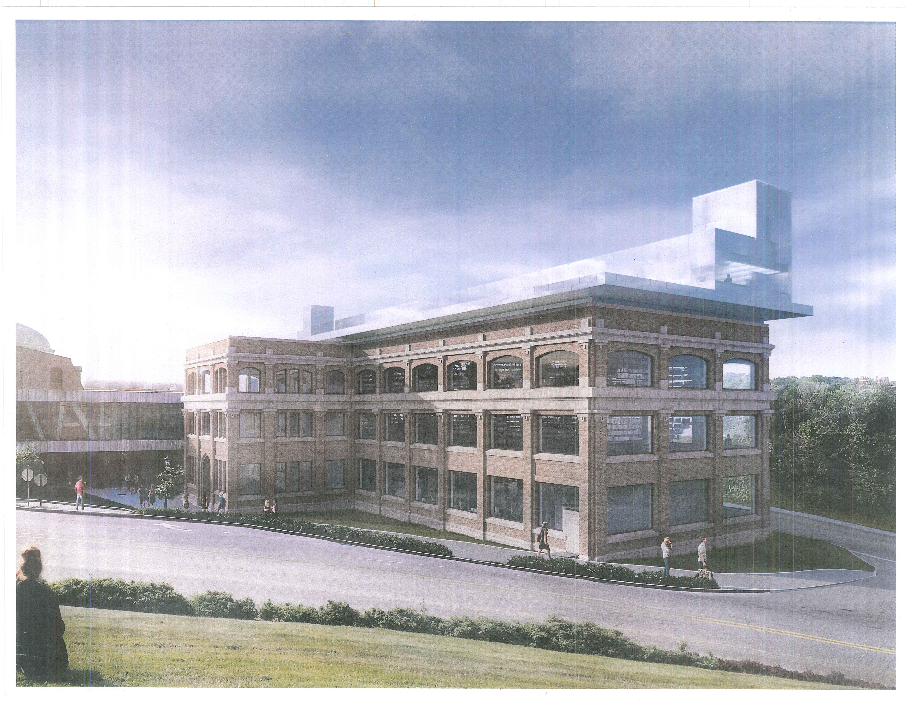
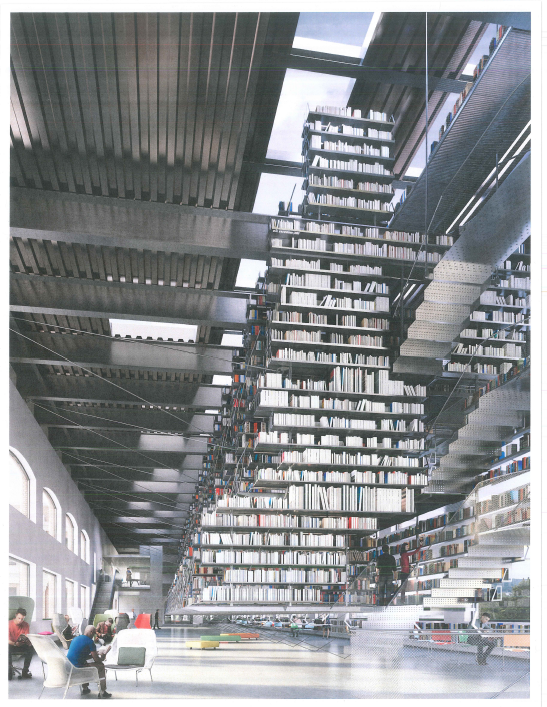
Here we go, renders of the Cornell Fine Arts Library, courtesy of the Ithaca Landmarks Preservation Council (ILPC) Agenda. Additional renders here, project narrative here. Apparently, the ILPC does get to review the addition, although looking at the agenda for the 14th, it doesn’t look like they’re making any decisions (and being just outside the Arts Quad Historic District, they may not be able to).

fine_arts_3

Quoting the front page of the narrative, “rather than acting as a physical symbol, it radiates activity and occupation”. The university wanted the new superstructure, which they’re calling a “lantern”, to be as visible as possible from campus entry points, and it is claimed that the addition will bring “distinction and excellence to the campus”.

fine_arts_4

The building will have two entrances, one public and one for AAP only. The interior will consist of four levels of mezzanine shelving for the Fine Arts Library’s collection, as well as interspersed work/study spaces. Floor-to-ceiling space will range from 48 feet on the north side of the reading room to 7.5 feet in some sections of the library stacks. Long, unobstructed hallways will run the length of Rand Hall. The large variation is meant to convey both grand spaces and “private engagement” with the books. The lantern will have a catwalk as well as working spaces.

fine_arts_5

The design replaces Rand’s multi-pane daylight-factory windows with single panes, removes the east stairwell, and is purposely designed to overhang above Rand, acting as a sort of canopy for rain and sunlight protection.

fine_arts_1

As previously covered, the architect is a Cornell alum, Vienna-based Wolfgang Tschapeller M.A. ’87. More of Tschapeller’s very avant-garde designs can be found at his website here. The project is being funded in part by a multi-million dollar donation from Cornell alumna, architect and UC-Berkeley professor Mui Ho ’62 B. Arch ’66. No construction time frame or total cost have been given at this time.

I’ll call a spade a spade. Rand Hall is getting an ugly hat. One that the rest of campus will be subjected to looking at for years to come.


Fast Facts: Ithaca College Enrollment Figures

5 05 2015

All facts come from Ithaca College’s Office of Institutional Research. All enrollment values are for the fall semester of a given year, i.e. 2001 means fall 2001.

I give what’s probably an unfair amount of attention to Cornell. Part of it is because that’s the campus I know. But Ithaca College has its impacts and influences on the local community as well. Today will take a look at Ithaca College’s enrollment over the years.

ic_enrollment_1

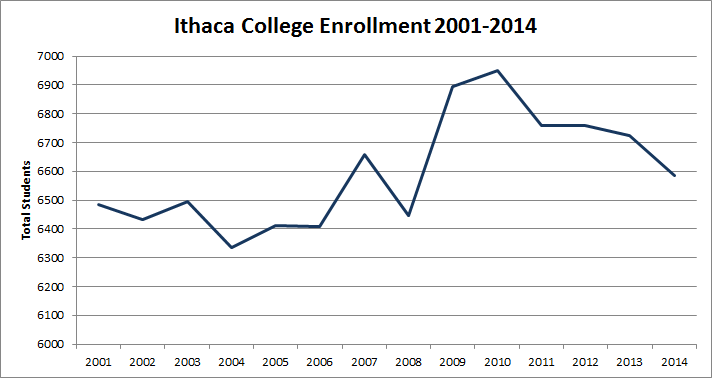
One thing that is clear looking at Ithaca College’s recent enrollment totals is that on the whole, there has only been a modest increase in enrollment in recent years. Enrollment was fairly flat during most of the 2000s, grew a few hundred students during the Great Recession, and has been dropping in recent years. You put a best fit line on this and you get a best-fit line of the equation (student population = 30.374(years out from 2001)+ 6368.5). But the best-fit line is by no means a good predictor in this case.

IC strives to be all residential college, and these fluxes have put a strain on its resources and ability to “run lean”. The college offered students $1500 incentives to live off-campus during fall 2005, as they were forced to convert lounges into dorms. The skyrocketing enrollment in 2009 forced the college to construct a temporary dorm at a cost of $2.5 million, and even offer a few incoming freshmen $10,000 to defer matriculation.

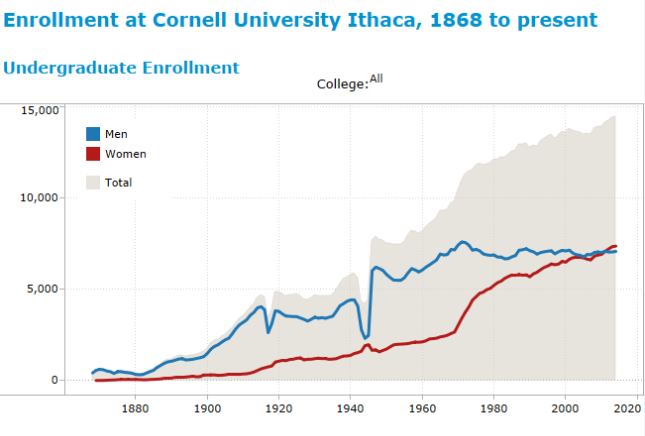
As a general observation of Ithaca’s housing issues, the spotlight can be shined directly on Cornell, whose enrollment has increased by nearly 2500 students since 2005. There hasn’t been much private housing built for IC students in recent years (perhaps a few dozen units), and barring the occasional over-enrolled year, there hasn’t been as much need for private student housing on South Hill.

ic_enrollment_2

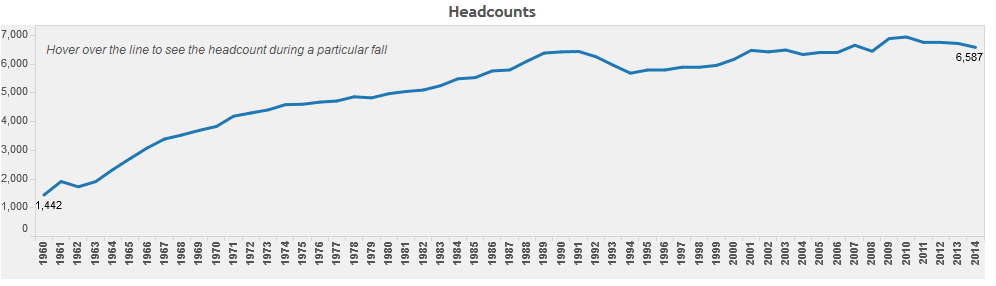
Recent trends noted, historically Ithaca College has grown by leaps and bounds. Apart from a small drop in enrollment when the school was moving into its new South Hill digs in the early 1960s, enrollment continued to swell all the up to about 1991. when it enrolled 6,443 students. Enrollment fell 12% to 5,688 in 1994, before slowly rising back up in the late 1990s and early 2000s.

ic_enrollment_3

Looking at graduate student enrollment, there was a substantial increase during the 2000s, climbing from 230 in 2004 to 507 in 2010. Since then, however, the number of grad students enrolled on South Hill has tapered down to 463.

ic_enrollment_4

One thing that has stayed fairly consistent over the past decade is the proportion of gender on the Ithaca College campus. The gender split is typically 42-44% male, 56-58% female, with this year having the highest female proportion in recent years, just like Cornell.


News Tidbits 5/2/15: Oh, The Anticipation

2 05 2015

1. Lansing village is trying to find a happy medium in its zoning. Specifically, commercial zoning. The village is looking to rezone a group of properties along Triphammer Road near the mall from Commercial Low Traffic to Commercial Medium Traffic, a new kind of zone for the village. According to an article in the Lansing Star, the zone would include “low traffic food and beverage establishments [that] might include sit-down restaurants with or without a bar where food is consumed on premises, which may include carry-out or similar service such as [a] bakery or café,” as well as senior living facilities and certain stores under 10,000 square feet in size.

Most of this has to do with two parcels specifically – a vacant strip of land on Oakcrest Road is slated for a dozen units of senior housing that was a stipulation of the BJ’s approval. The senior homes are part of the BJ’s Planned Development Area and not explicitly affected, but are rezoned on technicality. A vacant parcel on the corner of Triphammer and Hickory Hollow Roads next to Ciao Italian Restaurant has received a lot of attention from outside developers, for hotels, liquor stores and general retail, but the current commercial low traffic zoning allows for none of those (CLT reads as limited to office buildings and isolated small shops). The zoning is under review and any changes would only be enacted after a public hearing at a later date.


cinema_drive_1

2. Here’s a pleasant surprise: drawings for a project on Cinema Drive in Lansing. My guess is that this is the project planned by the Thaler family, aka “CU Suites”. The CU Suites proposal described a 3-story, 43,000 sq ft building; the one shown here is 4 stories. The CU Suites proposal is also likely to break ground soon, just as this project is planning. I’m not 100% certain the two are the same thing, but if this were another project on that short street, I’d be very surprised.

Strangely, the source of these drawings is the Cornerstone Library proposal. The selected building partner, Taylor General Contractors of Rochester, was using it as an example of work underway.

harolds_square_taylor

3. Then there’s another project Taylor General Contractors is involved in – Harold’s Square. Taylor has done some work for Harold’s Square developer David Lubin in the recent past, so this makes sense. Will it actually start in Fall 2015? Good question, but there’s been no word on if Lubin has closed on financing for his 11-story downtown project.

fine_arts_1

4. No sketch plans have been uploaded to the city’s website just yet, but initial renderings for the new Fine Arts Library in Rand Hall were presented at the Planning Board’s meeting last Tuesday, according to the Cornell Daily Sun. According to AAP Prof. Jon Ochshorn’s blog, Cornell’s been trying to keep the design plans of this project under tight control, which is fairly unusual for a school that often promotes new projects well in advance (Klarman, Gannett, Gates).

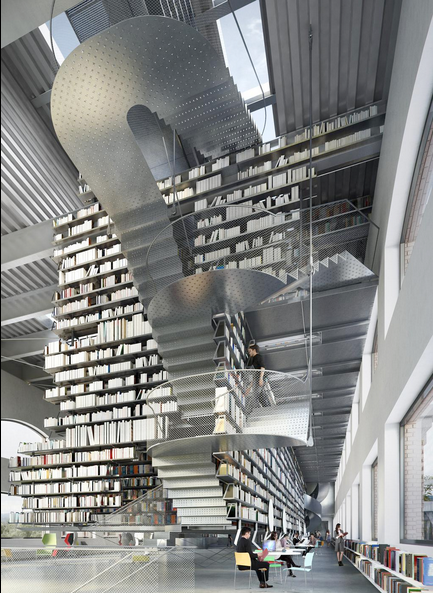
So far, the only public release has been an image of an interior staircase, a soaring, unsettling feature that can be found throughout the works of the project architect, Vienna-based Wolfgang Tschapeller ’87.

University architect Gilbert Delgado did his part to sell the project. From the Sun: “[We’re] resetting the clock on this very important building,” he said. “This is the presence that we’re looking for: noble, early 20th century industrial building that’s been repurposed to our higher use which will exhibit one of the world’s greatest book collections.”

Speaking for only myself, I have concerns with how this is being managed. Cornell had planned to demolish Rand in the early 2000s to make way for Milstein Hall (which went through three starchitects before shovels hit the ground), but alumni blowback caused them to renege on that plan. It’s clear that there’s a certain sort of attachment that AAP alums have towards their structural workhorse. My worry, with the lack of details so far, is that Cornell is stymieing the flow of information for ignoble purposes. Students and alumni won’t be able to object and petition against plans they don’t see and hear about until the figurative last second. Plus, AAP hasn’t had good luck with budgets for new buildings – Milstein’s cost more than doubled from $25 million to $55 million during its incubation, while it shrank in size. In a time of fiscal stress for the university, a dramatic, structurally complicated new library may not be prudent. I’m not against this project explicitly, but I do have reservations.

Regardless of my armchair criticism, when renders do finally show up, you’ll see copies hosted here soon after.

Cayuga-Meadows-Shot

5. According to the town of Ithaca’s 2014 Planning Board report, Conifer has secured funding for “Cayuga Meadows“, its approved 68-unit (sometimes given as 62, unsure which is accurate) affordable senior housing building planned for West Hill. With finances in order, the 3-story, 19,520 sq ft building, sited just south of the Overlook at West Hill apartment complex, will likely start construction this year. Per Ithaca Builds, approvals were granted in late 2013 after a years-long planning process that had Cornell involved early on.

Some other projects still gestating include an 18-lot single family subdivision off of Park Lane in Eastern Heights, and Cornell clarifying plans for a large mixed-use project at or near East Hill Plaza.


State Street Triangle (Trebloc Building Site)

29 04 2015

state_st_triangle_3

Downtown Ithaca could be in for a very large addition in the next couple of years, if developer Campus Advantage has its way.

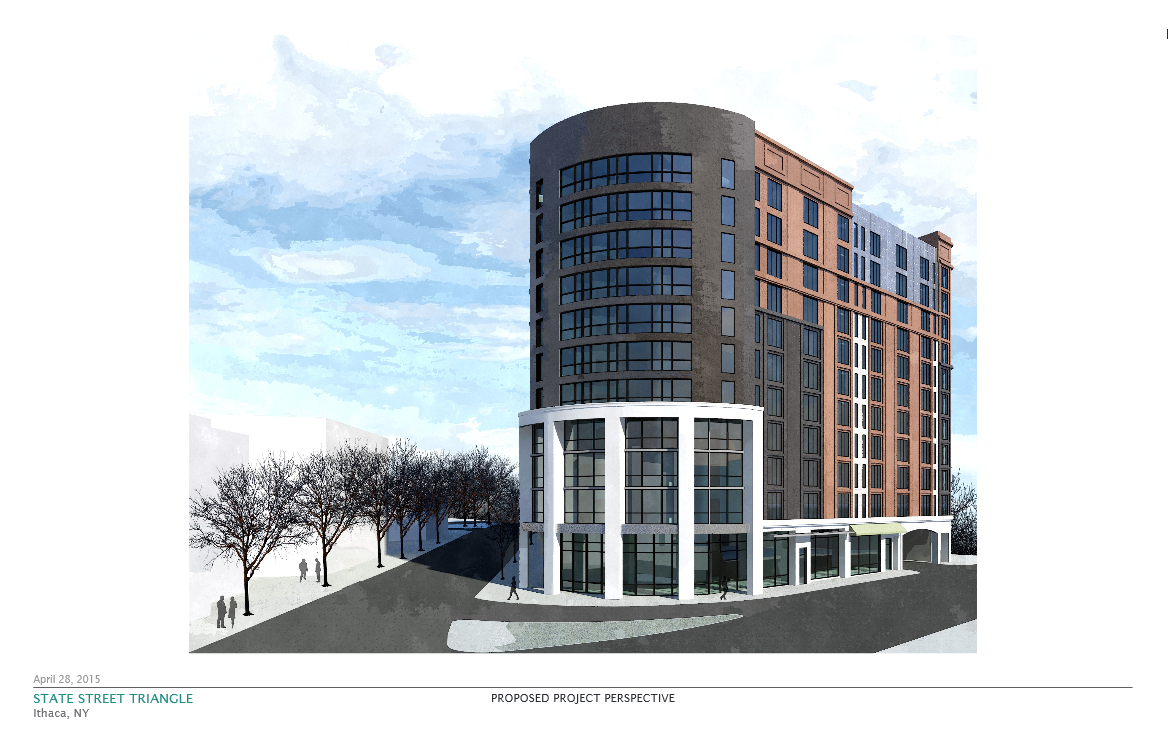
The Texas-based developer is planning an 11-story addition to downtown on the the Trebloc Building property at 301 East State Street/MLK Jr. Street. The building would reach the maximum of the 120-foot zoning allows on the property, and fill up nearly the whole plot of land bounded by East State, South Aurora and East Green Streets.state_st_triangle_1
In the initial sketch plan presented Tuesday night (link here), local architect Scott Whitham, a consultant for the project, showed floor plans for retail on the first floor of the proposed tower, with apartments on the floors above. The retail section includes five general retail spaces and one restaurant space, with sizes ranging from 1,800-2,300 sq ft each. Space for a fitness center and apartment amenities are also included on the first floor.
state_st_triangle_2

Upper floors look out into an interior courtyard on the second floor, and contain a variety of 1 bedroom, 2 bedroom and 4 bedroom units. Each floor would contain about 23 units per floor with 60 bedrooms. Over ten floors, that means that the State Street Triangle building would add 230 units of student-oriented apartments, with 600 bedrooms.

For perspective’s sake, that would make it one of the most populated buildings in the city. Cornell’s largest dorm, Clara Dickson Hall, tops out at around 460 students. The Towers of Ithaca College hold about 300 students each. Collegetown Terrace has the only private buildings that come close to having this many people in one building.state_st_triangle_4

There is no parking on the site. The city’s Central Business District (CBD) zoning does not require it. The CBD zoning allows for nearly full lot coverage as well. The CBD zoning is used only for what planners and officials want to be the densest downtown locations, where parking garages and mass transit are in easy access.

This skyline-altering project stands to have a very large impact on downtown and the city in general. It would be the first student-focused development in the downtown Ithaca area, and 600 students is certainly quite the addition. The project stands to capitalize on both Cornell students and IC students, since the project is within commuting distance of both schools.

There’s much to be debated and sorted out moving forward. More detailed site plans and features are expected to be delivered to the city sometime in May. This summer will be a very exciting one for the Ithaca Planning Board.