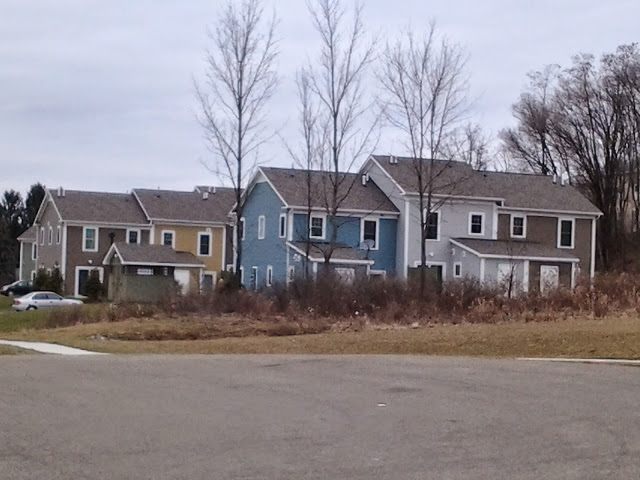
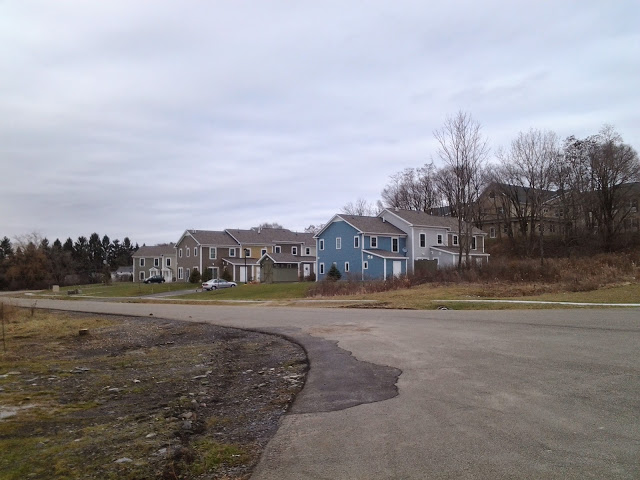
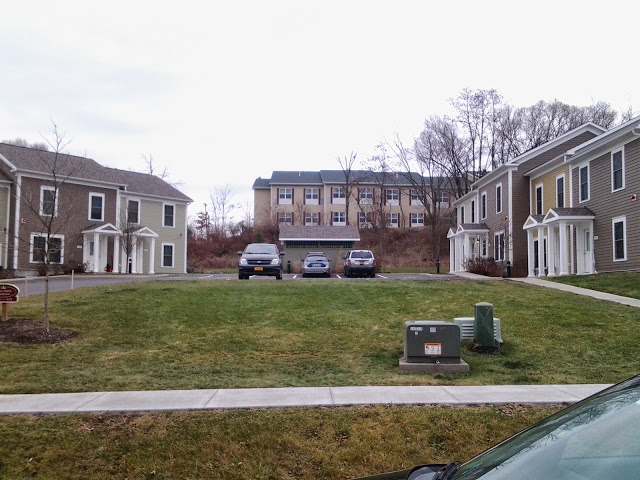
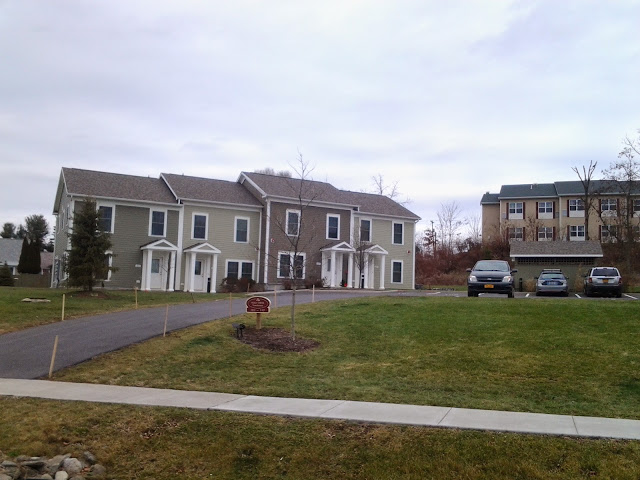
Lofts @ Six Mile Creek Construction Update, 2/2015

13 02 2015

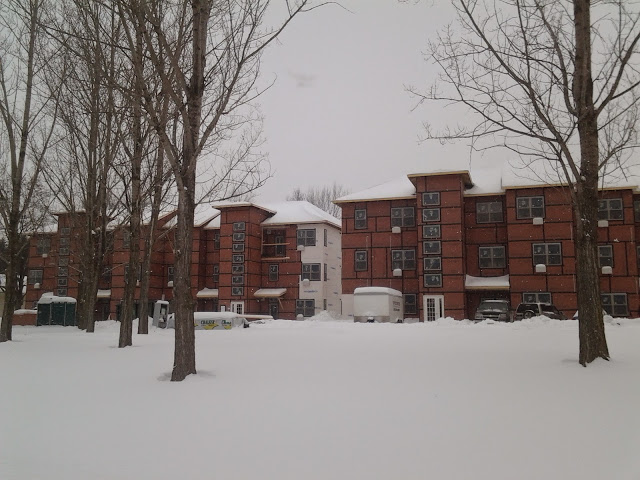
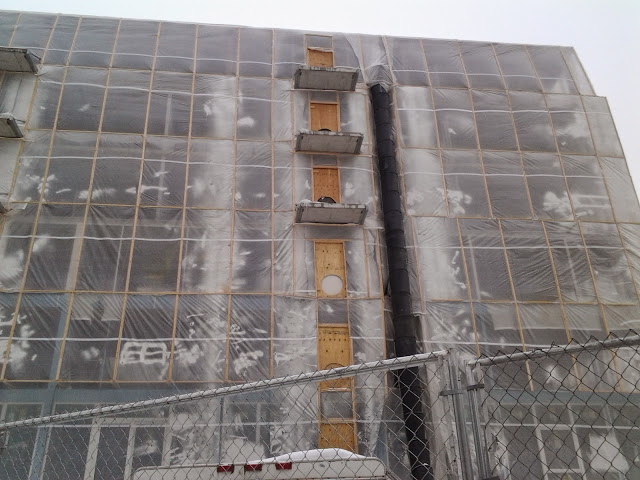
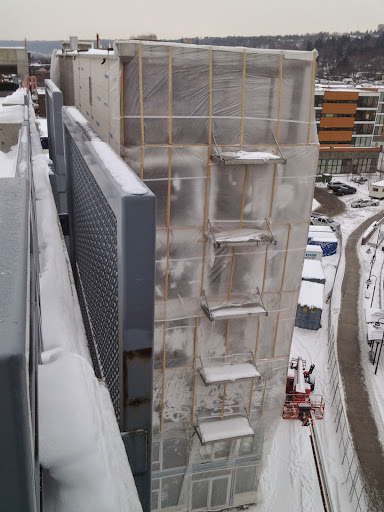
Even during these chilly days, work continues inside the Lofts @ Six Mile Creek apartment building in downtown Ithaca. Walking up to the building, the first thing that sticks out is that the building looks like it’s trapped in a bubble. The plastic sheeting is there for the simple reason of it’s winter in Ithaca, and its effing cold. The plastic keeps some of the sting of the wind away, and also seems to be convenient as a drawing surface. The plywood covers holes where doors will lead out to exterior balconies. Lower floors will have Juliet balconies, while upper floors and some lower-level side units will have full balconies.

A closer look shows that the first two floors do in fact have bands of Pella windows installed, separated with bands of sheathing that will eventually be covered by the exterior finishing material. According to the project’s facebook page, interior wall construction for the apartment units is currently underway. Plumbing, most electrical rough-in and fireproofing are complete, the metal frames of the apartment walls already erected; now comes hanging sheet-rock, flooring and ceiling finishes. Apartments will consist of studios, 1-bedroom units and 2-bedroom units, with some of the studios and 1 bedroom units having bonus rooms. Square footage per unit will range from 555 to 1202 sq ft. The facebook page notes that tentative rents will be posted in the next couple of weeks.

The 7-story, 49,244 square foot building will contain 45 rental apartment units. The building is being developed by Cincinnati-based Bloomfield/Schon + Partners, with construction by Turnbull-Wahlert Construction. Completion of the apartments is expected during the second quarter (April-June) of this year, wrapping up the last phase of a 15-year project.

20150207_151831 20150207_151911 20150207_151950 20150207_151954 20150207_152026 20150207_152252

cayugaplace_v5


Village Solars Apartments Construction Update, 2/2015

11 02 2015

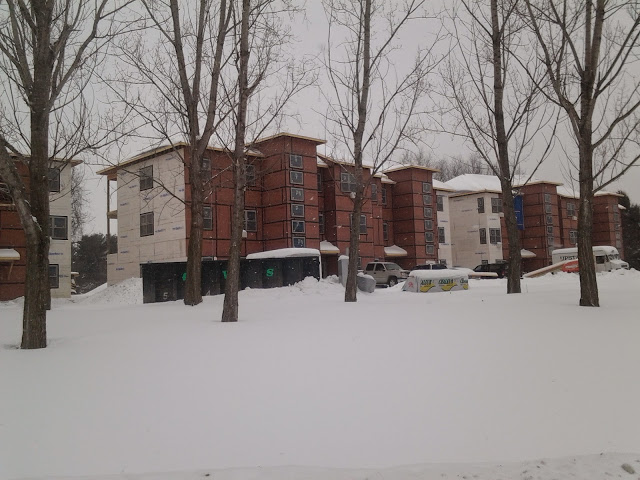
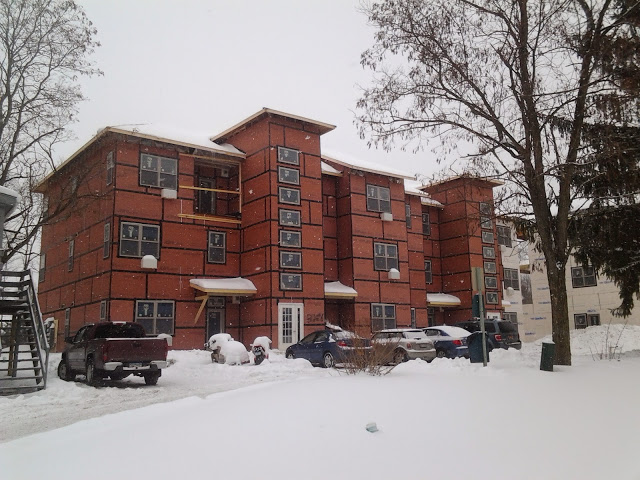
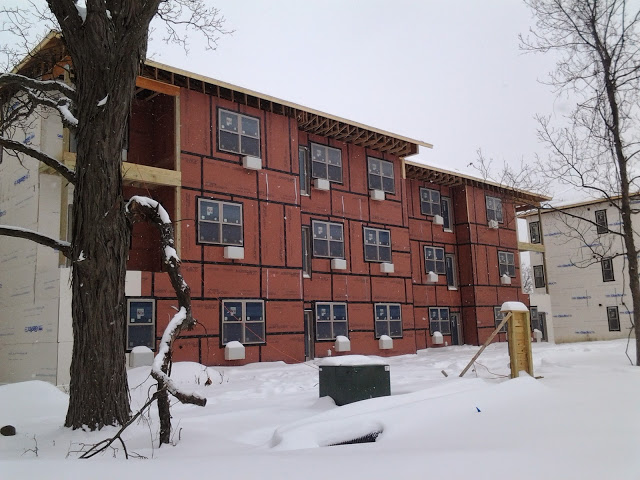
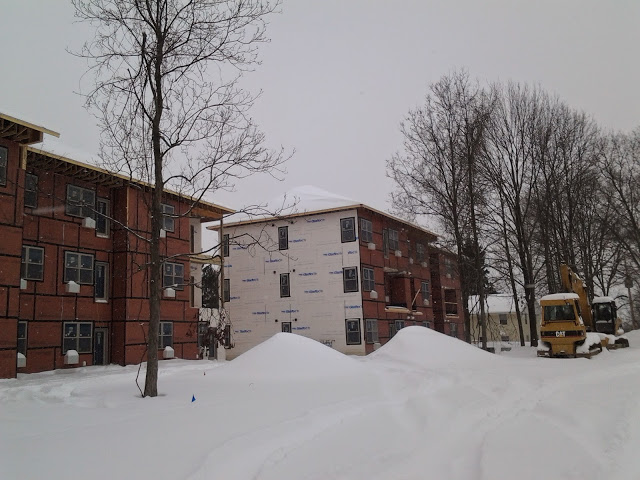
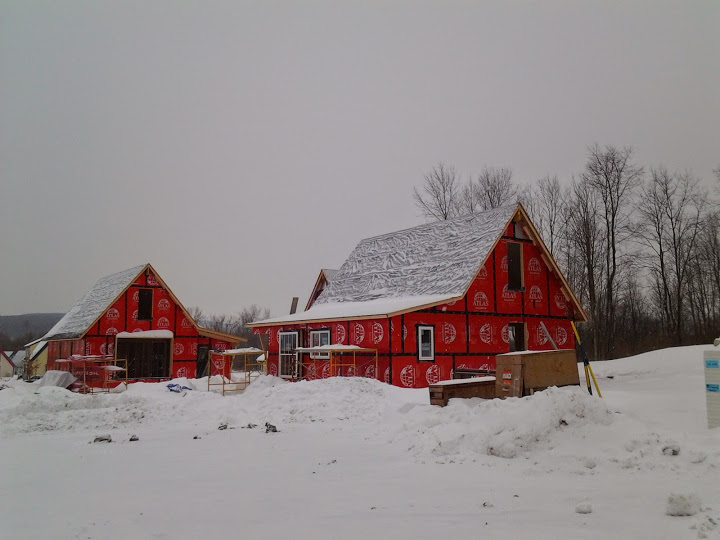
The first three apartment buildings of the Village Solars apartment project in Lansing are fully framed, sheathed (I’m assuming the red panels are sheathing material), roofed, and windows and doors have been installed in most locations. The light-colored material might be a breathable wrap for weather/moisture resistance. It will be a little while before exterior finishes are applied and balconies are installed. When I visited last Saturday, the site was buzzing with the sounds of construction workers busy with tasks inside (probably rough-ins for things like plumbing and electrical), and ’80s hair metal streaming from a radio somewhere from within. Nothing like installing pipes while rocking out to Twisted Sister.

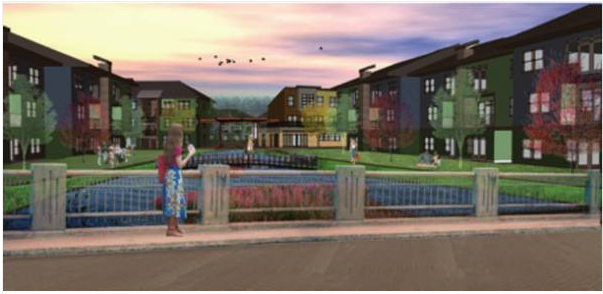
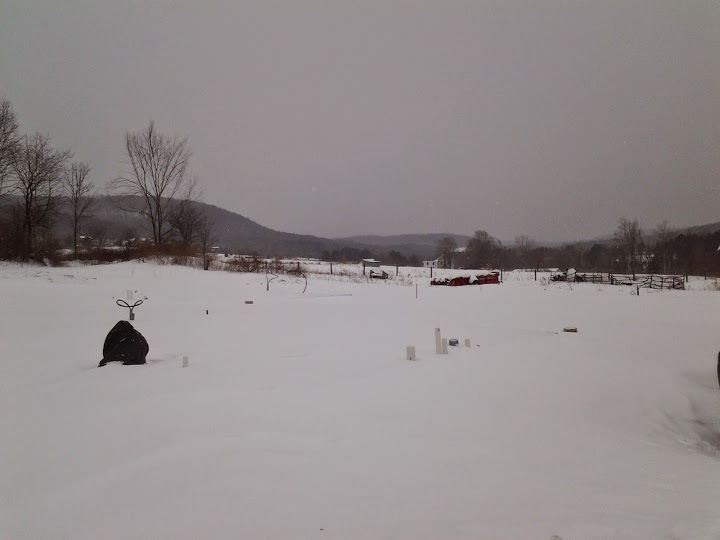
The Village Solars get their name from what the craigslist sales pitch calls “their passive solar design and energy saving features”. As far as I’m aware, they won’t have solar panels. According to Thomas Bobnick, the rental agent for the apartments, the first phase shown here will consist of 36 units (the final buildout will be close to 300 units). The design of the complex calls for at least eight, maybe ten buildings to surround a new pond that will be dug out of the undeveloped middle of the property – the advertisements call it “waterfront”, which it is, technically.

From the craigslist advertisements, one-bedroom units will rent for $1050-$1145 and be ready for occupancy by June 1st, two-bedroom units will rent for $1235-$1369 and be ready for tenants on May 1st, and three-bedroom units will rent for $1565-$1600 and be available on June 1st. These dates are pushed back a little from initial plans, which called for March and April occupancy; no doubt the severe winter has complicated the schedule. Looking at the photos, the two buildings under construction on the west and east ends look to be one style (balconies in the middle), while the center building is a different layout and design (end balconies). The price range for the two bedrooms is a little above the average two-bedroom unit in Ithaca ($1,165), but after accounting for the premium on new construction, the developer seems to be pricing for the middle tier of the market.

The Village Solars are being developed by local company Lifestyle Properties. Lifestyle is run by Steve Lucente of the Lucente family, who have been major builder/developers in Ithaca since the 1950s. No one word on the architect. Upstate Contractors of Syracuse appears to be handling the construction work.

20150207_131607 20150207_131610 20150207_131613 20150207_131646 20150207_131715 20150207_132225 20150207_132231 20150207_132320 20150207_132335 20150207_132338

village_solars


Carey Building Construction Update, 2/2015

9 02 2015

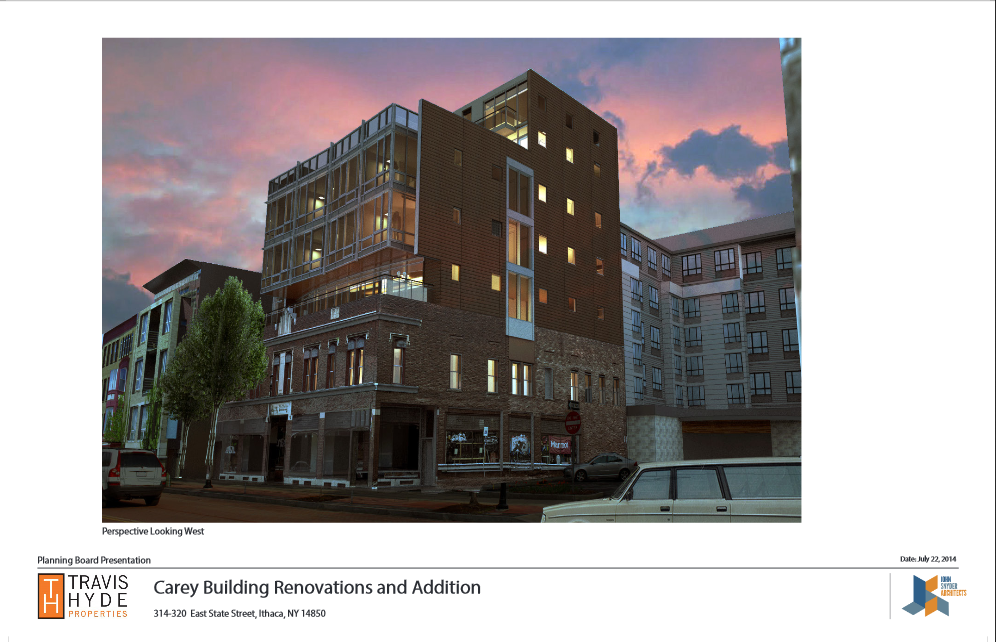
I was originally going to schedule this for later in the week, but I figure I’ll run it now, since the recent twitter chatter is observant but mistaken. The Canopy Hotel is not under construction. At least, not yet. The hotel is expected to start in early Spring. But the work on the Carey Building addition is just beginning.

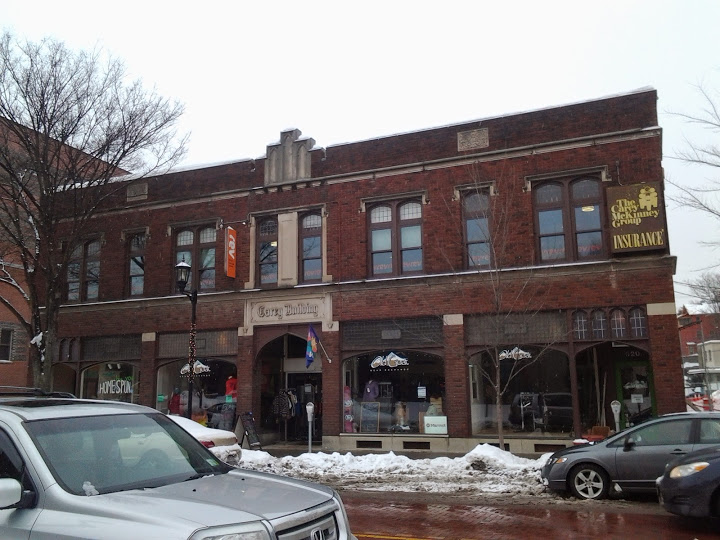
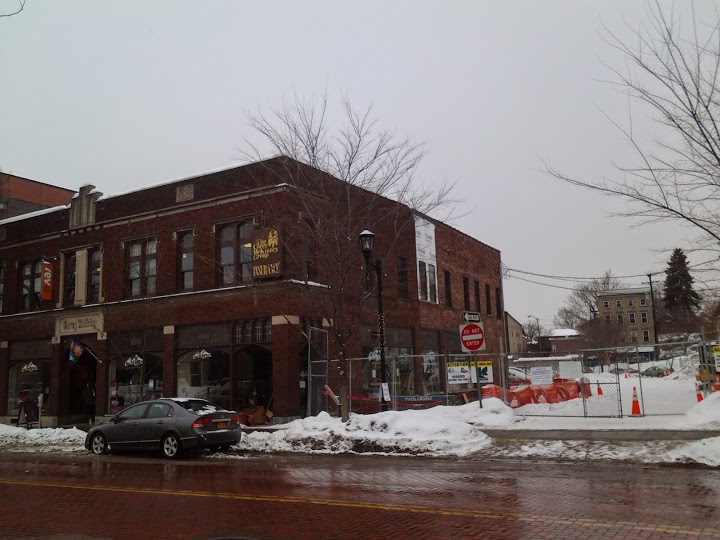
According to Jason Henderson at Ithaca Builds, building contractor LeChase Construction is currently conducting underpinning work on the Carey Building. Underpinning is the name of the process by which a foundation is strengthened – certainly necessary when one is about to add five floors onto a 2-story building. The second to last photo here shows some of the underpinning work on the eastern foundation wall, and the tarp is on the roof indicates prep-work for the upcoming expansion. LeChase will also be handling the construction of the Canopy Hotel next door.

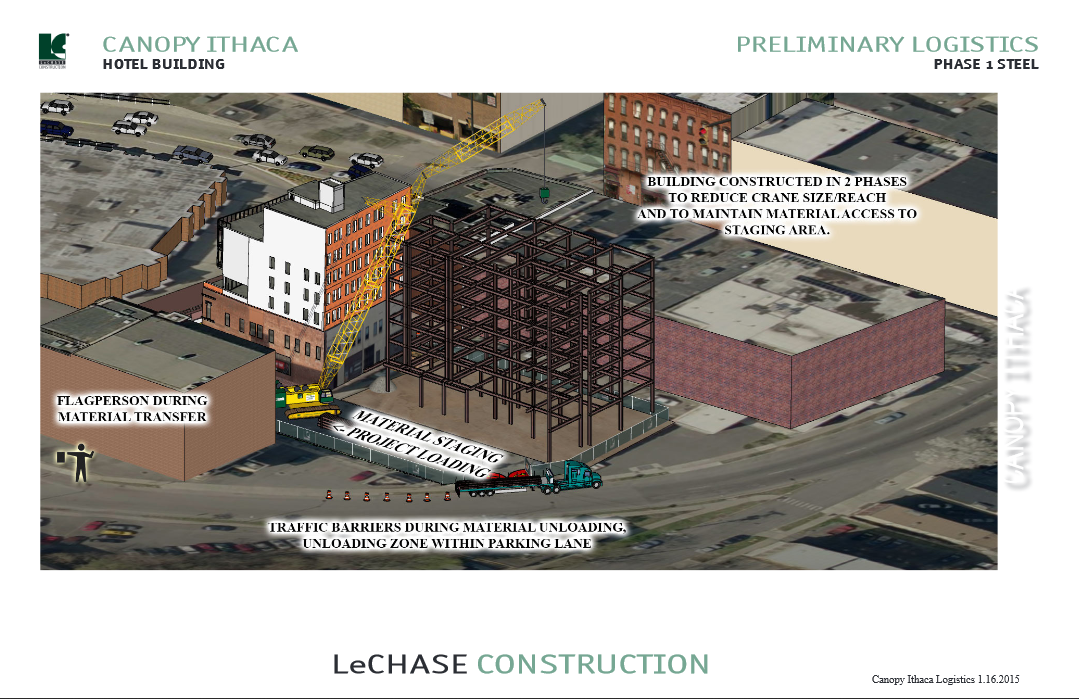
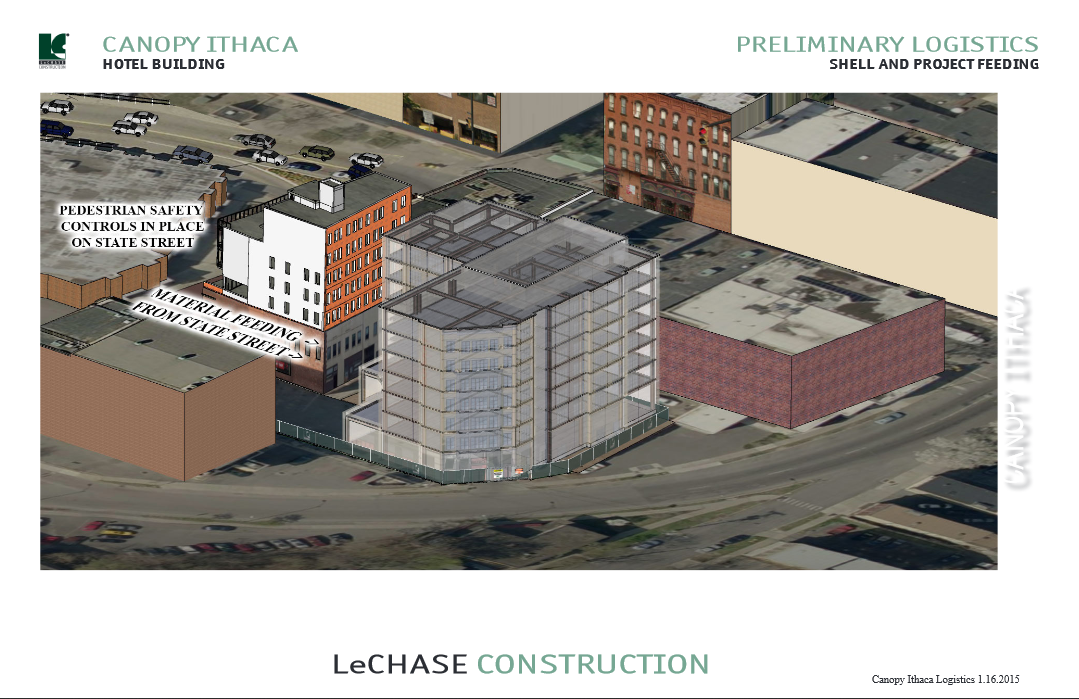
It’s quite unusual in a place like Ithaca to have two separate large projects right next to each other under construction at the same time. This will be logistically complicated. In a letter to the Canopy developers, LeChase’s large trucks will have their brakes inspected before entering State Street, and will be escorted down the hill to a designated area on Seneca Street, and will leave the city via Seneca Street. According to construction phase diagrams, The steel for the Carey Building will be erected first; then, using the same crane, LeChase will begin installing steel for the new hotel. Sharing the crane will result in a cost savings to both owners.

When most of the western side of the hotel has had its steel structure craned into place, LeChase will transition to a smaller crane and switch the material unloading and staging area to East State Street. This is because the hotel occupies most of the site, so the crane is reduced and East State street will be closer to the location of the new crane. Cladding and interior materials will continue to be fed in via E. State Street through the project’s completion in Spring 2016. The Carey Building will have been completed by then, finishing by the end of summer 2015.

The Carey Building addition will add a third floor and 4,200 sq ft to the Rev business incubator (nearly doubling it to 8,700 sq ft), and on floors 4-7, there will be 20 apartments. Floors 4 and 5 will have 16 studio apartment units that average only 400-500 sq ft, their small size enabling them to be rented at a lower price. The 4 units on floors 6 and 7 will be larger 2-bedroom units. The $4.1 million project is being developed by local firm Travis Hyde Companies.

20150207_153142 20150207_153223 20150207_153246 20150207_153412 20150207_153422

carey_rev4_2

canopy_carey_logistics_1 canopy_carey_logistics_2 canopy_carey_logistics_3 canopy_carey_logistics_4


Boiceville Cottages Update, 2/2015

8 02 2015

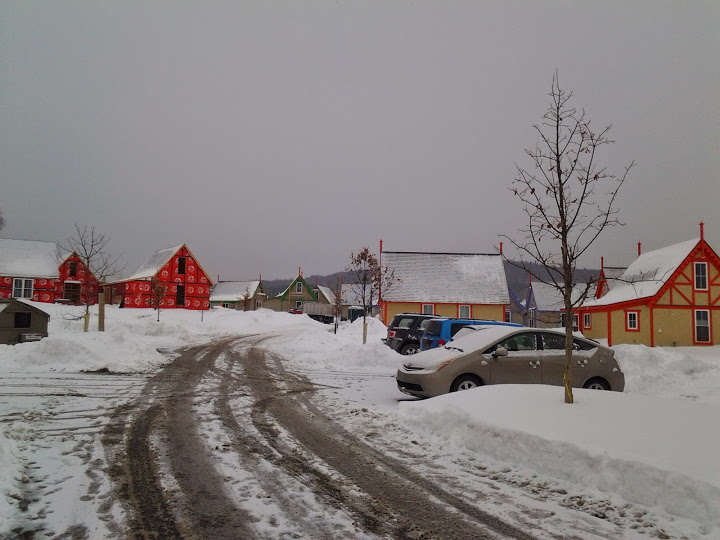
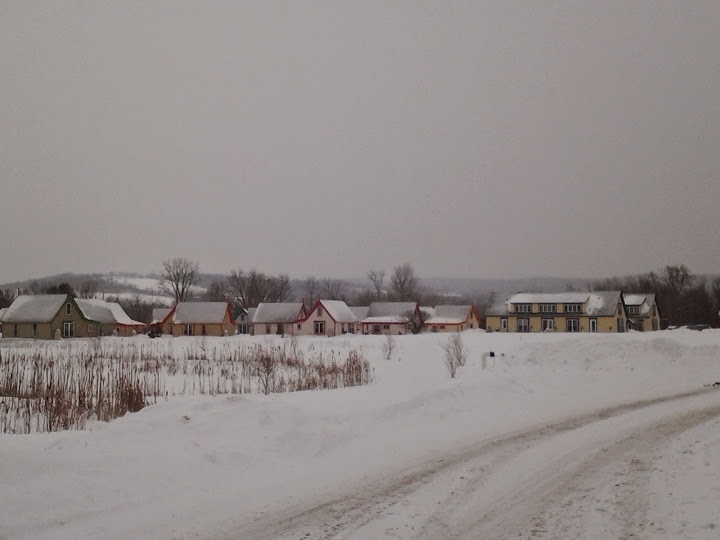
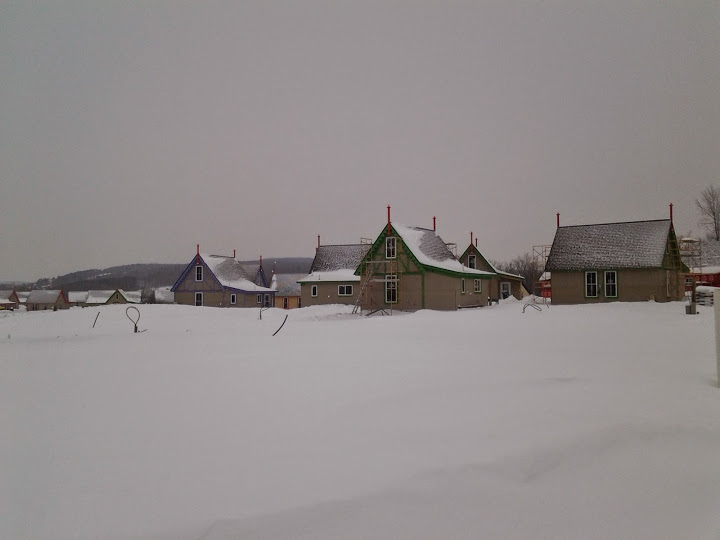
It’s been about 2.5 months since my last trip through the Boiceville Cottages, but given that it’s winter (and a particularly cold and severe winter since the jet stream reconfigured in January), there has only been slow if steady progress with its 75-unit expansion. Since December, the timber homes with purple trim have been completed, four houses that were undergoing exterior build-out have now progressed to exterior detailing and interior finishing (the ones with green timber trim), and windows are being fitted into three homes that have sprouted from their slab foundations since the previous visit.

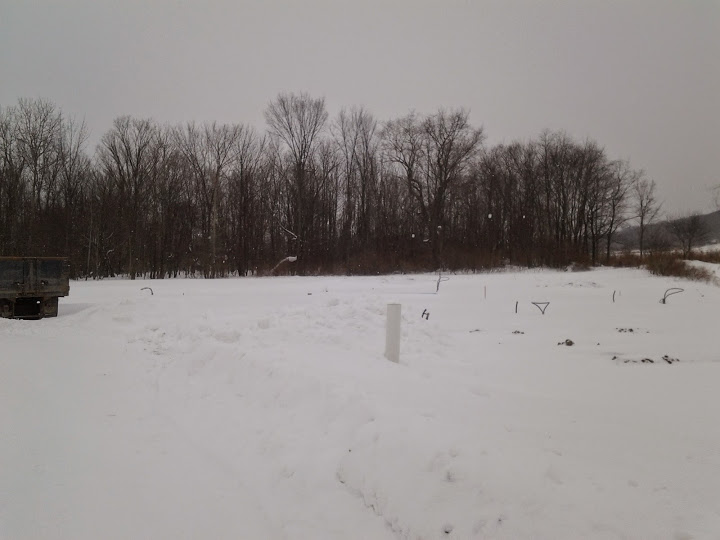
One of the things that stood out on this visit was that it’s now possible to walk all the way through the new phase thanks to the construction. Looking around at the snow on the ground, edges of the blue waterproof covering (which might be the covering of cement board being used to protect the slab insulation) could be seen poking out among the drifts. Using the (gas utility?) loops coming out from the foundations as a guide, there are perhaps a dozen poured concrete foundations, ready for construction as time and weather provide. There were approximately 25 units that were built in 2014, and with probably 10 complete by the end of March, 2015 looks to be on the same construction pace, maybe even greater. It might even be possible that the expansion will be completed this year. Inquiring minds would like to know if Bruno Schickel has any other expansions or colorful villages planned.

The Boiceville Cottages, built and managed by the Schickel family, are rather unusual as apartment complexes go. For one thing, there are the bright paint jobs, a sort of hallmark of the cottage units since the first set of 24 houses was built in 1996/97. The bright paint and the ornate woodwork have led to a nickname, “The Storybook Cottages“, which holds some weight, according to an article in Life in the Finger Lakes:

“Schickel said he was inspired to build his colorful cottages by a children’s book he read to his daughters almost 20 years ago. The book, Miss Rumphius, by Barbara Cooney, tells of a girl who, at her grandfather’s urging, travels to faraway lands seeking adventure. Later she moves to a cottage by the sea and works to make the world more beautiful by spreading seeds of blue and purple lupine. An illustration by the author shows the Lupine Lady’s house on a hill overlooking the sea. The small cottage is replete with finial and gingerbread. Seeing that illustration was the eureka! moment, Schickel recalled. “I said, ‘I’ve got to design something like this!’”

Since the initial 24 units were built, a further phase of 36 units was undertaken pre-recession, and in the past couple of years the town of Caroline signed off on the next phase, a group of 75 that would more than double the size of the complex. The cottages have been built out at a steady pace, and at completion of this current phase, 135 units will be present on the Boiceville property. Most of the units are 1 and 2-bedroom cottages, built in clusters of three, although a few “gatehouse” rowhouses offer studios and 3-bedroom units. The Boiceville complex may be the largest population center in the 3,300 person town.

20150207_124102 20150207_124139 20150207_124147 20150207_124213 20150207_124234 20150207_124303 20150207_124308 20150207_124336 20150207_124344 20150207_124416 20150207_124421 20150207_124434  20150207_124553 20150207_124836 20150207_124847 20150207_125032


News Tidbits 2/7/15: It Snows In Ithaca, But Verizon Makes It Rain In NYC

7 02 2015

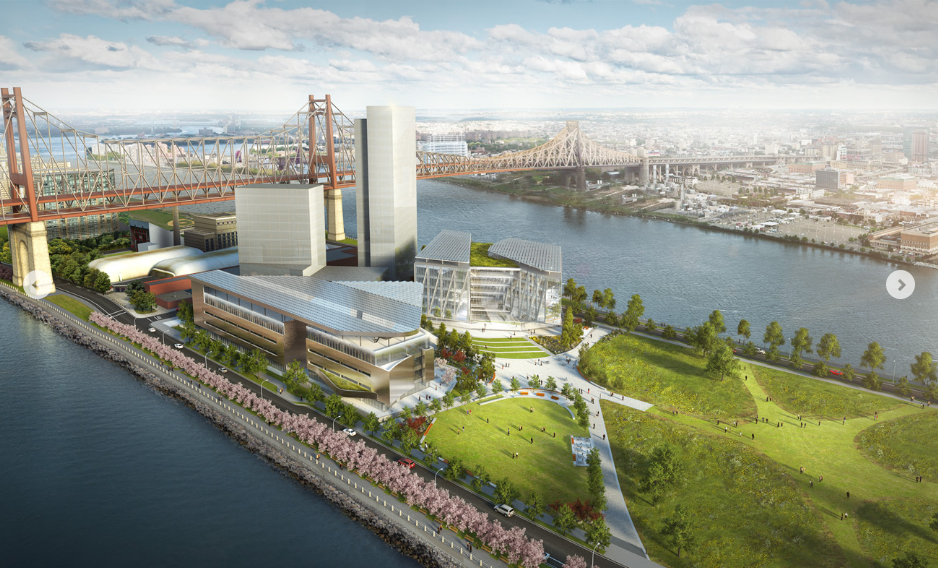
1. As relayed by several outlets, Cornell just received a very generous $50 million donation from telecommuncations giant Verizon. I might make more news about this, but this donation is strictly for the shiny new tech campus down in New York City. The “Verizon Executive Education Center”, in the left of the above render, will be part of the first phase of the campus, set to open in 2017. This goes along with a 6-story, 236,000 sq ft building design by Weiss/Manfredi, and a 4-story, 188,600 sq ft building by Morphosis Architects, both of which are already underway. The skyscraper on the right of the render is a 26-story, 500-room dormitory for students and staff designed by Handel Architects; while not yet underway, it is also slated for a 2017 opening. A design for the tall building on the far left has not been released.

I’d like to see a breakdown of what proportion each campus received from Cornell’s $546.1 million in donations.

2. Looks like some Sun writers decided to do some digging regarding the potential Fine Arts library relocation and expansion. There’s not a whole lot more to add since the Ithaca Voice article; just that the timeline and final design haven’t been set, although the renovation is a “key academic priority”. Students of the AAP school also have mixed opinions about the growth of the library and the possible loss of studio space. But don’t fret dear readers, if a render comes out, it and any pertinent info will be shared here.

424_dryden_rd_1

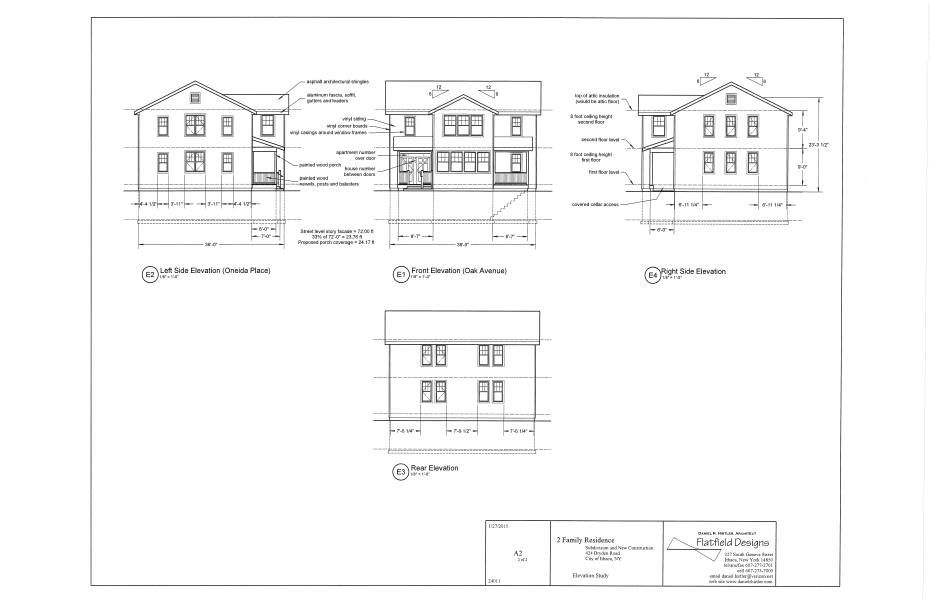
3. A subdivision filed with the city of Ithaca indicates plans for a new two-family, 6-bedroom home at the intersection of Oak Avenue and Oneida Place. The house would be built on land that currently serves as a rear parking lot for 424 Dryden Road. Application here, drawings here. The site falls into the CR-2 Zone of the Collegetown Form District, meaning 2-3 floors, and pitched roofs and porches are required. The architect is Daniel Hirtler of Ithaca, and the developers are William and Angie Chen, also of Ithaca. While not particularly notable, it’s an example of how the form-based zoning applied to Collegetown helps maintain the character of the less-dense outer neighborhood, while still allowing for new construction.

canopy_hampton_rev4_1

4. As with virtually every other sizable project in downtown Ithaca, the canopy Hotel by Hilton is filing an application requesting a tax abatement through the CIITAP program, making it the sixth applicant since the revised program was put into affect in 2013. Application here, and the notice of  public meeting, set for 5 PM February 9th at City Hall, is here. A refresher/review of CIITAP can be found here.

The applicant, “Ithaca Downtown Associates LLC”, a.k.a. the Patel Family of the Baywood Hotels Inc., notes that the 7-story, 123-room hotel project has an estimate cost of $20.15 million. Although the value of the tax abatement is not recorded in the city’s application (it will be written out, when reviewed by the county IDA), it looks like they’re seeking the standard 7-year abatement, which will save them something in the ballpark of a couple million dollars over those 7 years.

As with the previous Marriott and Hotel Ithaca applications, the applicant will only pay one-third to one-half of its projected employees a living wage, which is probably going to earn them the scorn and opposition of the Tompkins County Worker’s Center. But the city and Downtown Ithaca Alliance have been supporters of the project. Neighboring businesses seem to be have mixed opinions about the project, with some seeing a potential business source, and others mourning the loss of a convenient parking lot.

The 74,475 sq ft project is expecting to start construction during the spring, with completion in Spring 2016. Local firm Whitham Planning and Design is the architect.

For those already planning a stay, expect room rates of $160+/night, according to the Journal.

inhs_pride_alleydesign_v2

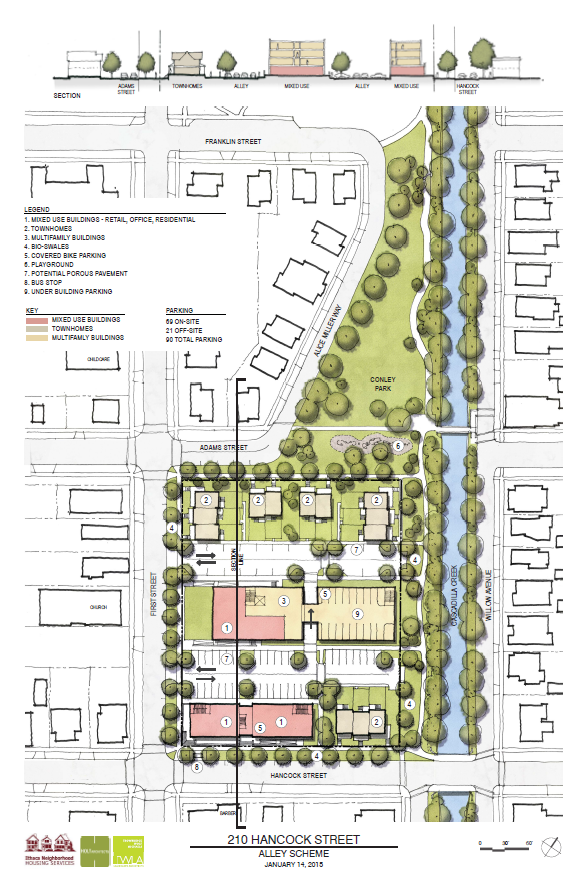
5. It’s PSA time again – INHS is planning meeting #4 for its proposed Neighborhood Pride redevelopment at 4:30 PM Wednesday the 11th, inside the vacant Neighborhood Pride grocery store. The one and only final design concept, shaped by community feedback, will be presented at this meeting. Keep an eye on the Voice for an article (and maybe a rerun here) next Thursday or Friday.
lake_st_bridge

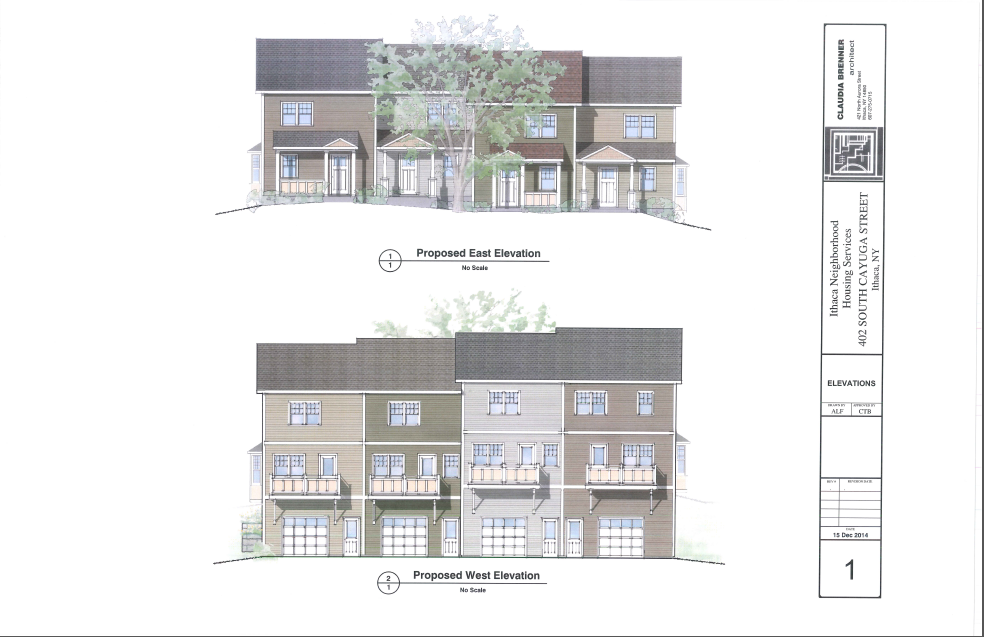
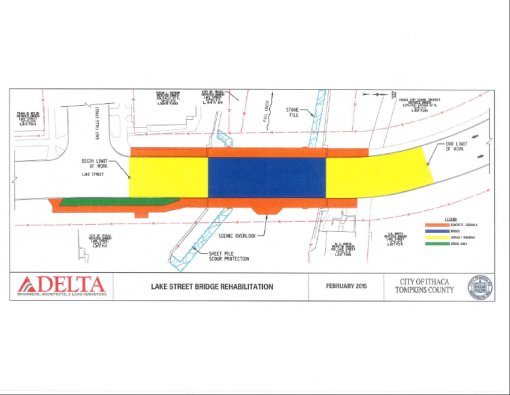
6. Looking at the city’s project memo going out to its departments, it doesn’t look like a whole lot needs to be reviewed this month. Cornell’s Upson hall renovation, the 6-unit building at 707 E. Seneca, and the 4 for-sale townhomes INHS wants to build at 402 S. Cayuga Street are ready for final approval this month. The 3-building, 6-unit project for 804 E. State (112 Blair) still needs to be reviewed by the zoning board, and will be completing environmental review (SEQR determination of significance).

The only new projects of note are the new house at 424 Dryden, and renovations to the Lake Street Bridge. The bridge project consists of rebuilding the current deteriorated bridge with a new deck and refurbished abutments (base supports), as well as scour reinforcements (to protect from creek erosion), a bumpout for viewing Ithaca Falls, some cute light-posts, and a bridge span that isn’t so degraded that it’s liable to collapse into the creek. That project has a $1,000,000 price tag, and is expected to run from June to November of this year.

For those that use this bridge, start prepping for a detour route – the bridge will be closed during construction, to both vehicles and pedestrians. The city estimates the detour will be an extra 1.7 miles for cars, and 0.7 miles for bikes and walkers.



News Tidbits 1/17/15: Capturing “The Essence of Local Surroundings”

17 01 2015

inhs_pride_conceptsketch

1. Token PSA: The third meeting for INHS’s Hancock Street/Neighborhood Pride redevelopment is next Wednesday, the 21st, 4:40-7:30. Attendees are not required to be there for the entire time. The goal of meeting three is to discuss design concepts for the proposed buildings that comprise the two remaining/competing site plans. I look forward to writing a follow-up after the meeting.

cayugafarms_2

cayuga_farms_1


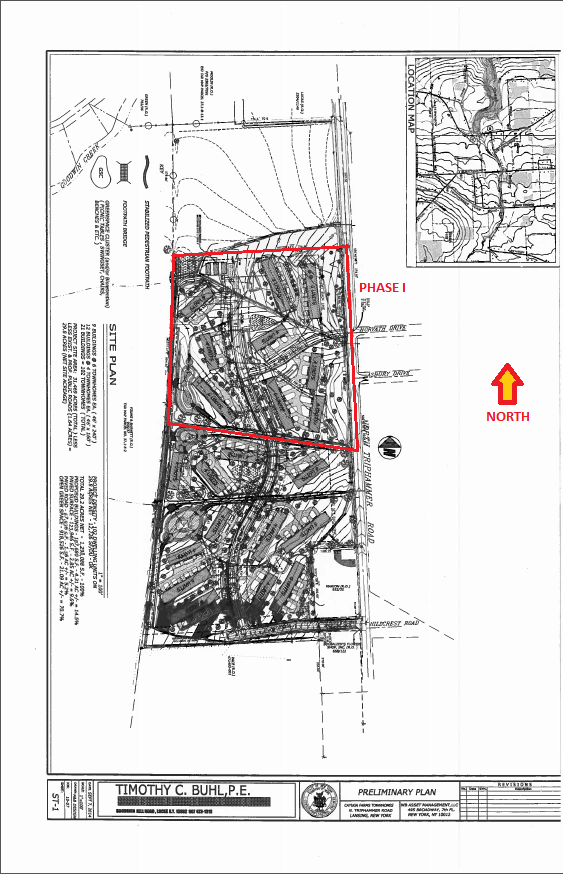
2. Finally, some drawings for the 102-unit Cayuga Farms townhouse project in Lansing, courtesy of the Lansing Star. They look like stereotypical “McMansions” that happen to have shared walls, and the rental price for the 2 and 3-bedroom units has the mansion part covered – $1800-$2200/month. If you use the 30% rule of affordable housing, that means the a household in the cheapest unit is expected to pull in $72,000/year. To quote the project engineer, Timothy Buhl:

“The idea is to capture the transient market of people coming from urban areas to work at the colleges,” Buhl said.  “They would ultimately buy a house, but don’t know where to locate.  We’re looking for young, two-worker families.  It’s an in-between type of rental of higher-end people that we’re looking for.”

In other words, “affordability” is not a word you’ll see in this conversation. The Cayuga Farms project was initially proposed several years ago as 144 townhouse condos (I miscounted and said 138 at the time), but the market for suburban high-end townhouse condos is pretty limited – there is Ivar Jonson’s Heights of Lansing which since 2006 has sold ~17 of the 70+ proposed townhouse units, and Woodland Park, which in three years has built ~6 of 48 planned. The market is virtually non-existent, hence rentals.

On the town’s website, there’s all sorts of other data uploaded: trail recommendations, on-site sewage system details, traffic generation estimates, erosion and sediment control plans, environmental review forms and so forth. Cayuga Farms is multi-phased, with 3-4 phases from 2015-2021; phase 1 will have 44 units. Since Lansing is at capacity on its natural gas pipeline, residents will be using propane appliances until the new natural gas pipeline from NYSEG is routed in. This project already gets dinged in my book for having 354 parking spaces when zoning requires only 153 (1.5 spaces per unit). Every unit gets 3.5 parking spaces. That seems like overkill. Anyway, the planning board reviewed the SEQR on the 12th, which is a big step towards approval of the townhouse development. My gut feeling is, while there’s no doubt Ithaca needs housing in most market segments, a high-end rental unit where you have to drive to everywhere bundles just about every criticism about local development into one convenient package.

Let’s be honest, I’m generally pro-development. But I do have a short list of projects I don’t support. This is one of them. With the sprawl, gobs of parking, and mediocre design, I question its value to the Lansing community.


10378252_313975992125799_95913780193412415_n 10917333_314783998711665_7443965770647794346_n

20141129_135859

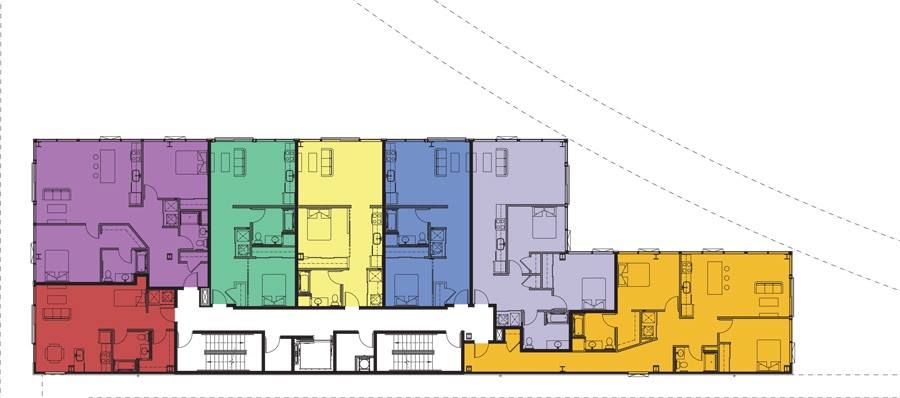
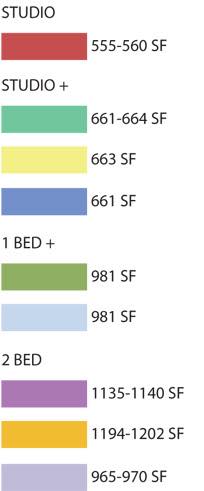
3. The Lofts @ Six Mile Creek project has posted preliminary unit sizes and floor plans on their facebook page. The “Studio +” and “1 Bed +” indicate bonus rooms inside the unit (suitable for another bedroom, home office, etc.). No word on rents just yet, but being new and downtown, expect an upmarket price for the 45 apartments due to enter the market late this spring. Their webpage notes they’ll be accepting reservations sometime prior to that.

canopy_v7_1

4. I think we’re up to version 7 now, but the differences in the proposed “canopy Hotel” are now so subtle that you’d have to be looking hard to spot the changes. The entrance facade is virtually the same, but the mechanical penthouse has been updated to better blend in the rest of the structure, and a couple of stylized wall inserts have been planted into the northwest wall to give the 7-story, 123-room hotel a little visual interest. More renders here, a geotechnical report here, a new cover letter here, and traffic study materials here and here. Thank goodness a lot of this work has gone paperless.

According to the documents, the new “canopy Hotel” brand by Hilton

“…is marketed towards the millennial generation (those born between 1980 and the mid-2000s), however, is relevant for the older generation of hotel guests. Each canopy Hotel is designed to incorporate the essence of its local surroundings and neighborhood feel; such as offering a local welcome gift and evening tastings of local food, beers, wines, and spirits to providing local fitness and recreation options in terms of jogging and bicycle routes (bicycles will be available for rent).”
Yes, ‘canopy’ is meant to be lower-case and ‘Hotel’ is capitalized. I’m sure the brand creators thought that was hip and edgy. Yet another reason why I would never be a good marketer. The 74,500 sq ft hotel includes a small restaurant space of 2,000 sq ft on the first floor, as well as standard hotel amenities like a small meeting room and a gym. The $19 million project hopes to start construction this spring.
upson_4
5. Looking ahead, here’s what the city Planning and Development Board seeks to do at its meeting later this month. For the canopy Hotel mentioned above, declaration of environmental significance and possible preliminary approval. INHS’s 402 S. Cayuga Street townhomes and the 6-unit 707 E. Seneca apartment project will be up for environmental review and recommendation to the zoning board for variances. The Planning Board will also declare itself lead agency for reviewing Cornell’s Upson Hall renovations, the 3 duplexes at 804 E. State Street (112 Blair). Board members will also consider approving a telecommuncations (cellphone) tower on top of a gas station at 214 N. Meadow Street, and weigh in on parking-related variances for 128 West Falls Street and 108-110 Eddy Street. It’s an interesting mix this month.


News Tidbits 1/10/15: Where Will All the Students Go?

10 01 2015

student_housing_table

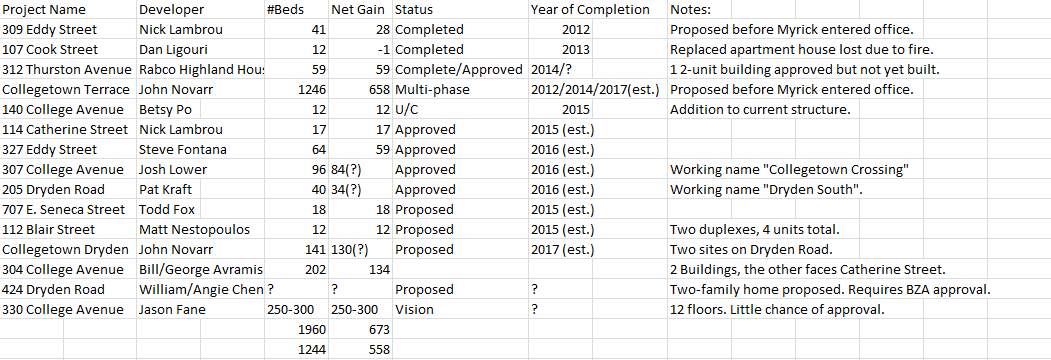
1. I’ll lead off with this supplement to the Voice opinion article I wrote. Here’s the work sheet I used for the bedroom tally for student-centric housing. I chose to leave it out of the submitted article because 95% of readers checking the Voice would find it obscure or just wouldn’t be interested. If you’re coming here, then you’re probably in the other 5%. Question marks are present because the county’s online records provide total number of units in mixed-use buildings, but not bedrooms (yet residential-only structures have bedroom numbers, go figure). Anyway, there is the off-chance that enough new projects will be proposed in the next 12-18 months that we could still meet the projected need by 2018, since it’s about 500 rooms short at the moment…but I’m not optimistic. There are few large sites left in Collegetown, and even fewer sites in other adjacent neighborhoods. If Fane comes back down to Earth with a project that fits zoning for 330 College Avenue, and Travis Hyde’s Ithaca Gun apartment project ends up being student-centric, then perhaps there will be another 200 or 250 bedrooms to the total. The rest of the balance will need to come from small or medium-sized projects. Anyway, that’s all speculation. We’ll just have to wait and see what happens.

I wasn’t being totally facetious with the suggestion of Cornell building more dorms though. A few hundred rooms could take some of the edge of the housing problem, and it’s less Cornell has to pay out in rent stipends to financial aid recipients. But even if Cornell was mulling it over, it would take years to go through planning and construction.

tech2

2. If this were in Ithaca, I’d have splurged pages of writing over it. But it’s not. Construction permits have been filed for Cornell’s second academic building at its new tech campus on Roosevelt Island in NYC – a 189,000 sq ft structure designed by some of Cornell’s favorite alumni architects, NYC firm Weiss/Manfredi. They’re the same ones who are handling the Vet School renovation, and who designed the Sesquicentennial Commemorative Grove that opened last fall. The building is the one on the right in the above image, the one that looks like an ice cube breaking apart. Building number one, the design in the left foreground, is already underway.

For the record, I’m still not a fan of the tech campus.

3. The Ithaca Times has done an interview with Bill Manos that’s worth a read. It has your standard anti-regulation rant (the same one you get from your retired Fox News-watching uncle), and he calls the sale an “opportunity from Heaven” that he didn’t see coming. He says the sudden closure was so the new lessees could renovate the diner and have their new restaurant (called “Old Mexico“) ready for the Spring. I don’t think that exonerates the “bad manners” of giving his employees only eight days’ notice, but hopefully they’ve all been able to move on like he claims in he interview.

707_E_Seneca_2

4. Looks like the 6-unit, 18-bedroom project for 707 E. Seneca has seen some slight revisions as it goes to the ILPC (Ithaca Landmarks Preservation Council) for further review (agenda here). About the only notable change I can find from the previous render is in the spacing of the dormer windows. Although the lot is undeveloped, it’s in a historic district, hence the extra step of ILPC approval. A lot of the major details have already been hashed out, so I imagine the council will only have minor suggestions, but we’ll see what happens. The ILPC is also set to review the Old Library proposals, and given their exacting approach, my inner cynic tells me it will be less about which project they like the most, but rather which one they dislike the least.

804Estate_112blair_rev1_1 804Estate_112blair_rev1_2

5. On another note, the two duplexes proposed for 804 E. State Street (formerly 112 Blair) has been upped to three. Details and drawings here. All are two units each with three bedrooms in each unit, so 18 total. They also look about as utilitarian as one can get away with; the easternmost house (building “D”) has a chamfered corner, and that’s about the only interesting architectural detail I see. Parking will now be shoehorned into the basement level  of all three buildings (12 spaces total; it’s a hilly site). The construction cost has been upped to about $600,000, but the construction timeframe of late Spring/summer 2015 is still the same. Although the lot is being cobbled together from slices of adjoining properties, it will still require an area variance from the zoning board because of how close the houses are to each other. Looking on the bright side, this development will replace a parking lot and works as appropriate infill for lower Collegetown.

20141227_144707

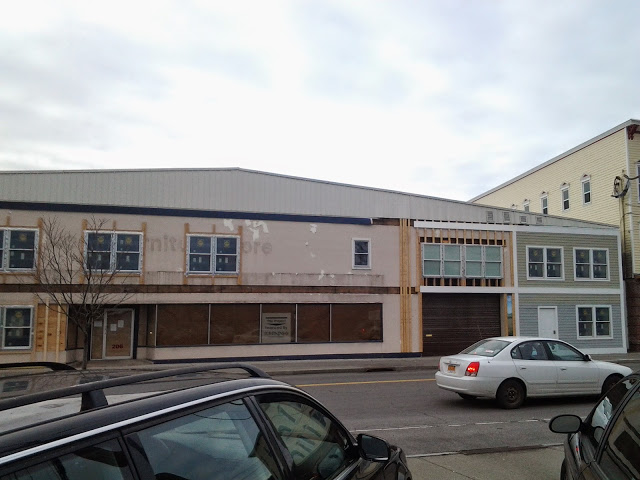
6. I finally received an email response from the Zaharises regarding what’s underway at their old furniture store at 206 Taughannock Boulevard. Unfortunately, it’s not very descriptive:

We’re renovating the building into apartments. It looks quite different doesn’t it?!

Yes. Yes it does.


Holly Creek Construction Update, 12/2014

4 01 2015

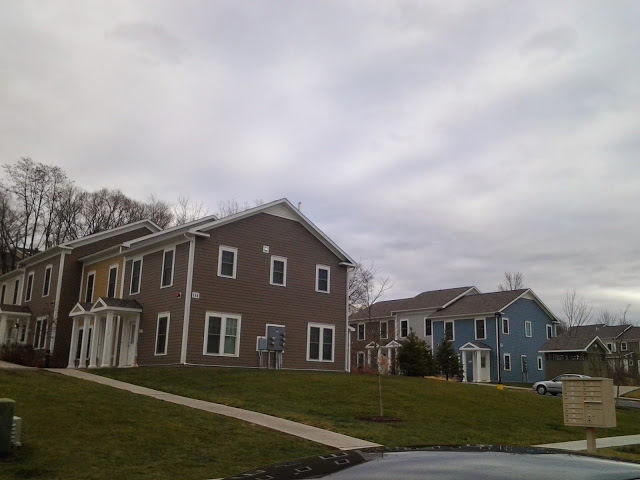
Stone Quarry hasn’t been the only project INHS (Ithaca Neighborhood Housing Services) has been working on this past year. Over on South Hill, the non-profit affordable housing developer has been wrapping up Phase II of Holly Creek, a townhouse development just west of the intersection of King Road and Danby Road/Route 96B. Like the first phase, phase II totaled 11 units, bringing the total on-site to 22 units in rows of 3 or 4 units. No further phases are planned.

The 2-bedroom and 3-bedroom units are complete and the last few are for sale ($106k and up) to first-time homebuyers that meet INHS’s buyer criterion. The design is a product of local architect Claudia Brenner, and construction was handled by local firm Avalon Homes LLC. Some commenters on Voice articles have been asking about whether certain builders are local and pay living wages. I checked and yes, they do.

The project has received criticism in some circles for being in too suburban of a location. INHS stands by its choice of location for being on a bus route and because the site had infrastructure/utilities already in place.

20141227_140738 20141227_140754 20141227_140802 20141227_140830 20141227_140837 20141227_140953 20141227_140956 20141227_141002


News Tidbits 1/3/2015: Ringing In the New Year

3 01 2015

trans_developments

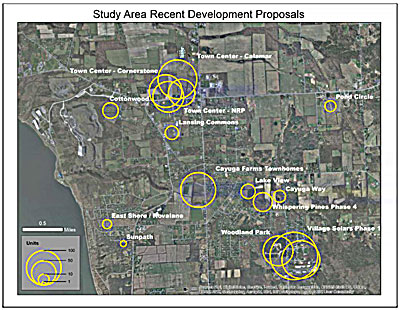
1. Leading off this week, here’s an article from the Lansing Star discussing a transportation study for Lansing. While I can’t say transportation studies are my cup of tea, the map of proposed developments certainly caught my eye.

Most of the large-scale developments are associated with the quagmire known as Lansing Town Center, and most of the smaller circles are single-family housing tracts. I dunno how much I trust this map though, because I thought the ~30 lots of Lake View/Whispering Pines/Cayuga Way were all the same project, and Cottonwood’s 20 lots only exist on maps. The 400+ units down towards the airport will make the intersection of Warren and Rte. 13 even more heart-racing. My back of the envelope math says the total number of units that I’m aware of is about 600 outside the town center projects, with more in the pipeline according to the town planning board’s latest minutes. That’s pretty impressive for a town that averages 25-30 units per year. This all makes for exciting math, but I have serious concerns that Lansing doesn’t know how to manage its growth.

20141220_163744

2. Normally I don’t write about just one house. Unless it’s the one lot in Ithaca town where adjusting the property line made it buildable, and drove the neighbors crazy. Then I write about it. Looks like that parcel on Tudor Road sold and an unassuming ranch-style home is under construction. I wonder if the six vacant lots on nearby Circle Lane will ever be developed.

upson_5

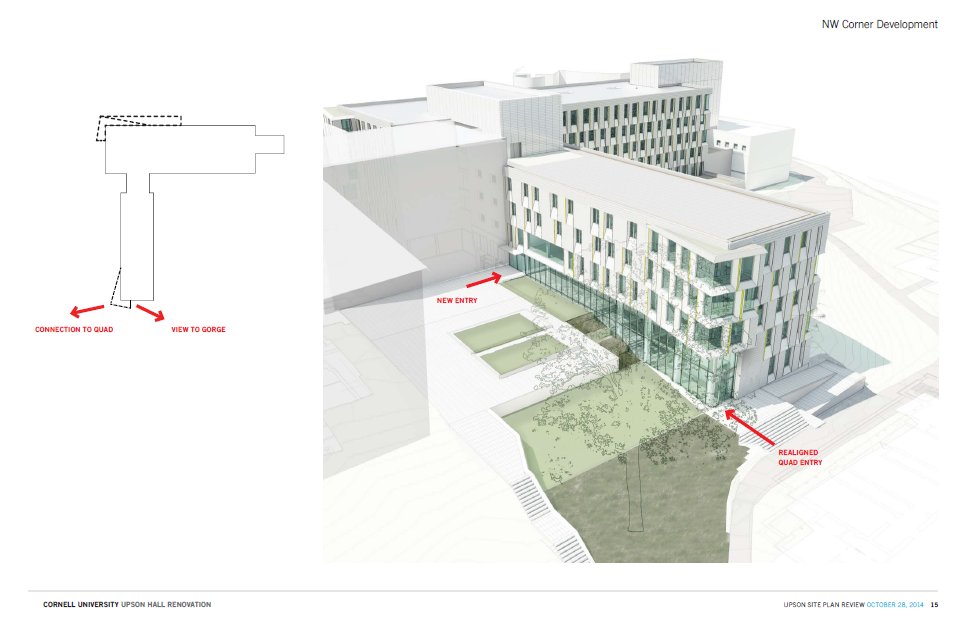
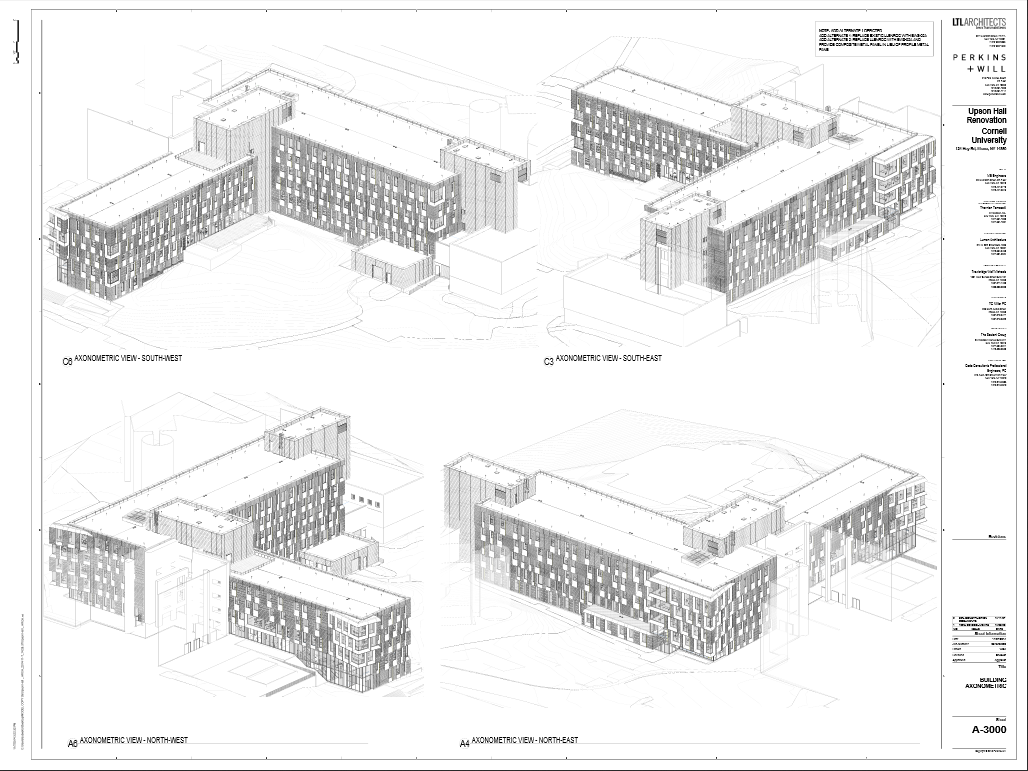
3. In typical Cornell fashion, reams of documentation have been provided for their upcoming Upson Hall renovation, which is due to go up for site plan review by the Planning Board in late January. I’ll boil it down to a few salient details. From the application, here are the numbers: the estimated cost is $40 million. The additions at the entrances will result in a net increase of 4,000 sq ft (Upson Hall is about 160,000 sq ft). The construction time frame is June 2015 to September 2017. There will be no additional jobs after completion, but about 150 construction jobs will be supported by the project (with at least 40-60 on-site on any given day). Here are elevations and renders, existing conditions, utility and demolition plans, floor and roof plans, phase 3 landscape drawings, the planning board presentation for January, construction stage diagrams, more staging and landscape plans, and a profile of the terracotta to be used in the new facade. It’s Cornell – where most applicants don’t provide enough info, Cornell overwhelms (not unlike a “shock and awe” military doctrine).

sonic_indoor_seating_location_rendering-thumb-525x262-15871

4. For those of you looking for your greasy drive-in food fix – The corporate parent of Sonic Drive-Ins is actively looking for an Ithaca franchisee. As part of its upstate NY roll-out, they’ve developed a new corporate design (pictured) that is more appropriate for the local climate, with large interior seating areas. Start-up costs are typically pegged around $500,000, with a total investment closer to $1.5 million. So if you know someone with restaurant experience and a cool million just lying around, Sonic would like to talk with them.

5. The Ithaca Times has come out in opposition of the IDA’s vote to not grant tax abatements to Jason Fane’s 130 E. Clinton project. This must be one of those rare times we agree. I do appreciate that they called out the steep slope argument, which is bull crap. They also point out that the door is open to an Article 78 lawsuit from Fane, if he’s feeling vindictive and that the IDA decision was made unjustly. Is there a chance he’ll do that? Yes. Is there a chance he’ll win? Also yes, if his lawyers can prove the decision was based on character judgement rather than the project itself. The project may be cancelled, but I don’t think Fane is done quite yet.


206 Taughannock Boulevard Construction Update, 12/2014

30 12 2014

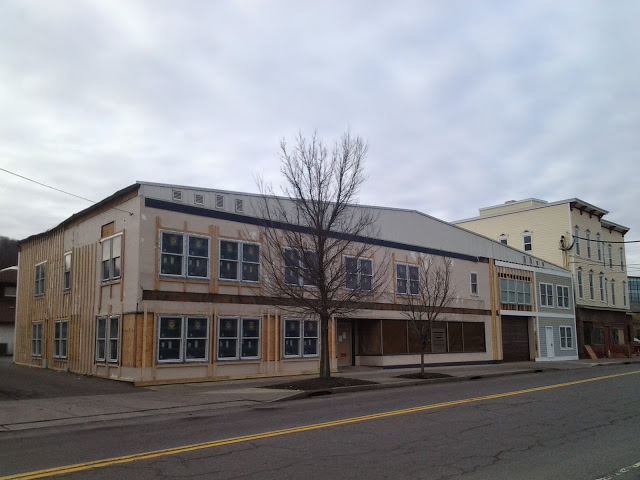
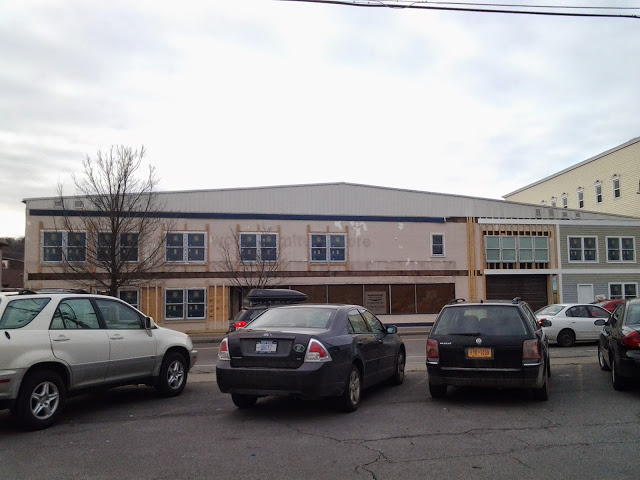
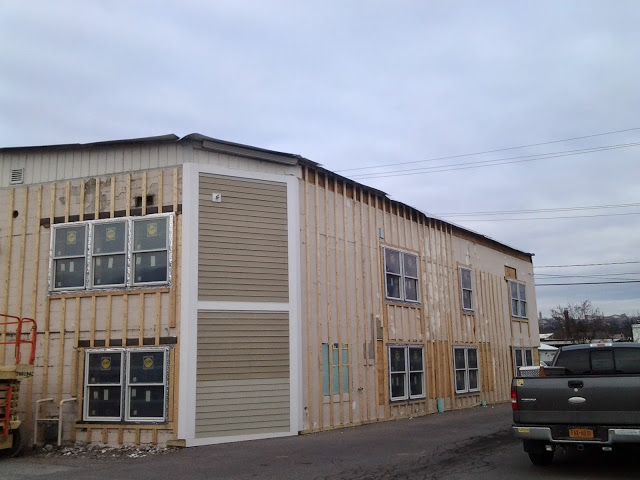
Okay, I’ll be completely honest – I don’t know what’s going in here. I don’t know what the mix of uses is, or many residential units there are. Here’s what I do know.

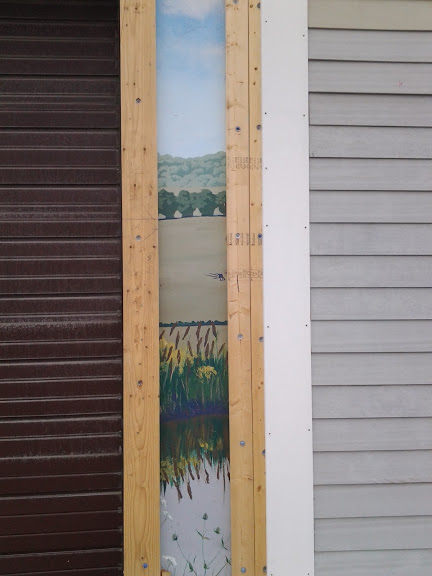
206 Taughannock was until earlier this year the site of the Unfinished Furniture Store (otherwise called the “Real Wood Furniture Store“) owned and operated by the Zaharis family. From the county records, the building itself is a 9,156 sq ft structure originally used for retail and warehouse space and dated to sometime in the 1970s. The store closed in April when its owners retired, and a building permit shown in a ground-floor window was issued in July to the Zaharises. I ran this past IB’s Jason on Twitter, and his guess was about as good as mine; residential units on top and maybe some of the bottom, with a reduced retail space. Photos of the store before renovation can be seen here at Ithaca Builds – the Lehigh Valley House next door is being renovated by its owner (Tim Ciaschi) into 6 condos and ground-floor commercial space. With the 323 Taughannock project approved just up the road, Inlet Island has been seeing increased interest from both current owners and prospective developers. Perhaps the biggest loss is the removal of a rather attractive mural from the front of the structure.

The work itself looks like a complete gutting of the original two-story building, with new windows punched into the walls and sedate exterior (fiber cement?) siding attached to the more complete exterior sections.
I reached out to the owners but have yet to hear a reply; if anyone has some info to share, feel free to reply to this post or send an email. These projects are the most fun for me, because they go without fanfare, but are just as important as any other project of equal size; they lie in wait for discovery and publication.
20141227_144617 20141227_144631 20141227_144707 20141227_144748 20141227_144755 20141227_144900