News Tidbits 5/21/16: Building Bridges, or Burning Bridges

21 05 2016

209-215_2

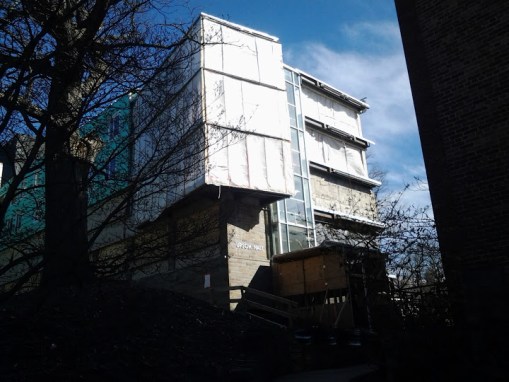
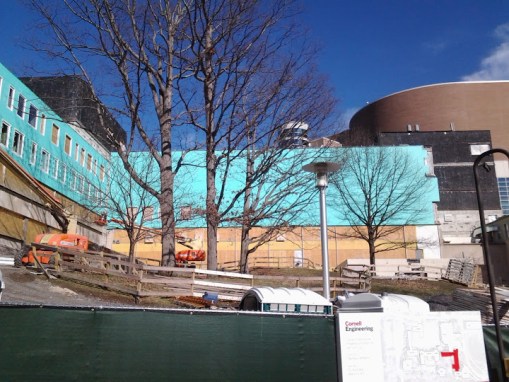
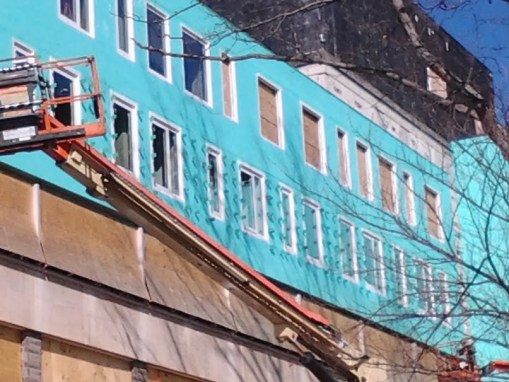
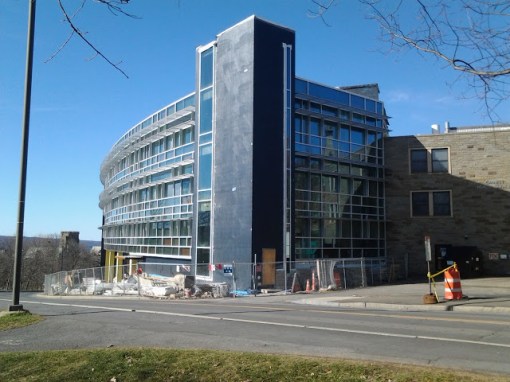
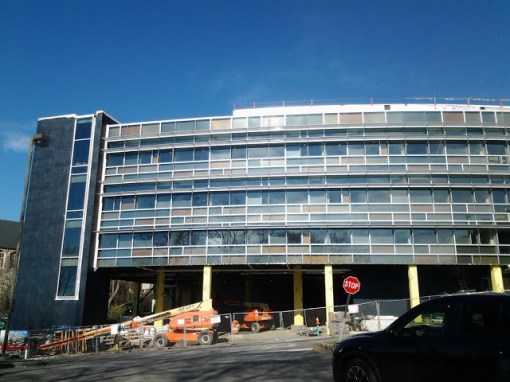
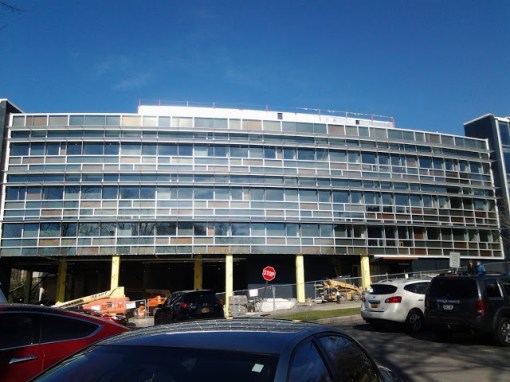
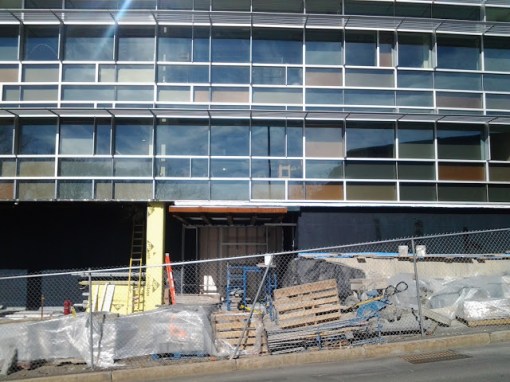
1. 209-215 Dryden Road has a name: the Breazzano Family Center for Business Education. Let’s just call it the Breazzano Center for short. The name comes as part of a $25 million donation from Cornell MBA alum David Brezzano ’80, and is named in honor of him and his three sons, all recent Johnson School graduates. According to the Cornell Chronicle, the donation will “substantially support” the building’s construction, which construction loans on file with the county have pegged at $15.9 million. Breazzano is the president of money management and investment firm DDJ Capital Management, and did his undergrad at Union College in Schenectady, where he serves as trustee.

John Novarr is the developer for the 6-story, 76,200 sq ft building, and Cornell will occupy 100% of the structure on a 50-year lease.
chapter_house_v4_1

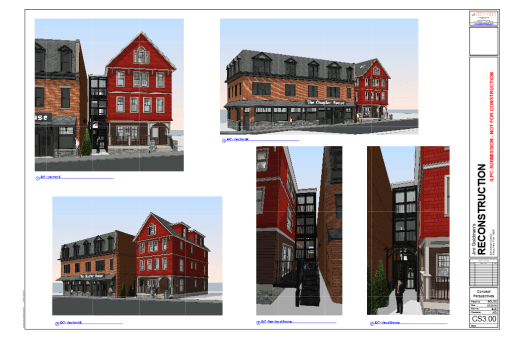
2. So, something weird is going on. The city BPW is set to discuss an encroachment for the Chapter House reconstruction at their meeting on the 23rd. However, all the paperwork included in the agenda dates from before the sale and refers to the previous owner. So either the new owner is pursuing the encroachment and the information hasn’t been updated, or this is outdated/no longer being pursued and no one’s updated the BPW paperwork. I tried calling the project architect (Jason Demarest) but he’s out of town until Saturday, and this publishes Friday night, so…dunno. Hopefully someone can provide some insight. For the record, the encroachment is for the first-floor roof overhang over the sidewalk, and will cost the developer $33,812.28.
100_1466

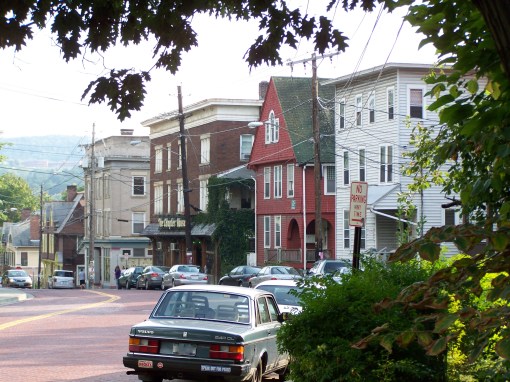
Open question, would a brick-for-brick rebuild had to have paid for this encroachment as well? It existed with the original structure, this was designed with heavy ILPC input, and given that project costs seem to be why this is in jeopardy…it just seems like an unnecessary obstacle. I know it’s a new build, but it’s replicating a previous encroachment for the sake of character. It seems like the project is being financially punished for that.

brindley_elevation
3. For this week’s eye candy, the above image appears to be the city’s proposed redesign for the Brindley Street Bridge over on the West End. Pretty similar to existing newer or renovated bridges in the city (Clinton Street, South Aurora Street), with older-style lamp posts and stylized concrete railings.

Alternative 2 calls for a pedestrian bridge to replace the existing Brindley Street Bridge, which was last renovated in 1952. A new bridge for vehicle traffic would be built south from the intersection of Taughannock and West State Streets, over the inlet, and intersecting with Taber Street. The project is expected to go out to bid next year, and completed in 2018.

4. Per the Ithaca Times, the Taughannock Farms Inn out in Ulysses has some expansions and renovations planned since new ownership purchased the property back in February. Along with a bistro for lighter fare, an electric car charging station and a dock, the Times introduced plans for a 2-story, 200-person event center that would be built on the Inn’s property. The purpose of the event center is to provide additional space for events like weddings and formals, and to capture a bit of the mid-week business meeting and convention crowd. The inn itself has 22 guest rooms in five buildings.

The original inn building dates from 1873, when it was a “summer cottage” for John and Molly Jones of Philadelphia. The Joneses also owned Taughannock Falls at the time, though they would eventually deed it over to the state in the mid 1930s to create the park. The current owners are only the fourth in the 143-year history of the property.

5. A couple of big sales in Tompkins County this week. The first one was 308 Eddy Street, a 12-bedroom apartment house in Collegetown. The Lambrou family, one of Collegetown’s medium-sized landlords at ~400 beds, sold the property to the O’Connor family (a smaller landlord family) for $1,225,000 on the 18th. The O’Connor don’t tend to develop their own properties, and 308 Eddy was receently re-roofed anyway, so don’t expect any changes here, but take it as a demonstration of what a captive rental market, high land values and high taxes will do.

The other big sale was outside of Ithaca, at 1038-40 Comfort Road in Danby. A purchaser bought several land and cabin properties being touted as a high end B&B for $1,300,000. The purchases are a couple from Florida, one of which founded the Finger Lakes School of Massage in the 1990s and now heads an aromatherapy institute.

evergreen_dryden_1

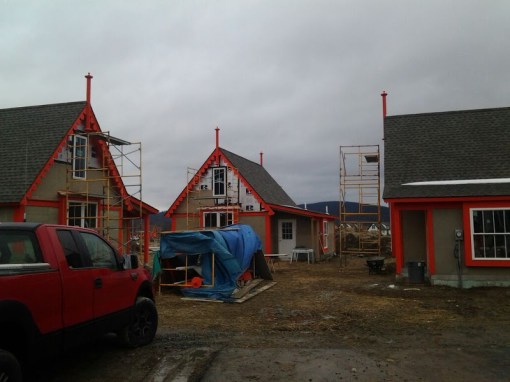
6. According to a report from the Dryden town board liaison to their planning board, the Varna Community Association’s reception to “Tiny Timbers” at the corner of Freese and Dryden Roads has been mostly positive, apart from minor traffic concerns to the 16-house project. More lukewarm was the reception to the 36-unit Evergreen Townhouses proposal at 1061 Dryden, where concerns were raised about having enough green space, and whether it was too far outside Varna to be an appropriate location.

The neighbor two doors down has already started to fight the project, and this is probably going to play out like 902 Dryden did over the past several months. Here’s a pro tip when you’re writing up that angry screed – please stop arguing that renters are second class citizens. Just stop.
therm_1

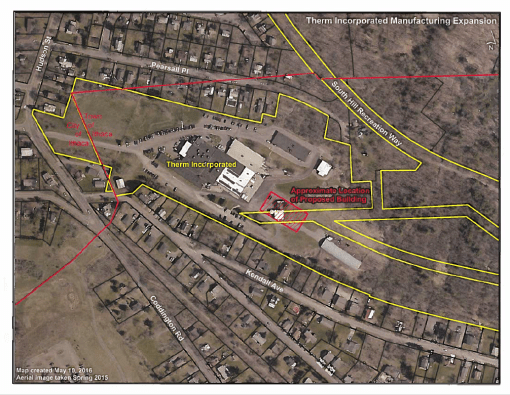
7. Therm Incorporated will be presented plans for a stand-alone 20,000 SF manufacturing facility to the town board next week. The addition will be located at their property at 1000 Hudson Street Extension, between its main building and the quonset huts. In a rarity, the industrial-zoned property won’t need to heard to a zoning board – no variances required. The new building will replaces a 3,434 SF ceramics studio. As previously reported on the Voice, Therm expects to create 10 jobs with the expansion. Therm, located at its current facility since its founding in 1935, specializes in custom machining, primarily for the aerospace and industrial turbine industries.

201_college_v2_3

8. Not a very exciting agenda for the Ithaca city planning board this month.

1. Agenda review
2. Floor Privilege
3. Special Order of Business: Incentive Zoning & Site Plan Review Discussion (Lynn Truame)

4. Subdivision Review
A. Minor Subdivision, 312-314 Spencer Road, Charlie O’Connor (MLR)

5. Site Plan Review
A. Sketch Plan, Two Duplexes at 312-314 Spencer Road

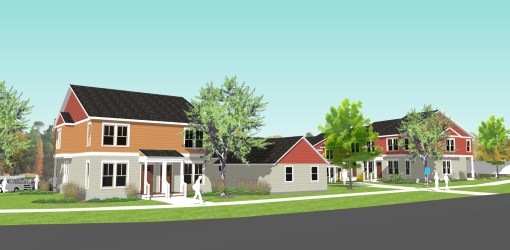
This came up back in March – Charlie O’Connor plans on re-configuring vacant street-facing property behind two houses to build two duplexes near Lucatelli’s. STREAM Collaborative is the architect.

Originally, this was at the end of the agenda as sketch plans usually are, but the agenda was revised so that the sketch plan would be allowed to go first.

B. 201 College Avenue – Declaration of Lead Agency, Public Hearing, Determination of Environmental Significance, recommendation to the BZA

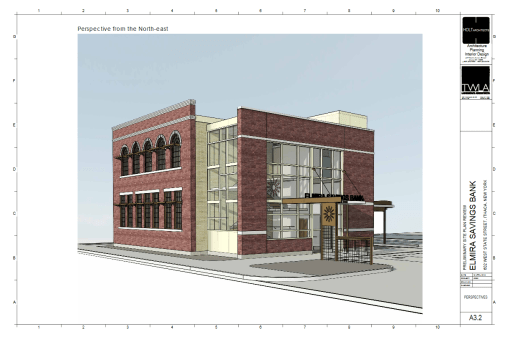
C. Elmira Savings Bank, 602 West State Street – Declaration of Lead Agency, Public Hearing, Potential Determination of Environmental Significance, recommendation to the BZA

D. Brindley Street Bridge, seen above – revised FEAF review (parts 2 and 3), recommendations to lead agency (BPW).

6. Umpteen million zoning appeals, none especially contentious
7. Chain Works DGEIS Review, Update Schedule and Special Meeting Schedule.



News Tidbits 4/30/16: Sticking to the Plan

30 04 2016

chapter_house_v4_1

1. So, let’s start off with the bad news. Chapter House might not be happening. Josh Brokaw at the Ithaca Times had the scoop, though not for a lack of trying on the Voice’s part – rumors had arrived in the inbox well before the Collegetown construction roundup article. I’ve reached out to Jerry Dietz, the building manager for the Chapter House project, four times over the past couple of weeks, without response. One of those was an in-person visit that went un-received. My Voice editor and colleague Jolene Almendarez has also been trying to do her share of contacting relevant parties, to no avail.

Anyway, personal discontent aside, The co-proprietor of the Chapter House (and the only one willing to say anything on record) says that he believes a sale of the 400-404 Stewart Avenue property is imminent, with the potential buyer being the next door neighbor of the also-destroyed 406 Stewart Avenue. The claim is that a more cost-efficient plan would be put forth, which could eliminate the Chapter House from its plans.

One thing to keep in mind is that the property is on the edge of the East Hill historic district – the Ithaca Landmarks Preservation Commission can control just about every aspect of the exterior, but they don’t have say over use any more than zoning permits. They can stipulate the extra expense of appropriate material and image, but they can’t stipulate a bar (and a lot of commission members would be uncomfortable with that anyway). Dunno how much the insurance money was, but the finances just may not work. It would be unfortunate, but as they do in golf, they’ll play the ball where it lies.

college_crossing_2

plan-1

2. Noting, briefly. Evan Monkemeyer, the developer behind the cancelled College Crossing project, might be partnering with another developer to create and put forward a plan for the corner of Route 96 and East King Road. This is according to the town of Ithaca’s planning staff. Monkemeyer has not hidden his discontent after his suburban-style mixed-use project became the subject of heavy debate because the site plan, originally approved in 2007, no longer meshed with the town’s interests, which had evolved to more New Urbanist formats put forth by the 2014 Comprehensive Plan and the Form Ithaca charrettes. Monkemeyer owns about 64 acres on the northeast side of the intersection, and more than 15 acres as part of Springwood on the southeast side of the corner. In other words, virtually all the divvied up land and conceptual buildings on the lower right side of the charrette image. This could be something to keep in eye on over the coming months.

maplewood_v3_2

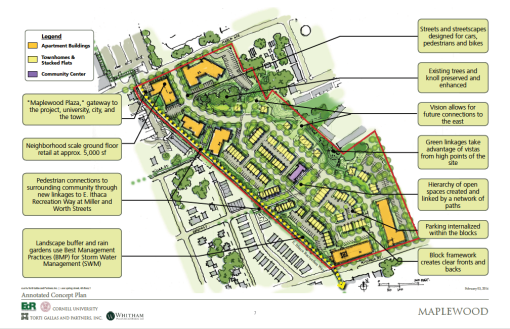
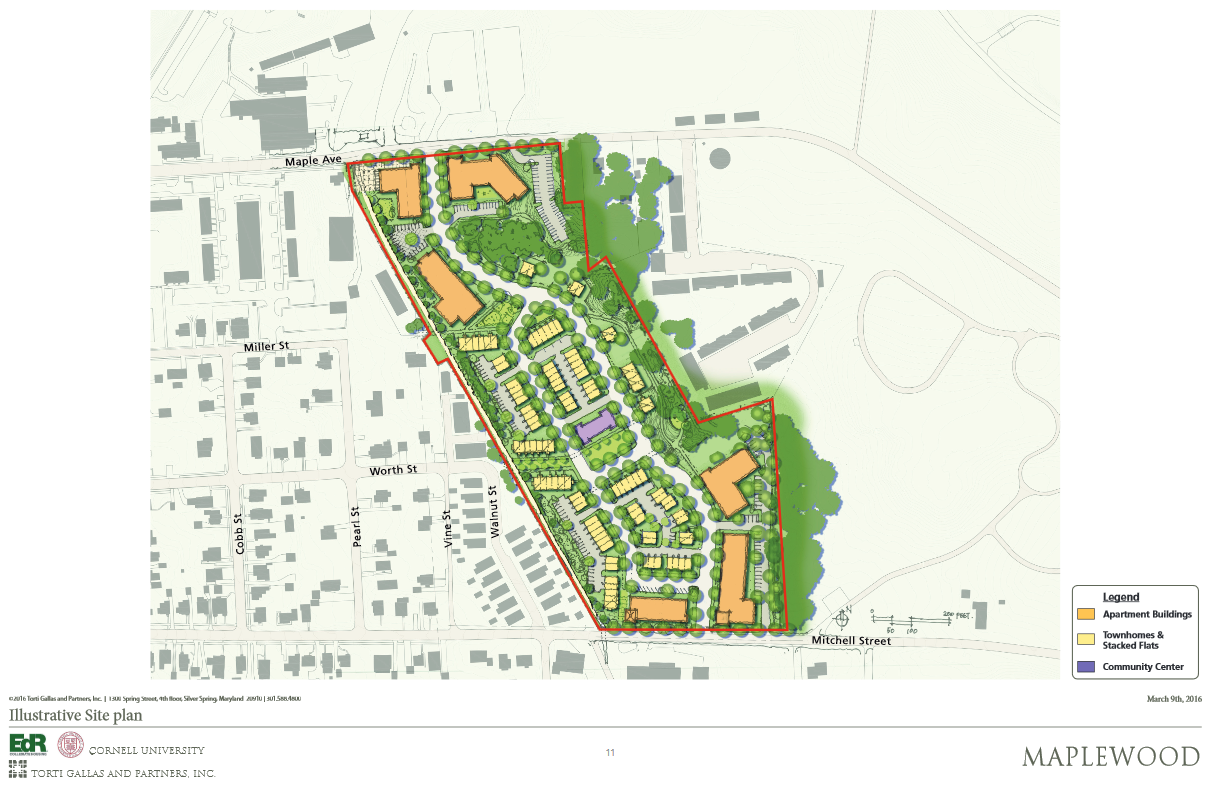
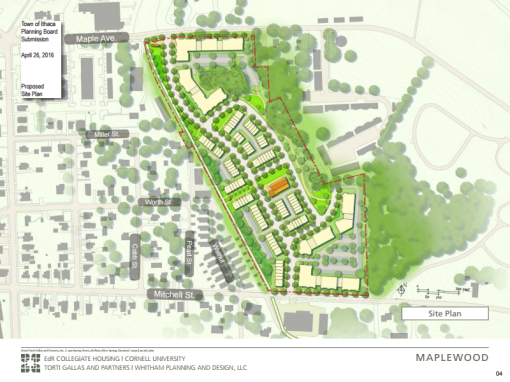
3. Here’s the latest iteration of the Maplewood Park site plan. A lot of changes from the previous version. To sum up the changes, the apartment buildings, 3-4 stories, have been pulled back from existing homes, the townhouses and stacked flats have are more centralized and closely clustered, and mixed-use retail/apartment planned for the city is now in the town, all the city has in its portion is green space and perhaps a small service area/ bus shelter.

Also note the secondary road that terminates right at the edge of the Maple Hill property. Chances are very good that would feed into a phase II that redevelops the Maple Hill property.

The large parking lot in the southeast corner doesn’t seem to jive with the rest of the plan, previous versions had the parking more dispersed. Since Cornell has an idea of the number of residents it wants for the project to be feasible to build and affordable on grad student stipends (850-975, centering around 925 beds in 500 units), if housing is decreased in one part of the parcel, they’re going to have their development team make up for it somewhere else. One of the bigger points of contention seems to be Cornell trying to avoid drawing traffic in by keeping larger buildings further out, while neighbors from various angles try and push the units as far away from them as possible.

maplewood_v3_3

Maplewood has a website up sharing meeting notes and presentation materials here. Future meeting information will also be posted to the Maplewood website. The project will be filling out an Environmental Impact Statement (EIS) not unlike Chain Works, because of the project size and potential for adverse impacts (and therefore the need for proper mitigation before plans can be approved). The scoping document for the EIS, which is an outline that says what will be written about where, is on the town’s website here.

maplewood_v3_4

Just for the record, the print version of a recent Maplewood write-up on the Times claimed to have a quote from me. It was not. The online version of the piece has the corrections. The quote wasn’t even something I would say, because I don’t think Cornell attempting to house a greater number of its graduate and professional students is an “unsustainable development goal”. Quite the opposite, it’s crucial they do that to relieve some of the pressure on the rest of the local housing market.

202_hancock_1

4. Looks like some of the IURA’s recommended funding Action Plan is out. Habitat for Humanity gets the full $75,000 request, as does INHS with the $100,000 requested for their new single-family build at 304 Hector Street. Most of the 202 Hancock project, the seven for-sale townhouses, was recommended for funding – $530,000 of $567,000, ~93.5% of the request.

815_s_aurora_4 815_s_aurora_1

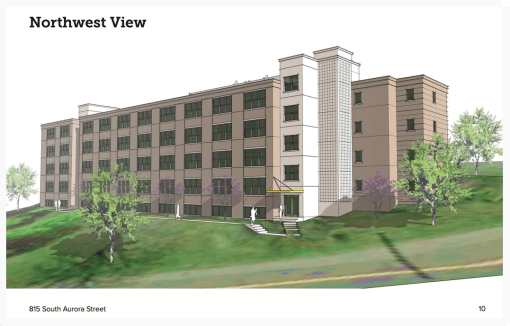
5. At the Common Council meeting next Wednesday, the city is set to vote on reducing the fall-zone radius for cell phone towers, from double the tower’s height (200% of tower height), to 120% of the tower’s height. The move will potentially allow an iteration of Modern Living Rentals’s 815 South Aurora project to move forward with further planning and review. The 87-unit project was planned on the assumption of 100% tower height plus ten feet, so in the case of the 170-foot South Hill cell tower in question, the law would call for a 204 ft. radius, not 180 ft. as the developer hoped. But still, it’s a lot less than the 340 ft. it currently is. The developer may seek a smaller project, build taller, a greatly-revised footprint, or other options. We’ll see how it plays out.

20160414_114709 20160414_114818

201_w_clinton_1

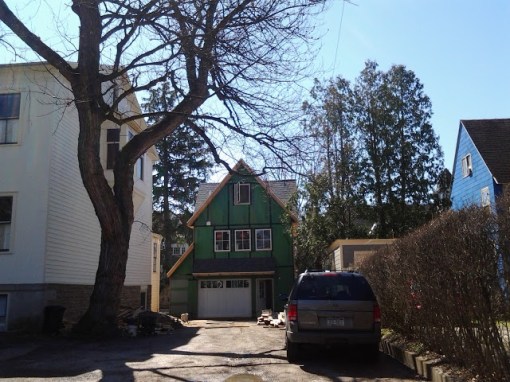
5. House of the week. Back in March, it wasn’t certain whether 201 West Clinton’s “sawn-and-batten wood” would be left unpainted, or painted yellow. Looks like the former is correct, based on the east face of the 1-bedroom carriage house. The ZIP panels were still exposed on the other faces when I shot these photos, but based off what could be seen through the windows, interior work is progressing nicely, and the garage door has been attached. Local architect Zac Boggs and partner Isabel Fernández are building the 520 SF addition atop an existing 1960s garage.


209-215 Dryden Road Construction Update, 04/2016

25 04 2016

The overview came as part of the Ithaca Voice roundup last week, but the number of photos that can be included is rather limited for two reasons. One, the labyrinthine picture portfolio in the Voice’s storage eats up space, and two, the general readers of the Voice mostly only care to see a couple of photos per location.

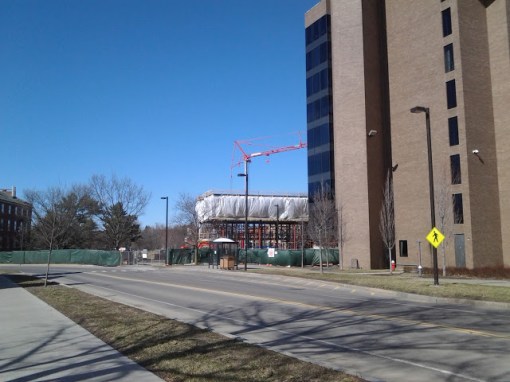
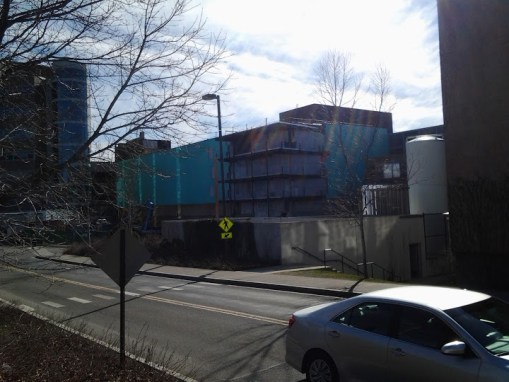
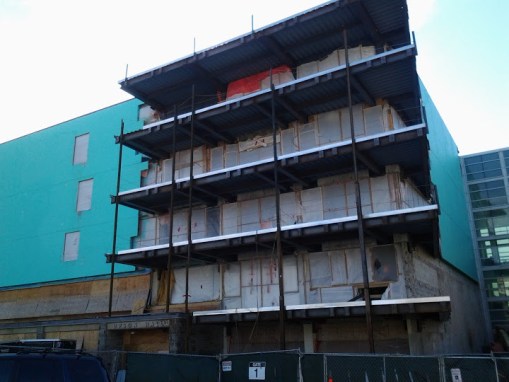
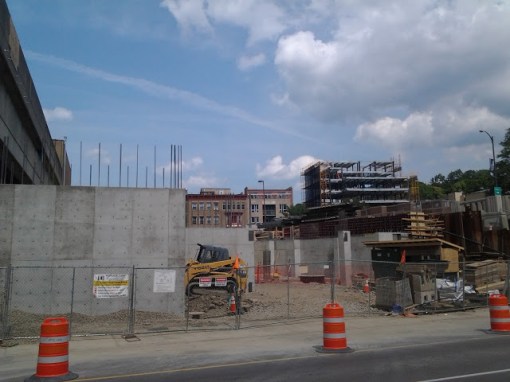
Work is well into the excavation phase of construction. The building’s basement (“lower level”) will hold a 90-space large group instruction classroom, a commons area for dining and mingling, some business offices, utilities and storage space. The large atrium area is meant to give some feeling of connectivity and openness with the upper six floors.

Side note, looks like Collegetown’s graffiti artists have had a field day with the fencing.

Because of the tight situation, construction staging is taking place on land that used to be a boarding house at 238 Linden, and into the public right of way on Linden Avenue and Dryden Road. After the building is completed in 2017, don’t be surprised if 238 receives a housing replacement consistent with CR-4 zoning.

Local businessmen John Novarr and Philip Proujansky are spearheading the project, with Cornell as sold tenant. Syracuse’s Hayner Hoyt is the general contractor.

20160415_101058 20160415_101135 20160415_101213 20160415_101255 20160415_101320 20160415_101355

209-215_basement

209-215_2.png


News Tidbits 4/9/16: A Slippery Situation

9 04 2016

maplewood_site_plan_concept

maplewood_site_plan_concept_v2

1. The town of Ithaca had their first substantive meeting about Cornell’s Maplewood Park Redevelopment, and later this month, the city of Ithaca will have their take on the 4.5% that sits within their boundaries (picture a line up Vine Street – that’s the city line). According to documents filed with the city, approvals from them will only be needed for one building. Application/SPR here, cover memo from Whitham Planning and Design here, Part I of the Full Environmental Assessment Form here, and narrative/drawings here.

From the SPR, the schedule as already been shifted slightly to an August 2018 completion rather than July – they also threw out a $3.67 million construction cost that doesn’t make much sense offhand. Edit: It looks like it’s just a basic estimate of 4.5% of the total project cost of $80 million.

The biggest change so far is a revision of the site plan. In response to community meetings, Cornell shifted smaller 2-3 story stacked flats and townhouses closer to the Belle Sherman Cottages, pulled back a couple of the larger apartment buildings, and added a new large apartment building to the southeast flank. Cornell has its goal of housing at least 850 in the redevelopment, so all design decisions revolve around accommodating those students with their families, while coming up with a design the community can live with.

The city will vote at its April meeting to defer Lead Agency to the Town of Ithaca, which will leave them with the ability to provide input, but the town board will be the ones voting on it.

2. It’s not often that a project gets undone by a single public commenter at a meeting. But the Journal’s Nick Reynolds got to experience such a momentous occasion at the town of Ithaca’s planning board meeting. He documents it on his Twitter account.

Someone that I didn’t cover because it wasn’t especially news-worthy is Cornell’s plan to replace the Peterson Parking Lot at the intersection of Tower and Judd Falls Roads with a cutting-edge 100% porous paved lot and a Cornell-created soil designed to promote rapid growth of trees in high traffic areas (a new island would be built in the middle of the lot). Basically, an eco-friendly, less-invasive parking lot, if there ever could be a thing.

Then Bruce Brittain, the Forest Home community historian, completely undid the plan with a contour map. Generations ago, the property was filled with debris and garbage, even old construction trucks. And while there may be a parking lot on it now, a porous lot, which would be heavier when watered, is liable to collapse right onto the Plantations below. Meaning, no porous lot, no green showcase. Back to the drawing board Cornell.

201_college_1

201_college_v2_1

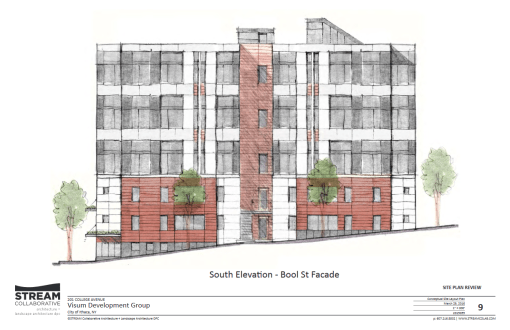
3. Here’s a little more information on the 5-story, 44-unit/76-bedroom apartment proposal for 201 College Avenue. SPR Application here, FEAF here, project narrative here, BZA worksheet here, drawings here , letter of discontent from Neil Golder here. Looking at the drawings, there have been some slight revisions, mostly with the College Avenue entrance and the materials and fenestration at street level. The SPR gives us a $6 million construction cost, and a proposed construction time frame of July 2016 – August 2017. Units will be a mix of 1 to 4 bedrooms (24 1-BD, 12 2-BD, 4 3-BD, 4 4-BD). While the project falls into the Collegetown Form District, an area variance will be required for a front yard setback from College Avenue, which the board feels will help the street be more like a boulevard.

The city planning board is expected to Declare itself Lead Agency for environmental review at the April meeting. Developer Todd Fox hopes to have approval by the end of the June meeting. STREAM Collaborative is the project architect.

902_dryden_final

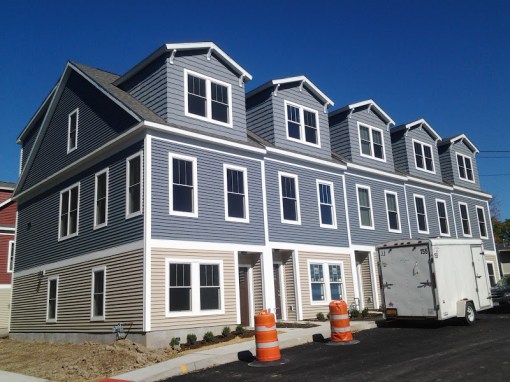
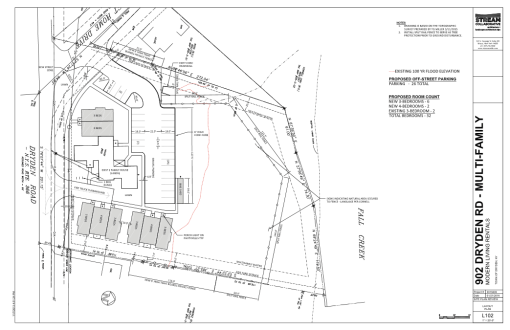
4. This week’s eye candy comes courtesy of Noah Demarest and Todd Fox (yes, they seem to be getting a lot of mentions this week). It had occurred to me that while an image of the revised 902 Dryden townhouses had been presented at the meeting where it was approved, the town never uploaded the copy. Noah and Todd were kind enough to send me a copy of the image presented at the meeting, and gave their permission to share it here. 8 new units, 26 new bedrooms. The duplex building in the middle already exists, but two new units will be built opposite a shared wall. Two three-unit clusters will be built on the east side of the parcel.

Cayuga-Meadows-Shot

5. It’s official as of March 28th. Construction permits have been issued for Conifer LLC’s 68-unit Cayuga Meadows project on West Hill in the town of Ithaca. Expect the first construction update, and a synopsis, when the first construction update comes around, which won’t be until mid-to-late May since West Hill projects get visits during odd-numbered months.

6. Just a couple minor city subdivisions to pass along. One, an application in outer Collegetown at 513-15 Dryden Road to separate the land into two parcels (513 and 515). The lot owner will then build himself a new house on the vacant lot. CR-1 Collegetown Form District, and it looks like no variances will be needed.

The other subdivision is on the city’s portion of West Hill. The property is a vacant lot that borders Westwood Knoll, Taylor Place and Campbell Avenue. The property owners, who live next door on Westwood, want to divide the vacant lot into two vacant lots to sell for single-family home construction. Once again, it looks like no zoning variances will be needed, just regulatory PB approval.

With the consolidation and realignment of 312-314 Spencer Road mentioned last week, this makes three subdivisions scheduled this month. That’s pretty unusual, as the city typically sees only one every 2 or 3 months on average.

7. Looks like someone made a tidy profit. Local landlord Ed Cope picked up 310 and 312 E. Buffalo Street for $885,000 on the 6th. 310 E. Buffalo is a 6-unit apartment building, 312 is a parking lot. The previous owner, a Philadelphia-based company, picked up the properties for $800,000 back in October 2014. So, $85,000 (+10.6%) for 18 months of ownership. The properties are part of the East Hill Historic District, where the Philly-based firm recently had a hell of an experience because the owners before them replaced the windows without notifying the city, and that was a big no-no as far as historic districts and the ILPC are concerned. They mandated the windows all be replaced with more historically-appropriate fittings. Hopefully that came up during the sales negotiations.

For what it’s worth, the parking lot is zoned R-3a – a 4 story building with 35% lot coverage. Since it’s in a historic district, a hypothetical proposal would likely look a lot like its neighbors.

11-24-2012 171

8. And another big sale this week, on Friday – the house at 210 Thurston sold for $2.5 million to the Alpha Chi Omega sorority. The house had been on the market since last November for $2.75 million. This actually sold relatively quick, given its large size and fairly unique nature. The seller purchased the property for $677,500 in December 2011, and renovated the property for use by the Cornell wrestling team.

Alpha Chi Omega has occupied the house at 509 Wyckoff Road for a number of years, but did not own the property – the owner, who picked up the property in 1971, is a business partner of Kimball Real Estate.


News Tidbits 4/2/16: The Walls Come Tumbling Down

2 04 2016

hotel_ithaca_final_1

1. Demolition and site prep work has begun for the Hotel Ithaca’s new 5-story addition. The work appears to be right on schedule, since a March construction start had been planned. The $9.5 million, 90-room project replaces a two-story wing of rooms built in the early 1970s. Hart Hotels of Buffalo hopes to have the new wing open for guests this fall. NH Architecture of Rochester is the firm designing the project, which received some “sweet burns” when it was first presented with cross-hatched panels and “LEED-certified stucco”. Eventually, the planning board and developer settled on a design after review, and the project was approved late last year.

For those who like to see walls a-tumblin’, the Journal’s Nick Reynolds has a short video of the demolition on his Twitter feed here.

2. Looks like there’s a little more information about the 16-unit “small house” subdivision planned in Varna. A Dryden town board document refers to the document as “Tiny Timbers”. Which is a name that has come up before – in STREAM Collaborative’s twitter feed.

https://twitter.com/streamcolab/status/673601010313641984

https://twitter.com/streamcolab/status/657329991827509248

Making an educated guess here, STREAM is working with landowner and businessman Nick Bellisario to develop the parcel. It would also explain the huge mounds of material that had been on the site as of late – compressing the very poor soil so that something could be build onto it, even if they’re merely “tiny timbers”. It doesn’t look like these are more than one or two rooms, with an open floor plan on the first floor and either a room or loft space above.

At first impression, these are a great idea – relatively modest sizes tend to be more environmentally sensitive, and with the subdivision, it’s likely they would be for-sale units with a comparatively modest price tag. On the other hand, tiny houses are something that a lot of local zoning laws don’t accommodate well (minimum lot size, minimum house size, septic), so that would be something to be mindful of as the project is fleshed out more and starts heading through the town’s approval processes.

201_college_1

3. Here’s some good news – the initial reception to Visum’s 201 College Avenue project was favorable. Josh Brokaw at the Times is reporting that apart from debates over a more distinctive roofline and setbacks from the street (which is more ZBA than Planning Board), the board was supportive of the project.

Meanwhile, as for something they were not in support of, the possibility of removing the aesthetic parts of site plan review as a benefit to affordable housing incentive zoning was not something that sat well with them. One thing that does get missed in the article, though, is that that benefit would only be in areas with form zoning guidelines for building appearance and siting (right now, that’s only Collegetown).

cma_2 cma_3

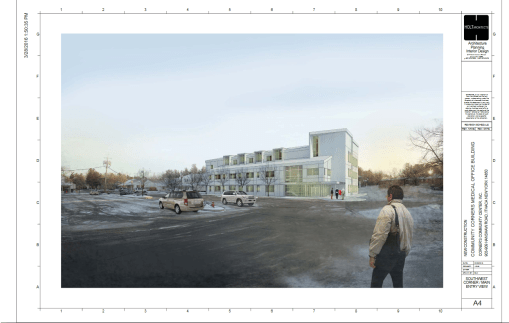
4. Never a fan of being scooped, but the Journal’s Nick Reynolds broke the news of a 3-story, 39,500 SF outpatient medical facility planned for Community Corners in Cayuga Heights. Owner/developer Tim Ciaschi (who also did the Lehigh Valley Condos on Inlet Island) will build-to-suit for Cayuga Medical Associates, with design work by HOLT Architects.

In most towns, this would be fairly cut and dry. But this is Cayuga Heights, which probably has the most stringent board in the county. The village routinely says no to anything that could draw students in (mostly housing, but historically it also included taverns and restaurants), and people prepare multi-page tirades against two-lot subdivisions, let alone what happens when a sorority tries to move in. In the project’s favor are its distance from homes and its modest densification of Community Corners, which the village has been slowly migrating towards in the past few years. The board’s raised concerns with not enough parking, so a traffic study was included with the March materials. We’ll see how this all plays out, a medical office building might work well with Cayuga Heights’ older population.

5. The city decided to take action on the owner of the Dennis-Newton House by fining him $5,000 for building code violations. Steven Centeno, who picked up the property from the Newtons in 1982, was initially charged with over 11,000 violations, and pleaded guilty to 35 counts. According to the city, Centeno was ordered to make repairs in 2012, and got the building permits, but never commenced with repair work. If he fails to bring the property up to compliance within six months, a further fine of $42,000 will be levied. This is not unlike the case last April where the city fined lawyer Aaron Pichel $5,000 for code violations on 102 East Court Street, the “Judd House”. Work on that property is underway.

maplewood_site_plan_concept

6. Likely to be some bureaucratic progress on the Maplewood Park redevelopment next week. The town of Ithaca will be looking at declaring itself Lead Agency for environmental review of the 500-600 unit project. designs and exact plans are still in the formative phases, so no new news on those quite yet. In order to build the new urbanist, form-based project as intended, Cornell will be seeking a Planned Unit Development (PUD), which will give them flexibility in how they can lay out the site. The portion in the city of Ithaca, the two buildings towards the northwest corner (boundary line goes down Vine Street), will be built as-of-right, and it looks like a sketch plan will be presented for the city’s portion during their April Planning Board meeting.

A FEAF is included in the meeting agenda, but since the project will have to undergo a Environmental Impact Statement (much more detailed than a FEAF), it’s not very descriptive.

341_coddington_1

341_coddington_3

7. Ugh. I give credit to the town of Ithaca’s planning board for trying to accommodate a solution where the 170-year old house could at least be moved to a different site. I’m disappointed in both the town of Ithaca’s Planning Committee (members of the town board) and the Iacovellis, neither of which seem to be devoting much thought to an amenable solution. The town’s planning committee chair is hell-bent on keeping students out, and the Iacovellis are now trying to rush the demo permit since they feel their livelihood is threatened. This is an unnecessary loss due to intransigence.


Cornell Veterinary School Expansion Construction Update, 3/2016

30 03 2016

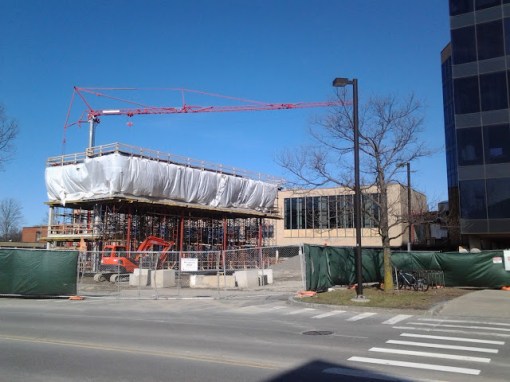
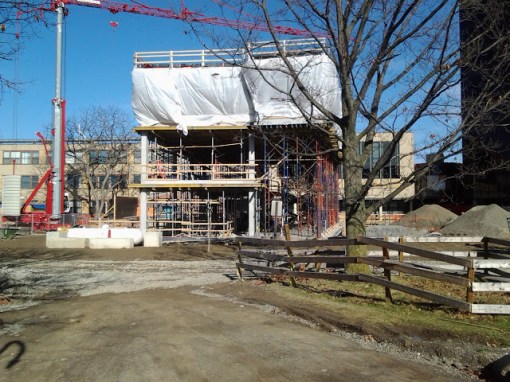
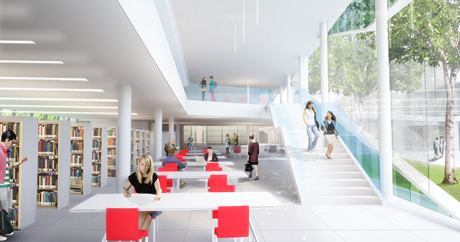
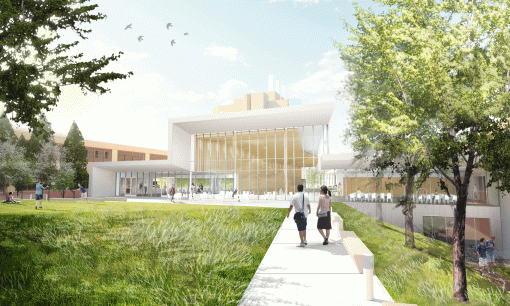
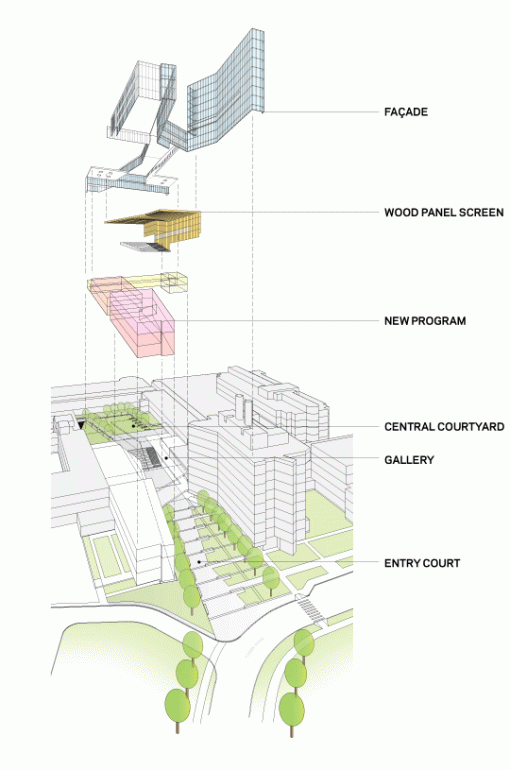
A generalized summary can be found on the Voice here. The concrete frame for the Veterinary School expansion is up to the third and final floor of what will be the new Flower-Sprecher library. As build-out continues, the existing building behind (east) of the new construction will come down and be replaced with new program space; the second floor will sit above an entry court and pedestrian walkway that leads to an indoor gallery space and central courtyard. The open space on the right (south) side of the structure will be a two-story atrium space. The addition will have a glass curtain wall, and the academic spaces that face the gallery will be faced with wood panels.

Cornell and general contractor Welliver will be looking to bring the project to completion by June 2017. Weiss/Manfredi is the project architect.

20160319_155209 20160319_155242 20160319_155305 20160319_155319 20160319_155335 20160319_155345

EntryPlaza10-2 LibraryReadingRoom10-2

3f5656954f5a3ef1021519c03b4abe9f 8f098b7e26544f579eb7411b9a1716aa

eea787361994de9625f74b19aa50d91e


Upson Hall Construction Update, 3/2016

28 03 2016

This one’s short and sweet for the moment due to time constraints. A generalized description of the latest progress can be found on the Voice here, and Cornell’s bi-weekly progress report is here. A more thorough rundown was given in January’s update here.

20160319_160249 20160319_160337 20160319_160400 20160319_160504 20160319_160527 20160319_160559 20160319_160644 20160319_160647 20160319_160654 20160319_160713 20160319_161727


Gannett Health Center Construction Update, 3/2016

27 03 2016

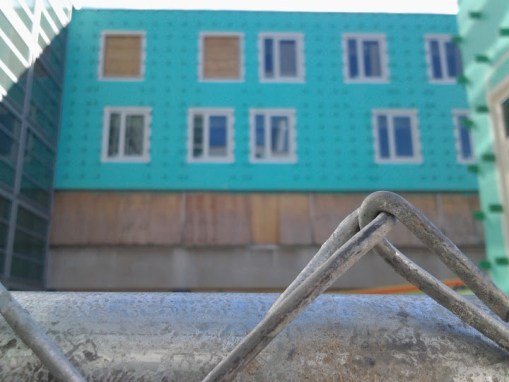
Most of the curtain walls are complete, only the stud walls on the northwest face are still exposed. Sunshades have been installed on the outside of each floor. The bluestone and limestone veneers will be apply to the base columns and walls at some point later this year. From the outside looking in, it looks like good progress is being made on finishing-out the interior of the new wing. A write-up can be found as a part of last week’s Voice article here.

Chiang O’Brien of Ithaca is the architect for the two-phase, $55 million project, and the general contractor is The Pike Company of Syracuse. The new wing will open late this summer, and the second phase, which is primarily renovations of the existing wings, will run from this summer to late summer 2017.
20160319_160951 20160319_161136 20160319_161158 20160319_161227 20160319_161247 20160319_161304 20160319_161310 20160319_161400 20160319_161508


News Tidbits 3/19/16: A Taxing Problem

19 03 2016

20160109_115414

1. Apart from controversial presidential endorsement, Congressman Tom Reed paid a visit to the development community last week at the Boiceville Cottages project out in Caroline. According to Dan Veaner at the Lansing Star, the meeting was touted as an opportunity for developers, builders and contractors to express their concerns with onerous government procedures, specifically the local level.

Bruno Schickel, speaking at the event, noted that Boiceville could only have been done in Caroline because the 3,000 person town has no zoning (but they do have some type of commission that acts as a planning board). The lack of layers and conflicting comments from different interests allowed Schickel to get the latest 75-unit expansion approved in just two meetings back in 2012, something that he notes would have likely taken two years in other municipalities.

Then there’s this quote from another developer.

“After the site tour Reed spent time chatting with builders about regulations, mandates and costs that prevent some projects from ever being built.  One developer told Reed about an incident that killed a project before it even got started.

‘I tried to build a mixed use residential retail commercial building and I needed more residential units to make the economics work for lending,’ he said.  ‘I wanted six more apartments and the Town of Ithaca wanted an environmental impact statement.  the deal with these impact statements is that you pay an expert $20,000 so he can produce a 50 page report.  They look at it and read it and if they don’t like it they want to hire their own expert and they make the developer pay for it.  I backed out right away.  I pulled the plug and walked out of the meeting.'”

In case anyone was wondering, that was Evan Monkemeyer and his never built College Crossings project on the corner of 96 and East King Road. Which, to be honest, didn’t get re-approved because the window of opportunity closed as soon as the town updated its Comprehensive Plan and decided it wanted dense mixed-use. It’s an uncomfortable situation for all parties.

Obviously, there are two sides. Schickel is a very thoughtful and responsible builder/developer, but others may not be, which is why guidelines need to be in place. But, having watched the battles over affordable housing, and seeing the battles over wind and solar power now erupting in the western half of the county, it does give pause. I never thought I’d hear Black Oak investors such as County Legislator Dooley Kiefer and Caroline town board member Irene Weiser described like greedy Wall Street corporate villains, but that’s the current state of affairs. Using the same point from last week, the county can’t afford to be self-defeating, and having too many rules and regulations can keep a lot of good things, like green energy and affordable housing, from happening. The big, hotly-debated question is, where is the balance?

On a final note, the Star confirms that Schickel will finish build-out of the late Jack Jensen’s Farm Pond Circle project in Lansing, as soon as the Boiceville Cottages are finished later this year.

20151011_134147

2. It’s that time of the year for property re-assessment. The county gives a rundown of their process and goals for this year here. Most places handle assessment on the city/town/village level, so being that Tompkins County is solely responsible here makes it unique in the state.

tc_assessment_1

The report notes that high demand and low supply has kept sales prices on an uptick, and as those get factored into assessments, the values of property are due to go up as well. There aren’t as many sales as in the mid 2000s, but county home values are appreciating at an uncomfortably fast clip – median price went up 4.2% in just the past year, much greater than wage growth. The Voice has gotten some emails from people extremely upset that the county is doubling their land value, and there have been similar emails getting shared on neighborhood e-mail listserves, so there will probably be a story coming out on that soon.

Certain areas are facing certain challenges. For example, Collegetown’s land value is so high that it’s often worth more than the building that sits upon it, making much of the neighborhood a redevelopment target. Fall Creek is seeing home value appreciation much faster than the rest of the county, making it ground-zero for rapid gentrification. The county’s not pulling these values out of the ether; assessments are based in part on what people will pay for similar neighborhood properties. Fall Creek is walkable, centralized and a strong fit to the rustic, crunchy vibe buyers are often looking for in Ithaca. There are signs that the North Side and South Side neighborhoods are seeing similar impacts, but they’re not as noticeable because those neighborhoods were traditionally less well-off, so the gross home values aren’t as high, even if they’re appreciating at similar rates.

Out in the towns, the county feels Caroline is being under-assessed, which they hope to change in 2017, and there have been wildly high-priced sales in Ulysses that the county attributes to “excited” lakefront buyers. About the only area where the county is concerned about falling land values is Groton, where poorly-maintained properties are taking their toll on the tax base.

On the commercial end, Commons businesses and county hotels can expect a 5% assessment increase.

east_hill_master_plan

3. Looks like the town of Ithaca released their annual planning board summary. Only 15 new of modified proposals were reviewed in 2015, down from 27 in 2014, and 32 and 41 in 2012 and 2011 (2013 is excluded for some reason). Nevertheless, the town’s planning department has been busy trying to translate the 2014 Comprehensive Plan into form-based zoning code, at least some of which they hope to roll out this year. A couple sources seem to have taken to referring to it as the “Ithacode”.

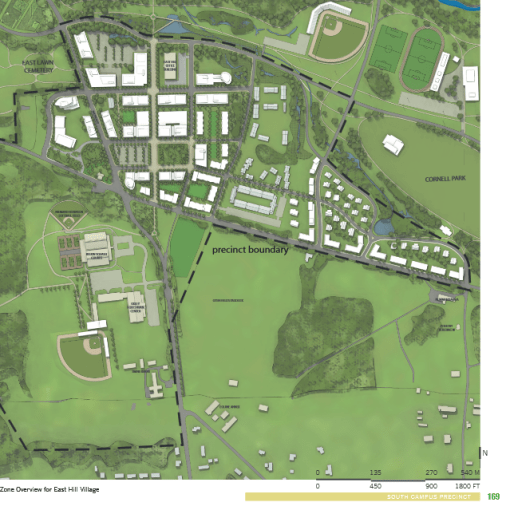
Also in the pipeline – reviewing Maplewood (with the city as secondary), reviewing Chain Works (with the city as primary), and possibly, Cornell rolling out plans for East Hill Village (early design concept shown above), the first phases of which are expected to be unveiled within the next year.

902_dryden_v4_1

4. The townhouses at 902 Dryden Road in Varna have been approved. The Dryden town board voted 4-0 to approve the project at their meeting on the 17th. The 8 new units and 26 new bedrooms should begin construction this July and be completed by June 2017. Local company Modern Living Rentals will be developing the site, and the townhouses (no updated render, sorry) are being designed by STREAM Collaborative.

Also relevant to the Varna discussion, the planning department memo notes a pre-application meeting was held for a proposal to subdivide and build 16 “small homes” at the corner of Freese Road and Dryden Road currently owned by Dryden businessman Nick Bellisario. No other information is currently available about the project.

hughes_cornell_3

5. Let’s wrap this up with a look at the city of Ithaca Planning Board agenda next week. Quick reminder, the general order is: sketch plan, Declaration of Lead Agency, Public Hearing, Declaration of Environmental Significance, BZA if necessary, prelim approval, final approval. Here’s the formal rundown:

Site Plan Review
A. 210 Hancock – project update, no decisions
B. 424 Dryden, rear parking lot for 5 cars – prelim and final approval
C. Hughes Hall Renovations, Cornell University – Determination of Environmental Significance, prelim and final approval
D. Ag Quad Renovations, Cornell University – Determination of Environmental Significance, prelim and final approval
E. The Cherry Artspace, 102 Cherry St. – Declaration of Lead Agency and Public Hearing

F. Sketch Plan – 301 E. State Street, the Trebloc Building.

Don’t know if this is a continuation of State Street Triangle or something else (it would be a surprise if someone could create a new plan in such a short time), but we’ll find out on Tuesday. Zoning is CBD-120, meaning commercial or mixed-use, no parking required, up to 120 feet in height.

G. Sketch Plan – 201 College Avenue

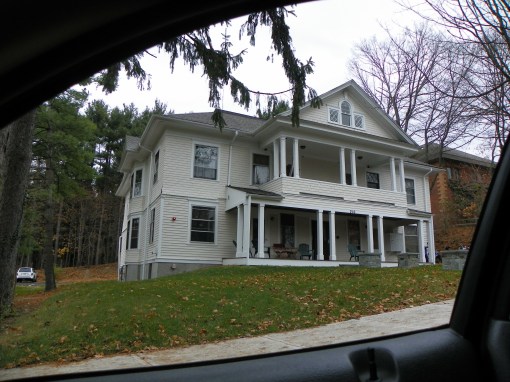
201 College Avenue sits on the corner of College Avenue and Bool Street in inner Collegetown, and is presently occupied by a well-maintained though unremarkable 12-bedroom student apartment house owned by an LLC associated with the director of a local non-profit recreational center. The property is currently assessed at $545k. Zoning for the property is Collegetown MU-1, allowing for a 5-story, 70′ tall building with no on-site parking required. A quick check of neighboring properties indicates that the owner only owns this property, so whatever is planned will likely be limited to just this house.


News Tidbits 3/12/16: After Much Discussion, Even More Discussion

12 03 2016

maplewood_site_plan_concept

1. The community meetings have begun for Maplewood Park’s replacement. The Cornell and Professional Graduate Student Assembly (GPSA) held a discussion with the developer EdR and project architects Torti Gallas this past Monday. According to the Sun, some of the features planned in the new graduate housing development include-

“[S]omething like the Big Red Barn but on a smaller scale as a community room so you can open it up and have events…there will also be a business center for group projects and work. We are also planning an outdoor recreational space like tot lots for people who have families and volleyball courts.”

Concerns about affordability were raised, but the developer said that rent prices are still being sorted out. From the meeting, the four big goals of the project are “affordability, walkability, sustainability and community,” with streets that also serve as public gathering spaces, and a variety of unit sizes and types. Definitely something to keep an eye on as plans are fleshed out.

On the bureaucratic end, the Maplewood Park sketch plan is set to be presented to the Ithaca town planning board next Tuesday by Scott Whitham of Whitham Planning and Design. A sketch plan has no votes involved and is merely an informational session, and an opportunity for the board to give preliminary thoughts and input. The board will also be hearing a much less interesting proposal for a new bus shelter in B Lot.

dryden_south_rev_1
2. Looks like Kraftee’s in Collegetown will be shutting its doors. According to the Cornell Daily Sun, the book and apparel store, which opened its Ithaca location in 2002, will be closing for good at the end of the month. Owner Pat Kraft did have plans to move the store into the first floor of the Dryden South mixed-use project currently under construction at 205 Dryden Road, but now with Cornell’s new Executive MBA building underway on the lot next door, he plans to “explore other more complementary uses for the commercial space.” Since the project is in MU-2 zoning, Kraft is legally obligated to have “active use” commercial on the 2,400 SF first floor: hotel, bank, theater, retail, and/or food service.

20150829_125449

3. The city’s CIITAP production at the Wednesday PEDC meeting was productive. The board seemed comfortable with the pre-payment option preferred by the IURA. The question now comes down to what length abatements to offer. The 10-year has strong support, but there was discussion on whether or not to offer the 7-year option (only used once by the Hotel Ithaca) and the 12-year option with the enhanced benefits. So while this a few months of discussion left ahead of it, there’s a better idea of what the revised CIITAP will look like. For the record, the 1% fund payout would be based on hard construction costs only, not soft costs. So for example, the Marriott currently underway, it would have paid 1% of $19 million instead of $32 million (would it have still moved forward? Dunno).

20150727_145641

4. Also at the PEDC meeting, the development policy topic du jour finally moved forward – incentive inclusionary zoning. Discussion on the law here, and a primer on the topic here. So, stemming from a debate with the Times’ Josh Brokaw on Twitter, my initial reading of this law was mandatory. But I was mistaken, it’s voluntary and the city will want a couple years to gauge its effectiveness.

The Sun writeup is here, but eventually you;ll be able to find live video archived from the meeting here. I think Mayor Myrick pretty much nailed it with this quote –

“This proposal is an opportunity for those of us who claim to care about affordable housing but oppose large-scale subsidized housing.”

The unpleasant truth is, classism reared its ugly head during the 210 Hancock debate, and thanks to the online petition, everyone saw it. After all the prep and community meetings that went into the project before it was even proposed, there were still people who said it was unsafe, uncivilized, would breed trouble, that the residents would cause crime, they’d all be on welfare…pretty unnerving commentary from a community that considers itself progressive. Abhorrent as it is, these comments aren’t going to go away. Many of these folks are older, some have been here for decades, and they’re set in their beliefs. It’s regrettable to say this, but the more subtle and intermixed the affordable housing is, the less likely it is to face neighborhood opposition.

Along with the removal of parking requirements and +1 floor option in certain neighborhoods, the reduced site plan review option (only affecting the plan layout and design, not the environmental aspects) was judged to be the most appealing by developers. To be fair, a project redesign based on board input can be expensive, so reducing that prospect in neighborhoods with pre-established form guidelines (currently only Collegetown, but the Waterfront is likely to have its own form-based hybrid code in a year or two) is a big positive.

The PEDC voted to circulate the law for review, with only 1st Ward Councilwoman Cynthia Brock dissenting. There will be more typed about this law as it moves forward.

On a semi-related note, it looks like the town of Ithaca is now starting to look into some kind of inclusive or incentive zoning as well.
old_libe_thp_holt_v3

5. For this week’s eye candy, here’s the latest revision for Travis Hyde Properties’ DeWitt House senior apartment project at the Old Library site.  This was the version presented at the March 8th meeting. HOLT Architects has been tuning in to both the ILPC’s and the Planning Board’s comments (the two have been conducting joint meetings to avoid extra bureaucracy and contradicting each other) and is trying to hem down the general design idea such that SEQR and SPR and the rest of the approval process paperwork can begin.

As can be seen, the design is quite a bit different from the original plan with the “dorky roof” as one county legislator called it (for the record, I liked the dorky roof). This is an idea of where the design is going, but not the final revision, since the ILPC and Planning Board still plan on commenting further. For those still simmering over the decision last summer, just remember that even if the Franklin/STREAM proposal for condos had been selected, the ILPC and Planning Board would have had a heavy hand in that design process as well. The design for DeWitt House will continue to evolve, and updated images will be shared as they become public.

20160219_145406

6. Meanwhile, out in Lansing, lawmakers are under pressure because NYSEG cannot accept any new gas service requests because the current pipeline is fully tapped. About half of homes nationally and many commercial and industrial structures use natural gas an an energy source, so this could potentially put the kibosh on a lot of home and commercial construction. Definitely not welcome at a time when the town and village are at high risk of losing their biggest taxpayer.

NYSEG is still actively pursuing construction of a new gas pipeline from Freeville, one that has garnered considerable opposition from Dryden and some eco-activists. The environmental advocates have pushed for renewables, but the recent opposition to the Black Oak wind farm in Enfield, and to solar panels in Ulysses for the Sciencenter have created yet another complication to the county meeting its green energy goals, let alone overall energy needs. The area can’t afford to be self-defeating.

The Lansing Star is reporting that NYSEG has obtained about half the easements it needs, and could eminent domain the rest as a last resort. It’s a tense and complicated situation.

20160219_17504020160219_175113

7. Wrap this up with a quick house of the week update on INHS’s 203 Third Street affordable home project. These photos are a couple weeks old now, but most of the trim has been attached with the exception of the porch, and with that, finish-out of the interior and landscaping, this 2-bed, 1.080 SF house will be good for sale. INHS is asking $129,000 from qualified moderate-income homeseekers (buyers making 70-80% of Area Median Income, I think offhand), and is expected to change hands this summer. Claudia Brenner did the design, and Rick May Construction did the buildout.