New Tidbits 5/14/16: A Land Subdivided

14 05 2016

6-29-2014 162

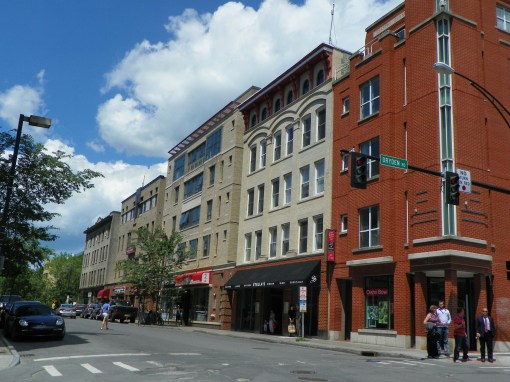
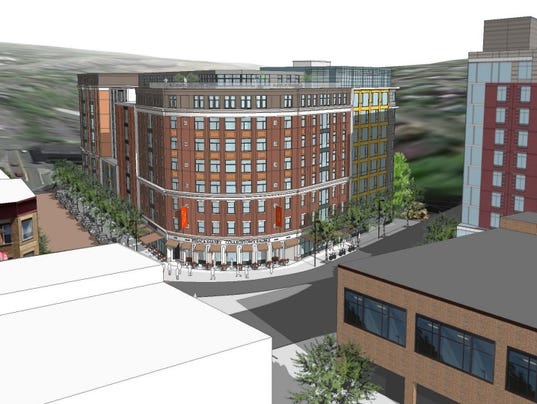
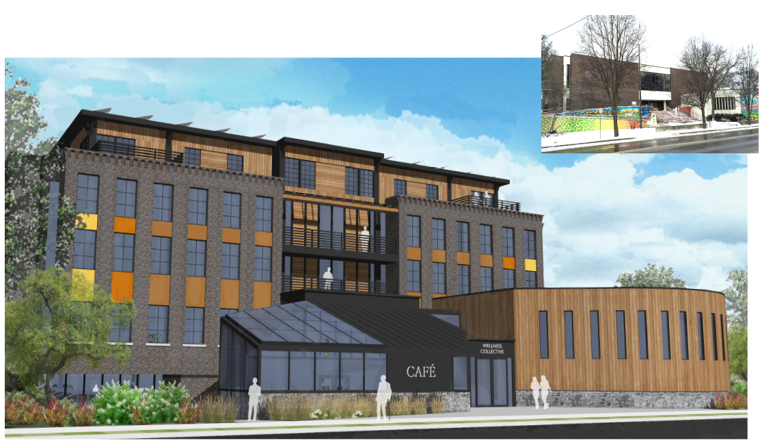
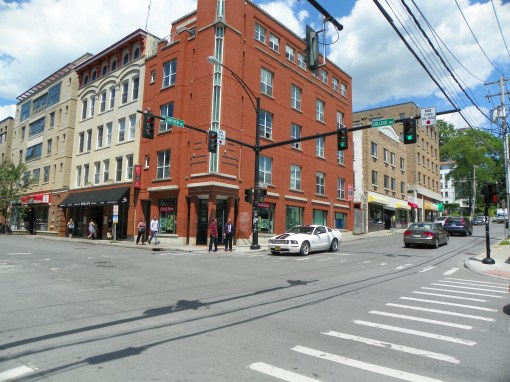
1. This week, the city rolled out a strategy memo for “Design Guidelines” for Collegetown and Downtown. The city held focus meetings back in March with Winter & Company, a Boulder-based urban design and planning firm with experience in cities and college towns from coast to coast. No specific individuals are mentioned as being part of the focus groups, but the focus group meetings consisted of “residents, property owners, developers, architects, design professionals, Planning and Development Board members, Common Council members, and City staff.” The memo is meant to help guide continued discussion of design standards, and to identify key issues in each area that could arise with planning and implementation.

The feedback from the focus groups shouldn’t come as a surprise – use high quality materials, respect historic character but don’t emulate it, recognize that development costs in Ithaca are very high, promote walkability and active street use, encourage parking lot infill, define transition areas between smaller-scale neighborhoods and denser cores, and so forth.

One of the major components being reviewed is whether design guidelines should be mandatory or just a set of recommendations. The city has a design review process that comes into play for certain projects like those on the Commons, but otherwise it’s non-binding unless the BZA or planning board mandates it as part of approval. Regardless, more meetings are expected as the guidelines are fleshed out.

al-huda_1

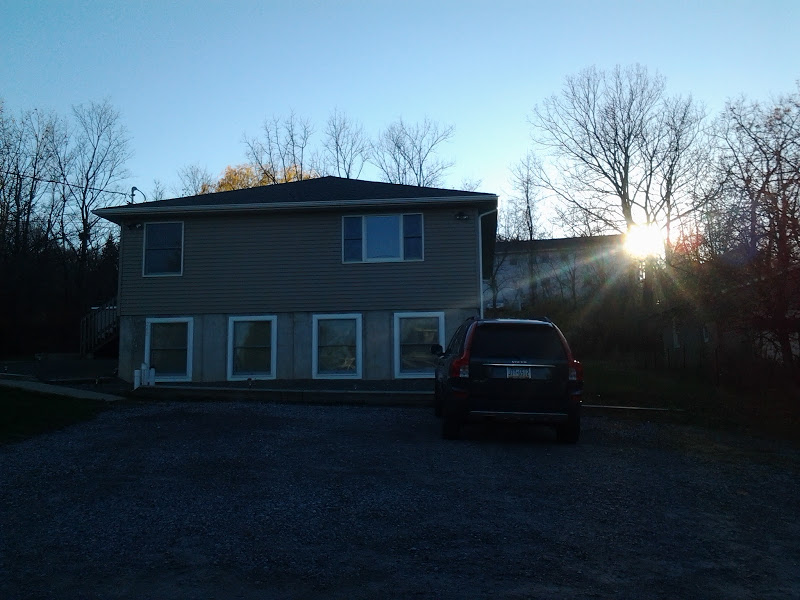
2. The Ithaca Times is checking in with the Al-Huda Islamic Center plan for Graham Road in Lansing. Fundraising is still underway for the 4,828 SF mosque, which according to a member of the Al-Huda board of Trustees, is expected to cost between $650,000 and $1 million, per contractor estimates.

Fun fact of the day, Islamic law prohibits mosques being paid for with funds that collect interest (tainted by usury). Everything must be paid for up-front and in full.

The village of Lansing has already signed off on the mosque plans, and the vacant land at 112 Graham Road is bought and paid for. Pretty sure the above drawing is outdated, but I haven’t seen an image of the latest plan available online. The Times has an interior shot of the current plan to accompany their story.
20141227_134549

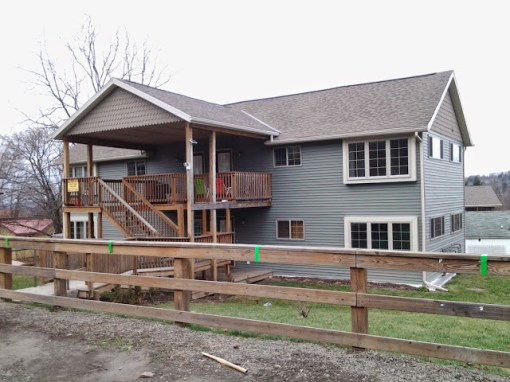
3. The town of Ithaca passed the nine-month moratorium on two-family dwellings by unanimous vote at its meeting this week. Anyone seeking to build a duplex in the town of Ithaca will now have to wait until February 2017 for a building permit, unless “unnecessary hardship” is demonstrated by the law’s imposition. The law was driven by the construction of multiple 2-6 unit student-oriented structures east of Ithaca College in the Kendall/Pennsylvania avenue area, which they felt was undermining the neighborhood’s character. Earlier versions of the law called for a year’s length, but the town received numerous complaints that a year would actually hit two construction seasons, 2016’s and 2017’s.

100_1281

4. Also in lawmaking, the bike lanes proposed for the 300 and 400 blocks of Tioga Street in downtown have been shot down in favor of sharrows, 3-2. This comes after strong advocacy by city bicyclists and some planning and sustainability groups, and strong opposition from some elderly and disabled advocacy groups, suburban neighborhood residents and the town of Ithaca’s town board.
benderson_1

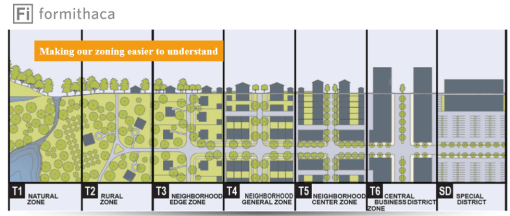
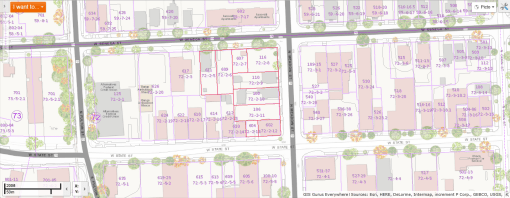
5. One of the many issues that faces large-scale planning and development in Tompkins County is that, over the many decades, land has been heavily subdivided and sold off between many different owners, with the properties often passed down or even traded, leaving records piecemeal. With so many owners, some untraceable, it can become logistically difficult, especially if not everyone is on board with a plan.

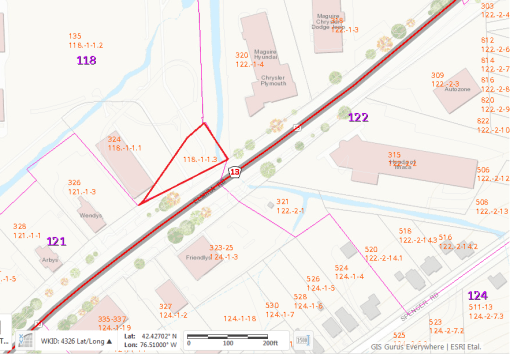
In front of Moe’s down in big box land, the county owns a 0.3 acre parcel of land previously a part of the flood relief channel. Since 2005, Benderson Development has rented the land as part of its shopping complex – now they just want to simplify things and buy the land from the county. With an offer of $112,500, which is $17,500 over the county’s assessment, and with the county’s 2005 confirmation and 2016 re-affirmation that they have no public use for that slice of land anymore (much of the channel’s land has already been incorporated into other parcels), they’re planning to finalize the sale at the Legislature’s meeting next week.

6. If you glanced at the Voice, you know there’s a plan cooking for 36 townhouse units east of Varna. But according to Dryden’s town planner, that’s not the only project that’s been brought forth to the town. A different applicant brought forth a plan for 20 single-family homes on 9 acres near the intersection of Route 13 and Mineah Road, a rural stretch between Varna and the village of Dryden. The units, expected to be rentals, are allowed as of right in Dryden’s mixed-use zoning – if it’s under 4 units/acre, it doesn’t need a special use permit, or even site plan review. A check of property records reveals several parcels owned by Ryszard Wawak, a Lansing businessman who picked up the land a number of years ago and has already built a duplex (2-bedrooms each) and a 5-bedroom house on subdivided parcels.

If you happen to start seeing houses popping up between Dryden and Varna, it’s probably this project slipping under the radar.
elmira_savings_v2

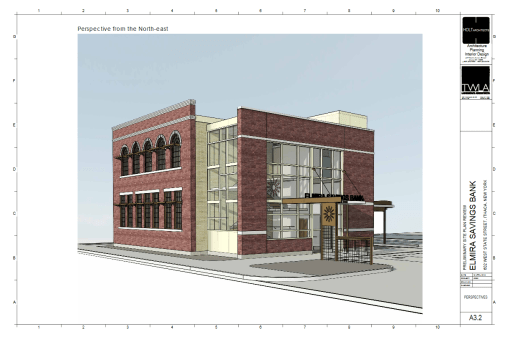
7. Taking a glance at the Ithaca Projects Review committee meeting agenda, the Elmira Savings Bank and 201 College Avenue projects will be undergoing review before heading to the planning board meeting later this month, and the subdivision/reconfiguration to build two two-family houses at 312-314 Old Elmira Road will also be reviewed. There are also a boatload of zoning variances being sought for various projects – Marriott signage, an apartment reconfiguration on Farm Street, a basement home salon on Center Street, a home addition on Cobb Street, parking variances for 121 West Court and a area variance for an existing carport on Grandview Avenue that was apparently never approved by the city when built in 1973. In total, there are nine. It’s times like this that the city would benefit from a simplified zoning code.


News Tidbits 5/7/16: Everything’s Political

7 05 2016

815_s_aurora_night

1. Let’s start with government. The city of Ithaca passed revisions to its cell phone tower law reducing the no-build fall radius from 200% of height, to 120% of height. The 120% was decided upon after a check of other municipalities, where it was generally the most common figure.

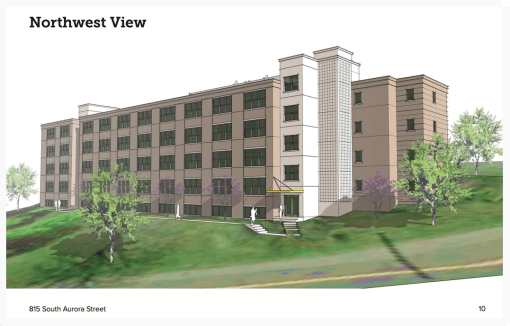
The change allows development to proceed on the grassy field at 815 South Aurora Street on South Hill, although as mentioned last week, the fall zone revision isn’t as much as developers Todd Fox and Charlie O’Connor had hoped for. But it’s still enough to work with; according to Josh Brokaw at the Times, a revised plan that meets the new guidelines could be going to the planning board for sketch plan review in June, possibly with more units than the 87 studio units initially planned. It was also reported that the local neighborhood group (South Hill Civic Association, SHCA) is comfortable with the initial plan, so this might be a relatively smooth process when the project is ready for review.

2. Meanwhile, while one thing moves forward, Dryden’s been hit with a major setback. The Pinckney Road parcel sale in Dryden was foiled when voters, in a 1188-936 vote, rejected the town’s plans to use recreation reserve funds to purchase the 15 acre property. The town would have spent about $56,800 of a fund that has over $300,000, and the county would have contributed $15,000, so that the town could have turned it into park space in the long-term. The town was prepared to buy the property, but residents opposed to the sale managed to get enough signatures on a petition to force to to go up for a vote.

It sounded like a worthy and reasonable plan. But I get the feeling that there were a lot of folks who figured it would pass by a wide margin, so they just didn’t vote. In a marketing course a while back in college, I remember the professor sharing an interesting statistic – versus feeling neutral, the general public is three times more likely to support an initiative when they really like something, and nine times more likely to vote or speak out when they’re really opposed. People are more driven by aversion than reward, and that’s probably what happened here.

20141227_134402

3. Sticking with local governments, the town of Ithaca is set to vote on a moratorium on duplexes, but with some modifications from the initial proposal. For one, given construction seasons revolving around the warm season, and the time it takes to plan and get permits, it was decided to make it only nine months (January 2017) instead of one year, so that they could limit the possibility of dragging it through two construction seasons. And although the town planning committee chair wasn’t on board with it, an exemption is in place if one of the units will be owner-occupied. If their goal is to revise the approach to student housing, then at least these amendments fix or lessen some of the bigger issues a moratorium would produce.

https://twitter.com/streamcolab/status/657329991827509248
4. Just a wee bit more info on the “Tim Timbers” planned for the corner of Freese and Dryden Roads in Varna. The tiny houses are small though not micro-sized – they’re expected to be about 800 square feet. Local architecture firm STREAM Collaborative is working with businessman Nick Bellisario on the 16-lot subdivision and home development.

waterfront_concept_aerial_1waterfront_concept_mf_th_SP_1

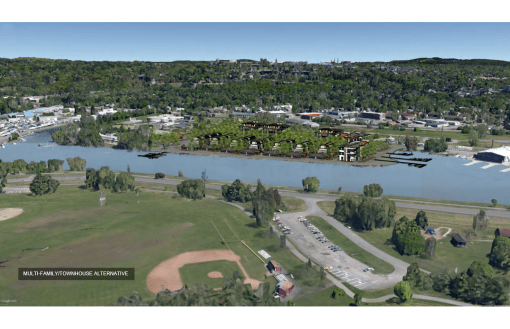
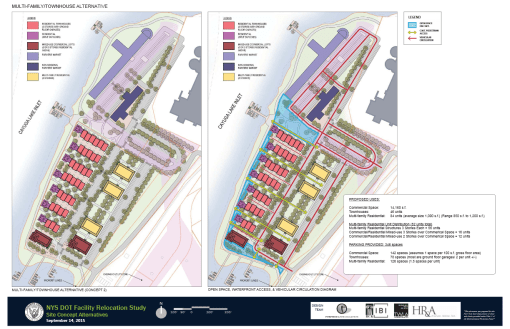
5. So the full 206-page, $78,000 NYS DOT waterfront redevelopment study by Fisher Associates is on the city’s website. The initial results were shared here back in October, but the final product has some additional, very interesting details.

waterfront_concept_timeline

One of those additions is a potential timeline for development. It calls for getting official support and commitments over the next several months, issuing an RFP later this year for the new DOT facility in Dryden, and issue an RFP for the NYSDOT waterfront site later this year, with review in Q1 2017 and developer selection in Q2 2017, assuming this doesn’t end up like the Old Library debate. The DOT would move to Dryden in Q3 2018, and the excess state land would be transferred to the county, sold in Q1 2019, and ready for occupancy by mid-2020.

The other really interesting new section is Appendix 5, stakeholder outreach. This consists of interviews with city officials and nearby property owners – Cornell (who say they have no plans for their waterfront properties), the Farmer’s Market, and some smaller businesses and organizations. The gist of the comments had more to do with Farmer’s Market than the DOT – namely, heavy traffic issues, needs more parking, and needs to physically expand to accommodate a waiting list of vendors and cool-season operations. There are early plans incubating for a nearby indoor market facility, if memory serves right. As for the DOT site, the mixed-use plan was deemed most favorable, and the stakeholders agreed that the site had great potential for redevelopment.

warren_medical_lansing_1

6. Looks like marketing has started for a proposed new medical office building in the village of Lansing. The new one-story building, which appears to be designed by Binghamton-based Keystone Associates, would be off of Warren Road, although it looks like the building would be accessed from a driveway coming off of Uptown Road. The 2.71 acre property is zoned “Human Health Services District” by the village, and borders undeveloped land owned by Cornell, and several other suburban medical office buildings built over the past few decades. The resolution on the attached site plan is too low to determine the square footage, though it looks to be in the low tens of thousands.

The property was purchased by Arleo Real Estate from Cornell for $378,600 in October 2014. Arleo Eye Associates owns and occupies the neighboring building to the south. Arleo built their 7,119 SF optometry office in 2007.


News Tidbits 4/30/16: Sticking to the Plan

30 04 2016

chapter_house_v4_1

1. So, let’s start off with the bad news. Chapter House might not be happening. Josh Brokaw at the Ithaca Times had the scoop, though not for a lack of trying on the Voice’s part – rumors had arrived in the inbox well before the Collegetown construction roundup article. I’ve reached out to Jerry Dietz, the building manager for the Chapter House project, four times over the past couple of weeks, without response. One of those was an in-person visit that went un-received. My Voice editor and colleague Jolene Almendarez has also been trying to do her share of contacting relevant parties, to no avail.

Anyway, personal discontent aside, The co-proprietor of the Chapter House (and the only one willing to say anything on record) says that he believes a sale of the 400-404 Stewart Avenue property is imminent, with the potential buyer being the next door neighbor of the also-destroyed 406 Stewart Avenue. The claim is that a more cost-efficient plan would be put forth, which could eliminate the Chapter House from its plans.

One thing to keep in mind is that the property is on the edge of the East Hill historic district – the Ithaca Landmarks Preservation Commission can control just about every aspect of the exterior, but they don’t have say over use any more than zoning permits. They can stipulate the extra expense of appropriate material and image, but they can’t stipulate a bar (and a lot of commission members would be uncomfortable with that anyway). Dunno how much the insurance money was, but the finances just may not work. It would be unfortunate, but as they do in golf, they’ll play the ball where it lies.

college_crossing_2

plan-1

2. Noting, briefly. Evan Monkemeyer, the developer behind the cancelled College Crossing project, might be partnering with another developer to create and put forward a plan for the corner of Route 96 and East King Road. This is according to the town of Ithaca’s planning staff. Monkemeyer has not hidden his discontent after his suburban-style mixed-use project became the subject of heavy debate because the site plan, originally approved in 2007, no longer meshed with the town’s interests, which had evolved to more New Urbanist formats put forth by the 2014 Comprehensive Plan and the Form Ithaca charrettes. Monkemeyer owns about 64 acres on the northeast side of the intersection, and more than 15 acres as part of Springwood on the southeast side of the corner. In other words, virtually all the divvied up land and conceptual buildings on the lower right side of the charrette image. This could be something to keep in eye on over the coming months.

maplewood_v3_2

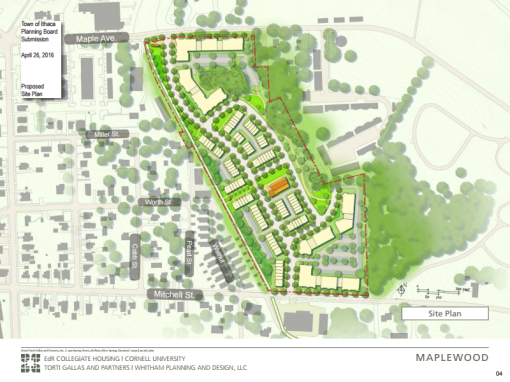
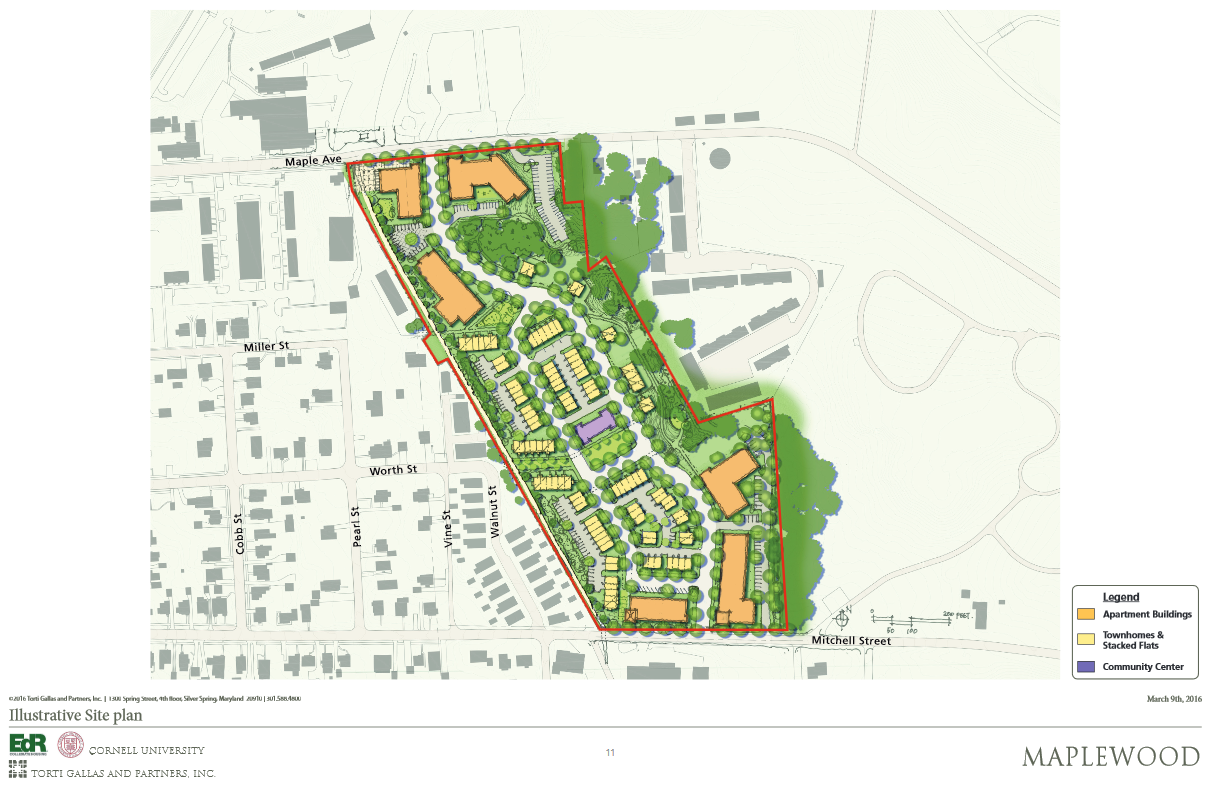
3. Here’s the latest iteration of the Maplewood Park site plan. A lot of changes from the previous version. To sum up the changes, the apartment buildings, 3-4 stories, have been pulled back from existing homes, the townhouses and stacked flats have are more centralized and closely clustered, and mixed-use retail/apartment planned for the city is now in the town, all the city has in its portion is green space and perhaps a small service area/ bus shelter.

Also note the secondary road that terminates right at the edge of the Maple Hill property. Chances are very good that would feed into a phase II that redevelops the Maple Hill property.

The large parking lot in the southeast corner doesn’t seem to jive with the rest of the plan, previous versions had the parking more dispersed. Since Cornell has an idea of the number of residents it wants for the project to be feasible to build and affordable on grad student stipends (850-975, centering around 925 beds in 500 units), if housing is decreased in one part of the parcel, they’re going to have their development team make up for it somewhere else. One of the bigger points of contention seems to be Cornell trying to avoid drawing traffic in by keeping larger buildings further out, while neighbors from various angles try and push the units as far away from them as possible.

maplewood_v3_3

Maplewood has a website up sharing meeting notes and presentation materials here. Future meeting information will also be posted to the Maplewood website. The project will be filling out an Environmental Impact Statement (EIS) not unlike Chain Works, because of the project size and potential for adverse impacts (and therefore the need for proper mitigation before plans can be approved). The scoping document for the EIS, which is an outline that says what will be written about where, is on the town’s website here.

maplewood_v3_4

Just for the record, the print version of a recent Maplewood write-up on the Times claimed to have a quote from me. It was not. The online version of the piece has the corrections. The quote wasn’t even something I would say, because I don’t think Cornell attempting to house a greater number of its graduate and professional students is an “unsustainable development goal”. Quite the opposite, it’s crucial they do that to relieve some of the pressure on the rest of the local housing market.

202_hancock_1

4. Looks like some of the IURA’s recommended funding Action Plan is out. Habitat for Humanity gets the full $75,000 request, as does INHS with the $100,000 requested for their new single-family build at 304 Hector Street. Most of the 202 Hancock project, the seven for-sale townhouses, was recommended for funding – $530,000 of $567,000, ~93.5% of the request.

815_s_aurora_4 815_s_aurora_1

5. At the Common Council meeting next Wednesday, the city is set to vote on reducing the fall-zone radius for cell phone towers, from double the tower’s height (200% of tower height), to 120% of the tower’s height. The move will potentially allow an iteration of Modern Living Rentals’s 815 South Aurora project to move forward with further planning and review. The 87-unit project was planned on the assumption of 100% tower height plus ten feet, so in the case of the 170-foot South Hill cell tower in question, the law would call for a 204 ft. radius, not 180 ft. as the developer hoped. But still, it’s a lot less than the 340 ft. it currently is. The developer may seek a smaller project, build taller, a greatly-revised footprint, or other options. We’ll see how it plays out.

20160414_114709 20160414_114818

201_w_clinton_1

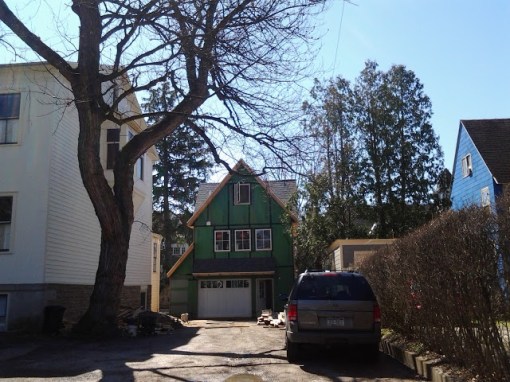
5. House of the week. Back in March, it wasn’t certain whether 201 West Clinton’s “sawn-and-batten wood” would be left unpainted, or painted yellow. Looks like the former is correct, based on the east face of the 1-bedroom carriage house. The ZIP panels were still exposed on the other faces when I shot these photos, but based off what could be seen through the windows, interior work is progressing nicely, and the garage door has been attached. Local architect Zac Boggs and partner Isabel Fernández are building the 520 SF addition atop an existing 1960s garage.


The Chain Works District DGEIS, Part One: Introduction

20 04 2016

chain_works_rev3_3

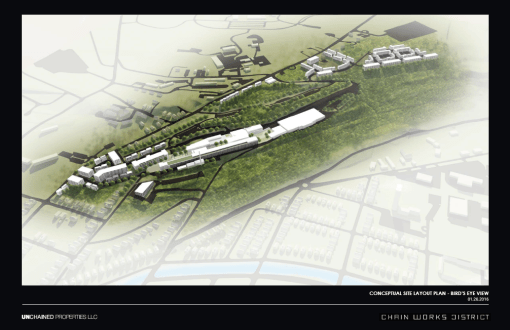
Chain Works is, without a doubt, the single largest project currently being considered in the Ithaca area. It’s a very large project in terms of square footage, in terms of cost, in terms of length of build-out. Being such a large and important, it needs to be examined carefully – it could help propel Ithaca’s economy and ambitions to a higher quality of life, or it could serve as 95 acres of dead weight.

Between March 29th and May 10th, the city is receiving public comments on the Draft Generic Environmental Impact Statement, the DGEIS. The city’s website appears to be outdated, but the Chain Works District website is up to date – any comments readers might have, any questions or concerns, are submitted to the City of Ithaca Planning Board as lead agency for environmental review. UnChained Properties LLC, the developer, offers a blank form here, or if one prefers, comments can be sent directly to Ithaca senior planner Lisa Nicholas at lnicholas@cityofithaca.org.

What a DGEIS does is evaluate the potential impacts of growth on local resources and facilities, such as traffic, water supply systems, utilities infrastructure, social and aesthetic impacts. The DGEIS, which will need to be finalized, is part of New York State’s Enviromental Quality Review (SEQR, pronounced “seeker”) and a necessary precursor to any planned/contemplated construction and development of the site.

So, the DGEIS main body is 422 pages, with about 3 GB’s worth of appendices. Although 45 days is allotted for public comment, not a whole lot of people want to read through 422 pages, but the table of contents allows people to jump around if there’s one or two thing they’re more keen to read about. A link to the DGEIS is offered by project partner Fagan Engineers here, but you might need to submit an email and name before being able to see it.

chain-works-map

So, basic details, per the “Description of Action”:

Chain Works District Project is a proposed mixed-use development consisting of residential, office, commercial, retail, restaurant/café, warehousing/distribution, manufacturing, and open space within the existing 95-acre Site which traverses the City and Town of Ithaca’s municipal boundary . Completion of the Project is estimated to be over a seven-to-ten year period. The first phase, referred to henceforth as Phase I, will consist of redeveloping four buildings generally located at the northernmost and southernmost ends of the complex of existing buildings. These first four buildings are approximately 331,450 square-feet (SF), and will house office, a mix of office and residential, and industrial uses. Subsequent phases of development will be determined as the Project proceeds and will include new structures to complete a full build-out of 1,706,150 SF.

So, just based off that, anything that gets developed, is as the market and NYS Dept. of Environmental Conservation (DEC) allows. If the market isn’t amenable or the cleanup plan isn’t approved, don’t expect the plans to move forward all that fast, if at all. If the market is good and the DEC signs off on plans, expect the build-out to be on the shorter end of the 7-to-10 year time-scale.

chainworks-before-771x441

chainworks-after-771x441

Related infrastructure work for the Project will include: (1) removing select buildings to create courtyards and a network of open spaces and roads; (2) creating pedestrian, bicycle, and vehicular connections through the Site from South Hill to Downtown Ithaca; (3) improving the existing roads within the Site while creating new access points into the Site; (4) mitigating existing environmental impacts from historic uses; (5) fostering the development of a link, the Gateway Trail, to the Black Diamond Trail network; and (6) installing stormwater management facilities, lighting, utilities, and plantings.

No big surprises – some buildings in the interconnected complex will come down, shared road concepts will dominate the internal transportation system of the neighborhood, the site will be more fully integrated into South Hill and trails, and usual site details like stormwater plans and landscaping are going to be incorporated into the project.

Given its complexity, the project team is pretty broad – eleven organizations, from the Ithaca, Elmira, Corning and Rochester areas. Local firms include STREAM Collaborative, which helped draw up the design standards and rezoning, Randall + West for more rezoning work, and Brous Consulting, which is handling public outreach. UnChained Properties is headed by David Lubin of Horseheads (suburban Elmira). From what I’ve been told, project development to-date has cost somewhere around $2 million dollars.

Likewise on the approvals – the project will need something like fifteen approvals from a dozen different government groups and agencies.

chain_works_history

Let me share an introduction and summary comparable but maybe more approachable than theirs – a background primer on why this is happening can be found on the Voice in my introduction article here, and Mike Smith’s summary article here.

Much of Chain Works reuses what was once the Morse Chain / Emerson Power Transmission (EPT) factory, which employed thousands from the 1900s, up until the last workers were let go and the facility shut its doors in 2011. During the mid 20th century, industrial processes used chemicals and compounds that are known to be toxic – Trichloroethylene (TCE) being the best known, but also heavy metals and oils. These not only affect the site and its building, they’re also in the soil and groundwater of South Hill.

chain_works_contamination

The site is classified as Class 2 Superfund site, which the DEC describes as “a significant threat to public health and/or the environment and requiring action”. While EPT is responsible for clean-up, they’re only responsible for the bare minimum (the industrial standard, what can be safely exposed to for 8 hours) unless otherwise specified by a proposed reuse, in which case they have to clean to a higher standard like residential use.

So that leaves us at present – a vacant 95.93 acre, 800,000 SF industrial site split between municipalities and with varied terrain and conditions. One of the most basic goals of CWD is to get the city and town to rezone the land to allow a mix of uses – PUD/PDZ, which give flexibility in site development based off of standards the developer, the city/town, and in this case NYSDEC mutually agree to.


chain_works_form_districts_1

So, in the PUD/PDZ, one of the broad takeaways is that each of the four form code has its own design standards – height, width, window-spacing, setbacks and most physical details, even signage. Unlike typical zoning, it’s the appearance that is more thoroughly managed, not the use. Those can be found in detail here. The design standards utilize what’s called LEED ND (Neighborhood Development), design standards created for large-scale green, well-integrated and sustainable development. A gated community it ain’t.

The goal of these design standards is to mitigate some of the adverse impact the new and renovated buildings will have on the community – promoting alternate transit reduces traffic, limiting floors and floor heights reduces visual impacts, and so on.

Build-out falls under four general form zones: (1) CW1- Natural Sub-Area, 23.9 acres of old woodland to be limited to passive recreation. (2) CW2- Neighborhood General Sub-Area, 21.2 acres of townhouses, stacked flats and similar moderately-dense development, mostly in Ithaca town; (3) CW3- Neighborhood Center Sub-Area, 39.7 acres of mixed-use, in a combination of renovated and new buildings towards the northern end of the property in the city, and (4) CW4, Industrial Sub-Area, a 10.3 acre zone for industrial uses in existing buildings at the Emerson site. The site borders Route 96B, single-family and multi-family homes, natural areas and steep terrain.

About 0.91 acres will be subdivided off and maintained by Emerson for active groundwater treatment. The other 95.02 acres would be sold to UnChained Properties.

chain_works_form_districts_2

The re-development is fairly multifaceted. Some buildings will be renovated, a few will come down, a couple will receive additions, an quite a few others, like those in the all-residential CW2 zone, will be brand-new. Specifically in Phase One, four buildings – 21, 24, 33 and 34, will be renovated.

In Part Two, we’ll take a closer look at the neighborhood design standards and detailed plans for Phase One.


A Construction Tour of a Net-Zero Energy House

6 04 2016

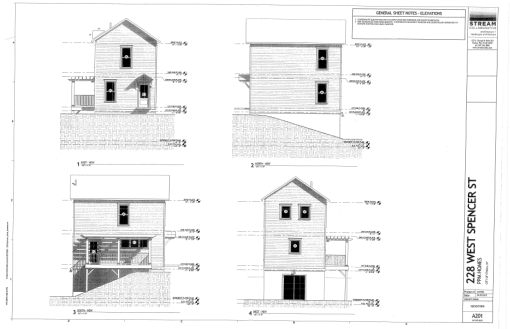
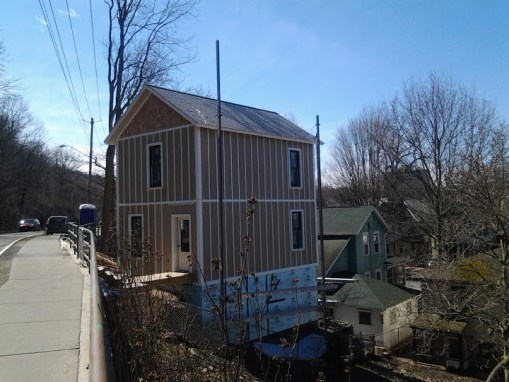
A couple of weeks ago, Noah Demarest was kind enough to give a tour of the new net-zero energy single-family house underway at 228 West Spencer Street in the South Hill neighborhood.

Most readers of the blog will be familiar with Noah Demarest’s name – he’s the head architect of STREAM Collaborative, which has been involved in projects like 902 Dryden Road, 201 College Avenue, State Street Triangle and the Franklin proposal for condos at the Old Library site.

228_w_spencer_1

Noah’s a little more involved in this project than most – he’s in charge of the build-out, and the cost of construction is coming out of his own pocket. Local landlord Ed Cope is a silent partner in the project, having purchased the land from the previous owner for $15,000 last February. The sale came with a different set of house plans, and the unique topography and constraints of the site made it such that the BZA had to approve virtually any new construction proposed on the parcel – Noah drew up plans for a different design, and those were later accepted by the board.

20160319_130922

You can see how that unique site topography plays in here. The framing, sheathing (ZIP system), roofing and panelling of the house was done by local company Ironwood Builders. With much of the exterior work completed, activity has shifted largely to the interior spaces, which Noah is doing with his own construction team.

20160319_130936

My initial impression was that they were going for an exposed wood trim look similar to the framework of Tudor-style houses, but Noah says the trim will be painted the same color as the fiber cement siding. The shingles are a nice, Craftsman-style touch.

20160319_131043 20160319_131055

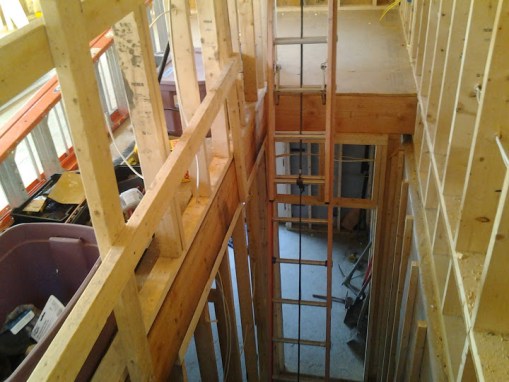
First photo is looking down, second is looking up. The house, just under 1,000 SF, has living space on three levels – the kitchen and living room will be on the second floor, and a bedroom and bathroom are on the first and third floors. This will be put up on the market for sale once it is ready – not a rental. Noah envisions this being the type of house that would be great for a young couple or even a deep-pocketed grad student.

By the way, just mentioning for the sake of acknowledgement – I’m not a fan of ladders.

20160319_131113 20160319_133609

As work moves closer to completion, a porch pergola will be built here.

20160319_133613 20160319_133748

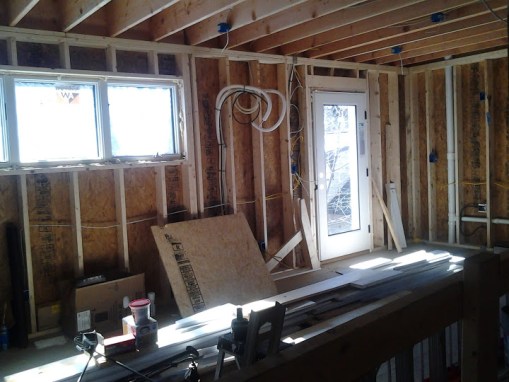
This will be a net-zero energy house, meaning zero net energy consumption – what gets taken from the grid also gets returned to the grid. In the case of this home, an off-site set of solar panels will offset the energy that is taken from the grid. The house will also achieve a very high degree of energy efficiency. One of the ways that’s being accomplished here is the use of an air source heat pump, which transfers heat from outside to inside a building (and vice versa) via a refrigeration compressor and condenser. The system can absorb heat from the outside air and transport it into the home, and can work in reverse during the summer, absorbing heat from inside the home and transporting it outside.

According to Noah, the system tends to be somewhat less efficient in extremely cold weather (-10 F or so; at that point it becomes difficult to extract usable heat energy), but is otherwise very capable for providing heating and cooling needs. Appliances will be all-electric, no gas.

20160319_133939

The house is also very heavily insulated – 2.5 inches of foam, with the fiber cement siding on top of that.

20160319_134029 20160319_134056
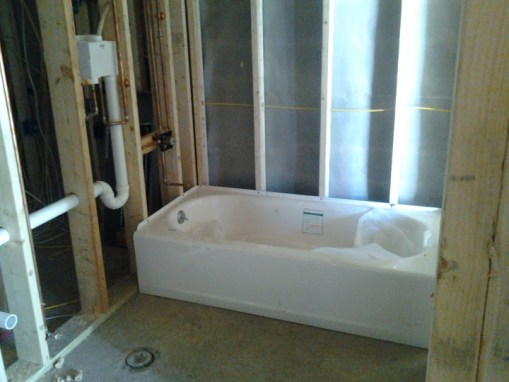
These last couple shots are from the bottom level – bathroom plumbing is in the process of being installed in the basement bathroom unit. The plan is to have the house ready for sale later this year.

One of the things that I personally am looking forward to is that Noah plans on making the costs of construction available to the city, as an example of what construction costs tend to look like for infill on an inner-city parcel. Having more examples to rely on, and a clear description of cost per square foot, gives the city more information to help guide its approach to planning and development. Noah noted during the tour was that the zero net-energy aspect is a relatively minor component in the expenses of the project.


News Tidbits 3/5/16: Here Comes the Papierkrieg

5 03 2016

chapteR_house_reconst_v4_2chapter_house_v4_1
1. Let’s start off with something that led to a couple of worked up messages and emails to the Voice inbox – a potentially controversial revision to the Chapter House proposal that would replace the north eave of the building with a wall (bottom image). In the documentation, there’s no written explanation as to why the change is being requested from the approved plan (top image); but I wonder if it has to do with fire safety regulations or zoning issues between the Chapter House and the rebuild being prepared for 406 Stewart next door. Architect Jason Demarest is working on both projects for their respective owners (400-404 Stewart’s Sebastian Mascaro and 406 Stewart’s Jim Goldman), so he’ll be representing both projects at the Landmarks meeting next Tuesday the 8th at 5:30 PM. Also on the agenda are a couple of minor renovations, discussion about potential work to The Nines at 311 College Avenue, and discussion of an expansion to the East Hill Historic District.  This might just be for the Orchard Place properties that are locally historic but not nationally recognized, but we’ll find out for certain next week.

1401_dryden_1

2. Some of your might be wondering what happened with the 902 Dryden vote. Well, the vote still has yet to be taken. Moldern Living Rentals was still work on the last details of the Stormwater Pollution Prevention Plan for runoff (SWPPP), so the town of Dryden won’t be taking a vote until their March meeting, which has yet to be posted to their website (most likely it’s Thursday the 10th, or Thursday the 17th). The next-door neighbors still took time out to call the 40% downsized project a travesty and that it wasn’t shown in the 2012 Comprehensive Plan. Veering into editorial territory, my original comment from last month still stands:
“[A] master plan is not an exact thing; if it shows for three sets of five townhouses on a parcel, that’s not what may necessarily may happen. It just indicates the kind of density and scale of development the plan deems appropriate. 902 Dryden isn’t drawn on the master plan, but the plan welcomes the idea of townhouses on Forest Home Drive, which 902 abuts. So a vote in favor of the 8 new townhouses is, indirectly, a vote of support in the Varna Master Plan.”

I would give more weight to Todd Bittner’s objective concerns about stormwater than subjective comments of character, especially when they’re from someone who said they were disgusted by the thought of rentals. When Bittner checks out the revised SWPPP, if it looks acceptable, I think the project should be approved.

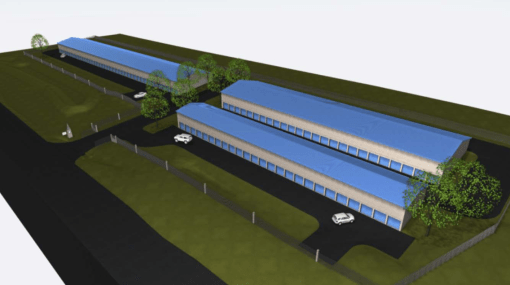
On another note, 1401 Dryden, the Storage Squad project (pictured above), seems to have lost a lot of its charm after getting caught in red tape last fall. The owners had to squeeze into a smaller area to satisfy the revised, expensive SWPPP. They’re hoping to hide most of it with landscaping.

dewitt_house_v3_1 dewitt_house_v3_2

3. Just a quick update on the Travis Hyde Properties Old Library proposal. The ILPC and Planning Board had their joint meeting, project team partners HOLT Architects and TWMLA landscape architects have incorporated their comments, and here is the current product. Sorry, no renderings, just site plans. Previous plan here. Overall, the site layout hasn’t changed too much, a courtyard and green space will be next to the DeWitt Park Inn, and the building is set back to maintain rhythm with its neighbors. The exterior is supposed to have more projections and recesses, the top floor set back 6 feet, and incorporation of balconies on the upper floors (not sure how this will affect the plan for the inverted roof). Unit count is 21 1-bedroom, 24 2-bedroom, and 9 3-bedroom, 54 instead of the original 60 (39 1-bedroom, 21 2-bedroom). The addition of 3-bedrooms is surprising for senior apartments; from what I’ve been told, typically the large majority of demand is with 1 and 2-bedroom units. The Planning Board and ILPC have another shared meeting at City Hall on the 8th.

chain_works_rev3_3

4. The Chain Works review process is chugging along. At its meeting on the 8th, the Planning Board’s special meeting will decide whether the Draft Generic Environmental Impact Statement is ready for public review (not expected to be controversial). Then on the 9th, Cornish et al. will be giving a report to the Common Council’s Planning Committee about the timeline and current status. Another staff progress report will be presented at the Planning Board meeting on the 22nd, and the next day on the 23rd, the city CC and town board Planning Committees will meet review proposed draft PUD zoning for the massive mixed-use project. With adequacy being agreed upon, the project can begin project review 15 or so days later; first public meeting is tentatively scheduled for March 29th.

The city just uploaded the comments of reviewers on the DGEIS – most are relevant, some are pretty good suggestions and critiques. Then there’s “Reviewer 3”, most of whom’s comments were put aside as they’re not relevant to adequacy. Those are but a preview of the potential flare-ups to expect at the public meeting.

12366349_10153784612864664_8478297861508040090_n

5. Stumbled on this by chance, but it seems to verify initial suspicions from a few months back; a project proposal goes with the sale of multiple parcels of land totaling 9.2 acres off Park Lane and Slaterville Road in the town of Ithaca. The property, for sale at $995,000, is being marketed by Carol Bushberg Real Estate, which doesn’t have the render on their listing page or their Youtube video, but they do on facebook. The conveyed plans call for a 26-lot subdivision, and given the proposed lot lines, it doesn’t look like it would be affected by the town’s moratorium on 2-unit structures, because each unit has its own lot even though some of them share a wall. It also meshes with the town’s Comprehensive Plan, which calls for 2-4 units per acre in this area (in the site plan, it’s just under 3 per acre). So to all you would-be home developers, here’s an opportunity.

20151108_154213

6. Speaking of the 2-unit moratorium in the town of Ithaca, it looks like that’s going forward to the Town Board to schedule a public hearing. The Planning Committee decided it was a good idea. The documentation says it would last at least a year, by which time the town hopes to have its new form-based, anti-student special zoning in place. Editorializing again, I still oppose this proposed law not because of the issue with low-end student housing, but because it’s too broad, affecting the whole town. The last 2-unit approved in Ithaca town wasn’t a student special – it was a 3-bedroom house with an accessory 1-bedroom apartment off Calkins Road. The husband and wife building the house will be living in the larger unit. I don’t think the whole town should be subject to a law that’s only been written to address a South Hill issue (the law’s language claims it’s a concern in East Ithaca as well, but I haven’t seen or heard of a new student-oriented rental in East Ithaca in at least the past few years). Anyway, whether for or against it, comments can be sent to Town Clerk at townclerk@town.ithaca.ny.us. The town meeting will be at the town hall on Monday the 7th at 5:30.

202_hancock_1
7. Here’s a preview of next week’s mid-week post: A look at some of the affordable housing proposals and plans that applied to the city for grant funding this year. INHS applied for their owner-occupied townhouses, the Boggs/ Fernández proposal for 402 South Cayuga is there, Habitat’s duplex, 304 Hector, and a new plan by a private citizen for an owner-occupied affordable duplex behind the house at 622 Center Street in the South Side neighborhood. Keep an eye out for that Monday night or Tuesday morning.

maguire_carpenter_2

8. From the other news outlets now; the Times is reporting that the sketch plan for the Maguire auto dealership proposal for the Carpenter Business Park actually had a warm reception from the Planning Board. In particular, board stalwart John Schroeder was impressed with the sidewalk along 13 (which would help transition the Waterfront and nearby environs to mixed-use) and public amenities. The board is cognizant of the site’s issues and the city’s hopes for the area, so those do play into the thought process – perhaps part of it is that Maguire’s jobs and features could work as a draw for mixed-use development of nearby parcels that don’t have so many issues. The board’s role stops at this point, with the just passed TM-PUD now front and center – unless Common Council okays the project, it won’t be back again. But Maguire did ask for a letter of support if the board was willing; we’ll see.

texas_roadhouse_v3_1

9. Meanwhile, the Journal is reporting that Texas Roadhouse will be opening May 23rd. No doubt the relatively dry and mild winter helped keep this project moving along (February construction update here). The 7,163 SF restaurant expects to hire 170 to 200 employees, of which 80 will be full time. That number astounds me just a bit because I worked at a steakhouse in high school, and although we were maybe half the square footage, we only had a staff of about 40. Even in Ithaca’s crowded restaurant scene, there aren’t many options for the red meat lovers that don’t cost an arm and a leg, and chances are good this will appeal to a different crowd than most, and be something of a draw from the nearby rural areas. Best of luck to them and their staff.

20160219_134003 20160219_134057

201_w_clinton_1

10. Let’s wrap this up with House of the Week. Quick update on Zac Boggs and Isabel Fernández’s 201 West Clinton Street carriage house. Fully shetathed (Huber ZIP system panels), fully roofed and shingled, and fully fitted with windows, the exterior work left will focus on exterior siding attachment and refinishing the original 1960s garage to match the historically-inspired vertical addition. The exterior calls for sawn board-and-batten wood fitting, though it’s unclear if it will be unpainted wood, or painted yellow. The 1 bedroom, 520 SF space looks like it could be ready for occupancy by late spring.


News Tidbits 2/27/16: A Leap Year, But Not A Leap Forward

27 02 2016

1. Let’s start this week off with some maps. The two below come courtesy of the Ithaca Urban Renewal Agency (IURA) agenda, submitted by INHS Director of Real Estate Development Scott Reynolds.

iura_inhs_map_1

iura_inhs_map_2
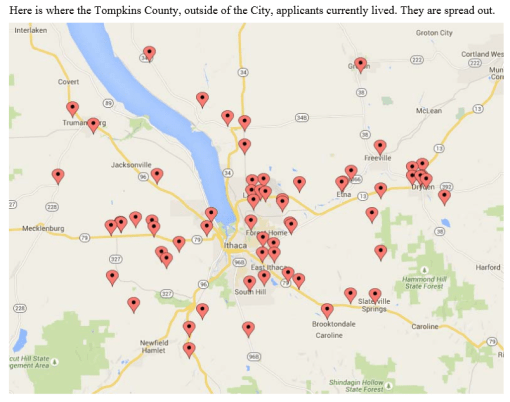
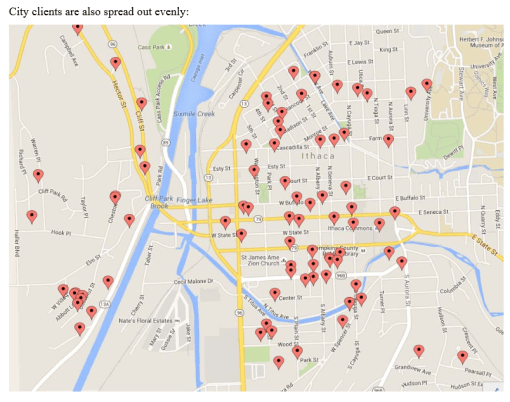
Each marker is the approximate location of current of an individual on Ithaca Neighborhood Housing Services’ (INHS’s) apartment wait-list. Dozens and dozens. As breakdowns go, 48% of waitlisted applicants live in the city of Ithaca, 38% outside of Ithaca but somewhere within Tompkins County, 8% live in other counties of New York State, and 6% come from outside the state. Counting the markers, my back-of-the-envelope calculation comes out to about 160 households.

The map implicitly describes the wealth of Ithaca’s neighborhoods – an increased number of applicants for affordable apartments come from South Side, the West Village area, and Northside, and further out, Dryden village and the apartment complexes in Lansing village. Wealthier areas like Fall Creek, East Hill, South Hill and Belle Sherman have very few or no individuals on the wait list.

The next time someone says affordability isn’t an issue, think of each dot on this map, and remember that’s someone, maybe even a while family, struggling but hoping to find decent, affordable housing.

Farm Pond Site RES'D & LOT s 010414

2. The Farm Pond Circle development in Lansing has finally sold on the 23rd for $164,840, well above both asking prices from last year. The purchaser was Dryden-based Schickel Construction, the same company responsible for the Boiceville Cottages. The restrictions on the ten for-sale lots carry over with the deeds. All things considered, Bruno Schickel knows this area well and his company could be one of the very few in the region interested but also capable in fulfilling Jack Jensen’s vision.

The development first went up for sale for $155,000 last March after the owner/developer, Jack Jensen, passed away suddenly in October 2014. In October, the price was knocked down to $125,000. Along with the lots Schickel picked up in the primary sale, a second purchase of $39,160 gave him three more undeveloped lots owned by other members of the Jensen family.

1015_dryden_1

3. On the other end of the sale scale, Ithaca real estate developer Modern Living Rentals has put their multi-family property at 1015 Dryden Road up for sale.  The asking price for the 5-unit property is $650,000. 1015 Dryden is home to a single-family home built in 1938, and a 4-unit apartment building from about 1980. The apartment building was badly damaged in a fire in 2011, renovated, and the site was sold to MLR for $425,000 in March 2014. The tax assessment is also $425,000.

Plans on MLR’s website shared a to-be-built 2,790 SF triplex designed by STREAM Collaborative, but the real estate listing notes plans filed for two side-by-side duplexes (4 units). All units when built would equal 24 bedrooms, but the bungalow house is just one bedroom, and although I can’t find total number of beds for the 4-unit, at 4,032 SF it’s probably 2 beds per unit, so…that’s 9 exisiting, plus six from the triplex, plus 9 bedrooms from the two side-by-sides? Not 100% sure. Potential landlords can contact the listing agent here.

elmira_savings_v1

4. As noted by the Ithaca Journal this week, Elmira Savings Bank now has regulatory approval to move its bank branch from 301 East State Street to the old Pancho Villa Building at 602 West State Street. The project would still need site plan review for the renovation of 602 alone, even if the rest of the site isn’t altered. However, if less than 10,000 SF, a non-residential structure may only need limited SPR, staff-level like a single-family house (I was a bit uncertain, but I have confirmed with a member of the planning board). So although the move is okayed, the bank may still have to go through the board before renovations can begin. In theory, they could move into the un-renovated building without board approval, since it would only be when substantial exterior alterations are planned that it would then fall under the board’s purview.

The bank still has no plans for the other properties acquired in their December purchase.

chain_works_rev3_3 chain_works_rev3_4

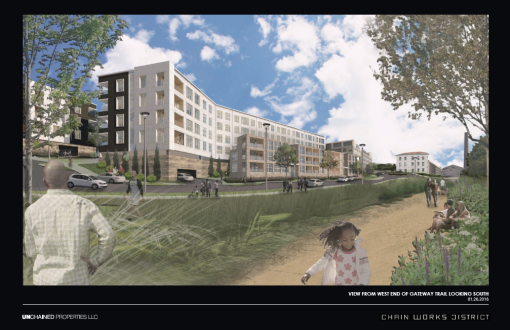
5. Now for some weekly eye candy. Additional images from Monday’s Ithaca Voice on the Chain Works District redevelopment, PDF here. These were left out because although these images are strictly conceptual and years away from reality, they show many new buildings, up to 5 floors in places, which could have had people freaking out that Chain Works was a Manhattan-izing of Ithaca and that a derelict brownfield was a suitable alternative. What gets written is tailored for its audience, and I didn’t think the Voice’s more general and broader reader base would handle these images well. Case in point, the ICSD shutting off drinking water in all of the schools as a precaution sent people into the Voice’s comment section panicking that every household on the municipal water system was contaminated with toxic levels of lead a la Flint. So, here are some visual extras to the much more rational readers of this blog.

The conceptual renderings are by Rochester-based Chaintreuil Jensen Stark Architects, the same group behind the design of Harold’s Square.

20160220_111241 20160220_111313 20160220_111336

424_dryden_rd_1

6. House of the week. Or rather, duplex of the week. From the outside, William and Angie Chen’s 2-unit, 6-bedroom duplex at 424 Dryden Road is nearly complete. Trim details like the porches have yet to be attached, and the foundation still needs to be backfilled, but most of the exterior looks good to go.

However, the parking lot has been a source of some BZA debate. The lot would require five off-street parking spaces, which the Chens can do with the construction of a three-car garage that tears down mature trees, but they would prefer to create uncovered five spaces that include two in the rear yard. CR-2 Zoning doesn’t allow for rear yard parking, so an area variance is required. The application also comes with a letter of opposition from a neighbor who seems to have mixed up the choices, asking for the variance to be denied for tearing down trees, when it’s the non-variance option that tears down trees.

Local architect Daniel Hirtler of Flatfield Designs is handling the duplex and the zoning variance.

341_coddington_1

341_coddington_2

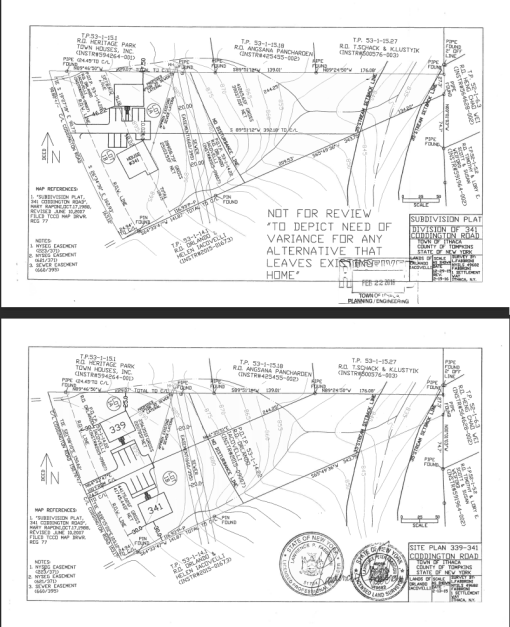
7. Status: It’s complicated. In Ithaca town, the Iacovelli family, longtime local landlords/builders, want to tear down a ca. 1845 house at 341 Coddington Road to put up two duplexes, which from the schematic appear to be the Iacovelli student special. To do so, they need to subdivide the property, one for each duplex.

On the one hand, the Iacovellis, who have been on South Hill since the 1920s (they’re the namesakes of Iacovelli Park at the end of Juniper Drive) and bought the property last year, have a right within existing law to do what they want with the property, which is next door to Orlando Iacovelli’s house. They want to subdivide the land into two parcels, and the only way to create two legal lots is to go right through the existing house.

On the other hand, it would be a shame to lose a 170-year house that’s in fair shape and has many of its original features intact, just so two fairly spartan duplexes can be built.

The town’s planning board seems to be cognizant of both sides in this dilemma. They asked at the last meeting to examine an alternative to allow subdivision and keep the 1845 house intact. The engineer for the project, Larry Fabbroni, did so, but the applicant is uncomfortable with trying to get zoning variances for the non-conforming setup, area, setback and a third claim about use for unrelated occupants (which the town planning department disputes).

This all comes at a time where the town is weighing a moratorium on 2-unit properties, and if this house comes down, there’s a good chance the town will vote the moratorium. Then Iacovelli won’t be able to build any duplexes, and no one else in the town of Ithaca would be able to either. But even if Mr. Iacovelli couldn’t build, he could still demolish the house and wait, should disagreements came to a boil.

Ideally, there would be a compromise where the 1845 house is preserved (by planning board/BZA stipulation or otherwise), and Iacovelli gets to subdivide so he can build a duplex on the other parcel. That way, he gets some economic return, and the town gets to keep an undesignated but arguably historic house. Few town board members want to come off as being anti-business to local families, and few developers want to come off as greedy or exploitative. A concession on both sides and some good will could go a long way in a time where tensions about student-focused housing are rising.

Comments can be sent to the board via the town clerk (Paulette Terwilliger) at townclerk@town.ithaca.ny.us . The board is expected to take a vote on the subdivision on Tuesday the 1st at 7 PM in the town hall.


News Tidbits 2/13/16: A Week of Uncomfortable Prospects

13 02 2016

lansing_cmt
1. We’ll start off this week with some zoning and land-use discussion. the village of Lansing, which tends to have a very tight grip on their zoning, modified their code for a new addition, called “Commercial Medium Traffic” (CMT). The zone, which has taken about two years to get to this point, will override what is currently zoned a Commercial Low Traffic (CLT) area. As a result of the rezoning, some previously-okayed uses in their CLT zone – clinics, group homes, construction storage, sit-down restaurants – have been removed, but adds cafeterias and assisted living facilities. Splitting hairs, one supposes. Looking at the use guidelines, about the only big use the CMT allows that CLT doesn’t is “small-scale sales” like boutique shops, and “low-traffic food and beverage”, which covers bars and sit-down restaurants.

The reason for this change comes from a couple of angles – the village has a number of vacant or underutilized parcels in the affected area, which they feel is detracting. Developers have approached the board about building retail/restaurant space on some of the land, but that would have required rezoning to commercial high traffic. But the high traffic zone also allows “hotels and big boxes”, so the village needed an in-between. Now it’s finally in place.

ithaca_eddy_land

2. Now for another land use debate. The town of Ithaca has authorized doing an analysis on what a fair bid would be for the development rights of 33 acres of land off of Seven Mile Drive and Route 13. These parcels are currently farmed by the Eddy family, and a mini-golf facility was previously proposed on one of the properties. Before that, they were to be included in the 2014 Maguire development before the Maguires pulled their project, partially because the town said the dealership and headquarters proposal wasn’t in line with their new Comprehensive Plan.

The problem is, neither is this. The town would buy this with the intent on keeping all of it farm fields. The comprehensive plan called for TND Medium Residential (townhouses, elder cottages, small apartment buildings and compact single family) and the “Inlet Valley Gateway” (quoting the plan, “intended to be a setting for a mix of office, small-scale retail, hospitality, and tourism and agritourism uses, with low-impact light industrial, artisanal industrial, and skilled trade uses”). The concern is, if the town starts displacing development from the areas recommended, developers will start looking at areas where it’s not recommended.

For the record, the 22.38 acre parcel is for sale for $425,000, and the 10.59 acre parcel is for sale at $325,000. The assessed value is only $188,800 total. The development rights will probably fall somewhere between. This definitely isn’t as cut-and-dry as the 62 acres the town picked up for $160k in December. The town will have an idea of the cost for the rights later this year.

simeons_v2_2

3. A few notes from this week’s TCIDA agenda. The Hotel Ithaca project is up for final approval of its tax abatement, which given that the public meeting drew not a single commenter, shouldn’t have any issues going forward. 210 Hancock also has some slight tweaks to its agreement, and Simeon’s is applying for a sales tax exemption on construction materials and refurbishment. The $660,000 project’s exemption would be worth $27,079 by their calculation. Simeon’s estimates 27 jobs at opening, and 14 new positions over 3 years, about half of which appear to be living wage. The tax exemption amount is small enough that it seems like a non-issue, but we’ll see what happens if the application is accepted and a public hearing scheduled.

tmpud_waterfront_1
4. From the city Planning and Economic Development Committee – the Commons street-level active-use ordinance and the waterfront Temporary Mandatory Planned Unit Development (TM-PUD) were moved to go ahead to the Common Council next month. More on the Commons ordinance here, and the TM-PUD here.

Committee members were favorable to an amendment to the cell phone tower fall-zone law, though perhaps not in the most ideal way for Modern Living Rentals’ 87-unit 815 South Aurora proposal. On the bright side, a draft law for circulation could be ready by April. On the not so bright side, the city’s going with the 120% value used by other municipalities – that would give the 170 ft. tower near the project site a 204 ft. no-build fall zone instead of the current 340 ft. (200%), but it’s still greater than the 180 ft. MLR requested. This means the project would probably need to be revised somewhat if that’s the version of the law that moves forward. But, something would be better than nothing.

Oh, and the chicken law was voted for circulation, which opens the possibility of a council vote in April, for 20 test subjects in a pilot program.

402_s_cayuga_st_rev2_1

5. The Ithaca Urban Renewal Agency is in a bit of a dilemma. INHS’s 402 South Cayuga project, which has 4 units of affordable owner-occupied housing, is stalled. The construction costs are rapidly rising out of the range of feasibility. The only way it moves forward is if it’s a rental project, which is easier to finance.

402_s_cayuga_st_boggsfernandez

Ostensibly, the IURA would like owner-occupied housing. And a rival proposal has been offered by local architect Zac Boggs and his partner, former Planning Board member Isabel Fernández. It would offer four rentals for 2 to 5 years, and then go up for sale – in the $180-$230k range, which is somewhat more than the $110-$130k range typically offered by INHS. So what do you do? Sacrifice some affordability for some home ownership, or vice-versa? The IURA needs to figure that out. Additional renders and cover letter here.

hilton_canopy_v9_1

6. I think this is the ninth iteration of the Canopy hotel; quite possibly the most version of a single project I have on file. What’s changed since last time? Well, the inset panels in the northwest wall are back. Some cast stone was added to the base,  the second floor rood deck was tweaked, a cornice element was added to the mechanical screen, and the trellis and driveway pavers were revised. It looks like an improvement, and hopefully one that Baywood Hotels can bring to reality after being stuck in finance limbo for so long. Additional imagery here, cover letter from local architectural consultant Catherine de Almeida here.

varna_plan

7. The Times’ Michael Nocella ran a really nice piece this week looking at the past, present and future of development in Varna. According to the article, Modern Living Rentals (my sympathies to Charlie O’Connor and Todd Fox, since all of their projects seem to be wrapped up in one debate or another) needs a unanimous vote of approval for the 8-unit, 26-bed addition to 902 Dryden Road to be able to move forward (a 6-bed duplex already exists on the property). In Dryden, the five-member town board does the vote, and the current Dryden town supervisor helped close the sale of the parcel to MLR, so he must recuse himself. Shooting it down at this point, after the project’s cut its size by 40% from 18,000 SF to 11,000 SF, would be very unfortunate, and create an uncomfortable disconnect between the Varna Master Plan designed with community input, and what the board thinks Varna should have.

5_Freese_2013

As mentioned in the article, the northeast corner of Rt. 366 and Freese Road is one of those parcels where the town and Varna residents think development should happen, but really isn’t feasible. I remember when Todd Fox shared his proposal (STREAM Collaborative’s drawing above) with the town for that corner, and the reception was very positive, much more so than the owner’s earlier plan for 20 modular townhomes. Then not long after, everything ground to a halt. MLR decided not to buy the parcel after it turned out the land was incredibly unstable (there used to be a huge pile of material on the site, dubbed “Mount Varna”; the story of which gets written about extensively on the Living in Dryden blog, since Simon St. Laurent and the owners had quite the feud going). The chances of anything but grass growing on that corner is pretty low.

So, with the former “Mount Varna” land in mind, a master plan is not an exact thing; if it shows for three sets of five townhouses on a parcel, that’s not what may necessarily may happen. It just indicates the kind of density and scale of development the plan deems appropriate. 902 Dryden isn’t drawn on the master plan, but the plan welcomes the idea of townhouses on Forest Home Drive, which 902 abuts. So a vote in favor of the 8 new townhouses is, indirectly, a vote of support in the Varna Master Plan.

20151108_154139

8. The town of Ithaca’s Planning Committee will be looking into writing up and establishing a moratorium on all 2-unit residential buildings at its meeting next week. Doesn’t specify location, or rental vs. owner-occupied; just a ban on buildings with two units.

On the one hand, this is probably an attempt to curb student housing being built near IC; the town’s Planning Committee chair is someone with a long history of fighting development, and is seeking greater input on the Planning Board’s discussions. Students and student-amenable housing are just his favorite topics as of late. But the agenda doesn’t specify the type of unit or location, and that is very concerning. From a number of reasons, a broad-brush moratorium, without regard to neighborhood or owner occupancy, doesn’t seem like a good idea.

1) If the goal is to limit student housing, only a small geographic subset of the town is really necessary. IC students, which seem the primary cause of concern, congregate only in the neighborhood adjacent to campus.
2) The moratorium could harm affordable home-ownership. In a number of cases, one unit is occupied by the owner, and the other is rented out as a source of income.
3) Limiting new supply keeps housing costs high and pressures them to rise higher, since demand will not be altered by the moratorium.
4) The town only permits a small number of units each year. In 2014, it was 10 single-family and 2 2-unit properties (so, 14 units total). In 2013, it was 25 single-family, 10 2-unit. The preliminary 2015 numbers are 21 single-family, and 3 2-unit. There were no permits for structures with 3 units or more.

I asked Ithaca town planner Dan Tasman, and while his email notes that it’s targeted at student rentals, it doesn’t assuage my concerns of being too broad of an execution.

“The Town’s zoning code allows accessory apartments in some zones.  The intent is to let a resident have a close family member or friend live with them, or a tenant to help pay the mortgage, in a space that’s more private.  Basically, an in-law apartment.  However, a few builders are taking advantage of the privilege.  They’ll build a house with an accessory apartment, and rent out both units, with student tenants in mind.

There’s also concern about a growing number of “student specials” — very utilitarian duplexes, purpose-built for student rental.  There’s quite a few of them on Pennsylvania Avenue and Kendall Avenue, near Ithaca College.  Their design and siting can often seem institutional, and out of place with the neighborhood’s residential character.”

I’m not a proponent of moratoriums at all, but I’m hopeful this proposal isn’t as broad as it looks. If the net is cast too wide, this is going to do a lot more harm than good.


The Future is Now? Another Look At Form-Based Zoning

9 02 2016

It looks like plans are starting to come together for the form-based zoning that is being considered for the Town of Ithaca. Form Ithaca, whom have been working pretty closely with the town on their new plan, released the results of a study on their website last month. Based on the date of the PDF (the 22nd), it looks like it went up before the neighborhood plan meeting, and the write up on that meeting will make it into the Voice at some point.

form_ithaca_pt2_1
One of the key things that the code seeks to establish is to simplify the code from the current use-based setup (called ‘Euclidean” after the Euclid, Ohio court case that established its legality) to something based on size and shape. The current setup handles mixed-use projects poorly, and PDZ and PUDs create a whole lot of paperwork and eat up time the town could spend handling other issues. Another problem is that the Euclidean zoning purposely establishes work areas away from residential zones, which encourages car-dependent, parking-heavy types of development, the kind that are more expensive to maintain, more environmentally demanding, and increasingly out of favor, especially with younger demographics.

form_ithaca_pt2_2

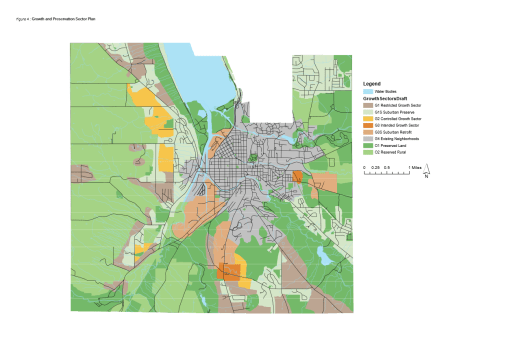
The above map is a rough idea of where Form Ithaca feels development would be best directed. The darker greens are either prohibited (O1, Preserved Land) or strongly discouraged (O2, Reserved Rural). Then from G1 to G3S, you have increasing levels of support for development and dense development. The only “new” neighborhoods established by the G3 zone are the South Hill Center (the 96B/King road intersection) and Cornell’s Maplewood Park east of the city. As already mentioned in the Maplewood writeup, Cornell’s pursuing a PDZ for the new urbanist project they have planned because their timing is a little quicker than Ithaca town’s – waiting for the new zoning would delay the project.

The plan also calls for retrofitting suburban areas, G3S. The 96B/South Hill Corridor,East Hill Plaza, and the city’s Southwest Corridor and Waterfront are targeted. The 96B corridor is currently undergoing a pedestrian and traffic study in part because the town wants to figure out how to protect pedestrians and encourage pedestrian-oriented development in what’s currently a suburban layout.

Recently, there have been privately-developed plans that haven’t been on board with these ideas. On the one end of the spectrum, early incarnations of the Troy Road housing development that was cancelled, which called for 200+ units in a “Restricted Growth Corridor”, a proposed type of zoning that suggests clustered development with substantial open space requirements. The project had been redesigned and reduced to fit 130 units in cluster zoning, but it was then cancelled. On the other end of the spectrum, the town is currently weighing a proposal to purchase agricultural easements on Eddy Hill Inc.’s farmland, which comprises most of the yellow on the southwest side of the town. That would prevent development in an area where development is thought to be more suitable.

form_ithaca_pt2_3

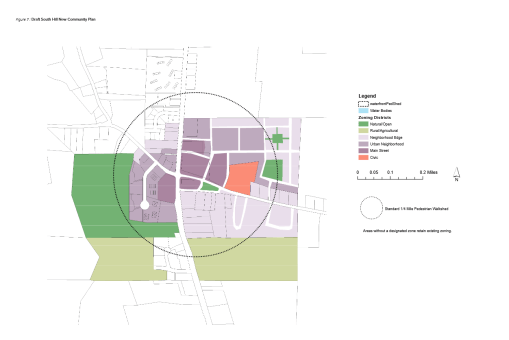
The above image is a proposed zoning setup for the South Hill center. Neighborhood Edge defines more typical single-family home development (T3), Urban Neighborhood towards a Fall creek type of density (T4, townhouses, duplexes/triplexes, closely spaced single-family homes), and Main Street would be more akin to the State Street Corridor (T5), first floor commercial or other active uses with apartment and condos on the couple floors above.

form_ithaca_pt2_4

There’s also an image regarding the Waterfront plans, but given the Maguire proposal, I’d rather wait until the dust settles and there’s a better idea of what’s going to happen.

This is all conceptual, and there are pros and cons – while it encourages less driving and establishes an activity hub in the town, it’s been noted that mixed-use can be more expensive to develop, which may be passed on to the occupants. Also, rezoning can impact current owners and create some tensions. Telling someone that density is encouraged in view of their house may not go over well, just as the landowner planning to sell to a housing developer may not be amused to find himself at odds with the town’s plans. But, given the issues facing Ithaca and Tompkins County, proposing something that attempt to address affordability, demographic and environmental issues is better than proposing nothing.


News tidbits 1/16/2016: The Not-So-Best Laid Plans

16 01 2016

elmira_savings_1

1. It isn’t exactly a shock that Elmira Savings Bank is pursuing plans for the $1.7 million in properties it just acquired on the west 100 block of Meadow Street between West State and West Seneca Streets. That being said, sending out 30-day eviction notices wasn’t a very good idea from a public relations standpoint.

Technically, it’s all above the law – the three tenants affected were on month-to-month leases, according to Nick Reynolds over at the Journal, and one had an expired lease and was in the process of relocating. The bank wasn’t interested in renting out the properties and decided to clear them out. That is plausible, if a little brusque – even if they had put forth a proposal for something at the next Planning Board meeting, approval would take months, in which case they could eased the tenants out of the current property. But instead, they ended up with a petition that, while mostly reading like a speech from the Politburo, does make the valid point that this was conducted poorly. Then it hit the airwaves, and the bank has gone into major damage control mode, giving the tenants until the end of March and reimbursing them $1,000 for the trouble.

Looking at some of the comments on the Voice, there is a lot of outcry against gentrification, but there’s not a whole lot the city can do to prevent that – even if Elmira Savings Bank didn’t build a thing and sold the buildings to someone else, the rapidly rising property values around the city would push the renters out, albeit more subtly, and the city can’t make a law that says someone can’t move in. Plus, as seen during the 210 Hancock, Stone Quarry and Cayuga Ridge debates, there’s a lot of pushback locally against affordable housing. Arguably the best solution going forward is to work an inclusionary zoning ordinance into law so that when Elmira Savings Bank does decide to build (and it’s more of a when than an if), that a few of the units be made available to those on more modest incomes.

Just to touch on that real quick, according to the Journal, the old Pancho Villa building at 602 West State Street will become a bank branch for ESB in the short-term, and plans are being considered for a mixed-use project at some point down the line (two months, two years, who knows). The zoning is WEDZ-1a, allowing for a five story, 65′ building, but there might be tweaks to that depending on the inclusionary zoning ordinance.

tmpud_waterfront_1

2. Keeping a focus on the west side of the city, the Planning and Economic Development Committee voted to circulate a proposal for a “Temporary Mandatory Planned Urban Development” (TM-PUD) over the waterfront. The reason for this is one part proactive, and one part reactive.

What the TM-PUD does is, for an 18-month period starting the day of Common Council approval, it gives the Common Council the right to oversee and if necessary vote down projects that it thinks will not be appropriate for the waterfront. The study area is currently a mix of zones: Waterfront (WF-1, WF-2), Southwest Mixed-Use (SW-2), Park (P-1) and Industrial (I-1). When the Comprehensive Plan was passed in 2015, it promoted a more walkable, dense, mixed-use waterfront. Therefore, some of the zones are outdated.

The city’s planning department is still in the process of drawing up specifics for how to implement the Comprehensive Plan’s walkable urban waterfront, but in the meanwhile, some of the zones don’t match up with the direction the city wishes to proceed. Take, for example, the industrial space on Cherry Street and Carpenter Circle. By zoning, residential uses aren’t allowed, although the city would like to see mixed-uses with condos and apartments in their vicinity. The planning department needs time to figure out the what and where on zoning so that those uses can be proposed without a developer spending extra months in front of the Planning Board and BZA, which can drive up costs and make construction financing more uncertain.

So that’s the proactive, benign part – the city needs time to plan out the zoning laws for the dense waterfront they want. Now comes the reactive, cynical part.

It’s a not-so-secret secret at this point that the Maguires are looking hard at Carpenter Circle for their car dealership headquarters and multiple sales outlets. Since Carpenter Business Park is zoned industrial, and Ithaca city zoning allows commercial uses in industrial space so long as they’re two floors, there’s a good chance they could build dealerships without the need of the BZA, and it would be an uncomfortable position for the planning board to have to debate a project that is totally legal but is something the city and much of the community doesn’t really want. So as a way to stall for time, the city’s pursuing this TM-PUD and giving the Common Council the authority to shoot down any unwelcome plans should they arise.

For comparison’s sake, there’s a similar scenario that is playing out in Ithaca town. The College Crossings project on South Hill was welcomed under the zoning and previous iterations had been approved, but after the town passed its 2014 Comprehensive Plan and attended the Form Ithaca charettes last summer, the planning board realized that a shopping center with a couple apartments above and in the middle of a large parking lot wasn’t something they really wanted anymore. While the project has been withdrawn, the process and debate has created a lot of discomfort, confusion and uncertainty, which is rather problematic given the area’s housing shortage. The town hopes to have some form-based zoning code ready this year.

So, looking back to the city, the occupants of 108 E. Green Street want things that are still illegal in much of the study area, but they don’t want a full-on moratorium because some spots like the Waterfront zones actually do accommodate what the city and many of its constituents want. The TM-PUD is an attempt to stave off the legal but undesirable projects until the revised West End zoning can go into effect.

Worth pointing out, at the meeting the boundary was changed to midway through the Meadow Street and Fulton Street blocks, rather than along Fulton Street. It may or may not affect Elmira Savings Bank’s parcels as mentioned above, but those long-term plans are in alignment with the city’s, so probably not.

south-hill-area

3. On a related note, the town is holding workshop sessions for those interested in designing a ped-friendly, mixed-use community for South Hill. The meetings are planned for 6:30 p.m. to 8 p.m. Jan. 26 to 28 at the Country Inn and Suites hotel at 1100 Danby Road in Ithaca. An open office has also been scheduled for 12 p.m. to 1 p.m. Jan. 27. Form Ithaca will be in attendance at the sessions to help formulate the form-based character code proposed for the neighborhood.

815_s_aurora_4 815_s_aurora_1

4. A revision to the cellphone tower law has taken one step closer to becoming reality. The city’s Planning and Economic Development Committee voted 4-1 to circulate a revised law that would reduce the size of the tower’s fall zone, where construction of any structures is prohibited. A revision to the current city law, which is twice the height of a tower, could potentially allow the 87-unit 815 South Aurora apartment project to proceed with planning board reviews and other BZA variances if necessary. Developers Todd Fox and Charlie O’Connor of local company Modern Living Rentals have been pushing for a fall zone radius of 180 feet for the 170-foot tall tower, rather than the 340 feet as the current law mandates.

From the discussion, it sounds like the concern has less to do with this parcel, and more to do with the possibility of cell phone companies pursuing towers on open land in the northern part of the city where spotty reception has to be weighed against the aesthetics of the lake shore. Anyway, we’ll be hearing more about possible changes to this law in a month, but for back reading, here’s the Voice article from a few months back.

5. In quick news, CBORD’s move to the South Hill Business Campus looks like a go. A $2.45 million construction loan was extended on the 8th by Tompkins Trust Company. CBORD, a software company founded in Ithaca in 1975, will move 245 employees into 41,000 square feet of freshly renovated SHBC space from the Cornell Business Park later this year. The project, which totals $3.7 million, was granted $296,000 worth of sales tax abatements.
409_college_avenue

ehub_1

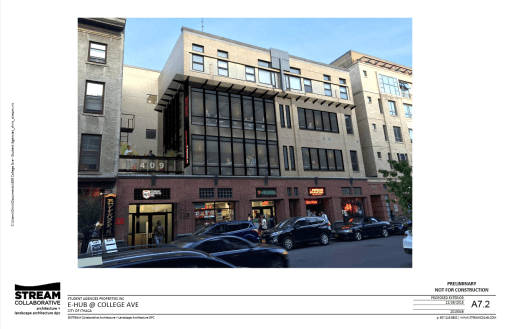
6. From the city’s Project Review Agenda next Tuesday, plans for a facadectomy of the 1980s Student Agencies Building at 409 College Avenue. Student Agencies, in collaboration with Cornell, plans on dropping $183k on the facade work, as well as the $2.8 million or so for the interior renovations of the second and third floors for the new eHub business incubator space. Prolific local architecture firm STREAM Collaborative is in charge of the design work, including the 9,660 SF of interior space. The work would go from January to April (the loan is already approved and most of the work is interior).

6-29-2014 163

If I may play armchair architecture critic, which I have no credentials to do, I think the patio area is great, but I’m opposed to the brise-soleil, the wing like feature that serves as a sunscreen. I feel like that its location above the third floor throws off the rhythm of the block, by being lower than the cornices on adjacent structures. It might be fine over the glass curtain wall alone, but as is it feels a little out-of-place. Just one blogger’s opinion.

20160109_135258 20160109_135338


228_w_spencer_1

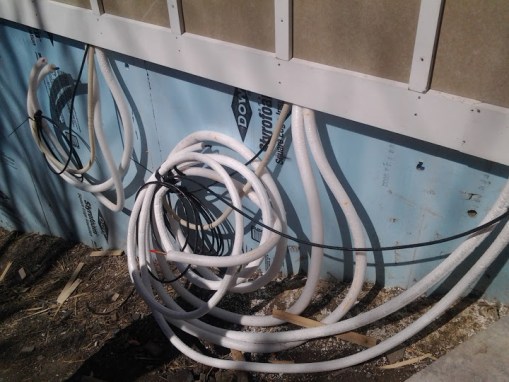
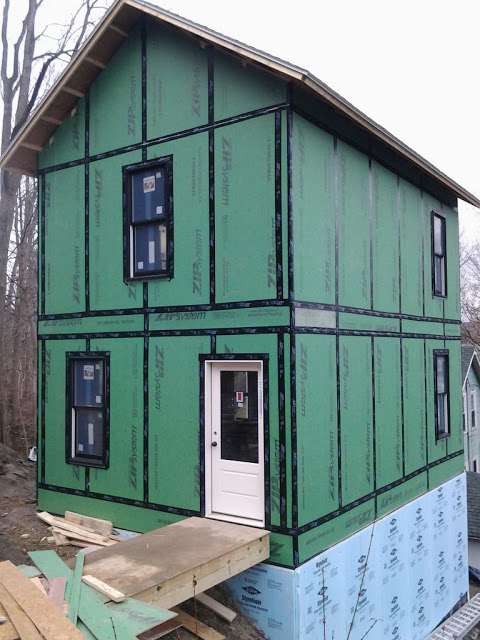
7. House of the week. 228 West Spencer Street in the city of Ithaca. Zero energy new construction, 2-bedrooms, on a rather difficult site. In the above photos from last weekend, the house has been framed and sheathed with Huber ZIP System plywood panels, the roof has been shingled, and doors and windoes have been fitted. The blue material on the concrete basement wall is Dow Styrofoam Tongue and Groove Insulation which protects against moisture and helps keep the heat loss to a minimum. The house should blend in nicely with its neighbors.

Ed Cope of PPM Homes is the developer, and Noah Demarest of STREAM Collaborative is the architect.