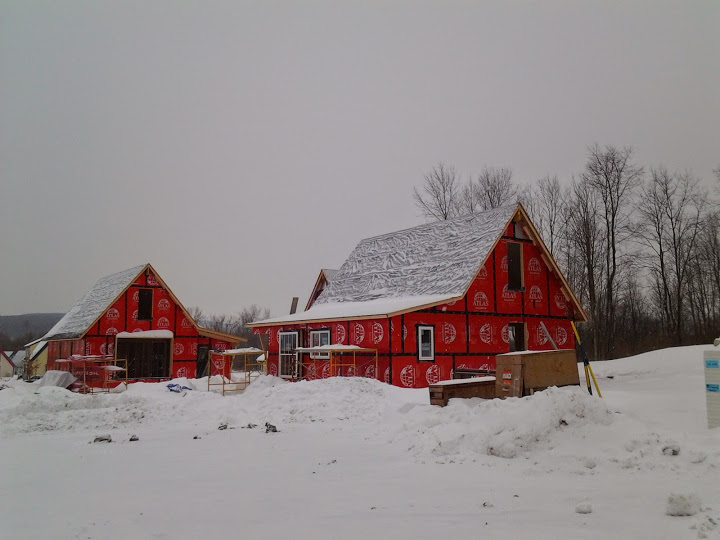
707 East Seneca Street Construction Update 4/2015

10 04 2015

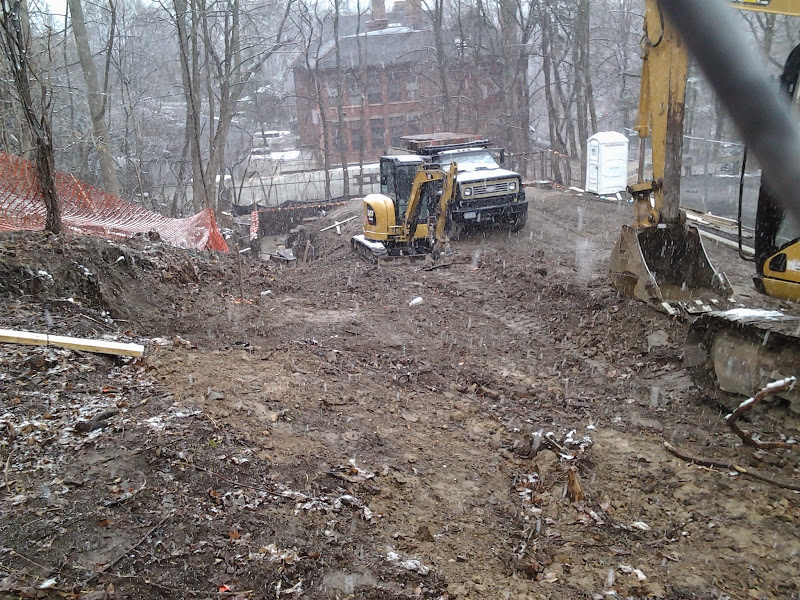
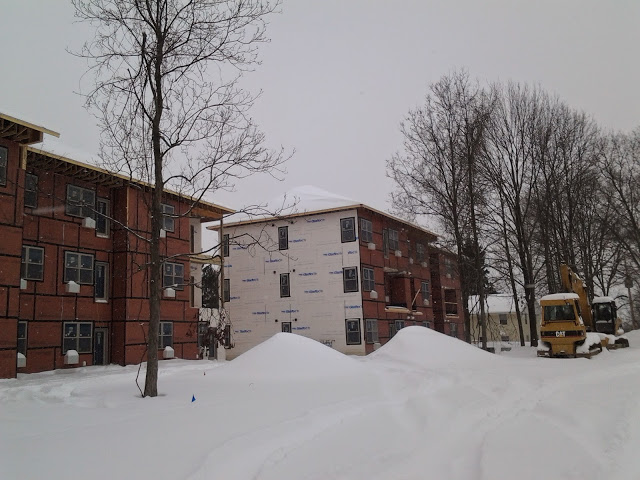
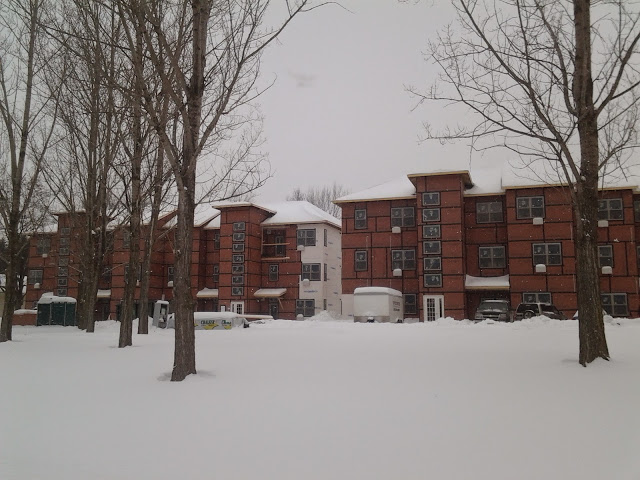
Another infill project is underway in the East Hill Historic District between Downtown and Collegetown. 707 East Seneca, like 202 Eddy Street and 140 College Avenue, had to go through the Ithaca Landmarks Preservation Council for approval, along with getting approval from the planning board and zoning board for an area variance (the lot was too small). After informational and voting meetings by different boards throughout the fall and winter, all the approvals have been granted.

The ILPC-approved design is made to be compatible with the historic homes from the late 1800s and early 1900s that surround the building. 707 East Seneca was originally the playground area for the now-closed East Hill School, and the lot was given to the city in 1982. The property fell into disuse, and the playground into disrepair.  The city voted to put the lot up for sale through the Ithaca Urban Renewal Agency (IURA) last summer, and the lot was sold for $130,000 on December 22nd (the market asking price was $175,000, and the assessed value of the land is $100,000, so the final price looks pretty reasonable).

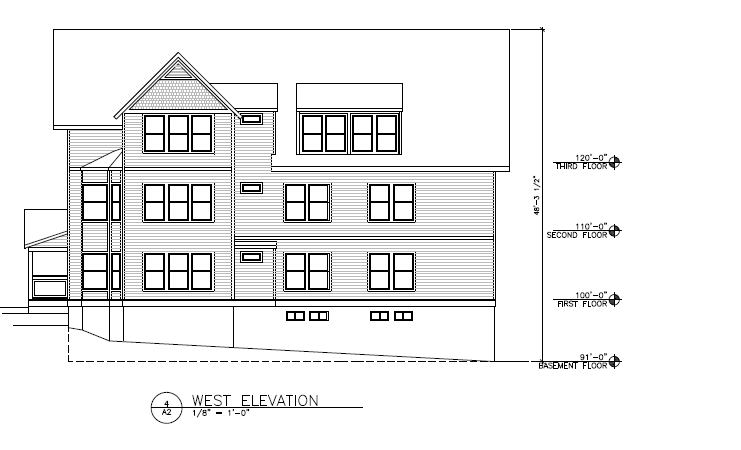
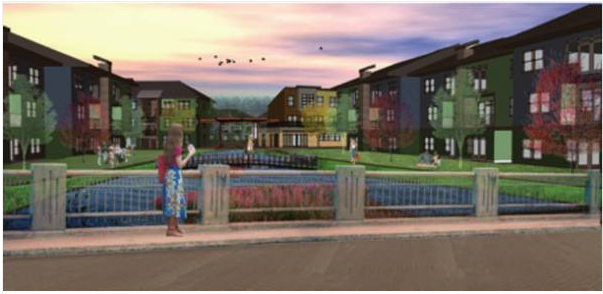
The apartment building planned is a 3-story, 6-unit, 18-bedroom structure with 4 garage parking units in a basement built into the hillside, and five surface parking spaces. According to documents filed with the city, target completion is July of 2015. Note for the included renders, the black-and-white image with the small basement windows is the final design, but the colors are the same as the lead rendering.

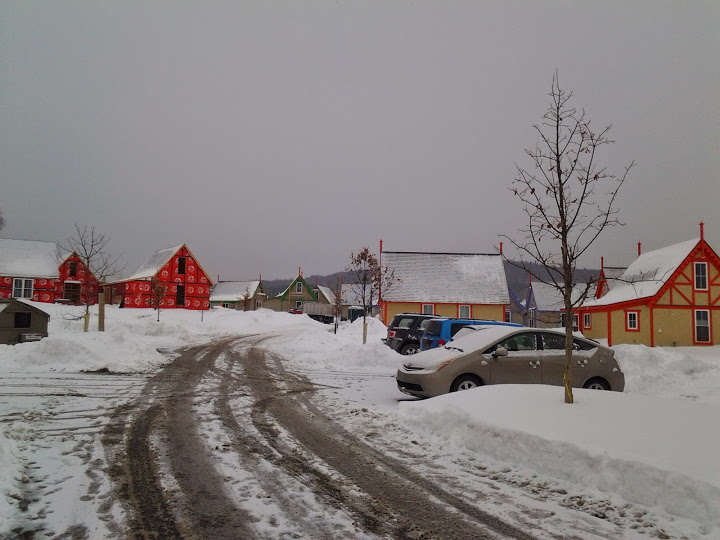
Without getting a good look at the back of the now fenced-off property, it looks like the site has been cleared and excavation is underway for the retaining walls and foundation. Being a sloped site, retaining walls will be built on the west edge of the property (right side of the photos) and for tree wells, and the east portion will use a sloped bank built using fill material. Offhand, I think I remember seeing that the building itself will be assembled from modular pieces, craned into place on the foundation over a day or two, not unlike the method used at the Belle Sherman Cottages.

The design of the building is by Schickel Architecture of Ithaca, and the developer is Ithacan Todd Fox.

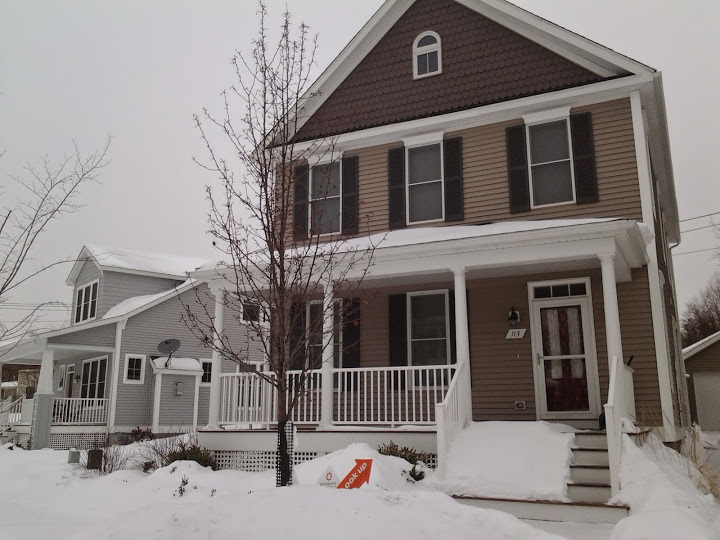
20150405_131545 20150405_131553 20150405_131611

707_E_Seneca_2

707_E_Seneca_rev1_1


114 Catherine Street Construction Update 4/2015

8 04 2015

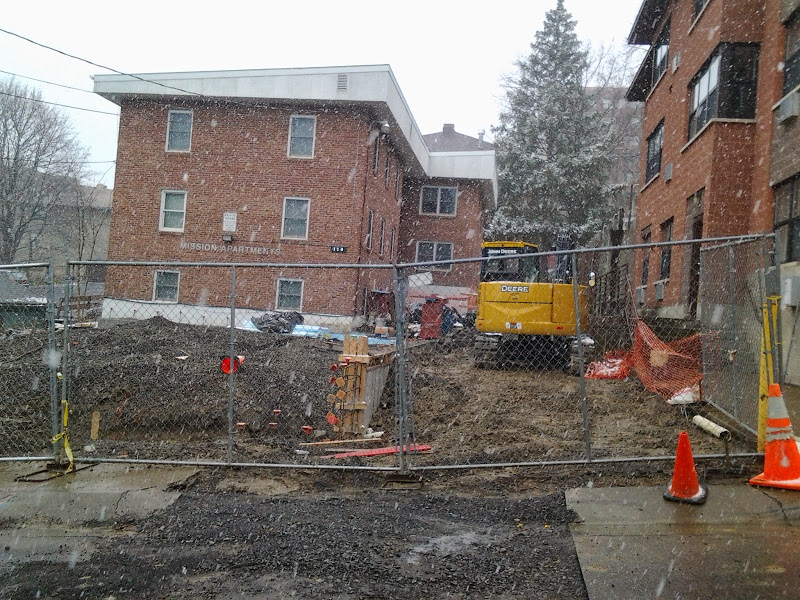
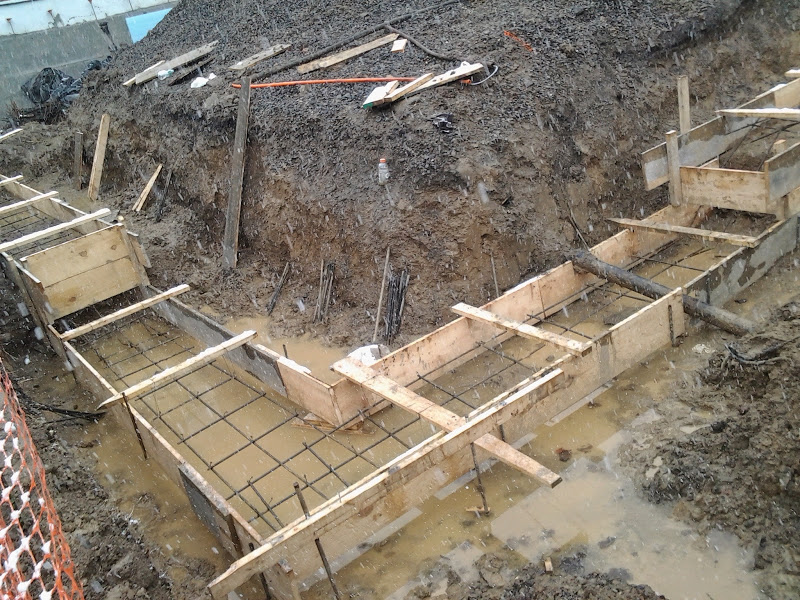
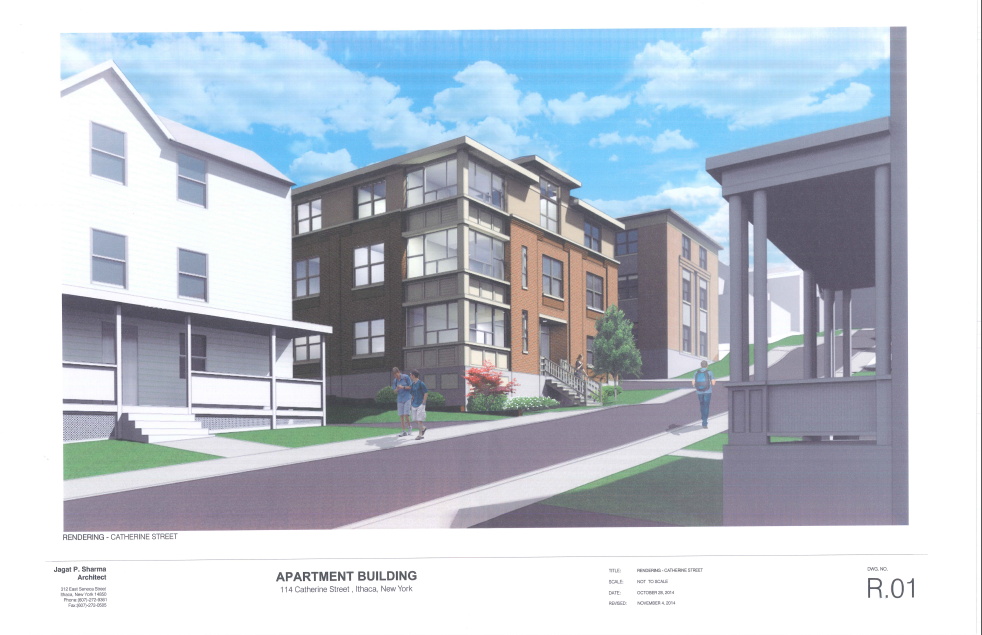
Work has commenced on the foundation for the new 3-unit, 17 bedroom apartment building at 114 Catherine Street in Collegetown. Plans were approved by the city of Ithaca late last year, and with the worst of winter over (though snow in early April definitely makes one second guess that), construction has been able to proceed on the new building.

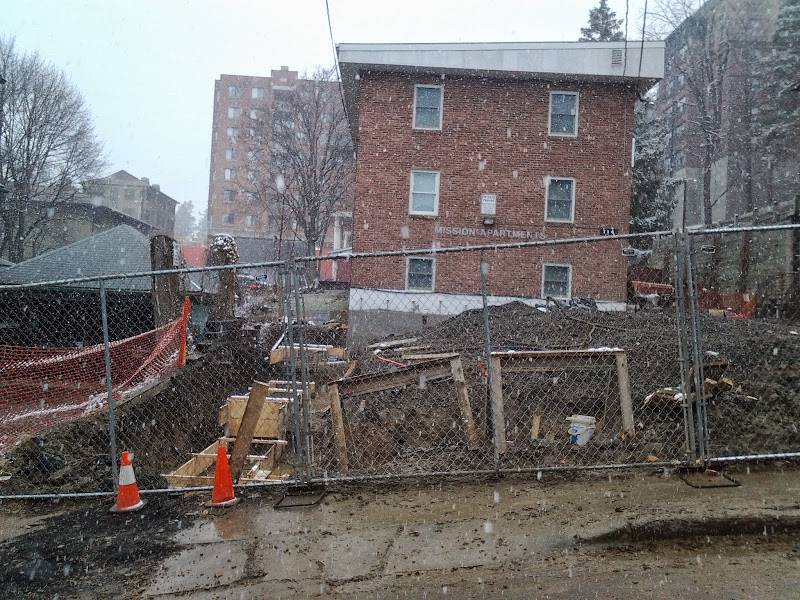
The parking lot that once fronted the street is gone. Wooden forms are in place for holding the concrete once it is poured, and rebar criss-crosses the space between the forms. Rebar is used to strengthen and reinforce concrete, the concrete bonds with the steel bars as it hardens. It looks like the east wall of the foundation has already been poured. A blue waterproof membrane can be seen on the concrete in the last photo.

The architect is a Collegetown favorite, local architectural firm Jagat Sharma. The building is being developed by Nick Lambrou of Lambrou Real Estate. Plans call for a 3-story, 4,180 sq ft structure with a 5-bedroom apartment on the first floor and a 6-bedroom apartment on the second floor and on the third floor. If construction stays to schedule, the building should be completed by August in time for the fall semester.

20150405_130821 20150405_130835 20150405_130845 20150405_130853

114_catherine_rev4_1


202 Eddy Street Construction Update 4/2015

7 04 2015

20150405_125117 20150405_125151 20150405_125203

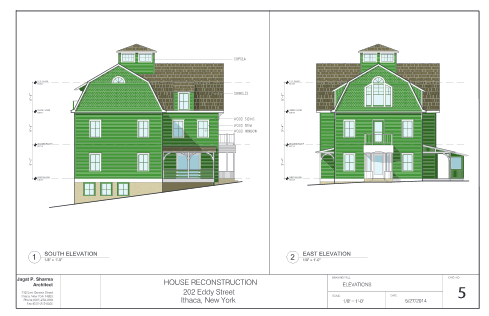
After being destroyed by a fire last March, reconstruction is underway at the site of 202 Eddy Street in Collegetown. Following the disaster, developer Nick Lambrou vowed to rebuild on the site. Being a part of the East Hill Historic District, any new structure needed to be approved by the Ithaca Landmarks Preservation Council. After thorough review, the ILPC approved plans for a new 12-bedroom apartment building that completely replaces the fire-damaged building.

The new structure is a faithful interpretation of the original building, though it’s not an exact copy. An entrance door was repositioned, exterior emergency stairs will be internalized, and a chimney will not be rebuilt, but otherwise, its a close approximation of the original 19th century home. The architect is Ithaca-based Jagat Sharma, who has previous experience from the reconstruction of Sigma Pi’s house when it burnt down in 1995.

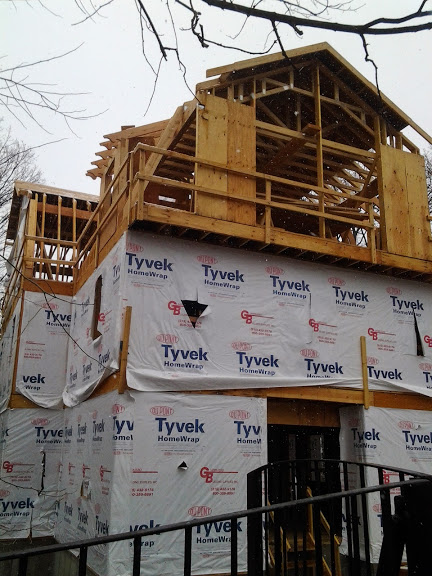
In these photos from last Sunday, the concrete foundation has been poured, and the first two floors are framed with plywood and covered in Tyvek house wrap to keep out moisture. Rough framing is underway on the top floor and cupola, and the mansard roof trusses are complete but the roof itself is still in progress. Rough openings in the walls indicate future window locations, although some spots are not as obvious since they’re covered by the house wrap.

Plans call for the new building to be completed and ready for occupancy by August, in time for the fall 2015 semester.

202_eddy


Apartments Planned for 215-221 W. Spencer Street

6 04 2015

I owe a big thanks to Charles Pyott with the city of Ithaca for getting a copy of the sketch plans for 215 West Spencer. I had initially thought nothing was presented at the March Planning Board meeting, but the March PDB meeting minutes said otherwise. I made an inquiry, and he was able to obtain a copy of the sketch plan from the applicant. So a big kudos to you Charles.

A copy has been uploaded to the City of Ithaca website here.

***

215-221_spencer_v1_2

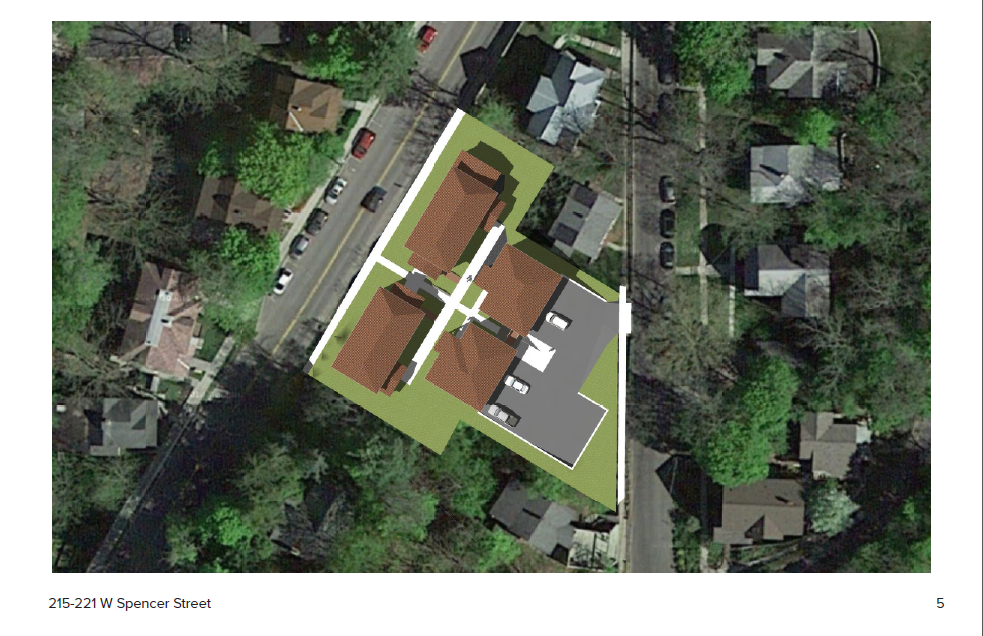
At its March meeting, the city planning board reviewed a sketch plan for a proposed apartment building at 215-221 West Spencer Street, just south of Six Mile Creek and a few blocks from downtown Ithaca.

The steeply-sloped 0.47 acre parcel has been vacant for several years, and currently sees use as an informal 12-space parking lot. The lot is in a R-3a residential zone that allows for a 40′ structure with 35% lot coverage.

Previously, a dilapidated apartment building stood on the site. The building and land were purchased by the city for $530,000 in 2003, and sometime after the building was demolished, the land was turned over to the Ithaca Urban Renewal Agency in 2013.

The property was originally marketed for affordable housing projects only, but received no purchase bids. Once the affordable stipulation was removed, the parcel was marketed once again, and found a buyer – local developer Edward Cope, the owner of local rental agency PPM Homes, bought the parcel for $110,000 on March 6th.

215-221_spencer_v1_1

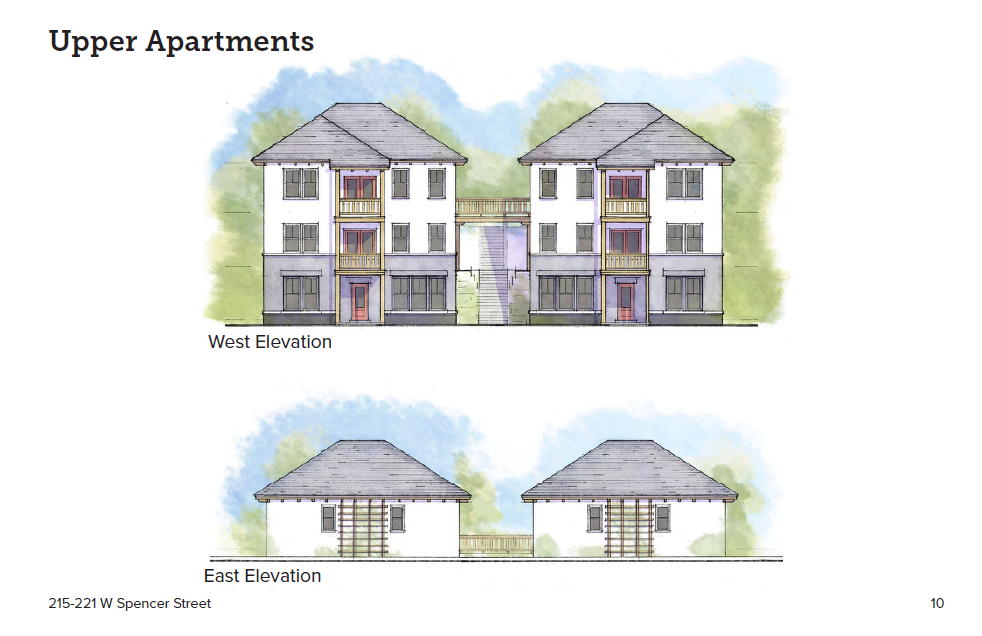
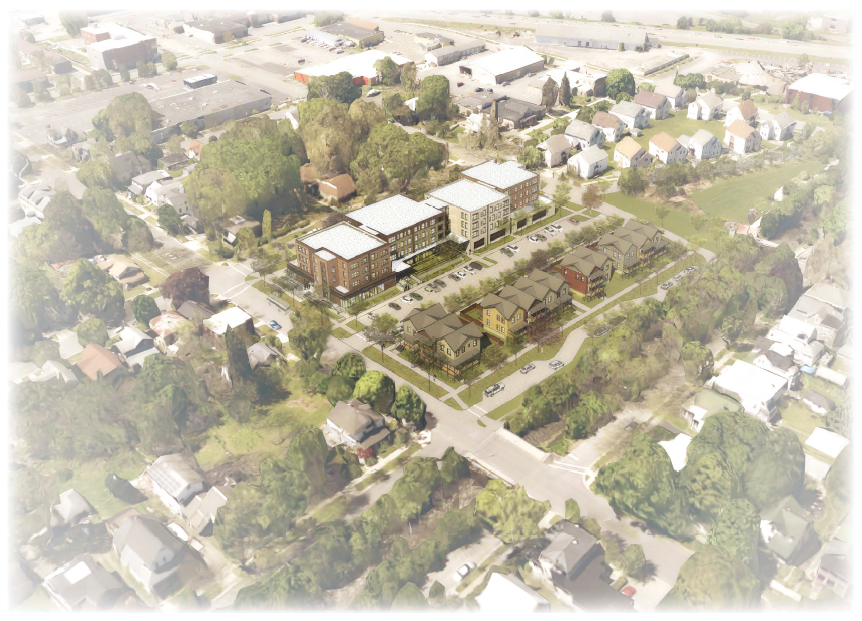
In the sketch plan presented by local architect Noah Demarest of STREAM Collaborative, four apartment buildings are presented in a terraced hillside layout, all connecting to a staircase that bisects the north and south buildings. The upper buildings have three floors of windows on the west side, and one floor on the east side. The lower buildings have three floors of windows on the west side, and two floors on the east side.

215-221_spencer_v1_3

According to the Planning Board minutes, each building consists of a ground floor unit and “two side-by-side townhomes above it” – it’s not clear if that means two units per floor, or two units total on the upper floors. It could be 20 units or 12 units, pending clarification. The 12 parking spaces on the Cayuga Street side of the property would be maintained and paved.

215-221_spencer_v1_4

215-221_spencer_v1_5

In the sketch plan document, two versions are presented – the aerial renderings show a different design than the site elevations. It’s not clear which is the current iteration, though the site sections show much greater detail (I suspect they are the more accurate of the two).


215-221_spencer_v1_6

Expect some revisions moving forward – planning board members expressed a desire for a more prominent connection between Spencer and Cayuga Streets (a “grand formal stairway”) and reworking the Spencer Street facade to make it more visually interesting.


Belle Sherman Cottages Construction Update, 2/2015

16 02 2015

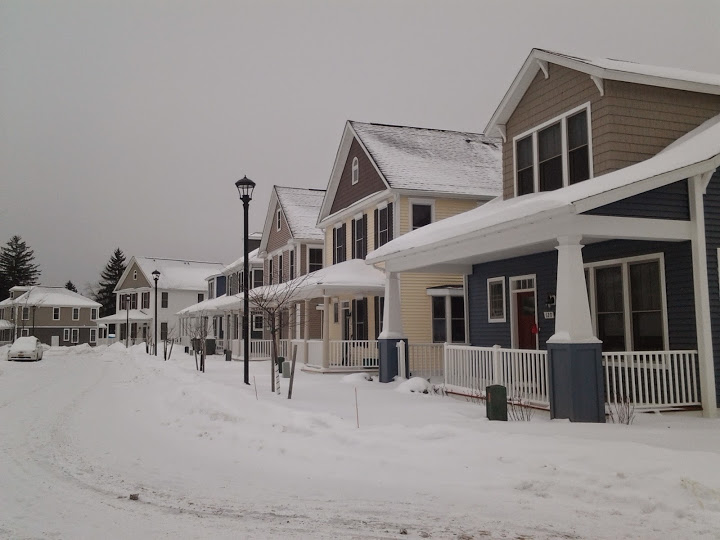
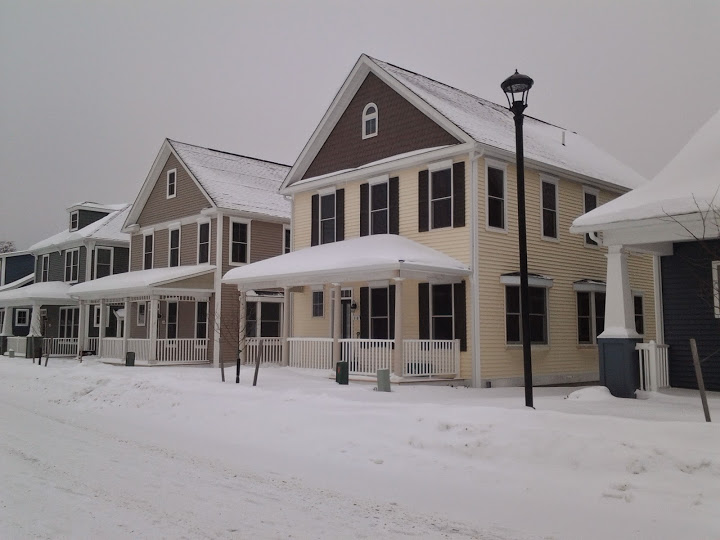
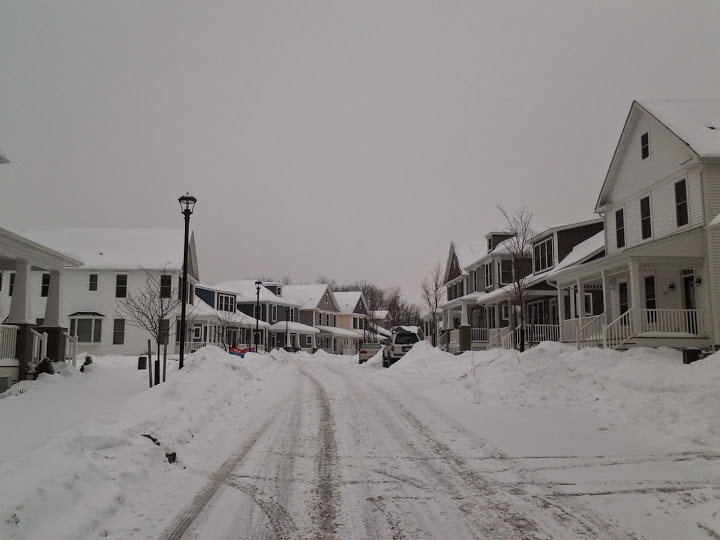
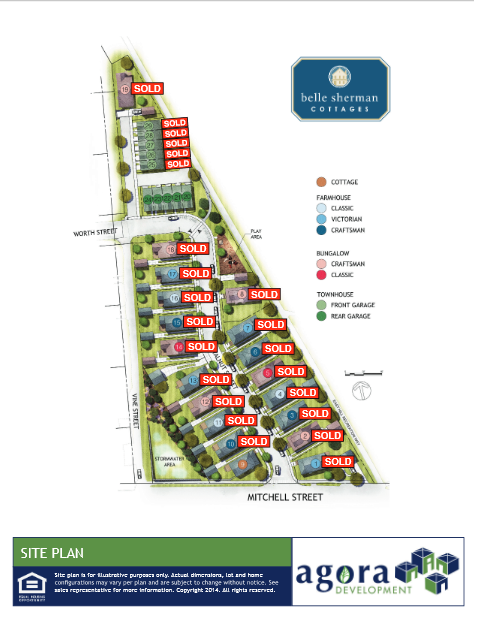
It feels a little surreal to be walking down Walnut Street (fun fact, there was originally a Walnut Street plated for Ithaca’s West Hill in the mid-1800s) and have it fulled out with homes on either side. Yet that is indeed the case. It’ll be easier at this point to count what’s not yet built in the Belle Sherman Cottages development – the townhouses (10 total, 5 due to start this Spring and 5 yet to be marketed), the new cottage design for the not-yet-marketed lot 9, and lots 11 and 12), which are sold and probably awaiting the arrival of warming weather before the foundations are excavated, poured and CMU block is laid. Heck, they might already be poured, but hidden under several inches of snow. So 16 of the 19 houses are built, with a couple of those, like lot 17, undergoing interior finishing and still in need of a little porch/column paint work before being turned over to their new owners. If you’re interested in learning more about the construction process, there’s a little more info in my previous post here, and on Ithaca Builds here.

Every couple of weeks, another sale shows up in the county property records, typically in the range of the low 300s to low 400s. Formal sale isn’t happening until a house is move-in ready (I suspect that while underway, a “sold” lot is actually reserved with a down payment), so following the county’s record of transactions is a useful indicator of progress. According to the Belle Sherman Cottages facebook page, Skaneateles-based Agora Homes and Development intends on completing the 29-unit development in 2015.

Veering into editorial territory here, I’ll admit that I was pessimistic about the project early on, thinking it was too much money for what was provided. But in retrospect, I think this is the right type of single-family housing for more suburban parcels, such as other sites in Ithaca town near the city line. Much of the zoning locally is designed to favor of large lots and large price tags. I wouldn’t call these affordable by any stretch, but they’re somewhat closer to the median value than most other single-family homes going up. Being this close to Cornell also adds a premium on their price tags; perhaps on a site in South Lansing or South Hill, they’d be somewhat less expensive. They’re a good (better?) alternative to the sprawling cul-de-sacs that seem to be the norm for housing developments in suburban Tompkins County. I think that, in the same vein of this project, though with more of a “green” sheen, the Amabel site in southwest Ithaca will be the next single-family development worth watching.

20150207_145459 20150207_145519 20150207_145651 20150207_145707 20150207_145742 20150207_145810 20150207_145843 20150207_145910 20150207_145926

belle_sherman_cottages_102714 belle_sherman_cottages_071814_2


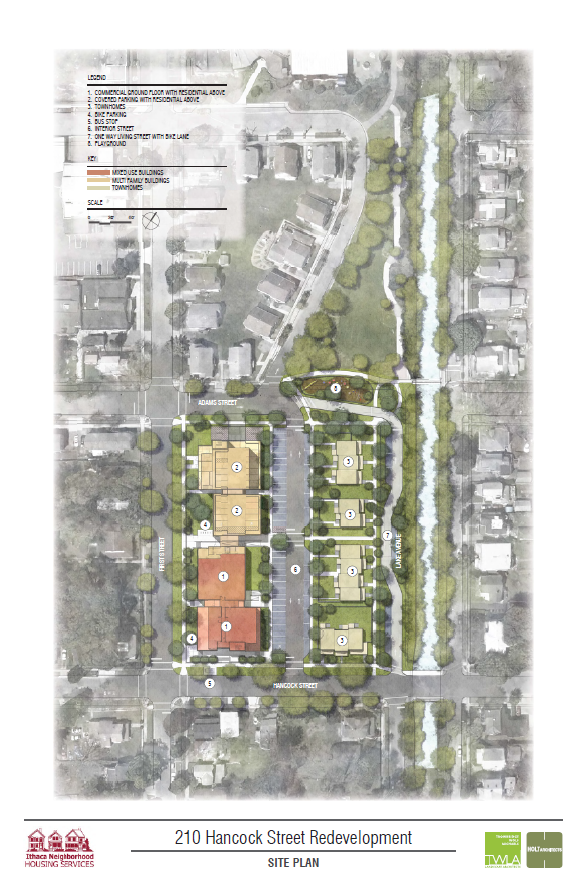
The Neighborhood Pride Site (210 Hancock Street)

15 02 2015

inhs_pride_design_1

Avid readers will note that I’ve been writing about the Neighborhood Pride site on the Voice, keeping only brief notes here on Ithacating until a final design was unveiled. Now with that taken care of, here’s a description of what we’re working with, based on documents filed with the city on February 13th. There’s a brief application summary and cover letter here, or the 764-page FEAF (Full Environmental Assessment Form) here. I swear, no one reads those giant PDFs in their entirety, users only look for specific sections based on their prerogative. The rest is just there for gluteus maximus coverage.inhs_pride_design_2

Perhaps a little bit to my dismay, the project is not going to be complete until September 2020, tentatively. This isn’t a huge surprise though, INHS is a non-profit and dependent on grant disbursements. The buildout will begin in September 2016 and consist of three phases – my guess of the breakdown is the townhouses are one phase, the 2 southern apartment buildings are a second phase, and the northern two apartment buildings are the third phase, though not necessarily in that order. At some point, INHS anticipated subdividing the parcel into apartment and for-sale portions, which might be useful when applying for affordable housing grants.

The apartments call for ~50 1 and 2-bedroom units, and 13 for-sale townhouses, although it still looks like 12 in the renders (who knows, maybe one is a small duplex). So about 63 units total, and about 8,200 sq feet or rentable commercial space in three spaces (proposed at 1,800, 2,500 and 3,900 sq ft, for a total of 8,200 sq ft). The apartment buildings will be 65,000 sq ft, 4 stories and 48′ tall (zoning max 4 stories/50′). The demolition of a one-story office building (built 1975) and a vacant grocery store (built 1957) will be required. Total construction cost is anticipated to be about $13.8 million.


inhs_pride_design_3

Interestingly, what looks like the community favorite (the street scheme) doesn’t read as the county’s favorite (which reads as the alley scheme). But the county only advises, the city decides. Lake Avenue will be what they call a one-way “living street” – a low-speed, low-capacity street shared by bikers and vehicles. With those features, it’s designed in a way that you’d only drive on the road if you live in one of the townhouses. Conley Park’s southern boundary will be opened up to flow freely into the property (it was blocked off with vegetation to begin with because of its proximity to the old P&C loading dock, which made for a loud, smelly experience).

As an honest personal opinion, the design – inspired by local 1900s industrial and manufacturing buildings, according to the application – is pretty nice. It’s contextual, it’s appropriate, it fits in without being a total historical throwback. The townhouses are well-designed as well. I think INHS’s willingness to have heavy community input, and the community’s willingness to help shape the project, really came together to create a nice product.inhs_pride_design_5

A parking variance will be required from the city – the site will have about 70 parking spaces, but zoning requires 86. Will a new TCAT bus shelter and on-street parking nearby, INHS anticipates that they will be able to obtain the parking variance without too much hassle. INHS also needs to be be mindful of the flood zone, which they seem to have accounted for in the site plan. The only portion of the site especially vulnerable to a 1-in 100 year flood event has covered parking on the first floor. The townhouses, which are in the 500-year zone, will be built two feet above the ground, and the commercial space, also in the 500-year zone, will be one foot above the ground.

In sum, we have a project that removes a vacant supermarket, fits well in the urban fabric and provides affordable housing. It might take forever and a day to build, but it’s a welcome resource in the city of Ithaca.

inhs_pride_design_4


Village Solars Apartments Construction Update, 2/2015

11 02 2015

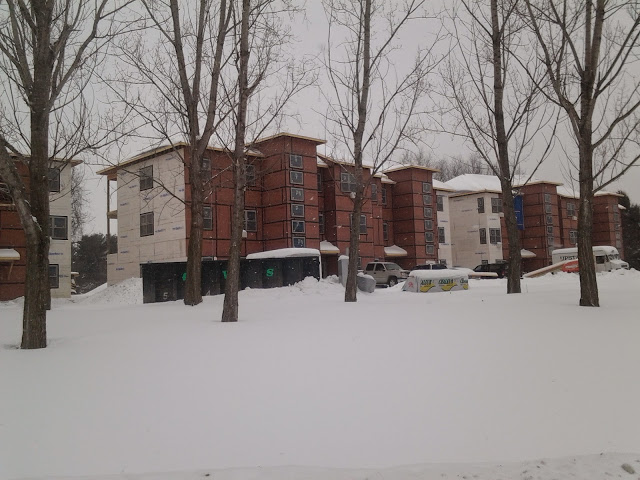
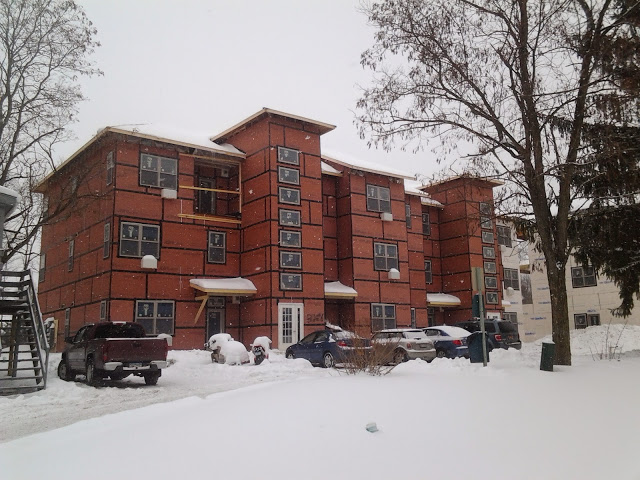
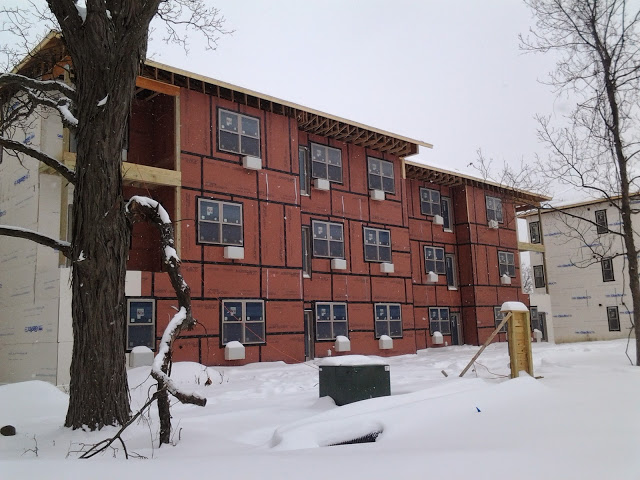
The first three apartment buildings of the Village Solars apartment project in Lansing are fully framed, sheathed (I’m assuming the red panels are sheathing material), roofed, and windows and doors have been installed in most locations. The light-colored material might be a breathable wrap for weather/moisture resistance. It will be a little while before exterior finishes are applied and balconies are installed. When I visited last Saturday, the site was buzzing with the sounds of construction workers busy with tasks inside (probably rough-ins for things like plumbing and electrical), and ’80s hair metal streaming from a radio somewhere from within. Nothing like installing pipes while rocking out to Twisted Sister.

The Village Solars get their name from what the craigslist sales pitch calls “their passive solar design and energy saving features”. As far as I’m aware, they won’t have solar panels. According to Thomas Bobnick, the rental agent for the apartments, the first phase shown here will consist of 36 units (the final buildout will be close to 300 units). The design of the complex calls for at least eight, maybe ten buildings to surround a new pond that will be dug out of the undeveloped middle of the property – the advertisements call it “waterfront”, which it is, technically.

From the craigslist advertisements, one-bedroom units will rent for $1050-$1145 and be ready for occupancy by June 1st, two-bedroom units will rent for $1235-$1369 and be ready for tenants on May 1st, and three-bedroom units will rent for $1565-$1600 and be available on June 1st. These dates are pushed back a little from initial plans, which called for March and April occupancy; no doubt the severe winter has complicated the schedule. Looking at the photos, the two buildings under construction on the west and east ends look to be one style (balconies in the middle), while the center building is a different layout and design (end balconies). The price range for the two bedrooms is a little above the average two-bedroom unit in Ithaca ($1,165), but after accounting for the premium on new construction, the developer seems to be pricing for the middle tier of the market.

The Village Solars are being developed by local company Lifestyle Properties. Lifestyle is run by Steve Lucente of the Lucente family, who have been major builder/developers in Ithaca since the 1950s. No one word on the architect. Upstate Contractors of Syracuse appears to be handling the construction work.

20150207_131607 20150207_131610 20150207_131613 20150207_131646 20150207_131715 20150207_132225 20150207_132231 20150207_132320 20150207_132335 20150207_132338

village_solars


Carey Building Construction Update, 2/2015

9 02 2015

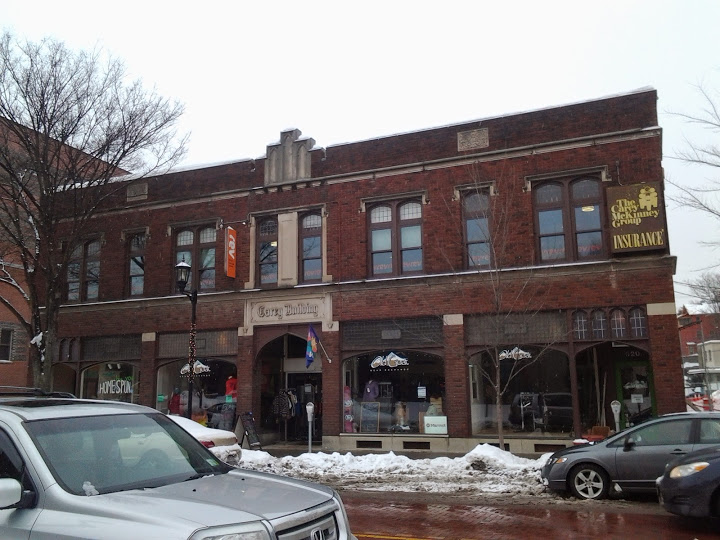
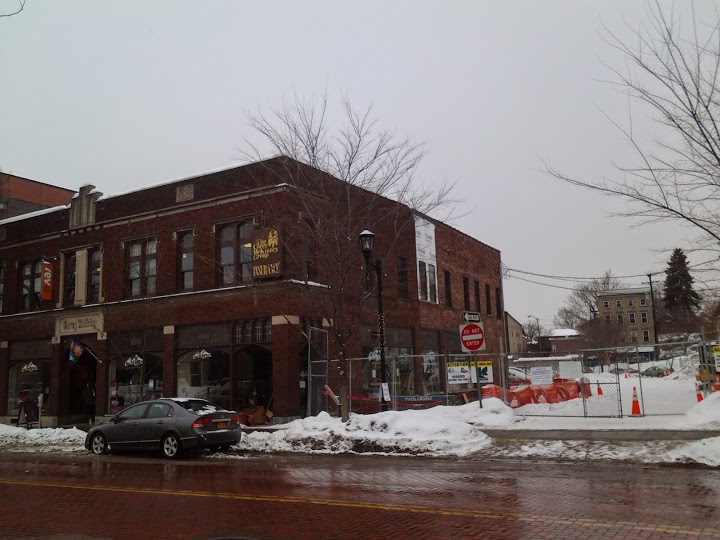
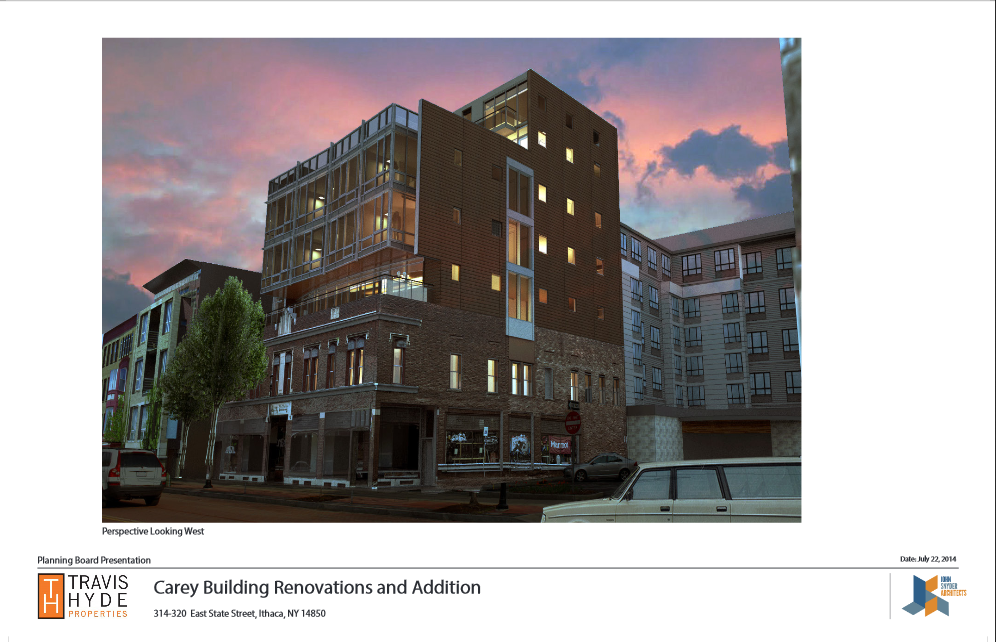
I was originally going to schedule this for later in the week, but I figure I’ll run it now, since the recent twitter chatter is observant but mistaken. The Canopy Hotel is not under construction. At least, not yet. The hotel is expected to start in early Spring. But the work on the Carey Building addition is just beginning.

According to Jason Henderson at Ithaca Builds, building contractor LeChase Construction is currently conducting underpinning work on the Carey Building. Underpinning is the name of the process by which a foundation is strengthened – certainly necessary when one is about to add five floors onto a 2-story building. The second to last photo here shows some of the underpinning work on the eastern foundation wall, and the tarp is on the roof indicates prep-work for the upcoming expansion. LeChase will also be handling the construction of the Canopy Hotel next door.

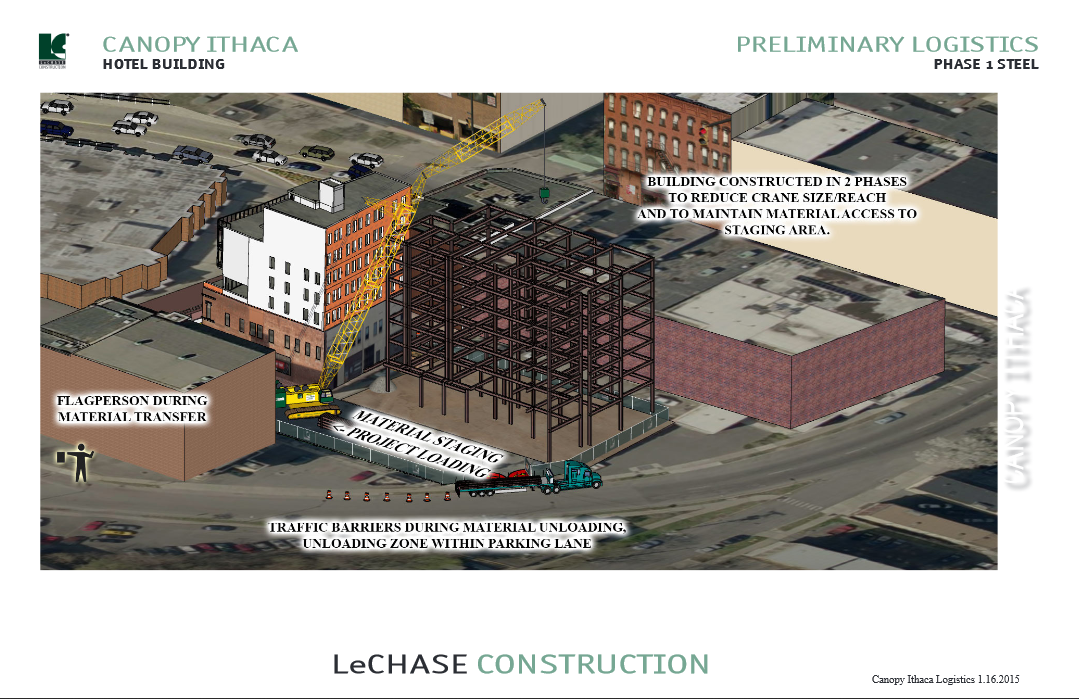
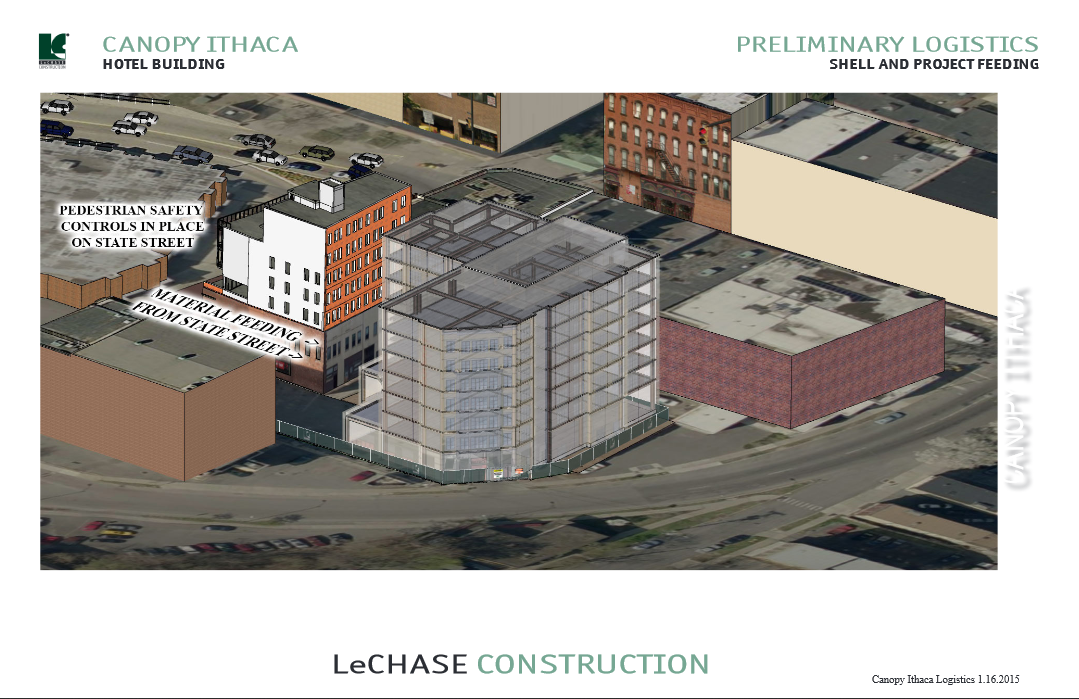
It’s quite unusual in a place like Ithaca to have two separate large projects right next to each other under construction at the same time. This will be logistically complicated. In a letter to the Canopy developers, LeChase’s large trucks will have their brakes inspected before entering State Street, and will be escorted down the hill to a designated area on Seneca Street, and will leave the city via Seneca Street. According to construction phase diagrams, The steel for the Carey Building will be erected first; then, using the same crane, LeChase will begin installing steel for the new hotel. Sharing the crane will result in a cost savings to both owners.

When most of the western side of the hotel has had its steel structure craned into place, LeChase will transition to a smaller crane and switch the material unloading and staging area to East State Street. This is because the hotel occupies most of the site, so the crane is reduced and East State street will be closer to the location of the new crane. Cladding and interior materials will continue to be fed in via E. State Street through the project’s completion in Spring 2016. The Carey Building will have been completed by then, finishing by the end of summer 2015.

The Carey Building addition will add a third floor and 4,200 sq ft to the Rev business incubator (nearly doubling it to 8,700 sq ft), and on floors 4-7, there will be 20 apartments. Floors 4 and 5 will have 16 studio apartment units that average only 400-500 sq ft, their small size enabling them to be rented at a lower price. The 4 units on floors 6 and 7 will be larger 2-bedroom units. The $4.1 million project is being developed by local firm Travis Hyde Companies.

20150207_153142 20150207_153223 20150207_153246 20150207_153412 20150207_153422

carey_rev4_2

canopy_carey_logistics_1 canopy_carey_logistics_2 canopy_carey_logistics_3 canopy_carey_logistics_4


Boiceville Cottages Update, 2/2015

8 02 2015

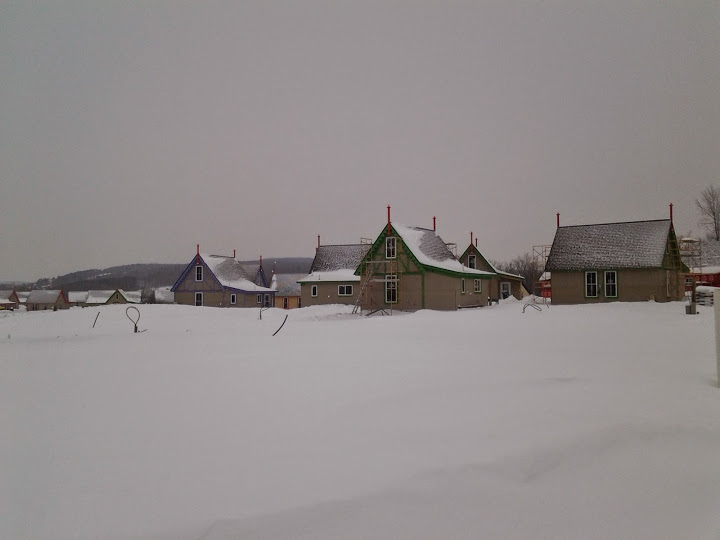
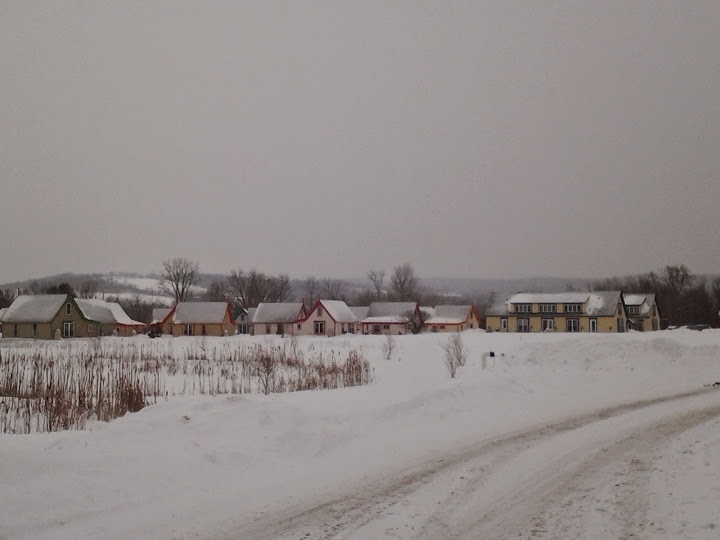
It’s been about 2.5 months since my last trip through the Boiceville Cottages, but given that it’s winter (and a particularly cold and severe winter since the jet stream reconfigured in January), there has only been slow if steady progress with its 75-unit expansion. Since December, the timber homes with purple trim have been completed, four houses that were undergoing exterior build-out have now progressed to exterior detailing and interior finishing (the ones with green timber trim), and windows are being fitted into three homes that have sprouted from their slab foundations since the previous visit.

One of the things that stood out on this visit was that it’s now possible to walk all the way through the new phase thanks to the construction. Looking around at the snow on the ground, edges of the blue waterproof covering (which might be the covering of cement board being used to protect the slab insulation) could be seen poking out among the drifts. Using the (gas utility?) loops coming out from the foundations as a guide, there are perhaps a dozen poured concrete foundations, ready for construction as time and weather provide. There were approximately 25 units that were built in 2014, and with probably 10 complete by the end of March, 2015 looks to be on the same construction pace, maybe even greater. It might even be possible that the expansion will be completed this year. Inquiring minds would like to know if Bruno Schickel has any other expansions or colorful villages planned.

The Boiceville Cottages, built and managed by the Schickel family, are rather unusual as apartment complexes go. For one thing, there are the bright paint jobs, a sort of hallmark of the cottage units since the first set of 24 houses was built in 1996/97. The bright paint and the ornate woodwork have led to a nickname, “The Storybook Cottages“, which holds some weight, according to an article in Life in the Finger Lakes:

“Schickel said he was inspired to build his colorful cottages by a children’s book he read to his daughters almost 20 years ago. The book, Miss Rumphius, by Barbara Cooney, tells of a girl who, at her grandfather’s urging, travels to faraway lands seeking adventure. Later she moves to a cottage by the sea and works to make the world more beautiful by spreading seeds of blue and purple lupine. An illustration by the author shows the Lupine Lady’s house on a hill overlooking the sea. The small cottage is replete with finial and gingerbread. Seeing that illustration was the eureka! moment, Schickel recalled. “I said, ‘I’ve got to design something like this!’”

Since the initial 24 units were built, a further phase of 36 units was undertaken pre-recession, and in the past couple of years the town of Caroline signed off on the next phase, a group of 75 that would more than double the size of the complex. The cottages have been built out at a steady pace, and at completion of this current phase, 135 units will be present on the Boiceville property. Most of the units are 1 and 2-bedroom cottages, built in clusters of three, although a few “gatehouse” rowhouses offer studios and 3-bedroom units. The Boiceville complex may be the largest population center in the 3,300 person town.
20150207_124102 20150207_124139 20150207_124147 20150207_124213 20150207_124234 20150207_124303 20150207_124308 20150207_124336 20150207_124344 20150207_124416 20150207_124421 20150207_124434  20150207_124553 20150207_124836 20150207_124847 20150207_125032


News Tidbits 1/10/15: Where Will All the Students Go?

10 01 2015

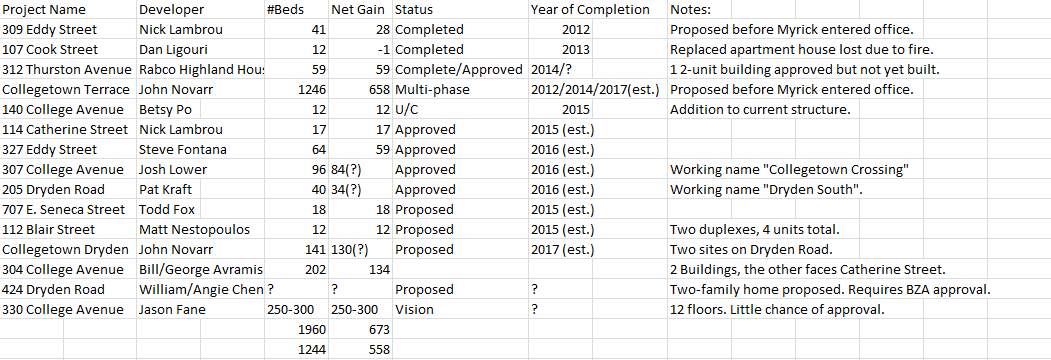
student_housing_table

1. I’ll lead off with this supplement to the Voice opinion article I wrote. Here’s the work sheet I used for the bedroom tally for student-centric housing. I chose to leave it out of the submitted article because 95% of readers checking the Voice would find it obscure or just wouldn’t be interested. If you’re coming here, then you’re probably in the other 5%. Question marks are present because the county’s online records provide total number of units in mixed-use buildings, but not bedrooms (yet residential-only structures have bedroom numbers, go figure). Anyway, there is the off-chance that enough new projects will be proposed in the next 12-18 months that we could still meet the projected need by 2018, since it’s about 500 rooms short at the moment…but I’m not optimistic. There are few large sites left in Collegetown, and even fewer sites in other adjacent neighborhoods. If Fane comes back down to Earth with a project that fits zoning for 330 College Avenue, and Travis Hyde’s Ithaca Gun apartment project ends up being student-centric, then perhaps there will be another 200 or 250 bedrooms to the total. The rest of the balance will need to come from small or medium-sized projects. Anyway, that’s all speculation. We’ll just have to wait and see what happens.

I wasn’t being totally facetious with the suggestion of Cornell building more dorms though. A few hundred rooms could take some of the edge of the housing problem, and it’s less Cornell has to pay out in rent stipends to financial aid recipients. But even if Cornell was mulling it over, it would take years to go through planning and construction.

tech2

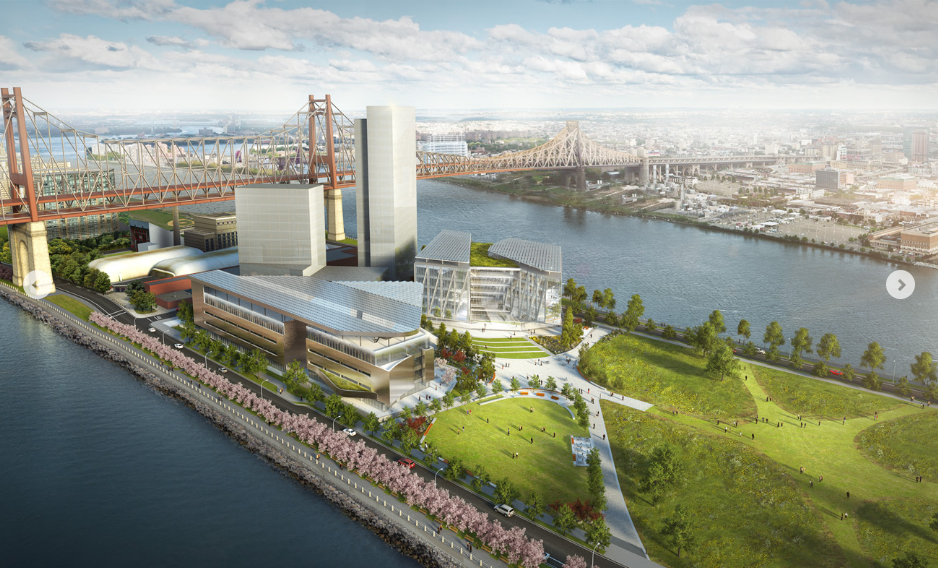
2. If this were in Ithaca, I’d have splurged pages of writing over it. But it’s not. Construction permits have been filed for Cornell’s second academic building at its new tech campus on Roosevelt Island in NYC – a 189,000 sq ft structure designed by some of Cornell’s favorite alumni architects, NYC firm Weiss/Manfredi. They’re the same ones who are handling the Vet School renovation, and who designed the Sesquicentennial Commemorative Grove that opened last fall. The building is the one on the right in the above image, the one that looks like an ice cube breaking apart. Building number one, the design in the left foreground, is already underway.

For the record, I’m still not a fan of the tech campus.

3. The Ithaca Times has done an interview with Bill Manos that’s worth a read. It has your standard anti-regulation rant (the same one you get from your retired Fox News-watching uncle), and he calls the sale an “opportunity from Heaven” that he didn’t see coming. He says the sudden closure was so the new lessees could renovate the diner and have their new restaurant (called “Old Mexico“) ready for the Spring. I don’t think that exonerates the “bad manners” of giving his employees only eight days’ notice, but hopefully they’ve all been able to move on like he claims in he interview.

707_E_Seneca_2

4. Looks like the 6-unit, 18-bedroom project for 707 E. Seneca has seen some slight revisions as it goes to the ILPC (Ithaca Landmarks Preservation Council) for further review (agenda here). About the only notable change I can find from the previous render is in the spacing of the dormer windows. Although the lot is undeveloped, it’s in a historic district, hence the extra step of ILPC approval. A lot of the major details have already been hashed out, so I imagine the council will only have minor suggestions, but we’ll see what happens. The ILPC is also set to review the Old Library proposals, and given their exacting approach, my inner cynic tells me it will be less about which project they like the most, but rather which one they dislike the least.

804Estate_112blair_rev1_1 804Estate_112blair_rev1_2

5. On another note, the two duplexes proposed for 804 E. State Street (formerly 112 Blair) has been upped to three. Details and drawings here. All are two units each with three bedrooms in each unit, so 18 total. They also look about as utilitarian as one can get away with; the easternmost house (building “D”) has a chamfered corner, and that’s about the only interesting architectural detail I see. Parking will now be shoehorned into the basement level  of all three buildings (12 spaces total; it’s a hilly site). The construction cost has been upped to about $600,000, but the construction timeframe of late Spring/summer 2015 is still the same. Although the lot is being cobbled together from slices of adjoining properties, it will still require an area variance from the zoning board because of how close the houses are to each other. Looking on the bright side, this development will replace a parking lot and works as appropriate infill for lower Collegetown.

20141227_144707

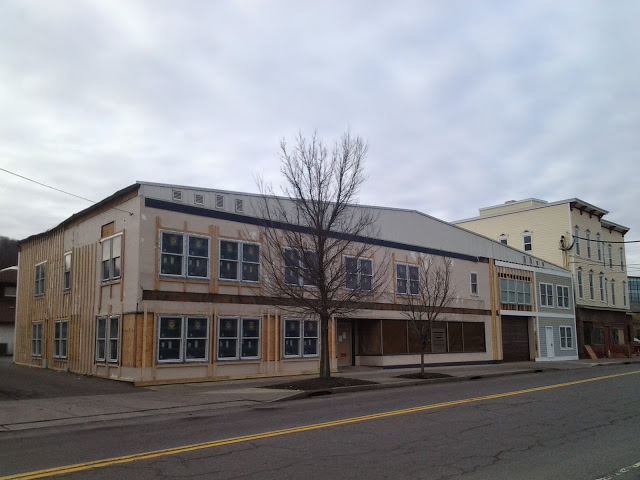
6. I finally received an email response from the Zaharises regarding what’s underway at their old furniture store at 206 Taughannock Boulevard. Unfortunately, it’s not very descriptive:

We’re renovating the building into apartments. It looks quite different doesn’t it?!

Yes. Yes it does.