News Tidbits 10/25/14: It Seems Expensive Because It Is

25 10 2014

belle_sherman_townhouses_2

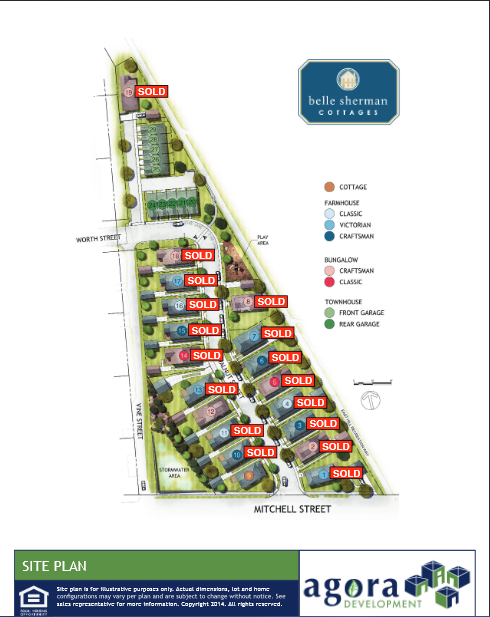
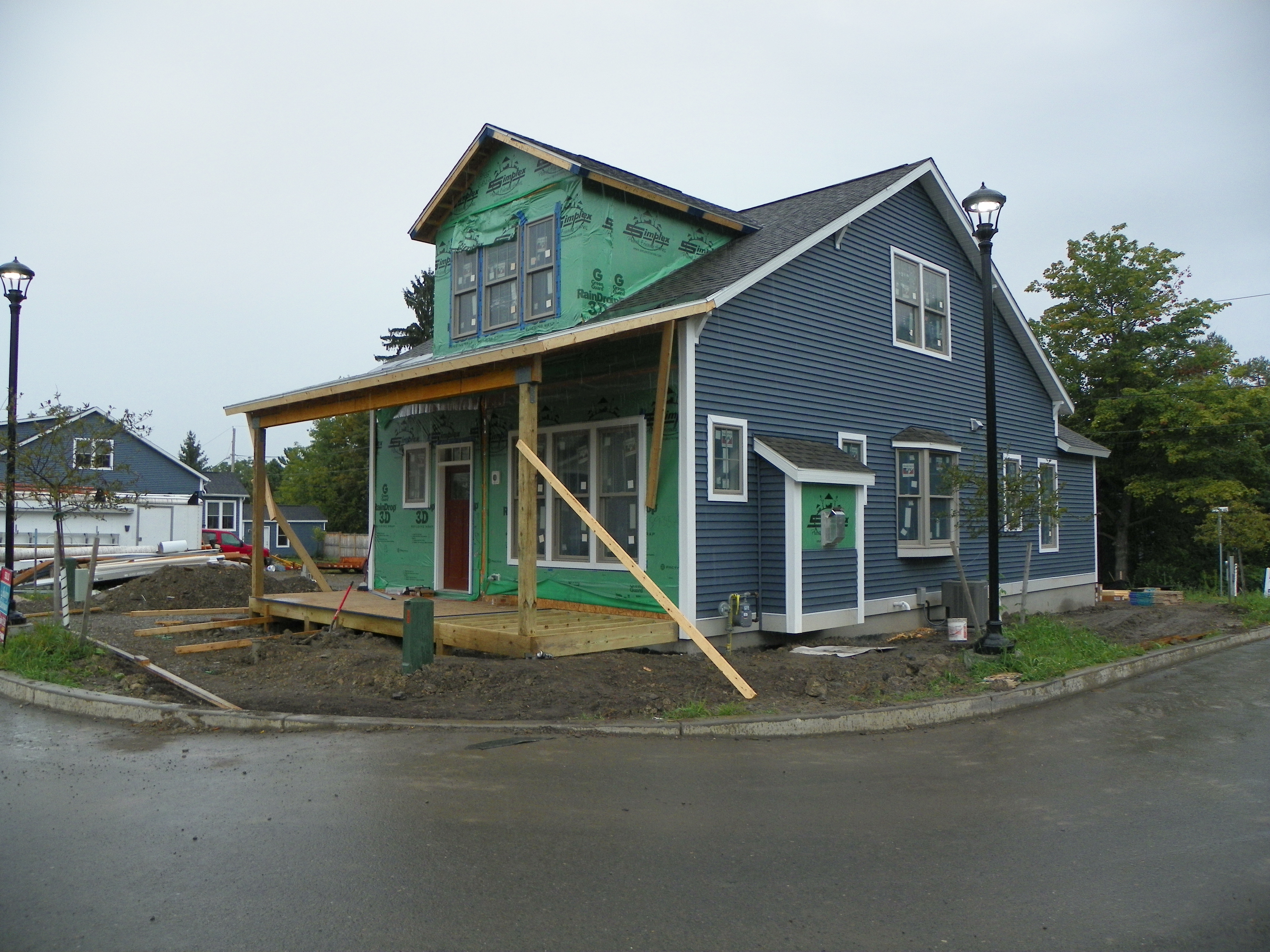
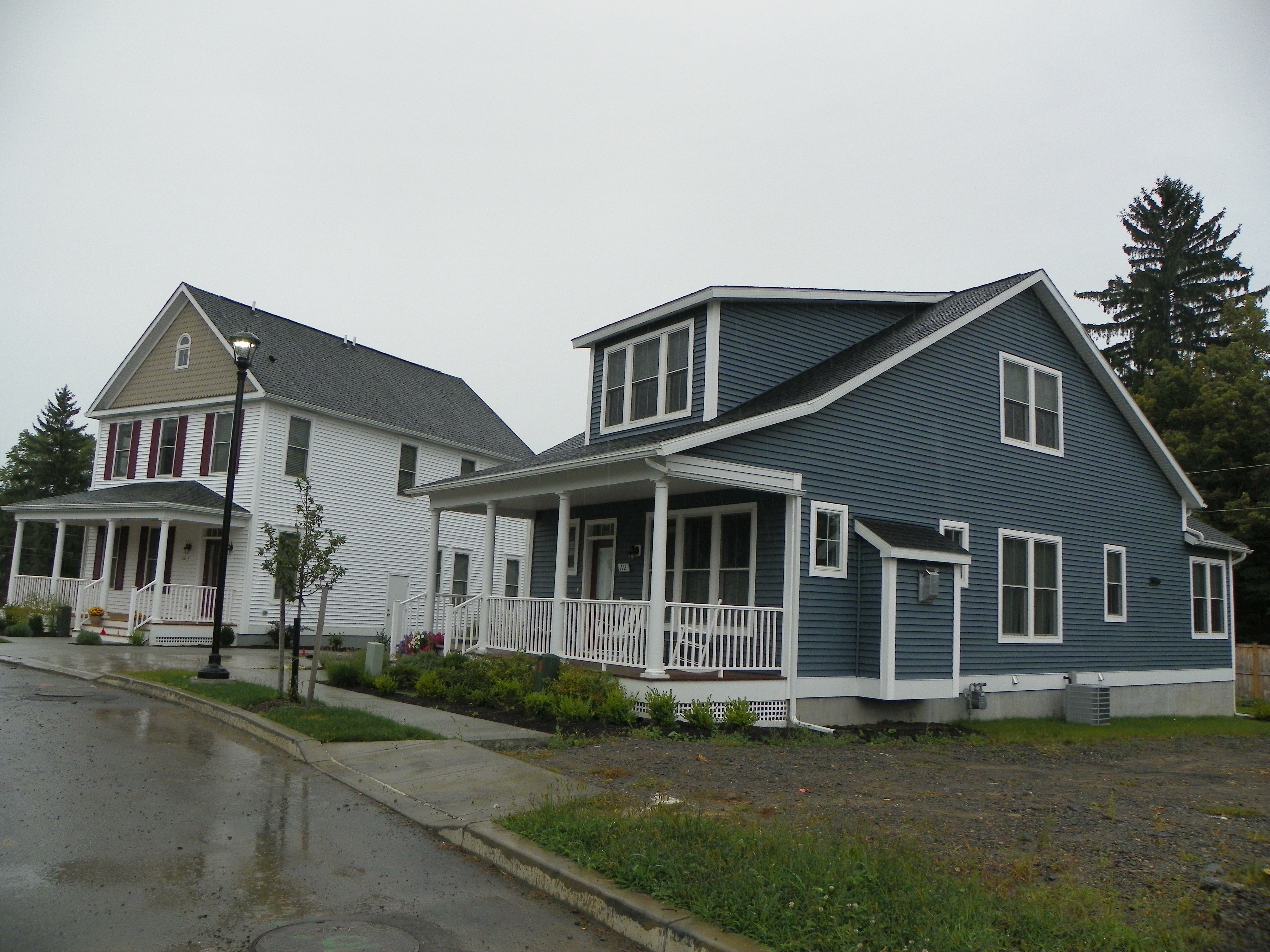
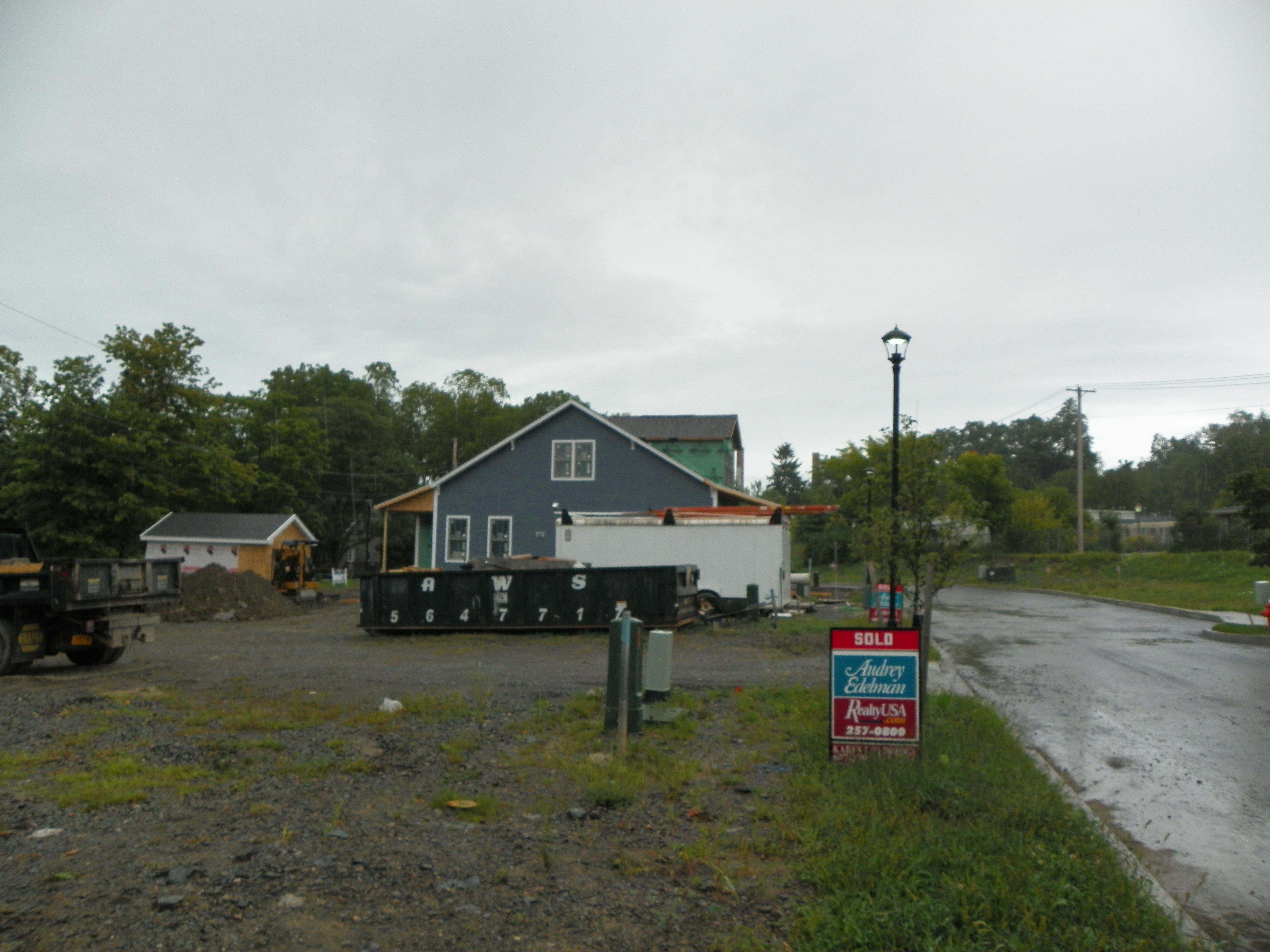
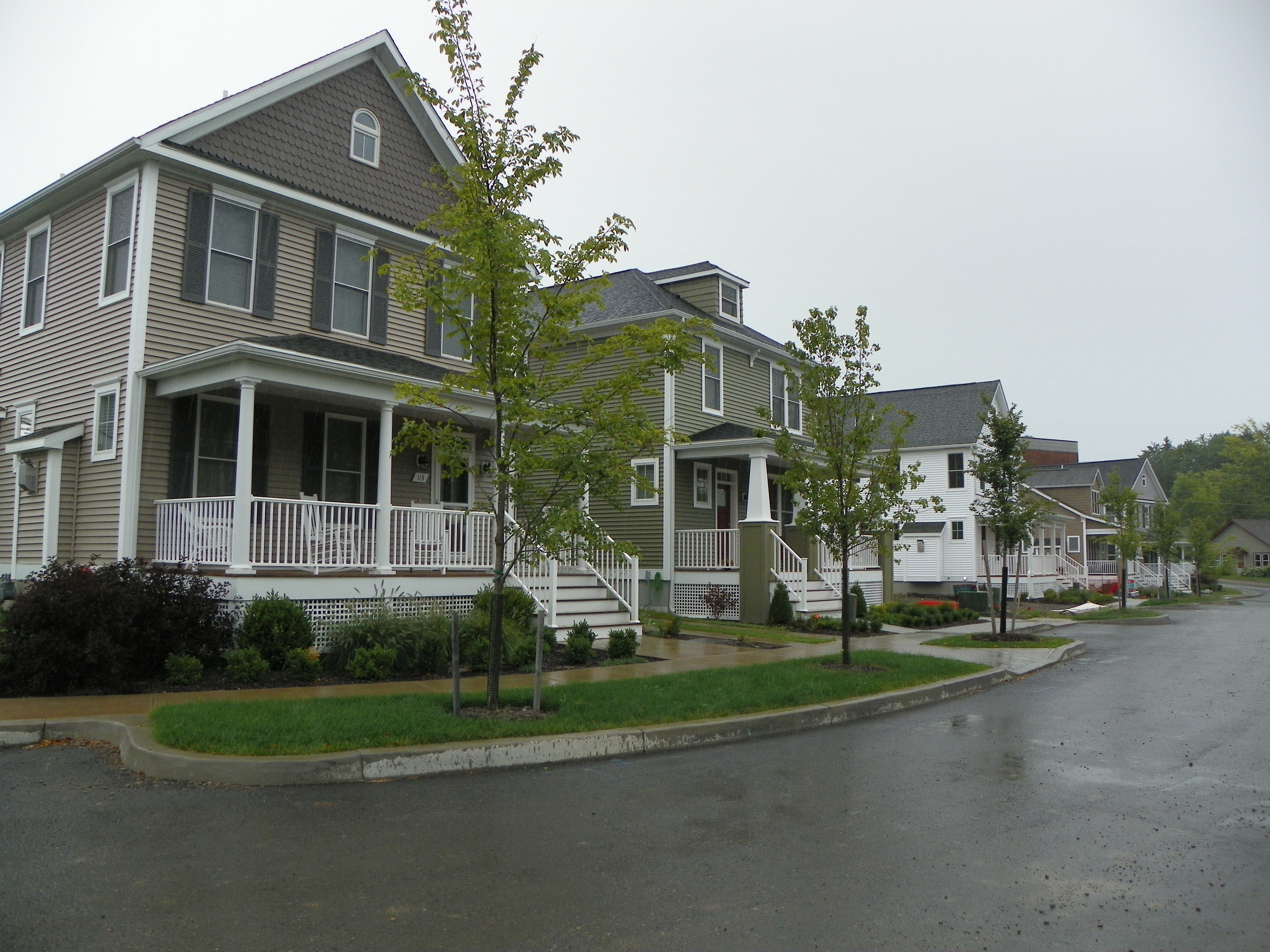
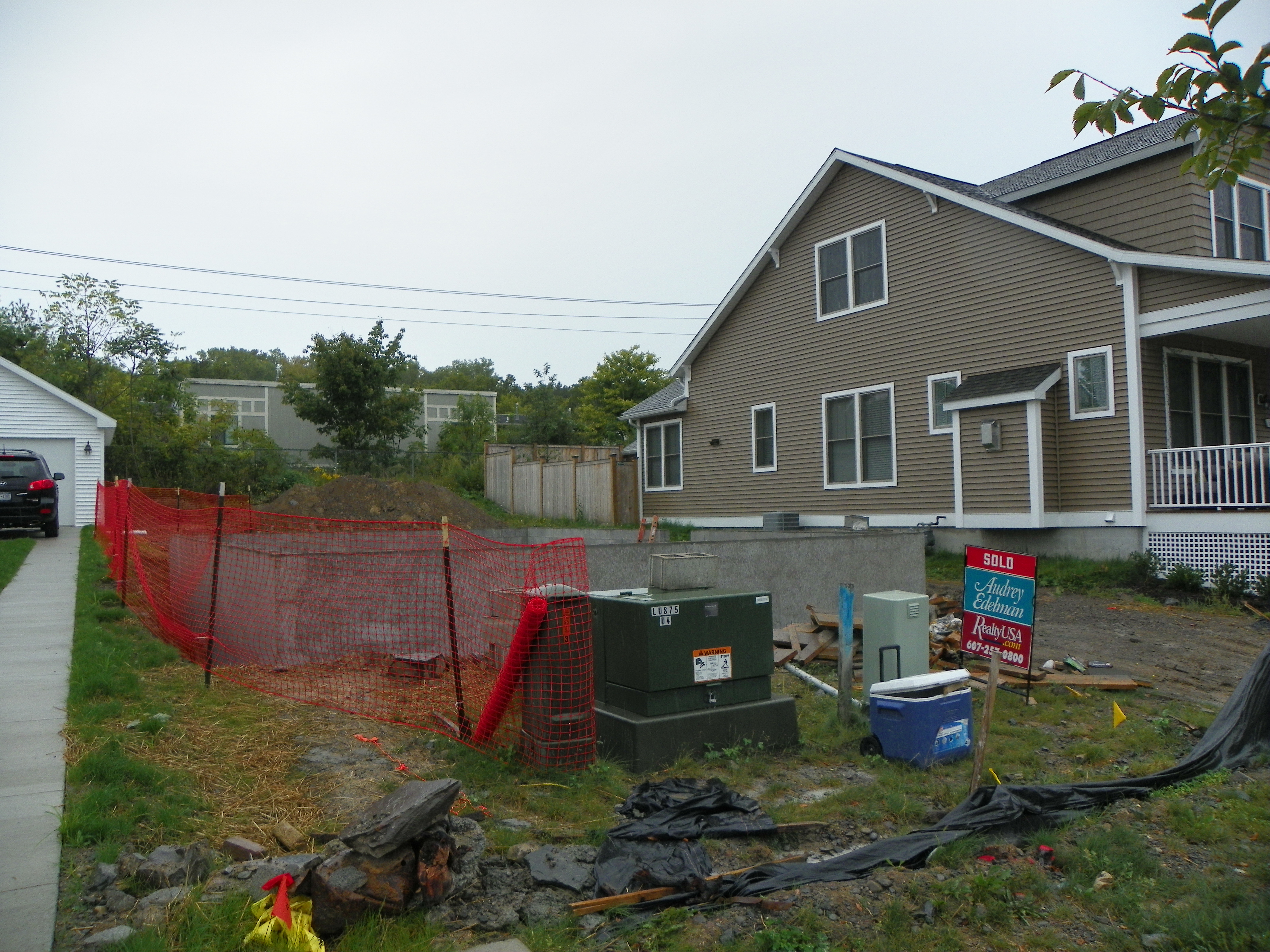
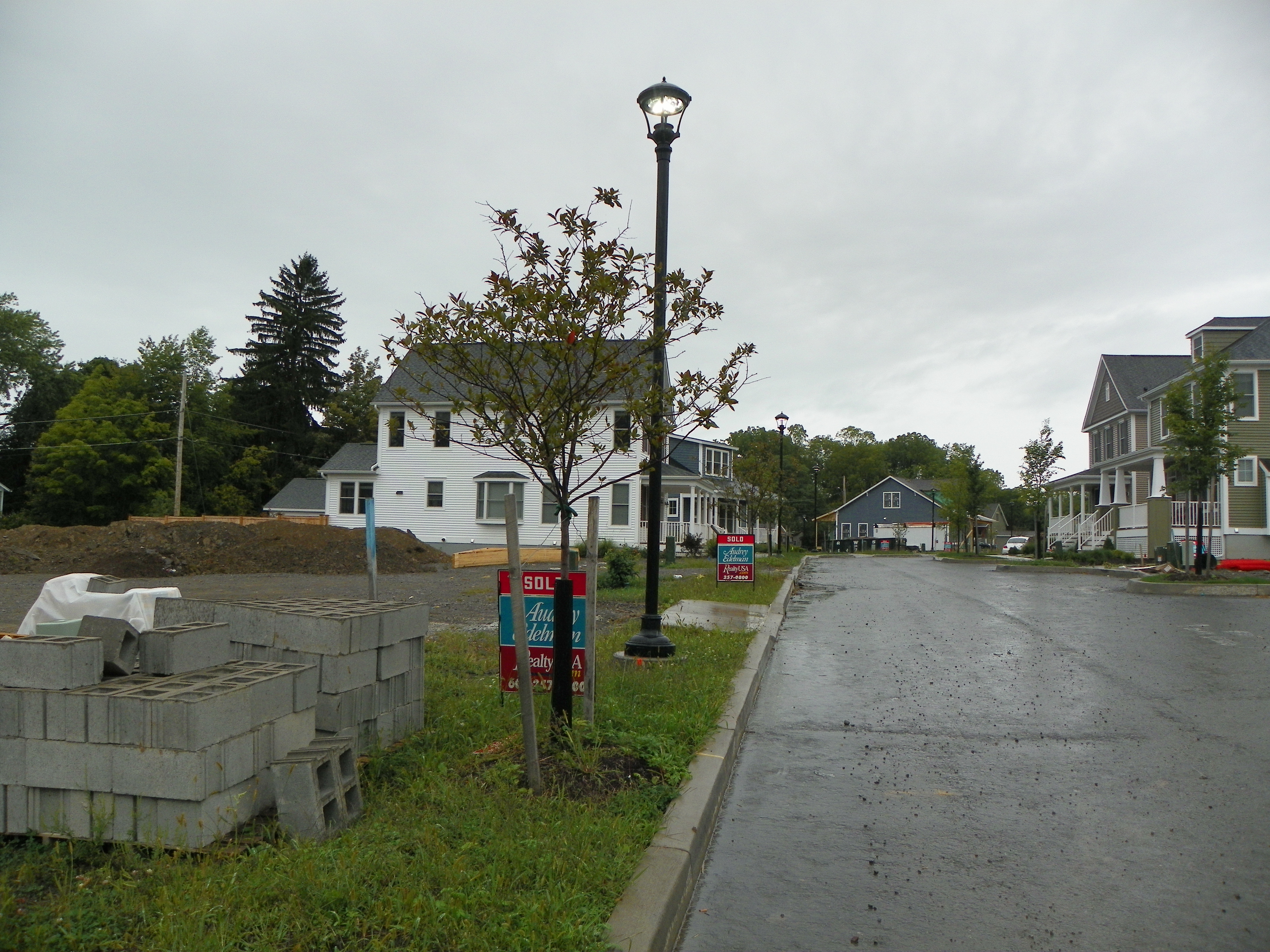
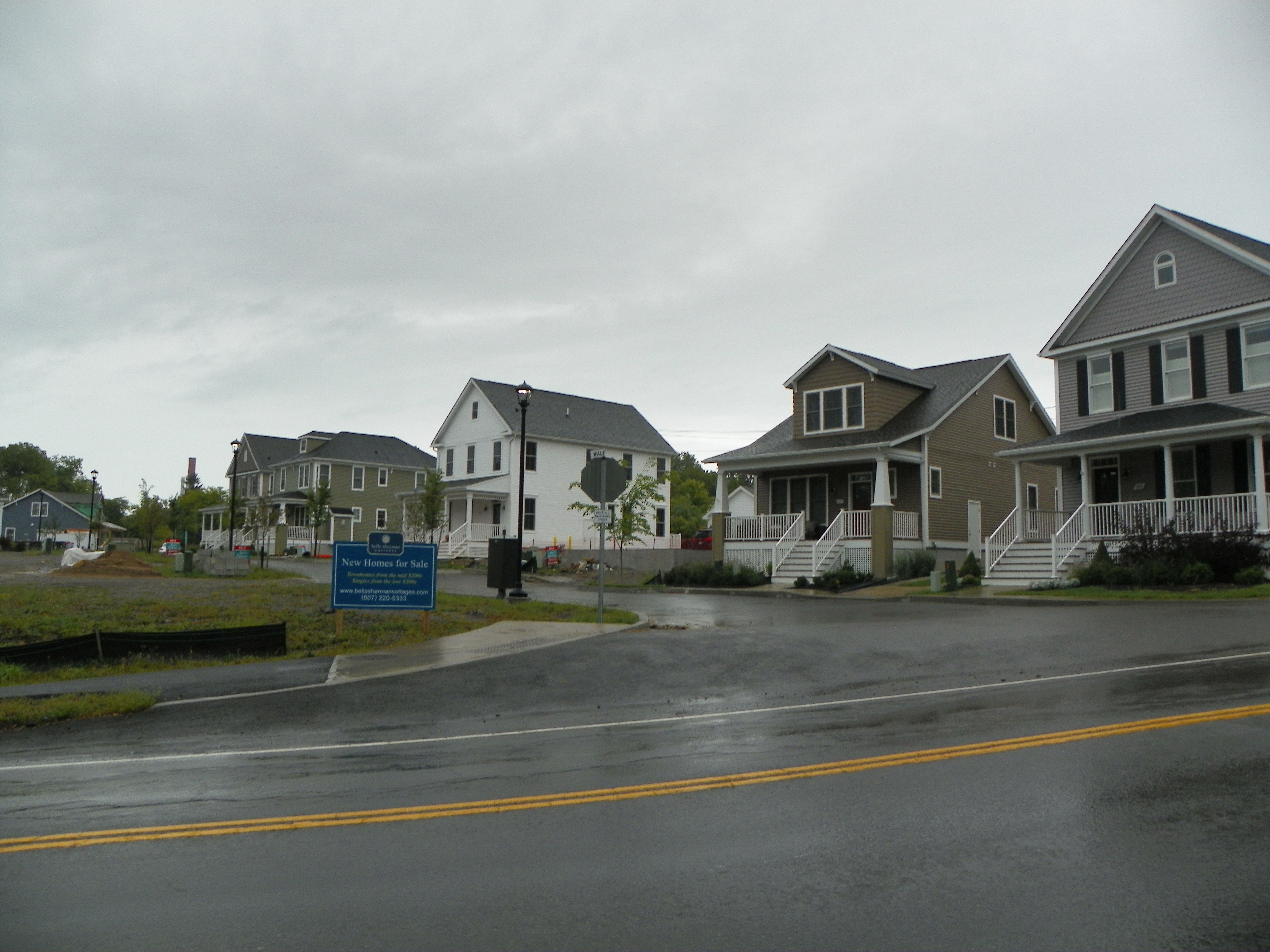
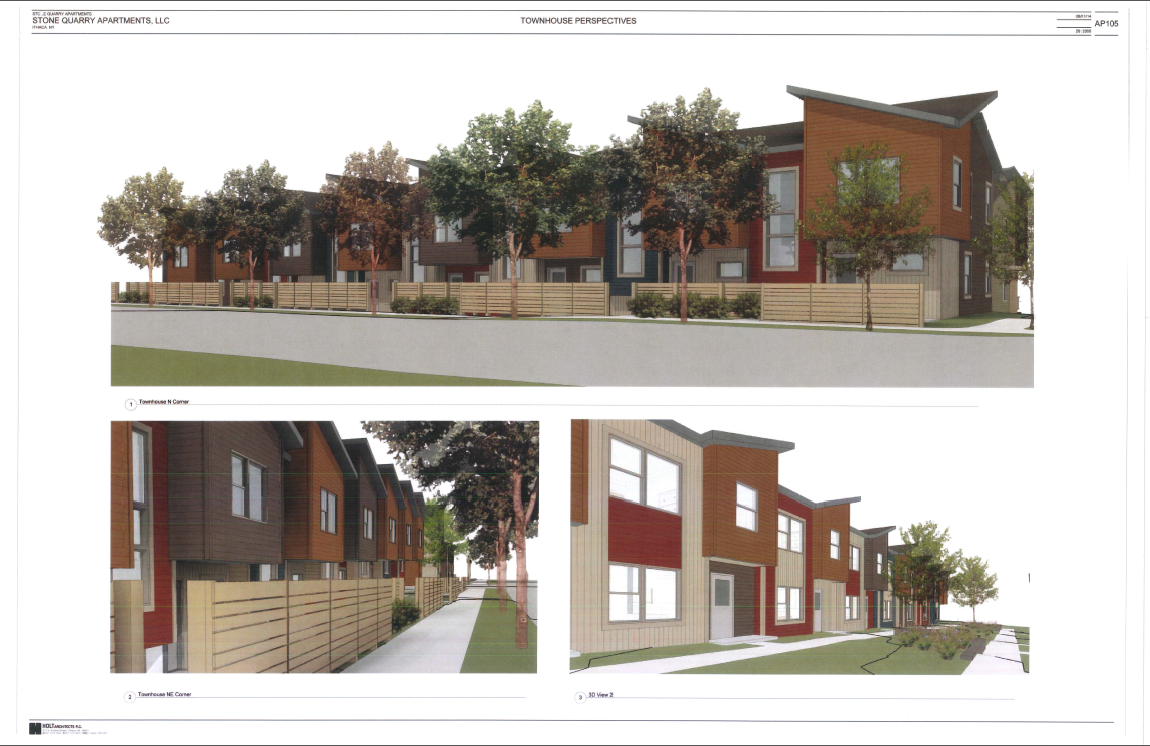
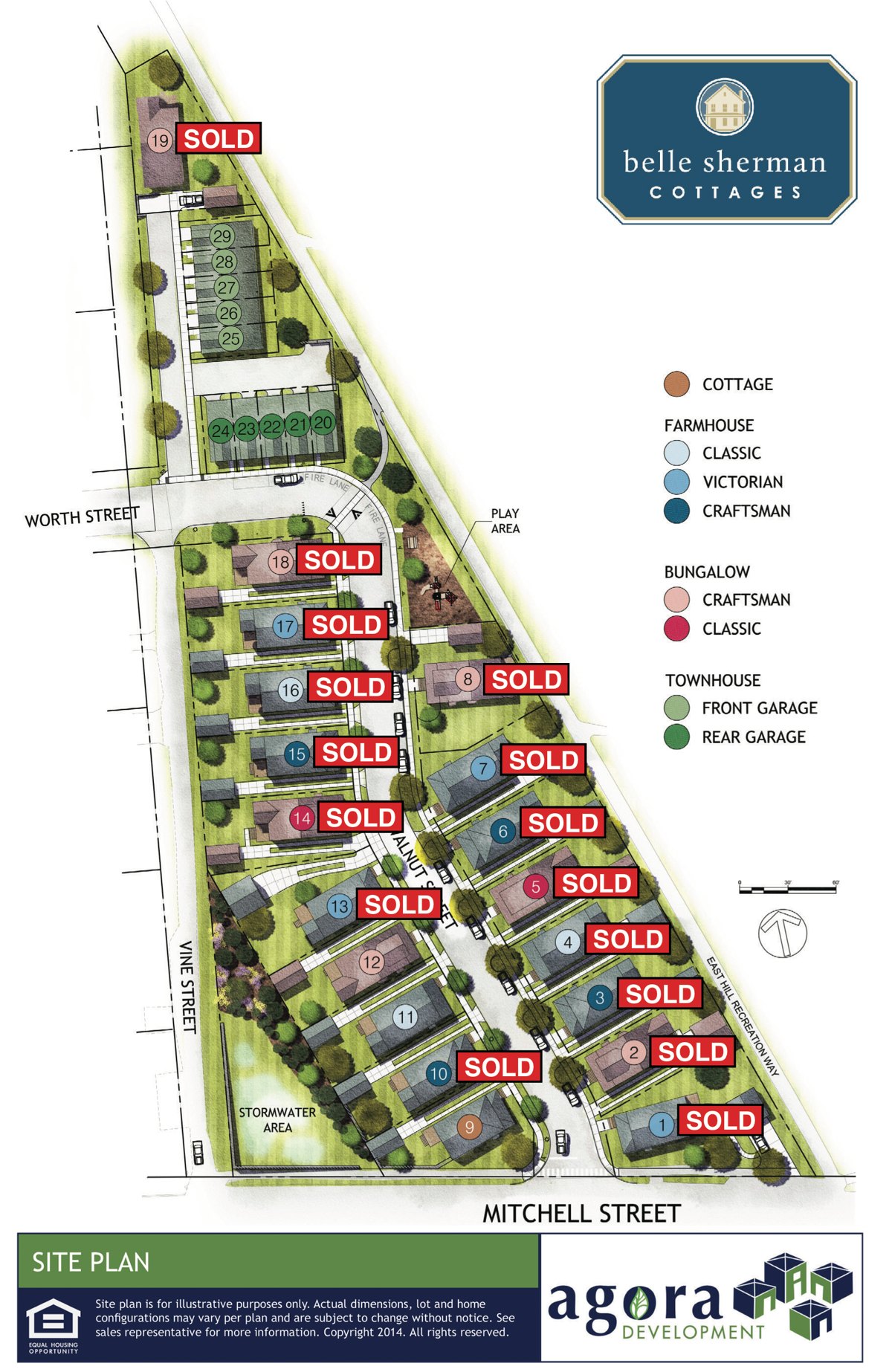
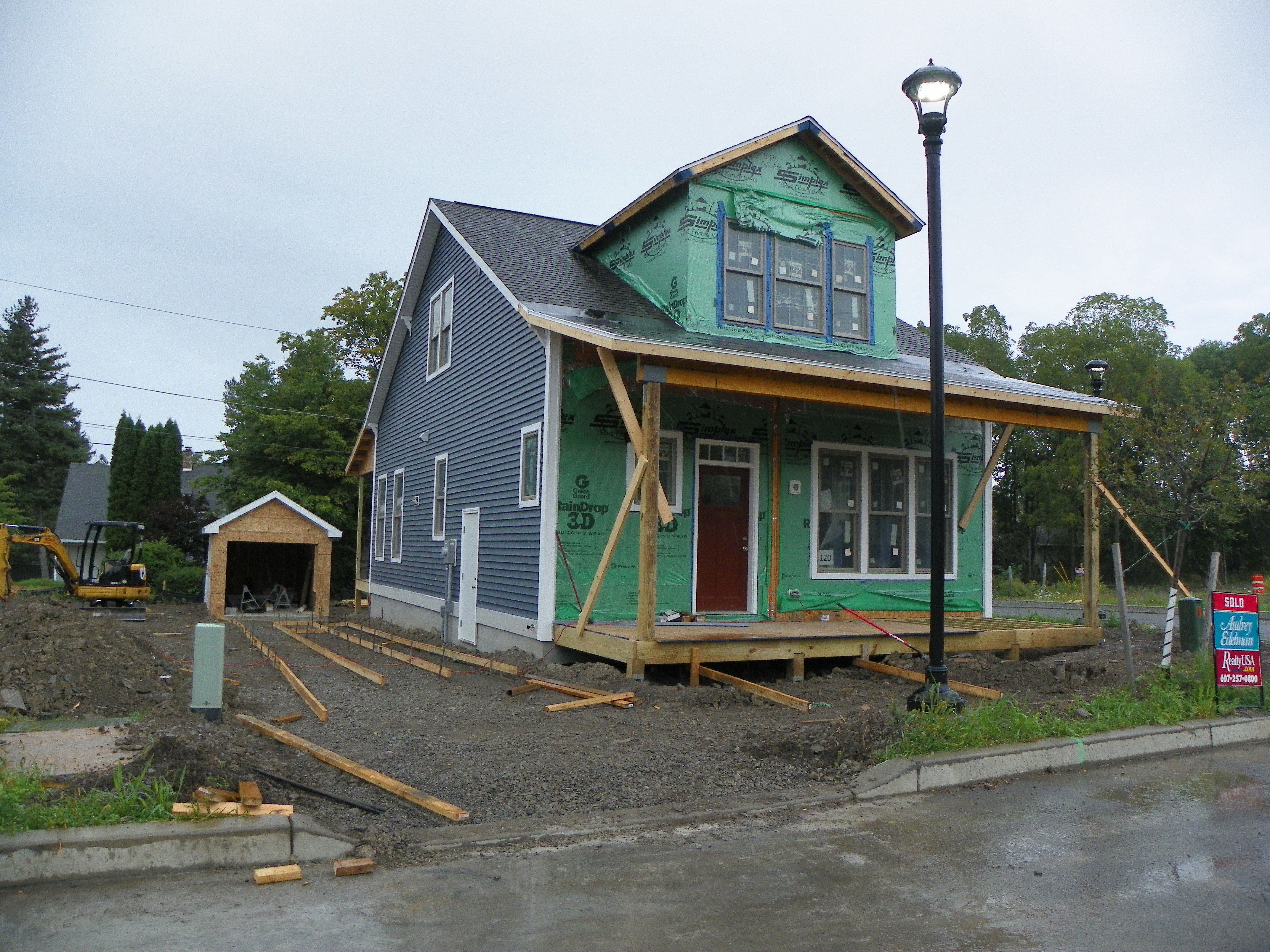
1. I always appreciate it when people respond to my emails. On a whim, I emailed the realtor in charge of the Belle Sherman Cottages to see which ones were underway with sales, and what the time frame was. She forwarded the request to the developer, Toby Millman of Agora Homes and Development LLC, who wrote back to say that as of the 17th, the front-loading garages on lots 25-29 (render above) were being marketed, and three of the five have been sold. They are planning for an April 2015 completion for those five, with the modules being set into place next year (some site prep work may occur this fall). The five townhomes with the back-loading garages are not being marketed just yet. Who knows, with most of the homes being sold and several under construction, the entire project could be complete by the end of 2015.

2. Oh geez. An Irish-themed Hooters is coming to Ithaca. According to the Post-Standard, Tilted Kilt, a “Celtic-themed sports pub”, is looking at a restaurant for Ithaca. The Syracuse location due to open next month will be 7,000 sq ft, I expect an Ithaca location would be similarly-sized. The chain already has a location in Watertown, and has plans for a Utica restaurant as well. Basically, any city over 30,000 roughly within an hour’s radius of Syracuse. Here’s the chain’s website, featuring a woman preparing to make out with a hamburger. I’m sure the fratty frat boys at Cornell are getting excited. Placing bets on whether they go for Lansing or southwest Ithaca.

carey_rev4_3

3. Per the IJ, The developers of the Carey Building expansion are asking for a tax abatement from the city via the CIITAP application. A primer on CIITAP applications can be found here at the Ithaca Voice; a number of projects in the city’s “density district” have used them in recent years as a way to offset high development costs in downtown and West End. Recently, Jason Fane made news for pursuing a tax abatement via CIITAP for his project on East Clinton Street. The standard abatement is 7 years, with 90% of the increased value being offset in the first year. In this case,the building was assessed in 2014 at $475,000. The new construction will cost $4.7 million according to the IJ, but it says $1.6 million in the city’s site plan application; that gives us assessed values in year one of $945,000 if the IJ is right, or $635,000 if the SPR is still accurate. The abatement tapers off through the latter six years. As with Fane, I suspect Travis Hyde Companies is pursuing an abatement simply because they can, they meet the qualifications so carpe diem. The wide difference in the IJ and SPR numbers could be an indication of rapidly rising project costs. Regardless of reasoning, this definitely isn’t going to do the developers any favors when it comes to community relations.

ctown_terr_phase3

4. Maybe the Novarr interview in the Voice will have run by the time this runs; maybe it won’t. Just in case, straight from the developer himself, Phase III/Building 7, with its 247 units, is planned for a late 2015 construction start, with completion in the summer of 2017. It’s a long construction period; it’s also a very big building.

ctown_crossing_rev2_1

5. From the Cornell Daily Sun, it’s expected that rents at Collegetown Crossing will be around $1,000, per month, per tenant. Students in Cornell’s Student Assembly aren’t exactly pleased, since that number far exceeds even what most Cornellians can afford (but don’t worry; with student population growth far outstripping supply, there’s enough demand for student rentals, even in the luxury segment, that this place will fill up to capacity as soon as it opens). Welcome to Ithaca’s severely under-supplied rental market; open your wallets wide, boys and girls.

It just occurred to me that since I wrote the enrollment column last year with 2012 numbers, I glanced at the 2014 numbers on the University Factbook. Now it’s 21,850, an increase of 426 students in 2 years, and in pace with the 2002-2012 period. 234 of that 426, 55%, were grad and professional students.

There are a number of factors for why it’s so expensive – land values in Collegetown are high, construction labor is expensive because Ithaca is off the beaten path, taxes are high, and the new Collegetown zoning doesn’t allow Lower to build out the rear portion as he initially intended, forcing him to keep the building’s rear flank at 4 floors instead of 6 (the zoning is also what allows him to build in the first place, since it removed the parking requirement).

Let me be clear. Unless something is done to reduce demand or increase supply, this will become the norm, and Cornell students of modest means will be placed in an increasingly precarious situation with the cost of housing. Just like the rest of Ithaca.

6. To wrap things up, here’s looking into the agenda of next week’s Planning Board meeting (and what will probably comprise my mid-week posts). Purity, The Canopy by Hilton, Chain Works, 114 Catherine, and the 15,700 sq ft retail building on the Wegmans pad site. Only the Wegmans parcel is up for final approval.

114_catherine_rev2_1

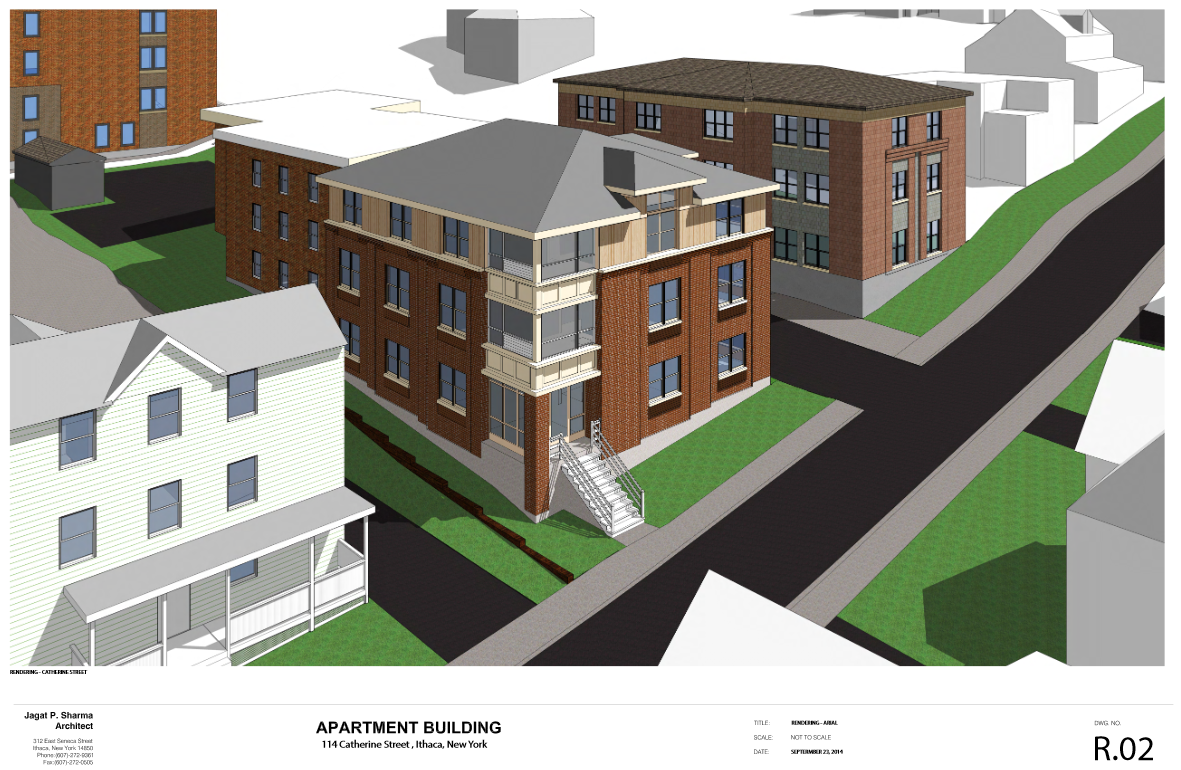
114 Catherine comes to the board with one major change – the front entrance was moved from the corner to the middle of the front facade. Still 17 bedrooms in 3 units.

As for new projects coming up for sketch plan, we technically have three. As much as I was looking forward to it, Ithaca Gun is not one of them, but I’ll keep my fingers crossed for next month.
402_s_cayuga_st_1

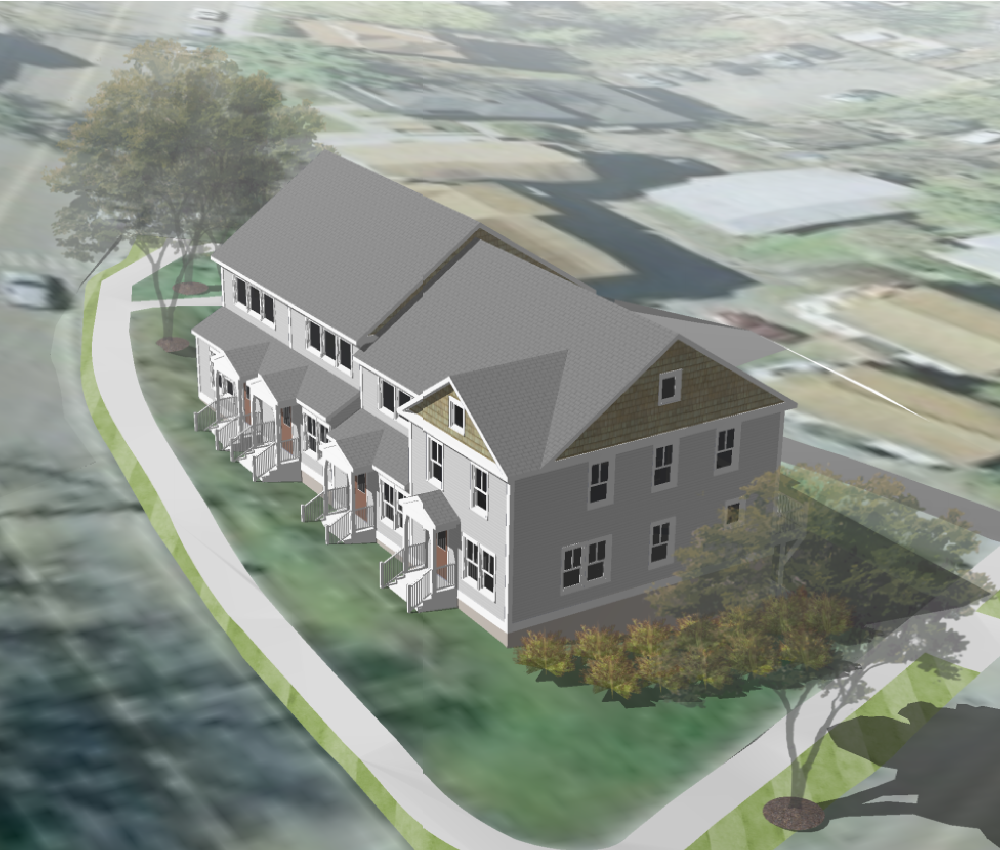
The first is 402 S. Cayuga Street. Eagle-eyed readers will recognize this as INHS’s 4-unit townhome project.
100_2092

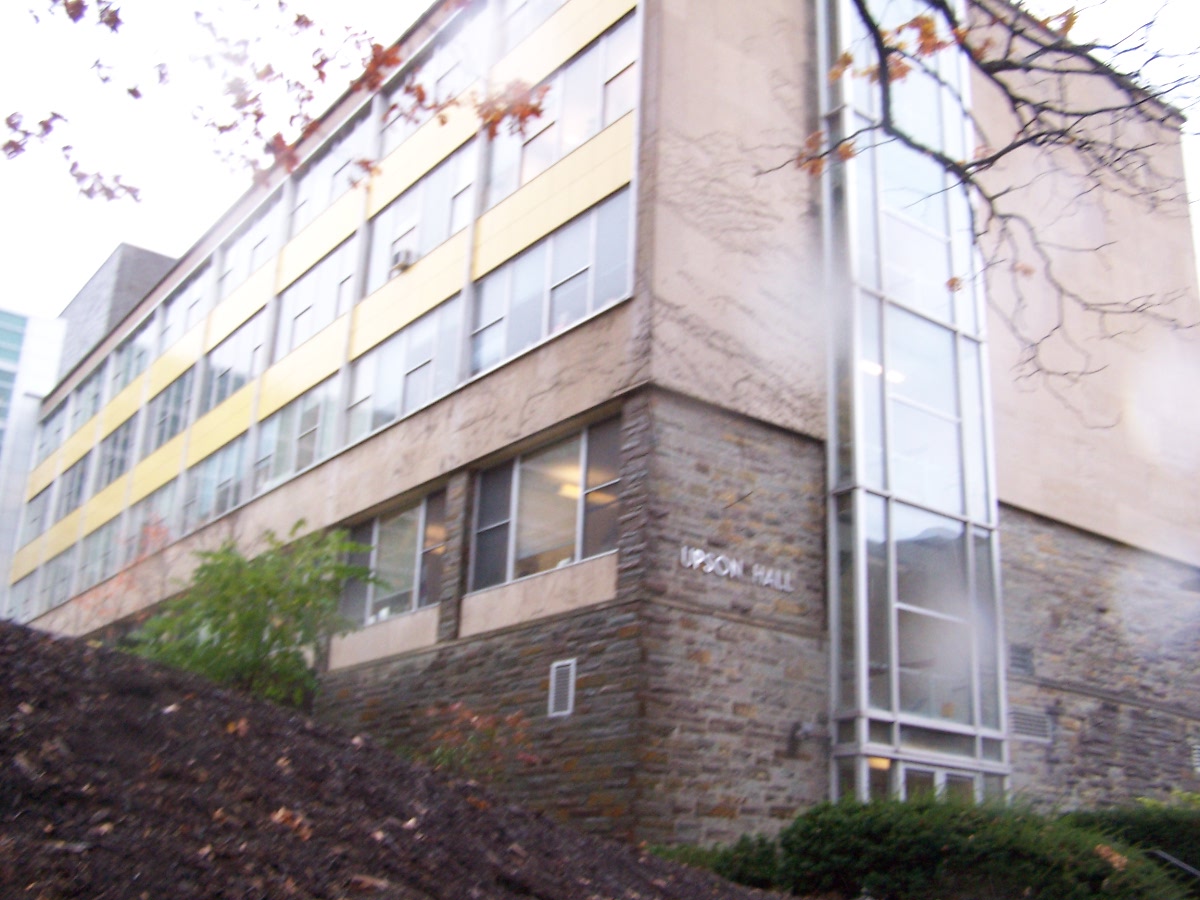
The second is Cornell – Upson Hall renovations. Cornell stuff is easy enough to find, they publish veritable novels about projects once they’re cleared by the Board of Trustees. Upson renovations sound like they’re mostly internal work with a facade update. I’m more interested in the proposed biomedical building they have yet to roll out designs for. The Upson renovation is supposed to cost $63 million, so maybe there are additions involved; the new biomedical building, $55 million. The firms involved look to be LTL Architects, Perkins+Will, and Thornton-Tomasetti. In other words, modern glass and steel box, looking for LEED Gold. No renders yet, but I’ll post ’em when I see ’em.

101_4858

The last of the trio is yet another Collegetown project – 302-306 College Avenue, an address which consists of the three architectural stunners above. I’ve been patiently waiting for a proposal here (though to be honest, I’m kinda partial to 302, second from the left). John Schroeder from the Planning Board has wanted a proposal here for years. They sit in an MU-2 zone – 6 floors, 80′, no parking required. All three are owned by the Avramis family, Collegetown’s third-largest property owners. More interestingly, rumor has it that the buildings they own contingent to 302 College on Catherine Street, which are CR-4 zoning (no parking, 4 floors), are involved as well. So this could be a fairly substantial project. My money is on Sharma Arch being involved, since they are Avramis Real Estate’s usual architect-of-choice. I figured that the M&T Bank on the 400 block would get torn down first, but this is no big surprise, the Avramises have been fairly active in redeveloping their properties.


Riots in Collegetown

14 10 2014
ctown_riot_1972

Photo courtesy of the Cornell Daily Sun

Entry number five in the Collegetown history series.

***

There’s a lot to dislike about Collegetown. The litter, the students, the traffic, the students, the noise, the students. For as much value as it is to the city’s coffers, I’m willing to wager that a survey of 20 random Ithaca residents on the worst neighborhood in the city would turn up a near tie between Collegetown and specific sections of crime-plagued West Hill. To some, Collegetown could hardly be a worse place.

But it can; take for instance, student rioting.

Rioting could fall into two fairly broad categories – violent social commentary, or drunken idiocy. Syracuse can provide an example of the latter. Collegetown’s riot may be a little alcohol-infused (particularly the second one discussed here), but mostly they were the result of social unrest.

Today’s clock is rolling back to May 1972. That spring had been a long semester at Cornell. Carpenter Hall had been taken over a few weeks earlier, with students demanding that Cornell Aeronautical Lab stop government research (much of their research focused on defense and military concerns), that trustees with a hand in Gulf Oil force the company out of Portugal’s African colonies, and that the ROTC be permanently disbanded. The administration, then under President Dale Corson, said it was “prepared to talk and listen but not negotiate“. The protestors refused to budge, but stormed out to Day Hall when an injunction was about to be served.

May 11 started just like any other anti-war rally, with 200-300 students protesting in front of Day Hall at around 10 PM. But when they decided to march to Collegetown, things spiraled out of control. Several students went to the First National Bank on the corner of College and Dryden (the corner where the failed Green Cafe is now), smashed the windows, and tried to set the bank on fire with homemade torches. IPD responded to the rioters with tear gas. Eight protesters were arrested and two policemen sustained injuries, one of which was a broken leg. The rioters, dressed in Halloween masks and being in a destructive sort of mood, retreated to campus, where they smashed the windows of the Campus Store and Day Hall, to the tune of “Day Hall must fall” chants. They marched on to Barton because of its ROTC affiliation, smashing several more windows while Cornell police watched in their riot gear, but did not intervene. By 1:15 AM, the rioters called it a night and dispersed. The damage to Collegetown was estimated to be thousands of dollars, which would be in the tens of thousands when adjusted to 2014 values.

ctown_riot_1972_2

Photo courtesy of the Cornell Daily Sun

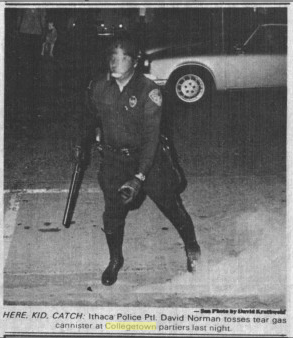
Corson and his administration were none too amused, and vowed to prevent any recurrence with the help of the IPD. That vow would be tested two days later, at a student block party on College Avenue near its intersection with Catherine Street. The party had hundreds of attendees and had been well-publicized, but it lacked the necessary permits from the city (yes, even in the idyllic days of yore, there was red tape). Mayor Ed Conley, remembering the riots two days earlier, was not going to let it slide. The police were out by 6 PM and started to arrest students for minor infractions such as noise violations. The proverbial stick was poking the hornet’s nest, and Cornell’s provost tried to step in on the university’s behalf and offer up party space on campus. But students declined, and unrest began to boil over by 9:30 PM. The officers turned to tear gas to keep the street clear, which fomented the students and encouraged them to act out. Bottles, rocks and obscenities began to fly. Soon the battlefield had migrated up College Avenue, where IPD threw tear gas into buildings in an effort to gas out what they thought were unruly students taking refuge, but ending up gassing innocent bystanders as well. One store-owner accused the police of starting a fire with a canister thrown into his deli. The rioting continued to 2 AM, and resulted in 29 arrests, including 13 Cornell students. Accusations were thrown around about who started it and who did what damage, and a report some time afterward laid blame on the students, the IPD, the mayor and Cornell (so essentially, everyone was at fault). In retrospect, the May 13th episode was regarded as a giant mistake. The May 11th incident was still a flash point months afterward, a drug-infused example of organized crime per the district attorney and a witchhunt per the students.

Not to condone the drunken throngs losing their dinner on the sidewalk, but I suppose I’d rather put up with that than burning buildings and riot gear.


News Tidbits 10/10/14: Waiting For That Fall Slowdown

10 10 2014

707_East_seneca

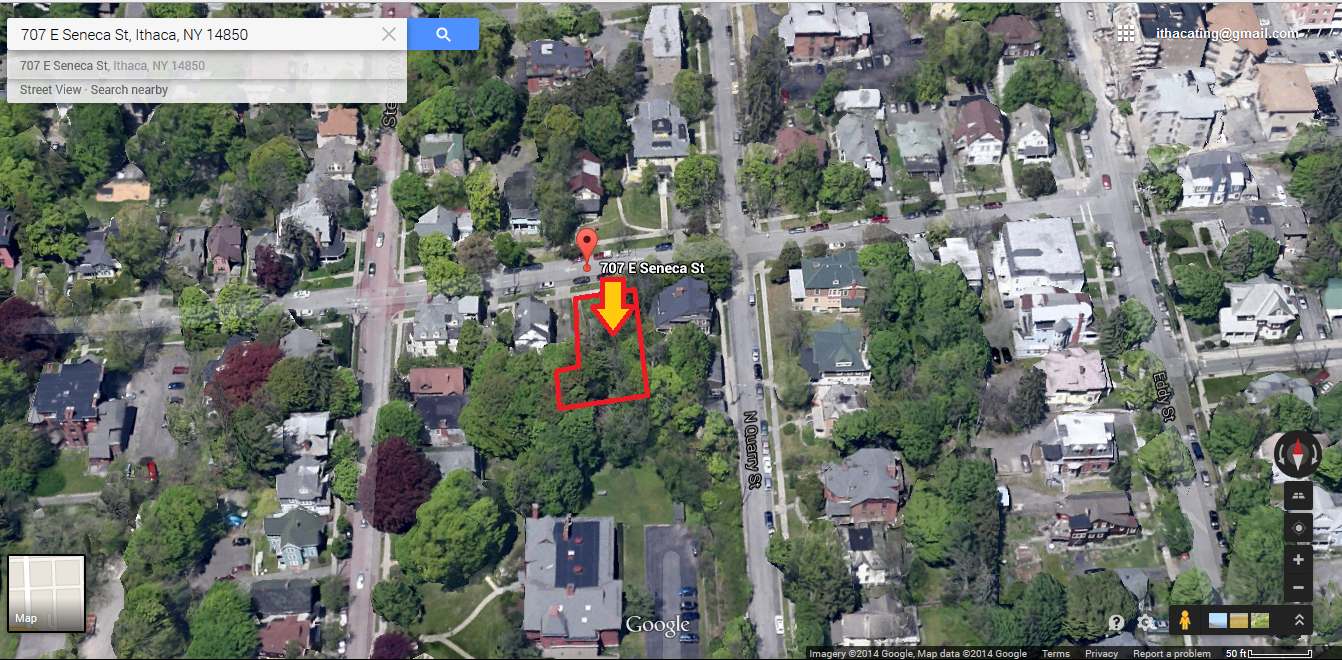
1. Well, this should be fun and exciting. 707 East Seneca, a vacated parcel that was put up for sale by the city, already has a potential development proposed. A sketch plan is due to head to the Ithaca Landmarks Preservation Council this month. It’s a small piece of real estate in a historic district, neither of those details beckons development opportunities. The property was offered for sale at $175k, which is $75k above assessed value, and is zoned to allow up to 4 housing units.

114_catherine_rev1_1

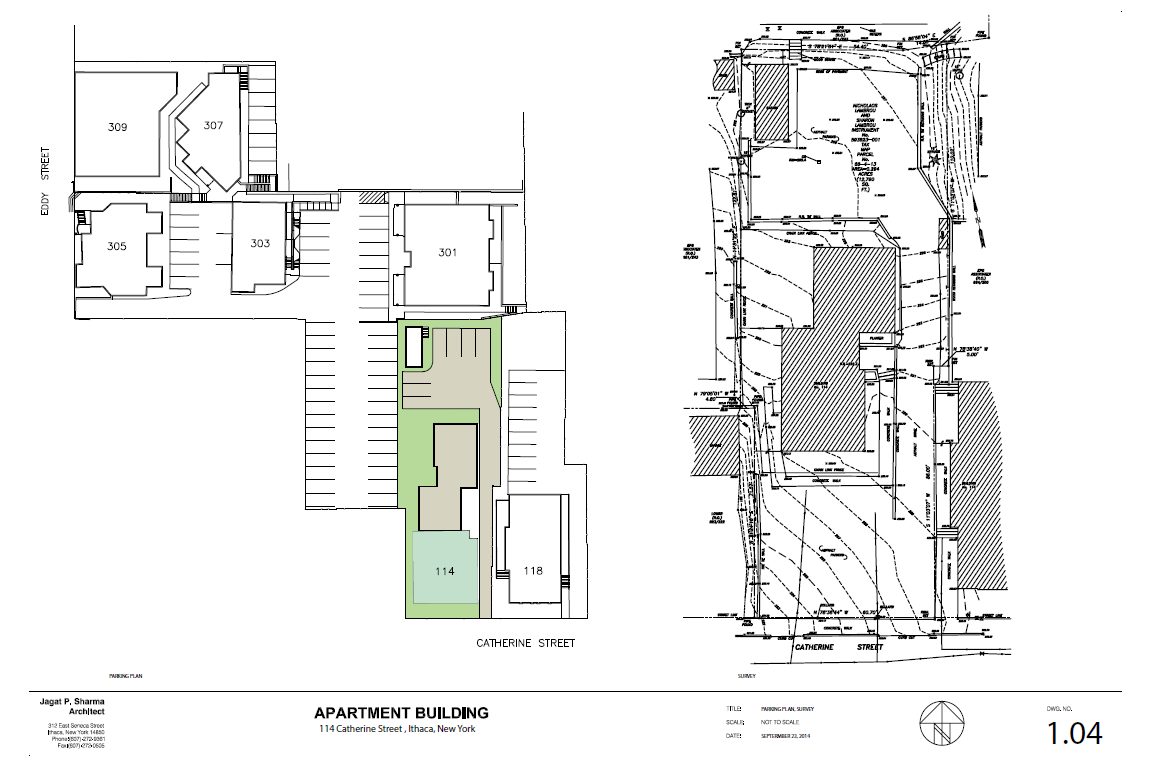
2. Some additional documentation about 114 Catherine. Cover letter here, Site plan Review drawings here, and Site Plan Review forms and documentation here. Apparently they were reusing the Dryden South SPR and forgot to update the numbers; Sharma has so many projects going they can’t keep in track. About the only difference from the old renders to these new ones is the addition of narrow windows into the brick face of the front facade, and some cute cut-and-paste vegetation. According to the docs, the new 3-unit, 17-bedroom building will cost about $500,000 to build, and has a timeline of January 2015 to July 2015 (for August move-in, presumably). This is a key detail – developer Nick Lambrou wants his project done before projects like Collegetown Crossing, 327 Eddy and others start major work; bigger demand for construction workers will drive the labor costs up, so he’s trying to get his project completed before that happens. Look at it as an appetizer before the main course arrives.

ithaca_beer_2

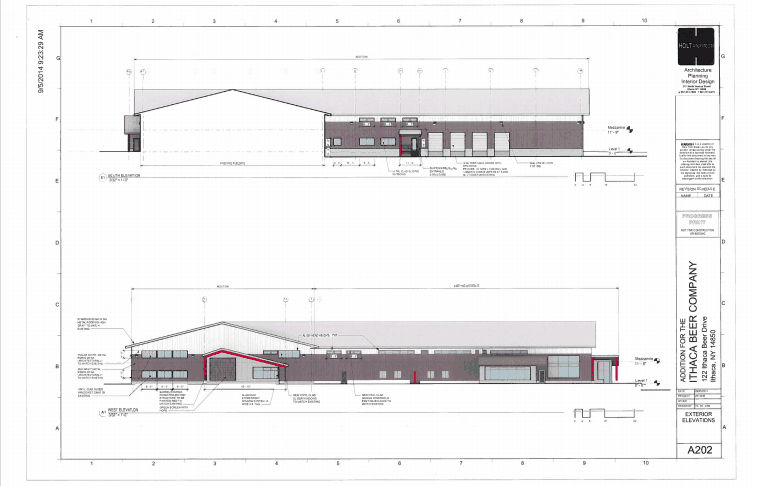
3. Next up, a few more details on Ithaca Beer Company, courtesy of its TCIDA application. Apparently, the construction on this project is supposed to start very soon – mid-November, for a May 2015 completion. A PDZ is very encompassing, and as close to carte blanche as town zoning gets. There’s not much the town needs to sign off on. And although winter construction is difficult, the foundation can be poured during the winter, given proper precautions. The cost of construction and new equipment will be approximately $7.2 million. The total cost of tax abatement requests (property, sales and mortgage) is about $350,000, most of that being in property tax. The addition is expected to create 22 new jobs (IBC currently employs 42), of which 18 look to be living wage. IBC has received tax incentives in the past and met or exceeded its obligations; I don’t see this application causing much fuss.

4. Normally, I don’t pay a whole lot of attention to Board of Public Works minutes; while important, public works aren’t exactly glamorous. But one thing caught my eye in the 9/22 minutes. It’s related to the Brindley Street bridge replacement, a one-lane bridge on a street you’d forget about if you weren’t explicitly looking for it. This line was included in the discussion of bridge options:

“Ben Weitzman has some very large plans for his parcel which is a very under
developed piece of property”

I think this is the Ben Weitsman of 132 Cherry Street? A branch of the Upstate Shredding metal scrapping company? I’m not sure if the plans are industrial or something else, there have been rumors of residential projects being considered in this area. It’s something to keep an eye on in the coming months.

grove2

5. From the Cornell Daily Sun, looks like Cornell “Sesquicentennial Commemorative Grove” is complete. That was surprisingly quick. The formal dedication will be the Friday before Cornell’s Homecoming.


News Tidbits 9/29/14: Thinking Inside the Box

29 09 2014

This is a little later than usual. I didn’t want to post anything before now was because I was hoping the Ithaca Gun sketch plan would be posted to the city website by Friday. It still has not, meaning that it either wasn’t discussed at the Planning Board meeting, or someone in city hall is taking their time with the uploads. My plan to write that up and get that out Friday while in Dulles airport was a no-go, and only now have I had the time to execute Plan B. So here we are.

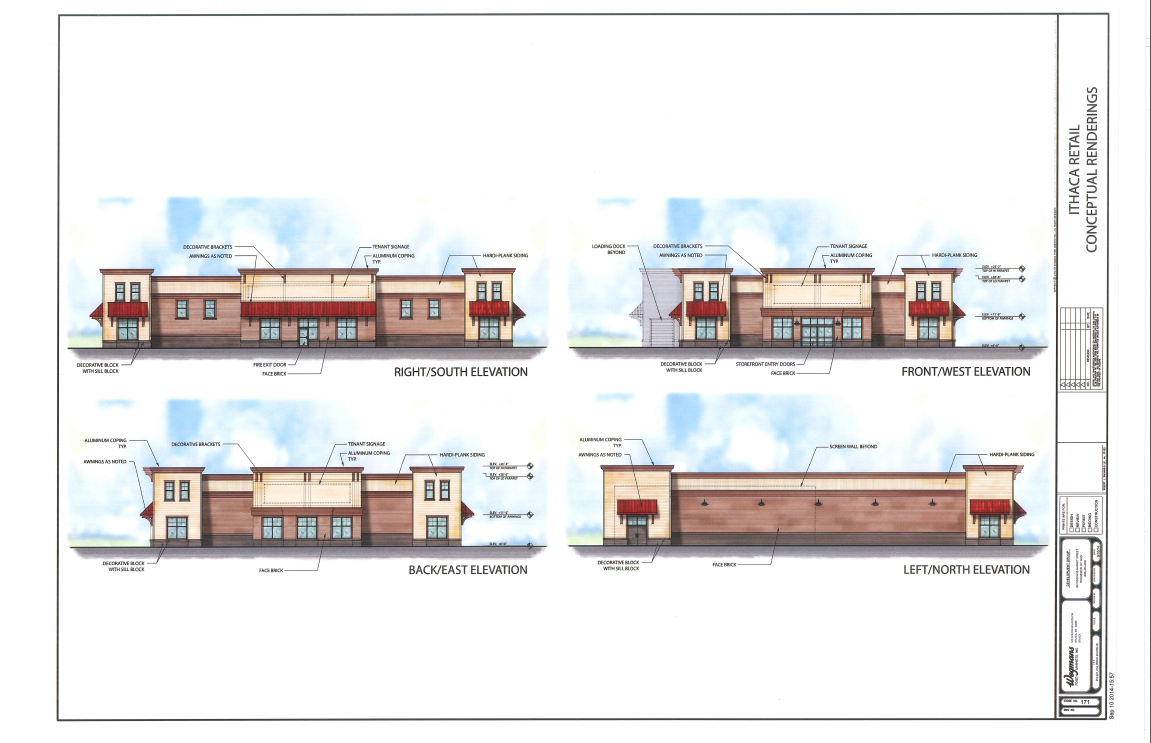
1. Down in big box land, Wegman’s is planning yet another big box, with maybe a couple more to follow. The site plan dates from 1999, When Wegmans received approvals for three outparcels (satellite little boxes to their big box) with a total of ~36,000 sq ft of retail space. Wegmans wants to move forward on that plan, but change up the individual parcels (the completed total would still be 36,000 sq ft). The first phase is for a one-story, 15,700 sq ft building with 88 parking spaces, to be built on a section ot the current parking lot. Cover letter to the city here, Full Envrionmental Assessment Form (FEAF) here, Site Plan Review (SPR) application here, SPR renderings here, and color rendering here. The first building is planned for construction from April to October 2015, with an estimated $4,000,000 cost. Fake second floor? You got it. Cutesy little awnings and brackets to suggest Main Street USA imagery? You get that too.

wegmans_1

wegmans_2

There’s a pretty good chance that, as Jason at IB covered this past spring, this is a new Wegmans-owned wine and liquor store, which they have at several of their NYS locations (for those unfamiliar with state law, grocery stores can’t sell wine or liquor, unless it’s a wholly separate part of a building with its own entrance, or it’s in another building completely).

2. Collegetown Crossing is finally, finally approved. Familiar readers will recall that this project has been held up for years due to its need for a parking variance under the old zoning plan. The new plan did away with the parking requirement, but since the building straddles two parcels with different form guidelines, part of the rear portion was reduced. With approvals in hand, developer Josh Lower can focus on getting financing and construction loans (being in Collegetown with its captive and lucrative rental market, that probably won’t be a big hurdle). Over time, the retail spaces on the first floor have been consolidated to three, a 3,200 sq ft small grocery store (a planned Greenstar branch) and two smaller spaces. 46 apartments with 96 bedrooms will fill out the second to sixth floors. The tentative opening of the store, and first occupancy for those apartments, is summer 2016 (July/August). 2015/2016 will see a lot of steel going up in Collegetown, with 327 Eddy and 205 Dryden on similar timeframes. To my pleasant surprise, a number of residents spoke in favor of the project, citing the appeal of a small grocery store in walking distance.

307college_rev2_1

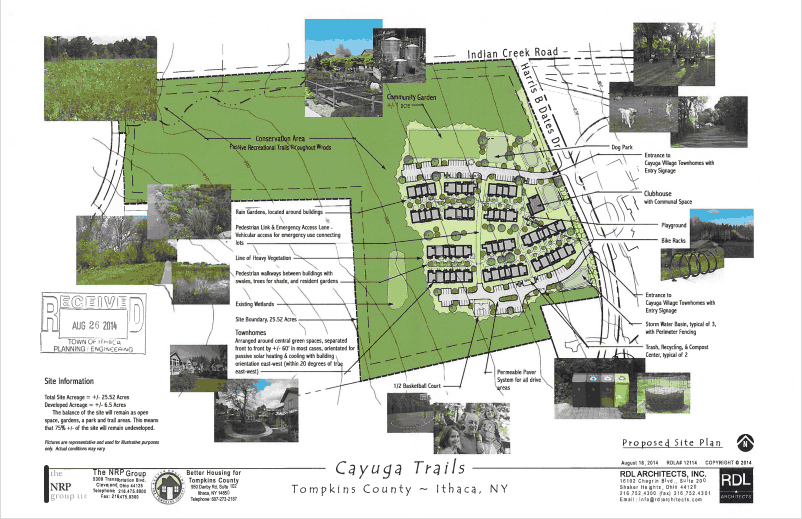
3. One project moves forward, another bites the dust – NRP is calling off its Cayuga Trails development over on West Hill. Although the 58-unit project was opposed by neighbors due to concerns about traffic and for being lower-income housing, the reason the project is being called off has nothing to do with either of those. When the full environmental review was conducted, the wetlands on site are much larger than anyone anticipated, and developing wetlands is an extremely complicated and expensive process – they usually have to be replaced in order to get permission to build. Most developers, affordable or otherwise, will not touch wetlands because of the permissions process and high costs (this recently was an issue in Lansing because an undeveloped site being marketed for office space was found to be wetlands). So the project is halting and it is unlikely anything will be built on the site. Unfortunately, this also results in the county trying to rid itself of a parcel they don’t want and can’t be developed – not a great situation for their budget, but alas, not much they can do.

cayugatrails_1

4. Another setback, this one economic – Sears is closing its location up at the mall, putting 37 people out of work, including 13 long-term full timers. When it closes in December, 55,000 sq ft of big box space will hit the market. For those taking this as a sign that the economy is doomed, it’s not. Sears and its sister brand KMart have been dropping like flies all over the country, with several dozen closing in the past year. In Albany, the Sears store shrank by 50%, giving up space to expensive supermarket Whole Foods.

While Ithaca’s market is too small to be on Whole Foods’s radar, I’m not worried about the future of the space. 55,000 sq ft is middle-of-the-road for the big boxes, and like with the Ithaca Kmart that closed in 2011 and was replaced with Hobby Lobby, this has significant redevelopment potential. I’m no fan of suburban malls, but I like empty storefronts even less.

5. Here, let me stress that again – there are many issues in Ithaca’s market, but a weak economy is not one of them. At the moment. A 1.7% increase in jobs year-over-year is pretty good. I’m not happy that the gains were completely in education and healthcare, but since these are summer numbers, these are more likely to be full-time staff positions, rather than seasonal positions which are typically service-oriented (and lower-paying).


Another Project for Collegetown: 114 Catherine Street

24 09 2014

114_catherine_1

Yet another project slated for Collegetown and its construction boom. In this case, it’s 114 Catherine Street. I discussed the background of the parcel in my last post, but I’ll do a one-sentence rehash – it’s a 10-bedroom apartment building in a CR-4 zone where parking isn’t required.

114_catherine_2

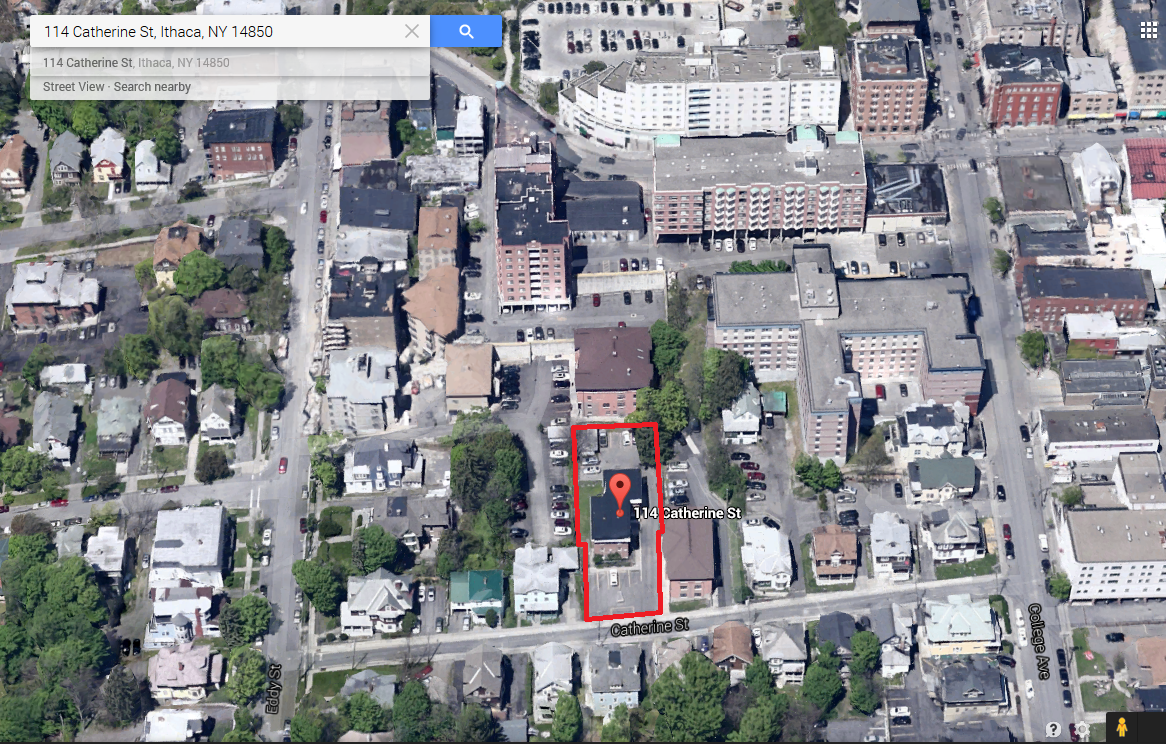
Now we have a design. Renders and sketch plan details here. Perhaps somewhat surprising, the new building doesn’t tear down the whole apartment building and take advantage of the full lot. the new 3-story, 4,180 sq ft, 17-bedroom addition will be placed in the front of the current building, replacing the street-abutting parking lot (hooray for that). There is one 5-bedroom unit on the first floor and a 6-bedroom unit on the second floor and the third floor. The design is by the prolific Collegetown firm Sharma Architecture. If they wanted to, they could probably add another floor, but in terms of length and width, this is pretty much it once you account for required lot setbacks and maximum permitted lot coverage.

114_catherine_3

114_catherine_4

Is the design going to win awards? Probably not. It’s not bad, though, and it’s certainly better than a parking lot. Since CR-4 doesn’t require parking, this parcel will lose 6 spaces of the current 14, and have only 8 spaces on the property. The old zoning would’ve required 18 parking spaces. Extra spaces would be available for rent in the parking lot northwest of the new building, on an adjacent parcel also owned by developer Lambrou Real Estate.


The Past and Future of Mixed-Use

13 09 2014


I figured I’d change this up from the standard construction update format. There hasn’t been enough development news tidbits this week to merit putting up a new entry; better luck next week, ladies and gents.

I was impressed by the Ithaca Times recent editorial, “The Mixed-Use Future“. It’s a piece that upholds the value of mixed-use projects and that single-use neighborhoods shouldn’t be maintained strictly because that’s the status quo.

Mixed-use projects are something that have only recently picked up steam, as urban areas embrace new urbanist concepts in an effort to add vibrancy to decaying downtowns. Ithaca has arguably been one of the most successful examples in upstate. But it had to work to get there, and the process hasn’t been without acrimony.

100_7263

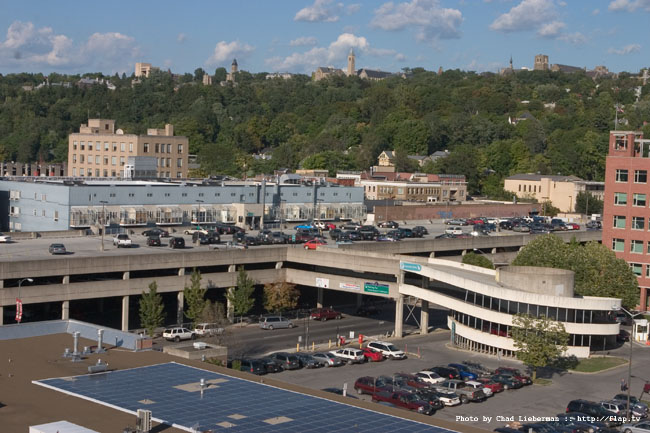
I’ll rewind the clock back about 15 years to the start of the new millennium. Ithaca’s downtown was quite a bit different from today. There was no Gateway Commons, Breckenridge, Seneca Place or Cayuga Green. The Commons was plagued with high vacancies, severe enough that then-mayor Alan Cohen was mulling over reopening it to vehicular traffic. The big news at that time was the county library’s plan to move into the old Woolworth’s on Green Street (which they purchased at low cost, the owner had struggled to fill the building after Woolworth’s closed in 1998).

The last two newer developments I mentioned, Seneca Place and Cayuga Green, are closely tied together. They and the Cayuga Street garage all depended on each other as the sort of “pie-in-the-sky” redevelopment plan that Ithaca desperately wanted.

100_1883

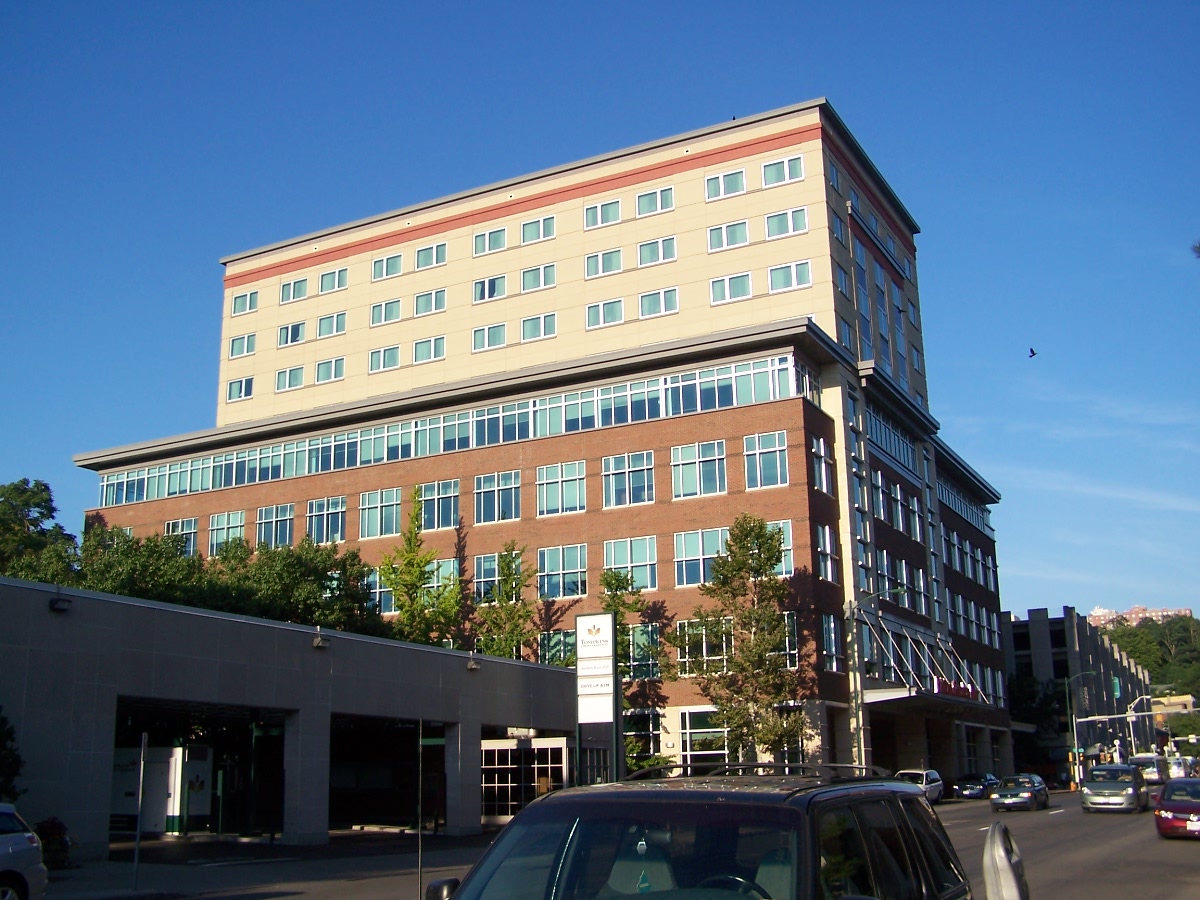
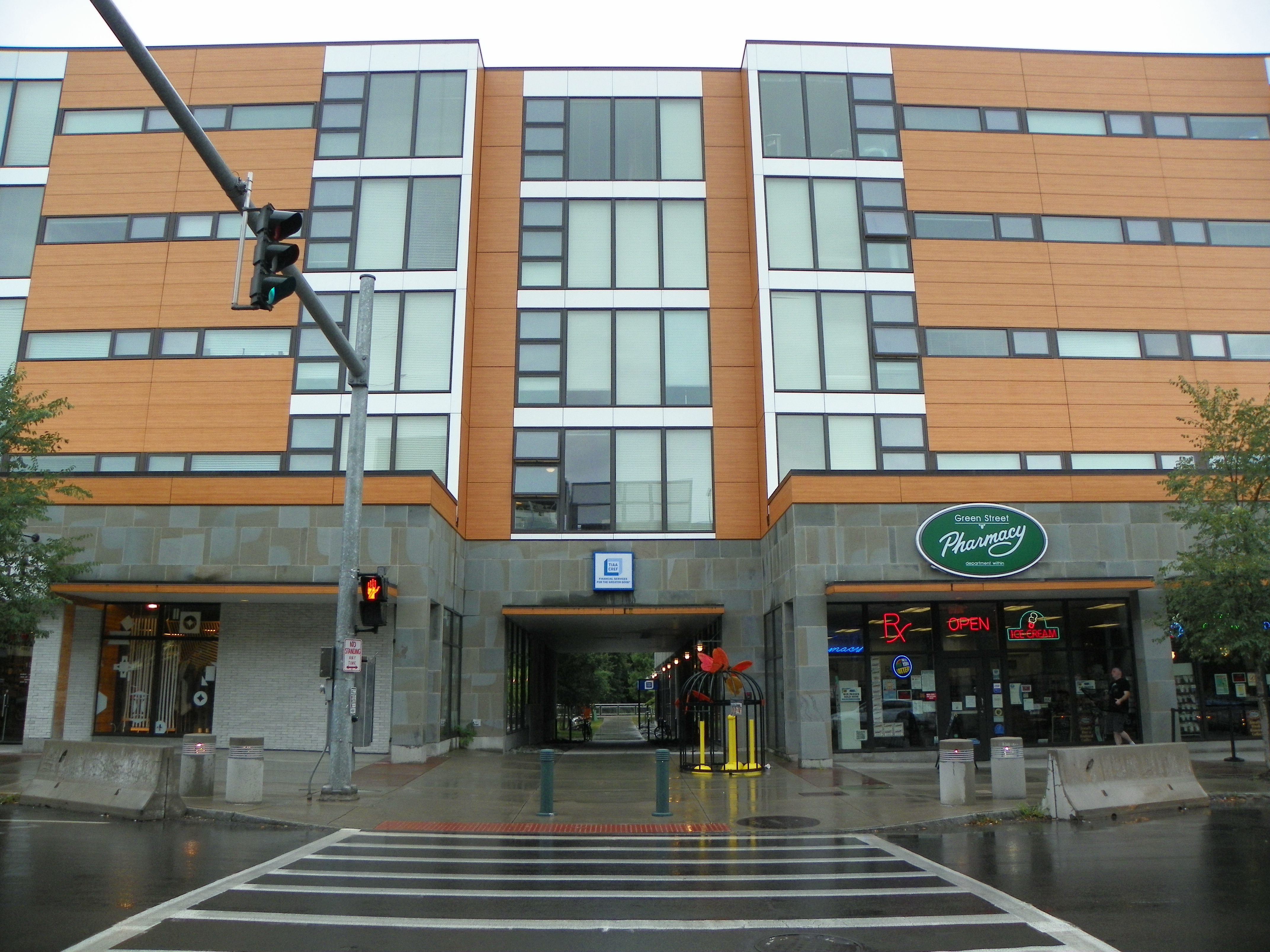
In the early 2000s, their working titles were the “Cayuga Green at Six Mile Creek” and “Ciminelli/Cornell Office/Hotel” projects, and collectively they were called the “Downtown Development Project“. Cayuga Green has heavy city involvement. At the time, the swath of land surrounding the library on its block was all city-owned surface parking, with the helix for the Green Street parking garage to its east (it was actually kinda neat looking for a parking garage ramp; a photo can be found here).  The first phase of Cayuga Green would also be the lynch pin for the Ciminelli project; the city would convey the parking lots to the IURA, who could sell them off and partner with a developer to build a parking garage to serve the Ciminelli building and some of Cayuga Green. This phase would become the current Cayuga Street garage, which opened in June 2005 with 700 spaces, 34,000 sq ft of first floor retail, and a nearly $20 million price tag. The 185,000 sq ft Ciminelli project was constructed concurrently and also opened in 2005 as Seneca Place on the Commons, with the Hilton Garden Inn for its hotel occupant, Cornell as the primary office tenant, and retail space that would fill up over the next couple years.

100_7262

Phase II focused on a couple things (IIA and IIB, technically). The Green Street Garage would be redeveloped, the helix torn down, and a movie theater would go in the renovated space under the garage. The city owned the top two floors of the 3-story garage, and used eminent domain on the owner of the first floor. Originally, there was to be either 36,000 sq ft of retail on the first floor, or an intermodal transit center (a hub for TCAT and Greyhound/Trailways, essentially). The garage would add two more floors and have space for 1,082 cars.

Perhaps thankfully, this was never done (though the zoning was raised from 60′ to 85′ for the land that the Green Street garage sits on). The Cayuga garage picked up more retail space as the plans were rewritten. A 12 screen national theater chain was proposed for the retail space of the Green Street garage, but given the plans for an expanded theater at the mall in Lansing, it became clear that such a project wasn’t feasible. By good fortune and negotiation, Cinemapolis agreed to take the space, and the theater shrank from 12 to 5 screens and went into the Green Street garage.

101_4904

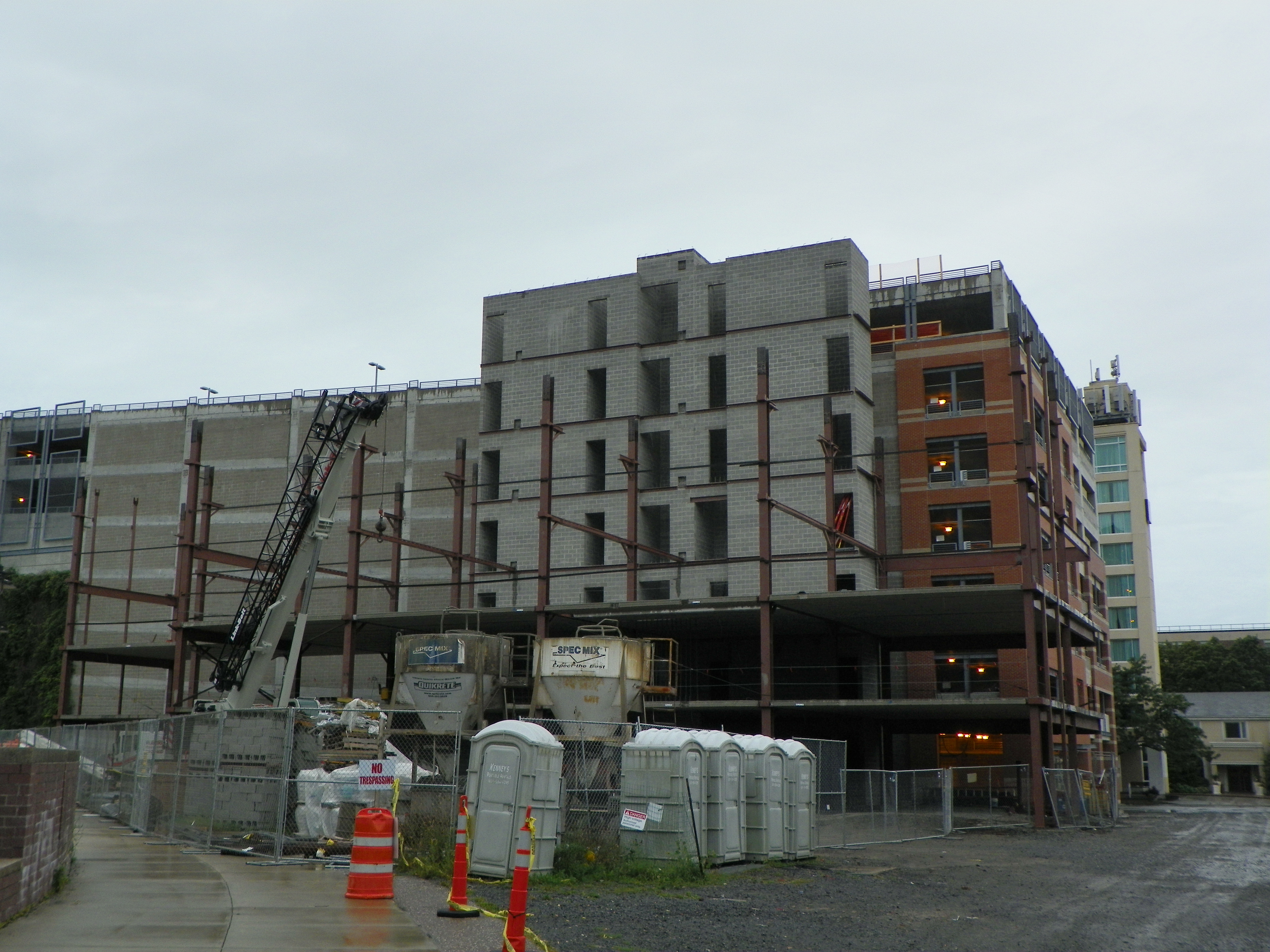
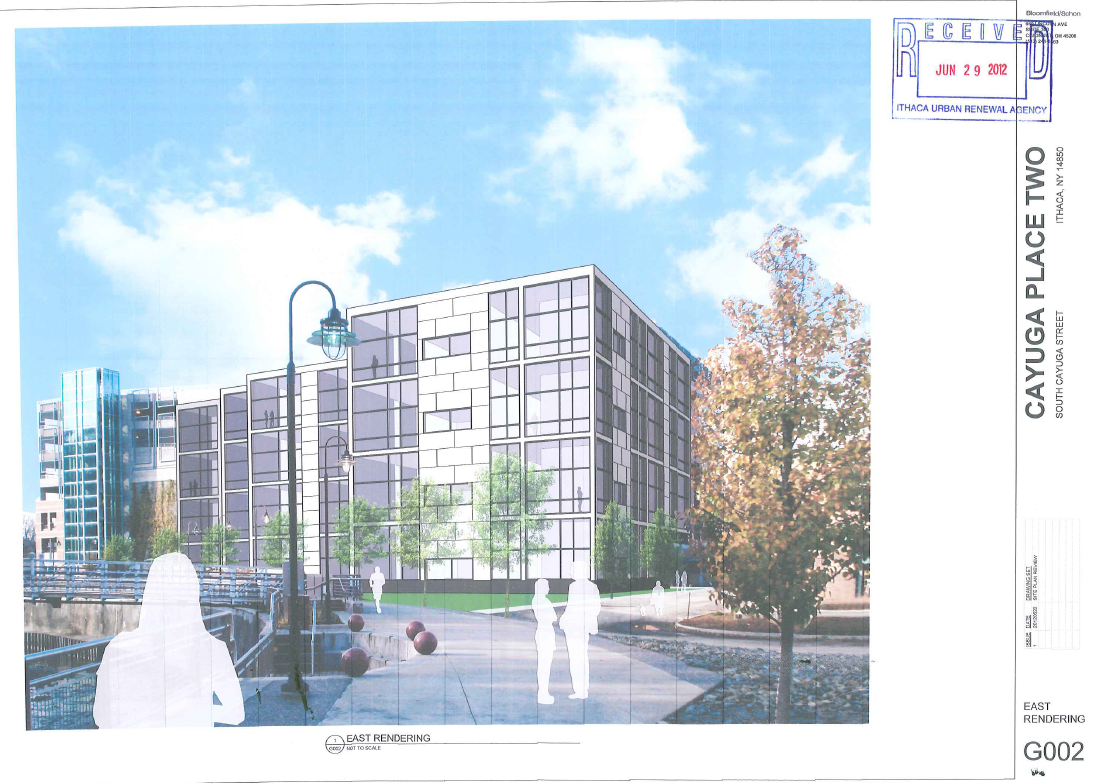
IIB and Phase III are the residential portions, Cayuga Place Apartments and Cayuga Place Residences (Cayuga Green condos). As originally proposed, there was going to be 70 to 80 apartments with ground-floor retail, and anywhere from 40 to 122 condos. The city IURA had entered a contract in 2002 with Cincinnati-based Bloomfield/Schon to develop the units. The apartments were first proposed in 2005, and with abatements approved, the 68 units and 15,000 sq ft of retail space opened in 2008. The condos are a lot more complicated, bouncing between several iterations and layouts (here’s a few versions 1, 2, and 3, here’s 4 and here’s 5) before settling on the 45-unit design currently under construction. Part of the problem was financing, especially during the recession; a later problem was that the land along Six Mile Creek is not that great for construction. It will have taken 15 years, but the downtown redevelopment project will be complete next year.

cayugaplace_v5

101_4905

There’s been an enormous amount of controversy. A 20-year abatement was used for Seneca Place, the labor used in some of the construction was from North Carolina, and the fight with one of the property owners (Thomas Pine, who ran Race Office Supply on the corner of Seneca and Tioga) was pretty ugly. The fight over the apartments and condos was even uglier in some ways, because the developer requested and received a 10-year tax abatement (and the ICSD was not game). Instead of bringing new, permanent jobs like an employer’s new office or factory, this was housing, and it was market-rate and premium housing at that. The retail portion offered jobs, if they could lure shops, and retail doesn’t exactly pay well either. Some, such as local megalord Jason Fane, said the project would fail. There have been problems, certainly. The Cayuga garage has struggled to fill its retail space. Only now with the impending addition of TC3’s Coltivare restaurant and learning center has it filled most of the space (Merrill Lynch took the leap a few years ago and rents some of the space; then there was that failed wine tourism center). It has taken years for the condos to begin construction. But, slowly and haphazardly, the project is building up and out.

Ithacans did a lot of soul-searching. Were the costs outweighing the benefits? Was growth downtown, or even in the county, a good thing?

101_4907

Ask a dozen people and you’ll get a dozen opinions. I think that for all the problems and strife, that the city has benefited from the downtown projects. Through local character and some luck, the downtown residential units are full and most of the retail space is occupied. Seneca Place and Cayuga Green demonstrate that mixed-use can add life to underutilized parcels and spark interest in neighboring properties. Each project should be weighed carefully, of course. But thanks in part to active urban reinvestment, Ithaca is in a position many upstate cities envy.

6-29-2014 320


Cornell Construction Projects Update, 9/2014

10 09 2014

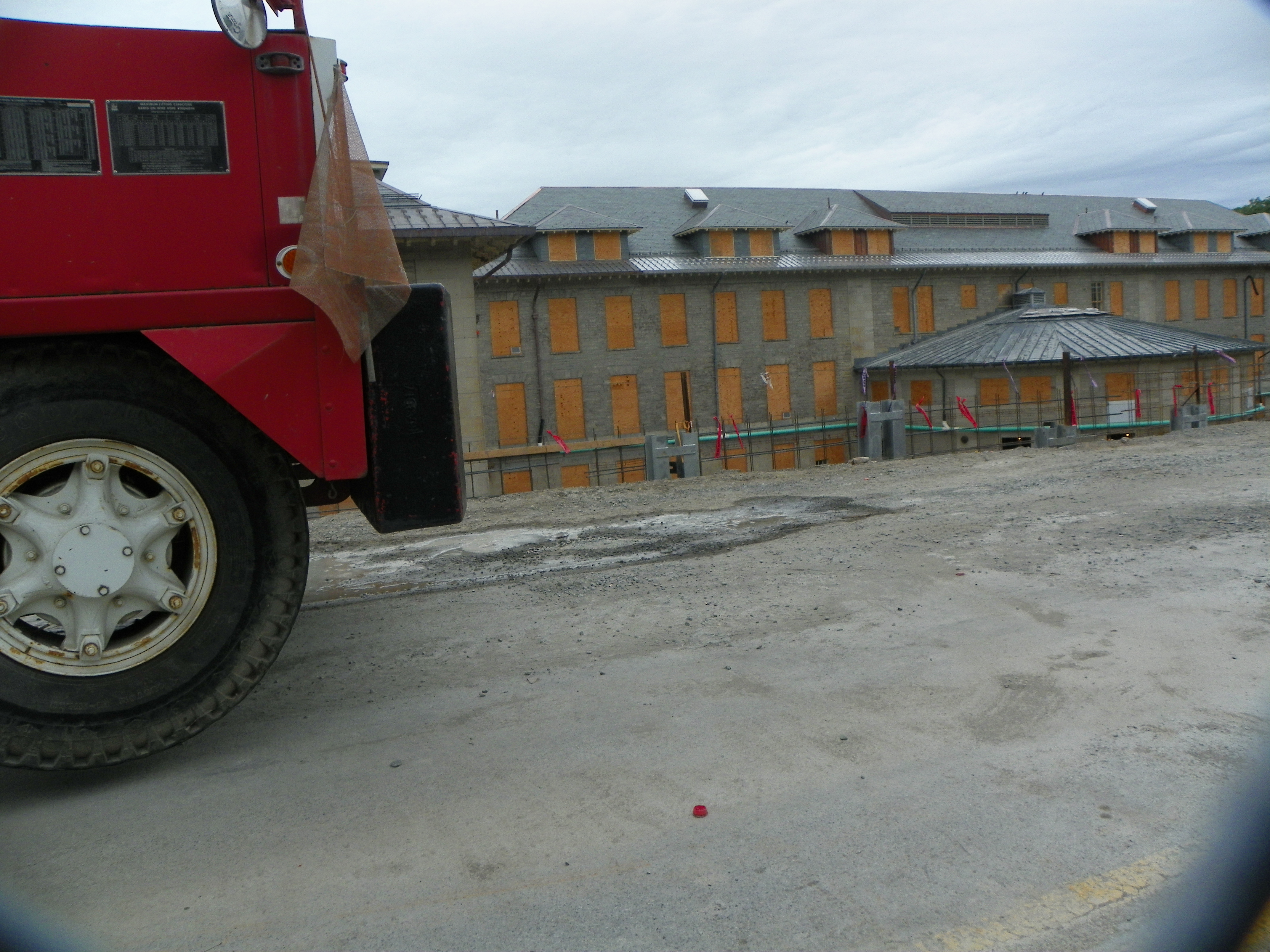
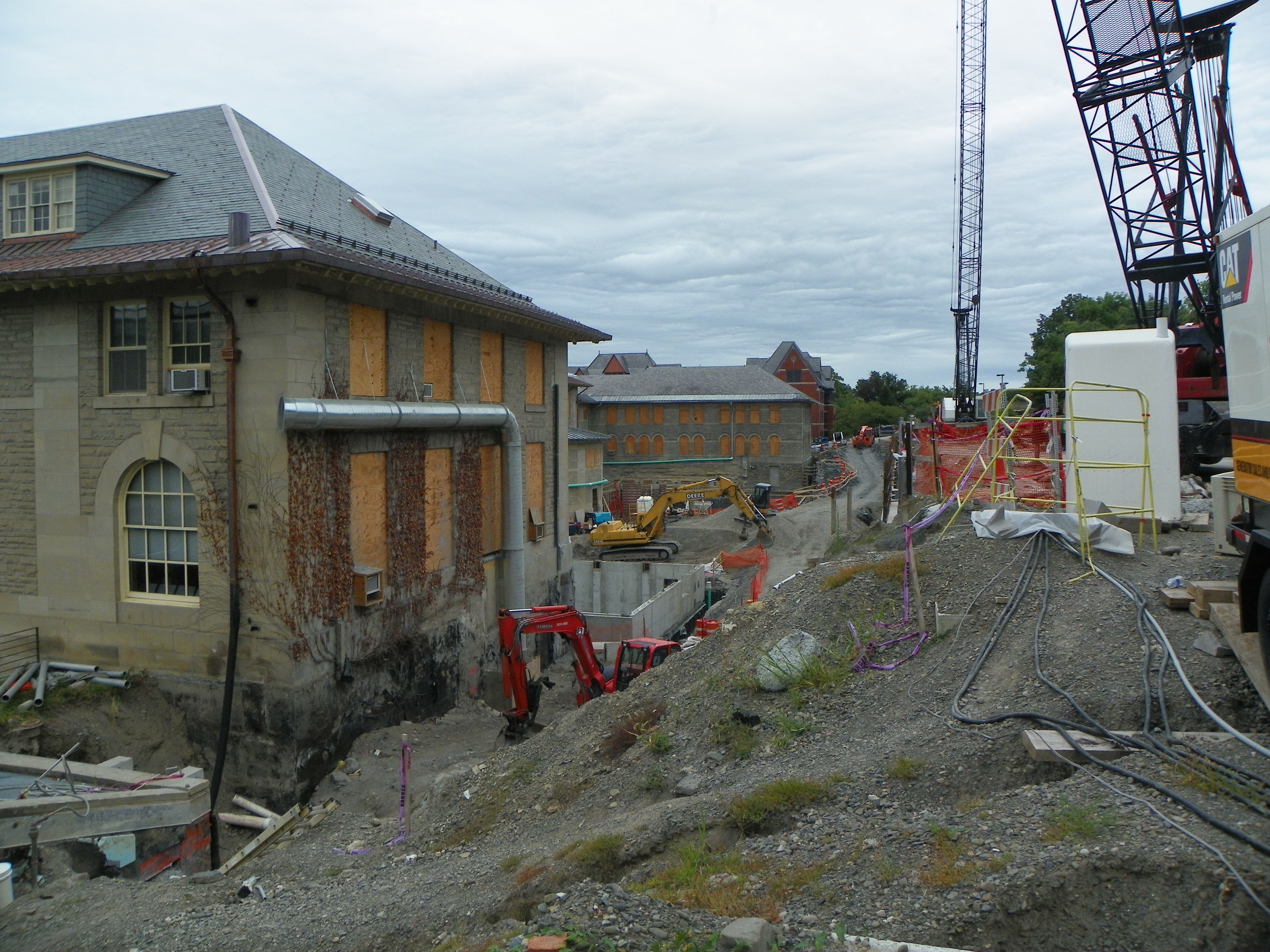
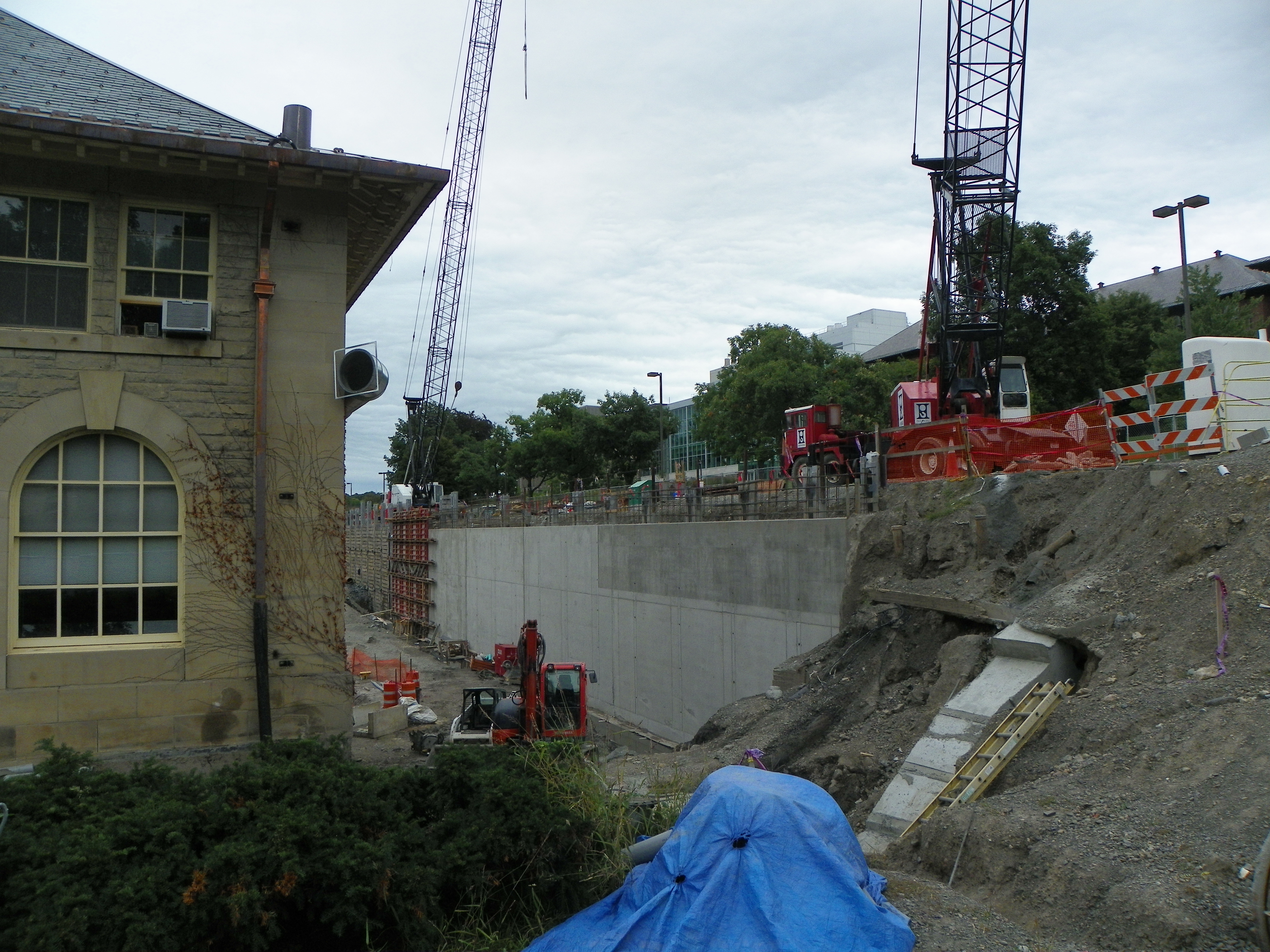
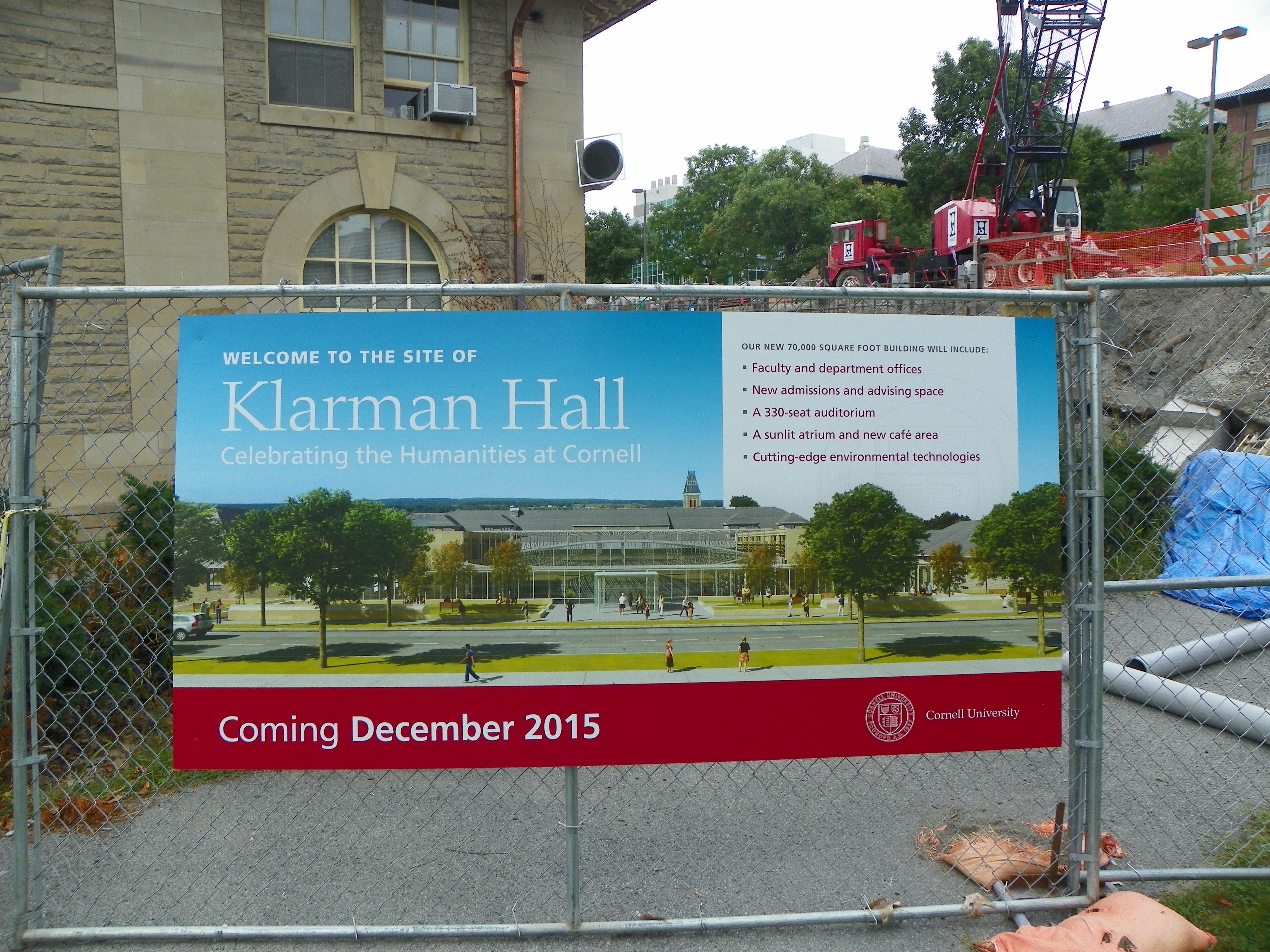
1. The future Klarman Hall progresses on East Avenue. The $61 million, 33,250 sq ft humanities building being built by Welliver is currently in the process of building its north foundation wall, with rebar assembly underway this month (Jason at IB offers a more thorough explanation). The concrete is being poured section-by-section, and the north foundation wall has made some progress since Jason’s photos from September 1st.

101_4837 101_4838 101_4841 101_4842 101_4843

2. Exterior work is finishing up on Statler Hall. The $2.4 million renovation and 1,300 sq addition to the front entrance will be finished before winter comes, and will round out phase III of renovations to the ca. 1949 structure. All three additions are by KSS Architects.

101_4860 101_4861 101_4863

3. Renovations continue to the historic wing of Stocking Hall. Inside, ceilings are being dry-walled and walls are being primed. The gutters are being replaced and new windows are being prepared for the the original 1921 structure.  These photos don’t show these details, but I have a friend who’s kind enough to forward the project updates the program sends to its alumni. The project is a little behind schedule since it was due to finish in August 2014, and it looks like Q1 or Q2 of 2015 is a safer bet. Both the renovations and the new addition cost a combined $105 million.

101_4864

4. A more subtle campus project is the re-landscaping of the campus property along Tower Road. The road was repaved, and the adjacent parking was removed and replaced with sidewalks, lighting and covered bus shelters. Considering this is where I typically park when I visit the campus, I’m less than enthused, but it is a prettier sight then the pothole-laden parking spaces that used to be there.

1-2-2014 334
101_4869


Belle Sherman Cottages Update, 9/2014

9 09 2014

Agora Development‘s Belle Sherman Cottages project continues to build out. Some observant readers might have caught the piece from Buffalo development blog Buffalo Rising, which featured the project as an example of smart infill development (Buffalo Rising is rather fond of Ithaca). Since the early August update from Jason at Ithaca Builds, lots 4 and 6 have been completed and lot 18, a craftsman bungalow, is substantially complete. Meanwhile, work has begun at lot 3, a craftsman farmhouse. Given the previous rate of progress, I expect 18 will be complete by the end of the month, and lot 3 by early November. I don’t think it would be remiss to think another home will start before winter sets in. Of the 19 lots for single-family homes, only two lots are left, lot 12 (another craftsman bungalow) and lot 9, a new design that has yet to be published.

belle_sherman_cottages_071814

belle_sherman_cottages_071814_2

101_4882 101_4885 101_4887 101_4889 101_4890 101_4891 101_4893 101_4894 101_4897


News Tidbits 9/6/14: What Makes A Neighborhood?

6 09 2014

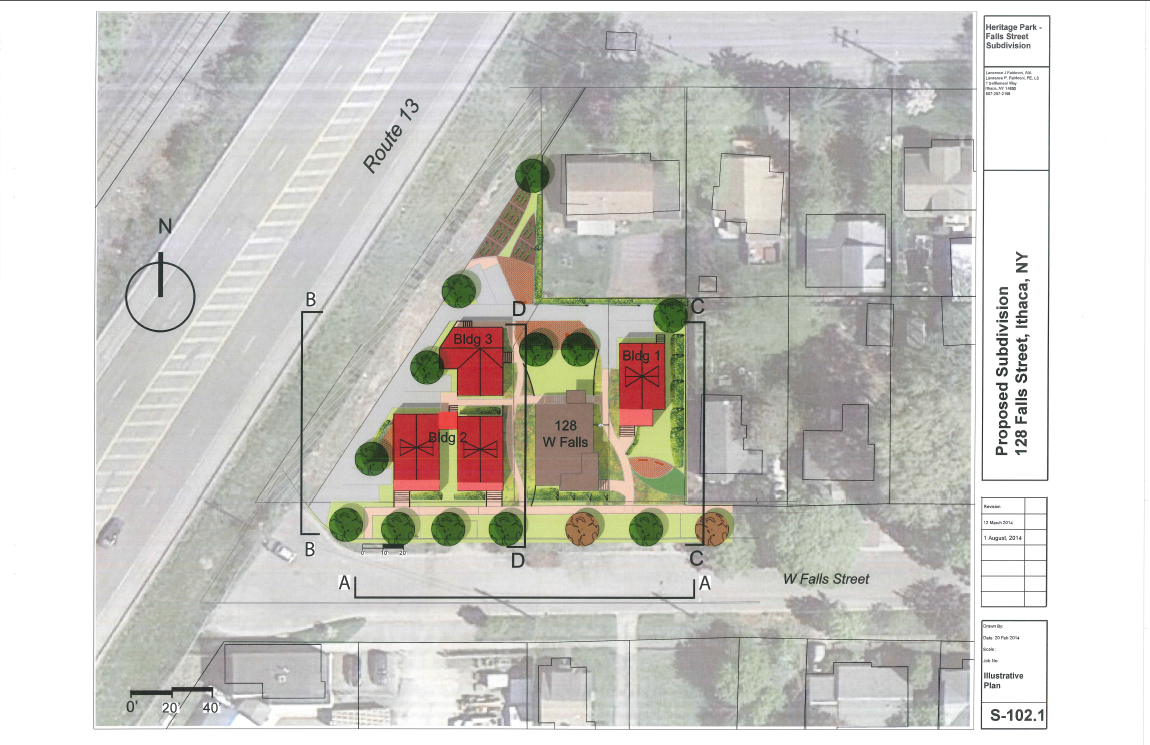
1. A trio of notable articles from the IJ. The first one is about the 128 West Falls Street development (previously discussed here), and the negotiations done with neighbors in order to make the project acceptable to the neighborhood. The developer (Heritage Builders) and the neighbors worked together for a compromise. Some of the neighbors are still upset about their being any development at all (in which case, I must ask why does one live in an inner city neighborhood with vacant land), but if most of them are on board, I’m glad they and the developer were able to address each other’s needs and concerns and come to a reasonable solution. There are still people willing to make compromises, thankfully.

128_wfalls_rev1_1

2. Article number two has already been foreshadowed by Ithaca Builds, namely that old Elmira Road is getting a more pedestrian-friendly makeover. Bike lanes, sidewalks (only on the north side due to budget cuts), curbing, all in an effort to make it more friendly to all street users, from walkers to bikers to drivers. And it’s only going to take three days? Color me surprised.

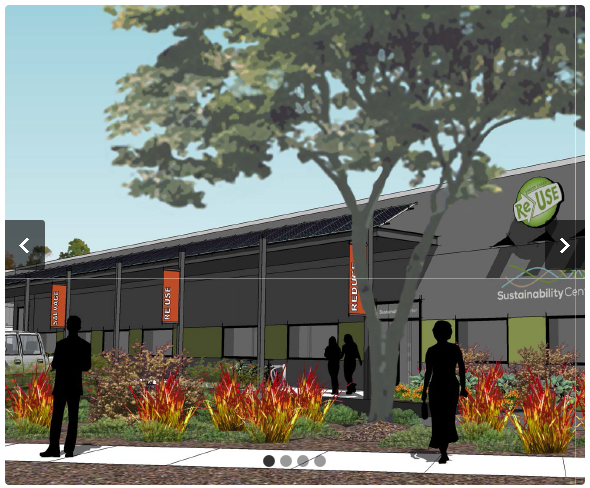
At least one building on Elmira Road will be getting a makeover soon – a renovation prepared by local firm STREAM Collaborative will turn the old BOCES Building at 214 Elmira Road into the the Finger Lakes ReUse Center’s new headquarters.

finger_lakes_reuse_ith_1

Image Property of STREAM Collaborative

3. Piece number three is that, surprise surprise, Ithaca has a higher cost of living then most other upstate cities. Most upstate cities are a little below the national average (4-12% less). Ithaca is nearly 6% above. Ithaca has the highest cost of living outside of the the New York City and downstate metros. If anyone feels uncomfortable using numbers from a conservative think tank, here’s their government source. Personally, I always just go with Sperling’s. Taking a closer look at those numbers gives a big clue why Ithaca is more expensive – the housing cost is over 31% above the national average. Every other parameter is virtually average. except that one.

I’ll give an example: Syracuse and Ithaca are only about 50 miles apart. On a scale with 100 equaling the national average, Syracuse has a score of 88.9, Ithaca 113.4. Quite a difference. Food, utilities and transportation are cheaper in Ithaca. But housing is astoundingly different – Ithaca’s 131.2 to Syracuse’s 45.4, which is what causes the disparity. Granted, I know that for many, living in the Syracuse area is undesirable (and I say this as someone originally from the Syracuse metro). Ithaca is in demand, ergo, prices for homes and apartments go up. But as middle-income families feel the pinch, spiraling housing costs pose a serious concern to the region’s economic well-being.

4. Now for a piece from the Cornell Daily Sun, an informative piece they did about the recently-approved 205 Dryden (Dryden South) project by Pat Kraft. No shocking revelations, but the interview with Kraft is a nice asset. I do take some umbrage with his complaint that the Collegetown form zoning makes it feels like he’s not developing anything, and he’s being told what he can build. There are reasons for that. Certain landowners have a blemished track record, and this is better than years of bickering with city agencies because of someone’s artistic license, or more likely, profit maximizing through value engineering.

dryden_south_rev_2

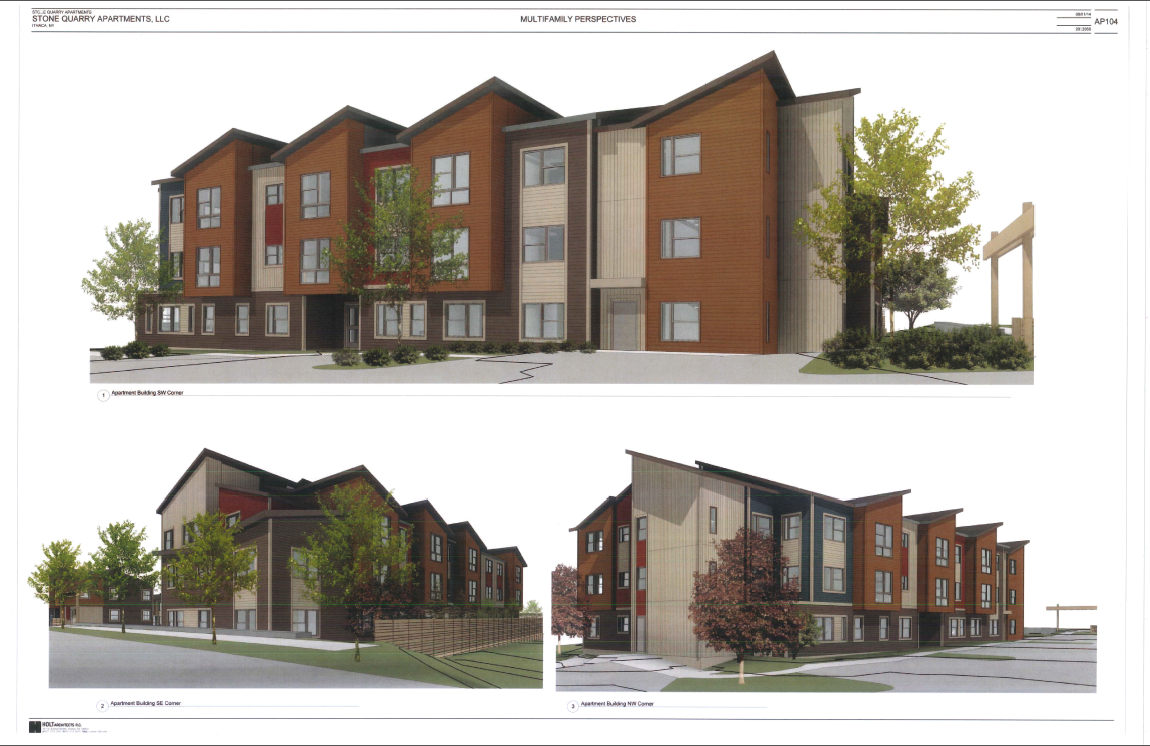
5. Stone Quarry is getting really nasty, really fast. INHS has retained the services of Philips Lytle out of Buffalo (the same law firm that handled the indefinitely-postponed 7 Ridgewood project). Meanwhile, neighbors are demanding that the HUD funds for the subsidized project are withheld, on the grounds of environmental issues, not having enough time for community notice and comment, and that the project is “incompatible” with the neighborhood. They’re considering a legal challenge to stop the project, which was approved during August’s PDC meeting. There’s a ton of documentation that’s been uploaded in recent days – a 1,189 page environmental assessment report for the site, public notices, and so on, and so on. The city has also released point-by-point rebuttals to the filed complaints, and formally requested that HUD release the approved funds. If I had a workday where I just had to write rebuttals all day long, I might be hitting the bottle when I go home. IJ news summary of it all here, Voice summary of the events of the PDC meeting, including angry neighbors and the mayor’s outspoken support for the project here.

I’m going to call out one statement, this being from a group called the SRNA (Spencer Road Neighborhood Association) – they describe the neighborhood as being full of affordable housing, and run off some examples. The first is an 18-unit townhome project at 324 Spencer Road, called the Belmont Apartments. I’m familiar with this development because they advertise their townhomes as “NEW” on Craigslist, even though they were built in 1995. Rents there run from $1100$1250, which is about equal to, or a little above the area mean. It’s middle-income, market-rate housing. Affordable in context is the cute word agencies substitute in for low-income housing, so using it to describe a market-rate, middle-income project seems misleading.

The second is the primary reason why I’m writing this whole thing – discussions of a 14-15 townhome development at 661-665 Spencer Road by local low-income services group TCAction (that address also happens to be their headquarters). I checked the minutes they cited and I can’t find any record of that. It could have been said and just not recorded in the minutes, but that seems like an odd thing to leave out. The three duplexes at 634, 636 and 638 Spencer check out, and they were built in 2008/2009.

Like many projects lately, tempers will be flaring, so for those of us without a dog in this fight, we might as well break out the popcorn and watch this boxing match play out from our ringside seats.

inhs_stone_quarry_rev_3

inhs_stone_quarry_rev_4

6. Here we have the projects memo for proposals to be discussed at September’s Planning and Development Board meeting on the 23rd. No curveballs here; the project memo only reviews projects that have already been seen and have had initial comments (sketch plan), so everything here has come up at least once before. 128 West Falls Street will be looking for PDB declaration of lead agency (the board’s agreement to conduct formal design and environmental review) and recommendation to go to the BZA for zoning variance. The Hampton Inn downtown is looking to obtain PDB declaration of lead agency, as is the Chain Works District on South Hill. The Chain Works is probably the vaguest proposal they’ve had to review, because it’s over 15 years and the developers have only a couple ideas fleshed out on the Emerson site’s redevelopment. It also makes a few voters wary because once the environmental review is complete and the developer’s T1, T4 and T5 zones are approved, the developers have an enormous degree of freedom to develop the site as they see fit because it’s a PUD, a Planned Unit Development. They’re also using the town’s equivalent, called PDZ, for the portion of the 95-acre site in Ithaca town. For more about these details, Jason at Ithaca Builds offers a great summary here.

307 College and 323 Taughannock are up for final approval, and 327 Eddy for preliminary approval. There’s also a couple of minor zoning changes up for review.

chain_works_2

7. Here’s your morbid amusement for the week – the Lansing school district might have difficulty installing its new septic system because it could be disturbing a previously-unknown Native American burial ground. I think we have a plot point for the next Stephen King novel.


Redefining Collegetown

2 09 2014

Article number four in the Collegetown history series.

I think one of the more enduring themes of Collegetown has been the desire to redevelop it. It’s a theme that comes up pretty consistently, starting in the post-war period, when urban renewal had become the planning concept du jour. Thankfully, we can find some of these plans in online archives.

And they are terrifying.

Here we have one from the Cornell Daily Sun archives, published April 22, 1959.

ctown_plan_1959

Someone’s channeling a little Le Corbusier here. This was one of seven designs conjured by about 40 junior architecture students in spring 1959, under the direction of Professor Thomas Canfield. The project called for the capacity of 4,000 residents in a 0.25 sq mi area (the population in the area in 1959 was about 1,100). They were told to plan for 4,000 residents because “there is a tremendous market for housing that is now unavailable. The site would attract many non-suitable if it offered suitable amenities.” All models were supposed to have a hotel, bank, theater, and parking for 2,700 cars (the capacity at the time was 500).

6 of the 7 proposals called for high-rise buildings, and virtually all of Collegetown from Eddy to Summit Ave, and Seneca to the gorge would have been demolished. A few proposals saved the Luthern Church on Oak Avenue, and one saved Sheldon Court. A bunch of isolated towers seems awful from the new urban standpoint that’s increasingly popular today, but in the late 1950s, this is what was in vogue. Demolish all the old, towers in the park, superblocks. massive freeways, seas of parking, it was the wave of the future. Ask Boston, Syracuse, Chicago, or any number of cities how that future turned out.

If you’re feeling really bored today, here’s a letter of protest against the design of Olin Library, also from the same issue. Olin was under construction at the time. I’m inclined to agree with the writer’s sentiments.

By November 1965, real plans were set into motion – under Ithaca’s Urban Renewal program, 62 acres of Collegetown was set for “selective demolition”, because the fire department determined that a high density of wood buildings was a fire hazard. Multi-story parking garages were also proposed, and a new bridge over Cascadilla Gorge. The work was supposed to begin in 1969, after a long process of Planning Board approval, Common Council approval, and state and federal government approval. Ithaca would only foot 12.5% of the nearly $5 million bill.

The urban renewal plan continued to evolve over the years. A lot of downtown businessmen, and later the operators of Pyramid Mall (now the Shops at Ithaca Mall), were not pleased with the idea of a business district in Collegetown that would isolate students from their properties. In 1969, 80,000 sq ft of office space and 200,000 sq ft of retail space was proposed in Collegetown – to put that in perspective, the mall in Lansing is 600,000 sq ft, and the token office building Cornell has at East Hill Plaza is 60,000 sq ft of office space. The plan also called for non-student low-income housing and industrial space at various times. By 1971, the plan was becoming more modest, focusing on an area bounded by Dryden Road, College Avenue, Eddy Street and Cascadilla Gorge. The Sheldon/Cascadilla block had received a large urban renewal grant in the spring of 1969, but issues arose with how to use it. Plans to tear down Cascadilla were met with protests, and with all the financial issues the city and university had in the 1970s, redevelopment gained little traction.
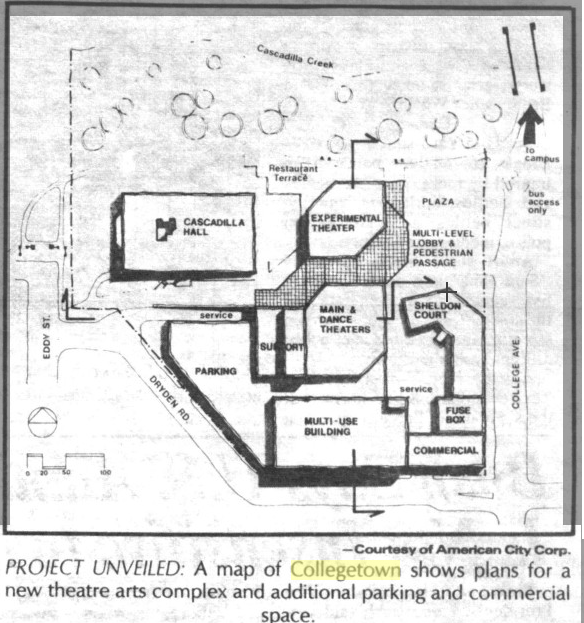
By the early 1980s, the plans were finally being fleshed out – with Cornell preparing to fundraise and build a new performing arts center, the university and the city partnered with an urban planning firm to build and renovate the parcels north of the 100 Block of Dryden Road and west of College Avenue, at a cost of $40 million ($115.6 million today). The plan called for 700 new units, 20 businesses, office space, and a 350-space garage (a mock-up from the 4/13/1981 issue of the Sun is included below). Funding for the project from state and federal sources was scarce, however. The city eventually sold their land to local developer Travis Hyde, who built Eddygate in 1985-86, and the proceeds helped cover the cost of the Dryden Road parking garage. Other lands in the initial plan were never purchased (the Avramis and Papp properties on the 400 Block of College Avenue, discussed previously here). Cornell fulfilled its commitments after years of fundraising and some tweaking of designs, with the renovation of Sheldon Court in 1981 (adding the top floor), Cascadilla Hall’s renovation in 1983-84 (adding the top two floors and 276 residents) and the Schwartz Performing Arts Center opening in 1989.

college_dryden_plan_1981

After that, the next substantial Collegetown redevelopment plans were the Form District debates of the past several years, click the links if you’re interested, but I’m going to avoid rehashing old entries this time around. As more structures go up and technology and social concerns evolve, I’m sure there will one day be more redevelopment plans for Collegetown.