Gannett Health Center Construction Update, 5/2015

18 05 2015

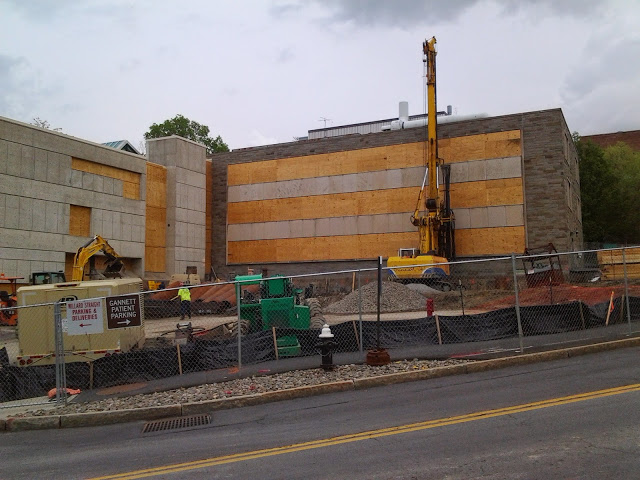
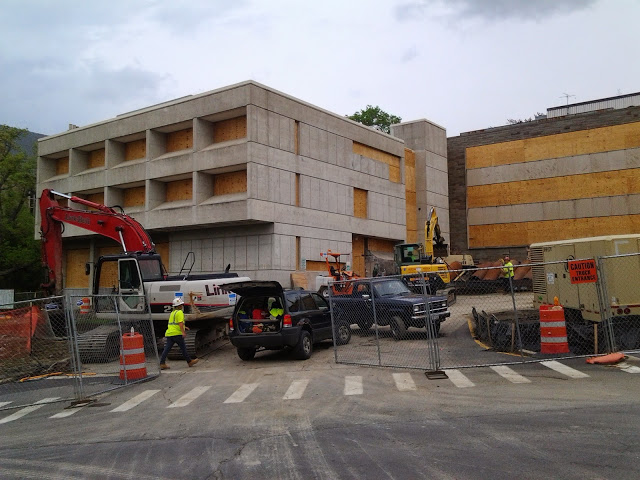
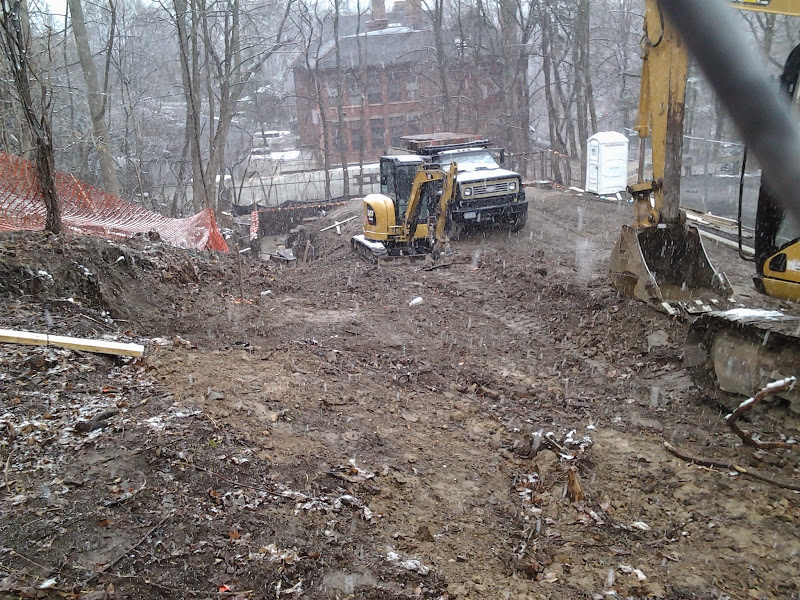
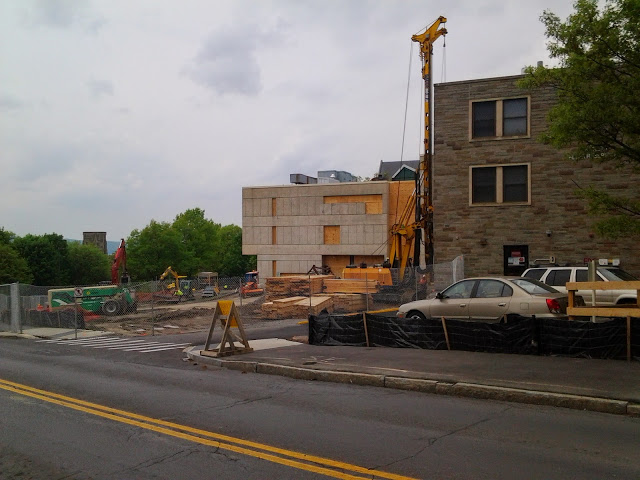
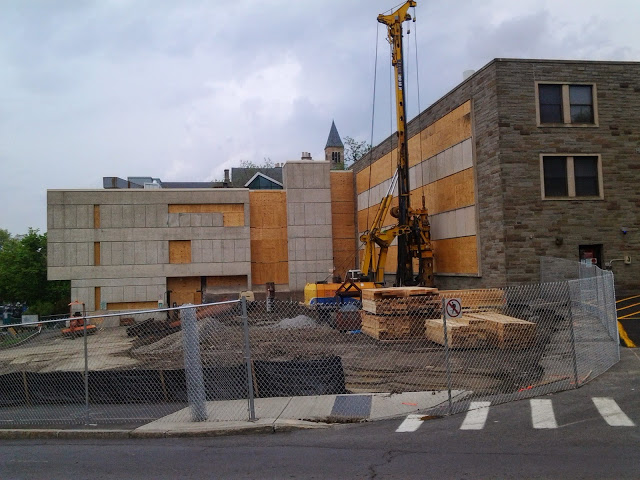
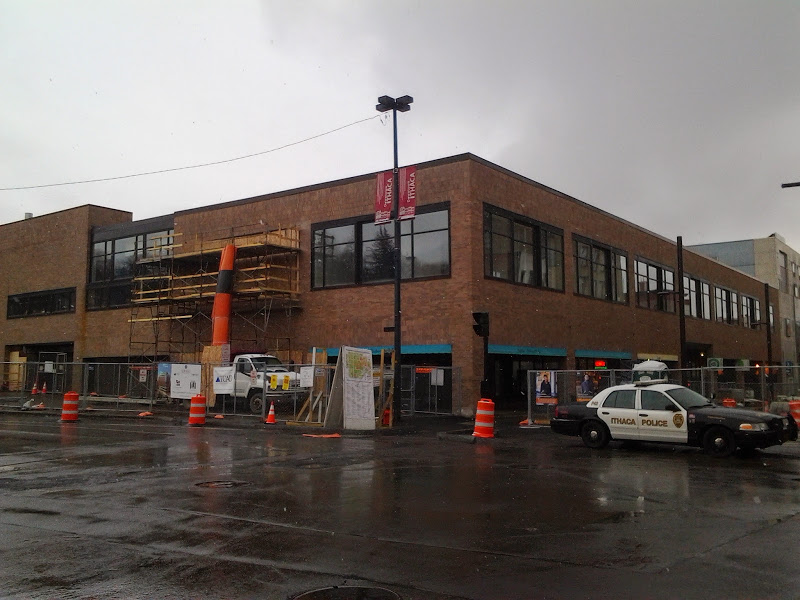
Construction on the Gannett Health Center addition officially launched March 30th, and now that a couple of months have passed, visitors can see some real progress has been made at the site. The photos below were taken last Saturday.

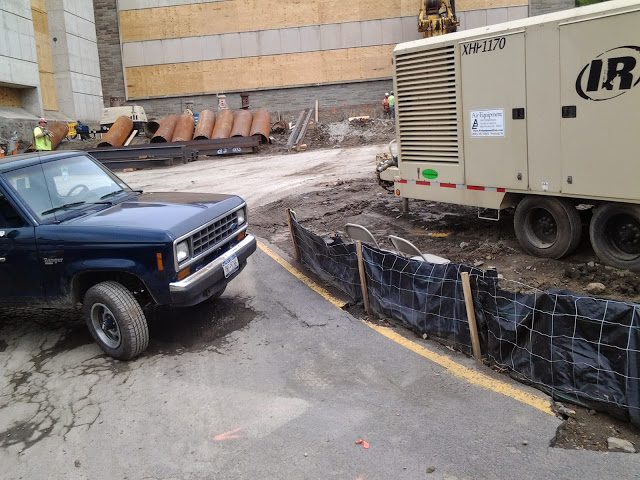
Perhaps the most obvious visual impact is the plywood in the old window spaces, presumably for protection of occupants while work goes on only a few feet away.  The large machine against the southwest wall of Gannett is a pile driver, inserting poles into the soil to provide foundation support for the new building. More specifically, the poles are H piles, also known as bearing piles, which you can in the last photo on the left. The large metal tubes in the last photo are caisson pipes that will be socketed to the bedrock and filled with concrete. These are numbered and are going to be inserted right next to the existing building, according to the construction workers I spoke with at the gate. Feel free to ask the workers questions if they don’t have their hands full, most are more than happy to talk about their work.

Although the photo of the hole itself seems to have been accidentally deleted, the excavator on the west side of the site is being used to dig out a rather large, deep hole where further foundation work/pile driving will take place.

Construction at Gannett will be broken into phases – Phase I focuses on new construction, Phase II on renovation of the current building, and Phase III concludes the project with reconstruction of the Ho Plaza entrance. Phase I is expected to be complete by July 2016, and Phase II by August 2017. The whole project is expected to be complete by October 2017.

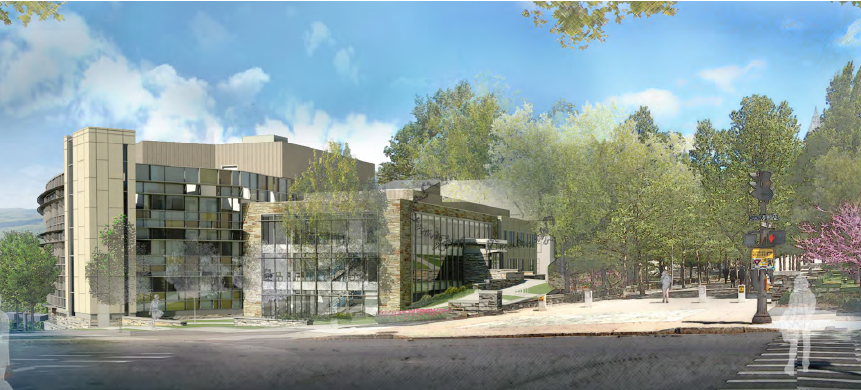
The building design is by local architecture firm Chiang O’Brien, with landscaping by Trowbridge Wolf Michaels Landscape Architects. There will be two additions to Gannett, a four-story, 55,000 square-foot building (which will use the H-piles seen below), and an additional 18,600 square foot addition that replaces the northeast side of the current building. The project also includes a new entrance and substantial renovations to the original 1950s structure (22,400 square feet of the existing 35,000), as well as landscaping, site amenities, and utilities improvements. The projected cost is $55 million.

The Gannett Health Center expansion has been a long time coming. Initial plans in the late 2000s called for a completely new building on site. HOLT Architects prepared a plan for a 119,000 square foot building, and an all-new building was also included in Cornell’s 2008 Master Plan. But once the Great Recession waged its battle on Cornell’s finances, the Gannett redevelopment was scaled back to its current form. According to a statement given by Gannett Director Dr. Janet Corson-Rikert to the Sun, the earlier plan had a budget of $133 million; the new addition and renovations are expected to cost $55 million.

The project is expected to create about 175 construction jobs and 40 permanent jobs (additional doctors, counselors and support personnel) when completed. Gannett currently employs 227, up from just 104 in 1996.

20150516_142534 20150516_142551 20150516_142606 20150516_142632 20150516_142643 20150516_142907

gannett5 gannett2


News Tidbits 5/16: Smart Developments, or Sprawl?

16 05 2015

Looks like this is going to be one of those longer roundups. I’m excited and intimidated at the same time.
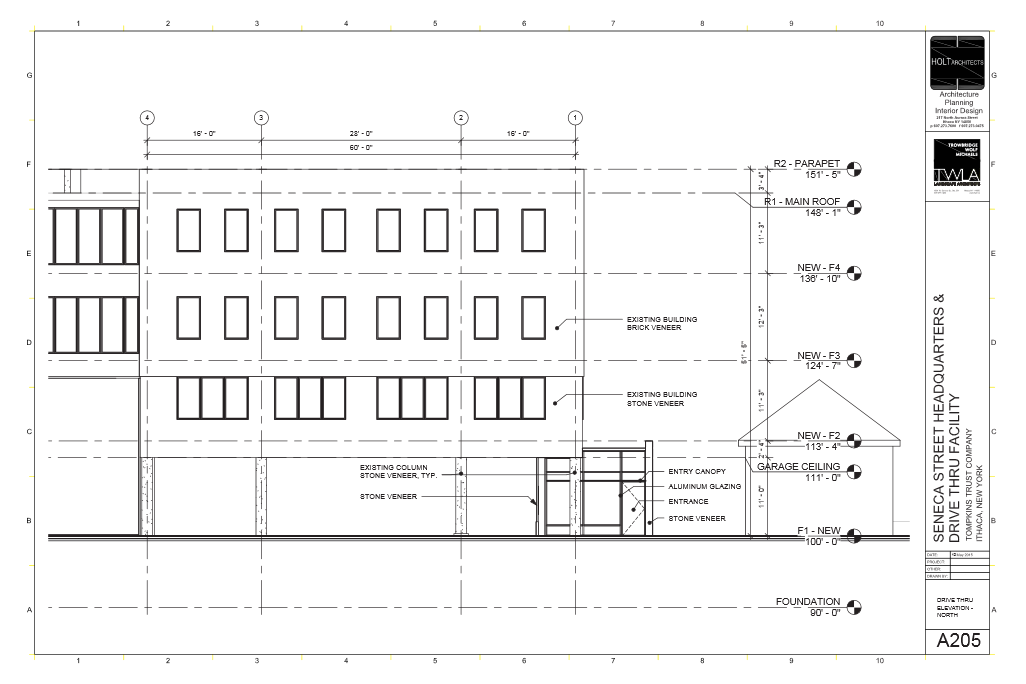
tfc_v2_1 tfc_v2_2 tfc_v2_3

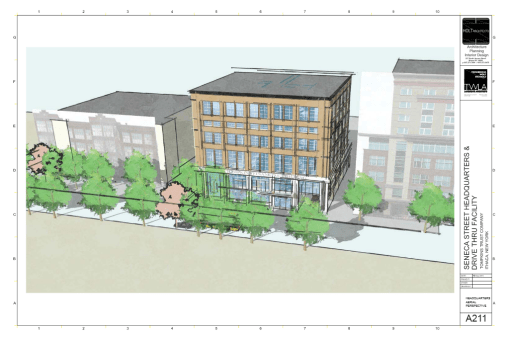
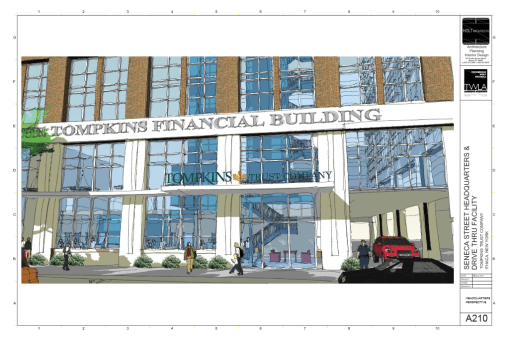
1. First off, I’m going to lead off with renders of the new Tompkins Financial Corporation. Write-up on the Voice here, more drawings here, traffic study here, cover letter here, Full Environmental Assessment Form (FEAF) here.

Rather than describe it in neutral generalities as I did with the Voice article, I’m going to afford the right to be a little subjective. The design is respectful of its neighbors through the use of brick and stone veneer. There’s no real surprises in the design, and corporate buildings tend to be pretty conservative anyway. At 104 feet (100 to the rooftop, and then 4 feet for the roof parapet), this will make a dent in the Ithaca skyline, but once again, it respects and balances out it neighbors by being a little taller than the DeWitt Mall, and a little shorter than 121′ Seneca Place. On a spectrum, the street front is on the nice side though not fantastic; a bank branch and some offices will engage with the street only modestly, but it’s much, much better than the drive-thru there now. The new building is built to the sidewalk, has an urban form, it’s a multi-million dollar private investment and a lot of other things that most upstate mayors would sell their mothers to get. The project is still shooting for a summer approval and construction starting not long thereafter.

One concern I have is that this will offload tens of thousands of square feet of office space onto the Ithaca market. Office space is one of the weaker sectors of the local market, and this may exacerbate the situation. It could cause some problems come 2017, and maybe with projects still in the pipeline such as Harold’s Square, which is shooting for a fall start after two years of trying to secure financing. I think that in the longer term, a few of the spaces such as the Seneca Building (121 East Seneca) might be ripe for a residential conversion.

With that concern noted, I think the parking situation will be okay. Since most of the jobs are shuffling around downtown, there’s not going to be a huge influx of workers. Offhand, I think the numbers are low double-digits (20 or 30) for transfers from Lansing into the city, and then the 77 brand new jobs created over the next several years.
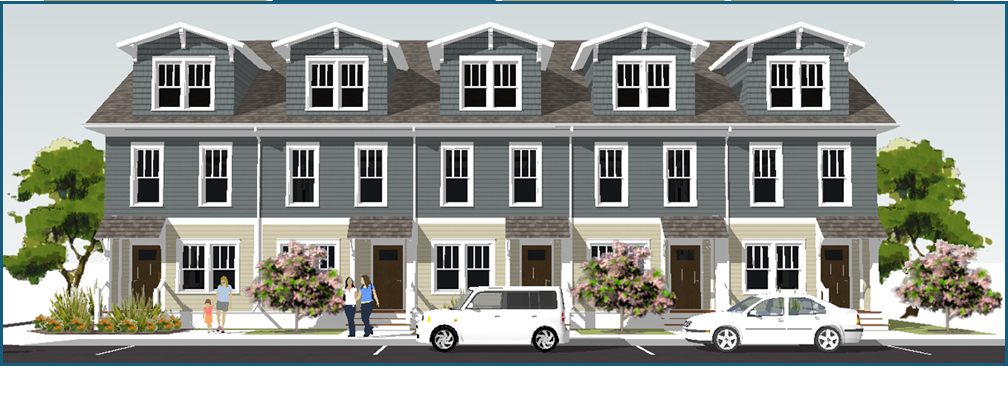
belle_sherman_townhouses_1

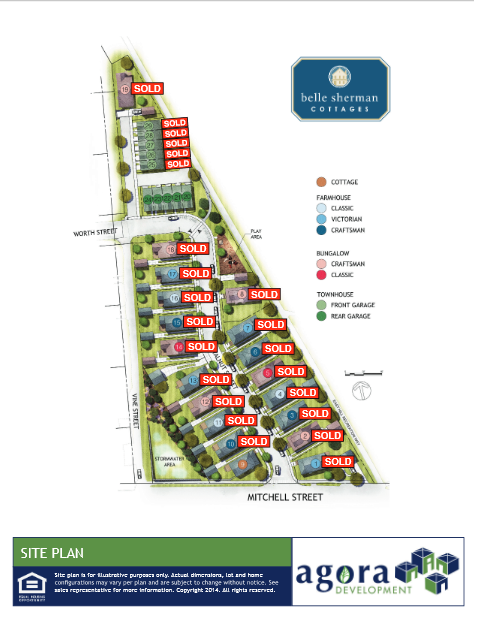
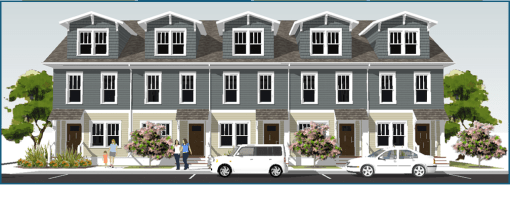
2. And then there were none. With the sale of the last of their townhomes (lots 20-24), the Belle Sherman Cottages have technically sold out. I say technically because Lot 9, the new cottage design on the southwest corner of the parcel, has yet to be marketed let alone sold. I followed up with an email to developer Toby Millman of Agora Home LLC, and he replied that “[w]e are still working on the plans for that home and expect to release if for sale in the next month or so.” So keep an eye out for that.

3. Here’s an interesting piece of news from the Ithaca Urban Renewal Agency – the city recently showed off the 6-acre parcel it owns on Cherry Street to an employer looking to relocate 250 employees to the property, buying the lot and building a one-story “campus setting” over the whole six acres. This may or may not be the same one previous mentioned in the March minutes, regarding an inquiry from a business located outside the city. Since the parcel may have been shown in January or February, it seems that the two are likely the same entity.

This isn’t the first piece of news regarding some potentially major work in this isolated section of Ithaca’s West End – scrap steel mogul Ben Weitsman has also been rumored to have plans, and improved access from the Brindley Street Bridge would aid in redevelopment of this part of the city.

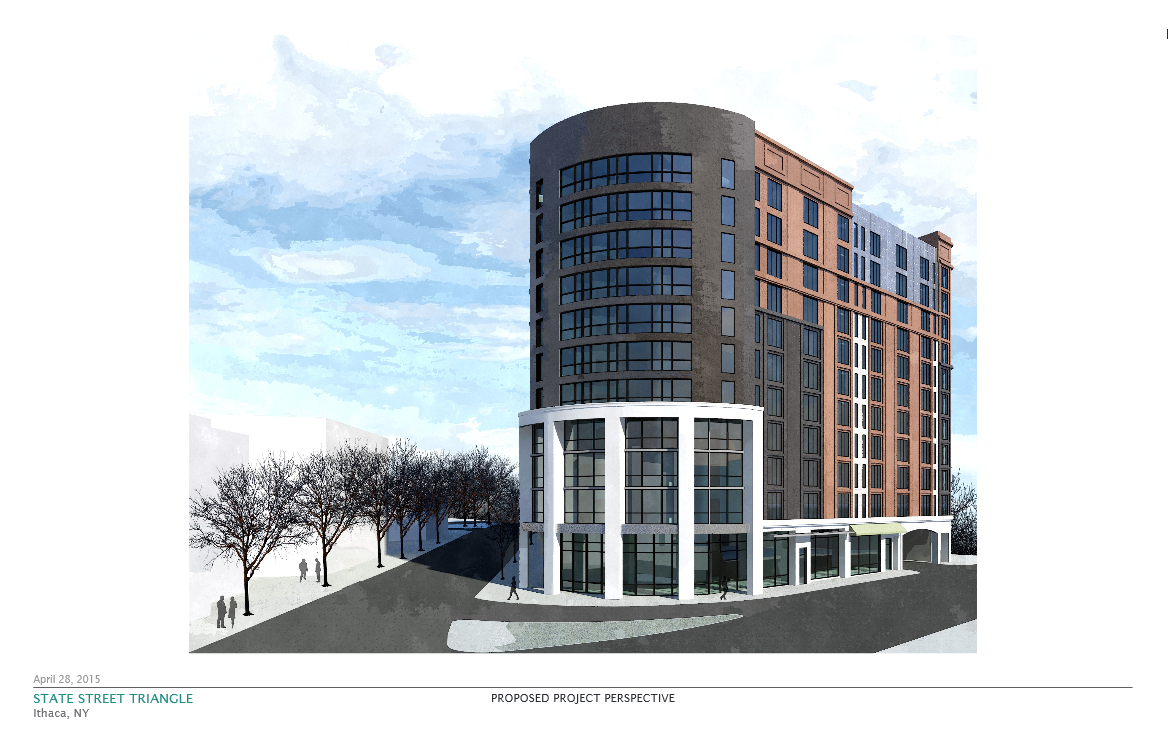
state_st_triangle_3

4. The planning board is cautiously enthusiastic about the State Street Triangle development. Per the minutes from the April meeting, they want the building to be as iconic as possible; board member John Schroeder went as fall as to suggest inspiration from the Carson Pirie Scott Building in Chicago:

Another member suggested a decorative crown. If my notes are right, a crown could exceed zoning as long as it’s not habitable space. Some other suggestions include a setback on the upper floors, and looking into incorporating other forms of housing.

5. A quick follow-up on the proposed removal of some lot setbacks at the Nate’s Floral Estates trailer park – according to a tweet from Ithaca Times writer Josh Brokaw, the removal would allow an extra 18 lots for manufactured housing. The trailer park currently has 112 lots, and it’s been noted to have a substantial waiting list. Nate’s Floral Estates serves as senior housing, so this is one way to make a dent in the affordable housing problem.

815_s_aurora_1

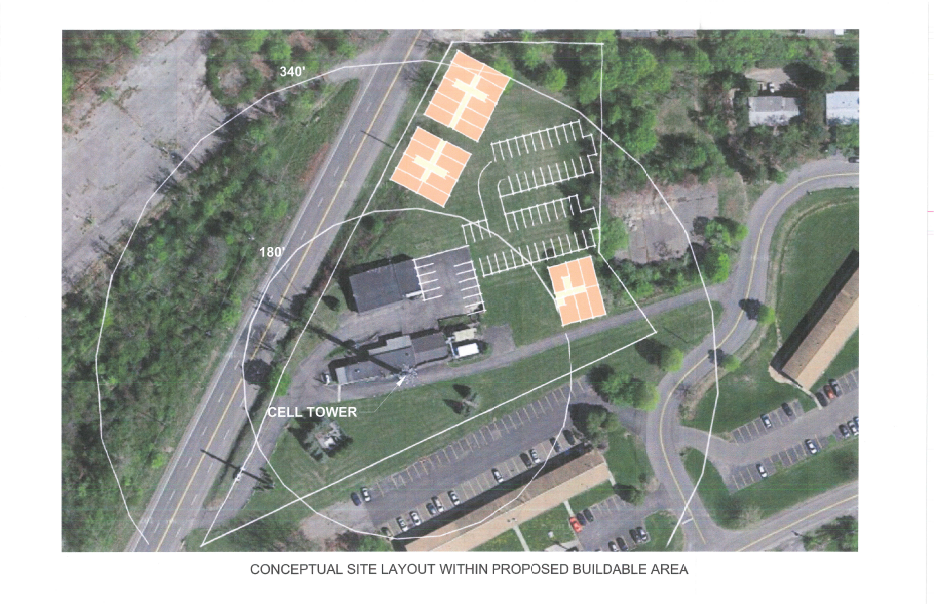
6. It’s not too often you see someone request a zoning interpretation. At 815 South Aurora Street on South Hill, that’s exactly what local architect Noah Demarest of STREAM Collaborative is doing on behalf of developer Todd Fox. Fox would like to develop the land with apartments (and he’s no stranger to South Hill, having built a couple duplexes on Hudson Street a couple years ago), but can’t. The city won’t allow construction in the “fall zone” of cell towers, which they define as twice the height of the tower. At 815 South Aurora, a 170′ tower creates a 340′ radius of no-man’s land (outer circle above), making the parcel undevelopable. The developer got a hold of two private engineering companies (TAITEM Engineering and Spec Consulting), both of whom determined that an appropriate fall zone is the height of the tower plus 10 feet for a little wind/bounce – so 180′ total. With this info in hand, Fox is trying to get the city to refine the zoning to allow the decrease in fall zone and therefore permit the land to be open for development. It’s an interesting case, and the result could be a sizable apartment complex down the pipeline. Stay tuned for the BZA review in June.
228_w_spencer_1

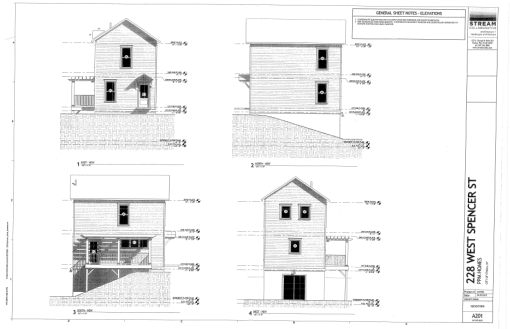
A couple other minor projects are up for zoning variances on parking – a small 2-bedroom house planned for 228 West Spencer is seeking a variance because the builder (Ed Cope of PPM Homes) says there’s no room on the hilly lot, and Todd Fox is requesting a parking variance for a 2-bedroom basement apartment to be built at 108 Ferris Place, saying that its central location and easy bus access should make having a car unnecessary. Coincidentally, architect Noah Demarest is handling both appeal applications.
troy_rd_rev1_1

7. To wrap things up, here’s the latest agenda from Ithaca town. There doesn’t appear to be anything too exciting going on next Tuesday. Cornell is renovating its softball field on East Hill with improved site access, a new restroom and ticket office, and replacing the existing bleaches, dugouts and press box. The 32-unit Clare Bridge assisted senior living project that was discussed last week will be reviewed. There are also sketch plans to be presented for a propane refueling station and sales office to be built on a vacant lot on Elmira Road/Rte. 13.

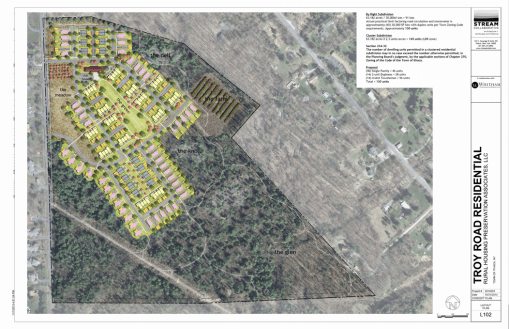
The planning board will also be reviewing plans to subdivide the Troy Road parcel that was once slated for a major residential project. The seller (Paul Rubin of Florida) apparently has a buyer for the triangular chunk of land south of the power lines (which can be seen in the old render above). With no explicit plans for either plot of land, there’s little reason to deny the subdivision at this time.

Personal opinion, I don’t like the direction this is going. It’s a real shame that the revised 130-road Troy Road project didn’t continue pursuit of approvals, it had really started to coalesce into a decent proposal. But now there’s a possibility where the land gets divvied into multiple chunks with homes scattered on it like bird crumbs. Single-family and duplex homes don’t have to go through board review, so there’s a lot less oversight when the land gets divided among multiple owners and built out in a piecemeal fashion. The last thing the town needs is expensive, sprawling, ecologically insensitive development.


Lofts at Six Mile Creek Construction Update 4/2015

22 04 2015

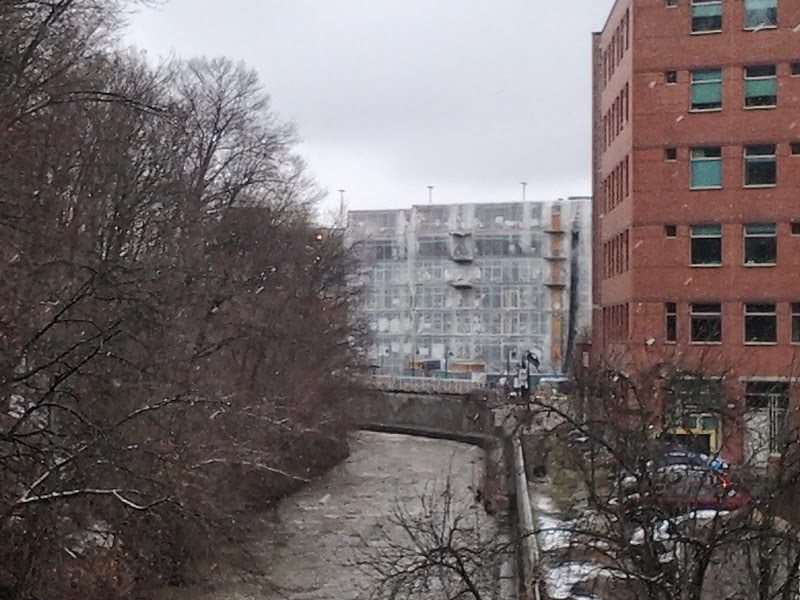
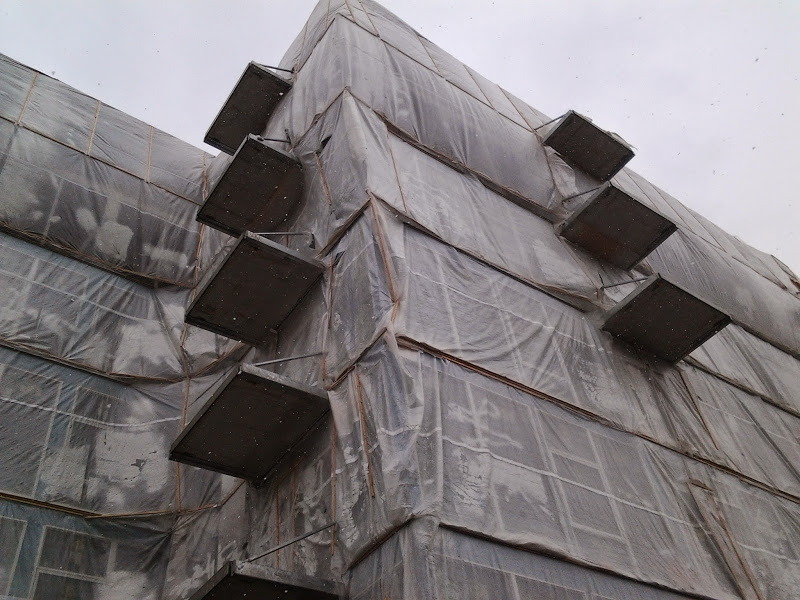
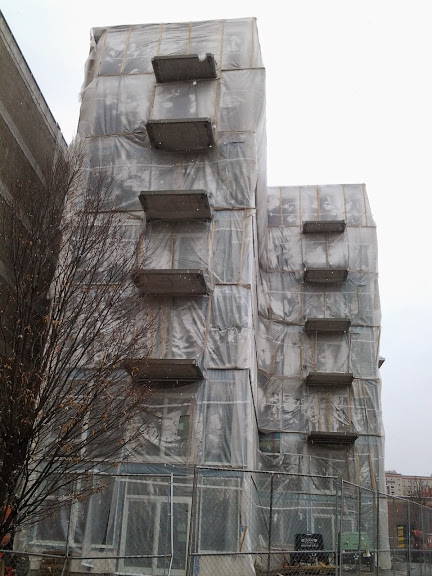
Heading back to downtown again, the “Lofts@SixMileCreek” (no spaces? no spaces…) apartment project is plodding away towards its anticipated late summer completion. From the outside, there’s been progress under all that protective plastic wrap – the first five floors have had their exterior walls framed and glazed (glass wall installation). The top couple of floors should be sealed up in short order.

According to an update from Jason at Ithaca Builds from the start of the month, walls and utility rough-in was underway inside the top floors, and drywall hanging and finish-work was beginning on the lowest floors of the apartment building. The Downtown Ithaca Alliance recently scheduled visits to the unfinished units as part of its Downtown Living Tour last Saturday.

Perhaps the most controversial thing about this project was when the rents were released at the start of the month – prices range from $1,220/month for a studio to $2,655/month for the largest two-bedroom on the upper floors. That got a lot of attention on the Ithaca Voice’s Facebook page, and much of it wasn’t good.

Jeff Stein, the Voice’s editor, followed up with an editorial saying that the criticism misses the point, the best way to alleviate the affordable housing crisis is to bring new units to the market at all income levels, which increases competition among landlords. Although I didn’t have a hand in the editorial, I support every word of it. Rents are high for this project, without a doubt. But the city not only needs units specifically for affordable housing, but units that will create competition for Ithaca’s burgeoning renter population.

With more units to better satisfy demand, landlords won’t be as able to charge premium prices on subpar units – inferior products will more likely be vacant. There would be a market push for owners to either upgrade their units to maintain a certain price point, or downgrade their prices to more affordable segments. Whether or not Ithaca will ever be able to get to that ideal balance between supply and demand is another story.

The Lofts at Six Mile Creek project consists of a a 7-story, 49,244 square foot structure that will contain 45 rental apartment units: 3 studios, 21 1-bedroom and 21 2-bedroom units. The building is being developed by Bloomfield/Schon + Partners out of Cincinnati, and construction is being handled by Turnbull-Wahlert Construction, also based in Cincinnati.

20150405_133449 20150405_133946 20150405_134010 20150405_134051 20150405_134118

cayugaplace_v5

10917333_314783998711665_7443965770647794346_n 10378252_313975992125799_95913780193412415_n


Ecovillage Construction Update 4/2015

21 04 2015

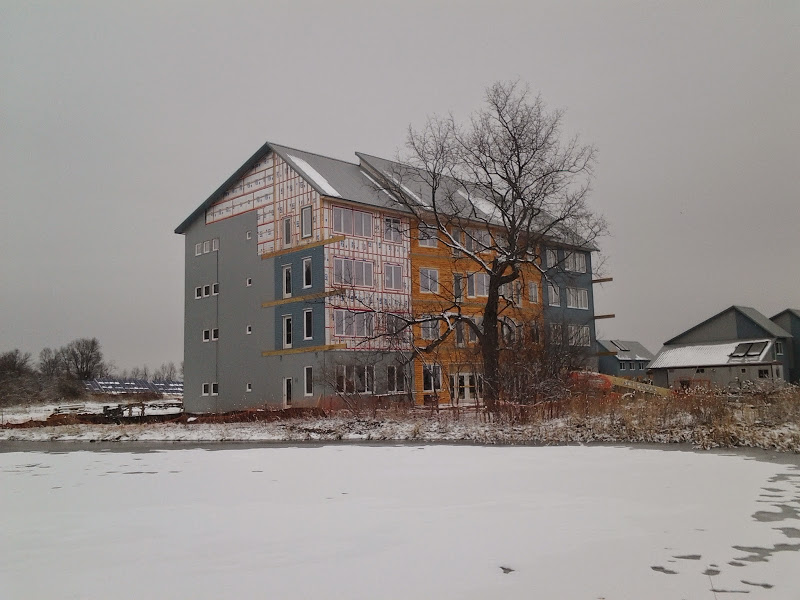
Up on West Hill in the town of Ithaca, work progresses on the “Common House” apartment building for EcoVillage’s third neighborhood, called TREE (Third Residential Ecovillage Experience, following its first two, FROG and SONG). Since the end of December, exterior finishes have made their way onto most of the 4-story building; offhand it looks like some type of composite siding along with wood paneling, which adds character and brightness to the building’s otherwise muted appearance. Some sections have yet to be exterior finishes applied, and the housewrap is still visible. Balconies are being built on the northwest corner, but have yet to begin installation on the southeast corner.

The Common House will hold about 15 units, ranging from studios to 3-bedrooms. My previous back of the envelope calculation suggests 25-30 bedrooms in the building. When the Common House is finished later this spring, the TREE neighborhood, with 25 owner-occupied homes as well as the 15 apartments, will be complete, two and a half years after the first homes started construction.Planning for the TREE neighborhood began in 2007, but financial setbacks and the late 2000s recession resulted in an extended incubation and planning process, including a revision that increased the number of housing units from 30 to 40.

Construction is being handled by a local firm, AquaZephyr, which received an award from the U.S. Dept. of Energy for a “zero energy ready” home constructed as part of TREE. The designs of the Common House and houses are the work of California architect Jerry Weisburd.

20150405_143828 20150405_143852 20150405_144000 20150405_144052 20150405_144116


Ithaca Marriott Construction Update, 4/2015

16 04 2015

It may not look like a whole lot has happened at the Marriott site downtown, but it is a very complex undertaking. One anonymous reader close to the project wrote in to describe the work being done on site in the past couple months:

“Foundation work is progressing nicely despite the weather. Contractors have installed steel H piles to [the] bedrock along the perimeter. Wood cribbing has been installed within the piles. The wood panels slide into the web of the H. The cribbing is backfilled and remains forever, securing the bridge area once complete. Another contractor is drilling tie backs to hold the cribbing in place. The rods are grouted in place to a depth of 20 feet or more. The rods anchor the wall in place so the structure can be built within the opened area. Caissons will be drilled in a few days. The caissons are massive open pipes that are socketed into bedrock, 25 to 30 feet below grade. The hollow caissons are filled with concrete and rebar. Concrete beams will be formed from the top of each caisson similar to floor joists. Then a few million tons of hotel will be constructed on top. The cantilevered design is impressive and makes for some very difficult design constraints. This building is a big sail that is side heavy.”

To paraphrase, and hopefully I have this right, the bridge is being secured by H-shaped steel bars, wood cribbing and filling material, and steel tiebacks are being used to stabilize the retaining wall. Per wikipedia, grouted tiebacks can be constructed as steel rods drilled through the cribbing out into the soil or bedrock on the other side. Grout is then pumped under pressure into the tieback anchor holes so that the rods can utilize soil resistance to prevent tieback pullout and wall destabilization. With the bridge and retaining wall established, caissons can now be drilled. Caissons are piles drilled to a sufficient depth to allow the weight of the hotel to be transferred from the weak soil above, to the stronger bedrock 25-30 feet below. The weight will be spread out over the piles with concrete beams on top of the caissons, allowing for the hotel above to be stable and secure.

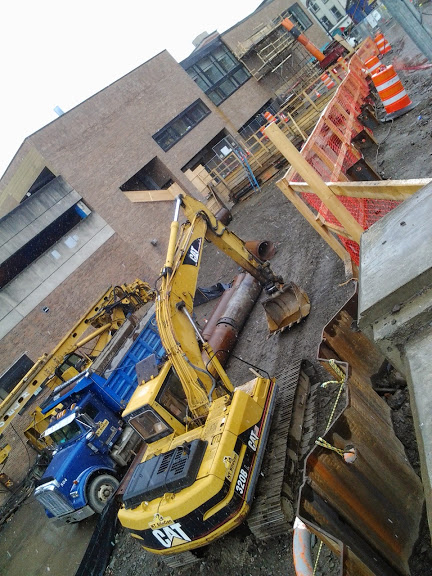
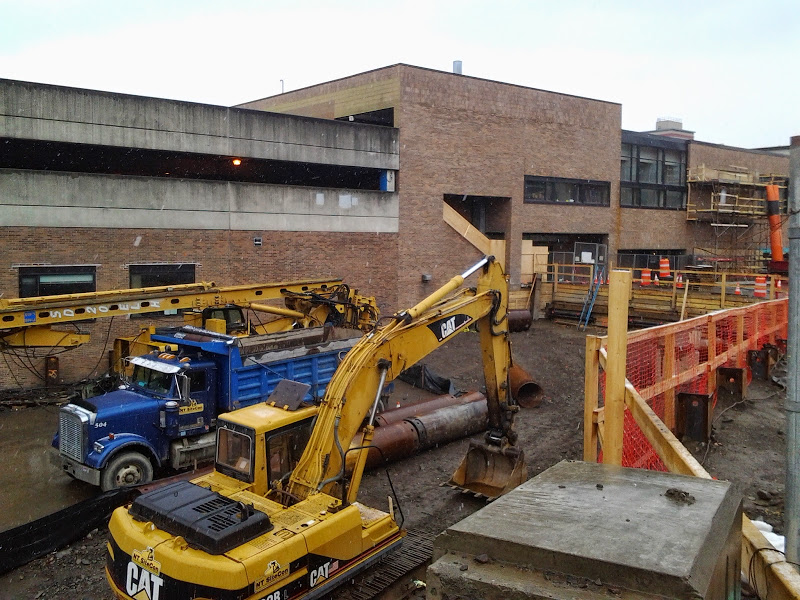
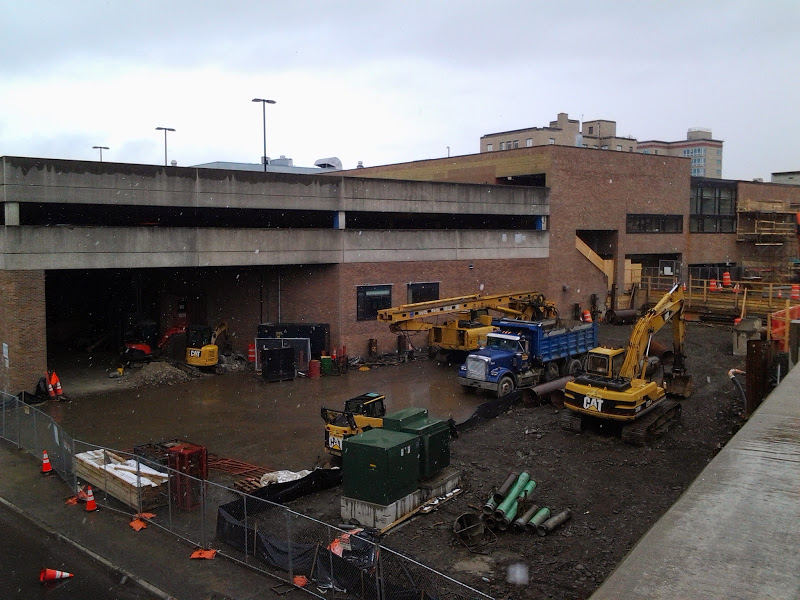
The photos don’t show the level of work involved with building the retaining wall, and as of April 5th it doesn’t look like the caissons were being drilled just yet. But those look like caisson liners next to the excavator, so pile drilling will be underway soon.

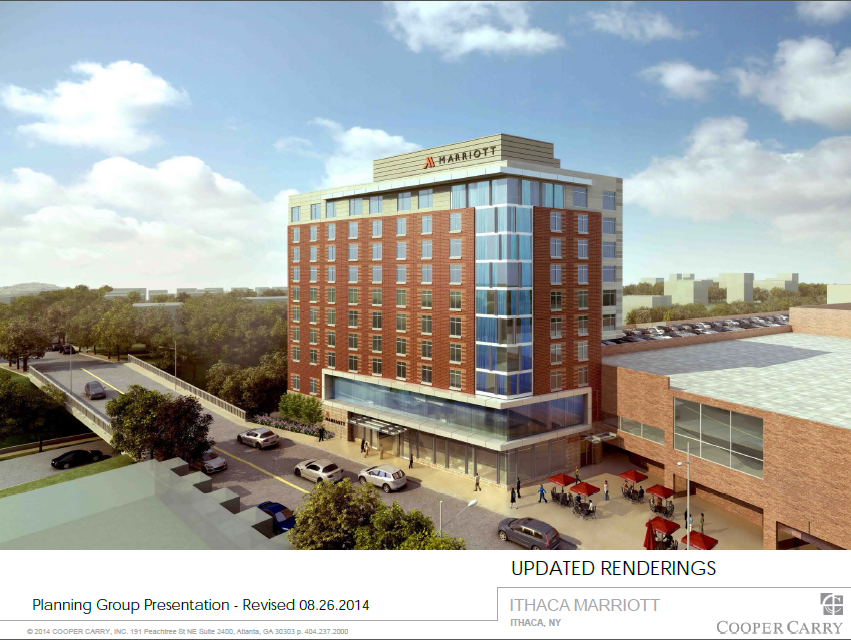
The $32 million, 10-story, 159-room hotel is slated for an opening in Q3 of 2016 (July-September). The hotel will include a fitness center, a restaurant with indoor and outdoor seating, and 3,000 sq ft of meeting space.

The hotel has been designed by Atlanta-based Cooper Carry Architecture and development is a joint venture of Urgo Hotels of Bethesda and Ensemble Hotel Partners, a division of Ensemble Investments. Urgo’s portfolio includes at least 32 other hotels totaling 4,500 hotel rooms. Interior design will be handled by Design Continuum, W.H. Lane of Binghamton is the general contractor, and Rimland Development contributed the land to the joint venture and is a partner. Long Island-based Rimland was the original firm that pitched the project in 2008 as the “Hotel Ithaca”, before the old Holiday Inn downtown went independent.

20150405_133412 20150405_133416 20150405_133422 20150405_133513

20150405_133115

marriott_rev1_1


Stone Quarry Apartments Construction Update, 4/2015

15 04 2015

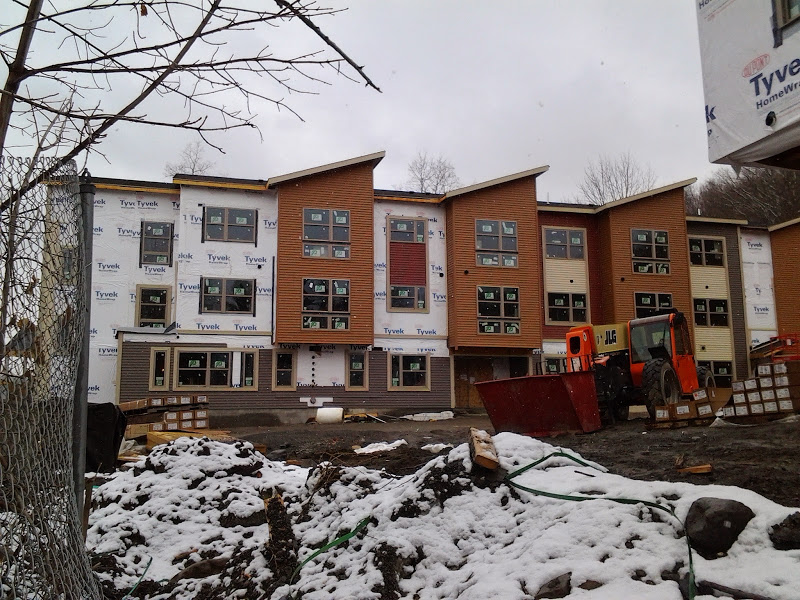
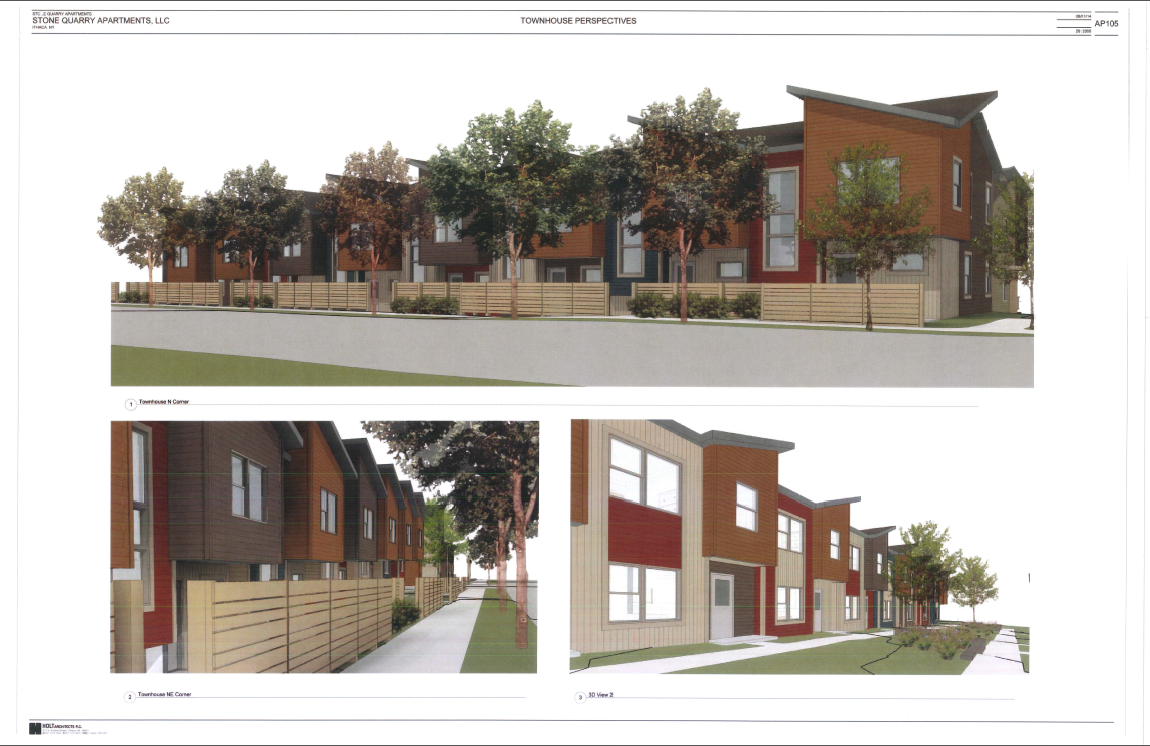
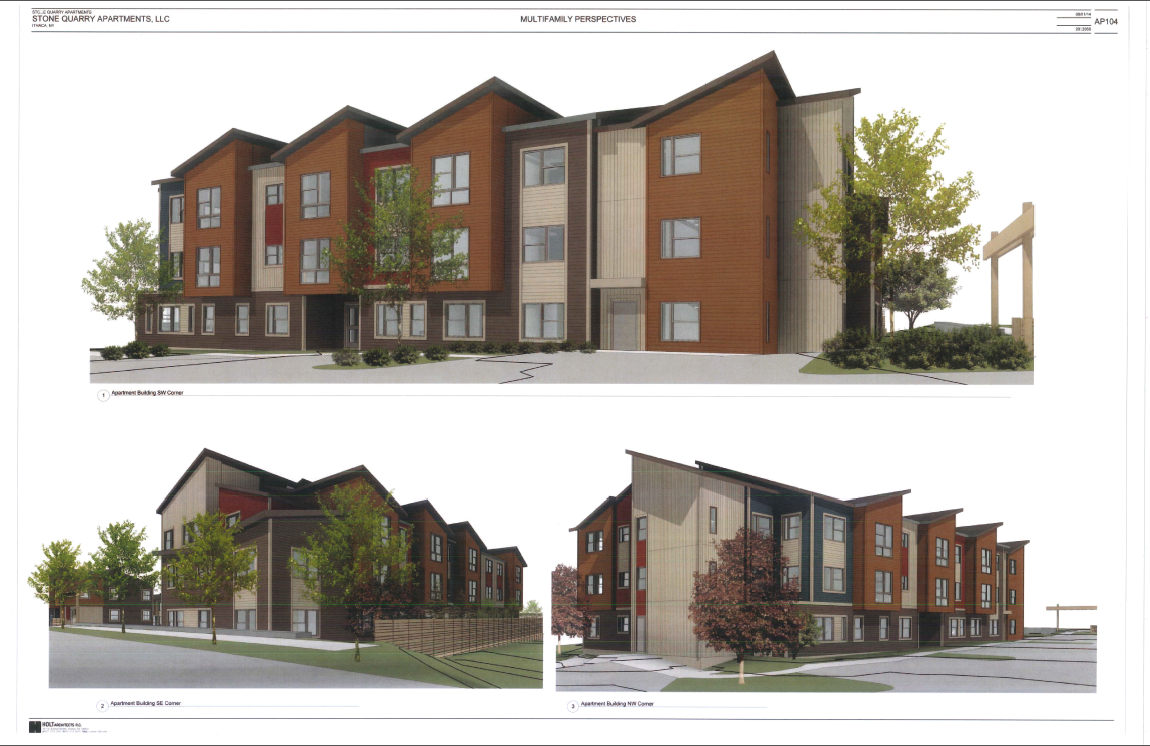
Substantial progress has been on Ithaca Neighborhood Housing Service’s (INHS) Stone Quarry Apartments project on Spencer Street on South Hill. Photos from April 5th show that the sixteen 2-story townhomes and 19-unit, 3-story apartment building have been fully framed, sheathed with Tyvek weather wrap, and have windows installed.

Exterior work continues as clapboard siding is installed on the new units. The color selections here are in many cases the same as those found at the Belle Sherman Cottages on the east side of town – the beige-tan window trim is the previously mentioned “Savannah Wicker”, and the brown-orange color is “Mountain Cedar”. “Light Maple”, “Autumn Red”, “Pacific Blue” and “Sable Brown” round out the color selections.

Without actually going inside, it’s a safe bet that interior is moving along with rough-ins and wall framing, maybe even drywall and finish work on the lower floors. The apartments are expected to be completed in October 2015.

The Stone Quarry project consists of 16 two-story townhouses (2 rows, 8 each), and a 19-unit, 3-story apartment building on the northern third of the property. Specifically, the breakdown of unit sizes is follows:

16 three-bedroom Townhouses
2 three-bedroom Apartments
11 two-bedroom Apartments
6 one-bedroom Apartments

As with all projects by INHS, the units are targeted towards individuals with modest incomes, with rents of $375-$1250/month depending on unit size and resident income. While affordable housing is generally welcome and sorely needed, Stone Quarry had a number of complaints due to size, location and lingering environmental concerns.

The build-out is being handled by LeCesse Construction, a nationwide contractor with an office in suburban Rochester. The design is by local firms HOLT Architects and Trowbridge Wolf Michaels Landscape Architects.

20150405_140249 20150405_140330 20150405_140634 20150405_140638 20150405_140701

inhs_stone_quarry_rev_4 inhs_stone_quarry_rev_3


Dairy One and Binoptics Construction Update, 4/2015

14 04 2015

Neither one is especially pretty, but the local benefits are substantial.

Over on Warren Road in Lansing, two business expansion projects are underway just across the street from each other. The first one is the Dairy One project at 720 Warren Road.

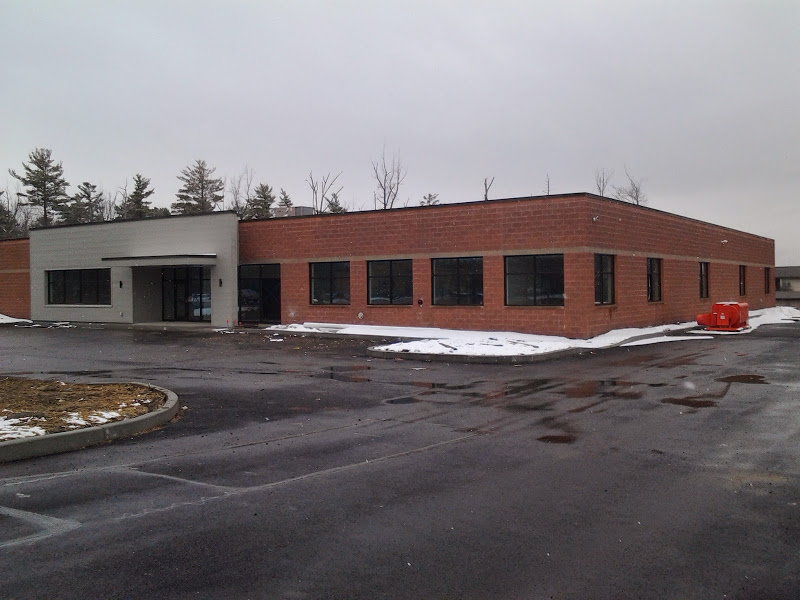
A quick walk-by of the site shows that the exterior of the building is complete, finishes have been applied, and the grass landscaping has been seeded and covered with straw to protect it from the wind and birds. The new research center looks ready for its spring opening.

The new “Northeast Dairy and Food Testing Center” is a 50-50 collaboration between local firm Dairy one Cooperative Inc., and Chestnut Labs of Springfield, Missouri. The  17,000 sq ft building is a $3.5 million investment and will add 11 jobs at the outset, 3 through Dairy One and 8 through Chestnut Labs. 4 more jobs would be added over the following two years if all goes to plan.

According to the TCIDA report, Chestnut opted for Ithaca as its first satellite office because of a desire to expand into the Northeast and its proximity to Cornell. The design by Syracuse-based Dalpos Architects.

20150405_151240

20150405_151148

20150405_151249

Across Warren Road on its west side, the new addition to Binoptics is underway. Technically the address for Binoptics is 9 Brown Road, but the property sits on the corner of Brown and Warren Roads.

The plywood has yet to be sheathed and covered in exterior facade materials, but windows have been fitted into the new one-story, 2,800 square foot addition.  The addition is pegged at a cost of $7.7 million, mostly on new equipment. The design of the addition is by Rochester-based Architectura P.C., who also did the Cayuga Medical Associates Building just south of the Route 13/Warren Road intersection.
BinOptics, a laser developer and manufacturer, sees the addition as part of its plan to add 91 jobs over the next three years, including 35 jobs this year as the new addition is completed.

20150405_151157 20150405_151109


Belle Sherman Cottages Construction Update, 4/2015

12 04 2015

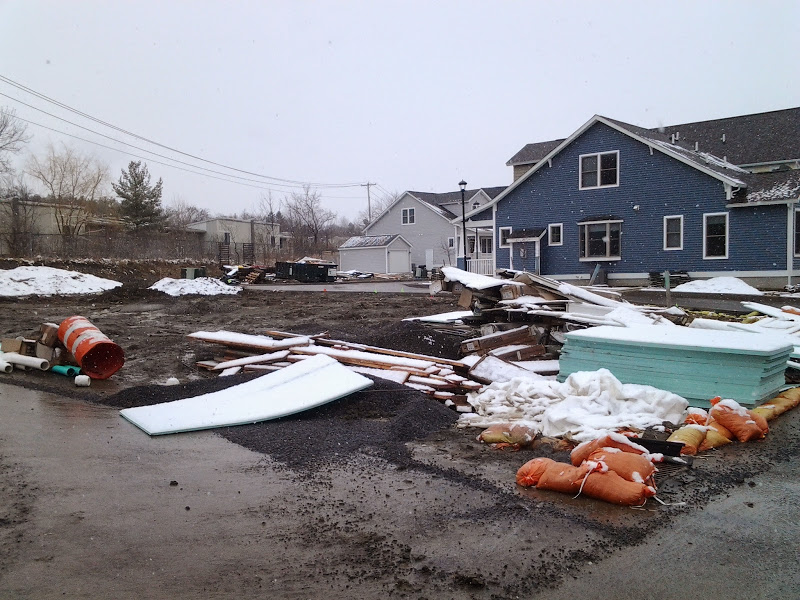
Over at the Belle Sherman Cottages off of Mitchell Street, work is underway on the first set of five townhomes, lots 25-29. The CMU block wall foundations have been assembled and look ready for the Simplex modular pieces to be brought onto the site and fitted. The houses are built using four modules, but the size of the townhouse lots suggests these might have only two modules per unit. The townhouse units sold out fairly quickly, just a few weeks. Sales are underway for the second set of townhomes (lots 20-24), which are expected to be built this year as well.

Elsewhere on the site, the “Classic Bungalow” on lot 12 has been assembled and is undergoing lap siding installation (“Mountain Cedar” color, with a lighter “Savannah Wicker” tan color planned for the dormer). The porch is being assembled and exterior trim is being installed. If you’re interested in learning more about the construction process, there’s a little more info in my previous post here, and on Ithaca Builds here and here. Once completed, there will only be two unbuilt home lots, the already-sold “Autumn Yellowfarmhouse planned for lot 11, and the unsold and un-marketed lot 9.

20150405_123303

20150405_123319 20150405_123326 20150405_123401 20150405_123430 20150405_123512 20150405_123540 20150405_123610 20150405_123621

belle_sherman_townhouses_2

belle_sherman_cottages_102714


707 East Seneca Street Construction Update 4/2015

10 04 2015

Another infill project is underway in the East Hill Historic District between Downtown and Collegetown. 707 East Seneca, like 202 Eddy Street and 140 College Avenue, had to go through the Ithaca Landmarks Preservation Council for approval, along with getting approval from the planning board and zoning board for an area variance (the lot was too small). After informational and voting meetings by different boards throughout the fall and winter, all the approvals have been granted.

The ILPC-approved design is made to be compatible with the historic homes from the late 1800s and early 1900s that surround the building. 707 East Seneca was originally the playground area for the now-closed East Hill School, and the lot was given to the city in 1982. The property fell into disuse, and the playground into disrepair.  The city voted to put the lot up for sale through the Ithaca Urban Renewal Agency (IURA) last summer, and the lot was sold for $130,000 on December 22nd (the market asking price was $175,000, and the assessed value of the land is $100,000, so the final price looks pretty reasonable).

The apartment building planned is a 3-story, 6-unit, 18-bedroom structure with 4 garage parking units in a basement built into the hillside, and five surface parking spaces. According to documents filed with the city, target completion is July of 2015. Note for the included renders, the black-and-white image with the small basement windows is the final design, but the colors are the same as the lead rendering.

Without getting a good look at the back of the now fenced-off property, it looks like the site has been cleared and excavation is underway for the retaining walls and foundation. Being a sloped site, retaining walls will be built on the west edge of the property (right side of the photos) and for tree wells, and the east portion will use a sloped bank built using fill material. Offhand, I think I remember seeing that the building itself will be assembled from modular pieces, craned into place on the foundation over a day or two, not unlike the method used at the Belle Sherman Cottages.

The design of the building is by Schickel Architecture of Ithaca, and the developer is Ithacan Todd Fox.

20150405_131545 20150405_131553 20150405_131611

707_E_Seneca_2

707_E_Seneca_rev1_1


140 College Avenue Construction Update 4/2015

9 04 2015

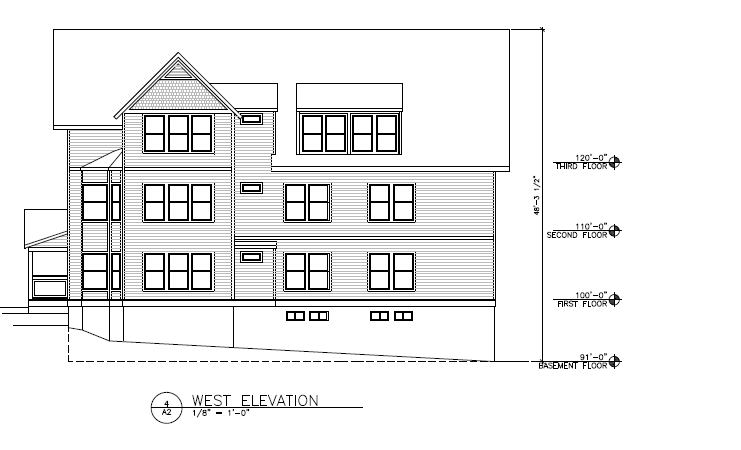
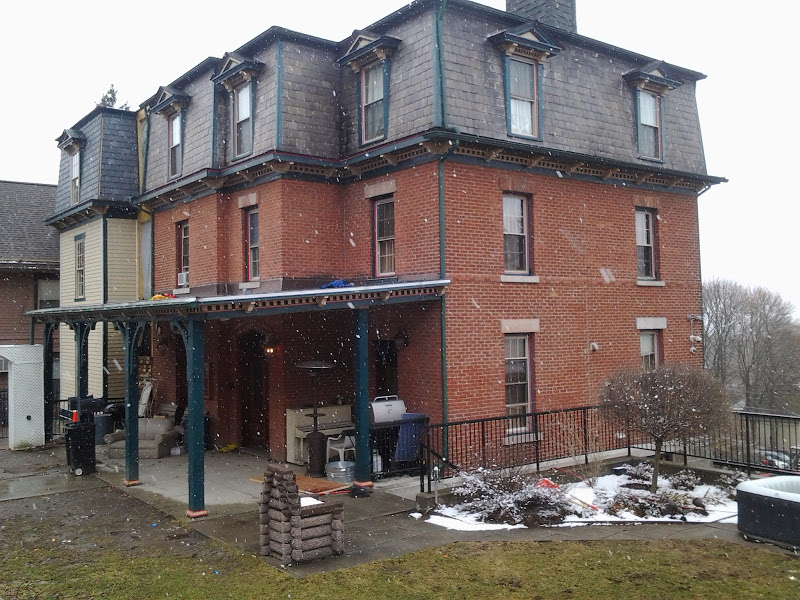
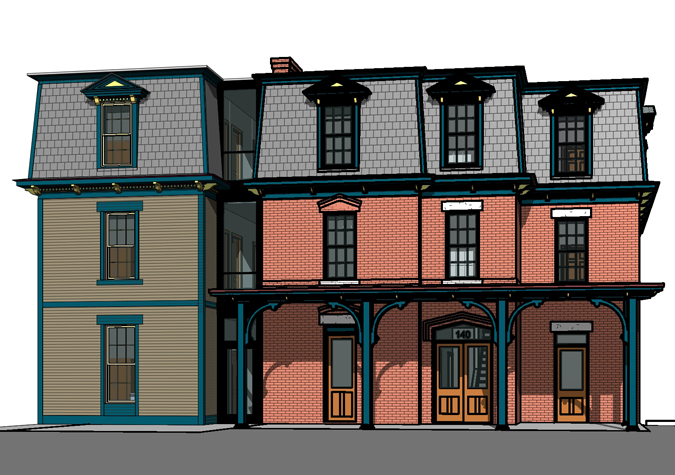
Just up the street from 114 Catherine and a couple blocks from 202 Eddy is 140 College Avenue, also known as the John Snaith House. Since last fall, work has been underway on a 3,800 sq ft, 12-bedroom addition to the 1874 structure.

John Snaith was an English builder, stone cutter and architect who came to Ithaca in 1869 to do work on Ezra Cornell’s Llenroc mansion (under construction at the time) and other buildings for the nascent university. Snaith lived in Ithaca for over a decade. He built the original Ithaca High School (destroyed by fire in 1912) and did work on the Sage Mansion, where he was fired by the ever-impatient Henry Sage.

After Snaith moved to Albany, the house was used as a boarding house, a B&B in the 1980s, and a private single-family home. The house was rented out to a landlady and her boarders when it was partially destroyed by fire in 1894. Snaith rebuilt the home shortly before his passing in 1896, but redesigned the top floor with mansard trusses and added dormer windows. Today, it’s student-oriented housing.

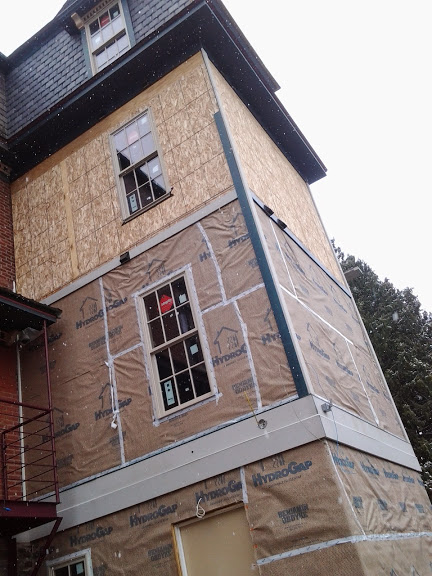
The addition is a sympathetic design approved by the Ithaca Landmarks Preservation Council (the house was designated a historic structure in 2011), separated from the original house by a glass “hyphen” connector. In the photos below, lap siding has been installed on the street-facing east wall, and uncovered plywood and house wrap can be seen in the rear. The slight variation in the mansard roof tiles are a nice touch. Windows have been installed, and I’d venture a guess that interior framing is complete and rough-in (plumbing, electrical) is underway in the addition.

The project is designed by local architect Jason Demarest and developed by Po Family Realty, a smaller Collegetown landlord.

None of the larger projects in Collegetown are underway just yet, but that will likely change when their current tenants’ leases are done June 1st. The following year or so should be very hectic in the neighborhood, with 307 College (96 beds), 327 Eddy (64 beds) and 205 Dryden (40 beds) all expected to start this summer, and Collegetown Terrace expected to start construction of its 300+ bed phase III this year. A quick check of the neighborhood showed that construction has not yet started on two other small projects, the 6-bedroom duplex planned behind 424 Dryden and the 18-bed 3-building project at 804 E. State Street.

20150405_124856 20150405_124921 20150405_124939 20150405_124953 20150405_124841

140College_2