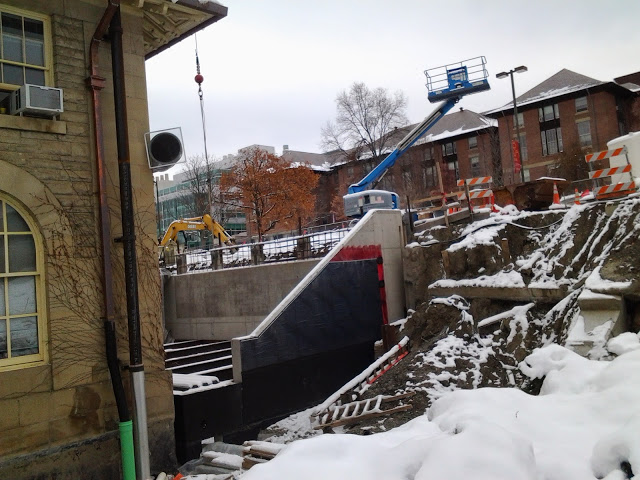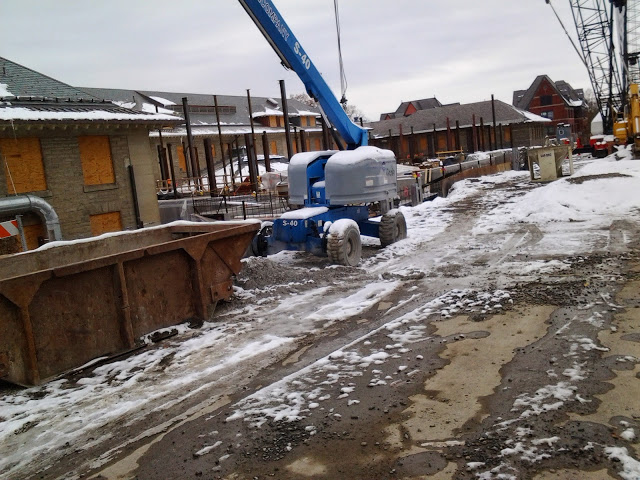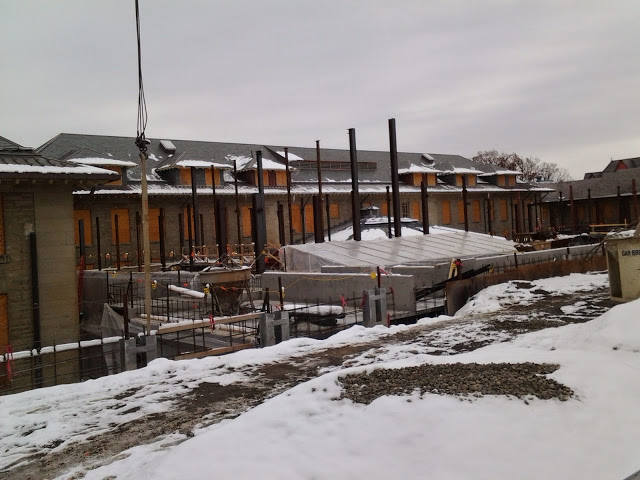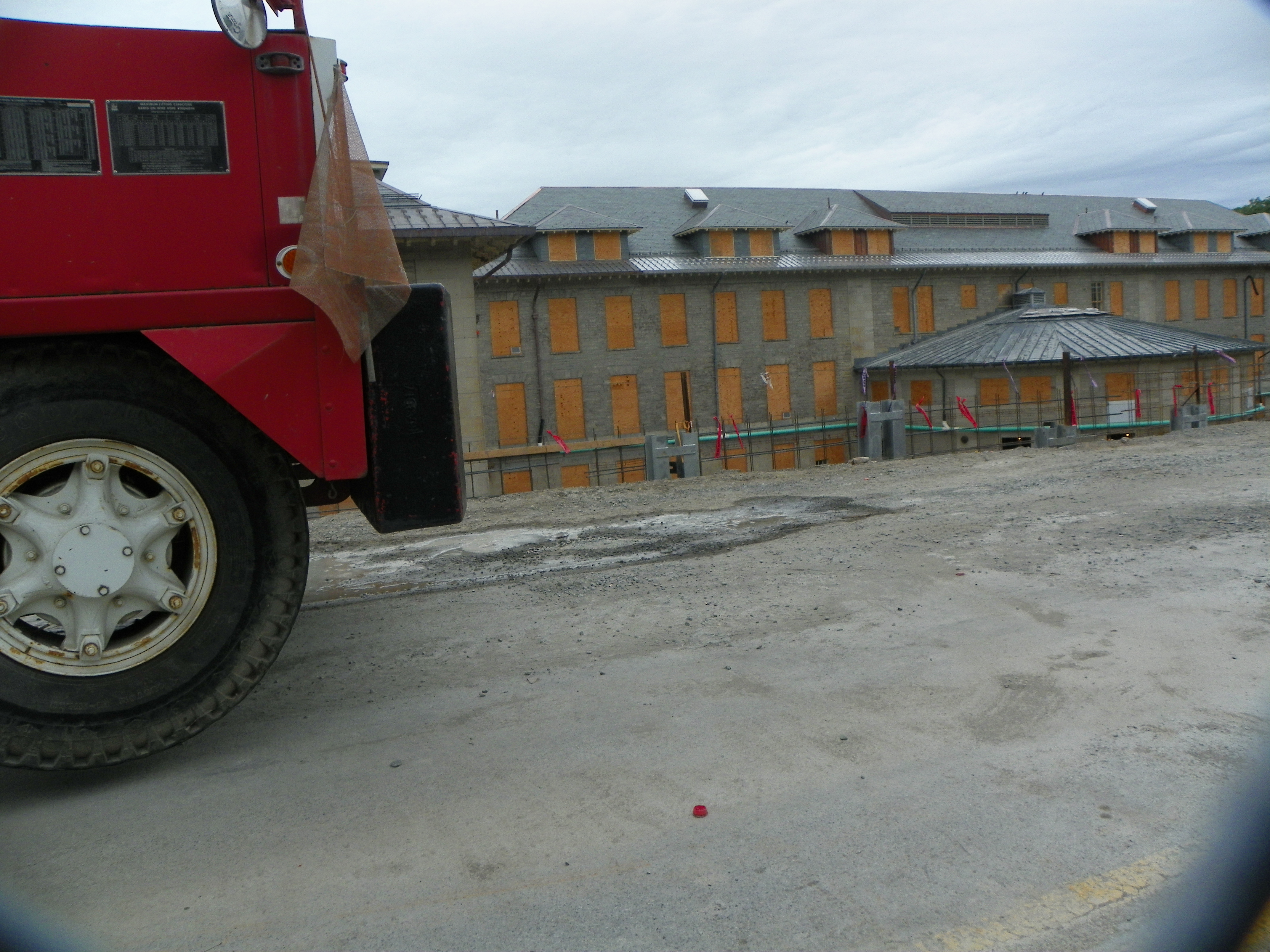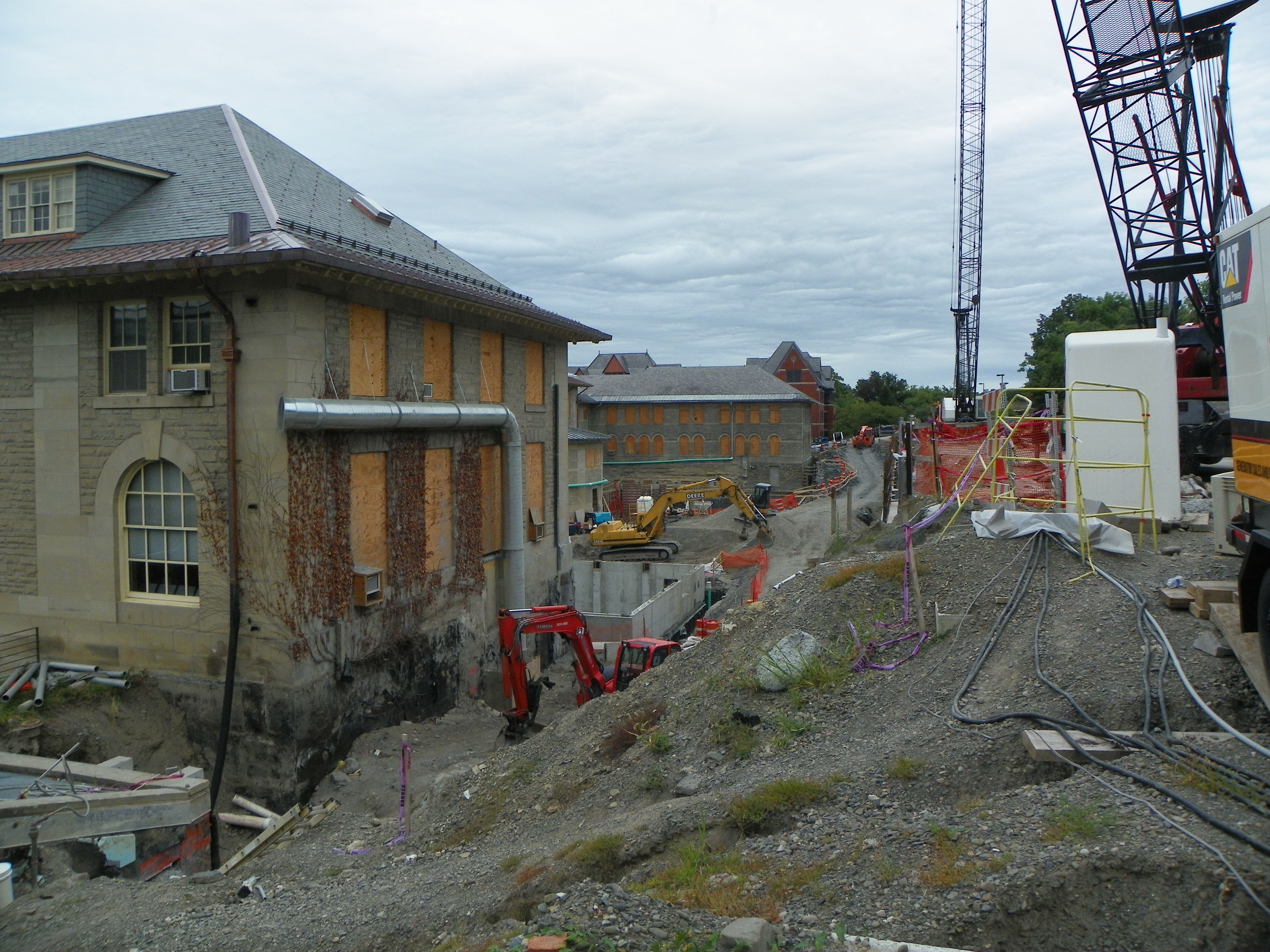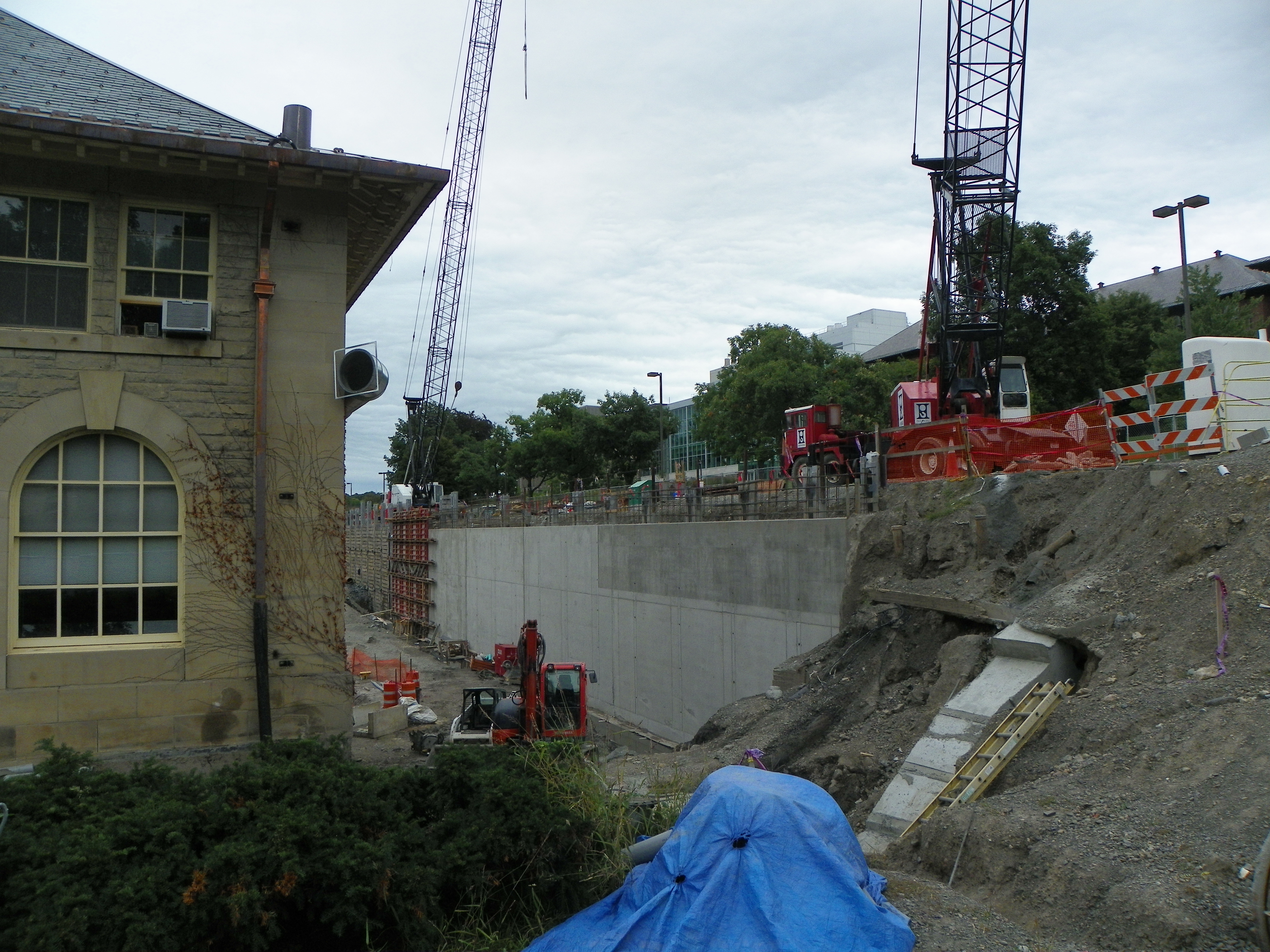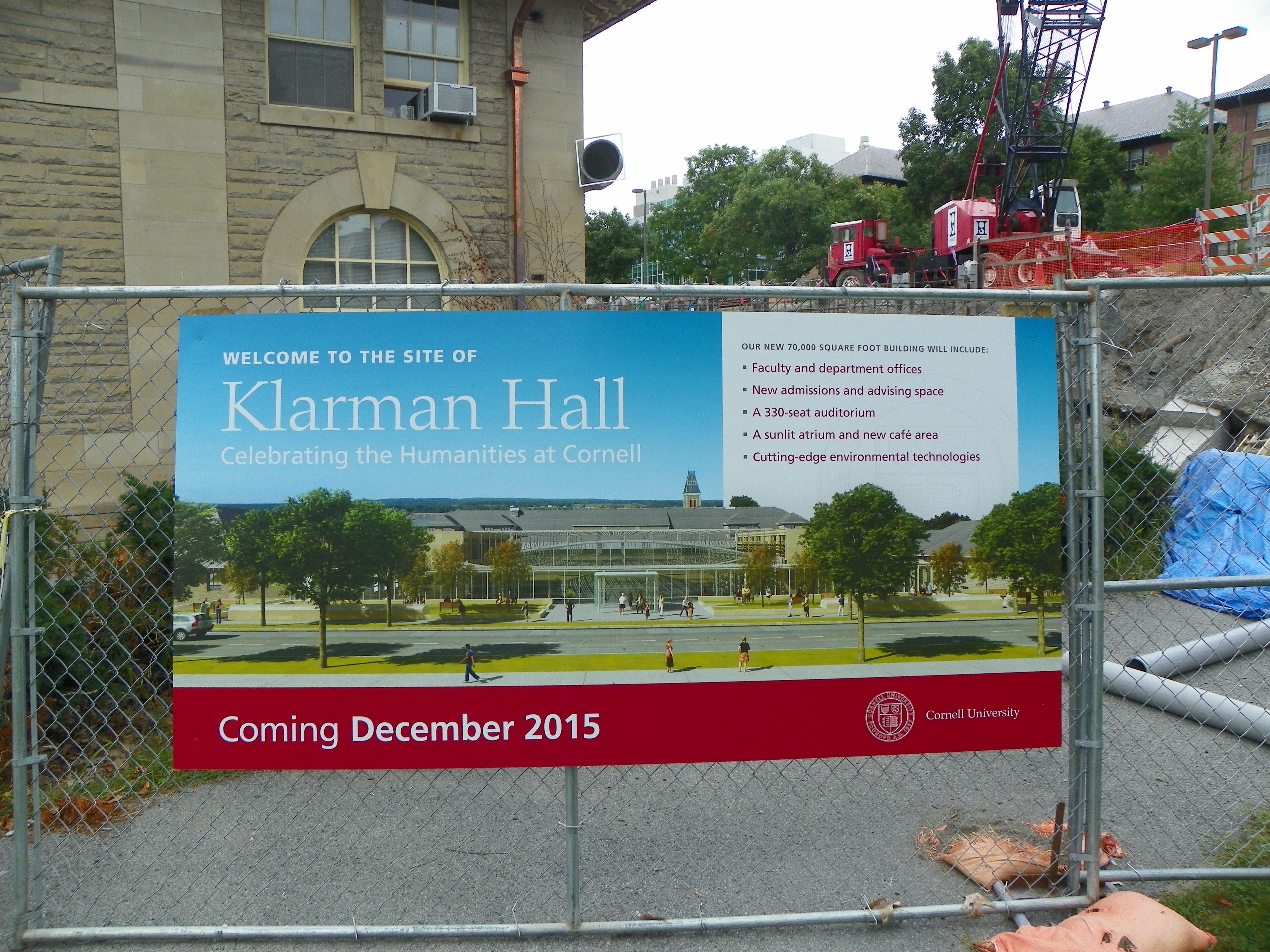
Klarman Hall Construction Update, 2/2015

17 02 2015

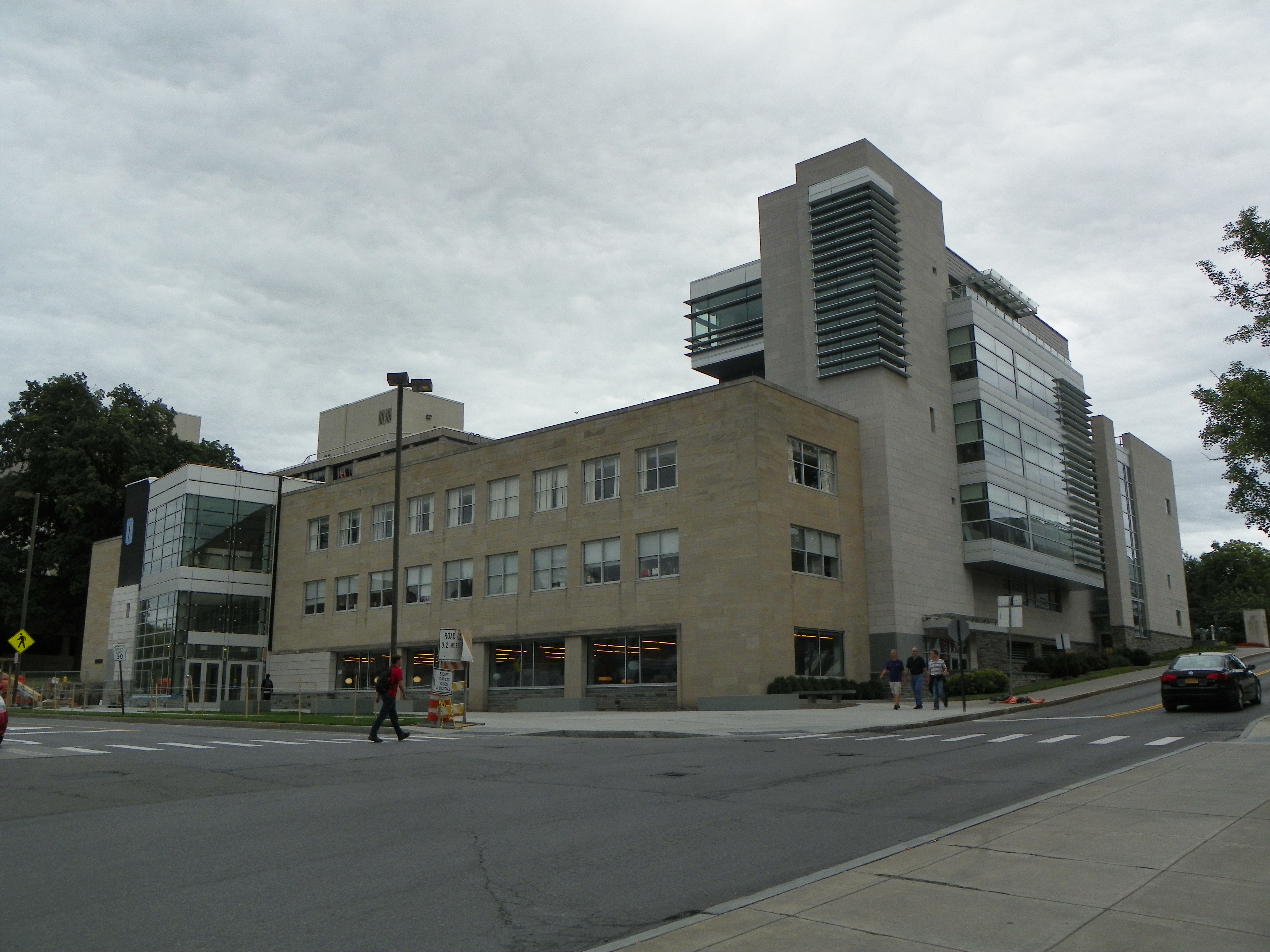
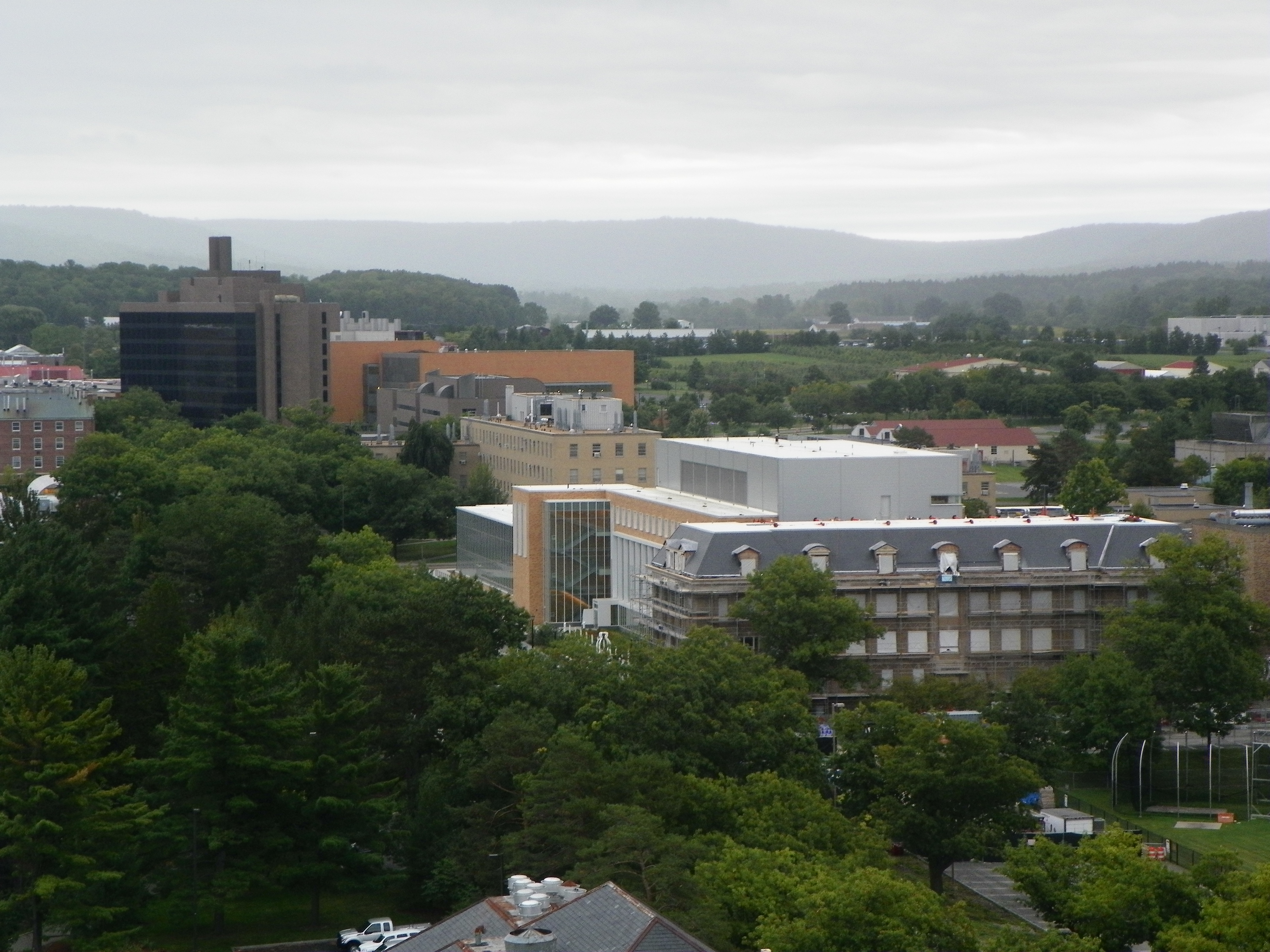
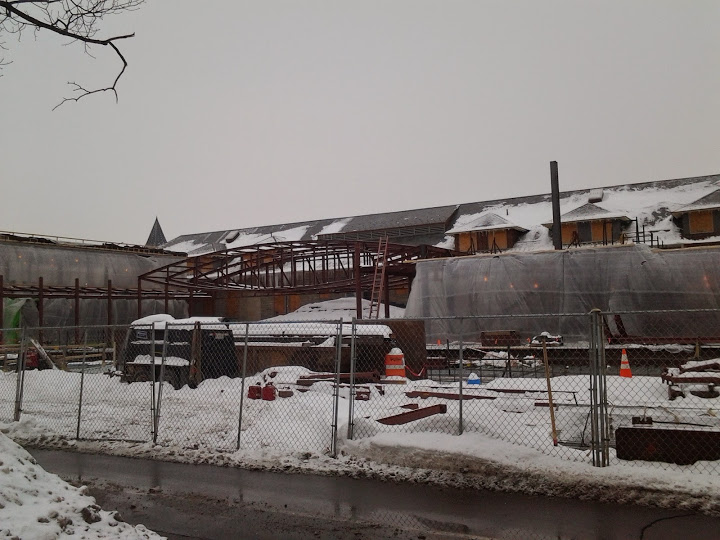
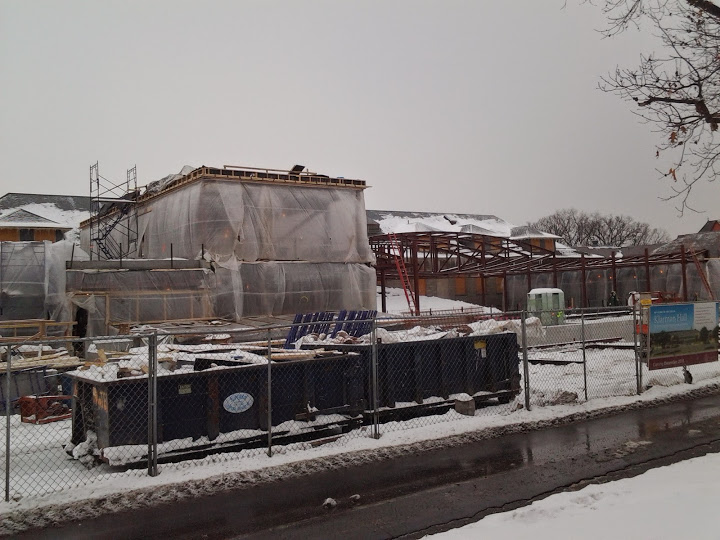
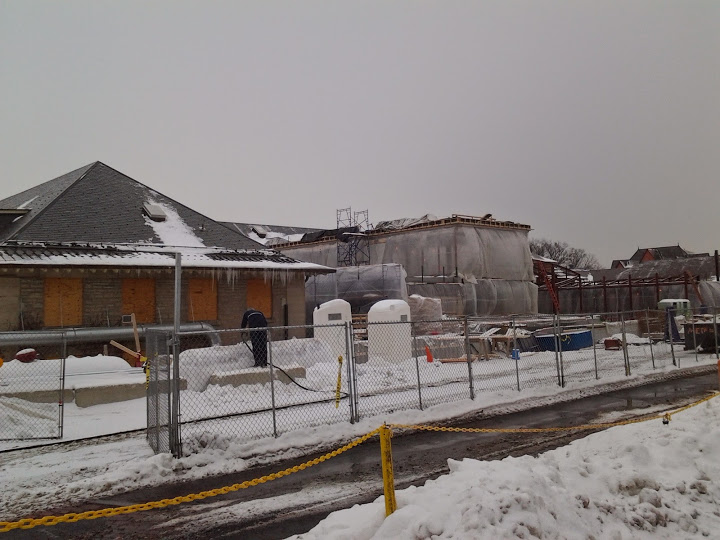
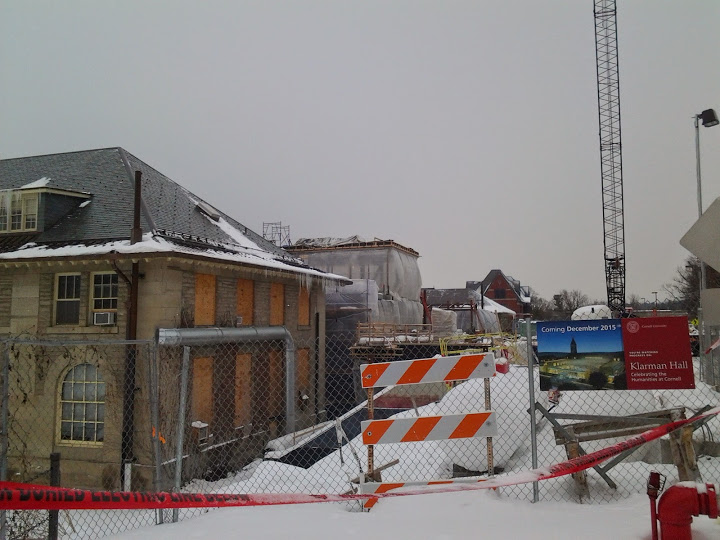
Time to take another look at Cornell’s Klarman Hall for a progress report. It was low 50s F when I stopped by in late December and I thought that was pretty awesome. I completely and totally regret saying anything and will next time reserve to complaining about how cold it is, in an effort to spite Mother Nature.

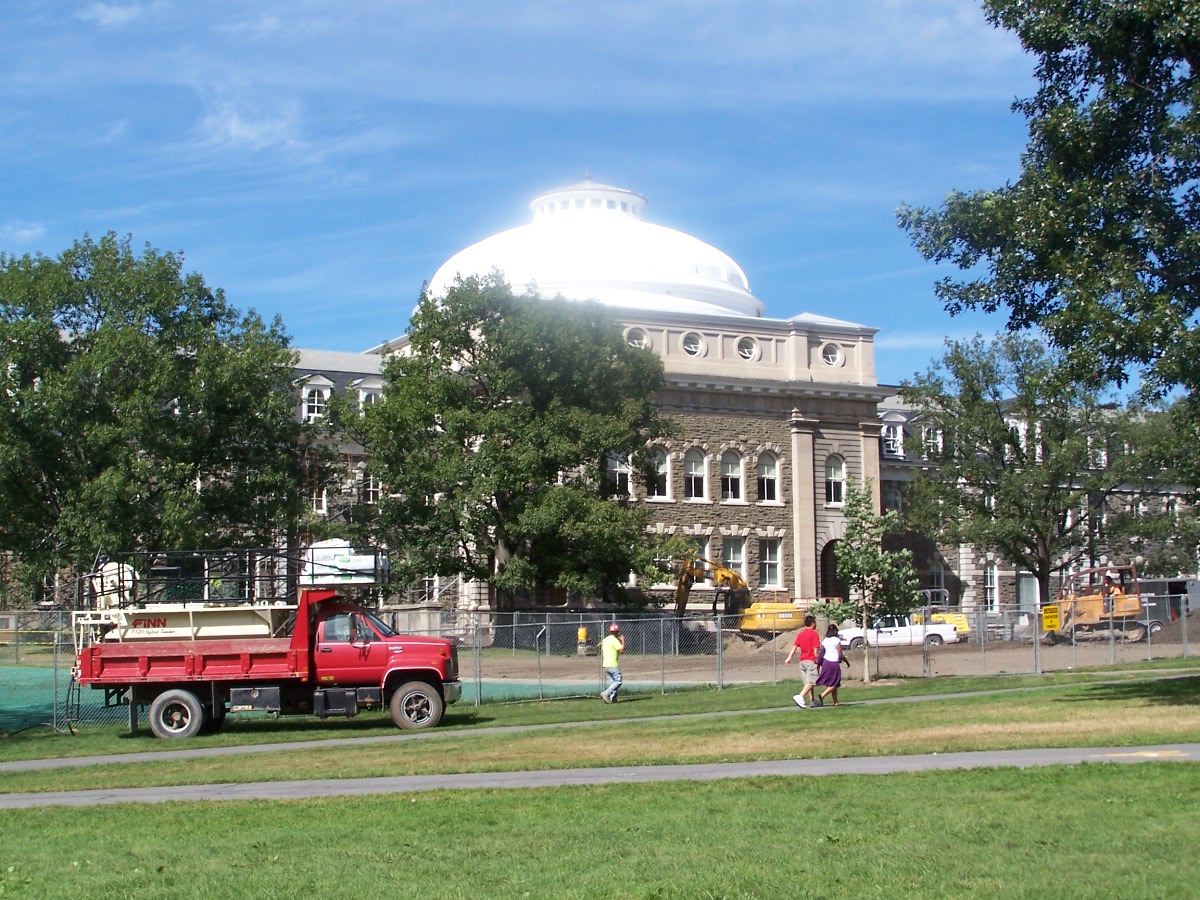
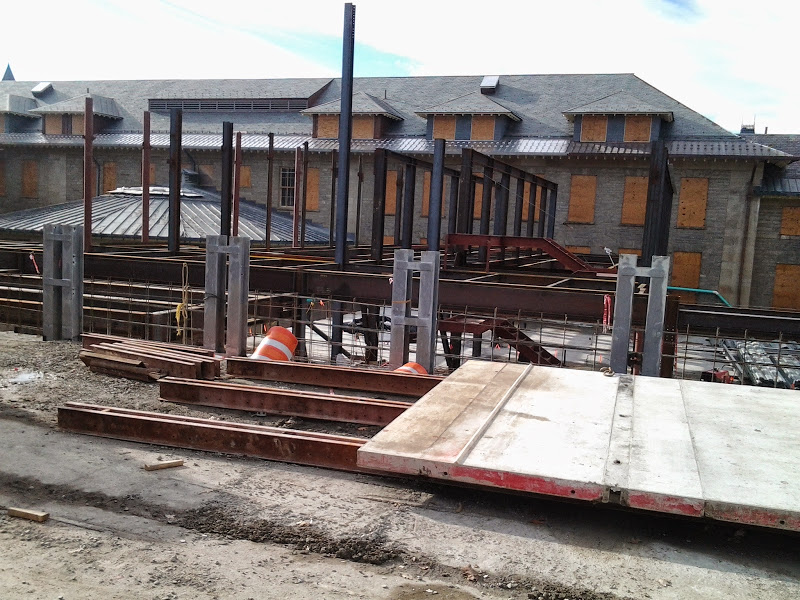
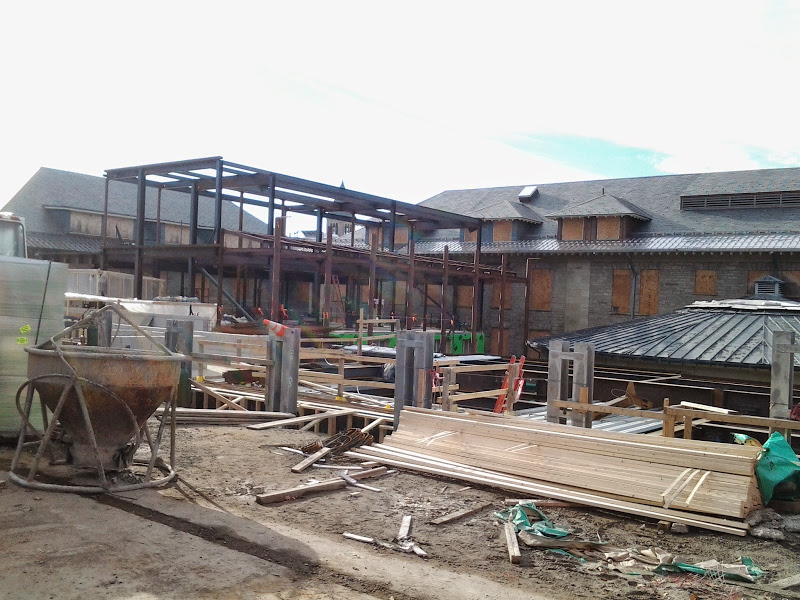
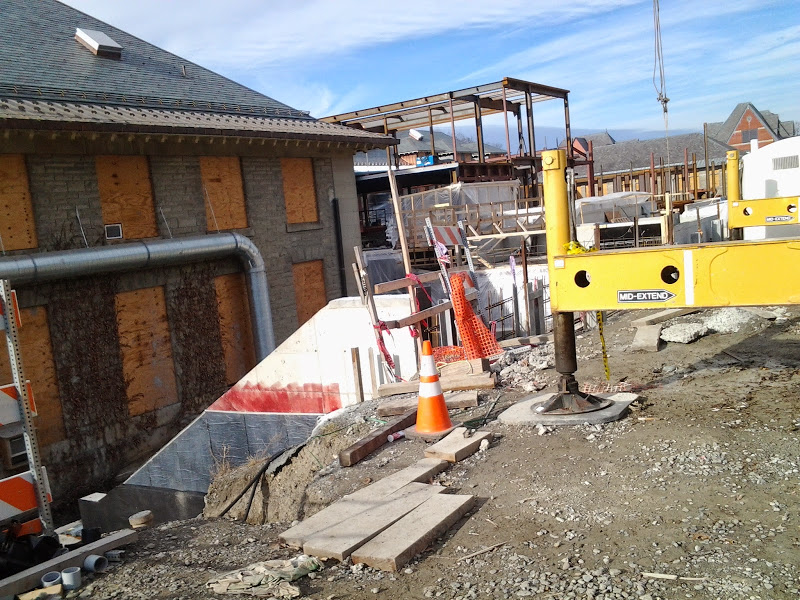
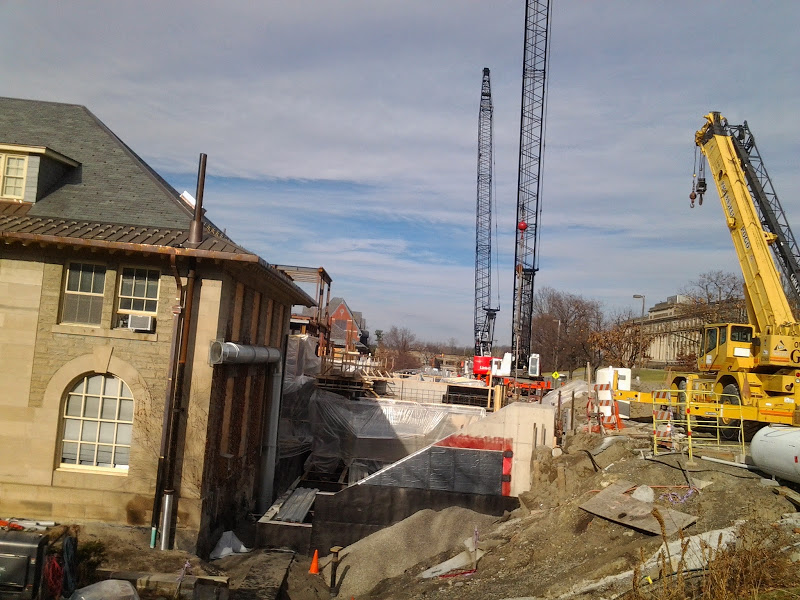
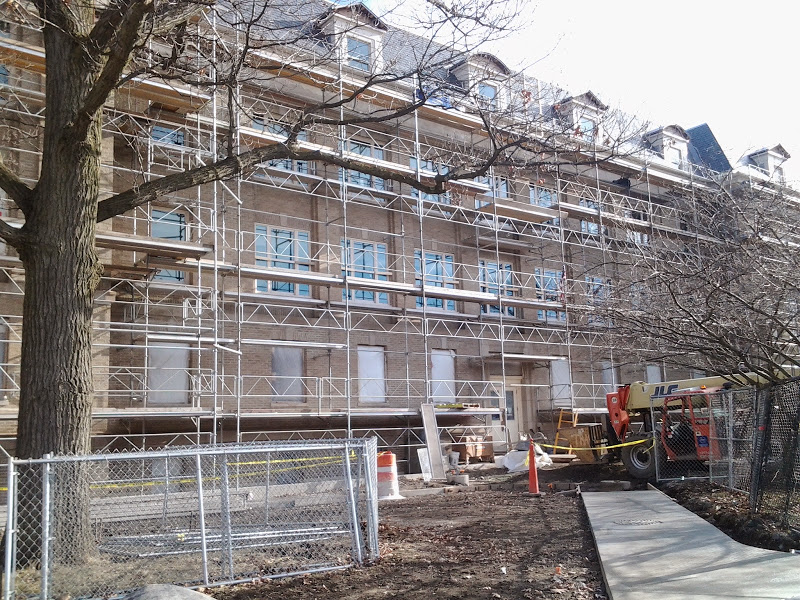
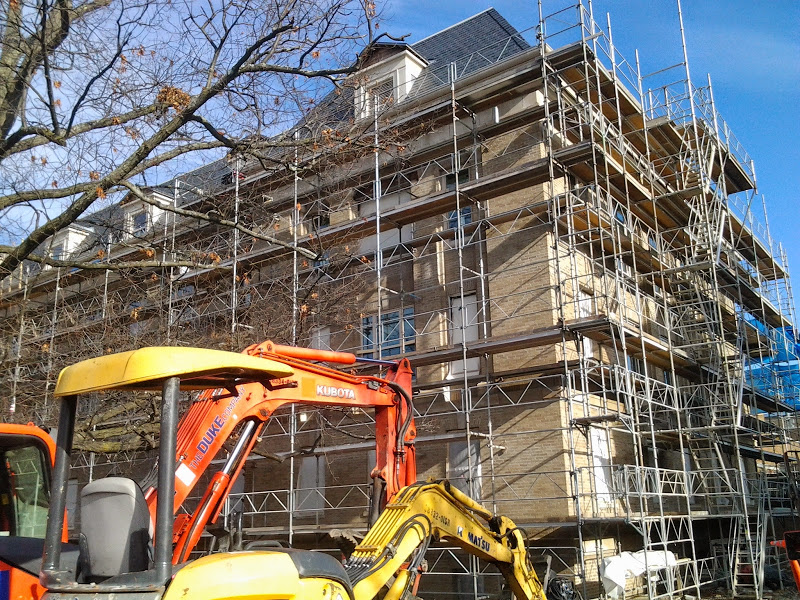
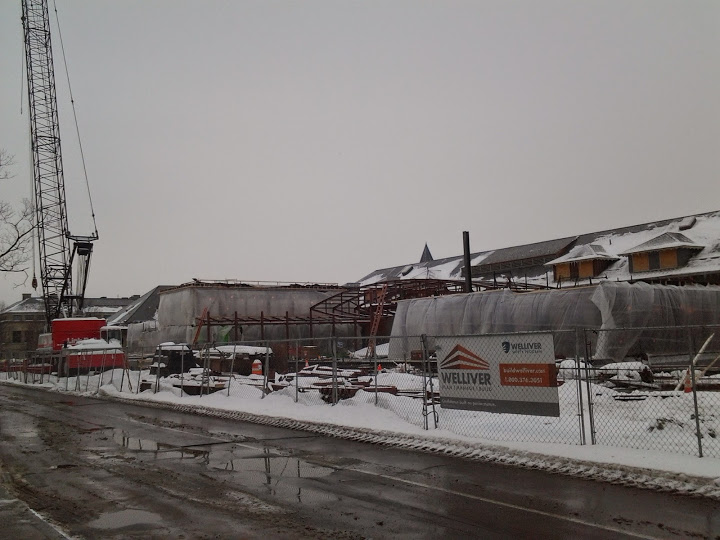
Anyway, construction firm Welliver has been busy craning the new steel atrium trusses into place, with at least four installed when these photos were taken the weekend before last. My laymen’s mind would call the shape almond-like or a pinched oval, but wikipedia tells me the proper terms are “vesica piscis” or “mandorla”, both of which sound like alien species doing battle with Captain Kirk. One of the site cranes has completed its work and has been removed, while the other will stay in place until all the structural steel has been erected. On the lower floors, fireproofing, mechanical and electrical rough-in (plumbing and wiring) is underway, while concrete pouring is taking place in parts of the upper levels. Some of this work would be visible from the fences, were it not for the plastic sheeting put up to keep the frigid winds at bay.

Over the month of February, construction schedules indicate that fireproofing will wrap up on the south side of the ground level, leading the way for sheetrock installation and exterior and interior wall framing. At the same time, fireproofing will begin on the north side of the ground level, and concrete will continue to be poured for the auditorium space and upper levels.

The 33,250 sq ft building was designed by Koetter | Kim & Associates, and is due to open in December 2015. Construction cost is estimated at $61 million.

20150207_143719 20150207_143654 20150207_143557 20150207_143533 20150207_143505 20150207_143426


A New Home For Cornell’s Fine Arts Library

27 01 2015

100_1870

News of this project comes from the city Planning Department’s annual report, rather than Cornell. There was a time when Cornell used to do a reasonably good job sharing brief summary PDFs of its capital projects, but that ended a couple of years ago.

The project is just a single line, line item B. 17 on the 2015 Work Plan: “Rand Hall Reconstruction”. Those words themselves didn’t pull up anything in google, but a couple related searches pulled up this archived July 2014 email from a Cornell employee announcing the announcement article the chosen architect for Cornell’s new Fine Arts library.

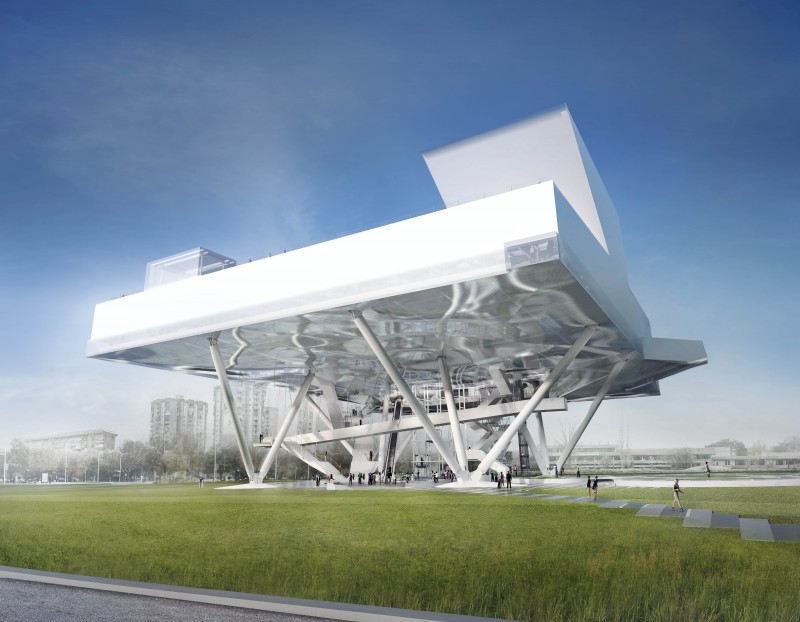
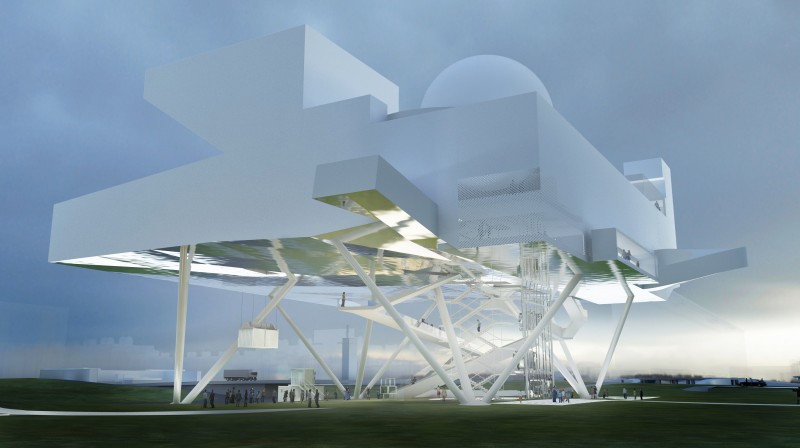
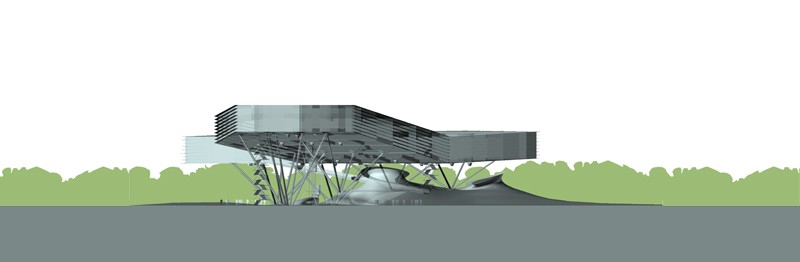
From the AAP website, the Fine Arts Library seems to be more of a renovation than a new construction, moving the FAL from neighboring Sibley Hall and into the top two floors of Rand Hall. The new library is planned for a Fall 2016 opening. The architect is a Cornell alum, Vienna-based Wolfgang Tschapeller M.A. ’87, and the press release credits a $6 million dollar gift from architect and UC-Berkeley professor Mui Ho ’62 B. Arch ’66. From the July 2013 gift annoucement, it sounds like the exterior of Rand will be preserved while the interior is substantially revamped for the new library. There was a great pushback from alumni the first time Cornell tried to demolish Rand Hall, when early versions of Milstein called for the ca. 1911 building’s demolition. Rand Hall sits just outside the Arts Quad Historic District, so any exterior changes would not be subject to review by the very stringent Ithaca Landmarks Preservation Council (ILPC).

If I’m to end this the news article-friendly way, I’d just say “we’ll see what happens with this project moving forward”. But I’m going to do this the blog way, so strictly subjective editorial here on – I can only hope the exterior is preserved. I’m too much of a philistine to appreciate architecture like this:

tschapeler_1tschapeler_2

tschapeler_3

Apart from some close calls with lighthouses and fire towers I’ve visited, I’ve never experienced nausea-inducing staircases before, but there’s a first time for everything.

There’s plenty more on the architect’s website for those who are interested. But they all follow the same, very abstract architectural theme. A fine Arts Library tends to be more avant-garde than most buildings, but this is really pushing the envelope. Cornell, I don’t care if the inside looks like a goddamned funhouse, do the rest of campus a huge favor and leave the exterior alone. Students already deal with Bradfield and Uris Halls, please do not make things worse.

100_1872


Cornell Construction Updates, 12/2014

6 01 2015

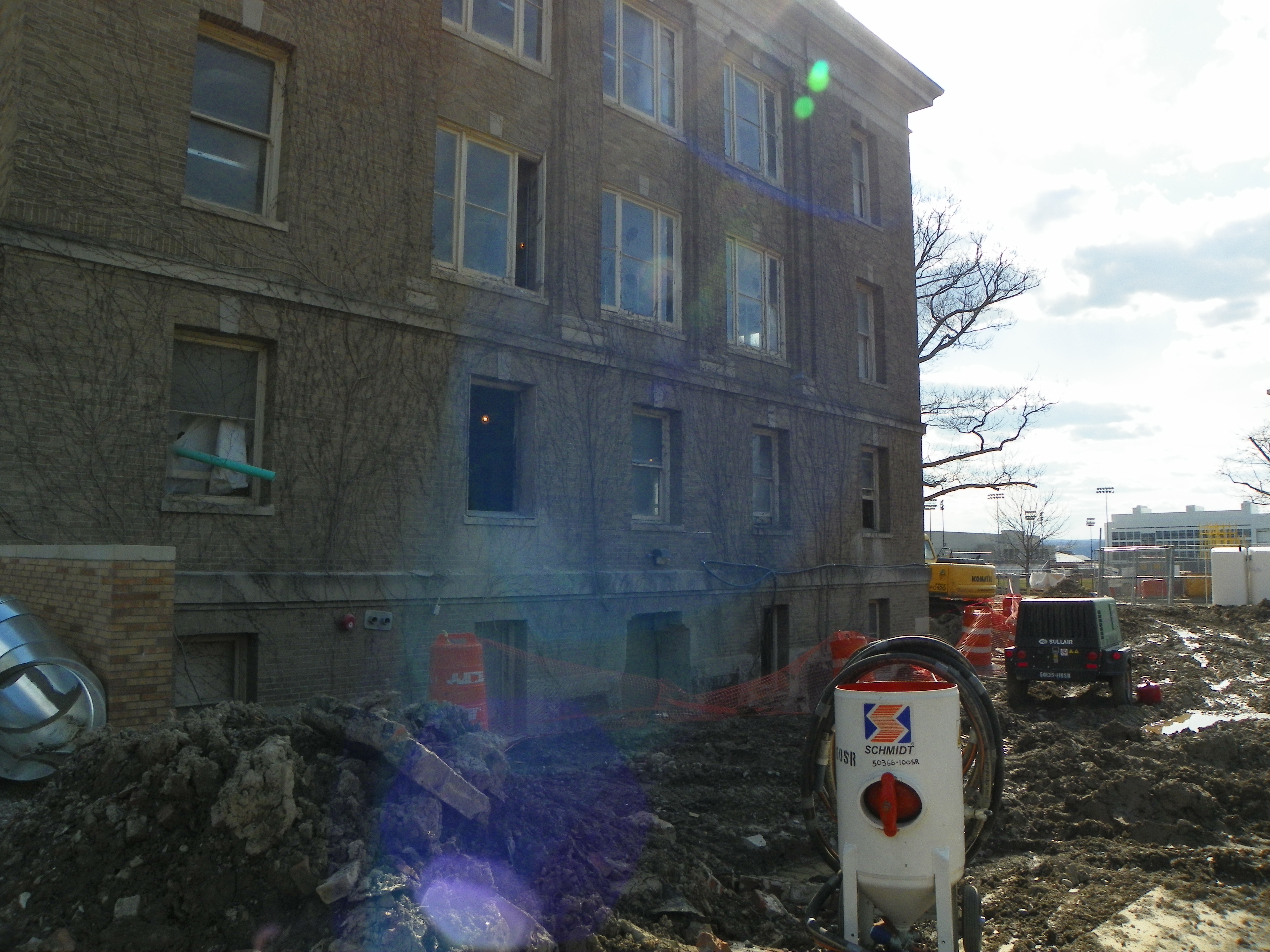
Funny How the November photos are snow-covered, and the December photos were taken when the temperature was in the low 50s F. Work continues on the future Klarman Hall, pushing onward to its intended opening in December 2015. Construction firm Welliver is plodding making slow if steady progress, with steel work and metal decking underway above ground, and utility installation and door framing in the basement. Some interior and exterior wall framing has begun on the basement, ground and first floors. The 33,250 sq ft building was designed by Koetter | Kim & Associates.

20141227_130627 20141227_130711 20141227_130745 20141227_130808 20141227_130913 20141227_130937 20141227_130955 20141227_131041

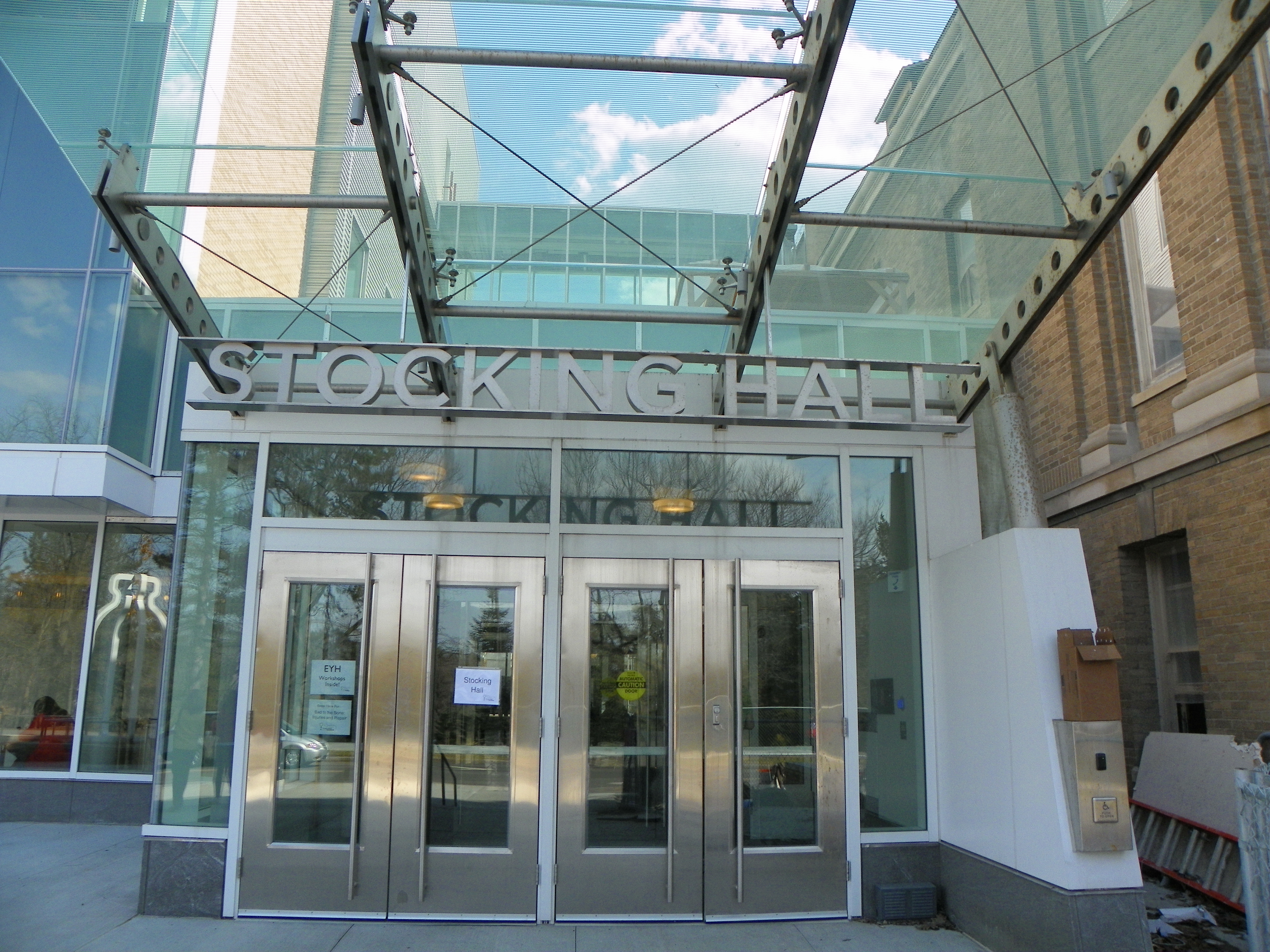
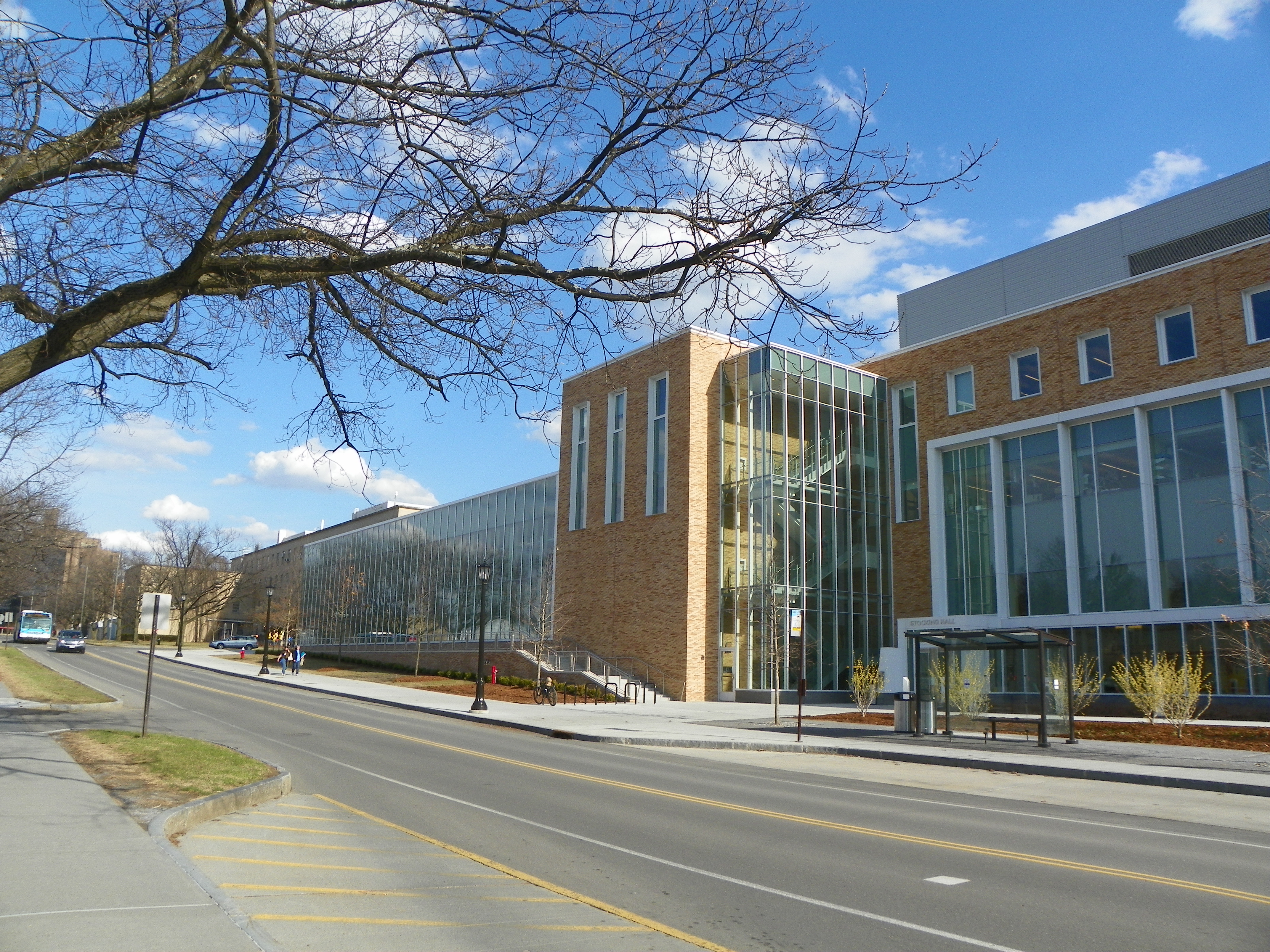
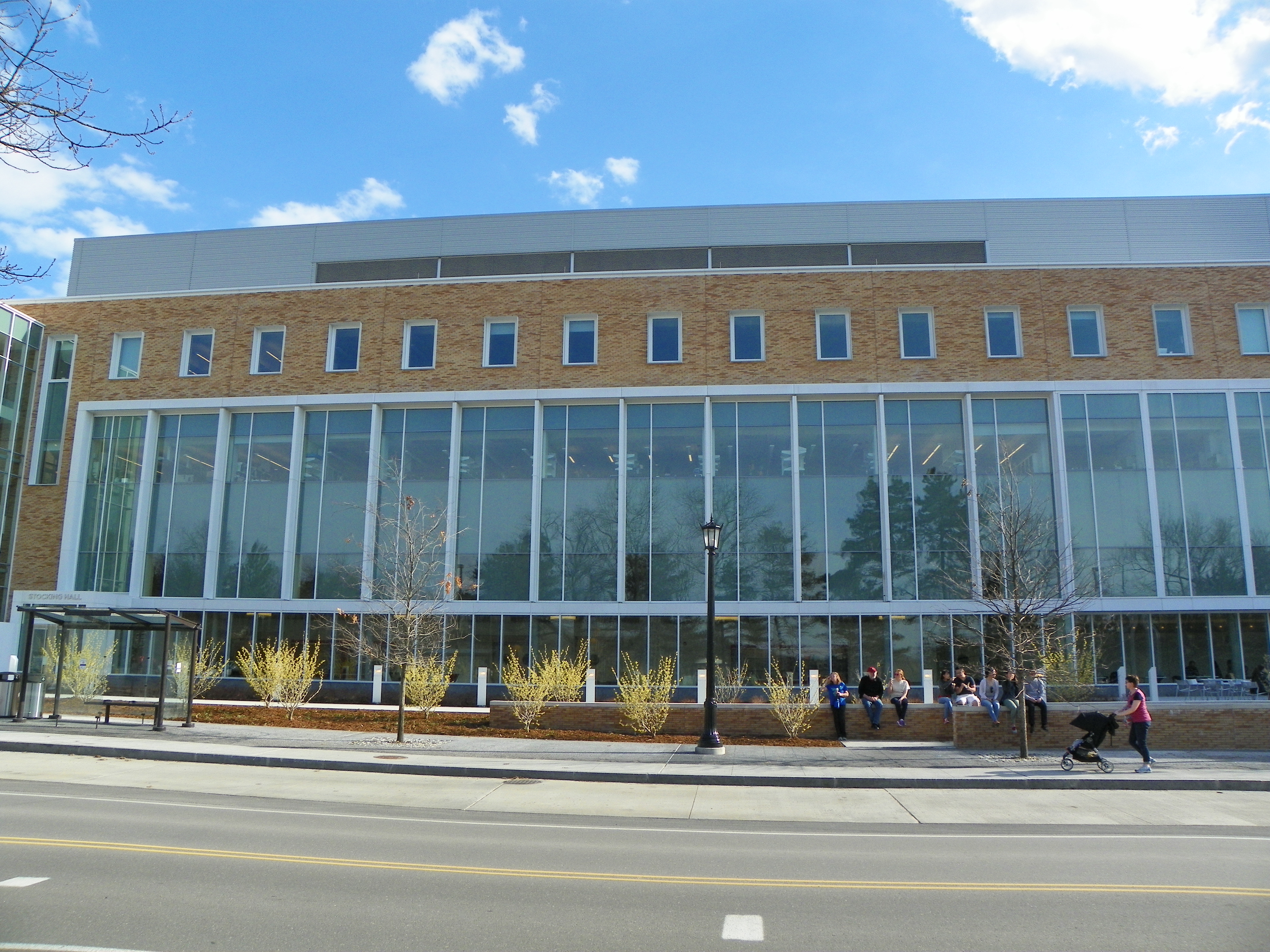
On the other side of campus, renovation work continues on Stocking Hall, the home of the food science department. The porous concrete in front of the new wing didn’t fare as well as hoped, and is being replaced. In the old building, installation of new, energy-efficient windows is underway, and should be completed in the near-term. Interior work continues as labs and academic spaces are fitted out, and the old building and new building connectors have been sealed from the element, making them water-tight. The work will wrap up this summer, weather and schedule permitting; the two-phase renovation was launched in September 2010, and the new wing (phase one) opened in July 2013. The 136,000 sq ft rebuild and renovation is nearly a year behind schedule. Contracting is being taken care of by the Syracuse office of The Pike Company, and the design of the new building is a product of a SUNY Construction Fund favorite, Mitchell Giurgola Architects of New York City.

20141227_124325 20141227_124331 20141227_124336 20141227_124419 20141227_124449 20141227_124510 20141227_124610


Cornell Construction Updates, 11/2014

2 12 2014

The best part about holiday photo tours is that students are few and parking is ample.

20141129_131741 20141129_131757 20141129_131809 20141129_131813 20141129_131833

20141129_131838

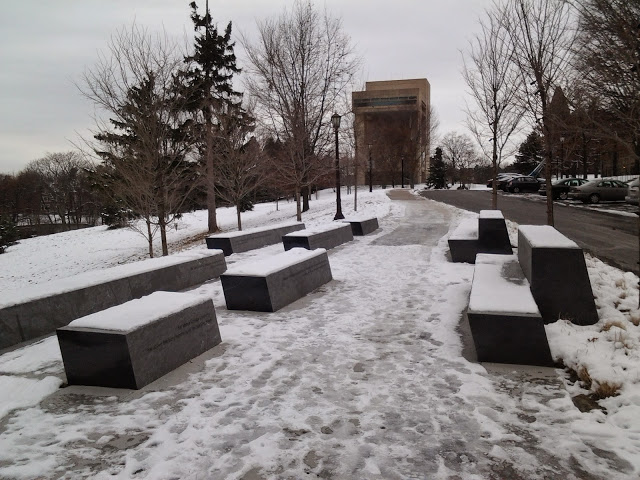
I know this project has been done for a couple of months now, but I was unable to take photos until now. The $650,000, 1,700 sq ft project is essentially Cornell’s history engraved in stone benches and pavers (unfortunately covered by snow and ice here). I imagine it must be a nice spot to sit when not covered in snow.

20141129_132052 20141129_132105 20141129_132151 20141129_132208

AH.Night.view

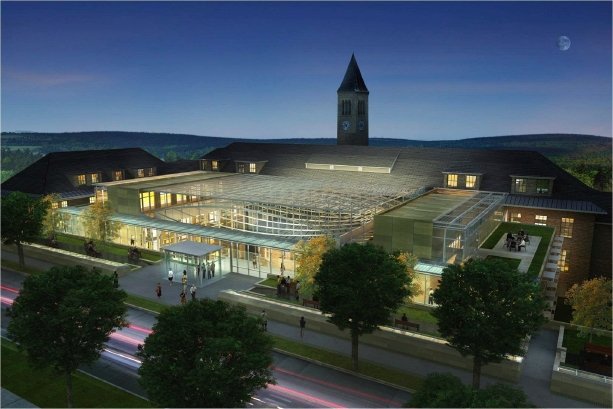
Far bigger is the continued construction for the future Klarman Hall, pushing onward to its December 2015 completion. Construction firm Welliver is plodding through the cold weather to undertake steel work, metal decking, and mechanical and electrical rough-in in the basement. The 33,250 sq ft building was designed by Koetter | Kim & Associates.


Cornell Updates Upson Hall

31 10 2014

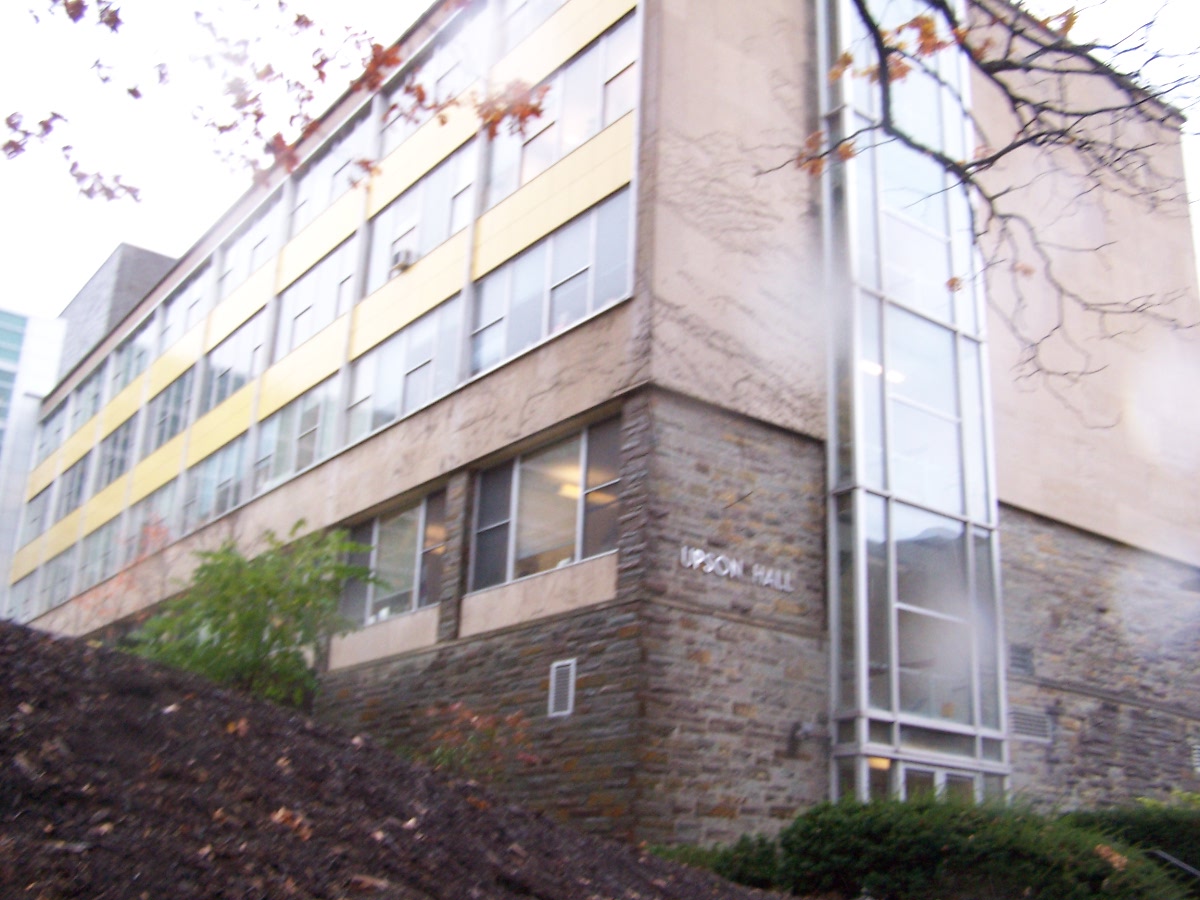
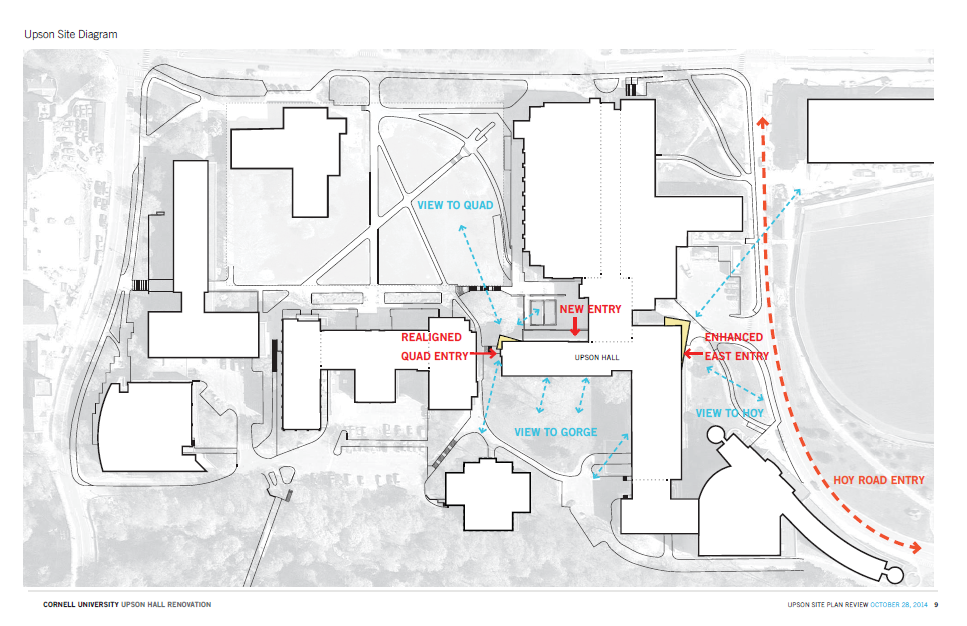
Fresh from the planning board’s first look, here are the renovations Cornell plans to do on Upson Hall. Upson Hall, named for long-time trustee and big donor Maxwell Upson 1899, was built in 1956, and is part of the interconnected octopus of buildings that makes up the eastern half of the engineering quad, connected directly with Grumman and Duffield (with which it shares walls), and Phillips and Rhodes. 5-story Upson occupies about 160,000 sq ft, of which 142,000 sq ft is usable space, which has most recently been occupied by the computer science and mechanical/aerospace engineering departments.

100_2099

The renovations to Upson are just one more step in many taken, or to be taken, to update and expand facilities Cornell’s engineering school. The plans have been underway since Duffield was built 10 years ago, and have evolved with the changing needs of the school. For instance, the original plan had Hollister and Carpenter Halls being demolished to make way for a larger building, which can be seen in the Cornell Master Plan of 2008. But, this plan was tabled as a result of the recession, and that individual proposal was never revived. Similarly, early Gates Hall plans had a building site just south of Thurston, facing the gorge. Currently, work is underway to renovate Kimball Hall, with a summer 2015 completion and $15 million price tag. There is also work planned for a new biomedical engineering building, design and construction TBD, but with a price tag of about $55 million (for comparison, Gates cost $60 million).

upson_1

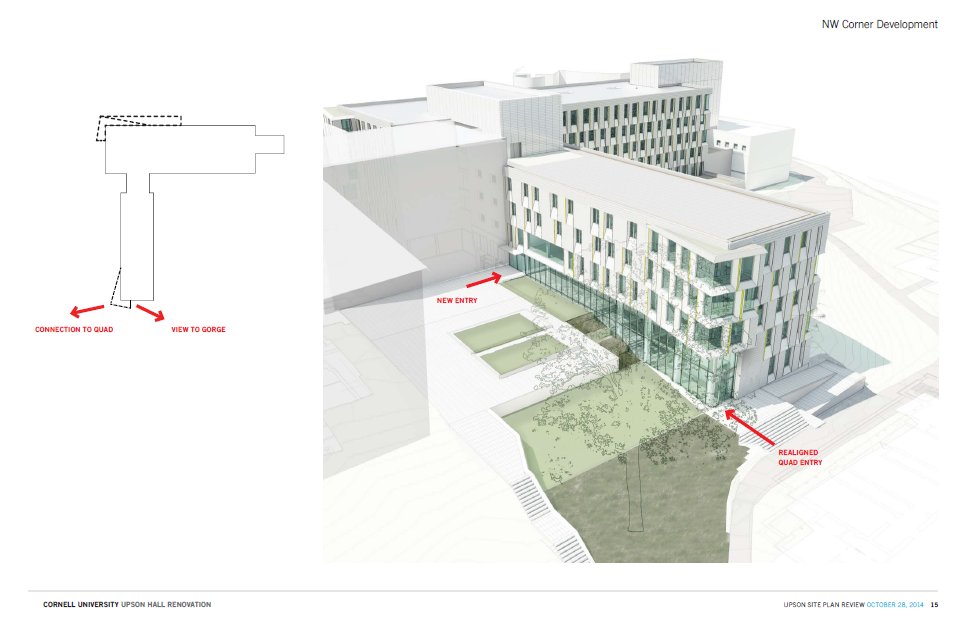
In the proposed $63 million renovation, Upson retains its current footprint, A new entry is established at the intersection with Duffield, and small bump-outs are built over the other two entryways. Better entries and landscaping are strongly emphasized in the proposal.

upson_2 upson_3

upson_4

The design is standard 2010s fare – whereas the current Upson is a box with bands of windows (“International Style”) much celebrated in the days of I Love Lucy and early seasons of Mad Men, the current is the metal-and-glass of all sorts of sizes and shapes. I expect it to age about as well (i.e. poorly). Coincidentally, the design of the building is by internationally-acclaimed firm Perkins + Will, who also designed the original Upson in the early 1950s.

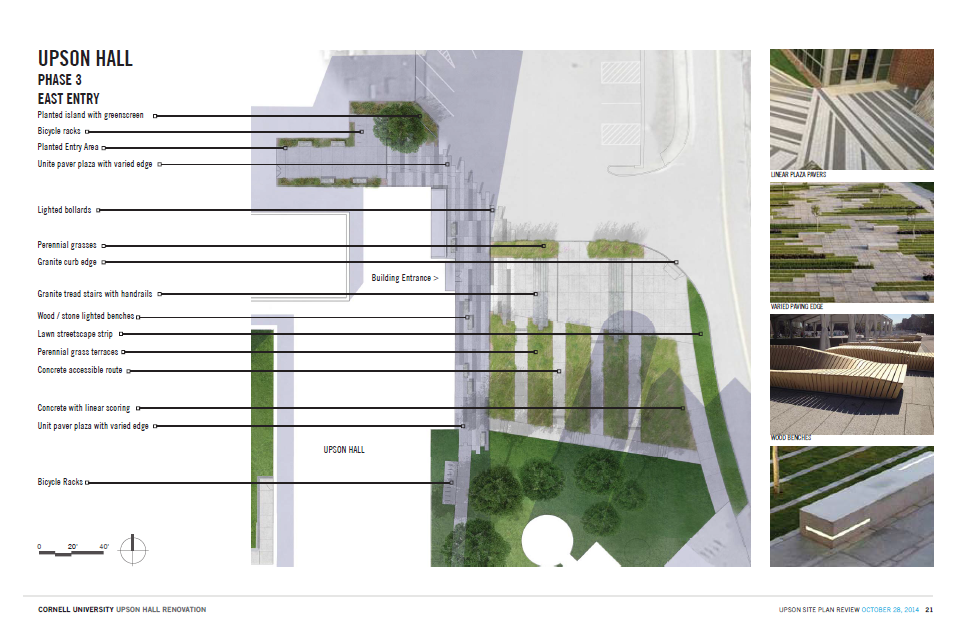
I feel the real draw here is the landscaping. The initial landscaping isn’t all that special, put the Phase III landscaping is a treat. Cornell is way too trendy when it comes to new buildings, but if it’s one thing the university excels at, it’s landscape architecture.

upson_land_1 upson_land_2


News Tidbits 10/25/14: It Seems Expensive Because It Is

25 10 2014

belle_sherman_townhouses_2

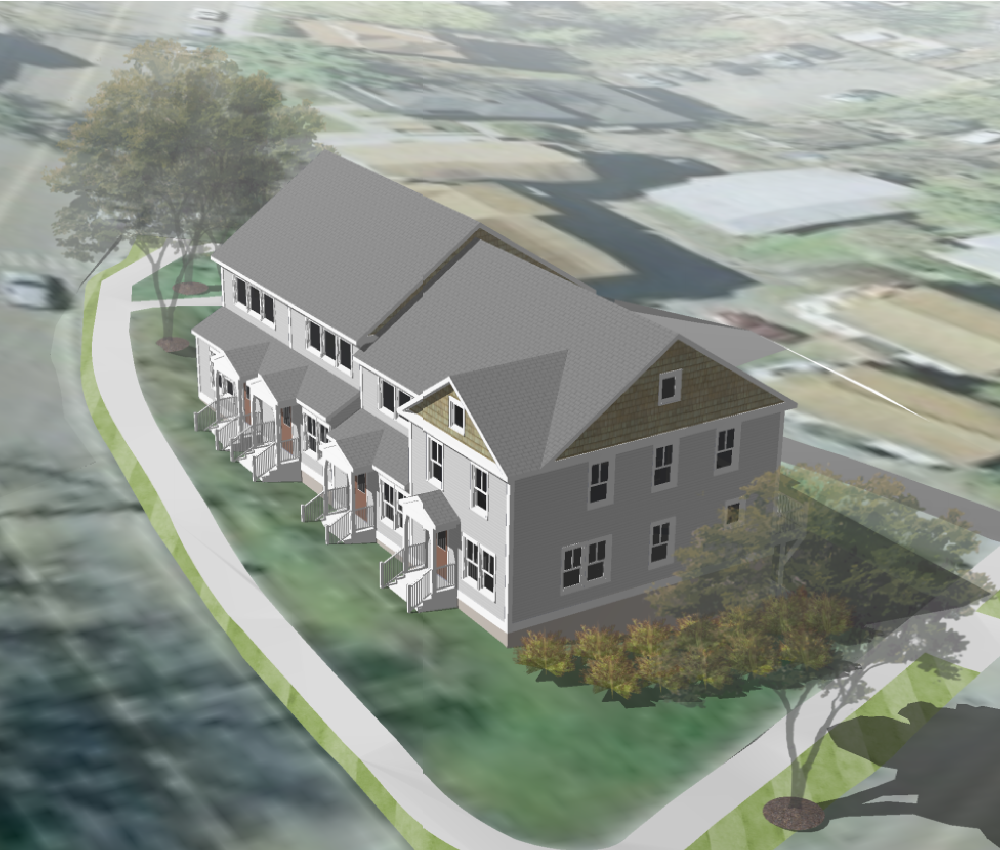
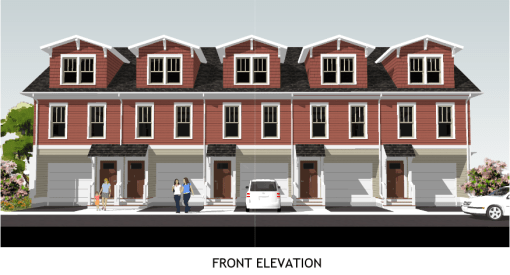
1. I always appreciate it when people respond to my emails. On a whim, I emailed the realtor in charge of the Belle Sherman Cottages to see which ones were underway with sales, and what the time frame was. She forwarded the request to the developer, Toby Millman of Agora Homes and Development LLC, who wrote back to say that as of the 17th, the front-loading garages on lots 25-29 (render above) were being marketed, and three of the five have been sold. They are planning for an April 2015 completion for those five, with the modules being set into place next year (some site prep work may occur this fall). The five townhomes with the back-loading garages are not being marketed just yet. Who knows, with most of the homes being sold and several under construction, the entire project could be complete by the end of 2015.

2. Oh geez. An Irish-themed Hooters is coming to Ithaca. According to the Post-Standard, Tilted Kilt, a “Celtic-themed sports pub”, is looking at a restaurant for Ithaca. The Syracuse location due to open next month will be 7,000 sq ft, I expect an Ithaca location would be similarly-sized. The chain already has a location in Watertown, and has plans for a Utica restaurant as well. Basically, any city over 30,000 roughly within an hour’s radius of Syracuse. Here’s the chain’s website, featuring a woman preparing to make out with a hamburger. I’m sure the fratty frat boys at Cornell are getting excited. Placing bets on whether they go for Lansing or southwest Ithaca.

carey_rev4_3

3. Per the IJ, The developers of the Carey Building expansion are asking for a tax abatement from the city via the CIITAP application. A primer on CIITAP applications can be found here at the Ithaca Voice; a number of projects in the city’s “density district” have used them in recent years as a way to offset high development costs in downtown and West End. Recently, Jason Fane made news for pursuing a tax abatement via CIITAP for his project on East Clinton Street. The standard abatement is 7 years, with 90% of the increased value being offset in the first year. In this case,the building was assessed in 2014 at $475,000. The new construction will cost $4.7 million according to the IJ, but it says $1.6 million in the city’s site plan application; that gives us assessed values in year one of $945,000 if the IJ is right, or $635,000 if the SPR is still accurate. The abatement tapers off through the latter six years. As with Fane, I suspect Travis Hyde Companies is pursuing an abatement simply because they can, they meet the qualifications so carpe diem. The wide difference in the IJ and SPR numbers could be an indication of rapidly rising project costs. Regardless of reasoning, this definitely isn’t going to do the developers any favors when it comes to community relations.

ctown_terr_phase3

4. Maybe the Novarr interview in the Voice will have run by the time this runs; maybe it won’t. Just in case, straight from the developer himself, Phase III/Building 7, with its 247 units, is planned for a late 2015 construction start, with completion in the summer of 2017. It’s a long construction period; it’s also a very big building.

ctown_crossing_rev2_1

5. From the Cornell Daily Sun, it’s expected that rents at Collegetown Crossing will be around $1,000, per month, per tenant. Students in Cornell’s Student Assembly aren’t exactly pleased, since that number far exceeds even what most Cornellians can afford (but don’t worry; with student population growth far outstripping supply, there’s enough demand for student rentals, even in the luxury segment, that this place will fill up to capacity as soon as it opens). Welcome to Ithaca’s severely under-supplied rental market; open your wallets wide, boys and girls.

It just occurred to me that since I wrote the enrollment column last year with 2012 numbers, I glanced at the 2014 numbers on the University Factbook. Now it’s 21,850, an increase of 426 students in 2 years, and in pace with the 2002-2012 period. 234 of that 426, 55%, were grad and professional students.

There are a number of factors for why it’s so expensive – land values in Collegetown are high, construction labor is expensive because Ithaca is off the beaten path, taxes are high, and the new Collegetown zoning doesn’t allow Lower to build out the rear portion as he initially intended, forcing him to keep the building’s rear flank at 4 floors instead of 6 (the zoning is also what allows him to build in the first place, since it removed the parking requirement).

Let me be clear. Unless something is done to reduce demand or increase supply, this will become the norm, and Cornell students of modest means will be placed in an increasingly precarious situation with the cost of housing. Just like the rest of Ithaca.

6. To wrap things up, here’s looking into the agenda of next week’s Planning Board meeting (and what will probably comprise my mid-week posts). Purity, The Canopy by Hilton, Chain Works, 114 Catherine, and the 15,700 sq ft retail building on the Wegmans pad site. Only the Wegmans parcel is up for final approval.

114_catherine_rev2_1

114 Catherine comes to the board with one major change – the front entrance was moved from the corner to the middle of the front facade. Still 17 bedrooms in 3 units.

As for new projects coming up for sketch plan, we technically have three. As much as I was looking forward to it, Ithaca Gun is not one of them, but I’ll keep my fingers crossed for next month.
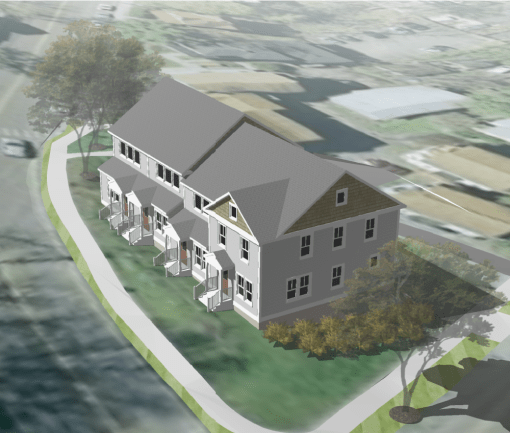
402_s_cayuga_st_1

The first is 402 S. Cayuga Street. Eagle-eyed readers will recognize this as INHS’s 4-unit townhome project.
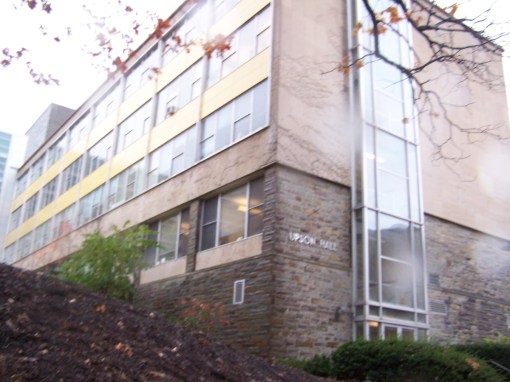
100_2092

The second is Cornell – Upson Hall renovations. Cornell stuff is easy enough to find, they publish veritable novels about projects once they’re cleared by the Board of Trustees. Upson renovations sound like they’re mostly internal work with a facade update. I’m more interested in the proposed biomedical building they have yet to roll out designs for. The Upson renovation is supposed to cost $63 million, so maybe there are additions involved; the new biomedical building, $55 million. The firms involved look to be LTL Architects, Perkins+Will, and Thornton-Tomasetti. In other words, modern glass and steel box, looking for LEED Gold. No renders yet, but I’ll post ’em when I see ’em.
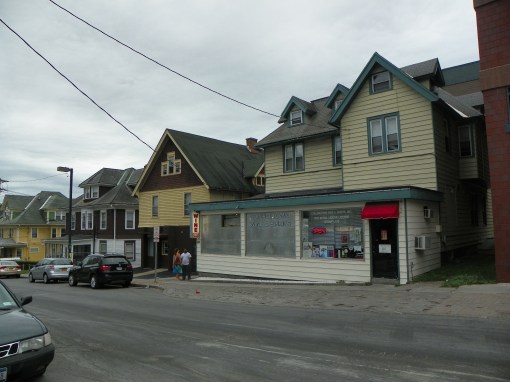
101_4858

The last of the trio is yet another Collegetown project – 302-306 College Avenue, an address which consists of the three architectural stunners above. I’ve been patiently waiting for a proposal here (though to be honest, I’m kinda partial to 302, second from the left). John Schroeder from the Planning Board has wanted a proposal here for years. They sit in an MU-2 zone – 6 floors, 80′, no parking required. All three are owned by the Avramis family, Collegetown’s third-largest property owners. More interestingly, rumor has it that the buildings they own contingent to 302 College on Catherine Street, which are CR-4 zoning (no parking, 4 floors), are involved as well. So this could be a fairly substantial project. My money is on Sharma Arch being involved, since they are Avramis Real Estate’s usual architect-of-choice. I figured that the M&T Bank on the 400 block would get torn down first, but this is no big surprise, the Avramises have been fairly active in redeveloping their properties.
A Building Cornell Regrets, and That Time I Was Duped

16 09 2014

100_3110

Cornell’s a large campus with many buildings to its name. With some, form comes before function (Balch isn’t the most practical layout for a dorm, as eye-catching as it is), and others it’s function before form (Olin Lab, for instance). The goal is to have both a pleasing form and functionally efficient, which many of the more beloved buildings, like Willard Straight Hall, have been able to accomplish.

Some building accomplish neither. Some buildings do such a bad job at accomplishing form or function that they force the university to do an overhaul of its planning process.

There’s a few that could earn such a dubious distinction (old MVR north and Bradfield come to mind), but one resulted in a special amount of acrimony – Uris Hall.

100_6597

Let me do a quick summary. Uris Hall was completed in 1972 thanks to a generous donation from real estate developer Harold Uris ’25 and his brother Percy (who graduated from Columbia, which has a less offensive Uris Hall). According to the now-offline Dear Uncle Ezra’s 12/27/2005 edition, Cornell gave the donors the ability to dictate design preferences, and while they were in Pittsburgh, the Urises noticed how amazing the (then new) U.S. Steel tower’s facade looked (which uses cor-ten steel). They wanted to see that on the new building, so that’s why it was used on Uris Hall. Corten steel turns a rusty-gold with blue overtones when it reacts with common air pollutants, but because of Ithaca’s lack of air pollution to oxidize the steel’s surface, it’s a decades-long process.

Okay, so it’s ugly. But it gets so much worse than that.

For one thing, the upkeep of the facade gave the building an incredibly high maintenance cost, something that Cornell was not happy about. An October 2, 1973 Sun article notes that Uris cost about 81 cents per square foot to maintain in 1972-1973, compared to the campus average of 15 cents per square foot. When a building is 174,000 square feet, that cost really adds up (if you’re keeping score at home, that’s about $115,000 in 1973 dollars, or about $616,000 today). There were a couple primary reasons for this: large glass expanses of single-pane bronze-tinted glass resulted in huge utility bills and were too big for facilities equipment to clean, and the slowly rusting steel. Technically, if all had gone to plan, the rust would have formed quickly, and the oxidized surface of the steel would have created a protective coating and kept future maintenance costs low. In reality, the slow rusting resulted in a runoff of steel oxide film being deposited onto the glass, which had to be quickly cleaned off before it could etch into the windows. So every rainstorm was a race against time with inadequate equipment. These were things that the architect, Roy O. Allen Jr. of SOM, admitted had not crossed his mind when designing the building.

For what it was worth, Harold Uris donated another $1 million for the building’s maintenance, and the university reconsidered the balance of building design vs. maintenance costs. Corson himself declared that the university would not borrow money to construct buildings that would be a long-term burden on university finances.
100_2069

Well, I’ll admit I’ve been tricked. I ran a couple keyword checks to see if the article cited below checked out and nothing came up to suggest it was false. Apparently I used the wrong keywords. My mistake! I commend the 1970s Daily Sun for making it so believable. -BC
Ah, but when it rains, it pours! And when it pours, it corrodes the exterior steel, to the point where the entirety of Uris Hall had its structure compromised. So the university found itself in May 1974, two years after the building opened. The university was a little nervous about issues with Uris Hall and commissioned a team of civil engineers to examine the building. They found that only was the steel weak from corrosion, the building was liable to collapse in a matter of weeks. Harold Uris freaked out. Unable to bear further embarrassment from his namesake building, he threatened to take back a $1 million donation unless students were away from campus while emergency repairs were taking place at the end of May. This meant rescheduling student exams and reducing the exam study period from five days to two in order to accommodate. The university claimed that it was a chilled water/air conditioning issue that caused the abbreviated study schedule. In sum – a rich donor held the university by its financial balls and forced 15,000 students to undergo undue extra stress in order to hide an embarrassing mistake that was in some degree the result of his architectural tastes. The only reason all this news became public is because the outgoing arts dean refused to go along with the charade. Thomas Mackesey, the VP of planning who had signed off on Uris Hall, resigned as a result of the fiasco.

There’s probably more to the aftermath, but the Sun archives lack information for fall 1974 through early 1978. But at the very least, when it came to being a disaster of a project, Uris Hall wins the gold medal.


Cornell Construction Projects Update, 9/2014

10 09 2014

1. The future Klarman Hall progresses on East Avenue. The $61 million, 33,250 sq ft humanities building being built by Welliver is currently in the process of building its north foundation wall, with rebar assembly underway this month (Jason at IB offers a more thorough explanation). The concrete is being poured section-by-section, and the north foundation wall has made some progress since Jason’s photos from September 1st.

101_4837 101_4838 101_4841 101_4842 101_4843

2. Exterior work is finishing up on Statler Hall. The $2.4 million renovation and 1,300 sq addition to the front entrance will be finished before winter comes, and will round out phase III of renovations to the ca. 1949 structure. All three additions are by KSS Architects.

101_4860 101_4861 101_4863

3. Renovations continue to the historic wing of Stocking Hall. Inside, ceilings are being dry-walled and walls are being primed. The gutters are being replaced and new windows are being prepared for the the original 1921 structure.  These photos don’t show these details, but I have a friend who’s kind enough to forward the project updates the program sends to its alumni. The project is a little behind schedule since it was due to finish in August 2014, and it looks like Q1 or Q2 of 2015 is a safer bet. Both the renovations and the new addition cost a combined $105 million.

101_4864

4. A more subtle campus project is the re-landscaping of the campus property along Tower Road. The road was repaved, and the adjacent parking was removed and replaced with sidewalks, lighting and covered bus shelters. Considering this is where I typically park when I visit the campus, I’m less than enthused, but it is a prettier sight then the pothole-laden parking spaces that used to be there.

1-2-2014 334
101_4869


Cornell Construction Updates, June 2014

4 07 2014

Three sets of Cornell updates in this post – the law school addition is complete, Klarman Hall excavation is underway, and a picture from the Statler Hall renovation (which Jason just posted about).

The law school addition, by Boston-based Ann Beha Architects and constructed by Welliver, is part of the multi-phased renovation of the law school, which began in 2012. The cost of the renovation is begged at $55-60 million, with 40,000 sq ft of new space and 160,000 sq ft of renovated space. The architects specialize in contemporary additions sympathetic to present facilities – arguably, one of the few parts of Cornell where this was deemed an important matter (looking at you, Hotel School).

The Hotel School addition is phase three of renovations, adding a modern entrance to Statler Hall. The glassy entrance will add 1,619 sq ft at a cost of $2.4 million, and should be complete in time for the fall semester.

Klarman Hall, given its notable location behind Goldwin Smith, is the campus project du jour, sporting 67,500 sq ft of space (33,250 sq ft usable) and a $61 million price tag. Foundation footings will be completed by early august, and foundation pouring by mid September. Final construction will wrap up in December 2015, as posted on the sign below.

6-29-2014 169 6-29-2014 170 6-29-2014 172

Apparently naming green spaces is fashionable. I thought that Pew Quad and Rawlings Green would be the extent of it.

6-29-2014 175 6-29-2014 176 6-29-2014 177 6-29-2014 178 6-29-2014 179


Dairy Bar and Bar Argos, 4/2014

15 04 2014

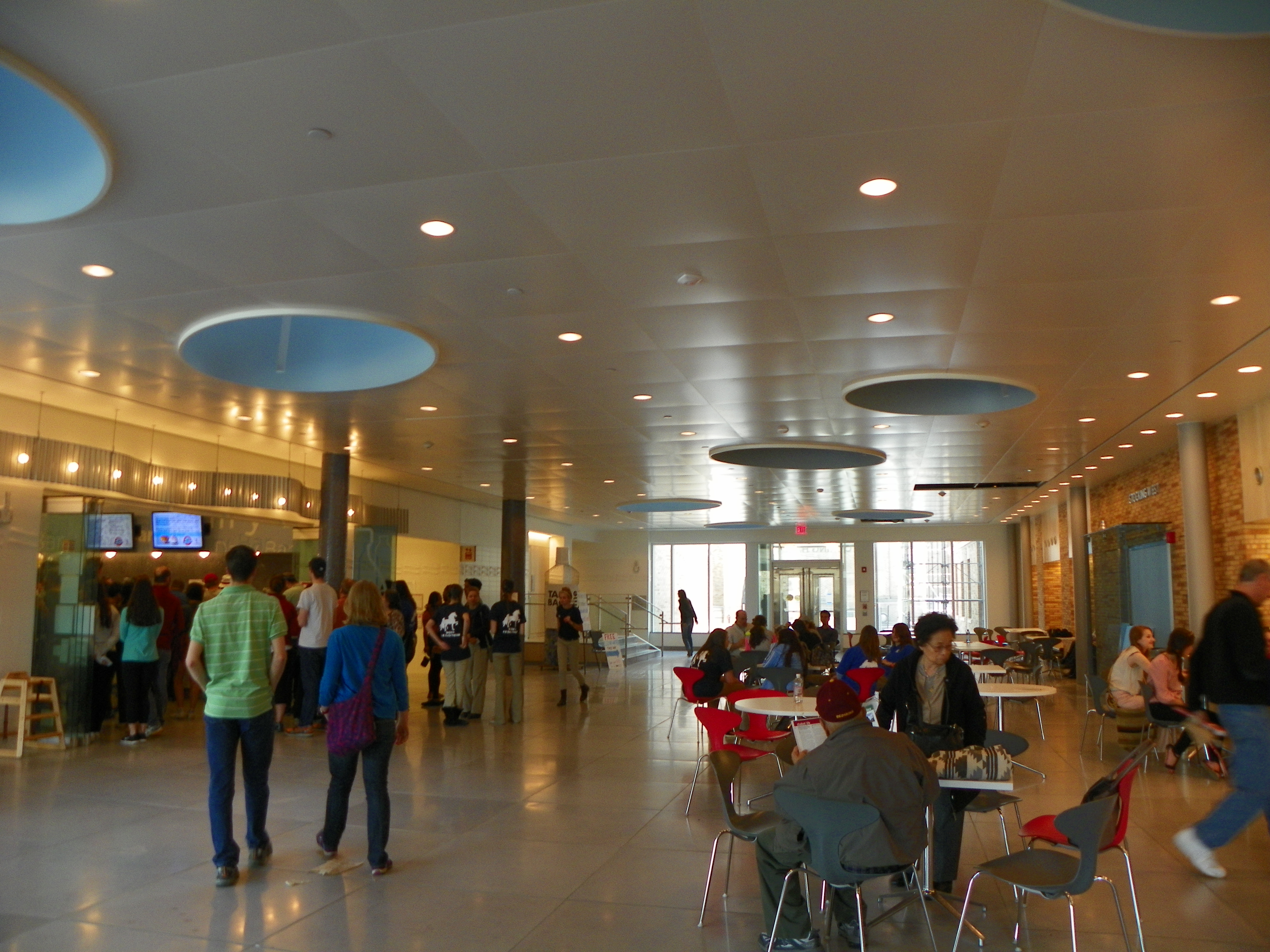
Two of the bars I hit up last weekend. For the former, it was my first time inside the new Stocking Hall (the old one is undergoing renovation, and the project won’t be fully complete until 2015). It was absolutely packed with 4H kids/parents, and Cornell Days kids/parents. To order and receive ice cream was a 40-minute endeavor. But I got my Italian lemon cream cake, and that’s what matters.

4-13-2014 058

4-13-2014 059

4-13-2014 0604-13-2014 0614-13-2014 0644-13-2014 0624-13-2014 0674-13-2014 0664-13-2014 053

4-13-2014 057

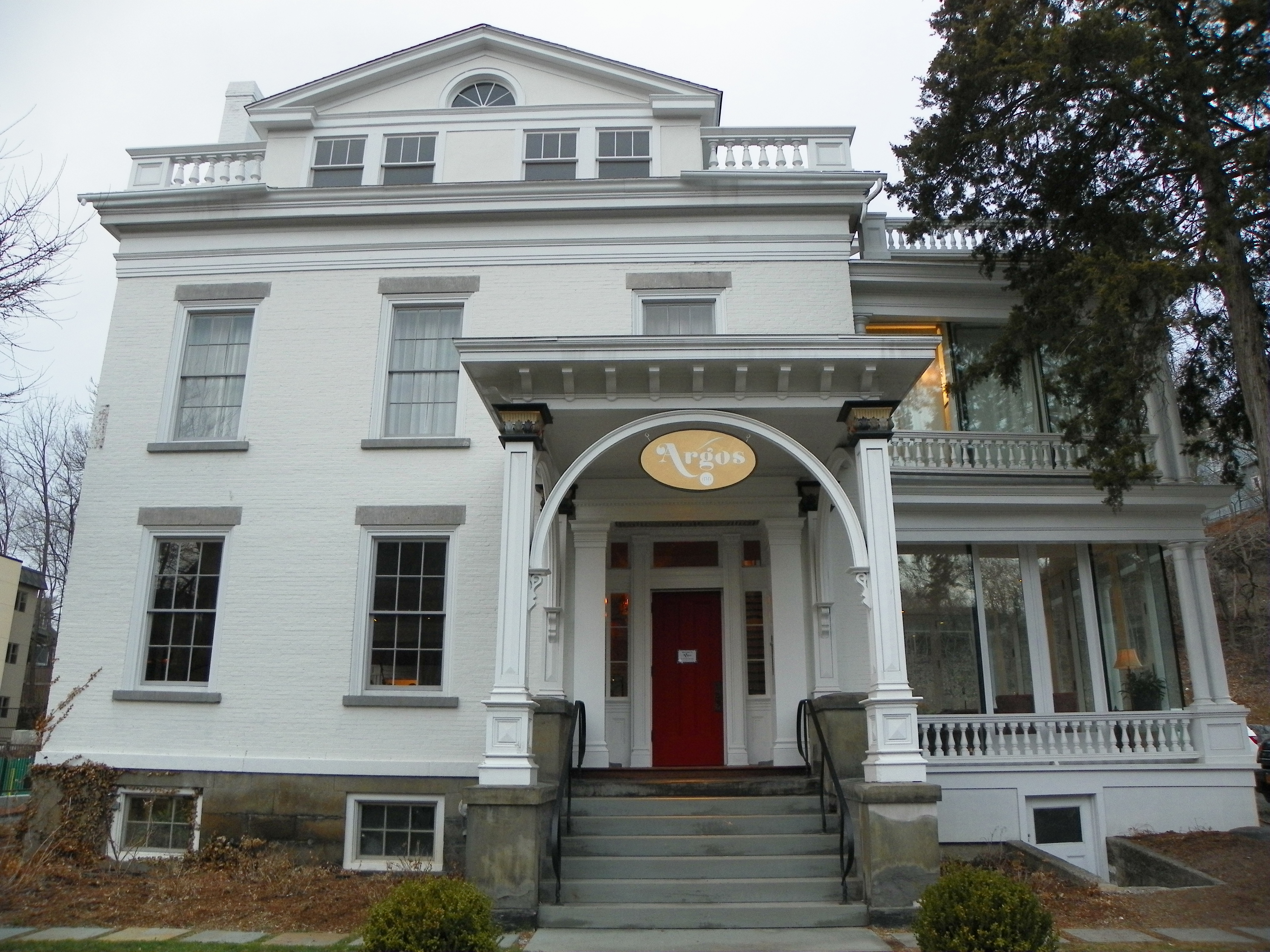
Meanwhile, on the more adult end of the spectrum, this past weekend was also my first time inside Bar Argos, the open-to-the-public bar of the Argos Inn. I had a Cuba Libre that was not overpowering, just the right amount of bite. Drinks here run on the high side of average, but the interior was fairly warm and inviting.
4-13-2014 069 4-13-2014 070 4-13-2014 071 4-13-2014 072