Homecoming Construction Update

19 09 2011

I came. I saw. I took photos. Note that all the photos can be enlarged by clicking on the image.

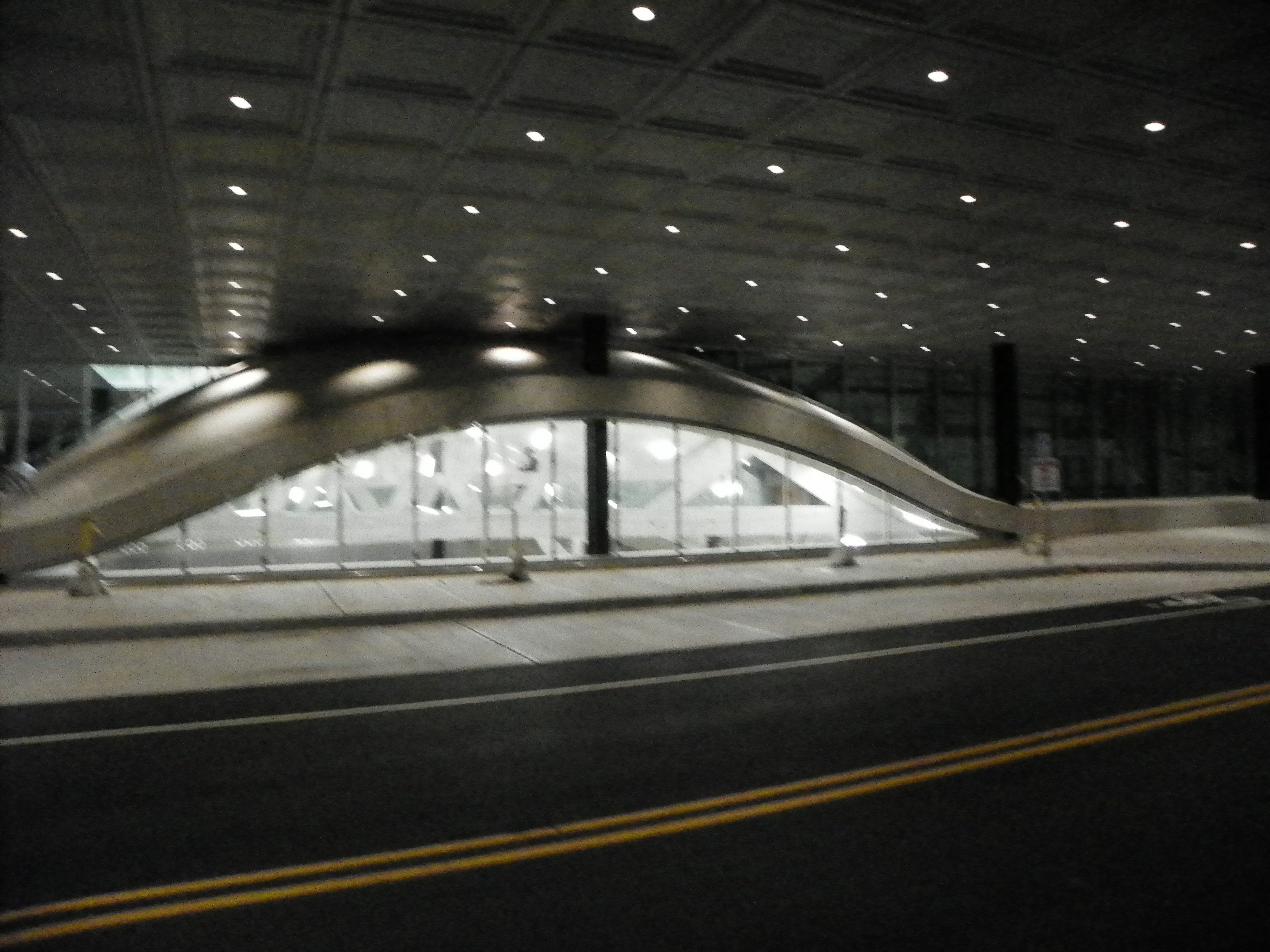
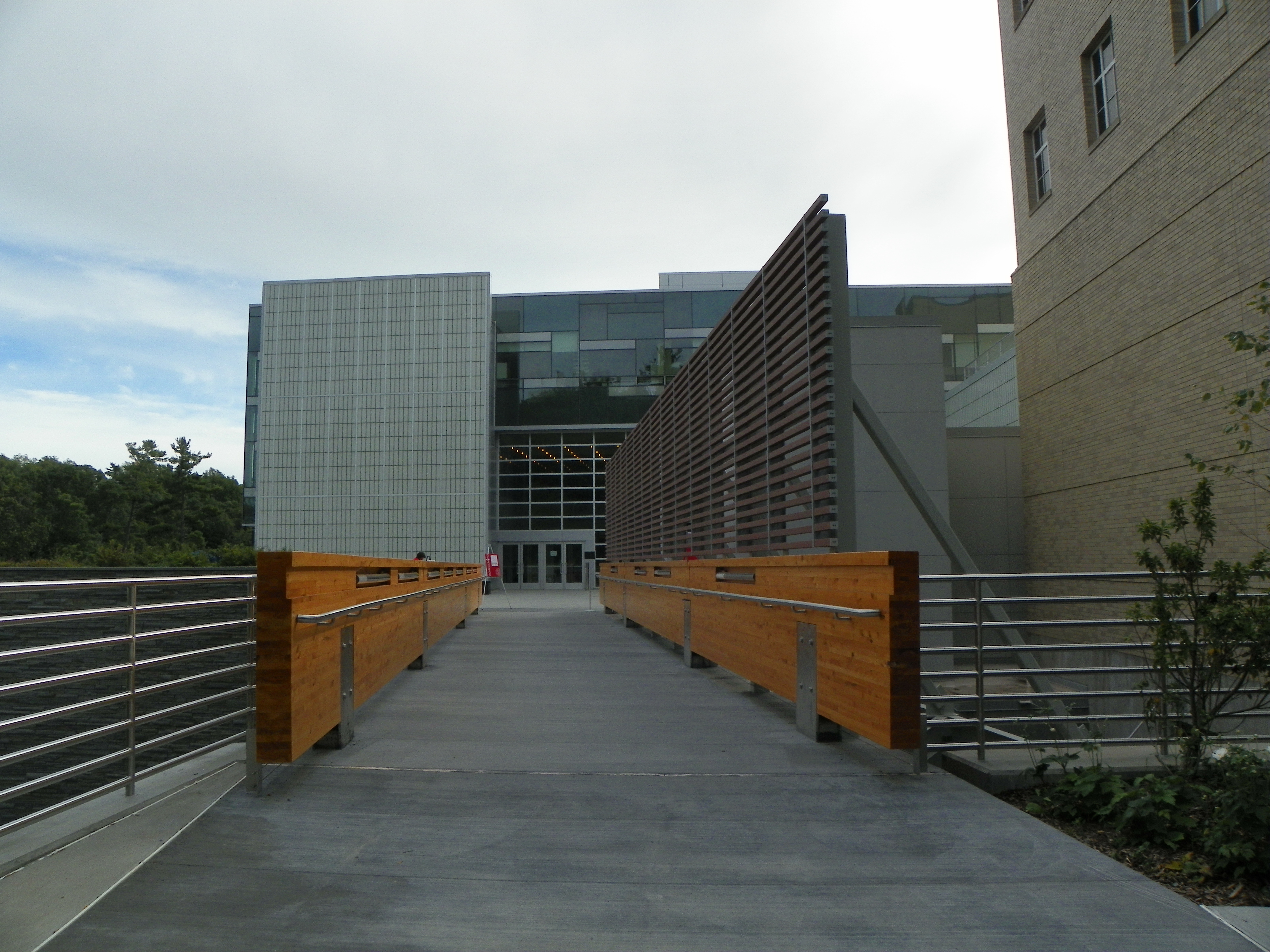
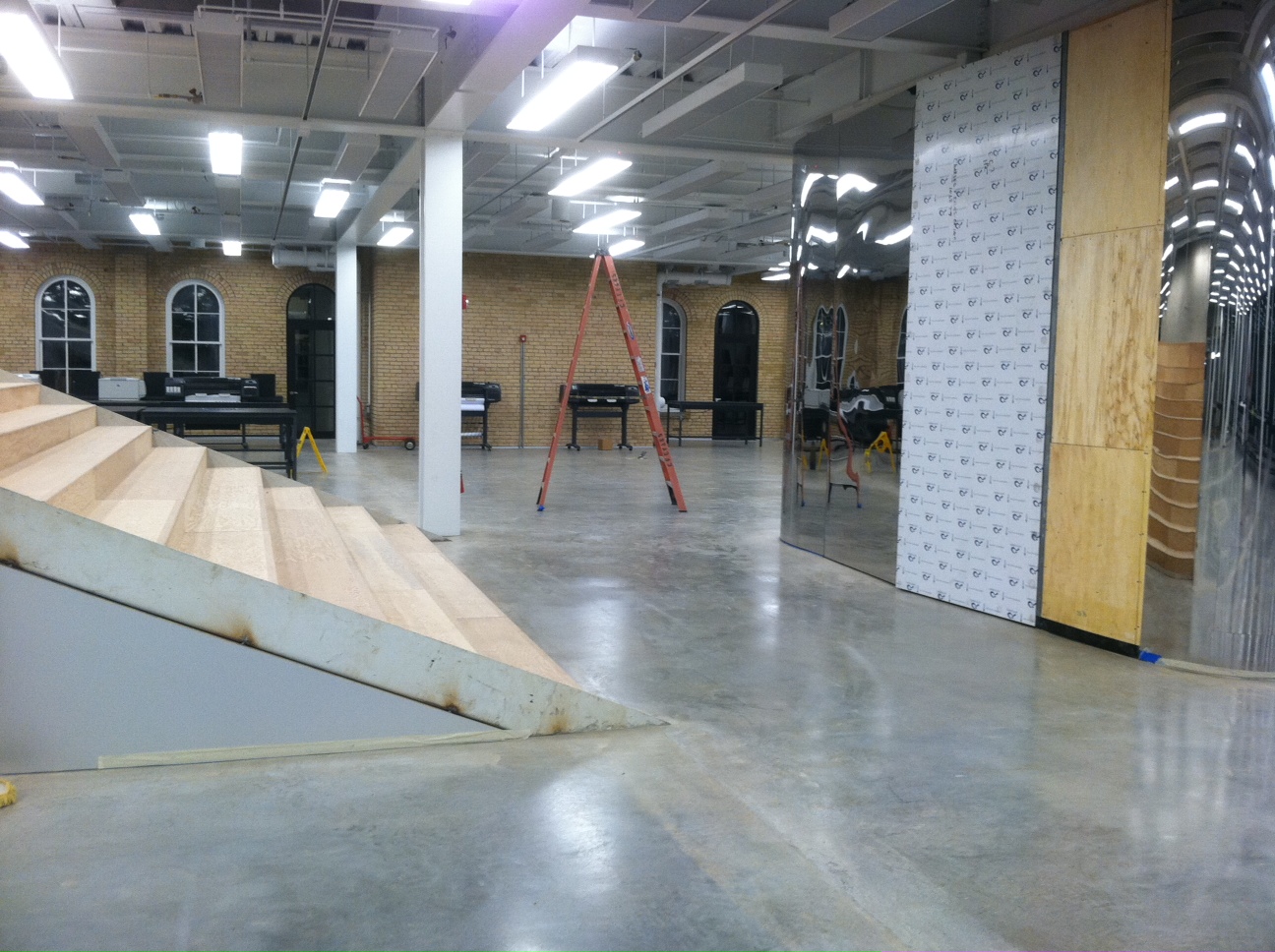
Milstein Hall – The building so nice I visited it twice (and by nice, I mean it’s “nice”, but not “great”, and hard to believe it cost $55 million). During the second visit on Saturday evening, a group of about ten skateboarders converged on the white humps and concrete curves. I’m going to guess it will only be a matter of time before that gets banned if it hasn’t been already.

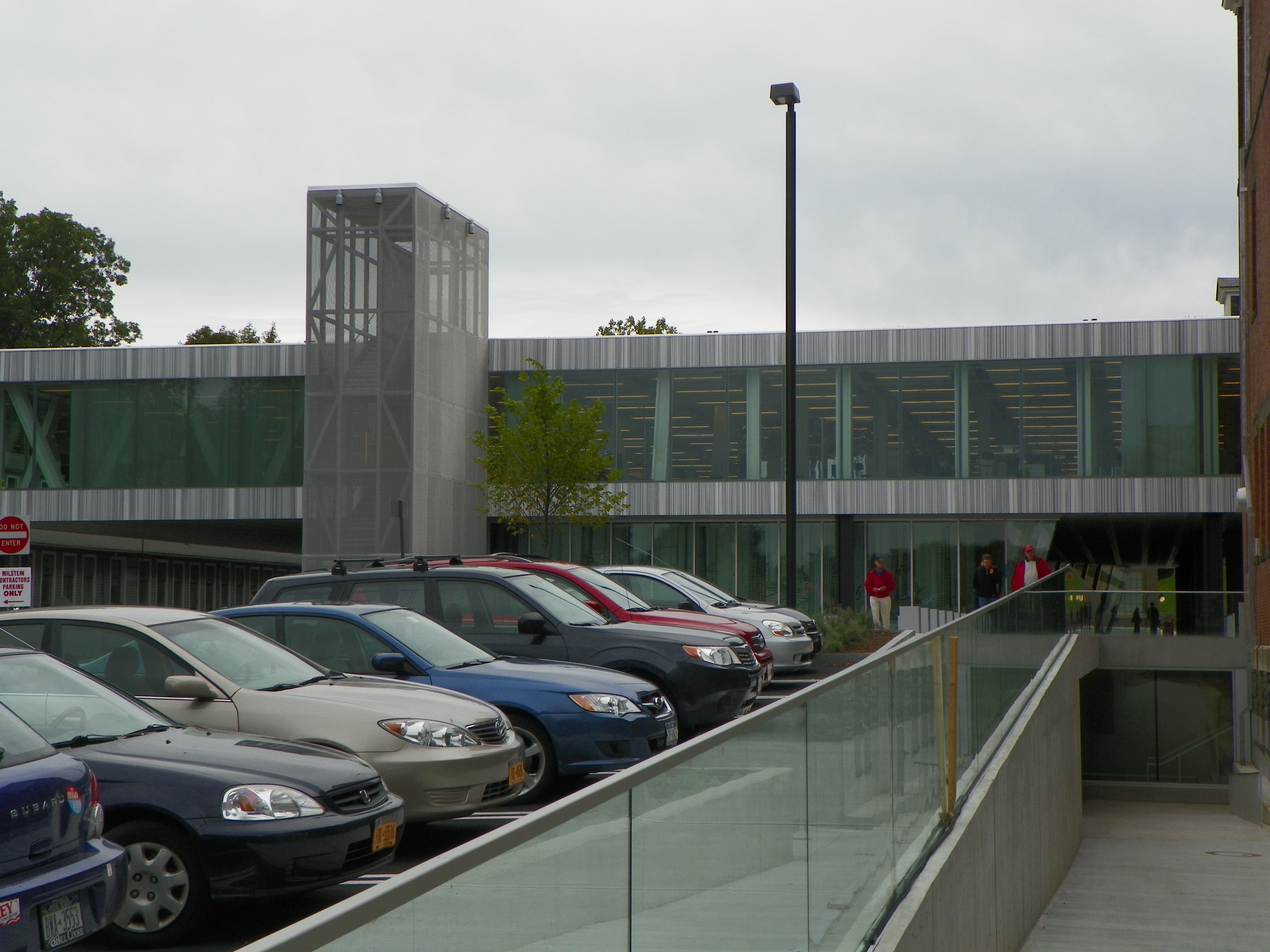
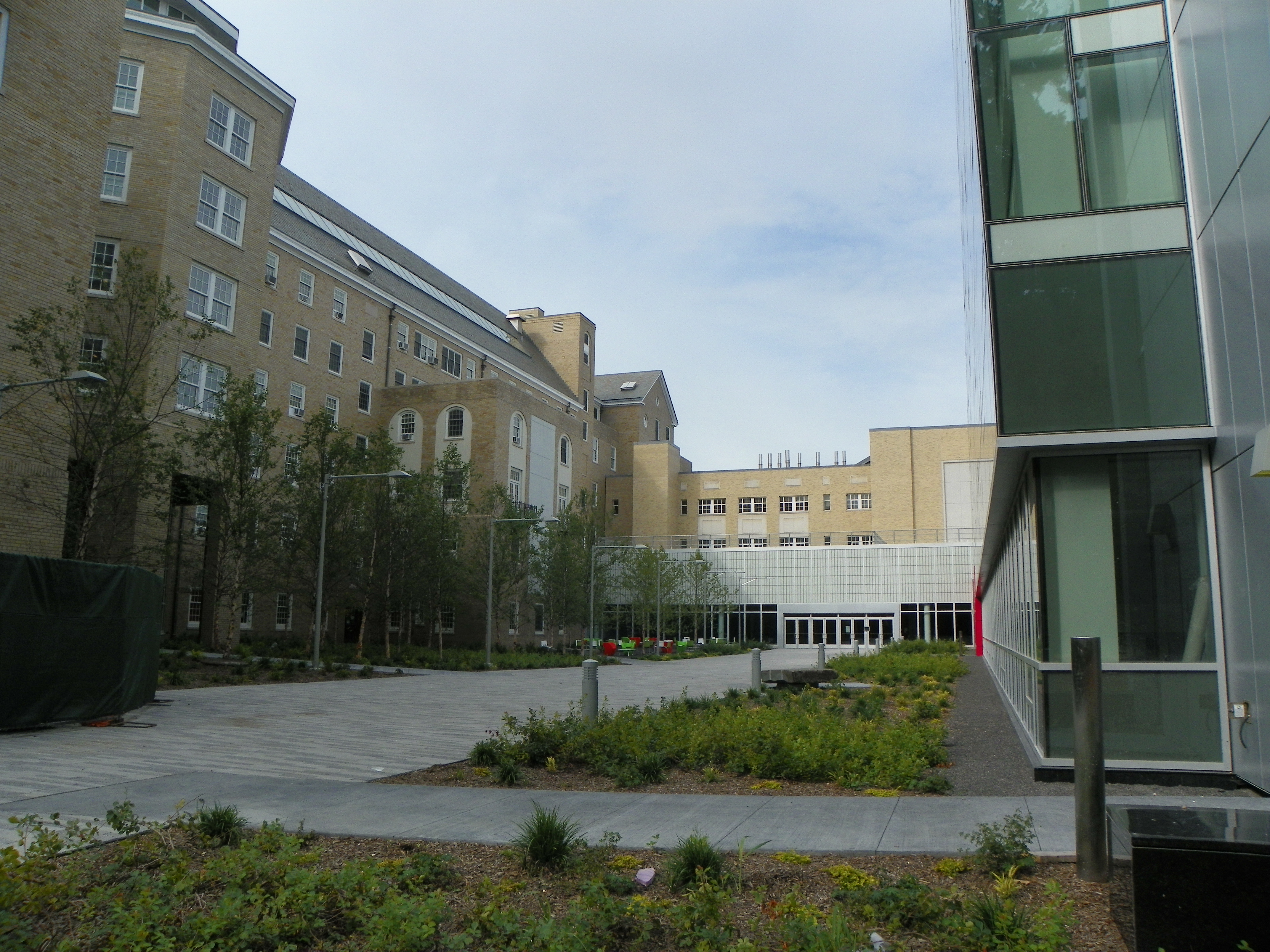
The Human Ecology Building. The woman at the info desk offered up a “scavenger hunt” assignment, but I was short on time.

The Food Science Building (Stocking Hall Addition/Reconstruction). From my favorite Bradfield perch.


Prefabs on the Ag Quad. Sad face.

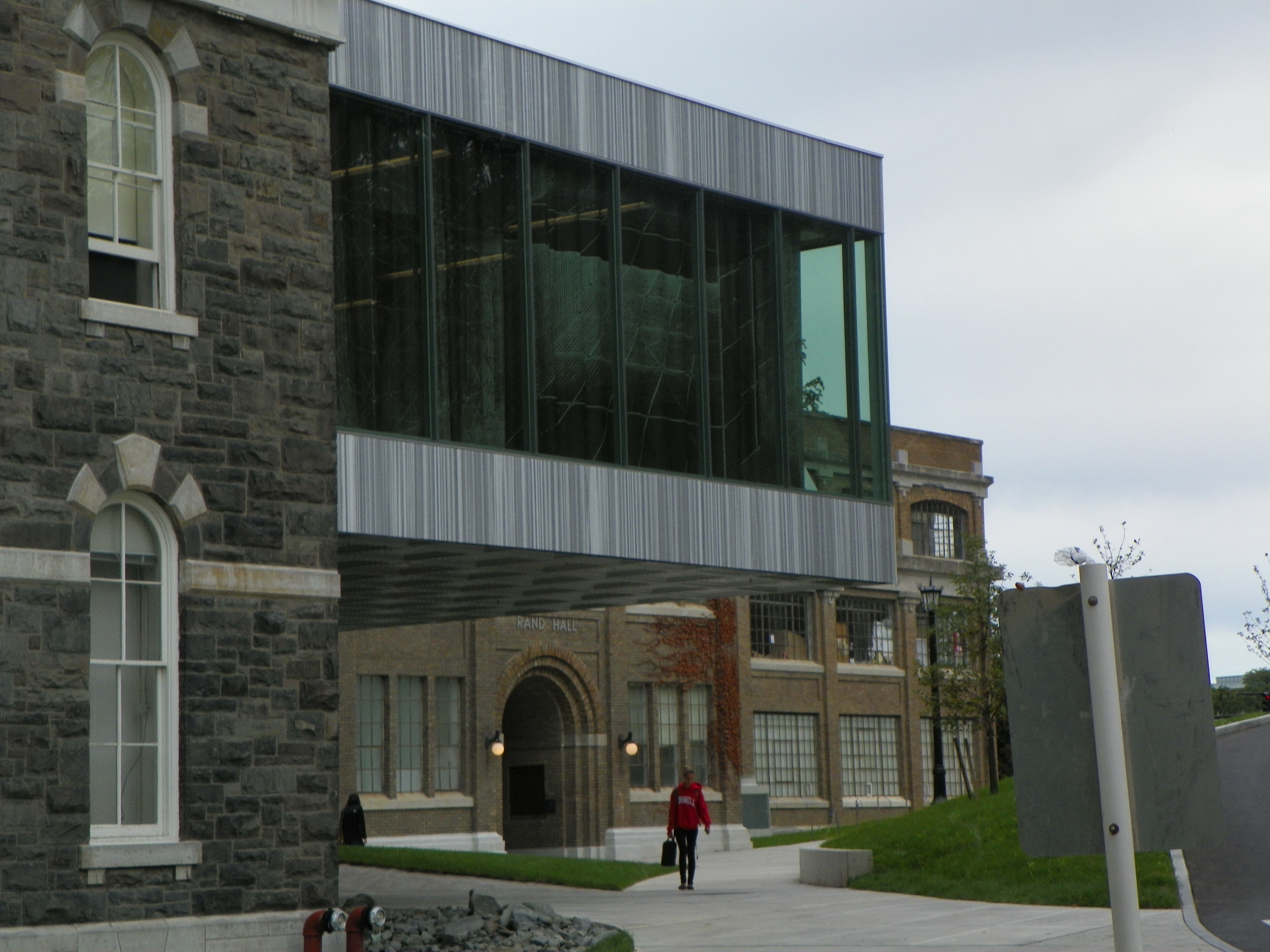
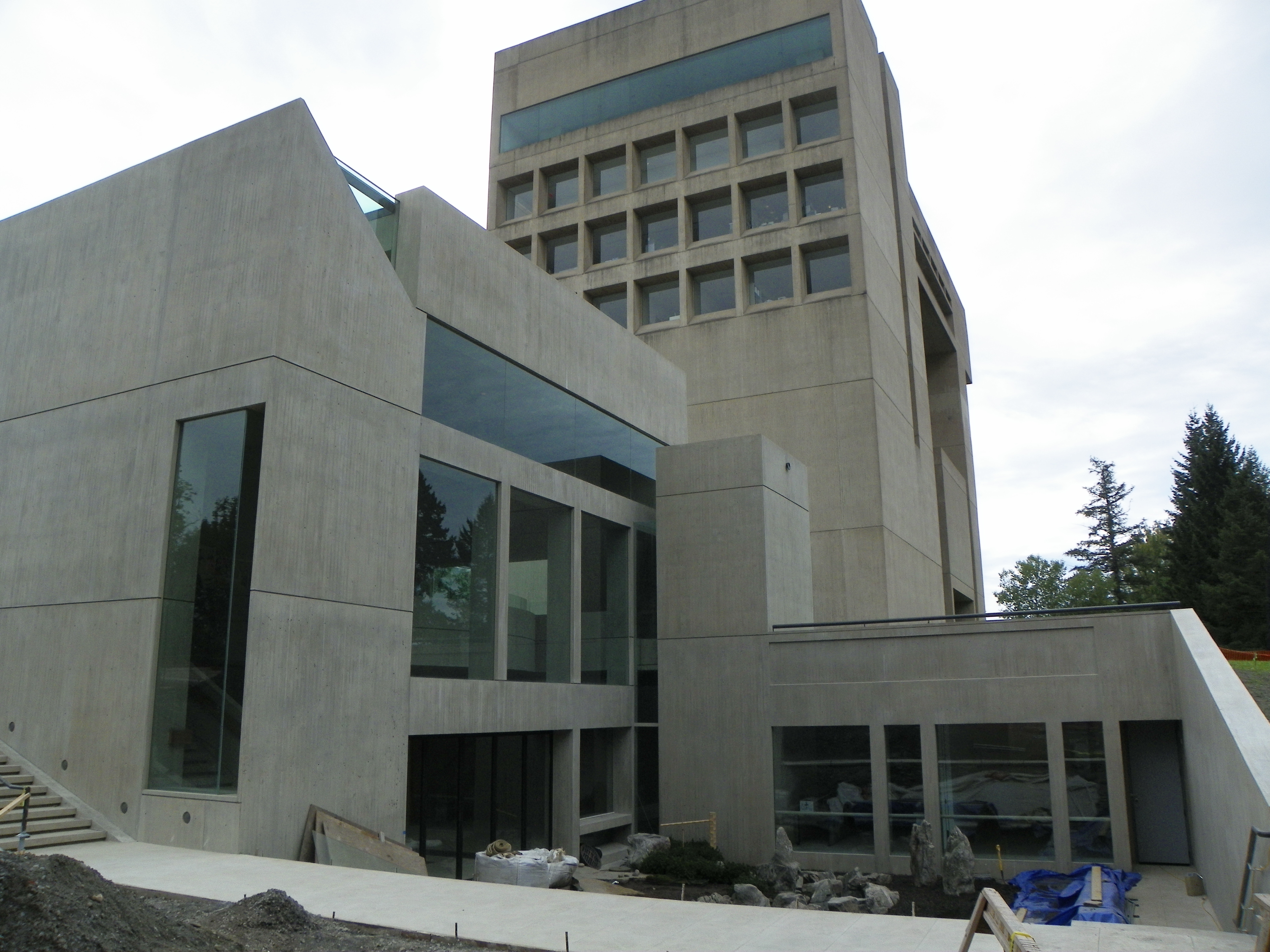
The Johnson Museum Addition

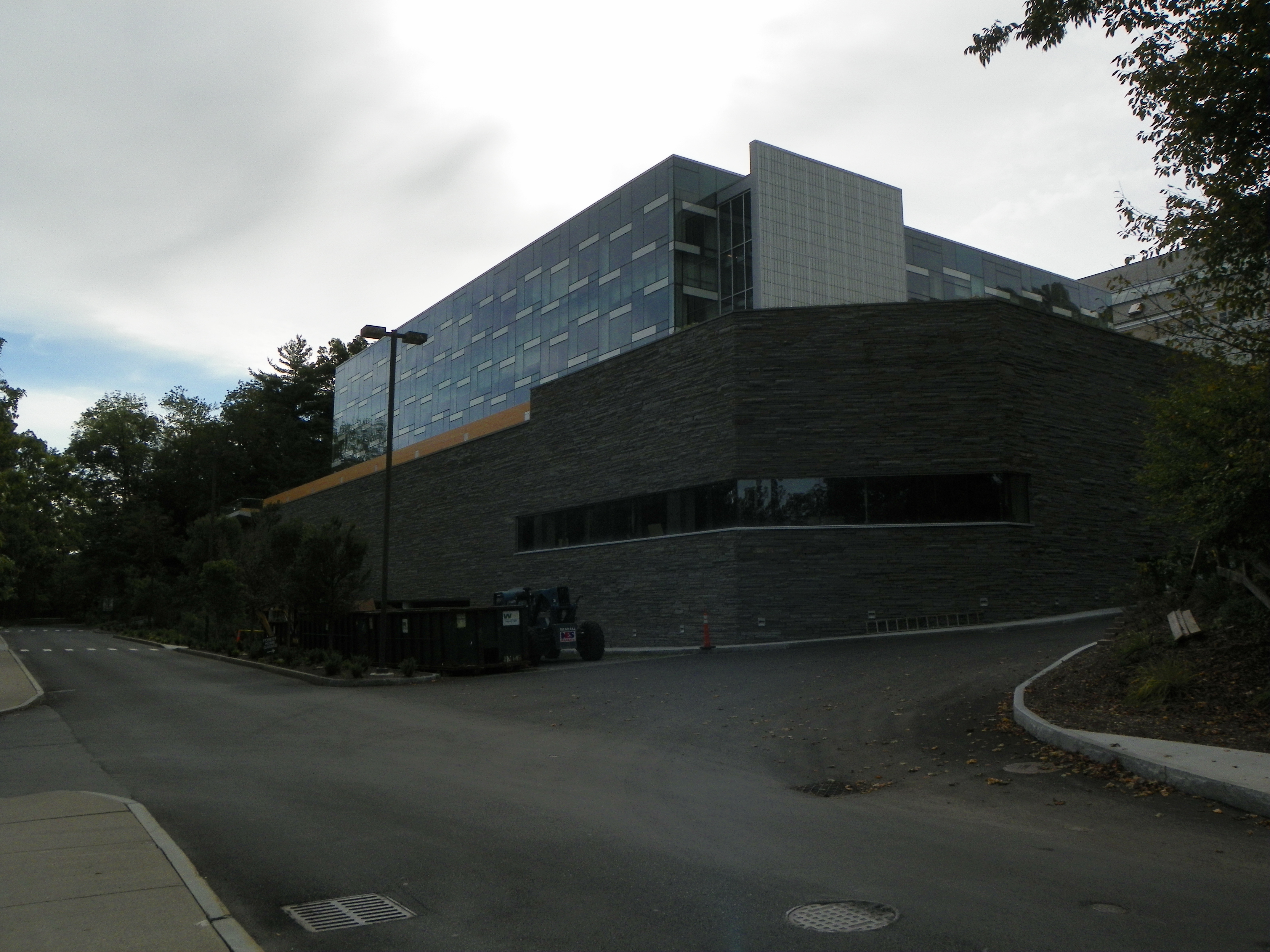
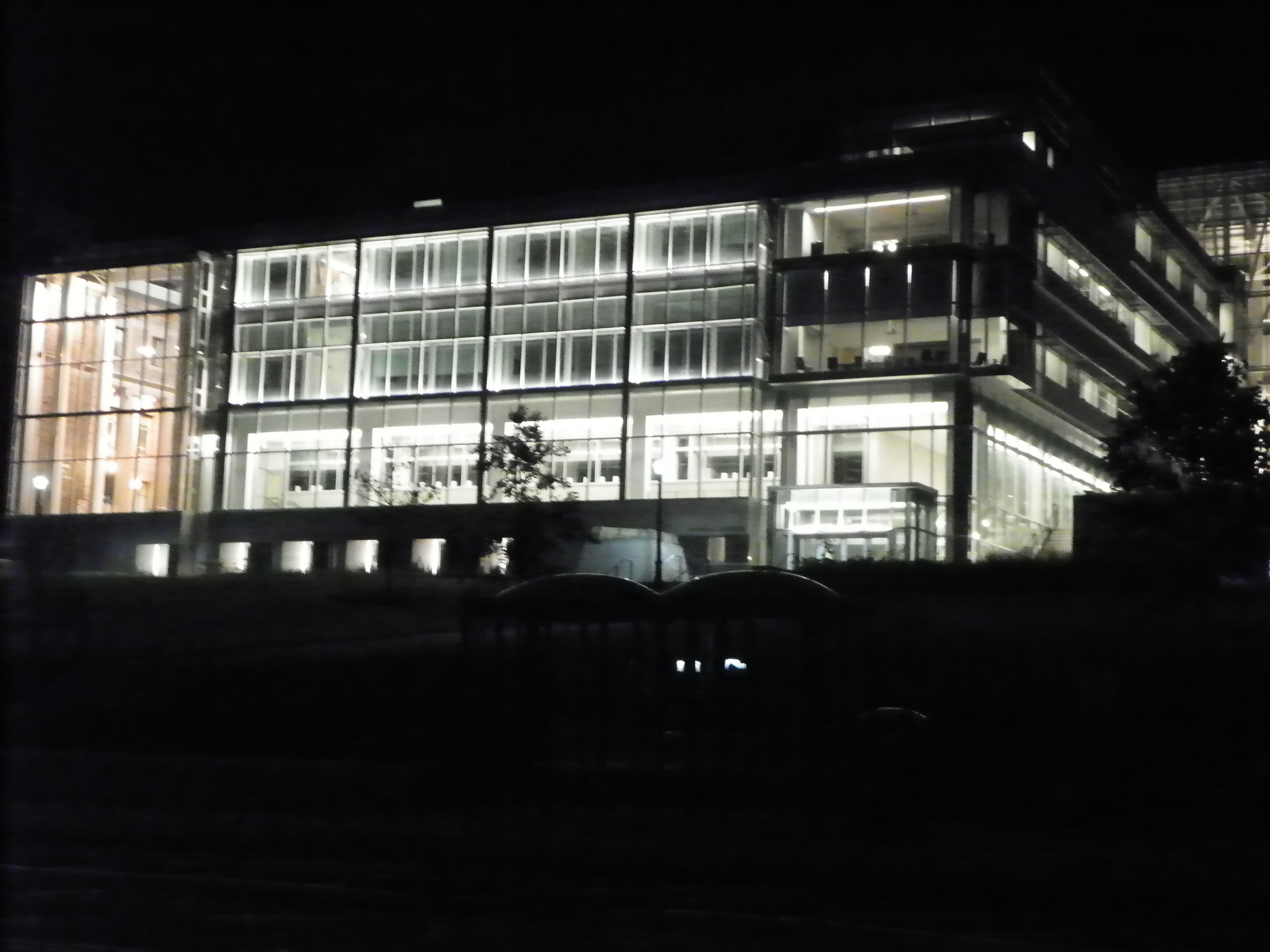
The Physical Sciences Building

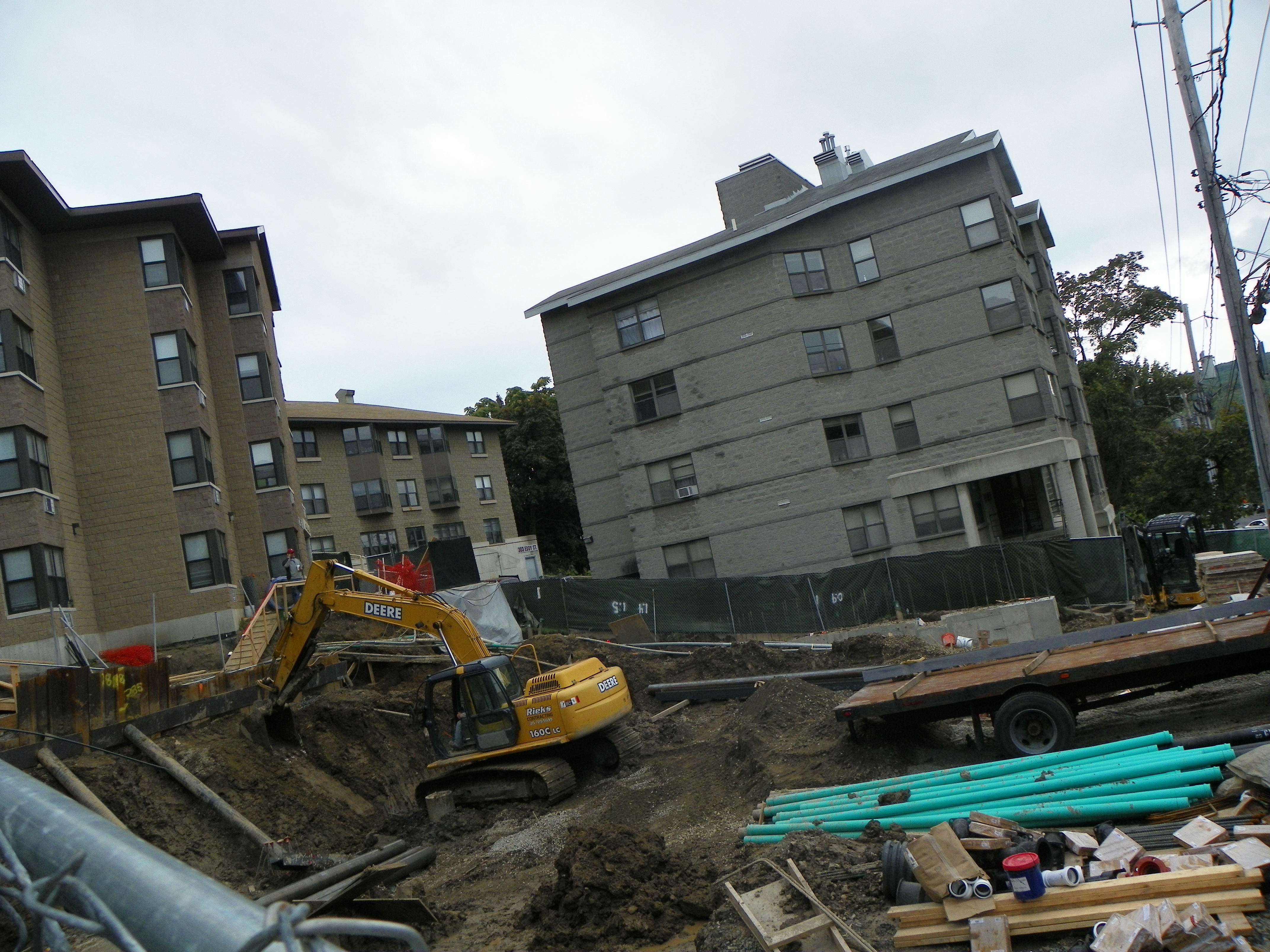
309 Eddy Street. When they say “opening soon”, they mean next summer. I also have a photo of the Collegetown Terrace site from a distance, but I could see was a fenced-off area that was largely cleared out.


News Tidbits 9/15/11: Cornell Construction Continues

15 09 2011

So, two tidbits:

In what is most certainly a unique case for CU facility projects (and likely only a handful of cases nationwide), a proposed campus building will be designed by students. The building is a “Sustainable Research Facility” that is to serve as home to the (what else?) Center for a Sustainable Future, which received an $80 million dollar donation last year from deep-pocketed alumnus David Atkinson ’60.

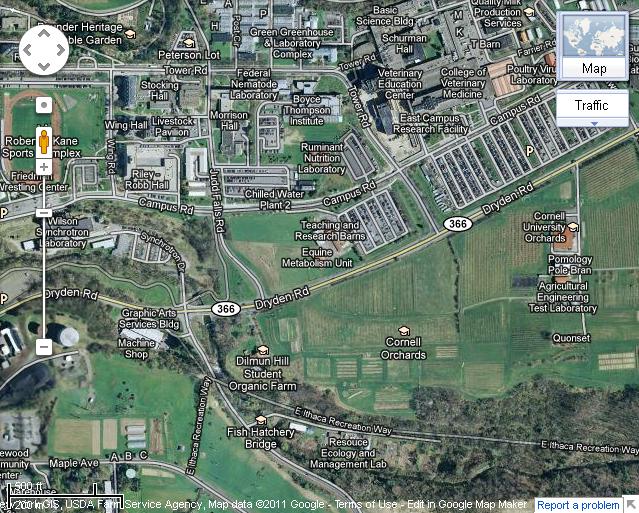
The building is designed to proposed to have a 6,000 sq. ft footprint and be 2-3 stories. Three sites are being considered – two on the east side of campus (I’m thinking near Judd Falls Road), and one site near Dilmun Hill Student Farm, which sits at the southeast corner of 366 and Pine Tree Road (shown in the Google Map below).

Or, if they’re keen on following the master plan, there’s a couple of prime sites for smaller building proposals that they might want to consider. The project is slated to start in summer 2012, with major construction starting the following year and finishing in time for Cornell’s 150th anniversary in 2015.

***

The other news tidbit is that Gates Hall has finally appeared on the planning board agenda in its full proposal form (the other items on the agenda are the 5-story apartment building proposed for the Challenge Industries site, and the new hotel down by Manos Diner). Quoting the site plan review:

The applicant is proposing to construct a four‐story building with 103,000 gross SF on a 56,000 SF building site, located at the southeast corner of Hoy and Campus Roads, and the expansion of an existing motorcycle parking lot adjacent to Barton Hall to incorporate 3 accessible spaces. The building will have a steel structure and will be composed entirely of a curtain wall system with 50% clear glazing and 50% spandrel glass. The exterior of the curtain wall will be constructed of perforated stainless steel panels, folded along the exterior to provide a 3‐dimensional surface, and allow for both daylight penetration and sun shading. Site work will require the demolition of the existing 51‐car surface parking area, walkways and vegetation, including 13 mature trees, and the construction of a drop‐off & delivery area, with a curb cut on Hoy Road, to the south of the building, sidewalks along Hoy and Campus Roads, a pull‐off area on Campus Road, an entry plaza, landscaping, and other site improvements. The project is in the U‐1 Zoning District.

I’m still not a fan.


The Keyword Bar XIII

13 09 2011

I feel a little guilty when I write “Keyword Bar” entries. I feel like they’re a melange of two separate thoughts – “Cornell and Ithaca aren’t doing anything I’m interested enough in to write about” and “I’m too lazy/busy with other things to research Cornell-related topics today”. So I depend on people prowling the internet and coming across the page in order to find topics worthy of writing brief snippets.

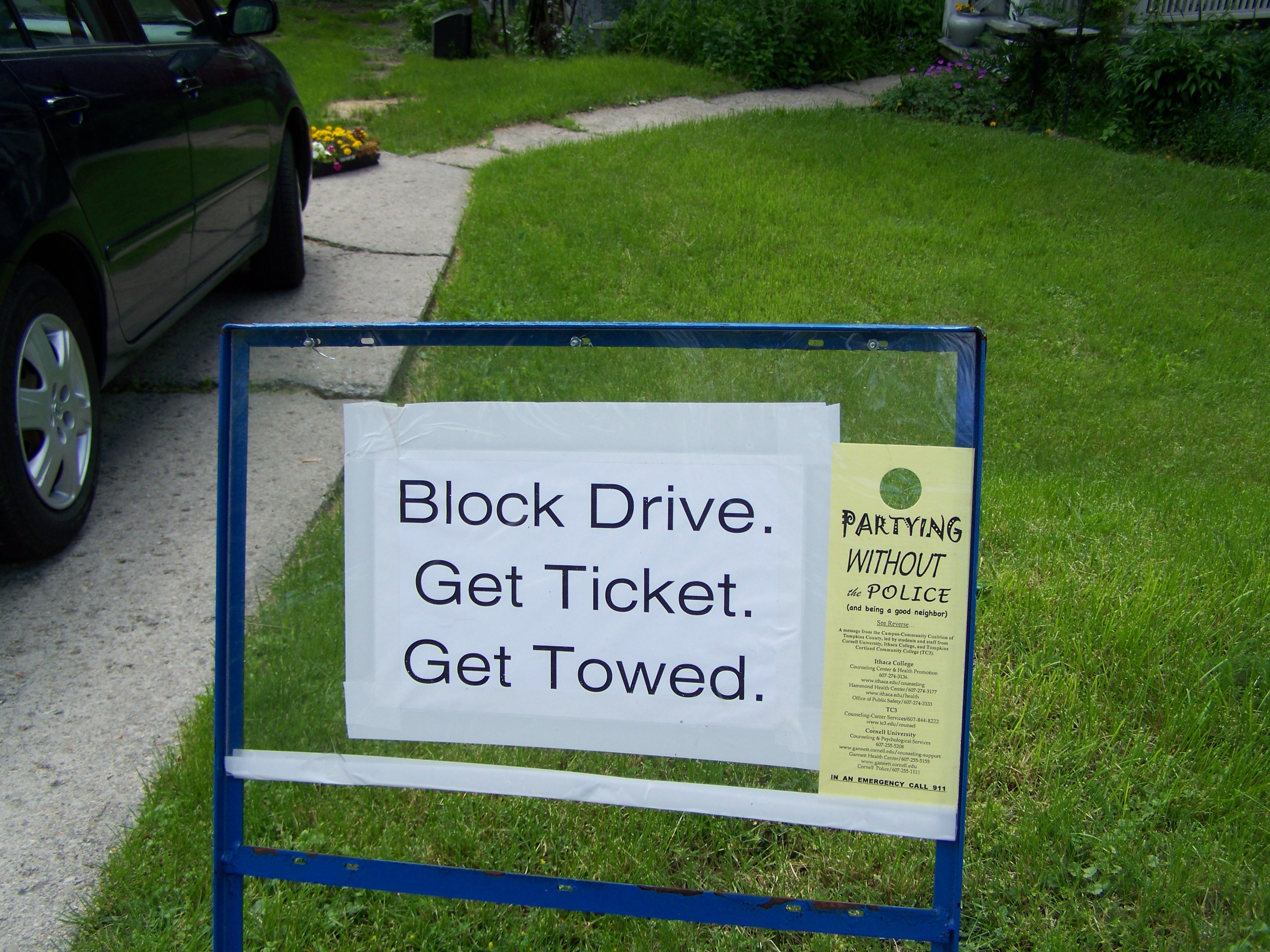
Regarding the opening photo; that photo comes from this past graduation weekend. I’m not sure if it’s the same person who put up the angry sign a couple years ago about how someone stole the peaches off their tree and as a result she couldn’t make peach pies to give to her sad elderly friends, but there’s a good chance it’s the same person (the sign did a good job of making me feel like a d—–bag and I didn’t even know there was a peach tree on the property). Anyway…

1. “new apartment building 309 eddy street ithaca cornell” 9-13-2011

I’m going to assume this is under construction? I’m going to go down there and take photos, come hell or high water.

2. “rothschilds building ithaca history” 9-12-2011

So, the Rothschild Building is also recognizable as the old Tetra Tech building on the east end of Ithaca Commons. Surprisingly, I have virtually no photos of it except for this one, where I’ve circled it in red:

The building was finished in 1975 (i.e. finished right after the Commons opened) and underwent a renovation in 1993, when Tetra Tech bought the previous occupant out (The Thomas Group) in a corporate takeover. It was built on the site of the old Hotel Ithaca, which had been torn down nine years earlier in the name of urban renewal.  The main occupant (Tetra Tech) moved out to the tech park last year because according to them, the space was too old and inefficient. The 76,000 sq ft. is slated for conversion into residential units.

3. “first snowfall in ithaca usually” 9-8-2011

Depends on your definition of “first snowfall”. Only twice in the past 20 years has there been an inch of snow before November 1st in Ithaca – 1993 and 2009 (October 31st and October 16th respectively). The 2009 snow is the earliest 1″ snowfall on the 120-year  record (however, November 2009 was 3 degrees above average and failed to record even a trace of snow). November usually averages 5.9″ of snow, but in the past decade there have only been four years with 1″ snows (November 18 & 21, 2008, November 9 2004, November 16, 27, 28 2002, November 23 and 30 2000)., and only 2 (2008 and 2002) that received above-average November snowfalls. But, in all except two years, there was at least a trace of snow in November. A quick anecdote, I think in the meteorology major, we said that the first 1″ day on average was November 18th, but if this blurb proves anything, it’s that it varies widely from year to year.

4. “edgemoor lane murder ithaca” 9-6-2011

None that I’ve ever heard of. Edgemoor Lane has almost exclusively been the home of professors, then fraternities and small dorms, since it was built in the 19th century, so a murder likely would’ve attracted Cornell’s attention, but nothing turns up online.

5. “why is cornell considered the heathens on the hill” 9-9-2011

Cornell was founded as a non-sectarian school, a radical departure from the norm in the mid 1800s. Many preachers and men of the cloth attacked the schools for its seemingly amoral standards, for instance not mandating church attendance. Heathens on the hill arose as a pejorative term that took on a more endearing, self-deprecating tone as non-sectarian schools became more common in the following decades.


Flooding in Ithaca: Because Blizzards Aren’t Bad Enough

4 09 2011

This kinda ties into the last entry, which discussed the historical context of hurricanes (a.k.a. tropical cyclones if you follow the research literature) in the Ithaca area. Irene, while it had devastating impacts in some towns in the Capital Region and the Catskills, left Tompkins County with 1-2 inches or rain, hardly more notable than a particularly rainy summer day. I went down to southern Connecticut to enjoy being exfoliated by high winds on a beach, and a decent though not amazing storm surge. Then I came back to my Albany home to find roof damage, and a 60-foot ash tree that crashed down in front of the duplex across the street and on top of a Honda Civic. I’ve had better weeks, meteorologically speaking.

As I mentioned previously, the two worst floods in Ithaca occurred quite a long time ago – in 1857 and 1935. However, this is not to say that Ithaca hasn’t been flooded in modern times. The flood control channel down by Cass Park is there for a reason. Also, here’s a youtube video that starts with the flooded intersection of Mitchell and Pine Tree next to East Hill Plaza from way back in December 2010.

But comparatively, that’s small potatoes to some of the floods Ithaca has seen. The 1857 flood was massive. It also hails from a much different time in Ithaca’s history, before the colleges, and when the town itself had a few thousand people. Although sources are severely lacking, the downtown area was underwater for several weeks. This was before the era of effective flood control, and since downtown Ithaca is basically surrounded by steep hills on three sides and a lake on the fourth, the drainage system is about as far from optimal as you can get. Add to that some relatively impervious soil, and it becomes a big soggy problem.

Flooding is not unlikely with the spring thaw, or rapidly evolving early winter storm systems that start off with a warm moist tongue of air, dumping heavy rains before the area freezes over (certifiable proof that Mother Nature hates us all). But the two worst floods are summer events – June 1857 and July 1935, respectively.

The flood of June 17, 1857 seems to be the result of a highly localized warm-season precip event directly on the Six Mile Creek watershed (the creek just south of the Commons), which gives me the impression of a wet microburst or a cloudburst type of event. Both tend to be local and related to intense thunderstorm activity (and here’s a fun thought for when you go to sleep – they are notoriously difficult to forecast, and microbursts are one of the biggest reasons planes won’t land near thunderstorms). Anyway, the raging torrent washed out two dams, whose debris then slammed into the Aurora St. bridge, collapsing its stone arches and sending the whole shebang surging through the town. Hell, you can quote Dear Old Ezra on that one.
Some measures were taken to improve flood control, including more or bigger dams (like the one on Beebe Lake in 1898), and these were damaged by further floods, including events in 1901 and 1905. But nothing quite prepared the ares for the disaster that was the July 1935 flood.

The July 8, 1935 flood, from the descriptions I can find, seem to indicate an intense and prolonged mesoscale convective system (big effin thunderstorm complex), or something of similar intensity, with tropical moisture but nothing TC-based.  At the very least, it was definitely associated with thunderstorms on the evening of July 7th, in an area spanning from Hornell to Binghamton.

The 24-hr. rainfall total of 7.9 inches in Ithaca (the weather station was on the Ag Quad) is impressive. The local creeks almost immediately began to flood, and as drainage brought more water through the streams, they began to tear away at their banks, and flood Cayuga Lake downstream. The damage went throughout the county, from homes washed away in Enfield to cottages being washed from the lakeshore up by Trumansburg. A passenger train was stranded, and all the train tracks in the county were washed out or impassable due to debris. Most state parks in the area were badly damaged and downtown was once again flooded. Eleven people lost their lives in Tompkins County as a result of the flood (with 52 being lost in total, and $26 million in damage [1936 dollars, equivalent to $409 million today]). The damage to Ithaca was about $1.8 million in 1936 dollars, or $28 million in 2009 dollars.
As for the university, being on higher ground protected it from the wrath of the waters. Barton Hall was used as an emergency shelter for almost seven hundred people. The damage to campus was estimated at $10,000-$12,000 (1936 dollars, about $250,000 today), mostly due to the hydroelectric plant being flooded and some trail and bridge damage.

So, maybe it’s not on a Biblical scale, but there’s something to be said about living on higher ground and away from creek banks in the Ithaca area. Or you can just look at the Beebe Lake Dam after a good rainstorm to get a faint idea of how much worse it could be.


The Hurricane That Flooded Ithaca

25 08 2011

Hurricane Agnes (1972). Image property of NOAA.

Ithaca weather is generally known for cool-season events (blizzards, ice storms and the like). I figured that with the current panic attack starting to set in on the East Coast regarding the impending arrival of Hurricane Irene, this entry is rather timely. Plus, most of my department is having a collective weather-gasm that makes doing work next to impossible (quoting one faculty member, “The Weather Channel has entered [for a disaster-addicted public] total ass-kissing mode”).

Anyways, Ithaca had actually seen some tropical-born activity over the years. I phrase it that way because typically, the storm has weakened into a remnant low or turned extratropical (i.e. becomes more like your standard cold-core mid-latitude low-pressure storm system) by the time the cyclone has passed into and over the region. Hurricane Hazel in 1954, for instance, passed over as an extratropical system with winds still at hurricane strength, but because the Allegheny Mountains wrung out most of the moisture from the east side of the storm, the region was mostly spared (Toronto was not so lucky). Wikipedia identifies 84 tropical cyclones that have impacted the state of New York, and as you might imagine, the majority of these have affected New York City and Long Island.

Reasonably, when a storm transitions to an extratropical state, it doesn’t just stop raining. Occasionally, if the conditions are favorable (i.e. moist environment and perhaps some topographical effects coming into play), the rain can be heavy and prolonged, resulting in flooding. This is exactly what happened with Hurricane Agnes.

Hurricane Agnes was the first named storm of the 1972 hurricane season. As a tropical cyclone, Agnes wasn’t particularly special; about the most unusual thing was that it was a June hurricane, a bit early in the year since the first hurricane isn’t usually until early August. Agnes formed off the eastern coast of the Yucatan Peninsula of Mexico, and moved directly north through the gulf, strengthening into a Category 1 storm with sustained 1-minute winds of 85 mph. The TC (tropical cyclone) made landfall over the Florida Panhandle, moved northeast into Georgia while weakening into a tropical depression, and then passed over the Atlantic and redeveloped into a tropical storm before swinging back west and making a second landfall near New York City with 70 mph winds. Agnes merged with a non-tropical low on the 23rd, and this system impacted the region until it finally moved out late on the 25th.

This was a very dangerous combination. The combined system had large amounts of tropical moisture from Agnes, and was slow moving thanks to the non-tropical low. Therefore, rains of 6-12″ occurred over 2 days, with the highest recording at 19″. In perspective, imagine getting three months of your region’s normal rainfall in two days. The resulting flooding for Pennsylvania and New York was disastrous. In Pennsylvania, 50 lives were lost and $2 billion in damage (1972 dollars) was incurred. The governor had to flee his flooding mansion and downtown Wilkes-Barre was under nine feet of water.

As for New York, the hardest-hit areas were a swath from Olean east to Elmira and Corning. In Elmira, the raging Chemung River destroyed or badly damaged most of the downtown area. One of Elmira’s big industries was railroads and railcars, but the railways were washed out by the storm and the bill for repairs was so high that the railroad companies opted for bankruptcy instead. In my own experience, talking with the older Elmira locals, they say the city never quite recovered from the “Flood of ’72”. In Ithaca, where the rainfall came out to about 7 inches, several bridges in the city and in nearby Brooktondale were washed out and the low-lying areas near several of the local streams were flooded. The lake level also rose enough to flood and damage the facilities at Stewart Park. Thankfully, Cornell and IC were out for the summer, and neither sustained major damage.

Image property of TompkinsREADY

The final toll in New York was 24 deaths and $700 million in damage (1972 dollars). Keep in mind, Ithaca has had worse floods, in 1857 and 1935. But neither one of those had tropical influence.

So, Ithaca is far from the action of the tropics, but not necessarily immune to the passage of tropical cyclones. As for Irene, Ithaca will be on the edge of the circulation at worst, it’s simply too far to the west and under the “protection” of a short-wave trough. But if I were at Weill Cornell, I would be very concerned right now.


News Tidbits 8/22/11: Kappa Delta’s Swanky Renovation

22 08 2011

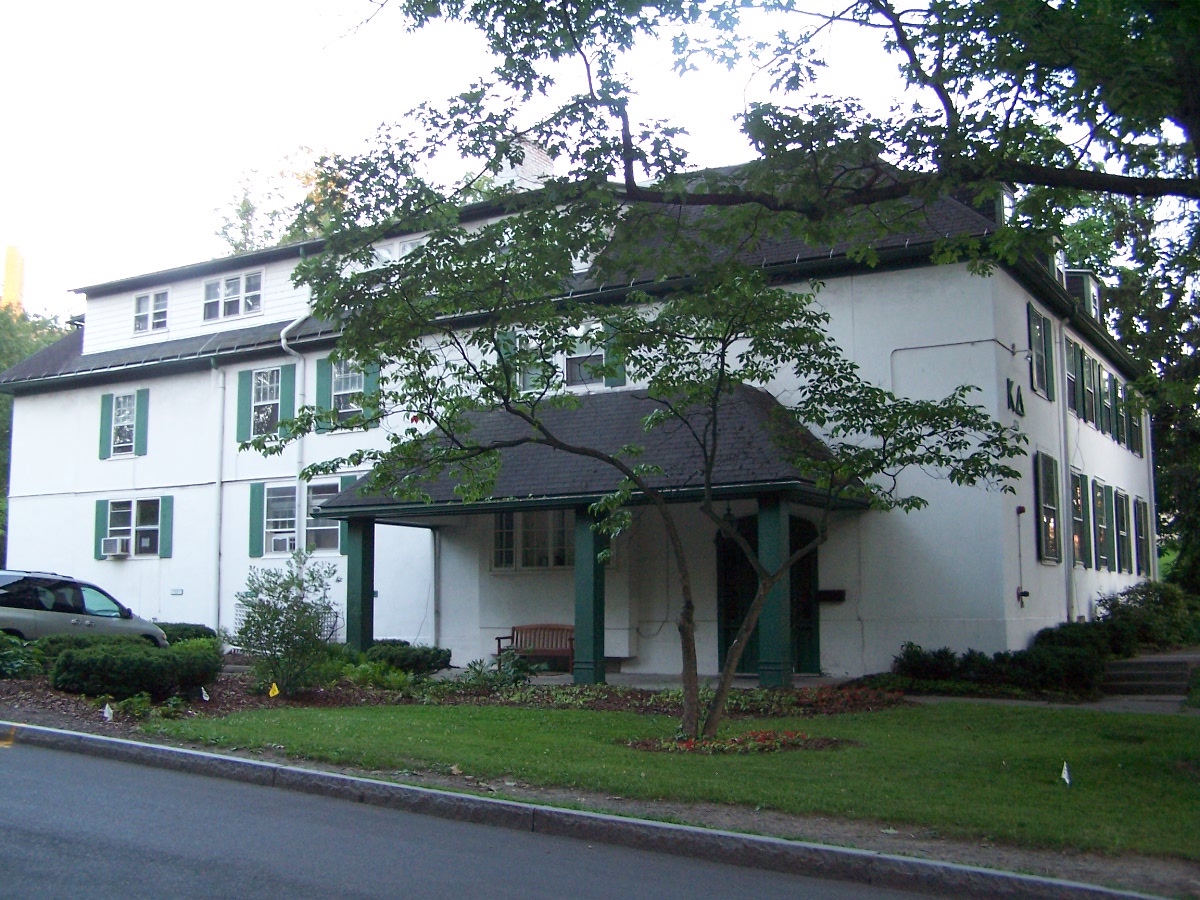
It would be nice to live in Ithaca, but since I don’t, I increasingly find about construction projects from word-of-mouth rather than investigating on my own. In correspondence with “BB” from the Milstein Hall entry, he briefly mentioned that he’d take some photos of KD’s renovation project.

It piqued my curiosity because that was the first time I had ever heard about it. My first thought was that it may not have been an immense piece of work because I hadn’t seen anything in the planning board minutes from the city. But, I decided to quickly check online to see if there was anything special about this construction project.

I barely recognized the house.

Here’s the before photo, from my own archives (dated July 16, 2008).

Here’s an after image from a construction blog on their website:

It’s a pitifully small photo, but I’ll rectify that when I take a photo at Homecoming. Note that the west wall (right side) visible in the before image is now the front entrance.

The most substantial change is the construction of a generous wrap-around porch from Sisson Place onto Triphammer Road. The construction itself isn’t expanding the structure much, about 800 sq. ft on the first floor (based off what my strained eyes can pull from the elevations image at top). But the exterior reclad with an emphasis on a traditional appearance does wonders for what was arguably one of the more rundown-looking sorority houses on campus, creating a more graceful, less bunker-like presence. According to the webpage, the renovation cost is around $400,000.

Regarding the comment on the webpage about Triphammer Road being the original entrance location, I don’t have any verification of that, but it is quite likely. KD moved to its current location around 1923 and underwent several renovations/expansions in the years since.

In terms of exterior alteration, this is probably one of the most substantial changes since Sigma Pi built a new house in the mid-1990s. I must admit that the final result looks impressive.


Exploring Milstein Hall

16 08 2011

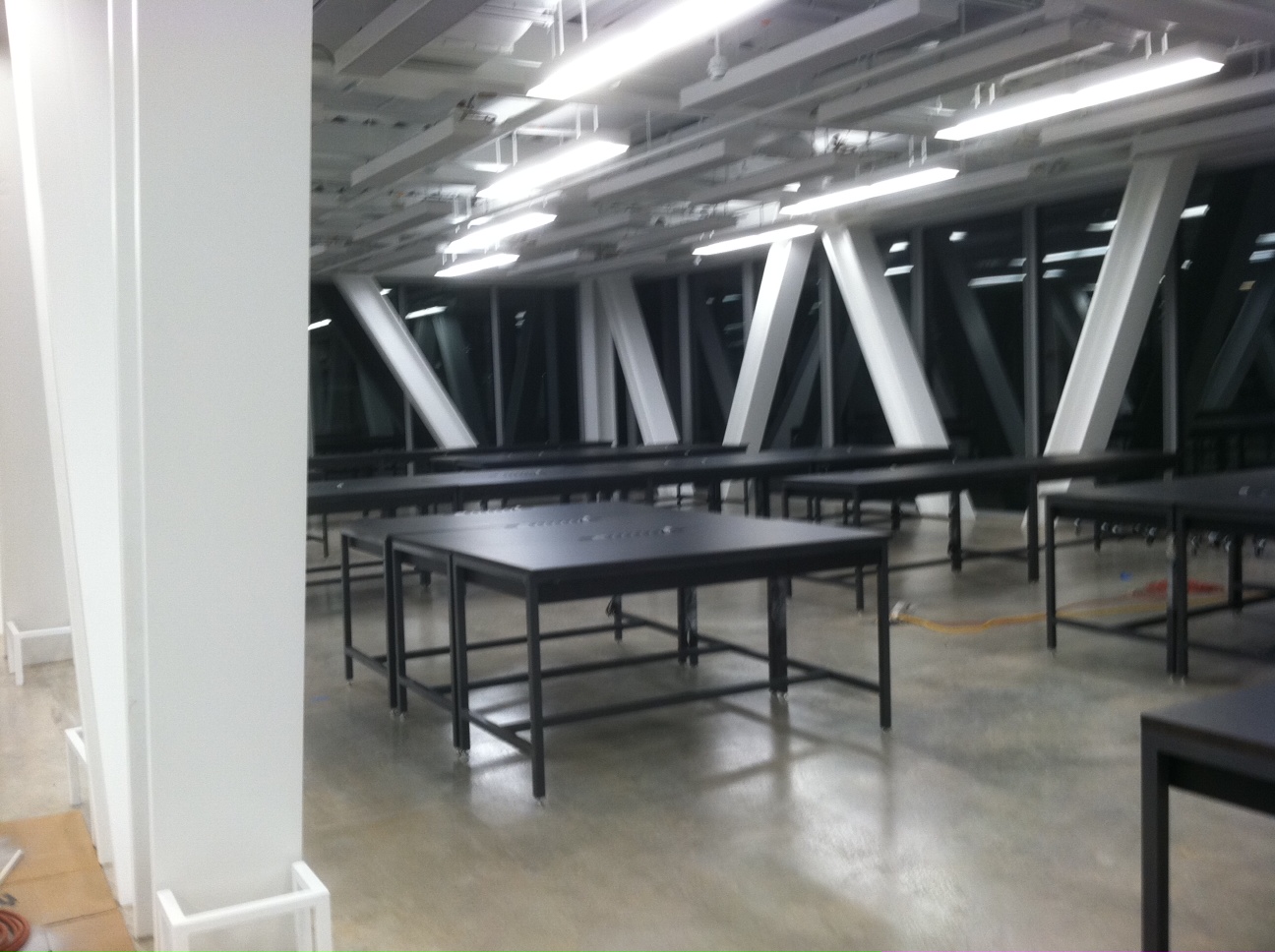
So, fortunately for me, I’m not the only person out there who has an interest in Cornell construction projects. By good fortune, I happened to receive a series of emails from a newly minted Cornell graduate, “BB”, who took the time and opportunity to explore the nearly complete Milstein Hall and pass along some photos to this blog. For that I am thankful, as my trips to Ithaca have become fewer and further between. While I am glad for the photos, I’m still going to push the token disclaimers that I do not encourage or condone the exploration of unfinished buildings, due to a safety risk and legal concerns with trespassing. Also, while he is kind enough to share the photos here, they are his property, with all associated rights and privileges. I would encourage those that want to use his photos to contact him directly.

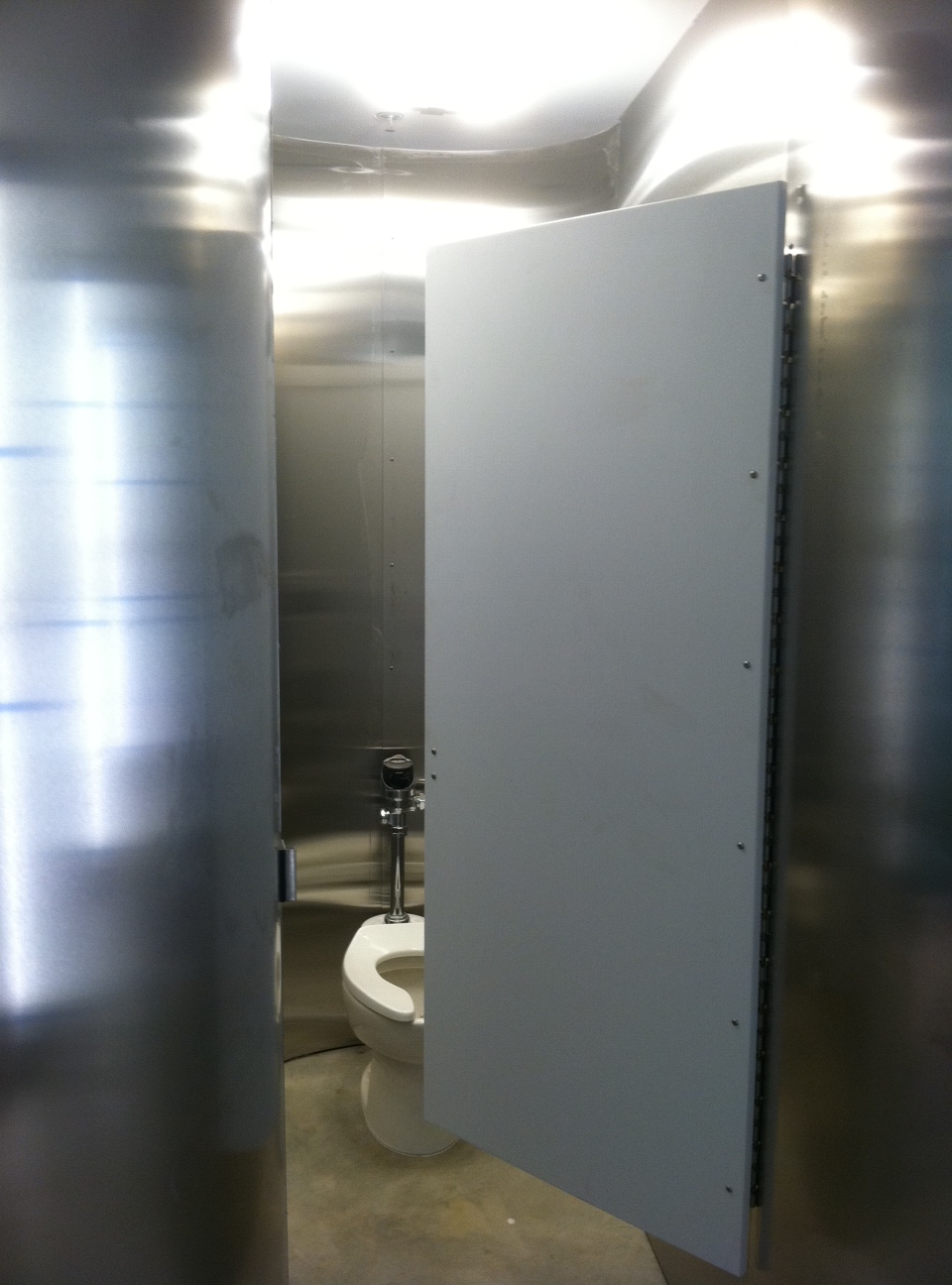
For those who wish they could answer nature’s call while on a spaceship…

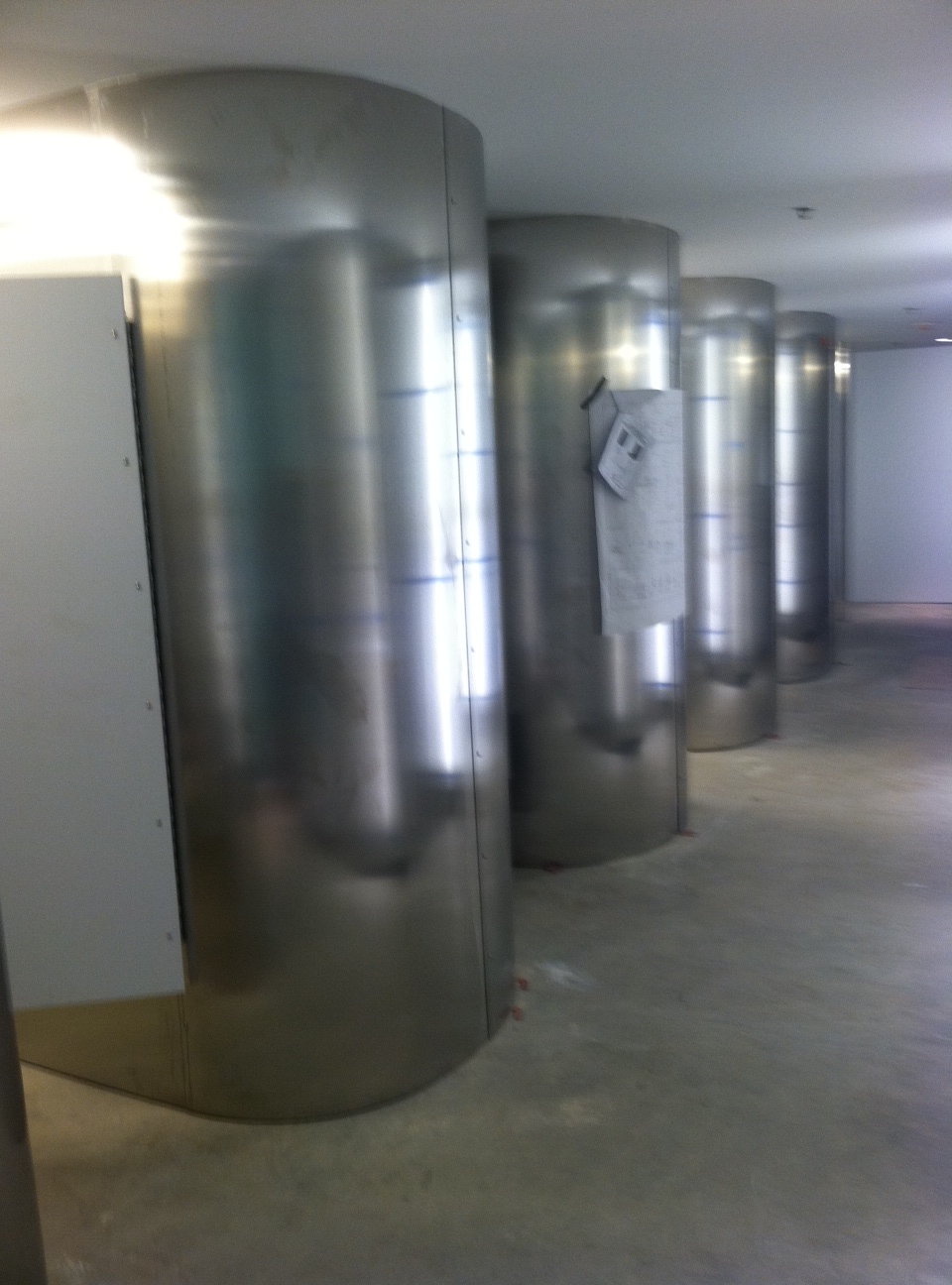
They’re not even stalls. They’re more like bathroom pods.

I’m looking at this photo, and immediately, “The Imperial March” pops into my head.


Cornell’s Rapidly Evolving Late-Night Scene

8 08 2011

This entry was inspired by the latest set of news, that Johnny O’s is closed. This follows the news that Dino’s closed earlier this summer, reducing the number of bars and primary drinking establishments to four. While it seems there’s enough interest in the property that a desolate Ctown won’t be an issue, the article raised a very good point about late-night activities that I think bears a little bit of thought:

For many Cornell students and alumni, the closure of another bar in Collegetown prompted concerns about late-night life at Cornell.

“What is happening to the bar scene in Collegetown?” said Cara Sprunk ’10, a former Sun writer.

Lee Moskowitz ‘13 said that Dino’s and Johnny O’s “probably held about 300 people each, so now you’ve got 600 people going to about four bars, instead of six, and those bars were already crowded to begin with.”

***

Lee Moskowitz has a very valid argument. Fewer bars would seem like a good thing on the surface (less noise and rowdiness), except that that isn’t going to deter the large percentage of older students who want to party it up in the evening. I can vouch from my own experience that even when there were six bars, it was not uncommon to wait in line outside to get in, because the bars were absolutely packed. Less bars means longer lines, and eventually people are going to give up and just do more house parties to compensate (especially considering the tighter restriction on the Greek system’s parties). I firmly believe that it’s a naive notion that student drinking would somehow decrease.

While there’s no problem with house parties per se, the issue lies with the fact that while bars and Greek houses have formal regulations that they’re expected to follow, house parties don’t. If the hosts and servers aren’t careful, that can go a couple of unfortunate ways – an IPD free-for-all for citations and fines, and/or a greater risk to partygoers.

With any hope, Cornell’s new pub in the Ivy Room will open as scheduled in the fall. But elsewise, late-night life at Cornell seems to be heading in a less regulated direction, and is going to be a much bigger issue.


Cornell’s Geneva Campus

6 08 2011

So, when we think of Cornell’s campus, most people think of Ithaca. Occasionally, someone also might mention the medical school down in New York City. But in the ag school, asking the right person, might result in an unexpected response – Geneva, New York. Geneva is a small city of about 13,000 located about 50 NNW of Ithaca, on the northern end of Seneca Lake, and although most folks could not care less about the community, it does have some importance for the university thanks to the presence of the Geneva Lab.

The formal name of the Geneva campus is the “New York State Agricultural Experiment Station“, often referred to as the Geneva Lab for short. It also started off as a rival to Cornell, at least when it came to research grants. The Geneva Lab was started in June 1880 thanks to state funding, although Cornell had sought the funding from the state (Bishop 223). The lab started off with a staff of seven scientists. After the Hatch Act provided further funding for agricultural experiment stations in 1887, the competition created between the two created tense relations throughout the turn of the century. To is credit, Cornell had their own experiment station since 1879, but it sorely lacked funding (keep in mind this was during a time when the ag school had an almighty 50 students, give or take a few each year). Thanks to increased state and federal funding with the second Morrill Act, state appropriations, and the Smith-Hughes Bill, money became easier to obtain, and relations had improved enough by WWI that Cornell professors routinely exchanged with researchers at Geneva for various ag-related projects (Bishop 440).
By 1923, the state authorized the Geneva research station to be placed under Cornell’s control. At this point, the two were basically working together on most everything and trying to avoid redundancies in administration, so by 1920 they were already informally affiliated. The Geneva station had a staff of 55 and hundreds of acres would benefit the ag school’s research, while taking advantage of Cornell connection, including the Cooperative Extension program.

More funding started coming Cornell and Geneva’s way with the Purnell Act in 1925, which led to Cornell-owned ag research facilities in the Hudson Valley and on Long Island, near Riverhead (Bishop 477).  The Geneva facility’s research shifted from helping farmers produce good crops, to making better products, such as making pears disease-resistant, new apple varieties, and working with Birdseye Foods on better quick-freezing techniques for vegetables. By 1940, the researchers at Geneva were made faculty in the ag college.lastly, animal-related research was shifted over to the Ithaca campus at the end of WWII, leaving the Geneva lab to strictly plant-based work.

Today, the Geneva campus comprises 20 buildings (623,000 sq ft), 870 acres, and about 300 faculty, staff and grad students. Most of the work done these days is the development of improved food safety and storage techniques and genetic enhancement of crops to create more productive or tolerant varieties. The four programs shared between the two campuses (which were merged as a post-recession cost-cutting measure last year) are Entomology, Food Science, Horticulture and Plant Pathology.

In summary, Cornell has a large presence in upstate New York, and it’s not just in Ithaca. So, maybe the proposal for the new school on Roosevelt Island in NYC isn’t all that unusual for Ezra’s research university.


Munier’s Grading Guide

29 07 2011

Let’s face it – the majority of students as Cornell are driven by their GPAs. For grad school, for their first job, or whatever their immediate postgraduate endeavor. Sure, they may not mean everything, but GPAs are important enough that many people are dedicated to getting as close to a 4.3 as possible.

However, as anyone who’s been at Cornell for a while can recognize, grades are not distributed evenly, especially between majors. Sure, you could work hard and maybe pull a B+ in a course where the average is a B, but few people would turn down the opportunity to pad their transcript with an easy A. Well, Cornell recognizes this, and has begun to print the median grades for that class, as well as the grades a student has in a course, on their transcript, starting with the class of 2012.

It helps to get an idea where certain median grades lie. For a while, Cornell printed median grades and posted them online. Well, that only fueled the culture of “easy A classes”, so they stopped. Enter Munier Salem ’10’s cleverly-done guide to median grades. Using the fall 2009 median grade report, Munier put together an interactive infographic describing the distribution of grades in a given department (ASTRO, ASIAN, PHYS, and so on).

Now, I could’ve summarized it, but Ivygate already did that. So, I’m going to try a different tack.

I’m a CALS alum. So my interest is in CALS departments (regardless of whether or not they’re shared between schools – I’m looking at you BIO). Using the infographic, I pulled the percentages for different grades in a given CALS department and assigned a value to the grade itself – a 10 is an A+, a 9 is an A, 8 is an A-, and so on. The results in the graphic are actually given in a bar graph, but this method will break it down to just one mean value for simplicity. In example, say EXMPL has four courses – one with an A average, one with an A- and two B’s. (.25 * 9) + (.25 * 8 ) + (.5 * 6) = 7.25, just above a B+ average. Note that this doesn’t take the number of credits a course is worth into account, and in the infographic only a few larger majors are broken down by the course number of the class. Lastly, the quality of students can vary somewhat between majors (the dairy science concentration in Animal Science comes to mind). In conclusion, my grade exercise is more for show than for anything of real value.

AEM: 8.08

ANSC (animal science): 7.83

BEE (bio engineering): 7.57

BIO (standard biology): 7.13

BSOC (bio & society): 7.01

COMM: 8.05

CSS (crop& soil sci): 7.33

DSOC (dev. sociology): 7.66

EAS (earth&atmos sci): 7.34

EDUC (which is being phased out): 7.54

ENTOM (entomology, i.e. bugs): 8.15

FDSC (food sci): 7.70

HORT (horticulture): 8.01

INFO (info sci): 7.72

LA (landscape architecture): 7.89

NS (nutri sci): 8.06

NTRES (natural resources, a.k.a. natty res): 7.88

PLPA (plant pathology): 7.34

Now, this doesn’t take different majors into account, who may take courses from a few different departments. But if we do place any value in this, it’s that it’s good to be an AEM or entomology major, and that you might want to avoid biology & society courses (refuting my own belief that using the word “society” in any course meant it was an easy class).