Design Competition Announced for Collegetown Apartment Building

19 02 2015

12-29-2011 079

Back in August, I wrote a story about how a student competition was held in the early 1980s to design the mixed-use building currently standing at 409 College Avenue. It appears that someone liked the idea and decided to launch a competition of their own.

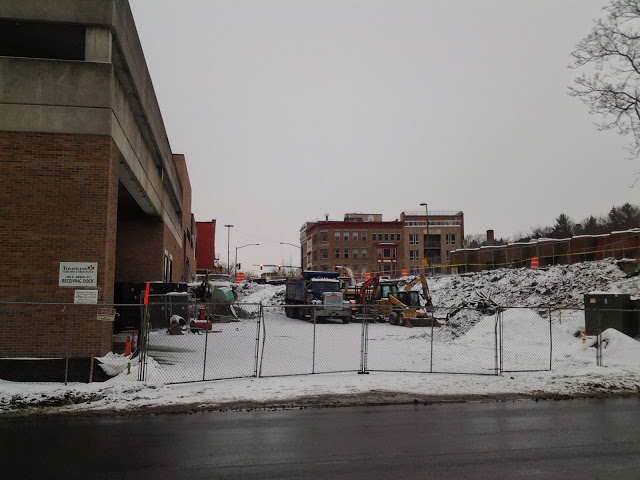
According to the Cornell Daily Sun, the competition is to design a replacement for 313-317 College Avenue, a property owned by local developer/landlord Lambrou Real Estate since the late 1970s. Cornellians of my late 2000s vintage will remember this building for housing Dino’s Bar and Grill. In previous years, it’s also held a grocer (1920s), a furniture store (1950s), a record store (1970s), and the Cosmopolitan Restaurant (1990s). Finding the original construction date of the building has been difficult (I’d guess ca. 1910, since it’s missing from this 1906 photo but it’s definitely an older style), and it appears substantial renovations occurred in the mid 1970s, likely the porthole windows on the fourth floor. Because of the heavy alterations borne by the storefronts and top floor over the years, the building has lost much of its historic value.

From a zoning standpoint, the building is in the densest Collegetown zone, MU-2. That entails a mandatory mixed-use component (usually interpreted as commercial space on the first floor), the building can occupy almost all the lot except for a rear setback of 10 feet, and no required parking. The building must be between 4 and 6 floors, and 45′-80′ tall, with a flat roof. 313-317 College already occupies most of its lot footprint, so the area of the new building wouldn’t be a big change, but the addition of a few more floors would make for a greater visual impact. More likely than not, there will be student apartments from floors 2-(4 or 5 or 6).

Speaking specifically about the competition, it’s open to any member of the Cornell community, student, faculty or staff, and has been underway for a couple weeks. Sketch plans were due Wednesday the 18th, final plans/schematics April 7th, and the winner will be announced May 17th. The call for proposals asks for sustainability as a design theme, so an emphasis on “green” features is expected in the submissions. The judges panel will consist of Lambrou Real Estate, AAP professors yet to be chosen, and Ithaca Student Housing, which is also staffed by the Lambrou Family (different branch maybe?). No word yet if there’s a cash prize for the winner.

Just like 409 College over 30 years ago, this is a win-win for everyone involved. The winner gets exposure and a pretty big project to claim on their resume. The Lambrous get a project at a fraction of the design cost of an architectural firm. I hope to see and share some of the proposals as they become available.
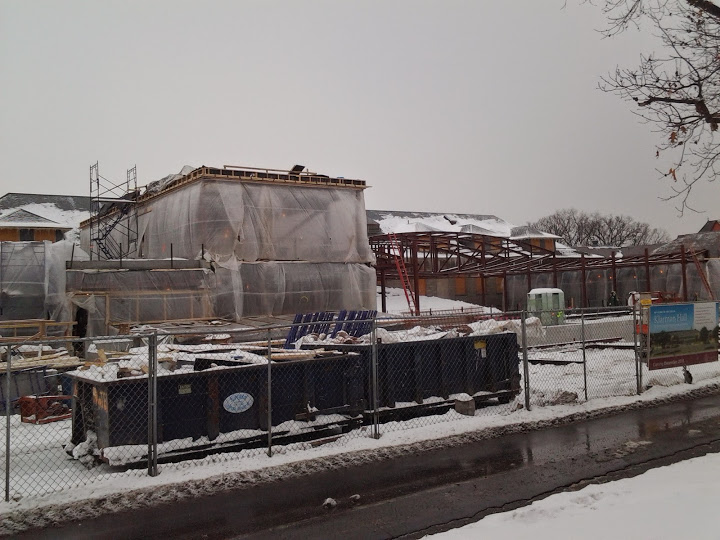
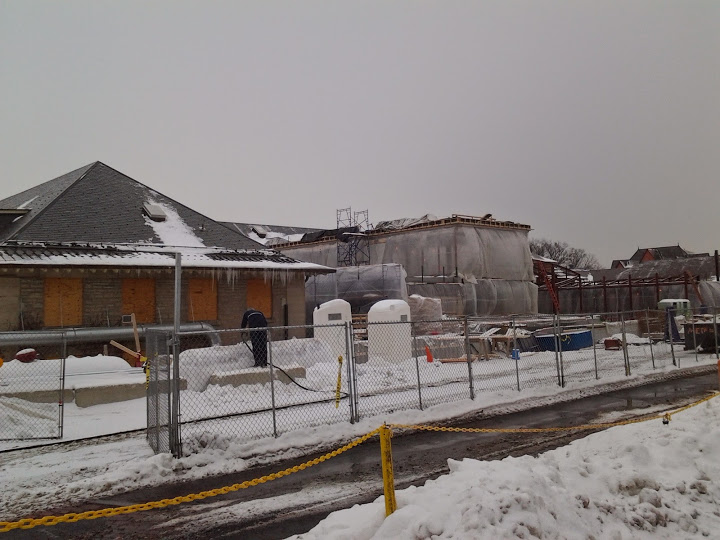
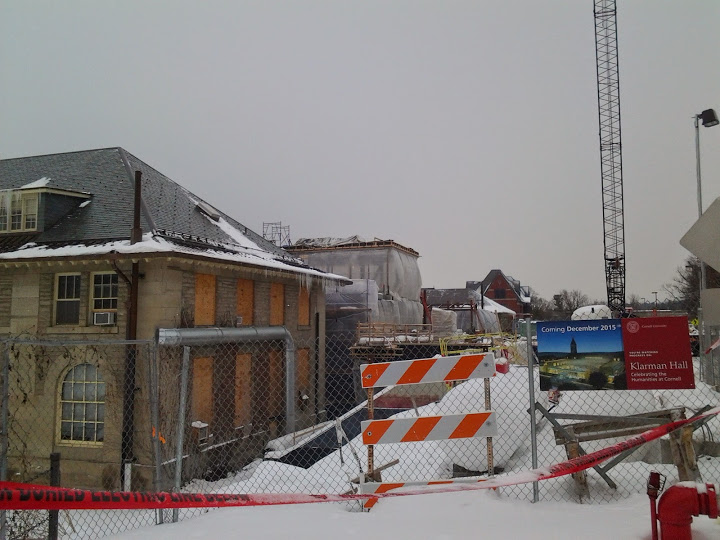
Klarman Hall Construction Update, 2/2015

17 02 2015

Time to take another look at Cornell’s Klarman Hall for a progress report. It was low 50s F when I stopped by in late December and I thought that was pretty awesome. I completely and totally regret saying anything and will next time reserve to complaining about how cold it is, in an effort to spite Mother Nature.

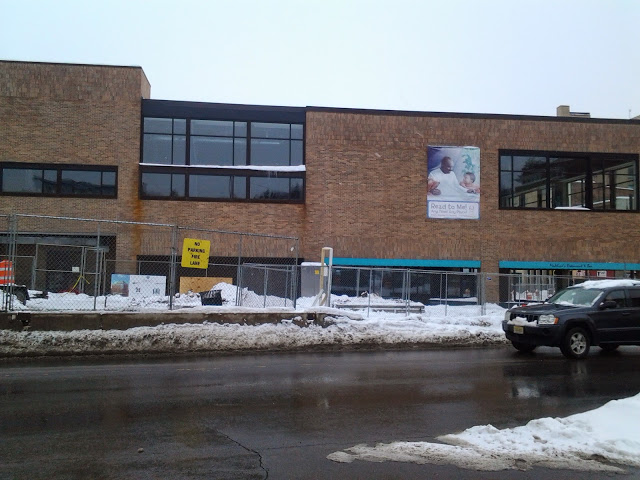
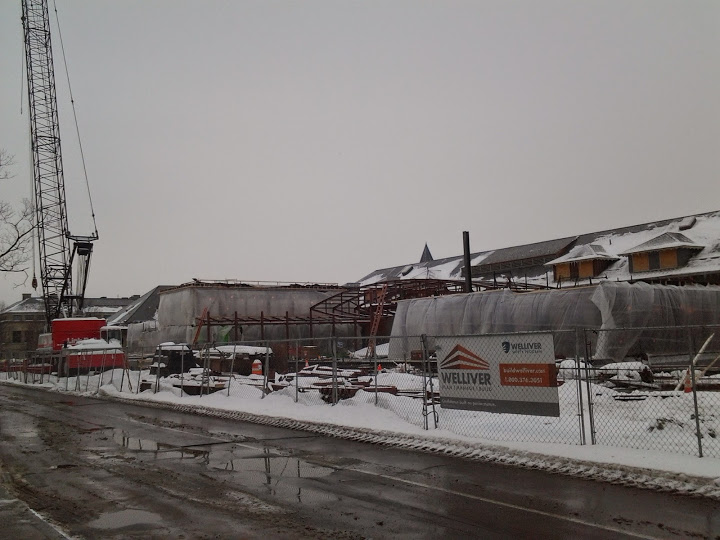
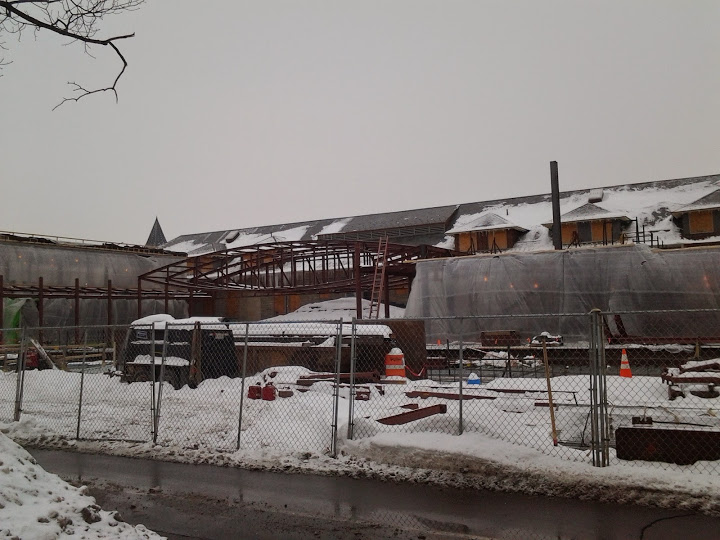
Anyway, construction firm Welliver has been busy craning the new steel atrium trusses into place, with at least four installed when these photos were taken the weekend before last. My laymen’s mind would call the shape almond-like or a pinched oval, but wikipedia tells me the proper terms are “vesica piscis” or “mandorla”, both of which sound like alien species doing battle with Captain Kirk. One of the site cranes has completed its work and has been removed, while the other will stay in place until all the structural steel has been erected. On the lower floors, fireproofing, mechanical and electrical rough-in (plumbing and wiring) is underway, while concrete pouring is taking place in parts of the upper levels. Some of this work would be visible from the fences, were it not for the plastic sheeting put up to keep the frigid winds at bay.

Over the month of February, construction schedules indicate that fireproofing will wrap up on the south side of the ground level, leading the way for sheetrock installation and exterior and interior wall framing. At the same time, fireproofing will begin on the north side of the ground level, and concrete will continue to be poured for the auditorium space and upper levels.

The 33,250 sq ft building was designed by Koetter | Kim & Associates, and is due to open in December 2015. Construction cost is estimated at $61 million.

20150207_143719 20150207_143654 20150207_143557 20150207_143533 20150207_143505 20150207_143426


Belle Sherman Cottages Construction Update, 2/2015

16 02 2015

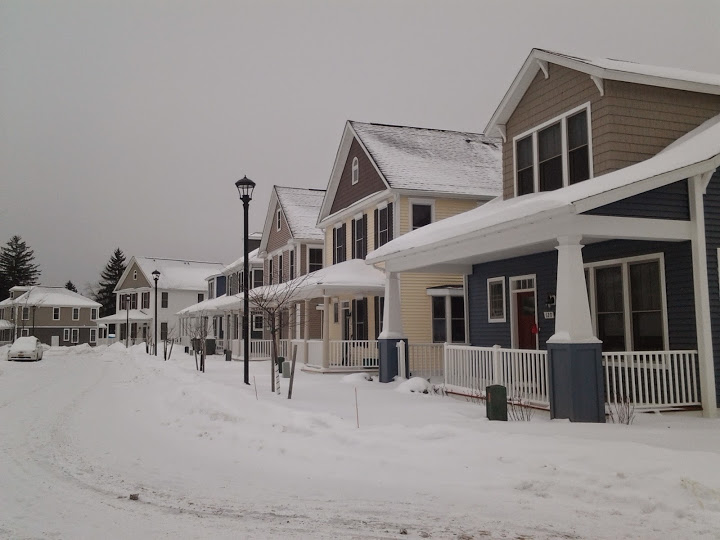
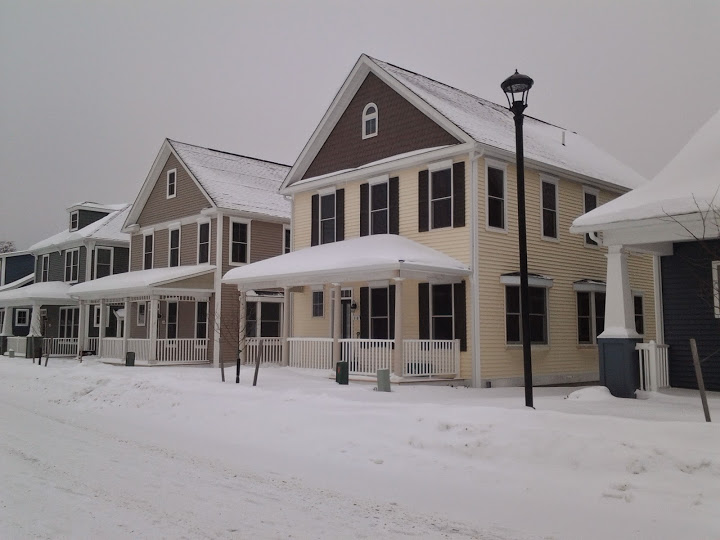
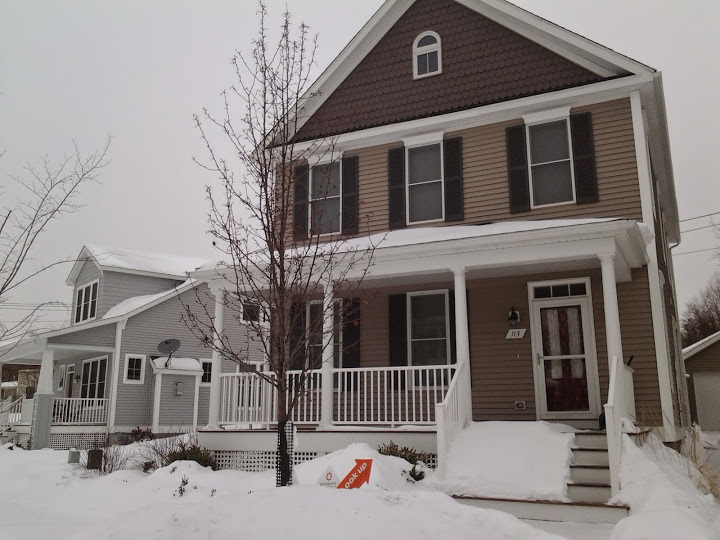
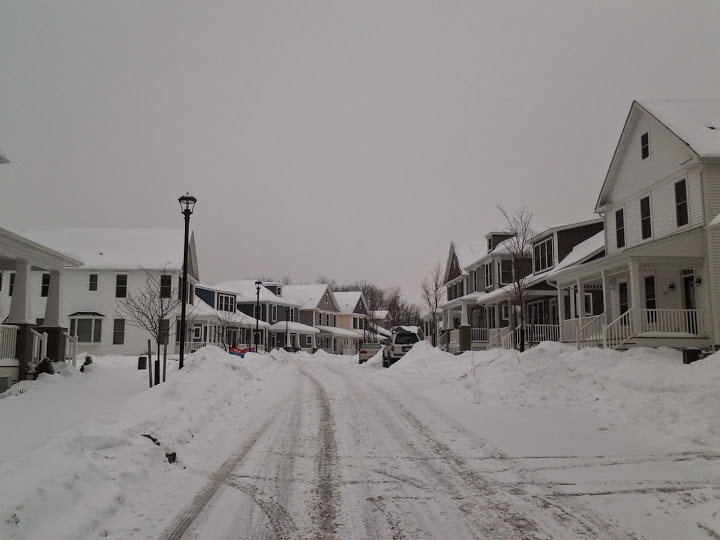
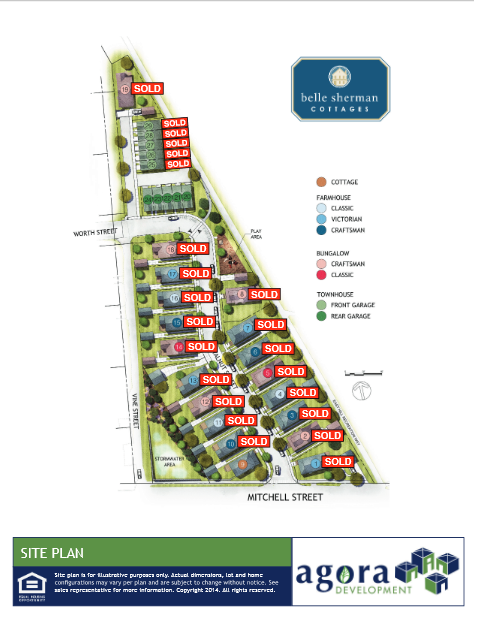
It feels a little surreal to be walking down Walnut Street (fun fact, there was originally a Walnut Street plated for Ithaca’s West Hill in the mid-1800s) and have it fulled out with homes on either side. Yet that is indeed the case. It’ll be easier at this point to count what’s not yet built in the Belle Sherman Cottages development – the townhouses (10 total, 5 due to start this Spring and 5 yet to be marketed), the new cottage design for the not-yet-marketed lot 9, and lots 11 and 12), which are sold and probably awaiting the arrival of warming weather before the foundations are excavated, poured and CMU block is laid. Heck, they might already be poured, but hidden under several inches of snow. So 16 of the 19 houses are built, with a couple of those, like lot 17, undergoing interior finishing and still in need of a little porch/column paint work before being turned over to their new owners. If you’re interested in learning more about the construction process, there’s a little more info in my previous post here, and on Ithaca Builds here.

Every couple of weeks, another sale shows up in the county property records, typically in the range of the low 300s to low 400s. Formal sale isn’t happening until a house is move-in ready (I suspect that while underway, a “sold” lot is actually reserved with a down payment), so following the county’s record of transactions is a useful indicator of progress. According to the Belle Sherman Cottages facebook page, Skaneateles-based Agora Homes and Development intends on completing the 29-unit development in 2015.

Veering into editorial territory here, I’ll admit that I was pessimistic about the project early on, thinking it was too much money for what was provided. But in retrospect, I think this is the right type of single-family housing for more suburban parcels, such as other sites in Ithaca town near the city line. Much of the zoning locally is designed to favor of large lots and large price tags. I wouldn’t call these affordable by any stretch, but they’re somewhat closer to the median value than most other single-family homes going up. Being this close to Cornell also adds a premium on their price tags; perhaps on a site in South Lansing or South Hill, they’d be somewhat less expensive. They’re a good (better?) alternative to the sprawling cul-de-sacs that seem to be the norm for housing developments in suburban Tompkins County. I think that, in the same vein of this project, though with more of a “green” sheen, the Amabel site in southwest Ithaca will be the next single-family development worth watching.

20150207_145459 20150207_145519 20150207_145651 20150207_145707 20150207_145742 20150207_145810 20150207_145843 20150207_145910 20150207_145926

belle_sherman_cottages_102714 belle_sherman_cottages_071814_2


The Neighborhood Pride Site (210 Hancock Street)

15 02 2015

inhs_pride_design_1

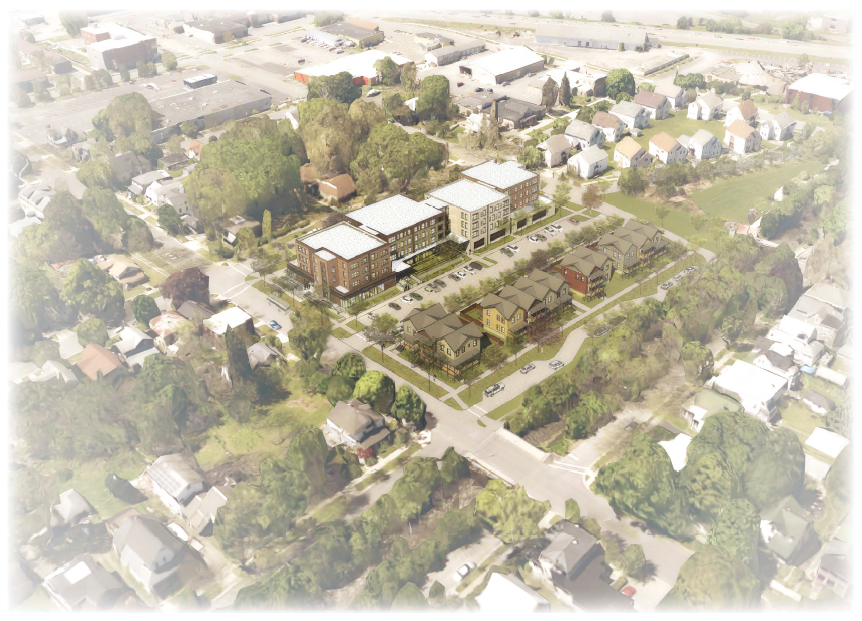
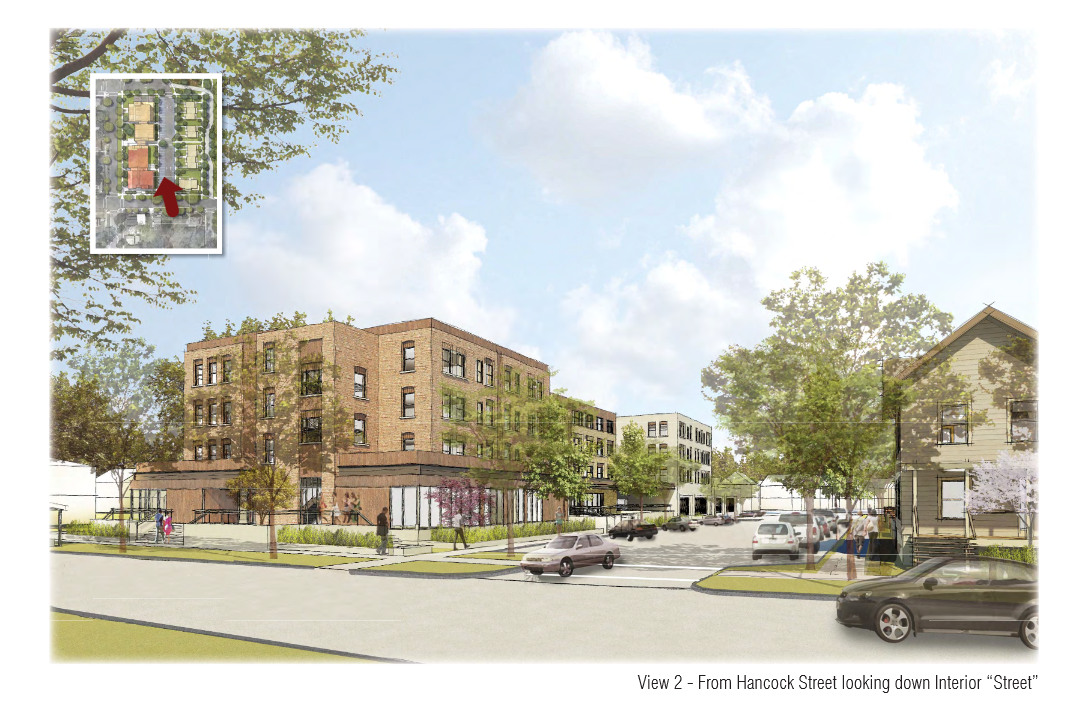
Avid readers will note that I’ve been writing about the Neighborhood Pride site on the Voice, keeping only brief notes here on Ithacating until a final design was unveiled. Now with that taken care of, here’s a description of what we’re working with, based on documents filed with the city on February 13th. There’s a brief application summary and cover letter here, or the 764-page FEAF (Full Environmental Assessment Form) here. I swear, no one reads those giant PDFs in their entirety, users only look for specific sections based on their prerogative. The rest is just there for gluteus maximus coverage.inhs_pride_design_2

Perhaps a little bit to my dismay, the project is not going to be complete until September 2020, tentatively. This isn’t a huge surprise though, INHS is a non-profit and dependent on grant disbursements. The buildout will begin in September 2016 and consist of three phases – my guess of the breakdown is the townhouses are one phase, the 2 southern apartment buildings are a second phase, and the northern two apartment buildings are the third phase, though not necessarily in that order. At some point, INHS anticipated subdividing the parcel into apartment and for-sale portions, which might be useful when applying for affordable housing grants.

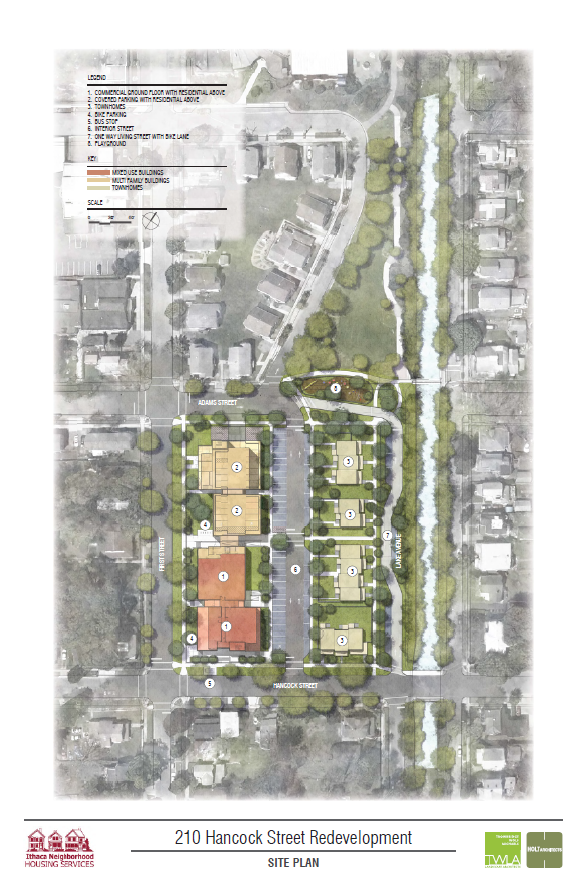
The apartments call for ~50 1 and 2-bedroom units, and 13 for-sale townhouses, although it still looks like 12 in the renders (who knows, maybe one is a small duplex). So about 63 units total, and about 8,200 sq feet or rentable commercial space in three spaces (proposed at 1,800, 2,500 and 3,900 sq ft, for a total of 8,200 sq ft). The apartment buildings will be 65,000 sq ft, 4 stories and 48′ tall (zoning max 4 stories/50′). The demolition of a one-story office building (built 1975) and a vacant grocery store (built 1957) will be required. Total construction cost is anticipated to be about $13.8 million.


inhs_pride_design_3

Interestingly, what looks like the community favorite (the street scheme) doesn’t read as the county’s favorite (which reads as the alley scheme). But the county only advises, the city decides. Lake Avenue will be what they call a one-way “living street” – a low-speed, low-capacity street shared by bikers and vehicles. With those features, it’s designed in a way that you’d only drive on the road if you live in one of the townhouses. Conley Park’s southern boundary will be opened up to flow freely into the property (it was blocked off with vegetation to begin with because of its proximity to the old P&C loading dock, which made for a loud, smelly experience).

As an honest personal opinion, the design – inspired by local 1900s industrial and manufacturing buildings, according to the application – is pretty nice. It’s contextual, it’s appropriate, it fits in without being a total historical throwback. The townhouses are well-designed as well. I think INHS’s willingness to have heavy community input, and the community’s willingness to help shape the project, really came together to create a nice product.inhs_pride_design_5

A parking variance will be required from the city – the site will have about 70 parking spaces, but zoning requires 86. Will a new TCAT bus shelter and on-street parking nearby, INHS anticipates that they will be able to obtain the parking variance without too much hassle. INHS also needs to be be mindful of the flood zone, which they seem to have accounted for in the site plan. The only portion of the site especially vulnerable to a 1-in 100 year flood event has covered parking on the first floor. The townhouses, which are in the 500-year zone, will be built two feet above the ground, and the commercial space, also in the 500-year zone, will be one foot above the ground.

In sum, we have a project that removes a vacant supermarket, fits well in the urban fabric and provides affordable housing. It might take forever and a day to build, but it’s a welcome resource in the city of Ithaca.

inhs_pride_design_4


News Tidbits 2/14/15: Zoning Out

14 02 2015

cpoz_1

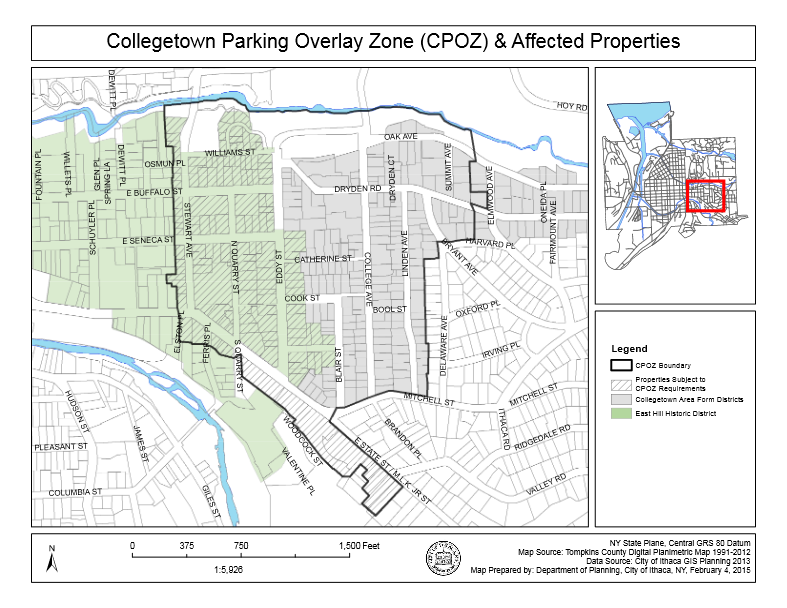
1. Leading off for the week, here’s an interesting piece of news: the city is set to repeal the Collegetown Parking Overlay Zone (CPOZ). The CPOZ was enacted in 2000 as a way to control the parking needs of Collegetown – essentially, it mandated more parking spaces per unit than was standard for a parcel’s zoning. For example, an apartment building of 6 occupants, zoned R-3a, would require 2 off-street parking spaces in Fall Creek, one for every three residents. But on East Hill, that same building would require 3 parking spaces, since the CPOZ mandates 1 off-street space for every 2 residents.

At the time, it made sense; East Hill tends to have more students, who bring their cars to school. But in the past 15 years, the proportion of students bringing cars has declined substantially – a study by Randall/West indicated that in 2000, 49% of Cornell students owned a car; by 2012, it was 27%, a change attributed to the rise of alternative transportation (car share, Cornell-subsidized bus passes), economic and cultural changes. At this point, there’s more parking than there is necessary.

It may seem at first glance that the CPOZ was eliminated with the Collegetown Form Zoning enacted last year, but the two maps don’t match up completely- there are 145 properties that weren’t affected by the new form zoning, but are still covered by the CPOZ parking requirement (see map above). Nearly all of these parcels are a part of the East Hill Historic District (the rest being Collegetown Terrace). A few recent cases, one with Collegetown Terrace and a couple of smaller projects, have highlighted the point that parking requirements have become excessive.

A change to the parking requirements could have a couple of desirable effects – one, less parking would be more historically accurate, and helps to preserve green space in the neighborhood. Two, it opens the idea of replacing a couple of the current parking lots with new housing, which would be designed to fit in closely with the current building stock since the properties are located in the East Hill Historic District (I know, landlords will never give up the money from renting spaces, but perhaps a new small apartment house might be more lucrative than a parking lot; looking at the tax maps, there are a few possible sites, including subdivisions). One mixed effect would be that it’s easier to convert a current single-family lot to student rentals, but the rental would now be less visually intrusive with fewer parking spaces. It’ll be interesting to see what comes forth as a result of this zoning repeal.

industrial_zones_1

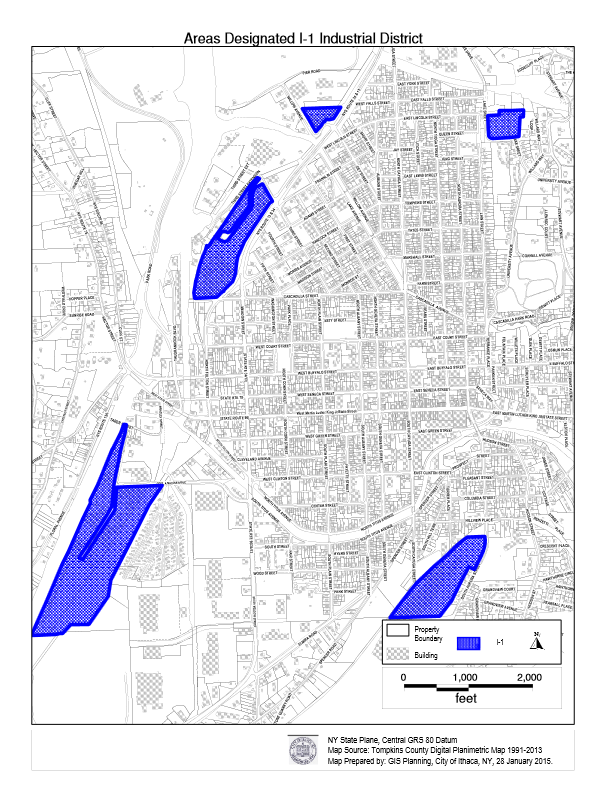
2. Among other zoning changes being considered is a change to industrial zones (the city has just a few). Commercial buildings can be built in industrial zones, but the city wants to raise the minimum number of floors for new commercial buildings in these zones to increase from 1 to 2 floors, a nod to the paucity of undeveloped land in the city (and perhaps the painful attraction of suburban big box stores). There are five sites on the map above, but it might as well be three – Emerson (lower right) is becoming a planned development zone, and the Ithaca Gun site (upper right) is expected to be rezoned from industrial to medium-density residential, in preparation for an apartment project still in the works.

canopy_hampton_rev4_1

3. What is up with the proposed hotels constantly delaying their schedules? First the Marriott pushed back its opening from Spring 2016 to Q3 (July-September) 2016. Now the Canopy Hilton is pushing their schedule back, from a construction start this Spring to an autumn start, which makes it difficult if not impossible to realize the cost savings from reusing the crane for the Carey Building. The tax abatements aren’t going to take that long to obtain, maybe another month or two before the county takes its vote.

Presumably, the project would open in autumn 2016 if the construction schedule is similar. But I feel like these delays send a message of incompetence, and that’s the last thing a project needs.

inhs_pride_design_6

4. Maybe the article I wrote about the new INHS project will have run in the Voice by the time this auto-publishes. But here’s a render that I decided to leave out of the final article to minimize space. The city uploaded the initial application Friday morning (sketch plan will be presented this month), and I’ll write a follow-up article, based on the application paperwork (so it will be different from the Voice article), and post it here on Ithacating in the next few days.

Cayuga-Meadows-Shot

5. Staying on the topic of affordable housing, these agenda notes from IURA Neighborhood Investment Committee reminded me of another affordable housing project that totally slipped off the radar- Cayuga Meadows, a 62-unit apartment building for seniors that was approved by the town of Ithaca for a site near Overlook at West Hill in late 2012. On page 52, it’s noted that the project is supposed to open in November 2015. That would imply that it should be starting construction soon if site prep hasn’t started already (I haven’t visited the site in over a year, so I have no clue). The pipeline document is dated from February 2014, so I have no idea if that’s still accurate. I emailed its developer, Conifer LLC, to see if the project was active, but received no response. Still, it’s something to keep an eye on.


Lofts @ Six Mile Creek Construction Update, 2/2015

13 02 2015

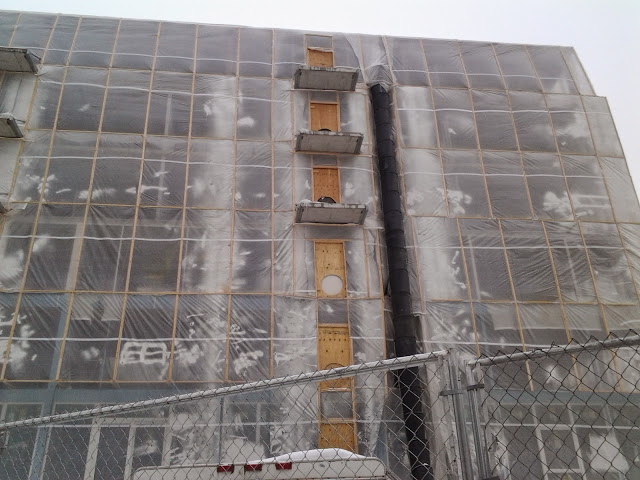
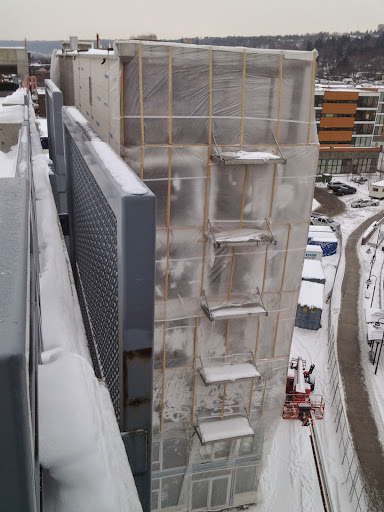
Even during these chilly days, work continues inside the Lofts @ Six Mile Creek apartment building in downtown Ithaca. Walking up to the building, the first thing that sticks out is that the building looks like it’s trapped in a bubble. The plastic sheeting is there for the simple reason of it’s winter in Ithaca, and its effing cold. The plastic keeps some of the sting of the wind away, and also seems to be convenient as a drawing surface. The plywood covers holes where doors will lead out to exterior balconies. Lower floors will have Juliet balconies, while upper floors and some lower-level side units will have full balconies.

A closer look shows that the first two floors do in fact have bands of Pella windows installed, separated with bands of sheathing that will eventually be covered by the exterior finishing material. According to the project’s facebook page, interior wall construction for the apartment units is currently underway. Plumbing, most electrical rough-in and fireproofing are complete, the metal frames of the apartment walls already erected; now comes hanging sheet-rock, flooring and ceiling finishes. Apartments will consist of studios, 1-bedroom units and 2-bedroom units, with some of the studios and 1 bedroom units having bonus rooms. Square footage per unit will range from 555 to 1202 sq ft. The facebook page notes that tentative rents will be posted in the next couple of weeks.

The 7-story, 49,244 square foot building will contain 45 rental apartment units. The building is being developed by Cincinnati-based Bloomfield/Schon + Partners, with construction by Turnbull-Wahlert Construction. Completion of the apartments is expected during the second quarter (April-June) of this year, wrapping up the last phase of a 15-year project.

20150207_151831 20150207_151911 20150207_151950 20150207_151954 20150207_152026 20150207_152252

cayugaplace_v5


Village Solars Apartments Construction Update, 2/2015

11 02 2015

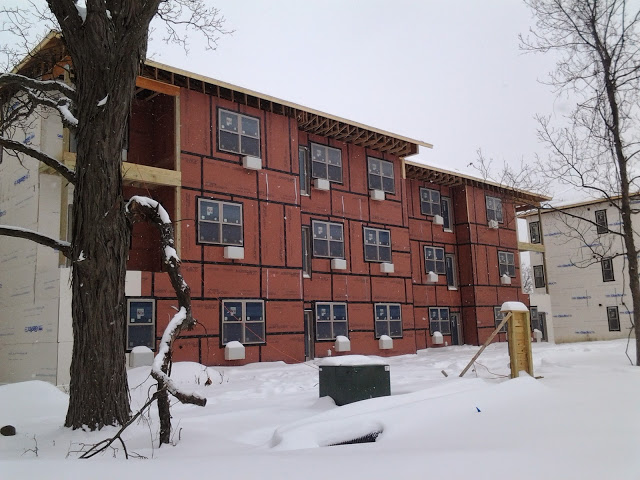
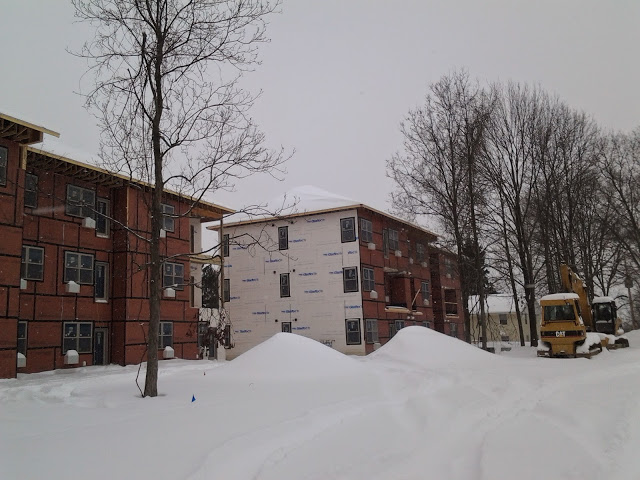
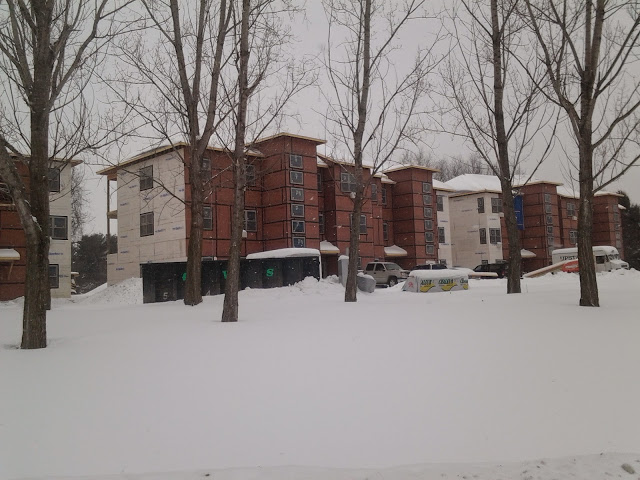
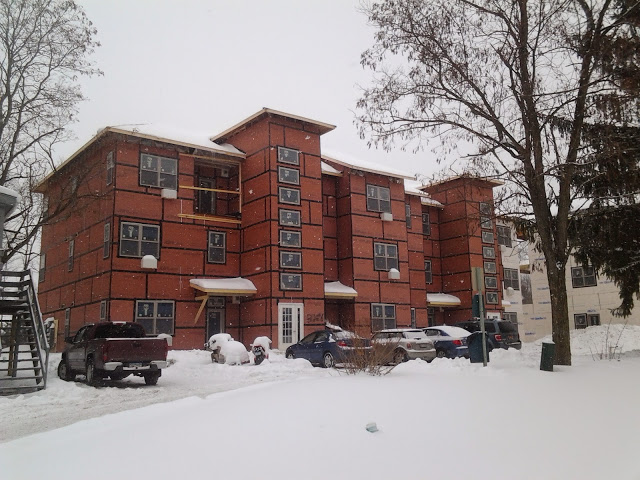
The first three apartment buildings of the Village Solars apartment project in Lansing are fully framed, sheathed (I’m assuming the red panels are sheathing material), roofed, and windows and doors have been installed in most locations. The light-colored material might be a breathable wrap for weather/moisture resistance. It will be a little while before exterior finishes are applied and balconies are installed. When I visited last Saturday, the site was buzzing with the sounds of construction workers busy with tasks inside (probably rough-ins for things like plumbing and electrical), and ’80s hair metal streaming from a radio somewhere from within. Nothing like installing pipes while rocking out to Twisted Sister.

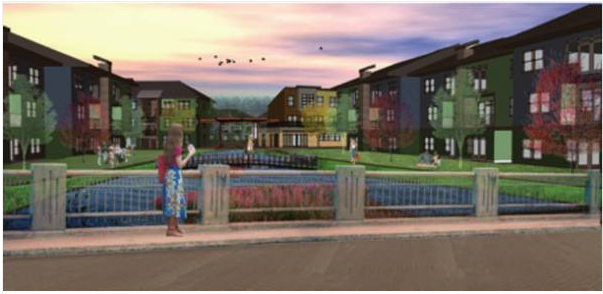
The Village Solars get their name from what the craigslist sales pitch calls “their passive solar design and energy saving features”. As far as I’m aware, they won’t have solar panels. According to Thomas Bobnick, the rental agent for the apartments, the first phase shown here will consist of 36 units (the final buildout will be close to 300 units). The design of the complex calls for at least eight, maybe ten buildings to surround a new pond that will be dug out of the undeveloped middle of the property – the advertisements call it “waterfront”, which it is, technically.

From the craigslist advertisements, one-bedroom units will rent for $1050-$1145 and be ready for occupancy by June 1st, two-bedroom units will rent for $1235-$1369 and be ready for tenants on May 1st, and three-bedroom units will rent for $1565-$1600 and be available on June 1st. These dates are pushed back a little from initial plans, which called for March and April occupancy; no doubt the severe winter has complicated the schedule. Looking at the photos, the two buildings under construction on the west and east ends look to be one style (balconies in the middle), while the center building is a different layout and design (end balconies). The price range for the two bedrooms is a little above the average two-bedroom unit in Ithaca ($1,165), but after accounting for the premium on new construction, the developer seems to be pricing for the middle tier of the market.
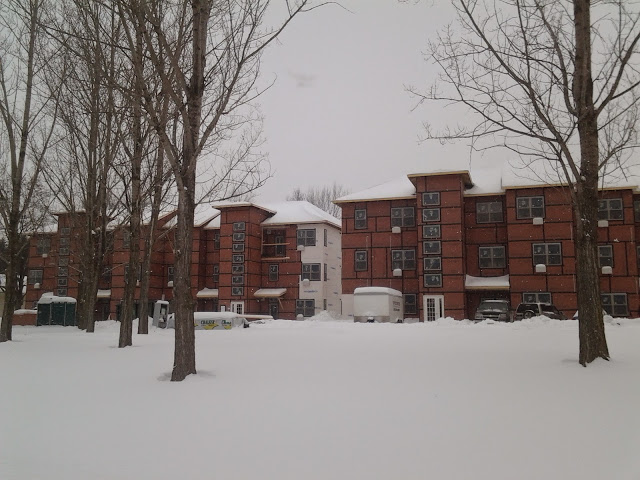
The Village Solars are being developed by local company Lifestyle Properties. Lifestyle is run by Steve Lucente of the Lucente family, who have been major builder/developers in Ithaca since the 1950s. No one word on the architect. Upstate Contractors of Syracuse appears to be handling the construction work.

20150207_131607 20150207_131610 20150207_131613 20150207_131646 20150207_131715 20150207_132225 20150207_132231 20150207_132320 20150207_132335 20150207_132338

village_solars


Ithaca Marriott Construction Update, 2/2015

10 02 2015

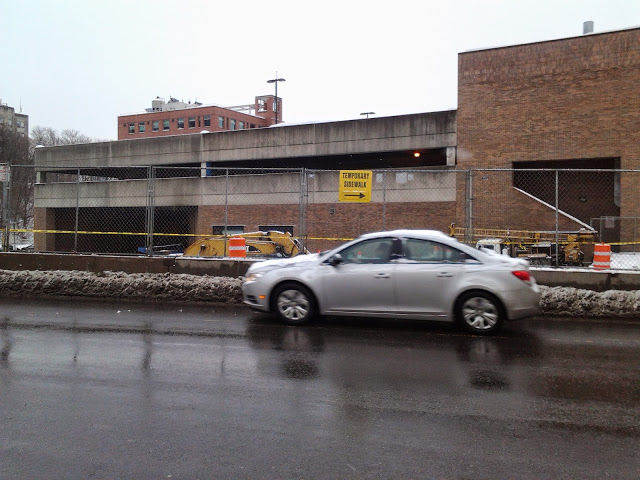
The land for the new Ithaca Marriott exchanged hands on January 13th, the groundbreaking ceremony was January 22nd. With those events filed away, there appears to be some real site prep going on at the site, located at the intersection of E. State and S. Aurora Streets. The site has very clearly been disturbed, although last Saturday appeared to be a day off for the construction workers. The sidewalk on S. Aurora Street is closed, and excavators and dump trucks are ready and waiting. The first major step in this project will be to clear the asphalt and soil on site and dig deep enough to enable foundation work to take place. Expect that work to take place for the rest of the winter and into the spring.
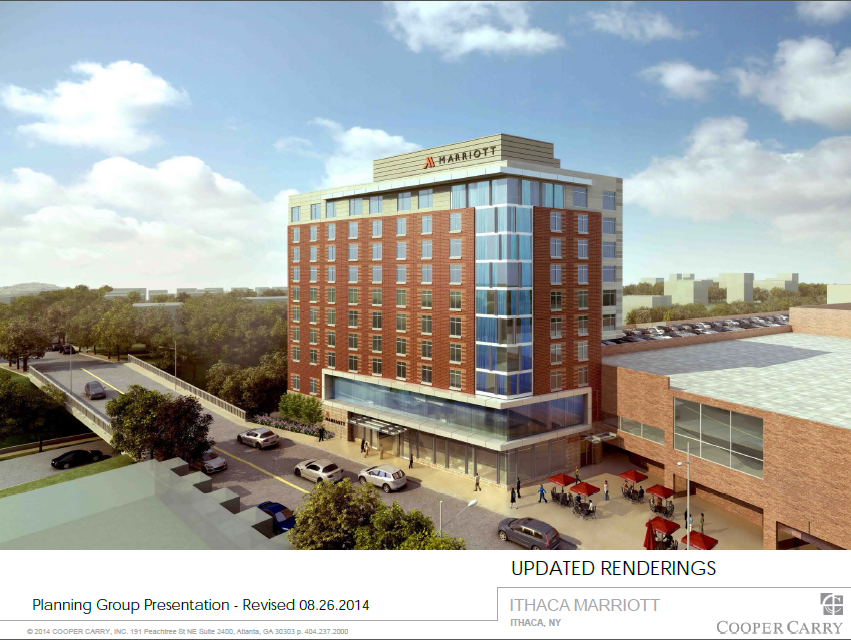
The $32 million, 10-story, 159-room hotel is slated for an opening in Q3 of 2016 (July-September). This is pushed back from the previously given date of Spring 2016. While this new date misses the lucrative graduation season, it will still be able to take advantage of the summer crowds and back-to-school visitors, if all goes to plan (and we’ll see if it does). The new date also places the opening of the Marriott a couple of months behind the opening of the new 123-room Canopy Hilton a couple blocks away. With 282 more hotel rooms downtown, businesses that cater to tourists and other travelers will welcome the boost in business. Who knows, perhaps the Commons will finally be done with reconstruction by then.

According to a press release from developer Urgo Hotels (or the Ithaca Journal paraphrase), the hotel will include a fitness center, a restaurant with indoor and outdoor seating, and 3,000 sq ft of meeting space. While the hotel is underway, some details are still being ironed out – the hotel signage (which requires a zoning variance) was derided as too generic and bright, and Urgo Hotels withdrew the proposed design. Urgo has a year or so to figure out what kind of signage they and Marriott would like to install, and don’t expect any delays just because of signage.

The hotel has been designed by Atlanta-based Cooper Carry Architecture and development is a joint venture of Urgo Hotels of Bethesda and Ensemble Hotel Partners, a division of Ensemble Investments. Urgo’s portfolio includes at least 32 other hotels totaling 4,500 hotel rooms. Interior design will be handled by Design Continuum, W.H. Lane of Binghamton is the general contractor, and Rimland Development contributed the land to the joint venture and is a partner. Long Island-based Rimland was the original firm that pitched the project in 2008 as the “Hotel Ithaca”, before the old Holiday Inn downtown went independent.

Off the record, have we settled that it’s 159 rooms and not 160? Because this is confusing me to no end.

20150207_152836 20150207_153021 20150207_153027 20150207_153100 20150207_153118

marriott_rev1_1


Carey Building Construction Update, 2/2015

9 02 2015

I was originally going to schedule this for later in the week, but I figure I’ll run it now, since the recent twitter chatter is observant but mistaken. The Canopy Hotel is not under construction. At least, not yet. The hotel is expected to start in early Spring. But the work on the Carey Building addition is just beginning.

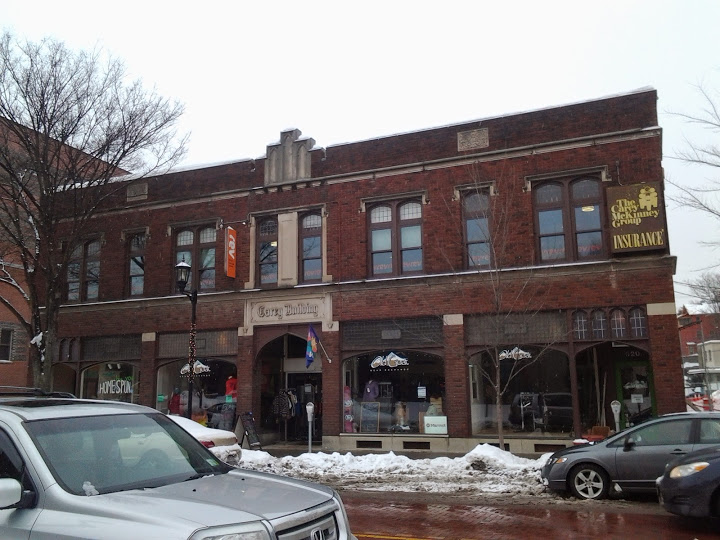
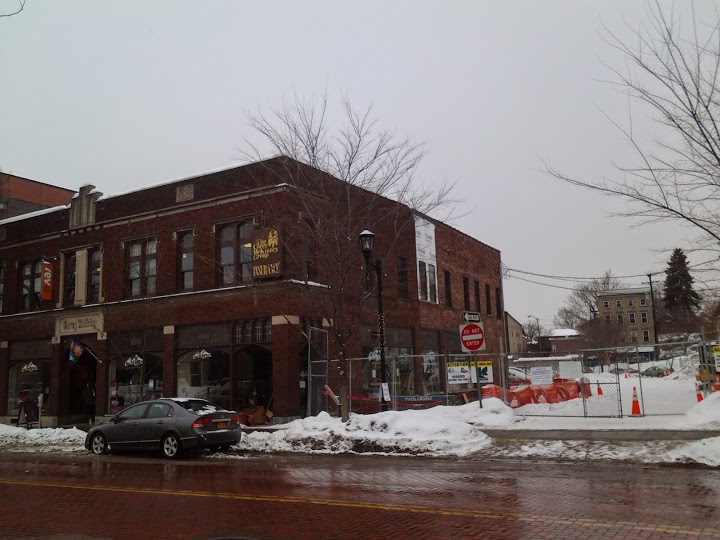
According to Jason Henderson at Ithaca Builds, building contractor LeChase Construction is currently conducting underpinning work on the Carey Building. Underpinning is the name of the process by which a foundation is strengthened – certainly necessary when one is about to add five floors onto a 2-story building. The second to last photo here shows some of the underpinning work on the eastern foundation wall, and the tarp is on the roof indicates prep-work for the upcoming expansion. LeChase will also be handling the construction of the Canopy Hotel next door.

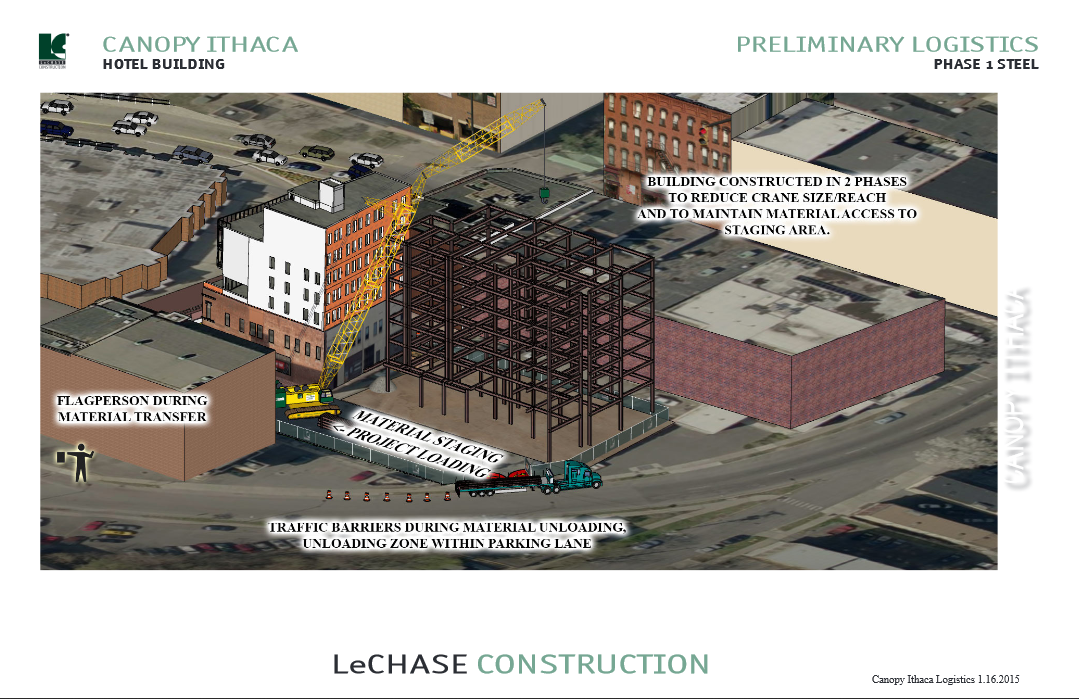
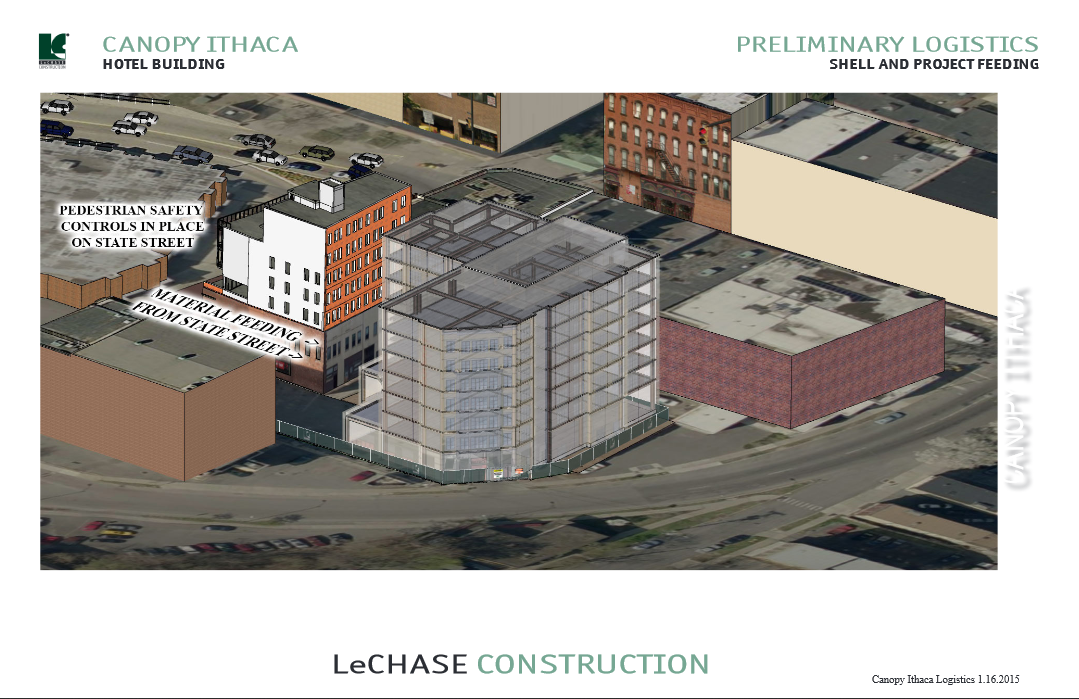
It’s quite unusual in a place like Ithaca to have two separate large projects right next to each other under construction at the same time. This will be logistically complicated. In a letter to the Canopy developers, LeChase’s large trucks will have their brakes inspected before entering State Street, and will be escorted down the hill to a designated area on Seneca Street, and will leave the city via Seneca Street. According to construction phase diagrams, The steel for the Carey Building will be erected first; then, using the same crane, LeChase will begin installing steel for the new hotel. Sharing the crane will result in a cost savings to both owners.

When most of the western side of the hotel has had its steel structure craned into place, LeChase will transition to a smaller crane and switch the material unloading and staging area to East State Street. This is because the hotel occupies most of the site, so the crane is reduced and East State street will be closer to the location of the new crane. Cladding and interior materials will continue to be fed in via E. State Street through the project’s completion in Spring 2016. The Carey Building will have been completed by then, finishing by the end of summer 2015.

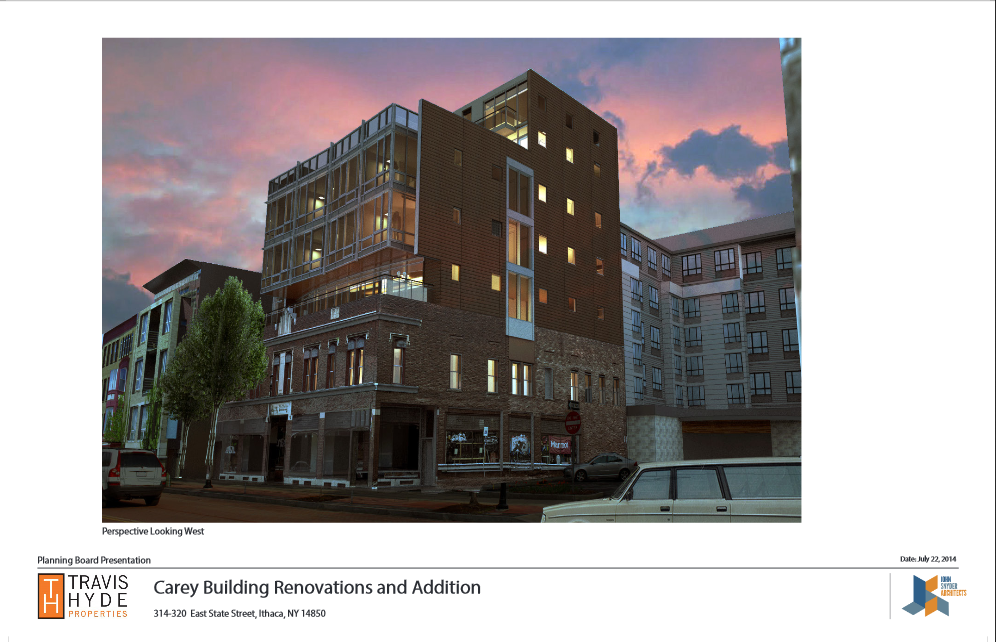
The Carey Building addition will add a third floor and 4,200 sq ft to the Rev business incubator (nearly doubling it to 8,700 sq ft), and on floors 4-7, there will be 20 apartments. Floors 4 and 5 will have 16 studio apartment units that average only 400-500 sq ft, their small size enabling them to be rented at a lower price. The 4 units on floors 6 and 7 will be larger 2-bedroom units. The $4.1 million project is being developed by local firm Travis Hyde Companies.

20150207_153142 20150207_153223 20150207_153246 20150207_153412 20150207_153422

carey_rev4_2

canopy_carey_logistics_1 canopy_carey_logistics_2 canopy_carey_logistics_3 canopy_carey_logistics_4


Boiceville Cottages Update, 2/2015

8 02 2015

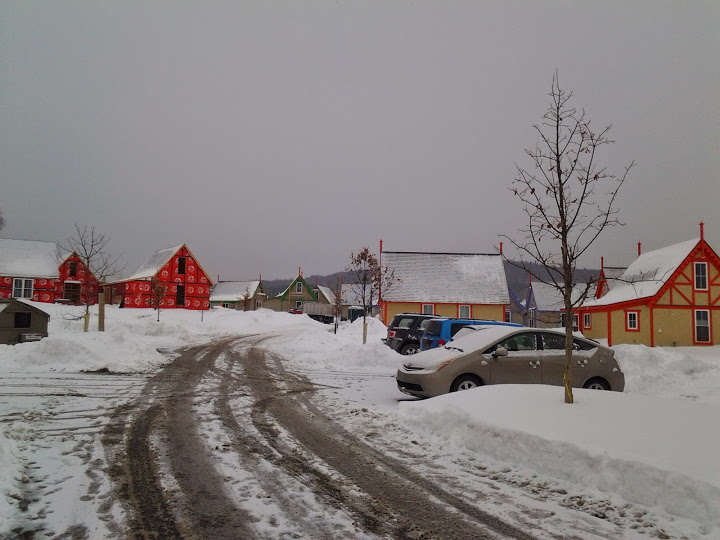
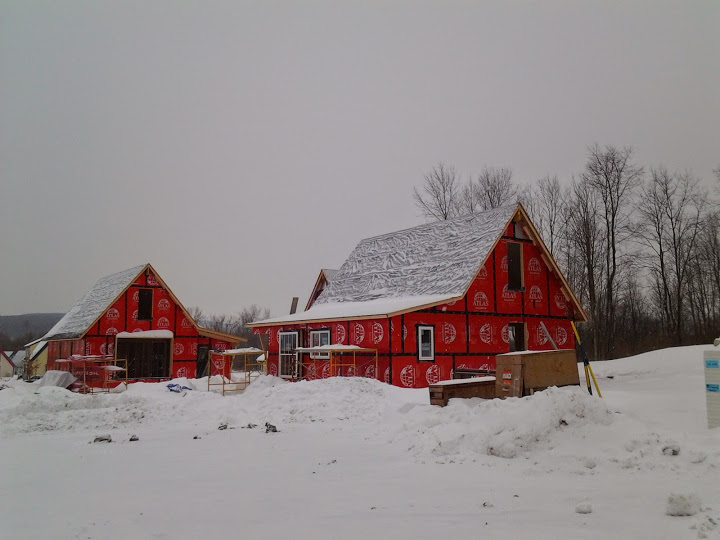
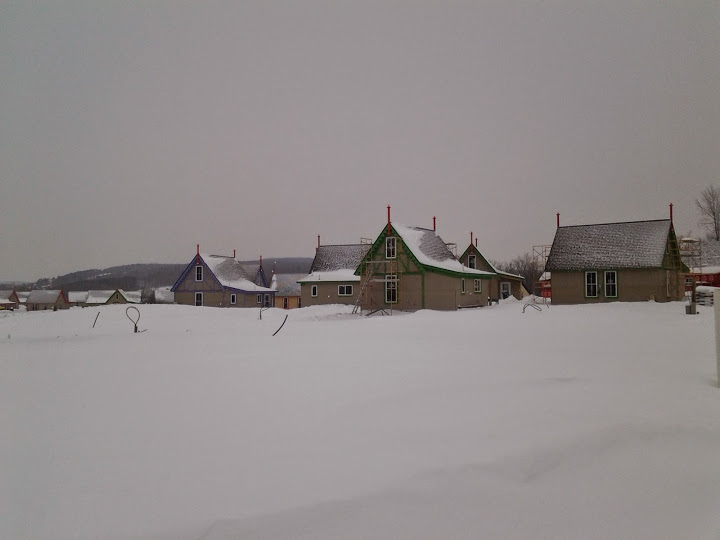
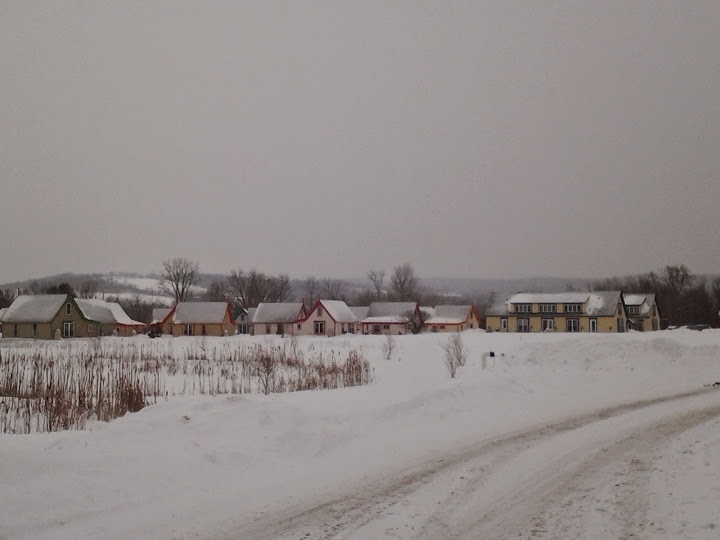
It’s been about 2.5 months since my last trip through the Boiceville Cottages, but given that it’s winter (and a particularly cold and severe winter since the jet stream reconfigured in January), there has only been slow if steady progress with its 75-unit expansion. Since December, the timber homes with purple trim have been completed, four houses that were undergoing exterior build-out have now progressed to exterior detailing and interior finishing (the ones with green timber trim), and windows are being fitted into three homes that have sprouted from their slab foundations since the previous visit.

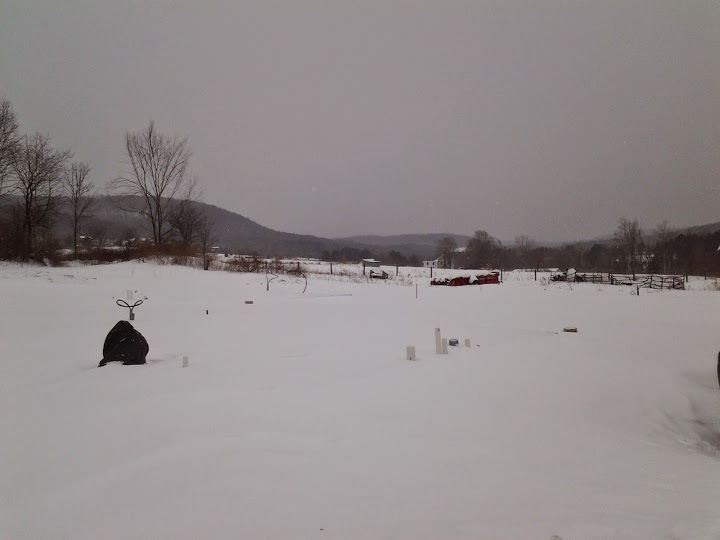
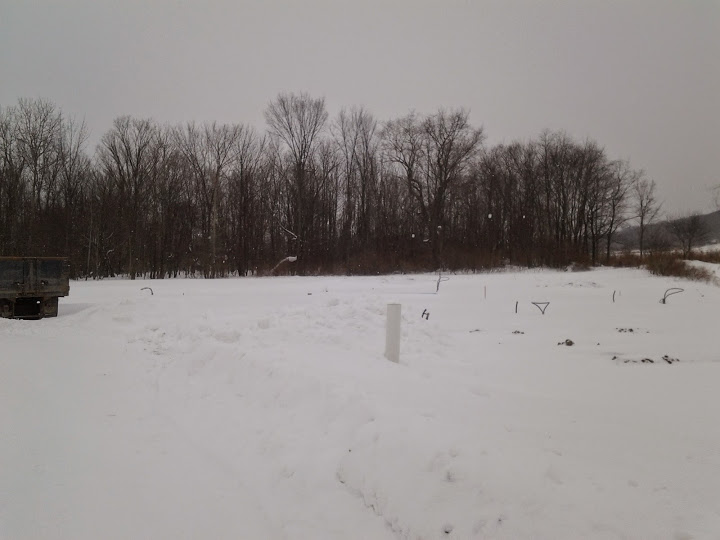
One of the things that stood out on this visit was that it’s now possible to walk all the way through the new phase thanks to the construction. Looking around at the snow on the ground, edges of the blue waterproof covering (which might be the covering of cement board being used to protect the slab insulation) could be seen poking out among the drifts. Using the (gas utility?) loops coming out from the foundations as a guide, there are perhaps a dozen poured concrete foundations, ready for construction as time and weather provide. There were approximately 25 units that were built in 2014, and with probably 10 complete by the end of March, 2015 looks to be on the same construction pace, maybe even greater. It might even be possible that the expansion will be completed this year. Inquiring minds would like to know if Bruno Schickel has any other expansions or colorful villages planned.

The Boiceville Cottages, built and managed by the Schickel family, are rather unusual as apartment complexes go. For one thing, there are the bright paint jobs, a sort of hallmark of the cottage units since the first set of 24 houses was built in 1996/97. The bright paint and the ornate woodwork have led to a nickname, “The Storybook Cottages“, which holds some weight, according to an article in Life in the Finger Lakes:

“Schickel said he was inspired to build his colorful cottages by a children’s book he read to his daughters almost 20 years ago. The book, Miss Rumphius, by Barbara Cooney, tells of a girl who, at her grandfather’s urging, travels to faraway lands seeking adventure. Later she moves to a cottage by the sea and works to make the world more beautiful by spreading seeds of blue and purple lupine. An illustration by the author shows the Lupine Lady’s house on a hill overlooking the sea. The small cottage is replete with finial and gingerbread. Seeing that illustration was the eureka! moment, Schickel recalled. “I said, ‘I’ve got to design something like this!’”

Since the initial 24 units were built, a further phase of 36 units was undertaken pre-recession, and in the past couple of years the town of Caroline signed off on the next phase, a group of 75 that would more than double the size of the complex. The cottages have been built out at a steady pace, and at completion of this current phase, 135 units will be present on the Boiceville property. Most of the units are 1 and 2-bedroom cottages, built in clusters of three, although a few “gatehouse” rowhouses offer studios and 3-bedroom units. The Boiceville complex may be the largest population center in the 3,300 person town.

20150207_124102 20150207_124139 20150207_124147 20150207_124213 20150207_124234 20150207_124303 20150207_124308 20150207_124336 20150207_124344 20150207_124416 20150207_124421 20150207_124434  20150207_124553 20150207_124836 20150207_124847 20150207_125032