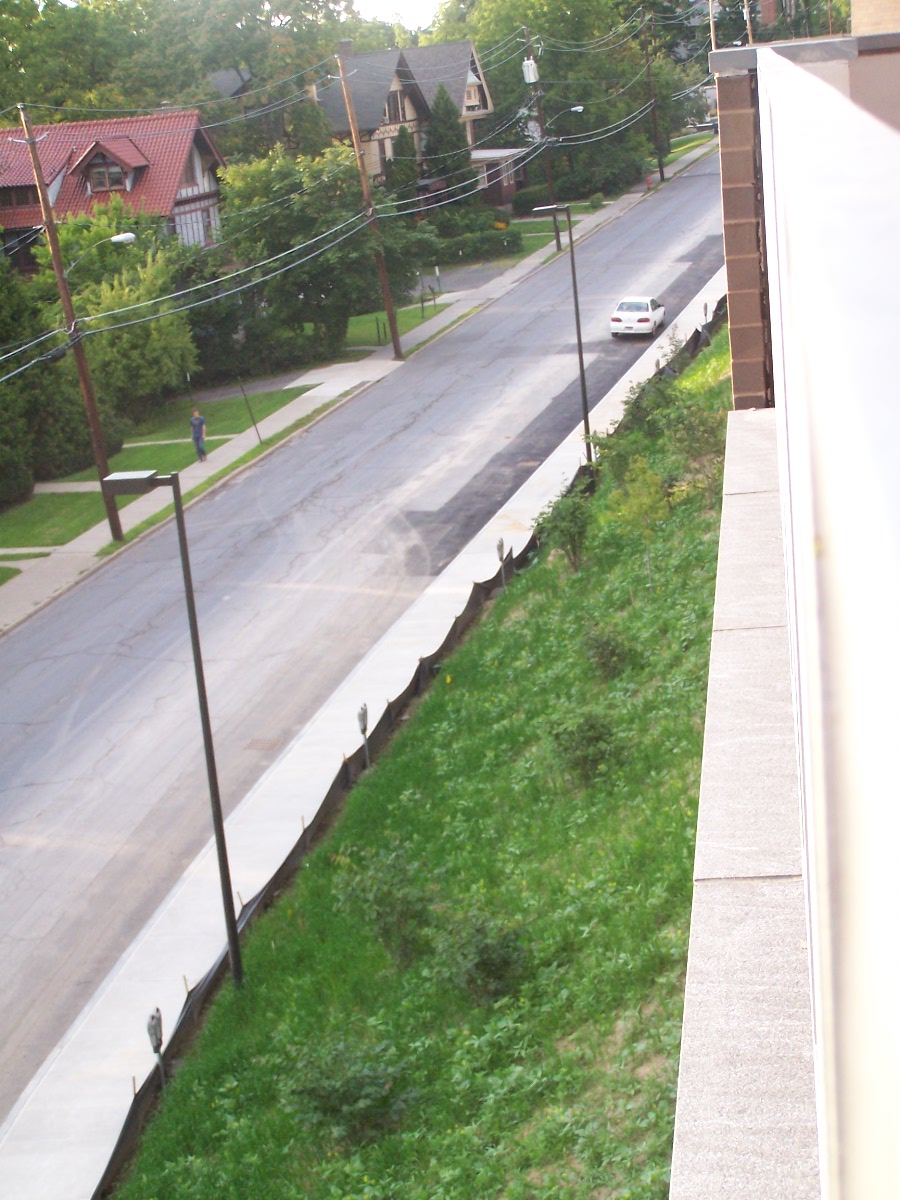
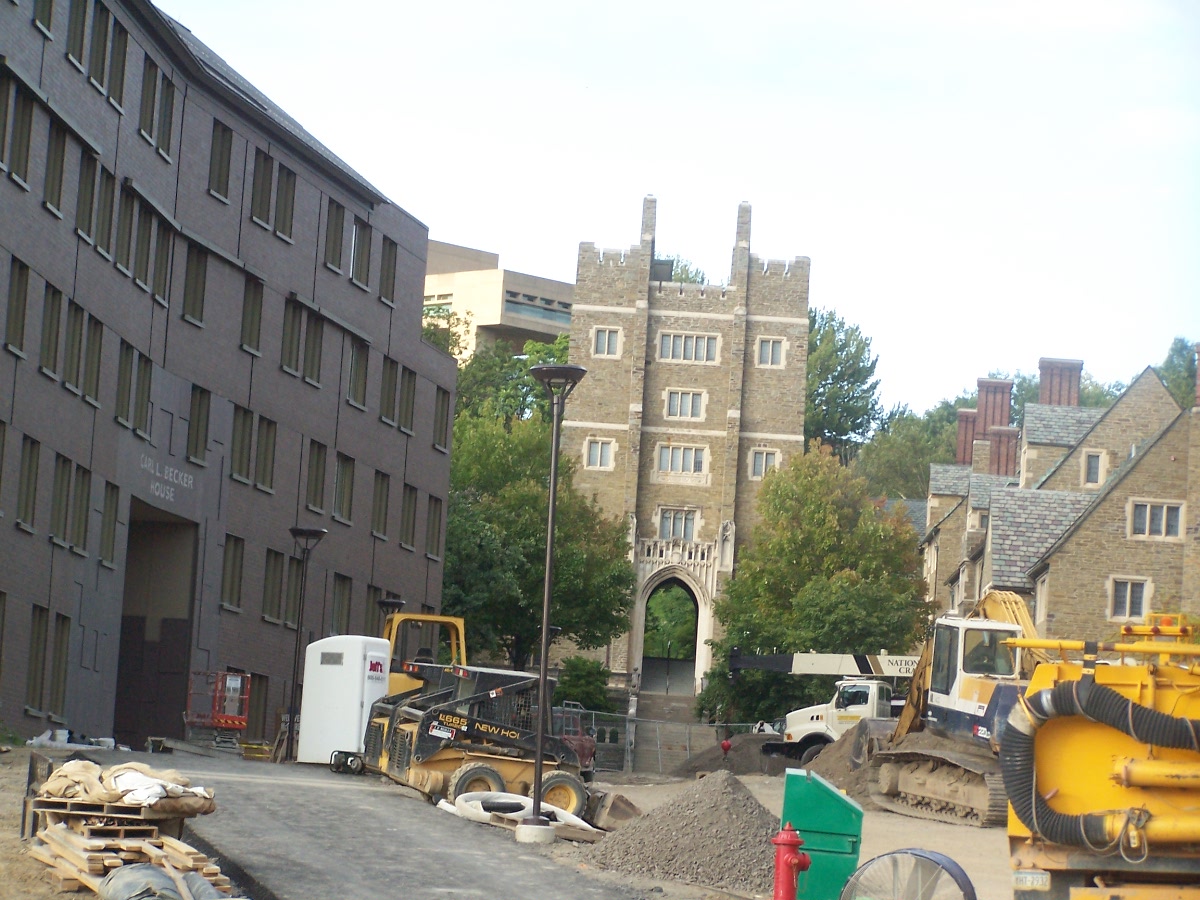
Photographic Revisions

2 01 2011

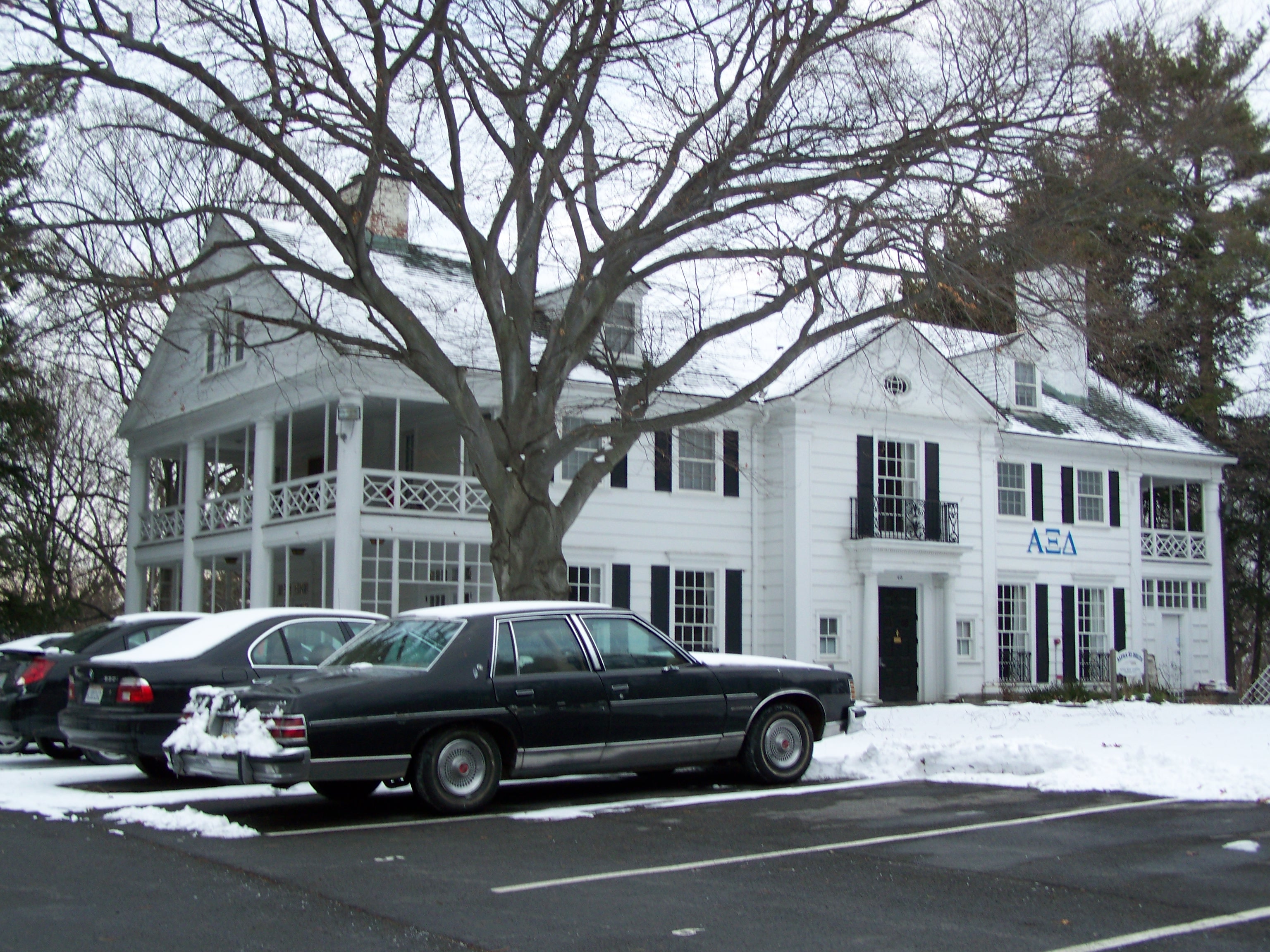
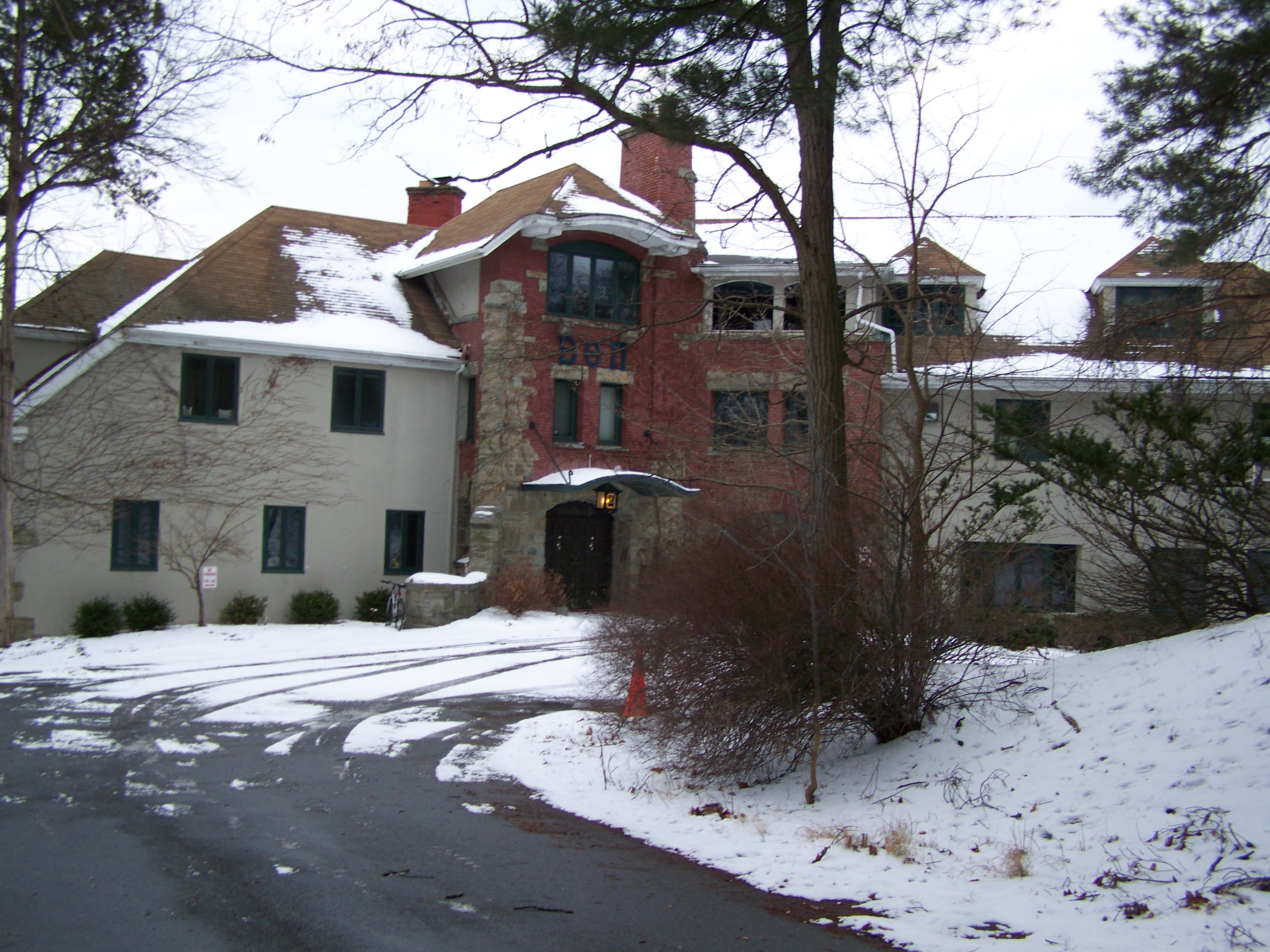
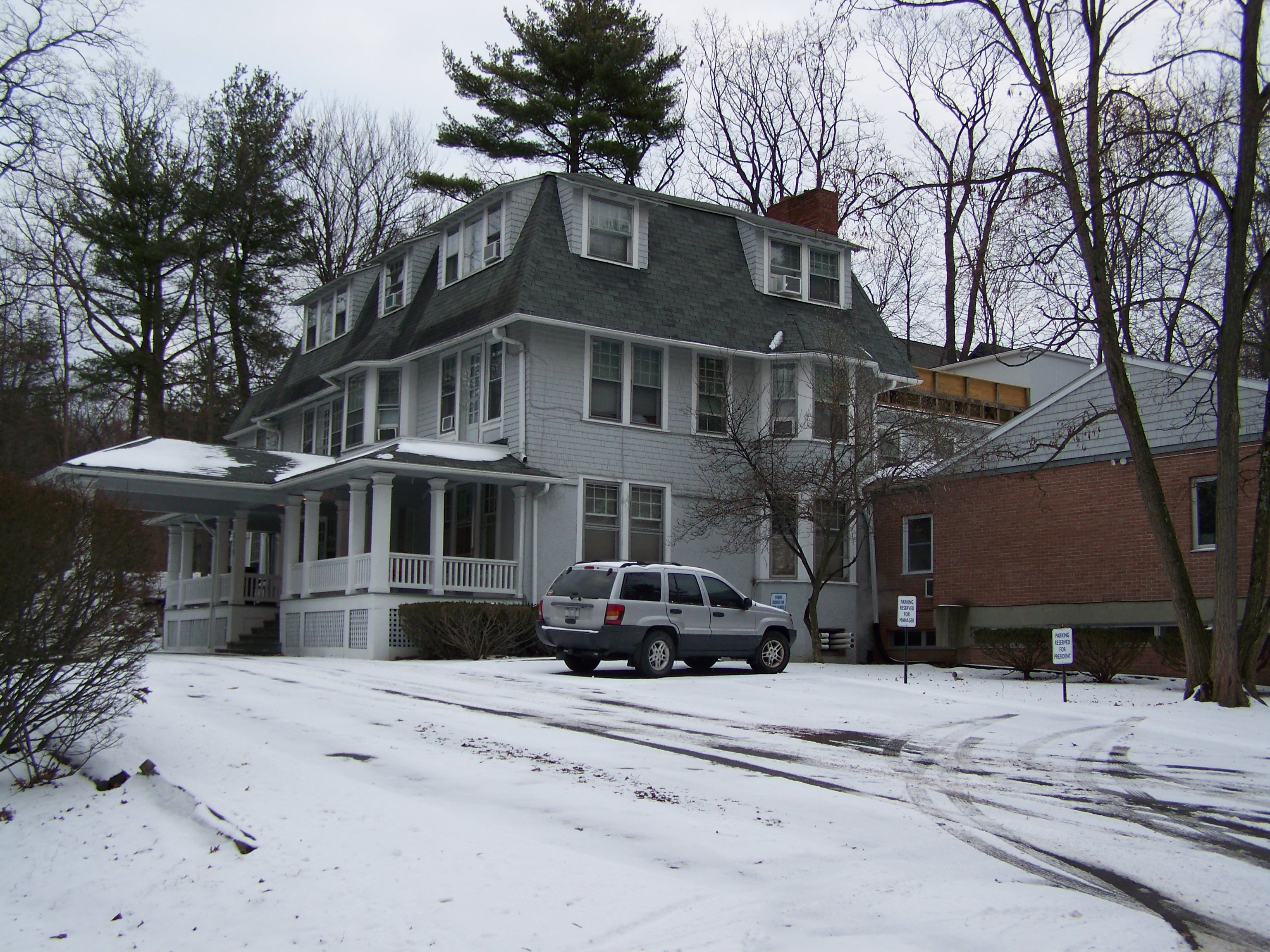
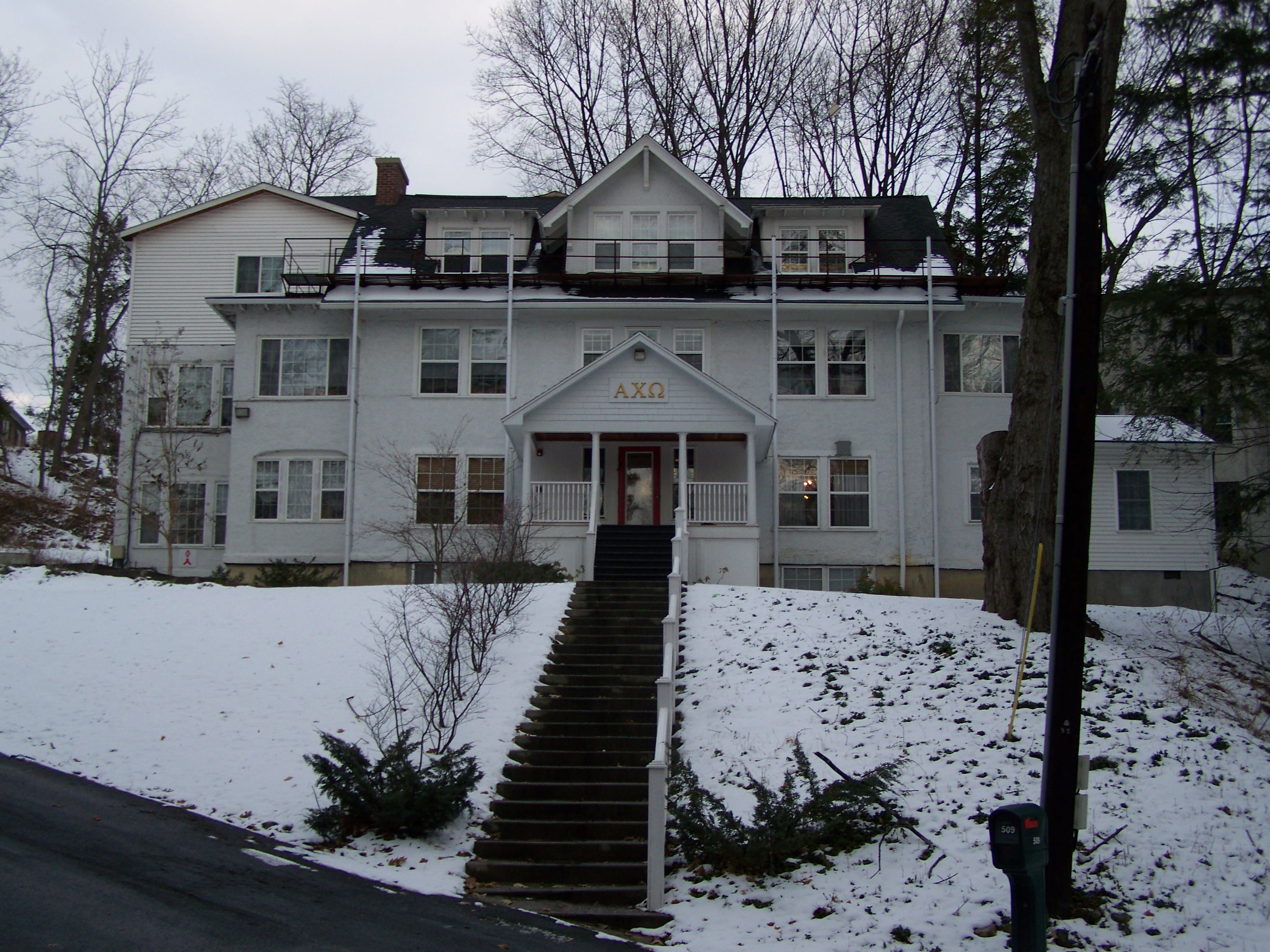
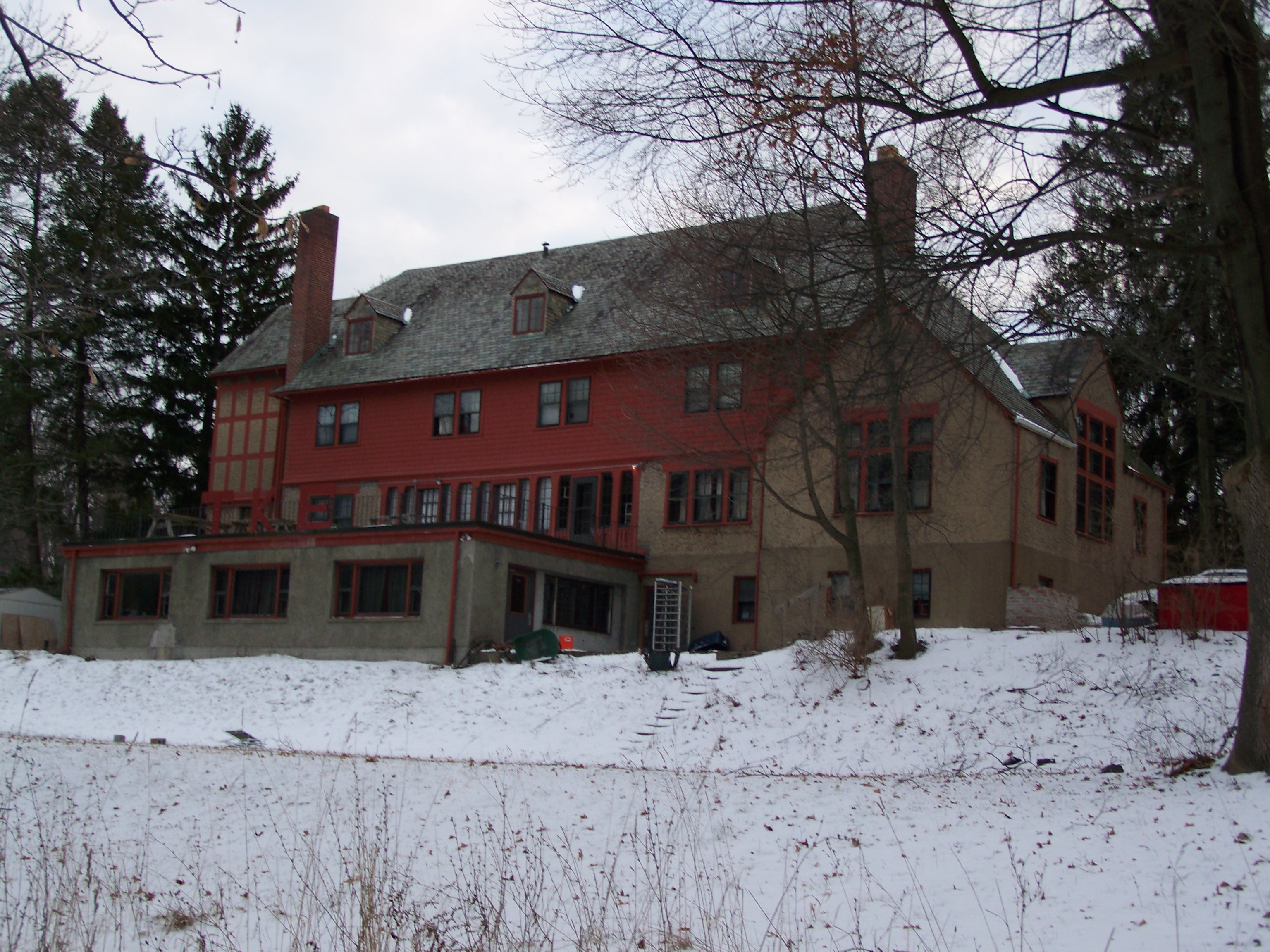
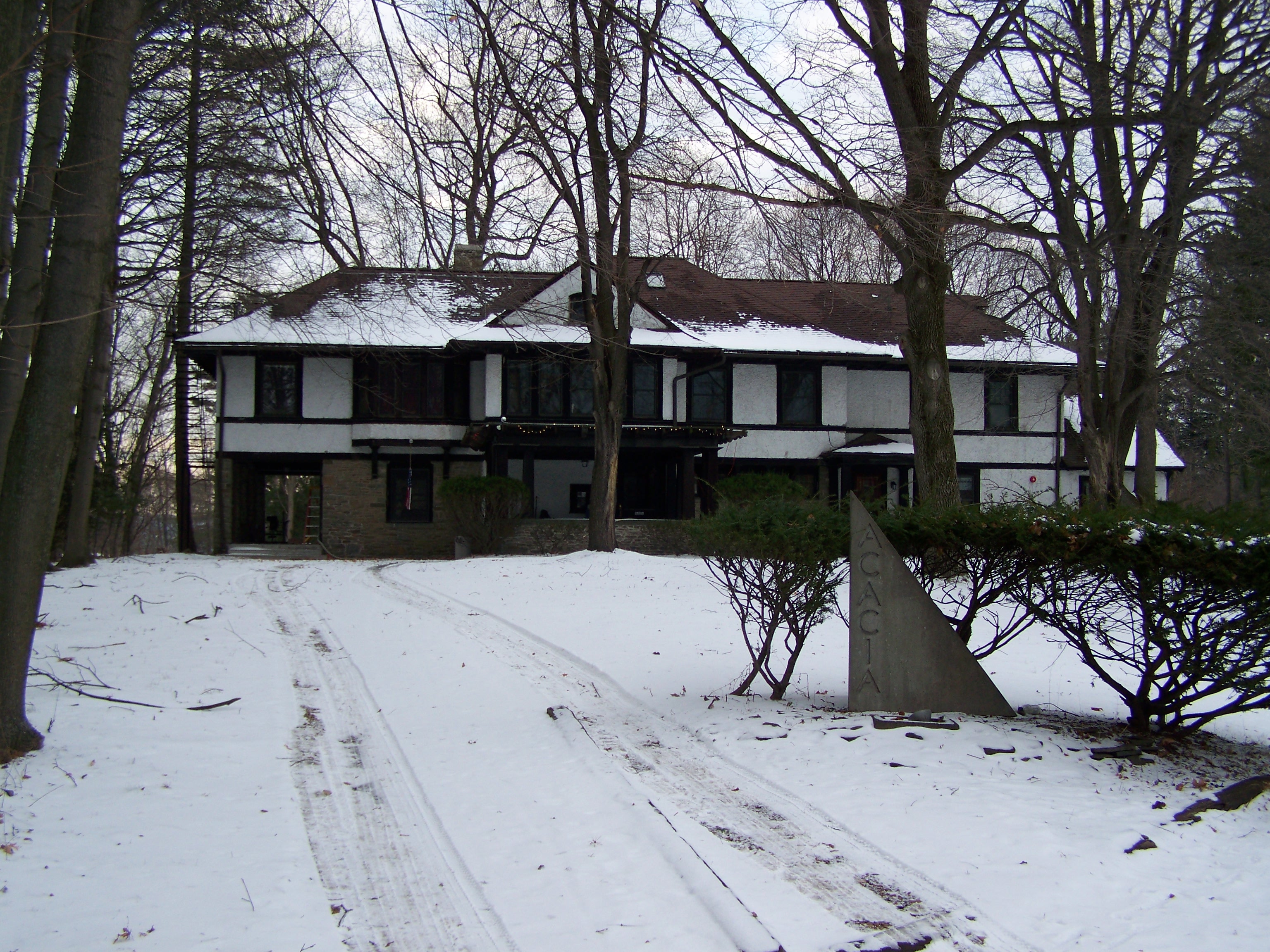
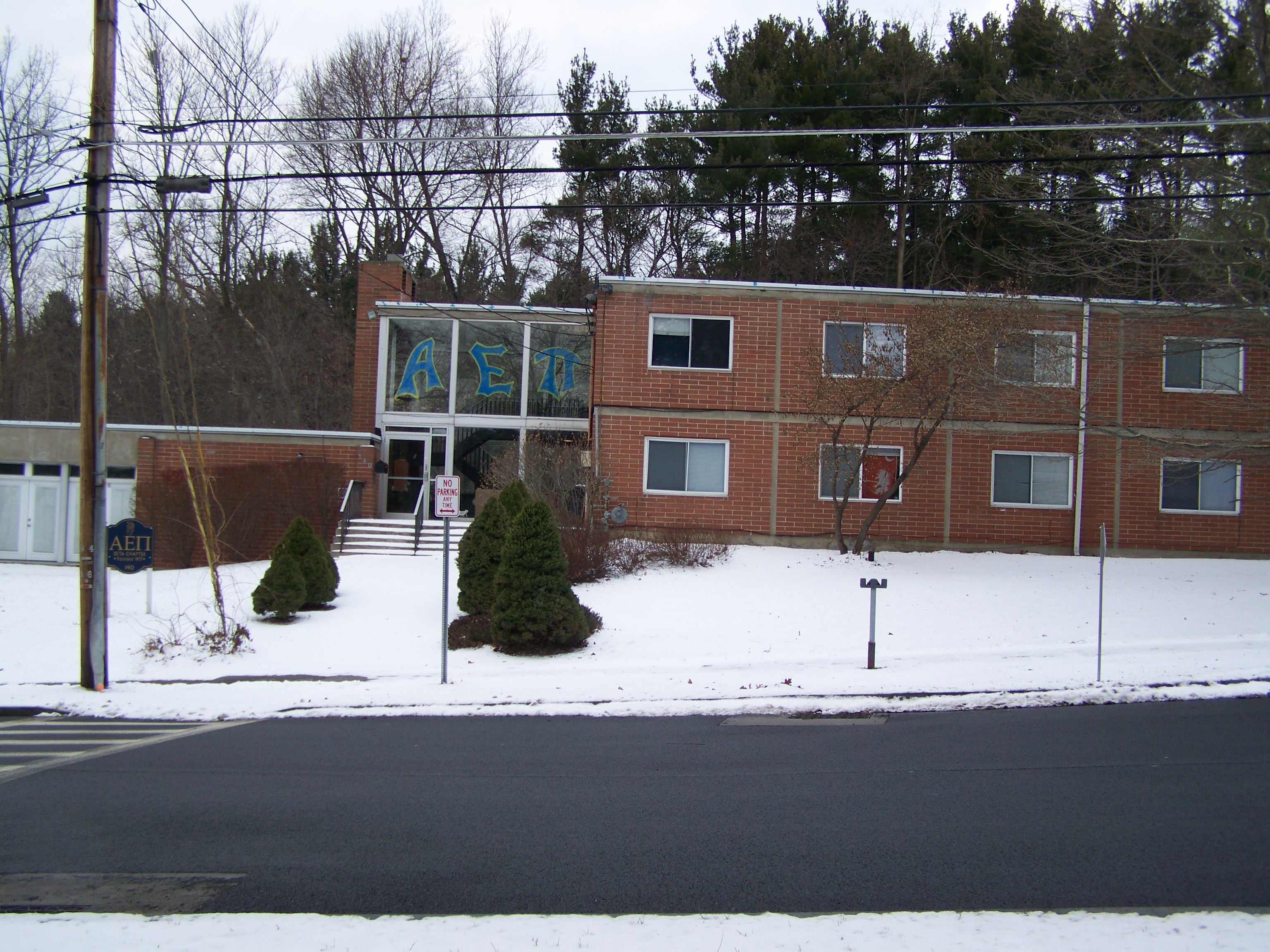
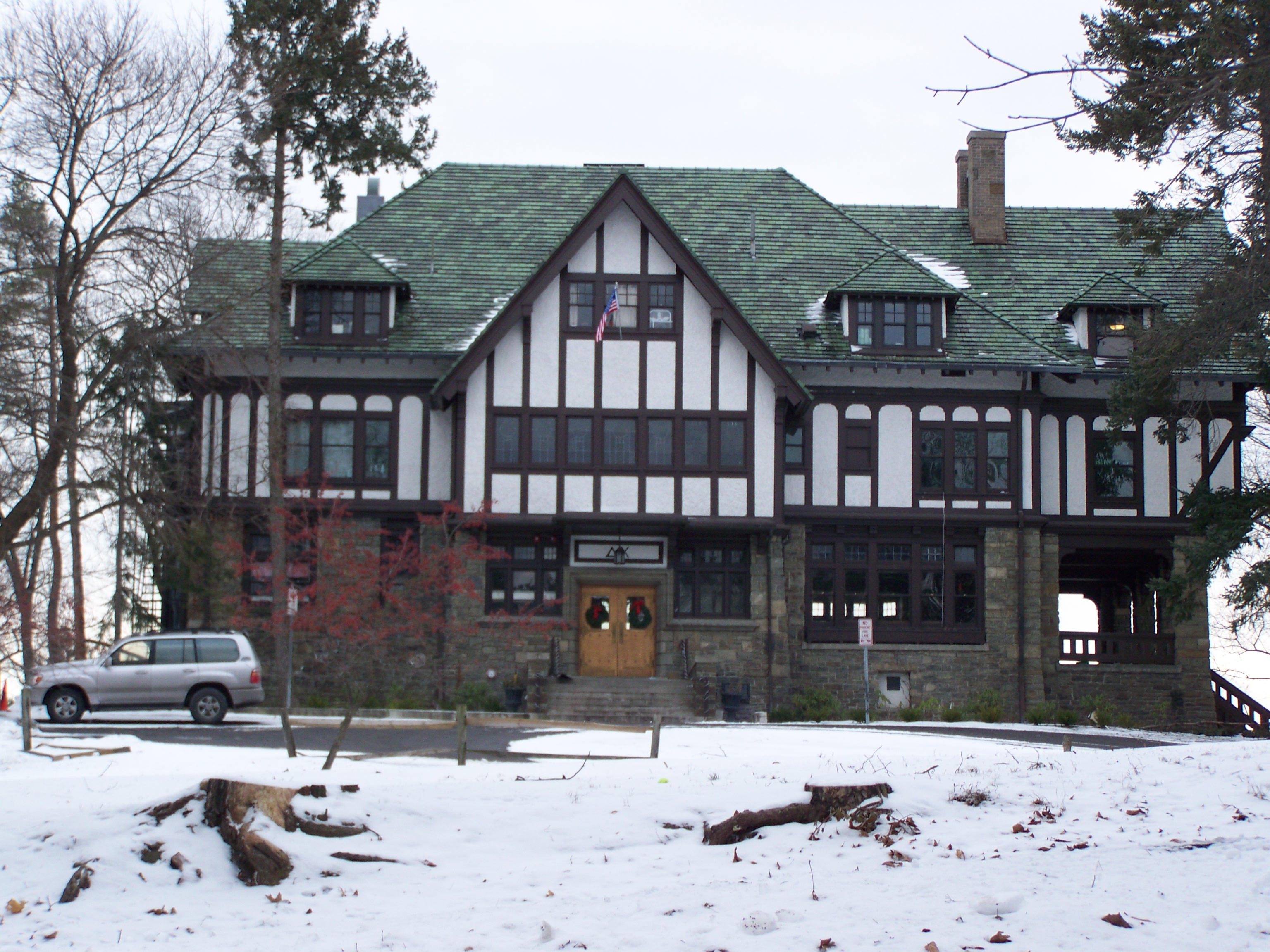
So, one of the things I’m proud of on this blog is that about ninety percent of the photos used are my own work, either “stock” images that I had taken before I graduated, or one of the few images I’ve taken while visiting as an alum. Still, one of the things that always bothered me was that a good portion of my north campus fraternity photos were blurred. This happened for a perfectly good reason – the images were taken on my old digital camera in the summer of 2008. These images were taken close to sunset on a cloudy day, so there was a lack of light, and I had to adjust the settings to compensate. Unfortunately, this meant a longer exposure time, and if my hands shifted at all, the photo would have a “fuzzy” appearance. This is what happened to most of those photos.

So, while visiting friends as part of a 700-mile car trip around the New Year’s holiday, I did an overnight stay with a few of them that have remained in Ithaca (for grad school and work). Having a little free time as I first arrived into town on the afternoon of the 29th, I decided to rectify this issue once and for all. The images are included below.

Phi Delta Theta

Alpha Xi Delta…and what appears to be an early-1980s Pontiac Bonneville. I thought the only models of that car left would be in museums or junk yards.

Pi Kappa Phi

Beta Theta Pi

Sigma Delta Tau. I think that is the exact same Jeep from my photo two and half years ago. Housemother’s? Also, I couldn’t tell whether or not that was new construction in progress off of the rear of the old structure.

Alpha Chi Omega

Tau Kappa Epsilon

Tau Epsilon Phi

Acacia

Alpha Gamma Rho

Kappa Kappa Gamma

Alpha Epsilon Pi

Delta Chi

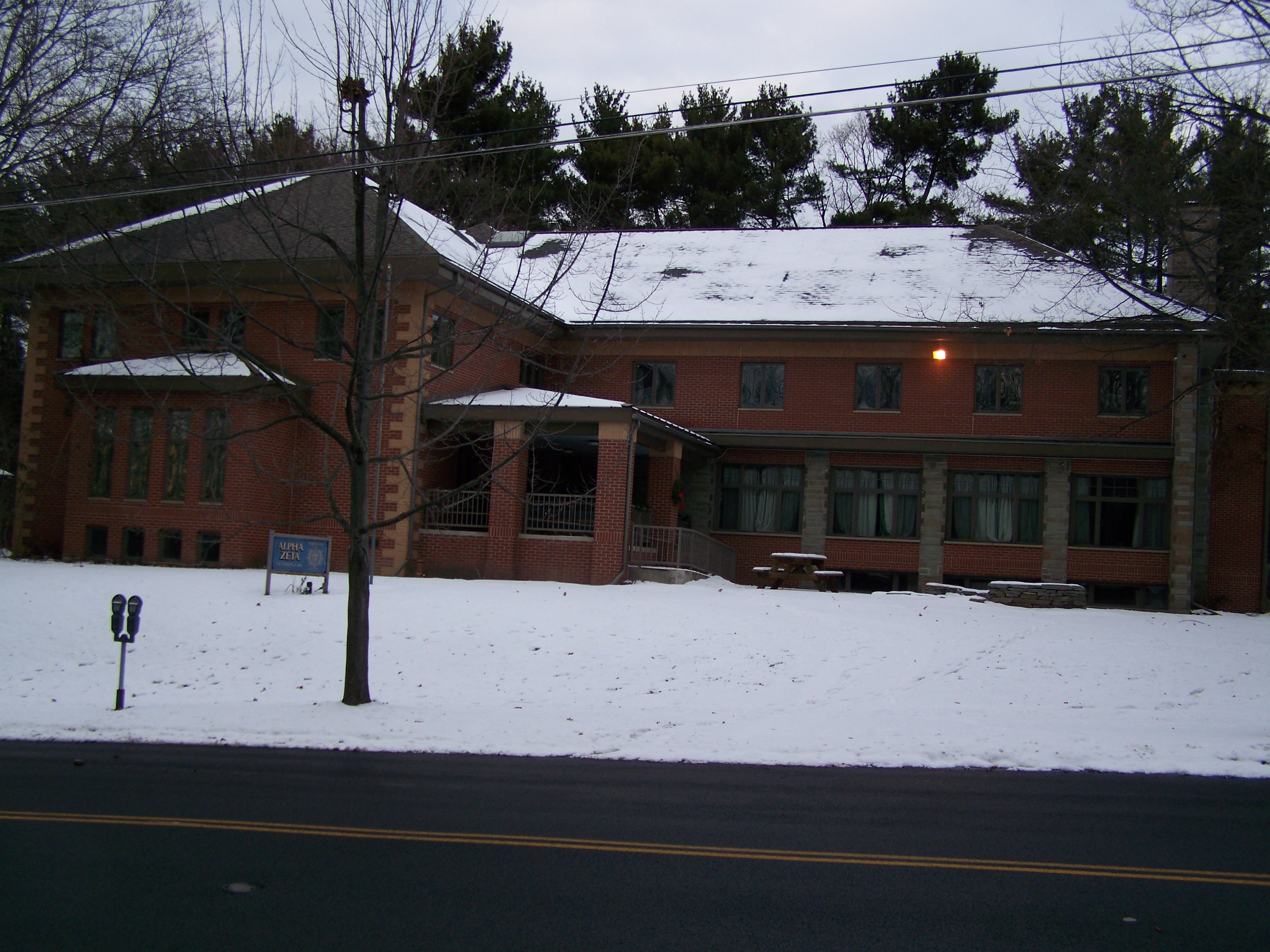
Alpha Zeta

Phi Kappa Tau


A Look Inside the Physical Sciences Building

11 11 2010

I’ll write more substantial posts in the near future. In the meanwhile, here’s some photos I took recently on a trip back to Cornell’s campus (the joy of living only a few hours away is that weekend trips are feasible – for the record, if you asked me last year where I was going, it was to a school out in the Mountain West…but that was before their funding was cut. The next best solution just happened to be in the Northeast).

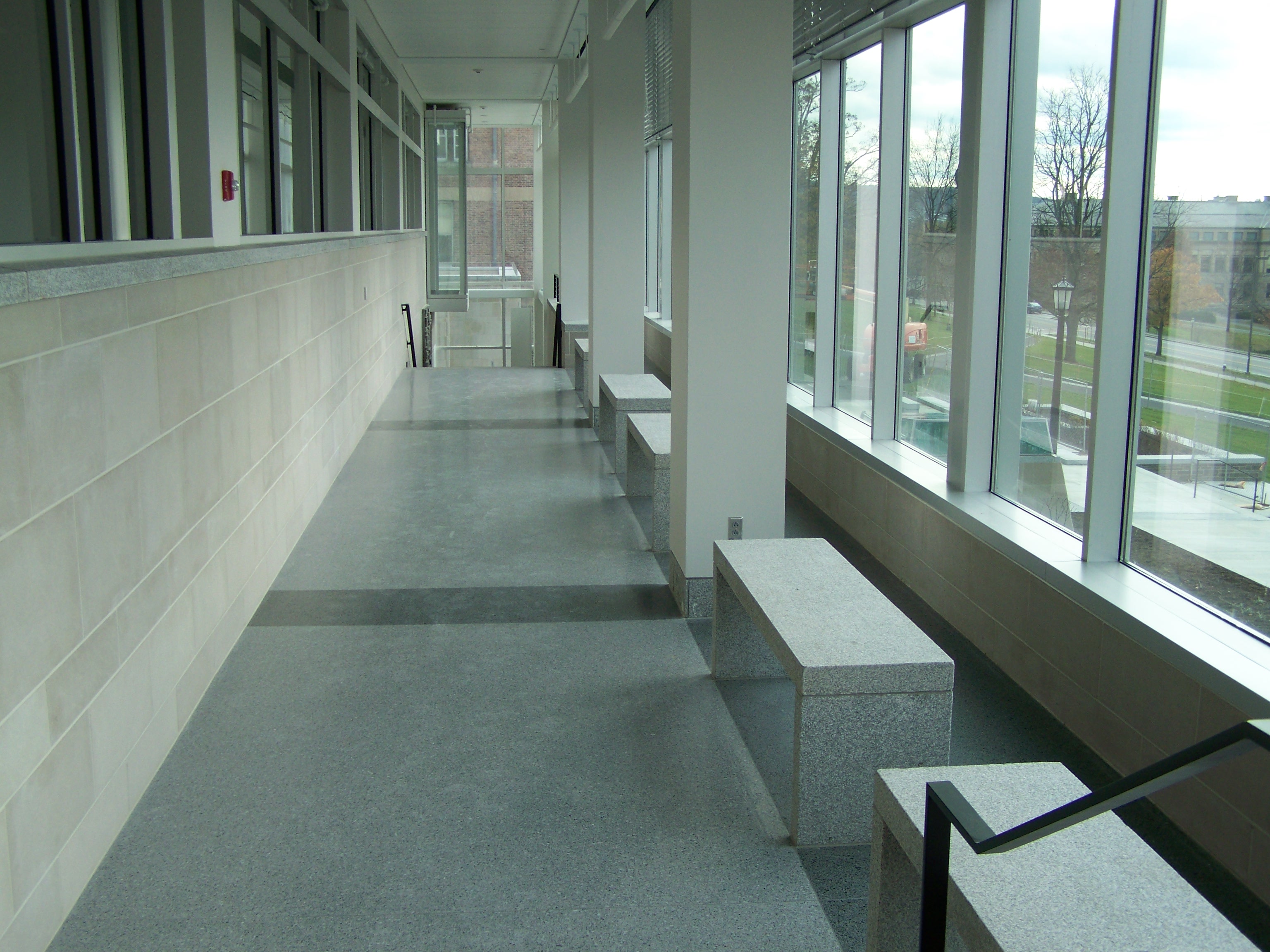
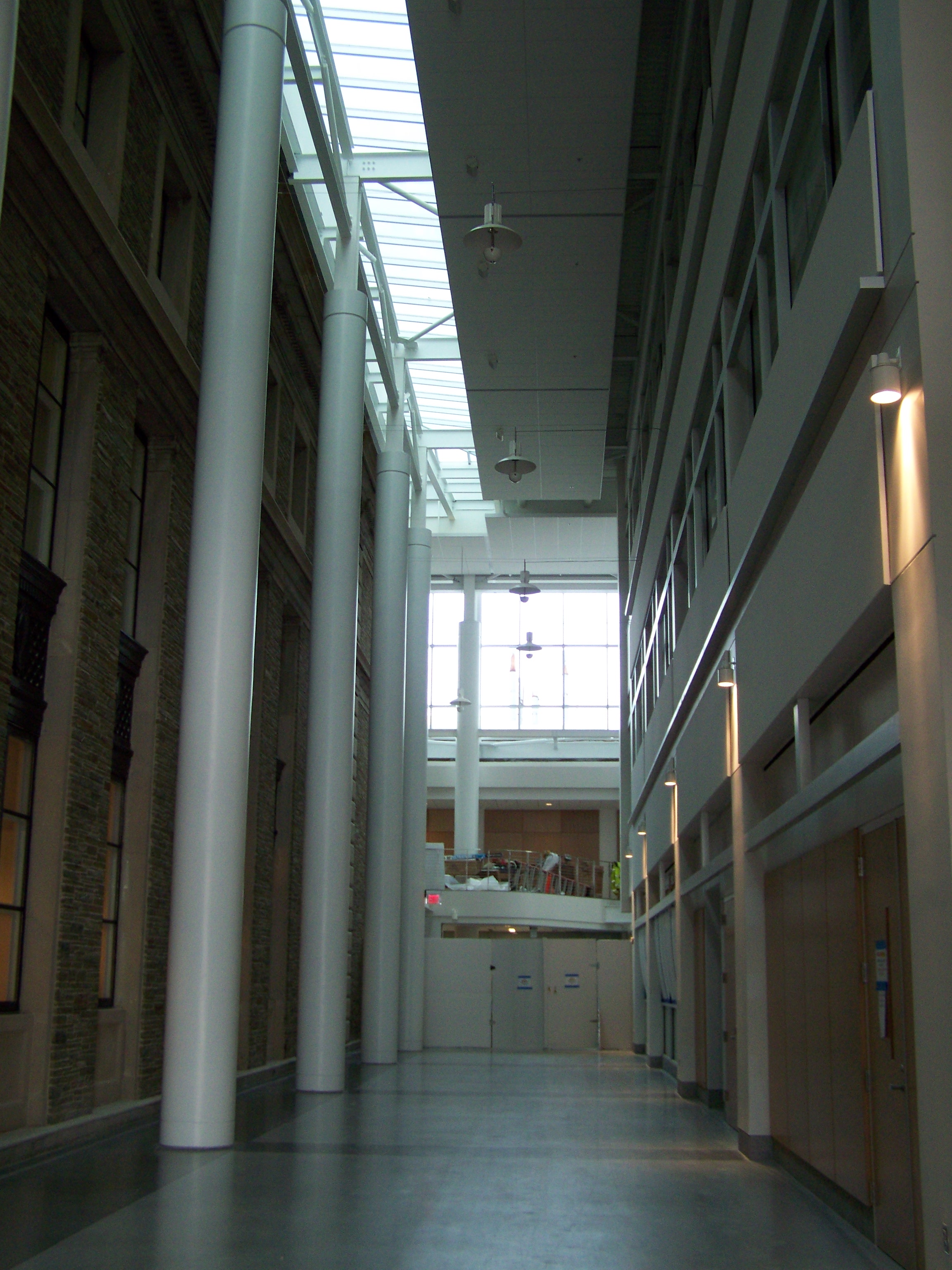
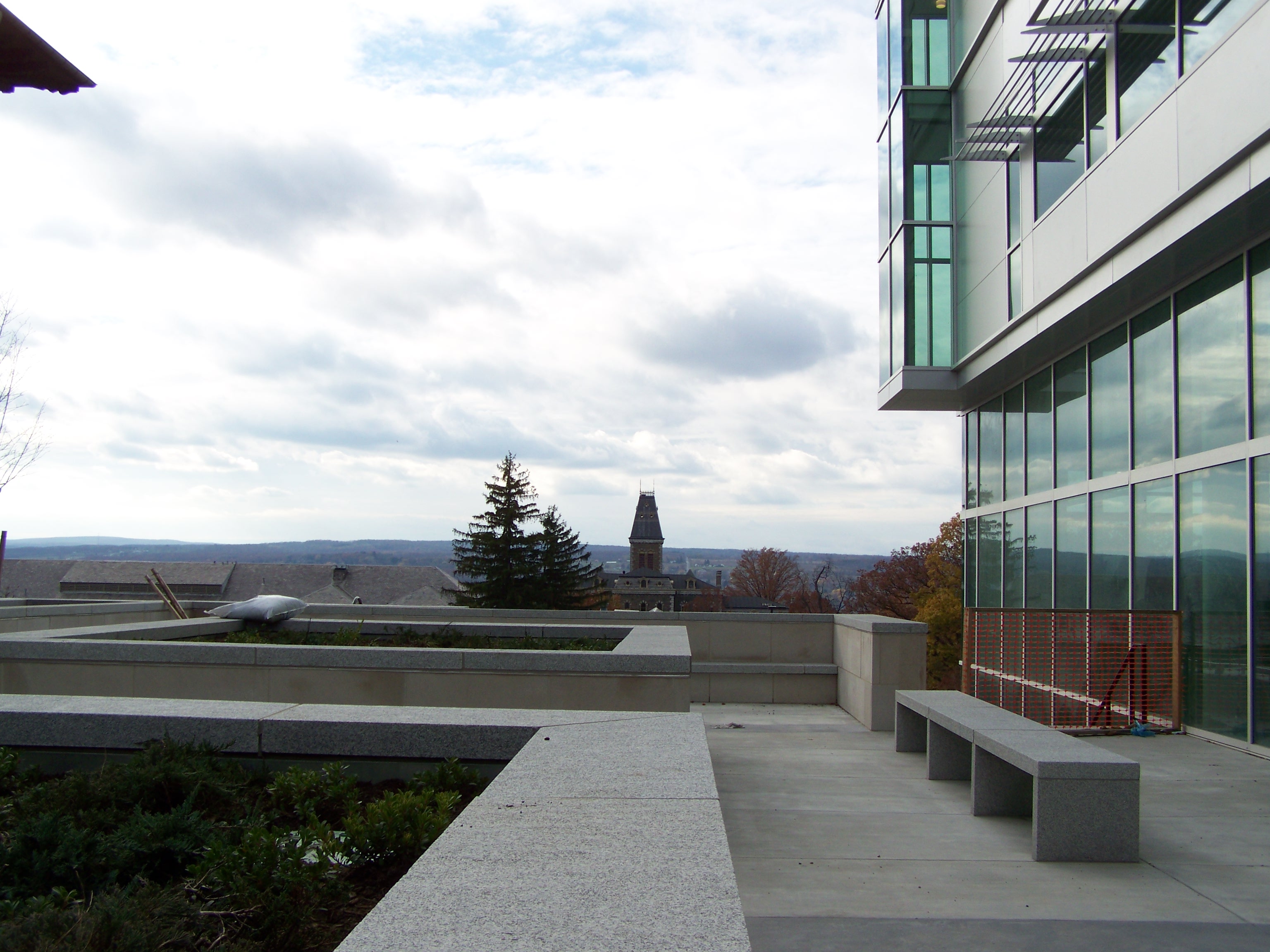
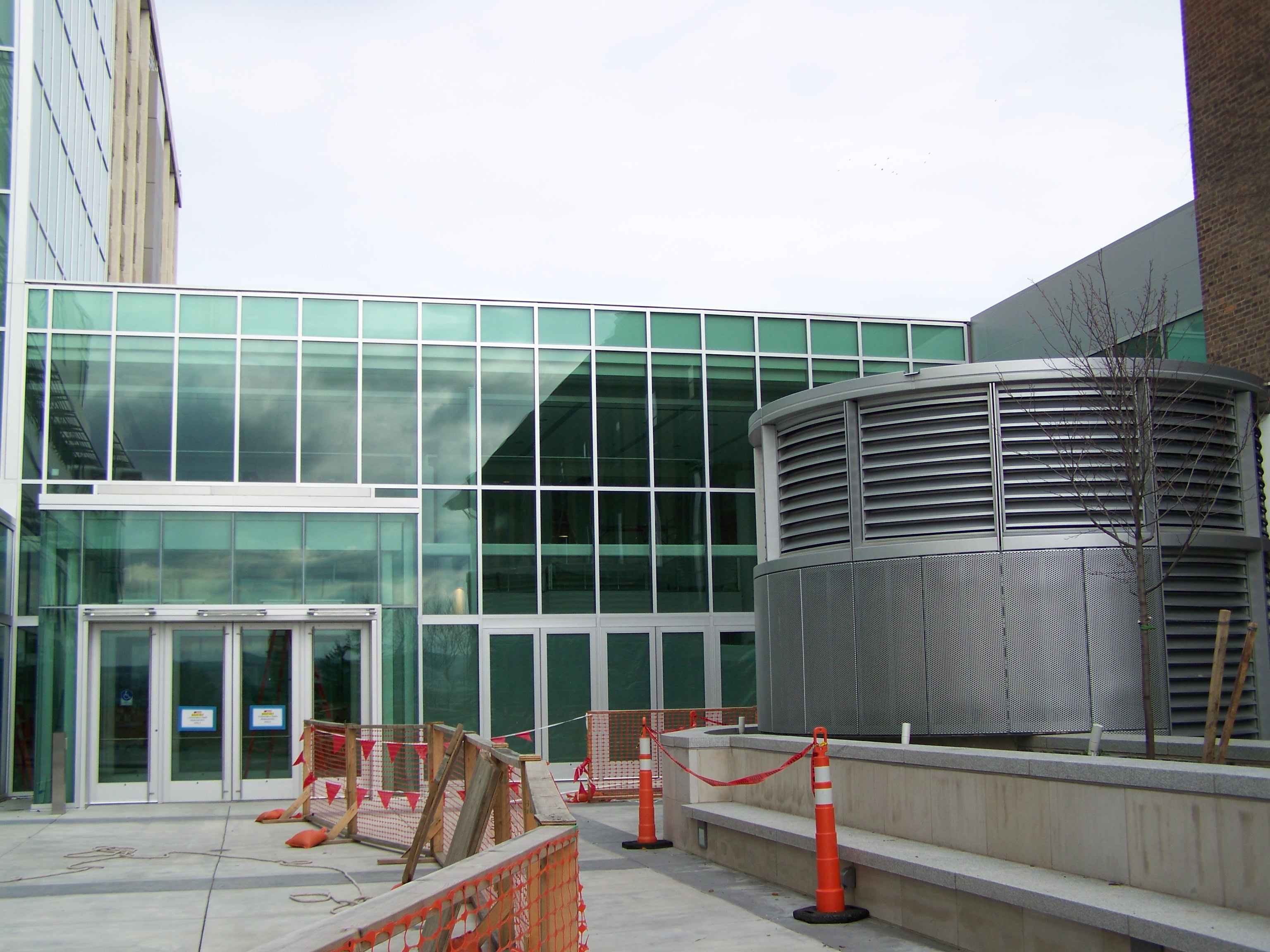
So, anyways, the work is virtually complete, with part of the building opened for light use, but the whole building is still not yet fully accessible.  As if that’s ever stopped me before.

.

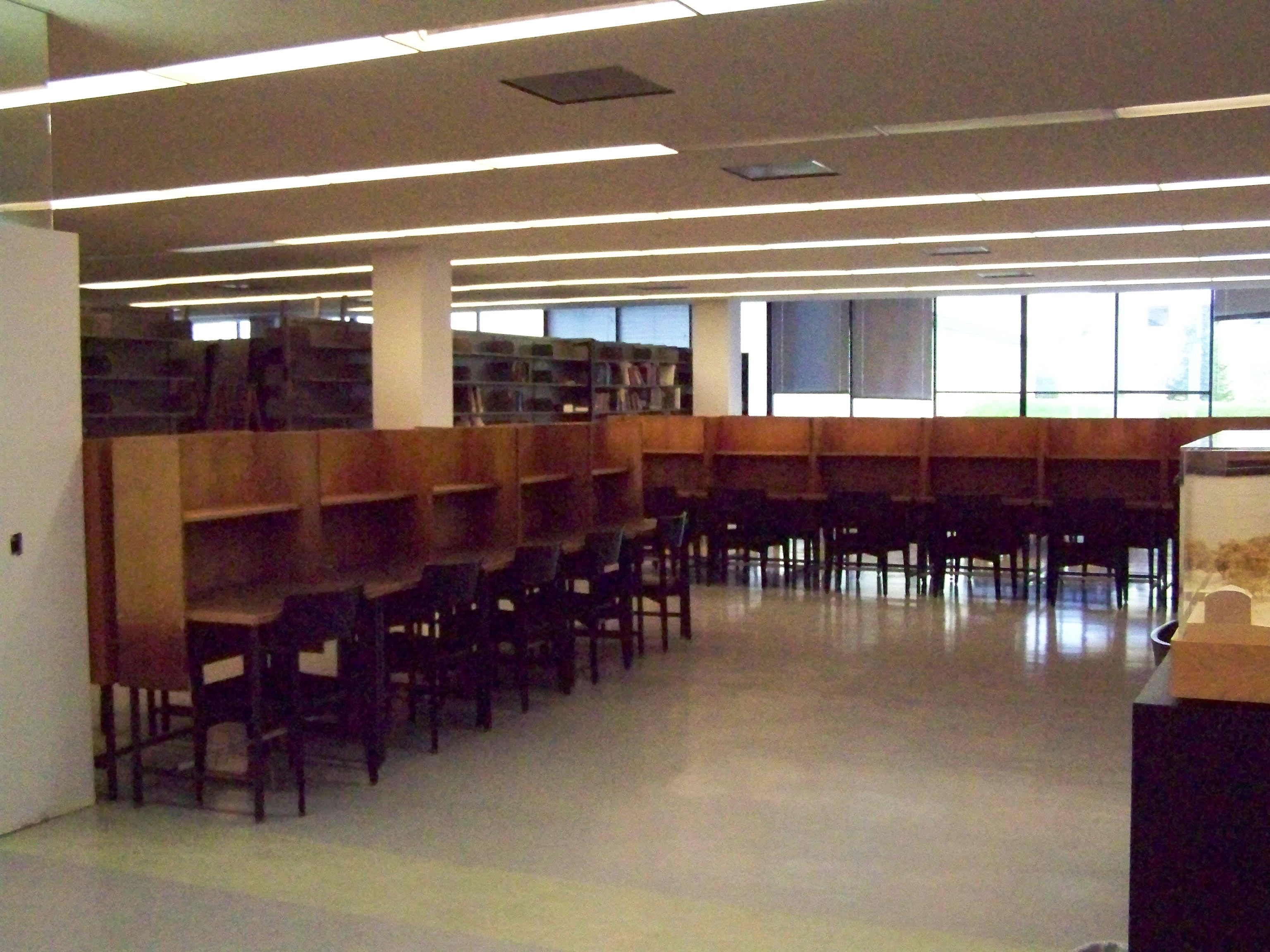
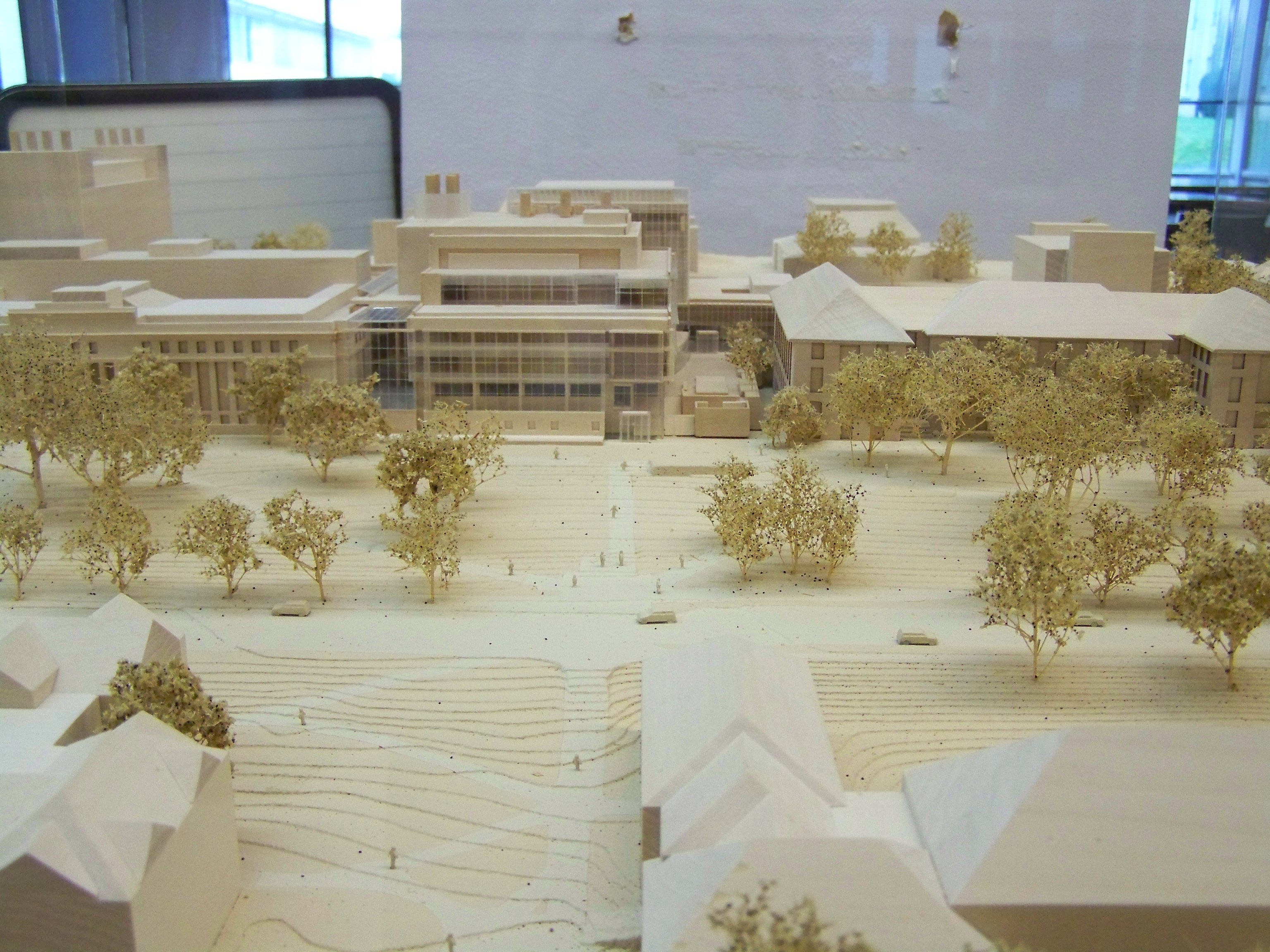
This mock-up, some empty carrels and a couple of bare desks are all that is left of the Physical Sciences Library in Clark Hall. I noticed one of the pillars an eulogy tot he library that Munier Salem had written in the Sun on March 26, 2009, yellowed but encased in a simple black picture frame. I thought it was a nice gesture to the library that once was. Although I opted to not take a photo of the column, here’s a link to its online version.

Insert your name here…for about $35 million. Could be you…

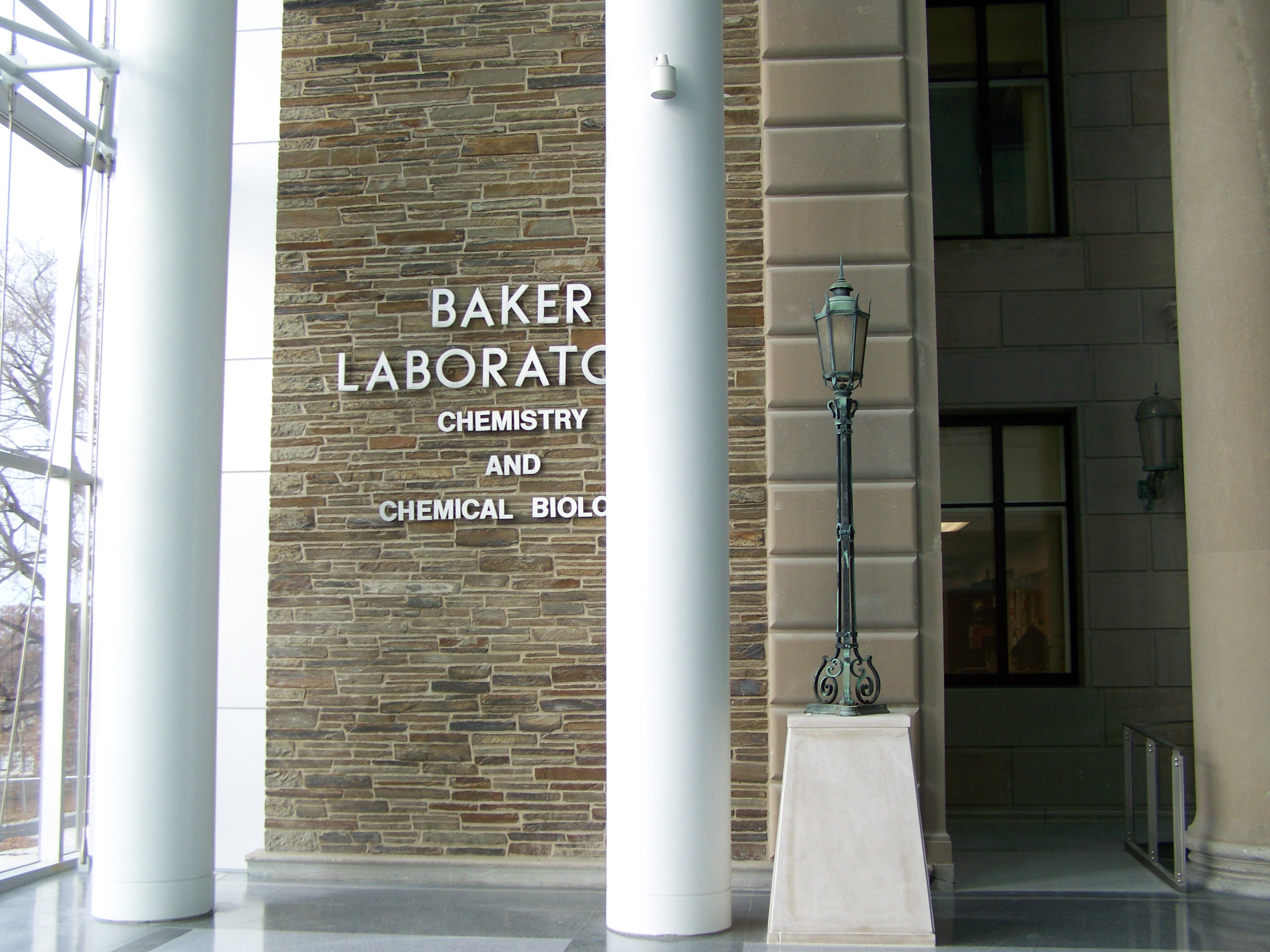
Leaving the oxidized copper lampposts was a nice touch.


Homecoming Construction Photos

29 09 2010

If I free up enough time between proctoring exams, I might write something more substantial. Until then, he are the physical highlights of Homecoming weekend.

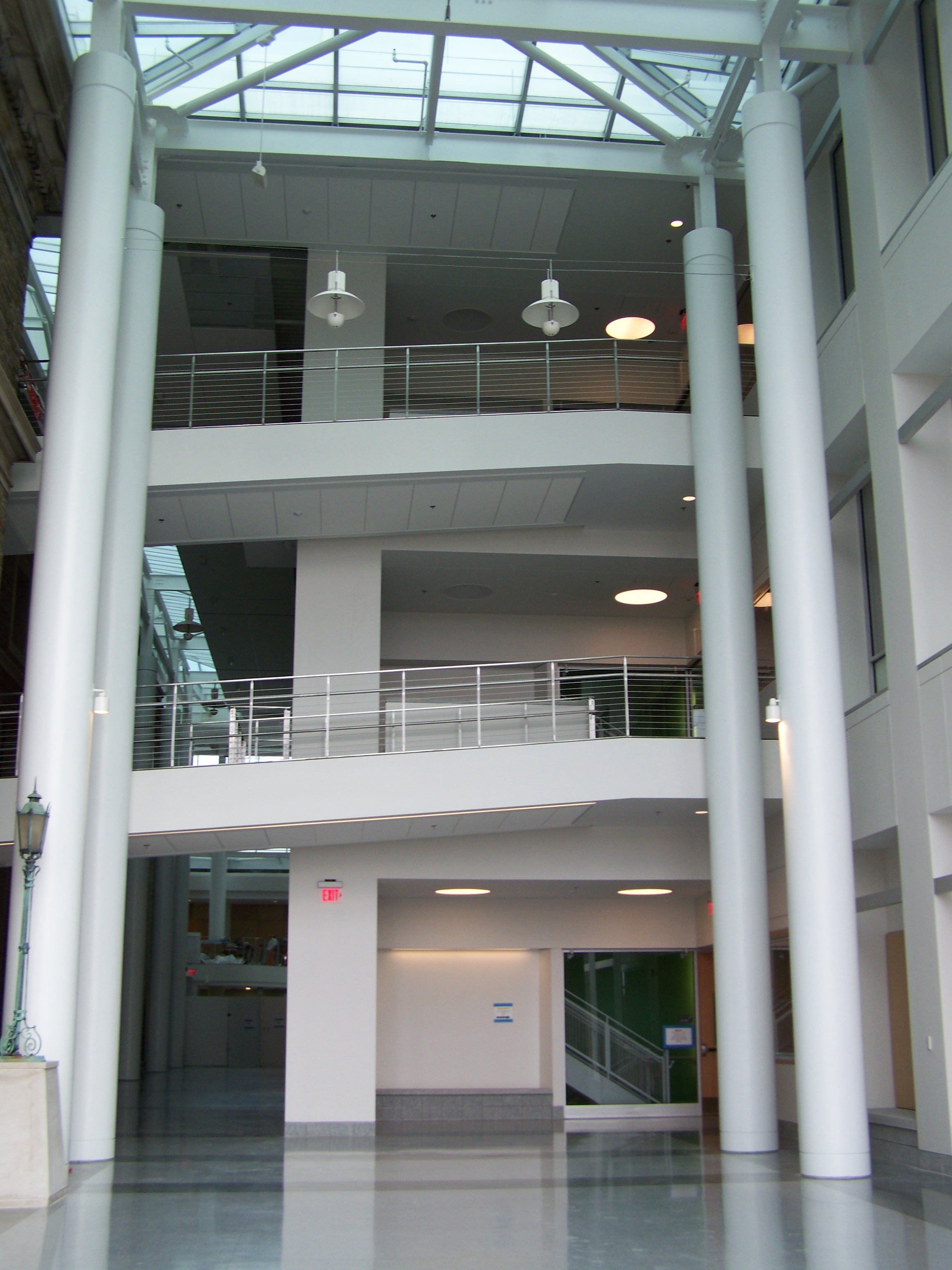
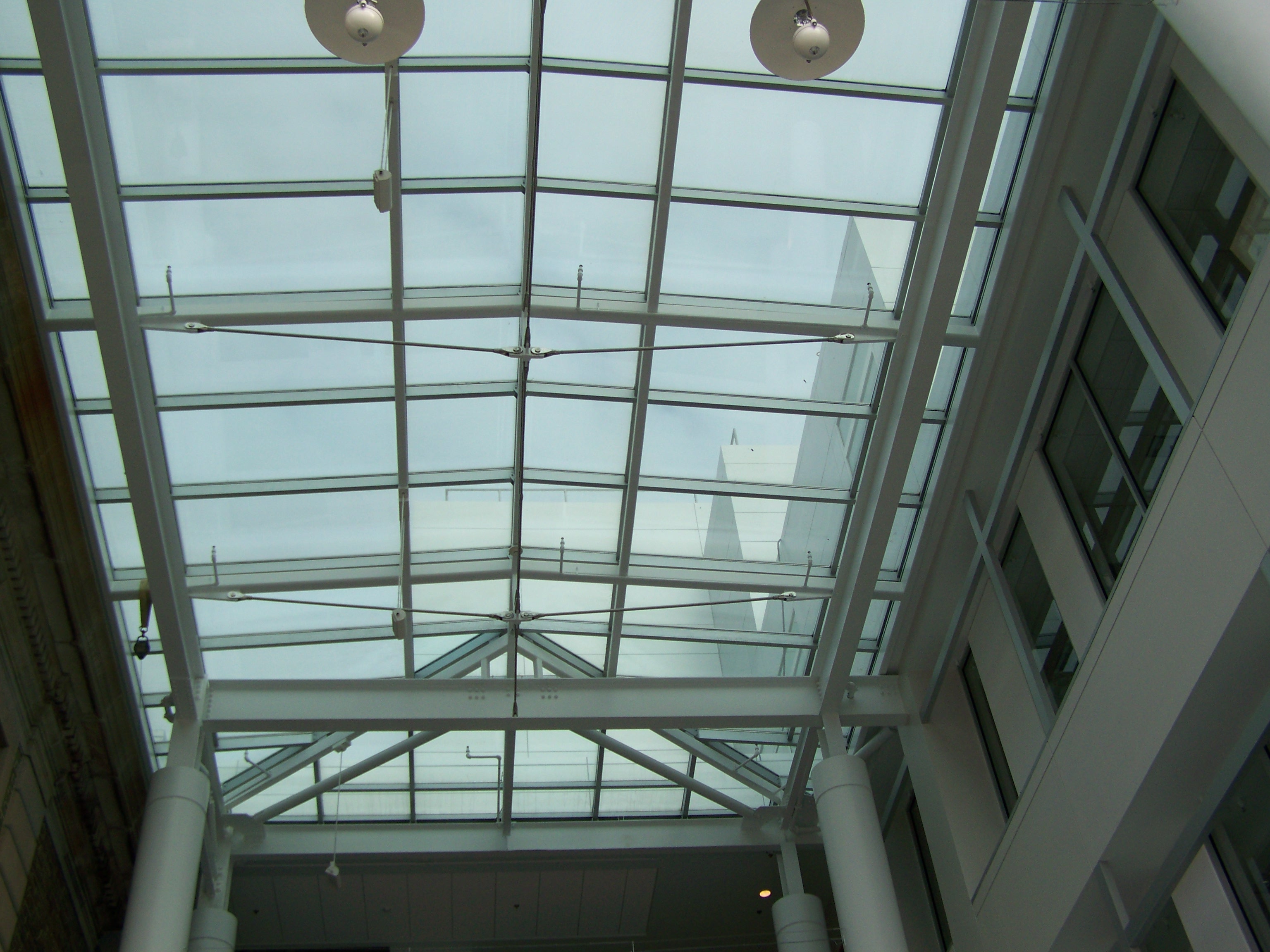
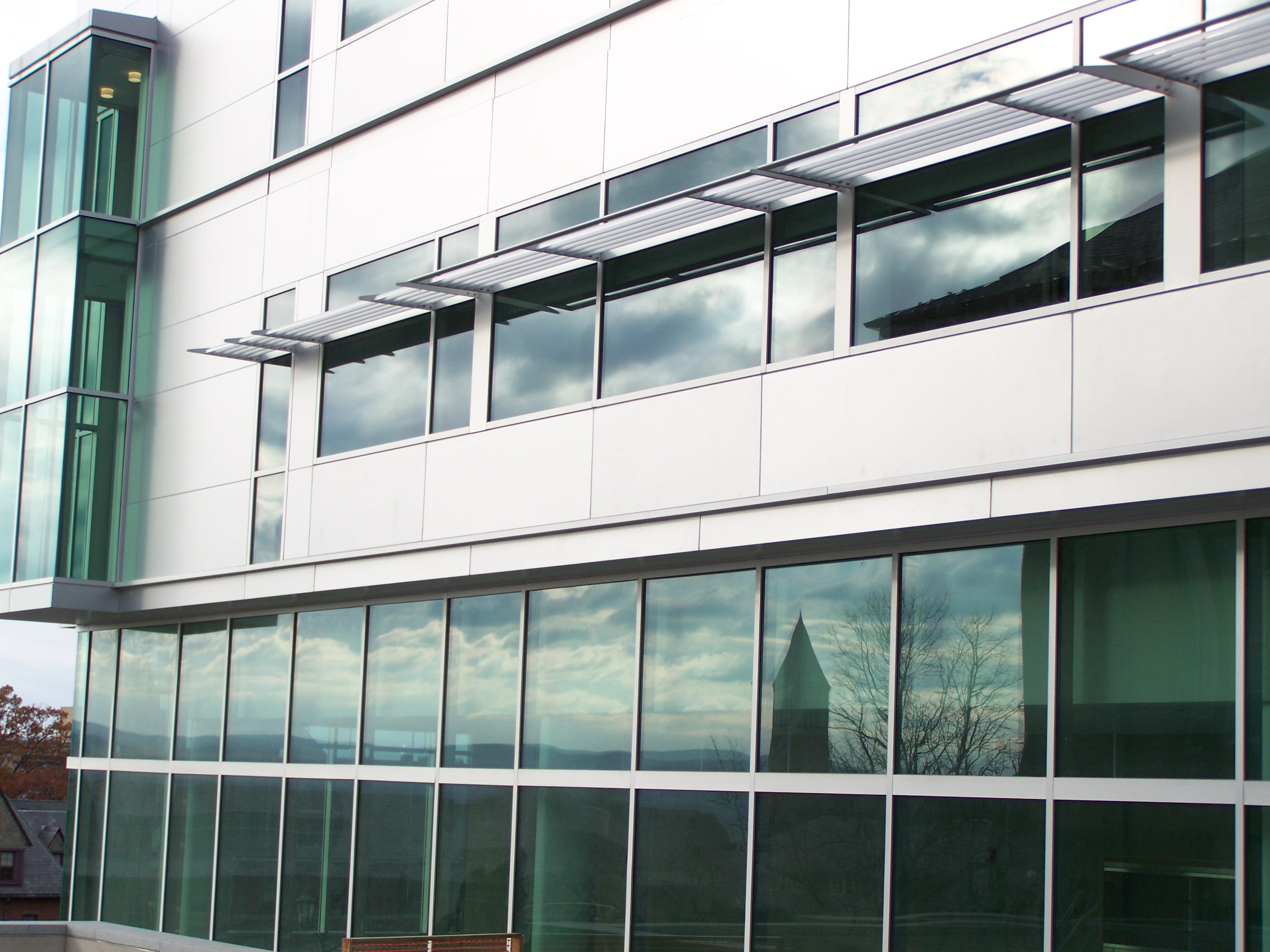
The 197,000 sq ft Physical Sciences Building is nearly complete, with a soft opening planned for next month. Although still fenced, the landscaping is nearly completed. The glass isn’t as clear as the old renderings suggested, but otherwise it’s pretty faithful to the sketches.

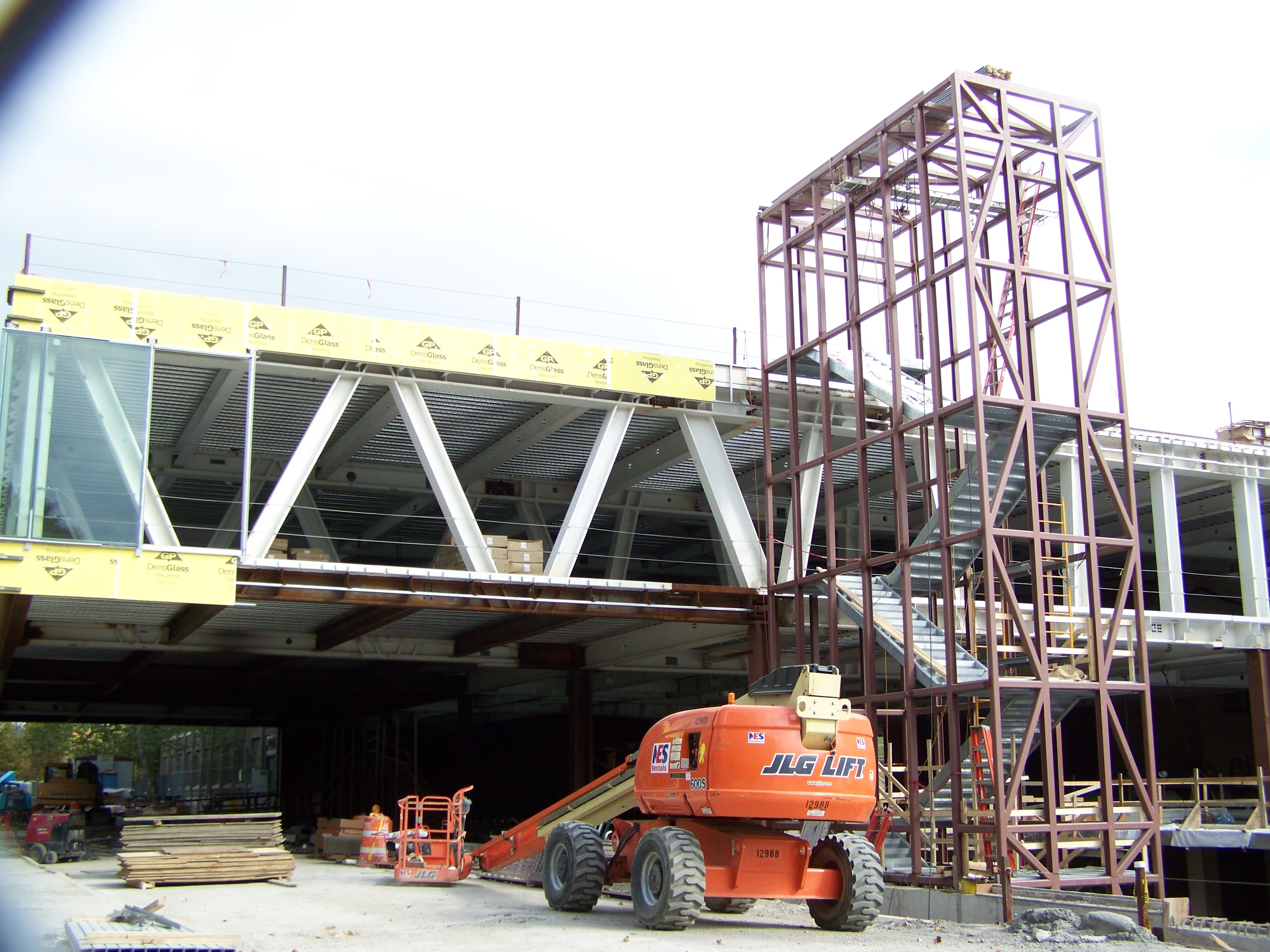
Regarding work on Milstein Hall, a taste of what to come was shown with the installation of a small amount of glass on the northwest corner. Slightly greenish-blue in hue, which to me was slightly unexpected but not something I feel strongly about (I imagined a bluish tint if any at all). The 43,000 sq ft building is set to be complete by this time next year.

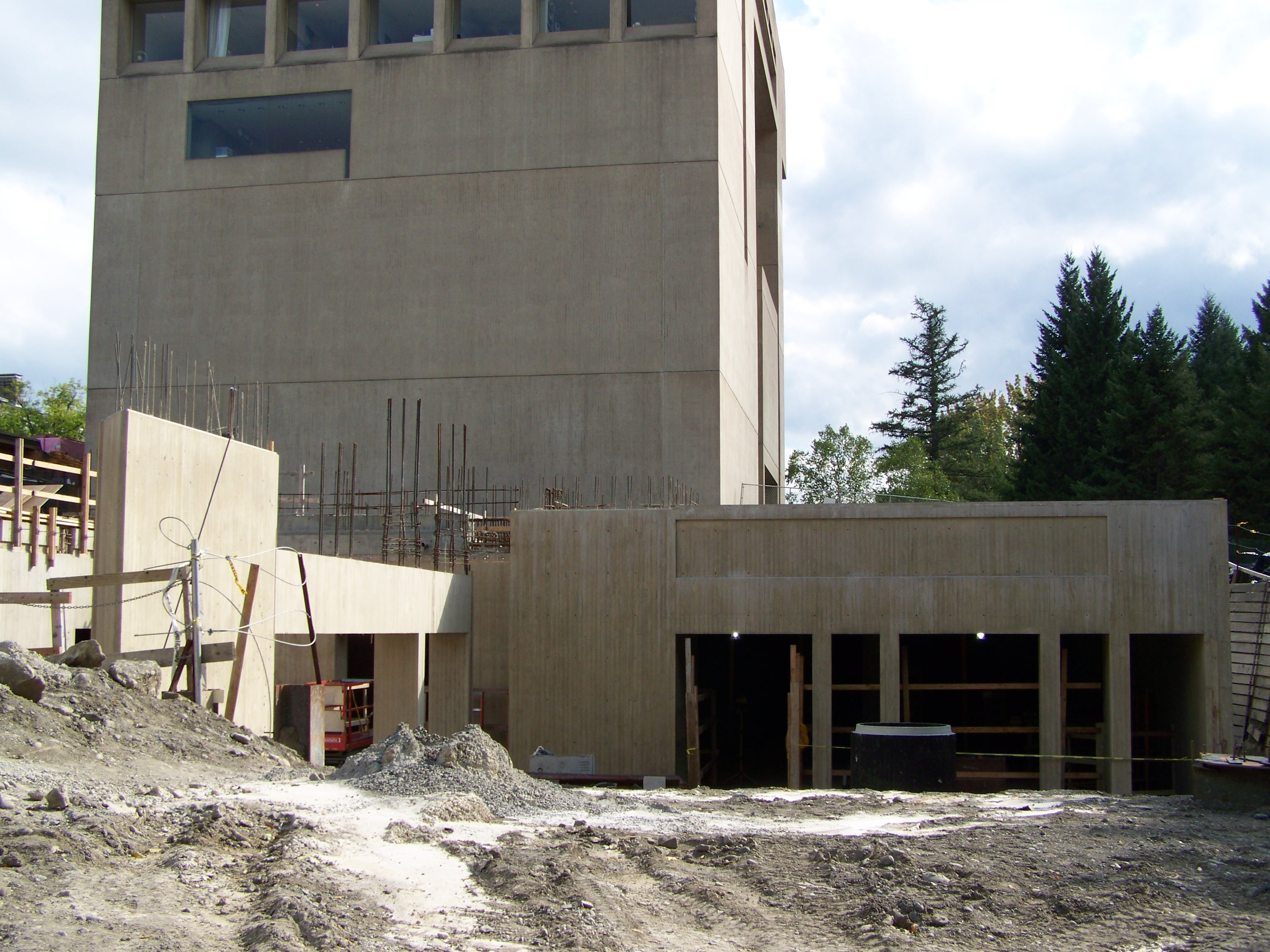
The Johnson’s addition is mostly underground, but some of the concrete work will build out to an above ground complimentary structure to the main building. It would appear that work has advanced quite a ways, with the rebar on the left indicating more pouring is yet to come for the east side of the 16,000 sq ft addition.

MVR North continues construction, though externally it hasn’t made too much progress in the past few months. The stone facade on the parking garage has been finished and work has been done on the exterior stairwells. The 87,000 sq ft building is set to be complete by the end of the winter.


The Cornell Convention Center

29 04 2010

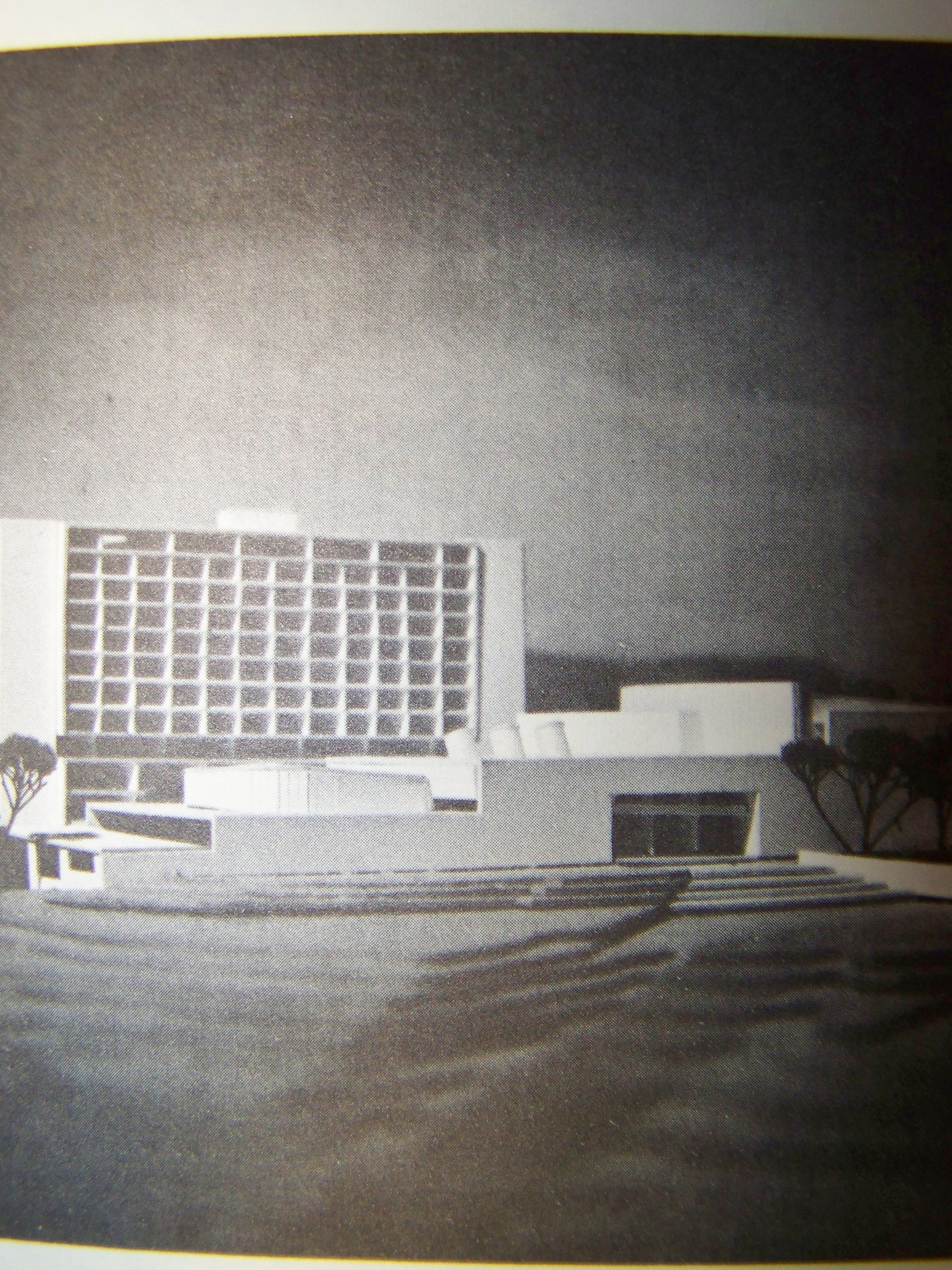
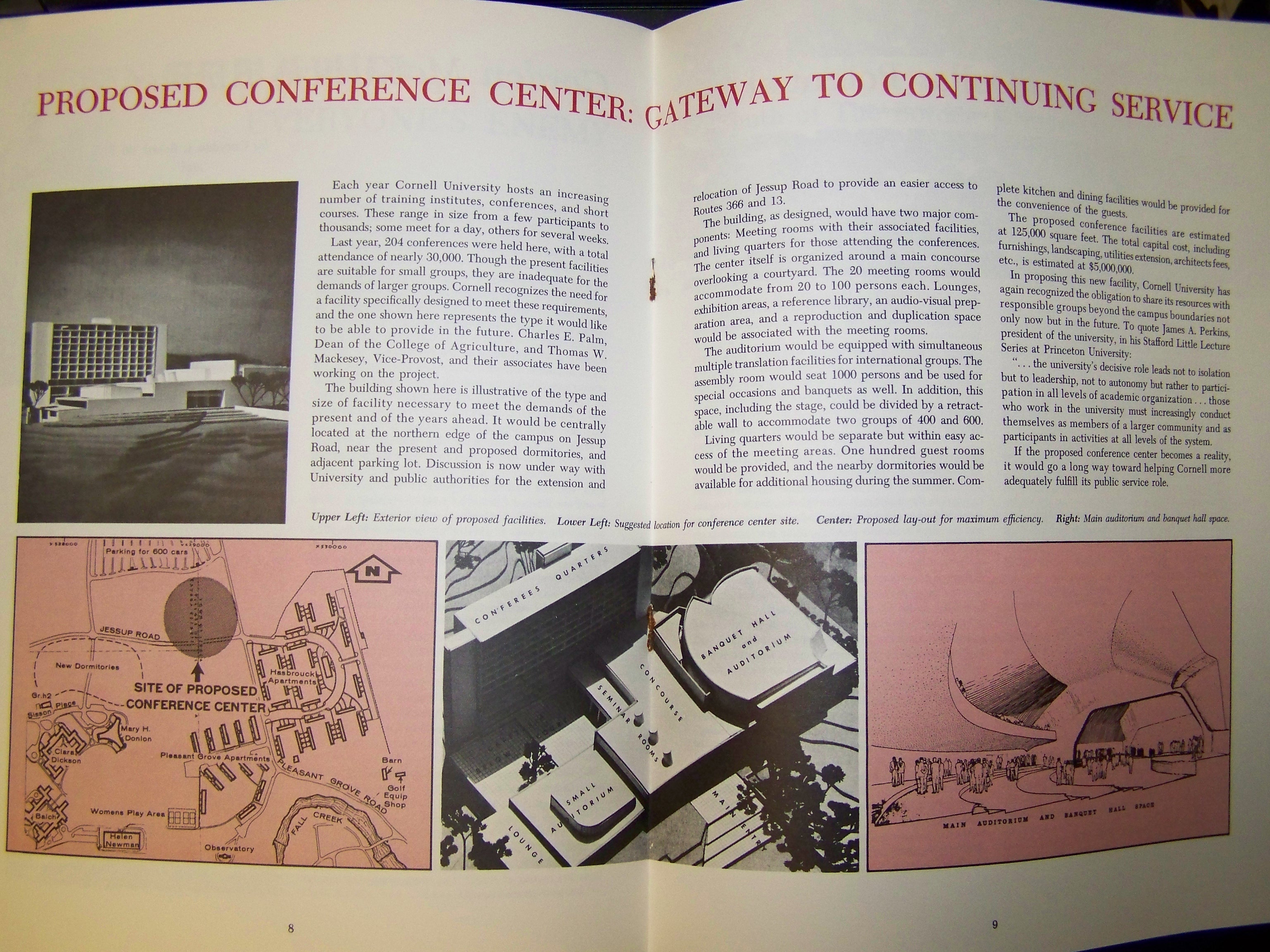
While doing research recently, I came across this an old article promoting the proposal for a campus convention center.

The images and article are from a November 1966 issue of the “Cornell Countryman”, which was a monthly magazine published by the old Agriculture school (now CALS).

The proposal (which was never approved), was located off of Jessup Road where the townhouses are located today. It called for a 125,000 sq ft facility complete with break-out rooms, a banquet facility and larger meeting spaces. The expected cost was around $5 million in 1966 dollars. The proposal also suggested the extension and rerouting of Jessup Road to either/or Rte 13 and 366.

In the article, it mentions proposed dorms nearby. This would be in reference to the highrises and lowrises, as well as RPU, which were built in the early and mid 1970s.


Construction Photos of the New MVR North

1 11 2009

I do not condone sneaking into private property to take construction photos. That being said, if I receive them I’m more than happy to post them as the ones seen below. Most of the photos would appear to be of the parking structure in the lower floors of the building. Too bad some of the exterior photos are a little blurry.100_1848100_1849100_1865100_1850100_1854100_1862

 100_1853100_1855


More Random Cornelliana

13 10 2008

Because you’ve probably never been in most of these buildings anyway.
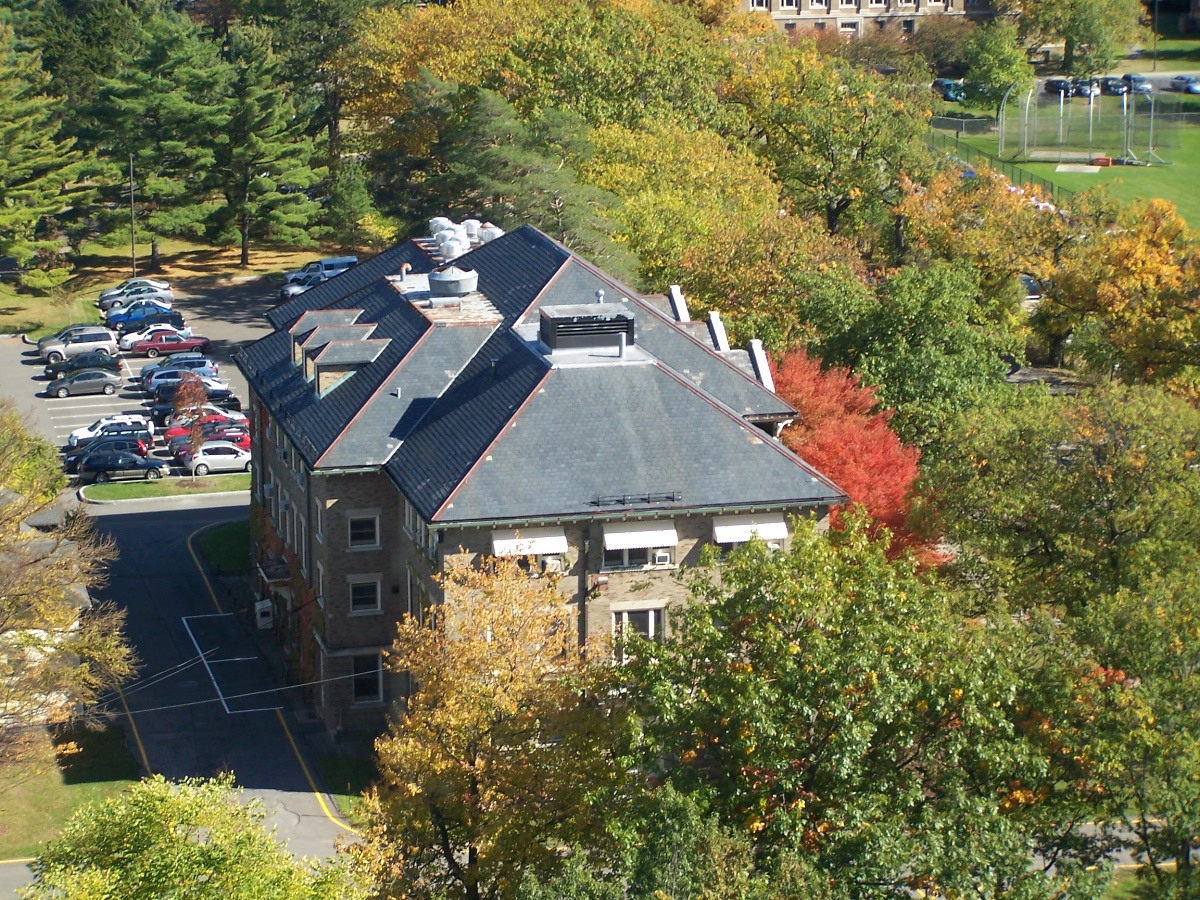
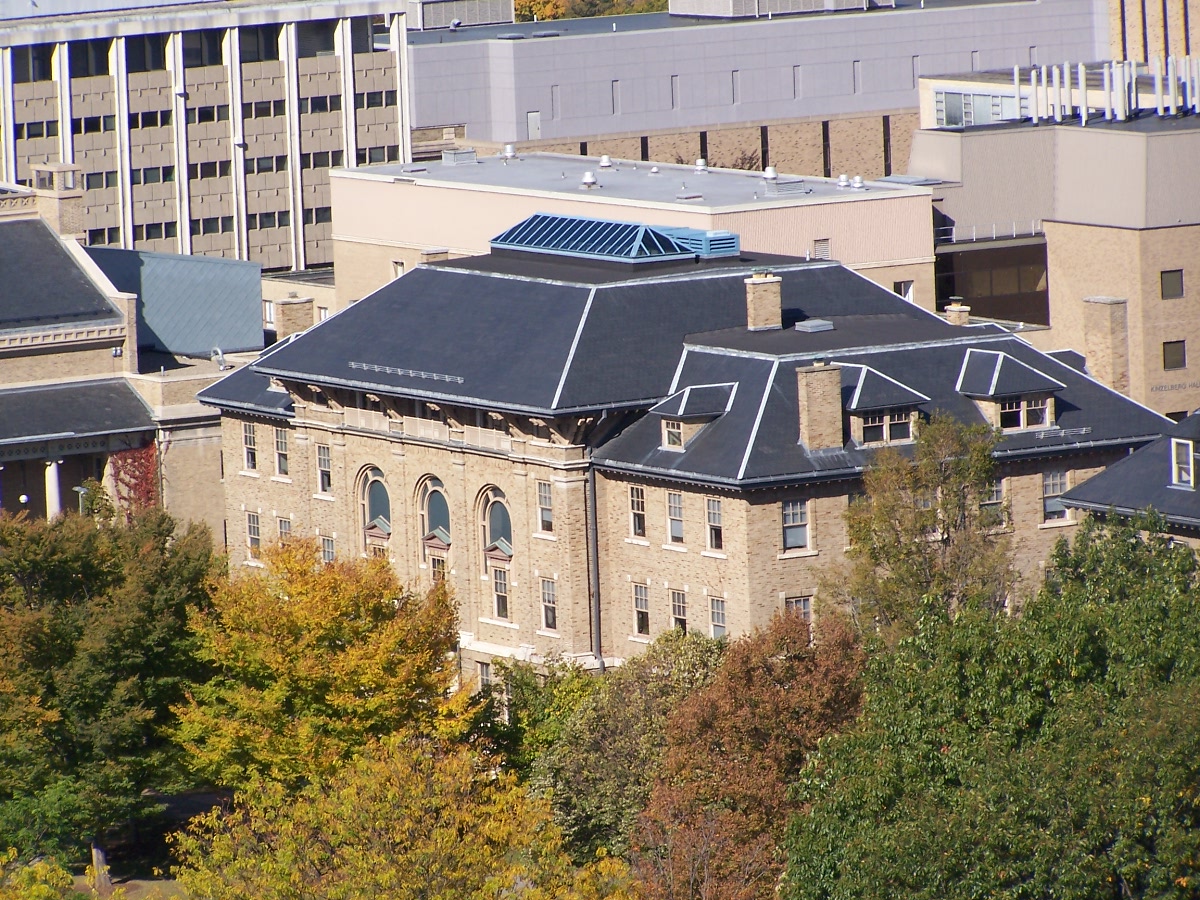
Rice Hall. The building on the left, obscured by the trees, is colloquially known as “Little Rice Hall”. Located on the National Register of Historic Places [1], Rice Hall was built in 1912 and designed by the architectural firm Green and Wicks [2]. Rice Hall was intended as a peripheral building to Stone, Roberts, East Roberts, Caldwell and Comstock Halls. The building is home to Cornell’s “Center for the Environment” (yet another academic think tank) and is a hodgepodge of SNES and Crop and Soil Sciences. The building is named for James E. Rice 1890 [5], who taught the first course in the country on Poultry Husbandry (the building was originally for poultry husbandry, which is likely why it’s such a clusterf*ck now).

Fernow Hall is another of Green and Wicks’ works, being constructed three years later in 1915 [3], and also sits on the National Register of Historic Places. For the record, all that means that it’s old and likable. It must not mean much for architectural merit, otherwise we’d still have Roberts, Stone and East Roberts. The building is primarily used by the Dept. of Natural Resources. The building was known as the Forestry Building from 1915 to 1922 [4], and was dedicated to Bernhard Fernow, Dean of the College of Forestry (a sort of predecessor to the natty rys dept., which failed only five years after its inception in 1898, because the state received threats that if Cornell would be spoiling summer cottage retreats in the ‘Dacks for commercial purposes, wealthy state residents would reside elsewhere).
The original Comstock Hall, now the Computing and Communications Center. The hall was built in 1912 and named for renowned entomologist John Henry Comstock 1874 [6], and originally housed entomology. In some twisted sense, the same firm that designed this building would design the later Comstock in 1985. After Cornell granted moving the name to the new building, the old Comstock was renovated into (C3), CIT’s Operations Unit, in the late 1980s. Prior to that, CIT was out in Langmuir Labs in the Office Park in Lansing, and before it left for Lansing in 1967, CIT’s main computer lab jumped between Rand and Phillips Halls [7].
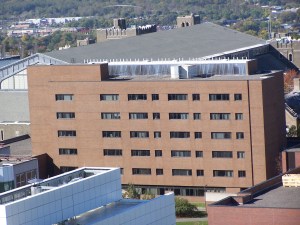
A lot can change in 70 years. The original Comstock (formerly Academic II) was a corroboration between Green & Wicks, and the firm Hoffman, O’Brian, Levatich & Taub. The new Comstock was by the shorter “Levatich and Hoffman”. I think our tastes have gone downhill, ladies and gentlemen. Anyways, the new Comstock houses entomology and the little-used Entomology library (I just want to say that, as a CALS student, I’ve only ever met two entomology majors in my time at Cornell).

Corson-Mudd Hall (Corson is the east wing). Named for former university president Dale R. Corson and philanthropist Seeley G. Mudd (who has a crapload of buildings named for him on college campuses across the country [9], the building was completed in 1981 [8].

Technically, it’s possibly to get to nine seperate buildings through the tunnels and walkways of the AG Quad. Bradfield is connected to Emerson Hall (the lowrise portion), which is connected to Fernow Hall at one corner and to Plant Sciences from the second floor hallway. Through Plant Sciences, there are two ways to get into Mann Libe (ground, which involves being outside for ten seconds in the tunnel towards Manndible Cafe, and a less-used second-floor stairway). Mann is connected to Warren Hall. Plant Sci also has a connection to Weill Hall through its basement, and the tunnel runs underneath the street to the basement of Weill. The public use of this tunnel is not clearly stated, so try it at your own risk. Weill also connects to Corson-Mudd and Biotech through tunnels.
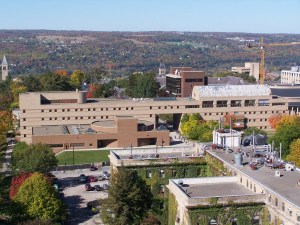
So, I’ve already told the story of the Roberts-Kennedy complex once before, but I’ll do a partial rehash. The building is named for Issac Roberts, an early professor, and 1970s CALS dean W. Keith Kennedy. Originally, Stone, Roberts and East Roberts stood on the site.

Roberts, Stone, East Roberts

L to R: Roberts, Stone, East Roberts

The three were built around 1906. While they were national registered historic buildings, Cornell rather covertly had the designation removed, in a move that angered many traditionalists. The buildings were imploded in 1988-89. The original proposal for Roberts-Kennedy Hall was a 10-story building where Kennedy stands. Well, that didn’t go over too well, so they essentially pushed it onto the side and made a “breezeway”. The two were completed in 1990. Trillium is technically a part of Kennedy Hall.


[1] http://en.wikipedia.org/wiki/Rice_Hall

[2]http://www.fs.cornell.edu/fs/facinfo/fs_facilInfo.cfm?facil_cd=1040

[3]http://www.fs.cornell.edu/fs/facinfo/fs_facilInfo.cfm?facil_cd=1029

[4]http://www.dnr.cornell.edu/mission/history/

[5]http://books.google.com/books?id=jUu9pDRhWjkC&pg=PA295&lpg=PA295&dq=%22rice+hall%22+cornell&source=web&ots=Mp_YbfQomX&sig=dQmUQ68KhXUqtys6MW5lwXXPF_s&hl=en&sa=X&oi=book_result&resnum=10&ct=result#PPA401,M1

[6http://www.agriculture.purdue.edu/agcomm/newscolumns/archives/OSL/2005/October/051027OSL.htm

[7]http://www.cit.cornell.edu/computer/history/timelines_locations.html

[8]http://www.fs.cornell.edu/fs/facinfo/fs_facilInfo.cfm?facil_cd=1019E

[9]http://en.wikipedia.org/wiki/Seeley_G._Mudd


From Bradfield’s Roof

5 10 2008

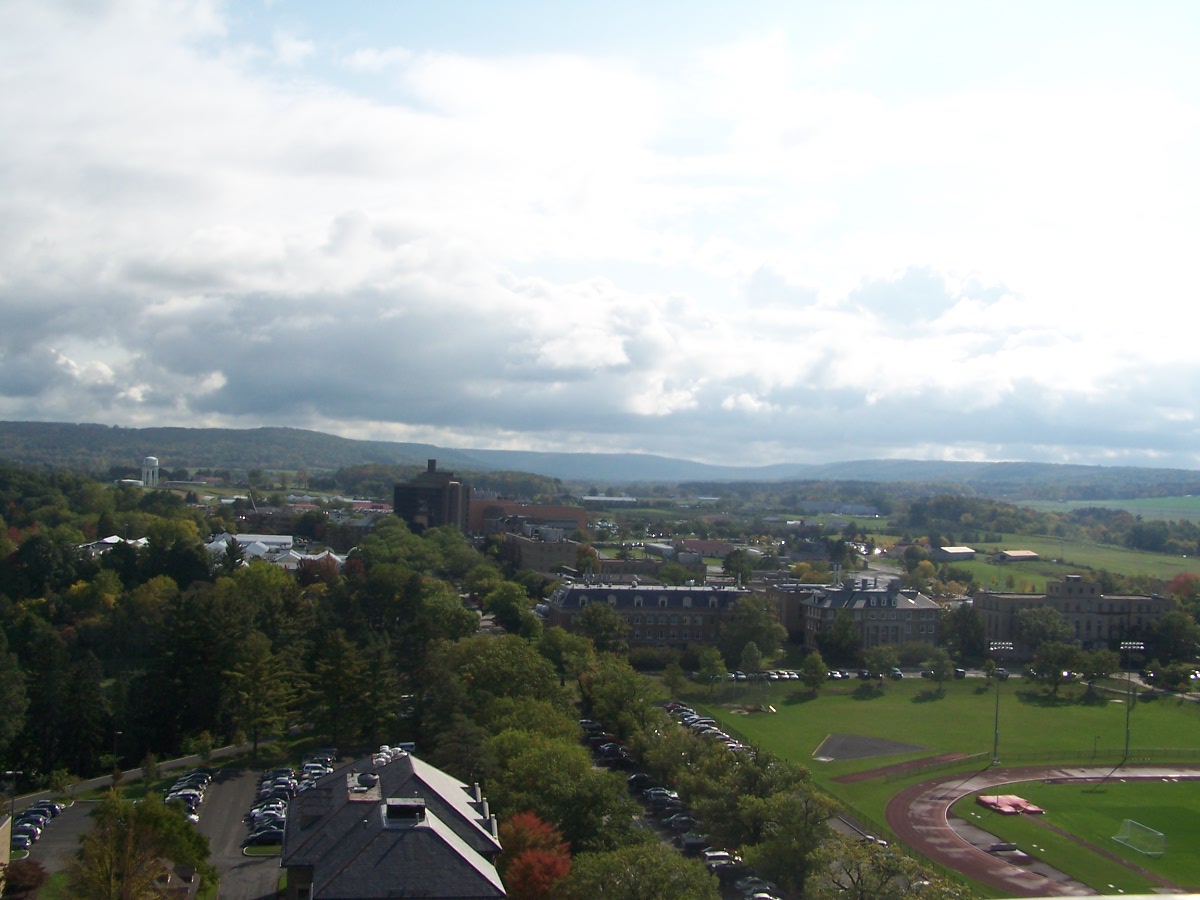
Looking southwest. Weill Hall dominates the view since its completion. The far hills in this photo are about eight miles away.
In this image, the crane for the physical sciences building is prominent, as is the Spencer T. Olin Research Tower (1967). The odd smokestacks on either end of Olin Tower’s roof are a fairly recent addition, from the late 1990s [1].

Bradfield’s roof is surprisingly spacious. Up until a few years ago, it had red flashers on the roof because it was originally in the flight path of planes heading into the airport. (Note: this area is only accessible by special request. There are alarms, and they will go off if you go up here without the key).

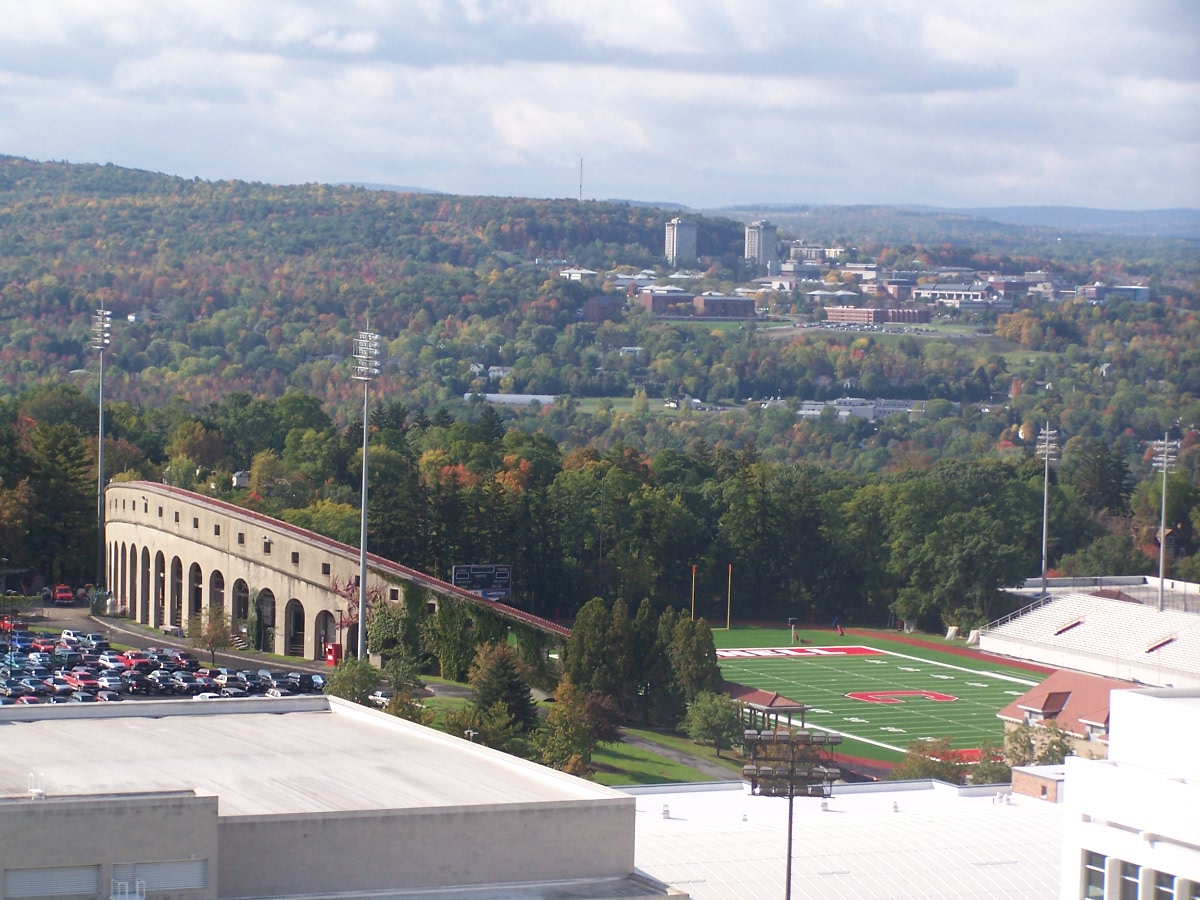
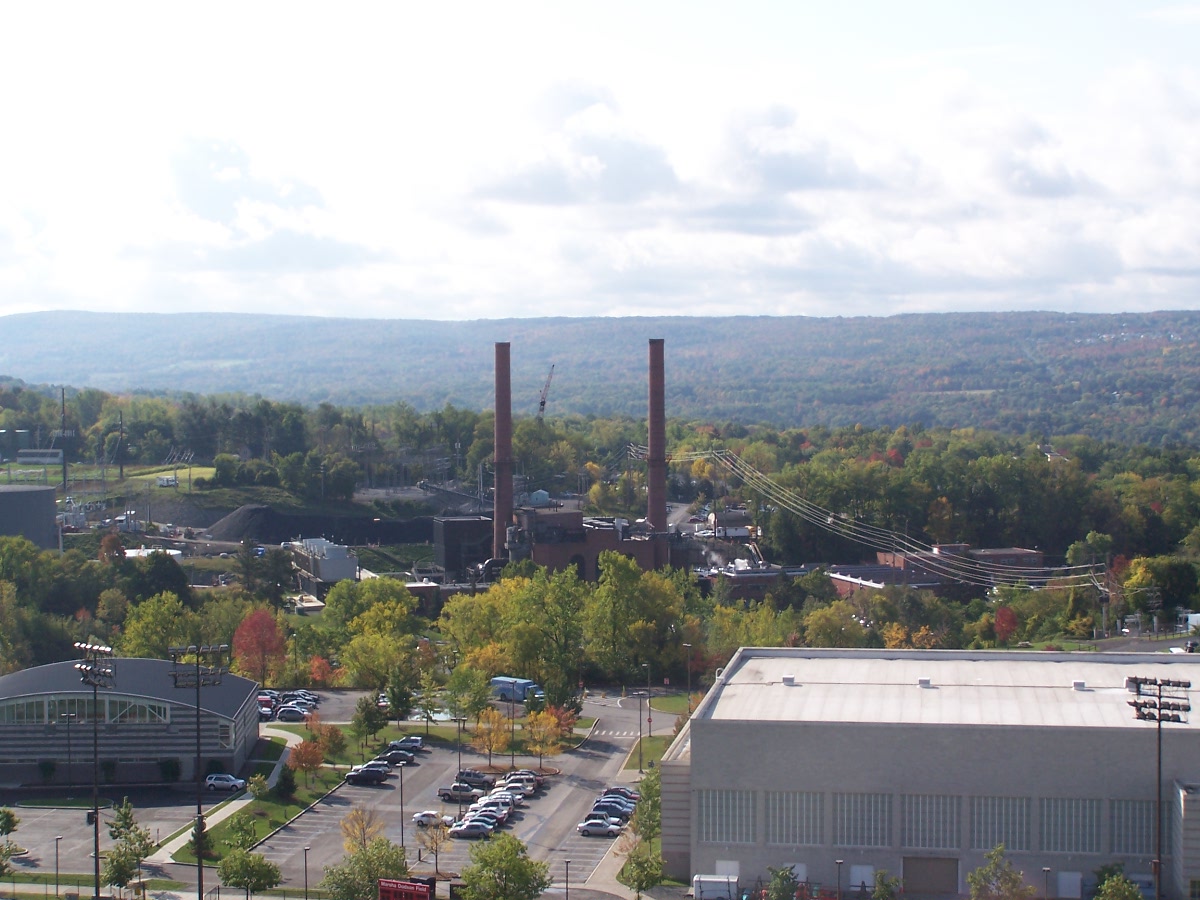
Looking SSE. These were the smockstacks I was referencing in the incinerator entry. The heating plant is currently being expanded about 16,000 sq. ft. Friedman Wrestling Center (2002) and Bartels Hall (1990, formerly Alberding Field House) are in the foreground.

Schoellkopf in the foreground, with the towers of IC in the back.

Looking East towards the vet school. The far hill is Hungerford Hill, about nine miles away  They’re Turkey [left] and Baker Hills, and they’re 3.5 to 4 miles. This might be the worst entry I’ve ever done when it comes to factual correctness. Hungerford Hill, 2.5 miles away, would be farther to the right if it had made it into the photo.

  To see what the view looks like from Hungerford Hill looking at Cornell (winter), click on the link (screw it, the link isn’t working too well, if you want to see just google “hungerford hill ithaca”, it the first thing in ‘images’): http://farm1.static.flickr.com/184/472688985_3a80886d64.jpg?v=0

Rice hall is in the immediate foreground, with Stocking, Wing and Riley-Robb Halls sitting on Judd Falls road halfway between Rice and the Vet School.

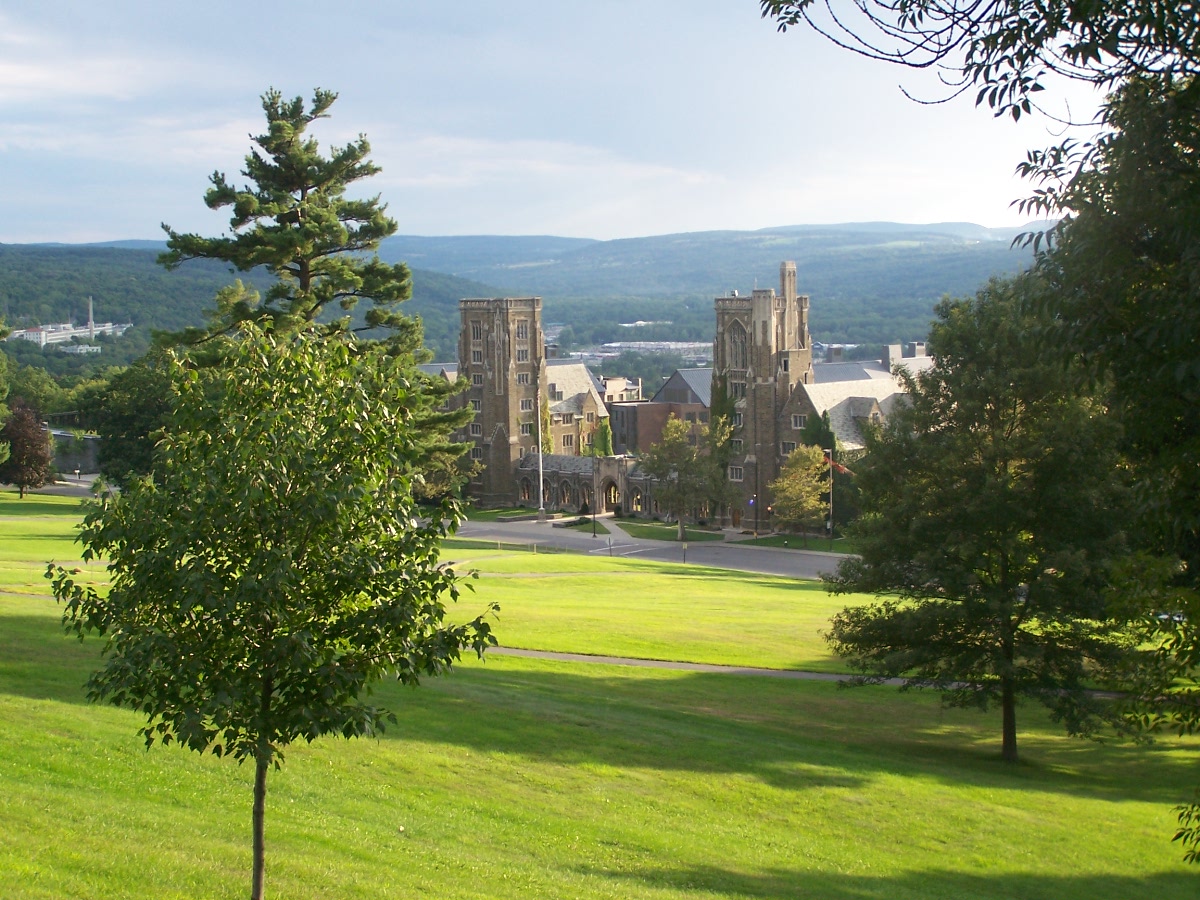
View directly north, over Beebe Lake. Fall is a comin’.

NNW is north campus.

Far up on the lake (about twelve miles) is the Bolton Point Milliken Station power plant (EDIT: okay, my bad, I mix up the names of the water station and power plant A LOT). If you’ve been hung up on 79  between Inlet Island and downtown by the train, this is where it is going (delivering coal from Somerset, PA).


[1]http://www.chem.cornell.edu/history/laboratories/STOlin.htm


Exploring West Campus

15 08 2008

First off, let me say I do not support nor condone any illegal activity, especially for the purpose of information gathering. That being said, going into prohibited construction sites is a lot of fun if you’re careful where you step and you can avoid the workers leaving for the evening.

So, this started when a friend of mine who happened to figure out that I was the writer of this blog sent me a message asking if I could go through the new West Campus and take some photos. Knowing he wasn’t in Ithaca, I decided that I would be happy to oblige this time  (but I certainly won’t be making it a habit).

Token War Memorial shot.

First off, the War Memorial. These photos are actually from my fraternity photo tour last month. The War Memorial was constructed from 1926 to 1931. It honors the 264 Cornellians who were killed in action in World War I. However, it does not honor a 265th death, that of Hans Wagner 1912, who was killed in action while fighting for the Axis Powers [1].

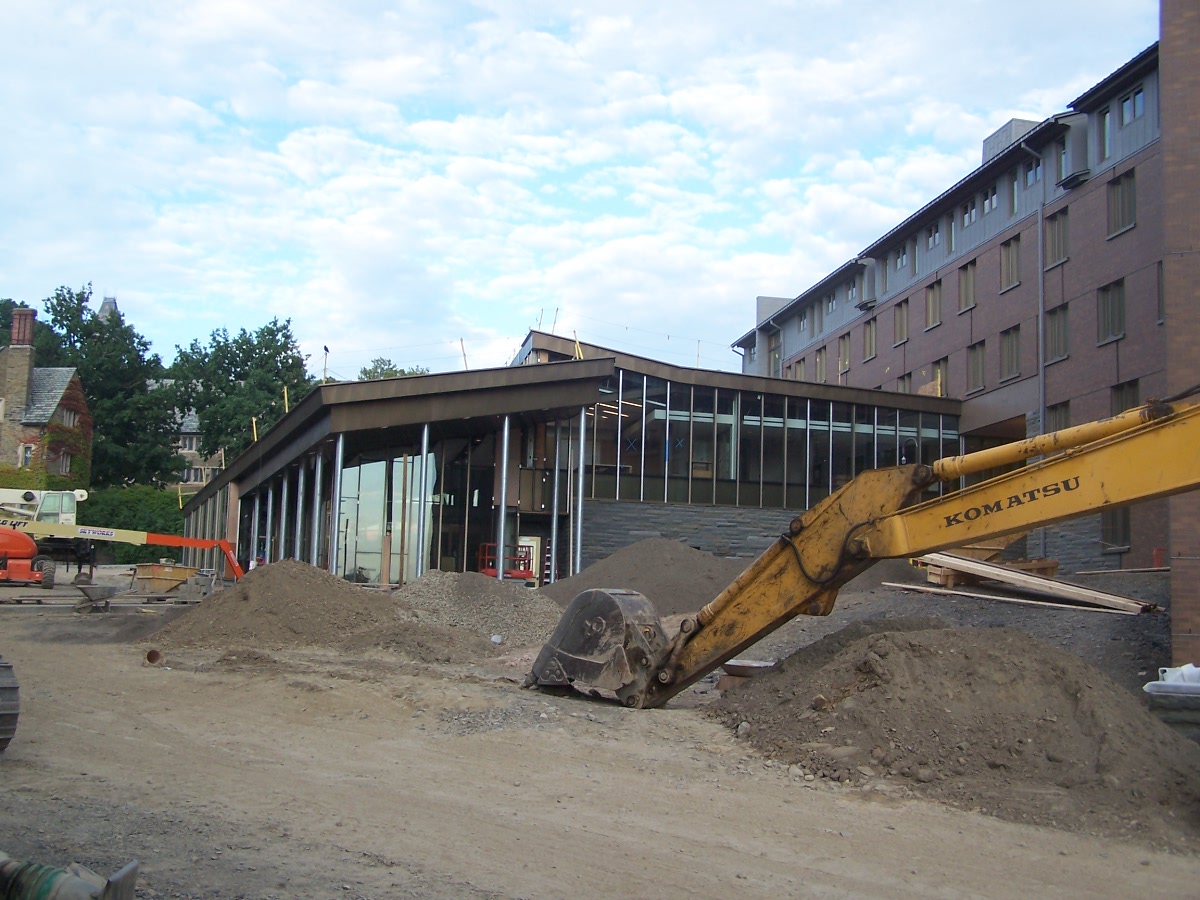
Noyes and Hans Bethe dining hall have grass roofs. Cornell, take note to not follow IC’s folly and set off fireworks right next to a building with a grass roof; it just might catch fire.

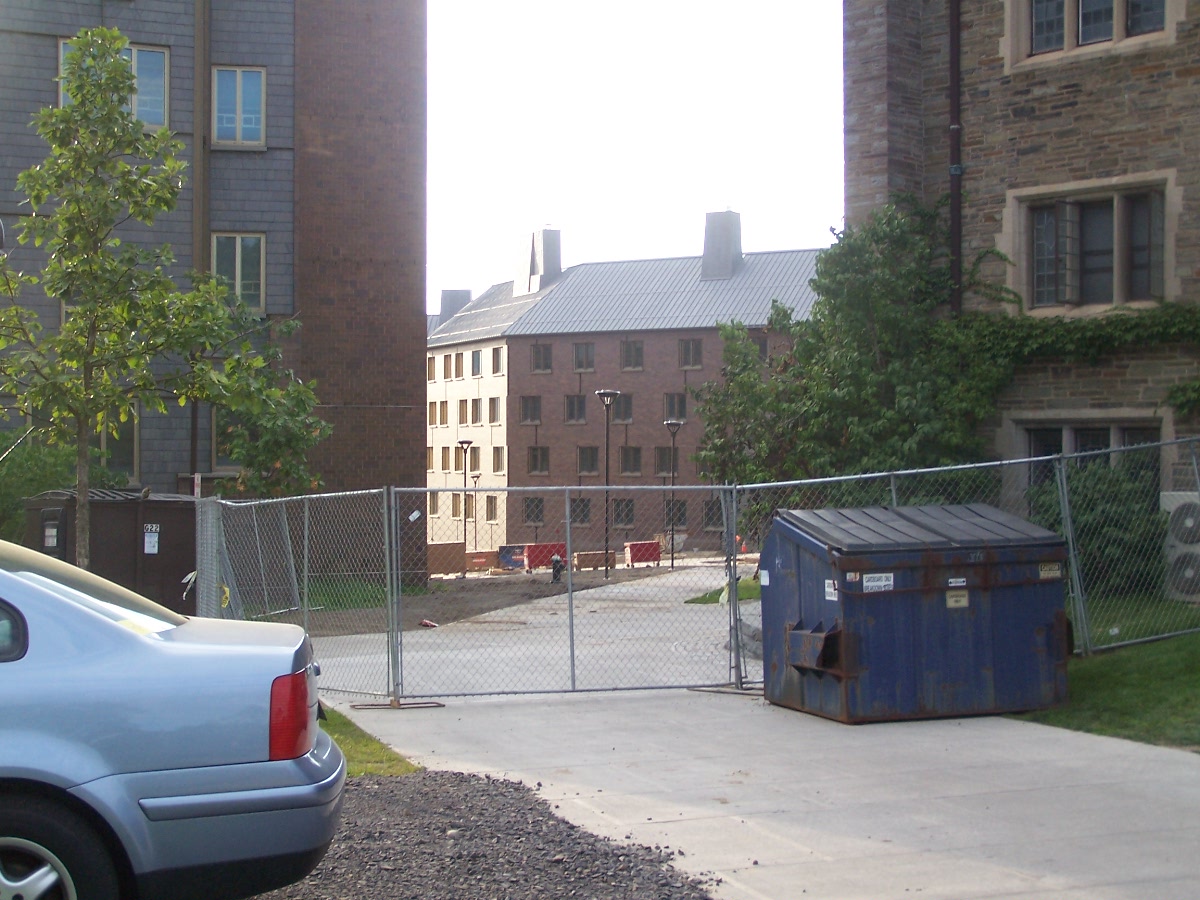
Any makeshift fence can be scaled. But why bother when there’s a narrow space between it and the wall?

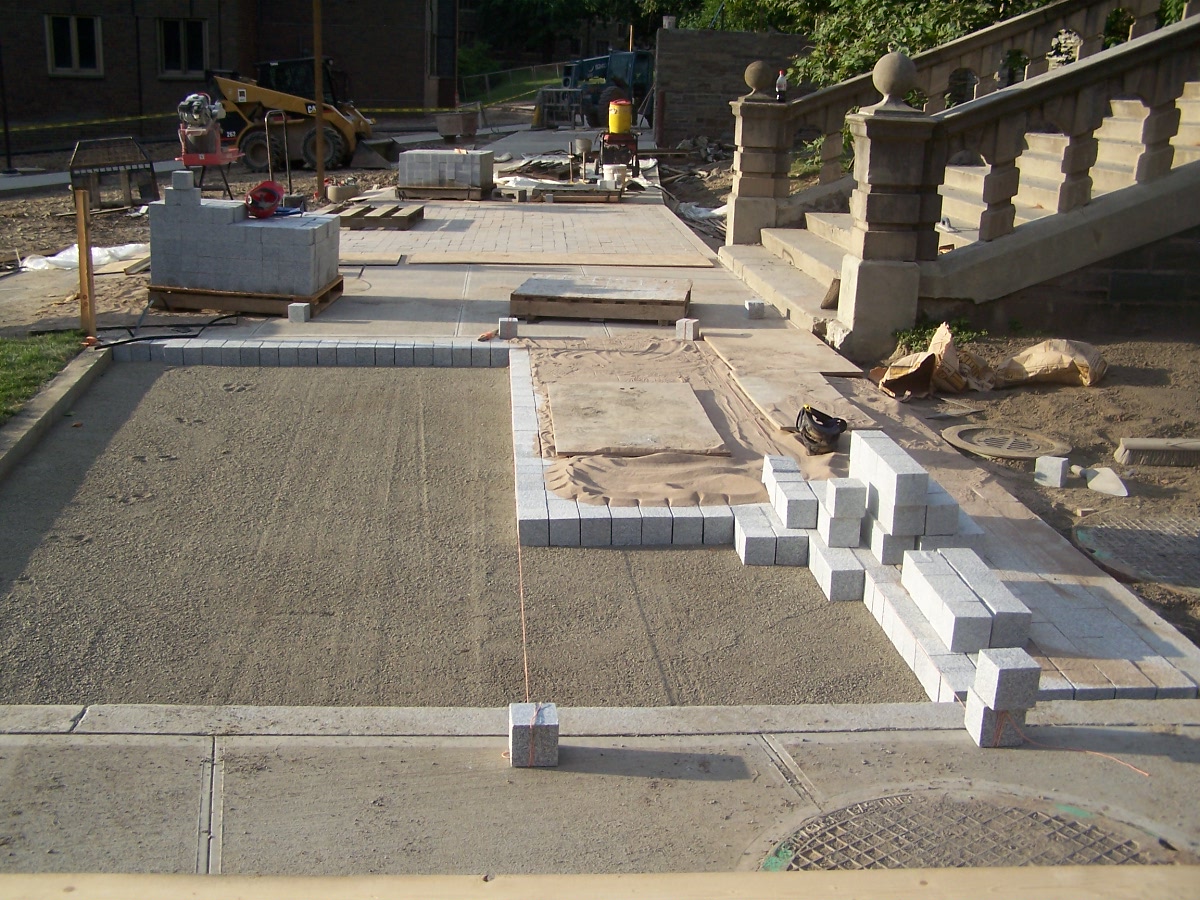
Base of the War Memorial steps, being renovated.

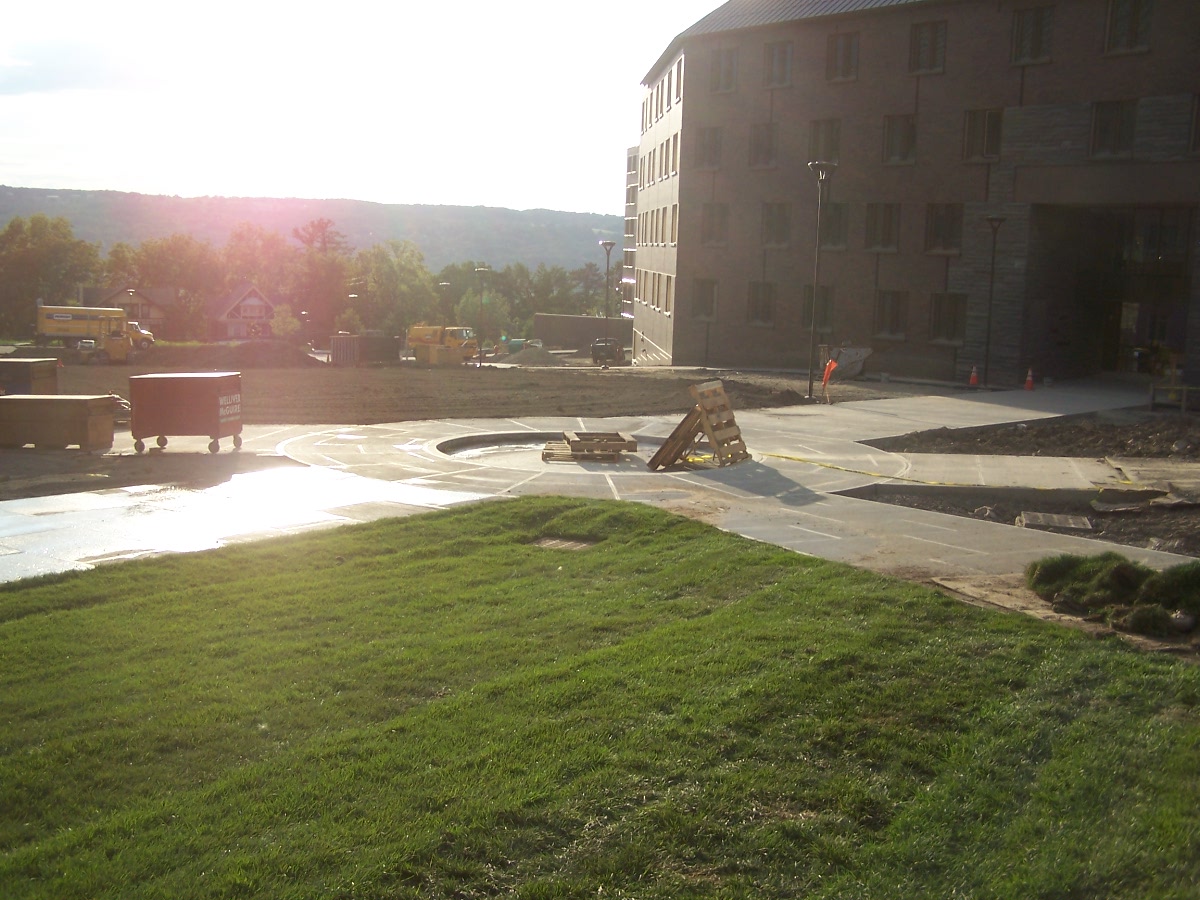
A new central plaza area between House 5 and Bethe.

House 5, south face

Don’t mind my shadow.

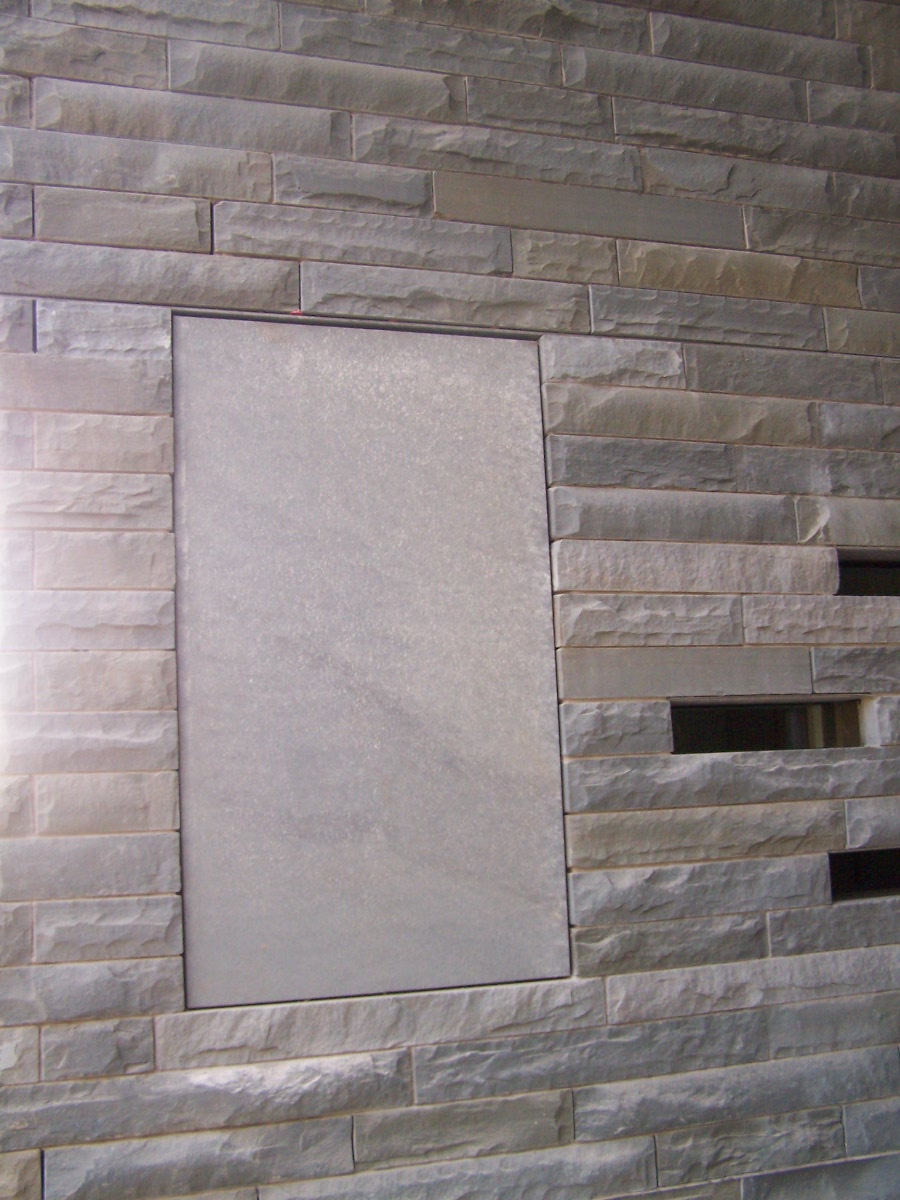
Curious horizontal window slits near the entrance of House 5.

Nameplate, unfinished for now.

House 5 Dining area, NW corner

north face, house 5

House 5 dining area interior, unfinished

Keeton House, north face

Noyes, from Keeton

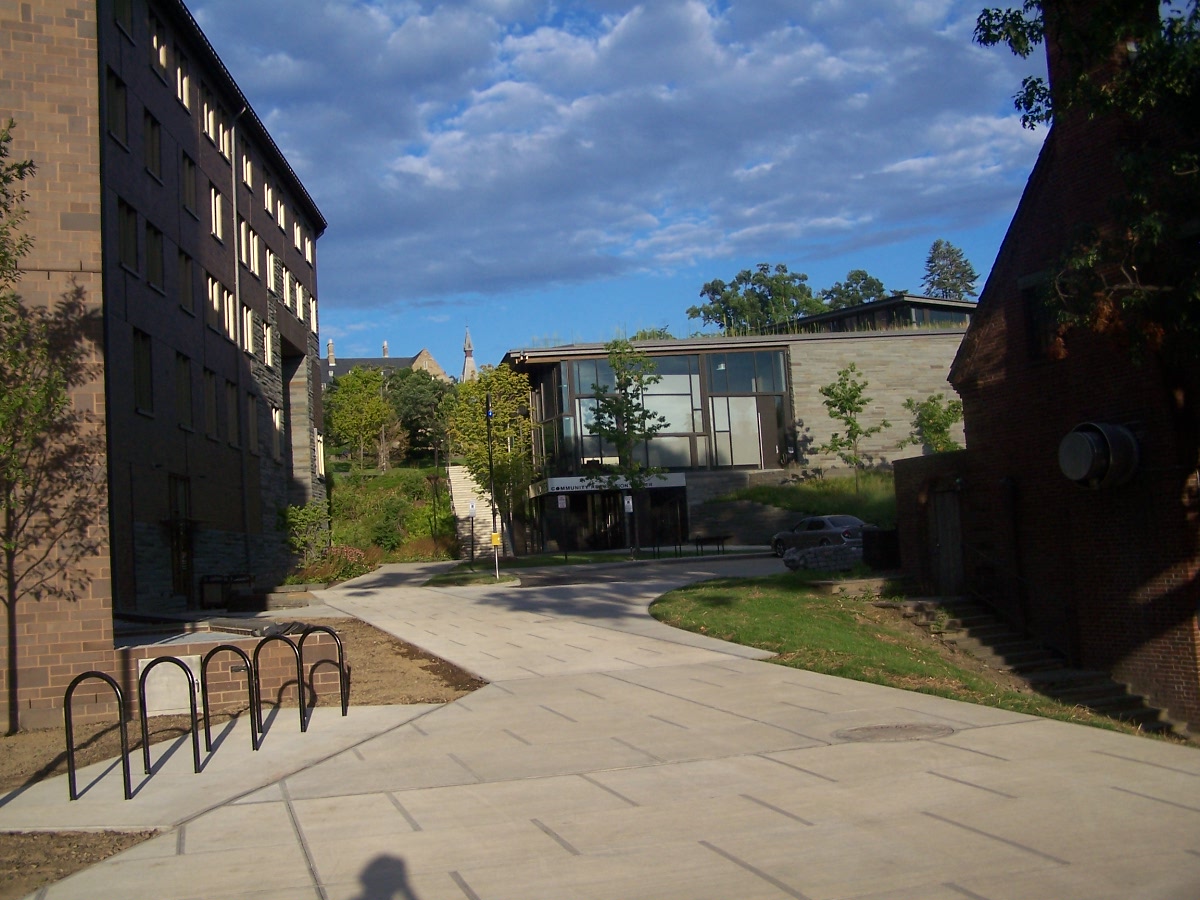
A corner plaza next to Keeton. Psi Upsilon is in the back.

A plaza/planting area just outside of Keeton.

Keeton’s connective corridor.

A staircase at Keeton that leads under the corridor.

A large blank wall next to the previously mentioned staircase.

Note the coloration of the glass in the connective corridor.

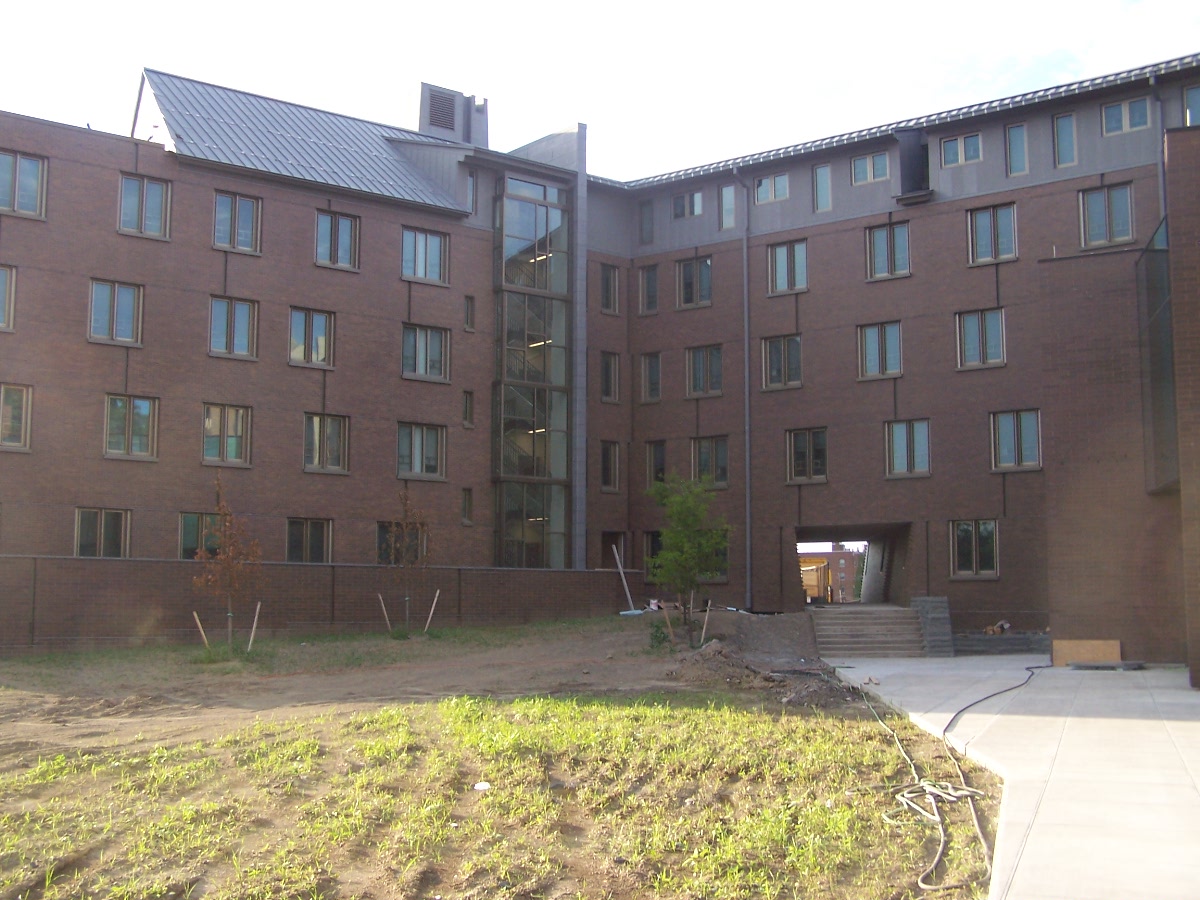
Keeton’s south wing. Notice how the top floor has a different window pattern and uses different materials.

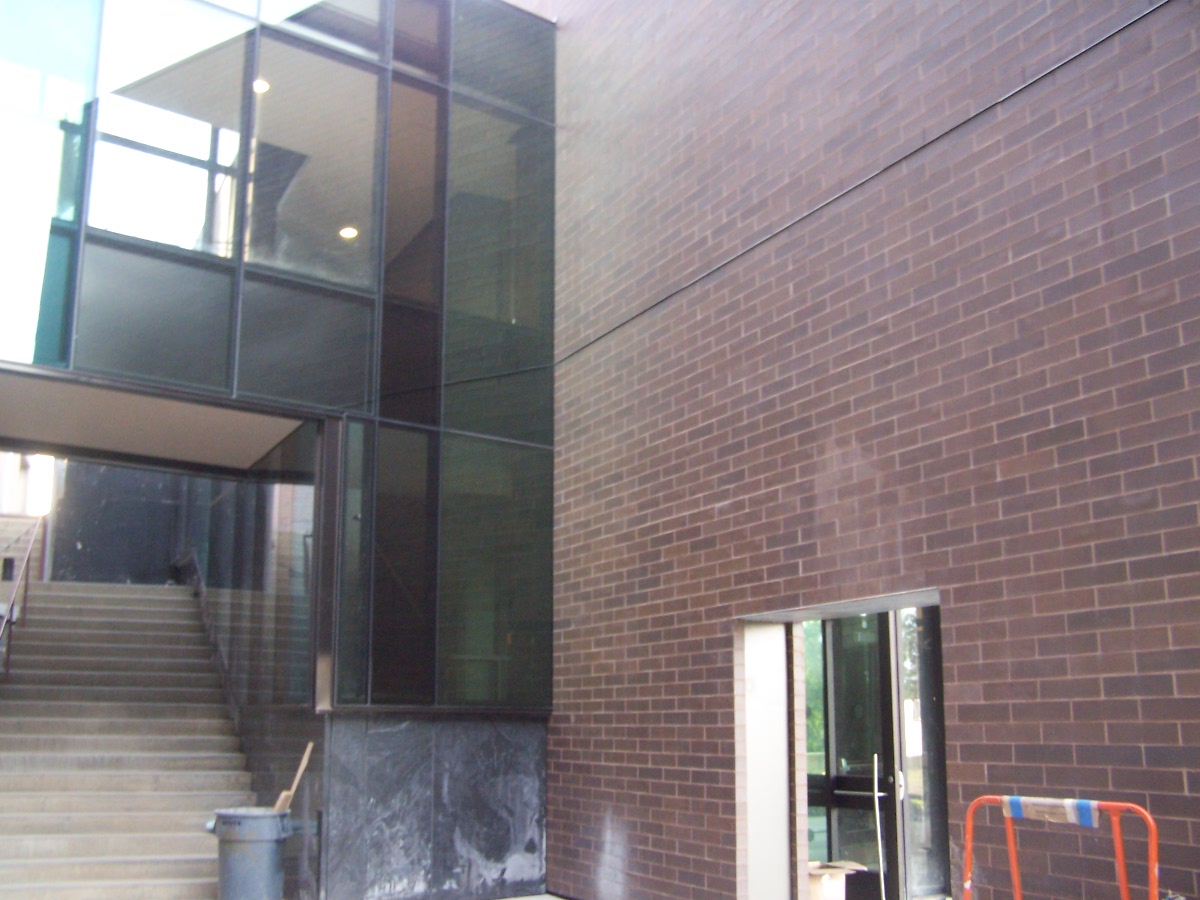
An interesting if not aesthetically pleasing entrance area for Keeton’s north wing.

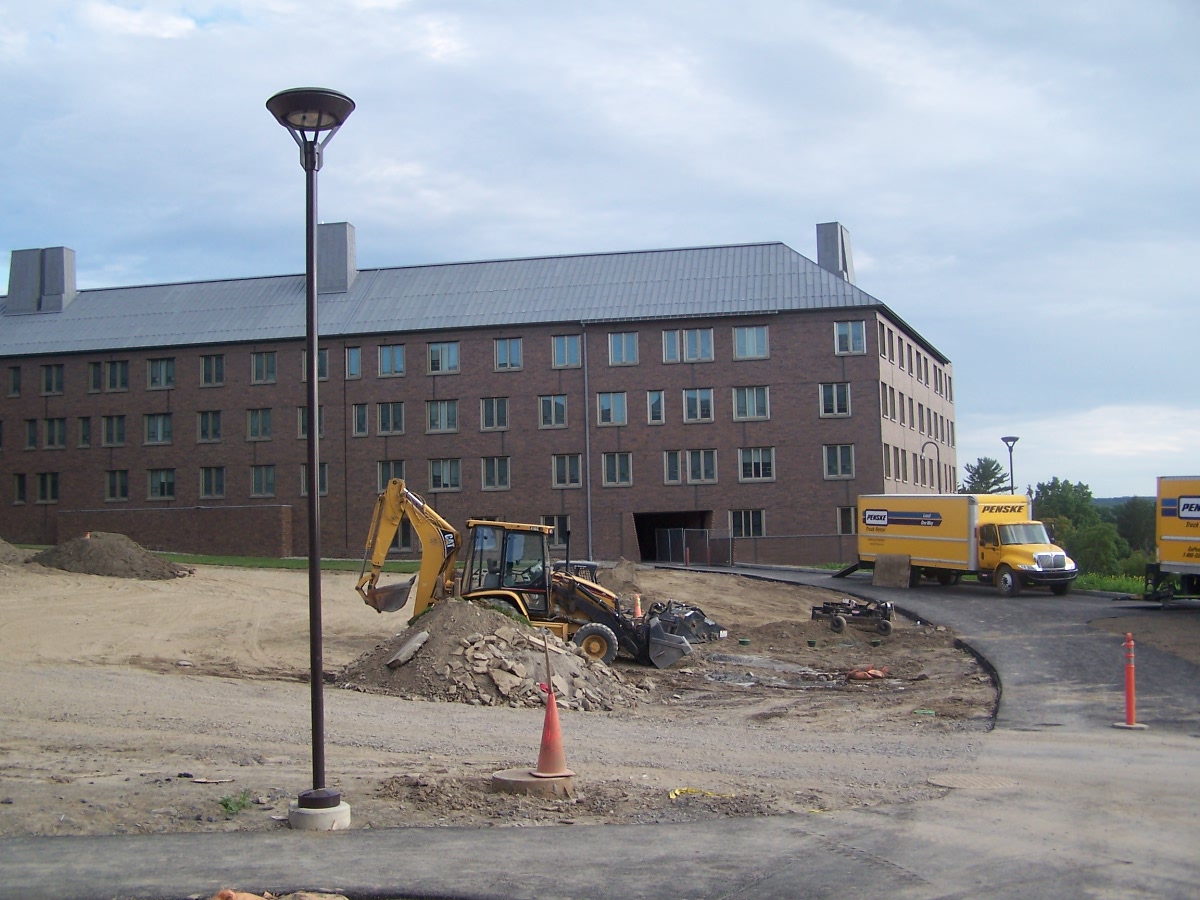
Had to hide from construction workers by hiding behind the board next to the Penske truck.

The unfinished nameplate for Keeton.

Keeton’s balcony.

An architecturally interesting juxtaposition of Baker Tower, Becker House and the Johnson Museum.

Keeton’s lobby area

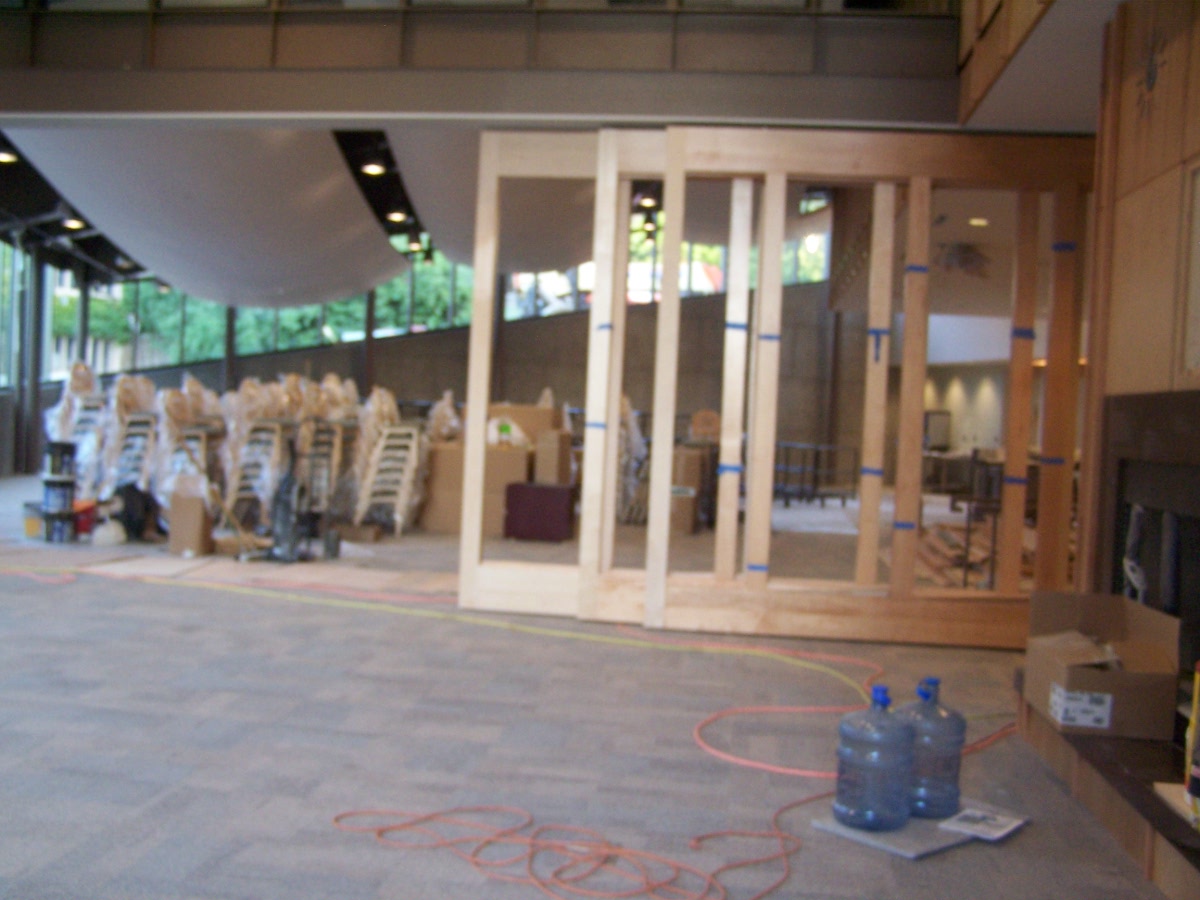
The dining area and an adjacent lounge in Keeton House.

A random hall of dorm rooms in Keeton.

***

Boldt Hall and Tower

ATO painted their house, it seems.

As for the photo request…consider it fulfilled.

[1]http://cornellsun.com/node/19107