A Frigid Season

17 03 2015

cropped-100_24121.jpg

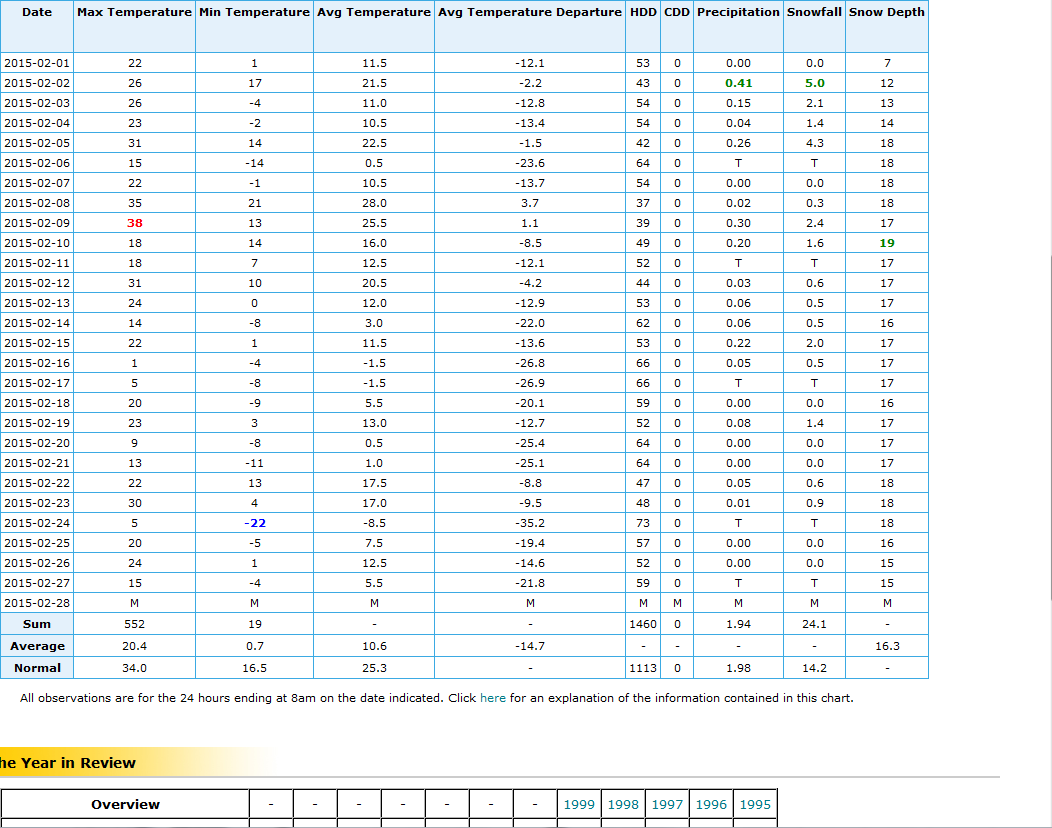
The number of records broken by this year’s exceptionally cold winter is nothing short of astounding. As previously covered, February 2015 was the coldest month ever recorded in Ithaca’s 122-year record, at 10.6 F, it shattered the previous record of 11.3 F set in February 1979. But that’s not the only record shattered with this bitterly cold season.

According to the Northeast Regional Climate Center, when it comes to the most days with sub-zero temperatures, 2014/2015, with 25 days of negative temperatures as of this morning, has the dubious distinction of being the winter with the most subzero days on record, beating the winter of 1960/61 and its 24 subzero days. Last winter (2013/14) is in a tie for third place with 1947/48, with 23 subzero days apiece.

From February 10th to March 4th (March 4th being the reading from March 3rd 8:00 AM – March 4th 7:59 AM), temperatures did not hit go above 32 degrees. That 23-day period is the longest streak of sub-freezing temperatures since January 14th – February 6th 1945, which is the record at 24 days.

The high temperature on February 9th of 38 F was the highest temperature for the month, which is not a record-coldest high temperature for February. It’s third, behind 1900/01 (36 F) and 1977/78 (37 F). January 1977 holds the all-time record of only 33 F, which it hit twice, on the 11th and 29th. Hence why it’s not on the list of consecutive days below freezing.

subzero_plt

This winter had unprecedented cold, thanks to a persistent trough in the jet stream over the Eastern United States that allowed frigid arctic air to continually surge through the region (the jet stream is also why much of the West Coast from California to Alaska experienced a record-warm winter, where it ridged poleward and allowed tropical air to surge north). There’s no evidence to tie this to climate change, warming, cooling or otherwise – the relationship between the jet stream and climate change isn’t well understood, and while work by Varvus et al. have suggested that major meanders may become more common, others have gone on the record that that work has issues and the implications are still not known (and for the record, neither party denies climate change, just that its impact on the jet stream is uncertain).

Fortunately, we’re at the point of the year where so much more solar energy is being pumped into the atmosphere that it becomes much harder dynamically to have such frigid temperatures. Although temperatures will be well below normal probably for the rest of the month, and may struggle to break freezing, but nothing will approach subzero. And being March, places out West experiencing the strongest part of the ridge (Southern California) are starting to see “excessive heat advisories” – Palm Springs is seeing 100 F, which usually doesn’t happen until late May. With perhaps the exception of Seattle and Miami, everyone is getting the weather they don’t want or need.


News Tidbits 3/14/15: A Spring Thaw and A Warming Housing Market

14 03 2015

215_221_wspencer

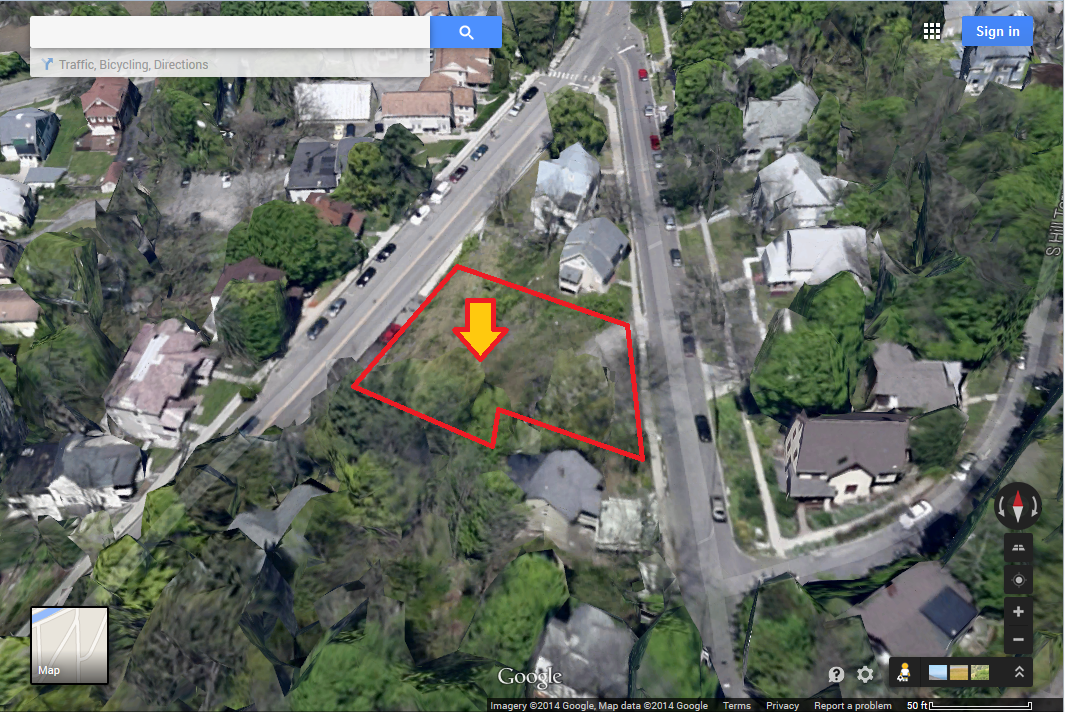
1. This past Friday the 6th, the city IURA (Ithaca Urban Renewal Agency) sold off a vacant city-owned property at 215-221 West Spencer Street to Edward Cope for $110,000. The name might not sound familiar, but a quick address check of the sales documents reveals an association with PPM Homes, a local rental company with a few hundred bedrooms in dozens of properties scattered around the city, most of them subdivided homes. Edward Cope also bought a vacant privately-owned lot at nearby 228 West Spencer Street for $15,000 on February 19th. 228 West Spencer, a small, steep site with tight zoning restrictions, was approved last year for one custom house design with 1536 sq ft. of space (the design plans came with the sale). As for 215-221 West Spencer, it was noted in July of last year that the city was selling the parcel (though I was under the impression it had already sold) and the buyer was intending multi-family housing. The 0.47 acre site has the potential for a medium-sized apartment building (20 units), but that’s a simple calculation using the zoning. With topography and neighbor considerations, the reality will be smaller.

In short, keep an eye on these properties, because PPM has the money to make the house and the apartment building happen.

holiday_inn_expansion_1

2. From the March IURA Agenda, a few good notes from the attached February minutes:

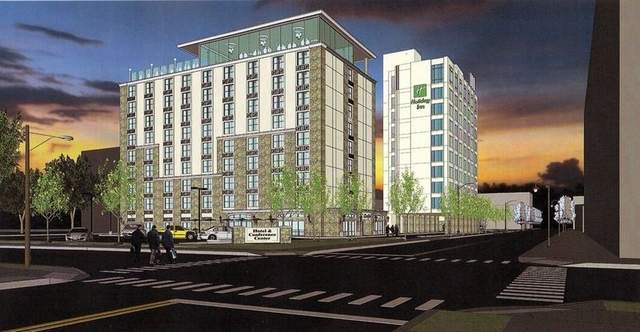
A. The Hotel Ithaca conference center is still actively trying to move forward.

B. The IURA received an inquiry about vacant land in the Cherry Street industrial park, from a business seeking to relocate into the city.

C. The city is making progress on taking over the state-owned parcel at 508 Taughannock Boulevard, previously used by the U.S. Coast Guard.

D. The former Ithaca Gun site is virtually entirely cleaned up, which will allow the apartment project proposed for the site to move forward with the planning and approvals process.

All things to keep an eye on in the upcoming months.

titus_wood_1

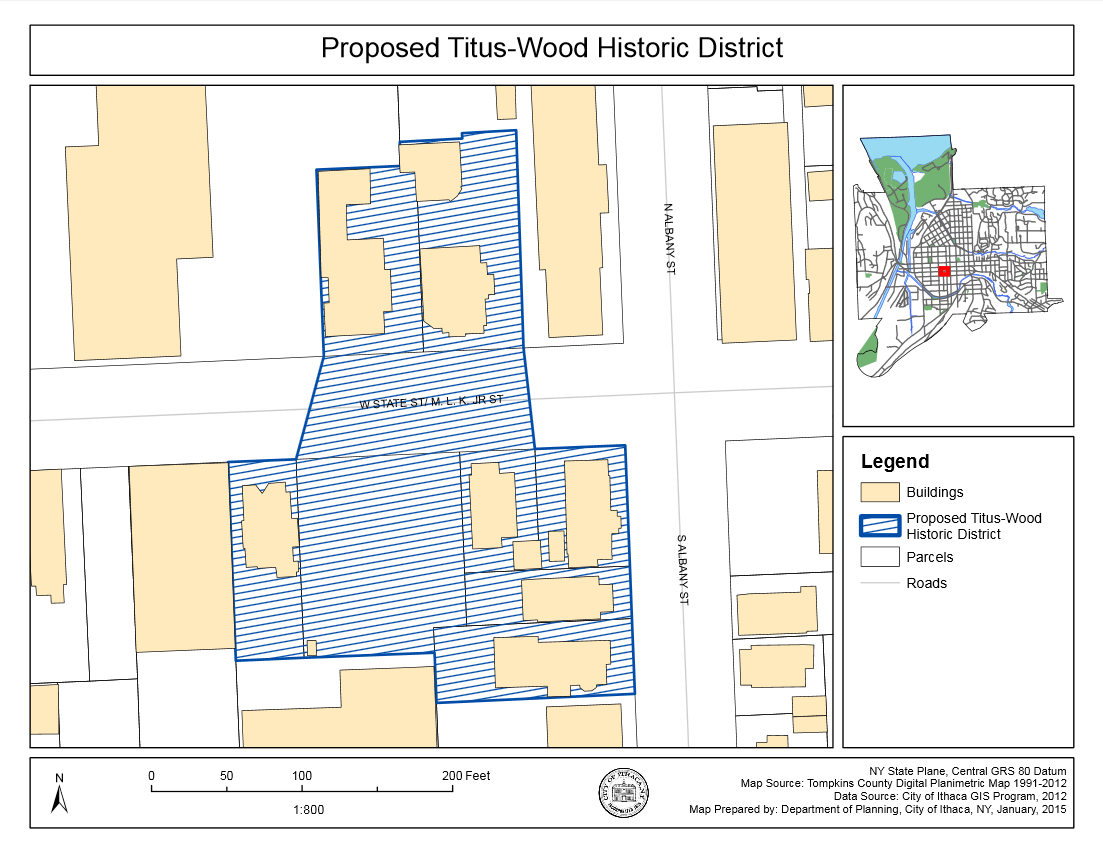
3. Looking at the city’s Planning and Economic Development Committee Agenda, there was quite a pushback from locals and the county for the proposed Titus-Wood historic district. The city fire department objected to landmarking their parking lot, the county wrote a letter opposing landmarking 317 W. State (and 315 W. State, which is not a registered address but could be the parking lot) because it was felt neither was historic enough and that it impeded urban infill, and the owner of 110 S. Albany, Ian Shapiro of Taitem Engineering, protested because his previous experience with the ILPC has been very frustrating, and that the ILPC gives applicants a really hard time over energy conservation efforts such as solar panels.

For the record, he’s not wrong about that. Some ILPC members have not been a fan of solar panels (examples here, here, here and here), and it has been at times a months-long process to get installation approval. It boils down to a dispute of alternative energy use vs. historic preservation, both things that Ithacans love, but can conflict with each other in cases like these.

Regardless of the opposition, the PEDC passed the historic district resolution with a unanimous vote, and the resolution now goes on to the Common Council, who will likely approve the new historic district.

4. Over in Lansing, concerned citizens looks like they can put their fears to rest regarding development of the Kingdom Farm property. The 528.1-acre property sold to a Cayuga County dairy farmer on March 10th for the hefty price of $2.8 million (in other words, $5,302/acre). The farm has been in the possession of the Watchtower Bible and Tract Society (the business branch of Jehovah’s Witnesses) for several decades, and the owners even pitched a 500-unit development for the site in the late 2000s. Back in October when the tax-exempt land went up for sale for $3 million, the Lansing Star reported that some more activist local residents wanted the town to step in and help a farmer buy the land so they could keep the property agricultural. There hasn’t been any news of the town taking that step, and it appears the problem resolved itself without the need of taxpayer dollars. Also, it means the property, assessed at $2.2 million, goes back onto the tax rolls. This might be one of the few cases where everything appears to have been worked out and all can go home happy.

5. 514 Linn Street has come down for a new duplex now under construction. Each apartment unit will have 3 bedrooms and be completed this summer. Although the predecessor building dated from the late 1800s, it was also an early “cookie-cutter” home; 512 Linn was the same design. Fall Creek is mostly developed, but Linn Street is no stranger to new builds – 514 follows a few years after 516 Linn, which was a new home built on a vacant lot.

amabel_v2_1 amabel_v2_2

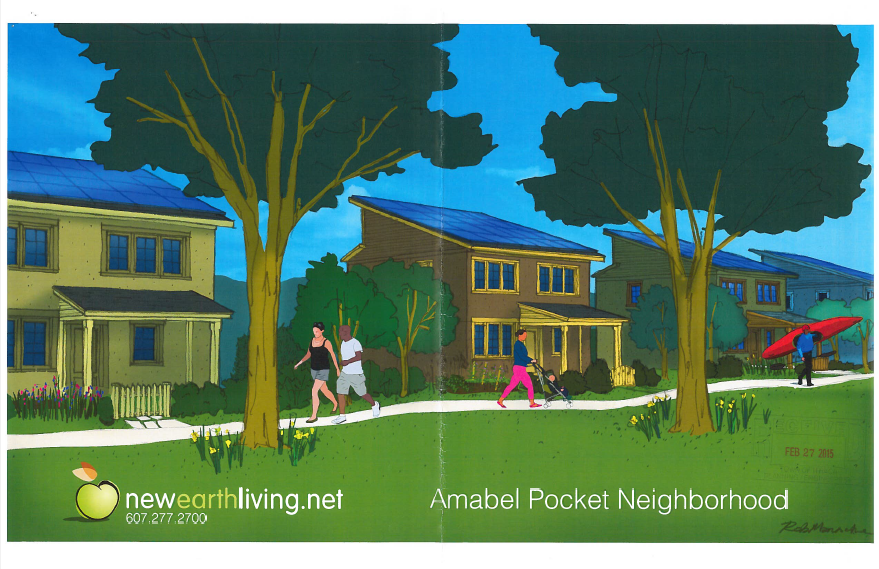
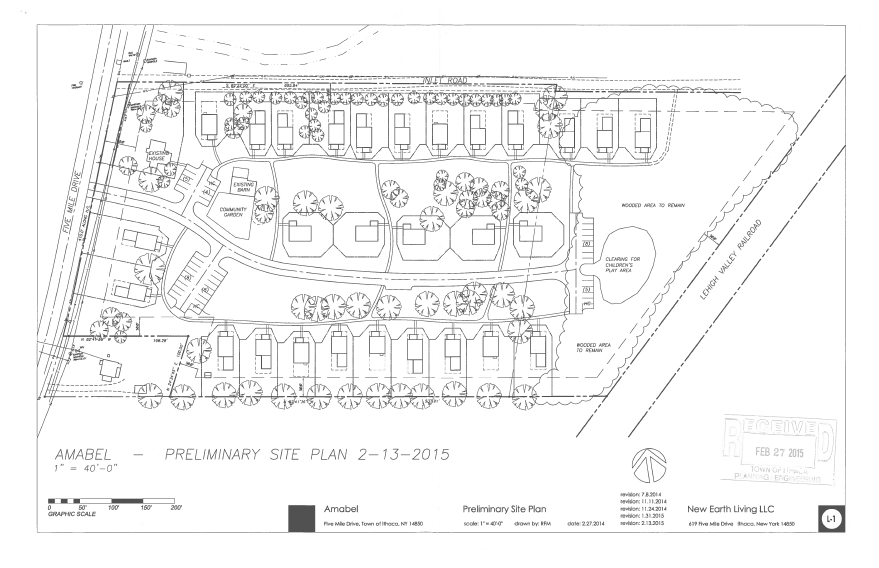
6. Lastly, it looks like the town of Ithaca’s planning board finally has a few things to work on, after having no meeting since early January. For their Tuesday meeting, the town will review plans for more luxury tents at La Tourelle, a new municipal water tank near Sapsucker Woods, and revised plans for the Amabel project off of Five Mile Drive. The number of units has been reduced to 28, and since November, two units were added to the far west portion of the parcel bordering Five Mile Drive (and as it turns out, those center units aren’t duplexes). Contrary to the example render, six different home designs will be available. Developer Sue Cosentini of New Earth Living LLC hopes to begin sales this summer.

Get connected:

Have comments or questions about these projects for your local government? Contact info below:

Town of Ithaca Planning Board: Use the form here – http://www.town.ithaca.ny.us/contact-us

Ithaca Common Council: http://www.cityofithaca.org/341/Common-Council – click on your councilperson’s name, their email is on the subsequent page.


Poking At the Jobs Numbers, Again

9 03 2015

11-24-2012 195

Talk about doom and gloom. One look at the Journal’s webpage and the pessimists are in for a treat. It’s no secret that Binghamton, Elmira and to a lesser extent Syracuse and Utica-Rome have suffering, declining economies. Upstate was the factory of the nation a hundred years ago. Now, for a number of reasons, manufacturing has shifted to the south, or more commonly, overseas. Ithaca’s neighboring metros are suffering.

I’m personally not a fan of the way the article is presented. It’s the highlighted piece of the Journal. But the title doesn’t really apply to Ithaca, and they acknowledge that if one reads the article. A lot of folks will only glance at the title, think it applies to Ithaca, and think that the Ithaca economy is tanking. Question dear reader, how many times have you read an article online, scrolled down to the comments and clearly see the comment of someone who read only part of the article, if any of it at all?

Here’s the Ithaca excerpt, which they title the “Ithaca Oasis”:

“Ithaca is the sole economic oasis in central New York. Since the recession, Ithaca’s private-sector jobs have grown by 10 percent. Only New York City has done better in the state, with nearly 15 percent more private-sector jobs in the same period.
“We have come back in terms of jobs in this most recent recovery,” said Elia Kacaypyr, who follows Tompkins County conditions as an economics professor at Ithaca College. “Things are better here than many of our neighbors.”
The reason for Ithaca’s resilience: an economy heavily dependent on education services and far less reliant on manufacturing. Education and health services alone added 6,800 jobs in the Ithaca region over the past 10 years, with 4,600 of those since the recession in 2008.

But that belies some underlying weakness, Kacaypyr said, notably in housing and retail sales.

Median home prices in Ithaca declined slightly in 2014 compared to 2013, and 2014 retail sales increased just slightly ahead of a 1.6 percent inflation rate. Also, the pace of Ithaca’s job growth is slowing.”

I guess if it was me, I’d have pushed for “Ithaca An Economic Oasis in Sputtering Upstate Economy”, or “Upstate Economy Suffers, Ithaca Rare Exception”. But what do I know; I’m a blogger, not a professional journalist.

Anyway, that last paragraph stands out to me – the IJ ran an article about that a couple of days ago, here. The report, prepared by Elia Kacapyr of Ithaca College, is mostly disappointing news, 0% growth in the local economy with most indicators staying steady with inflation. But I do want to make a couple of contrasting points to some of the data.

The jobs number stated in the article, which seems to be a major swaying factor in the ecnomic report, is a net gain of 100 jobs in 2014 (a 2013 annual average of 69,000, and a 2014 annual average of 69,150, which is rounded down). The data comes from the Federal BLS website here. I don’t fault working with the data in it current form, but I will note that the numbers are suspect.

All of the year-over-year job losses are in a period of February to May 2014. I’ve written about this before. This was covered on the Voice. You can darn well bet that a loss of 1300 jobs like the one reported last May would make the news. Then the Voice ran reaction articles from city officials and county officials.

The BLS numbers are up for revision. And because the numbers are generated via random sampling, that for a small community like Ithaca, may not be statistically significant, and the potential for misleading data is large. In Spring 2012, initial reports of a 4,100 job loss were revised to a gain of 1,100, a nearly 10 percent change to the overall total (I made note of the steep drop that time as well). Revisions to the 2014 data haven’t been fully implemented yet, and there’s still no evidence of large layoffs in the education and healthcare sector. Latest numbers from Cornell’s factbook show the university added 73 faculty and staff from November 2013 to November 2014 (1% growth), and Ithaca College’s headcount decreased by 18 (1% loss). No large layoffs in the Ithaca area were noted in the state’s WARN act database.

My honest expectation is that when the numbers are completely final, the number of jobs averaged out over 2014 will come out between 69,600 and 70,100. It still won’t be as much growth as 2012-13, but it’s a roughly 1% increase for the year. I could be wrong, but we’ll see.

The report suggests 400 jobs will be gain in 2015, and economic growth of 0.3%. I think that with Cornell’s recent budget issues, and the resulting slowdown in hiring it may cause, that’s a fair estimate.


News Tidbits 2/28/15: The Big Chill

28 02 2015

1. We’ll start this off with a little investigative work. A large medical office building at 821 Cliff street sold for $945,000 on February 23rd. The sale also came with two other adjacent parcels of undeveloped land, totaling just under 5 acres. Primary Developers Inc. (local developer Mauro Marinelli) sold the building and lots to an LLC with the oh-so-patriotic name “American Blue Sky Holdings LLC”. A little digging reveals the LLC is registered to a Lansing address that is also used by a renting company called Red Door Rentals. This company has never been in the news previously, and its website is nothing but a title page and an email address. A little more digging shows that it’s a recently-launched local business managed by Greg Mezey, a Cornell employee (and alumnus, as his name is familiar to me from when we overlapped as students several years ago). Red Door Rentals has 3 properties and 19 bedrooms, so this purchase is surprisingly large for a small rental company. I think it’s worth keeping an eye on this, watching to see if there’s any intent to redevelop the parcels, or if the LLC is just going to stay the course. Although the healthcare industry is a growing sector with stable tenants, a possible site redevelopment isn’t out of the question – previous owner Marinelli had plans approved in 2007 for a 44-unit apartment complex on a vacant parcel just north of the sold properties, but the project, called Bella Vista, was never built.

belle_sherman_townhouses_1

2. Well that was fast. It’s hardly been a week and 2 of the 5 units (the middle one and the second from right, lots 21 and 22) in the second phase of the Belle Sherman Cottages townhouses have already been reserved as of the 25th. These are not cheap, they’re going for near $300k. Taking guesses – wealthy parents of Cornellians, or permanent residents?

It may seem like these are a frequent topic of this blog, but that’s because unlike many local projects, they have a strong and regularly updated online presence, which makes my work much easier.

roccorner_libe_0414

3. There hasn’t been much news about the Old Library site as of late, because the four entities invited to submit detailed proposals have until March 20th to get all their paperwork in. But one thing worth noting is that the Cornerstone project, the only one which has an affordable housing component, is asking for a non-binding letter of interest from the Ithaca Urban Renewal Agency. If selected, the IURA could offer Rochester-based Cornerstone and its partner the Ithaca Housing Authority up to $200,000 towards the development of approximately 70 affordable housing units.

In terms of community support, the Cornerstone project has garnered little interest, with the eco-friendly Franklin/O’Shae proposal and the DPI condo proposal receiving the most support. While this is the only project that offers affordable housing units, they’re apartments rather than purchasable units, and every proposal submitted in the RFEI misses the county’s (overly high) expectations in some form.

college_crossing_1

4. It’s not uncommon to find apartments through Craigslist, but at least one stalled local project is trying to find retail tenants through the online classifieds website. The project in question is the “College Crossings” development, which comes up in news updates once in a great while – since approval in 2012, the site has been cleared, but not a whole lot else has happened. The second floor was revised from office space to 2 apartments with 9 beds total, which is arguably a better fit and easier to finance in the Ithaca real estate market, and the developer (Evan Monkemeyer of Ithaca Estates Realty) claims to have two of its six retail spaces leased (for a Subway and a Dunkin’ Donuts), with a potential lease on a third space pending – as the site has claimed for months, if not years.

Apparently, the developer is now turning to Craigslist to lease the remaining spaces. Will it be effective? Maybe. It seems the project’s not totally dead, but there’s plenty of reason to be skeptical of this mixed-use shopping center ever coming to fruition.

2_2015_nrcc

5. Looks like we’re about to shatter the old record for the coldest month ever recorded in Ithaca. Thanks to that -22 F Tuesday morning (the last time Ithaca was that cold was January 22, 2005; in fact, I can only find 10 days that were colder in the entire 122-year record), the monthly average stands at 10.6 F, 0.7 F less than 1979. Saturday will not be enough to warm up the average, so February 2015 will go down as the coldest month in Ithaca’s recorded history. Yay?


News Tidbits 2/21/15: Can’t We All Just Get Along?

21 02 2015

belle_sherman_townhouses_1

1. Looks like marketing has started for the second set of townhomes in the Belle Sherman Cottages project. Local real estate listings have two of the yet-to-be-built townhouses listed for $275k and $310k. The base-equipped units have 2 bedrooms, 2.5 bathrooms, and 1,325 sq ft of living space. Unlike the first set of townhouse units, these units have the garage in the back. The first five townhouses have sold out and are ready to begin construction when the weather permits. This second set of five, lots 20-24 (aka the 200 Block of Walnut Street), will likely see construction later in the year, depending on how well the sales go. They probably don’t need to worry, the first set sold out in a matter of weeks.

130eclinton_rev2

2. For those that haven’t seen it, the Ithaca Times did an excellent piece this week regarding the murky political issues with Jason Fane’s 130 East Clinton project. Readers may recall that the project applied for tax abatements, but was rejected by the county IDA. The argument is that there was political interference with the decision, and the interference has been masked by statements incongruous with the CIITAP application process (ex. saying that the project was rejected for not being mixed-use, which is not a stipulation in the CIITAP application). The Times builds a pretty significant case that politics are infiltrating the process, manifesting as last-minute demands, and threaten to cut off development in downtown Ithaca, where land values and more stringent community demands make projects more expensive. Nathan Lyman, Jason Fane’s lawyer in the Clinton matter, has sent a letter to the city with his criticisms of the way program and the way local officials dealt with the project; an online copy can be found here.

707_E_Seneca_2

707_E_Seneca_rev1_1

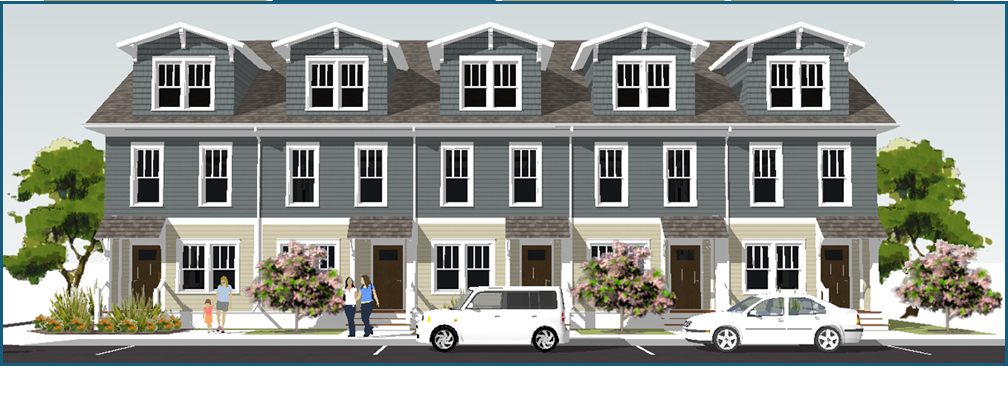
3. Some minor tweaks to the 6-unit, 18-bedroom 707 E. Seneca project: basement windows to try and break up the monotony of its concrete block base. Apart from that, the color descriptions, facade details and finishes look to be unchanged from the earlier plan (first image). The project, planned for a vacant parcel that was one an abandoned school playground, is due to receive final site approval at next week’s planning board meeting. Developer Todd Fox hopes to have the project complete in time for the 2015-2016 academic year.

simeons_1

4. Taking a gander at the upcoming planning board meeting, here’s what there is to look forward to:

– A. More talk about the Marriott signage – Marriott corporate wrote in to say that they’re not going to change their rooftop corporate signage just because Ithaca wants to be unique, but they are open to shrinking it so that it’s less prominent. The hotelier also said they would be open to some degree of “interpretation” with the street-level signage.

– B. Final Site Approval for the Canopy Hilton – This might be delayed again due to a potentially huge problem on the horizon. The CSMA (Eagles Building) next door sent a letter opposing the use of its rear parking lot for a utility easement by this and the Carey Building, because it could hamper their own theoretical expansion plans. In the letter, they have said they would allow the easement if they get to take the land between them and the Carey Building, which is what the Hilton intends to use as their driveway. It would be a major rearrangement of the Canopy site plan (and potentially prohibited by the city’s transportation engineer since E. Seneca is one way), and these moves by the CSMA could impact work on the Carey Building as well. The city already granted an easement late last month to the Carey Building for the municipal parking lot between CSMA and the Carey Building, and work’s already begun, so it’s unlikely that parking lot’s ever going to be reopened. Everyone loses.

I can’t tell who at the moment, but considering the Carey and Hilton projects have been under review for nearly a year, the timing of this is awful, someone really botched up here. This could be a very nasty fight. Let me grab the popcorn.

– C. Declaration of Lead Agency/Environmental Review of the Lake Street Bridge Replacement and neighboring pocket park

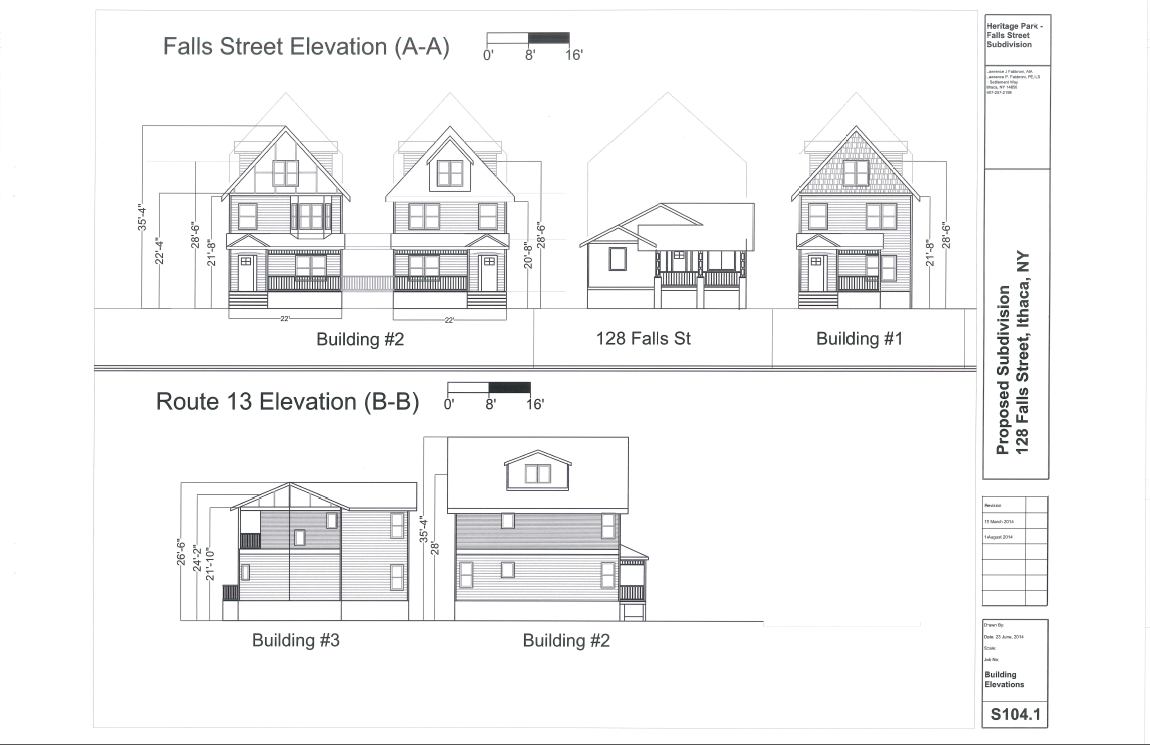
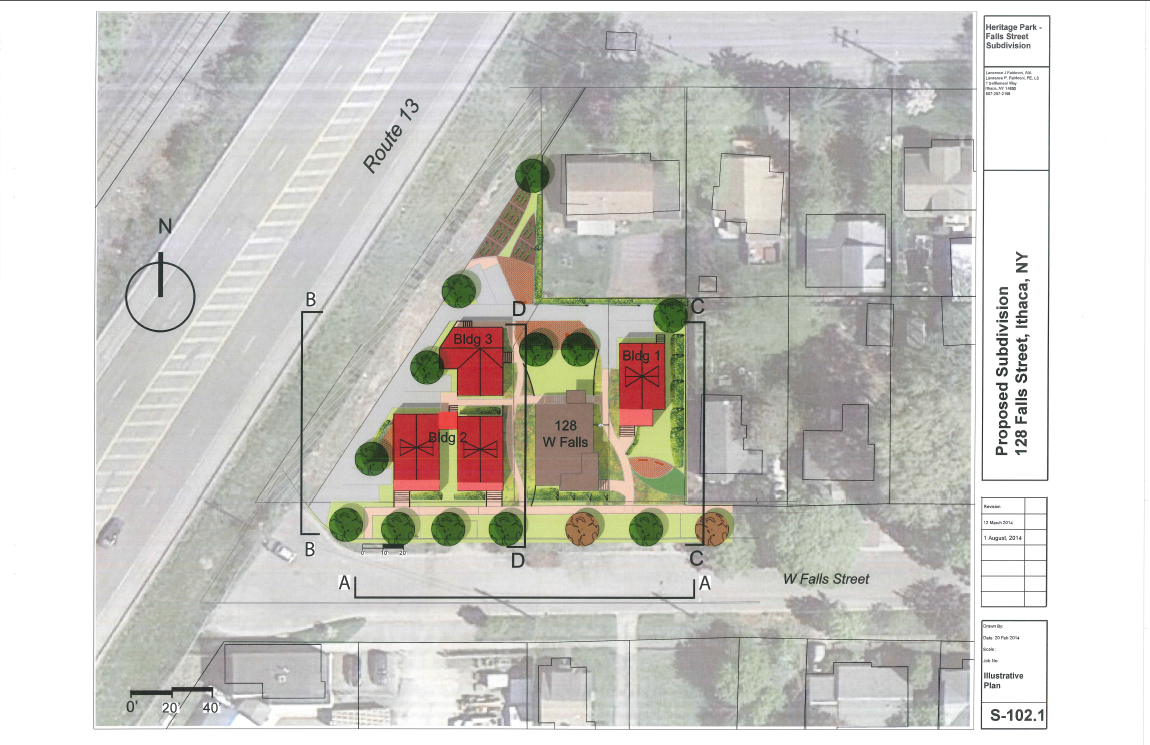
– D. Final Site Plan Approval for the 5-unit, 3 building project at 128 West Falls Street

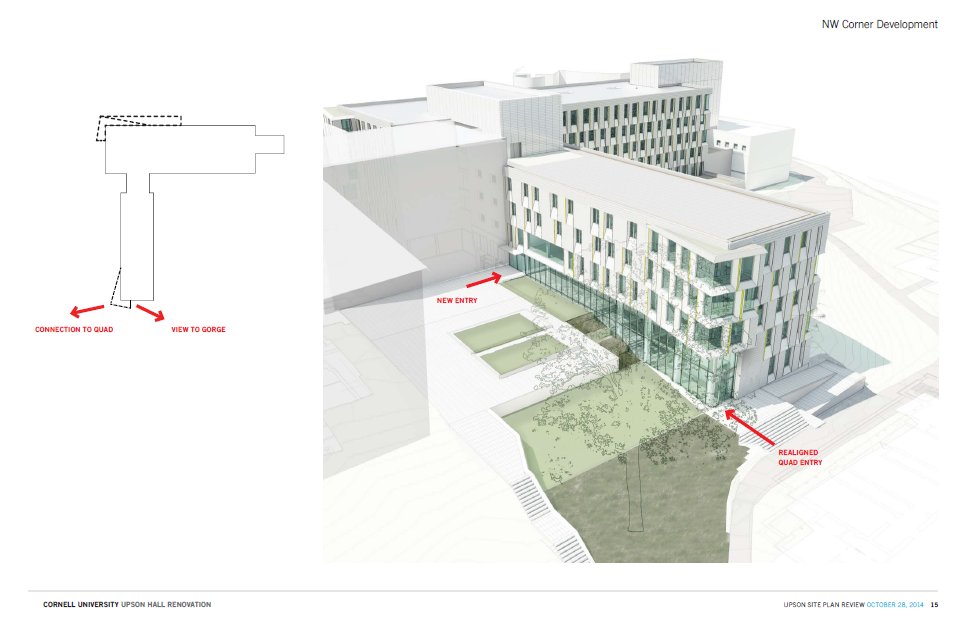
– E. Final Site Plan Approval of the Upson Hall Renovations on Cornell’s Campus

– F. Final Site Plan Approval for the 6-unit 707 E. Seneca project (item 3 up above)

– G. Sketch Plan presentation of INHS’s 210 Hancock/Neighborhood Pride Redevelopment

– H. Sketch Plan presentation for the Simeon’s/Griffin Building Reconstruction (seen above, courtesy of Jason K. Demarest Architect)

Subdivision review will also take place for the duplex proposed behind 424 Dryden Road, and paperwork has been filed for another subdivision to create a lot for a new single-family home (203 Pearl Street) by slicing off the north portion of 201 Pearl’s lot. The Pearl Street subdivision won’t be reviewed until the March meeting.

5. Another Ithaca Times piece, this one about strong opposition to a proposed expansion to a spiritual wellness/meditation center on Turkey Hill Road. the expansion calls for 10-12 beds for overnight visitors, but neighbors are fiercely against it for noise and traffic concerns.The architect for the expansion is Noah Demarest of local firm STREAM Collaborative, but there’s no renders of the proposed expansion on the website just yet (but their website is updated pretty regularly, so it’s only a matter of time).

Good heavens. This is one of those weeks where it seems everyone in Tompkins County hates everyone else that lives in Tompkins County.


Design Competition Announced for Collegetown Apartment Building

19 02 2015

12-29-2011 079

Back in August, I wrote a story about how a student competition was held in the early 1980s to design the mixed-use building currently standing at 409 College Avenue. It appears that someone liked the idea and decided to launch a competition of their own.

According to the Cornell Daily Sun, the competition is to design a replacement for 313-317 College Avenue, a property owned by local developer/landlord Lambrou Real Estate since the late 1970s. Cornellians of my late 2000s vintage will remember this building for housing Dino’s Bar and Grill. In previous years, it’s also held a grocer (1920s), a furniture store (1950s), a record store (1970s), and the Cosmopolitan Restaurant (1990s). Finding the original construction date of the building has been difficult (I’d guess ca. 1910, since it’s missing from this 1906 photo but it’s definitely an older style), and it appears substantial renovations occurred in the mid 1970s, likely the porthole windows on the fourth floor. Because of the heavy alterations borne by the storefronts and top floor over the years, the building has lost much of its historic value.

From a zoning standpoint, the building is in the densest Collegetown zone, MU-2. That entails a mandatory mixed-use component (usually interpreted as commercial space on the first floor), the building can occupy almost all the lot except for a rear setback of 10 feet, and no required parking. The building must be between 4 and 6 floors, and 45′-80′ tall, with a flat roof. 313-317 College already occupies most of its lot footprint, so the area of the new building wouldn’t be a big change, but the addition of a few more floors would make for a greater visual impact. More likely than not, there will be student apartments from floors 2-(4 or 5 or 6).

Speaking specifically about the competition, it’s open to any member of the Cornell community, student, faculty or staff, and has been underway for a couple weeks. Sketch plans were due Wednesday the 18th, final plans/schematics April 7th, and the winner will be announced May 17th. The call for proposals asks for sustainability as a design theme, so an emphasis on “green” features is expected in the submissions. The judges panel will consist of Lambrou Real Estate, AAP professors yet to be chosen, and Ithaca Student Housing, which is also staffed by the Lambrou Family (different branch maybe?). No word yet if there’s a cash prize for the winner.

Just like 409 College over 30 years ago, this is a win-win for everyone involved. The winner gets exposure and a pretty big project to claim on their resume. The Lambrous get a project at a fraction of the design cost of an architectural firm. I hope to see and share some of the proposals as they become available.


Klarman Hall Construction Update, 2/2015

17 02 2015

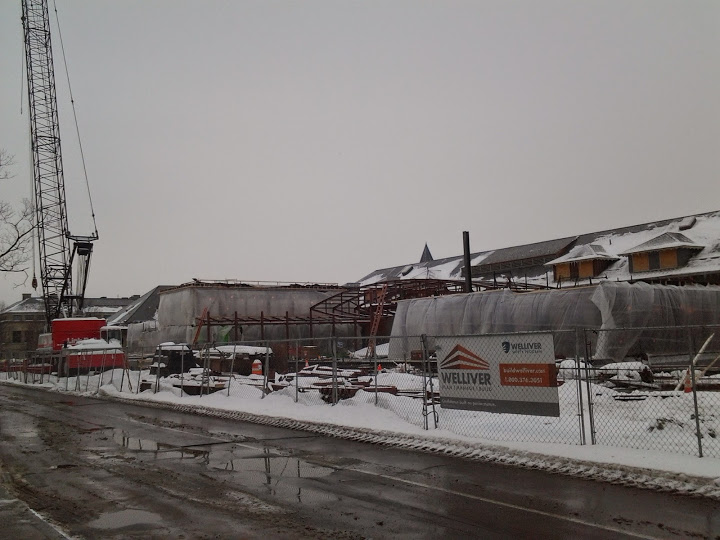
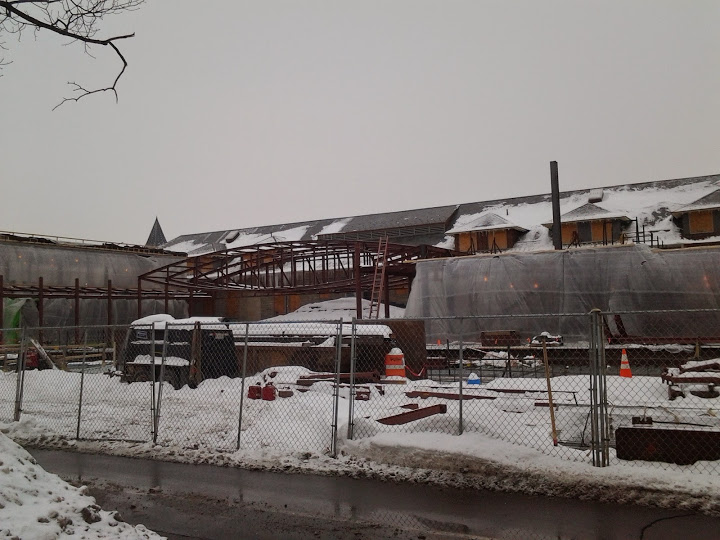
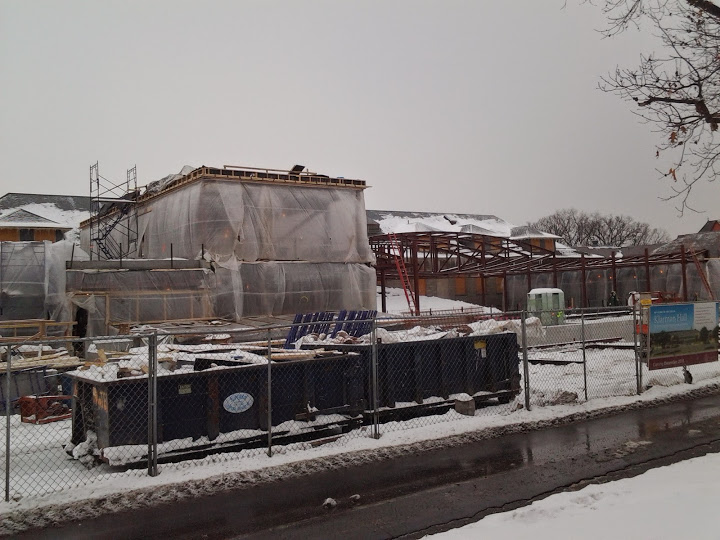
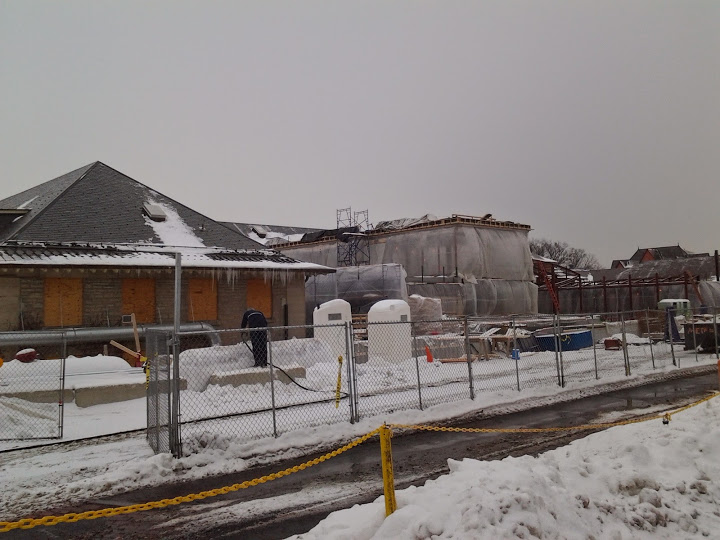
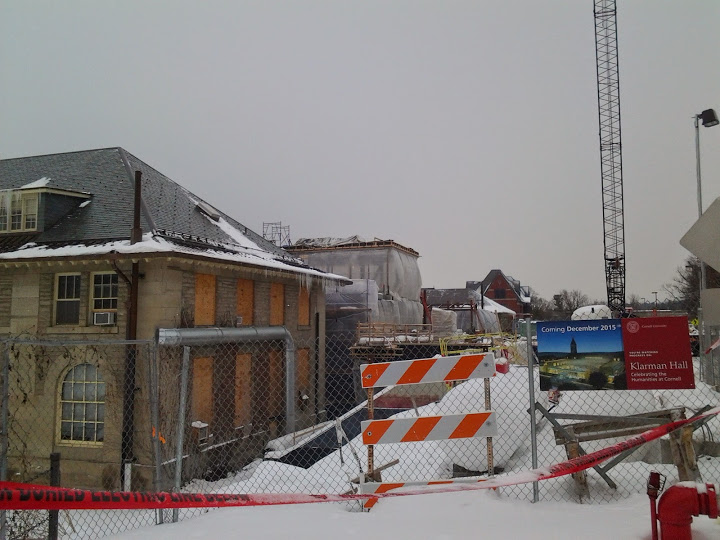
Time to take another look at Cornell’s Klarman Hall for a progress report. It was low 50s F when I stopped by in late December and I thought that was pretty awesome. I completely and totally regret saying anything and will next time reserve to complaining about how cold it is, in an effort to spite Mother Nature.

Anyway, construction firm Welliver has been busy craning the new steel atrium trusses into place, with at least four installed when these photos were taken the weekend before last. My laymen’s mind would call the shape almond-like or a pinched oval, but wikipedia tells me the proper terms are “vesica piscis” or “mandorla”, both of which sound like alien species doing battle with Captain Kirk. One of the site cranes has completed its work and has been removed, while the other will stay in place until all the structural steel has been erected. On the lower floors, fireproofing, mechanical and electrical rough-in (plumbing and wiring) is underway, while concrete pouring is taking place in parts of the upper levels. Some of this work would be visible from the fences, were it not for the plastic sheeting put up to keep the frigid winds at bay.

Over the month of February, construction schedules indicate that fireproofing will wrap up on the south side of the ground level, leading the way for sheetrock installation and exterior and interior wall framing. At the same time, fireproofing will begin on the north side of the ground level, and concrete will continue to be poured for the auditorium space and upper levels.

The 33,250 sq ft building was designed by Koetter | Kim & Associates, and is due to open in December 2015. Construction cost is estimated at $61 million.

20150207_143719 20150207_143654 20150207_143557 20150207_143533 20150207_143505 20150207_143426


Belle Sherman Cottages Construction Update, 2/2015

16 02 2015

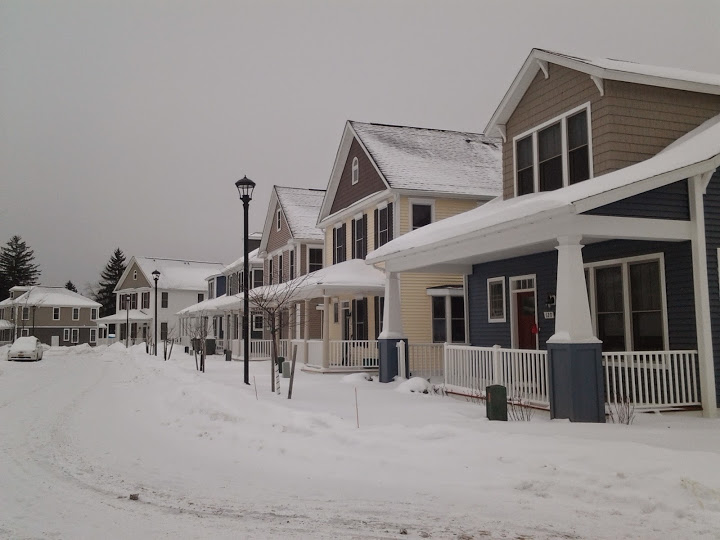
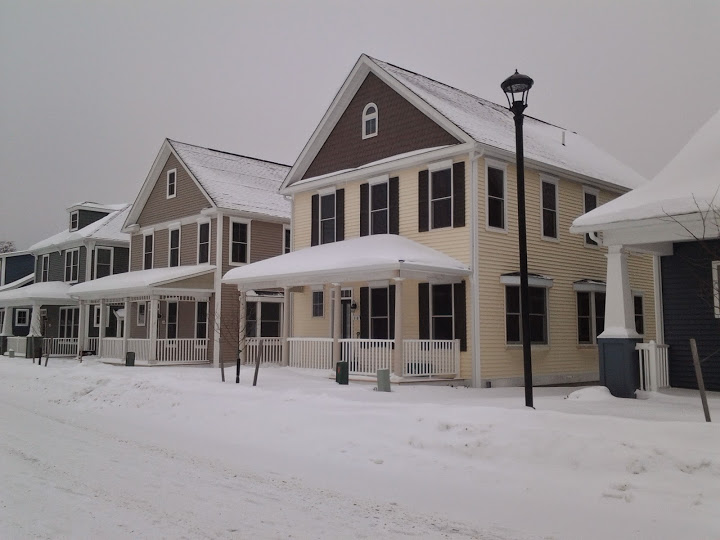
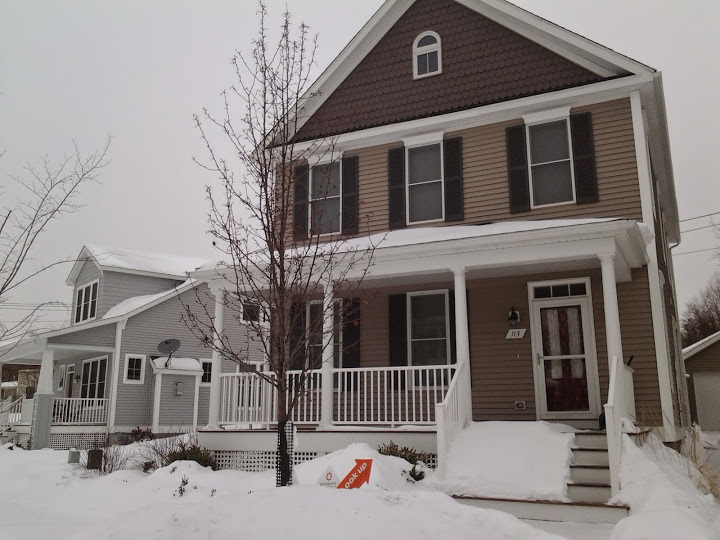
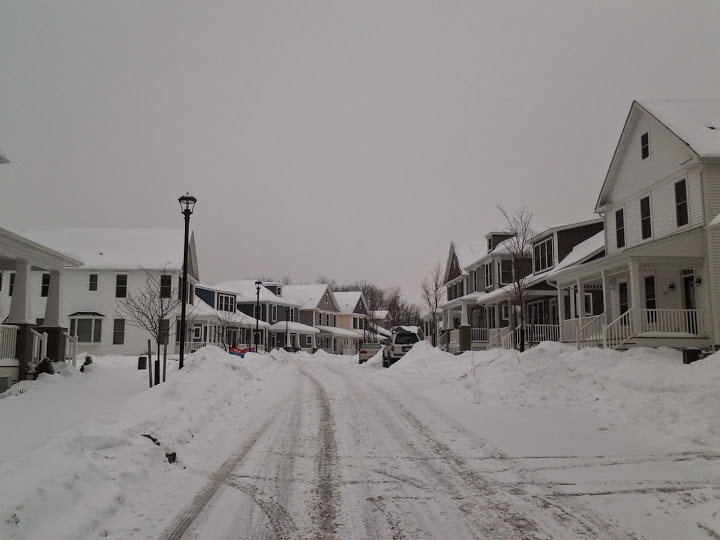
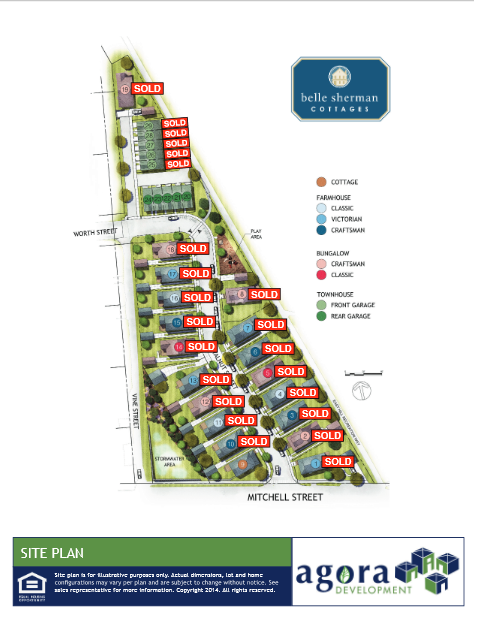
It feels a little surreal to be walking down Walnut Street (fun fact, there was originally a Walnut Street plated for Ithaca’s West Hill in the mid-1800s) and have it fulled out with homes on either side. Yet that is indeed the case. It’ll be easier at this point to count what’s not yet built in the Belle Sherman Cottages development – the townhouses (10 total, 5 due to start this Spring and 5 yet to be marketed), the new cottage design for the not-yet-marketed lot 9, and lots 11 and 12), which are sold and probably awaiting the arrival of warming weather before the foundations are excavated, poured and CMU block is laid. Heck, they might already be poured, but hidden under several inches of snow. So 16 of the 19 houses are built, with a couple of those, like lot 17, undergoing interior finishing and still in need of a little porch/column paint work before being turned over to their new owners. If you’re interested in learning more about the construction process, there’s a little more info in my previous post here, and on Ithaca Builds here.

Every couple of weeks, another sale shows up in the county property records, typically in the range of the low 300s to low 400s. Formal sale isn’t happening until a house is move-in ready (I suspect that while underway, a “sold” lot is actually reserved with a down payment), so following the county’s record of transactions is a useful indicator of progress. According to the Belle Sherman Cottages facebook page, Skaneateles-based Agora Homes and Development intends on completing the 29-unit development in 2015.

Veering into editorial territory here, I’ll admit that I was pessimistic about the project early on, thinking it was too much money for what was provided. But in retrospect, I think this is the right type of single-family housing for more suburban parcels, such as other sites in Ithaca town near the city line. Much of the zoning locally is designed to favor of large lots and large price tags. I wouldn’t call these affordable by any stretch, but they’re somewhat closer to the median value than most other single-family homes going up. Being this close to Cornell also adds a premium on their price tags; perhaps on a site in South Lansing or South Hill, they’d be somewhat less expensive. They’re a good (better?) alternative to the sprawling cul-de-sacs that seem to be the norm for housing developments in suburban Tompkins County. I think that, in the same vein of this project, though with more of a “green” sheen, the Amabel site in southwest Ithaca will be the next single-family development worth watching.

20150207_145459 20150207_145519 20150207_145651 20150207_145707 20150207_145742 20150207_145810 20150207_145843 20150207_145910 20150207_145926

belle_sherman_cottages_102714 belle_sherman_cottages_071814_2


The Neighborhood Pride Site (210 Hancock Street)

15 02 2015

inhs_pride_design_1

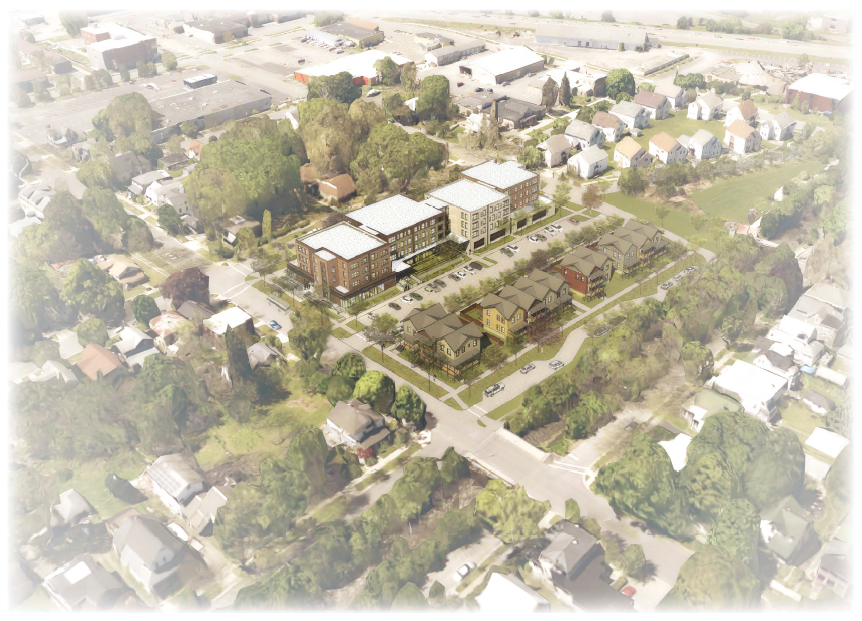
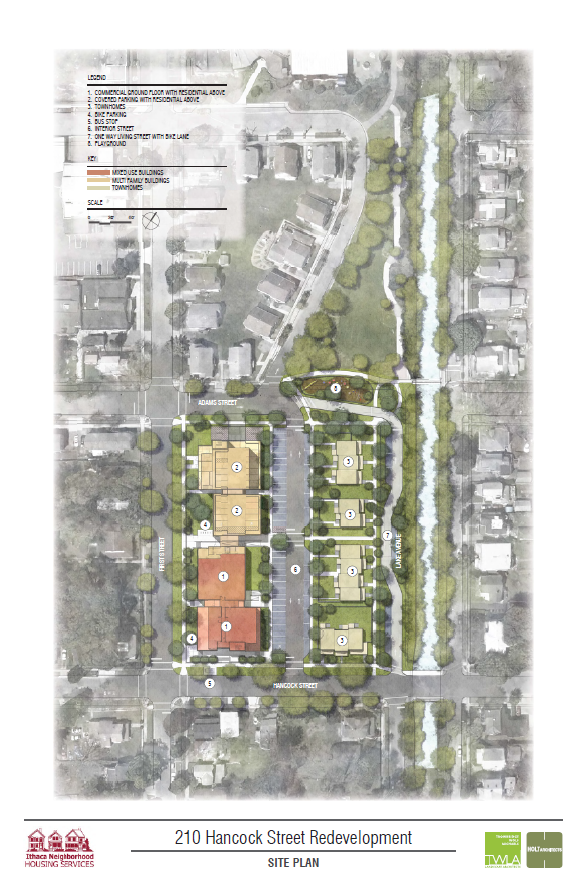
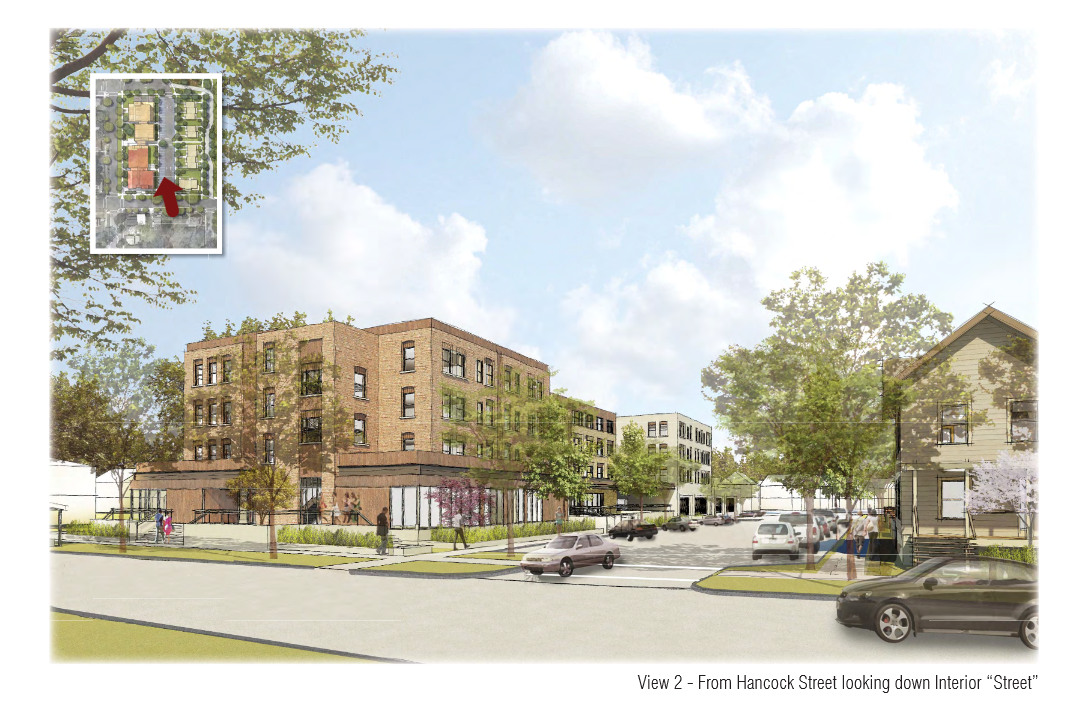
Avid readers will note that I’ve been writing about the Neighborhood Pride site on the Voice, keeping only brief notes here on Ithacating until a final design was unveiled. Now with that taken care of, here’s a description of what we’re working with, based on documents filed with the city on February 13th. There’s a brief application summary and cover letter here, or the 764-page FEAF (Full Environmental Assessment Form) here. I swear, no one reads those giant PDFs in their entirety, users only look for specific sections based on their prerogative. The rest is just there for gluteus maximus coverage.inhs_pride_design_2

Perhaps a little bit to my dismay, the project is not going to be complete until September 2020, tentatively. This isn’t a huge surprise though, INHS is a non-profit and dependent on grant disbursements. The buildout will begin in September 2016 and consist of three phases – my guess of the breakdown is the townhouses are one phase, the 2 southern apartment buildings are a second phase, and the northern two apartment buildings are the third phase, though not necessarily in that order. At some point, INHS anticipated subdividing the parcel into apartment and for-sale portions, which might be useful when applying for affordable housing grants.

The apartments call for ~50 1 and 2-bedroom units, and 13 for-sale townhouses, although it still looks like 12 in the renders (who knows, maybe one is a small duplex). So about 63 units total, and about 8,200 sq feet or rentable commercial space in three spaces (proposed at 1,800, 2,500 and 3,900 sq ft, for a total of 8,200 sq ft). The apartment buildings will be 65,000 sq ft, 4 stories and 48′ tall (zoning max 4 stories/50′). The demolition of a one-story office building (built 1975) and a vacant grocery store (built 1957) will be required. Total construction cost is anticipated to be about $13.8 million.


inhs_pride_design_3

Interestingly, what looks like the community favorite (the street scheme) doesn’t read as the county’s favorite (which reads as the alley scheme). But the county only advises, the city decides. Lake Avenue will be what they call a one-way “living street” – a low-speed, low-capacity street shared by bikers and vehicles. With those features, it’s designed in a way that you’d only drive on the road if you live in one of the townhouses. Conley Park’s southern boundary will be opened up to flow freely into the property (it was blocked off with vegetation to begin with because of its proximity to the old P&C loading dock, which made for a loud, smelly experience).

As an honest personal opinion, the design – inspired by local 1900s industrial and manufacturing buildings, according to the application – is pretty nice. It’s contextual, it’s appropriate, it fits in without being a total historical throwback. The townhouses are well-designed as well. I think INHS’s willingness to have heavy community input, and the community’s willingness to help shape the project, really came together to create a nice product.inhs_pride_design_5

A parking variance will be required from the city – the site will have about 70 parking spaces, but zoning requires 86. Will a new TCAT bus shelter and on-street parking nearby, INHS anticipates that they will be able to obtain the parking variance without too much hassle. INHS also needs to be be mindful of the flood zone, which they seem to have accounted for in the site plan. The only portion of the site especially vulnerable to a 1-in 100 year flood event has covered parking on the first floor. The townhouses, which are in the 500-year zone, will be built two feet above the ground, and the commercial space, also in the 500-year zone, will be one foot above the ground.

In sum, we have a project that removes a vacant supermarket, fits well in the urban fabric and provides affordable housing. It might take forever and a day to build, but it’s a welcome resource in the city of Ithaca.

inhs_pride_design_4


News Tidbits 2/14/15: Zoning Out

14 02 2015

cpoz_1

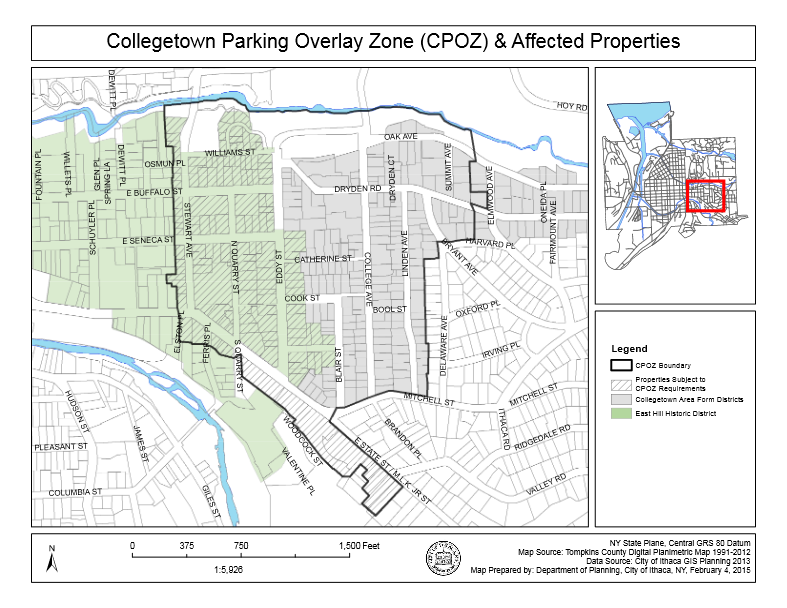
1. Leading off for the week, here’s an interesting piece of news: the city is set to repeal the Collegetown Parking Overlay Zone (CPOZ). The CPOZ was enacted in 2000 as a way to control the parking needs of Collegetown – essentially, it mandated more parking spaces per unit than was standard for a parcel’s zoning. For example, an apartment building of 6 occupants, zoned R-3a, would require 2 off-street parking spaces in Fall Creek, one for every three residents. But on East Hill, that same building would require 3 parking spaces, since the CPOZ mandates 1 off-street space for every 2 residents.

At the time, it made sense; East Hill tends to have more students, who bring their cars to school. But in the past 15 years, the proportion of students bringing cars has declined substantially – a study by Randall/West indicated that in 2000, 49% of Cornell students owned a car; by 2012, it was 27%, a change attributed to the rise of alternative transportation (car share, Cornell-subsidized bus passes), economic and cultural changes. At this point, there’s more parking than there is necessary.

It may seem at first glance that the CPOZ was eliminated with the Collegetown Form Zoning enacted last year, but the two maps don’t match up completely- there are 145 properties that weren’t affected by the new form zoning, but are still covered by the CPOZ parking requirement (see map above). Nearly all of these parcels are a part of the East Hill Historic District (the rest being Collegetown Terrace). A few recent cases, one with Collegetown Terrace and a couple of smaller projects, have highlighted the point that parking requirements have become excessive.

A change to the parking requirements could have a couple of desirable effects – one, less parking would be more historically accurate, and helps to preserve green space in the neighborhood. Two, it opens the idea of replacing a couple of the current parking lots with new housing, which would be designed to fit in closely with the current building stock since the properties are located in the East Hill Historic District (I know, landlords will never give up the money from renting spaces, but perhaps a new small apartment house might be more lucrative than a parking lot; looking at the tax maps, there are a few possible sites, including subdivisions). One mixed effect would be that it’s easier to convert a current single-family lot to student rentals, but the rental would now be less visually intrusive with fewer parking spaces. It’ll be interesting to see what comes forth as a result of this zoning repeal.

industrial_zones_1

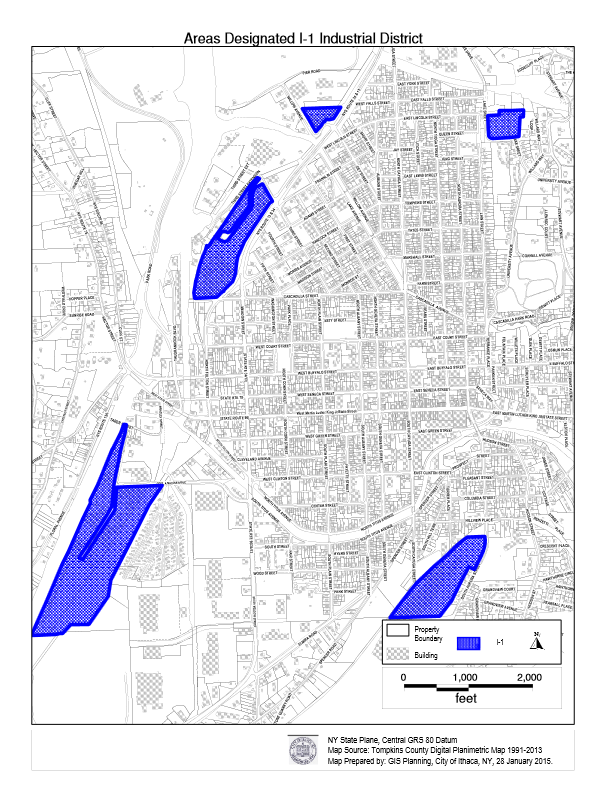
2. Among other zoning changes being considered is a change to industrial zones (the city has just a few). Commercial buildings can be built in industrial zones, but the city wants to raise the minimum number of floors for new commercial buildings in these zones to increase from 1 to 2 floors, a nod to the paucity of undeveloped land in the city (and perhaps the painful attraction of suburban big box stores). There are five sites on the map above, but it might as well be three – Emerson (lower right) is becoming a planned development zone, and the Ithaca Gun site (upper right) is expected to be rezoned from industrial to medium-density residential, in preparation for an apartment project still in the works.

canopy_hampton_rev4_1

3. What is up with the proposed hotels constantly delaying their schedules? First the Marriott pushed back its opening from Spring 2016 to Q3 (July-September) 2016. Now the Canopy Hilton is pushing their schedule back, from a construction start this Spring to an autumn start, which makes it difficult if not impossible to realize the cost savings from reusing the crane for the Carey Building. The tax abatements aren’t going to take that long to obtain, maybe another month or two before the county takes its vote.

Presumably, the project would open in autumn 2016 if the construction schedule is similar. But I feel like these delays send a message of incompetence, and that’s the last thing a project needs.

inhs_pride_design_6

4. Maybe the article I wrote about the new INHS project will have run in the Voice by the time this auto-publishes. But here’s a render that I decided to leave out of the final article to minimize space. The city uploaded the initial application Friday morning (sketch plan will be presented this month), and I’ll write a follow-up article, based on the application paperwork (so it will be different from the Voice article), and post it here on Ithacating in the next few days.

Cayuga-Meadows-Shot

5. Staying on the topic of affordable housing, these agenda notes from IURA Neighborhood Investment Committee reminded me of another affordable housing project that totally slipped off the radar- Cayuga Meadows, a 62-unit apartment building for seniors that was approved by the town of Ithaca for a site near Overlook at West Hill in late 2012. On page 52, it’s noted that the project is supposed to open in November 2015. That would imply that it should be starting construction soon if site prep hasn’t started already (I haven’t visited the site in over a year, so I have no clue). The pipeline document is dated from February 2014, so I have no idea if that’s still accurate. I emailed its developer, Conifer LLC, to see if the project was active, but received no response. Still, it’s something to keep an eye on.