Cornell Construction Photos, Spring 2013

8 04 2013

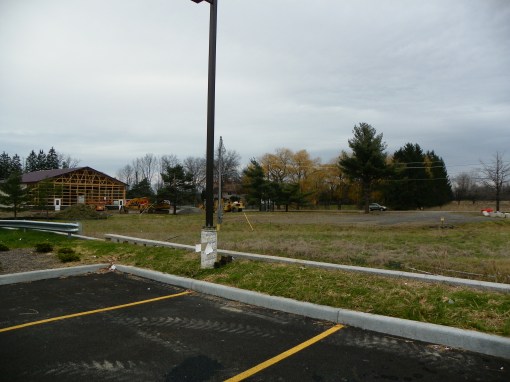
I finally had the chance to swing through Ithaca for photo updates. Casual estimate here, I spent about 4.5 hours driving around getting photos, hitting about 90% of project sites, including all in Ithaca proper. The photos will go up over the next few days, split up because wordpress freaks out when a post has a large number of images.

4-8-2013 221

4-8-2013 222

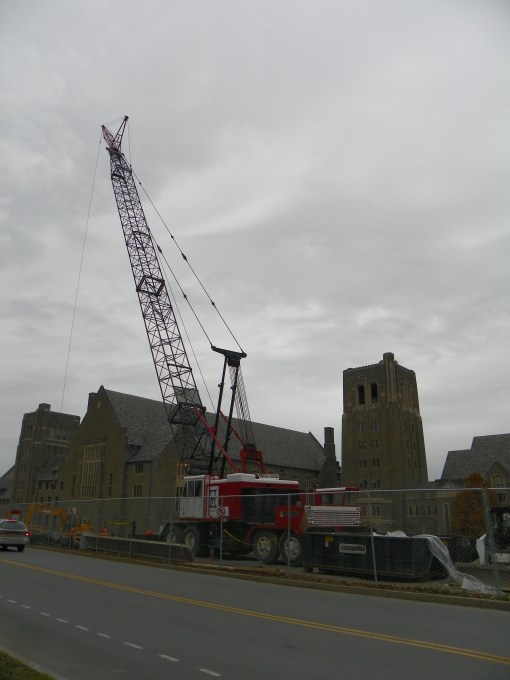
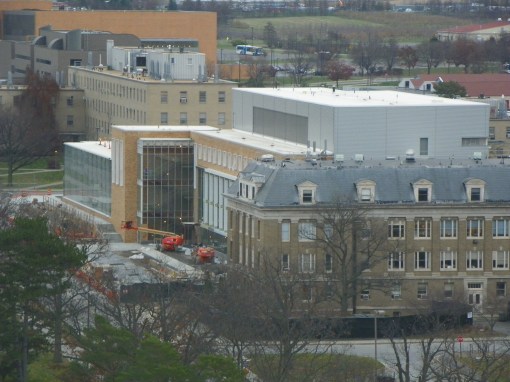
The Law School addition is well underway, though casual observers may not notice since most of the expansion is underground. The project looks close to being on-time for the December 2013 completion of Phase I.

4-8-2013 230

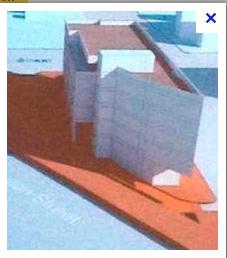
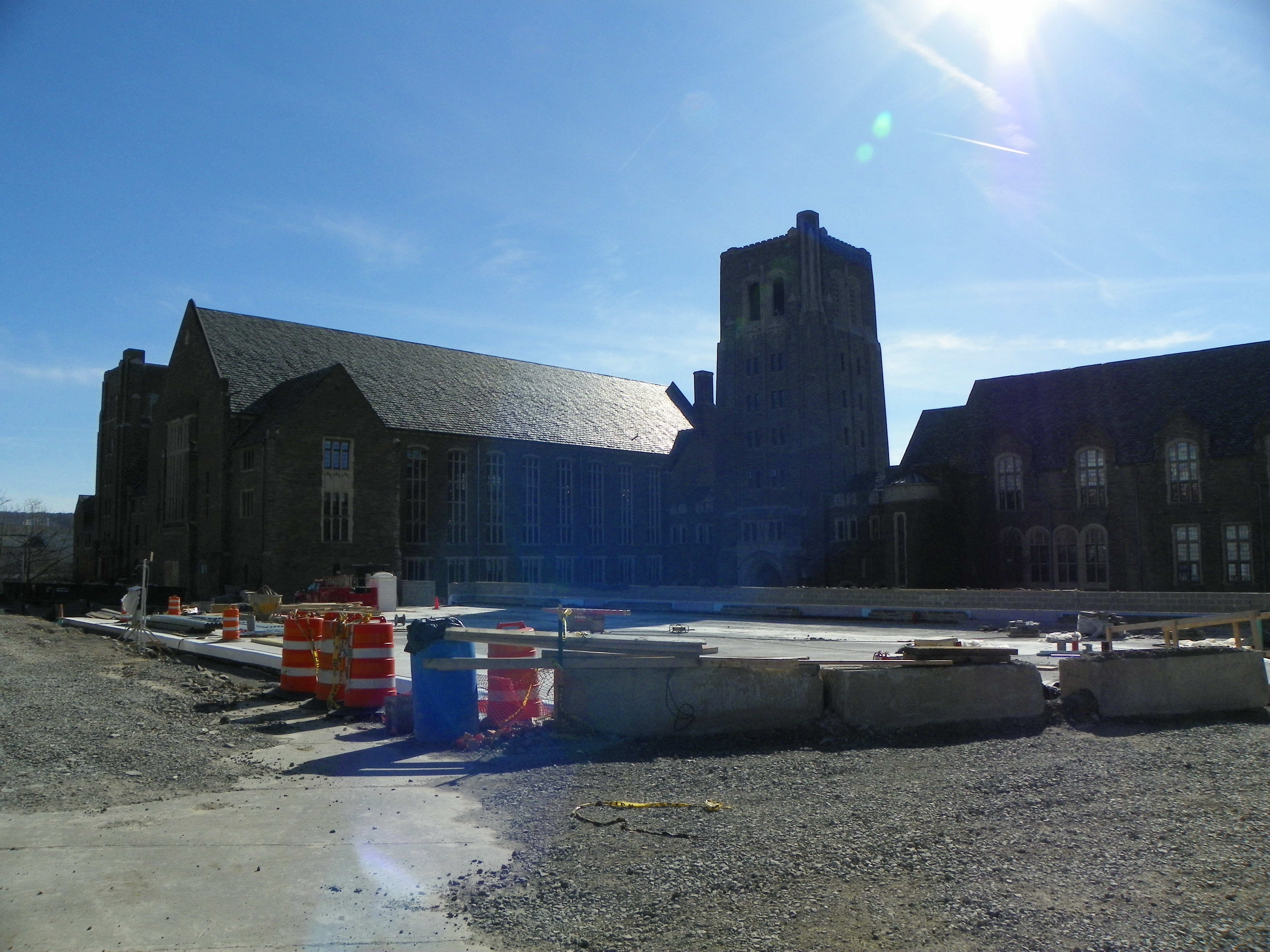
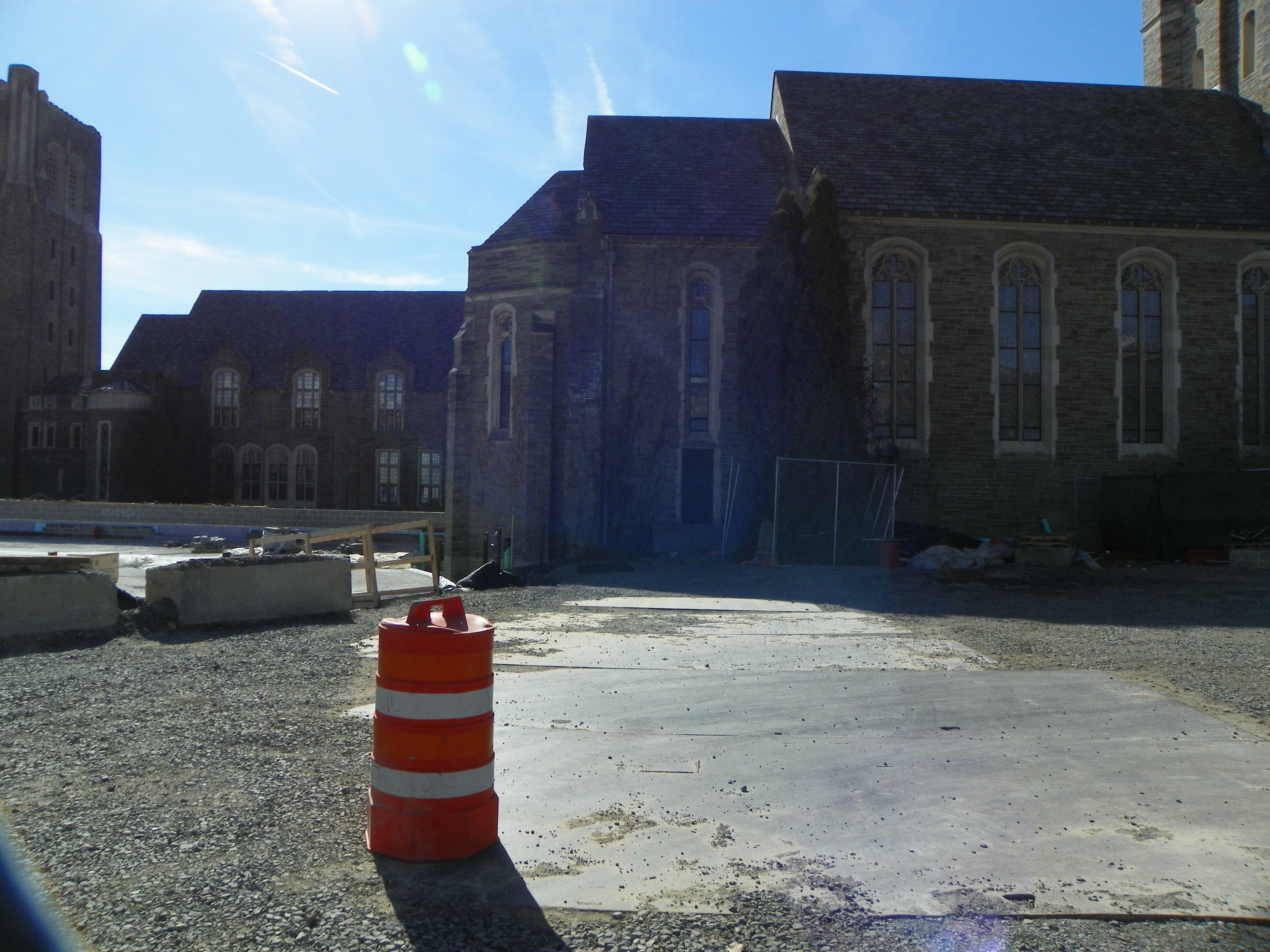
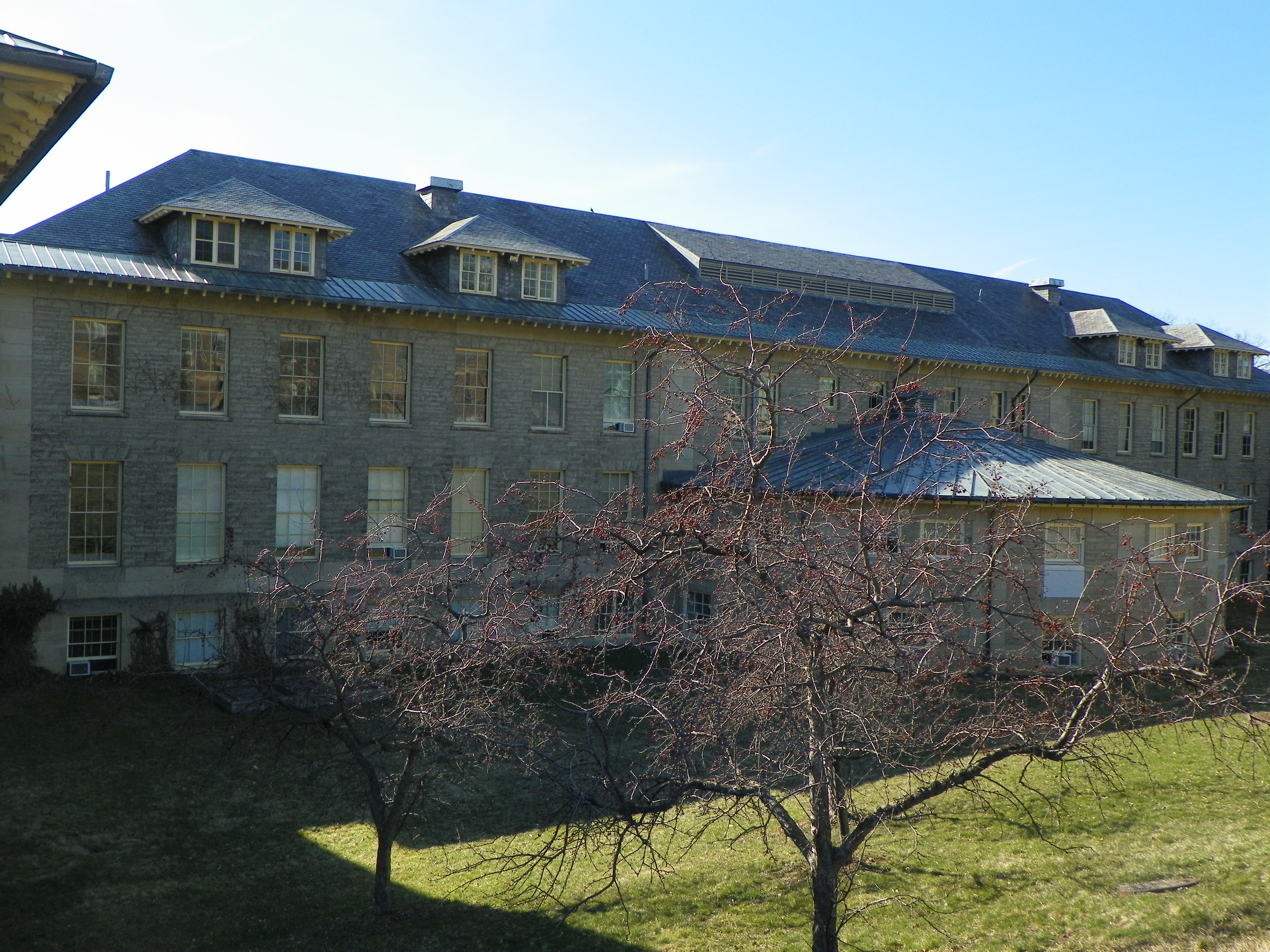
The future home of Klarman Hall. Klarman will build up the slope to an East Avenue entrance, and the small flowering trees will be no more. The rounded classroom space of Goldwin Smith will still be there, though it will be encased by the glass atrium of the new building.

4-8-2013 238 4-8-2013 237

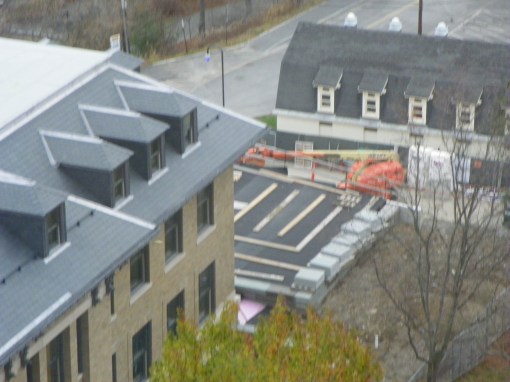
Much of the work with the Food Sciences Building has been completed, with interior work and external details underway for the addition. Phase II, the renovation of the original Stocking Hall, will begin this summer and run for about a year.

4-8-2013 236

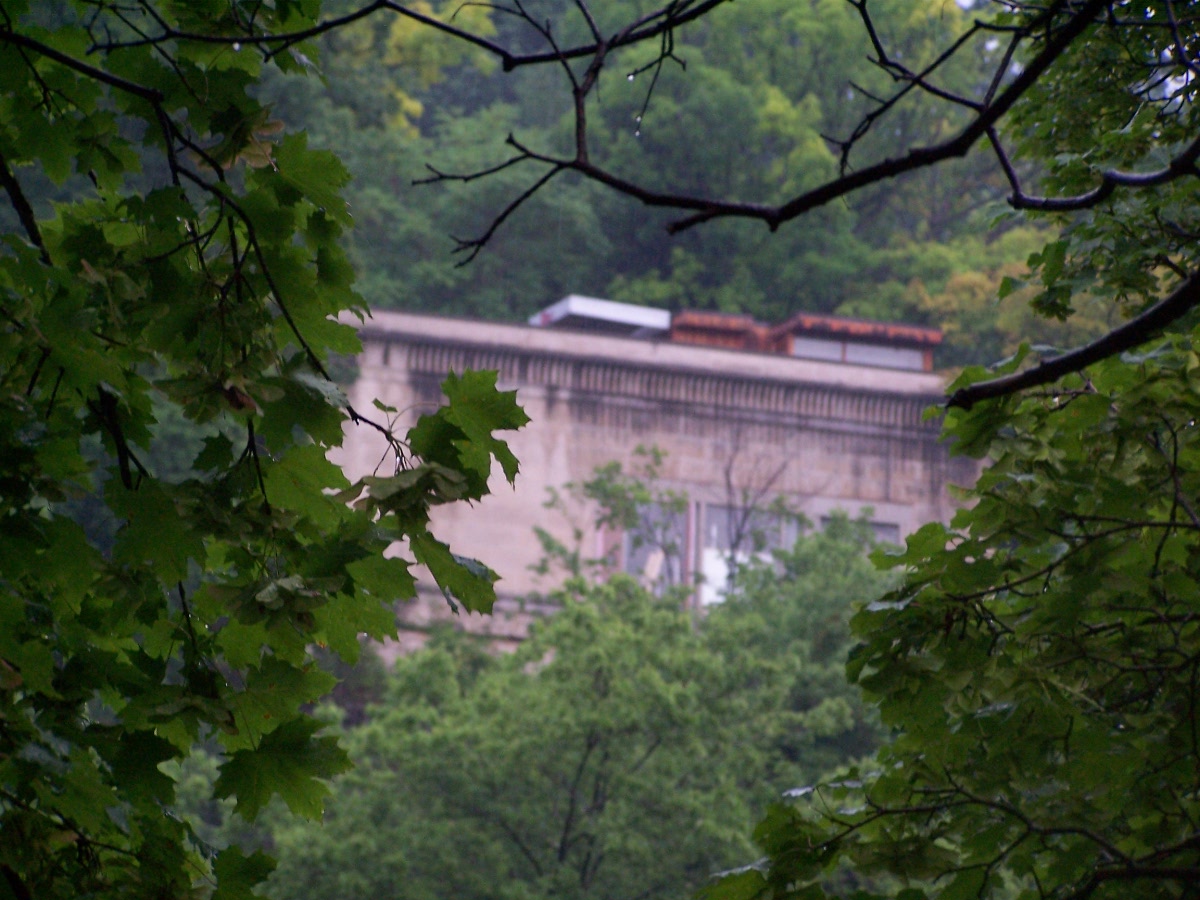
I can’t help but think this looks like a gigantic Dust-Buster. The Big Red Band’s new 4,360 sq ft building is approaching completion.

4-8-2013 233

4-8-2013 2354-8-2013 234

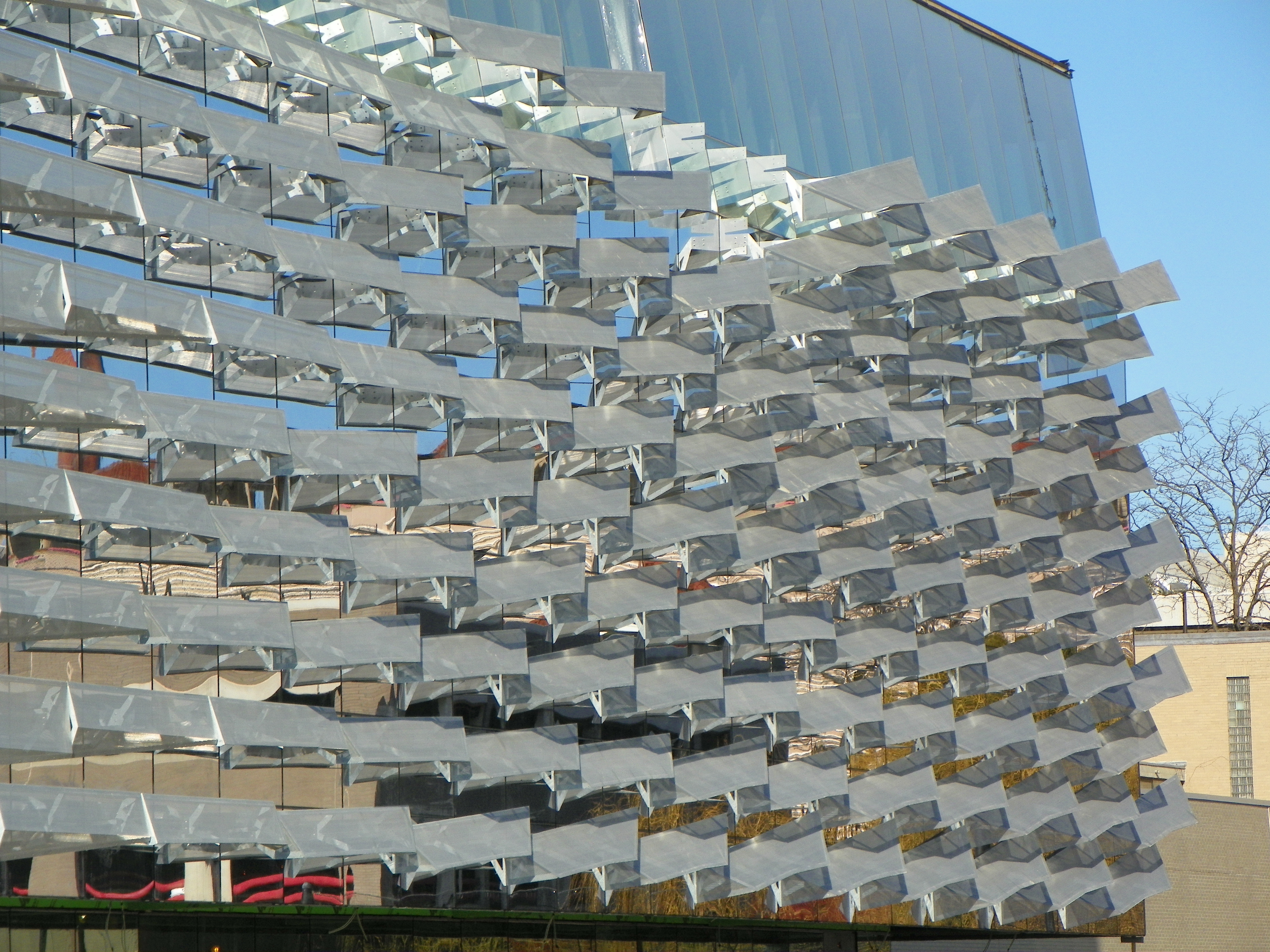
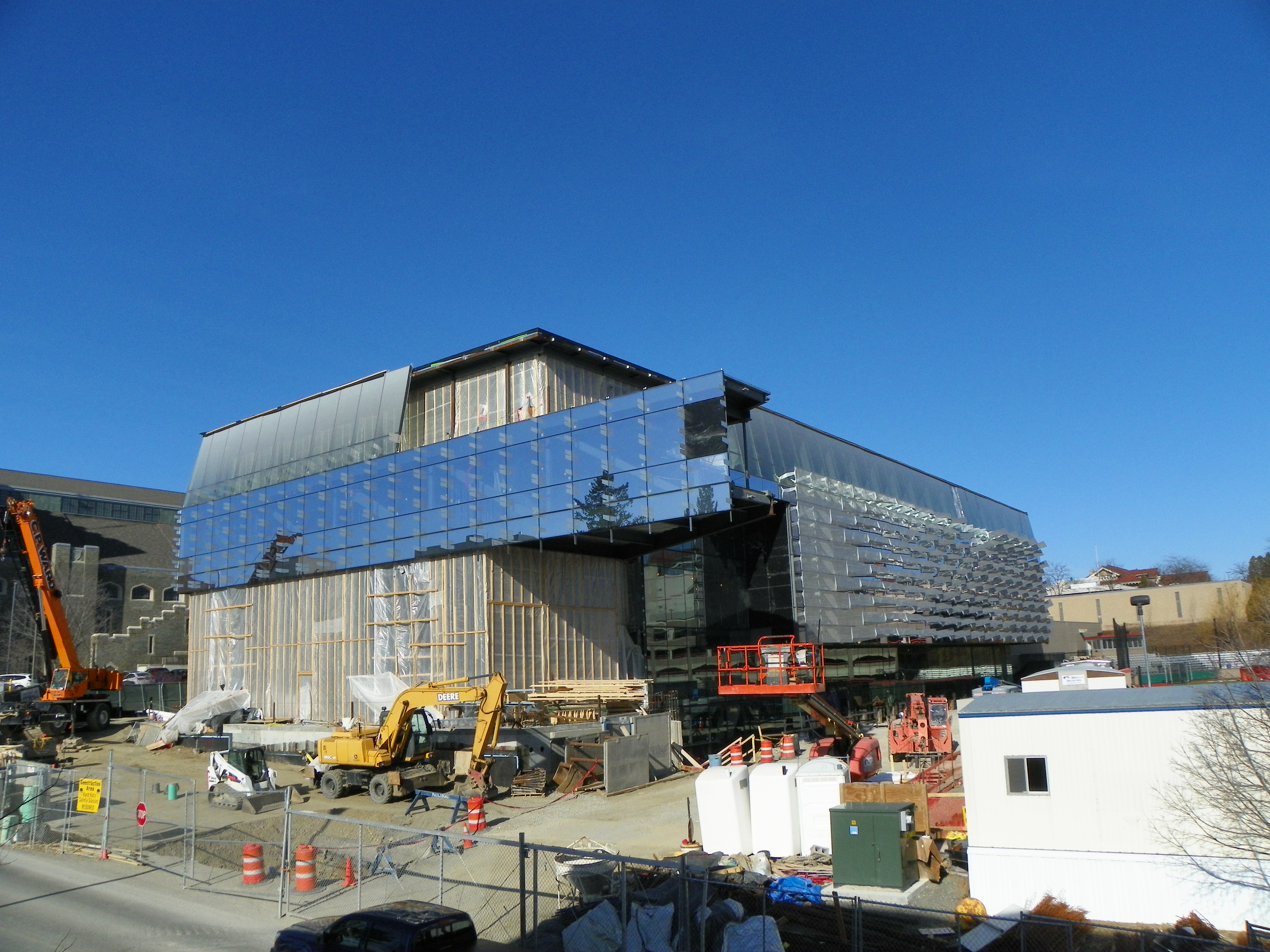
I’m not quite sure how I feel about Gates Hall. The glass is high-quality, and much appreciated. However, looking at the south wall, I hope those are protective covers – to me, it just looks overly cluttered and unnecessarily “busy”. Completion of the 101,000 sq ft building is set for this December.


Creeping in Collegetown

26 03 2013

12-29-2011 073

I have never understood, nor will ever try to understand, the fascination some have with invading the privacy of young college women in their apartments. A recent Cornell Sun article notes a case where a former Cornell student entered two apartments in the 312 College Ave. apartment building uninvited. These apartments were occupied by female students, who screamed and/or confronted the guy, causing him to flee. Apart from the obvious threat a guy like this poses, I couldn’t help but think that events like these have been going on for a while now.

My first thought was the “Collegetown Creeper”, a story that I already knew from when I was growing up north of Syracuse, because that’s how much of a media sensation it was. The creeper was tied into at least 18 cases, occurring in 2003 and 2004. Most of the earlier ones were cases of peering through windows into the apartments of young females. Then the creep factor was kicked up a notch in early 2004 when he would break in and watch them sleeping. By the end of his reign of terror, he had graduated to full-blown sexual abuse. At least one victim claimed her clothes were cut off and baby oil was poured onto her. As one might imagine, this created quite a stir, and by the fall of 2004, students were protesting outside Common Council meetings, demanding further action be taken on the issue.

The creeper was eventually arrested in late October 2004. The suspect was identified as Abraham Shorey, who at 23, a married father of six, and sporting Rastafarian-style dreads, seemed as unlikely a sexual criminal as any. Shorey was familiar with the Collegetown area and its crowds, as he worked as a cook over at The Nines. Before his arraignment on charges of burglary and sexual abuse, Shorey posted baiand fled the area. He managed to avoid arrest on two occasions  by producing fake IDs throughout his time as a fugitive. He was finally arrested a year later in San Diego, where he plead guilty to assault with intent to rape a San Diego County woman in May 2005. DNA evidence collected at the scene of the San Diego incident linked him as the perpetrator of the events in Ithaca from the previous two years. His sentence in California is seven years and four months, but the charges against him in New York were dropped for a number of reasons (time elapsed, difficulty locating witnesses, etc.)

Unfortunately, much worse has also occurred. Although technically not Collegetown, a 25-year old graduate student was raped and murdered near North Campus in May 1981, her body then dumped into the gorge. Her killer would graduate and go on to commit seven more murders in downstate NY and CT before being arrested.

Ignoring all the insensitive jokes students make about “forcible touching” here, female students at Cornell have every reason to be concerned for their safety, in the past, now, and for the foreseeable future.


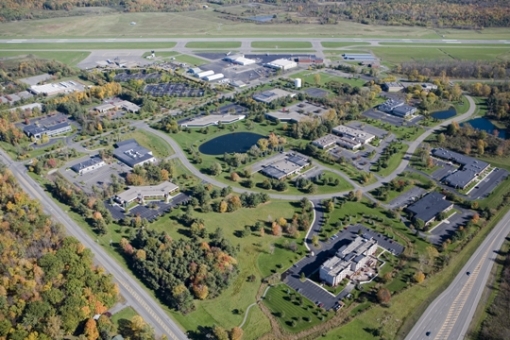
Cornell’s Office Park

1 03 2013
Image Property of Cornell Real Estate

Image Property of Cornell Real Estate

Previously, I’ve mentioned how Cornell almost had a convention center/hotel, a large hand in the airport, and a particle accelerator under the stadium. It seems almost without saying that Cornell would have a stake in an office park as well, and perhaps such a mundane asset would fly under the radar. As it has on this blog for years, not for lack of knowledge but for lack of interest.

For the uninitiated, business parks are clusters of office/commercial buildings, popular in suburban areas. In my hometown with its almighty 6,000 residents, we had one, which was so terribly stuck in the 1980s one might as well have parked a DeLorean in front of it for marketing purposes (then again, growing up in an upstate rust belt town, I can count on one hand the number of new buildings I’ve seen built there since moving away for college in 2006).

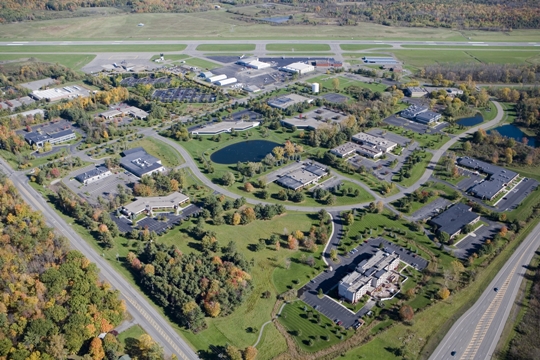
Cornell’s is just a little bit older, though most of the construction occurred in the 1980s and 1990s.  In 1951, Cornell decided to partner up with General Electric to establish a research lab near the airport. Public-private partnerships on research are nothing new. While Cornell assisted in the research, the lab was leased by GE. Unlike some of its involvements, Cornell actually owned the land and buildings for this endeavor, using old property and the lands from its airport. Cornell sold off the airport in 1956 but still owned the land to the south, donating some to the state when Route 13 was constructed in the late 1950s.

Things were a bit of a roller coaster at first. GE was the only tenant when they decided to leave in 1964, leaving the recently-completed Langmuir Lab vacant. TCAD took over development of the park while the lab building was donated to Cornell (development rights were relinquished back to Cornell in the ’80s), and CU housed some of its functions in Langmuir to keep the space occupied, with the last major university back-office leaving in 1987. The complex sort of languished through the 1970s, only taking off in the late 1980s when the trustees allowed the development of office buildings and limited commercial enterprises, rather than just research/industrial structures. It was in 1988 that its current name, the Cornell Business & Technology Park, was adopted.

Here’s an easy guide for the park – if the street name is Arrowwood or Brentwood, it’s a medical office building. If Thornwood, Brown or Warren, office or research/industrial.

The breakdown for build-out over time has been as follows:

Start-up (83 Brown Road, a former aeronautical lab renovated to start the business park in 1951, expanded ’53, ’55)

1960s: 3 structures, Langmuir Lab [1960] and 777 Warren Road [1967], 61 Brown Road [1969, addition 1997].

1970s: Diddly squat.

1980s: 6 structures: 9 Brown Road [1985],747 Warren Road [1987], 20 Thornwood Drive [1988], 33 Thornwood [1989], 579 Warren [1989], 10 Arrowwood [1989, additions 1993, 1997]

1990s: 10 structures, quite the boom:  55 Brown Road [1990], 767 Warren [1990], 757 Warren [The USPS Main Office, 1992], 53 Brown [1993], 22 Thornwood [1995], 15 Thornwood [1997], 20 Thornwood [1997], 22 Thornwood [1997, addition 1999], 10 Brentwood [1998], 30 Brown [1998]

2000s: 6 structures: Marriott Hotel [2000], 36 Thornwood [2001], 10 Brown [2001, addition 2007], 35 Thornwood [2003], 19 Brown [2006], and … It should be noted 83/85 Brown were demolished in 2005. The last building to be built was 16 Brentwood, in 2009.

So that gives about 25 structures, which total about 700,000 square feet, spread out over 200 acres. As far as I’m aware, the park has 100 acres of residential that remain undeveloped. The park has about 80 tenant companies, 1600 workers, and does in fact pay property taxes. It comes with most of the corporate amenities – outdoor picnic areas, daycare, a restaurant, over-manicured lawns and ponds, and enormous amounts of parking, bringing a little bit of everyday homogenous suburbia to the ITH. A few lots are still undeveloped, mostly parcels next to 13.

So add this to the list of developments Cornell has had its hands in. At the very least, it encourages gives Ithaca room for suburban offices….although personally I’d prefer they try downtown first.

Klarman Hall

16 02 2013
Image Property of Cornell University

Image Property of Cornell University

The Humanities Building has a name – Klarman Hall. The building is named for Seth Klarman ’79, a prominent hedge fund manager and large-scale investor in pro-Israel organizations. Considering the construction cost  is at least $61 million, Klarman probably put up at least half of that amount.

A part of me wonders if there’s any cruel humor to be had in an investment banker with strongly pro-Israel views funding a humanities building where most of the students who will walk through those doors will hold an adopted dislike of him (due to his strongly capitalist tendencies, and Israel being an easy target for disdain given the conflict with Palestine). For what it’s worth, Mr. Klarman does keep a very low profile, and is considered fairly conservative as investors go.

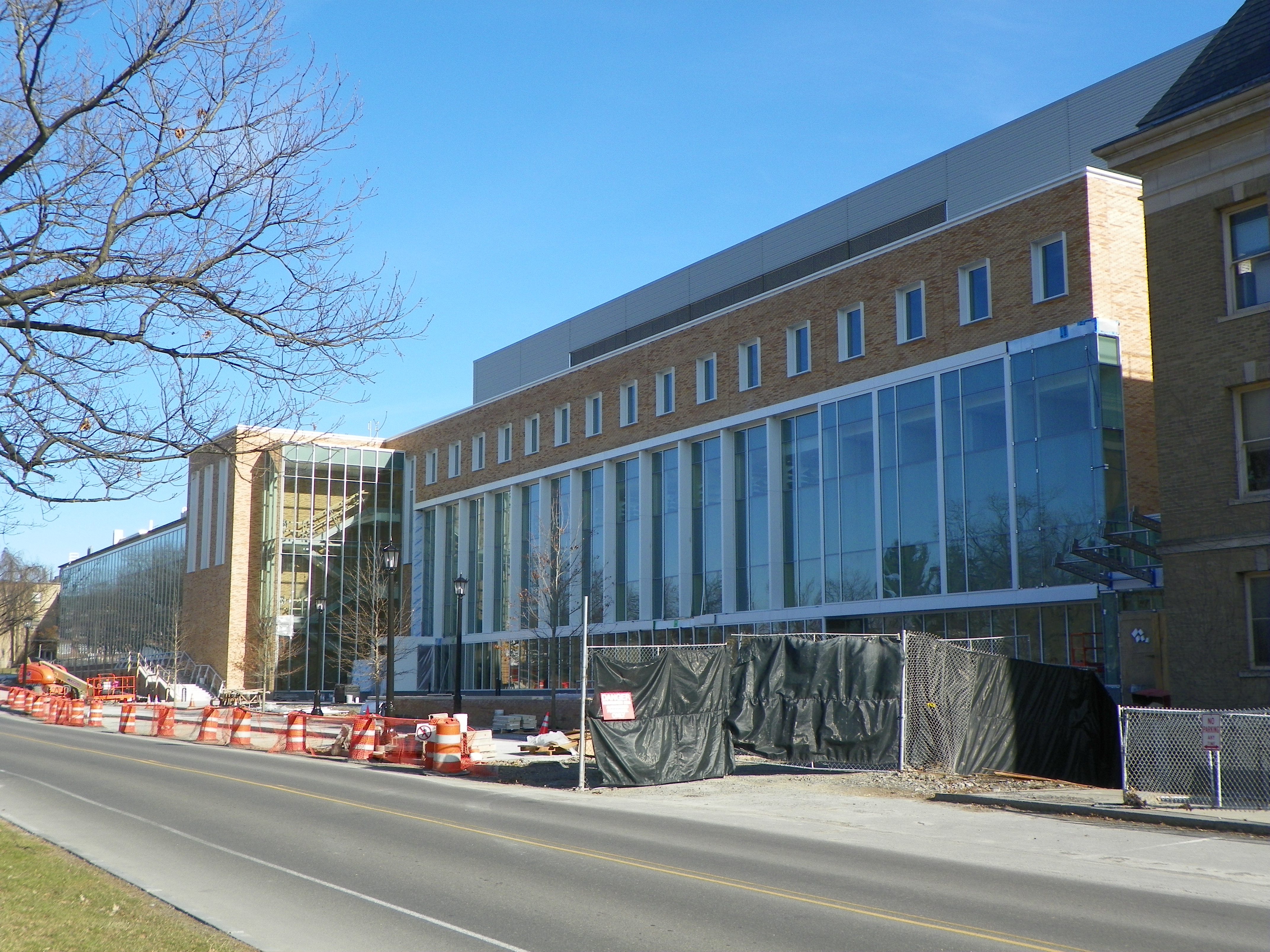
Klarman Hall, which I have previously shrugged off as a token glass box, is set for a construction launch this summer, with completion in 2015. The building is planned to be LEED Platinum with low-energy everything and living roofs, and is designed by Koetter, Kim and Associates, a Boston firm founded by Cornell alumni.

In a twist any cynic would enjoy, it was discovered a few years ago that Goldwin Smith, the professor and namesake of the hall Klarman will be contiguous with, was a virulent anti-Semite.


Cornell and Carl Sagan

26 01 2013

100_1714

When I came up for the idea of this topic, I was originally a little hesitant to write an entry. Unlike A.D. White or Dear Uncle Ezra, there are probably a number of readers who can remember when Sagan was alive and active on campus (Sagan passed away in December 1996). If the number of hits I receive for his old house at 900 Stewart Avenue are any clue (~600 hits since this blog’s inception), the late astronomer and Cornell professor remains a relatively popular figure. As someone who was just a kid when Carl Sagan passed away, it’s a little harder for me to identify, and in Sagan’s place, figures such as Bill Nye and Neil DeGrasse Tyson fill different niches not-too-distant from Sagan’s public role.

With all that in mind, I decided to take an approach similar to what I did with my “Founding Fathers” entries, and provide a smorgasbord of tidbits. I have no intention of delving into his interests of extraterrestrial life, agnosticism/humanism, or marijuana use, but the wikipedia entry would be a fine substitute for those interested in those topics.

-First off, the basic facts. Carl Sagan arrived at Cornell in 1968. We should only be so lucky that the high minds of Harvard decided to deny him tenure the previous year, because they were unhappy with his “pandering to the public”. Sagan became a full professor of the astronomy department in 1971, and remained so (the David C. Duncan Professor in the Physical Sciences) until his untimely death from pneumonia while recovering from cancer a quarter-century later.

-Carl Sagan might have been an excellent publicist for science, but few would call him a focused academic. The filming of his Cosmos  television series in Los Angeles in the late 1970s forced the university to cancel several of his courses, and several grad students under his advisory had to move into the research groups of other department faculty. His astronomy colleagues were unimpressed with this shirking of duties and attempted to have his lab kicked out of the Space Science building.

-Things were not a whole lot better upon return to campus, the blessing and curse of the success of his television series and associated NYT bestseller. While Sagan garnered much favorable publicity and considerable wealth, he was also subject to death threats from those in vehement disagreement to his views. Police regularly patrolled his home, and his name was removed from the Space Science directory and from his front door, out of safety concerns (this policy must have relaxed late in his career). Some of his colleagues remained unenthused about him, accusing Dr. Sagan of being an egotist, blurring the lines between fact and fiction, and failing to give other scientists due credit.

-While at Cornell, Sagan began a critical thinking course (ASTRO 490). This course was under his guidance until he was hospitalized in 1996, when other faculty filled in. The course was discontinued after his death, but was brought back under the tutelage of other faculty a few years later. Under Sagan’s time, the course could only be enrolled into after completing a rigorous interview process for one of the 20 available slots.

-On the note of Neil deGrasse Tyson, Sagan tried to recruit him to do his undergrad at Cornell. Unfortunately, the future Dr. Tyson chose to go to Harvard instead. Bill Nye had Sagan as a professor, so perhaps Sagan has had more of a hand in the science communication to Generation Y than we realize.

-One of the more whimsical tales of Sagan is that during the height of his popularity, he had a secret tunnel from his home to campus, where he could drive his Porsche away from prying eyes. In reality, he would walk some of the back-trails along the gorge.

-Another reason to seek anonymity – Sagan used a vanity plate inscribed with “PHOBOS”, a Martian moon. These vanity plates became a hot souvenir for anyone with a screwdriver and ten minutes, since 900 Stewart has no driveway or garage (rather, it has a deep curb). Sagan eventually caved and asked the DMV for a more anonymous plate.

-I’ve already covered Sagan’s home a couple of times previous, but a quick rehash – built in 1890 as the meeting place for the Sphinx Head secret society, who sold it their neighbor, Dr. Robert Wilson, in 1969. The building went relatively unused, and was once again, this time to Dr. Stephen Mensch, in 1979. Mensch renovated the property into a home, and actually allowed Sphinx Head to make occasional use of the property. Sagan acquired the property in the 1980s, and the house is still a part of his estate, though it is vacant. According to a 1993 DUE, Sagan likely did not live in the property towards the ends of his life.

Although vacant, it would be ill-advised to try to trespass – the property is covered with security cameras, one of which is right above the entrance-way (the not-visible corner in the below photo).

On a personal note, when I had taken the photos of the former Sagan residence, I had not known this was his home. I just thought it was a highly unusual building in an area of mostly early 20th-century homes. It was not until I typed the address into my search bar when I came home that I discovered the building’s significance.

100_1690


More Than Just Cherries On Top: The Purity Redevelopment Plan

11 01 2013

Now, a part of me was tempted to write something up about a Cornell fraternity that just was thrown off campus for “sexually humiliating” hazing…but then, I realized I’m too far out to care for the stupid crap of the current crop of students. No matter how absolutely, unfathomably asinine it is. Stay classy TEP, it’s a miracle your trashed house didn’t collapse first.
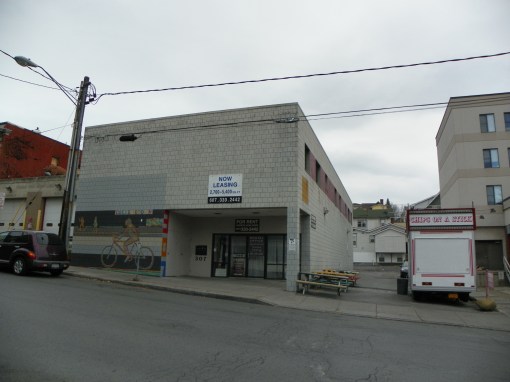
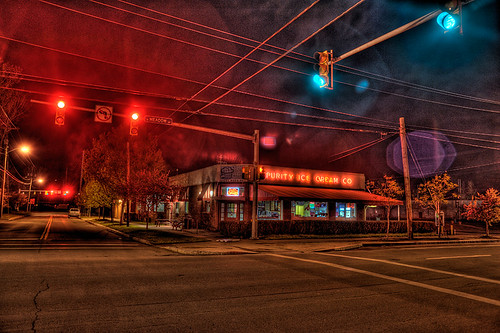
So onto something that catches my interest in a more positive way. I have to issue a slight mea culpa on this, because the news regarding the Purity Ice Cream project has been floating around for a good six weeks already. For those who have yet to experience it, Purity is a fairly well-known local ice cream company, in operation since 1936. The current building, a rather plain one-story brick structure, was completed in 1953.

Of note and of particular relevance here, Purity is in a high-traffic but fairly low density area, on the Corner of Meadow and Cascadilla Streets, west-northwest of downtown. In what I would describe as a rarity for Ithaca, I don’t believe I’ve ever taken a photo of the store. Thank Heaven for aerials and Flickr.

purity1

Purity’s parcel is outlined in red in the above image from Bing Maps. It lies on the cusp of low-to-moderate density residential district (Northside), part of a small commercial district of mostly retail and warehousing. So it lies quite a ways outside the traditional dense clusters of development.

The plans are still pretty conceptual at this point. The owners, Bruce and Heather Lane, seek to keep the original structure and build vertically; rental office and retail space on the lower floors, with 13 to 26 1 and 2-bedroom apartments on the third and higher floors. The facade, in keeping with the original structure, will be brick. The number of stories is to suggested at 4-5, but the first floor would have 16′ ceilings, so it would be fairly likely to top out around 60′, and the new building would be a visual focus point in the generally low-rise neighborhood. Although the area is less built up than some other parts of the city, the owners are seeking to tap into new urbanist concepts, touting the walkability to Greenstar and the Waterfront Trail. The goal is to get the project underway in fall 2013, and the ice cream store will remain open throughout the duration of construction. A structure like this would have a 12-to-18 month time frame.

Not all of the structure would be saved, as the manufacturing space for the Ice Cream would be eliminated; but then, Purity has contracted out the ice cream manufacture to Byrne Dairy since 2006. It seems it would be a loss of underused space at worst.
Now here’s the consequence of my inattentiveness; the rendering is missing. I can come up with some ideas, since John Snyder Arch. is in charge, and they’ve been prolific in the area as of late (their flavor of choice being geometric forms/ modern design). But even with that knowledge, and knowing it was just a sketch plan, I would have liked to have seen the render. But unfortunately, it is missing from the IJ and its sister pubs, and even the article has been deleted (at least there were cached versions; but those did not have the render). Granted, it’s not like I’d be able to post it anyway, given the whole paid subscription thing. But, as the project continues to evolve over the next couple of months, I will attempt to stay on top of this for once, and post a rendering as a soon as a free version becomes available.

Update 1/17: And in fact one has, from Google image search. Sweet. Pun intended.

purity2


That Time Ithaca Almost Had A Nuclear Power Plant

1 12 2012

100_2496


Let’s play a word association game. Think of a stereotypical resident of Ithaca. Now think of five words or behaviors that you would use to describe them.

I’m suspecting that most readers may have used “hippie”, “eco-friendly”, “green”, “environmentalist” for at least one of their five.

Back in the early 1970s, when the environmental movement was really taking off post-Rachel Carson, the state of New York, along with certain large power companies, was looking to build a few power plants, technologically-advanced nuclear facilities. A few of these plants were commissioned – Fitzgerald and Nine Mile Point, for instance.  I bring up these two facilities because I grew up in their geographic shadow. Certainly, the locals are glad for the hundreds of job provided; but there’s also the implicit acceptance that if something really major gets fouled up, you and all of your neighbors are screwed, and you’re reminded of this when the postings for iodine pill distribution are sent out. For anyone living in the span from Oswego down to Syracuse, you know they are there, you know they are dangerous, but you shrug it off and accept them for the economic benefits. Maybe not the best attitude, but that is what it is.

Well, the attitude was more cavalier in the swinging ’60s. The state was considering sites, and thought it would be great to place one near Ithaca – in Lansing, to be exact. In 1968, NYSEG announced their intention to build the “Bell Station Nuclear Power Plant” on the shores of Cayuga Lake, in the northwest corner of Lansing, about twenty minutes’ drive north of Cornell. The facility would have been just to the north of the Milliken Station coal plant. The Tompkins County Board of Supervisors approved the project.

Well, the public reaction was not as effusive. A grassroots group, “Trumansburg United to Save Cayuga Lake”, was formed, with the express purpose of derailing the project (it was claimed that thermal pollution from the plant would destroy the ecological habitat of the lake). Dozens of professors and environmental scientists at Cornell and IC spoke out against the project. The sour public opinion caused the proposal/approval to drag on for years (yet, the negativity was not as widespread as the local editorials made it seem). The Trumansburg folks probably would not have stopped the Ward Center Nuclear Reactor at Cornell, which was smaller and built several years earlier, because initially the concern was the lakeside location, not nuclear power. But by 1973, as the dangers of nuclear activity moved into the scrutiny of the public eye, the negative attention turned towards plants themselves.

On June 15, 1973, NYSEG decided to give up on the Lansing location, the public sentiment against the project being a major factor in their decision. As a result, they pursued a location in the town of Somerset, in Niagara County. In the early stages of construction, it was discovered that a fault line lay 40 miles away, which would have made retrofitting necessary, and the nuclear plant infeasible. So the facility was changed to a coal power plant, and this opened as the Kintigh Generating Station in 1984.

As for the land the plant was to be built on in Lansing, the state leased some of it out to neighboring farms, and the other half remained undeveloped woodlands. Recently, the town has been considering taking over management of the site, with a proposal being considered that would turn its 490 acres into a lakeside wildlife and recreational area.


Thanksgiving Construction Update, Part I

30 11 2012

It has occurred to me that when I hop between construction sites, I could possibly be construed as the worst driver on the planet, because I look to get as close as possible, parking or drive-by, without a whole lot of attention to anything around me. So it hardly seems appropriate that my first police ticket ever was last night, driving home through a town I’ve never been in before in my life, where the detour sign for the bridge I needed to cross was knocked askew, and I tried to make my way back to the state highway. According to the police officer, I went through a stop sign, and upon driving back to take photos this morning, I still have no idea which intersection he’s referring to on the ticket (it only gives one street). This will be a weird day in traffic court.

Bad luck, or karma. I suppose it’s one of the two.

Anyway, the below photos were taken the day after Thanksgiving, driving back down 81 heading downstate. Since Ithaca’s only a 25 mile detour each way, carpe diem.

11-24-2012 138

Checking out Lansing first (as it’s closest to where I get off from 81 southbound), I didn’t notice much in the way of large-scale construction as expected for the new senior homes next to the BJ’s. Although, a utility building did appear to be under construction, seen here on the left side of the image. Update 1/10/13: Only now do I find out this is a new fire station under construction.

11-24-2012 140

Not too far away, the woody lot behind the Triphammer Mall is slated to be home to a 3/4 story apartment building.

11-24-2012 143

Over at Cornell, the mostly-subterranean addition to the Law School is well underway. This is but the first phase, with a completion likely in late 2013/early 2014.

11-24-2012 145

11-24-2012 144

11-24-2012 154

The steel frame of Gates Hall is mostly complete, wish some interior framing underway. The new computer science building, with 101,000 sq ft, will be completed late next year.

11-24-2012 147

The green roof is being laid for the new classroom attached to Fernow Hall. Renovations on Fernow and Rice continue through 2015.

11-24-2012 148

11-24-2012 151

The new Stocking Hall/food science addition once again wins the award for “hardest tarp to see through”, a thick black burlap secured fastened to the construction fence. This is why photo number two had to be taken by sliding the camera lens underneath the metal mesh. The new building will be completed roughly next summer, with renovations of the older parts of the Stocking Hall complex to continue into 2014.

11-24-2012 152

11-24-2012 153

The new building for the Big Red Band appears to be undergoing foundation work, and working were on site when I visited. Being a small, 4,700 sq ft structure, the completion date just a few months away seems fairly appropriate.

11-24-2012 155

11-24-2012 156

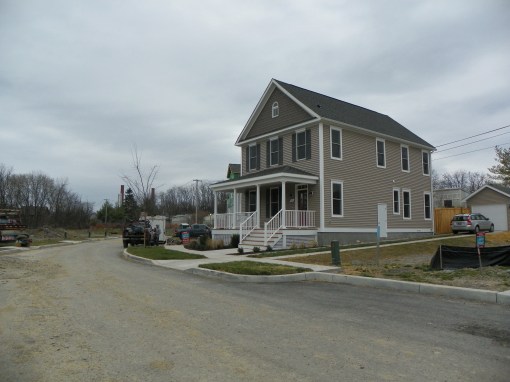
Heading into Collegetown, the Belle Sherman Cottages project has advanced a little further, with a second home complete and a third well under construction (workers were pouring the base for the garage as I walked by). I checked the other lots for “sold” signs, and although some of the land appeared to be disturbed enough for additional foundation work, I did not notice any more sold lots, so this home may be the last built in the near-term.

11-24-2012 159

The new townhomes at 107 Cook Street are undergoing the last of their exterior work, and will probably be complete by the end of the winter. The two townhomes offer 12 bedrooms total, one less than the destroyed apartment home they replaced.

11-24-2012 157

This seems like bad planning.

11-24-2012 161

The concrete bunker of a building still stands solemnly, awaiting news on whether the new Collegetown Crossing building will be on site.

11-24-2012 172

Ithaca Gun. Still empty since construction/remediation stopped in August due to cost overruns, and seemingly as polluted as ever. At this point, you’ll have to tear out a section of the Earth’s crust to get rid of all the pollution.


An Updated Exercise In Mapping, Part II

25 11 2012

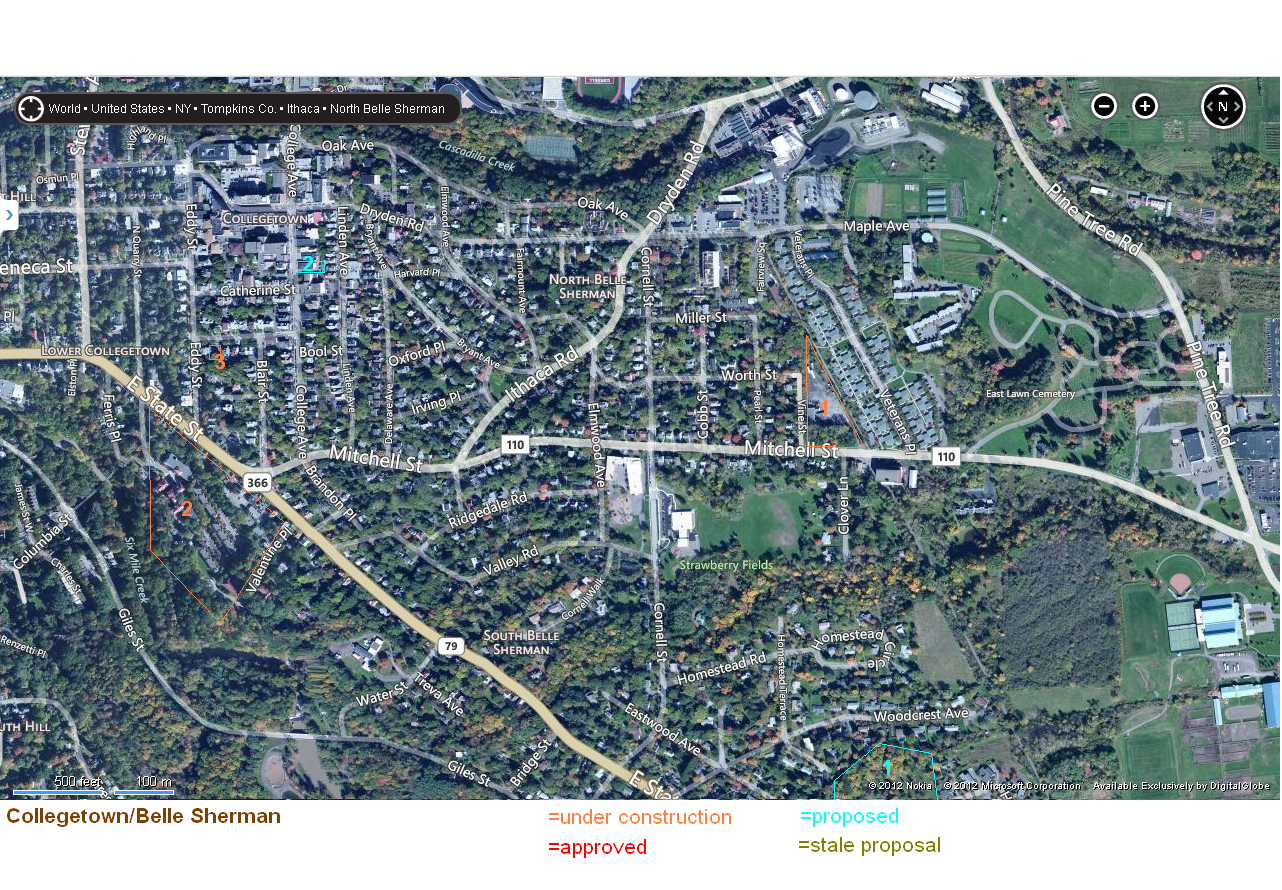
UNDER CONSTRUCTION

1. The Big Red Marching Band – A 4,400 sq ft practice facility for the marching band is well underway, with completion set for mid-winter 2013.

2. Stocking Hall Renovation/Addition – Structural work is roughly complete on the 136,000 sq ft, 4-story addition, with renovation of the neighboring old Stocking Hall underway. The new portion will be mostly complete by next summer, with rehab work in the 1921 building due for completion the following year.

3. The Law School Addition – Phase I is underway, with a completion expected in winter 2013/2014. The project adds 16,500 sq ft (mostly underground) to the Law School complex.

4. Fernow/Rice Halls Renovation/Addition – Renovations, and the small partially underground addition with a green roof, are underway. Fernow will completion renovation next year, and Rice Hall in 2015.

5. Gates Hall – Probably the most obvious project on campus, the new William Gates computer science building has topped out, with interior and exterior framing underway. Completion of the 101,000 sq ft building should occur in late 2013.

APPROVED

1. The New Humanities Building – The 66,500 sq ft addition/boring glass box next to Goldwin Smith will go out for bidding in mid-2013, with construction likely to begin around winter 2013/2014, and a 2015 completion.

2. The CU ERL Project – Approved, but contingent on funding approvals from the feds. I believe this one isn’t expected to start until 2013, with a five-year time frame for completion (i.e. don’t hold your breath for this one’s ground-breaking). The synchrotron will be expanded, as will the Wilson Lab, for a gain of about 185,000 sq ft.

PROPOSED

1. Not Cornell, but pertinent – a four story, 36 unit (88 bed) project for the corner of Thurston Ave. and Highland Ave.

STALE PROPOSALS

1. The proposal to renovate and complete a $15 million addition to Helen Newman Hall on North Campus has stalled out for the short term, probably because lab space and academic space outcompetes leisure/activity space. It’s a university, after all.

2. Ithaca Gun, with about 45 units proposed. Remediation after remediation after remediation, and I think most people still believe the land is toxic. Construction is on hold until the land is considered clean enough for reuse.

UNDER CONSTRUCTION

1. The Belle Sherman Cottages – 19 homes and 10 townhouse units, built as the market demands. In the past several months, two homes have been completed, and a third is well underway.

2. Collegetown Terrace – The massive project that ate half of State Street. Phase II is currently underway, with a completion set for next year. When all three phases are complete in 2014, the complex will have added over 650 beds to the Collegetown market (~1,250 gross), in 12 buildings ranging from 3-6 floors.

3. 107 Cook – The rebuild for the deadly fire that destroyed the previous 107 Cook in April 2011. 12 bedrooms, near completion.

PROPOSED

1. 67 townhomes proposed in an area just off 79. The housing will be geared towards Cornell employees. Not off the ground yet, but I would expect approvals sometime in 2013.

2. Collegetown Crossing – A six story, 103-bed project (with ten more beds in a house on Linden that will be renovated as part of the project). The ground floor will house a pedestrian walk, a bus stop and commercial space, including a branch of Greenstar Co-Op. The project has gained some notoriety for seeking a huge parking variance, which has aroused the ire of some of its neighbors; a highly-criticized parking study had been conducted.  It does appear the project is close to approval, and if that happens, I’d expect construction to start around late Spring 2013, with an 18 month time frame.


A Fond Farewell to Dear Uncle Ezra

13 11 2012

It’s bittersweet. After 26 years of operation and over 20,000 responses, Dear Uncle Ezra, the “Dear Abby” of the Big Red, has gone on indefinite sabbatical. DUE was useful to this blog for its grab-bag of historical info, cited in these entries many times over the past few years. When first launched in the fall of 1986, DUE could be accessed from one of the two dozen computer sites, or few personal computers on campus.  Now in 2012, and thinking of blogs like this one and of internet culture, I suppose answers to many writers’ questions are just easier to find through google these days. But sometimes, it’s nice to just have someone hear you out, an impartial ear.

I wrote to Dear Uncle Ezra as a freshman. I don’t think the question will surprise most of the readers here.  A quick back-story on this, but my first few months at Cornell were a very trying time for me, since it was my first real experience away from home. And I guess that experience carries over somewhat to my current situation, as I moved to a new region for the first job in my post-grad school meteorology career. Having to build a new social network. Learning the ropes of my job. Not the easiest things in the world, when it seems tempting to settle into something else “easier” or closer to “home”.

From September 5, 2006:

Dear Uncle Ezra,
For years,
I’ve wanted to be a meteorologist, and I came to Cornell to study for that career. However, over the past year or so, I have had an equal if not greater interest in studying to be a history teacher at another university (it has a more focused program than Cornell’s, though I mean nothing against the school). I know that if I transfer, a lot of people will be dissappointed that I’m throwing away an “Ivy League education”. I feel confused and somewhat frustrated at being unable to make a decision, and I have to make it within the school year*. Could you weigh-in on the issue?

Dear Career-confused,

Glad to hear that you haven’t waited til the last minute and have the year to think this one through.  Choosing a career can be a very difficult process, but remember that it is a process and not just one single decision.

Fifty years ago, people in the United States got into the mind set that you chose a career (or even a company) and stayed there until retirement.  This is no longer true, as there is a lot of flexibility to combine interests into a “perfect” job, or to change positions or careers along the way as your expertise and needs change.  I myself, Ezra Cornell, was a carpenter, potter, farmer, public works engineer, communications entrepreneur, and then founder of this university.  But back to you.

In order for your direction to be the right one for you, you will need to continue engaging in the process of exploring your options.  One way to do that is to do research on what the two careers will be like.  Interview people in those positions to learn more about them.  Make an appointment with Cornell Career Services, 103 Barnes Hall, 5-5221.  They provide a wide range of services to help students reach decisions on majors and careers.  They could also help you find an internship or lead you through their career- information library, which might lead to greater clarity.

It might also help to talk to those people who think it would be a mistake to change schools: hear their thoughts and let them know your needs, goals and dreams.

Remember that it is your life and you must make the decision that is right for you after you weigh all of the information that you gather.

If you need a great sounding board along the way, feel free to contact EARS for free, confidential  and immediate counseling by phone or walk-in, 5-EARS or 211 Willard Straight Hall.

***

So I stayed the path in my career, doing my BS, my MS, and now at my first job (with what may be job number two coming up at a research facility a five hour flight away). My life is in flux, and it’s intimidating. Sometimes its good to have someone to sound off to. And for me personally, that’s what Dear Uncle Ezra was.