The Chain Works District DGEIS, Part One: Introduction

20 04 2016

chain_works_rev3_3

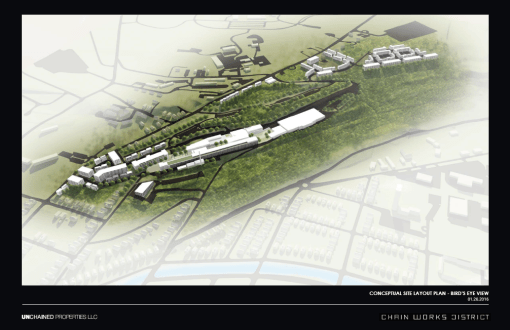
Chain Works is, without a doubt, the single largest project currently being considered in the Ithaca area. It’s a very large project in terms of square footage, in terms of cost, in terms of length of build-out. Being such a large and important, it needs to be examined carefully – it could help propel Ithaca’s economy and ambitions to a higher quality of life, or it could serve as 95 acres of dead weight.

Between March 29th and May 10th, the city is receiving public comments on the Draft Generic Environmental Impact Statement, the DGEIS. The city’s website appears to be outdated, but the Chain Works District website is up to date – any comments readers might have, any questions or concerns, are submitted to the City of Ithaca Planning Board as lead agency for environmental review. UnChained Properties LLC, the developer, offers a blank form here, or if one prefers, comments can be sent directly to Ithaca senior planner Lisa Nicholas at lnicholas@cityofithaca.org.

What a DGEIS does is evaluate the potential impacts of growth on local resources and facilities, such as traffic, water supply systems, utilities infrastructure, social and aesthetic impacts. The DGEIS, which will need to be finalized, is part of New York State’s Enviromental Quality Review (SEQR, pronounced “seeker”) and a necessary precursor to any planned/contemplated construction and development of the site.

So, the DGEIS main body is 422 pages, with about 3 GB’s worth of appendices. Although 45 days is allotted for public comment, not a whole lot of people want to read through 422 pages, but the table of contents allows people to jump around if there’s one or two thing they’re more keen to read about. A link to the DGEIS is offered by project partner Fagan Engineers here, but you might need to submit an email and name before being able to see it.

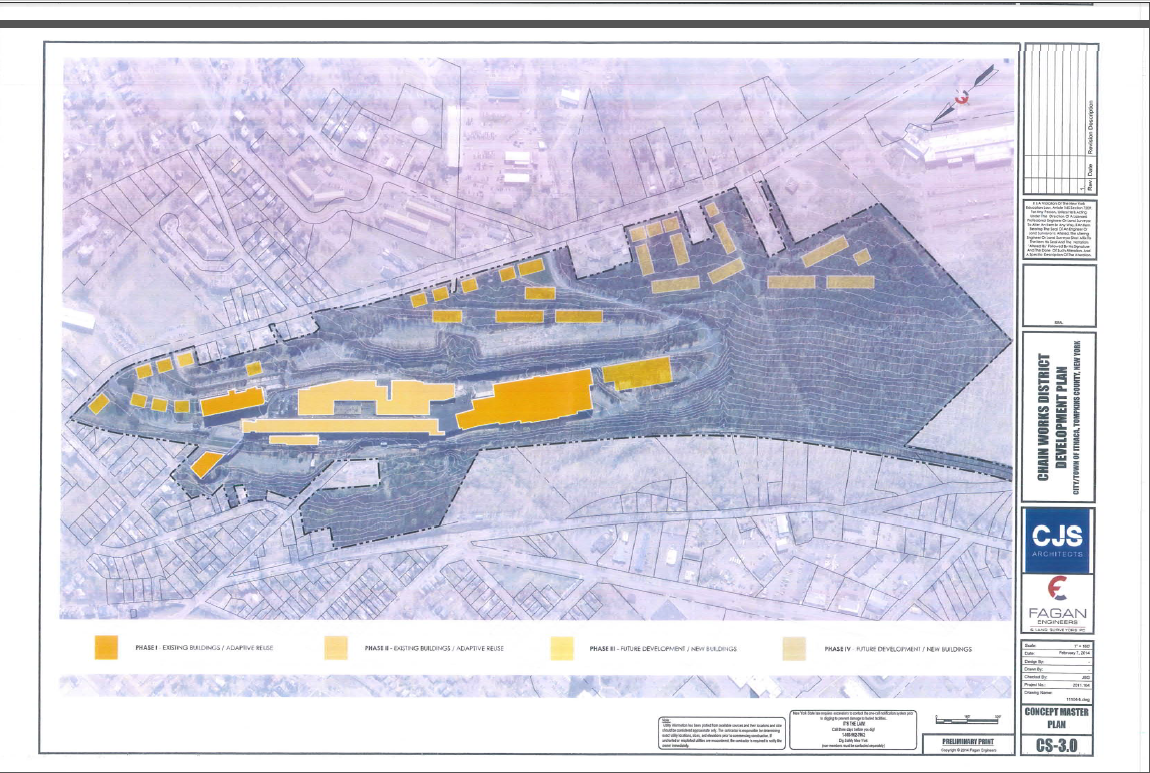
chain-works-map

So, basic details, per the “Description of Action”:

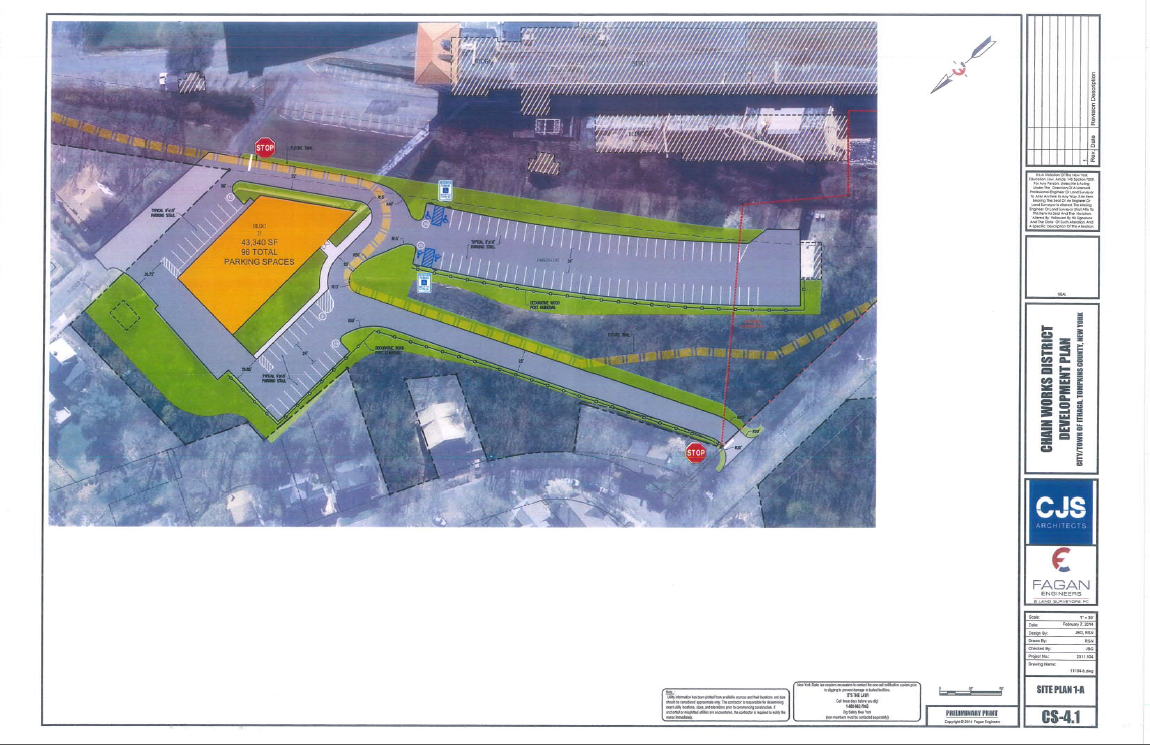
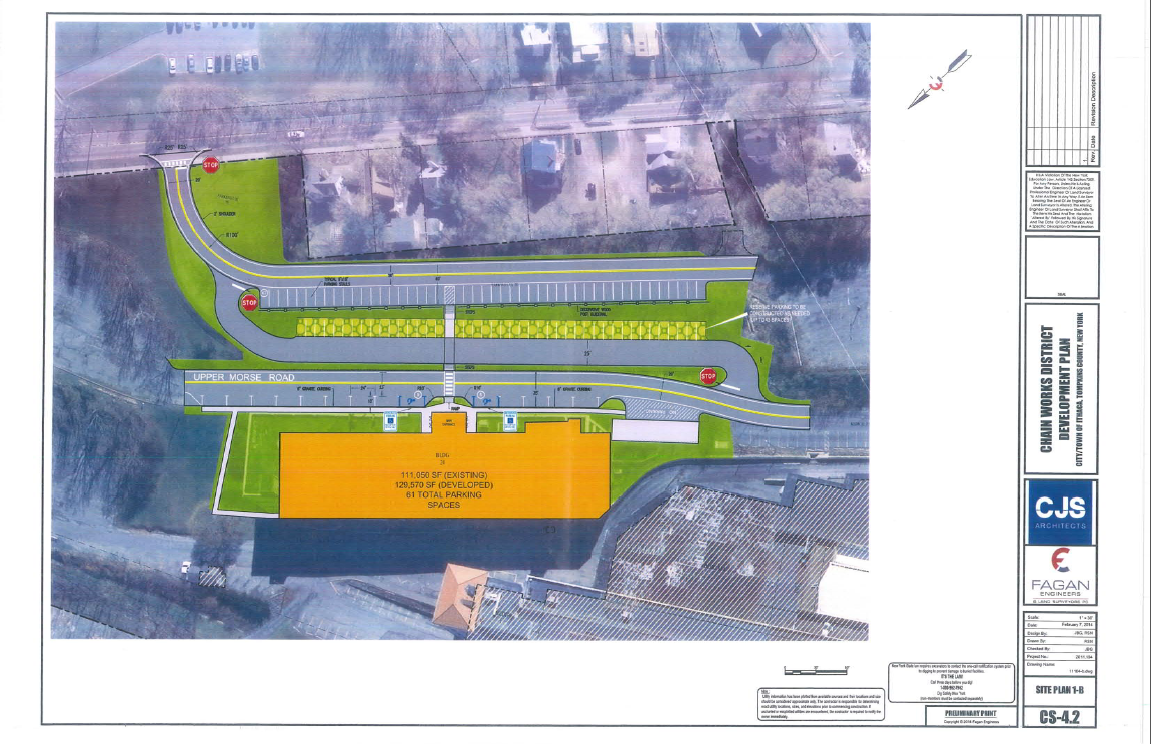
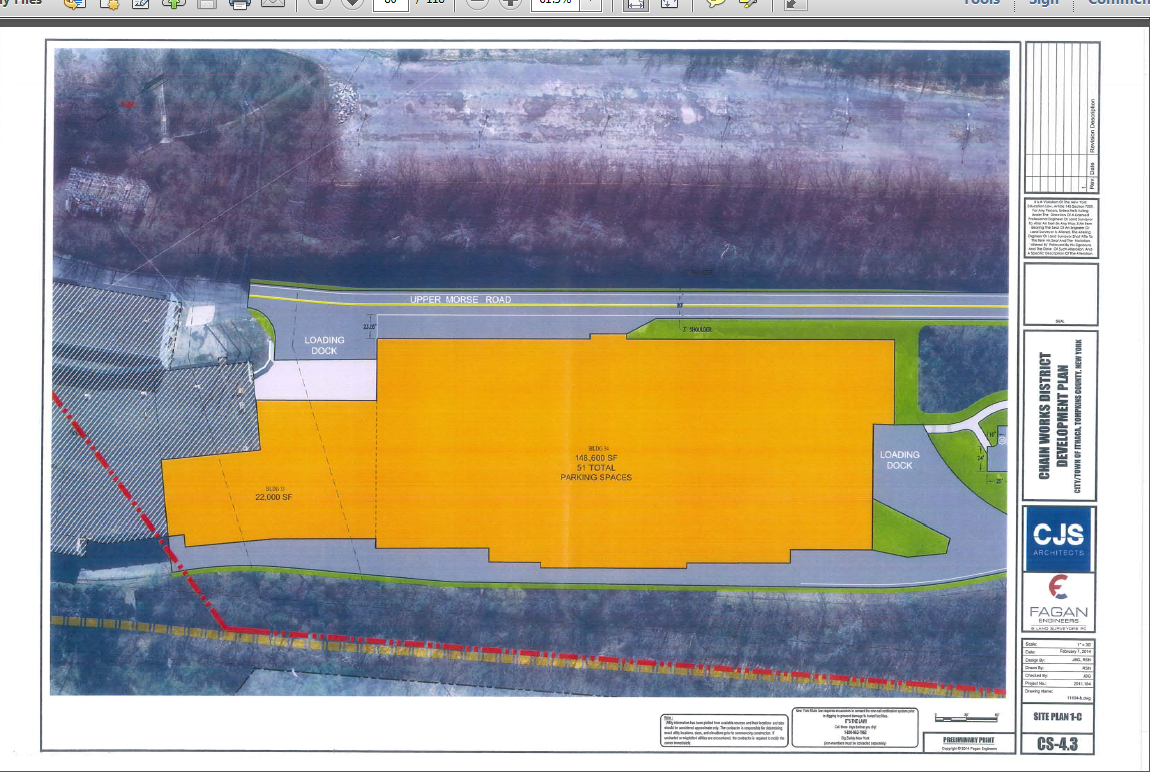
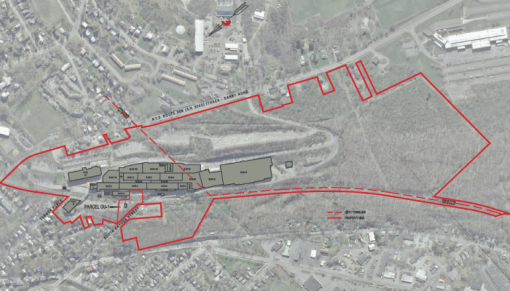
Chain Works District Project is a proposed mixed-use development consisting of residential, office, commercial, retail, restaurant/café, warehousing/distribution, manufacturing, and open space within the existing 95-acre Site which traverses the City and Town of Ithaca’s municipal boundary . Completion of the Project is estimated to be over a seven-to-ten year period. The first phase, referred to henceforth as Phase I, will consist of redeveloping four buildings generally located at the northernmost and southernmost ends of the complex of existing buildings. These first four buildings are approximately 331,450 square-feet (SF), and will house office, a mix of office and residential, and industrial uses. Subsequent phases of development will be determined as the Project proceeds and will include new structures to complete a full build-out of 1,706,150 SF.

So, just based off that, anything that gets developed, is as the market and NYS Dept. of Environmental Conservation (DEC) allows. If the market isn’t amenable or the cleanup plan isn’t approved, don’t expect the plans to move forward all that fast, if at all. If the market is good and the DEC signs off on plans, expect the build-out to be on the shorter end of the 7-to-10 year time-scale.
chainworks-before-771x441

chainworks-after-771x441

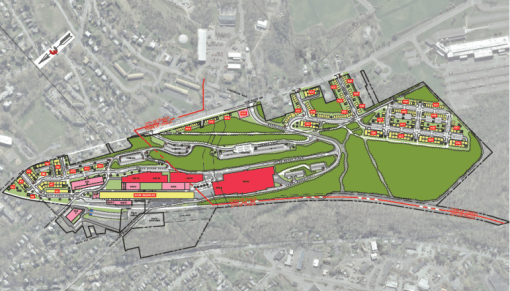
Related infrastructure work for the Project will include: (1) removing select buildings to create courtyards and a network of open spaces and roads; (2) creating pedestrian, bicycle, and vehicular connections through the Site from South Hill to Downtown Ithaca; (3) improving the existing roads within the Site while creating new access points into the Site; (4) mitigating existing environmental impacts from historic uses; (5) fostering the development of a link, the Gateway Trail, to the Black Diamond Trail network; and (6) installing stormwater management facilities, lighting, utilities, and plantings.

No big surprises – some buildings in the interconnected complex will come down, shared road concepts will dominate the internal transportation system of the neighborhood, the site will be more fully integrated into South Hill and trails, and usual site details like stormwater plans and landscaping are going to be incorporated into the project.

Given its complexity, the project team is pretty broad – eleven organizations, from the Ithaca, Elmira, Corning and Rochester areas. Local firms include STREAM Collaborative, which helped draw up the design standards and rezoning, Randall + West for more rezoning work, and Brous Consulting, which is handling public outreach. UnChained Properties is headed by David Lubin of Horseheads (suburban Elmira). From what I’ve been told, project development to-date has cost somewhere around $2 million dollars.

Likewise on the approvals – the project will need something like fifteen approvals from a dozen different government groups and agencies.

chain_works_history

Let me share an introduction and summary comparable but maybe more approachable than theirs – a background primer on why this is happening can be found on the Voice in my introduction article here, and Mike Smith’s summary article here.

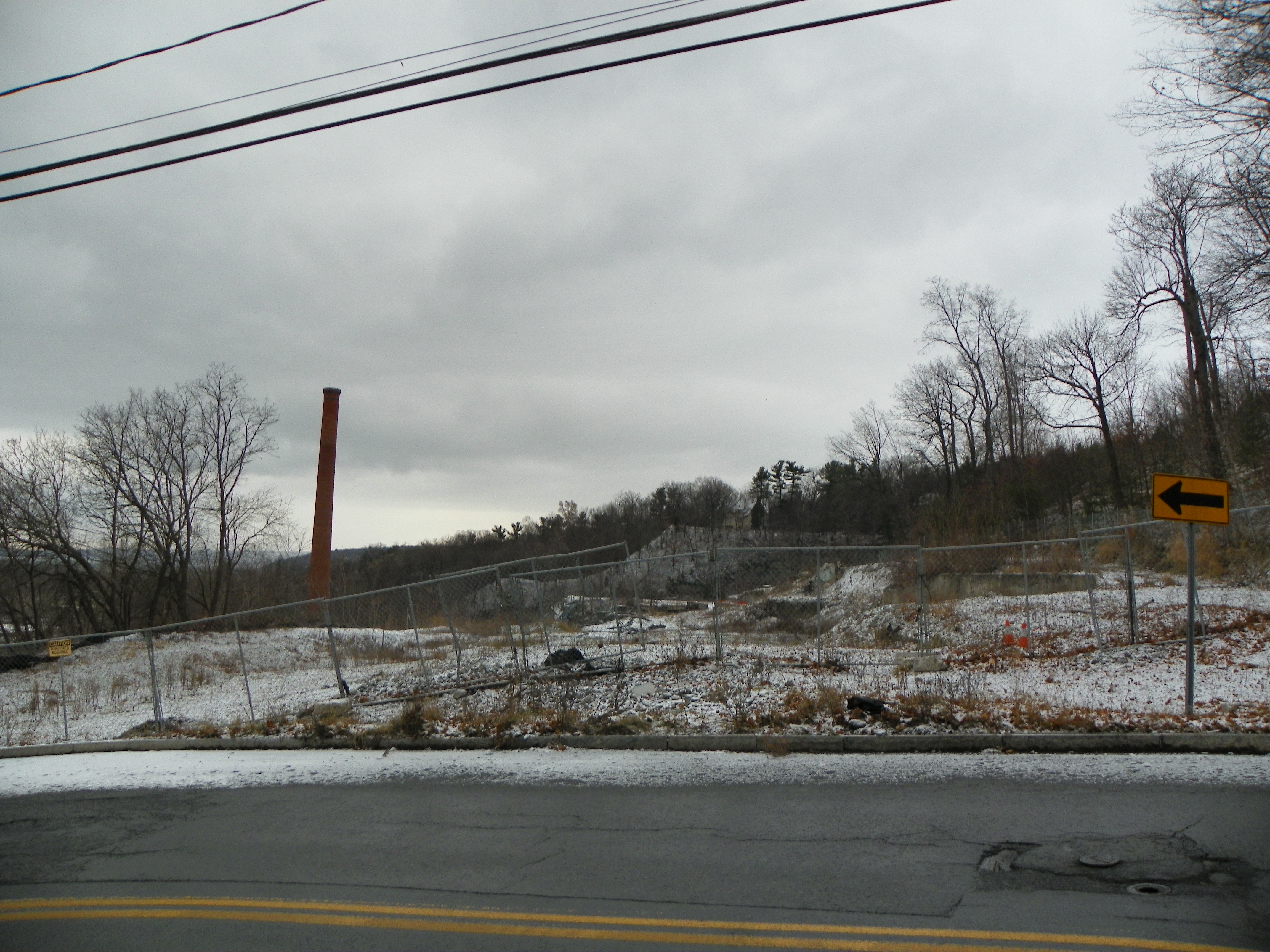
Much of Chain Works reuses what was once the Morse Chain / Emerson Power Transmission (EPT) factory, which employed thousands from the 1900s, up until the last workers were let go and the facility shut its doors in 2011. During the mid 20th century, industrial processes used chemicals and compounds that are known to be toxic – Trichloroethylene (TCE) being the best known, but also heavy metals and oils. These not only affect the site and its building, they’re also in the soil and groundwater of South Hill.

chain_works_contamination

The site is classified as Class 2 Superfund site, which the DEC describes as “a significant threat to public health and/or the environment and requiring action”. While EPT is responsible for clean-up, they’re only responsible for the bare minimum (the industrial standard, what can be safely exposed to for 8 hours) unless otherwise specified by a proposed reuse, in which case they have to clean to a higher standard like residential use.

So that leaves us at present – a vacant 95.93 acre, 800,000 SF industrial site split between municipalities and with varied terrain and conditions. One of the most basic goals of CWD is to get the city and town to rezone the land to allow a mix of uses – PUD/PDZ, which give flexibility in site development based off of standards the developer, the city/town, and in this case NYSDEC mutually agree to.


chain_works_form_districts_1

So, in the PUD/PDZ, one of the broad takeaways is that each of the four form code has its own design standards – height, width, window-spacing, setbacks and most physical details, even signage. Unlike typical zoning, it’s the appearance that is more thoroughly managed, not the use. Those can be found in detail here. The design standards utilize what’s called LEED ND (Neighborhood Development), design standards created for large-scale green, well-integrated and sustainable development. A gated community it ain’t.

The goal of these design standards is to mitigate some of the adverse impact the new and renovated buildings will have on the community – promoting alternate transit reduces traffic, limiting floors and floor heights reduces visual impacts, and so on.

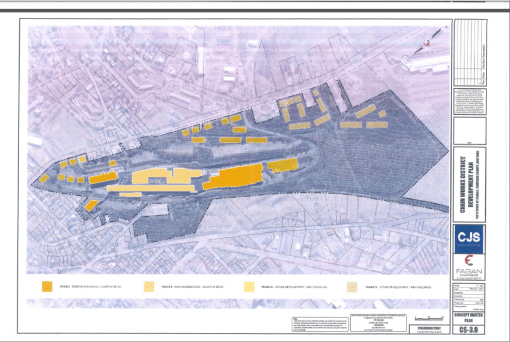
Build-out falls under four general form zones: (1) CW1- Natural Sub-Area, 23.9 acres of old woodland to be limited to passive recreation. (2) CW2- Neighborhood General Sub-Area, 21.2 acres of townhouses, stacked flats and similar moderately-dense development, mostly in Ithaca town; (3) CW3- Neighborhood Center Sub-Area, 39.7 acres of mixed-use, in a combination of renovated and new buildings towards the northern end of the property in the city, and (4) CW4, Industrial Sub-Area, a 10.3 acre zone for industrial uses in existing buildings at the Emerson site. The site borders Route 96B, single-family and multi-family homes, natural areas and steep terrain.

About 0.91 acres will be subdivided off and maintained by Emerson for active groundwater treatment. The other 95.02 acres would be sold to UnChained Properties.

chain_works_form_districts_2

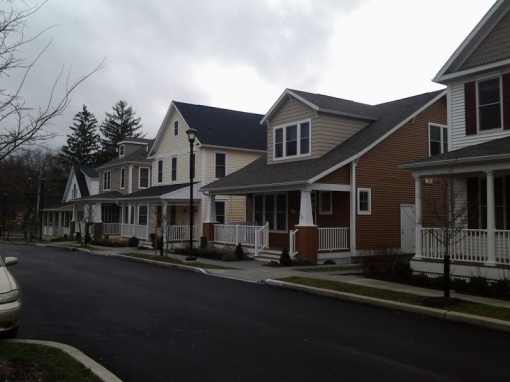
The re-development is fairly multifaceted. Some buildings will be renovated, a few will come down, a couple will receive additions, an quite a few others, like those in the all-residential CW2 zone, will be brand-new. Specifically in Phase One, four buildings – 21, 24, 33 and 34, will be renovated.

In Part Two, we’ll take a closer look at the neighborhood design standards and detailed plans for Phase One.


News Tidbits 3/5/16: Here Comes the Papierkrieg

5 03 2016

chapteR_house_reconst_v4_2chapter_house_v4_1
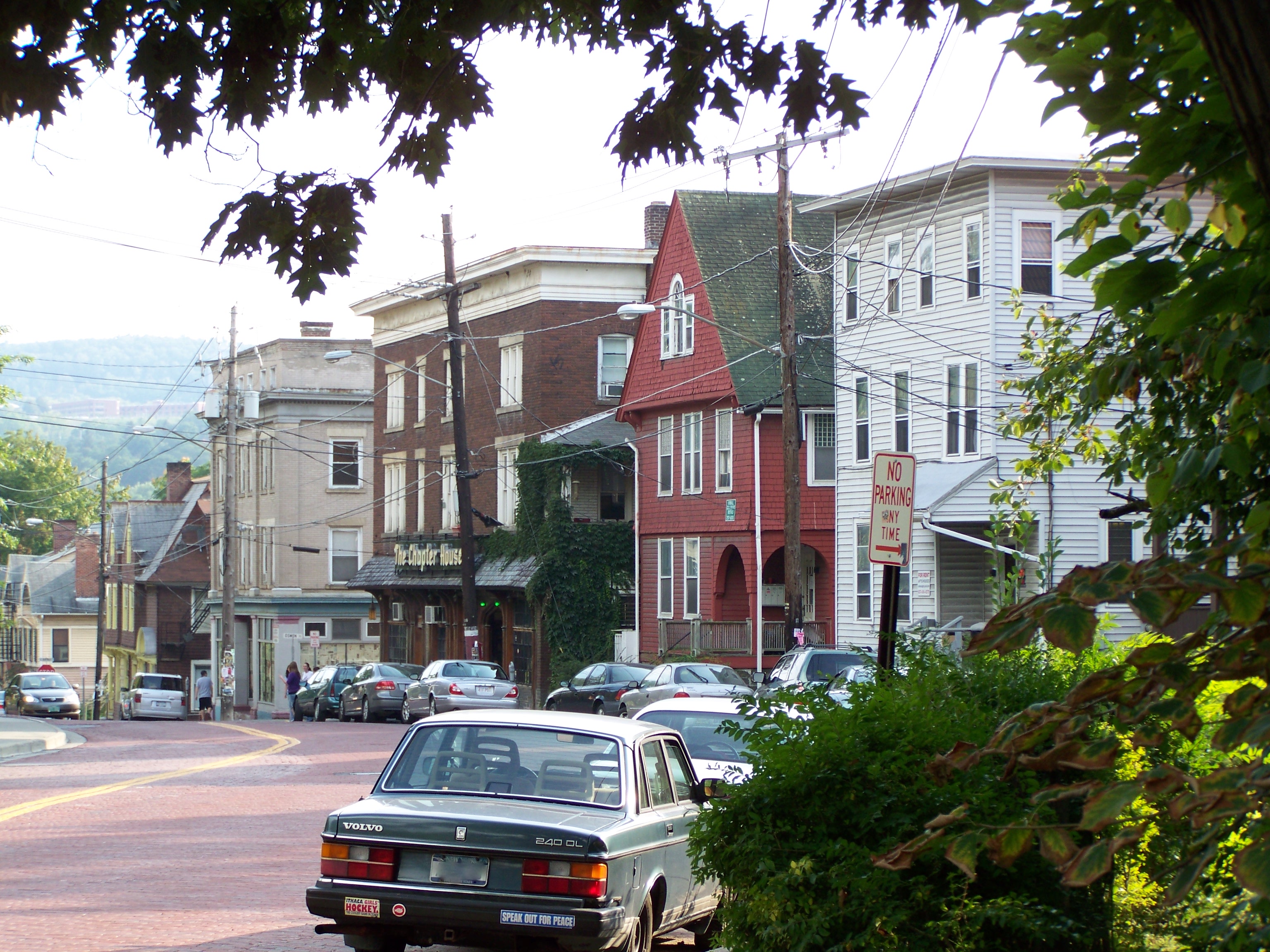
1. Let’s start off with something that led to a couple of worked up messages and emails to the Voice inbox – a potentially controversial revision to the Chapter House proposal that would replace the north eave of the building with a wall (bottom image). In the documentation, there’s no written explanation as to why the change is being requested from the approved plan (top image); but I wonder if it has to do with fire safety regulations or zoning issues between the Chapter House and the rebuild being prepared for 406 Stewart next door. Architect Jason Demarest is working on both projects for their respective owners (400-404 Stewart’s Sebastian Mascaro and 406 Stewart’s Jim Goldman), so he’ll be representing both projects at the Landmarks meeting next Tuesday the 8th at 5:30 PM. Also on the agenda are a couple of minor renovations, discussion about potential work to The Nines at 311 College Avenue, and discussion of an expansion to the East Hill Historic District.  This might just be for the Orchard Place properties that are locally historic but not nationally recognized, but we’ll find out for certain next week.

1401_dryden_1

2. Some of your might be wondering what happened with the 902 Dryden vote. Well, the vote still has yet to be taken. Moldern Living Rentals was still work on the last details of the Stormwater Pollution Prevention Plan for runoff (SWPPP), so the town of Dryden won’t be taking a vote until their March meeting, which has yet to be posted to their website (most likely it’s Thursday the 10th, or Thursday the 17th). The next-door neighbors still took time out to call the 40% downsized project a travesty and that it wasn’t shown in the 2012 Comprehensive Plan. Veering into editorial territory, my original comment from last month still stands:

“[A] master plan is not an exact thing; if it shows for three sets of five townhouses on a parcel, that’s not what may necessarily may happen. It just indicates the kind of density and scale of development the plan deems appropriate. 902 Dryden isn’t drawn on the master plan, but the plan welcomes the idea of townhouses on Forest Home Drive, which 902 abuts. So a vote in favor of the 8 new townhouses is, indirectly, a vote of support in the Varna Master Plan.”

I would give more weight to Todd Bittner’s objective concerns about stormwater than subjective comments of character, especially when they’re from someone who said they were disgusted by the thought of rentals. When Bittner checks out the revised SWPPP, if it looks acceptable, I think the project should be approved.

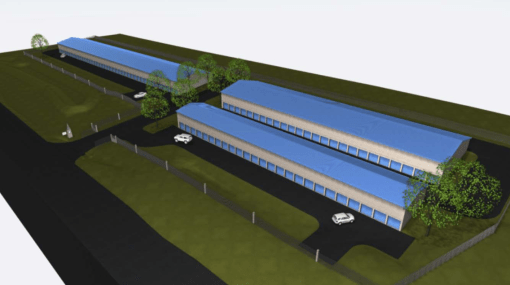
On another note, 1401 Dryden, the Storage Squad project (pictured above), seems to have lost a lot of its charm after getting caught in red tape last fall. The owners had to squeeze into a smaller area to satisfy the revised, expensive SWPPP. They’re hoping to hide most of it with landscaping.

dewitt_house_v3_1 dewitt_house_v3_2

3. Just a quick update on the Travis Hyde Properties Old Library proposal. The ILPC and Planning Board had their joint meeting, project team partners HOLT Architects and TWMLA landscape architects have incorporated their comments, and here is the current product. Sorry, no renderings, just site plans. Previous plan here. Overall, the site layout hasn’t changed too much, a courtyard and green space will be next to the DeWitt Park Inn, and the building is set back to maintain rhythm with its neighbors. The exterior is supposed to have more projections and recesses, the top floor set back 6 feet, and incorporation of balconies on the upper floors (not sure how this will affect the plan for the inverted roof). Unit count is 21 1-bedroom, 24 2-bedroom, and 9 3-bedroom, 54 instead of the original 60 (39 1-bedroom, 21 2-bedroom). The addition of 3-bedrooms is surprising for senior apartments; from what I’ve been told, typically the large majority of demand is with 1 and 2-bedroom units. The Planning Board and ILPC have another shared meeting at City Hall on the 8th.

chain_works_rev3_3

4. The Chain Works review process is chugging along. At its meeting on the 8th, the Planning Board’s special meeting will decide whether the Draft Generic Environmental Impact Statement is ready for public review (not expected to be controversial). Then on the 9th, Cornish et al. will be giving a report to the Common Council’s Planning Committee about the timeline and current status. Another staff progress report will be presented at the Planning Board meeting on the 22nd, and the next day on the 23rd, the city CC and town board Planning Committees will meet review proposed draft PUD zoning for the massive mixed-use project. With adequacy being agreed upon, the project can begin project review 15 or so days later; first public meeting is tentatively scheduled for March 29th.

The city just uploaded the comments of reviewers on the DGEIS – most are relevant, some are pretty good suggestions and critiques. Then there’s “Reviewer 3”, most of whom’s comments were put aside as they’re not relevant to adequacy. Those are but a preview of the potential flare-ups to expect at the public meeting.

12366349_10153784612864664_8478297861508040090_n

5. Stumbled on this by chance, but it seems to verify initial suspicions from a few months back; a project proposal goes with the sale of multiple parcels of land totaling 9.2 acres off Park Lane and Slaterville Road in the town of Ithaca. The property, for sale at $995,000, is being marketed by Carol Bushberg Real Estate, which doesn’t have the render on their listing page or their Youtube video, but they do on facebook. The conveyed plans call for a 26-lot subdivision, and given the proposed lot lines, it doesn’t look like it would be affected by the town’s moratorium on 2-unit structures, because each unit has its own lot even though some of them share a wall. It also meshes with the town’s Comprehensive Plan, which calls for 2-4 units per acre in this area (in the site plan, it’s just under 3 per acre). So to all you would-be home developers, here’s an opportunity.

20151108_154213

6. Speaking of the 2-unit moratorium in the town of Ithaca, it looks like that’s going forward to the Town Board to schedule a public hearing. The Planning Committee decided it was a good idea. The documentation says it would last at least a year, by which time the town hopes to have its new form-based, anti-student special zoning in place. Editorializing again, I still oppose this proposed law not because of the issue with low-end student housing, but because it’s too broad, affecting the whole town. The last 2-unit approved in Ithaca town wasn’t a student special – it was a 3-bedroom house with an accessory 1-bedroom apartment off Calkins Road. The husband and wife building the house will be living in the larger unit. I don’t think the whole town should be subject to a law that’s only been written to address a South Hill issue (the law’s language claims it’s a concern in East Ithaca as well, but I haven’t seen or heard of a new student-oriented rental in East Ithaca in at least the past few years). Anyway, whether for or against it, comments can be sent to Town Clerk at townclerk@town.ithaca.ny.us. The town meeting will be at the town hall on Monday the 7th at 5:30.

202_hancock_1
7. Here’s a preview of next week’s mid-week post: A look at some of the affordable housing proposals and plans that applied to the city for grant funding this year. INHS applied for their owner-occupied townhouses, the Boggs/ Fernández proposal for 402 South Cayuga is there, Habitat’s duplex, 304 Hector, and a new plan by a private citizen for an owner-occupied affordable duplex behind the house at 622 Center Street in the South Side neighborhood. Keep an eye out for that Monday night or Tuesday morning.

maguire_carpenter_2

8. From the other news outlets now; the Times is reporting that the sketch plan for the Maguire auto dealership proposal for the Carpenter Business Park actually had a warm reception from the Planning Board. In particular, board stalwart John Schroeder was impressed with the sidewalk along 13 (which would help transition the Waterfront and nearby environs to mixed-use) and public amenities. The board is cognizant of the site’s issues and the city’s hopes for the area, so those do play into the thought process – perhaps part of it is that Maguire’s jobs and features could work as a draw for mixed-use development of nearby parcels that don’t have so many issues. The board’s role stops at this point, with the just passed TM-PUD now front and center – unless Common Council okays the project, it won’t be back again. But Maguire did ask for a letter of support if the board was willing; we’ll see.

texas_roadhouse_v3_1

9. Meanwhile, the Journal is reporting that Texas Roadhouse will be opening May 23rd. No doubt the relatively dry and mild winter helped keep this project moving along (February construction update here). The 7,163 SF restaurant expects to hire 170 to 200 employees, of which 80 will be full time. That number astounds me just a bit because I worked at a steakhouse in high school, and although we were maybe half the square footage, we only had a staff of about 40. Even in Ithaca’s crowded restaurant scene, there aren’t many options for the red meat lovers that don’t cost an arm and a leg, and chances are good this will appeal to a different crowd than most, and be something of a draw from the nearby rural areas. Best of luck to them and their staff.

20160219_134003 20160219_134057

201_w_clinton_1

10. Let’s wrap this up with House of the Week. Quick update on Zac Boggs and Isabel Fernández’s 201 West Clinton Street carriage house. Fully shetathed (Huber ZIP system panels), fully roofed and shingled, and fully fitted with windows, the exterior work left will focus on exterior siding attachment and refinishing the original 1960s garage to match the historically-inspired vertical addition. The exterior calls for sawn board-and-batten wood fitting, though it’s unclear if it will be unpainted wood, or painted yellow. The 1 bedroom, 520 SF space looks like it could be ready for occupancy by late spring.


News Tidbits 2/27/16: A Leap Year, But Not A Leap Forward

27 02 2016

1. Let’s start this week off with some maps. The two below come courtesy of the Ithaca Urban Renewal Agency (IURA) agenda, submitted by INHS Director of Real Estate Development Scott Reynolds.

iura_inhs_map_1

iura_inhs_map_2
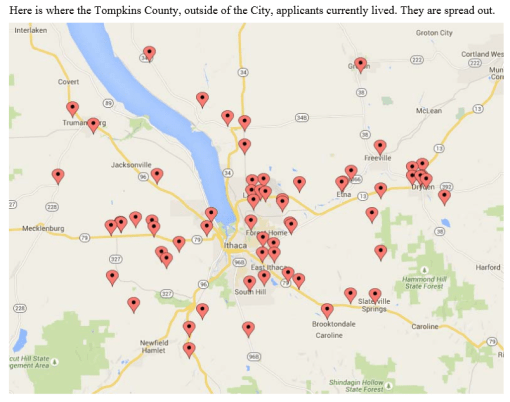
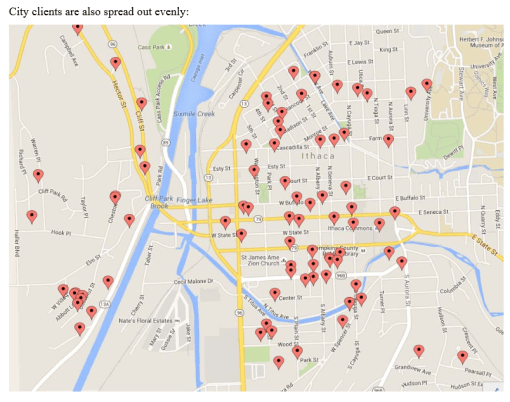
Each marker is the approximate location of current of an individual on Ithaca Neighborhood Housing Services’ (INHS’s) apartment wait-list. Dozens and dozens. As breakdowns go, 48% of waitlisted applicants live in the city of Ithaca, 38% outside of Ithaca but somewhere within Tompkins County, 8% live in other counties of New York State, and 6% come from outside the state. Counting the markers, my back-of-the-envelope calculation comes out to about 160 households.

The map implicitly describes the wealth of Ithaca’s neighborhoods – an increased number of applicants for affordable apartments come from South Side, the West Village area, and Northside, and further out, Dryden village and the apartment complexes in Lansing village. Wealthier areas like Fall Creek, East Hill, South Hill and Belle Sherman have very few or no individuals on the wait list.

The next time someone says affordability isn’t an issue, think of each dot on this map, and remember that’s someone, maybe even a while family, struggling but hoping to find decent, affordable housing.

Farm Pond Site RES'D & LOT s 010414

2. The Farm Pond Circle development in Lansing has finally sold on the 23rd for $164,840, well above both asking prices from last year. The purchaser was Dryden-based Schickel Construction, the same company responsible for the Boiceville Cottages. The restrictions on the ten for-sale lots carry over with the deeds. All things considered, Bruno Schickel knows this area well and his company could be one of the very few in the region interested but also capable in fulfilling Jack Jensen’s vision.

The development first went up for sale for $155,000 last March after the owner/developer, Jack Jensen, passed away suddenly in October 2014. In October, the price was knocked down to $125,000. Along with the lots Schickel picked up in the primary sale, a second purchase of $39,160 gave him three more undeveloped lots owned by other members of the Jensen family.

1015_dryden_1

3. On the other end of the sale scale, Ithaca real estate developer Modern Living Rentals has put their multi-family property at 1015 Dryden Road up for sale.  The asking price for the 5-unit property is $650,000. 1015 Dryden is home to a single-family home built in 1938, and a 4-unit apartment building from about 1980. The apartment building was badly damaged in a fire in 2011, renovated, and the site was sold to MLR for $425,000 in March 2014. The tax assessment is also $425,000.

Plans on MLR’s website shared a to-be-built 2,790 SF triplex designed by STREAM Collaborative, but the real estate listing notes plans filed for two side-by-side duplexes (4 units). All units when built would equal 24 bedrooms, but the bungalow house is just one bedroom, and although I can’t find total number of beds for the 4-unit, at 4,032 SF it’s probably 2 beds per unit, so…that’s 9 exisiting, plus six from the triplex, plus 9 bedrooms from the two side-by-sides? Not 100% sure. Potential landlords can contact the listing agent here.

elmira_savings_v1

4. As noted by the Ithaca Journal this week, Elmira Savings Bank now has regulatory approval to move its bank branch from 301 East State Street to the old Pancho Villa Building at 602 West State Street. The project would still need site plan review for the renovation of 602 alone, even if the rest of the site isn’t altered. However, if less than 10,000 SF, a non-residential structure may only need limited SPR, staff-level like a single-family house (I was a bit uncertain, but I have confirmed with a member of the planning board). So although the move is okayed, the bank may still have to go through the board before renovations can begin. In theory, they could move into the un-renovated building without board approval, since it would only be when substantial exterior alterations are planned that it would then fall under the board’s purview.

The bank still has no plans for the other properties acquired in their December purchase.

chain_works_rev3_3 chain_works_rev3_4

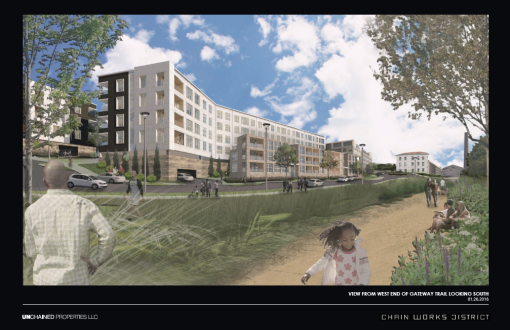
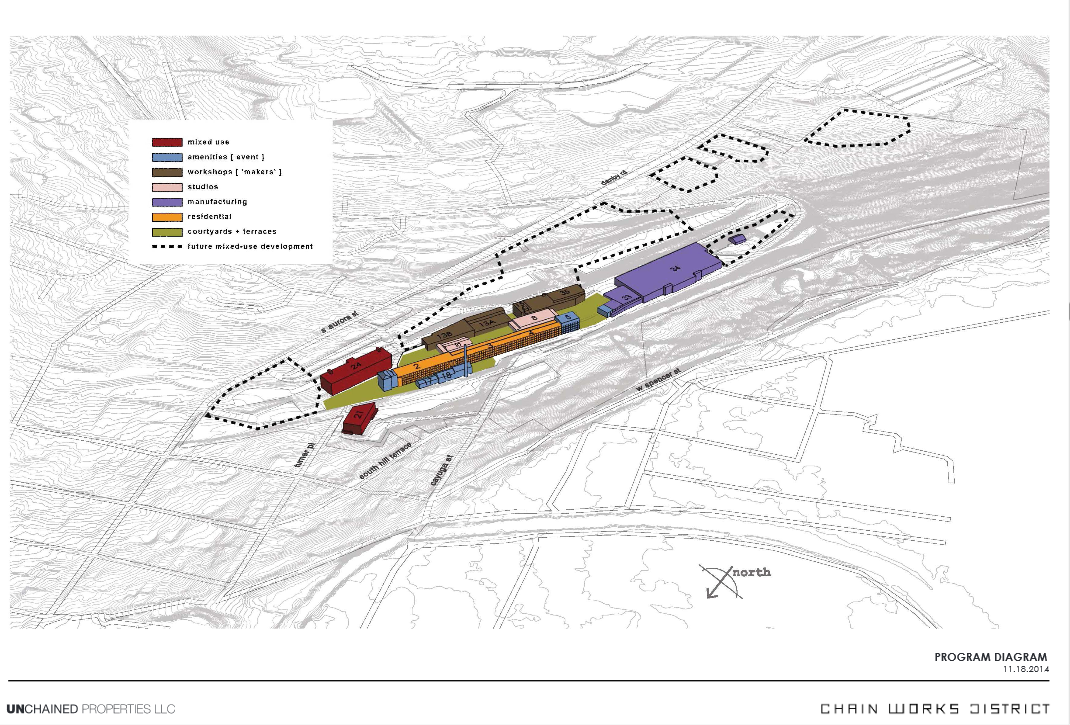
5. Now for some weekly eye candy. Additional images from Monday’s Ithaca Voice on the Chain Works District redevelopment, PDF here. These were left out because although these images are strictly conceptual and years away from reality, they show many new buildings, up to 5 floors in places, which could have had people freaking out that Chain Works was a Manhattan-izing of Ithaca and that a derelict brownfield was a suitable alternative. What gets written is tailored for its audience, and I didn’t think the Voice’s more general and broader reader base would handle these images well. Case in point, the ICSD shutting off drinking water in all of the schools as a precaution sent people into the Voice’s comment section panicking that every household on the municipal water system was contaminated with toxic levels of lead a la Flint. So, here are some visual extras to the much more rational readers of this blog.

The conceptual renderings are by Rochester-based Chaintreuil Jensen Stark Architects, the same group behind the design of Harold’s Square.

20160220_111241 20160220_111313 20160220_111336

424_dryden_rd_1

6. House of the week. Or rather, duplex of the week. From the outside, William and Angie Chen’s 2-unit, 6-bedroom duplex at 424 Dryden Road is nearly complete. Trim details like the porches have yet to be attached, and the foundation still needs to be backfilled, but most of the exterior looks good to go.

However, the parking lot has been a source of some BZA debate. The lot would require five off-street parking spaces, which the Chens can do with the construction of a three-car garage that tears down mature trees, but they would prefer to create uncovered five spaces that include two in the rear yard. CR-2 Zoning doesn’t allow for rear yard parking, so an area variance is required. The application also comes with a letter of opposition from a neighbor who seems to have mixed up the choices, asking for the variance to be denied for tearing down trees, when it’s the non-variance option that tears down trees.

Local architect Daniel Hirtler of Flatfield Designs is handling the duplex and the zoning variance.

341_coddington_1

341_coddington_2

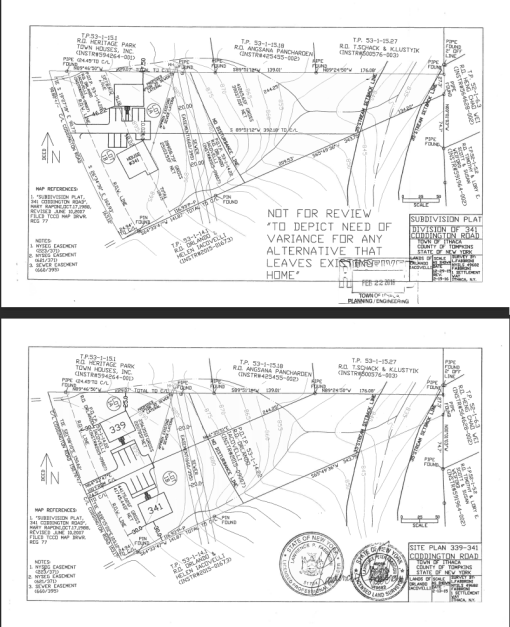
7. Status: It’s complicated. In Ithaca town, the Iacovelli family, longtime local landlords/builders, want to tear down a ca. 1845 house at 341 Coddington Road to put up two duplexes, which from the schematic appear to be the Iacovelli student special. To do so, they need to subdivide the property, one for each duplex.

On the one hand, the Iacovellis, who have been on South Hill since the 1920s (they’re the namesakes of Iacovelli Park at the end of Juniper Drive) and bought the property last year, have a right within existing law to do what they want with the property, which is next door to Orlando Iacovelli’s house. They want to subdivide the land into two parcels, and the only way to create two legal lots is to go right through the existing house.

On the other hand, it would be a shame to lose a 170-year house that’s in fair shape and has many of its original features intact, just so two fairly spartan duplexes can be built.

The town’s planning board seems to be cognizant of both sides in this dilemma. They asked at the last meeting to examine an alternative to allow subdivision and keep the 1845 house intact. The engineer for the project, Larry Fabbroni, did so, but the applicant is uncomfortable with trying to get zoning variances for the non-conforming setup, area, setback and a third claim about use for unrelated occupants (which the town planning department disputes).

This all comes at a time where the town is weighing a moratorium on 2-unit properties, and if this house comes down, there’s a good chance the town will vote the moratorium. Then Iacovelli won’t be able to build any duplexes, and no one else in the town of Ithaca would be able to either. But even if Mr. Iacovelli couldn’t build, he could still demolish the house and wait, should disagreements came to a boil.

Ideally, there would be a compromise where the 1845 house is preserved (by planning board/BZA stipulation or otherwise), and Iacovelli gets to subdivide so he can build a duplex on the other parcel. That way, he gets some economic return, and the town gets to keep an undesignated but arguably historic house. Few town board members want to come off as being anti-business to local families, and few developers want to come off as greedy or exploitative. A concession on both sides and some good will could go a long way in a time where tensions about student-focused housing are rising.

Comments can be sent to the board via the town clerk (Paulette Terwilliger) at townclerk@town.ithaca.ny.us . The board is expected to take a vote on the subdivision on Tuesday the 1st at 7 PM in the town hall.


News Tidbits 1/30/2016: A Doozy of a Week For All the Wrong Reasons

30 01 2016

I’m not going to lie – this was a rough week. For those who like old buildings, the city tore down 404 West Green and 327 West State this week. For those who are consider themselves eco-activists, Black Oak wind farm is on life support. State Street Triangle is likely cancelled, the Printing Press Lounge is off the table, Cornell continues to pour most of its attention on its new New York City campus, and a grocery store and a downtown shop are closing their doors and putting people out of work. There have been better weeks for news round-ups.

state_st_triangle_v6_1

1. State Street Triangle isn’t dead per se, but it’s indefinitely stalled. I think the best headline goes to the Ithaca Times since they’re the most accurate. From chatting with planning consultant Scott Whitham, who’s involved with the project, it sounds like the impasse is the result of Campus Advantage wanting to pay less for the site since they can’t build as large of a project, which would decrease their revenue. The contract for the land purchase from Greenstate Properties/Trebloc Development (Rob Colbert) was up for re-negotiation after the December expiration, but neither side wants to budge on what they feel the price should be. So nothing can move forward without a deal between the two parties. I reached out to Colbert Wednesday, but the secretary paused for a minute and then said “he’s, uh, busy in a meeting, care to leave a message?” So he’s probably not going to say anything further.

Could it move forward? Possibly, it could be revived if a deal is made. But as things are, it’s stalled and it’s outside the control of any community group or government authority. It’s definitely a shame from the standpoint of Ithaca’s worsening housing crisis because it’s less that will be entering a market flooded with students, people moving here for work, and wealthy retirees who have apparently decided this is the Asheville of the north. And given the battles of “structural racist gentrification” and “uncivilized crime-producing trouble-making affordable housing“, where everything is accused of being one or the other, I’m not especially hopeful at the moment.

416_e_state_v2_1

2. Now for something that is definitely dead in the water – The Printing Press Lounge. Developer Ben Rosenblum had wanted to put a jazz lounge in a 7700 SF industrial warehouse at 416 East State Street, but neighbor objections to noise and traffic proved a little too much for the Board of Zoning Appeals, whose members appeared unlikely to support necessary variances for the vacant facility. So the developer pulled the lounge proposal, but the office space and apartment are still under consideration.

canopy_comparo_elevations_new_1

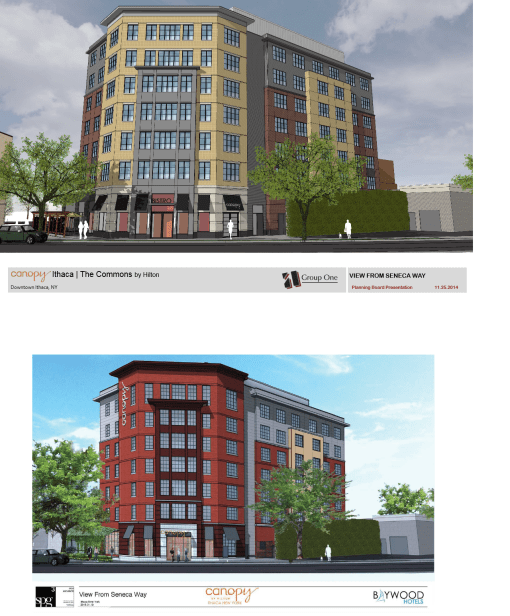
3. Also from the same phone conversation as State Street and Printing Press – the Canopy revisions were approved, so at least there’s a good chance that will be breaking ground this Spring. The Chain Works review schedule was also approved, although given the couple emails from the Voice article, the public review period is going to be groan-inducing. One of the letters commanded that nothing should be done there and it should be kept as is because it encourages traffic and “its density is ruining Ithaca”. They might have meant size, but density is a buzzword at the moment. Apparently, they also overlooked the fact that it’s already built and won’t be fully cleaned of toxic chemicals until a reuse plan is in place. The development team will have to respond to all of these comments, perceptive or not.

4. In real estate sales, an LLC in suburban Corning picked up the former Tim Horton’s and Cold Stone Creamery space on Elmira Road. 0.74 acre 407 Elmira sold for $640,000 on January 22nd. A little research into the rather exotically-named “Armiri LLC” shows that they were previously registered at an address home to an Econo Lodge, and that the owners have about 70 or so other LLCs related to hotels and the hospitality industry. A little more digging, and the owner turns out to be Corning-based Visions Hotels, a developer of suburban chain hotels with locations from Albany to Buffalo. So if I were to make a guess, the five-year old Tim Ho’s building won’t be long for this world, and a suburban hotel is likely to rise in its place in a couple years. But we’ll see what happens.

5. Meanwhile, just up the road, Maines will be shutting down their store at 100 Commercial Avenue. The 26,146 SF building was built for the Binghamton-based grocery chain in 2010. February 7th will be the last day. Although there don’t seem to be any figures online, the move will likely put at least a couple dozen people out of work. A phone call and email to Maine’s asking for employee totals and reasons for closure were not returned.

ctown_terr_phase3

6. Let’s talk about money. The construction loan docs for Collegetown Terrace Phase III were filed with the county this week. The price? A cool $39.25 million, from PNC Bank. That’s just for 247-unit, 344-bed Building 7. Previously Valentine Vision Associates LLC (John Novarr/Philip Proujansky) received $50 million on 8/22/13, $50 million on 7/1/2014, and $50 million on 11/20/14. Do the math out, and $189.25 million in loans is a lot of money. Then again, this is also a 1,200+ bed project.

The latest loan docs require an opening by fall 2018, but expect it to be about a year sooner than that, August 2017.

chapteR_house_reconst_v4_2

7. The Ithaca Landmarks Preservation Council has approved the Chapter House plans. All that’s needed at this point are the Building Department permits, which are technical and just require that everything will be built up to code. Things are looking good for that February construction start.

hughes_cornell_3

8. Something to look forward to at next month’s Planning Board meeting – further discussion of Cornell’s renovations to Hughes Hall. Planning Board Presentation here, drawings here, Site Plan Review application here. KSS Architects, with offices in Philadelphia and Princeton, will be in charge of design. KSS has been to Cornell’s campus before, having designed some of the Hotel School additions and part of the previous phase of law school renovations. Local firm TG Miller is handling the engineering work. The project is expected to cost $10.2 million and construction would go from June 2016 to July 2017.

Quick refresher, the plan is to renovate 4 floors of what were previously student dorms into academic office, admin and student organization space. Cornell anticipates about 200 construction jobs will be created, but nor more than 80 at any one time, and 20-40 on-site most days. No new permanent jobs, limited visibility, and minimal transportation/ground impacts will limit much of the customary Planning Board debate.

cornell_tech_v2

9. Meanwhile, New York City outlets are reporting on the progress of Cornell’s massive new tech campus in New York City. The Real Deal is reporting Snøhetta, an Oslo/NYC architectural firm, will design the Verizon Executive Education Building. The other three buildings underway are the Bloomberg Center, The Bridge, and CornellTECH Residential, which are the work of Morphosis Architecture, Weiss/Manfredi Architecture, and Handel Architects respectively.  300 students and 200 faculty/staff  will move into the new 26-story dorm by August 2017. Verizon paid $50 million for their naming rights, and billionaire former NYC mayor Michael Bloomberg paid $100 million, making up a sizable portion of the $590.6 million donated to Cornell over the past year. Once the initial wave of construction is complete, it’ll be worth seeing how donations break down – years ago, MetaEzra noted that Weill Medical received an outsized proportion of charitable giving.

Not to go all conspiracy theorist, but there are times when Living in Dryden blogger Simon St. Laurent’s thought piece seems uncomfortably relevant.

arpt_pk_1

10. At the county’s PEDEEQ Committee meeting Friday (PEDEEQ being the acronym for the unnecessarily long Planning, Economic Development, Energy, and Environmental Quality Committee; agenda here), the county did two things worth mentioning here. One, they awarded the $35,000 airport industrial park feasibility study to the team of Clark Patterson Lee of suburban Albany, and Saratoga Springs-based Camoin Associates. Two, they passed a resolution calling for “the Timely Development of the Black Oak Wind Farm” project in Enfield.

The Black Oak opposition really seems to have picked up momentum after one the major landowners involved with the project pulled out. Neighbors in the area are actively attacking the project by calling it a danger to human health and a destructive environmental menace financed by wealthy out-of-towners (a shot at Ithaca), and the wind farm’s executive board is struggling to address these accusations in the revised environmental review due to be completed in April. For the local eco-activist crowd, this is an unwelcome and unusual position to be in because more often than not, they’re the ones opposed to development. The county legislature, which has several green activists, is doing what they can by giving verbal support, and a subtle sort of wrist-slap to the opposition. Dunno if it will work, but we’ll see what happens this spring.

elmira_savings_v1

11. Here’s the sketch drawing for Elmira Savings Bank’s new West End Branch at 602 West State Street. It would appear the plans call for a modern addition to the north side of the building, and renovation of the rest of the two-story restaurant into office/service space. Local companies TWMLA and HOLT Architects are handling the design.

According to the Twitter feed of the IJ’s Nick Reynolds, the building plan was received well enough at the Planning Board meeting, but the rest of the plans call for demo of the other buildings, including the affordable housing that had some folks up in arms, for a parking lot. That didn’t go over very well. Demolition of low-cost housing for parking is going to be about as welcome as a Hitler costume at a bar mitzvah. Expect another trip to the board with some revised plans.

12. The Dewitt Park Inn is for sale for $950,000. Owners Tom Seaney and Nancy Medsker are selling the property they purchased for $320k in January 2012 and renovated into a high-end bed and breakfast. The two were vocal advocates for the popular though foregone Franklin/STREAM condo proposal for the Old Library site, although Medsker didn’t do the debate any favors when she decided to trash her rear neighbor, senior services non-profit and Travis Hyde project partner Lifelong in a letter to the Ithaca Journal. The county has the Dewitt Park Inn assessed at $575,000.

st_catherine_v2
13. Nothing too exciting for the town of Ithaca planning board agenda next week. The town’s planning board will choose whether or not to sign off on the review schedule for Chain Works, and they have to re-approved plans for a smaller parish center at St. Catherine of Siena in Northeast Ithaca. According to the provided docs, the parish center has been reduced from 10,811 SF to 8,878 SF due to rapidly rising construction costs (seems to be a common refrain these days).


News Tidbits 1/23/2016: A Doozy of A Week Ahead

23 01 2016

1. Over in the town of Ithaca, an update is being considered for the Rodeway Inn budget motel at 654 Elmira Road. Previously, the motel had been approved for renovations that would expand the size of the 25 existing units and provide 2 new inside corner units, along with the associated landscape and site improvements. This proposal was originally approved by the town in December 2013, but then the project never went forward, partially because the Maguire group was looking at buying the property and tearing it down to make way for their artisanal car dealerships and headquarters. With the Maguire’s plan filed away in the circular drawer, the owners of the Rodeway Inn have decided to reconsider the renovation project.

rodeway_1
Along with the room expansion, the new plan also calls for renovating an existing on-site residence into a new office by building an 1146 SF addition, while the existing motel office is renovated into a community room to serve travelers. Variances for side-yard setbacks granted for the previous proposal must also be re-approved, since zoning variances in the town of Ithaca are only valid if construction starts within 18 months of being granted (in other words, the variance expired last June).

Pennsylvania-based HEX 9 Architects is in charge of design, and JAMNA Hospitality is the developer.

chapteR_house_reconst_v4_2

chapteR_house_reconst_v4_1

2. From the city of Ithaca Landmarks Preservation Council agenda next Tuesday, the latest iteration of the design plans for the Chapter House replacement and its neighbor at 406 Stewart Avenue. The Chapter House looks to be in the last stages of ILPC approval, while the apartment house next door is still in the early design review stage.

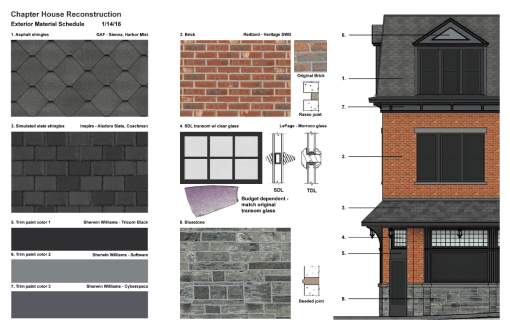
Looking at the Chapter house, the zinc roofing tiles have been replaced with asphalt, and two more paint colors will be included on the trim, which has gone from white to dark grey and black. The ILPC is doing what they do best, going over projects with a very fine toothed comb and debating every detail. Meanwhile, the current iteration of 406 Stewart Avenue calls for a 4-story apartment building with design features very similar to the previous 3-story building. That project still has some debates ahead of it, so we’ll see what happens moving forward.

Also on the agenda, discussion with the Planning Board about the DeWitt House/Old Library redevelopment, an update on repairs to 102 East Court Street, and some type of work being done at 210 Stewart Avenue (could be anything from paint color and shingle choices to major work; if it merits a post it’ll be included in a future update).

323taughannock_rev2_1

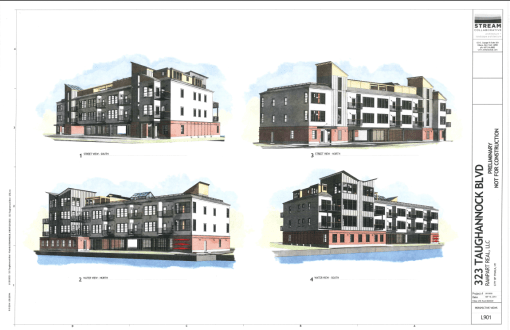
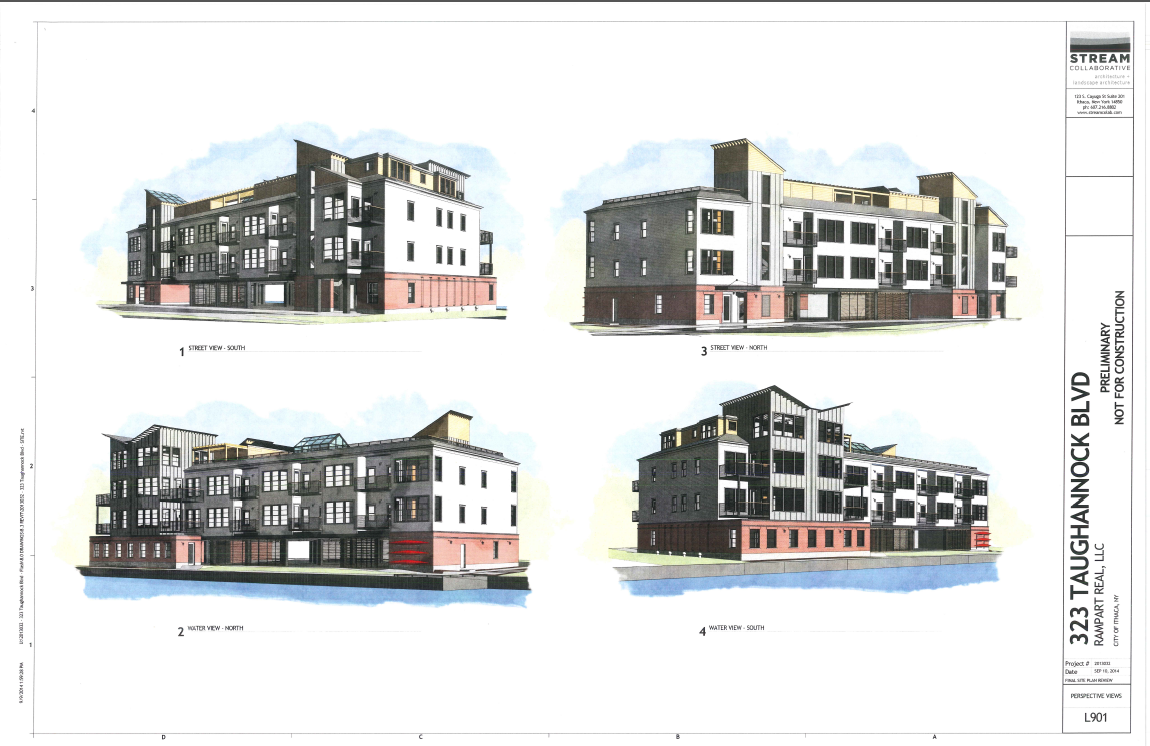
3. The Times’ Josh Brokaw wrote a nice summary of developments down at the Ithaca Waterfront, although I wish it hadn’t run when it did (re: HOLT update). Thanks to Josh, we have an idea of what’s going on with the approved but as-yet unbuilt 21-unit 323 Taughannock apartment project:

There was an “unexpected issue” that came up, Flash said, with the project, and so they must take “a sharper look at the engineering” to make the costs work.

I’m going to take a slightly educated guess – the soils were even crappier than anticipated. The high water table and easily-compacted soil in the West End and Waterfront pretty much mandate that multi-story projects have deep, expensive foundations to support the weight of structures. A soil issue was one of the problems that delayed the Lofts @ Six Mile project, and the reason why it’s built tall and narrow; also, since the Bloomfield/Schon has to pay for that deep foundation, it’s one of the reasons why the Lofts are so expensive. From the sounds of the Times article, balancing the deep foundation with adequate parking for the parcel is an issue. I’ll keep my fingers crossed, this project could be a real asset to that area.

Also, pretty sure that Cascadilla Landing still isn’t happening, and the Times has realized that. Anyway, it’s a good piece, and I’m not going to steal all of Josh’s thunder or his Myrick quotes, so spare two minutes and have a read through.

ith_big_plan_map_v2

4. For my moderate griping about timing with Josh’s Inlet Island development piece, I could note that this quote in the IURA Governance Commitee Agenda from city Planning and Economic Development Director JoAnn Cornish ties my article and his together:

“Cornish reported that the Planning and Economic Development Committee identified the Waterfront Neighborhood Plan as the Phase 2 plan of the Comprehensive Plan it would like to move forward with. Funding has been allocated for it. The plan would most likely be a hybrid Waterfront/West End neighborhood plan, in anticipation of significant development interest in that part of the city.”

In good news, affordable housing grants were thankfully saved in the federal budget, meaning that there will be a similar amount heading to NYS in 2016 as in 2015, and those funds would be available to future Ithaca projects should they jump through all the application hoops and be deemed worthy by Albany. The IURA is looking to smooth over any possible shortfalls by offering itself as a housing strategy consultant for the Waterfront/West End and Southside Phase II plans, and in the longer term, sales of parcels at the end of Cherry Street, at 410-426 Taughannock Boulevard, and Fire Station No. 9.

Also, the Argos Inn and Bandwagon Brewery/Restaurant have paid off their IURA loans. Proof that, although there have been failures (Finger Lakes Wine Center), the IURA can properly vet projects and be successful in its mission.

20160109_131947 20160109_132008

20160109_131909

5. House of the week. 102 Walnut Street, town of Ithaca. the last of Agora Home LLC’s Belle Sherman Cottages is nearly complete, possibly to go on the market as a spec house. The house is a little small than its neighbors since the lot is smaller, but the unique design gives the street some extra diversity. Apart from landscaping, paving and some finish work (on the exterior trim at least, although being a Simplex modular means the inside is probably finishing up as well), the house is just about finished. Nice work Carina Construction.

6. Last but certainly not least, the Planning Board agenda for next Tuesday. It’s a big one.

I. Agenda Review
II. Public Comments
III. Special Order of Business – Chain Works District Redevelopment Project – Presentation of Draft Generic Envrionment Impact Statement (DGEIS) and Scheduling.

chain_works_rev1_1

It’s finally moving forward. The Chain Works District, which was last presented at a meeting in November 2014, is finally ready to discuss parts of its environmental review and timelines. Per the agenda, “The project is a mixed‐use development consisting of four primary phases: (1) the redevelopment of four existing buildings (21, 24, 33, & 34); (2) the repurposing of the remaining existing buildings; (3) potential future development within areas of the remainder of the site adjacent to the existing buildings/parking areas; and (4) future developments within remaining areas of the site.” This will merit its own piece, but in the interest of time, Ithaca Builds offers a great summary of the previous steps and the proposal itself.

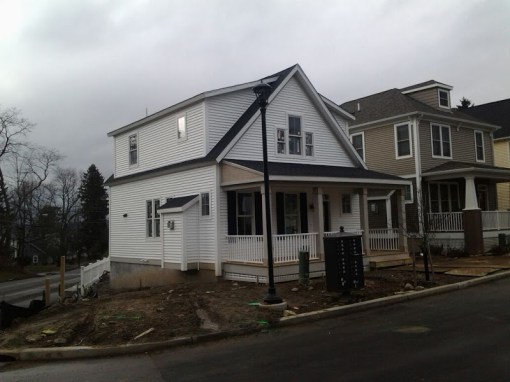
IV. Subdivision Review – 101-107 Morris Avenue. Declaration of Lead agency, Public Hearing, Declaration of Environmental Significance and Recommendation to the Board of Zoning Appeals (BZA). This subdivision proposed to reconfigure a pair of vacant North Side lots to allow a duplex to be built by Habitat for Humanity. The two 1400 SF units would be sold to families with modest incomes. There’s a letter of support and the Board has already drafted a recommendation to the BZA giving their thumbs-up.
V. Site Plan Review

A. Cayuga Green Phase II (Lofts @ Six Mile Creek). The applicant proposes to omit a green screen on the parking garage. A letter from the developer asserts that the wall will be adequately masked by trees.

canopy_hampton_rev8_comparo

B. Hilton Canopy Hotel – Project Update, addressing conditions of Site Plan Approval and Requested Changes. Developer Neil Patel (and represented by Scott Whitham) requests to increase the number of hotel rooms from 123 to 131, and increase building size from 74,475 to 77,884 SF. Height would remain the same. Once again, this is something that could be the subject of its own post, but will have to keep it brief for the moment.

state_st_triangle_v6_1

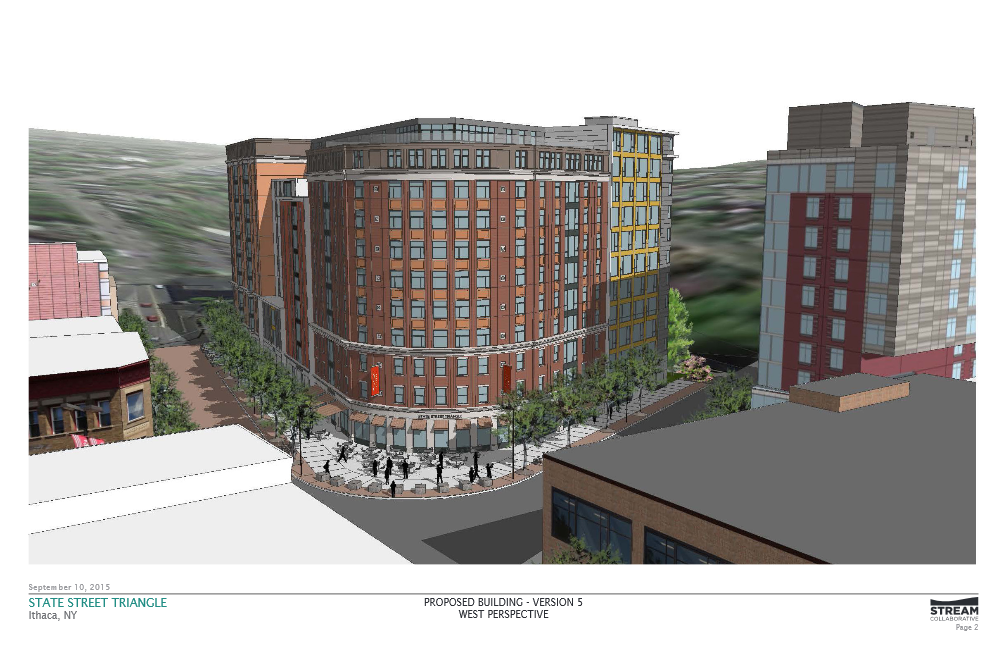
C. State Street Triangle – Project update, no decisions planned. 9 stories, 96′, 180 units, 452 bedrooms, 12,300 SF ground-floor retail, including space for Ithaca Bakery and CTB. See Thursday night’s Voice article for more info. Smaller, shorter, and maybe palatable.

D. 424 Dryden, parking lot rearrangement, Declaration of Lead Agency

E. E-Hub, 409 College Avenue, renovations. While technically it doesn’t require review, Student Agencies and STREAM are asking for thoughtful feedback.

F. Sketch Plan – Elmira Savings Bank, Route 13. Pretty sure this is the one tied up in that PR disaster. WEDZ-1a Zoning allows up to 90% lot coverage, 5 floors and 65′, but given previous statements, the short-term work might just have to do with renovations of the former Pancho Villa restaurant, maybe a drive thru lane or other major exterior work. We’ll see. Background reading on the parcels themselves here.

G. Sketch Plan – Cherry Artspace. Developer: Performance Premises LLC/Samuel Buggeln. Cherry Artspace, a theater company, is located at (where else?) 102 Cherry Street on the city’s southwest side. The building was purchased in August 2015 for $240,000, it had previously housed Renovus Energy before the solar panel company decided to move out to more spacious digs in Ulysses. The theater company, directed by Sam Buggeln (pronounced “bug-ellen”), wishes to renovate the ca. 1980, 1,154 SF building into dedicated performing arts space.

VI. Zoning appeal recs for the Habitat duplex

VII. Planning Board Resolution to the BPW regarding Seneca Street Streetscape work, Cascadilla Street Railing Options, and potential rezoning of a section East State Street/MLK Blvd. from B-4 to the more restrictive and residential-focused R-3a. Glancing at the zoning map, only the north side of the 400 Block is B-4, so the downzoning is probably intended for the houses on the corner of E. State and Schuyler, 420 and 422-24 E.State/MLK, and 108 Schuyler Place.

travis_hude_libe_libe_v3

Also worth noting, the Travis Hyde Old Library project will be discussed separately with the ILPC. That meeting is at 6 PM at City Hall. The Planning Board meeting at City Hall starts at 6:45 PM.


News Tidbits 11/14/15: To Plan or Not to Plan

14 11 2015

It’s another slow week. There was no PEDC meeting in Ithaca city, and no new projects hit the airwaves. But there might be some interesting things moving forward.

1. The Lansing Star has an insightful interview this week with newly elected Lansing town supervisor Ed LaVigne, who unseated incumbent Kathy Miller for the seat. From a development standpoint, it’s very interesting. From the interview, it sounds as if, given the possible loss of their biggest taxpayer, the $60 million Cayuga Power Plant, he kinda wants to throw the door open to developers in an attempt to soften the blow of its closure. In Lansing, there was a political divide when it came to planning – the Democrats wanted a full-time planner, but the Republicans wanted a part-time planner. The budget item for a full-time planner was eliminated along town board party lines, 3-2, and Lansing is currently served by part-time planner Michael Long.

20151011_124916

“That’s why it’s so critical to start moving some dirt, getting things built.  One of the things I’ve already told developers is that Lansing is in business.  How can we make you more prosperous?  We believe in prosperity.  And if you’re prosperous we all will benefit.  I don’t care how much money they make.  I hope they make more money than they ever dreamed of, because if they put their money in Lansing, Lansing wins.”

If I didn’t know where the quote was coming from, I wouldn’t believe it was from an elected official in Tompkins County. Most local officials are very measured in their comments on growth, if they welcome newcomers at all.

Just as a thought exercise, Lansing builds about 25 houses per year per HUD SOCDS, and a variable number of apartments, which right now is a few dozen per year thanks to the Village Solars project off Warren Road. Take about $300k per house, and $6 million for each major phase of the Village Solars, and one gets $13.5 million in new development. Not factoring in additional infrastructure or service costs or taxes from commercial/industrial construction, it would take four and a half years to make up the tax revenue lost from the closure of the power plant.

20151011_125007

Of course, development in Lansing is tricky – without sewer, houses have to be on at least one acre of land. After all the busted dreams with the town center proposal, the town will be more likely to stick with conventional suburban development and rural homesteads. On the one hand, Lansing has given a yes to development. On the other hand, the question of “smart” growth is still up in the air, and it’s not looking good.

By the way, the photos, which are a few weeks old, are of homes underway on Lansing’s Oakwood Drive. Cardamone Homes is the builder. The top one is for sale for $670,000.

***

college_crossing_2 plan-1

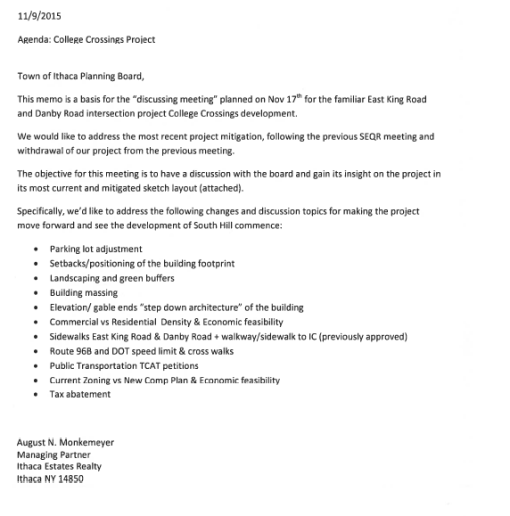
2. There’s nothing too exciting in the agenda for the Ithaca town planning board meeting next Tuesday. There’s a couple of legal clarifications required, one for a single-family home subdivision, the other to let Brookdale (formerly Clare Bridge / Sterling House) move forward with their 32-unit expansion project. The town planning board will also be reviewing some solar panels and changes to the sign law. Really, about the only noteworthy thing on the agenda is an open, informal discussion on College Crossings. After have a few months to take a deep breath, the developer, Evan Monkemeyer of Ithaca Estates Realty, would like to discuss what needs to be done in order to make the project fit with the town’s comprehensive plan, while keeping his plans economically feasible. A copy of the letter is below:

college_crossings_v4_letter

This is potentially a major opportunity for the town to show good stewardship. Ideally, the two sides will find a common ground that meets the town’s goal for a less auto-centric, mixed-use South Hill, while allowing the developer to move forward. A tax abatement isn’t going to fly with the IDA let alone the planning board, but there are other options that can be considered – density, height, and setbacks come to mind. The town’s comprehensive plan considers the site “TND [Traditional New Development] High Density” – one of the few high density spots in the town. The plan recommends 8-16 units per acre as an average (it’s a 3.75 acre site, so picture 30-60 units), and 10-20% open space. A project in a TND-HD area should be dense, transit-oriented, porous and walkable. The door is open, not only to the town, but members of the public interested in helping find that common ground (looking at you, Form Ithaca). It should be an interesting chat.

chain_works_rev3_1

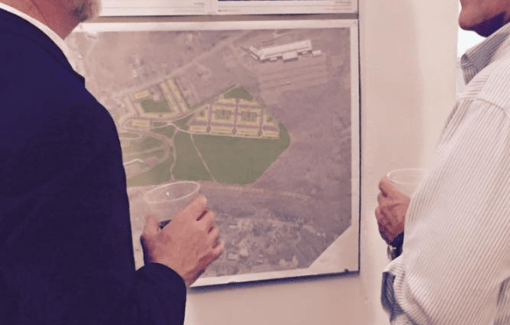
3. Local architecture firm STREAM Collaborative held an open house last Friday, and for those unable to attend, they shared photos online.

Look closely and you’ll find a copy of a conceptual build-out of the Chain Works District, which is still going through environmental site assessment (the ESA document is said to be tens of thousands of pages). The South Hill Business Campus is to the upper right, so the top of the image is directed south. Note that there’s nothing formal, and even the renovation of buildings 21, 24, 33 and 34 has yet to reach the boards (rumor mill says the renovations might start in 2017). But it’s great eye candy.

20151011_134013 20151011_134031

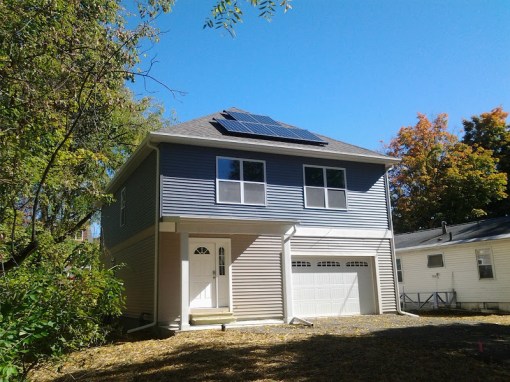
4. House of the week. Since I hit this house a couple of times while it was underway, I figured I would include a couple shots of the finished 3-bedroom, 1,276 SF home at 203 Pearl Street in Ithaca’s Belle Sherman neighborhood. Oddly enough, the builders, Gil and Naama Menda of 201 Pearl, used the same exterior trim colors as on the Belle Sherman Cottages a block away.

The lot is the result of a subdivision approved by the city during the spring; 203 Pearl had previously been combined with 201 Pearl and used as an in-ground swimming pool, which was filled in at some point.


News Tidbits 9/12/15: Some Projects Lose Mass, and Some Hold Mass

12 09 2015

1. We’ll start this week off with a little bit of economic development news. According to paperwork filed with the Tompkins County IDA, CBORD, a Lansing-based software company, wants to move out of its digs in the Cornell office park by the airport, and into a new larger facility in renovated space in the South Hill Business Campus next to Ithaca College. CBORD would lease 41,000 SF of space with five year options to renew. All 245 local employees would be moved into the renovated space, which would be finished by the end of May 2016 and designed by local architect John Snyder.

The project is expected to cost about $3.7 million. No new jobs are stated in the application.

Assuming SHBC’s website is up-to-date, no contiguous spaces are currently large enough for the tenant, so either the internal space will be split up, or some other tenants will be jostled around to make room for CBORD.

As for the abatement itself, CBORD is requesting a sales tax abatement, one year in length, with a value of $296,000, about 8% of the project cost. It doesn’t appear to have made any waves at Thursday night’s meeting, so what;s likely to be a low-key public hearing and approval vote will be coming in the pipeline.

Also at the IDA meeting, final approvals were granted for tax abatements on the 209-215 Dryden project by John Novarr in conjunction with Cornell. and for INHS’s 210 Hancock affordable housing development in the city’s Northside neighborhood.

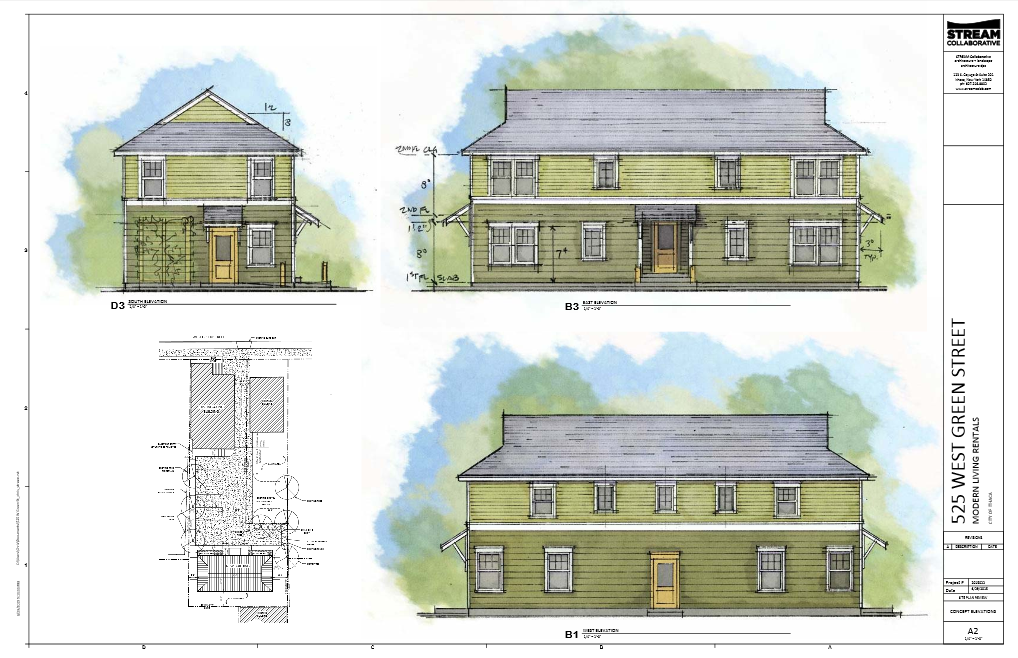
2. Another small infill project seeks approval from the city’s planning board and the Board of Zoning Appeals (BZA). 525 West Green Street, located on the edge of the South Side neighborhood, is currently home to a 4-unit apartment house. Local developer Todd Fox of Modern Living Rentals (MLR) is seeking to build a 4-unit, 4-bedroom apartment house at the rear of the property, where a clapped-out garage currently stands. The units would be rentals, but this far from Cornell and Ithaca College, the target market is likely to be permanent Ithaca residents – single professionals would be a good guess.

525_w_green_1

Plans drawn up by prolific local firm STREAM Collaborative call for a 2-story, 2,360 SF “carriage house” building designed to fit in with the rest of the neighborhood, although quite honestly no one would be able to see the new building unless one were looking down the driveway. A landscaped rear parking area for 8 vehicles would replace the current 4-car lot behind the existing building.

According to Site Plan Review documents, construction cost is estimated at $300,000, and construction would take place from November 2015 to July 2016. Area variances are required from the BZA since this building partially occupied space reserved for the rear setback, but according to the SPR the variance has already been granted.

Readers might recall that MLR has been a very busy company as of late – although relatively new to the Ithaca scene (MLR was established in 2010 by then-recent college graduates Charlie O’Connor and Todd Fox), the company has developed the 6-unit 707 East Seneca apartment building, a duplex at 605 South Aurora, and is currently going through the approvals process for solar-powered townhomes out in Varna. The duo also partnered with local real estate businessman Bryan Warren to purchase the Collegetown Bagels at 201-207 North Aurora Street.

As for the project itself, 525 West Green Street is perhaps the largest example of the carriage house trend Ithaca has been seeing lately, where old garages or unused rear lot spaces are being developed into small, detached apartments, typically no more than studio or 1-bedroom size. Other examples include 201 West Clinton, 607 Utica,  and new this month, a studio apartment proposed for a former workshop/garage at 701 North Aurora. Arguably, one could throw New Earth Living/Sue Cosentini’s Aurora Street pocket neighborhood in there as well.

Given that these properties are modestly-sized, rarely visible from the street, and provide rental income to property owners who in most cases live on the same lot, they seem like an appropriate way to increase density without upsetting Ithaca’s character balance.

troy_rd_rev1_1

3. Briefly in blurbs – according to the agenda for Ithaca town’s Public Works Committee (PWC), the town will be looking at sanitary sewer access for a potential development along Troy Road. Now, before anyone gets their blood pressure raised, this most likely has nothing to do with the 130-unit project that was mothballed a few months ago. But, there have been rumors of smaller-scale plans for one of the parcels that comprised the now-subdivided property. The development radar has been turned on, and if anything shows up, you’ll see it shared here.

4. Staying in Ithaca town for the time being, the town’s planning board has but one project on their agenda for next Tuesday – a new parish center for St. Catherine of Siena Church in the Northeast Ithaca neighborhood.

Yes, even in Ithaca, one of the least religious metros in the country, famously home to a school that pastors derided in fiery philippics 150 years ago for daring to not affiliate itself with a Christian denomination or enforce mandatory church attendance, churches can hold their own.

st_catherines_1

Plans call for a new 10,811 SF parish center at 302 St. Catherine Circle, on what is currently part of the church parking lot. Once built, the current parish center, a one-story, 10,275 SF jumble of boxes and corridors, would be demolished and replaced with parking spaces. Richard McElhiney Architects of NYC is the project architect, and a bit of an unusual choice since the firm doesn’t have a presence or previous work up here.

In an assessment by Ithaca town planner Christine Balestra, concerns were noted about a phased parking plan for the church while construction is underway, and minor requests for landscaping details (plans call for two fountains). Other than that, it doesn’t look like this is going to make any waves during the approvals process.

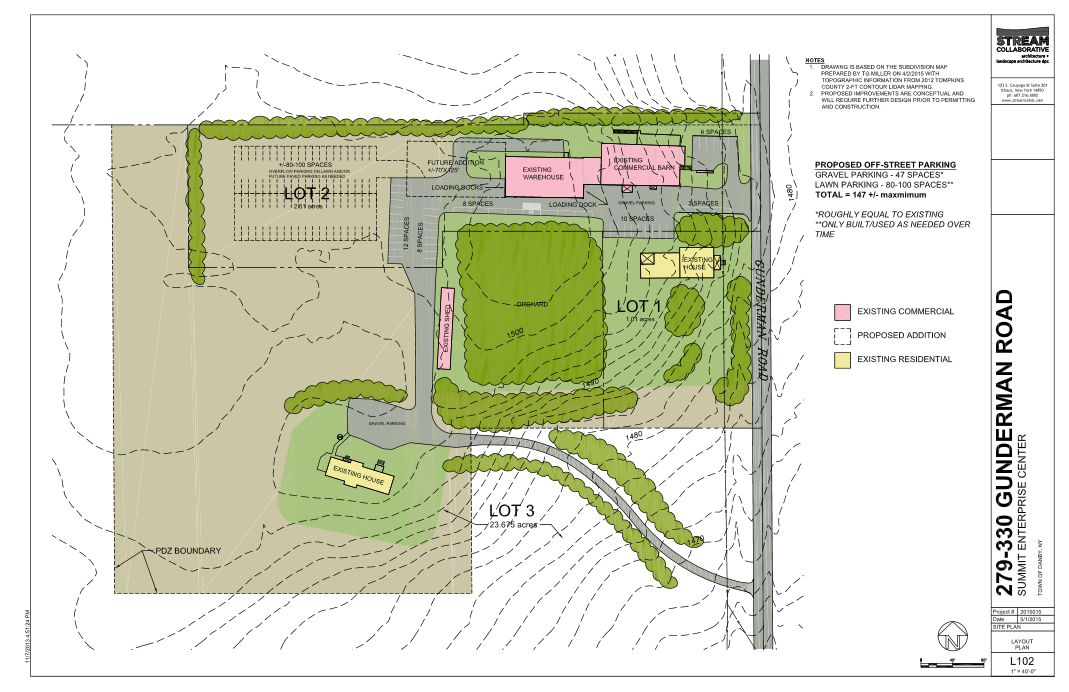
5. Over in the town of Danby, plans are underway to convert a former clothing design and warehouse facility into a mixed-tenant business center. Docs filed by STREAM Collaborative’s Noah Demarest on behalf of owner David Hall call for modifications of a Planned Development Zone for the property at 297-303 Gunderman Road. Danby’s PDZ is not unlike the city’s PUD and town of Ithaca’s PDZ, where the form and layout is regulated rather than the use. The original PDZ for the property dates from the mid-1990s.

summit_danby_1

The “Summit Enterprise Center” would be anchored by National Book Auctions currently on Danby Road, Blue Sky Center for Learning (a company that provides support and therapy for autistic individuals and their families), and New Moon Harvest, a food and beverage maker. Additional office, warehouse and industrial/food production space would be available to potential tenants. The existing 21,000 SF building and landscape would not be significantly changed, although future plans for a 4,147 SF addition and parking lot are noted.

chain_works_rev2_1

6. Speaking of PDZs and PUDs, I did take the opportunity when I spoke to David Lubin last week to ask how things were going with the Chain Works District development. Here’s what he said:

“Chain Works District is continuing. We’re working with the state and Emerson, investigating the site and making sure all the remediation plans are readied and approved. There will be public hearings. It’s a slow process. We will need DEC approval for the residential uses. We hope to obtain city approvals [for the draft environmental impact statement] this year.”

There’s no doubt the project will take time. With complicated topography, environmental issues, 800,000 SF of planned development space and two municipalities, it’s arguably the most complicated tax parcel in all of the county, if not the region. Readers may stretch their memories back and remember that the first phase will consist of the renovation of buildings 21, 24, 33 and 34 into mixed-use and manufacturing space. Ithaca Builds (come back Jason, Ithacans need someone with your knowledge) provides a detailed run-down here.

619_w_state_st_1

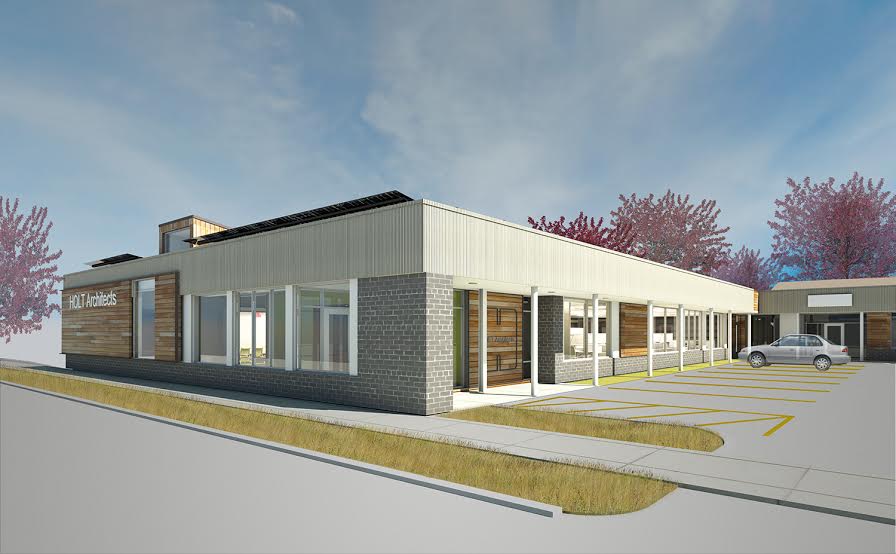
7. Courtesy of Maria Livingston at HOLT Architects, here’s a render of the renovation HOLT is undertaking for its new headquarters at 619 West State Street. Gone are the rather dated-looking decorative parapets, and in comes a clean, modern design with a mix of wood, brick and steel facade materials. HOLT’s 30 employees will occupy most of the new space in the  net-zero energy structure, but there will be space for two other tenants (one of which has already been claimed).

HOLT is spending about $900k on the renovation, which is due to be complete next March. Tompkins Trust Company is providing the financing, and local company McPherson Builders is in charge of general construction.

A copy of the official press release, and an interior render, can be found on HOLT’s blog here.

state_st_triangle_v5_1

8. We’ll wrap up this work with a topic at the tip of everyone’s tongue – State Street Triangle. Architects Kelly Grossman of Austin, Texas and Noah Demarest of STREAM have worked to redesign the project so that its massing is less imposing and its design a little more varied. Specifically, it now looks more like several buildings built next to each other with varying setbacks and heights, rather than one continuous mass – the change is especially prominent on the 300 Block of East State, where the most concern was raised.

The developers held a community meeting Thursday night (pro tip for Campus Advantage – next time, give more than 30 hours’ notice), which has been covered by the Journal here and the Voice here. That the developers scheduled their own community meeting outside of the confines of city hall is laudable.

As part of the redesign, the number of bedrooms has been reduced from 620 to 582. Recent estimates have now priced the project at $70 million. The developer has expressed interest in designated some of the units as affordable housing, in what would be an example of the inclusive zoning that some city staff are currently looking into.

state_st_triangle_v5_2

The project is seeking a tax abatement, though the formal details have yet to be released. Rents would be between $980-$1,600 per month per person, and would include utilities, gym and other “all-inclusive services”. I suspect that a parking space in the Cayuga Garage is an added cost.

Speaking strictly for myself, the design is an improvement, though I have subjective quibbles – for instance, would a lighter color material make the north wall of 11-story middle section less visible from a distance, and would it be possible to give the blank walls more character. Balancing pros and cons, I also think the design of the Commons-facing corner looks tasteful and classy. The prospect of affordable units in the building is intriguing. If I was a planning board member, I’d ask to see material samples to make sure the building doesn’t end up looking cheap.

state_st_triangle_v5_3

Additional images of the updated design can be found on the city’s website here, and a written summary of the changes from project consultant Scott Whitham of can be found here.


News Tidbits 12/6/14: Looking Forward, Looking Back

6 12 2014

11-24-2012 174

1. Not exactly a development, but this will make things interesting: As reported by the Ithaca Journal, INHS and Better Housing for Tompkins County (BHTC) are merging. Both of them have the same purpose, which is to provide low-to-middle income housing and structural rehab services, but INHS has traditionally focused in Ithaca city, and Better Housing in the rural towns. INHS also holds far greater assets, $24 million including 241 rental units , vs. BHTC’s $3 million and 121 rental units.

Over the past few years, INHS has put a lot of feathers in their cap. $2.13 million in grants has been awarded to the non-profit in just the past few months. Breckenridge Place and Holly Creek are complete and nearly complete respectively (total 74 units), while Stone Quarry and Greenways are prepping for site clearing and construction (total 81 units). Along with Cedar Creek and several single-family and duplex units, INHS has had a hand in over 120 units of housing in the past five years alone. With the Neighborhood Pride site undergoing concept design and the recently-awarded grant money, that number will almost certainly be greater in these next five years.

The story for BHTC has been quite the opposite. The 65-unit Lansing Reserve proposal failed due to neighbor opposition, and the 58-unit Cayuga Trails project for West Hill failed due to wetlands on site being greater than anticipated (and the neighborhood opposition didn’t help). BHTC has five older facilities in Trumansburg, Newfield and Slaterville Springs.  With any hope, the merged non-profit will qualify for larger grants, and BHTC can finally get some shovels in the ground in the hamlets and villages outside Ithaca.

On a separate note, it looks like INHS did its annual website update, formally announcing plans for a single-family home at 304 Hector Street on West Hill. The lot was purchased in late October after a plan to buy and renovate a home in Northside fell through. Stone Quarry will begin occupancy next September, and Greenways hopes to start in 2015.

112_blair_1

2. Here’s the site plan for 112 Blair Street. I’d include renders, if the sketch plan had any. Two buildings with two units each and three bedrooms per unit -> 2 x 2 x 3 = 12 bedrooms. Nothing large, just an infill project tucked away from the street. The design will be created by local firm Schickel Architecture, the same ones doing the Maguire project in Ithaca town. As noted by Planning Board member John Schroeder in a recent Sun article, projects like these won’t alleviate the housing crunch by themselves, but every little bit helps, and all the better if it recaptures living space from an underused parking lot.

canopy_hampton_rev4_1

3. Final design for the proposed Canopy Hotel? Possibly. In comparison to the last design, this latest incarnation adds more windows to the east face. I’m not going to lie, after six or so sets of designs (include three complete re-dos), I’m starting to lose track of the changes. On the upside, the latest project plan from the city’s documents includes some neat context views, renders of what the building would look like from various vantage points in the city.

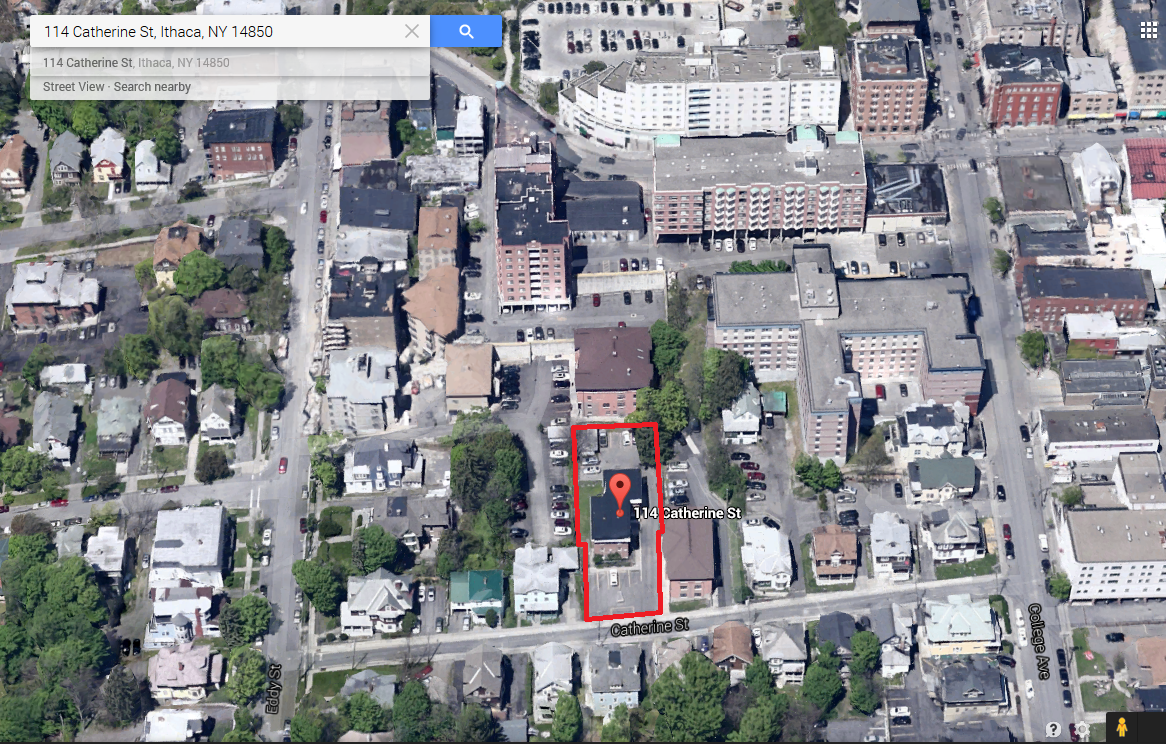
114_catherine_rev4_1

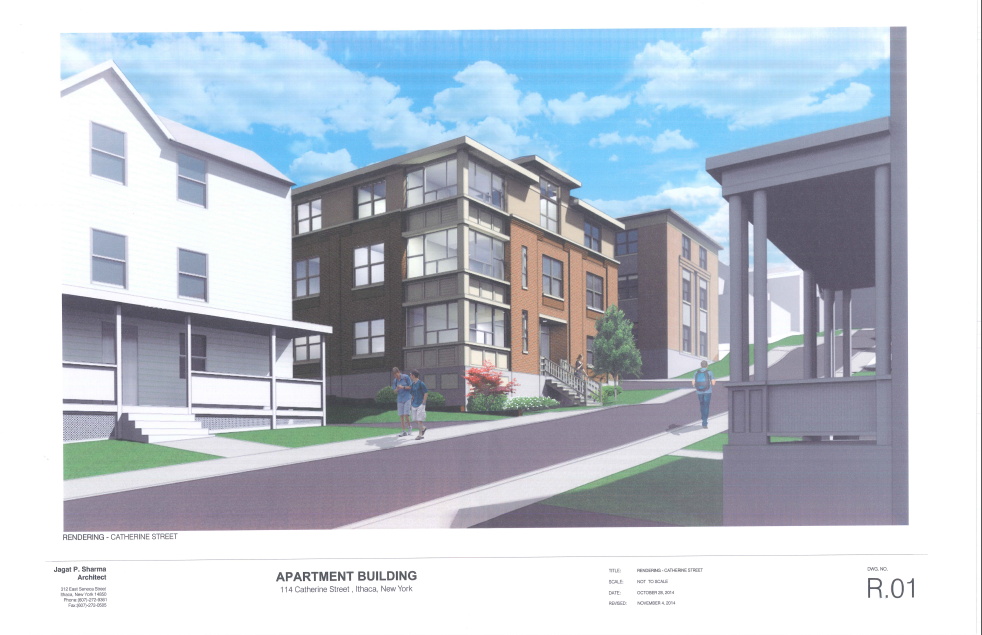
4. 114 Catherine has been approved, its Spring construction date looks good to go. When completed in August 2015, 17 more bedrooms will enter the Collegetown market – a drop in the bucket, but a valuable drop nevertheless.

chain_works_rev2_1

5. Towards South Hill, review of the draft generic environmental impact statement (DGEIS) continues for the massive Chain Works District proposal at the former Emerson Power/Morse Chain site. A scoping document of that DGEIS can be found here. In a nutshell, a DGEIS is part of the State Envrionmental Quality Review (SEQR), where the leading agency looks at a project, determines if any adverse project impacts are properly mitigated, and if so, issues a statement giving a negative declaration (approval). In this case, the NYS DEC also needs to be on board, approving the contaminated site for residential use. This is a pretty complicated project. There’s 800,000 sq ft of space to be removed or re-purposed, in an environmentally compromised site split between two political entities who are conducting joint meetings with their planning boards in an effort to try and move this project forward (the town of Ithaca board deferred to the city of Ithaca for lead agency; and both have been evaluating using their respective specialized mixed-use zones).

So far, there have been no nasty surprises on the polluted site. The site is mostly clean but still needed a little more for residential use, and Emerson will be flipping the bill for that. The comment period on the draft runs through the 10th, and the DGEIS will be finalized on the 16th. According to the project website, developer Unchained Properties LLC hopes to start Phase I, the renovation of four on-site buildings (21, 24, 33 and 34) into mixed-use and manufacturing space, during summer 2015. The mixed-use was initially proposed as office space only; but the developer behind the LLC (David Lubin) has struggled to fill the proposed office space in his Harold Square project, and seems to realize that having less office space would be a better plan for Chain Works as well.

6. The Cornell Daily Sun is reporting that the owner of CTB (Collegetown Bagels) is buying the Rulloff’s property and reopening the restaurant after it abruptly closed over the Labor Day weekend. The property was on the market for $395,000, and it’s fair to say the price was probably close to that figure. The murderous Edward Rulloff lives on.


News Tidbits 11/8/14: Getting the Word Out

8 11 2014

1. Let me start by acting all civic-minded and promote the public meeting INHS is hosting for the Neighborhood Pride site in the Northside neighborhood of the city. November 12th, 4:30-7:30 PM, inside the former grocery at 210 Hancock Street. As Jason at Ithaca Builds noted a few months back, this will likely be the largest development on the north side since the 1950s.

Here’s why your opinion is important. The site has walking access to many local venues, affordable housing is in very high demand, and the site as it currently stands is underutilized and an easy target for vandalism. INHS is looking to avoid a repeat of the battle that happened with Stone Quarry, and is actively engaging with the community to see what will and won’t mesh with neighbors. In theory (under zoning and given some assumptions), the site could host nearly 200 units of housing.  The city has already expressed a strong preference for an owner-occupied housing component, and the city comprehensive plan supports some small-scale commercial uses at the site, with higher-density residential. There have even been reports that the Sciencenter is interested in playing a role. So that’s the sort of framework here; how much housing, what proportion of renters vs. owners, and what sort of mixed uses if any.

chain_works_rev1_1

2. Well, this isn’t good – according to the Ithaca Journal, recent findings by Unchained Properties, the developer for the Chain Works District (a.k.a. the Emerson redevelopment), suggest the site is even more contaminated than previously thought. While the developer has said it remains committed to the project, I dread an Ithaca Gun repeat, where continually-worse pollution causes the project to grind to a standstill. According to the purchase agreement that Unchained Properties has with Emerson (which although it closed up shop in 2010, still owns the site), Emerson pays for all the remediation, which I suppose they’re okay with if it means getting rid of the site from their asset lists. A draft environmental impact statement is due for submission sometime after Christmas, with several city/town/developer meetings and discussions in the meanwhile.

dibellas_2

dibellas_1

dibellas_2

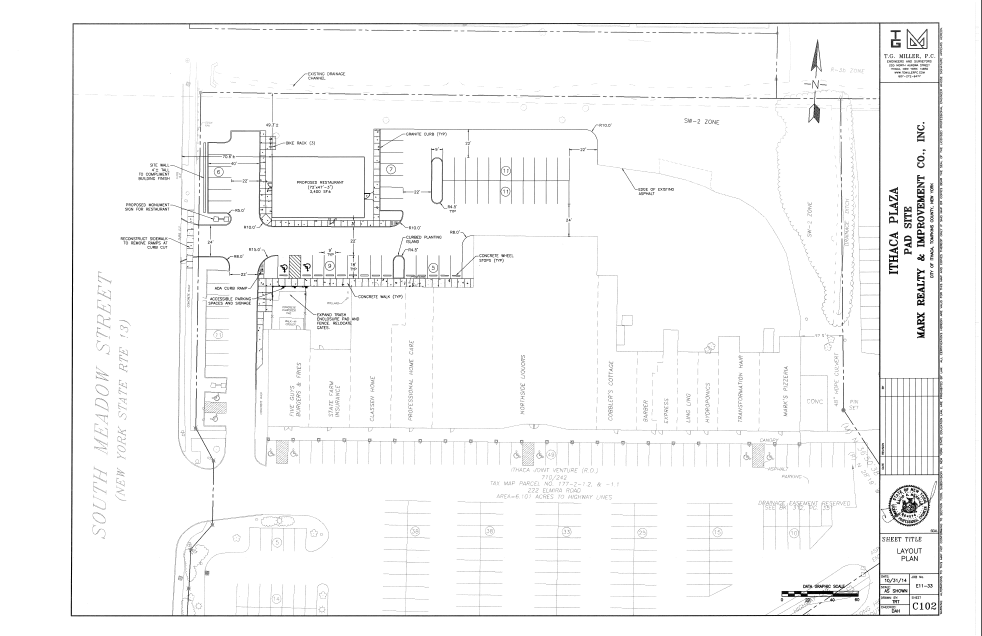
3. Now, I know everyone’s been complaining – we need more more suburban GeneriMerican chain restaurant boxes with ample parking. Your prayers have been answered! This time, the newcomer is DiBella’s, a chain sub sandwich restaurant based out of Rochester with about 43 locations scattered throughout six states in the Northeast and Midwest. Dibella’s “theme” is a vague 1930s/1940s look; the one near my office is just really dimly lit, reminiscent of my dead grandmother’s living room. Snark aside, the chain is looking to build a 3,400 sq ft building on an outparcel pad property at 222 Elmira Road – just north of Five Guys, and behind the Ithaca Shopping Plaza. Follows the “real estate guidelines” on Dibella’s website near-perfectly. Cover letter here, site plan review application here, more drawings and renders here, full environmental assessment form here. The application states that the construction cost will be about $600,000 and the time frame is from February to August 2015. They’ll need a BZA variance for lot coverage, which I don’t foresee being an issue. The plan is by NYC-based Marx Realty. It’s tax money, it’s “5+/-” jobs. Meh.

114_catherine_rev4_1

4. Some minor revisions to 114 Catherine, new renders here. Compared to the previous iteration, it has a little more detailing on the concrete base, and they changed up the panes in those corner windows. here’s the traffic plan, which kinda just states that students have access to buses, bike racks, delivery space and a little parking in the rear, and their own two feet. This one’s pretty much good to go for approval.

libe_0414

5. Friday the 7th, the county has another meeting to discuss the Old Library site, this one to finalize and release the actual RFP. For those interested in going tomorrow, it’s at 3 PM in the Heyman conference room at 125 East Court Street. I have a major concern here – the final choice on developer was supposed to be in March 2015. Now it’s January 2016. The county is putting an additional strain on all the proposals, because labor and material costs are increasing. This has the potential to remove desirable features from projects, or cause developers to simply walk away. The county was very fortunate to have six expressions of interest for the site; two have already walked away. If the county doesn’t get its act together or is perceived to be acting in bad faith, the potential is there for very few or no proposals when the due date comes in March 2015. It will be a very uncomfortable day for the legislature if that happens.

6. This could be interesting – according to the Times, the Maguire family (the ones with all the car dealerships) are proposing a new set of dealerships on the site of the current Rodeway Inn, south of the city on Rte. 13. The inn is looking to move to California (claiming the hotel boom is hurting his business) and the Maguires are proposing the following moves:

>Move sales of their Subaru-Hyundai, Fiat-Alfa Romeo, and Nissan dealerships — from Elmira Road out to the new site in the town. The site is currently vacant land, and the Economy and Rodeway Inns would be removed.

>relocate its Chevrolet Cadillac dealership from Lansing to southwest Ithaca city, where a new building would be built

>renovate its Dodge Chrysler Jeep Ram dealership in front of Wegmans.

It sounds like the only place losing business is Lansing. In a blend in all that is obnoxious and trendy in today’s planning, they’re calling it an “artisanal car dealership”. You sir, get a facepalm. Apparently, artisanal here means “modern architecture and a naturesque, university-style campus”. “Naturesque”. Another facepalm. Regardless of artisanal features, the project requires relocating the town’s proposed Saponi Meadows Park, and doesn’t fit with their comprehensive plan. Any movement on this will be slow (they tell the town they’re shooting for late 2015-2016 for a start date); but when those fancy artisanal renders come up, you’ll see copies of them here.


News Tidbits 9/20/14: Ithaca’s A Habitation Destination

20 09 2014

1. Expanding on the Ithaca Times piece on increased tax revenue from construction in the city, the IJ has come out with its own piece. Here are your spark notes:
I. Of the 6.16% increase in the tax base (an extra $1.2 million in revenue), 53% is due to commercial property construction.

II. “Only” 59.2% of property is tax-exempt now. Of which 83.5% of that 59.2% is Cornell and its holdings.

III. Building permits are lagging forecast revenue a little ($631k vs. $700k expected), but some larger projects are only getting their permits now, so it will probably balance itself out.

2. One more set of revisions for 323 Taughannock, pdf here. The differences compared to the previous revision are minor; the projecting “tower” on the southeast side has seen its windows tweaked, and the roof layout has been modified as well. This should be the last revision, since the project is up for final approval this month. The 20-unit residential waterfront project is set to begin in January, with a six-month build-out and $3.5 million price tag.

323taughannock_rev2_1

3. According to the IURA (Ithaca Urban Renewal Agency) meeting minutes, the city is very much interested in selling off a parcel it owns on Inlet Island, once it buys out the DEC’s property. Currently, 410-426 Taughannock Boulevard is used as a municipal parking lot. The 1.29 acre parcel was acquired for $1 by the city in May 2003. The parcel is assessed for over $300k, and that’s not including an adjacent parcel also used for parking (416 Taughannock). This is a large waterfront zoned (WF-1) piece of land, where the zoning is for one or more buildings with of 3-5 stories and nearly unrestricted lot coverage. For a developer, that means that there’s a lot of possibilities here. This would hit the market in early 2016 at the earliest, after 323 Taughannock has been built. But if 323 is successful, then I think this parcel will be highly desirable and any development on its land could potentially be quite large. Along with the DOT site up by the Farmer’s Market, Ithaca could have quite the developed waterfront at the end of the decade.

410_426_taughannock_1

4. Since approval in late summer of 2013, all has been quiet on the wooded and hilly site of 130 East Clinton. Frankly, given that it’s a Jason Fane project and he doesn’t usually dawdle (having significant resources allows him to secure construction loans with relative ease), I was surprised, and in private, this was a topic of debate. Well, now we know. He’s seeking tax abatements for his 36-unit market-rate project through the city’s CIITAP incentive program. As previously briefed on the Voice, CIITAP is a program that allows an abatement on a portion of property taxes for up to 7 years. The parcel needs to be in a targeted urban area, 3 stories, and receive at least $500,000 in developer investment (130 East Clinton’s projected cost is $4.5 million). The city’s meeting is the 18th, and if the city endorses the project, then chances are good the county IDA will grant the abatements.

Fane’s probably the least-liked developer in town due to his colorful local history (this would also explain why I had hits to the blog the other day with the search phrase “fane like mr. potter”), but there’s no compelling reason to deny his CIITAP application. He meets the program requirements, and for Fane, this is all about the money and taking advantage of an opportunity. Presumably, if the tax breaks are approved, we could see this one begin excavation and site prep before year’s end.

130eclinton_rev2

5. Another revision – this one the “Hampton Boutique Hotel” formerly known as the Hampton Inn downtown. A large number of major changes here – a floor has been added (bringing it to 123 rooms, 74,200 sq ft, 7 stories and 92 feet from ground to the mechanical penthouse roof), the external materials and the window layouts have been altered substantially, and of course, it’s no longer being proposed an a Hampton Inn (for comparison’s sake, the previous design is here). About the only thing that’s the same is the footprint. Part of these changes are likely the result of the Carey Building addition planned next door – the blank wall shown below faces the Carey’s rear side.

hampton_rev2_1

hampton_rev2_2

6. A lot more info about the Chain Works District proposal. For one, it will be in four phases. The first phase will consist of the redevelopment of 4 buildings on site – 21, 24, 33 and 34, which combined will create 343,510 sq ft of space, of which 18,520 sq ft will be new. Phase one is planned as office/mixed-use (21/24) and manufacturing space (33/34). New roads and parking lots will also be developed. Phase 2 will be renovations and selected demolition of the rest of the complex, and 3 and 4 will be brand new buildings on the factory’s 95-acre land. There’s no rush, phase 4 won’t be completed until about 2030. Note that the first image below is a hypothetical setup – none of those later phase site plans are set in stone.

chain_works_rev1_1 chain_works_rev1_2 chain_works_rev1_3 chain_works_rev1_4

7. Next week is going to be a fun week for this blog. Why, you ask? Well we’re going to have two new projects at the Planning Board meeting that will be presenting their sketch plans

The first is 114 Catherine Street in Collegetown. Currently, 114 Catherine, also known as the “Mission Apartments”, is a 5-unit apartment building last renovated in 1985, assessed at about $590k, and owned by Lambrou Real Estate. 114 Catherine is in a CR-4 zone per the new form guidelines, which allows for a 2-4 floor all-residential building with no off-street parking required. At about 0.27 acres, 114 Catherine is fairly large as Collegetown lots go (much of the current site is used for parking), and given the Lambrous’s multiple building Collegetown Park development that abuts the property to the north, whatever gets proposed here is a likely continuation of that complex. Expect another Sharma Architecture design, as Jagat et al. have been the Lambrous’ go-to architects for the past couple decades.

114_catherine_1

The second is…”Gun Hill Housing Project”…be still my beating heart. I’m cautiously optimistic that Travis Hyde Properties might finally, finally have achieved enough environmental rehabilitation of the once-toxic factory site that construction is now feasible. Fingers crossed, because this has been a huge pockmark on the city since the factory closed in 1986 (and demolished in 2008), has been in development hell for years, and redevelopment would really be a feather in the community’s cap. The last I heard, it would be about 45-50 units of non-student oriented condos, and most likely a HOLT Architects design (HOLT being a popular choice for Travis Hyde). I’m sure local environmental activist Walter Hang will be going over the project details with a fine-toothed comb, but like I said, fingers crossed.

12-29-2011 010