The Collegetown Construction Boom

12 07 2014

6-29-2014 163

Building off of some of the work I’ve done with Jeff Stein over at the Ithaca Voice, this will be done in the form of an explainer.

1. What do you mean by “construction boom”?

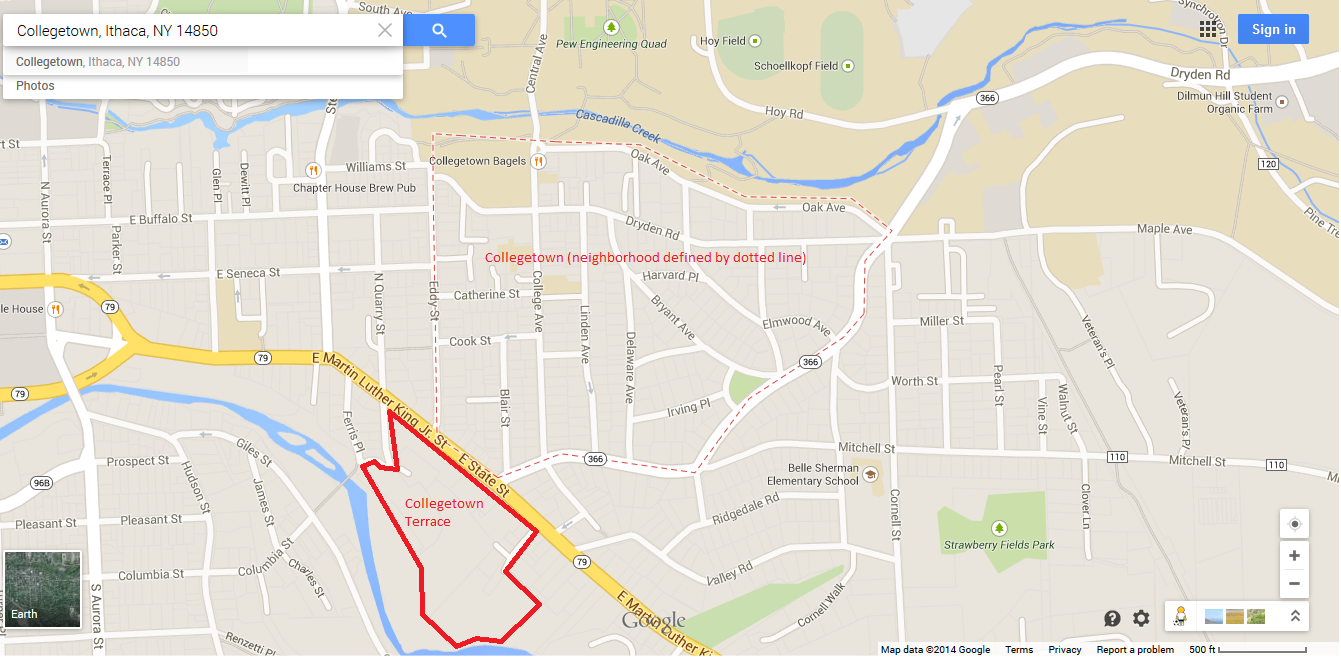
Housing proposals have increased in the city of Ithaca in the past couple years, and in no place is it more apparent than Collegetown. The recent proposal for 327 Eddy Street brings the total of proposed developments to five – 327 Eddy, 205 Dryden Road (Dryden South), 307 College Avenue (Collegetown Crossing), 140 College Avenue (the John Snaith House addition), and 202 Eddy Street (a reconstruction of a house that burned down). As proposed, the projects would add 86 units and 223 bedrooms to Collegetown proper, a level of development not seen since before the October 2007 development moratorium.

2. Moratorium? What’s that, and why did Ithaca vote for one?

In its basic definition, a moratorium is a temporary ban on an activity. In Ithaca’s case, a moratorium on all new construction was voted into place by the Common Council for what was traditionally defined as the Collegetown neighborhood. Construction already approved could go forward, but no projects in the neighborhood could be reviewed and approved until the moratorium was lifted. The moratorium was originally for 12 months, then extended to 18 months, finally lifting in April 2009. One might have expected construction to take off at that point, but it didn’t, for the same reason the moratorium was put into place – design and implementation of a new zoning plan for Collegetown, sometimes called the Collegetown Vision, and later, the Collegetown Urban Plan and Conceptual Design Guidelines.

3. It took them seven years to update the Collegetown zoning?

Well, if you count from the time the initiative was announced, it was actually eight years. Initially came a public meeting period from 2006 to 2007 to design an implementation strategy (you could joke they had a meeting on how to set up meetings). Then they selected Goody Clancy, a Boston-based urban planning firm, to design the guidelines based off city and market needs, and public input. When the plan came out in late 2008, a number of local officials and public members were unhappy because they felt it made Collegetown too dense, so they counteracted and endorsed a plan in August 2009 that reduced the proposed zoning, placed emphasis on annual payments in lieu of parking, and instated community incentives to allow for taller structures. For instance, at the corner of College and Dryden, the Goody Clancy plan called for 90′, and the revised plan called for 60′, with 75′ if special incentives were met, like hotel rooms or community space. If you’re really interested, you can view a 239-page PDF that shows the two plans here.

At this point, many of the major property owners in Collegetown were incensed by the complicated zoning plan and balked at having to pay for parking that many of their tenants wouldn’t use. The landowners ran to their lawyers, and faced with an insurmountable legal challenge, the city was unable to affirm their endorsement. For $250,000 in fees and costs, there was nothing changed from when the vision statement was written, because no one could come up with a compromise.
6-29-2014 158

4. Then why are we seeing a building boom if there was no zoning change? Or did the city actually come up with a plan?

In fact they did. One of the biggest changes to the plan over the past few years was the exploration and adoption of form-based zoning. Traditional zoning focuses on use – residential, industrial, and so forth. Form-based zoning focuses on the design of the structure – how tall it can be, should it have street-level retail, porches, window size, setbacks, and so forth.  There have been many meetings to work out the details, but eventually, a form-based plan was developed. I’m not going to bore you with the zoning details, but if you’re interested, I did a write-up here, and you can find a copy of the new zoning plan here. Perhaps the key detail to developers was that for the most densely zoned parcels, parking would no longer be required. In an area of extremely high land values like Collegetown, that makes all the difference.

5. So you’re telling me this came down to parking?

That was a big part of it, yes. Also, because the zoning’s been in flux for so long, a lot of developers who wanted to build were holding off because they weren’t sure if they would end up spending money designing and planning something that would be prohibited by a change in zoning. Once the new zoning was adopted this past March, it created an attractive, stable structure for those inner Collegetown parcels, and developers have responded in earnest.

6. Whoa, hang on. I’ve seen that huge Collegetown Terrace project going up on East State Street. Why aren’t you counting that?

Because it falls just outside what’s considered to be Collegetown, and was never affected by any of the zoning debate. Not to say that the project wasn’t controversial, but that’s another story.
ctown_bounds


News Tidbits 7/9/14: Look Into the Crystal Ball

9 07 2014

6-29-2014 331

News to peruse and keep you amused.

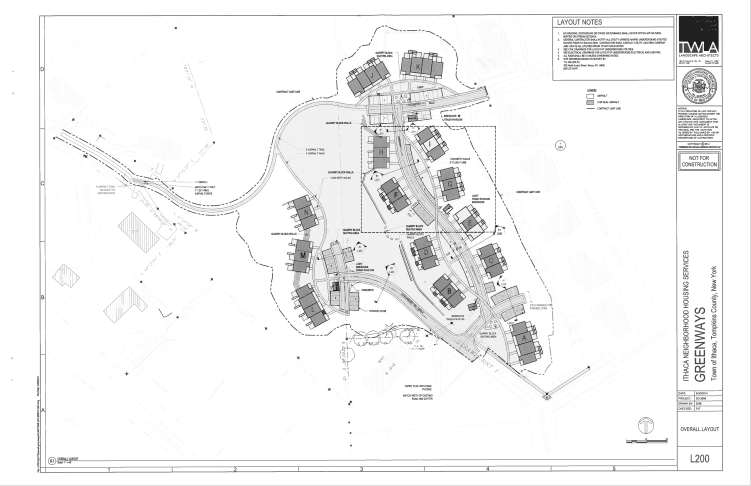
First, INHS’s Greenways, a project I spend way too much time writing about. The 46-unit affordable townhouse development went up for review with the town of Ithaca at the start of the month (along with a temporary classroom building, a new single-family building lot in Northeast Ithaca, and a YMCA pavilion). Due to a technicality, it was pushed back to the July 15th meeting. Along the agenda attachments are new renders and a simpler site plan drawing. The project will be built in three phases, and if Holly Creek is any guideline, each phase could take a year; so if I had to take a guess, from 2014- October 2015, we’ll see townhouse sections A-E built, a total of 16 units. The subsequent phases (F-K and L-N) would likely be built and sold over roughly 12-month periods.

One thing to note is that Cornell is selling INHS the land for below market-value, with the stipulation that Cornell employees get first dibs on units as they go up for sale. With 7,000 employees, I don’t imagine weak demand from Cornell staff. Cornell is fulfilling a goal it stated way back in June 2008, and one of the first posts I ever wrote for this blog. The image in that entry is one of the very few stock images I’ve ever used, by the way.

As for the townhouse designs, no complaints here. They’re simple and colorful.
I’m going to expand on my old library site ruminations – I don’t see INHS winning the site because they are going to be stretched pretty thin over the next few years, with this and the expansive Neighborhood Pride site, along with smaller builds. While they have shown themselves capable of large projects in recent years, multiple multifamily projects will be a very large undertaking; it’s hard to imagine the county placing another egg in INHS’s already-full basket.

greenways3

greenways4

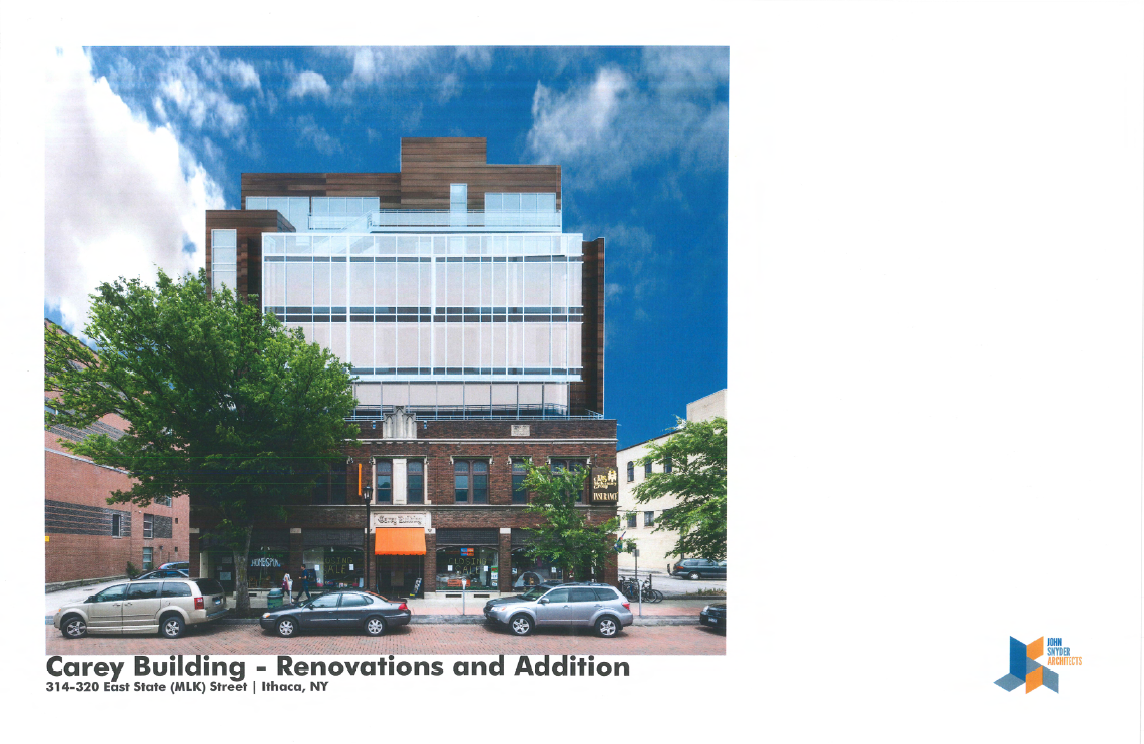
Next on the whirlwind tour, revisions of the Travis-Hyde’s Carey Building addition in downtown Ithaca (another topic that’s had a lot of keys typed on its behalf). The details are still the same, 18 apartments, most of them tiny, with office space on floors 2 and 3 and retail on the bottom. Compared to the old design, more windows have been placed in the east facade, the top two floors were reworked, and the glass block details are gone, replaced by regular windows. It’s an improvement, though I don’t like the blank wall on the west face.

carey_rev3_1

carey_rev3_2

carey_rev3_3

Next item on the list, the NYS Dept. of Transportation parcel on the waterfront. Similar to the old library, this site has an RFP for a study and analysis of the relocation of the DOT facility, and a subsequent redevelopment of the parcel. Proposals were due June 26th. Granted, since this involves the state, this won’t move any faster than NYS wants to (i.e. slow and reluctant – they’ve been planning a move to a site in Dryden since 2006; the DOT blames the torpid pace on hang-ups with funding, which is why the RFP is asking someone else to come up with a plan). The feasibility study will be complete by May 2015, with the site re-development expected to begin in early 2017, assuming moving the DOT site is feasible. It’s a large parcel with strong potential for the mixed-use development that the city wants per the comprehensive plan. Who knows, there might actually be something to write about in five years.

waterfront_rfp

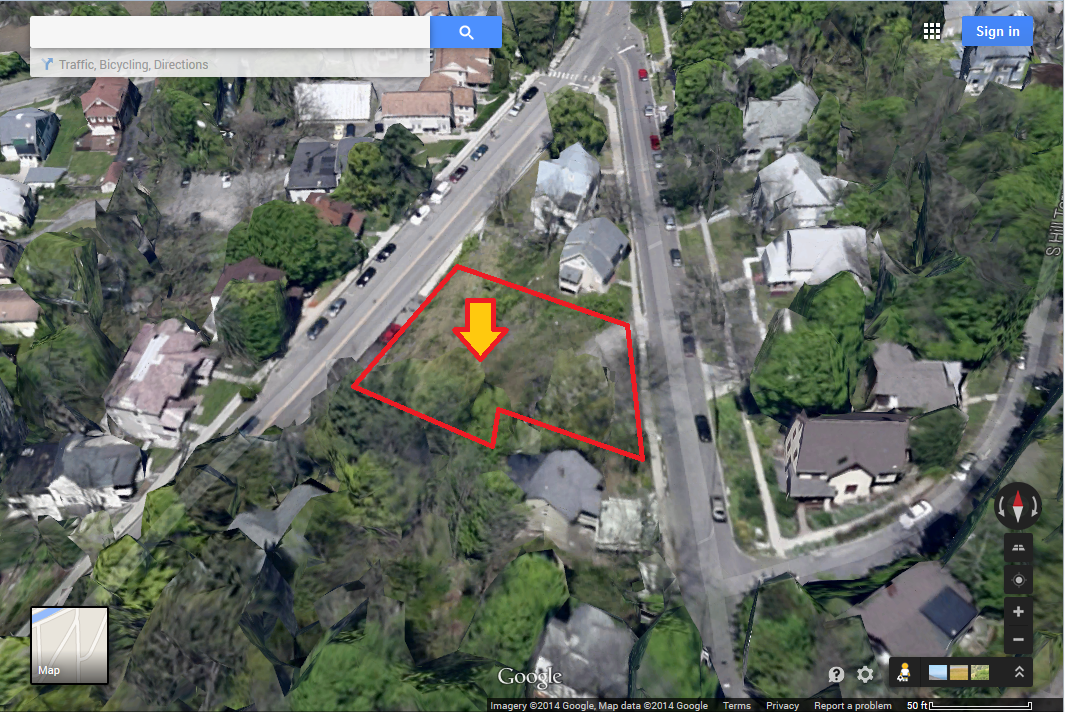
I’ll wrap this up with another potential future development: 215-221 W. Spencer Street, the parcel shown below. The Ithaca Urban Renewal Agency (a city department) sold the 0.47 acre property for $110,000 in April. The buyer intends multi-family housing. 701 Cliff Street, a small parcel left vacant the demolition of a dilapidated house, received multiple offers and was sold for well above asking price. Its buyer intends one or more housing units.

Using the zoning map as a guide, 215-221 West Spencer is in an R-3a zone that allows for a 40′ structure with 35% lot coverage. That’s a max theoretical buildout of 28,662 sq ft (which if you give 20,000 sq ft for the housing units, and 1,000 sq ft per unit, we get a hypothetical 20 units), but whatever does get proposed will likely be somewhat smaller. The site is something to keep an eye on in the long-term.

215_221_wspencer


Odds and Ends Construction Updates, June 2014

6 07 2014

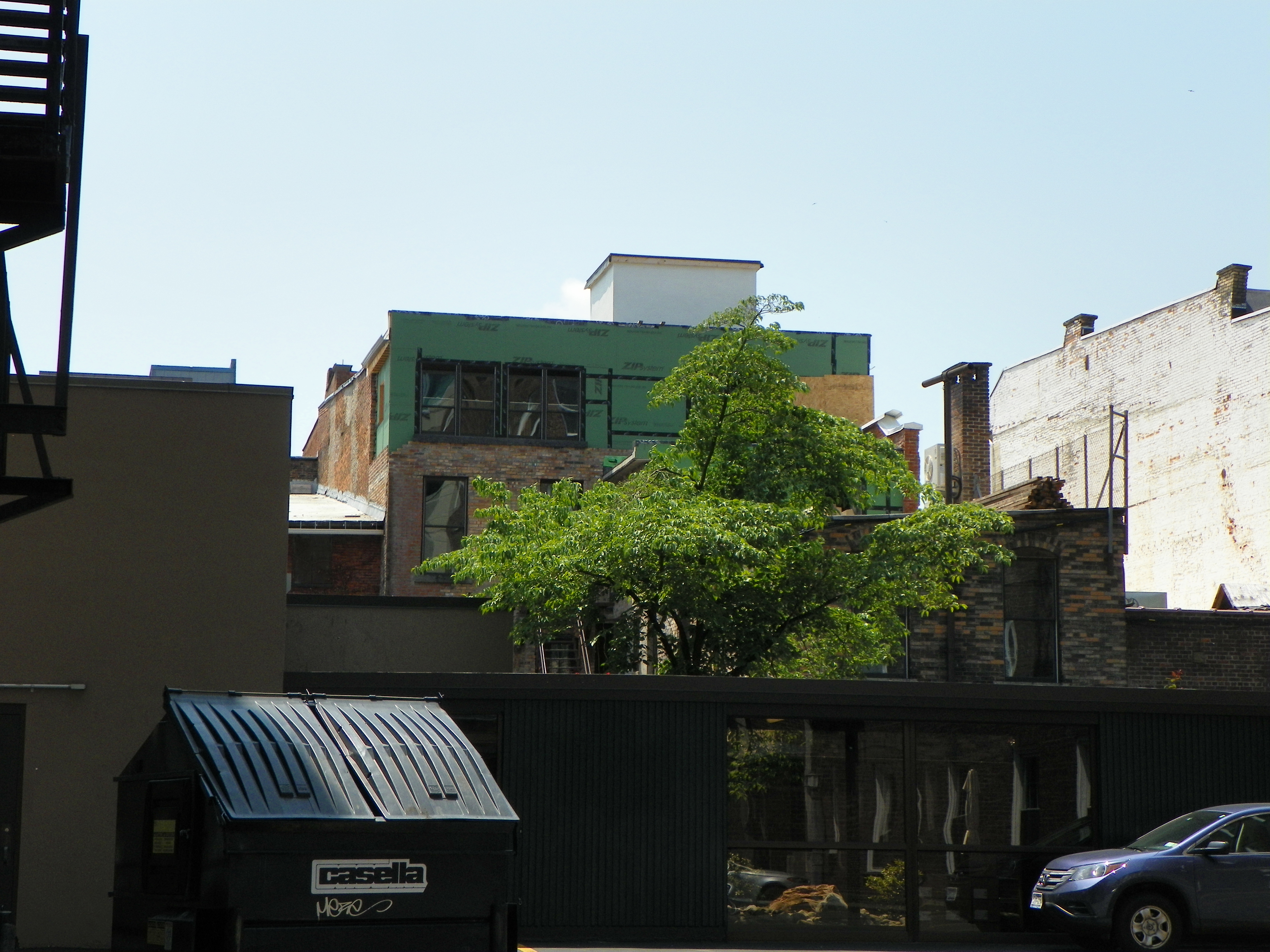
Random odds and ends. First off are the Lehigh Valley House condos, which will take the century-old Lehigh Valley House and renovate it into ground-floor commercial space and six condominium units on the upper floors. The project is being developed by Tim Ciaschi; the Ciaschi family has a long history of work in Ithaca. I note that my photo is a few days before IB’s latest update, given the progress of the siding installation.

6-29-2014 184

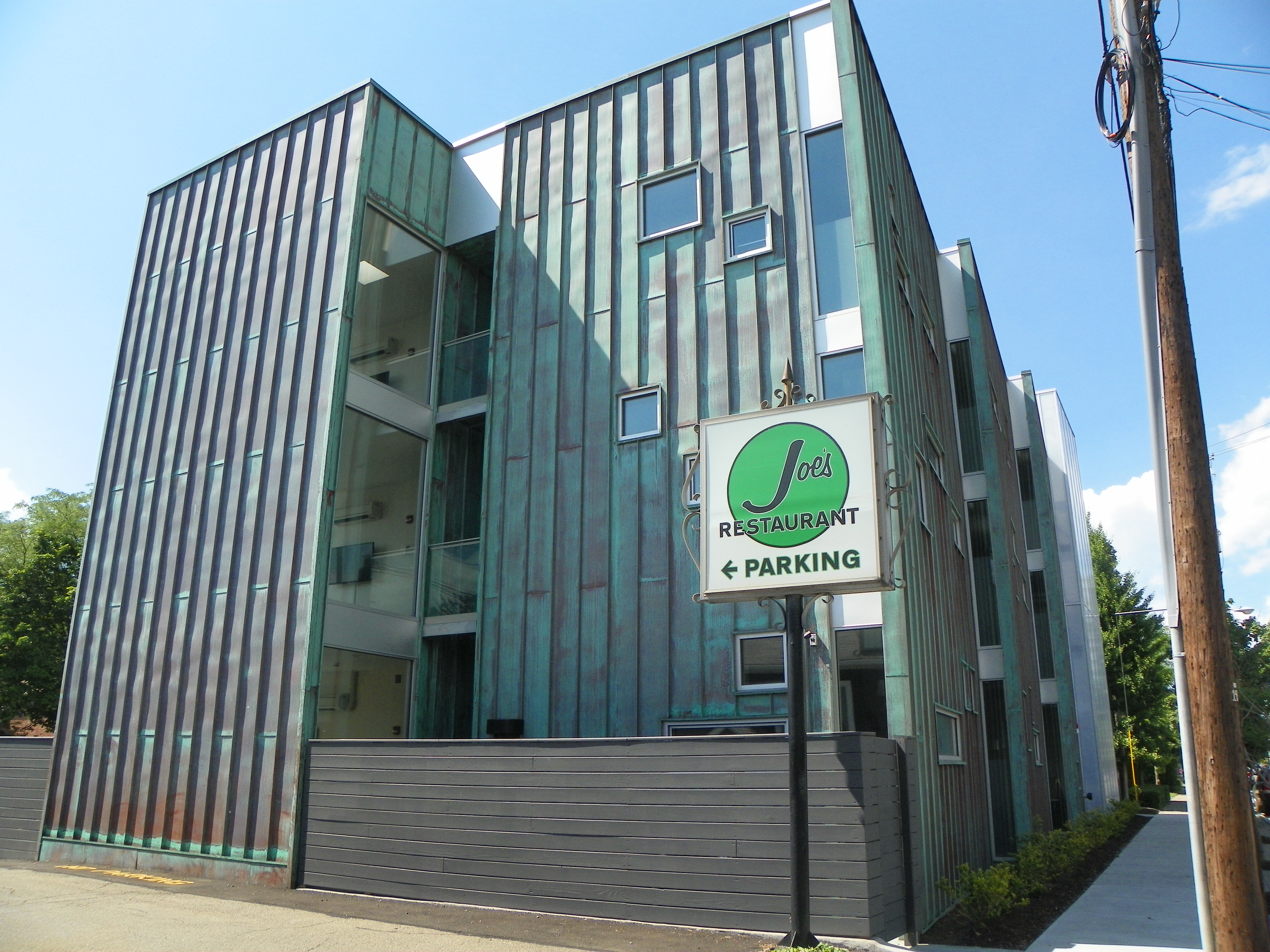
A couple blocks away on 13 is Magnolia House, a $2.7 million project that provides a 14-person shelter for homeless women. It took a while to open, but it looks like that it’s occupied, if the furniture in the second photo is any clue. I liked this better when the copper was fresh.

6-29-2014 194 6-29-2014 195

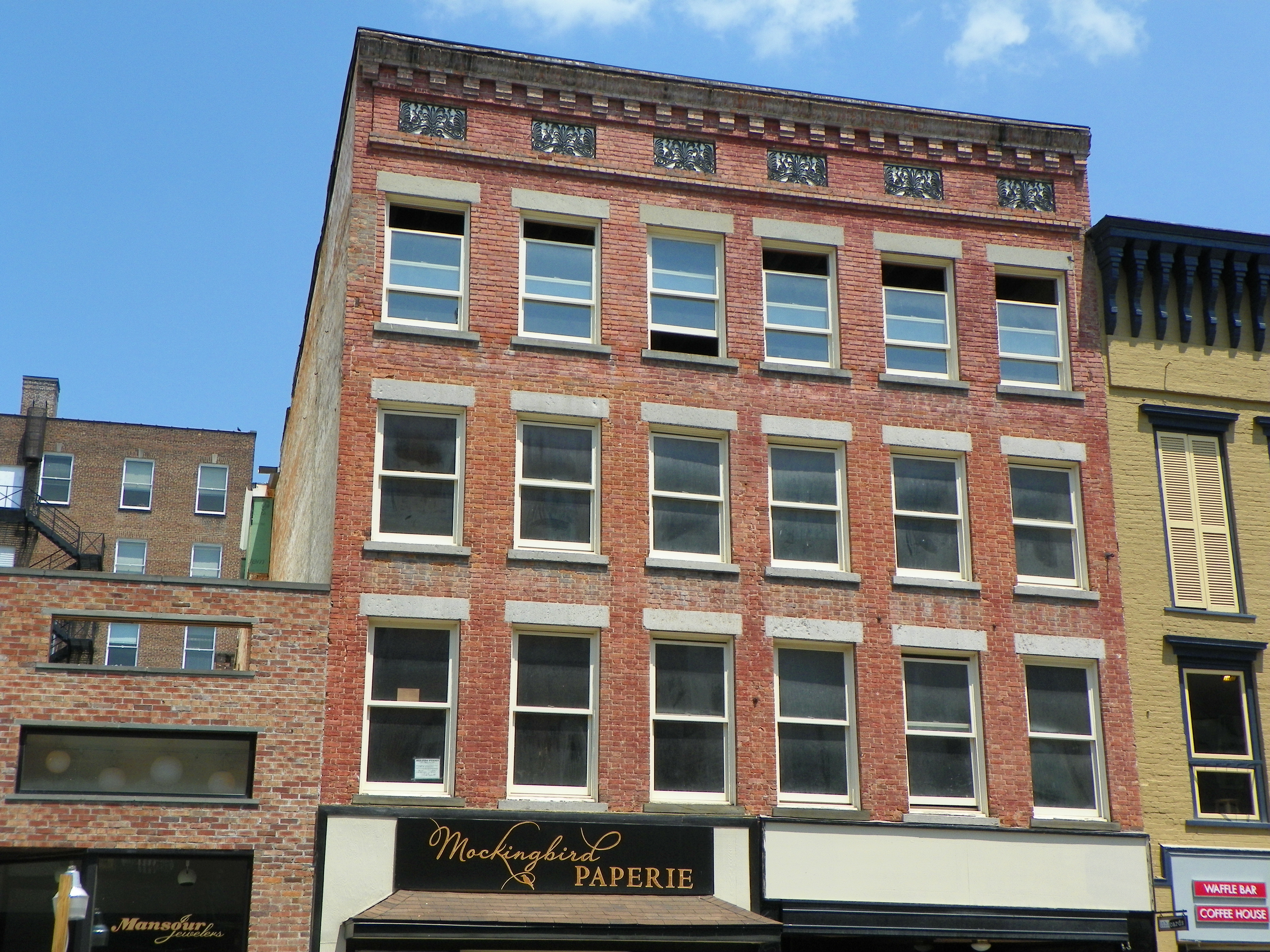
Here’s a project that’s flown under the radar. Downtown at 144 the Commons (Mockingbird Paperie/Ithacards building), local developer Jim Merod is building seven apartments into renovated space on the second and third floors, three each on the second and third floors and a new penthouse suite in an expansion of the top floor. This one will probably be available for renting by late fall.

6-29-2014 268 6-29-2014 269 6-29-2014 285

I figured I could use a couple photos of the completed Breckenridge Place. The affordable housing project by INHS brings 50 units of moderate-income units to downtown, and as Jason has covered, the lack of affordable housing in Ithaca is a major, major issue. Recently, there’s been some drama with the Old Library site since the projects have been more focused on apartments rather than condos. Condos would be nice, but from the county’s perspective, there’s a problem – condos require someone to have considerably greater financial assets than an apartment; you buy a condo, you rent an apartment. This pushes a project out of the affordable range, and the DPI proposal has already said it’s geared towards middle-to-high end incomes. I’m sure a project like that would be financially profitable (see the Danter study for evidence), but that’s not the point. If the county gets to choose the developer, and is seeking affordable housing as a way to provide the greatest community benefit with its assets, why would they choose a project that benefits only the wealthier portions of the community? I realize I might be stepping into s–t on this one, but this has been nagging me for a while. Condos are a great idea, but these are the wrong circumstances.

6-29-2014 273

6-29-2014 277

The site of College Crossings, just south of Ithaca College. The land is cleared and some construction equipment is on site, but it’s hard to tell if this is one is actually under construction. A friend who lives nearby explained that in her perspective, “they spend all day in the bulldozer pushing dirt back and forth, but not actually doing anything”. This project has dragged for years, so I wouldn’t be surprised. The website claims two of the six retail spaces are rented and a third space is pending, and the sign on the property indicated a Subway and Dunkin’ Donuts were future tenants. The upper floor will have two apartments with four and five bedrooms respectively.

6-29-2014 199


Cornell Construction Updates, June 2014

4 07 2014

Three sets of Cornell updates in this post – the law school addition is complete, Klarman Hall excavation is underway, and a picture from the Statler Hall renovation (which Jason just posted about).

The law school addition, by Boston-based Ann Beha Architects and constructed by Welliver, is part of the multi-phased renovation of the law school, which began in 2012. The cost of the renovation is begged at $55-60 million, with 40,000 sq ft of new space and 160,000 sq ft of renovated space. The architects specialize in contemporary additions sympathetic to present facilities – arguably, one of the few parts of Cornell where this was deemed an important matter (looking at you, Hotel School).

The Hotel School addition is phase three of renovations, adding a modern entrance to Statler Hall. The glassy entrance will add 1,619 sq ft at a cost of $2.4 million, and should be complete in time for the fall semester.

Klarman Hall, given its notable location behind Goldwin Smith, is the campus project du jour, sporting 67,500 sq ft of space (33,250 sq ft usable) and a $61 million price tag. Foundation footings will be completed by early august, and foundation pouring by mid September. Final construction will wrap up in December 2015, as posted on the sign below.

6-29-2014 169 6-29-2014 170 6-29-2014 172

Apparently naming green spaces is fashionable. I thought that Pew Quad and Rawlings Green would be the extent of it.

6-29-2014 175 6-29-2014 176 6-29-2014 177 6-29-2014 178 6-29-2014 179


Cayuga Place Photo Update, June 2014

3 07 2014

As previously shown by Jason at IB a couple weeks ago, foundation work continues at the Cayuga Place condominium project along Six Mile Creek in Downtown Ithaca. In the couple weeks between his last photo set and this set, work continued with the foundation pouring, and more rebar was laid in place (IB offers a much more through level of foundation construction here). The top down view from the garage gives a pretty strong idea of the footprint of the building, which will be seven stories. Cayuga Place will add 39 residences when complete, contributing to downtown’s rapidly growing residential market. The project is by Cincinnati-based Bloomfield/Schon, and the foundation work by Turnbull-Wahlert Construction, also out of Cincinnati.

By the way, going up to the top of the garage required going the long way up the ramp – a homeless man was sleeping next to the door on the top landing of the west stairwell, and hornets were having a field day in the southeast stairwell.

6-29-2014 300 6-29-2014 301 6-29-2014 315 6-29-2014 320

cayugaplace_v5


Planned Parenthood Update, June 2014

2 07 2014

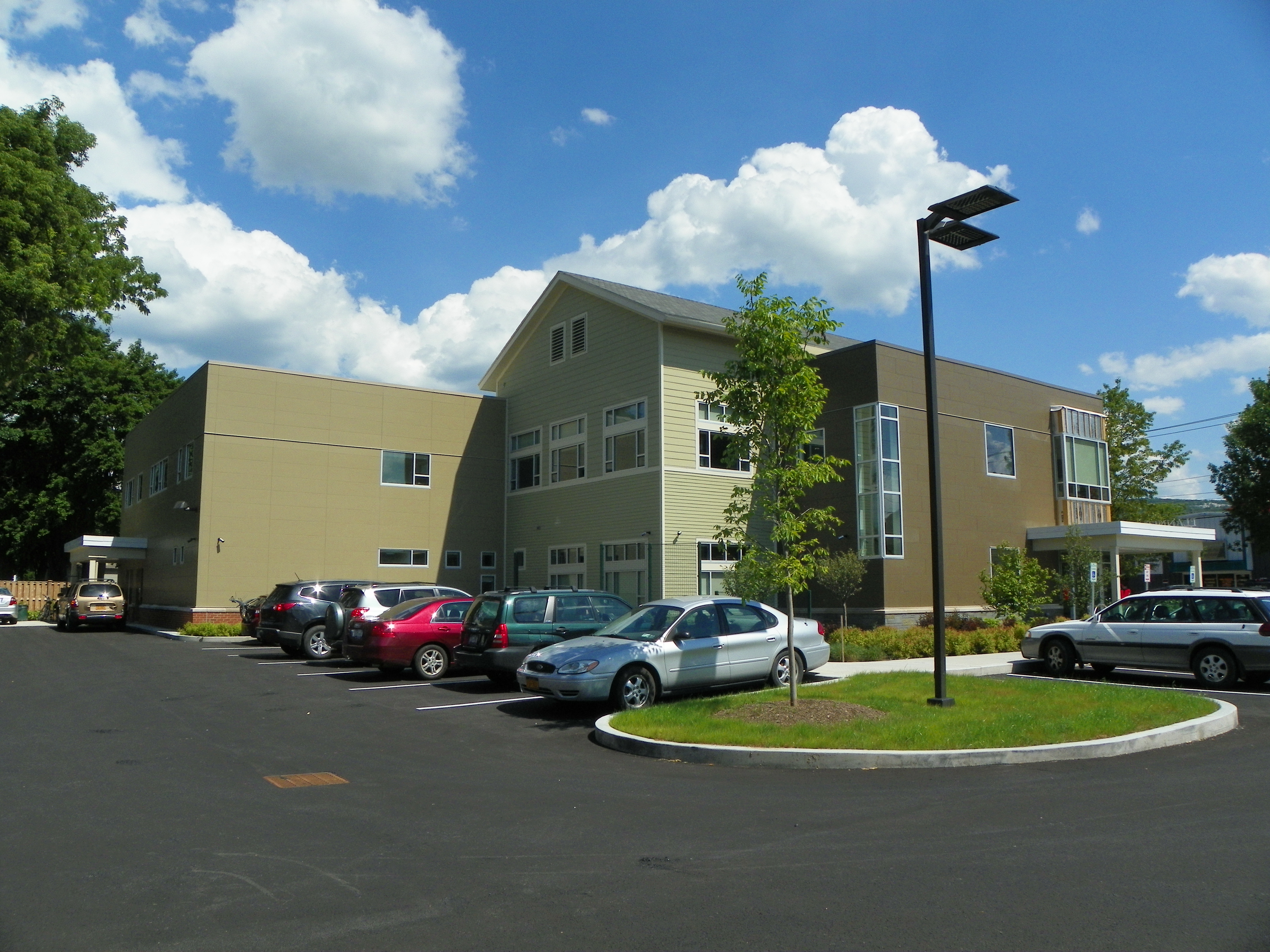
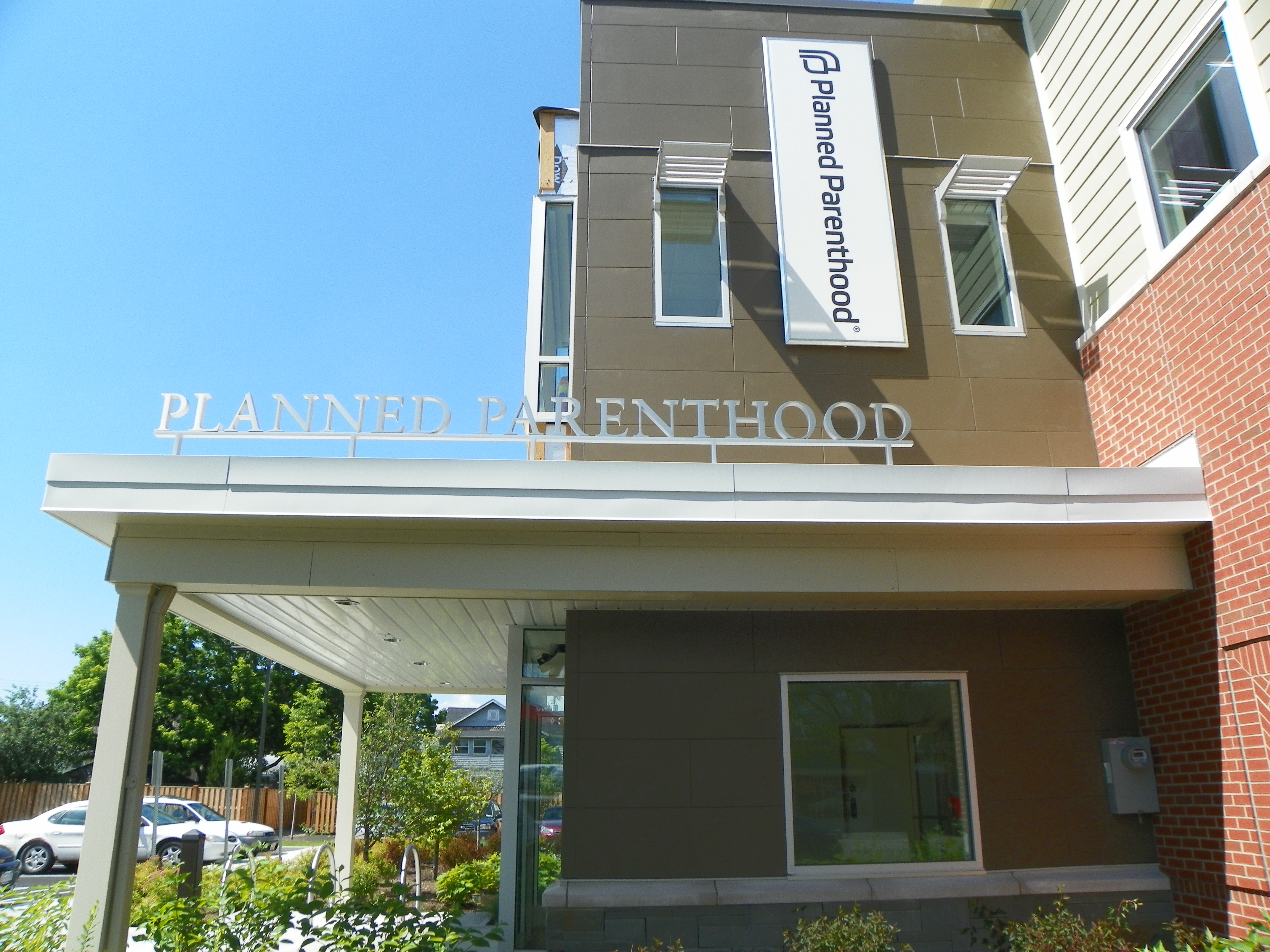
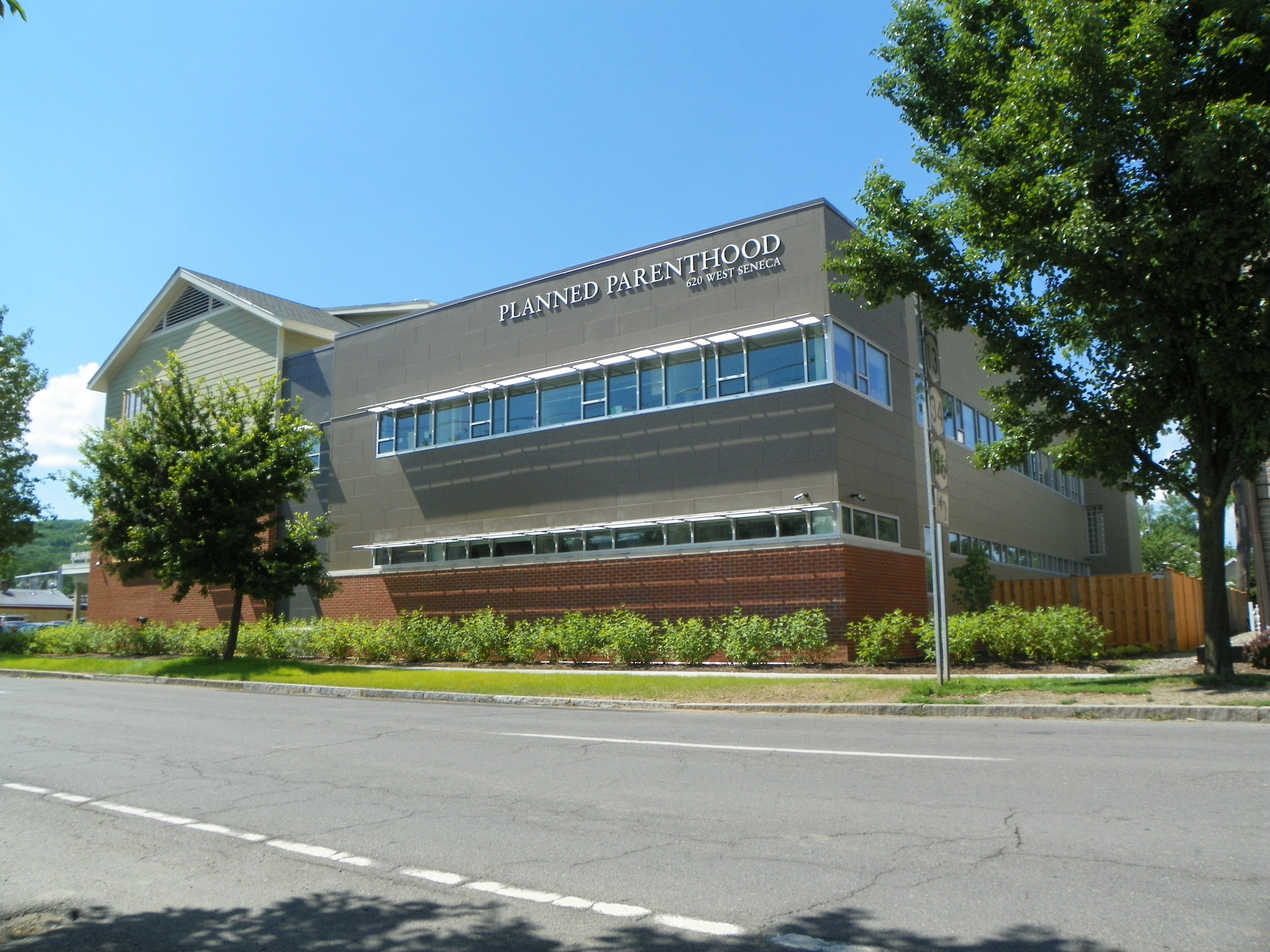
Over on the west side of the Ithaca, Planned Parenthood’s new building is nearly complete, with just a couple exterior siding left to install (both missing sections appear to be the same type; perhaps there was a shortage or delay of some kind). Jason at IB has done a great job chronicling the construction of this project, and since his photos in early May, some exterior flashing was installed and some windows were placed into their frames. Given the parking lot, it appears that PP has moved in and is fully operational. The 16,000 sq ft project was designed by local architecture firm Chiang O’Brien, and built by LeChase Construction.

The community should be pleased – it’s an attractive project that is helping to revitalize the once run-down streets of West End.

6-29-2014 186 6-29-2014 187 6-29-2014 188 6-29-2014 189 6-29-2014 190


Belle Sherman Cottages Update, June 2014

1 07 2014

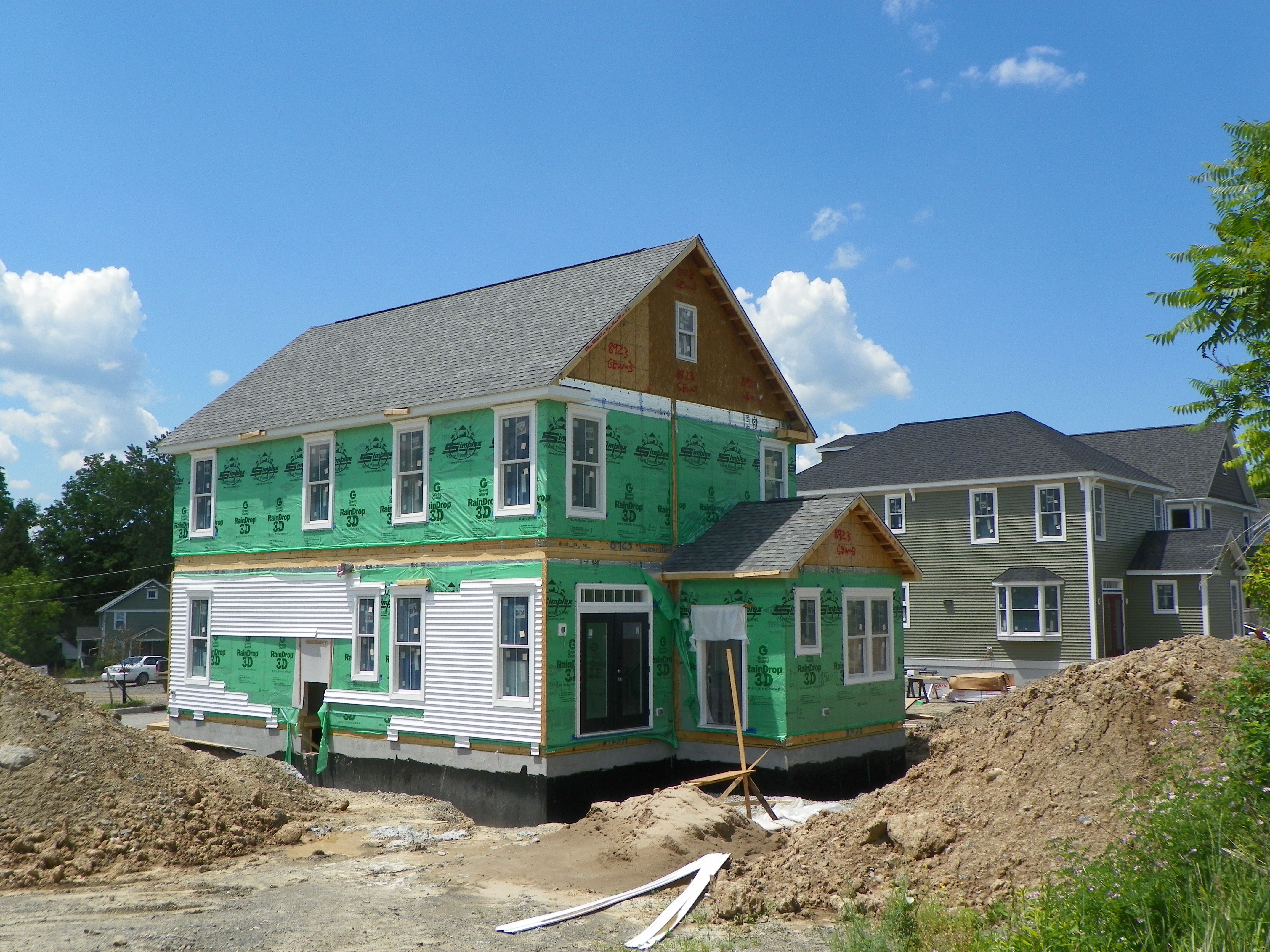
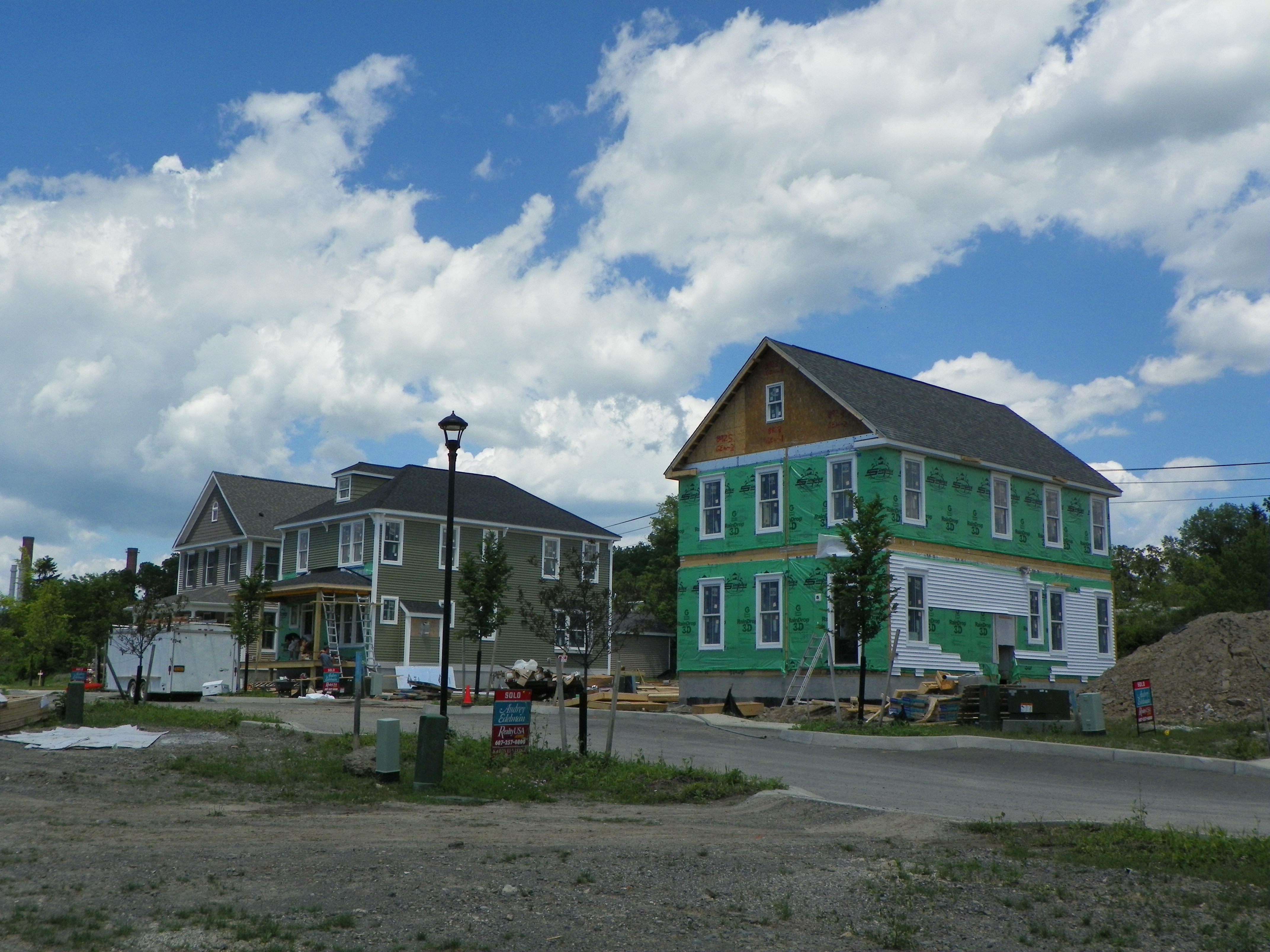
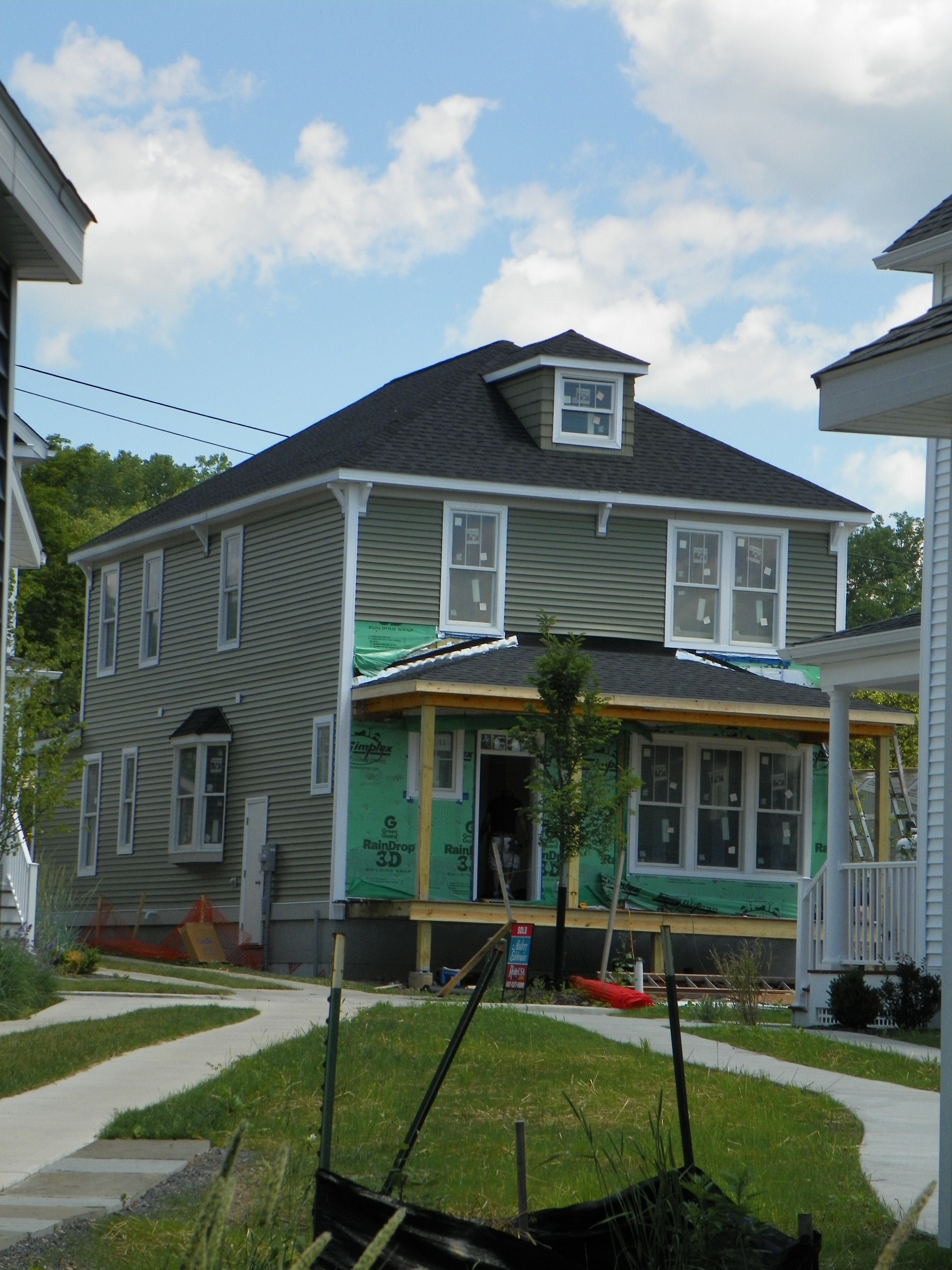
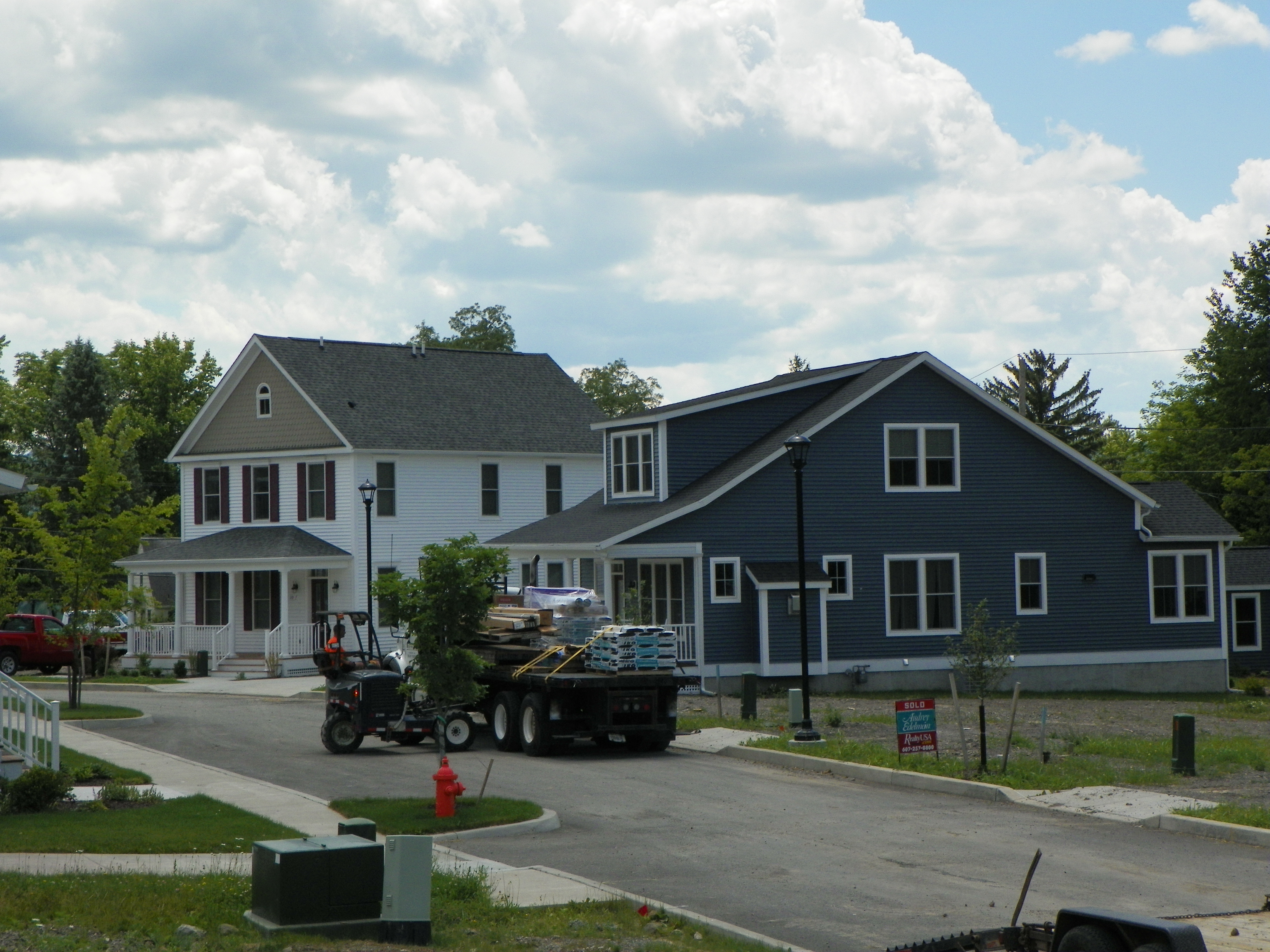
Work continues on the Belle Sherman Cottages on the east end of the city (technically, just over the city line in the town of Ithaca). Homes have sold at a rapid pace this year, going from just six lots/homes in the first two years, to at least eleven more lots/homes sold in the past six months (this count includes at least one townhome that was sold). Only 3 of the 19 single-family home lots are still for sale – lots 9, 11 and 12, on the southwest side of the parcel. Lot 9 will be used to showcase a new “cottage” design that has not yet been built. I don’t know why there’s been a sudden uptick, but at this point, I would not be surprised if the last lots sell before the end of the year (along with several more homes completed before winter arrives).

Since I last came through in late April, lot 13 was completed, and two more are under construction – lot 6, a “craftsman farmhouse”, is the first home built in that style. Lot 4, also underway, is a “classic farmhouse”, recently assembled from its modular pieces. There was no indication of site prep or construction for the townhomes.


6-29-2014 132 6-29-2014 134 6-29-2014 135 6-29-2014 137 6-29-2014 139 6-29-2014 140 6-29-2014 142

6-29-2014 133


Boiceville Cottages Update, June 2014

30 06 2014

Decided to pay these a visit while on my way to a Sage Chapel wedding. Also, to prove to myself that I could take pleasant-looking photos of this complex.

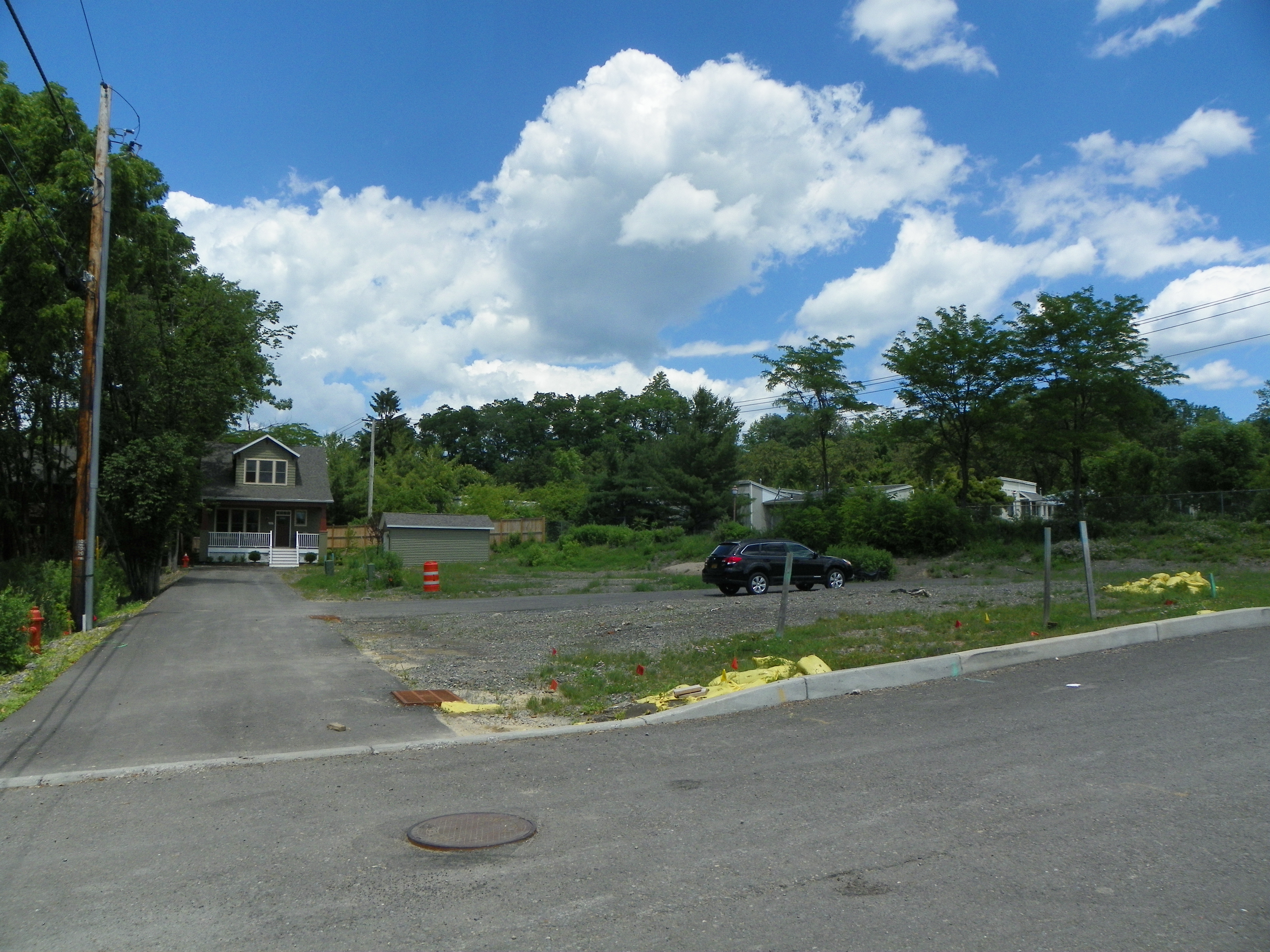
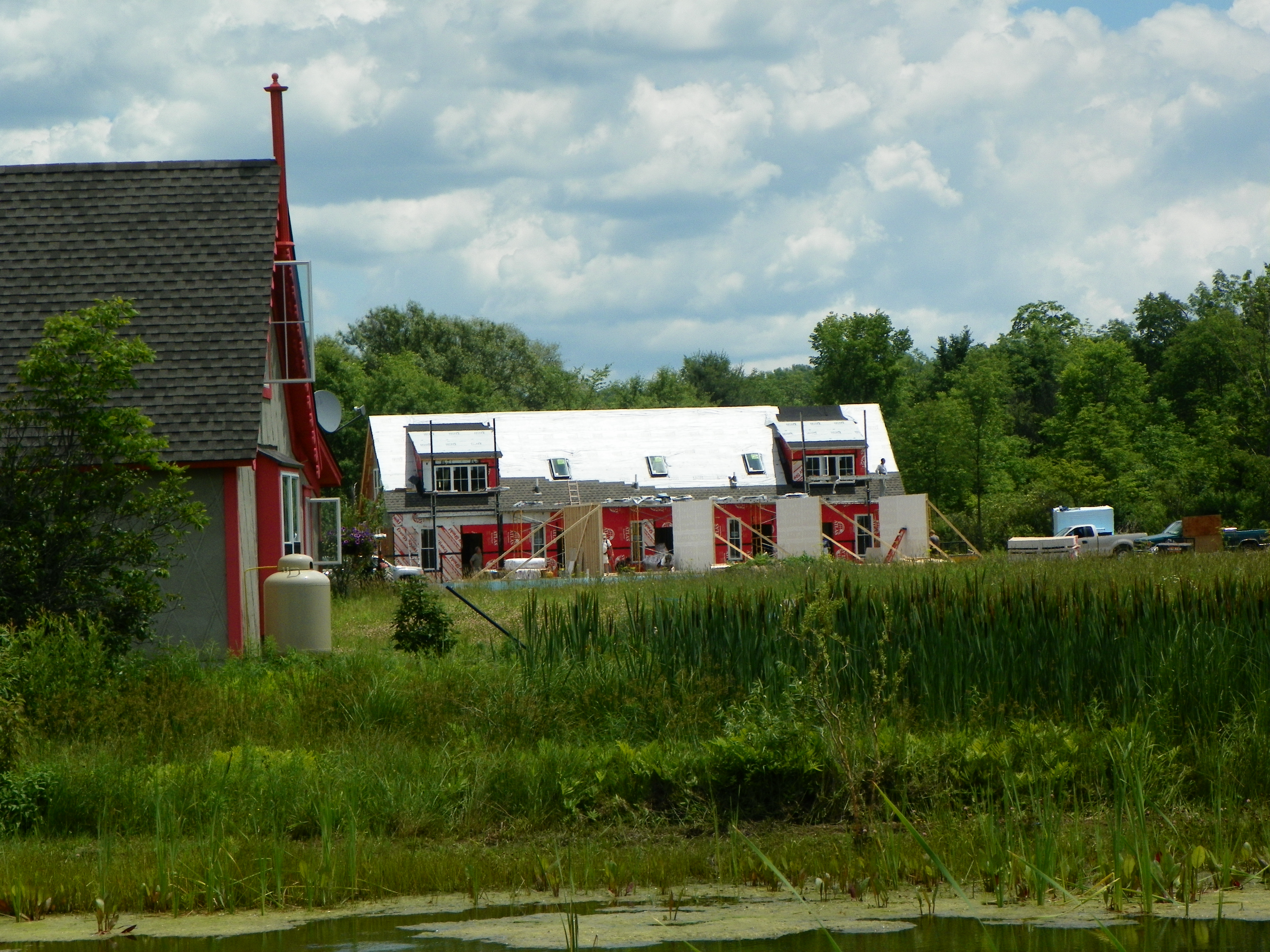
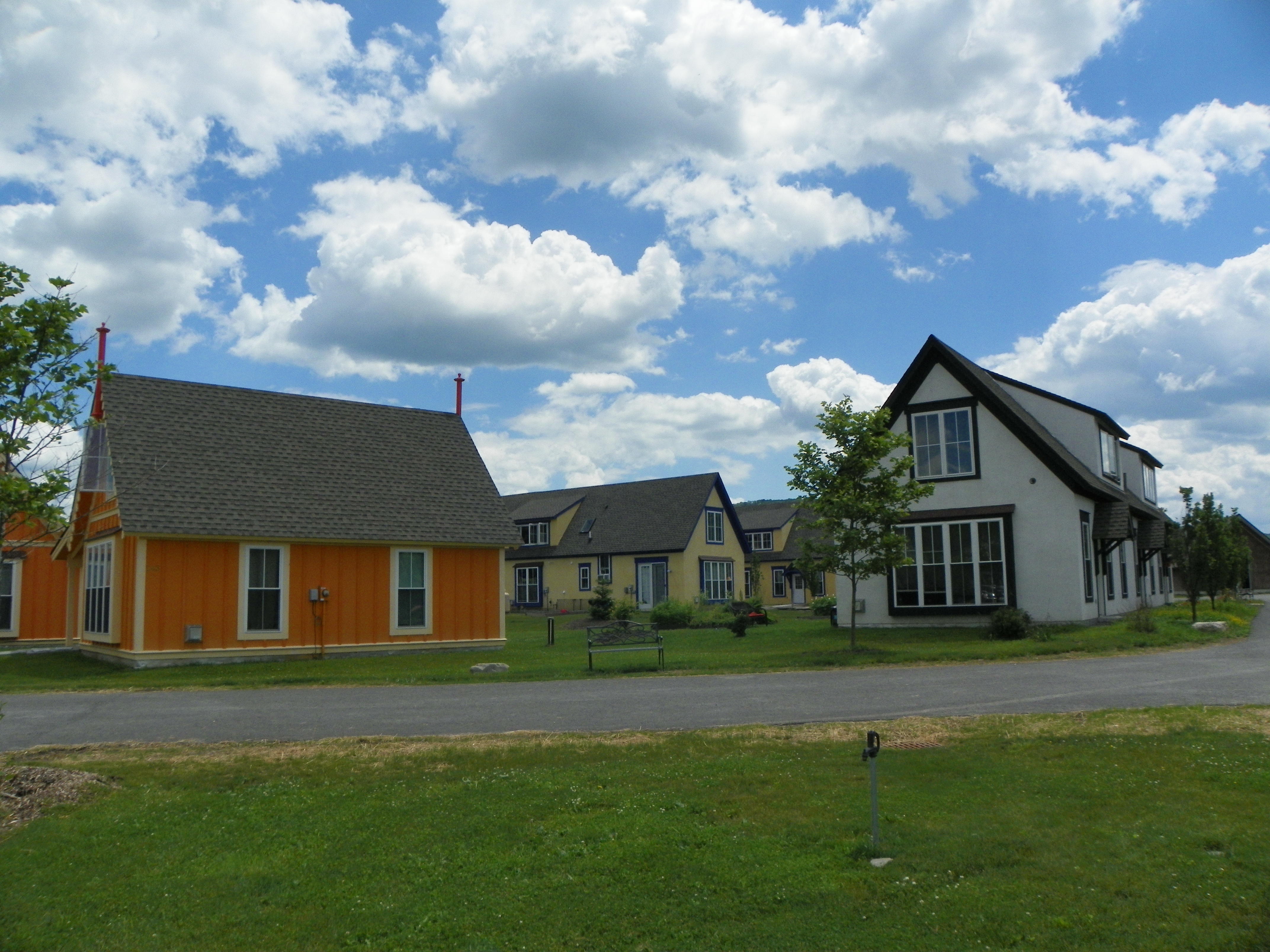
Several buildings were underway, and two were a new style – five-unit gatehouse structures. They appear similar to the three-unit gatehouse structures already built, but the first hint that these were different comes from the dormers being positioned further out. My guess would be they they are one-bedroom units on the end and studios in the middle three units. A set of three houses, the ones with the orange trim below, appeared to be in the last stages of construction. The pink-trimmed and blue-trimmed homes next to them have only just received landscaping, and appear to have tenants.

6-29-2014 120 6-29-2014 121 6-29-2014 122 6-29-2014 123 6-29-2014 124 6-29-2014 125 6-29-2014 126 6-29-2014 127 6-29-2014 128 6-29-2014 129 6-29-2014 130


News Tidbits 6/26: The Carey Building’s Addition, Revealed

26 06 2014

carey_rev2_1

Okay, so technically, the previous renders shown on this blog were massing studies for the addition proposed for the Carey Building. The newly-released design is here. The design comes courtesy of local firm John Snyder Architects, working with local development firm Travis Hyde Properties.

carey_rev2_2

Based off the attached floor plans, it looks like there will be 18 apartments, 16 studios (most in the 250-350 SF range), and 2 2-bedrooms. Floors 4 and 5 will have 7 studios each, and 6 and 7 will have one studio and one 2-bedroom each. The “micro-apartments” are definitely small but will allow for more modest rents, tapping into some of the need for affordable housing in the city.

4-13-2014 079


More Housing for Collegetown: 327 Eddy

25 06 2014

327_eddy

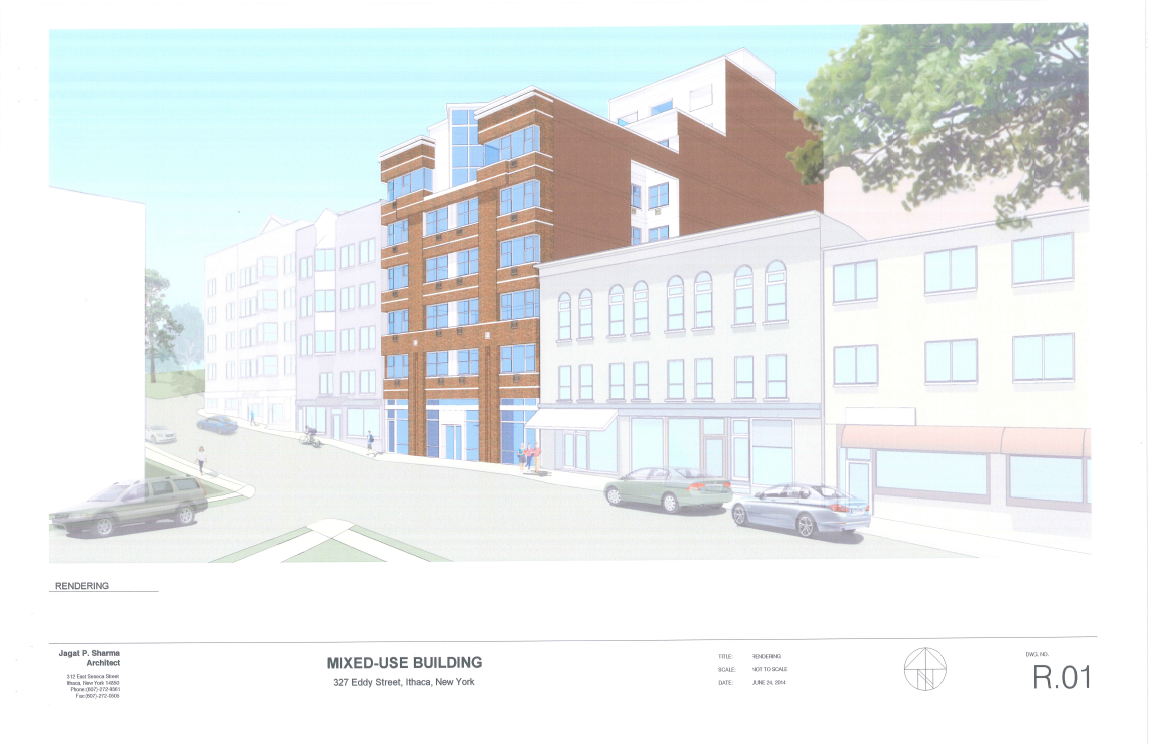
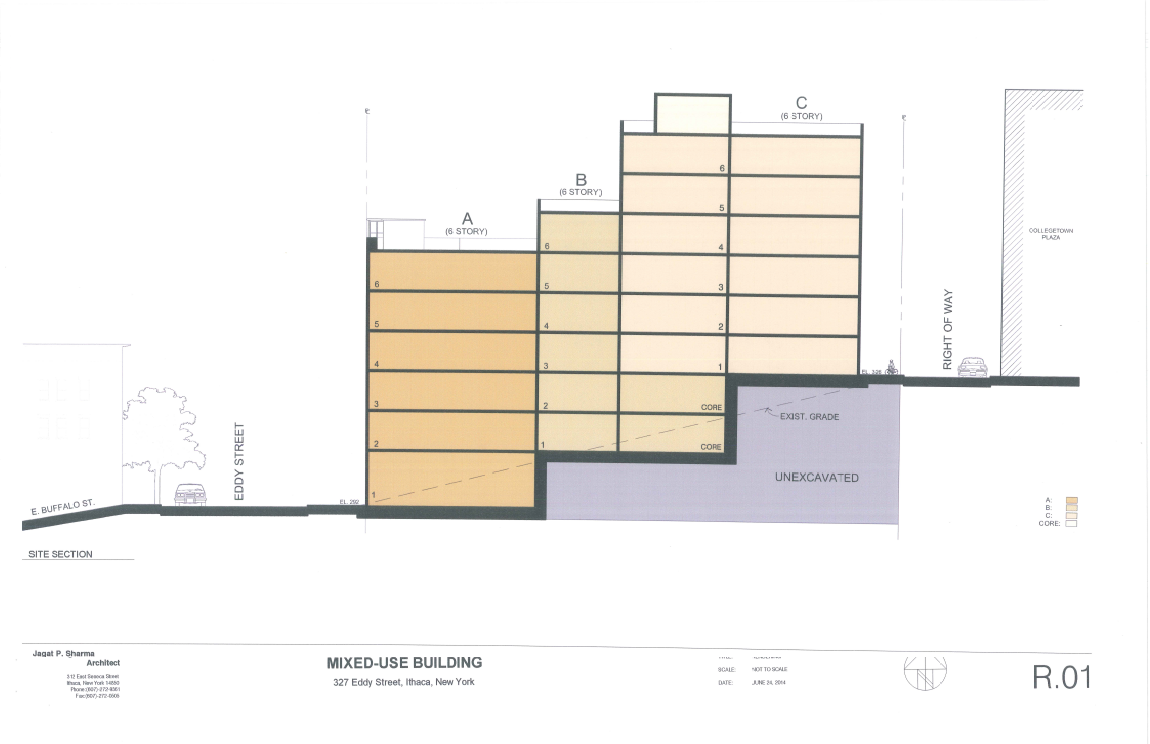
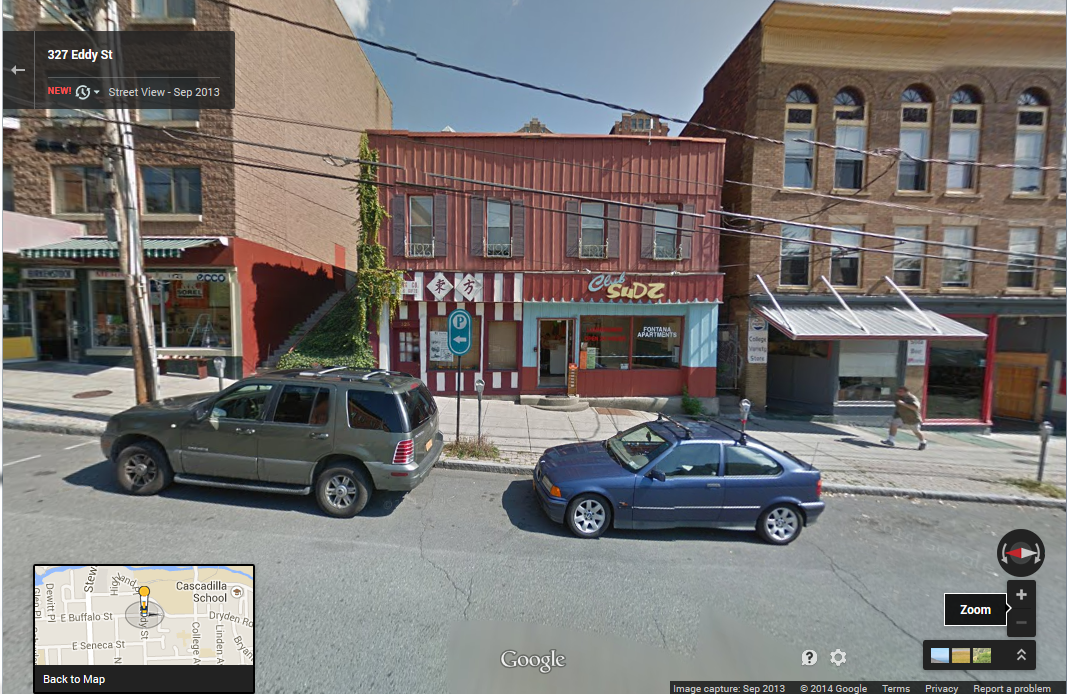
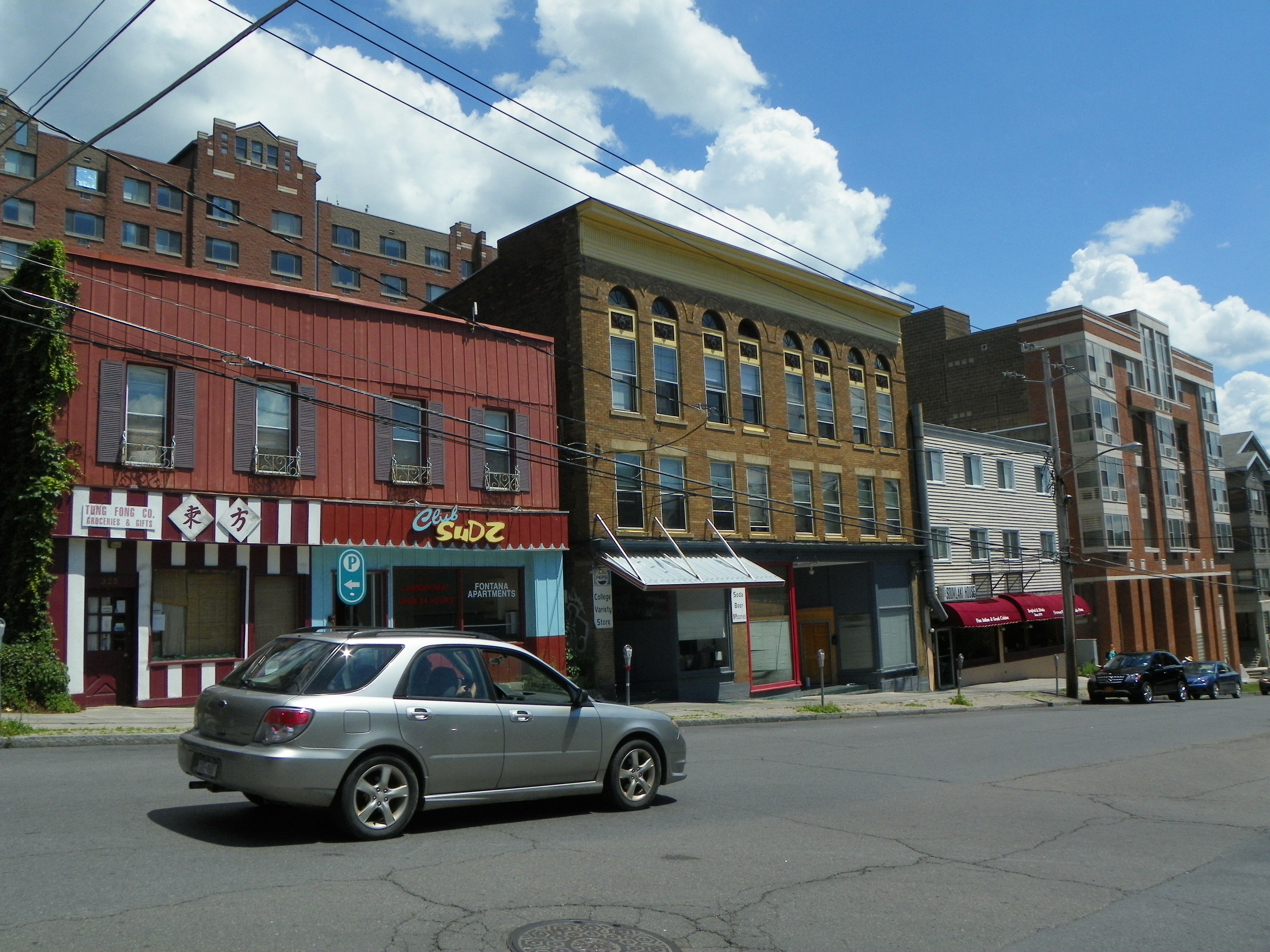
Cover letter with brief description here, renders and site photos here. The site is currently home to the “Fontana Apartments”, although Cornell students might better recognize it as the home of Club Sudz and Pixel in the rear. The Fontanas are famous for their 107-year old shoe store, they’ve been long-time landlords on Eddy street and developed the apartment buildings north of the site in 1985/86. The project would tear Club Sudz and Pixel down and replace them with a 28-unit, 64-bedroom building, designed by local firm Jagat Sharma (which I have no problems with, but seeing as Sharma Architecture has designed almost every large building in Collegetown, including the two on the left in the rendering, I would love to see something different). Retail space will be on the first floor, which is required in the Collegetown MU-2 zone. MU-2 also has no parking requirements – we’re following a theme here with the MU properties; now that the parking requirement is gone, it’s been nothing short a development bonanza.

327_eddy_2

The building is six floors – things look a little weird because it’s built on a hill, and it steps back. I wouldn’t begrudge a passerby on Eddy for thinking it’s nine floors.

327_eddy_3

It’s just a sketch plan, but given the size, it would not be off to suggest that the developers want this building to welcome its first tenants in August 2015, assuming approvals are granted this summer. If approved, that would mean 5 projects would be underway in Collegetown next spring, with 223 bedrooms. I’m certain there will be more proposals for inner Collegetown in the meanwhile.