News Tidbits 12/13/14: ‘Tis the Season For Development Slowdown

13 12 2014

finger_lakes_reuse_ith_1

1. Leading off, the NYS Regional Economic Development Council Awards. In other words, the annual event where the state takes its economic aid money and an impartial committee is supposed to examine and decide who gets more or less money. It’s supposed to be competitive. I’d rather see the taxes not be collected in the first place.

Tompkins County gets placed in the “Southern Tier” category, which has been in the middle of the pack most years (as has its regional neighbor, “Finger Lakes”). Those two were 3rd and 4th this year out of 10, with a little over $80 million each. Most of it is going towards job training programs and studies/plans, but a few funded items stick out:

-$2.8 million for Cornell to expand its vet school classes by 30 students each (120 total). The goal is to “Expand Rural Veterinarians”.

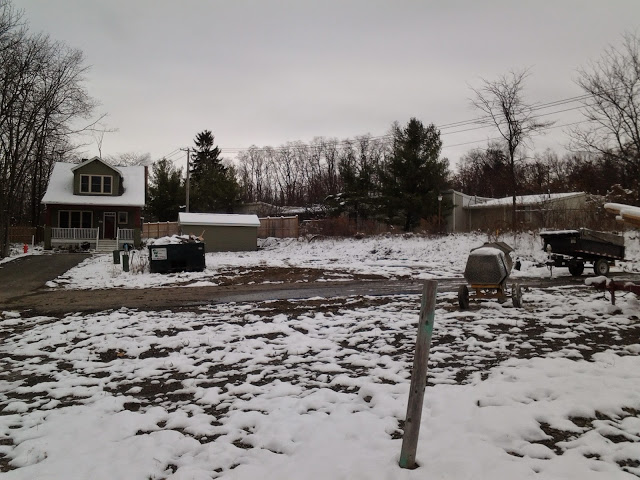
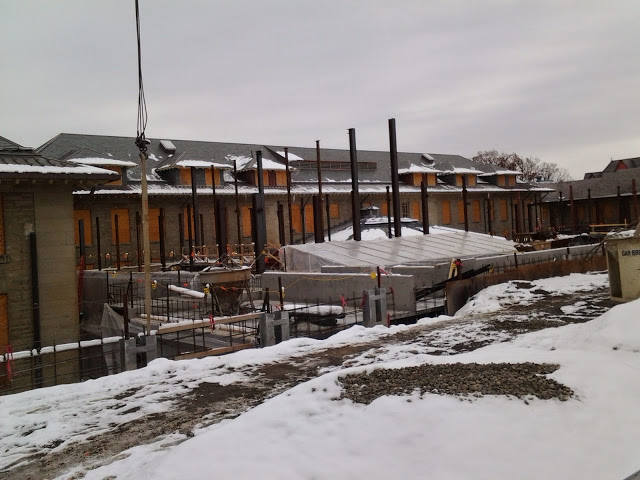
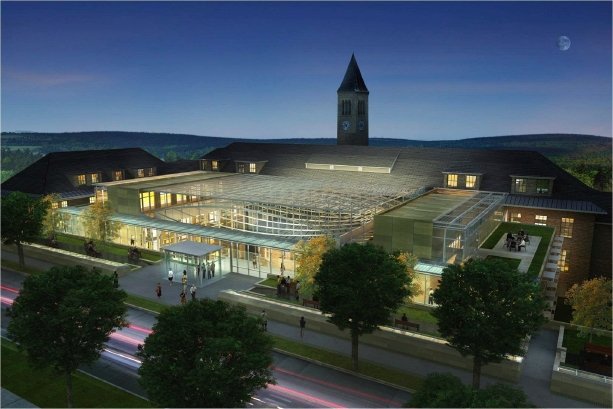
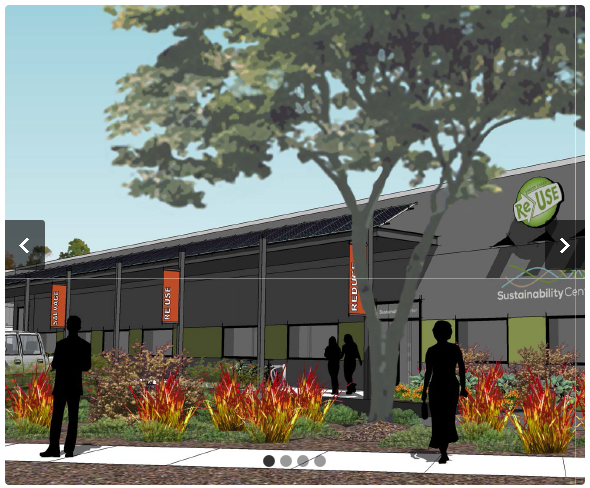
– $1.9 million for Finger Lakes ReUse to “construct two additional buildings”. I suspect one of those is the renovation of 214 Elmira Road for the new HQ (shown above).

– $250,000 for the Chain Works District to help pay for energy efficiency and feasibility studies for the project.

130eclinton_rev3

2. Am I happy about the decision with 130 E. Clinton? No. This has little to do with mixed-use or steep hillsides. I firmly believe that it became a popularity contest and a referendum of Fane’s character. My concern is that this risks becoming the norm, and has the potential to be a lawyer’s paradise. I also don’t look fondly on frequent and fervent opposition to development when housing costs are spiraling upward.

Opposite side of the coin, it couldn’t have happened to a more deserving person. Other contentious projects – Stone Quarry, the Marriott, Collegetown Terrace, Cayuga Green, just about every other project built in the past 20 years – squeak by at least in part because the developers don’t come across as combative, conniving assholes. Plus, Fane himself is quite wealthy, which doesn’t exactly help an argument for tax breaks.

Well, I’ll move this one into the “mothballed/dead” column. With this and the Maguire proposal hitting a dead end, this has not been a good couple weeks.
carey_rev4_2

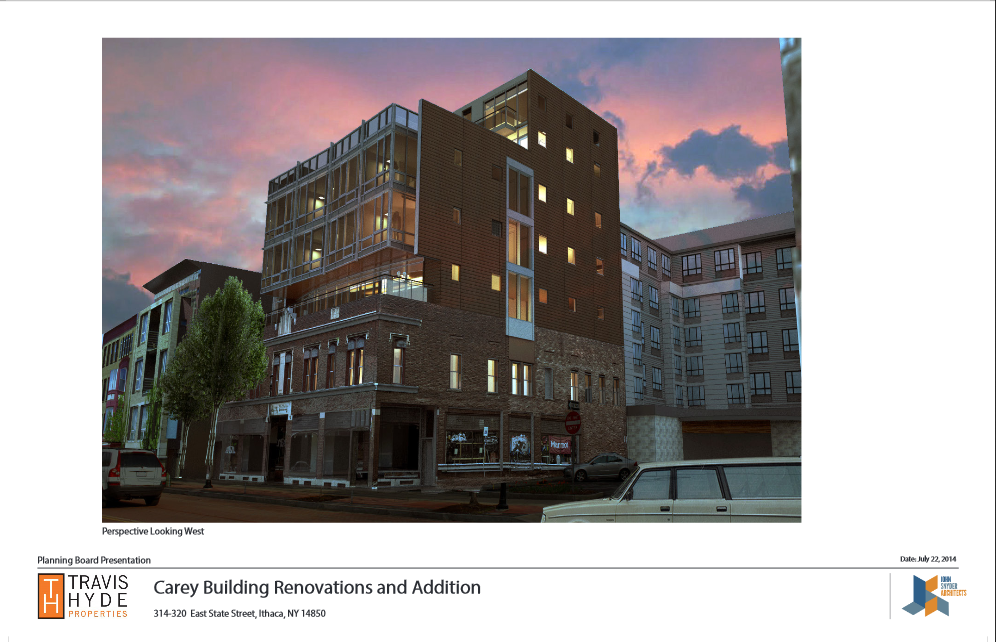
3. On a different note, the Carey Building tax abatement was approved unanimously. At least some developers know how to play nice. Look for the additional REV incubator space and 20 apartment units to start construction shortly and open for renters in August 2015.

4. Down in big box land, the former Kmart space looks to be filling out with new tenants. Discount clothing store chain TJ Maxx has agreed to take 21,770 sq ft of space, and Five Below (a teen retailer specializing in products $5 or less – it sounds like the product of a one-night stand between Dollar Tree and H&M) has agreed to take 8,208 sq ft of space. The old garden center will be replaced with a 16,200 sq ft addition, a revision of the previously-approved 14,700 sq ft. Benderson Development is redoing the front facade for TJ Maxx, and needs a couple of minor area variances. Readers might recall the Ithaca Kmart closed in 2011, and its sister store, Sears, is closing this winter. If this is any indicator, then there’s hope that the Sears space will be re-occupied soon enough.

Not much else of note for zoning trifles from the city’s Planning Board meeting – someone wants to build a new 2-family home at the corner of Oak Avenue and Oneida Place in outer Collegetown, and a house on Heights Court in Cornell Heights is trying to get increased occupancy for unrelated tenants. For the first time in several months, no new sketch plans are due to be presented at a Planning Board meeting; the holiday and earlier-than-usual monthly meeting are probably a big part of that.

5. Not much to report for Ithaca town’s Planning Board meeting either – a proposal for a new duplex at 636 Coddington Road, and an expansion of the East Hill Plaza branch of Collegetown Bagels into adjacent empty retail space. That winter slowdown is in full swing.



News Tidbits 12/10/14: Content Being Contentious

10 12 2014

This one is coming out early this week for the sake of timeliness.

carey_rev4_1130eclinton_rev2

1. Thursday the 11th, the county IDA votes on whether to approve tax abatements for two downtown projects, Travis Hyde’s Carey Building addition and Ithaca Renting/Fane Org’s 130 East Clinton. The $4.1 million Carey Building addition adds 9,000 sq ft of incubator office space and 20 units, 16 of which are 300-450 sq ft studios. 130 East Clinton would add 36 units in three interconnected buildings on a steeply sloped parcel adjacent to the city police HQ, at a cost of $4.4 million. The multi-year tax abatements are in the range of $850k each.

At the public hearing for the two projects, the Carey Building attracted little attention and dissent (which isn’t to say that there hasn’t been any), but Fane’s project attracted much ire. I’m not going to defend Fane’s character. Heck, the man’s been combative through this whole process. But I will side with the trustworthy opinions of Cornish, DeSarno and others that it contributes something to the very tight housing supply and it is a welcome resource. Denying the project by virtue of it being Fane is legally perilous and sets a bad precedent, and saying it’s a bad spot…well, it’s downtown Ithaca, where high-density lot use is expected. If Fane didn’t think he could get the environmental assessment approved he wouldn’t have proposed it. We’ll see what the board decides.

5-8-2012 347

2. Up on South Hill, Ithaca College is holding meetings to flesh out its new master plan. Similar to the plan Cornell published in 2008, the purpose of the master plan (website here) is to determine what the space needs are for different assets and programs of the college, and figuring out where to put them. The master plan is being spearheaded by Perkins Eastman out of NYC. The previous plan by Sasaki Associates was published in 2002 with a refresher in 2010, so to get something out in 2015 would be appropriate. I did a writeup on the old IC plan way back in August 2008. Don’t expect any new plan to be followed to a tee- the athletic center ended up on the complete opposite of IC’s campus than originally planned. But it will provide insight as to what IC wants to build through the rest of the decade and beyond. Key things to looks for – dorm sites in case the college decides to expand its student population, and new program space, which tends to get built sooner or later (for instance, the Business School addition, Athletic Center, and Peggy Williams Center from the 2002 plan).

wegmans_rev1_1 wegmans_rev1_2

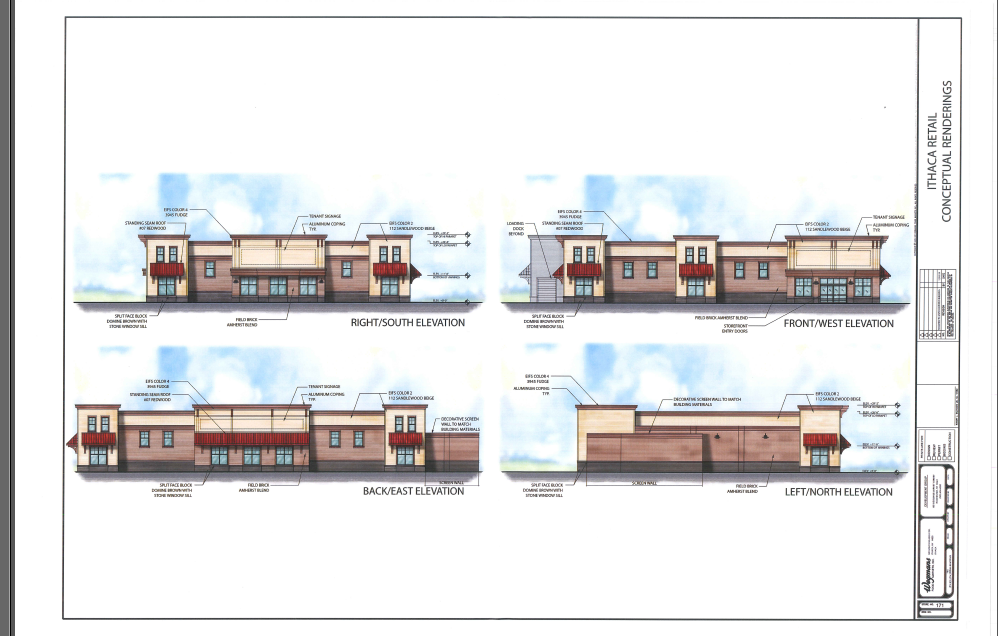
3. The 15,700 sq ft retail pad proposed by Wegmans is up for final review at the December planning board meeting, accordingly to the city projects memo. Compared to the initial design, the building has been rotated on site so that its long axis is now north-south, and the design itself received a number of tweaks, though the overall design theme is still the same as before. There have been some concerns raised by local wine and liquor store owners that it could be home to liquor/wine store, similar to what Wegmans has done at other sites in Johnson City and Buffalo. However, that is one of only a few ideas being floated, and the planning board doesn’t vote on what type of store can be allowed to open in a building, that’s a debate for the Common Council.

maguire_v2_1

4. Looks like the Maguire plan has hit a dead end. According to the Times, the Maguires want the site rezoned rather than a specialized PDZ for the property. Looking at the PDZ regulations, the town’s idea would give more freedom in regards to property use, but it also gives the town the right to regulate the form and layout of the structures on site. I guess the Maguires aren’t fond of that. The town just completed its comprehensive plan and is trying to get its new form-based zoning together, so the Maguires are essentially usurping something the town spent years working on. In conclusion: no dice. The Maguires are still interested in doing something, but it may not be in Ithaca town. Though with as packed as the city is and as questionable as Lansing can be, I’m not sure they have many options.

5. Over in Lansing Village, a mothballed project is getting a revival. “CU Suites” (aka Manley and Richard Thaler, who own the Triphammer Marketplace) proposes a 3-story, 43,000 sq ft building on the west side of Cinema Drive, on a site that is currently a vacant lot. Interestingly, this site was previously approved for a mixed-use structure with those parameters in fall 2012, consisting of two commercial spaces and a 39-unit apartment building, but that plan was never carried out. The proposal before the board seeks “alterations and possible clarification” to the project. No updated renders on the village website, but a site plan of the previously approved plan can be found here. Before the previous plan was approved, the site has been marketed for an office building for two years, to no avail (the market for office space in Ithaca is pretty weak). We’ll see what happens, maybe this one will finally get underway.

707_East_seneca

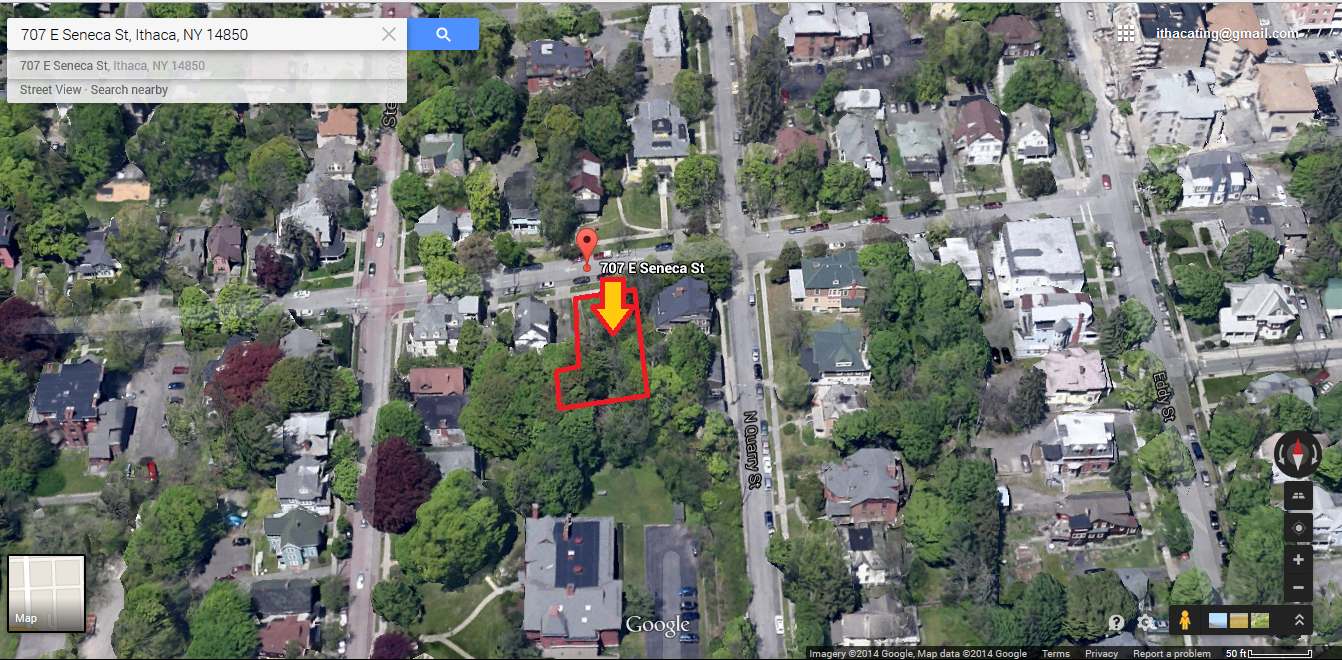
6. For what it’s worth, the proposal at 707 East Seneca appears to be student housing. Applicant Todd Fox (a local developer who’s done a few other small projects in Ithaca and Dryden) wants to build six units with sixteen bedrooms, five 3-bedrooms and a basement 1-bedroom, situated next to four parking spaces tucked into the hillside (four more spaces would be out in the open). I’m not sure how so many units are possible, since I thought the maximum allowed on site was four units. I’d love to see how it looks, but there’s nothing on the city website (which, sidenote, has been “updated” and now has information of three separate websites, the new one, E-govlink and “TSSERR”; the notification emails don’t work and it’s driving me nuts). If something comes up, you’ll find it here sooner or later.


Ithaca Marriott Construction Update, 11/2014

7 12 2014

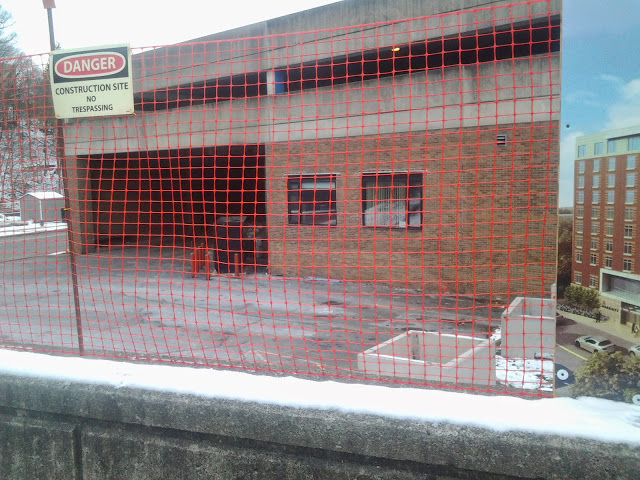
Officially, the downtown Ithaca Marriott is underway with site prep. Perhaps because it only just started, there was hardly anything to speak of on its site. An orange plastic construction fence blocks off the perimeter of the property, and there appear to be some pipes and concrete blocks on site. IPD had the parking lot blocked off, presumably to keep the lot closed to downtown patrons, and to use Green Street to meet their monthly ticket quota.

Although multiple sources indicate a Spring 2017 completion, the sign attached to the front of the site displays Spring 2016 as the completion and opening period. Binghamton-based William H. Lane Inc. was selected as contractor for the project, and opened an Ithaca office to oversee the operation. The $32 million, 10-story, 160-room hotel was designed by Cooper Carry Architecture and is being developed by Urgo Hotels out of Bethesda, Maryland. Urgo’s nearest other hotels are the Whiteface Lodge in the Adirondacks, and several in the NYC area, and Ithaca is well outside their normal scope. I suppose the Marriott could be used as an example of how Ithaca is attracting the attention of out-of-town investors and developers.

hotelIthaca_2010

This project really has had quite the drawn-out process, originally proposed as the Hotel Ithaca back in 2008. At that point, it was a 9-story, 102-room hotel with a cost of $17 million, to be developed by Rimland Development and operated by boutique firm Gemstone Hotels. Well, a lot happened along the way. The project was approved, the recession hit, the project stalled due to an inability to get financing, the cost kept going up from $17 million to $25 million to $27 million, and the number of rooms went from 102 to 125 to 140. Then the Marriott version came into play in 2012 with a $19 million price tag, it was approved, it too failed to get financing, and went back to the board with a value-engineered design for the now $32 million project. With money from Ensemble Investments, the project has been able to launch. There have been three separate designs with ballooning price tags. To actually have something underway is a welcome denouement to this saga.

The Marriott is one of only several hotels planned for Ithaca, with the new 123-room Canopy a couple blocks away intending to start construction shortly, and 76-room and 37-room hotels for Elmira Road. With high room rates and low vacancy rates, the market is expected to comfortably absorb at least two of those. All of them might cause an older suburban hotel to be closed.

20141129_135427 20141129_135449 20141129_135451


News Tidbits 12/6/14: Looking Forward, Looking Back

6 12 2014

11-24-2012 174

1. Not exactly a development, but this will make things interesting: As reported by the Ithaca Journal, INHS and Better Housing for Tompkins County (BHTC) are merging. Both of them have the same purpose, which is to provide low-to-middle income housing and structural rehab services, but INHS has traditionally focused in Ithaca city, and Better Housing in the rural towns. INHS also holds far greater assets, $24 million including 241 rental units , vs. BHTC’s $3 million and 121 rental units.
Over the past few years, INHS has put a lot of feathers in their cap. $2.13 million in grants has been awarded to the non-profit in just the past few months. Breckenridge Place and Holly Creek are complete and nearly complete respectively (total 74 units), while Stone Quarry and Greenways are prepping for site clearing and construction (total 81 units). Along with Cedar Creek and several single-family and duplex units, INHS has had a hand in over 120 units of housing in the past five years alone. With the Neighborhood Pride site undergoing concept design and the recently-awarded grant money, that number will almost certainly be greater in these next five years.

The story for BHTC has been quite the opposite. The 65-unit Lansing Reserve proposal failed due to neighbor opposition, and the 58-unit Cayuga Trails project for West Hill failed due to wetlands on site being greater than anticipated (and the neighborhood opposition didn’t help). BHTC has five older facilities in Trumansburg, Newfield and Slaterville Springs.  With any hope, the merged non-profit will qualify for larger grants, and BHTC can finally get some shovels in the ground in the hamlets and villages outside Ithaca.

On a separate note, it looks like INHS did its annual website update, formally announcing plans for a single-family home at 304 Hector Street on West Hill. The lot was purchased in late October after a plan to buy and renovate a home in Northside fell through. Stone Quarry will begin occupancy next September, and Greenways hopes to start in 2015.

112_blair_1

2. Here’s the site plan for 112 Blair Street. I’d include renders, if the sketch plan had any. Two buildings with two units each and three bedrooms per unit -> 2 x 2 x 3 = 12 bedrooms. Nothing large, just an infill project tucked away from the street. The design will be created by local firm Schickel Architecture, the same ones doing the Maguire project in Ithaca town. As noted by Planning Board member John Schroeder in a recent Sun article, projects like these won’t alleviate the housing crunch by themselves, but every little bit helps, and all the better if it recaptures living space from an underused parking lot.

canopy_hampton_rev4_1

3. Final design for the proposed Canopy Hotel? Possibly. In comparison to the last design, this latest incarnation adds more windows to the east face. I’m not going to lie, after six or so sets of designs (include three complete re-dos), I’m starting to lose track of the changes. On the upside, the latest project plan from the city’s documents includes some neat context views, renders of what the building would look like from various vantage points in the city.

114_catherine_rev4_1

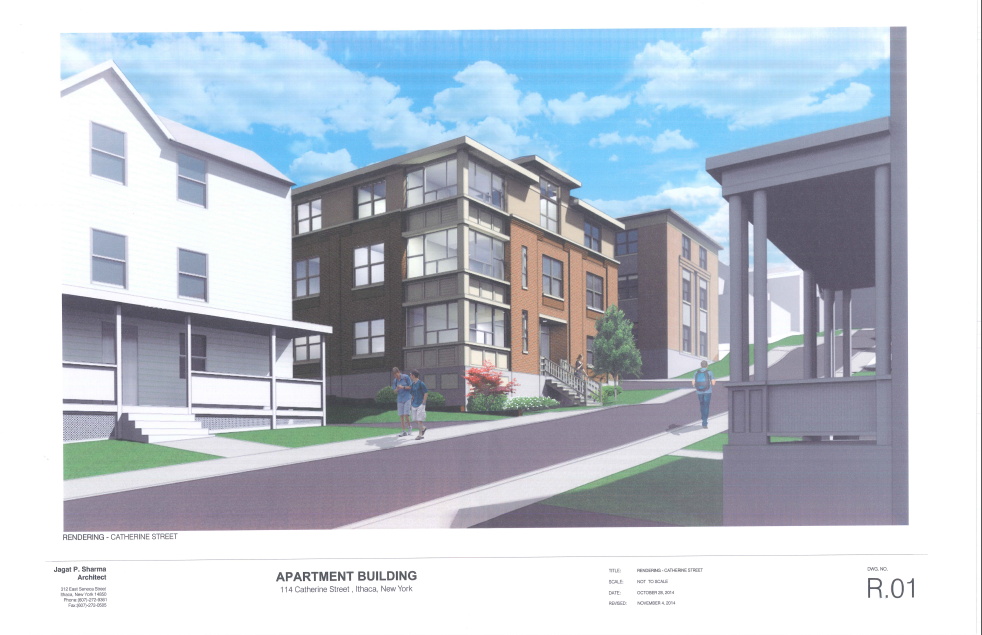
4. 114 Catherine has been approved, its Spring construction date looks good to go. When completed in August 2015, 17 more bedrooms will enter the Collegetown market – a drop in the bucket, but a valuable drop nevertheless.

chain_works_rev2_1

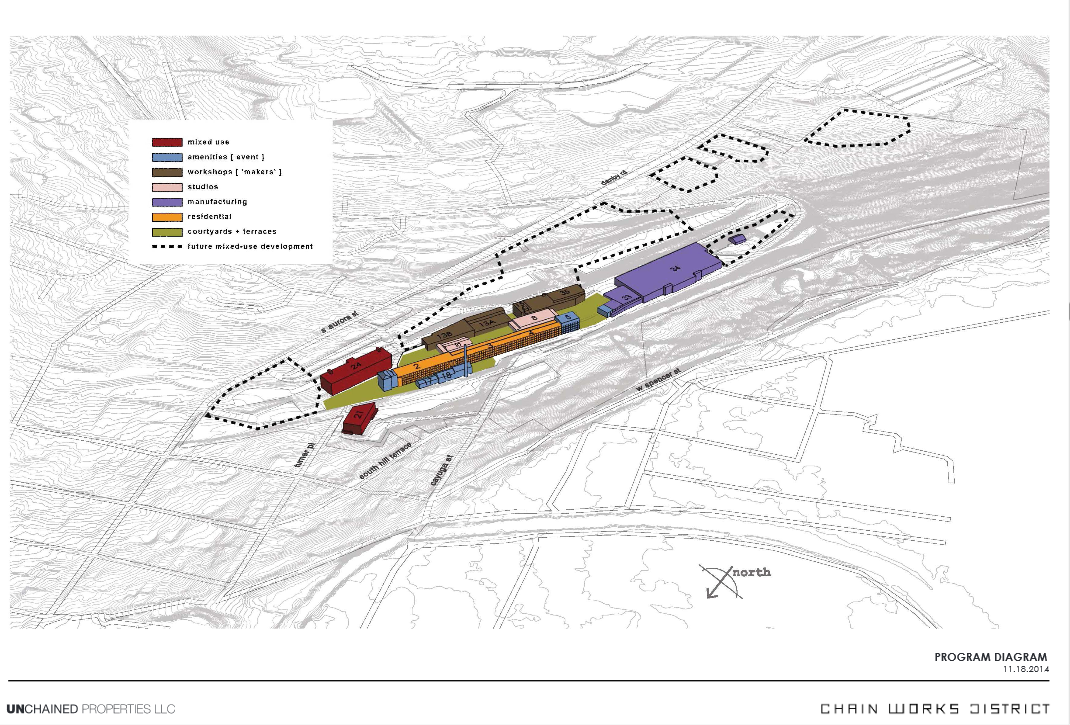
5. Towards South Hill, review of the draft generic environmental impact statement (DGEIS) continues for the massive Chain Works District proposal at the former Emerson Power/Morse Chain site. A scoping document of that DGEIS can be found here. In a nutshell, a DGEIS is part of the State Envrionmental Quality Review (SEQR), where the leading agency looks at a project, determines if any adverse project impacts are properly mitigated, and if so, issues a statement giving a negative declaration (approval). In this case, the NYS DEC also needs to be on board, approving the contaminated site for residential use. This is a pretty complicated project. There’s 800,000 sq ft of space to be removed or re-purposed, in an environmentally compromised site split between two political entities who are conducting joint meetings with their planning boards in an effort to try and move this project forward (the town of Ithaca board deferred to the city of Ithaca for lead agency; and both have been evaluating using their respective specialized mixed-use zones).

So far, there have been no nasty surprises on the polluted site. The site is mostly clean but still needed a little more for residential use, and Emerson will be flipping the bill for that. The comment period on the draft runs through the 10th, and the DGEIS will be finalized on the 16th. According to the project website, developer Unchained Properties LLC hopes to start Phase I, the renovation of four on-site buildings (21, 24, 33 and 34) into mixed-use and manufacturing space, during summer 2015. The mixed-use was initially proposed as office space only; but the developer behind the LLC (David Lubin) has struggled to fill the proposed office space in his Harold Square project, and seems to realize that having less office space would be a better plan for Chain Works as well.

6. The Cornell Daily Sun is reporting that the owner of CTB (Collegetown Bagels) is buying the Rulloff’s property and reopening the restaurant after it abruptly closed over the Labor Day weekend. The property was on the market for $395,000, and it’s fair to say the price was probably close to that figure. The murderous Edward Rulloff lives on.


Lofts @ Six Mile Creek (Cayuga Place) Update, 11/2014

5 12 2014

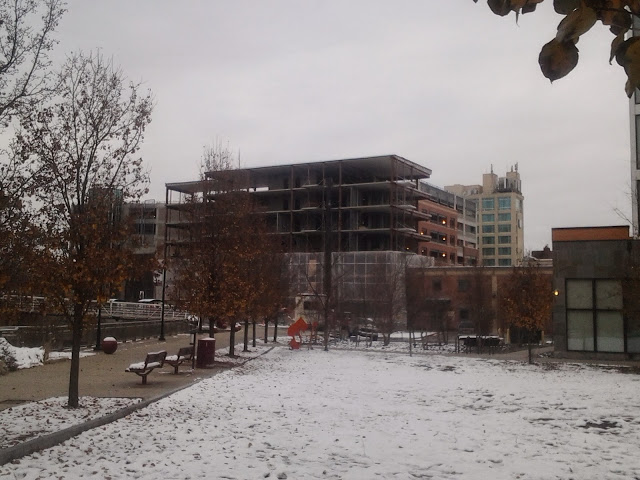
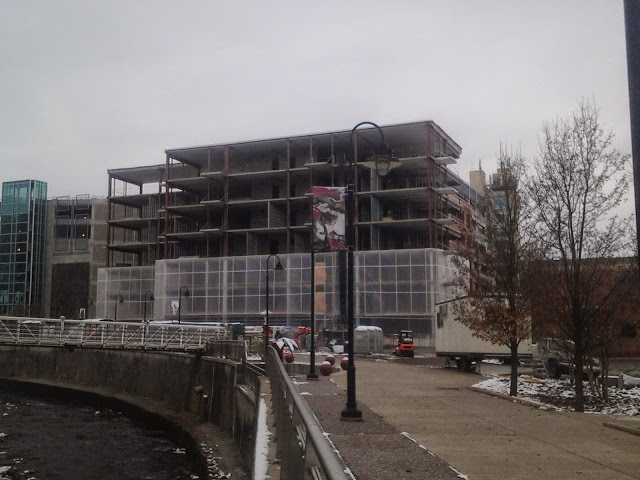
As much as I hate to entertain the currently-fashionable use of prepositions in project names, and the “@” symbol to make it modern and hip, that is the official name for what was the condo portion of Cayuga Green. More notably, the project website describes these as apartments rather than condos as initially planned. Apartment projects are easier to get financing for since it’s generally easier to find renters vs. buyers, but given some of the discussion about the need for owner-occupied units that has come up lately (the Old Library redevelopment comes to mind), this is a mild disappointment.

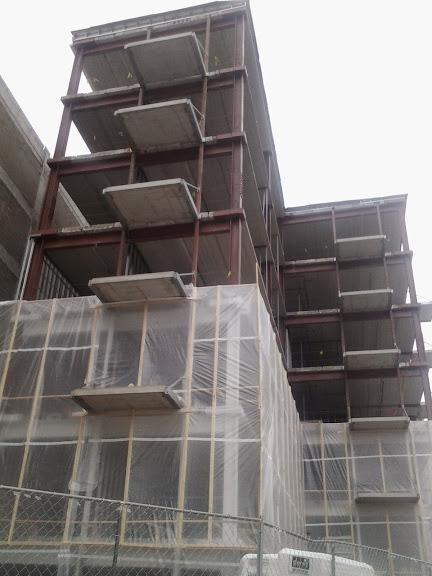
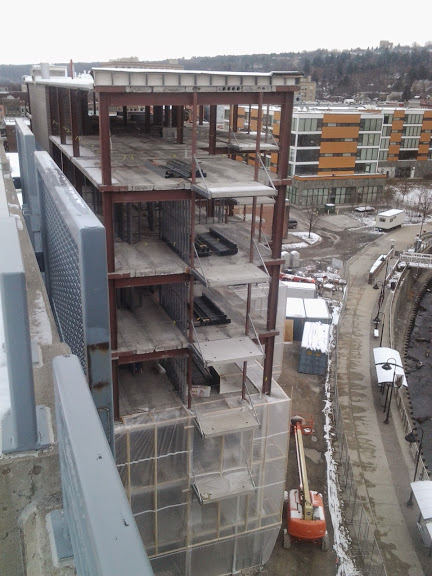
The 7-story, 45-unit, 49,244 GSF apartment building topped out on October 2nd. The concrete floors were poured and the balcony pads were craned into place and secured throughout the fall. Peering into the building from the parking garage, some steel wall frames have been erected on the upper floors, while rough interior work seems to be underway on the lower floors. The plastic sheathing is to break the winter winds and keep the space above freezing.
Developer Bloomfield/Schon + Partners planned to release leasing/pricing details last month, but I haven’t heard anything yet. Completion for the project is set for late Spring 2015, which according to their facebook, is a little later than intended due to material supply delays created by the rough November weather (curse you, polar jet stream). If the last photo is any indicator, the upper-floor units are going to have some fantastic northeast views.
As noted before, this project makes the completion of 15 years of planning and construction. At 45 apartment units, It’s also one of the largest non-student-related projects slated for a 2015 completion – the 35-unit Stone Quarry Apartments and the 21-unit 323 Taughannock are also pegged for 2015 completions.

20141129_135747 20141129_135859 20141129_135828 20141129_135807 20141129_140005 20141129_140241 20141129_140308


Belle Sherman Cottages Construction Update, 11/2014

4 12 2014

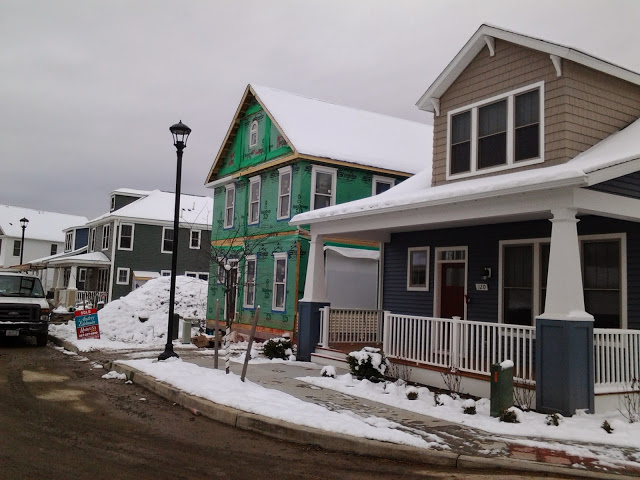
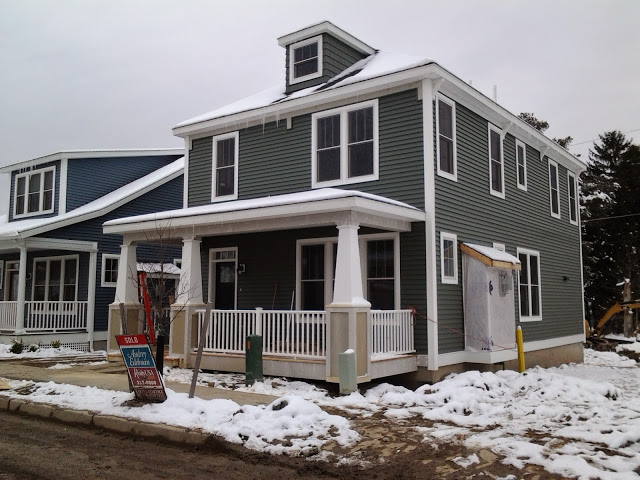
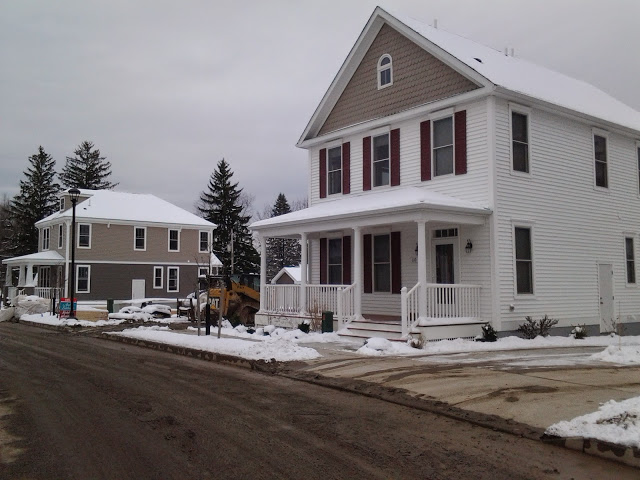
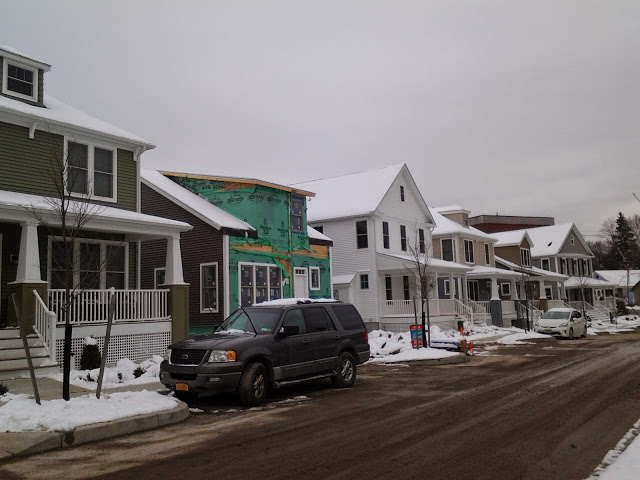
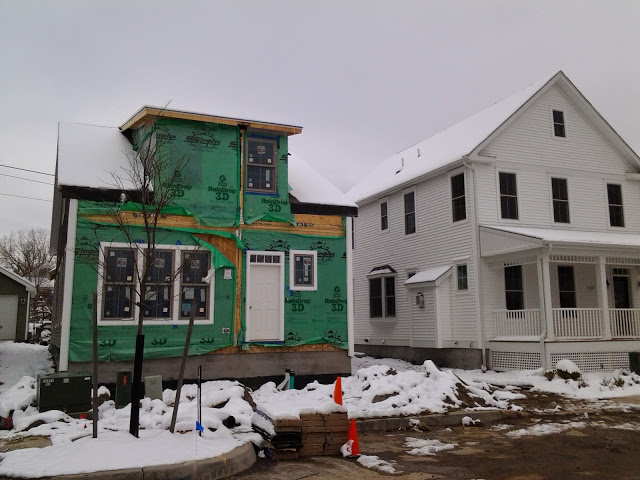
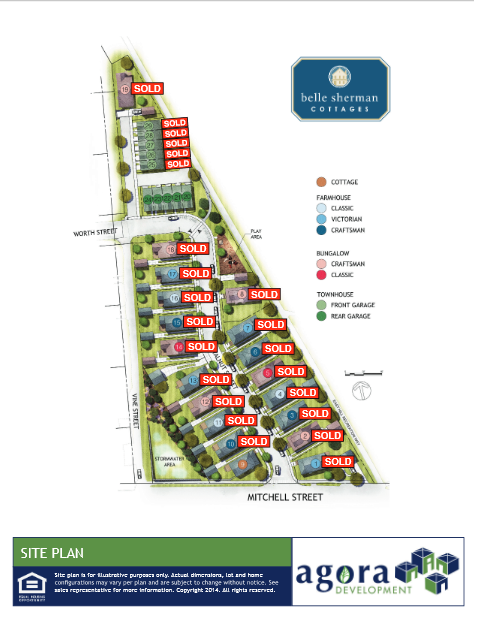
Over in Belle Sherman, work continues on its namesake housing development, the 29-unit Belle Sherman Cottages. From a glance, some site clearing might be taking place for the first set of five townhouses (lots 25-29), which are aiming for an April 2015 completion. Several homes are in various stages of construction, with some still wrapped in breathable plastic, and others undergoing final exterior and interior work. Since September, lot 18 (Craftsman Bungalow), lot 15 (Craftsman Farmhouse), lot 10 (Craftsman Farmhouse) and lot 3 (Craftsman Farmhouse) were completed or are nearly completed, while lot 17 (Victorian Farmhouse) and lot 5 (Classic Bungalow) are underway. That’s six houses in less than three months. Carina Construction and Agora Home and Development more than outdid my September estimate of 1-2 more homes before the end of the year.

For comparison’s sake, in December 2013, there were five complete houses and two more underway, and the model house was built all the way back in May 2012. Now the total number of homes built or being built is 14. The project had a great sales year and it shows. Speaking of sales, all houses except lot 9, a new design yet to be published, have been sold. All 5 units that comprise the first set of townhouses have sold as well. Marketing has not begun for the 5 units in the second set of townhouses, lots 20-24.

One of the unique features of this project is that unlike traditional on-site frame construction, these houses are assembled from modular units. The modular pieces are sourced from Simplex Homes in Scranton and trucked up to Ithaca for installation. Once the concrete block foundation has been assembled, the four modular pieces for each home are craned into place, and once the pieces are leveled with the rest of the structure, the adjoining walls and ceiling are secured with steel plates. Interior work goes on while siding, porches and other features are built onto the assembled house. This allows for a faster construction process and cuts down on finishing costs.

20141129_133942 20141129_134007 20141129_134018 20141129_134037 20141129_134046 20141129_134058 20141129_134109 20141129_134145 20141129_134220 20141129_134231

belle_sherman_cottages_102714 belle_sherman_cottages_071814_2


Collegetown Construction Updates, 11/2014

3 12 2014

Next stop, Collegetown.

20141129_132947

20141129_133109 20141129_133122

140College_2

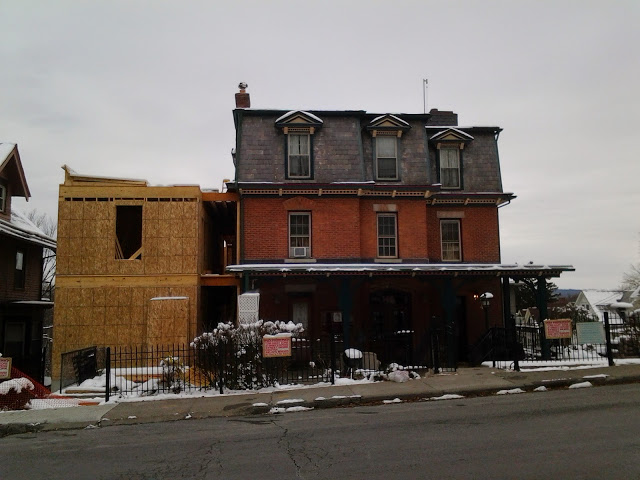
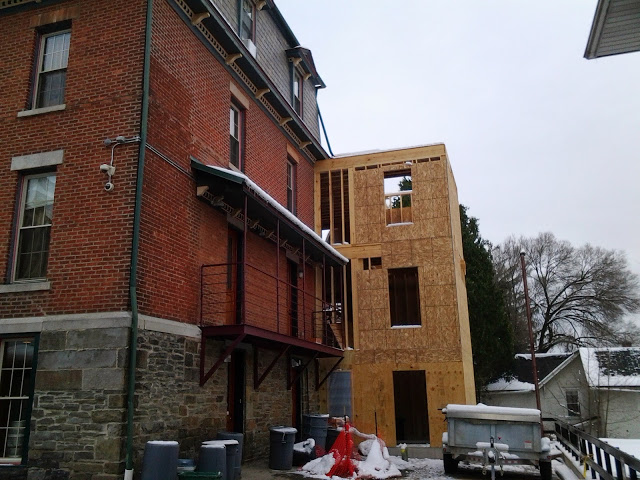
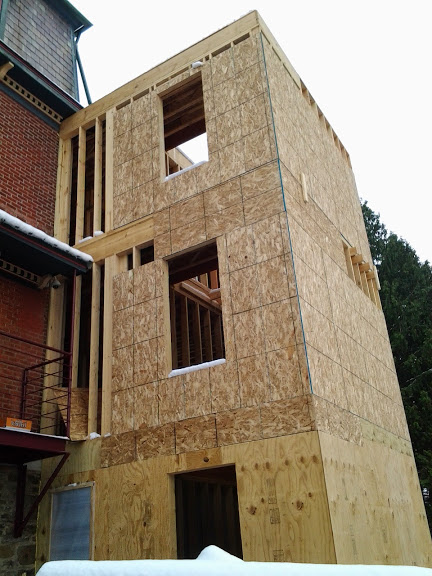
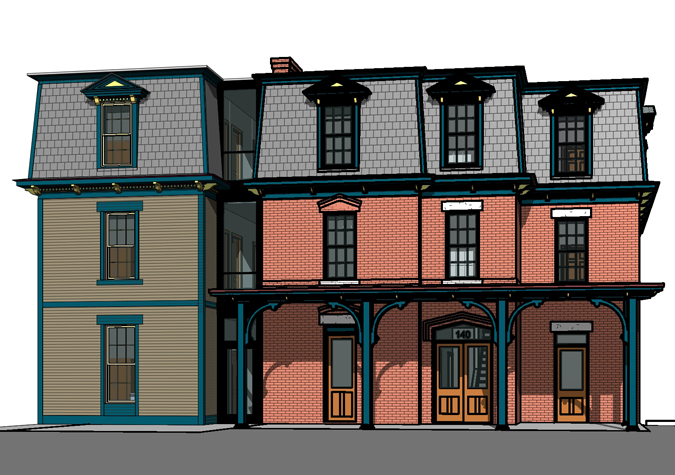
Over at 140 College Avenue, framing is underway on a 3,800 sq ft, 12-bedroom addition to the historic John Snaith House. The project is designed by local architect Jason Demarest and developed by Po Family Realty, a smaller Collegetown landlord.

20141129_132913 20141129_133016 20141129_133029

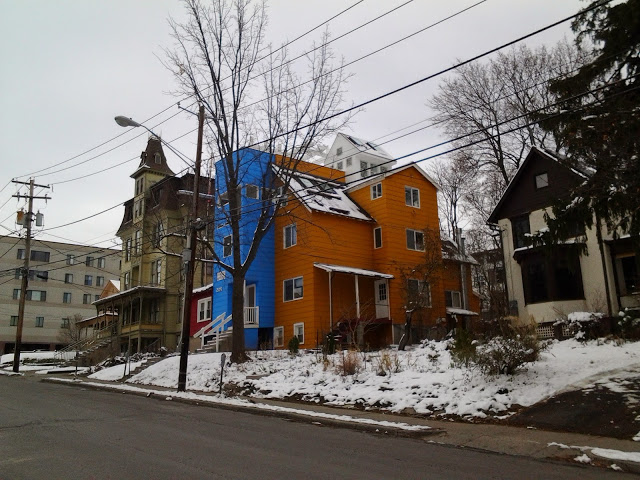
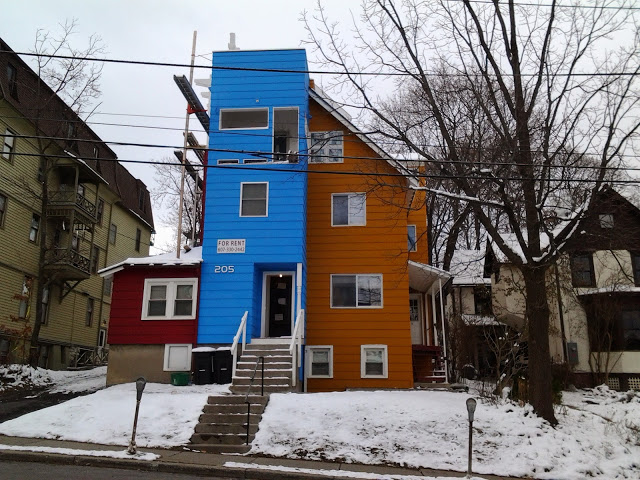
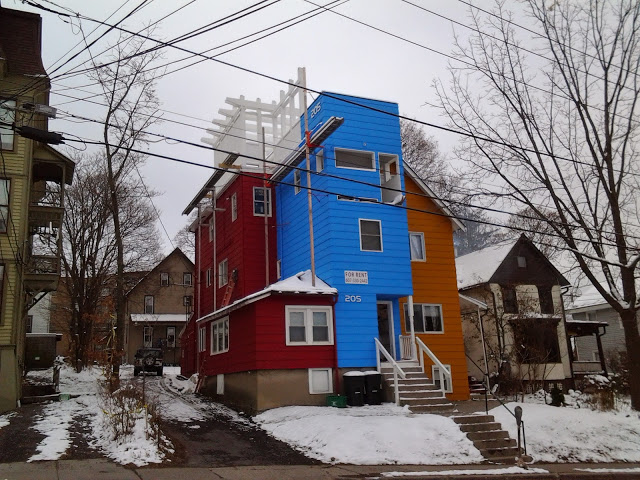
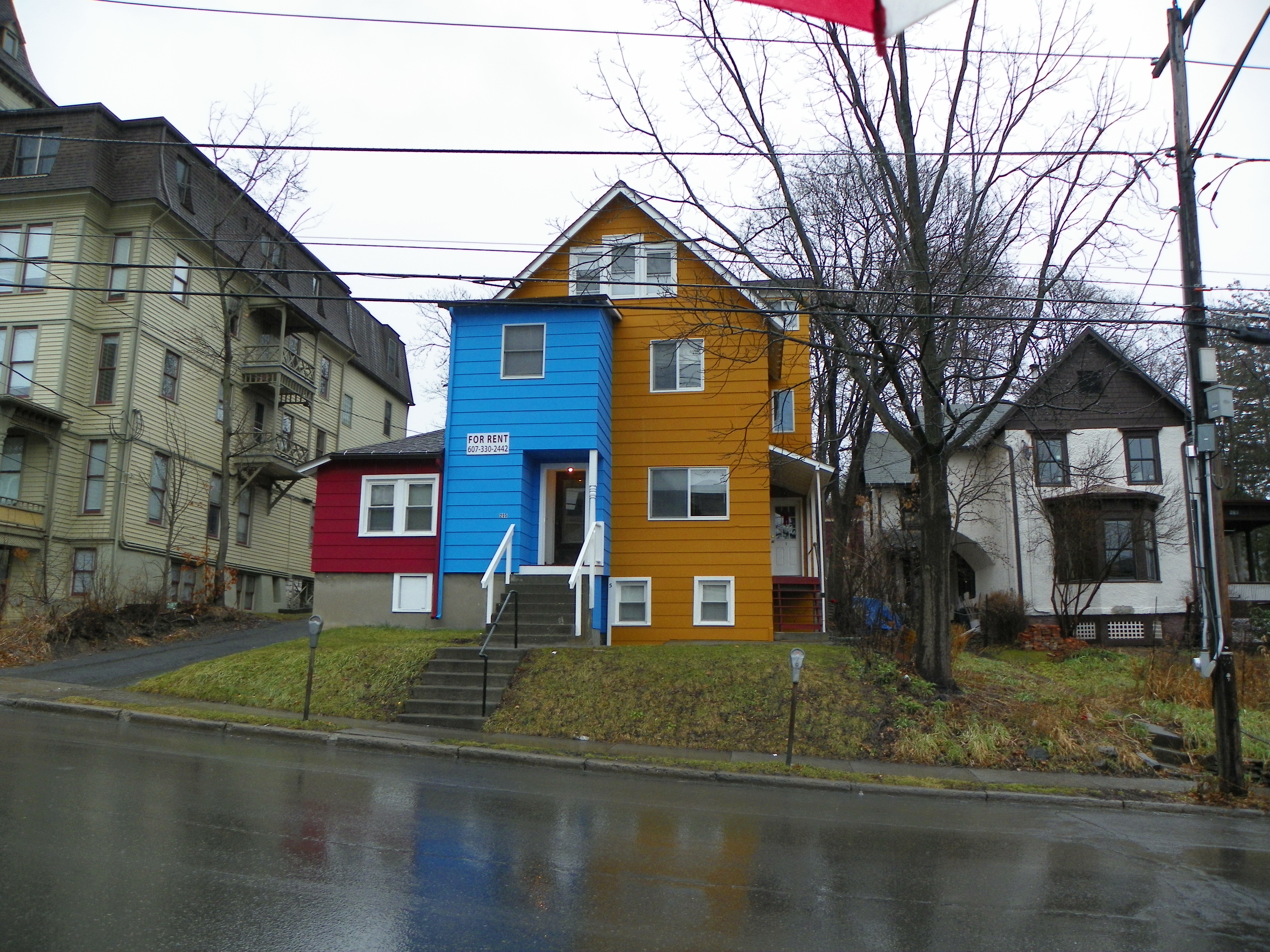
This house at 205 College Avenue seems confused. Before the extremely vivid paint job and mix-and-match additions, it looked like this, and a photo from January 2014, with the paint but without the additions, is included below. I really don’t know what to make of it. I dunno how long the Lowers have been sitting on permits for this one, but I didn’t see anything go through the city boards.

1-2-2014 331


Cornell Construction Updates, 11/2014

2 12 2014

The best part about holiday photo tours is that students are few and parking is ample.

20141129_131741 20141129_131757 20141129_131809 20141129_131813 20141129_131833

20141129_131838

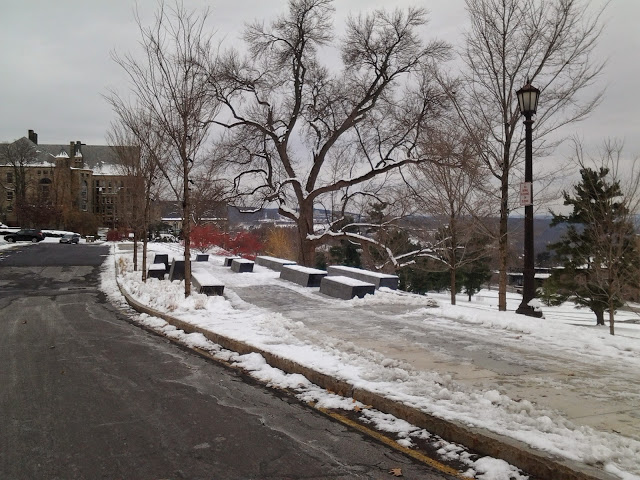
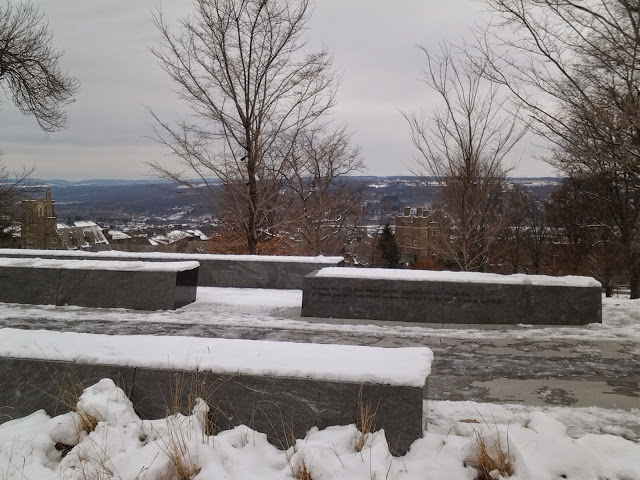
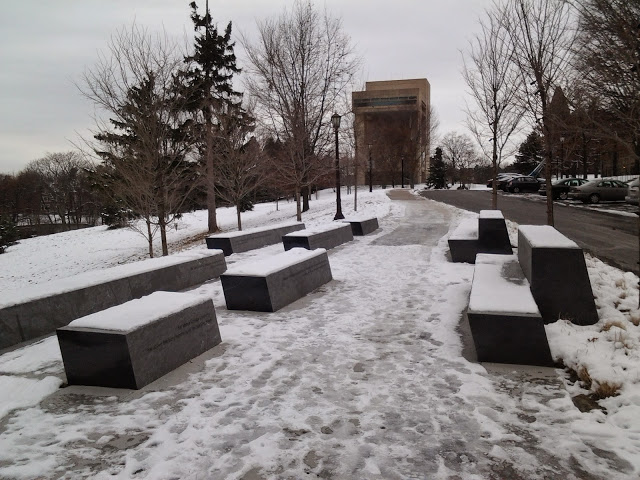
I know this project has been done for a couple of months now, but I was unable to take photos until now. The $650,000, 1,700 sq ft project is essentially Cornell’s history engraved in stone benches and pavers (unfortunately covered by snow and ice here). I imagine it must be a nice spot to sit when not covered in snow.

20141129_132052 20141129_132105 20141129_132151 20141129_132208

AH.Night.view

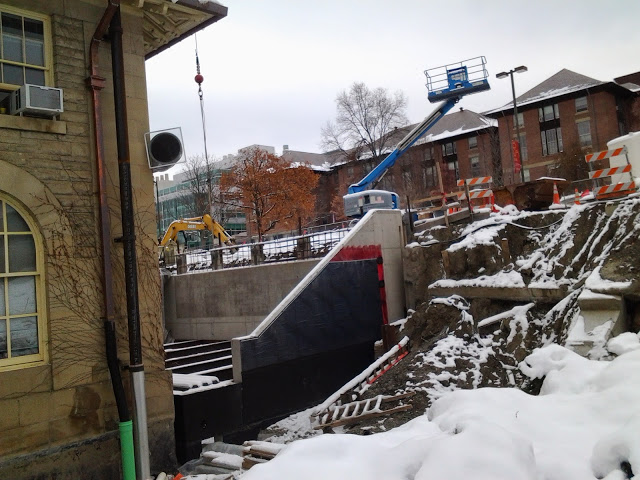
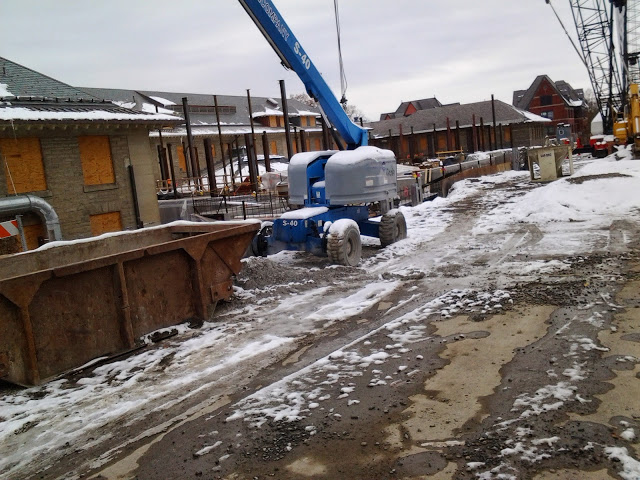
Far bigger is the continued construction for the future Klarman Hall, pushing onward to its December 2015 completion. Construction firm Welliver is plodding through the cold weather to undertake steel work, metal decking, and mechanical and electrical rough-in in the basement. The 33,250 sq ft building was designed by Koetter | Kim & Associates.


Lansing/Dryden Construction Updates, 11/2014

1 12 2014

Normally, I use a full-fledged DSLR camera for these construction tours, I accidentally forgot my camera and had to use my phone instead. The resolution isn’t as great, but they still came out better than I expected. These photos were taken on the 28th.

20141129_120035

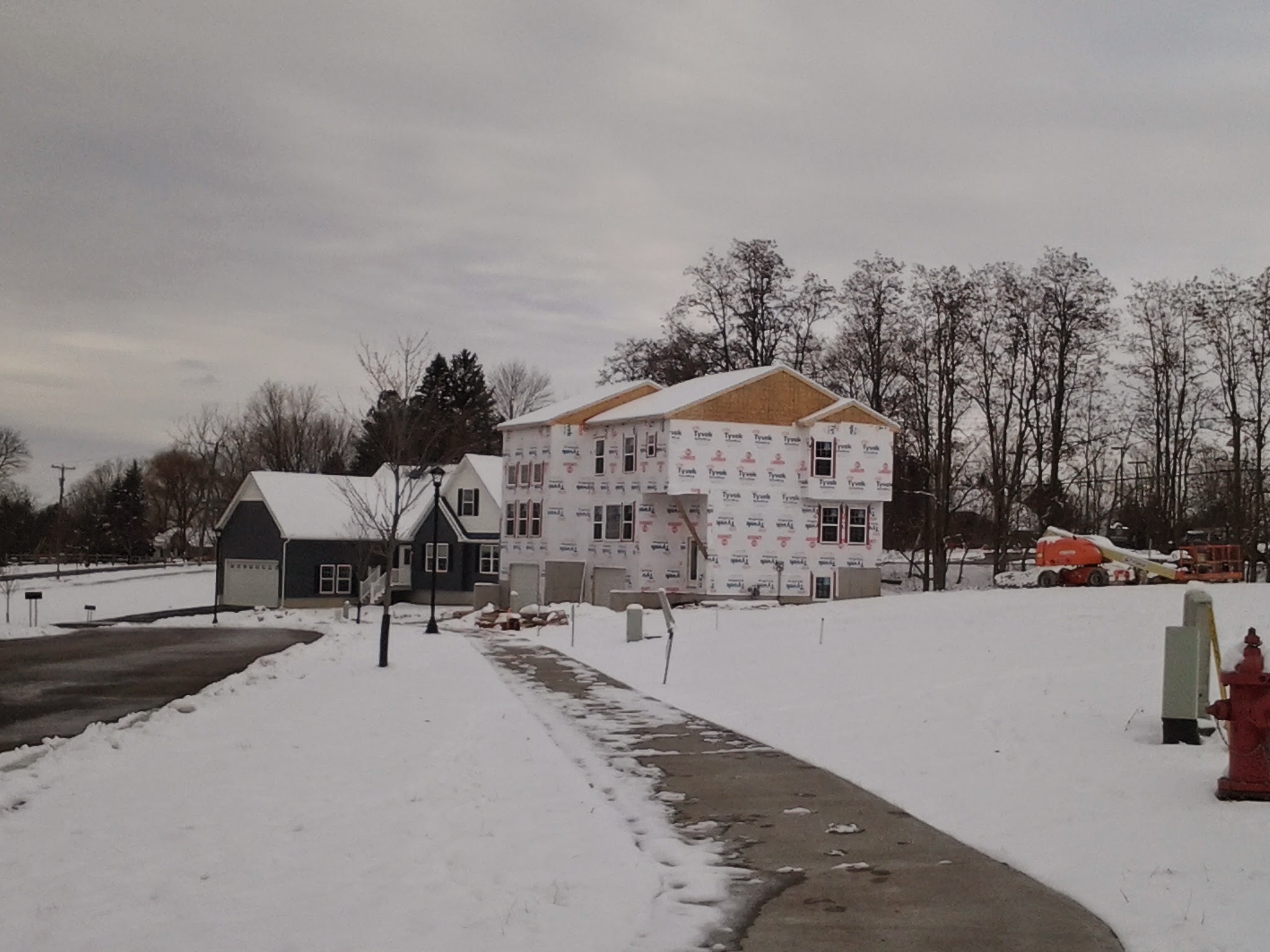
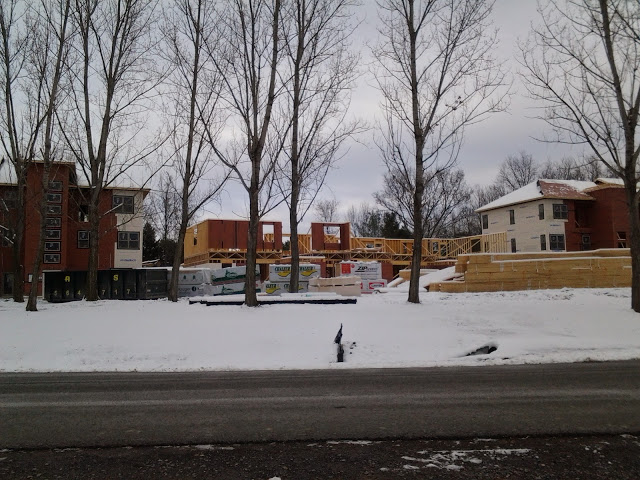
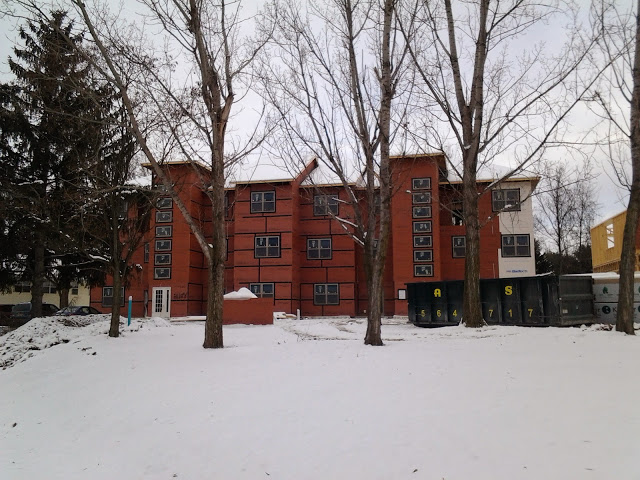
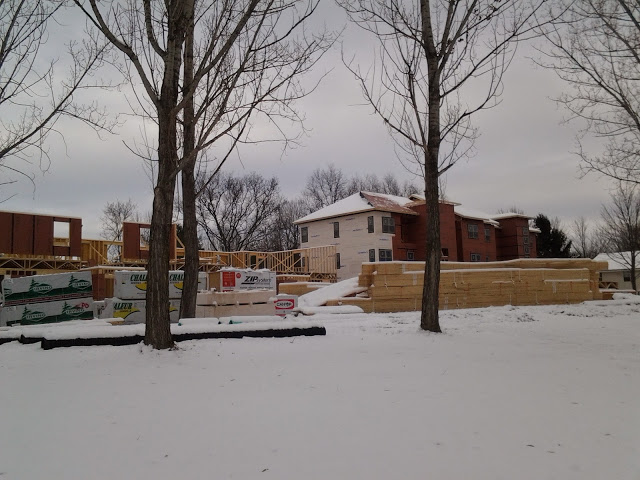
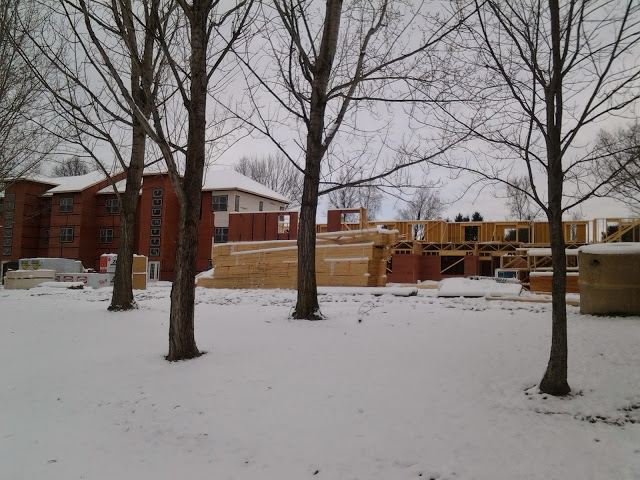
Here we have what looks like a pair of townhomes going up in the Maple Ridge development just east of Dryden village. Maple Ridge was dreamed up as a multi-phase 50-unit housing development when it began in 2008/09, but the recession deflated those plans. Only four homes have been completed so far; the blue house with the very large garage was built earlier this year.

20141129_121915 20141129_121956 20141129_121939

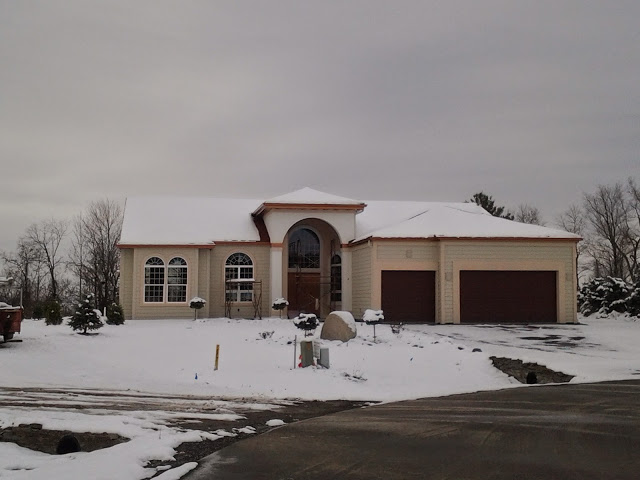
Going over to Lansing, two more oddly Florida-like homes are underway at the Heights of Lansing development off of Bomax Drive. One is virtually complete with only exterior detailing left on the to-do list, the other home is but a shell, still in the rough framing stage. No new townhomes, but a third home lot was sold a few weeks ago, so another single-family home will likely start construction sometime in the near-future. The development is slated for about 80 units when complete, and since inception in 2006, has completed two homes and 17 townhouses (another project that was hit by the recession; not that there’s too much demand for high-end townhomes in Lansing anyway).

20141129_122833 20141129_122808

20141129_122722

This building underway at 720 Warren Road is for the “Northeast Dairy and Food Testing Center” I wrote about back in August. Work on the exterior shell continues for the 17,000 sq ft structure by Syracuse-based Dalpos Architects, moving towards a Spring 2015 completion.

20141129_125221 20141129_125556 20141129_125613 20141129_125616 20141129_125458 20141129_125439

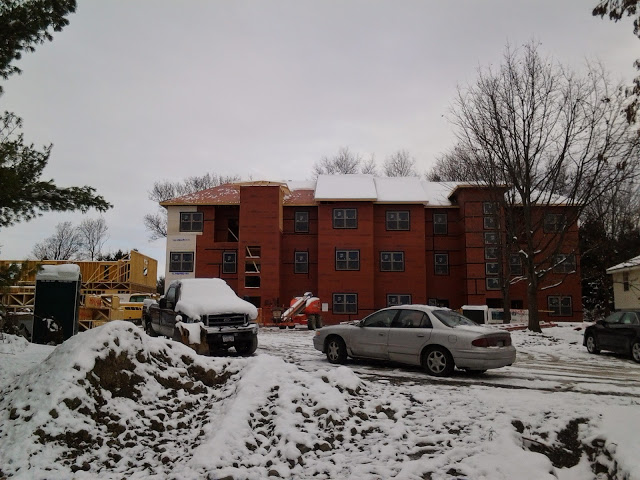
This was arguably the biggest surprise. These four apartment buildings are part of the Village Circle Apartments in Lansing, the later three are likely part of the Village Solars project. The first one has been mostly complete for a year or so, and looks to be readying itself for occupancy. The last three comprise what I would guess to be 36 units; two are topped out and have house wrap on them, the middle one is still undergoing initial framing. This one went under the radar since it was approved in Spring 2013; the Village Solars project seeks to over 300 units off of Warren Road over the next 10 years.

20141129_124516
Before heading into town, I drove around to check out a couple of other projects in Ithaca’s suburbia. The Woodland Park development sold one of its pricey single-family homes and work was finishing up on a second; I chose not to stop due to a large number of construction workers at work on the site. I spied three complete sets of townhomes in the gated section as I drove past. No new homes underway in Whispering Pines, but I did see this home under construction near the intersection of Triphammer and Horvath Drive.


Canines at Cornell

25 11 2014

tydog2

During my four years at Cornell, dogs were something of a rarity. I knew a couple of grad students who had dogs, and a couple of fraternities with house dogs, and that was about it. A member of my chapter tried to push a proposal through our alumni Corporation Board to permit the adoption of a house dog, but the board declined, citing concerns about liability (and given the possibility of someone being bitten at a party or something, I didn’t disagree with their decision).

Before the 1950s, dogs were far more ubiquitous. For one, the Vet School was located where ILR is today, and then-president Mallott cited the incessant animal noises, including barking dogs, as one reason to move out of the A.D. White House at the start of the 1950s (Altschuler and Kramnick 36; I wager that the student riot in front of his house in 1958 reaffirmed his off-campus preferences). But even outside of the kennels and vet offices (dogs weren’t allowed in lecture halls in the vet school), dogs were accepted and even welcome on the quads, in academic buildings, libraries and even cafeterias. Some thought it was the result of an alumni donation with a stipulation to allow roaming digs free rein of the quads.

cornell_tripod_1959

But the hospitality towards canine companions was fading. In 1948, they were banned from the Willard Straight cafeteria, and the following year, the Cornell Sun waged a campaign to have rowdy rovers removed from campus Libraries. In 1953, Malott (what is with this man hating on dogs?) had Fido banned from the graduation ceremony. By December 1959, dogs were banned from all campus buildings aside from the Vet School. The reasons for banning dogs were fair enough; dog fights, interrupting a symposium on segregation, destroying books; but some students and faculty still mourned the disappearance of canines from the classroom. One misogynistic professor told the Sun in 1959 he “surveys the situation before each class and throws out any wild puppies. Dogs are like co-eds knitting. I’m willing to put up with them if they stay quiet. Who knows? Like the co-eds, they might learn something.”

A special focus of the anti-dog sentiment was on a 5-year old, three-legged husky named “Tripod”, who became a sort of quad-wandering unofficial campus mascot in the mid and late 1950s. “Tripod” had three legs as the result of a car accident in November 1953, from which “he hovered for many weeks between life and death“, and his back left leg was paralyzed and later had to be amputated. Officially, he was the house dog of Kappa Delta Rho (KDR) and named Chinook, but like many dogs, wandered campus at his whim. However, Tripod chased a cat to death and was reported to have snapped at students. Eyewitness reports to the Sun claim he was chasing the cat when it ran into the path of a patrolling campus police car, but the police report suggests he mangled the cat, which then crawled under the car. The Sun was not inclined to believe them. His former owner (Roger Burggraf ’56) claimed him, and once his army tour was completed in Spring 1959, said he would return the husky to Alaska. Tripod had a fraternity-hosted feast in his honor on October 17, 1958, and while it’s not stated whatever happened after he was picked up by his owner the next day, I hope that he lived out some happy days in the last frontier. His now 82-year old owner did return to Alaska, worked as a dog trainer, and was awarded Alaskan of the Year a few days ago, so I have every reason to be optimistic.

cornell_tripod_1958_2

The removal of dogs took a pause during the 1960s, when civil unrest was the forefront of concerns and soft-hearted professors didn’t care to raise a complaint to the occasional four-legged attendee. Dogs could still walk untethered on campus outside of buildings. But after a large ill-tempered dog bit four students during a chemistry exam in 1973, (AK 233), the university started enforcing a 1971 rule requiring all dogs on campus be leashed (although I don’t think a 1972 recommendation for mandatory dog registration was approved). Tompkins County followed suit in 1980.

Gone are the days of dogs frolicking free on Cornell’s campus. Legally, anyway.

tydog3

[1] Altschuler, Glenn C. and Issac Kramnick. Cornell: A History, 1940-2015. Ithaca: Cornell University Press, 2014. Print.