Springtime Construction Update

12 04 2011

Long story short, for the first time since about New Year’s, I was able to visit Ithaca this past weekend. Went for a national initiation for the fraternal alma mater and stayed for the day.

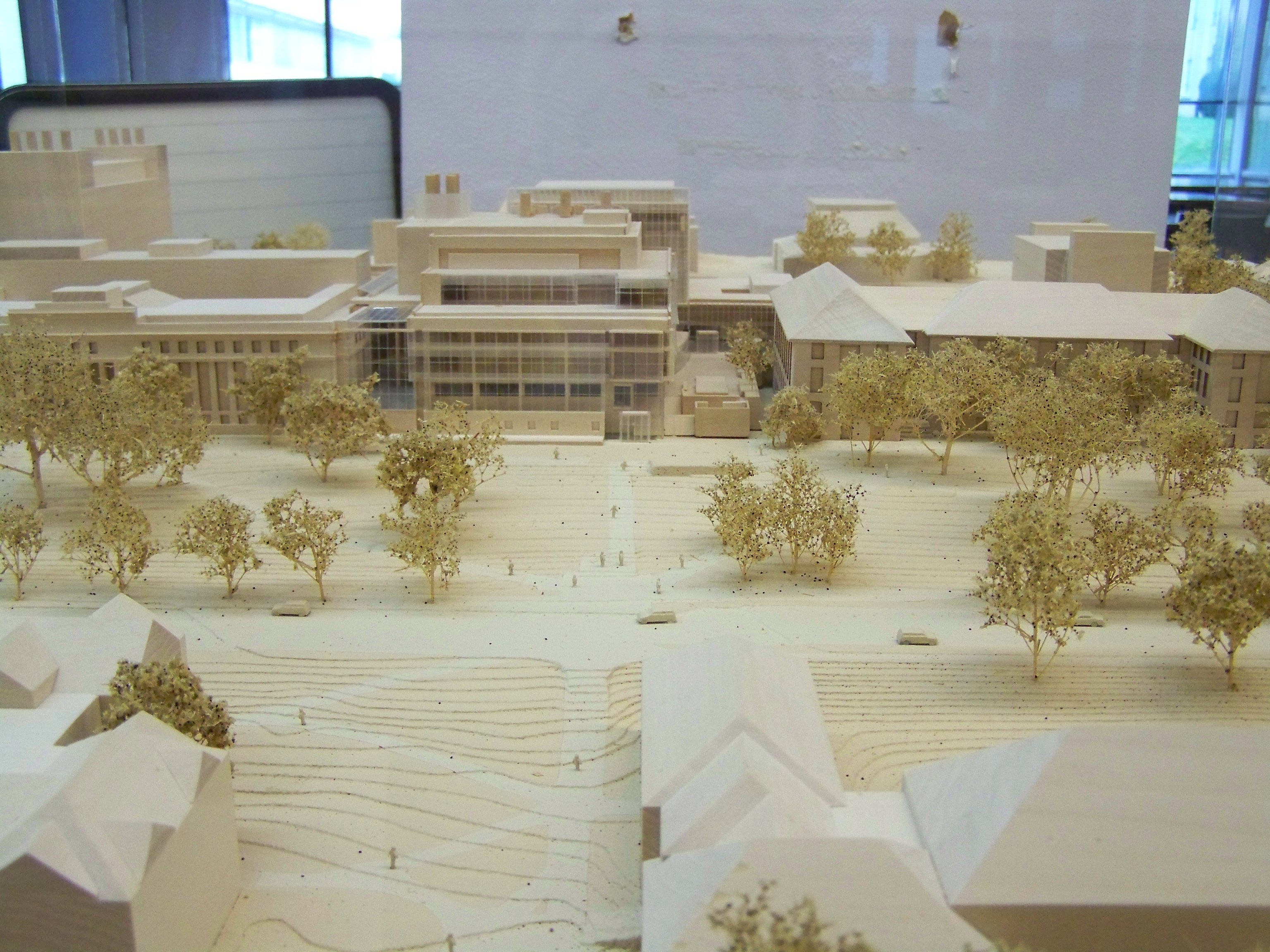
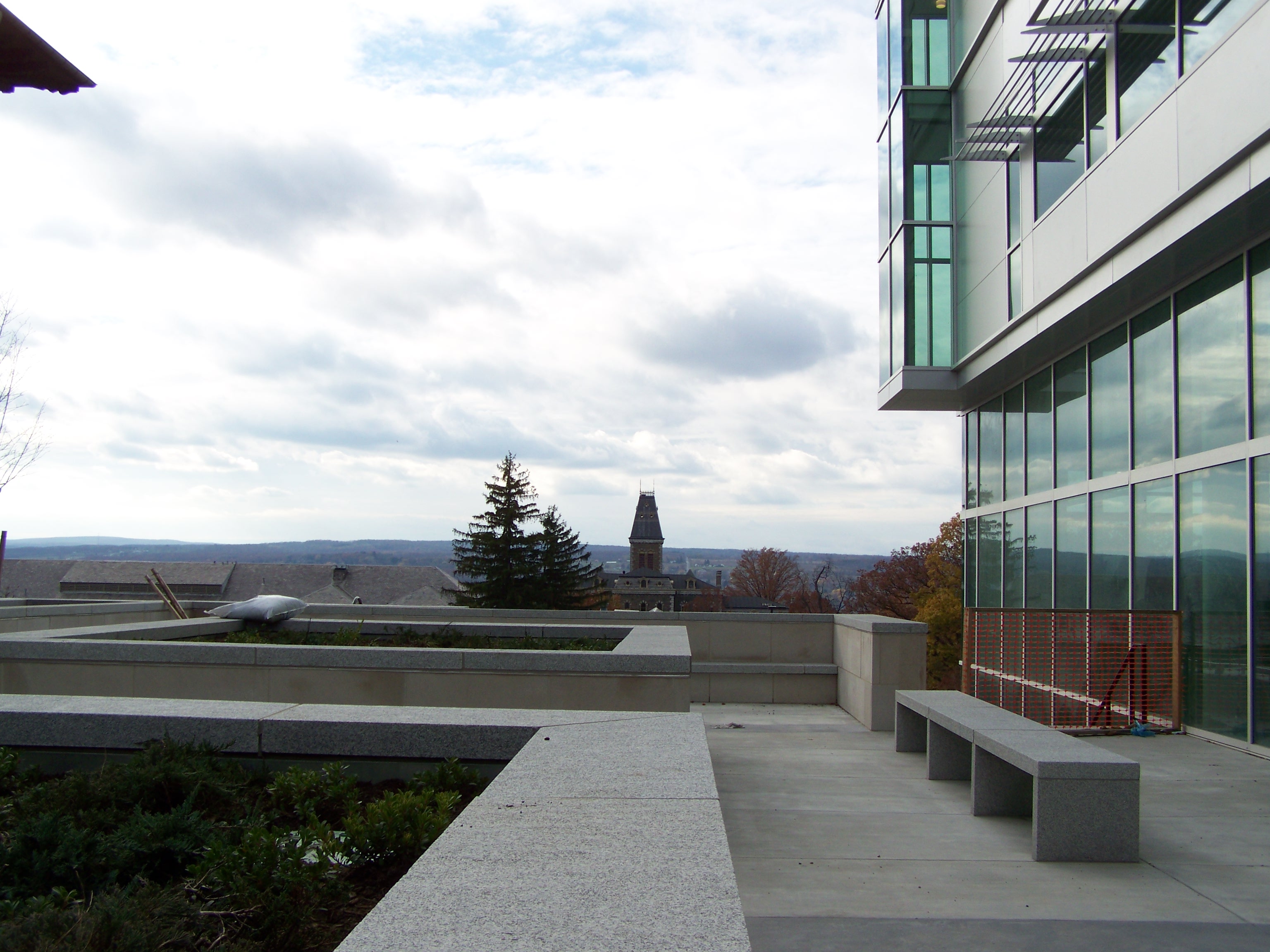
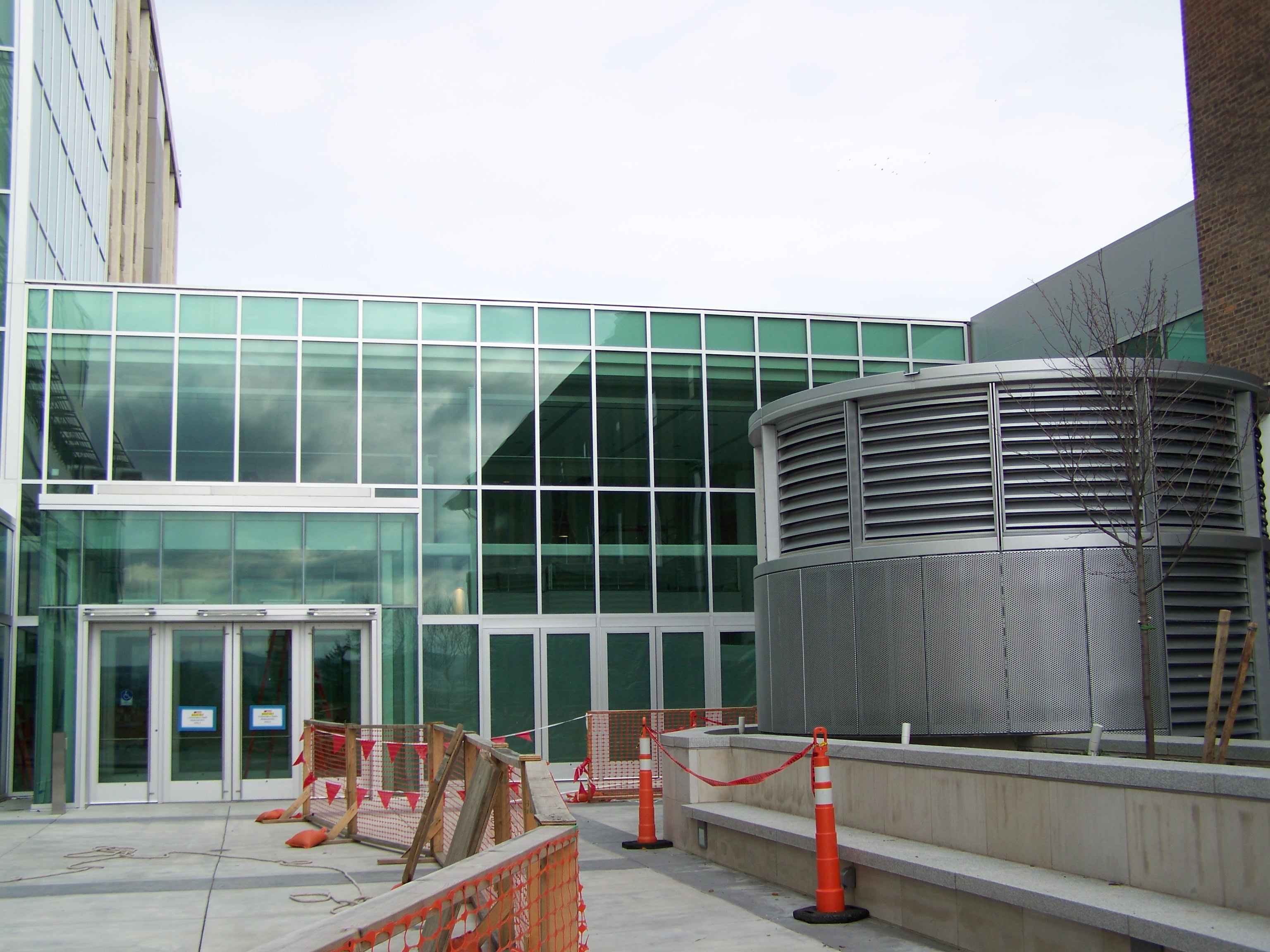
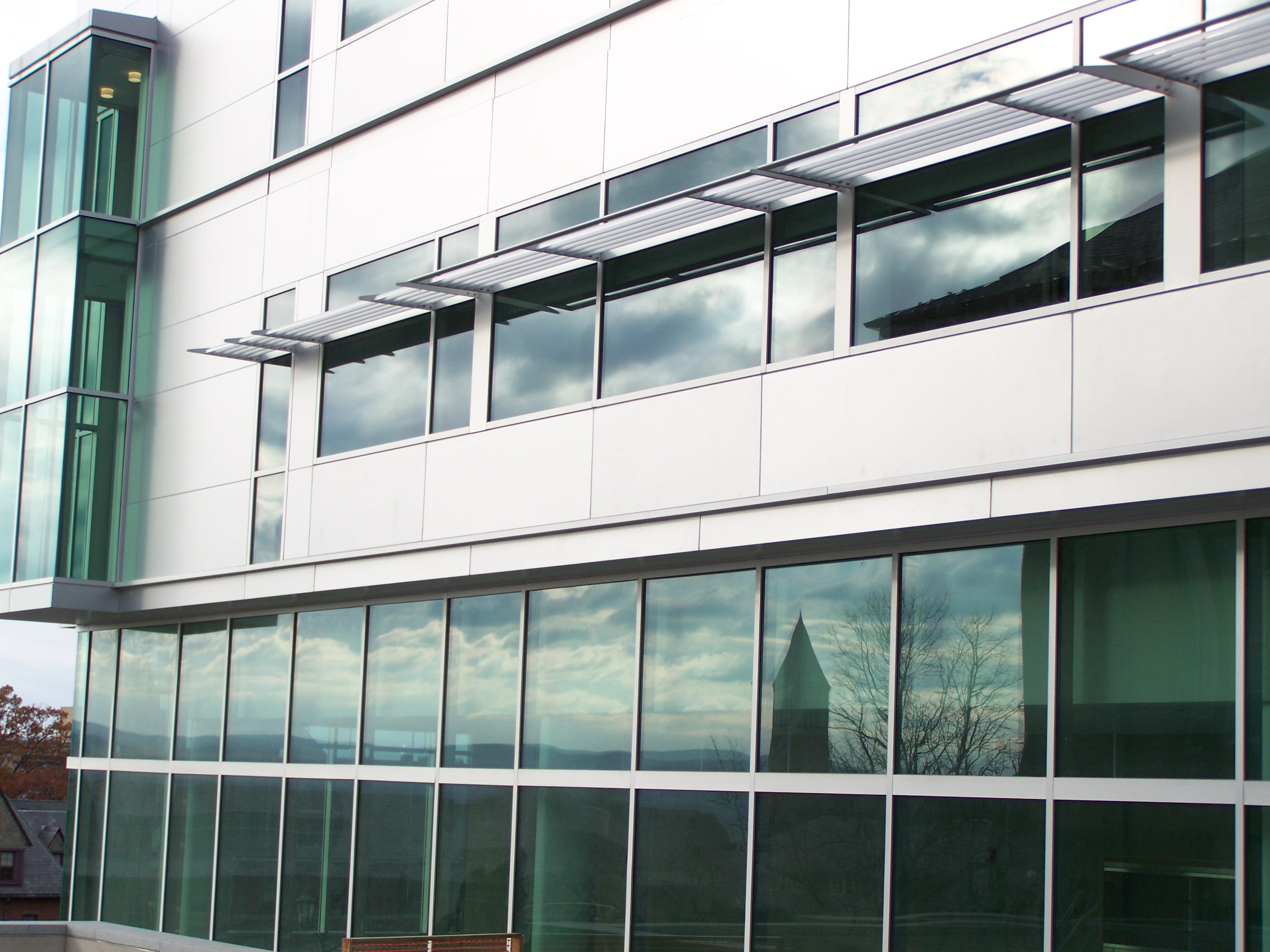
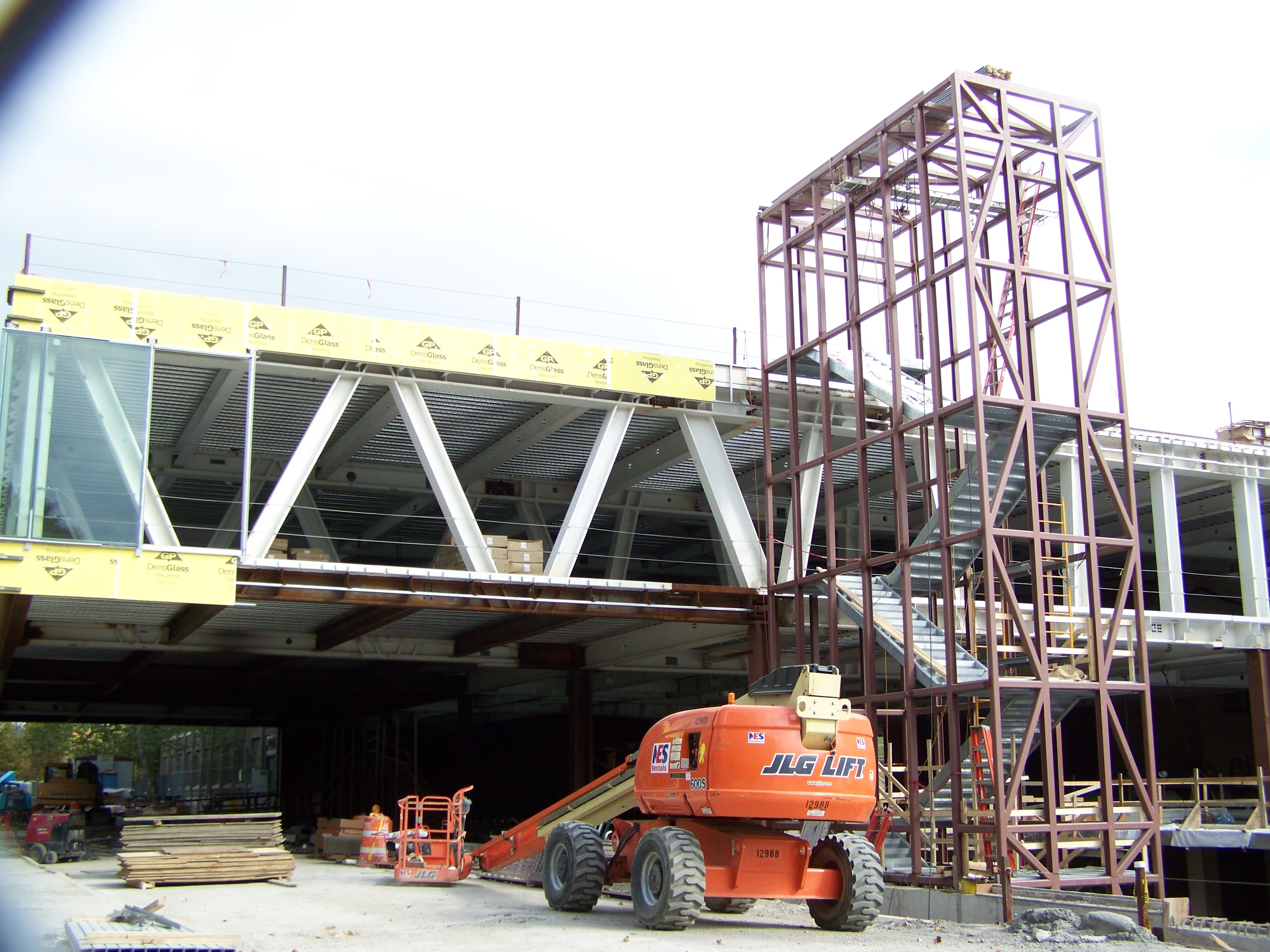
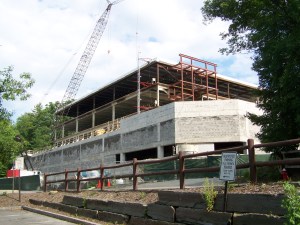
Milstein Hall continues towards its late 2011 completion date.

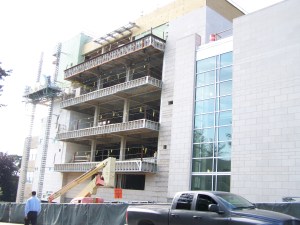
The new Human Ecology Building nears completion.

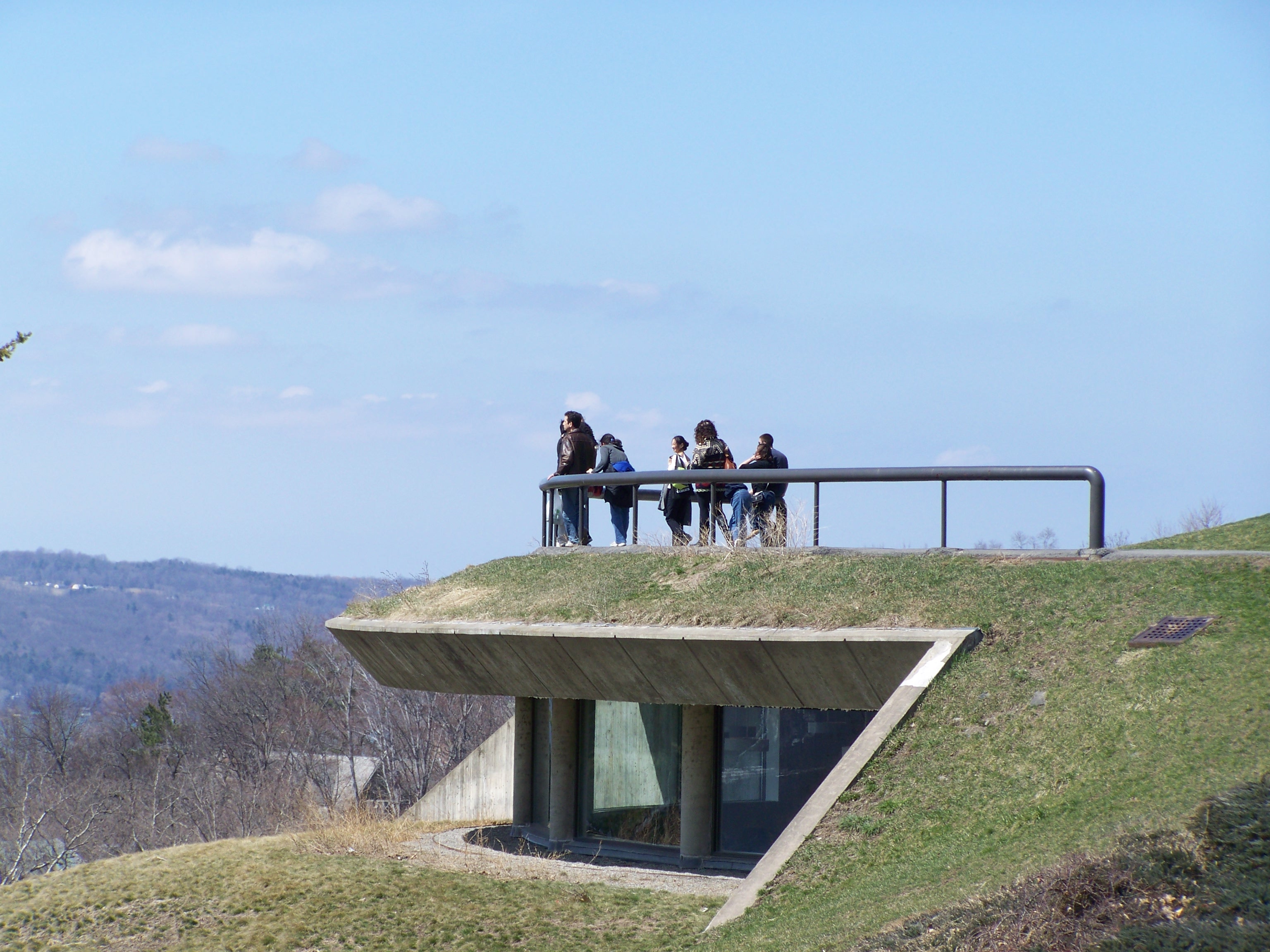
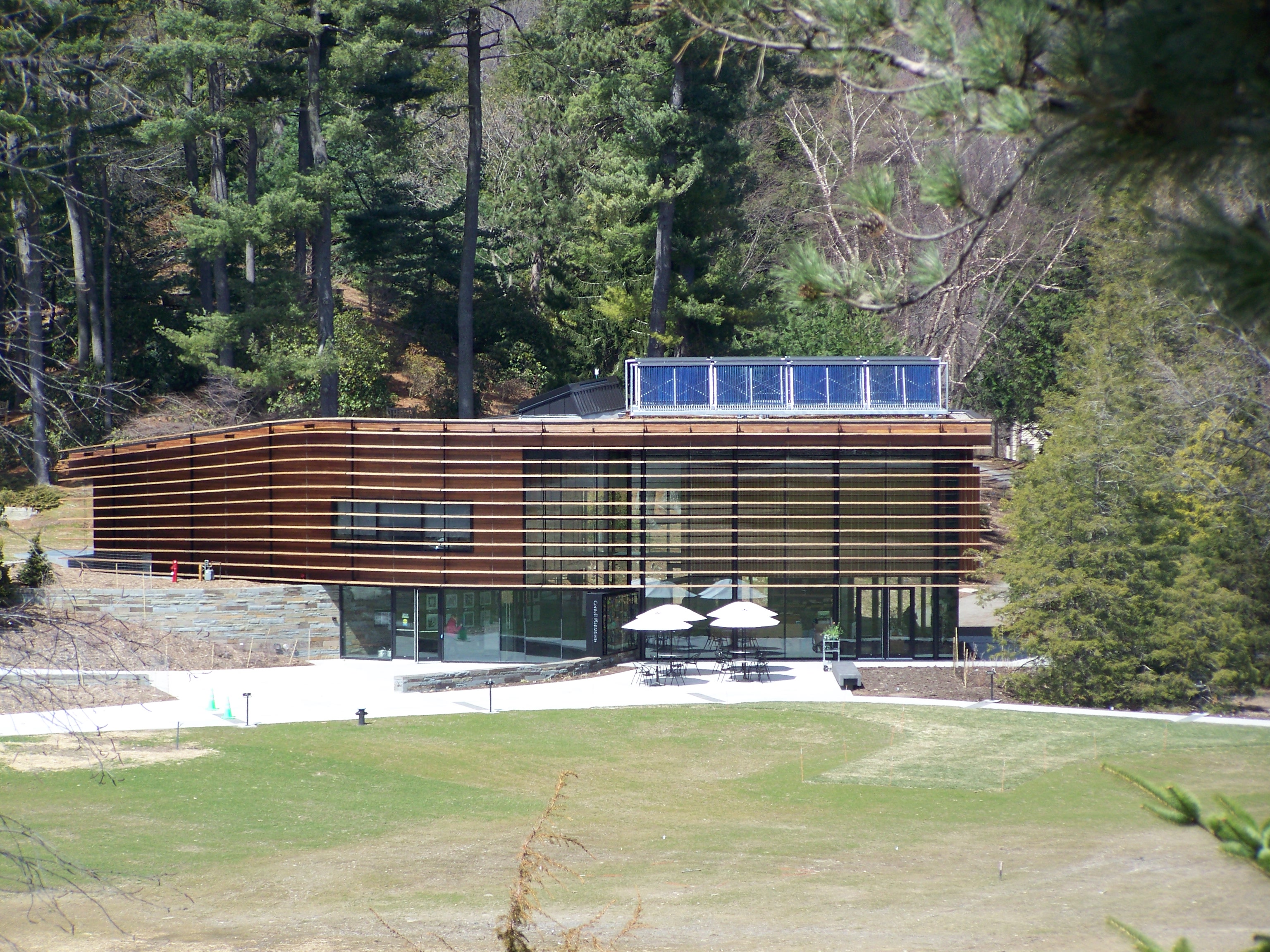
The Brian Nevin Welcome Center for the Cornell Plantations is open and ready to receive visitors.

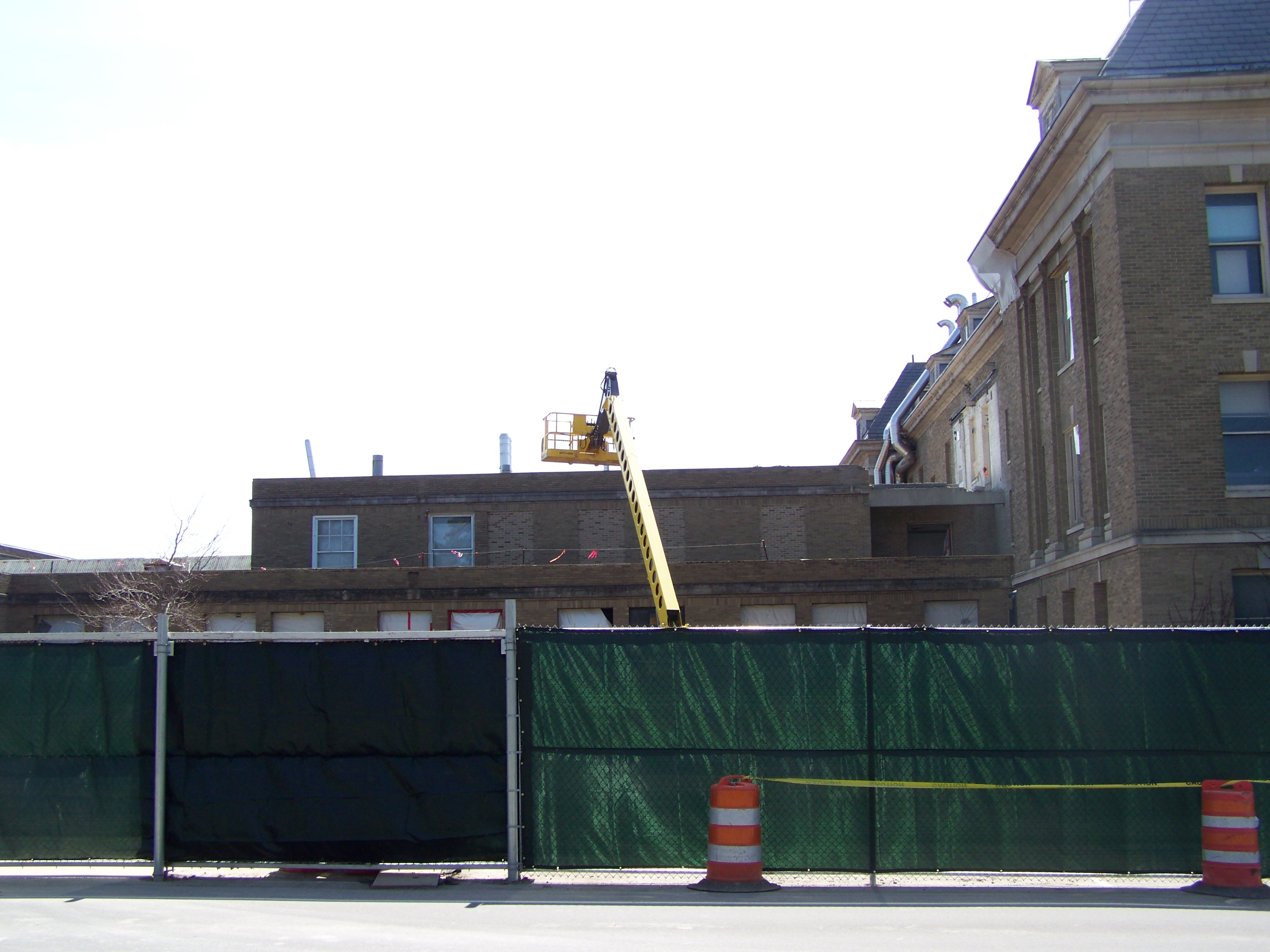
Demolition work continues on Stocking Hall’s “new wing”, to make way for the new Food Sciences building.

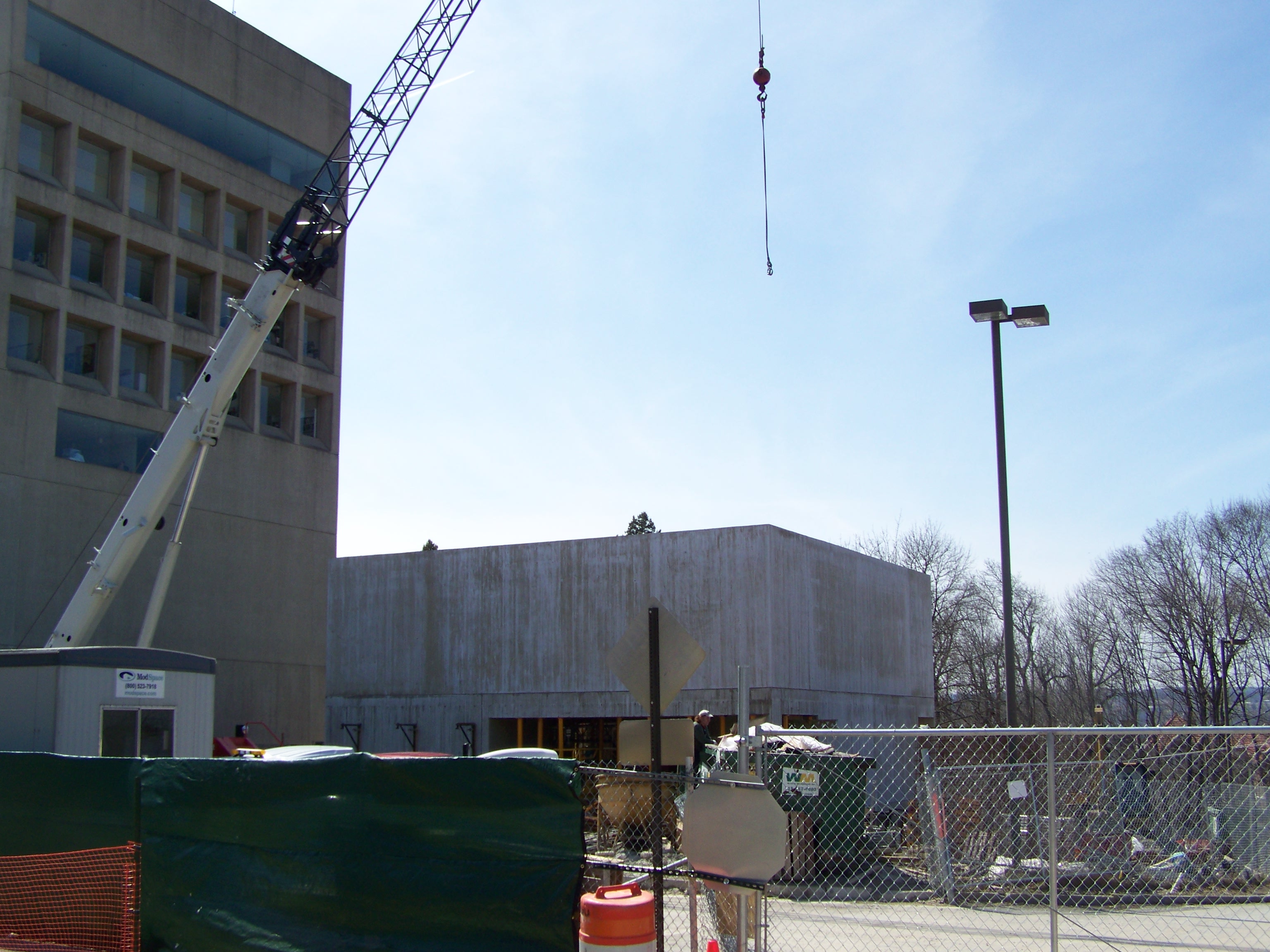
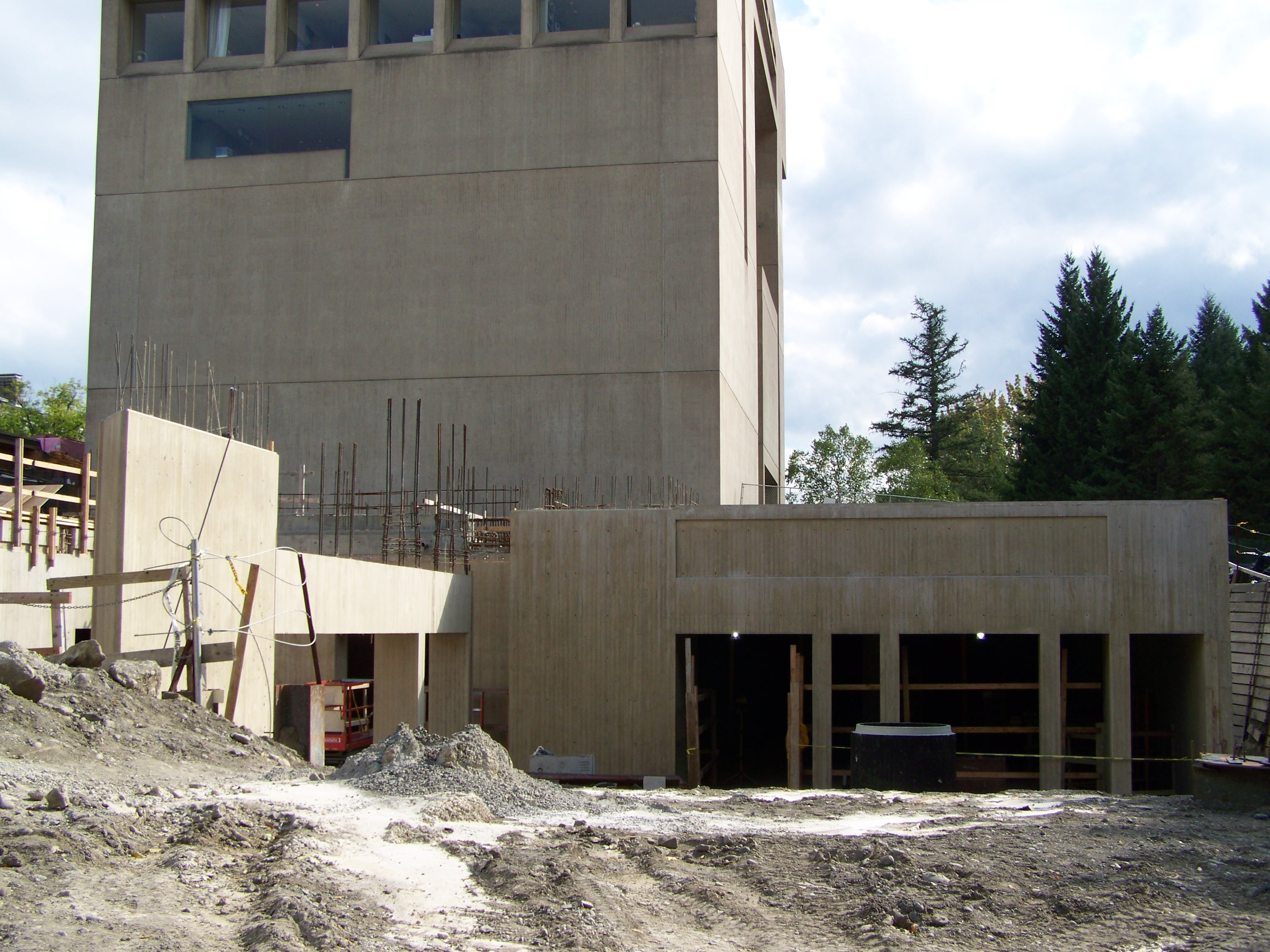
Concrete pouring is well underway for the Johnson Museum addition.

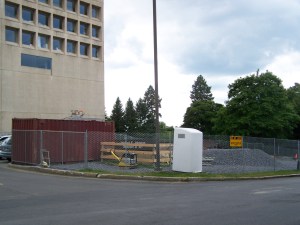
The site of Gates Hall, looking southeast.

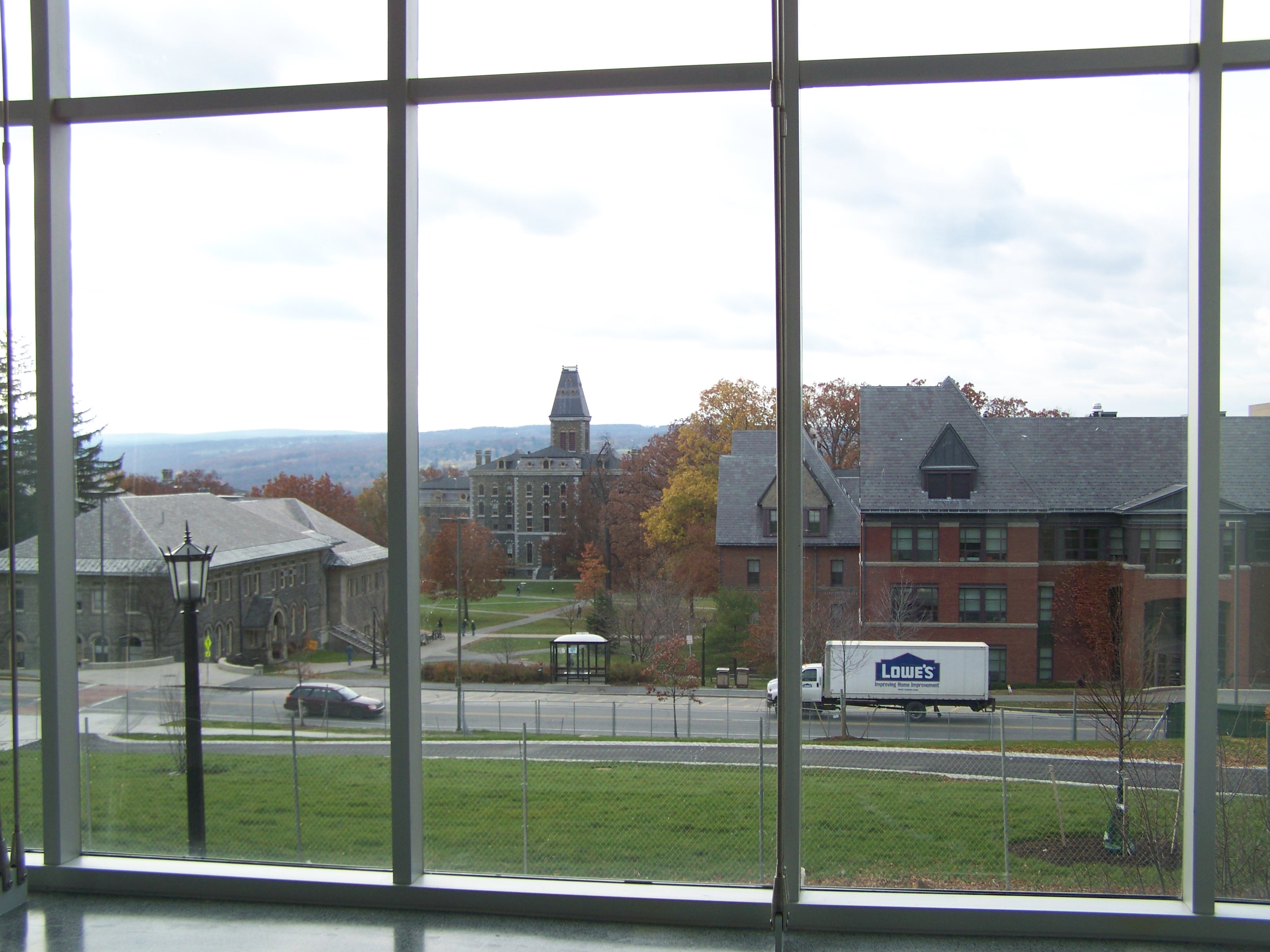
Oh Cornell. Even if you drove me nuts while I was in Ithaca, I do miss you a little bit. Partly because I have to look at this everyday:

Good thing my office is windowless.


Photographic Revisions

2 01 2011

So, one of the things I’m proud of on this blog is that about ninety percent of the photos used are my own work, either “stock” images that I had taken before I graduated, or one of the few images I’ve taken while visiting as an alum. Still, one of the things that always bothered me was that a good portion of my north campus fraternity photos were blurred. This happened for a perfectly good reason – the images were taken on my old digital camera in the summer of 2008. These images were taken close to sunset on a cloudy day, so there was a lack of light, and I had to adjust the settings to compensate. Unfortunately, this meant a longer exposure time, and if my hands shifted at all, the photo would have a “fuzzy” appearance. This is what happened to most of those photos.

So, while visiting friends as part of a 700-mile car trip around the New Year’s holiday, I did an overnight stay with a few of them that have remained in Ithaca (for grad school and work). Having a little free time as I first arrived into town on the afternoon of the 29th, I decided to rectify this issue once and for all. The images are included below.

Phi Delta Theta

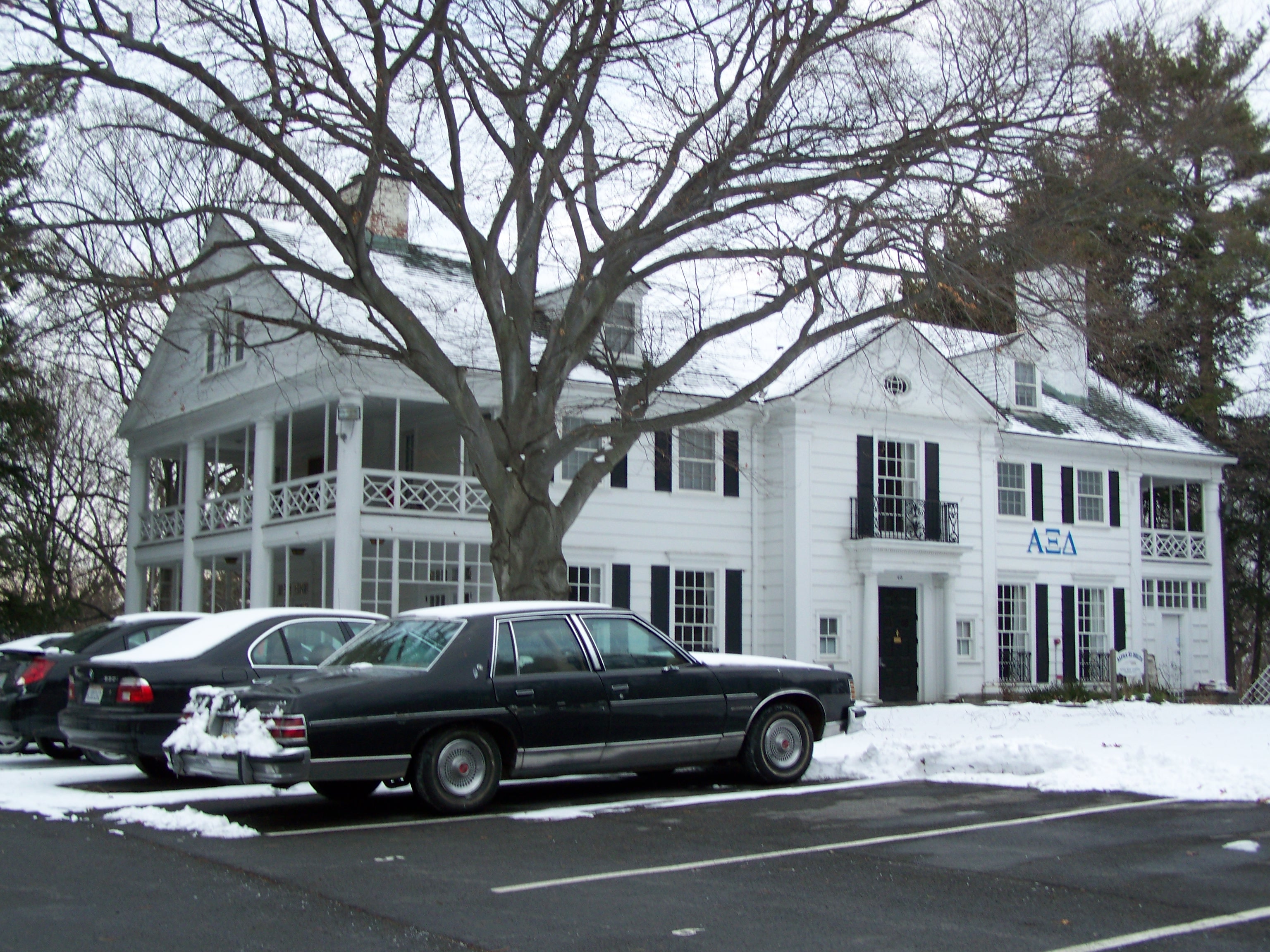
Alpha Xi Delta…and what appears to be an early-1980s Pontiac Bonneville. I thought the only models of that car left would be in museums or junk yards.

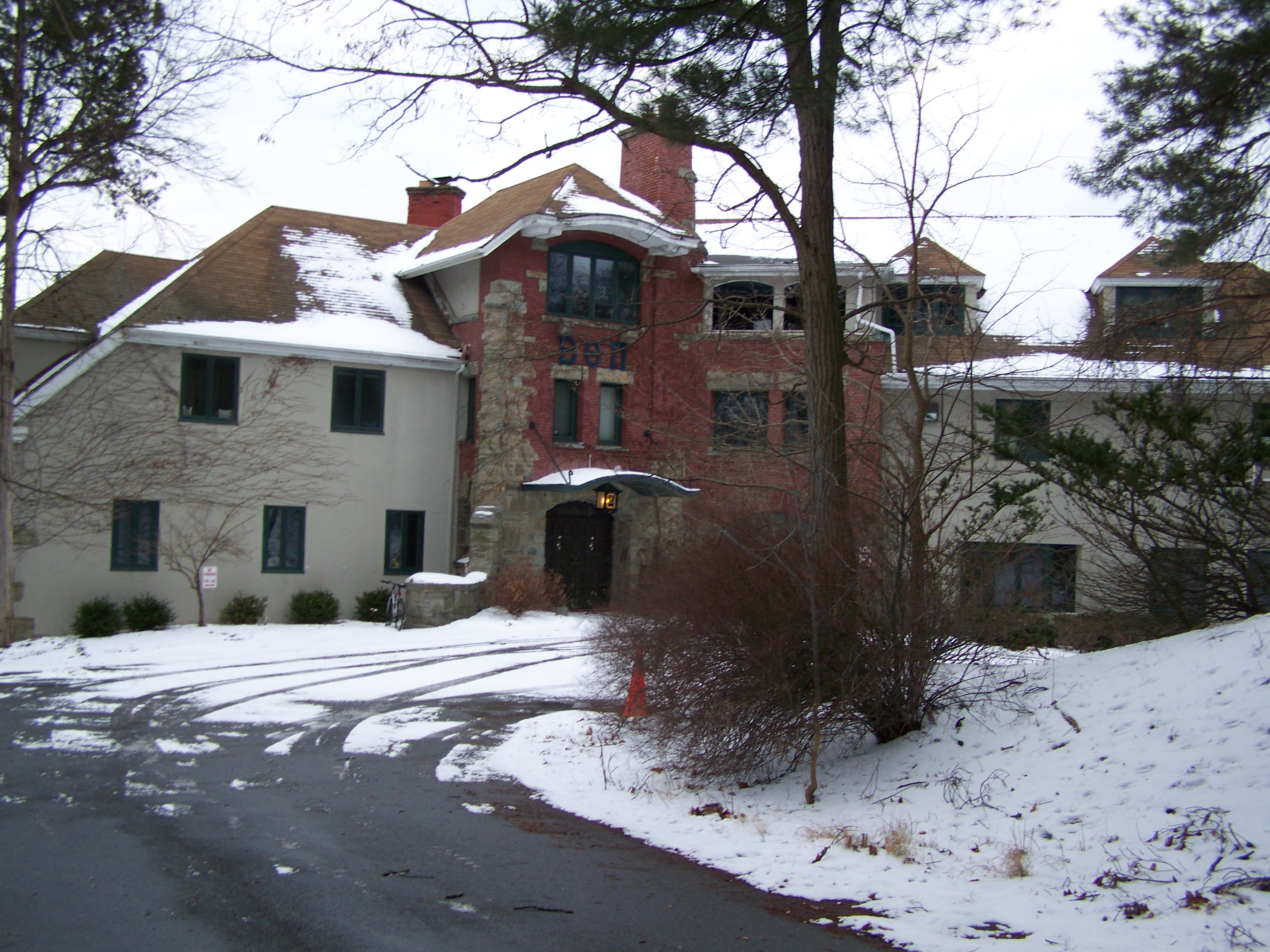
Pi Kappa Phi

Beta Theta Pi

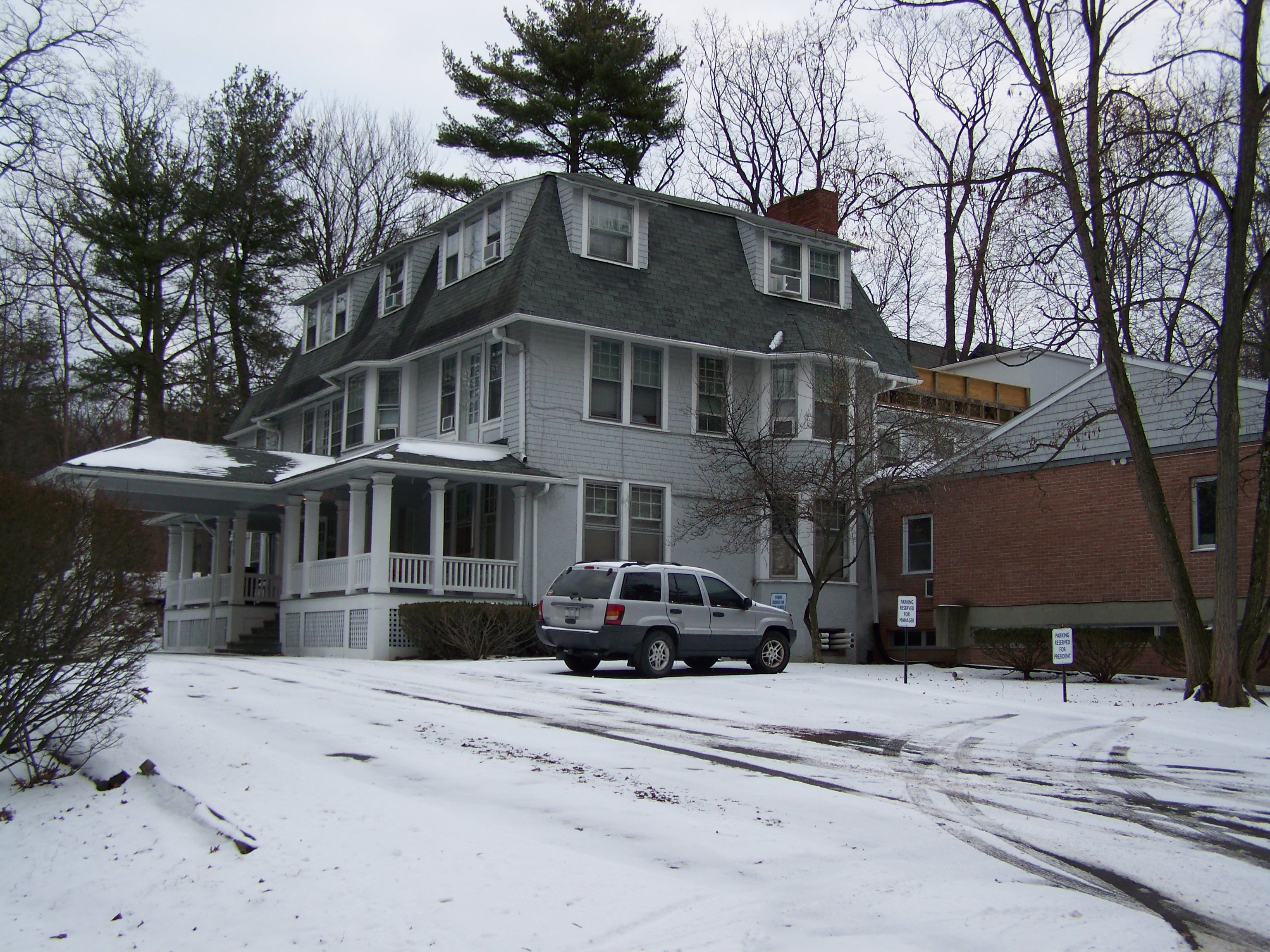
Sigma Delta Tau. I think that is the exact same Jeep from my photo two and half years ago. Housemother’s? Also, I couldn’t tell whether or not that was new construction in progress off of the rear of the old structure.

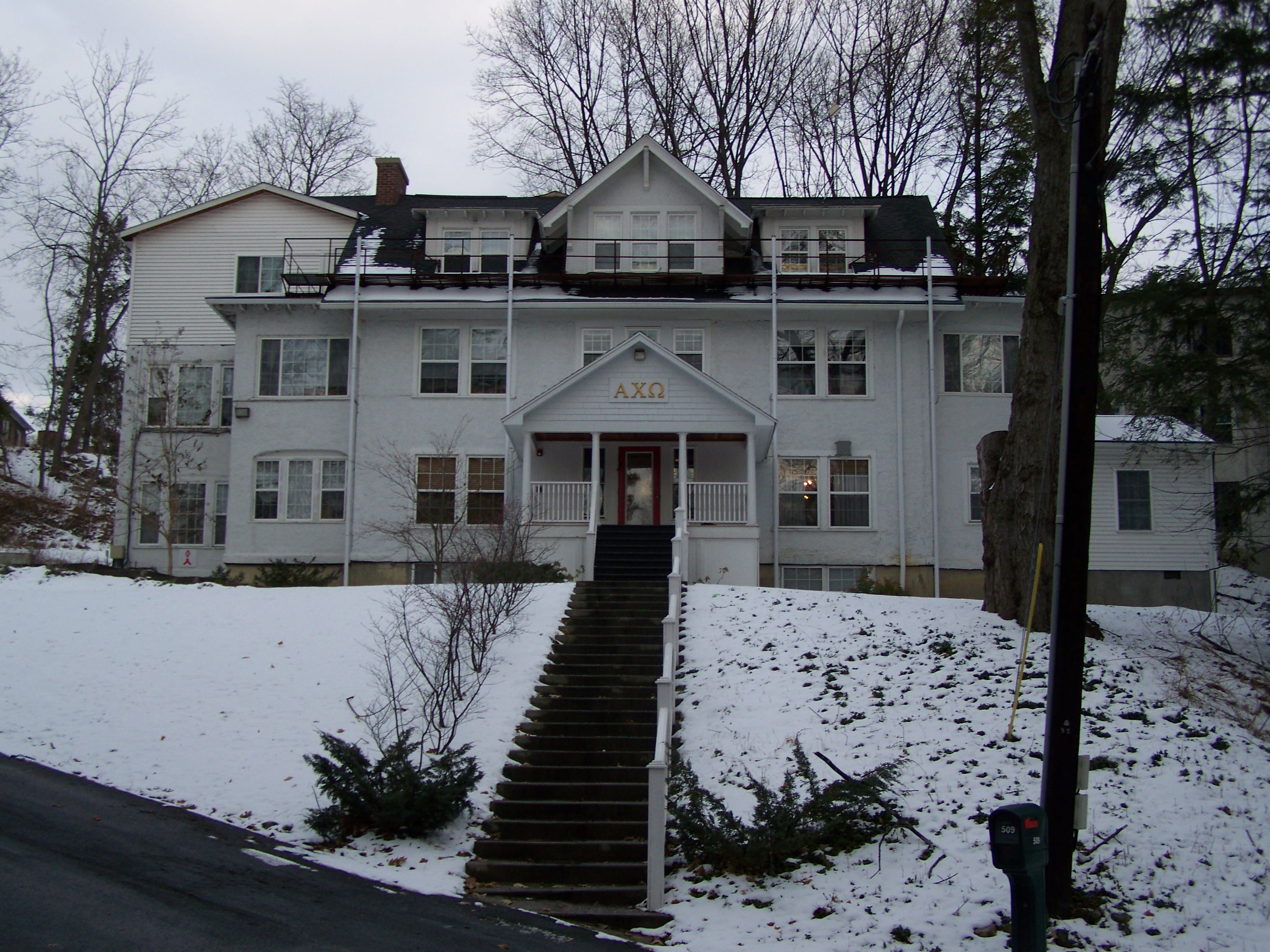
Alpha Chi Omega

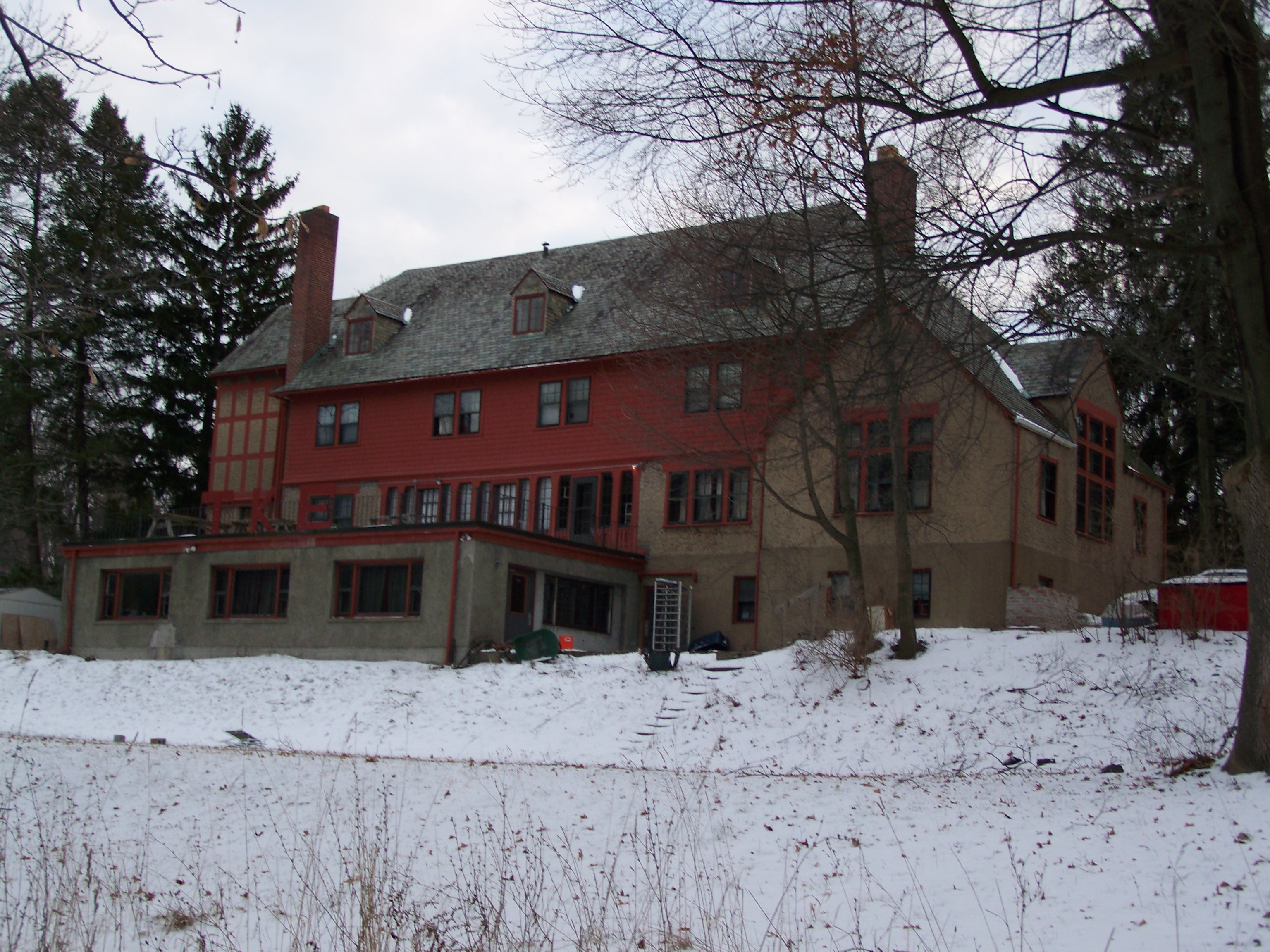
Tau Kappa Epsilon

Tau Epsilon Phi

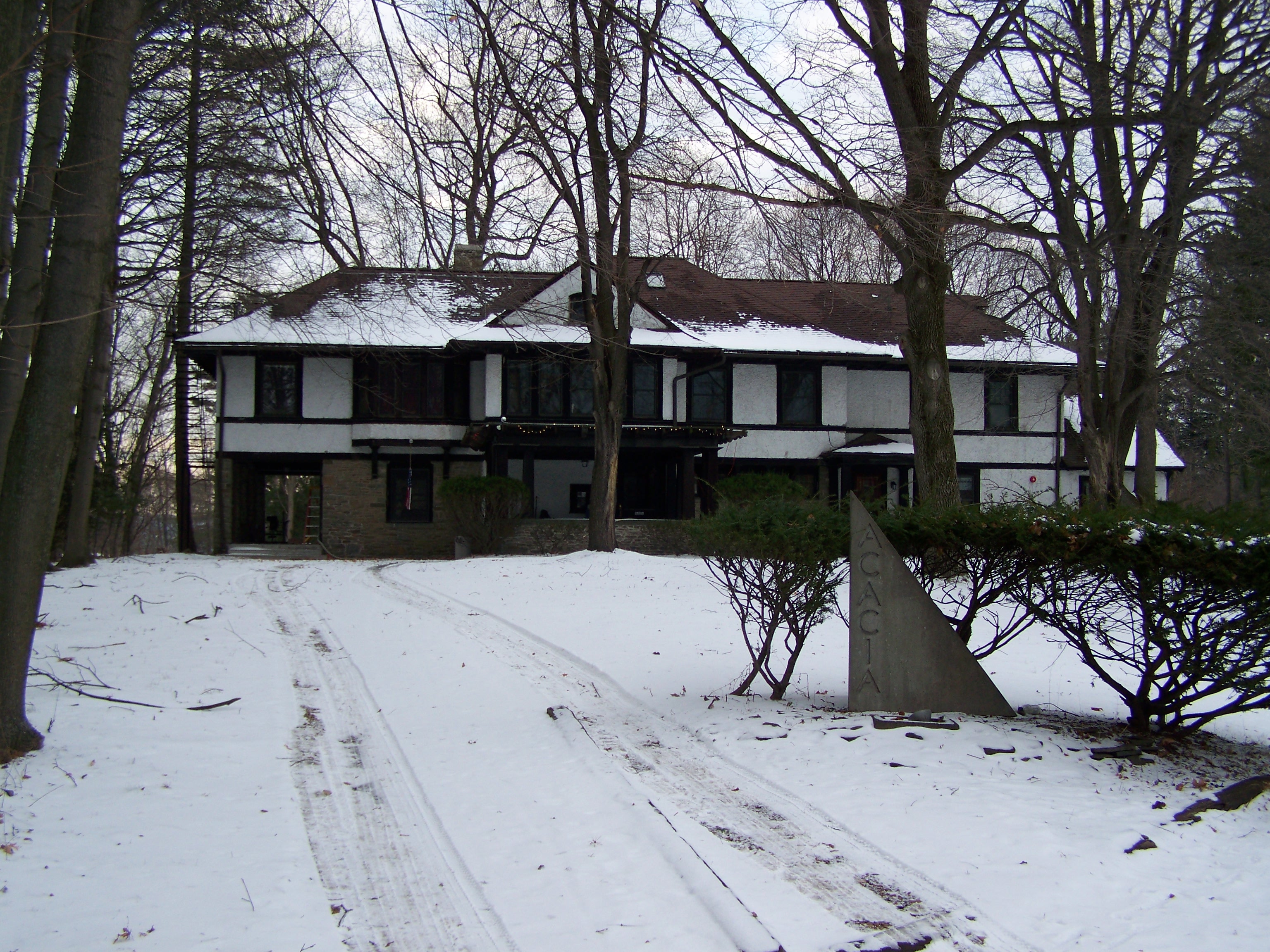
Acacia

Alpha Gamma Rho

Kappa Kappa Gamma

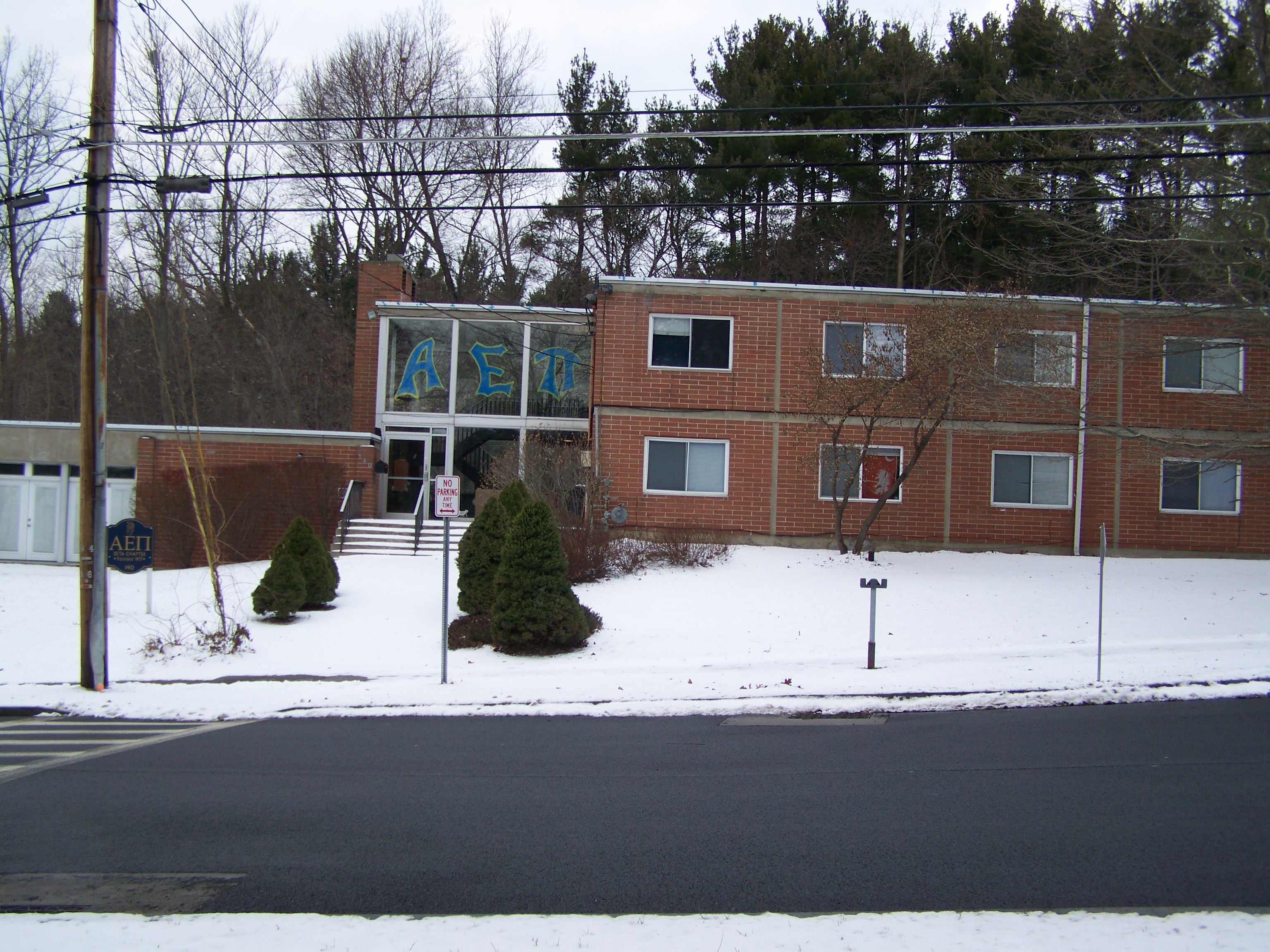
Alpha Epsilon Pi

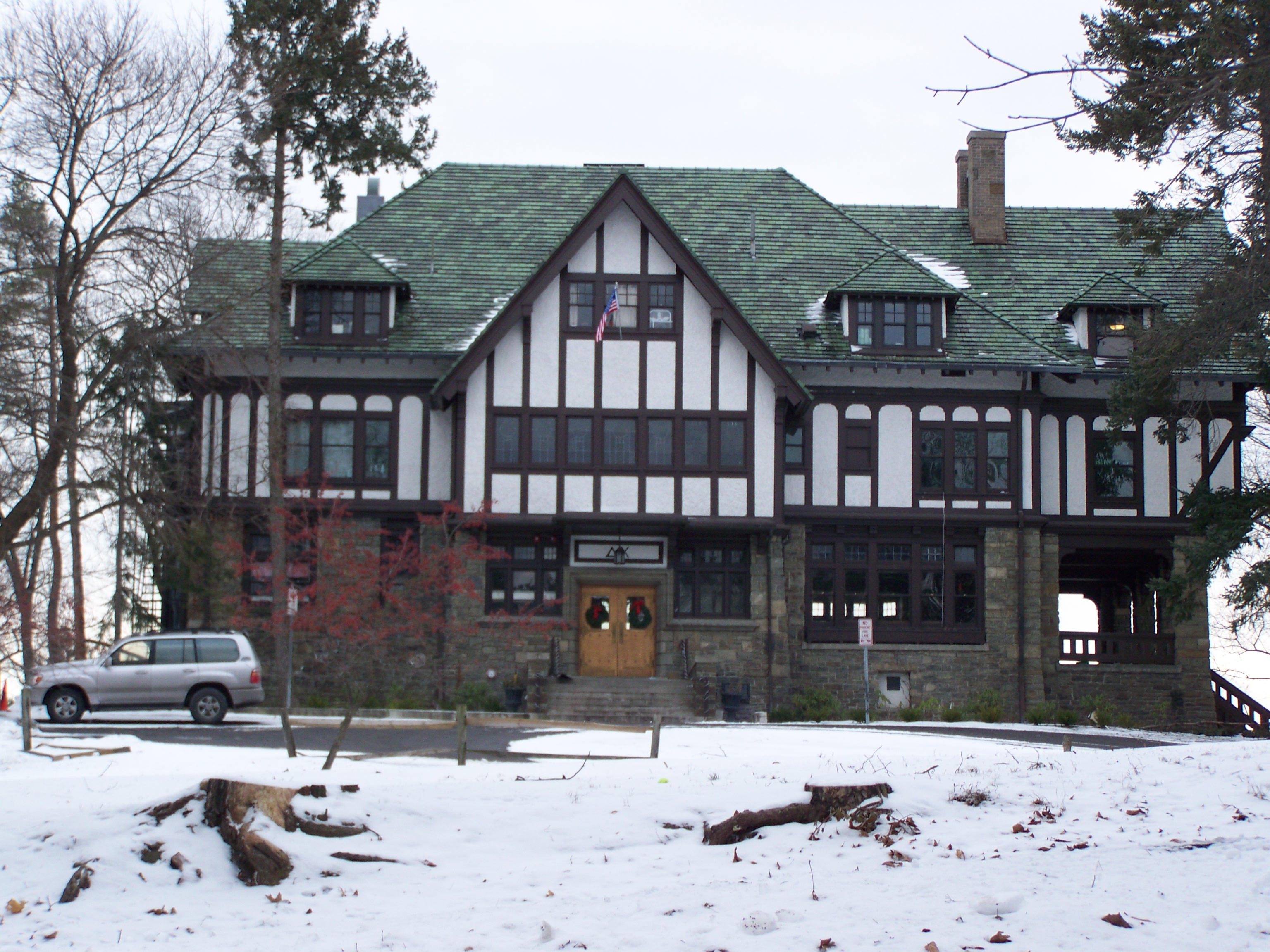
Delta Chi

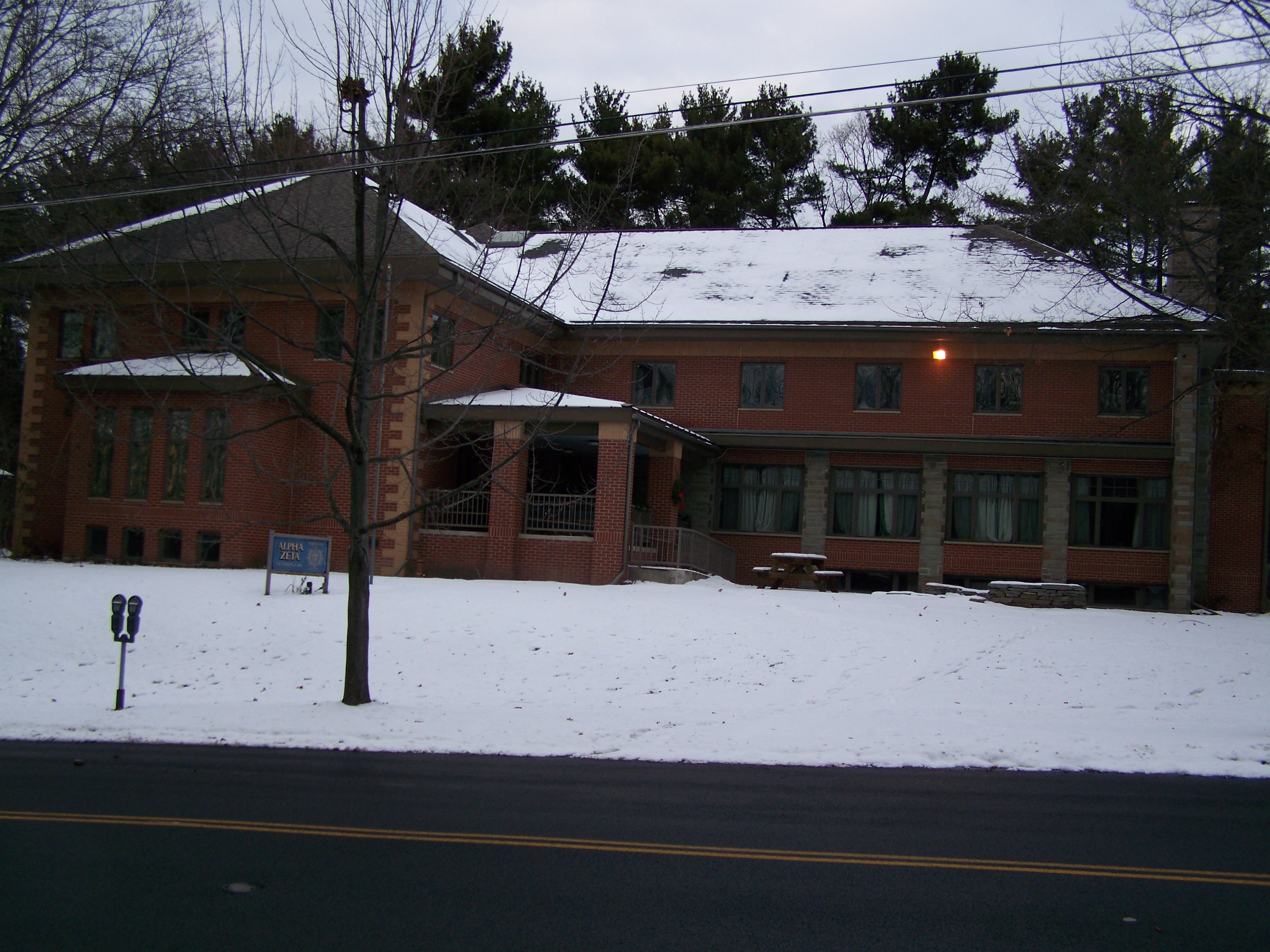
Alpha Zeta

Phi Kappa Tau


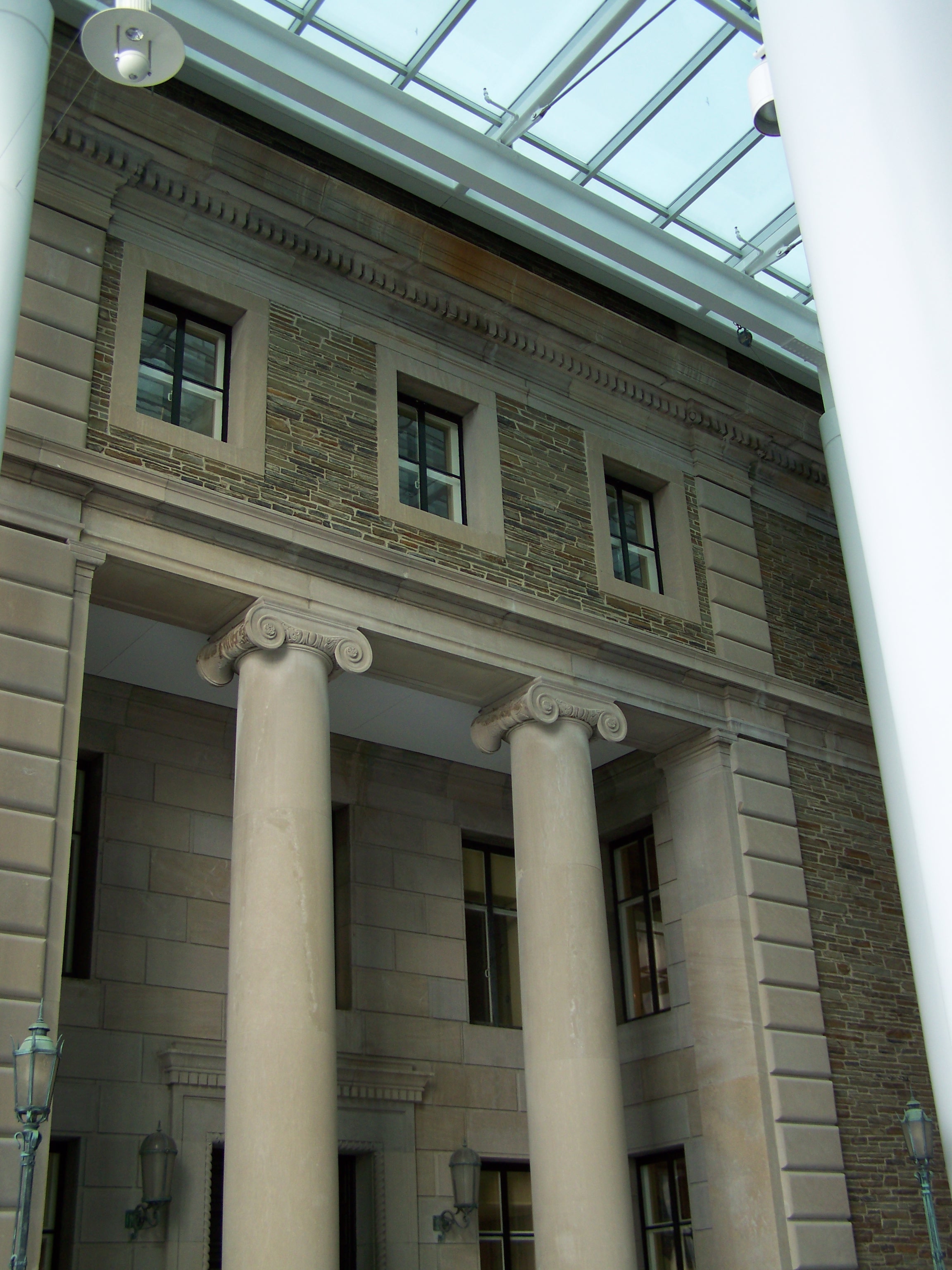
A Look Inside the Physical Sciences Building

11 11 2010

I’ll write more substantial posts in the near future. In the meanwhile, here’s some photos I took recently on a trip back to Cornell’s campus (the joy of living only a few hours away is that weekend trips are feasible – for the record, if you asked me last year where I was going, it was to a school out in the Mountain West…but that was before their funding was cut. The next best solution just happened to be in the Northeast).

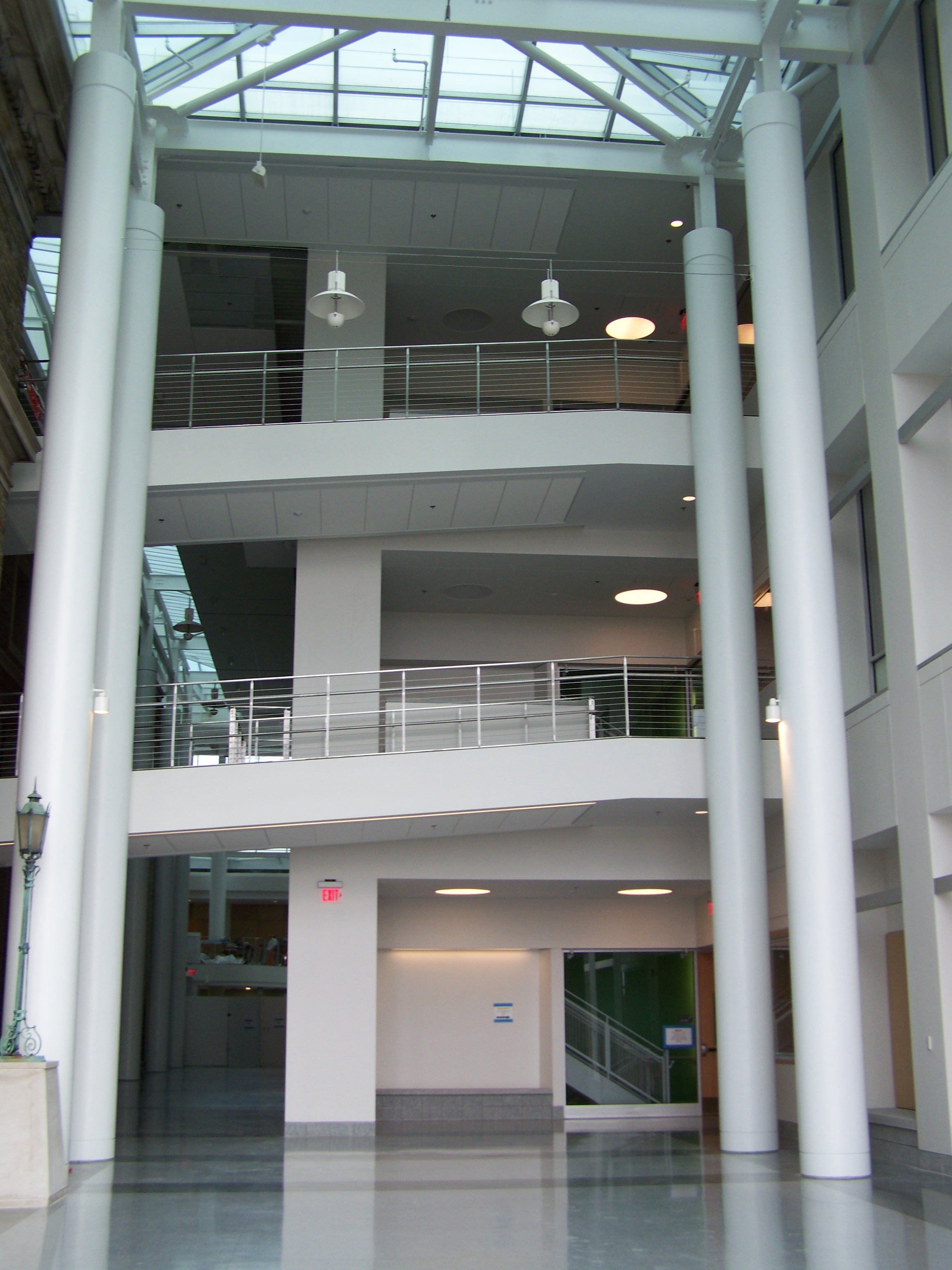
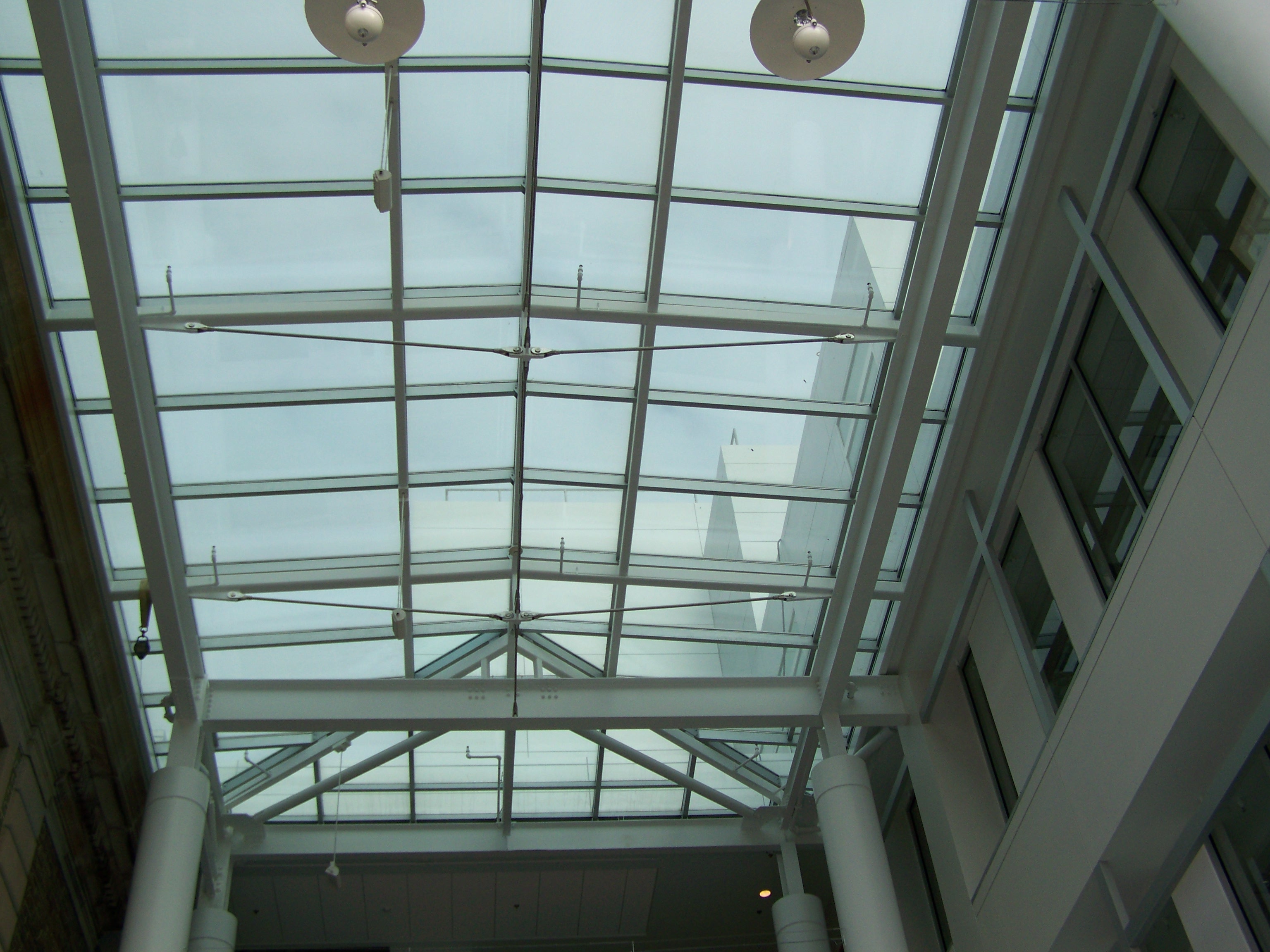
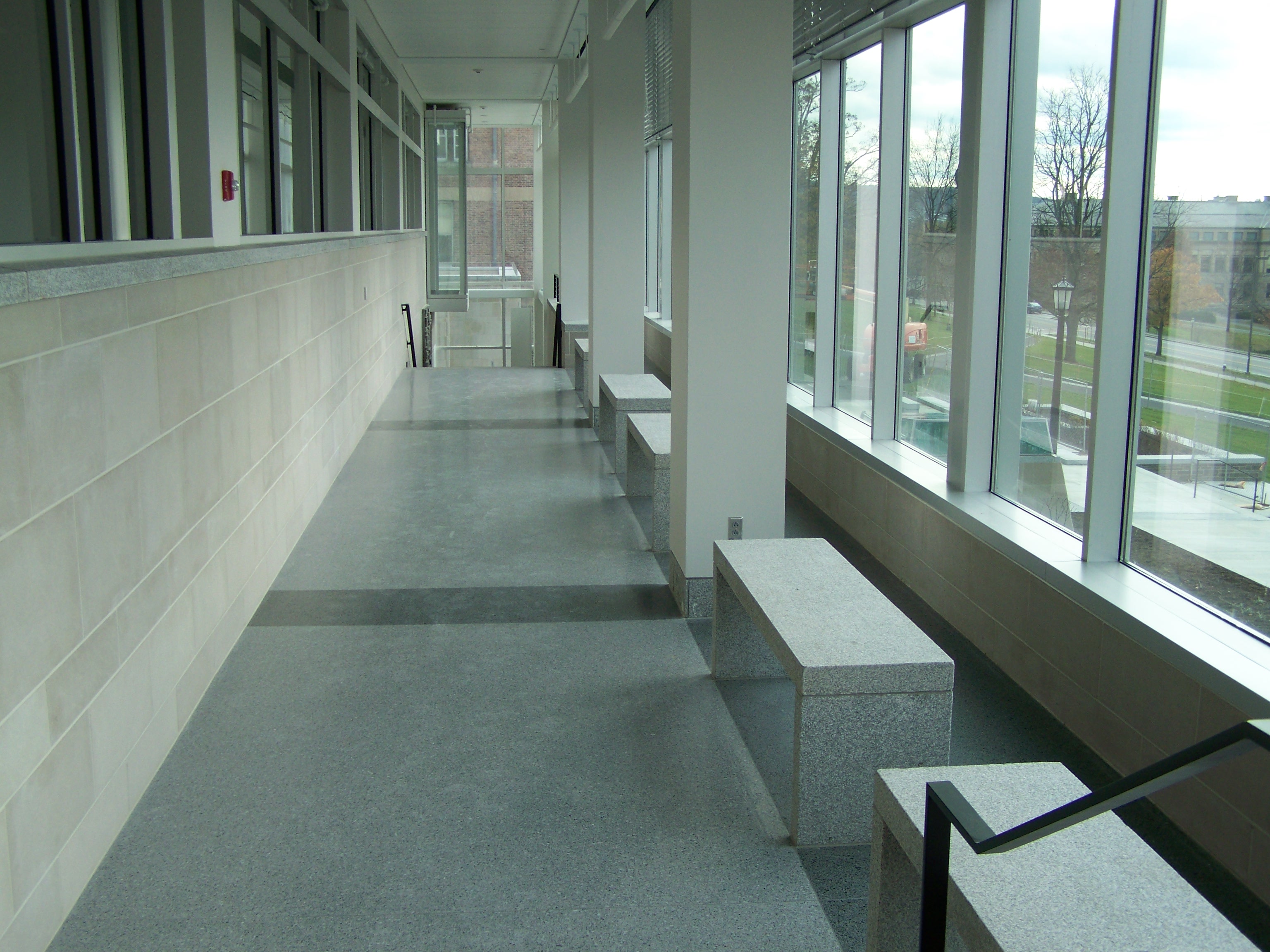
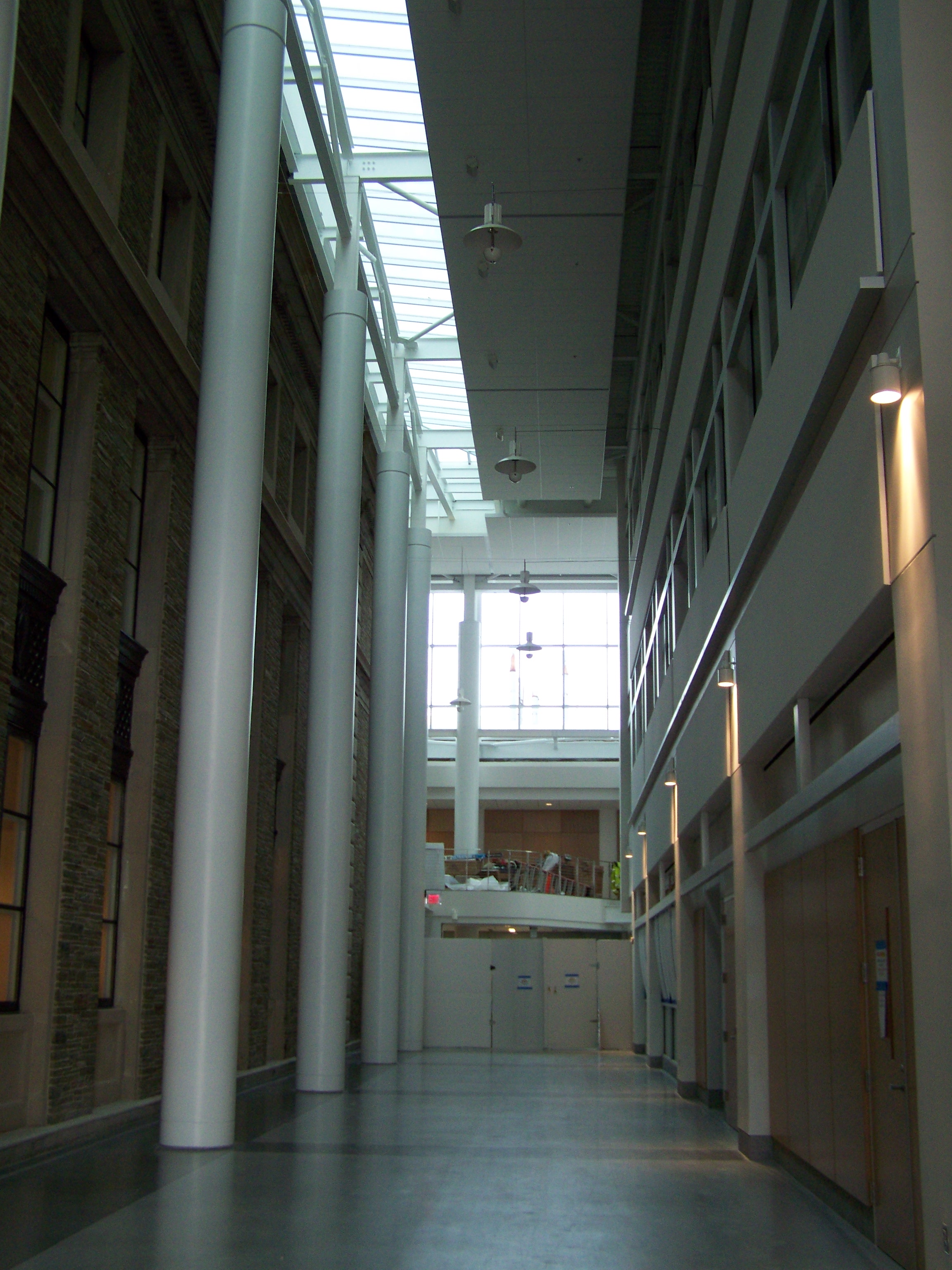
So, anyways, the work is virtually complete, with part of the building opened for light use, but the whole building is still not yet fully accessible.  As if that’s ever stopped me before.

.

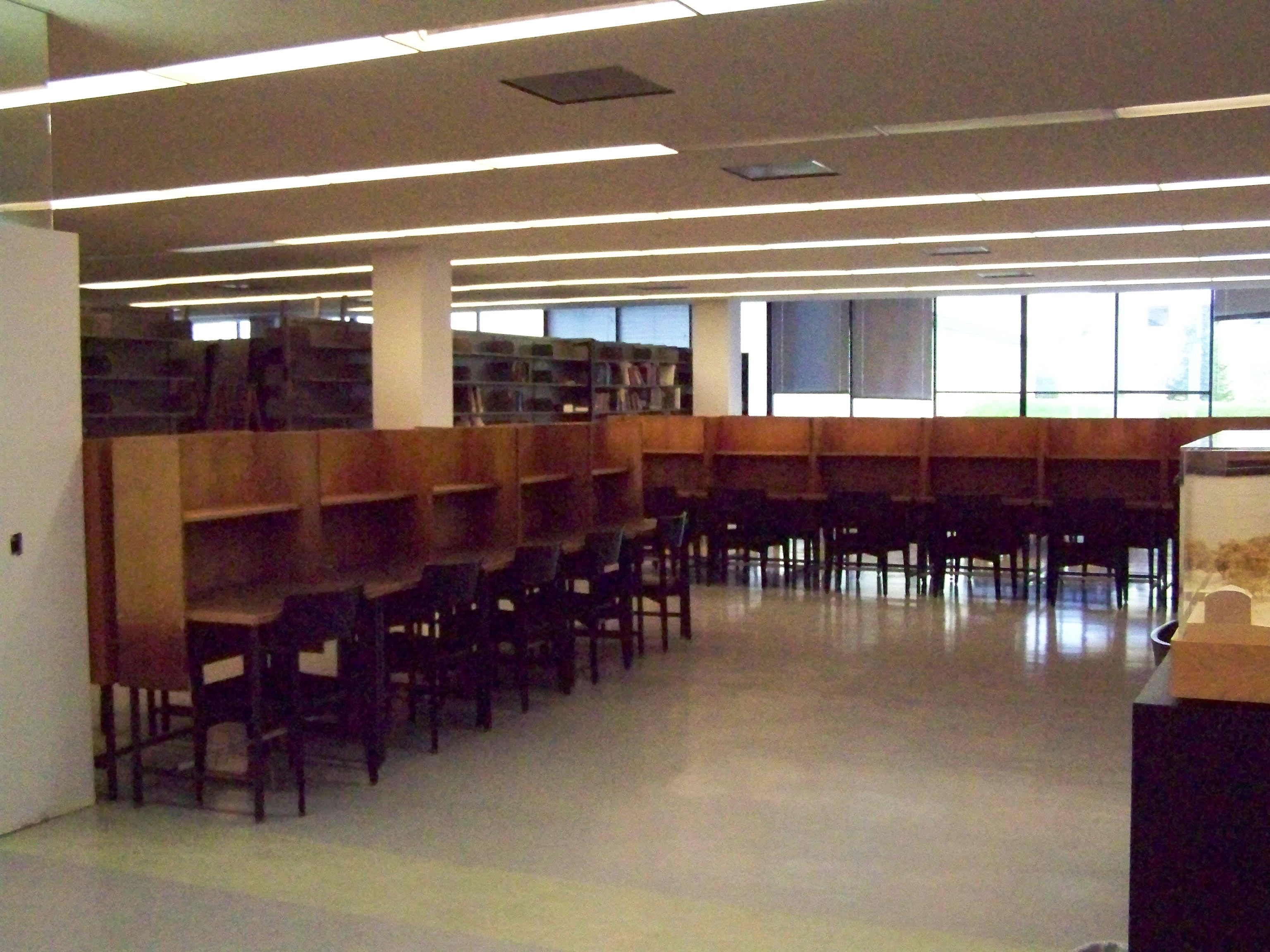
This mock-up, some empty carrels and a couple of bare desks are all that is left of the Physical Sciences Library in Clark Hall. I noticed one of the pillars an eulogy tot he library that Munier Salem had written in the Sun on March 26, 2009, yellowed but encased in a simple black picture frame. I thought it was a nice gesture to the library that once was. Although I opted to not take a photo of the column, here’s a link to its online version.

Insert your name here…for about $35 million. Could be you…

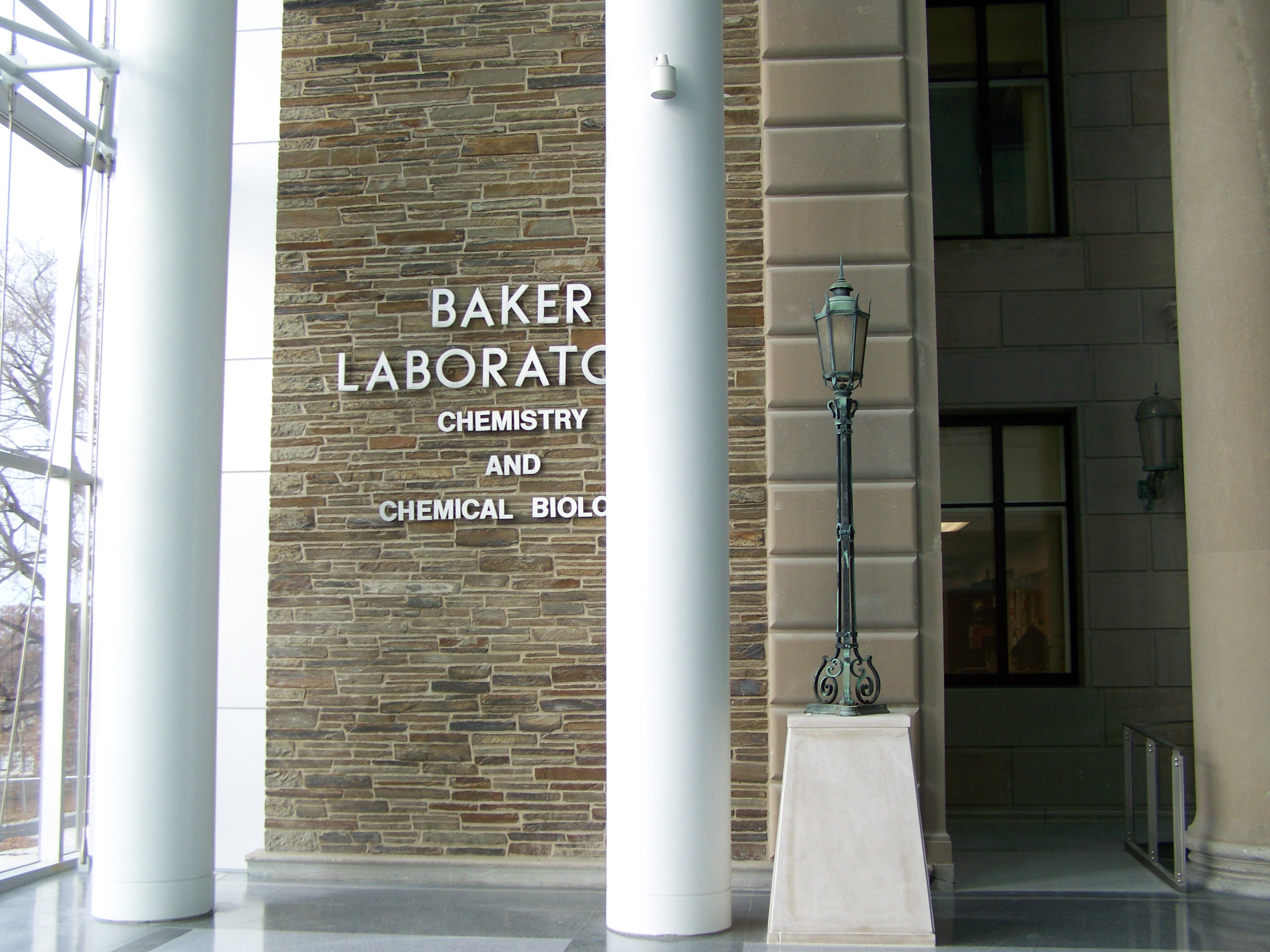
Leaving the oxidized copper lampposts was a nice touch.


Homecoming Construction Photos

29 09 2010

If I free up enough time between proctoring exams, I might write something more substantial. Until then, he are the physical highlights of Homecoming weekend.

The 197,000 sq ft Physical Sciences Building is nearly complete, with a soft opening planned for next month. Although still fenced, the landscaping is nearly completed. The glass isn’t as clear as the old renderings suggested, but otherwise it’s pretty faithful to the sketches.

Regarding work on Milstein Hall, a taste of what to come was shown with the installation of a small amount of glass on the northwest corner. Slightly greenish-blue in hue, which to me was slightly unexpected but not something I feel strongly about (I imagined a bluish tint if any at all). The 43,000 sq ft building is set to be complete by this time next year.

The Johnson’s addition is mostly underground, but some of the concrete work will build out to an above ground complimentary structure to the main building. It would appear that work has advanced quite a ways, with the rebar on the left indicating more pouring is yet to come for the east side of the 16,000 sq ft addition.

MVR North continues construction, though externally it hasn’t made too much progress in the past few months. The stone facade on the parking garage has been finished and work has been done on the exterior stairwells. The 87,000 sq ft building is set to be complete by the end of the winter.


The Cornell Convention Center

29 04 2010

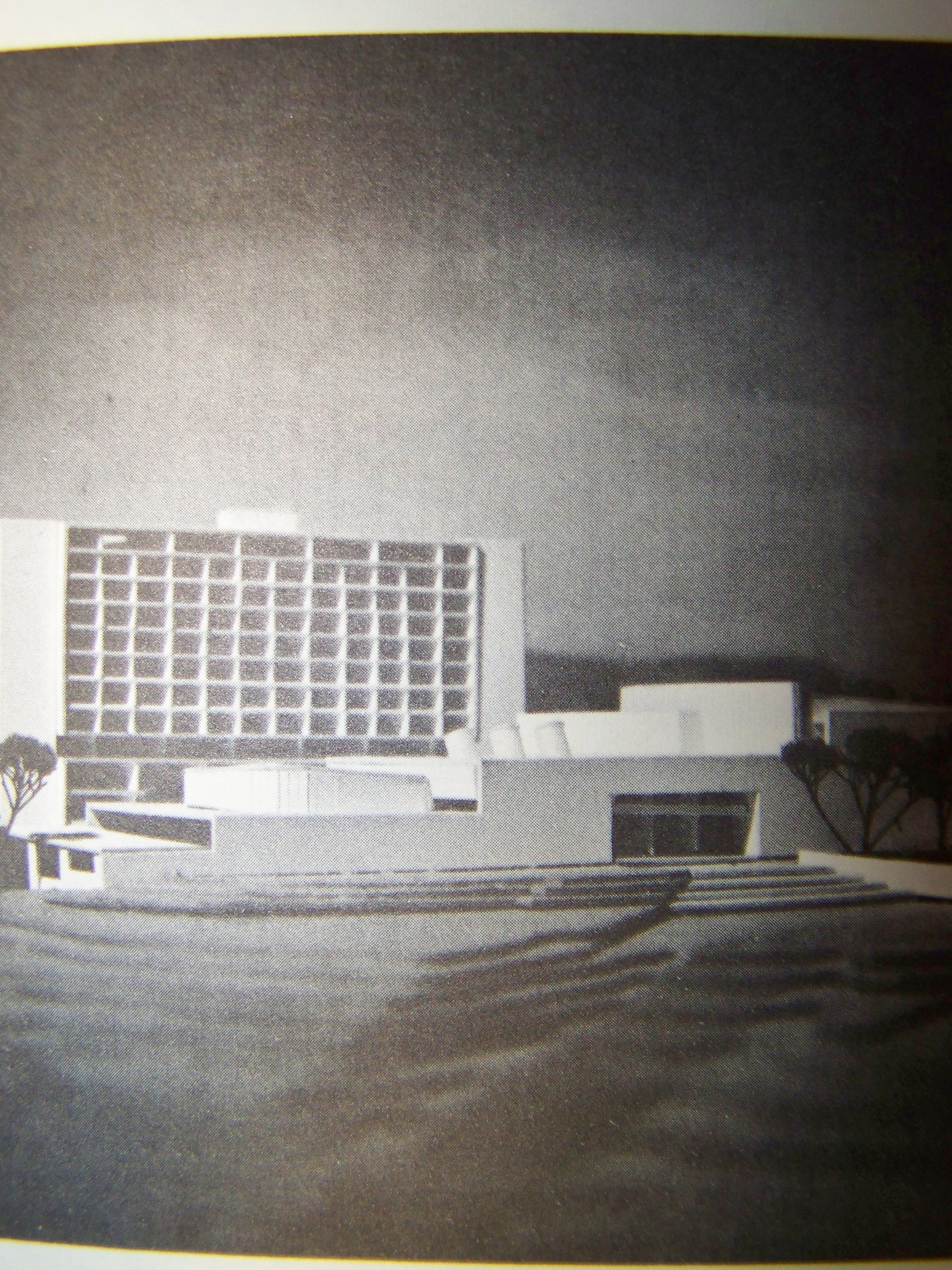
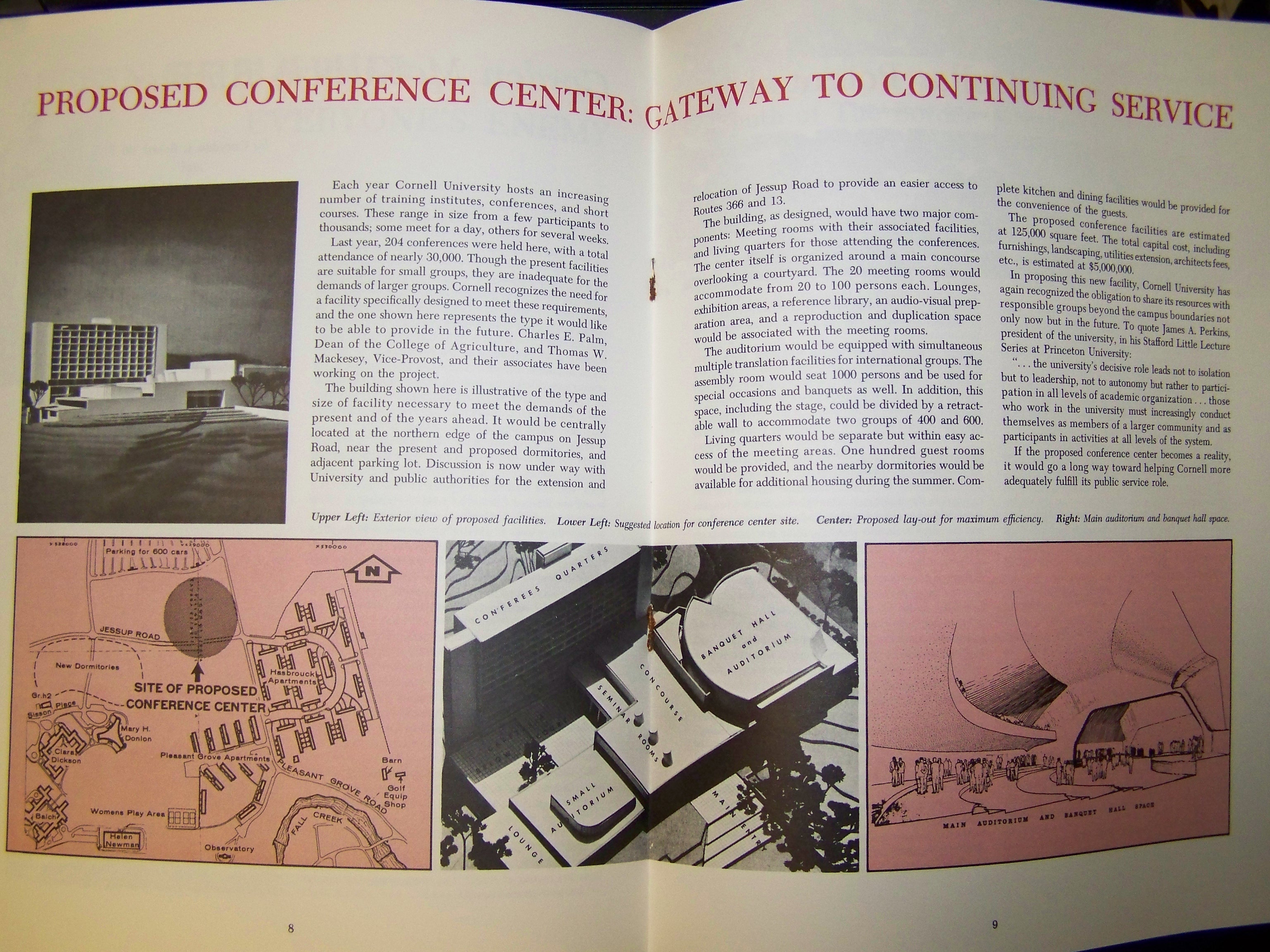
While doing research recently, I came across this an old article promoting the proposal for a campus convention center.

The images and article are from a November 1966 issue of the “Cornell Countryman”, which was a monthly magazine published by the old Agriculture school (now CALS).

The proposal (which was never approved), was located off of Jessup Road where the townhouses are located today. It called for a 125,000 sq ft facility complete with break-out rooms, a banquet facility and larger meeting spaces. The expected cost was around $5 million in 1966 dollars. The proposal also suggested the extension and rerouting of Jessup Road to either/or Rte 13 and 366.

In the article, it mentions proposed dorms nearby. This would be in reference to the highrises and lowrises, as well as RPU, which were built in the early and mid 1970s.


Fencing in a Problem?

30 03 2010

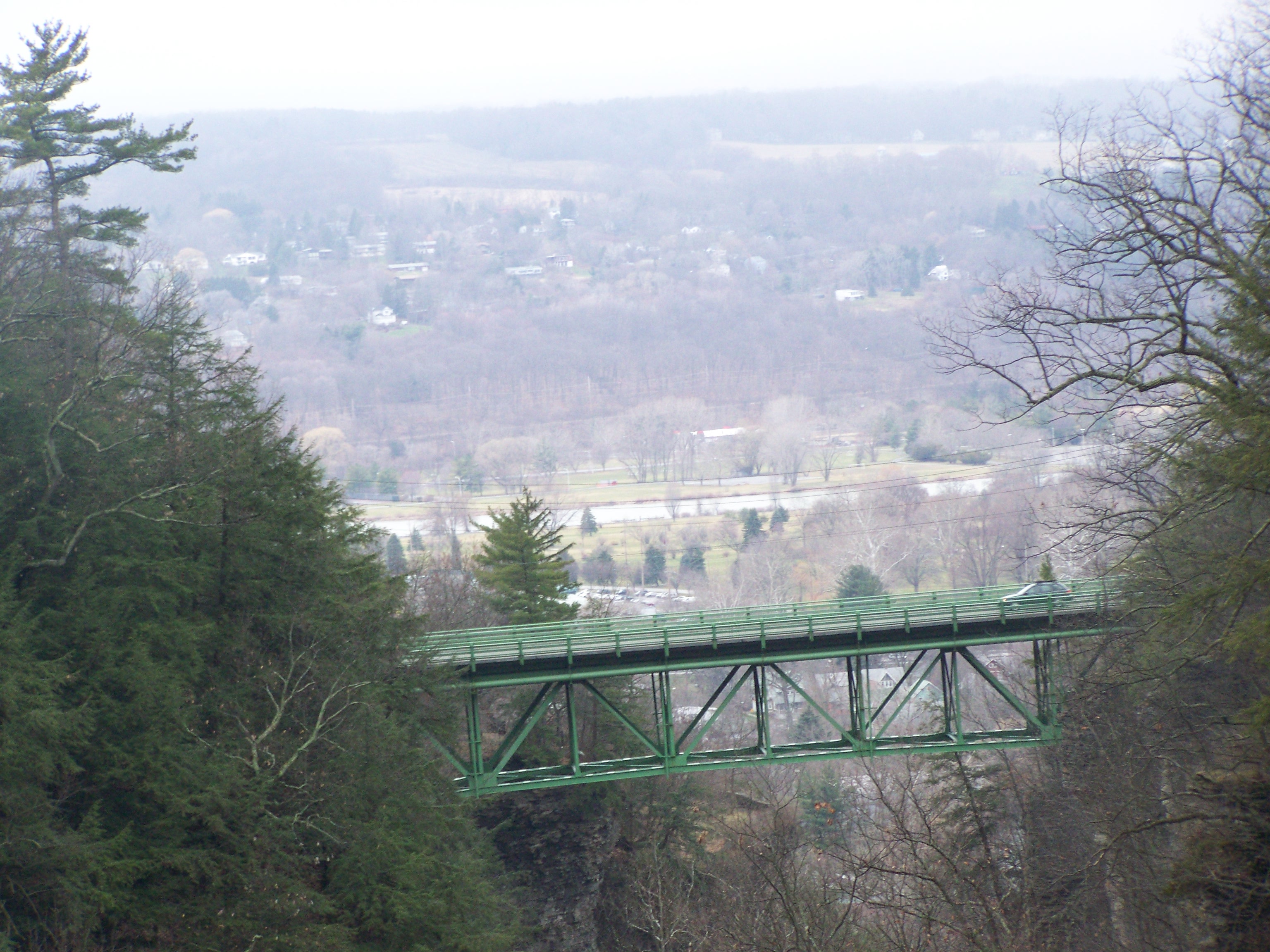
For anyone (like myself) who was away for break, returning to campus brought with it an unpleasant surprise; the installment of large “temporary” fences along several of the campus bridges over the gorge. The Triphammer Foot Bridge is closed until May 26th. Stewart Avenue has no fences yet, but Cornell and the city of Ithaca are in talks on how and when to install them.

The logic to support such a move isn’t hard to figure out. It’s a very visual gesture that makes it look like Cornell is attempting the address the recent series of gorge deaths. In other places, fence installment has significantly curtailed bridge jumping, such as the Prince Edward Viaduct in Toronto. But still, it’s really unfortunate that this is what things have become, due to the recent tragedies.

I don’t like it. But apart from installing nets or filling in the gorges, there’s not much else that can be done. This is going to look really bad during Cornell Days, and for Alumni Reunion if they’re still up in June.


Construction Photos of the New MVR North

1 11 2009

I do not condone sneaking into private property to take construction photos. That being said, if I receive them I’m more than happy to post them as the ones seen below. Most of the photos would appear to be of the parking structure in the lower floors of the building. Too bad some of the exterior photos are a little blurry.100_1848100_1849100_1865100_1850100_1854100_1862

 100_1853100_1855


Essentials of Campus III: Willard Straight Hall

1 10 2009

100_1464

It’ a a blessing and a curse to have posted mostly news tidbits lately. It saves time for me while it still is pertinent to the general focus of this blog, but posting them feels relatively unsatisfying, especially when I’m comparing them to some of my history entries, like the “Essentials of Campus” entries. I have been planning to do Willard Straight in an entry since about May; the trick was finding the time and resources to do it right. For one, I didn’t have enough photos of the Straight, so I decided to go on a little photo tour of the inside of the building. Secondly, I had debated to what extent I would cover the Willard Straight takeover back in spring 1969. I came to the conclusion that I’ll provide links and brief description of that piece of history, but since there are entire books dedicated to it (which thanks to the wonders of Google, much of Donald A. Down’s meticulously detailed book concerning the crisis can be read online), I decided to not spend too much time on it for the time being.
 100_1459

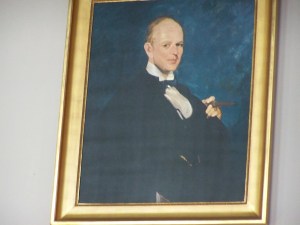
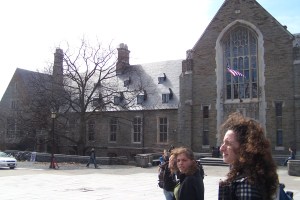
So, let’s start with the man. Willard Dickerman Straight, originally an orphan from Oswego, NY, was a member of the class of 1901 (Bishop 455). During his time at Cornell, he was an editor for the Cornell Widow, which was a popular campus humor magazine at that time, and he was one of the students responsible for organizing Spring Day, which would evolve into Slope Day in later decades. He was also a member of Delta Tau Delta and the Sphinx Head Honor Society. After graduation, he worked in the Chinese customs service (a time when the Qing Dynasty still ruled in China and Anti-Western sentiment ran high) and rose rapidly in his field to become the head of the State Department’s Far Eastern Affairs. He married Dorothy Payne Whitney, member of the incredibly WASPy and wealthy Whitney family.  Willard Straight passed away from complications due to Spanish Flu strain pneumonia on December 1, 1918, while waiting for the Americans to arrive in Paris to negotiate WWI peace treaties. His will asked his wife to do “such thing or things for Cornell University as she may think most fitting and useful to make the same a more human place.” While I have little idea what “make the same” means, it was part of his will to use his money to enhance the quality of life at Cornell. Generally, that was the sentiment he held during his life too; he was one of the financiers for Schoellkopf Field.

Digressing here, but Striaght had three kids: A chairman for Rolls-Royce, an actress, and a KGB spy. None of them went to Cornell.
100_1457

Thing was, back in the day, fraternities were the entire social scene at Cornell. If you weren’t a member of a house, you didn’t exist. There were few clubs, and intercollegiate sports were a diversion for precious few. In that time, if you were an independent student, you probably lived in a crappy tenement in Collegetown of further down East Hill and you led a miserable existence hating the weather and not enjoying the collegiate experience. One can see where Willard Straight was coming from when he said that the place needed to become a little more human.
100_3402

Well, Mrs. Straight didn’t know what to use the money on, so she kinda sat on it for a few years figuring out what would be the best way to fulfill her late husband’s wishes. Enter Leonard K. Elmhirst ’21. A charming englishman and president of the Cornell Cosmopolitan Club (the club [in the sense that coops and frats are clubs] for international students at the time), and when he discovered that his club was $80,000 short of funds (which is like $830,000 in today’s terms; one has to wonder how the hell you get so far in the hole without someone catching it).  Like any proactive student, he went on down to NYC to plead with alumni for money. One of those who pitched his plea to was widow Straight. Well, she was taken by his image of barren student life at Cornell, so she paid off the debt for the club, resolved to donate the money to better student life, and married Mr. Elmhirst. Now that’s a package deal if I ever saw one. Mrs. Elmhirst became a citizen of the crown in 1938, and passed away in December . Considering what happened the following spring, that may have been for the best.

100_1460100_1454

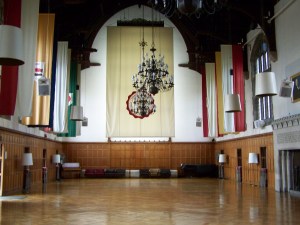
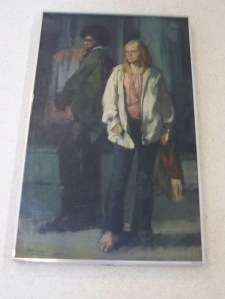
Through consultation with President Farrand, Mrs. Elmhirst came up with the idea of a student union, which was an increasingly popular idea in those days, conjuring images of the schools of Europe while also improving the quality of student life. William Adams Delano drew up the plans and they were presented to the trustees in June 1922 (Bishop 456). The plans called for meeting halls, banquet halls, dance halls, a library, formal dining rooms and a cafeteria, a thatre, guest bedrooms, dorms, campus offices, game rooms, all in one grand Collegiate Gothic package built with the finest craftsmanship and llenroc bluestone. Ezra Winter painted the murals in the grand hall, meant to illustrate Striaght’s life and career (this is why you can see Manchus above the door of the reading room today). The building opened November 25,1925, though to comparatively low-key fanfare (though perhaps I may be comparing this to the dancers dressed up as scientists dancing in the atrium to “Weill Thing” when they dedicating Weill Hall). Mrs. Straight, now Elmhirst, was the first to dine in the cafeteria and the first person to stay in the hotel that existed on the upper floors. The hotel remained on the upper floors until it was closed as a result of the April 1969 crisis. At one time, the building was also home to WVBR, a barbershop, a store to buy your booze, and people actually utilized the different entrances for men and women instead of just walking to the doors that are closest.
100_1461

So…about that crisis. If I sum it up in a paragraph, that would be doing the event, the actions leading up to it, and those involved a great injustice, and as I mentioned, there are far better resources for reading up on the takeover of the Straight than this blog entry. On April 19, 1969, a series of events with regards to racial discrimination on campus led to a takeover of the student union during Parent’s Weekend. All guests and staff were forced out of the building, and several African-American studies held up in the building as other students groups tried to remove them by force, leading some of the students participating in the takeover to smuggle guns into building. After negotiating with the university vice-president, the students left the building, guns in hand, immortalized by a now famous Pulitzer-Prise winning photo by Steve Starr. The event was a public relations disaster for the university, and led President James Perkins to resign his position with disgrace. The event also led to the formation of the Africana Studies and Research Center, and Ujamaa three years later.
100_1456

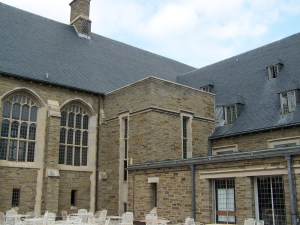
Today, the Straight is home to the Ivy Room and Oakenshield’s dining facilities, the Cornell Cinema (which replaced the theatre after 1988), the browsing library, lounge areas, various student office and mailboxes for campus orgs, the Dean of Students and Office of Fraternity and Sorority Affairs. The new Asian Student Center has also been set up in the building until the budget allows for them to move to 14 South Ave.
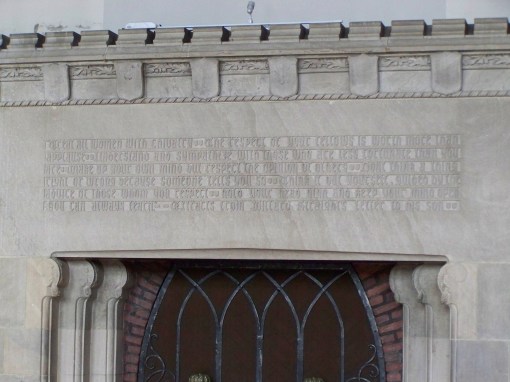
100_1458

EDIT: So WordPress hates large photos. It says “Treat all women with chivalry** The respect of your fellows is worth more than applause** Understand and sympathise with those who are less fortunate than you are ** Make up your own mind but respect the opinions of others ** Don’t think a thing right or wrong just because someone tells you so ** Think it out yourself, guided by the advice of those whome you respect ** Hold your head high and your mind open, you can always learn ** Extracts from Willard Straight’s letter to his son


[1]http://74.125.113.132/search?q=cache:u79OrjoFVGkJ:en.wikipedia.org/wiki/Willard_Straight_Hall+willard+straight+hall&cd=1&hl=en&ct=clnk&gl=us

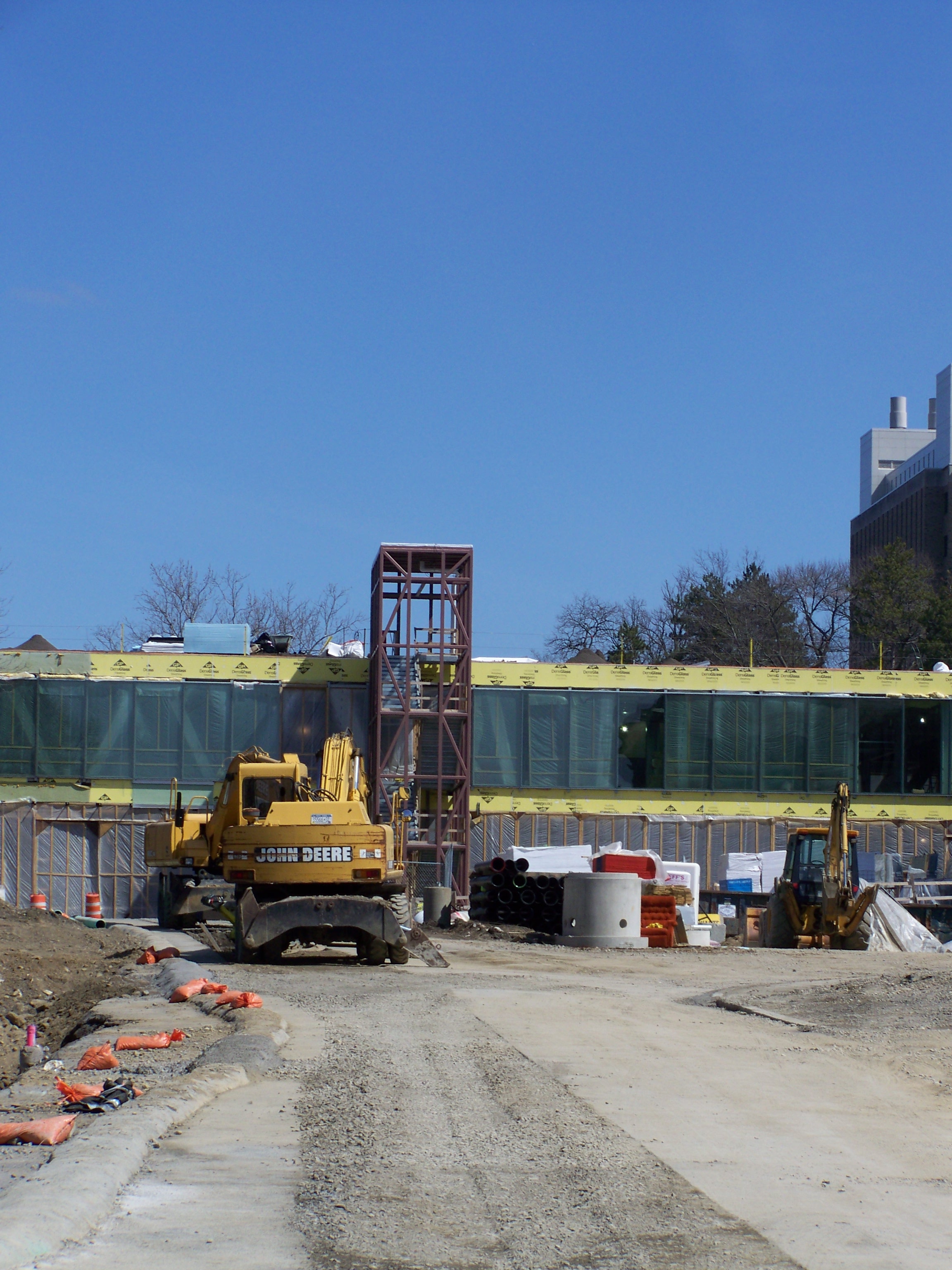
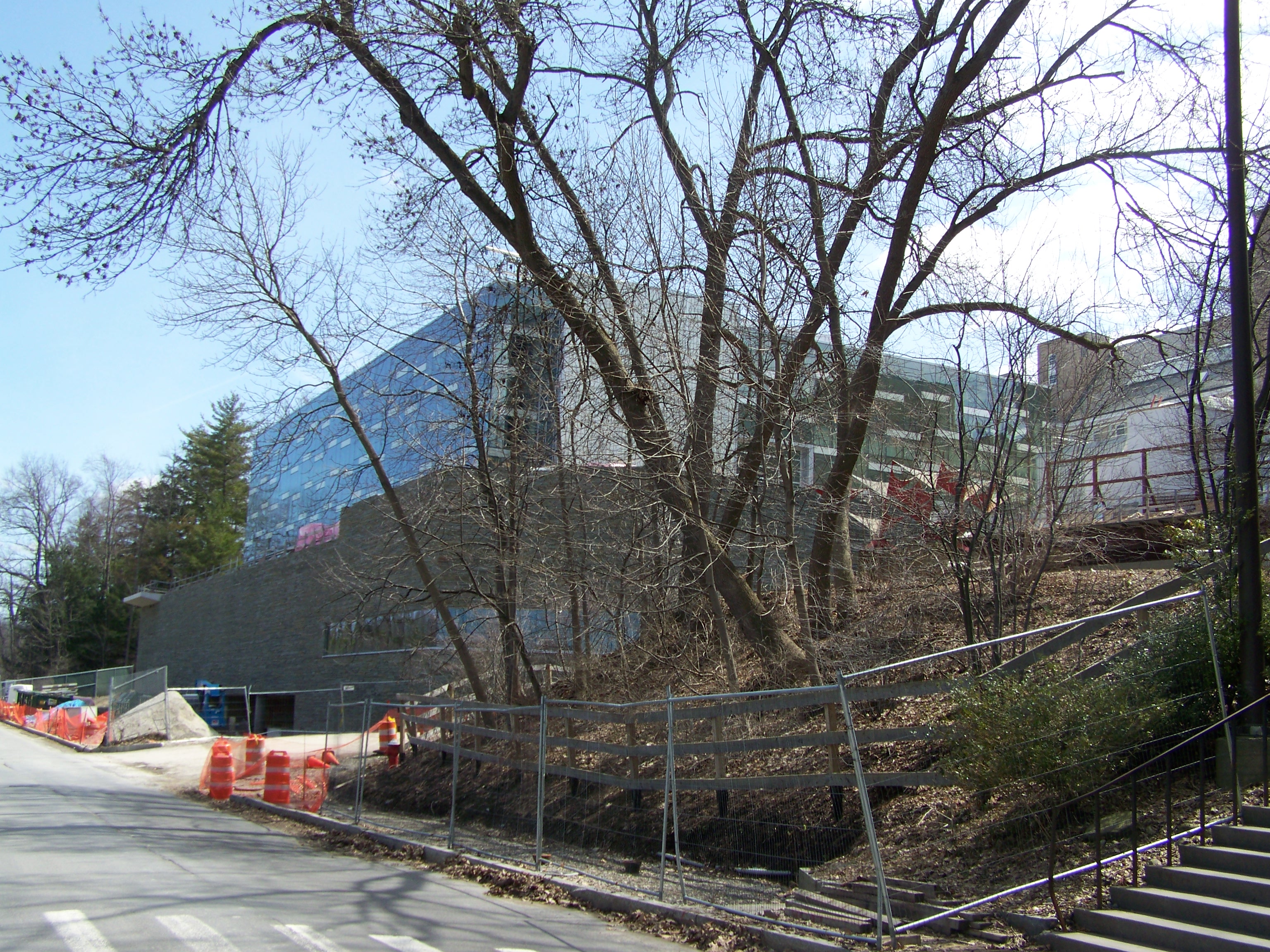
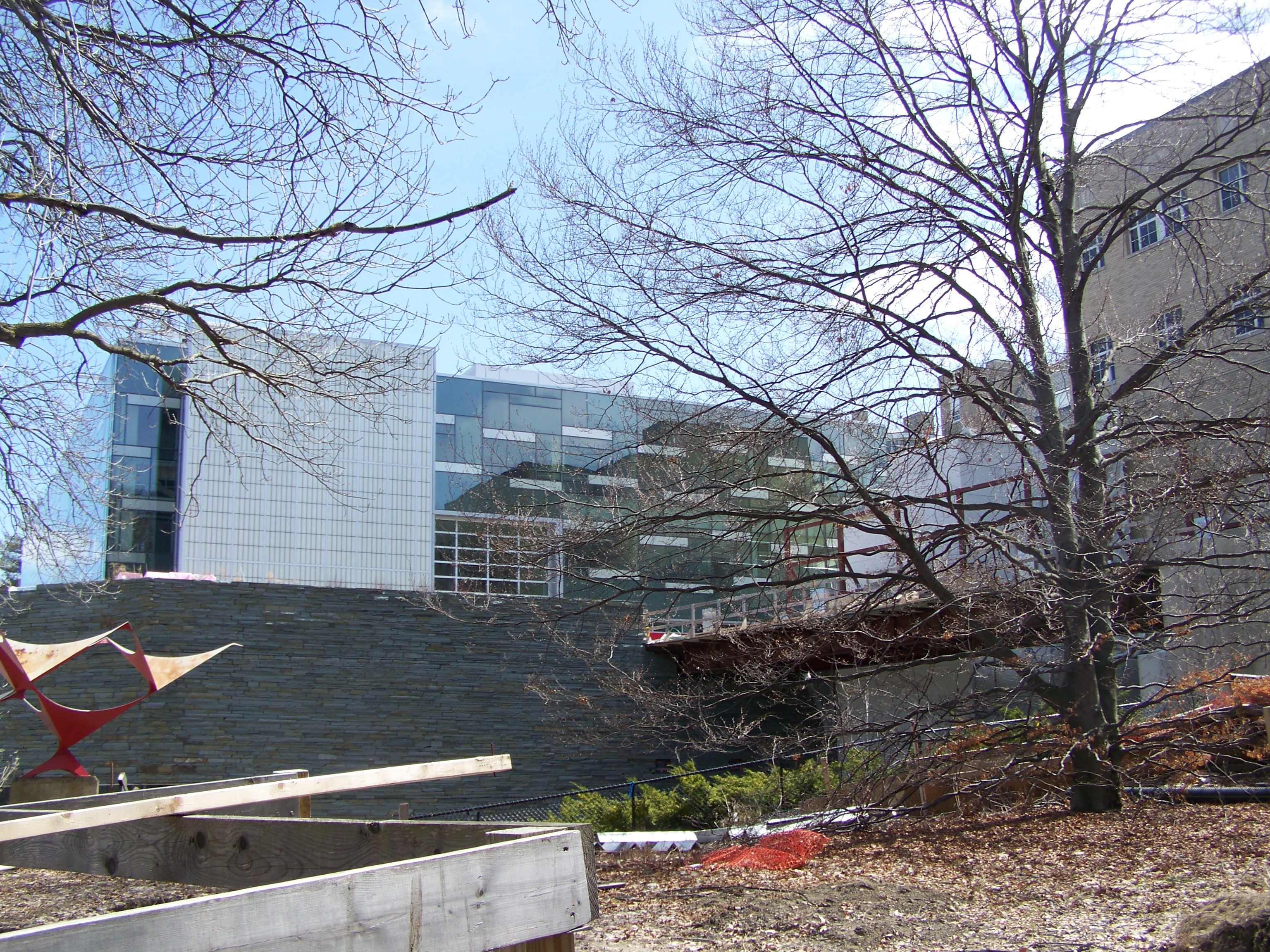
Dear Ithaca, How I Missed You…

28 07 2009

I suppose that most people, on their first arrival back to the place they call home, would call their friends and make their presence known. I on the other hand decided to avoid my overcrowded sub-subletted apartment by taking photo of the campus construction projects.
100_1105

100_1050

I have to come back to 107 weeks of this? I just lost one of my main walking paths to class. This is almost like coming back to my girlfriend in bed with someone else.  I s’pose I should be glad I’ll only be affected by this for a year before I head elsewhere.

100_1051

Well, I guess if they were going to close off the street, they might as well take advantage to do soil testing for the Johnson addition. Speaking of which, am Ithaca Journal article mentioned that mercury was found at the site [1]. Considering that the building was a chemistry building, and its first incarnation burnt down back in the days before WWI, this shouldn’t be too much of a shock.

100_1104

The physical sciences building continues on its merry way towards completion.

100_1098

MVR North is also well into its construction. I’m personally hoping the concrete and mortar parking base receives an attractive stone veneer to reduce some of the brutalist qualities of the north facade.

100_1099

The Vet School’s Diagnostic Center has received part of its brick facade, on track for its opening within the next year.

100_1102

Meanwhile, Barton Hall and anabel Taylor (not pictured) are being renovated, mostly with replacement stone for the facade, and roof repairs. Barton has been particularly needy for a reno because the stone on the tower was getting to a point where it was liable to crumble away, and it reasonably couldn’t be put off any longer.

100_1103

The Hotel School addition is on target for its winter completion date. For a 12,000 sq ft addition, it really sticks out, especially when approaching from the north on East Avenue. Where the Beck Center used to clash with the south facade, now the new addition clashes with the older southwest wing of the hotel school. I don’t think it’ll do much for Statler Hall, aesthetically speaking.


[1]http://www.theithacajournal.com/article/20090720/NEWS01/907200328/Mercury+buried+on+CU+campus


The Music Building in its Many Forms

24 02 2009

So, a little background story to this entry. One of the things that I’m in charge of for my fraternity is maintaining the alumni newsletter. So, I had to send snail mail and a typed letter to the publishing company. Much to my annoyance, the nearest computer lab to where I was at the time was in Lincoln Hall, the music building.

Well, I’ve never printed anything at Lincoln before, so when I selected printers, i accidentally sent it to 374 MTH instead of the MUSIC printer. I being off not-so-sound mind apparently managed to read that as 374 MUSIC, so I went up and began searching the third floor.

Then I found this display. Realizing its worthiness for writing materials, I grabbed my camera and took a few photos.

100_3185

100_3186

100_3188

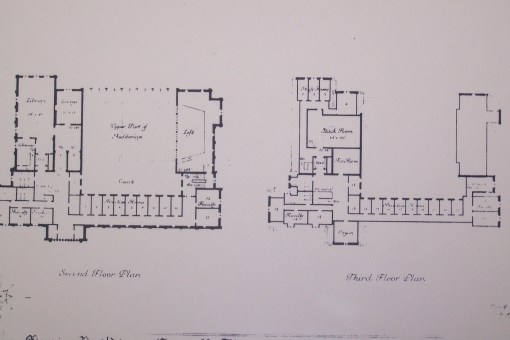
It seems the above pictorials date from ca. 1900, and were proposed designs for a combined Architecture and Fine Arts building. No word on where the building would have been built.

100_3190

100_3191

This Collegiate Gothic design was proposed in the late 1920s, and would have been where Gannett Health Center stand today. Alas, the plan never saw the light of day due to budget cuts brought on by the Great Depression.

100_3194

100_3196

100_3197

100_3198

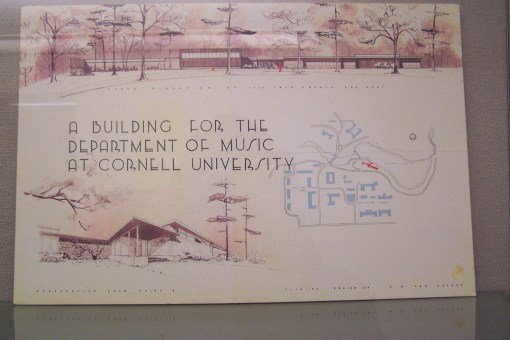
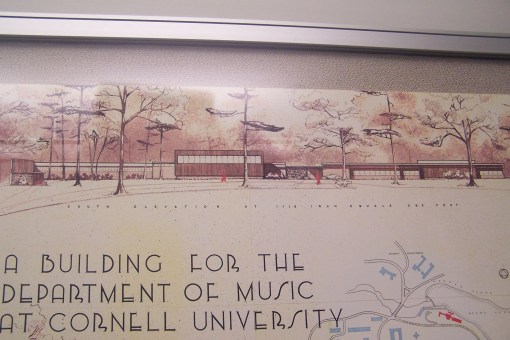
This modernist structure was proposed in 1950, and would’ve been built where Noyes Lodge stands today. Considering this school’s record of modern architecture, part of me is glad this never saw construction.