News Tidbits 3/12/16: After Much Discussion, Even More Discussion

12 03 2016

maplewood_site_plan_concept

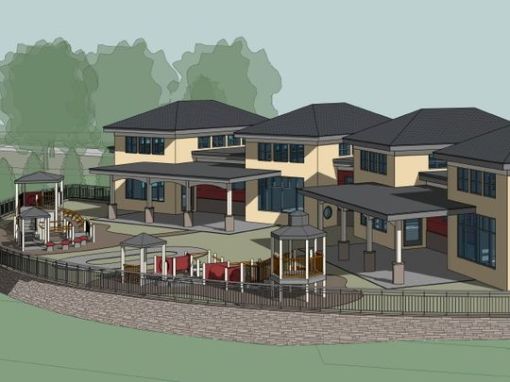
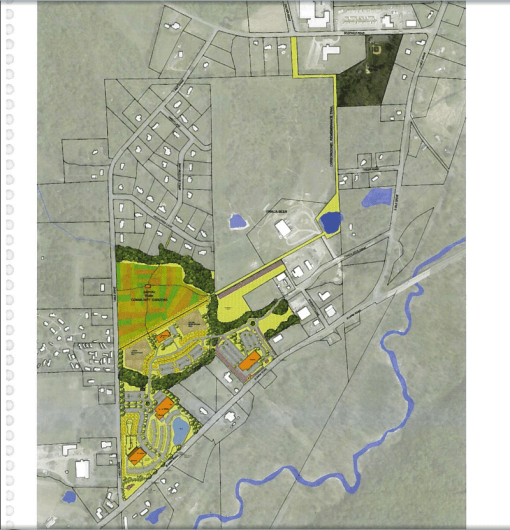
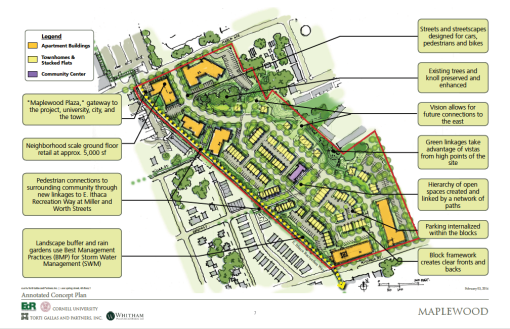
1. The community meetings have begun for Maplewood Park’s replacement. The Cornell and Professional Graduate Student Assembly (GPSA) held a discussion with the developer EdR and project architects Torti Gallas this past Monday. According to the Sun, some of the features planned in the new graduate housing development include-

“[S]omething like the Big Red Barn but on a smaller scale as a community room so you can open it up and have events…there will also be a business center for group projects and work. We are also planning an outdoor recreational space like tot lots for people who have families and volleyball courts.”

Concerns about affordability were raised, but the developer said that rent prices are still being sorted out. From the meeting, the four big goals of the project are “affordability, walkability, sustainability and community,” with streets that also serve as public gathering spaces, and a variety of unit sizes and types. Definitely something to keep an eye on as plans are fleshed out.

On the bureaucratic end, the Maplewood Park sketch plan is set to be presented to the Ithaca town planning board next Tuesday by Scott Whitham of Whitham Planning and Design. A sketch plan has no votes involved and is merely an informational session, and an opportunity for the board to give preliminary thoughts and input. The board will also be hearing a much less interesting proposal for a new bus shelter in B Lot.

dryden_south_rev_1
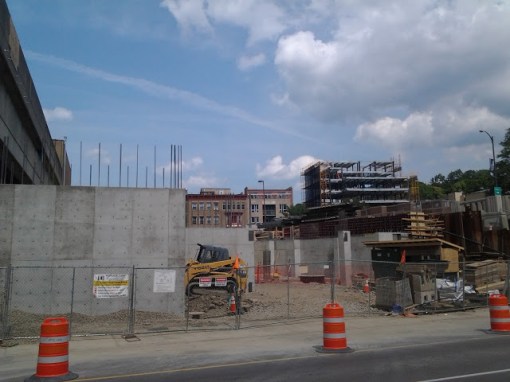
2. Looks like Kraftee’s in Collegetown will be shutting its doors. According to the Cornell Daily Sun, the book and apparel store, which opened its Ithaca location in 2002, will be closing for good at the end of the month. Owner Pat Kraft did have plans to move the store into the first floor of the Dryden South mixed-use project currently under construction at 205 Dryden Road, but now with Cornell’s new Executive MBA building underway on the lot next door, he plans to “explore other more complementary uses for the commercial space.” Since the project is in MU-2 zoning, Kraft is legally obligated to have “active use” commercial on the 2,400 SF first floor: hotel, bank, theater, retail, and/or food service.
20150829_125449

3. The city’s CIITAP production at the Wednesday PEDC meeting was productive. The board seemed comfortable with the pre-payment option preferred by the IURA. The question now comes down to what length abatements to offer. The 10-year has strong support, but there was discussion on whether or not to offer the 7-year option (only used once by the Hotel Ithaca) and the 12-year option with the enhanced benefits. So while this a few months of discussion left ahead of it, there’s a better idea of what the revised CIITAP will look like. For the record, the 1% fund payout would be based on hard construction costs only, not soft costs. So for example, the Marriott currently underway, it would have paid 1% of $19 million instead of $32 million (would it have still moved forward? Dunno).

20150727_145641

4. Also at the PEDC meeting, the development policy topic du jour finally moved forward – incentive inclusionary zoning. Discussion on the law here, and a primer on the topic here. So, stemming from a debate with the Times’ Josh Brokaw on Twitter, my initial reading of this law was mandatory. But I was mistaken, it’s voluntary and the city will want a couple years to gauge its effectiveness.

The Sun writeup is here, but eventually you;ll be able to find live video archived from the meeting here. I think Mayor Myrick pretty much nailed it with this quote –

“This proposal is an opportunity for those of us who claim to care about affordable housing but oppose large-scale subsidized housing.”

The unpleasant truth is, classism reared its ugly head during the 210 Hancock debate, and thanks to the online petition, everyone saw it. After all the prep and community meetings that went into the project before it was even proposed, there were still people who said it was unsafe, uncivilized, would breed trouble, that the residents would cause crime, they’d all be on welfare…pretty unnerving commentary from a community that considers itself progressive. Abhorrent as it is, these comments aren’t going to go away. Many of these folks are older, some have been here for decades, and they’re set in their beliefs. It’s regrettable to say this, but the more subtle and intermixed the affordable housing is, the less likely it is to face neighborhood opposition.

Along with the removal of parking requirements and +1 floor option in certain neighborhoods, the reduced site plan review option (only affecting the plan layout and design, not the environmental aspects) was judged to be the most appealing by developers. To be fair, a project redesign based on board input can be expensive, so reducing that prospect in neighborhoods with pre-established form guidelines (currently only Collegetown, but the Waterfront is likely to have its own form-based hybrid code in a year or two) is a big positive.

The PEDC voted to circulate the law for review, with only 1st Ward Councilwoman Cynthia Brock dissenting. There will be more typed about this law as it moves forward.

On a semi-related note, it looks like the town of Ithaca is now starting to look into some kind of inclusive or incentive zoning as well.
old_libe_thp_holt_v3

5. For this week’s eye candy, here’s the latest revision for Travis Hyde Properties’ DeWitt House senior apartment project at the Old Library site.  This was the version presented at the March 8th meeting. HOLT Architects has been tuning in to both the ILPC’s and the Planning Board’s comments (the two have been conducting joint meetings to avoid extra bureaucracy and contradicting each other) and is trying to hem down the general design idea such that SEQR and SPR and the rest of the approval process paperwork can begin.

As can be seen, the design is quite a bit different from the original plan with the “dorky roof” as one county legislator called it (for the record, I liked the dorky roof). This is an idea of where the design is going, but not the final revision, since the ILPC and Planning Board still plan on commenting further. For those still simmering over the decision last summer, just remember that even if the Franklin/STREAM proposal for condos had been selected, the ILPC and Planning Board would have had a heavy hand in that design process as well. The design for DeWitt House will continue to evolve, and updated images will be shared as they become public.

20160219_145406

6. Meanwhile, out in Lansing, lawmakers are under pressure because NYSEG cannot accept any new gas service requests because the current pipeline is fully tapped. About half of homes nationally and many commercial and industrial structures use natural gas an an energy source, so this could potentially put the kibosh on a lot of home and commercial construction. Definitely not welcome at a time when the town and village are at high risk of losing their biggest taxpayer.

NYSEG is still actively pursuing construction of a new gas pipeline from Freeville, one that has garnered considerable opposition from Dryden and some eco-activists. The environmental advocates have pushed for renewables, but the recent opposition to the Black Oak wind farm in Enfield, and to solar panels in Ulysses for the Sciencenter have created yet another complication to the county meeting its green energy goals, let alone overall energy needs. The area can’t afford to be self-defeating.

The Lansing Star is reporting that NYSEG has obtained about half the easements it needs, and could eminent domain the rest as a last resort. It’s a tense and complicated situation.
20160219_17504020160219_175113

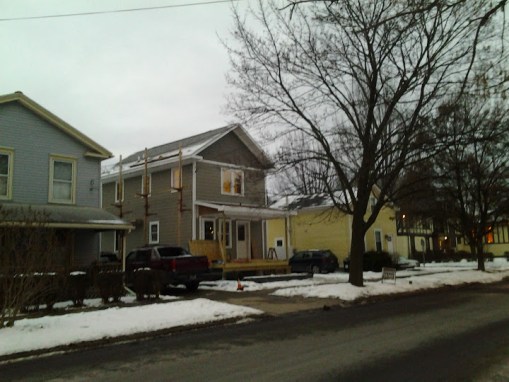
7. Wrap this up with a quick house of the week update on INHS’s 203 Third Street affordable home project. These photos are a couple weeks old now, but most of the trim has been attached with the exception of the porch, and with that, finish-out of the interior and landscaping, this 2-bed, 1.080 SF house will be good for sale. INHS is asking $129,000 from qualified moderate-income homeseekers (buyers making 70-80% of Area Median Income, I think offhand), and is expected to change hands this summer. Claudia Brenner did the design, and Rick May Construction did the buildout.



Coming Up: Yet Another Round for CIITAP Revisions

9 03 2016

The city is trying yet another approach to CIITAP. This one involves cash payments.

Previously, the city considered a multi-faceted set of revisions, but a number of issues were raised – namely, there isn’t good documentation on stats such as the proportion of local labor typically involved in a CIITAP project. While the IDA voted in February to adopt a labor policy that requires solicitation of bids from local contractors and local labor participation in CIITAP projects, that’s more to provide future guidance after some projects have submitted documentation, and doesn’t achieve any near-term changes in CIITAP as requested from some corners.

So here comes the latest iteration, a lump sum deposit into a “community benefit fund” for general use (hopefully a formalized HOME/CDBG type of disbursement and not just a grab-bag for different programs). The idea was raised at the last PEDC meeting and the IURA explored options.

The overlying theme is to select a plan that doesn’t change affect bottom lines – not to make any easier on developers (the accusations of the current CIITAP being too easy is what brought about this revision in the first place), but to not chase them out to a hay field in Lansing either, costing the city a fund payment, jobs and future tax revenue, not to mention encouraging suburban sprawl. The IURA looked at a bunch of different proposals, shown below.

ciitap_revision_round2

The preferred option goes for a 1% upfront cost and a total abatement on increased property taxes for three years, and then moving to a 70% abatement on new construction for year 4, tapering to full taxation after year 10. This option was determined to have the least impact on a project’s financial feasibility.

ciitap_revision_round2_2

There’s a positive and a negative to this approach. If a developer is proposing a $20 million project, forking over $200,000 to the city right off the bat could be a major obstacle towards getting a loan and bringing an approved project into reality. But it might be overcome if they can effectively explain to an investor or potential lender the tax benefits in the financial analysis. It definitely makes the development picture more complicated, but this might be the only way to keep the current version of CIITAP, which has done a lot to help redevelop downtown. The Common Council members will share their at their Wednesday meeting.


Affordable Housing Week 2016

8 03 2016

Expanding on last year’s theme, it’s affordable housing week. The Ithaca Urban Renewal Agency will be holding public hearings on March 24th and 28th as part of the process to determine who will receive money from the Housing and Urban Development (HUD) grants awarded to the city. The 25 applicants (up from 21 last year) range from jobs training to community services to the development of affordable housing. All summed up, there’s $1.85 million requested, and $1.56 million available, so that means an 84% chance of funding, all parameters being equal. For comparison, in 2015, $1.78 million was requested out of $1.215 million available, just a little over two-thirds of the total. The chances for funding have gone up this year.

Part of the reason for the better chances this year is unfortunate – the return of $273,869 in 2014 HOME funding meant for INHS’s 402 South Cayuga project that has not come to fruition. Although HOME funds can be awarded for rental projects, the funding was awarded by the city specifically for owner-occupied housing, so the money comes back into play. There’s also about $26,300 left over from last year that went unallocated.

Without discounting the value of the other applications, the focus here will be on the real estate development projects. For the record, writing about a project is neither an endorsement or opposition from this blog.

202_hancock_1

202_hancock_2

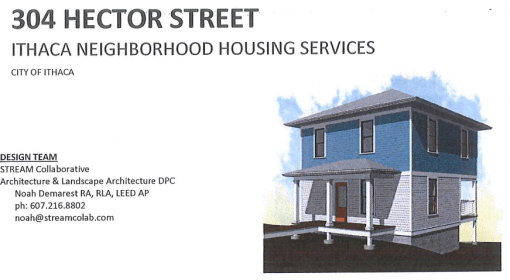
1. Last year, INHS applied for and received almost $458k for 210 Hancock, for which site prep is currently underway. This year, they’re applying for funding for two projects – seven owner-occupied units at 202 Hancock (new tax parcel), and the single-family home planned for 304 Hector Street.

The 202 Hancock townhouses are requesting $567,000 towards a total project cost of $2,359,013. This is a high figure, but it also seems like it would address the recent, very major issue of rapidly rising construction costs derailing multiple affordable housing projects. INHS will be putting up $550,000 of its own money, and already has received a $280,000 city/county/Cornell grant (Community Housing Development Fund) towards the project. The rest comes from bonds, the state, land equity and the buyers themselves.

202_hancock_3

Doing the math ($1,438,640 construction cost, 8,463 SF total), the construction cost budgeted is $170/SF, a little less than the $190/SF they paid for 203 Third Street, but not impossible. Perhaps a larger project of townhouses can utilize cost efficiencies to keep the price down a bit.

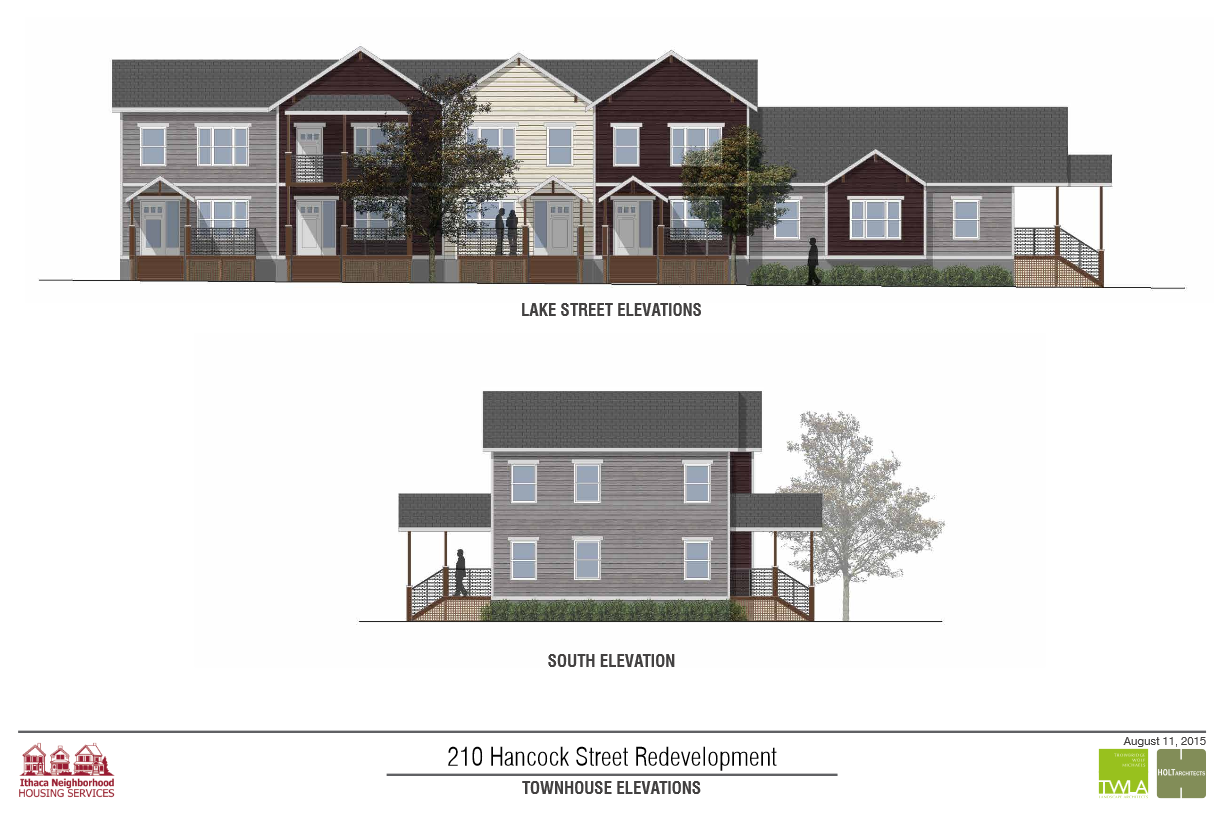
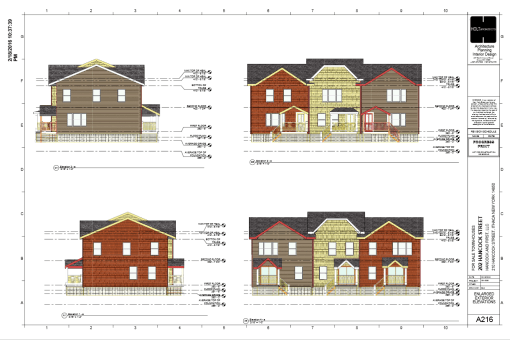
The two-story wood frame townhouses would be LEED Certified. Five two bedroom units (1,147 SF) would be sold for about $114,000, and the two three-bedroom units (1,364 SF) for $136,000, available to those making 60-80% of local AMI, or $37,000-$49,000/year. The townhouses would be a part of the Community Housing Trust (CHT), keeping them affordable even as they are sold to others in later years. the anticipated construction period is November 2016 – June 2017. HOLT Architects of Ithaca is designing the townhomes.

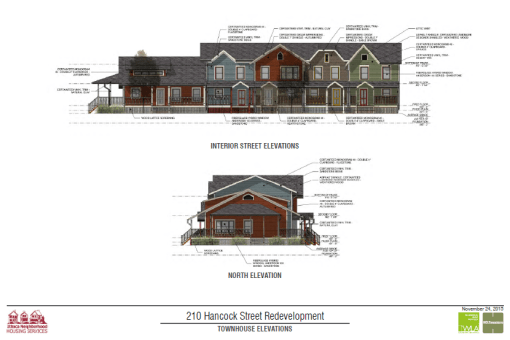
Design wise, they look halfway between the first iteration of the rental townhouses, and the approved version.

304_hector_inhs

2. Also from INHS, the 304 Hector application. The amount requested is $100,000 towards a $369,294 project. This seems remarkably high. In the application, INHS notes the construction costs of $262,000 are from actual bids received from Rick May Construction (who is also doing 203 Third Street) and subcontractors. The math comes out to about $191.50/SF. One of the reasons for the very high cost is that INHS is required to hire contractors with enough liability insurance to cover any major accidents, and a lot of smaller builders don’t have enough insurance. $40,000 has already been granted towards the project from the CHDF.

The house would sell for $142,000 to a family making $37,000-$49,000/year (60-80% AMI), the same parameters as the 202 Hancock townhouses. The house would also be a part of the CHT. An April 2017 – January 2018 construction is planned. Local company STREAM Collaborative is the house’s architect.

402_s_cayuga_st_boggsfernandez

3. Meanwhile, at the 402 South Cayuga Street site, developer/architect Zac Boggs and Isabel Fernandez are requesting $105,000 towards their 4-unit townhouse project, priced out at $1,020,000, of which $820,000 is for construction. Of the 4 units, one two-bedroom unit will be available to a family making 80% AMI or less (i.e. $49,000/year or less), selling at $150,000. The other three units, 2 2-bedroom and 1 3-bedroom, would be rented out for 2-5 years, and then sold on the “lower-end of market-rate”, which is estimated in the mid to upper $200s. The units would follow LEED standards, and the affordable unit would be put into the CHT.

Precision Builders of Ithaca would construct the project. A May 2016 – June 2017 build-out is planned, though it doesn’t appear to factor in the planning board approval process.

Aside from the grant, most of the funds for the project will come from a bank loan, with $120,000 of their own money and $40,000 in county bond funds. Assuming these are the same size as the 2 and 3-bedroom INHS townhouses, the construction cost comes out to about $170/SF.

One thing that comes to mind in the context of the inclusionary zoning debate is that this might be the only way to really go in the long-term. If INHS gets priced out of feasibility in the city, trying to cover the cost of affordable units with substantially more expensive market units might be the only option, which is a rather uncomfortable thought. One of the issues with inclusionary zoning is that it prices out the middle; developers have to make up the cost somewhere, and the market-rate units are the scapegoats. Communities end up with a small portion of affordable housing, but mostly expensive housing. With this project, part of the money is being recuperated by renting the other units for at least a few years, which some may scoff at, but costs are, what they are.

habitat_2

4. Habitat for Humanity is requesting $75,000 towards their $305,500 duplex project at 101-107 Morris Street (to be redesignated 202-204 Third Street) on the Northside. Each unit will sell to a familiar making less than 60% AMI ($36,750/year), and the families will have to put in “sweat equity”, helping to build the houses (350 hours of labor). To keep costs down, labor is volunteer-based and materials are donated – as a result, the project only has a $180,000 construction cost, a little over $60/SF.

The units will be two-story, have porches and designed to fit into the neighborhood. The state has given the project a $70,000 grant already, and the city/county/Cornell CHDF has given $80,000. the rest is covered by corporate grants (Cargill, Lowe’s, M&T Bank) and individual donations. A timeline of April 2017 – April 2018 is anticipated.

No renders, but the above site plan was included in the application.

622_w_clinton

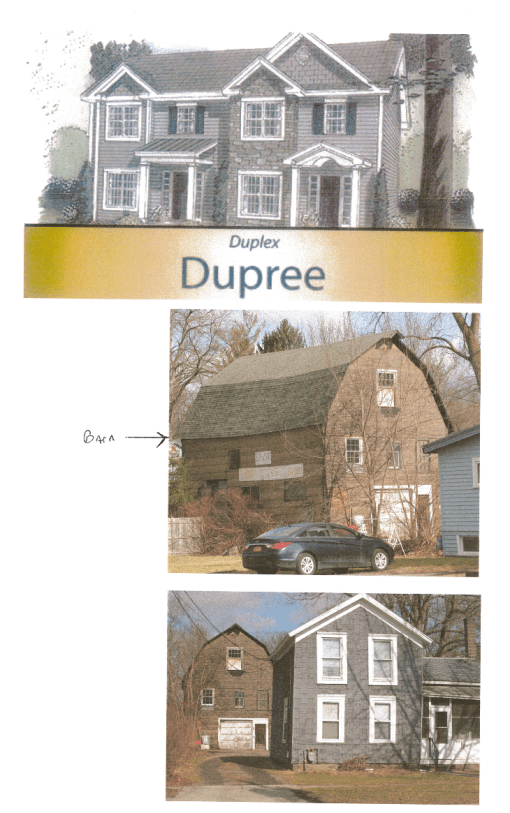
5. Last, the only truly new project for this post. 622 West Clinton Street in the South Side neighborhood. The applicant, Jerame Hawkins, proposes deconstructing a decaying barn at the rear of the property and replacing it with an affordable owner-occupied duplex. Hawkins, who runs the county’s Youth Advocate Program, would make each unit available to a family making 60% AMI or less ($36,750/year or less), in particular Section 8. The duplex would be modular, 3-beds and 1,561 SF each, with Carina Construction and Finger Lakes ReUse working with Hawkins on the project. The construction cost of $292k works out to about $93/SF.

The house at the front of the property, which dates from the late 1800s, would be renovated and retained as affordable housing. Hawkins is requesting a grant of $135,000 towards the $364,634 project. A project timeline of October 2016 – January 2017 is given in the application.

The one potential red flag I’m seeing is a line in the app that says “retaining for a minimal [sic] of 1 year”. Either that gets clarified and extended, or the IURA won’t be interested this proposal on account of it not being affordable for long enough a period of time.


News Tidbits 3/5/16: Here Comes the Papierkrieg

5 03 2016

chapteR_house_reconst_v4_2chapter_house_v4_1
1. Let’s start off with something that led to a couple of worked up messages and emails to the Voice inbox – a potentially controversial revision to the Chapter House proposal that would replace the north eave of the building with a wall (bottom image). In the documentation, there’s no written explanation as to why the change is being requested from the approved plan (top image); but I wonder if it has to do with fire safety regulations or zoning issues between the Chapter House and the rebuild being prepared for 406 Stewart next door. Architect Jason Demarest is working on both projects for their respective owners (400-404 Stewart’s Sebastian Mascaro and 406 Stewart’s Jim Goldman), so he’ll be representing both projects at the Landmarks meeting next Tuesday the 8th at 5:30 PM. Also on the agenda are a couple of minor renovations, discussion about potential work to The Nines at 311 College Avenue, and discussion of an expansion to the East Hill Historic District.  This might just be for the Orchard Place properties that are locally historic but not nationally recognized, but we’ll find out for certain next week.

1401_dryden_1

2. Some of your might be wondering what happened with the 902 Dryden vote. Well, the vote still has yet to be taken. Moldern Living Rentals was still work on the last details of the Stormwater Pollution Prevention Plan for runoff (SWPPP), so the town of Dryden won’t be taking a vote until their March meeting, which has yet to be posted to their website (most likely it’s Thursday the 10th, or Thursday the 17th). The next-door neighbors still took time out to call the 40% downsized project a travesty and that it wasn’t shown in the 2012 Comprehensive Plan. Veering into editorial territory, my original comment from last month still stands:

“[A] master plan is not an exact thing; if it shows for three sets of five townhouses on a parcel, that’s not what may necessarily may happen. It just indicates the kind of density and scale of development the plan deems appropriate. 902 Dryden isn’t drawn on the master plan, but the plan welcomes the idea of townhouses on Forest Home Drive, which 902 abuts. So a vote in favor of the 8 new townhouses is, indirectly, a vote of support in the Varna Master Plan.”

I would give more weight to Todd Bittner’s objective concerns about stormwater than subjective comments of character, especially when they’re from someone who said they were disgusted by the thought of rentals. When Bittner checks out the revised SWPPP, if it looks acceptable, I think the project should be approved.

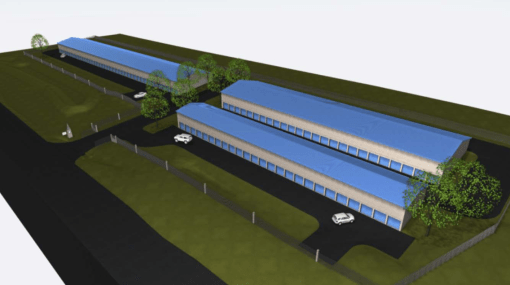
On another note, 1401 Dryden, the Storage Squad project (pictured above), seems to have lost a lot of its charm after getting caught in red tape last fall. The owners had to squeeze into a smaller area to satisfy the revised, expensive SWPPP. They’re hoping to hide most of it with landscaping.

dewitt_house_v3_1 dewitt_house_v3_2

3. Just a quick update on the Travis Hyde Properties Old Library proposal. The ILPC and Planning Board had their joint meeting, project team partners HOLT Architects and TWMLA landscape architects have incorporated their comments, and here is the current product. Sorry, no renderings, just site plans. Previous plan here. Overall, the site layout hasn’t changed too much, a courtyard and green space will be next to the DeWitt Park Inn, and the building is set back to maintain rhythm with its neighbors. The exterior is supposed to have more projections and recesses, the top floor set back 6 feet, and incorporation of balconies on the upper floors (not sure how this will affect the plan for the inverted roof). Unit count is 21 1-bedroom, 24 2-bedroom, and 9 3-bedroom, 54 instead of the original 60 (39 1-bedroom, 21 2-bedroom). The addition of 3-bedrooms is surprising for senior apartments; from what I’ve been told, typically the large majority of demand is with 1 and 2-bedroom units. The Planning Board and ILPC have another shared meeting at City Hall on the 8th.

chain_works_rev3_3

4. The Chain Works review process is chugging along. At its meeting on the 8th, the Planning Board’s special meeting will decide whether the Draft Generic Environmental Impact Statement is ready for public review (not expected to be controversial). Then on the 9th, Cornish et al. will be giving a report to the Common Council’s Planning Committee about the timeline and current status. Another staff progress report will be presented at the Planning Board meeting on the 22nd, and the next day on the 23rd, the city CC and town board Planning Committees will meet review proposed draft PUD zoning for the massive mixed-use project. With adequacy being agreed upon, the project can begin project review 15 or so days later; first public meeting is tentatively scheduled for March 29th.

The city just uploaded the comments of reviewers on the DGEIS – most are relevant, some are pretty good suggestions and critiques. Then there’s “Reviewer 3”, most of whom’s comments were put aside as they’re not relevant to adequacy. Those are but a preview of the potential flare-ups to expect at the public meeting.

12366349_10153784612864664_8478297861508040090_n

5. Stumbled on this by chance, but it seems to verify initial suspicions from a few months back; a project proposal goes with the sale of multiple parcels of land totaling 9.2 acres off Park Lane and Slaterville Road in the town of Ithaca. The property, for sale at $995,000, is being marketed by Carol Bushberg Real Estate, which doesn’t have the render on their listing page or their Youtube video, but they do on facebook. The conveyed plans call for a 26-lot subdivision, and given the proposed lot lines, it doesn’t look like it would be affected by the town’s moratorium on 2-unit structures, because each unit has its own lot even though some of them share a wall. It also meshes with the town’s Comprehensive Plan, which calls for 2-4 units per acre in this area (in the site plan, it’s just under 3 per acre). So to all you would-be home developers, here’s an opportunity.

20151108_154213

6. Speaking of the 2-unit moratorium in the town of Ithaca, it looks like that’s going forward to the Town Board to schedule a public hearing. The Planning Committee decided it was a good idea. The documentation says it would last at least a year, by which time the town hopes to have its new form-based, anti-student special zoning in place. Editorializing again, I still oppose this proposed law not because of the issue with low-end student housing, but because it’s too broad, affecting the whole town. The last 2-unit approved in Ithaca town wasn’t a student special – it was a 3-bedroom house with an accessory 1-bedroom apartment off Calkins Road. The husband and wife building the house will be living in the larger unit. I don’t think the whole town should be subject to a law that’s only been written to address a South Hill issue (the law’s language claims it’s a concern in East Ithaca as well, but I haven’t seen or heard of a new student-oriented rental in East Ithaca in at least the past few years). Anyway, whether for or against it, comments can be sent to Town Clerk at townclerk@town.ithaca.ny.us. The town meeting will be at the town hall on Monday the 7th at 5:30.

202_hancock_1
7. Here’s a preview of next week’s mid-week post: A look at some of the affordable housing proposals and plans that applied to the city for grant funding this year. INHS applied for their owner-occupied townhouses, the Boggs/ Fernández proposal for 402 South Cayuga is there, Habitat’s duplex, 304 Hector, and a new plan by a private citizen for an owner-occupied affordable duplex behind the house at 622 Center Street in the South Side neighborhood. Keep an eye out for that Monday night or Tuesday morning.

maguire_carpenter_2

8. From the other news outlets now; the Times is reporting that the sketch plan for the Maguire auto dealership proposal for the Carpenter Business Park actually had a warm reception from the Planning Board. In particular, board stalwart John Schroeder was impressed with the sidewalk along 13 (which would help transition the Waterfront and nearby environs to mixed-use) and public amenities. The board is cognizant of the site’s issues and the city’s hopes for the area, so those do play into the thought process – perhaps part of it is that Maguire’s jobs and features could work as a draw for mixed-use development of nearby parcels that don’t have so many issues. The board’s role stops at this point, with the just passed TM-PUD now front and center – unless Common Council okays the project, it won’t be back again. But Maguire did ask for a letter of support if the board was willing; we’ll see.

texas_roadhouse_v3_1

9. Meanwhile, the Journal is reporting that Texas Roadhouse will be opening May 23rd. No doubt the relatively dry and mild winter helped keep this project moving along (February construction update here). The 7,163 SF restaurant expects to hire 170 to 200 employees, of which 80 will be full time. That number astounds me just a bit because I worked at a steakhouse in high school, and although we were maybe half the square footage, we only had a staff of about 40. Even in Ithaca’s crowded restaurant scene, there aren’t many options for the red meat lovers that don’t cost an arm and a leg, and chances are good this will appeal to a different crowd than most, and be something of a draw from the nearby rural areas. Best of luck to them and their staff.

20160219_134003 20160219_134057

201_w_clinton_1

10. Let’s wrap this up with House of the Week. Quick update on Zac Boggs and Isabel Fernández’s 201 West Clinton Street carriage house. Fully shetathed (Huber ZIP system panels), fully roofed and shingled, and fully fitted with windows, the exterior work left will focus on exterior siding attachment and refinishing the original 1960s garage to match the historically-inspired vertical addition. The exterior calls for sawn board-and-batten wood fitting, though it’s unclear if it will be unpainted wood, or painted yellow. The 1 bedroom, 520 SF space looks like it could be ready for occupancy by late spring.


News Tidbits 2/27/16: A Leap Year, But Not A Leap Forward

27 02 2016

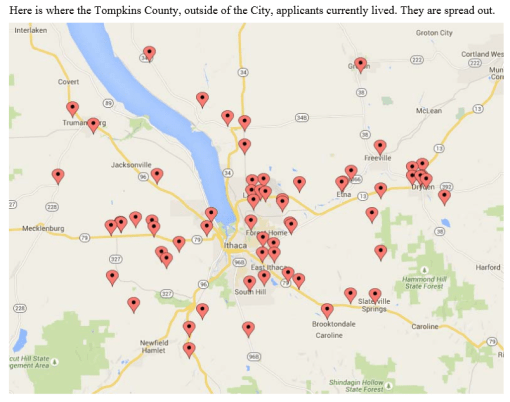
1. Let’s start this week off with some maps. The two below come courtesy of the Ithaca Urban Renewal Agency (IURA) agenda, submitted by INHS Director of Real Estate Development Scott Reynolds.

iura_inhs_map_1

iura_inhs_map_2
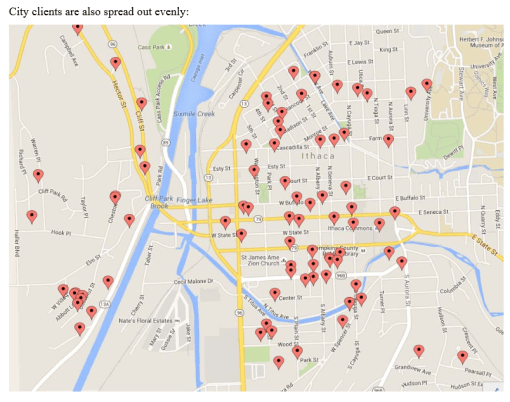
Each marker is the approximate location of current of an individual on Ithaca Neighborhood Housing Services’ (INHS’s) apartment wait-list. Dozens and dozens. As breakdowns go, 48% of waitlisted applicants live in the city of Ithaca, 38% outside of Ithaca but somewhere within Tompkins County, 8% live in other counties of New York State, and 6% come from outside the state. Counting the markers, my back-of-the-envelope calculation comes out to about 160 households.

The map implicitly describes the wealth of Ithaca’s neighborhoods – an increased number of applicants for affordable apartments come from South Side, the West Village area, and Northside, and further out, Dryden village and the apartment complexes in Lansing village. Wealthier areas like Fall Creek, East Hill, South Hill and Belle Sherman have very few or no individuals on the wait list.

The next time someone says affordability isn’t an issue, think of each dot on this map, and remember that’s someone, maybe even a while family, struggling but hoping to find decent, affordable housing.

Farm Pond Site RES'D & LOT s 010414

2. The Farm Pond Circle development in Lansing has finally sold on the 23rd for $164,840, well above both asking prices from last year. The purchaser was Dryden-based Schickel Construction, the same company responsible for the Boiceville Cottages. The restrictions on the ten for-sale lots carry over with the deeds. All things considered, Bruno Schickel knows this area well and his company could be one of the very few in the region interested but also capable in fulfilling Jack Jensen’s vision.

The development first went up for sale for $155,000 last March after the owner/developer, Jack Jensen, passed away suddenly in October 2014. In October, the price was knocked down to $125,000. Along with the lots Schickel picked up in the primary sale, a second purchase of $39,160 gave him three more undeveloped lots owned by other members of the Jensen family.

1015_dryden_1

3. On the other end of the sale scale, Ithaca real estate developer Modern Living Rentals has put their multi-family property at 1015 Dryden Road up for sale.  The asking price for the 5-unit property is $650,000. 1015 Dryden is home to a single-family home built in 1938, and a 4-unit apartment building from about 1980. The apartment building was badly damaged in a fire in 2011, renovated, and the site was sold to MLR for $425,000 in March 2014. The tax assessment is also $425,000.

Plans on MLR’s website shared a to-be-built 2,790 SF triplex designed by STREAM Collaborative, but the real estate listing notes plans filed for two side-by-side duplexes (4 units). All units when built would equal 24 bedrooms, but the bungalow house is just one bedroom, and although I can’t find total number of beds for the 4-unit, at 4,032 SF it’s probably 2 beds per unit, so…that’s 9 exisiting, plus six from the triplex, plus 9 bedrooms from the two side-by-sides? Not 100% sure. Potential landlords can contact the listing agent here.

elmira_savings_v1

4. As noted by the Ithaca Journal this week, Elmira Savings Bank now has regulatory approval to move its bank branch from 301 East State Street to the old Pancho Villa Building at 602 West State Street. The project would still need site plan review for the renovation of 602 alone, even if the rest of the site isn’t altered. However, if less than 10,000 SF, a non-residential structure may only need limited SPR, staff-level like a single-family house (I was a bit uncertain, but I have confirmed with a member of the planning board). So although the move is okayed, the bank may still have to go through the board before renovations can begin. In theory, they could move into the un-renovated building without board approval, since it would only be when substantial exterior alterations are planned that it would then fall under the board’s purview.

The bank still has no plans for the other properties acquired in their December purchase.

chain_works_rev3_3 chain_works_rev3_4

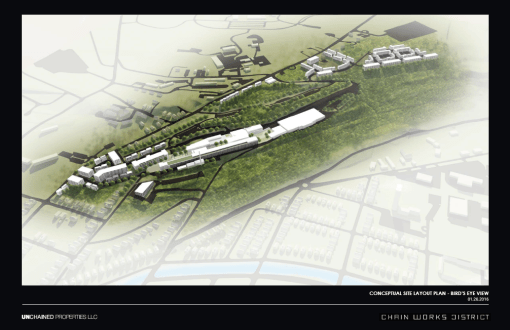
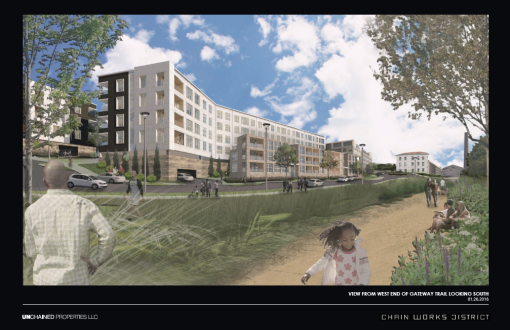
5. Now for some weekly eye candy. Additional images from Monday’s Ithaca Voice on the Chain Works District redevelopment, PDF here. These were left out because although these images are strictly conceptual and years away from reality, they show many new buildings, up to 5 floors in places, which could have had people freaking out that Chain Works was a Manhattan-izing of Ithaca and that a derelict brownfield was a suitable alternative. What gets written is tailored for its audience, and I didn’t think the Voice’s more general and broader reader base would handle these images well. Case in point, the ICSD shutting off drinking water in all of the schools as a precaution sent people into the Voice’s comment section panicking that every household on the municipal water system was contaminated with toxic levels of lead a la Flint. So, here are some visual extras to the much more rational readers of this blog.

The conceptual renderings are by Rochester-based Chaintreuil Jensen Stark Architects, the same group behind the design of Harold’s Square.

20160220_111241 20160220_111313 20160220_111336

424_dryden_rd_1

6. House of the week. Or rather, duplex of the week. From the outside, William and Angie Chen’s 2-unit, 6-bedroom duplex at 424 Dryden Road is nearly complete. Trim details like the porches have yet to be attached, and the foundation still needs to be backfilled, but most of the exterior looks good to go.

However, the parking lot has been a source of some BZA debate. The lot would require five off-street parking spaces, which the Chens can do with the construction of a three-car garage that tears down mature trees, but they would prefer to create uncovered five spaces that include two in the rear yard. CR-2 Zoning doesn’t allow for rear yard parking, so an area variance is required. The application also comes with a letter of opposition from a neighbor who seems to have mixed up the choices, asking for the variance to be denied for tearing down trees, when it’s the non-variance option that tears down trees.

Local architect Daniel Hirtler of Flatfield Designs is handling the duplex and the zoning variance.

341_coddington_1

341_coddington_2

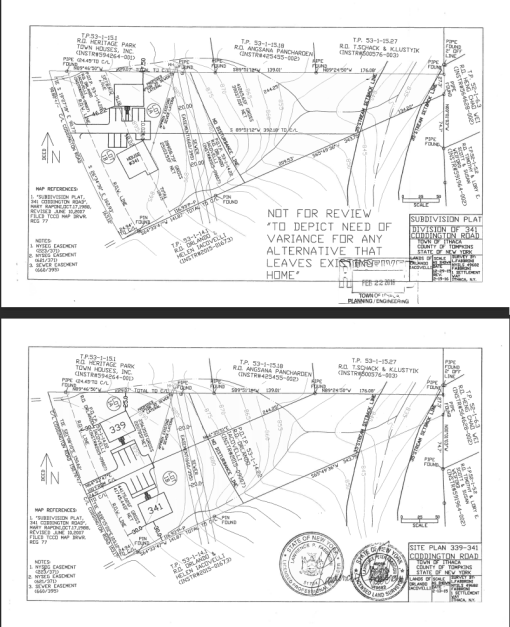
7. Status: It’s complicated. In Ithaca town, the Iacovelli family, longtime local landlords/builders, want to tear down a ca. 1845 house at 341 Coddington Road to put up two duplexes, which from the schematic appear to be the Iacovelli student special. To do so, they need to subdivide the property, one for each duplex.

On the one hand, the Iacovellis, who have been on South Hill since the 1920s (they’re the namesakes of Iacovelli Park at the end of Juniper Drive) and bought the property last year, have a right within existing law to do what they want with the property, which is next door to Orlando Iacovelli’s house. They want to subdivide the land into two parcels, and the only way to create two legal lots is to go right through the existing house.

On the other hand, it would be a shame to lose a 170-year house that’s in fair shape and has many of its original features intact, just so two fairly spartan duplexes can be built.

The town’s planning board seems to be cognizant of both sides in this dilemma. They asked at the last meeting to examine an alternative to allow subdivision and keep the 1845 house intact. The engineer for the project, Larry Fabbroni, did so, but the applicant is uncomfortable with trying to get zoning variances for the non-conforming setup, area, setback and a third claim about use for unrelated occupants (which the town planning department disputes).

This all comes at a time where the town is weighing a moratorium on 2-unit properties, and if this house comes down, there’s a good chance the town will vote the moratorium. Then Iacovelli won’t be able to build any duplexes, and no one else in the town of Ithaca would be able to either. But even if Mr. Iacovelli couldn’t build, he could still demolish the house and wait, should disagreements came to a boil.

Ideally, there would be a compromise where the 1845 house is preserved (by planning board/BZA stipulation or otherwise), and Iacovelli gets to subdivide so he can build a duplex on the other parcel. That way, he gets some economic return, and the town gets to keep an undesignated but arguably historic house. Few town board members want to come off as being anti-business to local families, and few developers want to come off as greedy or exploitative. A concession on both sides and some good will could go a long way in a time where tensions about student-focused housing are rising.

Comments can be sent to the board via the town clerk (Paulette Terwilliger) at townclerk@town.ithaca.ny.us . The board is expected to take a vote on the subdivision on Tuesday the 1st at 7 PM in the town hall.


Chapter House / 406 Stewart Avenue Construction Update, 2/2016

24 02 2016

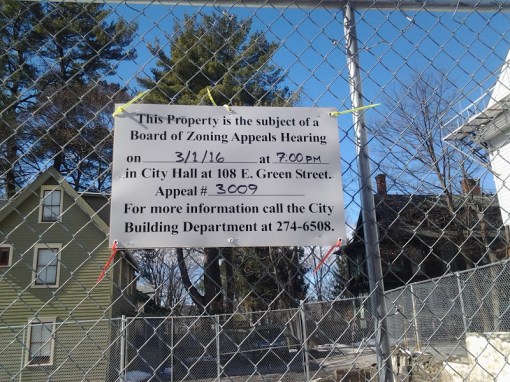
Not so much construction as a look at what the site as it currently stands. The Chapter House has been approved, and the apartments house planned for 406 Stewart Avenue, being a smaller project, just needs the Board of Zoning Appeals (BZA) to sign off at this point, as the Ithaca Landmarks Preservation Commission (ILPC) has given their tentative blessing. No specific numbers on number of occupants/bedrooms in the new Chapter House, but expect it to be fairly close to the total lost in last Spring’s tragic fire. 406 will be slightly larger thanks to improved interior circulation and the addition of a floor – 4 apartments and 7 occupants vs. the previous building’s 5 apartments and 6 occupants. Because of that one-floor increase, a reconstruction cannot be done as-of-right, so the project will need to be granted several area variances from the BZA.

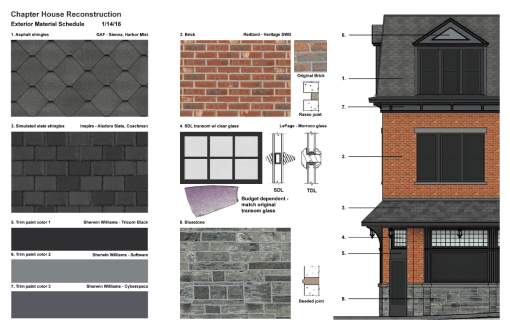
In keeping with the ILPC’s fairly stringent approach, the buildings are designed to be sympathetic to the originals without being replicas (which is generally advised against by historic preservationists because it cheapens the value of buildings that have managed to survive the past century). The Chapter House will have GAF Sienna asphalt shingles on the roof and Inspire Aledora simulated slate shingles on the first-floor overhang, Redland Heritage SWB brick and bluestone.

The Chapter House project is paid for by Sebastian Mascaro of Florida, and 406 Stewart is funded by Jim Goldman of suburban Philadelphia. Jerry Dietz of local company CSP Management is representation both owners for their respective projects. Local architect Jason K. Demarest (brother of STREAM Collaborative’s Noah Demarest) is the designer-in-charge.

Work on the new Chapter House is expected to begin shortly, with a late summer or early fall opening. 406 Stewart expects a May construction start with completion in January 2017.

20160220_114105 20160220_114135 20160220_114147 20160220_114216 20160220_114227 20160220_114244

chapteR_house_reconst_v4_2 chapteR_house_reconst_v4_1


News Tidbits 2/20/16: Looking Forward, Looking Back

20 02 2016

20150727_145000

1. The city of Ithaca released their 2015 Planning Board summary as part of the planning board agenda this month. Here’s some highlights –

Construction costs for projects filed in 2015 are expected to total $66.8 million. In something of a rarity, Cornell was not the big financier this year, only being attached to the $12 million Novarr/Johnson School project at 209-215 Dryden Road. The two most expensive projects are the $26.5 million Tompkins Financial Corporation HQ, and the $13.77 million 210 Hancock project.

The only other project that exceeded $2 million is the first phase of Chain Works, valued at $8.65 million for phase one, and deep in the throes of review. But for some reason, Chain Works also appears in the 2014 summary of site plan filings, so one of these reports is inaccurate. Chain Works was definitely being discussed in summer 2014, although I’m not sure when the site plan was filed.

Only 95 housing units with 155 bedrooms were approved in 2015, the majority of which were with 210 Hancock (66 units, 89 bedrooms). This is down from 129 units approved in 2014. Only 8 are owner-occupied units – the 7 owner-occupied townhomes with 210 Hancock, and 1 2-bedroom market-rate home. The other projects were the 12-unit 215-221 West Spencer Street, the 6-unit 707 E. Seneca project, 3 duplexes at 804 E. State, and the 5-unit 128 West Falls Street project.

The city pulled in $154,709 from site plan filings, down from $168,214 in 2014.

Rather uncomfortably, several projects – 416 E. State, State Street Triangle, the Herson Wagner funeral home project, a 4-unit apartment building at 525 West Green Street, and 4-story apartments at 815 South Aurora project were all withdrawn from consideration for various reasons, 5 of 16 of the site plans filed. For comparison, only 2 of the 27 filed projects were withdrawn in 2014, the cancelled boutique hotel at 339 Elmira Road, and the student housing project at 7 Ridgewood.

Although there’s less housing and the overall value of site plan filings are down, new commercial square footage is up, mostly due to Tompkins Financial’s new 110,000 SF. The increase was from 22,000 SF of retail and 3,800 SF of office space approved in 2014, to 20,563 SF of retail and 110,000 SF of office space approved in 2015.

On future projects, the city expects about 915 units of housing on the Chain Works site over 10-15 years. During 2016, the board expects that the Old Library site, the Travis Hyde proposal for Ithaca Gun, and phase III of Cornell’s Hughes Hall renovations will come up for review.


100_1763

2. Looks like Cornell is starting to do some long-term planning of its housing needs. Over the course of the upcoming Spring semester, the university is expected to engage with students, staff/faculty and the wider community as it starts formulating its housing master plan for the next decade. Look at it as two things – an assessment/checkpoint on how the North and West Campus systems are doing since being completed in the early 2000s and late 2000s, and a gauge for where, when and what form new housing should take.

The nine-month meeting and planning process will be led by NYC-based U3 Advisors, who are also handling implementation of Cornell’s NYC Tech Campus currently under construction. Since 2013, U3 has also a consultant for Cornell’s plans for the long-incubating redevelopment of East Hill Plaza into the new urbanist East Hill Village.

tc3_daycare
3. Over in Dryden, Tompkins-Cortland Community College (TC3) has announced plans for a $5.5 million daycare center. Initial plans call for enough room for 80 children, and would allow the school to provide daycare for infants. Most of the children are expected to be the progeny of students, but staff and faculty would also be welcome to enroll their kids, and even members of the community if there’s still room in the new facility.

Funding to the project will come in a 50-50 split being state dollars and private donations, of which about $2 million has already been secured. A further $1 million campaign is expected to be launched by June.

The project is expected to be located on the west side of the main campus building, on undeveloped land between the classrooms and the pond. Construction is expected to begin in 2017. Approvals would have to be granted by the town of Dryden’s town board. As far as I’m aware, the Voice did not received the press release that the Times and Journal did, and no information is yet available on who the architect is, or the approximate square footage.

maplewood_site_plan_concept

4. For those hoping for something big in the Planning Board meeting next month, well, keep waiting. Kinda. The new items on the agenda have already been covered – the Maplewood Development by Cornell (the northwest corner and two of the 3 to 4 story-apartment buildings fall at least partially into Ithaca city — just draw an imaginary line straight north of Vine Street to get the visual), and the Maguire waterfront proposal. Quick reminder, the general order is: sketch plan, Declaration of Lead Agency, Public Hearing, Declaration of Environmental Significance, BZA if necessary, prelim approval, final approval. Here’s the formal rundown:

I. Agenda Review
II. Special Order of Business – Adequacy Discussion – Chain Works District
III. Privilege of the Floor
IV. Subdivision review

A. Preliminary and final approval for the revision of lot lines permitting Habitat for Humanity’s “Breaking Ground” duplex at 208-210 Third Street

B. Preliminary and final approval for the revision of lots lines at INHS’ 210 Hancock – this would divide the parcel into for-rent and for-sale portions, which is crucial for funding allocation (government funding is earmarked either for rent, or for sale housing, but not both).

V. Site Plan Review

A. Brindley Street Bridge – Declaration of Lead Agency in concurrence with the Board of Public Works
B. Hilton Canopy Hotel – Project Update, Conditions of Site Plan Approval, and Requested Changes
C. Parking spaces for the new duplex at 424 Dryden – Public Hearing, Declaration of Env. Signif, and recommendations to the BZA
D. Cornell Hughes Hall renovations – Declaration of Lead Agency and Public Hearing
E. Cornell Ag Quad renovations – Declaration of Lead Agency and Public Hearing
F. Sketch Plan – Cornell Maplewood Apartments
G. Sketch Plan – Maguire Automotive Project at Carpenter Business Park

20160109_131909

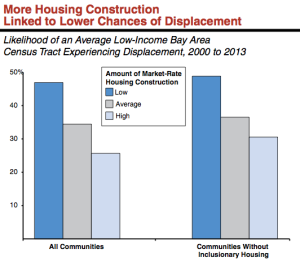
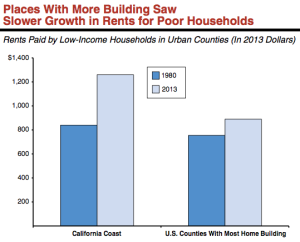
5. In case you missed it this week, the Washington Post wrote about a just-published California state Legislative Analyst Office study that found that communities that welcomed market-rate housing construction tended to have lower displacement of lower-income households than communities that did not add new housing.

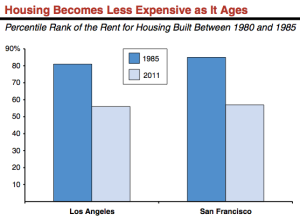
A copy of the study can be found here. It might come off as counter-intuitive or too simple of a breakdown of supply and demand, but it appears that wealthier households tend to pursue the newest housing, and as shown with projects like the Lofts @ Six Mile Creek and Seneca Way, brand-new units do command a premium when they first hit the market. As time goes on and newer units come online, those well-off individuals tend to migrate towards the newer housing, while the aging housing moderates in price, making it affordable to downmarket income brackets.

Screen-Shot-2016-02-11-at-10.42.30-AM Screen-Shot-2016-02-11-at-3.13.17-PM Screen-Shot-2016-02-11-at-10.36.01-AM

But, if there’s little new housing added, then the process breaks down. The moderating effect of age is much weaker, and the market encourages displacement as newcomers seek housing from the limited supply available. The California state study notes that inclusionary zoning appears to have only a small impact; even in communities with inclusionary policies in place, a lack of growth of market-rate housing resulted in greater displacement.

Note that none of this advocates for the tearing down of affordable housing, like the Elmira Savings Bank debacle. But it is a strong argument in support of the re-use of underutilized properties, like old industrial buildings, parking lots and so forth, where the cumulative effect of new supply can yield moderation in the market’s increasing costs. If affordable housing isn’t feasible for a site (for instance, the Waterfront with its high development costs), market-rate is not a bad alternative.

Looks like that editorial Jeff Stein wrote back in April holds a lot of weight.


News Tidbits 2/13/16: A Week of Uncomfortable Prospects

13 02 2016

lansing_cmt
1. We’ll start off this week with some zoning and land-use discussion. the village of Lansing, which tends to have a very tight grip on their zoning, modified their code for a new addition, called “Commercial Medium Traffic” (CMT). The zone, which has taken about two years to get to this point, will override what is currently zoned a Commercial Low Traffic (CLT) area. As a result of the rezoning, some previously-okayed uses in their CLT zone – clinics, group homes, construction storage, sit-down restaurants – have been removed, but adds cafeterias and assisted living facilities. Splitting hairs, one supposes. Looking at the use guidelines, about the only big use the CMT allows that CLT doesn’t is “small-scale sales” like boutique shops, and “low-traffic food and beverage”, which covers bars and sit-down restaurants.

The reason for this change comes from a couple of angles – the village has a number of vacant or underutilized parcels in the affected area, which they feel is detracting. Developers have approached the board about building retail/restaurant space on some of the land, but that would have required rezoning to commercial high traffic. But the high traffic zone also allows “hotels and big boxes”, so the village needed an in-between. Now it’s finally in place.

ithaca_eddy_land

2. Now for another land use debate. The town of Ithaca has authorized doing an analysis on what a fair bid would be for the development rights of 33 acres of land off of Seven Mile Drive and Route 13. These parcels are currently farmed by the Eddy family, and a mini-golf facility was previously proposed on one of the properties. Before that, they were to be included in the 2014 Maguire development before the Maguires pulled their project, partially because the town said the dealership and headquarters proposal wasn’t in line with their new Comprehensive Plan.

The problem is, neither is this. The town would buy this with the intent on keeping all of it farm fields. The comprehensive plan called for TND Medium Residential (townhouses, elder cottages, small apartment buildings and compact single family) and the “Inlet Valley Gateway” (quoting the plan, “intended to be a setting for a mix of office, small-scale retail, hospitality, and tourism and agritourism uses, with low-impact light industrial, artisanal industrial, and skilled trade uses”). The concern is, if the town starts displacing development from the areas recommended, developers will start looking at areas where it’s not recommended.

For the record, the 22.38 acre parcel is for sale for $425,000, and the 10.59 acre parcel is for sale at $325,000. The assessed value is only $188,800 total. The development rights will probably fall somewhere between. This definitely isn’t as cut-and-dry as the 62 acres the town picked up for $160k in December. The town will have an idea of the cost for the rights later this year.

simeons_v2_2

3. A few notes from this week’s TCIDA agenda. The Hotel Ithaca project is up for final approval of its tax abatement, which given that the public meeting drew not a single commenter, shouldn’t have any issues going forward. 210 Hancock also has some slight tweaks to its agreement, and Simeon’s is applying for a sales tax exemption on construction materials and refurbishment. The $660,000 project’s exemption would be worth $27,079 by their calculation. Simeon’s estimates 27 jobs at opening, and 14 new positions over 3 years, about half of which appear to be living wage. The tax exemption amount is small enough that it seems like a non-issue, but we’ll see what happens if the application is accepted and a public hearing scheduled.

tmpud_waterfront_1
4. From the city Planning and Economic Development Committee – the Commons street-level active-use ordinance and the waterfront Temporary Mandatory Planned Unit Development (TM-PUD) were moved to go ahead to the Common Council next month. More on the Commons ordinance here, and the TM-PUD here.

Committee members were favorable to an amendment to the cell phone tower fall-zone law, though perhaps not in the most ideal way for Modern Living Rentals’ 87-unit 815 South Aurora proposal. On the bright side, a draft law for circulation could be ready by April. On the not so bright side, the city’s going with the 120% value used by other municipalities – that would give the 170 ft. tower near the project site a 204 ft. no-build fall zone instead of the current 340 ft. (200%), but it’s still greater than the 180 ft. MLR requested. This means the project would probably need to be revised somewhat if that’s the version of the law that moves forward. But, something would be better than nothing.

Oh, and the chicken law was voted for circulation, which opens the possibility of a council vote in April, for 20 test subjects in a pilot program.

402_s_cayuga_st_rev2_1

5. The Ithaca Urban Renewal Agency is in a bit of a dilemma. INHS’s 402 South Cayuga project, which has 4 units of affordable owner-occupied housing, is stalled. The construction costs are rapidly rising out of the range of feasibility. The only way it moves forward is if it’s a rental project, which is easier to finance.

402_s_cayuga_st_boggsfernandez

Ostensibly, the IURA would like owner-occupied housing. And a rival proposal has been offered by local architect Zac Boggs and his partner, former Planning Board member Isabel Fernández. It would offer four rentals for 2 to 5 years, and then go up for sale – in the $180-$230k range, which is somewhat more than the $110-$130k range typically offered by INHS. So what do you do? Sacrifice some affordability for some home ownership, or vice-versa? The IURA needs to figure that out. Additional renders and cover letter here.

hilton_canopy_v9_1

6. I think this is the ninth iteration of the Canopy hotel; quite possibly the most version of a single project I have on file. What’s changed since last time? Well, the inset panels in the northwest wall are back. Some cast stone was added to the base,  the second floor rood deck was tweaked, a cornice element was added to the mechanical screen, and the trellis and driveway pavers were revised. It looks like an improvement, and hopefully one that Baywood Hotels can bring to reality after being stuck in finance limbo for so long. Additional imagery here, cover letter from local architectural consultant Catherine de Almeida here.

varna_plan

7. The Times’ Michael Nocella ran a really nice piece this week looking at the past, present and future of development in Varna. According to the article, Modern Living Rentals (my sympathies to Charlie O’Connor and Todd Fox, since all of their projects seem to be wrapped up in one debate or another) needs a unanimous vote of approval for the 8-unit, 26-bed addition to 902 Dryden Road to be able to move forward (a 6-bed duplex already exists on the property). In Dryden, the five-member town board does the vote, and the current Dryden town supervisor helped close the sale of the parcel to MLR, so he must recuse himself. Shooting it down at this point, after the project’s cut its size by 40% from 18,000 SF to 11,000 SF, would be very unfortunate, and create an uncomfortable disconnect between the Varna Master Plan designed with community input, and what the board thinks Varna should have.

5_Freese_2013

As mentioned in the article, the northeast corner of Rt. 366 and Freese Road is one of those parcels where the town and Varna residents think development should happen, but really isn’t feasible. I remember when Todd Fox shared his proposal (STREAM Collaborative’s drawing above) with the town for that corner, and the reception was very positive, much more so than the owner’s earlier plan for 20 modular townhomes. Then not long after, everything ground to a halt. MLR decided not to buy the parcel after it turned out the land was incredibly unstable (there used to be a huge pile of material on the site, dubbed “Mount Varna”; the story of which gets written about extensively on the Living in Dryden blog, since Simon St. Laurent and the owners had quite the feud going). The chances of anything but grass growing on that corner is pretty low.

So, with the former “Mount Varna” land in mind, a master plan is not an exact thing; if it shows for three sets of five townhouses on a parcel, that’s not what may necessarily may happen. It just indicates the kind of density and scale of development the plan deems appropriate. 902 Dryden isn’t drawn on the master plan, but the plan welcomes the idea of townhouses on Forest Home Drive, which 902 abuts. So a vote in favor of the 8 new townhouses is, indirectly, a vote of support in the Varna Master Plan.

20151108_154139

8. The town of Ithaca’s Planning Committee will be looking into writing up and establishing a moratorium on all 2-unit residential buildings at its meeting next week. Doesn’t specify location, or rental vs. owner-occupied; just a ban on buildings with two units.

On the one hand, this is probably an attempt to curb student housing being built near IC; the town’s Planning Committee chair is someone with a long history of fighting development, and is seeking greater input on the Planning Board’s discussions. Students and student-amenable housing are just his favorite topics as of late. But the agenda doesn’t specify the type of unit or location, and that is very concerning. From a number of reasons, a broad-brush moratorium, without regard to neighborhood or owner occupancy, doesn’t seem like a good idea.

1) If the goal is to limit student housing, only a small geographic subset of the town is really necessary. IC students, which seem the primary cause of concern, congregate only in the neighborhood adjacent to campus.
2) The moratorium could harm affordable home-ownership. In a number of cases, one unit is occupied by the owner, and the other is rented out as a source of income.
3) Limiting new supply keeps housing costs high and pressures them to rise higher, since demand will not be altered by the moratorium.
4) The town only permits a small number of units each year. In 2014, it was 10 single-family and 2 2-unit properties (so, 14 units total). In 2013, it was 25 single-family, 10 2-unit. The preliminary 2015 numbers are 21 single-family, and 3 2-unit. There were no permits for structures with 3 units or more.

I asked Ithaca town planner Dan Tasman, and while his email notes that it’s targeted at student rentals, it doesn’t assuage my concerns of being too broad of an execution.

“The Town’s zoning code allows accessory apartments in some zones.  The intent is to let a resident have a close family member or friend live with them, or a tenant to help pay the mortgage, in a space that’s more private.  Basically, an in-law apartment.  However, a few builders are taking advantage of the privilege.  They’ll build a house with an accessory apartment, and rent out both units, with student tenants in mind.

There’s also concern about a growing number of “student specials” — very utilitarian duplexes, purpose-built for student rental.  There’s quite a few of them on Pennsylvania Avenue and Kendall Avenue, near Ithaca College.  Their design and siting can often seem institutional, and out of place with the neighborhood’s residential character.”

I’m not a proponent of moratoriums at all, but I’m hopeful this proposal isn’t as broad as it looks. If the net is cast too wide, this is going to do a lot more harm than good.


Plans Shift into Gear for Maguire Dealership on Carpenter Circle

9 02 2016

This write-up is intended to be an exploration of the project itself. An exploration of the controversy will be heading to the Voice.

Let’s start with a little backstory. Carpenter Business Park was formally established in the early 1990s during the Nichols administration, when the city was hoping to pull industrial and commercial business from the burgeoning suburbs back into the city. Up to that point, the land had been mostly vacant space and earlier on, an informal garbage dump. The community gardens lease began in the late 1980s. Ithaca has had plans to develop an industrial park on the site since the 1970s, but the problem is that the site is relatively small and isolated with one only access road (Carpenter Circle). So no one touched it for over a decade.

In the early 2000s, a company under the name Ithaca Templar LLC bought several of the parcels for $2.2 million, but the land remained vacant and the properties eventually went into foreclosure. The foreclosing lender put the land back on the market last spring. Enter Carpenter Business Park LLC, and the $2.7 million August and September land/building sales that my colleague Nick Bogel-Burroughs covered for the Voice. Nick provides a great background on the land sales and initial city reaction to the then-rumor that the Maguires had purchased the land.

maguire_v2_1

Now a little background on the Maguires. The Maguire family of auto dealerships, started in Trumansburg in 1977, is the eleventh-largest employer in the county with over 420 staff. Phil Maguire and company previously approached the town of Ithaca with the idea of developing a headquarters and series of dealerships on Route 13 near Seven Mile Drive. However, the town board wanted to make the area a PDZ, while Maguire wanted an outright rezoning, which would have given the company more freedom with the way they used the site. The two parties couldn’t come to terms, and the proposal was tabled. Had it been a few years earlier, the plan probably would have been more acceptable, but as proposed it was counter to the small business and low-density residential the town was envisioning for the Inlet Corridor in its newly-passed Comprehensive Plan.

Meanwhile, in the past few years, the city’s been trying to figure out how to redevelop the Waterfront, and Carpenter by extension. Currently, it’s industrial land. Commercial buildings need only be 2 floors to be legally permitted, but residential is not. Waterfront mixed-use zoning had been floated in late 2013 and early 2014, but several city officials and at least one common council member shot the idea down. Then came last June’s Form Ithaca charrettes of what could be done under the ideas of the new 2015 Comprehensive Plan, and the passage of the plan itself. The dense, mixed-use, walkable allure grew stronger and has become the city’s official stance, but the zoning has yet to be updated as the plan recommends. The city does allow for Planned Unit Developments (PUDs) on industrial land that could allow residential use, but only at the Common Council’s discretion.

So in the current case with the waterfront, it’s another situation where the core of the issue is that the proposal conflicts with a newly-passed Comprehensive Plan. It’s hard not to feel a little sympathetic towards the Maguires, who seem to suffer once and again from awful timing.

maguire_carpenter_1

Timing and location issues noted, it’s an otherwise very attractive proposal as car dealerships go. Above is a copy of the site plan. The area to the upper right is the NYSDOT redevelopment with the preferred layout; essentially a placeholder, since development is years off, if it ever happens. The Maguires propose a $12 million, 50,000 SF LEED Gold building with rooftop gardens, solar panels, extensive landscaping, rainwater harvesting, and a solar-powered battery charging station for electric cars. This location would sell the Ford, Lincoln and Nissan brands. The site proposes employee, service and some car display parking where power line ROWs prevent construction of permanent structures.

maguire_carpenter_2

The project, with a proposed launch later in 2016, is intended as a Phase I – Phase II would renovate the current Ford/Lincoln/Nissan dealership at 504 South Meadow Street into the new Hyundai/Subaru location (at a cost of $5 million), and then Phase III would expand the Fiat/Chrysler/Jeep/Ram location into the old Hyundai/Subaru space (cost of $1 million). The three-year set of plans would result in about $18 million of investment.

Community benefits would be complimentary parking for the community gardens and farmer’s market, and sales and tax revenues. A report from TCAD suggests an increase of $340,000 annually in property tax revenue, and $436,000 annually in sales taxes ($776,000 total, of which the city’s share is about $294,000). TCAD projects the direct creation of 57 jobs when all phases are completed, with an average annual wage of $44,300. TCAD also predicts 13 spinoff jobs.

So, it looks like a great project. But it’s the location issue that will drive the controversy.

Along with the Maguires, local firms TWMLA, T.G. Miller P.C., and Schickel Architecture are working together on the proposal.


The Future is Now? Another Look At Form-Based Zoning

9 02 2016

It looks like plans are starting to come together for the form-based zoning that is being considered for the Town of Ithaca. Form Ithaca, whom have been working pretty closely with the town on their new plan, released the results of a study on their website last month. Based on the date of the PDF (the 22nd), it looks like it went up before the neighborhood plan meeting, and the write up on that meeting will make it into the Voice at some point.

form_ithaca_pt2_1
One of the key things that the code seeks to establish is to simplify the code from the current use-based setup (called ‘Euclidean” after the Euclid, Ohio court case that established its legality) to something based on size and shape. The current setup handles mixed-use projects poorly, and PDZ and PUDs create a whole lot of paperwork and eat up time the town could spend handling other issues. Another problem is that the Euclidean zoning purposely establishes work areas away from residential zones, which encourages car-dependent, parking-heavy types of development, the kind that are more expensive to maintain, more environmentally demanding, and increasingly out of favor, especially with younger demographics.

form_ithaca_pt2_2

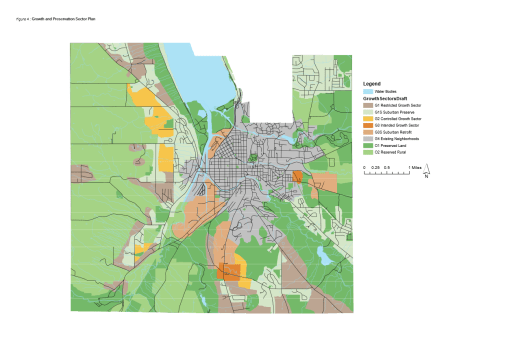
The above map is a rough idea of where Form Ithaca feels development would be best directed. The darker greens are either prohibited (O1, Preserved Land) or strongly discouraged (O2, Reserved Rural). Then from G1 to G3S, you have increasing levels of support for development and dense development. The only “new” neighborhoods established by the G3 zone are the South Hill Center (the 96B/King road intersection) and Cornell’s Maplewood Park east of the city. As already mentioned in the Maplewood writeup, Cornell’s pursuing a PDZ for the new urbanist project they have planned because their timing is a little quicker than Ithaca town’s – waiting for the new zoning would delay the project.

The plan also calls for retrofitting suburban areas, G3S. The 96B/South Hill Corridor,East Hill Plaza, and the city’s Southwest Corridor and Waterfront are targeted. The 96B corridor is currently undergoing a pedestrian and traffic study in part because the town wants to figure out how to protect pedestrians and encourage pedestrian-oriented development in what’s currently a suburban layout.

Recently, there have been privately-developed plans that haven’t been on board with these ideas. On the one end of the spectrum, early incarnations of the Troy Road housing development that was cancelled, which called for 200+ units in a “Restricted Growth Corridor”, a proposed type of zoning that suggests clustered development with substantial open space requirements. The project had been redesigned and reduced to fit 130 units in cluster zoning, but it was then cancelled. On the other end of the spectrum, the town is currently weighing a proposal to purchase agricultural easements on Eddy Hill Inc.’s farmland, which comprises most of the yellow on the southwest side of the town. That would prevent development in an area where development is thought to be more suitable.
form_ithaca_pt2_3

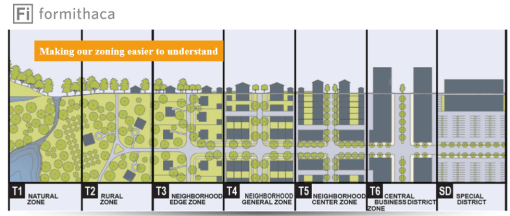
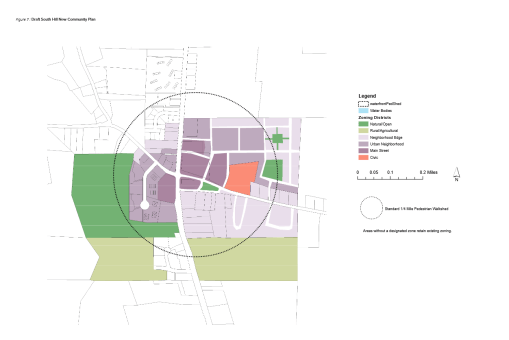
The above image is a proposed zoning setup for the South Hill center. Neighborhood Edge defines more typical single-family home development (T3), Urban Neighborhood towards a Fall creek type of density (T4, townhouses, duplexes/triplexes, closely spaced single-family homes), and Main Street would be more akin to the State Street Corridor (T5), first floor commercial or other active uses with apartment and condos on the couple floors above.

form_ithaca_pt2_4

There’s also an image regarding the Waterfront plans, but given the Maguire proposal, I’d rather wait until the dust settles and there’s a better idea of what’s going to happen.

This is all conceptual, and there are pros and cons – while it encourages less driving and establishes an activity hub in the town, it’s been noted that mixed-use can be more expensive to develop, which may be passed on to the occupants. Also, rezoning can impact current owners and create some tensions. Telling someone that density is encouraged in view of their house may not go over well, just as the landowner planning to sell to a housing developer may not be amused to find himself at odds with the town’s plans. But, given the issues facing Ithaca and Tompkins County, proposing something that attempt to address affordability, demographic and environmental issues is better than proposing nothing.