News Tidbits 4/18/15: Where Will Ithaca Grow From Here

18 04 2015

20150207_152026

1. Leading off this week’s news round-up, here’s a thorough piece by the Ithaca Journal’s David Hill looking at the boom in local construction. Many developers had good things to say about the city’s even hand on the market, but then there’s this gem from Jason Fane:

The new Collegetown zoning isn’t universally praised in all aspects. Major Collegetown and downtown landlord and developer Jason Fane welcomed the removal of parking-space minimums from much of the neighborhood. But he said the rezoning added other rules that run up costs, such as requirements for high ceilings and adding “further retail space to a market that already has too much retail space.”

Hmm. Too much retail space, or a notoriously poor landlord to retail tenants?

From the IJ article, we also learned that Jason Fane’s 12-story 330 College project has been mothballed, Travis Hyde’s Ithaca Gun redevelopment will be called “Falls Park”, and Frost Travis himself isn’t optimistic about condos in Ithaca:

No owner-occupied units are in the plans for the gun-factory site. It’s a challenging site, Travis said. “I have not found a way to support condominiums in Ithaca yet,” Travis said. “But I’m not going to stop trying.”

Mayor Myrick expresses optimism that some of the more far-flung outer Collegetown housing might revert back to family housing, but with Cornell’s rapidly growing student population, don’t count on it.

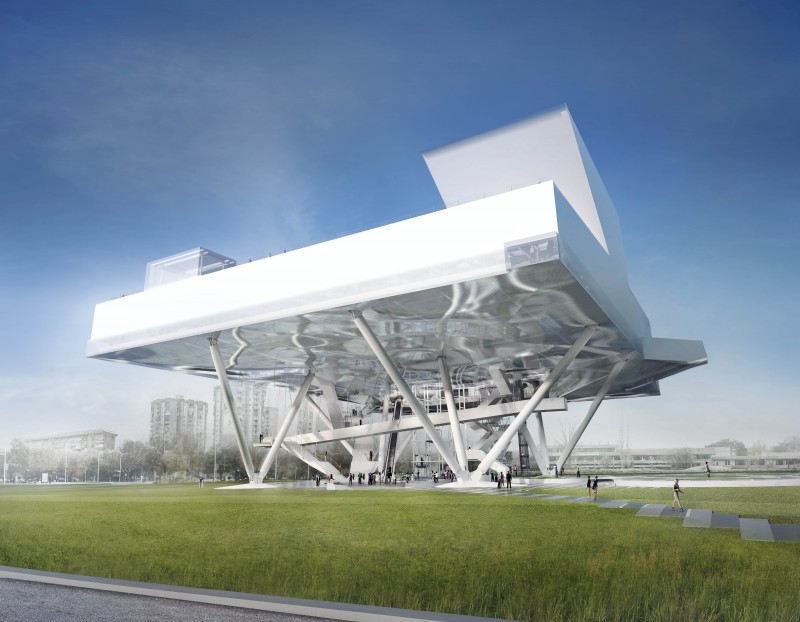
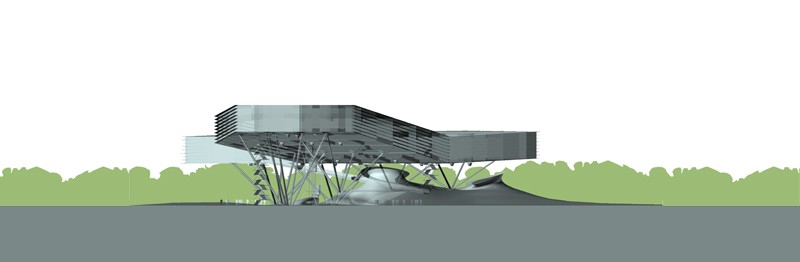
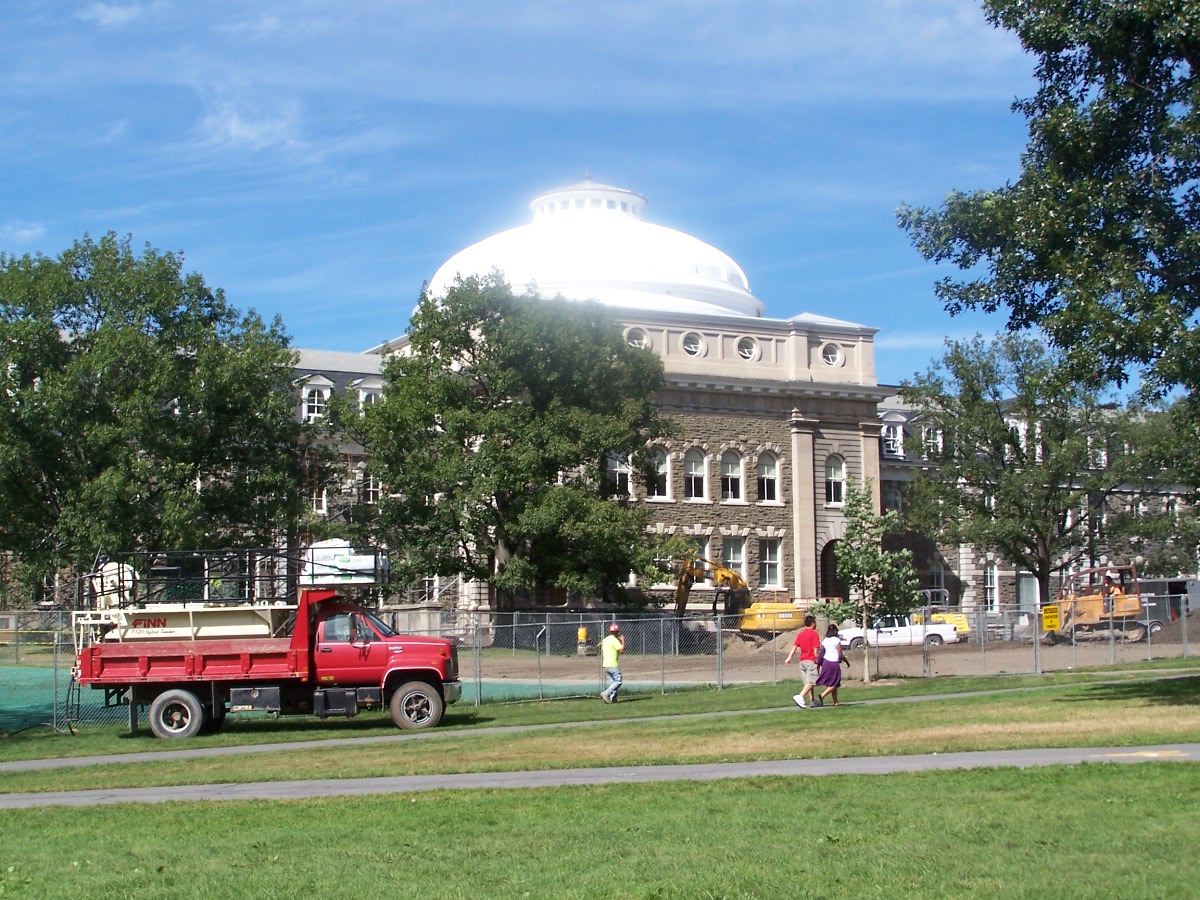
2. Following up my January post, it looks like Cornell’s AAP school is releasing the first rendering of the new Fine Arts Library. At a glance, it looks like the form of Rand Hall will be kept the same as it is now, although there’s no real indication at this point what the exterior will look like after the new library is built.

The architect is a Cornell alum, Vienna-based Wolfgang Tschapeller M.A. ’87. Herr Tschapeller has made some pretty wild looking staircases before (definitely not for the faint-of-heart), so this avant-garde design seems well within his normal repertoire.

100_1872

One concern I have is that Rand’s windows are reduced to single panes in the rendering. It may be an intention of the design or it might be because the windows aren’t the focus of the render, but I always thought one of the charms of Rand Hall was the many-paned windows are a characteristic of the early 20th “daylight factory” industrial style that Rand (built 1911) is representative of. I am surprised that Rand Hall is not a part of the Arts Quad Historic District as designated by the city, but at this point I wish it was.
12-29-2011 016

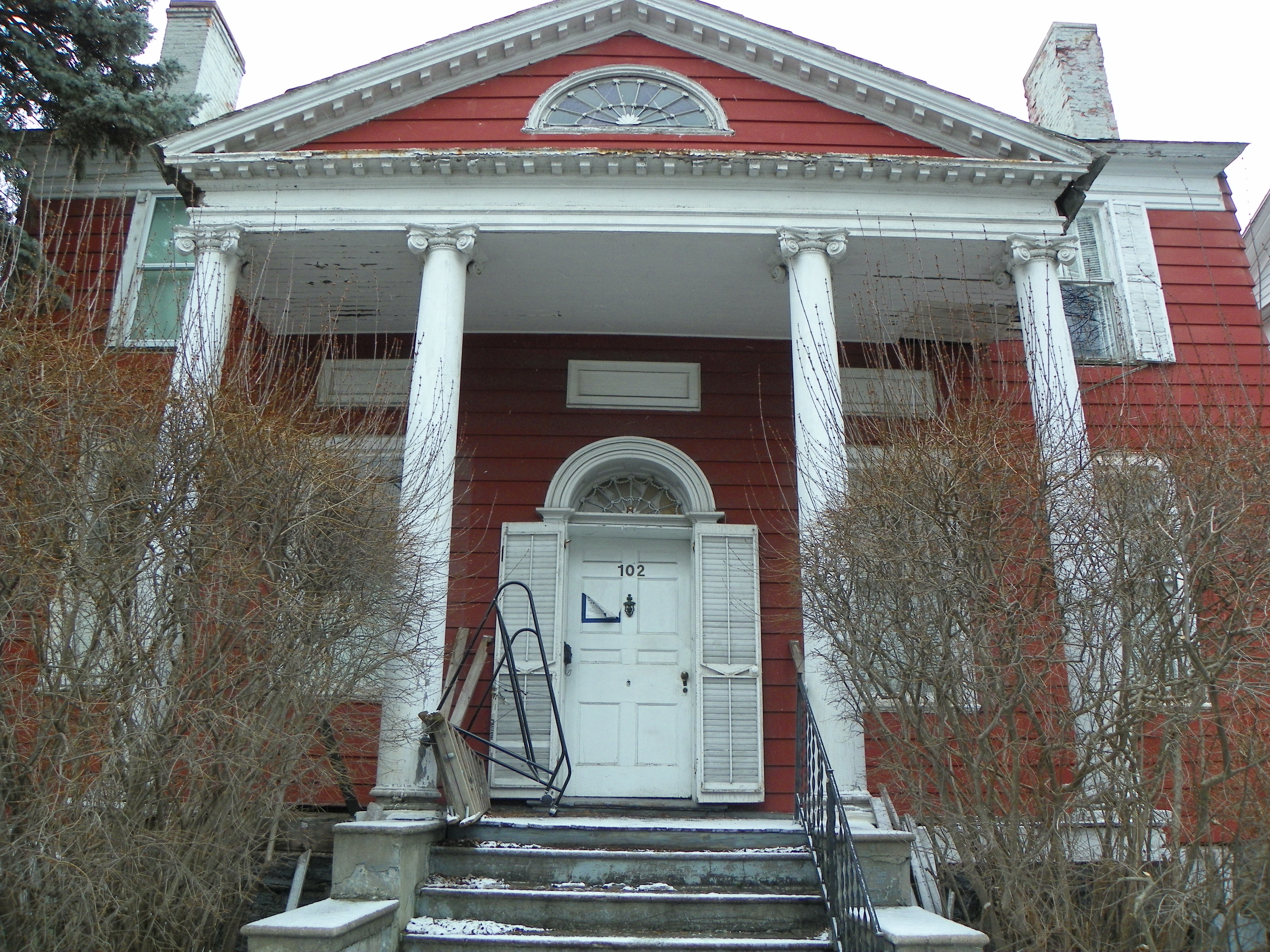
3. On a brighter note for historic structures, some work is finally getting done on the forlorn house at 102 East Court Street, just north of downtown Ithaca. Unfortunately, it’s not because the owner suddenly had a change of heart about the decaying 187-year old house, which sits in the DeWitt Park Historic District. It’s because the city finally had enough of this crap and fined the owner, Ithaca lawyer Aaron Pichel, $5,000 last month, with threats to fine him another $15,000 if he didn’t bring the house up to code within six months.

I first wrote about this house in April 2012. Quoting that entry:

“Historically, the house is the “Judd House“. The house was built in 1828 – the same year Ezra Cornell had arrived in the budding town of Ithaca, which has hardly twenty years old. An estimate establishes the house as having about 3,100 sq ft, 4 bedrooms and 1.5 bathrooms. Furthermore, the assessed value of the house is $190,000, although given its condition the land it sits on is probably worth more then the physical plant itself.

A casual online search reveals a photo from Cornell’s A.D. White Collection, which shows the house in a much better state of affairs in what the vehicle to the left suggests is the 1920s. Furthering searching indicates the house was most likely designed by Ira Tillotson, the same architect for the Clinton House, which is a contemporary to this home. The once-stately residence was built for Capt. Charles Humphrey, a veteran of the War of 1812, on what was then the corner of Cayuga and Mill Streets. The house and a long-removed barn were constructed for a cost of $2,105.56, which places the cost of construction likely somewhere in the upper six digits to $1 million-plus today. The name Judd House comes from long-time owners of the house in the 1900s, who apparently took great pains to keep the house in good shape. Sadly, that is not the case today.”

Plans filed with the Ithaca Landmarks Preservation Council (ILPC) by local company McPherson Builders indicate plans to restore the front porch to an “acceptable condition”, with new roofing and rafters, cornice reconstruction, replacement of the semicircle window above the porch columns, porch column stabilization and repaint, and restoration the northwest chimney to its original configuration (full length with capping, as seen with the other two chimneys in the above photo).

Yes, please and thank you. It’s a shame it had to come to this to get the needed repairs addressed, but at least the historic home won’t be at risk of destruction. The plans underwent review at the ILPC’s April 14th meeting.

4. Touching real quick on this week’s Chapter House disaster – it’s hard to say what will happen with the site moving forward. It and 406 Stewart Avenue were contributing members to the East Hill Historic District. Probably the best solution at this point would be a sympathetic new build, like the one happening with 202 Eddy Street a few blocks away. But there’s no guarantee that will occur.

Notably, the two buildings exchanged hands only a couple weeks ago. On April 2nd, two sales for $615k and $835k were recorded for two tax parcels consisting of the Chapter House and the apartment buildings on either side (the tax parcel for the Chapter House building is combined with 406 Stewart, the apartment building that burned down). An LLC in suburban Orlando sold them to an LLC in suburban Philadelphia. I doubt there’s anything nefarious here, but the new owner is probably feeling a bit shell-shocked at the moment.
friends_hall_1

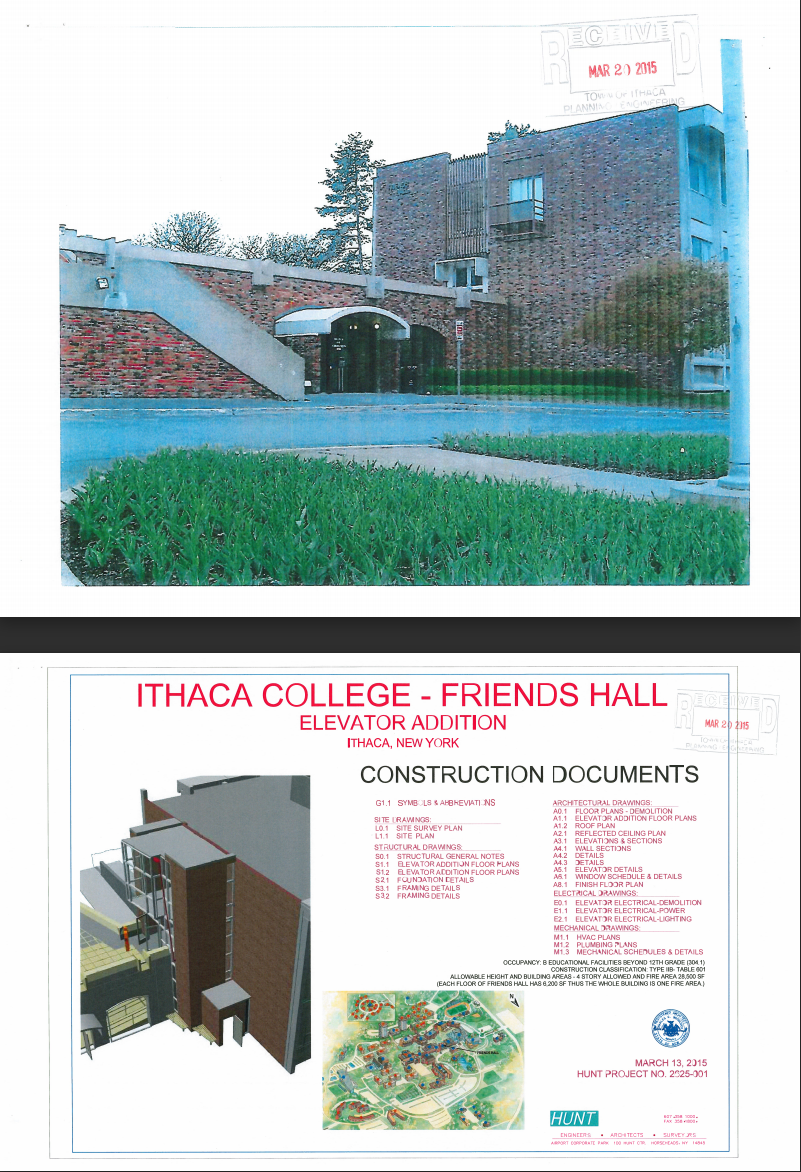
5. Nothing big going on at Ithaca College, but there will be a small project to keep an eye on this summer: a small addition to house an elevator between Textor Hall and Friends Hall. Being a small project without significant impacts, the town is prepared to waive certain requirements for preliminary and site plan approval – this should be a pretty quick approvals process.The planning board will review the project next Tuesday the 21st. Comments on the project can be made here.



Design Competition Announced for Collegetown Apartment Building

19 02 2015

12-29-2011 079

Back in August, I wrote a story about how a student competition was held in the early 1980s to design the mixed-use building currently standing at 409 College Avenue. It appears that someone liked the idea and decided to launch a competition of their own.

According to the Cornell Daily Sun, the competition is to design a replacement for 313-317 College Avenue, a property owned by local developer/landlord Lambrou Real Estate since the late 1970s. Cornellians of my late 2000s vintage will remember this building for housing Dino’s Bar and Grill. In previous years, it’s also held a grocer (1920s), a furniture store (1950s), a record store (1970s), and the Cosmopolitan Restaurant (1990s). Finding the original construction date of the building has been difficult (I’d guess ca. 1910, since it’s missing from this 1906 photo but it’s definitely an older style), and it appears substantial renovations occurred in the mid 1970s, likely the porthole windows on the fourth floor. Because of the heavy alterations borne by the storefronts and top floor over the years, the building has lost much of its historic value.

From a zoning standpoint, the building is in the densest Collegetown zone, MU-2. That entails a mandatory mixed-use component (usually interpreted as commercial space on the first floor), the building can occupy almost all the lot except for a rear setback of 10 feet, and no required parking. The building must be between 4 and 6 floors, and 45′-80′ tall, with a flat roof. 313-317 College already occupies most of its lot footprint, so the area of the new building wouldn’t be a big change, but the addition of a few more floors would make for a greater visual impact. More likely than not, there will be student apartments from floors 2-(4 or 5 or 6).

Speaking specifically about the competition, it’s open to any member of the Cornell community, student, faculty or staff, and has been underway for a couple weeks. Sketch plans were due Wednesday the 18th, final plans/schematics April 7th, and the winner will be announced May 17th. The call for proposals asks for sustainability as a design theme, so an emphasis on “green” features is expected in the submissions. The judges panel will consist of Lambrou Real Estate, AAP professors yet to be chosen, and Ithaca Student Housing, which is also staffed by the Lambrou Family (different branch maybe?). No word yet if there’s a cash prize for the winner.

Just like 409 College over 30 years ago, this is a win-win for everyone involved. The winner gets exposure and a pretty big project to claim on their resume. The Lambrous get a project at a fraction of the design cost of an architectural firm. I hope to see and share some of the proposals as they become available.


A New Home For Cornell’s Fine Arts Library

27 01 2015

100_1870

News of this project comes from the city Planning Department’s annual report, rather than Cornell. There was a time when Cornell used to do a reasonably good job sharing brief summary PDFs of its capital projects, but that ended a couple of years ago.

The project is just a single line, line item B. 17 on the 2015 Work Plan: “Rand Hall Reconstruction”. Those words themselves didn’t pull up anything in google, but a couple related searches pulled up this archived July 2014 email from a Cornell employee announcing the announcement article the chosen architect for Cornell’s new Fine Arts library.

From the AAP website, the Fine Arts Library seems to be more of a renovation than a new construction, moving the FAL from neighboring Sibley Hall and into the top two floors of Rand Hall. The new library is planned for a Fall 2016 opening. The architect is a Cornell alum, Vienna-based Wolfgang Tschapeller M.A. ’87, and the press release credits a $6 million dollar gift from architect and UC-Berkeley professor Mui Ho ’62 B. Arch ’66. From the July 2013 gift annoucement, it sounds like the exterior of Rand will be preserved while the interior is substantially revamped for the new library. There was a great pushback from alumni the first time Cornell tried to demolish Rand Hall, when early versions of Milstein called for the ca. 1911 building’s demolition. Rand Hall sits just outside the Arts Quad Historic District, so any exterior changes would not be subject to review by the very stringent Ithaca Landmarks Preservation Council (ILPC).

If I’m to end this the news article-friendly way, I’d just say “we’ll see what happens with this project moving forward”. But I’m going to do this the blog way, so strictly subjective editorial here on – I can only hope the exterior is preserved. I’m too much of a philistine to appreciate architecture like this:

tschapeler_1tschapeler_2

tschapeler_3

Apart from some close calls with lighthouses and fire towers I’ve visited, I’ve never experienced nausea-inducing staircases before, but there’s a first time for everything.

There’s plenty more on the architect’s website for those who are interested. But they all follow the same, very abstract architectural theme. A fine Arts Library tends to be more avant-garde than most buildings, but this is really pushing the envelope. Cornell, I don’t care if the inside looks like a goddamned funhouse, do the rest of campus a huge favor and leave the exterior alone. Students already deal with Bradfield and Uris Halls, please do not make things worse.

100_1872


Picturesque Ithaca

20 01 2015

Images from “Picturesque Ithaca”, an 1896 photobook of the city of gorges. Photocopy courtesy of the Tompkins County Public Library.

ith_1896_6

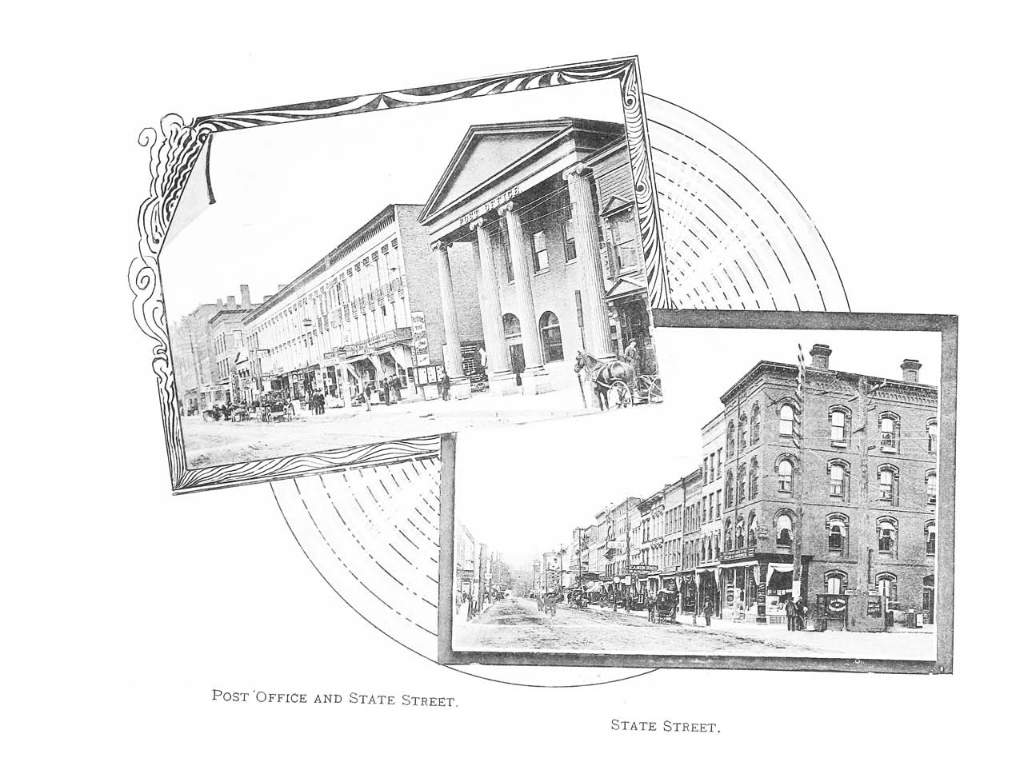
The recently-incorporated city of Ithaca, 1896. At this time, the city was home to about 12,000 people, and Tompkins County had only 33,000 people, less than a third of what it is today. Ithaca College was just starting as a small conservatory downtown, while Cornell had a little over 2,000 students.

ith_1896_1

4-13-2014 078

I never knew the Colonial Building used to be home to the city post office (but now that I check, it served that role from 1882-1910). That, the Sage Block (orange brick) and the Miller Building (red brick) seems to be the only ones standing and still recognizable 119 years later. The lower photo is easier to recognize – the “American Crafts by Robbie Dein” store now sits in the foreground building, and most of the other buildings are still present. One could call that block of the Commons one of the most historic in all of Ithaca.

ith_1896_2

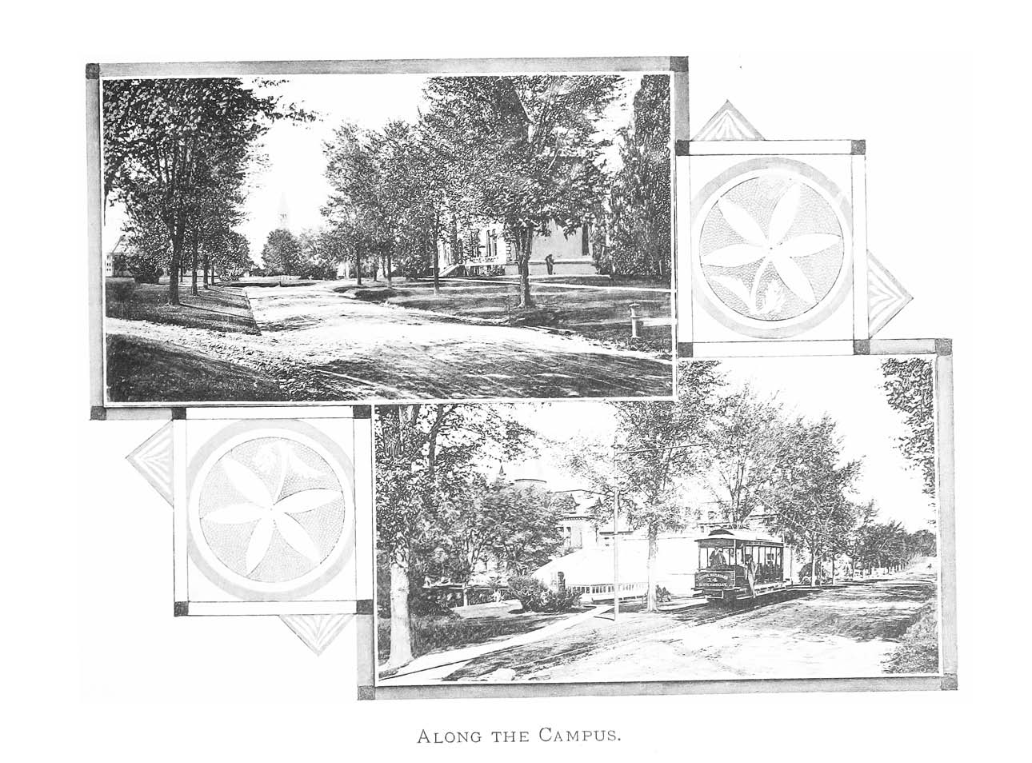
It wouldn’t be a good picture book if it didn’t have at least a couple Cornell photos, and its students and alumni were likely the target audience for this publication. In the top photo, once can make out McGraw Tower, The pyramidal steeple of McGraw Hall, and the windows of the now-demolished Boardman Hall in the distance. The lower photo shows the Ithaca trolley (defunct 1935) that once ran past the college library (renamed in 1962 to Uris Library, for donor/trustee Harold Uris ’25). Both photos also show a relatively lush quad and library entrance, likely lost to the Dutch Elm epidemic that ravaged the campus in the mid-20th century.

ith_1896_3

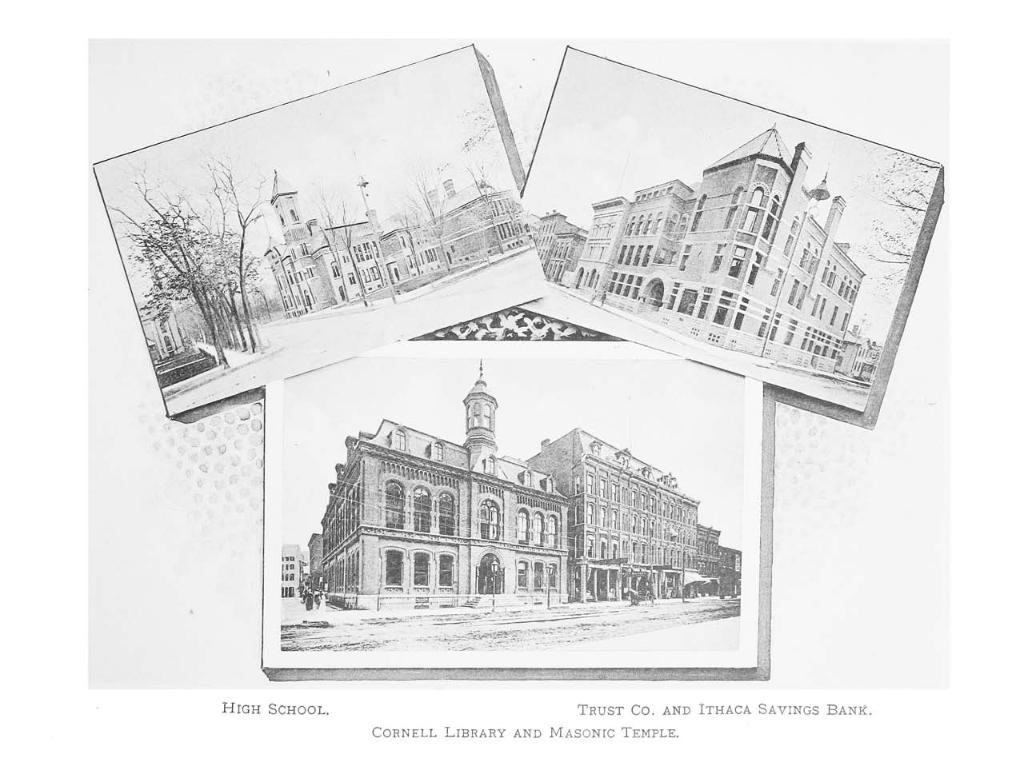
The old old Ithaca High School, the Ezra Cornell Library, the old Masonic Block, and the Trust Company and Ithaca savings Bank Building. All ornate, all lost to history. The old high school burned down in February 1912 and was replaced with the old high school (now DeWitt Mall). The Cornell Library fell victim to urban renewal; it was demolished in 1960 for a drive-thru bank extension and is now a parking lot. The Masonic Block (old old Masonic Temple) dated from the 1870s and seems to have been demolished along with the library (they both were still standing in 1959). The Ithaca Savings Bank building was designed by William Henry Miller and built in 1887, but the building was destroyed in a fire in the early 1920s, and replaced by Tioga Place (M&T Bank) in 1924.

ith_1896_4

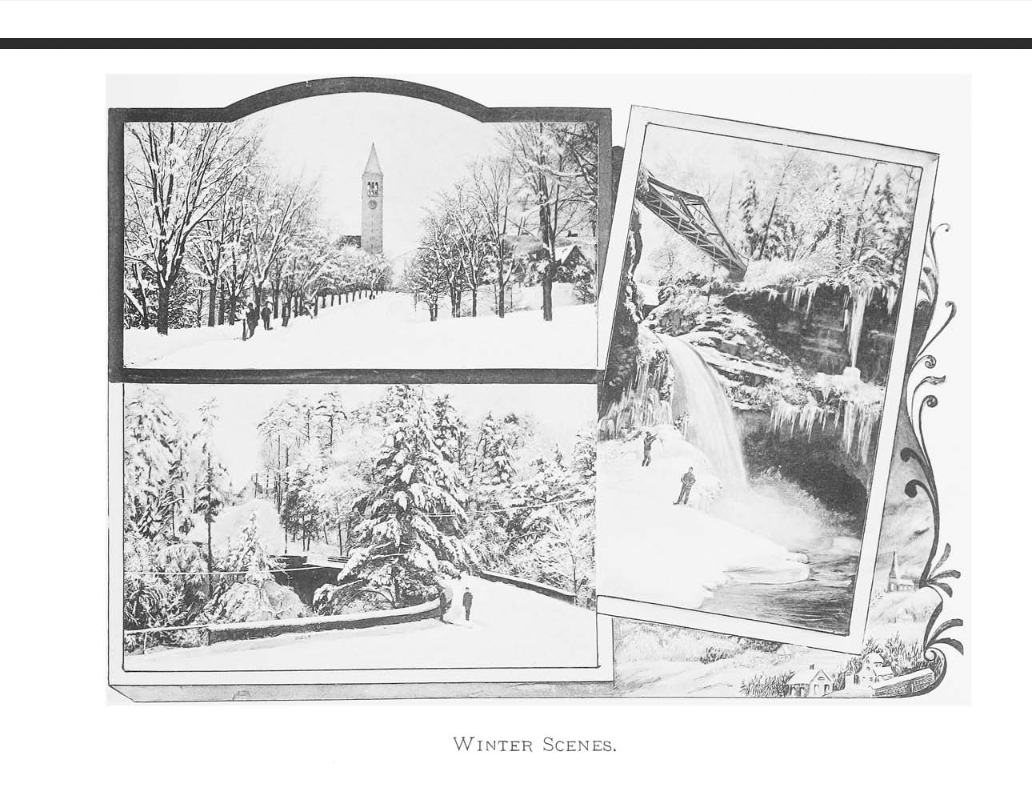
Upper right, the old Triphammer foot bridge. Not heated, wooden, and probably as safe as standing under a flagpole during a thunderstorm. The bridge at lower left looks to be the College Avenue Stone Arch bridge looking northward to Cornell campus.

ith_1896_5

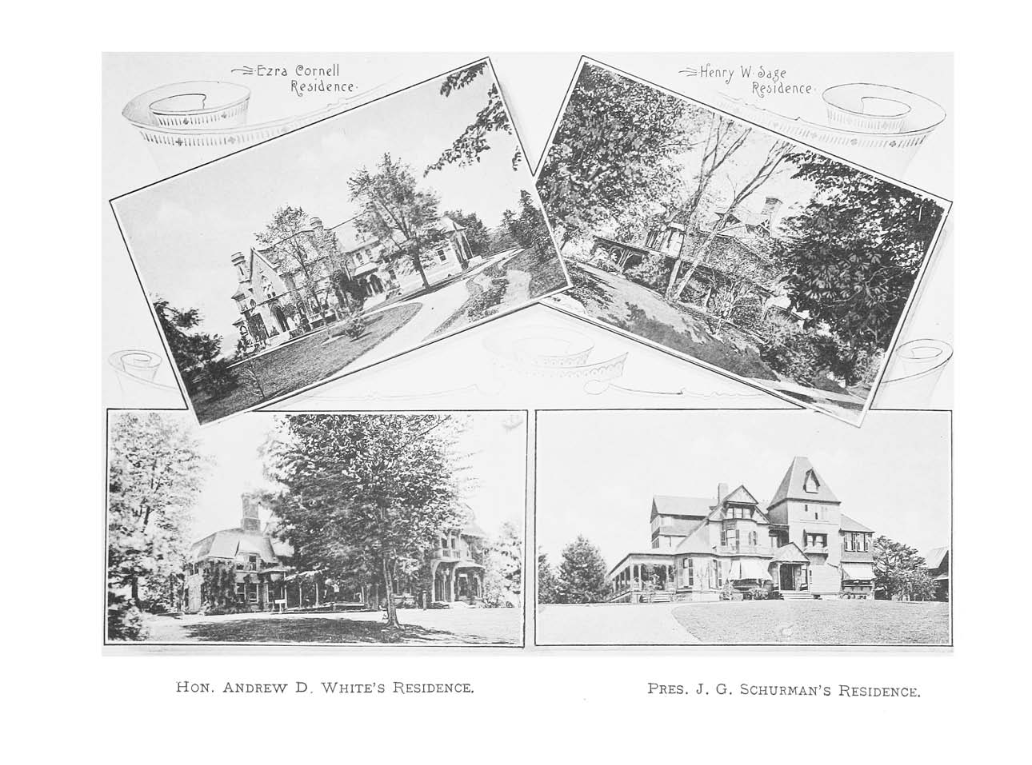
Of the four mansions above, three still stand. Ezra Cornell’s is now the Llenroc (Delta Phi) Fraternity House, A.D. White’s House still sits on Cornell’s campus, and the Henry Sage residence was donated to Cornell, used as an the school infirmary for several decades and is now Sage House, home of the Cornell University Press. Schurman’s residence at lower right was torn down in the early 1920s to make way for Baker Lab.


The Collegetown Boom Continues: The Plans for 302-306 College Avenue

30 10 2014

304_college_2

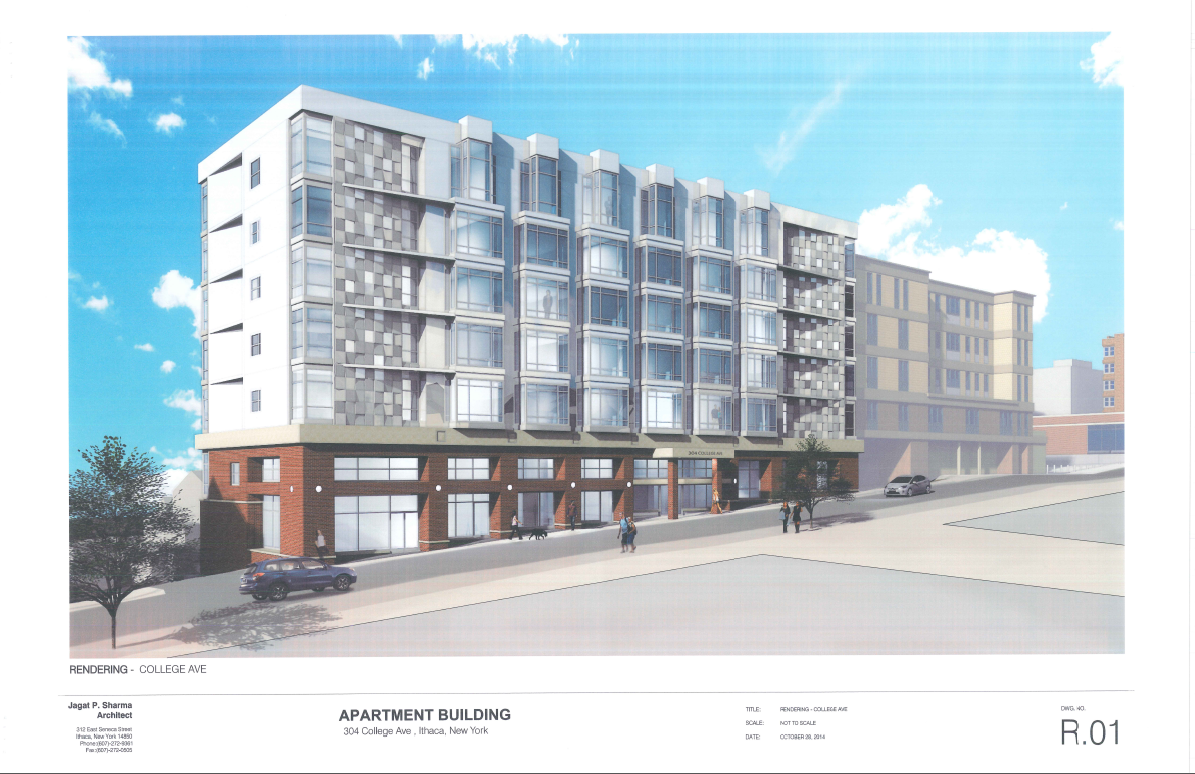
I touched on this one in last week’s news updates, but now I have some images to go along with it. Plans brought forth by Avramis Real Estate and designed by Collegetown favorite Sharma Architecture show not one but two buildings, one 6 stories and one 4 stories. The sketch plan can be found here. The buildings are split up according to zoning – one occupies the 6-story MU-2 zone, the other the 4-story CR-4 zone. Neither requires parking, although a small amount is provided between the two structures.
101_4858

The buildings on the MU-2 portion consist of three older homes originally built around 1900-1920, and periodically updated to reflect a changing Collegetown, such as the bump-out in front of 306 College that houses Collegetown Liquor. Not exactly devoid of charm, but the alterations have been enough to compromise their historic value. These house 36 bedrooms.

The CR-4 portion has 4 homes, all late 1800s to early 1900s, and house 32 bedrooms. Once again, not without their charms, but pretty run down.

304_college_1


The MU-2 building, called “304 College Avenue”, will house 64 apartments with 117 bedrooms. The CR-4 building will house 38 apartments with 85 bedrooms. So the site will see a net gain of 134 bedrooms (202-68).

304_college_2

304 College almost doesn’t look like a Sharma to me.  The mosaic tiling is a feature that makes it stand out, although I personally am not the biggest fan. It’s boxy and bulky, but not offensive.

304_college_3

Not much to say about the Catherine Street building, the design still has yet to be fully rendered. But it looks pretty standard for Jagat Sharma’s work, the Fontana Apartments or 211 Linden come to mind.


News Tidbits 8/23/14: Soooo Much Rendering

23 08 2014

In the news this week are a bunch of updated renders. The Planning Board meeting is next Tuesday and the city needs to have all their updated building proposal files in order. Let’s take a look.

1. This one was approved in July, but it’s worth noting that Cornell has been given the green light to begin construction with its addition to the Gannett Health Center off of Ho Plaza. This is probably about as smooth as the approvals process for a large project gets. Cornell knows everything the city wants (and vice versa), sending enough detailed renders and assessments to write a book, so the city is left with few questions that need to be asked, and any recommendations or suggestions from the board are addressed promptly. The finalized renders by Ithaca-based Chiang O’Brien can be found here. Looking back at the initial proposal, most of the differences are in the roof/skylight layout, and some of the window and facade banding was tweaked. The $25.5 million project is all clear for its March start date, for a completion in fall 2017.

gannett_rev1_final_1

2. Hark, developer Josh Lower’s 307 College might be nearing preliminary approval. A few more tweaks to this 46-apartment, 96-bedroom project since last time; the brick has been differentiated in the front and back, and the blank wall on the northwest corner now has slit windows, created by angling the walls slightly inward. As a result, the windows to their east, and the second-floor windows on that corner have been reduced. They look a little odd, and I wonder if they couldn’t have just done an art wall instead. As with many Collegetown midrises, the design is by local firm Sharma Architecture.

307college_rev2_1

3. Another project getting a mild makeover is Steve Flash’s 323 Taughannock project for the waterfront of Inlet Island. Revised PDF here. Compared to the previous renders, the waterfront side now comes with more balconies, the fourth floor has been redone, and the “first floor” parking area has been tweaked. All-in-all, it’s a fairly substantial design modification by architect STREAM Collaborative. The project seeks to add 20 residential units to Ithaca’s underutilized waterfront. For the naysayers, the argument will need to be something other than ecological; the environmental study was completed by Toxics Targeting (the company run by aggressive environmental activist Walter Hang), and 323 was given the all clear.

323taughannock_rev1_1 323taughannock_rev1_2

4. You want more renderings? You got it! Here we have revisions for the proposed 120-room Hampton Inn in downtown Ithaca. We also have project details from the Site Plan Review (SPR) – the project will cost $11.5 million, and is aiming for a construction period from Spring 2015 to Spring 2016. This project has been meeting with quite a few city officials, the Board of Public Works for the sale and transfer of the city parking lot to the developer, and the IURA for tax breaks. Looking over architect Scott Whitham’s refreshed design, the massing is still the same,but the facade materials have changed up. Gone is the yellow stucco-like material, and here comes the brick (hopefully not the stamp-Crete kind). At least the brick makes it more compatible with its neighbor the Carey Building.

hampton_rev2_1

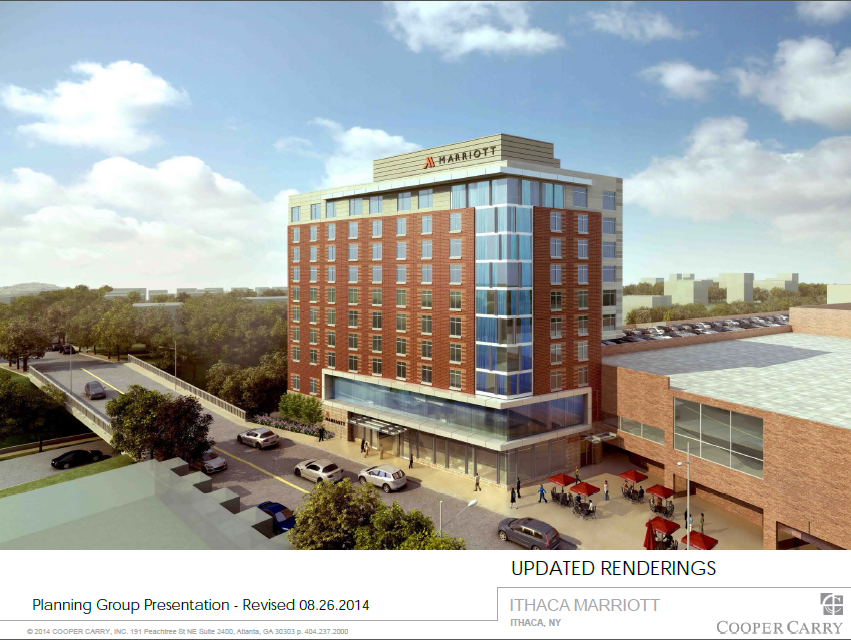
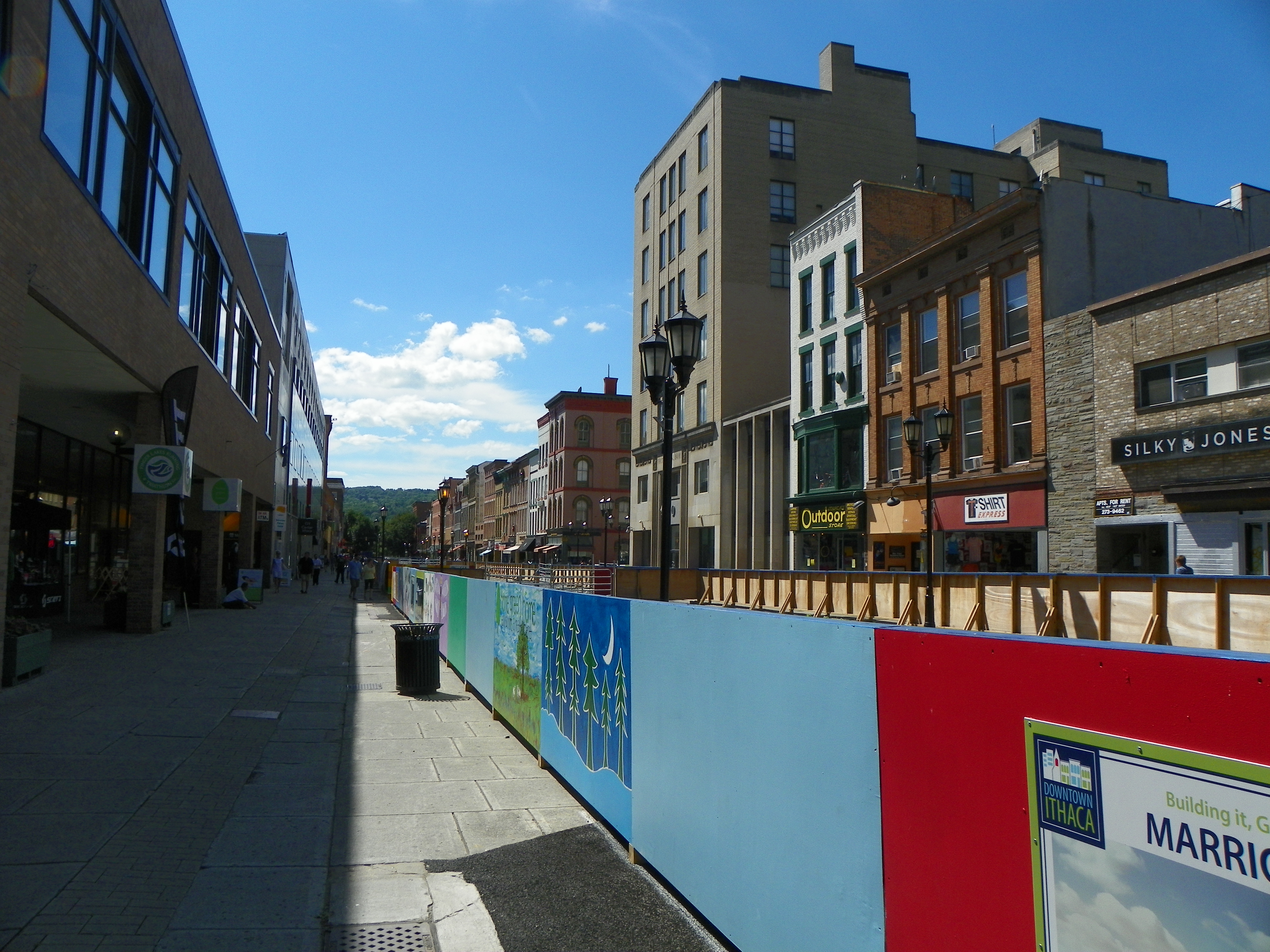
5. Last on the list, the 160-room Marriott. I thought this one was good to go, but apparently it still needs the Planning Board’s approval of the, uh, value engineered design, seen here. The protrusions on the top floor and roof have been trimmed back, the materials have been down-scaled, and the LED-light waterfall effect that was such a discussion point at the meeting last month is now being done with what the PDF calls panels (curtains, I think). The top few floors will be light blue, the middle floors medium blue, the lowest floors dark blue. The crown design has also been modified a bit. The start date for this has been pushed back so many times, I’ll sincerely be amazed when they have steel coming out of the ground.

marriott_rev1_1

I should note that a couple other projects, 205 Dryden (Dryden South) and 327 Eddy have also been revised, but it’s just their A/C vents, a very minor detail that I’m going to save the bandwidth and not bother re-hosting. If you’re really interest, revised plans for 205 here, and 327 here.

With all of these projects noted, it would appear that we have nothing brand new on the agenda for the PDC meeting on the 26th. Stone Quarry and the Marriott are up for revised final approval. The Carey Building addition, 205 Dryden (Dryden South) and 307 College (Collegetown Crossing) are under consideration for final approval, and 323 Taughannock is up for preliminary approval. The only project being reviewed and not up for approval is 327 Eddy, which will be undergoing “Declaration of Lead Agency”, which is an obscure way of saying the Planning Board agrees to conduct the environmental and design review. The approvals would result in 160 hotel rooms, and 117 additional housing units in (82+18+40+96+24) 260 bedrooms, if I have my numbers right. With the exception of Stone Quarry’s rumblings, there’s not a whole lot of opposition left at this point, which means this fall and next year could be pretty busy, with a lot of hardhats on the streets.

6. Now for something different. The vacant parcel at 707 East Seneca, discussed here previously, is being offered for sale at $175,000, well above its assessed value of $100,000. The agent makes note the property could allow four units, but does not note that it’s in a historic district subject to stringent design guidelines.


The Student Who Designed A Collegetown Apartment Building

12 08 2014

6-29-2014 163

Here’s another installment in the Collegetown history series.

I like to imagine that it’s every architect’s ambition to have one of their designs built, a building they can touch with their hands. For some, it takes longer than others. Firms have their hierarchies, and companies have their preferred architects. Many budding designers have to start out small, designing housing additions or lobby areas or pavilions, slowly working their up to larger and grander projects. I imagine the Cornell students hard at work in Sibley and Rand Halls dream of the day that one of their designs becomes reality.

It just so happens that for one Cornell student, their big break came a little sooner than most. It happened while they were still a student at Cornell. The building they designed stands in Collegetown today.

I’m not talking William Henry Miller, or some architect from the much simpler times of the nineteenth century. For this, I only need to go back to the early 1980s.

At the time, the company Student Agencies, Inc. was based at 409 College Avenue, just like it is today. Student Agencies is a student-run business that operates Big Red Shipping and Storage, Hired Hands Moving, and produces the Cornellian yearbook and TakeNote, among other things. 409 College is the second building from left in the lead image, and I’ve included a google screencap below. Back in the Disco Era, the Student Agencies building was a rather ramshackle three-story house with a bump-out. You can see the outline of it here, in a photo of College Avenue ca. 1968. The building housed Student Agencies, and a restaurant called “The Vineyard”, a 1970s mainstay for bland Italian-like food until it closed in 1980.

409_college_avenue

In the fall of 1980, Student Agencies decided to up their game with a new, modern apartment building, one of the first planned in Collegetown area. At the time, Collegetown was still something of a drug-ridden ghetto, lacking today’s high-end units and wealthy students; it was a no-go for many Cornellians. Student Agencies, being the shrewd businesspeople they are, decided to add a twist to their development by making it into a design competition. In a collaboration with Cornell’s architecture school, 4th and 5th year architecture students were invited to submit designs for a mixed-use structure on the site, within zoning constraints. The designs would then be judged on practicality and aesthetics. The judges consisted of the Chairman of the Architecture Department (Jerry Wells), another Cornell architecture professor (Michael Dennis), two Syracuse University architecture professors (Werner Seligmann, the dean, and Prof. Walter Danzinger), Mick Bottge of the Ithaca City Planning Board, and two Student Agencies reps, Peter Nolan and Ed Clement. The winner would not only see their design built, but also win $1,000 (about $2,893 today). Three runner-ups would receive $250 each, and $250 would be donated by SA to publish a booklet of the designs. $2,000 ($5,786 adjusted) was a lot less than hiring a design firm, and it also gave Cornell students an ability to showcase their talents in a practical event. Win-win.

27 designs were received. Now, I would sacrifice a goat to your deity of choice if it allowed me to obtain a copy of the booklet, but I’m afraid I’m out of goats. The winners were announced in March 1981, and the first prize went to Grace R. Kobayashi ’81. The runner-ups were Mustafa K. Abadan ’82, Dean J. Almy ’82, and George M. How ’82. Ms. Kobayashi’s five-story design called for a theater, retail space, and apartments on the upper floors. In an interview with the Sun, she mentioned that although the competition ran for three months, she created her design in only a week and a half. As for the award money, she added “realistically, the award money will go towards graduate school, but maybe I’ll go to Europe.”

Property of the Cornell Daily Sun.

Property of the Cornell Daily Sun.

Well, Ms. Kobayashi wouldn’t have to worry about grad school money. The following year, she received an extremely prestigious fellowship from the internationally-renowned architecture firm Skidmore, Owings and Merrill, to the tune of $10,000. The history gets harder to trace after that; she was selected as a fellow for the Amercian Academy in Rome in 1989, and had been a practicing architect in the NYC area at the time. Presently, it looks like she may be an instructor at the Pratt Institute in NYC. Mustafa Abadan is a partner at SOM, Dean Almy is an associate professor of architecture at UT-Austin, and George How went to work for equally-presitgious Kohn Pedersen Fox, and co-designed NASA’s headquarters. Sadly, he passed away in 1993 due to complications related to AIDS, aged 35.

As for the building, it would be a few years before it was built, finally beginning construction in 1985 and finishing in fall 1986. Today, it blends in seamlessly to the fabric of the 400 block of College Avenue, creating a fully built-out block of similar massing and scale, unique and yet part of a cohesive group that gives some some urbanity to Collegetown. I wonder how many other towns can claim to have a Grace Kobayashi design in their midst?


That Time Someone Wanted a 10-Story Building on Stewart Avenue

30 07 2014

403_stewartave_1965_large

In keeping with the history theme that is another facet of this blog, here’s a historical construction project to go with all the Collegetown news in the past week. After all, one giant proposal deserves another, 50 years its senior.

I owe reader “Ex-Ithacan” for suggesting this one, as he remembered the proposal when he was a kid, and inquired about it on the website Skyscraperpage.com. Although his source was the Ithaca Journal, I had a hunch the Cornell Sun would have also run a feature about such a large project, so I checked the Sun archives.

Oh hey, I was right. An article about the project, from February 16, 1965, can be found here, sandwiching some extraordinarily sexist advertisements. First, let’s try and put ourselves in the 1965 timeframe. Cornell was rapidly expanding, Collegetown was even more of a ghetto than it is now (let’s not forget old Ctown’s heroin sales and murder), and the big theme for cities was Urban Renewal, where cities desperately tore down their inner cores in an effort to draw in suburban-style development that might bring people back into the cities (retrospectively, this was by and large a failure). Anyone looking back at this time as idyllic in Ithaca is blowing smoke.

403_stewartave_map

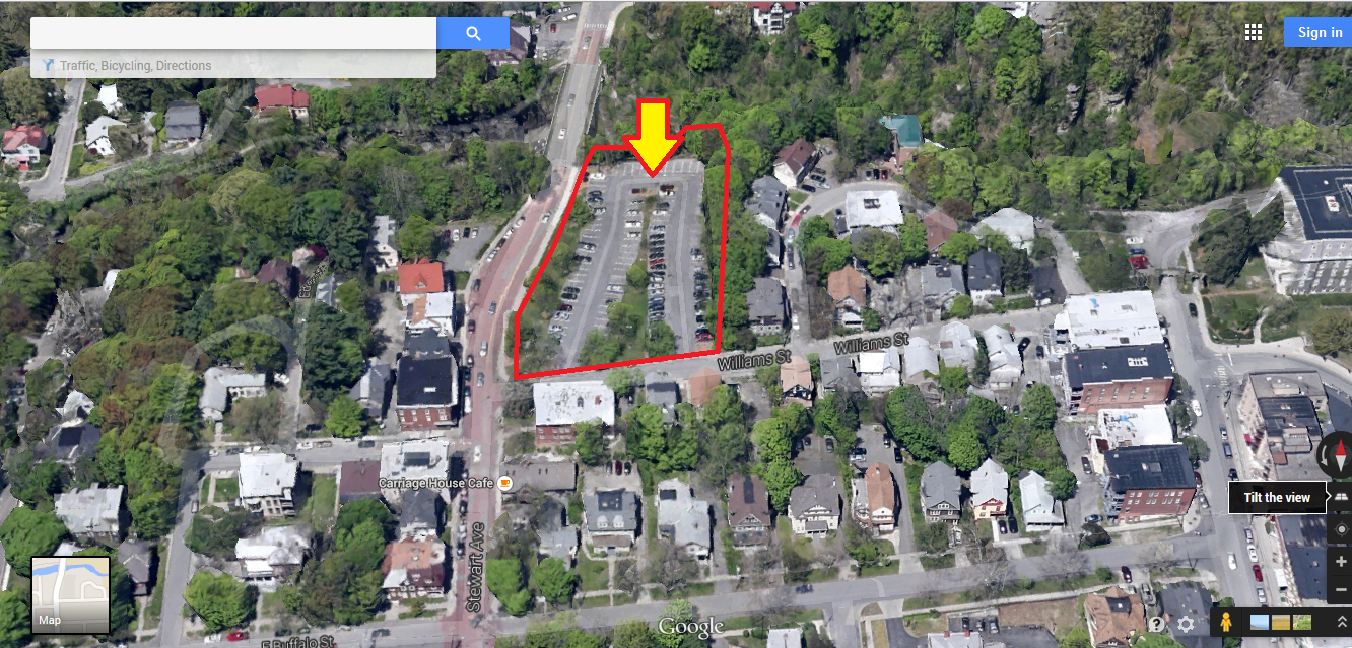
The site in question is 403-415 Stewart Avenue. The site was home to a luxurious house belonging to Zeta Psi until WWII; after they moved out, it burnt down a few years later, and the site was reclaimed as it is now – a parking lot used by Cornell.

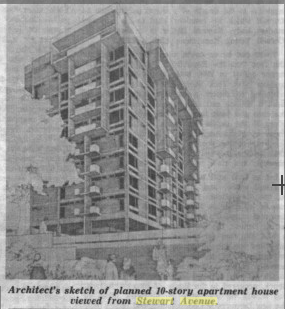
The parking lot was to be developed by a private group called “State and Aurora Corporation” into a 10-story building housing 70 luxury apartments. The intended clientele were Cornell faculty, Cornell retirees, and deep-pocketed locals. The building would have had a construction cost of $1 million (about $7.57 million today). Even at this time, zoning of the site allowed only 4 floors, so it needed a variance. Cornell placed a high value on the property, and since they owned the lot, one of the sale stipulations was that their staff would have had first dibs on 3/4ths pf the units, similar to what we’re seeing with the Greenways project off of Honness Lane.

403_stewartave_1965

The design itself is a dated melange of modernism and brutalism, created by Sherwood Holt (no relation to Ithaca-based HOLT Architects). The 70 units ran the gamut from studios to 3 bedrooms, and the top two floors were designed to be larger “penthouse” units. There would have been 67 feet of frontage on Stewart Avenue, and 109 feet on Williams Street. I wouldn’t call it much in the way of frontage though, it looks to be built onto a podium. Zoning at the time required two parking spaces per unit, so this project would have needed 140 spaces. 70 were surface spaces on the south side of the lot, and 70 were in the pedestrian-unfriendly podium (an ordinance at the time required half of all new parking spaces to be “indoor” spaces).

Also like now, proponents and opponents had similar arguments to today’s debates. Mayor Hunna Johns promoted the revenue it would bring (which would pay for the city’s investment in sewer lines to the site), and because Cornell had expressed interest in building on the site, local officials feared another tax-exempt property if the private developer wasn’t granted approval. On the other end of the spectrum, about 50 local residents signed a petition against the proposal, saying it would burden utilities and cause congestion. It looks like the planning board had only minor suggestions for the development, so it’s hard to imagine it didn’t get ZBA approval.

So why wasn’t it built? My guess is that Cornell did an assessment of its needs, and decided that it wasn’t a high priority to sell to the developer; and when the Ithaca real estate market crashed in the late 1960s, it probably killed the proposal for good. Cornell still owns the site, but zoning rules permit only a 4-story 40′ building (as they did in 1965). It’s outside of the Collegetown zoning, and if it ever gets developed is anyone’s guess.

The more things change, the more things stay the same.


The Elephant in the Room: 330 College Avenue

23 07 2014

Note: After Jeff Stein of the Ithaca Voice sent me a photo of the rendering last night, I quickly wrote up and published this entry. Shortly after that, he mentioned that he wished to have the “scoop“, and since it was his photo, I obliged and rescheduled this for noon today. This updated version has the uploaded render from the city website. So if you saw this last night, then saw it was gone, you’re not going crazy. -BC

330_college

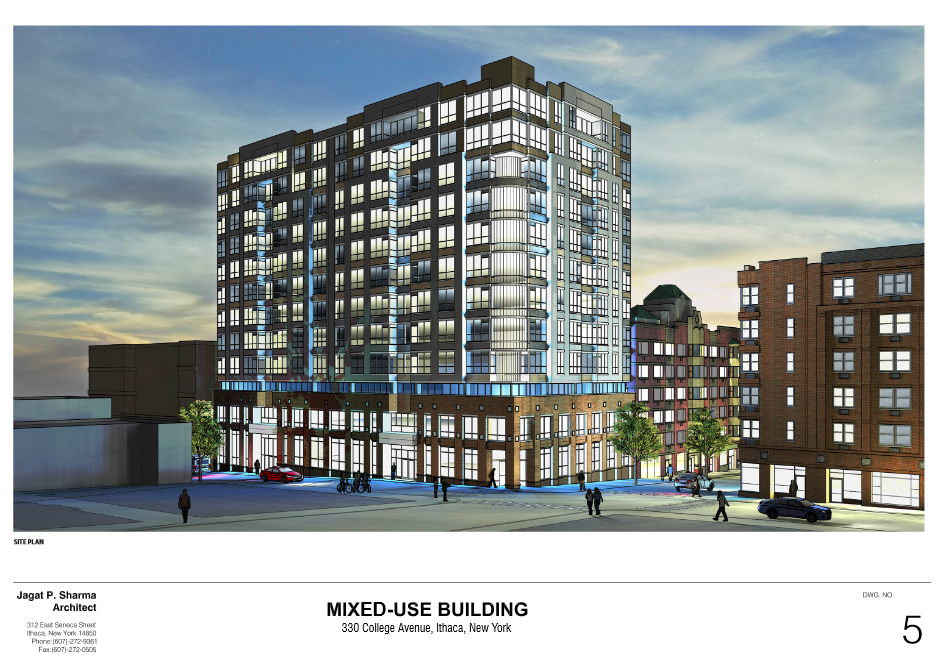
Let’s be clear: this will not happen. What Jason Fane was thinking in proposing a 12-story building for the Green Cafe site has everything to do with seeing what he can get away with. The calculating businessman as always, shocking the board and meeting attendees with a massive proposal…my only guess is that he is willing to negotiate down. The likely goal is to end up with something still above the 80′ 6-story limit for that site, and apparently the way to do that is shock and awe.

A copy of sketch plan can be found here. Mostly site photos, but we can see the first floor layout (6,000 sq ft in three retail units, and some apartment space; the building also shares a rear corridor with Fane’s Collegetown Center next door) and a render from the angle of the third floor of the Ciaschi Block, but set too far back from the street to actually exist.

I mean just look at it, it overwhelms the large 312 College and Collegetown Center buildings next to it. This thing is a goddamned behemoth of a building, as Ithaca standards go. It’s a lovely design, I think, I’d love to see this downtown on the old Tetra Tech/Rothschild’s property. Of course, that’s like saying a Mercedes SLS is the car you’d like to buy, but you make only 30K/yr. It’s not reasonable.

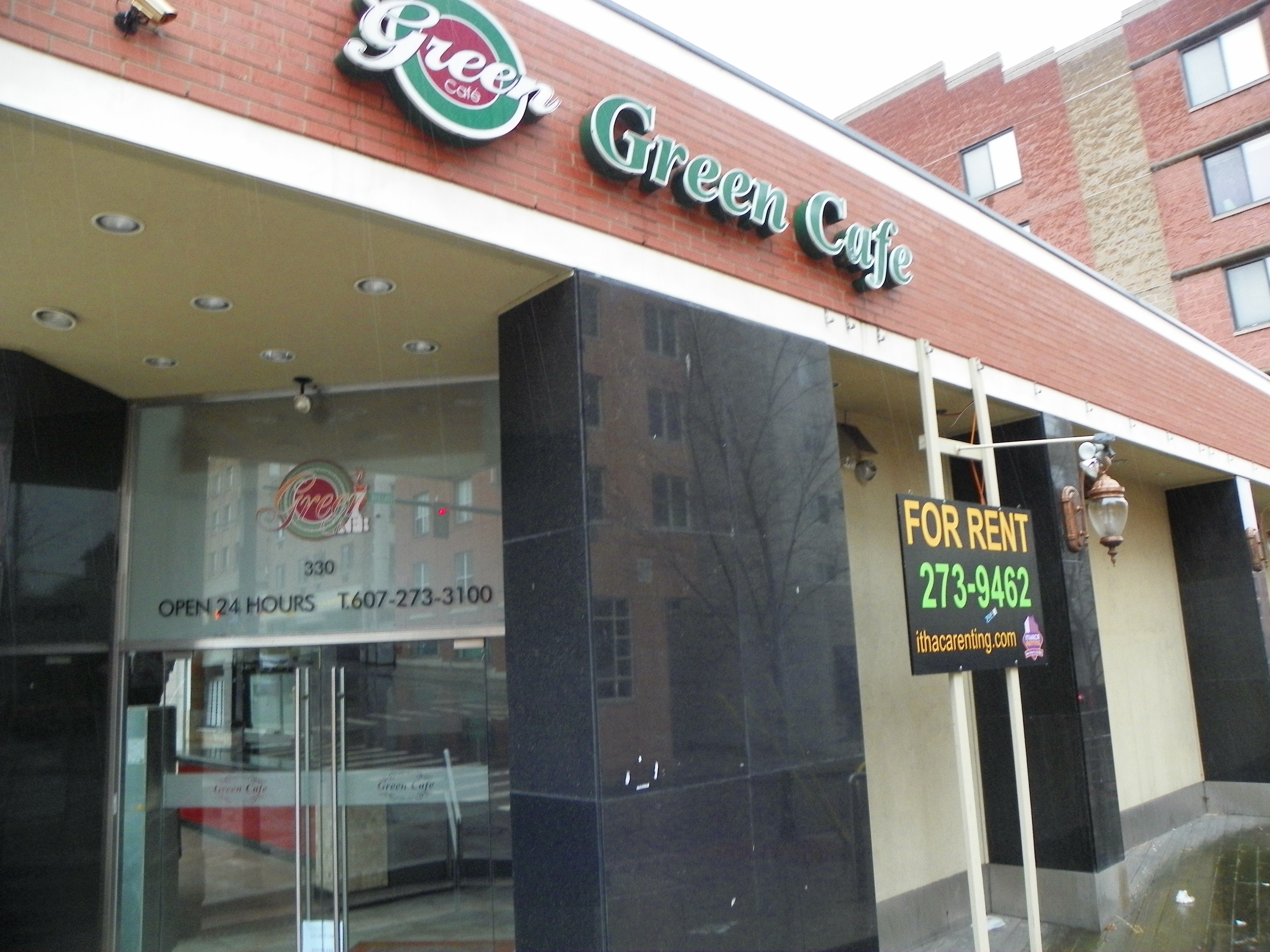
For the record, the never-to-be-built design is by Fane’s preferred architect, Jagat Sharma of local firm Sharma Architecture. The current site is that of the vacant Green Cafe, and before that short stint as a restaurant in 2009/2010, the one-story structure was used for meetings and storage by Bank of America. Built in 1998 and occupying 0.97 acres (including the apartment building attached), it has an assessed land value of $2.5 million, as it sits on what is probably the most expensive corner in the city. Everyone expected a redevelopment, just not this large.

8-21-2012 113

I can hardly believe I’m even writing about this. It’s so spectacularly overboard that it defies all common sense and logic.

1-2-2014 333


Mixing Old With New

20 05 2014

4-13-2014 079

After something of a dry spell, a couple of projects are due to come forward in the next few weeks, both involving similar concepts – additions to existing structures.

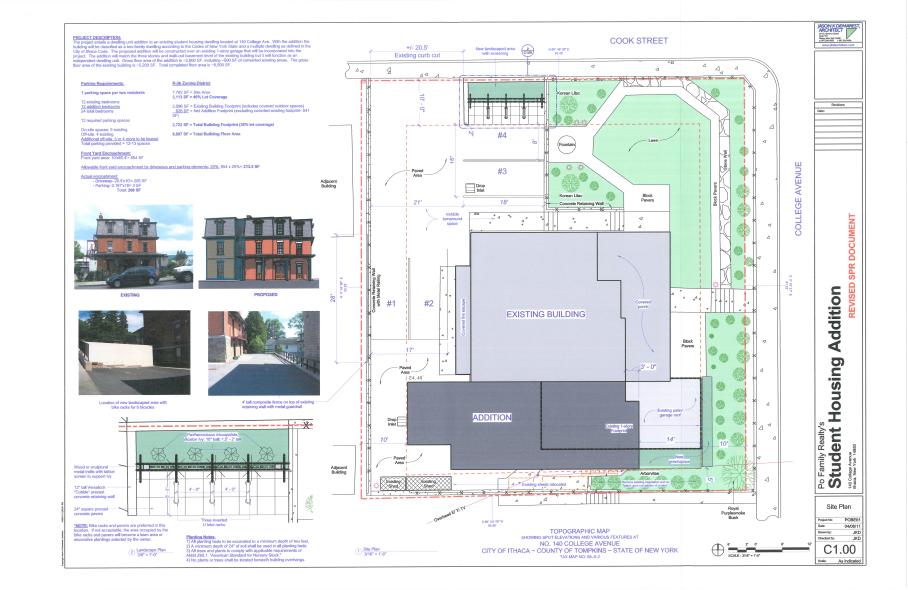
First, 140 College Avenue. Site plan here, details of the revision here and here. This actually isn’t the first time this one has come up to bat, having made its rounds in the news a little over three years ago (token disclaimer: I wasn’t a fan of it then, and my mind hasn’t changed). 140 College, better known in historic circles as the John Snaith House, has been targeted for a one-unit, 12 bedroom, 3,800 sq ft addition by its owners, the Po Family Realty. The addition, by local architect Jason Demarest, would be built on the south side of the building, separated by a glass partition. The Po family has already run the gauntlet with the planning board, since the Snaith House is a local landmark. Their plan was approved, but given the zoning, it required 6 spaces, for a total of 12 parking spaces for the whole building. Apparently, this made the project less workable, and it’s been on hold since. The developer is using the recent changes to Collegetown zoning as an impetus to change the terms of the project’s approval, reducing the number of parking spaces for the building to a total of 4. The project as proposed eliminates 2 of the 6 parking spaces on site, so only 4 would be left. Originally, 8 spaces had been secured off-site (4 on site + 8 off site = 12), but the lease on those will expire before this project is complete, as construction is tentatively slated to start late next month, and they are unable to renew those leases. Rather than renting new off-site spaces, the developer just wants to keep the total at 4. In exchange, they will provide bike racks, and all tenants membership in Ithaca Carshare. Before the zoning change, this would have been a tough sell, but it stands a good chance of approval going forward.

snaith_1

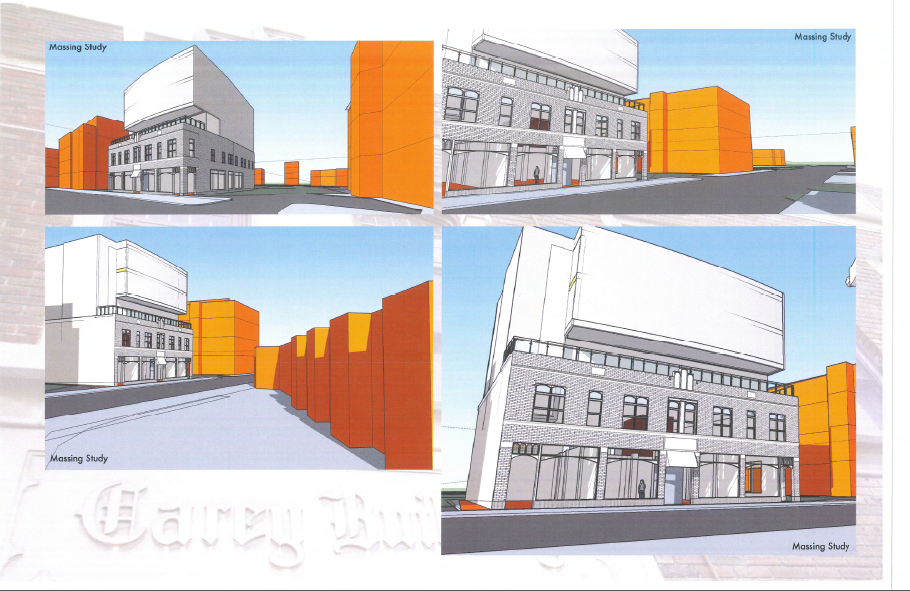
Project number two, on the other hand, is new to the boards. This one targets the Carey Building, which has been in the news quite a bit as of late as the new Ithaca/Cornell/IC/TC3 business incubator is being built on the second floor, set to open this summer (more details on the renovation process can be found over at Ithaca Builds). A third floor addition has been in the works, projected for a 2015 completion. Well, there has also been discussion of a little more expansion beyond that, and that became clear with this document sent to the city this week. Local developer Travis-Hyde Properties proposes an additional 3,600 sq ft of office space on the third floor, and two more floors above that with 14 micro-apartments. This is within current zoning and no variance will be needed. Micro-apartments are a rather new phenomenon, but have significant potential in urbanized areas, especially cities like Ithaca where their lower square footage (think 400-500 sq ft) permits a lower monthly rent, which can hopefully make a small dent in the affordable housing issue the region is struggling with.

There’s no official render, but we have a massing study that gives a pretty good idea of the proportions of the vertical addition:

carey_1

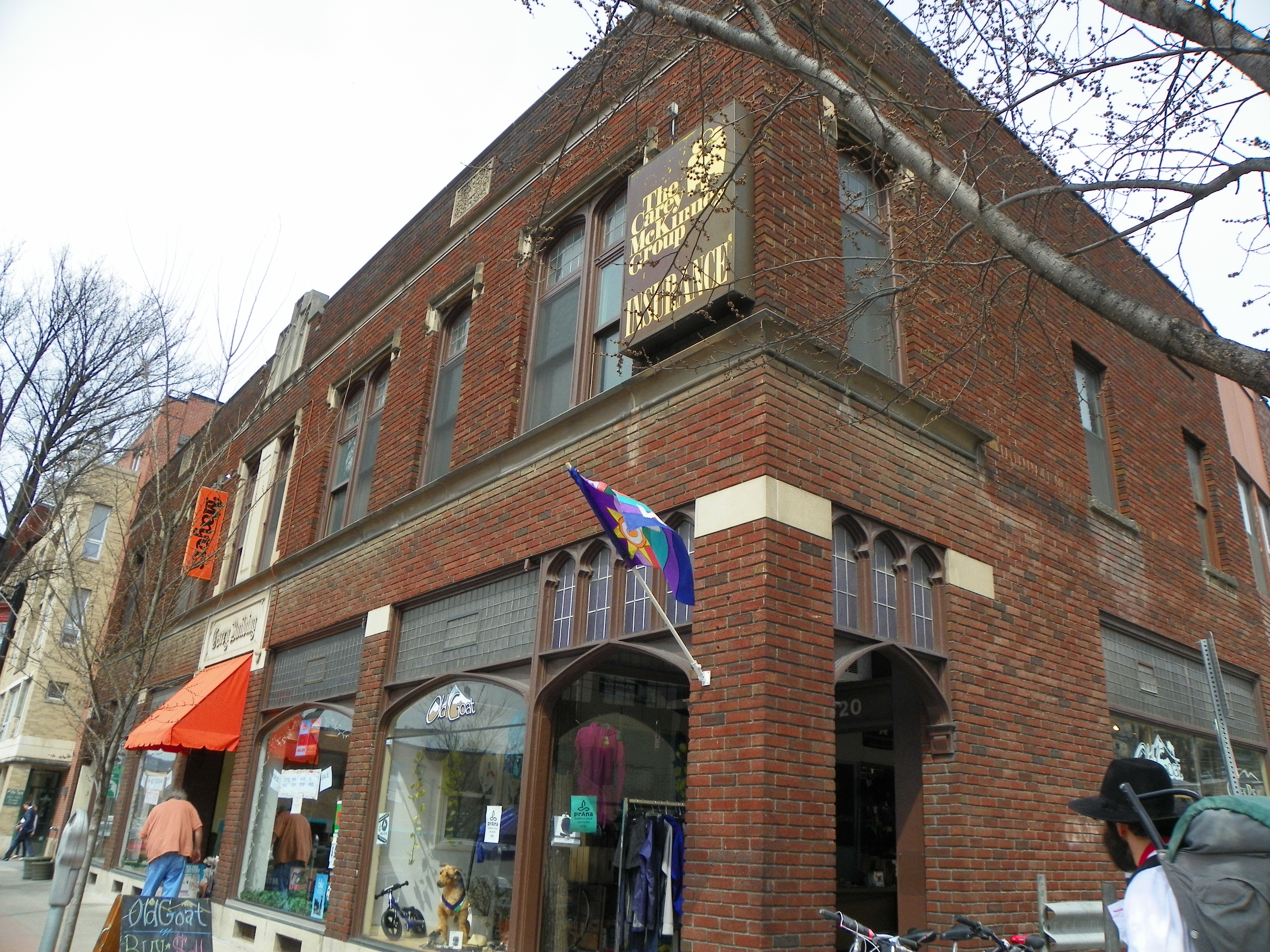
Given that Travis-Hyde looks to be partnering with local firm John Snyder Architects on this one, expect something modern, with generous amounts of glass. I generally am not a fan of building additions, but I’ll reserve judgement until actual renders come out for this one. At the very least, this will be better than that hotel proposal from the Patel family a couple years ago that proposed tearing the Carey Building down. the only take-away from that stale proposal is that if you want to make enemies in the business community, go ahead and propose projects for land you don’t own, and the owners have no intention of selling.

12-29-2011 076