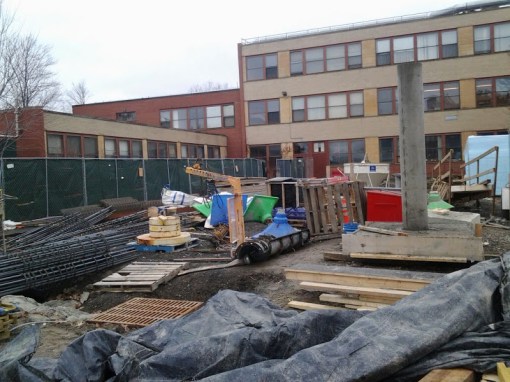
Gannett Health Center Construction Update, 1/2016

14 01 2016

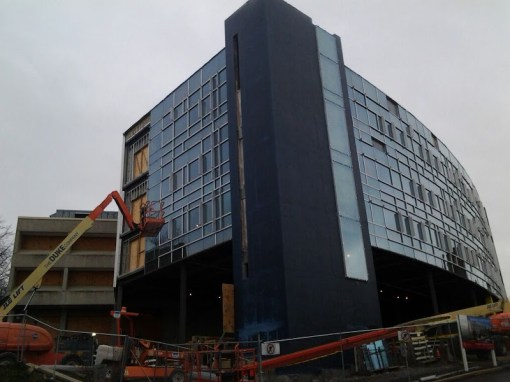
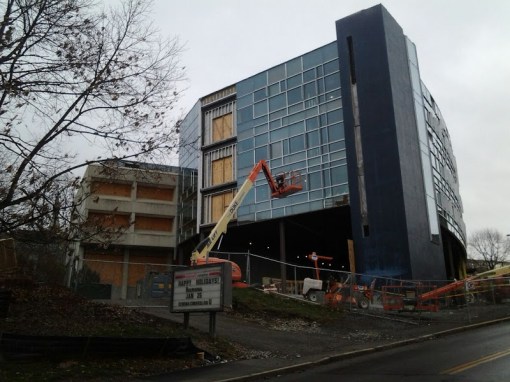
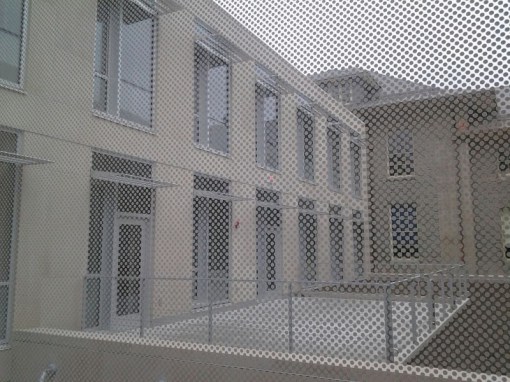
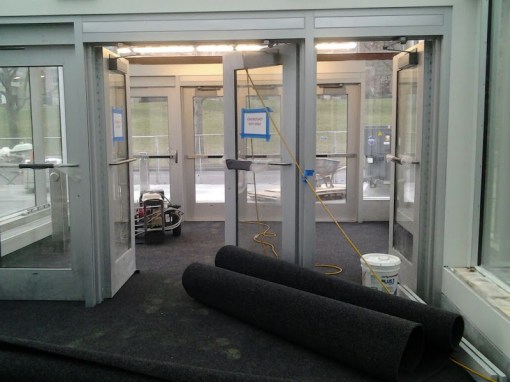
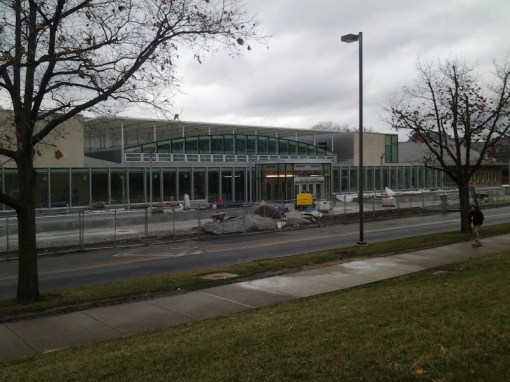
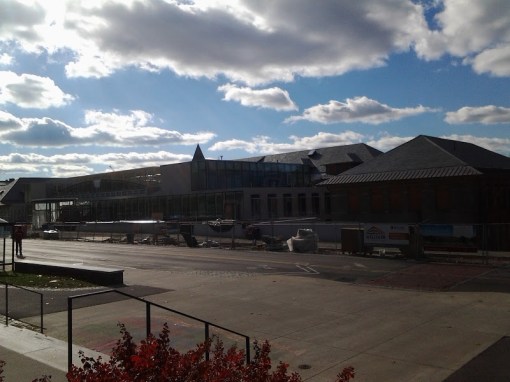
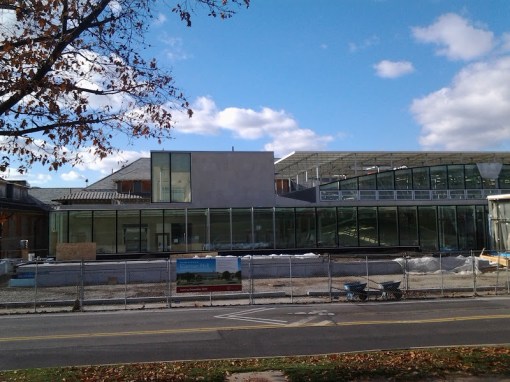
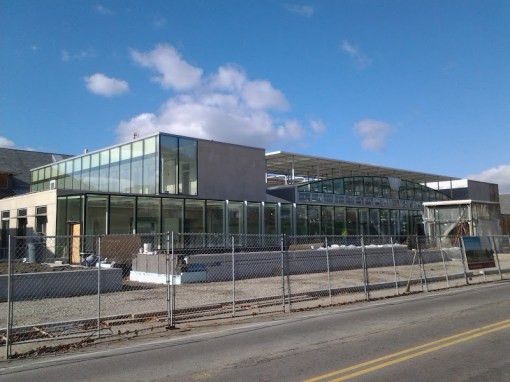
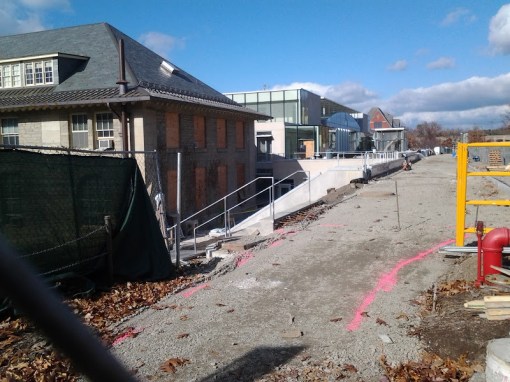
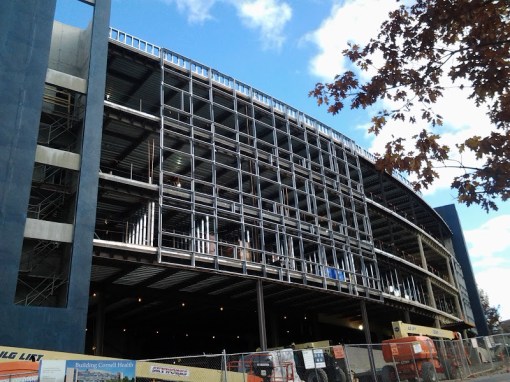
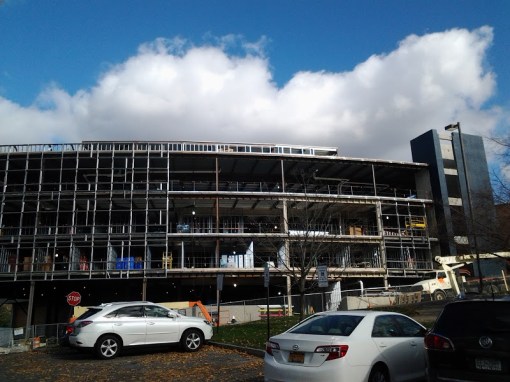
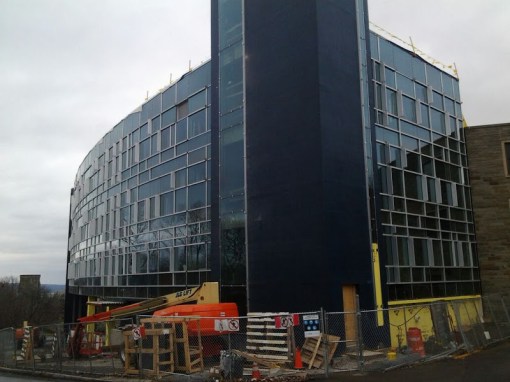
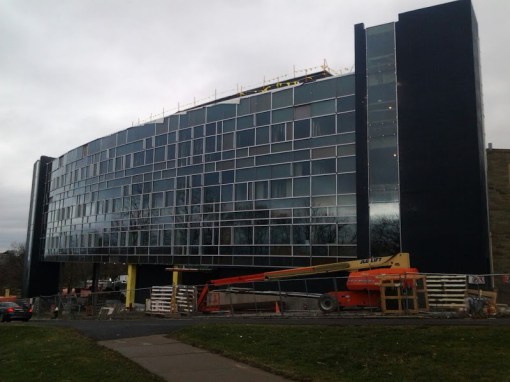
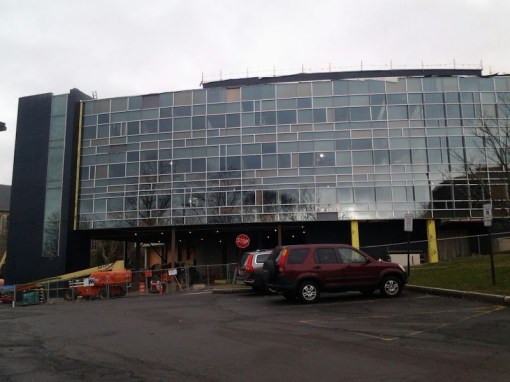
Maybe it’s just the grey January skies, but the multi-colored glazing on the outside of the new Gannett Health Center is more subtle than the renders would suggest. Work is continuing on Phase I of the $55 million project, which is planning to open this summer. Once it does, Gannett’s services will shift over into the new structure, so that phase II, renovations to the original 1956 building and the 1979 addition can take place. The building project is expected to wrap up in August 2017, and a phase III focusing on the Ho Plaza entrance and landscaping will be underway from June to October of 2017, after which the project will finally be completed. The project will increase Gannett’s size from 35,000 SF to 96,000 SF.

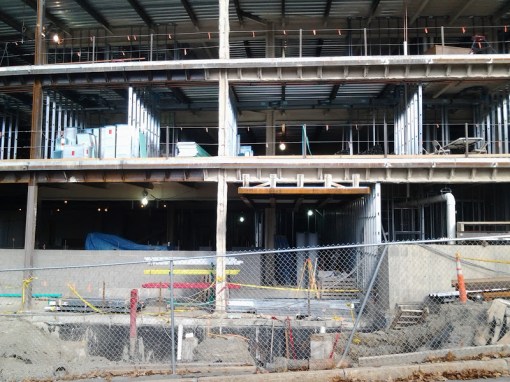
Most of the windows have been installed, although some yellow DensGlass gypsum sheathing and metal exterior wall studs can still be seen from many angles. According to the Site Plan Review docs, the curtain wall “suggests an abstracted quilt pattern” meant to conjure up images of care-giving and recovery. Other exterior cladding materials, including a native bluestone veneer and limestone panels, have yet to be installed.

Organizations working on the design include local architecture firm Chiang | O’Brien Architects, TG Miller P.C.Engineers and Surveyors, and Ryan Briggs Structural Engineers. The Pike Company is serving as the general contractor.
20160109_123831 20160109_123902 20160109_123930 20160109_124003 20160109_124038 20160109_124057 20160109_124136 20160109_124210 20160109_124230 20160109_124331

gannett5 gannett3

gannett2

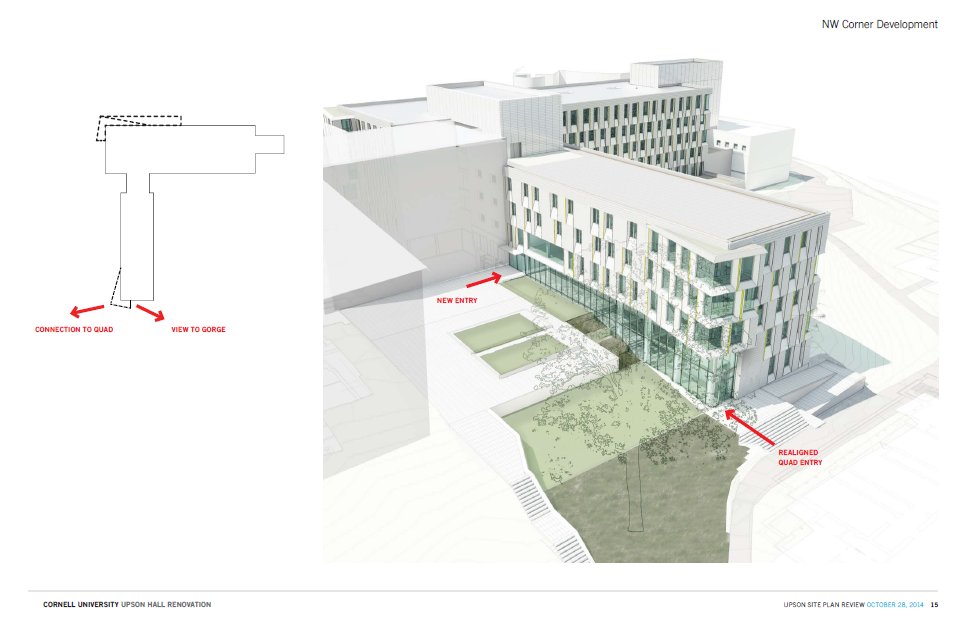
Gannett-Health-Services-Building-SPR


Upson Hall Construction Update, 1/2016

13 01 2016

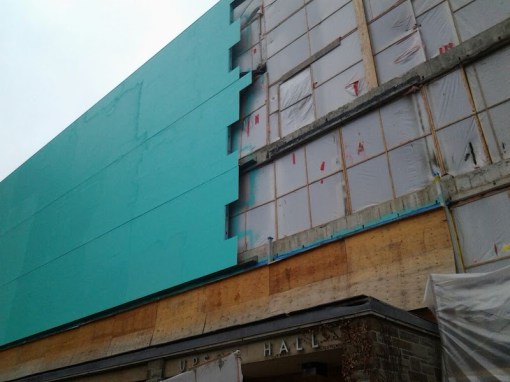
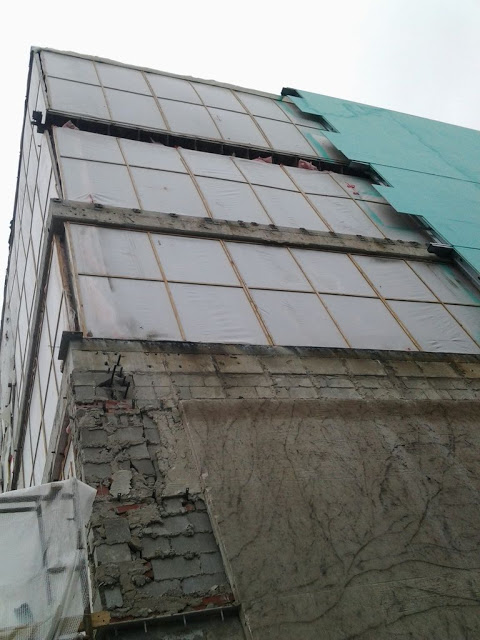
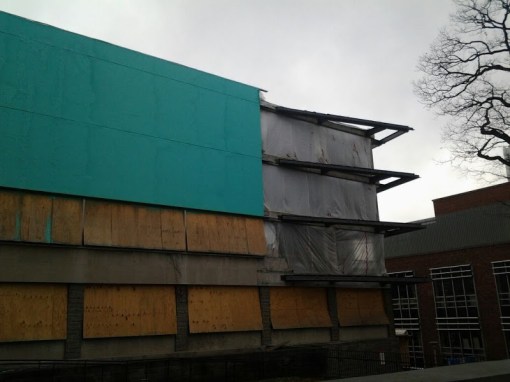
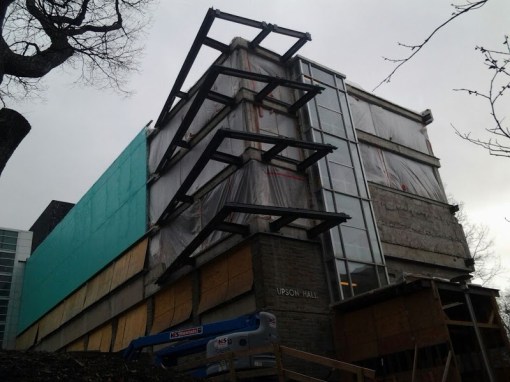
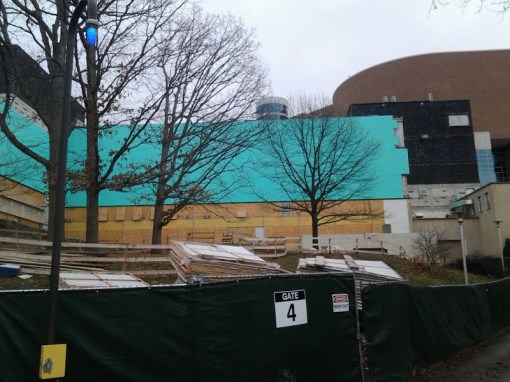
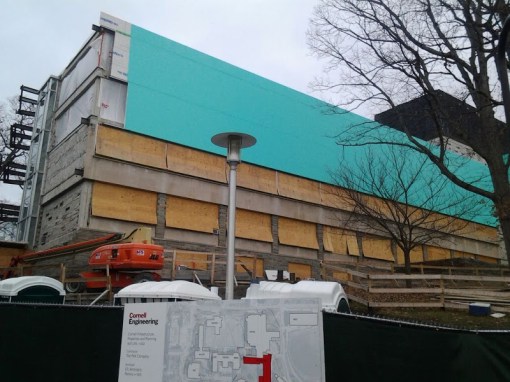
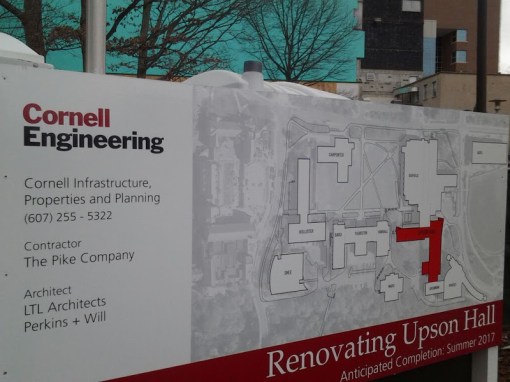
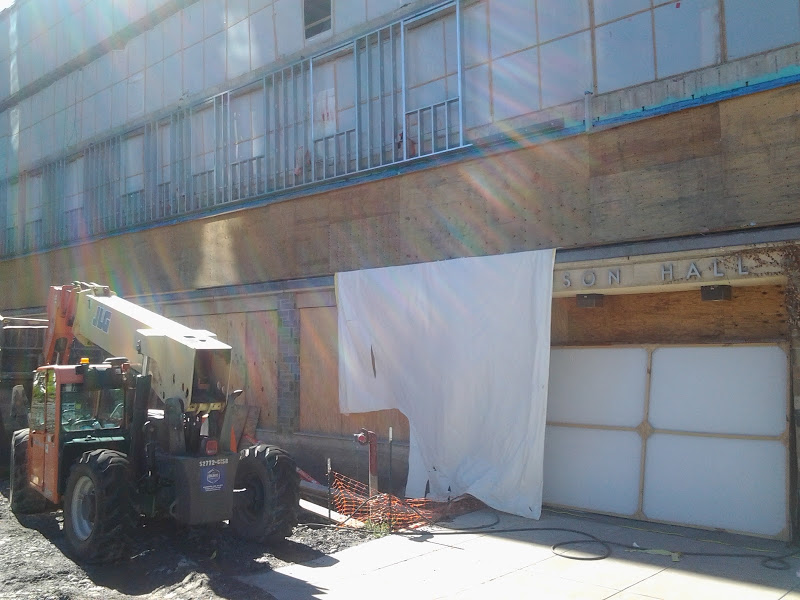
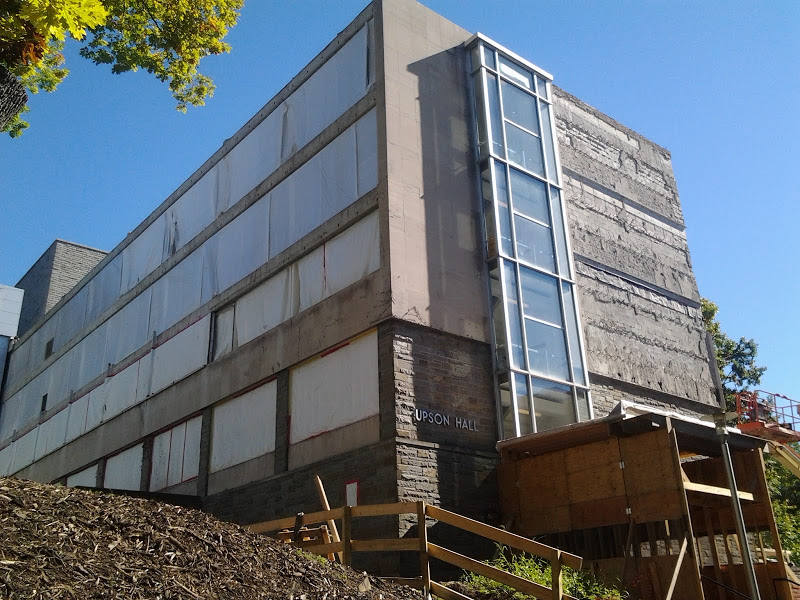
Upson Hall’s bright turquoise walls stand out among the winter greys. Students and staff can thank (or curse) the spray-on moisture barrier for the splash of color. To see what the sheathing looks like without the barrier, photo #9 below shows a little bit of the white gypsum board in the upper left, near the southwest corner of Upson.

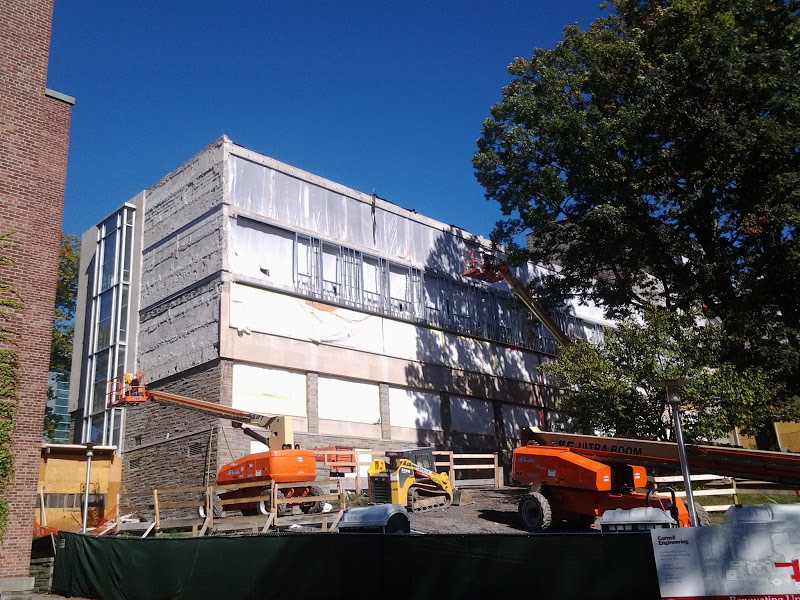
The unsheathed, unsprayed section on the northeast corner remains uncovered so that the new structural steel for the bump-out can be erected, while the steel for the northwest bump-out has already been assembled and installed. The plastic is still up over the exterior walls, keeping the winter winds at bay.

According to the project website, general contractor The Pike Company (Rochester office) is cutting/coring shafts through the first floor to the fifth floor, and demolition activities are underway in the basement. The shafts not only serve as ingress/egress, they’re designed to serve as social spaces and integrate the floors of the building. Utilities rough-ins, framing and drywall installation are underway on the upper three floors where interior work is further along, while work on the first and second floors won’t begin major work until August 2016. Part of the basement will be finished in the first year of construction, and the rest of the basement in the second year. Basically, half the building is still occupied at any given time during construction.

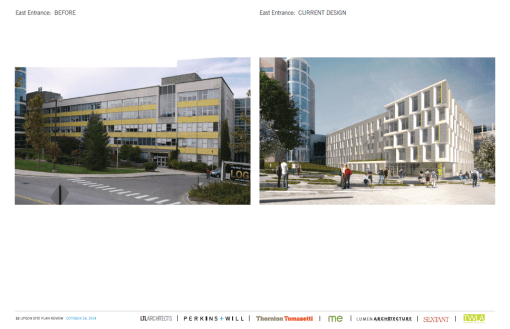
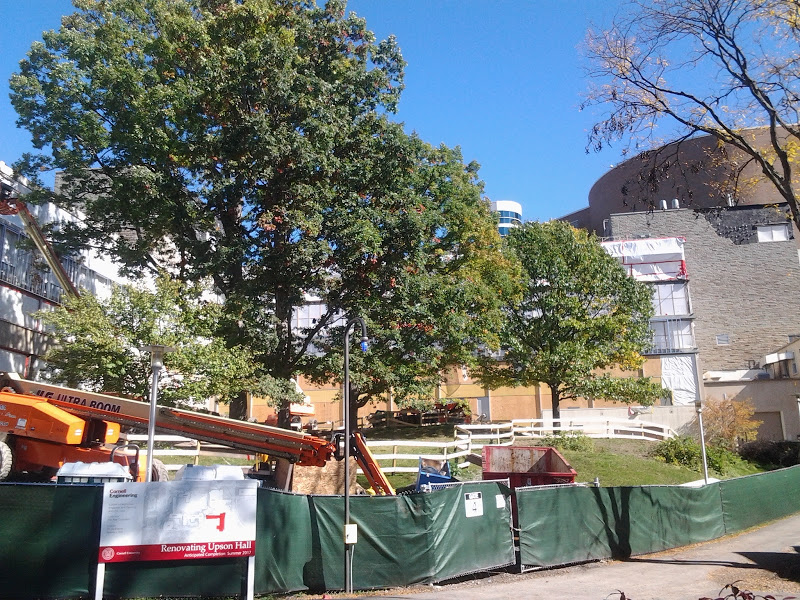
The $74.5 million dollar project is part of a larger series of renovations to the Engineering Quad that will result in $300 million in improvements over a decade. While the project will only add about 4,000 SF to the 156,000 SF building, the renovation are expected to help the engineering school adapt to changing academic space needs and technology, and make the building much more energy efficient. The college is paying for the project with a mix of philanthropy and operating funds. A full FAQ is available on Cornell Engineering’s website here.

Along with Cornell’s internal project management team, the project is designed by New York City firms LTL Architects, Perkins+Will, and Thornton Tomasetti.

20160109_123031 20160109_123105 20160109_123129 20160109_123259 20160109_123309 20160109_123338 20160109_123417 20160109_123504 20160109_123509 20160109_123516 20160109_123528

upson_3 upson_2


Cornell Veterinary School Expansion Construction Update, 1/2016

12 01 2016

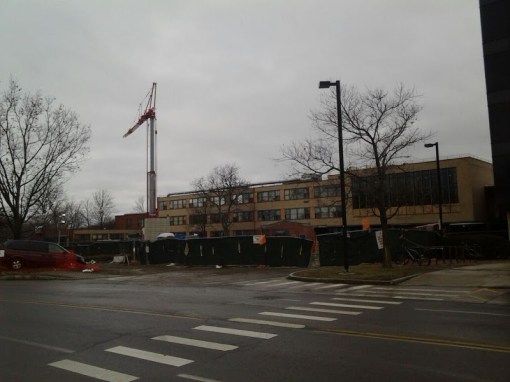
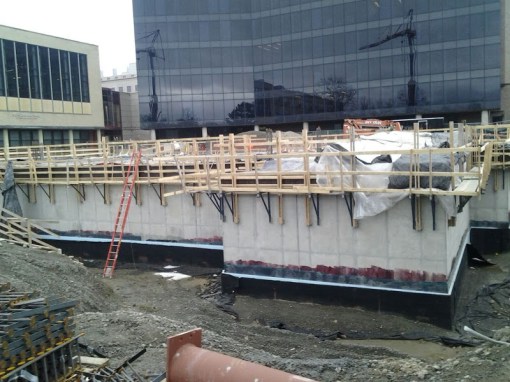
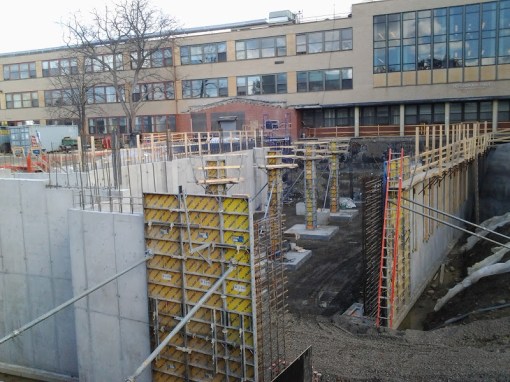
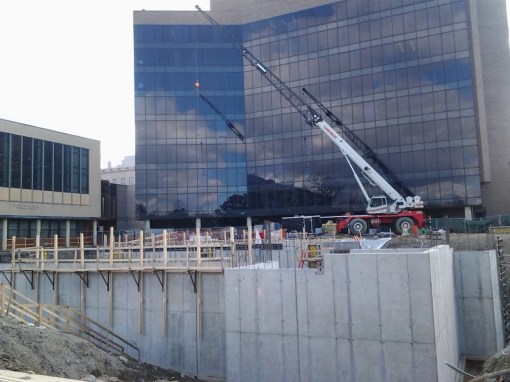
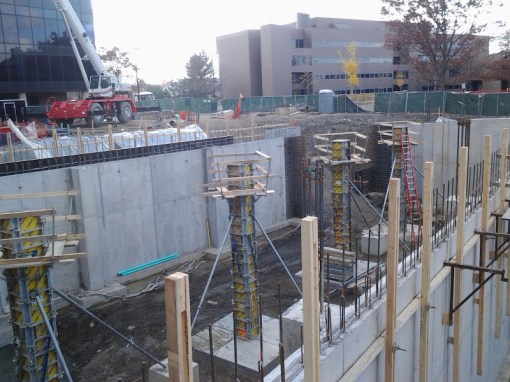
Over at the Vet School, it looks like the expansion project is now at surface level. With the foundation completed, the only direction for the project to go is up, which the Manitowoc Potain self-erecting crane should help with. Phase I interior renovations should be completed by this time, and the Phase II new construction will be moving ahead to a June 2017 completion. Like Klarman Hall, Welliver is the general contractor of this $74.1 million construction project.

20160109_121541 20160109_121607 20160109_121617 20160109_121646 20160109_121718 20160109_121739 20160109_121743 20160109_121756 20160109_121825


Klarman Hall Interior Photos

11 01 2016

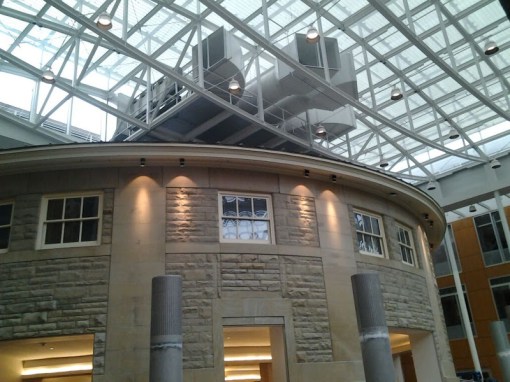
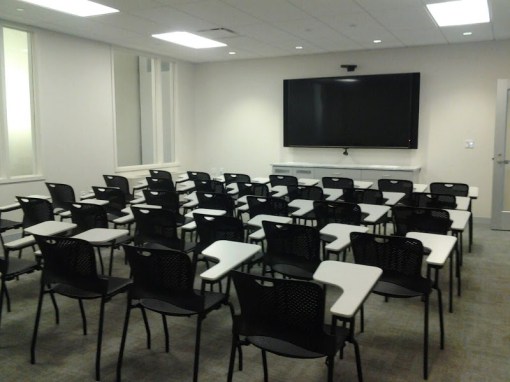
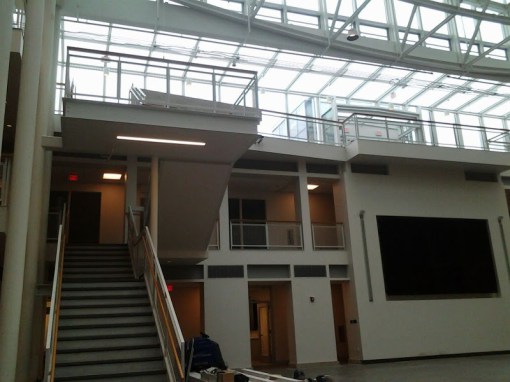
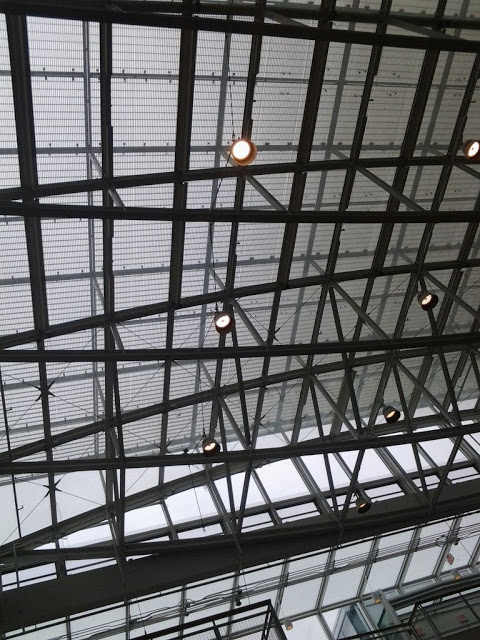
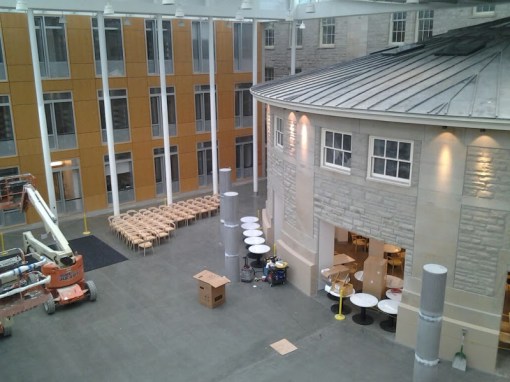
Otherwise known as what $61 million gets you. Wrapping up the Klarman Hall updates with some interior shots of the nearly-finished building. Some staff and classroom spaces have already been occupied, as is the new Temple of Zeus cafe. While inside, I struck up a conversation with the one other person present, an employee of sub-contractor Cook Painting doing touch-ups, and he told me all about how he’s worked on multiple Cornell buildings and Klarman was his favorite so far, and that although he was disappointed the roof had an opaque cover, he’d seen the sun come through the sides in the morning and “the whole place just lights up like a Christmas tree”.  Unfortunately, it was cloudy a little after noon when these photos were taken, so no such effect here.

In Klarman’s 33,250 SF of usable space, Cornell will host spaces and meeting rooms for approximately 200 faculty and staff, a 350-seat auditorium, and the 7,700 SF glass atrium, which is arguably the centerpiece of the new structure. Accordingly to the friendly painter, Cornell will do a formal event to celebrate Klarman Hall’s completion later this year. No doubt its namesake, billionaire hedge fund manager Seth Klarman ’79, will be in attendance. The Groos family, multi-generational Cornellians, were also significant donors to the project.

Klarman was due to be complete in December 2015 when the project first began construction in summer 2013, so all in all Cornell and the contractors did a pretty good job staying close to schedule, even with the last couple cold and stormy winters. Hats off to the construction workers and for making that happen.

Boston-based Koetter | Kim and Associates is the building architect (they also did the recently-built Physical Sciences Building), and Welliver served as general contractor. Klarman Hall is seeking LEED Platinum certification, which is the highest level possible.

20160109_124823 20160109_124828 20160109_124844 20160109_124855 20160109_124910 20160109_124937 20160109_124957 20160109_125023 20160109_125032 20160109_125037 20160109_125128 20160109_125137 20160109_125218 20160109_125224

20160109_125246

20160109_125303 20160109_130220 20160109_130248 klarman_atrium_render


Cornell Plans Renovation for Hughes Hall

27 11 2015

There is almost never a period without construction at Cornell. Don’t expect that to end anytime soon.

Cornell’s latest construction plans were presented as a sketch proposal at last Tuesday’s Planning and Development Board meeting. The sketch plan is the first step in the process, where an applicant solicits input and first reactions from the board. A copy of the powerpoint presentation can be found on the city’s website here.

hughes_cornell_1

The renovation of Hughes Hall is the second phase of a three-phase expansion and renovation of the Cornell Law School. The first phase, which consisted of 40,000 SF of new, partially-subterranean classrooms and a 170-space auditorium, began in Summer 2012 and was completed in Fall 2014 at a cost of $23.8 million. Ann Beha Architects of Boston, and Welliver Construction of Elmira worked on the first phase of the renovation and expansion program. Ithaca Builds offers plenty of interior and exterior images of the first phase here, and a copy of the original Ste Plan Review from 2012 is on the city’s website here.

The first phase was Certified LEED Platinum (the highest LEED designation), which was possible in part because as an underground structure, it was easier to design and pay for maximum energy efficiency. The Hughes Hall renovation will pursue LEED Silver at a minimum.

hughes_cornell_2

Initially, Hughes Hall was to be the third phase, with a renovation of Myron Taylor Hall planned as Phase II. However, since the plan was initially conceived several years ago, the second and third phases were switched around.  The total cost of all three phases is pegged at $60 million (2012 estimate).

hughes_cornell_3

Externally, the changes to Hughes Hall will be subtle – the current open-air loggia will be enclosed and a new entryway will be built on the east side of Hughes. A glass-enclosed staircase will be built onto into the West facade, and the dining room terrace will be repaired. Although some parts of the Law School are historic (Myron Taylor Hall, which dates from 1932), 62,000 SF Hughes Hall is a later addition, built in 1963/64, that lacks the historical detailing of the older structures.

hughes_cornell_4

Internally, administrative and other non-faculty offices will be located on the ground floor, with a dining room, event room and other office/flex space on the floor below (note that the building is built into a hillside, so the Fork & Gavel Cafe, although one level below the ground floor, exits near surface level on the southern side of the building). Although the upper floors aren’t discussed in the sketch plan, the general upper-level plan is for new offices for law school functions and faculty that replace dorm rooms for first-year J.D. students.

With this mostly-interior renovation, the focus of review will probably be on staging and general harmony with surrounding physical environment (buildings and landscape). At first glance, this project doesn’t appear to be stirring any major issues (overlooking the loss of student housing, which is worth criticism but nowhere close to illegal), but will probably create the standard blitz of documents and PDFs that Cornell sends to the city to preemptively answer any questions committee members may have.

Given the timing, Cornell is likely shooting for a Spring construction start, with completion in 2017.


News Tidbits 11/21/15: Building and Rebuilding

21 11 2015

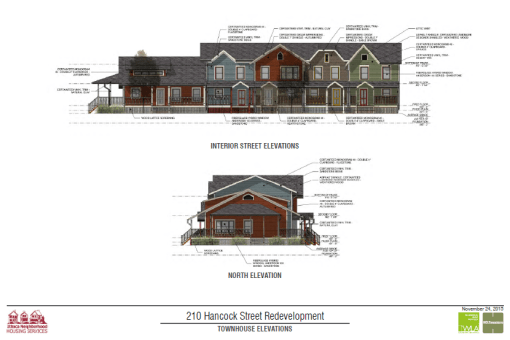
inhs_pride_design_v5_2 inhs_pride_design_v5_3

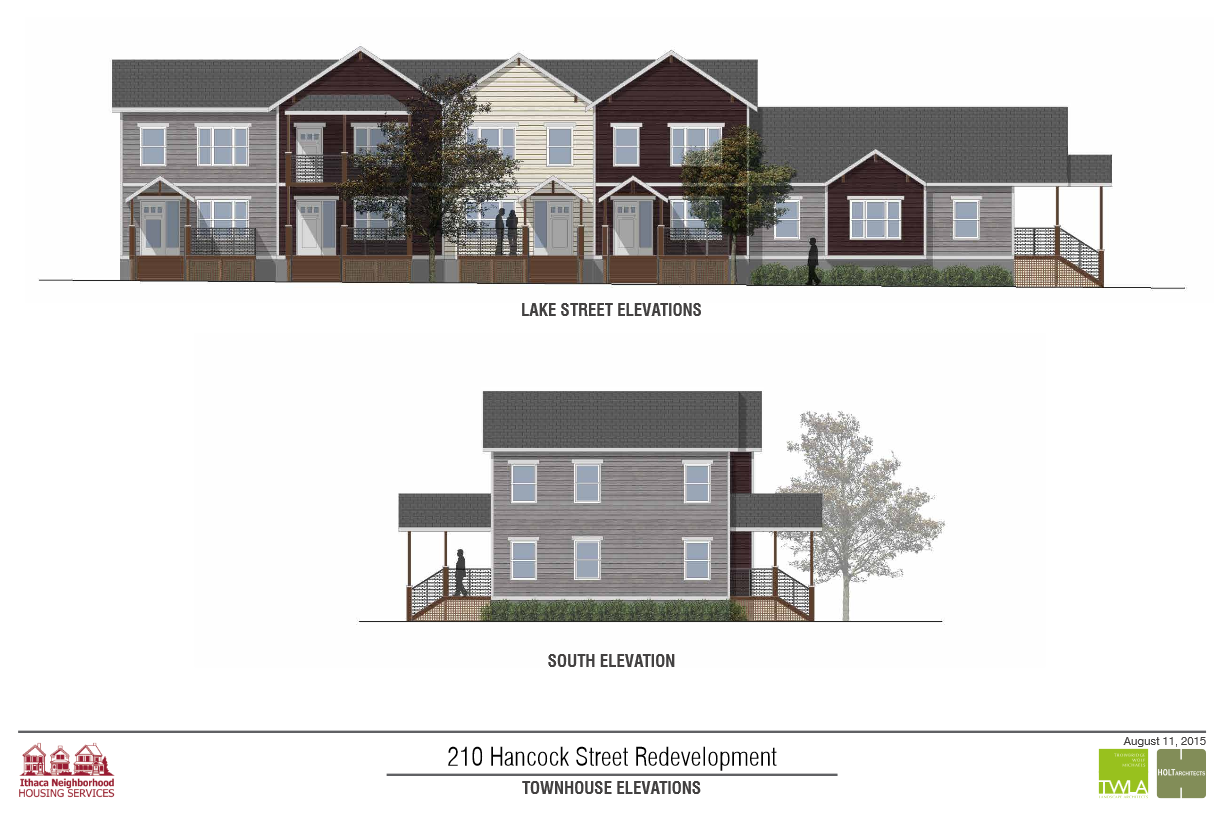
1. Starting off this week with some eye candy, here are some updates renders of the townhouses proposed for INHS’s 210 Hancock project in the city’s North Side neighborhood. Details and project status here. 210 Hancock has been approved by the Planning Board, and Cornell, the city and county do have dedicated funds ($200,000 total) going towards the affordable housing units, but still needs to be seventeen conditions prior to receiving a construction permit, one of which required revised townhouses to better reflect the neighborhood. The Common Council also need to vote to discontinue using the sections of Lake Avenue and Adams Street on which the new greenways and playground will be constructed, which apart from the time needed and paperwork generated, isn’t expected to encounter any obstacles, with formal conveyance to INHS anticipated by March 2016. INHS is shooting for a May construction start.

The Planning Board will be voting on “satisfaction of site plan approval” at its meeting next Tuesday, which should be a fairly smooth procedure, if the paperwork’s all correct.

Personal opinion, the townhouses, with more color and variation in style, appear to be an improvement over the previous version. These five will be rentals, while the other seven will be for-sale units, and built in a later phase (government funding for affordable rentals is easier to obtain than it is for affordable owner-occupied units, so it could take a year or two for those seven to get the necessary funding). The apartments have not had any substantial design changes since approval.
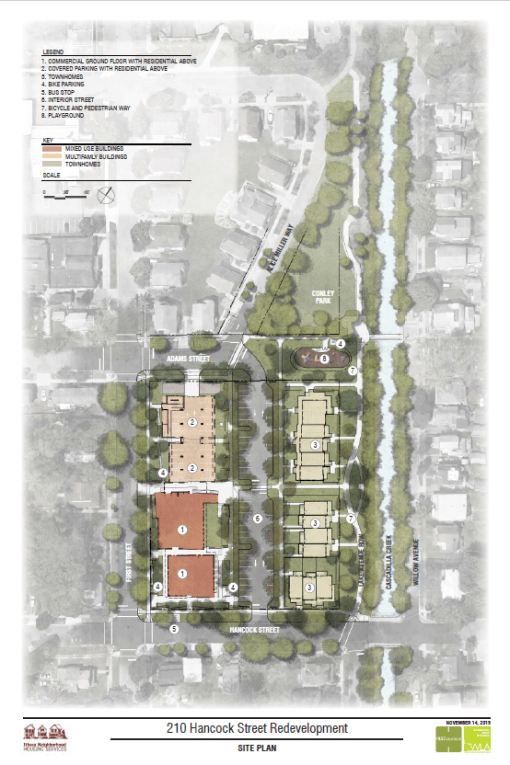
inhs_pride_design_v5_1

For what it’s worth, here’s the final site plan. The rental townhomes will be on the north corner of the parcel, furthest from Hancock.

2. Turning attention to the suburbs, someone’s put up some sizable chunks of land for sale in Lansing village. The properties consist of four parcels – 16.87 acres (the western parcel) for $500,000, right next to a previously-listed threesome of 28.07 acres (the eastern parcels) for $650,000. The eastern parcel also comes with a house, which the listing pretty much ignores. Lansing has it zoned as low-density residential, and given the prices (the western parcel is assessed at $397,600, the eastern parcels at $561,100 (1, 2, and 3)) and being surrounded by development on three sides, these seem likely to become suburban housing developments, possibly one big 30-lot development if the parcels are merged. For the suburbanites out there, it’s something to monitor.

20151108_133542 20151108_133710

201_w_clinton_1

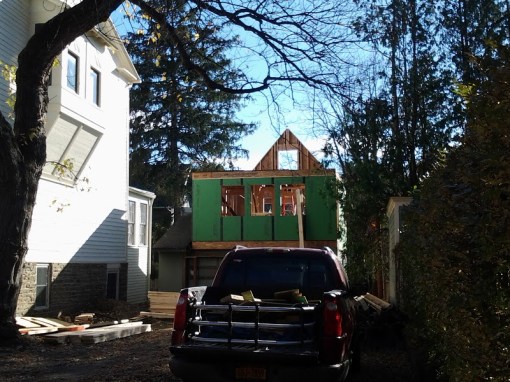
3. House of the week – or in this case, tiny house of the week. The 1-bedroom, 650 SF carriage house underway at 201 West Clinton Street draws inspiration from 19th century carriage houses, which makes sense given that it’s in Henry St. John Historic District. It and the main house are owned by former Planning Board member Isabel Fernández and her partner, TWMLA architect Zac Boggs. The two of them did a major and meticulous restoration of the main house, which used to house the local Red Cross chapter, a couple of years ago (more info on that here).

Anyway, the framing is underway and some ZIP System sheathing has been applied to the exterior plywood. No roof yet and probably not much in the way of interior rough-ins, but give it a couple of months and that 1960s garage will be given a new life as a tiny house.

travis_hude_libe_libe_v3

4. Time to take a look at the Planning and Development Board agenda for next Tuesday. For reference, here’s what a typical project guideline looks like:

PDB (Sketch Plan) -> PDB (Declaration of Lead Agency) -> PDB (Determination of Env’tal Signif., PDB BZA reccomendation if necessary) -> BZA (if necessary) -> PDB (prelim/final approval).

Here’s the meat of the agenda:

A. 210 Hancock – Satisfaction of Conditions of Site Plan Approval (see above)
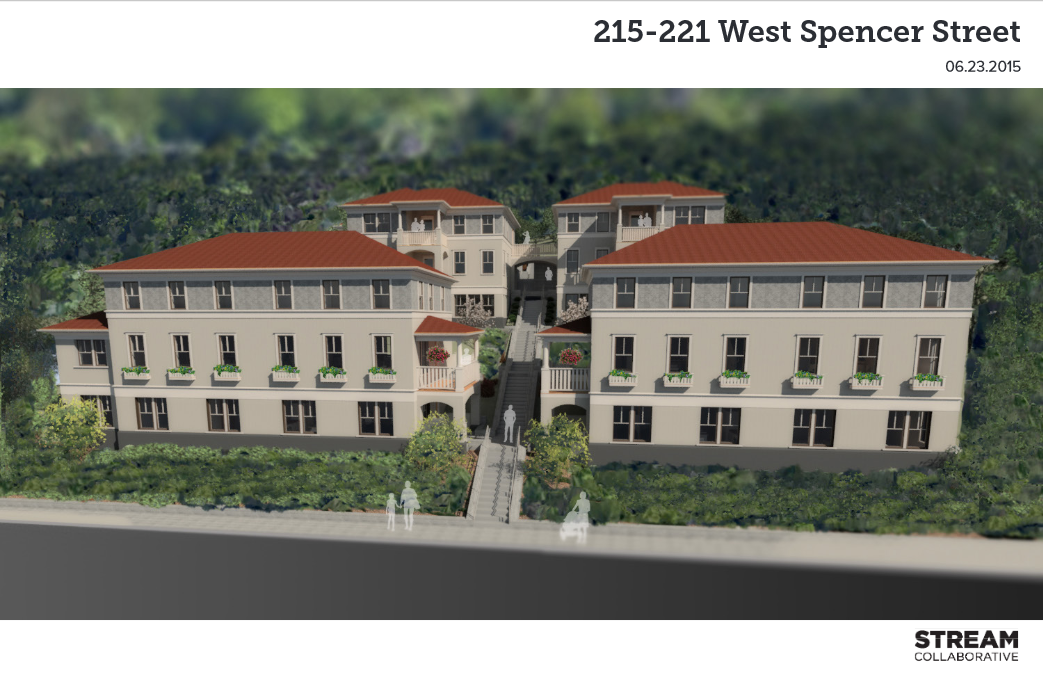
B. 215-221 Spencer St. – Consideration of Prelim/Final Site Plan Approval  – this one was first presented as sketch plan in March, to give an idea of how long this has been in front of the boards
C. 416-418 East State Street – Determination of Environmental Significance and Recommendation to the BZA – “The Printing Press” jazz bar is a proposed re-use for a former printshop and warehouse that has seen heavy neighbor opposition. The bar has changed its emphasis, redesigned the landscape and moved itself to a more internal location to mitigate concerns, but the opposition is still strong, mostly focusing on noise and traffic. The board has simply and succinctly recommended that the BZA grant a zoning variance.
D. 327 Elmira Road – Determination of Environmental Significance and Recommendation to the BZA – The Herson Wagner Funeral Home project. This one’s had pretty smooth sailing so far, only a couple complaints that Elmira Road isn’t appropriate for a funeral home. The Planning Board, however, applauds the proposal, which replaces a construction equipment storage yard, for better interfacing with the residential neighbors at the back of its property. It has been recommended for BZA approval.
E. Simeon’s on the Commons Rebuild – Presentation & Design Review Meeting – Before anyone throws up their arms, this is only to talk about the materials and design of the reconstruction, and to get the planning board’s comment and recommendations.
F. The Chapter House Rebuild – Sketch Plan – The Ithaca Landmarks Preservation Commission (ILPC) must have come to some kind of acceptance on the proposed rebuild if the Chapter House is finally at the sketch plan stage. the Planning Board will have their own recommendations, which will have to be coordinated to some degree with the ILPC (the ILPC is arguably the much stricter of the two). We’ll see how it looks next week.
G. Hughes Hall Renovations – Sketch Plan – more on that in a moment
H. DeWitt House (Old Library Site) – Sketch Plan – originally slated to be seen a couple months ago, but pulled from the agenda. The 60-unit project is not only subject to Planning Board review, but ILPC review since it’s in the DeWitt Park Historic District.

5. So, Hughes Hall. Hughes Hall, built in 1963, has dorm housing and dining facilities for Cornell students attending the law school, but those 47 students will need to find alternative housing once the hall closes in May 2016 (yes, with Maplewood closing as well, Cornell is putting 527 graduate and professional students out on the open market next year…it’s gonna be rough). However, this has kinda been known for a while. Cornell has intended to renovate Hughes Hall since at least 2011, as Phase III of its law school expansion and renovation. The building was used as swing space while Phase I was underway, and then the phases were flipped and Phase II became Hughes Hall’s renovation, while Phase III became Myron Taylor Hall’s renovation. According to Boston-based Ann Beha Architects, who designed the law school addition (Phase I), the Hughes Hall renovation will “house offices, administrative support spaces, academic programs and meeting spaces.” Well see how the renovated digs look at Tuesday’s meeting.


Klarman Hall Construction Update, 11/2015

15 11 2015

Klarman Hall is nearly ready to open its doors. The atrium’s being painted, some glass on the East Avenue entrance needs to be installed, and landscaping still needs to be done, as well as some work putting windows back into the construction-facing walls of Goldwin Smith. But apart from that and some finishing work on the inside, this project is almost done. New trees won’t be planted until the Spring, so that they don’t have to fight for survival through the winter while adjusting to a new environment.

Additional images of the project (including aerials!) can be found on Landmark Images here. Additional project information is available on Cornell’s website, or the umpteen million posts discussing this project over the past two years that it’s been under construction. Welliver and LeChase Construction were the contractors for this project, and Boston-based Koetter | Kim & Associates is the project architect.

This is just meant to be a short thing, but there might be an expanded Voice piece once this project approaches its ribbon-cutting in January.

20151108_125420 20151108_125449 20151108_125526 20151108_125601 20151108_125621 20151108_125703 20151108_125726

klarman_1


Gannett Health Center Construction Update, 11/2015

13 11 2015

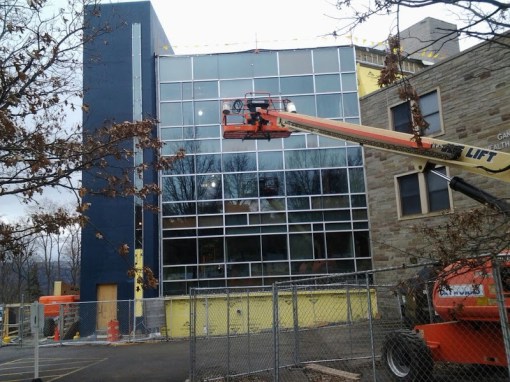
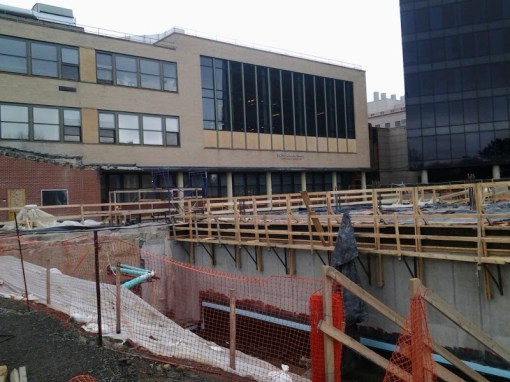
A lot of progress has been made with the Gannett Health Center addition on Cornell’s campus. The new addition has been framed up and topped out. Some of the interior walls have been framed with metal stud walls, with more work yet to come. The primary glass curtain wall is still being framed out, but some of the smaller sections to the north and east have some window panels installed. The variety of glass color used in the facade isn’t quite apparent just yet, since many of the panes are still covered with a blue cellophane wrap for protection.The dark blue material on the concrete stairwells is likely a water-resistant barrier, not unlike that used on the Planned Parenthood Building when that was under construction a couple years ago. The addition, which is phase one of Gannett’s three-phase expansion and modernization program, should be open for its first patients and staff next summer.

The Pike Company‘s Syracuse office is serving as general contractor for the $55 million project. Local architecture firm Chiang O’Brien designed the renovation and addition, and Ithaca firm Trowbridge Wolf Michaels Landscape Architects will be doing the site landscaping.
20151108_123644 20151108_123829 20151108_123925 20151108_124019 20151108_124118 20151108_124215 20151108_124224 20151108_124249 20151108_124313 20151108_124326

gannett5 gannett3

gannett2


Cornell Veterinary School Expansion Construction Update, 11/2015

12 11 2015

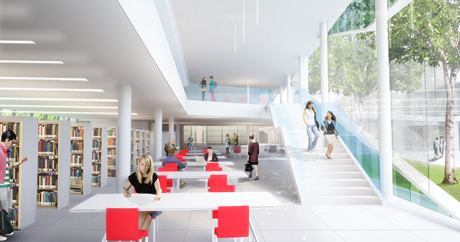
The site of the future west wing of the Cornell Veterinary School expansion has been excavated and the foundation is being poured for what will be a 3-story building with the new Flower-Sprecher Library, and additional program space. Look along the outer edge of the newest foundation section and you’ll see wooden forms pressed against the concrete. These forms provide stability and shape while the concrete hardens, and they provide support to the reinforcing rods embedded in the concrete. They will move further along the perimeter as pouring continues.

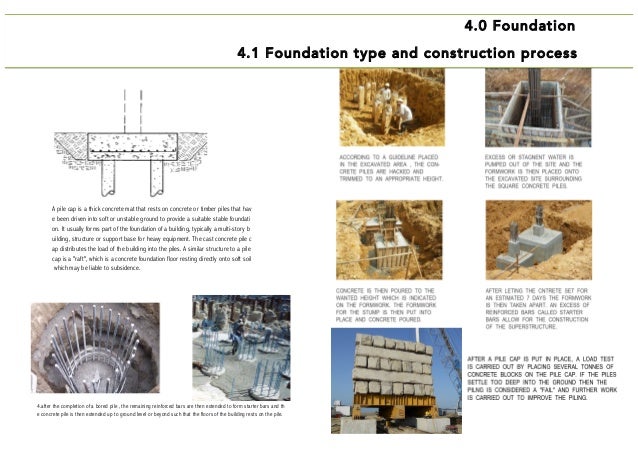
Without being all that knowledgeable about deep foundations, the structures in the middle of the excavated foundation might be pile caps. Piles are driven into the ground, trimmed to a predetermined height, formwork is set up around the piles and the concrete is poured and left to cure. So the piles are underneath the caps, and columns extend from the base of the cap. The load of the structure’s will be transferred to the pile caps and distributed to the piles below, providing stability for the building.

EDIT: Quoting commenter Drill Deep, who is knowledgeable about foundations: “No deep foundations at this one. Just very wide spread footers. East Hill and the Cornell campus usually has ground that can be made to do the job. The basement here is very tall and something like a hangar. Lots of headroom to run utilities.”

More information on the background and details of the expansion can be found in the September update here.

NYC-based architecture firm Weiss/Manfredi designed the expansion, and regional construction firm Welliver is the general contractor.

20151108_122245 20151108_122249 20151108_122256 20151108_122317 20151108_122355 20151108_122421 20151108_122457

cad048742a281097e5667382eced4233

LibraryReadingRoom10-2


Upson Hall Construction Update, 10/2015

12 10 2015

Over on the Engineering Quad of Cornell’s campus, work continues on the gut renovation of Upson Hall. Gone are the original Terra-cotta panels that banded the facade, and the bluestone that faced the building will be removed as the project progresses. Plastic sheeting covers the exterior, working as a vapor and weather barrier. Exterior metal studs, which form the walls, have started to show up on the third floor, with spaces indicating future window openings. These studs will be sheathed (probably with glass-mat gypsum sheet-rock) and later the facade will be put up after the windows have been installed and the building is fully closed in.

Inside the plastic sheets, new telecom rooms are being framed out on the first and second floors, and new drywall is being hung up. Wall framing for new classrooms and offices is underway on the third floor, as well as duct and pipe hanger installation (utilities rough-in). Floors four and five are still undergoing interior demolition – walls are being sandblasted to remove paint, worn-out mechanical, electrical and plumbing systems are being removed, and the old interior walls are being deconstructed so that the space can be re-purposed. New vertical shafts are being cur through the floors, and these will house state-of-the-art electrical and telecom infrastructure.

Sometime in the next couple of weeks (target date October 21st), the steel angle installation will begin for the northeast and northwest corners, which will be expanded outward as part of the renovation (the net gain in space will be about 4,000 SF). Steel clips will be attached to the existing structural steel, and then the new steel beams will follow. The entire project is expected to be completed by September 2017, with landscaping work in the second phase.

Upson Hall houses the Mechanical and Aerospace Engineering department, and previously housed labs and offices for computer science until the completion of Gates Hall last year. Built in 1956, the 160,000 SF building is being renovated and modernized at a cost of $63 million.The building will be seeking LEED Gold certification.

The New York office of Perkins + Will, who designed the original building during the height of modern architecture 60 years ago, are also working on the new design, in conjunction with New York-based LTL Architects and engineering firm Thornton-Tomasetti. The Pike Company out of Rochester has been hired on as the general contractor for the multi-million dollar project.

An interview with Robert Goodwin, the design director for Perkins + Will’s role in the project, can be found on the Voice here.

On a personal note, I walked through a spider web while getting photos, and once I got back to my car, found a fingernail-sized sandy-brown spider on my cheek. I quickly grabbed it and flung it onto my umbrella, and shook it out a moment later. Spiders don’t freak me out much, but if that had been a bee on my face, you’d be reading on the Voice that I either died of a heart attack, or drove into a wall.

20151011_132720 20151011_132726 20151011_132752 20151011_132846 20151011_132955 20151011_133005 20151011_133036 20151011_133040

100_2099upson_4