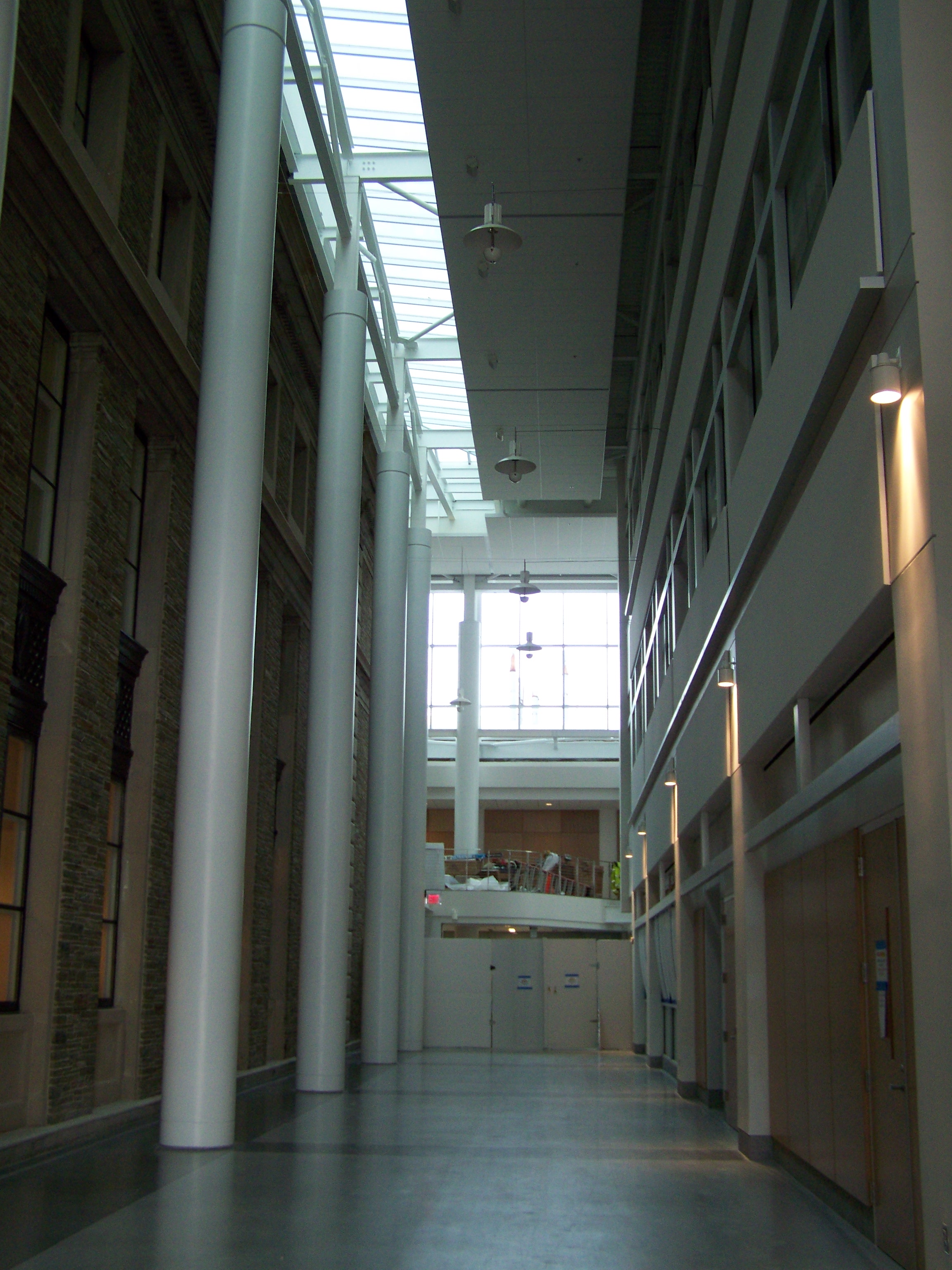
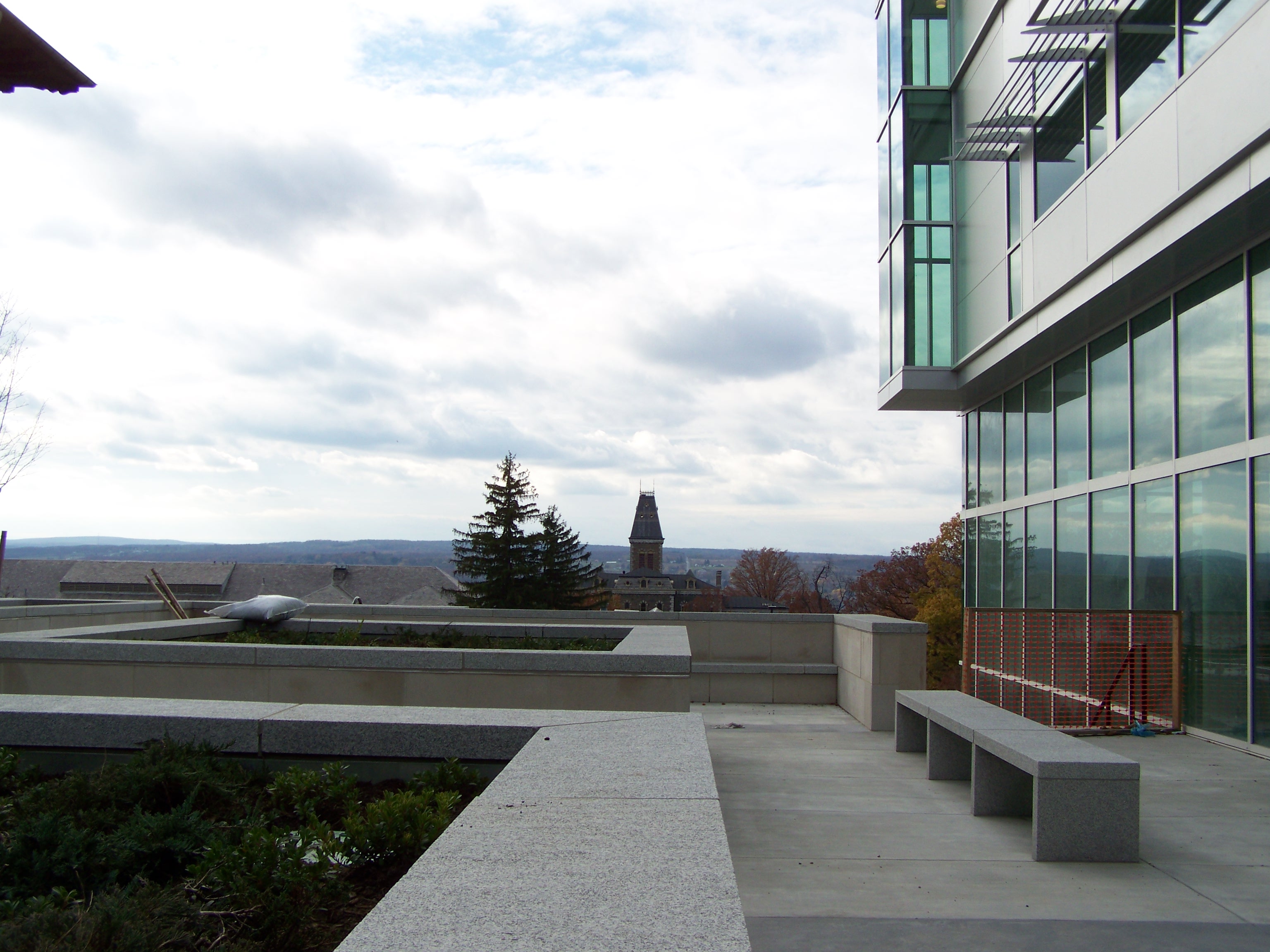
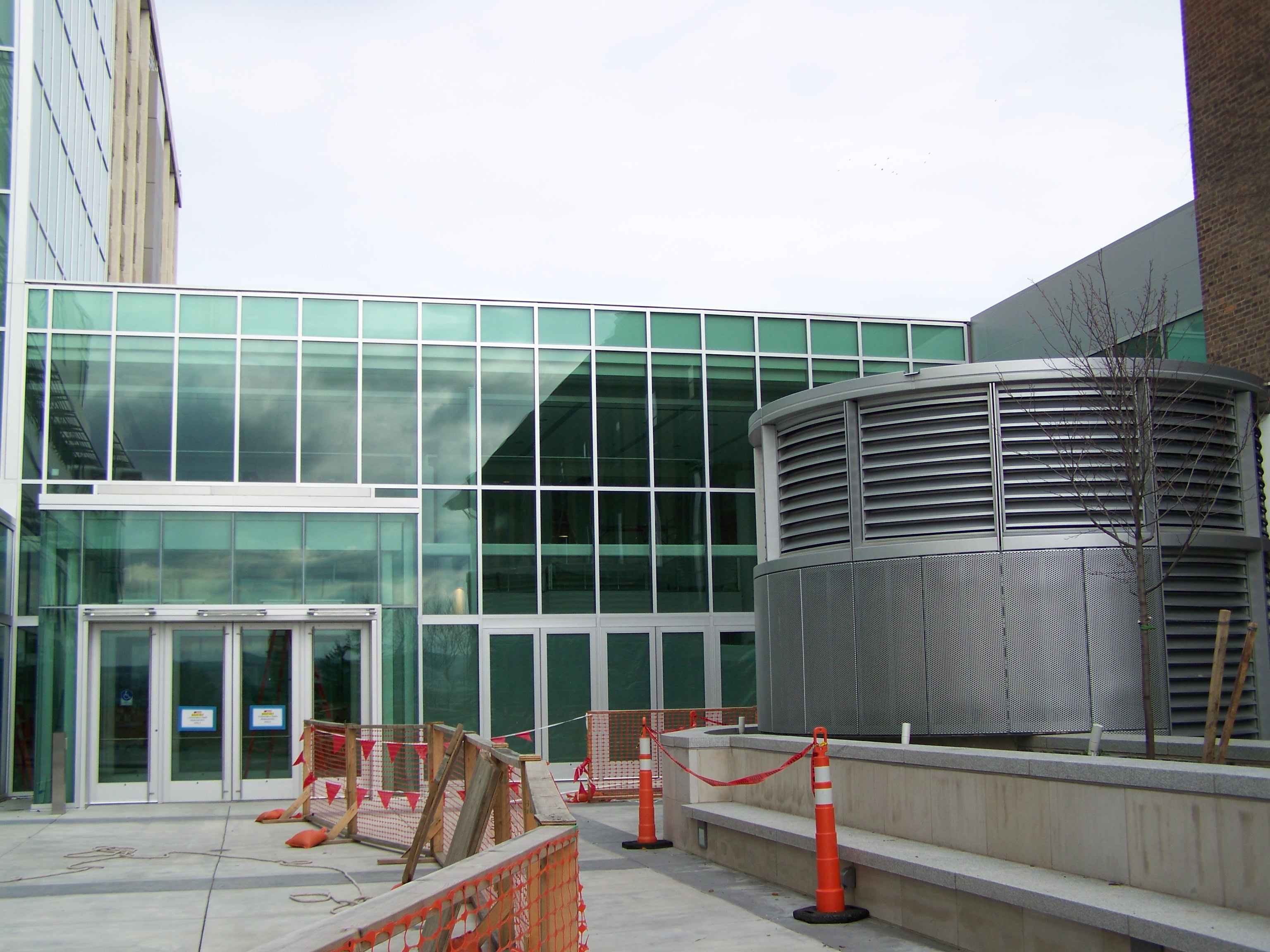
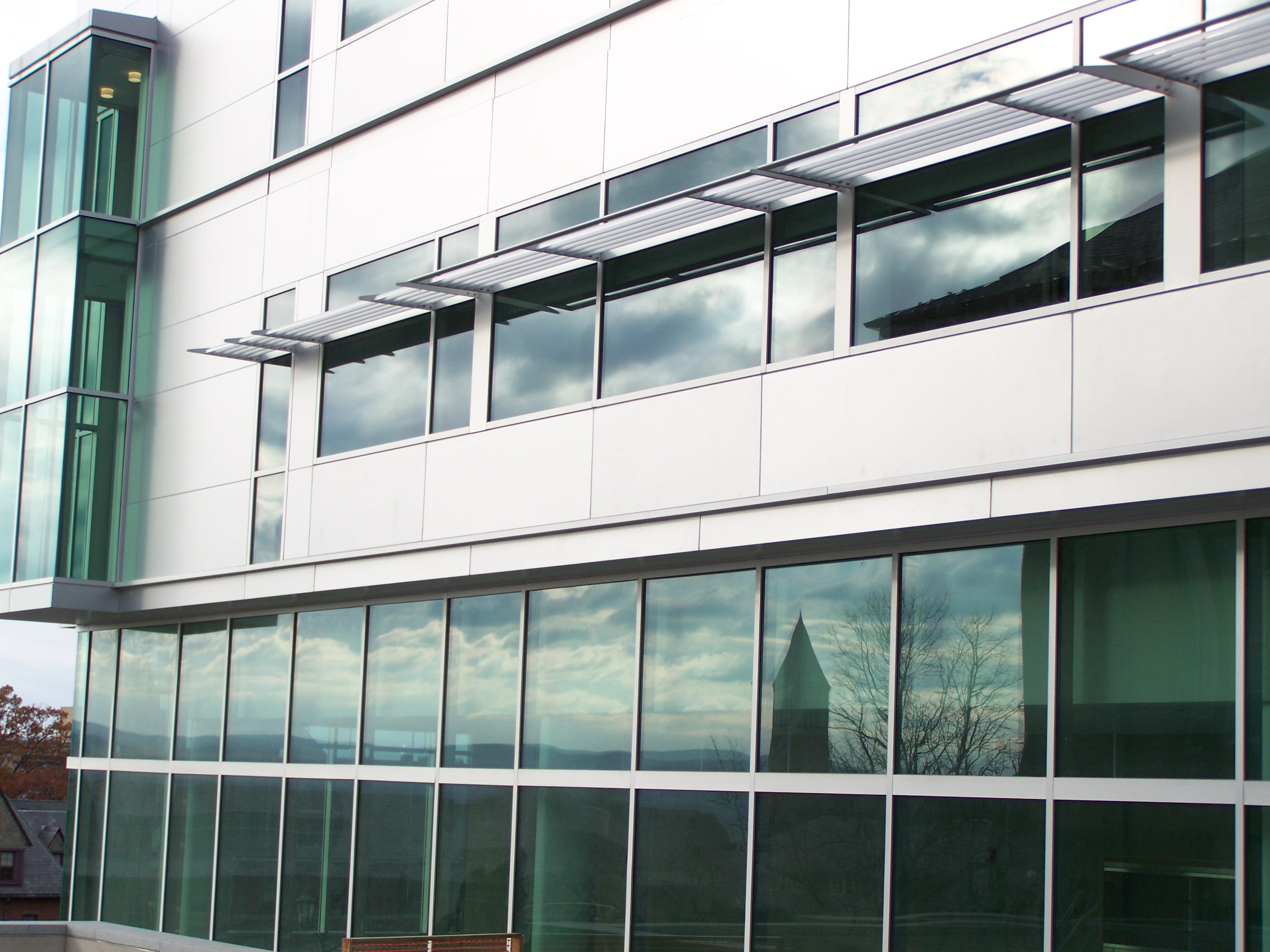
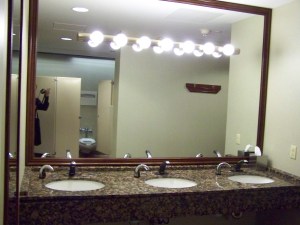
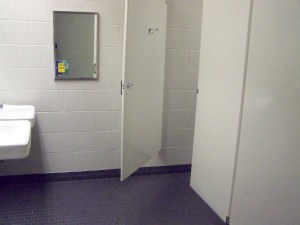
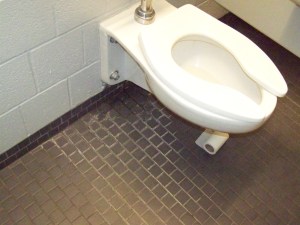
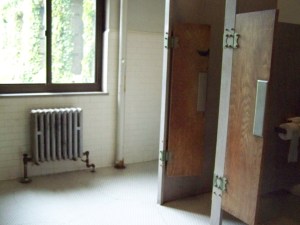
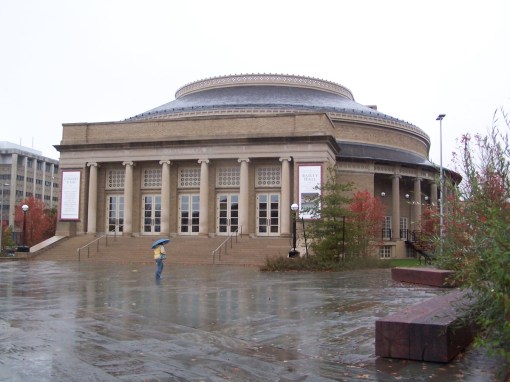
A Look Inside the Physical Sciences Building

11 11 2010

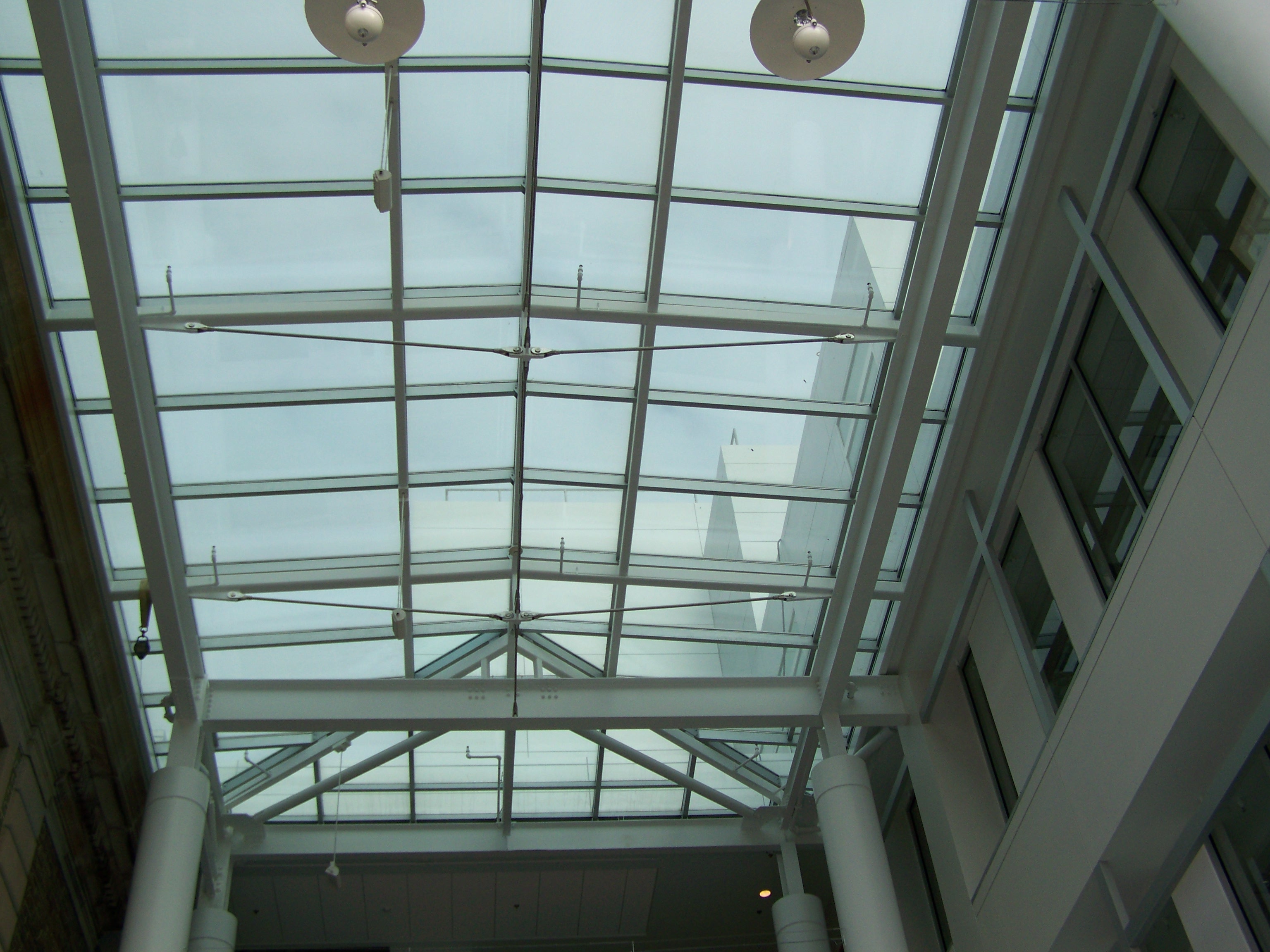
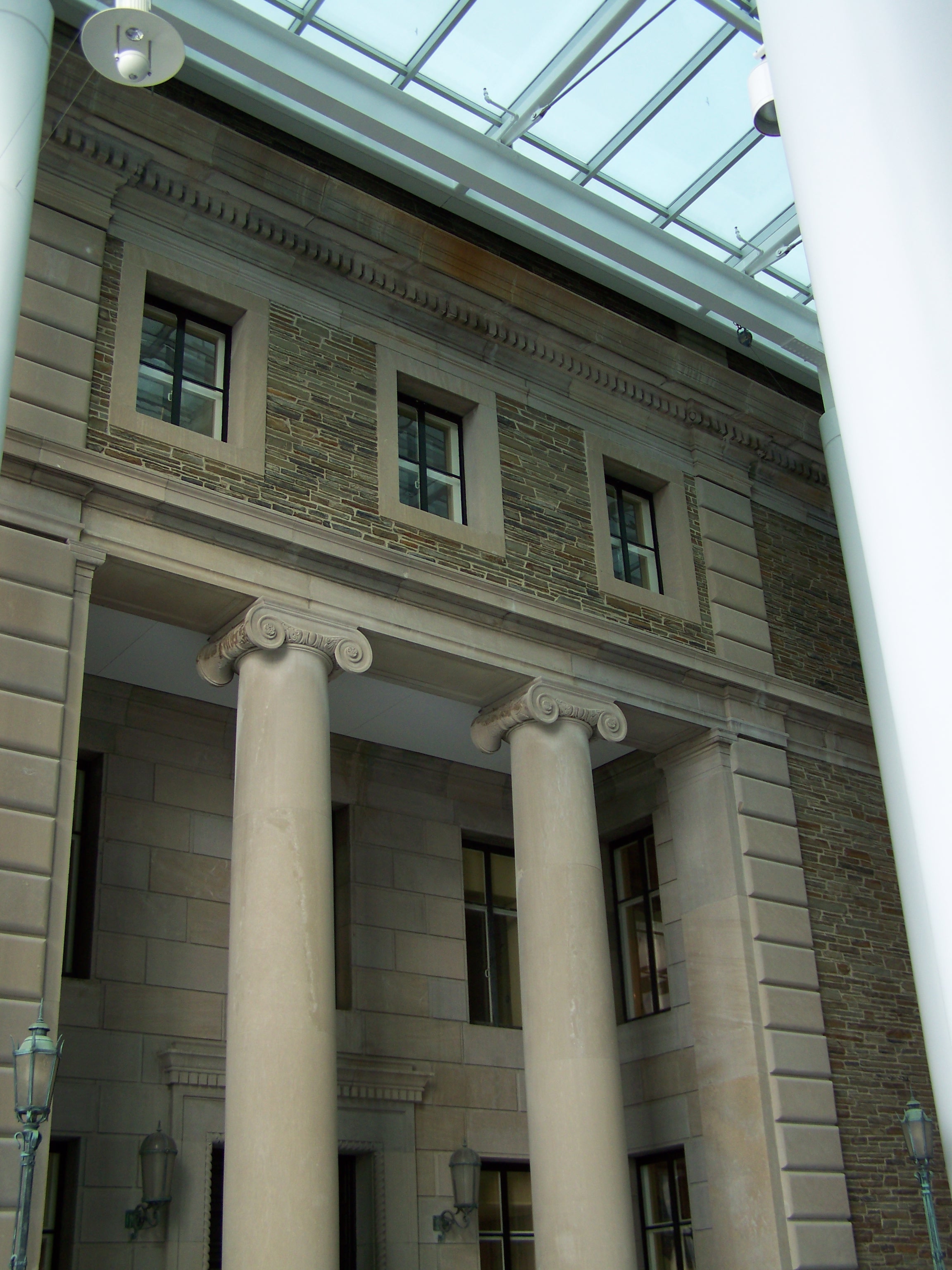
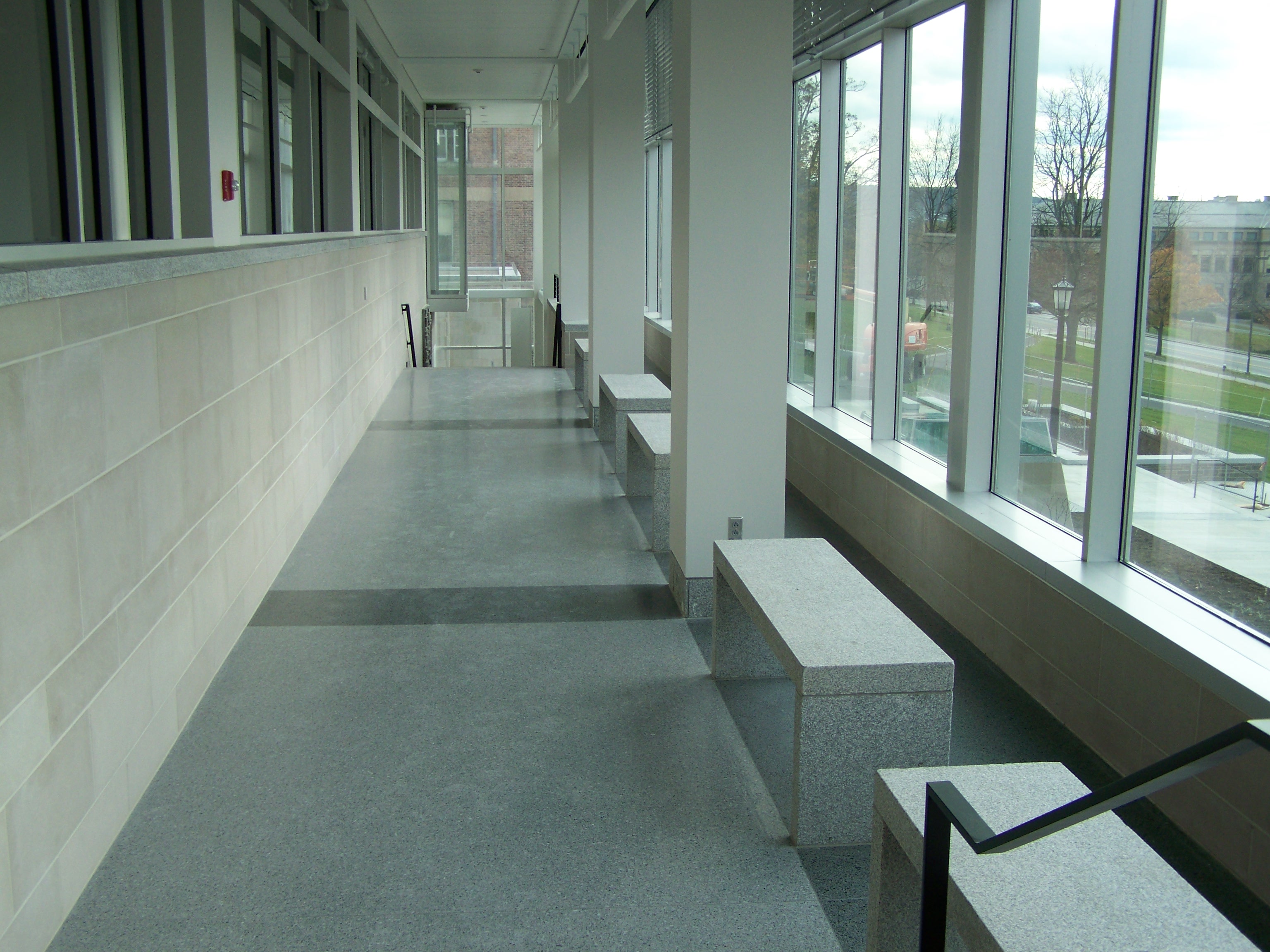
I’ll write more substantial posts in the near future. In the meanwhile, here’s some photos I took recently on a trip back to Cornell’s campus (the joy of living only a few hours away is that weekend trips are feasible – for the record, if you asked me last year where I was going, it was to a school out in the Mountain West…but that was before their funding was cut. The next best solution just happened to be in the Northeast).

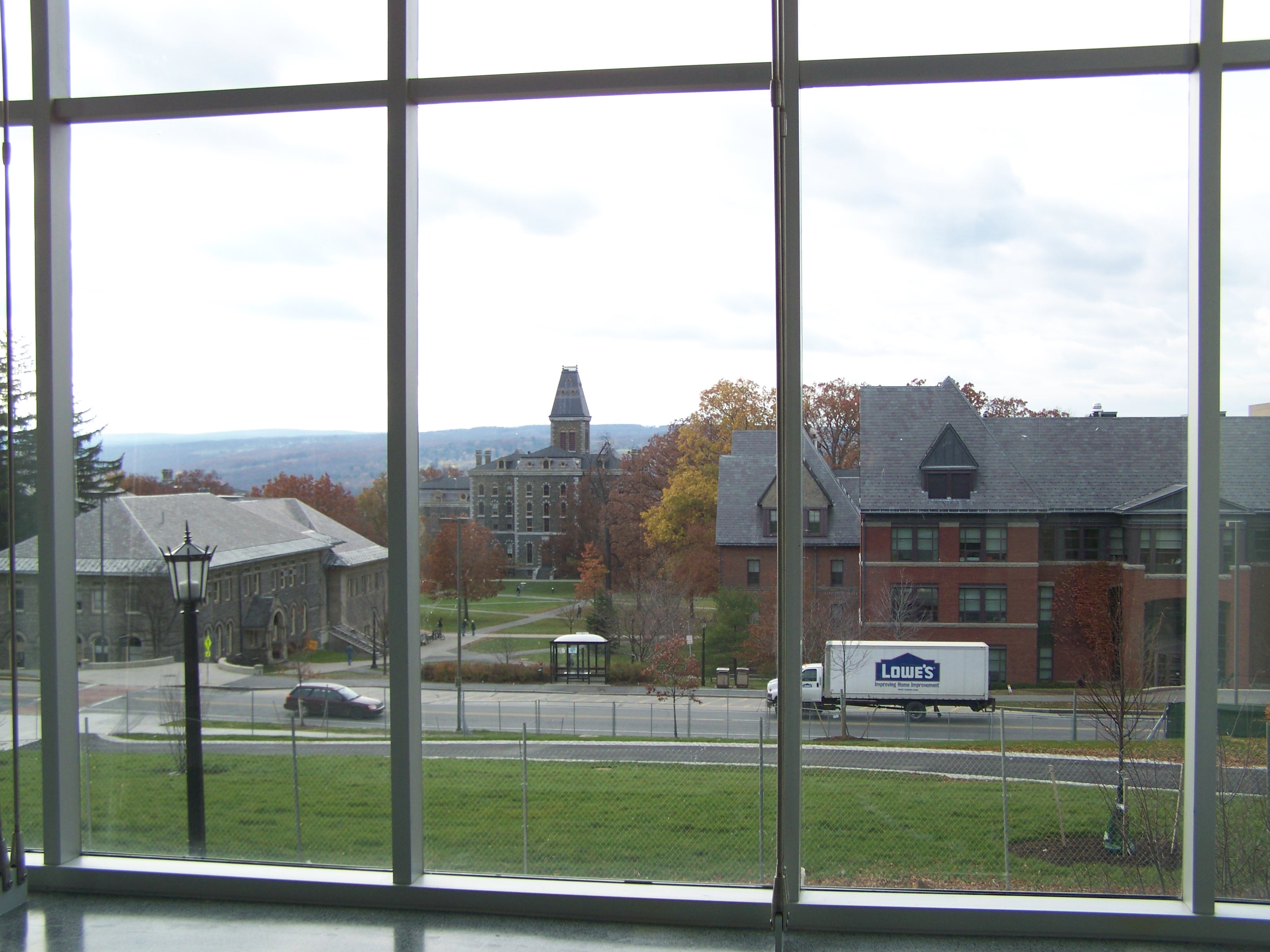
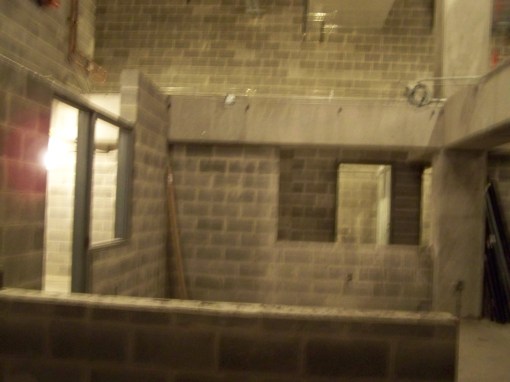
So, anyways, the work is virtually complete, with part of the building opened for light use, but the whole building is still not yet fully accessible.  As if that’s ever stopped me before.

.

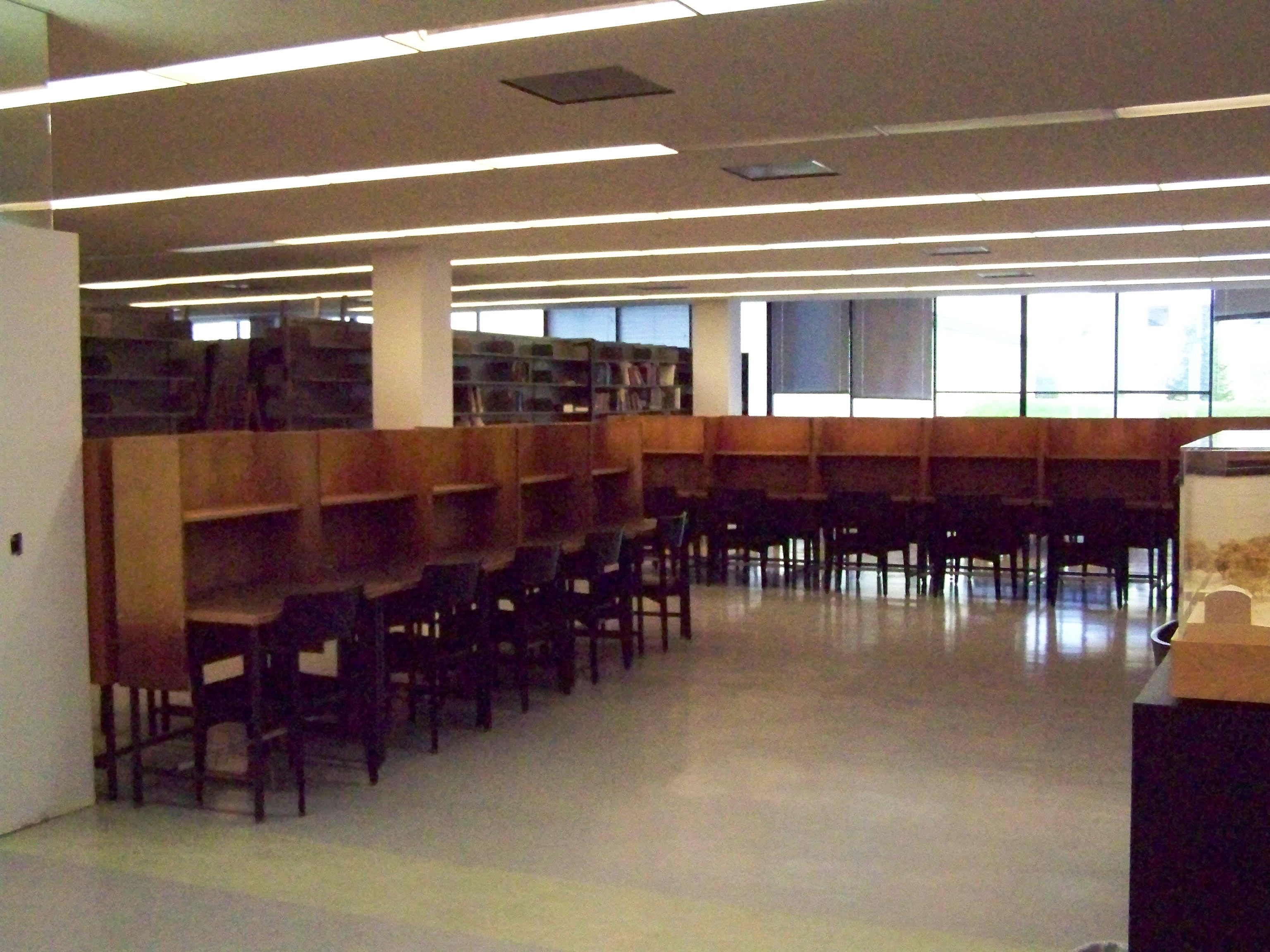
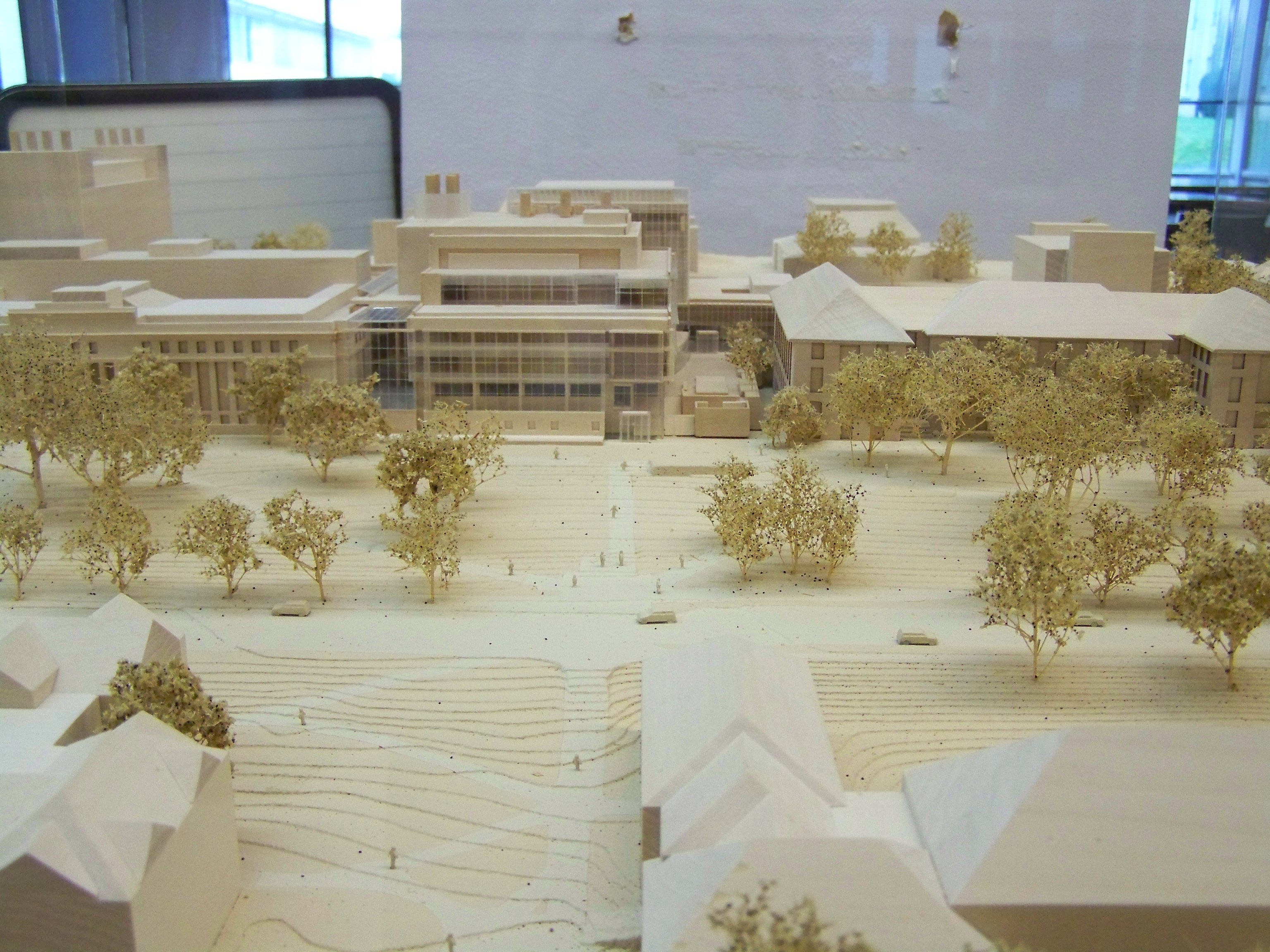
This mock-up, some empty carrels and a couple of bare desks are all that is left of the Physical Sciences Library in Clark Hall. I noticed one of the pillars an eulogy tot he library that Munier Salem had written in the Sun on March 26, 2009, yellowed but encased in a simple black picture frame. I thought it was a nice gesture to the library that once was. Although I opted to not take a photo of the column, here’s a link to its online version.

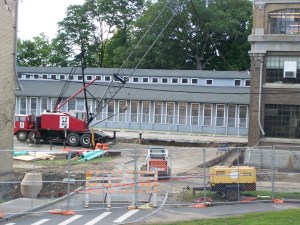
Insert your name here…for about $35 million. Could be you…

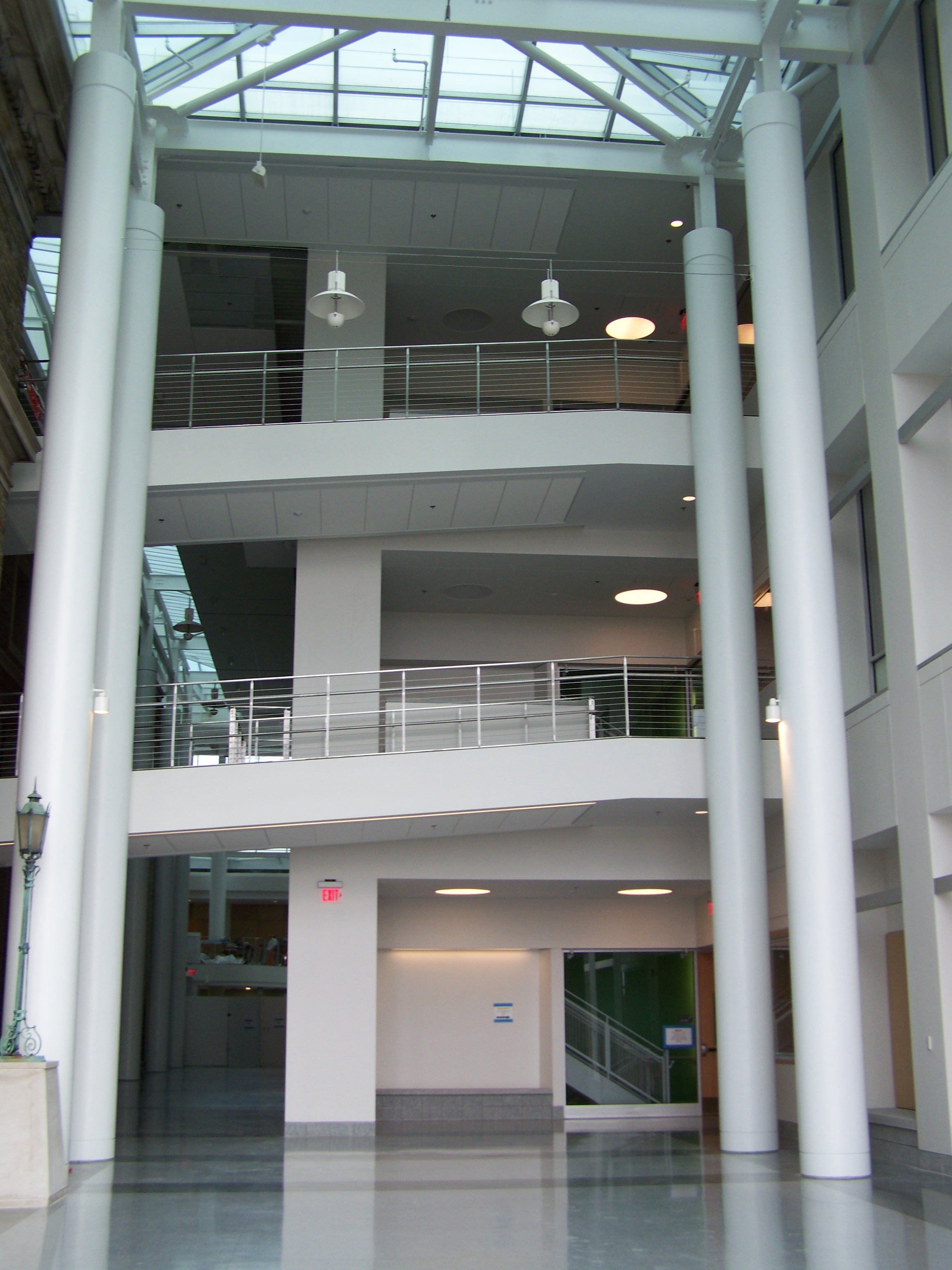
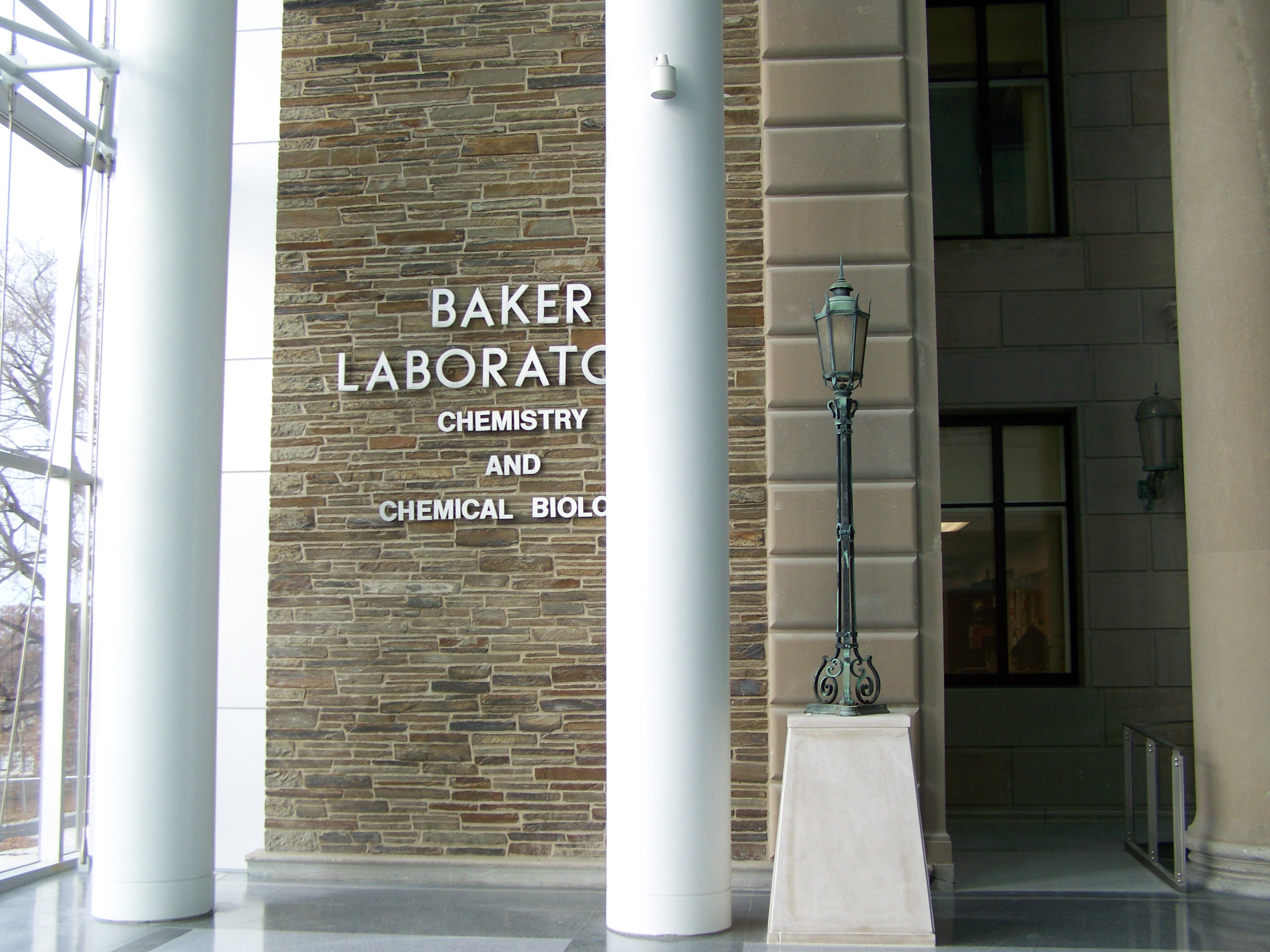
Leaving the oxidized copper lampposts was a nice touch.


The Medical School

10 10 2010

The position of Cornell’s Medical School within the greater institution is a bit awkward. For the most part, unless one is associated with something in the medical field, or lives in the New York City area, we’re liable to forget it exists; it is, after all, located in Manhattan, on the Upper East Side. However, this isn’t to say the school isn’t a valuable asset of the university; it’s just really disconnected from many of Cornell’s affairs. With 400+ doctors-to-be and over 1,000 academic staff, the medical branch of our university manages to exert a significant influence.

Historically, the med school operated out of both Ithaca and New York City. The New York City portion was established in 1898 as Cornell University Medical College, and included women as well as men. The Ithaca branch operated out of Stimson Hall and paralled the first two years of the NYC branch, but was closed in 1938 due to declining enrollment. Ithaca was always seen as too small of an environment to allow for adequate medical training. Until its closing, the Department of Surgery was based out of Cornell proper and was originally led by Dr. Lewis Stimson, for whom Stimson Hall is named. Back in the days of its opening, one did not have to have previous college education to begin medical school; Johns Hopkins and Harvard first mandated prior education in 1907, and Cornell followed suit the following year. The results were disastrous at first, with the standard class size of 70 dropping to 3 for the entering class in 1908, and from 35 to 11 in Ithaca. Total enrollment went from 320 in 1907/08 to 118 in 1911/12, and finally back up to the low 300s by the early 1920s (Bishop 385).

Through some negotiating with George Baker, a governor and wealthy benefactor of New York Hospital, an affiliation agreement was arranged between the medical school and the hospital in 1913, and in June 1927 the two became formally intertwined as New York Hospital Cornell Medical Center (this included a nursing school run by the hospital that then came under Cornell’s academic umbrella starting in 1942). George Baker is also the same guy who’s name adorns Baker Tower and Baker Lab on the Ithaca campus. Although the hospital and college were part of the same complex, they were largely autonomous and ran under their own supervisory groups. Realizing the financial power of a large medical institution, “The Society of the Lying-In Hospital of the City of New York”, essentially an ob/gyn clinic, joined the complex in 1928, and the Manhattan Maternity and Dispensary joined the complex in 1929 and became the pediatric unit. A children’s hospital would join the mix in 1934, and the three institutions formally merged into the New York Hospital in 1947. The iconic art deco tower (Baker Tower) of the medical school opened in September 1932 (patients were first received at the hospital at 10 AM on the 1st, and medical students began classes there on September 26th).

Image property of WCMC archives.

The Graduate School of Medical Sciences was established in 1952, and the NY-Cornell nursing school closed its doors in 1979. In 1997, the large building that defines the eastern portion of the complex, the Greenberg Pavilion, was opened, and New York Hospital merged with Presbyterian Hospital the same year (which has an affiliation with Columbia University; the two still maintain separate facilities, so it’s basically one giant unholy mass of conglomeration). The medical school was renamed for major donor and Citigroup billionaire Sanford Weill and his wife in 1998, becoming the Joan and Sanford I. Weill Medical College of Cornell University, or Weill Cornell Medical School (WCMC) for short. The college has been home to the first eye bank in the United States (1944), the first kidney transplant (1963) and MRI Machine (1983) in the New York area. In the meanwhile, a new 15-story $650 million 330,000 sq ft building is underway. You can tell how much I care about New York City by the number of times I’ve referenced it on this blog. Which I think is once…if ever.

WCMC Qatar was established in 2002 by Cornell and the Qatar Foundation, and began instruction in 2004. For those who are unsure, Qatar is a small, wealthy Middle Eastern country slightly more conservative than Dubai in the UAE, and just as rich. The Qatari royal family has invested through the Qatar Foundation a vast sum of money into its “Education City” complex, with one of those facilities being Cornell’s Qatari medical school (WCMC-Q). Other schools invested in Education City include Carnegie Mellon, Georgetown and Northwestern. Cornell was its second affiliation, after Virginia Commonwealth University four years earlier. WCMC also has an affiliation with the Bugando Medical College in Tanzania that began in 2007.

WCMC-Q in Doha. Image from Wikipedia.


Homecoming Construction Photos

29 09 2010

If I free up enough time between proctoring exams, I might write something more substantial. Until then, he are the physical highlights of Homecoming weekend.

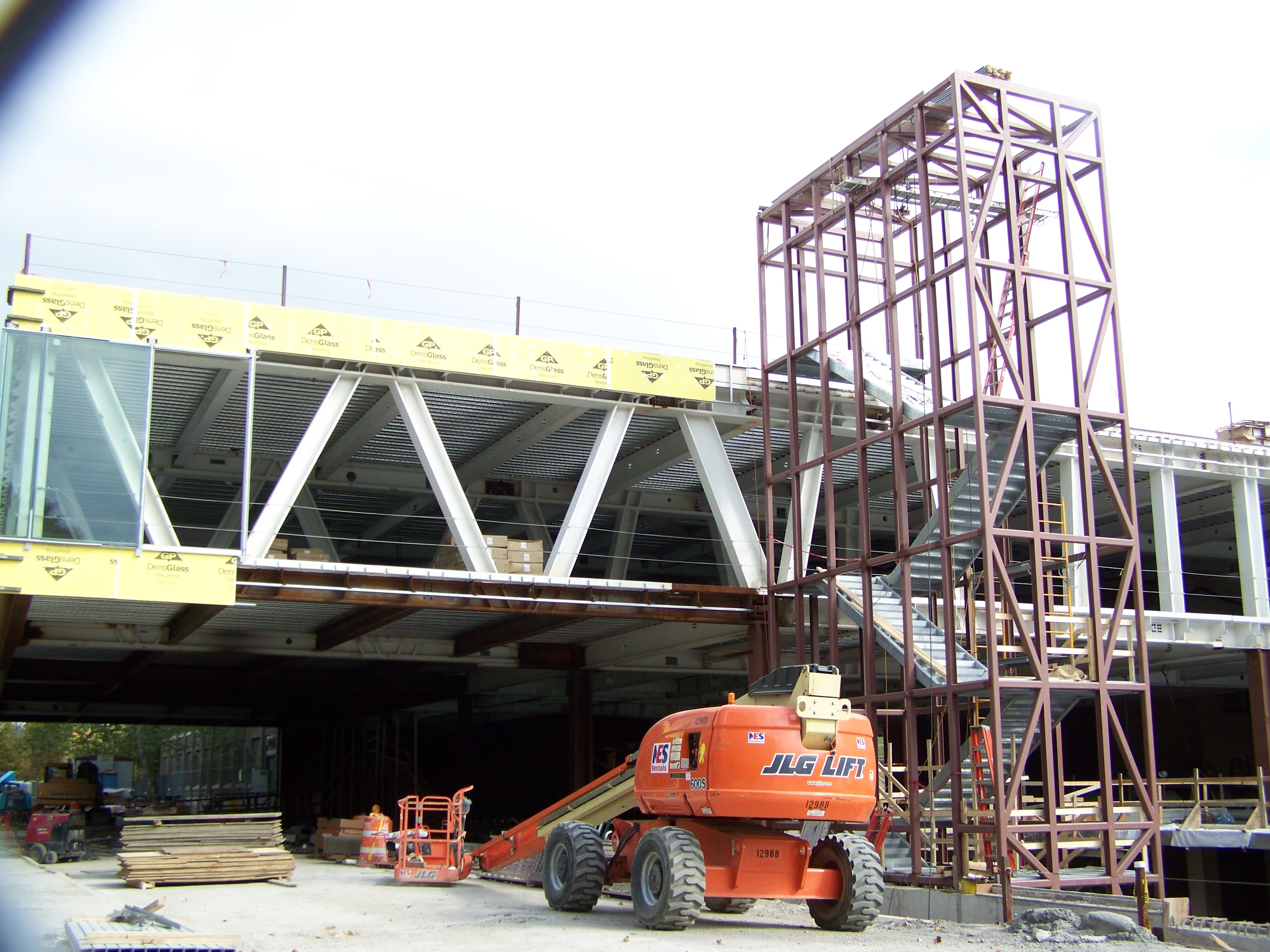
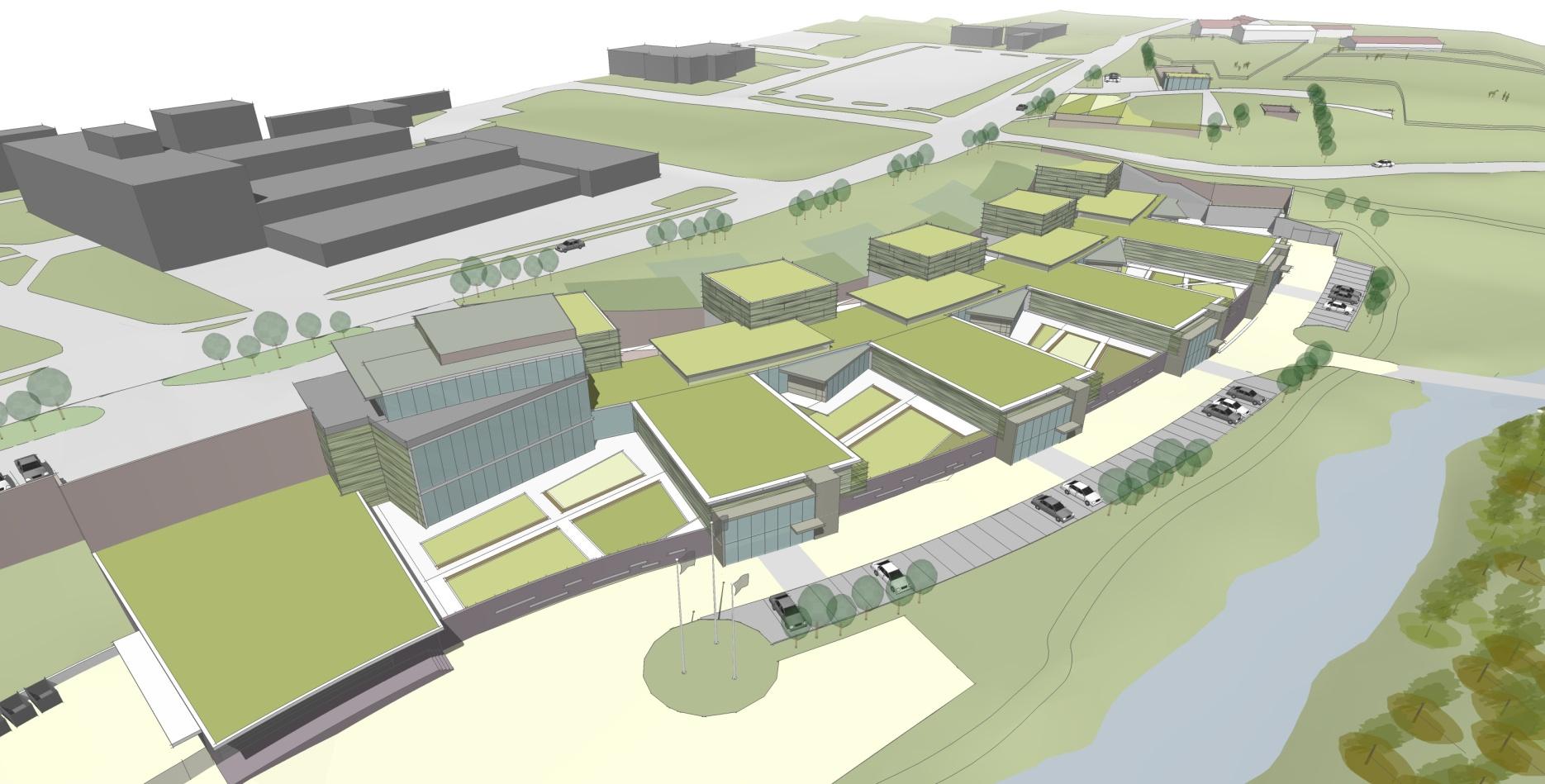
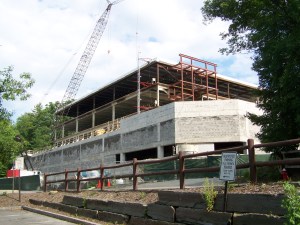
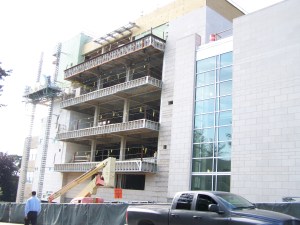
The 197,000 sq ft Physical Sciences Building is nearly complete, with a soft opening planned for next month. Although still fenced, the landscaping is nearly completed. The glass isn’t as clear as the old renderings suggested, but otherwise it’s pretty faithful to the sketches.

Regarding work on Milstein Hall, a taste of what to come was shown with the installation of a small amount of glass on the northwest corner. Slightly greenish-blue in hue, which to me was slightly unexpected but not something I feel strongly about (I imagined a bluish tint if any at all). The 43,000 sq ft building is set to be complete by this time next year.

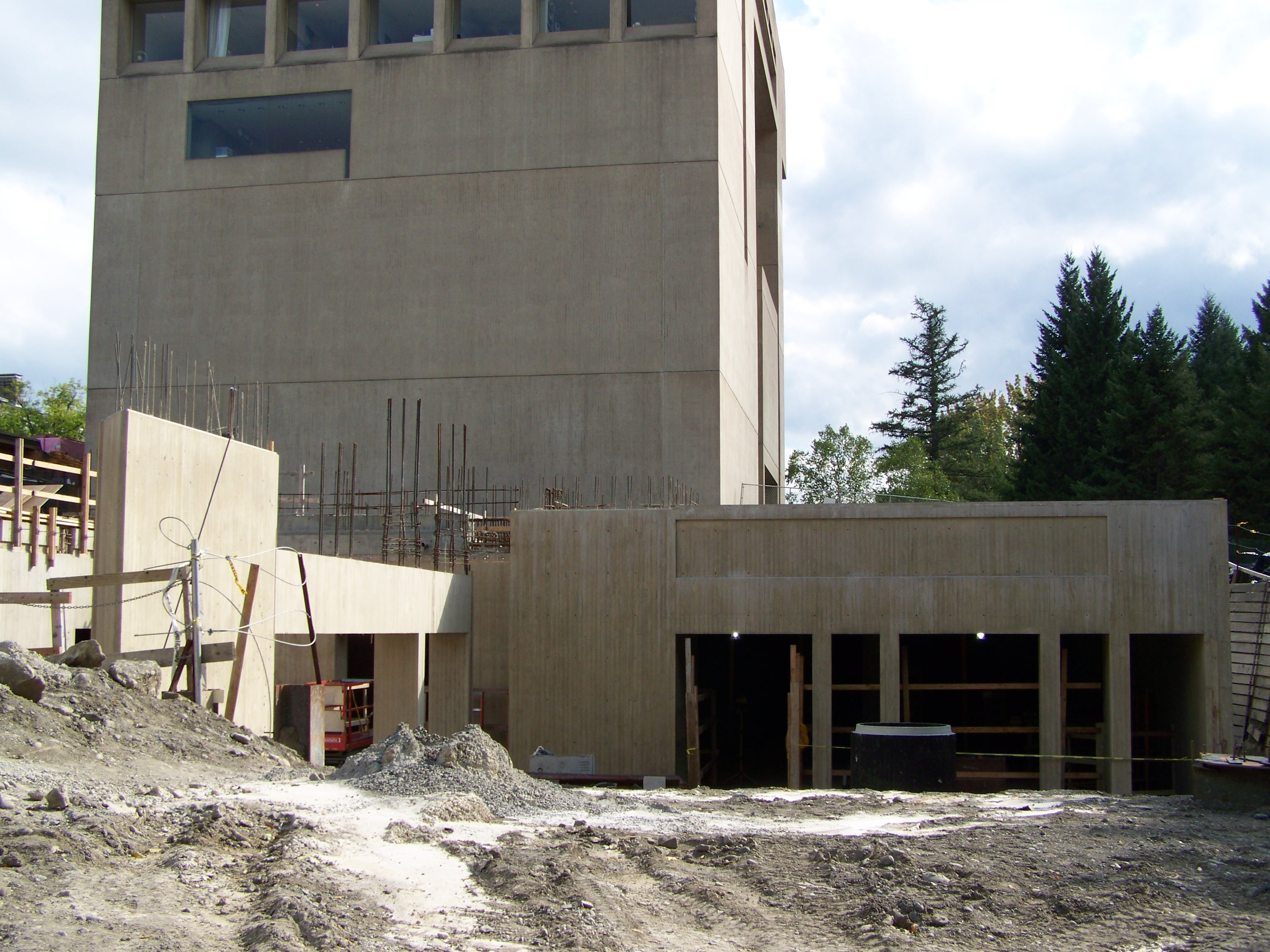
The Johnson’s addition is mostly underground, but some of the concrete work will build out to an above ground complimentary structure to the main building. It would appear that work has advanced quite a ways, with the rebar on the left indicating more pouring is yet to come for the east side of the 16,000 sq ft addition.

MVR North continues construction, though externally it hasn’t made too much progress in the past few months. The stone facade on the parking garage has been finished and work has been done on the exterior stairwells. The 87,000 sq ft building is set to be complete by the end of the winter.


News Tidbits 8/5/10: Structural Coincidence?

5 08 2010

So, the Ithaca Journal is filled today with articles concerning Cornell’s South Hill neighbor, Ithaca College. Which is great, since they are a good school in their own right and they tend to be overshadowed by its ivy-cloaked neighbor. So, the one article was about how their enrollment is back on target this year after having too many incoming last year (by most regards, a fortunate problem to have). The other article, much more in line with the general themes of this blog, was a review of the $65.5 million, 130,000 sq ft Ithaca College Events Center that is under construction, and currently around halfway towards completion.

One of the big architectural features of the building is a a large, structually-incorporated cooling tower designed to be a focal point of the structure and to be visible from most of campus.

Image Property of Ithaca College

The height of the tower? 174 feet.

The height of McGraw Tower on Cornell’s campus? 173 feet.

So, McGraw Tower is no longer the tallest structure in the county (not including radio masts). After 119 years, it is losing its title to Ithaca College’s new activities center.

Although I never saw anything that indicated as much, I’m willing to wager that this was intentional, to draw more attention to the new “tallest building” in the county. Even though the tower is uninhabitable, the lower floor(s) of the building are, so it qualifies as a true building. McGraw doesn’t qualify since it’s only a clock tower. Bradfield, the tallest true building in the county, is only 167 feet.

In conclusion, I guess size does matter when it comes to bragging rights.


Whatever Happened to the CU ERL Project? (UPDATED)

14 07 2010

Renderings have been released through the Ithaca Journal’s website:


For reference, Riley-Robb Hall is in the upper level. This rendering is looking to the northeast. The cryogenic facility is to the upper right. More renderings can be found in the document attached to the main article.

***

About two years ago, I wrote an entry discussing the proposal of the Cornell University Energy Recovery Linac (ERL) X-Ray machine and how it was sechduled to start operation in 2011. Well, things kinda stalled when the Great Recession reared its ugly head far above Cayuga. In between compiling at my work computer, I decided to look at the the town of Ithaca’s latest planning board agenda. Lo and behold, it appears the project is back on. From the agenda:

Consideration of a revised sketch plan for the proposed Cornell University Energy Recovery Linac (ERL) project located north of the Pine Tree Road and Dryden Road (NYS Route 366) intersection, Town of Ithaca Tax Parcel No.’s 63-1-8.2, 63-1-2.2, 63-1-12, 63-1-3.1 and 63-1-3.3, Low Density Residential Zone. The proposal involves construction of an underground accelerator tunnel (14-foot diameter and +/- 1 km long), a cryogenic facility, and an extension to the existing Wilson Laboratory (+/- 185,000 gross square feet of building space). The project will also involve new stormwater facilities, parking, outdoor lighting, and landscaping. The Planning Board may also discuss the draft scoping document for the Environmental Impact Statement.

Now, long story short, the project consists of a massive extension to the Wilson Synchrotron and a large addition to the Wilson Lab, illustrated in the diagram (which I am virtually certain sure was designed by Munier Salem, as it shares similarities to his previous works and it’s part of an article he wrote for the Daily Sun back in the fall of 2008):

The article also goes into much greater detail about how it’s supposed to work; much more detail than I am going to go into here. Economically speaking, the project has considerable potential for the region: the University and project affiliates estimate over 200 jobs would be created and the facility would bring nearly a billion dollars in economic contribution in the five years of construction and ten years of operation. It’s certainly much better than the alternative, which would be the Synchrotron unit shutting down and taking away 200 jobs.

So, it’s good to see things are moving forward once again. Let’s hope that things can stay on track from here on out.


Construction Photos of the New MVR North

1 11 2009

I do not condone sneaking into private property to take construction photos. That being said, if I receive them I’m more than happy to post them as the ones seen below. Most of the photos would appear to be of the parking structure in the lower floors of the building. Too bad some of the exterior photos are a little blurry.100_1848100_1849100_1865100_1850100_1854100_1862

 100_1853100_1855


Dear Ithaca, How I Missed You…

28 07 2009

I suppose that most people, on their first arrival back to the place they call home, would call their friends and make their presence known. I on the other hand decided to avoid my overcrowded sub-subletted apartment by taking photo of the campus construction projects.

100_1105

100_1050

I have to come back to 107 weeks of this? I just lost one of my main walking paths to class. This is almost like coming back to my girlfriend in bed with someone else.  I s’pose I should be glad I’ll only be affected by this for a year before I head elsewhere.

100_1051

Well, I guess if they were going to close off the street, they might as well take advantage to do soil testing for the Johnson addition. Speaking of which, am Ithaca Journal article mentioned that mercury was found at the site [1]. Considering that the building was a chemistry building, and its first incarnation burnt down back in the days before WWI, this shouldn’t be too much of a shock.

100_1104

The physical sciences building continues on its merry way towards completion.

100_1098

MVR North is also well into its construction. I’m personally hoping the concrete and mortar parking base receives an attractive stone veneer to reduce some of the brutalist qualities of the north facade.

100_1099

The Vet School’s Diagnostic Center has received part of its brick facade, on track for its opening within the next year.

100_1102

Meanwhile, Barton Hall and anabel Taylor (not pictured) are being renovated, mostly with replacement stone for the facade, and roof repairs. Barton has been particularly needy for a reno because the stone on the tower was getting to a point where it was liable to crumble away, and it reasonably couldn’t be put off any longer.

100_1103

The Hotel School addition is on target for its winter completion date. For a 12,000 sq ft addition, it really sticks out, especially when approaching from the north on East Avenue. Where the Beck Center used to clash with the south facade, now the new addition clashes with the older southwest wing of the hotel school. I don’t think it’ll do much for Statler Hall, aesthetically speaking.


[1]http://www.theithacajournal.com/article/20090720/NEWS01/907200328/Mercury+buried+on+CU+campus


Campus Comodes

31 05 2009

The running title for this one was “The Best Seats on Campus”, but I thought that one was already used by the Sun. 

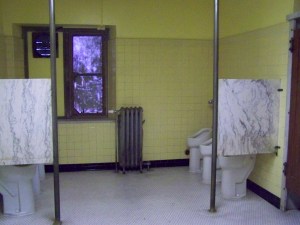
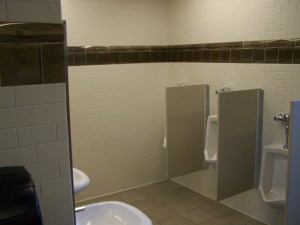
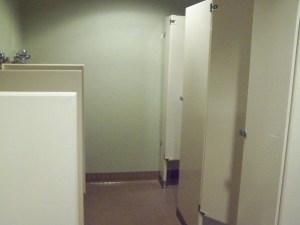
Anyone who has ever been on campus knows that at one time or another, nature’s calls have to be answered. It helps to have a completely subjective and not all that extensive guide to consider when using them. The idea for this entry came from an eight-mile run I went on last week, where somewhere on mile four I was hit with the intense pressures of the excretory system, which left me hobbling half a mile to the southeast edge campus, trying six different academic buildings before I could find an unlocked door and make my way to a bathroom to relieve myself (it was about seven p.m., hence the problem with the locked doors). But look, it provided a lovely conversation topic.

Unless otherwise stated, all bathrooms are first floor or the main bathrooms for a given building. All bathrooms are also mens’ rooms, since being arrested is not high on my list of things to do before I leave Ithaca.

For those who may recall, the Sun did a nice little piece rating bathrooms some time ago, which I’m unable to find a link for online (if anyone does know the URL, I’ll be more than happy to post it here). I’ll be using the same three-star system.

100_0655

100_0654

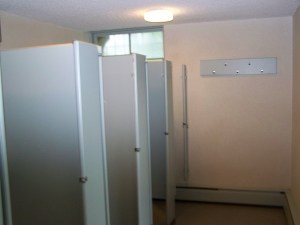
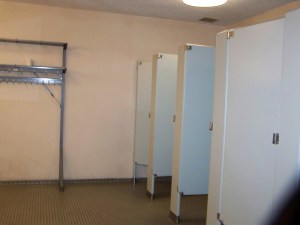
Our first pit stop is Olive Tjaden. Tjaden satisfies the basic needs by being a clean, well-lit room, and amply stocked. the decor is (surprisingly) sparse for an arts building, and the panoply of pipes up at the ceiling leaves something to be desired in terms of aesthetics. But holy crap does this room have a lot of space. Like, as much space as the big bathroom in Olin Libe that should really only be used by handicapped people, only this one you don’t risk getting yelled by some woman in a wheelchair as soon as you open the door.  I threw in Bishop’s History of Cornell book to give a sense of space.

Rating: * * *

100_0656

100_0657

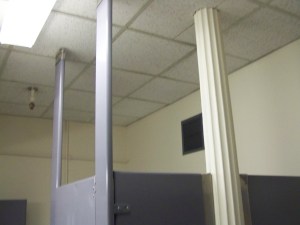
Likewise, McGraw is adequately equipped to handle bathroom needs, but lacks the spaciousness of Tjaden, and we all know that space can be a big plus if you’re carrying a lot of crap (no pun intended). However, it does have a nice cheap-looking pillar running throught the stalls, as if to make a half-hearted appeal to be different.

 Rating: * *

 100_0658

100_0659

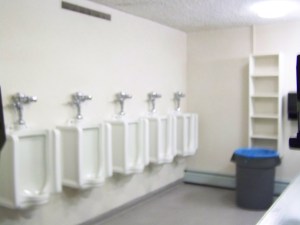
Uris Library is designed to be a high-capacity facility, so as a result, the frills are lacking. I maintain that the bookshelf against the wall of the urinals probably has some of the least-used shelves on campus. My one complaint is that on particularly wet and muddy days outside, all that just gets tracked into here, since the bathroom is so close to the entrance. Therefore, the rating changes depending on the day – decent (* *) on a good day, poor (*) on a messy day outside.

Rating: * * (dry weather day)  / * (wet and/or muddy day)

100_0660

Getting a photo of Olin’s bathroom was notoriously difficult thanks to the high volume traffic, even during this time of the year (these photos were taken during last week). Olin Libe’s main bathroom is in the basement, so it benefits from being a farther walk, as people have a chance to shake the mud and water off their shoes before they make it to the bathroom. While most restrooms make use of a privacy hallway to prevent peepers, Olin makes use of a second door , which can be both a blessing and a curse if someone is coming from the other direction.

Of course, in the 1980s, Olin Library bathrooms were much more invasive; here’s a DUE from Janurary 1987 [1]:

“DEAR UNCLE EZRA:

WHY ARE THERE NO DOORS ON THE MEN’S ROOM STALLS IN OLIN LIBRARY?

                                            ????????


Dear Wondering About No Privacy,
Apparently, a few years ago a University Librarian learned that the downstairs public men’s room in Olin had become a preferred meeting place on campus for gay men.  This person freaked out and ordered the men’s room closed.  This was strongly protested by some of the male staff members. The compromise was to reopen the men’s room, but remove the doors from all the stalls so there wouldn’t be any privacy.
        When you raised this question, and I consulted a current member of the staff about the issue, he volunteered to write a letter to the new University Librarian, Alain Seznec, about this matter and see whether he will order the doors re-installed.  Hopefully, privacy may return to Olin. “
 
Yeah…so thankfully, we have stall doors.
 
Rating: * *
 
100_0664
100_0665
 
When Willard Straight was completed in 1925, not only did men and women have seperate bathrooms, they also had seperate entrances (women came in through the south entrance [2]).  The men’s bathroom is just tired-looking and worn down, the sole redeeming trait being the well-used antique scale sitting outside the main bathroom, in the corner of the privacy hallway. Really, if you can afford to wait, walk over to the other side of the building and you the cleaner and much more spacious unisex bathroom (be sure to lock the door). Be advised, the unisex room comes with a giant mirror, so you find yourself seeing more of yourself than you normally care to.
 
Rating: * (men’s room) * * * (unisex restroom)
  
100_0666
100_0668
  
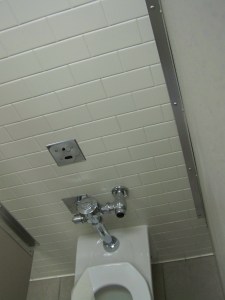
Here’s one for the engineers. As those who have had classes on the engineering quad may have noticed, men’s rooms outnumber ladies’ rooms by a considerable number (a fair guess is 3:1), thanks to the majority male engineering student population. That being said, the men’s rooms of Thurston have nice little assets like privacy barriers between urinals, but they also have those incredibly obnoxious sensors to flush the toilets. You know, the ones that go off as you stand up to wipe, or fail to go off at all and you’re left there trying to figure out how to finish business. I have a personal vendetta against automatic flushers, because I think the technology simply hasn’t been refined enough to be useful. Regardless, this is an adequate facility.
 
Rating: * *
 
100_0669
100_0670
 
The Statler Hotel is all about impressing the visitor. They do a great job with the bathrooms. The bathrooms are nothing short of luxurious, and make you feel like you’re somebody. There’s even a vanity mirror and polished stone counters. The trick to getting to using this bathroom is to walk in and appearing more like a guest and not a student; that way, the employees won’t give you dirty looks when you’re heading back out.
 
Rating: * * *
 
100_0671
100_0673
 
Somehow, I had this expectation going into Ives that the bathrooms would have extra safety and specialty features. To my dismay, they weren’t all that different from any other bathroom on campus. While the rooms were spacious, I can’t give three stars beceause of a slight amount of water damage to the tiles near where the toilet is hinged to the wall. Yes, the t.p. was under the toilet when I arrived here.
 
Rating: * *
 
 
100_0675
 
Plant Science must have the scariest bathroom on campus. Rotting tileworks, mildew stains, old fashioned doors and frickin’ bath towels hanging over one of the stalls were enough to give this room a bad rep. It doesn’t help that this was the bathroom that was claimed by some to have cockroach infestation issues not too long ago.  Let’s think about that for one moment. Cockroaches while you’re on the crapper.


 Use at your own risk.
 
Rating: *
 
100_0676
 
 100_0678
Last but not least, we come to our newest bathrooms, the ones installed on the first floor in Weill Hall. They’re installed rather conspicuously near the atrium, which might make for some uncomfortable rendezvous, but otherwise, they’re well appointed.
 
Rating: * *


[1]http://ezra.cornell.edu/posting.php?timestamp=538462800

[2]http://www.fs.cornell.edu/fs/facinfo/fs_facilinfo.cfm?facil_cd=2020


The Essentials of Campus II

14 05 2009

100_3846

I knew that sooner or later, I would have to cover what is perhaps the most iconic building on campus. So here we are.

All citations, unless otherwise noted, are from Morris Bishop’s A History of Cornell (Cornell University Press, 1962).

Prior to renovation in the 1960s, the building was simply known as “The University Library”, even as other libraries were built across campus. It was Andrew Dickson White’s belief that “A large library is absolutely necessary to the efficiency of the various departments. Without it, our men of the highest ability will be frequently plodding into old circles and stumbling into old errors.” (77) The library was appropriated in September 1867 to the tune of $7,500 (175).  The amount was up to $20,000 by 1880 (213).

Daniel Willard Fiske was appointed the first librarian. He was also head of the university press and an instructor in German, Swedish and Icelandic. It was his belief (and rather progressive for the time) that the library should be a reference library, open to enhance both faculty studies and student interests. As a result, his goals was to obtain, by purchase or gift, extensive book collections, such as the library of Goldwin Smith (6,000 books), Charles Anthon (3400 books) and the like. A.D. White was also known for buying rare books on his overseas trips (both with his own funds and with university money). As a result, by 1873, there were 34,000 books and 8,000 pamphlets in the libe—a substantial figure for an American university. When it first opened, the library boasted that it was open longer than any other U.S. university — nine hours a day.  (108)

Fiske himself was easy to irritate and known for holding deep grudges from insults or perceived slights. Because the first university Vice-President William Russel was known for a gift of mockery, the two absolutely despised each other.  However Fiske was also very kind and generous; he was particularly fond of the Psi Upsilon fraternity men, and was once chastised by White for giving an inordinate portion of his salary to the chapter and its needy brothers (108). He also was chastised for offering a glass of ale to a student, to which he responded that the student interrupted him in his drinking time with a friend, and he felt obliged to offer a glass (108).

Since Fiske was in Egypt when the university opened in October 1868, the actual first librarian was a prominent local lawyer, Thomas Frederick “Teefy” Crane, of “Give My Regards to Davy” fame. Crane studied languages in his private time, and as a result he also was the German instructor at opening.  Crane enjoyed the experience enough that he himself went abroad, came back and switched places with another professor to become the instructor of French, Spanish and Italian in 1870. (109)

So, now we get to the “Great Will Case”. Jennie McGraw, aged 37, received a large inheritance after her father’s death in 1877. Already battling tuberculosis, a number of men offered to marry her, some of which were gold diggers I’m sure. One of the men who courted her was Willard Fiske. He wrote love poems to her, but he never showed them for fear of being called out as a gold digger. Anyways, as the rich and bored are wont to do, McGraw arranged to have a fabulous house built off of University Avenue, bordering Fall Creek, and then bought thousands of dollard of furnishing for it (224). In the meanwhile, both McGraw and Fiske went abroad to different parts of Europe in 1879. There is no record of contact in Europe between the two prior to April 1880. During this time however, Fiske used his influence on A.D. White to work over affairs back at Cornell. Locals assumes that because White was known to have lent Fiske money, and the two were close, that he and Sage were buttering him up so that if he and Jennie were to get hitched, that her fortune would be given someday to Cornell. (225).

In April 1880, Fiske went to Rome to join Jennie, now invalid and near death. The courtship between 48-year-old Fiske and the dying 40-year-old McGaw was short. They became engaged in Venice. Fiske announced it in a letter in May 1880 to A.D. White (along with a request for money). As one can imagine, some people looked upon Fiske’s behavior as mercenary. The two were married in Berlin on July 14, 1880 (226). At the time, Fiske signed a letter giving up his rights to Jennie’s property, under Prussian law.

The two spent the winter on the Nile, and then returned to Europe. By June 1881, the two were informed in Paris that Jennie had only a few weeks to live. Her dying wish was to pass on in Ithaca, so they made the trip back by September. I know, more than a few weeks, but whatever. She saw her mansion, newly built, and said (as she was propped up from her pillows) “it surpasses all my expectations”. It was the only time she ever saw the mansion, as she died September 30, 1881. When she died, Judge Boardman (of Boardman Hall) asked for the will. No one could find it, which would really suck for all parties because then they would have to use John McGraw’s will, and then the inheritance would go to John McGraw’s brother and his five kids since Jennie had no hubby or progeny.  Luckily, they found it in a secret pocket in a handbag that had been dumped off as junk in Fiske’s attic (227).
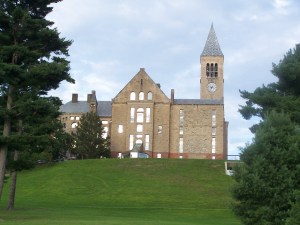
100_1769

The will stated that Fiske would get $300,000, $550,000 to her uncle and his kids, and $200,000 for a library at Cornell, $50,000 for McGraw Hall improvements, and $40,000 for a university hospital. The university also gained her land estate, including the mansion (valued at $600,000+), which A.D. White thought would be a dream home for an art gallery (227). Fiske, as custodian of the mansion, was to continue to occupy the house, and this raised issues. Namely, that he was known for being very needy financially; he offended Henry Sage by having parties in the room she died in no more than two months after her death; and Boardman simply didn’t like him, perhaps because of a rumor that Fiske suffered from marital indiscretions while in Europe. (228).

Here’s where the real fun begins. In May 1882, the state changed Cornell’s charter a little bit, but in one embedded section, it removed a portion detailing that the university couldn’t receive or hold personal property equal to or more than $3 million dollars. This was very convenient. In June 1883, Fiske was about to settle his affairs by going abroad, when an apprentice lawyer in Elmira told him of the change, and that state law said that a wife can’t leave more than half of her property to charity. As you might guess, the sh*t hit the fan. (228).

So, we have two lawsuits, one to break the will by Fiske on the grounds of Cornell’s underhanded actions, and then another one by Jennie’s cousins, out for more of the fortune. Fiske sailed for Europe, leaving a surrogate to handle things (Judge Marcus Lyon). White sailed after him to beg him to reconsider, but then Sage cabled White to tell him he was to make no offer to Fiske. Most of the Ithaca and Cornell crowd hated Fiske now anyway. After much media attention (like an OJ Simpson trial for the 1880s), in May 1886, the ruling was in favor of Cornell. White wanted to let Fiske save face by offering concessions; Sage would hear none of it. Fiske appealed the judgment, and it was overturned in August 1887, so Fiske won the suit, and the McGraws won theirs. So Cornell appealed to the Supreme Court (231). Meanwhile, the friendship between White and Boardman/Sage had deteriorated to animosity, although Sage made an offer to build a library himself if they failed to get the inheritance. All the while, Fiske was living in a luxurious Italian villa.

In May 1890, the Supreme Court ruled against the university. However, they did say that Cornell’s endowment could be used for any university purpose, which was a small consolation. in the end, Cornell paid $180,000 in legal fees to David Hill, the apprentice lawyer of Elmira, and $100,000 for the McGraws’ counsel. One of Jennie’s cousins bought the mansion for $35,000, much to White’s anger. The house was sold by the McGraws to Chi Psi fraternity in 1896. Its furniture was auctioned off, mostly purchased by the other McGraws. Fiske’s lawyer never took another case—it was rumored he drank himself to death during the celebration (232).  Henry Sage donated $500,000 for the library to be built, as was done in 1891. Willard Fiske returned to hobnobbing with the rich and famous, and book collecting. When he passed in 1904, he donated his library as well as his estate to the university. He also requested to be buried with his wife in the mortuary of Sage Chapel; when the university granted the request, the Sage family severed all ties to Cornell.  (232).

***
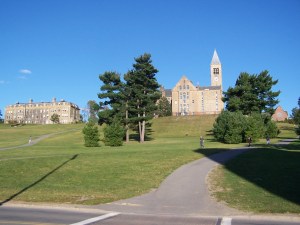
100_1950

Long-winded, isn’t it? Well, I’ll go on for a just a little while longer. I have to make up for some lost time.

The actual cost of the libe was $227,000, with room for 400,000 volumes (Cornell owned about a quarter if that at the time) (271).  When received ,the Fiske fund was used for salaries and upkeep, and later book expenses; the library was already overcrowded by 1906. The library expanded in 1936 with the construction of more stacks on the south and west wings. The Great Depression was quite hard on the libe, and the head librarian at the time, Dr. Otto Kinkeldey, frequently complained about the lack of space and funding.  A special library fund would be set up in 1941 (531).  The library was internally reorganized in the late 1940s (576), and the Cornell University archives were created about the same time (600).

The library was renamed for Harold Uris ’25 in 1962, since he donated significant amounts to its renovation. In 1982, the glassy west wing was added, adding 214 seats , and was paid for my the Uris Brothers Foundation [1]. The 173-ft tall Library Tower was renamed “McGraw Tower” for Jennie McGraw in 1962.

As for the Chimes and more details about the tower, we’ll save that for another entry. For the Clocktower Pumpkin, we’ll leave that to a wikipedia quote:

“On October 8, 1997 a pumpkin appeared atop the spire of McGraw Tower. Because of the danger involved in retrieving it, administrators decided to leave it until it rotted and fell off. However, the pumpkin rapidly dried out in the cold air and remained on the tower until it was removed with a crane on March 13, 1998 (it was planned that Provost Don M. Randel would remove it, but in a practice run the crane basket was blown by a gust of wind and knocked the pumpkin off). Some people had claimed that a real pumpkin could not stay up that long without rotting and that it must be artificial. However, subsequent morphological, chemical, and DNA analysis by both faculty members and undergraduates confirmed that it was indeed a pumpkin.

In April 2005, a disco ball was attached to the top of the tower. A crane was hired to remove the offending orb in an operation which cost the university approximately $20,000.” [2]

[1]http://www.cornell.edu/search/index.cfm?tab=facts&q=&id=767

[2]http://en.wikipedia.org/wiki/Cornell_Chimes


The Essentials of Campus, Part I

10 04 2009

I decided to do a blog piece on some of the more important assets to our campus because I was working on a project yesterday and discovered that I had no entry that really discussed Bailey Hall. I figured I might fix that now.
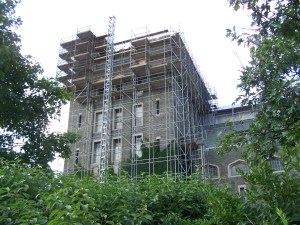
100_2110

Liberty Hyde Bailey Hall. The building was designed by Edward M. Green, Class of 1878 [1]. The building was first opened in June 1913 and intended for use by state college students, and for Farmer’s Week gatherings. It’s namesake, L.H. Bailey (1856-1954) was the first dean of the College of Agriculture at Cornell [2].

One if the original centerpieces of the building was a luxurious organ that was paid for largely by Andrew Carnegie, the industrialist [1]. The organ was mostly a gift for A.D. White’s 80th birthday in 1912.

One story from Bishop’s work concerning the history of the building might strike a note with some passionate politicos today. Back during WWI, an Austrian violinist named Fritz Kreisler played at Bailey. Unfortunately for him, the citizens of Ithaca weren’t as willing as the university to let him play a performance:

“The Hill prided itself on its broad-mindedness, its humanity above all nations and nationalisms. Fritz Kreisler, the Austrian violinist (who had played in Bailey Hall in October 1917, before an enthusiastic capacity audience), was again invited for a concert on 11 December 1919. But downtown a fervid patriotism reigned. The American Legion had condemned in national convention the appearance of any German or Austrian performer. Ithaca’s Mayor called on all patriotic citizens to stay away from the concert. Nevertheless Bailey Hall was packed, the front seats being conspicuously occupied by the football team. In mid-concert about eighty hoodlums, as the Sun termed them, cut the lighting circuit and tried to invade the hall. The students rose and fought. A large band returning from a basketball game took the invaders in the rear. Kreisler, unperturbed, played on in the din of the Battle of Bailey Hall. President Schurman took his stand beside the performer. A volunteer leaped to the stage with a flashlight for the accompanist. The invaders were magnificantly repelled, to the strains of Viotti’s Concerto in A minor. No tumult since Nero’s time has had such a fine violin accompaniment.” (433-34) [1 , 2]

The building has also had some other uses apart from an auditorium. Plant pathology was taught in the basement in the 1920s [2]. A CFCU branch used to be located in the back of the building. Today, since it’s the only academic building that has the size to host it, Prof. Maas’s PSYCH 101 is taught within its vast walls.

As originally configured, Bailey seated 1,948 people. However, as a result of wider seats and handicap access was installed during the renovation, that number shrank to 1,324 [3].

The plaza was installed only about a year and a half ago, a nice complement to the building. Originally, the Minns Garden was up here, and then that was replaced with a full parking lot towards the mid 20th century.

100_3405

100_20811

Yes, both photos are mine…taken about five months apart. That tells you how hesitant I was to write up the history of Sage Hall. For this, much of the information will be pulled from Bishop’s history of Cornell, with page citations in parentheses.

The best place to start, of course, is at the beginning. The building was originally known as Sage College, and it was an all women’s dorm. The building was the architectural pride of campus when it was completed in 1875 (98), designed by Charles Babcock, an architecture professor at Cornell. Prior to that, campus was the Old Stone Row, Casca and West Sibley; gray stone buildings that, while imposing, were utilitarian; Goldwin Smith once remarked “nothing can redeem them but dynamite”.  The proposal for the building came while A.D. White was debating whether or not to accept a government post in Greece; the plan for Sage to endow this grandiose structure led him to reconsider (103).

The original endowment by Sage was in the amount of $250,000. The building’s design allowed for all the living needs of 150 to 200 lady students (148). Originally, the Botany and Horticulture department were to be housed here as well, since they were a subject that was “so suitable for young ladies”. The proposal for Sage was formally launched on February 13, 1872. Also that fall, sixteen women applied to Cornell, and our first female graduate, Emma S. Eastman, graduated in June 1873 (she married a classmate and went on to become a famous suffrage lecturer). By 1874, there were 37 women.

Meanwhile, in May 1873, the cornerstone was laid for Sage College by Mrs. Sage. The cornerstone is particularly interesting because of a commotion caused during Sage’s renovation in 1997. Workers were renovating near the cornerstone when they discovered  a heavy metal box with letter placed inside it, bearing Ezra Cornell’s opinion on the status and future of coeducation [4]. Naturally, this discovery, while somehwat expected, raised quite a commotion on the campus, because no one had ever read the letter except Ezra Cornell himself. The full text of the letter can be found in the link. Long story short, he supported women’s education.  Cornell had never shared his opinions about educating women before he passed away in 1874, so no one ever knew how he particularly felt until that letter was opened 124 years later.

To quote Morris Bishop (who wrote his book in 1962): “When at length the day of Sage College is done, may some historian remember these words and rescue the tin box from the demolishers!” (149)

Sage opened in 1875 to about 30 female occupants. The building rented out to fifty male boarders its first year, who often ate with the women, striing up trouble in the process (the Sage College manager makes special note of the extremely demanding gentlemen boarders from Psi Upsilon). Between 60 and 70 women live there for each year for the rest of the decade (208), and dropped back down to 30 by the early 1880s (246). Sage closed its doors to visitors at 10 PM, and flirtatious dances were highly frowned upon. The first panty raid took place in 1878, when men broke into the Sage laundry, snatched the ladies’ underclothing and threw it from the steeple of nearby Sage Chapel (209).

By 1881, the decline in numbers at the ladies’ dorm had caused Sage to doubt whether it should continue to exist. In letters to A.D, White, he floated the idea of turning it into an art museum, libary, or engineering building (247). Fortunately for women, Sage was completely full by 1891 (300), and women were no longer required to live in Sage. Many of our sororities, such as Delta Gamma and Kappa Alpha Theta, had their starts in Sage College.

Alas, by the mid 1990s the building had worn down with time. The last dorm residents (co-ed since the 1930s) moved out in 1995, and the building was given to the Johnson School for renovation in 1996. The renovation and addition was desinged by Alan Chimacoff, a Cornell alumnus [5]. The $38 million renovation was completed in August 1998.

Today, The Johnson Graduate School of Management resides in the building, with an atrium, class space, meeting areas, and Sphinx Head’s meeting room (supposedly).


[1] History of Cornell, Morris Bishop, P. 362

[2]http://baileyhall.cornell.edu/about.html

[3]http://en.wikipedia.org/wiki/Bailey_Hall_(Ithaca,_New_York)

[4]http://www.news.cornell.edu/chronicle/97/3.20.97/Ezra_letter.html

[5]http://www.johnson.cornell.edu/facilities/sagehall/