The Uncertainty of the Greek System

25 08 2010

Add-ons to email services are wonderful things. Right now, I mostly sit in my grad office all day doing work (the rare exceptions will be my grad classes and my TA work, neither of which actually start until Monday). My email is one of my few escapes. Anyways, on my four-accounts-feeding-to-one setup, I have a Cornell newsfeed. Today, one of the top stories was the proposed changes to the Greek System, which seek to drastically alter the social environment. Quoting the article, which came from the Daily Sun:

“…Starting in the fall of 2011, freshmen will not be allowed to attend any fraternity parties in the second half of the fall semester. Three days of rush week during January 2012 will be dry. Mixers will be prohibited for the first six weeks of the new member process, and each sorority can have two mixers a week for the remaining two weeks.

Finally, in fall 2012, freshmen will be prohibited from all fraternity parties that involve alcohol. In January 2013, the entire rush week will be alcohol free. Social events between fraternities and sororities that involved alcohol will be prohibited during all eight weeks before new members are initiated.”

The intent is noble enough; to curtail underage drinking and prevent alcohol-related crime and illness. To someone in the Greek system though, it sounds a bit scary. Let’s acknowledge the not-so-secret fact that a substantial amount of publicity, and recruiting, comes from freshman visiting houses during parties, where alcohol is readily available. What other time are they going to learn about the houses before rush (and Greek Week doesn’t count because it is a collective show of Greek pride by all chapters at once)? Some are already bemoaning this latest act as the death of the Cornell Greek system (and some hope for as much).

First of all, it’s not. Cornell’s Greek system is much, much more  regulated than the chapters that exist at my grad school, which are basically like street gangs with Greek letters. The system may only limp forward, but it will persist.

Secondly, this isn’t the first time these plans have been espoused. In Scott Conroe’s book I Take Just Pride, one section details how in 1999, then-president Hunter Rawlings gave a speech to the Greek System where he espoused his belief that fully half of the houses on campus would likely close as a result of the execution of the Initiative and the establishment of a house system for upperclassmen. I have yet to see evidence that that has turned out to be the case. A similar intent was espoused by a residential initiative that Cornell launched in the late 1950s and 1960s (the goal there was to make small dorms that were like fraternities, but without all of the problems they cause).

Another date that Greeks were terrified of: December 31, 1985. It was the date the drinking age in New York State went from 18 to 21. In copies of the Daily Sun from 1985, fears were expressed that this would ruin the Greek System, for many of the same reason people fear the latest proposals. But, drinking went underground and everyone turned a blind eye. Kegs were banned from open parties after an alcohol-related death in 1989, but the Greek System still persisted.

Arguably, Cornell’s focus should be on a much larger scale. Fraternity parties are notorious for under-21 drinking, but it’s an issue kept behind closed doors. However, even more undiscussed are the house parties and club organizations, which are just as receptive to underage drinking. Sports teams, the Big Red Band, the Daily Sun, Glee Club…freshmen are going to drink one way or another. When the fraternities are prohibited, they’ll just migrate to the houses and private parties of Collegetown, which are mostly unregulated. I would suggest Cornell crack down on all organizations and do Collegetown foot patrols, but the thought of that is nothing short of Orwellian.

Do I see a whole lot coming from this? Not really. There will be much maneuvering, and some face laws, but I don’t see a whole lot of change occurring. Everyone is going to look for ways to let things slide under the radar once again. If it somehow turns out that the Greek System is incapacitated by the new rules, I suspect it will only take a little waiting and watching until other student organizations or even independent groups of people will step in to fill the void of underage drinking.




News Tidbits 8/5/10: Structural Coincidence?

5 08 2010

So, the Ithaca Journal is filled today with articles concerning Cornell’s South Hill neighbor, Ithaca College. Which is great, since they are a good school in their own right and they tend to be overshadowed by its ivy-cloaked neighbor. So, the one article was about how their enrollment is back on target this year after having too many incoming last year (by most regards, a fortunate problem to have). The other article, much more in line with the general themes of this blog, was a review of the $65.5 million, 130,000 sq ft Ithaca College Events Center that is under construction, and currently around halfway towards completion.

One of the big architectural features of the building is a a large, structually-incorporated cooling tower designed to be a focal point of the structure and to be visible from most of campus.

Image Property of Ithaca College

The height of the tower? 174 feet.

The height of McGraw Tower on Cornell’s campus? 173 feet.

So, McGraw Tower is no longer the tallest structure in the county (not including radio masts). After 119 years, it is losing its title to Ithaca College’s new activities center.

Although I never saw anything that indicated as much, I’m willing to wager that this was intentional, to draw more attention to the new “tallest building” in the county. Even though the tower is uninhabitable, the lower floor(s) of the building are, so it qualifies as a true building. McGraw doesn’t qualify since it’s only a clock tower. Bradfield, the tallest true building in the county, is only 167 feet.

In conclusion, I guess size does matter when it comes to bragging rights.


News Tidbits 7/22/10: Collegetown Terrace Goes Back to the Drawing Board (UPDATED)

22 07 2010

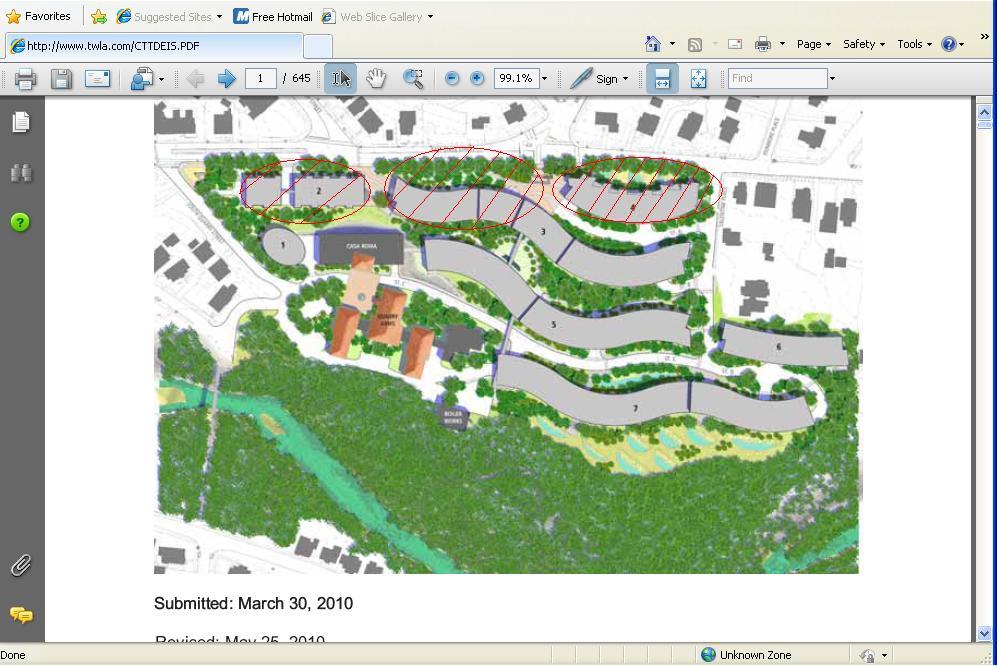
UPDATED: A sketch rendering of the new design has been released. Small, house-like apartments have designed along East State Street in place of buildings 2 and 4. Building 3 is still one continuous building, but the exterior breaks into subsections to minimize bulk and give the impression of multiple strcutures. The Delano House is still under consideration for preservation, but is more of a suggestion at this point (unless the preservation committee and the Common Council give it historic designation). I actually like it more than I did the original design. 

Also, Ithaca is getting a BJ’s Wholesale Club next to the Shops at Ithaca Mall, and a Tim Horton’s/Cold Stone Creamery is planned to be built near Buttermilk Falls. Which makes me wonder how mainstream Ithaca is going to become over the next few years. 

http://www.theithacajournal.com/article/20100721/NEWS01/7210425/City+reverses+on+Novarr+re-zoning  

So, for those who might’ve been following the news over the past few months, it’s been no big secret that Novarr-Mackesey Group’s Collegetown Terrace project has been rather contentious, drawing crowds of angry neighbors to planning board meetings who were upset with the sheer size and scale of the project. In response, the planning board voted to promote rezoning (which is done by the city council) the part of the property along East State Street, which would heavily alter the project. Plus, it was recommended that historic designation be sought for the Delano House, a former nurses’ dorm. Of course, if these actions were taken, then Novarr’s lawyers would be having a field day filing a lawsuit against the city.  

Well, it seems as if that potential issue has been averted. Talks between the board and John Novarr have resulted in something of a compromise. In exchange for not rezoning the area, Novarr will submit a redesign that will allow thirteen separate structures on East State Street. This has been one of the most contentious aspects on the original design, that the three structures that were originally proposed made State Street feel like “a wall”, “prison” or “fortress”.  The original design schematics and proposal can be found here, in a 645-page PDF.  


Delano House, photo property of Novarr-Mackesey Properties


Therefore, buildings 2 and 4 will be completely redesigned as designated by the agreement. Building 3 will also be redesigned, but only the north half is affected. To what extent the plans will change regarding the landscape of the development and the other buildings is uncertain. Also, some of the Ithaca preservationists might still be trying to push for special designation for Delano House, which is at 113-115 Valentine Place. That space would be occupied by buildings 6 and 7, so I don’t see the issue being completely settled just yet. But at least the two sides are willing to compromise. Personally, while I like some of the aspects of the project, I’ve kinda felt indifferent due to the sheer size, and the design hasn’t exactly won over my heart (for the record, I still don’t dislike it as much as I dislike anything by Thom Mayne, so I feel no urge to go on a rant like I did with Gates Hall). But trying to make it a smooth transition and trying to at least appease the neighbors while increasing density – I consider that a step in the right direction.  


Whatever Happened to the CU ERL Project? (UPDATED)

14 07 2010

Renderings have been released through the Ithaca Journal’s website:


For reference, Riley-Robb Hall is in the upper level. This rendering is looking to the northeast. The cryogenic facility is to the upper right. More renderings can be found in the document attached to the main article.

***

About two years ago, I wrote an entry discussing the proposal of the Cornell University Energy Recovery Linac (ERL) X-Ray machine and how it was sechduled to start operation in 2011. Well, things kinda stalled when the Great Recession reared its ugly head far above Cayuga. In between compiling at my work computer, I decided to look at the the town of Ithaca’s latest planning board agenda. Lo and behold, it appears the project is back on. From the agenda:

Consideration of a revised sketch plan for the proposed Cornell University Energy Recovery Linac (ERL) project located north of the Pine Tree Road and Dryden Road (NYS Route 366) intersection, Town of Ithaca Tax Parcel No.’s 63-1-8.2, 63-1-2.2, 63-1-12, 63-1-3.1 and 63-1-3.3, Low Density Residential Zone. The proposal involves construction of an underground accelerator tunnel (14-foot diameter and +/- 1 km long), a cryogenic facility, and an extension to the existing Wilson Laboratory (+/- 185,000 gross square feet of building space). The project will also involve new stormwater facilities, parking, outdoor lighting, and landscaping. The Planning Board may also discuss the draft scoping document for the Environmental Impact Statement.

Now, long story short, the project consists of a massive extension to the Wilson Synchrotron and a large addition to the Wilson Lab, illustrated in the diagram (which I am virtually certain sure was designed by Munier Salem, as it shares similarities to his previous works and it’s part of an article he wrote for the Daily Sun back in the fall of 2008):

The article also goes into much greater detail about how it’s supposed to work; much more detail than I am going to go into here. Economically speaking, the project has considerable potential for the region: the University and project affiliates estimate over 200 jobs would be created and the facility would bring nearly a billion dollars in economic contribution in the five years of construction and ten years of operation. It’s certainly much better than the alternative, which would be the Synchrotron unit shutting down and taking away 200 jobs.

So, it’s good to see things are moving forward once again. Let’s hope that things can stay on track from here on out.


News Tidbits 7/9/10: Thom Mayne to Design Gates Hall

9 07 2010

I consider this a very bad sign.

http://www.news.cornell.edu/stories/July10/GatesHallArchitect.html

According to the Chronicle, Gates Hall will be located on the parking lot north of Hoy Field. This may or may not include demolition of the Grumman Squash Courts, as the article doesn’t clarify that. It will also be about 100,000 square feet and have a construction cost around $60 million. So, among other things, this means I shouldn’t pay attention to Cornell’s budget statements as they relate to building size, since it suggested 70,000 sq ft. More importantly, the site has been moved from its original location behind Thurston Hall. Schematic designs are expected by December, with completion by early 2014.

Now, Thom Mayne is another “starchitect”; which is nice, but shouldn’t be the big idea that’s being touted. Mayne’s firm is a rather small but highly respected company named Morphosis Architects. Morphosis has made their name doing really edgy, deconstructivist designs.

Uh oh.

For those unfamiliar with architecture, here’s the proposal that Morphosis submitted for Milstein Hall:

 That’s Lincoln Hall on the left. This proposal called for the demolition of Rand Hall and this…monstrosity to be built in its place. This isn’t pretty. It won’t even grow on you. This is outright hideous. It reminds me of Lady Gaga’s outfits — screams for attention, but wholly lacking in taste and functionality. This building actually makes me like Uris Hall.

Some might argue that they were purposely edgy since it was an architecture school building they were designing. I would love to believe that, but unfortunately that’s untrue.


This is one of their tamest designs, the Cahill Center for Astrophysics at Caltech. It’s bearable maybe. It sure as hell isn’t attractive. I wouldn’t dare point this out to prospective students and visitors if I were a tour guide. At least Weill and Milstein are inoffensive. This is analogous to mooning a bus full of orphans.

The San Francisco Federal Building? Another statement-maker of the unattractive kind. Thom Mayne is a great architect, but his designs are more for making statements than for being attractive. I want to know why Cornell thinks edgy design is the way to go. Many people have a strong avoidance of deconstructivism, and if MIT’s Stata Center is any clue, these buildings are so much more prone to rapid deterioration. To each their own I suppose. But I have a sinking feeling that Gates Hall is going to be a architectural blight onto the campus.


(UPDATED) Cornell’s Library Shutdown Count Up to Three

23 06 2010

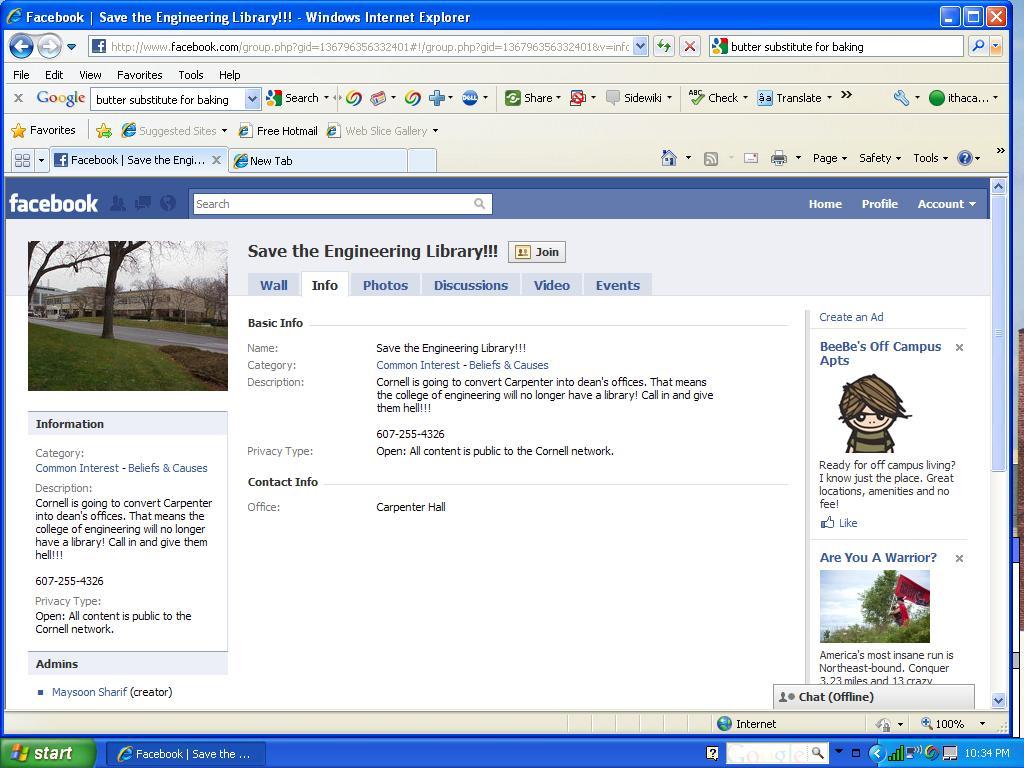
So, I log into facebook and find this page being posted into my news feed.

So, this comes as a bit of surprise. But I don’t buy into it. First of all, there’s nothing online — nothing on the Daily Sun, nothing on the engineering website, no data to back this up at all. Secondly, decisions like this are usually made over the span of months, even years (for example, the physical sciences library’s shutdown was formalized in March 2009 (an attentive reader of this blog actually told me about it before the Sun even had published the story); the library did not shut down until nearly a year afterwards (and no offense to Munier, but that library was definitely one of the lesser-used and therefore more expendable library facilties on campus). Decisions like this aren’t just “made” without a great deal of debate beforehand.

The one grain of truth I can throw into this is that the master plan indicates that the facilty to replace Hollister and Carpenter is under way — but that would suggest Carpenter getting demolished, not reappropriated. Plus, that’s still in the planning phases. Maybe a library would be in the Gates Hall plans, which are currently at the very beginning of the funding and approvals process; but I doubt it at this time.

I call bullcrap on this one until some information is published that indicates otherwise (see update). If there is any truth to it, going all alarmist  and calling the office staff (like the page suggests) is just going to make matters worse.

(UPDATED) So the author of the facebook page attached several official-lloking documents detailing the removal of the library’s book to Olin and Uris. IT would appear that the ACCEL computer labs would be kept and the labs would be made into a 24-hour unit (but isn’t that the lab in Upson exists?). Meanwhile, Munier has posted onto their page a link from Mann Library saying that the Entomology Library will be shut down and merged with Mann. So it would appear Cornell’s cost-cutting will shut down two more libraries they consider “less-used”.

I hope Cornell doesn’t release any more ads touting their expansive library system anytime soon.


Kappa Sigma Closes its Doors

6 05 2010

…and the Greek sh*tshow continues.

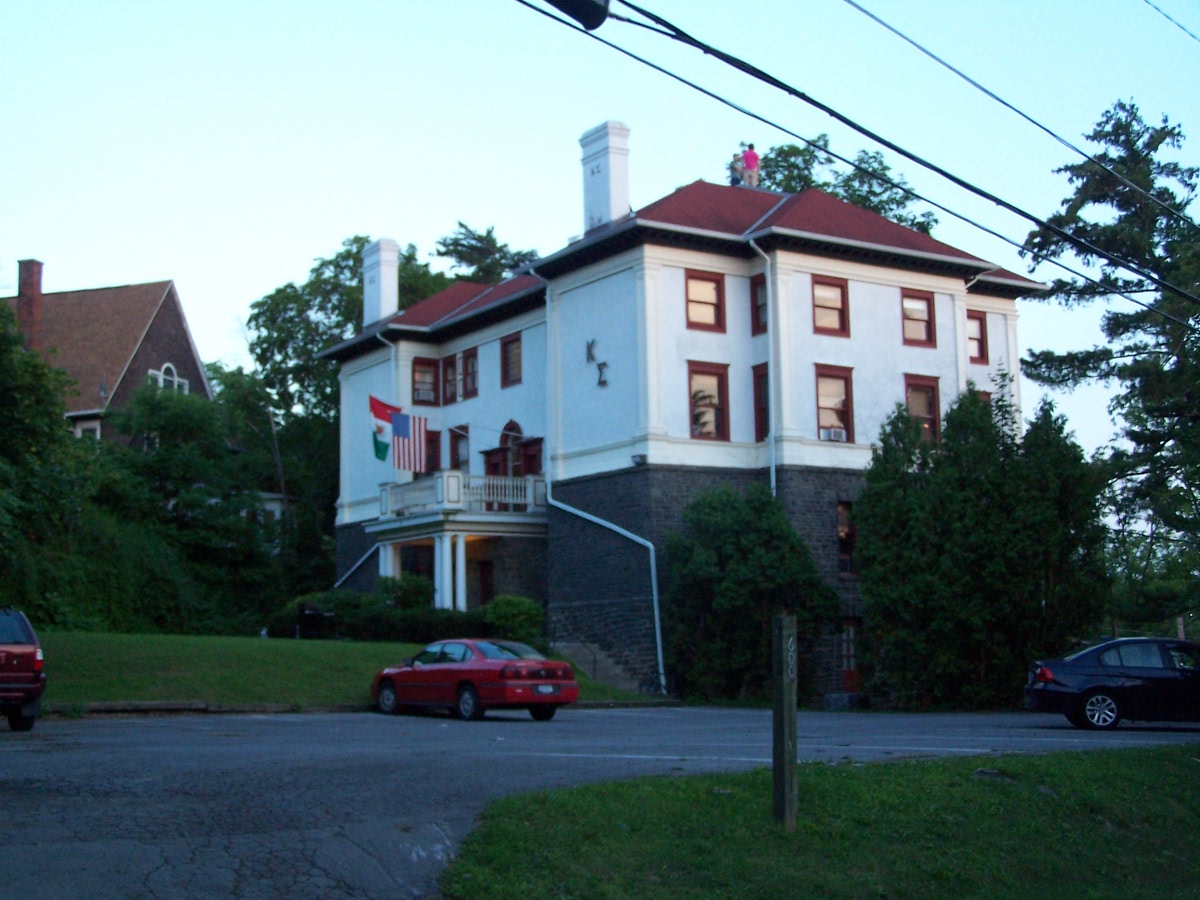
Kappa Sigma fraternity will be shut down at the end of the academic year by their national governing body, according to Associate Dean of Students for Fraternity and Sorority Affairs Travis Apgar. He added that the chapter would cease to be recognized by the University. The fraternity will be closed after violating sanctions that were imposed on them by their national organization just over a year and a half ago.

Apgar said that approximately a year and a half ago, Kappa Sigma was found in violation of their national organization’s “risk management policy” and were told that they could no longer host events with alcohol, among other sanctions. When they violated this order sometime afterward, their national organization placed them under a “trusteeship,” which required them to have any events approved by a regional manager from the national organization, according to Apgar.

Apgar said that the fraternity, however, violated this sanction too. He said that a couple of weeks ago, Kappa Sigma hosted a party with alcohol without alerting their regional manager or registering it with the Interfraternity Council — in violation of both their national’s sanctions and IFC regulations. When the Office of Fraternity and Sorority Affairs found out, they alerted the chapter’s national, who decided to shut them down.

While leaders in the chapter do not dispute these facts, they did express disappointment at how their national governing body found out about the incident.

At their most recent party, a fire alarm went off and the fire department came to investigate. Rather than allow the OFSA to learn about the incident themselves, the fraternity came forward and told the OFSA. Kappa Sigma President Eduardo Garcia ’11 said that he was assured by Assistant Dean of Students Kara Miller that the OFSA would not alert the national governing body about the party unless a judicial hearing was held.

Though no hearing was ever scheduled, Garcia received an e-mail shortly after from the chapter’s national governing body that they would be closed down.

“We were blindsided,” Garcia said. “The OFSA didn’t even have the decency to send us an e-mail telling us that they were planning on alerting national.”

Apgar, however, denied that the agreement ever took place, adding, “It was not something I was ever aware of.” Miller could not be reached for comment.

In any case, the fraternity will likely remain closed for at least the next few years, though Apgar said that he believed the fraternity would be back, just “not in the immediate future.”

“This chapter has been around for many years and there are a lot of people who have put a lot of time and money into it, I think it will eventually be back,” he stated.

***

This one came almost out of the blue. I began to suspect something was up when I began to see facebook statuses yesterday from Kappa Sigs I know expressing sympathy for the chapter (my first thought was that there was a casuality of some sort). But this…Kappa Sigma was to my knowledge a fairly well-respected, low-key chapter. I don’t think anyone would’ve seen this coming.

Speaking as someone from a chapter whose national and local always seemed to have had strained relations, I am strongly sympathetic towards the Kappa Sigs sudden shutdown, but it doesn’t seem it came without its warnings. The decision to throw a party when you could be shut down for doing so is incredibly irresponsible. But I’m also appalled by the OFSA though. While Travis Apgar is head of the office, Kara Miller is usually the primary contact for houses. For her to give her word and for Apgar to notify the national either means there was horrific miscommunication or someone just got the shaft. Whatever the case, this has been handled poorly and is a big breach of trust between chapters and the OFSA. I wonder if they did it anyway as a show of force to prove that they could put the hammer down on unruly chapters. Regardless, poor display of authority, and poor decision-making on Kappa Sigma’s part.


Unsurprising News: Pike To Be Shut Down

2 05 2010

As many expected, Pi Kappa Alpha will be shut down by the university. After an undetermined length of time, they will be able to reapply for recognition by the university. Considering they have a very expansive and influential alumni organization, expect that to take only a year minimum, until the last current members are graduated at the latest (which would be summer 2012). Still, sucks to be associated with Pike right now.

Then again, it isn’t a good idea to be associated with Alpha Delt right now either. Especially in an age where “tips” can get you a page on the Huffington Post for hazing pledges. I doubt Alpha Delt will receive much of a punishment though. When your alumni include John Dyson ’65 (for whom a number of scholarship and part of Mann Library are named), Kent Hubbell ’67 (Dean of Students), and Knight A. Kiplinger ’69, you’re pretty well assured that punishment will be a figurative slap on the wrist.


News Tidbits 4/14/10: South Hill Expands

15 04 2010

Two things, one dealing with IC and the other with the neighboring South Hill business campus. IC is looking to expand student housing (partially due to the record number of students they enrolled) by adding 280 units of apartment housing to its South Hill campus. Meanwhile, the South Hill Business Campus is seeking approval to construct three buildings totalling 190,000 square feet, which would be built as needed. The business campus was once the regional headquarters of the National Cash Register company (NCR) and was completed in 1957 with an addition in 1975. While it once housed over 1,000 employees, the building was sold to a French company (Axiohm) in 1991, and in a fine showing that they never really cared for local interests, outsourced most of the manufacturing work. By 2004, the factory was only 25% occupied, so a group of investors made an offer to buy the place and operate it as a sort of business incubator for company needing a varying amount of office and maufacturing space. Today, the facility is 84% occupied, so it looks like they did a good job marketing and updating the building. One building would be up by 96B, the second attached to the west end of the current building, and the last just south of the current building.

***

From the Ithaca Town Planning Board agenda:

Consideration of a sketch plan for the proposed South Hill Business Campus Master Plan located at 950 Danby Road (NYS Route 96B), Town of Ithaca Tax Parcel No.’s 39-1-1.2 and 39-1-1.1, Planned Development Zone No. 12 and Office Park Commercial Zone. The Master Plan includes the development of three new buildings (totaling +/- 197,000 GSF), a new loop road, additional storm water facilities, and new landscaping. The new buildings would contain a mix of office, manufacturing, and research and development uses, and would be phased in one at a time as needed. South Hill Business Campus LLC, Owner/Applicant; Miles G. Cigolle, A.I.A., HOLT Architects, P.C., Agent.

Consideration of a sketch plan for the proposed Circle Apartments Expansion located at 1033 Danby Road (NYS Route 96B), Town of Ithaca Tax Parcel No.’s 43-1-2.2, 43-1-2.3 and 41-1-30.2, Multiple Residence and Medium Density Residential Zones. The project includes the demolition of four existing apartment buildings (32 bedrooms) along with the removal of multiple existing parking spaces on the property to allow for the construction of 78 four bedroom apartment units in nine new buildings (net increase of 280 bedrooms), construction of an approximately 2,500 square foot expansion to the Community Building, and a net addition of 106 parking spaces on the property. The project will also include new storm water facilities, walkways, drives and landscaping. College Circle Associates, LLC and Ithaca College. Owners/Applicants; Herman Sieverding, Integrated Acquisition & Development Corp., Agent.


Cornell in the Limelight for Recent Spate of Deaths

18 03 2010

A short list:

Fox News, CNN, BBC News, MSNBC, Slate (who tied it into an older article from 2006), The New York Times, The London Times,

Fox News, ABC and CBS and the L.A. Times are all running the same written article regarding Cornell’s recent losses. According to CNN, six of our student fatalities since August have been suicides.

Of course, most news outlets give registered users an uncensored chance to express their opinion on articles such as the Cornell events. Some of these are so offensive that they should never be reproduced. But to sum it up, apparently, some combination of allowing women on campus/not being a good Christian school/too much emphasis on grades/natural selection/recreational drug use/Greek life/no social life/the weather/it’s in upstate New York/ caused it to happen. This reminds me why I usually avoid the comments section on these websites. The most embarrassing part is watching posters claim they’re Cornell alumni and then argue about how great or terrible the school is/was during their time of attendance.

Cornell loves to be in the news, but I’m sure they’d rather be in the headlines for almost anything but the recent series of tragic deaths.