News Tidbits 2/10/14: A Big Project Scouts Out South Hill

10 02 2014

troyrd1

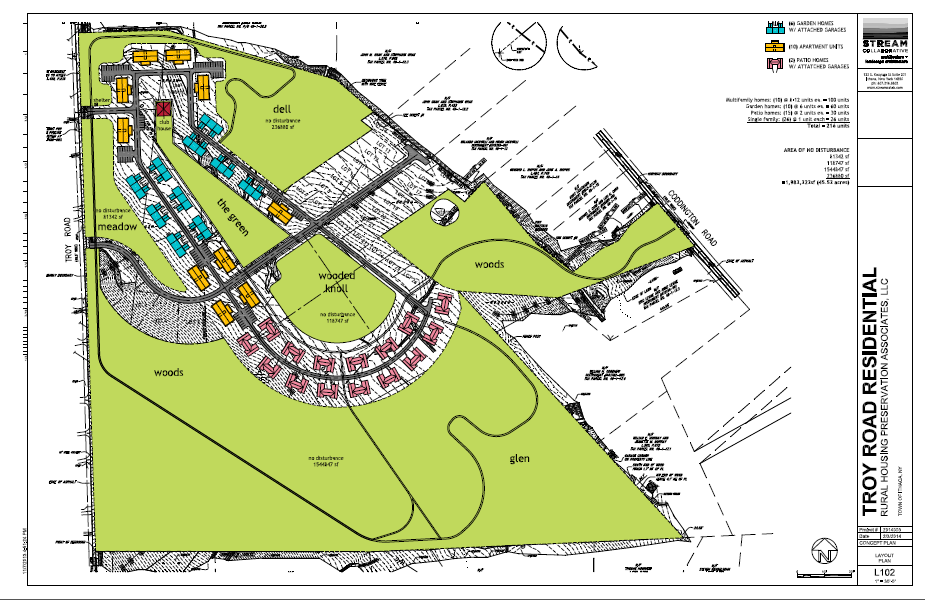
Well, I suppose if there’s demand, and a lack of easily developable to the north, west and east, suburban developers would have targeted South Hill for big projects sooner or later. Fresh from the press comes news of a proposed 216-unit development for the town of Ithaca, on two lots  just east of Troy Road, a little north from its intersection with King Road. The PDF of the plan is here, in the town agenda.
troyrd2

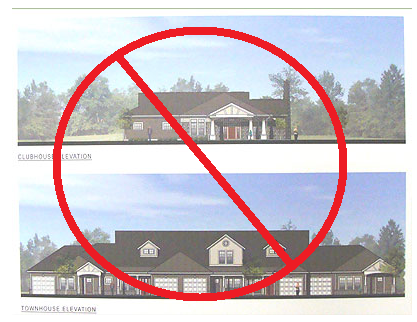
The proposed project is virtually all residential, divided up into 26 single-family lots, 80-120 apartments, 60 garden homes, 30 patio homes, and a 5,000 sq ft clubhouse with your lease office and a few office spaces for rent. To me, it has the airs of a cut-and-paste suburban development. For the record, a garden home is a cute way of saying townhome,  and patio homes are (in this case) one-story duplexes. The architecture theme is “rural agricultural” style: the apartment buildings will look similar to barns, and the patio homes will resemble small farmhouses. The target markets are empty nesters, and twenty-and thirty somethings (grad students and young professionals).

As easy as it to poo-poo this, there is a worse alternative – that which is currently okay under the zoning, which is 70 to 90 lots of low-density residential sprawl. This project, if it gets to proceed as a Planned Development Zone (PDZ) a la Ecovillage, would only disturb about 22 of the 67 acres the two lots comprise.  The project is being developed by Rural Housing Preservation Associates, which looks to be an awkward corporate offspring of a few development companies in the Northeast and Mid-Atlantic, and has enlisted the help of local companies STREAM Collaborative, Whitham Planning & Design, and Hunt EAS. Honestly, the armchair architecture critic in me is okay with those choices.

Something like this will have a multi-year buildout, and there’s been considerable development on South Hill in the past several years. But not anything on this scale. It’ll be interesting to watch this project evolve as it moves through the bureaucratic process.


The New Gannett Student Health Center

31 01 2014

gannett2

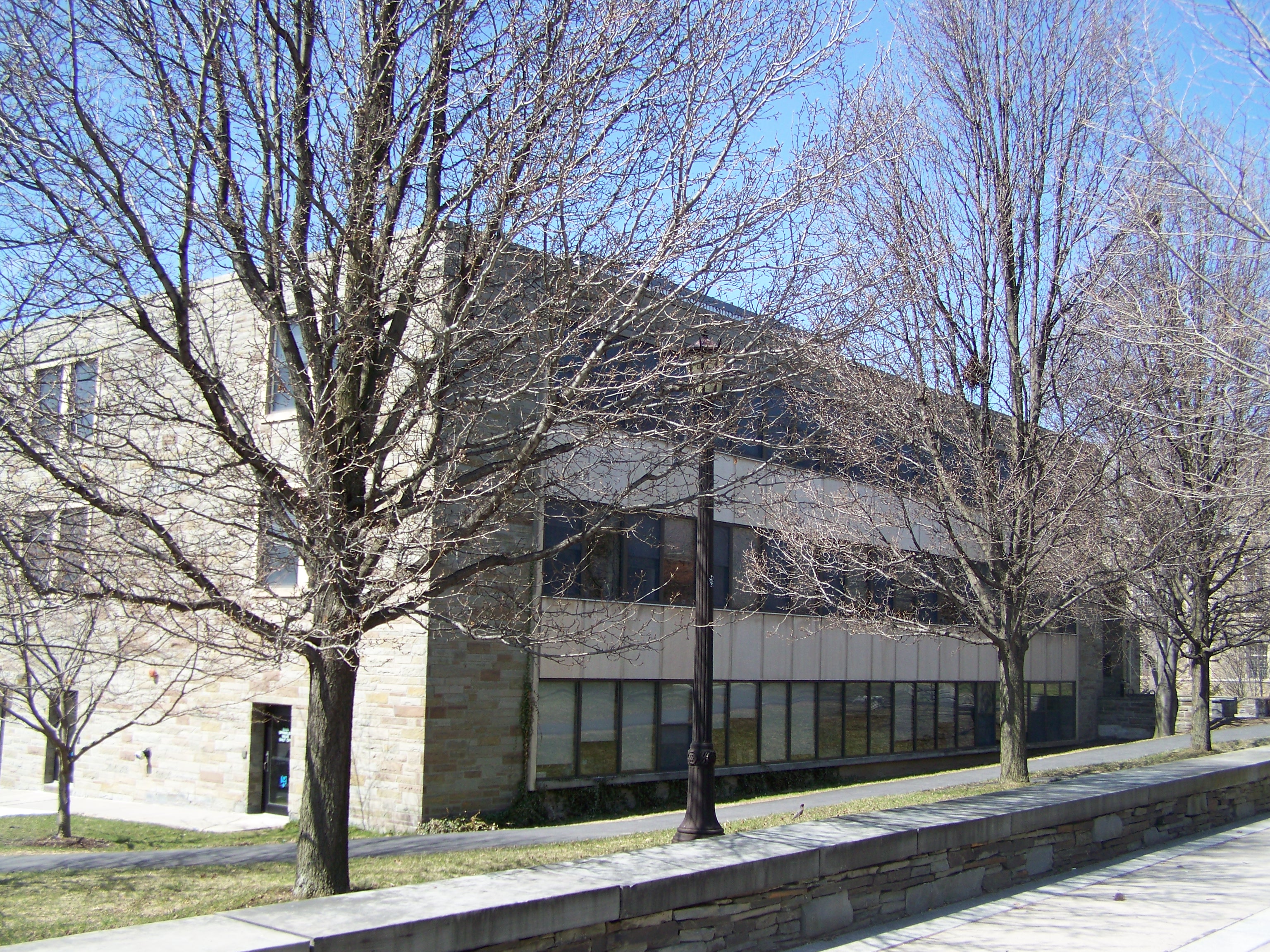
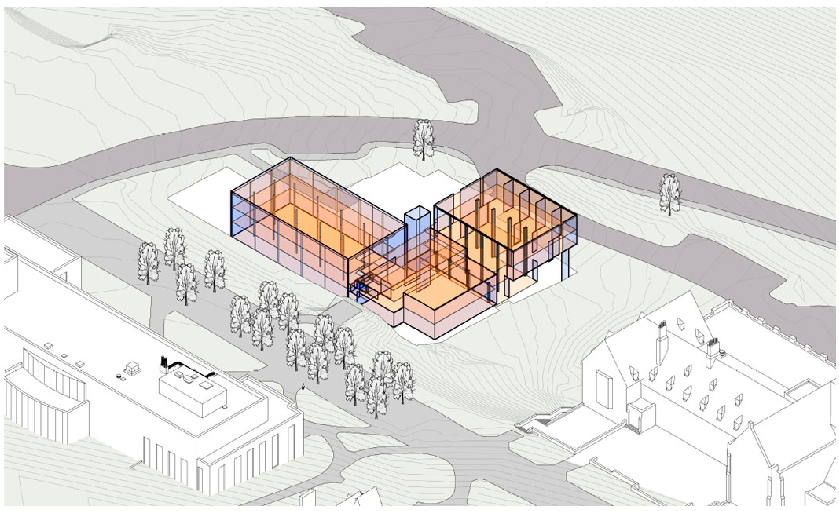
Copy of the proposal, including description, renderings, and all the other bells and whistles here. Note that this isn’t a total teardown and replacement, but an addition onto the previous building. Perhaps the biggest change is the addition of a large, curved structure on what is current Gannett’s parking lot. The feeder road to Willard Straight will stay in place, going under the new addition, and the ambulance bays will also be located here.

gannett3

Note how it says Levels 1 and 2. The elevation changes allow for a partial below-grade section under the main level that connects with Ho Plaza’s walkway. Above the road will be three levels of offices and exam rooms, with a mechanical penthouse on top of the new structure. So 4/5 floors, depending on your viewpoint.

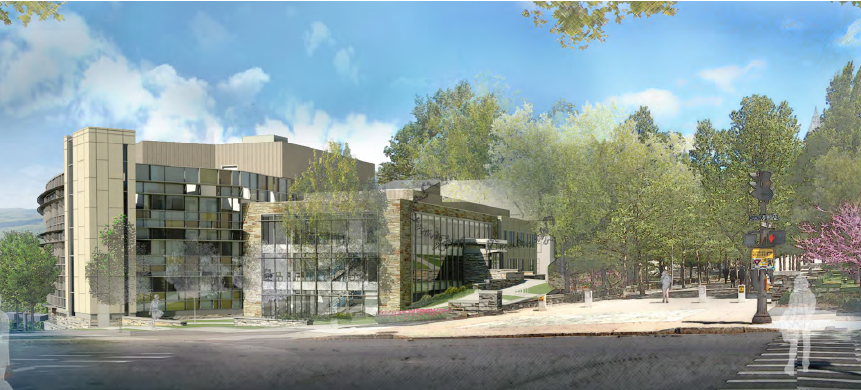
Although it looks like some of the original structure will be preserved, it gets a major facadectomy. Larger windows and and a more “contemporary” entrance will be built on the Ho Plaza side. About the only similarity to the current structure is the use of Llenroc stone for the outline.

gannett4

The current entrance gets replaced with a two-story addition (shown on the right), and the 70s addition also gets a revised facade (but remains mostly intact).

gannett5

Probably my biggest complaint is the subtle multi-hued glass panels. It looks cheesy. My armchair critic says to stick with one panel color, ideally the a neutral grey/smoke tone. Other than that, it’s standard Cornell fare for the 2010s – a hypermodern glassy box, with the use of stone to try and harmonize it with the surrounding plaza and structures. The architect of record is local architecture/alumni-filled firm Chiang O’Brien.

As previously noted, the addition will add about 38,000 sq ft to Gannett, for a total of 96,000 sq ft. The projected cost is $55 million, and the target completion date is October 2017.

100_6620


The Cornell Sesquicentennial Commemorative Grove

18 01 2014

grove2

When Cornell celebrated its centennial in 1965, there was a week-long series of lectures, many congratulatory letters, and in proof that some things never change, plenty of solicitations to alumni to donate to the $73.2 million donation campaign (the commemorative Sun issue shows a different angle of the same 1960s era campus plan on page 20 that I featured on the blog a few years ago). Offhand, I’m not aware of anything was built in the name of the anniversary, but I guess for its 150th, Cornell has decided to give itself something for the occasion.

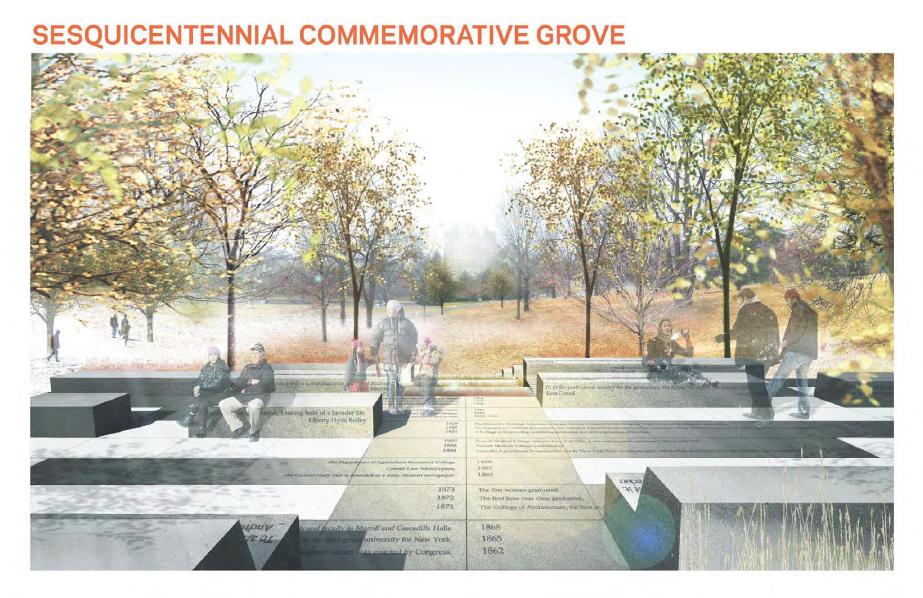
The project is a landscaped area, with the working name being the overly long “Cornell Sesquicentennial Commemorative Grove”. Taking full advantage of symbolism, the grove is strategically cited directly west and downslope of the statues of Ezra Cornell and A.D. White on the Arts Quad.

grove1

The project itself, which as been briefed previously over at Ithaca Builds,  consists of stone benches inscribed with quotes by famous Cornellians, pavers will with a timeline of significant events in Cornell history, and a sort of mood lighting by rigging fixtures into the trees. The overall size of the installation is about 1,700 sq ft. The architects of this plan are campus favorites Weiss/Manfredi, the same people doing the Co-Location building at the Tech Campus, and the renovations and additions to the vet school. I imagine Cornell would like this project done in time for Alumni Weekend 2015, which would also mark my first true Cornell reunion (5-year).

grove3

A full rundown is available here, but it reads like one long advertisement for the university. On the bright side, at least the university’s landscaped spaces then to look more visually pleasing than its constructions.  I have hogh hopes for this one, it could be a nice place to spend a June evening.


News Tidbits 1/11/2014: Unhappy Faces on Roosevelt Island

11 01 2014
tech2

Image Property of Cornell University

Full disclaimer: I’ve never been a fan of the tech campus. I’ve also never been a fan of Morphosis/Thom Mayne’s work.

New York is a different creature when it comes to approvals. This isn’t Ithaca, where many folks feel that Cornell’s large presence makes the local community behooved to approve whatever the university wants to build. Here, people tend to be a lot more vocal, and perhaps a lot more negative. Folks in New York are especially wary of Thom Mayne because of his involvement with the 41 Cooper Square project, a building that has been seen as one of the underlying causes of the financial crisis experienced by local college Cooper Union, which has led to an end of their famous “free tuition” policy.

Last month, Cornell revealed the first phase of the tech campus, which Curbed NY has covered in extensive detail. The first phase has three components; 1) a 150,000 sq ft, 4-story building designed by Thom Mayne (the building lower left; the roof is covered with solar panels, or what Thom Mayne calls a “lily pad”) 2) A six-story, 200,000 sq ft “Colocation Building”, which is designed for corporate and school interaction. This is the building to the right, and is designed by another Cornell favorite, Weiss/Manfredi Architects, and 3) The residential building, represented by the tall featureless box. A design has not been finalized, but is being handled by developer Hudson Companies, in conjunction with Handel Architects. This build will house about 350 units, with larger units for faculty. Construction for the residential tower is proposed for a 2015 start. The campus is wrapped in green space by architect James Corner, who designed a campus without walls and to invite the public to check the school out, and all of this using an Skidmore, Owings and Merrill master plan.

Community groups are difficult to please, however. Although the net zero energy aspect was pleasing, complaints were raised about the large loss of trees, a lack of equipment for the hearing-impaired in the new academic building, and a lack of cohesiveness as the result of so many starchitects trying to compete with each other for attention. Regardless of the complaints, construction is supposed to be underway starting this month. New York and Bloomberg have previously stipulated that the first building must be open by 2017, or Cornell will face major penalties.

On the bright side, Cornell’s getting crap tons of money thrown at its New York investments. Following Chuck Fenney ’56’s $350 million donation to the tech campus, former Qualcomm Chairman Irwin Jacobs ’56 gave a $133 million donation last April, and total donations to the tech campus exceed $500 million. Weill Cornell has not been left out by all this tech campus attention; they were the recent recipients of a $75 million donation for cancer research, courtesy of former CEO of Grey Global Group Edward Mayer ’48 and his family.

tech1

Image Property of Cornell University


Miscellaneous Project Updates, 12/2013

9 01 2014

1-2-2014 356

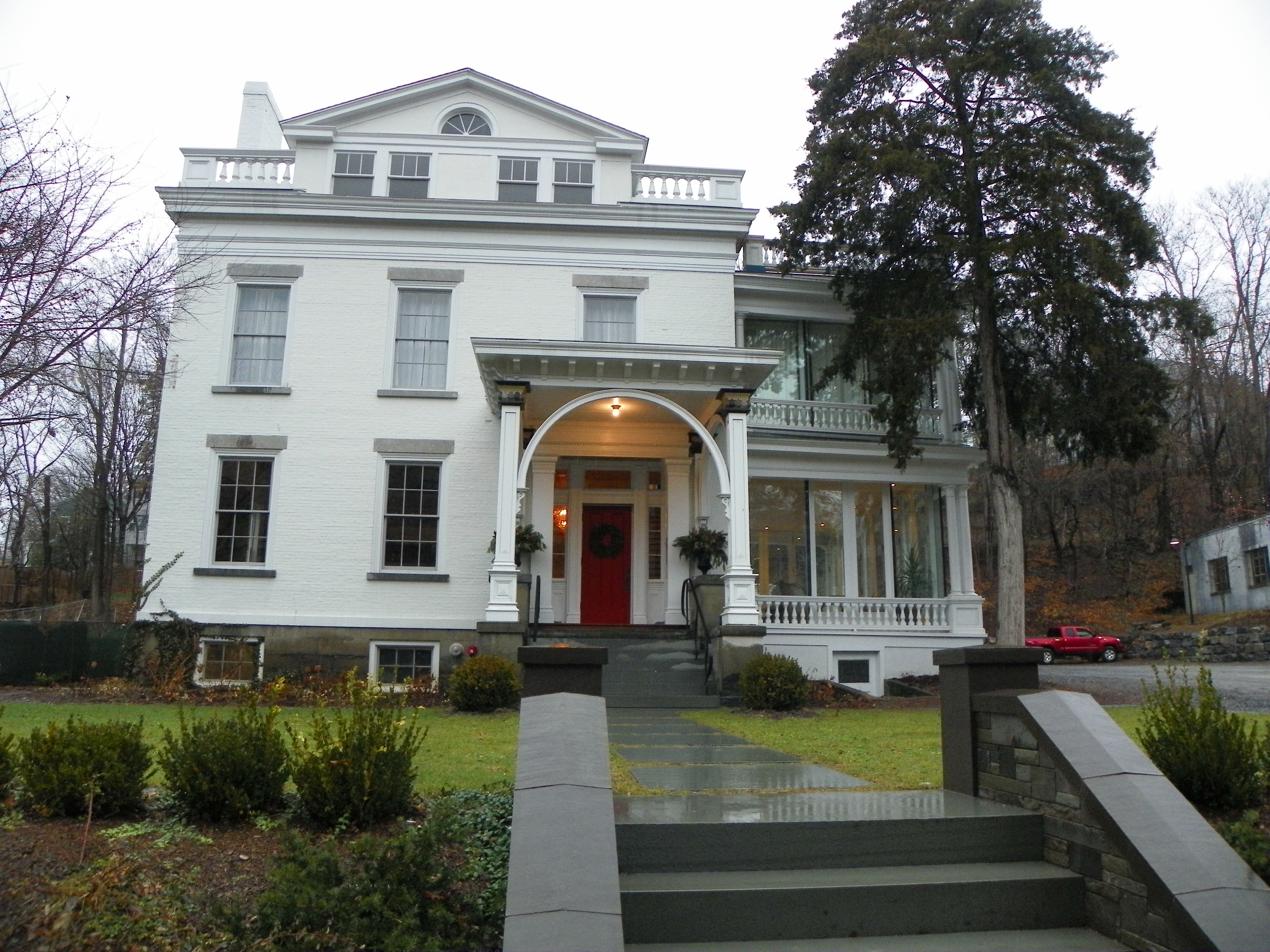
After forever and a day, the Argos Inn is finally open, and the “Bar Argos” watering hole opens to the public January 17th. The high-end boutique hotel offers 10 choices of rooms to the deep-pocketed visitor.

1-2-2014 357

Apart from some underground telecommunications that still need to be tweaked, phase II of the Commons renovation, the utility rehabilitation and replacement, is complete. Surface improvements (i.e. the pretty things) will begin this spring, or sooner if the rest of the winter turns fairly mild (not likely).

1-2-2014 359

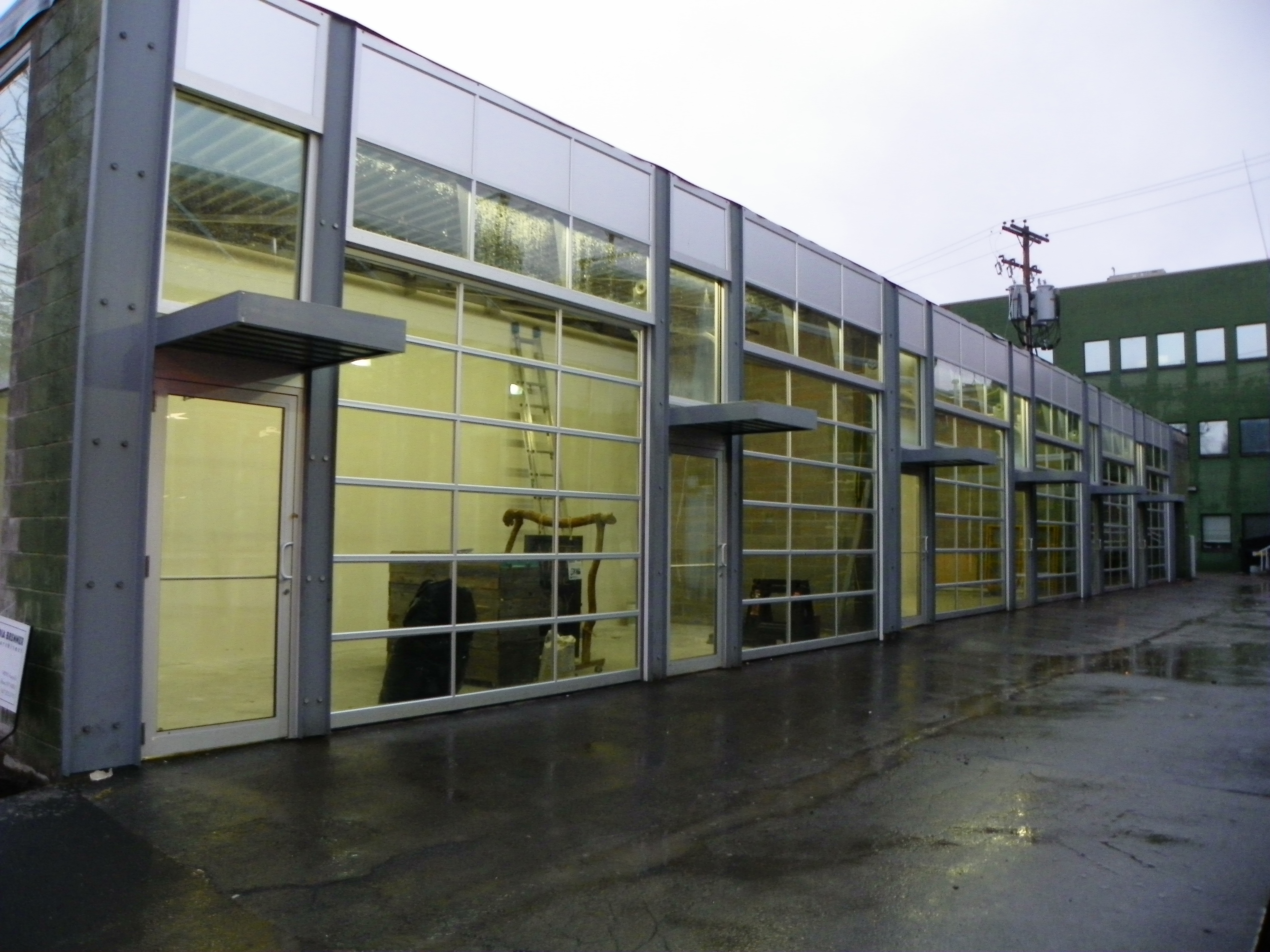
Press Bay Alley. It’s a project I’ve never really covered on this blog, but Jason’s kept a watchful eye on over at Ithaca Builds. What we have here is a rather unusual concept, urban micro-retail, which is becoming popular as a form of urban infill in larger walkable communities. The recent renovated space right across the alley has an “entertainment venue” proposed, which would complement retail well. It’s a great idea as a sort of micro-business incubator; if a retailer’s concept works out, hopefully the retailer will move to a larger space within the community.

1-2-2014 364 1-2-2014 363

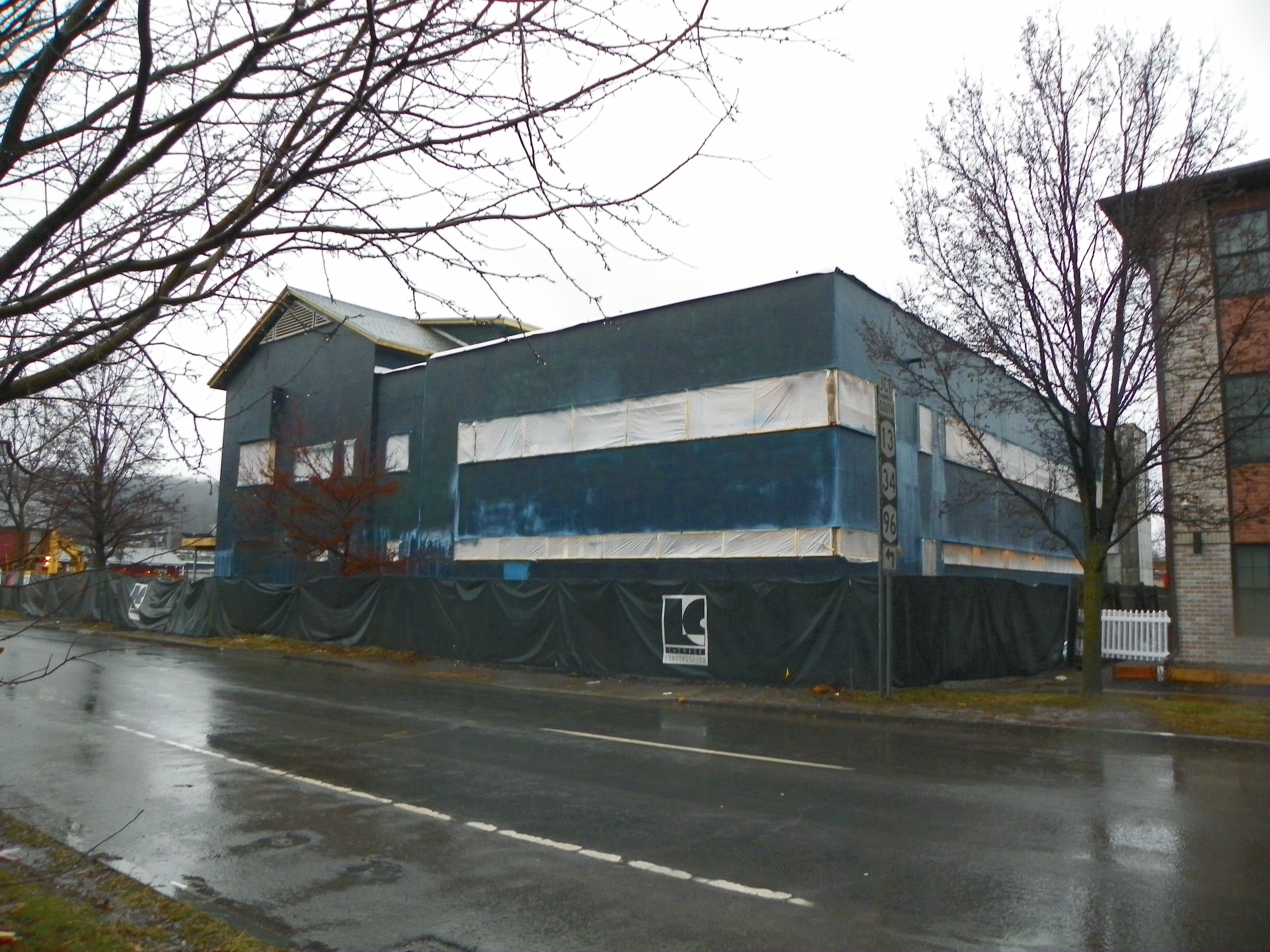
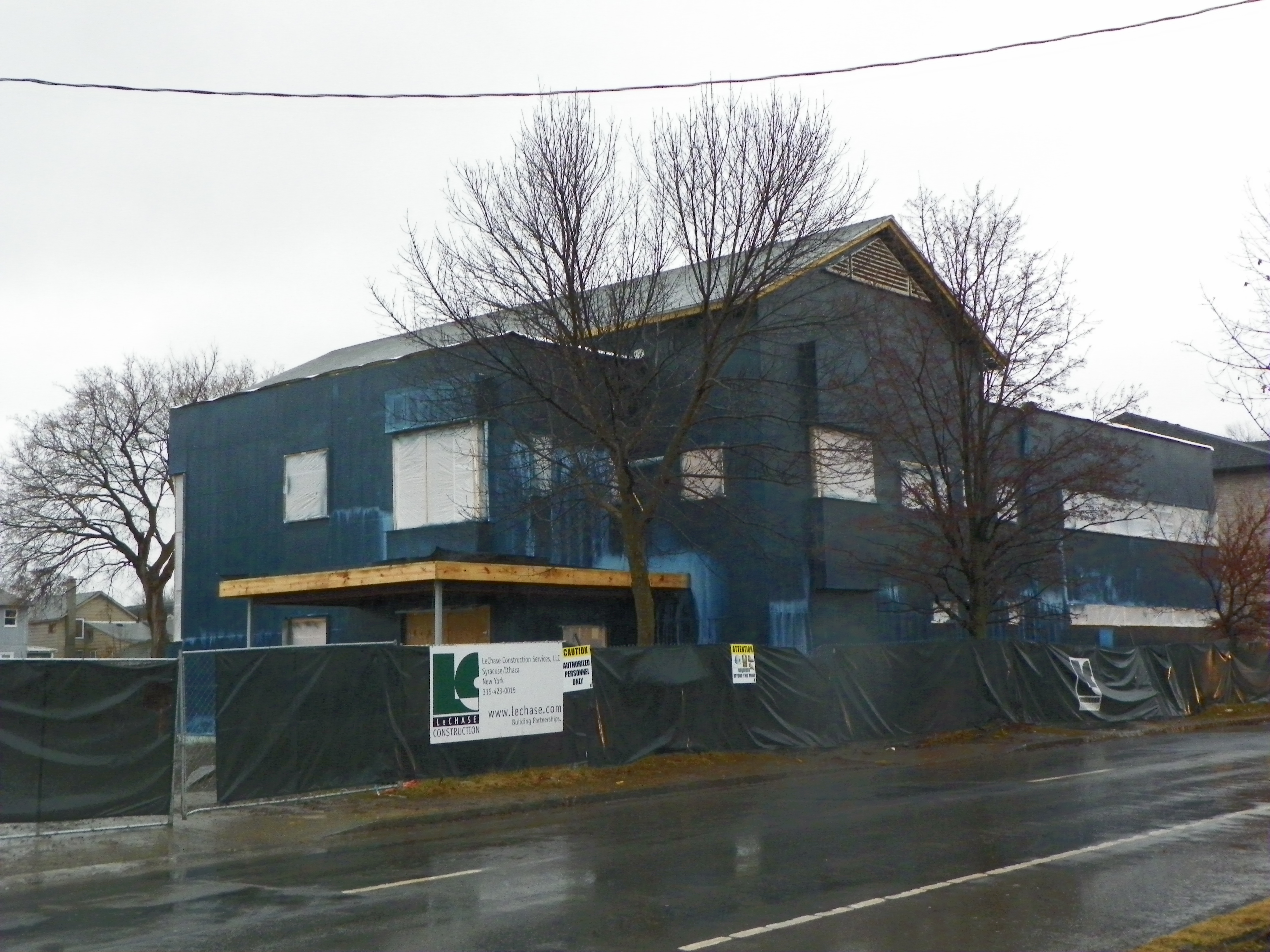
Sheathing and waterproofing are complete at Planned Parenthood’s new 16,000 sq ft location (not 18,000 as I initially wrote last year), located northwest of downtown on West Seneca Street near Meadow. Windows have yet to be installed, (as of December 30th), but I would say they’re not far off. Planned Parenthood hopes to have the $6.12 million building completed by May 2014.


Yet Another Makeover for Statler Hall

16 12 2013

100_5157

Another makeover is planned for a section of the Statler, this time the circa 1987 PoMo front entrance space. As noted by Ithaca Builds, the addition, at a cost of $2.4 million, calls for a modernized pop-out addition and entrance on the west face of Statler Hall (the side facing East Avenue) with new landscaping and pedestrian features. The project adds a relatively modest 1,619 sq ft to the Statler, with 319 sq ft on the first floor, and 1,300 sq ft on the second floor. The exhaustive summary of the project is included on their website here, with more renderings here. The timeline for construction is a short three months, May to August 2014.

statler1

This is the third renovation in the series, all by Philly-based KSS Architects. The first phase involved the construction of the Beck Center in 2004, which added 36,000 sq ft and renovated 16,000 sq ft on the east wing of Statler Hall. The second phase added 14,000 sq ft on the south face of the Statler, and was completed in 2010. Since the Hotel School is landlocked with little hope of re-purposing nearby property, the procedure with new structures always involves additions and renovations, rather than totally new buildings as we would see in other schools. The Statler was first built in 1949 on what was previously four homes of faculty row (at one point, a few dozen faculty had homes on Cornell campus, other examples include what was once Grove Place on what is now the Engineering Quad, and another cluster of homes where Savage-Kinzelberg Hall stands today). The auditorium was added to the south end in 1956, and further renovations were undertaken in 1959 and 1968. The hotel tower was added along with this front entrance in 1986/87. If history is any indicator, his will not be the last addition or renovation.


News Tidbits 11/17/13: Hotels and Hazing

18 11 2013

100_1699

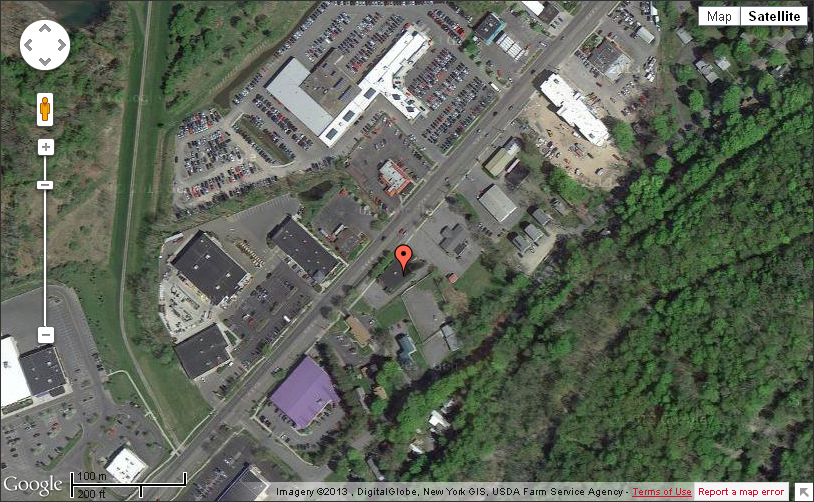
After a lull in new development proposals in the city of gorges, something new has come to the table.  Down in big box land, another hotel seeks to join the ten-year old Hampton Inn (66 rooms) and the recently-completed Fairfield Inn (106 rooms). According to Jason over at Ithaca Builds, the proposed “All Suites Hotel” at 371 Elmira Road calls for a 4-story, 54′ tall, 11,769 sq ft hotel with approximately 76 rooms, proposed for the site of a vacant office building and an auto body shop (both of which would be demolished). Looking at the aerial below, its proximity to the new Fairfield (upper right) is quite clear. Planning board agenda here, map of site here, site plans here, elevations/renderings here.

allsuites1

Although no brand is stated in the proposal, I suspect it might be a part of the Holiday Inn Express brand owned by Intercontinental Hotels Group. For one, the hotel is in the 60-80 room range as recently-built HIE hotels (see the recently-opened 74-room Holiday Inn Express in Cortland for example).  Reason number two, Intercontinental Hotels Group will lose its Ithaca presence once the license with the downtown property expires in January, and the Ithaca hotel market is generally strong enough that they might wish to maintain a slice of the hospitality market.

allsuites2

Although it’s pretty standard chain hotel fare, architectural work is being handled by Buffalo-based Silvestri Architects. Additional work will be undertaken by Optima Design and Engineering, also out of Buffalo (no surprise, the developer’s LLC also has a Buffalo address). Both organizations have previous experience with chain hotel construction and design.

Apart from that, other proposals in the city include a small amount of infill at the Statler Hotel, a two-family home on West Hill, and a 10,384 sq ft commercial building on Cherry Street. Ithaca Builds notes the Cherry Street proposal is a Crossfit Gym, to be housed in a rather industrial-looking 1-story structure with a pitched roof.

In other news, Cornell has beaten a proverbial hornet’s nest with a stick. The Cornell Sun published an article last Friday that the men’s lacrosse coach would be dismissed from his position.  The decision is widely suspected to be related to the suspension of the Lacrosse team from fall exhibition games after a hazing incident where allegedly freshman were forced to chug beer by senior team members. Unlike fraternities, where one merely has to wait before some chapter does something stupid, the lacrosse team is respected by its peers and a moneymaker for the university, so this seems unreasonably harsh. Given the commentary on the article, Cornell’s heavy-handed approach appears to have its share of critics. As a personal opinion, I feel the lacrosse team is being made an example of, to scare the other teams into playing nice. In the long run, I don’t think there will be much uproar until the university starts to go after large student groups outside the Greek system and athletics.  The more students who feel Cornell breathing down their necks, the more they’ll raise a hue and cry.

UPDATE 1/30/14: And it is in fact a Holiday Inn Express. I’m giving myself a gold star.


A Bigger Vet School

10 10 2013

cropped-100_1794.jpg

I’ve only ever been in the vet school once, to deliver an invitation for a wine and cheese event to an alum of my fraternity house who worked as a researcher at the vet school.  When it came to getting photos, I would just take advantage of my Bradfield perch, take my photos, and that was that.

The vet school is not unlike the rest of the school in that it’s been built in spurts. The original vet school was in James Law Hall, where Ives Hall stands now (and even prior to that, it shared space in the north wing of Goldwin Smith Hall, the old dairy science building). The vet school moved further east with the construction of Schurman Hall in 1957, and expanded with the Vet Research Tower in 1974, the Vet Education Center and Vet Medical Center in 1993 and 1996, and the East Campus Research Facility and Vet Diagnostic Lab in 2006 and 2010 respectively.  Essentially, the vet school is like many human hospitals, a mish-mash of additions and new wings/buildings, incoherent and even incompatible. The completion of the the  VDL building left a large amount of vacant space in Schurman Hall that was difficult to repurpose, hence the approved plan – demolish 68,000 square feet of space, build 65,000 square feet of new space, and renovate 33,000 square feet of existing space, to be done in two phases with a combined cost of $63 million.

Looking east from Tower Avenue. Rendering property of Cornell.

Looking east from Tower Avenue. Rendering property of Cornell.

Given those stats, it seems like a misnomer to call it an expansion, but one of the effects of the reconstruction will be to increase the number of matriculating vet students in a year from 102 to 120 – and given Cornell’s #1 vet school ranking, they will not be lacking in applicants. Over four years, you have 72 more professional students – you’re welcome, Ithaca landlords. Among the details, the old auditorium will be torn down, and in its place comes the new Flower-Sprecher library, two new lecture halls, a new dining hall, large gathering spaces (i.e. yet another open atrium) offices, an expanded anatomy lab, and a green roof. The architects of this plan are New York-based Weiss/Mandfredi, who specialize in hypermodern glassy spaces.

Looking west from new courtyard. Rendering property of Cornell.

Looking west from new courtyard. Rendering property of Cornell.

As for the time frame, Phase I, which comprises the tear-down and new construction, will start in April 2014 and be completed in a 12-month time frame. Phase II, the renovation component, will commence at that time and proceed towards a tentative completion in October 2016. I will already be beyond my 5-year reunion, so that kinda freaks me out.

Straying a bit here, but I’ve heard from my vet school friends that the market isn’t absorbing new grads like it used to, and not at the salaries that it used to. A for-profit school planned for Buffalo was recently cancelled. But, I suppose for the #1 school, these are concerns that the college is reasonably shielded from. Adopting a dog in the next couple years is on my priorities list (if I can ever establish enough of a schedule that makes me feel like I’d have adequate time to love it), so in my totally uneducated opinion, more vets is fine by me.


News tidbits 10/2/13: Old People and Affordable Housing

2 10 2013

A smattering of news articles worth noting, but not worth going to the trouble of giving their own articles…

lanpres_canc

1. Lansing Reserve is dead. The 65-unit project slated for a wooded parcelnorthwest of the intersection of 13 and Warren Road has been bought out by the village of Lansing, which intends to use the space as a “park”. The project, originally proposed in early 2011, has been beset with issues since the first public meeting, with concerns of traffic and wetland protection and “ruining the unique of [the] village”. Apart from Wal-Mart, it’s probably the only project I’ve seen proposed in recent years that the locals created their own websites and exaggerated figures/renderings in their efforts to oppose the project. Lansing town and village seemed to have struck an anti-development tone in the past several months, with this and the cancellation of the town’s sewer project (again).

2. Meanwhile, the same two groups that proposed Lansing Preserve are now looking to develop a parcel in the town of Ithaca, on West Hill near the hospital (aka the Biggs property). The town put out a request for bids on the parcel in late summer 2012, which I covered previously. Nothing formal proposed yet, but the project is expected to contain about 60 townhomes in the affordable housing market range (30-90% of local median income). Shades of Lansing playing out here, as the anti-development Ithaca West neighborhood group has been opposed to the sale of the parcel, let alone its development (the reasons cited – traffic and an increase in crime). However, their stance pits them against Ecovillage and their connections, so this should be an entertaining show. Ithaca Builds provides more coverage here.

3. Deep-pocketed retirement facility Kendal at Ithaca is preparing an expansion of its own. The 212 unit (indepedent living) and 71-bed (assisted/skilled care) facility plans to add 24 more indepdent living units (the parcel allows a max of 250) and 13 more beds to its skilled care group. This would be achieved with the construction of a new 2-story apartment building and three new 1-story wings for the reconfigured skilled care space. Chiang O’Brien are the architects and the project should be completed in the spring of 2014. Kendal at Ithaca first opened in 1995. to by Cornell-centric readers, the only reason you might care about this is that the facility hosts a sizable number of retired CU faculty/staff.

-65+60+24 = +19 units. Well noted.

Kendal_1


News Tidbits 8/27/13: Gannett Expansion Gets Greenlighted

27 08 2013

100_6620

With the donation of $5 million from the chair of trustees Robert Harrison ’76 to launch the fund raising aspect of the project, the Gannett expansion has now solidified into a concrete project in the planning stages. Initial plans call for an increase in the size of the building from 38,000 sq ft to 96,000 sq ft, and a targeted completion date for October 2017 (which means the vast majority of kids that just started at Cornell this week will never see the building completed while students at Ezra’s university). I imagine that, giving a year or so for construction, and an expected price tag of $55 million (one-third of which will be funded via donations), that a couple of years of fund raising is more than enough time for some deep-pocketed alumni to throw their cash into the kitty, and end up with a waiting room or doctor’s office named for them in return.  Gannett Health Center opened its doors in 1955 (named for Frank Gannett 1898, the mid-century media titan), and expanded in 1979.

Proposals to expand Gannett have been floating around since at least 2005, and shows up in Cornell’s 2008 master plan. At the time, the plan called for a 90,000-130,000 sq ft building, which means that the above firm proposal falls within those nascent specifications. HOLT architects did a 2007 design study proposing a 119,000 sq ft building. It’s nice to see this one come out of the hazy ether of vague proposals and become a formal proposal. The next question, of course, will be what the design of the structure will be. Given the university’s trend, my inclination is to expect another hypermodern box.

Update 8/28: Ithaca Builds’ Jason Henderson has kindly passed on a link from Chiang O’Brien, a local firm started in 2012 by some former employees of also Ithaca-based HOLT Architects. The two follow similar themes, simple forms but big on geometric detailing, and most of their designs could be described as revamped modern or hypermodern. Looking at their website, I see some massing diagrams of the current facility, but nothing yet for what’s planned.

gannett1