News Tidbits 8/29/15: Stirring Pots and Stewing Minds

29 08 2015

210_hancock_62015

Short set this week. Things are relatively quiet for this week’s round-up.

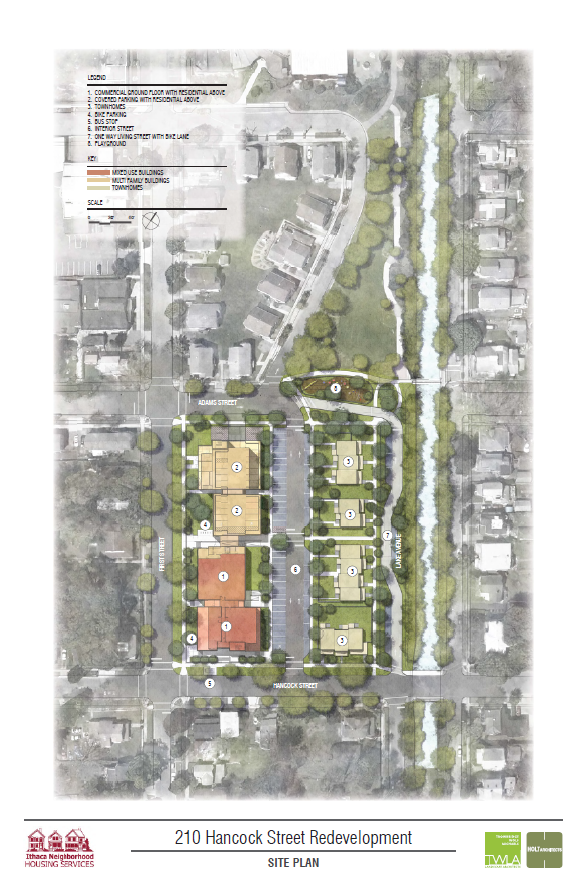
1. Leading off this week, Ithaca Neighborhood Housing Services’ (INHS) 210 Hancock development has finally received initial approvals, after a months-long, contentious debate. With the zoning variances granted, it was up to the planning board to issue preliminary approval, and compared to previous meetings, the discussion and decision was brief and uncontested. The plan is to have the project start construction in its phase (the commercial space, 53 apartments and the five rental townhouses) next May, wrapping up the following year. Initially, the time-frame was next fall, but getting approvals now has allowed INHS to move up the time-frame a few months. The seven for-sale townhouses will be built at a later date, with funding separate from the rental units.

The project isn’t necessarily a 100% sealed deal (and really, no project is until it’s complete). INHS has to submit an application for low-income tax credits as part of its financing package, and those are due in by October 6th. Only about 30% of applications receive funding (recipients will be announced in January 2016), but INHS has a pretty strong track record to go on.

After the feud over the Stone Quarry Apartments, INHS made an effort to be transparent about the planning process with the Hancock project and openly engage with the community. Unfortunately, it backfired. It’s looking like INHS’s next major proposal will end up out in Freeville, so apart from one or two houses that may end up in the pipeline over the next year or so, INHS isn’t likely to propose any further affordable housing development in Ithaca for a while.

state_st_triangle_v3_1

2. One controversy subsides, another heats up. The Planning Board was not amused with State Street Triangle at the latest meeting. Now, given the wide spectrum of opinions that runs through the area, the folks that serve on the board tend to be fair and even-keeled. Not gung-ho about all projects, but definitely not a part of the “I oppose anything that makes Ithaca look different” commentary that comes out of some quarters. So this week’s comments tend to be about as harsh as it gets without saying no outright.

I personally don’t like the “It doesn’t look like Ithaca” comment used for the Ithaca Voice headline, because a city isn’t a static object – buildings are built or replaced, homes are painted and renovated, and retailers change. The Ithaca of 50 years ago, or even 20 years ago, isn’t like the Ithaca of today or 20 years from now. Subjective comments are prone to pitfalls.

But that doesn’t change the fact that the size of this proposal makes a lot of people uncomfortable. The building can be built as-of-right (but board approval is still required before permits can be issued), but there might be a substantial benefit if Campus Advantage were accommodating of the concerns, especially with the tax abatement being pursued. For the sake of example, INHS was very receptive to incorporating suggestions in its 210 Hancock project, which really helped during the approvals process. A little more flexibility on CA’s part could make all the difference, assuming they can still make a decent return on investment. I’ve heard that there are further design revisions underway (whether they’re minor tweaks or major changes is not clear), and hopefully those will be put forth for review sometime soon.
east_hill_master_plan

3. Here’s a detail worth noting from the County’s last Legislature meeting – the following is a line from Herb Engman, the town supervisor of Ithaca, addressing the legilslature as he announced his intent to retire at the end of the year:

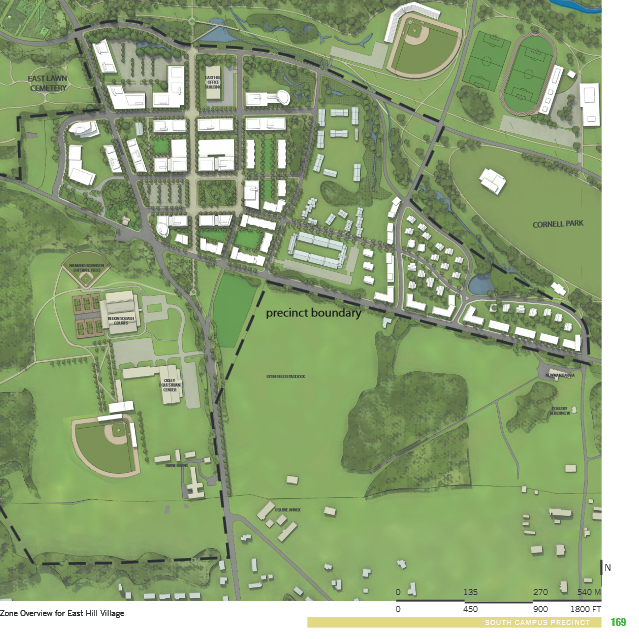
“Cornell is moving on its consultant to plan the first phase of redevelopment of the East Hill area”.

The wording is a little odd, but my impression is that the consultant is moving forward with planning the first phase of the “East Hill Village“, or whatever Cornell’s planning staff are calling it these days. Actual plans are probably still several months or a year out, not to mention the months of trying to get approval, and then financing/construction. But given the rapid rise in enrollment at the university, any movement towards accommodating more students and reducing the strain on municipalities is welcome.

ith_family_cost_1

4. There will be a full-fledged article on this in the Voice next week, but for those looking to kill time, here’s a “family budget calculator” from the Economic Policy Institute think-tank. There are several ways to calculate affordable housing, but many don’t take childcare into account, so it’s worth seeing just how much affordability changes when children enter the picture.

Word to the wise though – EPI’s data has some flaws. If you compare this to AFCU’s living wage calculation for adults with and without children, you’ll find some sizable differences.


News Tidbits 5/9: Changing Elevations

9 05 2015

cinema_drive_1

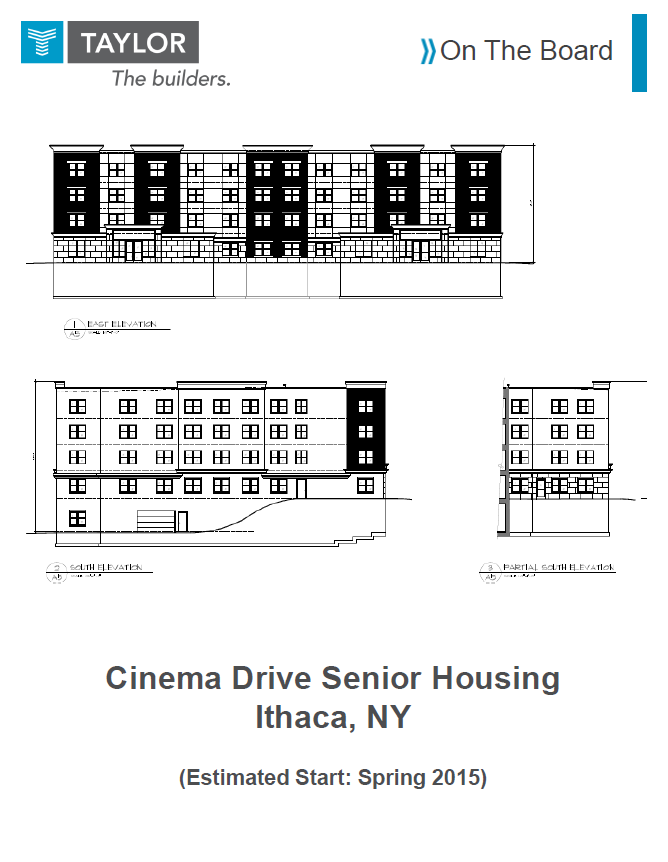
1. Looks like the CU Suites project is in fact the render shared by Taylor Contractors. Readers might remember these elevations from last week for a proposed “Cinema Drive Senior Housing”, but that the image didn’t match up with the proposal, a 3-story, 43,000 sq ft structure. According to the village of Lansing’s Board of Zoning Appeals agenda, the project is now a multi-story mixed-use building with a size of 87,515 square feet, which looks about right for the building proposed above. The project is seeking rear yard setback and height variances for not enough of a rear yard parking setback from the lot line, and for exceeding the maximum height allowed by zoning (which is 35 feet).

Doing some back of the envelope calculations, if one calls only the top three floors senior housing ((3/4.5) * 87515 = 58343) and uses the rough guidelines of 15% for circulation/utilities and 980 sq ft per unit, then one gets about 51 units, which makes this a pretty sizable project by local standards.

inhs_pride_v3_elevations_1 inhs_pride_v3_elevations_2

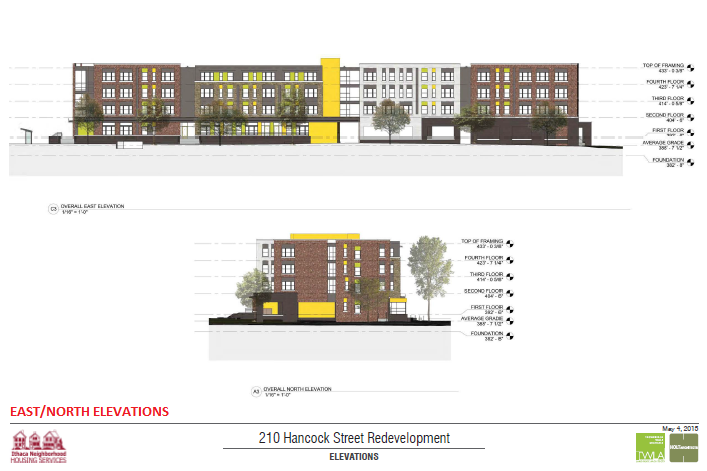
2. Now for a change or perspective – new perspectives of the 210 Hancock project, in the form of elevations found in higher resolution here. Now you can see what all of the buildings look like as a whole, rather than the simulated viewpoints previously shown. The elevations heights give the apartment building’s height at about 40 feet. Apart from some tweaks to the way the first-floor parking is screened, there haven’t been a whole lot of changes since the last planning board meeting. Note that the buildings are tucked in or pushed out and separated by “hyphen” connectors so they don’t present one continuous street wall. The design is by local firms TWLA and HOLT Architects.

Am I the only one who finds the lime green and goldenrod to be a bit..intense when compared to the other facade materials?

112_blair_v3_1 112_blair_v3_2

3. You want more new drawings? You get more new drawings! This batch represents the latest incarnation of the duplexes proposed for 112 Blair Street / 804 East State Street. Renders copied from here, project narrative here. Developer Demos / Johnny LLC (the Nestopoulos family) is still trying to have these ready in time for the Fall 2015 school year. Rather than continue seeking an area variance in zoning, the project is back down to two duplexes with three bedrooms and ~1,235 sq ft each (12 bedrooms total). After meeting with neighbors, it was decided to move back to surface building to reduce building height, and to add expansive front porches, which gives the otherwise bland duplexes a little character. Site Plan Review will take place this month.

clarebridgecrossings_1

4. Looks like there might be an expansion of senior care facilities in Ithaca town. The Ithaca Town Board is set to discuss changes next week to the Planned Development Zone (PDZ) for the Sterling Heights / Clare Bridge Cottage assisted living facilities, located on Bundy Road just north of the city-town line. Sterling House is a 48-unit assisted living facility, while Claire Bridge Cottage is a 32-unit facility specializing in memory care (Alzheimer’s and dementia). The new building, a 23,200 sq ft 32-unit facility to be called “Clare Bridge Crossings”, is designed to bridge the gap between the two – patients who might be in early stages of illness and experiencing mild symptoms, but otherwise still capable of some degree of personal independence.

The new building appears to be a one-story addition tucked between the other two structures, so it won’t be visible from the street. Along with the new building, there will be updates to parking, landscaping stormwater facilities, and the addition of a couple of courtyards between the buildings. The architect is PDC Midwest, a Wisconsin firm that specializes in memory care facilities.

Now, some readers might be saying, “who cares?”. There’s a couple of reasons to care. For one, this is important from a quality-of-life perspective. Picture a senior couple where one is reasonably healthy and the other has memory care needs. It means a lot to have a facility nearby that can care for their loved ones. Secondly, an expansion would bring with it a number of jobs to support the new residents – nurses, maintenance, kitchen staff and so forth. So there’s an economic benefit as well.

Full disclosure – my mother is a nurse who works for an assisted living program that includes clients with memory care concerns. So I’ve heard a thing or two about a thing or two.

east_hill_master_plan

5. On a parting note for the week, here’s a little more information on Cornell’s redevelopment plans for East Hill Plaza. According to Planning Committee minutes from the town of Ithaca, Cornell will be taking part in a multi-day design charrette hosted by form-based zoning proponents FormIthaca in early June. Form-based zoning in a very small nutshell is zoning that focuses on design elements rather than use. Cornell is interested because the plan will hopefully lead to a regulating plan for the “compact mixed-use” development Cornell hopes to build to build in that area. The plan could provide language for a new Planned Development Zone that would potentially allow Cornell to move forward with a housing/retail mix at East Hill Plaza.

Cornell has sought to redevelop East Hill Plaza and surrounding parcels (most of which they already own) for several years. A vision for the plaza shows up in Cornell’s 2008 Master Plan (the so-called “East Hill Village” shown above), and given the need for housing in the area, East Hill Plaza would likely be one of the location where opposition would be less likely, given the the lack of homeowners nearby and the site’s proximity to Cornell.


707 East Seneca Street Construction Update 4/2015

10 04 2015

Another infill project is underway in the East Hill Historic District between Downtown and Collegetown. 707 East Seneca, like 202 Eddy Street and 140 College Avenue, had to go through the Ithaca Landmarks Preservation Council for approval, along with getting approval from the planning board and zoning board for an area variance (the lot was too small). After informational and voting meetings by different boards throughout the fall and winter, all the approvals have been granted.

The ILPC-approved design is made to be compatible with the historic homes from the late 1800s and early 1900s that surround the building. 707 East Seneca was originally the playground area for the now-closed East Hill School, and the lot was given to the city in 1982. The property fell into disuse, and the playground into disrepair.  The city voted to put the lot up for sale through the Ithaca Urban Renewal Agency (IURA) last summer, and the lot was sold for $130,000 on December 22nd (the market asking price was $175,000, and the assessed value of the land is $100,000, so the final price looks pretty reasonable).

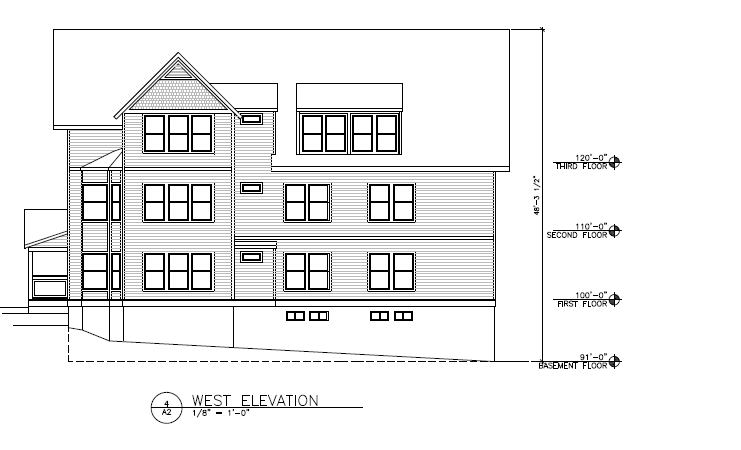
The apartment building planned is a 3-story, 6-unit, 18-bedroom structure with 4 garage parking units in a basement built into the hillside, and five surface parking spaces. According to documents filed with the city, target completion is July of 2015. Note for the included renders, the black-and-white image with the small basement windows is the final design, but the colors are the same as the lead rendering.

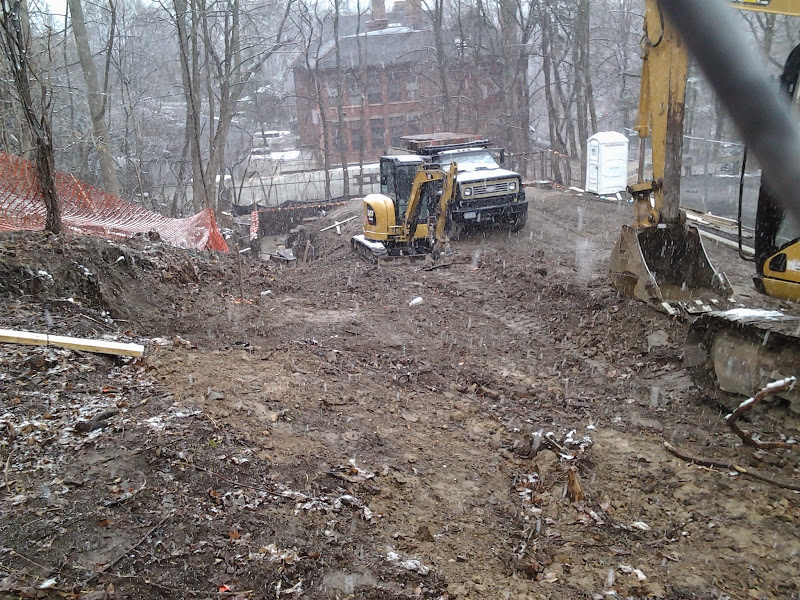
Without getting a good look at the back of the now fenced-off property, it looks like the site has been cleared and excavation is underway for the retaining walls and foundation. Being a sloped site, retaining walls will be built on the west edge of the property (right side of the photos) and for tree wells, and the east portion will use a sloped bank built using fill material. Offhand, I think I remember seeing that the building itself will be assembled from modular pieces, craned into place on the foundation over a day or two, not unlike the method used at the Belle Sherman Cottages.

The design of the building is by Schickel Architecture of Ithaca, and the developer is Ithacan Todd Fox.

20150405_131545 20150405_131553 20150405_131611

707_E_Seneca_2

707_E_Seneca_rev1_1