News Tidbits 7/2/16: Not the (City Centre) of Attention

2 07 2016

201_college_v5_1
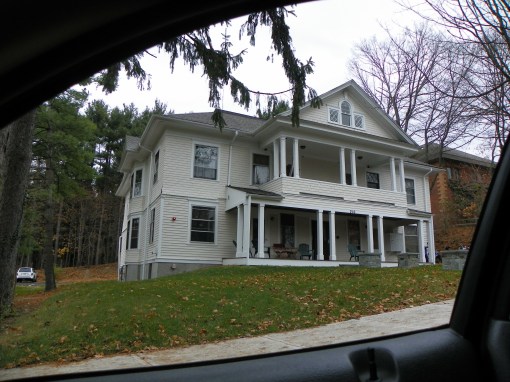
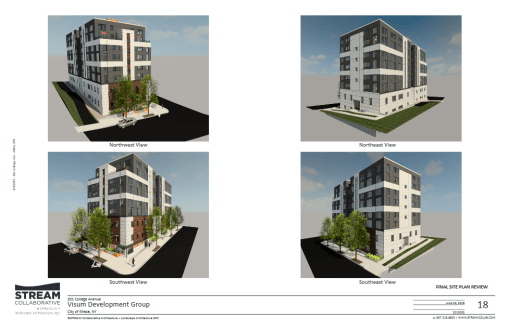
1. Let’s start this off with the big news of the week – the proposal for 201 College Avenue was approved by the Planning Board. The debate was spirited, to put it most politely; catty, to use the official write-up in the Voice; and in the follow-up phone call I had with my editor, who attended the meeting with a Voice summer intern, she described it by saying “both sides were pretty awful”. I am sympathetic to Neil’s predicament, although I think it’s also a fairly unique case; I hope some sort of arrangement with the solar panels is worked out.

The observations regarding age and view of the project is actually pretty similar to a conversation the Journal’s Nick Reynolds and I had on Twitter about the City Centre project – older Ithacans often have starkly different views on density and urban development than younger residents, who tend to be more pro-density and pro-urban infill/growth. The young aren’t naive and more so than the old are obsolete; but they are products of different times. Today’s older Ithacans are the same ones who were frowned upon by the old Ithacans of their youth (the Silent Generation and the Greatest Generation), who were much more politically conservative and made up the large majority of the city’s Republicans from when Ithaca was once a contested city, and the Boomers were moving in and tilting it leftward. A sociologist could probably make a good research paper studying Ithaca’s generational views of urban environments.

Anyway, construction on this project is supposed to start in short order; funding has already been secured, and Binghamton-based W. H. Lane Inc. will be the general contractor for the $6 million project.

trebloc-future
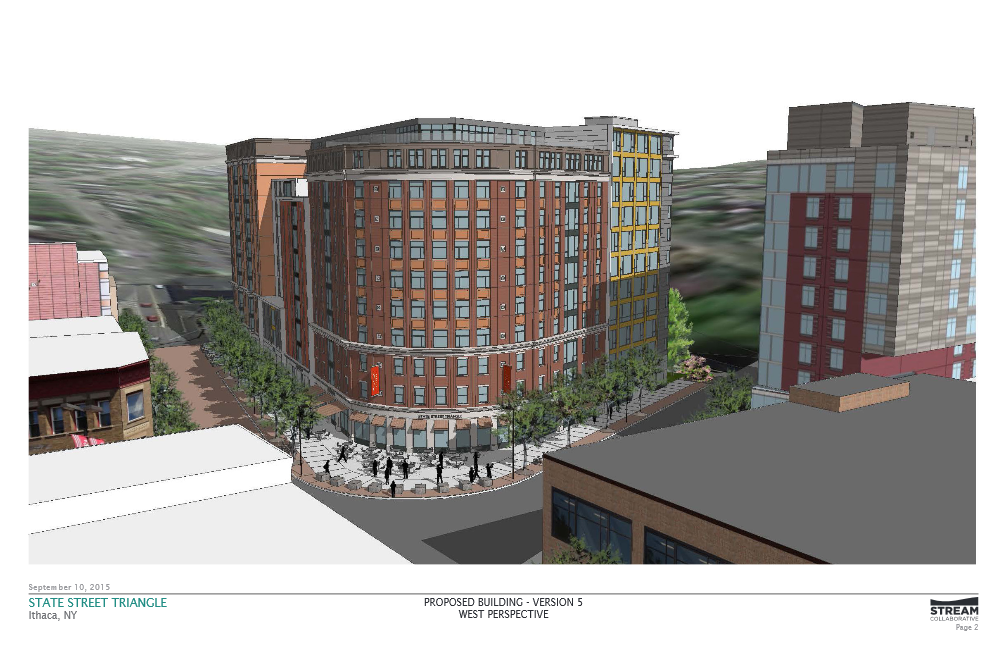
2. Meanwhile, City Centre’s sketch plan was also reviewed at the Planning Board meeting. The initial reaction seems muted, gauging from Nick Reynolds’ Twitter and the lack of comment from my Voice colleagues.

city_centre_1

city_centre_2


According to the sketch plan submission, the vast majority of units (240 of the 255) will be studios (120) ranging from 457-563 SF, and one-bedrooms (120) ranging from 580-754 SF. The other 15 will be two-bedroom units, eight 914 SF units and seven 1,370 SF units. All units are market-rate, with target demographics including young professionals and downsizing empty nesters. Students are allowed, though the units won’t be marketed to them. Ground floor retail will be 10,700 SF at the corner of State and Aurora. 7,220 SF fronting State Street will be “Leasing/Club Space” for building and tenant functions. The 71-space parking garage will be accessed via East Green Street, car share membership will be included in the rent, and there will be indoor bike racks.

With the mild initial reaction noted, we’ll see how the project details shape up as the summer progresses, and the board potentially launches formal project review (Declaration of Lead Agency) as soon as late July.


3. Hitting the market this week is a potential opportunity for the deep-pocketed investor/developer. The property is 2248 North Triphammer Road in the village of Lansing. The sale consists of two parcels totaling 3.42 acres – a 1.53 acre parcel with a 2,728 SF M&T Bank branch built in 1992 and holding a long-term triple-net (NNN) lease; the other, an undeveloped 1.89 acre parcel to the rear that the listing notes could be developed out into 13 housing units. The price for the pair is $2,125,000.

A triple-net lease means the tenant pays everything – insurance, maintenance and real estate taxes (formally, net insurance, net maitenance and net real estate taxes on the leased asset – the three nets).  Because of this, the rent is substantially lower than it otherwise might be. There are certain cases where a landowner might want to do triple-net – like when they’re a tax-exempt entity leasing out to a for-profit company. A quick check of the records shows the properties are owned by Cornell, and were acquired in 1953 and 1960. What the property has been to Cornell is a fairly safe investment (though with a lot of fine print to determine who pays for things like if a tornado hits or the foundation cracks), generating a modest amount of rent and functioning like an inflation-protected bond, but guaranteed by the lessee rather than the government. All the better when the tenant is stable and signed on for the long-term, as is the case here.

The county has the bank parcel assessed at $635,000, the undeveloped parcel at $140,000.  Lansing village zoning has Commercial High Traffic for the bank property, and High Density Residential for the vacant parcel. HDR zoning requires 6,000 SF of land per dwelling unit in a 35′ tall multi-unit building, and 1.89 acres = 82,215 SF, so that’s where the 13 units comes from. For comparison’s sake, single family is 12,000 SF, and duplexes 15,000 SF (or, doing the math, one could in theory carve out six home lots, or 5 duplex lots for 10 units, though with lot setbacks, the property’s triangular shape probably lowers those figures).

4. On the other end of the sales process, the former Maine’s supermarket has been sold. The six year-old, 26,146 SF building at 100 Commercial Avenue in the city of Ithaca was purchased for $4,150,000 on Thursday the 30th, by Illinois-based Agracel Inc., well above its $3.1 million assessment. Agracel is an industrial space and warehouse developer, fitting for a property once described as a “food and party warehouse”. The former Maine’s appears to be a little on the small side compared to the rest of their portfolio, but there is the possibility of expansion, or even a teardown and rebuild if they really felt the need.

Readers may recall that Maine’s closed its Ithaca store in February, which along with a closing in suburban Rochester reduced its stores from six to four.
20160701_095549

20160701_095552
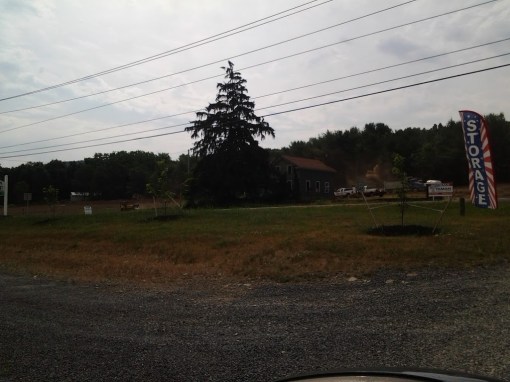
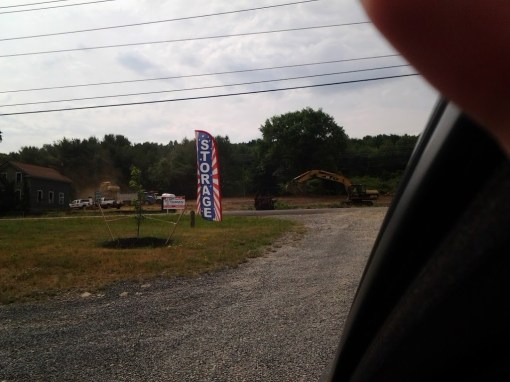
5. Work on the new Storage Squad facility has begun on the 1400 Block of Dryden Road east of Varna. Right now, the focus is on site clearing; the house was used by local fire departments for training exercises, and will come down in a controlled burn later this summer. The 79,000 SF storage facility should be ready for use by February 2017. One full time and a few part-time jobs will be created.

And for the record, I think that’s my middle finger.

6. So this is curious. The city recently uploaded a couple of older documents detailing development plans off of Floral Avenue on the southern tip of Ithaca’s West Hill neighborhood.

The first dates from Febraury 1992, and is a filing to create a 27-lot cluster subdivision on 4.15 acres at 452 Floral Avenue. The paperwork indicates that the intent was affordable housing, by a company named House Craft Builders. The city’s then-Planning Director, H. Matthys Van Cort, wrote a recommendation for negative declaration of environmental significance, and the project was approved in June 1992, but it never moved forward, and 452 remains vacant land today. It appears House Craft was dissolved in 2012; the officer was an architect for Ecovillage who has since retired and moved out of state.

The second is a subdivision requested by INHS in 1987. The filing requested 236 Floral Road be split into two parcels, with the intent of renovating a decrepit 236 into a for-sale affordable single-family home, and build a new house on 224. This was approved, and eventually, 236 was renovated and transferred to its owner in 1996, and 224 was built in 1994.

Now, as interesting as this all is, the city doesn’t upload decades-old subdivision files just to amuse nerds. The $64,000 question is, why were they uploaded now?


News Tidbits 6/18/16: Wit Fails Me After Eight Years

18 06 2016

201_college_v4_1 201_college_v4_2
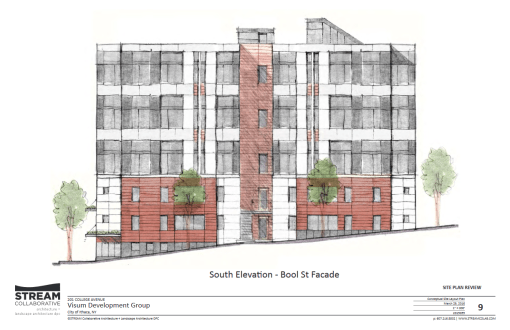
1. Let’s start off with a brief update on 201 College Avenue. My colleague Mike Smith at the Voice did an encompassing article on the topic late last Friday, and there have been a couple more modest developments as of late. Apart from the multi-million dollar sale mentioned last week, the city’s Design Review Committee also gave their input on the project. They said they like the current form of thje building’s front (west) entrance, because it calls forth elements of Grandview House a few doors down. they also recommended darker or neutral grey colors to minimize the appearance of the fifth floor, more windows along College Avenue, warm accent colors, and tweaks to the window and cladding scheme. The resulting revisions were incorporated into the latest building design seen above, and for which additional images, material samples sheet and interior plans can be found here. The project will be discussed at the Project Review meeting next week, and the official Planning Board meeting Tuesday 6/28, at which the public hearing will be held, and consideration of preliminary approval.

107_s_albany_v2_2

107_s_albany_v2_1

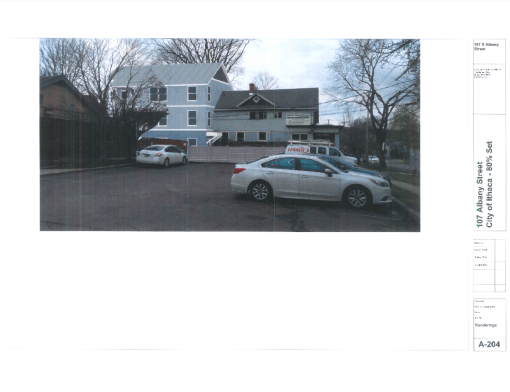
2. Speaking of design review, 107 South Albany also went through the committee this week. Recommendations included projecting window sills, stucco all the way back to the rear balconies, and noting on docs that the large sign on the existing building would be removed during the renovation. Site Plan Review app here, drawings here, Full Environmental Assessment Form (FEAF) here, planting plan here.

The renovation and addition seems like a good example of re-use in a corridor that the city is targeting for new investment. It preserves the century-old structure and adds housing in such a way that, by location and design, doesn’t have a significant visual impact. By zoning, Nick Stavropoulos could have sought five floors if he wanted. This plan will be going through the whole shebang at the June meeting – Declaration of Lead Agency, Public Hearing, Determination of environmental Significance, and Prelim and Final Approval.

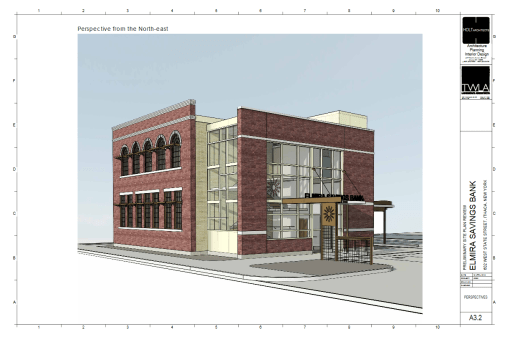
Among other things to be discussed at Project Review and the Planning Board meetings – Prelim/Final Approval for 602 West State Street (the Elmira Savings Bank project), signage for Collegetown Crossing, and a few minor zoning variances. New sketch plans, if any, will be announced on the PB Agenda next week.

3. This week in big sales – someone plunked down $680,000 on a house at 107 Catherine Street in Collegetown. I say somebody because they conducted the purchase through an LLC (aptly named “105-107 Catherine Street LLC”) registered by a local law firm last summer. Just like the Maguire purchase of the Carpenter Circle land, this effectively hides the buyer from public view. The same purchase bought 105 Catherine for $780,000 last November. It looks like 105 has 10 bedrooms and 107 has 7 bedrooms, based off assessment docs.

cafd1

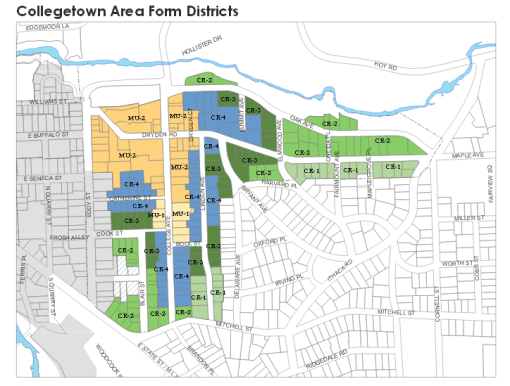
105 and 107 Catherine make up the edge of the CR-4 Form District. By zoning, an applicant could build up to four floors, no parking required. A development plan would likely consolidate lots. Something to keep an eye on. Collegetown is getting to be a very expensive place.

4. Meanwhile, here’s something that’s just hitting the market. For the budding landlords, 306 North Cayuga is up for sale. The “C. R. Williams House” was built in 1898 (interior/exterior photos from the early 1980s here). The current owner, Jeff Kalnitz, picked it up for $300k in 1997, had it on and off the market a couple of times, and then decided to do a thorough ILPC-approved renovation. The 12,500 SF property, which holds six high-end apartments and approvals for a seventh, is being offered at $1.45 million. It’s worth looking at the listing if only for the glamorous interior shots.

amici house 1 county
5. On Tuesday, the Tompkins County Legislature will vote on whether or not to take $118,000 from the county’s general fund to indirectly help build head start classrooms and a living facility for homeless young adults.

The $118,000 would be use to purchase a house at 661 Spencer, whose land would be incorporated into plans for a 23-person facility for homeless young adults (some with children) aged 18-25, and five classrooms. The classrooms would be built as one building, while the housing looks to be an addition to the TCAction building. The one-story house at 661 Spencer, built in 1950 and formerly formerly owned by the Amici family, would be removed.

The plan is the latest incarnation of TCAction’s Amici House project, slated to share their headquarters property at 701 Spencer Road on the southern edge of the city of Ithaca. TCAction first acquired their property with the help of the county back in 2001; the cost of the purchase is paid back to the county in the form of a 20-year lease.

If the legislature approves, the lease would be extended by two years so TCAction can pay them back for the up-front cost of buying 661 Spencer. The Amici House project would be completed by 2018.

6. Poet’s Landing in Dryden will be moving forward with its 48-unit second phase. The rentals, which are targeted at individuals making 60% of county median income, are expected to begin construction in August with a late summer 2017 opening. Phase I, which consisted of 72 units, opened in early 2013. The state awarded the project $1,600,000 from its Housing Trust Fund, and $734,956 in Low-Income Housing Tax Credits to help finance the apartments’ construction.

tfc_v2_1

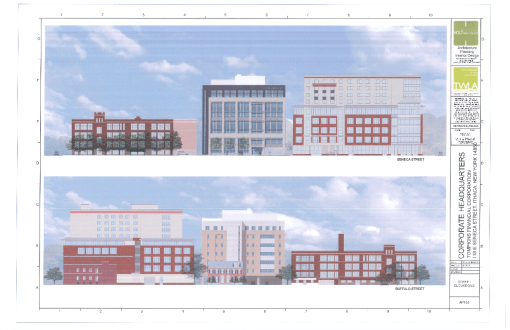
7. Tompkins Trust held the official groundbreaking this Friday for it’s new 7-story headquarters. Plans were slightly delayed after some issues arose with NYSEG. The current plan is to have the 123,000 SF building ready for occupancy by March 2018. Costs have risen somewhat, from $26.5 million to $31.3 million.


News Tidbits 6/11/16: Summer’s Heated Discussion

11 06 2016

Image Property of HOLT Architects

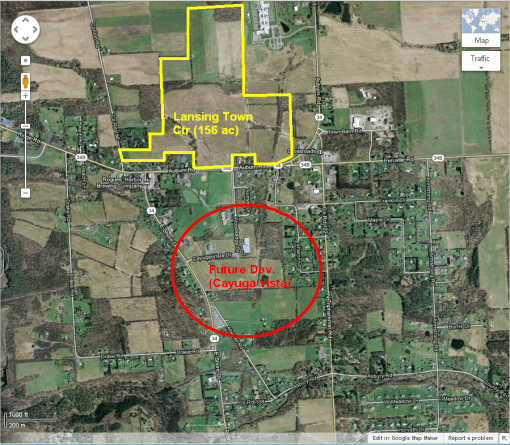
1. We’ll start this off out in Lansing. The 153 acres of land for the Lansing town center is once again in the news. The Lansing Star is reporting that the town is once again serious about selling the land.

So begins yet another chapter in the 20-year saga of the town center land. The town bought the land from the state in 1993 for $100,000, and at the time the land was deed-restricted to recreational use. In 2012, the town paid an additional $294,800 to remove the recreational deed restriction. An article about it was published here in August 2012 (original map below; dunno where why offhand it says 156 acres vs. the 153 reported now). HOLT Architects and TWMLA were hired to draw up some overarching design themes, a Request for Proposals was issued, and three developers responded.

lyc2

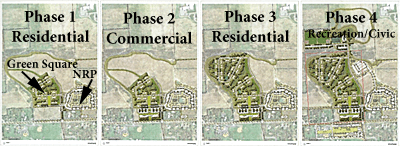
Calamar Enterprises’ Buffalo office submitted a proposal for a $17.4 million, 110-unit market-rate senior apartment building on 13.5 acres, and Cleveland-based NRP Group submitted plans for 80 one-story patio homes on about 15.5 acres. Calamar later re-sited their project at the town’s wish to the northern part of the land, and increased the number of units to 124. Green Square, led by David Taub and HOLT Principal Graham Gillespie, proposed 60 units of housing and 23,000 square feet of retail in 2-3 story arrangements, and civic and recreational space. Altogether, the value of the three would have approached $50 million.

gs_phases

However, all of this was contingent on a sewer being built, which did not happen. The developers agreed to do a package plant that would service just the town center, there was discussion of an IDA-backed tax incentive zone, and the town stood to make a hefty return on investment, but…to quote the Star, “However, the deals fell through.  Actually it seemed more like they just faded away. At least one of the developers had signed paperwork saying they intended to purchase acreage from the Town.  The Town didn’t seem in any hurry to sell the land, even with clearly interested developers.  When the developers disappeared there was no reported effort by the town to pursue the deals.”

Since then, the town continues to get a steady stream of interest, but no real idea on how they want to move forward. Like Ithaca city and town, they’re looking at the possibility of Form-Based zoning for the site, and the town hopes to issue a more specific RFP than before, incorporating revised assessment values. The most intensive approach involved the Form-Based Code and a specific RFP, the least specific is just putting up a for-sale sign ans seeing what happens. Whatever the case, the lax approach the town has taken the past few years may no longer be feasible, with the ticking tax time time bomb of the possible power plant closure looming over the town and schools’ budgets.

old_library_thp_v4

2. Speaking of long processes, the Old Library project has formally filed paperwork here to begin the application process for the Certificate of Appropriateness from the Ithaca Landmarks Preservation Commission. The meeting is scheduled for city hall at 5:30 Tuesday the 14th. Although it says early design review, a lot of the legwork has already been done at this point, since the Planning Board and ILPC have been conducting joint meetings with the project team over the past several months to create a design that they’re all comfortable with. However, the ILPC is likely to refine some details moving forward.

old_library_thp_v4_2
At this point, the unit mix consists of 22 1-bedroom units with about 700 SF each, 25 2-bedrooms with about 900 SF each, and 10 2-bedrooms with 1200 SF each, the extra space intended as a den or home office. The building also includes a 1,800 SF community room to be administered by Lifelong, and 3,750 SF of first floor commercial space. The total facility size comes out to about 85,600 SF, and parking for 25 cars and at least 12 bikes, and another 34 bike spaces for the community room. Exterior materials include brick, limestone, and a couple forms of fiber cement, including wood-textured fiber cement.

Southeast+Rendering

3. The STREAM Collaborative House at 228 West Spencer is up for sale. The house has its own website here. The 1,152 SF, 2-bedroom net-zero energy house is listed at a price of $305,000. For more info on the house, Noah Demarest was kind enough to give a construction tour of the house while it was underway, and the blog post I wrote up afterwards can be found here.

evergreen_dryden_1
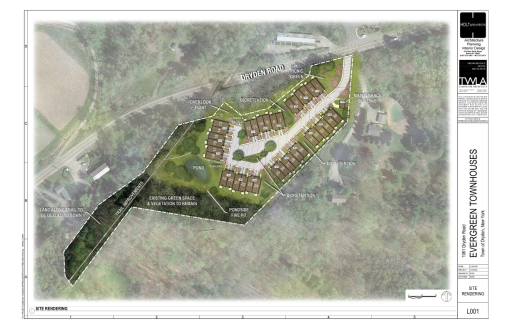
4. It’s pretty clear at this point that the Evergreen Townhouses project at 1061 Dryden is evolving into the next hot-button development issue out in Varna. The Times has their interview with the angry neighbor here, and more info can be found in the town of Dryden’s April planning board meeting minutes here. So far, the only image of the townhouses themselves has been a perspective that only shows massing – 2 stories, gabled roofs.

Also of note is the town of Dryden Planning Department’s recommendation to the town board (and the planning board’s approval) for an increase in density in certain areas. The change in code affects parcels zoned rural residential, with municipal water and sewer access. The density would be increased from 2 units per acre to 6 per acre. Looking at the zoning map and the sewer map, that would primarily affect the corridor from Varna to the 13/366 intersection, and a rural swath just north of Dryden village near TC3. What this would do is allow 1061 Dryden Rd to withdraw PUD application, and apply for a special use permit (SUP), which are generally easier to obtain.

On a side note, googling Tiny Timbers brings up a Times editorial, written by the Times, that argues against Tiny Timbers for not fitting in with the appearance of Varna. Actually, it kinda takes everyone to task, from developers to town government to residents. But, to make one counter-point regarding mixed-use, commercial services need a certain amount of traffic (not necessarily vehicular) to thrive. If the population base within a certain radius isn’t there, the risk is too great for someone to put their money on the line and hope that they can somehow draw in customers. If Varna wants a mixed-use center with shops and cafes, they’re going to need the population to support it. Some think that will include 1061, some (probably more) think Tiny Timbers, but if there’s no “push”, the ball won’t be rolling.

201_college_v3_1

5. A couple of minor things to note in sales. The 4,200 SF former “Imperial Buffet” property next to the Shoppes at Ithaca Mall has sold to a Syracuse-bsed LLC (Watersprite LLC, established 2004) for $590,000 on Friday the 10th. I personally will always remember this place as being the only place my mother was comfortable with eating in Ithaca because she hates eating out, and felt everything else was “snobby and expensive”.

Meanwhile, the 12-bedroom, 2,837 SF house at 201 College Avenue, the property subject to a heated debate between Neil Golder and Todd Fox, sold for $2.65 million on Friday the 10th, which seems outrageous except that it’s becoming the norm for inner Collegetown transactions – Novarr picked up 5,500 SF 215 College for $5.3 million last year. There will be no delving into that debate again this week, but the city uploaded 580 pages of documentation here, and my colleague Mike Smith is preparing a story for the Voice.

20160522_143925 20160522_143949

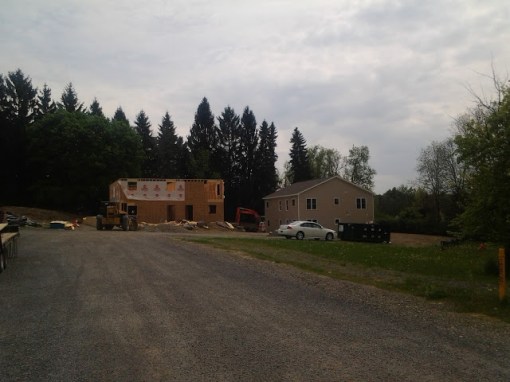
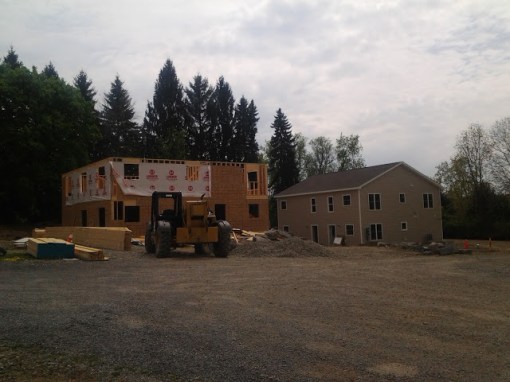
6. Houses of the week. This pair of duplexes are being built on Birdseye View Drive near Ithaca College. Each house has a 4-bedroom unit and a 2-bedroom unit; recent advertisements on Craigslist (since expired, so no link, sorry!) have them $750/bedroom. The developer is the owner of Mahogany Grill downtown, who also happens to be a part of the business team renovating the former Lucatelli’s into a new restaurant, a Tapas and pasta restaurant called Mix Social Dining after the chef’s wife.

These photos are a couple weeks old now, but the one on the right looks nearly complete, while the one on the left was still in the (wood) framing and sheathing stage. Based off the rough window and door openings, they are not exactly the same, but expect them to look similar.


News Tidbits 5/21/16: Building Bridges, or Burning Bridges

21 05 2016

209-215_2

1. 209-215 Dryden Road has a name: the Breazzano Family Center for Business Education. Let’s just call it the Breazzano Center for short. The name comes as part of a $25 million donation from Cornell MBA alum David Brezzano ’80, and is named in honor of him and his three sons, all recent Johnson School graduates. According to the Cornell Chronicle, the donation will “substantially support” the building’s construction, which construction loans on file with the county have pegged at $15.9 million. Breazzano is the president of money management and investment firm DDJ Capital Management, and did his undergrad at Union College in Schenectady, where he serves as trustee.

John Novarr is the developer for the 6-story, 76,200 sq ft building, and Cornell will occupy 100% of the structure on a 50-year lease.

chapter_house_v4_1

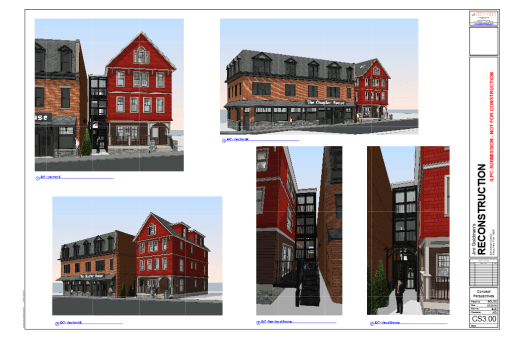
2. So, something weird is going on. The city BPW is set to discuss an encroachment for the Chapter House reconstruction at their meeting on the 23rd. However, all the paperwork included in the agenda dates from before the sale and refers to the previous owner. So either the new owner is pursuing the encroachment and the information hasn’t been updated, or this is outdated/no longer being pursued and no one’s updated the BPW paperwork. I tried calling the project architect (Jason Demarest) but he’s out of town until Saturday, and this publishes Friday night, so…dunno. Hopefully someone can provide some insight. For the record, the encroachment is for the first-floor roof overhang over the sidewalk, and will cost the developer $33,812.28.

100_1466

Open question, would a brick-for-brick rebuild had to have paid for this encroachment as well? It existed with the original structure, this was designed with heavy ILPC input, and given that project costs seem to be why this is in jeopardy…it just seems like an unnecessary obstacle. I know it’s a new build, but it’s replicating a previous encroachment for the sake of character. It seems like the project is being financially punished for that.
brindley_elevation
3. For this week’s eye candy, the above image appears to be the city’s proposed redesign for the Brindley Street Bridge over on the West End. Pretty similar to existing newer or renovated bridges in the city (Clinton Street, South Aurora Street), with older-style lamp posts and stylized concrete railings.

Alternative 2 calls for a pedestrian bridge to replace the existing Brindley Street Bridge, which was last renovated in 1952. A new bridge for vehicle traffic would be built south from the intersection of Taughannock and West State Streets, over the inlet, and intersecting with Taber Street. The project is expected to go out to bid next year, and completed in 2018.

4. Per the Ithaca Times, the Taughannock Farms Inn out in Ulysses has some expansions and renovations planned since new ownership purchased the property back in February. Along with a bistro for lighter fare, an electric car charging station and a dock, the Times introduced plans for a 2-story, 200-person event center that would be built on the Inn’s property. The purpose of the event center is to provide additional space for events like weddings and formals, and to capture a bit of the mid-week business meeting and convention crowd. The inn itself has 22 guest rooms in five buildings.

The original inn building dates from 1873, when it was a “summer cottage” for John and Molly Jones of Philadelphia. The Joneses also owned Taughannock Falls at the time, though they would eventually deed it over to the state in the mid 1930s to create the park. The current owners are only the fourth in the 143-year history of the property.

5. A couple of big sales in Tompkins County this week. The first one was 308 Eddy Street, a 12-bedroom apartment house in Collegetown. The Lambrou family, one of Collegetown’s medium-sized landlords at ~400 beds, sold the property to the O’Connor family (a smaller landlord family) for $1,225,000 on the 18th. The O’Connor don’t tend to develop their own properties, and 308 Eddy was receently re-roofed anyway, so don’t expect any changes here, but take it as a demonstration of what a captive rental market, high land values and high taxes will do.

The other big sale was outside of Ithaca, at 1038-40 Comfort Road in Danby. A purchaser bought several land and cabin properties being touted as a high end B&B for $1,300,000. The purchases are a couple from Florida, one of which founded the Finger Lakes School of Massage in the 1990s and now heads an aromatherapy institute.

evergreen_dryden_1

6. According to a report from the Dryden town board liaison to their planning board, the Varna Community Association’s reception to “Tiny Timbers” at the corner of Freese and Dryden Roads has been mostly positive, apart from minor traffic concerns to the 16-house project. More lukewarm was the reception to the 36-unit Evergreen Townhouses proposal at 1061 Dryden, where concerns were raised about having enough green space, and whether it was too far outside Varna to be an appropriate location.

The neighbor two doors down has already started to fight the project, and this is probably going to play out like 902 Dryden did over the past several months. Here’s a pro tip when you’re writing up that angry screed – please stop arguing that renters are second class citizens. Just stop.

therm_1

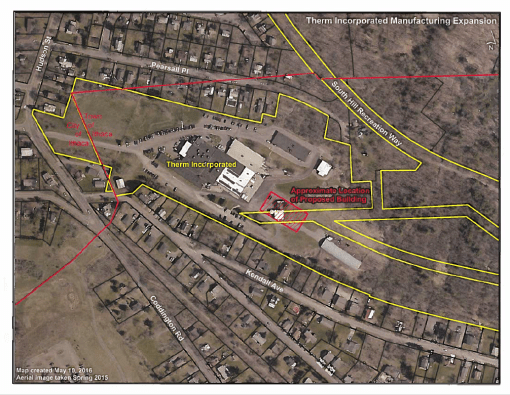
7. Therm Incorporated will be presented plans for a stand-alone 20,000 SF manufacturing facility to the town board next week. The addition will be located at their property at 1000 Hudson Street Extension, between its main building and the quonset huts. In a rarity, the industrial-zoned property won’t need to heard to a zoning board – no variances required. The new building will replaces a 3,434 SF ceramics studio. As previously reported on the Voice, Therm expects to create 10 jobs with the expansion. Therm, located at its current facility since its founding in 1935, specializes in custom machining, primarily for the aerospace and industrial turbine industries.

201_college_v2_3

8. Not a very exciting agenda for the Ithaca city planning board this month.

1. Agenda review
2. Floor Privilege
3. Special Order of Business: Incentive Zoning & Site Plan Review Discussion (Lynn Truame)

4. Subdivision Review
A. Minor Subdivision, 312-314 Spencer Road, Charlie O’Connor (MLR)

5. Site Plan Review
A. Sketch Plan, Two Duplexes at 312-314 Spencer Road

This came up back in March – Charlie O’Connor plans on re-configuring vacant street-facing property behind two houses to build two duplexes near Lucatelli’s. STREAM Collaborative is the architect.

Originally, this was at the end of the agenda as sketch plans usually are, but the agenda was revised so that the sketch plan would be allowed to go first.

B. 201 College Avenue – Declaration of Lead Agency, Public Hearing, Determination of Environmental Significance, recommendation to the BZA

C. Elmira Savings Bank, 602 West State Street – Declaration of Lead Agency, Public Hearing, Potential Determination of Environmental Significance, recommendation to the BZA

D. Brindley Street Bridge, seen above – revised FEAF review (parts 2 and 3), recommendations to lead agency (BPW).

6. Umpteen million zoning appeals, none especially contentious
7. Chain Works DGEIS Review, Update Schedule and Special Meeting Schedule.


News Tidbits 4/9/16: A Slippery Situation

9 04 2016

maplewood_site_plan_concept

maplewood_site_plan_concept_v2

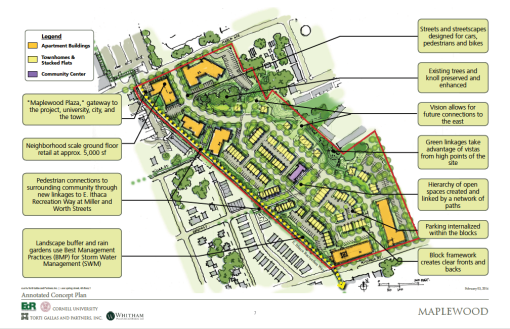
1. The town of Ithaca had their first substantive meeting about Cornell’s Maplewood Park Redevelopment, and later this month, the city of Ithaca will have their take on the 4.5% that sits within their boundaries (picture a line up Vine Street – that’s the city line). According to documents filed with the city, approvals from them will only be needed for one building. Application/SPR here, cover memo from Whitham Planning and Design here, Part I of the Full Environmental Assessment Form here, and narrative/drawings here.

From the SPR, the schedule as already been shifted slightly to an August 2018 completion rather than July – they also threw out a $3.67 million construction cost that doesn’t make much sense offhand. Edit: It looks like it’s just a basic estimate of 4.5% of the total project cost of $80 million.

The biggest change so far is a revision of the site plan. In response to community meetings, Cornell shifted smaller 2-3 story stacked flats and townhouses closer to the Belle Sherman Cottages, pulled back a couple of the larger apartment buildings, and added a new large apartment building to the southeast flank. Cornell has its goal of housing at least 850 in the redevelopment, so all design decisions revolve around accommodating those students with their families, while coming up with a design the community can live with.

The city will vote at its April meeting to defer Lead Agency to the Town of Ithaca, which will leave them with the ability to provide input, but the town board will be the ones voting on it.

2. It’s not often that a project gets undone by a single public commenter at a meeting. But the Journal’s Nick Reynolds got to experience such a momentous occasion at the town of Ithaca’s planning board meeting. He documents it on his Twitter account.

Someone that I didn’t cover because it wasn’t especially news-worthy is Cornell’s plan to replace the Peterson Parking Lot at the intersection of Tower and Judd Falls Roads with a cutting-edge 100% porous paved lot and a Cornell-created soil designed to promote rapid growth of trees in high traffic areas (a new island would be built in the middle of the lot). Basically, an eco-friendly, less-invasive parking lot, if there ever could be a thing.

Then Bruce Brittain, the Forest Home community historian, completely undid the plan with a contour map. Generations ago, the property was filled with debris and garbage, even old construction trucks. And while there may be a parking lot on it now, a porous lot, which would be heavier when watered, is liable to collapse right onto the Plantations below. Meaning, no porous lot, no green showcase. Back to the drawing board Cornell.

201_college_1

201_college_v2_1

3. Here’s a little more information on the 5-story, 44-unit/76-bedroom apartment proposal for 201 College Avenue. SPR Application here, FEAF here, project narrative here, BZA worksheet here, drawings here , letter of discontent from Neil Golder here. Looking at the drawings, there have been some slight revisions, mostly with the College Avenue entrance and the materials and fenestration at street level. The SPR gives us a $6 million construction cost, and a proposed construction time frame of July 2016 – August 2017. Units will be a mix of 1 to 4 bedrooms (24 1-BD, 12 2-BD, 4 3-BD, 4 4-BD). While the project falls into the Collegetown Form District, an area variance will be required for a front yard setback from College Avenue, which the board feels will help the street be more like a boulevard.

The city planning board is expected to Declare itself Lead Agency for environmental review at the April meeting. Developer Todd Fox hopes to have approval by the end of the June meeting. STREAM Collaborative is the project architect.

902_dryden_final

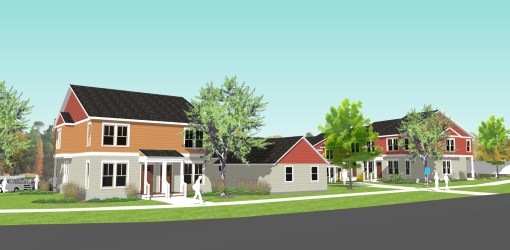
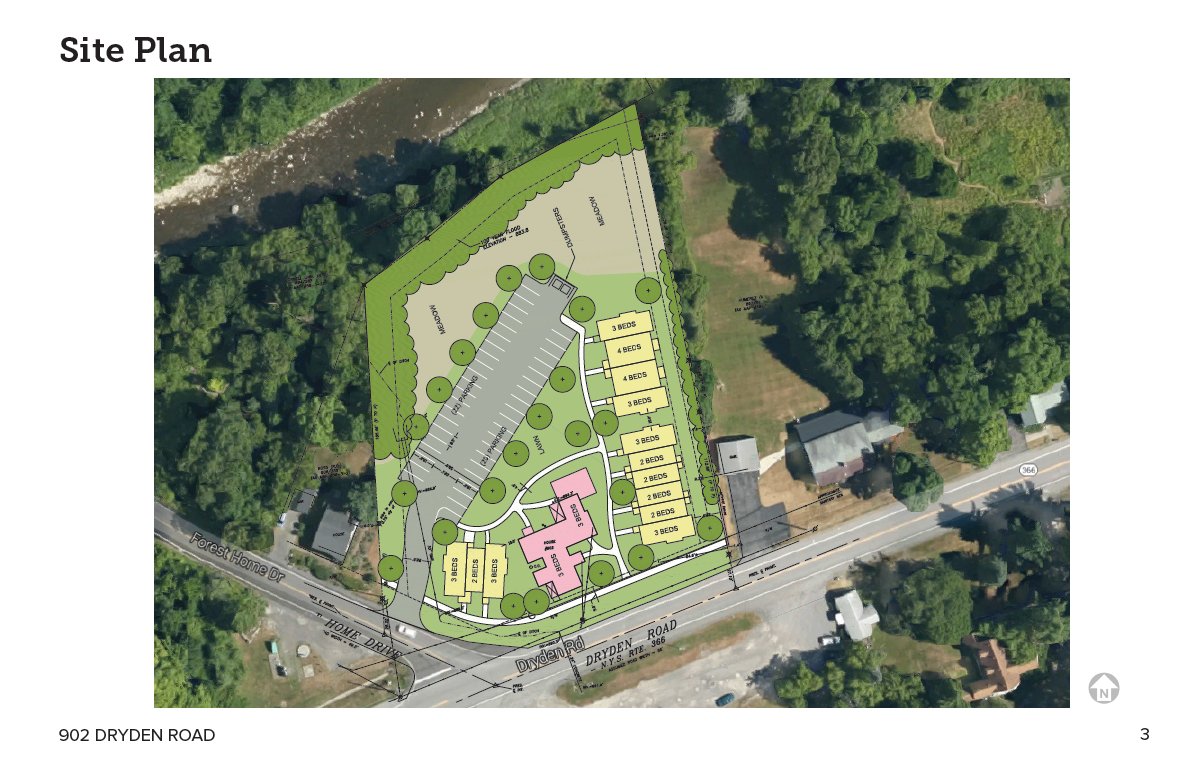
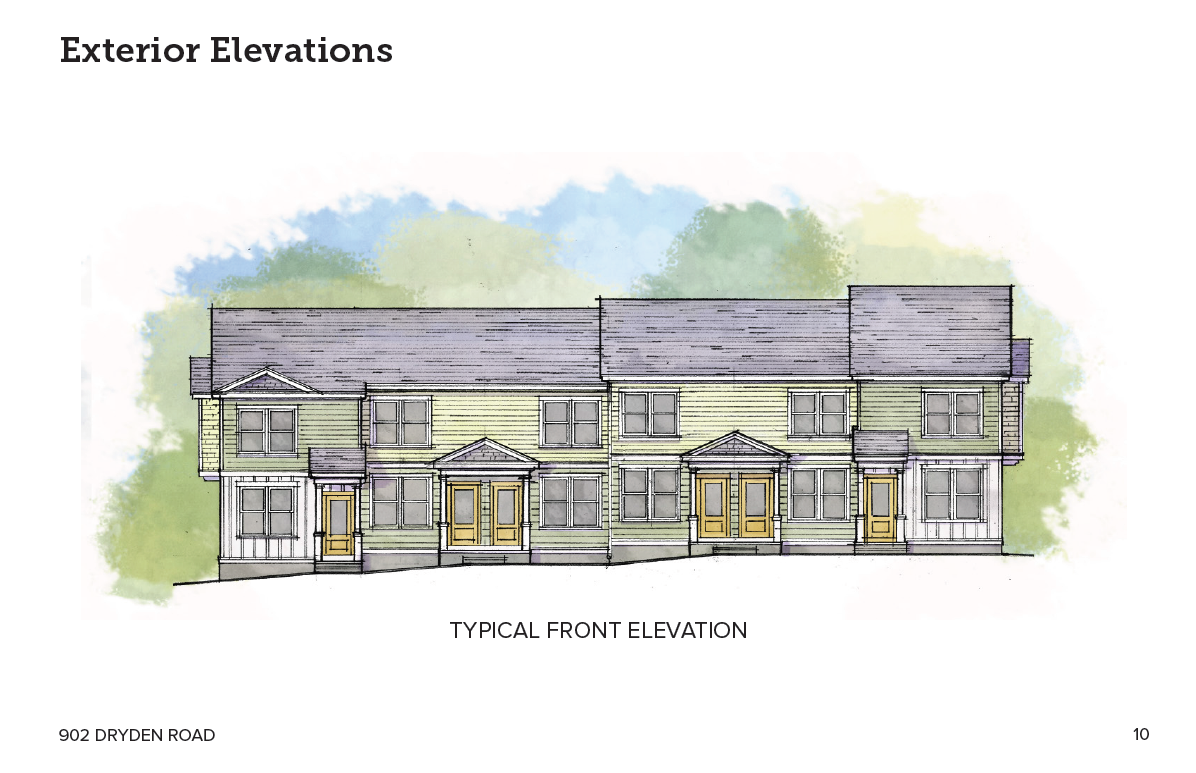
4. This week’s eye candy comes courtesy of Noah Demarest and Todd Fox (yes, they seem to be getting a lot of mentions this week). It had occurred to me that while an image of the revised 902 Dryden townhouses had been presented at the meeting where it was approved, the town never uploaded the copy. Noah and Todd were kind enough to send me a copy of the image presented at the meeting, and gave their permission to share it here. 8 new units, 26 new bedrooms. The duplex building in the middle already exists, but two new units will be built opposite a shared wall. Two three-unit clusters will be built on the east side of the parcel.

Cayuga-Meadows-Shot

5. It’s official as of March 28th. Construction permits have been issued for Conifer LLC’s 68-unit Cayuga Meadows project on West Hill in the town of Ithaca. Expect the first construction update, and a synopsis, when the first construction update comes around, which won’t be until mid-to-late May since West Hill projects get visits during odd-numbered months.

6. Just a couple minor city subdivisions to pass along. One, an application in outer Collegetown at 513-15 Dryden Road to separate the land into two parcels (513 and 515). The lot owner will then build himself a new house on the vacant lot. CR-1 Collegetown Form District, and it looks like no variances will be needed.

The other subdivision is on the city’s portion of West Hill. The property is a vacant lot that borders Westwood Knoll, Taylor Place and Campbell Avenue. The property owners, who live next door on Westwood, want to divide the vacant lot into two vacant lots to sell for single-family home construction. Once again, it looks like no zoning variances will be needed, just regulatory PB approval.

With the consolidation and realignment of 312-314 Spencer Road mentioned last week, this makes three subdivisions scheduled this month. That’s pretty unusual, as the city typically sees only one every 2 or 3 months on average.

7. Looks like someone made a tidy profit. Local landlord Ed Cope picked up 310 and 312 E. Buffalo Street for $885,000 on the 6th. 310 E. Buffalo is a 6-unit apartment building, 312 is a parking lot. The previous owner, a Philadelphia-based company, picked up the properties for $800,000 back in October 2014. So, $85,000 (+10.6%) for 18 months of ownership. The properties are part of the East Hill Historic District, where the Philly-based firm recently had a hell of an experience because the owners before them replaced the windows without notifying the city, and that was a big no-no as far as historic districts and the ILPC are concerned. They mandated the windows all be replaced with more historically-appropriate fittings. Hopefully that came up during the sales negotiations.

For what it’s worth, the parking lot is zoned R-3a – a 4 story building with 35% lot coverage. Since it’s in a historic district, a hypothetical proposal would likely look a lot like its neighbors.

11-24-2012 171

8. And another big sale this week, on Friday – the house at 210 Thurston sold for $2.5 million to the Alpha Chi Omega sorority. The house had been on the market since last November for $2.75 million. This actually sold relatively quick, given its large size and fairly unique nature. The seller purchased the property for $677,500 in December 2011, and renovated the property for use by the Cornell wrestling team.

Alpha Chi Omega has occupied the house at 509 Wyckoff Road for a number of years, but did not own the property – the owner, who picked up the property in 1971, is a business partner of Kimball Real Estate.


News Tidbits 4/2/16: The Walls Come Tumbling Down

2 04 2016

hotel_ithaca_final_1

1. Demolition and site prep work has begun for the Hotel Ithaca’s new 5-story addition. The work appears to be right on schedule, since a March construction start had been planned. The $9.5 million, 90-room project replaces a two-story wing of rooms built in the early 1970s. Hart Hotels of Buffalo hopes to have the new wing open for guests this fall. NH Architecture of Rochester is the firm designing the project, which received some “sweet burns” when it was first presented with cross-hatched panels and “LEED-certified stucco”. Eventually, the planning board and developer settled on a design after review, and the project was approved late last year.

For those who like to see walls a-tumblin’, the Journal’s Nick Reynolds has a short video of the demolition on his Twitter feed here.

2. Looks like there’s a little more information about the 16-unit “small house” subdivision planned in Varna. A Dryden town board document refers to the document as “Tiny Timbers”. Which is a name that has come up before – in STREAM Collaborative’s twitter feed.

https://twitter.com/streamcolab/status/673601010313641984

https://twitter.com/streamcolab/status/657329991827509248

Making an educated guess here, STREAM is working with landowner and businessman Nick Bellisario to develop the parcel. It would also explain the huge mounds of material that had been on the site as of late – compressing the very poor soil so that something could be build onto it, even if they’re merely “tiny timbers”. It doesn’t look like these are more than one or two rooms, with an open floor plan on the first floor and either a room or loft space above.

At first impression, these are a great idea – relatively modest sizes tend to be more environmentally sensitive, and with the subdivision, it’s likely they would be for-sale units with a comparatively modest price tag. On the other hand, tiny houses are something that a lot of local zoning laws don’t accommodate well (minimum lot size, minimum house size, septic), so that would be something to be mindful of as the project is fleshed out more and starts heading through the town’s approval processes.

201_college_1

3. Here’s some good news – the initial reception to Visum’s 201 College Avenue project was favorable. Josh Brokaw at the Times is reporting that apart from debates over a more distinctive roofline and setbacks from the street (which is more ZBA than Planning Board), the board was supportive of the project.

Meanwhile, as for something they were not in support of, the possibility of removing the aesthetic parts of site plan review as a benefit to affordable housing incentive zoning was not something that sat well with them. One thing that does get missed in the article, though, is that that benefit would only be in areas with form zoning guidelines for building appearance and siting (right now, that’s only Collegetown).

cma_2 cma_3

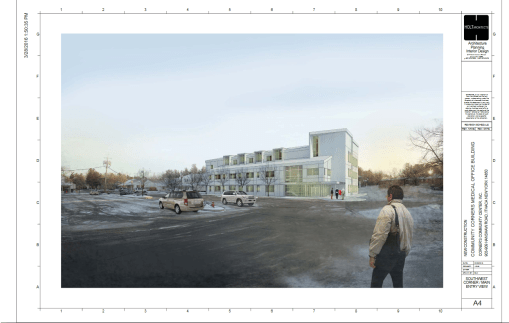
4. Never a fan of being scooped, but the Journal’s Nick Reynolds broke the news of a 3-story, 39,500 SF outpatient medical facility planned for Community Corners in Cayuga Heights. Owner/developer Tim Ciaschi (who also did the Lehigh Valley Condos on Inlet Island) will build-to-suit for Cayuga Medical Associates, with design work by HOLT Architects.

In most towns, this would be fairly cut and dry. But this is Cayuga Heights, which probably has the most stringent board in the county. The village routinely says no to anything that could draw students in (mostly housing, but historically it also included taverns and restaurants), and people prepare multi-page tirades against two-lot subdivisions, let alone what happens when a sorority tries to move in. In the project’s favor are its distance from homes and its modest densification of Community Corners, which the village has been slowly migrating towards in the past few years. The board’s raised concerns with not enough parking, so a traffic study was included with the March materials. We’ll see how this all plays out, a medical office building might work well with Cayuga Heights’ older population.

5. The city decided to take action on the owner of the Dennis-Newton House by fining him $5,000 for building code violations. Steven Centeno, who picked up the property from the Newtons in 1982, was initially charged with over 11,000 violations, and pleaded guilty to 35 counts. According to the city, Centeno was ordered to make repairs in 2012, and got the building permits, but never commenced with repair work. If he fails to bring the property up to compliance within six months, a further fine of $42,000 will be levied. This is not unlike the case last April where the city fined lawyer Aaron Pichel $5,000 for code violations on 102 East Court Street, the “Judd House”. Work on that property is underway.

maplewood_site_plan_concept

6. Likely to be some bureaucratic progress on the Maplewood Park redevelopment next week. The town of Ithaca will be looking at declaring itself Lead Agency for environmental review of the 500-600 unit project. designs and exact plans are still in the formative phases, so no new news on those quite yet. In order to build the new urbanist, form-based project as intended, Cornell will be seeking a Planned Unit Development (PUD), which will give them flexibility in how they can lay out the site. The portion in the city of Ithaca, the two buildings towards the northwest corner (boundary line goes down Vine Street), will be built as-of-right, and it looks like a sketch plan will be presented for the city’s portion during their April Planning Board meeting.

A FEAF is included in the meeting agenda, but since the project will have to undergo a Environmental Impact Statement (much more detailed than a FEAF), it’s not very descriptive.

341_coddington_1

341_coddington_3

7. Ugh. I give credit to the town of Ithaca’s planning board for trying to accommodate a solution where the 170-year old house could at least be moved to a different site. I’m disappointed in both the town of Ithaca’s Planning Committee (members of the town board) and the Iacovellis, neither of which seem to be devoting much thought to an amenable solution. The town’s planning committee chair is hell-bent on keeping students out, and the Iacovellis are now trying to rush the demo permit since they feel their livelihood is threatened. This is an unnecessary loss due to intransigence.


News Tidbits 3/5/16: Here Comes the Papierkrieg

5 03 2016

chapteR_house_reconst_v4_2chapter_house_v4_1
1. Let’s start off with something that led to a couple of worked up messages and emails to the Voice inbox – a potentially controversial revision to the Chapter House proposal that would replace the north eave of the building with a wall (bottom image). In the documentation, there’s no written explanation as to why the change is being requested from the approved plan (top image); but I wonder if it has to do with fire safety regulations or zoning issues between the Chapter House and the rebuild being prepared for 406 Stewart next door. Architect Jason Demarest is working on both projects for their respective owners (400-404 Stewart’s Sebastian Mascaro and 406 Stewart’s Jim Goldman), so he’ll be representing both projects at the Landmarks meeting next Tuesday the 8th at 5:30 PM. Also on the agenda are a couple of minor renovations, discussion about potential work to The Nines at 311 College Avenue, and discussion of an expansion to the East Hill Historic District.  This might just be for the Orchard Place properties that are locally historic but not nationally recognized, but we’ll find out for certain next week.

1401_dryden_1

2. Some of your might be wondering what happened with the 902 Dryden vote. Well, the vote still has yet to be taken. Moldern Living Rentals was still work on the last details of the Stormwater Pollution Prevention Plan for runoff (SWPPP), so the town of Dryden won’t be taking a vote until their March meeting, which has yet to be posted to their website (most likely it’s Thursday the 10th, or Thursday the 17th). The next-door neighbors still took time out to call the 40% downsized project a travesty and that it wasn’t shown in the 2012 Comprehensive Plan. Veering into editorial territory, my original comment from last month still stands:

“[A] master plan is not an exact thing; if it shows for three sets of five townhouses on a parcel, that’s not what may necessarily may happen. It just indicates the kind of density and scale of development the plan deems appropriate. 902 Dryden isn’t drawn on the master plan, but the plan welcomes the idea of townhouses on Forest Home Drive, which 902 abuts. So a vote in favor of the 8 new townhouses is, indirectly, a vote of support in the Varna Master Plan.”

I would give more weight to Todd Bittner’s objective concerns about stormwater than subjective comments of character, especially when they’re from someone who said they were disgusted by the thought of rentals. When Bittner checks out the revised SWPPP, if it looks acceptable, I think the project should be approved.

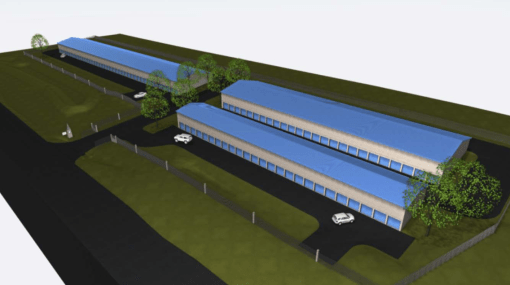
On another note, 1401 Dryden, the Storage Squad project (pictured above), seems to have lost a lot of its charm after getting caught in red tape last fall. The owners had to squeeze into a smaller area to satisfy the revised, expensive SWPPP. They’re hoping to hide most of it with landscaping.

dewitt_house_v3_1 dewitt_house_v3_2

3. Just a quick update on the Travis Hyde Properties Old Library proposal. The ILPC and Planning Board had their joint meeting, project team partners HOLT Architects and TWMLA landscape architects have incorporated their comments, and here is the current product. Sorry, no renderings, just site plans. Previous plan here. Overall, the site layout hasn’t changed too much, a courtyard and green space will be next to the DeWitt Park Inn, and the building is set back to maintain rhythm with its neighbors. The exterior is supposed to have more projections and recesses, the top floor set back 6 feet, and incorporation of balconies on the upper floors (not sure how this will affect the plan for the inverted roof). Unit count is 21 1-bedroom, 24 2-bedroom, and 9 3-bedroom, 54 instead of the original 60 (39 1-bedroom, 21 2-bedroom). The addition of 3-bedrooms is surprising for senior apartments; from what I’ve been told, typically the large majority of demand is with 1 and 2-bedroom units. The Planning Board and ILPC have another shared meeting at City Hall on the 8th.

chain_works_rev3_3

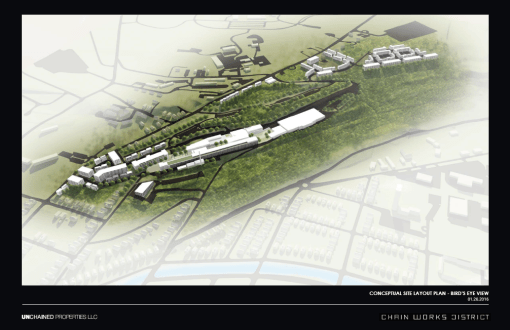
4. The Chain Works review process is chugging along. At its meeting on the 8th, the Planning Board’s special meeting will decide whether the Draft Generic Environmental Impact Statement is ready for public review (not expected to be controversial). Then on the 9th, Cornish et al. will be giving a report to the Common Council’s Planning Committee about the timeline and current status. Another staff progress report will be presented at the Planning Board meeting on the 22nd, and the next day on the 23rd, the city CC and town board Planning Committees will meet review proposed draft PUD zoning for the massive mixed-use project. With adequacy being agreed upon, the project can begin project review 15 or so days later; first public meeting is tentatively scheduled for March 29th.

The city just uploaded the comments of reviewers on the DGEIS – most are relevant, some are pretty good suggestions and critiques. Then there’s “Reviewer 3”, most of whom’s comments were put aside as they’re not relevant to adequacy. Those are but a preview of the potential flare-ups to expect at the public meeting.

12366349_10153784612864664_8478297861508040090_n

5. Stumbled on this by chance, but it seems to verify initial suspicions from a few months back; a project proposal goes with the sale of multiple parcels of land totaling 9.2 acres off Park Lane and Slaterville Road in the town of Ithaca. The property, for sale at $995,000, is being marketed by Carol Bushberg Real Estate, which doesn’t have the render on their listing page or their Youtube video, but they do on facebook. The conveyed plans call for a 26-lot subdivision, and given the proposed lot lines, it doesn’t look like it would be affected by the town’s moratorium on 2-unit structures, because each unit has its own lot even though some of them share a wall. It also meshes with the town’s Comprehensive Plan, which calls for 2-4 units per acre in this area (in the site plan, it’s just under 3 per acre). So to all you would-be home developers, here’s an opportunity.

20151108_154213

6. Speaking of the 2-unit moratorium in the town of Ithaca, it looks like that’s going forward to the Town Board to schedule a public hearing. The Planning Committee decided it was a good idea. The documentation says it would last at least a year, by which time the town hopes to have its new form-based, anti-student special zoning in place. Editorializing again, I still oppose this proposed law not because of the issue with low-end student housing, but because it’s too broad, affecting the whole town. The last 2-unit approved in Ithaca town wasn’t a student special – it was a 3-bedroom house with an accessory 1-bedroom apartment off Calkins Road. The husband and wife building the house will be living in the larger unit. I don’t think the whole town should be subject to a law that’s only been written to address a South Hill issue (the law’s language claims it’s a concern in East Ithaca as well, but I haven’t seen or heard of a new student-oriented rental in East Ithaca in at least the past few years). Anyway, whether for or against it, comments can be sent to Town Clerk at townclerk@town.ithaca.ny.us. The town meeting will be at the town hall on Monday the 7th at 5:30.

202_hancock_1
7. Here’s a preview of next week’s mid-week post: A look at some of the affordable housing proposals and plans that applied to the city for grant funding this year. INHS applied for their owner-occupied townhouses, the Boggs/ Fernández proposal for 402 South Cayuga is there, Habitat’s duplex, 304 Hector, and a new plan by a private citizen for an owner-occupied affordable duplex behind the house at 622 Center Street in the South Side neighborhood. Keep an eye out for that Monday night or Tuesday morning.

maguire_carpenter_2

8. From the other news outlets now; the Times is reporting that the sketch plan for the Maguire auto dealership proposal for the Carpenter Business Park actually had a warm reception from the Planning Board. In particular, board stalwart John Schroeder was impressed with the sidewalk along 13 (which would help transition the Waterfront and nearby environs to mixed-use) and public amenities. The board is cognizant of the site’s issues and the city’s hopes for the area, so those do play into the thought process – perhaps part of it is that Maguire’s jobs and features could work as a draw for mixed-use development of nearby parcels that don’t have so many issues. The board’s role stops at this point, with the just passed TM-PUD now front and center – unless Common Council okays the project, it won’t be back again. But Maguire did ask for a letter of support if the board was willing; we’ll see.

texas_roadhouse_v3_1

9. Meanwhile, the Journal is reporting that Texas Roadhouse will be opening May 23rd. No doubt the relatively dry and mild winter helped keep this project moving along (February construction update here). The 7,163 SF restaurant expects to hire 170 to 200 employees, of which 80 will be full time. That number astounds me just a bit because I worked at a steakhouse in high school, and although we were maybe half the square footage, we only had a staff of about 40. Even in Ithaca’s crowded restaurant scene, there aren’t many options for the red meat lovers that don’t cost an arm and a leg, and chances are good this will appeal to a different crowd than most, and be something of a draw from the nearby rural areas. Best of luck to them and their staff.

20160219_134003 20160219_134057

201_w_clinton_1

10. Let’s wrap this up with House of the Week. Quick update on Zac Boggs and Isabel Fernández’s 201 West Clinton Street carriage house. Fully shetathed (Huber ZIP system panels), fully roofed and shingled, and fully fitted with windows, the exterior work left will focus on exterior siding attachment and refinishing the original 1960s garage to match the historically-inspired vertical addition. The exterior calls for sawn board-and-batten wood fitting, though it’s unclear if it will be unpainted wood, or painted yellow. The 1 bedroom, 520 SF space looks like it could be ready for occupancy by late spring.


News Tidbits 10/3/15: Lying in Wait

3 10 2015

1.We’ll start with a news piece out of the ‘burbs. Over in Lansing town, wealthy homeowners are accusing the town board and the town planning board of disenfranchising and ignoring them over concerns about the proposed Novalane housing development. Dan Veaner at the Lansing Star gives a very thorough rundown here.

Quick summary, Novalane is a 19-lot high-end housing development slated for farmland between two other high end housing developments, the mostly-built Lakewatch and Eastlake subdivisions, the first phase of which is comprised of seven lots on the west side of the parcel. The sticking point has to do with access roads for the new homes. The developer proposes to connect the two developments via the Smuggler’s Path cul-de-sac, which would extend down through an undeveloped lot in Eastlake and connect with Eastlake Road.

According to the town, the intent has always been to connect the two developments – but apparently, no one ever had a good idea where. Neighbors on Reach Run are incensed because they’re afraid of additional traffic on their road if the connector isn’t extended all the way, but if connected, Eastlake residents are opposed to cross-traffic they suspect will cut through to get to East Shore Drive. Aside from that conundrum, some neighbors have suggested being okay with the road if it went all the way from Smuggler’s Path to form an intersection with Waterwagon Road, but that doesn’t seem possible given the property lines of the Rec Club. At the very least, it would be a big burden in the development costs.

So on the one hand, here is a town that has struggled with planning issues. On the other, you have wealthy residents angry about construction vehicles accessing the one house currently under construction in Lakewatch, and prepared to sue the town over the potential of seven more houses. There’s also this gem of a line:

“We’re large taxpayers.  It’s an autocracy.  To be treated like that by our own representatives is incorrect and not acceptable.  Who are they working for?”

Maybe all taxpayers and not just the large ones? Just saying.

2. Switching over to another ‘burb, the proprietors of Storage Squad made their pitch to the town of Dryden, per the Ithaca Times. Storage Squad, a Cornell startup that has expanded to twenty cities, seems to have a rather unique take on the appearance of self-storage. For their facility planned at 1401 Dryden Road, the company wants to build 79,600 SF of space, 70,000 SF of which would be in five buildings consisting of 400 storage units. 315 units may join 3-4 years down the line. According to the presentation, there would be a Cornell-inspired clock tower, brick and ivy growing on the side walls. Paved entries, gated, and split-face concrete masonry units. Apparently, it was enough to win the town supervisor over. A special zoning permit will be required, but approval is expected later this fall. No word on whether they’ll keep the 150-year old house on-site.

3.  Must be a good week for Dryden. The eyesore at 76 West Main Street has been sold and has a construction loan approved to finish renovations. The Ithaca Voice article I did on the reno is here. I toyed with the idea of calling Dryden mayor Reba Taylor for a quote, but I figured I’d get a very generic statement it any at all, and in the interest of time the idea was shelved. I might get a response to one-third of the calls I make regarding development/real estate stuff, which can be frustrating but I’ve gotten used to it.

state_st_triangle_v5_1

4. The Times’ Josh Brokaw brings out an update on the latest State Street Triangle news. The important details:

– CTB has agreed to take one of the commercial spaces. No word on how that would affect the North Aurora Street location a couple blocks away.

– The planning board didn’t have many words; One member suggested the curve portion was “too flat” and an arcade on the first floor (not the video game kind, but the archways over a walkway kind). A second brought up affordable housing, which the developers have given consideration, but isn’t in the current plan.

– In favor: the director of Cinemapolis, other developers, CTB’s owner and students. Not in favor – the head of Historic Ithaca, and councilman George McGonigal – who opposed the Stone Quarry Apartments, the waterfront rezoning, 210 Hancock and thinks the city can make Cornell build dorms. The Times has called him out as “anti-urban”. If a councilperson outside the first ward speaks out, it’ll get a lot more credence on this blog.

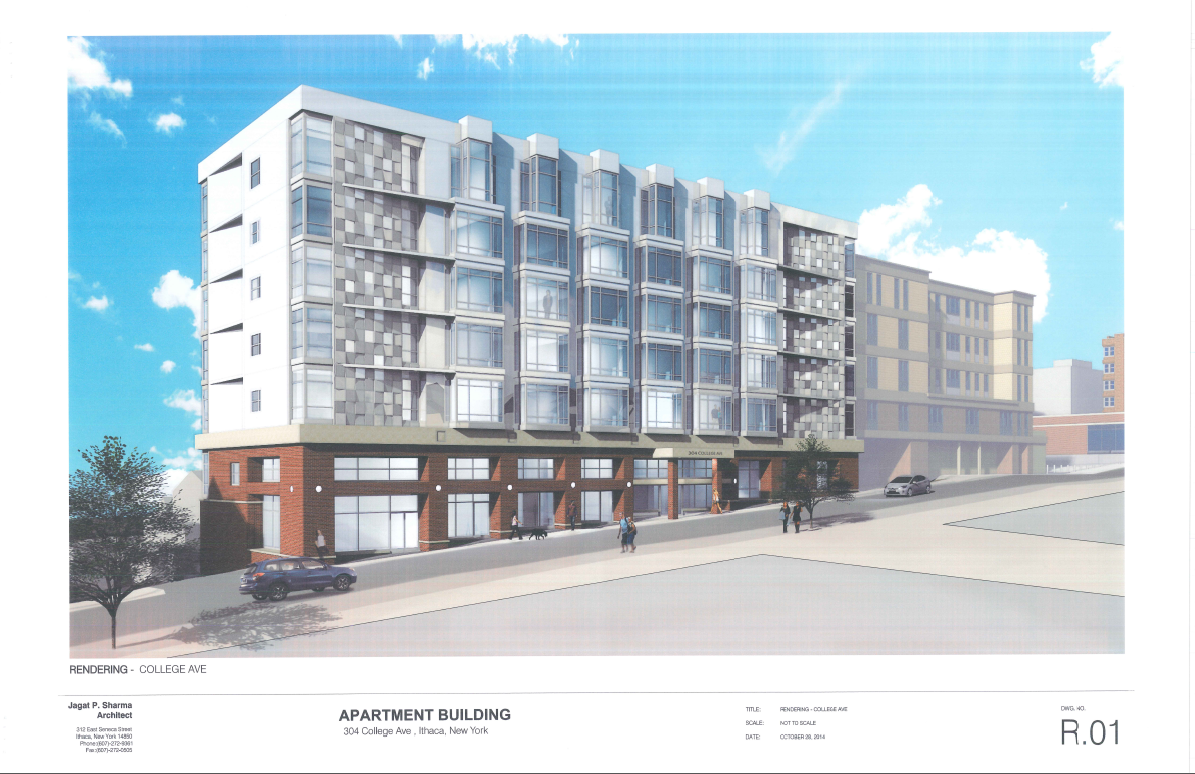
304_college_2

304_college_3

5. The city and Cornell gave an interesting presentation about development to the Collegetown Neighborhood Council this week. City planning director JoAnn Cornish gave a rundown of what’s planned, included the 102 apartments 302-306 College Avenue (phases one and two shown above). This one might still be in the hopper, but don’t expect it to move forward anytime soon – the developers (the Avramis family) have rented out the houses to be demolished through May 2017. It also seems like that one building would be in the 2017-2018 time frame, the second 2018-2019. So these two mid-rises are quite a ways out, assuming they’re still in the works. Also, Fane’s 12-story proposal for 330 College is still dead, but something more modest may come forward someday.

On another interesting note, Cornell’s lead planner, Leslie Schill, said the university may be looking into turning Eddy Gate and the Sheldon Court plaza into green spaces to offset the lack of parks in the neighborhood. Cornell might also renovate the Ag Quad into a richer pedestrian experience.

6. The Carpenter Business Park purchaser continues to intrigue. A company called Carpenter Business Park LLC, using a P.O. Box ties to the Miller Mayer law firm, has bought two more parcels after buying the four unused land parcels in the Carpenter Business Park for $2.4 million last August. This time around, the LLC purchased a nondescript one-story commercial building at 742 Cascadilla Street, and a nearby tiny silver of land between the Palisades Corporation and Cornell U. Press buildings for $304,000. It’s not clear what the buyer is intended to do with all these properties (we know it’s not a big box store), but it’s definitely curious. If something comes up, it’ll be shared here.


News Tidbits 8/22/15: Throwing Fuel on the Fire

22 08 2015

state_st_triangle_v3_1

1. Campus Advantage has released revised parking numbers for its 11-story State Street Triangle project. According to newly-released documents here, parking will be handled with a “four-point program”:

I. The primary component is that CA is negotiating a deal for 250 parking spaces in the upper levels of the Cayuga Street garage. The document notes an average surplus of 300 parking spaces per day.

II. The city is willing to let CA reserve up to 100 parking spaces in the Seneca Street garage.

III. CA has identified 75 underused spaces in the Green Street garage, but no formal deal is planned yet.

IV. Surface parking lots near Cornell and in other parts of the city that could handle parking for those who only need vehicles on weekends or for holiday trips.

Given typical student vehicle ownership rates of about 27% (27% of 620 = 167 spaces), point I will probably be enough to handle resident traffic. Commercial traffic, estimated to be about 64 spaces in the SRF Associates traffic study, would more likely be taken care of by point II or III. So the parking situation appears to be better thought out at this point. CA is also planning a bike share and an Ithaca carshare location. Whether it’s enough to please city staff, we’ll see.

The revised document notes construction traffic would enter the site from E. Green Street, and exit via Seneca Way and East Seneca Street.

Regardless, some of the reactions from city officials have been quite strong – the following quote comes from a report from 3rd Ward councilwoman Ellen McCollister from last month’s IURA meeting:

“Common Council may end up concluding it made a mistake when it re-zoned that part of the city without examining the issue more contextually and architecturally.”
State Street Triangle will be undergoing a public hearing at Tuesday’s city Planning Board meeting, and the committee will be going over the project’s City Environmental Quality Review forms. CEQR is the city’s more stringent version of SEQR, and is used to assess project impacts – basically, mitigating the issues created by the project, and making sure it’s a net positive for the community. No voting is expected.
State Street Triangle has also applied for CIITAP tax abatements, but the IDA meeting has yet to be scheduled.
100_1466

2. Quick update on 406/408 Stewart – a copy of the Ithaca Landmarks Preservation Council (ILPC) from last month indicates that council members are across the spectrum when it comes to 408 Stewart (bluish-white building above) still being historic, and if a new apartment building will be built on just the site of 406 Stewart (red building, destroyed by the Chapter House fire), or on the site of both 406 and 408. Members had to stress to themselves to look at historic value and reconstruction separately, and the purpose of the site visit was to help figure out a decision. There’s been no news yet, but we’ll see what happens.

3. Over in the village of Groton, a small development project is stirring debate of its own.

The project, proposed by Rick Uhl of Genoa, calls for four duplexes and four single-family homes, for twelve units total. The temptation is there to approach this with urban condescension, but for Groton, population 2,400, it’s a big deal.

The homes would be built on several already-subdivided lots on a new road coming off of Elm Street on the eastern boundary of the village. The original plan called for duplexes on the west side of the street and closer to the village center, while single-family homes would be built on the lots on the east side of the street.

The debate lies with proposed zoning changes in Groton – a zoning change currently being considered by the village would downzone parts of the town to single-family homes only. That includes the lots the duplexes are slated for.

The zoning has been a source of debate among homeowners in Groton, because a number of them own larger homes that they’ve turned into duplexes, living in one unit and renting out the other. Although the law grandfathers in current buildings, they worry it could be a hassle in the future. The county’s planning department has also expressed issues with the plan, saying that it creates numerous non-conforming lots and that it goes against the county’s comprehensive plan.

A compromise had been reached between the developer and planning board last spring, where duplexes would be built on the new street’s east side and single-family homes on the west side (so as to keep apartment dwellers from mixing with family homes), but more recently the village has made moves toward an all single-family plan anyway, which is creating some consternation since it tosses the compromise out the figurative window.

The Times notes that a decision on the zoning, and the compromise by extension, is expected at the September meeting of Groton village’s Board of Trustees.

4. Looks like there’s going to be a lull in activity in the town of Ithaca for the next few weeks. The Planning Board meeting for the start of September has been cancelled. The Planning Committee, which is comprised of the town board members and planning department staff, will be discussing a “family entertainment facility concept” for the intersection of Elmira Road and Seven Mile Drive, and modifications to the Planned Development Zone for the South Hill Business Campus (SHBC), an industrial and office park that reuses the old NCR headquarters.

A quick email with SHBC manager Linda Luciano says that the meeting will be to expand the business types allowed under the PDZ, because they were uncertain who would be interested when they first renovated the facility, and they wish “to support a more wide array of possibilities”. No expansion plans are on the table, although rough plans have been around for a while.

Readers might recall that Maguire dealership chain proposed a HQ and expanded facilities along Elmira Road and Seven Mile Drive, but the plan was dropped last December due to differences in opinion on appropriate zoning for the site. A mini-golf plan was also floated a few months ago, but later dropped from consideration.

5. Here’s something worth a short note – a vacant 2.01 acre commercial property in Dryden Village sold for $31,500 on Wednesday the 19th, well below its $150,000 assessment. The buyer is an LLC called “NBN Properties”, registered in July 2014. A separate document identifies the members of the LLC, one of whom is the president of John C. Lowery Inc., an Ithaca construction company.

At a glance, this story had appeared much more interesting – the P.O. Box NBN Properties is using once belonged to Ed LaVigne, who’s running for Lansing town supervisor. But LaVigne stopped using the P.O. Box in 2014, which allowed NBN to reserve it.

Regardless of who runs “NBN Properties”, the site is a potentially good location – Poet’s Landing was built just a few minutes’ walk away to the west, and the DOT has been aiming for a move next door on an adjacent 10.8 acre parcel to the north.  The county has paid for a feasibility study, now underway, for moving the DOT from the city waterfront to the location off Enterprise Drive in Dryden village (costs have delayed the move for years). This part of Dryden village has seen some other new businesses in the past few years, including a microbrewery and a Dollar General. If anything interesting comes along, expect a follow-up.

harolds_square_taylor

6. Nothing “new new” coming up at Tuesday city Planning and Development Board meeting, but plenty to talk about. Here’s the agenda, a rundown of what to expect.

A. Subdivision – continued from last month, a subdivision at 106-108 Madison Street on the northside. The applicant seeks to create a lot for a new single-family home

B. 1. Harold’s Square, 123-129 East State Street

The project was approved two years ago this month, but no building permits have been filed. Under that circumstance, an approval is only good for two years. The applicant is looking for a re-approval with no changes. A contractor associated with the Cornerstone Old Library proposal estimated construction on the 11-story, mixed-use project would begin this fall. Harold’s Square developer David Lubin is seeking to bring retail, office space, and 46 apartments to the market.

2. INHS’s 210 Hancock Street affordable housing proposal is up for preliminary and final approval

3. Final approval for the Dibella’s proposed in Southwest Ithaca

4. Discussion on State Street Triangle, see above

5. Public hearing and possible prelim and final approval for John Novarr and Cornell’s 209-215 Dryden Road academic/office building

6. Sketch Plan – Old Library proposal, Travis Hyde. Not exactly new, but I’ll give it the standard project summary next week.


When Varna Needed A New Plan

14 07 2015

A couple of weeks ago, I wrote up a piece regarding new solar-powered townhomes proposed for 902 Dryden Road in the hamlet of Varna, located on the west side of Dryden town. There was a temptation to expand the piece quite a bit by looking at Varna’s 2012 development plan, but that would have been another article in itself. So here we are.

As with a lot of development plans and rezonings, the impetus for many participants was a large, politically divisive project. A lot of the details I’m featuring here come courtesy of blog posts or the links posted within the posts of the “Living in Dryden” blog written by Simon St. Laurent, though this retrospective comes without his vehement opposition.

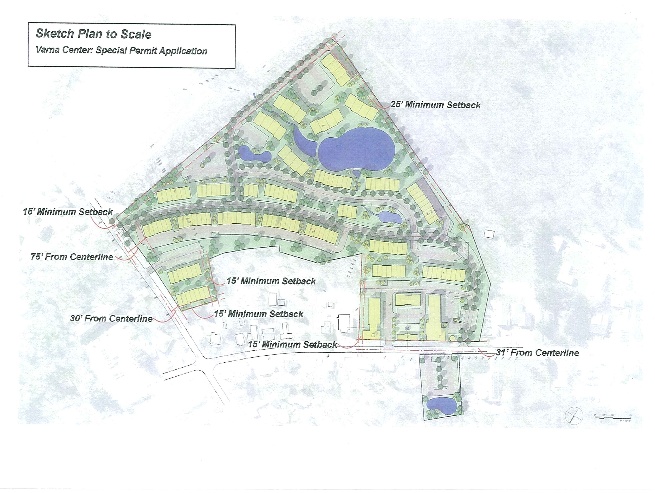
varna_ii_2010

In February 2010, the Lucente family (locally large-scale developers who run Lifestyle Properties) began discussions for a new, very large project in the hamlet of Varna. Dubbed “Varna II”, the proposal called for 260 units of housing and 30,000 SF of commercial space off of Mount Pleasant Road and Route 366. The plan called for a build-out over ten years in three phases, and the residential units were mostly townhouses that would be sold in the $150k-$200k range. It wasn’t the first time the Lucentes had targeted Varna for a major project – a 170-unit project proposed in 2000 had previously been shelved. The zoning in Varna allowed projects of 2.5 units/acre, comparable to a lot of older suburban neighborhoods. The Varna II project, at about 16 units/acre, the project was much denser than what Varna was accustomed to – and permitted, for that matter, since the town zoning law had a maximum of about 14.5 units/acre. The project would be going forward as a Planned Unit Development.

Geographically, Varna is in an awkward position – it’s a hamlet of about 800 people just east of Cornell’s campus, which puts it in the figurative line of fire for development interests, one that greatly interferes with the bucolic lifestyle touted by some residents. On the other hand, Varna is not without need of major improvementsit’s a very auto-centric area, a lot of what is developed is underutilized, and some of the street-fronting properties have potential for redevelopment into a more walkable, cohesive community.

Timing-wise, the project was well-suited; Dryden was looking at revised zoning to reflect its 2005 comprehensive plan. The possibility of a large residential complex was definitely enough to draw more attention to the new zoning, especially its impacts on Varna. The old Varna zoning (R-C and R-D residential) wasn’t dense at 2.5 units/acre, but it also allowed for a whole range of uses from residential to commercial and farming; a proverbial grab-bag. The Lucente project made it clear that maybe it was time to give the future of Varna some real thought.

As with any divisive project, Varna II went through community meetings, hosting a meeting with the Varna Community Association during the summer. The VCA was a little more even-handed about the whole thing – they knew that development in Varna was inevitable, but they wanted a greater role in shaping it. The VCA stated that it was comfortable with doubling the density to 4-5 units/acre in some areas, as well as owner occupied homes, more walkable spaces, and smaller development sites.

The project never went through formal review – the initial PUD application appears to have been rejected, because Dryden’s PUD requires at least 100 acres – this project involved only 16.3 acres. The rejection was appealed to the town Zoning Board of Appeals in December 2010, issues with State Environmental Quality Review (SEQR) and procedural issues delayed the meeting on the project, and by spring 2011, the town had an unofficial moratorium in place on large-scale development, at least until the new plan for Varna was drawn up and approved (expected to be about 9 months).

varna_plan

Fast forward some months and meetings later, and the plan, created by Behan Planning and Design, was adopted in December 2012. The conceptual plan calls for New Urbanist guidelines – sidewalks, garages on side-streets, pocket parks, and mixed-use. The conceptual build-out above adds about 450 bedrooms to the hamlet. Some of the short-term goals called for improving bus stops and finalizing the Varna Trail in the short term (identified as 2012-2014), reworking the 366/Freese Road intersection into a roundabout during the medium term (2015-2017), and incentives for projects to follow the plan. The plan also suggests implementing complete streets in the 2015-2017 timeframe. The revised Varna zoning allows for units 6-10 units per acre, with density bonuses for LEED and certain forms of redvelopment.

Well, we’re in 2015 now, let’s see where things are at. The town applied for grants in 2013 for the “complete streets” multi-modal corridor on 366. But apart from that, not much else on the town’s end, something that Varna residents have noted with some distress. The town responded that plans are underway, they’re just going slower than anticipated.

902_dryden_1 902_dryden_2

On the private end, Modern Living Rentals’ 15-unit, 42-bedroom project for 902 Dryden is the first major project to hit the dirt since the plan was adopted. The 902 Dryden parcel is about 2.42 acres, so the project comes about to about 6.2 units/acre (based off of the zoning, I think 13 units/acre were possible with the green bonus for being solar-powered). Being 2-story townhouses, it’s in scale with Varna, and is a sizable but not large project, the type that the VCA expressed preference for back in 2010. 902 Dryden includes proposed street-facing sidewalks for when the town gets to that phase. Since it’s been approved, I would guess that the town is satisfied with the project.

As for the Lucentes, they’ve focused on other endeavors, such as their Village Solars apartment project in Lansing. They still own the land that Varna II was proposed for. There’s no indication if anything will happen here or if they’ll eventually sell it off, but it’s something to keep an eye on in the long-term.