Cornell Veterinary School Expansion Construction Update, 1/2016

12 01 2016

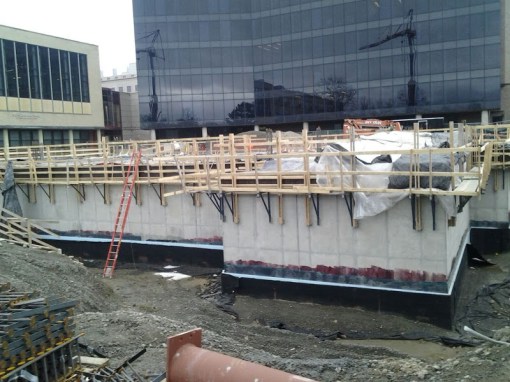
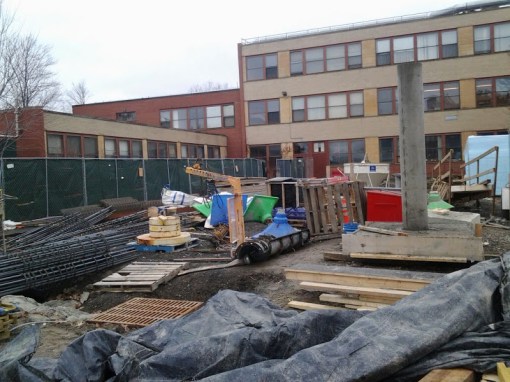
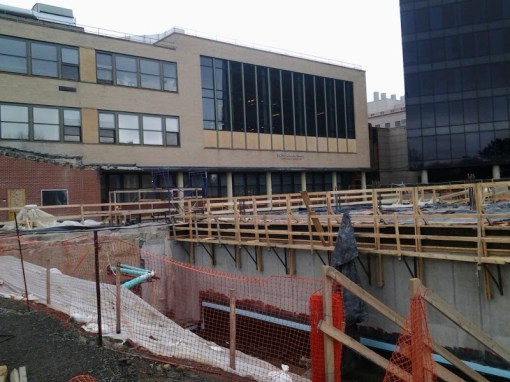
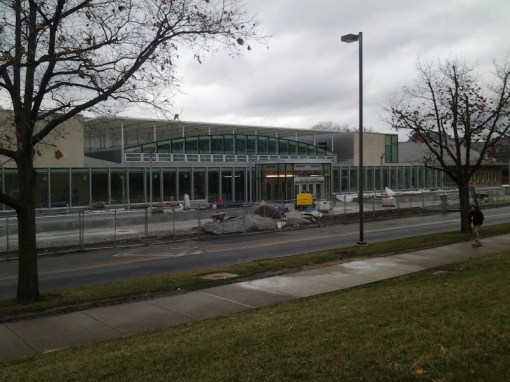
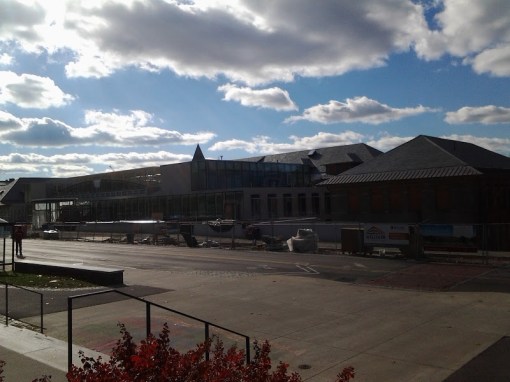
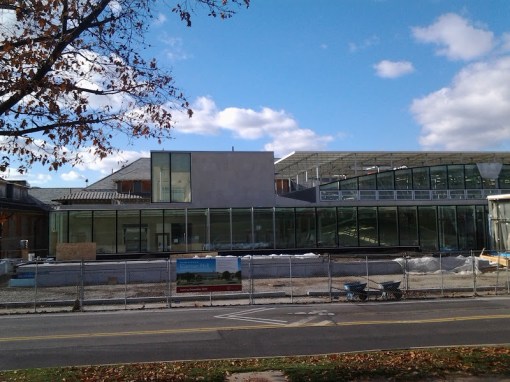
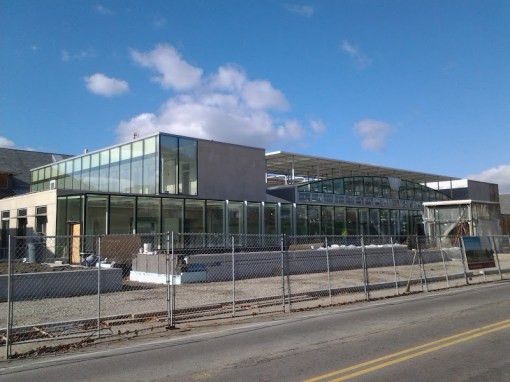
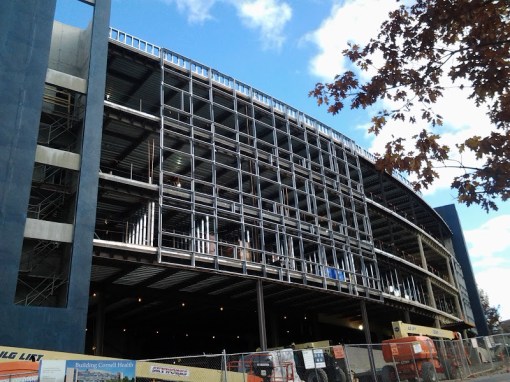
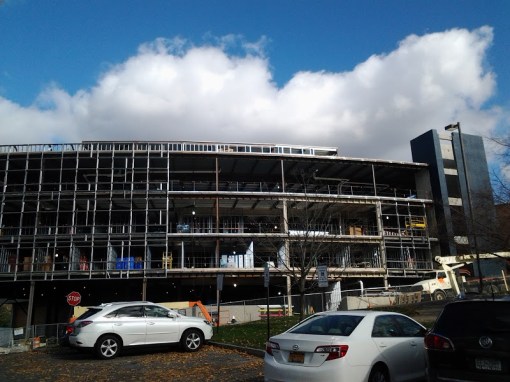
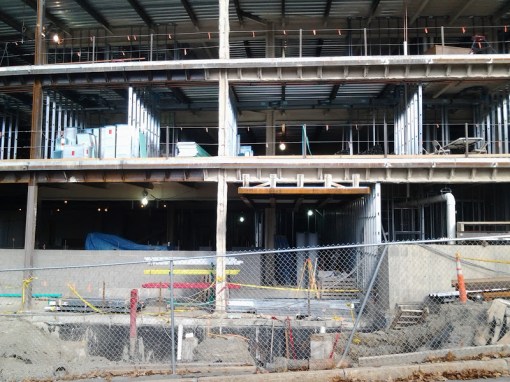
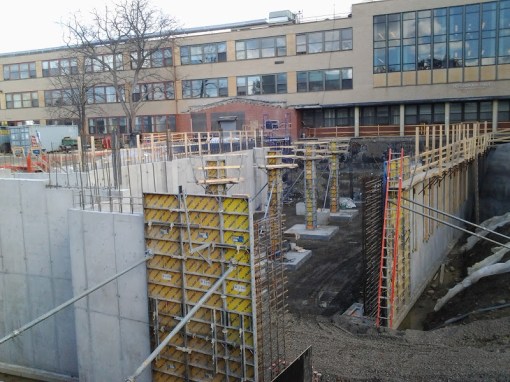
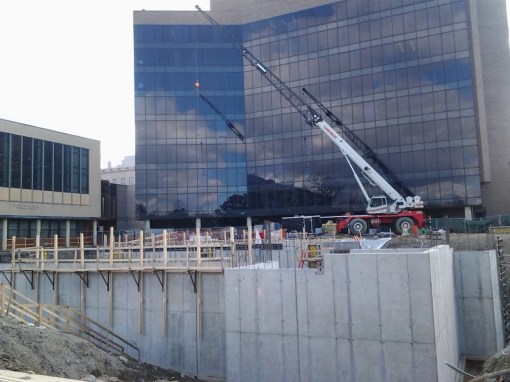
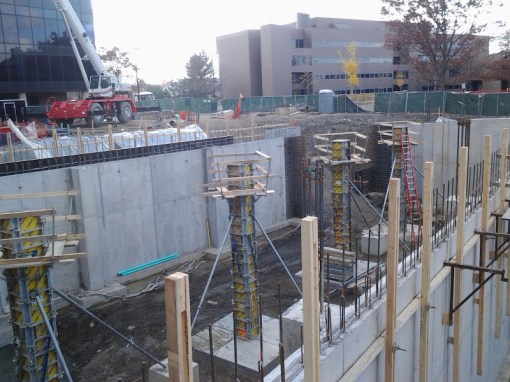
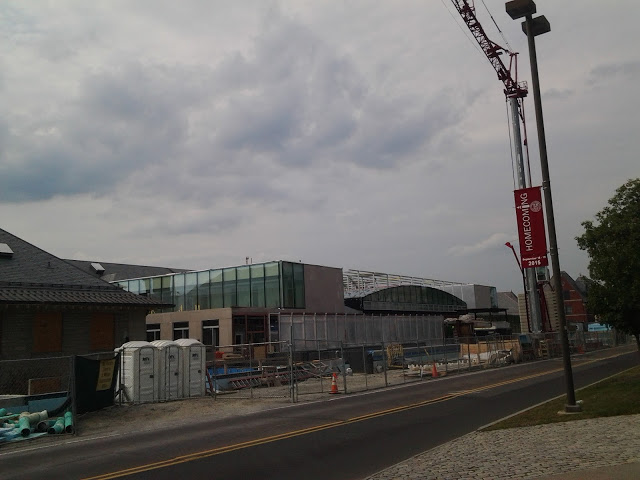
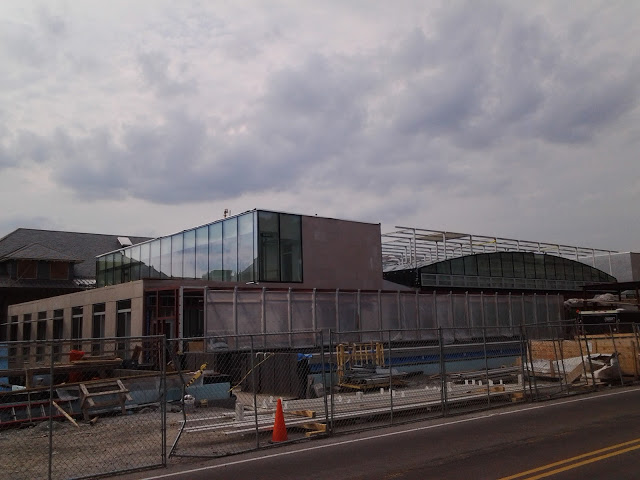
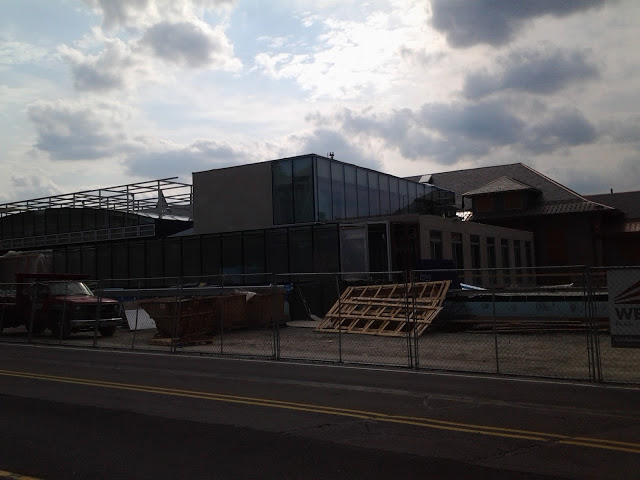
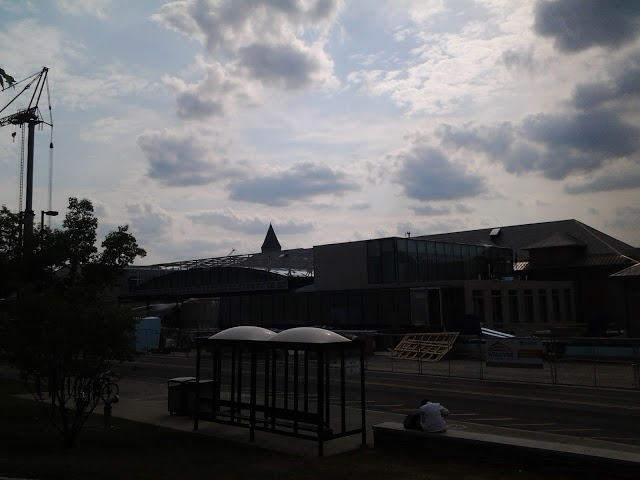
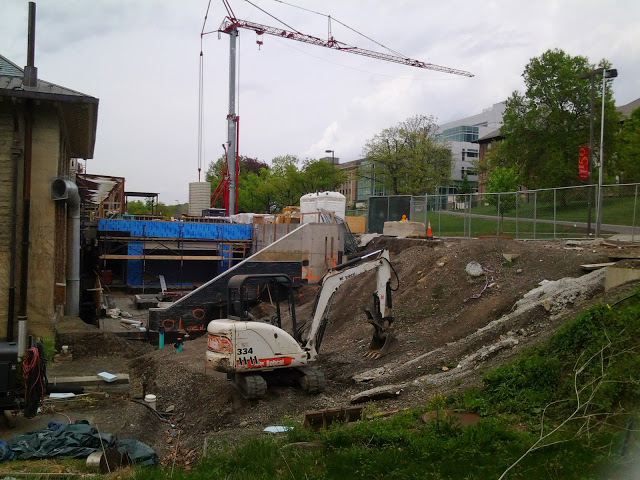
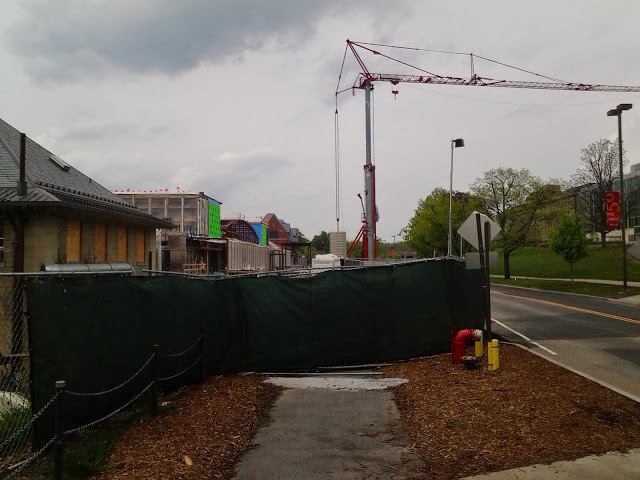
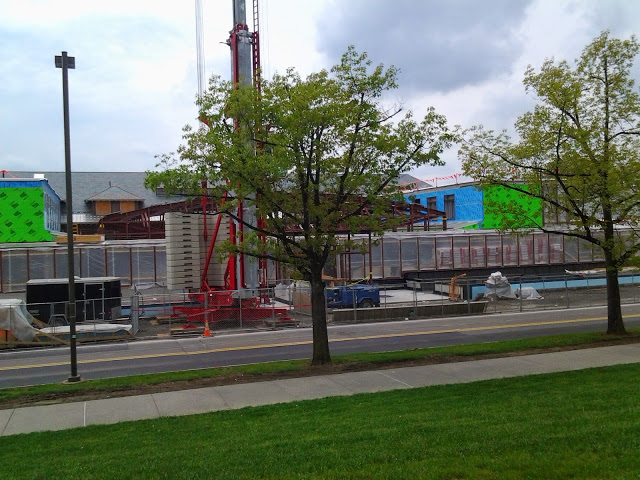
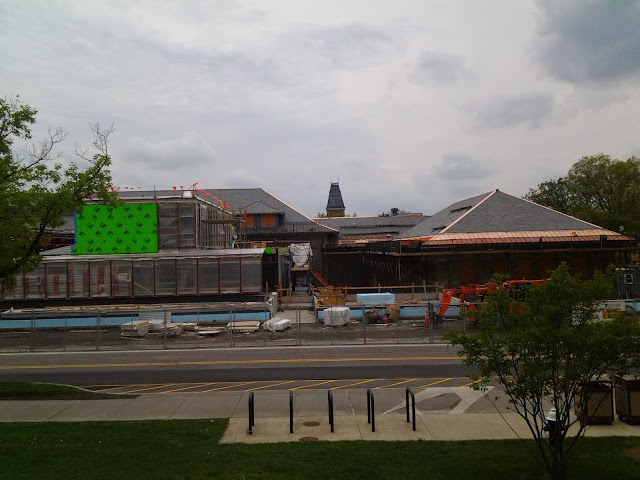
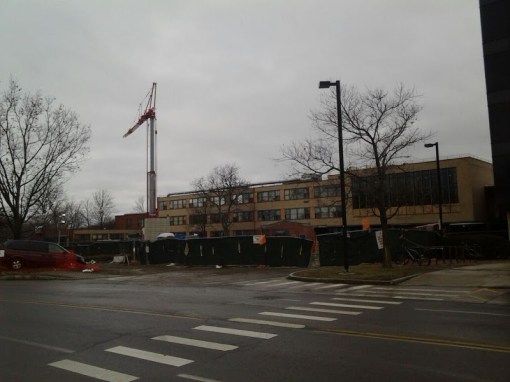
Over at the Vet School, it looks like the expansion project is now at surface level. With the foundation completed, the only direction for the project to go is up, which the Manitowoc Potain self-erecting crane should help with. Phase I interior renovations should be completed by this time, and the Phase II new construction will be moving ahead to a June 2017 completion. Like Klarman Hall, Welliver is the general contractor of this $74.1 million construction project.

20160109_121541 20160109_121607 20160109_121617 20160109_121646 20160109_121718 20160109_121739 20160109_121743 20160109_121756 20160109_121825


Klarman Hall Interior Photos

11 01 2016

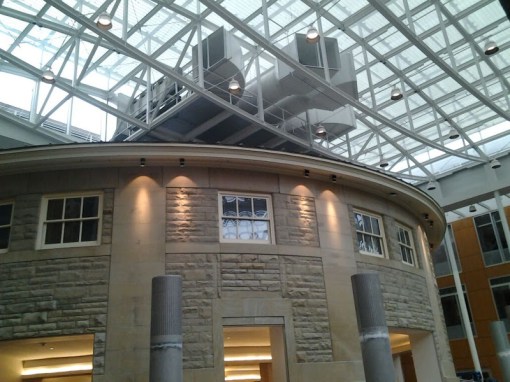
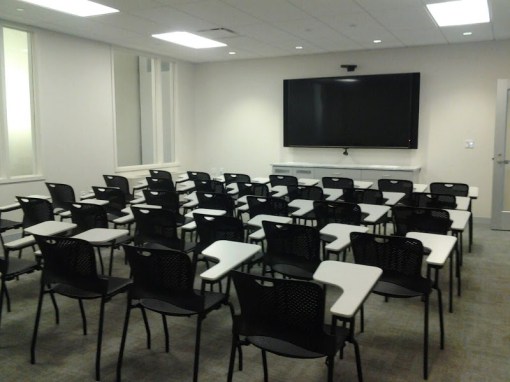
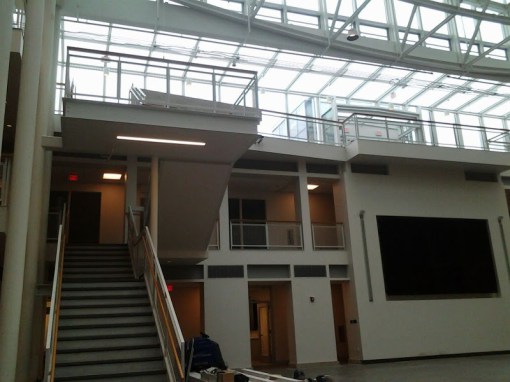
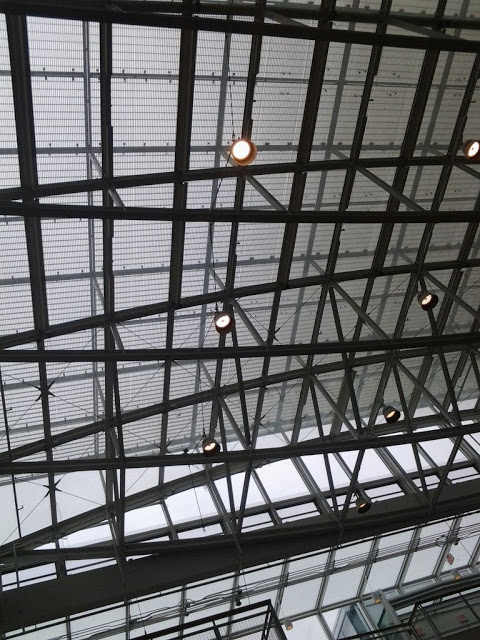
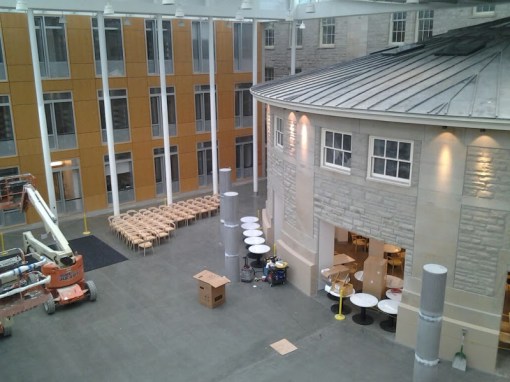
Otherwise known as what $61 million gets you. Wrapping up the Klarman Hall updates with some interior shots of the nearly-finished building. Some staff and classroom spaces have already been occupied, as is the new Temple of Zeus cafe. While inside, I struck up a conversation with the one other person present, an employee of sub-contractor Cook Painting doing touch-ups, and he told me all about how he’s worked on multiple Cornell buildings and Klarman was his favorite so far, and that although he was disappointed the roof had an opaque cover, he’d seen the sun come through the sides in the morning and “the whole place just lights up like a Christmas tree”.  Unfortunately, it was cloudy a little after noon when these photos were taken, so no such effect here.

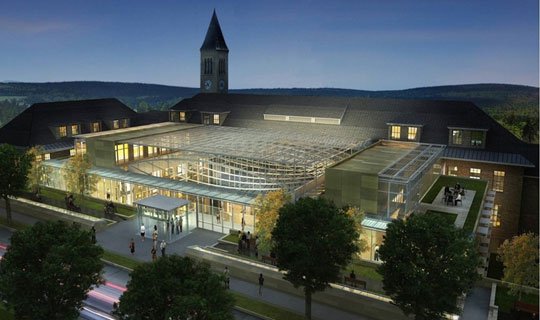
In Klarman’s 33,250 SF of usable space, Cornell will host spaces and meeting rooms for approximately 200 faculty and staff, a 350-seat auditorium, and the 7,700 SF glass atrium, which is arguably the centerpiece of the new structure. Accordingly to the friendly painter, Cornell will do a formal event to celebrate Klarman Hall’s completion later this year. No doubt its namesake, billionaire hedge fund manager Seth Klarman ’79, will be in attendance. The Groos family, multi-generational Cornellians, were also significant donors to the project.

Klarman was due to be complete in December 2015 when the project first began construction in summer 2013, so all in all Cornell and the contractors did a pretty good job staying close to schedule, even with the last couple cold and stormy winters. Hats off to the construction workers and for making that happen.

Boston-based Koetter | Kim and Associates is the building architect (they also did the recently-built Physical Sciences Building), and Welliver served as general contractor. Klarman Hall is seeking LEED Platinum certification, which is the highest level possible.

20160109_124823 20160109_124828 20160109_124844 20160109_124855 20160109_124910 20160109_124937 20160109_124957 20160109_125023 20160109_125032 20160109_125037 20160109_125128 20160109_125137 20160109_125218 20160109_125224

20160109_125246

20160109_125303 20160109_130220 20160109_130248 klarman_atrium_render


Cornell Plans Renovation for Hughes Hall

27 11 2015

There is almost never a period without construction at Cornell. Don’t expect that to end anytime soon.

Cornell’s latest construction plans were presented as a sketch proposal at last Tuesday’s Planning and Development Board meeting. The sketch plan is the first step in the process, where an applicant solicits input and first reactions from the board. A copy of the powerpoint presentation can be found on the city’s website here.

hughes_cornell_1

The renovation of Hughes Hall is the second phase of a three-phase expansion and renovation of the Cornell Law School. The first phase, which consisted of 40,000 SF of new, partially-subterranean classrooms and a 170-space auditorium, began in Summer 2012 and was completed in Fall 2014 at a cost of $23.8 million. Ann Beha Architects of Boston, and Welliver Construction of Elmira worked on the first phase of the renovation and expansion program. Ithaca Builds offers plenty of interior and exterior images of the first phase here, and a copy of the original Ste Plan Review from 2012 is on the city’s website here.

The first phase was Certified LEED Platinum (the highest LEED designation), which was possible in part because as an underground structure, it was easier to design and pay for maximum energy efficiency. The Hughes Hall renovation will pursue LEED Silver at a minimum.

hughes_cornell_2

Initially, Hughes Hall was to be the third phase, with a renovation of Myron Taylor Hall planned as Phase II. However, since the plan was initially conceived several years ago, the second and third phases were switched around.  The total cost of all three phases is pegged at $60 million (2012 estimate).

hughes_cornell_3

Externally, the changes to Hughes Hall will be subtle – the current open-air loggia will be enclosed and a new entryway will be built on the east side of Hughes. A glass-enclosed staircase will be built onto into the West facade, and the dining room terrace will be repaired. Although some parts of the Law School are historic (Myron Taylor Hall, which dates from 1932), 62,000 SF Hughes Hall is a later addition, built in 1963/64, that lacks the historical detailing of the older structures.

hughes_cornell_4

Internally, administrative and other non-faculty offices will be located on the ground floor, with a dining room, event room and other office/flex space on the floor below (note that the building is built into a hillside, so the Fork & Gavel Cafe, although one level below the ground floor, exits near surface level on the southern side of the building). Although the upper floors aren’t discussed in the sketch plan, the general upper-level plan is for new offices for law school functions and faculty that replace dorm rooms for first-year J.D. students.

With this mostly-interior renovation, the focus of review will probably be on staging and general harmony with surrounding physical environment (buildings and landscape). At first glance, this project doesn’t appear to be stirring any major issues (overlooking the loss of student housing, which is worth criticism but nowhere close to illegal), but will probably create the standard blitz of documents and PDFs that Cornell sends to the city to preemptively answer any questions committee members may have.

Given the timing, Cornell is likely shooting for a Spring construction start, with completion in 2017.


Klarman Hall Construction Update, 11/2015

15 11 2015

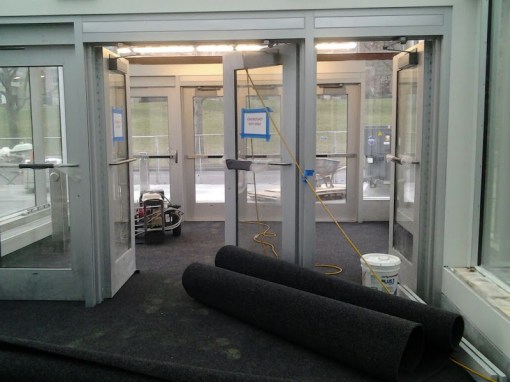
Klarman Hall is nearly ready to open its doors. The atrium’s being painted, some glass on the East Avenue entrance needs to be installed, and landscaping still needs to be done, as well as some work putting windows back into the construction-facing walls of Goldwin Smith. But apart from that and some finishing work on the inside, this project is almost done. New trees won’t be planted until the Spring, so that they don’t have to fight for survival through the winter while adjusting to a new environment.

Additional images of the project (including aerials!) can be found on Landmark Images here. Additional project information is available on Cornell’s website, or the umpteen million posts discussing this project over the past two years that it’s been under construction. Welliver and LeChase Construction were the contractors for this project, and Boston-based Koetter | Kim & Associates is the project architect.

This is just meant to be a short thing, but there might be an expanded Voice piece once this project approaches its ribbon-cutting in January.

20151108_125420 20151108_125449 20151108_125526 20151108_125601 20151108_125621 20151108_125703 20151108_125726

klarman_1


Gannett Health Center Construction Update, 11/2015

13 11 2015

A lot of progress has been made with the Gannett Health Center addition on Cornell’s campus. The new addition has been framed up and topped out. Some of the interior walls have been framed with metal stud walls, with more work yet to come. The primary glass curtain wall is still being framed out, but some of the smaller sections to the north and east have some window panels installed. The variety of glass color used in the facade isn’t quite apparent just yet, since many of the panes are still covered with a blue cellophane wrap for protection.The dark blue material on the concrete stairwells is likely a water-resistant barrier, not unlike that used on the Planned Parenthood Building when that was under construction a couple years ago. The addition, which is phase one of Gannett’s three-phase expansion and modernization program, should be open for its first patients and staff next summer.

The Pike Company‘s Syracuse office is serving as general contractor for the $55 million project. Local architecture firm Chiang O’Brien designed the renovation and addition, and Ithaca firm Trowbridge Wolf Michaels Landscape Architects will be doing the site landscaping.

20151108_123644 20151108_123829 20151108_123925 20151108_124019 20151108_124118 20151108_124215 20151108_124224 20151108_124249 20151108_124313 20151108_124326

gannett5 gannett3

gannett2


Cornell Veterinary School Expansion Construction Update, 11/2015

12 11 2015

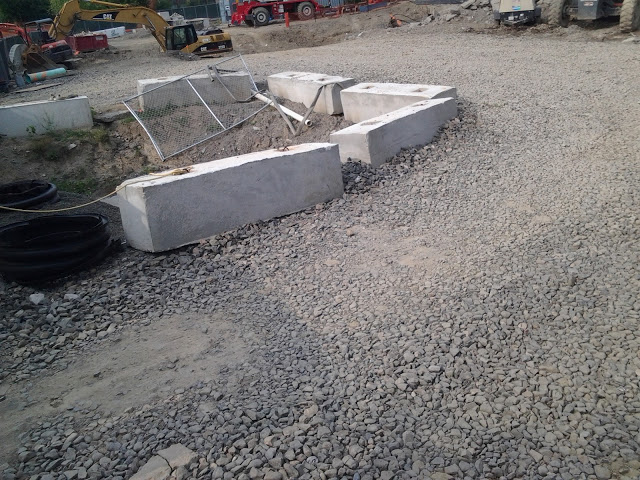
The site of the future west wing of the Cornell Veterinary School expansion has been excavated and the foundation is being poured for what will be a 3-story building with the new Flower-Sprecher Library, and additional program space. Look along the outer edge of the newest foundation section and you’ll see wooden forms pressed against the concrete. These forms provide stability and shape while the concrete hardens, and they provide support to the reinforcing rods embedded in the concrete. They will move further along the perimeter as pouring continues.

Without being all that knowledgeable about deep foundations, the structures in the middle of the excavated foundation might be pile caps. Piles are driven into the ground, trimmed to a predetermined height, formwork is set up around the piles and the concrete is poured and left to cure. So the piles are underneath the caps, and columns extend from the base of the cap. The load of the structure’s will be transferred to the pile caps and distributed to the piles below, providing stability for the building.

EDIT: Quoting commenter Drill Deep, who is knowledgeable about foundations: “No deep foundations at this one. Just very wide spread footers. East Hill and the Cornell campus usually has ground that can be made to do the job. The basement here is very tall and something like a hangar. Lots of headroom to run utilities.”

More information on the background and details of the expansion can be found in the September update here.

NYC-based architecture firm Weiss/Manfredi designed the expansion, and regional construction firm Welliver is the general contractor.

20151108_122245 20151108_122249 20151108_122256 20151108_122317 20151108_122355 20151108_122421 20151108_122457

cad048742a281097e5667382eced4233

LibraryReadingRoom10-2


Cornell Veterinary School Expansion Construction Update, 9/2015

2 09 2015

In an attempt to avoid the correct but lengthy word jumble this is, I’m just going to refer to this as the Vet School Expansion. Even then, in terms of physical square footage, expansion is something of a misnomer. The plan calls for the demolition of 68,000 SF of space, the addition of 65,000 SF of space, and the renovation of 33,000 SF. In sum, 3,000 SF less space than which the vet school started with.

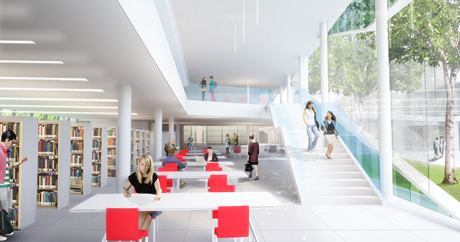
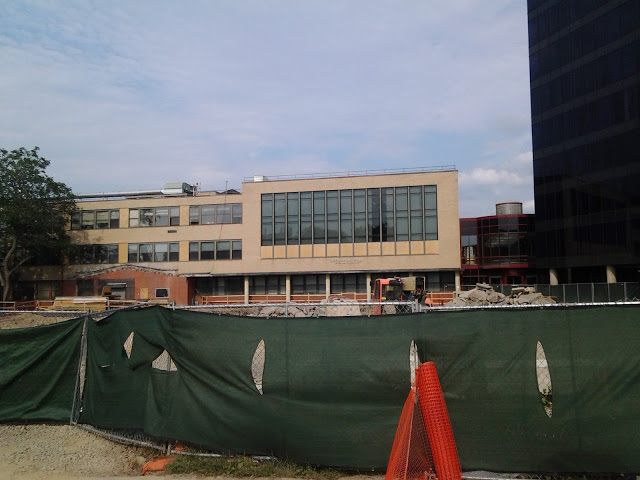
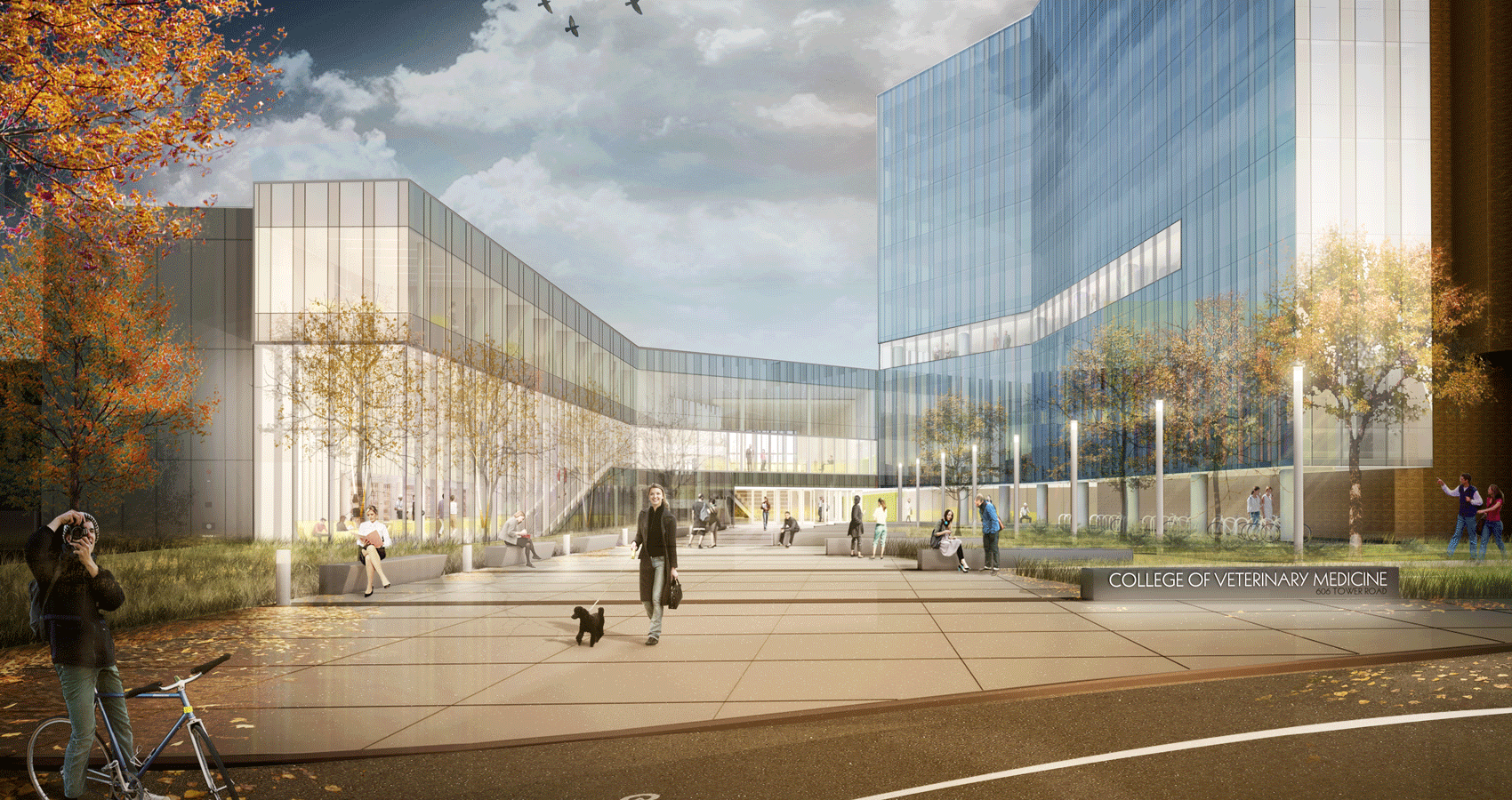
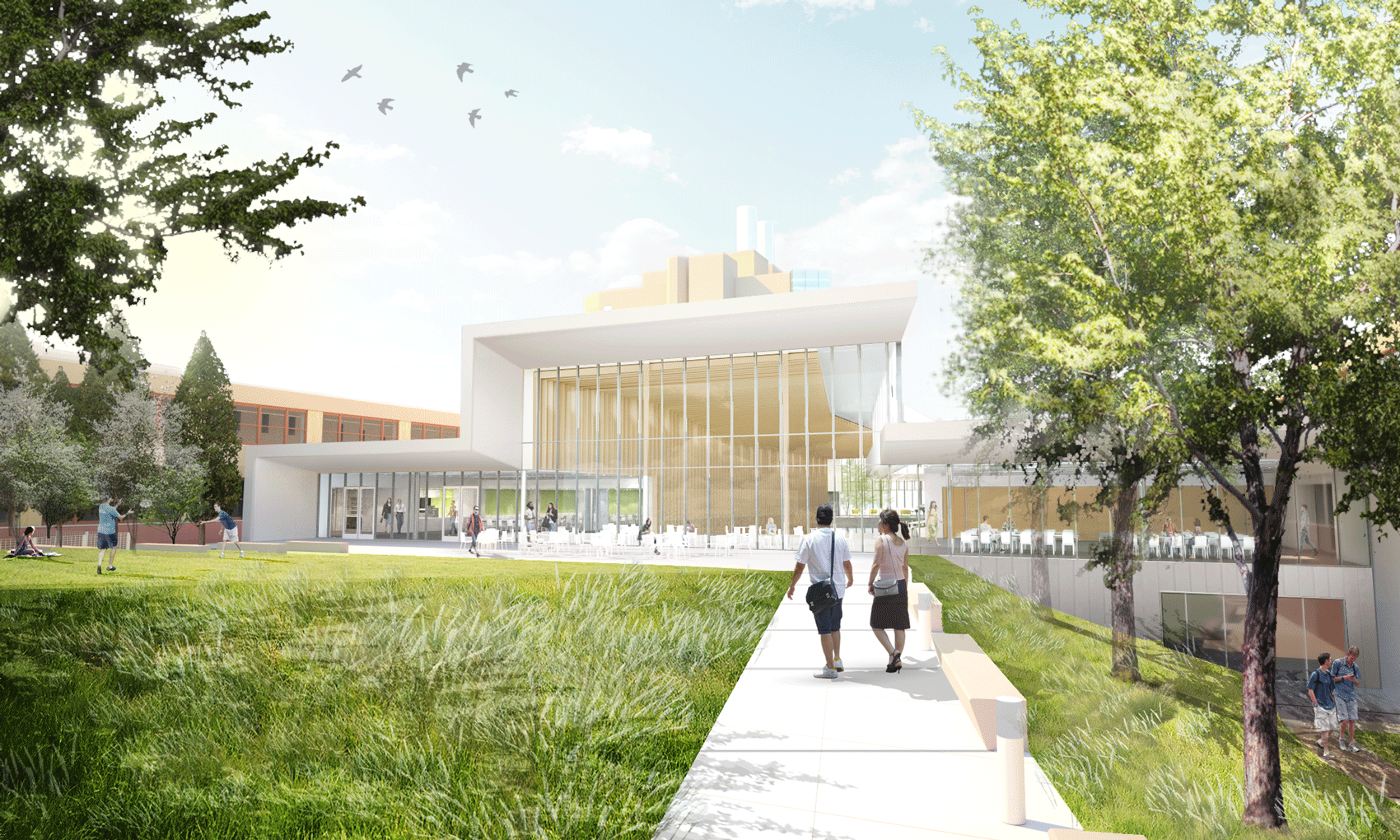
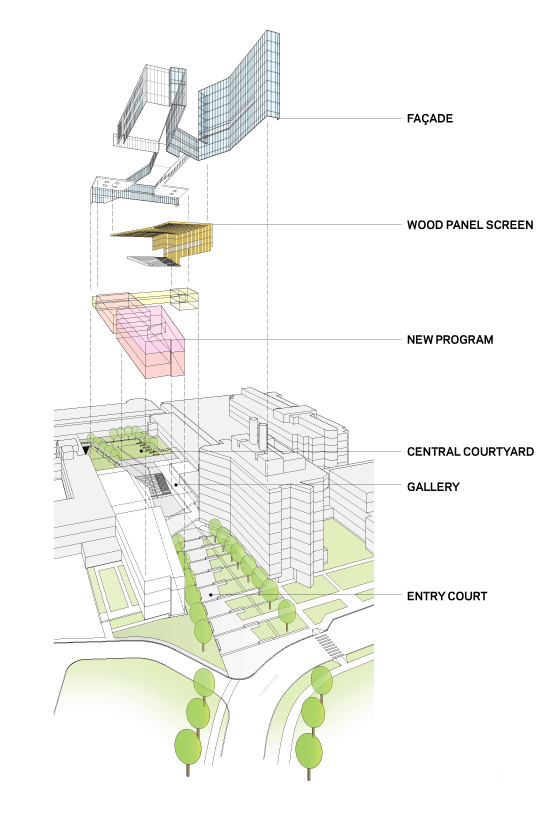
However, it’s less about space and more about efficiency. The plans include renovation and expansion of classrooms, teaching laboratories, cafeteria, locker rooms and shower facilities, and a combined Tower Road entrance. In the photos below, the entry plaza and the James Law Auditorium have been torn down. In its place will rise a new three-story addition that will house the vet school’s Flower-Sprecher Library. Parts of Schurman Hall will also be demolished and replaced with a new 2.5 story gallery/courtyard space. Extensive interior renovation will cluster classrooms, labs and service space, improving circulation through the numerous interconnected buildings that comprise the Vet School. The Vet Research Tower will be reclad in lighter, more transparent glass to match the new additions. The design of the expansion is a product of NYC firm Weiss/Manfredi, a Cornell favorite.

Renovations will increase the class size from 102 DVM students to 120 DVM students. Since a DVM degree takes four years, that means an additional 72 students.

Phase one for the vet school expansion is well underway, having a roughly January 2015- January 2016 time frame. The second phase will pick up immediately after the first and run from January 2016 to June 2017.
The budget for both phases is $74.1 million, with funds coming from the SUNY Construction Fund and private sources.

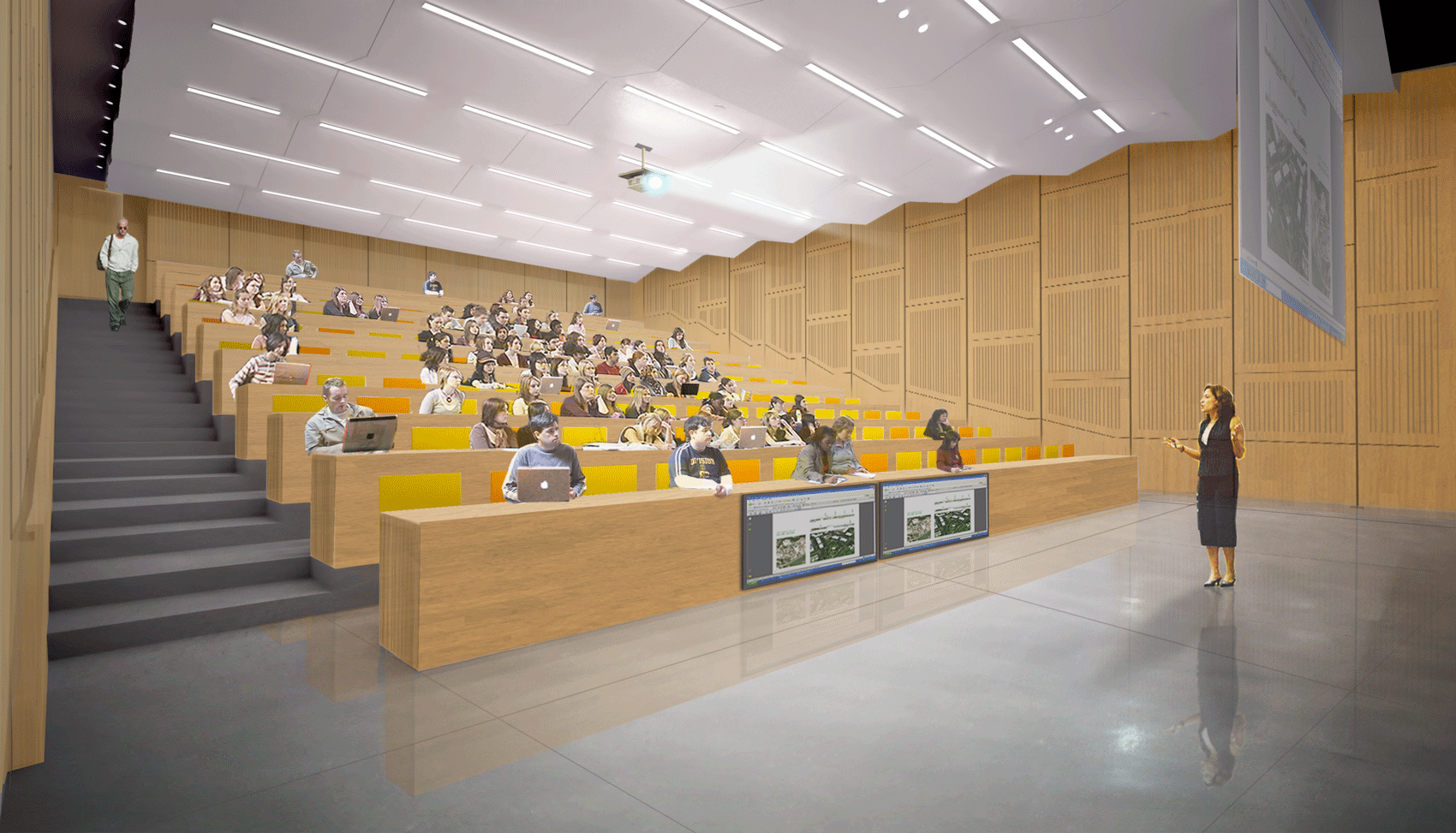
On a humorous note, while going through the project page on the architect’s website, I found an image of a lecture hall with some token presentation slides (last image). The placeholder image is a screenshot I had taken of the Cornell Master Plan back in 2008. Surprise surprise. For the record, I’m totally okay with it (even though I hate the screenshot, dating from the days before I thought to crop images).

20150829_162541 20150829_162526 20150829_162517

cad048742a281097e5667382eced4233

LibraryReadingRoom10-2

8f098b7e26544f579eb7411b9a1716aa

eea787361994de9625f74b19aa50d91e

655113b60367a0343c31545937948d57


Klarman Hall Construction Update, 9/2015

1 09 2015

Klarman Hall is entering the home stretch now, just a few months from its anticipated January 2016 completion (and a few weeks behind the December 2015 date initially planned). Montour Falls-based Construction firm Welliver is busy sealing up the building’s exterior, while putting up drywall, painting and finishing-out the interior lower floors, and wrapping up services rough-in in the upper level offices.

From the looks of it, most if not all of the sandstone exterior wall panels have been installed. The vestibule has been framed out but has yet to be glazed (window installation), and while the atrium has been glazed, the glass-paneled roof above the atrium has not. Concrete stairs have been poured on the slope, and the rest of the landscaping will follow after the building has been completed and the warm, snowless weather of spring comes around. Construction progress of the project can be followed through aerial photos shared by Landmark Images here.

The 33,250 sq ft building was designed by Koetter | Kim & Associates, and is named for billionaire hedge fund manager Seth Klarman ’79. The building will be the first new humanities building on Cornell’s campus since Goldwin Smith Hall was built onto the old dairy science building in 1906. Just like Cornell did with Goldwin Smith over a century ago, the new building will be combined with the old building through hallways and commons areas. Klarman Hall will contain classrooms, faculty and graduate student offices, and in its the north section, a 350-seat auditorium. The large interior atrium makes use of the rotunda of Goldwin-Smith Hall for open-layout seating, a food/cafe area, and ingress/egress. Cornell is aiming to have the building achieve LEED Platinum certification.

The cost of the new building, which began construction in May 2013, is estimated at $61 million.

20150829_160955

20150829_161038 20150829_161058 20150829_161120 20150829_161151 20150829_161227 20150829_161250

klarman_1


Klarman Hall Construction Update, 5/2015

19 05 2015

Since the last update on Klarman Hall in February, the snow has melted and East Avenue has been reopened to all vehicular traffic. Construction firm Welliver has been pouring concrete on the upper floors and the structural steel has been erected. Concrete pre-cast has been installed on the atrium-facing portions of the top floor, with bright green glass-mat sheathing visible on some of the panels. Within these panels, the window cutouts are visible, and as seen in the last photo, windows have already been installed on the south block facing into what will be the atrium. Windows will be installed in the north block shortly. To hoist these panels into place, a telescopic crane is used.

Less visible to the outside observer, interior wall framing is underway on the upper levels, with utilities rough-in continuing, and some drywall installation underway in the more complete areas. Openings have been created in Goldwin Smith’s rotunda (where people will flow in and out of Klarman’s atrium), and the sub-slab (the concrete below the new floor) is being poured.

The long-term construction schedule calls for window glazing (exterior glass wall installation) and drywall to be complete by the end of June. The atrium skylight glazing will take place during the summer, the elevator will be installed by August, and the green roof will be prepared just as the fall semester kicks in. Klarman Hall will open its doors to the public in December if all goes to schedule.

The 33,250 sq ft building was designed by Koetter | Kim & Associates, and is named for billionaire hedge fund manager Seth Klarman ’79. The cost of the new building, which began construction in May 2013, is estimated at $61 million.

20150516_143414 20150516_143445 20150516_143458 20150516_143530 20150516_143603 20150516_143644 20150516_143702 20150516_143751


The Cornell Fine Arts Library

6 05 2015

fine_arts_2

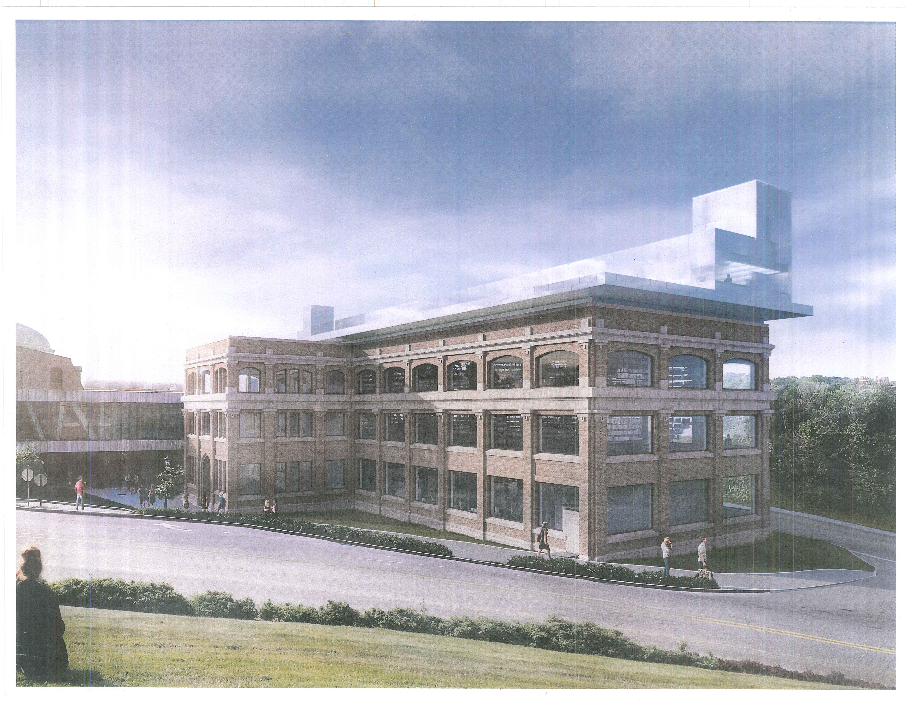
Here we go, renders of the Cornell Fine Arts Library, courtesy of the Ithaca Landmarks Preservation Council (ILPC) Agenda. Additional renders here, project narrative here. Apparently, the ILPC does get to review the addition, although looking at the agenda for the 14th, it doesn’t look like they’re making any decisions (and being just outside the Arts Quad Historic District, they may not be able to).

fine_arts_3

Quoting the front page of the narrative, “rather than acting as a physical symbol, it radiates activity and occupation”. The university wanted the new superstructure, which they’re calling a “lantern”, to be as visible as possible from campus entry points, and it is claimed that the addition will bring “distinction and excellence to the campus”.

fine_arts_4

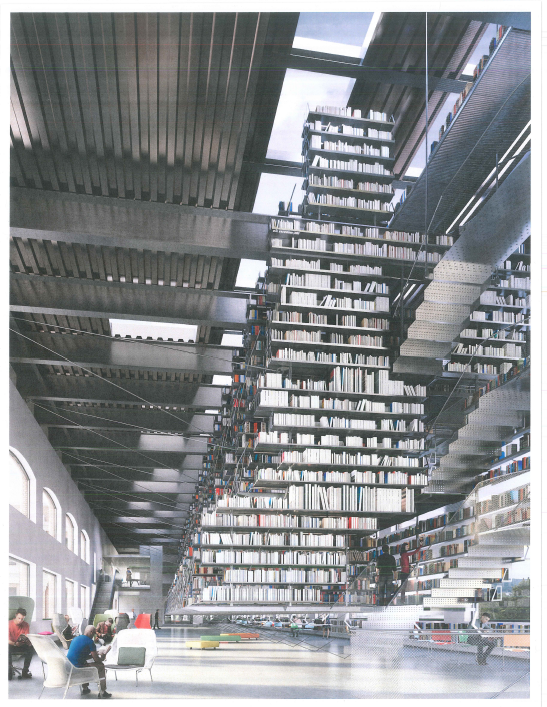
The building will have two entrances, one public and one for AAP only. The interior will consist of four levels of mezzanine shelving for the Fine Arts Library’s collection, as well as interspersed work/study spaces. Floor-to-ceiling space will range from 48 feet on the north side of the reading room to 7.5 feet in some sections of the library stacks. Long, unobstructed hallways will run the length of Rand Hall. The large variation is meant to convey both grand spaces and “private engagement” with the books. The lantern will have a catwalk as well as working spaces.

fine_arts_5

The design replaces Rand’s multi-pane daylight-factory windows with single panes, removes the east stairwell, and is purposely designed to overhang above Rand, acting as a sort of canopy for rain and sunlight protection.

fine_arts_1

As previously covered, the architect is a Cornell alum, Vienna-based Wolfgang Tschapeller M.A. ’87. More of Tschapeller’s very avant-garde designs can be found at his website here. The project is being funded in part by a multi-million dollar donation from Cornell alumna, architect and UC-Berkeley professor Mui Ho ’62 B. Arch ’66. No construction time frame or total cost have been given at this time.

I’ll call a spade a spade. Rand Hall is getting an ugly hat. One that the rest of campus will be subjected to looking at for years to come.