Finals Special: Slope Day and Beirut

7 05 2009

So, my original intention was to get an entry up last night, but considering I had just finished a particularly difficult class that actually had a manageable final, and I received an offer to play the aforementioned game, I decided to indulge (and discovered that chili and beer should never be in my stomach at the same time, but anyways…). Somehow during the game, my mind wandered and started wondering who exactly game up with beirut, also known as beer pong (also known as water pong, for those who prefer alternative beverages). For this, Wikipedia is incredibly useful.

I found the article to be an entertaining read.

This is the listing of skills required:
“Aiming, taunting, and alcohol tolerance”

As for the origin, the game apparently originated from Dartmouth fraternities in the 1950s and 1960s (considering their unofficial mascot is Keggy the Keg, this is no surprise). The original version of the game used actually paddles, as if a regular ping pong (table tennis) game, where one was supposed to swat the balls across the table “court” and into the opposing team’s cups. The name beirut was adopted in some regions during the 1980s (a time period that some history buffs might recognize as part of the Lebanese civil war where the capital of Beirut was largely destroyed, although I fail to see the connection between shooting down cups of booze and the widespread destruction of a city [2]).

Now, granted, I’m slow with the entries lately, but that’s largely because of my finals. As a result, I’m running a little late on this brief Slope Day piece, but things are better late than never.

As we all know, Slope Day is held annually on the last day of classes [3] for the academic year. Slope Day seems to have originated from the Navy Ball, an evening of song and dance that was first celebrated around 1890. Navy Ball, which was held to raise money for CU Athletics, was held in October (on the day before a major regatta on the lake) up until about 1901. Attendance at classes was so poor that day in May 1901 that the university decided to cancel classes and declared a holiday, known as “Spring Day”. Spring Day was held for about next fifty or so years, often with a theme (for example, 1928’s theme was “A Roman Holiday”, which might have been as close to a toga party as they came back in the day). However, with the campus unrest from 1960-1978, celebrations of Spring Day ceased [4].

From 1979-1985, Cornell University sponsored “Springfest” on the slope. The initial celebration consisted of catered food, catered booze, and live entertainment on the slope. This was within the laws of the time, because the drinking age in the state of New York wouldn’t be raised to 21 until December 1985. The 1986 Springfest was held in a fenced-in area on North Campus (I imagine where the Court-Appel-Rawlings Field areas is), which caused quite a protest from the student population, who wanted to maintain their right to get sloshed on the slope. It was about this time that the term “Slope Day” came into popular use. 1987’s Slope Day had entertainment in the form of Robert Cray, but by 1988 Slope Day was once again an unofficial event.

Through the 1990s, the university refused to acknowledge Slope Day, except that kegs were banned from Libe Slope in 1990. SlopeFest, an alcohol-free carnival on West Campus, was launched in 1999 (moved to Ho Plaza in 2004). In 2001, the amount and type of alcohol students could have on the slope was limited. In 2003, Slope Day took on its current form of a fenced-in slope, highly regulated alcohol catering, and live entertainment.

With regards to the performance, the following is a quote from the wikipedia page, and verified on the Slope Day Cornell history page:

Friday, May 6, 1977: Commander Cody & His Lost Planet Airmen (Held on Libe Slope)
Sunday, May 8,1977: The Grateful Dead (in Barton Hall)This concert was separate from the Slope Day[3]
May 1984: The Ramones, Harold Melvin & the Blue Notes (Held in Barton Hall due to inclement weather)
May 1987 Robert Cray
May 5, 2000: Pilfers
May 4, 2001: Stroke 9
May 3, 2002: Nada Surf
May 2, 2003: Rusted Root, Fat Joe
May 7, 2004: Kanye West, O.A.R., Dilated Peoples, Matt Nathanson (did not play)
May 6, 2005: Snoop Dogg, The Game, The Starting Line
May 5, 2006: Ben Folds, Talib Kweli, Acceptance
May 4, 2007: T.I., TV on the Radio, Catch 22
May 2, 2008: Ted Leo and the Pharmacists, Gym Class Heroes, Hot Hot Heat
May 1, 2009: Pussycat Dolls[4], Asher Roth[5], and The Apples in Stereo

So, Slope Day as current students know it is a fairly recent event in Cornell history. Hopefully, in some way or form, it will also continue to be enjoyed by future students at Slope Days to come.

[1]http://en.wikipedia.org/wiki/Beer_pong
[2]http://en.wikipedia.org/wiki/Lebanese_Civil_War
[3]http://en.wikipedia.org/wiki/Slope_Day
[4]http://slopeday.cornell.edu/history.php


News Tidbits 4/29: Massive New Development Slated for Collegetown

29 04 2009

This is a very large project for this area. The proposed location is in southwest Collegetown, an area currently occupied by mostly student houses, with a couple small apartment complexes already in the area.

***

http://www.theithacajournal.com/article/20090429/NEWS01/904290336/1126/NEWS

The Collegetown Terrace Apartment project would remove almost all buildings in the area bounded by Valentine Place, East State Street, Quarry Street and Six Mile Creek, and replace them with 1,100 new rental beds.

Developer John Novarr presented plans for the massive, 16-acre project at Tuesday night’s city Planning and Development Board meeting.

Quantcast

The historically designated Quarry Arms, Casa Roma and Boiler Works Apartments buildings would remain on the site, said Kathryn Wolf, principal with Trowbridge & Wolf. Every other building on the site would be removed, she said.

The area now houses 650 rental beds, and when completed, there would be 1,250 beds and 820 parking spaces, Novarr said.

Novarr explained his long history with East Hill, beginning with growing up in Collegetown, to his purchase of land from Ithaca College in 1982, to his decision in the last couple years to buy the last 14 properties in the site area.

Novarr said that by 2007, he had already purchased several properties on the 800 block of East State Street and planned to begin re-developing them into apartments when the city’s Collegetown moratorium went into effect.

The year-and-a-half moratorium forced him to think about long-term planning, resulting in the Collegetown Terrace Apartments concept, Novarr said.

The project will meet the four-story height limit required by zoning on East State Street, but the developer will seek height variances to allow taller buildings as the land slopes downward toward Six Mile Creek, Wolf said.

The project would “meet or exceed” existing parking requirements, she said.

Parking would be placed in one or two stories on the ground floor, with apartments above, based on drawings presented to the planning board.

Above-ground pedestrian walkways would connect some of the buildings.

The project will come before the Planning Board again in May.

***

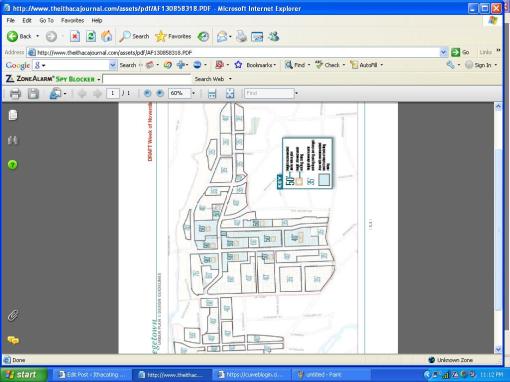
The proposed location, with rough boundaries of the site in question.

ctown-terrace1

Trowbridge and Wolf is the firm responsible for the design of West Campus and the Health and Science building at IC, so they’re a fairly reputable choice [1].

In other news, the Ithaca Hotel is up to 124 rooms and 12 stories, according to the April 28, 2009 Planning Board minutes. Two outparcels are to be built near Uncle Wally on the flats (a drive thru restauant and another retail parcel, totaling 11,00 sq. ft and 17,000 sq ft), a 25,000 Maine’s warehouse to be built at the south edge of the city on Commercial Drive, and an eco-friendly three-dwelling development off of the 500 block of Aurora Street that is to be marketed as a co-op.

[1] http://www.twla.com/projects/education/


Trouble At “The Castle on the Rock”?

20 04 2009

100_1611

EDIT – So, they’re not going dry or closing, but they are reorganizing. Their Recruitment Chair was kind enough to offer an explanation on the validity of the rumors in the comments section.

Normally, I shy away from rumors, but this one has been persisting for some time, and so I’m going to address it now so that hopefully fact can be pulled from the fiction.

Naturally, this deals with the Greek system that has been the topic of many an entry. This is the story that rumor mill has supplied me, with little variation, from four seperate sources:

Beta Theta Pi will be either closing or going dry at Cornell University. Rumor mill claims that their alumni visited them on a Tuesday to find many of the brothers drunk, and they weren’t too happy. Apparently they were given the ultimatum to either go dry or disband. At this point, two sources said they’re going dry and half the brothers deactivated, and the other two sources said the fraternity is closing completely.

This vague passage from their website doesn’t help matters: [1]

“2009 marks a new chapter in the history of our great house. Reorganized, reenergized, and refocused, we are committed to developing worthy individuals to be the best that they can be.”

I think it’s a shame if their’s truth to the closing. Beta has been at Cornell uninterrupted since 1879 (it changed it name over after the original fraternity, Alpha Sigma Chi, merged with Beta Theta Pi [1]).

Not too surprisingly, the brothers I know in that house are staying fairly quiet about the whole situation, apart from saying that they have been having some problems lately that are being addressed. I s’pose is there was any truth to the rumors, I’d be keeping a low profile too.

[1]http://www.betadelta.org/history.html


News Tidbits 4/16/09: Little Ithaca Grows Up

17 04 2009

Looks like Ithaca’s downtown area is seeing some long awaited expansion.

http://www.theithacajournal.com/article/20090416/NEWS01/904160358&referrer=FRONTPAGECAROUSEL

Major downtown construction projects are slated to move forward this year, a sign of Ithaca’s relative resilience in troubled economic times, city officials say.

The Hotel Ithaca project at the eastern end of The Commons should break ground this fall, and construction is scheduled to start by summer on the Cayuga Green condominiums between the Cayuga garage and Six Mile Creek, Downtown Ithaca Alliance Executive Director Gary Ferguson said.

This summer should also see the completion and opening of the new Cinemapolis in the ground-floor of the Green Street garage and Urban Outfitters on the ground-floor of the Cayuga Green apartment complex.

Hotel and condos

The $30 million, 100-room Hotel Ithaca project this month received city approval for zoning variances, and Common Council approval to jut several feet over the top of the Green Street garage. It’s scheduled to come for site plan review to the Planning and Development Board April 28.

The $12 million, 7-story Cayuga Green luxury apartment/condo project is the last piece of the years-long Cayuga Green downtown development. It already has needed approvals.

Ferguson said when he talks with fellow economic development planners around the state, “they’re just green with envy.”

“One, we’ve been planning them for some time so it’s not like these are just popping out of the ground. But secondly, while the economy’s been rough, this still is a very strong economy relative to other parts of the state, other parts of the country,” he said. “I think this malaise, if you will, is worse in a lot of other places and actually makes Ithaca look even more attractive to people.”

Bankers still seem to have faith in Ithaca, said Phyllisa DeSarno, deputy director for economic development for the city. This is evidenced by the fact that Cayuga Green developer Ken Schon has retained his financial backing.

“We were all crossing our fingers . . . because so many developers are losing their funding and banks are not going with projects,” she said. “But he said it does not look like that’s going to be his issue. He is moving ahead.”

The Hotel Ithaca was proposed to go up to the limit of 85 feet allowed by zoning, but the project developer received approval to go up an additional 21 feet, in order to enclose the building’s heating, ventilation and air conditioning systems. Under the city’s zoning, that kind of equipment is never considered part of a building’s height.

“This was a very, very major coup, really,” DeSarno said. “We were so thrilled that this happened because it sets a bar now I think for other developers, other builders to do something about mechanicals, which are really such a blight. When you’re coming off any of the hills, coming down from Ithaca College or Cornell (University), it’s going to be so much more aesthetically nice to have that screening there.”

The rooftop enclosure will also include meeting and conference space “to offset the cost of the structure,” according to information provided to the city’s Board of Zoning Appeals.

Openings

Construction continues on the future homes of Cinemapolis and Urban Outfitters on either side of Green Street.

Cinemapolis is scheduled to open in late May, potentially in conjunction with Ithaca Festival, said Lynne Cohen, one of the executive directors of Seventh Art, which oversees Cinemapolis.

Construction is scheduled to be complete in about a week, then all that will be left is to paint and install seating, projection equipment and refreshment equipment, Cohen said.

“With a little imagination, you can see what the theater’s going to look like,” she said.

Compared to the existing Cinemapolis theaters in Center Ithaca and at Fall Creek Pictures, the new location will have “fewer seats but better allocated,” Cohen said.

Cinemapolis’ contract at Fall Creek Pictures runs through the end of this year, but Seventh Art has not yet decided whether they’ll continue showing films there once the new location opens, said Rich Szanyi, Cohen’s husband and another Seventh Art executive director.

Tsvi Bokaer, founder of Fall Creek Pictures, could not be reached for comment.

Urban Outfitters, which will occupy the eastern half of the ground floor under the Cayuga Green apartments, is on schedule to open July 2, project architect David Levy said by email.

“Now obviously Urban Outfitters will be a big draw and all of the neighbors around Urban Outfitters, including The Commons, will benefit from them being here,” DeSarno said.

Ithaca will be the second Upstate New York location for college-age focused Urban Outfitters. The other is in Buffalo.

Tompkins Consolidated Area Transit also plans to rent space on the ground floor of the apartments, and Schon is in discussion with two local small businesses about filling the remaining area, DeSarno said.

“Obviously there are cuts throughout our city and the county in our businesses and in our employers,” she said. “But we certainly, like Bob Sweet from National Development Council always says to me, ‘(Ithaca is) an oasis amongst a muck and mire.’ ”

The Hotel Ithaca was proposed to go up to the limit of 85 feet allowed by zoning, but the project developer received approval to go up an additional 21 feet, in order to enclose the building’s heating, ventilation and air conditioning systems. Under the city’s zoning, that kind of equipment is never considered part of a building’s height.

“This was a very, very major coup, really,” DeSarno said. “We were so thrilled that this happened because it sets a bar now I think for other developers, other builders to do something about mechanicals, which are really such a blight. When you’re coming off any of the hills, coming down from Ithaca College or Cornell (University), it’s going to be so much more aesthetically nice to have that screening there.”

The rooftop enclosure will also include meeting and conference space “to offset the cost of the structure,” according to information provided to the city’s Board of Zoning Appeals.

~~~

For the record:

commons

Red box is part of the Hotel Ithaca site, green box is the Cayuga Green Condos site. Cayuga Green Apts, shown as under construction in this map, are where Cinemapolis and Urban Outfitters are going to be located. As Mr. Nagowski noted, Cinemapolis will be in the garage side of the construction area. Urban Outfitters is on the first floor of the apartment building.

Hotel Ithaca proposal:

http://www.gemstoneresorts.com/Properties.aspx

Cayuga Condos

http://www.josegarciadesign.com/images/cayuga-condo00.jpg

For reference, the height of Seneca Place is 121 feet, according to Emporis. The new apartment building on Green Street is 60 feet.


The Essentials of Campus, Part I

10 04 2009

I decided to do a blog piece on some of the more important assets to our campus because I was working on a project yesterday and discovered that I had no entry that really discussed Bailey Hall. I figured I might fix that now.

100_2110

Liberty Hyde Bailey Hall. The building was designed by Edward M. Green, Class of 1878 [1]. The building was first opened in June 1913 and intended for use by state college students, and for Farmer’s Week gatherings. It’s namesake, L.H. Bailey (1856-1954) was the first dean of the College of Agriculture at Cornell [2].

One if the original centerpieces of the building was a luxurious organ that was paid for largely by Andrew Carnegie, the industrialist [1]. The organ was mostly a gift for A.D. White’s 80th birthday in 1912.

One story from Bishop’s work concerning the history of the building might strike a note with some passionate politicos today. Back during WWI, an Austrian violinist named Fritz Kreisler played at Bailey. Unfortunately for him, the citizens of Ithaca weren’t as willing as the university to let him play a performance:

“The Hill prided itself on its broad-mindedness, its humanity above all nations and nationalisms. Fritz Kreisler, the Austrian violinist (who had played in Bailey Hall in October 1917, before an enthusiastic capacity audience), was again invited for a concert on 11 December 1919. But downtown a fervid patriotism reigned. The American Legion had condemned in national convention the appearance of any German or Austrian performer. Ithaca’s Mayor called on all patriotic citizens to stay away from the concert. Nevertheless Bailey Hall was packed, the front seats being conspicuously occupied by the football team. In mid-concert about eighty hoodlums, as the Sun termed them, cut the lighting circuit and tried to invade the hall. The students rose and fought. A large band returning from a basketball game took the invaders in the rear. Kreisler, unperturbed, played on in the din of the Battle of Bailey Hall. President Schurman took his stand beside the performer. A volunteer leaped to the stage with a flashlight for the accompanist. The invaders were magnificantly repelled, to the strains of Viotti’s Concerto in A minor. No tumult since Nero’s time has had such a fine violin accompaniment.” (433-34) [1 , 2]

The building has also had some other uses apart from an auditorium. Plant pathology was taught in the basement in the 1920s [2]. A CFCU branch used to be located in the back of the building. Today, since it’s the only academic building that has the size to host it, Prof. Maas’s PSYCH 101 is taught within its vast walls.

As originally configured, Bailey seated 1,948 people. However, as a result of wider seats and handicap access was installed during the renovation, that number shrank to 1,324 [3].

The plaza was installed only about a year and a half ago, a nice complement to the building. Originally, the Minns Garden was up here, and then that was replaced with a full parking lot towards the mid 20th century.

100_3405

100_20811

Yes, both photos are mine…taken about five months apart. That tells you how hesitant I was to write up the history of Sage Hall. For this, much of the information will be pulled from Bishop’s history of Cornell, with page citations in parentheses.

The best place to start, of course, is at the beginning. The building was originally known as Sage College, and it was an all women’s dorm. The building was the architectural pride of campus when it was completed in 1875 (98), designed by Charles Babcock, an architecture professor at Cornell. Prior to that, campus was the Old Stone Row, Casca and West Sibley; gray stone buildings that, while imposing, were utilitarian; Goldwin Smith once remarked “nothing can redeem them but dynamite”.  The proposal for the building came while A.D. White was debating whether or not to accept a government post in Greece; the plan for Sage to endow this grandiose structure led him to reconsider (103).

The original endowment by Sage was in the amount of $250,000. The building’s design allowed for all the living needs of 150 to 200 lady students (148). Originally, the Botany and Horticulture department were to be housed here as well, since they were a subject that was “so suitable for young ladies”. The proposal for Sage was formally launched on February 13, 1872. Also that fall, sixteen women applied to Cornell, and our first female graduate, Emma S. Eastman, graduated in June 1873 (she married a classmate and went on to become a famous suffrage lecturer). By 1874, there were 37 women.

Meanwhile, in May 1873, the cornerstone was laid for Sage College by Mrs. Sage. The cornerstone is particularly interesting because of a commotion caused during Sage’s renovation in 1997. Workers were renovating near the cornerstone when they discovered  a heavy metal box with letter placed inside it, bearing Ezra Cornell’s opinion on the status and future of coeducation [4]. Naturally, this discovery, while somehwat expected, raised quite a commotion on the campus, because no one had ever read the letter except Ezra Cornell himself. The full text of the letter can be found in the link. Long story short, he supported women’s education.  Cornell had never shared his opinions about educating women before he passed away in 1874, so no one ever knew how he particularly felt until that letter was opened 124 years later.

To quote Morris Bishop (who wrote his book in 1962): “When at length the day of Sage College is done, may some historian remember these words and rescue the tin box from the demolishers!” (149)

Sage opened in 1875 to about 30 female occupants. The building rented out to fifty male boarders its first year, who often ate with the women, striing up trouble in the process (the Sage College manager makes special note of the extremely demanding gentlemen boarders from Psi Upsilon). Between 60 and 70 women live there for each year for the rest of the decade (208), and dropped back down to 30 by the early 1880s (246). Sage closed its doors to visitors at 10 PM, and flirtatious dances were highly frowned upon. The first panty raid took place in 1878, when men broke into the Sage laundry, snatched the ladies’ underclothing and threw it from the steeple of nearby Sage Chapel (209).

By 1881, the decline in numbers at the ladies’ dorm had caused Sage to doubt whether it should continue to exist. In letters to A.D, White, he floated the idea of turning it into an art museum, libary, or engineering building (247). Fortunately for women, Sage was completely full by 1891 (300), and women were no longer required to live in Sage. Many of our sororities, such as Delta Gamma and Kappa Alpha Theta, had their starts in Sage College.

Alas, by the mid 1990s the building had worn down with time. The last dorm residents (co-ed since the 1930s) moved out in 1995, and the building was given to the Johnson School for renovation in 1996. The renovation and addition was desinged by Alan Chimacoff, a Cornell alumnus [5]. The $38 million renovation was completed in August 1998.

Today, The Johnson Graduate School of Management resides in the building, with an atrium, class space, meeting areas, and Sphinx Head’s meeting room (supposedly).


[1] History of Cornell, Morris Bishop, P. 362

[2]http://baileyhall.cornell.edu/about.html

[3]http://en.wikipedia.org/wiki/Bailey_Hall_(Ithaca,_New_York)

[4]http://www.news.cornell.edu/chronicle/97/3.20.97/Ezra_letter.html

[5]http://www.johnson.cornell.edu/facilities/sagehall/


The Case of Two Different Fraternities of the Same Name

5 04 2009

So, I’ll open up this topic by saying that while some of the work is my own, a lot of the research was done by a friend of mine  named A.C., so I’ll start by giving him credit for going through some of the research and sharing it with me so that it could be published onto this blog.

First of all, the case is really old. This dates back to over one hundred years ago, in the 1890s. The fraternity in question is the Alpha Zeta fraternity on Thurston Avenue. According to their website, the Cornell Chapter was established in 1901.

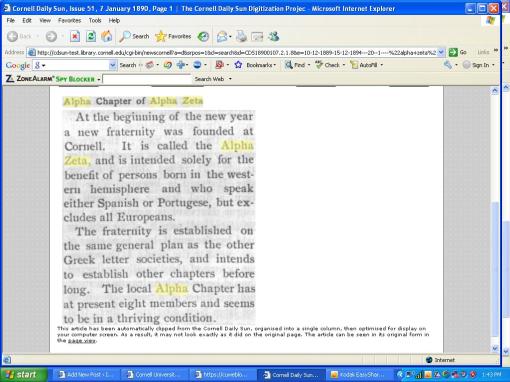
Then we have the following article from a Daily Sun blurb in 1890:

az-1890

That’s discrepency number one. Number two is that the current Alpha Zeta at Cornell is a co-ed aggie house. There’s nothing about being limited to western hemisphere non-European speakers of Spanish and Portugese (essentially, Latin America).

The following is a list of fraternities on Cornell Campus published in the Sun in May 1892:


 az-18921

Apparently, this ethnic Alpha Zeta lived at Cascadilla Place. Also, a few side comments – Huestis Street is now College Avenue, women lived in Sage College and as a result all the sororities were based there, and most of the houses were in the Collegetown-State Street corridor because that was between the campus and the boarding houses in the city where most male students lived.

Now, here’s an excerpt from the e-mail I received from A.C.

***

“Hello B.,

Here’s some information on the other Alpha Zeta.

From the Cornellian, it was active from January 1st 1890 to at least 1893.
It likely ended in 1894 when their youngest members graduated and they did
not have any new initiates.”

***

Therefore, we can make a logical conclusion. In 1890, an Alpha Zeta was founded at Cornell for non-European spanish and portugese speakers, perhaps a predecessor to the modern Latino fraternities of Lambda Upsilon Lambda and Lambda Theta Phi. However, if it closed in the mid 1890s, then there were no more Alpha Zetas in existence, and the name was free to be use. A few years later, the Cornell Chapter of the agricultural Alpha Zeta was opened, and we end up where we are today.

So, with regards to a incident happening where they were both on campus at the same time, that would not have been permitted. However, if there are local fraternities that lay claim to the name before a national tries to move in, then the national would probably have to negotiate a name change for the local.


Off-Topic: The Keyword Bar III

31 03 2009

100_3262

Another fun off-topic entry where I get to comment on some of the more interesting searches that picked up this blog. Otherwise known as my excuse for an entry because I’m in a busy period.

1. “ithaca death hotel ezra cornell” 3/29/09

Technically, I’ve never posted much on this because I’ve never been able to verify it. Story goes that two hotel students experimenting with drugs decided to climb out onto a building ledge and see if they could fly during Hotel Ezra Cornell. Makes for a great story if you’re in to that macabre sort of thing. The incident was supposed to have happened sometime in the 1980s.

2. “cornell’s s—-t s——-s ithacating” 3/26/09

Long story short, I received a face-to-face warning to take down a certain entry. I know it keeps triggering fruitless searches, but it makes for a fun story that I caused them to get their panties all in a bunch over a blog entry.

3. “bradfield hall eighth floor cornell” 3/26/09

Is nothing special. For those who have yet to venture through the upper floors of Bradfield, the building in entirely lined with brick with lab and work rooms coming off each side. Also worth noting is that with the exception of the first floor, men’s rooms are on odd floors and ladies on even floors. This was due to a budget cut during its design phases.

4. “kdr pledge pin” 3/23/09

Little blue shield-style badges with a red diagonal stripe saying “KDR” in gold print.  There’s actually an entire website dedicated to that sort of thing: http://www.fratpin.com.

5. “”green cafe” ithaca new korean” 3/22/09

Yes, I’m just as aware of it as the rest of you. This restaurant opened at 300 College Avenue this past week. It’s owned by Charles Park and modeled after his flagship cafe in Manhattan[1]. I myself don’t plan on spending 7.50 for a sandwich (not to dissuade anyone else of course), but if someone wants to share reviews, by all means go ahead.

I think this is the first time in several years all four corners have been competely occupied. The least time may have been when Sam Gould’s Collegetown Store (NE corner – now the Ciaschi Building), a dilapidated oversized apartment house (NW corner – now Starbucks), a convenience store (SE corner – Kraftee’s) and a BoA branch (Green Cafe) occupied the corners in the mid 1980s.

On that note, the Starbucks building is owned by Avramis Real Estate, which has built or completely remodeled several properties in the past few years [400 College, 227 Linden, 319 College – 2]. I  suspect that with the lifting of the moratorium next month, the Collegetown Liquor Store or M&T Bank property, both Avramis properties, will be next in line for redevelopment.

6. “john rancich and his new projects 2009” 3/18/2009

Which one, the wind farm in Enfield [3], or Carrowmoor? Man’s got a lot of stuff planned for little ol’ Tompkins County.

7. “delta kappa epsilon branding” 3/17/2009

Um…possibly? This blog devotes no resources to the discussion of pledging procedures. A search on google brings up a very informative article about branding by multicultural fraternities and sororities.

I have lost count how many sorority ritual hits I’ve received about Kappa Delta’s “dagger”, or Alpha Phi’s secret words, or Sigma Kappa’s “blood ritual”.

8. “ithacating in cayuga heights” 3/11/09

Really? I know the name’s a little wordy, but I didn’t think it was that hard to remember. I guess that’s because I’m the one writing it.

Taking a look at the top search terms now…out of about 21,000 or so hits since Ithacating was launched last June…

“Corten steel (506 hits)” and “corten (485 hits)”. Nearly 1,000 hits for a type of steel I only mention for the sole fact that it’s the steel used on the exterior of Uris Hall. “ithacating” comes in third with 117 hits.

Meanwhile, “sigma chi cornell” claims the most hits out of any Greek chapter, with 76 hits. I think my own chapter has had maybe 10. A good number of greek searches are actually meant for RPI, Penn State and the University of Toronto. But, I only cover Cornell, with a little bit of Ithaca College. Sorry!

100_3263


[1]http://cornellsun.com/node/36278

 [2]http://avramisrealestate.com/index.htm

[3]http://www.theithacajournal.com/article/20080816/NEWS01/808160327


The Planning Board’s Lack of Logic

20 03 2009

http://www.theithacajournal.com/article/20090319/NEWS01/903190358/1002

Goody Clancy’s suggested plan:

goody-clancy-plan

The recommendations from the planning board

ithaca-plan

Note the differences. There are many. It’s as if they looked at the $200,000 study, said “it’s nice, but-“, and went the opposite direction.

So, the planning board has not only not accepted Goody Clancy’s advice, it’s doing the reverse – it’s making zoning even more restrictive, and (as suggested) making parking tighter in Collegetown in favor of garages in the city. I’m sure they’re patting themselves on the back for “preserving the neighborhood”. In my opinion, considering the parking and discouragement of multi-unit buildings, this seems to be a not-too-subtle suggestion to students from permanent residents: we don’t want you here.

My suggestion to permanent Collegetown residents: too bad. As Cornell’s class sizes increase, where do you think they’ll move? North is well protected as a historic district (Cornell Heights – and Cayuga Heights has had restrictions in place for years). West is largely undevelopable due to topography and the cemetery. Living outside the close proximity of Cornell will lead to students bringing cars with them, resulting in more traffic congestion, which is (and should be) discouraged.  Students will therefore move to Collegetown, and I’m willing to bet that as opprotunities arise, landlords will buy up the owner-occupied properties and turn them into student occupied houses, since there will be more demand. This may pass for now, but in the long term, the anti-development crowd is going to dwindle down. There’s nothing Mary Tomlan and the planning board can do about that.


Greetings from Sunny Ithaca

17 03 2009

Yes, it’s spring break. I’m working in Ithaca and studying for a GRE I have in a few days.  It’s warmer than usual and sunny. No, Ithaca does not miss you. Anyways…

100_3387

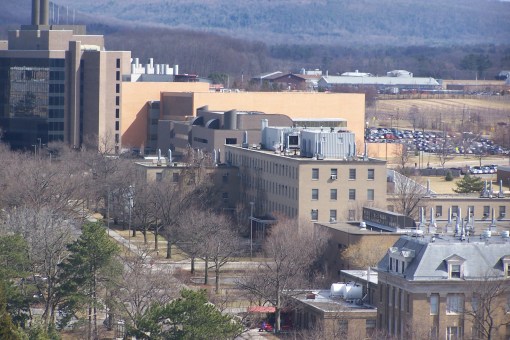
The building in the center of this image is Morrison Hall. Morrison, the home of the animal science major (pre-vet and non-pre-vet flavors) was built in 1961 [1]- hence the fact it’s a 133,000 sq. ft. characterless box (though I guess that’s better than the monstrosity next to it, the Boyce Thompson Institute).  The building was named for Frank B. Morrison, a professor and director of animal husbandry here at the university [2]. For the less recent alumni, the orange building in the back is the East Wing Addition to the Vet School that was completed in 2007. Yes, it has virtually, no windows. No one said Cornell’s modern architecture was known for its aesthetically pleasing qualities.

100_3414

In contrast, as utilitarian as Baker was meant to be, it still retains some charm to it, probably from the classical columns and brickwork of the structure. According to Charles Wilcox [3], the initial designs for Baker were actually drawn up around 1910, which was six years before Morse Hall was destroyed in a fire. Funding for Baker came through in 1918, and during it construction the benefactor was anonymous. George Baker, a prominent New York banker who donated $1.5 million to its construction, only unveiled himself at the building’s dedication ( a similar experience occurred when Balch Hall was dedicated). The building had any number of problems from poorly maintained exhaust hoods to flooding in the basement to the ceiling being so low that chemical engineering could not fit in the building and so had to have a building of its own. Some of these problems were rectified when Baker was renovated in 1969, but others such as the flooding continue even into today.

100_3386

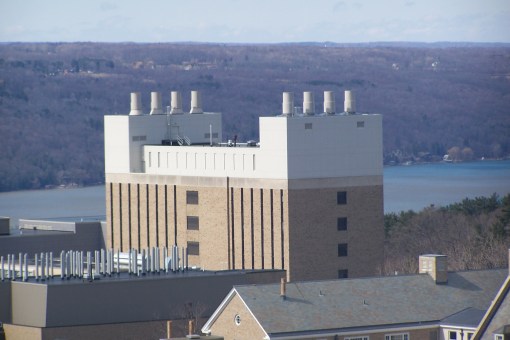
In the same category as Morrison (the category being random ugly crap we threw up in the ’60s) is the Spencer T. Olin Laboratory Tower.  I like this because there’s a nice detailed story concerning its construction floating around the internet [3]. The construction of the building was overseen by a Chem department honcho by the name of William Miller; he was less concerned about winning prizes in an architectural journal and more about the building performing its function properly. The nine-story, 64,000 square foot building was built in 1967, with the intention of being flexible in its use for the Chemistry department. The exhaust structures on the sides were built in the 1990s, making an unattractive building downright ugly. Two of the issues encountered during its instruction were an underground cave that actually caused a caisson (a base support column, if you will) to collapse (they believed an ancient underground river once ran through the site), and that the tarpaulins caught fire on the side of the building ( a tarpaulin is designed to allow construction in cold weather; like what you see on the new Vet building here).

100_31811

The last incident involving Olin is something that one would come to expect at Cornell. To quote Charles Wilcox’s paper:

“The decision to use an outside architect and to go for efficiency rather than beauty led to an amusing incident. The dedication of the new wing was held at the four-story interface between old Baker and the new wing. When President Perkins rose to give his speech, a group of students from the College of Architecture who had secretly gathered on the roof of the passageway unfurled a building-long banner that read MEDIOCRE and waved placards reading UGLY and VERY UGLY. The startled president stepped back to avoid being hit by weights at the bottom of the falling banner; although grazed he graciously laughed and responded: I question your judgment, but admire your logistics. It is not recorded what Bill Miller thought, but it is likely that he took secret pleasure in knowing that he had not wasted money on unproductive artistic features. ”

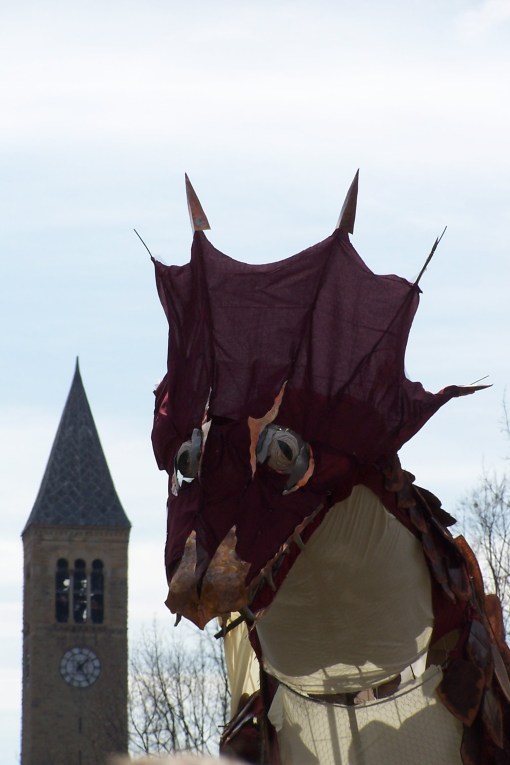
Oh architects! And we thought all you did was chain smoke, lock yourselves in Rand and burn dragons. Speaking of which,

100_34321

Me passing up photos on Dragon Day would’ve been like a pedophile passing a playground (though not nearly as perverse).

100_3396

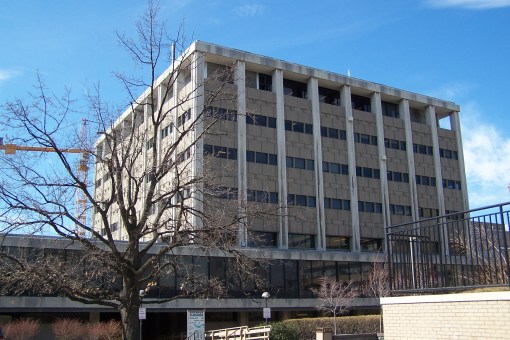
Continuing our tour of building that were only built out of necessity, we have to mention Clark Hall. The homes of AEP and vanilla Physics, this 84-foot tall box was completed in 1965, and was named for W. van Alan Clark 1909, an Avon perfume scientist who donated $3 million towards its $7.3 million price tag [4]. So equivalently, that would suggest the donor for the new physical sciences building would have to donate about $33 million to the reconciled cost of $81 million [5]. I’m all for tapping in to Ratan Tata’s fortune to cover it.

By the way, if we can handle the height of Clark, I see no reason why we can’t handle a much slimmer building of similar height in Collegetown. Just saying.

[1]http://jds.fass.org/cgi/reprint/44/10/3.pdf

[2]http://jas.fass.org/cgi/reprint/66/10/2696.pdf

[3]http://www.chem.cornell.edu/history/laboratories/STOlin.htm

[4]http://www.cornell.edu/search/index.cfm?tab=facts&q=&id=144

[5]http://www.fs.cornell.edu/fs/projects/


Cornell’s Secret Societies

13 03 2009

I was politely asked to remove all of this entry.