The Death Knell of Greek Life?

2 03 2011

In some sense, I’ve learned to dread days where I see the number of hits to this blog skyrocket, namely because days with extraordinarily high hits can be correlated unfortunately well with the untimely death of a student at the university. So it was with some hesitancy that I glanced at the Sun’s website this weekend.

The news is unnerving and tragic. A student is dead. Secondly, the Tompkins County sheriff has gone on the record to say that the death was likely alcohol-related. The student, George Desdunes, was a member of Sigma Alpha Epsilon fraternity, and was found unresponsive at the fraternity house on Friday morning. At this point, it was yet to be established to what extent the fraternity is responsible in his untimely death, but SAE has been suspended temporarily.

When I first heard the news, I kept hoping that the fraternity wouldn’t be responsible. SAE is considered to be one of the most visible Greek houses on Cornell’s campus. It has one of the largest memberships of any fraternity at Cornell and holds a fairly strong presence in Greek affairs, and to some extent campus affairs (a number of their members and recent alumni, such as Svante Myrick ’09 and Eddie Rooker ’10, hold prominent positions in and around the university and surrounding city). So if SAE was responsible for the death of one of its members, the effects would be profound and far-reaching through all parts of the system.

Given the problems of the system and the recent reforms forced onto it by the university, I am honestly wondering whether or not it is a sign of the end of the system. the first thing that comes to mind was Ithaca College’s ban of Greek life after the death of Joseph Parella in 1980, during a fraternity pledge event in which he was hazed. But, it’s not easy to compare the two systems. For one, Ithaca College’s fraternities were generally housed in dorms (in comparison, Cornell owns  about one-third the Greek houses), and for two, their system represented a much smaller proportion of their student body than Cornell’s does.

I suppose the usual arguments will come out – the biggest donors to the school are Greek, they can’t touch private houses, and so forth. The problem is, if SAE is found responsible, their role in the death of a student would be a very powerful and legitimate reason to favor de-recognition of Greek life. Addressing argument number two, while many chapters own their own property and would not be immediately affected, they lose the protection that the university gives — i.e. every party thrown is a target for local and campus police to bust underage drinkers. So the system wouldn’t be “shut down” per se, but it could easily be crippled.

Perhaps a better comparison would be a case from MIT that occurred about 15 years ago. On September 26, 1997, a pledge of FIJI at MIT died after a pledge event due to alcohol poisoning.  MIT is, like Cornell, a prestigious institution with substantial Greek Life – at MIT, it comprises about 42% the student body. There had been signs Greek Life had been getting out of control prior to the death of Scott Krueger. As a result of the event, RAs were put in fraternity houses, mandatory CPR training was established, all freshmen were required to live in dorms, MIT paid a $6 million settlement to the family due to negligence in preventing the event from occurring, the fraternity was shut down (and has never come back), and several of the former FIJI members were convicted of criminal offenses. It forever changed the way MIT dealt with its fraternities. But they still have a large, influential system.

But comparisons only offer ideas, not results. So what will happen with Cornell’s system? A good question.  But not one that can be answered just yet, while Cornell students mourn the loss of one of their own.



The Cornell Store

23 02 2011

So, this entry is a little different from the norm because normally, I cite several outside sources to try and put together something coherent enough to pass as a blog entry. But this post is a little different, because most of it will be anecdotal. I worked at the store from the start of my third week of Cornell up to the Wednesday of senior week, including full time for at least one summer. So I learned a lot about the place (plus, I think I was the highest paid student employee by the time I left, so my wallet was happy). Plus, one of my favorite things to do on break was to smuggle a book about some random Cornelliana upstairs to the breakroom, so in a way, my job encouraged this blog.

Obviously, I’ve graduated and moved on. Rule of thumb was (probably still is), if you want to keep your job, don’t write anything about the store. Hence, I made the store conspicuously absent from my posts, even when I was sorely, terribly tempted to do otherwise. Which played out quite fortuitously on one occasion.

So, over at Fast Lane, Elie Bilmes, for all of his wonderful posts, managed to rub me the wrong way when he posted an entry casting suspicion about the store’s $100 gift card giveaway. It hit a sour note because over the years we had repeatedly been accused and verbally attacked by customers who thought we were stealing their information and tracking them, such that a couple of my coworkers were driven to tears. We actually had a professor taken from the store by CUPD in my first year because he struck an employee who he thought was stealing his identity by swiping his ID card.  Anyways, the $100 gift card giveaway wasn’t fake. We kept a list of the winners (a book of sheets containing name, ID#, student/faculty/staff, date won, claimed, and the cashier who made the sale [cashiers get $5 bonuses if one of their customers wins – an incentive for them to ask for the ID card]) in the back of store services, the department I worked in. I thought of posting something, but I knew I wasn’t willing to take that risk of getting in trouble with my employer. Seeing the questions still on the entry, I’ll address them now – no, you technically don’t have to buy something to enter your ID, but the ID has to be swiped in to say you were in the store that day (online orders don’t count). But we would think you’re a really big dork if you just came in for the sake of getting your card swiped. There was a winner every day the store was open, and for a while we did publish the winners on large tablet sheets which were placed on the structural columns. I guess no one noticed.

Anyways, it happened to be a couple of days after the post when I was working on a Saturday, and who should come up to the counter but Elie Bilmes. I think, for the record, this is the only time I ever met Elie, and I didn’t even introduce myself. I rang him up and then told him that I saw his entry, and I could show him the proof that we have winners. He politely declined. But I went to the back anyway, pulled out the clipboard of sheets and, from across the service area, offered him a closer look if he thought it was fake. Shortly after, the update was posted to the entry. Anyways, if I still worked there, admitting I did that could possibly have been enough to get me fired for a breach of privacy or something. Not a risk I was willing to take, so I’m only sharing it now. Sorry Elie, I wasn’t trying to be an ass, but I probably came across that way.

Which, I’ll admit that near the end of my four years, I wasn’t very lovable. I was very capable, no denying that. But I learned that the more I was paid, the bigger the amount of BS that seemed to come my way. And as my older coworkers graduated, the younger ones looked to me as the next step in the hierarchy. Especially on weekends, when we had no full timers. I think my tipping one was the occasion an architect berated me for not having Rockite in stock and calling me cheap hired help, not even realizing I was a student too. The damnedest thing about that was that there was an architect who used to come in, buy over a hundred pounds of Rockite, and sell it over at Rand for a profit. Yes, the architects had a black market.  I couldn’t decline selling Rockite because someone was “buying too much”.

The store had about $21,200,000 in total revenue in 2008. I remember this on a stakeholder packet that had been printed up sometime early in my senior year. However, after expenditures, our profit was an almighty $200,000, roughly. The store was majority-owned by CBS – Cornell Business Services, so profits went into university operations. We made virtually no profit selling textbooks. What money we did make came from novelty item sales – clothing, candies, mugs and the like. The store had about 40 full time staff, plus a few more at the warehouse on Palm Road, and about 50 part-time students interspersed through the departments. Some students worked only 7 or 8 hours, others like myself fell more towards the upper end of 13-15. The Statler Hotel gift shop and Sage print shop generated a grand total of 2.5 jobs, and the gift shop operated at a loss. It was only kept open because the hotel needed it for its three-star classification. I didn’t mind covering the Statler. Even though I had to wear shirt and tie, it was so slow I could do homework there. Plus I got to meet Robert and Helen Appel, namesakes of Appel Commons.

While I worked there, Cornell stopped doing long-term maintenance on some of the mechanicals because they planned to close the store down within the next five to seven years and demolish the structure, which of course caught my interest. The store mulled over moving to a space in Collegetown or to a location halfway between the Arts Quad and the Vet School, a proposal that as a far as I know is still on the table, albeit mothballed due to the Great Recession. Still, I don’t expect the current ca.1970, 33,000 sq ft structure to be around way too much longer (only about 22,000 sq ft is selling space). Which is a win for aesthetics, but it will be a loss for my nostalgia and for many of my memories. I used to joke that working at the store kept my sanity and reminded me why I was in college. But given some of the more frustrating times, there was a little more truth to that than I let on.


The Cornell University Airport

15 02 2011

It generally goes without saying that Cornell has had a dramatic impact on the way Ithaca and Tompkins County have developed over the past 150 years. In some respects, Cornell’s influence has been indirect – for example, the development of the Collegetown neighborhood to meet the desires of Cornell students, or the development of Cornell Heights and Cayuga Heights to provide faculty a leafy respite from their academic duties. In some ways, Cornell’s influence has been more direct, such as the Seneca Place building downtown or…owning the airport.

The first airport in the county was actually down where Cass Park is today. For those who live under an ivy-covered rock, Cass Park is just up Route 89 from the city, across the inlet from the Farmer’s Market:

The first airport (which the airport website claims was the second airport to be created within the state), which was called the Ithaca Municipal Airport, was built in 1912. It wasn’t much; a simple hangar and a rundown dirt strip were built initially, and the facilities were expanded somewhat by the Thomas “Aeroplane Factory” which was built next to the airport in 1914 (Turback 29). Three years later, the company merged with Morse Chain to become one of the largest employers in the county. Apart from the testing of military planes, and some leisure flights (the airport was the home base of aerial photographer and future airline pioneer Cecil Robinson), there wasn’t much in the way of air traffic.

By the 1940s, passenger planes began to catch on with (wealthy echelons of) the public, and it became clear that the municipal airport wasn’t going to cut it. For one, it was prone to fog banks from the lake and flooding – a major flood back in 1935 wiped out much of the airport. Space was inadequate, and as planes were growing in size and speed, expanding the facility was neigh near impossible because it abutted the city, the lake, and the slopes of West Hill. The farmland to the north of Cornell was recognized as the prime site for a future airport (Bishop 553), and the city of Ithaca was very interested in building a new airport on that land, but there was one very big and still relevant issue – getting taxpayers to cough over their hard-earned tax dollars to buy the land and build another airport outside of the city was nothing short of political suicide.

Enter Cornell.

Cornell, in trying to meet the needs of its elite faculty, alumni and connections, knew the importance of having a larger, modern airport. Although a bit financially strapped at the time, Cornell noticed the large number of lots being sold off to make the first suburban homesteads and sought to act before the land values could increase any further in that area. On September 9, 1944, the trustees authorized the university to seek options on the land, and within three months had obtained 1,146 acres of land at the price of about $202,000 (about $2.5 million today – a relative bargain). The purchase was strongly debated and led to some sharp criticisms of the Day administration during the 1940s (Bishop 560). The construction of the facility itself was wedged in with many of Cornell’s other post-war projects, but the need of a new airport was not nearly as acute as the need for veteran’s housing or new academic space. The airport was not completed until 1948,  and ownership was transferred to the county in 1956. In the meanwhile, there were two airports in Ithaca – the old rundown one downtown, and the new one on East Hill. The transfer of ownership may have been influenced by a shift in focus from Cornell’s aeronautical program in Ithaca to the Cornell Aeronautical Laboratory, which operated as a division of the university from the late 1940s to the early 1970s next to the Buffalo Airport (it was later spun off as a private enterprise called Calspan Labs that at last check operates as part of Veridian Corporation). CAL’s heyday was from about 1955-1965 — when Cornell decided that having its own airport 200 miles from its recently donated aeronautical lab wasn’t such a hot idea. But mostly, it was a matter of finance – their were issues with the local passenger airline’s use of the airport, severe enough that if one of their planes landed on Cornell’s property, the pilot would be arrested (Bishop 561). The first six months the Cornell airport was open it incurred a $103,000 loss. The University invested $300,000 to build up the property and was hardly getting any return out of it – the trustees voted to prohibit further funding to the airport in June 1949. Although relations with Robinson Airlines were patched up by 1952, the airport limped along in financial hell until Cornell finally had a decent opportunity to unload it onto Tompkins County.

The county airport has operated since, and was renovated and expanded in 1994. Robinson Airlines was renamed Mohawk Airlines in late 1952, moved to Utica six years later, and was absorbed by another company in the 1970s, which after several mergers and acquisitions, is now an ancestor of USAir. As for the old airport, it closed in the 1950s, but the main hangar was renovated in 1975 to house the  Hangar Theatre, which has seen several renovations and expansions since then.The rest of the property was absorbed into Cass Park in the 1960s.

I doubt Harvard ever owned its own airport.


News Tidbits 2/7/11: Sorority Selected for Recolonization on CU Campus

7 02 2011

According to the Cornell Daily Sun, Phi Sigma Sigma sorority has been selected to recolonize at Cornell University, from a field of five candidates. From the article:

“Phi Sigma Sigma will begin recruiting a core group of members in the fall, drawing in part from the new sorority interest group on campus. The sorority will participate in formal recruitment in Jan. 2012….

Phi Sigma Sigma had a chapter at Cornell that left the University in 1969, a departure Sanders speculated may have been due to a generally negative view of Greek life at the time. She said supportive Cornell alumnae from the chapter’s earlier years would be an asset to its reestablishment. “

That much is correct. Phi Sigma Sigma established a chapter (Beta Xi) at Cornell University around 1954. The chapter was located in the house at 313 Wait Avenue.The chapter was closed around 1969, and for that I offer two, non-mutually exclusive explanation. The first is as Ms. Sanders suggested – the late 1960s were a time of strong social activism and Greek life was seen as archaic and out of touch with the times, so membership declined rapidly. Phi Sigma Sigma was one of four or five chapters to shut down in a three year span from 1969-1971. Secondly, Phi Sigma Sigma, although officially non-sectarian, was regarded as a house for women of Jewish faith. As other sorority houses adopted non-sectarian policies in the 1960s, the competition became much fiercer, and with the general declines in sorority interest, this likely compounded and caused the chapter to close its doors.

The Sun article states that 14 South Ave. is expected to be used as the new house for the sorority at Cornell. This house has been used for so many Greek houses it’s like a token minority character in a movie – no one can remember their name, but everyone remembers their race or skin color. In this case, no one can remember the house’s letters, they just know it’s a Greek house. For the record, the house was built in 1957, and home to Kappa Alpha Society up to their closing in 1990, and then it was home to AOPi and Delta Chi. This is discussed more in another entry on this blog.

Among the nifty things that turned up in a google search is a word document from the ladies of Phi Sigma Sigma national that seems to be an overview of their presentation to the Cornell Panhel on why they would make for a good addition to the campus Greek scene. It doesn’t really offer much in the way of interesting information, but I was rather surprised it was so easy to find on the Internet.

So yeah, congratulations ladies. Good luck to your rechartering in the upcoming year.


The Urban “Renewal” of Ithaca

1 02 2011

So, the Cornell Alumni Magazine latest issue caught my attention. Its feature article, “Through a Glass, Darkly“, is a feature about visiting professor Mark Iwinski’s artistic work of superimposing photographic stills of Ithaca streetlife from decades past over the contemporary appearance of those locations today. Which, falling in line with my addiction to interest in local architecture in a historical context, was a worthy read.

The most obvious thought after reading it is that history has not been kind to Ithaca. It hasn’t been kind to the downtowns of many older cities and towns in the Northeast. From the late 1940s to the 1970s, “urban renewal” basically consisted of trying to suburbanize downtowns by tearing down underused structures, often pinning their hopes on one or two big projects. An example of its effects can be seen whenever you drive through I-81 in Syracuse –  in 1957, Syracuse’s primary African-American neighborhood (the 15th ward) was town down to make way for the interstate, which effectively cut off Syracuse University from downtown and contributed to the emptying out of that city.

Image property of syracuse.com

As the article mentioned, Ithaca fared better than its peers. First of all, in 1968, Route 13 was supposed to become a limited-access highway connection from Horseheads, through Ithaca and to I-81 in Cortland. However, the project lost state and local support, and the only portion completed was the three-mile section that leads north out of Ithaca to just past the Cornell Business Park in Lansing. So there weren’t large expressways bisecting the city.

Secondly, although Ithaca was fairly rundown by the 1970s, the preservationist movement also started to gain momentum around that time by saving the Dewitt Mall (the old high school) and the Clinton House from demolition. In a way, it could be said that when the Cornell Public Library was torn down in 1959, and gas stations started replacing Victorian homes near downtown, that the Ithaca preservationist movement was really born. However, as the article shows, not every structure could be saved; the Colonial old city hall was torn down around 1970 to make room for the Seneca Street parking garage. The original Hotel Ithaca, which dated from 1871, was torn down 95 years later and eventually replaced by the Rothschild’s Building, which in an ironic twist of fate the building was vacated by its primary occupant because they complained it was too old and inefficient. The Rothschild’s Building is slated to be renovated into residential units.

So Ithaca has a relatively intact downtown thanks to early preservation efforts, and with further redevelopment and infill, the city has enjoyed a better aesthetic appearance than most of its regional peers. For the record, although I am strongly pro-development, I don’t think preservation is a bad thing. It has its merit and each case has to be considered in all its pros and cons on an individual basis.

On a final note, progressive and meticulous Cornell is by no means an innocent party. Back in the 1990s, the university and the town of Ithaca engaged in several contentious meetings because the university was seeking to expand north campus with the Residential Initiative in the late 1990s. The decision in itself wasn’t a problem, but the decision to tear down one of the oldest farmhouses in the county was. Eventually, a deal was worked out where the Cornell and the NPO Historic Ithaca would have the building, known as the Cradit-Moore house, trucked up Pleasant Grove Road .3 miles (in one piece no less) and built onto a new foundation. Cornell wrote off the moving cost and Historic Ithaca sold the house to a private owner to write off the costs of building a new foundation. In case you were wondering, this is how  “Cradit Farm Road” on North Campus received its name.

The article was a good read, I enjoyed it immensely. It reminds me that while we continue to develop new assets, we shouldn’t turn a blind eye and wantonly demolish what we already have. Otherwise, it might be as empty as the lots behind Dr. Iwanski’s photographic stills.


The Unhappy Guide to the 2010 OFSA Report

26 01 2011

Yeah, this is the last year I will actually care about this document. For one thing, it is the last year that will be personally relevant to me since I graduated this past May. After this, I’m fairly okay with just hearing about activities through my fraternity’s newsletter or the Cornell Daily Sun.

So anyways, here’s the PDF:

Click to access 2009-2010FratSororityAR.pdf

My first instinct was to scroll past a standard sorority girl photo because I immediately recognized one of the girls as my supervisor’s boss’s daughter, and I was not the biggest fan of her lazy, ditzy behavior. I put up with her when she in high school and she was a temp employee, and I tolerated her when she came to Cornell and became a stereotypical sorority girl. She’s not doing any favors for the system’s image.

Reading through, I think the system took a collective step backwards for 2009-10. Don’t get me wrong, establishing yet another honorary society (Rho Lambda) and holding Greek summits is fine and dandy. But Theta Xi shut down, Pi Kappa Alpha was forced into closure, Beta Theta Pi reorganized and Kappa Sigma was shut down by its national. Not a good year for fraternities.

Looking at membership numbers, they dropped to 31.42% for male membership and 23.35% for women. The sororities are holding steady, but for guys, that’s the lowest percentage in four years. The total number of first-years of both genders increased slightly, and the total membership intake decreased slightly. For a system still trying to command a presence at Cornell, the decreases are a troubling sign.

Interesting, in terms of membership intake, they broke it down this year to fall, spring, rush week and non-rush week bid acceptances, and the number of deactivations. The numbers are interesting. Most house seem to have zero or one who depledged, but two houses pulled five or more – Sigma Alpha Epsilon and Delta Kappa Epsilon. Ouch. Still, looking at my own house, I can tell you with certainty that the numbers who pledged and depledged are false. So, make of this information what you will.

It also shows a couple of strange cases. Sigma Chi Delta, a small co-ed house on Heights Court near North Campus, had one pledge — who deactivated. Lambda Phi Epsilon, an Asian-interest fraternity, had twelve pledges – and twelve who depledged, for a final total of zero. I wonder if someone is looking into that. Kappa Phi Lambda, an Asian-interest sorority, didn’t do much better – they had 8 out of 11 depledge. I’m curious as to what exactly their pledging entailed.

No real surprises in the GPAs. The houses that are typically near the top are still at or near the top – Pi Kappa Phi had the highest spring 2010 GPA and fall 2009 GPA at around 3.56. Which, much to my chagrin, is higher than all of two of my semesters at Cornell (I studied atmospheric science, cut me some slack here).

Social events resulting in a complaint increased from 9 to 13%. Judicial complaints were up, mostly due to social violations or hazing reports.  Considering the information contained here, it’s not hard to see why the trustees voted against the system’s social policies this past fall.

Overall, the 2010 Report does not paint a pretty picture of the future of the system.


News Tidbits 1/16/2011: The Project Planned for Seneca Way

17 01 2011

(UPDATED) So, this is a project that has been under the radar but merits a closer look. The site plan review (first step in the approvals process) is due to go in front of the city of Ithaca’s planning board later this month. This project is set for initial review along with Josh Lower ’05’s controversial parking lot-lacking five six story mixed-use building planned for the current Ithaca Carshare building site in Collegetown (the former Kinney Drugs), and the continued review of Ithaca College’s new boathouse, which I don’t consider particularly newsworthy. Sorry IC.

What is interesting about this project isn’t so much who’s designing it (the popular local firm Trowbridge and Wolf, who also designed the West Campus House dorms and the Gateway Commons apartment building on East State Street), but its location. Most people haven’t heard of Seneca Way. That’s because the street barely exists. It’s a tiny stretch of road off of East State that flows into East Seneca Street (shown below). The project address is 140 Seneca Way, the north/east side of the street.

The lots facing Seneca Way are few. True Insurance, a parking lot and the former Challenge Industries Building on one side, and a parking lot on the other side. This area has been a designated target for desired future development for the past few years, so much so that several of the properties on the even-numbered side of the street were up for rezoning. That zoning was to change the site from four stories max to six stories, but was controversial because it might impact the redevelopment of the Argos Inn (right next door to the east side of Challenge Industries) and as one city councilman put it, “I’m not sure this proposal provides as graceful a transition between the core and the residential areas as one would wish”. The zoning failed to pass the Ithaca Common Council, so the maximum height allowed on the property is still 40 feet or four stories, whichever is shorter (which for residential structures, 9-10 feet is standard floor height anyway).

So, what might be there? Well, if the project wants to pass, it’ll likely have to incorporate base parking or compensate somewhere nearby (which would be expensive). There isn’t room for a larger parking lot, let alone spaces lost to new construction. Perhaps part of the project will involve demolition of the vacant Challenge Industries building. Since that’s an uncertainty, it’s difficult to speculate on the number of units (it also depends on what their intended square footage for a unit is). I would expect that being a “transitioning” set of parcels, the size would be three to four stories. Trowbridge and Wolf specialize in contemporary and rather angular designs, so if it’s anything like their previous work it’ll probably bear similarities be glassy and have a fair amount of exterior steelwork.

At this time, it’s just about waiting to see what they come up with for that area.

UPDATE 1/25/11: Okay, so here is the proposal: 63,400 sq ft mixed use building with 14 below-ground parking spaces, as well as 41 surface spaces. First floor commercial (one-third of which will be occupied by a branch of Warren Real Estate), 32 apartments, a fitness center and enclosed roof terrace. Will require demolition of former Challenge Industries building. At five stories, this project will require a zoning variance, as well as variances for setbacks and parking. So, excluding the height variance, my guess wasn’t too far off.

Also, 307 College Avenue will be six stories, not five. My mistake.


Cornell’s History, All Drugged Up

11 01 2011

So, the latest news tidbit about a Cornell student being caught with $150,000 of heroin has made the news cycles and attracted some undesriable attention toward the university. Which kinda inspired me to look at it in a historical context. It’s what I do.

It’s college. Drugs exist. Some are easier to get a hold of than others. Some are gateway drugs, others are only used by a hardcore group of students. Once in a while, the drug debate comes up in a campus context. The Cornell Daily Sun ran an article about Cornell’s drug culture about two years ago. In the article, it was noted in a 2005 anonymous Gannett survey of students, that of 1,969 respondents, 41% admitted some form of drug or alcohol use in the past 30 days, with 19.8% reporting marijuana use and 4% reporting other drug use.

(with that in mind, considering the university’s undergad pop of about 13, 800, that would suggest 550 users of other drugs, which could include cocaine, LSD and the aforementioned heroin. If [an overly-generous] 50 percent were heroin users, that gives us about 275 students. Which if the street value is correctly reported, than the student was carrying $545 worth of heroin for each user. In conclusion, with that much heroin, I wouldn’t be surprised if she was supplying the entire county).

A similar set of data from 2003 suggests 8 percent of respondents admitted Ritalin/Adderall use without a prescription, and less than 3 percent partook in white lines. Another link on Gannett’s site looks at drug use in 2000, and the rates were largely the same as in following studies (except for hard drugs – those fell a little bit). The article notes that affluent students and students in Greek Life show slightly higher usage rates. Looking at Gannett’s site, if we throw in the more prevalent drugs, tobacco use as defined as at least once in the past 30 days has gone from 21 to 16 percent from fall 2000 to fall 2005. Alcohol use defined as once in the past 30 days has hovered around 75 percent and remained fairly steady through the three studies.

So that’s handy and all, but it’s a smallish sample size compared to the entire student population, and it depends on people answering truthfully. So the numbers could be seen as dubious. Regardless, it’s obvious that students partake in drug use.

***

Now to look at things in a historical context. Drug use was around well before the university. But in 1865 in little Ithaca, the drugs of choice were generally the alcoholic or tobacco variety. The big drugs in the 19th century were alcohol, tobacco, and to a lesser extent opiates and (in later years,) cocaine. Marijuana was seen as a medicinal drug, not a recreational one (that changed after around 1910). Marijuana use at Cornell was minor prior to the 1960s, which is when it caught on with middle-class whites – i.e. most of Cornell’s student population. It is stayed relatively popular since, even after drug laws became tougher in the mid-1980s. As for the opiates, they would see occasional use throughout the next 100+ years, as opium in the late 1800s, morphine and heroin in later years. Heroin received its first notoriety among students when it caught on with the Beatnik culture of the 1950s.  With the increase of purity (strength) of heroin in the 1980s and 1990s, demand, and addiction, grew. Although, going by Gannett’s survey, usage dropped off somewhat at Cornell after 2000. Tobacco saw steady and common use by all branches of the university’s stakeholders since Cornell’s founding, and became so prevalent that in the early 1960s a person could smoke anywhere but inside Sage Chapel. But, needless to say, that’s not the case anymore.

If Cornell follows national trends, it would be safe to say that cocaine use peaked in the early 1980s, with maybe some sporadic crack use after its introduction around 1985. I would be willing to suspect that the “glamor” of powdered coke was preferable to perceived “ghetto” qualities of its freebase equivalent.

Regarding LSD, Cornellians probably first experienced the drug in the early 1960s. Well, willingly anyway. Two Cornell Medical School professors were part of a government project in the 1950s and 1960s to administer LSD and other hallucinogenic drugs on unwilling participants. It was initially hoped by the military that it could be used like a truth serum, and later studies checked it out for therapeutic qualities on mentally-deficient patients. The drug peaked in the late 1960s and saw another slight rise in the late 1990s, but otherwise has seen a general decline.

Now back to our preferred chemical companion – alcohol. The first students of Cornell would’ve usually consumed beer (liquor was as it is now – expensive) down at one of the saloons in town, and there was no standard policy against drinking (Bishop 210). “Give My Regards to Davy” celebrates this aspect of student life (although I should note that highballs are mixed drinks – scotch and soda water). A Cornell Era report from around 1890 suggests that a couple saloons was enough to serve all students, and drunkenness was uncommon. In the 1910s, drinking was common, but seen as a way to celebrate athletic victories, but drunkenness on campus was seen as grounds for dismissal (Bishop 407-408). Prohibition was a major thorn in the side of students and bar owners, but they found ways around the law – Theta Delta Chi had a speakeasy built into their house when it was built in 1926.  A Cornell Sun article from March 4, 1937 reports that drinking at colleges was on the rise after Prohibition, but that public drunkenness was abhorred. The report was “Students…admire the man who can drink like a gentleman” (pg. 3). It seems that a celebrated culture of binge drinking took off around 1980 – the “Animal House” influence, perhaps. Although underage drinking was supposed to be curtailed by the increase of the drinking age from 18 to 21 in December 1985, that has largely proven untrue.

People age, drug preferences change, but students are timeless.


Photographic Revisions

2 01 2011

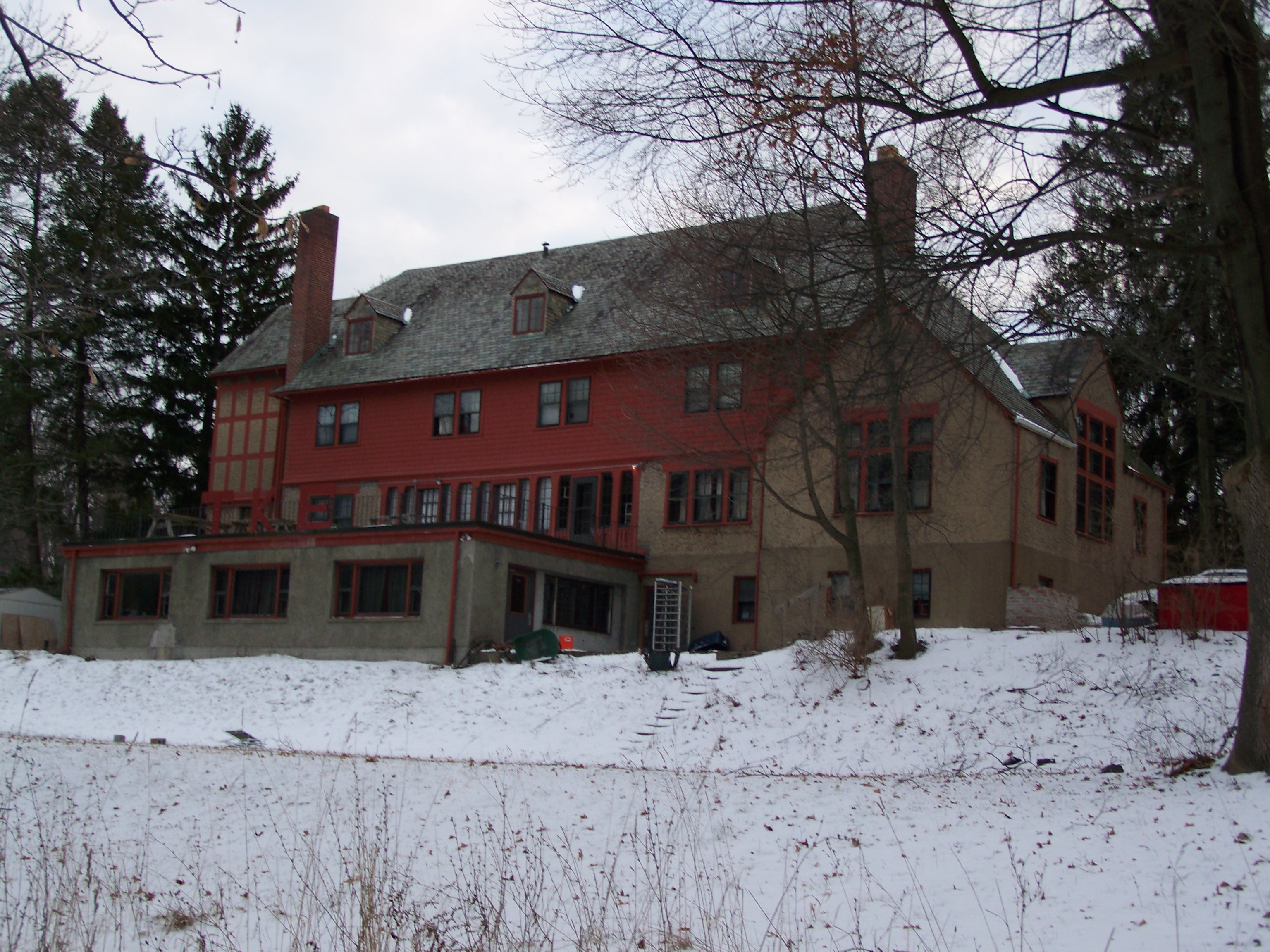
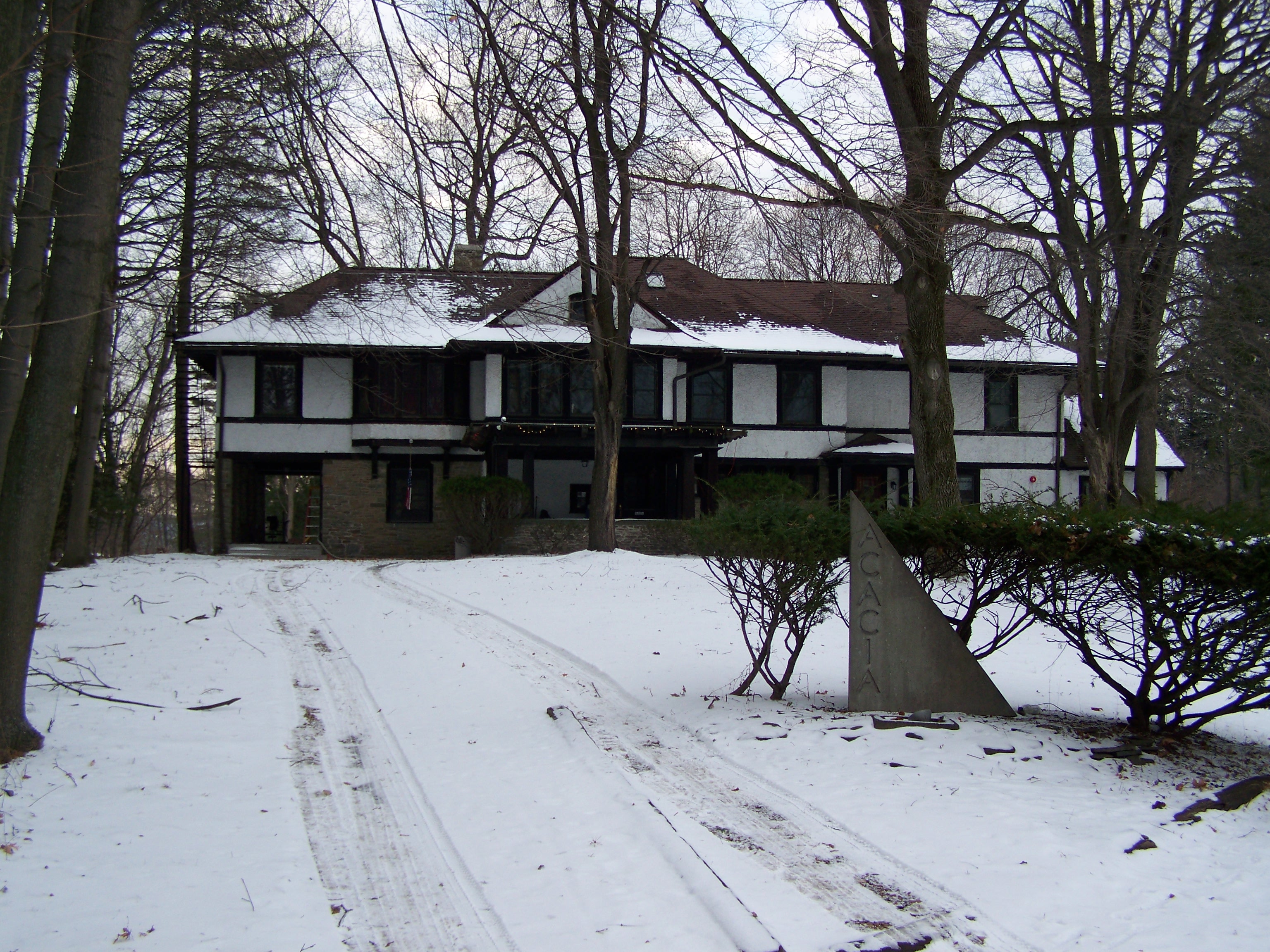
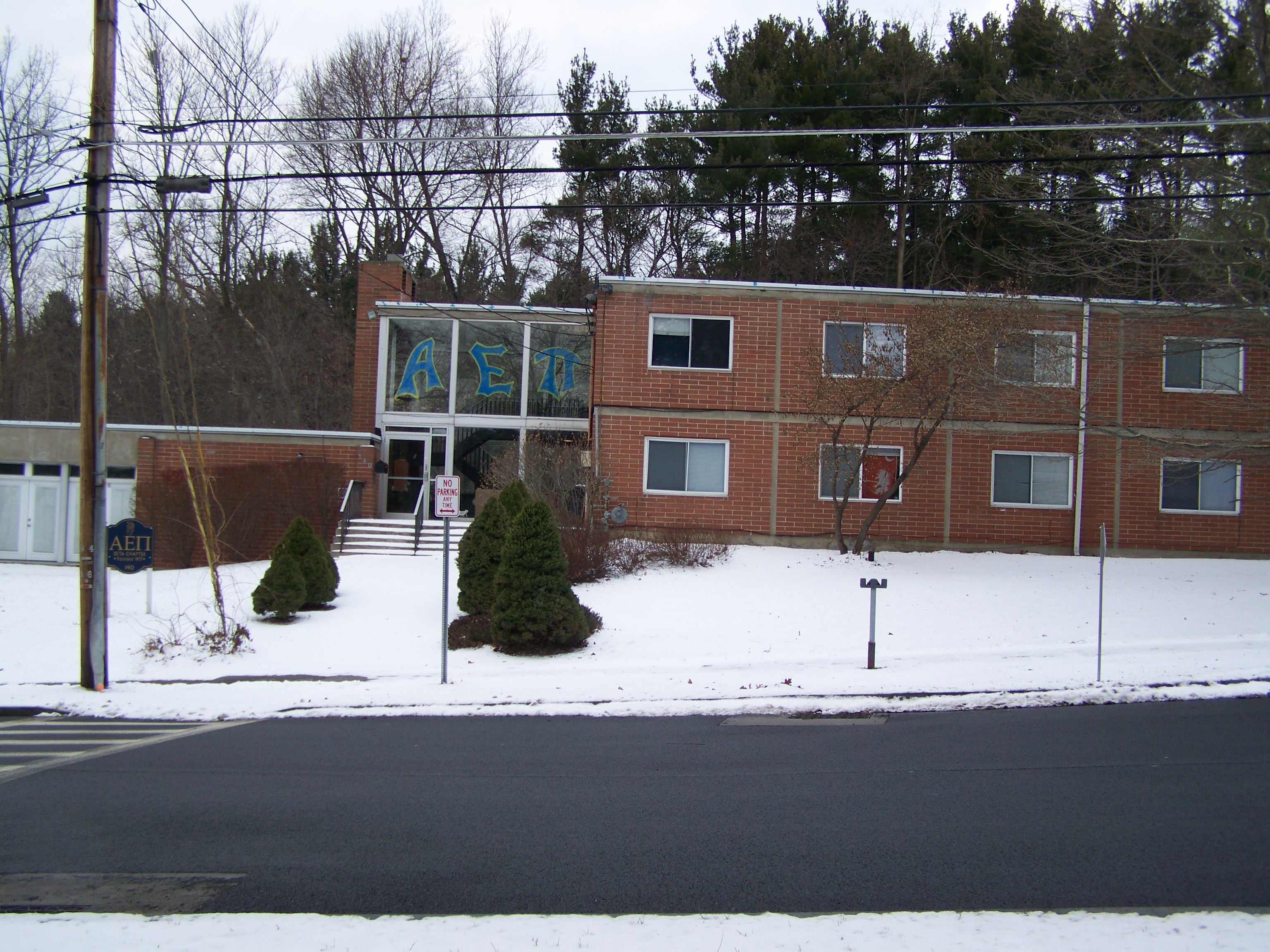
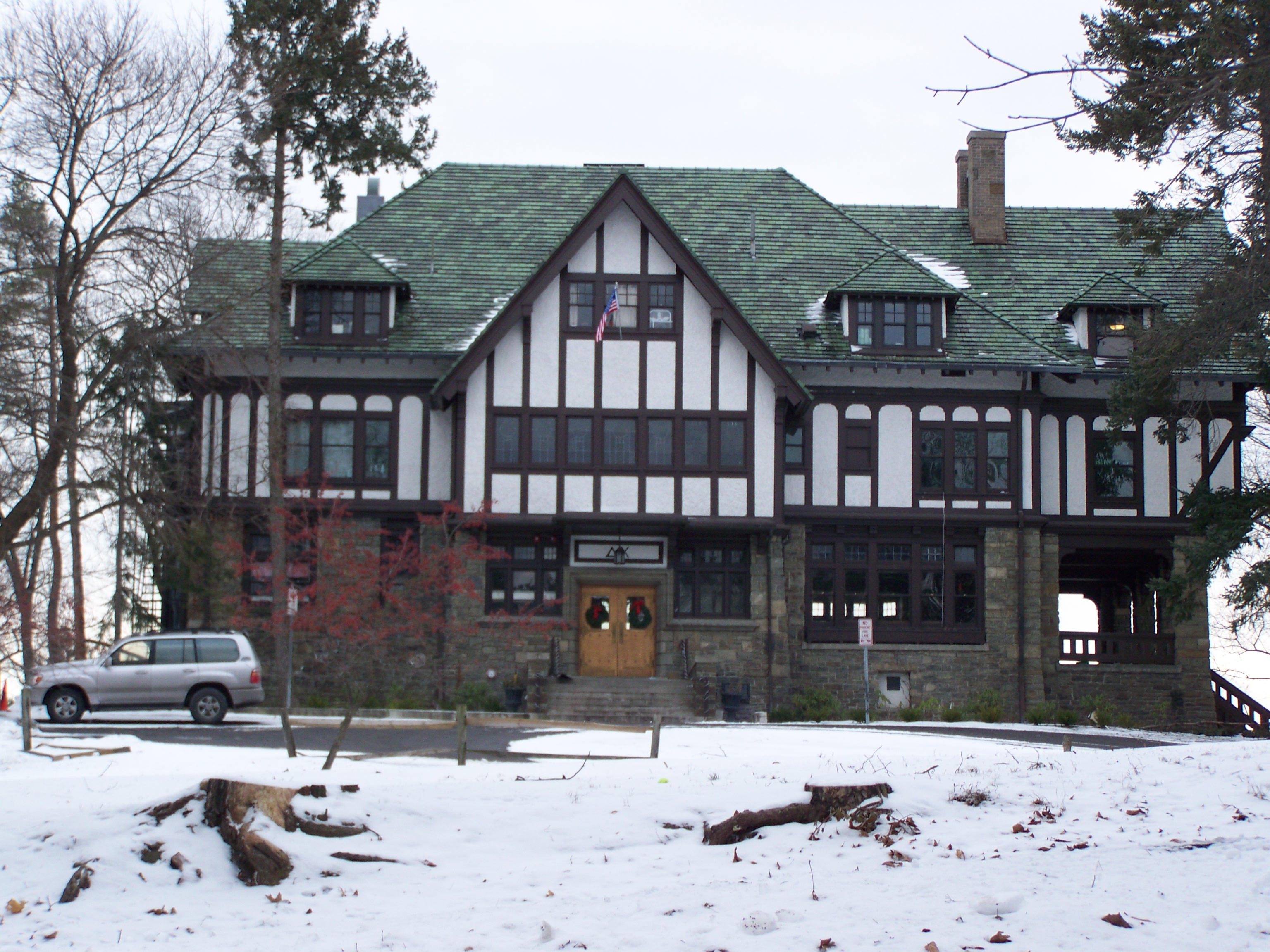
So, one of the things I’m proud of on this blog is that about ninety percent of the photos used are my own work, either “stock” images that I had taken before I graduated, or one of the few images I’ve taken while visiting as an alum. Still, one of the things that always bothered me was that a good portion of my north campus fraternity photos were blurred. This happened for a perfectly good reason – the images were taken on my old digital camera in the summer of 2008. These images were taken close to sunset on a cloudy day, so there was a lack of light, and I had to adjust the settings to compensate. Unfortunately, this meant a longer exposure time, and if my hands shifted at all, the photo would have a “fuzzy” appearance. This is what happened to most of those photos.

So, while visiting friends as part of a 700-mile car trip around the New Year’s holiday, I did an overnight stay with a few of them that have remained in Ithaca (for grad school and work). Having a little free time as I first arrived into town on the afternoon of the 29th, I decided to rectify this issue once and for all. The images are included below.

Phi Delta Theta

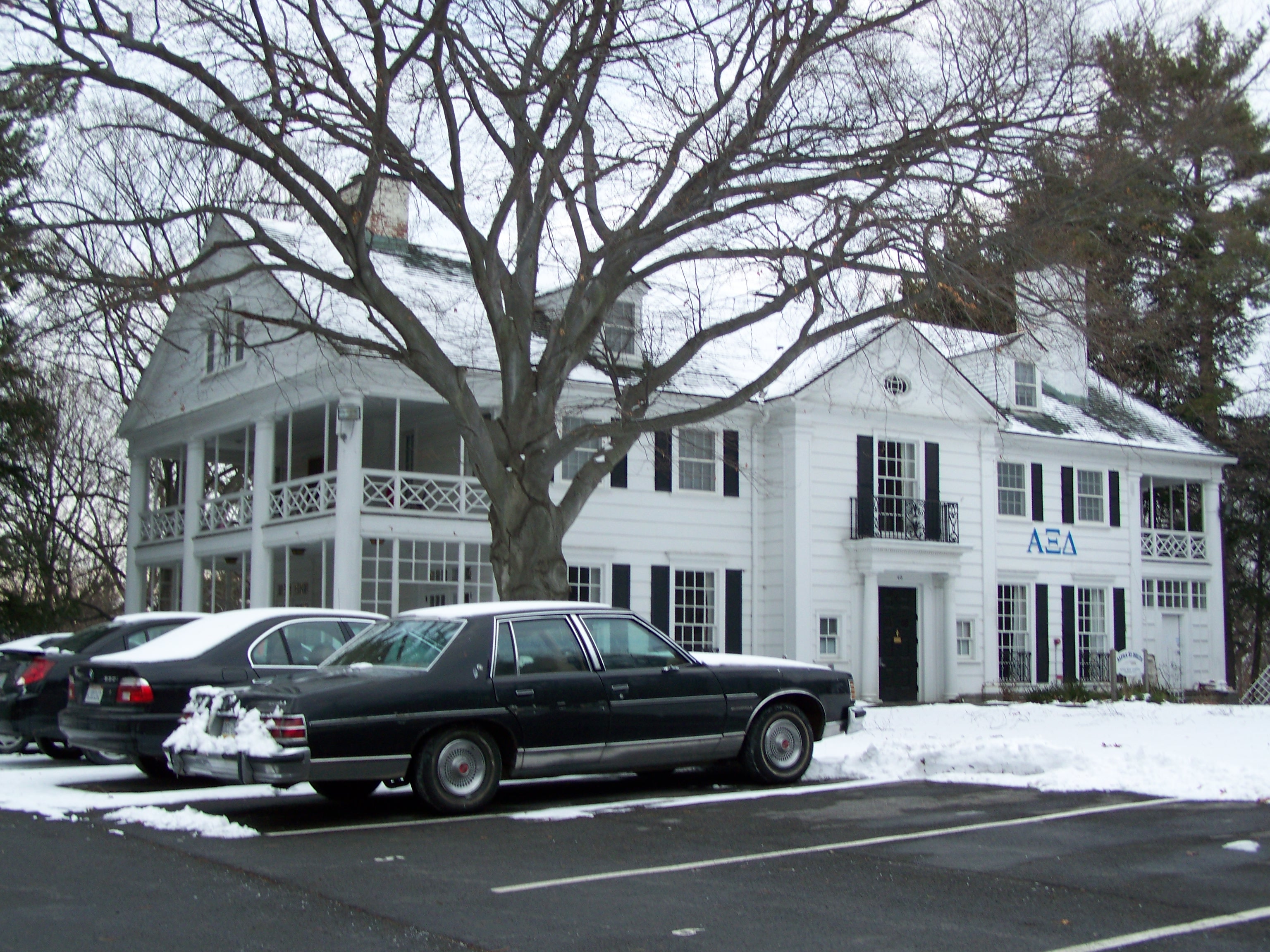
Alpha Xi Delta…and what appears to be an early-1980s Pontiac Bonneville. I thought the only models of that car left would be in museums or junk yards.

Pi Kappa Phi

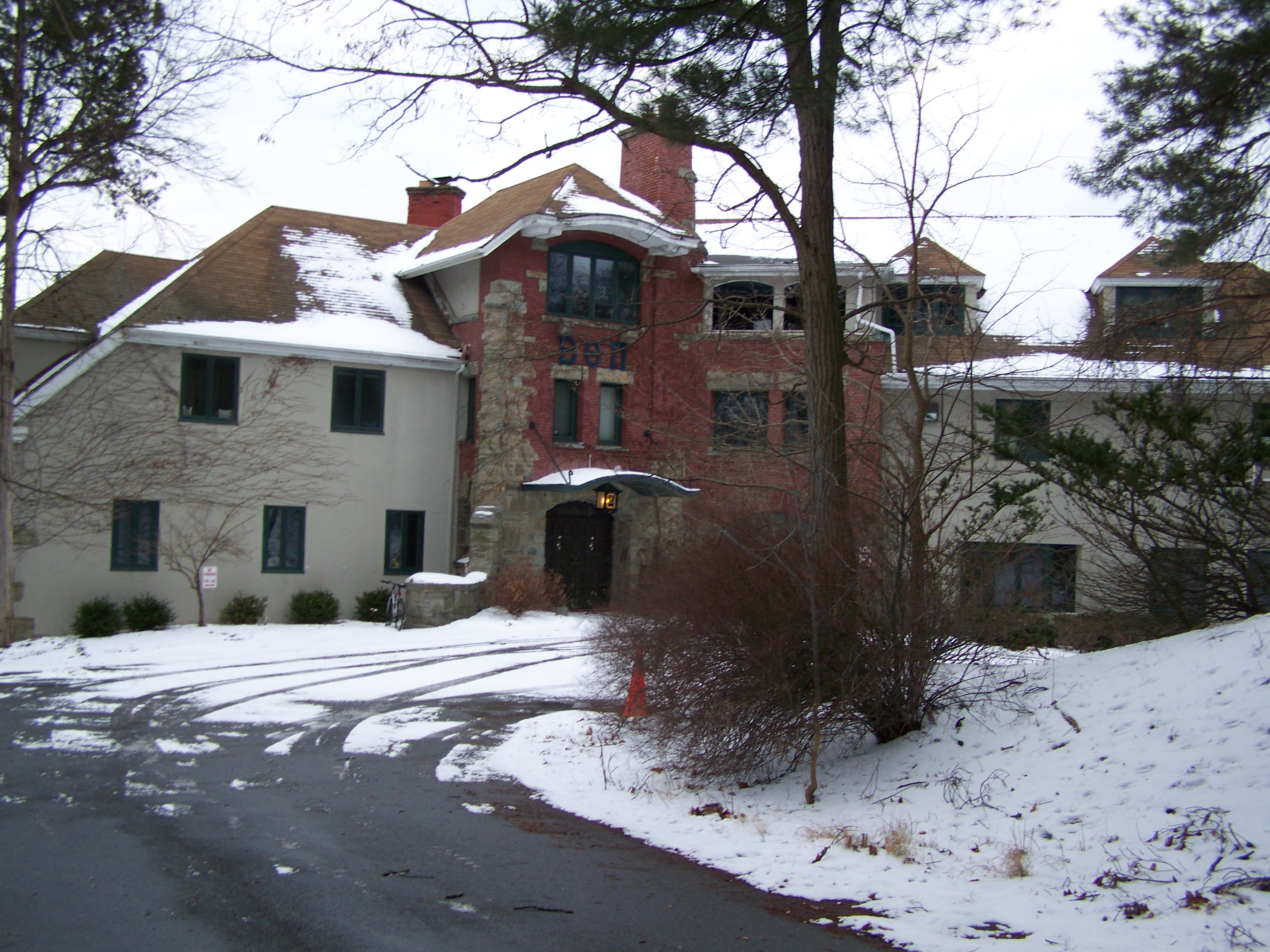
Beta Theta Pi

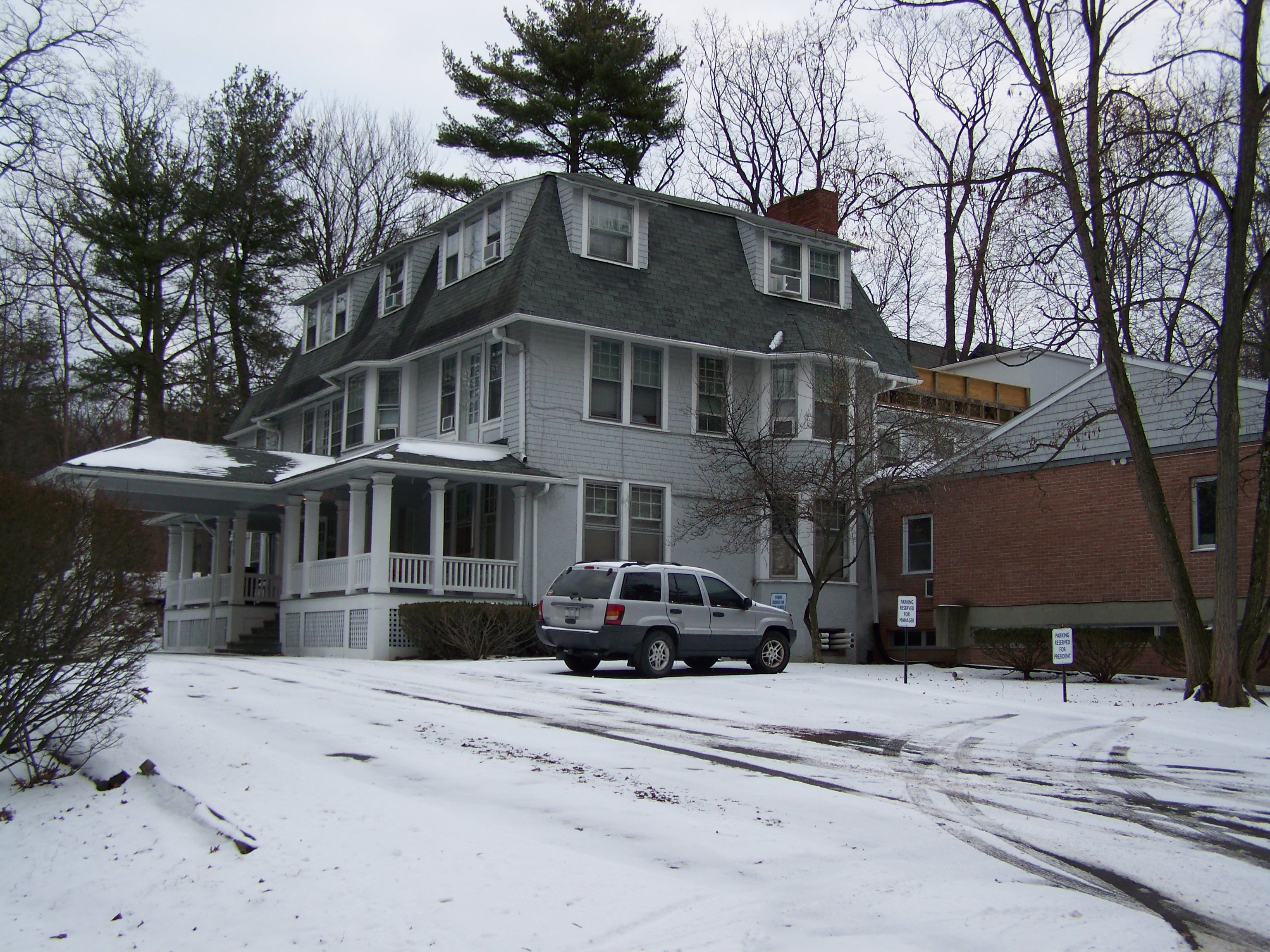
Sigma Delta Tau. I think that is the exact same Jeep from my photo two and half years ago. Housemother’s? Also, I couldn’t tell whether or not that was new construction in progress off of the rear of the old structure.

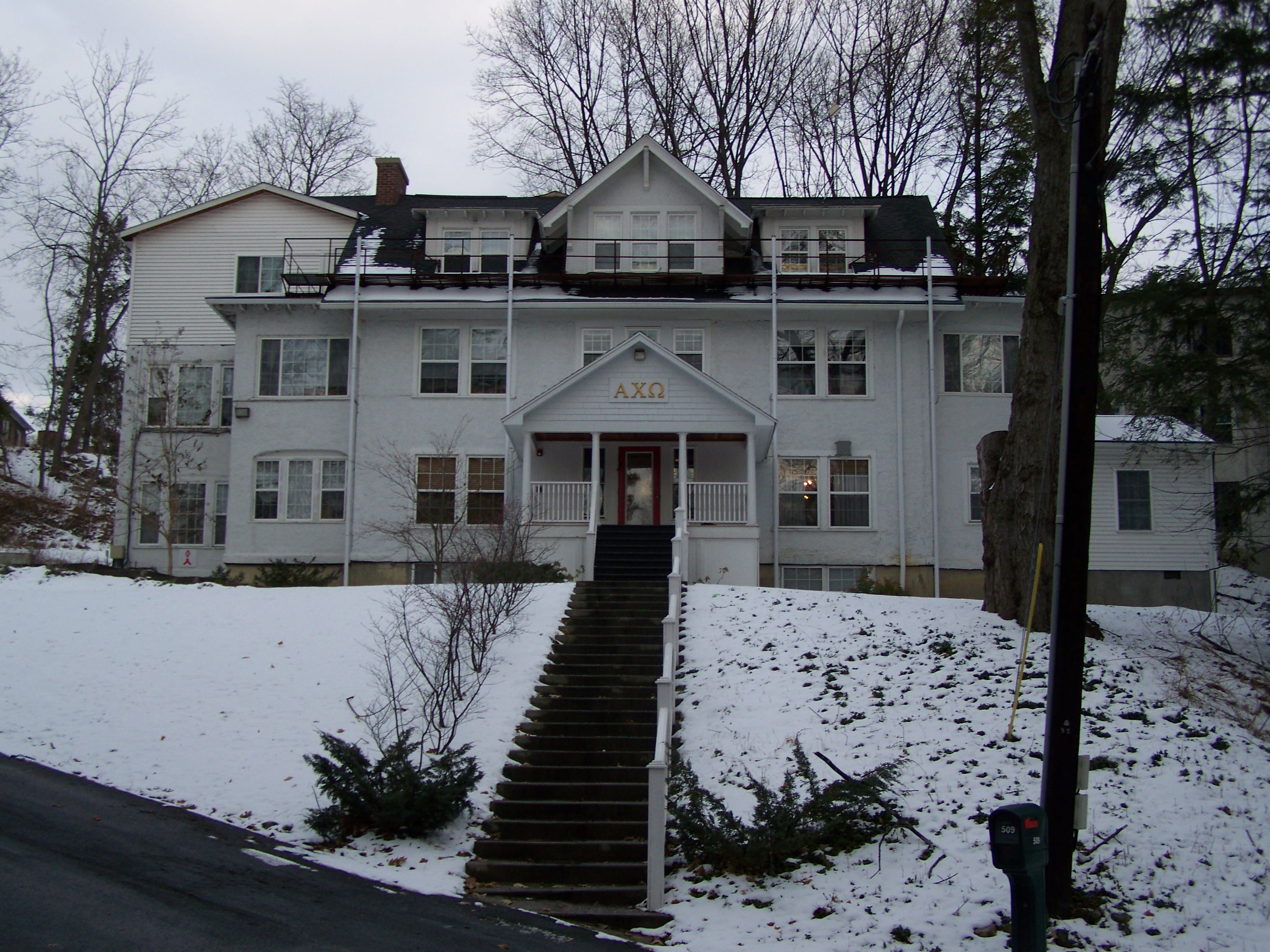
Alpha Chi Omega

Tau Kappa Epsilon

Tau Epsilon Phi

Acacia

Alpha Gamma Rho

Kappa Kappa Gamma

Alpha Epsilon Pi

Delta Chi

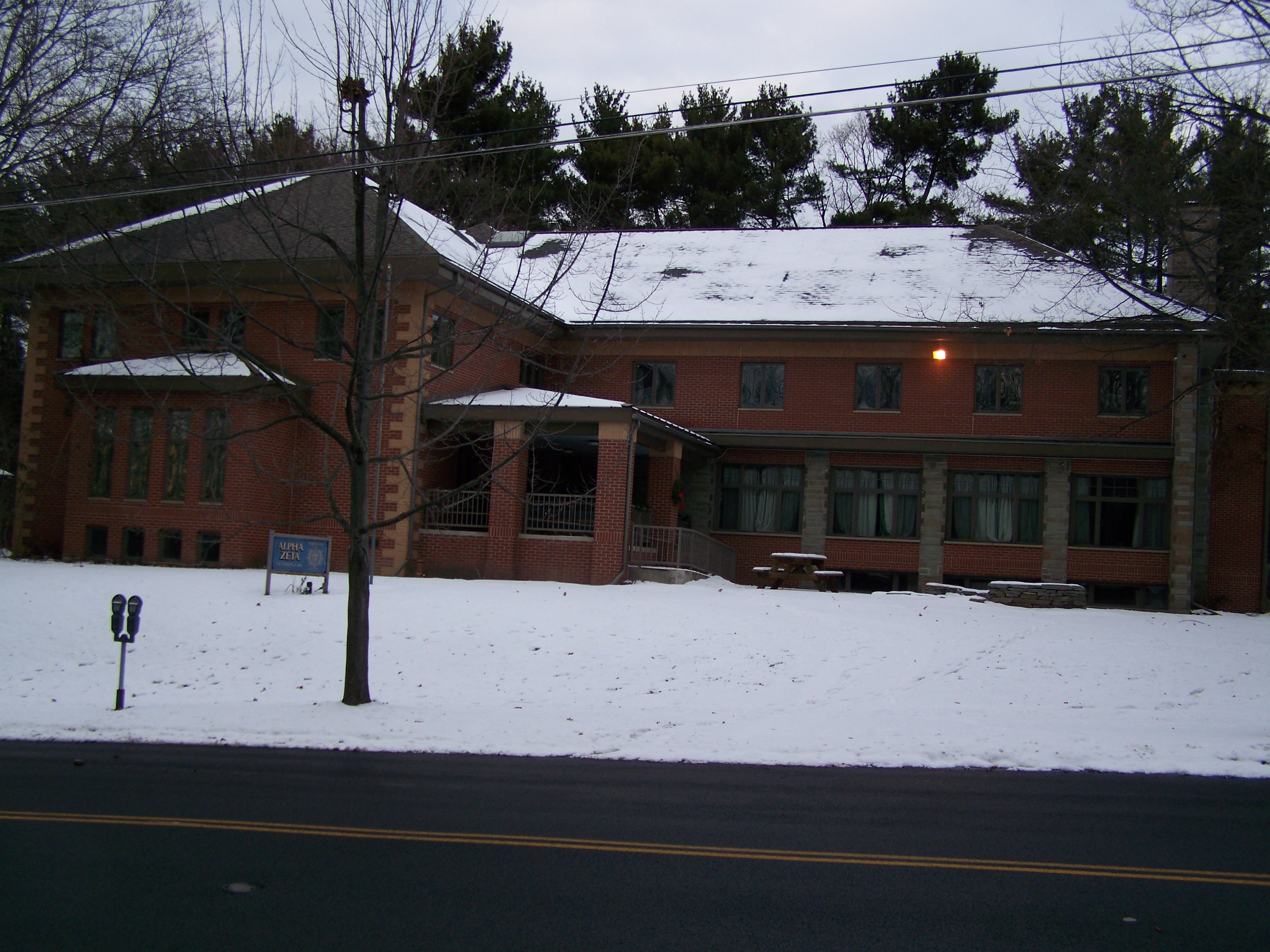
Alpha Zeta

Phi Kappa Tau


Fraternal Publicity

23 12 2010

This entry is a bit unorthodox, but since the Greek houses are gearing up for rush in a few weeks, it’s apropos. I was curious to see what houses came up were most frequently requested in the search bar, and what Greek house photos were most popular. Give two and a half years and about 125,000 houses, there’s a good-sized chunk of data to work with. Any combo of the house’s name, with or without Cornell, is considered. Plural searches or searches geared towards chapters at other schools are excluded.  Since wordpress gives the option, I’m dividing the results into two groups: all time (since June 2008) and the past 90 days.

Here’s the top five search entries for specific Greek houses in the past three months:

1. Psi Upsilon – 201 searches, henceforth called “hits”

2. Sigma Chi – 191 hits

3. Delta Chi – 183 hits

4. Delta Kappa Epsilon – 120 hits

5. Chi Phi – 99 hits

…and for all time:

1. Sigma Chi – 816 hits

2. Chi Psi – 605 hits

3. Delta Chi – 562 hits

4. Psi Upsilon -631 hits

5. Chi Phi – 362 hits

Interestingly enough, Psi U splits its hit almost evenly between “psi upsilon cornell” and “psi u cornell”. Sigma Chi, Delta Chi and Chi Phi are dominated in searches by their full name (“sigma chi cornell”), and Delta Kappa Epsilon was mostly searched for as “dke cornell” or “deke cornell”. Only about half of houses on campus had more than ten hits in the past three months. At least five had no hits at all. My old house has a grand total of seven hits in the past 90 days. Looking at search entries, it seems that the recent favorites are in general perennial favorites. DKE had a total around 350 hits and was sixth on the all time list.

Sororities are apparently unpopular searches. The highest all time was Delta Gamma, with 113 hits. If it were a frat, it would be about 19th on the search bar popularity list. Hell, Telluride had more hits (123).

Looking at the images, the results play out a bit differently for the past 90 days. They’re a bit harder to classify, since I can only go by the number of times people downloaded the full-size photo of a house. But, if we make the assumption that the number are roughly similar, then we can make some form of a conclusion. Anyways, here’s the 90 day results, followed by the “all time” results:

90 DAYS

1. Chi Phi’s house (23 full image downloads)

2. DKE’s house (15)

3. FIJI’s house (13)

4. Pi Kappa Phi’s house (10)

5. Alpha Delt’s goat house (10). Their house photo had (9) hits.

ALL TIME

1. Chi Phi (118)

2. DKE (82)

3. Sigma Chi’s house (77)

4. Zeta Beta Tau’s house (63)

5. Delta Chi’s house (61)

So, it’s obvious that there’s a flow and ebb of publicity going on here. Like for search bar entries, some houses are much more popular than others, although it looks like every house photo had at least 3 downloads. Keeping in step, my own house had an almighty 11 downloads over the past two and some odd years.

Partly out of curiosity, I decided to commit the sin of going to collegeACB to do a quick search to see what were the most popular houses.

Psi Upsilon, searching for “psi u” alone, came up in 256 threads (aside: what the hell? Don’t you psi u obsessed folk have lives?). Searching Psi Upsilon spelled out fully and making a half-hearted attempt to pull threads where psi u is already mentioned pulled in only a couple more hits.  Sigma Chi was mentioned (either as “sigma chi” or “sig chi”) in over 170 threads. Delta Chi appeared in 127 threads.

In comparison, Alpha Delta Phi, which would’ve rounded out the top ten in the search bar, comes up in over 250 threads, and SAE, which was also in the upper part of the top ten, had 278 threats threads. Less searched houses drew relatively few threads from the gossip site (generally 50 or less; of the five houses who had no searches in the past 90 days, none returned more than a couple dozen gossip threads). So, there might be a very general correlations, but it definitely doesn’t match up perfectly.

Well, whether it’s raving or ranting, publicity is still publicity, I s’pose. I hope those who search are mindful that the info here is sparse, and that the opinions of collegeACB are about as respectable as a hooker in church.