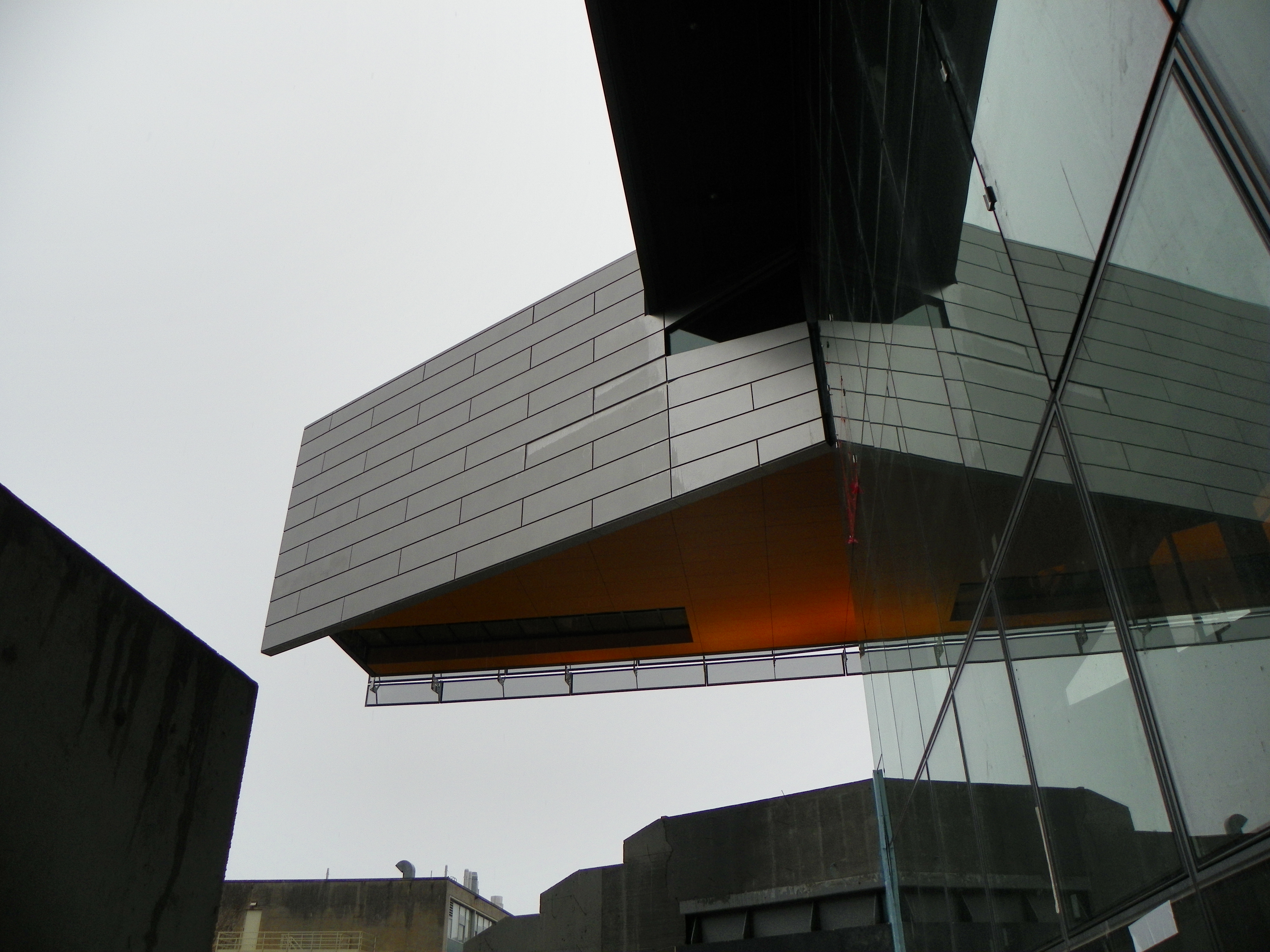
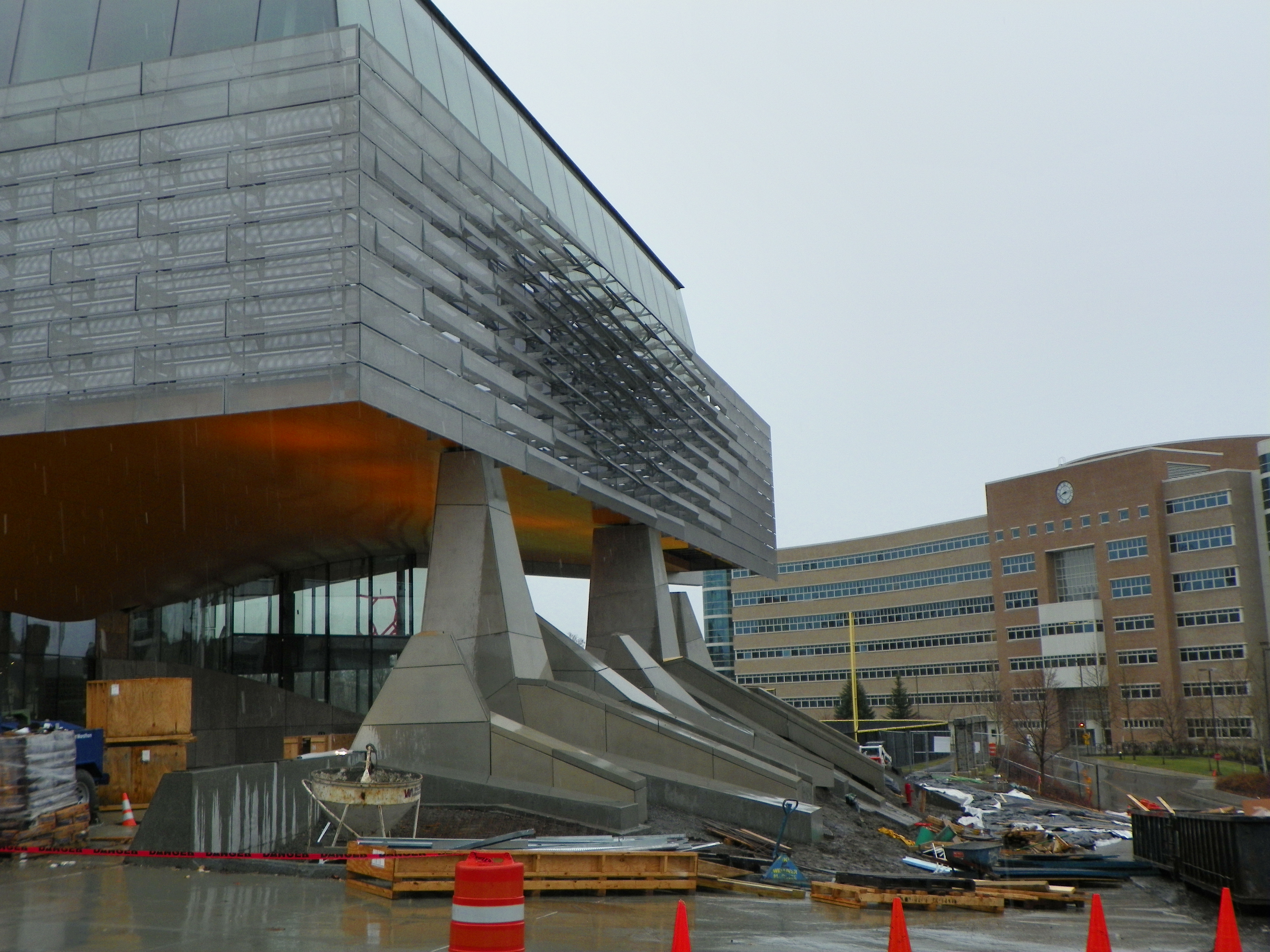
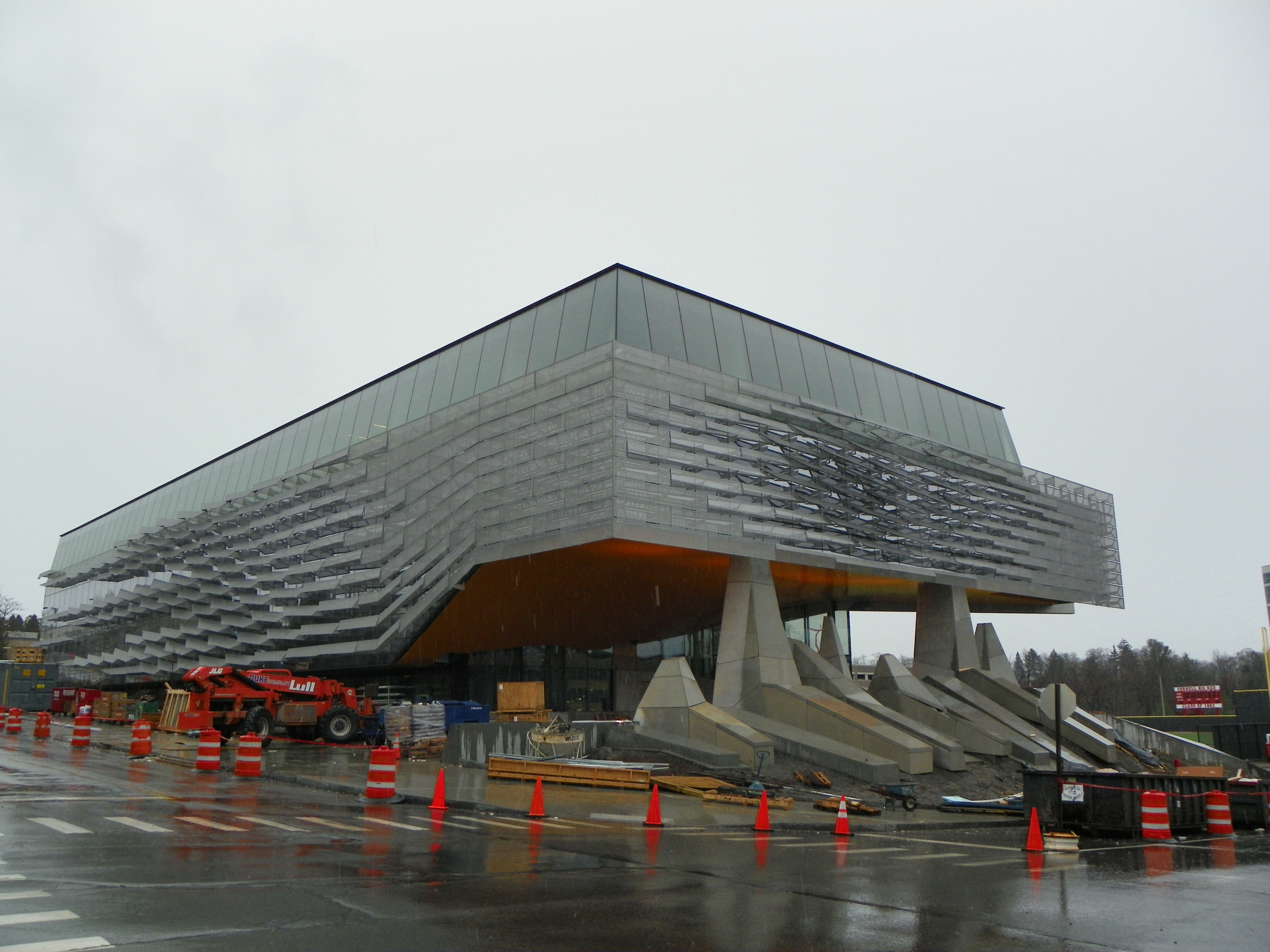
The Cornell Sesquicentennial Commemorative Grove

18 01 2014

grove2

When Cornell celebrated its centennial in 1965, there was a week-long series of lectures, many congratulatory letters, and in proof that some things never change, plenty of solicitations to alumni to donate to the $73.2 million donation campaign (the commemorative Sun issue shows a different angle of the same 1960s era campus plan on page 20 that I featured on the blog a few years ago). Offhand, I’m not aware of anything was built in the name of the anniversary, but I guess for its 150th, Cornell has decided to give itself something for the occasion.

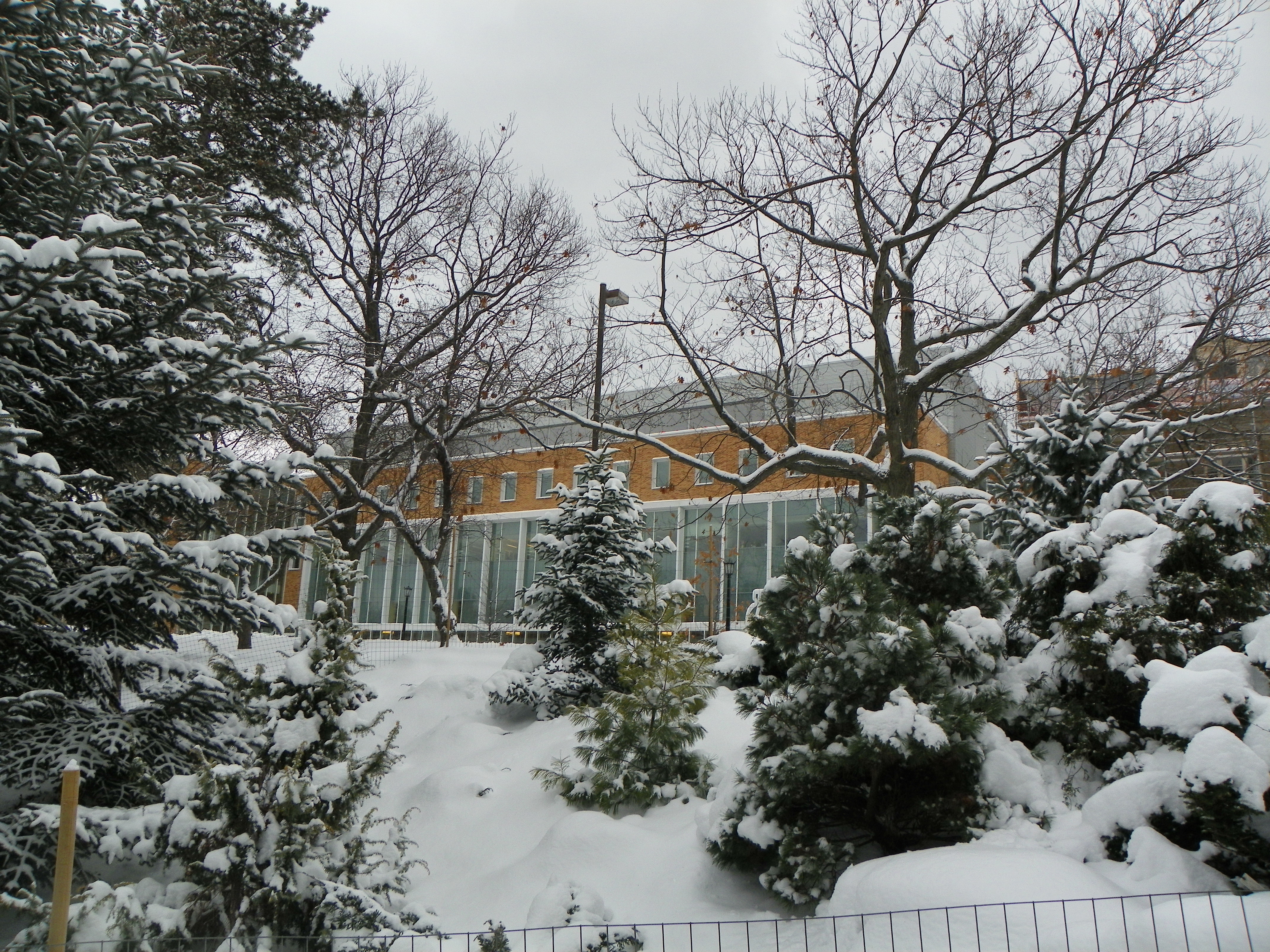
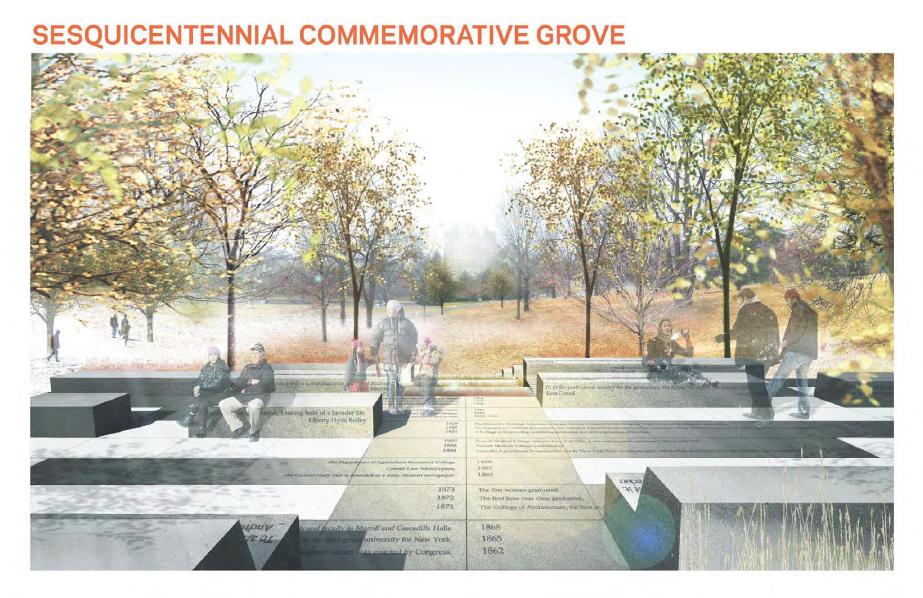
The project is a landscaped area, with the working name being the overly long “Cornell Sesquicentennial Commemorative Grove”. Taking full advantage of symbolism, the grove is strategically cited directly west and downslope of the statues of Ezra Cornell and A.D. White on the Arts Quad.

grove1

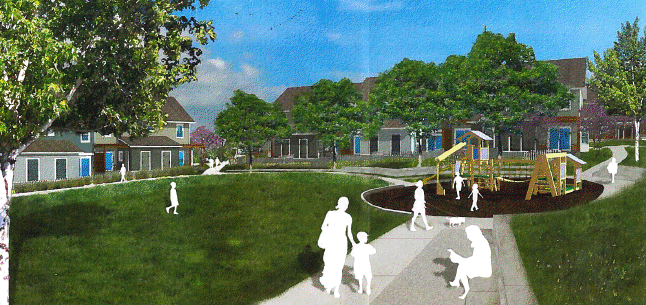
The project itself, which as been briefed previously over at Ithaca Builds,  consists of stone benches inscribed with quotes by famous Cornellians, pavers will with a timeline of significant events in Cornell history, and a sort of mood lighting by rigging fixtures into the trees. The overall size of the installation is about 1,700 sq ft. The architects of this plan are campus favorites Weiss/Manfredi, the same people doing the Co-Location building at the Tech Campus, and the renovations and additions to the vet school. I imagine Cornell would like this project done in time for Alumni Weekend 2015, which would also mark my first true Cornell reunion (5-year).

grove3

A full rundown is available here, but it reads like one long advertisement for the university. On the bright side, at least the university’s landscaped spaces then to look more visually pleasing than its constructions.  I have hogh hopes for this one, it could be a nice place to spend a June evening.


News Tidbits 1/11/2014: Unhappy Faces on Roosevelt Island

11 01 2014
tech2

Image Property of Cornell University

Full disclaimer: I’ve never been a fan of the tech campus. I’ve also never been a fan of Morphosis/Thom Mayne’s work.

New York is a different creature when it comes to approvals. This isn’t Ithaca, where many folks feel that Cornell’s large presence makes the local community behooved to approve whatever the university wants to build. Here, people tend to be a lot more vocal, and perhaps a lot more negative. Folks in New York are especially wary of Thom Mayne because of his involvement with the 41 Cooper Square project, a building that has been seen as one of the underlying causes of the financial crisis experienced by local college Cooper Union, which has led to an end of their famous “free tuition” policy.

Last month, Cornell revealed the first phase of the tech campus, which Curbed NY has covered in extensive detail. The first phase has three components; 1) a 150,000 sq ft, 4-story building designed by Thom Mayne (the building lower left; the roof is covered with solar panels, or what Thom Mayne calls a “lily pad”) 2) A six-story, 200,000 sq ft “Colocation Building”, which is designed for corporate and school interaction. This is the building to the right, and is designed by another Cornell favorite, Weiss/Manfredi Architects, and 3) The residential building, represented by the tall featureless box. A design has not been finalized, but is being handled by developer Hudson Companies, in conjunction with Handel Architects. This build will house about 350 units, with larger units for faculty. Construction for the residential tower is proposed for a 2015 start. The campus is wrapped in green space by architect James Corner, who designed a campus without walls and to invite the public to check the school out, and all of this using an Skidmore, Owings and Merrill master plan.

Community groups are difficult to please, however. Although the net zero energy aspect was pleasing, complaints were raised about the large loss of trees, a lack of equipment for the hearing-impaired in the new academic building, and a lack of cohesiveness as the result of so many starchitects trying to compete with each other for attention. Regardless of the complaints, construction is supposed to be underway starting this month. New York and Bloomberg have previously stipulated that the first building must be open by 2017, or Cornell will face major penalties.

On the bright side, Cornell’s getting crap tons of money thrown at its New York investments. Following Chuck Fenney ’56’s $350 million donation to the tech campus, former Qualcomm Chairman Irwin Jacobs ’56 gave a $133 million donation last April, and total donations to the tech campus exceed $500 million. Weill Cornell has not been left out by all this tech campus attention; they were the recent recipients of a $75 million donation for cancer research, courtesy of former CEO of Grey Global Group Edward Mayer ’48 and his family.

tech1

Image Property of Cornell University


Stocking and Klarman Hall Progress Photos, 12/2013

7 01 2014

12-17-2013 086

This photo is probably timed similarly to Jason’s over at Ithaca Builds. Consistent with his analysis, a little bit of scaffolding visible in this image gives indication of the roof work being done to Goldwin Smith, and underground work over east Avenue is closed up, if temporarily. The $61 million dollar token glassy box adds 33,250 sq ft of new usable space.

Note for Cornell visitors – from this Wednesday (Jan 8th) to April 19th, 2015, the southbound lane of East Avenue will be closed to facilitate construction of Klarman Hall. I’d get around to feeling sympathetic, but I had the Thurston Ave. bridge detour my freshman year, and then years of Milstein, so…eh. Deal with it.

12-17-2013 052

12-17-2013 072

1-2-2014 335

The time difference between photos 1/2 and 3 is about 15 days. I just happened to pass through Ithaca twice in December, for two separate events (the first one though, I was only able to take photos on Cornell campus). I doubt I’ll be as lucky in the next few months.

Stocking Hall phase 2 is underway. Luckily for me, I have a friend that is a food science alum, who sends me all of the email updates. Quoting the one sent this past Thursday:

Phase 2 of the renovation project started several months ago with a focus on getting as much of the slate roof replaced as possible before winter. I think they were able to get about 70% of Stocking re-roofed. Asbestos abatement was the first part of the inside work. Once a floor was abated, Pike [construction company] worked on demolishing all interior walls.  Last Thursday (1/2/14) an independent testing agency certified the air test was safe after the abatement was completed on all floors. We took our first look on Friday.

The basement has been gutted, the first floor has undergone asbestos abatement and will begin demo shortly, the second and fourth floors have been gutted, and the third floor isn’t far along, still in the initial teardown/salvage stage. The renovation of old Stocking is due to be complete in August 2014.


Gates Hall Progress Photos, 12/2013

5 01 2014


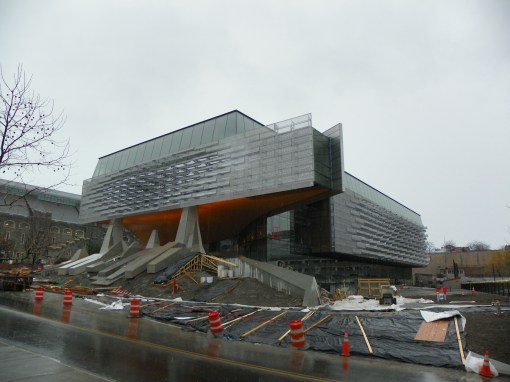
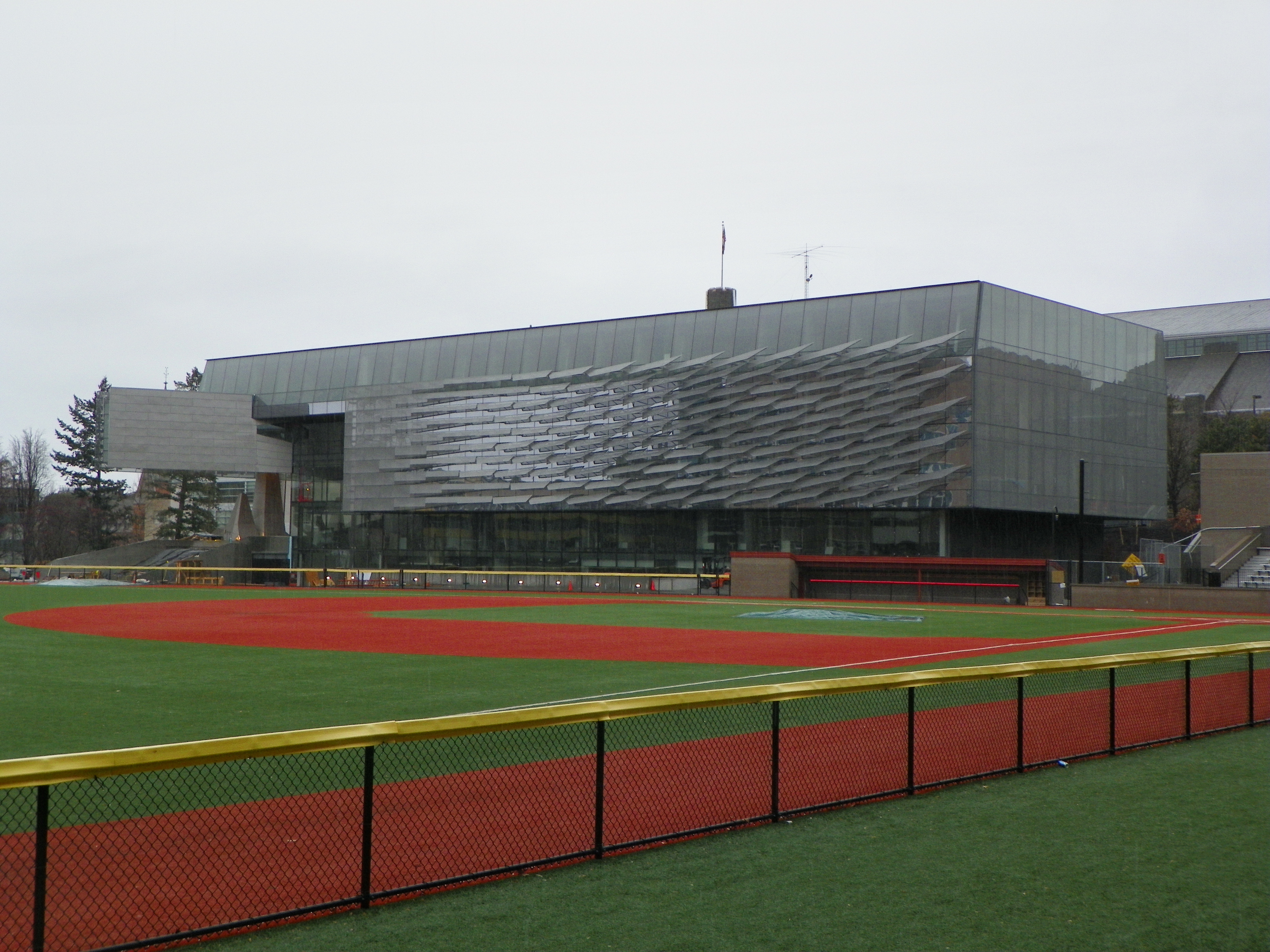
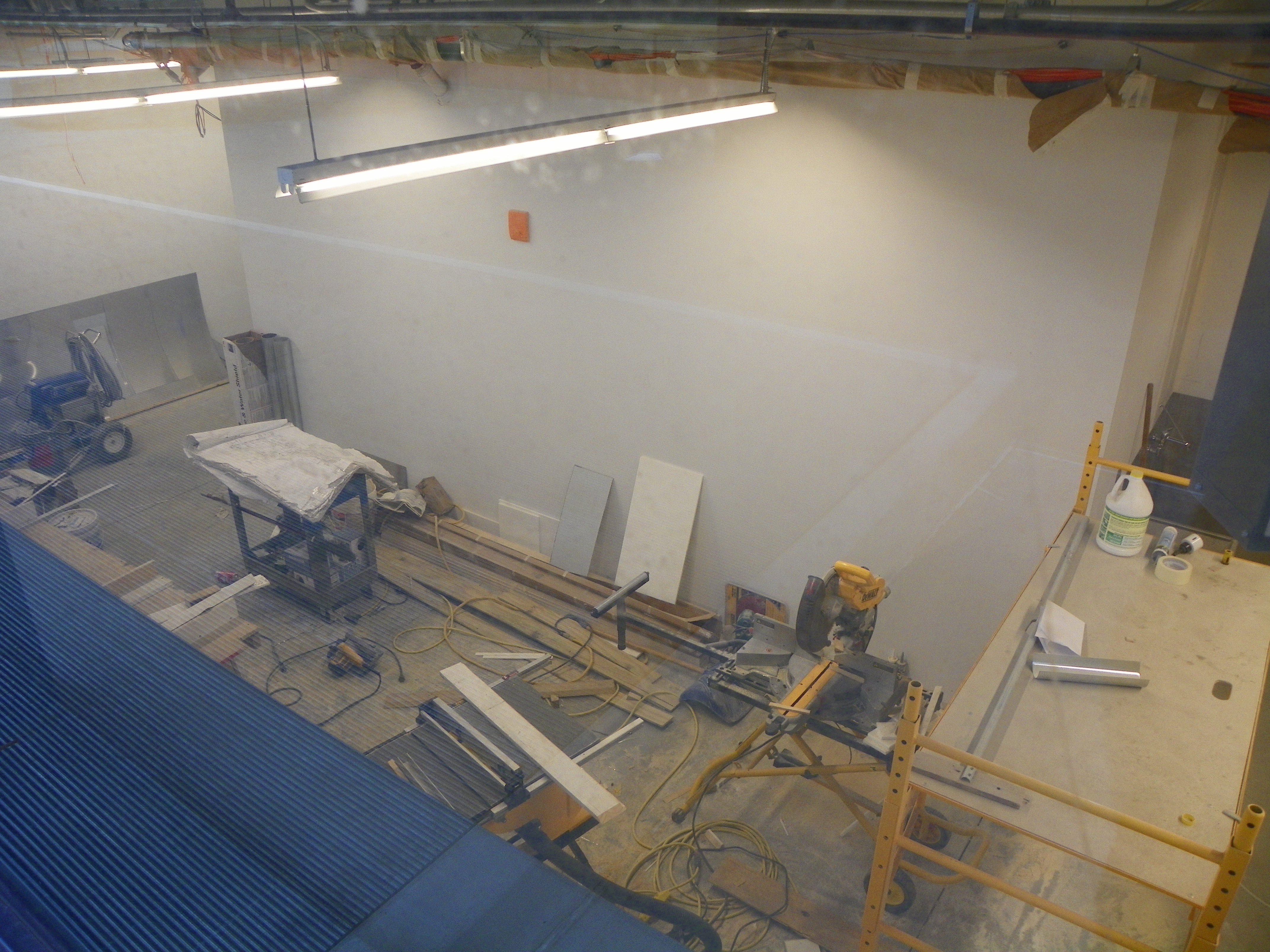
With an anticipated opening date early in 2014 (slightly behind schedule), the $60 million, 101,000 sq ft Gates Hall project is nearly complete. The work left at this point appears to be completion of the primary entrance structures (the “feet”, to use Jason’s term), a little landscaping, and interior work. Kinda odd to think the discussion of Gates Hall on this blog goes back to nearly the very beginning (and technically, since Bill Gates donated the money in 2006, this project has been in queue for even longer).

1-2-2014 349

1-2-2014 339

1-2-2014 341

1-2-2014 342

1-2-2014 343

1-2-2014 344

1-2-2014 345

1-2-2014 346

1-2-2014 347

1-2-2014 348


Another Apartment Complex Considered for Cornell Heights

26 12 2013

100_1394

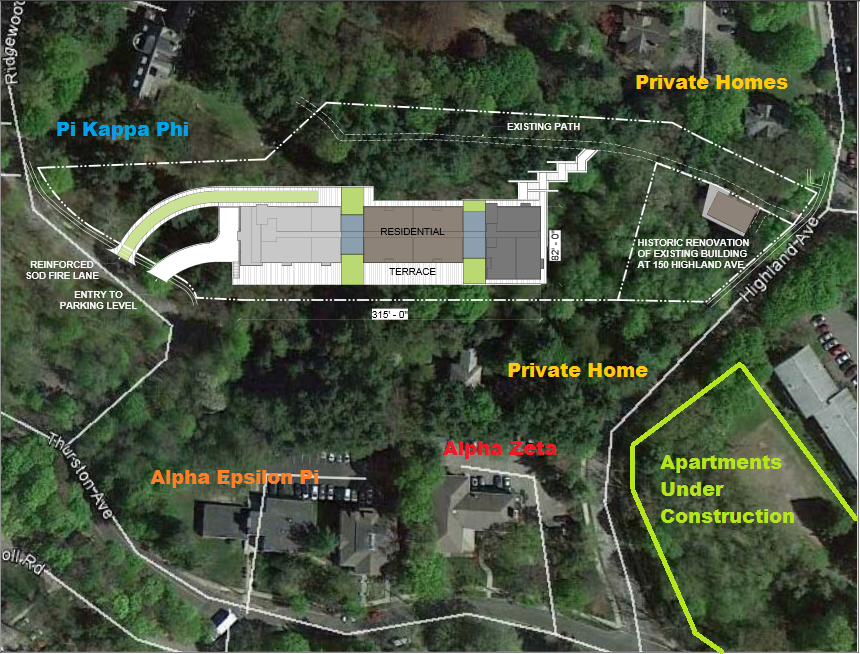
Original concept description with renderings here, meeting minutes here. The project is a in-the-works proposal by Campus Acquisitions LLC, the design by Shepley Bulfinch Architects of Boston. Campus Acquisitions, if I have this correct, looks to be a Chicago-based investment group with projects generally clustered around Chicagoland, and a number of college towns along the West Coast and Interior West.

The parcels of land in question are “150 and 152 Highland Avenue”, an underutilized lot (152), and a bungalow built in 1920 (150). The bungalow appears to be a 2-unit home owned by Travis Hyde properties. 152 Highland is a heavily wooded, steeply graded vacant parcel, but has a little bit of Cornell lore associated with it, as it was home to Phi Kappa Sigma’s swimming pool (the house, named “Greentrees”, is now Pi Kappa Phi, the pool is now unused and decaying). The 2.49 acre parcel was originally bought in 1996 by Travis Hyde properties with the intention of apartments, but nothing came of the parcel. The property was on-again off-again in local real estate listings (asking for 200k), and was last delisted (sold?) in June 2012.

ridgewoodapts3

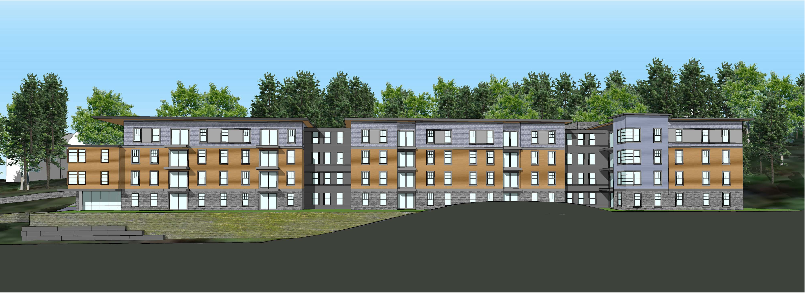
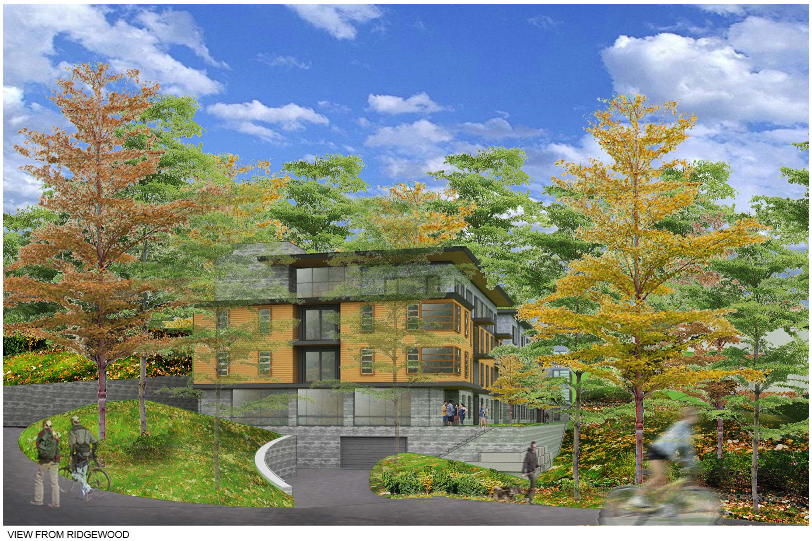
The image above uses one of the old design concepts. The bungalow is proposed for renovation, though I am not sure what role, if any, Travis Hyde properties has in the development (something in conjunction with the other parcel, maybe?). The original conceptuals for “1 Ridgewood” proposed as many as 70 units, later reduced to 64 units (four floors over an underground garage) in the first design proposal, released this past fall:

ridgewoodapts1

ridgewoodapts2

This didn’t work for multiple reasons. For one, many of the deep-pocketed local land owners are strongly opposed to more development; I’ve known for years that the venerable widow who owns the house south of the property on Highland (she was a fixture at my fraternity’s annual wine-and-cheese event, and a pleasure to chat with) has been fiercely opposed to any construction on that site. For two, the property is in the Cornell Heights historic district, which subjects it to more stringent and evolving design and massing guidelines. The latest concept calls for 45 units in 3 smaller structures, with a mix of surface and underground parking. At some point in the near future, the formal proposal will likely appear on the planning board’s agenda.

100_0563


The “Greenways” Project

23 12 2013
Image property of Greenways at Eastwood Commons

Image property of Greenways at Eastwood Commons

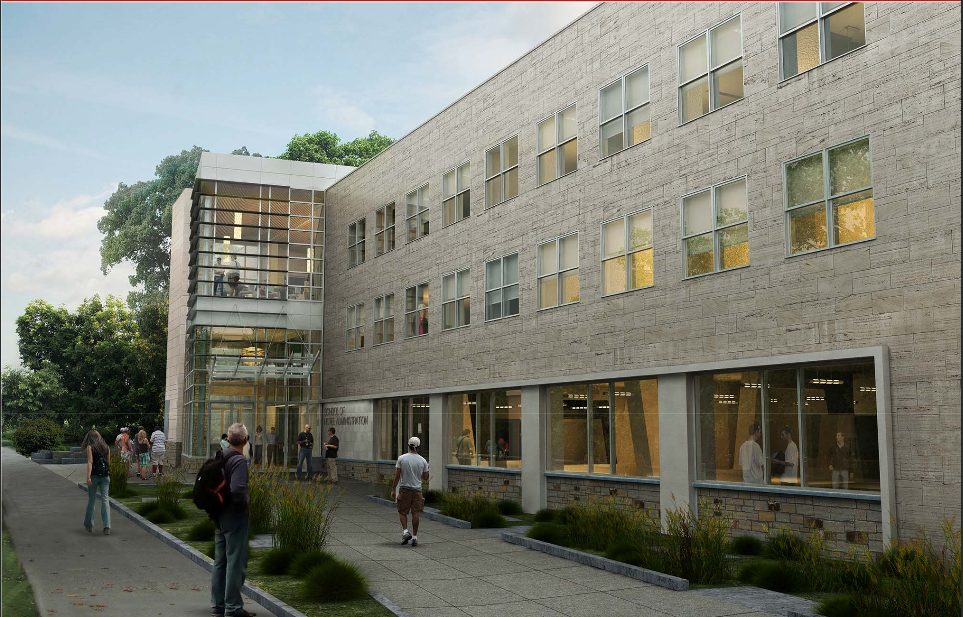
Back around September 2012, I posted an entry detailing a project proposed for the Eastwood Commons area southeast of Cornell’s campus, off of Honness Lane. The project, which involved the construction of 67 townhouses, was the result of a partnership between Cornell and a private company, the land would be bought from Cornell, and Cornell employees would get first dibs on the housing. At the time, the project didn’t have a name, so colloquially I had referred to it as the “Cornell townhomes project”.

Fast forward to this past spring. From someone who owned a townhouse in Eastwood Commons, I had been told that the project was a stalled proposal; the infrastructure costs had been underestimated, and would have priced the townhouse units out of the $200k price range that they were intended for. Not feasible, therefore no development. Which apparently made the nearby residents very happy.

Last week, I had noticed INHS had revamped their website. One of the projects listed was Greenways, described as “a new townhome community in the town of Ithaca”. I was not familiar with the name, an initial internet search didn’t turn up anything, Jason at Ithaca Builds wasn’t familiar with it, so my first inclination was to think this was some sort of new proposal along the lines of INHS’s Holly Creek.

A second search, playing with different search terms, turned up a Cornell Sun article on the Cornell townhomes project. It mentioned two details I had long-since forgotten – one, INHS was offering subsidies to the developers for construction costs (to keep the units in the affordable range), and two, the developer’s name was “Greenways at Eastwood Commons”.

So, maybe the project isn’t a stale proposal, and some work is going on behind the scenes to allow the project to come to fruition. It’s supposed to have a 5-year buildout, but there have been enough projects cancelled or postponed in recent months to make me cautious until I at least see shovels start going into the ground.

12-17-2013 084


Yet Another Makeover for Statler Hall

16 12 2013

100_5157

Another makeover is planned for a section of the Statler, this time the circa 1987 PoMo front entrance space. As noted by Ithaca Builds, the addition, at a cost of $2.4 million, calls for a modernized pop-out addition and entrance on the west face of Statler Hall (the side facing East Avenue) with new landscaping and pedestrian features. The project adds a relatively modest 1,619 sq ft to the Statler, with 319 sq ft on the first floor, and 1,300 sq ft on the second floor. The exhaustive summary of the project is included on their website here, with more renderings here. The timeline for construction is a short three months, May to August 2014.

statler1

This is the third renovation in the series, all by Philly-based KSS Architects. The first phase involved the construction of the Beck Center in 2004, which added 36,000 sq ft and renovated 16,000 sq ft on the east wing of Statler Hall. The second phase added 14,000 sq ft on the south face of the Statler, and was completed in 2010. Since the Hotel School is landlocked with little hope of re-purposing nearby property, the procedure with new structures always involves additions and renovations, rather than totally new buildings as we would see in other schools. The Statler was first built in 1949 on what was previously four homes of faculty row (at one point, a few dozen faculty had homes on Cornell campus, other examples include what was once Grove Place on what is now the Engineering Quad, and another cluster of homes where Savage-Kinzelberg Hall stands today). The auditorium was added to the south end in 1956, and further renovations were undertaken in 1959 and 1968. The hotel tower was added along with this front entrance in 1986/87. If history is any indicator, his will not be the last addition or renovation.


How Does One Fill A Former Sorority House

8 12 2013

Image property of O’connor Apartments

This one was forwarded to me by an observant reader, L.D. It’s a listing on Craigslist for rentals available for June 2014 at 114 the Knoll (I always thought it was 115 the Knoll, but the listing photo matches my photos), which has served as a chapter house for a few different sororities over the years, the last being Alpha Xi Delta, which moved to another house on Ridgewood Road in 2010. More recently, the house has been occupied by a campus Christian group, Chesterton House. Chesterton’s house website notes a 2014 goal for purchasing a property near campus to serve as their permanent home, and I’m assuming that if this posting is up, then there’s a strong chance they succeeded in achieving that goal (if anyone knows where they decided to settle, feel free to comment or email me).

Quoting the listing:

“Beautiful arts and crafts house on North Campus available for June 2014. $750 per bedroom for 16 bedrooms plus utilities. Can hold up to 22 for the same price. Large living room with leather furniture. Banquet size dining room. Cook’s kitchen. You have to see to believe. Use [sic] to be a sorority. Email or call [redacted]”

This seems like a more unusual, and perhaps somewhat more difficult way to fill a large group home. Although the email links to the O’Connor Apartments property group, I don’t see it in their property listings, and I think they’re only handling the rental aspect of the house on behalf of another entity. My guess is that Delta Phi Epsilon sorority still owns the property, and with no short-term prospects of restarting their chapter, they need some way to try and keep revenue coming in for upkeep of the house. On one hand, they could sell to Cornell, which takes care of the tax issue, but then they’re at Cornell’s mercy – the house most likely becomes a dorm and there’s nothing Delta Phi Epsilon would be able to do, especially since they’ve gone a decade without an active chapter (there were attempts to re-colonize about three years ago, which did not materialize – the whole process being the subject of enough gossip at the time that one could have written a book about it). Yet another option is another private sale, like the home at 210 Thurston that was sold a couple years ago to the wealthy parents of a Cornell wrestler, renovated, and now serves as the home of Cornell wrestling team.

This is one of those houses that seems to routinely pass between groups at Cornell. I’ll be curious to see what happens.

Edit 1/23/14: Maybe I’m wrong about DPhiE still owning the property. I forgot that it was listed in July 2009 and sold in January 2010. Perhaps now the O’Connor Apartments firm owns the building.


Fast Facts: Tuition Rates

26 11 2013

To go with your Thanksgiving meals, here’s some food for thought, courtesy of the university factbook.

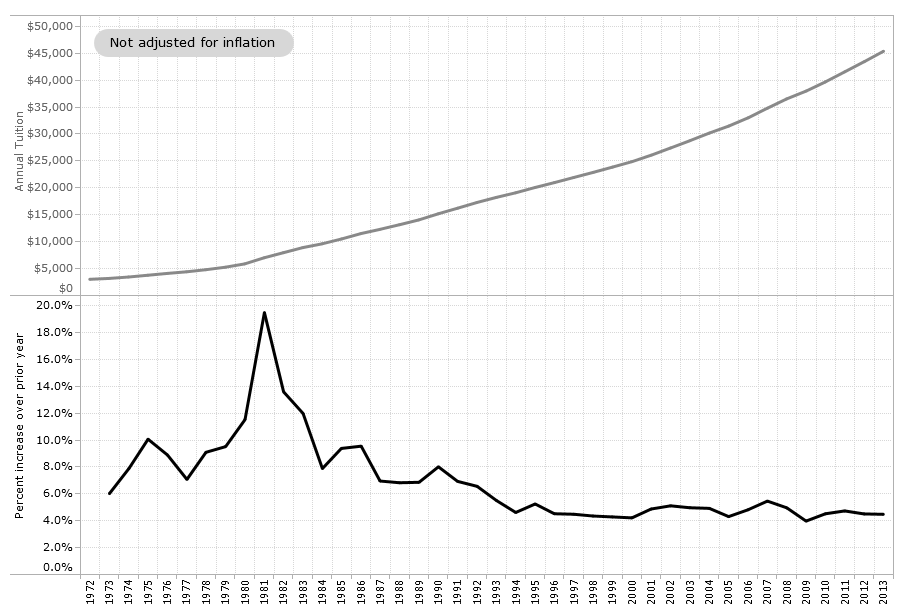
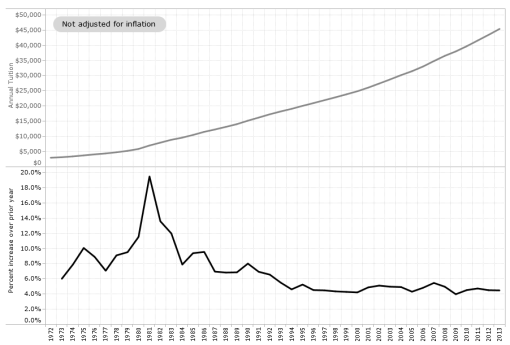
Tuition goes up in fits and starts. Consider the graph for the endowed colleges shown below.
Endowed_tuition

In 1973, tuition and fees added up to about $3,180, a 6% increase over the previous year. According to the inflation calculator from the Bureau of Labor Statistics, this is equivalent to about $16,727 dollars today. Put into further perspective, that was about the same price as a brand-new Chevy Chevelle Laguna Colonnade sedan. You know it’s a great car when it has that many names. Median household income was $9,226, so tuition was about 34.5% of the mean household’s annual income.

If the annual tuition hikes seem a bit high in the 1970s and early 1980s, it’s for good reason – this was a period known for stagflation, where the economy grew at anemic rates (if it all), while inflation continued to rise near 10% yearly. Fall 1981 was particularly shocking, with a 19.5% increase in tuition and fees over the previous academic year, from $5,860 to $7,000. Still, compared to today, that BLS calculator says $7,000 in 1981 has about as much buying power as $17,985 dollars today. Put another way, that was about 36.7% of annual household income in 1981 ($19,074). Or to illustrate the advances in computers, a top of the line IBM 5150 PC cost about $6k, with color graphics and a 256kb hard drive.

Since 1983, there have been no annual increases greater than 10%. By 1993, tuition and fees went up a relatively modest 5.5% to $18,226. With the exception of the 5.5% increase in Fall 2007, all other years in the two decades since have been less than 5.5%, falling somewhere between 4% and the low 5’s. Fall 2009 is the lowest at 4%, likely an effect of the Great Recession. Inflation-adjusted, tuition cost about $29,458 in 2013 dollars. Keeping with the theme, household income was $30,210 in 1993, or about 60.33% of annual household income. So through the 80s and early 90s, we’re starting to see this rapid relative rise in tuition vs. income, even though the annual increases have dropped off as inflation lessened.

Fast forward ten more years to 2003. The mean household annual income was $42,560. Knowing my own family’s finances, we were about a little below that average. Tuition in 2003 had increased 5% over the previous year to $28,754, or 67.6% of mean household annual income. Or to a working-class family like mine, it meant being told at a young age that if you didn’t get scholarships, you weren’t going to college.

The most recent estimate for mean household annual income is about $51,017. Tuition at an endowed college is $45,358 this year, a 4.5% increase over 2012. 88.9% of the mean household’s income in a year. There’s a reason why college debt gets so much attention these days.

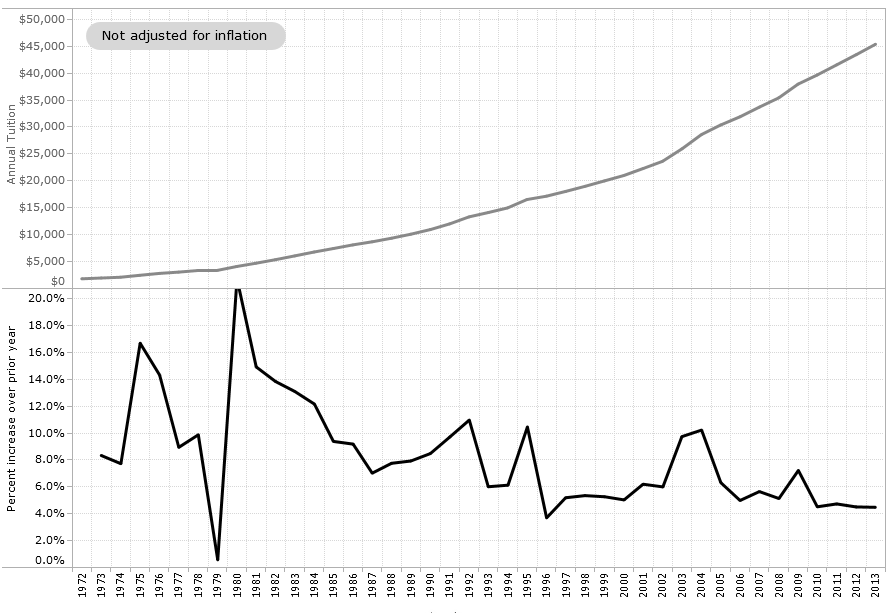
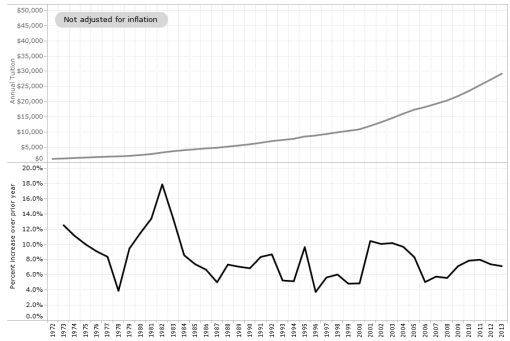
For the purpose of being all-encompassing, in-state tuition for the contract colleges, followed by non-resident tuition at those schools, is included below:
contract_nys_tuition

contract_non_nys_tuition

Year   Tuition (NYS/non-res)  nys:non-res   MHAI         Tuition as % of MHAI

1973   $1,350/2,100                  0.642              $9,226           14.6%/22.8%

1981   $2,800/4,700                 0.596              $19,074         14.7%/24.6%

1993   $7,426/14,106                0.526              $30,210         24.6%/46.7%

2003  $14,624/25,924             0.564              $42,560         34.4%/60.9%

2013   $29,218/45,358             0.644              $51,017          57.3%/88.9%

Note that 1981 is a little misleading, as in-state tuition was jacked up $500 dollars for Fall 1982. Everything moves slower in state government. Except the tuition hikes themselves, those seem to be increasing at a pretty good clip.

Now, all of this information sounds pretty scary, and sticker shock certainly is. But the mean household income would get a full ride to Cornell on grants and scholarships. I was fortunate enough that Cornell’s revised program kicked in before my junior year, and even before that, my contributions were very modest. My debt load is small enough that it will be paid off by next spring. Cornell enabled a working class kid like me to go to a top college. For that I am thankful. Have a Happy Thanksgiving.




News Tidbits 11/17/13: Hotels and Hazing

18 11 2013

100_1699

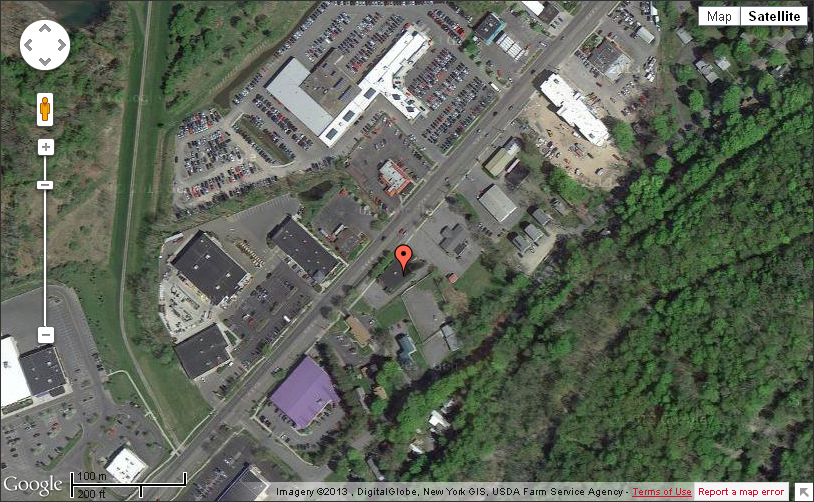
After a lull in new development proposals in the city of gorges, something new has come to the table.  Down in big box land, another hotel seeks to join the ten-year old Hampton Inn (66 rooms) and the recently-completed Fairfield Inn (106 rooms). According to Jason over at Ithaca Builds, the proposed “All Suites Hotel” at 371 Elmira Road calls for a 4-story, 54′ tall, 11,769 sq ft hotel with approximately 76 rooms, proposed for the site of a vacant office building and an auto body shop (both of which would be demolished). Looking at the aerial below, its proximity to the new Fairfield (upper right) is quite clear. Planning board agenda here, map of site here, site plans here, elevations/renderings here.

allsuites1

Although no brand is stated in the proposal, I suspect it might be a part of the Holiday Inn Express brand owned by Intercontinental Hotels Group. For one, the hotel is in the 60-80 room range as recently-built HIE hotels (see the recently-opened 74-room Holiday Inn Express in Cortland for example).  Reason number two, Intercontinental Hotels Group will lose its Ithaca presence once the license with the downtown property expires in January, and the Ithaca hotel market is generally strong enough that they might wish to maintain a slice of the hospitality market.

allsuites2

Although it’s pretty standard chain hotel fare, architectural work is being handled by Buffalo-based Silvestri Architects. Additional work will be undertaken by Optima Design and Engineering, also out of Buffalo (no surprise, the developer’s LLC also has a Buffalo address). Both organizations have previous experience with chain hotel construction and design.

Apart from that, other proposals in the city include a small amount of infill at the Statler Hotel, a two-family home on West Hill, and a 10,384 sq ft commercial building on Cherry Street. Ithaca Builds notes the Cherry Street proposal is a Crossfit Gym, to be housed in a rather industrial-looking 1-story structure with a pitched roof.

In other news, Cornell has beaten a proverbial hornet’s nest with a stick. The Cornell Sun published an article last Friday that the men’s lacrosse coach would be dismissed from his position.  The decision is widely suspected to be related to the suspension of the Lacrosse team from fall exhibition games after a hazing incident where allegedly freshman were forced to chug beer by senior team members. Unlike fraternities, where one merely has to wait before some chapter does something stupid, the lacrosse team is respected by its peers and a moneymaker for the university, so this seems unreasonably harsh. Given the commentary on the article, Cornell’s heavy-handed approach appears to have its share of critics. As a personal opinion, I feel the lacrosse team is being made an example of, to scare the other teams into playing nice. In the long run, I don’t think there will be much uproar until the university starts to go after large student groups outside the Greek system and athletics.  The more students who feel Cornell breathing down their necks, the more they’ll raise a hue and cry.

UPDATE 1/30/14: And it is in fact a Holiday Inn Express. I’m giving myself a gold star.