Looks like this is going to be one of those longer roundups. I’m excited and intimidated at the same time.


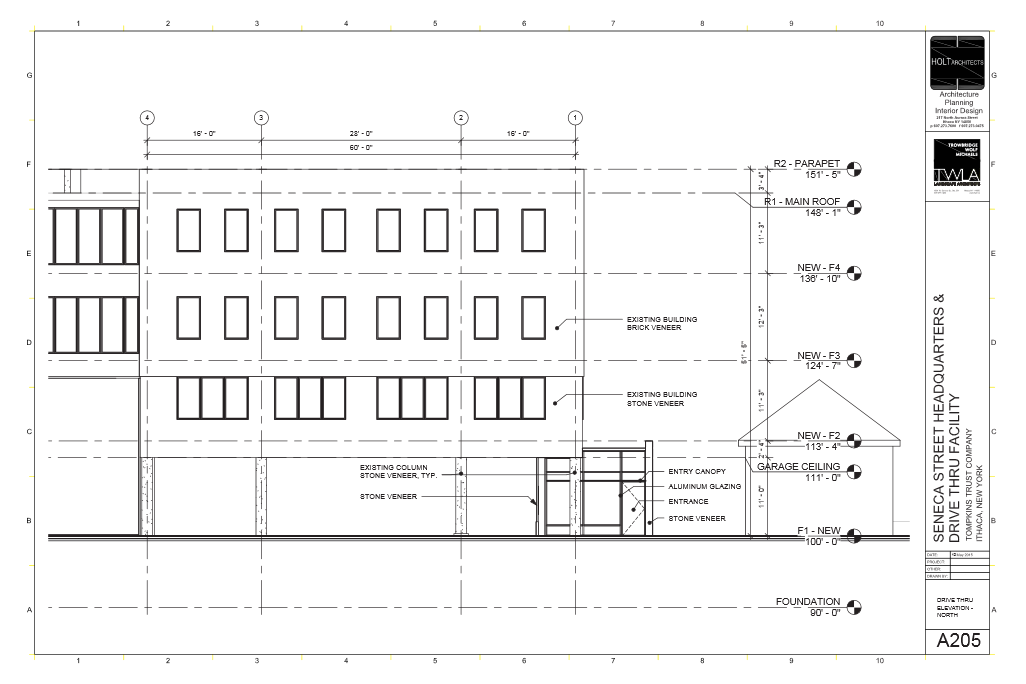
1. First off, I’m going to lead off with renders of the new Tompkins Financial Corporation. Write-up on the Voice here, more drawings here, traffic study here, cover letter here, Full Environmental Assessment Form (FEAF) here.
Rather than describe it in neutral generalities as I did with the Voice article, I’m going to afford the right to be a little subjective. The design is respectful of its neighbors through the use of brick and stone veneer. There’s no real surprises in the design, and corporate buildings tend to be pretty conservative anyway. At 104 feet (100 to the rooftop, and then 4 feet for the roof parapet), this will make a dent in the Ithaca skyline, but once again, it respects and balances out it neighbors by being a little taller than the DeWitt Mall, and a little shorter than 121′ Seneca Place. On a spectrum, the street front is on the nice side though not fantastic; a bank branch and some offices will engage with the street only modestly, but it’s much, much better than the drive-thru there now. The new building is built to the sidewalk, has an urban form, it’s a multi-million dollar private investment and a lot of other things that most upstate mayors would sell their mothers to get. The project is still shooting for a summer approval and construction starting not long thereafter.
One concern I have is that this will offload tens of thousands of square feet of office space onto the Ithaca market. Office space is one of the weaker sectors of the local market, and this may exacerbate the situation. It could cause some problems come 2017, and maybe with projects still in the pipeline such as Harold’s Square, which is shooting for a fall start after two years of trying to secure financing. I think that in the longer term, a few of the spaces such as the Seneca Building (121 East Seneca) might be ripe for a residential conversion.
With that concern noted, I think the parking situation will be okay. Since most of the jobs are shuffling around downtown, there’s not going to be a huge influx of workers. Offhand, I think the numbers are low double-digits (20 or 30) for transfers from Lansing into the city, and then the 77 brand new jobs created over the next several years.
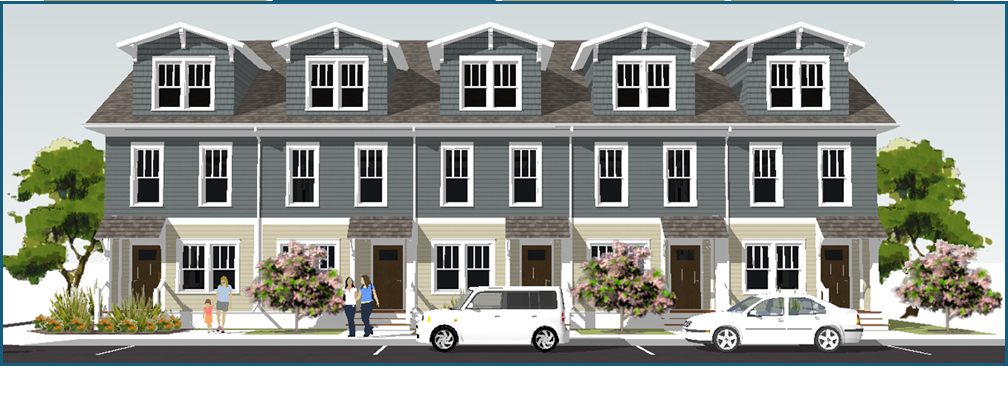
2. And then there were none. With the sale of the last of their townhomes (lots 20-24), the Belle Sherman Cottages have technically sold out. I say technically because Lot 9, the new cottage design on the southwest corner of the parcel, has yet to be marketed let alone sold. I followed up with an email to developer Toby Millman of Agora Home LLC, and he replied that “[w]e are still working on the plans for that home and expect to release if for sale in the next month or so.” So keep an eye out for that.
3. Here’s an interesting piece of news from the Ithaca Urban Renewal Agency – the city recently showed off the 6-acre parcel it owns on Cherry Street to an employer looking to relocate 250 employees to the property, buying the lot and building a one-story “campus setting” over the whole six acres. This may or may not be the same one previous mentioned in the March minutes, regarding an inquiry from a business located outside the city. Since the parcel may have been shown in January or February, it seems that the two are likely the same entity.
This isn’t the first piece of news regarding some potentially major work in this isolated section of Ithaca’s West End – scrap steel mogul Ben Weitsman has also been rumored to have plans, and improved access from the Brindley Street Bridge would aid in redevelopment of this part of the city.
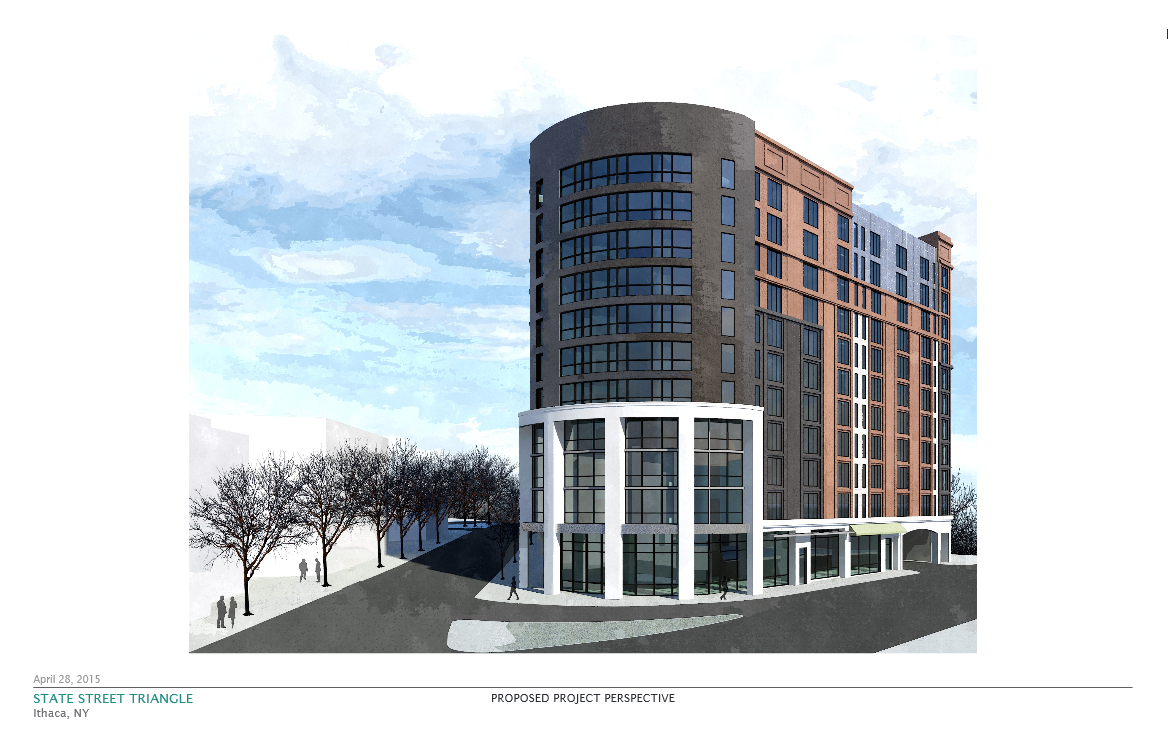
4. The planning board is cautiously enthusiastic about the State Street Triangle development. Per the minutes from the April meeting, they want the building to be as iconic as possible; board member John Schroeder went as fall as to suggest inspiration from the Carson Pirie Scott Building in Chicago:

Another member suggested a decorative crown. If my notes are right, a crown could exceed zoning as long as it’s not habitable space. Some other suggestions include a setback on the upper floors, and looking into incorporating other forms of housing.
5. A quick follow-up on the proposed removal of some lot setbacks at the Nate’s Floral Estates trailer park – according to a tweet from Ithaca Times writer Josh Brokaw, the removal would allow an extra 18 lots for manufactured housing. The trailer park currently has 112 lots, and it’s been noted to have a substantial waiting list. Nate’s Floral Estates serves as senior housing, so this is one way to make a dent in the affordable housing problem.
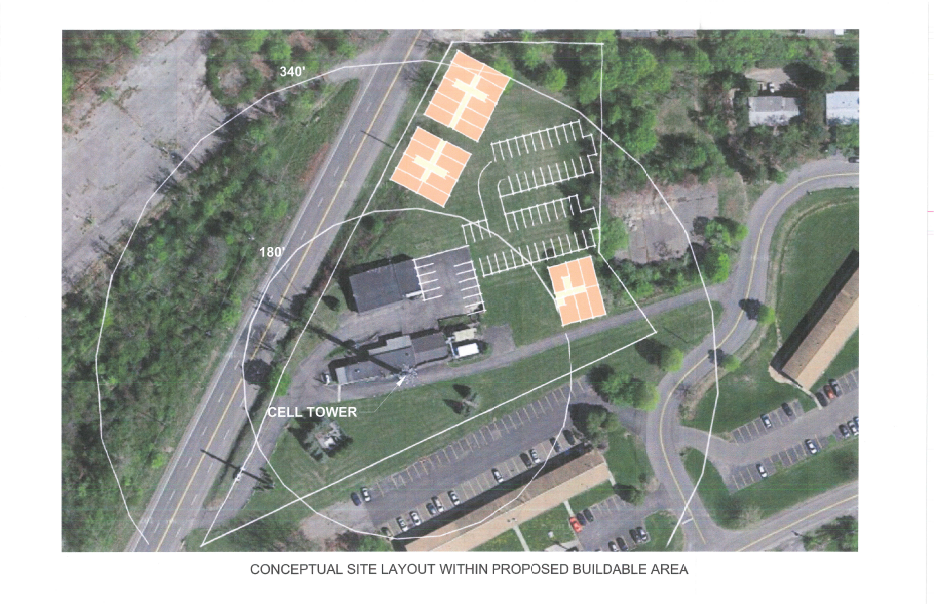
6. It’s not too often you see someone request a zoning interpretation. At 815 South Aurora Street on South Hill, that’s exactly what local architect Noah Demarest of STREAM Collaborative is doing on behalf of developer Todd Fox. Fox would like to develop the land with apartments (and he’s no stranger to South Hill, having built a couple duplexes on Hudson Street a couple years ago), but can’t. The city won’t allow construction in the “fall zone” of cell towers, which they define as twice the height of the tower. At 815 South Aurora, a 170′ tower creates a 340′ radius of no-man’s land (outer circle above), making the parcel undevelopable. The developer got a hold of two private engineering companies (TAITEM Engineering and Spec Consulting), both of whom determined that an appropriate fall zone is the height of the tower plus 10 feet for a little wind/bounce – so 180′ total. With this info in hand, Fox is trying to get the city to refine the zoning to allow the decrease in fall zone and therefore permit the land to be open for development. It’s an interesting case, and the result could be a sizable apartment complex down the pipeline. Stay tuned for the BZA review in June.

A couple other minor projects are up for zoning variances on parking – a small 2-bedroom house planned for 228 West Spencer is seeking a variance because the builder (Ed Cope of PPM Homes) says there’s no room on the hilly lot, and Todd Fox is requesting a parking variance for a 2-bedroom basement apartment to be built at 108 Ferris Place, saying that its central location and easy bus access should make having a car unnecessary. Coincidentally, architect Noah Demarest is handling both appeal applications.

7. To wrap things up, here’s the latest agenda from Ithaca town. There doesn’t appear to be anything too exciting going on next Tuesday. Cornell is renovating its softball field on East Hill with improved site access, a new restroom and ticket office, and replacing the existing bleaches, dugouts and press box. The 32-unit Clare Bridge assisted senior living project that was discussed last week will be reviewed. There are also sketch plans to be presented for a propane refueling station and sales office to be built on a vacant lot on Elmira Road/Rte. 13.
The planning board will also be reviewing plans to subdivide the Troy Road parcel that was once slated for a major residential project. The seller (Paul Rubin of Florida) apparently has a buyer for the triangular chunk of land south of the power lines (which can be seen in the old render above). With no explicit plans for either plot of land, there’s little reason to deny the subdivision at this time.
Personal opinion, I don’t like the direction this is going. It’s a real shame that the revised 130-road Troy Road project didn’t continue pursuit of approvals, it had really started to coalesce into a decent proposal. But now there’s a possibility where the land gets divvied into multiple chunks with homes scattered on it like bird crumbs. Single-family and duplex homes don’t have to go through board review, so there’s a lot less oversight when the land gets divided among multiple owners and built out in a piecemeal fashion. The last thing the town needs is expensive, sprawling, ecologically insensitive development.


 Ithacating in Cornell Heights

