News Tidbits 2/7/11: Sorority Selected for Recolonization on CU Campus

7 02 2011

According to the Cornell Daily Sun, Phi Sigma Sigma sorority has been selected to recolonize at Cornell University, from a field of five candidates. From the article:

“Phi Sigma Sigma will begin recruiting a core group of members in the fall, drawing in part from the new sorority interest group on campus. The sorority will participate in formal recruitment in Jan. 2012….

Phi Sigma Sigma had a chapter at Cornell that left the University in 1969, a departure Sanders speculated may have been due to a generally negative view of Greek life at the time. She said supportive Cornell alumnae from the chapter’s earlier years would be an asset to its reestablishment. “

That much is correct. Phi Sigma Sigma established a chapter (Beta Xi) at Cornell University around 1954. The chapter was located in the house at 313 Wait Avenue.The chapter was closed around 1969, and for that I offer two, non-mutually exclusive explanation. The first is as Ms. Sanders suggested – the late 1960s were a time of strong social activism and Greek life was seen as archaic and out of touch with the times, so membership declined rapidly. Phi Sigma Sigma was one of four or five chapters to shut down in a three year span from 1969-1971. Secondly, Phi Sigma Sigma, although officially non-sectarian, was regarded as a house for women of Jewish faith. As other sorority houses adopted non-sectarian policies in the 1960s, the competition became much fiercer, and with the general declines in sorority interest, this likely compounded and caused the chapter to close its doors.

The Sun article states that 14 South Ave. is expected to be used as the new house for the sorority at Cornell. This house has been used for so many Greek houses it’s like a token minority character in a movie – no one can remember their name, but everyone remembers their race or skin color. In this case, no one can remember the house’s letters, they just know it’s a Greek house. For the record, the house was built in 1957, and home to Kappa Alpha Society up to their closing in 1990, and then it was home to AOPi and Delta Chi. This is discussed more in another entry on this blog.

Among the nifty things that turned up in a google search is a word document from the ladies of Phi Sigma Sigma national that seems to be an overview of their presentation to the Cornell Panhel on why they would make for a good addition to the campus Greek scene. It doesn’t really offer much in the way of interesting information, but I was rather surprised it was so easy to find on the Internet.

So yeah, congratulations ladies. Good luck to your rechartering in the upcoming year.


News Tidbits 1/16/2011: The Project Planned for Seneca Way

17 01 2011

(UPDATED) So, this is a project that has been under the radar but merits a closer look. The site plan review (first step in the approvals process) is due to go in front of the city of Ithaca’s planning board later this month. This project is set for initial review along with Josh Lower ’05’s controversial parking lot-lacking five six story mixed-use building planned for the current Ithaca Carshare building site in Collegetown (the former Kinney Drugs), and the continued review of Ithaca College’s new boathouse, which I don’t consider particularly newsworthy. Sorry IC.

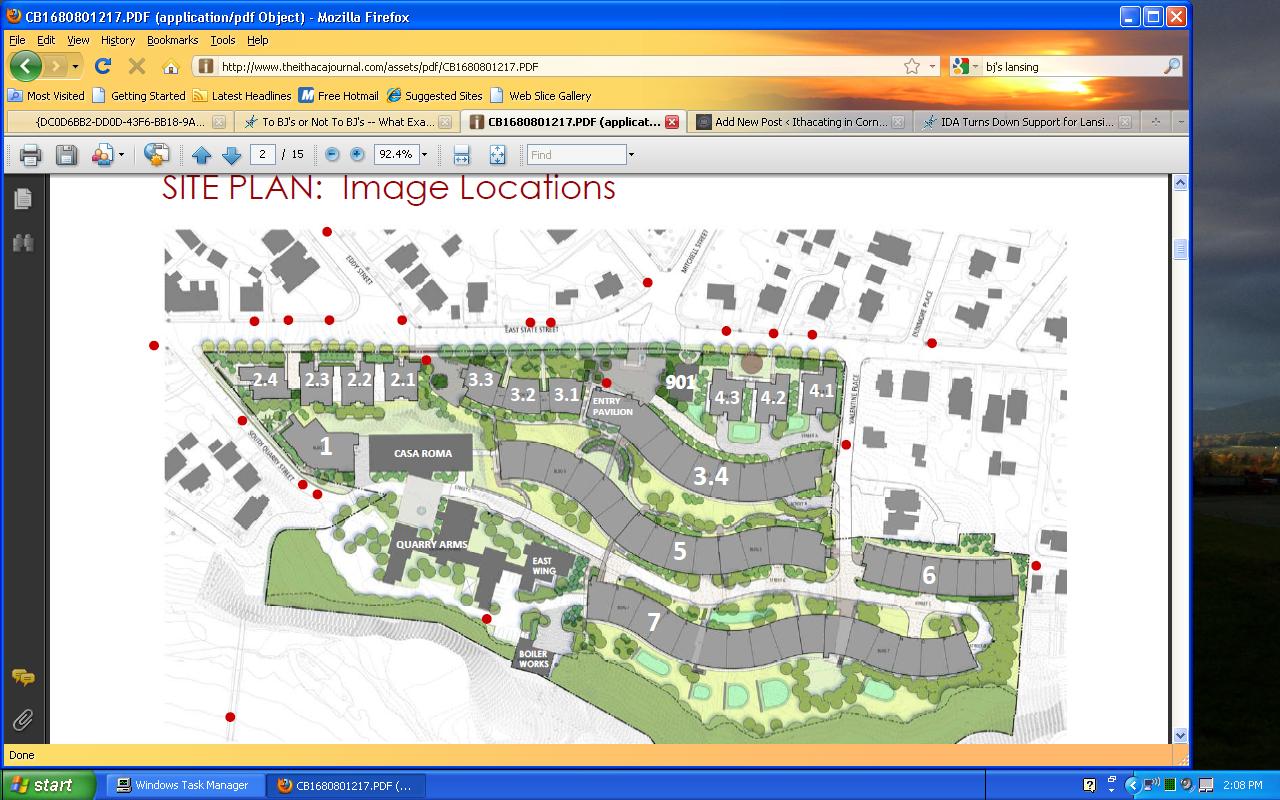
What is interesting about this project isn’t so much who’s designing it (the popular local firm Trowbridge and Wolf, who also designed the West Campus House dorms and the Gateway Commons apartment building on East State Street), but its location. Most people haven’t heard of Seneca Way. That’s because the street barely exists. It’s a tiny stretch of road off of East State that flows into East Seneca Street (shown below). The project address is 140 Seneca Way, the north/east side of the street.

The lots facing Seneca Way are few. True Insurance, a parking lot and the former Challenge Industries Building on one side, and a parking lot on the other side. This area has been a designated target for desired future development for the past few years, so much so that several of the properties on the even-numbered side of the street were up for rezoning. That zoning was to change the site from four stories max to six stories, but was controversial because it might impact the redevelopment of the Argos Inn (right next door to the east side of Challenge Industries) and as one city councilman put it, “I’m not sure this proposal provides as graceful a transition between the core and the residential areas as one would wish”. The zoning failed to pass the Ithaca Common Council, so the maximum height allowed on the property is still 40 feet or four stories, whichever is shorter (which for residential structures, 9-10 feet is standard floor height anyway).

So, what might be there? Well, if the project wants to pass, it’ll likely have to incorporate base parking or compensate somewhere nearby (which would be expensive). There isn’t room for a larger parking lot, let alone spaces lost to new construction. Perhaps part of the project will involve demolition of the vacant Challenge Industries building. Since that’s an uncertainty, it’s difficult to speculate on the number of units (it also depends on what their intended square footage for a unit is). I would expect that being a “transitioning” set of parcels, the size would be three to four stories. Trowbridge and Wolf specialize in contemporary and rather angular designs, so if it’s anything like their previous work it’ll probably bear similarities be glassy and have a fair amount of exterior steelwork.

At this time, it’s just about waiting to see what they come up with for that area.

UPDATE 1/25/11: Okay, so here is the proposal: 63,400 sq ft mixed use building with 14 below-ground parking spaces, as well as 41 surface spaces. First floor commercial (one-third of which will be occupied by a branch of Warren Real Estate), 32 apartments, a fitness center and enclosed roof terrace. Will require demolition of former Challenge Industries building. At five stories, this project will require a zoning variance, as well as variances for setbacks and parking. So, excluding the height variance, my guess wasn’t too far off.

Also, 307 College Avenue will be six stories, not five. My mistake.


Cornell’s History, All Drugged Up

11 01 2011

So, the latest news tidbit about a Cornell student being caught with $150,000 of heroin has made the news cycles and attracted some undesriable attention toward the university. Which kinda inspired me to look at it in a historical context. It’s what I do.

It’s college. Drugs exist. Some are easier to get a hold of than others. Some are gateway drugs, others are only used by a hardcore group of students. Once in a while, the drug debate comes up in a campus context. The Cornell Daily Sun ran an article about Cornell’s drug culture about two years ago. In the article, it was noted in a 2005 anonymous Gannett survey of students, that of 1,969 respondents, 41% admitted some form of drug or alcohol use in the past 30 days, with 19.8% reporting marijuana use and 4% reporting other drug use.

(with that in mind, considering the university’s undergad pop of about 13, 800, that would suggest 550 users of other drugs, which could include cocaine, LSD and the aforementioned heroin. If [an overly-generous] 50 percent were heroin users, that gives us about 275 students. Which if the street value is correctly reported, than the student was carrying $545 worth of heroin for each user. In conclusion, with that much heroin, I wouldn’t be surprised if she was supplying the entire county).

A similar set of data from 2003 suggests 8 percent of respondents admitted Ritalin/Adderall use without a prescription, and less than 3 percent partook in white lines. Another link on Gannett’s site looks at drug use in 2000, and the rates were largely the same as in following studies (except for hard drugs – those fell a little bit). The article notes that affluent students and students in Greek Life show slightly higher usage rates. Looking at Gannett’s site, if we throw in the more prevalent drugs, tobacco use as defined as at least once in the past 30 days has gone from 21 to 16 percent from fall 2000 to fall 2005. Alcohol use defined as once in the past 30 days has hovered around 75 percent and remained fairly steady through the three studies.

So that’s handy and all, but it’s a smallish sample size compared to the entire student population, and it depends on people answering truthfully. So the numbers could be seen as dubious. Regardless, it’s obvious that students partake in drug use.

***

Now to look at things in a historical context. Drug use was around well before the university. But in 1865 in little Ithaca, the drugs of choice were generally the alcoholic or tobacco variety. The big drugs in the 19th century were alcohol, tobacco, and to a lesser extent opiates and (in later years,) cocaine. Marijuana was seen as a medicinal drug, not a recreational one (that changed after around 1910). Marijuana use at Cornell was minor prior to the 1960s, which is when it caught on with middle-class whites – i.e. most of Cornell’s student population. It is stayed relatively popular since, even after drug laws became tougher in the mid-1980s. As for the opiates, they would see occasional use throughout the next 100+ years, as opium in the late 1800s, morphine and heroin in later years. Heroin received its first notoriety among students when it caught on with the Beatnik culture of the 1950s.  With the increase of purity (strength) of heroin in the 1980s and 1990s, demand, and addiction, grew. Although, going by Gannett’s survey, usage dropped off somewhat at Cornell after 2000. Tobacco saw steady and common use by all branches of the university’s stakeholders since Cornell’s founding, and became so prevalent that in the early 1960s a person could smoke anywhere but inside Sage Chapel. But, needless to say, that’s not the case anymore.

If Cornell follows national trends, it would be safe to say that cocaine use peaked in the early 1980s, with maybe some sporadic crack use after its introduction around 1985. I would be willing to suspect that the “glamor” of powdered coke was preferable to perceived “ghetto” qualities of its freebase equivalent.

Regarding LSD, Cornellians probably first experienced the drug in the early 1960s. Well, willingly anyway. Two Cornell Medical School professors were part of a government project in the 1950s and 1960s to administer LSD and other hallucinogenic drugs on unwilling participants. It was initially hoped by the military that it could be used like a truth serum, and later studies checked it out for therapeutic qualities on mentally-deficient patients. The drug peaked in the late 1960s and saw another slight rise in the late 1990s, but otherwise has seen a general decline.

Now back to our preferred chemical companion – alcohol. The first students of Cornell would’ve usually consumed beer (liquor was as it is now – expensive) down at one of the saloons in town, and there was no standard policy against drinking (Bishop 210). “Give My Regards to Davy” celebrates this aspect of student life (although I should note that highballs are mixed drinks – scotch and soda water). A Cornell Era report from around 1890 suggests that a couple saloons was enough to serve all students, and drunkenness was uncommon. In the 1910s, drinking was common, but seen as a way to celebrate athletic victories, but drunkenness on campus was seen as grounds for dismissal (Bishop 407-408). Prohibition was a major thorn in the side of students and bar owners, but they found ways around the law – Theta Delta Chi had a speakeasy built into their house when it was built in 1926.  A Cornell Sun article from March 4, 1937 reports that drinking at colleges was on the rise after Prohibition, but that public drunkenness was abhorred. The report was “Students…admire the man who can drink like a gentleman” (pg. 3). It seems that a celebrated culture of binge drinking took off around 1980 – the “Animal House” influence, perhaps. Although underage drinking was supposed to be curtailed by the increase of the drinking age from 18 to 21 in December 1985, that has largely proven untrue.

People age, drug preferences change, but students are timeless.


Construction News Tidbits, 12/18/10

18 12 2010

A few articles have popped up lately that merit a brief writeup.

The BJ’s Wholesale Club and 12 senior apartments planned for the grass lot next to the Shops at Ithaca Mall (behind the YMCA) hit a snag when the county industrial authority voted down a tax break for the residential portion of the project in a 4-3 vote. While this makes the project less likely, it is not entirely dead, and the town of Lansing still supports the project. However, it’s the  village of Lansing that demanded the residential component as a buffer between houses and shopping areas. Some involved with the project contend that the votes against were by Ithaca-centric legislators who’d rather see the potential sales tax dollars go to the city (i.e. build the store on a site in Ithaca City). BJ’s has no interest in any local site except the one currently proposed, so in conclusion everyone’s getting their panties up in a bunch, and the project is at the very least on hold in its current form.

Out in Dryden, a 144-unit apartment complex is being proposed. Called “Poet’s Landing” (perhaps as a nod to John Dryden, the British poet for whom the village/town is named), the project consists of a 72-unit senior living apartment building, 7 other buildings containing a total of 72 units, and a community center. 48 of the 72 non-senior units are proposed low-income housing, which has managed to rile up the locals with fears of higher crime rates and drugs (the project is across the street from Dryden High School). the project is by Conifer Realty, who also own the Linderman Creek complex over on West Hill.

Lastly, a little closer to Cornell, the Collegetown Terrace Project is waiting on three things – site plan approvals, approval of a zoning variance, and a “certificate of appropriateness” from the Landmarks committee, who are not doubt still seething after the city okayed demolition of Delano House in exchange for the restoration of another house on the property and some public signage displays of the site’s history. If the project can clear those final hurdles, a late spring or summer start for site prep is likely.


The (All Too Late) Ithaca Projects Update

24 11 2010

Since I have no life as a grad student, following progress in the Ithaca has been a little difficult. But, I figured it was time to do an updated brief list. Ithaca has made it through the recession largely unscathed (thankfully), thanks to the stable college-based economy, and various projects are in various planning and development stages throughout the area. For the purposes of this entry, I’m ignoring the projects going on at Cornell and IC.

First off, most of the larger projects are delayed. The Hotel Ithaca is waiting for a bank loan, but given the market that could take a good year or two before a loan is secured for the 10-story hotel.  In a similar boat, the 7-story Cayuga Green condos are delayed until sales pick up and financing is secured.  The six-story, 52-unit apartment building planned for the site of the Women’s Community Building is also delayed, having failed to get a grant from the state. It will be at least one year before financing is secured and construction can begin for that project.About the only going on in the heart of the city right now are the redevelopment of the Petrune Building and the starting phases of a renovation of the Ithaca Commons.

Land remediation and site prep is still underway for the Ithaca Gun condos, which are slowly (barely) progressing towards construction of what may now be either 33 units, or increased to 45 units of “market-rate” housing. On the 600 block of West Seneca Street, a 24-unit, 3-story apartment building has been approved and site prep is to begin in the near future.The Kitchen Theatre finished construction and moved into their new digs on West State Street.

Over in Collegetown, works continues on the 589-unit Collegetown Terrace proposal, which is still making its rounds after agreeing to preserve the Williams House on State Street in exchange for getting permission to demolish the old nurse’s dormitory (Delano House). Even if the project starts this summer, full build-out will take 22 months, so expect no earlier than a mid-2013 completion.  Over on Eddy Street, plans have been approved for a24-unit, 41-bedroom 5-story apartment building next to the Souvlaki House, and construction will begin next summer. A 5-story building on the 300 block of College Avenue remains in the proposal stages. Closer to East Hill, the 4-story Coal Yard Apartments expansion is in site prep, and the now-approved Vine Street Cottages project removed three homes from its plan, leaving 19 houses and 10 townhouse units for the parcel near Mitchell Street.

Down in big-box land, Walmart has finished their expansion into a Supercenter, and Tim Horton’s is seeking approval for a store on what is now a parking lot near Buttermilk Falls.The parcel where Olive Garden was proposed is once again up for grabs. Local rumor mill had it that the land was still contaminated (it was once the site of an auto repair shop, and gas and oil and other hazardous compounds might’ve seeped into the soil deeper than first thought).

Out in the West Hill area and the town, Ecovillage is in the home stretch for approval for their third 30-unit village (TREE), and 106 townhome units (Holochuck Homes site) are approved for Route 96 near the medical center. A couple of suburban subdivisions (the Goldenrod 30-unit division, and a 22-unit INHS project called Holly Creek) are planned/approved. 22 units of senior housing are to be built near Ithaca College, and it was confirmed that the 82-unit, rather terrifying and Soviet-looking Maple Hill Apartments on Maple Avenue will be demolished when the property is returned to Cornell in 2013. Cornell has long-term goals to redevelop the site into mixed use, according to its master plan.

Over in suburban Lansing, there’s some small housing developments and a new locally-owned supermarket planned, but the big thing out there is the proposal for an 82,000 sq ft BJ’s Wholesale Club next to the mall, with 12 units of senior housing and a bird sanctuary on adjacent property (basically because the project is seeking tax-exempt status and need to offer a community benefit to get the break). The 69-unit Woodland Park project doesn’t look like it will be approved anytime in the near future.

Hopefully I’ll have more and more substantial news to write about in the tidbits entries in the upcoming months. I need a distraction from my life. Especially when I grade exams and a student thinks it’s cute to bubble “C” 40 times (he received a 15%).


News Tidbits 9/25/10: Development Planned for 307 College Avenue

25 09 2010

This is slightly annoying. I was away from my computer yesterday and today as a result of my graduate work and then coming straight out to Ithaca, so I never bothered to read my Ithaca/Cornell newsfeed. So it’s bothersome that I found out about this relatively later than usual. Anyways, here’s the article from the Daily Sun:

http://cornellsun.com/section/news/content/2010/09/24/developer-seeks-approval-new-c-town-building

September 24, 2010
By Jeff Stein

A proposal to transform the middle of College Avenue hinges on developer Josh Lower’s ’05 controversial request for a Board of Zoning Appeals variance, which would exempt a building’s development from city parking laws.

Lower said his proposed development project at 307 College Avenue –– next to Jason’s Grocery & Deli –– would demolish the existing building and create more than 60 new apartment units. Lower also hopes to remake the area into a highly trafficked “pedestrian arcade,” filled with street-level storefronts that would connect College and Linden Avenues.

City officials are divided on whether the Board should grant Lower the variance. Under the city’s current parking ordinance, every two housing units built must be matched by the creation of one parking spot.

Lower said that building the parking spaces, which must be within 500 feet of the site, was “not practically or financially possible.”

“We’ve tried to meet the law but cannot,” Lower said.  “There’s just not enough space.”

Ithaca Councilmember Ellen McCollister (D-3rd Ward) expressed concern that there would be a lot of “spillover” for surrounding neighborhoods if the variance was given.

McCollister also said the variance would establish a dangerous precedent: “If you grant a variance to one property owner, how do you not grant [it] to any other property owner?”

If one developer is granted an exception, “all hell breaks loose,” as other developers would expect the same treatment. “We need to treat every developer consistently and equally,” McCollister said.

Lower said his plan would compensate for the lack of new parking spaces by providing his residents with a car-share membership and free bus passes as part of the lease.

“We’ll create a building that fosters … sustainable modes of transportation and encourages people to bike more, walk more,” Lower said. In reference to a proposed pedestrian walkway, Lower said, “We’re making privately-owned space accessible and usable for all.”

McCollister was not convinced. She called Lower’s replacement for parking spaces a “very ill-defined, nebulous proposal,” saying it was “not a real plan for how he is going to do it, in perpetuity, for every resident.”

Partly because there is “more supply in retail than there is demand” for Collegetown, McCollister is “not convinced the pedestrian arcade is as valuable an amenity as it’s being portrayed.”

Board of Zoning Appeals member James Marshall shared McCollister’s skepticism about Lower’s replacement plan in exchange for a variance, calling the lack of parking spaces in his proposal a “significant deficiency.”

“He’s proposed some measures that might encourage people to use public transportation or bicycles, but no one knows how successful he’ll be,” Marshall said.

Stephen Beer, chair of the Board of Zoning Appeals, said he worried that there was no provision for enforcing Lower’s suggested replacement for the parking spaces.

Lower responded that “it would be a requirement written in the lease.”

Eddie Rooker ’10 (D-4th Ward) said he and Svante Myrick ’09 (D-4th Ward) both supported the project.

Rooker said the development is “going to be beneficial to students and the city,” naming studies that “point to the fact that we need more housing in the city” given “pretty high pricing all over the city.”

Rooker said the project would fix the need for a “well-lit pedestrian walkway connecting College and Linden Avenue,” where “people now have to go between people’s yards when they’re not well-lit.”

Rooker said the proposal could make the area in front of 307 College Avenue a new hub for TCAT, shifting the center of Collegetown further south.  He said that TCAT wrote a letter to the city in support of the project.

Lower, who lives in the neighborhood, said that “we really looked at a lot of scenarios to try to do something else with the property,” but that nothing else was viable. He said that he is currently losing money on the property.

McCollister responded that one of the considerations for the Board of Zoning Appeals was that the variance request not be in response to a “self-imposed hardship.”

“I think he does have a financial hardship, but that’s because he paid too much for it … rather than some externality that created that financial hardship,” McCollister said.

McCollister added that the Board of Zoning Appeals should wait until a decision is made about an “in-lieu of parking fee” suggested in the 2009 Collegetown Urban Plan & Conceptual Design Guidelines. The proposal, which is currently being developed, would specify a fee below the cost of providing on-site parking that developers could pay the city in lieu of building parking spaces. The Collegetown plan says the fee could then be used to help the city fund alternative transportation modes.

“I can only base my plans on what is law today,” Lower responded.

Rooker agreed, saying, “We can’t constantly rely on what might be happening,” and that he “would rather see something like this than a one time donation to general fund” anyway.

Lower added that waiting for the law to pass could have a big impact on his finances, since “the building has to be done based on the academic year.”  “If the building is not ready to have [residents in it] before classes start, it sits empty for the rest of the year.”

If approved, his plan is to start construction in June 2011 and have the building ready for residents in the Fall of 2012.

***

So, the summary is this:The guy wants to build a medium-sized apartment building but doesn’t want to include parking. The issue lies with the possibility that residents would just park their vehicles on the streets and clog local roads, and finding viable options to keep that from happening. A zoning variance is required due to the lack of parking, and without it the project will not proceed.

A few extra details; the development would be a 60-unit building with a retail base. Guessing from the rendering and from the height limit there, it would be about five stories. The current building on the site used to be occupied by a drugstore, but the store closed in late 2006. With the exception of the space occupied by Ithaca Carshare, the retail portion has been empty since.

The argument on the parking issue is reasonable and legitimate. A lot of students maintain cars, and the overly entitled ones may still try and maintain a vehicle nearby, thus creating parking issues for the building’s neighbors. While the project would definitely add density and needed residential space to inner Collegetown (and definitely makes use of New Urbanist planning), the lack of parking is a major hurdle. Personally, I like the idea of the project, but unless he can make absolutely clear what he’s going to do to keep students from bringing vehicles to an area with no space for them, and be held to that “in perpetuity”, I would be leery of its approval.

The architect is a small local Ithaca firm founded about seven years ago, John Snyder Architects.  Looking at the website, it seems most of their work has been for educational facilities or interior spaces, and the style tends to be modernist with limited detailing, instead playing off of the geometric forms of the structure itself. I’m very curious to see the whole design of what would seem to be the firm’s first large residential building. At the very least, it least it won’t be another Sharma Architects proposal; a little variety does wonders.


News Tidbits 9/24/10: New Fraternity to Open on Campus

23 09 2010

Arguably, it may not be a good time for expansion, but that’s it’s own issue. The Cornell Daily Sun has published an article discussing how the IFC is inviting the fraternity Phi Kappa Sigma (known on many campuses as “Skulls” due to their insignia) to speak to the IFC general body before a proposed recolonization this upcoming spring.

Most apparent is that this illustrates how much easier it is for a new fraternity to open on campus vs a new sorority. Sororities have to have the Panhel’s benediction and have to compete against other sororities for the opening (like what’s currently going on for the new 12th sorority; five sororities are narrowed down to three, who must then give presentations before Panhel decides which sorority to offer the position to). For a fraternity, a national organization (i.e. you don’t necessarily need an interest group) has to express interest, and a good plan of execution on how to establish itself on campus.

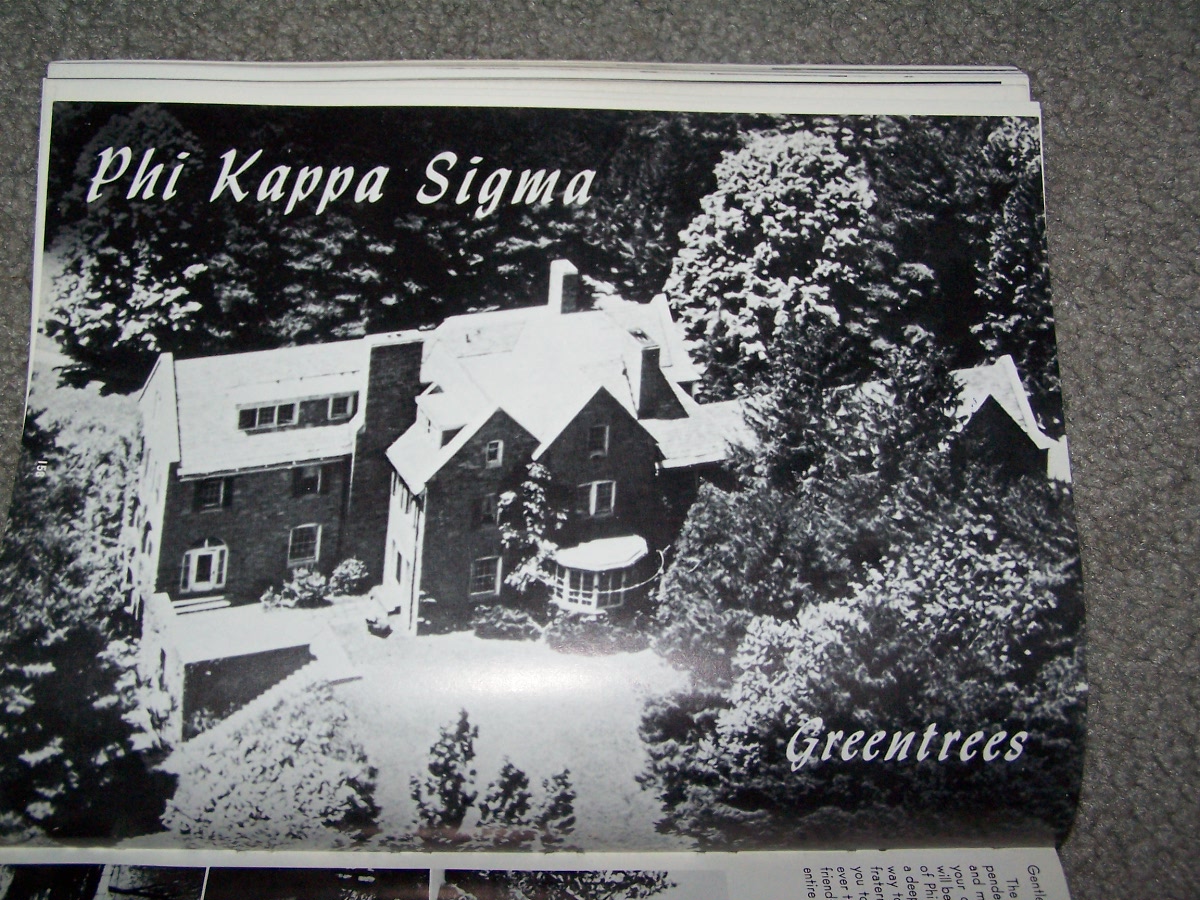
A little bit of background on Phi Kappa Sigma. They were a fraternity that previously existed at Cornell. The Cornell Chapter was founded in 1891, but closed in 1990. The current Pi Kappa Phi house at 55 Ridgewood Road (“Greentrees”) used to be occupied by Phi Kappa Sigma (Cornell owns the house; on the facilities website, the house is still identified as Phi Kappa Sigma). The house, built around 1900, was the property of George Morris of the Morris Chain Company (later Emerson Power Transmission) until 1935, when it was sold to Phi Kappa Sigma. Sometime between 1935 and 1990, the Skulls sold the house to the university (likely for tax and maintenance purposes correction: It would seem that Phi Kappa Sigma put the house up for sale in 1990 and it was purchased by Pi Kappa Phi). After the Skulls vacated the premises in 1990, Pi Kappa Phi, which was recolonizing at the time, moved in the following year. I’m not sure how a recolonization may affect Pi Kappa Phi’s living situation. The fraternity is similar to Phi Delta Theta in that their newly established or reestablished chapters are dry houses.

Hopefully, they’ll have a better go at things than other recently recolonized chapters. Theta Xi failed to make significant headway and from what I’ve heard, has gone dormant once again. Kappa Alpha still exists, but as a mere shadow of its former self. But, only time will tell if Phi Kappa Sigma can once again make its presence known on Cornell campus.


The Keyword Bar XI

20 09 2010

…because I don’t feel like researching (Cornell related or work-related).

1. “new collegiate gothic” (9/19/10)

Okay, so this probably has little to do with Cornell, as Cornell hasn’t built in collegiate Gothic in over fifty years. Regarding that, I’d like to share a brief quote from Morris Bishop’s A History of Cornell:

“The Buildings and Grounds Committee recommended (September 19, 1950) that we wait no longer for donors of Gothic magnificence, but that we build structures that would pay their way. Said the chairman, John S. Parke ’23: “Engineering rather than architectural construction is advisable”. (597)

Of course, then we ended up with such “lovely” works as Olin Library and Olin Lab and Bradfield Hall.  I suppose the only way one could force a new Collegiate Gothic structure onto campus today would be as a stipulation of a very large donation (as in, one that pays for an entire new building without major additional funding from Cornell).

2. “ivory tower drinking society” (9/18/10)

This is a little murky. First off, it wouldn’t formally be called a drinking society  (the more likely term would be social society). As for the existence of such a group, googling “Ivory Tower Honor Society Cornell” pulls up a bunch of linkedin profiles of sorority women in  who were part of Cornell’s “Ivory Tower Honor Society” during the 1990s. So, if I had to take a guess, it was probably a tenuous organization that served more of a social purpose than anything honorary. But, I can’t say for sure.

3. ‘tompkins county public library roof” (9/17/10)

It has solar panels (that generate about 145 kilowatt-hours). Kinda funny considering Ithaca is one of the cloudiest cities in the country (206 days/year).The library opened in 2000 after moving from a location several blocks away; the site used to be home to a Woolworth’s department store.

4. “ithaca 103 dryden ave video store” (9/15/10)

I was wondering if this would come up. As covered recently by the Sun, the Collegetown Video store shut down after nearly twenty years of service. The store open in February 1991. The unique metal facade was designed by Cornell architecture students while the store was renovating the building for its grand opening. No plans for new tenants have been announced at this time.

5. “college confidential cornell biology” (9/4/2010)

I’m going to use this as a bit of a conversational launching point, actually. Since a lot of my information has to be pulled from the internet,  stumbling through message boards is inevitable. College Confidential is somewhat trustworthy, but the discussion focuses on more practical questions – “how easy is ASIAN 2571” and “chance me for admission plz!!!11”. There’s a couple of sites where people rate their experiences at Cornell, which lack details but are often good reads if you’re just looking to kill time. then of course, there’s the gossip site College ACB, which focuses on which frat is best, which freshman girl puts out the most and which sorority has the hottest pledge class. A whole lot of douchebaggery, but on rare occasion there’s a really interesting topic that offers frank insight — but finding those is like finding a diamond in a pile of crap. Use at your own discretion.


News Tidbits 9/8/10: The Kappa Sig Dorm

9 09 2010

Being interested in both the Greek System and in the university’s physical facilities, an article that details how Kappa Sigma’s house has been transformed into a small dorm is bound to catch my attention. Evwn better, it’s a very well-detailed article, and I found myself pleasantly surprised with the quality of work.

I guess being an alum just reminds me of how unaware of news I am now, as this was the first time I heard anything about this renovation and reopening. The reuse of the building as a dorm is actually the less surprising part. 112 Edgemoor and 14 South are former Greek houses that operate now as small dorms (Triangle, which closed in 1985, occupied 112 Edgemoor up to 1985 and Kappa Alpha lived in 14 South from 1957-1990). Cornell purchased the Kappa Sigma facility as part of the Cornell University Residential Plan of 1966. Reasonably, when Cornell owns a facility (as it does with at least 15 Greek houses, of which all but one (722 University Ave.) are fully occupied), it’s financially much more preferable to maintain the space as a working residential facility. This goes for private houses as well — the article mentions Pike is being rented out as a boarding house. This policy also has bearing on active chapters; boarding which is a popular option with residential fraternities with low membership numbers as a way to maintain the financial viability of a house. Interestingly enough, the university used Craigslist to advertise the spaces, and managed to fill all but one.

The article reports that the estimate for maintaining an empty fraternity house runs about $80,000 to $90,000 in a given year. The extremely general description for the expenditures is maitenence. More specifically, heating (pipes may burst in the winter if the facility isn’t adequately heated), insurance, security for a vacant facility, interior and exterior upkeep, and other utilities (which cost money to even have access to let alone use) come to mind.

I’m rather surprised at Cornell’s investment in renovating the facility. I dunno how much work had to be done, but if the Kappa Sigma alumni have already started the rechartering process, then it’s likely the university won’t be filling the facility for more than two years.  But, I don’t know much about the maitenence of university-owned Greek houses (my fraternal alma mater was privately owned by an alumni board). It just struck me as curious.


News Tidbits 9/1/10: Firm Selected to Design Bridge Barriers

2 09 2010

According to the latest updates from the Cornell Chronicle, architect Nader Tehrani of the firm “Office da” has been selected to design the bridge barriers for six of the gorge bridges, effectively trying to put a prettier face on suicide prevention. Two public forums will be held during the design and proposed implementation process, with the final proposal to be ready no later than May 2011.

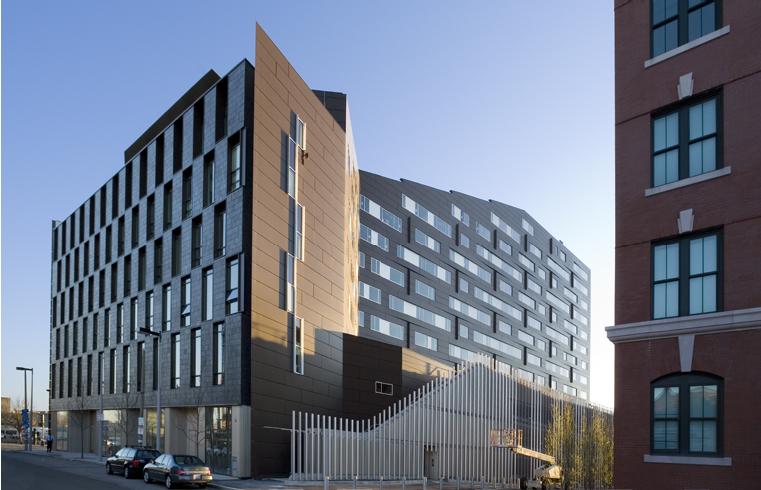
The firm, like many selected recently by the university for its projects, is known for edgy ultermodern architecture. Normally, as readers who tolerate me are aware by now, this would be the point where I go into a rant about how such architecture fails to fit in with the surrounding environment, often fails to live up to standards, etc etc. Well, for the record, here’s a sample of their previous work, the McAllen Building in Boston:

Photo Property of Office da (www.officeda.com)

But, I don’t have a reason to complain, for three reasons. For one, they’re designing bridge barriers, which tend to have less of an impact on their surroundings than buildings. For two, it has to be cleared by public forums in conjunction with the city of Ithaca and its residents, who won’t be so gung-ho for wild design features. To be honest, the train of thought in my mind is “can they really screw this up aesthetically? Not really. ” For three, nothing can be as bad the metal behemoths we were treated to last Spring, which gave the impression of being locked into a prison yard. When you’ve already hit the lowest lows in appearance, the only way to go is up.

I’m going to be  very interested to see what comes out of their studios in the coming months.