The Unhappy Guide to the 2010 OFSA Report

26 01 2011

Yeah, this is the last year I will actually care about this document. For one thing, it is the last year that will be personally relevant to me since I graduated this past May. After this, I’m fairly okay with just hearing about activities through my fraternity’s newsletter or the Cornell Daily Sun.

So anyways, here’s the PDF:

Click to access 2009-2010FratSororityAR.pdf

My first instinct was to scroll past a standard sorority girl photo because I immediately recognized one of the girls as my supervisor’s boss’s daughter, and I was not the biggest fan of her lazy, ditzy behavior. I put up with her when she in high school and she was a temp employee, and I tolerated her when she came to Cornell and became a stereotypical sorority girl. She’s not doing any favors for the system’s image.

Reading through, I think the system took a collective step backwards for 2009-10. Don’t get me wrong, establishing yet another honorary society (Rho Lambda) and holding Greek summits is fine and dandy. But Theta Xi shut down, Pi Kappa Alpha was forced into closure, Beta Theta Pi reorganized and Kappa Sigma was shut down by its national. Not a good year for fraternities.

Looking at membership numbers, they dropped to 31.42% for male membership and 23.35% for women. The sororities are holding steady, but for guys, that’s the lowest percentage in four years. The total number of first-years of both genders increased slightly, and the total membership intake decreased slightly. For a system still trying to command a presence at Cornell, the decreases are a troubling sign.

Interesting, in terms of membership intake, they broke it down this year to fall, spring, rush week and non-rush week bid acceptances, and the number of deactivations. The numbers are interesting. Most house seem to have zero or one who depledged, but two houses pulled five or more – Sigma Alpha Epsilon and Delta Kappa Epsilon. Ouch. Still, looking at my own house, I can tell you with certainty that the numbers who pledged and depledged are false. So, make of this information what you will.

It also shows a couple of strange cases. Sigma Chi Delta, a small co-ed house on Heights Court near North Campus, had one pledge — who deactivated. Lambda Phi Epsilon, an Asian-interest fraternity, had twelve pledges – and twelve who depledged, for a final total of zero. I wonder if someone is looking into that. Kappa Phi Lambda, an Asian-interest sorority, didn’t do much better – they had 8 out of 11 depledge. I’m curious as to what exactly their pledging entailed.

No real surprises in the GPAs. The houses that are typically near the top are still at or near the top – Pi Kappa Phi had the highest spring 2010 GPA and fall 2009 GPA at around 3.56. Which, much to my chagrin, is higher than all of two of my semesters at Cornell (I studied atmospheric science, cut me some slack here).

Social events resulting in a complaint increased from 9 to 13%. Judicial complaints were up, mostly due to social violations or hazing reports.  Considering the information contained here, it’s not hard to see why the trustees voted against the system’s social policies this past fall.

Overall, the 2010 Report does not paint a pretty picture of the future of the system.


Cornell’s History, All Drugged Up

11 01 2011

So, the latest news tidbit about a Cornell student being caught with $150,000 of heroin has made the news cycles and attracted some undesriable attention toward the university. Which kinda inspired me to look at it in a historical context. It’s what I do.

It’s college. Drugs exist. Some are easier to get a hold of than others. Some are gateway drugs, others are only used by a hardcore group of students. Once in a while, the drug debate comes up in a campus context. The Cornell Daily Sun ran an article about Cornell’s drug culture about two years ago. In the article, it was noted in a 2005 anonymous Gannett survey of students, that of 1,969 respondents, 41% admitted some form of drug or alcohol use in the past 30 days, with 19.8% reporting marijuana use and 4% reporting other drug use.

(with that in mind, considering the university’s undergad pop of about 13, 800, that would suggest 550 users of other drugs, which could include cocaine, LSD and the aforementioned heroin. If [an overly-generous] 50 percent were heroin users, that gives us about 275 students. Which if the street value is correctly reported, than the student was carrying $545 worth of heroin for each user. In conclusion, with that much heroin, I wouldn’t be surprised if she was supplying the entire county).

A similar set of data from 2003 suggests 8 percent of respondents admitted Ritalin/Adderall use without a prescription, and less than 3 percent partook in white lines. Another link on Gannett’s site looks at drug use in 2000, and the rates were largely the same as in following studies (except for hard drugs – those fell a little bit). The article notes that affluent students and students in Greek Life show slightly higher usage rates. Looking at Gannett’s site, if we throw in the more prevalent drugs, tobacco use as defined as at least once in the past 30 days has gone from 21 to 16 percent from fall 2000 to fall 2005. Alcohol use defined as once in the past 30 days has hovered around 75 percent and remained fairly steady through the three studies.

So that’s handy and all, but it’s a smallish sample size compared to the entire student population, and it depends on people answering truthfully. So the numbers could be seen as dubious. Regardless, it’s obvious that students partake in drug use.

***

Now to look at things in a historical context. Drug use was around well before the university. But in 1865 in little Ithaca, the drugs of choice were generally the alcoholic or tobacco variety. The big drugs in the 19th century were alcohol, tobacco, and to a lesser extent opiates and (in later years,) cocaine. Marijuana was seen as a medicinal drug, not a recreational one (that changed after around 1910). Marijuana use at Cornell was minor prior to the 1960s, which is when it caught on with middle-class whites – i.e. most of Cornell’s student population. It is stayed relatively popular since, even after drug laws became tougher in the mid-1980s. As for the opiates, they would see occasional use throughout the next 100+ years, as opium in the late 1800s, morphine and heroin in later years. Heroin received its first notoriety among students when it caught on with the Beatnik culture of the 1950s.  With the increase of purity (strength) of heroin in the 1980s and 1990s, demand, and addiction, grew. Although, going by Gannett’s survey, usage dropped off somewhat at Cornell after 2000. Tobacco saw steady and common use by all branches of the university’s stakeholders since Cornell’s founding, and became so prevalent that in the early 1960s a person could smoke anywhere but inside Sage Chapel. But, needless to say, that’s not the case anymore.

If Cornell follows national trends, it would be safe to say that cocaine use peaked in the early 1980s, with maybe some sporadic crack use after its introduction around 1985. I would be willing to suspect that the “glamor” of powdered coke was preferable to perceived “ghetto” qualities of its freebase equivalent.

Regarding LSD, Cornellians probably first experienced the drug in the early 1960s. Well, willingly anyway. Two Cornell Medical School professors were part of a government project in the 1950s and 1960s to administer LSD and other hallucinogenic drugs on unwilling participants. It was initially hoped by the military that it could be used like a truth serum, and later studies checked it out for therapeutic qualities on mentally-deficient patients. The drug peaked in the late 1960s and saw another slight rise in the late 1990s, but otherwise has seen a general decline.

Now back to our preferred chemical companion – alcohol. The first students of Cornell would’ve usually consumed beer (liquor was as it is now – expensive) down at one of the saloons in town, and there was no standard policy against drinking (Bishop 210). “Give My Regards to Davy” celebrates this aspect of student life (although I should note that highballs are mixed drinks – scotch and soda water). A Cornell Era report from around 1890 suggests that a couple saloons was enough to serve all students, and drunkenness was uncommon. In the 1910s, drinking was common, but seen as a way to celebrate athletic victories, but drunkenness on campus was seen as grounds for dismissal (Bishop 407-408). Prohibition was a major thorn in the side of students and bar owners, but they found ways around the law – Theta Delta Chi had a speakeasy built into their house when it was built in 1926.  A Cornell Sun article from March 4, 1937 reports that drinking at colleges was on the rise after Prohibition, but that public drunkenness was abhorred. The report was “Students…admire the man who can drink like a gentleman” (pg. 3). It seems that a celebrated culture of binge drinking took off around 1980 – the “Animal House” influence, perhaps. Although underage drinking was supposed to be curtailed by the increase of the drinking age from 18 to 21 in December 1985, that has largely proven untrue.

People age, drug preferences change, but students are timeless.


Photographic Revisions

2 01 2011

So, one of the things I’m proud of on this blog is that about ninety percent of the photos used are my own work, either “stock” images that I had taken before I graduated, or one of the few images I’ve taken while visiting as an alum. Still, one of the things that always bothered me was that a good portion of my north campus fraternity photos were blurred. This happened for a perfectly good reason – the images were taken on my old digital camera in the summer of 2008. These images were taken close to sunset on a cloudy day, so there was a lack of light, and I had to adjust the settings to compensate. Unfortunately, this meant a longer exposure time, and if my hands shifted at all, the photo would have a “fuzzy” appearance. This is what happened to most of those photos.

So, while visiting friends as part of a 700-mile car trip around the New Year’s holiday, I did an overnight stay with a few of them that have remained in Ithaca (for grad school and work). Having a little free time as I first arrived into town on the afternoon of the 29th, I decided to rectify this issue once and for all. The images are included below.

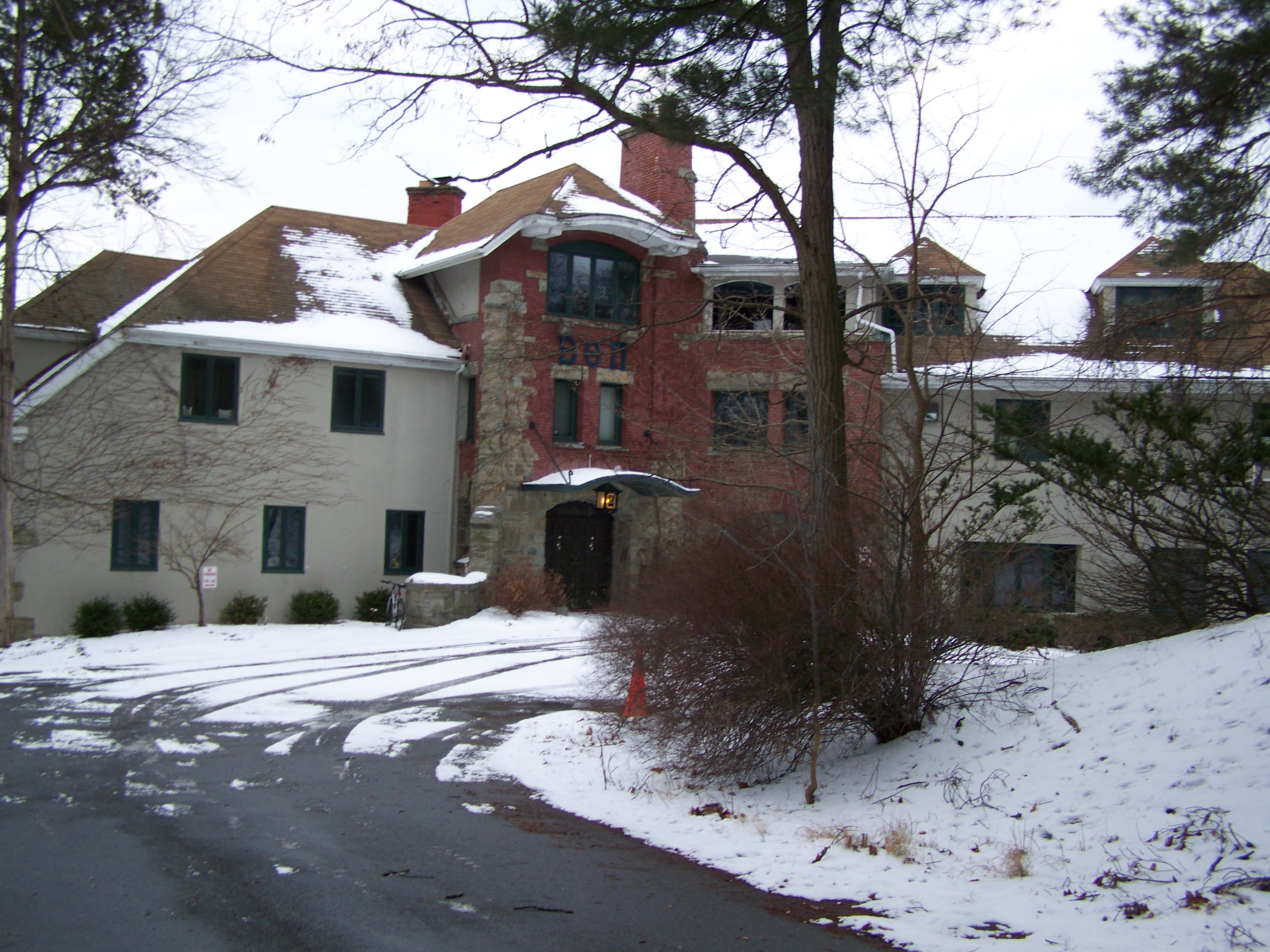
Phi Delta Theta

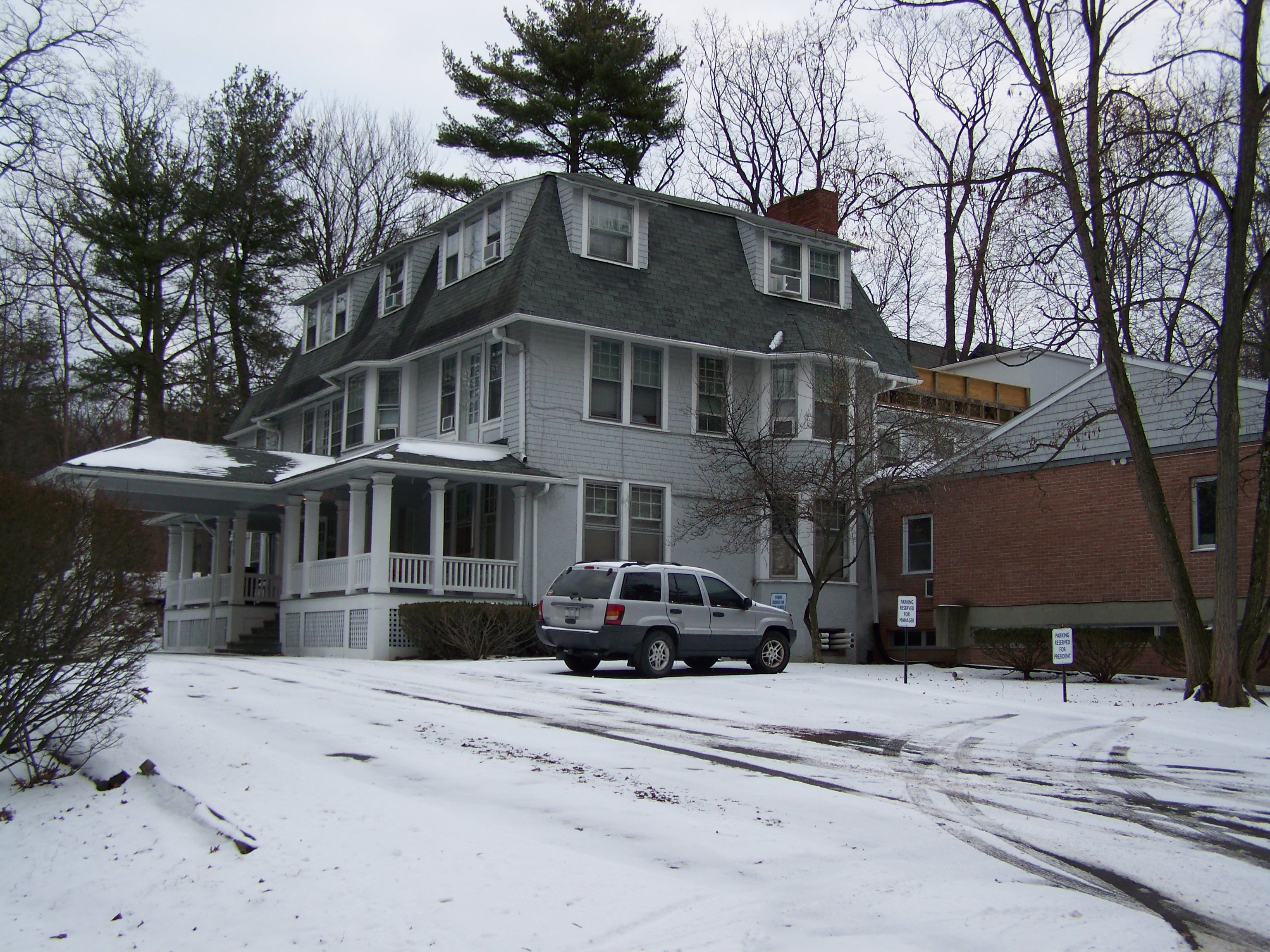
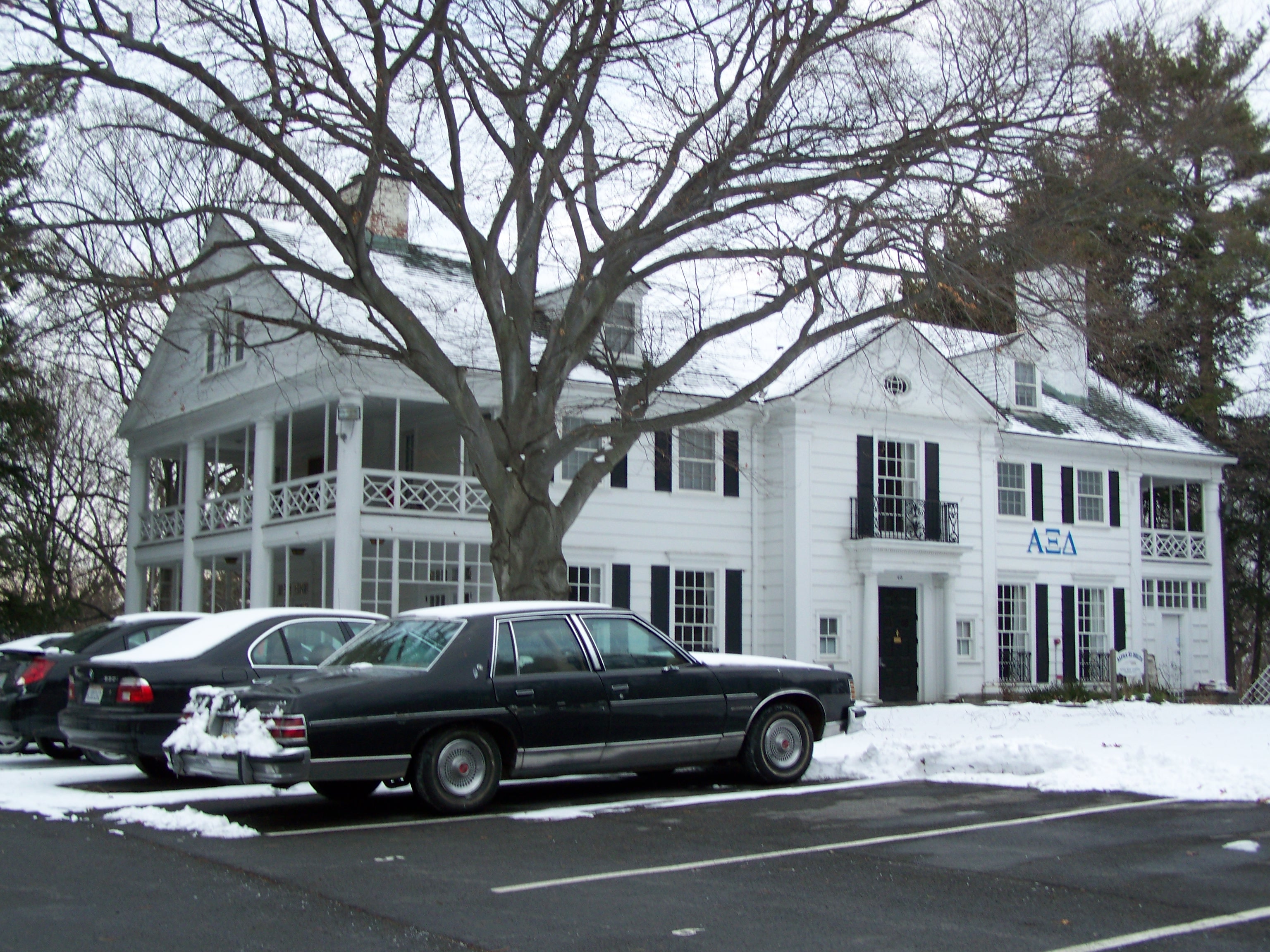
Alpha Xi Delta…and what appears to be an early-1980s Pontiac Bonneville. I thought the only models of that car left would be in museums or junk yards.

Pi Kappa Phi

Beta Theta Pi

Sigma Delta Tau. I think that is the exact same Jeep from my photo two and half years ago. Housemother’s? Also, I couldn’t tell whether or not that was new construction in progress off of the rear of the old structure.

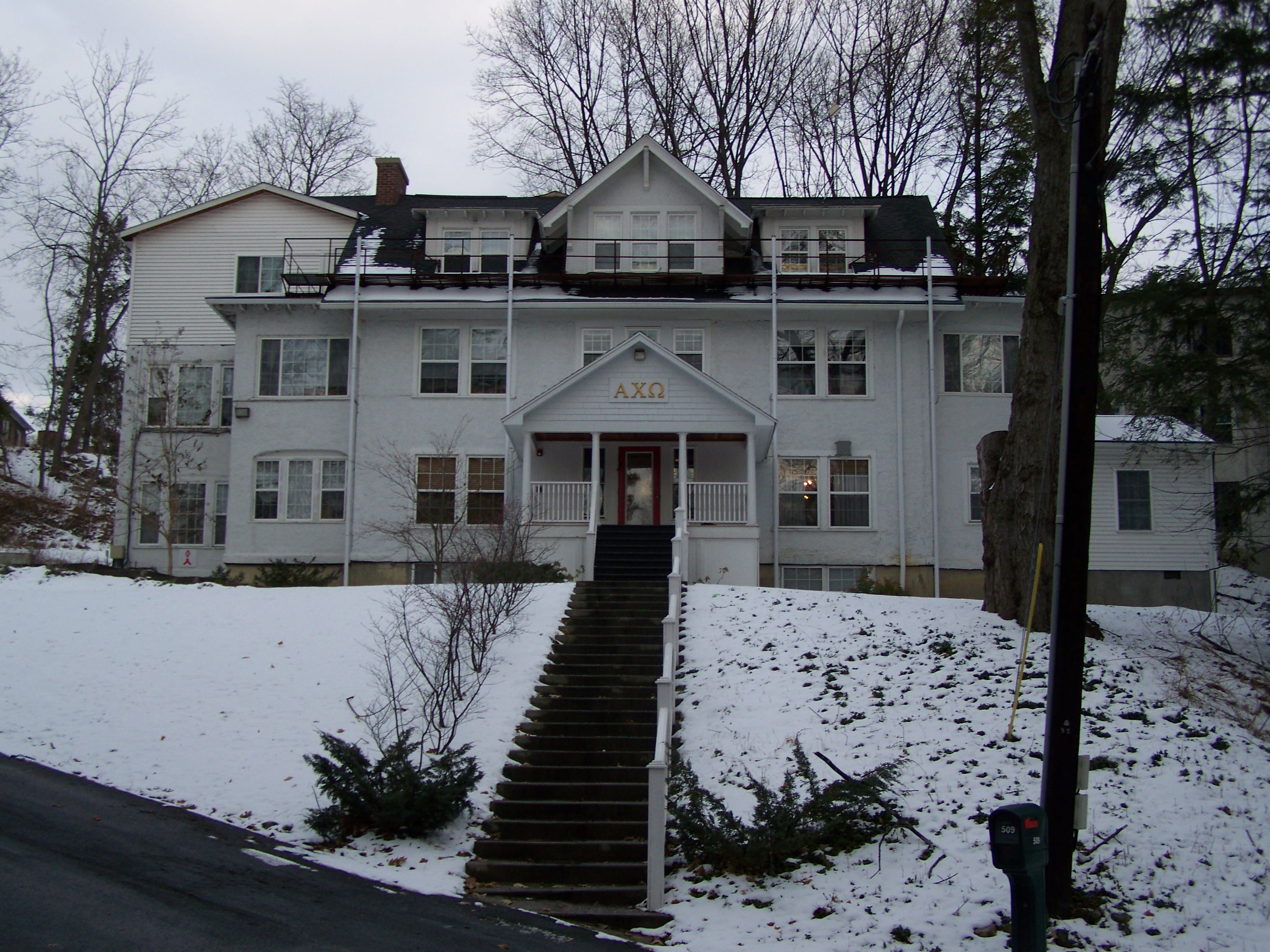
Alpha Chi Omega

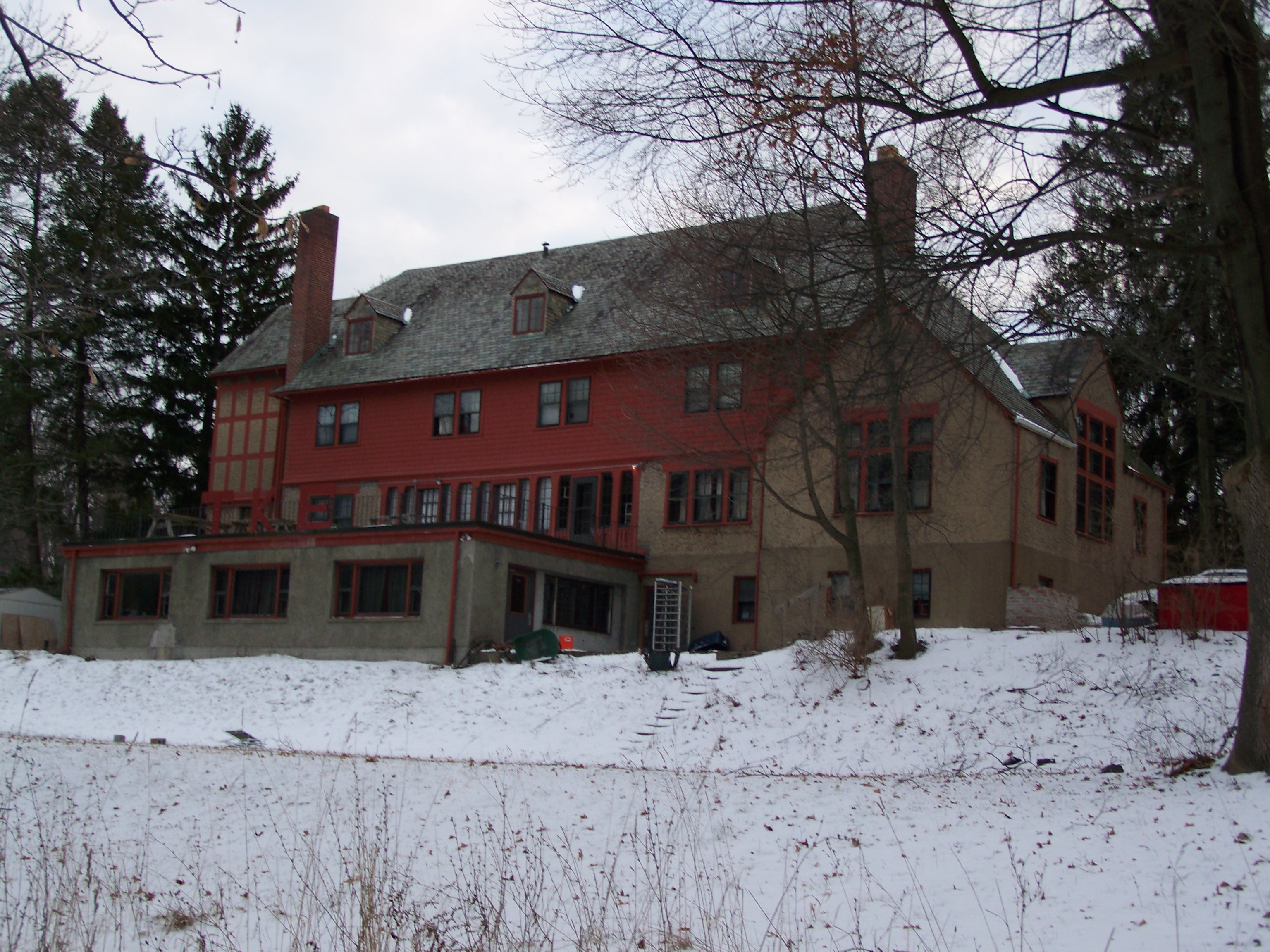
Tau Kappa Epsilon

Tau Epsilon Phi

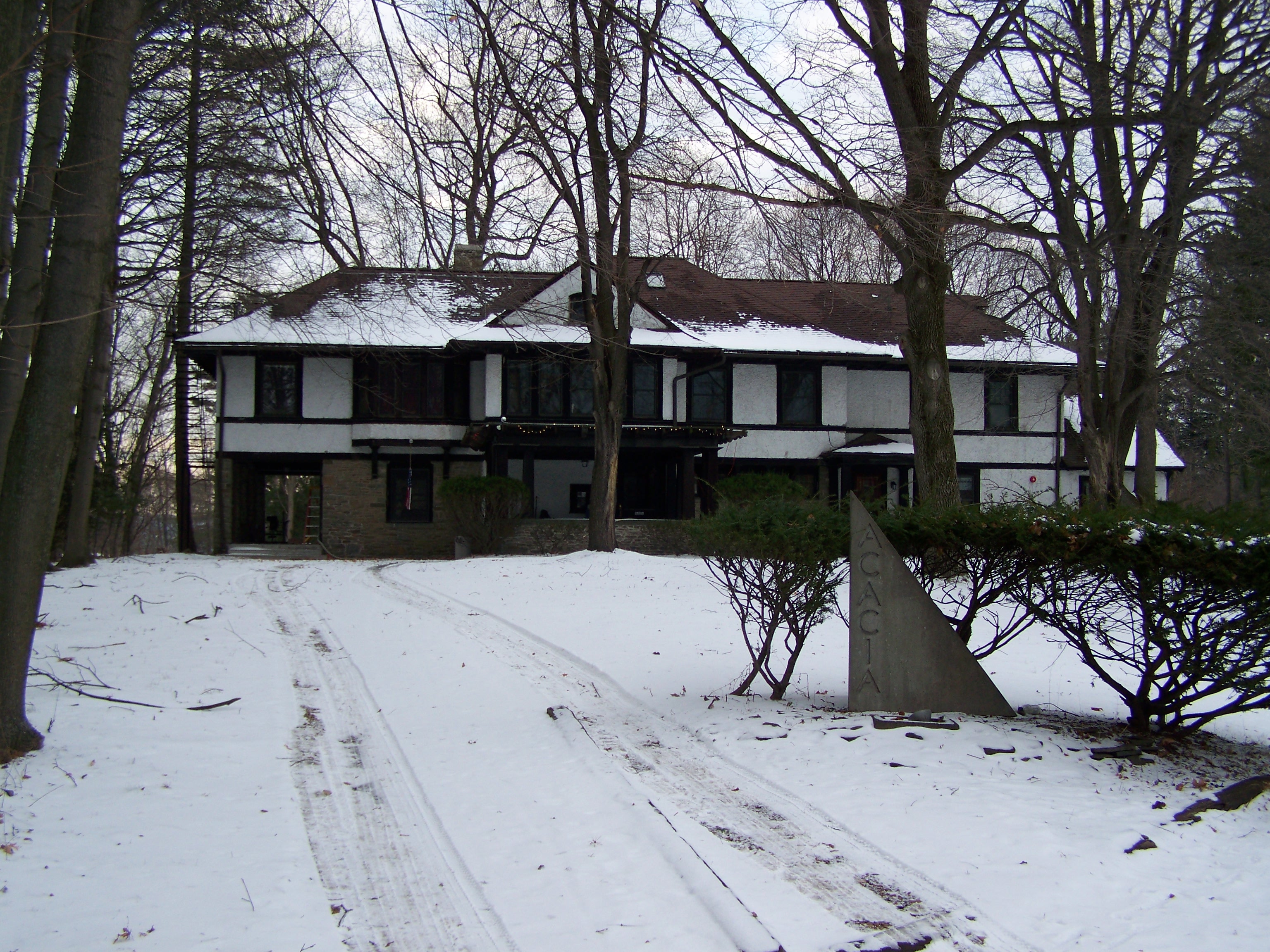
Acacia

Alpha Gamma Rho

Kappa Kappa Gamma

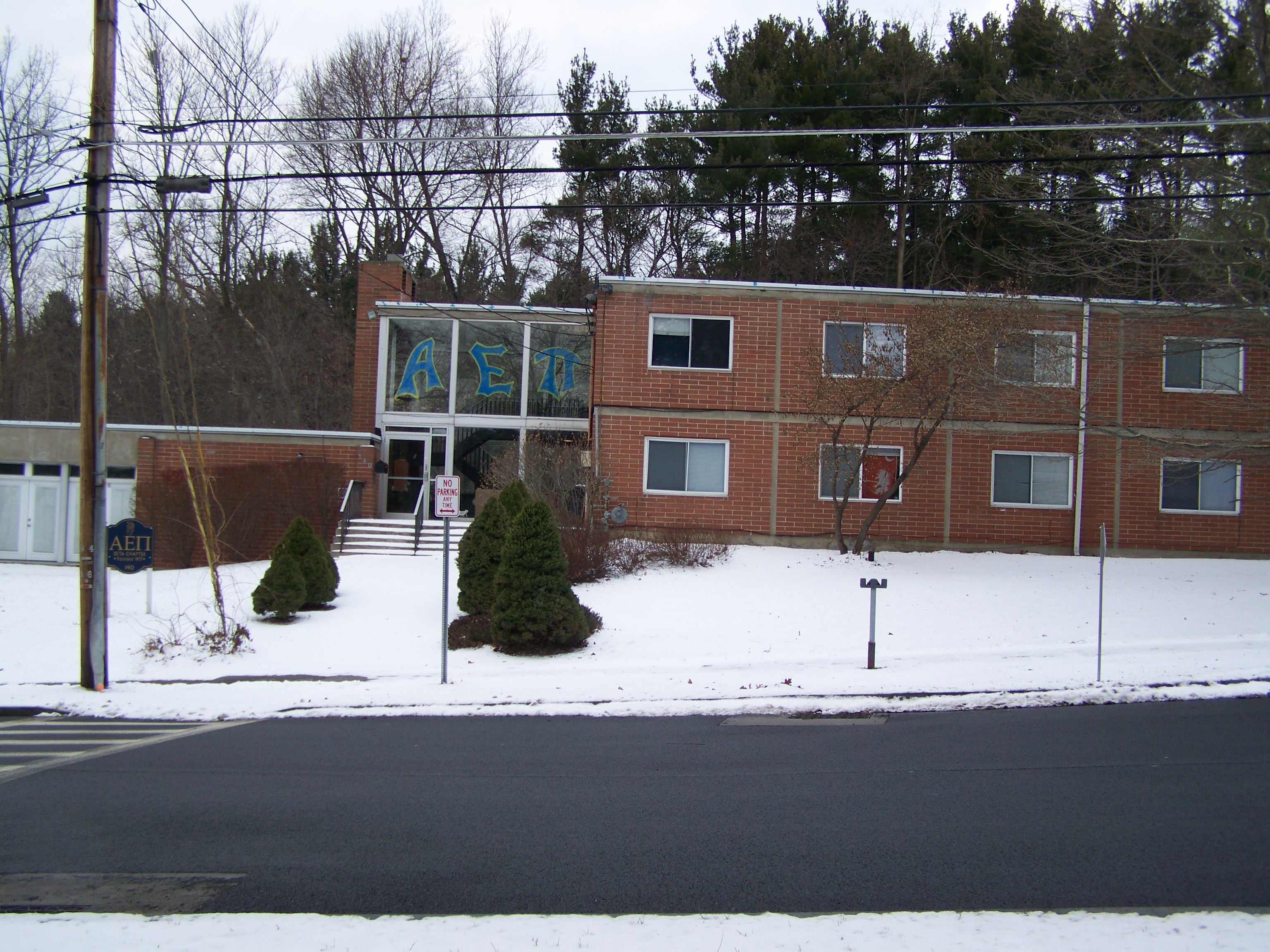
Alpha Epsilon Pi

Delta Chi

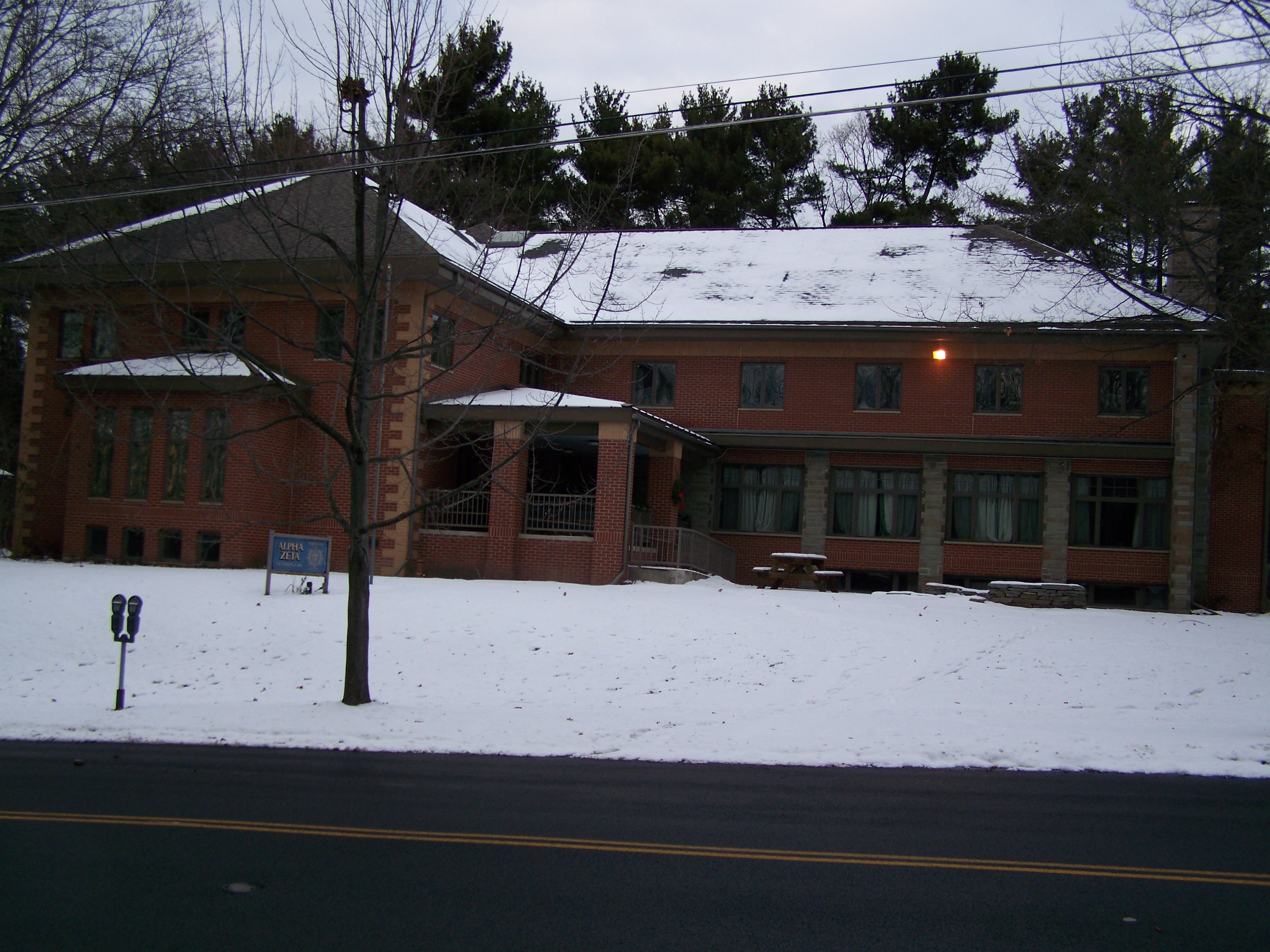
Alpha Zeta

Phi Kappa Tau


Bob Saget Loves Seal and Serpent, Part II

9 12 2010

I live in my grad student bubble.  So I was pleasantly surprised when Matthew Nagowski over at Metaezra happened to write an entry about the A&E Channel’s airing of the episode of “Strange Days with Bob Saget” that has everyone’s favorite dad from Full House “pledging” and joining the fraternity, complete with formals, toga parties and pledge activities. Conveniently, the episode is free to watch on A&E’s website.

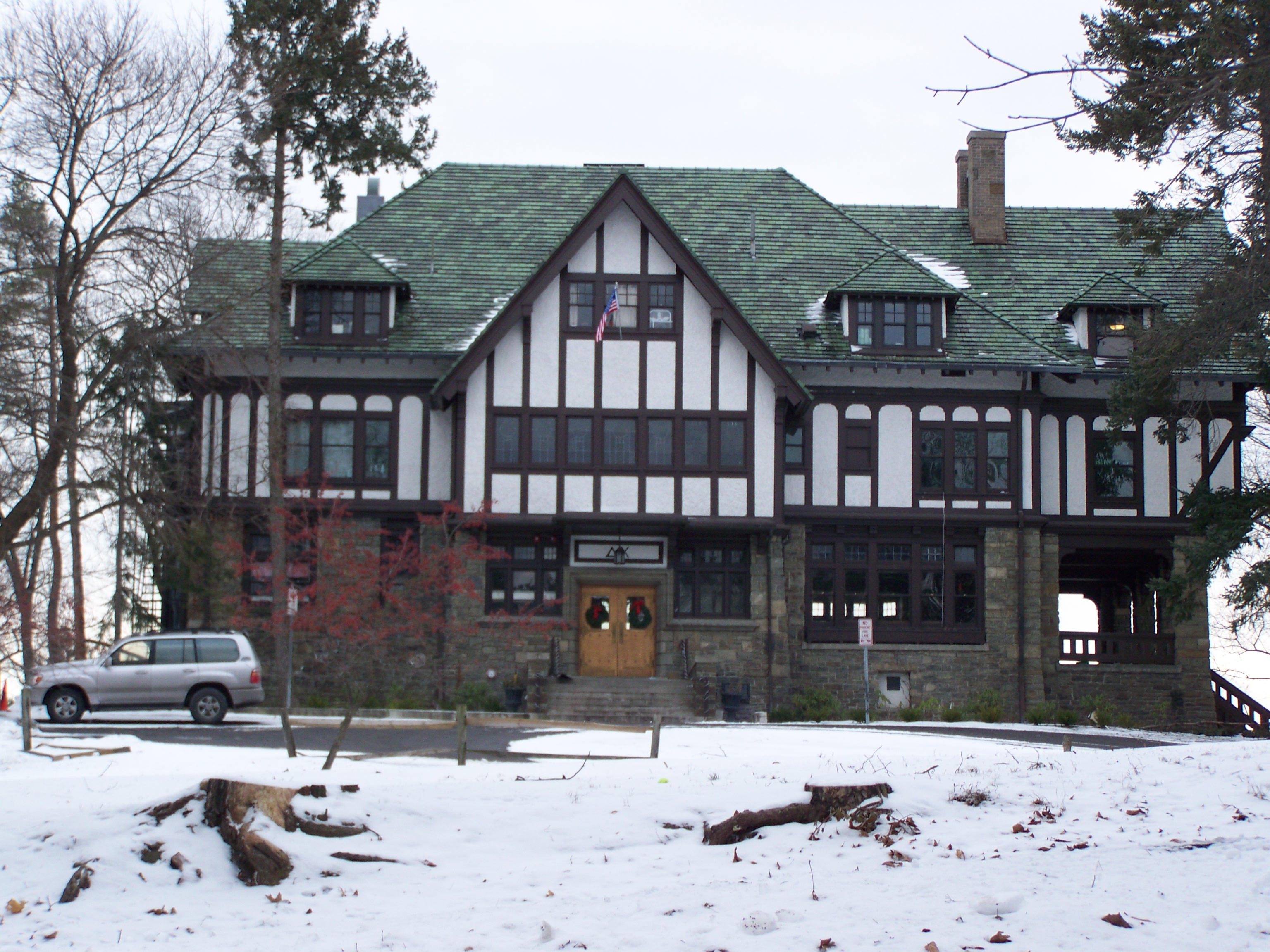
I remember writing up a brief entry last spring after this blog was swamped with questions in the search bar asking why Bob Saget was on campus, and then quickly forgot about the whole thing. It was a minor newsmaker, sure, but it was just one event in a stream of activities taking place around and about campus. The only time it ever came up again was when Seal or someone in their house would come up in conversation, and if this conversation was with someone else in the Greek system, the line “I can’t believe that Bob Saget went to Seal to film his show” often followed suit. Not many people in the system were pleased about Seal hosting such a high-profile event, since Cornell’s Greek Life would be publicized (and stereotyped) as a tudor-style house on Thurston Avenue. It seemed to be the general sentiment that there were low expectations for the episode, because it was thought its portrayal (either on the show’s part or the brothers’ part) would be unflattering and give a bad impression of the system.

I’ll admit that as a member of another house, I was a bit weary of Seal’s involvement. I actually had been to the house on a number of occasions because one of my best friends at Cornell was engaged to a senior in the house (they are now happily married). The first floor, with its wood finishes and giant Seal and Serpent lineage flow chart, did not fail to impress. I was less enamored by the party area in the attic (which is a bit abnormal, since most houses have party spaces in the basement) and some of the eccentricities of members (between friends, we affectionately referred to one brother as the “Beer Pong Nazi” while a second brother was infamous for a comment regarding the difference between “rapeability” and “rape-ability”, which is better left unwritten), but overall, they struck me as a fairly harmless bunch of guys, not without their quirks but with a very well-heeled and active alumni base.

So I watched the whole episode through. I thought it was entertaining. It was certainly enjoyable to see some of the guys I knew in Seal dressed up and being polite and respectable in front of the cameras (especially since I knew better). I thought that the impression they gave of Cornell’s system was adequate and not particularly offensive. I was also watching the episode while keeping in mind some of the details of what went on behind-the-scenes.

It was explained to me over the weekend as they were filming that there were some alterations from reality (even more so than pledging that only lasts a weekend). For the party scene, they couldn’t serve to anyone under 21 due to legal obligations. Well okay, that makes it less realistic, but that’s to be expected. However, they could only play generic rock music at the party so they could avoid issues and fees with copyrighted material. That seemed even more unrealistic to me than the lack of underage drinking. At least the show did pick up the tab for the brothers’ party costumes and food/drink, which were more impressive than your typical toga party fare. If I recall correctly, Bob Saget was also at an “IFC Meeting”, but it appears any footage that might’ve been taken from that event was cut from the final production.

Watching the show and treating it as just a show with creative license made the episode much more enjoyable. The episode cast Cornell in a positive light, and lewd jokes aside, it wasn’t offensive to anyone. I wouldn’t call it accurate, but it’s entertaining, and that’s what matters, I suppose.


Being an Alum

4 12 2010

So, letting go of undergrad is hard. But being an alumni doesn’t mean that everything simply ends.

While visiting a friend up in Vermont this past summer, she mentioned over lunch how she volunteered in the local alumni network there, of meeting with accepted students and going to alumni events and so on. Feeling a bit nostalgic (and realizing that I don’t want grad school to complete dominate my life, although it’s coming real close), I found myself signing up to be a part of the local chapter of CAAAN. CAAAN is the “Cornell Alumni Admissions Ambassador Network”, which is divided up into about 300 chapters and 8000 volunteers who take on the opportunity of evaluating applied prospective students.  I figured that I could spare enough time to meet with high schoolers and answer questions they might have about CU, as well as pose a few queries to them for their “evaluation”. To be honest, I remember my meeting being uncomfortable because I was meeting them at the restaurant I worked at in high school, and since they arrived twenty minutes early, I seated them without realizing it was the alum I was supposed to meet with. When they looked at my nametag and asked me if I would be ready to talk about Cornell with them in a few minutes, I promptly excused myself and proceeded to have a royal flip out in the dishroom.  Luckily for me, I told my boss ahead of time about the planned meeting, so she took over the register and let me off a few minutes early.

It’s probably a bit peculiar since if someone asked me what I thought of Cornell while I was there, I would have had some lovely comments worth sharing (though not in front of children). Yet here I am, volunteering to meet with fresh and enthusiastic high schoolers and to try and promote a good image of Cornell. Hopefully.

Being new to the whole thing, I attended a meeting at a local hotel that the local alumni association was doing as an orientation for CAAAN.  The first thing that struck me when I walked into the room was the realization that I was easily the youngest person there. There were about 15 people, almost all of whom were middle-aged (40 and up) professionals, and as I sorta stopped in the doorway, the local chapter head looked at me and said “[Y]ou must be the new guy. I recognize everyone else here.”

What followed was a passing out of “current facts of Cornell” and some admissions and evaluation guidelines. It became quickly apparent that being the young guy had an advantage. They spent several minutes asking me to describe recent changes on campus and how the new financial aid plan was working and random questions about if some aspect of Cornell has changed in the past 10/20/30 years. For once, this blog proved to be useful on a personal level. I also managed to make several of them feel extremely old when describing the new West Campus houses.

It was different. It felt a little strange, but it felt right at the same time. I may be getting older, but I’m still quite young as alumni go.


The Blessing and Curse of Anonymity: CollegeACB

20 11 2010

It seems increasingly common these days to read editorials and columns in the Daily Sun that reference the extremely controversial website CollegeACB (Anonymous Confession Board). That and the alcoholic energy drink Four Loko seem to be the two things that dominate the collegiate news articles this semester (personally, all the news I hear about the drink just makes me more tempted to try it, but I don’t find myself at convenience stores often enough to remember to do so). Reading through the threads on the CollegeACB Cornell page is like a lesson in everything that is “wrong” with people; the website is well-known for its tirades that seem to know no ethical bounds, which include posts that are racist, anti-Semitic, sexist, classist, fetishist and all sorts of other comments that play up the darker side of human character.

I think most people who are on the internet these days have seen something like this before. Before CollegeACB, it was Juicy Campus, before the internet people made use of public spaces; I think there was a stump that used to be near Olin Libe on the Arts Quad in the late 60s and early 70s that was used extensively for spray-painted or paper-posted anonymous messages. Anonymity gives people the guise of security; their comments can hardly be traced to them unless they write something that clearly indicates it was them, or someone sees them typing and posting onto a forum. The sex columnists (the people may change, but the pattern is familiar) go by initials or self-created nicknames so as to avoid the coming up on the radar of potential employers and put up an extra barrier to protect against unwanted attention. Sure, a lot of folks might have a pretty good idea who the writer is, but unless it can be concretely proven, they can feel somewhat secure.

CollegeACB is a site that I can despise, and in some perverse sense, understand at the same time. I think ad hominem attacks on certain individuals is wrong, but censoring those opinions isn’t exactly the right thing to do either, since people value the concept of “personal freedom” so much. It’s a moral gray area to me; I would never do it myself, but I wouldn’t necessarily take away people’s ability to do it for a site that advertises anonymity as its big asset (I am being a bit hypocritical here; I have prevented a couple offensive comments, both of which were personal attacks because I mocked the now-cancelled Ithaca Olive Garden, from being published here on the blog; I initially okayed them, but I wasn’t comfortable leaving them on the blog and deleted them within hours).

Yet, sometimes that anonymity is what it takes for someone to take their guard down and see what they really think. People at Cornell are just as capable of being racist and homophobic and sexist as anyone else, and while those posts are offensive, and some of them are just grotesque attempts at grabbing attention, I can’t help but think there’s at least an ounce of someone’s personal beliefs in there. Objectionable as those posts may be, they demonstrate that Cornell is not a perfect world, and a lot of the tension that gets swept under the rug publicly will rear its ignorant head if given the opportunity.

In a previous post, I compared finding useful information on that site to finding a diamond in a pile of crap. Occasionally, the guise of anonymity can be helpful, and an honest, valuable opinion that would otherwise been kept silent is voiced. But you never know how much truth there is in a post, so the “diamonds” might just turn out to be pebbles of glass. I think a statement and a little research can go a long way in proving a comment right, but that’s not always possible.

I guess the topic really sticks out to me because of Ithacating in Cornell Heights. This blog is written semi-anonymously, in that although I’ve never written my name once, there’s enough information out there that I write as if the posts had by name on the top of each entry…which defeats the purpose of anonymity. My major reasons for continuing it like this are partly because of routine and partly because I prefer what I write to be dissociated from me.

The posts that make up the site are unpleasant, certainly. But I think it’s more a reflection of the people writing anonymously than the existence of the site itself. Maybe people just hold themselves to a low standard. Maybe I’m holding people, myself included, to a low standard because although I don’t condone it, I accept it.  My view is pessimist because I don’t expect people to hold themselves to higher standards, which that website proves every inflammatory day.

I’m too much of a curmudgeon to put a smiley face on this and write how we should behave better. It would be nice, perhaps, but I think it would be unrealistic as well.


News Tidbits 9/25/10: Development Planned for 307 College Avenue

25 09 2010

This is slightly annoying. I was away from my computer yesterday and today as a result of my graduate work and then coming straight out to Ithaca, so I never bothered to read my Ithaca/Cornell newsfeed. So it’s bothersome that I found out about this relatively later than usual. Anyways, here’s the article from the Daily Sun:

http://cornellsun.com/section/news/content/2010/09/24/developer-seeks-approval-new-c-town-building

September 24, 2010
By Jeff Stein

A proposal to transform the middle of College Avenue hinges on developer Josh Lower’s ’05 controversial request for a Board of Zoning Appeals variance, which would exempt a building’s development from city parking laws.

Lower said his proposed development project at 307 College Avenue –– next to Jason’s Grocery & Deli –– would demolish the existing building and create more than 60 new apartment units. Lower also hopes to remake the area into a highly trafficked “pedestrian arcade,” filled with street-level storefronts that would connect College and Linden Avenues.

City officials are divided on whether the Board should grant Lower the variance. Under the city’s current parking ordinance, every two housing units built must be matched by the creation of one parking spot.

Lower said that building the parking spaces, which must be within 500 feet of the site, was “not practically or financially possible.”

“We’ve tried to meet the law but cannot,” Lower said.  “There’s just not enough space.”

Ithaca Councilmember Ellen McCollister (D-3rd Ward) expressed concern that there would be a lot of “spillover” for surrounding neighborhoods if the variance was given.

McCollister also said the variance would establish a dangerous precedent: “If you grant a variance to one property owner, how do you not grant [it] to any other property owner?”

If one developer is granted an exception, “all hell breaks loose,” as other developers would expect the same treatment. “We need to treat every developer consistently and equally,” McCollister said.

Lower said his plan would compensate for the lack of new parking spaces by providing his residents with a car-share membership and free bus passes as part of the lease.

“We’ll create a building that fosters … sustainable modes of transportation and encourages people to bike more, walk more,” Lower said. In reference to a proposed pedestrian walkway, Lower said, “We’re making privately-owned space accessible and usable for all.”

McCollister was not convinced. She called Lower’s replacement for parking spaces a “very ill-defined, nebulous proposal,” saying it was “not a real plan for how he is going to do it, in perpetuity, for every resident.”

Partly because there is “more supply in retail than there is demand” for Collegetown, McCollister is “not convinced the pedestrian arcade is as valuable an amenity as it’s being portrayed.”

Board of Zoning Appeals member James Marshall shared McCollister’s skepticism about Lower’s replacement plan in exchange for a variance, calling the lack of parking spaces in his proposal a “significant deficiency.”

“He’s proposed some measures that might encourage people to use public transportation or bicycles, but no one knows how successful he’ll be,” Marshall said.

Stephen Beer, chair of the Board of Zoning Appeals, said he worried that there was no provision for enforcing Lower’s suggested replacement for the parking spaces.

Lower responded that “it would be a requirement written in the lease.”

Eddie Rooker ’10 (D-4th Ward) said he and Svante Myrick ’09 (D-4th Ward) both supported the project.

Rooker said the development is “going to be beneficial to students and the city,” naming studies that “point to the fact that we need more housing in the city” given “pretty high pricing all over the city.”

Rooker said the project would fix the need for a “well-lit pedestrian walkway connecting College and Linden Avenue,” where “people now have to go between people’s yards when they’re not well-lit.”

Rooker said the proposal could make the area in front of 307 College Avenue a new hub for TCAT, shifting the center of Collegetown further south.  He said that TCAT wrote a letter to the city in support of the project.

Lower, who lives in the neighborhood, said that “we really looked at a lot of scenarios to try to do something else with the property,” but that nothing else was viable. He said that he is currently losing money on the property.

McCollister responded that one of the considerations for the Board of Zoning Appeals was that the variance request not be in response to a “self-imposed hardship.”

“I think he does have a financial hardship, but that’s because he paid too much for it … rather than some externality that created that financial hardship,” McCollister said.

McCollister added that the Board of Zoning Appeals should wait until a decision is made about an “in-lieu of parking fee” suggested in the 2009 Collegetown Urban Plan & Conceptual Design Guidelines. The proposal, which is currently being developed, would specify a fee below the cost of providing on-site parking that developers could pay the city in lieu of building parking spaces. The Collegetown plan says the fee could then be used to help the city fund alternative transportation modes.

“I can only base my plans on what is law today,” Lower responded.

Rooker agreed, saying, “We can’t constantly rely on what might be happening,” and that he “would rather see something like this than a one time donation to general fund” anyway.

Lower added that waiting for the law to pass could have a big impact on his finances, since “the building has to be done based on the academic year.”  “If the building is not ready to have [residents in it] before classes start, it sits empty for the rest of the year.”

If approved, his plan is to start construction in June 2011 and have the building ready for residents in the Fall of 2012.

***

So, the summary is this:The guy wants to build a medium-sized apartment building but doesn’t want to include parking. The issue lies with the possibility that residents would just park their vehicles on the streets and clog local roads, and finding viable options to keep that from happening. A zoning variance is required due to the lack of parking, and without it the project will not proceed.

A few extra details; the development would be a 60-unit building with a retail base. Guessing from the rendering and from the height limit there, it would be about five stories. The current building on the site used to be occupied by a drugstore, but the store closed in late 2006. With the exception of the space occupied by Ithaca Carshare, the retail portion has been empty since.

The argument on the parking issue is reasonable and legitimate. A lot of students maintain cars, and the overly entitled ones may still try and maintain a vehicle nearby, thus creating parking issues for the building’s neighbors. While the project would definitely add density and needed residential space to inner Collegetown (and definitely makes use of New Urbanist planning), the lack of parking is a major hurdle. Personally, I like the idea of the project, but unless he can make absolutely clear what he’s going to do to keep students from bringing vehicles to an area with no space for them, and be held to that “in perpetuity”, I would be leery of its approval.

The architect is a small local Ithaca firm founded about seven years ago, John Snyder Architects.  Looking at the website, it seems most of their work has been for educational facilities or interior spaces, and the style tends to be modernist with limited detailing, instead playing off of the geometric forms of the structure itself. I’m very curious to see the whole design of what would seem to be the firm’s first large residential building. At the very least, it least it won’t be another Sharma Architects proposal; a little variety does wonders.



The Keyword Bar XI

20 09 2010

…because I don’t feel like researching (Cornell related or work-related).

1. “new collegiate gothic” (9/19/10)

Okay, so this probably has little to do with Cornell, as Cornell hasn’t built in collegiate Gothic in over fifty years. Regarding that, I’d like to share a brief quote from Morris Bishop’s A History of Cornell:

“The Buildings and Grounds Committee recommended (September 19, 1950) that we wait no longer for donors of Gothic magnificence, but that we build structures that would pay their way. Said the chairman, John S. Parke ’23: “Engineering rather than architectural construction is advisable”. (597)

Of course, then we ended up with such “lovely” works as Olin Library and Olin Lab and Bradfield Hall.  I suppose the only way one could force a new Collegiate Gothic structure onto campus today would be as a stipulation of a very large donation (as in, one that pays for an entire new building without major additional funding from Cornell).

2. “ivory tower drinking society” (9/18/10)

This is a little murky. First off, it wouldn’t formally be called a drinking society  (the more likely term would be social society). As for the existence of such a group, googling “Ivory Tower Honor Society Cornell” pulls up a bunch of linkedin profiles of sorority women in  who were part of Cornell’s “Ivory Tower Honor Society” during the 1990s. So, if I had to take a guess, it was probably a tenuous organization that served more of a social purpose than anything honorary. But, I can’t say for sure.

3. ‘tompkins county public library roof” (9/17/10)

It has solar panels (that generate about 145 kilowatt-hours). Kinda funny considering Ithaca is one of the cloudiest cities in the country (206 days/year).The library opened in 2000 after moving from a location several blocks away; the site used to be home to a Woolworth’s department store.

4. “ithaca 103 dryden ave video store” (9/15/10)

I was wondering if this would come up. As covered recently by the Sun, the Collegetown Video store shut down after nearly twenty years of service. The store open in February 1991. The unique metal facade was designed by Cornell architecture students while the store was renovating the building for its grand opening. No plans for new tenants have been announced at this time.

5. “college confidential cornell biology” (9/4/2010)

I’m going to use this as a bit of a conversational launching point, actually. Since a lot of my information has to be pulled from the internet,  stumbling through message boards is inevitable. College Confidential is somewhat trustworthy, but the discussion focuses on more practical questions – “how easy is ASIAN 2571” and “chance me for admission plz!!!11”. There’s a couple of sites where people rate their experiences at Cornell, which lack details but are often good reads if you’re just looking to kill time. then of course, there’s the gossip site College ACB, which focuses on which frat is best, which freshman girl puts out the most and which sorority has the hottest pledge class. A whole lot of douchebaggery, but on rare occasion there’s a really interesting topic that offers frank insight — but finding those is like finding a diamond in a pile of crap. Use at your own discretion.


News Tidbits 9/1/10: Firm Selected to Design Bridge Barriers

2 09 2010

According to the latest updates from the Cornell Chronicle, architect Nader Tehrani of the firm “Office da” has been selected to design the bridge barriers for six of the gorge bridges, effectively trying to put a prettier face on suicide prevention. Two public forums will be held during the design and proposed implementation process, with the final proposal to be ready no later than May 2011.

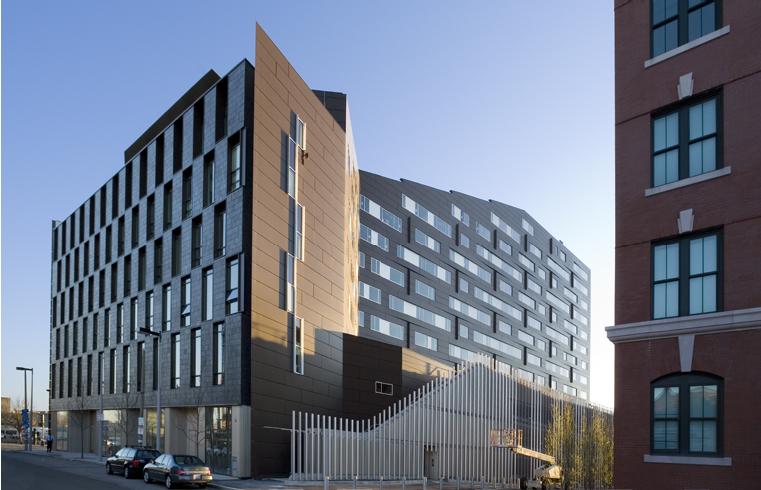
The firm, like many selected recently by the university for its projects, is known for edgy ultermodern architecture. Normally, as readers who tolerate me are aware by now, this would be the point where I go into a rant about how such architecture fails to fit in with the surrounding environment, often fails to live up to standards, etc etc. Well, for the record, here’s a sample of their previous work, the McAllen Building in Boston:

Photo Property of Office da (www.officeda.com)

But, I don’t have a reason to complain, for three reasons. For one, they’re designing bridge barriers, which tend to have less of an impact on their surroundings than buildings. For two, it has to be cleared by public forums in conjunction with the city of Ithaca and its residents, who won’t be so gung-ho for wild design features. To be honest, the train of thought in my mind is “can they really screw this up aesthetically? Not really. ” For three, nothing can be as bad the metal behemoths we were treated to last Spring, which gave the impression of being locked into a prison yard. When you’ve already hit the lowest lows in appearance, the only way to go is up.

I’m going to be  very interested to see what comes out of their studios in the coming months.


News Tidbits 8/5/10: Structural Coincidence?

5 08 2010

So, the Ithaca Journal is filled today with articles concerning Cornell’s South Hill neighbor, Ithaca College. Which is great, since they are a good school in their own right and they tend to be overshadowed by its ivy-cloaked neighbor. So, the one article was about how their enrollment is back on target this year after having too many incoming last year (by most regards, a fortunate problem to have). The other article, much more in line with the general themes of this blog, was a review of the $65.5 million, 130,000 sq ft Ithaca College Events Center that is under construction, and currently around halfway towards completion.

One of the big architectural features of the building is a a large, structually-incorporated cooling tower designed to be a focal point of the structure and to be visible from most of campus.

Image Property of Ithaca College

The height of the tower? 174 feet.

The height of McGraw Tower on Cornell’s campus? 173 feet.

So, McGraw Tower is no longer the tallest structure in the county (not including radio masts). After 119 years, it is losing its title to Ithaca College’s new activities center.

Although I never saw anything that indicated as much, I’m willing to wager that this was intentional, to draw more attention to the new “tallest building” in the county. Even though the tower is uninhabitable, the lower floor(s) of the building are, so it qualifies as a true building. McGraw doesn’t qualify since it’s only a clock tower. Bradfield, the tallest true building in the county, is only 167 feet.

In conclusion, I guess size does matter when it comes to bragging rights.