The Cornell Store

23 02 2011

So, this entry is a little different from the norm because normally, I cite several outside sources to try and put together something coherent enough to pass as a blog entry. But this post is a little different, because most of it will be anecdotal. I worked at the store from the start of my third week of Cornell up to the Wednesday of senior week, including full time for at least one summer. So I learned a lot about the place (plus, I think I was the highest paid student employee by the time I left, so my wallet was happy). Plus, one of my favorite things to do on break was to smuggle a book about some random Cornelliana upstairs to the breakroom, so in a way, my job encouraged this blog.

Obviously, I’ve graduated and moved on. Rule of thumb was (probably still is), if you want to keep your job, don’t write anything about the store. Hence, I made the store conspicuously absent from my posts, even when I was sorely, terribly tempted to do otherwise. Which played out quite fortuitously on one occasion.

So, over at Fast Lane, Elie Bilmes, for all of his wonderful posts, managed to rub me the wrong way when he posted an entry casting suspicion about the store’s $100 gift card giveaway. It hit a sour note because over the years we had repeatedly been accused and verbally attacked by customers who thought we were stealing their information and tracking them, such that a couple of my coworkers were driven to tears. We actually had a professor taken from the store by CUPD in my first year because he struck an employee who he thought was stealing his identity by swiping his ID card.  Anyways, the $100 gift card giveaway wasn’t fake. We kept a list of the winners (a book of sheets containing name, ID#, student/faculty/staff, date won, claimed, and the cashier who made the sale [cashiers get $5 bonuses if one of their customers wins – an incentive for them to ask for the ID card]) in the back of store services, the department I worked in. I thought of posting something, but I knew I wasn’t willing to take that risk of getting in trouble with my employer. Seeing the questions still on the entry, I’ll address them now – no, you technically don’t have to buy something to enter your ID, but the ID has to be swiped in to say you were in the store that day (online orders don’t count). But we would think you’re a really big dork if you just came in for the sake of getting your card swiped. There was a winner every day the store was open, and for a while we did publish the winners on large tablet sheets which were placed on the structural columns. I guess no one noticed.

Anyways, it happened to be a couple of days after the post when I was working on a Saturday, and who should come up to the counter but Elie Bilmes. I think, for the record, this is the only time I ever met Elie, and I didn’t even introduce myself. I rang him up and then told him that I saw his entry, and I could show him the proof that we have winners. He politely declined. But I went to the back anyway, pulled out the clipboard of sheets and, from across the service area, offered him a closer look if he thought it was fake. Shortly after, the update was posted to the entry. Anyways, if I still worked there, admitting I did that could possibly have been enough to get me fired for a breach of privacy or something. Not a risk I was willing to take, so I’m only sharing it now. Sorry Elie, I wasn’t trying to be an ass, but I probably came across that way.

Which, I’ll admit that near the end of my four years, I wasn’t very lovable. I was very capable, no denying that. But I learned that the more I was paid, the bigger the amount of BS that seemed to come my way. And as my older coworkers graduated, the younger ones looked to me as the next step in the hierarchy. Especially on weekends, when we had no full timers. I think my tipping one was the occasion an architect berated me for not having Rockite in stock and calling me cheap hired help, not even realizing I was a student too. The damnedest thing about that was that there was an architect who used to come in, buy over a hundred pounds of Rockite, and sell it over at Rand for a profit. Yes, the architects had a black market.  I couldn’t decline selling Rockite because someone was “buying too much”.

The store had about $21,200,000 in total revenue in 2008. I remember this on a stakeholder packet that had been printed up sometime early in my senior year. However, after expenditures, our profit was an almighty $200,000, roughly. The store was majority-owned by CBS – Cornell Business Services, so profits went into university operations. We made virtually no profit selling textbooks. What money we did make came from novelty item sales – clothing, candies, mugs and the like. The store had about 40 full time staff, plus a few more at the warehouse on Palm Road, and about 50 part-time students interspersed through the departments. Some students worked only 7 or 8 hours, others like myself fell more towards the upper end of 13-15. The Statler Hotel gift shop and Sage print shop generated a grand total of 2.5 jobs, and the gift shop operated at a loss. It was only kept open because the hotel needed it for its three-star classification. I didn’t mind covering the Statler. Even though I had to wear shirt and tie, it was so slow I could do homework there. Plus I got to meet Robert and Helen Appel, namesakes of Appel Commons.

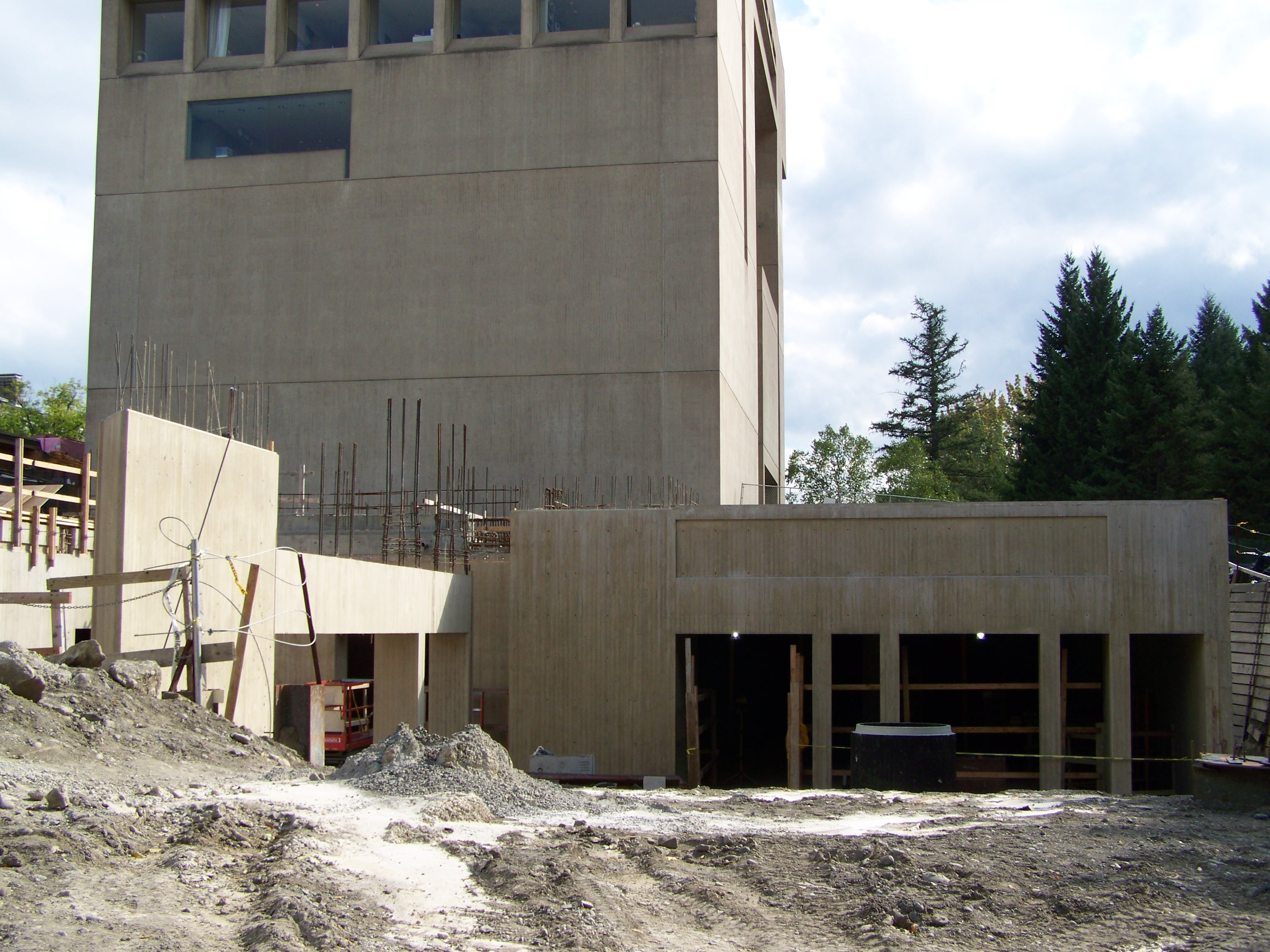
While I worked there, Cornell stopped doing long-term maintenance on some of the mechanicals because they planned to close the store down within the next five to seven years and demolish the structure, which of course caught my interest. The store mulled over moving to a space in Collegetown or to a location halfway between the Arts Quad and the Vet School, a proposal that as a far as I know is still on the table, albeit mothballed due to the Great Recession. Still, I don’t expect the current ca.1970, 33,000 sq ft structure to be around way too much longer (only about 22,000 sq ft is selling space). Which is a win for aesthetics, but it will be a loss for my nostalgia and for many of my memories. I used to joke that working at the store kept my sanity and reminded me why I was in college. But given some of the more frustrating times, there was a little more truth to that than I let on.


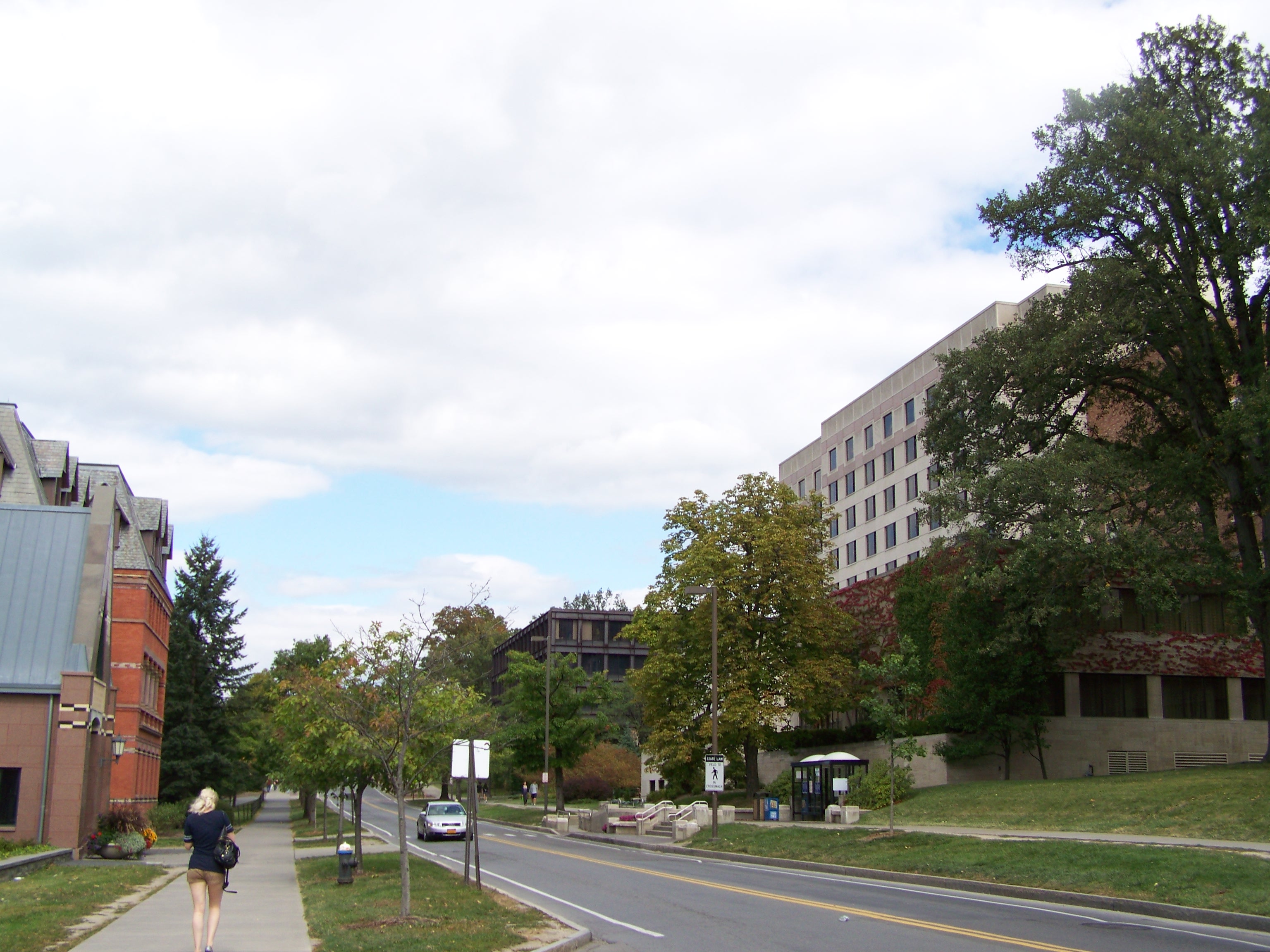

The Cornell University Airport

15 02 2011

It generally goes without saying that Cornell has had a dramatic impact on the way Ithaca and Tompkins County have developed over the past 150 years. In some respects, Cornell’s influence has been indirect – for example, the development of the Collegetown neighborhood to meet the desires of Cornell students, or the development of Cornell Heights and Cayuga Heights to provide faculty a leafy respite from their academic duties. In some ways, Cornell’s influence has been more direct, such as the Seneca Place building downtown or…owning the airport.

The first airport in the county was actually down where Cass Park is today. For those who live under an ivy-covered rock, Cass Park is just up Route 89 from the city, across the inlet from the Farmer’s Market:

The first airport (which the airport website claims was the second airport to be created within the state), which was called the Ithaca Municipal Airport, was built in 1912. It wasn’t much; a simple hangar and a rundown dirt strip were built initially, and the facilities were expanded somewhat by the Thomas “Aeroplane Factory” which was built next to the airport in 1914 (Turback 29). Three years later, the company merged with Morse Chain to become one of the largest employers in the county. Apart from the testing of military planes, and some leisure flights (the airport was the home base of aerial photographer and future airline pioneer Cecil Robinson), there wasn’t much in the way of air traffic.

By the 1940s, passenger planes began to catch on with (wealthy echelons of) the public, and it became clear that the municipal airport wasn’t going to cut it. For one, it was prone to fog banks from the lake and flooding – a major flood back in 1935 wiped out much of the airport. Space was inadequate, and as planes were growing in size and speed, expanding the facility was neigh near impossible because it abutted the city, the lake, and the slopes of West Hill. The farmland to the north of Cornell was recognized as the prime site for a future airport (Bishop 553), and the city of Ithaca was very interested in building a new airport on that land, but there was one very big and still relevant issue – getting taxpayers to cough over their hard-earned tax dollars to buy the land and build another airport outside of the city was nothing short of political suicide.

Enter Cornell.

Cornell, in trying to meet the needs of its elite faculty, alumni and connections, knew the importance of having a larger, modern airport. Although a bit financially strapped at the time, Cornell noticed the large number of lots being sold off to make the first suburban homesteads and sought to act before the land values could increase any further in that area. On September 9, 1944, the trustees authorized the university to seek options on the land, and within three months had obtained 1,146 acres of land at the price of about $202,000 (about $2.5 million today – a relative bargain). The purchase was strongly debated and led to some sharp criticisms of the Day administration during the 1940s (Bishop 560). The construction of the facility itself was wedged in with many of Cornell’s other post-war projects, but the need of a new airport was not nearly as acute as the need for veteran’s housing or new academic space. The airport was not completed until 1948,  and ownership was transferred to the county in 1956. In the meanwhile, there were two airports in Ithaca – the old rundown one downtown, and the new one on East Hill. The transfer of ownership may have been influenced by a shift in focus from Cornell’s aeronautical program in Ithaca to the Cornell Aeronautical Laboratory, which operated as a division of the university from the late 1940s to the early 1970s next to the Buffalo Airport (it was later spun off as a private enterprise called Calspan Labs that at last check operates as part of Veridian Corporation). CAL’s heyday was from about 1955-1965 — when Cornell decided that having its own airport 200 miles from its recently donated aeronautical lab wasn’t such a hot idea. But mostly, it was a matter of finance – their were issues with the local passenger airline’s use of the airport, severe enough that if one of their planes landed on Cornell’s property, the pilot would be arrested (Bishop 561). The first six months the Cornell airport was open it incurred a $103,000 loss. The University invested $300,000 to build up the property and was hardly getting any return out of it – the trustees voted to prohibit further funding to the airport in June 1949. Although relations with Robinson Airlines were patched up by 1952, the airport limped along in financial hell until Cornell finally had a decent opportunity to unload it onto Tompkins County.

The county airport has operated since, and was renovated and expanded in 1994. Robinson Airlines was renamed Mohawk Airlines in late 1952, moved to Utica six years later, and was absorbed by another company in the 1970s, which after several mergers and acquisitions, is now an ancestor of USAir. As for the old airport, it closed in the 1950s, but the main hangar was renovated in 1975 to house the  Hangar Theatre, which has seen several renovations and expansions since then.The rest of the property was absorbed into Cass Park in the 1960s.

I doubt Harvard ever owned its own airport.


The Urban “Renewal” of Ithaca

1 02 2011

So, the Cornell Alumni Magazine latest issue caught my attention. Its feature article, “Through a Glass, Darkly“, is a feature about visiting professor Mark Iwinski’s artistic work of superimposing photographic stills of Ithaca streetlife from decades past over the contemporary appearance of those locations today. Which, falling in line with my addiction to interest in local architecture in a historical context, was a worthy read.

The most obvious thought after reading it is that history has not been kind to Ithaca. It hasn’t been kind to the downtowns of many older cities and towns in the Northeast. From the late 1940s to the 1970s, “urban renewal” basically consisted of trying to suburbanize downtowns by tearing down underused structures, often pinning their hopes on one or two big projects. An example of its effects can be seen whenever you drive through I-81 in Syracuse –  in 1957, Syracuse’s primary African-American neighborhood (the 15th ward) was town down to make way for the interstate, which effectively cut off Syracuse University from downtown and contributed to the emptying out of that city.

Image property of syracuse.com

As the article mentioned, Ithaca fared better than its peers. First of all, in 1968, Route 13 was supposed to become a limited-access highway connection from Horseheads, through Ithaca and to I-81 in Cortland. However, the project lost state and local support, and the only portion completed was the three-mile section that leads north out of Ithaca to just past the Cornell Business Park in Lansing. So there weren’t large expressways bisecting the city.

Secondly, although Ithaca was fairly rundown by the 1970s, the preservationist movement also started to gain momentum around that time by saving the Dewitt Mall (the old high school) and the Clinton House from demolition. In a way, it could be said that when the Cornell Public Library was torn down in 1959, and gas stations started replacing Victorian homes near downtown, that the Ithaca preservationist movement was really born. However, as the article shows, not every structure could be saved; the Colonial old city hall was torn down around 1970 to make room for the Seneca Street parking garage. The original Hotel Ithaca, which dated from 1871, was torn down 95 years later and eventually replaced by the Rothschild’s Building, which in an ironic twist of fate the building was vacated by its primary occupant because they complained it was too old and inefficient. The Rothschild’s Building is slated to be renovated into residential units.

So Ithaca has a relatively intact downtown thanks to early preservation efforts, and with further redevelopment and infill, the city has enjoyed a better aesthetic appearance than most of its regional peers. For the record, although I am strongly pro-development, I don’t think preservation is a bad thing. It has its merit and each case has to be considered in all its pros and cons on an individual basis.

On a final note, progressive and meticulous Cornell is by no means an innocent party. Back in the 1990s, the university and the town of Ithaca engaged in several contentious meetings because the university was seeking to expand north campus with the Residential Initiative in the late 1990s. The decision in itself wasn’t a problem, but the decision to tear down one of the oldest farmhouses in the county was. Eventually, a deal was worked out where the Cornell and the NPO Historic Ithaca would have the building, known as the Cradit-Moore house, trucked up Pleasant Grove Road .3 miles (in one piece no less) and built onto a new foundation. Cornell wrote off the moving cost and Historic Ithaca sold the house to a private owner to write off the costs of building a new foundation. In case you were wondering, this is how  “Cradit Farm Road” on North Campus received its name.

The article was a good read, I enjoyed it immensely. It reminds me that while we continue to develop new assets, we shouldn’t turn a blind eye and wantonly demolish what we already have. Otherwise, it might be as empty as the lots behind Dr. Iwanski’s photographic stills.


Fraternal Publicity

23 12 2010

This entry is a bit unorthodox, but since the Greek houses are gearing up for rush in a few weeks, it’s apropos. I was curious to see what houses came up were most frequently requested in the search bar, and what Greek house photos were most popular. Give two and a half years and about 125,000 houses, there’s a good-sized chunk of data to work with. Any combo of the house’s name, with or without Cornell, is considered. Plural searches or searches geared towards chapters at other schools are excluded.  Since wordpress gives the option, I’m dividing the results into two groups: all time (since June 2008) and the past 90 days.

Here’s the top five search entries for specific Greek houses in the past three months:

1. Psi Upsilon – 201 searches, henceforth called “hits”

2. Sigma Chi – 191 hits

3. Delta Chi – 183 hits

4. Delta Kappa Epsilon – 120 hits

5. Chi Phi – 99 hits

…and for all time:

1. Sigma Chi – 816 hits

2. Chi Psi – 605 hits

3. Delta Chi – 562 hits

4. Psi Upsilon -631 hits

5. Chi Phi – 362 hits

Interestingly enough, Psi U splits its hit almost evenly between “psi upsilon cornell” and “psi u cornell”. Sigma Chi, Delta Chi and Chi Phi are dominated in searches by their full name (“sigma chi cornell”), and Delta Kappa Epsilon was mostly searched for as “dke cornell” or “deke cornell”. Only about half of houses on campus had more than ten hits in the past three months. At least five had no hits at all. My old house has a grand total of seven hits in the past 90 days. Looking at search entries, it seems that the recent favorites are in general perennial favorites. DKE had a total around 350 hits and was sixth on the all time list.

Sororities are apparently unpopular searches. The highest all time was Delta Gamma, with 113 hits. If it were a frat, it would be about 19th on the search bar popularity list. Hell, Telluride had more hits (123).

Looking at the images, the results play out a bit differently for the past 90 days. They’re a bit harder to classify, since I can only go by the number of times people downloaded the full-size photo of a house. But, if we make the assumption that the number are roughly similar, then we can make some form of a conclusion. Anyways, here’s the 90 day results, followed by the “all time” results:

90 DAYS

1. Chi Phi’s house (23 full image downloads)

2. DKE’s house (15)

3. FIJI’s house (13)

4. Pi Kappa Phi’s house (10)

5. Alpha Delt’s goat house (10). Their house photo had (9) hits.

ALL TIME

1. Chi Phi (118)

2. DKE (82)

3. Sigma Chi’s house (77)

4. Zeta Beta Tau’s house (63)

5. Delta Chi’s house (61)

So, it’s obvious that there’s a flow and ebb of publicity going on here. Like for search bar entries, some houses are much more popular than others, although it looks like every house photo had at least 3 downloads. Keeping in step, my own house had an almighty 11 downloads over the past two and some odd years.

Partly out of curiosity, I decided to commit the sin of going to collegeACB to do a quick search to see what were the most popular houses.

Psi Upsilon, searching for “psi u” alone, came up in 256 threads (aside: what the hell? Don’t you psi u obsessed folk have lives?). Searching Psi Upsilon spelled out fully and making a half-hearted attempt to pull threads where psi u is already mentioned pulled in only a couple more hits.  Sigma Chi was mentioned (either as “sigma chi” or “sig chi”) in over 170 threads. Delta Chi appeared in 127 threads.

In comparison, Alpha Delta Phi, which would’ve rounded out the top ten in the search bar, comes up in over 250 threads, and SAE, which was also in the upper part of the top ten, had 278 threats threads. Less searched houses drew relatively few threads from the gossip site (generally 50 or less; of the five houses who had no searches in the past 90 days, none returned more than a couple dozen gossip threads). So, there might be a very general correlations, but it definitely doesn’t match up perfectly.

Well, whether it’s raving or ranting, publicity is still publicity, I s’pose. I hope those who search are mindful that the info here is sparse, and that the opinions of collegeACB are about as respectable as a hooker in church.


A Look Inside the Physical Sciences Building

11 11 2010

I’ll write more substantial posts in the near future. In the meanwhile, here’s some photos I took recently on a trip back to Cornell’s campus (the joy of living only a few hours away is that weekend trips are feasible – for the record, if you asked me last year where I was going, it was to a school out in the Mountain West…but that was before their funding was cut. The next best solution just happened to be in the Northeast).

So, anyways, the work is virtually complete, with part of the building opened for light use, but the whole building is still not yet fully accessible.  As if that’s ever stopped me before.

.

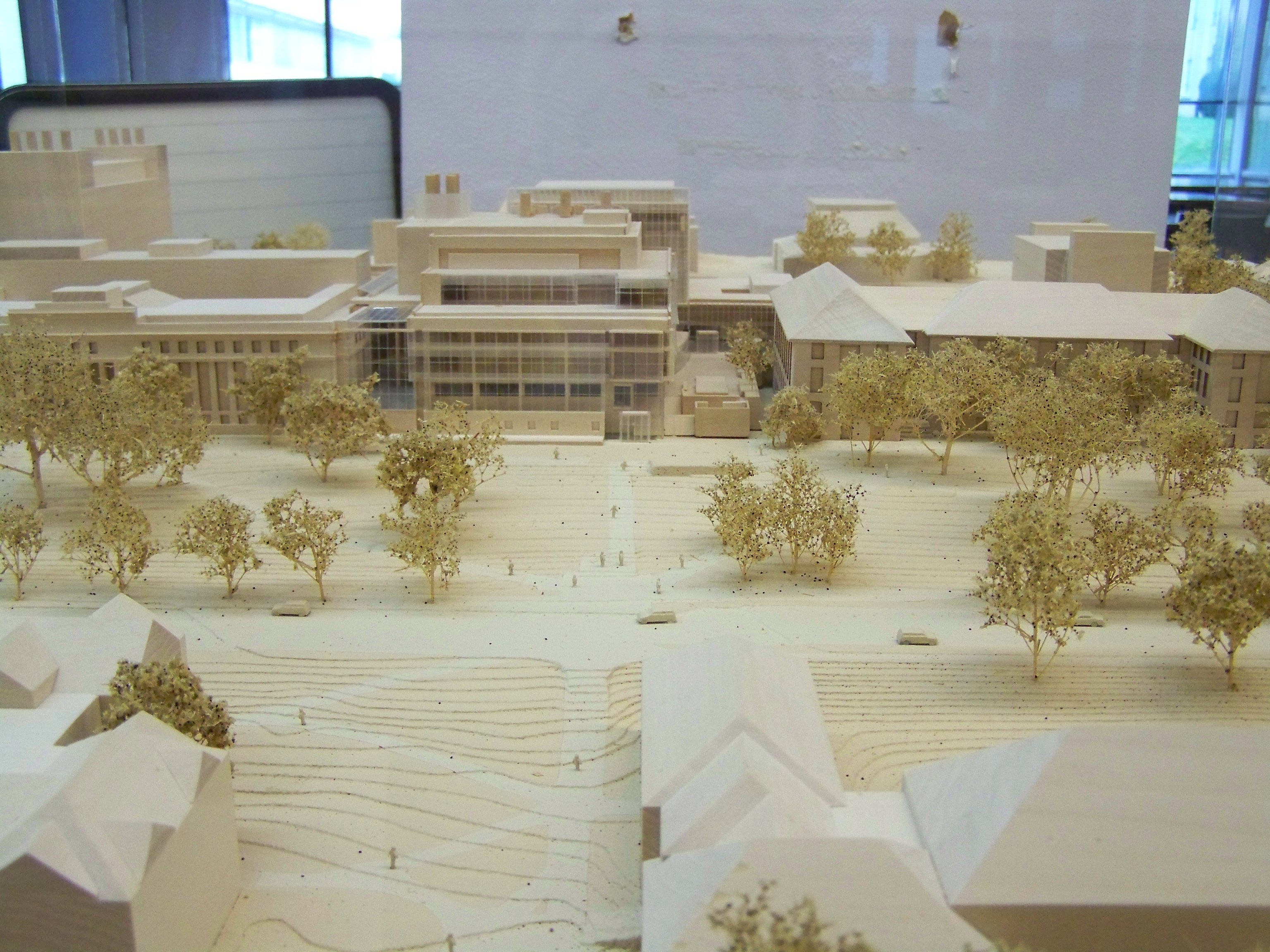
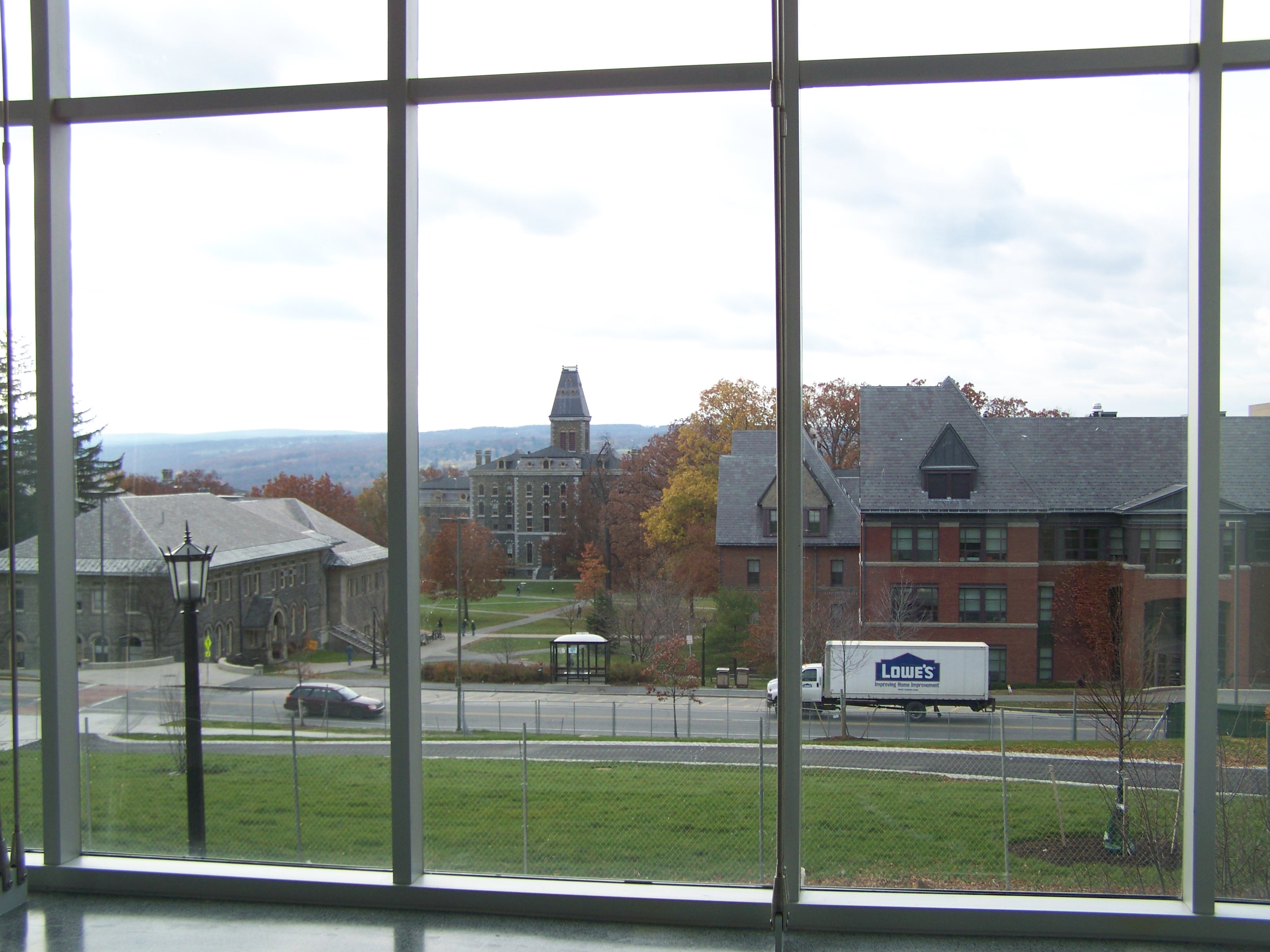
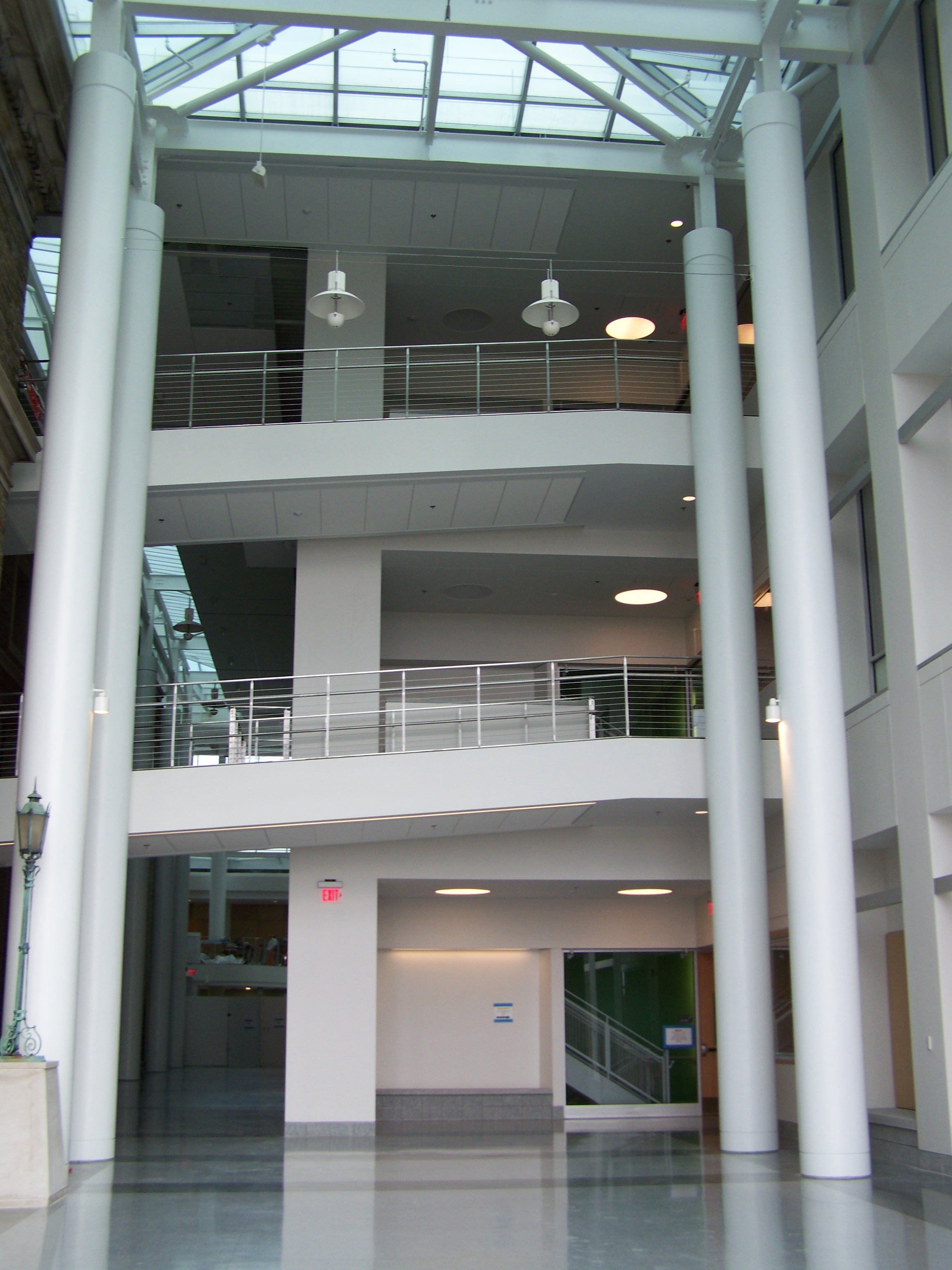
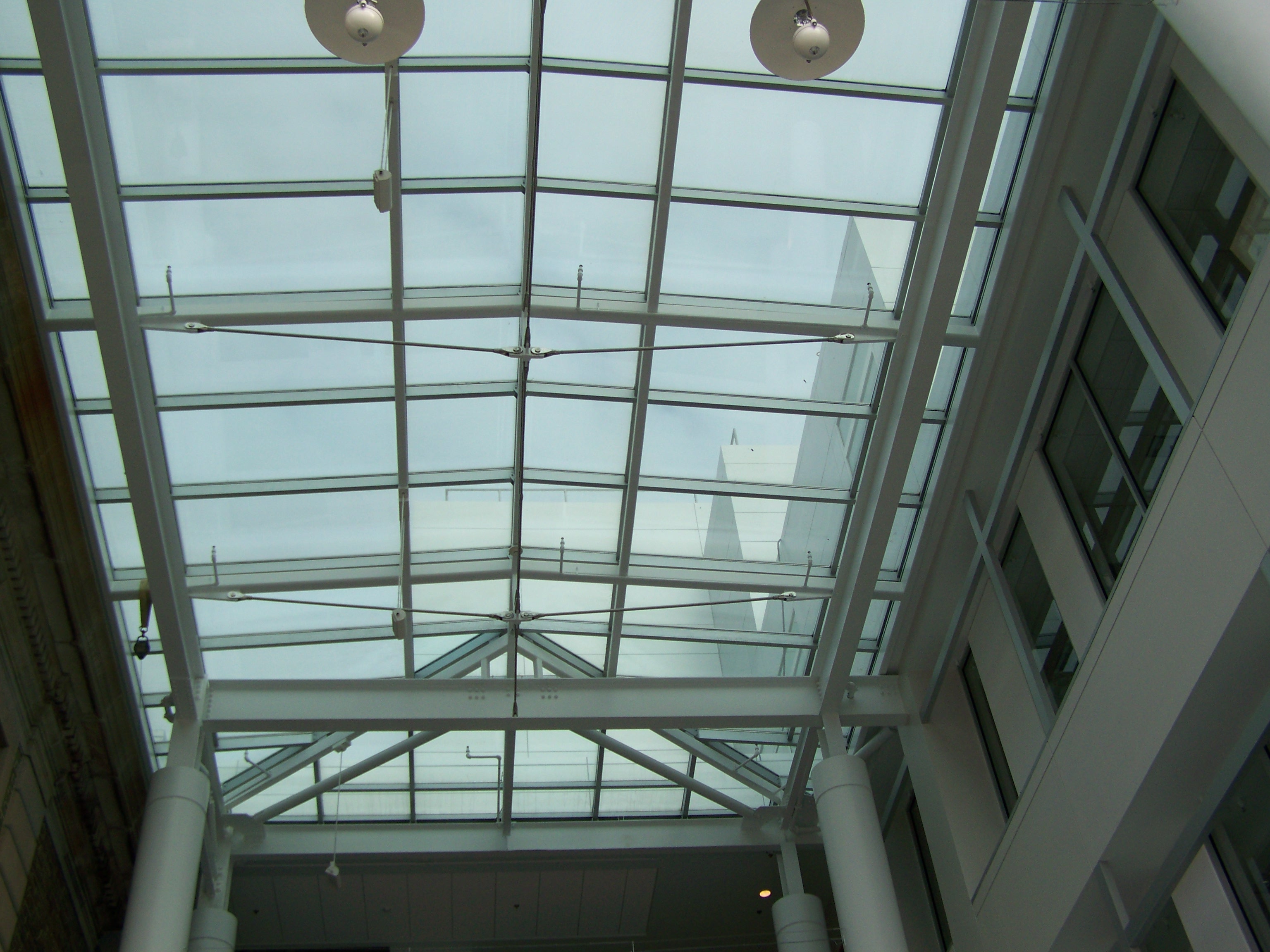
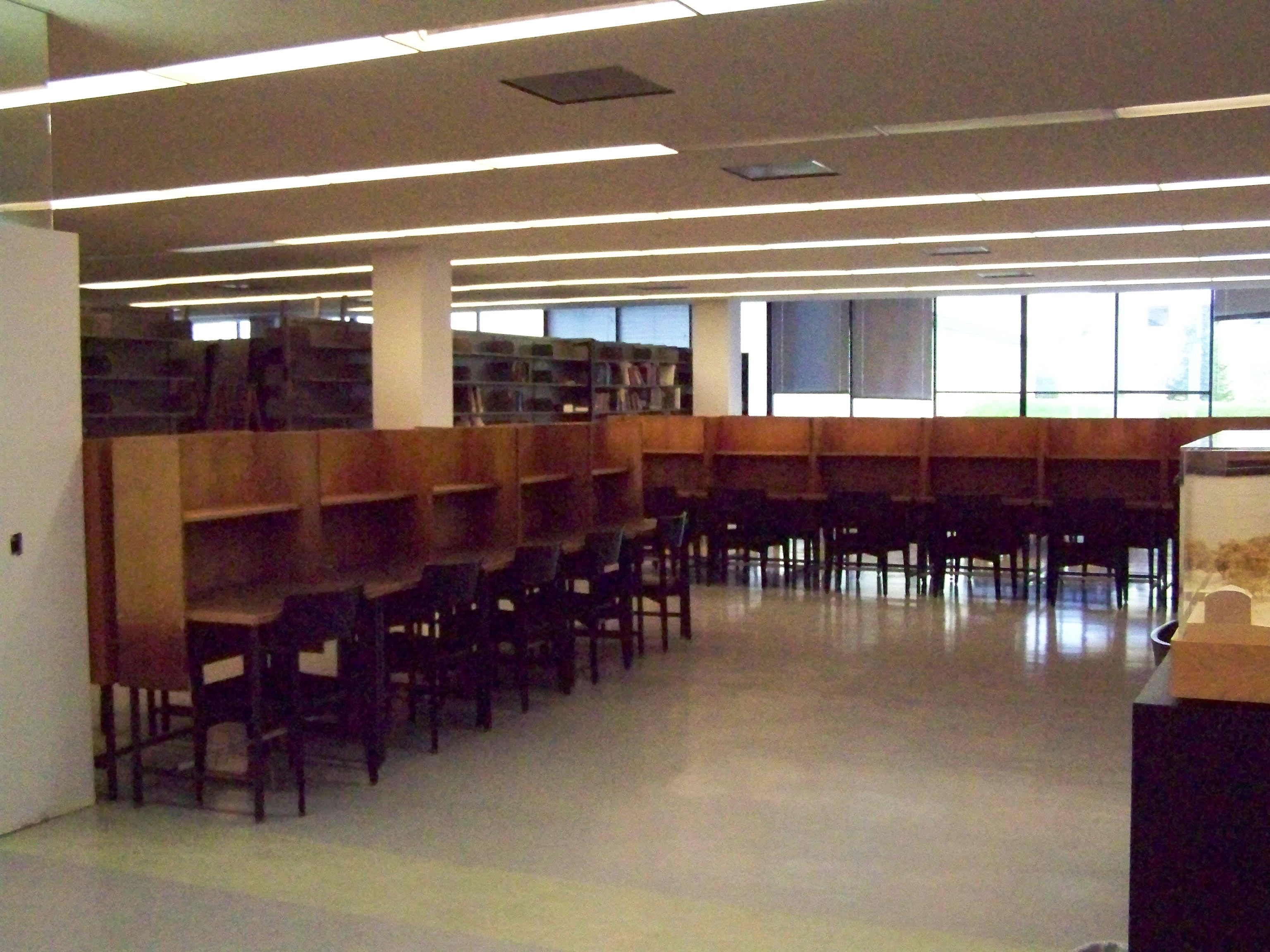
This mock-up, some empty carrels and a couple of bare desks are all that is left of the Physical Sciences Library in Clark Hall. I noticed one of the pillars an eulogy tot he library that Munier Salem had written in the Sun on March 26, 2009, yellowed but encased in a simple black picture frame. I thought it was a nice gesture to the library that once was. Although I opted to not take a photo of the column, here’s a link to its online version.

Insert your name here…for about $35 million. Could be you…

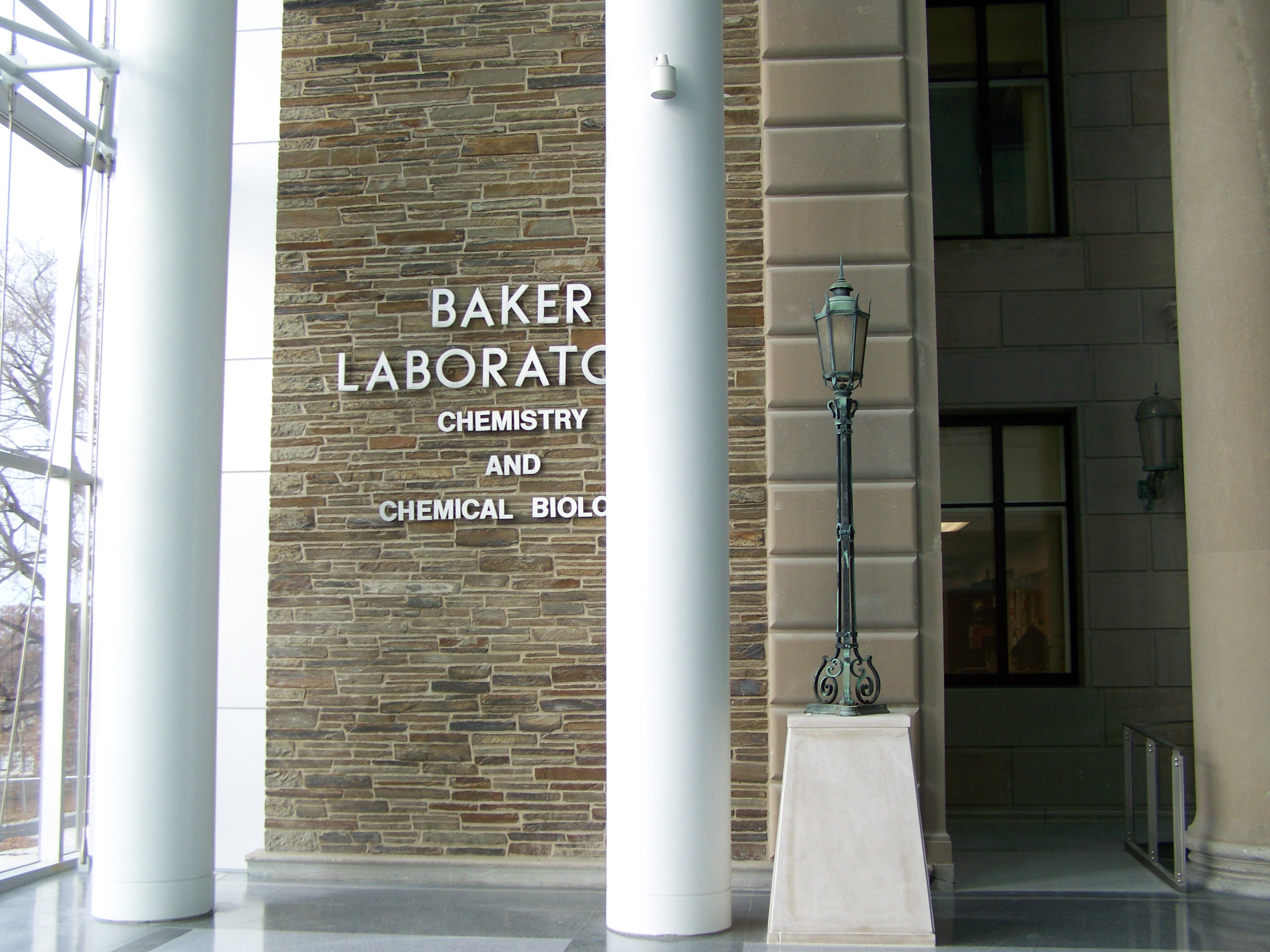
Leaving the oxidized copper lampposts was a nice touch.


The Medical School

10 10 2010

The position of Cornell’s Medical School within the greater institution is a bit awkward. For the most part, unless one is associated with something in the medical field, or lives in the New York City area, we’re liable to forget it exists; it is, after all, located in Manhattan, on the Upper East Side. However, this isn’t to say the school isn’t a valuable asset of the university; it’s just really disconnected from many of Cornell’s affairs. With 400+ doctors-to-be and over 1,000 academic staff, the medical branch of our university manages to exert a significant influence.

Historically, the med school operated out of both Ithaca and New York City. The New York City portion was established in 1898 as Cornell University Medical College, and included women as well as men. The Ithaca branch operated out of Stimson Hall and paralled the first two years of the NYC branch, but was closed in 1938 due to declining enrollment. Ithaca was always seen as too small of an environment to allow for adequate medical training. Until its closing, the Department of Surgery was based out of Cornell proper and was originally led by Dr. Lewis Stimson, for whom Stimson Hall is named. Back in the days of its opening, one did not have to have previous college education to begin medical school; Johns Hopkins and Harvard first mandated prior education in 1907, and Cornell followed suit the following year. The results were disastrous at first, with the standard class size of 70 dropping to 3 for the entering class in 1908, and from 35 to 11 in Ithaca. Total enrollment went from 320 in 1907/08 to 118 in 1911/12, and finally back up to the low 300s by the early 1920s (Bishop 385).

Through some negotiating with George Baker, a governor and wealthy benefactor of New York Hospital, an affiliation agreement was arranged between the medical school and the hospital in 1913, and in June 1927 the two became formally intertwined as New York Hospital Cornell Medical Center (this included a nursing school run by the hospital that then came under Cornell’s academic umbrella starting in 1942). George Baker is also the same guy who’s name adorns Baker Tower and Baker Lab on the Ithaca campus. Although the hospital and college were part of the same complex, they were largely autonomous and ran under their own supervisory groups. Realizing the financial power of a large medical institution, “The Society of the Lying-In Hospital of the City of New York”, essentially an ob/gyn clinic, joined the complex in 1928, and the Manhattan Maternity and Dispensary joined the complex in 1929 and became the pediatric unit. A children’s hospital would join the mix in 1934, and the three institutions formally merged into the New York Hospital in 1947. The iconic art deco tower (Baker Tower) of the medical school opened in September 1932 (patients were first received at the hospital at 10 AM on the 1st, and medical students began classes there on September 26th).

Image property of WCMC archives.

The Graduate School of Medical Sciences was established in 1952, and the NY-Cornell nursing school closed its doors in 1979. In 1997, the large building that defines the eastern portion of the complex, the Greenberg Pavilion, was opened, and New York Hospital merged with Presbyterian Hospital the same year (which has an affiliation with Columbia University; the two still maintain separate facilities, so it’s basically one giant unholy mass of conglomeration). The medical school was renamed for major donor and Citigroup billionaire Sanford Weill and his wife in 1998, becoming the Joan and Sanford I. Weill Medical College of Cornell University, or Weill Cornell Medical School (WCMC) for short. The college has been home to the first eye bank in the United States (1944), the first kidney transplant (1963) and MRI Machine (1983) in the New York area. In the meanwhile, a new 15-story $650 million 330,000 sq ft building is underway. You can tell how much I care about New York City by the number of times I’ve referenced it on this blog. Which I think is once…if ever.

WCMC Qatar was established in 2002 by Cornell and the Qatar Foundation, and began instruction in 2004. For those who are unsure, Qatar is a small, wealthy Middle Eastern country slightly more conservative than Dubai in the UAE, and just as rich. The Qatari royal family has invested through the Qatar Foundation a vast sum of money into its “Education City” complex, with one of those facilities being Cornell’s Qatari medical school (WCMC-Q). Other schools invested in Education City include Carnegie Mellon, Georgetown and Northwestern. Cornell was its second affiliation, after Virginia Commonwealth University four years earlier. WCMC also has an affiliation with the Bugando Medical College in Tanzania that began in 2007.

WCMC-Q in Doha. Image from Wikipedia.


Homecoming Construction Photos

29 09 2010

If I free up enough time between proctoring exams, I might write something more substantial. Until then, he are the physical highlights of Homecoming weekend.

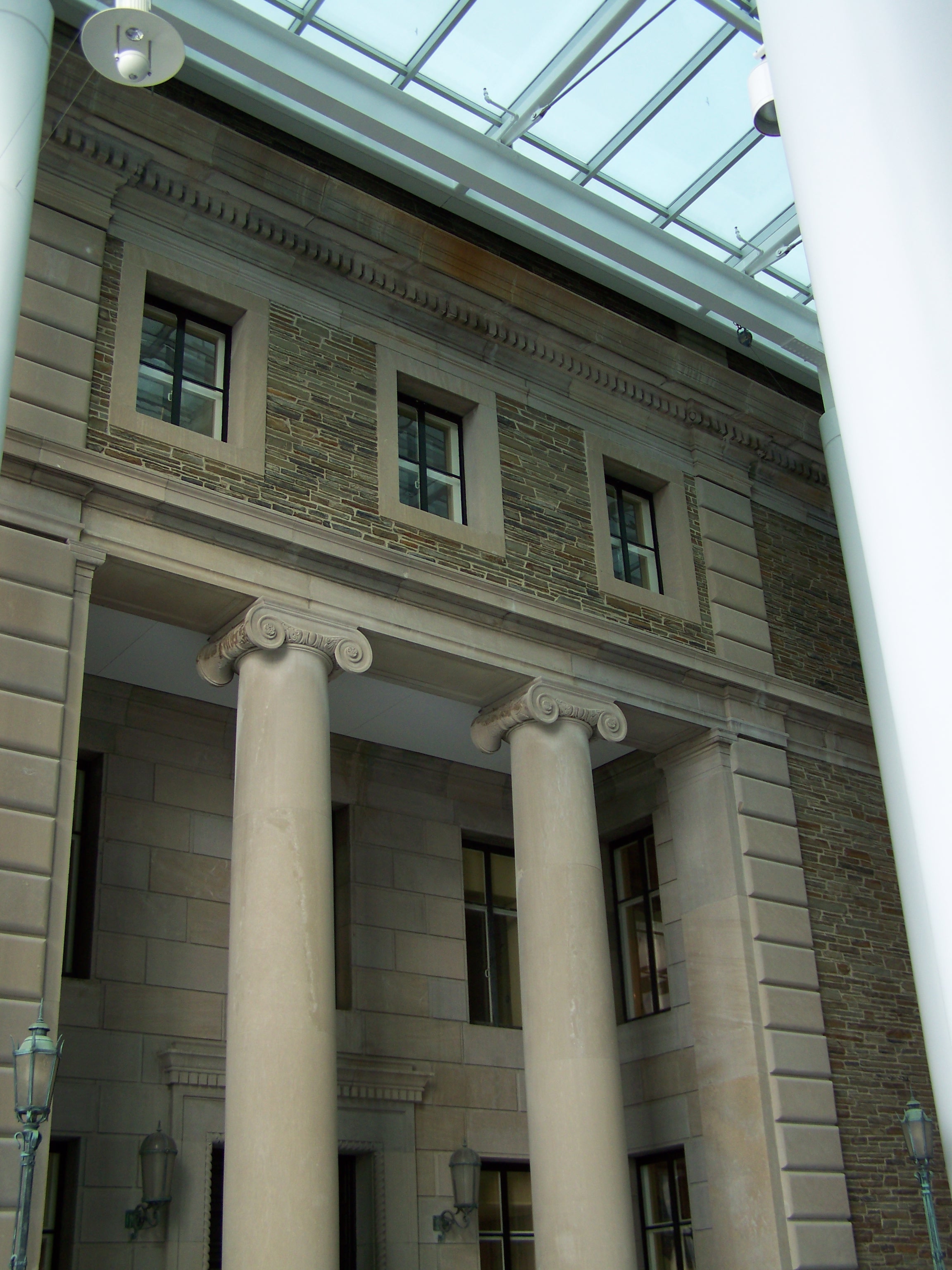
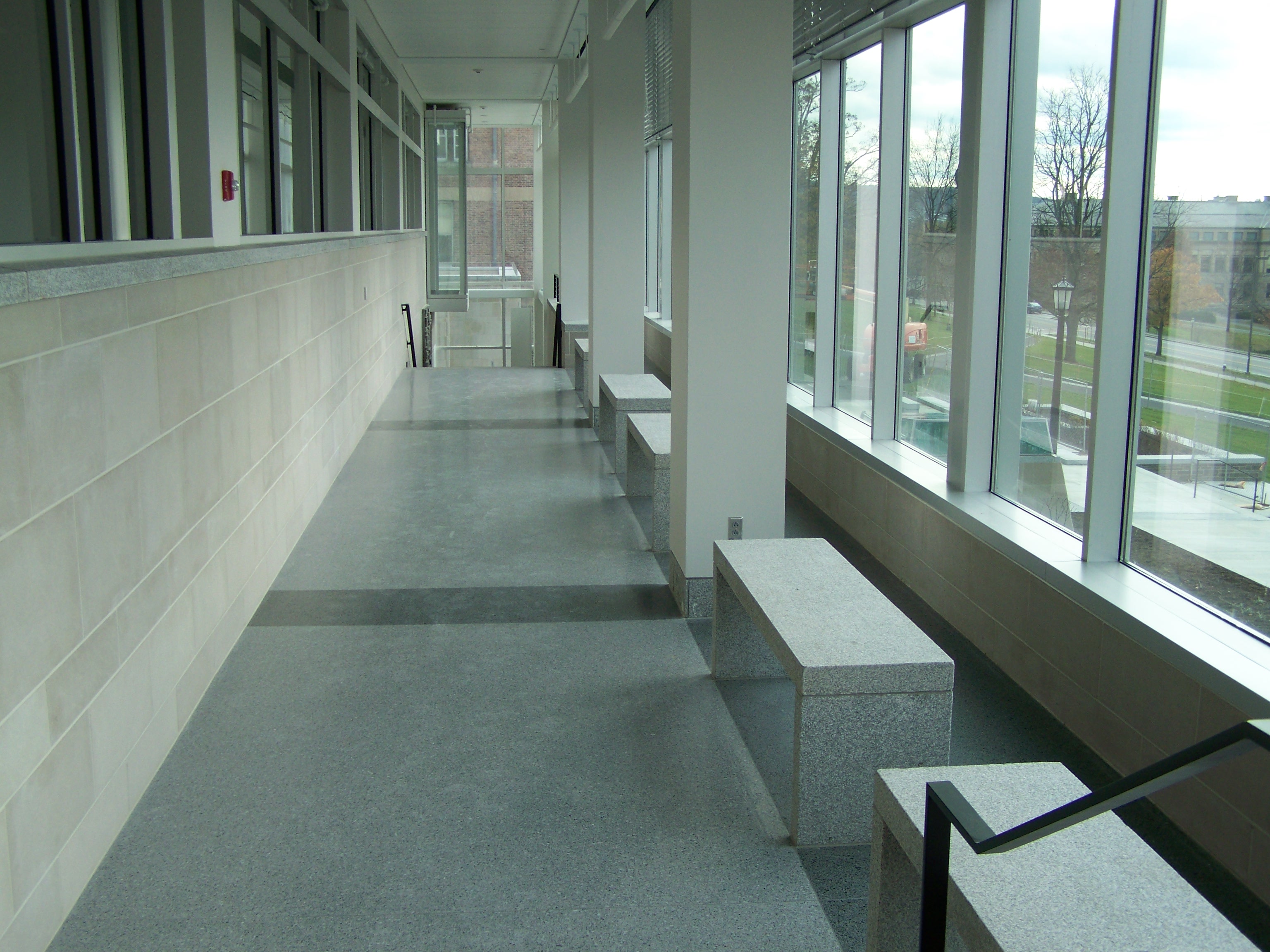
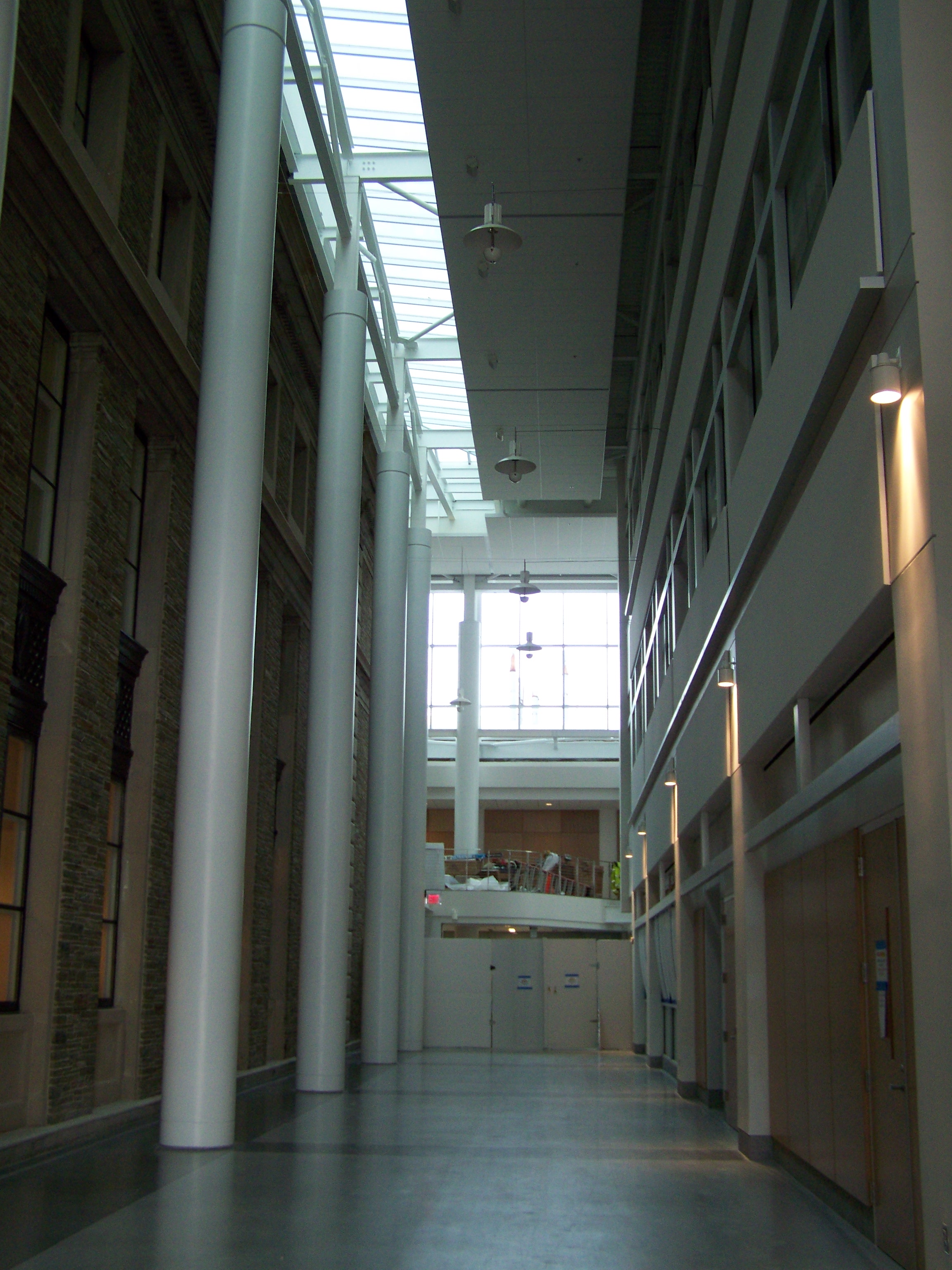
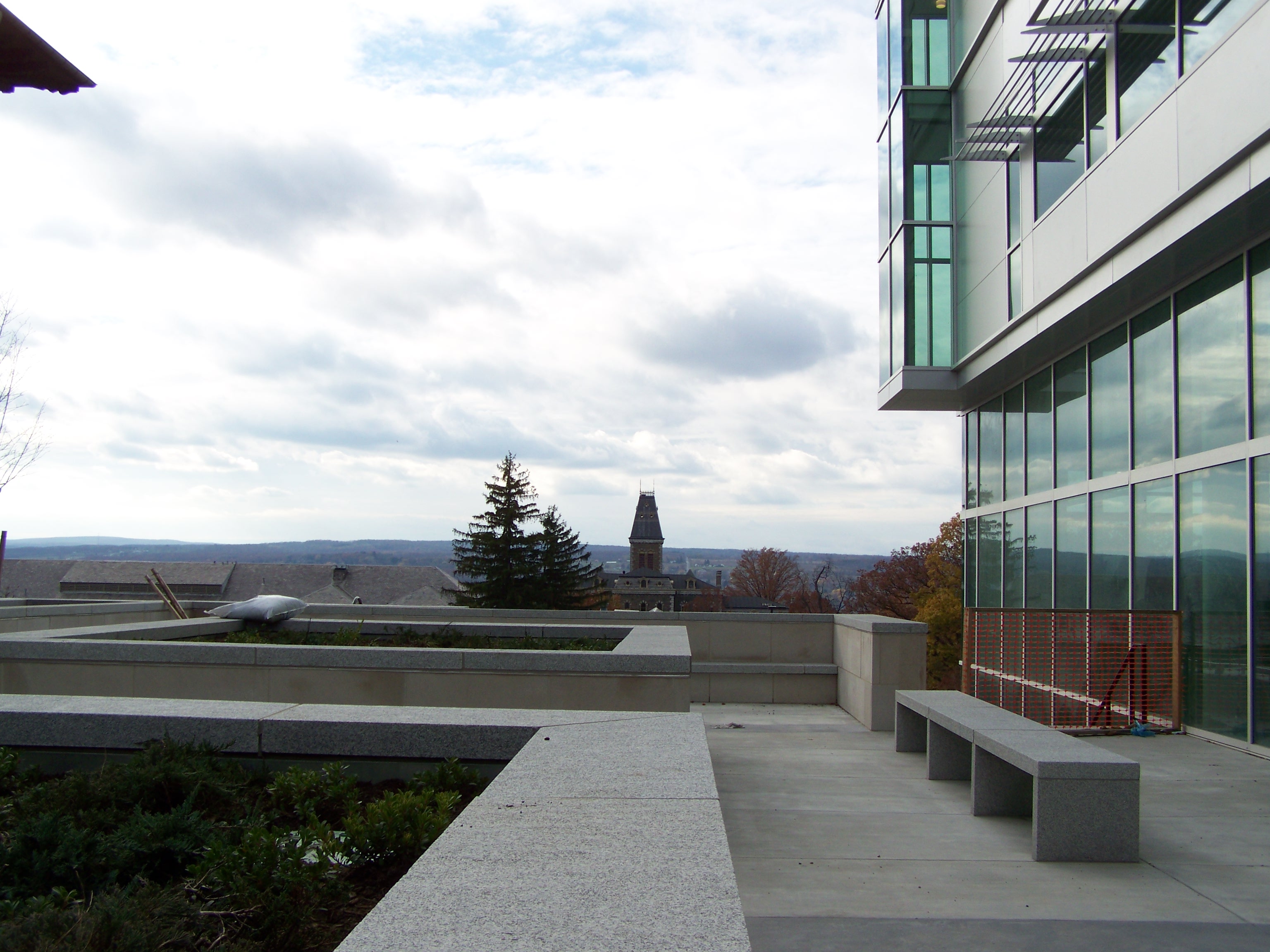
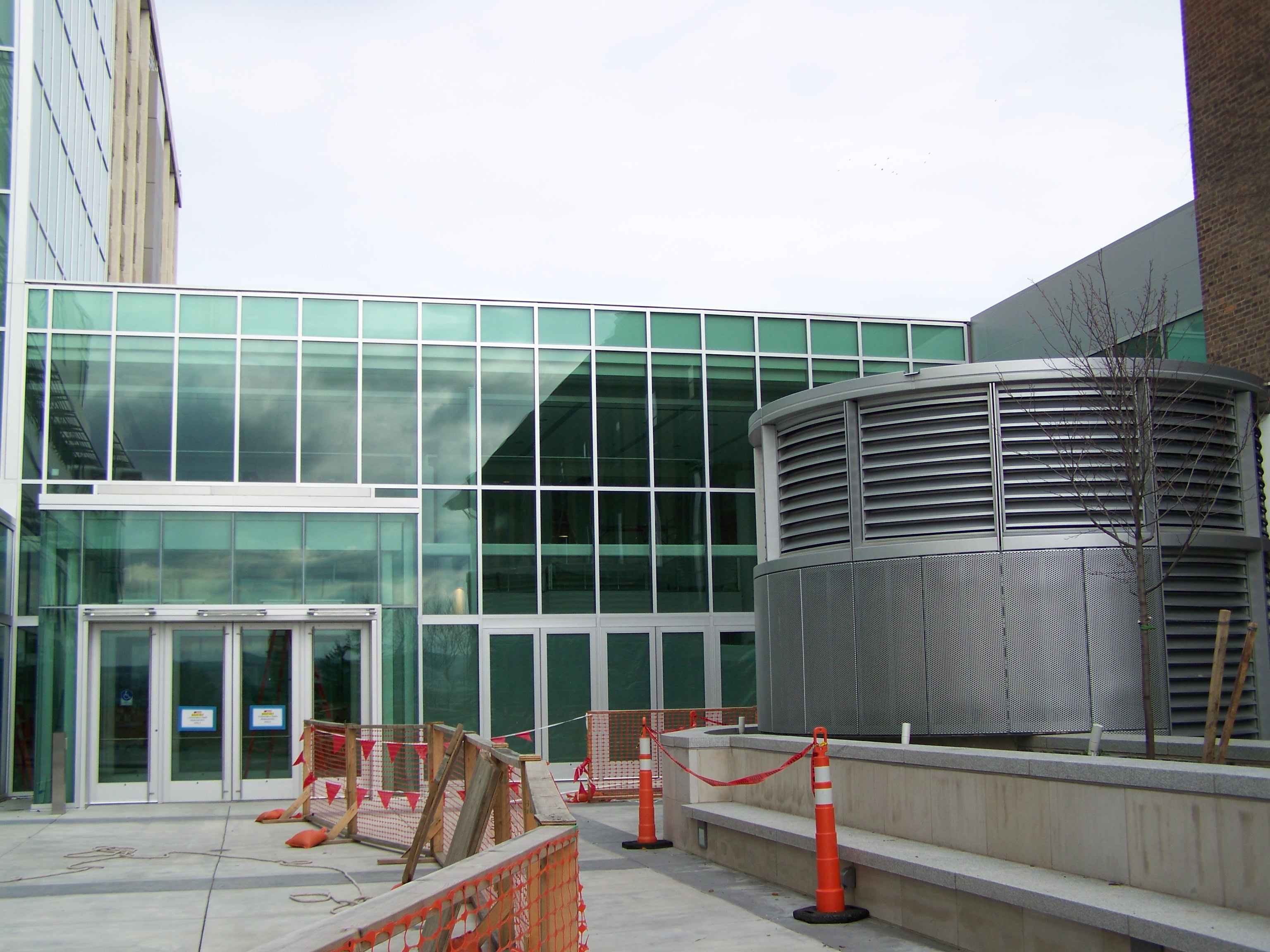
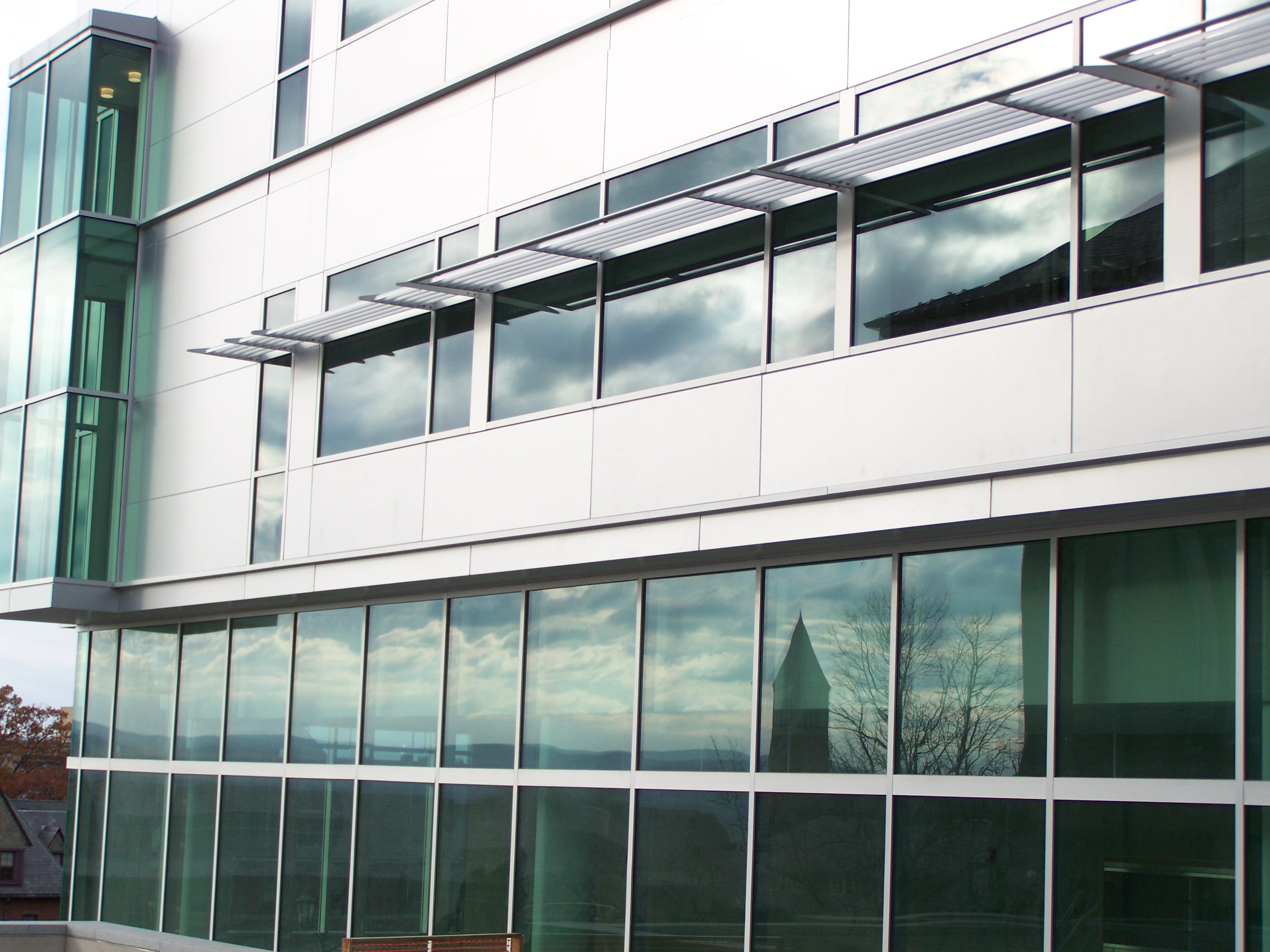
The 197,000 sq ft Physical Sciences Building is nearly complete, with a soft opening planned for next month. Although still fenced, the landscaping is nearly completed. The glass isn’t as clear as the old renderings suggested, but otherwise it’s pretty faithful to the sketches.

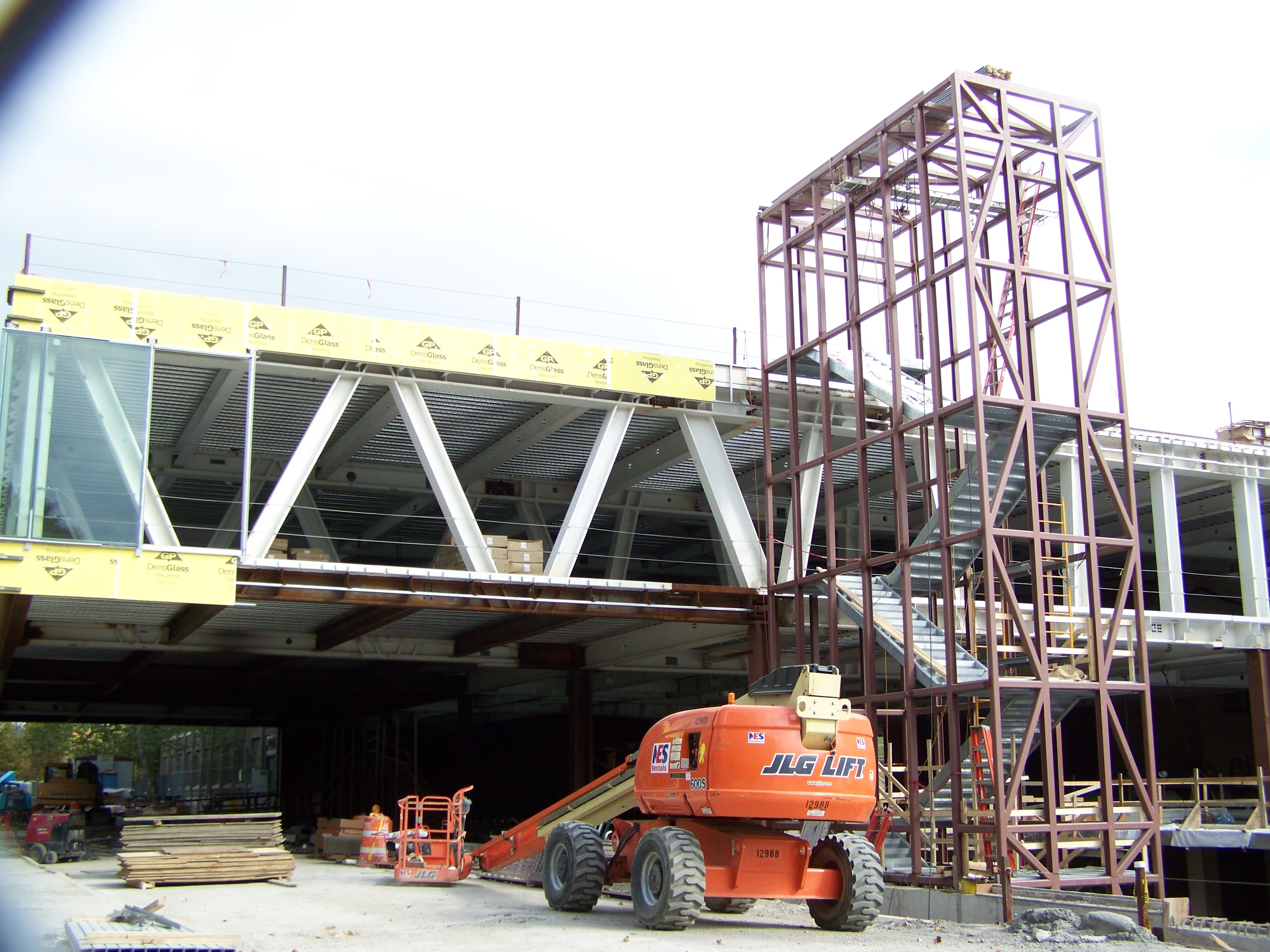
Regarding work on Milstein Hall, a taste of what to come was shown with the installation of a small amount of glass on the northwest corner. Slightly greenish-blue in hue, which to me was slightly unexpected but not something I feel strongly about (I imagined a bluish tint if any at all). The 43,000 sq ft building is set to be complete by this time next year.

The Johnson’s addition is mostly underground, but some of the concrete work will build out to an above ground complimentary structure to the main building. It would appear that work has advanced quite a ways, with the rebar on the left indicating more pouring is yet to come for the east side of the 16,000 sq ft addition.

MVR North continues construction, though externally it hasn’t made too much progress in the past few months. The stone facade on the parking garage has been finished and work has been done on the exterior stairwells. The 87,000 sq ft building is set to be complete by the end of the winter.


News Tidbits 9/24/10: New Fraternity to Open on Campus

23 09 2010

Arguably, it may not be a good time for expansion, but that’s it’s own issue. The Cornell Daily Sun has published an article discussing how the IFC is inviting the fraternity Phi Kappa Sigma (known on many campuses as “Skulls” due to their insignia) to speak to the IFC general body before a proposed recolonization this upcoming spring.

Most apparent is that this illustrates how much easier it is for a new fraternity to open on campus vs a new sorority. Sororities have to have the Panhel’s benediction and have to compete against other sororities for the opening (like what’s currently going on for the new 12th sorority; five sororities are narrowed down to three, who must then give presentations before Panhel decides which sorority to offer the position to). For a fraternity, a national organization (i.e. you don’t necessarily need an interest group) has to express interest, and a good plan of execution on how to establish itself on campus.

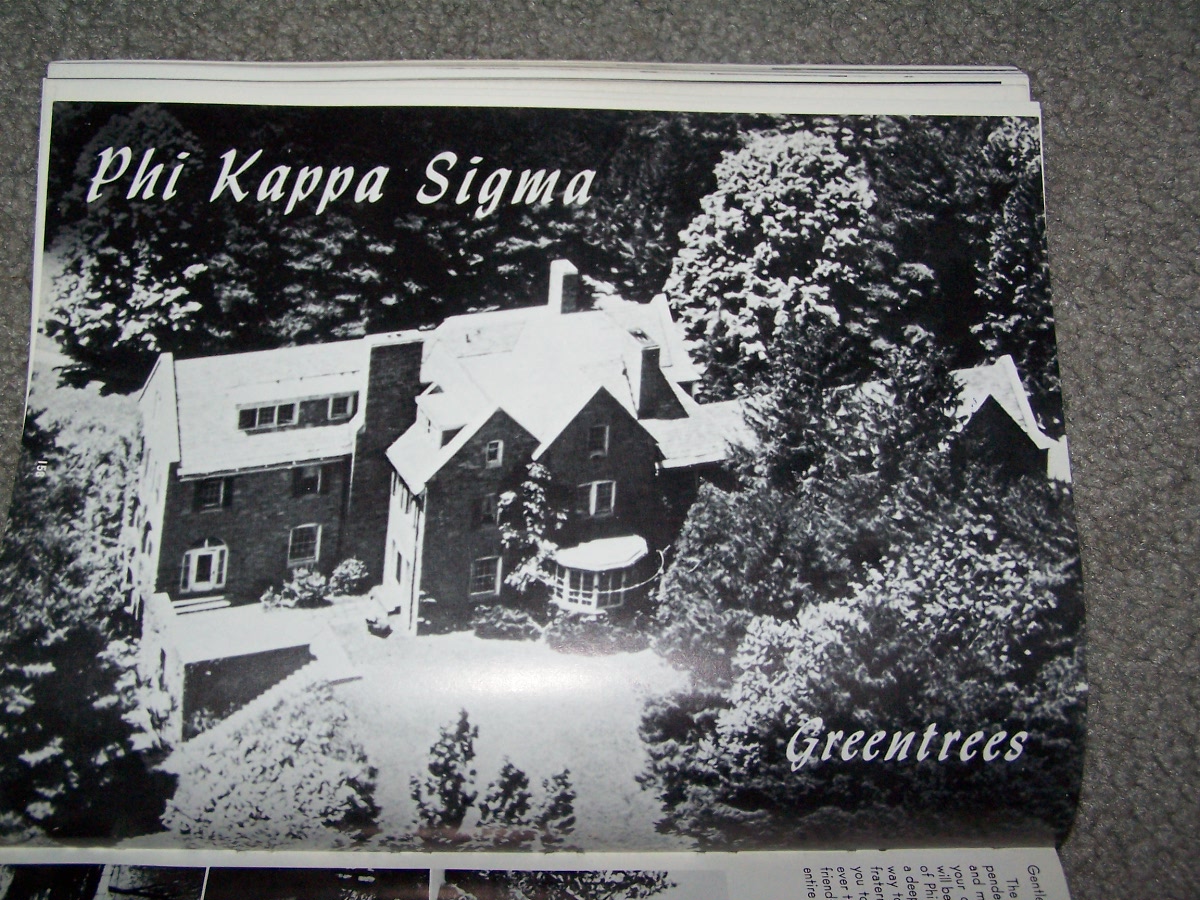
A little bit of background on Phi Kappa Sigma. They were a fraternity that previously existed at Cornell. The Cornell Chapter was founded in 1891, but closed in 1990. The current Pi Kappa Phi house at 55 Ridgewood Road (“Greentrees”) used to be occupied by Phi Kappa Sigma (Cornell owns the house; on the facilities website, the house is still identified as Phi Kappa Sigma). The house, built around 1900, was the property of George Morris of the Morris Chain Company (later Emerson Power Transmission) until 1935, when it was sold to Phi Kappa Sigma. Sometime between 1935 and 1990, the Skulls sold the house to the university (likely for tax and maintenance purposes correction: It would seem that Phi Kappa Sigma put the house up for sale in 1990 and it was purchased by Pi Kappa Phi). After the Skulls vacated the premises in 1990, Pi Kappa Phi, which was recolonizing at the time, moved in the following year. I’m not sure how a recolonization may affect Pi Kappa Phi’s living situation. The fraternity is similar to Phi Delta Theta in that their newly established or reestablished chapters are dry houses.

Hopefully, they’ll have a better go at things than other recently recolonized chapters. Theta Xi failed to make significant headway and from what I’ve heard, has gone dormant once again. Kappa Alpha still exists, but as a mere shadow of its former self. But, only time will tell if Phi Kappa Sigma can once again make its presence known on Cornell campus.


The Keyword Bar XI

20 09 2010

…because I don’t feel like researching (Cornell related or work-related).

1. “new collegiate gothic” (9/19/10)

Okay, so this probably has little to do with Cornell, as Cornell hasn’t built in collegiate Gothic in over fifty years. Regarding that, I’d like to share a brief quote from Morris Bishop’s A History of Cornell:

“The Buildings and Grounds Committee recommended (September 19, 1950) that we wait no longer for donors of Gothic magnificence, but that we build structures that would pay their way. Said the chairman, John S. Parke ’23: “Engineering rather than architectural construction is advisable”. (597)

Of course, then we ended up with such “lovely” works as Olin Library and Olin Lab and Bradfield Hall.  I suppose the only way one could force a new Collegiate Gothic structure onto campus today would be as a stipulation of a very large donation (as in, one that pays for an entire new building without major additional funding from Cornell).

2. “ivory tower drinking society” (9/18/10)

This is a little murky. First off, it wouldn’t formally be called a drinking society  (the more likely term would be social society). As for the existence of such a group, googling “Ivory Tower Honor Society Cornell” pulls up a bunch of linkedin profiles of sorority women in  who were part of Cornell’s “Ivory Tower Honor Society” during the 1990s. So, if I had to take a guess, it was probably a tenuous organization that served more of a social purpose than anything honorary. But, I can’t say for sure.

3. ‘tompkins county public library roof” (9/17/10)

It has solar panels (that generate about 145 kilowatt-hours). Kinda funny considering Ithaca is one of the cloudiest cities in the country (206 days/year).The library opened in 2000 after moving from a location several blocks away; the site used to be home to a Woolworth’s department store.

4. “ithaca 103 dryden ave video store” (9/15/10)

I was wondering if this would come up. As covered recently by the Sun, the Collegetown Video store shut down after nearly twenty years of service. The store open in February 1991. The unique metal facade was designed by Cornell architecture students while the store was renovating the building for its grand opening. No plans for new tenants have been announced at this time.

5. “college confidential cornell biology” (9/4/2010)

I’m going to use this as a bit of a conversational launching point, actually. Since a lot of my information has to be pulled from the internet,  stumbling through message boards is inevitable. College Confidential is somewhat trustworthy, but the discussion focuses on more practical questions – “how easy is ASIAN 2571” and “chance me for admission plz!!!11”. There’s a couple of sites where people rate their experiences at Cornell, which lack details but are often good reads if you’re just looking to kill time. then of course, there’s the gossip site College ACB, which focuses on which frat is best, which freshman girl puts out the most and which sorority has the hottest pledge class. A whole lot of douchebaggery, but on rare occasion there’s a really interesting topic that offers frank insight — but finding those is like finding a diamond in a pile of crap. Use at your own discretion.


News Tidbits 9/8/10: The Kappa Sig Dorm

9 09 2010

Being interested in both the Greek System and in the university’s physical facilities, an article that details how Kappa Sigma’s house has been transformed into a small dorm is bound to catch my attention. Evwn better, it’s a very well-detailed article, and I found myself pleasantly surprised with the quality of work.

I guess being an alum just reminds me of how unaware of news I am now, as this was the first time I heard anything about this renovation and reopening. The reuse of the building as a dorm is actually the less surprising part. 112 Edgemoor and 14 South are former Greek houses that operate now as small dorms (Triangle, which closed in 1985, occupied 112 Edgemoor up to 1985 and Kappa Alpha lived in 14 South from 1957-1990). Cornell purchased the Kappa Sigma facility as part of the Cornell University Residential Plan of 1966. Reasonably, when Cornell owns a facility (as it does with at least 15 Greek houses, of which all but one (722 University Ave.) are fully occupied), it’s financially much more preferable to maintain the space as a working residential facility. This goes for private houses as well — the article mentions Pike is being rented out as a boarding house. This policy also has bearing on active chapters; boarding which is a popular option with residential fraternities with low membership numbers as a way to maintain the financial viability of a house. Interestingly enough, the university used Craigslist to advertise the spaces, and managed to fill all but one.

The article reports that the estimate for maintaining an empty fraternity house runs about $80,000 to $90,000 in a given year. The extremely general description for the expenditures is maitenence. More specifically, heating (pipes may burst in the winter if the facility isn’t adequately heated), insurance, security for a vacant facility, interior and exterior upkeep, and other utilities (which cost money to even have access to let alone use) come to mind.

I’m rather surprised at Cornell’s investment in renovating the facility. I dunno how much work had to be done, but if the Kappa Sigma alumni have already started the rechartering process, then it’s likely the university won’t be filling the facility for more than two years.  But, I don’t know much about the maitenence of university-owned Greek houses (my fraternal alma mater was privately owned by an alumni board). It just struck me as curious.