Belle Sherman Cottages, 7/2013

30 07 2013

7-26-2013 010

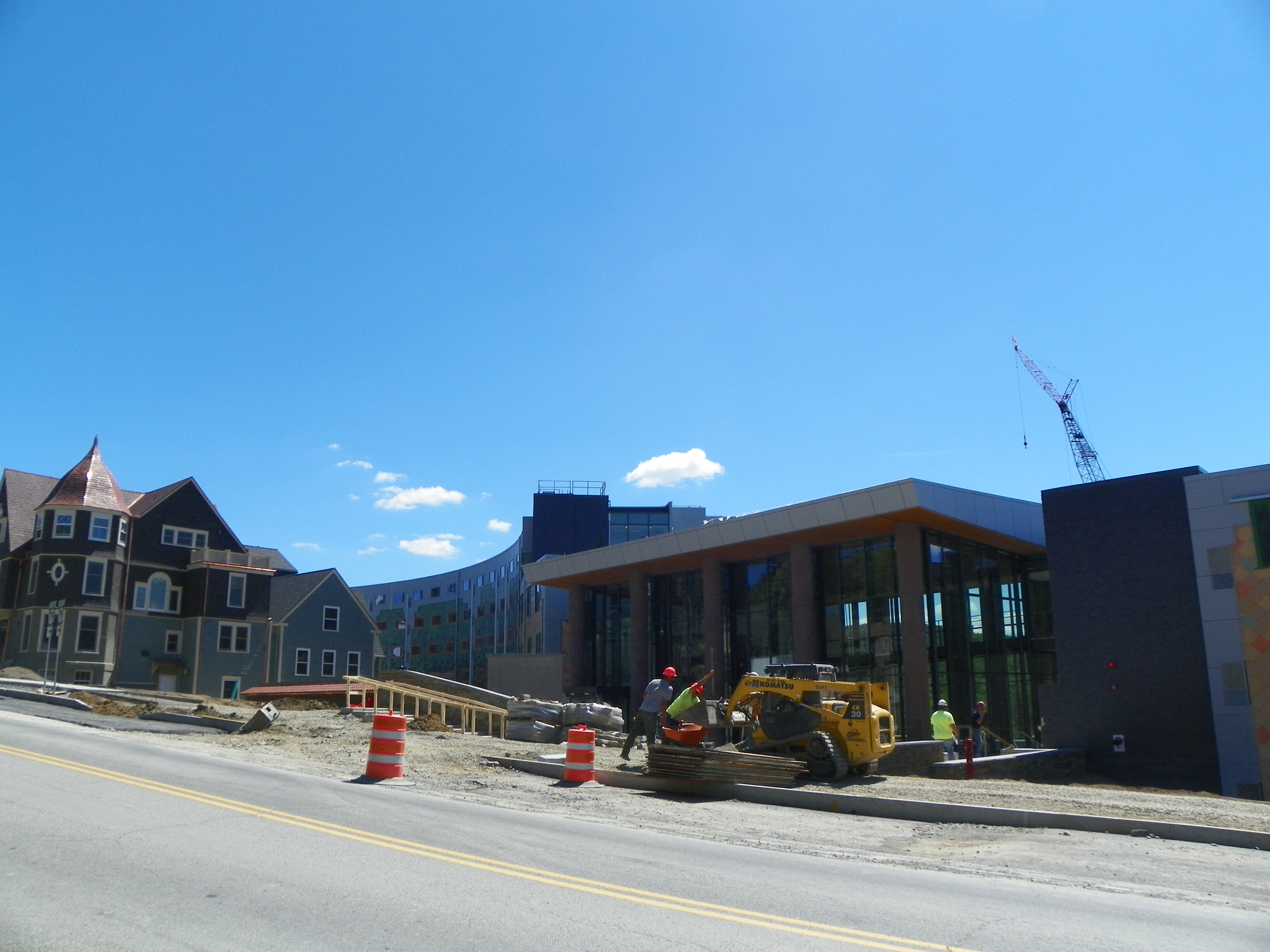
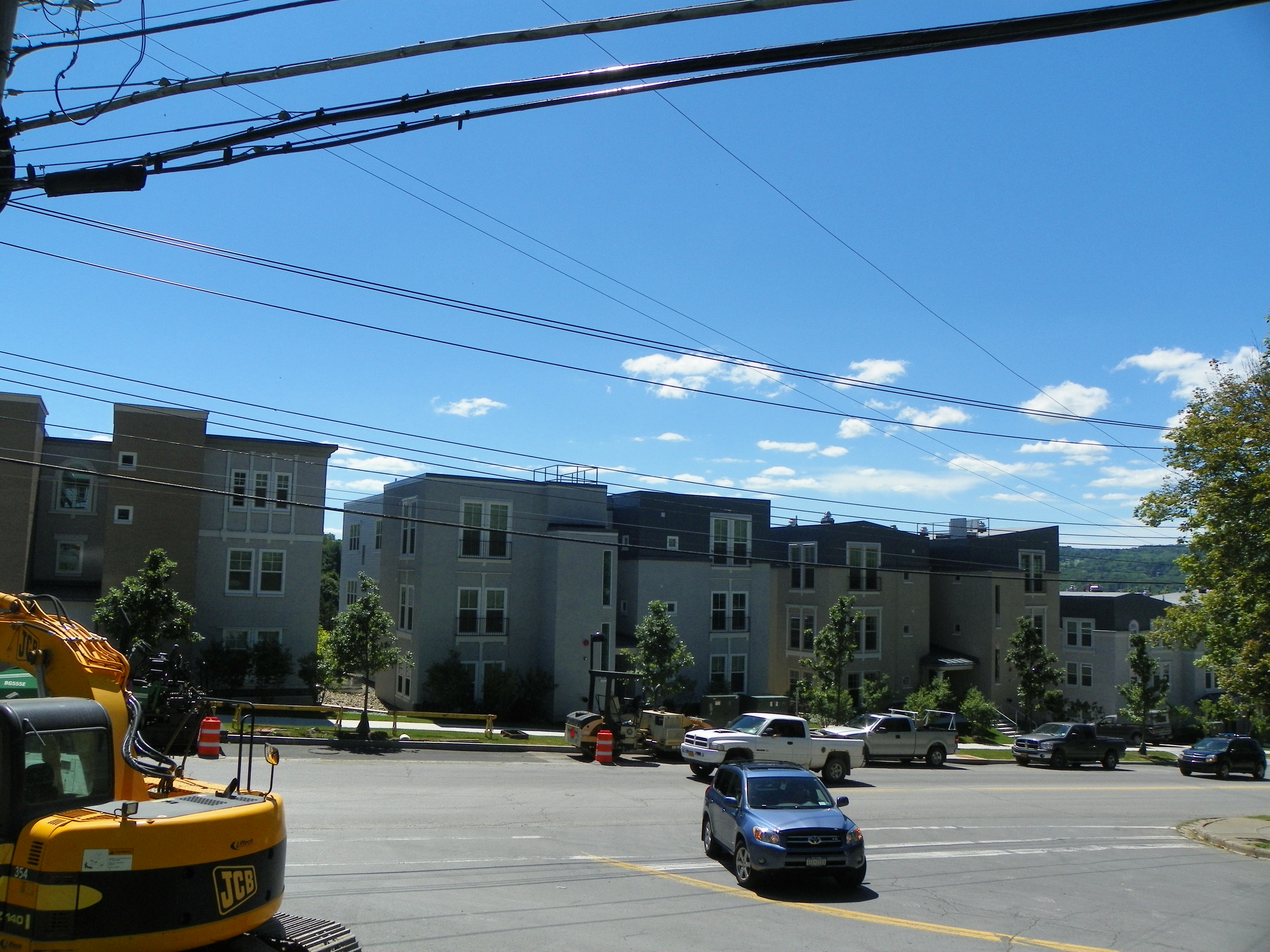
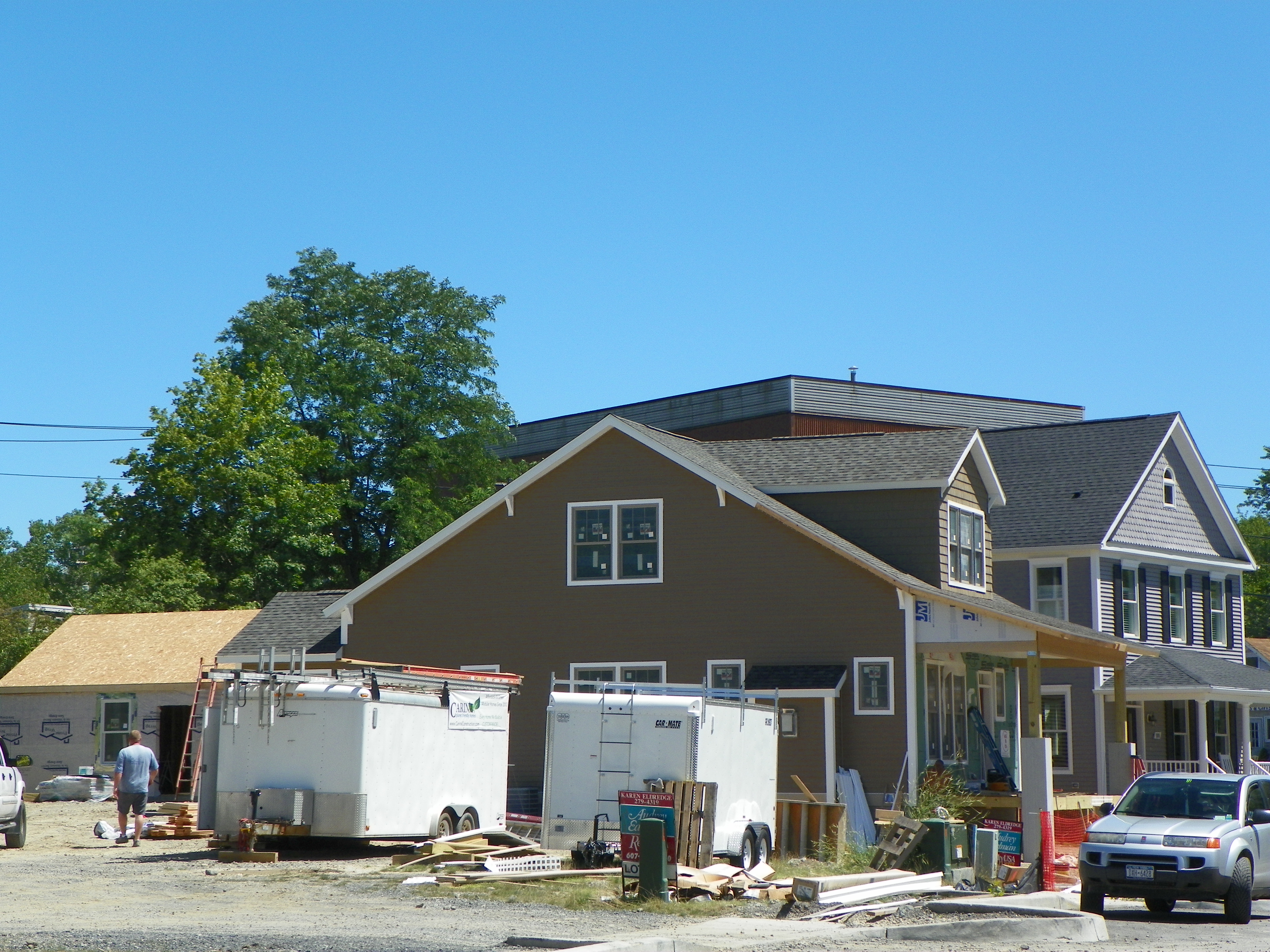
Next on my tour was a stop at the Belle Sherman Cottages to make a progress report.

7-26-2013 007

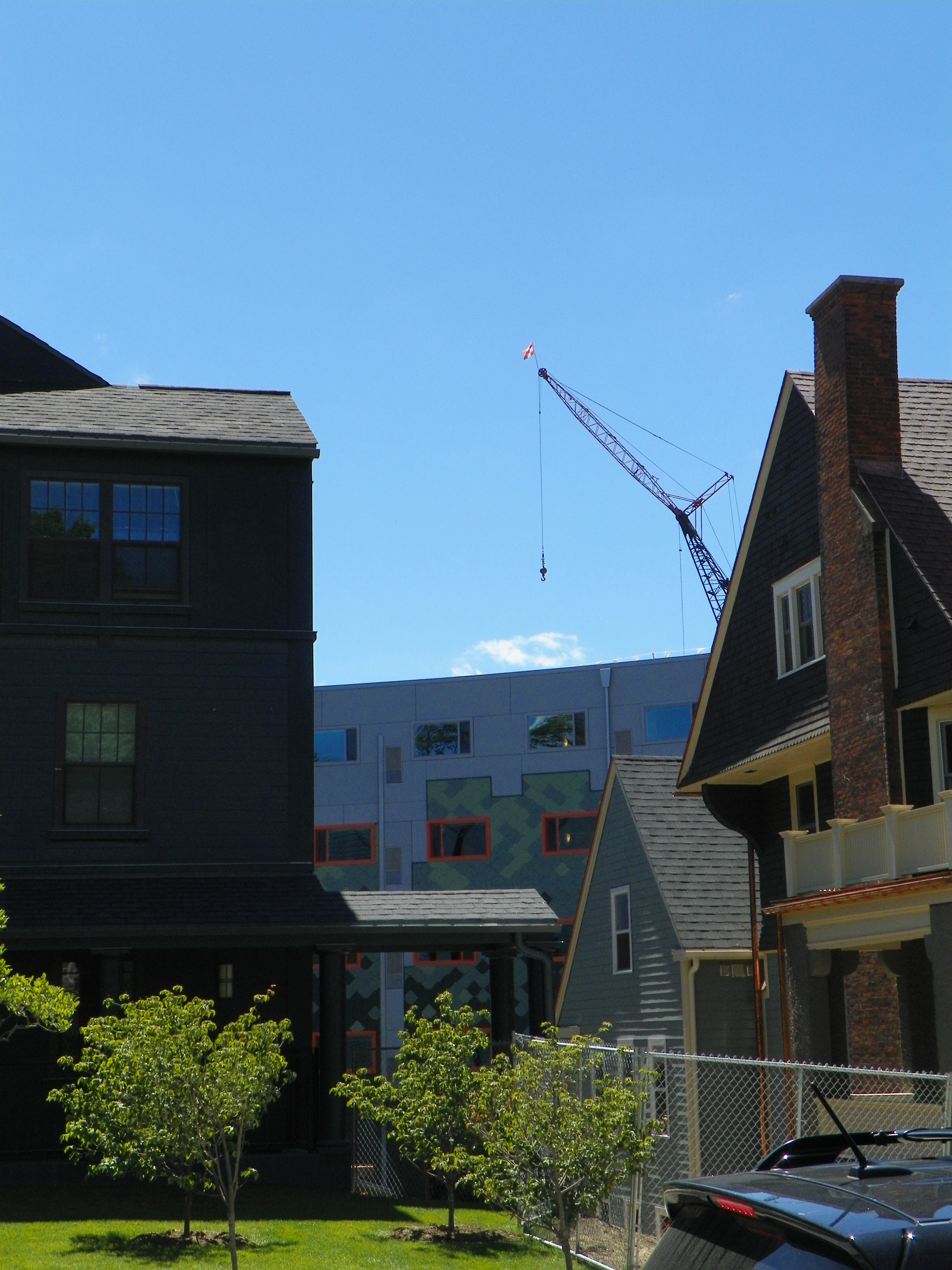
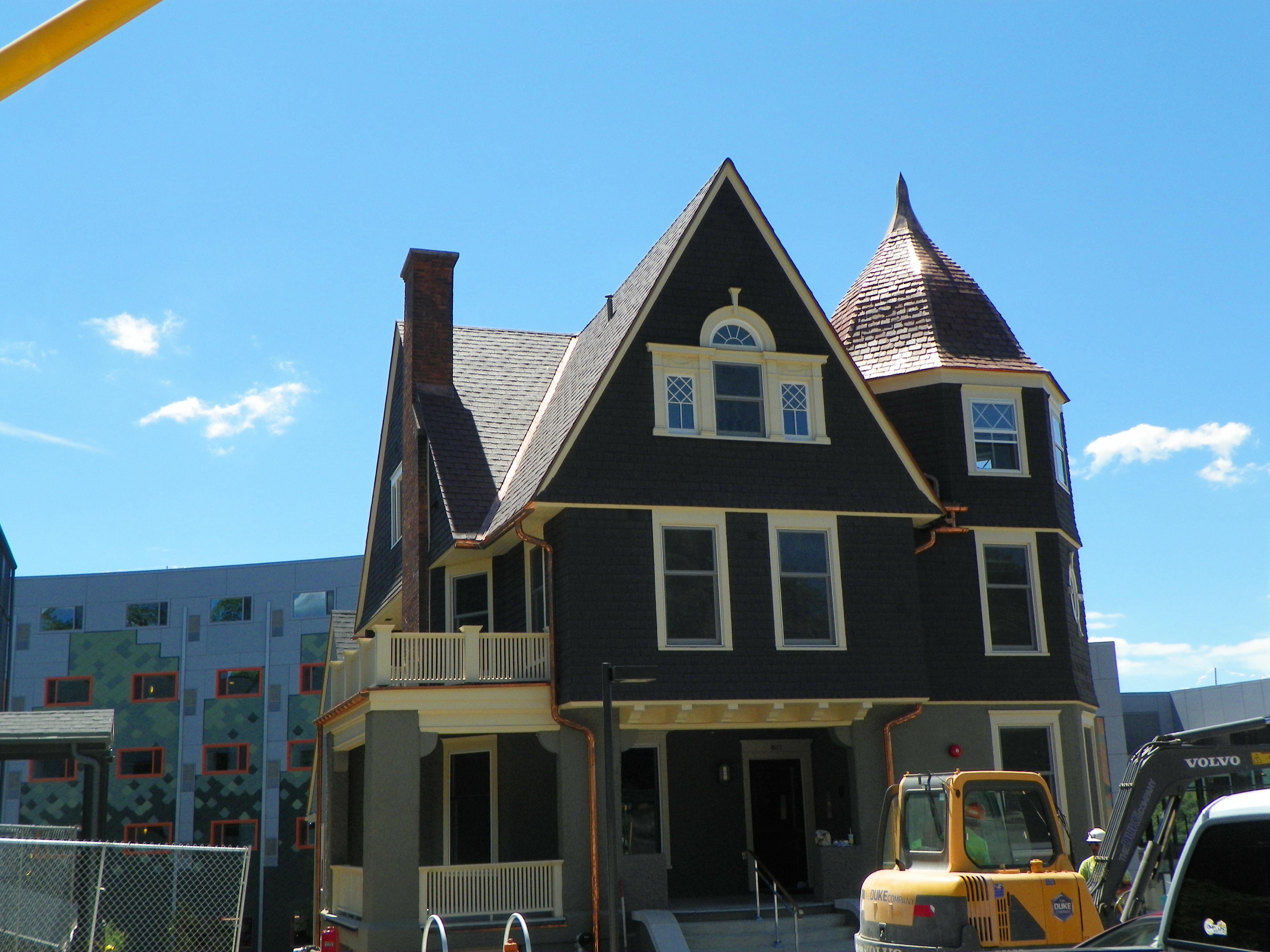
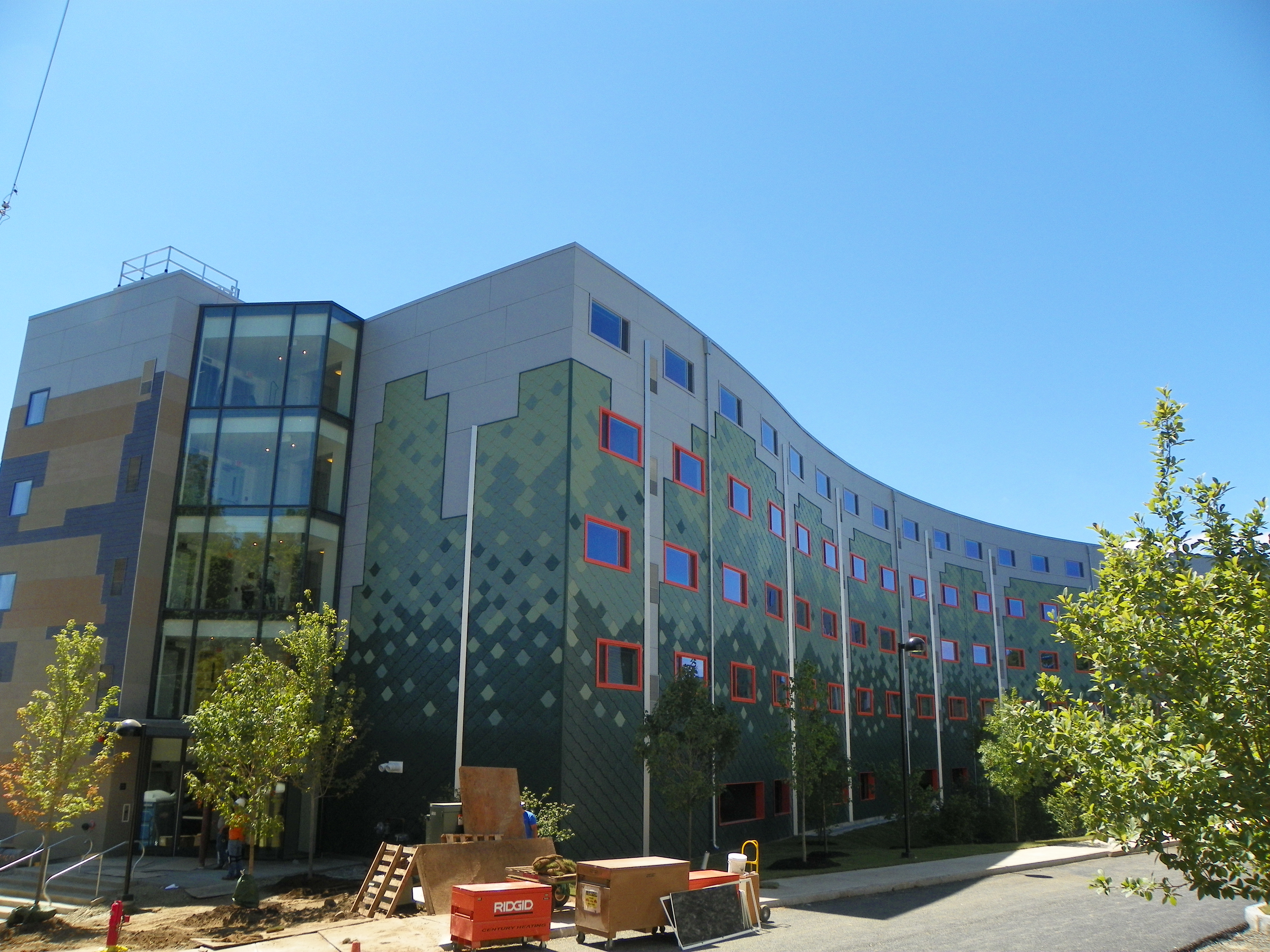
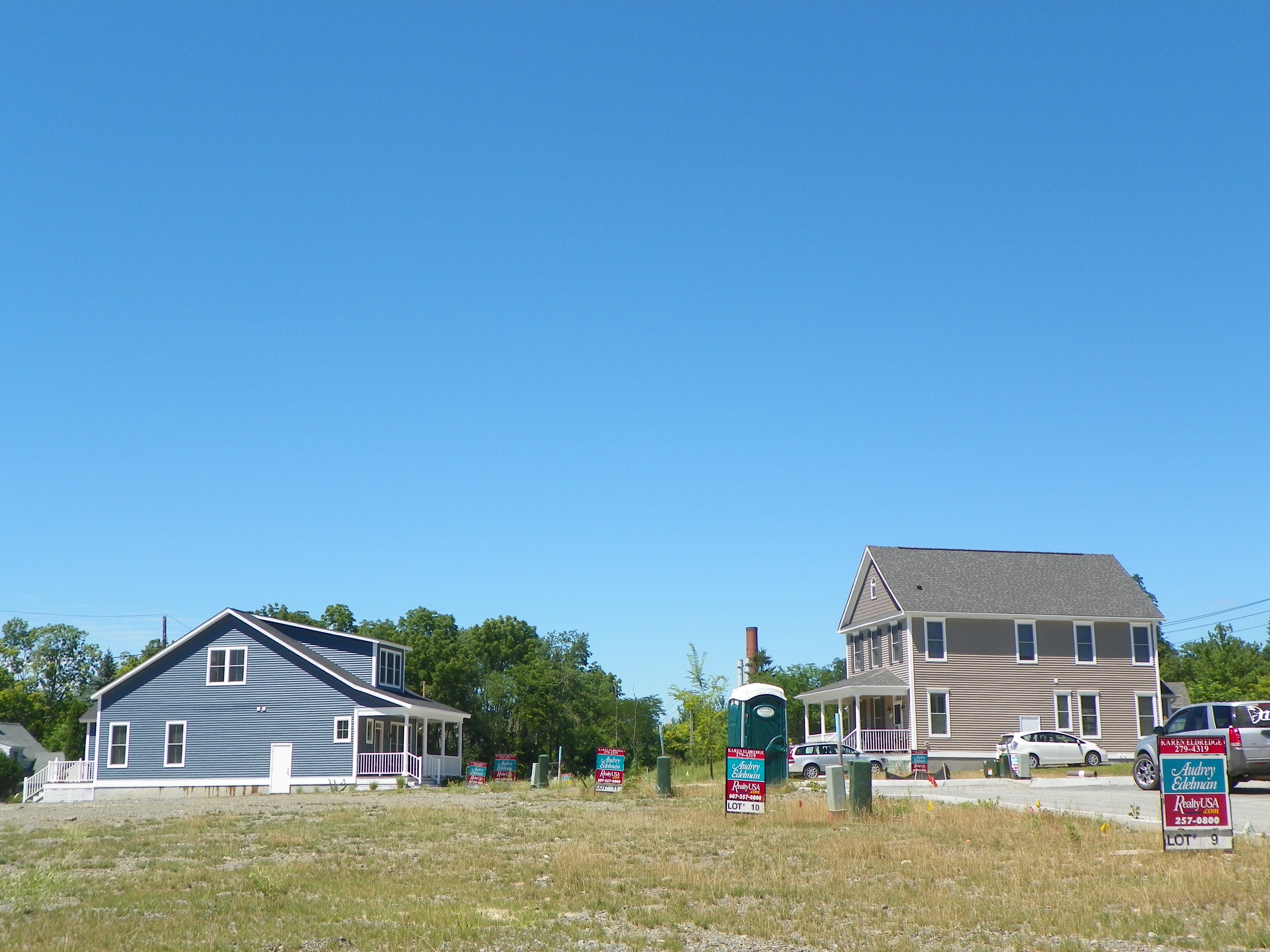
With four homes complete (Lots 1, 7, 8, and 14), one under construction (Lot 2), and one in site prep (Lot 19), the 29-unit development (19 homes, 10 townhouses) is beginning to resemble a settled neighborhood from a few very select angles.

7-26-2013 009


7-26-2013 008

103 Walnut Street (Lot 2) is currently underway, and will be completed in the next couple weeks. Only three of the five styles are represented so far, the Victorian and Craftsman-style farmhouses have yet to be built.

7-26-2013 0057-26-2013 006

Lot 19 is tucked in the sharply-angled northern corner of the parcel, necessitating Agora LLC to insert the road extension. This extension is also where the townhouses will be built, although I’m not sure when they will start construction on those (i.e. what the sales thresholds are). Several lots are listed for sale with local RE agencies.

As noted at Ithaca Builds, these homes are built using modular pieces, which when done right can result in a quick turnaround from prep to construction to completion. It is likely the bungalow slated for Lot 19 will be completed by early fall, just as construction season starts to slow down in Ithaca.


Collegetown Terrace Update 7/2013

27 07 2013

Taking a page out of Ithaca Builds’ format – breaking these up to reduce wordpress photo drag. I had exactly 90 minutes to try and hit as much of Ithaca as possible before getting back on the road; I didn’t see everything I wanted, but I hit a lot, and I’ll be sharing those photos over the next few days.

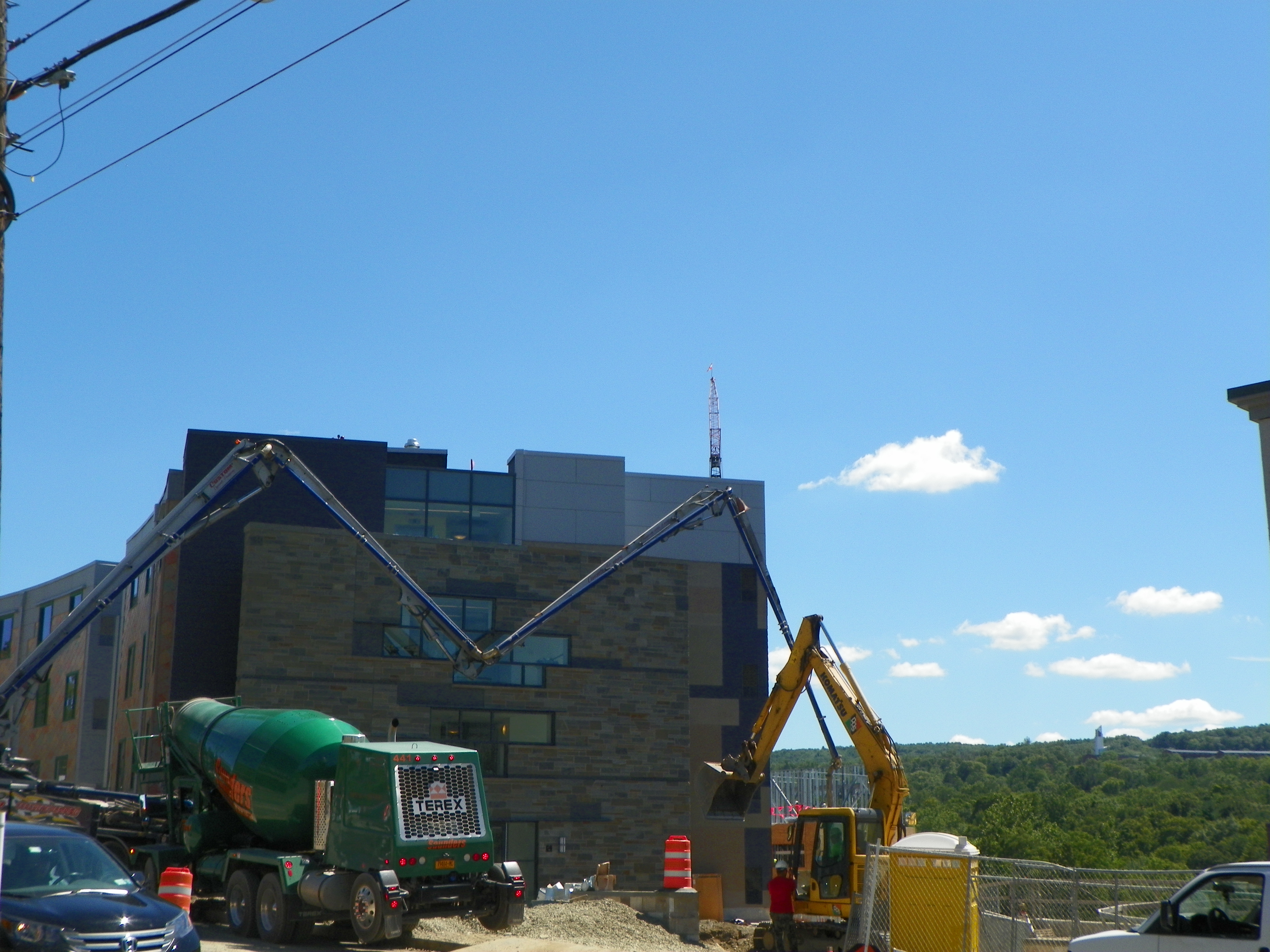
Phase 2 for Collegetown Terrace is nearing completion (units will have their first tenants next month), and phase 3 is underway with a targeted completion date of August 2014. Phase 2 consists of buildings 3.1, 3.2, 3.3, and 3.4. Phase 3 will have buildings 5, 6 and 7, and these buildings will be similar in appearance to phase 2.

7-26-2013 013

7-26-2013 014

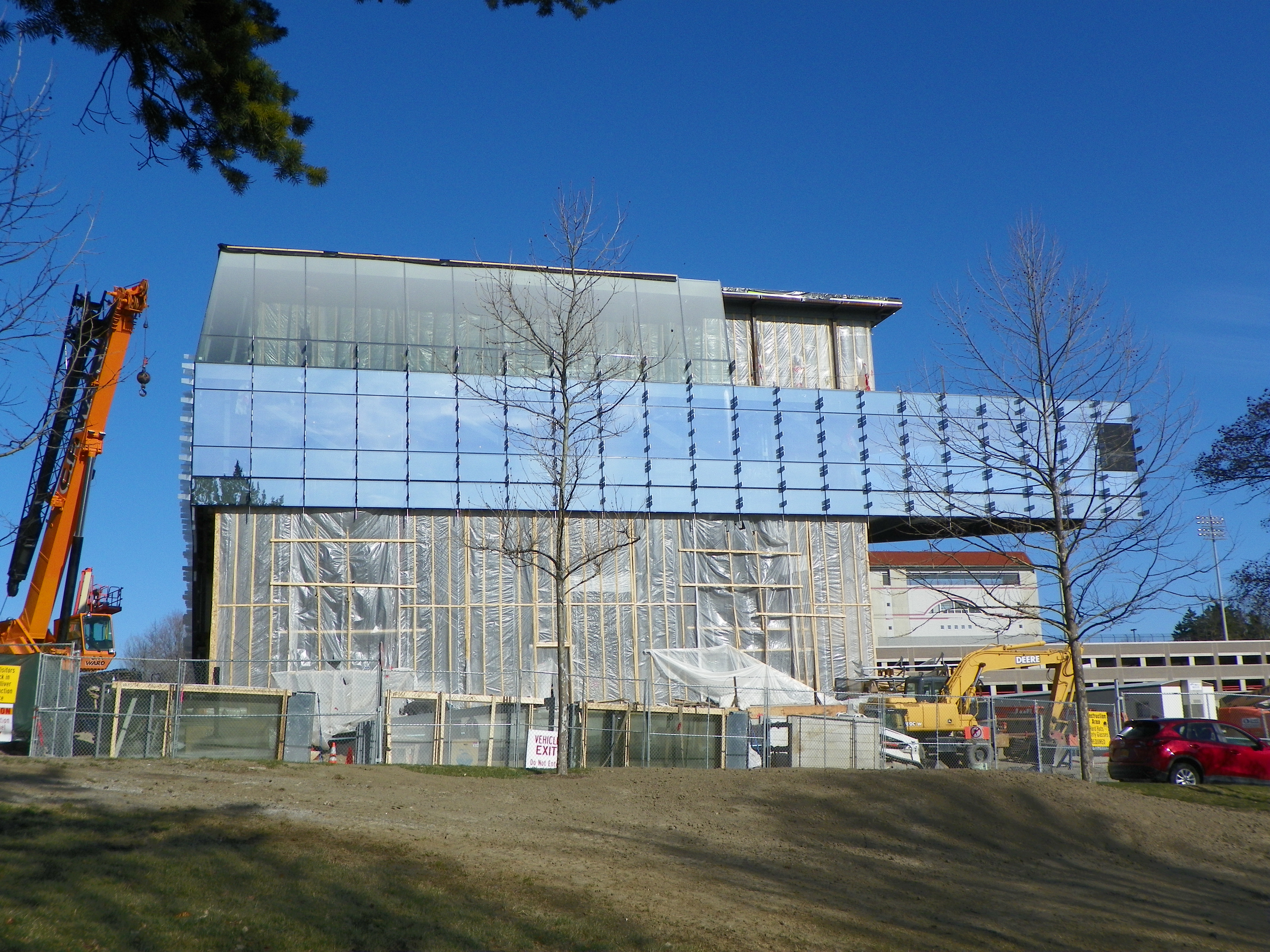
The large glassy entry pavilion (where the fitness center will be, if I remember right) is largely complete, Any work left at this stage would likely be cosmetic details such as finishes.

7-26-2013 025 7-26-2013 024

Since I’m not the biggest fan of modern architecture, I was a little nervous about the facade treatment when it was first proposed. The metal tiles don’t look half bad, as the landscaping grows in they’ll blend into the environment more nicely.

7-26-2013 016 7-26-2013 015

The George C. Williams house has been sympathetically renovated, although the addition to the back is rather incongruous.

7-26-2013 018 7-26-2013 019 7-26-2013 020

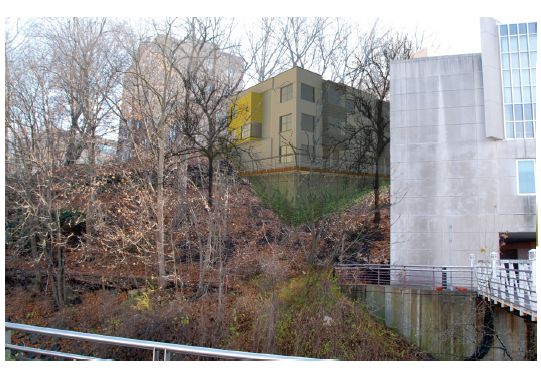
Building 3.4 is quite massive, although the north facade attempts to make the structure seem a little less mammoth. The south side, deeper into the gorge, makes less of an effort. Building 5 can be under construction in the above image.

7-26-2013 021

This guy totally struggled to turn into the street. On that note, I struggled just trying to cross the street. I will be quite relieved when the reworked intersection of State and Mitchell is in place.

7-26-2013 023 7-26-2013 030

The buildings from Phase 1 are growing out their landscaping and appear to be faring all this construction rather well.

7-26-2013 026 7-26-2013 029

Not quite sure what the red-and-white checkered flag means, it could be a warning symbol or a company symbol, like the topping pine tree seen with some construction projects.


The Keyword Bar XIX

15 07 2013

4-8-2013 205

1. “cornell aem transfer from cc” (2013-07-15)

I can already hear the dyed-in-the-wool AEM majors complaining about this one, an image-conscious program sensitive to anything that would tarnish its reputation, including the suggestion that community college students can get into it. But fear not AEM majors, while CALS has guaranteed transfer agreements with many community colleges (“partner institutions”), the biology, landscape architecture, and non-agribusiness AEM majors are exempt from this and fall under “competitive transfer” admissions. So, for the community college student that thinks they can guarantee a transfer to join the I-Bankers to be, the process is much, much more competitive (on a related note, AEM is well known for having a high number of people applying to transfer into the program within Cornell internally, which has resulted in that process becoming rather difficult as well). Also, if you don’t attend a partnered institution, then the transfer isn’t guaranteed either. So, theoretically possible, but highly unlikely.

2. terrence quinn cornell (2013-07-13)

A case of where truth really is stranger than fiction. Terrence Quinn ’93 was a member of Sigma Alpha Mu, and was last seen alone and drunk outside a bar on January 15, 1993. Three days later, he was discovered in Psi Upsilon’s chimney, when his shoes and jeans fell to the mantel after the flue was opened. The cause of death was positional asphyxiation – whether by his own volition or the goading of others, it appears he climbed into the chimney and got stuck, suffocating due to the awkward position his neck was bent in. No foul play has ever been suspected, but it must have been for a very awkward rush week.

3. apartment+complex+in+cornell+heights+planned (2013-07-13)

Yup. This one. 20 units and 56 bedrooms. More details here.

4. architecture of mcgraw hall, cornell (2013-07-12)

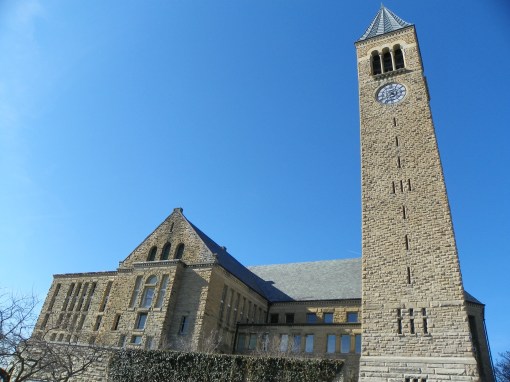
Generally, McGraw Hall, the middle of the Old Stone Row, is considered to be an interpretation of Second Empire architecture  designed by Archimedes Russell, a prominent and prolific Syracuse-area architect in the late 19th and early 20th centuries. Second Empire was in vogue at the time of McGraw Hall’s construction in the late 1860s and early 1870s (completed 1872), and takes its name from the French Second Empire, where the style originated. The building is finished with Ithaca bluestone, and the tower appears to face the wrong way because the earliest campus plan proposed (by Frederick Law Olmsted of Central Park fame) that all campus structures form a grand terrace facing the lake.

5. cleveland estates ithaca housing development (2013-07-11)

Housing developments generally fall out of my focus – slow to build out and generally unremarkable. So I’ve seen Cleveland Estates, and just never wrote much about it (the last real blurb I wrote referencing it was in 2009). The site looks to have 12 lots, on a cul-de-sac off of Danby Road, west-southwest of Ithaca college. Infrastructure has been laid and lots are for sale.

6. mathai kolath george (2013-07-13, 2013-07-10)

Not long after I wrote about Llenroc Mansion near Albany, local news erupted when the widow of its owner, Annie George, was found guilty of keeping an illegal immigrant as a personal slave in her home, and as a result, the federal government is permitted to seize the property. If I were superstitious, I’d be tempted to think the property is cursed.


Cornell Likes Having Friends

30 06 2013

4-8-2013 233

The majority of buildings at Cornell are named for faculty, staff, and alumni with deep pockets. A few others just have generic titles. Occasionally, a building on campus is named for someone with no association with Cornell, except that they helped out the university (usually from a financial aspect). Some of buildings named for “Friends of Cornell”, as Alumni Affairs likes to call them, are detailed below.  One exception I make is that early on, some folks who were Cornell trustees (but had no association otherwise) have buildings named for them, such as Henry W. Sage, John McGraw and Hiram Sibley; but since they served Cornell in an official capacity, I’m excluding them here.

Morrill Hall (1868)  – Like many land-grant institutions, Cornell’s Morrill Hall is named for Justin Smith Morrill, author of the Morrill Act that allowed the sale of federal lands to raise funds for colleges focused on the agricultural and technical trades (some of the other schools include Purdue, Rutgers and MIT; Morrill is known best for this legislation, with his anti-Mormon work a distant second). Morrill had no official association with Cornell, although he did pay a visit to the university at least once, in 1883.

Morse Hall (1890), Franklin Hall (1883) and Lincoln Hall (1888) – In the Gilded Age, engineering and science buildings had the pleasure of being named for “great men” that contributed to the then-present condition of the university and STEM studies. Hence, Samuel Morse (inventor of the telegraph), Benjamin Franklin (politician, scientist, and all around bad-ass), and Abraham Lincoln (president who oversaw the passage of the Morrill Act). Morse Hall burned down, and Franklin Hall became Tjaden Hall (for prominent female architect Olive Tjaden ’25 ) in 1980.

Rockefeller Hall (1903) – Named and partially paid for by John D. Rockefeller, the wealthiest man in the world at the time (and, proportionately, believed to be the wealthiest man ever). Rockefeller has recently retired from Standard Oil and was just beginning his philanthropies, funding schools he believed to be practical. Rumor has it that he was so disappointed with the (then considered unattractive) appearance of Rockefeller Hall he vowed to never donate another cent to Cornell. Which hardly dampened his funding of institutions.

Fun fact, Walter Teagle, of Teagle Hall fame, was a vice president of Standard Oil a few decades later.

Baker Lab (1923) – Funded by George F. Baker, a sort of Warren Buffet of his time, and one of the wealthiest Americans on the early 20th century. Baker also provided much of the funding for the Harvard Business school, and made his way through the Ivy League with his donations, including Columbia’s Baker Field and Dartmouth’s Baker Library.

Mudd Hall (the west wing of Corson-Mudd Hall, 1982) – Named for Seeley G. Mudd, a prominent philanthropist. The foundation established with his fortune explicitly earmarks donations for the construction of academic buildings – the wikipedia list shows no less than 30 schools that have benefited from his funds. Otherwise, Dr. Mudd has no connection to Cornell.

Gates Hall (2013/14) – Not unlike Mudd Hall, Gates Hall is funded with a hefty donation from the Bill and Melinda Gates Foundation, the philanthropic org maintained by Warren Buffet and  Microsoft overlord Bill Gates.

100_7116


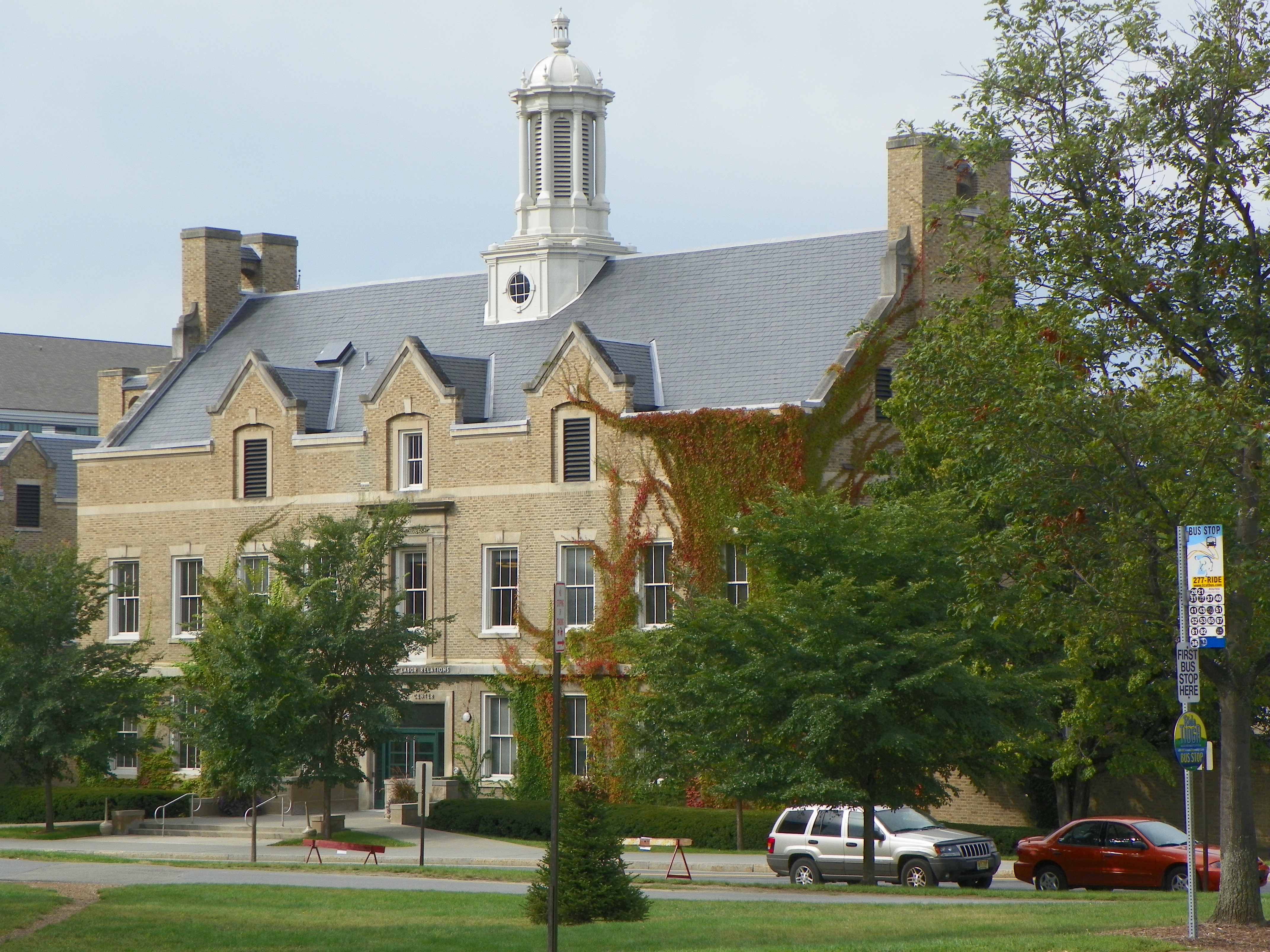
King-Shaw Hall

21 06 2013

101_0489

So, in doing research for a later entry, I was going through the list of facilities on Cornell’s website, and came across an unfamiliar name – King-Shaw Hall.  So I decided to check – the facilities website contains buildings that have long ago been torn down, such as Morse Hall.

To my uncomfortable surprise, the ILR Conference Center changed its name way back in October 2012. In my defense, this appears to have happened right around my first week on the job, so my mind was on other things. Secondly, if this was anything like the sudden change they made with the ILR Extension Building becoming Dolgen Hall in 2008, then I can’t be blamed too much, as that one almost flew under the radar while I was a still a student (had it not been for the lettering change outside the building, I would not have known).

According to the ILR press release, the building was renamed for Patricia and Ruben King-Shaw ’83, so two donors but not two separate donors as one might suspect (see Court-Kay-Bauer for an example of the latter). Ruben King-Shaw is the chairman of an equity firm, and according to Forbes, has an extended history serving in executive roles in healthcare administration, both public and private. For better or worse, one of his daughters currently attends Cornell; on the bright side, you can point to the building and say, with pride, it’s named for your family; on the other hand, it means every time you do well on something, or if you’re selected for a secret society, your peers will snidely whisper it’s because of the enormous amount of money your family donated to the university.  For the record, although the amount donated is undisclosed, it’s probably something similar or marginally more than the amount donated by John Dolgen, which was described as a “multimillion-dollar gift“.

As to the building itself, The ILR Conference Center was built in 1911 as an expansion of the Vet School. ILR moved in during the late 1940s. As with Dolgen and the ILR Research Building on the south end of the complex, King-Shaw Hall underwent a significant renovation from 2002-2004, but because these buildings were designated landmarks, the exteriors were relatively unaltered. I suppose at this point, it won’t be long before ILR finds a donor for the Research Building, if someone feels the urge to part with some millions for nominal immortality.


Five Years Later

18 06 2013

4-8-2013 226

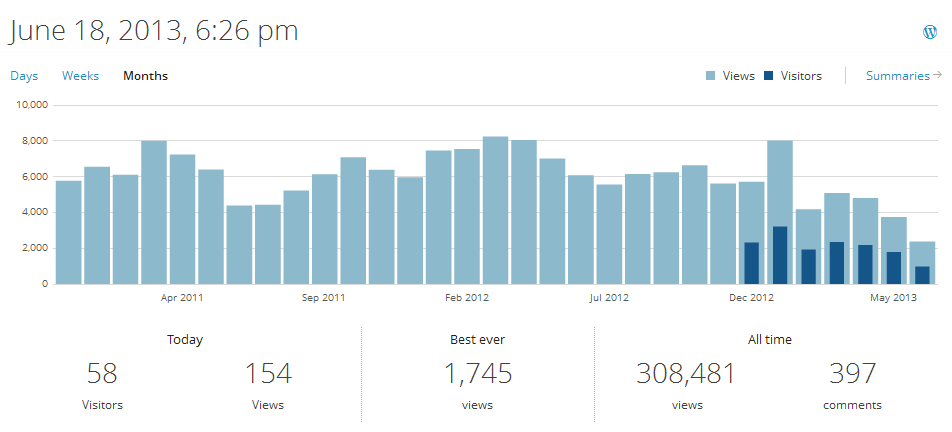
Well, as promised earlier, today’s the big day, where Ithacating celebrates birthday #5. I’m pretty sure this falls into the realm of “old” blogs by this point, especially if I believe the kids over at Ezrahub. Thankfully, unlike them and Eliiott Back’s old Cornell Blog, even if Cornell disliked my use of their name, I refer to a place instead of the school itself. In keeping with tradition, here’s a rundown of this blog’s statistics:

total_5th_birfday

Since launch, which was about 7 PM on June 18, 2008, this blog has garnered 308,481 hits, as of 2:30 PM today. In previous years, the blog averaged 82, 166, 199 and 216 hits daily. This year, it plateaued in the fall and effectively plunged in the spring. The blog only averaged 182 hits per day in the past year. I have a couple of theories – as old posts become “outdated”, they disappear from the radar; as folks have switched to twitter and other platforms, the audience may not quite be there like it used to. I would be lying if I said it doesn’t make me concerned, but the summer numbers will help figure out part of the problem – if they’re comparable to last year, than I’m just not familiar to the Cornell crowd anymore.

In contrast to previous years, the highest month was January, with 8,019 hits. One of the things I didn’t see quite so much was the summer plunge, since Ithaca traffic tends to be less seasonal than Cornell traffic. Why things decreased so much in February, I still don’t know.

Looking at the year in review:

~In planning and development, Collegetown Terrace and the Vine Street Cottages are well underway. 107 Cook was completed, and Collegetown Crossing was postponed because the BZA did not work out that whole parking requirement issue, and it falls to the city to actually change the parking space requirement. The southern suburbia got Ithaca Beer’s new brewery, the Fairfield Inn is nearly complete, and a proposal for eco-friendly housing, while Ecovillage started its next expansion over on West Hill. Cornell proposed some new townhomes near Eastern Heights, and Cayuga Heights decided it wanted to have a walkable town center.

In pleasant contrast to last year, the city was brimming with construction, ongoing and proposed. Seneca Way is under construction, Breckenridge Place is marching towards completion, and new proposals abound, such as Harold’s Square, the new Hampton Inn, and 130 East Clinton. Even some traditionally less developed areas are getting in on the act, with the Purity Ice Cream proposal near West End. Planned Parenthood is underway, the Iacovelli project and Magnolia House are nearly complete, and the Hotel Ithaca and Holiday Inn sites are in hold-over, but with construction begin dates on paper. Even the Cayuga Place project seems to making an attempt at true site prep. Finally breaking down the numbers, it became clear Ithaca is in a residential building boom.

Looking at our colleges, IC has some renovations underway, and Cornell plods on with Gates Hall, the Big Red Bandhouse, and the Stocking Hall rebuild and renovation. Prep is just starting on the new humanities building, Klarman Hall, a long ways off from its 2015 completion. Perhaps most importantly to students, the bridge fences finally came down, and with it, the last strong reminders of a dark semester in Cornell’s history.

Thankfully for my gas tank, a website arose that focuses closely on Ithaca construction and development – the succinctly named Ithaca Builds.

-Looking at Cornelliana, this blog compared and contrasted Far Above Cayuga to our friends on University Hill, took a look at Ezra’s progeny, and a favorite Cornell hobby, comparing it against its peers, in this case for Nobel Prize recipients. In a goodbye to another college memory, Dear Uncle Ezra went on indefinite hiatus. In Greek life, Kappa Sigma and Pi Kappa Alpha reopened, while a bunch of chapters were suspended or shut down (just looking at the Ezrahub site for this writeup, it appears ATO is the latest case). The Greek system looks to have had a rough year. In more general topics, there was a discussion on that time Ithaca almost had a commercial nuclear power plant, a look at Carl Sagan, the Collegetown Creeper, census estimates, and some other things in between.

In my personal life, this past year will go down as the year of uncertainty. Gainfully employed in my field, but still trying to advance my career and clear hurdles as they come up. I’m hoping to fulfill that goal in the next few weeks with some ongoing opportunities.

Five years is a long time to be around. It’s clear this blog has had some stumbles. But I’m not ready to quit just yet. I still have too much interest in writing about Cornell and Ithaca to stop. We’ll see where things go from here.



A Brief Introduction

14 06 2013

4-8-2013 263

I figured that I would do two posts in the upcoming several days – one would be for the fifth anniversary of this blog, on the 18th.

The other, well…I decided that I might as well introduce myself. I’ve tried to write the history articles with an impartial view, because I always wanted the focus to be on the events themselves rather than the person writing them.  The Ithaca developments articles, I have my opinions as much as anyone, and I don’t shy away from expressing them, because whereas historical facts can be skewed and misinterpreted, the beauty of a built structure lies with the preferences of the viewer.

Earlier on, when I was a Cornell student, I had reasons to keep a low profile. I didn’t want my college, my major, or my affiliations to be things that people used to look for perceived bias when I wrote an entry. More importantly, a couple articles make references to my work at the Cornell Store and some of its procedures (ex. how it ran the daily gift card giveaway), which could have put my job at risk. I don’t know if any of my superiors ever came across this blog, though I assume they didn’t. However, the Quill and Dagger folks got up in arms about it, as did my editor at the Sun (this blog was hardly related to anything I wrote – I did the weather column for two years, before they ditched it the year after I graduated). If people had issues with things I did/wrote, it didn’t take long for them to find me. So the anonymity was always more of an image portrayed, rather than anything real. With that realization, my sentiments have been to acknowledge the blog if approached about it in email or in person, but most of my friends have no idea, a few even know of this blog but think the writer is someone else. Ithacating in Cornell Heights has never been something I’ve gone out of my way to promote.

On that note, that has always bothered me. I remember being at an alumni event about two years ago, where two other young alumni talked about how they started blogs, with the primary purpose being just to get their names out there, to yell just a little louder into the raucous crowd of the internet, as if that was something to put on a resume. “I am important, look at the important things I say”! That has never appealed to me. I’m not an attention seeker (which isn’t to say I don’t like receiving credit when credit is due), but I enjoy sharing Cornelliana and Ithacana on this blog, as a labor of love and devotion rather than self-promotion.

So it’s been almost 5 years. Might as well shake things up a bit.

Hi. My name is Brian Crandall. Thank you for dropping by this blog.


130 East Clinton Goes Even More Boxy

10 06 2013

Not much in the way of new and exciting to mention as of late – the last planning board meeting focuses on projects already covered here and on Ithaca Builds (Harold’s Square, The Purity Project, the Thurston Ave. Apts and Klarman Hall), and the town cancelled its regularly scheduled meeting, which is what happens when no one has anything that needs to go to the boards. Thankfully (from this perspective anyway) it is construction season, so much work is underway around-and-abouts.

One detail work noting and sharing is a redesign for the 130 East Clinton project, designed by Sharma architects on behalf of  steretoypical one-percenter Jason Fane and his real estate company. No longer does it have hipped roofs.

130eclinton_rev1

130eclinton_rev2

130eclinton_rev3

Apparently, the architects decided to go with the “box of boxes” look, with a little bright color on the extensions for a little character. The design before was traditional and rather bland. Now it’s more modern but still fairly bland. But it’s density in a growing downtown, so I’m not complaining.


Ecovillage Has More Competition Coming

24 05 2013

newearth_1

As noted in the Ithaca Times, the eco-conscious folks who developed the Aurora Street Pocket Neighbrohood have a new proposal in the works. The location for this one, however, isn’t as urban – the site is located off of Five Mile Drive, just west of Elmira Road and the southwest area’s suburban big-box land (fun fact – the road starts at an intersection with Elmira Road five miles from the shores of Cayuga Lake, hence the name).  This general area has seen a sizable number of single-family homes built in the past decade, though nothing multi-unit like the proposal.

Speaking of which, the basic stats – ~36 units, “craftsman” style homes 1-2 floors, single or 3-unit properties depending on preference, and a common house/community center. Enough of seems to be up in the air style-wise that New Earth Living is asking interested parties to fill out surveys or email them, so they can flesh out their proposal. Style-wise, we already have a good idea what this might look like by looking at the Aurora Street Pocket Neighborhood, which consists of one renovated home and 4 units in three newly-built properties tucked in from the corner Aurora and Marshall. Green construction, solar panels, LED lighting, food grown on property, but no true farm on the property, and units are clustered but still separate – in some ways, this project seems like a toned-down version of Ecovillage.

Ithaca has a lot of folks that lean far left, and a lot of development going on as of late. This seems like a pretty natural outcome of those two forces. Hopefully, this will be a project the community can get excited about as it moves forward.


Cayuga Heights Wants A Real Community Center

16 05 2013


5-1-2012 184

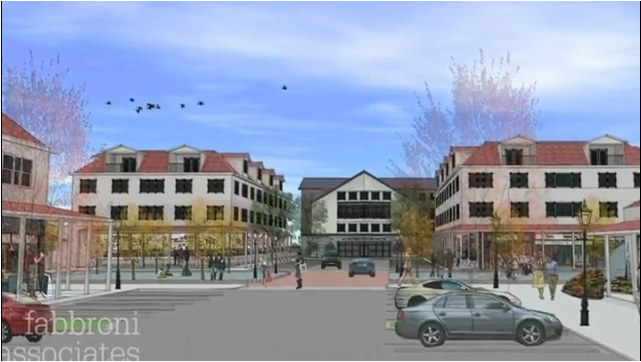
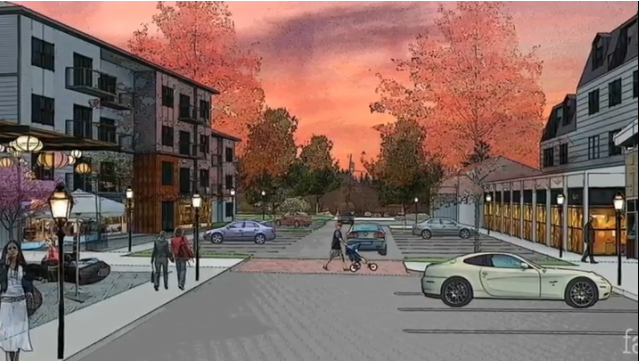
So the folks in Cayuga Heights are getting in on the development game. In this case, local developers are interesting in taking one of the few mixed-use areas of the wealthy bedroom community, and densifying it.

chmap

The focus of this proposal is the Community Corners area, the small, mostly commercial parcel next to the awkward intersections of Triphammer, Hanshaw and East Upland Roads. According to the Ithaca Journal, Most of the new construction would be focused on the grassy parcel at lower left, while some of the buildings already exist would be expanded upon with additional floors, such as the Island Fitness in the lower left of the commercial patch. The two parcels, although owned by separate groups (The Ciaschi Family, the same ones for whom the corner of College and Dryden is named, own Community Corners; the grassy parcel by Mark Mecenas). Notably, this building only finished renovation last year; the bank in the lead image and the two-story office building at Triphammer and Upland are only about three years old.

chproposal1

Incorporated into the proposal – more lower-level retail and office space, and about 100 units of housing, up to four floors in height. this would require a zoning variance, as the maximum height for Cayuga Heights is about 30 feet. The design thrown out there is from (Larry) Fabbroni Associates, who tend to be called on much more to discuss the civil engineering aspects of development projects rather than actual designs. I prefer to think of the above designs as more of a scheme than anything concrete.

chproposal3

Oh look, they even threw the vaguely hipster-like musician in there! How quaint!

chproposal2

Mecenas notes in the IJ article that build-out for this project would likely take a few years, and that’s after the village approves the zoning changes. But, a pedestrian-friendly mid-rise core to Cayuga Heights would definitely make it feel more like its own community rather than a wealthy branch of the Ithaca tree.